Search Results: "evo"

15 April 2010

MJ Ray: Debian Project Leader Election Campaign Round-up

I ve been AWOL for most of the debian project leader election campaigns this year, but I still want to vote, so I ve been dredging the emails on the last day. Maybe someone still has to vote and reads this, or maybe it ll help someone to interpret the result. What I ve done this year is to make a quick tally of platform points and campaign answers that I liked and disliked for each candidate, then total them up to get an order. If anyone gets a negative (more dislikes than likes), then I ll rank them below NOTA. Platforms: Margarita Manterola, Stefano Zacchiroli, Wouter Verhelst, Charles Plessy. Some of the questions: Make of that what you will. It surprised me which way the scores came out, but there was one answer with such a massive problem (in my opinion) that I ranked its giver equal with the next candidate down anyway. If you re a debian developer (DD), have you voted yet?

8 April 2010

Gunnar Wolf: Caffeinated cats

After being away from home for almost two weeks (and, due to unforseen circumstances, having the longest time away from my mailbox I can recall in almost 15 years), last Monday I met with Pooka and Caro, originally just for lunch, but it evolved into an evening-long work session on the SECO3 project (which I continued long into the night But I'm drifting into offtopicness). Caro is now living again in Costa Rica, and to prove it, she brought us two delicious-smelling bags of coffee. Now, I know my cats like the smell of coffee, I know specially Santa loves to completely put her head inside my coffee cup and lick what's left of my espresso's foam But this was really surprising. It was not until today, three days later, I had the heart of bringing my coffee to the office where I'll enjoy it. It is so aromatic that Chupchic and Santa seemed to be taking turns to keep me from claiming the bag At all times, either (or both!) of them layed on top of my precious. It was not until today, when I gave them their breakfast, I was able to take the (still warm) bag of coffee and bring it to work.

Dirk Eddelbuettel: Video of UCLA / LA RUG talk on R and C++ integration

Thanks to the efforts of the tireless R User Group organizers Szilard Pafka (in Los Angeles, recording the talk) and Drew Conway (in New York, converting and organising hosting), there is now a video and slide combo of my recent talk about Rcpp and RInside at UCLA and the Los Angeles R Users Group. Thanks also to David Smith (at the REvolutions blog) and Drew Conway (at his blog) for spreading the word about the presentation video and slides -- quite a few folks have come to my presentations page to get them.

29 March 2010

Roland Mas: FusionForge 5.0

Fourteen months after the renaming of the Free/Open Source code of GForge 4.x to the new FusionForge name, we're pleased to announce version 5.0. As mentioned in the release notes, this is still an incremental step over version 4.8 rather than a revolution, but the changes are important enough, and numerous enough, that we felt it justified to bump the major version number. Major improvements, beyond a host of bugfixes, include: FusionForge 5.0 now also includes new plugins that were previously only floating around (or completely private): These plugins, as well as a large part of the improvements in the trackers and the rewritten Mediawiki plugin, are a direct consequence of the upstreaming of work having been done in private instances of forges. We're happy to note that this goal of ours (to merge local patches into the central repository when it makes sense) seems to be working well. For the record, this 5.0 release includes work and plugins that were reintegrated from sources such as Alcatel-Lucent, Adullact and AdaCore. This release is also the first to have had the benefit of automated testing during the whole cycle. Coverage isn't 100 % yet, but the existing unit tests and functional tests help us be confident in the quality of the release. We'll keep adding more tests as time passes, of course. Looking back at the initial goals stated when the project started, we seem to be on the right track: We still need to work on the database schema and the cross-distro part, as well as cross-forge interoperability. The good news is that work is happening on these fronts already. And with almost 2500 commits, we truly seem to have accomplished at least one of the (implicit) goals: to bring development back to a healthy state. And we're far from being out of ideas for the future, so there's a lot of good stuff still cooking!

28 March 2010

John Goerzen: Trip part 5: Leipzig

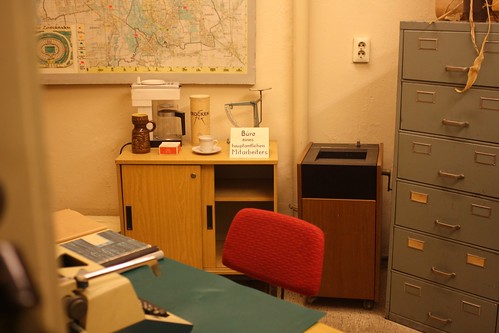
Note: this post written on March 19 for posting after we return. We arrived at Leipzig surprisingly about 5 minutes late on Wednesday morning. My friend Brad was at the Leipzig Hauptbahnhof (central stration) to meet us. As we walked through the city with him, he commented that I hadn t yet tried Currywurst, and there was a stand selling them with different levels of spiciness. I tried one and liked it; Terah was afraid to touch them. After a light lunch with Brad and Anna, we went back into town and saw the V lkerschlachtdenkmal (Monument to the Battle of the Nations). We were warned that it was weird and ugly. And when we arrived, I noticed that it was enormous. And, well, somewhat ugly. And, yes, weird. IMG_2681 After that, we walked through the old trade fair grounds. Leipzig has a long history as a trade center, and after they built the new trade fair grounds, the old ones were reused for other things except for the old Soviet building, which is now both gaudy and abandoned. We picked up Fritzi, who is a very cute 4 years old, from preschool and returned to their house for supper. After that, Brad and I went back into town, intending to hear a reading at the old city pool. When we realized it was a different day, we walked around the city center for awhile and then had a beer at a yes combination cafe/laundromat. Thursday was our day to explore the city. Brad showed us a couple of buildings in the university, including the library, then dropped us off at St. Thomaskirche. That s the church where J. S. Bach was music director for many years, and was buried. Like so many, it was impressive in its height and history. IMG_2703 Next we went to the Stasi museum. The Stasi were the feared and powerful East German secret police during the Communist times. The museum itself was housed in the former Stasi headquarters for Leipzig and was involved with the history of the overthrow of the Communists. The museum covered a lot of the history of the Stasi, including its frantic last days during the 1989 revolution. The level of spying on people was incredible and sophisticated, and they tried to destroy records as the overthrow of the government was imminent. One of the offices in the inner part of the building was left untouched from the Communist years, right down to the typewriter and coffee machine. IMG_2717 After that, we went to the Altes Rathaus (old city hall or townhouse, built in 1556) to do a bit of shopping. Terah was wanting some souvenirs, and I had spotted a shop I thought she might like when walking through the city with Brad the night before. We had already bought some souvenirs at the Schloss Charlottenburg museum store in Berlin (some East German-style crosswalk fridge magnets, and a decorative egg), but wanted something a bit nicer for us and were on the lookout for gifts for others too. We wound up buying a wood carved church scene with a woven wheat tree for us, and another item for others. The shopkeeper spoke no English, and my German vocabulary is small, but we managed to communicate the question of whether or not she could wrap it up in a box for our trip home and she could, and did. Excellent. (I didn t know how to ask about box, but knew how to say that we were Americans, and with a fair bit of gesturing all around, managed to get the idea across.) Then we went in the Altes Rathaus itself, which was both a museum and an interesting cultural experience. We bought our tickets at the booth downstairs, then went upstairs to the entrance. We asked for the English audio guide, which is very common at museums in Germany. (They are small digital audio players that contain recorded information; each room or display has a number you can key in to hear about it in your own language.) We got it, and were told in incredible detail how to use it, even though they are quite easy to figure out and we had used them before. The museum employee told us where the audio tour starts, and in what order it usually goes, which was an effort for her given her limited English. But we all understood and went on our way. It wasn t even 5 minutes later when she had left her desk and came over to us. She was slightly alarmed at two things: one that we didn t have the volume at full blast (which was loud enough for the entire room to hear), and secondly that we weren t looking at the exhibits in the proper order. Never mind that it s easy enough to pull up the audio information about any room just by keying in the number posted in it, I guess. Anyhow, we sort of inwardly shrugged, let her turn the volume up to potentially disturbing the other visitors level, and went through the museum in the order she wanted us to. (Note that this wasn t a museum where there is a one-way flow of traffic or something; you walk into one exhibit, back to the main hall, and then pick your next one.) So we went through the rest of the museum with our English audioguide blaring throughout the large, echoing, wood rooms, feeling a bit rude to the other visitors (maybe 5 of them while we were there) due to its volume. Anyhow, the Altes Rathaus was beautiful and interesting, covering mainly the pre-industrial history of Leipzig. We learned about some of the guilds, the city treasury (vault), and where the town council/parliament met along with rich merchants. There were about as many museum guards as visitors there, and one or two of them sort of followed us around, pointing out the large and completely obvious signs with audio guide numbers in the rooms for us. They are serious about their audio guides in Leipzig. I m glad we went, and I m glad we had the experience we did, too. Terah told me later that she felt reprimanded about the audio guide and visiting order. My take on it was a bit different: the museum is impressive and interesting, but obviously not visited by tourists as much as museums in other cities, or even touristy sites like Thomaskirche in Leipzig. I think they they noticed two people, obviously very foreign (speaking only a little German, and with an American accent) with an interest in their city s history, and took pride in making sure we got the most of our visit and learned as much as possible about something they care about. Here is the main hall of the Altes Rathaus. IMG_2727 We met up with Brad in a cafe near St. Thomaskirche for coffee and cake, then it was on to St. Nikolaikirche (the Church of St. Nicholas), the other large church in town. We stepped out of a passageway to face the large building, and walked in. The interior was decorated in pastels, and was also beautiful and historic. I can t get enough of that sort of building, I think. This building was especially important because it was the site of organizing for the Monday evening protests against the Communist government in 1989. People met at the church, sang a few hymns (to qualify it as a religious service, perhaps), then organized their protest for the evening. Sometimes they would wind through city streets and put flowers at the Stasi headquarters steps, and once the citizens actually overtook the Stasi headquarters. IMG_2745 After awhile we grabbed a bit more for lunch: a pretzel for Terah and a Currywurst for me. (This one wasn t spicy and wasn t all that good.) Then we went to the GDR museum, which was large and interesting, but unfortunately for us, completely in German with no English guide available. That evening, we went to a Bach concert at the Leipzig Gewandhaus, celebrating Bach s 325th birthday. That was fun, and a neat experience with such good music in a very nice venue. The program included Bach s Suite for Orchestra no. 1 in C Major (BWV 1066), Concerto for Violin no. 2 in E major (BWV 1042), Ich habe genug (BWV 82), and Suite for Orchestra no. 4 in D major (BWV 1069). Sir Roger Norrington was conducting, and was rather fun and atypical to watch. He had the audience chuckling a few times with his minimalist conducting or perhaps his flamboyant gestures. Anyhow, the music was excellent and the tickets included free passage on the public transit system 3 hours before and after the concert a nice touch. Due to our schedule, we didn t spend much time with Fritzi, but we did get to play with her a bit. She likes to pretend to be a shopkeeper, and had her store all ready to lay out. We would ask her for some items, which she d put in a basket for us, and then of course there would be a child s twist: we d get our items, and she d pay us for them too. Terah and I brought some books for Fritzi. The particularly enjoyed Goodnight Moon because inside it is an picture of The Runaway Bunny, which she already had. Fritzi chose one of her books to give to Jacob it was a German book (Maulwurf) based on a Czech cartoon mole. That was nice of her, and Jacob really liked it (I ll write about that later). We had a good time in Leipzig, and I was getting fairly good at navigating downtown and with the trams and then, of course, it was time to move on. So Friday morning we caught our 7:50 train from the Leipzig Hauptbahnhof. We took the ICE train to Dresden, then walked a few feet to get onto the EC to Prague. That was a bit of a funny experience. The ICE trains are all sleek, modern, meticulously maintained, and the passengers tend to be very quiet. Talking is barely above a whisper, and people seem alarmed if their cell phone rings, even outside the quiet car. The EC passenger car appears to have been built, or last renovated, in the 1970s, and may have been Hungarian. The seats and curtains are old and faded; some of the seat backs have rips in the vinyl headrests. People were talking or eating loudly, in a very different setting than on the ICE train. As we rode along, we were on the right side the river Elbe for many miles. The scenery was beautiful, with small houses in the river valley, and the occasional house up in the hillside. At one point (a bit before we passed through K nigstein on the way to the Bad Schandau stop), we spotted what looked like an old walled city up on the hill. I figured out later that it was Festung K nigstein (K nigstein Fortress). Update: I forgot to mention a couple of things about Leipzig. One was our walk through a forest yes, a forest in the city. That was a nifty, quiet, and pleasant surprise. Secondly was seeing all the DDR apartment blocks, where the apartments evidently were quite literally blocks. It is interesting to see the Communist architecture.
26 March 2010

Clint Adams: DPL Campaign Questions 001

A while back, I promised some people that I would answer the campaign questions on -vote despite not being on the ballot. Many things came up to pre-empt me, including a short-lived surprise stint on the Release Team. I am still a bit behind on bug reports and such, but it might be inappropriate to start answering after the official campaign period has closed, so here is a start. J rg Jaspert:
Do you plan on taking on a "2IC" or a team?
I do not. I do not believe that either option is a good idea to begin with, and even if I did, I would not be in favor of undermining the Constitution by making an end run around it in this fashion. Martin Zobel-Helas:
The Debian Project receives quite a number of monetary donations as well as contributions in kind via several umbrella organization like SPI, ffis, debian.ch, etc. a) What do you think are valid goals to spend this money on? b) How would you think is a valid way to thank (hardware) contributors? b) What qualifies a contributor to become a "Debian Partner"? What qualifies a "Debian Partner"?
a) I think that it is important not to spend money on things that only benefit a single person or small group, such as ex-post facto legal defenses, core team travel expenses, or equipment for select persons. I would consider valid expenditures to be only those that directly benefit Debian as a whole. b) Ideally, contributors, whether they be hardware donors or developers or anything else, would be motivated solely out of doing good for the project and community, and not be seeking recognition, praise, power, or favors in return. However, since it is considered acceptable to have other motives, I think it fairly appropriate to display logos and give recognition on the Partners page. b) If I had my druthers, I would reserve the term Partners for those organizations who were fully aligned with us in a common goal. In the absence of such, though, the current usage seems fine. Paul Wise:
How much time do you currently devote to Debian? How will that amount of time change for the DPL term? How will you balance your DPL time and time for other Debian activities.
My time commitment varies due to a combination of external factors and Debian-related motivation. Since I have been slowly scaling back my involvement over the past several years, and unless you assume that the DPL role is inherently demotivating, I would presume to be spending about the same time or more on Debian if elected. I will be orphaning some more packages after squeeze is released, regardless of the outcome of the election. I would definitely not run if I doubted my ability to muster up the time and energy to be a good and effective DPL for the full length of the term.

23 March 2010

Miriam Ruiz: Ada Lovelace Day 2010

Today is March 24th, that means Ada Lovelace Day, and it is being pushed as an international day of blogging to celebrate the achievements of women in technology and science. The aim of Ada Lovelace Day is to focus on building female role models not just for girls and young women but also for those of us in tech who would like to feel that we are not alone in our endeavours. There are some very good examples of women that have been important in the development of science and technology, starting with Ada Lovelace herself (the first developer of an algorithm intended to be processed by a machine), Rear Admiral Grace Murray Hopper (developer of the first compiler for a computer programming language), Adele Goldstine (who wrote the complete technical description for the first digital computer, ENIAC), as well as the six women who did most of the programming of if (Kay McNulty, Betty Jennings, Betty Snyder, Marlyn Wescoff, Fran Bilas and Ruth Lichterman), or women scientists, or women inventors, etc. Well, I m not going to write about any of those, even when any of them would surely deserve that and more for sure. I m going to write about a woman who has definitely been very inspiring and supportive for me when I was starting to get in touch with Free Software and Debian, and who is probably the most important single reason I decided to go for it. It is definitely hard to write about someone you admire when she happens to be one of your best friends, and in fact I m pretty sure that most of the people reading this article already know her, so there s no great mistery. I m talking about Amaya Rodrigo, the first european female Debian Developer (AFAIK) and co-founder of the Debian Women project, and also member of Hispalinux Board in the golden days. The first time I met her she was giving a talk in Madrid about a project that was starting then, Debian Women, and it was very inspiring for me. Inspiring enough for me to join the project. Afterwards I ve learnt more about her, how she overcame many dificulties, like starting to work with computers quite late, among others. The real merit of a pioneer is not really to be the best techie out there, but to overcome the difficulties and doing it the best you can, when no one else has done it before. I m not going to write her biography here, it s not really the purpose of this blog entry, and you probably can ask herself directly. This blog entry is, as I said at the beginning, to highlight women in technology that I consider inspiring and relevant. You know, I admire you, Amaya :)

Daniel Kahn Gillmor: Avoiding erroneous OpenPGP certifications

i'm aware that people don't always take proper measures during mass OpenPGP keysignings. Apparently, some keys even get signed with no one at the keysigning present speaking for that key (for example, if the key was submitted to the keysigning via online mechanisms beforehand, but the keyholder failed to show up). Unverified certifications are potentially erroneous, and erroneous certifications are bad for the OpenPGP web of trust. Debian and other projects rely on the OpenPGP web of trust being reasonable and healthy. People should make a habit of doing proper verifications at keysignings. People who make unverified certifications should probably be made aware of better practices. So for future keysignings, i may introduce a key to the set under consideration and see what sort of OpenPGP certifications that key receives. I won't pretend to hold that key in person, won't speak for it, and it won't have my name attached to it. But it may be on the list. Depending on the certifications received on that key (and the feedback i get on this blog post), i'll either publish the list of wayward certifiers, or contact the certifiers privately. Wayward certifiers should review their keysigning practices and revoke any certifications they did not adequately verify. Remember, at a keysigning party, for each key: After the keysigning, when you go to actually make your OpenPGP certifications: Feedback welcome! Tags: keysigning, openpgp, tip

15 March 2010

Adnan Hodzic: FoolControl, Gnome, Squeeze?

Other day I read Refreshing The Ubuntu Brand , upcoming visual style changes for Ubuntu 10.04 Lucid Lynx and my only comment to this whole story was Don t tell me you re moving window control elements to the left side of window in Lucid Side Frown
Either way if this is the revolutionary change for Ubuntu, then I have a visual style suggestion for Squeeze as well. Since Gnome is default desktop environment in Debian and as it looks like right now 2.30 will be what s going to be included into Squeeze; nothing much, or nothing really will visually change in Gnome by then. So how about this Lamp For some time now I ve been troubled by some things in Gnome, and what s bothering me the most is System menu. Why? Well because the list of utilities listed both under Administration and Preferences is so long that it s almost useless. So without losing your precious seconds of your life and losing fair amount of nerves well this is what s required to find what you were initially looking for. Interesting enough is the fact (please do stress) that Gnome consists of a fine thing called gnome-control-center which is not included in any of Gnome menus. IDK I really do enjoy Gnome vanilla flavor (overall am fan of vanilla flavored apps.) but what I ve been doing for quite time now is fixing this ridicule by having my own version of Systems menu, which consists of Add/Remove App. (synaptic) and Fool Control (gnome-control-center) Final result is that I get what I m looking for in couple of seconds without any lost nerves Victory Either way, after reading the redesigning Ubuntu article, this only encouraged me to go live with this suggestion. I know it s a minor change, but how about we have this implemented into Squeeze? Of course change my silly button labels; if not, what are my options? Make package that will do this for you? Rolls Eyes I m really interested to hear your input on this topic. Talking about redesigning stuff, is anyone up to do start doing this with Debian homepage? Yea? Count me in Wink

14 March 2010

DebConf team: DebConf10 call for contributions (Posted by DebConf10 Talks Team)

The Debconf team is excited to announce that we are now accepting proposals for contributions to this year s Debian conference! We invite you to submit proposals for how you would contribute until the deadline: May 1st, 2010, 23h59 UTC. There are many ways you can contribute, you could present a technical paper, host a panel discussion, put on a tutorial, do a performance, an art installation, a debate, host a meeting (BoFs, or Birds of a Feather Session), or other possibilities that you devise. This year we are also accepting proposals for tracks a thematic grouping around a particular subject, and people to coordinate those tracks. If you are looking for ideas of things that you could contribute, or have ideas for things that you would like to see happen at Debconf, have a look at the Contribution Brainstorm page. DebConf talks will be broadcast live on the Internet where possible, unless otherwise requested. Videos of the talks will be published on the web along with the presentation slides and papers. Step 1. Submit Proposal Proposals should provide an overview of your proposed contribution, similar to an abstract, and be no more than 600 words. Since contributions can cover a range of issues, please describe what your proposal covers, be it political (Free Software, law, advocacy, access, etc.), technical (d-i, OpenPGP, etc.), social (Debian structures and groups). It s okay to hit all three of these. Your proposal should also include some information on why you re qualified to present, or coordinate this topic. For example, you can include links to posts you have made to Debian mailing lists or other material that indicates your qualifications. Proposals and their abstracts will be accepted until May 1st, 2010, 23h59 UTC. To submit your proposal, go to http://debconf10.debconf.org/register.xhtml and register as an attendee. Once you are registered, there is a Submit a proposal link. You will see your proposal on the site. You can choose between different presentation types. If you are unsure what type you should use, please read our definitions first. If it s not there for some reason, or you have questions, please contact us immediately. Step 2. Committee Review The review committee for this year will make its decision by May 1st, 2010. All correspondence will be done by email. Step 3. Paper Submission Like last year, we are asking for papers to be submitted along with the presentations. A full paper is optional, however we strongly encourage you to submit one if possible as we intend to provide written information along with transcripts of the sessions for later viewing. Having written papers in advance will allow us to get translations done to help non-native-English speakers feel more comfortable with the topics presented. Papers are due by July 1st, 2010, and should cover the topic in reasonable depth (3 pages A4 text, plus pictures and diagrams). We will use LaTeX to typeset the proceedings. Please submit your paper formatted in LaTeX. Should you be unfamiliar with LaTeX earlier submission in plain text is also fine. Step 4. Live Presentation Longer presentations may have a break in the middle and should include workshop items that directly involve the participants. If using slides or any other presentation, please consider that your audience will consist of people who use free software, and your choice of application to prepare and display the slides should reflect this if at all possible. Fine Print Publication Rights Debconf requires non-exclusive publication rights to papers, presentations, and any additional handouts or audio/visual materials used in conjunction with the presentation. The authors have the freedom to pick a DFSG-free license for the papers themselves and retain all copyrights. The presentations will be recorded, and may be broadcast over the Internet. Any copies of the presentation will be made available under a license like the MIT/X11 license. Failure to Submit In the event that a deadline is missed we reserve the right to revoke any offer to present.

12 March 2010

Matt Brubeck: Discovering Urbit: Functional programming from scratch

C. Guy Yarvin is a good friend of Mencius Moldbug, a pseudonymous blogger known for iconoclastic novella-length essays on politics and history (and occasionally computer science). Guy recently published under his own name a novel project in language and systems design. His own writing about his work is entertaining but verbose (as Moldbug's readers might expect), so I will attempt to summarize it here. Nock, Urbit, Watt First there is Nock, a tool for defining higher-level languages comparable to the lambda calculus, but meant as foundational system software rather than foundational meta mathe matics. Its primitives include positive integers with equality and increment operators, cons cells with car/cdr/cadr/etc., and a macro for convenient branching. Nock uses trees of integers to represent both code and data. Next, Guy provides the rationale for Nock. In short, he asks how a planet-wide computing infrastructure (OS, networking, and languages) would look if designed from first priniciples for robustness and interoperability. The answer he proposes is Urbit: a URI-like name space distributed globally via content-centric networking, with a feudal structure for top-level names and cryptographic identities. Urbit is a static functional name space: it is both referentially transparent and monotonic (a name, once bound to a value, cannot be un- or re-bound). Why does this require a new formal logic and a new programming language? In Urbit, all data and code are distributed via the global namespace. For interoperability, the code must have a standard format. Nock's minimal spec is meant to be an un ambiguous, unchanging, totally standardized basis for computation in Urbit. Above it will be Watt, a self-hosting language that compiles to Nock. Urbit itself will be implemented in Watt, so Nock and Watt are designed to treat data as code using metacircular evaluation. The code A prototype implementation of Watt is on GitHub. It is not yet self-hosting; the current compiler is written in C. Watt is a functional language with static types called molds and a mechanism for explicit lazy evaluation. (I was suprised to find I had accidentally created an in com patible lazy dialect of Nock despite its goal of unambiguous semantics just by implementing it in Haskell.) The code is not fully documented, but the repository contains draft specs for both Watt and Urbit. Beware: the syntax and terminology are a bit unconventional. Guy has offered a few exercises to help get started with Nock and Watt:
The Nock challenge:
Write a decrement operator in Nock, and an interpreter that can evaluate it.
Basic Watt:
Write an integer square root function in Watt.
Advanced Watt:
How would you write a function that tests whether molds A and B are orthogonal (no noun is in both A and B)? Or compatible (any noun in A is also in B)? Are these functions NP-complete? If so, how might one work around this in practice?
If you want to learn more, start with these problems. You can email your solutions to Guy. Will it work? I find Urbit intellectually appealing; it is a simple and clean architecture that could potentially replace a lot of complex system software. But can we get there from here? Guy imagines Urbit as the product of an ages-old Martian civilization:
Since Earth code is fifty years old, and Martian code is fifty million years old, Martian code has been evolving into a big ball of mud for a million times longer than Earth software. (And two million times longer than Windows.) Therefore, at some point in Martian history, some abject fsck of a Martian code-monkey must have said: fsck this entire fscking ball of mud. For lo, its defects cannot be summarized; for they exceed the global supply of bullet points; for numerous as the fishes in the sea, like the fishes in the sea they fsck, making more little fscking fishes. For lo, it is fscked, and a big ball of mud. And there is only one thing to do with it: obliterate the trunk, fire the developers, and hire a whole new fscking army of Martian code-monkeys to rewrite the entire fscking thing. This is the crucial inference we can draw about Mars: since the Martians had 50 million years to try, in the end they must have succeeded. The result: Martian code, as we know it today. Not enormous and horrible tiny and diamond-perfect. Moreover, because it is tiny and diamond-perfect, it is perfectly stable and never changes or decays. It neither is a big ball of mud, nor tends to become one. It has achieved its final, permanent and excellent state.
Do Earthlings have the will to throw out the whole ball of mud and start from scratch? I doubt it. We can build Urbit but no one will come, unless it solves some problem radically better than current software. Moldbug thinks feudalism will produce better online reputation, but feudal reputation does not require feudal identity; it is not that much harder to build Moldbug's reputation system on Earth than on Mars. I still have not figured out the killer app that will get early adopters to switch to Urbit.

Dirk Eddelbuettel: RcppArmadillo 0.1.0

Besides the new RcppExamples, another new package RcppArmadillo got spun out of Rcpp with the recent release 0.7.8 of Rcpp. Romain and I already had an example of a simple but fast linear model fit using the (very clever) Armadillo C++ library by Conrad Sanderson. In fact, I had used this as a motivational example of why Rcpp rocks in a recent talk to the ACM chapter at U of Chicago which, thanks to David Smith at REvo, got some further exposure. Now this example is more refined as further glue got added. Given that both Armadillo and Rcpp make use of C++ templates, the actual amount of code in RcppArmadillo is not that large: just over 200 lines in a header file, and a little less for some testing accessor and example functions in a source file. And this makes for some really nice example code: the 'fast regression' example becomes this (where I simply removed two blocks with conditional on the Armadillo version):
#include <RcppArmadillo.h>
extern "C" SEXP fastLm(SEXP ys, SEXP Xs)  
    Rcpp::NumericVector yr(ys);			// creates Rcpp vector from SEXP
    Rcpp::NumericMatrix Xr(Xs);			// creates Rcpp matrix from SEXP
    int n = Xr.nrow(), k = Xr.ncol();
    arma::mat X(Xr.begin(), n, k, false);   	// reuses memory and avoids extra copy
    arma::colvec y(yr.begin(), yr.size(), false);
    arma::colvec coef = solve(X, y);            // fit model y ~ X
    arma::colvec resid = y - X*coef; 		// residuals
    double sig2 = arma::as_scalar( trans(resid)*resid/(n-k) );
    						// std.error of estimate
    arma::colvec stderrest = sqrt( sig2 * diagvec( arma::inv(arma::trans(X)*X)) );
    Rcpp::Pairlist res(Rcpp::Named( "coefficients", coef),
                       Rcpp::Named( "stderr", stderrest));
    return res;
 
No extra copies! Armadillo instantiates directly from the underlying R objects for the vector and matrix, solves the regression equations, computes the standard error of the estimates and returns the two vectors. Leaving us to write about eleven lines of code. Moreover, as Armadillo is well designed and uses template meta-programming to avoid extra copies (see these lecture notes for details), it is about as efficient as it can be (and will use Atlas or other BLAS where available). And, this is just one example. Rcpp should be suitable for other C++ libraries, and provides an easy to use seamless interface between C++ and R. However, we should note that (at about the last minute) we found out about some unit test failures in OS X as well as some issues in a Debian chroot -- cran2deb ran into some build issues on i386 and amd64 in the testing chroot even this 'it all works' swimmingly on our Debian, Ubuntu and Fedora build environments. A follow-up with fixes for either Rcpp and/or RcppArmadillo appears likely.

Update: The build issues seems to be with 64-bit systems and everything appears cool in 32-bit.

11 March 2010

Martin F. Krafft: Splitting puppetd from puppetmaster

My relationship with Puppet is one of love and hate. I am forced to use it simply because there is no better tool around, but I hate it in so many ways that I don t even want to start to enumerate (hint: most have to do with Ruby, actually). Today I decided to put an end to one thing that has been driving me insane: the fact that puppetd (the client) and puppetmasterd (the server) use the same working directory, /var/lib/puppet. Since I consider and would like to treatthe machine on which puppetmasterd is running just another puppet client, I was running into funky issues related to SSL certificate confusion, obscure errors, and SSL revocation horrors. The following hence assumes that you have installed or are planning to install puppetd on the machine running your puppetmaster, and that you have two fully-qualified domain names for the machine. For instance, I run puppetmaster on vera.madduck.net, and puppetmaster.madduck.net is an alias for the same machine. I ll use these names in the following as examples. The following may be Debian-specific, as I am solely using the puppet and puppetmaster packages for my experimentation and verification. Your mileage may vary, but the concept shall be the same.
  1. Stop everything:
    /etc/init.d/puppetmaster stop
    /etc/init.d/puppet stop
    
    
    (also verify that you have not instructed cron to restart these services)
  2. Rename the working directory:
    mv /var/lib/puppet /var/lib/puppetmaster
    
    
    and amend /etc/puppet/puppet.conf accordingly:
    [main]
    #  
    vardir=/var/lib/puppetmaster
    ssldir=$vardir/ssl
    #  
    [puppetmasterd]
    certname=puppetmaster.madduck.net
    #  
    
    
    I am doing this in [main], planning to override it for puppetd later, because puppetd is the only program which makes sense to be separated from the rest. Since only the puppetmaster needs a special certificate name, that is set specifically in the [puppetmasterd] section. If you use apache2 or nginx in front of your puppetmasters, make sure to amend the SSL file locations in the virtual host definition and restart (!) the service. You can verify that the configuration has been amended by making sure that there is no output from the following command:
    # puppetmasterd --genconfig   grep -q '/var/lib/puppet/' && echo SOMETHING IS WRONG
    
    
  3. Now restart puppetmaster:
    /etc/init.d/puppetmaster start
    
    
    and verify that it starts. If your puppetmaster previously ran under a different name, it will create itself a new certificate and sign it. Since the client will get its own working directory (and thus a new SSL certificate), you want to remove all records of the old certificate:
    # puppetca --list --all
    + puppetmaster.madduck.net
    + vera.madduck.net
    # puppetca --clean vera.madduck.net
    
    
  4. Change the configuration file to tell puppetd about its working directory:
    [puppetd]
    server=puppetmaster.madduck.net
    vardir=/var/lib/puppetmaster
    ssldir=$vardir/ssl
    #  
    
    
    This you can verify with the following command, which should not print anything:
    # puppetd --genconfig   grep -q '/var/lib/puppet[^/]' && echo SOMETHING IS WRONG
    
    
  5. Now install puppet, or (re)start it if it s already installed:
    # /etc/init.d/puppet stop
    # puppetd --no-daemonize --onetime --verbose --waitforcert 30 &
    info: Creating a new SSL key for vera.madduck.net
    warning: peer certificate won't be verified in this SSL session
    info: Caching certificate for ca
    info: Creating a new SSL certificate request for vera.madduck.net
    # puppetca --list
    vera.madduck.net
    # puppetca --sign vera.madduck.net
    notice: Signed certificate request for vera.madduck.net
    notice: Removing file Puppet::SSL::CertificateRequest vera.madduck.net at '/var/lib/puppetmaster/ssl/ca/requests/vera.madduck.net.pem'
    # fg
    info: Caching certificate for vera.madduck.net
    info: Caching certificate_revocation_list for ca
    [ ]
    # puppetca --list --all
    + puppetmaster.madduck.net
    + vera.madduck.net
    # /etc/init.d/puppet start
    
    
    Do yourself the favour and check that it s all working.
  6. Optionally, you can now clean up the client stuff in the server s working directory, for instance like this (it worked for me, but this is the sledgehammer approach):
    # /etc/init.d/puppetmaster stop
    # cd /var/lib/puppetmaster
    # tar -cf /tmp/puppetmaster.workingdir-backup.tar .
    # find ../puppet -type f -printf '%P\n'   xargs rm
    # /etc/init.d/puppetmaster start
    
    
  7. If you stopped cron before (and your puppet recipes have not since restarted it):
    /etc/init.d/cron start
    
    
All done. I wish puppet, or at least Debian s puppet packages would do this by default. Please let me know if the above conversion works for you. Then I might start working on an automated migration. NP: Genesis: Selling England by the Pound

10 March 2010

Peter Eisentraut: Looking for Free Hosting

I'm looking for a way to do free hosting. But I mean free as in freedom, not free as in beer. Let me explain.

When I'm using a piece of free and open-source software such as OpenOffice.org, Evolution, or anything else, I have certain possibilities, freedoms if you will, of interacting with the software beyond just consuming it. I can look at the source code to study how it works. I can rebuild it to have a higher degree of confidence that I'm actually running that code. I can fix a bug or create an enhancement. I can send the patch upstream and wait for the next release, or in important cases I can create a local build. With the emerge of new project hosting sites such as GitHub, it's getting even easier to share one's modifications so others can use them. And so on.

As a lot of software moves to the web, how will this work in the future? There are those that say that it won't, and that it will be a big problem, and that's why you shouldn't use such services. Which is what probably a lot of free-software conscious users are doing right now. But I think that in the longer run, resisting isn't going to win over the masses to free software.

First of all, of course, the software would need to be written. So a free web office suite, a free web mail suite that matches the capabilities of the leading nonfree provider, and so on. We have good starts with Identi.ca and OpenStreetMap, for example, but we'd need a lot more. Then you throw it on a machine, and people can use it. Now as a user of this service, how do I get the source code? Of course you could offer a tarball for download, and that is the approach that the AGPL license takes. One problem with that is, if you are used to apt-get source or something similar for getting the source, everyone putting a tarball on their web site in a different place isn't going to make you happy. A standardized packaging-type thing ought to be wrapped around that. Another problem is that even if you trust the site's operator that that's the source code that's actually running on your site (even without malice, it could for example be outdated against the deployed version), it probably won't contain the local configuration files and setup scripts that would allow me to duplicate the service. And if I just want to study how the program is running in actuality, there is not much I can do.

Giving everyone SSH access to the box is probably not a good idea, and won't really solve all the issues anyway. In the future, when virtualization is standardized, ubiquitous, and awesome, one might imagine that a packaging of a web service won't be "put these files on the file system and reload a daemon" but instead "put these files and this configuration on that machine and activate it". This might give rise to a new generation of Linux "distributors". Getting the source tarball or "source package" might then involve getting a snapshot of that image, which you can examine, modify, and redeploy elsewhere. That could work for OpenStreetMap, for example, modulo the space and time required for their massive database. (But you might chose to fork only the code, not the data.) But it won't be easy to do the right thing in many cases, because with a web service, there is usually other people's data on the machine as well, which would need to be masked out or something. Maybe this really can't be done correctly, and the future will be more distributed, like in the way Jabber attempted to supplant centralized services such as ICQ. Distributed web mail makes sense, distributed OpenStreetMap perhaps less so.

Ideas anyone? Does anyone perhaps have experiences with running a web service that attempts to give users the freedoms and practical benefits that are usually associated with locally installed software?

Biella Coleman: The Statute of Anne (was actually kinda revolutionary)

Last night, in two different instances I read the claim that the England s first copyright act, the statute of Anne passed in 1710 was never intended to protect authors but to protect the reproducers like printing houses and presses investing in authors implying that printing houses loved the act. After pouring through hundreds of pages of Adrian John s history of piracy, that statement is pretty off and in fact I don t think the Statute was really about printers/booksellers or authors but the public. While licensing had all together lapsed for a period before this statute was passed, and the printing houses and book sellers were indeed clamoring loudly for an official recognition of property in literary works, they wanted a perpetuall right in literary property rooted in common and natural law. Like I am talking here about forever, not like a measly, paltry 14 years. They were not exactly thrilled at this statute (in fact, they were downright pissssssssed off) for it severely limited how long they held a property right over books. In fact, so pissed were they, they challenged the statute, went to court in 1769 (Millar v Taylor) and got what they wanted: a perpetual right to literary work. It took s a fiery Scot and bookseller by the name of Alexander Donaldson (I kind of think of him as the RMS of booksellers; he was quite a rabble rouser) to challenge Millar and he finally got his day in the highest court of the land in 1774 in Donaldson v Beckett and the outcome was that a perpetual right in books was tossed out the window. The court ruled that copyright was a limited statute. One of the lords in the case even stated Knowledge has no value or use for the solitary owner: to be enjoyed it must be communicated. Adrian John s explains the significance of this case in the following way: Copyright, they decided, was not a right of man at all. Indeed, it was almost the very opposite: an artifact, and one that replaced a prior right established by an author s work of creation. . . In terms of revolution principles, liberty won out over property Again the printers booksellers (minus the pirate ones) were not happy a bunch. Unfortunately the subsequent history is one we all know well, one in which booksellers and others with vested interests in copyrights pushed to extend property rights in all sorts of ways to get to where we are today (obviously with a lot of different historical developments), a land, time, period where perpetuity may not be forever but it is long enough to nullify the very public domain envisioned by the first copyright act. However, I think it is nonetheless important to recognize how radical in many respects the first copyright act was: given what the book printers and sellers wanted (and they were a powerful bunch). For those interested in learning more about Alexander Donaldson, I would check out his Some Thoughts on the State of Literary Property, where he rails against the London booksellers for being monopolistic and calling for a limited property right in books.

9 March 2010

John Goerzen: Review: The Future of Faith by Harvey Cox

I know I ve been on something of a religion streak on the blog of late, and this will be the last such post for awhile. I first hear of Harvey Cox s book The Future of Faith during an excellent hour-long interview with NPR s Diane Rehm. It was intriguing enough that I bought the Kindle edition of the book and read it. The title of the book is both very accurate and rather misleading. A lot of the book and, to me, the most fascinating parts of it focus on the history of faith. Cox s repeated point is that we are only now regaining a notion of faith that the earliest Christians had, and it is a notion that happens to be compatible with modern science and incompatible with fundamentalism and intolerance in all its stripes. Throughout this post, it should be understood that quotes or passages are from the book. Cox is so quotable that a good chunk of this review will be showing you some of his quotes, with a bit of discussion around them. I very much enjoyed this book, and highly recommend it. Faith vs. Belief
It is true that for many people faith and belief are just two words for the same thing. But they are not the same and it is important to clarify the difference. Faith is about deep-seated confidence. In everyday speech we usually apply it to people we trust or the values we treasure a matter of what the Hebrews spoke of as the heart. Belief, on the other hand, is more like opinion. We often use the term to express a degree of uncertainty We can believe something to be true without it making much difference to us, but we place our faith only in something that is vital for the way we live.
This is an important distinction, and if you stop and think about it, Cox is arguing with a common notion about faith almost from page 1. Faith isn t about intellectual assent to a set of propositions. It s about what we hold dear, what we think works for us in life. Creeds
Creeds are clusters of beliefs. But Christianity is not a history of creeds. It is the story of a people of faith who sometimes cobbled together creeds out of beliefs. It is also the history of equally faithful people who questioned, altered, and discarded those same creeds But both the doctrinal canons and the architectural constructions are means to an end. Making either the defining element warps the underlying reality of faith.
Cox here reinforces the point that Christianity isn t about believing certain statements, and it isn t even about a literal (or not) reading of the Bible. It s what C. S. Lewis talked about as the inward transformation in onesself. Creeds, such as the Nicene Creed, are rather irrelevant to him. Cox separates the history of Christianity into three periods: the age of faith, stretching from the time of Jesus only a few centuries until Constantine; the age of belief, stretching from Constantine until the 20th century; and the age of the spirit, now dawning. During the age of faith, their sharing in the living Spirit of Christ united Christians with each other, and faith meant hope and assurance in the dawning of a new era of freedom, healing, and compassion that Jesus had demonstrated. Cox makes the point that doctrinal questions just weren t all that important back then, and though differences existed, they weren t considered to be fundamental to the religion. Confidence in Christ was their primary orientation, and hope for his [earthly] Kingdom their motivating drive. Further, he argues that the age of the spirit is a return to this earlier age, albeit with modern twists.
Christianity is growing faster than it ever has before, but mainly outside the West and in movements that accent spiritual experience, discipleship, and hope; pay scant attention to creeds; and flourish without hierarchies. We are now witnessing the beginning of a post-Constantinian era.
Cox describes a person that described himself as a practicing Christian, not always a believing one. He suggests that the belief/non-believer statement is a disservice to Christianity and to other religions. He then quoted a Catholic bishop as saying: The line between belief and unbelief runs through the middle of each one of us, including myself, a bishop of the church. In other words, The experience of the divine is displacing theories about it. Faith and Belief in Bible reading
Creation myths such as the first chapters of Genesis were not primarily composed to answer the how or when questions. They are not scientific accounts, even though their poetical language, when read literally (which is always a mistake), may sound that way. Rather, they grapple with the linked mysteries of both why there is a universe and what our place in it is They are more like lyrical cantatas, symphonies of symbols through which humans have tried to make sense of their place in the world This is where the distinction between faith and belief is vital. These stories are literally not to be believed. They are, rather, artifacts human beings have crafted to try to wring some meaning from the mystery. They are not themselves the mystery.
I liken this to Michael Crichton s novel Jurassic Park. If you were to read it 1000 years in the future, it might not have been conveniently shelved above the word fiction. Would a reader in the future know that it was not meant to be a literal description of facts? I think sometimes we make this mistake when we read the Bible. Note, though, that although we all understand that Jurassic Park wasn t meant to be a literal description of facts, it seems to have been valued by quite a large part of society. And it didn t even address big mysteries. Cox argues against ridding ourselves of the creation myths, suggesting that they are an important reminder that we are similar to humans who grappled with the same big questions centuries ago as we do today.
The ill-advised transmuting of symbols into a curious kind of facts has created an immense obstacle to faith for many thoughtful people. Instead of helping them confront the great mystery, it has effectively prevented them from doing so the objective knowledge science rightly insists on is not the only kind of knowledge human beings need Faith, although it is evoked by the mystery that surrounds us, is not the mystery itself.
Constantine and the Age of Belief
One of the most devastating blunders made by the church, especially as the Age of Belief began, was to insist that the Spirit is present only in believers.
Cox spends a lot of time covering the very interesting topic of how and why the church moved to the Age of Belief. His central thesis is that money, power, and prestige were primarily responsible, and that an unrighteous collusion between bishops and Constantine, each using Christianity for their own purposes, finally made it happen. This is very interesting stuff, but this post is too long already, so I will not spend a lot of time on it. I found the Council of Nicea to be particularly interesting, considering that the Nicean Creed came about partially by exile or execution of those Christians that disagreed with it. Cox also points out that there never was a single early Christianity ; there were many, and the idea of heresy was unknown.
The time is ripe to retrieve the term Way for Christianity and followers of the Way for Christians. It is at once more accurate, more original, and more contemporary than believers.
To the future Cox describes attending a meeting of the church in Hong Kong in 2003, and uses it as a metaphor for the future of faith:
Their idea of interfaith dialogue was to work with their fellow Asians of whatever religion to advance the Kingdom that Jesus had inspired them, as Christians, to strive for, regardless of what the others called it. They were neither fundamentalist nor modernist. They seemed more attuned to the element of mystery at the core of Christianity and to its vision of justice. They were also clearly impatient with many of the disputes that preoccupy the different wings of the American churches.
Conclusion I found this book to be both enlightening and informative. I highly recommend it, even if you disagree with some of Cox s conclusions. It is a fascinating view into how the world s largest religion evolved over the years, and a candid look at the mistakes it has made in that time.

5 March 2010

David Welton: Books vs "e-books" ?

I've been thinking about something for a while, and to be honest, still haven't reached any firm conclusions: what to think about self-published "e-books"? I'm curious to hear your opinions. For instance: These are all: electronic, in that they aren't distributed as real, paper books, have no ISBN number, and are generally only available via the author's web site (you won't find them on Amazon.com). They aren't simply on-line, PDF versions of real books. They're certainly a departure from the traditional model of having a publisher, editor, and real, physical books that could be purchased from book stores. They don't appear to have been through any kind of formal editing or quality control process. The prices seem to differ quite a bit; the first one is $19, the second one is $12, and the last one is $30.77. For the authors, the appeal is obvious: they get to keep all of the money, and don't have to fool around with a lot of "process". Consumers, on the other hand, have to consider different aspects: with a "real book", the bureacracy and process exist to guarantee some minimum standards of quality. If you buy an O'Reilly book, you know that it's probably like many of the other books they sell: perhaps it won't stand the test of time like something written by Knuth, but it'll be a pretty good guide to the technology it describes, most likely be someone who is indeed an expert in that area. If I buy some random PDF on the internet, it may come from someone who really knows their stuff, or it may be junk. On the other hand, were this market to grow, theoretically prices could come down. Since the people who are authoring the book don't have to fool around with editing, printing, and so on, and get to keep all the money themselves, they could in theory keep their prices significantly lower than someone creating a more 'traditional' book with a lot of overhead. That is, of course, if the book is one where there is competition in its niche. Right now a lot of these books that pop up on my radar are written by domain experts. However, what's to prevent a lot of people from jumping in and attempting to make a quick buck with a flashy looking web site? Buying books based only on reputation? That might lead to people who are really good authors, but perhaps not well known as "doers" (they didn't invent the technology in question) being left out in the cold. Also, there is something of an unknown quantity about "pdf books". For instance, after raking in a bunch of cash with theirs, 37signals put it on their web site, completely for free. That had to leave the guy who bought it the day before it went free feeling like a bit of a chump. At least with a 'real book', even if the contents are posted on the internet, you have a physical object that belongs to you. I wonder how bad piracy is, and how bad it might be were these to become more popular? Another thing worth noting is that, via services like Lulu.com, it *is* possible to print these out. In any case, I think things are likely to change with time, as we aren't dealing with a static situation, but rather one where a changing landscape maylead to different outcomes, as the key variables... vary. I am honestly unsure of what to make of this development. How do you see the market for "home brewed" pdf ebooks evolving?

2 March 2010

Matt Brubeck: The network is the human being

Nathanael Boehm wrote a nice essay last month called The Future of Employment?, about a disconnect between workers' and employers' views of social networks. (This post is based partly on my comment in the ensuing Hacker News thread.) Boehm wrote:
When I need help with a challenge at work or need to run some ideas past people I don t turn to my co-workers, I look to my network of colleagues beyond the walls of my workplace. Whilst my co-workers might be competent at their job they can t hope to compete with the hundreds of people I have access to through my social networks...
The late Sun Microsystems taught us that the network is the computer. It's true: we still use non-networked computers for specialized tasks, but nobody wants one on their desk it's just so useless compared to one that talks to the entire world. Boehm could have titled his essay The Network is the Employee. There are still tasks that people do in isolation, but the ability to contact a network of peers and experts makes the difference in my job, and many others. Alone together The lone computer programmer in a small business has thousands of colleagues on Stack Overflow, Reddit, and so on. It's a chaotic and messy way to find answers, but it's better than the days when your only choice was to call tech support or smack the box with your fist, whichever seemed more useful. I can't begin to list all the problems I've solved and things I've learned by Googling for others with relevant experiences, and getting help from a different expert for every problem. Decades before the web, computer geeks had virtual communities for on mailing lists, Usenet, and IRC. Now any job in the world has an online forum. Even the night clerk at the gas station has Not Always Right. Teaching has long been a solitary profession. Despite working in a crowded classroom, teachers are isolated; they rarely have colleagues observing or participating directly in their work. This has such an impact that teacher education sometimes includes training in meditation or reflection, to compensate for lack of external feedback. So I'm really curious what happens when teachers start to work together remotely the way programmers do. You will be assimilated Boehm's essay reminded me of a vague sci-fi-like idea I've been kicking around: the first group minds will evolve from the intersection of Mechanical Turk, virtual assistants, social networking, and augmented reality. Starting around the 1990s, it was possible to instantly "know" any fact that was published online. Since then, we've increased the amount of content online, our tools for searching it, and ways of connecting to the network. Today we have instant access to almost any published knowledge, anywhere. The number of people on the net has grown too, and the number of ways to find and talk to them. Most of us can contact dozens of friends at any given moment, plus friends-of-friends, co-workers, fellow members of communites like Hacker News or MetaFilter, and also complete strangers. Along with raw facts, we now have access to vast amounts of human judgement, experience, and skill. One result of this is the "virtual assistant," who provides a service that was once available only to high-powered executives. The new personal assistant can work remotely (often overseas), spread costs by serving many masters, and leverage the internet superpowers listed above. Today their services are targeted at small business owners and the Tim Ferriss crowd, but I'm sure someone soon will start marketing virtual personal assistance to all sorts of other creative workers, teachers, even stay-at-home parents. So, how long before I can simply touch a button to let a remote assistant see what I'm seeing in real-time and help me make transportation plans, translate foreign signs and speech, look up emails related to whatever I'm doing or thinking, or even advise me on what to say? Some of these queries will go to my circle of friends, others to the general public, and some to a personal assistant who is paid well to keep up with my specific needs. And that assistant of course will sub-contract out portions of each job as needed to computer programs, legions of cheap anonymous Turkers, or to his or her own network of assistants. At that point, I'm augmenting my own perception, memory, and judgement with a whole network of brains that I carry around ready to engage with any situation I meet. If nothing else, I hope someone writes a good sci-fi thriller story in which a rogue virtual assistant subtly manipulates the actions of unknowing clients, leading them to some unseen end.

26 February 2010

Dirk Eddelbuettel: R and Sudoku solvers: Plus ca change...

Christian Robert blogged about a particularly heavy-handed solution to last Sunday's Sudoku puzzle in Le Monde. That had my symapthy as I like evolutionary computing methods, and his chart is rather pretty. From there, this spread on to the REvolutions blogs where David Smith riffed on it, and showed the acual puzzle. That didn't stop things as Christian blogged once more about it, this time welcoming his post-doc Robin Ryder who posts a heavy analysis on all this that is a little much for me at this time of day. But what everybody seems to be forgetting is that R has had a Sudoku solver for years, thanks to the sudoku package by David Brahm and Greg Snow which was first posted four years ago. What comes around, goes around. With that, and about one minute of Emacs editing to get the Le Monde puzzle into the required ascii-art form, all we need to do is this:
R> library(sudoku)
R> s <- readSudoku("/tmp/sudoku.txt")
R> s
      [,1] [,2] [,3] [,4] [,5] [,6] [,7] [,8] [,9]
 [1,]    8    0    0    0    0    1    2    0    0
 [2,]    0    7    5    0    0    0    0    0    0
 [3,]    0    0    0    0    5    0    0    6    4
 [4,]    0    0    7    0    0    0    0    0    6
 [5,]    9    0    0    7    0    0    0    0    0
 [6,]    5    2    0    0    0    9    0    4    7
 [7,]    2    3    1    0    0    0    0    0    0
 [8,]    0    0    6    0    2    0    1    0    9
 [9,]    0    0    0    0    0    0    0    0    0
R> system.time(solveSudoku(s))
      [,1] [,2] [,3] [,4] [,5] [,6] [,7] [,8] [,9]
 [1,]    8    4    9    6    7    1    2    5    3
 [2,]    6    7    5    2    4    3    9    1    8
 [3,]    3    1    2    9    5    8    7    6    4
 [4,]    1    8    7    4    3    2    5    9    6
 [5,]    9    6    4    7    8    5    3    2    1
 [6,]    5    2    3    1    6    9    8    4    7
 [7,]    2    3    1    8    9    4    6    7    5
 [8,]    4    5    6    3    2    7    1    8    9
 [9,]    7    9    8    5    1    6    4    3    2
   user  system elapsed
  5.288   0.004   5.951
R>
That took all of five seconds while my computer was also compiling a particularly resource-hungry C++ package.... Just in case we needed another illustration that it is hard to navigate the riches and wonders that is CRAN...

Next.

Previous.
