Search Results: "dom"

14 February 2017

Steve McIntyre: Start the fans please!

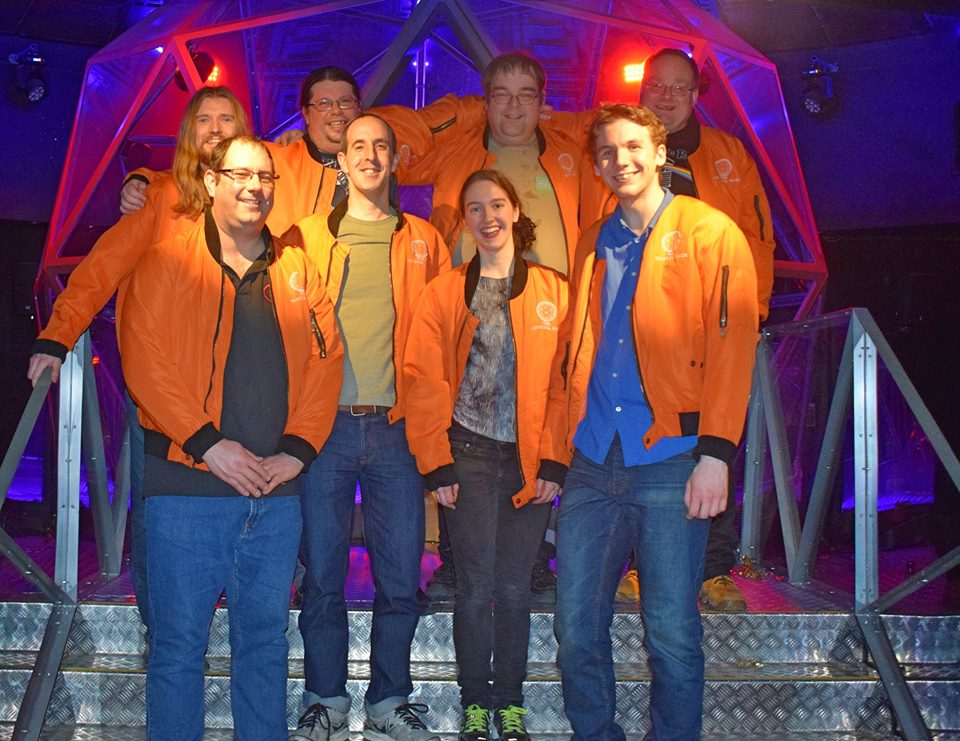
This probably won't mean much to people outside the UK, I'm guessing. Sorry! :-) The Crystal Maze was an awesome fun game show on TV in the UK in the 1990s. Teams would travel through differently-themed zones, taking on challenges to earn crystals for later rewards in the Crystal Dome. I really enojyed it, as did just about everybody my age that I know of... A group have started up a new Crystal Maze attraction in London and Manchester, giving some of us a chance of indulging our nostalgia directly in a replica of the show's setup! Neil NcGovern booked a load of tickets and arranged for a large group of people to go along this weekend. It was amazing! (Sorry!) I ended up captaining one of the 4 teams, and our team ("Failure is always an option!") scored highest in the final game - catching bits of gold foil flying around in the Dome. It was really, really fun and I'd heartily recommend it to other folks who like action games and puzzle solving. I just missed the biting scorn of the original show presenter, Richard O'Brien, but our "Maze Master" Boudica was great fun and got us all pumped up and working together.

Arturo Borrero Gonz lez: About process limits

Graphs The other day I had to deal with an outage in one of our LDAP servers, which is running the old Debian Wheezy (yeah, I know, we should update it). We are running openldap, the slapd daemon. And after searching the log files, the cause of the outage was obvious:
[...]
slapd[7408]: warning: cannot open /etc/hosts.allow: Too many open files
slapd[7408]: warning: cannot open /etc/hosts.deny: Too many open files
slapd[7408]: warning: cannot open /etc/hosts.allow: Too many open files
slapd[7408]: warning: cannot open /etc/hosts.deny: Too many open files
slapd[7408]: warning: cannot open /etc/hosts.allow: Too many open files
slapd[7408]: warning: cannot open /etc/hosts.deny: Too many open files
[...]
[Please read About process limits, round 2 for updated info on this issue] I couldn t believe that openldap is using tcp_wrappers (or libwrap), an ancient software piece that hasn t been updated for years, replaced in many other ways by more powerful tools (like nftables). I was blinded by this and ran to open a Debian bug agains openldap: #854436 (openldap: please don t use tcp-wrappers with slapd). The reply from Steve Langasek was clear:
If people are hitting open file limits trying to open two extra files,
disabling features in the codebase is not the correct solution.
Obvoursly, the problem was somewhere else. I started investigating about system limits, which seems to have 2 main components: According to my searchings, my slapd daemon was being hit by the latter. I reviewed the default system-wide limits and they seemed Ok. So, let s change the other limits. Most of the documentantion around the internet points you to a /etc/security/limits.conf file, which is then read by pam_limits. You can check current limits using the ulimit bash builtin. In the case of my slapd:
arturo@debian:~% sudo su openldap -s /bin/bash
openldap@debian:~% ulimit -a
core file size          (blocks, -c) 0
data seg size           (kbytes, -d) unlimited
scheduling priority             (-e) 0
file size               (blocks, -f) unlimited
pending signals                 (-i) 7915
max locked memory       (kbytes, -l) 64
max memory size         (kbytes, -m) unlimited
open files                      (-n) 1024
pipe size            (512 bytes, -p) 8
POSIX message queues     (bytes, -q) 819200
real-time priority              (-r) 0
stack size              (kbytes, -s) 8192
cpu time               (seconds, -t) unlimited
max user processes              (-u) 2000
virtual memory          (kbytes, -v) unlimited
file locks                      (-x) unlimited
This seems to suggest that the openldap user is constrained to 1024 openfiles (and some more if we check the hard limit). The 1024 limit seems low for a rather busy service. According to most of the internet docs, I m supposed to put this in /etc/security/limits.conf:
[...]
#<domain>      <type>  <item>         <value>
openldap	soft	nofile		1000000
openldap	hard	nofile		1000000
[...]
I should check as well that pam_limits is loaded, in /etc/pam.d/other:
[...]
session		required	pam_limits.so
[...]
After reloading the openldap session, you can check that, indeed, limits are changed as reported by ulimit. But at some point, the slapd daemon starts to drop connections again. Thing start to turn weird here. The changes we made until now don t work, probably because when the slapd daemon is spawned at bootup (by root, sysvinit in this case) no pam mechanisms are triggered. So, I was forced to learn a new thing: process limits. You can check the limits for a given process this way:
arturo@debian:~% cat /proc/$(pgrep slapd)/limits
Limit                     Soft Limit           Hard Limit           Units
Max cpu time              unlimited            unlimited            seconds
Max file size             unlimited            unlimited            bytes
Max data size             unlimited            unlimited            bytes
Max stack size            8388608              unlimited            bytes
Max core file size        0                    unlimited            bytes
Max resident set          unlimited            unlimited            bytes
Max processes             16000                16000                processes
Max open files            1024                 4096                 files
Max locked memory         65536                65536                bytes
Max address space         unlimited            unlimited            bytes
Max file locks            unlimited            unlimited            locks
Max pending signals       16000                16000                signals
Max msgqueue size         819200               819200               bytes
Max nice priority         0                    0
Max realtime priority     0                    0
Max realtime timeout      unlimited            unlimited            us
Good, seems we have some more limits attached to our slapd daemon process. If we search the internet to know how to change process limits, most of the docs points to a tool known as prlimit. According to the manpage, this is a tool to get and set process resource limits, which is just what I was looking for. According to the docs, the prlimit system call is supported since Linux 2.6.36, and I m running 3.2, so no problem here. Things looks promising. But yes, more problems. The prlimit tool is not included in the Debian Wheezy release. A simple call to a single system call was not going to stop me now, so I searched more the web until I found this useful manpage: getrlimit(2). There is a sample C code included in the manpage, in which we only need to replace RLIMIT_CPU with RLIMIT_NOFILE:
#define _GNU_SOURCE
#define _FILE_OFFSET_BITS 64
#include <stdio.h>
#include <time.h>
#include <stdlib.h>
#include <unistd.h>
#include <sys/resource.h>
#define errExit(msg) do   perror(msg); exit(EXIT_FAILURE); \
                          while (0)
int
main(int argc, char *argv[])
 
    struct rlimit old, new;
    struct rlimit *newp;
    pid_t pid;
    if (!(argc == 2   argc == 4))  
        fprintf(stderr, "Usage: %s <pid> [<new-soft-limit> "
                "<new-hard-limit>]\n", argv[0]);
        exit(EXIT_FAILURE);
     
    pid = atoi(argv[1]);        /* PID of target process */
    newp = NULL;
    if (argc == 4)  
        new.rlim_cur = atoi(argv[2]);
        new.rlim_max = atoi(argv[3]);
        newp = &new;
     
    /* Set CPU time limit of target process; retrieve and display
       previous limit */
    if (prlimit(pid, RLIMIT_NOFILE, newp, &old) == -1)
        errExit("prlimit-1");
    printf("Previous limits: soft=%lld; hard=%lld\n",
            (long long) old.rlim_cur, (long long) old.rlim_max);
    /* Retrieve and display new CPU time limit */
    if (prlimit(pid, RLIMIT_NOFILE, NULL, &old) == -1)
        errExit("prlimit-2");
    printf("New limits: soft=%lld; hard=%lld\n",
            (long long) old.rlim_cur, (long long) old.rlim_max);
    exit(EXIT_FAILURE);
 
And them compile it like this:
arturo@debian:~% gcc limits.c -o limits
We can then call this new binary like this:
arturo@debian:~% sudo limits $(pgrep slapd) 1000000 1000000
Finally, the limit seems OK:
arturo@debian:~% cat /proc/$(pgrep slapd)/limits
Limit                     Soft Limit           Hard Limit           Units
Max cpu time              unlimited            unlimited            seconds
Max file size             unlimited            unlimited            bytes
Max data size             unlimited            unlimited            bytes
Max stack size            8388608              unlimited            bytes
Max core file size        0                    unlimited            bytes
Max resident set          unlimited            unlimited            bytes
Max processes             16000                16000                processes
Max open files            1000000              1000000              files
Max locked memory         65536                65536                bytes
Max address space         unlimited            unlimited            bytes
Max file locks            unlimited            unlimited            locks
Max pending signals       16000                16000                signals
Max msgqueue size         819200               819200               bytes
Max nice priority         0                    0
Max realtime priority     0                    0
Max realtime timeout      unlimited            unlimited            us
Don t forget to apply this change every time the slapd daemon starts. Nobody found this issue before? really?

Reproducible builds folks: Reproducible Builds: week 94 in Stretch cycle

Here's what happened in the Reproducible Builds effort between Sunday February 5 and Saturday February 11 2017: Upcoming events Patches sent upstream Packages reviewed and fixed, and bugs filed Chris Lamb: Daniel Shahaf: "Z. Ren": Reviews of unreproducible packages 83 package reviews have been added, 8 have been updated and 32 have been removed in this week, adding to our knowledge about identified issues. 5 issue types have been added: 1 issue type has been updated: Weekly QA work During our reproducibility testing, the following FTBFS bugs have been detected and reported by: diffoscope development diffoscope versions 71, 72, 73, 74 & 75 were uploaded to unstable by Chris Lamb: strip-nondeterminism development strip-nondeterminism 0.030-1 was uploaded to unstable by Chris Lamb: buildinfo.debian.net development reproducible-website development Misc. This week's edition was written by Chris Lamb & reviewed by a bunch of Reproducible Builds folks on IRC & the mailing lists.

13 February 2017

Vincent Sanders: The minority yields to the majority!

Deng Xiaoping (who succeeded Mao) expounded this view and obviously did not depend on a minority to succeed. In open source software projects we often find ourselves implementing features of interest to a minority of users to keep our software relevant to a larger audience.

As previously mentioned I contribute to the NetSurf project and the browser natively supports numerous toolkits for numerous platforms. This produces many challenges in development to obtain the benefits of a more diverse user base. As part of the recent NetSurf developer weekend we took the opportunity to review all the frontends to make a decision on their future sustainability.

Each of the nine frontend toolkits were reviewed in turn and the results of that discussion published. This task was greatly eased because we we able to hold the discussion face to face, over time I have come to the conclusion some tasks in open source projects greatly benefit from this form of interaction.

Netsurf running on windows showing this blog post
Coding and day to day discussions around it can be easily accommodated va IRC and email. Decisions affecting a large area of code are much easier with the subtleties of direct interpersonal communication. An example of this is our decision to abandon the cocoa frontend (toolkit used on Mac OS X) against that to keep the windows frontend.

The cocoa frontend was implemented by Sven Weidauer in 2011, unfortunately Sven did not continue contributing to this frontend afterwards and it has become the responsibility of the core team to maintain. Because NetSuf has a comprehensive CI system that compiles the master branch on every commit any changes that negatively affected the cocoa frontend were immediately obvious.

Thus issues with the compilation were fixed promptly but because these fixes were only ever compile tested and at some point the Mac OS X build environments changed resulting in an application that crashes when used. Despite repeatedly asking for assistance to fix the cocoa frontend over the last eighteen months no one had come forward.

And when the topic was discussed amongst the developers it quickly became apparent that no one had any objections to removing the cocoa support. In contrast the windows frontend, which despite having many similar issues to cocoa, we decided to keep. These were almost immediate consensus on the decision, despite each individual prior to the discussion not advocating any position.

This was a single example but it highlights the benefits of a disparate development team having a physical meeting from time to time. However this was not the main point I wanted to discuss, this incident highlights that supporting a feature only useful to a minority of users can have a disproportionate cost.

The cost of a feature for an open source project is usually a collection of several factors:
Developer time
Arguably the greatest resource of a project is the time its developers can devote to it. Unless it is a very large, well supported project like the Kernel or libreoffice almost all developer time is voluntary.
Developer focus
Any given developer is likely to work on an area of code that interests them in preference to one that does not. This means if a developer must do work which does not interest them they may loose focus and not work on the project at all.
Developer skillset
A given developer may not have the skillset necessary to work on a feature, this is especially acute when considering minority platforms which often have very, very few skilled developers available.
Developer access
It should be obvious that software that only requires commodity hardware and software to develop is much cheaper than that which requires special hardware and software. To use our earlier example the cocoa frontend required an apple computer running MAC OS X to compile and test, this resource was very limited and the project only had access to two such systems via remote desktop. These systems also had to serve as CI builders and required physical system administration as they could not be virtualized.
Support
Once a project releases useful software it generally gains users outside of the developers. Supporting users consumes developer time and generally causes them to focus on things other than code that interests them.

While most developers have enough pride in what they produce to fix bugs, users must always remember that the main freedom they get from OSS is they recived the code and can change it themselves, there is no requirement for a developer to do anything for them.
Resources
A project requires a website, code repository, wiki, CI systems etc. which must all be paid for. Netsurf for example is fortunate to have Pepperfish look after our website hosting at favorable rates, Mythic beasts provide exceptionally good rates for the CI system virtual machine along with hardware donations (our apple macs were donated by them) and Collabora for providing physical hosting for our virtual machine server.

Despite these incredibly good deals the project still spends around 200gbp (250usd) a year on overheads, these services obviously benefit the whole project including minority platforms but are generally donated by users of the more popular platforms.
The benefits of a feature are similarly varied:
Developer learning
A developer may implement a feature to allow them to learn a new technology or skill
Project diversity
A feature may mean the project gets built in a new environment which reveals issues or opportunities in unconnected code. For example the Debian OS is built on a variety of hardware platforms and sometimes reveals issues in software by compiling it on big endian systems. These issues are often underlying bugs that are causing errors which are simply not observed on a little endian platform.
More users
Gaining users of the software is often a benefit and although most OSS developers are contributing for personal reasons having their work appreciated by others is often a factor. This might be seen as the other side of the support cost.

In the end the maintainers of a project often have to consider all of these factors and more to arrive at a decision about a feature, especially those only useful to a minority of users. Such decisions are rarely taken lightly as they often remove another developers work and the question is often what would I think about my contributions being discarded?

As a postscript, if anyone is willing to pay the costs to maintain the NetSurf cocoa frontend I have not removed the code just yet.

Petter Reinholdtsen: Ruling ignored our objections to the seizure of popcorn-time.no (#domstolkontroll)

A few days ago, we received the ruling from my day in court. The case in question is a challenge of the seizure of the DNS domain popcorn-time.no. The ruling simply did not mention most of our arguments, and seemed to take everything KOKRIM said at face value, ignoring our demonstration and explanations. But it is hard to tell for sure, as we still have not seen most of the documents in the case and thus were unprepared and unable to contradict several of the claims made in court by the opposition. We are considering an appeal, but it is partly a question of funding, as it is costing us quite a bit to pay for our lawyer. If you want to help, please donate to the NUUG defense fund. The details of the case, as far as we know it, is available in Norwegian from the NUUG blog. This also include the ruling itself.

Rapha&#235;l Hertzog: Freexian s report about Debian Long Term Support, January 2017

A Debian LTS logoLike each month, here comes a report about the work of paid contributors to Debian LTS. Individual reports In January, about 159 work hours have been dispatched among 13 paid contributors. Their reports are available: Evolution of the situation The number of sponsored hours increased slightly thanks to Exonet joining us. The security tracker currently lists 37 packages with a known CVE and the dla-needed.txt file 36. The situation is roughly similar to last month even though the number of open issues increased slightly. Thanks to our sponsors New sponsors are in bold.

No comment Liked this article? Click here. My blog is Flattr-enabled.

12 February 2017

Shirish Agarwal: Density and accessibility

Around 2 decades back and a bit more I was introduced to computers. The top-line was 386DX which was mainly used as fat servers and some lucky institutions had the 386SX where IF we were lucky we could be able to play some games on it. I was pretty bad at Prince of Persia or most of the games of the era as most of the games depended on lightning reflexes which I didn t possess. Then 1997 happened and I was introduced to GNU/Linux but my love of/for games still continued even though I was bad at most of them. The only saving grace was turn-based RPG s (role-playing games) which didn t have permadeath, so you could plan your next move. Sometimes a wrong decision would lead to getting a place from where it was impossible to move further. As the decision was taken far far break which lead to the tangent, the only recourse was to replay the game which eventually lead to giving most of those kind of games. Then in/around 2000 Maxis came out with Sims. This was the time where I bought my first Pentium. I had never played a game which had you building stuff, designing stuff, no violence and the whole idea used to be about balancing priorities of trying to get new stuff, go to work, maintain relationships and still make sure you are eating, sleeping, have a good time. While I might have spent probably something close to 500 odd hours in the game or even more so, I spent the least amount of time in building the house. It used to be 4 4 when starting (you don t have much of in-game money and other stuff you wanted to buy as well) to 8 8 or at the very grand 12 12. It was only the first time I spent time trying to figure out where the bathroom should be, where the kitchen should, where the bedroom should be and after that I could do that blind-folded. The idea behind my house-design used to be simplicity, efficient (for my character). I used to see other people s grand creations of their houses and couldn t understand why they made such big houses. Now few days back, I saw few episodes of a game called Stranded Deep . The story, plot is simple. You, the player are going in a chartered plane and suddenly lightning strikes ( game trope as today s aircrafts are much better able to deal with lightning strikes) and our hero or heroine washes up on a beach with raft with the barest of possessions. Now the whole game is based upon him/her trying to survive, once you get the hang of the basic mechanics and you know what is to be done, you can do it. The only thing the game doesn t have is farming but as the game has unlimited procedural world, you just paddle or with boat motor go island hopping and take all that what you need. What was interesting to me was seeing a gamer putting so much time and passion in making a house. When I was looking at that video, I realized that maybe because I live in a dense environment, even the designs we make either of houses or anything else is more to try to get more and more people rather than making sure that people are happy which leads to my next sharing. Couple of days back, I read Virali Modi s account of how she was molested three times when trying to use Indian Railways. She made a petition on change.org While I do condemn the molestation as it s an affront against individual rights, freedom, liberty, free movement, dignity. Few of the root causes as pointed out by her, for instance the inability or non-preference to give differently-abled people the right to board first as well as awaiting to see that everybody s boarded properly before starting the train are the most minimum steps that Indian Railways could take without spending even a paise. The same could be told/shared about sensitizing people, although I have an idea of why does Indian Railway not employ women porters or women attendants for precisely this job. I accompanied a blind gentleman friend few times on Indian Railways and let me tell you, it was one of the most unpleasant experiences. The bogies which is given to them is similar or even less than what you see in unreserved compartments. The toilets were/are smelly, the gap between the station and the train was/is considerable for everybody from blind people, differently-abled people, elderly people as well. This is one of the causes of accidents which happen almost every day on Indian Railways. I also learnt that especially for blind people they are looking for a sort of low-frequency whistle/noise which tells them the disabled coupe/bogie/coach will come at a specific spot in the Station. In a platform which could have anything between 1500-2000 people navigating it wouldn t be easy. I don t know about other places but Indian Railway Stations need to learn a lot to make it a space for differently abled to navigate by themselves. Pune Station operates (originating or passing through) around 200 odd trains, with exceptions of all the specials and weekly trains that ply through, adding those would probably another 5-10 trains to the mix. Each train carries anywhere between 750-1000 odd people so roughly anywhere between 15-20 million pass through Pune Railway Station daily. Even if we take conservative estimates of around 5% of the public commuting from Pune, it would mean around 750,000 people travelling daily. Pune Railway Station has 6 stations and if I spread them equally it would come to around 100,000 people on one platform in 24 hours. Divide that equally by 24 hours and it comes to 4,160 people per hour. Now you take those figures and you see the Pune platforms are under severe pressure. I have normalized many figures. For instance, just like airports, even in railways, there are specific timings where more trains come and go. From morning 0500 hrs to late night 2300 hrs. there would be lot many trains, whereas the graveyard shifts would have windows where maintenance of tracks and personnel takes place. I dunno if people can comprehend 4000 odd people on the platform. Add to that you usually arrive at least an hour or two before a train departs even if you are a healthy person as Indian Railways has a habit of changing platforms of trains at the last minute. So if you a differently abled person with some luggage for a long-distance train, the problems just multiply. See drag accidents because of gap between railway bogies and platforms. The width of the entrance to the bogie is probably between 30-40 inches but the design is such that 5-10 inches are taken on each side. I remembered the last year, our current Prime Minister, Mr. Narendra Modi had launched Accessible Campaign with great fanfare and we didn t hear anything much after that. Unfortunately, the site itself has latency and accessibility issues, besides not giving any real advice even if a person wants to know what building norms should one follow if one wants to make an area accessible. This was easily seen by last year s audit in Delhi as well as other places. A couple of web-searches later, I landed up at a Canadian site to have some idea about the width of the wheelchair itself as well as additional room to manoeuvre. Unfortunately, the best or the most modern coaches/bogies that Indian Railways has to offer are the LHB Bogies/Coaches. Now while the Coaches/Bogies by themselves are a big improvement from the ICF Coaches which we still have and use, if you read the advice and directions shared on the Canadian site, the coaches are far from satisfactory for people who are wheel-chair bound. According to Government s own census records, 0.6% of the population have movement issues. Getting all the differently-abled people together, it comes between 2, 2.5% of the population which is quite a bit. If 2-3 people out of every 100 people are differently-abled then we need to figure out something for them.While I don t have any ideas as to how we could improve the surroundings, it is clear that we need the change. While I was thinking,dreaming,understanding some of the nuances inadvertently, my attention/memories shifted to my toilet experiences at both Mumbai and the Doha Airport. As had shared then, had been pleasantly surprised to see that both in Mumbai Airport as well as the Doha Airport, the toilets were pretty wide, a part of me was happy and a part of me was seeing the added space as wastefulness. With the understanding of needs of differently-abled people it started to make whole lot of sense. I don t remember if I had shared then or not. Although am left wondering where they go for loo in the aircraft. The regular toilets are a tight fit for obese people, I am guessing aircrafts have toilets for differently-abled people as well. Looking back at last year s conference, we had 2-3 differently-abled people. I am just guessing that it wouldn t have been a pleasant experience for them. For instance, where we were staying, at UCT it had stairs, no lifts so by default they probably were on ground-floor. Then where we were staying and where most of the talks were about a few hundred metres away and the shortest distance were by stairs, the round-about way was by road but had vehicles around so probably not safe that way as well. I am guessing they had to be dependant on other people to figure out things. There were so many places where there were stairs and no ramps and even if there were ramps they were probably a bit more than the 1:12 which is the advice given. I have heard that this year s venue is also a bit challenging in terms of accessibility for differently-abled people. I am clueless as to did differently-able find debconf16 in terms of accessibility or not ? A related query to that one, if a Debconf s final report mentions issues with accessibility, do the venues make any changes so that at some future date, differently-abled people would have a better time. I know of Indian institutions reluctance to change, to do expenditure, dunno how western countries do it. Any ideas, comments are welcome.
Filed under: Miscellenous Tagged: #386, #accessibility, #air-travel, #Computers, #differently-abled, #Railways, gaming

Elena 'valhalla' Grandi: Mobile-ish devices as freedom respecting working environments

Mobile-ish devices as freedom respecting working environments

On planet FSFE, there is starting to be a conversation on using tablets / Android as the main working platform.

It started with the article by Henri Bergius http://bergie.iki.fi/blog/working-on-android-2017/ which nicely covers all practical points, but is quite light on the issues of freedom.

This was rectified by the article by David Boddie http://www.boddie.org.uk/david/www-repo/Personal/Updates/2017/2017-02-11.html which makes an apt comparison of Android to the platform it is replacing in many areas of work and life: Microsoft Windows and criticises its lack of effective freedom, even when the OS was supposed to be under a free license.

I fully agree that lightweight/low powered hardware can be an excellent work environment, especially when on the go, and even for many kinds of software developement, but I'd very much rather have that hardware run an environment that I can trust like Debian (or another traditional GNU/Linux distribution) rather than the phone based ones where, among other problems, there is no clear distinction between what is local and trustable and what is remote and under somebody else's control.

In theory, it would be perfectly possible to run Debian on most tablet and tablet-like hardware, and have such an environment; in practice this is hard for a number of reasons including the lack of mainline kernel support for most hardware and the way actually booting a different OS on it usually ranges from the quite hard to the downright impossible.

Luckily, there is some niche hardware that uses tablet/phone SoCs but is sold with a GNU/Linux distribution and can be used as a freedom respecting work environment on-the-go: my current setup includes an OpenPandora https://en.wikipedia.org/wiki/Pandora_(console) (running Angstrom + a Debian chroot) and an Efika MX Smartbook https://en.wikipedia.org/wiki/Efika, but they are both showing their age badly: they have little RAM (especially the Pandora), and they aren't fully supported by a mainline kernel, which means that you're stuck on an old kernel and dependent on the producer for updates (which for the Efika ended quite early; at least the Pandora is still somewhat supported, at least for bugfixes).

Right now I'm looking forward to two devices as a replacement: the DragonBox Pyra https://en.wikipedia.org/wiki/DragonBox_Pyra (still under preorders) and the THERES-I laptop kit https://www.olimex.com/Products/DIY%20Laptop/ (hopefully available for sale "in a few months", and with no current mainline support for the SoC, but there is hope to see it from the sunxi community http://linux-sunxi.org/Main_Page).

As for software, the laptop/clamshell designs means that using a regular Desktop Environment (or, in my case, Window Manager) works just fine; I do hope that the availability of Pyra (with its touchscreen and 4G/"phone" chip) will help to give a bit of life back to the efforts to improve mobile software on Debian https://wiki.debian.org/Mobile

Hopefully, more such devices will continue to be available, and also hopefully the trend for more openness of the hardware itself will continue; sadly I don't see this getting outside of a niche market in the next few years, but I think that this niche will remain strong enough to be sustainable.

P.S. from nitpicker-me: David Boddie mentions the ability to easily download sources for any component with apt-get source: the big difference IMHO is given by apt-get build-dep, which also install every dependency needed to actually build the code you have just downloaded.

P.S.2: I also agree with Davide Boddie that supporting Conservancy https://sfconservancy.org/supporter/ is very important, and there are still a few hours left to have the contribution count twice.

Iustin Pop: Fine art printing at home

Fine art printing at home It is very interesting how people change over time. Way back in the analog film era, I was using a very cheap camera, and getting the film developed and pictures printed at random places in town. As the movement towards digital began, I started dreaming of a full digital workflow take picture, download from camera, enjoy on your monitor. No more pesky physical stuff. And when I finally got a digital camera, I was oh-so-happy to finally get rid of films and prints. But time passes, and a few years back though, at the end of 2013, I had the misfortune to learn on various photography forums that, within certain limits, one can do high quality printing at home quality high enough for serious prints. I always imagined that "serious" prints can only happen on big, professional stuff, but to my surprise, what I was reading was that many professional photographers can do their prints themselves (for certain paper sizes). I tried before printing photos on my laser printer that I wrote about, but that is a hilarious exercise, nothing more. Thinking process was pretty simple: So I decided to get a photo printer. Because hey, one more printer was the thing I was missing the most. Ink The think with inkjet photo printers is that the bigger they are, the more cheaper the ink is, and the more optimised they are for large volume printing. The more optimisation for large volume, the worse the printers do if you don't print often enough, in the sense of dried ink. This means clogged heads, and each of the serious printer manufacturers (Canon, Epson, HP) deal in different ways with it; some by having extra, spare lines in the print head that replace the clogged ones, others have replaceable printer heads, others rely on wasting ink by trying to flush the ink lines, etc. Also within each manufacturer's lines, different printers behave differently. So one must take this into account how often will you print? Of course I thought very often, but the truth is, this is just another hobby, so time is lacking, and I have weeks going by without turning the printer on. And so, I did have some problems with dried ink, but minor I'd say; I only had once to run a "power cleaning", when due to real world I didn't have time to turn the printer on for months; I managed to choose a good printer in this regard. I never though computed how much ink I wasted with cleaning the heads Paper Another issue with printing is the fact that the result is a physical object, outside of the digital realm. And the transition from digital to physical is tricky. First, the printer itself and the ink are one relatively straightforward choice: decide (by whatever criteria you want) on the printer, and most printers at this level have one set of inks only. But the problem is: which paper? And as I learned, since how the paper looks is a subjective thing, this is an endless topic As you can see, this is really a bottomless pit. I made the mistake of buying lots of sample packs, thinking that settling on a specific paper will be an objective process, but no. Three years later, I have a few favourite papers, but I'm sure I could have almost randomly chosen them (read 3 reviews, choose) and not gotten objectively different results. ICC profiles and processing Another thing is that simply having the printer and the paper doesn't mean everything is fixed. Since printers are analog devices, there needs to be a printer and paper specific colour profile, so that you get (on paper) what you see on the screen (which also needs to be calibrated). So when choosing the printer you should be careful to choose one which is common enough that it has profiles, ideally profiles done by the paper manufacturer themselves. Or, you can go the more basic route, and calibrate the printer/paper combination yourself! I skipped that part though. However you get a profile, if you tell your photo processing application what is your display profile and your printer+paper profile, ideally you what you see is what you get, this time for real. Except that sometimes the gamut of colours in the picture can't be represented entirely in either the display nor the printer profile, so the display is an approximation, but a different one than your printer will do on paper. So you learn about relative and perceptual colorimetric conversions, and you read many blog posts about which one to use for what type of pictures (portraits have different needs than landscapes), and you wonder why did you chose this hobby? Of course, you can somewhat avoid the previous two issues by going more old-school to black and white printing. This should be simple, right? Black and white, nothing more. Hah, you wish. Do you do the B&W conversion in your photo processing application, or in your printer? Some printers are renowned by their good B&W conversions, some not. If you print B&W, then the choice of papers also change, because some papers are just awesome at B&W, but only so-so for colours. So says the internet, at least. But even if you solve all of the above, don't give up just yet, because there is still a little problem. Even if you send the right colours to the printer, the way a certain picture looks on paper is different than on screen. This circles somewhat back to paper choice (glossy type ink having deeper blacks than matte, for example) and colour-vs-b&w, but is a general issue: displays have better contrasts than paper (this doesn't mean the pictures are better looking on screen though). So you use the soft-proofing function, but it looks completely weird, and you learn that you need to learn how specific papers will differ from screen, and that sometimes you don't need any adjustment, sometimes you need a +15, which might mean another run of the same print. You print, then what? So you print. Nice, high quality print. All colours perfect! And then what? First, you wait. Because ink, as opposed to laser toner, is not "done" once the paper is out of the printer. It has to dry, which is a process taking about 24 hours in its initial phase, and which you help along by doing some stuff. The ink settles during this time in the paper, and only after that you know what the final look of the print will be. Depending on what you plan to do with the print, you might want to lay a layer of protective stuff on top of it; a kind of protective film that will keep it in better shape over time, but which has the downside that a) it must definitely be applied after the ink has dried and the the paper has for sure finished outgassing and b) it's a semi-hard layer, so you can roll the paper anymore (if you were planning to do that for transport). Or you say damn it, this is anyway a poor picture So with the print all good and really in its final state, you go on and research what solutions are there for hanging prints at home. And look at frames, and think about behind-glass framing or no glass-framing, and and and and you realise that if you just printed your photos at a lab, they'd come directly framed! I still have the really minimalist hanging solution that I bought a year ago unpacked Getting there, sometime! Costs/economic sense If you think all this effort is done in order to save money on prints, the answer is "Ha ha ha" While professional prints at a lab are expensive, how much do you think all the above (printer, inks, paper, framing, TIME) costs? A lot. It's definitely not worth unless your day job is photography. No, for me it was more the desire to own the photographic process from start to end: learn enough to be able to choose everything (camera which implies sensor which implies a lot of things, lens, post-processing, printer/ink, paper), and see (and have) the end result of your work in your hands. Is it worth all the trouble? Fast forward three years later, I still have the printer, although many times I was thinking of getting rid of it. It takes space, it costs some money (although you don't realise this as you print, since you already sunk the money in consumables), it takes time. Being able to print small photos for family (e.g. 10 15) is neat, but a small printer can do this as well, or you can order prints online, or print them from a memory card at many places. Being able to print A4-size (for which framing for e.g. desk-use is a pain) is also neat, but here there are still simpler solutions than your own big printer. The difference is when you print large. You look at the picture on your big screen, you think/imagine how it will look printer, and then you fire an A2 print. The printer starts, makes noises for about 10 minutes, and then you have the picture in your hands. The ink is still fresh (you know it takes 24 hours to settle), and has that nice ink smell that you don't get anymore in day to day life. With a good paper and a good printer, the way the picture looks is so special, that all the effort seems trivial now. I don't know how looking at pictures on an 8K 30+ inch monitor will be; but there's an indescribable difference between back-lighted LCD and paper for the same picture. Even at the same relative size, the paper is real, while the picture is virtual. You look at the people in the picture on your display, whereas the people in the print look at you. Maybe this is just size. A2 is bigger than my monitor wait, no. A2 has a diagonal of ~29 inches (vs. the display at 30"). Maybe it's resolution? An A2 print out of D810 is small enough to still have good resolution (it's about 320dpi after the small cropping needed for correcting the aspect ratio, which matches the printer's native 360dpi resolution). Coupled with a good printer, it's more than high enough resolution that even with a loupe, there's enough detail in the picture to not see its "digital" history (i.e. no rasterization, no gradients, etc.) Note that 360dpi for photo inkjet printers is much different from 600-1200dpi for laser printers (which are raster-based, not ink droplet based, so it's really not comparable). In any case, the print, even at this (relatively large) size, feels like a reflection of reality. On the monitor, it still feels like a digital picture. I could take a picture of the print to show you, but that would defeat the point, wouldn't it And this is what prompted this blog post. I had a pretty intense week at work, so when the weekend came, I was thinking what to do to disconnect and relax. I had a certain picture (people, group photo) that I wanted to print for a while, and it was OK on the screen, but not special. I said, somewhat not very enthusiastic, let's print it. And as the printer was slowly churning along, and the paper was coming out, I remembered why I don't get rid of the printer. Because every time I think about doing that, I say to myself "let's do one more print", which quickly turns into "wow, not, I'm keeping it". Because, even as our life migrates into the digital/virtual realm or maybe more so we're still living in the real world, and our eyes like to look at real objects. And hey, on top of that, it was and still is a pretty intense learning experience!

11 February 2017

Reproducible builds folks: Reproducible Builds: week 93 in Stretch cycle

Here's what happened in the Reproducible Builds effort between Sunday January 29 and Saturday February 4 2017: Media coverage Dennis Gilmore and Holger Levsen presented "Reproducible Builds and Fedora" (Video, Slides) at Devconf.cz on February 27th 2017. On February 1st, stretch/armhf reached 90% reproducible packages in our test framework, so that now all four tested architectures are 90% reproducible in stretch. Yay! For armhf this means 22472 reproducible source packages (in main); for amd64, arm64 and i386 these figures are 23363, 23062 and 22607 respectively. Chris Lamb appeared on the Changelog podcast to talk about reproducible builds: Holger Levsen pitched Reproducible Builds and our need for a logo in the "Open Source Design" room at FOSDEM 2017 (Video, 09:36 - 12:00). Upcoming Events Reproducible work in other projects We learned that the "slightly more secure" Heads firmware (a Coreboot payload) is now reproducibly built regardless of host system or build directory. A picture says more than a thousand words: reproducible heads build on two machines Docker started preliminary work on making image builds reproducible. Toolchain development and fixes Ximin Luo continued to write code and test cases for the BUILD_PATH_PREFIX_MAP environment variable. He also did extensive research on cross-platform and cross-language issues with enviroment variables, filesystem paths, and character encodings, and started preparing a draft specification document to describe all of this. Chris Lamb asked CPython to implement an environment variable PYTHONREVERSEDICTKEYORDER to add an an option to reverse iteration order of items in a dict. However this was rejected because they are planning to formally fix this order in the next language version. Bernhard Wiedemann and Florian Festi added support for our SOURCE_DATE_EPOCH environment variable, to the RPM Package Manager. James McCoy uploaded devscripts 2.17.1 with a change from Guillem Jover for dscverify(1), adding support for .buildinfo files. (Closes: #852801) Piotr O arowski uploaded dh-python 2.20170125 with a change from Chris Lamb for a patch to fix #835805. Chris Lamb added documentation to diffoscope, strip-nondeterminism, disorderfs, reprotest and trydiffoscope about uploading signed tarballs when releasing. He also added a link to these on our website's tools page. Packages reviewed and bugs filed Bugs filed: Reviews of unreproducible packages 83 package reviews have been added, 86 have been updated and 276 have been removed in this week, adding to our knowledge about identified issues. 2 issue types have been updated: Weekly QA work During our reproducibility testing, the following FTBFS bugs have been detected and reported by: diffoscope development Work on the next version (71) continued in git this week: reproducible-website development Daniel Shahaf added more notes on our "How to chair a meeting" document. tests.reproducible-builds.org Holger unblacklisted pspp and tiledarray. If you think further packages should also be unblacklisted (possibly only on some architectures), please tell us. Misc. This week's edition was written by Ximin Luo, Holger Levsen and Chris Lamb & reviewed by a bunch of Reproducible Builds folks on IRC & the mailing lists.

9 February 2017

Sven Hoexter: Limit host access based on LDAP groupOfUniqueNames with sssd

For CentOS 4 to CentOS 6 we used pam_ldap to restrict host access to machines, based on groupOfUniqueNames listed in an openldap. With RHEL/CentOS 6 RedHat already deprecated pam_ldap and highly recommended to use sssd instead, and with RHEL/CentOS 7 they finally removed pam_ldap from the distribution. Since pam_ldap supported groupOfUniqueNames to restrict logins a bigger collection of groupOfUniqueNames were created to restrict access to all kind of groups/projects and so on. But sssd is in general only able to filter based on an "ldap_access_filter" or use the host attribute via "ldap_user_authorized_host". That does not allow the use of "groupOfUniqueNames". So to allow a smoth migration I had to configure sssd in some way to still support groupOfUniqueNames. The configuration I ended up with looks like this:
[domain/hostacl]
autofs_provider = none 
ldap_schema = rfc2307bis
# to work properly we've to keep the search_base at the highest level
ldap_search_base = ou=foo,ou=people,o=myorg
ldap_default_bind_dn = cn=ro,ou=ldapaccounts,ou=foo,ou=people,o=myorg
ldap_default_authtok = foobar
id_provider = ldap
auth_provider = ldap
chpass_provider = none
ldap_uri = ldaps://ldapserver:636
ldap_id_use_start_tls = false
cache_credentials = false
ldap_tls_cacertdir = /etc/pki/tls/certs
ldap_tls_cacert = /etc/pki/tls/certs/ca-bundle.crt
ldap_tls_reqcert = allow
ldap_group_object_class = groupOfUniqueNames
ldap_group_member = uniqueMember
access_provider = simple
simple_allow_groups = fraappmgmtt
[sssd]
domains = hostacl
services = nss, pam
config_file_version = 2
Important side note: With current sssd versions you're more or less forced to use ldaps with a validating CA chain, though hostnames are not required to match the CN/SAN so far. Relevant are: In practise what we do is match the member of the groupOfUniqueNames to the sssd internal group representation. The best explanation about the several possible object classes in LDAP for group representation I've found so far is unfortunately in a german blog post. Another explanation is in the LDAP wiki. In short: within a groupOfUniqueNames you'll find a full DN, while in a posixGroup you usually find login names. Different kind of object class requires a different handling. Next step would be to move auth and nss functionality to sssd as well.

8 February 2017

Antoine Beaupr : Reliably generating good passwords

Passwords are used everywhere in our modern life. Between your email account and your bank card, a lot of critical security infrastructure relies on "something you know", a password. Yet there is little standard documentation on how to generate good passwords. There are some interesting possibilities for doing so; this article will look at what makes a good password and some tools that can be used to generate them. There is growing concern that our dependence on passwords poses a fundamental security flaw. For example, passwords rely on humans, who can be coerced to reveal secret information. Furthermore, passwords are "replayable": if your password is revealed or stolen, anyone can impersonate you to get access to your most critical assets. Therefore, major organizations are trying to move away from single password authentication. Google, for example, is enforcing two factor authentication for its employees and is considering abandoning passwords on phones as well, although we have yet to see that controversial change implemented. Yet passwords are still here and are likely to stick around for a long time until we figure out a better alternative. Note that in this article I use the word "password" instead of "PIN" or "passphrase", which all roughly mean the same thing: a small piece of text that users provide to prove their identity.

What makes a good password? A "good password" may mean different things to different people. I will assert that a good password has the following properties:
  • high entropy: hard to guess for machines
  • transferable: easy to communicate for humans or transfer across various protocols for computers
  • memorable: easy to remember for humans
High entropy means that the password should be unpredictable to an attacker, for all practical purposes. It is tempting (and not uncommon) to choose a password based on something else that you know, but unfortunately those choices are likely to be guessable, no matter how "secret" you believe it is. Yes, with enough effort, an attacker can figure out your birthday, the name of your first lover, your mother's maiden name, where you were last summer, or other secrets people think they have. The only solution here is to use a password randomly generated with enough randomness or "entropy" that brute-forcing the password will be practically infeasible. Considering that a modern off-the-shelf graphics card can guess millions of passwords per second using freely available software like hashcat, the typical requirement of "8 characters" is not considered enough anymore. With proper hardware, a powerful rig can crack such passwords offline within about a day. Even though a recent US National Institute of Standards and Technology (NIST) draft still recommends a minimum of eight characters, we now more often hear recommendations of twelve characters or fourteen characters. A password should also be easily "transferable". Some characters, like & or !, have special meaning on the web or the shell and can wreak havoc when transferred. Certain software also has policies of refusing (or requiring!) some special characters exactly for that reason. Weird characters also make it harder for humans to communicate passwords across voice channels or different cultural backgrounds. In a more extreme example, the popular Signal software even resorted to using only digits to transfer key fingerprints. They outlined that numbers are "easy to localize" (as opposed to words, which are language-specific) and "visually distinct". But the critical piece is the "memorable" part: it is trivial to generate a random string of characters, but those passwords are hard for humans to remember. As xkcd noted, "through 20 years of effort, we've successfully trained everyone to use passwords that are hard for human to remember but easy for computers to guess". It explains how a series of words is a better password than a single word with some characters replaced. Obviously, you should not need to remember all passwords. Indeed, you may store some in password managers (which we'll look at in another article) or write them down in your wallet. In those cases, what you need is not a password, but something I would rather call a "token", or, as Debian Developer Daniel Kahn Gillmor (dkg) said in a private email, a "high entropy, compact, and transferable string". Certain APIs are specifically crafted to use tokens. OAuth, for example, generates "access tokens" that are random strings that give access to services. But in our discussion, we'll use the term "token" in a broader sense. Notice how we removed the "memorable" property and added the "compact" one: we want to efficiently convert the most entropy into the shortest password possible, to work around possibly limiting password policies. For example, some bank cards only allow 5-digit security PINs and most web sites have an upper limit in the password length. The "compact" property applies less to "passwords" than tokens, because I assume that you will only use a password in select places: your password manager, SSH and OpenPGP keys, your computer login, and encryption keys. Everything else should be in a password manager. Those tools are generally under your control and should allow large enough passwords that the compact property is not particularly important.

Generating secure passwords We'll look now at how to generate a strong, transferable, and memorable password. These are most likely the passwords you will deal with most of the time, as security tokens used in other settings should actually never show up on screen: they should be copy-pasted or automatically typed in forms. The password generators described here are all operated from the command line. Password managers often have embedded password generators, but usually don't provide an easy way to generate a password for the vault itself. The previously mentioned xkcd cartoon is probably a common cultural reference in the security crowd and I often use it to explain how to choose a good passphrase. It turns out that someone actually implemented xkcd author Randall Munroe's suggestion into a program called xkcdpass:
    $ xkcdpass
    estop mixing edelweiss conduct rejoin flexitime
In verbose mode, it will show the actual entropy of the generated passphrase:
    $ xkcdpass -V
    The supplied word list is located at /usr/lib/python3/dist-packages/xkcdpass/static/default.txt.
    Your word list contains 38271 words, or 2^15.22 words.
    A 6 word password from this list will have roughly 91 (15.22 * 6) bits of entropy,
    assuming truly random word selection.
    estop mixing edelweiss conduct rejoin flexitime
Note that the above password has 91 bits of entropy, which is about what a fifteen-character password would have, if chosen at random from uppercase, lowercase, digits, and ten symbols:
    log2((26 + 26 + 10 + 10)^15) = approx. 92.548875
It's also interesting to note that this is closer to the entropy of a fifteen-letter base64 encoded password: since each character is six bits, you end up with 90 bits of entropy. xkcdpass is scriptable and easy to use. You can also customize the word list, separators, and so on with different command-line options. By default, xkcdpass uses the 2 of 12 word list from 12 dicts, which is not specifically geared toward password generation but has been curated for "common words" and words of different sizes. Another option is the diceware system. Diceware works by having a word list in which you look up words based on dice rolls. For example, rolling the five dice "1 4 2 1 4" would give the word "bilge". By rolling those dice five times, you generate a five word password that is both memorable and random. Since paper and dice do not seem to be popular anymore, someone wrote that as an actual program, aptly called diceware. It works in a similar fashion, except that passwords are not space separated by default:
    $ diceware
    AbateStripDummy16thThanBrock
Diceware can obviously change the output to look similar to xkcdpass, but can also accept actual dice rolls for those who do not trust their computer's entropy source:
    $ diceware -d ' ' -r realdice -w en_orig
    Please roll 5 dice (or a single dice 5 times).
    What number shows dice number 1? 4
    What number shows dice number 2? 2
    What number shows dice number 3? 6
    [...]
    Aspire O's Ester Court Born Pk
The diceware software ships with a few word lists, and the default list has been deliberately created for generating passwords. It is derived from the standard diceware list with additions from the SecureDrop project. Diceware ships with the EFF word list that has words chosen for better recognition, but it is not enabled by default, even though diceware recommends using it when generating passwords with dice. That is because the EFF list was added later on. The project is currently considering making the EFF list be the default. One disadvantage of diceware is that it doesn't actually show how much entropy the generated password has those interested need to compute it for themselves. The actual number depends on the word list: the default word list has 13 bits of entropy per word (since it is exactly 8192 words long), which means the default 6 word passwords have 78 bits of entropy:
    log2(8192) * 6 = 78
Both of these programs are rather new, having, for example, entered Debian only after the last stable release, so they may not be directly available for your distribution. The manual diceware method, of course, only needs a set of dice and a word list, so that is much more portable, and both the diceware and xkcdpass programs can be installed through pip. However, if this is all too complicated, you can take a look at Openwall's passwdqc, which is older and more widely available. It generates more memorable passphrases while at the same time allowing for better control over the level of entropy:
    $ pwqgen
    vest5Lyric8wake
    $ pwqgen random=78
    Theme9accord=milan8ninety9few
For some reason, passwdqc restricts the entropy of passwords between the bounds of 24 and 85 bits. That tool is also much less customizable than the other two: what you see here is pretty much what you get. The 4096-word list is also hardcoded in the C source code; it comes from a Usenet sci.crypt posting from 1997. A key feature of xkcdpass and diceware is that you can craft your own word list, which can make dictionary-based attacks harder. Indeed, with such word-based password generators, the only viable way to crack those passwords is to use dictionary attacks, because the password is so long that character-based exhaustive searches are not workable, since they would take centuries to complete. Changing from the default dictionary therefore brings some advantage against attackers. This may be yet another "security through obscurity" procedure, however: a naive approach may be to use a dictionary localized to your native language (for example, in my case, French), but that would deter only an attacker that doesn't do basic research about you, so that advantage is quickly lost to determined attackers. One should also note that the entropy of the password doesn't depend on which word list is chosen, only its length. Furthermore, a larger dictionary only expands the search space logarithmically; in other words, doubling the word-list length only adds a single bit of entropy. It is actually much better to add a word to your password than words to the word list that generates it.

Generating security tokens As mentioned before, most password managers feature a way to generate strong security tokens, with different policies (symbols or not, length, etc). In general, you should use your password manager's password-generation functionality to generate tokens for sites you visit. But how are those functionalities implemented and what can you do if your password manager (for example, Firefox's master password feature) does not actually generate passwords for you? pass, the standard UNIX password manager, delegates this task to the widely known pwgen program. It turns out that pwgen has a pretty bad track record for security issues, especially in the default "phoneme" mode, which generates non-uniformly distributed passwords. While pass uses the more "secure" -s mode, I figured it was worth removing that option to discourage the use of pwgen in the default mode. I made a trivial patch to pass so that it generates passwords correctly on its own. The gory details are in this email. It turns out that there are lots of ways to skin this particular cat. I was suggesting the following pipeline to generate the password:
    head -c $entropy /dev/random   base64   tr -d '\n='
The above command reads a certain number of bytes from the kernel (head -c $entropy /dev/random) encodes that using the base64 algorithm and strips out the trailing equal sign and newlines (for large passwords). This is what Gillmor described as a "high-entropy compact printable/transferable string". The priority, in this case, is to have a token that is as compact as possible with the given entropy, while at the same time using a character set that should cause as little trouble as possible on sites that restrict the characters you can use. Gillmor is a co-maintainer of the Assword password manager, which chose base64 because it is widely available and understood and only takes up 33% more space than the original 8-bit binary encoding. After a lengthy discussion, the pass maintainer, Jason A. Donenfeld, chose the following pipeline:
    read -r -n $length pass < <(LC_ALL=C tr -dc "$characters" < /dev/urandom)
The above is similar, except it uses tr to directly to read characters from the kernel, and selects a certain set of characters ($characters) that is defined earlier as consisting of [:alnum:] for letters and digits and [:graph:] for symbols, depending on the user's configuration. Then the read command extracts the chosen number of characters from the output and stores the result in the pass variable. A participant on the mailing list, Brian Candler, has argued that this wastes entropy as the use of tr discards bits from /dev/urandom with little gain in entropy when compared to base64. But in the end, the maintainer argued that reading "reading from /dev/urandom has no [effect] on /proc/sys/kernel/random/entropy_avail on Linux" and dismissed the objection. Another password manager, KeePass uses its own routines to generate tokens, but the procedure is the same: read from the kernel's entropy source (and user-generated sources in case of KeePass) and transform that data into a transferable string.

Conclusion While there are many aspects to password management, we have focused on different techniques for users and developers to generate secure but also usable passwords. Generating a strong yet memorable password is not a trivial problem as the security vulnerabilities of the pwgen software showed. Furthermore, left to their own devices, users will generate passwords that can be easily guessed by a skilled attacker, especially if they can profile the user. It is therefore essential we provide easy tools for users to generate strong passwords and encourage them to store secure tokens in password managers.
Note: this article first appeared in the Linux Weekly News.

7 February 2017

Jonathan McDowell: GnuK on the Maple Mini

Last weekend, as a result of my addiction to buying random microcontrollers to play with, I received some Maple Minis. I bought the Baite clone direct from AliExpress - so just under 3 each including delivery. Not bad for something that s USB capable, is based on an ARM and has plenty of IO pins. I m not entirely sure what my plan is for the devices, but as a first step I thought I d look at getting GnuK up and running on it. Only to discover that chopstx already has support for the Maple Mini and it was just a matter of doing a ./configure --vidpid=234b:0000 --target=MAPLE_MINI --enable-factory-reset ; make. I d hoped to install via the DFU bootloader already on the Mini but ended up making it unhappy so used SWD by following the same steps with OpenOCD as for the FST-01/BusPirate. (SWCLK is D21 and SWDIO is D22 on the Mini). Reset after flashing and the device is detected just fine:
usb 1-1.1: new full-speed USB device number 73 using xhci_hcd
usb 1-1.1: New USB device found, idVendor=234b, idProduct=0000
usb 1-1.1: New USB device strings: Mfr=1, Product=2, SerialNumber=3
usb 1-1.1: Product: Gnuk Token
usb 1-1.1: Manufacturer: Free Software Initiative of Japan
usb 1-1.1: SerialNumber: FSIJ-1.2.3-87155426
And GPG is happy:
$ gpg --card-status
Reader ...........: 234B:0000:FSIJ-1.2.3-87155426:0
Application ID ...: D276000124010200FFFE871554260000
Version ..........: 2.0
Manufacturer .....: unmanaged S/N range
Serial number ....: 87155426
Name of cardholder: [not set]
Language prefs ...: [not set]
Sex ..............: unspecified
URL of public key : [not set]
Login data .......: [not set]
Signature PIN ....: forced
Key attributes ...: rsa2048 rsa2048 rsa2048
Max. PIN lengths .: 127 127 127
PIN retry counter : 3 3 3
Signature counter : 0
Signature key ....: [none]
Encryption key....: [none]
Authentication key: [none]
General key info..: [none]
While GnuK isn t the fastest OpenPGP smart card implementation this certainly seems to be one of the cheapest ways to get it up and running. (Plus the fact that chopstx already runs on the Mini provides me with a useful basis for other experimentation.)

6 February 2017

Daniel Stender: Howto create a Debian 9 preview as Vagrant box with Packer

I ve got some little scripts and a template here to automatically create Vagrant boxes from cutting edge Debian testing daily snapshots (netinstall ISO image) using HashiCorp s Packer. To create Vagrant boxes with these, you first need a running binary of Packer. There is a Debian package available if that s also your working environment, but Packer is going to be introduced into the stable branch with the upcoming Stretch release itself. However, Ubuntu already has it, and some other derivatives, too. And there are prebuild binaries available from the developer s site which run fine out-of-the-box (you just have to put the single binary somewhere into you $PATH, or expand that to find it). The JSON template should run with any Packer which is available for any of the different systems. Vagrant itself isn t needed to build the box with Packer, but Virtualbox is of course needed to pre bake the machine image within a virtual machine. In Debian the base binaries of Virtualbox are in the contrib archive section, so that source might be added to /etc/apt/sources.list, if haven t already. The scripts have been tested to run with 5.1.10, and I haven t seen that any late versions are demanded in particular, but of course heavily outdated versions might not work properly. Packer installs the guest additions ISO file for Virtualbox into the virtual machine (and the shipped provisioning script then builds them inside). For that, the Debian package which ships that (which is in non-free) is recognized if it is installed, and then could be used by Packer. When the ISO isn t available in the places which Packer checks on the host the builder then automatically downloads the corresponding ISO from http://download.virtualbox.org/virtualbox. When the tarball with the scripts is unpacked, just do make create and the process should run through, if Packer and Virtualbox are available. If your environment doesn t have GNU Make nor wget you might want to copy the relevant lines from the Makefile and run it manually. But if it does, just do it like this:
/tmp/debian-testing-vagrantbox$ make create
virtualbox-iso output will be in this color.
==> virtualbox-iso: Downloading or copying Guest additions
    virtualbox-iso: Downloading or copying: file:///usr/share/virtualbox/VBoxGuestAdditions.iso
==> virtualbox-iso: Downloading or copying ISO
    virtualbox-iso: Downloading or copying: http://cdimage.debian.org/cdimage/daily-builds/daily/arch-latest/amd64/iso-cd/debian-testing-amd64-netinst.iso
    virtualbox-iso: Download progress: 10%
 ... 
    virtualbox-iso: Download progress: 96%
==> virtualbox-iso: Starting HTTP server on port 8219
==> virtualbox-iso: Creating virtual machine...
==> virtualbox-iso: Creating hard drive...
==> virtualbox-iso: Creating forwarded port mapping for communicator (SSH, WinRM, etc) (host port 2885)
==> virtualbox-iso: Starting the virtual machine...
==> virtualbox-iso: Waiting 10s for boot...
==> virtualbox-iso: Typing the boot command...
==> virtualbox-iso: Waiting for SSH to become available...
The Virtualbox window then pops up and the build process continues within the virtual machine for a while. You might want to file a Github issue when there s a problem on your machine, please! (please include the tail of your packer.log) The Packer template (debian-testing-vagrant.json) is described in the documentation of the virtualbox-iso builder. A preseeding script for the Debian Installer (preseed.cfg) is also included which gets injected into the virtual build environment during the build process. The creation progress of the Debian base installation could be easily monitored since the Virtualbox window is fully shown during the Packer run (if you loose your mouse pointer by clicking inside that window, do <Right>+<Control> to escape). For good performance, a fast internet connection is needed since a whole base system must be downloaded if that s available the whole automated process very only takes a couple of minutes to complete on a non-SSD machine. When Packer has finished and a fresh box is created (the size is about 690 MB), it then could be used with Vagrant. Just add the new box with:
/tmp/debian-testing-vagrantbox$ vagrant box add stretch-preview debian-testing-vagrant.box
==> box: Box file was not detected as metadata. Adding it directly...
==> box: Adding box 'stretch-preview' (v0) for provider: 
    box: Unpacking necessary files from: file:///tmp/debian-testing-vagrantbox/debian-testing-vagrant.box
==> box: Successfully added box 'stretch-preview' (v0) for 'virtualbox'!
It then could be initialized within a random working directory with:
/tmp/myproject$ vagrant init stretch-preview
A  Vagrantfile  has been placed in this directory. You are now
ready to  vagrant up  your first virtual environment! Please read
the comments in the Vagrantfile as well as documentation on
 vagrantup.com  for more information on using Vagrant.
After that, you could launch the virtual box with:
/tmp/myproject$ vagrant up
Bringing machine 'default' up with 'virtualbox' provider...
==> default: Importing base box 'stretch-preview'...
==> default: Matching MAC address for NAT networking...
==> default: Setting the name of the VM: myproject_default_1486321215067_75270
==> default: Clearing any previously set network interfaces...
==> default: Preparing network interfaces based on configuration...
    default: Adapter 1: nat
==> default: Forwarding ports...
    default: 22 (guest) => 2222 (host) (adapter 1)
==> default: Booting VM...
==> default: Waiting for machine to boot. This may take a few minutes...
    default: SSH address: 127.0.0.1:2222
    default: SSH username: vagrant
    default: SSH auth method: private key
    default: 
    default: Vagrant insecure key detected. Vagrant will automatically replace
    default: this with a newly generated keypair for better security.
    default: 
    default: Inserting generated public key within guest...
    default: Removing insecure key from the guest if it's present...
    default: Key inserted! Disconnecting and reconnecting using new SSH key...
==> default: Machine booted and ready!
==> default: Checking for guest additions in VM...
==> default: Mounting shared folders...
    default: /vagrant => /tmp/myproject
/tmp/myproject$
Then you can SSH into it by doing (touch is used here only to point to the shared folder):
/tmp/myproject$ touch hello!
/tmp/myproject$ vagrant ssh
The programs included with the Debian GNU/Linux system are free software;
the exact distribution terms for each program are described in the
individual files in /usr/share/doc/*/copyright.
Debian GNU/Linux comes with ABSOLUTELY NO WARRANTY, to the extent
permitted by applicable law.
/usr/bin/xauth:  file /home/vagrant/.Xauthority does not exist
vagrant@packer-virtualbox-iso-1486319595:~$ $ cat /etc/debian_version
9.0
vagrant@packer-virtualbox-iso-1486319595:~$ ls /vagrant/
hello!  Vagrantfile
vagrant@packer-virtualbox-iso-1486319595:~$ exit
logout
Connection to 127.0.0.1 closed.
/tmp/myproject$ vagrant halt
==> default: Attempting graceful shutdown of VM...
/tmp/myproject$
If you haven t worked with Vagrant before, maybe this is appealing. The user experience is somehwhat different from working with a chroot. Packer makes it very convenient to keep freshly created boxes for it coming. Have fun!

5 February 2017

Dirk Eddelbuettel: random 0.2.6

A pure maintenance release of the random package for truly (hardware-based) random numbers as provided by random.org is now on CRAN. As requested by CRAN, we made running tests optional. Not running tests is clearly one way of not getting (spurious, networking-related) failures ... Courtesy of CRANberries comes a diffstat report for this release. Current and previous releases are available here as well as on CRAN.

This post by Dirk Eddelbuettel originated on his Thinking inside the box blog. Please report excessive re-aggregation in third-party for-profit settings.

Bits from Debian: Debian welcomes its Outreachy interns

Outreachy logo Better late than never, we'd like to welcome our three Outreachy interns for this round, lasting from the 6th of December 2016 to the 6th of March 2017. Elizabeth Ferdman is working in the Clean Room for PGP and X.509 (PKI) Key Management. Maria Glukhova is working in Reproducible builds for Debian and free software. Urvika Gola is working in improving voice, video and chat communication with free software. From the official website: Outreachy helps people from groups underrepresented in free and open source software get involved. We provide a supportive community for beginning to contribute any time throughout the year and offer focused internship opportunities twice a year with a number of free software organizations. The Outreachy program is possible in Debian thanks to the effort of Debian developers and contributors that dedicate part of their free time to mentor students and outreach tasks, and the help of the Software Freedom Conservancy, who provides administrative support for Outreachy, as well as the continued support of Debian's donors, who provide funding for the internships. Debian will also participate in the next round for Outreachy, during the summer of 2017. More details will follow in the next weeks. Join us and help extend Debian! You can follow the work of the Outreachy interns reading their blogs (they are syndicated in Planet Debian), and chat with us in the #debian-outreach IRC channel and mailing list. Congratulations, Elizabeth, Maria and Urvika!

Shirish Agarwal: Flights of fancy how to figure trends for Airline tickets.

Google Flights Fees tracking

Google Flights Fees tracking between PNQ and YUL and back, economy fares.

Couple of weeks ago, either on some mailing list, on IRC or somewhere else, somebody mentioned that people always put higher amount of airline expenditure for self when asking for sponsorship. Now last year, between sending the application and getting the approval for sponsorship, there was 3 months of difference between the two. Now if you put up an application for sponsorship like I did last year, I had added 10% to the cost of flight tickets of the cheapest prevailing prices at that point in time on skyscanner or any of the meta-search-engines were showing me at that point in time. I was sceptical whether the amount that I had put for the to and fro tickets would be enough or not. Strangely, I was lucky enough to get my ticket around the new estimated price. I would have to mention though that there were only 2 tickets left at the new price and if I had waited just a few hours more, those tickets would have gone too and all other tickets were around 25% more than before. The only reasons I could fathom are a. Luck, pure and simple. b. Going at the end of the tourism season This was evident as I was able to book my extended stay at any hostel just 2 days before my stay at UCT (University of Cape Town) was over. Was corroborated by hostel staff, shop-owners as well as whatever info. I found on the web before and during my stay in SA. c. South Africa being more lenient than probably Canada is giving and processing visas. While looking at the third point, thought I better check world tourism rankings and saw the Wikipedia page for it. Interestingly, South Africa seems to have a slight edge over Canada when it comes to statistics and hence strengthens my assumptions that probably more people apply for SA than Canada as they know the possibility of more people making through visa processing. It would stand to be logical that more people would apply for a tourist or similar short-term resident visas if they know they have a good chance going through. While researching on the topic I also came across/ hunted to find the hardest places to get a Visa for and was surprised to find India being lasted therein.Coincidentally, that site also has a UK domain.It does burst the bubble in Incredible India a little bit. As a newbie who had no clue I knew I was probably a victim of Information Asymmetry where the airlines have much more information about travel trends, ongoing trends at Airports, Politics and Economics of Countries, Price of Crude Oil, Profit, Competition and probably many more factors that I haven t taken into account which decide fares. While researching on the topic, one of the interesting finds I had while trying to figure the above is that Airlines didn t pass on fuel savings to their customers. Now I don t know whether this was the same around the world or was this only in UK. I am shocked that British (and by definition EU, as UK was part of EU at that time) travellers or consumer groups didn t file a suit in the court of law as reading the above smells of anticompetitive behaviour. The most shocking statement was this Average fares to Spain rose by 10 per cent over the same period. Telegraph, UK. In order to lessen this information asymmetry a bit, I used google flights and its data of the past 2 months to see how the fares have been changing to have some insight of where the fares might end up. I know google is hated by one and all, but in this instance I couldn t find any comparable site which does this kind of thing. As can be seen in the graph, the tickets had started relatively cheap from around INR 65k ish to around 80k ish at this point in time. That is a jump of around 30% in the last couple of months. All of these flights have a layover somewhere in Europe and taking a second flight from there to Canada. The one which didn t show much of action is the direct plan between BOM YUL and back but then this seems to be a premium service . Taking a direct flight from BOM YUL is north of INR 90k/- which doesn t make much sense unless one is fond of spending 13+ hours in flight. Definitely not my cup of tea. With layovers it makes the experience a bit more bearable. While the real action is probably 3 or bit more months away, its interesting to see how things are panning out at least on airline price tickets and the dynamics involved therein. Even with all the above attempts at finding the answer, I m no closer to figuring out to estimate airline ticket prices when window is largish 3 months in making. Any ideas anybody? If the previous jump is any indication, then 10-15% escalation bit might not hack this time around. Any strategies that people could advise while trying to put a ball-park figure.
Filed under: Miscellenous Tagged: #air-travel, #Airfares, #Competition, #Price Estimation, #Sponsorship

3 February 2017

Marc 'Zugschlus' Haber: insecssh

Yes, You Should Not discard cached ssh host keys without looking. An unexpected change of an ssh host key is always a reason to step back from the keyboard and think. However, there are situations when you know that a systems ssh host key has changed, for example when the system reachable under this host name has been redeployed, which happens increasingly often proportionally to the devopsness of your environment, or for example in test environments. Later versions of ssh offer you the ssh-keygen -R command line to paste from the error message, so that you can abort the connection attempt, paste the command and reconnect again. This will still ask for confirmation of the new host key though. Almost every sysadmin has an alias or wrapper to make handling of this situation easier. Solutions range from using StrictHostKeyChecking no and/or UserKnownHostsFile /dev/null , turning off this layer of securit altogether either globally or usually too broadly, to more-or-less sophisticated solutions that involve turning off know-host file hashing, parsing client output and/or grep-sed-awk magic. grml even comes with an insecssh script that is rather neat and that I used until I developed my own. Later ssh versions (not including the 6.7 in Debian jessie, but the 7.4 in debian sid) do offer a -G command line option which will give access to configuration options after the complete client configurtion was processed. This will allow you to neatly get access to the actual hostname the ssh client will connect to. This can, in turn be used to obtain the IP address so that all traces of the host and its IP addresses can be removed from the known_hosts file before the actual connection is done. The following script is the insecssh that I currently use. It only uses documented interfaces to the ssh client which I consider rather neat.
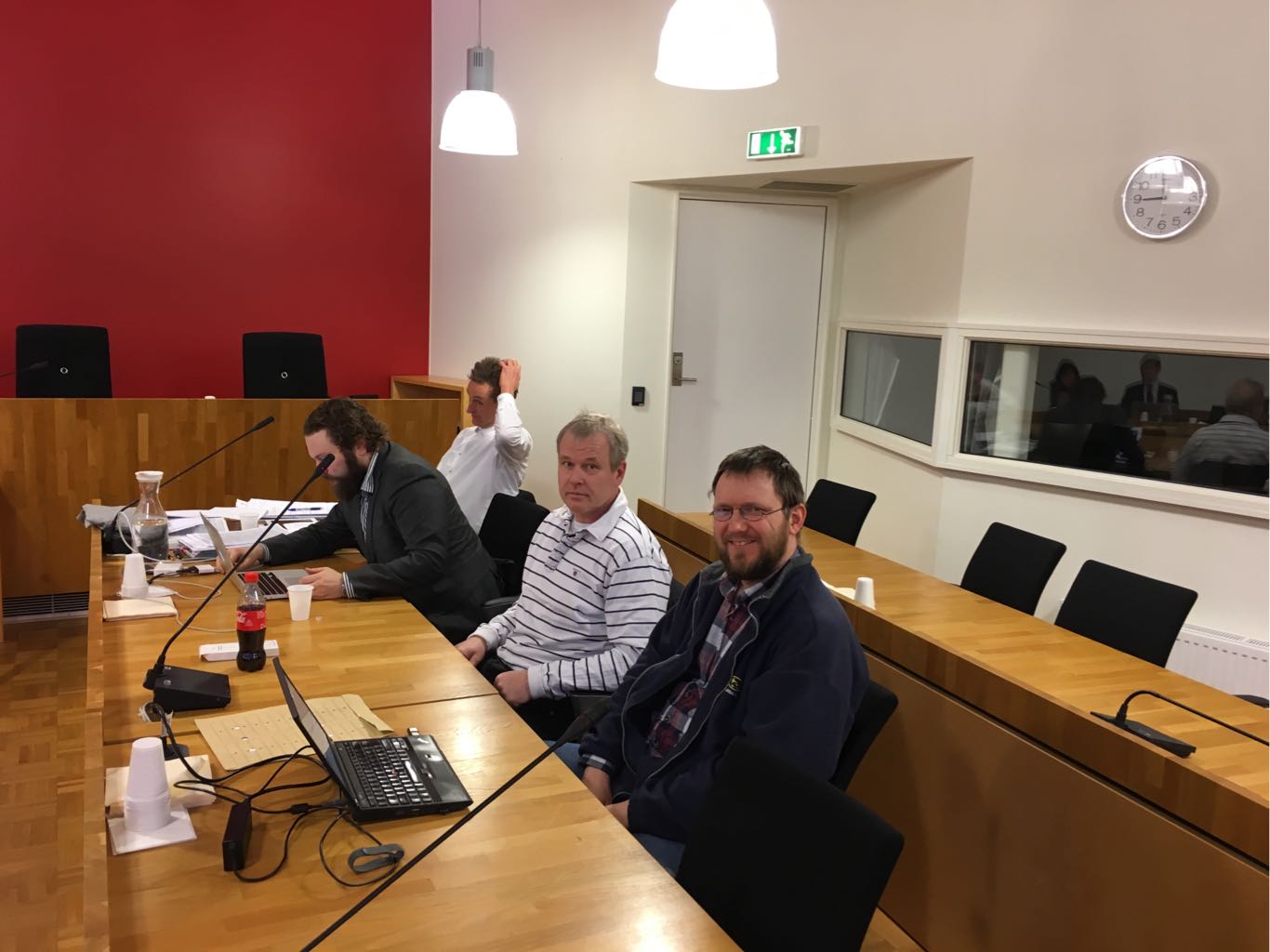
#!/bin/bash
HOSTNAME=$(ssh -G  $@    grep  ^hostname '   awk  print $2 )
CNAME= 1 
while [ -n  $CNAME  ]; do
  CNAME=$(dig +short +search -t CNAME  $HOSTNAME )
  if [ -n  $CNAME  ]; then
    HOSTNAME= $CNAME 
  fi
done
IP4ADDRESS=$(dig +short +search -t A  $HOSTNAME )
IP6ADDRESS=$(dig +short +search -t AAAA  $HOSTNAME )
echo  HOSTNAME $HOSTNAME 
echo  IP4ADDRESS $IP4ADDRESS 
echo  IP6ADDRESS $IP6ADDRESS 
[ -n  $HOSTNAME  ] && ssh-keygen -R  $HOSTNAME 
[ -n  $IP4ADDRESS  ] && ssh-keygen -R  $IP4ADDRESS 
[ -n  $IP6ADDRESS  ] && ssh-keygen -R  $IP6ADDRESS 
ssh -oStrictHostKeyChecking=no -oVisualHostKey=yes  $@ 
Ugliness results from the necessity of following CNAMEs manually since there is - to my knowlegde (educate me!) - no command line utility that has the output simplicity and selection powers of dig which can automatically follow CNAMEs without relying on the recursor having the CNAME cached or not. Use this script if you know that a host has changed its host key. It will first zap all knowledge of the previous host key from known_hosts and then invoke the ssh client with the given arguments from its command line, with options added so that you ll see the new host key in random art and that you don t need to manually confirm the new host key.

Petter Reinholdtsen: A day in court challenging seizure of popcorn-time.no for #domstolkontroll

On Wednesday, I spent the entire day in court in Follo Tingrett representing the member association NUUG, alongside the member association EFN and the DNS registrar IMC, challenging the seizure of the DNS name popcorn-time.no. It was interesting to sit in a court of law for the first time in my life. Our team can be seen in the picture above: attorney Ola Tellesb , EFN board member Tom Fredrik Blenning, IMC CEO Morten Emil Eriksen and NUUG board member Petter Reinholdtsen. The case at hand is that the Norwegian National Authority for Investigation and Prosecution of Economic and Environmental Crime (aka kokrim) decided on their own, to seize a DNS domain early last year, without following the official policy of the Norwegian DNS authority which require a court decision. The web site in question was a site covering Popcorn Time. And Popcorn Time is the name of a technology with both legal and illegal applications. Popcorn Time is a client combining searching a Bittorrent directory available on the Internet with downloading/distribute content via Bittorrent and playing the downloaded content on screen. It can be used illegally if it is used to distribute content against the will of the right holder, but it can also be used legally to play a lot of content, for example the millions of movies available from the Internet Archive or the collection available from Vodo. We created a video demonstrating legally use of Popcorn Time and played it in Court. It can of course be downloaded using Bittorrent. I did not quite know what to expect from a day in court. The government held on to their version of the story and we held on to ours, and I hope the judge is able to make sense of it all. We will know in two weeks time. Unfortunately I do not have high hopes, as the Government have the upper hand here with more knowledge about the case, better training in handling criminal law and in general higher standing in the courts than fairly unknown DNS registrar and member associations. It is expensive to be right also in Norway. So far the case have cost more than NOK 70 000,-. To help fund the case, NUUG and EFN have asked for donations, and managed to collect around NOK 25 000,- so far. Given the presentation from the Government, I expect the government to appeal if the case go our way. And if the case do not go our way, I hope we have enough funding to appeal. From the other side came two people from kokrim. On the benches, appearing to be part of the group from the government were two people from the Simonsen Vogt Wiik lawyer office, and three others I am not quite sure who was. kokrim had proposed to present two witnesses from The Motion Picture Association, but this was rejected because they did not speak Norwegian and it was a bit late to bring in a translator, but perhaps the two from MPA were present anyway. All seven appeared to know each other. Good to see the case is take seriously. If you, like me, believe the courts should be involved before a DNS domain is hijacked by the government, or you believe the Popcorn Time technology have a lot of useful and legal applications, I suggest you too donate to the NUUG defense fund. Both Bitcoin and bank transfer are available. If NUUG get more than we need for the legal action (very unlikely), the rest will be spend promoting free software, open standards and unix-like operating systems in Norway, so no matter what happens the money will be put to good use. If you want to lean more about the case, I recommend you check out the blog posts from NUUG covering the case. They cover the legal arguments on both sides.

Next.

Previous.