Search Results: "tar"

19 May 2008

Gunnar Wolf: Proud as a father would be

The recent OpenSSL incident can not be hidden. It was a very important blow to the Debian project's public face and reputation. A major hole slipped under the door in the form of a bugfix - and with all the good intention. This was not a deliberate attack, nor was it the result of a bad or sloppy maintainer - It was a honest, although painful, human mistake.
Several people started laughing at our processes and supposed strengths right away. I do, however, feel this shows how Debian is stronger security-wise than any other system. And it also shows how this saying, with enough eyeballs, all bugs are shallow, not only didn't lose validity, but was reaffirmed. Free Software development was also proved to be better than security through obscurity again.
Why?
Because were it not because of OpenSSL (and in this case in particular, Debian's packaging) being Free and subject to a code audit, this problem would have never been found. I have been asking to some friends who are part of different black-hat groups, and looking for this kind of information on the Web, it seems that -were it not for Luciano's work, we would still be running cryptographically weakened versions of OpenSSL for a long time. After all, 32768 possible keys is still quite a lot for a black-hat group to find as uneven noise, as a lead to showing the undeniable weakness.
It took two years to find the bug, yes. But it was found doing quality assurance work on publicly available source code. It was promptly fixed, mitigating (as far as possible) as much damage as could be caused. Tools for finding and fixing the defective keys were crafted and freed together with the announcement. Yes, there will be some compromises due to this, I'm sure, but an embarassing hole has been dealt with in the best way possible.
Anyway... I am very happy - I was going over Luciano's NM report, and found something I only suspected but was not sure about. I can now state clearly: I have never been so happy to advocate somebody to become a DD.
Luciano wrote a very good blog post (in Spanish) with his viewpoints on the Debian OpenSSL incident. If you happen to understand Spanish and are reading this blog, please drop over Luciano's.
Luciano: Once again, my hat goes off for you :-)

Chris Lawrence: CECB mini-review: RCA DTA800B

Mom and I went to Wal-Mart today to pick up two digital converter boxes (specificlly coupon-eligible converter boxes, “CECBs”) as emergency backup for Comcast’s frequently-incompetent cable service in Memphis. It took about 15 minutes for the assorted checkout staff figured out how to ring up the converters and use the government coupons for them, but eventually we escaped with two RCA DTA800B converters. I found the box relatively easy to use and hook up. The boxes included quick start guides in English and Spanish and full user manuals in both languages, as well as a programmable remote control (with batteries) and a short push-on coax (F-type) cable for attaching the box to a TV over the “antenna” TV input. Both boxes worked moderately well in southeast Memphis with a rather lame RCA unpowered indoor VHF/UHF antenna I picked up a while back, which is no Silver Sensor but a bit more compact to haul around, less likely to attract quizzical stares from airport security, and better than nothing at all. Neither box was able to scan WMC‘s rather weak digital signal (authorized at 394 kW but clearly not transmitting at anything close to that power) and there’s no manual tuning option. I’d imagine if I’d brought a decent directional antenna like the Silver Sensor I’d have gotten WMC and a more stable signal on some of the other channels. So, overall, I have no real complaints about the boxes themselves, except for the lack of a manual tuning feature available on other converters, and the SmartAntenna feature will be nice for folks with hard-to-tune channels in multiple directions when you can actually buy one again. I’ll probably examine some of the other CECB models before settling on one, however, particularly now that it appears that the reported Zenith DTT900 audio problem is fixed in newer boxes.

Jacobo Tarrío Barreiro: Galician debconf template translation workflow

One of the things I do when I’m at home is translating debconf templates into Galician. I’m not doing bad at all. Although it’s just me working alone (by choice), mine is the 10th most complete translation, and climbing :) I’m going to document my workflow, for two reasons: one is that others may find it useful or may suggest improvements. The other is that, in this way, I won’t depend on my bash history not being erased :) I have a compendium with almost all strings in all debconf templates I translated, and several scripts I use to maintain that compendium, apply it to translations, etc. It is available at http://darcs.tarrio.org/gl-templates/, and can be downloaded with Darcs using this command:
$ darcs get http://darcs.tarrio.org/gl-templates/
In my local machine I keep it in $HOME/pos. (You may use this compendium and scripts freely, if you want, but be sure to change all appearances of “gl.po” into the appropriate file name for your language.) Nowadays I’m mostly driven by bubulle’s NMU announcements. Whenever he announces a NMU for a package I haven’t translated or whose Galician translation is outdated, I work on it. This is what I do to start a new translation for a package called “example":
  1. Extract the attached templates.pot file into $HOME/pos/example_templates.pot.
  2. Bootstrap the translation with my compendium, using this command:
    $ ./bootstrap-po example_templates.pot > gl.po
    The script is smart enough to know that a file called example_templates.pot is a templates file for a package called example. However, I can specify a different package name as its second argument:
    $ ./bootstrap-po nonsensicalfilename.pot example > gl.po
  3. The generated gl.po file is UTF-8 encoded. However, I use xemacs to translate, which cannot read that, so I encode it into iso-8859-1:
    $ msgconv -t iso-8859-1 gl.po -o gll.po
  4. Edit the file.
  5. Encode the edited file into utf-8:
    $ msgconv -t utf-8 gll.po -o gl.po
  6. Add the translations to my compendium:
    $ ./add-total-po
    (My compendium is the total.po.txt file, hence the name.)
  7. Optional: edit the compendium to remove obsolete strings or strings which may be ambiguous so I don’t want them in the compendium.
  8. Send the translated file to the package maintainer using the BTS:
    $ ./send-po example
  9. Record and push the changes to the compendium:
    $ darcs record -a
    $ darcs push -a
This is how I update an existing, outdated translation:
  1. Extract the file into $HOME/pos/gl.po.
  2. Most likely, it’s UTF-8 encoded. Encode it into iso-8859-1:
    $ msgconv -t iso-8859-1 gl.po -o gll.po
  3. Edit the file, fix only the fuzzy translations.
  4. Encode it back into UTF-8:
    $ msgconv -t utf-8 gll.po -o gl.po
  5. Update the translation using the existing translated strings and the compendium:
    $ ./refresh-po gl.po   msgconv -t iso-8859-1 -o gll.po
  6. Open the file. Hopefully you’ll have new fuzzy translations. Edit the translation and complete it, or do some strings then refresh again and edit and refresh again until the file is completed. If the file contains lots of similar sentences you can just translate a couple of them, refresh, and the other ones will then be all fuzzy. Magic!
  7. When I’m done, encode into UTF-8, update the compendium, send to maintainer, submit changes to compendium.

18 May 2008

Kartik Mistry: Meeting with Kstar and Weekend


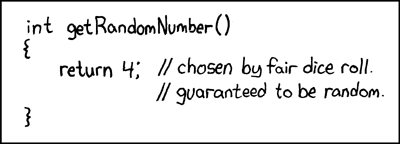
* Mistake happens in Life. I did it too, you may have done it in the past. There is no point of digging grave. Probably time to do some work to make sure that it will not happen again. XKCD Tribute. * Kstar (Akarsh Simha, GSoC candidate of KDE Project, Kstars) is in city (I mean his hometown!) enjoying his vacation, so I decided to meet him on Friday. I wanted to do it on Saturday but some other plan was there which indeed never happen and that is another story itself. Anyway, we met near MG Road/Brigade Road junction and went to Pizza Hut. Nice discussion of 2 hours, nice pizzas and finally mandatory click. We talked from Debian to FOSS culture in IITM (Note that IITM has 2 most active DDs from India!). Me thinking? Kstar and Kart_ * So, my Saturday was totally wasted due to silly things. Dear Kushal was not there in town — so, none was there to annoy from me. I thought I was able to wash my all dirty clothes in the morning but, it was power cut! I waited till 12PM to bathe (Indeed, you can’t take bath without power as bathroom is too dark, and I fear cockroach too much). Power went again around 6 PM and I went outside, wondered here and there, came back to home. Still no power. OMG, it came after 10.30 PM! Yet another reason to hate this city, BLR.

Bernhard R. Link: patches

Looking at the current discussions, I'm wishing some people would calm down a bit. It's always impressive how some things switch sides like pendulums. First of all, Debian already is centered about packing software and not developing them. We already have the rules and policies and methods in place. Our policy states:
If changes to the source code are made that are not specific to the needs of the Debian system, they should be sent to the upstream authors in whatever form they prefer so as to be included in the upstream version of the package.
And our source format shows how important marking the difference is to use: We have explicit .diff.gz files to contain them. The differences are not hidden in same Version Control System (like BSD) or in propretary formats (ever tried to unpack a .srpm without rpm or without downloading some magic perl script?), but in a simple universal understandable format. That said, please remember we are a distribution. Our priorities are our users and not the whims of software authors. We have to find the middle ground between harmful and necessary changes. Patching software to abide the FHS, to allow the user choose their editor or browser in an common way or any other thing to form a coherent set of packages is no bug in Debian, it is a bug in upstream to not allow this at least via some configure option. We have neither the manpower nor the job to rewrite and fork stuff to a usable state, though. Thus we have to keep to upstream and hope they will include our modifications or forward-port them to every new release. Thus, we need both: We need to patch (and in general, the worse the software from a distribution's point of view or from a general point, the more of this we need. This does not necessarily hold in the other direction, though.). And we need and want to show what we change. So our users can find out how exactly the software we ship is different. And so other people dealing with the same software can profit from our changes. (After all, free software is about "giving back" a lot.). And of course maintainer change over time and we want the new one understands what the previous one did. That said, there is of course things that can be improved. But as with all improvements there are things that improve and there are things where nothing is worse than good intentions. Adding more thing to keep in sync is almost always a bad thing in the long run. The easiest way to keep things accessible is to use stuff actually used. I think any additional place to track patches will be futile. A good interface to view the .diff.gz files in our archive in some browser, on the other hand, could hardly get unuseful. The format of a single .diff.gz is of course also improveable. Things like a quilt-like standardized patch series look like a very good idea to me. But the format is of course also very downgradeable. Storing VCS formated information for example, tempting as it is, spoils two very important points: And of course, a lot can be improved by just using some rules more strictly. Not using a pristine tarball or a proper subset of one where the first is not possible should not be some mere ignorable non-conformist behaviour, but seen as the serious problem it is.

Jonathan McDowell: Best bluetooth GPS for walking?

Dear Lazyweb,

What is currently the best GPS chipset suitable for walking? Something I can pair up with my E70 to get tracks for importing to OpenStreetMap is the sort of thing I'm looking for. I can find various reviews that suggest the SirfStar III is best for the low speeds associated with walking, but they're all at least a year old. Has nothing better come along since? What about the SkyTraq Venus 5?

Julien Blache: pommed v1.18: small things

I’ve just released pommed v1.18, which is mainly a maintenance release. I’ve added some more USB IDs for Apple external keyboards and relaxed the event devices identification for internal keyboards. pommed will now happily start on a machine fitted with a keyboard+trackpad assembly that normally isn’t found on this model. This can happen when the topcase of the machine is replaced with the wrong part. I expect this situation will happen more and more often as people buy parts from EBay or similar to repair their laptops.

Julien Danjou: Boarding the Prometheus

As I said a month ago, my main server Delmak was dying. Well it still runs (proof: you could read this blog some days ago). Thanks to friends I host for free, they've kindly given enough money to buy a brand new server (C2D E8400, 4 GB RAM, 2x500 GB RAID 1) in order to replace the good old Delmak. PrometheusThis new box has been named Prometheus after the only BC-303 class battleship ever built. Delmak was used to mainly run as a Web, mail and databases server. I decided to do use this server switch to change the server software I use. The first mail server I setup was based on Exim 3, courier- imap,pop -ssl, with userdb files. That was... rough. Later I switched to Exim 4, using vexim, and MySQL as a back-end. That was something like 3 years ago I guess. Since then I never really touched that back. I added spamassassin and clamav filtering some months after, because some users asked for it. That's all. So this week, I decided to switch away from this configuration. I do not understand Exim anymore anyway, so I decided to use Postfix which I often use and administrate at work. Obviously, I also now use PostgreSQL as database back-end, since it rocks, and since Postfixadmin supports it. By the way, be aware that the Debian package of postfixadmin is crappy (the configuration file is readable by anyone by default, with the database password in it). I also set up postgrey which is quite nice and efficient. Well, then was time for amavisd-new installation, but I did not do it. Seriously, amavisd-new configuration is a bloody mess, as the language it is written in (yes, Perl). So I switched to dspam which I heard is nice. Well, it seems to be for now, since it even supports clamav daemon usage directly, which is very very nice because that means I do not have to set up another thing for that. I also switched from courier to dovecot, mainly because the latter seems to be faster and lighter. I then changed the default virtual_transport to Dovecot LDA. The main advantage of this is that the LDA updates the Dovecot index while delivering. It also supports quota, which I do not use and plug-ins, like the Sieve language for mail filtering. So I decided to change my procmailrc to a new Sieve filter. My procmailrc is quite small since I only use regex to match lists and some mail address, so it has only something like 12 rules. And well, I did not do it since I discovered after some googling that Dovecot implementation of Sieve is grabbed from Cyrus which does not support variables for now. That means that the following procmailrc code:
:0:
* ^X-Mailing-List: <debian-.+@lists.debian.org>
* ^X-Mailing-List: <debian-\/[^@]+
list-debian-$MATCH/
which will translate to:
require [ "regex", "variables", "fileinto" ]
if header :regex "X-Mailing-List" "<debian-(.+)@"
 
    fileinto "lists.debian.$ 1 ";
    stop;
 
But that won't work since Dovecot Sieve implementation does not support "variables". Well, since I'm not ready to list all the lists I'm subscribed to, Sieve is a no-go for now. I'll stick with procmail.

Russell Coker: Debian SSH Problems

It has recently been announced that Debian had a serious bug in the OpenSSL code [1], the most visible affect of this is compromising SSH keys - but it can also affect VPN and HTTPS keys. Erich Schubert was one of the first people to point out the true horror of the problem, only 2^15 different keys can be created [2]. It should not be difficult for an attacker to generate 2^15 host keys to try all combinations for decrypting a login session. It should also be possible to make up to 2^15 attempts to login to a session remotely if an attacker believes that an authorized key was being used - that would take less than an hour at a rate of 10 attempts per second (which is possible with modern net connections) and could be done in a day if the server was connected to the net by a modem. John Goerzen has some insightful thoughts about the issue [3]. I recommend reading his post. One point he makes is that the person who made the mistake in question should not be lynched. One thing I think we should keep in mind is the fact that people tend to be more careful after they have made mistakes, I expect that anyone who makes a mistake in such a public way which impacts so many people will be very careful for a long time… Steinar H. Gunderson analyses the maths in relation to DSA keys, it seems that if a DSA key is ever used with a bad RNG then it can be cracked by someone who sniffs the network [4]. It seems that it is safest to just not use DSA to avoid this risk. Another issue is that if a client supports multiple host keys (ssh version 2 can use three different key types, one for the ssh1 protocol, one for ssh2 with RSA, and one for ssh2 with DSA) then a man in the middle attack can be implemented by forcing a client to use a different key type - see Stealth’s article in Phrack for the details [5]. So it seems that we should remove support for anything other than SSHv2 with RSA keys. To remove such support from the ssh server edit /etc/ssh/sshd_config and make sure it has a line with “Protocol 2“, and that the only HostKey line references an RSA key. To remove it from the ssh client (the important thing) edit /etc/ssh/ssh_config and make sure that it has something like the following: Host *
Protocol 2
HostKeyAlgorithms ssh-rsa
ForwardX11 no
ForwardX11Trusted no You can override this for different machines. So if you have a machine that uses DSA only then it would be easy to add a section: Host strange-machine
Protocol 2
HostKeyAlgorithms ssh-dsa So making the default configuration of the ssh client on all machines you manage has the potential to dramatically reduce the incidence of MITM attacks from the less knowledgable users. When skilled users who do not have root access need to change things they can always edit the file ~/.ssh/config (which has the same syntax as /etc/ssh/ssh_config) or they can use command-line options to override it. The command ssh -o “HostKeyAlgorithms ssh-dsa” user@server will force the use of DSA encryption even if the configuration file requests RSA. Enrico Zini describes how to use ssh-keygen to get the fingerprint of the host key [6]. One thing I have learned from comments on this post is how to get a fingerprint from a known hosts file. A common situation is that machine A has a known hosts file with an entry for machine B. I want to get the right key in machine C and there is no way of directly communicating between machine A and machine C (EG they are in different locations with no network access). In that situation the command “ssh-keygen -l -f ~/.ssh/known_hosts” can be used to display all the fingerprints of hosts that you have connected to in the past, then it’s a simple matter of grepping the output. Docunext has an interesting post about ways of mitigating such problems [7]. One thing that they suggest is using fail2ban to block IP addresses that appear to be trying to do brute-force attacks. It’s unfortunate that the version of fail2ban in Debian uses /tmp/fail2ban.sock for it’s Unix domain socket for talking to the server (the version in Unstable uses /var/run/fail2ban/fail2ban.sock). They also mention patching network drivers to add entropy to the kernel random number generator. One thing that seems interesting is the package randomsound (currently in Debian/Unstable) which takes ALSA sound input as a source of entropy, note that you don’t need to have any sound input device connected. When considering fail2ban and similar things, it’s probably best to start by restricting the number of machines which can connect to your SSH server. Firstly if you put it on a non-default port then it’ll take some brute-force to find it. This will waste some of the attacker’s time and also make the less persistent attackers go elsewhere. One thing that I am considering is having a few unused ports configured such that any IP address which connects to them gets added to my NetFilter configuration - if you connect to such ports then you can’t connect to any other ports for a week (or until the list becomes too full). So if for example I had port N configured in such a manner and port N+100 used for ssh listening then it’s likely that someone who port-scans my server would be blocked before they even discovered the SSH server. Does anyone know of free software to do this? The next thing to consider is which IP addresses may connect. If you were to allow all the IP addresses from all the major ISPs in your country to connect to your server then it would still be a small fraction of the IP address space. Sure attackers could use machines that they already cracked in your country to launch their attacks, but they would have to guess that you had such a defense in place, and even so it would be an inconvenience for them. You don’t necessarily need to have a perfect defense, you only need to make the effort to reward ratio be worse for attacking you than for attacking someone else. Note that I am not advocating taking a minimalist approach to security, merely noting that even a small increment in the strength of your defenses can make a significant difference to the risk you face. Update: based on comments I’m now considering knockd to open ports on demand. The upstream site for knockd is here [8], and some documentation on setting it up in Debian is here [9]. The concept of knockd is that you make connections to a series of ports which act as a password for changing the firewall rules. An attacker who doesn’t know those port numbers won’t be able to connect. Of course anyone who can sniff your network will discover the ports soon enough, but I guess you can always login and change the port numbers once knockd has let you in. Also thanks to Helmut for advice on ssh-keygen.

17 May 2008

Simon Richter: Solutions

(tl;dr: if you have a few minutes, please add information here) Joss, the problem with the new package formats is that there is nothing that actually uses the additional information in a way that adds significant new functionality, so the net result of the change was that we throw away the information at a different layer in our software stack, and one of the interfaces got a lot more complicated in the process. One possible application would be a "poor man's patch tracking" inside the BTS, perhaps with a new state "fixed in patch". I can see two ways of implementing that:
  1. by extending the interface of the "new" package formats that Debian,Ubuntu bug numbers are attached to the actual patch files and having the archive maintenance software extract and process that information (reject packages that add a patch for a bug without closing it in the changelog, notify the BTS), or
  2. by leaving the package format untouched and simply adding a regex matching "Fixes: #nnnnnn" that is reported to the BTS as "we have added a patch", so the submitter is notified that the bug is gone for him/her; the bug is then closed in the changelog of the upload removing the patch.
The former approach also allows us to link to patches from BTS pages, which the latter doesn't, so there could be actual benefit here if we believe it is worth the additional complexity. (Update: Rapha l thinks it is. I like the idea of a package format with separate patches a lot more in this context than I did without it, but still my fear that it will actually be perceived as sanctioning large patchsets still remains.) About mandatory co-maintenance: the problem isn't "helping". We have plenty of people with commit access to packages they don't even remotely understand who are really helpful (not). The problem is that someone needs to actually read all the commit logs and understand what the changes do in this context. In most cases, that person or group would be upstream, not a DD. My first impression after reading the patch was "adding uninitialized data to the entropy pool is pointless/harmful as it is not random, so this patch makes sense", because the loop around it was not contained in the patch. Obviously I'm not an OpenSSL developer. There is nothing Debian could have done internally to verify the correctness of this patch that would properly scale to the entire archive, even if we put "more emphasis on security". The only solution I see is reporting every patch to upstream immediately and getting affirmation that it is correct. This, however means that we need to produce patches that upstream can accept. For obvious code bugs, that is simple, but for integration patches like paths it is not sufficient to replace one string with another, but rather make it configurable in some place that can be reached from debian/rules. In an ideal world, we end up with very few Debian specific patches, so essentially we are talking about adding functionality to dpkg that we don't want to use. I've started a page in the Debian Wiki, Getting Packaged with an outline of a possible document aimed at upstream developers that should list the typical problems we run into and how to avoid them.

Romain Francoise: Some .diff.gz statistics

The OpenSSL fiasco has started a fresh discussion on Debian source packages and the way we handle changes to upstream software. One of the issues under discussion is that some Debian packages don't use a patch system and ship all their modifications unseparated in the Debian .diff.gz, which makes it harder or impossible to extract patches later on and to understand why some changes were made. The commonly recommended way of doing things is instead to keep the upstream source pristine, storing modifications cleanly separated and documented under debian/patches; several tools such as quilt or dpatch can make this process easy.

Out of curiosity, I did a quick scan of my local mirror to see how many packages ship changes outside debian/ in their .diff.gz, and I was surprised to see that 4803 source packages out of 11853 (40%) do so! This is much more than I expected. Some packages even use a patch system but still have changes in .diff.gz, as shown by this lintian check.

The most commonly patched files in affected packages are:
   1006 config.sub
1002 config.guess
823 Makefile
754 configure
715 Makefile.in
484 aclocal.m4
Most of these are caused by autotools updates which are necessary if upstream ships old versions of these files. In many cases there are clean ways to deal with this, for example to always have up-to-date versions of config. guess,sub you can simply make them re-exec their authoritative versions (as shown by this patch) and build-depend on autotools-dev.

If you don't use a patch system, now is a good time to start. The New Maintainers' guide has more information on the topic.

Simon Richter: OLPC and Windows

There is an article on TechCrunch on Windows on the OLPC. This article started out as a comment below lots of comments that were missing the point, but eventually grew too large. The entire discussion circles around the question whether it would be beneficial to give the users the same view and behaviour that is on 90% of machines worldwide, so they can start out prospective jobs with a minimum of training. Learning your way around the UI is only a significant part of training if that actual work you will do is trivial — so this argument basically boils down to "I don't expect the African kids to do anything but grunt work during their lifetime anyway, so we better start training them early", which is the wrong approach not only to education. To make a bad car analogy, roads are usually made of several layers, from the foundation providing the stability up to the paint defining lanes. Operating systems are similarly layered, with a core that applications (cars) never touch directly, and several other layers on top of that that are not really required for basic functionality, but that add safety (process separation) or comfort (standard functions). The minimum standard of things is a "platform definition", which all car (or application) makers can expect — all roads have a minimum width and there are no dangerous spikes (if that is not true, you can get a steamroller or respectively format your harddisk). Railways use the same kind of foundation (operating system), but the platform (heh) is quite different. You cannot drive a car on a railway, or a train on a road, just as you cannot run a Windows application on a Linux system or vice versa (there are special wagons you can place your car on, and special trucks with rails on them if you feel like it, but these are heavier and need more energy to pull). Now in this discussion, people have been comparing Windows (the platform) to Linux (the operating system). That doesn't work. On Linux, there are several platforms available, the most prominent being GNOME and KDE for the desktop and POSIX utilities on the command line, but there are lots of others as well. Part of most platform definitions is an user interface, which abstracts what is really happening to something comprehensible to the user, using analogies (a tachometer displays our speed as an angle usually, but other representations are possible). The "desktop" idiom happened to be the first graphical UI some thirty years back, and was perpetuated into today's computers (just like the width of roads hasn't changed from the days of the Roman empire, where it was "two horses and then some"), however this doesn't mean it is the best choice available — it's just what we are used to. If you look at the screen contents on the day traders' computers (lots of that on the TV right now thanks to the market crisis), you will notice the vast majority does not use overlapping windows or standardized "rising-edge" buttons to click on, but rather, they have a tightly-packed grid layout with high-contrast information displays that also color-code certain messages. I think that is the most important point here: to achieve optimal results, the presentation idiom needs to be chosen in a task specific way. With children as the target audience, we lose one of the key requirements behind the adoption of the windowed view: the need for side-by-side presentation of data from multiple unrelated sources (which is also a problem given the lack of screen space). With the introduction of ad-hoc mesh networking and collaborative applications, the "desktop" analogy begins to break down. The project's mission also defines requirements on the platform. If we want to keep the requirement "users should be able to build and share their own stuff", then we want a framework where it is hard to make mistakes, especially those that can be spotted only after an interesting failure, and more importantly impossible to write code that makes unrelated components fail, because these components might be your way back out of the situation. Windows has an excellent event model with fairly good isolation of components (to the point where a problem in an event handler can be handled by the event loop rather than terminating the program, so for example Internet Explorer can shut down broken plugins rather than crashing), but the detail knowledge required to really work with the API (how to build a message loop that also runs queued I/O completion handlers correctly) leads to a fairly steep learning curve, and would teach implementation details rather than concepts. The normal "linuxy" approach of going low level whenever higher-level approaches fail is not the answer either as we want to truly empower people rather than just training them to be a cheap replacement for the tech support Indians (no offence), so it is vital that the "real" applications use the same framework that people implementing new things would use, and thus all the complexity that we want in our "official" applications needs to be taken care of by the platform, with all the safety features in place too. So no existing platform provides what we want. — hence Sugar. And that is the problem for Windows advocates: Sugar replaces those bits that make Windows a platform and not just a kernel, so porting Sugar to Windows doesn't make sense from a technical point of view, since we already replaced the bits that we didn't have free software for before. Other than that, the "Linux vs. Windows" kernel choice is secondary; in fact both kernels are very similar in design and function, the various advantages and disadvantages of either aren't that relevant really. The only technical reason in favour of Linux is the virtual memory management — the Windows VMM behaves erratically in the absence of a swap device, but I believe that is not something that cannot be fixed. The reason why I believe Linux is the better choice here is long-term support. Since these devices will be used in basic education (which hasn't changed that much in the past years as 1 plus 1 still equals 2), there is hardly any need for radical changes after the initial rollout — why add instability when you don't have to? With Microsoft as a for-profit company, there needs to be a business model sustaining that behind it, and I believe it will be very hard to find one. "Subscription" falls down in that it is a long-term recurring expense, which governments tend to be pretty wary of. The alternative is to upgrade several million computers' OS every few years. Lots of companies are skipping entire Windows releases because of the migration cost, and even with the "console bonus" (all hardware is the same) and bootloader support for software upgrades over a mesh network, this is still a massive endeavour. That each machine would have to reserve enough memory for the entire "upgrade pack" so it can transition "in one go" also makes this model unworkable. To summarize, using Windows on the OLPC does not make sense at all. If you use just the kernel, you don't gain anything over Linux, and if you use the entire platform (and by extension, the UI), you add unnecessary complexity that is not only not required for the actual task, but also distracting. If you add restrictions and extensions to make it work, you invent a new platform, which is precisely what Sugar did. The argument that it is important for pupils to use the same thing that the rest of the world is using to ease their entry into the workforce is bogus at best, and racist at worst.

Jeff Bailey: 3mo surgery update; Step-Grandmother-in-law; Almost back to work

Hey! I have my 3-month update with my surgeon on Tuesday. We'll be hopefully reviewing my movement restrictions and getting the final all-clear to return to work at the beginning of next month. I don't expect that I'll be able to lift Leif, but even if I can twist and bend a little bit and reach out with both my arms at once it would be a huge improvement for me.

Do any of you have any questions? I'm going to ask for some clarification on the photo that I posted before (and hopefully will get another one). But if there's anything that other people want to know, I'll ask as much as I can.

Yesterday my wife's (Angie) father's (Ernie) wife's (Janet) mother (Lydia) died from a heart attack. I've only met her a few times, so I'm not really shaken by it, but she was a really nice lady. Something I think about is that with Janet marrying into the family after Angie and her siblings had all moved out means that there's a large chunk of Leif's family now that Angie and I can't really teach him about. So, I worry about Henry, and I'm thinking a lot about Janet. Since we're going up to Vancouver at the end of the week, we should hopefully be in town for any memorial service.

It's crazy to think back over the past 3 months. Various family members health problems; Leif learning to walk, and getting his first words; Leif moving to his own room and his own bed; Going from where I needed a walker and a trip to the mailbox was far, to where a ~1km to a park pushing a stroller makes me tired, but I can do the trip back easily enough; Going through the work to change to a new work visa; almost completing one of my master's courses; and importantly: I've got 30 of the songs finished on "Hard" in Guitar Hero 2.

It'll be fun to get back to work and regular life, though. =)

Uwe Hermann: Green energy from Lichtblick getting... cheaper!

You might remember that I wrote a blog entry about my switch to the green electric utility "Lichblick" (Germany) a while ago. I did that purely out of environmental reasons, I didn't want to continue to waste money on polluting and/or dangerous crap such as fossil or nuclear power. Yes, even if that meant a slightly higher price (but I really didn't compare prices much before switching — I was after an environmentally clean solution, not the cheapest solution). Quick status update: the switch went really nice and easy, no downtimes, no hassle. I've been a happy customer for more than 8 months now. Today in my snail mail inbox: a letter from Lichtblick that they're going to reduce the price per kWh from 20.25 to 19.99 (Euro) cents starting July 1st and they give you a guarantee that there won't be any price raises before the end of 2009 (more details also here). Now, that's a positive surprise there. Compare that to 98% of all other energy providers in Germany who have lately increased prices quite a lot for very obscure or non-existant reasons. Yes, I do realize that the reduced costs are not that dramatic, and Lichtblick is using this as a means to impress people and gain new customers. But I fully support them in doing so, the more people are switching to a green energy provider the better, if you ask me. I encourage everyone to consider switching, either to Lichtblick, or some of their competitors (in Germany) e.g. Greenpeace energy, Elektrizit tswerke Sch nau, or Naturstrom AG. There are various alternatives in other countries too, of course.

Josselin Mouette: Some lessons to learn

There are obviously some things we need to remind if we don t want something like the OpenSSL debacle to happen again. It doesn t mean we need to throw stones nor to rush into changing our processes without thinking. However, there are already some things that should be obvious but unfortunately are not.

  1. Shipping a giant diff.gz that contains all changes in one, putting security fixes, policy fixes, bug fixes, cosmetic changes and autotools files at the same level, is not something we should accept anymore. Improvements in the dpkg-source format are much welcome in this direction, but they are useless if maintainers don t use them. Neither a VCS nor a build tool will be able to know which line of the changes is related to which bug. Only the maintainer can.
  2. Core packages should all have co-maintainers. This is pretty much stating the obvious, and is much easier said than done. The OpenSSL case is one of the best examples here: Kurt is not one of those who refuses help, but frankly, would you want to maintain that package? Having already maintained packages with messy code, upstreams not understanding at all the needs of a distributor, avalanches of security alerts and randomly-changing ABIs, I can tell you this is no fun like it can be to hack on a desktop environment or a device driver. The only sane reason to do this is that you need the package to work. The only visible result you get from your work is that programs are not randomly crashing.
    I have no magic recipe to propose so that more people help with such packages, and that s where we need to be really innovative. Cross-distribution teams, mandatory co-maintainership on a core package for each DD these (and all ideas I have not heard of) are the experiments we should start now.
  3. Patching bad code leads to unpredictable results. What maintainer of a complex package has not introduced a new bug while trying to fix another one? Even when a piece of code is maintained by uncooperative developers, is not commented, uses arcane variable names or is impossible to understand without having contributed 3 winning entries to the IOCCC, it needs to evolve. And in these cases, it is only a matter of time until such things happen.
    Don t get me wrong: I m not trying to put the blame on upstream here. They have contributed very valuable code to the community and their work helped in the considerable widespread of cryptography. It s just that their code is not enough for our needs. If we can t patch it safely (and I m now convinced we can t), maybe we need to focus on alternatives and help them getting used by crypto-related packages. The code in GnuTLS and NSS is not necessarily better, but most (if not all) patches Debian needs to apply to them are build and portability fixes.
  4. Unless Debian-specific, 1 patch = 1 bug in the upstream tracker. This should be obvious, but given the number of patches that are never forwarded, it doesn t seem so. You should not only give a chance for upstreams to review the patch, but you need them to track it, and you must give them the chance to review it anytime someone else stomps on a similar issue. If upstream does not have a bug tracker, they probably think their software has no bugs. Which means they are not trustworthy, and we go back to point 3.
  5. We need to give more priority to security. Issues in the security team seem now fixed for good and they have been doing an awesome work. There isn t much left to do so that packages are all built with security-hardening features, but it still needs to be done. And there is much more to do so that we can provide out of the box a decent SELinux setup, or, if it turns out unrealistic to do, a decent system hardening setup using another framework. I know the SELinux zealots will jump on their high horses to explain that their framework is better, but the current situation where it is impossible for the average system engineer to setup a Debian-based MAC system is much worse than having a suboptimal setup that already works.
All in all, this incident has a great impact on Debian s image. If we don t react accordingly, adapting our processes and our system to match what our users expect from us and they expect the best they will turn away from us. With very good reasons to do so. Update : It seems OpenSSL does have a bug tracker. Thanks Kurt for pointing me to it.

Patrick Winnertz: cowdancer in unstable - no longer support for stable release?!

Cowdancer is activly developed in debian, that's very nice. it's really a cool tool to build packages for unstable but also for backporting efforts. I'm using it on a daily basis to build debian etch packages of lustre. However three days ago cowdancer stopped working with my etch chroot after an upgrade of my unstable system:
dpkg-source: info: building lustre in lustre_1.6.5~rc3-1.dsc
dpkg-genchanges -S >../lustre_1.6.5~rc3-1_source.changes
dpkg-genchanges: including full source code in upload
dpkg-buildpackage: source only upload (original source is included)
chroot: cannot run command  cowdancer-ilistcreate': No such file or directory
W: cowdancer-ilistcreate failed to run within chroot, falling back to old method
 -> Running in no-targz mode
I: using fakeroot in build.
Current time: Sat May 17 12:18:30 CEST 2008
pbuilder-time-stamp: 1211019510
 -> copying local configuration
 -> mounting /proc filesystem
 -> mounting /dev/pts filesystem
 -> policy-rc.d already exists
Obtaining the cached apt archive contents
Installing the build-deps
cowdancer: .ilist size unexpected
Can't open perl script "/usr/bin/dpkg-architecture": Cannot allocate memory
 -> Attempting to satisfy build-dependencies
 -> Creating pbuilder-satisfydepends-dummy package
cowdancer: .ilist size unexpected
sh: /tmp/satisfydepends-aptitude/pbuilder-satisfydepends-dummy/DEBIAN/control: Cannot allocate memory
E: pbuilder-satisfydepends failed.
Copying back the cached apt archive contents
 -> unmounting dev/pts filesystem
 -> unmounting proc filesystem
 -> Copying COW directory
 -> Invoking pbuilder
 -> Cleaning COW directory
Command /bin/sh -c pdebuild "--pbuilder" "cowbuilder" "--" "--basepath" "/var/cache/pbuilder/etch.cow" failed

After some research I found that a change of cowdancer (something related to .ilist) is responible for this issue. After that I asked on #debian-devel if someone else had this problem and were told that removing an re-creating the chroot will help. But that results in the same error msg. After that I decided to wrote a bugreport against cowdancer, since this is in my eyes a major defect in this software to do not support the latest stable release. I filled this report as RC Bug and got very fast a answer:
severity 481344 wishlist
retitle 481344  provide cowdancer etch backport
[ ... ]

I think this is the wrong way to fix a problem in unstable with a backport of a software. Providing a fallback for older debian releases would be the better way. Is anybody else having this problems?

16 May 2008

Clint Adams: It was GORGEous and GOLDEN until it was black

[This entry is dedicated to Russell, , and the squirrels ( ) that tried to sit on my lap even though I told them that I was not toresbe.] The man handed us burritos full of spinach-infused E. coli and salsa verde of the botulist manifesto. Para llevar? You bet. I need to get me some waterfall Giardia to right my viscera or I'm bound to start hallucinating mountain paths full of dogs, e, inedible gorp, and children throwing themselves to their death. Hi, kids. , , , what happened to the garlic bread Can you imagine being allergic to ? My Dreamsicle can't. Now fly, fly away to the land of the peppermint tea, the deer without fear, the queer, the other beer, Sue's sambar. I like my pretty damn fancy, but we're not in , are we, Toto? There is a warp in the space-time continuum, causing multiple instances of calderae and 27 Dresses. One fled a bookstore and flew to its adopted homeland. One time. It sure is windy atop this peak, and while Phil Collins sings about burning down some kind of mission, the husband is eying Mr. MacLachlan. My ex's ex gives a lesson about testosterone, but we are too far away to see the bison. The bison do not, it would seem, give a damn about us or Irving, and they do not care about the worker exposing her VS panties. A secret hidden jeep whisks, and a card hides defiantly in my wallet. Nothing more can be said, and not for the reasons you think.

Jonathan McDowell: I'm totally Rick Moranis

I mentioned on my switch to Movable Type post that there were a few things that were hopefully going to happen RSN and that I'd talk about them if they did.

Well, one of them did, and Steve helpfully dropped me in it earlier in the week - I was granted write access to the debian-keyring. It's worth pointing out that while Steve did some prodding around this the process started quite some time ago; back in November James Troup (the other current keyring maintainer, and at the time the only one) contacted me regarding an offer I'd made to help out in whatever way I could. As a result I got involved in the keyring RT queue and did some basic triage and trying to point people in the right direction, where such help didn't require any keyring privileges. I also started thinking about how keyring maintenance could be shared in a trackable fashion. I made some suggestions to James and he was largely in favour with a few suggestions and wishlists.

I'll get into discussing exactly how it goes at a later point in time, but for the moment I want to get a better feel for the process and procedures to fine tune things. To that end I've been working my way through the keyring RT queue, and have removed quite a few keys of retired developers, as well as doing a handful of replacements for developers who'd lost or had their key compromised. There's still a few more tickets in progress and I'm trying my best to work through them in a timely manner - if you have an outstanding ticket and haven't heard from me then please do feel to ping it.

MJ Ray: BBC TV: Click: Free=beer and facebook-flaming

Free software finally gets significant coverage on BBC TV's Click show this week, but I think it's very much Linux rather than GNU/Linux and free cost rather than freedom. They mentioned free security software and even raised the possibility of trojans, but didn't mention how free (as in freedom) software allows any random end-user to check or have it checked. Quite a missed opportunity! However, Click has a regular letters section, so watch it (times below), email click@bbc.co.uk and see if we can get the free software view across. The letters section this week seemed to be flaming proprietary SaaS social network site facebook for their pathetic default-permit approach to security of user details. I really think there's a role for something like noserub in free software social networking. Click-UK is shown on BBC News Channel Saturday 1130, Sunday 0430 and 1130, Monday 0030 and Sunday 0430 on BBC-1 (times BST) Click-World is shown Thursday 19:30 GMT, Repeated Friday 09:30 and 12:30 (Asia Pacific only), Saturdays 06:30, Mondays 15:30, Tuesdays 01:30 (not Asia Pacific, Middle East or South Asia) and 07:30 GMT Anyone else see this?

Kapil Paranjape: Computers and I

This post is to some extent a fall-out of the recent discovery of a serious flaw in Debian's openssl and openssh packages. However, as Raghavan will confirm, a weaker version of what is said below was part of our discussion two weeks ago. Moreover, there are earlier posts on this topic in this blog.There are times when I wonder why I am so involved with computers ... this is clearly one of those times.
कर्मण्यैवाधिकरस्ते मा फलेशु कदाचनkarmaNyaivaadhikaraste maa faleshu kadaachana
This is a phrase from the भगवद गीत (bhagavad giit) which has been stuck in my head for the last 30 odd years. It roughly paraphrases into
Do something because you think it is worth doing not because of what you hope to achieve by doing it.1
The above maxim is a good one but is sometimes a cop-out. Moreover, it provides no basis for actually making ethical choices.Ethics comes from one's interactions with the communities one is a part of. There are (roughly) two communities that I am a part of in the context of computers:I take these in turn below.

Debian and FOSS communitiesBy its own standards, the Debian community has suffered a massive failure ... and by these same standards it has reacted extremely well to this failure.I feel shame and blame. Why have I been ignoring RFH#332498 all these days when it shows up in the output of wnpp-alert? Here I am, a mathematician with some understanding of the issues, not helping out! Three years ago I even gave a short course of lectures on implementations of crypto; the source of openssl and openssh were used as examples. Excuses like, "I don't know anything about library packaging" and "I need more time!" (who doesn't) seem too weak now.At the same time, I feel a sense of solidarity with the Debian (and more widely FOSS) community as it tries to pull out of the resulting mess. The resilience that allows us to laugh wryly at ourselves is IMHO admirable.As Steve Kemp wrote: "[When we look back we will see that] we did good".

IMSc computer communityThe IMSc computer setup was built by volunteers and was genuinely a community when I joined this institute in 1996. It has since then broken into users, system administrators and the computer committee. As Indira Gandhi would have said: "This is a world-wide phenomenon", and as was the case when she said it, my response is: "That doesn't make it a good thing!"
When I speak about this fractured IMSc community below it is in generalities. There are certainly individuals who rise above the shards.
I have been promoting the use of FOSS and more specifically Debian at IMSc ever since I got here. While explaining the pragmatic aspects like cost and security, I have also tried to emphasize the freedom and community aspects of FOSS use. When the latter are not understood or accepted, the former are easily blown away.This year I made an attempt to get the Computer Committee to invite users to choose2 their own computers and the software that ran on it, but it turned out that no one really wanted this. Users just wanted to buy "fancy toys", the administrators just wanted to make their life simple and CC members just wanted the power to dictate what people bought.3I also made an attempt to get our users to educate each other on the use of computers for their work --- first through the establishment of a wiki and then through the "No-Excuse" mailing list.4Unfortunately, the fractured IMSc computer community sees computers and software as expensive commodities --- with some combination of fear, greed and irritation. In any case, there is no feeling of being part of a larger community that is trying to solve (certain types of) problems.

A wise man once said:

With great freedom comes even greater responsibility.
This may explain why we prefer being dictated to by proprietary vendors and computer committees that "buy stuff for us". We are afraid of the responsibility that comes with freedom.Another much quoted quote is:
If you are not part of the solution then you are part of the problem.
The FOSS community (actively) invites people to join-in in solving problems. This participation (which can be at a level of one's own choosing) is the source of one's freedom in free software. The IMSc community just wants मा-बाप सर्कार (maa-baap sarkaar) to fix their toys.

A decisionThe IMSc computer community was tied to Debian and FOSS after the break-ins into our system in the early 2000's. At that point, I was instrumental in installing a security infrastructure based mainly on Debian. This led to my greater involvement with FOSS and Debian and also to the greater "infiltration" of Debian and FOSS into IMSc computers.From the "commodity" point of view at IMSc we have come a full circle since most users will have to "do a lot" so that the IMSc computer LAN emerges unscathed from the crisis created by the Debian openssl flaw.From the "community" point of view at Debian we have spiralled out and even this major whirlpool will not drag us back in.It is no longer possible (for me) to straddle the circle and the spiral in an attempt to widen the former; I'm taking the "outward radial vector"!

  1. To this sentiment I have often added "do it because it's fun". ↩
  2. ... and be willing to justify their choices of course.[WGFCEGR] ↩
  3. OK! I'm exaggerating a bit! ↩
  4. No-Excuse is an acronym for Novice and Expert Computer Users. The blurb says:
    Now that this list exists there is "no-excuse" for novices to remain in-experienced or for experienced users to claim that something is "too hard to explain to a novice"!
    ↩

Next.

Previous.