Here s my (seventh) monthly update about the activities I ve done in the F/L/OSS world.
Debian
It s been 14 months since I ve started contributing to Debian.
And 4 months since I ve been a Debian Developer. And in this beautiful time,
I had this opprotunity to do and learn lots of new and interesting things. And most
importantly, meet and interact with lots of lovely people!
Debian is $home.
Sponsored a lot of uploads for William Desportes and Adam Cecile.
Mentoring for newcomers.
FTP Trainee reviewing.
Moderation of -project mailing list.
Applied for DUCI project for Google Summer of Code 2020.
Ruby2.7 Migration:
Ruby2.7 was recently released on 25th December, 2019. Santa s gift. Believe it or not.
We, the Debian Ruby team, have been trying hard to make it migrate to testing. And it finally happened.
The default version in testing is ruby2.7. Here s the news! \o/
Here s what I worked on this month for this transition.
Upstream:
Opened several issues and proposed patches (in the form of PRs):
Issue #35 against encryptor for Ruby2.7 test failures.
Issue #28 against image_science for removing relative paths.
Issue #106 against ffi-yajl for Ruby2.7 test failures.
Debian LTS
Debian Long Term Support (LTS) is a project to extend the lifetime of all Debian stable releases
to (at least) 5 years. Debian LTS is not handled by the Debian security team, but by a separate group
of volunteers and companies interested in making it a success.
This was my seventh month as a Debian LTS paid contributor. I was assigned 24.00 hours and worked on
the following things:
Other(s)
Sometimes it gets hard to categorize work/things into a particular category.
That s why I am writing all of those things inside this category.
This includes two sub-categories and they are as follows.
Personal:
This month I could get the following things done:
Most importantly, I finally migrated to a new website. Huge UI imporvement! \o/
From Jekyll to Hugo, it was not easy. But it was worth it! Many thanks to Luiz for writing hugo-coder, Clement, and Samyak!
If you find any flaws, issues and pull requests are welcomed at utkarsh2102/utkarsh2102.com
Wrote battery-alert, a mini-project of my own to show battery alerts at <10% and >90%.
Written in shell, it brings me all the satisfaction as it has saved my life on many occasions.
And guess what? It has more users than just myself!
Reviews and patches are welcomed \o/
Mentored in HackOn Hackathon. Thanks to Manvi for reaching out!
It was fun to see people developing some really nice projects.
Thanks to Ray and John, I became a GitLab Hero!
(I am yet to figure out my role and responibility though)
Atteneded Intro Sec Con and had the most fun!
Heard Ian s keynote and attended other talks and learned how to use WireShark!
Open Source:
Again, this contains all the things that I couldn t categorize earlier.
Opened several issues and pull requests:
Issue #297 against hugo-coder, asking to enable RSS feed for blogs.
PR #316 for hugo-coder for fixing the above issue myself.
Issue #173 against arbre for requesting a release.
Issue #104 against combustion, asking to relax dependency on rubocop. Fixed in this commit.
Issue #16 against ffi-compiler for requesting to fix homepage and license.
Issue #57 against gographviz for requesting a release.
Issue #14 against crb-blast, suggesting compatability with bio 2.0.x.
Issue #58 against uniform_notifier for asking to drop the use of ruby-growl.
PR #2072 for polybar, adding installation instructions on Debian systems.
In the contested space between the interested amateur and the trained
expert lies the enthusiast. A topic has, for often inexplicable reasons,
caught fire in their thoughts and become a mild obsession. They may not
have formal training or systematic conceptual grounding beneath their
interest, but they partly make up for that lack with sustained
fascination. They research widely and obscurely about their particular
focus, develop novel theories, see distinctions and classifications that
few others would bother to investigate, and present their discoveries to
anyone who will stand still long enough. And occasionally, when that
interest happens to coincide with writing skill, they produce some
surprisingly excellent essays or books.
Matt Potter's enthusiasm is resignation letters.
Every damaging resignation letter, every cornered truth attack, every
out-of-control speech by a former friend, is more than just an
inconvenience, to be countered with positive spin and internal memos:
it's an open challenge to the official version of the story, the
perfectly controlled brand. They are breaks in an otherwise perfectly
planned, smoothly executed narrative of the powerful. Holes in the
program code. A rare, irresistible chance to hack into history's
shiny, unstoppable operation.
The Last Goodbye: A History of the World in Resignation Letters is
not, in truth, a history of the world. It is, first and foremost, a
taxonomy, because there are types of resignation letters. The opening
chapter, the truth bomb, is the type that one would expect upon
discovering that someone wrote a book on the topic (that wasn't advice on
how to write a good one). But there are other types, less heavy on the
fireworks but just as fascinating. The unquotable expert construction.
The knife in the back. The incoherent scream of rage. But also the
surprisingly gentle and graceful conclusion.
It is the question that the letters themselves try in vain to answer,
over and over again even as they explain, analyse, protest and bear
witness to a million other details.
The question is: Why?
All the forces in the universe stack up against unburdening ourselves
in a resignation letter. Professionally, it can be suicide. In
practical terms, it is often self-defeating. Self-help books coach
against unleashing its force; colleagues and confidantes urge caution,
self-restraint. And yet we do it, and damn the consequences. We have
no choice but to speak in sorrow, love, grief, cold anger, thirst
for revenge, wounded pride, the pain of injustice, loyalty, pangs of
regret, throes of vengeful madness, deluded righteousness, panic,
black distress, isolation, ecstasies of martyrdom, and a million other
shades of human extremity we need to say our piece even as we leave
the stage.
The risk of the enthusiast's book is that the lack of structural grounding
can leave the conclusions unsupported. A fair critique of this book is
that it contains a lot of amateur sociology. Potter has a journalist's
eye for motive and narrative, but some of his conclusions may not be
warranted. But he compensates for the lack of rigor with, well,
enthusiasm. Potter is fascinated by resignation letters and the insight
they offer, and that fascination is irresistibly contagious.
It's probably obvious that the chapters on truth bombs, fuck yous, and
knives in the back have visceral appeal. The resignation letter as a
force of truth-telling, as the revenge of a disregarded peon, as a crack
in the alliance between the powerful that may let some truth shine
through, is what got me to buy this book. And Potter doesn't disappoint;
he quotes from both famous and nearly unknown examples, dissects the
writing and the intent, and gives us a ringside seat to a few effective
acts of revenge.
That's not the best part of this book, though. The chapter that I will
remember the longest is Potter's dissection of the constructed resignation
letter. The carefully drafted public relations statement, the bland
formality, the attempt to make a news story disappear. The
conversation-ender.
It's a truism that any area of human endeavor involves more expertise than
those who have only observed it from the outside will realize, but I had
never thought to apply that principle to the ghost-written resignation
letter. The careful non-apology, the declaration that one has "become a
distraction," the tell-tale phrasing of "spending more time with my
family" is offensive in its bland dishonesty. But Potter shows that the
blandness is expertly constructed to destroy quotability. Those
statements are nearly impossible to remember or report on because they
have been built that way: nouns carefully separated from verbs, all force
dissipated by circuities and modifiers, and subtle grammatical errors
introduced to discourage written news from including direct quotes.
Potter's journalism background shines here because he can describe the
effect on news reporting. He walks the reader through the construction to
reveal that the writing is not incompetent but instead is skillfully bad
in a way that causes one's attention to skitter off of it. The letter
vanishes into its own vagueness. The goal is to smother the story in such
mediocrity that it becomes forgettable. And it works.
I've written several resignation letters of my own. Somewhat unusually,
I've even sent several of them, although (as Potter says is typical) fewer
than I've written. I've even written (and sent) the sort of resignation
letter that every career advisor will say to never send. Potter's
discussion of the motives and thought process behind those letters rang
true for me. It's a raw and very human moment, one is never in as much
control of it as one wishes, the cracks and emotions break through in the
writing, and often those letters are trying to do far too many things at
the same time. But it's also a moment in which one can say something
important and have others listen, which can be weirdly challenging to do
in the normal course of a job.
Potter ends this book beautifully by looking at resignation letters that
break or transcend the mold of most of the others he's examined: letters
where the author seems to have found some peace and internal understanding
and expresses that simply and straightforwardly. I found this
surprisingly touching after the emotional roller-coaster of the rest of the
book, and a lovely note on which to end.
This is a great book. Potter has a good eye for language and the emotion
encoded in it, a bracing preference for the common worker or employee over
the manager or politician, and the skill to produce some memorable turns
of phrase. Most importantly, he has the enthusiast's love of the topic.
Even if you don't care about resignation letters going in, it will be hard
to avoid some fascination with them by the end of this book. Recommended.
This book was originally published as F*ck You and Goodbye in the
UK.
Rating: 8 out of 10
Ubuntu Focal Fossa 20.04 was released two days ago, so I took the opportunity yesterday
and this morning to upgrade my VPS from Ubuntu 18.04 to 20.04. The VPS provides:
SMTP via Postfix
Spam filtering via rspamd
HTTP(S) via nginx and letsencrypt (certbot)
Weechat relay
OpenVPN server
Shadowsocks proxy
Unbound recursive DNS resolver, for the spam filtering
I rebooted one more time than necessary, though, as my cloud provider
Hetzner
recently started offering 2nd generation EPYC instances which I upgraded to
from my Skylake Xeon based instance. I switched from the CX21 for 5.83 /mo
to the CPX11 for 4.15 /mo. This involved a RAM downgrade - from 4GB to 2GB,
but that s fine, the maximum usage I saw was about 1.3 GB when running
dose-distcheck (running hourly); and it s good for everyone that AMD is
giving Intel some good competition, I think.
Anyway, to get back to the distribution upgrade - it was fairly boring. I
started yesterday by taking a copy of the server and launching it locally
in a lxd container, and then tested the upgrade in there; to make sure I m
prepared for the real thing :)
I got a confusing prompt from postfix as to which site I m operating
(which is a normal prompt, but I don t know why I see it on an upgrade);
and a few config files I had changed locally.
As the server is managed by ansible, I just installed the distribution
config files and dropped my changes (setting DPkg::Options "--force-confnew"; ;" in apt.conf),
and then after the upgrade, ran ansible to redeploy the changes (after checking
what changes it would do and adjusting a few things).
There are two remaining flaws:
I run rspamd from the upstream repository, and that s not built for focal
yet. So I m still using the bionic binary, and have to keep bionic s icu 60
and libhyperscan4 around for it.
This is still preventing CI of the ansible config from passing for focal,
because it won t have the needed bionic packages around.
I run weechat from the upstream repository, and apt can t tell the versions
apart. Well, it can for the repositories, because they have Size fields -
but status does not. Hence, it merges the installed version with the
first repository it sees.
What happens is that it installs from weechat.org, but then it believes the installed version
is from archive.ubuntu.com and replaces it each dist-upgrade.
I worked around it by moving the weechat.org repo to the front of sources.list,
so that the it gets merged with that instead of the archive.ubuntu.com one, as
it should be, but that s a bit ugly.
I also should start the migration to EC certificates for TLS, and 0-RTT handshakes,
so that the initial visit experience is faster. I guess I ll have to move away
from certbot for that, but I have not investigated this recently.
To follow some older (as in two years) ARM assembler howto, I searched for
a quick and dirty way to run a current Rasbian with qemu 4.2 on
Debian/unstable. The end result are the following notes to get that
up and running:
# Download a binary device tree file and matching kernel a good soul uploaded to github
wget https://github.com/vfdev-5/qemu-rpi2-vexpress/raw/master/kernel-qemu-4.4.1-vexpress
wget https://github.com/vfdev-5/qemu-rpi2-vexpress/raw/master/vexpress-v2p-ca15-tc1.dtb
# Download the official Rasbian image without X
wget -O raspbian_lite_latest.zip https://downloads.raspberrypi.org/raspbian_lite_latest
unzip raspbian_lite_latest.zip
# Convert it from the raw image to a qcow2 image and add some space
qemu-img convert -f raw -O qcow2 2020-02-13-raspbian-buster-lite.img rasbian.qcow2
qemu-img resize rasbian.qcow2 +2G
# start qemu
qemu-system-arm -m 2048M -M vexpress-a15 -cpu cortex-a15 \
 -kernel kernel-qemu-4.4.1-vexpress -no-reboot \
 -smp 2 -serial stdio \
 -dtb vexpress-v2p-ca15-tc1.dtb -sd rasbian.qcow2 \
 -append "root=/dev/mmcblk0p2 rw rootfstype=ext4 console=ttyAMA0,15200 loglevel=8" \
 -nic user,hostfwd=tcp::5555-:22
# login at the serial console as user pi with password raspberry
sudo -i
# enable ssh
systemctl enable ssh
# resize partition and filesystem
parted /dev/mmcblk0 resizepart 2 100%
resize2fs /dev/mmcblk0p2
Now I can login via ssh and start to play:
ssh pi@localhost -p 5555
So for me that is sufficient, I have network connectivity to install an editor, transfer
files and can otherwise work with tmux to have some session multiplexing.
Additional Notes
Qemu supports a raspi2 machine, but this one does not support networking or USB for
keyboard and mouse (in case you like to try the version with a desktop), but in general
it works. You can extract the offical kernel and device tree file from the image and boot.
But you're limited to the serial console as far as I could figure it out.
Using the full Rasbian image with the vexpress-a15 machine works, but I got only a
resolution of 640x480 out of it, so I decided that ssh access to the emulated machine
is sufficient and easier to deal with.
You've no ICMP available inside the qemu machine, so test your network connectivity with
curl instead of ping.
Many tutorials use the versatilepb machine, you can find a matching device tree file
and kernel on github as well.
The drawback here is that the machine supports only 256MB of RAM, so you're more constrained.
Qemu flags change all the time, this works right now in April 2020 with qemu 4.2.
In the preface of this book, Ethan Siegel recounts his experience as a new
college professor in 2009, thrilled to learn that he would be teaching the
college's introductory astronomy class. The only disappointment was that
he could not find a textbook that described astronomy the way that he
wanted to teach it. Siegel did not want to simply describe the current
astronomical understanding. He wanted to start at the beginning and tell
a story. What questions did we start with? How did we answer them? What
new questions did those answers provoke?
I enjoyed Sabine Hossenfelder's Lost in
Math, but I'm even happier that she included in it a recommendation of
Beyond the Galaxy as a good introduction to modern astronomy. I am
completely in agreement with Siegel: Astronomy is interesting however it
is described, but the best presentation for the interested lay person who
does not intend to become a professional astronomy is chronological. (I
feel the same way about physics and mathematics.) The narrative structure
of scientific discovery draws me in every time. It's so satisfying to see
our knowledge growing, breakthrough by breakthrough, only to meet the next
puzzling inconsistency. It also is a natural fit for bringing someone up
to speed on a field, since the history of the field starts with simpler
questions and problems, and the complications of later discoveries build
on the gaps left by earlier theories.
Siegel tells that story well. Beyond the Galaxy starts with
observations of seasonal changes in the path of the Sun through the sky
and phases of the moon, quickly moves on to Eratosthenes's calculation of
the circumference of the Earth, and continues at pace through early
astronomy. The first chapter brings the reader up to the start of the
20th century, after which Siegel slows down and spends the remaining 10
chapters on the last 100 years: special and general relativity, the
expansion of the universe, the Big Bang, dark matter, dark energy, the
inflationary period, and more.
For me, this was perfect. The story of early astronomy and the fight over
the heliocentric model of the universe is worth telling, but it's been
told many times before and features prominently in history books outside
of science classes. The weight of material in this book matched my
interest: What new developments have there been after general relativity
and the Big Bang theory? What inconsistencies are dark matter and dark
energy explaining? What is the inflationary period and how did it modify
the Big Bang theory? (My half-formed impression of this part of astronomy
from news articles turned out to be almost entirely wrong.) And how do we
know all of this?
The question of how we know as much as we do about the early origins of
the universe turned out to be far more interesting than I had realized.
It's one of those pieces of science where, when given only the
conclusions, it's hard to imagine how our theories could be as complete as
they are. Siegel is a bit repetitive in how he talks about theory
development and occasionally skims over the details to avoid getting too
deep into techniques and math, but he does a great job explaining the
predictions of a theory, the design of experiments to prove or disprove
those predictions, and the implications for the boundaries of what we
know. This is the first time someone has explained the theorized origin
of matter-antimatter asymmetry in sufficient detail that I was able to
understand and internalize it.
Dark matter and dark energy are the current topics of astronomy that get
the most press, and the coverage of both is very good here. I was
particularly fascinated by the link between dark matter and the
superstructures of the universe that we've discovered. Astronomy does
scale in a way that no other science can manage, and the scale of
structure we've discovered and been able to map has gone up considerably
since the last time I refreshed my astronomical knowledge.
If you're looking for a math-light, comprehensive introduction to modern
astronomy, I can wholeheartedly recommend this book. That goes double if
you, like me, prefer a chronological view of scientific discovery so that
you can understand what questions people were trying to answer and how our
understanding changed over time.
One note on format: Astronomy being what it is, this book is very heavy on
pictures. It is not at all suitable for a dedicated ebook reader. The
Kindle tries, but the combination of a small screen and black and white
e-ink fail miserably. I switched to reading on a tablet, and that was a
far better experience. The Kindle app still struggles to put the figures
next to the text that discusses them, but that's a typesetting problem
that I often have with physical books as well. If you don't have a tablet
and you aren't willing to read on a computer screen, you probably want a
physical copy of this one (which, sadly, means academic textbook pricing).
Rating: 8 out of 10
Welcome to gambaru.de. Here is my monthly report (+ the first week in April) that covers what I have been doing for Debian. If you re interested in Java, Games and LTS topics, this might be interesting for you.
I am sure I am not the only one who will remember March 2020 in the future as a month nobody was really fond of. I was mostly occupied with non-Debian work and managed to get ill in the same week I wanted to celebrate my birthday but it didn t matter anyway because of ehm quarantine and social distancing. Maybe next year March will be great again.
Debian Games
I was notified by Minetest upstream that Debian did not build the game with CMAKE_BUILD_TYPE=Release or that we simply missed the -DNDEBUG compiler flag which in turn could cause some unexepected runtime errors. I quickly fixed the problem and backported the change to buster-backports. There is another pending merge request about build-depending on libspatialindex-dev. I was told it will speed up some processes on the server side, so I wanted to give it a try.
I fixed RC bug #954722 in spring, the RTS game engine. A change in GCC caused yet another FTBFS but was rather easy to fix.
I sponsored jag and runescape for Carlos Donizete Froes. Despite being such a trivial helper script for downloading the runescape launcher, the latter caused some controversy. Now it looks like all problems can be resolved and I expect another upload with bug fixes in April.
Last but not least I packaged a new upstream release of extremetuxracer, the racing game with Tux for all the family.
I uploaded a security update of checkstyle to Stretch and Buster and prepared another point update for Buster to fix a bug in el-api, websocket-api and jsp-api when libservlet3.1-java was upgraded from Stretch to Buster.
A missing jar file on the CLASSPATH in commons-configuration2 made mediathekview and other packages FTBFS (#955755) but it also motivated me to remove the unnecessary update check in MediathekView on every startup because it may take a while until I can upgrade this program again.
I also applied a patch by Bas Couwenberg for OpenJFX to fix a FTBFS bug due to the -Werror=deprecated-declarations flag.
Misc
While I am still waiting for ublock-origin being processed in the NEW queue, I packaged the latest version of another browser addon, https-everywhere.
Debian LTS
This was my 49. month as a paid contributor and I have been paid to work 10 hours on Debian LTS, a project started by Rapha l Hertzog. In that time I did the following:
I worked on Tomcat 8 in Jessie and prepared patches for CVE-2020-1938, CVE-2020-1935 and CVE-2019-17563. I am working together with Abhihith PA who is currently reviewing them. Especially CVE-2020-1938 requires careful attention because of new options to secure the AJP port and protocol. In contrast to Wheezy, Tomcat in Jessie will be supported at least for another year, so it makes sense to apply the upstream changes for hardening the setup.
I prepared another Tomcat 8 update for Stretch which will be released this month.
ELTS
Extended Long Term Support (ELTS) is a project led by Freexian to further extend the lifetime of Debian releases. It is not an official Debian project but all Debian users benefit from it without cost. The current ELTS release is Debian 7 Wheezy . This was my 22. month and I have been paid to work 9 hours on ELTS.
I investigated all identified source packages from last month. They are supported but embed external software, sometimes affected by unfixed security vulnerabilities. After a closer inspection I discovered that most packages were either affected only by minor issues, which did not warrant an extra update, or they were not even affected at all because they linked against system libraries. However zlib, apache2 and php5 contained embedded and unfixed code copies of expat and file and zlib s miniunzip program was still prone to a directory traversal attack. I fixed the latter in ELA-222-1. The apache2 update will follow shortly and there is ongoing work for PHP5 anyway which allows us to fix the latest reported vulnerabilites and address the embedded code copy issues together in one update.
What is DKIM?
DKIM (DomainKeys Identified
Mail), as
Wikipedia puts it, "is an email authentication method designed to
detect forged sender addresses in emails (email spoofing), a technique
often used in phishing and email spam". More prosaically, one of the
reasons email spam is so abundant is that, given a certain email
message, there is no simple way to know for certain who sent it and
how reputable they are. So even if people having addresses
@debian.org are very nice and well-behaving, any random spammer can
easily send emails from whatever@debian.org, and even if you trust
people from @debian.org you cannot easily configure your antispam
filter to just accept all emails from @debian.org, because spammers
would get in too.
Since nearly ten years DKIM is there to help you. If you send an email
from @debian.org with DKIM, it will have a header like this:
The field d=debian.org is the domain this email claims to be from
and the fields bh= and b= are a cryptographic public key signature
certifying this fact. How do I check that the email is actually from
@debian.org? I use the selector s=vps.gio.user to fetch the public
key via DNS, and then use the public key to verify the signature.
There it is! Debian declares in its DNS record that that key is
authorized to sign outbound email from @debian.org. The spammer
hopefully does not have access to Debian's DKIM keys, and they cannot
sign emails.
Many large and small email services have already deployed DKIM since
years, while most @debian.org emails still do not use it. Why not?
Because people send @debian.org emails from many different
servers. Basically, every DD used their @debian.org address sends
email from their own mail server, and those mail servers (fortunately)
do not have access to Debian's DNS record to install their DKIM
keys. Well, that was true until yesterday! :-)
A few weeks ago I poked DSA asking to allow any Debian Developer to
install their DKIM keys, so that DDs could use DKIM to sign their
emails and hopefully reduce the amount of spam sent from
@debian.org. They have done it (thank you DSA very much, especially
adsb), and now it is possible to use it!
How do I configure it?
I will not write here a full DKIM tutorial, there are
manyaround. You
have to use opendkim-genkey to generate a key and then configure
your mail server to use opendkim to digitally sign outbound email.
There are a few Debian-specific things you have to care about, though.
First the have to choose a selector, which is a string used to
distinguish many DKIM keys belonging to the same domain. Debian allows
you to installa a key whose selector is <something>.<uid>.user,
where <uid> is your Debian uid (this is done both for namespacing
reasons and for exposing who might be abusing the system). So check
carefully that your selector has this form.
Then you cannot edit directly Debian's DNS record. But you can use the
email-LDAP gateway on db.debian.org to
install your key in a way similar to how entries in debian.net are
handled (see the updated
documentation). Specifically,
suppose that opendkim-genkey generated the following thing for
selector vps.gio.user and domain debian.org:
vps.gio.user._domainkey IN  TXT ( "v=DKIM1; h=sha256; k=rsa; "
      "p=MIIBIjANBgkqhkiG9w0BAQEFAAOCAQ8AMIIBCgKCAQEAsM/W/kxtKWT58Eak0cfm/ntvurfbkkvugrG2jfvSMnHHkFyfJ34Xvn/HhQPLwX1QsjhuLV+tW+BQtxY7jxSABCee6nHQRBrpDej1t86ubw3CSrxcg1mzJI5BbL8un0cwYoBtUvhCYAZKarv1W2otCGs43L0sGtEqqtmYN/hIVVm4FcqeYS1cYrZxDsjPzCEocpYBhqHh1MTeUE"
      "ddVmPHKZswzvllaWF0mgIXrfDNAE0LiX39aFKWtgvflrYFKiL4hCDnBcP2Mr71TVblfDY0wEdAEbGEJqHR1SxvWyn0UU1ZL4vTcylB/KJuV2gMhznOjbnQ6cjAhr2JYpweTYzz3wIDAQAB" )  ; ----- DKIM key vps.gio.user for debian.org
Then you have to carefully copy the content of the p= field (without
being fooled by it being split between different strings) and
construct a request of the form:
and then send it GPG-signed to changes@db.debian.org:
echo 'dkimPubKey: vps.gio.user blahblahblah' gpg --clearsign mail changes@db.debian.org
Then use host -t TXT vps.gio.user._domainkey.debian.org to chech the
key gets published (it will probably take some minutes/hours, I don't
know). Once it is published, you can enable DKIM in you mail server
and your email will be signed. Congratulations, you will not look like
a spammer any more!
You can send an email to check-auth@verifier.port25.com to check
that your setup is correct. They will reply with a report, including
the success of DKIM test.
Notice that currently Debian's setup only allows you to use RSA DKIM
keys and doesn't allow you to set other DKIM fields (but you probably
won't need to set them).
EDIT DSA made an official announcement about DKIM
support,
which you might want to check out as well, together with its links.
EDIT 2 Now ed25519 keys are supported, the syntax for specifying
keys on LDAP is a little bit more flexible and you can also insert
CNAME records. See the official
documentation for the updated
details.
So we have solved our problems with spam?
Ha, no! DKIM is only a small step. Useful, also because it enable
other steps to be taken in the future, but small.
In particular, DKIM enables you to say: "This particular email
actually comes from @debian.org", but doesn't tell anybody what to
do with emails that are not signed. A third-party mail server might
wonder whether @debian.org emails are actually supposed to be signed
or not.
There is another standard for dealing with that, which is called
DMARD, and I believe that Debian should eventually use it, but not
now: the problem is that currently virtually no email from
@debian.org is signed with DKIM, so if DMARC was enabled other mail
servers would start to nuke all @debian.org emails, except those
which are already signed, a minority. If people and services sending
emails from @debian.org will start configuring DKIM on their
servers, which is now possible, it will eventually come a time when
DMARC can be enabled, and spammers will find themselves unable to send
forged @debian.org emails. We are not there yet, but todays we are a
little step closer than yesterday.
Also, notice that having DKIM on @debian.org only counters spam
pretending to be from @debian.org, but there is much more. The
policy on what to accept is mostly independent on that on what you
send. However, knowing that @debian.org emails have DKIM and DMARC
would mean that we can set our spam filters to be more aggressive in
general, but whitelist official Debian Developers and services. And
the same can be done for other domains using DKIM and DMARC.
Finally, notice that some incompatibilities between DKIM and mailing
lists are known, and do not have a definitive answer yet. Basically,
most mailing list engines modify either the body of the headers in
forwarded emails, which means that DKIM does not validate any
more. There are many proposed solutions, possibly none completely
satisfying, but since spam is not very satisfying as well, something
will have to be worked out. I wrote a lot already, though, so I wont't
discuss this here.
I was gonna use this blog post to share about the migrant worker woes as there has been multiple stories doing the rounds. For e.g. a story which caught the idea of few people but most of us, i.e. middle-class people are so much into our own thing that we care a fig leaf about what happens to migrants. This should not be a story coming from a humane society but it seems India is no different than any other country of the world and in not a good way. Allow me to share
Or for those who don t like youtube, here s an alternative link
https://www.invidio.us/watch?v=JGEgZq_1jmc
Now the above two editorial shares two stories, one of Trump retaliatory threat to India in the Q&A of the journalist. In fact, Trump has upped the ante on visa sanctions as India buckled so easily under pressure.
There have been other stories doing the rounds how people who have illnesses who need HCQ in India are either dying or are close to death because of unavailability of HCQ in the medicine shop. There have been reports in Pune as well as South Mumbai (one of the poshest localities in Mumbai/Bombay) that medicine shops are running empty or emptier. There have been so many stories on that, with reporters going to shops and asking owners of the medicine shops and shop-owners being clueless.
I think the best article which vividly describes the Government of India (GOI) response to the pandemic is the free-to-read article shared by Arundhati Roy in Financial Times. It has reduced so much of my work or sharing that it s unbelievable. And she has shared it with pictures and all so I can share other aspects of how the pandemic has been affecting India and bringing the worst out in the Government in its our of need. In fact, not surprisingly though, apparently there was also a pro-Israel similar thing which happened in Africa too . As India has too few friends now globally, hence it decided to give a free pass to them.
Government of India, news agencies and paid News
One of the attempts the state tried to do, although very late IMHO is that it tried to reach out to the opposition i.e. Congress party and the others. Mrs. Sonia Gandhi, who is the Congress president asked that the Government should not run any of its ads on private television channels for a period of two years. There had been plenty of articles, both by medianama and others who have alleged that at least from the last 6 odd years, Government ads. comprise of almost 50-60% advertising budget of a channel advertising budget. This has been discussed also in medianama s roundtable on online content which happened few months back. While an edited version is out there on YT, this was full two day s event which happened across two different cities.
or the alternative to youtube
https://www.invidio.us/watch?v=c1PhWR1-Urs
It was as if the roundtable discussions were not enough, Mrs. Gandhi clarion call was answered by News Broadcaster s Association (NBA) and this is what they had to say
News Broadcasters Association reply to Mrs. Gandhi
To put it simply, NBA deplored the suggestion by Mrs. Gandhi and even called the economy in recession and all they had were the Government s own advertising budget to justify their existence. The statements in themselves are highly pregnant and reveal both the relationship that the media, print or mainstream news channels have with the Government of India. Now if you see that, doesn t it make sense that media always slants the story from the Government s perspective rather than remaining neutral. If my bread basket were on the onus of me siding with the Govt. that is what most sane persons would do, otherwise they would resign and leave which many reporters who had a conscience did.
Interestingly enough, the NBA statement didn t just end there but also used the word recession , this is the term that Government of India (GOI) hates and has in turn has been maintaining the word, terminology slowdown . While from a layman s perspective the two terms may seem to be similar, if India has indeed been in recession then the tools and the decisions that should have been taken by GOI should have been much different than what they took. Interestingly, enough GOI has refrained from saying anything on the matter which only reveals their own interests in the matter. Also if an association head is making the statement, it is more than likely that he consulted a lawyer or two and used application of mind while drafting the response. In other words, or put more simply, this was a very carefully drafted letter because they know that tomorrow the opposition party may come into power so they don t want to upset the power dynamics too much.
Privacy issues arising due to the Pandemic
On the same Financial Times, two stories which dealt with the possible privacy violations due to the Pandemic have been doing the rounds. The first one, by Yuval Noah Harari is more exploratory by nature and makes some very good points without going far too deep into specific instances of recent times but rather goes into history and past instances where Governments have used the pandemics to exert more control over their populace and drive their agenda. I especially liked the last few lines which he shared in his op-ed
Even if the current administration eventually changes tack and comes up with a global plan of action, few would follow a leader who never takes responsibility, who never admits mistakes, and who routinely takes all the credit for himself while leaving all the blame to others. Yuval Noah Harari . The whole statement could right fit onto the American President which he was talking about while at the same time, fits right into the current Indian Prime Minister, Boris Johnson of UK and perhaps Jair Bolsanaro of Brazil. All these three-four individuals have in common is that most of them belong to right-wing and hence cater only to the rich industrialist s agenda. While I don t know about Jair Bolsanaro much, at least three out of four had to turn to socialism and had to give some bailout packages to the public at large, even though continuing to undermine their own actions. More on this probably a bit down the line.
The second story shared by Nic Fildes and Javier Espinoza who broke the story of various surveillance attempts and the privacy concerns that people have. Even the Indian PMO has asked this data and because there was no protest by the civil society, a token protest was done by COAI (Cellular Operator Association of India) but beyond that nothing, I am guessing because the civil society didn t make much noise as everybody is busy with their own concerns of safety and things going on, it s possible that such data may have gone to the Government. There is not much new here that people who had been working on the privacy issues know, it s just how easy Governments are finding to do it. The part of informed consent is really a misnomer . Governments lie all the time, for e.g. in the UK, did the leave party and people take informed consent, no they pushed their own agenda. This is and will be similar in many countries of the world.
False Socialism by RW parties
In at least the three countries I have observing, simply due to available time, that lot of false promises are being made by our leaders and more often than not, the bailouts will be given to already rich industrialists. An op-ed by Vivek Kaul, who initially went by his handle which means somebody who is educated but unemployed. While Vivek has been one-man army in revealing most of the Government s mischiefs especially as fudging numbers are concerned among other things, there have been others too. As far as the US is concerned, an e-zine called free press (literally) has been sharing Trump s hollowness and proclamations for U.S. . Far more interestingly, I found New York times investigated and found a cache of e-mails starting from early January, which they are calling Red Dawn . The cache is undeniable proof that medical personnel in the U.S. were very much concerned since January 2020 but it was only after other countries started lock-down that U.S. had to follow suit. I am sure Indian medical professionals may have done similar mail exchanges but we will never know as the Indian media isn t independent enough.
Domestic violence and Patriarchy
There have been numerous reports of domestic violence against women going up, in fact two prominentpublications have shared pieces about how domestic violence has gone up in India since the lockdown but the mainstream press is busy with its own tropes, the reasons already stated above. In fact, interestingly enough, most women can t wear loose fitting clothes inside the house because of the near ones being there 24 7 . This was being shared as India is going through summer where heat waves are common and most families do not have access to A/C s and rely on either a fan or just ventilation to help them out. I can t write more about this as simply I m not a woman so I haven t had to face the pressures that they have to every day. Interestingly though, there was a piece shared by arre. Interestingly, also arre whose content I have shared a few times on my blog has gone from light, funny to be much darker and more serious tone. Whether this is due to the times we live in is something that a social scientist or a social anthropologist may look into in the times to come.
One of the good things though, there hasn t been any grid failures as no industrial activity is happening (at all). In fact SEB s (State Electricity Boards) has shown a de-growth in electricity uptake as no industrial activity has been taken. While they haven t reduced any prices (which they ideally should have) as everybody is suffering.
Loot and price rise
Again, don t think it is an Indian issue but perhaps may be the same globally. Because of broken supply chains, there are both real and artificial shortages happening which is leading to reasonable and unreasonable price hikes in the market. Fresh veggies which were normally between INR 10/- to INR 20/- for 250 gm have reached INR 40/- 50/- and even above. Many of the things that we have to become depend upon are not there anymore. The shortage of plastic bottles being case in point.
Aryan Plastic bottle
This and many others like these pictures have been shared on social media but it seems the Government is busy doing something else. The only thing we know for sure is that the lock-down period is only gonna increase, no word about PPE s (Personal Protection Equipment) or face masks or anything else. While India has ordered some, those orders are being diverted to US or EU. In fact, many doctors who have asked for the same have been arrested, sacked or suspended for asking such inconvenient questions, although whether in BJP ruled states or otherwise. In fact, the Centre has suspended MPLADS funds , members of parliament get funds which they can use to provide relief work or whatever they think the money is best to spend upon.
Conditions of Labor in the Pandemic
Another sort of depressing story has been how the Supreme Court CJI Justice SA Bobde has made statements and refrained from playing any role in directing the Center to provide relief to the daily wage laborers. In fact, Mr. Bobde made statements such as why they need salaries if they are getting food. This was shared by barandbench, a site curated by lawyers and reporters alike. Both livelaw as well as barandbench have worked to enhance people s awareness about the legal happenings in our High Courts and Supreme Court. And while sadly, they cannot cover all, they at least do attempt to cover a bit of what s hot atm.
The Chief Justice who draws a salary of INR 250,000 per month besides other perks is perhaps unaware or doesn t care about fate of millions of casual workers, 400 460 million workers who will face abject poverty and by extension even if there are 4 members of the family so probably 1.2 billion people will fall below the poverty line. Three, four major sectors are going to be severely impacted, namely Agriculture, Construction and then MSME (Micro, small and medium enterprises) which cover everything from autos, industrial components, FMCG, electronics, you name it, it s done by the MSME sector. We know that the Rabi crop, even though it was gonna be a bumper crop this year will rot away in the fields. Even the Kharif crop whose window for sowing is at the most 2-3 weeks will not be able to get it done in time. In fact, with the extended lockdown of another 21 days, people will probably return home after 2 months by which time they would have nothing to do there as well as here in the cities. Another good report was done by the wire, the mainstream media has already left the station.
Ministry of Public Health
There was an article penned by Dr. Edmond Fernandes which he published last year. The low salary along with the complexities that Indian doctors are and may face in the near future are just mind-boggling.
The Loss
Losses have already started pouring in. Just today Air Deccan has ceased all its operations. I had loved Mr. Gopinath s airline which was started in the early 2000 s. While I won t bore you with the history, most of it can be seen from simplify Deccan . This I believe is just the start and it s only after the few months after the lock-down has been lifted would we really know the true extent of losses everywhere. And the more lenghthier the lockdown, the more difficult it would be businesses to ramp back. People have already diagnosed at the very least 15-20 sectors of the economy which would be hit and another similar or more number of sectors which will have first and second-order of losses and ramp-downs. While some guesses are being made, many are wildly optimistic and many are wildly pessimistic, as shared we would only know the results when the lockdown is opened up.
Predictions for the future
While things are very much in the air, some predictions can be made or rationally deduced. For instance, investments made in automation and IT would remain and perhaps even accelerate a little. Logistics models would need to be re-worked and maybe, just maybe there would be talk and action in making local supply chains a bit more robust. Financing is going to be a huge issue for at least 6 months to a year. Infrastructure projects which require huge amount of cash upfront will either have to be re-worked or delayed, how they will affect projects like Pune Metro and other such projects only time will tell.
Raghuram Rajan
Raghuram Rajan was recently asked if he would come back and let bygones be bygones. Raghuram in his own roundabout way said no. He is right now with Chicago Booth doing the work that he always love. Why would he leave that and be right in the middle of the messes other people have made. He probably gets more money, more freedom and probably has a class full of potential future economists.
Immigration Control, Conferences and thought experiment
There are so many clueless people out there, who don t know why it takes so long for any visa to be processed. From what little I know, it is to verify who you say you are and you have valid reason to enter the country. The people from home ministry verify credentials, as well as probably check with lists of known criminals and their networks world-wide. They probably have programs for such scenarios and are part and parcel of their everyday work. The same applies to immigration control at Airports. there has been a huge gap at immigration counters and the numbers of passengers who were flying internationally to and fro from India. While in India, we call them as Ministry of Home Affairs, in U.S. it s Department of Homeland security, other countries using similar jargons.
Now even before this pandemic happened, the number of people who are supposed to do border control and check people was way less and there have been scenes of Air rage especially in Indian airports after people came after a long-distance flight.
Now there are couple of thought experiments, just day before yesterday scientists discovered six new coronaviruses in bats and scientists in Iceland found 40 odd mutations of the virus on people. Now are countries going to ban people from Iceland as in time the icelandic people probably would have anti-bodies on all the forty odd mutations. Now if and when they come in contact onto others who have not, what would happen ? And this is not specifically about one space or ethnicity or whatever, microbes and viruses have been longer on earth than we have. In our greed we have made viruses resistant to antibiotics. While Mr. Trump says as he discovered it today, this has been known to the medical fraternity since tht 1950 s. CDC s own chart shows it. We cannot live in fear of a virus, the only way we can beat it is by understanding it and using science. Jon Cohen shared some of the incredible ways science is looking to beat this thing
or as again an alternative to youtube
https://www.invidio.us/watch?v=MPVG_n3w_vM
One of the most troubling question is how the differently-abled communities which don t have media coverage at the best of times, haven t had any media coverage at all during the pandemic. What are their stories and what they are experiencing ? How are they coping ? Are there anyways we could help each other ? By not having those stories, we perhaps have left them more vulnerable than we intend. And what does that speak about us, as people or as a community or a society ?
Silver Linings
While there is not a lot to be positive about, one interesting project I came about is openbreath.tech . This is an idea, venture started by IISER (Indian Institute of Science Education and Research) , IUCAA (Inter-University Centre for Astronomy and Astrophysics). They are collaborating with octogeneraian Capt (Retd) Rustom Barucha from Barucha Instrumentation and Control, besides IndoGenius, New Delhi, and King s College, London. The first two institutes are from my home town, Pune. While I don t know much of the specifics of this idea other than that there is an existing Barucha ventilator which they hope to open-source and make it easier for people to produce their own. While I have more questions than answers at this point, this is something hopefully to watch out for in the coming days and weeks.
The other jolly bit of good news has come from Punjab where after several decades, people in Northern Punjab are finally able to see the Himalayas or the Himalayan mountain range.
Dhauladhar range Northern Punjab Copyright CNN.Com
There you have it, What I have covered is barely scratching the surface. As a large section of the media only focuses on one narrative, other stories and narratives are lost. Be safe, till later.
Get the Champagne ready, we have released the final images of TeX Live 2020.
Due to COVID-19, DVD production will be delayed, but we have decided to release the current image and update the net installer. The .iso image is available on CTAN, and the net installer will pull all the newest stuff. Currently we are working on getting those packages updated during the freeze to the newest level in TeX Live.
Before providing the full list of changes, here a few things I would like to pick out:
LuaHBTeX: lualatex is now based on LuaHBTeX, meaning that one can use the HarfBuzz renderer which in particular for complicated scripts (Tibetan, Bengali, ) works better than the Lua-based renderer. Note that luatex itself remains normal LuaTeX, only the luaLAtex one uses LuaHBTeX.
Versioned containers: this is a change under the hood we have been working on slowly over the last half year. Many distributions had problems with the changing content of our package containers (foobar.tar.xz while the name never changed. We have now changed all the infrastructure and TeX Live Manager to work with versioned containers foobar.rNNNNN.tar.xz. This should help quite some distributors!
Haranoaji ( ): the default font for Japanese text was for long time the IPAex fonts, one of the few free fonts available. With 2020 we have switched to Haranoaji font family, which provides better support for JIS90/04 charsets, and more weights.
Most of the above features have been available already either via tlpretest or via regular updates, but are now fully released on the DVD version.
Thanks goes to all the developers, builders, the great CTAN team, and everyone who has contributed to this release!
Finally, here are the changes as listed in the master TeX Live documentation:
General:
The \input primitive in all TeX engines, including tex, now also accepts a group-delimited lename argument, as a system-dependent extension. The usage with a standard space/token-delimited lename is completely unchanged. The group-delimited argument was previously implemented in LuaTeX; now it is available in all engines. ASCII double quote characters ( ) are removed from the lename, but it is otherwise left unchanged after tokenization. This does not currently a ect LaTeX s \input command, as that is a macro rede nition of the standard \input primitive.
New option cnf-line for kpsewhich, tex, mf, and all other engines, to support arbitrary con guration settings on the command line.
The addition of various primitives to various engines in this and previous years is intended to result in a common set of functionality available across all engines (LaTeX News #31).
epTeX, eupTeX: New primitives \Uchar, \Ucharcat, \current(x)spacingmode, \ifincsname; revise \fontchar?? and \iffontchar. For eupTeX only: \currentcjktoken.
LuaTeX: Integration with HarfBuzz library, available as new engines luahbtex (used for lualatex) and luajithbtex. New primitives: \eTeXgluestretchorder, \eTeXglueshrinkorder.
pdfTeX: New primitive \pdfmajorversion; this merely changes the version number in the PDF output; it has no e ect on any PDF content. \pdfximage and similar now search for image les in the same way as \openin.
pTeX: New primitives \ifjfont, \iftfont. Also in epTeX, upTeX, eupTeX.
XeTeX: Fixes for \Umathchardef, \XeTeXinterchartoks, \pdfsavepos.
Dvips: Output encodings for bitmap fonts, for better copy/paste capabilities (https://tug.org/TUGboat/tb40-2/tb125rokicki-type3search.pdf).
MacTeX: MacTeX and x86_64-darwin now require 10.13 or higher (High Sierra, Mojave, and Catalina); x86_64-darwinlegacy supports 10.6 and newer. MacTeX is notarized and command line programs have hardened runtimes, as now required by Apple for install packages. BibDesk and TeX Live Utility are not in MacTeX because they are not notarized, but a README le lists urls where they can be obtained.
tlmgr and infrastructure:
Automatically retry (once) packages that fail to download.
New option tlmgr check texmfdbs, to to check consistency of ls-R les and !! speci cations for each tree.
Use versioned lenames for the package containers, as in tlnet/archive/pkgname.rNNN.tar.xz; should be invisible to users, but a notable change in distribution.
catalogue-date information no longer propagated from the TeX Catalogue, since it was often unrelated to package updates.
That s all, let the fun begin! And again, thanks to all the developers, builders, the great CTAN team, and everyone who has contributed to this release!
First of all, congratulations to all those who got us 2022 Debconf, so we will finally have a debconf in India. There is of course, lot of work to be done between now and then. For those who would be looking forward to visit India and especially Kochi I would suggest you to hear this enriching tale
I am sorry I used youtube link but it is too good a podcast not to be shared. Those who don t want youtube can use the invidio.us link for the same as shared below.
https://www.invidio.us/watch?v=BvjgKuKmnQ4
I am sure there are lot more details, questions, answers etc. but would direct them gently to Praveen, Shruti, Balasankar and the rest who are from Kochi to answer if you have any questions about that history.
National Science Day, GMRT 2020
First, as always, we are and were grateful to both NCRA as well as GMRT for taking such good care of us. Even though Akshat was not around, probably getting engaged, a few of us were there. About 6-7 from the Mozilla Nasik while the rest representing the foss community. Here is a small picture which commentrates the event
National Science Day, GMRT 2020
While there is and was a lot to share about the event. For e.g. Akshay had bought RPI- Zero as well as RPI-2 (Raspberry Pi s ) and showed some things. He had also bought up a Debian stable live drive with persistence although the glare from the sun was too much that we couldn t show it to clearly to students. This was also the case with RPI but still we shared what and how much we could. Maybe next year, we either ask them to have double screens or give us dark room so we can showcase things much better. We did try playing with contrast and all but it didn t have much of an effect . Of course in another stall few students had used RPI s as part of their projects so at times we did tell some of the newbies to go to those stalls and see and ask about those projects so they would have a much wider experience of things. The Mozilla people were pushing VR as well as Mozilla lite the browser for the mobile.
We also gossiped quite a bit. I shared about indicatelts , a third-party certificate extension although I dunno if I should file a wnpp about it or not. We didn t have a good experience of when I had put an RFP (Request for Package) which was accepted for an extension which had similar functionality which we later come to know was sharing the sites people were using the extension to call home and share both the URL and the IP Address they were using it from. Sadly, didn t leave a good taste in mouth
Delhi Riots
One thing I have been disappointed with is the lack of general awareness about things especially in the youth. We have people who didn t know that for e.g. in the Delhi riots which happened recently the law and order (Police) lies with Home Minister of India, Amit Shah. This is perhaps the only capital in the world which has its own Chief Minister but doesn t have any say on its law and order. And this has been the case for last 70 years i.e. since independance. The closest I know so far is the UK but they too changed their tune in 2012. India and especially Delhi seems to be in a time-capsule which while being dysfunctional somehow is made to work. In many ways, it s three body or a body split into three personalities which often makes governance a messy issue but that probably is a topic for another day. In fact, scroll had written a beautiful editorial that full statehood for Delhi was not only Arvind Kejriwal s call (AAP) but also something that both BJP as well as Congress had asked in the past. In fact, nothing about the policing is in AAP s power. All salaries, postings, transfers of police personnel everything is done by the Home Ministry, so if any blame has to be given it has to be given to the Home Ministry for the same.
American Capitalism and Ventilators
America had been having a history of high cost healthcare as can be seen in this edition of USA today from 2017 . The Affordable Care Act was signed as a law by President Obama in 2010 which Mr. Trump curtailed when he came into power couple of years back. An estimated 80,000 people died due to seasonal flu in 2018-19 . Similarly, anywhere between 24-63,000 have supposed to have died from Last October to February-March this year. Now if the richest country can t take care of their population which is 1/3rd of the population of this country while at the same time United States has thrice the area that India has. This I am sharing as seasonal flu also strikes the elderly as well as young children more than adults. So in one senses, the vulnerable groups overlap although from some of the recent stats, for Covid-19 even those who are 20+ are also vulnerable but that s another story altogether.
If you see the CDC graph of the seasonal flu it is clear that American health experts knew about it. One another common factor which joins both the seasonal flu and covid is both need ventilators for the most serious cases. So, in 2007 it was decided that the number of ventilators needed to be ramped up, they had approximately 62k ventilators at that point in time all over U.S. The U.S. in 2010, asked for bids and got bid from a small californian company called Newport Medic Instruments. The price of the ventilators was approximately INR 700000 at 2010 prices, while Newport said they would be able to mass-produce at INR 200000 at 2010 prices. The company got the order and they started designing the model which needed to be certified by FDA. By 2011, they got the product ready when a big company called Covidgen bought Newport Medic and shutdown the project. This was shared in a press release in 2012. The whole story was broken by New York Times again, just a few days ago which highlighted how America s capitalism rough shod over public health and put people s life unnecessarily in jeopardy. If those new-age ventilators would have been a reality then not just U.S. but India and many other countries would have bought the ventilators as every county has same/similar needs but are unable to pay the high cost which in many cases would be passed on to their citizens either as price of service, or by raising taxes or a mixture of both with public being none the wiser. Due to dearth of ventilators and specialized people to operate it and space, there is possibility that many countries including India may have to make tough choices like Italian doctors had to make as to who to give ventilator to and have the mental and emotional guilt which would be associated with the choices made.
Some science coverage about diseases in wire and other publications
Since Covid coverage broke out, the wire has been bringing variousreports of India s handling of various epidemics, mysteries, some solved, some still remaining unsolved due to lack of interest or funding or both. The Nipah virus has been amply discussed in the movie Virus (2019) which I shared in the last blog post and how easily it could have been similar to Italy in Kerala. Thankfully, only 24 people including a nurse succumbed to that outbreak as shared in the movie. I had shared about Kerala nurses professionalism when I was in hospital couple of years back. It s no wonder that their understanding of hygeine and nursing procedures are a cut above the rest hence they are sought after not just in India but world-over including US and UK and the middle-east. Another study on respitory illness was bought to my attention by my friend Pavithran.
Possibility of extended lockdown in India
There was talk in the media of extended lockdown or better put an environment is being created so that an extended lockdown can be done. This is probably in part due to a mathematical model and its derivatives shared by two Indian-origin Cambridge scholars who predict that a minimum 49 days lockdown may be necessary to flatten the covid curve about a week back.
Predictions of the outcome of the current 21-day lockdown (Source: Rajesh Singh, R. Adhikari, Cambridge University)
Alternative lockdown strategies suggested by the Cambridge model (Source: Rajesh Singh, R. Adhikari, Cambridge University)
India caving to US pressure on Hydroxychloroquine
While there has been lot of speculation in U.S. about Hydroxychloroquine as the wonder cure, last night Mr. Trump threatened India in a response to a reporter that Mr. Modi has to say no for Hydroxychloroquine and there may be retaliations.
As shared before if youtube is not your cup you can see the same on invidio.us
https://www.invidio.us/watch?v=YP-ewgoJPLw
Now while there have been several instances in the past of U.S. trying to bully India, going all the way back to 1954. In fact, in recent memory, there were sanctions on India by US under Atal Bihari Vajpayee Government (BJP) 1998 but he didn t buckle under the pressure and now we see our current PM taking down our own notification from a day ago and not just sharing Hydroxychloroquine but also Paracetemol to other countries so it would look as if India is sharing with other countries. Keep in mind, that India, Brazil haven t seen eye to eye on trade agreements of late and Paracetemol prices have risen in India. The price rise has been because the API (Active Pharmaceutical Ingredients) for the same come from China where the supply chain will take time to be fixed and we would also have to open up, although should we, should we not is another question altogether. I talk about supply chains as lean supply chains were the talk since late 90 s when the Japanese introduced Just-in-time manufacturing which lead to lean supply chains as well as lot of outsourcing as consequence. Of course, the companies saved money but at the cost of flexibility and how this model was perhaps flawed was shared by a series of articles in Economist as early as 2004 when there were lot of shocks to that model and would be exaberated since then. There have been frequent shocks to these fragile ecosystem more since 2008 after the financial meltdown and this would put more companies out of business than ever before.
The MSME sector in India had already been severely impacted first by demonetization and then by the horrendous implementation of GST whose cries can be heard from all sectors. Also the frequent changing of GST taxes has made markets jumpy and investors unsure. With judgements such as retrospective taxes, AGR (Adjusted Gross Revenue) etc. it made not only the international investors scared, but also domestic investors. The flight of the capital has been noticeable. This I had shared before when Indian Government shared about LRS report which it hasn t since then. In fact Outlook Business had an interesting article about it where incidentally it talked about localcircles, a community networking platform where you get to know of lot of things and whom I am also a member of.
At the very end I apologize for not sharing the blog post before but then I was feeling down but then I m not the only one.
Welcome to the March 2020 report from the Reproducible Builds project. In our reports we outline the most important things that we have been up to over the past month and some plans for the future.
What are reproducible builds?
One of the original promises of open source software is that distributed peer review and transparency of process results in enhanced end-user security.
However, whilst anyone may inspect the source code of free and open source software for malicious flaws, almost all software today is distributed as pre-compiled binaries. This allows nefarious third-parties to compromise systems by injecting malicious code into ostensibly secure software during the various compilation and distribution processes.
News
The report from our recent summit in Marrakesh was published and is now available in both PDF and HTML formats. A sincere thank you to all of the Reproducible Builds community for the input to the event a sincere thank you to Aspiration for preparing and collating this report.
Harmut Schorrig published a detailed document on how to compile Java applications in such as way that the .jar build artefact is reproducible across builds. A practical and hands-on guide, it details how to avoid unnecessary differences between builds by explicitly declaring an encoding as the default value differs across Linux and MS Windows systems and ensuring that the generated .jar a variant of a .zip archive does not embed any nondeterministic filesystem metadata, and so on.
Janneke gave a quick presentation on GNU Mes and reproducible builds during the lighting talk session at LibrePlanet 2020. []
Vagrant Cascadian presented There and Back Again, Reproducibly!video at SCaLE 18x in Pasadena in California which generated some attention on Twitter.
Herv Boutemy mentioned on our mailing list in a thread titled Rebuilding and checking Reproducible Builds from Maven Central repository that since the update of a central build script (the parent POM ) every Apache project using the Maven build system should build reproducibly. A follow-up discussion regarding how to perform such rebuilds was also started on the Apache mailing list.
The Telegram instant-messaging platform announced that they had updated their iOS and Android OS applications and claim that they are reproducible according to their full instructions, verifying that its original source code is exactly the same code that is used to build the versions available on the Apple App Store and Google Play distribution platforms respectfully.
Herv Boutemy also reported about a new project called reproducible-central which aims to allow anyone to rebuild a component from the Maven Central Repository that is expected to be reproducible and check that the result is as expected.
In last month s report we detailed Omar Navarro Leija s work in and around an academic paper titled Reproducible Containers which describes in detail the workings of a user-space container tool called dettrace (PDF). Since then, the PhD student from the University Of Pennsylvania presented on this tool at the ASPLOS 2020 conference in Lausanne, Switzerland. Furthermore, there were contributions to dettrace from the Reproducible Builds community itself. [][]
Debian
Chris Lamb further refined his merge request for the debian-installer component to allow all arguments from sources.list files (such as [check-valid-until=no] ) in order that we can test the reproducibility of the installer images on the Reproducible Builds own testing infrastructure. (#13)
Holger Levsen filed a number of bug reports against the debrebuild tool that attempts to rebuild a Debian package given a .buildinfo file as input, including:
Requests to improve the documentation in various ways. (#955049 & #955308)
48 reviews of Debian packages were added, 17 were updated and 34 were removed this month adding to our knowledge about identified issues. Many issue types were noticed, categorised and updated by Chris Lamb, including:
Finally, Holger opened a bug report against the software running tracker.debian.org, a service for Debian Developers to follow the evolution of packages via web and email interfaces to request that they integrate information from buildinfos.debian.net (#955434) and Chris Lamb kept isdebianreproducibleyet.com up to date. []
Software development
diffoscope
Chris Lamb made the following changes to diffoscope, the Reproducible Builds project s in-depth and content-aware diff utility that can locate and diagnose reproducibility issues, including preparing and uploading version 138 to Debian:
Improvements:
Don t allow errors with R script deserialisation cause the entire operation to fail, for example if an external library cannot be loaded. (#91)
Experiment with memoising output from expensive external commands, eg. readelf. (#93)
Use dumppdf from the python3-pdfminer if we do not see any other differences from pdftext, etc. (#92)
Prevent a traceback when comparing two R .rdx files directly as the get_member method will return a file even if the file is missing. []
Reporting:
Display the supported file formats into the package long description. (#90)
Print a potentially-helpful message if the PyPDF2 module is not installed. []
Remove any duplicate comparator descriptions when formatting in the --help output or in the package long description. []
Weaken Install the X package to get a better output message to may produce a better output as the former is not actually guaranteed. []
Misc:
Ensure we only parse the recommended packages from --list-debian-substvars when we want them for debian/tests/control generation. []
Inline the RequiredToolNotFound.get_package method s functionality as it is only used once. []
Drop the deprecated py36 = [..] argument in the pyproject.toml file. []
In addition, Vagrant Cascadian updated diffoscope in GNU Guix to version 138 [], as well as updating reprotest our end-user tool to build same source code twice in widely differing environments and then checks the binaries produced by each build for any differences to version 0.7.14 [].
Upstream patches
The Reproducible Builds project detects, dissects and attempts to fix as many currently-unreproducible packages as possible. We endeavour to send all of our patches upstream where appropriate. This month we wrote a large number of such patches, including:
isbg (report a non-determinstic documentation issue)
Project documentation
There was further work performed on our documentation and website this month including Alex Wilson adding a section regarding using Gradle for reproducible builds in JVM projects [] and Holger Levsen added the report from our recent summit in Marrakesh [][].
In addition, Chris Lamb made a number of changes, including correcting the syntax of some CSS class formatting [], improved some filed against copy a little better [] and corrected a reference to calendar.monthrange Python method in a utility function. []
Testing framework
We operate a large and many-featured Jenkins-based testing framework that powers tests.reproducible-builds.org that, amongst many other tasks, tracks the status of our reproducibility efforts as well as identifies any regressions that have been introduced.
This month, Chris Lamb reworked the web-based package rescheduling tool to:
Require a HTTP POST method in the web-based scheduler as not only should HTTP GET requests be idempotent but this will allow many future improvements in the user interface. [][][]
Improve the authentication error message in said rescheduler to suggest that the developer s SSL certificate may have expired. []
In addition, Holger Levsen made the following changes:
Revisit ordering of Debian suites; sort the experimental distribution last and reverse the ordering of suites to prioritise the suites in development. [][][]
Schedule Debian buster and bullseye a little less in order to allow unstable to catch up on the i386 architecture. [][]
Various cosmetic changes to the web-based scheduler. [][][][]
Improve wordings in the node health maintenance output. []
Lastly, Vagrant Cascadian updated a link to the (formerly) weekly news to our reports page [] and kpcyrd fixed the escaping in an Alpine Linux inline patch []. The usual build nodes maintenance was performed by Holger Levsen [][], Mattia Rizzolo [] and Vagrant Cascadian [][].
If you are interested in contributing to the Reproducible Builds project, please visit our Contribute page on our website. However, you can get in touch with us via:
This month s report was written by Bernhard M. Wiedemann, Chris Lamb, Holger Levsen and Vagrant Cascadian. It was subsequently reviewed by a bunch of Reproducible Builds folks on IRC and the mailing list.
I released version 2.1 of ledger2beancount,
a ledger to beancount converter.
Here are the changes in 2.1:
Handle postings with posting dates and comments but no amount
Show transactions with only one posting (without bucket)
Adding spacing between automatic declarations
Preserve preliminary info at the top
You can get ledger2beancount from GitHub.
Thanks to Thierry (thdox) for reporting a bug and for fixing some
typos in the documentation. Thanks to Stefano Zacchiroli for
some good feedback.
Tressie McMillan Cottom is an associate professor of sociology at Virginia
Commonwealth University. I first became aware of her via retweets and
recommendations from other people I follow on Twitter, and she is indeed
one of the best writers on that site. Thick: And Other Essays is
an essay collection focused primarily on how American culture treats black
women.
I will be honest here, in part because I think much of the regular
audience for my book reviews is similar to me (white, well-off from
working in tech, and leftist but privileged) and therefore may identify
with my experience. This is the sort of book that I always want to read
and then struggle to start because I find it intimidating. It received a
huge amount of praise on release, including being named as a finalist for
the National Book Award, and that praise focused on its incisiveness, its
truth-telling, and its depth and complexity. Complex and incisive books
about racism are often hard for me to read; they're painful, depressing,
and infuriating, and I have to fight my tendency to come away from them
feeling more cynical and despairing. (Despite loving his essays, I'm
still procrastinating reading Ta-Nehisi Coates's books.) I want to learn
and understand but am not good at doing anything with the information, so
this reading can feel like homework.
If that's also your reaction, read this book. I regret having waited as
long as I did.
Thick is still, at times, painful, depressing, and infuriating.
It's also brilliantly written in a way that makes the knowledge being
conveyed easier to absorb. Rather than a relentless onslaught of bearing
witness (for which, I should stress, there is an important place), it is a
scalpel. Each essay lays open the heart of a subject in a few deft
strokes, points out important features that the reader has previously
missed, and then steps aside, leaving you alone with your thoughts to come
to terms with what you've just learned. I needed this book to be an essay
collection, with each thought just long enough to have an impact and not
so long that I became numb. It's the type of collection that demands a
pause at the end of each essay, a moment of mental readjustment, and
perhaps a paging back through the essay again to remember the sharpest
points.
The essays often start with seeds of the personal, drawing directly on
McMillan Cottom's own life to wrap context around their point. In the
first essay, "Thick," she uses advice given her younger self against
writing too many first-person essays to talk about the writing form, its
critics, and how the backlash against it has become part of systematic
discrimination because black women are not allowed to write any other sort
of authoritative essay. She then draws a distinction between her own
writing and personal essays, not because she thinks less of that genre but
because that genre does not work for her as a writer. The essays in
Thick do this repeatedly. They appear to head in one direction,
then deepen and shift with the added context of precise sociological
analysis, defying predictability and reaching a more interesting
conclusion than the reader had expected. And, despite those shifts,
McMillan Cottom never lost me in a turn. This is a book that is not only
comfortable with complexity and nuance, but helps the reader become
comfortable with that complexity as well.
The second essay, "In the Name of Beauty," is perhaps my favorite of the
book. Its spark was backlash against an essay McMillan Cottom wrote about
Miley Cyrus, but the topic of the essay wasn't what sparked the backlash.
What many black women were angry about was how I located myself in
what I'd written. I said, blithely as a matter of observable fact,
that I am unattractive. Because I am unattractive, the argument went,
I have a particular kind of experience of beauty, race, racism, and
interacting with what we might call the white gaze. I thought nothing
of it at the time I was writing it, which is unusual. I can usually
pinpoint what I have said, written, or done that will piss people off
and which people will be pissed off. I missed this one entirely.
What follows is one of the best essays on the social construction of
beauty I've ever read. It barely pauses at the typical discussion of
unrealistic beauty standards as a feminist issue, instead diving directly
into beauty as whiteness, distinguishing between beauty standards that
change with generations and the more lasting rules that instead police the
bounds between white and not white. McMillan Cottom then goes on to
explain how beauty is a form of capital, a poor and problematic one but
nonetheless one of the few forms of capital women have access to, and
therefore why black women have fought to be included in beauty despite all
of the problems with judging people by beauty standards. And the essay
deepens from there into a trenchant critique of both capitalism and white
feminism that is both precise and illuminating.
When I say that I am unattractive or ugly, I am not internalizing the
dominant culture's assessment of me. I am naming what has been done
to me. And signaling who did it. I am glad that doing so unsettles
folks, including the many white women who wrote to me with impassioned
cases for how beautiful I am. They offered me neoliberal self-help
nonsense that borders on the religious. They need me to believe
beauty is both achievable and individual, because the alternative
makes them vulnerable.
I could go on. Every essay in this book deserves similar attention. I
want to quote from all of them. These essays are about racism, feminism,
capitalism, and economics, all at the same time. They're about power, and
how it functions in society, and what it does to people. There is an
essay about Obama that contains the most concise explanation for his
appeal to white voters that I've read. There is a fascinating essay about
the difference between ethnic black and black-black in U.S. culture.
There is so much more.
We do not share much in the U.S. culture of individualism except our
delusions about meritocracy. God help my people, but I can talk to
hundreds of black folks who have been systematically separated from
their money, citizenship, and personhood and hear at least eighty
stories about how no one is to blame but themselves. That is not
about black people being black but about people being American. That
is what we do. If my work is about anything it is about making plain
precisely how prestige, money, and power structure our so-called
democratic institutions so that most of us will always fail.
I, like many other people in my profession, was always more comfortable
with the technical and scientific classes in college. I liked math and
equations and rules, dreaded essay courses, and struggled to engage with
the mandatory humanities courses. Something that I'm still learning, two
decades later, is the extent to which this was because the humanities are
harder work than the sciences and I wasn't yet up to the challenge of
learning them properly. The problems are messier and more fluid. The
context required is broader. It's harder to be clear and precise. And
disciplines like sociology deal with our everyday lived experience, which
means that we all think we're entitled to an opinion.
Books like this, which can offer me a hand up and a grounding in the
intellectual rigor while simultaneously being engaging and easy to read,
are a treasure. They help me fill in the gaps in my education and help me
recognize and appreciate the depth of thought in disciplines that don't
come as naturally to me.
This book was homework, but the good kind, the kind that exposes gaps in
my understanding, introduces topics I hadn't considered, and makes the
time fly until I come up for air, awed and thinking hard. Highly
recommended.
Rating: 9 out of 10
ssh-agent is a program to hold in memory the private keys used by
SSH for public-key authentication. When the agent is running, ssh
forwards to it the signature requests from the server. The agent
performs the private key operations and returns the results to ssh.
It is useful if you keep your private keys encrypted on disk and you
don t want to type the password at each connection. Keeping the agent
secure is critical: someone able to communicate with the agent can
authenticate on your behalf on remote servers.
ssh also provides the ability to forward the agent to a remote
server. From this remote server, you can authenticate to another
server using your local agent, without copying your private key on the
intermediate server. As stated in the manual page, this is
dangerous!
Agent forwarding should be enabled with caution. Users with the
ability to bypass file permissions on the remote host (for the
agent s UNIX-domain socket) can access the local agent through the
forwarded connection. An attacker cannot obtain key material from
the agent, however they can perform operations on the keys that
enable them to authenticate using the identities loaded into the
agent. A safer alternative may be to use a jump host (see -J).
As mentioned, a better alternative is to use the jump host feature:
the SSH connection to the target host is tunneled through the SSH
connection to the jump host. See the manual page and this
blog post for more details.
If you really need to use SSH agent forwarding, you can secure it a
bit through a dedicated agent with two main attributes:
it holds only the private key to connect to the target host, and
it asks confirmation for each requested signature.
The following alias around the ssh command will spawn such an
ephemeral agent:
With the -o AddKeysToAgent=confirm directive, ssh adds the
unencrypted private key to the agent but each use must be
confirmed.1 Once connected, you get a password prompt for
each signature request:2
Request for the agent to use the specified private key
But, again, avoid using agent forwarding!
Update (2020-04)
In a previous version of this article, the
wrapper around the ssh command was a more complex function.
Alexandre Oliva was kind enough to point me to the simpler
solution above.
Update (2020-04)
Guardian Agent is an even safer
alternative: it shows and ensures the usage (target and command) of
the requested signature. There is also a wide range of alternative
solutions to this problem. See for example SSH-Ident, Wikimedia
solution and solo-agent.
Alternatively, you can add the keys with ssh-add -c.
Unfortunately, the dialog box default answer is Yes.
FTP master
This month I accepted 156 packages and rejected 26. The overall number of packages that got accepted was 203.
Debian LTS
This was my sixty ninth month that I did some work for the Debian LTS initiative, started by Raphael Hertzog at Freexian.
This month my all in all workload has been 30h. During that time I did LTS uploads of:
[DLA 2156-1] e2fsprogs security update for one CVE
[DLA 2157-1] weechat security update for three CVEs
[DLA 2160-1] php5 security update for two CVEs
[DLA 2164-1] gst-plugins-bad0.10 security update for four CVEs
[DLA 2165-1] apng2gif security update for one CVE
Also my work on graphicsmagic was accepted which resulted in:
[DSA 4640-1] graphicsmagick security update in Buster and Strech for 16 CVEs
Further I sent debdiffs of weechat/stretch, weechat/buster, e2fsprogs/stretch to the corresponding maintainers but got no feedback yet.
As there have been lots of no-dsa-CVEs accumulated for wireshark, I started to work on them but could not upload yet.
Last but not least I did some days of frontdesk duties.
Debian ELTS
This month was the twenty first ELTS month.
During my really allocated time I uploaded:
ELA-218-1 for e2fsprogs
ELA-220-1 for php5
ELA-221-1 for nss
I also did some days of frontdesk duties.
Other stuff
Unfortunately this month again strange things happened outside Debian and the discussions within Debian did not stop. Nonetheless I got some stuff done.
I improved packaging of
On my Go challenge I uploaded:
golang-github-dreamitgetit-statuscake, golang-github-ensighten-udnssdk, golang-github-apparentlymart-go-dump, golang-github-suapapa-go-eddystone, golang-github-joyent-gosdc, golang-github-nrdcg-goinwx, golang-github-bmatcuk-doublestar, golang-github-go-xorm-core, golang-github-svanharmelen-jsonapi, golang-github-goji-httpauth, golang-github-phpdave11-gofpdi
My offgrid house has an industrial automation panel.
I started building this in February, before covid-19 was impacting us here,
when lots of mail orders were no big problem, and getting an unusual
3D-printed DIN rail bracket for a SSD was just a couple clicks.
I finished a month later, deep into social isolation and quarentine,
scrounging around the house for scrap wire, scavenging screws from unused
stuff and cutting them to size, and hoping I would not end up in a "need
just one more part that I can't get" situation.
It got rather elaborate, and working on it was often a welcome distraction
from the news when I couldn't concentrate on my usual work. I'm posting
this now because people sometimes tell me they like hearing about my offfgrid
stuff, and perhaps you could use a distraction too.
The panel has my house's computer on it, as well as both AC and DC power
distribution, breakers, and switching. Since the house is offgrid, the panel
is designed to let every non-essential power drain be turned off, from
my offgrid fridge to the 20 terabytes of
offline storage to the
inverter and satellite dish,
the spring pump for my gravity flow water system, and
even the power outlet by the kitchen sink.
Saving power is part of why I'm using old-school relays and stuff and not
IOT devices, the other reason is of course: IOT devices are horrible
dystopian e-waste. I'm taking the utopian Star Trek approach, where I
can command "full power to the vacuum cleaner!"
At the core of the panel, next to the cubietruck arm board, is a custom
IO daughterboard. Designed and built by hand to fit into a DIN mount case,
it uses every GPIO pin on the cubietruck's main GPIO header. Making
this board took 40+ hours, and was about half the project. It got
pretty tight in there.
This was my first foray into DIN rail mount, and it really is industrial
lego -- a whole universe of parts that all fit together and are immensely
flexible. Often priced more than seems reasonable for a little bit of
plastic and metal, until you look at the spec sheets and the ratings.
(Total cost for my panel was $400.) It's odd that it's not more used
outside its niche -- I came of age in the Bay Area, surrounded by rack
mount equipment, but no DIN mount equipment. Hacking the hardware in
a rack is unusual, but DIN invites hacking.
Admittedly, this is a second system kind of project, replacing some
unsightly shelves full of gear and wires everywhere with something kind
of overdone. But should be worth it in the long run as new gear gets
clipped into place and it evolves for changing needs.
Also, wire gutters, where have you been all my life?
Finally, if you'd like to know what everything on the DIN rail is, from
left to right: Ground block, 24v DC disconnect, fridge GFI, spare GFI, USB
hub switch, computer switch, +24v block, -24v block, IO daughterboard, 1tb
SSD, arm board, modem, 3 USB hubs, 5 relays, AC hot block, AC neutral
block, DC-DC power converters, humidity sensor.
In March 2020, I have worked on the Debian LTS project for 10.25 hours (of 10.25 hours planned).
LTS Work
Frontdesk: CVE Bug Triaging for Debian jessie LTS: libpam-krb5, symfony, edk2 (EOL), icu, twisted, yubikey-val, netkit-telnet(-ssl), libperlspeak-perl (new EOL). and glibc.
Upload to jessie-security: tinyproxy (DLA-2163-1 [1], 1 CVE, 1 severe bug [2]).
Revisit CVE-2015-9541 in jessie's qtbase-opensource-src and agree with Dmitry Shachnev from Debian's KDE/Qt Team about tagging this CVE '<ignored>' in Debian's security tracker. The proposed upstream patch uses an API not available in jessie's Qt5 version (QStringView API) and the serious of patched ot be applied would be quite invasive.
Prepare upload of libpam-krb5 4.6-3+deb8u1 (1 CVE) (will be uploaded during the day).
Look closer into CVE-2019-17177 for FreeRDP v1.1 (and decide to ignore it, as patchwork would have to be applied all over the code).
Other security related work for Debian
Upload to stretch: libvncserver 0.9.11+dfsg-1.3~deb9u4 (1 CVE)
Upload to buster: libvncserver 0.9.11+dfsg-1.3+deb10u3 (1 CVE)
Upload to stretch: tinyproxy 1.8.4-3~deb9u2 (1 CVE, 1 severe bug [2])
Upload to buster: tinyproxy 1.10.0-2+deb10u1 (1 severe bug)
Study the code of x11vnc (regarding Debian bug #672435 [3], which currently has a temp-CVE), apply upstream's fix (which did not work) and ping upstream about possible other required patches in x11vnc and/or libVNC.
Credits
A very big thanks goes to Utkarsh Gupta, a colleague from the Debian LTS team, who sponsored all my uploads and who sent the DLA mails on my behalf, while I was (and still am) in self-induced GPG lockdown (I forgot to update my GPG public key in Debian's GPG keyring). Thanks, Utkarsh!
References
With the (somewhat excessively long) subtitle of An Extraordinary
New Map of the Universe Ushering In a New Era of Discovery, this is a
history of the Sloan Digital Sky Survey. It's structured as a mostly
chronological history of the project with background profiles on key
project members, particularly James Gunn.
Those who follow my blog will know that I recently started a new job at
Vera C. Rubin Observatory (formerly the Large Synoptic Survey Telescope).
Our goal is to take a complete survey of the night sky several times a
week for ten years. That project is the direct successor of the Sloan
Digital Sky Survey, and its project team includes many people who
formerly worked on Sloan. This book (and another one, Giant
Telescopes) was recommended to me as a way to come up to speed on the
history of this branch of astronomy.
Before reading this book, I hadn't understood how deeply the ready
availability of the Sloan sky survey data had changed astronomy. Prior to
the availability of that survey data, astronomers would develop theories
and then try to book telescope time to make observations to test those
theories. That telescope time was precious and in high demand, so was not
readily available, and was vulnerable to poor weather conditions (like
overcast skies) once the allocated time finally arrived.
The Sloan project changed all of that. Its output was a comprehensive sky
survey available digitally whenever and wherever an astronomer needed it.
One could develop a theory and then search the Sloan Digital Sky Survey
for relevant data and, for at least some types of theories, test that
theory against the data without needing precious telescope time or new
observations. It was a transformational change in astronomy, made
possible by the radical decision, early in the project, to release all of
the data instead of keeping it private to a specific research project.
The shape of that change is one takeaway from this book. The other is how
many problems the project ran into trying to achieve that goal. About a
third of the way into this book, I started wondering if the project was
cursed. So many things went wrong, from institutional politics through
equipment failures to software bugs and manufacturing problems with the
telescope mirror. That makes it all the more impressive how much impact
the project eventually had. It's also remarkable just how many bad things
can happen to a telescope mirror without making the telescope unusable.
Finkbeiner provides the most relevant astronomical background as she tells
the story so that the unfamiliar reader can get an idea of what questions
the Sloan survey originally set out to answer (particularly about
quasars), but this is more of a project history than a popular astronomy
book. There's enough astronomy here for context, but not enough to
satisfy curiosity. If you're like me, expect to have your curiosity
piqued, possibly resulting in buying popular surveys of current astronomy
research. (At least one review is coming soon.)
Obviously this book is of special interest to me because of my new field
of work, my background at a research university, and because it features
some of my co-workers. I'm not sure how interesting it will be to someone
without that background and personal connection. But if you've ever been
adjacent to or curious about how large-scale science projects are done,
this is a fascinating story. Both the failures and problems and the way
they were eventually solved is different than how the more common stories
of successful or failed companies are told. (It helps, at least for me,
that the shared goal was to do science, rather than to make money for a
corporation whose fortunes are loosely connected to those of the people
doing the work.)
Recommended if this topic sounds at all interesting.
Rating: 7 out of 10
There have been lot of stories about Coronavirus and with it a lot of political blame-game has been happening. The first step that India took of a lockdown is and was a good step but without having a plan as to how especially the poor and the needy and especially the huge migrant population that India has (internal migration) be affected by it. A 2019 World Economic Forum shares the stats. as 139 million people. That is a huge amount of people and there are a variety of both push and pull factors which has displaced these huge number of people. While there have been attempts in the past and probably will continue in future they will be hampered unless we have trust-worthy data which is where there is lots that need to be done. In the recent few years, both the primary and secondary data has generated lot of controversies within India as well as abroad so no point in rehashing all of that. Even the definition of who is a migrant needs to be well-established just as who is a farmer . The simplest lucanae in the later is those who have land are known as farmers but the tenant farmers and their wives are not added as farmers hence the true numbers are never known. Is this an India-specific problem or similar definition issues are there in the rest of the world I don t know.
How our Policies fail to reach the poor and the vulnerable
The sad part is most policies in India are made in castles in the air . An interview by the wire shares the conundrum of those who are affected and the policies which are enacted for them (it s a youtube video, sorry)
If one with an open and fresh mind sees the interview it is clear that why there was a huge reverse migration from Indian cities to villages. The poor and marginalized has always seen the Indian state as an extortive force so it doesn t make sense for them to be in the cities. The Prime Minister s annoucement of food for 3 months was a clear indication for the migrant population that for 3 months they will have no work. Faced with such a scenario, the best option for them was to return to their native places. While videos of huge number of migrants were shown of Delhi, this was the scenario of most states and cities, including Pune, my own city . Another interesting point which was made is most of the policies will need the migrants to be back in the villages. Most of these are tied to the accounts which are opened in villages, so even if they want to have the benefits they will have to migrate to villages in order to use them. Of course, everybody in India knows how leaky the administration is. The late Shri Rajiv Gandhi had famously and infamously remarked once how leaky the Public Distribution system and such systems are. It s only 10 paise out of rupee which reaches the poor. And he said this about 30 years ago. There have been numerous reports of both IPS (Indian Police Services) reforms and IAS (Indian Administrative Services) reforms over the years, many of the committee reports have been in public domain and in fact was part of the election manifesto of the ruling party in 2014 but no movement has happened on that part. The only thing which has happened is people from the ruling party have been appointed on various posts which is same as earlier governments.
I was discussing with a friend who is a contractor and builder about the construction labour issues which were pointed in the report and if it is true that many a times the migrant labour is not counted. While he shared a number of cases where he knew, a more recent case in public memory was when some labourers died while building Amanora mall which is perhaps one of largest malls in India. There were few accidents while constructing the mall. Apparently, the insurance money which should have gone to the migrant laborer was taken by somebody close to the developers who were building the mall. I have a friend in who lives in Jharkhand who is a labour officer. She has shared with me so many stories of how the labourers are exploited. Keep in mind she has been a labor officer appointed by the state and her salary is paid by the state. So she always has to maintain a balance of ensuring worker s rights and the interests of the state, private entities etc. which are usually in cahoots with the state and it is possible that lot of times the State wins over the worker s rights. Again, as a labour officer, she doesn t have that much power and when she was new to the work, she was often frustrated but as she remarked few months back, she has started taking it easy (routinized) as anyways it wasn t helping her in any good way. Also there have been plenty of cases of labor officers being murdered so its easier to understand why one tries to retain some sanity while doing their job.
The Indian response and the World Response
The Indian response has been the lockdown and very limited testing. We seem to be following the pattern of UK and U.S. which had been slow to respond and slow to testing. In the past Kerala showed the way but this time even that is not enough. At the end of the day we need to test, test and test just as shared by the WHO chairman. India is trying to create its own cheap test kits with ICMR approval, for e.g. a firm from my own city Pune MyLab has been given approval. We will know how good or bad they are only after they have been field-tested. For ventilators we have asked Mahindra and Mahindra even though there are companies like Allied Medical and others who have exported to EU and others which the Govt. is still taking time to think through. This is similar to how in UK some companies who are with the Govt. but who have no experience in making ventilators are been given orders while those who have experience and were exporting to Germany and other countries are not been given orders. The playbook is errily similar. In India, we don t have the infrastructure for any new patients, period. Heck only a couple of states have done something proper for the anganwadi workers. In fact, last year there were massive strikes by anganwadi workers all over India but only NDTV showed a bit of it along with some of the news channels from South India. Most mainstream channels chose to ignore it.
On the world stage, some of the other countries and how they have responded perhaps need sharing. For e.g. I didn t know that Cuba had so many doctors and the politics between it and Brazil. Or the interesting stats. shared by Andreas Backhaus which seems to show how distributed the issue (age-wise) is rather than just a few groups as has been told in Indian media. What was surprising for me is the 20-29 age group which has not been shared so much in the Indian media which is the bulk of our population. The HBR article also makes a few key points which I hope both the general public and policymakers both in India as well as elsewhere take note of.
What is worrying though that people can be infected twice or more as seems to be from Singapore or China and elsewhere. I have read enough of Robin Cook and Michael Crichton books to be aware that viruses can do whatever. They will over time mutate, how things will happen then is anybody s guess. What I found interesting is the world economic forum article which hypothesis that it may be two viruses which got together as well as research paper from journal from poteome research which has recently been published. The biggest myth flying around is that summer will halt or kill the spread which even some of my friends have been victim of . While a part of me wants to believe them, a simple scientific fact has been viruses have probably been around us and evolved over time, just like we have. In fact, there have been cases of people dying due to common cold and other things. Viruses are so prevalent it s unbelivable. What is and was interesting to note is that bat-borne viruses as well as pangolin viruses had been theorized and shared by Chinese researchers going all the way back to 90 s . The problem is even if we killed all the bats in the world, some other virus will take its place for sure. One of the ideas I had, dunno if it s feasible or not that at least in places like Airports, we should have some sort of screenings and a labs working on virology. Of course, this will mean more expenses for flying passengers but for public health and safety maybe it would worth doing so. In any case, virologists should have a field day cataloging various viruses and would make it harder for viruses to spread as fast as this one has. The virus spread also showed a lack of leadership in most of our leaders who didn t react fast enough. While one hopes people do learn from this, I am afraid the whole thing is far from over. These are unprecedented times and hope that all are maintaining social distancing and going out only when needed.


 Welcome to gambaru.de. Here is my monthly report (+ the first week in April) that covers what I have been doing for Debian. If you re interested in Java, Games and LTS topics, this might be interesting for you.
I am sure I am not the only one who will remember March 2020 in the future as a month nobody was really fond of. I was mostly occupied with non-Debian work and managed to get ill in the same week I wanted to celebrate my birthday but it didn t matter anyway because of ehm quarantine and social distancing. Maybe next year March will be great again.
 I was gonna use this blog post to share about the migrant worker woes as there has been multiple stories doing the rounds. For e.g. a story which caught the idea of few people but most of us, i.e. middle-class people are so much into our own thing that we care a fig leaf about what happens to migrants. This should not be a story coming from a humane society but it seems India is no different than any other country of the world and in not a good way. Allow me to share
Or for those who don t like youtube, here s an alternative link


 Dhauladhar range Northern Punjab Copyright CNN.Com
 Get the Champagne ready, we have released the final images of
 Due to COVID-19, DVD production will be delayed, but we have decided to release the current image and update the net installer. The .iso image is available on
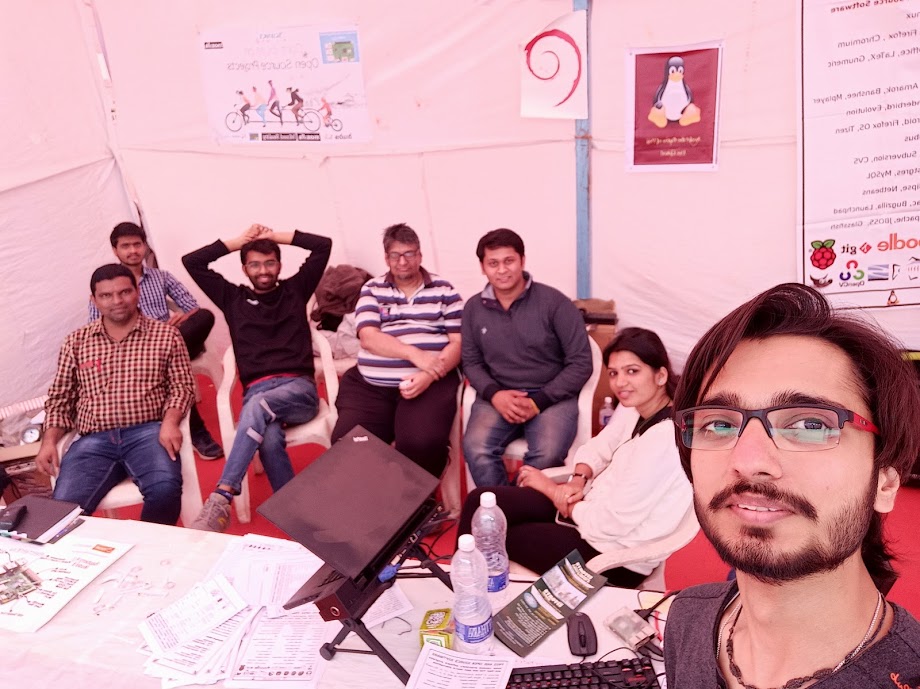
 . Of course in another stall few students had used RPI s as part of their projects so at times we did tell some of the newbies to go to those stalls and see and ask about those projects so they would have a much wider experience of things. The Mozilla people were pushing VR as well as Mozilla lite the browser for the mobile.
We also gossiped quite a bit. I shared about

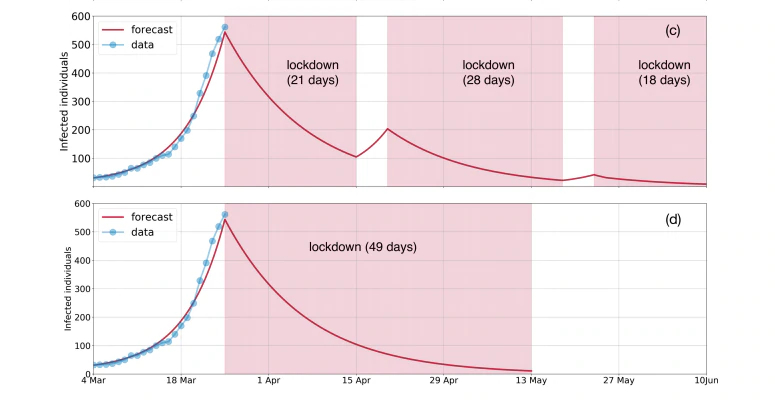







 I released version 2.1 of

 My offgrid house has an industrial automation panel.
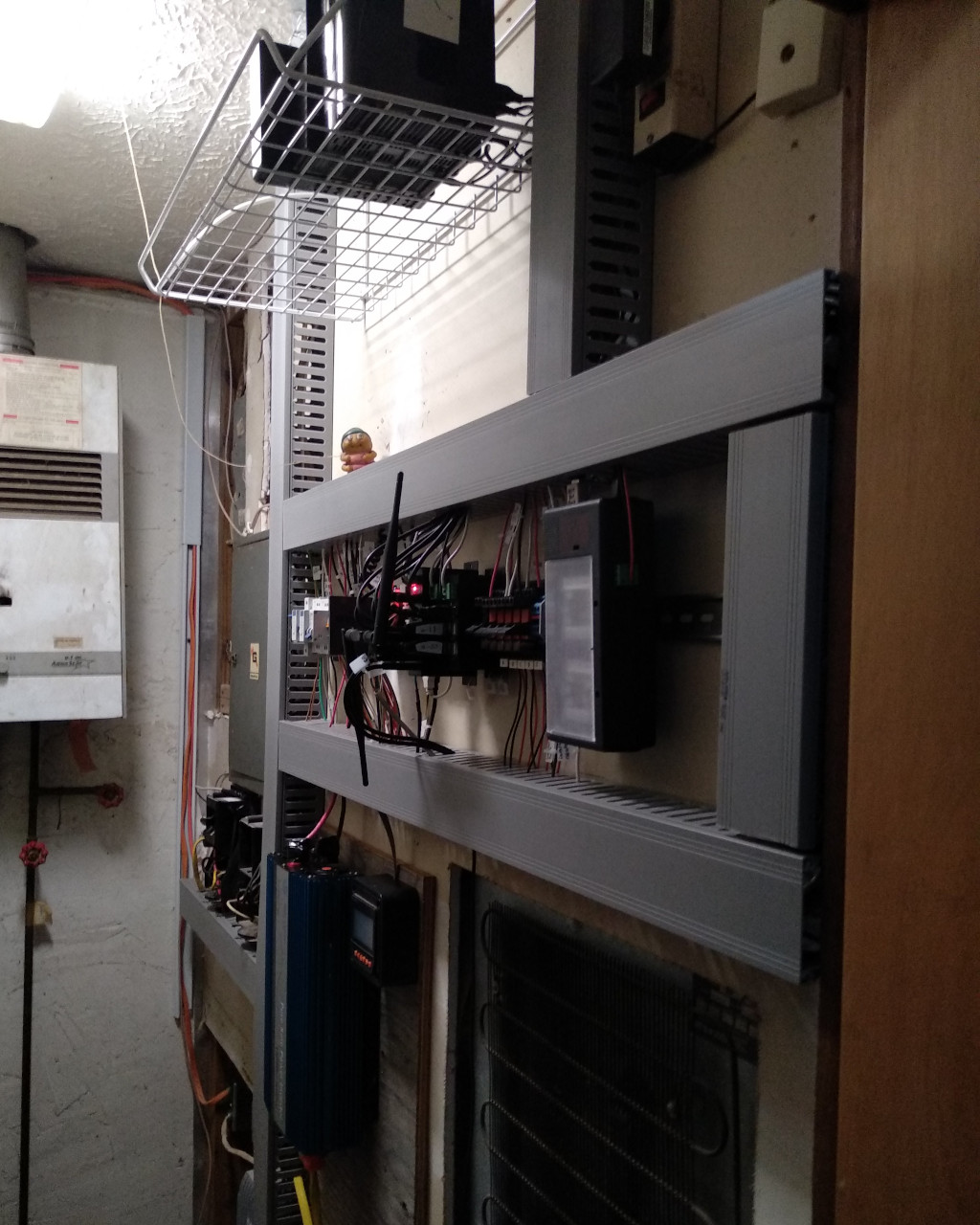
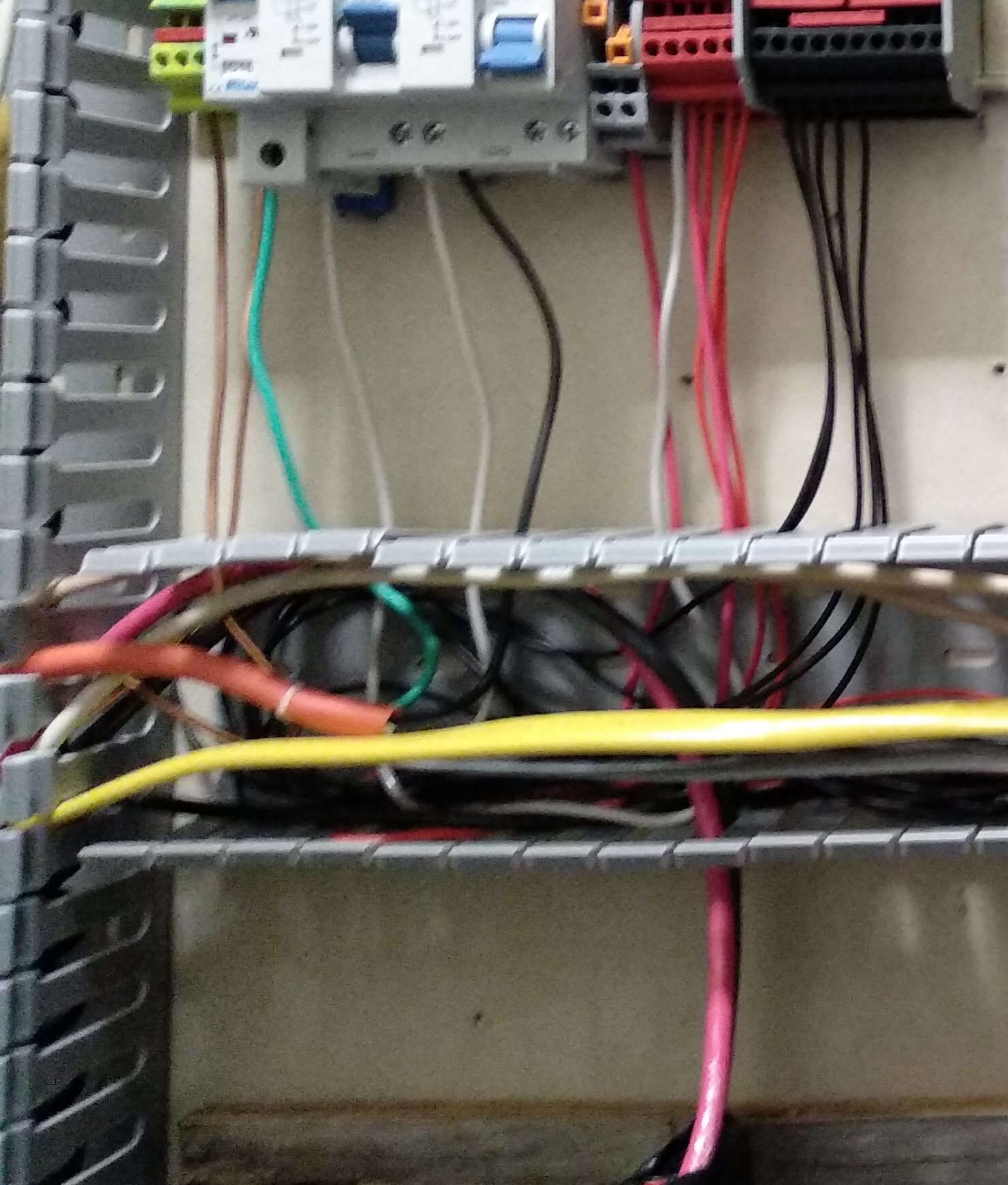
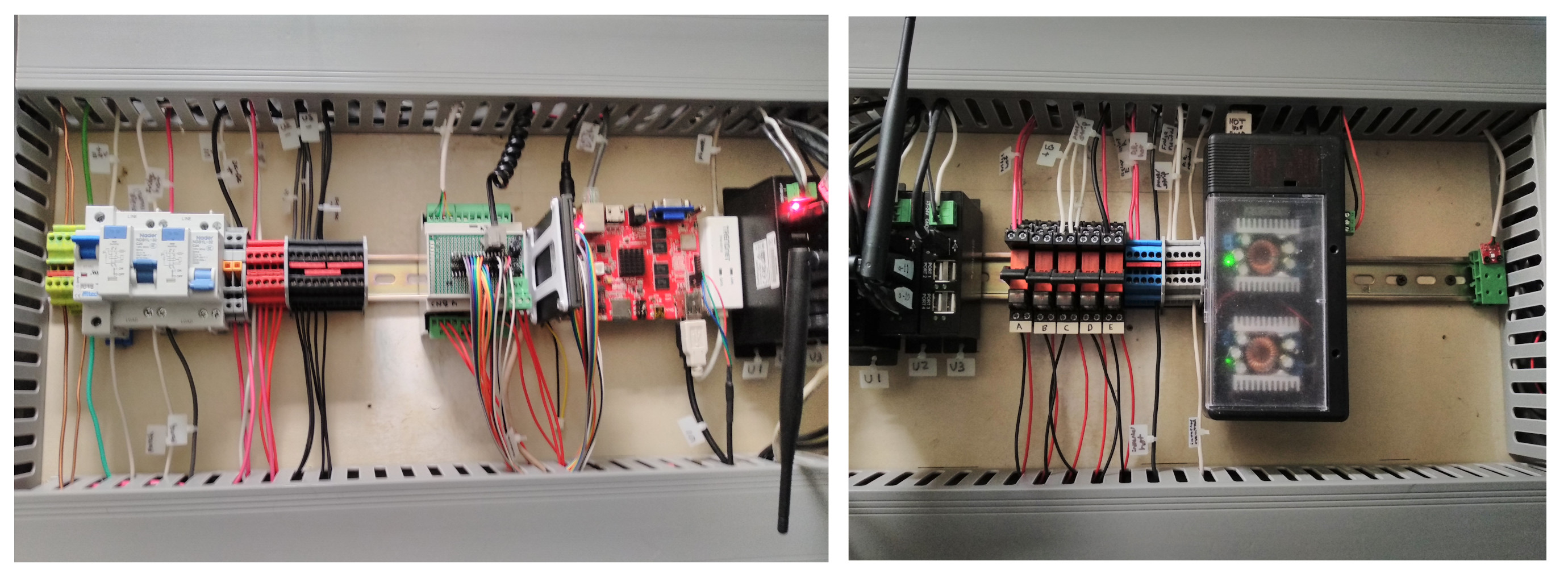
 In March 2020, I have worked on the Debian LTS project for 10.25 hours (of 10.25 hours planned).
LTS Work