Search Results: "gio"

21 January 2007

Enrico Zini: avoid-flamewars

Fourteen ways in which you can avoid starting a flame war on a Debian mailing list On an IRC brainstorming on what talk I should give at FOSDEM, liw suggested:
"Fourteen ways in which you can avoid starting a flame war on a Debian mailing list".
In the end I went for something more technical, but I've never stopped thinking about liw's challenge. I ended up writing talk notes about such a potential talk. Here they are. The classics The radicals The radicals, applied selectively The From tricks The naggers The conscience ticklers The subtle The subtle, 1 week later

Daniel Burrows: How to Breathe, Functionally (part 1)

David Welton writes that the problem with functional languages is that you don't get to mentally "catch your breath" between computations; piling function invocations on function invocations makes it hard to understand what's actually being calculated. He has an amusing summary of how functional code can become unreadable:


Do this with the result of this with what this produces when given this input that is derived from this function which takes the result of this other thing after calculating the result of something that is derived from the output of a function that ...


Indeed, I've seen functional code like this (much of it written by myself). Here's a particular gem:


f splitPoints = map fst $ tail $ scanl (flip ($) . snd) ([], toSplit) $
map splitAt splitPoints


I wrote this code a year ago, and I don't know what it does! It's hard to read and hard to understand. So, however, is imperative code that says


Add 5 to A, now if B is not zero we jump to where we subtract one from B and if C is less than 3 we add 4 to C otherwise we divide C by 2 and then add it to A, then we ...


The reason both pieces of pseudocode are hard to understand is that they don't use the abstraction features built into the language. Good imperative code uses meaningful variable names, uses the structured-programming primitives the language provides, and abstracts complex operations into functions.

My rule of thumb (which is, heh, not always religiously followed) is that a piece of program structure that does more than about 3-6 things is probably too complicated; it seems like that's about as much local context as I can hold in my head comfortably (and the number is more 3 than 6 these days, if you get my drift). As David puts it,


If you'll bear with a poor comparison, sometimes programming is like a song. You do the tricky section, then you go back to an easier section and catch your breath for a bit.


The problem seems to be that people trained on imperative languages, when they're tossed into the ocean of functional coding, can't find the guideposts and landmarks that would help them impose some structure on the water. Should I put this complicated expression inside a "let", or break it out into another function? When do I use a higher-order function to unify two dissimilar pieces of code? Should I write this code in terms of higher-order library functions or directly? It's easy to wander off down a chain of nested invocations of anonymous higher-order functions, or composed partially applied library functions, just "because you can" and end up forgetting what you were trying to do in the first place.

Luckily, some of the basic rules of keeping your code readable remain more or less the same: assign intermediate results to variables with meaningful names, and abstract complicated operations into separate functions. To tackle David's example:


You get sections with DoThisAndThisAndThatWithTheResultsOfSelectThisFromTableXYZ that you have to slow down to think through.

...

GoToTheNextTrickyBit where ManyThingsHappen.

All in all, you wind up with a sort of ebb and flow that works out pretty well if you're in tune with the code being written, going from intense calculations, to a line or two where you do no more than store things in a variable, take a breather, and prepare for the next important stanza.


The way to "take a breath" in a functional language is generally to assign an intermediate result to a variable, or to extract a complicated operation into a function and give it a meaningful name. One Haskell approximation to David's example is


do DoThis
AndThis
results - SelectThisFromTableXYZ
someVal - AndThat results
GoToTheNextTrickyBit someval


If you're writing pure functional code, you might write


let
results = SelectThisFromTableXYZ
someVal = AndThat results
in
GoToTheNextTrickyBit someVal


Of course, this will become unreadable if you write a huge complicated nested "let" expression in place of "AndThat". For a truly dreadful example of this kind of coding, check out the Gnucash Scheme code that generates the "Cash Flow" report (warning: read this in short bursts, or you WILL go blind). This is exactly analogous to writing too many nested loops and conditionals in imperative code, and the fix is the same: find logically distinct bits of code and extract them into separate functions.

I have a few more thoughts, but this post is getting too long, so I'll inflict them on the world in another post. The rule that short things are easier to understand applies to blog posts as well as code. :-)

17 January 2007

Russell Coker: lifetime failures (LF)

This morning at LCA Andrew Tanenbaum gave a talk about Minix 3 and his work on creating reliable software.

He cited examples of consumer electronics devices such as TVs that supposedly don't crash. However in the past I have power-cycled TVs after they didn't behave as desired (not sure if it was a software crash - but that seems like a reasonable possibility) and I have had a DVD player crash when dealing with damaged disks.

It seems to me that there are two reasons that TV and DVD failures aren't regarded as a serious problem. One is that there is hardly any state in such devices, and most of that is not often changed (long-term state such as frequencies used for station tuning is almost never written and therefore unlikely to be lost on a crash). The other is that the reboot time is reasonably short (generally less than two seconds). So when (not if) a TV or DVD player crashes the result is a service interruption of two seconds plus the time taken to get to the power point and no loss of important data. If this sort of thing happens less than once a month then it's likely that it won't register as a failure with someone who is used to rebooting their PC once a day!

Another example that was cited was cars. I have been wondering whether there are any crash situations for a car electronic system that could result in the engine stalling. Maybe sometimes when I try to start my car and it stalls it's really doing a warm-boot of the engine control system.

Later in his talk Andrew produced the results of killing some Minix system processes which show minimal interruption to service (killing an Ethernet device driver every two seconds decreased network performance by about 10%). He also described how some service state is stored so that it can be used if the service is restarted after a crash. Although he didn't explicitely mention it in his talk it seems that he has followed the minimal data loss plus fast recovery features that we are used to seeing in TVs and DVD players.

The design of Minix also has some good features for security. When a process issues a read request it will grant the filesystem driver access to the memory region that contains the read buffer - and nothing else. It seems likely that many types of kernel security bug that would compromise systems such as Linux would not be a serious problem on the HURD. Compromising a driver for a filesystem that is mounted nosuid and nodev would not allow any direct attacks on applications.

Every delegate of LCA was given a CD with Minix 3, I'll have to install it on one of my machines and play with it. I may put a public access Minux machine online at some time if there is interest.

Benjamin Mako Hill: Geography Lesson (Part II)

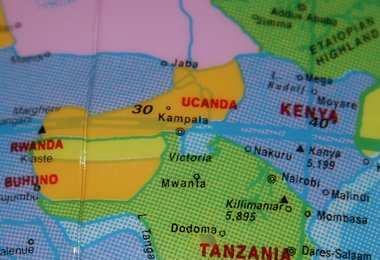
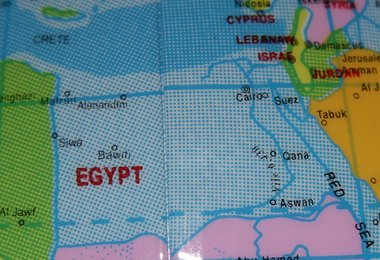
Yesterday, I received many requests to post pictures of my rather inaccurate globe. I'm pleased to oblige. Please read the summary I posted yesterday for a list of some of the errors you should have little trouble picking out. You can click on each cropped thumbnail to see much larger, higher resolution versions of the area and the surrounding continent or region.
/copyrighteous/images/bad_map-1-thumb.jpg
/copyrighteous/images/bad_map-2-thumb.jpg
/copyrighteous/images/bad_map-3-thumb.jpg
/copyrighteous/images/bad_map-4-thumb.jpg
/copyrighteous/images/bad_map-5-thumb.jpg
Enrico suggested that if the globe was manufactutered in China, Taiwan would be the same color as China and Taipei would be marked as a provincial, rather than national capital. Sure enough, I now have both a good idea of the globe's origin plus an idea of how to spell Taipei with an o.

Brett Parker: Some complete randomness...

So, today (other than work, where I've mostly been battling Java), I've been battling in my mind between 2 things that are (probably) never going to happen - in both cases I've been told at various points that they're never going to happen, so I mostly believe that - but being an optimist at heart (and a pessimist by trade), I can't garantee that either isn't going to happen, and that makes my head hurt. Lots. I can't understand what anyone would ever see in me being one of the greatest problems, I'm not particularly good at chatting, I have a limited experience of the world, I don't understand football, I don't understand religion (I can see merits in it, but also a whole lot of downsides), and I'm generally (mostly) boring... so, with all that in mind, the probably from the first paragraph mostly disappears and we're sorted! Anyways - it's gone 1.30am, there's work at 9am, and there's lots to do when I get there, so I should stop thinking and start sleeping for the good of everyone. Night all.

15 January 2007

Brett Parker: Random Interesting Things of the Day

iPhone news So, looking around at what's happening in the media we seem to be getting a fair few non-overly impressive insights in to the iPhone (not least of all the fact that Apple haven't secured the name, and that Linksys have had the iPhone name for a while now - see http://www.linksys.com/iphone/ for the real iPhone, the one that does exist, the one that's already in the market place...) So, back to Apple, people (being people, and therefore incredibably fallable ;) have created iPhone themes for current mobiles, and they're being hunted down by Apple's lawyers, that can't be good publicity, surely? I thought imitation was the sincerest form of flattery... tut, bad evil corporate giant! According to Matthew Lynn on Bloomberg's opinion pages, """To its many fans, Apple is more of a religious cult than a company. An iToaster that downloads music while toasting bread would probably get the same kind of worldwide attention.""", which seems about true to me - the rest of the article is worth reading, gives more insite in to why he thinks it will fail, and is quite an interesting article. Health There's a story in the Guardian about Low cholesterol levels linked with higher risk of Parkinson's disease - so we'll continue the Monday trip to the Cafe then, and have us a nice lunch of bacon and eggs, in the name of health, obviously. From NewScientist, we get the news that being bilingual delays the onset of dementia, so maybe it's time I got round to learning a language that isn't English... I wonder if knowing a reasonable number of programming languages and their syntax works... Someone should do a study in to that. Random Tech And just for more fun, lets just have a bunch of interesting links Miniature jet engines could power cellphones, Silicon 'Lego bricks' used to build 3D chips, Gravity gets a quantum boost. And that's that... So, we'll end that there, tonight is, as with every Monday, the pub quiz over in the Hop Poles in Brighton. Should be very silly, and fun.

10 January 2007

Erich Schubert: Linux distributions to be illegal in Germany?

The biggest party in Bavaria and part of the current german government, CSU, has announced that they want to make the "production and distribution of killer-games" illegal in germany. They claim it's because of a recent highschool shooting (no fatalities except the shooter; there was one other highschool shooting in germany a few years ago with 16 fatalities. Yes, that is 17 fatalities in over 40 years, the 42 years old amok runner back then didn't play killer games, I guess, although he used a flame thrower...). This would make the production and distribution in Germany unlawful, since we include games such as overkill, tremulous and openarena. Other distributions such as SuSE probably include some games that classify as "killer games" as well. Also note that "distribution" is a rather wide term. Does it apply to web sites? ISPs? If there is an online killer game, is the ISP "distributing" it? Polticians (especially those from CSU/CDU/SPD) are such a bunch of idiots. Please do NOT ever again vote for CSU. Software patents, killer games, "Problemfrauen & Schadbären", surveillance cameras and other surveillance, military inside germany (note that in desaster cases such as the flooding some years ago we could already deploy soldats without extra laws), shooting down of civilian airplanes, transrapid, reducing math and natural sciences in highschools, "google earth threatens worldcup security", police installing trojans on home PCs (because criminals don't install virus scanners?), kicking "irritating" students out of school, study fees, ... Often they make George W. Bush look like a genius, don't they? They don't do any important stuff, but just say whatever a majority people might want to hear. They waste our money (Transrapid). They destroy our biggest resource (changes in school system and university system, which will reduce average knowledge in germany a lot). They do lots of stupid things, which heavily invade privacy or public safety (military, surveillance) with no benefits in safety and many of which even where only stopped because they violated our constitution. Do not vote for them! [Updates: Daniel, sorry for posting a non-english post to planet. I again put it into the wrong category; I intended to do a longer post (this one) in english later on. For clarification: CSU is the sister party of CDU, these parties have an arrangement not to compete by region and are closely affiliated. On the nation-wide level they have a joint list, which often is called CDUCSU. So they're not just an "affiliate", but a strong part of the ruling party. Holger Levsen pointed out we are likely going to violate some laws much earlier by distributing ("hacker-") tools such as nmap, ettercap or whireshark.]

Miriam Ruiz: A cute toy

One of the most typical religious traditions in Spain, within the Xmas celebrations, is the Kings’ day (”D a de Reyes”), which is celebrated every year on the 6th of January remembering the arrival of the three Kings to bring their presents to baby Jesus. It is quite typical to have presents that day, and one of the things I got this year was an external 2.5′’ HD case with multimedia playing capacity. I also got a 120 Gb 2.5′’ HD for it. The strongest point I had for it was that my brother already has one and it seems to support many file formats and codecs without problem. In my very short experience with it, just a few days for the moment, it has been able to reproduce all the films I have tried. The main drawback is that it only supports VFAT/FAT32 and NTFS partitions, and only 2 different partitions, no more. Thus, I had to cope with NTFS if I wanted to use the whole HD. I created one VFAT partition as big as supported by that filesystem (32 Gb, with a file limit of 4 Gb) just in case I need it when I go to some friends’ house, and another NTFS partition for the rest of the disk. The next point was to be able to read and write to it from my Debian-powered computer. Reading NTFS is no problem at all, as it seems to be built-in in the kernel by default, but for being able to write on it, I had to use ntfs-3g. It seems to work perfect for me, on an Intel-compatible 32bit computer.

1 January 2007

Clint Adams: Do you realize that happiness makes you cry?

I left a good part of my childhood in a hotel room with a pretty girl in the bed. I left the place of hug fantasies and skated past whiteness, where snow became indistinguishable from clouds. A religious experience is coursing through my veins, seeded amongst overpriced cashews and condiments with special names, but blossoming hours into the future, for I am in the future now. Oddly, I've got a Heart song stuck in my head.

27 December 2006

Jordi Mallach: At the crossroad

Two Fridays ago, on the 15th of December, I finished my support contract with Canonical. Last Wednesday, or just 5 days after leaving Canonical, was my last day working for LliureX, the Valencian Debian-based educational distro which is being developed by the Conselleria de Cultura, Educaci i Esport. Definitely an intense week... In both cases, terminating the contract was my decision. I was working for Canonical for a small amount of hours per month, and I enjoyed doing it as it allowed me to work along with the great people who are developing Launchpad in a unique company like Canonical, but at some point my stress started to pile up and freeing time for myself seemed a good thing to do. I also had been working at LliureX for 2.5 years and I was starting to feel I had to move on, as the project has changed a bit since I joined it and because I think I need to see new things and explore new challenges. And the challenge is called ITI, a CS research institute in the Universitat Polit cnica de Val ncia, where I'll start working in a pair of weeks thanks to ex-lliurex co-worker Sergio. My main task will be sysadmin work, but the ITI gets many interesting contracts every few months, and I suspect I'll be working with Debian and Ubuntu at work very soon. The new job is pretty close to my house and the idea is that being in the University campus and having some more free time will allow me to retake a few activities like completing my studies, resuming some of my triathlon training (you've gotta see the awesome athletics ring and olympic swimming pool just 100 metres away from the institute!) and other stuff I have been neglecting for way too long. I leave behind quite a few friends and many good people, and getting used to the idea of not speaking or chatting to them on a daily basis isn't that easy. To compensate, I'm sure I'll meet lots of cool people next year. Bones festes!

24 December 2006

Uwe Hermann: Donations for a good cause

You still got some money left after buying all those Christmas presents? How about donating some of it for a good cause:
Wikipedia is entering 2007 as one of the 10 most visited websites in the world. That's a great proof of our success. However, with this success comes a new set of challenges and responsibilities. As we plan for the future of Wikipedia and all of the Wikimedia projects, our two most important goals now are the reliability of our content and the long-term sustainability of every project in which we are involved. To meet these goals we have a lot of work to do, so I am asking for your help. In the coming year, the Wikimedia Foundation anticipates dramatically increasing spending to keep up with server and traffic capacity demands, add new staff on the organizational level, improve our software and develop methods to better ensure high quality content, all while making progress toward our goal of giving free knowledge to everyone.
-- Florence Devouard, Chair of the Wikimedia Foundation
  • Creative Commons
  • It's once again time to show your support for Creative Commons. Digital technologies are connecting people in ways that were never before possible but that network is fragile. Creative Commons needs your support to help enable a participatory culture a culture in which everyone can actively engage in the creativity that surrounds us. We need your support to assure access to cultural, scientific, and educational content that has been pre-cleared for use by its authors.
  • Free Software Foundation (FSF)
  • Freedom is more precious than anything else we have and we need to protect it while we still can.
    -- Eben Moglen in his FSF year end video appeal (OGG, 24 MB)
  • Electronic Frontier Foundation (EFF)
  • EFF is a nonprofit group of passionate people lawyers, technologists, volunteers, and visionaries working to protect your digital rights.
  • Tor: anonymity online
  • Tor is a toolset for a wide range of organizations and people that want to improve their safety and security on the Internet. Using Tor can help you anonymize web browsing and publishing, instant messaging, IRC, SSH, and other applications that use the TCP protocol. Tor also provides a platform on which software developers can build new applications with built-in anonymity, safety, and privacy features.
    Or how about some organizations not directly related to Free Culture or Free Software?
    Amnesty International (AI) is a worldwide movement of people who campaign for internationally recognized human rights. AI s vision is of a world in which every person enjoys all of the human rights enshrined in the Universal Declaration of Human Rights and other international human rights standards.
  • Red Cross
  • The International Red Cross (and Red Crescent Movement) is an international humanitarian movement whose stated mission is to protect human life and health, to ensure respect for the human being, and to prevent and alleviate human suffering, without any discrimination based on nationality, race, religious beliefs, class or political opinions.

    David Moreno Garza: My ten wishes for 2007

    These are my ten wishes for 2007. Since Santa didn’t arrive in this part of the world, I think I’m asking this to the Three Wise Men (in spite of they were brought here by the Spanish catolicism, but hey):
    1. Dignity, land and respect to the Mexican indigenous groups.
    2. Return and good health for Commander in Chief, Fidel Castro.
    3. Strongest antineoliberalism in the Latin American region.
    4. Right wing oppression brought down in Bolivia.
    5. Good year socially, economically and politically to Nicaragua with its new hope.
    6. An even better year in Cuban trades; they were the best growing economy in Latin America by exporting to South America and China.
    7. Stop to the free trade agreement and military bases with the US in Ecuador.
    8. Peaceful solution to the Colombia-Ecuador border conflict.
    9. Democracy established in some of those countries where it’s more needed, like Central America.
    10. More social successful programs in Venezuela.
    And my bonus one:

    21 December 2006

    Erich Schubert: On military usage of FLOSS.

    Sergey raised the issue of restricting use of software to non-military use, and Alan pointed out how much they've given back to the FLOSS community. However, I'd like to point out that any such restriction violates rules for opensource used by both the FSF and Debian. Debian is pretty clear about it in the social contract:
    No Discrimination Against Fields of Endeavor

    The license must not restrict anyone from making use of the program in a specific field of endeavor. For example, it may not restrict the program from being used in a business, or from being used for genetic research.
    And in the GNU Free Software Definition:
    The freedom to run the program, for any purpose (freedom 0).
    So any such restriction would mean your software is no longer free software. It's not that I'm in any way pro military, but allowing usage restrictions will cause a huge mess. Next we'll have some application which may not be used by religious zealots (of any kind), paedophiles, and at some point end up with a huge licensing mess (maybe even full of discrimination). ("No, I can't sell you a web server, because your brother-in-law is in the military."?) Actually disallowing any military use is some kind of discrimination, too. Military is not only used to kill someone, but it can serve humanitarian purposes, too. Rescue people in flooded New Orleans etc. - if you are unhappy with what your government is using your military for, vote accordingly and do politics. It's fine if you as the author point out that you disapprove of any use of it to harm anybody, or commit crimes; but don't put up restrictions you couldn't verify anyway. (As if the military would care much for any such restriction, anyway.) Always remember: it's only the good guys playing by the rules. There is no use in disallowing use of some software for cracking, is there?

    20 December 2006

    Jonathan McDowell: Wedding writeup

    I've been sitting on this for a while, gradually adding more bits as I think of them. So it's a bit long and rambly, but if I don't post it now I'll never get round to it. First, the details, for anyone who cares. I got married to my partner of 11 years, Katherine, on 1st December. This was actually our 11 year anniversary. We had a civil ceremony in The Assembly House, Norwich with a wine reception afterwards, then moved on to Wolterton Hall for the main reception, with a magnificant feast provided by Brasteds. Afterwards there was a chocolate fountain courtesy of Digby's and Nero thanks to Milton. The wedding cars were provided by American Dream (we had the Excalibur Sedan and the Lincoln Town Car). The bus to/from the reception was from Dolphin Autos. Robin Phillips brought the band. Wonderful purple jacket + the other suits were from John Field Formal Hire. Next, some photos. Burly Dave Ganesh Paddy Steve Tim (Ceremony) Tim (Reception) Finally, some things I've learned. For guests (I wish someone had told me these - Katherine says I sound stroppy but I don't mean to): For couples getting married:

    17 December 2006

    Clint Adams: Next week: why everyone should go to tech shows topless

    Kathy Sierra writes about how conference T-shirt distributors are not trying to make their attendees look sexy enough, by providing tees that attempt to hide breasts. She doesn't mention underwear though, and this suffers from exactly the same problem. The free logo-branded boxers you get at these things are almost always poorly-made and ill-fitting. Why not provide Speedos or bikini bottoms or anything which will tightly-hug the pubic region and showcase one's junk? Does this guy want to hide his genitalia? No, he wants to strut, proud and trouserless, across the expo floor, knowing full well how much the conference organizers care about him. Bless his courage and rejection of societal norms.

    16 December 2006

    Martin Michlmayr: Debian QA meeting in Extremadura

    The last few days I attended a Debian QA meeting in Badajoz in the Spanish region of Extremadura. I worked on a number of QA tasks, like cleaning out bug reports for removed packages and tidying up some WNPP bugs. I also started another compilation run of the archive using GCC 4.2. In general, I worked on a number of TODO items I had, such as updating my Debian on Cobalt pages for etch, and responded to some email. My inbox is actually empty right now and there are few specific things I need to do, even though there's a lot in general, just like always. Tomorrow I'll head back to Madrid to meet up with some friends. Apparently we'll go bowling. On Monday I'll briefly visit the Universidad Rey Juan Carlos where I stayed for three months earlier this year before catching a flight to Austria where I'll spend New Year.

    14 December 2006

    Edd Dumbill: JavaScript frameworks, new heroes of the web

    Makers of Dojo, Prototype, jQuery and Mochikit, I salute you.It is immensely gratifying that there are those with the courage and sense to make JavaScript in the browser workable for the rest of us. Like many busy developers, I've steered myself away from hacking JavaScript for many years. Cross-browser incompatibilities, the troubles of debugging and the relatively small reward for effort have kept me focusing on the server side (not to mention the temptation JavaScript poses to those prone to stray from the REST religion).This is now starting to change. The immense efforts of JavaScript developers are providing frameworks that allow developers to work on the client side with something approaching the elegance and concision that we can now wield on the server side.One of the wonderful things about the web is that it has become the forum for its own improvement. JavaScript has ensured that this is now true of the browser too. New techniques can be proved in script before they ever need baking into a markup language.Even the most ardent of declarative programming hacks will appreciate the way toolkits such as jQuery allow painting of behaviour onto pages rather than littering semantic markup with snippets of script.The problem that faces us now is: which JavaScript framework to choose?As is my habit in programming languages, I've found myself move from framework to framework depending on the actual tools available. Starting off in Prototype as it came with Rails, paying a happy visit to jQuery because of Thickbox, considering Dojo because of its rich text editor, and now being wowed by Plotkit and thus checking out Mochikit.So, here's an idea for aspiring XTech presenters: we'd love to hear more about these toolkits. Experiences, future plans for the kits themselves, and how developers should choose between them.

    12 December 2006

    MJ Ray: The Ipswich Murders

    Three prostitutes have been murdered near Ipswich and two more are missing. BBC News ( The World At One in particular) seem to be dwelling on the fact that Suffolk has no permanent investigation team. It's probably totally alien to London-based commentators and analysts that an area the size of Suffolk (roughly the middle third of the round bit north of London that sticks out into the North Sea - an area about two-and-a-half times the size of Greater London) has only about a dozen killings a year. What would the investigation team do for the rest of the year? It seems better to have police that know their service area, but sometimes call in help from neighbouring police to investigate murders. I wish the BBC would stop looking at East Anglia through the London Eye and treat it like the other regions. I lived there until recently and East Anglia may be next to London, but it's very different. Why does BBC even bother to point out that it was Norwich South MP Charles Clarke who proposed merging Suffolk Constabulary with two of its neighbours? London-born Clarke was infamous for doing as he was told by Islington Blair. Anyway, this is well outside my normal writing, but the BBC non-news really irritated. Now, fingers crossed that Suffolk Constabulary get to the bottom of the murders soon and the BBC stops criticising the police at this early stage.

    10 December 2006

    Russell Coker: The Squirrel and the Grasshopper

    There's a story going around the neo-con blogs titled "The Squirrel and the Grasshopper". It was forwarded to me by a business associate with the claim that it's "right on the money". It's strange that someone could be considered to be "right on the money" for Australia when essentially the same text is posted in the UK, New Zealand, and Sweden (from a 30 second google search - I'm sure that the neo-cons in other countries have posted it too).

    The following are the neo-con ideas promoted by the story in question:
    1. To mis-represent a local main-stream political party that is known for representing workers (the ALP in the case of Australia) as being extremist and associated with Greenpeace (an organization that is out of favor at the moment and disliked by many people who vote for main-stream parties).
    2. To spread the "liberal press" lie that wing-nuts like to believe. Any analysis of the press will show that most multi-national media organizations are quite biased towards the right-wing groups.
    3. Making false claims about the legal system to drive support for recent fascistic legal changes. In the case of Australia this means allowing employers to lay off employees and immediately re-hire them at a lower rate, allowing employees to be laid off if factory equipment breaks down, and for almost any reason you can imagine. Driving the idea that the judges are incompetent and therefore imposing legislation to remove judicial discretion is an important step in removing civil rights.
    4. Claims that the government is communist and takes the property from the middle-classes and gives it to unworthy people. In fact the opposite is true (for Australia at least). Large companies and wealthy individuals are routinely given community property. The toll roads are the best example of this, the government closes public roads that can be used as an alternative to a toll road, and then politicians get paid off after they leave office. Far from taking money from people who work (as the neo-con propaganda claims) the government allows big corporations to do so with impunity. The Australian government (as many governments in first-world countries) has been becoming increasingly fascistic recently.
    5. The claim that asylum seekers are terrorists. If the government wanted to stop terrorism then they would cease involvement with those parts of the world. However only plebians (people like us) are likely to be hurt by terrorism so the government has little motivation to stop it - it's good for winning elections! By joining the invasion of Iraq the Australian government helped al Quaeda establish new training bases while also giving al Quaeda (and related organizations) a reason to target Australia. Also whenever a war is started people will be forced to leave their homes and seek asylum else-where. If you don't want asylum seekers seeking entry to your country then you don't want to mess up other countries and force people to flee.
    6. Support for the "war on drugs". That war has been at best a stale-mate and generally a loss for a century now. The approach that is being adopted experimentally of legal supply of hard drugs to addicts seems to have more promise. Incidentally the breaches in border security that are established for the purpose of drug smuggling are available for any illegal purpose that pays enough - if al Quaeda wanted to smuggle weapons into a first-world country they would probably get drug dealers to do it for them. I'll blog more on this topic in future.

    There you have it, The Squirrel and the Grasshopper covered all of the neo-con propaganda bases apart from the pro-Christian angle.

    For the benefit of anyone who is thinking of forwarding on a "parable" in future, the first thing you might want to do is a google search on it. Search for comments and also search for who is promoting it. If a message you are considering forwarding is being promoted by people who are obviously racist or who discriminate against people on the basis of religion then you might consider whether you want to associate yourself with them by forwarding the message.

    9 December 2006

    David Moreno Garza: Races and classes

    I’ve enjoyed reading Richard Gott’ article named Latin America is preparing to settle accounts with its white settler elite, where he goes deeply on how the recent political movements in the region has been marked more on lineage and classism than in anything else. Read the article in English here, or in Spanish, here (thanks to Rebeli n).

    Next.

    Previous.