Search Results: "ag"

28 February 2013

Russ Allbery: podlators 2.5.1

This is a quick, test-suite-only release to handle a new warning in Pod::Simple 3.26 that broke the test suite. Pod::Simple now warns if the =item elements seem to mix different types of items (bullets, numbers, and text strings). This triggered a couple of times in the test suite: once where I was explicitly testing the Pod::Man handling of that case (now moved to a separate test suite where I can suppress errors), and in several other places where I was testing item tag widths in formatting and was using =item 1 as the test for a single-column tag. That's now disambiguated with Z<>. There are various other changes pending, but alas I don't have time for a proper release at the moment. (Particularly since I'll probably be tackling coding style changes and a switch to Module::Build in the next release.) You can get the latest version from CPAN or from the podlators distribution page.

Dirk Eddelbuettel: inline 0.3.11

A maintenance release of inline is now on CRAN, and is being uploaded to Debian. The release fixes two minor bugs kindly reported by users. As the two previous releases appear to not have been announced here, their NEWS entries are included as well.
Changes in inline version 0.3.11 (2013-02-26)
  • Fix bug in cfunction for .C convention with raw vectors.
  • Correct cfunction to use .Platform$dynlib.ext as the file extension for the library file (unless on Windows).
  • Allow rcpp wrapper to pass another plugin (as eg RcppArmadillo)
Changes in inline version 0.3.10 (2012-10-03)
  • getDynLib() error message corrected as suggested by Yasir Suhail
  • Added rcpp() wrapper for cxxfunction() which sets plugin="Rcpp"
  • Converted NEWS to NEWS.Rd
  • New maintainer, after having coordinated releases (along with Romain) since 0.3.5 in June 2010
Changes in inline version 0.3.9 (2012-10-02)
  • Uncoordinating hijacking of package by CRAN maintainers with a single word change in cfunction.R to prevent an error under an unreleased version of R
Courtesy of CRANberries, there is also a diffstat report for the most recent release. A few more details are available at the R-Forge page.

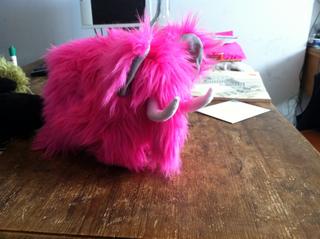
Daniel Kahn Gillmor: Make a Woolly Mammoth (thanks, inkscape!)

I feel like i've done a lot of blogging recently about failing to do things with proprietary software. That's annoying. This post is about something i made successfully with free software (and some non-software crafting): I made a Woolly Mammoth for my nephew!I documented the pattern (with pictures!) that i came up with using Inkscape (and used markdown, pandoc, emacs, pdftk, and other free software in the process). i've also published the source for the pattern via git if you want to modify it:
git clone git://lair.fifthhorseman.net/~dkg/woolly
Writing up the documentation makes me realize that i don't know of any software tools designed specifically for facilitating fabric/craft construction. Some interesting software ideas: Anyone have any ideas?Tags: brainstorming, crafting, inkscape

27 February 2013

Sylvain Le Gall: planet.ocaml.org spring cleaning

Hi planet.ocaml.org. Just a quick post to thanks Marek Kubica for his help on the planet.ocaml.org spring cleaning. Here are the feeds that have been removed: http://redlizards.com/blog/feed/?tag=ocaml http://blog.mestan.fr/feed/?cat=16 http://www.sairyx.org/tag/ocaml/feed/ http://blog.dbpatterson.com/rss http://www.nicollet.net/toroidal/ocaml/feed/ http://ocamlhackers.ning.com/profiles/blog/feed?tag=ocaml&xn_auth=no http://eigenclass.org/R2/feeds/rss2/all http://procrastiblog.com/category/ocaml/feed http://savonet.sourceforge.net/liquidsoap.rss Here is the feed that have been added: http://newblog.0branch.com/rss.xml Here are the feeds that have been updated: https://ocaml.janestreet.com/?q=rss.xml http://scattered-thoughts.net/atom.xml http://www.rktmb.org/feed/tag/ocaml/atom http://nleyten.com/feed/tag/ocaml/atom http://www.mega-nerd.com/erikd/Blog/index.rss20 http://y-node.com/blog/feeds/latest/ If you want that we had back your blog, please follow the howto add your feed to planet. We didn't have removed feed on purpose, this was just a way to get rid of a lot of 404, And don't forget, planet.ocamlcore.org is now served by planet.ocaml.org! Update your feed reader.

Daniel Pocock: Understanding the WebRTC architecture from a free software perspective

WebRTC is here, now. Google launched Chrome 25 with built-in WebRTC support on Monday, 25 February. Within 24 hours, DruCall, an easy-to-use WebRTC module for Drupal was available Free as a shiny new GPL project. While this technology offers a level of convenience for end-users that is unprecedented, just what is involved for the keen server administrator who wants to deploy this today? With 20-30% of web users expected to be running WebRTC browsers within 3 months (due to automatic updates), and 60-70% by Christmas, will the free software community be able to seize this opportunity to redefine the way real-time communications is deployed? I've whipped together a brief architecture diagram to answer those questions, demonstrating how all core components can be built with free software, today. All but one of these components is conveniently packaged in stable Linux distributions like Debian and Ubuntu. The full diagram is taken from the DruCall web site where you can find more details:

Petter Reinholdtsen: Dr. Richard Stallman, founder of Free Software Foundation, give a talk in Oslo March 1st 2013

Dr. Richard Stallman, founder of Free Software Foundation, is giving a talk in Oslo March 1st 2013 17:00 to 19:00. The event is public and organised by Norwegian Unix Users Group (NUUG) (where I am the chair of the board) and The Norwegian Open Source Competence Center. The title of the talk is The Free Software Movement and GNU , with this description:
The Free Software Movement campaigns for computer users' freedom to cooperate and control their own computing. The Free Software Movement developed the GNU operating system, typically used together with the kernel Linux, specifically to make these freedoms possible.
The meeting is open for everyone. Due to space limitations, the doors opens for NUUG members at 16:15, and everyone else at 16:45. I am really curious how many will show up. See the event page for the location details.

Julien Danjou: OpenStack Ceilometer and Heat projects graduated

The OpenStack Technical Committee have voted these last weeks about graduation of Heat and Ceilometer, to change their status from incubation to integrated. The details of the discussion can be found in the TC IRC meetings logs for the brave. The results are:
Approve graduation of Heat (to be integrated in common Havana release)?
yes: 10, abstain: 1, no: 1
Approve graduation of Ceilometer (to be integrated in common Havana release)?
yes: 11, abstain: 1
Therefore both projects have been graduated from Incubation to Integrated status. That means that Heat and Ceilometer will be released as part as OpenStack for the next release cycle Havana, due in Autumn 2013. For people being curious, we the Ceilometer team put up a nice wiki page about our status and what we think we were ready to jump. For the curious, The OpenStack Technical Committee charter has some explanations about the incubation and integration process. What about Grizzly? Both projects will be released with Grizzly too, obviously, since they already follow the release process of OpenStack. What about core?
The question that has been raised several times to me is if that means the projects are becoming Core projects. The answer is no, because how to become a Core project is still under discussion and is more a matter for the Board of Directors than the Technical Committee. But this is definitely a step in this direction. Anyway, from a technical point of view, this means both projects are now onboard with other OpenStack components so you can enjoy them!

Matthew Garrett: Supporting third-party keys in a Secure Boot world

It's fairly straightforward to boot a UEFI Secure Boot system using something like Shim or the Linux Foundation's loader, and for distributions using either the LF loader or the generic version of Shim that's pretty much all you need to care about. The physically-present end user has had to explicitly install new keys or hashes, and that means that you no longer need to care about Microsoft's security policies or (assuming there's no exploitable flaws in the bootloader itself) fear any kind of revocation.

But what about if you're a distribution that cares about booting without the user having to install keys? There's several reasons to want that (convenience for naive users, ability to netboot, that kind of thing), but it has the downside that your system can now be used as an attack vector against other operating systems. Do you care about that? It depends how you weigh the risks. First, someone would have to use your system to attack another. Second, Microsoft would have to care enough to revoke your signature. The first hasn't happened yet, so we have no real idea how likely the second is. However, it doesn't seem awfully unlikely that Microsoft would be willing to revoke a distribution signature if that distribution were being used to attack Windows.

How do you avoid that scenario? There's various bits of security work you need to do, but one of them is to require that all your kernel modules be signed. That's easy for the modules in the distribution, since you just sign them all before shipping them. But how about third party modules? There's three main options here:

  1. Don't support third party modules on Secure Boot systems
  2. Have the distribution sign the modules
  3. Have the vendor sign the modules

The first option is easy, but not likely to please users. Or hardware vendors. Not ideal.

The second option is irritating for a bunch of reasons, and a pretty significant one is license-related. If you sign a module, does that mean you're endorsing it in some way? Does signing the nvidia driver mean that you think there's no license concerns? Even ignoring that, how do you decide whose drivers to sign? We can probably assume that companies like AMD and nvidia are fairly reputable, but how about Honest John's Driver Emporium? Verifying someone's identity is astonishingly expensive to do a good job of yourself, and not hugely cheaper if you farm it out to a third party. It's also irritating for the driver vendor, who needs a separate signature for every distribution they support. So, while possible, this isn't an attractive solution.

The third option pushes the responsibility out to other people, and it's always nice to get other people to do work instead of you. The problem then is deciding whose keys you trust. You can push that off to the user, but it's not the friendliest solution. The alternative is to trust any keys that are signed with a trusted key. But what is a trusted key? Having the distribution sign keys just pushes us back to option (2) - you need to verify everyone's identity, and they need a separate signing key for every distribution they support. In an ideal world, there'd be a key that we already trust and which is owned by someone willing to sign things with it.

The good news is that such a key exists. The bad news is that it's owned by Microsoft.

The recent discussion on LKML was about a patchset that allowed the kernel to install new keys if they were inside a PE/COFF binary signed by a trusted key. It's worth emphasising that this patchset doesn't change the set of keys that the kernel trusts - the kernel trusts keys that are installed in your system firmware, so if your system firmware trusts the Microsoft key then your kernel already trusts the Microsoft key. The reasoning here is pretty straightforward. If your firmware trusts things signed by Microsoft, and if a bad person can get things signed by Microsoft, the bad person can already give you a package containing a backdoored bootloader. Letting them sign kernel modules doesn't alter the power they already have over your system. Microsoft will sign PE/COFF binaries, so a vendor would just have to sign up with Microsoft, pay $99 to Symantec to get their ID verified, wrap their key in a PE/COFF binary and then get it signed by Microsoft. The kernel would see that this object was signed by a trusted key and extract and install the key.

Linus is, to put it mildly, unenthusiastic about this idea. It adds some extra complexity to the kernel in the form of a binary parser that would only be used to load keys from userspace, and the kernel already has an interface for that in the form of X509 certificates. The problem we have is that Microsoft won't sign X509 certificates, and there's no way to turn a PE/COFF signature into an X509 signature. Someone would have to re-sign the keys, which starts getting us back to option (2). One way around this would be to have an automated service that accepts PE/COFF objects, verifies that they're signed by Microsoft, extracts the key, re-signs it with a new private key and spits out an X509 certificate. That avoids having to add any new code to the kernel, but it means that there would have to be someone to run that service and it means that their public key would have to be trusted by the kernel by default.

Who would that third party be? The logical choice might be the Linux Foundation, but since we have members of the Linux Foundation Technical Advisory Board saying that they think module signing is unnecessary and that there's no real risk of revocation, it doesn't seem likely that they'll be enthusiastic. A distribution could do it, but there'd be arguments about putting one distribution in a more privileged position than others. So far, nobody's stood up to do this.

A possible outcome is that the distributions who care about signed modules will all just carry this patchset anyway, and the ones who don't won't. That's probably going to be interpreted by many as giving too much responsibility to Microsoft, but it's worth emphasising that these patches change nothing in that respect - if your firmware trusts Microsoft, you already trust Microsoft. If your firmware doesn't trust Microsoft, these patches will not cause your kernel to trust Microsoft. If you've set up your own chain of trust instead, anything signed by Microsoft will be rejected.

What's next? It wouldn't surprise me too much if nothing happens until someone demonstrates how to use a signed Linux system to attack Windows. Microsoft's response to that will probably determine whether anyone ends up caring.

comment count unavailable comments

Neil McGovern: Let s get physical

Two recent announcements have been made about how it's viewed that people should interact with each other. Both, in my opinion, are misguided. Firstly, Yahoo's chief executive, Marissa Mayer has announced that she's banning staff from remote working. The idea behind this announcement is simple - that "some of the best decisions and insights come from hallway and cafeteria discussions, meeting new people, and impromptu team meetings". This is absolutely spot on, but the next sentence in the leaked internal memo is more problematic: "Speed and quality are often sacrificed when we work from home".
Don't get me wrong, working remotely has some special challenges, but they are by no means insurmountable. There's lots of tips for people working remotely which will turn into a future blog post at some point (I'm running an internal training about how to do it in a couple of weeks), but three simple rules are stay connected, set a routine and take care of yourself. The second decision is one by Ubuntu to move Ubuntu Developer Summits to a purely online meeting, ditching the physical meeting. This misses the point of conferences. If we simply wanted to listen to talks and presentations, why meet up at all? Webcasts have been around for the last 20 years, and yet conferences still exist. The most important part of a conference isn't the talks, it's the "hallway track" - it's the ability for people to meet up, chat and socialise. Be this an impromptu meeting in the corridor, or over a few nice beers. Without this component, why schedule a time at all? Simply publish a list of talks over the coming 3 months, and anyone can pick the best time for them to attend. At Collabora, many of our engineers work remotely. One of the perks we offer is the ability to attend conferences, and to "touch base" and visit and work from one of the offices. It is important to recognise the importance of collaboration physically and it shouldn't be discounted the way Ubuntu has done. But it should not be seen as a silver bullet to an organisation, like Yahoo seem to be implying. Both extremes are wrong, and a balance must be struck to ensure the best outcome for productivity and innovation. (Title from an iconic 80s song)

Jan Wagner: Chemnitzer Linux-Tage 2013?

Also this year I registered a booth in the name of the Debian Project at Chemnitzer Linux-Tage. Unfortunalety this is the second time in the row, that we seem to be short of manpower while preparing the booth. Actually just one person was able to commit his available time. A general offer was announced by 3 people (including me). This makes me a little sad, cause CLT is a very community driven event which is really nice organized. I always liked to chat and discuss with very interesting people from other projects and visitors. As the CLT runs a 6 track lecture program with commonly very good lectures, it is not possible to get the booth running into good shape with such a small amount of volunteers. If you feel you are interested into visiting the Chemnitzer Linux-Tage and want to make our booth a success like last years for the Debian Project, please have a look into my announcment and our coordination wiki. So please ... let come more brave people into our band wagon! Don't wait to long! Registration period for (possibly sponsored) Booth tickets (read here) ends on 4th March, many thanks!

26 February 2013

Olivier Berger: Python RDF example of a MySQL triple store thanks to redland/librdf

In a way similar to my previous post about persisting graphs in PostGreSQL in PHP, here s similar examples for Python and MySQL. Note that you may need to adjust the MySQL table creation templates if you re running librdf version 1.0.16 (see this bug for details). The first example will load data from a file, and store the parsed model to the RDBMS, while the second example, will reload the model and issue queries on it. These examples don t do much, but hopefully, they ll help you get started if you re interested in using redland/librdf. One potential benefit can be interoperability with other languages like PHP, for instance if you re running harvesters in Python that will save facts in a triple store, which is then accessed by a PHP application that will publish a Web interface.

Ian Campbell: LinaroConnect 2013, Talks and Demos

My colleague Stefano Stabellini and I are in the process of putting the finishing touches to our presentation which we are giving at Linaro Connect next week in Hong Kong. If you are there come and see Introducing XEN on ARM on Monday at 1100, we'll be running through some of the basics of Xen as well as the specifics of how this translates into use on the ARM virtualised platform and talking about our status and roadmap going forward. As well as that we will also be demoing Xen on ARM, both on v7 hardware platforms and on v8 software models, at Demo Friday. I've been mostly working on the 64-bit port recently and the initial set of 45(!) patches was committed at the end of last week --- just in time! The other main Xen on ARM event at this years Connect is a keynote on the Tuesday morning given by Lars Kurth (Xen.org Community Manager) and Mark Heath (XenServer VP of Engineering, and also my boss). Other than that my schedule seems to be running over with other interesting sounding talks and there are certainly going to be plenty of people to catch up with, but hopefully I'll have enough time to put the finishing touches onto ARMv8 64-bit guest support in the hackrooms like I'm planning... Looking forward to seeing some of you there!

Craig Small: python and rrdtool

RRDTool is a neat utility for collecting and graphing statistics such as server loads or network traffic. There are two main modules for interfacing with RRDTool files within python; rrdpython and pyrrd. rrdpython is the basic bindings of the rrdtool library within python. The API is very familiar for people who program in C or use the command line tools which for me is both so it works well. However if you were expecting a pythonic API you will be disappointed. As there is the direct binding, you have to have either a pre-compiled module or compile it yourself with librrd-dev package installed. Depending on your setup this could be trivial or a real pain. pyrrd initially looks good as it is a object-orientated style and (supposedly) a pure python code, so no trying to compile things but! Well, the problem is its not pure python. The hooks are there for it (in backend.py) for it to be implemented in python but it falls back to using the external method, and external method is a bunch of Popen calls. pyrrd also does not
support the full set of rrdtool commands.
My intention is to keep using rrdpython despite the compile hassle and possibly even use a fancier graph setup such as High Charts though there is a problem with their license for me.

Ingo Juergensmann: Xen problems with VMs on 2.6.32-5-xen-amd64?

On Saturday there were some updates for Squeeze/Stable, for example a new/updated version of Xen hypervisor and kernels were downloaded and installed:
gate:~# dir /var/cache/apt/archives/
base-files_6.0squeeze7_amd64.deb                 libxenstore3.0_4.0.1-5.6_amd64.deb
bind9-host_1%3a9.7.3.dfsg-1~squeeze9_amd64.deb   linux-base_2.6.32-48_all.deb
dbus_1.2.24-4+squeeze2_amd64.deb                 linux-image-2.6.32-5-amd64_2.6.32-48_amd64.deb
dbus-x11_1.2.24-4+squeeze2_amd64.deb             linux-image-2.6.32-5-xen-amd64_2.6.32-48_amd64.deb
firmware-linux-free_2.6.32-48_all.deb            lock
gzip_1.3.12-9+squeeze1_amd64.deb                 openssh-client_1%3a5.5p1-6+squeeze3_amd64.deb
host_1%3a9.7.3.dfsg-1~squeeze9_all.deb           openssh-server_1%3a5.5p1-6+squeeze3_amd64.deb
libbind9-60_1%3a9.7.3.dfsg-1~squeeze9_amd64.deb  openssl_0.9.8o-4squeeze14_amd64.deb
libcups2_1.4.4-7+squeeze3_amd64.deb              partial
libdbus-1-3_1.2.24-4+squeeze2_amd64.deb          perl_5.10.1-17squeeze5_amd64.deb
libdbus-glib-1-2_0.88-2.1+squeeze1_amd64.deb     perl-base_5.10.1-17squeeze5_amd64.deb
libdns69_1%3a9.7.3.dfsg-1~squeeze9_amd64.deb     perl-modules_5.10.1-17squeeze5_all.deb
libisc62_1%3a9.7.3.dfsg-1~squeeze9_amd64.deb     ssh_1%3a5.5p1-6+squeeze3_all.deb
libisccc60_1%3a9.7.3.dfsg-1~squeeze9_amd64.deb   tzdata_2012g-0squeeze1_all.deb
libisccfg62_1%3a9.7.3.dfsg-1~squeeze9_amd64.deb  xen-hypervisor-4.0-amd64_4.0.1-5.6_amd64.deb
libldap-2.4-2_2.4.23-7.3_amd64.deb               xen-linux-system-2.6.32-5-xen-amd64_2.6.32-48_amd64.deb
liblwres60_1%3a9.7.3.dfsg-1~squeeze9_amd64.deb   xenstore-utils_4.0.1-5.6_amd64.deb
libperl5.10_5.10.1-17squeeze5_amd64.deb          xen-utils-4.0_4.0.1-5.6_amd64.deb
libssl0.9.8_0.9.8o-4squeeze14_amd64.deb
Unfortunately this update appears to be problematic on my Xen hosting server. This night it happened the second time that some of the virtual network interfaces disappeared or turned out to be non-working. For example I have two VMs: one running the webserver and one running the databases. Between these two VMs there's a bridge on the dom0 and both VMs have a VIF to that (internal) bridge. What happens is that this bridge becomes inaccessible from within the webserver VM. Sadly there's not much to see in the log files. I just spotted this on dom0:
Feb 26 01:01:29 gate kernel: [12697.907512] vif3.1: Frag is bigger than frame.
Feb 26 01:01:29 gate kernel: [12697.907550] vif3.1: fatal error; disabling device
Feb 26 01:01:29 gate kernel: [12697.919921] xenbr1: port 3(vif3.1) entering disabled state
Feb 26 01:22:00 gate kernel: [13928.644888] vif2.1: Frag is bigger than frame.
Feb 26 01:22:00 gate kernel: [13928.644920] vif2.1: fatal error; disabling device
Feb 26 01:22:00 gate kernel: [13928.663571] xenbr1: port 2(vif2.1) entering disabled state
Feb 26 01:40:44 gate kernel: [15052.629280] vif7.1: Frag is bigger than frame.
Feb 26 01:40:44 gate kernel: [15052.629314] vif7.1: fatal error; disabling device
Feb 26 01:40:44 gate kernel: [15052.641725] xenbr1: port 6(vif7.1) entering disabled state
This corresponds to the number of VMs having lost their internal connection to the bridge. On the webserver VM I see this output:
Feb 26 01:59:01 vserv1 kernel: [16113.539767] IPv6: sending pkt_too_big to self
Feb 26 01:59:01 vserv1 kernel: [16113.539794] IPv6: sending pkt_too_big to self
Feb 26 02:30:54 vserv1 kernel: [18026.407517] IPv6: sending pkt_too_big to self
Feb 26 02:30:54 vserv1 kernel: [18026.407546] IPv6: sending pkt_too_big to self
Feb 26 02:30:54 vserv1 kernel: [18026.434761] IPv6: sending pkt_too_big to self
Feb 26 02:30:54 vserv1 kernel: [18026.434787] IPv6: sending pkt_too_big to self
Feb 26 03:39:16 vserv1 kernel: [22128.768214] IPv6: sending pkt_too_big to self
Feb 26 03:39:16 vserv1 kernel: [22128.768240] IPv6: sending pkt_too_big to self
Feb 26 04:39:51 vserv1 kernel: [25764.250170] IPv6: sending pkt_too_big to self
Feb 26 04:39:51 vserv1 kernel: [25764.250196] IPv6: sending pkt_too_big to self
Rebooting the VMs will result in a non-working VM as it will get paused on creation and Xen scripts complain about not working hotplug scripts and Xen logs shows this:
[2013-02-25 13:06:34 5470] DEBUG (XendDomainInfo:101)
XendDomainInfo.create(['vm', ['name', 'vserv1'], ['memory', '2048'],
['on_poweroff', 'destroy'], ['on_reboot', 'restart'], ['on_crash',
'restart'], ['on_xend_start', 'ignore'], ['on_xend_stop', 'ignore'],
['vcpus', '2'], ['oos', 1], ['bootloader', '/usr/lib/xen-4.0/bin/pygrub'],
['bootloader_args', ''], ['image', ['linux', ['root', '/dev/xvdb '],
['videoram', 4], ['tsc_mode', 0], ['nomigrate', 0]]], ['s3_integrity', 1],
['device', ['vbd', ['uname', 'phy:/dev/lv/vserv1-boot'], ['dev', 'xvda'],
['mode', 'w']]], ['device', ['vbd', ['uname', 'phy:/dev/lv/vserv1-disk'],
['dev', 'xvdb'], ['mode', 'w']]], ['device', ['vbd', ['uname',
'phy:/dev/lv/vserv1-swap'], ['dev', 'xvdc'], ['mode', 'w']]], ['device',
['vbd', ['uname', 'phy:/dev/lv/vserv1mirror'], ['dev', 'xvdd'], ['mode',
'w']]]])
[2013-02-25 13:06:34 5470] DEBUG (XendDomainInfo:2508)
XendDomainInfo.constructDomain
[2013-02-25 13:06:34 5470] DEBUG (balloon:220) Balloon: 2100000 KiB free;
need 16384; done.
[2013-02-25 13:06:34 5470] DEBUG (XendDomain:464) Adding Domain: 39
[2013-02-25 13:06:34 5470] DEBUG (XendDomainInfo:2818)
XendDomainInfo.initDomain: 39 256
[2013-02-25 13:06:34 5781] DEBUG (XendBootloader:113) Launching bootloader
as ['/usr/lib/xen-4.0/bin/pygrub', '--args=root=/dev/xvdb  ',
'--output=/var/run/xend/boot/xenbl.6040', '/dev/lv/vserv1-boot'].
[2013-02-25 13:06:39 5470] DEBUG (XendDomainInfo:2845)
_initDomain:shadow_memory=0x0, memory_static_max=0x80000000,
memory_static_min=0x0.
[2013-02-25 13:06:39 5470] INFO (image:182) buildDomain os=linux dom=39
vcpus=2
[2013-02-25 13:06:39 5470] DEBUG (image:721) domid	    = 39
[2013-02-25 13:06:39 5470] DEBUG (image:722) memsize	    = 2048
[2013-02-25 13:06:39 5470] DEBUG (image:723) image	    =
/var/run/xend/boot/boot_kernel.xj7W_t
[2013-02-25 13:06:39 5470] DEBUG (image:724) store_evtchn   = 1
[2013-02-25 13:06:39 5470] DEBUG (image:725) console_evtchn = 2
[2013-02-25 13:06:39 5470] DEBUG (image:726) cmdline	    =
root=UUID=ed71a39f-fd2e-4035-8557-493686baa151 ro root=/dev/xvdb
[2013-02-25 13:06:39 5470] DEBUG (image:727) ramdisk	    =
/var/run/xend/boot/boot_ramdisk.QavuAo
[2013-02-25 13:06:39 5470] DEBUG (image:728) vcpus	    = 2
[2013-02-25 13:06:39 5470] DEBUG (image:729) features	    =
[2013-02-25 13:06:39 5470] DEBUG (image:730) flags	    = 0
[2013-02-25 13:06:39 5470] DEBUG (image:731) superpages     = 0
[2013-02-25 13:06:40 5470] INFO (XendDomainInfo:2367) createDevice: vbd :
 'uuid': '04d99772-cf27-aecf-2d1b-c73eaf657410', 'bootable': 1, 'driver':
'paravirtualised', 'dev': 'xvda', 'uname': 'phy:/dev/lv/vserv1-boot',
'mode': 'w' 
[2013-02-25 13:06:40 5470] DEBUG (DevController:95) DevController: writing
 'virtual-device': '51712', 'device-type': 'disk', 'protocol':
'x86_64-abi', 'backend-id': '0', 'state': '1', 'backend':
'/local/domain/0/backend/vbd/39/51712'  to
/local/domain/39/device/vbd/51712.
[2013-02-25 13:06:40 5470] DEBUG (DevController:97) DevController: writing
 'domain': 'vserv1', 'frontend': '/local/domain/39/device/vbd/51712',
'uuid': '04d99772-cf27-aecf-2d1b-c73eaf657410', 'bootable': '1', 'dev':
'xvda', 'state': '1', 'params': '/dev/lv/vserv1-boot', 'mode': 'w',
'online': '1', 'frontend-id': '39', 'type': 'phy'  to
/local/domain/0/backend/vbd/39/51712.
[2013-02-25 13:06:40 5470] INFO (XendDomainInfo:2367) createDevice: vbd :
 'uuid': 'e46cb89f-3e54-41d2-53bd-759ed6c690d2', 'bootable': 0, 'driver':
'paravirtualised', 'dev': 'xvdb', 'uname': 'phy:/dev/lv/vserv1-disk',
'mode': 'w' 
[2013-02-25 13:06:40 5470] DEBUG (DevController:95) DevController: writing
 'virtual-device': '51728', 'device-type': 'disk', 'protocol':
'x86_64-abi', 'backend-id': '0', 'state': '1', 'backend':
'/local/domain/0/backend/vbd/39/51728'  to
/local/domain/39/device/vbd/51728.
[2013-02-25 13:06:40 5470] DEBUG (DevController:97) DevController: writing
 'domain': 'vserv1', 'frontend': '/local/domain/39/device/vbd/51728',
'uuid': 'e46cb89f-3e54-41d2-53bd-759ed6c690d2', 'bootable': '0', 'dev':
'xvdb', 'state': '1', 'params': '/dev/lv/vserv1-disk', 'mode': 'w',
'online': '1', 'frontend-id': '39', 'type': 'phy'  to
/local/domain/0/backend/vbd/39/51728.
[2013-02-25 13:06:40 5470] INFO (XendDomainInfo:2367) createDevice: vbd :
 'uuid': 'e2d61860-7448-1843-3935-6b63c5d2878e', 'bootable': 0, 'driver':
'paravirtualised', 'dev': 'xvdc', 'uname': 'phy:/dev/lv/vserv1-swap',
'mode': 'w' 
[2013-02-25 13:06:40 5470] DEBUG (DevController:95) DevController: writing
 'virtual-device': '51744', 'device-type': 'disk', 'protocol':
'x86_64-abi', 'backend-id': '0', 'state': '1', 'backend':
'/local/domain/0/backend/vbd/39/51744'  to
/local/domain/39/device/vbd/51744.
[2013-02-25 13:06:40 5470] DEBUG (DevController:97) DevController: writing
 'domain': 'vserv1', 'frontend': '/local/domain/39/device/vbd/51744',
'uuid': 'e2d61860-7448-1843-3935-6b63c5d2878e', 'bootable': '0', 'dev':
'xvdc', 'state': '1', 'params': '/dev/lv/vserv1-swap', 'mode': 'w',
'online': '1', 'frontend-id': '39', 'type': 'phy'  to
/local/domain/0/backend/vbd/39/51744.
[2013-02-25 13:06:40 5470] INFO (XendDomainInfo:2367) createDevice: vbd :
 'uuid': 'd314a46e-1ce9-0e8d-b009-3f08e29735f5', 'bootable': 0, 'driver':
'paravirtualised', 'dev': 'xvdd', 'uname': 'phy:/dev/lv/vserv1mirror',
'mode': 'w' 
[2013-02-25 13:06:40 5470] DEBUG (DevController:95) DevController: writing
 'virtual-device': '51760', 'device-type': 'disk', 'protocol':
'x86_64-abi', 'backend-id': '0', 'state': '1', 'backend':
'/local/domain/0/backend/vbd/39/51760'  to
/local/domain/39/device/vbd/51760.
[2013-02-25 13:06:40 5470] DEBUG (DevController:97) DevController: writing
 'domain': 'vserv1', 'frontend': '/local/domain/39/device/vbd/51760',
'uuid': 'd314a46e-1ce9-0e8d-b009-3f08e29735f5', 'bootable': '0', 'dev':
'xvdd', 'state': '1', 'params': '/dev/lv/vserv1mirror', 'mode': 'w',
'online': '1', 'frontend-id': '39', 'type': 'phy'  to
/local/domain/0/backend/vbd/39/51760.
[2013-02-25 13:06:40 5470] DEBUG (XendDomainInfo:3400) Storing VM details:
 'on_xend_stop': 'ignore', 'shadow_memory': '0', 'uuid':
'04541225-6d3c-3cae-a4c4-0b6d4ccfac7a', 'on_reboot': 'restart',
'start_time': '1361794000.37', 'on_poweroff': 'destroy', 'bootloader_args':
'', 'on_xend_start': 'ignore', 'on_crash': 'restart', 'xend/restart_count':
'0', 'vcpus': '2', 'vcpu_avail': '3', 'bootloader':
'/usr/lib/xen-4.0/bin/pygrub', 'image': "(linux (kernel ) (args
'root=/dev/xvdb  ') (superpages 0) (tsc_mode 0) (videoram 4) (pci ())
(nomigrate 0) (notes (HV_START_LOW 18446603336221196288) (FEATURES
'!writable_page_tables pae_pgdir_above_4gb') (VIRT_BASE
18446744071562067968) (GUEST_VERSION 2.6) (PADDR_OFFSET 0) (GUEST_OS linux)
(HYPERCALL_PAGE 18446744071578882048) (LOADER generic) (SUSPEND_CANCEL 1)
(PAE_MODE yes) (ENTRY 18446744071584289280) (XEN_VERSION xen-3.0)))",
'name': 'vserv1' 
[2013-02-25 13:06:40 5470] DEBUG (XendDomainInfo:1804) Storing domain
details:  'console/ring-ref': '2143834', 'image/entry':
'18446744071584289280', 'console/port': '2', 'store/ring-ref': '2143835',
'image/loader': 'generic', 'vm':
'/vm/04541225-6d3c-3cae-a4c4-0b6d4ccfac7a',
'control/platform-feature-multiprocessor-suspend': '1',
'image/hv-start-low': '18446603336221196288', 'image/guest-os': 'linux',
'cpu/1/availability': 'online', 'image/virt-base': '18446744071562067968',
'memory/target': '2097152', 'image/guest-version': '2.6', 'image/pae-mode':
'yes', 'description': '', 'console/limit': '1048576', 'image/paddr-offset':
'0', 'image/hypercall-page': '18446744071578882048',
'image/suspend-cancel': '1', 'cpu/0/availability': 'online',
'image/features/pae-pgdir-above-4gb': '1',
'image/features/writable-page-tables': '0', 'console/type': 'xenconsoled',
'name': 'vserv1', 'domid': '39', 'image/xen-version': 'xen-3.0',
'store/port': '1' 
[2013-02-25 13:06:40 5470] DEBUG (DevController:95) DevController: writing
 'protocol': 'x86_64-abi', 'state': '1', 'backend-id': '0', 'backend':
'/local/domain/0/backend/console/39/0'  to
/local/domain/39/device/console/0.
[2013-02-25 13:06:40 5470] DEBUG (DevController:97) DevController: writing
 'domain': 'vserv1', 'frontend': '/local/domain/39/device/console/0',
'uuid': 'c8819aed-c78f-02b8-0ef7-1600abd15add', 'frontend-id': '39',
'state': '1', 'location': '2', 'online': '1', 'protocol': 'vt100'  to
/local/domain/0/backend/console/39/0.
[2013-02-25 13:06:40 5470] DEBUG (XendDomainInfo:1891)
XendDomainInfo.handleShutdownWatch
[2013-02-25 13:06:40 5470] DEBUG (DevController:139) Waiting for devices
vif2.
[2013-02-25 13:06:40 5470] DEBUG (DevController:139) Waiting for devices
vif.
[2013-02-25 13:06:40 5470] DEBUG (DevController:139) Waiting for devices
vscsi.
[2013-02-25 13:06:40 5470] DEBUG (DevController:139) Waiting for devices
vbd.
[2013-02-25 13:06:40 5470] DEBUG (DevController:144) Waiting for 51712.
[2013-02-25 13:06:40 5470] DEBUG (DevController:628) hotplugStatusCallback
/local/domain/0/backend/vbd/39/51712/hotplug-status.
From my point of view, either Xen hypervisor or the kernel seems to be broken, but it's hard to tell for me. Maybe it would be easier to update the system from Squeeze to Wheezy and get rid off this problem that way? On the other hand this would solve the problem. Are there any other people experiencing problems with that latest update of Xen and kernel? UPDATE: Bug #701744 filed. UPDATE 2: Downgrading kernel and hypervisor on dom0 to the following packages from snapshot.debian.org seems to have solved that problem.
  • xen-hypervisor-4.0-amd64_4.0.1-5.4_amd64.deb
  • linux-image-2.6.32-5-xen-amd64_2.6.32-46_amd64.deb
Note that I haven't tested yet with the newest kernel update from DSA-2632-1. UPDATE 3: After running with older versions of hypervisor and kernel I now have upgraded the hypervisor to xen-hypervisor-4.0-amd64_4.0.1-5.6_amd64.deb and rebooted. Let's see whether it's running stable or not. If not it's the hypervisor, if yes, it's the kernel. UPDATE 4: apparently it's the kernel which is buggy. And the kernel from DSA-2632-1 is affected as well. So, the current workaround is to downgrad to linux-image-2.6.32-5-xen-amd64_2.6.32-46_amd64.deb.
Kategorie:

Russ Allbery: Review: Witches Abroad

Review: Witches Abroad, by Terry Pratchett
Series: Discworld #12
Publisher: Harper
Copyright: 1991
Printing: February 2008
ISBN: 0-06-102061-3
Format: Mass market
Pages: 350
Witches Abroad is the twelfth book in the Discworld series, but there's no strong reason why you couldn't start here. It's the second book about the three witches (Granny Weatherwax, Nanny Ogg, and Magrat Garlick), following Wyrd Sisters, and the third book about Granny Weatherwax, but it doesn't assume any knowledge of the previous books or of Discworld in general. Desiderata Hollow is dying. This is not a surprise; she's known for a long time exactly when she was going to die, and that time has come. She's not particularly bothered by it, but it does pose one difficult problem. She's a fairy godmother, as well as a witch, and she's balancing another fairy godmother because they come in pairs. With her dead, Lilith seems likely to win their long struggle, and that would be a bad thing. She needs to pass her wand on to a successor, but she wasn't the planning sort. At least she claims; this comment of hers turns out to hide an elegant bit of manipulation that leaves her wand in the hands of Magrat and sends the three witches on their way to the city of Genua to confront Lilith. There are two halves to Witches Abroad. The first half is the setup described above and their trip across Discworld. The second half is a sort of retelling of Cinderella, as foreshadowed early on by Desiderata. But the whole book is about stories and story shapes and their head-on collisions with the practical confidence of Nanny Ogg and the endless stubbornness of Granny Weatherwax. I think the three witches are one of Pratchett's best inventions, and Granny Weatherwax the best of the three. She has many of the characteristics that would normally relegate her to a supporting mentor figure: older, very knowledgeable, remarkably good at getting her way and at manipulating situations, and not particularly interested in going on adventures. But Pratchett turns this on end at every opportunity. Granny Weatherwax doesn't act like a mentor at all: she doesn't explain things to Magrat, or anyone else; she's almost constantly bickering with the other witches; and she's a fount of irritated and exasperated opinions about the world. She's one of the best irascibly competent characters in fiction, and she steals every scene she's in, refusing to become a supporting character and staying at the center of the story, despite not being a viewpoint character. (Pratchett wisely keeps her out of the viewpoint role for most of the story, since much of her knowledge and "headology" would be less effective if the reader knew what she was thinking.) The dynamics between the three witches are the best part of this book, and I love all three of them. But I'm also a sucker for fractured fairy tales in general, and Witches Abroad is full of them. Their opponent loves stories and has gathered most of her power from reinforcing and manipulating stories, which means that the density of random stories keeps increasing as they approach Genua. That provides numerous opportunities for the witches to stumble through, analyze, take apart, twist, or untwist numerous familiar stories, ranging from Red Riding Hood to Sleeping Beauty. Pratchett keeps things moving right along, not belaboring connections and not explaining too much, which makes it very easy to keep turning pages. The story does get a bit slower in Genua. There's quite a bit of scene-setting and figuring things out, and while Pratchett maintains the steady stream of humor, it isn't quite as compelling without the ever-changing context. He introduces a bit of voodoo magic, which I found to be the least interesting of the multiple styles of magic that show up here. But there are some absolutely brilliant bits with Nanny Ogg's cat, a wonderfully annoyed Cinderella, and an inversion of the traditional story that kept surprising me. I thought the ending was a bit of an anticlimax, but it does fit the nature of the characters. Despite a few plot short-comings, this is my favorite Discworld book up to this point in the series. Definitely recommended, and not a horrible starting point. Followed by Small Gods in the chronological sense and (later) by Lords and Ladies in the plot sense. Rating: 8 out of 10

25 February 2013

Francesca Ciceri: Three Harry Potter crossovers you want to read

...at least, if you are into fan fictions and Harry Potter. I love fan fictions, and I'll shamelessly admit that I like Harry Potter too, but I usually avoid crossovers. That is because however interesting and exciting is - in theory - to have your favourite characters from different fandoms together, it often ends bad. So, it's a public duty of every fanfic reader to recommend good crossovers, if they stumble upon them. Here are some I found recently (all the quotes are from the stories' summaries). If you read any of these and want to talk about it or if you have more crossovers to recommend, drop me a mail. For more fan fiction recommendations, I suggest you to check this detailed index on tvtropes.org.

Raphael Geissert: A tale of a bug report

Part 1:
A bug report is filed.
Part 2:
A patch is later provided by the submitter.
Part 3:
The patch is added to the package, the bug gets fixed.

[some time later]

Part 4:
A new upstream version is released, the patch is dropped.
Part 5:
The bug report is filed, again.

Russ Allbery: Review: The Hare with Amber Eyes

Review: The Hare with Amber Eyes, by Edmund de Waal
Publisher: Farrar, Straus and Giroux
Copyright: 2010
ISBN: 0-374-10597-9
Format: Kindle
Pages: 351
A netsuke ( ) is a miniature sculpture, often made from ivory or boxwood, generally rounded and no larger than a matchbox. They were a part of Japanese clothing starting from the 17th century: traditional garments had no pockets, but people needed a way to carry small objects around with them, so they wore pouches or small boxes attached to a cord. The cord could then be passed under the sash of the garment and be held in place there by a netsuke attached to the end of the cord, since the netsuke was too large to slip under the sash. The hare with amber eyes is one of 264 netsuke. It, and all the rest, belonged to Edmund de Waal's uncle Iggie. They sat in a vitrine in his home in Japan, where de Waal went for a two-year scholarship and was working on a book on japonisme: the passionate and creative Western misunderstanding of Japan. When Iggie later died in 1991, de Waal inherited the collection. This book is his attempt to tell their history. The Hare with Amber Eyes falls into the genre of family memoir or biography, but it's one told from an unusual angle. Edmund de Waal is a potter by profession: an artist who creates physical objects that then pass from his studio out into the world. The physicality of the netsuke their occupation of time and space and their passsage through the world fascinates him, and he tries to express that fascination to the reader and uses it as a focal point for the memoir. He tells, here, the story of his own family, but he does so via the netsuke, following them from their purchase in Paris in 1871 through one branch of the family and then another until they reach Iggie and, finally, him. Along the way, he tries to put them into context. At first, the context is primarily artistic, and the early parts of this book are something of a tour of late 19th century artistic culture in Paris. But, as the story continues, the connection becomes more emotional and the context becomes more complicated. Anyone who is a fan of the TV program Antiques Roadshow or any similar effort to trace the history of specific objects will see the immediate appeal in this presentation. Antiques are fascinating in their mute path through lives and history; attempting to reconstruct the rooms they've sat in and the conversations they've witnessed is something I've always found intriguing. But it's also very difficult to do. Most of our objects, and most owners of objects, simply don't have that sort of documentation. I was wondering, at the start of this book, how de Waal was going to manage to construct his history. The answer is that his family is, or at least was, famous enough to have letters, papers, and history in libraries throughout Europe. That's what makes the parts of the book before Iggie's living memory possible. It's a bit disappointing, if unsurprising; de Waal doesn't have any special technique to find hidden history, and most objects could never have this sort of history written about them. The first owner of the netsuke in his family is Charles Ephrussi, a critic, historian, and art historian who was a patron of the Impressionists and who was important enough in Parisian art culture that he is the inspiration of a character in Marcel Proust's Remembrance of Things Past. This means that quite a lot of this book is about people who moved through social circles and lived in ways that I find quite foreign, which made it hard to invest too much in the first part of the book. The Ephrussi family was originally from Odessa and made a fortune as grain merchants some time prior to the start of the history, and by the time de Waal opens their story, they have vast inherited wealth. There is no sign in the book that Charles needs to work in any way. The first part of the book paints a picture of the culture of art patronage partly via descriptions of Charles's rooms and personal collection, to which the netsuke were added during the surge in interest in Japanese art in Europe produced by the opening of Japan during the Meiji period. It's interesting, but for me in a distant and intellectual way. (People with a deeper interest in Impressionist art or other late 19th century art may have a different reaction.) De Waal writes at length at the start of this book about avoiding sentimentality and trying to take an honest and immersive look at the history of the netsuke. The emotional intensity that he brings to this goal seemed a bit odd, since little in the early part of the book seems to tempt towards sentimentality. But then the Dreyfus Affair enters Charles's story, followed by his gift of the vitrine and the netsuke to a cousin in Austria as a marriage gift, and I started to realize the implications of following a possession of a prominent Jewish family in Europe during the first half of the twentieth century. This is the sort of non-fiction book that you can spoil, so I won't give a detailed description of the rest of the book. But there is a specific event in the history of the netsuke that de Waal tells that would be the story most people would start with, and I now understand the sentimentality that de Waal was trying to avoid. It's a great story, but one of the things I like about this book is that de Waal puts it into a broader context and complicates the story. He includes the long periods of time when the netsuke were mostly ignored, he ties them into the history of western obsession with (and exploitation of) Japanese art, and he shows how the sturdy nature of the netsuke, meant for physical handling rather than display, led to them creating the emotional connection that made them important to the family. It's a book that deals with anti-Semitism with accuracy and specifics without being either lurid or overwhelming. It's a book that traces a line through one of the most overwritten and well-trod areas of history and manages to stay on its own path. It's a book that made me angry, and made me cry, and then made me step back and think about those emotions in a broader context and think about the benefits of leaving those emotions behind. I've never read a book quite like this before. It's slow in places (particularly if one is not very interested in art history), utterly compelling in others, and carefully avoids any simple themes or grand stories. It's entangled with some of the darkest events of recent history, but de Waal stays tightly focused on the family through the lens of the netsuke, which is valuable for keeping the story from drifting into well-worn and less unique material. I was not as completely taken by this book as the review that got me to buy it (it's an excellent review, better than this one). But I'm glad that I read it, and I feel like I now know more about the world. Rating: 7 out of 10

Matthew Palmer: libvirt errors that are not helpful

Since there is absolutely zero Google juice on this problem, here s some hints in case someone else is out there beating their heads on their keyboard in frustration. The problem: when trying to define a storage pool (or 90+% of other virsh commands), you get this sort of result:

# virsh pool-define /tmp/pooldef
error: Failed to define pool from /tmp/pooldef
error: this function is not supported by the connection driver: virStoragePoolDefineXML
Or this:
# virsh pool-create /tmp/pooldef
error: Failed to create pool from /tmp/pooldef
error: this function is not supported by the connection driver: virStoragePoolCreateXML
Not helpful at all. The problem is (or, at least it was for me) that I have both KVM and virtualbox installed (I prefer KVM, but vagrant uses virtualbox and I m playing around with it). It would appear that libvirt is preferring to use virtualbox over KVM, which is stupid because virtualbox doesn t appear to be fully supported (as evidenced by the extensive set of functions that are not supported by the virtualbox connection driver). The solution: edit /etc/libvirt/libvirt.conf, and ensure that the following line is defined:
uri_default = "qemu:///system"
This will tell libvirt to use KVM (via qemu) rather than virtualbox, and you can play with pools to your hearts content.

24 February 2013

Andrew Pollock: [life] Zip lining

Ever since I saw some videos from a team offsite somewhere on the East Coast, I've wanted to go zip lining. I have vague memories of riding what we call in Australia a "flying fox" in Scouts as a kid, and this looked even more fun than that. I found the Mount Hermon Adventures Redwood Canopy Tours nearby in the Santa Cruz Mountains, and so I booked it for yesterday. Eric was the only one of my friends who ended up being able to join me. It was good fun. It took about 2 hours all up, but that included gearing up and getting the safety training. I think there were 7 lines in total, of varying lengths and speeds and heights. I rented a helmet with a GoPro to capture the experience for posterity, and I'm currently in the process of uploading the videos here.

Next.

Previous.