Search Results: "reg"

7 August 2022

Dirk Eddelbuettel: RApiSerialize 0.1.1 on CRAN: Updates

A new release 0.1.1 of RApiSerialize is now on CRAN. While this is the first release in seven years (!!), it brings mostly minor internal updates along with the option of using serialization format 3. The package is used by both my RcppRedis as well as by Travers excellent qs package. Neither one of us has a need to switch to format 3 yet so format 2 remains the default. But along with other standard updates to package internals, it was straightforward to offer the newer format so that is what we did.

Changes in version 0.1.1 (2022-08-07)
  • Updated CI use to r-ci
  • Expanded and updated both DESCRIPTION and README.md
  • Updated package internals to register compiled functions
  • Add support for serialization format 3, default remains 2
  • Minor synchronization with upstream

Courtesy of my CRANberries, there is also a diffstat to the previous version. More details are at the RApiSerialize page; code, issue tickets etc at the GitHub repository. If you like this or other open-source work I do, you can now sponsor me at GitHub.

This post by Dirk Eddelbuettel originated on his Thinking inside the box blog. Please report excessive re-aggregation in third-party for-profit settings.

6 August 2022

Dirk Eddelbuettel: RcppCCTZ 0.2.11 on CRAN: Updates

A new release 0.2.11 of RcppCCTZ is now on CRAN. RcppCCTZ uses Rcpp to bring CCTZ to R. CCTZ is a C++ library for translating between absolute and civil times using the rules of a time zone. In fact, it is two libraries. One for dealing with civil time: human-readable dates and times, and one for converting between between absolute and civil times via time zones. And while CCTZ is made by Google(rs), it is not an official Google product. The RcppCCTZ page has a few usage examples and details. This package was the first CRAN package to use CCTZ; by now four others packages include its sources too. Not ideal, but beyond our control. This version updates the include headers used in the interface API header thanks to a PR by Jing Lu, updates to upstream changes, and switched r-ci CI to r2u.

Changes in version 0.2.11 (2022-08-06)
  • More specific includes in RcppCCTZ_API.h (Jing Lu in #42 closing #41).
  • Synchronized with upstream CCTZ (Dirk in #43).
  • Switched r-ci to r2u use.

Courtesy of my CRANberries, there is also a diffstat to the previous version. More details are at the RcppCCTZ page; code, issue tickets etc at the GitHub repository. If you like this or other open-source work I do, you can now sponsor me at GitHub.

This post by Dirk Eddelbuettel originated on his Thinking inside the box blog. Please report excessive re-aggregation in third-party for-profit settings.

5 August 2022

Dirk Eddelbuettel: RcppXts 0.0.5 on CRAN: Routine Refreshment

A full eight and half years (!!) since its 0.0.4 release, version 0.0.5 of RcppXts is now on CRAN. The RcppXts package demonstrates how to access the export C API of xts which we contributed a looong time ago. This release contains an accumulated small set of updates made as the CRAN Policies evolved. We now register and use the shared library routines (updates in both src/init.c and NAMESPACE), turned on continuous integration, switched it from the now disgraces service to another, adopted our portable r-ci along with r2, added badges to the README.md, updated to https URLs, and made sure the methods package (from base R) was actually imported (something Rcpp has a need for at startup). That latter part now triggered a recent email from the CRAN maintainers which prompted this release. The NEWS entries follow.

Changes in version 0.0.5 (2022-08-05)
  • Depends on xts 0.9-6 now on CRAN
  • Exports (and documents) a number of additional functions
  • Switch CI use to r-ci and r2u
  • README.md, DESCRIPTION and NEWS.Rd were updated and expanded
  • NAMESPACE import of the shared library uses registration

Courtesy of my CRANberries, there is also a diffstat report for this release. A bit more information about the package is available here as well as at the GitHub repo. If you like this or other open-source work I do, you can now sponsor me at GitHub.

This post by Dirk Eddelbuettel originated on his Thinking inside the box blog. Please report excessive re-aggregation in third-party for-profit settings.

4 August 2022

Reproducible Builds: Reproducible Builds in July 2022

Welcome to the July 2022 report from the Reproducible Builds project! In our reports we attempt to outline the most relevant things that have been going on in the past month. As a brief introduction, the reproducible builds effort is concerned with ensuring no flaws have been introduced during this compilation process by promising identical results are always generated from a given source, thus allowing multiple third-parties to come to a consensus on whether a build was compromised. As ever, if you are interested in contributing to the project, please visit our Contribute page on our website.

Reproducible Builds summit 2022 Despite several delays, we are pleased to announce that registration is open for our in-person summit this year: November 1st November 3rd
The event will happen in Venice (Italy). We intend to pick a venue reachable via the train station and an international airport. However, the precise venue will depend on the number of attendees. Please see the announcement email for information about how to register.

Is reproducibility practical? Ludovic Court s published an informative blog post this month asking the important question: Is reproducibility practical?:
Our attention was recently caught by a nice slide deck on the methods and tools for reproducible research in the R programming language. Among those, the talk mentions Guix, stating that it is for professional, sensitive applications that require ultimate reproducibility , which is probably a bit overkill for Reproducible Research . While we were flattered to see Guix suggested as good tool for reproducibility, the very notion that there s a kind of reproducibility that is ultimate and, essentially, impractical, is something that left us wondering: What kind of reproducibility do scientists need, if not the ultimate kind? Is reproducibility practical at all, or is it more of a horizon?
The post goes on to outlines the concept of reproducibility, situating examples within the context of the GNU Guix operating system.

diffoscope diffoscope is our in-depth and content-aware diff utility. Not only can it locate and diagnose reproducibility issues, it can provide human-readable diffs from many kinds of binary formats. This month, Chris Lamb prepared and uploaded versions 218, 219 and 220 to Debian, as well as made the following changes:
  • New features:
  • Bug fixes:
    • Fix a regression introduced in version 207 where diffoscope would crash if one directory contained a directory that wasn t in the other. Thanks to Alderico Gallo for the testcase. [ ]
    • Don t traceback if we encounter an invalid Unicode character in Haskell versioning headers. [ ]
  • Output improvements:
  • Codebase improvements:
    • Space out a file a little. [ ]
    • Update various copyright years. [ ]

Mailing list On our mailing list this month:
  • Roland Clobus posted his Eleventh status update about reproducible [Debian] live-build ISO images, noting amongst many other things! that all major desktops build reproducibly with bullseye, bookworm and sid.
  • Santiago Torres-Arias announced a Call for Papers (CfP) for a new SCORED conference, an academic workshop around software supply chain security . As Santiago highlights, this new conference invites reviewers from industry, open source, governement and academia to review the papers [and] I think that this is super important to tackle the supply chain security task .

Upstream patches The Reproducible Builds project attempts to fix as many currently-unreproducible packages as possible. This month, however, we submitted the following patches:

Reprotest reprotest is the Reproducible Builds project s end-user tool to build the same source code twice in widely and deliberate different environments, and checking whether the binaries produced by the builds have any differences. This month, the following changes were made:
  • Holger Levsen:
    • Uploaded version 0.7.21 to Debian unstable as well as mark 0.7.22 development in the repository [ ].
    • Make diffoscope dependency unversioned as the required version is met even in Debian buster. [ ]
    • Revert an accidentally committed hunk. [ ]
  • Mattia Rizzolo:
    • Apply a patch from Nick Rosbrook to not force the tests to run only against Python 3.9. [ ]
    • Run the tests through pybuild in order to run them against all supported Python 3.x versions. [ ]
    • Fix a deprecation warning in the setup.cfg file. [ ]
    • Close a new Debian bug. [ ]

Reproducible builds website A number of changes were made to the Reproducible Builds website and documentation this month, including:
  • Arnout Engelen:
  • Chris Lamb:
    • Correct some grammar. [ ]
  • Holger Levsen:
    • Add talk from FOSDEM 2015 presented by Holger and Lunar. [ ]
    • Show date of presentations if we have them. [ ][ ]
    • Add my presentation from DebConf22 [ ] and from Debian Reunion Hamburg 2022 [ ].
    • Add dhole to the speakers of the DebConf15 talk. [ ]
    • Add raboof s talk Reproducible Builds for Trustworthy Binaries from May Contain Hackers. [ ]
    • Drop some Debian-related suggested ideas which are not really relevant anymore. [ ]
    • Add a link to list of packages with patches ready to be NMUed. [ ]
  • Mattia Rizzolo:
    • Add information about our upcoming event in Venice. [ ][ ][ ][ ]

Testing framework The Reproducible Builds project runs a significant testing framework at tests.reproducible-builds.org, to check packages and other artifacts for reproducibility. This month, Holger Levsen made the following changes:
  • Debian-related changes:
    • Create graphs displaying existing .buildinfo files per each Debian suite/arch. [ ][ ]
    • Fix a typo in the Debian dashboard. [ ][ ]
    • Fix some issues in the pkg-r package set definition. [ ][ ][ ]
    • Improve the builtin-pho HTML output. [ ][ ][ ][ ]
    • Temporarily disable all live builds as our snapshot mirror is offline. [ ]
  • Automated node health checks:
    • Detect dpkg failures. [ ]
    • Detect files with bad UNIX permissions. [ ]
    • Relax a regular expression in order to detect Debian Live image build failures. [ ]
  • Misc changes:
    • Test that FreeBSD virtual machine has been updated to version 13.1. [ ]
    • Add a reminder about powercycling the armhf-architecture mst0X node. [ ]
    • Fix a number of typos. [ ][ ]
    • Update documentation. [ ][ ]
    • Fix Munin monitoring configuration for some nodes. [ ]
    • Fix the static IP address for a node. [ ]
In addition, Vagrant Cascadian updated host keys for the cbxi4pro0 and wbq0 nodes [ ] and, finally, node maintenance was also performed by Mattia Rizzolo [ ] and Holger Levsen [ ][ ][ ].

Contact As ever, if you are interested in contributing to the Reproducible Builds project, please visit our Contribute page on our website. However, you can get in touch with us via:

1 August 2022

Sergio Talens-Oliag: Using Git Server Hooks on GitLab CE to Validate Tags

Since a long time ago I ve been a gitlab-ce user, in fact I ve set it up on three of the last four companies I ve worked for (initially I installed it using the omnibus packages on a debian server but on the last two places I moved to the docker based installation, as it is easy to maintain and we don t need a big installation as the teams using it are small). On the company I work for now (kyso) we are using it to host all our internal repositories and to do all the CI/CD work (the automatic deployments are triggered by web hooks in some cases, but the rest is all done using gitlab-ci). The majority of projects are using nodejs as programming language and we have automated the publication of npm packages on our gitlab instance npm registry and even the publication into the npmjs registry. To publish the packages we have added rules to the gitlab-ci configuration of the relevant repositories and we publish them when a tag is created. As the we are lazy by definition, I configured the system to use the tag as the package version; I tested if the contents of the package.json where in sync with the expected version and if it was not I updated it and did a force push of the tag with the updated file using the following code on the script that publishes the package:
# Update package version & add it to the .build-args
INITIAL_PACKAGE_VERSION="$(npm pkg get version tr -d '"')"
npm version --allow-same --no-commit-hooks --no-git-tag-version \
  "$CI_COMMIT_TAG"
UPDATED_PACKAGE_VERSION="$(npm pkg get version tr -d '"')"
echo "UPDATED_PACKAGE_VERSION=$UPDATED_PACKAGE_VERSION" >> .build-args
# Update tag if the version was updated or abort
if [ "$INITIAL_PACKAGE_VERSION" != "$UPDATED_PACKAGE_VERSION" ]; then
  if [ -n "$CI_GIT_USER" ] && [ -n "$CI_GIT_TOKEN" ]; then
    git commit -m "Updated version from tag $CI_COMMIT_TAG" package.json
    git tag -f "$CI_COMMIT_TAG" -m "Updated version from tag"
    git push -f -o ci.skip origin "$CI_COMMIT_TAG"
  else
    echo "!!! ERROR !!!"
    echo "The updated tag could not be uploaded."
    echo "Set CI_GIT_USER and CI_GIT_TOKEN or fix the 'package.json' file"
    echo "!!! ERROR !!!"
    exit 1
  fi
fi
This feels a little dirty (we are leaving commits on the tag but not updating the original branch); I thought about trying to find the branch using the tag and update it, but I drop the idea pretty soon as there were multiple issues to consider (i.e. we can have tags pointing to commits present in multiple branches and even if it only points to one the tag does not have to be the HEAD of the branch making the inclusion difficult). In any case this system was working, so we left it until we started to publish to the NPM Registry; as we are using a token to push the packages that we don t want all developers to have access to (right now it would not matter, but when the team grows it will) I started to use gitlab protected branches on the projects that need it and adjusting the .npmrc file using protected variables. The problem then was that we can no longer do a standard force push for a branch (that is the main point of the protected branches feature) unless we use the gitlab api, so the tags with the wrong version started to fail. As the way things were being done seemed dirty anyway I thought that the best way of fixing things was to forbid users to push a tag that includes a version that does not match the package.json version. After thinking about it we decided to use githooks on the gitlab server for the repositories that need it, as we are only interested in tags we are going to use the update hook; it is executed once for each ref to be updated, and takes three parameters:
  • the name of the ref being updated,
  • the old object name stored in the ref,
  • and the new object name to be stored in the ref.
To install our hook we have found the gitaly relative path of each repo and located it on the server filesystem (as I said we are using docker and the gitlab s data directory is on /srv/gitlab/data, so the path to the repo has the form /srv/gitlab/data/git-data/repositories/@hashed/xx/yy/hash.git). Once we have the directory we need to:
  • create a custom_hooks sub directory inside it,
  • add the update script (as we only need one script we used that instead of creating an update.d directory, the good thing is that this will also work with a standard git server renaming the base directory to hooks instead of custom_hooks),
  • make it executable, and
  • change the directory and file ownership to make sure it can be read and executed from the gitlab container
On a console session:
$ cd /srv/gitlab/data/git-data/repositories/@hashed/xx/yy/hash.git
$ mkdir custom_hooks
$ edit_or_copy custom_hooks/update
$ chmod 0755 custom_hooks/update
$ chown --reference=. -R custom_hooks
The update script we are using is as follows:
#!/bin/sh
set -e
# kyso update hook
#
# Right now it checks version.txt or package.json versions against the tag name
# (it supports a 'v' prefix on the tag)
# Arguments
ref_name="$1"
old_rev="$2"
new_rev="$3"
# Initial test
if [ -z "$ref_name" ]    [ -z "$old_rev" ]   [ -z "$new_rev" ]; then
  echo "usage: $0 <ref> <oldrev> <newrev>" >&2
  exit 1
fi
# Get the tag short name
tag_name="$ ref_name##refs/tags/ "
# Exit if the update is not for a tag
if [ "$tag_name" = "$ref_name" ]; then
  exit 0
fi
# Get the null rev value (string of zeros)
zero=$(git hash-object --stdin </dev/null   tr '0-9a-f' '0')
# Get if the tag is new or not
if [ "$old_rev" = "$zero" ]; then
  new_tag="true"
else
  new_tag="false"
fi
# Get the type of revision:
# - delete: if the new_rev is zero
# - commit: annotated tag
# - tag: un-annotated tag
if [ "$new_rev" = "$zero" ]; then
  new_rev_type="delete"
else
  new_rev_type="$(git cat-file -t "$new_rev")"
fi
# Exit if we are deleting a tag (nothing to check here)
if [ "$new_rev_type" = "delete" ]; then
  exit 0
fi
# Check the version against the tag (supports version.txt & package.json)
if git cat-file -e "$new_rev:version.txt" >/dev/null 2>&1; then
  version="$(git cat-file -p "$new_rev:version.txt")"
  if [ "$version" = "$tag_name" ]   [ "$version" = "$ tag_name#v " ]; then
    exit 0
  else
    EMSG="tag '$tag_name' and 'version.txt' contents '$version' don't match"
    echo "GL-HOOK-ERR: $EMSG"
    exit 1
  fi
elif git cat-file -e "$new_rev:package.json" >/dev/null 2>&1; then
  version="$(
    git cat-file -p "$new_rev:package.json"   jsonpath version   tr -d '\[\]"'
  )"
  if [ "$version" = "$tag_name" ]   [ "$version" = "$ tag_name#v " ]; then
    exit 0
  else
    EMSG="tag '$tag_name' and 'package.json' version '$version' don't match"
    echo "GL-HOOK-ERR: $EMSG"
    exit 1
  fi
else
  # No version.txt or package.json file found
  exit 0
fi
Some comments about it:
  • we are only looking for tags, if the ref_name does not have the prefix refs/tags/ the script does an exit 0,
  • although we are checking if the tag is new or not we are not using the value (in gitlab that is handled by the protected tag feature),
  • if we are deleting a tag the script does an exit 0, we don t need to check anything in that case,
  • we are ignoring if the tag is annotated or not (we set the new_rev_type to tag or commit, but we don t use the value),
  • we test first the version.txt file and if it does not exist we check the package.json file, if it does not exist either we do an exit 0, as there is no version to check against and we allow that on a tag,
  • we add the GL-HOOK-ERR: prefix to the messages to show them on the gitlab web interface (can be tested creating a tag from it),
  • to get the version on the package.json file we use the jsonpath binary (it is installed by the jsonpath ruby gem) because it is available on the gitlab container (initially I used sed to get the value, but a real JSON parser is always a better option).
Once the hook is installed when a user tries to push a tag to a repository that has a version.txt file or package.json file and the tag does not match the version (if version.txt is present it takes precedence) the push fails. If the tag matches or the files are not present the tag is added if the user has permission to add it in gitlab (our hook is only executed if the user is allowed to create or update the tag).

31 July 2022

Russell Coker: Workstations With ECC RAM

The last new PC I bought was a Dell PowerEdge T110II in 2013. That model had been out for a while and I got it for under $2000. Since then the CPI has gone up by about 20% so it s probably about $2000 in today s money. Currently Dell has a special on the T150 tower server (the latest replacement for the T110II) which has a G6405T CPU that isn t even twice as fast as the i3-3220 (3746 vs 2219) in the T110II according to passmark.com (AKA cpubenchmark.net). The special price is $2600. I can t remember the details of my choices when purchasing the T110II but I recall that CPU speed wasn t a priority and I wanted a cheap reliable server for storage and for light desktop use. So it seems that the current entry model in the Dell T1xx server line is less than twice as fast as fast as it was in 2013 while costing about 25% more! An option is to spend an extra $989 to get a Xeon E-2378 which delivers a reasonable 18,248 in that benchmark. The upside of a T150 is that is uses buffered DDR4 ECC RAM which is pretty cheap nowadays, you can get 32G for about $120. For systems sold as workstations (as opposed to T1xx servers that make great workstations but aren t described as such) Dell has the Precision line. The Precision 3260 Compact Workstation currently starts at $1740, it has a fast CPU but takes SO-DIMMs and doesn t come with ECC RAM. So to use it as a proper workstation you need to discard the RAM and buy DDR5 unbuffered/unregistered ECC SO-DIMMS which don t seem to be on sale yet. The Precision 3460 is slightly larger, slightly more expensive, and also takes SO-DIMMs. The Precision 3660 starts at $2550 and takes unbuffered DDR5 ECC RAM which is available and costs half as much as the SO-DIMM equivalent would cost (if you could even buy it), but the general trend in RAM prices is that unbuffered ECC RAM is more expensive than buffered ECC RAM. The upside to Precision workstations is that the range of CPUs available is significantly faster than for the T150. The HP web site doesn t offer prices on their Z workstations and is generally worse than the Dell web site in most ways. Overall I m disappointed in the range of workstations available now. As an aside if anyone knows of any other company selling workstations in Australia that support ECC RAM then please let me know.

29 July 2022

Reproducible Builds (diffoscope): diffoscope 220 released

The diffoscope maintainers are pleased to announce the release of diffoscope version 220. This version includes the following changes:
* Support Haskell 9.x series files and update the test files to match. Thanks
  to Scott Talbert for the relevant info about the new format.
  (Closes: reproducible-builds/diffoscope#309)
* Fix a regression introduced in diffoscope version 207 where diffoscope
  would crash if one directory contained a directory that wasn't in the
  other. Thanks to Alderico Gallo for the report and the testcase.
  (Closes: reproducible-builds/diffoscope#310)
You find out more by visiting the project homepage.

28 July 2022

Matthew Garrett: UEFI rootkits and UEFI secure boot

Kaspersky describes a UEFI-implant used to attack Windows systems. Based on it appearing to require patching of the system firmware image, they hypothesise that it's propagated by manually dumping the contents of the system flash, modifying it, and then reflashing it back to the board. This probably requires physical access to the board, so it's not especially terrifying - if you're in a situation where someone's sufficiently enthusiastic about targeting you that they're reflashing your computer by hand, it's likely that you're going to have a bad time regardless.

But let's think about why this is in the firmware at all. Sophos previously discussed an implant that's sufficiently similar in some technical details that Kaspersky suggest they may be related to some degree. One notable difference is that the MyKings implant described by Sophos installs itself into the boot block of legacy MBR partitioned disks. This code will only be executed on old-style BIOS systems (or UEFI systems booting in BIOS compatibility mode), and they have no support for code signatures, so there's no need to be especially clever. Run malicious code in the boot block, patch the next stage loader, follow that chain all the way up to the kernel. Simple.

One notable distinction here is that the MBR boot block approach won't be persistent - if you reinstall the OS, the MBR will be rewritten[1] and the infection is gone. UEFI doesn't really change much here - if you reinstall Windows a new copy of the bootloader will be written out and the UEFI boot variables (that tell the firmware which bootloader to execute) will be updated to point at that. The implant may still be on disk somewhere, but it won't be run.

But there's a way to avoid this. UEFI supports loading firmware-level drivers from disk. If, rather than providing a backdoored bootloader, the implant takes the form of a UEFI driver, the attacker can set a different set of variables that tell the firmware to load that driver at boot time, before running the bootloader. OS reinstalls won't modify these variables, which means the implant will survive and can reinfect the new OS install. The only way to get rid of the implant is to either reformat the drive entirely (which most OS installers won't do by default) or replace the drive before installation.

This is much easier than patching the system firmware, and achieves similar outcomes - the number of infected users who are going to wipe their drives to reinstall is fairly low, and the kernel could be patched to hide the presence of the implant on the filesystem[2]. It's possible that the goal was to make identification as hard as possible, but there's a simpler argument here - if the firmware has UEFI Secure Boot enabled, the firmware will refuse to load such a driver, and the implant won't work. You could certainly just patch the firmware to disable secure boot and lie about it, but if you're at the point of patching the firmware anyway you may as well just do the extra work of installing your implant there.

I think there's a reasonable argument that the existence of firmware-level rootkits suggests that UEFI Secure Boot is doing its job and is pushing attackers into lower levels of the stack in order to obtain the same outcomes. Technologies like Intel's Boot Guard may (in their current form) tend to block user choice, but in theory should be effective in blocking attacks of this form and making things even harder for attackers. It should already be impossible to perform attacks like the one Kaspersky describes on more modern hardware (the system should identify that the firmware has been tampered with and fail to boot), which pushes things even further - attackers will have to take advantage of vulnerabilities in the specific firmware they're targeting. This obviously means there's an incentive to find more firmware vulnerabilities, which means the ability to apply security updates for system firmware as easily as security updates for OS components is vital (hint hint if your system firmware updates aren't available via LVFS you're probably doing it wrong).

We've known that UEFI rootkits have existed for a while (Hacking Team had one in 2015), but it's interesting to see a fairly widespread one out in the wild. Protecting against this kind of attack involves securing the entire boot chain, including the firmware itself. The industry has clearly been making progress in this respect, and it'll be interesting to see whether such attacks become more common (because Secure Boot works but firmware security is bad) or not.

[1] As we all remember from Windows installs overwriting Linux bootloaders
[2] Although this does run the risk of an infected user booting another OS instead, and being able to see the implant

comment count unavailable comments

Dominique Dumont: How I investigated connection hogs on Kubernetes

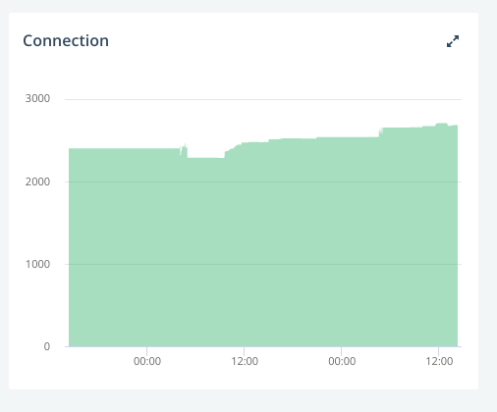
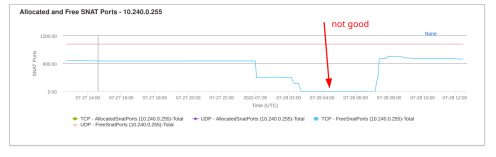
Hi My name is Dominhique Dumont, DevOps freelance in Grenoble, France. My goal is to share my experience regarding a production issue that occurred last week where my client complained that the applications was very slow and sometime showed 5xx errors. The production service is hosted on a Kubernetes cluster on Azure and use a MongoDB on ScaleGrid. I reproduced the issue on my side and found that the API calls were randomly failing due to timeouts on server side. The server logs were showing some MongoDB disconnections and reconnections and some time-out on MongoDB connections, but did not give any clue on why some connections to MongoDB server were failing. Since there was not clue in the cluster logs, I looked at ScaleGrid monitoring. There was about 2500 connections on MongoDB: 2022-07-19-scalegrid-connection-leak.png That seemed quite a lot given the low traffic at that time, but not necessarily a problem. Then, I went to the Azure console, and I got the first hint about the origin of the problem: the SNATs were exhausted on some nodes of the clusters. 2022-07-28_no-more-free-snat.png SNATs are involved in connections from the cluster to the outside world, i.e. to our MongoDB server and are quite limited: only 1024 SNAT ports are available per node. This was consistent with the number of used connections on MongoDB. OK, then the number of used connections on MongoDB was a real problem. The next question was: which pods and how many connections ? First I had to filter out the pods that did not use MongoDB. Fortunately, all our pods have labels so I could list all pods using MongoDB:
$ kubectl -n prod get pods -l db=mongo   wc -l
236
Hmm, still quite a lot. Next problem is to check which pod used too many MongoDB connections. Unfortunately, the logs mentioned that a connection to MongoDB was opened, but that did not give a clue on how many were used. Netstat is not installed on the pods, and cannot be installed since the pods are running as root (which is a good idea for security reasons) Then, my Debian Developer experience kicked in and I remembered that /proc file system on Linux gives a lot of information on consumed kernel resources, including resources consumed by each process. The trick is to know the PID of the process using the connections. In our case, Docker files are written in a way so the main process of a pod using NodeJS is 1, so, the command to list the connections of pod is:
$ kubectl -n prod exec redacted-pod-name-69875496f8-8bj4f -- cat /proc/1/net/tcp
  sl  local_address rem_address   st tx_queue rx_queue tr tm->when retrnsmt   uid  timeout inode                                                     
   0: AC00F00A:C9FA C2906714:6989 01 00000000:00000000 02:00000DA9 00000000  1001        0 376439162 2 0000000000000000 21 4 0 10 -1                 
   1: AC00F00A:CA00 C2906714:6989 01 00000000:00000000 02:00000E76 00000000  1001        0 376439811 2 0000000000000000 21 4 0 10 -1                 
   2: AC00F00A:8ED0 C2906714:6989 01 00000000:00000000 02:000004DA 00000000  1001        0 445806350 2 0000000000000000 21 4 30 10 -1                
   3: AC00F00A:CA02 C2906714:6989 01 00000000:00000000 02:000000DD 00000000  1001        0 376439812 2 0000000000000000 21 4 0 10 -1                 
   4: AC00F00A:C9FE C2906714:6989 01 00000000:00000000 02:00000DA9 00000000  1001        0 376439810 2 0000000000000000 21 4 0 10 -1                 
   5: AC00F00A:8760 C2906714:6989 01 00000000:00000000 02:00000810 00000000  1001        0 375803096 2 0000000000000000 21 4 0 10 -1                 
   6: AC00F00A:C9FC C2906714:6989 01 00000000:00000000 02:00000DA9 00000000  1001        0 376439809 2 0000000000000000 21 4 0 10 -1                 
   7: AC00F00A:C56C C2906714:6989 01 00000000:00000000 02:00000DA9 00000000  1001        0 376167298 2 0000000000000000 21 4 0 10 -1                 
   8: AC00F00A:883C C2906714:6989 01 00000000:00000000 02:00000734 00000000  1001        0 375823415 2 0000000000000000 21 4 30 10 -1 
OK, that s less appealing that netstat output. The trick is that rem_address and port are expressed in hexa. A quick calculation confirms the port 0x6989 is indeed port 27017, which is the listening port of MongoDB server. So the number of opened MongoDB connections is given by:
$ kubectl -n prod exec redacted-pod-name-69875496f8-8bj4f -- cat /proc/1/net/tcp   grep :6989   wc -l
9
What s next ? The ideal solution would be to fix the NodeJS code to handle correctly the termination of the connections, but that would have taken too long to develop. So I ve written a small Perl script to: Why restart a deployment instead of simply deleting the gluttonous pods? I wanted to avoid downtime if all pods of a deployment were to be killed. There s no downtime when applying rollout restart command on deployments. This script is now run regularly until the connections issue is fixed for good in NodeJS code. Thanks to this script, there s no need to rush a code modification. All in all, working around this connections issues was made somewhat easier thanks to:

27 July 2022

Vincent Bernat: ClickHouse SF Bay Area Meetup: Akvorado

Here are the slides I presented for a ClickHouse SF Bay Area Meetup in July 2022, hosted by Altinity. They are about Akvorado, a network flow collector and visualizer, and notably on how it relies on ClickHouse, a column-oriented database.
The meetup was recorded and available on YouTube. Here is the part relevant to my presentation, with subtitles:1
I got a few questions about how to get information from the higher layers, like HTTP. As my use case for Akvorado was at the network edge, my answers were mostly negative. However, as sFlow is extensible, when collecting flows from Linux servers instead, you could embed additional data and they could be exported as well. I also got a question about doing aggregation in a single table. ClickHouse can aggregate automatically data using TTL. My answer for not doing that is partial. There is another reason: the retention periods of the various tables may overlap. For example, the main table keeps data for 15 days, but even in these 15 days, if I do a query on a 12-hour window, it is faster to use the flows_1m0s aggregated table, unless I request something about ports and IP addresses.

  1. To generate the subtitles, I have used Amazon Transcribe, the speech-to-text solution from Amazon AWS. Unfortunately, there is no en-FR language available, which would have been useful for my terrible accent. While the subtitles were 100% accurate when the host, Robert Hodge from Altinity, was speaking, the success rate on my talk was quite lower. I had to rewrite almost all sentences. However, using speech-to-text is still useful to get the timings, as it is also something requiring a lot of work to do manually.

25 July 2022

Bits from Debian: DebConf22 closes in Prizren and DebConf23 dates announced

DebConf22 group photo - click to enlarge On Sunday 24 July 2022, the annual Debian Developers and Contributors Conference came to a close. Hosting 260 attendees from 38 different countries over a combined 91 event talks, discussion sessions, Birds of a Feather (BoF) gatherings, workshops, and activities, DebConf22 was a large success. The conference was preceded by the annual DebCamp held 10 July to 16 July which focused on individual work and team sprints for in-person collaboration towards developing Debian. In particular, this year there have been sprints to advance development of Mobian/Debian on mobile, reproducible builds and Python in Debian, and a BootCamp for newcomers, to get introduced to Debian and have some hands-on experience with using it and contributing to the community. The actual Debian Developers Conference started on Sunday 17 July 2022. Together with activities such as the traditional 'Bits from the DPL' talk, the continuous key-signing party, lightning talks and the announcement of next year's DebConf (DebConf23 in Kochi, India), there were several sessions related to programming language teams such as Python, Perl and Ruby, as well as news updates on several projects and internal Debian teams, discussion sessions (BoFs) from many technical teams (Long Term Support, Android tools, Debian Derivatives, Debian Installer and Images team, Debian Science...) and local communities (Debian Brasil, Debian India, the Debian Local Teams), along with many other events of interest regarding Debian and free software. The schedule was updated each day with planned and ad-hoc activities introduced by attendees over the course of the entire conference. Several activities that couldn\'t be organized in past years due to the COVID pandemic returned to the conference\'s schedule: a job fair, open-mic and poetry night, the traditional Cheese and Wine party, the group photos and the Day Trip. For those who were not able to attend, most of the talks and sessions were recorded for live streams with videos made, available through the Debian meetings archive website. Almost all of the sessions facilitated remote participation via IRC messaging apps or online collaborative text documents. The DebConf22 website will remain active for archival purposes and will continue to offer links to the presentations and videos of talks and events. Next year, DebConf23 will be held in Kochi, India, from September 10 to September 16, 2023. As tradition follows before the next DebConf the local organizers in India will start the conference activites with DebCamp (September 03 to September 09, 2023), with particular focus on individual and team work towards improving the distribution. DebConf is committed to a safe and welcome environment for all participants. See the web page about the Code of Conduct in DebConf22 website for more details on this. Debian thanks the commitment of numerous sponsors to support DebConf22, particularly our Platinum Sponsors: Lenovo, Infomaniak, ITP Prizren and Google. About Debian The Debian Project was founded in 1993 by Ian Murdock to be a truly free community project. Since then the project has grown to be one of the largest and most influential open source projects. Thousands of volunteers from all over the world work together to create and maintain Debian software. Available in 70 languages, and supporting a huge range of computer types, Debian calls itself the universal operating system. About DebConf DebConf is the Debian Project's developer conference. In addition to a full schedule of technical, social and policy talks, DebConf provides an opportunity for developers, contributors and other interested people to meet in person and work together more closely. It has taken place annually since 2000 in locations as varied as Scotland, Argentina, and Bosnia and Herzegovina. More information about DebConf is available from https://debconf.org/. About Lenovo As a global technology leader manufacturing a wide portfolio of connected products, including smartphones, tablets, PCs and workstations as well as AR/VR devices, smart home/office and data center solutions, Lenovo understands how critical open systems and platforms are to a connected world. About Infomaniak Infomaniak is Switzerland\'s largest web-hosting company, also offering backup and storage services, solutions for event organizers, live-streaming and video on demand services. It wholly owns its datacenters and all elements critical to the functioning of the services and products provided by the company (both software and hardware). About ITP Prizren Innovation and Training Park Prizren intends to be a changing and boosting element in the area of ICT, agro-food and creatives industries, through the creation and management of a favourable environment and efficient services for SMEs, exploiting different kinds of innovations that can contribute to Kosovo to improve its level of development in industry and research, bringing benefits to the economy and society of the country as a whole. About Google Google is one of the largest technology companies in the world, providing a wide range of Internet-related services and products such as online advertising technologies, search, cloud computing, software, and hardware. Google has been supporting Debian by sponsoring DebConf for more than ten years, and is also a Debian partner sponsoring parts of Salsa's continuous integration infrastructure within Google Cloud Platform. Contact Information For further information, please visit the DebConf22 web page at https://debconf22.debconf.org/ or send mail to press@debian.org.

23 July 2022

Wouter Verhelst: Planet Grep now running PtLink

Almost 2 decades ago, Planet Debian was created using the "planetplanet" RSS aggregator. A short while later, I created Planet Grep using the same software. Over the years, the blog aggregator landscape has changed a bit. First of all, planetplanet was abandoned, forked into Planet Venus, and then abandoned again. Second, the world of blogging (aka the "blogosphere") has disappeared much, and the more modern world uses things like "Social Networks", etc, making blogs less relevant these days. A blog aggregator community site is still useful, however, and so I've never taken Planet Grep down, even though over the years the number of blogs that was carried on Planet Grep has been reducing. In the past almost 20 years, I've just run Planet Grep on my personal server, upgrading its Debian release from whichever was the most recent stable release in 2005 to buster, never encountering any problems. That all changed when I did the upgrade to Debian bullseye, however. Planet Venus is a Python 2 application, which was never updated to Python 3. Since Debian bullseye drops support for much of Python 2, focusing only on Python 3 (in accordance with python upstream's policy on the matter), that means I have had to run Planet Venus from inside a VM for a while now, which works as a short-term solution but not as a long-term one. Although there are other implementations of blog aggregation software out there, I wanted to stick with something (mostly) similar. Additionally, I have been wanting to add functionality to it to also pull stuff from Social Networks, where possible (and legal, since some of these have... scary Terms Of Use documents). So, as of today, Planet Grep is no longer powered by Planet Venus, but instead by PtLink. Rather than Python, it was written in Perl (a language with which I am more familiar), and there are plans for me to extend things in ways that have little to do with blog aggregation anymore... There are a few other Planets out there that also use Planet Venus at this point -- Planet Debian and Planet FSFE are two that I'm currently already aware of, but I'm sure there might be more, too. At this point, PtLink is not yet on feature parity with Planet Venus -- as shown by the fact that it can't yet build either Planet Debian or Planet FSFE successfully. But I'm not stopping my development here, and hopefully I'll have something that successfully builds both of those soon, too. As a side note, PtLink is not intended to be bug compatible with Planet Venus. For one example, the configuration for Planet Grep contains an entry for Frederic Descamps, but somehow Planet Venus failed to fetch his feed. With the switch to PtLink, that seems fixed, and now some entries from Frederic seem to appear. I'm not going to be "fixing" that feature... but of course there might be other issues that will appear. If that's the case, let me know. If you're reading this post through Planet Grep, consider this a public service announcement for the possibility (hopefully a remote one) of minor issues.

20 July 2022

Enrico Zini: Deconstruction of the DAM hat

Further reading Talk notes Intro Debian Account Managers Responsibility for official membership What DAM is not Unexpected responsibilities DAM warnings DAM warnings? House rules Interpreting house rules Governance by bullying How about the Community Team? How about DAM? How about the DPL? Concentrating responsibility Empowering developers What needs to happen

17 July 2022

Bits from Debian: DebConf22 starts today in Prizren

DebConf22, the 23rd annual Debian Conference, is taking place in Prizren, Kosovo from July 17th to 24th, 2022. Debian contributors from all over the world have come together at Innovation and Training Park (ITP) in Prizren, Kosovo, to participate and work in a conference exclusively run by volunteers. Today the main conference starts with over 270 attendants expected and 82 activities scheduled, including 45-minute and 20-minute talks and team meetings ("BoF"), workshops, and a job fair, as well as a variety of other events. The full schedule at https://debconf2.debconf.org/schedule/ is updated every day, including activities planned ad-hoc by attendees during the whole conference. If you want to engage remotely, you can follow the video streaming available from the DebConf22 website of the events happening in the three talk rooms: Drini, Lumbardhi and Ereniku. Or you can join the conversation about what is happening in the talk rooms: #debconf-drini, #debconf-lumbardhi and #debconf-ereniku (all those channels in the OFTC IRC network). You can also follow the live coverage of news about DebConf22 on https://micronews.debian.org or the @debian profile in your favorite social network. DebConf is committed to a safe and welcoming environment for all participants. See the web page about the Code of Conduct in DebConf22's website for more details on this. Debian thanks the commitment of numerous sponsors to support DebConf22, particularly our Platinum Sponsors: Lenovo, Infomaniak, ITP Prizren and Google. DebConf22 banner open registration

13 July 2022

Dirk Eddelbuettel: rfoaas 2.3.2: New upstream accessors

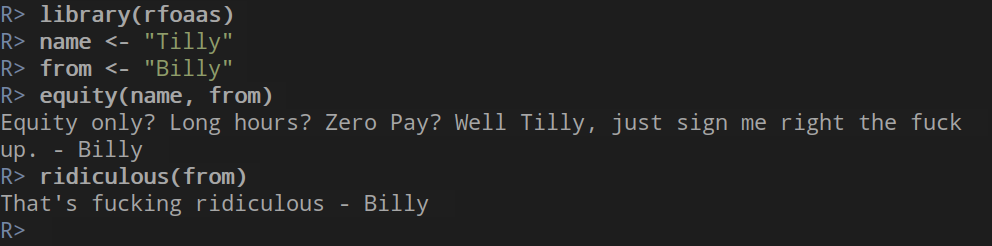
rfoaas greed example FOAAS by now moved to version 2.3.2 in its repo. This releases 2.3.2 of rfoaas catches up, and brings the first release in about two and a half years. This 2.3.2 release of FOAAS brings us six new REST access points: absolutely(), dense(), dumbledore(), lowpoly(), understand(), and yeah(). Along with these new functions, documentation and tests were updated. My CRANberries service provides a diff to the previous CRAN release. Questions, comments etc should go to the GitHub issue tracker. More background information is on the project page as well as on the github repo If you like this or other open-source work I do, you can sponsor me at GitHub.

This post by Dirk Eddelbuettel originated on his Thinking inside the box blog. Please report excessive re-aggregation in third-party for-profit settings.

Reproducible Builds: Reproducible Builds in June 2022

Welcome to the June 2022 report from the Reproducible Builds project. In these reports, we outline the most important things that we have been up to over the past month. As a quick recap, whilst anyone may inspect the source code of free software for malicious flaws, almost all software is distributed to end users as pre-compiled binaries.

Save the date! Despite several delays, we are pleased to announce dates for our in-person summit this year: November 1st 2022 November 3rd 2022
The event will happen in/around Venice (Italy), and we intend to pick a venue reachable via the train station and an international airport. However, the precise venue will depend on the number of attendees. Please see the announcement mail from Mattia Rizzolo, and do keep an eye on the mailing list for further announcements as it will hopefully include registration instructions.

News David Wheeler filed an issue against the Rust programming language to report that builds are not reproducible because full path to the source code is in the panic and debug strings . Luckily, as one of the responses mentions: the --remap-path-prefix solves this problem and has been used to great effect in build systems that rely on reproducibility (Bazel, Nix) to work at all and that there are efforts to teach cargo about it here .
The Python Security team announced that:
The ctx hosted project on PyPI was taken over via user account compromise and replaced with a malicious project which contained runtime code which collected the content of os.environ.items() when instantiating Ctx objects. The captured environment variables were sent as a base64 encoded query parameter to a Heroku application [ ]
As their announcement later goes onto state, version-pinning using hash-checking mode can prevent this attack, although this does depend on specific installations using this mode, rather than a prevention that can be applied systematically.
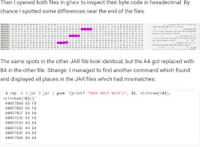
Developer vanitasvitae published an interesting and entertaining blog post detailing the blow-by-blow steps of debugging a reproducibility issue in PGPainless, a library which aims to make using OpenPGP in Java projects as simple as possible . Whilst their in-depth research into the internals of the .jar may have been unnecessary given that diffoscope would have identified the, it must be said that there is something to be said with occasionally delving into seemingly low-level details, as well describing any debugging process. Indeed, as vanitasvitae writes:
Yes, this would have spared me from 3h of debugging But I probably would also not have gone onto this little dive into the JAR/ZIP format, so in the end I m not mad.

Kees Cook published a short and practical blog post detailing how he uses reproducibility properties to aid work to replace one-element arrays in the Linux kernel. Kees approach is based on the principle that if a (small) proposed change is considered equivalent by the compiler, then the generated output will be identical but only if no other arbitrary or unrelated changes are introduced. Kees mentions the fantastic diffoscope tool, as well as various kernel-specific build options (eg. KBUILD_BUILD_TIMESTAMP) in order to prepare my build with the known to disrupt code layout options disabled .
Stefano Zacchiroli gave a presentation at GDR S curit Informatique based in part on a paper co-written with Chris Lamb titled Increasing the Integrity of Software Supply Chains. (Tweet)

Debian In Debian in this month, 28 reviews of Debian packages were added, 35 were updated and 27 were removed this month adding to our knowledge about identified issues. Two issue types were added: nondeterministic_checksum_generated_by_coq and nondetermistic_js_output_from_webpack. After Holger Levsen found hundreds of packages in the bookworm distribution that lack .buildinfo files, he uploaded 404 source packages to the archive (with no meaningful source changes). Currently bookworm now shows only 8 packages without .buildinfo files, and those 8 are fixed in unstable and should migrate shortly. By contrast, Debian unstable will always have packages without .buildinfo files, as this is how they come through the NEW queue. However, as these packages were not built on the official build servers (ie. they were uploaded by the maintainer) they will never migrate to Debian testing. In the future, therefore, testing should never have packages without .buildinfo files again. Roland Clobus posted yet another in-depth status report about his progress making the Debian Live images build reproducibly to our mailing list. In this update, Roland mentions that all major desktops build reproducibly with bullseye, bookworm and sid but also goes on to outline the progress made with automated testing of the generated images using openQA.

GNU Guix Vagrant Cascadian made a significant number of contributions to GNU Guix: Elsewhere in GNU Guix, Ludovic Court s published a paper in the journal The Art, Science, and Engineering of Programming called Building a Secure Software Supply Chain with GNU Guix:
This paper focuses on one research question: how can [Guix]((https://www.gnu.org/software/guix/) and similar systems allow users to securely update their software? [ ] Our main contribution is a model and tool to authenticate new Git revisions. We further show how, building on Git semantics, we build protections against downgrade attacks and related threats. We explain implementation choices. This work has been deployed in production two years ago, giving us insight on its actual use at scale every day. The Git checkout authentication at its core is applicable beyond the specific use case of Guix, and we think it could benefit to developer teams that use Git.
A full PDF of the text is available.

openSUSE In the world of openSUSE, SUSE announced at SUSECon that they are preparing to meet SLSA level 4. (SLSA (Supply chain Levels for Software Artifacts) is a new industry-led standardisation effort that aims to protect the integrity of the software supply chain.) However, at the time of writing, timestamps within RPM archives are not normalised, so bit-for-bit identical reproducible builds are not possible. Some in-toto provenance files published for SUSE s SLE-15-SP4 as one result of the SLSA level 4 effort. Old binaries are not rebuilt, so only new builds (e.g. maintenance updates) have this metadata added. Lastly, Bernhard M. Wiedemann posted his usual monthly openSUSE reproducible builds status report.

diffoscope diffoscope is our in-depth and content-aware diff utility. Not only can it locate and diagnose reproducibility issues, it can provide human-readable diffs from many kinds of binary formats. This month, Chris Lamb prepared and uploaded versions 215, 216 and 217 to Debian unstable. Chris Lamb also made the following changes:
  • New features:
    • Print profile output if we were called with --profile and we were killed via a TERM signal. This should help in situations where diffoscope is terminated due to some sort of timeout. [ ]
    • Support both PyPDF 1.x and 2.x. [ ]
  • Bug fixes:
    • Also catch IndexError exceptions (in addition to ValueError) when parsing .pyc files. (#1012258)
    • Correct the logic for supporting different versions of the argcomplete module. [ ]
  • Output improvements:
    • Don t leak the (likely-temporary) pathname when comparing PDF documents. [ ]
  • Logging improvements:
    • Update test fixtures for GNU readelf 2.38 (now in Debian unstable). [ ][ ]
    • Be more specific about the minimum required version of readelf (ie. binutils), as it appears that this patch level version change resulted in a change of output, not the minor version. [ ]
    • Use our @skip_unless_tool_is_at_least decorator (NB. at_least) over @skip_if_tool_version_is (NB. is) to fix tests under Debian stable. [ ]
    • Emit a warning if/when we are handling a UNIX TERM signal. [ ]
  • Codebase improvements:
    • Clarify in what situations the main finally block gets called with respect to TERM signal handling. [ ]
    • Clarify control flow in the diffoscope.profiling module. [ ]
    • Correctly package the scripts/ directory. [ ]
In addition, Edward Betts updated a broken link to the RSS on the diffoscope homepage and Vagrant Cascadian updated the diffoscope package in GNU Guix [ ][ ][ ].

Upstream patches The Reproducible Builds project detects, dissects and attempts to fix as many currently-unreproducible packages as possible. We endeavour to send all of our patches upstream where appropriate. This month, we wrote a large number of such patches, including:

Testing framework The Reproducible Builds project runs a significant testing framework at tests.reproducible-builds.org, to check packages and other artifacts for reproducibility. This month, the following changes were made:
  • Holger Levsen:
    • Add a package set for packages that use the R programming language [ ] as well as one for Rust [ ].
    • Improve package set matching for Python [ ] and font-related [ ] packages.
    • Install the lz4, lzop and xz-utils packages on all nodes in order to detect running kernels. [ ]
    • Improve the cleanup mechanisms when testing the reproducibility of Debian Live images. [ ][ ]
    • In the automated node health checks, deprioritise the generic kernel warning . [ ]
  • Roland Clobus (Debian Live image reproducibility):
    • Add various maintenance jobs to the Jenkins view. [ ]
    • Cleanup old workspaces after 24 hours. [ ]
    • Cleanup temporary workspace and resulting directories. [ ]
    • Implement a number of fixes and improvements around publishing files. [ ][ ][ ]
    • Don t attempt to preserve the file timestamps when copying artifacts. [ ]
And finally, node maintenance was also performed by Mattia Rizzolo [ ].

Mailing list and website On our mailing list this month: Lastly, Chris Lamb updated the main Reproducible Builds website and documentation in a number of small ways, but primarily published an interview with Hans-Christoph Steiner of the F-Droid project. Chris Lamb also added a Coffeescript example for parsing and using the SOURCE_DATE_EPOCH environment variable [ ]. In addition, Sebastian Crane very-helpfully updated the screenshot of salsa.debian.org s request access button on the How to join the Salsa group. [ ]

Contact If you are interested in contributing to the Reproducible Builds project, please visit our Contribute page on our website. However, you can get in touch with us via:

9 July 2022

Dirk Eddelbuettel: Rcpp 1.0.9 on CRAN: Regular Updates

rcpp logo The Rcpp team is please to announce the newest release 1.0.9 of Rcpp which hit CRAN late yesterday, and has been uploaded to Debian as well. Windows and macOS builds should appear at CRAN in the next few days, as will builds in different Linux distribution and of course at r2u. The release was prepared om July 2, but it took a few days to clear a handful of spurious errors as false positives with CRAN this can when the set of reverse dependencies is so large, and the CRAN team remains busy. This release continues with the six-months cycle started with release 1.0.5 in July 2020. (This time, CRAN had asked for an interim release to silence a C++ warning; we then needed a quick follow-up to tweak tests.) As a reminder, interim dev or rc releases should generally be available in the Rcpp drat repo. These rolling release tend to work just as well, and are also fully tested against all reverse-dependencies. Rcpp has become the most popular way of enhancing R with C or C++ code. Right now, around 2559 packages on CRAN depend on Rcpp for making analytical code go faster and further, along with 252 in BioConductor. On CRAN, 13.9% of all packages depend (directly) on CRAN, and 58.5% of all compiled packages do. From the cloud mirror of CRAN (which is but a subset of all CRAN downloads), Rcpp has been downloaded 61.5 million times. This release is incremental and extends Rcpp with a number of small improvements all detailed in the NEWS file as well as below. We want to highlight the external contributions: a precious list tag is cleared on removal, and a move constructor and assignment for strings has been added (thanks to Dean Scarff), and (thanks to Bill Denney and Marco Colombo) two minor errors are corrected in the vignette documentation. A big Thank You! to everybody who contributed pull request, opened or answered issues, or questions at StackOverflow or on the mailing list. The full list of details follows.

Changes in Rcpp hotfix release version 1.0.9 (2022-07-02)
  • Changes in Rcpp API:
    • Accomodate C++98 compilation by adjusting attributes.cpp (Dirk in #1193 fixing #1192)
    • Accomodate newest compilers replacing deprecated std::unary_function and std::binary_function with std::function (Dirk in #1202 fixing #1201 and CRAN request)
    • Upon removal from precious list, the tag is set to null (I aki in #1205 fixing #1203)
    • Move constructor and assignment for strings have been added (Dean Scarff in #1219).
  • Changes in Rcpp Documentation:
    • Adjust one overflowing column (Bill Denney in #1196 fixing #1195)
    • Correct a typo in the FAQ (Marco Colombo in #1217)
  • Changes in Rcpp Deployment:
    • Accomodate four digit version numbers in unit test (Dirk)
    • Do not run complete test suite to limit test time to CRAN preference (Dirk in #1206)
    • Small updates to the CI test containers have been made
    • Some of changes also applied to an interim release 1.0.8.3 made for CRAN on 2022-03-14.

Thanks to my CRANberries, you can also look at a diff to the previous release. Questions, comments etc should go to the rcpp-devel mailing list off the R-Forge page. Bugs reports are welcome at the GitHub issue tracker as well (where one can also search among open or closed issues); questions are also welcome under rcpp tag at StackOverflow which also allows searching among the (currently) 2886 previous questions. If you like this or other open-source work I do, you can sponsor me at GitHub.

This post by Dirk Eddelbuettel originated on his Thinking inside the box blog. Please report excessive re-aggregation in third-party for-profit settings.

8 July 2022

Bits from Debian: DebConf22 Cheese and Wine Party

In less than two days we will be in Prizren to start DebCamp and DebConf22 \o/ This C&W is the 18th official DebConf Cheese and Wine party. The first C&W was improvised in Helsinki during DebConf 5, in the so-called "French" room. Cheese and Wine parties are now a tradition for DebConf. The event is very simple: bring good edible stuff from your country. We like cheese and wine, but we love the surprising stuff that people bring from all around the world or regions of Kosovo. So, you can bring non-alcoholic drinks or a typical food that you would like to share as well. Even if you don't bring anything, feel free to participate: our priorities are our attendants and free cheese. We have to organize for a great party. An important part is planning - We want to know what you are bringing, in order to prepare the labels and organizing other things. So, please go to our wiki page and add what you will bring! If you don't have time to buy before travel, we list some places where you can buy cheese and wine in . There are more information about C&W, what you can bring, vegan cheese, Kosovo customs regulations and non-alcoholic drinks at our site. C&W will happen on July 19th, 2022 (Tuesday) after 19h30min. We are looking forward to seeing you all here! DebConf22 banner open registration

2 July 2022

Russ Allbery: Review: Overdue

Review: Overdue, by Amanda Oliver
Publisher: Chicago Review Press
Copyright: 2022
ISBN: 1-64160-534-0
Format: Kindle
Pages: 190
Like many lifetime readers, I adored the public library. I read my way through three different children's libraries at the rate of a grocery sack of books per week, including numerous re-readings, and then moved on to the adult section as my introduction to science fiction. But once I had a regular job, I discovered the fun of filling shelves with books without having to return them or worry about what the library had available. I've always supported my local library, but it's been decades since I spent much time in it. When I last used one heavily, the only computers were at the checkout desk and the only books were physical, normally hardcovers. Overdue: Reckoning with the Public Library therefore caught my eye when I saw a Twitter thread about it before publication. It promised to be a picture of the modern public library and its crises from the perspective of the librarian. The author's primary topic was the drafting of public libraries as de facto homeless service centers, but I hoped it would also encompass technological change, demand for new services, and the shifting meaning of what a public library is for. Overdue does... some of that. The author was a children's librarian in a Washington DC public school and then worked at a downtown branch of the Washington DC public library, and the book includes a few anecdotes from both experiences. Most of the book, though, is Oliver's personal memoir of how she got into field, why she chose to leave it, and how she is making sense of her feelings about the profession. Intermixed with that memoir is wide-ranging political commentary on topics ranging from gentrification to mental health care. This material is relevant to the current challenges libraries face, but it wandered far afield from what I was hoping to get from the book. I think of non-fiction books as coming in a few basic shapes. One is knowledge from an expert: the author has knowledge about a topic that is not widely shared, and they write a book to share it. Another is popularization: an author, possibly without prior special expertise in the topic, does research the reader could have done but doesn't have time to do and then summarizes the results in a format that's easier to understand than the original material. And a third is memoir, in which the author tells the story of their own life. This is a variation of the first type, since the author is obviously an expert in their own life, but most people's lives are not interesting. (Mine certainly isn't!) Successful memoir therefore depends on either having an unusual life or being a compelling storyteller, and ideally both. Many non-fiction books fall into multiple categories, but it's helpful for an author to have a clear idea of which of these goals they're pursuing since they result in different books. If the author is writing primarily from a position of special expertise, the book should focus on that expertise. I am interested in librarians and libraries and would like to know more about that job, so I will read with interest your personal stories about being a librarian. I am somewhat interested in your policy suggestions for how to make libraries work better, although more so if you can offer context and analysis beyond your personal experiences. I am less interested in your opinions on, say, gentrification. That's not because I doubt it is a serious problem (it is) or that it impacts libraries (it does). It's because working in a library doesn't provide any special expertise in gentrification beyond knowing that it exists, something that I can see by walking around the corner. If I want to know more, I will read books by urban planners, sociologists, and housing rights activists. This is a long-winded way of saying that I wish Overdue had about four times as many stories about libraries, preferably framed by general research and background that extended beyond the author's personal experience, or at least more specific details of the politics of the Washington DC library system. The personal memoir outside of the library stories failed to hold my interest. This is not intended as a slam on the author. Oliver seems like a thoughtful and sincere person who is struggling with how to do good in the world without burning out, which is easy for me to sympathize with. I suspect I broadly agree with her on many political positions. But I have read all of this before, and personally lived through some of the same processing, and I don't think Oliver offered new insight. The library stories were memorable enough to form the core of a good book, but the memoir structure did nothing for them and they were strangled by the unoriginal and too-general political analysis. At the risk of belaboring a negative review, there are two other things in Overdue that I've also seen in other writing and seem worth commenting on. The first is the defensive apology that the author may not have the best perspective to write the book. It's important to be clear: I am glad that the Oliver has thought about the ways her experiences as a white woman may not be representative of other people. This is great; the world is a better place when more people consider that. I'm less fond of putting that observation in the book, particularly at length. As the author, rather than writing paragraphs vaguely acknowledging that other people have different experiences, she could instead fix the problem: go talk to librarians of other ethnic and social backgrounds and put their stories in this book. The book would then represent broader experiences and not require the apology. Overdue desperately needed more library-specific content, so that would have improved the book in more than one way. Or if Oliver is ideologically opposed to speaking for other people (she makes some comments to that effect), state up-front, once, that this is a personal memoir and, as a memoir, represents only her own experience. But the author should do something with this observation other than dump its awkwardness on the reader, if for no other reason than that lengthy disclaimers about the author's limited perspective are boring. The second point is about academic jargon and stock phrasing. I work in a field that relies on precise distinctions of meaning (between identity, authentication, and authorization, for example), and therefore I rely on jargon. Its purpose is to make those types of fine distinctions. But authors who read heavily in fields with jargon tend to let that phrasing slip into popular writing where it's not necessary. The result is, to quote Orwell, "gumming together long strips of words which have already been set in order by someone else." The effect may be small in a single sentence but, when continued throughout a book, the overuse of jargon is leaden, belabored, and confusing. Any example I choose will be minor since the effect is cumulative, but one of several I noticed in Overdue is "lived experience." This is jargon from philosophy that, within the field, draws a useful distinction between one's direct experiences of living in the world, and academic or scientific experience with a field. Both types of experience are valuable in different situations, but they're not equivalent. This is a useful phrase when the distinction matters and is unclear. When the type of experience one is discussing is obvious in context (the case in at least three of the four uses in this book), the word "lived" adds nothing but verbosity. If too much of this creeps into writing, it becomes clunky and irritating to read. The best (and not coincidentally the least clunky) part of this book is Oliver's stories of the patrons and other employees of the Northwest One branch of the Washington DC library system and her experiences with them. The picture was not as vivid as I was hoping for, but I came away with some new understanding of typical interactions and day-to-day difficulties. The same was true to a lesser extent for her experiences as a school librarian. For both, I wish there had been more context and framing so that I could see how her experiences fit into a whole system, but those parts of the book were worth reading. Unfortunately, they weren't enough of those parts in the book for me to recommend Overdue. But I'm still interested in reading the book I hoped I was getting! Rating: 5 out of 10

29 June 2022

Aigars Mahinovs: Long travel in an electric car

Since the first week of April 2022 I have (finally!) changed my company car from a plug-in hybrid to a fully electic car. My new ride, for the next two years, is a BMW i4 M50 in Aventurine Red metallic. An ellegant car with very deep and memorable color, insanely powerful (544 hp/795 Nm), sub-4 second 0-100 km/h, large 84 kWh battery (80 kWh usable), charging up to 210 kW, top speed of 225 km/h and also very efficient (which came out best in this trip) with WLTP range of 510 km and EVDB real range of 435 km. The car also has performance tyres (Hankook Ventus S1 evo3 245/45R18 100Y XL in front and 255/45R18 103Y XL in rear all at recommended 2.5 bar) that have reduced efficiency. So I wanted to document and describe how was it for me to travel ~2000 km (one way) with this, electric, car from south of Germany to north of Latvia. I have done this trip many times before since I live in Germany now and travel back to my relatives in Latvia 1-2 times per year. This was the first time I made this trip in an electric car. And as this trip includes both travelling in Germany (where BEV infrastructure is best in the world) and across Eastern/Northen Europe, I believe that this can be interesting to a few people out there. Normally when I travelled this trip with a gasoline/diesel car I would normally drive for two days with an intermediate stop somewhere around Warsaw with about 12 hours of travel time in each day. This would normally include a couple bathroom stops in each day, at least one longer lunch stop and 3-4 refueling stops on top of that. Normally this would use at least 6 liters of fuel per 100 km on average with total usage of about 270 liters for the whole trip (or about 540 just in fuel costs, nowadays). My (personal) quirk is that both fuel and recharging of my (business) car inside Germany is actually paid by my employer, so it is useful for me to charge up (or fill up) at the last station in Gemany before driving on. The plan for this trip was made in a similar way as when travelling with a gasoline car: travelling as fast as possible on German Autobahn network to last chargin stop on the A4 near G rlitz, there charging up as much as reasonable and then travelling to a hotel in Warsaw, charging there overnight and travelling north towards Ionity chargers in Lithuania from where reaching the final target in north of Latvia should be possible. How did this plan meet the reality? Travelling inside Germany with an electric car was basically perfect. The most efficient way would involve driving fast and hard with top speed of even 180 km/h (where possible due to speed limits and traffic). BMW i4 is very efficient at high speeds with consumption maxing out at 28 kWh/100km when you actually drive at this speed all the time. In real situation in this trip we saw consumption of 20.8-22.2 kWh/100km in the first legs of the trip. The more traffic there is, the more speed limits and roadworks, the lower is the average speed and also the lower the consumption. With this kind of consumption we could comfortably drive 2 hours as fast as we could and then pick any fast charger along the route and in 26 minutes at a charger (50 kWh charged total) we'd be ready to drive for another 2 hours. This lines up very well with recommended rest stops for biological reasons (bathroom, water or coffee, a bit of movement to get blood circulating) and very close to what I had to do anyway with a gasoline car. With a gasoline car I had to refuel first, then park, then go to bathroom and so on. With an electric car I can do all of that while the car is charging and in the end the total time for a stop is very similar. Also not that there was a crazy heat wave going on and temperature outside was at about 34C minimum the whole day and hitting 40C at one point of the trip, so a lot of power was used for cooling. The car has a heat pump standard, but it still was working hard to keep us cool in the sun. The car was able to plan a charging route with all the charging stops required and had all the good options (like multiple intermediate stops) that many other cars (hi Tesla) and mobile apps (hi Google and Apple) do not have yet. There are a couple bugs with charging route and display of current route guidance, those are already fixed and will be delivered with over the air update with July 2022 update. Another good alterantive is the ABRP (A Better Route Planner) that was specifically designed for electric car routing along the best route for charging. Most phone apps (like Google Maps) have no idea about your specific electric car - it has no idea about the battery capacity, charging curve and is missing key live data as well - what is the current consumption and remaining energy in the battery. ABRP is different - it has data and profiles for almost all electric cars and can also be linked to live vehicle data, either via a OBD dongle or via a new Tronity cloud service. Tronity reads data from vehicle-specific cloud service, such as MyBMW service, saves it, tracks history and also re-transmits it to ABRP for live navigation planning. ABRP allows for options and settings that no car or app offers, for example, saying that you want to stop at a particular place for an hour or until battery is charged to 90%, or saying that you have specific charging cards and would only want to stop at chargers that support those. Both the car and the ABRP also support alternate routes even with multiple intermediate stops. In comparison, route planning by Google Maps or Apple Maps or Waze or even Tesla does not really come close. After charging up in the last German fast charger, a more interesting part of the trip started. In Poland the density of high performance chargers (HPC) is much lower than in Germany. There are many chargers (west of Warsaw), but vast majority of them are (relatively) slow 50kW chargers. And that is a difference between putting 50kWh into the car in 23-26 minutes or in 60 minutes. It does not seem too much, but the key bit here is that for 20 minutes there is easy to find stuff that should be done anyway, but after that you are done and you are just waiting for the car and if that takes 4 more minutes or 40 more minutes is a big, perceptual, difference. So using HPC is much, much preferable. So we put in the Ionity charger near Lodz as our intermediate target and the car suggested an intermediate stop at a Greenway charger by Katy Wroclawskie. The location is a bit weird - it has 4 charging stations with 150 kW each. The weird bits are that each station has two CCS connectors, but only one parking place (and the connectors share power, so if two cars were to connect, each would get half power). Also from the front of the location one can only see two stations, the otehr two are semi-hidden around a corner. We actually missed them on the way to Latvia and one person actually waited for the charger behind us for about 10 minutes. We only discovered the other two stations on the way back. With slower speeds in Poland the consumption goes down to 18 kWh/100km which translates to now up to 3 hours driving between stops. At the end of the first day we drove istarting from Ulm from 9:30 in the morning until about 23:00 in the evening with total distance of about 1100 km, 5 charging stops, starting with 92% battery, charging for 26 min (50 kWh), 33 min (57 kWh + lunch), 17 min (23 kWh), 12 min (17 kWh) and 13 min (37 kW). In the last two chargers you can see the difference between a good and fast 150 kW charger at high battery charge level and a really fast Ionity charger at low battery charge level, which makes charging faster still. Arriving to hotel with 23% of battery. Overnight the car charged from a Porsche Destination Charger to 87% (57 kWh). That was a bit less than I would expect from a full power 11kW charger, but good enough. Hotels should really install 11kW Type2 chargers for their guests, it is a really significant bonus that drives more clients to you. The road between Warsaw and Kaunas is the most difficult part of the trip for both driving itself and also for charging. For driving the problem is that there will be a new highway going from Warsaw to Lithuanian border, but it is actually not fully ready yet. So parts of the way one drives on the new, great and wide highway and parts of the way one drives on temporary roads or on old single lane undivided roads. And the most annoying part is navigating between parts as signs are not always clear and the maps are either too old or too new. Some maps do not have the new roads and others have on the roads that have not been actually build or opened to traffic yet. It's really easy to loose ones way and take a significant detour. As far as charging goes, basically there is only the slow 50 kW chargers between Warsaw and Kaunas (for now). We chose to charge on the last charger in Poland, by Suwalki Kaufland. That was not a good idea - there is only one 50 kW CCS and many people decide the same, so there can be a wait. We had to wait 17 minutes before we could charge for 30 more minutes just to get 18 kWh into the battery. Not the best use of time. On the way back we chose a different charger in Lomza where would have a relaxed dinner while the car was charging. That was far more relaxing and a better use of time. We also tried charging at an Orlen charger that was not recommended by our car and we found out why. Unlike all other chargers during our entire trip, this charger did not accept our universal BMW Charging RFID card. Instead it demanded that we download their own Orlen app and register there. The app is only available in some countries (and not in others) and on iPhone it is only available in Polish. That is a bad exception to the rule and a bad example. This is also how most charging works in USA. Here in Europe that is not normal. The normal is to use a charging card - either provided from the car maker or from another supplier (like PlugSufring or Maingau Energy). The providers then make roaming arrangements with all the charging networks, so the cards just work everywhere. In the end the user gets the prices and the bills from their card provider as a single monthly bill. This also saves all any credit card charges for the user. Having a clear, separate RFID card also means that one can easily choose how to pay for each charging session. For example, I have a corporate RFID card that my company pays for (for charging in Germany) and a private BMW Charging card that I am paying myself for (for charging abroad). Having the car itself authenticate direct with the charger (like Tesla does) removes the option to choose how to pay. Having each charge network have to use their own app or token bring too much chaos and takes too much setup. The optimum is having one card that works everywhere and having the option to have additional card or cards for specific purposes. Reaching Ionity chargers in Lithuania is again a breath of fresh air - 20-24 minutes to charge 50 kWh is as expected. One can charge on the first Ionity just enough to reach the next one and then on the second charger one can charge up enough to either reach the Ionity charger in Adazi or the final target in Latvia. There is a huge number of CSDD (Road Traffic and Safety Directorate) managed chargers all over Latvia, but they are 50 kW chargers. Good enough for local travel, but not great for long distance trips. BMW i4 charges at over 50 kW on a HPC even at over 90% battery state of charge (SoC). This means that it is always faster to charge up in a HPC than in a 50 kW charger, if that is at all possible. We also tested the CSDD chargers - they worked without any issues. One could pay with the BMW Charging RFID card, one could use the CSDD e-mobi app or token and one could also use Mobilly - an app that you can use in Latvia for everything from parking to public transport tickets or museums or car washes. We managed to reach our final destination near Aluksne with 17% range remaining after just 3 charging stops: 17+30 min (18 kWh), 24 min (48 kWh), 28 min (36 kWh). Last stop we charged to 90% which took a few extra minutes that would have been optimal. For travel around in Latvia we were charging at our target farmhouse from a normal 3 kW Schuko EU socket. That is very slow. We charged for 33 hours and went from 17% to 94%, so not really full. That was perfectly fine for our purposes. We easily reached Riga, drove to the sea and then back to Aluksne with 8% still in reserve and started charging again for the next trip. If it were required to drive around more and charge faster, we could have used the normal 3-phase 440V connection in the farmhouse to have a red CEE 16A plug installed (same as people use for welders). BMW i4 comes standard with a new BMW Flexible Fast Charger that has changable socket adapters. It comes by default with a Schucko connector in Europe, but for 90 one can buy an adapter for blue CEE plug (3.7 kW) or red CEE 16A or 32A plugs (11 kW). Some public charging stations in France actually use the blue CEE plugs instead of more common Type2 electric car charging stations. The CEE plugs are also common in camping parking places. On the way back the long distance BEV travel was already well understood and did not cause us any problem. From our destination we could easily reach the first Ionity in Lithuania, on the Panevezhis bypass road where in just 8 minutes we got 19 kWh and were ready to drive on to Kaunas, there a longer 32 minute stop before the charging desert of Suwalki Gap that gave us 52 kWh to 90%. That brought us to a shopping mall in Lomzha where we had some food and charged up 39 kWh in lazy 50 minutes. That was enough to bring us to our return hotel for the night - Hotel 500W in Strykow by Lodz that has a 50kW charger on site, while we were having late dinner and preparing for sleep, the car easily recharged to full (71 kWh in 95 minutes), so I just moved it from charger to a parking spot just before going to sleep. Really easy and well flowing day. Second day back went even better as we just needed an 18 minute stop at the same Katy Wroclawskie charger as before to get 22 kWh and that was enough to get back to Germany. After that we were again flying on the Autobahn and charging as needed, 15 min (31 kWh), 23 min (48 kWh) and 31 min (54 kWh + food). We started the day on about 9:40 and were home at 21:40 after driving just over 1000 km on that day. So less than 12 hours for 1000 km travelled, including all charging, bio stops, food and some traffic jams as well. Not bad. Now let's take a look at all the apps and data connections that a technically minded customer can have for their car. Architecturally the car is a network of computers by itself, but it is very secured and normally people do not have any direct access. However, once you log in into the car with your BMW account the car gets your profile info and preferences (seat settings, navigation favorites, ...) and the car then also can start sending information to the BMW backend about its status. This information is then available to the user over multiple different channels. There is no separate channel for each of those data flow. The data only goes once to the backend and then all other communication of apps happens with the backend. First of all the MyBMW app. This is the go-to for everything about the car - seeing its current status and location (when not driving), sending commands to the car (lock, unlock, flash lights, pre-condition, ...) and also monitor and control charging processes. You can also plan a route or destination in the app in advance and then just send it over to the car so it already knows where to drive to when you get to the car. This can also integrate with calendar entries, if you have locations for appointments, for example. This also shows full charging history and allows a very easy export of that data, here I exported all charging sessions from June and then trimmed it back to only sessions relevant to the trip and cut off some design elements to have the data more visible. So one can very easily see when and where we were charging, how much power we got at each spot and (if you set prices for locations) can even show costs. I've already mentioned the Tronity service and its ABRP integration, but it also saves the information that it gets from the car and gathers that data over time. It has nice aspects, like showing the driven routes on a map, having ways to do business trip accounting and having good calendar view. Sadly it does not correctly capture the data for charging sessions (the amounts are incorrect). Update: after talking to Tronity support, it looks like the bug was in the incorrect value for the usable battery capacity for my car. They will look into getting th eright values there by default, but as a workaround one can edit their car in their system (after at least one charging session) and directly set the expected battery capacity (usable) in the car properties on the Tronity web portal settings. One other fun way to see data from your BMW is using the BMW integration in Home Assistant. This brings the car as a device in your own smart home. You can read all the variables from the car current status (and Home Asisstant makes cute historical charts) and you can even see interesting trends, for example for remaining range shows much higher value in Latvia as its prediction is adapted to Latvian road speeds and during the trip it adapts to Polish and then to German road speeds and thus to higher consumption and thus lower maximum predicted remaining range. Having the car attached to the Home Assistant also allows you to attach the car to automations, both as data and event source (like detecting when car enters the "Home" zone) and also as target, so you could flash car lights or even unlock or lock it when certain conditions are met. So, what in the end was the most important thing - cost of the trip? In total we charged up 863 kWh, so that would normally cost one about 290 , which is close to half what this trip would have costed with a gasoline car. Out of that 279 kWh in Germany (paid by my employer) and 154 kWh in the farmhouse (paid by our wonderful relatives :D) so in the end the charging that I actually need to pay adds up to 430 kWh or about 150 . Typically, it took about 400 in fuel that I had to pay to get to Latvia and back. The difference is really nice! In the end I believe that there are three different ways of charging:
  • incidental charging - this is wast majority of charging in the normal day-to-day life. The car gets charged when and where it is convinient to do so along the way. If we go to a movie or a shop and there is a chance to leave the car at a charger, then it can charge up. Works really well, does not take extra time for charging from us.
  • fast charging - charging up at a HPC during optimal charging conditions - from relatively low level to no more than 70-80% while you are still doing all the normal things one would do in a quick stop in a long travel process: bio things, cleaning the windscreen, getting a coffee or a snack.
  • necessary charging - charging from a whatever charger is available just enough to be able to reach the next destination or the next fast charger.
The last category is the only one that is really annoying and should be avoided at all costs. Even by shifting your plans so that you find something else useful to do while necessary charging is happening and thus, at least partially, shifting it over to incidental charging category. Then you are no longer just waiting for the car, you are doing something else and the car magically is charged up again. And when one does that, then travelling with an electric car becomes no more annoying than travelling with a gasoline car. Having more breaks in a trip is a good thing and makes the trips actually easier and less stressfull - I was more relaxed during and after this trip than during previous trips. Having the car air conditioning always be on, even when stopped, was a godsend in the insane heat wave of 30C-38C that we were driving trough. Final stats: 4425 km driven in the trip. Average consumption: 18.7 kWh/100km. Time driving: 2 days and 3 hours. Car regened 152 kWh. Charging stations recharged 863 kWh. Questions? You can use this i4talk forum thread or this Twitter thread to ask them to me.

Next.

Previous.