Search Results: "ms"

19 June 2024

Sahil Dhiman: First Iteration of My Free Software Mirror

As I m gearing towards setting up a Free Software download mirror in India, it occurred to me that I haven t chronicled the work and motivation behind setting up the original mirror in the first place. Also, seems like it would be good to document stuff here for observing the progression, as the mirror is going multi-country now. Right now, my existing mirror i.e., mirrors.de.sahilister.net (was mirrors.sahilister.in), is hosted in Germany and serves traffic for Termux, NomadBSD, Blender, BlendOS and GIMP. For a while in between, it hosted OSMC project mirror as well. To explain what is a Free Software download mirror thing is first, I ll quote myself from work blog -
As most Free Software doesn t have commercial backing and require heavy downloads, the concept of software download mirrors helps take the traffic load off of the primary server, leading to geographical redundancy, higher availability and faster download in general.
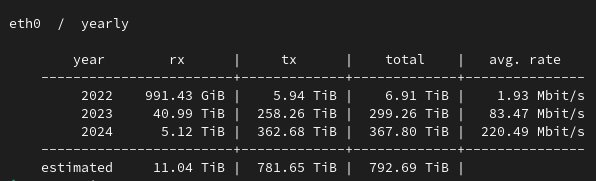
So whenever someone wants to download a particular (mirrored) software and click download, upstream redirects the download to one of the mirror server which is geographical (or in other parameters) nearby to the user, leading to faster downloads and load sharing amongst all mirrors. Since the time I got into Linux and servers, I always wanted to help the community somehow, and mirroring seemed to be the most obvious thing. India seems to be a country which has traditionally seen less number of public download mirrors. IITB, TiFR, and some of the public institutions used to host them for popular Linux and Free Softwares, but they seem to be diminishing these days. In the last months of 2021, I started using Termux and saw that it had only a few mirrors (back then). I tried getting a high capacity, high bandwidth node in budget but it was hard in India in 2021-22. So after much deliberation, I decided to go where it s available and chose a German hosting provider with the thought of adding India node when conditions are favorable (thankfully that happened, and India node is live too now.). Termux required only 29 GB of storage, so went ahead and started mirroring it. I raised this issue in Termux s GitHub repository in January 2022. This blog post chronicles the start of the mirror. Termux has high request counts from a mirror point of view. Each Termux client, usually checks every mirror in selected group for availability before randomly selecting one for download (only other case is when client has explicitly selected a single mirror using termux-repo-change). The mirror started getting thousands of requests daily due to this but only a small percentage would actually get my mirror in selection, so download traffic was lower. Similar thing happened with OSMC too (which I started mirroring later). With this start, I started exploring various project that would be benefit from additional mirrors. Public information from Academic Computer Club in Ume s mirror and Freedif s mirror stats helped to figure out storage and bandwidth requirements for potential projects. Fun fact, Academic Computer Club in Ume (which is one of the prominent Debian, Ubuntu etc.) mirror, now has 200 Gbits/s uplink to the internet through SUNET. Later, I migrated to a different provider for better speeds and added LibreSpeed test on the mirror server. Those were fun times. Between OSMC, Termux and LibreSpeed, I was getting almost 1.2 millions hits/day on the server at its peak, crossing for the first time a TB/day traffic number. Next came Blender, which took the longest time to set up of around 9 10 months. Blender had a push-trigger requirement for rsync from upstream that took quite some back and forth. It now contributes the most amount of traffic on the mirror. On release days, mirror does more than 3 TB/day and normal days, it hovers around 2 TB/day. Gimp project is the latest addition. At one time, the mirror traffic touched 4.97 TB/day traffic number. That s when I decided on dropping LibreSpeed server to solely focus on mirroring for now, keeping the bandwidth allotment for serving downloads only. The mirror projects selection grew organically. I used to reach out many projects discussing the need of for additional mirrors. Some projects outright denied mirroring request as Germany already has a good academic mirrors boosting 20-25 Gbits/s speeds from FTP era, which seems fair. Finding the niche was essential to only add softwares, which would truly benefit from additional capacity. There were months when nothing much would happen with the mirror, rsync would continue to update the mirror while nginx would keep on serving the traffic. Nowadays, the mirror pushes around 70 TB/month. I occasionally check logs, vnstat, add new security stuff here and there and pay the bills. It now saturates the Gigabit link sometimes and goes beyond that, peaking around 1.42 Gbits/s (the hosting provider seems to be upping their game). The plan is to upgrade the link to better speeds. vnstat yearly
Yearly traffic stats (through vnstat -y )
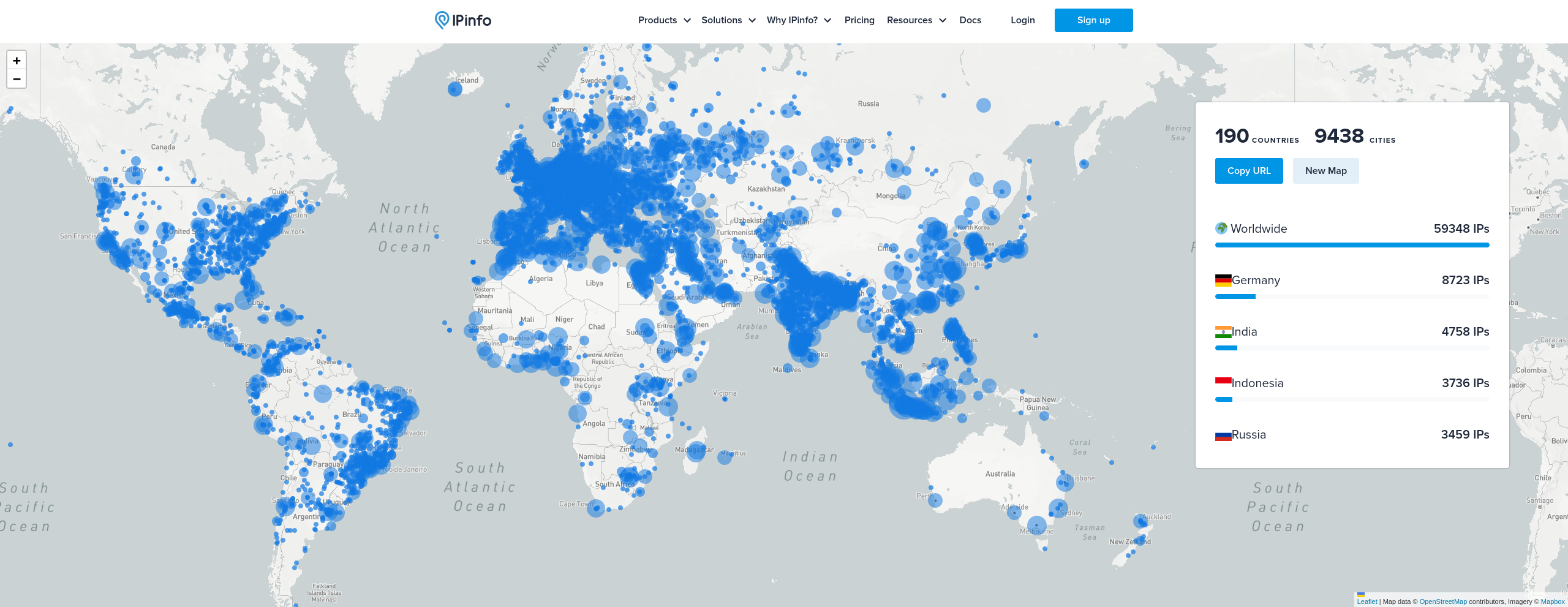
On the way, learned quite a few things like - GeoIP Map of Clients from Yesterday Access Logs
GeoIP Map of Clients from Yesterday's Access Logs. Click to enlarge
Generated from IPinfo.io
In hindsight, the statistics look amazing, hundreds of TBs of traffic served from the mirror, month after month. That does show that there s still an appetite for public mirrors in time of commercially donated CDNs and GitHub. The world could have done with one less mirror, but it saved some time, lessened the burden for others, while providing redundancy and traffic localization with one additional mirror. And it s fun for someone like me who s into infrastructure that powers the Internet. Now, I ll try focusing and expanding the India mirror, which in itself started pushing almost half a TB/day. Long live Free Software and public download mirrors.

14 June 2024

Matthew Palmer: Information Security: "We Can Do It, We Just Choose Not To"

Whenever a large corporation disgorges the personal information of millions of people onto the Internet, there is a standard playbook that is followed. Security is our top priority . Passwords were hashed . No credit card numbers were disclosed . record scratch Let s talk about that last one a bit.

A Case Study This post could have been written any time in the past well, decade or so, really. But the trigger for my sitting down and writing this post is the recent breach of wallet-finding and criminal-harassment-enablement platform Tile. As reported by Engadget, a statement attributed to Life360 CEO Chris Hulls says
The potentially impacted data consists of information such as names, addresses, email addresses, phone numbers, and Tile device identification numbers.
But don t worry though; even though your home address is now public information
It does not include more sensitive information, such as credit card numbers
Aaaaaand here is where I get salty.

Why Credit Card Numbers Don t Matter Describing credit card numbers as more sensitive information is somewhere between disingenuous and a flat-out lie. It was probably included in the statement because it s part of the standard playbook. Why is it part of the playbook, though? Not being a disaster comms specialist, I can t say for sure, but my hunch is that the post-breach playbook includes this line because (a) credit cards are less commonly breached these days (more on that later), and (b) it s a way to insinuate that all your financial data is safe, no need to worry without having to say that (because that statement would absolutely be a lie). The thing that not nearly enough people realise about credit card numbers is:
  1. The credit card holder is not usually liable for most fraud done via credit card numbers; and
  2. In terms of actual, long-term damage to individuals, credit card fraud barely rates a mention. Identity fraud, Business Email Compromise, extortion, and all manner of other unpleasantness is far more damaging to individuals.

Why Credit Card Numbers Do Matter Losing credit card numbers in a data breach is a huge deal but not for the users of the breached platform. Instead, it s a problem for the company that got breached. See, going back some years now, there was a wave of huge credit card data breaches. If you ve been around a while, names like Target and Heartland will bring back some memories. Because these breaches cost issuing banks and card brands a lot of money, the Payment Card Industry Security Standards Council (PCI-SSC) and the rest of the ecosystem went full goblin mode. Now, if you lose credit card numbers in bulk, it will cost you big. Massive fines for breaches (typically levied by the card brands via the acquiring bank), increased transaction fees, and even the Credit Card Death Penalty (being banned from charging credit cards), are all very big sticks.

Now Comes the Finding Out In news that should not be surprising, when there are actual consequences for failing to do something, companies take the problem seriously. Which is why no credit card numbers were disclosed is such an interesting statement. Consider why no credit card numbers were disclosed. It s not that credit card numbers aren t valuable to criminals because they are. Instead, it s because the company took steps to properly secure the credit card data. Next, you ll start to consider why, if the credit card numbers were secured, why wasn t the personal information that did get disclosed similarly secured? Information that is far more damaging to the individuals to whom that information relates than credit card numbers. The only logical answer is that it wasn t deemed financially beneficial to the company to secure that data. The consequences of disclosure for that information isn t felt by the company which was breached. Instead, it s felt by the individuals who have to spend weeks of their life cleaning up from identity fraud committed against them. It s felt by the victim of intimate partner violence whose new address is found in a data dump, letting their ex find them again. Until there are real, actual consequences for the companies which hemorrhage our personal data (preferably ones that have percentage of global revenue at the end), data breaches will continue to happen. Not because they re inevitable because as credit card numbers show, data can be secured but because there s no incentive for companies to prevent our personal data from being handed over to whoever comes along.

Support my Salt My salty takes are powered by refreshing beverages. If you d like to see more of the same, buy me one.

12 June 2024

Matthew Garrett: SSH agent extensions as an arbitrary RPC mechanism

A while back, I wrote about using the SSH agent protocol to satisfy WebAuthn requests. The main problem with this approach is that it required starting the SSH agent with a special argument and also involved being a little too friendly with the implementation - things worked because I could provide an arbitrary public key and the implementation never validated that, but it would be legitimate for it to start doing so and then break everything. And it also only worked for keys stored on tokens that ssh supports - there was no way to extend this to other keystores on the client (such as the Secure Enclave on Macs, or TPM-backed keys on PCs). I wanted a better solution.

It turns out that it was far easier than I expected. The ssh agent protocol is documented here, and the interesting part is the extension support extension mechanism. Basically, you can declare an extension and then just tunnel whatever you want over it. As before, my goto was the go ssh agent package which conveniently implements both the client and server side of this. Implementing the local agent is trivial - look up SSH_AUTH_SOCK, connect to it, create a new agent client that can communicate with that by calling NewClient, and then implement the ExtendedAgent interface, create a new socket, and call ServeAgent against that. Most of the ExtendedAgent functions should simply call through to the original agent, with the exception of Extension(). Just add a case statement against extensionType, define some reasonably namespaced extension, and you're done.

Now you need to use this agent. You probably don't want to use this for arbitrary hosts (agent forwarding should only be enabled for remote systems you trust, not arbitrary machines you connect to - if you enabled agent forwarding for github and github got compromised, github would be able to use any private keys loaded into your agent, and you probably don't want that). So the right approach is to add a Host entry to the ssh config with a ForwardAgent stanza pointing at the socket you created in your new agent. This way the configured subset of remote hosts will automatically talk to this new custom agent, while forwarding for anything else will still be at the user's discretion.

For the remote end things are even easier. Look up SSH_AUTH_SOCK and call NewClient as before, and then simply call client.Extension(). Whatever you stick in the contents argument will simply end up being received at the client end. You now have a communication channel between a the remote system and the local client, and what you do with that is up to you. I'm using it to allow a remote system to obtain auth tokens from Okta and forward WebAuthn challenges that can either be satisfied via a local WebAuthn token or by passing the query off to Mac TouchID, but there's fundamentally no constraints whatsoever on what can be done here.

(If you want to do this on Windows and still have everything work with existing clients you'll need to take this into account - Windows didn't really do Unix sockets until recently so everything there is awful)

comment count unavailable comments

Freexian Collaborators: Monthly report about Debian Long Term Support, May 2024 (by Roberto C. S nchez)

Like each month, have a look at the work funded by Freexian s Debian LTS offering.

Debian LTS contributors In May, 17 contributors have been paid to work on Debian LTS, their reports are available:
  • Adrian Bunk did 34.25h (out of 24.0h assigned and 22.0h from previous period), thus carrying over 11.75h to the next month.
  • Bastien Roucari s did 20.0h (out of 20.0h assigned).
  • Ben Hutchings did 16.0h (out of 24.0h assigned), thus carrying over 8.0h to the next month.
  • Chris Lamb did 18.0h (out of 18.0h assigned).
  • Daniel Leidert did 8.0h (out of 10.0h assigned), thus carrying over 2.0h to the next month.
  • Emilio Pozuelo Monfort did 35.5h (out of 46.0h assigned), thus carrying over 10.5h to the next month.
  • Guilhem Moulin did 13.0h (out of 14.75h assigned and 5.25h from previous period), thus carrying over 7.0h to the next month.
  • Lee Garrett did 11.0h (out of 37.25h assigned and 8.75h from previous period), thus carrying over 35.0h to the next month.
  • Lucas Kanashiro did 10.0h (out of 20.0h assigned), thus carrying over 10.0h to the next month.
  • Markus Koschany did 40.0h (out of 40.0h assigned).
  • Ola Lundqvist did 6.5h (out of 22.5h assigned and 1.5h from previous period), thus carrying over 17.5h to the next month.
  • Roberto C. S nchez did 7.75h (out of 11.0h assigned and 1.0h from previous period), thus carrying over 4.25h to the next month.
  • Santiago Ruano Rinc n did 8.0h (out of 16.0h assigned), thus carrying over 8.0h to the next month.
  • Sean Whitton did 5.5h (out of 5.5h assigned and 0.5h from previous period), thus carrying over 0.5h to the next month.
  • Sylvain Beucler did 10.5h (out of 0.75h assigned and 45.25h from previous period), thus carrying over 35.5h to the next month.
  • Thorsten Alteholz did 14.0h (out of 14.0h assigned).
  • Tobias Frost did 7.75h (out of 10.0h assigned and 2.0h from previous period), thus carrying over 4.25h to the next month.

Evolution of the situation In May, we have released 20 DLAs. Notable security updates in May included:
  • apache2: multiple vulnerabilities which may result in HTTP response splitting, denial of service, or authorization bypass (by Bastien Roucari s, in collaboration with apache2 maintainer Yadd)
  • bind9: two vulnerabilities, called KeyTrap and NSEC3, which may result in denial of service (by Santiago Ruano Rinc n)
  • python-pymysql: potential SQL injection attack (by Chris Lamb)
The aforementioned apache2 was prepared by its Debian maintainer Yadd. This update also involved work on the package test suite in buster, which contributor Bastien Roucari s then forwarded to the apache2 package in unstable. More importantly, a regression in fossil was reported, and Bastien prepared a fix for it. Bastien coordinated the upload of both packages to minimize the introduction of regressions. Contributor Daniel Leidert also prepared an upload of runc to Debian 11 in order fix a number of CVEs still affecting that package. Finally, contributor Thorsten Alteholz prepared uploads for qtbase-opensource-src, libjwt, and libmicrohttpd in Debian 11. Note that Debian 11 will pass into the LTS phase of support in August and these updates will improve the state and long-term supportability of Debian 11. Debian 10 is presently in its final month of LTS support (as announced on the debian-lts-announce mailing list, support will end on June 30th), after which no new security updates will be made available on security.debian.org. However, Freexian and its team of paid Debian contributors will continue to maintain Debian 10 going forward for the customers of the Extended LTS offer. Subscribe right away if you sill have Debian 10 which must be kept secure (and which cannot yet be upgraded).

Thanks to our sponsors Sponsors that joined recently are in bold.

8 June 2024

Thorsten Alteholz: My Debian Activities in May 2024

FTP master This month I accepted 347 and rejected 49 packages. The overall number of packages that got accepted was 348.

Debian LTS This was my hundred-nineteenth month that I did some work for the Debian LTS initiative, started by Raphael Hertzog at Freexian. During my allocated time I uploaded or worked on: I also continued to work on tiff and last but not least did a week of FD and attended the monthly LTS/ELTS meeting. Unfortunately I used lots of time to debug an issue with nghttp2. Please see my odyssey below. Debian ELTS This month was the seventieth ELTS month. During my allocated time I uploaded: For some tests I installed the new nghttp2 package on my Stretch VM and started the daemon. Unfortunately I got an unexpected error from getaddrinfo() about ai_socktype not supported. The daemon was configured to listen on lo, the device was available, but the error remained. I was pretty sure that my patch was not the reason for this and indeed the unpatched version showed this error as well. I didn t want to release an untested package, so nghttp2 had to start at least! Therefore I built a minimal example to reproduce the issue. getaddrinfo() failed for hints.ai_socktype=SOCK_STREAM and a numerical IP address. Having no hints at all or localhost instead of 127.0.0.1 made the error disappear (as a remark: localhost resolves to 127.0.0.1, the ipv6 variant is ip6-localhost ). I could see that in nghttp2 as well. Configuring it with localhost let the error vanish but the daemon still exited due to other reasons. After some time of debugging, I added another network interface to my VM and configured it with a dummy IPv4 address. Voila, everything worked as expected. According to Wikipedia, IPv6 was ratified as standard in 2017 and Stretch was also released in 2017. No wonder that a IPv6-only-VM had problems back then and these problems survived to the present. I also continued to work on an update for tiff in Jessie and Stretch, did a week of FD and attended the LTS/ELTS meeting. Debian Printing This month I uploaded new upstream or bugfix versions of: This work is generously funded by Freexian! Debian Astro This month I uploaded a new upstream or bugfix version of: Debian IoT This month I uploaded new upstream or bugfix versions of: Debian Mobcom Due to more and more problems with time_t, I removed osmo-iuh and all dependencies from armel, armhf and i386, sorry. If there is really anybody using this software on 32-bit architectures don t hesitate to get in touch. It is official now, the GSoC student working on the Mobcom packages is Nathan Doris. He already finished the hardest part of the job and I could upload the latest version of libosmocore. I really enjoy working with him and look forward to a pleasant SoC :-). misc This month I uploaded new upstream or bugfix versions of: Did I already mention that I love lists with topics I can work on. I print out such lists and enjoy checking off one after the other. End of May Helmut told me that I am a bit lazy and gave me such a list with all my packages that have one or the other issue with /usr-move. Most of the uploads above are packages on that list and I could check off a lot :-).

Reproducible Builds: Reproducible Builds in May 2024

Welcome to the May 2024 report from the Reproducible Builds project! In these reports, we try to outline what we have been up to over the past month and highlight news items in software supply-chain security more broadly. As ever, if you are interested in contributing to the project, please visit our Contribute page on our website. Table of contents:
  1. A peek into build provenance for Homebrew
  2. Distribution news
  3. Mailing list news
  4. Miscellaneous news
  5. Two new academic papers
  6. diffoscope
  7. Website updates
  8. Upstream patches
  9. Reproducibility testing framework


A peek into build provenance for Homebrew Joe Sweeney and William Woodruff on the Trail of Bits blog wrote an extensive post about build provenance for Homebrew, the third-party package manager for MacOS. Their post details how each bottle (i.e. each release):
[ ] built by Homebrew will come with a cryptographically verifiable statement binding the bottle s content to the specific workflow and other build-time metadata that produced it. [ ] In effect, this injects greater transparency into the Homebrew build process, and diminishes the threat posed by a compromised or malicious insider by making it impossible to trick ordinary users into installing non-CI-built bottles.
The post also briefly touches on future work, including work on source provenance:
Homebrew s formulae already hash-pin their source artifacts, but we can go a step further and additionally assert that source artifacts are produced by the repository (or other signing identity) that s latent in their URL or otherwise embedded into the formula specification.

Distribution news In Debian this month, Johannes Schauer Marin Rodrigues (aka josch) noticed that the Debian binary package bash version 5.2.15-2+b3 was uploaded to the archive twice. Once to bookworm and once to sid but with differing content. This is problem for reproducible builds in Debian due its assumption that the package name, version and architecture triplet is unique. However, josch highlighted that
This example with bash is especially problematic since bash is Essential:yes, so there will now be a large portion of .buildinfo files where it is not possible to figure out with which of the two differing bash packages the sources were compiled.
In response to this, Holger Levsen performed an analysis of all .buildinfo files and found that this needs almost 1,500 binNMUs to fix the fallout from this bug. Elsewhere in Debian, Vagrant Cascadian posted about a Non-Maintainer Upload (NMU) sprint to take place during early June, and it was announced that there is now a #debian-snapshot IRC channel on OFTC to discuss the creation of a new source code archiving service to, perhaps, replace snapshot.debian.org. Lastly, 11 reviews of Debian packages were added, 15 were updated and 48 were removed this month adding to our extensive knowledge about identified issues. A number of issue types have been updated by Chris Lamb as well. [ ][ ]
Elsewhere in the world of distributions, deep within a larger announcement from Colin Percival about the release of version 14.1-BETA2, it was mentioned that the FreeBSD kernels are now built reproducibly.
In Fedora, however, the change proposal mentioned in our report for April 2024 was approved, so, per the ReproduciblePackageBuilds wiki page, the add-determinism tool is now running in new builds for Fedora 41 ( rawhide ). The add-determinism tool is a Rust program which, as its name suggests, adds determinism to files that are given as input by attempting to standardize metadata contained in binary or source files to ensure consistency and clamping to $SOURCE_DATE_EPOCH in all instances . This is essentially the Fedora version of Debian s strip-nondeterminism. However, strip-nondeterminism is written in Perl, and Fedora did not want to pull Perl in the buildroot for every package. The add-determinism tool eliminates many causes of non-determinism and work is ongoing to continue the scope of packages it can operate on.

Mailing list news On our mailing list this month, regular contributor kpcyrd wrote to the list with an update on their source code indexing project, whatsrc.org. The whatsrc.org project, which was launched last month in response to the XZ Utils backdoor, now contains and indexes almost 250,000 unique source code archives. In their post, kpcyrd gives an example of its intended purpose, noting that it shown that whilst there seems to be consensus about [the] source code for zsh 5.9 in various Linux distributions, it does not align with the contents of the zsh Git repository . Holger Levsen also posted to the list with a pre-announcement of sorts for the 2024 Reproducible Builds summit. In particular:
[Whilst] the dates and location are not fixed yet, however if you don help us with finding a suitable location soon, it is very likely that we ll meet again in Hamburg in the 2nd half of September 2024 [ ].
Lastly, Frederic-Emmanuel Picca wrote to the list asking for help understanding the non-reproducible status of the Debian silx package and received replies from both Vagrant Cascadian and Chris Lamb.

Miscellaneous news strip-nondeterminism is our tool to remove specific non-deterministic results from a completed build. This month strip-nondeterminism version 1.14.0-1 was uploaded to Debian unstable by Chris Lamb chiefly to incorporate a change from Alex Muntada to avoid a dependency on Sub::Override to perform monkey-patching and break circular dependencies related to debhelper [ ]. Elsewhere in our tooling, Jelle van der Waa modified reprotest because the pipes module will be removed in Python version 3.13 [ ].
It was also noticed that a new blog post by Daniel Stenberg detailing How to verify a Curl release mentions the SOURCE_DATE_EPOCH environment variable. This is because:
The [curl] release tools document also contains another key component: the exact time stamp at which the release was done using integer second resolution. In order to generate a correct tarball clone, you need to also generate the new version using the old version s timestamp. Because the modification date of all files in the produced tarball will be set to this timestamp.

Furthermore, Fay Stegerman filed a bug against the Signal messenger app for Android to report that their reproducible builds cannot, in fact, be reproduced. However, Fay is quick to note that she has:
found zero evidence of any kind of compromise. Some differences are yet unexplained but everything I found seems to be benign. I am disappointed that Reproducible Builds have been broken for months but I have zero reason to doubt Signal s security in any way.

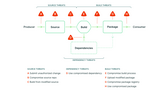
Lastly, it was observed that there was a concise and diagrammatic overview of supply chain threats on the SLSA website.

Two new academic papers Two new scholarly papers were published this month. Firstly, Mathieu Acher, Beno t Combemale, Georges Aaron Randrianaina and Jean-Marc J z quel of University of Rennes on Embracing Deep Variability For Reproducibility & Replicability. The authors describe their approach as follows:
In this short [vision] paper we delve into the application of software engineering techniques, specifically variability management, to systematically identify and explicit points of variability that may give rise to reproducibility issues (e.g., language, libraries, compiler, virtual machine, OS, environment variables, etc.). The primary objectives are: i) gaining insights into the variability layers and their possible interactions, ii) capturing and documenting configurations for the sake of reproducibility, and iii) exploring diverse configurations to replicate, and hence validate and ensure the robustness of results. By adopting these methodologies, we aim to address the complexities associated with reproducibility and replicability in modern software systems and environments, facilitating a more comprehensive and nuanced perspective on these critical aspects.
(A PDF of this article is available.)
Secondly, Ludovic Court s, Timothy Sample, Simon Tournier and Stefano Zacchiroli have collaborated to publish a paper on Source Code Archiving to the Rescue of Reproducible Deployment. Their paper was motivated because:
The ability to verify research results and to experiment with methodologies are core tenets of science. As research results are increasingly the outcome of computational processes, software plays a central role. GNU Guix is a software deployment tool that supports reproducible software deployment, making it a foundation for computational research workflows. To achieve reproducibility, we must first ensure the source code of software packages Guix deploys remains available.
(A PDF of this article is also available.)

diffoscope diffoscope is our in-depth and content-aware diff utility that can locate and diagnose reproducibility issues. This month, Chris Lamb made a number of changes such as uploading versions 266, 267, 268 and 269 to Debian, making the following changes:
  • New features:
    • Use xz --list to supplement output when comparing .xz archives; essential when metadata differs. (#1069329)
    • Include xz --verbose --verbose (ie. double) output. (#1069329)
    • Strip the first line from the xz --list output. [ ]
    • Only include xz --list --verbose output if the xz has no other differences. [ ]
    • Actually append the xz --list after the container differences, as it simplifies a lot. [ ]
  • Testing improvements:
    • Allow Debian testing to fail right now. [ ]
    • Drop apktool from Build-Depends; we can still test APK functionality via autopkgtests. (#1071410)
    • Add a versioned dependency for at least version 5.4.5 for the xz tests as they fail under (at least) version 5.2.8. (#374)
    • Fix tests for 7zip 24.05. [ ][ ]
    • Fix all tests after additon of xz --list. [ ][ ]
  • Misc:
    • Update copyright years. [ ]
In addition, James Addison fixed an issue where the HTML output showed only the first difference in a file, while the text output shows all differences [ ][ ][ ], Sergei Trofimovich amended the 7zip version test for older 7z versions that include the string [64] [ ][ ] and Vagrant Cascadian relaxed the versioned dependency to allow version 5.4.1 for the xz tests [ ] and proposed updates to guix for versions 267, 268 and pushed version 269 to Guix. Furthermore, Eli Schwartz updated the diffoscope.org website in order to explain how to install diffoscope on Gentoo [ ].

Website updates There were a number of improvements made to our website this month, including Chris Lamb making the print CSS stylesheet nicer [ ]. Fay Stegerman made a number of updates to the page about the SOURCE_DATE_EPOCH environment variable [ ][ ][ ] and Holger Levsen added some of their presentations to the Resources page. Furthermore, IOhannes zm lnig stipulated support for SOURCE_DATE_EPOCH in clang version 16.0.0+ [ ], Jan Zerebecki expanded the Formal definition page and fixed a number of typos on the Buy-in page [ ] and Simon Josefsson fixed the link to Trisquel GNU/Linux on the Projects page [ ].

Upstream patches This month, we wrote a number of patches to fix specific reproducibility issues, including:

Reproducibility testing framework The Reproducible Builds project operates a comprehensive testing framework running primarily at tests.reproducible-builds.org in order to check packages and other artifacts for reproducibility. In May, a number of changes were made by Holger Levsen:
  • Debian-related changes:
    • Enable the rebuilder-snapshot API on osuosl4. [ ]
    • Schedule the i386 architecture a bit more often. [ ]
    • Adapt cleanup_nodes.sh to the new way of running our build services. [ ]
    • Add 8 more workers for the i386 architecture. [ ]
    • Update configuration now that the infom07 and infom08 nodes have been reinstalled as real i386 systems. [ ]
    • Make diffoscope timeouts more visible on the #debian-reproducible-changes IRC channel. [ ]
    • Mark the cbxi4a-armhf node as down. [ ][ ]
    • Only install the hdmi2usb-mode-switch package only on Debian bookworm and earlier [ ] and only install the haskell-platform package on Debian bullseye [ ].
  • Misc:
    • Install the ntpdate utility as we need it later. [ ]
    • Document the progress on the i386 architecture nodes at Infomaniak. [ ]
    • Drop an outdated and unnoticed notice. [ ]
    • Add live_setup_schroot to the list of so-called zombie jobs. [ ]
In addition, Mattia Rizzolo reinstalled the infom07 and infom08 nodes [ ] and Vagrant Cascadian marked the cbxi4a node as online [ ].

If you are interested in contributing to the Reproducible Builds project, please visit our Contribute page on our website. However, you can get in touch with us via:

7 June 2024

Freexian Collaborators: Debian Contributions: DebConf Bursaries, /usr-move, sbuild, and more! (by Stefano Rivera)

Contributing to Debian is part of Freexian s mission. This article covers the latest achievements of Freexian and their collaborators. All of this is made possible by organizations subscribing to our Long Term Support contracts and consulting services.

DebConf Bursary updates, by Utkarsh Gupta Utkarsh is the bursaries team lead for DebConf 24. Bursary requests are dispatched to a team of volunteers to review. The results are collated, adjusted and merged to produce priority lists of requests to fund. Utkarsh raised the team, coordinated the review, and issued bursaries to attendees.

/usr-move, by Helmut Grohne More and more, the /usr-move transition is being carried out by multiple contributors and many performed around a hundred of the requested uploads. Of these, Helmut contributed five patches and two uploads. As a result, there are less than 350 packages left to be converted, and all of the non-trivial cases have patches. We started with three times that number. Thanks to everyone involved for supporting this effort. For people interested in background information of this transition, Helmut gave a presentation at MiniDebConf Berlin 2024 (slides).

sbuild, by Helmut Grohne While unshare mode of sbuild has existed for quite a while, it is now getting significant use in Debian, and new problems are popping up. Helmut looked into an apparmor-related failure and provided a diagnosis. While relevant code would detect the chroot nature of a schroot backend and skip apparmor tests, the unshare environment would be just good enough to run and fail the test. As sbuild exposes fewer special kernel filesystems, the tests will be skipped again. Another problem popped up when gobject-introspection added a dependency on the host architecture Python interpreter in a cross build environment. sbuild would prefer installing (and failing) a host architecture Python to installing the qemu alternative. Attempts to fix this would result in systemd killing sbuild. ischroot as used by libc6.postinst would not classify the unshare environment as a chroot. Therefore libc6.postinst would run telinit which would kill the build process. This is a complex interaction problem that shall eventually be solved by providing triggers from libc6 to be implemented by affected init systems.

Salsa CI updates, by Santiago Ruano Rinc n Several issues arose about Salsa CI last month, and it is probably worth mentioning part of the challenges of defining its framework in YAML. With the upcoming end-of-support of Debian 10 buster as LTS, armel was removed from deb.debian.org, making the jobs that build images for buster/armel to fail. While the removal of buster/armel from the repositories is a natural change, it put some light on the flaws in the Salsa CI design regarding the support of the different Debian releases. Currently, the images are defined like these (from .images-debian.yml):
.all-supported-releases: &all-supported-releases
  - stretch
  - stretch-backports
  - buster
  - bullseye
  - bullseye-backports
  - bookworm
  - bookworm-backports
  - trixie
  - sid
  - experimental
And from them, different images are built according to the different jobs and how they are supported, for example:
images-prod-arm:
  stage: build
  extends: .build_template
  tags:
    - $SALSA_CI_ARM_RUNNER_TAG
  parallel:
    matrix:
      # Base image, all releases, all arches
      - IMAGE_NAME: base
        ARCH:
          - arm32v5
          - arm32v7
          - arm64v8
        RELEASE: *all-supported-releases
The removal of buster/armel could be easily reflected as:
images-prod-arm:
  stage: build
  extends: .build_template
  tags:
    - $SALSA_CI_ARM_RUNNER_TAG
  parallel:
    matrix:
      # Base image, fully supported releases, all arches
      - IMAGE_NAME: base
        ARCH:
          - arm32v5
          - arm32v7
          - arm64v8
        RELEASE:
          - stretch
          - buster
          - bullseye
          - bullseye-backports
          - bookworm
          - bookworm-backports
          - trixie
          - sid
          - experimental
      # buster only supports armhf and arm64
      - IMAGE_NAME: base
        ARCH:
          - arm32v7
          - arm64v8
        RELEASE: buster
Evidently, this increases duplication of the release support data, which is of course not optimal and it is error prone when changing the data about supported releases. A better approach would be to have two different YAML lists, such as:
# releases that have partial support. E.g.: buster is transitioning to
# Debian LTS, and buster armel is no longer found in deb.debian.org
.old-releases: &old-releases
  - stretch
  - buster

.currently-supported-releases: &currently-supported-releases
  - bullseye
  - bullseye-backports
  - bookworm
  - bookworm-backports
  - trixie
  - sid
  - experimental
and then a unified list:
.all-supported-releases: &all-supported-releases
  - *old-releases
  - *currently-supported-releases
that could be used in the matrix of the jobs that build all the images available in the pipeline container registry. However, due to limitations in GitLab, it is not possible to expand the variables or mapping values in a parallel:matrix context. At least not in an elegant fashion. This is the kind of issue that recently arose and that Santiago is currently working to solve, in the simplest possible way. Astute readers would notice that stretch is listed in the fully supported releases. And there is no problem with stretch, because it is built from archive.debian.org. Otto actually has tried to fix the broken image build job doing the same, but it is still incorrect, because the security repository is not (yet) available in archive.debian.org. Additionally, Santiago has also worked on other merge requests, such as:
  1. support branch/tags as target head in the test projects,
  2. build autopkgtest image on top of stable
  3. Add .yamllint and make it happy in the autopkgtest-lxc project
  4. enable FF_SCRIPT_SECTIONS to log multiline commands, among others.

Archiving DebConf Websites, by Stefano Rivera DebConf, the annual Debian conference, has its own new website every year. These are typically complex dynamic web applications (featuring registration, call for papers, scheduling, etc.) Once the conference is over, there is no need to keep maintaining these applications, so we archive the sites off as static HTML, and serve them from Debian s static CDN. Stefano archived the websites for the last two DebConfs. The schedule system behind DebConf 14 and 15 s websites was a derivative of Canonical s summit system. This was only used for a couple of years before migrating to wafer, the current system. Archiving summit content has been on the nice to have list for years, but nobody has ever tackled it. The machine that served the sites went away a couple of years ago. After much digging, a backup of the database was found, and Stefano got this code running on an ancient Python 2.7. Recently Stefano put this all together and hooked in an archive export to finally get this content preserved.

Python 3.x and pypy3 security bug triage, by Stefano Rivera Stefano Rivera triaged all the open security bugs against the Python 3.x and PyPy3 packages for Debian s stable and LTS releases. Several had been fixed but this wasn t recorded in the security tracker.

Linux livepatching support for Debian, by Santiago Ruano Rinc n In collaboration with Emmanuel Arias, Santiago filed ITP bug #1070494. As stated in the bug, more than an Intent to Package, it is an Intent to Design and Implement live patching support for the Linux kernel in Debian. For now, Emmanuel and Santiago have done exploratory work and they are working to understand the different possibilities to implement livepatching. One possible direction is to rely on kpatch, and the other is to package the modules using regular packaging tools. Also, it is needed to evaluate if it is possible to rely on distributing the modules via packages, or instead as a service, as it is done by some commercial distributions.

Miscellaneous contributions
  • Thorsten Alteholz uploaded cups-bjnp to improve packaging.
  • Colin Watson tracked down a baffling CI issue in openssh to unblock several merge requests, removed the user_readenv=1 option from its PAM configuration, and started on the first stage of his plan to split out GSS-API key exchange support to separate packages.
  • Colin did his usual routine work on the Python team, upgrading 26 packages to new upstream versions, and cherry-picking an upstream PR to fix a pytest 8 incompatibility in ipywidgets.
  • Colin NMUed a couple of packages to reduce the need for explicit overrides in Packages-arch-specific, and removed some other obsolete entries from there.
  • Emilio managed various library transitions, and helped finish a few of the remaining t64 transitions.
  • Helmut sent a patch for enabling piuparts to work as a regular user building on earlier work.
  • Helmut sent patches for 7 cross build failures, 6 other debian bugs and fixed an infrastructure problem in crossqa.debian.net.
  • Nicholas worked on a sponsored package upload, and discovered the blhc tool for diagnosing build hardening.
  • Stefano Rivera started and completed the re2 transition. The release team suggested moving to a virtual package scheme that includes the absl ABI (as re2 now depends on it). Adopted this.
  • Stefano continued to work on DebConf 24 planning.
  • Santiago continued to work on DebConf24 Content tasks as well as Debconf25 organisation.

6 June 2024

Paul Wise: FLOSS Activities May 2024

Focus This month I didn't have any particular focus. I just worked on issues in my info bubble.

Changes

Issues

Review
  • Debian BTS usertags: changes for the month

Administration
  • Debian wiki: approve accounts

Communication
  • Respond to queries from Debian users and contributors on the mailing lists and IRC

Sponsors All work was done on a volunteer basis.

5 June 2024

Alberto Garc a: More ways to install software in SteamOS: Distrobox and Nix

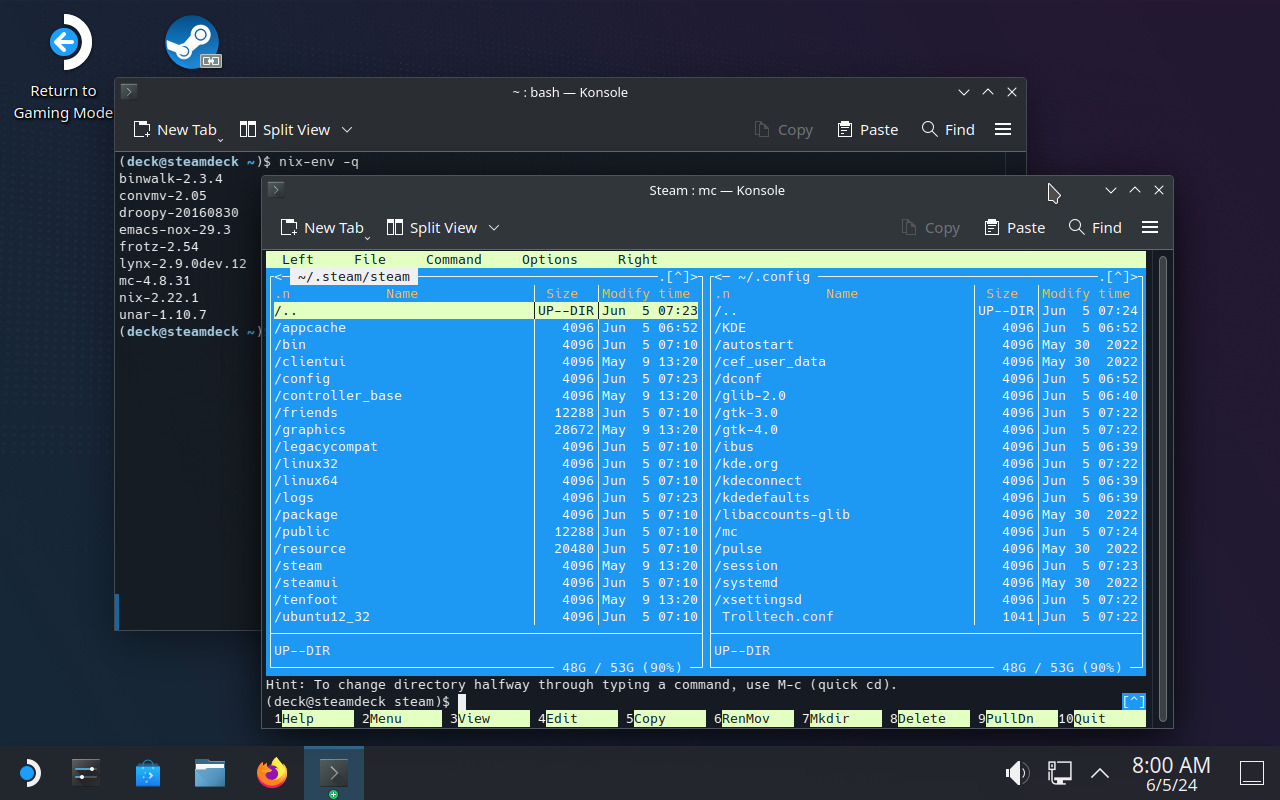
Introduction In my previous post I talked about how to use systemd-sysext to add software to the Steam Deck without modifying the root filesystem. In this post I will give a brief overview of two additional methods. Distrobox distrobox is a tool that uses containers to create a mutable environment on top of your OS. Distrobox running in SteamOS With distrobox you can open a terminal with your favorite Linux distro inside, with full access to the package manager and the ability to install additional software. Containers created by distrobox are integrated with the system so apps running inside have normal access to the user s home directory and the Wayland/X11 session. Since these containers are not stored in the root filesystem they can survive an OS update and continue to work fine. For this reason they are particularly suited to systems with an immutable root filesystem such as Silverblue, Endless OS or SteamOS. Starting from SteamOS 3.5 the system comes with distrobox (and podman) preinstalled and it can be used right out of the box without having to do any previous setup. For example, in order to create a Debian bookworm container simply open a terminal and run this:
$ distrobox create -i debian:bookworm debbox
Here debian:bookworm is the image that this container is created from (debian is the name and bookworm is the tag, see the list of supported tags here) and debbox is the name that is given to this new container. Once the container is created you can enter it:
$ distrobox enter debbox
Or from the Debian entry in the desktop menu -> Lost & Found. Once inside the container you can run your Debian commands normally:
$ sudo apt update
$ sudo apt install vim-gtk3
Nix Nix is a package manager for Linux and other Unix-like systems. It has the property that it can be installed alongside the official package manager of any distribution, allowing the user to add software without affecting the rest of the system. Nix running in SteamOS Nix installs everything under the /nix directory, and packages are made available to the user through a new entry in the PATH and a ~/.nix-profile symlink stored in the home directory. Nix is more things, including the basis of the NixOS operating system. Explaning Nix in more detail is beyond the scope of this blog post, but for SteamOS users these are perhaps its most interesting properties: The only thing that Nix needs from SteamOS is help to set up the /nix directory so its contents are not stored in the root filesystem. This is already happening starting from SteamOS 3.5 so you can install Nix right away in single-user mode:
$ sudo chown deck:deck /nix
$ wget https://nixos.org/nix/install
$ sh ./install --no-daemon
This installs Nix and adds a line to ~/.bash_profile to set up the necessary environment variables. After that you can log in again and start using it. Here s a very simple example (refer to the official documentation for more details):
# Install and run Midnight Commander
$ nix-env -iA nixpkgs.mc
$ mc
# List installed packages
$ nix-env -q
mc-4.8.31
nix-2.21.1
# Uninstall Midnight Commander
$ nix-env -e mc-4.8.31
What we have seen so far is how to install Nix in single-user mode, which is the simplest one and probably good enough for a single-user machine like the Steam Deck. The Nix project however recommends a multi-user installation, see here for the reasons. Unfortunately the official multi-user installer does not work out of the box on the Steam Deck yet, but if you want to go the multi-user way you can use the Determinate Systems installer: https://github.com/DeterminateSystems/nix-installer Conclusion Distrobox and Nix are useful tools and they give SteamOS users the ability to add additional software to the system without having to modify the base operating system. While for graphical applications the recommended way to install third-party software is still Flatpak, Distrobox and Nix give the user additional flexibility and are particularly useful for installing command-line utilities and other system tools.

2 June 2024

Colin Watson: Free software activity in May 2024

My Debian contributions this month were all sponsored by Freexian. The bulk of my Debian time this month went towards trying to haul more Python packages up to current versions, but I got a few other bits and pieces done as well. You can support my work directly via Liberapay.

Jacob Adams: What to Do When You Forget Your Root Password

Forgetting your root password would initially seem like a problem requiring a full re-install, one that you can t easily recover from without wiping everything away. Forgetting your user password can of course be solved by changing it as root, as in the following, which changes the password for user jacob:
# passwd jacob
but only the root user can change their own password, so you need to somehow get root access in order to do so.

Changing Root s Password with Sudo This one is probably obvious, but if you have a user with the ability to use sudo, then you can change root s password without access to the root account by running:
$ sudo passwd
which will reset the password for the root account without requiring the existing password.

Boot Directly to a Shell Getting root access to any Linux machine you have physical access to is surprisingly simple. You can just boot the machine directly into a root shell without any access control, i.e. passwords.

Why You Should Always Encrypt Your Storage1 To boot directly to a shell you need to append the following text to the kernel command line:
init=/bin/sh
(You could use pretty much any program here, but you re putting your system into a weird state doing this, and so I d recommend the simplest approach.)

GRUB GRUB will allow you to edit boot parameters on startup using the e key. You ll then be presented with a editor2 that you can use to change the kernel command line by appending to the linux line. E.g. If your editor looks like this:
        load_video
        insmod gzio
        if [ x$grub_platform = xxen ]; then insmod xzio; insmod lzopio; fi
        insmod part_gpt
        insmod ext2
        search --no-floppy --fs-uuid --set=root abcd1234-5678-0910-1112-abcd12345678
        echo    'Loading Linux 6.1.0-21-amd64 ...'
        linux   /boot/vmlinuz-6.1.0-21-amd64 root=UUID=abcd1234-5678-0910-1112-abcd12345678 ro  quiet
        echo    'Loading initial ramdisk ...'
        initrd  /boot/initrd.img-6.1.0-21-amd64
Then you would add init=/bin/sh like so:
        load_video
        insmod gzio
        if [ x$grub_platform = xxen ]; then insmod xzio; insmod lzopio; fi
        insmod part_gpt
        insmod ext2
        search --no-floppy --fs-uuid --set=root abcd1234-5678-0910-1112-abcd12345678
        echo    'Loading Linux 6.1.0-21-amd64 ...'
        linux   /boot/vmlinuz-6.1.0-21-amd64 root=UUID=abcd1234-5678-0910-1112-abcd12345678 ro  quiet init=/bin/sh
        echo    'Loading initial ramdisk ...'
        initrd  /boot/initrd.img-6.1.0-21-amd64
Once you ve edited it you can start your machine with Ctrl+x, as you can see from the prompt text under the editor.

Raspberry Pi cmdline.txt On a Raspberry Pi you ll want to append the above to only line of the cmdline.txt file on the boot partition of the SD card. This is the first partition of the disk, the one that is FAT32. You ll need to do this on another machine, since if you had root access to edit cmdline.txt you could also just change your password. As it is a FAT32 partition on an SD card, it should be editable on any other machine that supports SD cards. E.g. If your cmdline.txt looks like this
console=serial0,115200 console=tty1 root=PARTUUID=fb33757d-02 rootfstype=ext4 fsck.repair=yes rootwait quiet
Then you would add init=/bin/sh like so:
console=serial0,115200 console=tty1 root=PARTUUID=fb33757d-02 rootfstype=ext4 fsck.repair=yes rootwait quiet init=/bin/sh

Mount Read / Write Since you re replacing the init process of the machine with a shell, no other processes will be running. Also, your root filesystem will be mounted read-only, as init is expected to remount it read-write as needed.
# mount -o remount,rw /

Change Root Password Once you ve remounted the root filesystem, all that s needed is to run the passwd command.
# passwd
Since you re running the command as root you won t need to provide your existing password, and will only need to type a new password twice. Now of course you simply need to remember that password in order to ensure you don t need to do this again.

Reboot Safely You now cannot follow the standard reboot process here, as you re only running one process. Therefore it s important to put your root filesystem back into read-only before powering off your machine:
# mount -o remount,ro /
Once you ve done that you just need to hold down the power button until the machine completely powers off or pull the plug. And then you re done! Boot the computer again and you ll have everything working as normal, with a root password you remember.
  1. Not that this is the only reason, anyone with physical access to your machine could also boot it into another operating system they control, or just remove your storage device and put it into another computer, or probably other things I m not thinking of now. You should always encrypt your devices.
  2. The editor uses emacs-like keybindings. The manual includes a list of all the options available.

1 June 2024

Ian Jackson: What your vote is worth - a back of the envelope calculation

tl;dr: Your vote really counts! Each vote in a UK General Election is worth maybe 100,000 - to you and all your fellow citizens taken together. If you really care about the welfare of everyone affected by actions of the UK government, then it s worth that to you too. Introduction It seems a common perception that one vote, in amongst all those millions, doesn t really matter. So maybe it s not worth voting. But, voting is (largely) what determines what the government does - and the government is big. It s as big as all the people. If you are the kind of person who cares about what happens to everyone in your polity and indeed everyone its actions affect, then even your one vote is very important indeed. A method for back of the envelope calculation It would be nice to give a quantitative estimate. Many things in our society are measured in money, so let s try taking a stab at calculating the money value of your vote. The argument I m going to make is this: the government (by which I include the legislature), which is selected by our votes, decides how to spend the national budget. So, basically, I m going to divide the budget, by the electorate. UK Parliament UK Parliamentary elections decide not only the House of Commons, but, through that, the government. The upper house, the House of Lords, has very limited influence. So I think it s fair to regard the Parliamentary election as, simply, controlling that budget. Being lazy, I m going to use Wikipedia data. We have the size of the electorate, for 2019, 47.6 million. But your influence isn t shared with the whole electorate, only with the other people who also vote. Turnout in 2019 was 67.3%. The 2019 budget isn t listed but I ll just average the 2018 and March 2020 figures 842bn and 873bn, so 857 billion. (Strictly speaking I should add up the budgets for the period of the Parliament, but that seems like a lot of effort.) There s a discrepancy in the timescale we need to account for. Your vote influences the budgets for several years, depending how long it is until the next election. Taking Wikipedia s list of elections this century there ve been 7 in 24 years. So that s an average of about 3.4y. So, multiplying it through, we have ( 857b * (24 / 7)) / (47.6M * 67.3%), giving a guess at the value of your UK General Election vote: 92,000. European Parliament 2022 budget for the European Union (Wikipedia again) was 170.6 bn. The last election, in 2019, had a turnout of 198,352,638. Each EU Parliament lasts 5 years. The Parliament, however, shares responsibility for the budget with the European Council, which is controlled, ultimately, by national governments. We have to pick a numerical value for the Parliament s share of the influence. Over the past years the Parliament has gradually been more willing to exercise its powers in this area. I m going to arbitrarily call its share 50%. The calculation, then, is 170.6 bn * 5 * 50% / 198M, giving a guess at the value of your EU Parliamentary Election vote: 2150. This much smaller figure reflects simply that the EU doesn t spend very much money, for a polity of its size. (Those stories in the British press giving the impression that the EU is massively wasteful are, simply, lies.) The interaction of this calculation with the Council s share of the influence, and with national budgets, is a bit of a question, but given the much smaller amounts involved, it doesn t seem worth thinking about that too hard. Only if you care about other people as much as yourself! All of this is only true for you if you value and want to help everyone in your society. That includes immigrants, women, unemployed people, disabled people, people who are much poorer or richer than you, etc. If you think about it in purely personal terms, your vote is hardly worth anything - because while the effect of your vote, overall, is very large, that effect is shared by everyone in your polity. So if you only care about yourself, voting is a total waste of time. The more selfish and xenophobic and racist and so on you are - caring only about people like yourself - the less your vote is worth. This is why voting is rightly seen as a civic duty. I just spent 30 to courier my EP vote to Den Haag. That only makes sense because I m very willing to spend that 30 to try to improve the spending of the 2000 or so that s my share of the EU budget. This is a very rough analysis These calculations neglect a lot of very important things: politics isn t just about the allocation of resources. It s also about values, and bad politics can seriously harm people. Arguably many of those effects of your vote, are much more important than just how the budget is set and spent. It would be interesting to see an attempt at a similar analysis but for taking into account life and death questions like hate crime, traffic violence, healthcare, refugees welfare, and so on. I m not sure how to approach that. Maybe some real social scientists have done so? References welcome. Also, even on its own terms, this analysis is very rough and ready. We haven t modelled the ability of the government to change its tax rates; perhaps we should be multiplying GDP (or some other better measure) by 90% percentile total tax rate amongst countries like this one . The amount of influence that can be wielded by one vote is probably nonlinear in the size of the political faction, but IDK in which direction. In unfair voting systems like the UK s, some people s votes are worth much more than others. In a very marginal constituency, which is a target seat, your vote might be worth tens of millions. In a safe seat, it might only be worth a few thousand. And in practical terms you don t get to choose precisely the policies you want; you have to pick a party, which is sometimes very much a question of the lesser evil. So, there is much I haven t modelled. But the key point stands: Conclusion Although your vote is diluted by everyone else s votes, together, we control the government, which affects us all. So if you care about the whole of society, the big numbers in the divisor, and the numerator, cancel out. You can think of your vote as controlling one citizen s worth of government activity.
edited 2024-06-01 09:40 Z to fix a grammar botch


comment count unavailable comments

Russ Allbery: Review: I Shall Wear Midnight

Review: I Shall Wear Midnight, by Terry Pratchett
Series: Discworld #38
Publisher: Harper
Copyright: 2010
Printing: 2011
ISBN: 0-06-143306-3
Format: Trade paperback
Pages: 355
I Shall Wear Midnight is the 38th Discworld novel and the 4th Tiffany Aching novel. This is not a good place to start reading. Tiffany has finished her training and has returned to her home on the Chalk, taking up her duties as the local witch. There are a lot of those, because there's a lot that needs doing. In some cases, such as taking away the pain of the old Duke, they involve things that require magic and that only Tiffany can do. In many other cases, other people could pick up some of the work, but they lack Tiffany's sense of duty and willingness to pay attention. The people of the Chalk have always been a bit suspicious of witches, in part because the job was done for so long by Tiffany's grandmother and no one thought she was a witch. (She was a witch.) Of late, however, that suspicion seems to be getting worse. It comes to a head when Tiffany is accused of theft and worse by the old Duke's maid, a woman with very fixed ideas about the evils of witches. Tiffany has to sort out what's going on and clear herself, all while navigating her now-awkward relationship with the Duke's son Roland, his unimpressive fiancee, and his spectacularly annoying aunt. Ah, this is the stuff. This is exactly the Tiffany Aching novel that I have been hoping Pratchett would write. It's pure, snarky competence porn from start to finish.
"I'm a witch. It's what we do. When it's nobody else's business, it's my business."
One of the things that I adore about this series is how well Pratchett shows the different ways in which one can be a witch. Granny Weatherwax out-thinks everyone and nudges (or shoves) people in the right direction, but her natural tendency is to be icy and a bit frightening. Nanny Ogg is that person you can't help but talk to, who may seem happy-go-lucky and hedonistic but who can effortlessly change the mood of a room. And Tiffany is stubborn duty and blunt practicality, which fits the daughter of shepherds. In previous books, we've watched Tiffany as a student, learning the practicalities of being a witch. This is the book where she realizes how much she knows and how much easier the world is to navigate when she's in her own territory. There is a wonderful scene, late in this book, where Pratchett shows Nanny Ogg at her best, doing the kinds of things that only Nanny Ogg can do. Both Tiffany and the reader are in awe.
I should have learned this, she thought. I wanted to learn fire, and pain, but I should have learned people.
And it's true that Nanny Ogg can do things that Tiffany can't. But what makes this book so great is that it shows how Tiffany's personality and her training come together with her knowledge of the Chalk. She may not know people, in general, but she knows her neighbors and how they think. She doesn't manage them the way that Nanny Ogg would; she's better at solving different kinds of problems, in different ways. But they're the right ways, and the right problems, for her home. This is another Discworld novel with a forgettable villain that's more of a malevolent force of nature than a character in its own right. It's also another Discworld novel where Pratchett externalizes a human tendency into a malevolent force that can possess people. I have mixed feelings about this narrative approach. That externalization of evil into (in essence) demons has been repeatedly used to squirm out of responsibility and excuse atrocities, and it neatly avoids having to wrestle with the hard questions of prejudice and injustice and why apparently good people do awful things. I think some of those weaknesses persist even in Pratchett's hands, but I think what he was attempting with that approach in this book is to show how almost no one is immune to nastier ideas that spread through society. Rather than using the externalization of evil as an excuse, he's using it as a warning. With enough exposure to those ideas, they start sounding tempting and partly credible even to people who would never have embraced them earlier. Pratchett also does a good job capturing the way prejudice can start from thoughtless actions that have more to do with the specific circumstances of someone's life than any coherent strategy. Still, the one major complaint I have about this book is that the externalization of evil is an inaccurate portrayal of the world, and this catches up with Pratchett at the ending. Postulating an external malevolent force reduces evil to something that can be puzzled out and decisively defeated, thus resolving the problem. Sadly, this is not how humans actually work. I'll forgive that structural flaw, though, because the rest of this book is so good. It's rare that a plot twist in a Discworld novel surprises me twisty plots are not Pratchett's strength but this one did. I will not spoil the surprise, but one of the characters is not quite who they seem to be, and Tiffany's reactions once she figures that out are one of my favorite parts of this book. Pratchett is making a point about assumptions, observation, and the importance of being willing to change one's mind about someone when you know more, and I thought it was very well done. But, most of all, I enjoyed reading about Tiffany being calm, competent, determined, and capable. There's also a bit of an unexpected romance plot that's one of my favorite types: the person who notices that you're doing a lot of work and quietly steps in and starts helping while paying attention to what's needed and not taking over. And it's full of the sort of pithy moral wisdom that makes Discworld such a delight to read.
"There have been times, lately, when I dearly wished that I could change the past. Well, I can't, but I can change the present, so that when it becomes the past it will turn out to be a past worth having."
This was just what I wanted. Highly recommended. Followed by Snuff in publication order. The next (and last, sadly) Tiffany Aching book is The Shepherd's Crown. Rating: 9 out of 10

Russell Coker: Links May 2024 (late)

VoltageDivide has an interesting article on Unconventional Uses of FPGAs [1]. Tagline Every sensor is a temperature sensor, nearly everything is a resistor or a conductor if you try hard enough and anything is an antenna. Datasheets are just a suggestion, and finally, often we pretend things are ideal, when they often are not. Interesting blog post about the way npm modules that depend on everything exposed flaws in the entire npm system [2]. The conclusion should have included use a fake name for doing unusual tests . Krebs on Security has an interesting article about MFA bombing [3]. Looks like Apple has some flaws in their MFA system, other companies developing MFA should learn from this. Joey wrote an informative blog post about the Vultr hosting company wanting to extract data from VMs run for clients to train ML [4]. If your email is stored on such a VM it could be generated by an AI system. John Goerzen wrote an interesting post looking at the causes of the xz issue from a high level [5]. Interesting article about self proclaimed Autistic pro-natalists [6]. They seem somewhat abusive to their kids and are happy to associate with neo-Nazis. :( Joey Hess wrote an interesting blog post about the possibility of further undiscovered attacks on xz [7]. Going back to an earlier version seems like a good idea. The Guardian has an interesting article about Amazon s 2 pizza rule and the way the company is structured [8]. It s interesting how they did it, but we really need to have it broken up via anti-trust legislation. John Goerzen wrote an informative post about Facebook censorship and why we should all move to Mastodon [9]. Facebook needs to be broken up under anti-trust laws. Kobold Letters is an attack on HTML email that results in the visual representation of email changing when it is forwarded. [10]. You could have the original email hide some sections which are revealed with the recipient forwards it for a CEO impersonation attack.

31 May 2024

Dirk Eddelbuettel: RcppArmadillo 0.12.8.4.0 on CRAN: Upstream Bugfix

armadillo image Armadillo is a powerful and expressive C++ template library for linear algebra and scientific computing. It aims towards a good balance between speed and ease of use, has a syntax deliberately close to Matlab, and is useful for algorithm development directly in C++, or quick conversion of research code into production environments. RcppArmadillo integrates this library with the R environment and language and is widely used by (currently) 1151 other packages on CRAN, downloaded 34.6 million times (per the partial logs from the cloud mirrors of CRAN), and the CSDA paper (preprint / vignette) by Conrad and myself has been cited 584 times according to Google Scholar. Conrad released a new upstream bugfix yesterday (to improve views of sparse matrices). We uploaded it yesterday too but it once agfain took a day for the hard-working CRAN maintainers to concur that the two NOTEs from reverse-dependency checking over 1100 packages were in a fact false positves. And so it appeared on CRAN earlier today. We also increased the versioned dependency on Rcpp to match the use of optional entry-point headers Rcpp/Light, Rcpp/Lighter and Rcpp/Lightest. No other changes were made. The set of changes since the last CRAN release follows.

Changes in RcppArmadillo version 0.12.8.4.0 (2024-05-30)
  • Upgraded to Armadillo release 12.8.4 (Cortisol Injector)
    • Faster handling of sparse submatrix views
  • Update versioned Depends on Rcpp to 1.0.8 or later to match use of Light/Lighter/Lightest headers.

Courtesy of my CRANberries, there is a diffstat report relative to previous release. More detailed information is on the RcppArmadillo page. Questions, comments etc should go to the rcpp-devel mailing list off the Rcpp R-Forge page. If you like this or other open-source work I do, you can sponsor me at GitHub.

This post by Dirk Eddelbuettel originated on his Thinking inside the box blog. Please report excessive re-aggregation in third-party for-profit settings.

Joachim Breitner: Blogging on Lean

This blog has become a bit quiet since I joined the Lean FRO. One reasons is of course that I can now improve things about Lean, rather than blog about what I think should be done (which, by contraposition, means I shouldn t blog about what can be improved ). A better reason is that some of the things I d otherwise write here are now published on the official Lean blog, in particular two lengthy technical posts explaining aspects of Lean that I worked on: It would not be useful to re-publish them here because the technology verso behind the Lean blog, created by my colleage David Thrane Christansen, enables such fancy features like type-checked code snippets, including output and lots of information on hover. So I ll be content with just cross-linking my posts from here.

29 May 2024

Antoine Beaupr : Playing with fonts again

I am getting increasingly frustrated by Fira Mono's lack of italic support so I am looking at alternative fonts again.

Commit Mono This time I seem to be settling on either Commit Mono or Space Mono. For now I'm using Commit Mono because it's a little more compressed than Fira and does have a italic version. I don't like how Space Mono's parenthesis (()) is "squarish", it feels visually ambiguous with the square brackets ([]), a big no-no for my primary use case (code). So here I am using a new font, again. It required changing a bunch of configuration files in my home directory (which is in a private repository, sorry) and Emacs configuration (thankfully that's public!). One gotcha is I realized I didn't actually have a global font configuration in Emacs, as some Faces define their own font family, which overrides the frame defaults. This is what it looks like, before:
A dark terminal showing the test sheet in Fira Mono Fira Mono
After:
A dark terminal showing the test sheet in Fira Mono Commit Mono
(Notice how those screenshots are not sharp? I'm surprised too. The originals look sharp on my display, I suspect this is something to do with the Wayland transition. I've tried with both grim and flameshot, for what its worth.) They are pretty similar! Commit Mono feels a bit more vertically compressed maybe too much so, actually -- the line height feels too low. But it's heavily customizable so that's something that's relatively easy to fix, if it's really a problem. Its weight is also a little heavier and wider than Fira which I find a little distracting right now, but maybe I'll get used to it. All characters seem properly distinguishable, although, if I'd really want to nitpick I'd say the and are too different, with the latter (REGISTERED SIGN) being way too small, basically unreadable here. Since I see this sign approximately never, it probably doesn't matter at all. I like how the ampersand (&) is more traditional, although I'll miss the exotic one Fira produced... I like how the back quotes ( , GRAVE ACCENT) drop down low, nicely aligned with the apostrophe. As I mentioned before, I like how the bar on the "f" aligns with the other top of letters, something in Fira mono that really annoys me now that I've noticed it (it's not aligned!).

A UTF-8 test file Here's the test sheet I've made up to test various characters. I could have sworn I had a good one like this lying around somewhere but couldn't find it so here it is, I guess.
US keyboard coverage:
abcdefghijklmnopqrstuvwxyz 1234567890-=[]\;',./
ABCDEFGHIJKLMNOPQRSTUVWXYZ~!@#$%^&*()_+ :"<>?
latin1 coverage:  
EURO SIGN, TRADE MARK SIGN:  
ambiguity test:
e coC0ODQ iI71lL! 
b6G&0B83  []() /\. 
zs$S52Z%   '" 
all characters in a sentence, uppercase:
the quick fox jumps over the lazy dog
THE QUICK FOX JUMPS OVER THE LAZY DOG
same, in french:
Portez ce vieux whisky au juge blond qui fume.
d s no l, o  un z phyr ha  me v t de gla ons w rmiens, je d ne
d exquis r tis de b uf au kir,   l a  d ge m r, &c tera.
D S NO L, O  UN Z PHYR HA  ME V T DE GLA ONS W RMIENS, JE D NE
D EXQUIS R TIS DE B UF AU KIR,   L A  D GE M R, &C TERA.
Ligatures test:
-<< -< -<- <-- <--- <<- <- -> ->> --> ---> ->- >- >>-
=<< =< =<= <== <=== <<= <= => =>> ==> ===> =>= >= >>=
<-> <--> <---> <----> <=> <==> <===> <====> :: ::: __
<~~ </ </> /> ~~> == != /= ~= <> === !== !=== =/= =!=
<: := *= *+ <* <*> *> <  < >  > <. <.> .> +* =* =: :>
(* *) /* */ [   ]     ++ +++ \/ /\  - -  <!-- <!---
Box drawing alignment tests:


Dashes alignment test:
HYPHEN-MINUS, MINUS SIGN, EN, EM DASH, HORIZONTAL BAR, LOW LINE
--------------------------------------------------


__________________________________________________
Update: here is another such sample sheet, it's pretty good and has support for more languages while being still relatively small. So there you have it, got completely nerd swiped by typography again. Now I can go back to writing a too-long proposal again. Sources and inspiration for the above:
  • the unicode(1) command, to lookup individual characters to disambiguate, for example, - (U+002D HYPHEN-MINUS, the minus sign next to zero on US keyboards) and (U+2212 MINUS SIGN, a math symbol)
  • searchable list of characters and their names - roughly equivalent to the unicode(1) command, but in one page, amazingly the /usr/share/unicode database doesn't have any one file like this
  • bits/UTF-8-Unicode-Test-Documents - full list of UTF-8 characters
  • UTF-8 encoded plain text file - nice examples of edge cases, curly quotes example and box drawing alignment test which, incidentally, showed me I needed specific faces customisation in Emacs to get the Markdown code areas to display properly, also the idea of comparing various dashes
  • sample sentences in many languages - unused, "Sentences that contain all letters commonly used in a language"
  • UTF-8 sampler - unused, similar

Other fonts In my previous blog post about fonts, I had a list of alternative fonts, but it seems people are not digging through this, so I figured I would redo the list here to preempt "but have you tried Jetbrains mono" kind of comments. My requirements are:
  • no ligatures: yes, in the previous post, I wanted ligatures but I have changed my mind. after testing this, I find them distracting, confusing, and they often break the monospace nature of the display
  • monospace: this is to display code
  • italics: often used when writing Markdown, where I do make use of italics... Emacs falls back to underlining text when lacking italics which is hard to read
  • free-ish, ultimately should be packaged in Debian
Here is the list of alternatives I have considered in the past and why I'm not using them:
  • agave: recommended by tarzeau, not sure I like the lowercase a, a bit too exotic, packaged as fonts-agave
  • Cascadia code: optional ligatures, multilingual, not liking the alignment, ambiguous parenthesis (look too much like square brackets), new default for Windows Terminal and Visual Studio, packaged as fonts-cascadia-code
  • Fira Code: ligatures, was using Fira Mono from which it is derived, lacking italics except for forks, interestingly, Fira Code succeeds the alignment test but Fira Mono fails to show the X signs properly! packaged as fonts-firacode
  • Hack: no ligatures, very similar to Fira, italics, good alternative, fails the X test in box alignment, packaged as fonts-hack
  • Hermit: no ligatures, smaller, alignment issues in box drawing and dashes, packaged as fonts-hermit somehow part of cool-retro-term
  • IBM Plex: irritating website, replaces Helvetica as the IBM corporate font, no ligatures by default, italics, proportional alternatives, serifs and sans, multiple languages, partial failure in box alignment test (X signs), fancy curly braces contrast perhaps too much with the rest of the font, packaged in Debian as fonts-ibm-plex
  • Inconsolata: no ligatures, maybe italics? more compressed than others, feels a little out of balance because of that, packaged in Debian as fonts-inconsolata
  • Intel One Mono: nice legibility, no ligatures, alignment issues in box drawing, not packaged in Debian
  • Iosevka: optional ligatures, italics, multilingual, good legibility, has a proportional option, serifs and sans, line height issue in box drawing, fails dash test, not in Debian
  • Jetbrains Mono: (mandatory?) ligatures, good coverage, originally rumored to be not DFSG-free (Debian Free Software Guidelines) but ultimately packaged in Debian as fonts-jetbrains-mono
  • Monoid: optional ligatures, feels much "thinner" than Jetbrains, not liking alignment or spacing on that one, ambiguous 2Z, problems rendering box drawing, packaged as fonts-monoid
  • Mononoki: no ligatures, looks good, good alternative, suggested by the Debian fonts team as part of fonts-recommended, problems rendering box drawing, em dash bigger than en dash, packaged as fonts-mononoki
  • Source Code Pro: italics, looks good, but dash metrics look whacky, not in Debian
  • spleen: bitmap font, old school, spacing issue in box drawing test, packaged as fonts-spleen
  • sudo: personal project, no ligatures, zero originally not dotted, relied on metrics for legibility, spacing issue in box drawing, not in Debian
So, if I get tired of Commit Mono, I might probably try, in order:
  1. Hack
  2. Jetbrains Mono
  3. IBM Plex Mono
Iosevka, Monoki and Intel One Mono are also good options, but have alignment problems. Iosevka is particularly disappointing as the EM DASH metrics are just completely wrong (much too wide). This was tested using the Programming fonts site which has all the above fonts, which cannot be said of Font Squirrel or Google Fonts, amazingly. Other such tools:

28 May 2024

Russell Coker: Creating a Micro Users Group

Fosdem had a great lecture Building an Open Source Community One Friend at a Time [1]. I recommend that everyone who is involved in the FOSS community watches this lecture to get some ideas. For some time I ve been periodically inviting a few friends to visit for lunch, chat about Linux, maybe do some coding, and watch some anime between coding. It seems that I have accidentally created a micro users group. LUGs were really big in the mid to late 90s and still quite vibrant in the early 2000 s. But they seem to have decreased in popularity even before Covid19 and since Covid19 a lot of people have stopped attending large meetings to avoid health risks. I think that a large part of the decline of users groups has been due to the success of YouTube. Being able to choose from thousands of hours of lectures about computers on YouTube is a disincentive to spending the time and effort needed to attend a meeting with content that s probably not your first choice of topic. Attending a formal meeting where someone you don t know has arranged a lecture might not have a topic that s really interesting to you. Having lunch with a couple of friends and watching a YouTube video that one of your friends assures you is really good is something more people will find interesting. In recent times homeschooling [2] has become more widely known. The same factors that allow learning about computers at home also make homeschooling easier. The difference between the traditional LUG model of having everyone meet at a fixed time for a lecture and a micro LUG of a small group of people having an informal meeting is similar to the difference between traditional schools and homeschooling. I encourage everyone to create their own micro LUG. All you have to do is choose a suitable time and place and invite some people who are interested. Have a BBQ in a park if the weather is good, meet at a cafe or restaurant, or invite people to visit you for lunch on a weekend.

27 May 2024

Thomas Koch: Minimal overhead VMs with Nix and MicroVM

Posted on March 17, 2024
Joachim Breitner wrote about a Convenient sandboxed development environment and thus reminded me to blog about MicroVM. I ve toyed around with it a little but not yet seriously used it as I m currently not coding. MicroVM is a nix based project to configure and run minimal VMs. It can mount and thus reuse the hosts nix store inside the VM and thus has a very small disk footprint. I use MicroVM on a debian system using the nix package manager. The MicroVM author uses the project to host production services. Otherwise I consider it also a nice way to learn about NixOS after having started with the nix package manager and before making the big step to NixOS as my main system. The guests root filesystem is a tmpdir, so one must explicitly define folders that should be mounted from the host and thus be persistent across VM reboots. I defined the VM as a nix flake since this is how I started from the MicroVM projects example:
 
  description = "Haskell dev MicroVM";
  inputs.impermanence.url = "github:nix-community/impermanence";
  inputs.microvm.url = "github:astro/microvm.nix";
  inputs.microvm.inputs.nixpkgs.follows = "nixpkgs";
  outputs =   self, impermanence, microvm, nixpkgs  :
    let
      persistencePath = "/persistent";
      system = "x86_64-linux";
      user = "thk";
      vmname = "haskell";
      nixosConfiguration = nixpkgs.lib.nixosSystem  
          inherit system;
          modules = [
            microvm.nixosModules.microvm
            impermanence.nixosModules.impermanence
            ( pkgs, ...  :  
            environment.persistence.$ persistencePath  =  
                hideMounts = true;
                users.$ user  =  
                  directories = [
                    "git" ".stack"
                  ];
                 ;
               ;
              environment.sessionVariables =  
                TERM = "screen-256color";
               ;
              environment.systemPackages = with pkgs; [
                ghc
                git
                (haskell-language-server.override   supportedGhcVersions = [ "94" ];  )
                htop
                stack
                tmux
                tree
                vcsh
                zsh
              ];
              fileSystems.$ persistencePath .neededForBoot = nixpkgs.lib.mkForce true;
              microvm =  
                forwardPorts = [
                    from = "host"; host.port = 2222; guest.port = 22;  
                    from = "guest"; host.port = 5432; guest.port = 5432;   # postgresql
                ];
                hypervisor = "qemu";
                interfaces = [
                    type = "user"; id = "usernet"; mac = "00:00:00:00:00:02";  
                ];
                mem = 4096;
                shares = [  
                  # use "virtiofs" for MicroVMs that are started by systemd
                  proto = "9p";
                  tag = "ro-store";
                  # a host's /nix/store will be picked up so that no
                  # squashfs/erofs will be built for it.
                  source = "/nix/store";
                  mountPoint = "/nix/.ro-store";
                   
                  proto = "virtiofs";
                  tag = "persistent";
                  source = "~/.local/share/microvm/vms/$ vmname /persistent";
                  mountPoint = persistencePath;
                  socket = "/run/user/1000/microvm-$ vmname -persistent";
                 
                ];
                socket = "/run/user/1000/microvm-control.socket";
                vcpu = 3;
                volumes = [];
                writableStoreOverlay = "/nix/.rwstore";
               ;
              networking.hostName = vmname;
              nix.enable = true;
              nix.nixPath = ["nixpkgs=$ builtins.storePath <nixpkgs> "];
              nix.settings =  
                extra-experimental-features = ["nix-command" "flakes"];
                trusted-users = [user];
               ;
              security.sudo =  
                enable = true;
                wheelNeedsPassword = false;
               ;
              services.getty.autologinUser = user;
              services.openssh =  
                enable = true;
               ;
              system.stateVersion = "24.11";
              systemd.services.loadnixdb =  
                description = "import hosts nix database";
                path = [pkgs.nix];
                wantedBy = ["multi-user.target"];
                requires = ["nix-daemon.service"];
                script = "cat $ persistencePath /nix-store-db-dump nix-store --load-db";
               ;
              time.timeZone = nixpkgs.lib.mkDefault "Europe/Berlin";
              users.users.$ user  =  
                extraGroups = [ "wheel" "video" ];
                group = "user";
                isNormalUser = true;
                openssh.authorizedKeys.keys = [
                  "ssh-rsa REDACTED"
                ];
                password = "";
               ;
              users.users.root.password = "";
              users.groups.user =  ;
             )
          ];
         ;
    in  
      packages.$ system .default = nixosConfiguration.config.microvm.declaredRunner;
     ;
 
I start the microVM with a templated systemd user service:
[Unit]
Description=MicroVM for Haskell development
Requires=microvm-virtiofsd-persistent@.service
After=microvm-virtiofsd-persistent@.service
AssertFileNotEmpty=%h/.local/share/microvm/vms/%i/flake/flake.nix
[Service]
Type=forking
ExecStartPre=/usr/bin/sh -c "[ /nix/var/nix/db/db.sqlite -ot %h/.local/share/microvm/nix-store-db-dump ]   nix-store --dump-db >%h/.local/share/microvm/nix-store-db-dump"
ExecStartPre=ln -f -t %h/.local/share/microvm/vms/%i/persistent/ %h/.local/share/microvm/nix-store-db-dump
ExecStartPre=-%h/.local/state/nix/profile/bin/tmux new -s microvm -d
ExecStart=%h/.local/state/nix/profile/bin/tmux new-window -t microvm: -n "%i" "exec %h/.local/state/nix/profile/bin/nix run --impure %h/.local/share/microvm/vms/%i/flake"
The above service definition creates a dump of the hosts nix store db so that it can be imported in the guest. This is necessary so that the guest can actually use what is available in /nix/store. There is an effort for an overlayed nix store that would be preferable to this hack. Finally the microvm is started inside a tmux session named microvm . This way I can use the VM with SSH or through the console and also access the qemu console. And for completeness the virtiofsd service:
[Unit]
Description=serve host persistent folder for dev VM
AssertPathIsDirectory=%h/.local/share/microvm/vms/%i/persistent
[Service]
ExecStart=%h/.local/state/nix/profile/bin/virtiofsd \
 --socket-path=$ XDG_RUNTIME_DIR /microvm-%i-persistent \
 --shared-dir=%h/.local/share/microvm/vms/%i/persistent \
 --gid-map :995:%G:1: \
 --uid-map :1000:%U:1:

Thomas Koch: Chromium gtk-filechooser preview size

Posted on January 9, 2024
I wanted to report this issue in chromiums issue tracker, but it gave me:
Something went wrong, please try again later.
Ok, then at least let me reply to this askubuntu question. But my attempt to signup with my launchpad account gave me:
Launchpad Login Failed. Please try logging in again.
I refrain from commenting on this to not violate some code of conduct. So this is what I wanted to write:
GTK file chooser image preview size should be configurable The file chooser that appears when uploading a file (e.g. an image to Google Fotos) learned to show a preview in issue 15500. The preview image size is hard coded to 256x512 in kPreviewWidth and kPreviewHeight in ui/gtk/select_file_dialog_linux_gtk.cc. Please make the size configurable. On high DPI screens the images are too small to be of much use.
Yes, I should not use chromium anymore.

Next.

Previous.