Search Results: "ag"

19 March 2013

Sune Vuorela: Simple Libravatar service

So, since recently bugs.debian.org has started using libravatar avatars. Not yet the federated service, but that s supposedly in the works. But for that, one of course need to run each own service. Which I wanted to do. In a simple way. So I did it.
_avatars._tcp.pusling.com. 43200 IN SRV 10 10 80 static.pusling.com.
and in my root dir for that one I have source/ and avatar/
$ ls
avatar source
In source, I have default.png which I m serving and a series of avatars for various email addresses
$ ls source/
debian@pusling.com default.png
and then I have a simple script to generate the right file names:
#! /bin/sh (cd avatar;
ls while read file ; do [ -L $file ] && rm $file ; done
)
for i in source/*@* ; do ln -s ../$i avatar/$(echo -n $(basename $i) sha256sum sed s/-// ) ; done
for i in source/*@* ; do ln -s ../$i avatar/$(echo -n $(basename $i) md5sum sed s/-// ) ; done
and the last piece of magic to get everything to work:
$ cat avatar/.htaccess
ErrorDocument 404 /source/default.png
ForceType image/png <Files index.html >
ForceType text/html
</Files>
and a set of index.html files created with touch . So there you go. A simple libravatar service, ignoring some pieces of the spec, but it should be good enough for most people. I might save my rants about the libravatar spec for another day. But it involves implementing a complete redirecting service and scaling of images. When will debian.org and kde.org start providing avatar services?

18 March 2013

Richard Hartmann: Bee happy

Finally.. My bee box has arrived. Initially I had planned to build it myself, but with current time constraints and in light of the fact that the commercial variant is built in a sheltered workshop, I decided to go for a pre-built one. The bee box is designed to give bees a natural habitat and allow them to get through the winter without the need for artificial sugar. Harvest is limited to about 15 kg in a good year as opposed to up to 50 kg in commercial beehives, but this method of beekeeping is less stressful for the bees. The trick is that there are two sections in every bee box; starting in the second year, you open the second section as soon as the bees have started to run out of space. As that's done relatively late in May, the bees will mainly build honey-only non-larvae honeycombs. During harvest, you remove only those secondary honeycombs; as a result, the bees will not need to defend their larvae and thus be a lot more relaxed. As those bees are under supervision of a human with access to oxalic acid, it's trivial to protect those bees against infestations by varroa destructor and to keep them safe form mice during winter. Bees are incredibly important for nature's cycle, so this is a hobby with a lot of positive impact on your local flora, and subsequently fauna. And hey.. free honey!

Hideki Yamane: Monthly magazine and Ubuntu Server


Recently, I've got two books. One is "Software Design" as monthly Debian article, and another is "Ubuntu Server (Ubuntu Server practical bible)" by Fumihito Yoshida (hito, who is a member of Ubuntu Japanese LoCo (and I'm same Loco member, too).

Well, it's bit a hard to write "hot" topic since it's paper magazine, I should write an article as possible (magazine would be published, then next deadline comes 2 or 3 days after that...), anyway I'm enjoying to write about Debian :-)


Also I've got a "Ubuntu Server " - it means "hey, you should put review to the web!!!" - okay, hito. I'll do so! :)

It probably targets "beginners" but "practical" as named and worth for non-beginners, too. If you want to try set up servers, this would help you a lot. However, if you just want "Copy & Paste" thing, this book is not suitable for you. google it (but we cannot assume search result as best suitable one, and most of that lucks "why you should do this operation", of course). This book shows process of thinking and background for set up servers.

I like "conclusion first, then show its reason and other methods" style, but sometimes not in this book, it frustrated me a bit. But anyway, explorations may be fun.

This book doesn't cover "cloud", but he says "if sales is good, I'll write about it". I'll be glad to review it.

Daniel Pocock: Switzerland Glacier Express

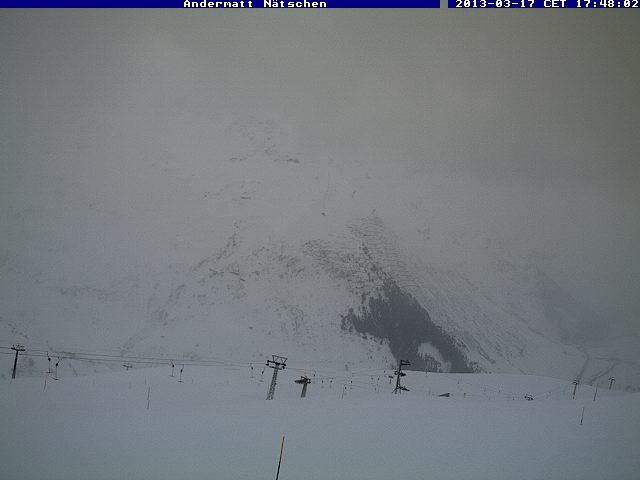
With many people coming to visit this year, both for DebConf13 and holidays, I'm going to start sharing some Swiss travel tips here in the blog. One of Switzerland's most popular tourist promotions is the Glacier Express railway. Here are the facts and a cool video. Avoid tickets/itineraries with fixed dates for visiting the mountains. The full Glacier Express journey is about 6 hours, and if it is cloudy or foggy, it is 6 hours in a train just like any other train. Some days really are cloudy and you won't see a single mountain. Try and make sure you have several flexible days in Switzerland so you can go up the mountains when the weather is optimal. Check the weather using the live webcam service Below is a typical webcam image for a bad day (I was up there Saturday skiing and it was perfect, Sunday was every tourist's nightmare). Compare this picture with the video further down: You can find a live feed like this for most Swiss mountain destinations with a web search Regular passenger trains run on the same route You don't need to buy an expensive Glacier Express' ticket. A regular passenger train does the same route every hour. No fixed reservation is necessary either and you can hop off and back on again along the way at many little stops. Oberalp Pass, at 2000 meters, is a good place to stop and hike (up to the peaks if you are keen, down to Andermatt if you want an easy walk with breathtaking views) What's more, the expensive trains are fully sealed and you can't open the windows. The regular trains do let you open the windows, so you can fully immerse yourself in the experience like this riding down from Natschen to Andermatt (1,500m): <video controls="" height="340" poster="http://danielpocock.com/sites/danielpocock.com/files/train-poster.png" width="560">
<source src="http://danielpocock.com/sites/danielpocock.com/files/DSC_1776.mp4" type="video/mp4"></source>
<source src="http://danielpocock.com/sites/danielpocock.com/files/DSC_1776.webm" type="video/webm"></source>
</video> To plan an itinerary, you can check Swiss train timetables at the official web site http://www.sbb.ch/en

Gerfried Fuchs: Backports Integrated Into The Main Archive

Dear users and supporters of the backports service! The Backports Team is pleased to announce the next important step on getting backports more integrated. People who are reading debian-infrastructure-announce will have seen that there was an archive maintenance last weekend: starting with wheezy-backports the packages will be accessible from the regular pool instead of a separate one, and all backports uploads will be processed through the regular upload queue (including those for squeeze-backports and squeeze-backports-sloppy). For Users What exactly does that mean for you? For users of wheezy, the sources.list entry will be different, a simple substitute of squeeze for wheezy won't work. The new format is:
deb http://ftp.debian.org/debian/ wheezy-backports main
So it is debian instead of debian-backports, and offered through the regular mirror network. Feel invited to check your regular mirror if it carries backports and pull from there. For Contributers What does it mean for contributing developers? Uploads for backports are no longer to be pushed to backports-master but to ftp.upload.debian.org, like any other regular package. Also, given that the packages are served from the same archive install there is no need to include the original tarball in the upload any longer because the archive knows it (Squeeze and beyond). Also, given that the upload goes to the same upload queue, there is only one keyring used anymore, so no more pain with expired or replaced keys. We though still keep the rule of adding your UID to an ACL list (this also includes DM additions). This is mostly only to give us the chance to remind you that uploads to backports are directly available for installation onto stable systems and you thus should take special care there. We carefully tried to take over the old ACLs, in case you can't upload anymore, please tell us so we can look into the issue. I've mentioned wheezy-backports (and squeeze-backports-sloppy) a few times here already, and you might wonder when it will be available. Technically, it is available from now on. Practically, while you could already upload to it, the set up of the buildd network is more painful than expected, so please allow the Buildd Team some days for setting them up. The upload rules for wheezy-backports are the same: packages that are in the next suite are accepted. Given that Jessie isn't created yet, we want you to think about whether the package you want to upload will go into Jessie final, and that you are taking a closer look once Jessie is created and the package entered there about the upgradeability. For the time until the suite is available, you can see this as relaxed upload rule. The same goes for squeeze-backports-sloppy: packages from two suites after Squeeze are acceptable, which turns it into the same relaxed rule as wheezy-backports above. Please also keep in mind that uploads to squeeze-backports-sloppy usually should be accompanied by uploads to wheezy-backports so people are able to upgrade from squeeze-backports-sloppy to wheezy with wheezy-backports. Thanks Finally, we want to thank the FTP-Master Team for their fine work on making this happen. The documentation on backports-master has been updated, and in case of any doubt or question, feel free to ask them on either the debian-backports mailinglist, or in case of sensitive topics ask us directly. Enjoy!
Rhonda for the Backports Team

/debian permanent link Comments: 1 Flattr this

Michal &#268;iha&#345;: phpMyAdmin translations status

Next round of phpMyAdmin 4.0 translation status report is coming. So let's look at which translations are at 100% right now: Almost complete: As you can see, there is still lot of languages missing, this might be your opportunity to contribute to phpMyAdmin. Also you are welcome to translate phpMyAdmin 4.0 using translation server. If your language is already fully translated and you want to help as well, you can translate our documentation as well.

Filed under: English Phpmyadmin 0 comments Flattr this!

Benjamin Mako Hill: SCARF ACE

Imako_scarf Although I don t mean to brag I have a really great scarf-hood-combination garment. I was wearing said awesome scarf in a rather cold apartment during my remote participation in the Learning Creative Learning class. I would like to think that I said some interesting and insightful things. But if I didn t, I m glad to hear my scarf which now has its very own sub-reddit was able to impress and entertain.

17 March 2013

Gregor Herrmann: RC bugs 2013/11

& another week has gone by where I tried to work on RC bugs. here's the overview:

Benjamin Mako Hill: Conversation on Freedom and Openness in Learning

On Monday, I was a visitor and guest speaker in a session on Open Learning in a class on Learning Creative Learning which aims to offer a course for designers, technologists, and educators. The class is being offered publicly by the combination surprising but very close to my heart of Peer 2 Peer University and the MIT Media Lab. The hour-long session was facilitated by Philipp Schmidt and was mostly structured around a conversation with Audrey Watters and myself. The rest of the course materials and other video lectures are on the course website. You can watch the video on YouTube or below. I thought it was a thought-provoking conversation! <iframe allowfullscreen="" frameborder="0" height="315" src="http://www.youtube.com/embed/l9HM80cv160" width="560"></iframe> If you re interested in alternative approaches to learning and free software philosophy, I would also urge you to check out an essay I wrote in 2002: The Geek Shall Inherit the Earth: My Story of Unlearning. Keep in mind that the essay is probably the most personal thing I have ever published and I wrote it more than a decade ago it as a twenty-one year old undergraduate at Hampshire College. Although I ve grown and learned enormously in the last ten years, and although I would not write the same document today, I am still proud of it.

16 March 2013

Lars Wirzenius: Obnam 1.4 (backup software) release

I've just pushed out the release files for Obnam version 1.4, my backup application, and Larch, my B-tree library, which Obnam uses. They are available via my home page (http://liw.fi/). Since Debian is frozen, I am not uploading packages to Debian, but .deb files are available from my personal apt repository for intrepid explorers. (I will be uploading to Debian again after the freeze. I am afraid I'm too lazy to upload to experimental, or do backports. Help is welcome!) From the Obnam NEWS file: Bug fixes:

Lucas Nussbaum: Ideas from the -vote@ DPL election discussions

After one week of campaign on -vote@, many subjects have been mentioned already. I m trying here to list the concrete, actionable ideas I found interesting (does not necessarily mean that I agree with all of them) and that may be worth further discussion at a less busy time. There s obviously some amount of subjectivity in such a list, and I m also slightly biased ;) . Feel free to point to missing ideas or references (when an idea appeared in several emails, I ve generally tried to use the first reference). On the campaign itself, and having general discussions inside Debian: On getting new users and contributors to Debian: Infrastructure, processes, releases: Relationships with upstreams/downstreams: This list could be moved to wiki.d.o if others find sufficiently useful to help maintaining it.

Stefano Zacchiroli: bits from the DPL for February 2013 and a half

Dear project members, here's another report of DPL activities, this time for a period longer than usual (February + 1st week of March), so that the next one will be at the very end of the current DPL term. Highlights Appointments DPL helpers Two more DPL helpers IRC meetings have happened, minutes and logs of both are available. Assets Events Past At the beginning of February, I've attended FOSDEM 2013, together with many other Debian people. I didn't have any specific talk this year, but it's been a chance to talk F2F about several ongoing issues (see logs), and help mediating in some conflicts. I've also accepted the invitation to participate in the GNOME Advisory Board meeting, together with Laurent Bigonville of our GNOME team. No report of that has been prepared as of yet (sorry about that), but we have both reported "live" to the rest of the team on IRC. Future Miscellaneous A couple of months ago I've mentioned that I had filed an application, as Debian representative, to participate in a working table to define software procurement rules for the Italian public administration. Good news: my application has been accepted, together with those of other well-known FOSS communities and organizations (e.g. KDE, FSFE). I'll keep you posted of how it goes. Let's go back to elect a new DPL and release Wheezy now,
Cheers.
PS the day-to-day activity logs for February and March 2013 are available at the usual place master:/srv/leader/news/bits-from-the-DPL.txt.20130 2,3

Steve Kemp: Handling bookmarks?

I've a collection of about 500 bookmarks which I've barely touched for a few years. I started organizing them late the other night, because I'd been off work sick for two days and that was about the most I felt up for doing with a computer. The intention was to "tidy" them, and then setup some way of syncing them across browsers/computers. In the end I didn't like any of the syncing plugins I could find - xmarks, etc - so I decided to take a step backwards. I'd exported my bookmarks to HTML page, via firefox, before I started, and then later in a fit of pique I deleted the whole damn lot of them. So now a few years worth of bookmarks are stored in a single HTML file. But wait, we can use revision control can't we? We can host that file on github/similar. We can rely upon merges to deal with conflicts - simple if we just add lines to the end, or delete lines. Maybe that's the best way to store bookmarks? I updated the bookmark file to read:

<ul>
<li tags="debian, personal"><a href="http://www.debian-administration.org/">Debian Admin</a></li>
..
</ul>
Adding "tags" to the LI-container and then some simple jQuery code gave me the ability to search/filter the bookmarks and auto-populate tags. A small example placed online here: The obvious comment is that this makes adding new bookmarks a bit harder, but we'll see.. The javascript works in the browsers I tested, and for those that have none the bookmarks will just be a simple unordered list which should be universal. I expect the javascript could be improved by a real developer.

Clint Adams: Los pollitos dicen p o-p o, eternamente

A boy died. He knew he was dying. He tried to get help. We don't know if it occurred to him to switch off the modem and make a phone call, or if he was too weak to get up and do it. We know he sent an email. He didn't type perfect English at the best of times, and as his life slipped away from him, he misspelled many things. He misspelled ambulance . He may have misspelled diabetes . That was all fine the meaning was clear enough but the bit where it gets tragic is that he misspelled .net in the To: line. So instead of arriving at its destination, the NOC of his employer, where it would have opened up a ticket and been seen by a human at some point, the email bounced. We will never know whether they could have or would have done anything in time. We will never know if, had whoever been on postmaster duty at his ISP at the time been paying attention, he could have been saved. These things were debated angrily, by people struggling to make sense of something, but it changes nothing. The email bounced, and he died.

Russ Allbery: On (not) drinking

Captain Awkward, which is still the best advice column on the Internet, just posted an entry about someone being pestered to drink after saying that they don't drink. As another one of those people who just don't drink, but not for any specific reason that people seem to accept, I felt like blathering a bit more about that. This is mostly about me rather than about the thread over there, so I figured I'd do it on my own journal. First, I completely agree with the response that it's no one else's business why you do or don't drink, and people who persist in trying to get you to drink (or do anything else, no matter how innocuous) after you have clearly told them no are being rude and have forfeited the right to further conversation. But it also really frustrates me to see that people have to cope with that situation, particularly since I suspect it's gendered. My personal experience (as a man, and one who has a fairly firm way of expressing myself naturally) is that I say I don't drink and that's the end of it. Occasionally someone will ask me why. I've never had anyone pester me beyond that. I think the age of the letter writer (22) has something to do with this, but I suspect gender sadly also has something to do with this. People seem to be much more willing to tell women what to do and not take no for an answer. It's unbelievably rude when people do that. Don't do that. If you decide you can pester someone about their personal choices because of their gender (and, for that matter, their age, or any other reason), you deserve to get your head handed to you on a plate. Second, I wonder if some of the reason why I don't run into problems with this is that I work on a college campus. The latter means that there's a lot of surrounding culture around drinking and dealing with drinking, such as the university policy that any party have EANABs (Equally Attractive Non-Alcoholic Beverages) available as well. There's a bit of a cultural understanding that pushing people into drinking isn't okay. Third, since people do occasionally ask why I don't drink, or assume that anyone who doesn't drink is doing so for religious reasons or because they're an alcoholic, or might object to them drinking, here are a few reasons why I don't drink. It may be useful information in case you run into more people in the world like me. So, that's me. It makes no difference at all to me if other people drink. Enjoy! You won't offend me, there isn't any overtone to it, I'm not being judgemental when I say I don't drink, and it's not a dangerous topic or anything. There are probably others like me. If you run into us, all you have to say after "no thanks, I don't drink" is "oh, okay."

Russ Allbery: rra-c-util 4.8

This package is my collection of random utility functions, sort of like my version of Gnulib. (At some point, I do want to retire the bits that just duplicate Gnulib, which is less and less of it, and figure out how to properly use Gnulib for my packages as well.) The big changes in this package put the name somewhat to lie: I finally took the time to write some comprehensive infrastructure for integrating Perl tests. This is primarily in the form of three new modules and a bunch of tests that use them. The modules are Test::RRA, which provides some general facilities for handling maintainer-only tests and skipping tests when prerequisites are missing; Test::RRA::Config, which reads configuration from a separate file and allows me to use the same code verbatim in multiple packges; and Test::RRA::Automake, which provides a bunch of useful functions for intergrating tests written in Perl into packages that use Automake. Some of the test scripts were in the previous version, but they've now been overhauled to use the new modules, which makes them much simpler and more robust. But I also added a new perl/t directory, which holds all the test scripts that I use for Perl module testing, either standalone or embedded in a larger package. There are a variety of other changes, but they're minor or internal. It is worth noting, though, that all the code in rra-c-util now passes clang --analyze with clang 3.0. You can get the latest version from the rra-c-util distribution page.

15 March 2013

Russ Allbery: C TAP Harness 2.1

I probably should have updated more of my other packages before kicking out the 2.0 release, but I wanted to get something out last night. The change to try to find test executables without any extension as well as with the -t or .t extensions broke backward compatibility. In some of my test suites, I use a helper program with no extension that's run by the actual test program with a -t extension. If the helper program is compiled and hence in the build directory, and the actual test is a shell script and hence in the source directory, then the new runtests would find and try to run the wrong program. Fix this problem by instead searching all possible locations for the test program with a particular suffix before moving on to try the next suffix on the list. This should provide the same functionality while being backward-compatible. You can get the latest release from the C TAP Harness distribution page.

Eddy Petri&#537;or: Appdirs from pypi is retarded

The XDG standard says user-specific data files should be written [in] $XDG_DATA_HOME which defaults to $HOME/.local/share.

Appdirs explicitly breaks XDG_DATA_HOME specification and returns a path based on $XDG_CONFIG_HOME, ~/.config/<appname> instead of ~/.local/share/<appname> for user_data_dir. Although the spec is as clear as day, the authors of appdirs say this is 'subject to some interpretation'.

No, it's not, read the damn spec!

http://standards.freedesktop.org/basedir-spec/basedir-spec-latest.html


The irony is that initially they got it right, but decided to break the standard some two years ago.

Thank you appdirs authors for ignoring a perfectly clear standard just because you *think* 'in practice, Linux apps tend to store their data in ~/.config/<appname>'.


Dear appdirs authors, if some people break the law it doesn't mean the law is broken. And if *you*think* some apps do not conform to a standard, it does mean *at*all* that you should not, either. More than that, if some applications decide on their own they consider some things config data and you'd classify those as 'application data', that's their business, and is not your place to decide to break the standard for everybody. Standards exist for a reason.

BTW, your software is worthless to me now and I decided NOT to use it because of this idiotic decision of yours.

Richard Hartmann: Release Critical Bug report for Week 11

Current prediction remains at six weeks. This is a tad meh. The UDD bugs interface currently knows about the following release critical bugs: How do we compare to the Squeeze release cycle?
Week Squeeze Wheezy Diff
43 284 (213+71) 468 (332+136) +184 (+119/+65)
44 261 (201+60) 408 (265+143) +147 (+64/+83)
45 261 (205+56) 425 (291+134) +164 (+86/+78)
46 271 (200+71) 401 (258+143) +130 (+58/+72)
47 283 (209+74) 366 (221+145) +83 (+12/+71)
48 256 (177+79) 378 (230+148) +122 (+53/+69)
49 256 (180+76) 360 (216+155) +104 (+36/+79)
50 204 (148+56) 339 (195+144) +135 (+47/+90)
51 178 (124+54) 323 (190+133) +145 (+66/+79)
52 115 (78+37) 289 (190+99) +174 (+112/+62)
1 93 (60+33) 287 (171+116) +194 (+111/+83)
2 82 (46+36) 271 (162+109) +189 (+116/+73)
3 25 (15+10) 249 (165+84) +224 (+150/+74)
4 14 (8+6) 244 (176+68) +230 (+168/+62)
5 2 (0+2) 224 (132+92) +222 (+132/+90)
6 release! 212 (129+83) +212 (+129/+83)
7 release+1 194 (128+66) +194 (+128/+66)
8 release+2 206 (144+62) +206 (+144/+62)
9 release+3 174 (105+69) +174 (+105/+69)
10 release+4 120 (72+48) +120 (+72/+48)
11 release+5 115 (74+41) +115 (+74/+41)
12 release+6
13 release+7
14 release+8
15 release+9
16 release+10
17 release+11
18 release+12
Graphical overview of bug stats thanks to azhag:

Hideki Yamane: pbuilder/cowbuilder and piuparts failed

Today, I've failed to create pbuilder's base.tgz and cowbuilder's base.cow, and log says as below

Get:1 http://ftp.jp.debian.org sid Release.gpg [836 B]
Hit http://ftp.jp.debian.org sid Release
Ign http://ftp.jp.debian.org sid Release
Hit http://ftp.jp.debian.org sid/main amd64 Packages/DiffIndex
Hit http://ftp.jp.debian.org sid/main Translation-en
Fetched 836 B in 0s (3011 B/s)
Reading package lists...
W: GPG error: http://ftp.jp.debian.org sid Release: The following signatures were invalid: BADSIG AED4B06F473041FA Debian Archive Automatic Signing Key (6.0/squeeze) <ftpmaster debian.org="">
I: Obtaining the cached apt archive contents</ftpmaster>
"The following signatures were invalid: BADSIG" ?

apt (0.9.7.8) unstable; urgency=criticial

* SECURITY UPDATE: InRelease verification bypass
- CVE-2013-1051

[ David Kalnischk ]
* apt-pkg/deb/debmetaindex.cc,
test/integration/test-bug-595691-empty-and-broken-archive-files,
test/integration/test-releasefile-verification:
- disable InRelease downloading until the verification issue is
fixed, thanks to Ansgar Burchardt for finding the flaw
Maybe this cause it (just wild guess).

And piuparts also failed.


8m16.5s DEBUG: Starting command: ['chroot', '/tmp/tmpivurbJ', 'eatmydata', 'umount', '/proc']
8m16.5s DUMP:
umount: /proc: device is busy.
(In some cases useful info about processes that use
the device is found by lsof(8) or fuser(1))
8m16.5s DEBUG: Command failed (status=1), but ignoring error: ['chroot', '/tmp/tmpivurbJ', 'eatmydata', 'umount', '/proc']
8m16.5s DEBUG: Starting command: ['rm', '-rf', '--one-file-system', '/tmp/tmpivurbJ']
8m16.6s DUMP:
rm: skipping '/tmp/tmpivurbJ/proc', since it's on a different device
8m16.6s ERROR: Command failed (status=1): ['rm', '-rf', '--one-file-system', '/tmp/tmpivurbJ']
rm: skipping '/tmp/tmpivurbJ/proc', since it's on a different device

8m16.7s DEBUG: Starting command: ['chroot', '/tmp/tmpivurbJ', 'umount', '/proc']
8m16.8s DUMP:
chroot: failed to run command 'umount': No such file or directory


It mounts binfmt_misc mount under /proc and try to umount /proc without umount it again, again and again... then failed. What causes this annoying behavior?

Please let me know.

Next.

Previous.