Search Results: "jan"

20 March 2011

Christian Perrier: Current work in Debian

Now that I sent an update about my running activities, I have to report about what I'm doing these weeks in Debian to try keeping a fair balance for those of you who read this blog through Planet Debian. Most January was spent in preparing the release of squeeze. Of course, I didn't work directly on the release, not being involved in the release team. However, last bits of preparation for Debian Installer as well as rushing out the last remaining bits of localization work took most of my time. After the release of squeeze, time came to resume back some activities. First of all, on the l10n front, I resumed the work on "l10n NMUs", trying to get old l10n bugs fixed. I restarted proposing NMUs or, more precisely, help to perform translation updates rounds to these maintainers. Most of them had "old" l10n bugs because of the freeze. So, I indeed did not end up in doing many NMUs...but got several l10n bugs closed anyway. Work being resumed in unstable also lead to many changes in packages' debconf templates (new packages using debconf, packages introducing new templates, etc.). As these are the trigger for Smith reviews (reviews of English in debconf templates and packages' description, this activity, which was very low during the freeze, resumed again (we'll soon celebrate the 4th anniversary of this project). I also decided to invest more time in D-I again. The D-I team is currently more active than it was last years. Thanks to a few individual, work resumed in some areas and bug triaging has been very active. I recently resyned a nice improvement which had been contributed by a user to iso-scan, then polished by Frans Pop. This will allow to choose among several different ISO images when installing Debian from a USB stick while, previously, only the first found was being used. I also worked with a new translator, to prepare the activation of Uyghur translation in D-I. Some work happend in the pkg-fonts team. I had a few fonts adopted by the team, as part of the general effort to get rid of defoma. I sent patches for a few others, but many remain. If you maintain font packages, please help us in getting rid of defoma. Changes are easy to do; ask the team if you need help (pkg-fonts-devel@lists.alioth.debian.org). Samba packages also ate a significant part of my time. First of all, DSA-2175 lead to prepare fixes for samba in squeeze and lenny. Then, upstream released samba 3.5.8 which I uploaded to unstable. I briefly considered trying to get the Stable Release managers approval to push that version in squeeze, but the number of fixes made by upstream was discouraging. So, I chose to examine them slowly and cherry-pick those I consider important enough to warrant an upload for squeeze. More git wizardry learned doing so (thanks to Julien Cristau for his help). And I now have a pending proposal for three of these fixes (that represent 14 atomic patches from upstream) to be included in squeeze.

Christian Perrier: [life] [running] Updates on running plans

The first two months of this year have seen me quite busy preparing for my March-April peak of activity. So, most of these were spent accumulating kilometers, mostly on trail runs with mud, slope, obstacles, etc. January was meant to accumulate kilometers, which succeeded quite well..:-). Not as crazy as November 2010 (close to 300km) but the point was also testing a few long runs, over 25km and up to 32. February saw my first official race, with Bullion half-marathon. This is a nice race which I already ran last year. It features small roads in the Rambouillet Forest. Not the best place to achieve a personal best because the race is not flat, with two hills in the first half. Moreover, I was just recovering from a small flu, so I wasn't really planning to achieve a PB. Still, I managed to do it in 1h39'49", two minutes more than my PB. Moreover, I managed to do it in a small negative split, with first half in 50'38" and second half in 49'11". More encouraging, I ran a 35km solo trail the next week-end after this and completed it fairly well with the pace I plan for the 50km Eco-Trail. Still, that flu introduced some minor perturbation in this preparation and, thus, I included more activity in early March. I was originally planning to run Paris half-marathon on 6th, but an invitation for a friends 50th birthday made me cancel that one. So, most of the first 3 weeks of March were spent in 15-18km style runs, plus running daily to go to and back from work. The last preparation was today with a short 12km run with all equipment needed for Eco-Trail (backpack, 2lit. waterbag) and the targeted pace (10km/h). So, on Saturday, will be the Paris Eco-trail 50km race from Versailles Castle to Eiffel Tower....through woods in the South and South-West neighbourhood, with 1000m positive slope. This will be my first ultra race, so I'm a little bit in a grey area, here. As a consequence, the only ambition is finishing. I expect it to be in aroung 5h30 or so. Most importantly, I have to keep reserves, as, two weeks later, I'll run my yearly Paris marathon. Two long distance races in two weeks...we'll see if I'm crazy or not..:-) Now, I'm heading for a quiet week: grow glucides reserves, eat pasta, do one or two footings...and wait for Saturday! You may want to watch my blog on Sunday to see whether I survived this first stage.

18 March 2011

DebConf team: DebConf11: Short insiders summary of recent developments in DC11 organization (Posted by Vedran Omeragic)

Recently there has been some major developments in DebConf11 organization. In short, I will list some of the most important.

Website

Official DC11 website has finally been completed and now contains a great deal of information for those interested in attending this years conference. Some of the most notable changes include:

Navigation

Frontpage now contains a small menu with links to most important parts of website, like About, Registration, Contact Sidebar menu is now divided in 3 categories:

  • The Conference Links to pages which are directly connected with the Conference like About DC, Debian Day, Registration, Call for Papers, Talk Schedules, Payments Most of these links are hidden at the moment, and will be until the registration is open, to avoid any unnecessary confusion.
  • More Information Basic information for attendees like Important Dates, Accommodations, Venue, Visa Everything you need to know about your stay in Banja Luka.
  • Practical While these pages have almost nothing to do with the Conference itself, they do provide a vast information about city, getting to Bosnia, some practical information, as well as the Map of the whole city made my me :)

New Pages added
  • How Can I Help This page contains some basic information for anyone who wants to help out. Weather by volunteering, sponsoring, or just by adding a banner on their website
    DC11: How Can I Help?
  • Contact Instead of just sending visitors to mailto, we replaced it by a page which contains ALL contact information, emails AND phone numbers (which will be added just before DebCamp starts).
    DC11: Contact
  • Sponsorship Just like with the contact page, we made a page to be more user friendly to any interested parties or individuals, and contains most important info, such as sponsorship levels and contact address.
    DC11: Sponsorship
  • About DebConf11 Actually it s just a page with a content copied from frontpage (which is now used for something else).
    DC11: About DebConf11

New features:
  • Documentation Is now used to store all important documents and records for public use and sharing, like brochures, official government documents, important public mails, as well as the recordings of all IRC meeting logs. Can be found at:
    DC11: Documentation
  • Frontpage: Navigation To ensure the main goal of website, information availability, frontpage has been redesigned to provide maximum accessibility as well as easy access to any part of the website. DC11: Frontpage
  • Frontpage: Latest News To keep the public and attendees well informed of any important events and developments, we decided to add latest news section. Note however, that if you want to stay completely informed of any changes and updates, we still recommend subscribing to our mailing list, which can be found under contact page.
    DC11: Frontpage
  • Map of Banja Luka Because of lack of data on Google Maps and Open Street Map, as well as some other minor local maps, we made a small map of almost whole city and added around 60 or 70 locations which we consider to be of importance for our attendees. Such locations include hotels, parking spots, restaurants, bars, clubs, petrol stations, taxi stations, etc. This page uses simple JavaScript and is not dragable . Therefore we added Index Location to auto-locate the needed locations, as well as the legend to clarify the category of locations. Pointing your mouse over a certain location will open a small bubble with some info on that location/object. We should also point out that some of this data may not be 100% correct (ie working hours may be off ). Map is available at:
    DC11: Banja Luka City Map
Bosnian language

Site is now available on Bosnian language for native speaking attendees, should they have problems with English version. Every page is available on both languages, which can be changed by clicking on ba/en flag in upper left corner, or DC11: Bosnian Version.

Design

As you may have noticed, the official page received a small face lift. New header with the Government building, a small token of appreciation for all the help the Government is providing; as well as some minor changes in CSS and color scheme. While talking about design, we d like to thank Leandro G mez for his help with the header.

Sponsorship Sponsorship Levels

As agreed on the meeting, which took place on 22. of February, [Meeting logs], following sponsorship levels will be used for this years conference:

  • Steel < 1.000
  • Bronze > 1.000
  • Silver > 5.000
  • Gold > 10.000
  • Platinum > 20.000

Main reason for lowering amounts is due to last years results of high increase in the same. As for the benefits of these levels, the only thing changed is t-shirts / bags places; we believe t-shirts are much more noticeable than bags, and have therefore been promoted to Silver, while bags have been downgraded to Bronze. For a full list of requirements and benefits, please visit: DC11: Sponsorship Sponsorship Brochure

Sponsorship brochures have finally been completed and are available for a public distribution. The brochures are available in 3 qualities: low, high and original. Low and high quality brochures, ~6Mb and ~8Mb respectively, are for normal distribution to our sponsors, while original quality, at around 240Mb, is intended for maximum quality printing. Just as with the website, each quality is available in both Bosnian and English. Current version of the brochure is 1.1 and is most likely the final one. These brochures are available at Documentation page: DC11: Documentation >> Documents made by Local Team Or download them directly:

Also, I d like to thank Mirosal Remetic for making a great template and Pablo Duboue for some very valuable suggestions regarding the structure of the brochure.

Visas and Customs Rules

Many questions have been raised regarding Bosnian visa regime. We got in contact with the embassy and they clarified who can enter our country with(out) Visa. The list can be found on DC11 Wiki: Visa regime. It also states, which countries have a privilidge of ID-only entrance. If your country is not listed, that means you will need visa. If you want to know what exactly you need to get one, please visit the this official Government page and chose your country from a drop-down menu. As for the visa itself, as well as the list of Customs Rules, please read DC11: Visa.

Also, thanks to Darjan Prtic for getting the list from the Government officials.

So, what s next?

If you think, that is it for now, you are dead wrong. At this very moment following is being organized and developed:

  • Registration Registration Team is currently hacking penta and modifying it for this years needs and conditions. We expect to have registrations open by the end of March / beginning of April.
  • Travel and getting to Banja Luka Being one of the greatest obstacle, Travel Team is working hard on finding best routes for attendees and mapping the city
  • Sponsorship With final decision and agreement for sponsorship levels and brochures ready for public distribution, Sponsorship Team is now actively looking for new sponsors, global and local, preparing various promotional material, as well as planning our advertising strategy.

Final word

Well, these are pretty much the highlights of some recent and some future developments of DebConf11 organizational team. Mind you, there s a lot more going on, but I tried to give a small summary from the inside. Should you be interested in attending, helping out, sponsoring or just have some questions, feel free to ask them on our mailing list at: debconf11-localteam@lists.debconf.org. I should inform you that this is a public mailing list and its archives are available for a broader public. If you do not wish for your mail to be made public, please direct any enquiry directly to me trough the Contact Form or any other member of Core Local Team, Adnan Hodzic or Velimir Iveljic.

11 March 2011

Julien Danjou: Second OrgCamp Paris

I'll be at the OrgCamp April 2011 in Paris next month. However, I'm not yet sure of what I'll talk about this time. Flattr this

3 March 2011

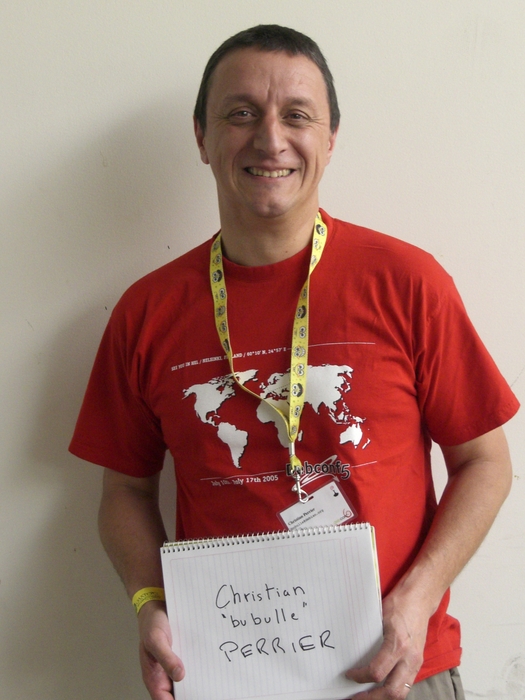
Rapha&#235;l Hertzog: People behind Debian: Christian Perrier, translation coordinator

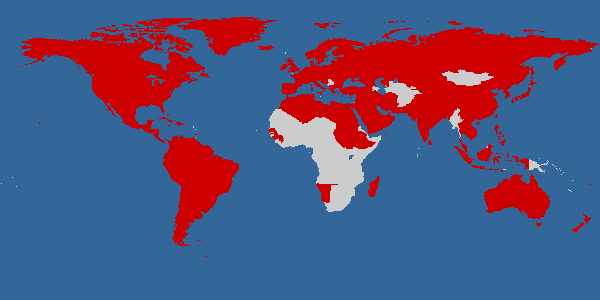
Christian is a figure of Debian, not only because of the tremendous coordination work that he does within the translation project, but also because he s very involved at the social level. He s probably in the top 5 of the persons who attended most often the Debian conference. Christian is a friend (thanks for hosting me so many times when I come to Paris for Debian related events) and I m glad that he accepted to be interviewed. He likes to speak and that shows in the length of his answers :-) but you ll be traveling the world while reading him. My questions are in bold, the rest is by Christian. Who are you? I am a French citizen (which is easy to guess unless you correct my usual mistakes in what follows). I m immensely proud of being married for nearly 26 years with Elizabeth (who deserves a statue from Debian for being so patient with my passion and my dedication to the project). I m also the proud father of 3 wonderful kids , aged 19 to 23. I work as team manager in the Networks and Computers Division of Onera the French Aerospace lab , a public research institute about Aeronautics, Space and Defense. My team provides computer management services for research divisions of Onera, with a specific focus put on individual computing. I entered the world of free software as one of the very first users of Linux in France. Back in the early 1990 s, I happened (though the BBS users communities) to be a friend of several early adopters of Linux and/or BSD386/FreeBSD/NetBSD in France. More specifically, I discovered Linux thanks with my friend Ren Cougnenc (all my free software talks are dedicated to Ren , who passed away in 1996). You re not a programmer, not even a packager. How did you come to Debian? I m definitely not a programmer and I never studied computing (I graduated in Materials Science and worked in that area for a few years after my PhD). However, my daily work always involved computing (I redesigned the creep testing laboratory and its acquisition system all by myself during my thesis research work). An my hobbies often involved playing with home computers, always trying to learn about something new. So, first learning about a new operating system then trying to figure out how to become involved in its development was quite a logical choice. Debian is my distro of choice since it exists. I used Slackware on work machines for a while, but my home server, kheops, first ran Debian 1.1 when I stopped running a BBS on an MS-DOS machine to host a news server. That was back in October 1996. I then happened to be a user, and more specifically a user of genealogy software, also participating very actively in Usenet from this home computer and server, that was running this Debian thing. So, progressively, I joined mailing lists and, being a passionate person, I tried to figure out how I could bring my own little contribution to all this. This is why I became a packager (yes, I am one!) by taking over the geneweb package, which I was using to publish my genealogy research. I applied as DD in January 2001, then got my account in July 2001. My first upload to the Debian archive occurred on August 22nd 2001: that was of course geneweb, which I still maintain. Quite quickly, I became involved in the work on French localization. I have always been a strong supporter of localized software (I even translated a few BBS software back in the early 90 s) as one of the way to bring the power and richness of free software to more users. Localization work lead me to work on the early version of Debian Installer, during those 2003-2005 years where the development of D-I was an incredibly motivating and challenging task, lead by Joey Hess and his inspiring ideas. From user to contributor to leader, I suddenly discovered, around 2004, that I became the coordinator of D-I i18n (internationalization) without even noticing :-) You re the main translation coordinator in Debian. What plans and goals have you set for Debian Wheezy? As always: paint the world in red. Indeed, this is my goal for years. I would like our favorite distro to be able to be used by anyone in the world, whether she speaks English, Northern Sami, Wolof, Uyghur or Secwepemcts n. As a matter of symbol, I use the installer for this. My stance is that one should be able to even install Debian in one s own language. So, for about 7 years, I use D-I as a way to attract new localization contributors. This progress is represented on this page where the world is gradually painted in red as long as the installer supports more languages release after release. The map above tries to illustrate this by painting in red countries when the most spoken language in the country is supported in Debian Installer. However, that map does not give enough reward to many great efforts made to support very different kind of languages. Not only various national languages, but also very different ones: all regional languages of Spain, many of the most spoken languages in India, minority languages such as Uyghur for which an effort is starting, Northern Sami because it is taught in a few schools in Norway, etc., etc. Still, the map gives a good idea of what I would like to see better supported: languages from Africa, several languages in Central Asia. And, as a very very personal goal, I m eagerly waiting for support of Tibetan in Debian Installer, the same way we support its sister language, Dzongkha from Bhutan. For this to happen, we have to make contribution to localization as easy as possible. The very distributed nature of Debian development makes this a challenge, as material to translate (D-I components, debconf screens, native packages, packages descriptions, website, documentation) is very widely spread. A goal, for years, is to set a centralized place where translators could work easily without even knowing about SVN/GIT/BZR or having to report bugs to send their work. The point, however, would be to have this without making compromises on translation quality. So, with peer review, use of thesaurus and translation memory and all such techniques. Tools for this exist: we, for instance, worked with the developers of Pootle to help making it able to cope with the huge amount of material in Debian (think about packages descriptions translations). However, as of now, the glue between such tools and the raw material (that often lies in packages) didn t come. So, currently, translation work in Debian requires a great knowledge of how things are organized, where is the material, how it can be possible to make contribution reach packages, etc. And, as I m technically unable to fulfill the goal of building the infrastructure, I m fulfilling that role of spreading out the knowledge. This is how I can define my coordinator role. Ubuntu uses a web-based tool to make it easy to contribute translations directly in Launchpad. At some point you asked Canonical to make it free software. Launchpad has been freed in the mean time. Have you (re)considered using it? Why not? After all, it more or less fills in the needs I just described. I still don t really figure out how we could have all Debian material gathered in Rosetta/Launchpad .and also how Debian packagers could easily get localized material back from the framework without changing their development processes. I have always tried to stay neutral wrt Ubuntu. As many people now in Debian, I feel like we have reached a good way to achieve our mutual development. When it comes at localization work, the early days where the everything in Rosetta and translates who wants stanza did a lot of harm to several upstream localization projects is, I think, way over. Many people who currently contribute to D-I localization were indeed sent to me by Ubuntu contributors .and by localizing D-I, apt, debconf, package descriptions, etc., they re doing translation work for Ubuntu as well as for Debian. Let s say I m a Debian user and I want to help translate Debian in my language. I can spend 1 hour per week on this activity. What should I do to start? Several language teams use Debian mailing lists to coordinate their work. If you re lucky enough to be a speaker of one of these languages, try joining debian-l10n-<yourlanguage> and follow what s happening there. Don t try to immediately jump in some translation work. First, participate to peer reviews: comment on others translations. Learn about the team s processes, jargon and habits. Then, progressively, start working on a few translations: you may want to start with translations of debconf templates: they are short, often easy to do. That s perfect if you have few time. If no language team exists for your language, try joining debian-i18n and ask about existing effort for your language. I may be able to point you to individuals working on Debian translations (very often along with other free software translation efforts). If I am not, then you have just been named coordinator for your language :-) I may even ask you if you want to work on translating the Debian Installer. What s the biggest problem of Debian? We have no problems, we only have solutions :-) We are maybe facing a growth problem for a few years. Despite the increased welcoming aspects of our processes (Debian Maintainers), Debian is having hard times in growing. The overall number of active contributors is probably stagnating for quite a while. I m still amazed, however, to see how we can cope with that and still be able to release over the years. So, after all, this is maybe not a problem :-) Many people would point communication problems here. I don t. I think that communication inside the Debian project is working fairly well now. Our famous flame wars do of course still happen from time to time, but what large free software project doesn t have flame wars? In many areas, we indeed improved communication very significantly. I want to take as an example the way the release of squeeze has been managed. I think that the release team did, even more this time, a very significant and visible effort to communicate with the entire project. And the release of squeeze has been a great success in that matter. So, there s nearly nothing that frustrates me in Debian. Even when a random developer breaks my beloved 100% completeness of French translations, I m not frustrated for more than 2 minutes. You re known in the Debian community as the organizer of the Cheese & Wine Party during DebConf. Can you tell us what this is about? This is an interesting story about how things build themselves in Debian. It all started in July 2005, before DebConf 5 in Helsinki. Denis Barbier, Nicolas Fran ois and myself agreed to bring at Debconf a few pieces of French cheese as well as 1 or 2 bottles of French wine and share them with some friends. Thus, we settled an informal meeting in the French room where we invited some fellows: from memory, Benjamin Mako Hill, Hannah Wallach, Matt Zimmermann and Moray Allan. All of us fond of smelly cheese, great wine plus some extra p t home-made by Denis in Toulouse. It finally happened that, by word of mouth, a few dozens of other people slowly joined in that French room and turned the whole thing into an improvized party that more or less lasted for the entire night. The tradition was later firmly settled in 2006, first in Debconf 6 in Mexico where I challenged the French DDs to bring as many great cheese as possible, then during the Debian i18n meeting in Extremadura (Sept 2006) where we reached the highest amount of cheese per participant ever. I think that the Creofonte building in Casar de C ceres hasn t fully recovered from it and is still smelling cheese 5 years after. This party later became a real tradition for DebConf, growing over and over each year. I see it as a wonderful way to illustrate the diversity we have in Debian, as well as the mutual enrichment we always felt during DebConfs. My only regret about it is that it became so big over the years that organizing it is always a challenge and I more and more feel pressure to make it successful. However, over the years, I always found incredible help by DebConf participants (including my own son, last year a moment of sharing which we will both remember for years, i think). And, really, in 2010, standing up on a chair, shouting (because the microphone wasn t working) to thank everybody, was the most emotional moment I had at Debconf 10. Is there someone in Debian that you admire for their contributions? So many people. So, just like it happens in many awards ceremonies, I will be very verbose to thank people, sorry in advance for this. The name that comes first is Joey Hess. Joey is someone who has a unique way to perceive what improvements are good for Debian and a very precise and meticulous way to design these improvements. Think about debconf. It is designed for so long now and still reaching its very specific goal. So well designed that it is the entire basis for Joey s other achievement: designing D-I. Moreover, I not only admire Joey for his technical work, but also for his interaction with others. He is not he loudest person around, he doesn t have to .just giving his point in discussion and, guess what? Most of the time, he s right. Someone I would like to name here, also, is Colin Watson. Colin is also someone I worked with for years (the D-I effect, again ) and, here again, the very clever way he works on technical improvements as well as his very friendly way to interact with others just make it. And, how about you, Rapha l? :-) I m really admirative of the way you work on promoting technical work on Debian. Your natural ability to explain things (as good in English as it is in French) and your motivation to share your knowledge are a great benefit for the project. Not to mention the technical achievements you made with Guillem on dpkg of course! Another person I d like to name here is Steve Langasek. We both maintain samba packages for years and collaboration with him has always been a pleasure. Just like Colin, Steve is IMHO a model to follow when it comes at people who work for Canonical while continuing their involvment in Debian. And, indeed, Steve is so patient with my mistakes and stupid questions in samba packaging that he deserves a statue. We re now reaching the end of the year where Stefano Zacchiroli was the Debian Project Leader. And, no offense intended to people who were DPL before him (all of them being people I consider to be friends of mine), I think he did the best term ever. Zack is wonderful in sharing his enthusiasm about Debian and has a unique way to do it. Up to the very end of his term, he has always been working on various aspects of the project and my only hope is that he ll run again (however, I would very well understand that he wants to go back to his hacking activities!). Hat off, Zack!I again have several other people to name in this Bubulle hall of Fame : Don Armstrong, for his constant work on improving Debian BTS, Margarita Manterola as one of the best successes of Debian Women (and the most geeky honeymoon ever), Denis Barbier and Nicolas Fran ois because i18n need really skilled people, Cyril Brulebois and Julien Cristau who kept X.org packaging alive in lenny and squeeze, Otavio Salvador who never gave up on D-I even when we were so few to care about it. I would like to make a special mention for Frans Pop. His loss in 2010 has been a shock for many of us, and particularly me. Frans and I had a similar history in Debian, both mostly working on so-called non technical duties. Frans has been the best release manager for D-I (no offense intended, at all, to Joey or Otavio .I know that both of them share this feeling with me). His very high involvment in his work and the very meticulous way he was doing it lead to great achievements in the installer. The Installation Guide work was also a model and indeed a great example of non technical work that requires as many skills as more classical technical work. So, and even though he was sometimes so picky and, I have to admit, annoying, that explains why I m still feeling sad and, in some way, guilty about Frans loss. One of my goals for wheezy is indeed to complete some things Frans left unachieved. I just found one in bug #564441: I will make this work reach the archive, benefit our users and I know that Frans would have liked that.

Thank you to Christian for the time spent answering my questions. I hope you enjoyed reading his answers as I did. Subscribe to my newsletter to get my monthly summary of the Debian/Ubuntu news and to not miss further interviews. You can also follow along on Identi.ca, Twitter and Facebook.

7 comments Liked this article? Click here. My blog is Flattr-enabled.

23 February 2011

Andrew McMillan: Status: Busy

I've been very quiet on here for a few months, and the reason is (of course) because I've been doing other things. No surprise there, I guess! What I've been doing, first of all, is writing aCal, an Android CalDAV client with a lot of help from Chris Noldus. It's probably fair to say that Chris did most of the heavy lifting while I learned Java, did most of the UI & graphic design, and the low-level CalDAV synchronisation and geeky calendaring code. This is now available in the Android market for NZD$2.00 to help us fund further development and in a few days (or a couple of weeks) I'll get the source code up somewhere public (probably Gitorious) and it will be licensed GPLv3... When I get a moment - although refer to title :-) Of course on top of that I'd already committed to a second year of handling the sponsorship job for Linux.Conf.AU, so a fair amount of January was taken up with preparing for, and attending LCA in Brisbane where I took a lot of photos. LCA was, as always, a blast, and all credit to the fantastic team over in Brisbane who really came together when it seemed it was all going to fall apart after the flooding. This seems to be six long months of disasters around this part of the world, although until Tuesday I guess we thought we'd escaped the worst of it in New Zealand. After LCA I snuck home for a few days before flying off in the other direction, to UC Berkeley, for CalConnect XX where I managed to get in some great testing of the new Android CalDAV client, some excellent standards discussions, more photos and (even) a few days sightseeing. I've been home for a week from that now - just barely long enough to hug the kids, really - and today I am in the air once more, off to CeBIT in Hannover where I have been lucky to be sponsored a free booth in the Open Source Lounge by Linux New Media AG. My original travel sponsor slipped through the cracks, but I was fortunate that InternetNZ agreed to help fund me instead. If you're coming to CeBIT please do stop by the Morphoss table in the Open Source Lounge (Hall 2, F40) for a chat about DAViCal and Android - and anything else you want to talk about! I'll be there all week :-) And if I have some quiet time in that week (yeah, right!) I'll be trying to push out a new DAViCal release, which is overdue really, since the last one was two months ago.

Russell Coker: Virgin Mobile CRM Upgrade Failure

I ve recently got a new Xperia X10 Android phone for my with with Virgin mobile, it s generally been working OK although I am having some issues [1], I ll write another blog post soon about other problems I ve discovered with the phone and how I ve solved some of the previous ones.I upgraded my wife s phone first because I can t be without Nagios SMS messages if things don t work. So now that things are generally working I want to get myself an Xperia through Virgin (and have my wife s phone get the Nagios SMS in the mean-time). But since last Friday the entire Virgin sales infrastructure has apparently been down. It started with just declining my attempts to purchase a new phone on a separate account, but when I decided to add a second phone to my wife s account the web site told me that they are upgrading their CRM system and it should be fixed on the 22nd of Feb (yesterday). The web site is now saying that I should check back in 2 hours for an update , it s been saying that for a couple of days now.So for most of a week potential Virgin customers have been turned away. It could be that Virgin stores are processing sales on paper, but they offer some significant discounts for web sales the plan I want is a $39 per month plan and I ll get 3 months free for buying on the web. I m not about to visit a store and lose $117! I m sure that many people are losing confidence in Virgin and taking their business elsewhere. I have only just installed the 3G Watchdog free Android app that monitors bandwidth use and automatically turns off 3G when the quota is reached. For the first few days of using the phone which were more data intensive than usual I had no monitoring and no way of using the Virgin web site to discover how much was used. If Virgin bill me extra for data use I ll complain and demand that they alter the bill.This is even worse for pre-paid customers who can t add credit to their account while this happens!Virgin state that they are upgrading the hardware, operating system and database our platform uses to ensure that we can service our Members even better for years to come [2]. I wonder how people get themselves into such a mess. I guess they didn t have a decent test environment to allow testing the upgrade process before doing it on the live data, I can understand a routine small upgrade going wrong and corrupting data in a way that takes some time to resolve. But when everything is upgraded then everything should be tested, and tested before going live! One thing that Virgin could do to regain some credibility is to publish what went wrong and what they learned from it. I would be much more happy to trust my personal data and my business critical phone to a company that learns from it s mistakes and publishes plans on how they do better than one that just does PR.According to Whirlpool they did the same thing on the 25th of January, so they have had two outages of their billing/CRM system in two months! [3]. The Whirlpool thread has discussion about last month s down-time and this month s down-time.On the up-side, Whirlpool user Kevin JD is a Virgin representative who advised customers to send email to telesales@virginmobile.com.au with a contact phone number if they have any issues. It s good to see a company engaging with it s customers.Update: An hour after emailing the URL to this post to Virgin I got a call from a service representative. It wasn t a very productive call as I already knew that their servers are down and they can t do anything. But it s good to know that they are very enthusiastic about making things better. One useful thing that I learned is that my wife s service is probably on a pro-rated bandwidth quota. As she got the phone in the middle of the month we can only do 100M of data transfer not 200M before the end of the month, by my rough calculations I ve downloaded well over 50M of data (maybe as much as 100M) from the Android marketplace. So it might be necessary to negotiate about the bill as soon as their CRM system works.

21 February 2011

Sean Finney: Recent debian updates

Packaging updates Help wanted: cacti I've also filed an RFA bug for cacti (and spine), as i'm not really using cacti any more in my day to day work. The packages are in pretty good shape, but it would really be for the best if someone who actually used cacti were able to more thoroughly test new versions before they were uploaded. I'm also open to co-maintaining the package and/or sponsoring uploads; so if you're already using cacti and looking to get involved in debian development, this could be a fun place to start :) Debian patch tracker Finally got around to fixing a couple post-release (and older) issues in the patch-tracker. Hopefully it should be back to updating and following the latest stuff in the archive. Next up I'll see if I can find someone from DSA to upgrade the hosting machine to squeeze and install a few extra dependencies for the next feature update, which contains a pretty substantial rewrite of the guts from some home-rolled wsgi+cheetah goo to a more established and maintainable django-based system. In the meantime, please let me know if you see any problems (via maintenance cat or otherwise), and I will take a look.

17 February 2011

Jan Hauke Rahm: Gnome calendar

Dear lazyweb, I m using Gnome for quite some time now and I m always satisfied with the interfaces I have to whatever I need. There is one thing, though, that I miss: a calendar. I don t like evolution, I don t need another mail client. What I want is a simple, yet sophisticated application that I can put appointments in and which reminds me of them (recurring issues should be possible, too). It may but doesn t have to be somehow attached to the Gnome clock or whatever. Though I expect it to look Gnome-like and be accessible from the panel. Do you know such? And is there even a Debian package for it? Thanks.

<fb:like action="like" colorscheme="light" href="http://blog.jhr-online.de/266" layout="default" show_faces="true" width="400">

Rapha&#235;l Hertzog: People behind Debian: Maximilian Attems, member of the kernel team

Maximilian, along with the other members of the Debian kernel team, has the overwhelming job of maintaining the Linux kernel in Debian. It s one of the largest package and certainly one where dealing with bug reports is really difficult as most of them are hardware-specific, and thus difficult to reproduce. He s very enthusiastic and energetic, and does not fear criticizing when something doesn t please him. You ll see. My questions are in bold, the rest is by Maximilian. Who are you? My name is Maximilian Attems. I am a theoretical physicist in my last year of PhD at the Technical University of Vienna. My main research area is the early phase of a Quark-Gluon Plasma as produced in heavy ion collisions at the LHC at CERN. I am developing simulations that take weeks on the Vienna Scientific Cluster (in the TOP 500 list). The rest of the lab is much less fancy and boils down to straight intel boxes without any binary blobs or external drivers (although lately we add radeon graphics for decent free 3D). Mathematica and Maple are the rare exceptions to the many dev tools of Debian (LaTeX, editors, git, IDE s, Open MPI, ..) found at the institute, as those are unfortunately yet unmatched in Free Software for symbolic computations. The lab mostly runs a combination of Debian stable (testing starting from freeze) for desktops and oldstable/stable for servers. Debian is in use for more than 10 years. So people in the institute know some ups and downs of the project. Newcomers like my room neighbors are always surprised how functional a free Debian Desktop is. :) What s your biggest achievement within Debian? Building lots and lots of kernels together with an growing uptake of the officially released linux images. I joined the Debian kernel team shortly after Herbert Xu departed. I had been upstream Maintainer of the linux-2.6 janitor project for almost a year brewing hundreds of small cleanups with quilt in a tree named kjt for early linux-2.6. In Debian we had lots of fun in sorting out the troubles that the long 2.5 freeze had imposed: Meaning we were sitting on a huge diverging monolithic semi-good patchset. It was great fun to prepare 2.6.8 for Sarge with a huge team enthusiastic in shipping something real close to mainline (You have to imagine that back then you had no stable or longterm release nor any useful free tools like git. This involved passing patches around, hand editing them and seeing what the result does.) From the Sarge install reports a common pattern emerged that the current Debian early userspace was causing lots of boot failures. This motivated me to develop an alternative using the new upstream initramfs features. So I got involved in early userspace. Thanks to large and active development team initramfs-tools got a nice ecosystem. It still tries to be as generic and flexible as possible and thus gains many nice features. Also H. Peter Anvin (hpa) gave me the official co-maintenance of klibc. klibc saw uptake and good patches from Google in the last 2 years. I am proud that the early userspace is working out fairly well these days, meaning you can shuffle discs around and see your box boot. Later on we focused on 2.6.18 for Etch, which turned out to a be good release and picked up by several other distributions. Only very much later we would see such a sync again. With 2.6.26 for Lenny we got somehow unlucky as we just missed the new longterm release by one release. We also pushed for another update very late (during freeze) in the release cycle, which turned out to semi-work as too much things depend on linux-2.6. For Squeeze 2.6.32 got picked thanks to discussions at Portland Linux Plumbers and it turned out to be a good release picked up by many distributions and external patchsets. The long-term support is going very well. Greg KH is doing a great job in collecting various needed fixes for it. Somehow we had hoped that the Squeeze freeze would start sooner and that the freeze duration would be shorter, since we were ready for a release starting from the actual freeze on. The only real big bastard on the cool 2.6.32 sync is Red Hat. Red Hat Enterprise 6.0 is shipping the linux-2.6 2.6.32 in obfuscated form. They released their linux-2.6 as one big tarball clashing with the spirit of the GPL. One can only mildly guess from the changelog which patches get applied. This is in sharp contrast to any previous Red Hat release and has not yet generated the sharp and snide comments in press it deserves. Red Hat should really step back and not make such stupid management moves. Next to them even the semi-maintained Oracle Unbreakable 2.6.32 branch looks better: It is git fetchable. What are your plans and those of the kernel team for Debian Wheezy? Since 2.6.32 many of the used patches landed upstream or are on the way (speakup, Kbuild Debian specific targets, ..). The proper vfs based unionfs is something we d be looking forward. We haven t yet picked the next upstream release we will base Wheezy on, so currently we can happily jump to the most recent ones. There are plans for better interaction with Debian Installer thanks to generating our udebs properly in linux-2.6 source itself. Also we are looking forward to using git as tool of maintenance. We d hope that this will also allow for even better cross distribution collaboration. Concerning early userspace I plan to release an initramfs-tools with more generic userspace for the default case and finally also a klibc only for embedded or tuning cases. What do you like most in Debian? For one thing I do like the 2 year release cycle. It is not too long to have completely outdated software and on the other hand it gives enough time to really see huge progress from release to release. Also at my institute the software is is recent enough without too much admin overhead. For servers the three years support are a bit short, but on the manageable side. I do enjoy a lot the testing distribution. For my personal use it is very stable and thus I mainly run testing on my desktop and work boxes. (Occasionally mixing in things from sid for unbreaking transition or newer security fixes). Debian is independent and not a commercial entity. I think this is its main force and even more important these days. I enjoy using the Debian platform a lot at work thus in return this motivates me to contribute to Debian itself. I also like the fact that we strive for technical correctness. Is there some recurrent problem that hinders the progress of Debian? The New Maintainer process is a strange way to discourage people to contribute to Debian. It is particularly bureaucratic and a huge waste of time both for the applicant and his manager. It should be completely thrown overboard. One needs a more scalable approach for trust and credibility that also enhances the technical knowledge for coding and packaging of the applicant. NM is currently set in stone as any outside critics is automatically rejected. Young and energetic people are crucial for Debian and the long-term viability of the project, this is the reason why I d consider the New Maintainer process as Debian s biggest problem. Note from Rapha l Hertzog: I must say I do not share this point of view on the New Maintainer process, I have witnessed lots of improvements lately thanks to the addition of the Debian Maintainer status, and to the fact that a good history of contribution can easily subsume the annoying Tasks & Skills questionnaire. Another thing I miss is professional graphics input both for the desktop theme and the website. I know that effort has been done there lately and it is good to see movement there, but the end result is still lacking. Another trouble of Debian is its marketing capabilities. It should learn to better sell itself. It is the distribution users want to run and use not the rebranded copies of itself with lock-in sugar . Debian is about choice and it offers plenty of it: it is a great default Desktop. Linus Torvalds doesn t find Debian (and/or Ubuntu) a good platform to hack on the kernel. Do you know why and what can we do about this? The Fedora linux-2.6 receives contributions from several Red Hat employed upstream sub-Maintainers. Thus it typically carries huge patches which are not yet upstream. As a consequence eventual userland troubles get revealed quite quickly and are often seen there first. The cutting edge nature of Fedora rawhide is appealing for many developers. The usual Debian package division of library development files and the library itself is traditionally an entry barrier for dev on Debian. Debian got pretty easily usable these days, although we could and should again improve a lot more in this sector. Personally I think that Linus hasn t tried Debian for years. I have the feeling that the implication of the Debian Kernel team in LKML has been on the rise. Is that true and how do you explain this? Ben Hutchings is the Nr.1 contributor for 2.6.33. He also is top listed as author of patches on stable 2.6.32. Debian is not listed as organization as many send their linux-2.6 patches from their corporate or personal email address and thus it won t be attributed to Debian. There is currently no means to see how many patches get forwarded for the stable tree, but I certainly forwarded more then fifty patches. I was very happy when Greg KH personally thanked me in the 2.6.32.12 release. In the Squeeze kernel, the firmwares have been stripped and moved into separate packages in the non-free section. What should a user do to ensure his system keeps working? There is a debconf warning on linux-2.6 installation. It is quite clear that the free linux-2.6 can t depend on the firmware of the non-free archive (also there is no strict dependency there technically). On the terminal you d also see warnings by update-initramfs on the initramfs generation for drivers included in the initramfs. The debconf warning lists the filename(s) of the missing firmware(s). One can then apt-cache search for the firmware package name and install it via the non-free repository. The check runs against the current loaded modules. The match is not 100% accurate for special cases as the one where the device might be handled well by this driver without firmware, but is accurate enough to warrant the warning. The set of virtualization technologies that the official Debian kernel supports seems to change regularly. Which of the currently available options would you recommend to users who want to build on something that will last? KVM has been a smooth ride from day zero. It almost got included instantly upstream. The uptake it has is great as it sees both dev from Intel and AMD. Together with libvirt it s management is easy. Also the performance of virtio is very good. The linux containers are the thing we are looking forward for enhanced chroots in the Wheezy schedule. They are also manageable by libvirt. Xen being the bad outside boy has an incredible shrinking patchset, thus is fair to expect to see it for Wheezy and beyond. For many it may come a bit late, but for old hardware without relevant CPU it is there. Many tend to overstate the importance of the virtualization tech. I d be much more looking forward to the better Desktop support in newer linux-2.6. The Desktop is important for linux and something that is in heavy use. The much better graphics support of the radeon and nouveau drivers: The performance optimizations thanks to dcache scalability work and the neat automatic task-grouping for the CPU scheduler are very promising features for the usability of the linux desktop. Another nice to have feature is the online defrag of ext4 and its faster mkfs. Even cooler would be better scalability in ext4 (This side seems to have seen not enough effort lately). Is there someone in Debian that you admire for their contributions? Hans Peter Anvin and Ted Tso are a huge source of deep linux-2.6 knowledge and personal wisdom. I do enjoy all sorts of interactions with them. Christoph Hellwig with Matthew Wilcox and also William Irwin for setting up the Debian kernel Team. Several Debian leaders including the previous and the current one for their engagement, which very often happens behind the scene. The Debian Gnome Team work is great, also the interactions have always been always easy and a pleasure. Martin Michlmayr and previously Thiemo Seufer do an incredible job in porting Debian on funny and interesting ARM and MIPS boxes. Debian has a lot of upcoming potential on this area. I m looking forward to other young enthusiastic people in that area. Colin Watson is bridging Debian and Ubuntu, which is an immense task. Michael Prokop bases on Debian an excellent recovery boot CD: http://www.grml.org. I d be happy if any Debian Developer would work as carefully coding and working.
Thank you to Maximilian for the time spent answering my questions. I hope you enjoyed reading his answers as I did. Subscribe to my newsletter to get my monthly summary of the Debian/Ubuntu news and to not miss further interviews. You can also follow along on Identi.ca, Twitter and Facebook.

One comment Liked this article? Click here. My blog is Flattr-enabled.

13 February 2011

Andrew Pollock: [life] Zoe at nine months

(The requisite "I have no time any more, it's 10 days late") It certainly feels like 3 months has passed since I last reflected on her development. It feels like forever. As usual, we've managed to do a fair bit in 3 months. She's doing very well. Growing nicely. Still around the 25th percentile for weight, but now up to the 50th percentile for height. We just had to upgrade her from an infant car seat to a "big kid" car seat, because she was maxing it out on height, not weight. She seems to have handled the transition okay, but we haven't done any long car trips since making the change. She's now sitting really well, and pulling herself up into a standing position. She's cruising around on furniture a bit (and sporting various bruises to show for it). She started crawling at six and a half months, and now there's no stopping her. She's into everything. No more teeth have appeared yet. Her top teeth have been looking like they want to do something for ages. I think, given a recent uptick in fussiness, their appearance may be imminent. On the food front, she's eating all sorts of things. We've got a few infant/toddler cookbooks, so we still are predominantly feeding her either a combination of pureed fruits and vegetables, or a few pureed dishes that I've prepared (mainly vegetable stews or risotto). She also enjoys bread, toast and has taken to Vegemite on toast, like a good little Aussie. The other night we ate out at our local Italian restaurant, and she had some garlic bread and some penne pasta with marinara sauce. She's definitely enjoying finger food. We went back to Australia for a couple of weeks recently, and she handled the flights extremely well, and had an absolute ball back in Australia. She'd just started sleeping through the night a few times before we left for the trip, and didn't sleep as well while we were in Australia, but got back into the swing of things in under a week of getting back to the US. She's so much fun at this age. She laughs, she plays. She gets so excited when I get home from work in the evenings. I love her and being a Dad so much. Zoe at 9 months

12 February 2011

Wouter Verhelst: Ten years of Debian

My first ever Linux installation was done in the late nineties 1998 or thereabouts but was a RedHat 4.5 installation rather than a Debian one. The reason for that was fairly simple: the Infomagick sixpack CD set that I'd bought contained RedHat, Debian, and Slackware, but the RedHat installation was the only one that could be installed directly from CD the other two required me to write floppies and boot from those to start the installation, and I wasn't very fond of that idea. It was only a few years and a few broken RedHat upgrades later that I saw the light and considered trying out this Debian thing that some of my classmates were talking about. The fact that I'd just bought my own computer (rather than having to compete for time with my siblings on my parents' computer) was a good reason to do a fresh Linux installation. I'd been planning to install Linux From Scratch, but as what was still known as the LFS HOWTO told me you'd need a working Linux installation to do that, I considered my options. Since I'd developed a strong dislike of RedHat, I wasn't interested in doing another RedHat anymore. So, I downloaded the most recent version of Debian at the time (Potato Test Cycle III), wrote it to a CD, and installed. I've probably still got the CD lying around somewhere. A few months later, I found these "Linux Gazette" packages in the archive, with the latest packaged issue being 47, but the latest upstream version being much higher. Trying to figure out what was going on, I mailed the maintainer, Adrian Bridgett, who encouraged me to take over maintenance. Thus began my life of actively contributing to Open Source software. In November 2000, I applied to become a Debian Developer. In January 2001, Martin Michlmayr was assigned to be my AM. And in early February 2001, now just over ten years ago, I'd become a Debian Developer. Yes, that was fast, and no, I probably wasn't really ready yet, at the time. Originally, I only cared much about these Linux Gazette packages. But, as time went on, I started looking around, too. A friend passed me an old Macintosh Centris 610. As I tried to install Debian on it, I found that it didn't actually run very well. This turned out to be due to it having a broken 68LC040 processor, so I bought me another m68k-based mac, one with a full 68040 processor (a Centris 650). Thus I became involved in the m68k port and buildd maintenance. As these old machines came with 80MB or 250MB SCSI hard disks of which I had none laying around, and a then-recent Debian installation had minimum requirements of about 200MB, I was in need of network storage to be able to do anything useful with the mac. NFS didn't work as expected; the RTC implementation on m68k mac hardware was reverse engineered and didn't work too well at the time, which meant that the clock would run slower if the machine was under load, and that in turn would mean that make would get confused about timestamps, since they would suddenly appear to originate from the future (in NFS, it's the server that assigns time stamps, not the client). There was a simple solution, however; Pavel Macheck had written this neat 'Network Block Device', which would let the client do its own filesystem on network storage. Only it wasn't packaged; but then, that was easy to fix. Thus I started maintaining the single piece of software that I've worked the most on, to date. A few years later, Pavel lost interest in maintaining NBD, and handed over upstream maintenance to me and maintenance of the kernel side to Paul Clements. Thus began my life in upstream work. And while I originally joined Debian with the intent of using it as a learning experience and stepping stone on my way to more "important" free software, I found that it wasn't as satisfying as was my work for Debian. Over the years, there's been this duality where I've felt like I was doing too much and not enough at the same time. Too much, because the things I was doing would eat up much of my spare time, leaving little time left for other hobbies. Not enough, because I witnessed other people doing much more for Debian than I did, and I wanted to make a difference. As the years passed by, many things have changed. Not only in Debian, but also besides it. I became an independent contractor, focusing mostly on supporting people in using Debian (although I support them with other distributions, too). The importance of a port went from 'something which these weird porter people are doing, and that we should probably help them with if it doesn't work, but is their problem really' to 'something that I really really really have to make sure works for my packages', and back for the port that I cared about most. After several years of trying, I finally managed to explain to my parents what this Debian thing is, why it matters, and what my role in the whole thing is. We did a few releases, some taking longer than I would've liked. People joined the project, and left again. Some of my friends died. My fame in the project rose, even though I wasn't aware of it initially; and thus I was rather surprised when someone asked me whether I was "the Wouter Verhelst" at a key signing party. Recently, I've started looking back, and considered the things which Debian has meant to me. Ten years ago, I was 22, still in college, and had way too much spare time on my hands. I'd recently gotten my first Internet installation, and all these online communities were very new to me. Yes, that was all probably rather late. Debian has changed my life in many ways; it has allowed me to meet various kinds of people, both online and in meatspace. I've been to Helsinki, Edinburgh, Mar del Plata, C ceres, and New York City, places that I might otherwise not have visited. Each of these trips was an incredible experience that I have fond memories of; and while the most fond ones originate from Helsinki, I cherish the memories of each of these trips as some of the best trips I've ever done. Working on Debian has forced me to learn about the inner workings of a Linux-based system, which is knowledge that has helped me tremendously professionally, too. And finally, working on Debian has given me a unique perspective on this whole FOSS community, which has helped shape my ethics and my view of the world. While I believe that I would've subscribed to most of that ideology at any rate, I'm not sure that the details of my beliefs and understanding would've been exactly the same. And while I don't agree on every position that the project subscribes to as a whole, I do believe that the philosophies that lie at the core of this project contain just the right mix of pragmatism and ideology that makes it possible for our project to thrive in a changing world of not only a growing group of people who subscribe unconditionally to the free software ideals, but also business people who care mostly about money. Over the years, somehow I moved from "one of the recent batch of new Debian Developers" to "someone who's been with the project longer than most". It still feels weird to see people shut up because you've built up a reputation in some area, and you give your gut opinion on some subject without researching it too much. I try not to let that happen too often. Today, ten years and just over a week ago, my life as a Debian Developer started, and it would change the way I looked at the world, the things I would do in my spare time, and the people I would meet. I wouldn't have it any other way. Thanks, Debian, for what's been a blast; may the next ten years be as inspiring to me and everyone as the past ten!

11 February 2011

Julien Viard de Galbert: Triage X Bugs of the Week (TXBW12)

This report is 2 week late It was delayed by an important event, not the release of squeeze, but the birth of my first child: C lestine is born Monday the 31th of January. My wife and C lestine are both fine now but the firsts days were not that easy. I m starting to recover from the lack of sleep, but I m still very late on my debian tasks ;) So I guess I just drop Triaging for week 13, 14 and maybe 15 Now the bugs I triaged just before : The X Strike Force (still) needs you ! You can have a look at the X Strike Force Bug Closing Procedure and check XSF unstable bugs sorted by date.

10 February 2011

Jan Wagner: package updates

After Debian Squeeze was released last weekend, development will speed up again.
Today I uploaded a new postfwd package which ships also the postfwd2 script, a prefork server version.
I also started to orphan packages I m not using anymore or having dead upstream. The first candidate was policyd-weight, fortunately Chris Butler took the package over.
I m happy to be the first uploader into squeeze-backports with . icinga.

Russell Coker: LCA2011, Harassment, etc

The conference LCA 2011 had an anti-harassment policy [1] which was violated by a keynote speech. The speaker and the conference organisers apologised, but of course the matter didn t end there.Discussion continued on the lca-chat list (for conference delegates) [2], on the Linux-aus list (for members of Linux Australia the parent body of the LCA conference) [3], and in some blog posts.There is also some discussion on an LWN article that is linked from an ITWire article [4].I think that the policy was reasonable and from all the descriptions it seems to have worked reasonably well. With such things there are always possibilities to tweak things, so probably there will be future policies which are better in some ways, but it seemed to do the job. The way that the LCA organisers handled the situation was appropriate. In the discussion there were some comments with logical failures that I think need further analysis, I ll summarise them one per paragraph with the heading being a para-phrase of the claim.Is it Offensive?A particularly relevant blog post is Skud s post about avoiding the use of the word offense [5]. In the various discussions about the speech in question most of the people who disapprove of the erotic images don t use the word offense , this is presumably due in part to the influence of Skud s post. This hasn t stopped people claiming that the debate is about whether the images are offensive, I m not sure if this is a deliberate straw-man attack or just cluelessness.The anti-harassment policy does use the word offensive in two places, I think that this was a mistake but it doesn t detract from the overall meaning of the document.Is it Harassment?There was some discussion about whether the actions in question were harassment. Wordnet s definition of harassment includes the act of tormenting by continued persistent attacks and criticism . It seems unlikely that any of the people in the audience who objected to the erotic content in the lecture slides had never seen unwanted erotic material before. So I think that it s worth considering this incident as just another entry in a list of similar incidents that some of the delegates have experienced, and thus as a continuation of persistent attacks IE harassment. Melissa McEwan s post about the variety of harassment that she has received from men is worth reading in this regard [6].I think that a reasonable analogy here is the school bullying campaigns that were experienced by many members of the Linux community when they were younger. School bullying in most cases is not about a small number of extreme incidents, but about a large number of small incidents each of which when considered independently can be rationalised as something that isn t significant (excusing such incidents independently is what allows bullying to be rife in most schools). In many cases of high school bullying the victim is blamed for supposedly over-reacting after a reaction is compared to some small incident at the end of a long harassment campaign, some of the criticism of the Geek Feminists seems to echo this pattern.It seems to me that some of the more dismissive comments which demonstrated a lack of regard for the experiences of other people can reasonably be considered as harassment too (which is also something that Melissa McEwan mentions). Note that I am specifically not advocating that the discussion be shut down, merely that the people who claim that it s only the (supposed) opinion of the majority that matters are part of the problem. However the fact that the apology for the talk received applause from the majority of the audience seems to indicate that the majority is in fact in favor of the anti-harassment policy.Derald Wing Sue, Ph.D. and David P. Rivera (a doctoral candidate in counseling psychology) have written a couple of interesting short articles about this for Psychology Today. Bullying and Microaggressions describes bullying as more than physical violence and also discusses adult bullies [7]. The Power to Define Reality describes the way that the experiences of people who lack power can have the reality of their experiences denied [8] this one really relates to some of the discussions about harassment.But it s Legal!It has been claimed that the legal system works well in Australia and that Australian law should be the only necessary guide to content. A trivial counter-case that was noted in the discussion is the fact that pure sales presentations are not accepted at LCA and such presentations are certainly legal! There is a good precedent for prohibiting things that are legal as part of the conference speaker agreement.More generally the legal system changes slowly and still infringes on what many people in our community regard as basic human rights. There is no reason why an Australian conference should have as it s standards the bare minimum that is required by Australian law.It was pointed out that workplace social norms translate well between cultures, they are usually more stringent than Australian law requires and Australian workplace law is a lot more stringent than the laws relating to conferences and other public events. It seems to me that a presentation which would result in a visit from HR if given at the office shouldn t be regarded as suitable for a conference such as LCA.But there is a Balance of Men and Women in Erotic Pictures!The complaints are not about a lack of balance in the erotic material, but it s presence there at all. Defending the slides on the basis that there was a supposed balance of male and female misses the point that most people just want no erotic material in presentations at conferences.Also it seems to me that if there are pictures which aren t offensive then the way to demonstrate this would be to publish them and say look, they aren t offensive . If it takes 600 words in a blog post to justify the use of some images then that alone seems to be evidence that the images were poorly chosen.But the talk was EffectiveSome of the people who have commented on this issue mentioned that they couldn t remember what was said when the images in question were displayed. When images from the talk are remembered and the main content of the talk isn t that seems to be a failure of the talk.When a major sponsor of the conference complains and requests that the talk video never be published that also seems like a major failure of the talk.I think that the effective talks are ones that educate people and inspire them to do something positive and useful. A talk that inspires a discussion about whether the speaker deserves censure doesn t seem effective.There are claims that there is no way the talk could have made the point as well if it wasn t for the images in question. But I can t believe that someone who is capable enough to get awarded a keynote speaking position at a conference such as LCA is incapable of finding other images to make the same point.But Similar Images are on MTVWhen people want MTV content they can watch MTV.Why Can t we just try Educating Men?It was claimed that education works in dealing with such issues in corporate environments and sporting clubs. My observation of the corporate environment is that such training must be extremely rare in Australia, the Netherlands, and probably the UK due to the fact that none of my employers have done it. I have heard first-hand reports of diversity training from people who work in the US. I expect that the fact that people who fail diversity training in a corporate environment get a meeting with HR is a major factor in it s effectiveness.The long email discussions and blog comment threads when these incidents happen could theoretically be used as training. But when you have some men using multiple mailing lists and dozens of posts arguing without appearing to learn it seems clear that they are not about to learn anything no matter what education is offered. It seems to me that you could broadly divide the free software community into two groups, those who want to learn how to do things better (but who are unlikely to make gross errors anyway), and those who won t learn.Besides, having a keynote speaker at a major conference apologise should be educational.But Clueless Nerds Hit on GirlsI don t know why every discussion about the treatment of women ends up getting a mention of this supposed issue.But Women Could make False AccusationsIn any classification system you have to make some sort of balance between false-positives and false-negatives. If the aim is to get zero false-positives then the incidence of false-negatives will increase. So if the aim was to never ever have a false accusation brought against a man for sexual harassment then the vast majority of real harassment cases would result in no action at all.I don t think it s reasonable to expect that most women who are mistreated should suffer in silence just to reduce the possibility that men might be falsely accused.The Rape Statistics cited in the discussion may be InaccurateThere is no possible way of interpreting rape statistics to make it not be a serious problem, now matter how you analyse the available information it happens far too often and has a significant impact on the victim. Also the suggested reinterpretation of the statistics didn t contradict the claim that it is likely that there are multiple rape victims attending LCA. So interpreting the statistics in a different way to get different numbers doesn t change anything. Trying to diminish the significance of rape generally doesn t support any other arguments that you might make.There are things that you can just discuss for the heck of it and things which should be discussed with care (if at all) to avoid needlessly hurting people. In these sorts of discussions the right thing to do is to avoid debating the numbers as much as possible.I think that the numbers produced by RAINN [9] are as good as we can get.But I am very supportive of women in our communityIf you spend all your time arguing with women and don t listen to what they have to say then you really aren t supporting them.ConclusionAfter publishing this post I ll email the URL to a few of the men who helped inspire it, I will explain how disappointed I am and how I expect better from them. I encourage others to do the same.Also when such discussions happen I encourage men to vote in favor of the positions advocated by women. Writing a message that addresses points in the debate can be difficult and if the debate is rapid then you may find that every point that you might make has been made by someone else. But in that case just posting to agree with the women can really mean a lot.

7 February 2011

Vincent Sanders: It is a bit breezy

The weather has been a bit odd round here for a while now. The snow storms in December and early January were a mild inconvenience for me but as I work from home the advice not to travel was not too much of a problem.

It seems however that now February is here and the snow is gone we are in for some pretty strong storms. This actually affected me today when my neighbours garden wall was blown over!

As you can see my nice new IP camera captured the event, well OK the frame before and after but you get the idea. Unfortunately for my neighbour the wall collapsed onto his pickup causing extensive damage.

A short time later when my weather station was recording gusts well over 50mph nearby drains started flowing the wrong way and it became a case of water, water everywhere!

It seems that when the new buildings were erected a few years ago that the architect while maximising used space on the building plot may have inadvertently created something of a wind tunnel.

The Gap between our properties is on a parallel (north to south) to the valley below. The wind seems to travel along the crest of the valley and be funnelled through any spaces between the houses. Fortunately the rest of the properties on green lane are pretty old and the spacing between is very generous and the funnelling effect is minimal.

I wonder if we could fit a wind turbine in there? Alas it was too much for my secondary anemometer which is now smashed in three parts.

Also gaining access to the gable end wall of my property has become somewhat perilous (Hence the wonky APT antenna I cannot get fixed). Yes that really is a guy balancing on a ladder 10m high in a strong wind. And indeed the platform the ladder is resting on is built from scaffolding board wedged between the houses.

I guess the hospital emergency room being 300m away means medical assistance is on hand, even so he is braver than I am. So my weather satellite imagery will just have to come from the internet like everyone else's for a while.

Alexander Reichle-Schmehl: What a night! What a day!

Wow, that was a night. I'm still quite tired from the weekend. Someone told me, that ~ 1 000 people subscribed to our live denting via identi.ca, and about 12 000 via twitter. And that does not even include those, who followed us via the respective web interfaces! While it was quite exhausting (we tried to watch about 7 irc channels for the important stuff, I partly had ~80 windows in my irssi (which is especially bad, since I only have keyboard shortcuts for the first 40) and there whas also a constant need to watch for mails and due to translations also our spamfilters), it was also very nice to think that somewhere there are release parties going on with people looking at our dents, maybe even having them running on a big monitor or projector ;) One thing that remains to be done, are the left-over dents we prepared as time killers: Since the release process went quite smoothly (and we didn't have the time to check all our dents for the limit of 140 chars ;) we still have some of them left. Since some of them where requested (and I poked other people to get me the numbers) here are the remaining dents: I especially like the one about debian-curiosa ;) Update 1: The 600 USD where collected during DebConf5, not DebConf3. Update 2: Small clarification about the number of subscriptions on identi.ca and twitter: They didn't followed a live-stream channel, but they do follow our general channel. We are not sure, how many people where subribed before we announced the live denting; some saw 700 subscribers on identi.ca, which would mean ~200 seem to have subscribed for the release dents (still not including the ones just following us the old fashioned way via a browser).

6 February 2011

Jan Wagner: Debian 6.0 squeeze released

Our baby was release just some moments ago. Many thanks to all who made this happen, I m very proud!
Also many thanks to the release team, ftpmaster, cd people, www-team, press folks and all who worked so hard today instead of having release party, to make it real.

2 February 2011

Debian News: New Debian Developers (January 2011)

The following developers got their Debian accounts in the last month: Congratulations!

1 February 2011

Ana Beatriz Guerrero Lopez: Debian at the Google Code-in 2010-11

As you might know, Debian was one of the 20 organizations selected to participate in the first Google Code-in. We got a moderate success since we started preparing the contest very late (I joined as mentor/admin the very first day of the contest!). Because of this, unlike other organizations, we did not manage to engage interested students from the very beginning of the Code-in. Since we did not have too many Debian tasks the first days, we did not attract many students, and thus did not have very many throughout the contest. Given Debian tasks were mostly about improving and contributing to Debian, it was quite hard having tasks that did not require having a Debian installation and that made it difficult for many students to get involved. Also, until the last two weeks we did not have any translation task that could have attracted earlier students without too much confidence in their technical and English skills. Nonetheless, Debian got 39 tasks done: With about 30 students participating and at least one of the students has keep contributing to Debian after the contest! The contest was sometimes stressful with several students wanting their tasks to be reviewed at the same time, and the date was problematic due to the winter (or summer!) holidays but still I am quite happy with the final result :D Debian will be also participating again this year in the Google Summer of Code 2011. Join the soc-coordination mailing list and stay tunned if you want to participate as mentor or student.

Next.

Previous.