Search Results: "evo"

6 December 2010

Raphaël Hertzog: State of the Debian-Ubuntu relationship


Debian welcoming contributions from derivativesThe relationship between Debian and Ubuntu has been the subject of many vigorous debates over the years, ever since Ubuntu s launch in 2004. Six years later, the situation has improved and both projects are communicating better. The Natty Narwhal Ubuntu Developer Summit (UDS) featured like all UDS for more than 2 years a Debian Health Check session where current cooperation issues and projects are discussed. A few days after that session, Lucas Nussbaum gave a talk during the mini-Debconf Paris detailing the relationship between both projects, both at the technical and social level. He also shared some concerns for Debian s future and gave his point of view on how Debian should address them. Both events give valuable insights on the current state of the relationship. Lucas Nussbaum s Debian-Ubuntu talk Lucas started by introducing himself. He s an Ubuntu developer since 2006 and a Debian developer since 2007. He has worked to improve the collaboration between both projects, notably by extending the Debian infrastructure to show Ubuntu-related information. He attended conferences for both projects (Debconf, UDS) and has friends in both communities. For all of these reasons, he believes himself to be qualified to speak on this topic. Collaboration at the technical level He then quickly explained the task of a distribution: taking upstream software, integrating it in standardized ways, doing quality assurance on the whole, delivering the result to users, and assuring some support afterward. He pointed out that in the case of Ubuntu, the distribution has one special upstream: Debian. Indeed Ubuntu gets most of its software from Debian (89%), and only 7% are new packages coming from other upstream projects (the remaining 4% are unknown, they are newer upstream releases of software available in Debian but he was not able to find out whether the Debian packaging had been reused or not). From all the packages imported from Debian, 17% have Ubuntu-specific changes. The reasons for those changes are varied: bugfixes, integration with Launchpad/Ubuntu One/etc., or toolchain changes. The above figures are based on Ubuntu Lucid (10.04) while excluding many Ubuntu-specific packages (language-pack-*, language-support-*, kde-l10n-*, *ubuntu*, *launchpad*). The different agendas and the differences in philosophy (Debian often seeking perfect solutions to problems; Ubuntu accepting temporary suboptimal workarounds) also explain why so many packages are modified on the Ubuntu side. It s simply not possible to always do the work in Debian first. But keeping changes in Ubuntu requires a lot of work since they merge with Debian unstable every 6 months. That s why they have a strong incentive to push changes to upstream and/or to Debian. There are 3 channels that Ubuntu uses to push changes to Debian: they file bug reports (between 250 to 400 during each Ubuntu release cycle), they interact directly with Debian maintainers (often the case when there s a maintenance team), or they do nothing and hope that the Debian maintainer will pick up the patch directly from the Debian Package Tracking System (it relays information provided by patches.ubuntu.com). Lucas pointed out that those changes are not the only thing that Debian should take back. Ubuntu has a huge user base resulting in lots of bug reports sitting in Launchpad, often without anyone taking care of them. Debian maintainers who already have enough bugs on their packages are obviously not interested in even more bugs, but those who are maintaining niche packages, with few reports, might be interested by the user feedback available in Launchpad. Even if some of the reports are Ubuntu-specific, many of them are advance warnings of problems that will affect Debian later on, when the toolchain catches up with Ubuntu s aggressive updates. To make this easier for Debian maintainers, Lucas improved the Debian Package Tracking System so that they can easily get Ubuntu bug reports for their packages even without interacting with Launchpad. Human feelings on both sides Lucas witnessed a big evolution in the perception of Ubuntu on the Debian side. The initial climate was rather negative: there were feelings of its work being stolen, claims of giving back that did not match the observations of the Debian maintainers, and problems with specific Canonical employees that reflected badly on Ubuntu as a whole. These days most Debian developers find something positive in Ubuntu: it brings a lot of new users to Linux, it provides something that works for their friends and family, it brings new developers to Debian, and it serves as a technological playground for Debian. On the Ubuntu side, the culture has changed as well. Debian is no longer so scary for Ubuntu contributors and contributing to Debian is The Right Thing to do. More and more Ubuntu developers are getting involved in Debian as well. But at the package level there s not always much to contribute, as many bugfixes are only temporary workarounds. And while Ubuntu s community follows this philosophy, Canonical is a for-profit company that contributes back mainly when it has compelling reasons to do so. Consequences for Debian In Lucas s eyes, the success of Ubuntu creates new problems. For many new users Linux is a synonym for Ubuntu, and since much innovation happens in Ubuntu first, Debian is overshadowed by its most popular derivative. He goes as far as saying that because of that Debian becomes less relevant . He went on to say that Debian needs to be relevant because the project defends important values that Ubuntu does not. And it needs to stay as an independent partner that filters what comes out of Ubuntu, ensuring that quality prevails in the long term. Fixing this problem is difficult, and the answer should not be to undermine Ubuntu. On the contrary, more cooperation is needed. If Debian developers are involved sooner in Ubuntu s projects, Debian will automatically get more credit. And if Ubuntu does more work in Debian, their work can be showcased sooner in the Debian context as well. The other solution that Lucas proposed is that Debian needs to communicate on why it s better than Ubuntu. Debian might not be better for everybody but there are many reasons why one could prefer Debian over Ubuntu. He listed some of them: Debian has better values since it s a volunteer-based project where decisions are made publicly and it has advocated the free software philosophy since 1993. On the other hand, Ubuntu is under control of Canonical where some decisions are imposed, it advocates some proprietary web services (Ubuntu One), the installer recommends adding proprietary software, and copyright assignments are required to contribute to Canonical projects. Debian is also better in terms of quality because every package has a maintainer who is often an expert in the field of the package. As a derivative, Ubuntu does not have the resources to do the same and instead most packages are maintained on a best effort basis by a limited set of developers who can t know everything about all packages. In conclusion, Lucas explained that Debian can neither ignore Ubuntu nor fight it. Instead it should consider Ubuntu as a chance and should leverage it to get back in the center of the FLOSS ecosystem . The Debian health check UDS session While this session has existed for some time, it s only the second time that a Debian Project Leader was present at UDS to discuss collaboration issues. During UDS-M (the previous summit), this increased involvement from Debian was a nice surprise to many. Stefano Zacchiroli the Debian leader collected and shared the feedback of Debian developers and the session ended up being very productive. Six months later is a good time to look back and verify if decisions made during UDS-M (see blueprint) have been followed through. Progress has been made On the Debian side, Stefano set up a Derivatives Front Desk so that derivative distributions (not just Ubuntu) have a clear point of contact when they are trying to cooperate but don t know where to start. It s also a good place to share experiences among the various derivatives. In parallel, a #debian-ubuntu channel has been started on OFTC (the IRC network used by Debian). With more than 50 regulars coming from both distributions, it s a good place for quick queries when you need advice on how to interact with the distribution that you re not familiar with. Ubuntu has updated its documentation to prominently feature how to cooperate with Debian. For example, the sponsorship process documentation explains how to forward patches both to the upstream developers and to Debian. It also recommends ensuring that the patch is not Ubuntu-specific and gives some explanation on how to do it (which includes checking against a list of common packaging changes made by Ubuntu). The Debian Derivative Front Desk is mentioned as a fallback when the Debian maintainer is unresponsive. While organizing Ubuntu Developer Week, Ubuntu now reaches out to Debian developers and tries to have sessions on working with Debian . Launchpad has also been extended to provide a list of bugs with attached patches and that information has been integrated in the Debian Package Tracking system by Lucas Nussbaum. Still some work to do Some of the work items have not been completed yet: many Debian maintainers would like a simpler way to issue a sync request (a process used to inject a package from Debian into Ubuntu). There s a requestsync command line tool provided by the ubuntu-dev-tools package (which is available in Debian) but it s not yet usable because Launchpad doesn t know the GPG keys of Debian maintainers. Another issue concerns packages which are first introduced in Ubuntu. Most of them have no reason to be Ubuntu-specific and should also end up in Debian. It has thus been suggested that people packaging new software for Ubuntu also upload them to Debian. They could however immediately file a request for adoption (RFA) to find another Debian maintainer if they don t plan to maintain it in the long term. If Ubuntu doesn t make this effort, it can take a long time until someone decides to reintegrate the Ubuntu package into Debian just because nobody knows about it. This represents an important shift in the Ubuntu process and it s not certain that it s going to work out. As with any important policy change, it can take several years until people are used to it. Both issues have been rescheduled for this release cycle, so they re still on the agenda. This time the UDS session was probably less interesting than the previous one. Stefano explained once more what Debian considers good collaboration practices: teams with members from both distributions, and forwarding of bugs if they have been well triaged and are known to apply to Debian. He also invited Ubuntu to discuss big changes with Debian before implementing them. An interesting suggestion that came up was that some Ubuntu developers could participate in Debcamp (one week hack-together before Debconf) to work with some Debian developers, go through Ubuntu patches, and merge the interesting bits. This would nicely complement Ubuntu s increased presence at Debconf: for the first time, community management team member Jorge Castro was at DebConf 10 giving a talk on collaboration between Debian and Ubuntu. There was also some brainstorming on how to identify packages where the collaboration is failing. A growing number of Ubuntu revisions (identified for example by a version like 1.0-1ubuntu62) could indicate that no synchronization was made with Debian, but it would also identify packages which are badly maintained on the Debian side. If Ubuntu consistently has a newer upstream version compared to Debian, it can also indicate a problem: maybe the person maintaining the package for Ubuntu would be better off doing the same work in Debian directly since the maintainer is lagging or not doing their work. Unfortunately this doesn t hold true for all packages since many Gnome packages are newer in Ubuntu but are actively maintained on both sides. Few of those discussions led to concrete decisions. It seems most proponents are reasonably satisfied with the current situation. Of course, one can always do better and Jono Bacon is going to ensure that all Canonical teams working on Ubuntu are aware of how to properly cooperate with Debian. The goal is to avoid heavy package modifications without coordination. Conclusion The Debian-Ubuntu relationships used to be a hot topic, but that s no longer the case thanks to regular efforts made on both sides. Conflicts between individuals still happen, but there are multiple places where they can be reported and discussed (#debian-ubuntu channel, Derivatives Front Desk at derivatives@debian.org on the Debian side or debian@ubuntu.com on the Ubuntu side). Documentation and infrastructure are in place to make it easier for volunteers to do the right thing. Despite all those process improvements, the best results still come out when people build personal relationships by discussing what they are doing. It often leads to tight cooperation, up to commit rights to the source repositories. Regular contacts help build a real sense of cooperation that no automated process can ever hope to achieve.
This article was first published in Linux Weekly News. You can get my monthly summary of the Debian/Ubuntu news, all you have to do is to click here to subscribe to my free newsletter.

5 comments Liked this article? Click here. My blog is Flattr-enabled.

4 December 2010

Raphaël Hertzog: Go2Linux interviewed me: the biggest problem of Debian

Guillermo Garron of Go2Linux enjoys a lot the People behind Debian interviews that I make. That s why he interviewed me (with somewhat similar questions) and published the result on his blog. Click here to read the full interview. I speak of my Debian projects, of the Ubuntu-Debian relationship, and more. The question that I would like to highlight is What s the biggest problem of Debian? . I answered this:
Our project identity is somewhat minimalistic. It evolves around the social contract and the Debian Free Software Guidelines. Both documents answer the question of what we re doing but we lack a clear answer to the question of how we re supposed to work towards our goals. It would be great if Debian could agree on some principles concerning topics like goal setting, collaboration, team work, politeness, respect. We could then advertise those and build on them while recruiting volunteers.
PS: The interview also hit LinuxToday.

No comment Liked this article? Click here. My blog is Flattr-enabled.

1 December 2010

Gunnar Wolf: Back to... Normality?

For the past month, I got disconnected from basically all of my usual activities. Not only from Debian work (well, yes, I followed up on a couple of important bugs and releases, but I was in a very low power consumption mode of sorts), DebConf organization/following (some people have contacted me regarding the DebConf 12 venue decision, for which we should start working and have a presentation soon) Even the always-so-important Real Life got pushed aside. I barely participated in this year's EDUSOL (On-line Encounter of Education and Free Software). Even work suffered I asked my boss to hold any incoming requests for me (save, of course, for urgent stuff). I am now shyly coming up from the hole I dug myself in for this time. Why did I do such a thing? I do not have a formal education beyond high school. Due to several personal issues, I was accepted to the best university in my country, and to the first generation of the study program I would definitively love to have followed, but didn't attend. Of course, I had a fair bit of computing background, enough to be competitive and start working. After amazingly few years, I didn't only get a decent job, but I got a job precisely at the very university I wanted to study at (and where my father has worked for the past 40 years). And, even with some changes along the years, here I am with 10 years of laboral history in this university, with an academic position (although the smallest academic position, but still). It is one of my life's achievements, one of the things that makes me proudest of. Still, I don't want to stay at this level for the rest of my life. And an institution such as this one has rules Yes, flexible enough to allow me in, but rules whose importance I cannot deny. I aspire to become a professor/researcher at some point, and that is just not possible without filling in the prerequisites. Besides, I want to try my hand at teaching at a universitary level. So, what choices did I have besides devoting at least four years to full-time study? Well, there is a government entity that evaluates and regulates formal education given by smaller universities CENEVAL. For probably around ten years now, they have offered the ACREL (Acuerdo 286 Licenciatura) program to validate professional knowledge acquired through work experience And I'm writing this detail as several people have asked me for details on it. So, once you are accepted in the program (basic requisites: Having a high school certificate, over 30 year old, and with over 10 years of provable work experience), they can grant a Licenciatura degree (i.e. the equivalent to a four-year study program). So, in order to get it granted, I have to: Anyway... Enough of a blog posting. I hope this is useful for somebody. And I hope it explains why I have disappeared so much lately. If everything goes as planned, I expect to be receiving my "licenciatura" title around March, and afterwards... Well, we shall see! Now... Back to work. And back to life. And back to my huge backlog of other pending things :)

Josselin Mouette: Getting user switching to not suck

We ve come a long way since the times when you needed to configure 2 X servers in XDM just to be able to use 2 X sessions at once. However there was still some way to go until recently. A number of bugs that could be wrongly attributed to bugs in the X server or in the desktop environment were actually caused by the display manager doing crap. GDM up to 2.20 Since the introduction of the flexible X servers feature, GDM hadn t evolved much on the matter of user switching. What it used to do was pretty straightforward: It is interesting to note that VT (console) switching is purely handled by the X server. When starting, the new server switches the current VT to where it is. When exiting, it automatically switches back to the VT from which it was launched. While very simple, this idea fails to work correctly every time you try to do something more complicated than starting a temporary session for a guest and exiting it. For example, if you start two of them, there is a chance that, when the X server switches back to the console it was run from, there is nothing left running in this console, leaving you with the funny Control-Alt-Fn shortcuts to find your way back to a X server. You will also meet interesting race conditions when trying to switch back to an existing session from the login window. GDM 2.28 and above In the process of rewriting the code entirely, the GDM developers tried to address a number of those shortcomings, making use of D-Bus and ConsoleKit. The new design is slightly more complicated, however. Not killing the X server in some cases partly addresses the problems caused by letting it switch back to the original VT when exiting. However in several ways the cure is worse than the disease. Getting it to work The modular architecture of GDM makes it possible to improve the situation. (Possible but not easy because of the millefeuille of classes.) However, it is merely a band-aid unless you fix the root issue: the X server knowing better than you which VT it should switch to when exiting. Fortunately Xorg now features an option to avoid that behavior: -novtswitch. So the first step is to enable it, and let the GDM daemon (or slave) handle VT switching through ConsoleKit. With that, the following changes are possible. The result With all these changes the behavior of the display manager is finally completely consistent. Interestingly enough, this is very similar to what user switching looks like on Vista or MacOS X. So what now? These changes are stabilized for Debian squeeze, but of course it has been long overdue to get them accepted upstream, along with the very large number of Debian-specific changes that still lie in our packages.

30 November 2010

Richard Darst: The first Debian-NYC Novice Night

Debian-NYC is having it's first Novice Night this Wednesday, December 1st, hosted at Eyebeam. It will run from about 18:30 until 22:00, but people can come and go.What are Novice Nights? They are a time for people to come and informally get help with Debian and derivatives. It's like an "installfest", but not just about installing. It's about getting help with what you already have installed. It's about helping to solve little problems. It's about meeting the community, and learning what resources are available, so that you can help yourself in the future.We'll see how the first one goes, and improve from there. I'm looking forward to it, and seeing how this series evolves.If you know anyone in the NYC area, point them to the Novice Night announcement and planning page and encourage them to come. Groups are welcome. There is also lots of other Debian-NYC events that happen, too.Tags: debian-nyc

Sam Hartman: Abfab at IETF 79

The ABFAB working group, which will be standardizing technologies that Moonshot depends on, had its first meeting at IETF 79 in Beijing, China. The meeting was quite productive. Because the meeting was the first of the working group, there were some introductory presentations. A group of authors are putting together a proposed architecture document; we presented the current state of our work. However things have evolved significantly since the working group meeting and I think it will make more sense to wait a couple of weeks to discuss the architecture document. Most of the time was spent on two presentations. The first was the status of the GSS mechanism. We discussed issues that were discovered while implementing the EAP GSS-API mechanism. Discussion in the room tended to support the proposals made in the slides. A few issues will need to come to the list. We had the most interesting discussion of SAML AAA integration. Minutes are available.

22 November 2010

Petter Reinholdtsen: Lenny->Squeeze upgrades of the Gnome and KDE desktop, now with apt-get autoremove

Michael Biebl suggested to me on IRC, that I changed my automated upgrade testing of the Lenny Gnome and KDE Desktop to do apt-get autoremove when using apt-get. This seem like a very good idea, so I adjusted by test scripts and can now present the updated result from today: This is for Gnome: Installed using apt-get, missing with aptitude
apache2.2-bin aptdaemon baobab binfmt-support browser-plugin-gnash cheese-common cli-common cups-pk-helper dmz-cursor-theme empathy empathy-common freedesktop-sound-theme freeglut3 gconf-defaults-service gdm-themes gedit-plugins geoclue geoclue-hostip geoclue-localnet geoclue-manual geoclue-yahoo gnash gnash-common gnome gnome-backgrounds gnome-cards-data gnome-codec-install gnome-core gnome-desktop-environment gnome-disk-utility gnome-screenshot gnome-search-tool gnome-session-canberra gnome-system-log gnome-themes-extras gnome-themes-more gnome-user-share gstreamer0.10-fluendo-mp3 gstreamer0.10-tools gtk2-engines gtk2-engines-pixbuf gtk2-engines-smooth hamster-applet libapache2-mod-dnssd libapr1 libaprutil1 libaprutil1-dbd-sqlite3 libaprutil1-ldap libart2.0-cil libboost-date-time1.42.0 libboost-python1.42.0 libboost-thread1.42.0 libchamplain-0.4-0 libchamplain-gtk-0.4-0 libcheese-gtk18 libclutter-gtk-0.10-0 libcryptui0 libdiscid0 libelf1 libepc-1.0-2 libepc-common libepc-ui-1.0-2 libfreerdp-plugins-standard libfreerdp0 libgconf2.0-cil libgdata-common libgdata7 libgdu-gtk0 libgee2 libgeoclue0 libgexiv2-0 libgif4 libglade2.0-cil libglib2.0-cil libgmime2.4-cil libgnome-vfs2.0-cil libgnome2.24-cil libgnomepanel2.24-cil libgpod-common libgpod4 libgtk2.0-cil libgtkglext1 libgtksourceview2.0-common libmono-addins-gui0.2-cil libmono-addins0.2-cil libmono-cairo2.0-cil libmono-corlib2.0-cil libmono-i18n-west2.0-cil libmono-posix2.0-cil libmono-security2.0-cil libmono-sharpzip2.84-cil libmono-system2.0-cil libmtp8 libmusicbrainz3-6 libndesk-dbus-glib1.0-cil libndesk-dbus1.0-cil libopal3.6.8 libpolkit-gtk-1-0 libpt2.6.7 libpython2.6 librpm1 librpmio1 libsdl1.2debian libsrtp0 libssh-4 libtelepathy-farsight0 libtelepathy-glib0 libtidy-0.99-0 media-player-info mesa-utils mono-2.0-gac mono-gac mono-runtime nautilus-sendto nautilus-sendto-empathy p7zip-full pkg-config python-aptdaemon python-aptdaemon-gtk python-axiom python-beautifulsoup python-bugbuddy python-clientform python-coherence python-configobj python-crypto python-cupshelpers python-elementtree python-epsilon python-evolution python-feedparser python-gdata python-gdbm python-gst0.10 python-gtkglext1 python-gtksourceview2 python-httplib2 python-louie python-mako python-markupsafe python-mechanize python-nevow python-notify python-opengl python-openssl python-pam python-pkg-resources python-pyasn1 python-pysqlite2 python-rdflib python-serial python-tagpy python-twisted-bin python-twisted-conch python-twisted-core python-twisted-web python-utidylib python-webkit python-xdg python-zope.interface remmina remmina-plugin-data remmina-plugin-rdp remmina-plugin-vnc rhythmbox-plugin-cdrecorder rhythmbox-plugins rpm-common rpm2cpio seahorse-plugins shotwell software-center system-config-printer-udev telepathy-gabble telepathy-mission-control-5 telepathy-salut tomboy totem totem-coherence totem-mozilla totem-plugins transmission-common xdg-user-dirs xdg-user-dirs-gtk xserver-xephyr
Installed using apt-get, removed with aptitude
cheese ekiga eog epiphany-extensions evolution-exchange fast-user-switch-applet file-roller gcalctool gconf-editor gdm gedit gedit-common gnome-games gnome-games-data gnome-nettool gnome-system-tools gnome-themes gnuchess gucharmap guile-1.8-libs libavahi-ui0 libdmx1 libgalago3 libgtk-vnc-1.0-0 libgtksourceview2.0-0 liblircclient0 libsdl1.2debian-alsa libspeexdsp1 libsvga1 rhythmbox seahorse sound-juicer system-config-printer totem-common transmission-gtk vinagre vino
Installed using aptitude, missing with apt-get
gstreamer0.10-gnomevfs
Installed using aptitude, removed with apt-get
[nothing]
This is for KDE: Installed using apt-get, missing with aptitude
ksmserver
Installed using apt-get, removed with aptitude
kwin network-manager-kde
Installed using aptitude, missing with apt-get
arts dolphin freespacenotifier google-gadgets-gst google-gadgets-xul kappfinder kcalc kcharselect kde-core kde-plasma-desktop kde-standard kde-window-manager kdeartwork kdeartwork-emoticons kdeartwork-style kdeartwork-theme-icon kdebase kdebase-apps kdebase-workspace kdebase-workspace-bin kdebase-workspace-data kdeeject kdelibs kdeplasma-addons kdeutils kdewallpapers kdf kfloppy kgpg khelpcenter4 kinfocenter konq-plugins-l10n konqueror-nsplugins kscreensaver kscreensaver-xsavers ktimer kwrite libgle3 libkde4-ruby1.8 libkonq5 libkonq5-templates libnetpbm10 libplasma-ruby libplasma-ruby1.8 libqt4-ruby1.8 marble-data marble-plugins netpbm nuvola-icon-theme plasma-dataengines-workspace plasma-desktop plasma-desktopthemes-artwork plasma-runners-addons plasma-scriptengine-googlegadgets plasma-scriptengine-python plasma-scriptengine-qedje plasma-scriptengine-ruby plasma-scriptengine-webkit plasma-scriptengines plasma-wallpapers-addons plasma-widget-folderview plasma-widget-networkmanagement ruby sweeper update-notifier-kde xscreensaver-data-extra xscreensaver-gl xscreensaver-gl-extra xscreensaver-screensaver-bsod
Installed using aptitude, removed with apt-get
ark google-gadgets-common google-gadgets-qt htdig kate kdebase-bin kdebase-data kdepasswd kfind klipper konq-plugins konqueror ksysguard ksysguardd libarchive1 libcln6 libeet1 libeina-svn-06 libggadget-1.0-0b libggadget-qt-1.0-0b libgps19 libkdecorations4 libkephal4 libkonq4 libkonqsidebarplugin4a libkscreensaver5 libksgrd4 libksignalplotter4 libkunitconversion4 libkwineffects1a libmarblewidget4 libntrack-qt4-1 libntrack0 libplasma-geolocation-interface4 libplasmaclock4a libplasmagenericshell4 libprocesscore4a libprocessui4a libqalculate5 libqedje0a libqtruby4shared2 libqzion0a libruby1.8 libscim8c2a libsmokekdecore4-3 libsmokekdeui4-3 libsmokekfile3 libsmokekhtml3 libsmokekio3 libsmokeknewstuff2-3 libsmokeknewstuff3-3 libsmokekparts3 libsmokektexteditor3 libsmokekutils3 libsmokenepomuk3 libsmokephonon3 libsmokeplasma3 libsmokeqtcore4-3 libsmokeqtdbus4-3 libsmokeqtgui4-3 libsmokeqtnetwork4-3 libsmokeqtopengl4-3 libsmokeqtscript4-3 libsmokeqtsql4-3 libsmokeqtsvg4-3 libsmokeqttest4-3 libsmokeqtuitools4-3 libsmokeqtwebkit4-3 libsmokeqtxml4-3 libsmokesolid3 libsmokesoprano3 libtaskmanager4a libtidy-0.99-0 libweather-ion4a libxklavier16 libxxf86misc1 okteta oxygencursors plasma-dataengines-addons plasma-scriptengine-superkaramba plasma-widget-lancelot plasma-widgets-addons plasma-widgets-workspace polkit-kde-1 ruby1.8 systemsettings update-notifier-common
Running apt-get autoremove made the results using apt-get and aptitude a bit more similar, but there are still quite a lott of differences. I have no idea what packages should be installed after the upgrade, but hope those that do can have a look.

20 November 2010

Petter Reinholdtsen: Lenny->Squeeze upgrades, apt vs aptitude with the Gnome and KDE desktop

I'm still running upgrade testing of the Lenny Gnome and KDE Desktop, but have not had time to spend on reporting the status. Here is a short update based on a test I ran 20101118. I still do not know what a correct migration should look like, so I report any differences between apt and aptitude and hope someone else can see if anything should be changed. This is for Gnome: Installed using apt-get, missing with aptitude
apache2.2-bin aptdaemon at-spi baobab binfmt-support browser-plugin-gnash cheese-common cli-common cpp-4.3 cups-pk-helper dmz-cursor-theme empathy empathy-common finger freedesktop-sound-theme freeglut3 gconf-defaults-service gdm-themes gedit-plugins geoclue geoclue-hostip geoclue-localnet geoclue-manual geoclue-yahoo gnash gnash-common gnome gnome-backgrounds gnome-cards-data gnome-codec-install gnome-core gnome-desktop-environment gnome-disk-utility gnome-screenshot gnome-search-tool gnome-session-canberra gnome-spell gnome-system-log gnome-themes-extras gnome-themes-more gnome-user-share gs-common gstreamer0.10-fluendo-mp3 gstreamer0.10-tools gtk2-engines gtk2-engines-pixbuf gtk2-engines-smooth hal-info hamster-applet libapache2-mod-dnssd libapr1 libaprutil1 libaprutil1-dbd-sqlite3 libaprutil1-ldap libart2.0-cil libatspi1.0-0 libboost-date-time1.42.0 libboost-python1.42.0 libboost-thread1.42.0 libchamplain-0.4-0 libchamplain-gtk-0.4-0 libcheese-gtk18 libclutter-gtk-0.10-0 libcryptui0 libcupsys2 libdiscid0 libeel2-data libelf1 libepc-1.0-2 libepc-common libepc-ui-1.0-2 libfreerdp-plugins-standard libfreerdp0 libgail-common libgconf2.0-cil libgdata-common libgdata7 libgdl-1-common libgdu-gtk0 libgee2 libgeoclue0 libgexiv2-0 libgif4 libglade2.0-cil libglib2.0-cil libgmime2.4-cil libgnome-vfs2.0-cil libgnome2.24-cil libgnomepanel2.24-cil libgnomeprint2.2-data libgnomeprintui2.2-common libgnomevfs2-bin libgpod-common libgpod4 libgtk2.0-cil libgtkglext1 libgtksourceview-common libgtksourceview2.0-common libmono-addins-gui0.2-cil libmono-addins0.2-cil libmono-cairo2.0-cil libmono-corlib2.0-cil libmono-i18n-west2.0-cil libmono-posix2.0-cil libmono-security2.0-cil libmono-sharpzip2.84-cil libmono-system2.0-cil libmtp8 libmusicbrainz3-6 libndesk-dbus-glib1.0-cil libndesk-dbus1.0-cil libopal3.6.8 libpolkit-gtk-1-0 libpt-1.10.10-plugins-alsa libpt-1.10.10-plugins-v4l libpt2.6.7 libpython2.6 librpm1 librpmio1 libsdl1.2debian libservlet2.4-java libsrtp0 libssh-4 libtelepathy-farsight0 libtelepathy-glib0 libtidy-0.99-0 libxalan2-java libxerces2-java media-player-info mesa-utils mono-2.0-gac mono-gac mono-runtime nautilus-sendto nautilus-sendto-empathy openoffice.org-writer2latex openssl-blacklist p7zip p7zip-full pkg-config python-4suite-xml python-aptdaemon python-aptdaemon-gtk python-axiom python-beautifulsoup python-bugbuddy python-clientform python-coherence python-configobj python-crypto python-cupshelpers python-cupsutils python-eggtrayicon python-elementtree python-epsilon python-evolution python-feedparser python-gdata python-gdbm python-gst0.10 python-gtkglext1 python-gtkmozembed python-gtksourceview2 python-httplib2 python-louie python-mako python-markupsafe python-mechanize python-nevow python-notify python-opengl python-openssl python-pam python-pkg-resources python-pyasn1 python-pysqlite2 python-rdflib python-serial python-tagpy python-twisted-bin python-twisted-conch python-twisted-core python-twisted-web python-utidylib python-webkit python-xdg python-zope.interface remmina remmina-plugin-data remmina-plugin-rdp remmina-plugin-vnc rhythmbox-plugin-cdrecorder rhythmbox-plugins rpm-common rpm2cpio seahorse-plugins shotwell software-center svgalibg1 system-config-printer-udev telepathy-gabble telepathy-mission-control-5 telepathy-salut tomboy totem totem-coherence totem-mozilla totem-plugins transmission-common xdg-user-dirs xdg-user-dirs-gtk xserver-xephyr zip
Installed using apt-get, removed with aptitude
arj bluez-utils cheese dhcdbd djvulibre-desktop ekiga eog epiphany-extensions epiphany-gecko evolution-exchange fast-user-switch-applet file-roller gcalctool gconf-editor gdm gedit gedit-common gnome-app-install gnome-games gnome-games-data gnome-nettool gnome-system-tools gnome-themes gnome-utils gnome-vfs-obexftp gnome-volume-manager gnuchess gucharmap guile-1.8-libs hal libavahi-compat-libdnssd1 libavahi-core5 libavahi-ui0 libbind9-50 libbluetooth2 libcamel1.2-11 libcdio7 libcucul0 libcurl3 libdirectfb-1.0-0 libdmx1 libdvdread3 libedata-cal1.2-6 libedataserver1.2-9 libeel2-2.20 libepc-1.0-1 libepc-ui-1.0-1 libexchange-storage1.2-3 libfaad0 libgadu3 libgalago3 libgd2-noxpm libgda3-3 libgda3-common libggz2 libggzcore9 libggzmod4 libgksu1.2-0 libgksuui1.0-1 libgmyth0 libgnome-desktop-2 libgnome-pilot2 libgnomecups1.0-1 libgnomeprint2.2-0 libgnomeprintui2.2-0 libgpod3 libgraphviz4 libgtk-vnc-1.0-0 libgtkhtml2-0 libgtksourceview1.0-0 libgtksourceview2.0-0 libgucharmap6 libhesiod0 libicu38 libisccc50 libisccfg50 libiw29 libjaxp1.3-java-gcj libkpathsea4 liblircclient0 libltdl3 liblwres50 libmagick++10 libmagick10 libmalaga7 libmozjs1d libmpfr1ldbl libmtp7 libmysqlclient15off libnautilus-burn4 libneon27 libnm-glib0 libnm-util0 libopal-2.2 libosp5 libparted1.8-10 libpisock9 libpisync1 libpoppler-glib3 libpoppler3 libpt-1.10.10 libraw1394-8 libsdl1.2debian-alsa libsensors3 libsexy2 libsmbios2 libsoup2.2-8 libspeexdsp1 libssh2-1 libsuitesparse-3.1.0 libsvga1 libswfdec-0.6-90 libtalloc1 libtotem-plparser10 libtrackerclient0 libvoikko1 libxalan2-java-gcj libxerces2-java-gcj libxklavier12 libxtrap6 libxxf86misc1 libzephyr3 mysql-common rhythmbox seahorse sound-juicer swfdec-gnome system-config-printer totem-common totem-gstreamer transmission-gtk vinagre vino w3c-dtd-xhtml wodim
Installed using aptitude, missing with apt-get
gstreamer0.10-gnomevfs
Installed using aptitude, removed with apt-get
[nothing]
This is for KDE: Installed using apt-get, missing with aptitude
autopoint bomber bovo cantor cantor-backend-kalgebra cpp-4.3 dcoprss edict espeak espeak-data eyesapplet fifteenapplet finger gettext ghostscript-x git gnome-audio gnugo granatier gs-common gstreamer0.10-pulseaudio indi kaddressbook-plugins kalgebra kalzium-data kanjidic kapman kate-plugins kblocks kbreakout kbstate kde-icons-mono kdeaccessibility kdeaddons-kfile-plugins kdeadmin-kfile-plugins kdeartwork-misc kdeartwork-theme-window kdeedu kdeedu-data kdeedu-kvtml-data kdegames kdegames-card-data kdegames-mahjongg-data kdegraphics-kfile-plugins kdelirc kdemultimedia-kfile-plugins kdenetwork-kfile-plugins kdepim-kfile-plugins kdepim-kio-plugins kdessh kdetoys kdewebdev kdiamond kdnssd kfilereplace kfourinline kgeography-data kigo killbots kiriki klettres-data kmoon kmrml knewsticker-scripts kollision kpf krosspython ksirk ksmserver ksquares kstars-data ksudoku kubrick kweather libasound2-plugins libboost-python1.42.0 libcfitsio3 libconvert-binhex-perl libcrypt-ssleay-perl libdb4.6++ libdjvulibre-text libdotconf1.0 liberror-perl libespeak1 libfinance-quote-perl libgail-common libgsl0ldbl libhtml-parser-perl libhtml-tableextract-perl libhtml-tagset-perl libhtml-tree-perl libio-stringy-perl libkdeedu4 libkdegames5 libkiten4 libkpathsea5 libkrossui4 libmailtools-perl libmime-tools-perl libnews-nntpclient-perl libopenbabel3 libportaudio2 libpulse-browse0 libservlet2.4-java libspeechd2 libtiff-tools libtimedate-perl libunistring0 liburi-perl libwww-perl libxalan2-java libxerces2-java lirc luatex marble networkstatus noatun-plugins openoffice.org-writer2latex palapeli palapeli-data parley parley-data poster psutils pulseaudio pulseaudio-esound-compat pulseaudio-module-x11 pulseaudio-utils quanta-data rocs rsync speech-dispatcher step svgalibg1 texlive-binaries texlive-luatex ttf-sazanami-gothic
Installed using apt-get, removed with aptitude
amor artsbuilder atlantik atlantikdesigner blinken bluez-utils cvs dhcdbd djvulibre-desktop imlib-base imlib11 kalzium kanagram kandy kasteroids katomic kbackgammon kbattleship kblackbox kbounce kbruch kcron kdat kdemultimedia-kappfinder-data kdeprint kdict kdvi kedit keduca kenolaba kfax kfaxview kfouleggs kgeography kghostview kgoldrunner khangman khexedit kiconedit kig kimagemapeditor kitchensync kiten kjumpingcube klatin klettres klickety klines klinkstatus kmag kmahjongg kmailcvt kmenuedit kmid kmilo kmines kmousetool kmouth kmplot knetwalk kodo kolf kommander konquest kooka kpager kpat kpdf kpercentage kpilot kpoker kpovmodeler krec kregexpeditor kreversi ksame ksayit kshisen ksig ksim ksirc ksirtet ksmiletris ksnake ksokoban kspaceduel kstars ksvg ksysv kteatime ktip ktnef ktouch ktron kttsd ktuberling kturtle ktux kuickshow kverbos kview kviewshell kvoctrain kwifimanager kwin kwin4 kwordquiz kworldclock kxsldbg libakode2 libarts1-akode libarts1-audiofile libarts1-mpeglib libarts1-xine libavahi-compat-libdnssd1 libavahi-core5 libavc1394-0 libbind9-50 libbluetooth2 libboost-python1.34.1 libcucul0 libcurl3 libcvsservice0 libdirectfb-1.0-0 libdjvulibre21 libdvdread3 libfaad0 libfreebob0 libgd2-noxpm libgraphviz4 libgsmme1c2a libgtkhtml2-0 libicu38 libiec61883-0 libindex0 libisccc50 libisccfg50 libiw29 libjaxp1.3-java-gcj libk3b3 libkcal2b libkcddb1 libkdeedu3 libkdegames1 libkdepim1a libkgantt0 libkleopatra1 libkmime2 libkpathsea4 libkpimexchange1 libkpimidentities1 libkscan1 libksieve0 libktnef1 liblockdev1 libltdl3 liblwres50 libmagick10 libmimelib1c2a libmodplug0c2 libmozjs1d libmpcdec3 libmpfr1ldbl libneon27 libnm-util0 libopensync0 libpisock9 libpoppler-glib3 libpoppler-qt2 libpoppler3 libraw1394-8 librss1 libsensors3 libsmbios2 libssh2-1 libsuitesparse-3.1.0 libswfdec-0.6-90 libtalloc1 libxalan2-java-gcj libxerces2-java-gcj libxtrap6 lskat mpeglib network-manager-kde noatun pmount tex-common texlive-base texlive-common texlive-doc-base texlive-fonts-recommended tidy ttf-dustin ttf-kochi-gothic ttf-sjfonts
Installed using aptitude, missing with apt-get
dolphin kde-core kde-plasma-desktop kde-standard kde-window-manager kdeartwork kdebase kdebase-apps kdebase-workspace kdebase-workspace-bin kdebase-workspace-data kdeutils kscreensaver kscreensaver-xsavers libgle3 libkonq5 libkonq5-templates libnetpbm10 netpbm plasma-widget-folderview plasma-widget-networkmanagement xscreensaver-data-extra xscreensaver-gl xscreensaver-gl-extra xscreensaver-screensaver-bsod
Installed using aptitude, removed with apt-get
kdebase-bin konq-plugins konqueror

14 November 2010

Christian Perrier: Where's bubulle: results and answer

So, where was I on this 1978 picture or that 1979 picture? The answer is: first row and 2nd from right on the 1978 picture and 3rd from right on the 1979 one. Yes, that sleeping Gong fan who's recovering from his last joint would actually be me, 18 years old. (and, yes, I've been, and was at that time, a Gong fan and, no, I never ever smoke pot....yes, that is possible...) For this second round, three people found the answer: congrats to Rhonda, St phane Blondon and Gregory Colpart.

13 November 2010

Ross Burton: Code Dump

I finally got around to clearing out my ~/Programming and publishing a number of the silly toy projects I've built up over the years that might be useful to someone, somewhere. A brief overview of what I've basically thrown over the wall to GitHub:
flickrest
A Python/Twisted library for the Flickr API. This was written for use in Postr, although I suspect now that I don't maintain Postr any more they have forked. Maybe now this is in Git we can merge any changes.
evo-known-contact
A small tool I wrote for someone years ago that takes an RFC2822-formatted email on stdin, extracts the sender, and sets the exit code depending on whether that email address is in the address book.
feednotify
Display notifications when a RSS feed is updated.
Zebu
A tool to manage Debian chroots using cowbuilder.
Tumblrss
Screen-scrape your Tumblr dashboard and generate a RSS feed. This has bitrotted but was very useful.
gupnp-scrobbler
Listen to announcements over UPnP of music being played and submit the tracks to Last.fm.
ephy-gupnp
Dynamically generate bookmarks from UPnP devices that expose a web interface. Probably doesn't work with recent Epiphany releases because I've switched to Chrome.
ephydeli
An action to add the current page to Delicious.com. Probably doesn't work with recent Epiphany releases because I've switched to Chrome and Pinboard.
eds-tools
Some tools I wrote when working on EDS such as a dummy addressbook backend and command-line access to the libebook API.
cdscrobbler
Submit the current CD (or an arbitrary MusicBrainz album ID) to Last.fm as if you'd just finished playing it.
Out of all of these hacks I only actively use flickrest and Zebu now, so I wouldn't be surprised if there is some serious bitrot in the others. Hopefully something here is useful to someone, somewhere though!

10 November 2010

Cyril Brulebois: XServer 1.9

State of X in experimental What happened since last month? The video drivers we were previously lacking were built against X Server 1.9, with a tiny exception: xserver-xorg-video-nouveau. This one is particularly annoying because the ABI is not stable, and it requires a particular version of the kernel to be usable. The same seems to happen with the nouveau part of the libdrm library. As a consequence, I ve demoted it from Depends to Recommends for the xserver-xorg-video-all metapackage. The same happened to the xserver-xorg-input-wacom driver (for the xserver-xorg-input-all metapackage this time), since it isn t maintained by debian-x@, and since it didn t look too bad to have it only recommended (after all, we re only targeting experimental right now). In addition, all drivers were updated to the last upstream releases. Bottom-line, the following is now possible on (at least) both amd64 and i386 architectures:
apt-get install -t experimental xserver-xorg
As a side note: Intel users probably want to upgrade their libdrm-intel1 package to 2.4.22-2 (in experimental as well), they could run into X.Org Bug #31443 otherwise. Dependency handling for X packages in Debian Previously, dependencies were quite fun: So what did we do to ensure the server and drivers were all using the same ABI? When the server was updated to a new ABI, one had to add the previous virtual packages to Conflicts (and keep a list of all of them, yay!). Needless to say, asking a package manager to upgrade at a same time many packages (several dozens for all drivers) declaring conflicts, especially during a mass dist-upgrade from a stable release to the next stable was no fun. So what s the current situation now? So one might think everything is now fine, except there are some conflicts still declared, to ensure one can transition from packages using the former (bad) logic to the new state of affairs. And those conflicts were still causing headaches to package managers. Fortunately, David Kalnischkies came up with a proposal to replace Conflicts with Breaks, which turned out to ease things. Yatta! All of that is implemented in experimental. squeeze is the transition period where the metapackage stills the depends on xserver-xorg- input,video -$ABI virtual packages, but where drivers now depend on the appropriate server ABI. (Thanks to Alexander Kurtz for his feedback.)

7 November 2010

Adnan Hodzic: Ubuntu Developer Summit (UDS-N) Debianized Summary

Last week I was on my first Ubuntu Developer Summit (UDS-N), I wanted to attended this summit for couple of reasons: 1. Developer, I m part of Debian Java, working on Eclipse IDE, and as you re developing Debian, you re automatically developing Ubuntu, no? Nerd 2. DebConf11 main organizer, I really wanted to see how it s all done on corporate level, for instance we re going with hotels instead of student dorms and so on. 3. Migration to Linux infrastructure, make contacts and have some talks on this topic, because after DebConf11 in Bosnia a lot of institution will most probably open doors to open solutions such as Linux. I went to this summit without any expectations or plans, just said I ll play it by ear. This years UDS was held in Orlando, Florida before Orlando I was planning to stay in NYC for couple of days, therefor my whole plan was to get to NYC, then Orlando then head back home Smile I Heart NYC I spent couple of days here with my cousins and friends, as always NYC never fails to surprise me, and I ll always stop by even if it s only for couple of days Wink I wanted to meet up with couple of Debian people as well, but unfortunately my schedule was too tight so Caribe Royale, Orlando Please note that this whole trip was crazy (in a good way) starting from Sarajevo; on my flight from NYC to Orlando I see a guy that s sitting in front of me is wearing Canonical Landscape tshirt, I approach him and it turns he was Jamu Kakar working on Landscape. Since my luggage was late we had conversations from Debian over Ubuntu to Java to everything pretty much. While we were still at the airport, we bump into two more people going to UDS. As we got to hotel, same moment we walked out of cab there he was Jorge Castro, was he there just to smoke a cigarette or whatever doesn t even matter, what matters is that even before walking into hotel building I knew where reception, my tower and bar was, everything I needed to know at that moment High Five! Hotel where everything was held was Caribe Royale and even though I looked at their website I thought there was no way it s all going to be that nice, to my delight it was exact replica. Place is All-Suite Hotel and Convention Center , which meant that both accomodation, venue and everything else was in one place which is Yes 15 minutes later after I checked in, I was at a bar talking to Jim Baker about Java, Jython and Python, exact things I wanted to talk about at that given moment. What I said in these last couple of paragraphs sounds pretty cool eh? Well to me this whole UDS was just like this, everybody was so accessible and open for discussion, from Jono Bacon walking around offering candy to UDS reception staff Michelle, Marianna and others who were always there whether you had a complaint, problem or a praise. I really should stop mentioning names, because I ll forget somebody, and since it s just not fair because I had a feeling everybody was just there for you, whatever it was you needed. Ubuntu Developer Summit (UDS-N) Ubuntu, Debian, DebConf, differences? Even though I said I ll play it by ear, from very beginning I thought I d be complete outsider, being part of Debian and all. Quite contrary, I was everything but outsider, and even more there was plenty of Debian people there, including current DPL Stefano Zacchiroli, Colin Watson, Riku Voipio just to name few. There was also a Debian Healt Check plenary. But overall, there are differences between DebConf and UDS. One of the things is that you can attend UDS remotely I m not sure how much is this doable on DebConf, but then again vast differences are that UDS is filled with BOF s (as we would call it in Debian) meetings of different teams, I attended a lot of these, and most of them end with some kind of conclusion. While each day there was (only?) an hour of lectures on various topics, which on DebConf we would characterize maybe even as speed talks . However, everything was high paced, and it all ended up on You think that s a problem? How do you think we could solve it? . I had a feeling even if I didn t say something out loud that someone would hear me and approach me to discuss it. Everything was straight forward, all in goal to resolve certain issue or a problem, which I absolutely loved. Clap Fun It wasn t all work, even though Orlando doesn t seem to be my kind of city from what I saw, it s way too magical for my taste Party There was a lot of places where you could go to enjoy yourself. Good people at Canonical even offered me free ticket to Disney World, there was a lot of destinations to visit and transpiration was also organized by Canonical. Unfortunately I missed the notorious UDS party on Friday because I had to head home early, but possibly I ll make it next year Razz Even though, hotel was that great and to be honest you didn t have to leave to look for party. My favorite was Universal City Walk, one night I decided to go to see Blue Man Group, best part of it was that I got pulled up on stage by one of the members and was part of one of the acts! ROTFL This is definitely something everyone should see during his life, one moment you re laughing like a lunatic, while other moment you re just having goose bumps from the performance itself. Amazing stuff. After all I wrote here along with the pictures, is there even anything else I need to say? Smile I believe that even if I didn t play it by ear, this whole trip would exceed all my expectations in every possible sense. Because that s really what happened, those three reasons I was going to UDS for? Far more happened than that. All I can say in the end is that I ll move closer to having a part in Ubuntu development, and yea, I ll try to be regular on UDS from now on Smile See you in Budapest? If all these photos weren t enough, you can find official group photo as well as personal set of photos can be found on: UDS-N photos by 2010 Sean Sosik-Hamor

1 November 2010

Raphaël Hertzog: 5 free software to support with Flattr

Flattr FOSS LogoIt s already the fourth issue of Flattr FOSS: it means 20 different projects using Flattr that I presented you. Here are the 5 suggestions for November:
  1. Redshift is a small utility that adjusts the color temperature of your screen to make it less aggressive on your eyes, in particular during evening/nights. It uses the time of the day and the geographic location to know whether it s night or day. I discovered it this summer and I liked it, although I m not running it permanently.
  2. Noscript is a Firefox plugin to control what sites can execute javascript, flash and other plugins. All those are creating supplementary security risks and you browse safer if you allow only some sites to run them. This is the number one entry on Flattr in the opensource category, it recently took the place of dpkg.
  3. phyMyAdmin is a web interface to manage MySQL databases. If you have such a database on a web-hosting service, you have likely already seen it in action. It s an award-winning software with a 12 year history, it s not so common for PHP applications. :-)
  4. Chromium maintenance in Debian. Chromium is a rapidly-evolving & complex software and Giuseppe Iuculano has been tirelessly working on packaging it. Almost alone within Debian. He deserves kudos for his work even though he reused work made by Fabien Tassin on the Ubuntu package.
  5. Dulwich is a pure-Python implementation of the Git file formats and protocols. It s an important building block for interoperability between Bazaar and Git: bzr-git (a Bazaar plugin providing Git integration) is notably using it. Given the large usage of bzr in Ubuntu and the popularity of Git world-wide, it s important to have such gateways.
This article is part of the Flattr FOSS project.
Update: mentioned the work of Fabien Tassin on the chromium package within Ubuntu.

Flattr this Share/Bookmark 6 comments Support my work

11 October 2010

Benjamin Mako Hill: Piracy and Free Software

This essay is a summary of my presentation at the workshop Inlaws and Outlaws, held on August 19-20, 2010 in Split, Croatia. The workshop brought together advocates of piracy with participants in the free culture and free software movements.
In Why Software Should Not Have Owners, Richard Stallman explains that, if a friend asks you for a piece of software and the license of the software bars you from sharing, you will have to choose between being a bad friend or violating the license of the software. Stallman suggests that users will have to choose between the lesser of two evils and will choose to violate the license. He emphasizes that it's unfair to ask a user to make such a choice. Over the past few years, pirate parties have grown across much of the developed world. Of course, piracy remains the primary means of distributing media across most of the rest. Advocates of access to information have gathered and organized under the "pirate" banner, representing the choice of sharing with friends over compliance with license terms. The free/libre and open source software (FLOSS) and free culture movements seem to have a confused and conflicted reaction to all this. On one hand, major proponents of several pirate parties are FLOSS and free culture stalwarts and several pirate parties have made FLOSS advocacy a component of their political platforms. Pirate Parties' clear opposition to software patents and DRM resonates with both FLOSS and free culture communities. On the other hand, FLOSS leaders, including Stallman, have warned us about "pirate" anti-copyright policies. Free culture leaders, like Lawrence Lessig, have repeatedly and vociferously denounced piracy, treated even the intimation of an association with piracy as an affront, and systematically distanced themselves and their work from piracy. Should FLOSS and free culture advocates embrace pirates as comrades in arms or condemn them? Must we choose between being either with the pirates or against them? Our communities seem to have no clearly and consistently articulated consensus. I believe that, unintuitively, if you take a strong principled position in favor of information freedom and distinguish between principles and tactics, a more nuanced "middle ground" response to piracy is possible. In light of a principled belief that users should be able to share information, we can conclude there is nothing ethically wrong with piracy. Licenses have the power of the law but they are protected by unjust "intellectual property" laws. That said, principles are not the only reason activists choose to do things. Many political stunts are bad ideas not because they are wrong, but because they won't work and have negative side effects. Tactics matter too. Even though there might not be anything ethically wrong with piracy from the perspective of free software or free culture, it might still be a bad idea. There are at least three such tactical reasons that might motivate free software and culture to not support piracy or participate in pro-piracy movements and politics. First, a systematic disrespect for copyright undermines respect for all licenses which have been of a huge tactical benefit to free software and a increasingly important factor in the success of free culture. Copyleft licenses like the GPL or CC BY-SA have power only because copyright does. As Stallman has suggested, anti-copyright actions are anti-copyleft. That needn't be an argument against attempts to limit copyright. Indeed, I think we must limit and reduce copyright. But we must tread carefully. In the current copyright climate, I believe that copyleft offers a net advantage. Why should others respect our licenses if we don't respect theirs? Looking at the long term, we must weigh the benefits of promoting the systematic violation of proprietary licenses with the benefits of adherence to free software and free culture. Second, piracy is fundamentally reactionary. Part of its resonance as a political symbol comes from the fact that the piracy represents a way that consumers of media can fight back against a set of companies which have attacked them -- with lawsuits, DRM systems, and demonization in propaganda -- for sharing in ways that most consumers think are natural and socially positive. But piracy focuses on reaction rather the fundamental importance of sharing that drives it. As a result, most pirates do not support, or are even familiar with, a principled approach to access to information. As a result, many piracy advocates who speak out against DRM on DVDs will be as happy to use NetFlix to stream DRMed movies for $5 a month as they were to download for free. The best rallying cries do not always translate into be the most robust movements. Third, through its focus on a reaction, a dialog about piracy avoids engagement with the tough questions of what we will replace the current broken copyright system with. A principled position suggests that it is our ethical prerogative to create alternative models. The free software movement has succeeded because it created such a prerogative and then, slowly over time, provided examples of workable alternatives. A principled position on free software did not require that one provide working new systems immediately, but it makes the development of creative, sustainable approaches a priority. Attacking the system without even trying to speak about alternative modes of production is unsustainable. Free software and free culture call for a revolution. Piracy only calls for a riot. Piracy, in these three senses, can be seen as tactically unwise, without necessarily being unethical. By taking a principled position, one can go build on, and go beyond, RMS's comment. On free culture and free software's terms, we can suggest that piracy is not ethically wrong, but that it is an unwise way to try to promote sharing. Without being hypocritical, we can say: "I don't think piracy is unethical. But I also do not support it."

John Goerzen: Pump Organs and Music

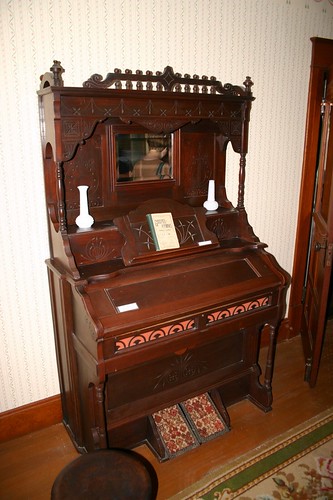
Two years ago, I wrote about Elvera Voth and the power of love. Back then I wrote about her memories of seeing of service workers, who would be away from their home for 7 years at a time. Elvera remembered a gathering of people at the train station to see them off, and how they sang some German hymns at the occasion. Elvera s done a lot since, including starting an arts in prison program. And today, she hosted a hymn sing at the pump organ in the Friesen House parlor. img_4305.jpg The Friesen House is nearly 100 years old, and was on my parents property before it got moved to the Mennonite Heritage and Agricultural Museum. We were among maybe 20 people that showed up for the event. We walked in a few minutes early and Elvera was sitting at the organ already, along with a few other early arrivals. Many of the people there were over 70, and the moment we walked in, she said, Oh good! Another generation! And, of course, asked about us, where we live, who we are related to, etc. The announcement in our church bulletin said to bring a copy of Gesangbuch mit Noten if you have one. That was a common hymn book in Mennonite churches in Kansas (songbook with notes and yes, there was one without notes that had only words.) I pulled out my copy, and just opened it up. I saw my grandma s beautiful handwriting saying it belonged to Mr. and Mrs. R. A. Klassen . This I brought along, but was perhaps the only one. Elvera recognized it and was pleased to hear where it came from. We had a great time, and it turned out to feel like the kind of afternoon people around here used to have: time with friends and family visiting and maybe singing on occasion. After some introduction and some stories, we got to the singing and started with hymn #1 in the 1969 (English) Mennonite Hymnal. That song had German words below as well, which we sang: Grosser Gott, wir loben dich! (Holy God, We Praise Thy Name) Elvera played the organ while we all sang. And then we turned to #556, O Have You Not Heard. We read through the German lyrics (to help those that don t speak German):
Ich weiss einen Strom, dessen herrliche Flut
fliesst wunderbar stille durchs Land,
doch strahlet und gl nzt er wie feurige Glut,
wem ist dieses W sser bekannt? O Seele, ich bitte dich: Komm!
Und such diesen herrlichen Strom!
Sein Wasser fliesst frei und m chtiglich,
o glaub s, es fliesset f r dich!
Elvera translated this herself, a much more powerful translation than we usually get in English. And then we sang, this time a cappella. Elvera told the story about the train station to this group, and then, of course, we sang O Power of Love, one of the songs sung on that occasion. For that, she asked us to stand up and form a circle around the organ, and again we sang mostly a cappella. Singing that song with Elvera left few dry eyes in the room for sure. Someone brought up Nun Ist Sie Erschienen, and so of course we sang that. It wasn t in any hymnal, but I suspect we were the only ones there that didn t have it completely memorized. Elvera told us the story of the museum s pump organ; it had been in her family, and she had paid to have it restored and eventually donated it to the museum. It had been used every evening at twilight for singing and devotions in the family. She also told us that the singing at the Newton train station the same one our family uses a few times a year was what inspired her to a career of choral music. In the end, we probably spent more time visiting than singing, but that was just fine. Next the group went over to the Preparatory School, an old schoolhouse also on the museum grounds. There we had a traditional Faspa, an afternoon meal with coffee, Zwieback and jam, cheese, and various cookies. We all visited for awhile longer and then went on our way. It was a wonderful afternoon, and I hope to have a chance to do that sort of thing again.

9 October 2010

Joachim Breitner: Goodby procmail, Hello Sieve

After having switched from Courier to Dovecot half a year ago I thought it was finally time to look into Sieve. For many years now I have maintained a procmail script to filter my incoming e-mail into numerous subfolders. Two features are important to me: For mailing lists, folders are created automatically based on the list names, with some adjustments for certain domains, such as putting all Debian lists into a folder of their own. And my procmail script was parsing the a dump of my evolution address book to put mail from people I know in a special folder. I did not know that at the first point is actually possible in Sieve but it is, using the variables extensions. And then the second was not hard to fix either, using this small and crude bash script, which creates a Sieve script recognizing these addresses, which is called from my main Sieve script:
#!/bin/bash
(
echo 'require ["fileinto"];'
echo 'if address ["From"] ['
/usr/lib/evolution/*/evolution-addressbook-export  
 perl -n -e 'print "\"$1\",\n" if /.*:(.*@[a-z0-9.]*)\s*$/'
 echo '"Justadummy"'
echo '  ]  '
echo ' fileinto "INBOX.Bekannte"; '
echo '  '
) > /tmp/bekannte
sieve-connect --user mail@joachim-breitner.de \
    --server 10.254.1.101 --port 2000 --notlsverify \
    --localsieve /tmp/bekannte --remotesieve bekannte  \
    --upload
I set up ManageSieve to be able to upload the scripts using sieve-connect. And finally I am able to do something that I have missed in all the years: Using the imap4flag extension, I can mark some mail automatically as read. This is useful for mail that is actually generated by me using program besides my e-mail client, such as bug reports sent by reportbug or patches submitted using darcs. I might even enable this feature for mailing list mails that I have sent.

Joachim Breitner: Goodbye procmail, Hello Sieve

After having switched from Courier to Dovecot half a year ago I thought it was finally time to look into Sieve. For many years now I have maintained a procmail script to filter my incoming e-mail into numerous subfolders. Two features are important to me: For mailing lists, folders are created automatically based on the list names, with some adjustments for certain domains, such as putting all Debian lists into a folder of their own. And my procmail script was parsing the a dump of my evolution address book to put mail from people I know in a special folder. I did not know that at the first point is actually possible in Sieve but it is, using the variables extensions. And then the second was not hard to fix either, using this small and crude bash script, which creates a Sieve script recognizing these addresses, which is called from my main Sieve script:
#!/bin/bash
(
echo 'require ["fileinto"];'
echo 'if address ["From"] ['
/usr/lib/evolution/*/evolution-addressbook-export  
 perl -n -e 'print "\"$1\",\n" if /.*:(.*@[a-z0-9.]*)\s*$/'
 echo '"Justadummy"'
echo '  ]  '
echo ' fileinto "INBOX.Bekannte"; '
echo '  '
) > /tmp/bekannte
sieve-connect --user mail@joachim-breitner.de \
    --server 10.254.1.101 --port 2000 --notlsverify \
    --localsieve /tmp/bekannte --remotesieve bekannte  \
    --upload
I set up ManageSieve to be able to upload the scripts using sieve-connect. And finally I am able to do something that I have missed in all the years: Using the imap4flag extension, I can mark some mail automatically as read. This is useful for mail that is actually generated by me using program besides my e-mail client, such as bug reports sent by reportbug or patches submitted using darcs. I might even enable this feature for mailing list mails that I have sent.

5 October 2010

Peter Eisentraut: Git User's Survey 2010

The Git User's Survey 2010 is up. Please devote a few minutes of your time to fill out the simple questionnaire; it'll help the Git community understand your needs, what you like about Git (and what you don't), and help improve it.

The survey is open from 1 September to 15 October, 2010.

Go to https://git.wiki.kernel.org/index.php/GitSurvey2010 for more information.

4 October 2010

Raphaël Hertzog: Can Debian offer a Constantly Usable Testing distribution?

Debian s testing distribution is where Debian developers prepare the next stable distribution. While this is still its main purpose, many users have adopted this version of Debian because it offers them a good trade-off between stability and freshness. But there are downsides to using this distribution and the Constantly Usable Testing (CUT) project aims to resolve those. This article will present the project and the challenges involved to make it happen. About Debian unstable & testing Debian unstable is the distribution where developers upload new versions of their packages. It happens frequently that some packages are not installable due to changes in other packages or due to transitions not yet completed. Debian testing, on the contrary, is managed by a tool that ensures the consistency of the whole distribution: it picks updates from unstable only if the package has been enough tested (10 days usually), if it s free of new release-critical bugs, if it s available on all supported architectures, and if it doesn t break any other package already present in testing. The Release Team (RT) controls this tool and provide hints to help it find a set of packages that can flow from unstable to testing. Those rules also ensure that the packages that flow into testing are reasonably free of show-stopper bugs (like a system that doesn t boot, or X that doesn t work at all). This makes it very attractive to users who like to regularly get new upstream versions of their software without dealing with the biggest problems associated to them. This is all very attractive, yet several Debian developers advise people to not use testing. Why is that? Known problems with testing Disappearing software The release team use this distribution to prepare the next stable release and from time to time they remove packages from it. Either because it s needed to ensure that other packages can migrate from unstable to testing, or because they have long-standing release-critical bugs without progress towards a resolution. It also happens that they remove packages on request of the maintainers because they believe that the current version of the software cannot be supported (security-wise) for 2 years or more. The security team also regularly issues such requests. Long delays for security and important fixes Despite the 10-day delay in unstable, there are always some annoying bugs (and security bugs are no exceptions) that are only discovered when the package already has migrated to testing. The maintainer might be quick to upload a fixed package in unstable, and might even raise the urgency to allow the package to migrate sooner, but if the packages gets entangled in a large ongoing transition, it will not migrate before the transition is completed. Sometimes it can take weeks for that to happen. This delay can be avoided by doing direct uploads to testing (through testing-proposed-updates) but this is almost never used, except during a freeze, where targeted bugfixes are the norm. Not always installable With testing evolving daily, updates sometimes break the last installation images available (in particular netboot images that get everything from the network). The debian-installer (d-i) packages are usually quickly fixed but they don t move to testing automatically because the new combination of d-i packages has not necessarily been validated yet. Colin Watson sums up the problem:
Getting new installer code into testing takes too long, and problems remain unfixed in testing for too long. [...] The problem with d-i development at the moment is more that we re very slow at producing new d-i *releases*. [...] Your choices right now are to work with stable (too old), testing (would be nice except for the way sometimes it breaks and then it tends to take a week to fix anything), unstable (breaks all the time).
CUT s history CUT finds its root in an old proposal by Joey Hess: it introduces the idea that the stable release is not Debian s sole product and that testing could become with some work a suitable choice for end-users. Nobody took on that work and there was no visible progress in the last 3 years. But recently Joey brought up CUT again on the debian-devel mailing list and Stefano Zacchiroli (the Debian project leader) challenged him to setup a BoF on CUT for Debconf10. It turned out to be one of the most heavily attended BoF (video recording is here), there is clearly a lot of interest in the topic. There s now a dedicated wiki and an Alioth project with a mailing list. The rest of this article tries to summarize the various options discussed and how they re supposed to address the problems identified. The ideas behind CUT Among all the ideas, there are two main approaches that have been discussed. The first is to regularly snapshot testing at points where it is known to work reasonably well (those snapshots would be named cut ). The second is to build an improved testing distribution tailored to the needs of users who want a working distribution with daily updates, its name would be rolling . Regular snapshots of testing There s general agreement that regular snapshots of testing are required: it s the only way to ensure that the generated installation media will continue to work until the next snapshot. If tests of the snapshot do not reveal any major problem, then it becomes the latest cut . For clarity, the official codename would be date based: e.g. cut-2010-09 would be the cut taken during September 2010. While the frequency has not been fixed yet, the goal is clearly to be on the aggressive side: at the very least every 6 months, but every month has been suggested as well. In order to reach a decision, many aspects have to be balanced. One of them (and possibly the most important) is the security support. Given that the security team is already overworked, it s difficult to put more work on their shoulders by declaring that cuts will be supported like any stable release. No official security support sounds bad but it s not necessarily so problematic as one might imagine. Testing s security record is generally better than stable s one (see the security tracker) because fixes flow in naturally with new upstream versions. Stable still get fixes for very important security issues sooner than testing, but on the whole there are less known security-related problems in testing than in stable. Since it s only a question of time until the fixed version comes naturally from upstream, more frequent cut releases means that users get security fixes sooner. But Stefan Fritsch, who used to be involved in the Debian testing security team, has also experienced the downside for anyone who tries to contribute security updates:
The updates to testing-security usually stay useful only for a few weeks, until a fixed version migrates from unstable. In stable, the updates stay around for a few years, which gives a higher motivation to spend time on preparing them.
So if it s difficult to form a dedicated security team, the work of providing security updates comes back to the package maintainer. They are usually quite quick to upload fixed packages in unstable but tend to not monitor whether the packages migrate to testing. They can t be blamed because testing was created to prepare the next stable release and there is thus no urgency to get the fix in as long as it makes it before the release. CUT can help in this regard precisely because it changes this assumption: there will be users of the testing packages and they deserve to get security fixes much like the stable users. Another aspect to consider when picking a release frequency is the amount of associated work that comes with any official release: testing upgrades from the previous version, writing release notes and preparing installation images. It seems difficult to do this every month. With this frequency it s also impossible to have a new major kernel release for each cut (since they tend to come out only every 2 to 3 months) and the new hardware support that it brings is something worthwhile to many users. In summary, regular snapshots address the not always installable problem and changes the perception of maintainers towards testing, so that hopefully they care more of security updates in that distribution (and in cuts). But they do not solve the problem of disappearing packages. Something else is needed to fix that problem. A new rolling distribution? Lucas Nussbaum pointed out that regular snapshots of Debian is not really a new concept:
How would this differentiate from other distributions doing 6-month release cycles, and in particular Ubuntu, which can already be seen as Debian snapshots (+ added value)?
In Lucas s eyes, CUT becomes interesting if it can provide a rolling distribution (like testing) with a constant flux of new upstream releases . For him, that would be something quite unique in the Free Software world . The snapshots would be used as starting point for the initial installation, but the installed system would point to the rolling distribution and users would then upgrade as often as they want. In this scenario, security support for the snapshots is not so important, what matters is the state of the rolling distribution. If testing were used as the rolling distribution, the problem of disappearing packages would not be fixed. That s why there have been discussions of introducing a new distribution named rolling that would work like testing but with adapted rules, and the cuts would then be snapshots of rolling instead of testing. The basic proposal is to make a copy of testing and to re-add the packages which have been removed because they are not suited for a long term release while they are perfectly acceptable for a constantly updated release (the most recent example being Chromium). Then it s possible to go one step further: during freeze, testing is no longer automatically updated which makes it inappropriate to feed the rolling distribution. That s why rolling would be reconfigured to grab updates from unstable (but using the same rules than testing). Given the frequent releases, it s likely that only a subset of architectures would be officially supported. This is not a real problem because the users who want bleeding edge software tends to be desktop users on mainly i386/amd64 (and maybe armel for tablets and similar mobile products). This choice if made opens up the door to even more possibilities: if rolling is configured exactly like testing but with only a subset of the architectures, it s likely that some packages migrate to rolling before testing when non-mainstream architectures are lagging in terms of auto-building (or have toolchain problems). While being ahead of testing can be positive for the users, it s also problematic on several levels. First, managing rolling becomes much more complicated because the transition management work done by the release team can t be reused as-is. Then it introduces competition between both distributions which can make it more difficult to get a stable release out, for example if maintainers stop caring of the migration to testing once the migration to rolling has been completed. The rolling distribution is certainly a good idea but the rules governing it must be designed to avoid any conflict with the process of releasing a stable distribution. Lastly, the mere existence of rolling would finally fix the marketing problem plaguing testing: the name rolling does not suggest that the software is not yet ready for prime time. Conclusion Whether CUT will be implemented remains to be seen, but it s off for a good start: ftpmaster Joerg Jaspert said that the new archive server can cope with a new distribution, and there s now a proposal shaping up. The project might start quickly: there is already an implementation plan for the snapshot side of the project. The rolling distribution can always be introduced later, once it is ready. Both approaches can complement each other and provide something useful to different kind of users. The global proposal is certainly appealing: it would address the concerns of obsolescence of Debian s stable release by making intermediary releases. Anyone needing something more recent for hardware support can start by installing a cut and follow the subsequent releases until the next stable version. And users who always want the latest version of every software could use rolling after having installed a cut. From a user point of view, there are similarities with the mix of usual and long term releases of Ubuntu. But from the development side, the process followed would be quite different, and the constraints imposed by having a constantly usable distribution are stronger: any wide-scale change must be designed in a way that it can happen progressively in a transparent manner for the user.
This article was first published in Linux Weekly News. If you want to see more articles like this, join Flattr and click on the flattr button below every article that you like.
Flattr this Share/Bookmark 21 comments Support my work

2 October 2010

Roland Mas: For a truly acentric Internet

For some time, I've had this idea brewing for how the 'net would work without DNS. Initially I was mostly thinking of how to get rid of the dark side of the registrar business, but it appears that maybe it could help with security in general too. It may not be feasible at all, or I may have forgotten extremely crucial points. I'm not a DNS guru, so bear with me and consider this as a thought experiment. This is, however, a proposal for how the Internet could be made truly decentralized, or acentric. Made so, because it currently is very centralized on at least two counts: the DNS is an inherently hierarchical structure of authority; and so is the situation with the SSL certificates used for securing websites. Let's start with DNS, if you will. Basically, the idea is to replace the current Domain Name System, which is centralised in nature (even if subdomains can be delegated) with a fully decentralised system with no central authority. The point of current DNS is to map names to IP addresses in a unique way. It currently works by registering a this name is managed by such-and-such server, ask for details at such-and-such IP address message. Of course, since there's only one namespace (or a limited number thereof, if you consider that TLDs are different namespaces), there needs to be a central authority to resolve conflicts, because some names will be more popular than others. I propose to start with a cryptographic key pair (think GPG key). Anyone can create their key pair; we assume that it's extremely unlikely for two people to generate the same keys, and that it's also very hard for two people to generate keys with the same fingerprint. By (being the only one) knowing the secret part of a key, I am the authority on what can be signed with it. I could for instance sign records that say that www points to this set of IP addresses, and smtp points to that other address. Within my area of authority, which is to say within my domain. Which is identified by the fingerprint of my key pair. What do we have so far? A mechanism that allows in a decentralised way to verify who's authoritative on the F5566852EB92BD779CF137190EA756B5144843F5 domain . In DNS terms, more probably F55...3F5.some-tld. Now let's publish the signed records on a decentralised peer-to-peer network. I'm not up to date with the latest trends in that domain, but I think something like Gnutella or Freenet would qualify, since it doesn't need central hubs but only an initial list of nodes, and it does automatic discovery of new nodes. Projects such as the FreedomBox (name likely to be changed) will probably help with that. Anyway, when looking up www.F55...3F5.some-tld, the resolver gets the signed record (and the public part of the key) from the P2P network, checks the signature, and uses the contents of the record to determine the IP address. No central or delegated registry involved at any point. Lesser risk of a single point of failure, which means better resilience against outages. Also, a better resilience against DNS-based censorship, be it promoted by non-democratic states or by greedy corporations. Of course, F5566852EB92BD779CF137190EA756B5144843F5 isn't a terribly easy name to remember or transmit. But the string of hex could be presented to the user in some other form easier to recognize for people without geek super-powers. My favourite would be the bibi-binary representation, but I'm told that the bubble-babble method works equally well. It would still be unreasonable to expect people to remember such names, and especially to type them into their web browsers or e-mail agents. A possible solution to that would be to use a short form, such as 144843F5 (or its bibi-binary equivalent), complemented by a visual representation of the full fingerprint such as the one SSH does. That pair could be displayed on business cards, email signatures, glossy brochures, advertisements and so on, and allow users to just type the strange word or flash the 2D barcode, check that the funny picture matches (in case the strange word returns several results), and get the website they want. Which they can of course bookmark under a name they can remember, probably even the same name that everyone else uses to bookmark that website. And nothing precludes convenient directories mapping names to full URLs (like search engines currently do) as long as users check that the visual representation of the site they go to matches what they've seen elsewhere. That elsewhere could, of course, take advantage of the natural web of trust that emerges in of GPG-using communities. If I'm directed at a website whose key I don't immediately recognize, then I can see who trusts that key to be legitimate (by checking the signatures), and who trusts them, and so on. Ultimately, the decision is mine to make, and mine only. In any case, once I know what URL I want to visit, I can be sure this DNS replacement will give me the right IP address (or addresses). DNS servers replying with advertisement sites instead of correct ones, and DNS-based filtering, will be things of the past. Of course, having the right IP address only solves the attacks on the DNS part. Eavesdropping can also happen by diverting traffic at the IP level. But we have a trustable way to know information related to a domain, so let's use it: the signed record can also contain the fingerprint of cryptographic keys (SSL or SSH or whatever). So we can be sure we're actually talking to the correct server, rather than to some man-in-the-middle spy. With the same guarantees of correctness as the ones for the DNS, backed by the web of trust and out-of-band validation. Again, we get rid of the hierarchy of certification authorities , some of which have been known for helping organizations get at the (supposedly secret) data people exchange over the net. To summarize: with this scheme, if I know the site I want to access is F55...3F5, then I can be certain that a) I get the right IP address for it and b) I'm actually talking to it. And nobody in-between can intercept the traffic, if the site is properly administrated and its private key is kept secure. And from the site admin's point of view, there's no need to trust DNS registrars and SSL certification authorities not to fool around with the data, or blackmail me into paying increasing fees for keeping my URL working or my SSL key certified. There's still the problem of the allocation for the IP addresses themselves, but two major parts of the centralized and hierarchical net can be gotten rid of. There are proposals attempting to fix part of the problems already, but they're incomplete. DNSSEC only solves the authentication of DNS records, not the centralisation problem. Monkeysphere aims at adding a web of trust to the SSL certificates system, but the CA chain problem seems to persist (although I must admit I'm not up to speed with the actual details). This is of course only a rough draft, full of technical considerations yet certainly not exhaustive. I've thought about it though, and I believe there are no theoretical problems with the implementation of such a scheme (apart for the handling of expiration and revocations, probably). The main obstacle to mass-adoption I can envision is the UI part, and the entrenched habit of just typing a keyword into a search engine and implicitly trusting its results, then blindly trusting the website itself; but even if mass-adoption isn't reached, I can't see anything wrong with giving those who want to be careful a more secure Internet.

Next.

Previous.