Daniel Pocock: Promoting free software and free communications on popular social media networks

(You can Follow or Tweet about this blog on Twitter)
 Sites like Twitter and Facebook are not fundamentally free platforms, despite the fact they don't ask their users for money. Look at how Facebook's censors confused Denmark's mermaid statue with pornography or how quickly Twitter can make somebody's account disappear, frustrating public scrutiny of their tweets and potentially denying access to vital information in their "direct message" mailbox. Then there is the fact that users don't get access to the source code, users don't have a full copy of their own data and, potentially worst of all, if most people bothered to read the fine print of the privacy policy they would find it is actually a recipe for downright creepiness.
Nonetheless, a significant number of people have accounts in these systems and are to some extent contactable there.
 Many marketing campaigns that have been successful today, whether they are crowdfunding, political activism or just finding a lost cat claim to have had great success because of Twitter or Facebook. Is this true? In reality, many users of those platforms follow hundreds of different friends and if they only check-in once a day, filtering algorithms show them only a small subset of what all their friends posted. Against these odds, just posting your great idea on Facebook doesn't mean that more than five people are actually going to see it. Those campaigns that have been successful have usually had something else going in their favour, perhaps it was a friend working in the media who gave their campaign a plug on his radio show or maybe they were lucky enough to be slashdotted. Maybe it was having the funds for a professional video production with models who pass off as something spontaneous. The use of Facebook or Twitter alone did not make such campaigns successful, it was just part of a bigger strategy where everything fell into place.
Should free software projects, especially those revolving around free communications technology, use such platforms to promote themselves?
It is not a simple question. In favour, you could argue that everything we promote through public mailing lists and websites is catalogued by Google anyway, so why not make it easier to access for those who are on Facebook or Twitter? On top of that, many developers don't even want to run their own mail server or web server any more, let alone a self-hosted social-media platform like pump.io. Even running a basic SIP proxy server for the large Debian and Fedora communities involved a lot of discussion about the approach to support it.
The argument against using Facebook and Twitter is that you are shooting yourself in the foot, when you participate in those networks, you give them even more credibility and power (which you could quantify using Metcalfe's law). The Metcalfe value of their network, being quadratic rather than linear, shoots ahead of the Metcalfe value of your own solution, putting your alternative even further out of reach. On top of that, the operators of the closed platform are able to evaluate who is responding to your message and how they feel about it and use that intelligence to further undermine you. In some cases, there may be passive censorship, such as WhatsApp silently losing messages that link to rival Telegram.
How do you feel about this choice? How and when should free software projects and their developers engage with mainstream social media technology? Please come and share your ideas on the Free-RTC mailing list or perhaps share and Tweet them.
Sites like Twitter and Facebook are not fundamentally free platforms, despite the fact they don't ask their users for money. Look at how Facebook's censors confused Denmark's mermaid statue with pornography or how quickly Twitter can make somebody's account disappear, frustrating public scrutiny of their tweets and potentially denying access to vital information in their "direct message" mailbox. Then there is the fact that users don't get access to the source code, users don't have a full copy of their own data and, potentially worst of all, if most people bothered to read the fine print of the privacy policy they would find it is actually a recipe for downright creepiness.
Nonetheless, a significant number of people have accounts in these systems and are to some extent contactable there.
Many marketing campaigns that have been successful today, whether they are crowdfunding, political activism or just finding a lost cat claim to have had great success because of Twitter or Facebook. Is this true? In reality, many users of those platforms follow hundreds of different friends and if they only check-in once a day, filtering algorithms show them only a small subset of what all their friends posted. Against these odds, just posting your great idea on Facebook doesn't mean that more than five people are actually going to see it. Those campaigns that have been successful have usually had something else going in their favour, perhaps it was a friend working in the media who gave their campaign a plug on his radio show or maybe they were lucky enough to be slashdotted. Maybe it was having the funds for a professional video production with models who pass off as something spontaneous. The use of Facebook or Twitter alone did not make such campaigns successful, it was just part of a bigger strategy where everything fell into place.
Should free software projects, especially those revolving around free communications technology, use such platforms to promote themselves?
It is not a simple question. In favour, you could argue that everything we promote through public mailing lists and websites is catalogued by Google anyway, so why not make it easier to access for those who are on Facebook or Twitter? On top of that, many developers don't even want to run their own mail server or web server any more, let alone a self-hosted social-media platform like pump.io. Even running a basic SIP proxy server for the large Debian and Fedora communities involved a lot of discussion about the approach to support it.
The argument against using Facebook and Twitter is that you are shooting yourself in the foot, when you participate in those networks, you give them even more credibility and power (which you could quantify using Metcalfe's law). The Metcalfe value of their network, being quadratic rather than linear, shoots ahead of the Metcalfe value of your own solution, putting your alternative even further out of reach. On top of that, the operators of the closed platform are able to evaluate who is responding to your message and how they feel about it and use that intelligence to further undermine you. In some cases, there may be passive censorship, such as WhatsApp silently losing messages that link to rival Telegram.
How do you feel about this choice? How and when should free software projects and their developers engage with mainstream social media technology? Please come and share your ideas on the Free-RTC mailing list or perhaps share and Tweet them.
 What happened in the

 Improvements are
 Here is my monthly update covering a large part of what I have been doing in the free software world (

 After a long contemplation about what I want to do with my life and just as long a negotiation, I have accepted a job offer at BMW and will be moving from Latvia to Ulm, Germany in January 2016.
It is going to be a big change and a big shake-up in my life, but the change should be for the better, eventually. I am going to move there using my car, loading a single car load of essential stuff and leaving the rest behind. My cat will be amond the essentials, so I have already started training him for car rides. The cat is not thrilled about it. I'll be renting out my current apartment - I wish to find someone that I know to rent to, but if noone comes up, then I'll have to give it to a renting company to rent out for me.
There should be little change for my online activities, but this means that I will be less available for parties in Riga for the forseable future. Wish me luck!
 I don't often do retrospectives, but this year has been an
unusual one for me, as I moved to Finland almost six months ago.
The topic has come up in conversation a lot over the past few
months, so when people ask me what I think I can give some simple
answers without too much thought. Here's a brief summary.
There are some obvious changes:
 Portability toward other systems has been improved: old versions of GNU diff are now supported (Mike McQuaid), suggestion of the appropriate locale is now the more generic
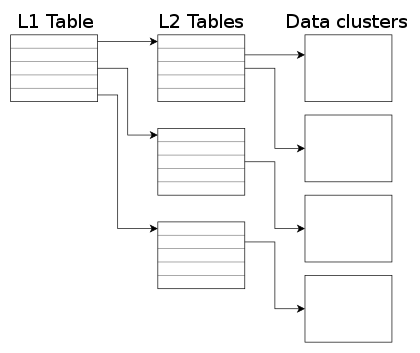
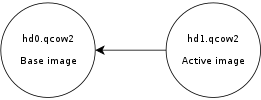
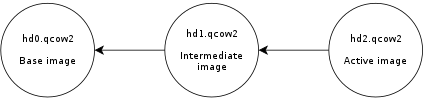
 QEMU 2.5 has just been released, with

 A while back, I wrote about

 If that's not dramatic enough for you (trust me, you'll notice it when
it's animated as you flicker through the two different fields), here's
an even more high-contrast example (same ordering):


 I guess it's obvious in retrospect what happens; the HF filter picks up
residue from its outer edges, and even if the coefficient is just 0.031
(well, times two; it adds that value from both the previous and next field),
3% the photons of a fully lit pixel (which is what you get when working in
linear light) is actually quite a bit, whereas a 3% gray is only pixel value
8 or so, which is barely visible.
So what am I to make of this? I'm honestly not sure. Maybe it's somehow
related to that these filter values were chosen in 1988, where they were
relatively unlikely to do this in linear light (although if they did it
with analog circuitry, perhaps they could?) and it was tweaked to look good
despite doing the wrong thing. Or maybe I need to change my approach here
entirely.
It always sucks when your fundamental assumptions are challenged, but I
think it shows once again that if you notice something funny in your output,
you really ought to investigate, because you never know how deep the rabbit
hole goes. :-/
 Just to give a brief recap of why I'm writing this post, I've to
describe a brief encounter I had with systemd which rendered my system
unbootable. I first felt its systemd's problem but later figured out
it was my mistake. So below is brief story divided into 2 sections
Problem and Solution. Here Problem describes issue I faced with
systemd and Solution discusses the .mount and .automount suffix
files used by systemd.
 Nearly 40 participants from 14 different free software project had very busy
days sharing knowledge, building understanding, and producing actual patches.
Anyone interested in cross project discussions should join the
 Infrastructure
Several discussions at the meeting helped refine a shared understanding of what
kind of information should be recorded on a build, and how they could be used.
Daniel Kahn Gillmor sent a

 It s been a while since my last what s been happening behind the scenes e-mail so I m here to report on what has been happening within the GNOME Infrastructure, its future plans and my personal sensations about a challenge that started around three (3) years ago when
 For the past fifteen years, I have been