Search Results: "ag"

20 April 2013

Dirk Eddelbuettel: RcppArmadillo 0.3.810.0

A new Armadillo release 3.810.0 by Conrad appeared yesterday, and was wrapped up in a new release 0.3.810.0 of RcppArmadillo. Upstream changes bring FFT support as well as more Sparse matrix constructors, and we have an improvement to the sample() function contributed by Christian Gunning. As RcppArmadillo is used by an increasing number of packages---on CRAN alone, we find 34 direct dependencies---I also added the package to Debian and upload there in parallel. The summary of the main changes follows:
Changes in RcppArmadillo version 0.3.810.0 (2013-04-19)
  • Upgraded to Armadillo release Version 3.810.0 (Newell Highway)
    • added fast Fourier transform: fft()
    • added handling of .imbue() and .transform() by submatrices and subcubes
    • added batch insertion constructors for sparse matrices
    • minor fix for multiplication of complex sparse matrices
  • Updated sample() function and test again contributed by Christian Gunning
Courtesy of CRANberries, there is also a diffstat report for the most recent release As always, more detailed information is on the RcppArmadillo page. Questions, comments etc should go to the rcpp-devel mailing list off the R-Forge page.

Paul Tagliamonte: Fixing the theme situation in Jessie

Hello, World, As many of you know, I fell into helping get the artwork for Wheezy into place. While I don t want to do this (in the long run), I feel the urge to get it into shape for Jessie. I d like to do a small request for methods to improve the theme packaging. I ve posted a suggestion, but I never really got happy with it. The problem is basically the deb makes no sense because making thee deb make sense would result in insanity ;) stuff like proper dependencies to allow the Plymouth theme to work can t be done, since it d require a dep on Plymouth, which means it requires all installs with desktop-base to have it installed. Thanks, lazyblog!

Rog rio Brito: Lack of cooperation from Ubuntu?

I posted the following on Google+, but it is important enough to be reproduced on Planet. I'm editing it a bit, as it is a followup to my previous post. While improving the packaging of MongoDB, there was one thing that caught my attention: that Ubuntu had already done some of the embedded/convenience libraries work, but they had not pushed that work to Debian. Of course, discovered this only after I started working on the improvements of the package. What gives, Ubuntu people? Another thing that I saw is that they have patches enabling mongodb working on armhf. Again, they did not push those to Debian. Why this lack of cooperation? Another thing that I saw is that they had packages for version 2.2 (more precisely, raring has 1:2.2.4-0ubuntu1), while Debian sid just had 2.0 until very recently. Why not push this work and avoid duplication of work? By being a good downstream, I intend to push some of the patches to MongoDB upstream (if they want it), so that we (Debian) have a smaller delta. This will benefit you Ubuntu guys. Why not join forces and help have a world-class set of packages? Please, be good netizens and share the work that you have. I firmly believe that the armhf people will be happy to have one of the fancy "cloud" software available on ARM, especially since the prospects of having ARM machines on datacenters. Oh, just for the record, the kFreeBSD people have sent their contribution and I would love to see (if possible) this running on the HURD.

19 April 2013

Richard Hartmann: Release Critical Bug report for Week 16

Seems I was off by two weeks. Week 18, it is/should be. Yay. The UDD bugs interface currently knows about the following release critical bugs: How do we compare to the Squeeze release cycle?
Week Squeeze Wheezy Diff
43 284 (213+71) 468 (332+136) +184 (+119/+65)
44 261 (201+60) 408 (265+143) +147 (+64/+83)
45 261 (205+56) 425 (291+134) +164 (+86/+78)
46 271 (200+71) 401 (258+143) +130 (+58/+72)
47 283 (209+74) 366 (221+145) +83 (+12/+71)
48 256 (177+79) 378 (230+148) +122 (+53/+69)
49 256 (180+76) 360 (216+155) +104 (+36/+79)
50 204 (148+56) 339 (195+144) +135 (+47/+90)
51 178 (124+54) 323 (190+133) +145 (+66/+79)
52 115 (78+37) 289 (190+99) +174 (+112/+62)
1 93 (60+33) 287 (171+116) +194 (+111/+83)
2 82 (46+36) 271 (162+109) +189 (+116/+73)
3 25 (15+10) 249 (165+84) +224 (+150/+74)
4 14 (8+6) 244 (176+68) +230 (+168/+62)
5 2 (0+2) 224 (132+92) +222 (+132/+90)
6 release! 212 (129+83) +212 (+129/+83)
7 release+1 194 (128+66) +194 (+128/+66)
8 release+2 206 (144+62) +206 (+144/+62)
9 release+3 174 (105+69) +174 (+105/+69)
10 release+4 120 (72+48) +120 (+72/+48)
11 release+5 115 (74+41) +115 (+74/+41)
12 release+6 93 (47+46) +93 (+47/+46)
13 release+7 50 (24+26) +50 (+24/+26)
14 release+8 51 (32+19) +51 (+32/+19)
15 release+9 39 (32+7) +39 (+32/+7)
16 release+10 20 (12+8) +20 (+12/+8)
17 release+11
18 release+12
Graphical overview of bug stats thanks to azhag:

Eugene V. Lyubimkin: Cupt: reason chains, functional selectors and crowdfunding experiment via catincan.com

While release of Debian wheezy getting is closer and closer, Cupt's development version also moves forward bit by bit.

A couple of particularly interesting features -- showing full reason chains and functional selectors -- may be summarized by this screenshot.

And, as a fresh experiment, I placed a feature to widen functional selecting capabilities to Catincan, a (new?) crowdfunding platform for open source projects. Let's see how it goes.

Daniel Pocock: Switzerland Schilthorn with 007 (final leg)

Following up on the second and third legs of the cable car journey, we now have the final leg, rising up to the summit of the Schilthorn: <video controls="" height="340" poster="http://upload.wikimedia.org/wikipedia/commons/thumb/0/03/Schilthorn_with_Bernese_Alps%2C_2012_August.jpg/800px-Schilthorn_with_Bernese_Alps%2C_2012_August.jpg" width="560">
<source src="http://video.danielpocock.com/VID_20121025_123951.m4v" type="video/mp4"></source>
<source src="http://video.danielpocock.com/VID_20121025_123951.webm" type="video/webm"></source>
Video not appearing? Click here to access the page directly
</video> Unfortunately, the gangsters, guns and girls from On Her Majesty's Secret Service won't be waiting to greet you at the top, but there is a spectacular view. On a clear day, you can see all the way across to the venue of DebConf13 in Vaumarcus, Switzerland and also the Black Forest in Germany.

Rog rio Brito: Some recent Debian activities

I have been occasionally working on some Debian-related tasks. Chrony One of those was to get chrony is a slightly better shape, by using, at least, a patch system (indeed, I "modernized" its packaging with the format "3.0 (quilt)"), put it in a git repository and would like to receive some comments on what I have so far. The bug Debian bug #694690 contains a very brief description of my intentions and of the problems that I see in the current package. IMVHO, it is a very nice NTP client and server and it could even be used as the default for Debian, once it gets in shape. There is at least another high-profile distribution, namely Fedora, that switched to chrony as its default NTP software. We can certainly take a look at what they are doing and join forces here. MongoDB Another package where I spent some time was with mongodb: MongoDB is a tricky package that is only built for 2 arches: amd64 and i386. The version in unstable for i386 was 2.0.x (roughly the same as for wheezy), which the version in unstable for amd64 was 2.4.1, which has many features that 2.0 lacks. The packaging of it is a bit tricky, since the source tree has bazillion embedded/convenience libraries (e.g., Google's v8, Mozilla's spidermonkey, BOOST, Google's Snappy, PCRE 3 etc.). Up to version 2.4.1-2, it used all these convenience copies, which is of course, a problem for a distribution like Debian. I changed part of the build process to use the libraries that we already have in Debian and, as Antonin Kral uploaded this newer version, unsurprisingly the binary packages are smaller (especially if you take into account that a handful of the libraries may already be installed on the system). A few hours later, Antonin uploaded a new upstream version, which means that we now have better MongoDB packages to play with. I am, in fact, really playing with MongoDB as my first NoSQL database, since 10gen is giving an introductory course on how it works and my motivation was to get what we have in Debian in shape for the course. You can say that I am a firm believer of the "eat your own dogfood" principle. Regarding MongoDB only being built for i386 and amd64, the BTS has a patch to enable building for kFreeBSD, but the patch is for the 2.0 series and the code has changed so drastically in relation to the 2.4 series that there is no hope of it applying. It would be super nice to have MongoDB working on kFreeBSD and on HURD also, though. nocache There is a very nice command line program called nocache that was packaged by Dmitry Smirnov (and just approved by the FTP masters!) whose packaging I briefly reviewed per Dmitry's request and this is an amazing utility whose purpose is to bypass/minimize file system caching for a program. This is especially useful when you are making backups (reading lots of files that would, otherwise, fill the filesystem cache, even if they are not used frequently) or if you are just streaming one file (possibly larger than the system's RAM) to another computer and you have no need to use the file immediately after that. It performs its job by using the LD_PRELOAD mechanism and using posix_fadvise's flag POSIX_FADV_DONTNEED for the files that will be touched. Post note Oh, just one aside: for the readers of Debian Planet and other aggregation services which are not Debian Developers/Maintainers, I contributed to these packages without being the maintainer of them, just scratching some itches and contributing back what I produced.

Gunnar Wolf: Ten years already!

(actually, please set your calendars to the day before yesterday I had a mental tab on this, but it seems watching mental tabs is a low-priority task for brain.sched) Ten years ago today, I got that long awaited mail telling me I had passed all of the needed hurdles and was accepted as a Debian Developer. We were at the first third of a very long release cycle, and the general spirit of the project was clearly younger both as in "things moved easier" and "we were much more immature" Try to follow the mailing list discussions we had back then, and even with all the vitriol that's every now and then spilled on debian-whatever@lists.debian.org, it's clear we have more experience working together. And yes, the main change that ten years bring to a group of people is social. I was at DebConf in Oslo when the now-historic presentation that prompted the birth of the Debian-Women group was given Surely, Debian (and Free Software) still is by far predominantly male and white But I fel it's no longer a hostile group, much to the contrary. Over the years, I was first active (as was the norm by then) as a "solo" maintainer. When Joachim Breitner started the pkg-perl group in 2004, I joined, and was part of the group while an important part of my work was based in Perl. I joined pkg-ruby-extras, and slowly migrated my technical work from one to the other. For several years, I also maintained the Cherokee webserver. I started getting involved in DebConf organization in 2005, and (except for 2008, as I took a vacation from many topics due to personal issues). Back in 2009, I became an official delegate! I joined Jonathan McDowell handling keyring maintenance. One year later, another delegation: With Moray Allan and Holger Levsen, the three of us became the DebConf chairs. This last couple of months, I have been quite inactive in most of my Debian work. I took up teaching at the univerity, and have been devoting what amounts to basically a full time job to prepare material. I expect (hope!) this craze to reach back a "workable" level by late May, when the course finishes, and I can retake some of my usual Debian tasks. Anyway 10 years. Wow. This project is one of the longest commitments in my life. I am still very happy I joined, it still thrills me to say I am part fo this great project, it still makes me proud to be accepted as a peer by so many highly skilled and intelligent people But, as I have repeatedly stated, I see Debian more as a social project (with a technological product) than as a technical one. And as such, I am really happy to have made so many good, close friends in this project, to have the opportunity to work and exchange points of view about anything, and have this large, highly disfunctional but very closely regarded family of friends. So, guys, see you this August in Switzerland. I will be among the group celebrating we have been there for half of the project's history!

Gunnar Wolf: Of European descent

A colleague of mine at Facultad de Ingenier a pointed me to a note published in the Faculty's gazette about a short cycle of talks we had on April 4th, trying to get life and interest back in the once-active LIDSOL (Laboratorio de Investigaci n y Desarrollo en Software Libre, Free Software Research and Development Laboratory), which nowadays lies mostly dormant. Good thing the official communication channels got notice of this! Only I am not sure if they can properly produce Spanish (as this feels more like an English redaction). Quoting only the first lines of the paragraph that referes to me:
La ltima conferencia fue presentada por Gunnar Wolf, que aunque su nombre nos hiciera pensar en una nacionalidad europea, l es nacido en tierras mexicanas pero con descendencias h ngaras, austriacas y polacas.
Which translates to:
The last talk was presented by Gunnar Wolf, that although he has a name that makes us think about an European nationality, he was born in Mexican soil, but with Hungarian, Austriac and Polish descent.
As far as I can tell (and I am almost sure I know all of the story At least on that regard), I have no descent yet. Not Hungarian, Austriac, Polish, nor of any nationality. (nitpickers: Yes, similar words are often used. In Spanish, it would be correct to say de ascendencia h ngara, austriaca y polaca, and in my attempt towards English translation, it would be of Hungarian, Austriac and Polish descent).

18 April 2013

Daniel Pocock: Getting to Switzerland, travel costs

With so many people contemplating the cost of travel to Switzerland this summer, I thought I would share some eye-opening insights into how to get a better deal. Let's look at some costs for a hypothetical DebConf13 visitor coming from New York. Flight prices taken today from a comparison site for 8 - 18 August, car hire prices from Europcar and rail prices from SBB (regular tickets) and Swiss Travel System (tourist rail passes):
Departure airport Arrival airport Flight cost Bus to Swiss border Rail pass Total (Flight+bus/train) Airport car hire, 10 days Total (Flight+car)
New York Geneva $1,153 n/a CHF 82
Return ticket
$1,235 CHF 668 $1,823
New York Milan $990 $20 CHF 315
Flexi pass
$1,350 EUR 413
CHF 496
$1,490
Warning: car rental prices based on advance booking - if you just arrive at a Swiss airport and hire a car on the spot, it is likely to be much more expensive, maybe CHF 200 per day For a single traveler, it is slightly cheaper to fly into Geneva (closest airport) and buy a return train ticket, as long as no other travel in Switzerland is desired and sleeping on-site at Vaumarcus, not using a bus every day. If traveling in Switzerland to see the mountains, then it works out cheaper to fly into Milan, Italy, which is very close to the Swiss border. Most of the journey from Milan to Vaumarcus can be covered using one of the Swiss railway travel passes, with stops for sight-seeing on the way, and the other days on the pass used for sight-seeing. Now imagine people arriving in a group: the rail ticket prices quickly add up. For a family of four, 4 * 315 = CHF 1,260. Car rental may be a better option. Hiring a car in Switzerland is expensive, hiring in Italy is much cheaper, the plane tickets to Italy are cheaper too, so there is a lot of money to be saved. But who wants the hassle of travelling to Switzerland via Italy? Of course that is the silliest rhetorical question you are going to see this week: visiting Italy is not a hassle at all. Even the Swiss enjoy going there so much that they just built the world's longest rail tunnel under the Alps to bring Como and Milan that little bit closer, the Gotthard Base Tunnel. The Italian connection could involve a few days in Como or Brunate. If designer fashion labels are appealing to you (or as a gift), Vertemate has one well known outlet for a major brand and the prices really are much cheaper than any of the cities. If you want a laugh, it's worth comparing the hotel prices in Lugano on the Swiss side of the border against prices in nearby Como. Traveling north from Como, taking a train to Luzern (and a connection to Vaumarcus), it is possible to stop in Goschenen and go up into the mountains to experience the Glacier Express featured in my earlier video or get off the train at Arth-Goldau to cross Rigi on the Rigi Bahn (from my other video), take a boat across the lake to Luzern and then continue to Vaumarcus. The Italian entry point isn't just an option for those coming from the US. Even a traveler from London will find that the budget airlines have largely snubbed the Swiss airports with their high operating costs. Easyjet offers a limited number of flights to Geneva and Zurich, but the prices are always higher than their other destinations. Ryanair offers flight's to Milan's Bergamo airport and Easyjet flies to Milan Malpensa.

Hideki Yamane: Grand Unification Debian study Meeting 2013 (Japan)

We Debian JP folks are please to announce Debian event named "Grand Unification Debian study Meeting 2013" will be held in Japan, 29th June (oh, don't ask/blame me for its name, it was decided by others, not me... ;-)

And we're in CfP and negotiating with potential sponsors now, and some companies and media have already ACKed as below.


  • WindowsAzure (Platinum sponsor, yes "Microsoft supports Debian event" :-)
  • Plathome (Gold sponsor, they're also DebConf13 sponsor!)
  • TOP STUDIO (Gold sponsor, thanks to Kenshi Muto :)
  • Serverworks (Gold sponsor, AWS vendor)
If you're in Japan or near here at that time, please come and enjoy this event (and please comment if you have any question).

17 April 2013

Soeren Sonnenburg: CfP: Shogun Machine Learning Workshop, July 12-14, Berlin, Germany

CALL FOR PARTICIPATION: Shogun Machine Learning Workshop, Berlin, Germany, July 12-14, 2013 Data Science, Big-Data are omnipresent terms documenting the need for automated tools to analyze the ever growing wealth of data. To this end we invite practitioners, researchers and students to participate in the first Shogun machine learning workshop. While the workshop is centered around the development and use of the shogun machine learning toolbox, it will also feature general machine learning subjects. General Information The workshop will include: Do not miss the chance to familiarize yourself with the shogun machine learning toolbox for solving various data analysis tasks and to talk to their authors and contributors. The program of the workshop will cover from basic to advanced topics in machine learning and how to approach them using Shogun, which makes it suitable for anyone, no matter if you are a senior researcher or practitioner with many year's of experience, or a junior student willing to discover much more. Interested? A tentative schedule is available at http://shogun-toolbox.org/page/Events/workshop2013_program. Call for contributions The organizing committee is seeking workshop contributions. The committee will select several submitted contributions for 15-minute talks and poster presentations. The accepted contributions will also be published on the workshop web site. Amongst other topics, we encourage submission that Submission Guidelines Send an abstract of your talk/contribution to shogun-workshop2013@shogun-toolbox.org before June 1. Notifications will be given on June 7. Registration Workshop registration is free of charge. However, only a limited number of seats is available. First-come, first-served! Register by filling out the registration form. Location and Timeline The main workshop will take place at c-base Berlin (http://c-base.org/, https://en.wikipedia.org/wiki/C-base) on July 12. It is followed by additional 2-day hands-on sessions held at TU Berlin on July 13-14. About the Shogun machine learning toolbox Shogun is designed for unified large-scale learning for a broad range of feature types and learning settings, like classification, regression, or explorative data analysis. Further information is available at http://www.shogun-toolbox.org.

Daniel Pocock: Bitcoin grabbing headlines

Seeking Alpha has published my contribution rebutting Paul Krugman's recent comments on Bitcoin. While there is no prediction what the future holds for Bitcoin prices (and no investment advice), the compelling message here is that Bitcoin does have technical value as a distributed messaging system for electronic payment. This may be compared to the value of other intangible services like a mobile phone contract that provides communications service. There are still risks: a better solution (faster, with backwards compatibility) could be developed by a powerful company like Google and Bitcoins would become redundant. Or somebody could crack the algorithm. However, crypto-currency, as a concept, deserves a much deeper analysis into how it could be useful to society.

Daniel Pocock: Switzerland Schilthorn with 007 (leg 3)

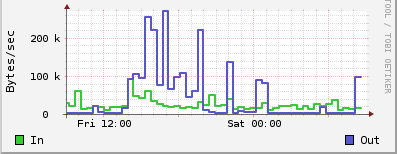
Friday's video of the 2nd leg of the cable car journey was quite popular, Ganglia stats for the video server can't be wrong: The first leg was skipped because of the low cloud cover. Weather reports in Switzerland, such as www.meteosuisse.ch often show a distinction between the low clouds and high clouds, because many Swiss mountain resorts are high enough to enjoy ample sunshine by virtue of their altitude even when cities like Zurich and Geneva are overcast. Now for the third leg, rising up to Berg. In the video, it is hard to gauge the size of the rocky cliffs along the route, but looking at the cable car's shadow will give a clue. As the cable car approaches the station in Berg, it feels like it takes forever to complete the journey. That is because the rocks are so much bigger than they appear from a distance. <video controls="" height="340" poster="http://upload.wikimedia.org/wikipedia/commons/thumb/0/03/Schilthorn_with_Bernese_Alps%2C_2012_August.jpg/800px-Schilthorn_with_Bernese_Alps%2C_2012_August.jpg" width="560">
<source src="http://video.danielpocock.com/VID_20121025_122453.m4v" type="video/mp4"></source>
<source src="http://video.danielpocock.com/VID_20121025_122453.webm" type="video/webm"></source>
</video> The final leg to the Schilthorn summit will appear shortly. I understand many people are starting to contemplate their DebConf13 travel and summer holidays - please feel free to email me if you'd like me to post a video of some other feature in Switzerland.
AttachmentSize
ganglia-schilthorn2.png8.71 KB

Gerfried Fuchs: Pentatonix

I know it's been ages since I last blogged anything at all. To some degree I had a down phase, but I hope to get out of it. It's nice to see that there are people out there who give me a prod every now and then, and don't let me drown. Thanks, most of you probably know that I mean exactly you, and in case you are uncertain, you probably are meant if you contact me every now and then. Anyway, if you remember that I blogged about Lindsey Stirling last year and you started to follow her you might have already stumbled upon the next band I'd like to present. I'm speaking of Pentatonix. These five humans have terrific voices that they use in a very special way that is quite unique. I don't want to delay the songs I want to present to you any longer, so here they are: Like always, enjoy! And hopefully read me again more regularly again.

/music permanent link Comments: 1 Flattr this

Joey Hess: Template Haskell on impossible architectures

Imagine you had an excellent successful Kickstarter campaign, and during it a lot of people asked for an Android port to be made of the software. Which is written in Haskell. No problem, you'd think -- the user interface can be written as a local webapp, which will be nicely platform agnostic and so make it easy to port. Also, it's easy to promise a lot of stuff during a Kickstarter campaign. Keeps the graph going up. What could go wrong? So, rather later you realize there is no Haskell compiler for Android. At all. But surely there will be eventually. And so you go off and build the webapp. Since Yesod seems to be the pinnacle of type-safe Haskell web frameworks, you use it. Hmm, there's this Template Haskell stuff that it uses a lot, but it only makes compiles a little slow, and the result is cool, so why not. Then, about half-way through the project, it seems time to get around to this Android port. And, amazingly, a Haskell compiler for Android has appeared in the meantime. Like the Haskell community has your back. (Which they generally seem to.) It's early days and rough, lots of libraries need to be hacked to work, but it only takes around 2 weeks to get a port of your program that basically works. But, no webapp. Cause nobody seems to know how to make a cross-compiling Haskell compiler do Template Haskell. (Even building a fully native compiler on Android doesn't do the trick. Perhaps you missed something though.) At this point you can give up and write a separate Android UI (perhaps using these new Android JNI bindings for Haskell that have also appeared in the meantime). Or you can procrastinate for a while, and mull it over; consider rewriting the webapp to not use Yesod but some other framework that doesn't need Template Haskell. Eventually you might think this: If I run ghc -ddump-splices when I'm building my Yesod code, I can see all the thousands of lines of delicious machine generated Haskell code. I just have to paste that in, in place of the Template Haskell that generated it, and I'll get a program I can build on Android! What could go wrong? And you even try it, and yeah, it seems to work. For small amounts of code that you paste in and carefully modify and get working. Not a whole big, constantly improving webapp where every single line of html gets converted to types and lambdas that are somehow screamingly fast. So then, let's automate this pasting. And so the EvilSplicer is born! That's a fairly general-purpose Template Haskell splicer. First do a native build with -ddump-splices output redirected to a log file. Run the EvilSplicer to fix up the code. Then run an Android cross-compile. But oh, the caveats. There are so many ways this can go wrong.. Anyway, if you struggle with it, or pay me vast quantities of money, your program will, eventually, link. And that's all I can promise for now.

PS, I hope nobody will ever find this blog post useful in their work. PPS, Also, if you let this put you off Haskell in any way .. well, don't. You just might want to wait a year or so before doing Haskell on Android.

16 April 2013

Aigars Mahinovs: na 6 internets

na ir slavena ne tikai ar savu akmens m ri valsts zieme os, bat ar ar Di o nas Ugunsm ri apk rt visam s valsts Internetam, kas blo visu p c k rtas un iebremzina visu p r jo. Man pirm person g saskarsme ar o pakalpojumu notika jau anhajas lidost , kad tri vien izr d j s, ka valst blo ts ir ne tikai Facebook, bet ar Twitter, kas iev rojami apgr tin ja manas iesp jas tri un viegli apzi ot visus, ka es esmu v l joproj m esmu dz vs un vesels. P c p ris eksperimentiem izr d j s, ka, lai ar no telefona nav pieejama Google+ m jas lapa un nav lejupl d jama Google+ (un WhatsApp) programma uz Android, tom r, ja t s jau ir telefon , ie abi servisi turpina no telefona str d t. T p c es s ku rakst t ce ojuma piez mes Google+ un da as dienas p c ce ojuma s kuma man pat izdev s nokonfigur t If This Then That servisu, lai tas pa em manus Google+ ierakstus un uztaisa no tiem Twitter ierakstus (kas jau t l k pa citiem kan liem izplat s uz Facebook un Draugiem un ar par d s k ned as kopsavilkums aj blog ). Google+ ir savi plusi, bet ar savi m nusi. Galvenais m nuss, ko es aj ce ojum paman ju ir tas, ka Google+ Android aplik cij nav iesp jams sagatavot vair kus ierakstu melnrakstus (v lams katru ar savu geolok ciju) bez Interneta var rakst t tikai vienu ierakstu un t ieraksta GPS koordin tes b s t s kur viet p c tam Internets par d sies. Es jau uzrakst ju Googlei par o probl mu. Galvenais pluss Google plusam (no pun intended) ir Instant Upload ja bild t fotogr fijas ar Android telefonu, s fotogr fijas autom tiski tiks aug upiel d tas un par d sies jaun ieraksta izveides interfeis , kur t s var pievienot ierakstam ar vienu klik i bez jebk das gaid anas. Diem l tas nestr d ar norm laj m kamer m. Pagaid m ;) Ta u es neb tu sts datori is, ja es nepam in tu uzlaust vai apiet o nelielo nas probl mu, ne? ;) Visvienk r akais veids k apiet nas Lielo Ugunsm ru ir izmantot jebk du VPN, kas at auj ne tikai piek t VPN t kla resursiem, bet ar at auj laist visu trafiku caur o VPN savienojumu. dus VPN piesl gumus var nopirkt, vai (ja ir Linux serveris vai routeris rpus nas) izveidot pa am. Man gad jum tas bija ar vienu klik i iesl gts OpenVPN uz Fonera routera, kas st v man s m j s. Diem l na ir sav da. Blo to lapu, portu un protokolu saraksts main s gan da dos rajonos, gan ar atkar b no t vai Internets ir mob lais vai wifi vai ar piesl gumu, gan ar vienk r i no dienas dien . Liel da gad jumu blo to lietu sarakst iekr t ar VPN savienojumi. Bie i vien ar priv tie. Man kaut k ne iet, ka mana m jas IP adrese ir nas ugunsm ra sarakstos, ta u da reiz ar tam VPN pievienoties es nevar ju. Un t d s situ cij s, lai apskat tu k du YouTube video, atliek tikai viens, eni ls risin jums sshuttle! is eni lais r ks izveido ko l dz gu VPN savienojumam caur parasto SSH portu un protokolu. Uz lok l s ma nas ir nepiecie ams Python un root ties bas, bet uz servera ir vajadz gas tikai ties bas palaist Python programmas. sshuttle pats aizs ta sevi uz serveri un palai s tur, pat ie ifr un p rs ta visus savienojumus un ar DNS piepras jumus, ja vi am to paprasa. Var p rs t t konkr tus t klus vai visu trafiku. Un trums man pieredz tas ir bija pat tr ks par parasto VPN. Kopum Interneta blok de un t visp r gais l nums ir viens oti spec gs m nuss nai. Aizskrienot mazliet uz priek u st st jum pateik u, ka Hong Kong das probl mas nav tur Internets ir lielisks! L k t ds t zeris san ca :)

Wouter Verhelst: The devops "installer"

puppet and similar things are very nice tools for managing your systems. Rather than doing the same thing 100 times, it's much more interesting to spend some time describing how to do something, and then have it done hundreds of times automatically. However, I'm starting to see a distressing trend lately. I'd like to say that puppet is not an installer, nor is it a replacement for one. Here's why: Please, pretty please, with sugar on top: just provide packages. If that can't be done, just provide clear installation instructions and/or a puppet module that I can include or something. Don't assume I'm a system administrator not worth his paycheck. Thanks. note: the gitorious example above is just that, an example. I've seen more cases of people doing similar things, not just gitorious. Surprisingly, it's mostly from people who're on the ruby kool-aid. I hope that's not related... Update: (2013-04-18) despite my usage of buzzwords in the title of this post, I did not mean to imply that any of the above has anything to do with devops. Instead, what the post is supposed to say is that you should not fall into the trap of believing that devops methods, which may work wonderfully internal to your organization, will therefore also work wonderfully for processes outside your organization.

Michal &#268;iha&#345;: Weblate 1.5

Weblate 1.5 has been released today. It comes with lot of improvements, especially in performance, reporting and support for machine translations. Full list of changes for 1.5: You can find more information about Weblate on it's website, the code is hosted on Github. If you are curious how it looks, you can try it out on demo server. You can login there with demo account using demo password or register your own user. Ready to run appliances will be soon available in SUSE Studio Gallery. Weblate is also being used https://l10n.cihar.com/ as official translating service for phpMyAdmin, Gammu, Weblate itself and others. If you are free software project which would like to use Weblate, I'm happy to help you with set up or even host Weblate for you.

Filed under: English Phpmyadmin Suse Weblate 0 comments Flattr this!

Stefano Zacchiroli: bits from the DPL for March-April 2013

Dear Project Members,
   "Now that I have your attention, I would like to make the following
delegations:"

... nah, scrap that. In my last day in office I first of all owe you a report of DPL activities for the last reporting period of this term, i.e. March 8th until today. Here it is! Highlights Talks Over the past month or so I've attended and spoken on behalf of Debian in the following occasions: Assets I've approved the budget for the following forthcoming sprints: Also, we've bought a 3-year warranty pack for the disk array that powers ftp-master.d.o (~900 USD). On the income side, Brian Gupta has started an interesting matching fund experiment, in order to raise funds for the forthcoming DebConf13. The matching fund will be open until April 30th, so your help in spreading news would be welcome. Many thanks to Brian for the idea and to his company, Brandorr Group, for funding it. DPL helpers Three more DPL helpers IRC meetings have been held; minutes are available at the usual place. Legal Spring Cleaning I've finally cleaned up the pile of pending legal matters (but I'm sure new ones will show up for the delight of the next DPL :-P) Once again, I'd like to thank SFLC for the pro bono and very high quality legal advice they keep on offering to Debian. Miscellaneous
Now, before I get sentimental, let me thank Gergely, Lucas, and Moray for running in the recently concluded DPL election. Only thinking of running and then go through a campaign denote a very high commitment to the Project; we should all be thankful to them. Then I'd like to congratulate Lucas for his election. I've known him for a long time, and I can testify about his clear vision of the role Debian has to play in Free Software and on what Debian needs to improve to do so. Best wishes for the term ahead, Lucas! Finally, I'd like to thank you all for the support you've shown me over the past 3 years. Serving as DPL is a great honor, but also a very demanding job. Thank to you all, and to how cool Debian is, it has been for me an incredibly rewarding experience. I had no idea what I were doing when I embarked on this adventure, but in hindsight I don't regret any of it. See you around, as I don't plan to be anywhere far away from Debian anytime soon. Cheers.
PS the day-to-day activity logs for March and April 2013 are available at the usual place master:/srv/leader/news/bits-from-the-DPL.txt.20130 3,4

Next.

Previous.