Search Results: "ed"

1 January 2014

Debian Sysadmin Team: Martin Zobel-Helas: Dropping security.geo.debian.org zone

While setting up GeoDNS for parts of the debian.org zone, we set up a new subzone security.geo.debian.org. This was mainly due to the fact we didn't want to mess up the existing zone while experimenting with GeoDNS. Now that our GeoDNS setup has been working for more than half a year without any problems, we will drop this zone. We will do that in two phases.

Phase 1 Beginning on July 1st, we will redirect all requests to security.geo.debian.org to a static webpage indicating that this subzone is deprecated and should not be used any more. If you still have security.geo.debian.org in your apt sources.list, updates will fail.

Phase 2 On August 1st, we will stop serving the subzone security.geo.debian.org from our DNS servers.

Conclusion In case you use a security.geo.debian.org entry in your /etc/apt/sources.list, now is the best time to change that entry to security.debian.org. Both zones currently serve the same content.

Dominique Dumont: Config::Model::OpenSsh now supports OpenSSH 6.4 configuration

Hello This was long overdue. I ve released Config::Model::OpenSsh 1.232. This new release
supports a lot of new parameters that were added to OpenSSH 6.0 and later versions, like AllowAgentForwarding, AuthenticationMethods or AuthorizedKeysCommand. This new version is also available in Debian. Happy new year !
Tagged: Config::Model, OpenSsh, Perl

Christian Perrier: [life] [running] 2013 summary

Yet another yearly summary of my running activities. As I already explained, now running took precedence over free software activities as you'll notice below... So, what happened on that front in 2013 for running bubulle? I finally managed to run 4603 km during the year, which is 1700km more than 2012. Definitively an explosion as I actually ran over 12.5km every day. I added to this 206km with my moutain bike, all of them achieved during December while I was (and still am) suffering from an injury (fatigue fracture). These 4603km were covered in 458 hours, so a bit over 19 days running and very very slightly over 10km/h. It seems that my favourite race type choice is obvious, here: I'm, by very far, privileging, trail races, either in the country or forests in my neighbourhood....or in moutains. As a result, also, the combined positive climb is faily high, too. Though harder to estimate than distance and time, I end up with about 72,900 meters positive climb (to be compared to last year's 33,000 meters...:-)). Clearly, my summer in moutains made the difference, here.... The longest time period without running, this year, has been 3 days. That's really insane...:-). Particularly when one notices that I happened to run *every day* during 40 consecutive days at one moment, between August and September. Who says that running is indeed a full part of my life? To be honest, I actually didn't run since December 11th (while writing this on January 1st) because of my tibia injury...but I did bike, so that's still some kind of sports, right? Indeed, there have been 282 days in this year where I ran (or biked) at least once. Last year was 205 so....drug addiction is still increasing. Most active month: November with 471km. Less active month: February with 334km (which is indeed more than 2012 most active month..:-)) This year was also a year of records: I ran 14 official races during the year : How about next^W this year? Well, my season's peaks are currently being secured: No marathon as of now...:-). Or, indeed one (Paris in April), but more for fun : I hope to complete it in....less than 5 hours...but still in Spongebob Squarepants suit. You may want to watch TV on April 6th..:-) As I wrote last year : all this of course is assuming that no injury comes up. I currently need to recover from the current one, though it doesn't seem as bad as it seemed a few weeks ago. We'll see on January 1st 2015...:-)

Vincent Bernat: Testing infrastructure with serverspec

Checking if your servers are configured correctly can be done with IT automation tools like Puppet, Chef, Ansible or Salt. They allow an administrator to specify a target configuration and ensure it is applied. They can also run in a dry-run mode and report servers not matching the expected configuration. On the other hand, serverspec is a tool to bring the well known RSpec, a testing tool for the Ruby programming language frequently used for test-driven development, to the infrastructure world. It can be used to remotely test server state through an SSH connection. Why one would use such an additional tool? Many things are easier to express with a test than with a configuration change, like for example checking that a service is correctly installed by checking it is listening to some port.

Getting started Good knowledge of Ruby may help but is not a prerequisite to the use of serverspec. Writing tests feels like writing what we expect in plain English. If you think you need to know more about Ruby, here are two short resources to get started: serverspec s homepage contains a short and concise tutorial on how to get started. Please, read it. As a first illustration, here is a test checking a service is correctly listening on port 80:
describe port(80) do
  it   should be_listening  
end
The following test will spot servers still running with Debian Squeeze instead of Debian Wheezy:
describe command("lsb_release -d") do
  it   should return_stdout /wheezy/  
end
Conditional tests are also possible. For example, we want to check the miimon parameter of bond0, but only when the interface is present:
has_bond0 = file('/sys/class/net/bond0').directory?
# miimon should be set to something other than 0, otherwise, no checks
# are performed.
describe file("/sys/class/net/bond0/bonding/miimon"), :if => has_bond0 do
  it   should be_file  
  its(:content)   should_not eq "0\n"  
end
serverspec comes with a complete documentation of available resource types (like port and command) that can be used after the keyword describe. When a test is too complex to be expressed with simple expectations, it can be specified with arbitrary commands. In the below example, we check if memcached is configured to use almost all the available system memory:
# We want memcached to use almost all memory. With a 2GB margin.
describe "memcached" do
  it "should use almost all memory" do
    total = command("vmstat -s   head -1").stdout #  
    total = /\d+/.match(total)[0].to_i
    total /= 1024
    args = process("memcached").args #  
    memcached = /-m (\d+)/.match(args)[1].to_i
    (total - memcached).should be > 0
    (total - memcached).should be < 2000
  end
end
A bit more arcane, but still understandable: we combine arbitrary shell commands (in ) and use of other serverspec resource types (in ).

Advanced use Out of the box, serverspec provides a strong fundation to build a compliance tool to be run on all systems. It comes with some useful advanced tips, like sharing tests among similar hosts or executing several tests in parallel. I have setup a GitHub repository to be used as a template to get the following features:
  • assign roles to servers and tests to roles;
  • parallel execution;
  • report generation & viewer.

Host classification By default, serverspec-init generates a template where each host has its own directory with its unique set of tests. serverspec only handles test execution on remote hosts: the test execution flow (which tests are executed on which servers) is delegated to some Rakefile1. Instead of extracting the list of hosts to test from a directory hiearchy, we can extract it from a file (or from an LDAP server or from any source) and attach a set of roles to each of them:
hosts = File.foreach("hosts")
  .map    line  line.strip  
  .map do  host 
   
    :name => host.strip,
    :roles => roles(host.strip),
   
end
The roles() function should return a list of roles for a given hostname. It could be something as simple as this:
def roles(host)
  roles = [ "all" ]
  case host
  when /^web-/
    roles << "web"
  when /^memc-/
    roles << "memcache"
  when /^lb-/
    roles << "lb"
  when /^proxy-/
    roles << "proxy"
  end
  roles
end
In the snippet below, we create a task for each server as well as a server:all task that will execute the tests for all hosts (in ). Pay attention, in , at how we attach the roles to each server.
namespace :server do
  desc "Run serverspec to all hosts"
  task :all => hosts.map    h  h[:name]   #  
  hosts.each do  host 
    desc "Run serverspec to host # host[:name] "
    ServerspecTask.new(host[:name].to_sym) do  t 
      t.target = host[:name]
      #  : Build the list of tests to execute from server roles
      t.pattern = './spec/ ' + host[:roles].join(",") + ' /*_spec.rb'
    end
  end
end
You can check the list of tasks created:
$ rake -T
rake check:server:all      # Run serverspec to all hosts
rake check:server:web-10   # Run serverspec to host web-10
rake check:server:web-11   # Run serverspec to host web-11
rake check:server:web-12   # Run serverspec to host web-12
Then, you need to modify spec/spec_helper.rb to tell serverspec to fetch the host to test from the environment variable TARGET_HOST instead of extracting it from the spec file name.

Parallel execution By default, each task is executed when the previous one has finished. With many hosts, this can take some time. rake provides the -j flag to specify the number of tasks to be executed in parallel and the -m flag to apply parallelism to all tasks:
$ rake -j 10 -m check:server:all

Reports rspec is invoked for each host. Therefore, the output is something like this:
$ rake spec
env TARGET_HOST=web-10 /usr/bin/ruby -S rspec spec/web/apache2_spec.rb spec/all/debian_spec.rb
......
Finished in 0.99715 seconds
6 examples, 0 failures
env TARGET_HOST=web-11 /usr/bin/ruby -S rspec spec/web/apache2_spec.rb spec/all/debian_spec.rb
......
Finished in 1.45411 seconds
6 examples, 0 failures
This does not scale well if you have dozens or hundreds of hosts to test. Moreover, the output is mangled with parallel execution. Fortunately, rspec comes with the ability to save results in JSON format. Those per-host results can then be consolidated into a single JSON file. All this can be done in the Rakefile:
  1. For each task, set rspec_opts to --format json --out ./reports/current/# target .json. This is done automatically by the subclass ServerspecTask which also handles passing the hostname in an environment variable and a more concise and colored output.
  2. Add a task to collect the generated JSON files into a single report. The test source code is also embedded in the report to make it self-sufficient. Moreover, this task is executed automatically by adding it as a dependency of the last serverspec-related task.
Have a look at the complete Rakefile for more details on how this is done. A very simple web-based viewer can handle those reports2. It shows the test results as a matrix with failed tests in red: Report viewer example Clicking on any test will display the necessary information to troubleshoot errors, including the test short description, the complete test code, the expectation message and the backtrace: Report viewer showing detailed error I hope this additional layer will help making serverspec another feather in the IT cap, between an automation tool and a supervision tool.

  1. A Rakefile is a Makefile where tasks and their dependencies are described in plain Ruby. rake will execute them in the appropriate order.
  2. The viewer is available in the GitHub repository in the viewer/ directory.

Vincent Fourmond: Rubyforge is dead, but ctioga2 goes on...

In the light of the frequent recent downtimes of rubyforge, and thanks to the information from @copiousfreetime, I finally decided to move the hosting of ctioga2 away from rubyforge, to sourceforge. Transition went smooth, git is now the only VCS. Code is hosted at sourceforge and mirrored at github.
Work goes on on ctioga2. I've recently implemented a decent support for histograms. It is already much more powerful than the one in the old ctioga, but it is far from being feature-full. Here's a preview.I'm slowly preparing a new release for ctioga2, that would incorporate quite some fixes since the last time, and quite a few nice features in addition to the histograms. Stay tuned !

Russ Allbery: Review: The Female Man

Review: The Female Man, by Joanna Russ
Publisher: Beacon
Copyright: 1975
Printing: 1986
ISBN: 0-8070-6299-5
Format: Trade paperback
Pages: 214
The Female Man is one of the most famous novels of feminist science fiction, written by a giant of the field. Joanna Russ was one of the strongest writers of the first era of explicitly feminist SF and one of the most challenging. Along with Alice Sheldon (James Tiptree, Jr.) and Sheri Tepper, she's probably the best known author whose approach tended towards the directly confrontational. She was also a noted essayist, critic, and reviewer; her book How to Suppress Women's Writing is one of the most famous works of feminist literary criticism. That said, I wasn't sure what to expect from this book. I'd heard that it was about four different women: Jeannine, Joanna, Janet, and Jael. They're parallels of sorts but from far different cultures, alternate worlds displaced in time. I'd also heard that it was full of biting, accurate sarcasm, which is certainly the case. This is a book written from a place of righteous anger combined with keen social observation and a desire to point out how different the world could be. And how toxic male behavior towards women currently is. What it's not, however, is much of a novel, in the sense of having a clear plot that carries the reader through the book. There is a story of sorts, which revolves around the appearance of Janet in Joanna's time. Janet is a native of Whileaway, an alternate future Earth in which there are no men at all and social organization is significantly different. We get a fairly detailed description of her life and of some Whileaway customs over the course of the book. But they're mixed with excerpts from the lives of both Jeannine (from an alternate past in which the Great Depression never ended) and Joanna. If Janet's story is a sort of utopian alternate future, following the basic model of female separatist societies, Jeannine's is the dystopia drawn from our past. She's locked entirely into traditional gender roles and the desire to catch a man and be a wife. I found her the hardest character to read about by far, largely because she locks herself into the worst constraints of that role. She's almost entirely passive, and she's devoted to a man for whom it's difficult to have any respect at all. Janet is interesting in part because she's not particularly exceptional in either ability or intelligence. She just reflects the Whileaway culture, which leads to some sharp conflicts with the norms of Joanna's time. It's a very effective tactic for alienating the reader from current gender roles (or, at least, roles from the 1970s) and showing how absurd they appear with a different set of starting assumptions. Russ makes the point clearly; this is not a book that tends towards the subtle, although it can be a little hard to track the characters' progress through alternate timelines. Towards the end of the book, they meet the fourth character. (This is not really the sort of book that is possible to spoil by summary.) Jael is by far the most aggressive of any of them, the closest that any of them come to the caricature of a "man-hating feminist." One of the strengths of The Female Man is that, by the time the story reaches her, I at least was feeling quite a lot of sympathy towards her aggressively violent approach, after watching Joanna be put down and Jeannine simper ineffectually. However, it's worth nothing that Janet, the representative of the supposed utopia, does not agree with Jael or her methods, and the relationship between their worlds is interestingly complex. None of the four characters are exactly wrong (although Jeannine comes close); none of them are entirely right either. They're all struggling in different ways with how to define femininity. While the quiet and simplicity of Janet's world has definite appeal, it's the sort of utopia that one isn't sure one would actually want. And Jael has some pointed commentary on how wanting such a world is one thing, but the acts required to create it is quite another. I can see why this book is so well-known. Many of the scenes that show gender relations and male behavior are both painful and funny. Reading it forty years after it was written, it's clear that social norms have changed; men do and say things here that they would no longer be able to get away with, that are clearly from another era. But it's also clear that some of the underlying attitudes have not changed, just been cloaked in different language. And Russ's bluntness here is refreshing: this book does not pull its punches, both in openly ridiculing sexist behavior, and in showing how oppressive it is for women. That said, it didn't work as a story for me, in part because the plot is sketchy at best. It's a collection of individual excerpts and commentary, only some of which are shaped like a story. Much of it feels stream of consciousness, and when cut between three different viewpoints, it's also occasionally confusing. There are also a few too-obvious characters: some of the men, particularly in Jael's section, but also Jeannine, who I never liked even after she starts changing her mind about women's roles. I wanted a bit more story and a bit less introspection. I think this is an important book that's worth reading, and sadly it's not as obsolete as one would like. But I don't think it's entirely successful as a novel. Best treated as a piece of literary history. Rating: 6 out of 10

Andrew Pollock: [life] It's a new year, it's a new me

Well, it's 2014. The annus horribilus of 2013 is behind me. I'm entering 2014 in a much better place (on multiple levels) than I did for 2013. I'm positively excited to see what 2014 brings me. I was very fortunate to have someone I looked up to reach out to help me when my marriage fell apart. One of the things he said to me was "A year from now, you won't recognise yourself". He was right. I am such a different person today than I was a year ago. I'm happier, fitter, more self-confident. I'm focusing on different things in my life. One thing that has been a casualty, has been my geeky pursuits. There were a few times last year where I questioned if I was still a geek. I am. I've just deprioritised it. Instead, I've been putting my own self-care and my daughter above all else, meaning that my running has probably been the one thing I'd call a "hobby" at the moment. I've got some stuff in the pipeline that I'm not quite ready to write about yet, but I'm expecting a rearrangement of my time that will hopefully allow for some more geeky endeavours in 2014. I'm also hoping I can regain some momentum on blogging. Here's what I'd say my goals are, going into 2014: plus some other stuff I'm not ready to talk about yet.

31 December 2013

Paul Tagliamonte: Hy 0.9.12 released

Good morning all my hungover friends. New Hy release - sounds like the perfect thing to do while you re waiting for your headaches to go away. Here s a short-list of the changes (from NEWS) - enjoy!
Changes from Hy 0.9.11
   tl;dr:
    0.9.12 comes with some massive changes,
    We finally took the time to implement gensym, as well as a few
    other bits that help macro writing. Check the changelog for
    what exactly was added. 
    
    The biggest feature, Reader Macros, landed later
    in the cycle, but were big enough to warrent a release on it's
    own. A huge thanks goes to Foxboron for implementing them
    and a massive hug goes out to olasd for providing ongoing
    reviews during the development.
    
    Welcome to the new Hy contributors, Henrique Carvalho Alves,
    Kevin Zita and Kenan B l kba . Thanks for your work so far,
    folks!
    
    Hope y'all enjoy the finest that 2013 has to offer,
      - Hy Society
    * Special thanks goes to Willyfrog, Foxboron and theanalyst for writing
      0.9.12's NEWS. Thanks, y'all! (PT)
    [ Language Changes ]
    * Translate foo? -> is_foo, for better Python interop. (PT)
    * Reader Macros!
    * Operators + and * now can work without arguments
    * Define kwapply as a macro
    * Added apply as a function
    * Instant symbol generation with gensym
    * Allow macros to return None
    * Add a method for casting into byte string or unicode depending on python version
    * flatten function added to language
    * Add a method for casting into byte string or unicode depending on python version
    * Added type coercing to the right integer for the platform
    [ Misc. Fixes ]
    * Added information about core team members
    * Documentation fixed and extended
    * Add astor to install_requires to fix hy --spy failing on hy 0.9.11.
    * Convert stdout and stderr to UTF-8 properly in the run_cmd helper.
    * Update requirements.txt and setup.py to use rply upstream.
    * tryhy link added in documentation and README
    * Command line options documented
    * Adding support for coverage tests at coveralls.io
    * Added info about tox, so people can use it prior to a PR
    * Added the start of hacking rules
    * Halting Problem removed from example as it was nonfree
    * Fixed PyPI is now behind a CDN. The --use-mirrors option is deprecated.
    * Badges for pypi version and downloads.
    [ Syntax Fixes ]
    * get allows multiple arguments
    [ Bug Fixes ]
    *  OSX: Fixes for readline Repl problem which caused HyREPL not allowing 'b'
    * Fix REPL completions on OSX
    *  Make HyObject.replace more resilient to prevent compiler breakage.
    [ Contrib changes ]
    * Anaphoric macros added to contrib
    * Modified eg/twisted to follow the newer hy syntax
    * Added (experimental) profile module

Clint Adams: Tax year close

As I watch my friends and enemies rush to make their 501(c)3-qualified donations before midnight, I think to ask, What if, instead of giving to these fat, corrupt organizations that are rolling in money and waste most of it, you gave to the FSF, the SFLC, or the Tor project?

Chris Lamb: 2013: Selected highlights

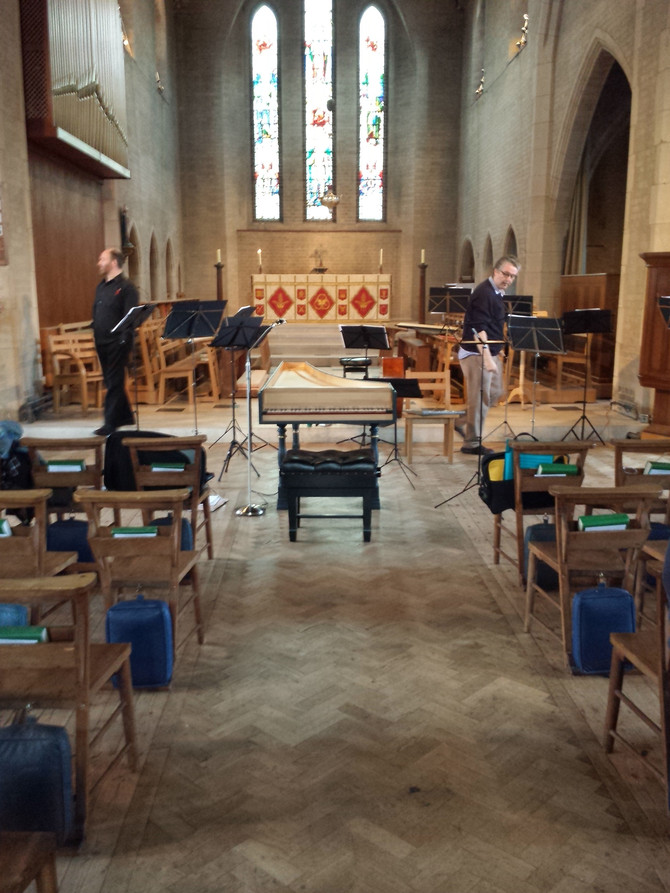
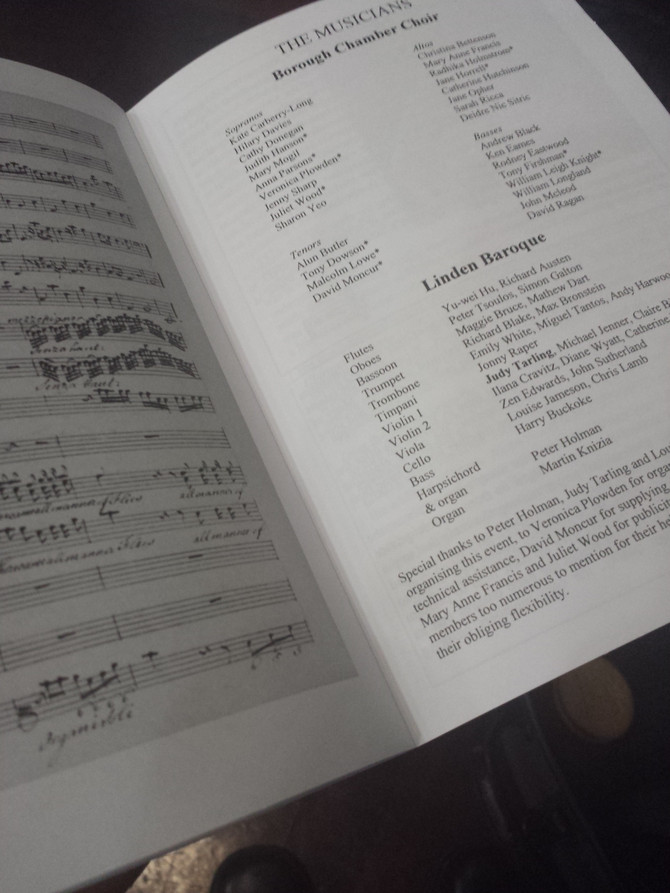
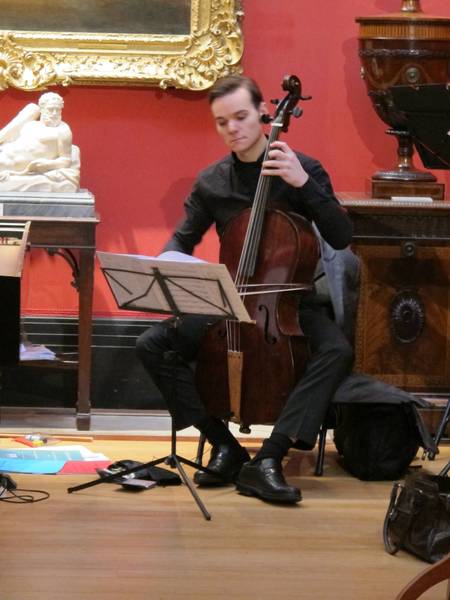
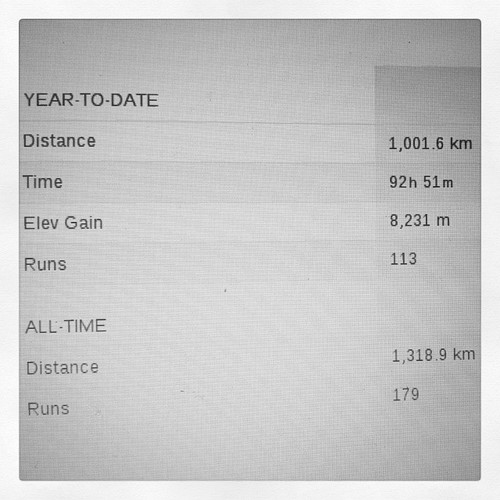
January https://chris-lamb.co.uk/wp-content/2013/highlights/01.jpg Entered monthly 10km races in Regent's Park, reducing my time from 55:07 in January 4th to 43:28 on December 1st. February https://chris-lamb.co.uk/wp-content/2013/highlights/02.jpg Entered the Hell of Ashdown cyclosportive in sub-zero conditions for over 100 miles & 7,500 ft of elevation (actual photo). March https://chris-lamb.co.uk/wp-content/2013/highlights/03.jpg Had my lute returned after it was damaged. April https://chris-lamb.co.uk/wp-content/2013/highlights/04.jpg Had a time-trial bike built and raced my first triathlon, duathlon and aquathlon. May https://chris-lamb.co.uk/wp-content/2013/highlights/05.jpg More biking, including a long ride with my brother. Also performed on the viola da gamba in Bach's St John Passion with Belsize Baroque. June https://chris-lamb.co.uk/wp-content/2013/highlights/06.jpg Two big concerts: Monn's Cello concerto in G minor with the Zadok Baroque Orchestra followed by the Blackfriars Quartet performing Shostakovich's String Quartet No. 8. July https://chris-lamb.co.uk/wp-content/2013/highlights/07.jpg Amongst more triathlon preperation, I performed in a Linden Baroque concert of Handel's Israel in Egypt. August https://chris-lamb.co.uk/wp-content/2013/highlights/08.jpg Raced my biggest event of the year a "Half-Ironman" triathlon hitting my time goal. September https://chris-lamb.co.uk/wp-content/2013/highlights/09.jpg Whilst procrastinating about writing some letters, I created a small service to send letters without a printer. October https://chris-lamb.co.uk/wp-content/2013/highlights/10.jpg Started cooking a little more adventurously. November https://chris-lamb.co.uk/wp-content/2013/highlights/11.jpg Performed Geminiani's arrangement of Corelli's La Folia in the Fitzwilliam Museum with Le Petit Orchestre. December https://chris-lamb.co.uk/wp-content/2013/highlights/12.jpg Ramped up my running volume so I could go over 1000km for the year. (Strava profile)

Benjamin Mako Hill: When Free Software Isn t Better Talk

In late October, the FSF posted this video of a talk called When Free Software Isn t (Practically) Better that I gave at LibrePlanet earlier in the year. I noticed it was public when, out of the blue, I started getting both a bunch of positive feedback about the talk as well as many people pointing out that my slides (which were rather important) were not visible in the video! Finally, I ve managed to edit together a version that includes the slides and posted it online and on Youtube. The talk is very roughly based on this 2010 article and I argue that, despite our advocacy, free software isn t always (or even often) better in practical terms. The talk moves beyond the article and tries to be more constructive by pointing to a series of inherent practical benefits grounded in software freedom principles and practice. Most important to me though, the talk reflects my first serious attempt to bring together some of the findings from my day job as a social scientist with my work as a free software advocate. I present some nuggets from my own research and talk about about what they mean for free software and its advocates. In related news, it also seems worth noting that I m planning on being back at LibrePlanet this March and that the FSF annual fundraiser is currently going on.

30 December 2013

Russ Allbery: Init system evaluation thanks

Most people who follow Debian are probably aware that we're currently in the middle of a major debate over the future of Debian's init system. Over the past month, and particularly over the past week, I undertook an evaluation of two of the options in that debate, using one of my packages as a test bed. I also did a lot of reading, filed a few bugs, and asked a bunch of questions. That's an extension of the questions I've been asking and discussions I've been participating in around init systems for the past year plus. I have been keeping my opinions and writeups confined to the relevant Techncial Committee bug report so that they can be read in context with their rebuttals. There are a lot of thoughtful and well-informed opinions here, of which mine are only one, and several of my conclusions have been inaccurate or at least not complete, so the context is important. You can find the full traffic in the Technical Committee bug. Most of the discussion, in a threaded view, is in the Technical Committee archives for December. However, in one of the messages I sent today, I tried to show my appreciation for the people who have assisted with this evaluation over the past week, month, and years, and I think that section deserves broader distribution outside of the ongoing discussion. It is therefore included below. Throughout this evaluation process, my interactions with upstart and systemd upstream developers and Debian packagers have been uniformly excellent. Bug reports filed against both systemd and upstart have received excellent and timely response, and all involved have been quite willing to explain things I've misunderstood, correct my false starts, and discuss technical and practical aspects of their designs. I was particularly impressed by the clear effort that the systemd and upstart maintainers in Debian have put into fully integrating their init systems in such a way that makes them easy to test and use with existing Debian packages. This includes but is not limited to update-rc.d support, invoke-rc.d support, status synchronization with sysvinit, past Policy discussion, and attention to upgrade paths and init-switching use cases. I also want to particularly thank the OpenRC upstream development team for their involvement in this process and their contributions to the discussion. I personally don't think that package is a good match for Debian's needs on Linux, but that's through no fault of the people involved, and I think they would be an excellent upstream if that package looked like a good fit for the needs of any of Debian's non-Linux ports. I also want to thank Petter Reinholdtsen, Roger Leigh, and everyone else who has worked on the sysvinit package over the years, the insserv conversion to dependency-based boot, and the inclusion of LSB support. If it weren't for their hard work, we would be in a far worse position than we are today. It's often hard to see people discussing the inadequacies of something into which you put years of hard work. I want to call attention to their long-term contributions to the distribution, and to the number of Debian systems that have booted through their efforts over the years.

Carl Chenet: Virtual environments with Python 3.3

Follow me on Identi.ca or Twitter One of the major features of Python 3.3 is the new venv module, allowing the creation of Python virtual environments on your system. 1. What is a virtual environment? A virtual environment is a directory dedicated to the execution of your Python applications. Activating your virtual environment will force Python to execute in this directory as the top level of this directory was the root of your file system. The virtual environments are interesting because of the independence they have toward the host they run on, especially when you want to install several versions of Python or if you want to install lots of dependencies without being the system administrator of the host. python-logo-master-v3-TM If you are a Python developer, you must know virtualenv. This really nice application offers a nice way to create Python virtual environment. Moreover it comes with pip already installed in your virtual environment, in order to install other dependencies you need in a really convenience way. Starting from Python 3.3, the module venv of the Python standard library offers the users to create virtual environments. This new feature will encourage all users to create virtual environments to develop their own Python applications, which is a good practice. Thanks to the experiences of several applications being used in the Python community, the module venv was written to be really efficient and widely available. The Python Enhancement Proposal 405 (PEP405) offers a really interesting reading if you wish to find more information about this topic. 2. Creating a virtual environment with Python 3.3 With Python 3.3 comes pyvenv-3.3, allowing to create Python virtual environment:
$ pyvenv-3.3 myvirtualenv
$ cd myvirtualenv/
$ tree .
.
  bin
    activate
    pydoc
    python -> python3.3
    python3 -> python3.3
    python3.3 -> /usr/bin/python3.3
  include
  lib
    python3.3
        site-packages
  pyvenv.cfg
As we can see, three directories were created.
$ cat pyvenv.cfg 
home = /usr/bin
include-system-site-packages = false
version = 3.3.2
Just before moving on, if you want to use the existing modules in your global site-packages directory on your system, the option system-site-packages is available. 3. Activate the virtual environment Lets activate our virtual environment. We need to use the bin/activate file in this environment:
$ source bin/activate 
(myvirtualenv) $
A change in our prompt indicated the good activation of the virtual environment. 4. Installing applications in the virtual environment But playing around with only the default Python interpreter is not really funny. Lets download pip, the Python installer, but before that we need a dependency setuptools:
(myvirtualenv) $ curl https://bitbucket.org/pypa/setuptools/raw/bootstrap/ez_setup.py -o ez_setup.py
 % Total % Received % Xferd Average Speed Time Time Time Current
 Dload Upload Total Spent Left Speed
 100 11356 100 11356 0 0 18507 0 --:--:-- --:--:-- --:--:-- 18495
(myvirtualenv) $ curl https://raw.github.com/pypa/pip/master/contrib/get-pip.py -o get-pip.py
 % Total % Received % Xferd Average Speed Time Time Time Current
 Dload Upload Total Spent Left Speed
 100 543k 100 543k 0 0 685k 0 --:--:-- --:--:-- --:--:-- 685k
Now lets install Setuptools and Pip:
(myvirtualenv) $ python3.3 ez_setup.py
 Downloading https://pypi.python.org/packages/source/s/setuptools/setuptools-2.0.tar.gz
 Extracting in /tmp/tmpxlrv7q
 Now working in /tmp/tmpxlrv7q/setuptools-2.0
 Installing Setuptools
... (lots of lines)...
Installed /tmp/myvirtualenv/lib/python3.3/site-packages/setuptools-2.0-py3.3.egg
 Processing dependencies for setuptools==2.0
 Finished processing dependencies for setuptools==2.0
(myvirtualenv) $ python3.3 get-pip.py
 Downloading/unpacking pip
 Downloading pip-1.4.1.tar.gz (445kB): 445kB downloaded
 Running setup.py egg_info for package pip
 ... (lots of lines)...
 Successfully installed pip
 Cleaning up...
Ok now we re ready to use pip to install anything we need in our virtual environment. Lets think one more second about what we did: we install the Setuptools and the Pip application inside our virtual environment, with nothing written on our main system. Now lets try to install Brebis, the fully automated backup checker, and run it in this environment:
(myvirtualenv) $ pip-3.3 install brebis
 Downloading/unpacking brebis
 Downloading brebis-0.8.tar.gz
 Running setup.py egg_info for package brebis
Installing collected packages: brebis
 Running setup.py install for brebis
 changing mode of build/scripts-3.3/brebis from 644 to 755
changing mode of /tmp/myvirtualenv/bin/brebis to 755
 Successfully installed brebis
 Cleaning up...
We re now ready to launch Brebis, executing in our virtual environment:
(myvirtualenv) $ brebis -h
usage: brebis [-h] [-c DIR] [-C DIR] [-d DELIMITER] [-g] [-G] [-l FILE]
 [-L DIR] [-O DIR] [-v] 
Fully automated backup checker
positional arguments:
 archives archives to check
optional arguments:
 -h, --help show this help message and exit
 -c DIR, --configpath DIR
 the path to the configurations
 -C DIR, --output-conf-dir DIR
 the directory to store the configuration file
 -d DELIMITER, --delimiter DELIMITER
 delimiter of the fields for the list of files
 -g, --gen-list generate a list of files inside a backup
 -G, --gen-full generate the configuration file and the list of files
 for the backup
 -l FILE, --log FILE the log file
 -L DIR, --output-list-dir DIR
 the directory to store the list of files inside an
 archive or tree
 -O DIR, --output-list-and-conf-dir DIR
 the directory to store the configuration file and the
 list of files inside an archive or tree
 -v, --version print the version of this program and exit
For more information: http://www.brebisproject.org
So we get an execution of the Brebis application inside our virtual environment, installed from our virtual environment with tools installed only in the virtual environment. That s a big step that such a feature is now included in the standard library. In the future, you will enjoy the possibility to create new virtual environments for each Python version right out of the box. Moreover, using the upgrade option of the pyvenv command, you will upgrade, if needed, your virtual environment in a really easy and straightforward way, making environments adaptable in time. What about you? What do you think about the Python 3 virtual environments and their features, given your own needs? Feel free to use the comments section of this post.

Lars Wirzenius: Thoughtful, inspiring words from Russ

Russ Allbery has written up summaries of the research he's done in preparation of a Debian Technical Committee vote on default init system in Debian's next release. The mails are long, and well worth reading completely if the topic interests you at all, but I'd like to quote separately a few paragraphs that I found thoughtful, and inspiring, in the greater Debian context and not just for the init system discussion. From "init system other points, and conclusion":
Here again, I think we have an opportunity for Debian to be more innovative and forward-looking in what we attempt to accomplish in the archive by adopting frameworks that let us incorporate the principles of least privilege and defense in depth into our standard daemon configurations.
And later, from the same mail:
I think we should make wise decisions about which areas we want to invest project effort. I dislike investing significant project effort in catch-up efforts that, when complete, merely get us back to where we would have been if we'd chosen a different solution. I don't think that's wise stewardship of project resources. I want to see Debian focus its efforts on places where we can make a real difference, where we can be leaders. That means adopting the best-of-breed existing solutions and building on top of them, not reinventing wheels and thereby starting from a trailing position.
From "loose ends for init system decision":
It is not, in general, necessary to justify what you want to do in Debian. It doesn't matter if it's going to be used by thousands of people or two people. If you can do your work to the standards that we expect to be maintained across the archive, and without negative impact on Debian's other contributors, you can work on whatever you love. And, furthermore, we all support each other in our passions. Debian is built on a culture of deference to other people's work, and reasonable accomodation to the projects that other people want to work on. Now, there is a fine balance here. Deference to other people's work does not mean a requirement to join their work. Reasonable accomodation does not mean that every Debian developer is required to test their software on non-Linux ports. The goal is that all of us should be empowered to work on the things we are passionate about, which implicitly includes being empowered to not work on the things that are not of interest to us. Therefore, for some efforts, and specifically for the non-Linux port efforts, the work is mostly born by the porters. They're expected to test, diagnose problems, and submit patches. The deference and reasonable accomodation that we expect of Debian contributors is to merge those patches when they are reasonable, to not undermine the porting effort when there is a reasonable approach that preserves it, and to be aware of the implications of their packaging for those ports in the broad sense (such as qualifying build-dependencies with [linux-any] where appropriate). We do not expect Debian contributors to reject significant new upstream versions or significant new integrations because they will affect the non-Linux ports, or, for that matter, other projects in Debian. We do expect those changes to follow the standards that we expect of Debian as a whole, and that porting efforts will be treated with deference and reasonable accomodation.
I won't offer a comment on these quotes I prefer to let them speak for themselves but I will say I find these to be among the wisest things said within Debian all year.

Rapha&#235;l Hertzog: The Debian Wheezy Handbook is now available

After multiple months of hard work, I m pleased to announce that Roland and I finished updating the Debian Administrator s Handbook for Debian Wheezy. Grab it now! By the way, as part of the launch of this updated edition, you can benefit from a 10% discount on any paperback copy ordered before January 9th 2014. Just click here and place your order. Cover of the Debian Administrator's Handbook (Wheezy edition) We have put lots of hard work on this edition, doing quite some janitorial work. We didn t cover as many new topics as I would have liked, but I m still proud of the end result. The book has a nice preface co-signed by the current and former Debian Project Leaders. Let me quote a short extract:

The book you have in your hands is different. It s a free as in freedom book, a book which is up to Debian freedom standards for every aspects of your digital life. [ ] You can apt-get install this book, you can redistribute it, you can fork this book or, better, submit bug reports and patches for it, so that other in the future can benefit from your contributions. The maintainers of this book who are also its authors are longstanding members of the Debian Project, who grok the freedom ethos that permeates every aspect of Debian.
Enjoy it and share your comments! Even better if you write up a review that we can link from the website.

5 comments Liked this article? Click here. My blog is Flattr-enabled.

29 December 2013

Olivier Berger: Touchpad side scrolling enabling in gnome flashback

For whatever reason, the touchpad right edge would no longer allow me to do scrolling (like the usual middle wheel on the mouse) under the gnome flashback session in Debian testing. Here's a way to make it work : http://askubuntu.com/questions/248290/enable-both-edge-scrolling-and-two-finger-scrolling-for-touchpad/373134#373134 . This post provides a more elaborate script : http://who-t.blogspot.fr/2011/03/custom-input-device-configuration-in.html reusing an example script (in Debian, in /usr/share/doc/gnome-settings-daemon/examples/input-device-example.sh), but attention: it may be invoked twice, if like on my system, once for an "AlpsPS/2 ALPS GlidePoint" and then for a "PS/2 Mouse", but resetting the VertEdgeScroll to 0 in between. So the script looks like that on my system, now :
...
 if [ "$device" = "AlpsPS/2 ALPS GlidePoint" -o "$device" = "PS/2 Mouse" ]; then
        synclient VertEdgeScroll=1
 fi
I guess there's some kind of a bug here... but the gnome session is a hell when needing to spot the culprit package to report to, so for once, I'll let reportbug quiet. Hope this helps

Joachim Breitner: Sim Serim as a browser game

Recently, I gave the very elegant board game Sim Serim away as a present, without actually playing it, leaving me curious about the game. One can easily play it on paper (you just need a paper, and 4 tokens like coins for each player, BoardGameGeek has English rules the of game), but I took this as an opportunity to learn more about HTML5 canvas and nodejs, and so I created the browser game Sum Serum , implementing the game mechanics of Sim Serim . You can play it locally with two people, or over the network. Contributions are welcome! Especially slicker graphics...

In other news, given that in recent years I became one, I m on BoardGameGeek myself now, see my profile there.

Hideki Yamane: creating Ubuntu chroot becomes easier - ubuntu-archive-keyring package in Debian

Hi, I've just uploaded ubuntu-keyring source package to Debian (its RFP was posted in 26th Dec 2007 - wow 6 years ago) and it was accepted quickly (thanks to ftpmasters :-)

If you're using Debian as primary environment and need to rebuild package for Ubuntu, you'd create Ubuntu pbuilder/cowbuilder/chroot environment on your box. But you'll get an error as below.
henrich@hp:~ $ sudo cowbuilder --create --distribution saucy --mirror http://archive.ubuntu.com/ubuntu --basepath /var/cache/pbuilder/saucy
-> Invoking pbuilder
forking: pbuilder create --buildplace /var/cache/pbuilder/saucy --mirror http://archive.ubuntu.com/ubuntu --distribution saucy --no-targz --extrapackages cowdancer
I: Running in no-targz mode
I: Distribution is saucy.
I: Current time: Mon Dec 30 01:00:05 JST 2013
I: pbuilder-time-stamp: 1388332805
I: Building the build environment
I: running debootstrap
/usr/sbin/debootstrap
I: Retrieving Release
I: Retrieving Release.gpg
I: Checking Release signature
E: Release signed by unknown key (key id 3B4FE6ACC0B21F32)
E: debootstrap failed
W: Aborting with an error
pbuilder create failed
forking: rm -rf /var/cache/pbuilder/saucy

"E: Release signed by unknown key (key id 3B4FE6ACC0B21F32)", because your system doesn't know about Ubuntu release key. Okay, then "$ sudo apt-get install ubuntu-archive-keyring" and add "--debootstrapopts "--keyring /usr/share/keyrings/ubuntu-archive-keyring.gpg"" option to cowbuilder.
henrich@hp:~ $ sudo cowbuilder --create --distribution saucy --mirror http://archive.ubuntu.com/ubuntu --basepath /var/cache/pbuilder/saucy --debootstrapopts "--keyring=/usr/share/keyrings/ubuntu-archive-keyring.gpg"
-> Invoking pbuilder
forking: pbuilder create --debootstrapopts --keyring=/usr/share/keyrings/ubuntu-archive-keyring.gpg --buildplace /var/cache/pbuilder/saucy --mirror http://archive.ubuntu.com/ubuntu --distribution saucy --no-targz --extrapackages cowdancer
I: Running in no-targz mode
I: Distribution is saucy.
I: Current time: Mon Dec 30 01:06:30 JST 2013
I: pbuilder-time-stamp: 1388333190
I: Building the build environment
I: running debootstrap
/usr/sbin/debootstrap
I: Retrieving Release
I: Retrieving Release.gpg
I: Checking Release signature
I: Valid Release signature (key id 790BC7277767219C42C86F933B4FE6ACC0B21F32)
I: Retrieving Packages
I: Validating Packages
I: Resolving dependencies of required packages...
I: Resolving dependencies of base packages...
I: Checking component main on http://archive.ubuntu.com/ubuntu...
I: Retrieving apt 0.9.9.1~ubuntu3
I: Validating apt 0.9.9.1~ubuntu3
I: Retrieving base-files 6.12ubuntu4
(snip)
Good :)

note: Just add "--keyring" option (--keyring /usr/share/keyrings/ubuntu-archive-keyring.gpg) doesn't work as expected, bug?

difference with ubuntu-keyring package in Ubuntu

  • Binary package name is "ubuntu-archive-keyring", not "ubuntu-keyring". It's better to use "foobar-archive-keyring" for packages, same as debian-archive-keyring.
  • No udebs. Probably we don't need it.


Steve Kemp: A good week?

This week my small collection of sysadmin tools received a lot of attention; I've no idea what triggered it, but it ended up on the front-page of github as a "trending repository". Otherwise I've recently spent some time "playing about" with some security stuff. My first recent report wasn't deemed worthy of a security update, but it was still a fun one. From the package description rush is described as:
GNU Rush is a restricted shell designed for sites providing only limited access to resources for remote users. The main binary executable is configurable as a user login shell, intended for users that only are allowed remote login to the system at hand.
As the description says this is primarily intended for use by remote users, but if it is installed locally you can read "any file" on the local system. How? Well the program is setuid(root) and allows you to specify an arbitrary configuration file as input. The very very first thing I tried to do with this program was feed it an invalid and unreadable-to-me configuration file. Helpfully there is a debugging option you can add --lint to help you setup the software. Using it is as simple as:
shelob ~ $ rush --lint /etc/shadow
rush: Info: /etc/shadow:1: unknown statement: root:$6$zwJQWKVo$ofoV2xwfsff...Mxo/:15884:0:99999:7:::
rush: Info: /etc/shadow:2: unknown statement: daemon:*:15884:0:99999:7:::
rush: Info: /etc/shadow:3: unknown statement: bin:*:15884:0:99999:7:::
rush: Info: /etc/shadow:4: unknown statement: sys:*:15884:0:99999:7:::
..
How nice? The only mitigating factor here is that only the first token on the line is reported - In this case we've exposed /etc/shadow which doesn't contain whitespace for the interesting users, so it's enough to start cracking those password hashes. If you maintain a setuid binary you must be trying things like this. If you maintain a setuid binary you must be confident in the codebase. People will be happy to stress-test, audit, examine, and help you - just ask. Simple security issues like this are frankly embarassing. Anyway that's enough: #733505 / CVE-2013-6889.

Hideki Yamane: kernel.org stops using bz2

Many upstream provides their source as tar.xz format, and kernel.org also throw bz2 away - "Happy new year and good-bye bzip2".

Debian package (dpkg-deb) uses xz as default since 1.17.0 as I mentioned. If your package uses bz2, now it's a time to switch. And maybe it's good to ask upstream to switch from bzip2 to xz, too.

Next.

Previous.