Search Results: "tar"

12 February 2024

Emanuele Rocca: Enabling Kernel Settings in Debian

This time it s about enabling new kernel config options in the official Debian kernel packages. A few dependencies are needed to run the various scripts used by the Debian kernel folks, as well as to build the kernel itself:
apt install git gpg python3-debian python3-dacite
apt build-dep linux
With that in place, fetch the linux and kernel-team repos:
git clone --depth 1 https://salsa.debian.org/kernel-team/linux
git clone --depth 1 https://salsa.debian.org/kernel-team/kernel-team
So far you ve only got the Debian-specific bits. Fetch the actual kernel sources now. In the likely case that you re building a stable kernel, run the following from within the linux directory:
debian/bin/genorig.py https://git.kernel.org/pub/scm/linux/kernel/git/stable/linux-stable.git
Use the torvalds repo if you re building an RC version instead:
debian/bin/genorig.py https://git.kernel.org/pub/scm/linux/kernel/git/torvalds/linux.git
Now generate the upstream tarball as well as debian/control. The first command will take a bit, and the second command will fail: but that s success just as the output says.
debian/rules orig
debian/rules debian/control
Now generate patched sources with:
debian/rules source
Time to edit the Kconfig and enable/disable whatever setting you wanted to change. Take a look around the files under debian/config/ to see where your changes should go. If it s a setting shared among multiple architectures that may be debian/config/config. For x86-specific things, the file is debian/config/amd64/config. On aarch64 debian/config/arm64/config. If in doubt, you could try asking #debian-kernel on IRC.
It may look like you need to figure out where exactly in the file the setting should be placed. That is not the case. There s a helpful script fixing things up for you:
../kernel-team/utils/kconfigeditor2/process.py .
The above will fail if you forgot to run debian/rules source. The debian/build/source_rt/Kconfig file is needed by the script:
Traceback (most recent call last):
  File "/tmp/linux/../kernel-team/utils/kconfigeditor2/process.py", line 19, in __init__
    menu = fs_menu[featureset or 'none']
           ~~~~~~~^^^^^^^^^^^^^^^^^^^^^^
KeyError: 'rt'
During handling of the above exception, another exception occurred:
[...]
FileNotFoundError: [Errno 2] No such file or directory: './debian/build/source_rt/Kconfig'
If that happens, run:
debian/rules source
Now process.py should work fine and fix your config file.
Excellent, now the config is updated and we re ready to build the kernel. Off we go:
export MAKEFLAGS=-j$(nproc)
export DEB_BUILD_PROFILES='pkg.linux.nokerneldbg pkg.linux.nokerneldbginfo pkg.linux.notools nodoc'
dpkg-buildpackage -b -nc -uc

Gunnar Wolf: Heads up! A miniDebConf is approaching in Santa Fe, Argentina

I realize it s a bit late to start publicly organizing this, but better late than never I m happy some Debian people I have directly contacted have already expressed interest. So, lets make this public! For all interested people who are reasonably close to central Argentina, or can be persuaded to come here in a month s time You are all welcome! It seems I managed to convince my good friend Mart n Bayo (some Debian people will remember him, as he was present in DebConf19 in Curitiba, Brazil) to get some facilities for us to have a nice Debian get-together in Central Argentina.

Where? We will meet at APUL Asociaci n de Personal no-docente de la Universidad Nacional del Litoral, in downtown Santa Fe, Argentina.

When? Saturday, 2024.03.09. It is quite likely we can get some spaces for continuing over Sunday if there is demand.

What are we planning? We have little time for planning but we want to have a space for Debian-related outreach (so, please think about a topic or two you d like to share with general free software-interested, not too technical, audience). Please tell me by mail (gwolf@debian.org) about any ideas you might have. We also want to have a general hacklab-style area to hang out, work a bit in our projects, and spend a good time together.

Logistics I have briefly commented about this with our dear and always mighty DPL, and Debian will support Debian-related people interested in attending; please check personally with me for specifics on how to handle this case by case. My intention is to cover costs for travel, accomodation (one or two nights) and food for whoever is interested in coming over.

More information As I don t want to direct people to keep an eye on my blog post for updates, I ll copy this information (and keep it updated!) at the Debian Wiki / DebianEvents / ar / 2024 / MiniDebConf / Santa Fe please refer to that page!

Contact

Codes of Conduct DebConf and Debian Code of Conduct apply. See the DebConf Code of Conduct and the Debian Code of Conduct.

Registration Registration is free, but needed. See the separate Registration page.

Talks Please, send your proposal to gwolf@debian.org

11 February 2024

Marco d'Itri: Extending access to the systemd RuntimeDirectory with a POSIX ACL

inn2 uses ephemeral UNIX domain sockets in /run/news/ to communicate with the ctlinnd program. Since the directory is only writeable by the "news" user, other unprivileged users are not able to use the command. I solved this by extending the inn2.service systemd unit with a drop-in file which uses setfacl to give access to my user "md" to the RuntimeDirectory created by systemd. This is the content of /etc/systemd/system/inn2.service.d/md-ctlinnd.conf:
[Service]
# innd will change the permissions of /run/news/ when started: without
# creating it now with mode 0775 then that will change the ACL mask.
RuntimeDirectoryMode=0775
# allow user md to run ctlinnd(8), which creates sockets in /run/news/
ExecStartPost=/usr/bin/setfacl --modify user:md:rwx $RUNTIME_DIRECTORY
The non-obvious issue here is that the innd daemon on startup will change the directory permissions in a way which sets a more restrictive (non group-writeable) ACL mask, and this would make the newly created user ACL ineffective. The solution is to create the directory group-writeable from start. (Beware: this creates a trivial privileges escalation from md to news.)

Freexian Collaborators: Debian Contributions: Upcoming Improvements to Salsa CI, /usr-move, and more! (by Utkarsh Gupta)

Contributing to Debian is part of Freexian s mission. This article covers the latest achievements of Freexian and their collaborators. All of this is made possible by organizations subscribing to our Long Term Support contracts and consulting services.

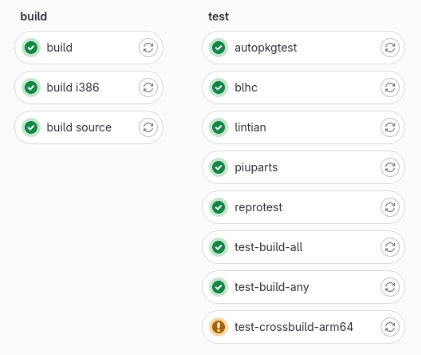
Upcoming Improvements to Salsa CI, by Santiago Ruano Rinc n Santiago started picking up the work made by Outreachy Intern, Enock Kashada (a big thanks to him!), to solve some long-standing issues in Salsa CI. Currently, the first job in a Salsa CI pipeline is the extract-source job, used to produce a debianize source tree of the project. This job was introduced to make it possible to build the projects on different architectures, on the subsequent build jobs. However, that extract-source approach is sub-optimal: not only it increases the execution time of the pipeline by some minutes, but also projects whose source tree is too large are not able to use the pipeline. The debianize source tree is passed as an artifact to the build jobs, and for those large projects, the size of their source tree exceeds the Salsa s limits. This is specific issue is documented as issue #195, and the proposed solution is to get rid of the extract-source job, relying on sbuild in the very build job (see issue #296). Switching to sbuild would also help to improve the build source job, solving issues such as #187 and #298. The current work-in-progress is very preliminary, but it has already been possible to run the build (amd64), build-i386 and build-source job using sbuild with the unshare mode. The image on the right shows a pipeline that builds grep. All the test jobs use the artifacts of the new build job. There is a lot of remaining work, mainly making the integration with ccache work. This change could break some things, it will also be important to test how the new pipeline works with complex projects. Also, thanks to Emmanuel Arias, we are proposing a Google Summer of Code 2024 project to improve Salsa CI. As part of the ongoing work in preparation for the GSoC 2024 project, Santiago has proposed a merge request to make more efficient how contributors can test their changes on the Salsa CI pipeline.

/usr-move, by Helmut Grohne In January, we sent most of the moving patches for the set of packages involved with debootstrap. Notably missing is glibc, which turns out harder than anticipated via dumat, because it has Conflicts between different architectures, which dumat does not analyze. Patches for diversion mitigations have been updated in a way to not exhibit any loss anymore. The main change here is that packages which are being diverted now support the diverting packages in transitioning their diversions. We also supported a few packages with non-trivial changes such as netplan.io. dumat has been enhanced to better support derivatives such as Ubuntu.

Miscellaneous contributions
  • Python 3.12 migration trundles on. Stefano Rivera helped port several new packages to support 3.12.
  • Stefano updated the Sphinx configuration of DebConf Video Team s documentation, which was broken by Sphinx 7.
  • Stefano published the videos from the Cambridge MiniDebConf to YouTube and PeerTube.
  • DebConf 24 planning has begun, and Stefano & Utkarsh have started work on this.
  • Utkarsh re-sponsored the upload of golang-github-prometheus-community-pgbouncer-exporter for Lena.
  • Colin Watson added Incus support to autopkgtest.
  • Colin discovered Perl::Critic and used it to tidy up some poor practices in several of his packages, including debconf.
  • Colin did some overdue debconf maintenance, mainly around tidying up error message handling in several places (1, 2, 3).
  • Colin figured out how to update the mirror size documentation in debmirror, last updated in 2010. It should now be much easier to keep it up to date regularly.
  • Colin issued a man-db buster update to clean up some irritations due to strict sandboxing.
  • Thorsten Alteholz adopted two more packages, magicfilter and ifhp, for the debian-printing team. Those packages are the last ones of the latest round of adoptions to preserve the old printing protocol within Debian. If you know of other packages that should be retained, please don t hesitate to contact Thorsten.
  • Enrico participated in /usr-merge discussions with Helmut.
  • Helmut sent patches for 16 cross build failures.
  • Helmut supported Matthias Klose (not affiliated with Freexian) with adding -for-host support to gcc-defaults.
  • Helmut uploaded dput-ng enabling dcut migrate and merging two MRs of Ben Hutchings.
  • Santiago took part in the discussions relating to the EU Cyber Resilience Act (CRA) and the Debian public statement that was published last year. He participated in a meeting with Members of the European Parliament (MEPs), Marcel Kolaja and Karen Melchior, and their teams to clarify some points about the impact of the CRA and Debian and downstream projects, and the improvements in the last version of the proposed regulation.

9 February 2024

Thorsten Alteholz: My Debian Activities in January 2024

FTP master This month I accepted 333 and rejected 31 packages. The overall number of packages that got accepted was 342.

Hooray, I already accepted package number 30000.

The statistic, where I get my numbers from, started in February 2002. Up to now 81694 packages got accepted. Given that I accepted package 20000 in October 2020, would I be able to accept half of the packages that made it through NEW? Debian LTS This was my hundred-fifteenth month that I did some work for the Debian LTS initiative, started by Raphael Hertzog at Freexian. During my allocated time I uploaded: This month I was finally able to really run the test suite of bind9. I already wanted to give up with this package, but Santiago encouraged me to proceed. So, here you are fixed-Buster-version. Jessie and Stretch have to wait a bit until the dust has settled. Last but not least I also did a few days of frontdesk duties. Debian ELTS This month was the sixty-sixth ELTS month. During my allocated time I uploaded: This month I also worked on the Jessie and Stretch updates for bind9. The uploads should happen soon. I also started to work on an update for exim4. Last but not least I did a few days of frontdesk duties. Debian Printing This month I adopted: At the moment these packages are the last adoptions to preserve the old printing protocol within Debian. If you know of other packages that should be retained, please don t hesitate to ask me. But don t wait for too long, I have fun to process RM-bugs :-). This work is generously funded by Freexian! Debian Astro This month I uploaded a new upstream version of: Debian IoT This month I uploaded new upstream versions of: Other stuff This month I uploaded new upstream version of packages, did a source upload for the transition or uploaded it to fix one or the other issue:

Abhijith PA: A new(kind of) phone

I was using a refurbished Xiaomi Redmi 6 Pro (codename: sakura . I do remember buying this phone to run LineageOS as I found this model had support. But by the time I bought it (there was a quite a gap between my research and the actual purchase) lineageOS ended the suport for this device. The maintainer might ve ended this port, I don t blame them. Its a non rewarding work. Later I found there is a DotOS custom rom available. I did a week of test run. There seems lot of bugs and it all was minor and I can live with that. Since there is no other official port for redmi 6 pro at the time, I settled on this buggy DotOS nightly build. The phone was doing fine all these(3+) years, but recently the camera started showing greyish dots on some areas to a point that I can t even properly take a photo. The outer body of the phone wasn t original, as it was a refurbished, thus the colors started to peel off and wasn t aesthetically pleasing. Then there is the Location detection issue which took a while to figure out location and battery drains fast. I recently started mapping public transportation routes, and the GPS issue was a problem for me. With all these problems combined, I decided to buy a new phone. But choosing a phone wasn t easy. There are far too many options in the market. However, one thing I was quite sure of was that I wouldn t be buying a brand new phone, but a refurbished one. It is my protest against all these phone manufacturers who have convinced the general public that a mobile phone s lifespan is only 2 years. Of course, there are a few exceptions, but the majority of players in the Indian market are not. Now I think about it, I haven t bought any brand new computing device, be it phones or laptops since 2015. All are refurbished devices except for an Orange pi. My Samsung R439 laptop which I already blogged about is still going strong. Back to picking phone. So I began by comparing LineageOS website to an online refurbished store to pick a phone that has an official lineage support then to reddit search for any reported hardware failures Google Pixel phones are well-known in the custom ROM community for ease of installation, good hardware and Android security releases. My above claims are from privacyguides.org and XDA-developers. I was convinced to go with this choice. But I have some one at home who is at the age of throwing things. So I didn t want to risk buying an expensive Pixel phone only to have it end up with a broken screen and edges. Perhaps I will consider buying a Pixel next time. After doing some more research and cross comparison I landed up on Redmi note 9. Codename: merlinx. Based on my previous experience I knew it is going to be a pain to unlock the bootloader of Xiaomi phones and I was prepared for that but this time there was an extra hoop. The phone came with ROM MIUI version 13. A small search on XDA forums and reddit told unless we downgrade to 12 or so it is difficult to unlock bootloader for this device. And performing this wasn t exactly easy as we need tools like SP Flash etc. It took some time, but I ve completed the downgrade process. From there, the rest was cakewalk as everything was perfectly documented in LineageOS wiki. And ta-da, I have a phone running lineageOS. I been using it for some time and honestly I haven t come across any bug in my way of usage. One advice I will give to you if you are going to flash a custom ROM. There are plenty of videos about unlocking bootloader, installing ROMs in Youtube. Please REFRAIN from watching and experimenting it on your phone unless you figured a way to un brick your device first.

8 February 2024

Reproducible Builds: Reproducible Builds at FOSDEM 2024

Core Reproducible Builds developer Holger Levsen presented at the main track at FOSDEM on Saturday 3rd February this year in Brussels, Belgium. Titled Reproducible Builds: The First Ten Years
In this talk Holger h01ger Levsen will give an overview about Reproducible Builds: How it started with a small BoF at DebConf13 (and before), then grew from being a Debian effort to something many projects work on together, until in 2021 it was mentioned in an Executive Order of the President of the United States. And of course, the talk will not end there, but rather outline where we are today and where we still need to be going, until Debian stable (and other distros!) will be 100% reproducible, verified by many. h01ger has been involved in reproducible builds since 2014 and so far has set up automated reproducibility testing for Debian, Fedora, Arch Linux, FreeBSD, NetBSD and coreboot.
More information can be found on FOSDEM s own page for the talk, including a video recording and slides.
Separate from Holger s talk, however, there were a number of other talks about reproducible builds at FOSDEM this year: and there was even an entire track on Software Bill of Materials.

7 February 2024

Reproducible Builds: Reproducible Builds in January 2024

Welcome to the January 2024 report from the Reproducible Builds project. In these reports we outline the most important things that we have been up to over the past month. If you are interested in contributing to the project, please visit our Contribute page on our website.

How we executed a critical supply chain attack on PyTorch John Stawinski and Adnan Khan published a lengthy blog post detailing how they executed a supply-chain attack against PyTorch, a popular machine learning platform used by titans like Google, Meta, Boeing, and Lockheed Martin :
Our exploit path resulted in the ability to upload malicious PyTorch releases to GitHub, upload releases to [Amazon Web Services], potentially add code to the main repository branch, backdoor PyTorch dependencies the list goes on. In short, it was bad. Quite bad.
The attack pivoted on PyTorch s use of self-hosted runners as well as submitting a pull request to address a trivial typo in the project s README file to gain access to repository secrets and API keys that could subsequently be used for malicious purposes.

New Arch Linux forensic filesystem tool On our mailing list this month, long-time Reproducible Builds developer kpcyrd announced a new tool designed to forensically analyse Arch Linux filesystem images. Called archlinux-userland-fs-cmp, the tool is supposed to be used from a rescue image (any Linux) with an Arch install mounted to, [for example], /mnt. Crucially, however, at no point is any file from the mounted filesystem eval d or otherwise executed. Parsers are written in a memory safe language. More information about the tool can be found on their announcement message, as well as on the tool s homepage. A GIF of the tool in action is also available.

Issues with our SOURCE_DATE_EPOCH code? Chris Lamb started a thread on our mailing list summarising some potential problems with the source code snippet the Reproducible Builds project has been using to parse the SOURCE_DATE_EPOCH environment variable:
I m not 100% sure who originally wrote this code, but it was probably sometime in the ~2015 era, and it must be in a huge number of codebases by now. Anyway, Alejandro Colomar was working on the shadow security tool and pinged me regarding some potential issues with the code. You can see this conversation here.
Chris ends his message with a request that those with intimate or low-level knowledge of time_t, C types, overflows and the various parsing libraries in the C standard library (etc.) contribute with further info.

Distribution updates In Debian this month, Roland Clobus posted another detailed update of the status of reproducible ISO images on our mailing list. In particular, Roland helpfully summarised that all major desktops build reproducibly with bullseye, bookworm, trixie and sid provided they are built for a second time within the same DAK run (i.e. [within] 6 hours) . Additionally 7 of the 8 bookworm images from the official download link build reproducibly at any later time. In addition to this, three reviews of Debian packages were added, 17 were updated and 15 were removed this month adding to our knowledge about identified issues. Elsewhere, Bernhard posted another monthly update for his work elsewhere in openSUSE.

Community updates There were made a number of improvements to our website, including Bernhard M. Wiedemann fixing a number of typos of the term nondeterministic . [ ] and Jan Zerebecki adding a substantial and highly welcome section to our page about SOURCE_DATE_EPOCH to document its interaction with distribution rebuilds. [ ].
diffoscope is our in-depth and content-aware diff utility that can locate and diagnose reproducibility issues. This month, Chris Lamb made a number of changes such as uploading versions 254 and 255 to Debian but focusing on triaging and/or merging code from other contributors. This included adding support for comparing eXtensible ARchive (.XAR/.PKG) files courtesy of Seth Michael Larson [ ][ ], as well considerable work from Vekhir in order to fix compatibility between various and subtle incompatible versions of the progressbar libraries in Python [ ][ ][ ][ ]. Thanks!

Reproducibility testing framework The Reproducible Builds project operates a comprehensive testing framework (available at tests.reproducible-builds.org) in order to check packages and other artifacts for reproducibility. In January, a number of changes were made by Holger Levsen:
  • Debian-related changes:
    • Reduce the number of arm64 architecture workers from 24 to 16. [ ]
    • Use diffoscope from the Debian release being tested again. [ ]
    • Improve the handling when killing unwanted processes [ ][ ][ ] and be more verbose about it, too [ ].
    • Don t mark a job as failed if process marked as to-be-killed is already gone. [ ]
    • Display the architecture of builds that have been running for more than 48 hours. [ ]
    • Reboot arm64 nodes when they hit an OOM (out of memory) state. [ ]
  • Package rescheduling changes:
    • Reduce IRC notifications to 1 when rescheduling due to package status changes. [ ]
    • Correctly set SUDO_USER when rescheduling packages. [ ]
    • Automatically reschedule packages regressing to FTBFS (build failure) or FTBR (build success, but unreproducible). [ ]
  • OpenWrt-related changes:
    • Install the python3-dev and python3-pyelftools packages as they are now needed for the sunxi target. [ ][ ]
    • Also install the libpam0g-dev which is needed by some OpenWrt hardware targets. [ ]
  • Misc:
    • As it s January, set the real_year variable to 2024 [ ] and bump various copyright years as well [ ].
    • Fix a large (!) number of spelling mistakes in various scripts. [ ][ ][ ]
    • Prevent Squid and Systemd processes from being killed by the kernel s OOM killer. [ ]
    • Install the iptables tool everywhere, else our custom rc.local script fails. [ ]
    • Cleanup the /srv/workspace/pbuilder directory on boot. [ ]
    • Automatically restart Squid if it fails. [ ]
    • Limit the execution of chroot-installation jobs to a maximum of 4 concurrent runs. [ ][ ]
Significant amounts of node maintenance was performed by Holger Levsen (eg. [ ][ ][ ][ ][ ][ ][ ] etc.) and Vagrant Cascadian (eg. [ ][ ][ ][ ][ ][ ][ ][ ]). Indeed, Vagrant Cascadian handled an extended power outage for the network running the Debian armhf architecture test infrastructure. This provided the incentive to replace the UPS batteries and consolidate infrastructure to reduce future UPS load. [ ] Elsewhere in our infrastructure, however, Holger Levsen also adjusted the email configuration for @reproducible-builds.org to deal with a new SMTP email attack. [ ]

Upstream patches The Reproducible Builds project tries to detects, dissects and fix as many (currently) unreproducible packages as possible. We endeavour to send all of our patches upstream where appropriate. This month, we wrote a large number of such patches, including: Separate to this, Vagrant Cascadian followed up with the relevant maintainers when reproducibility fixes were not included in newly-uploaded versions of the mm-common package in Debian this was quickly fixed, however. [ ]

If you are interested in contributing to the Reproducible Builds project, please visit our Contribute page on our website. However, you can get in touch with us via:

6 February 2024

Robert McQueen: Flathub: Pros and Cons of Direct Uploads

I attended FOSDEM last weekend and had the pleasure to participate in the Flathub / Flatpak BOF on Saturday. A lot of the session was used up by an extensive discussion about the merits (or not) of allowing direct uploads versus building everything centrally on Flathub s infrastructure, and related concerns such as automated security/dependency scanning. My original motivation behind the idea was essentially two things. The first was to offer a simpler way forward for applications that use language-specific build tools that resolve and retrieve their own dependencies from the internet. Flathub doesn t allow network access during builds, and so a lot of manual work and additional tooling is currently needed (see Python and Electron Flatpak guides). And the second was to offer a maybe more familiar flow to developers from other platforms who would just build something and then run another command to upload it to the store, without having to learn the syntax of a new build tool. There were many valid concerns raised in the room, and I think on reflection that this is still worth doing, but might not be as valuable a way forward for Flathub as I had initially hoped. Of course, for a proprietary application where Flathub never sees the source or where it s built, whether that binary is uploaded to us or downloaded by us doesn t change much. But for an FLOSS application, a direct upload driven by the developer causes a regression on a number of fronts. We re not getting too hung up on the malicious developer inserts evil code in the binary case because Flathub already works on the model of verifying the developer and the user makes a decision to trust that app we don t review the source after all. But we do lose other things such as our infrastructure building on multiple architectures, and visibility on whether the build environment or upload credentials have been compromised unbeknownst to the developer. There is now a manual review process for when apps change their metadata such as name, icon, license and permissions which would apply to any direct uploads as well. It was suggested that if only heavily sandboxed apps (eg no direct filesystem access without proper use of portals) were permitted to make direct uploads, the impact of such concerns might be somewhat mitigated by the sandboxing. However, it was also pointed out that my go-to example of Electron app developers can upload to Flathub with one command was also a bit of a fiction. At present, none of them would pass that stricter sandboxing requirement. Almost all Electron apps run old versions of Chromium with less complete portal support, needing sandbox escapes to function correctly, and Electron (and Chromium s) sandboxing still needs additional tooling/downstream patching to run inside a Flatpak. Buh-boh. I think for established projects who already ship their own binaries from their own centralised/trusted infrastructure, and for developers who have understandable sensitivities about binary integrity such such as encryption, password or financial tools, it s a definite improvement that we re able to set up direct uploads with such projects with less manual work. There are already quite a few applications including verified ones where the build recipe simply fetches a binary built elsewhere and unpacks it, and if this already done centrally by the developer, repeating the exercise on Flathub s server adds little value. However for the individual developer experience, I think we need to zoom out a bit and think about how to improve this from a tools and infrastructure perspective as we grow Flathub, and as we seek to raise funds for different sources for these improvements. I took notes for everything that was mentioned as a tooling limitation during the BOF, along with a few ideas about how we could improve things, and hope to share these soon as part of an RFP/RFI (Request For Proposals/Request for Information) process. We don t have funding yet but if we have some prospective collaborators to help refine the scope and estimate the cost/effort, we can use this to go and pursue funding opportunities.

2 February 2024

Scarlett Gately Moore: Some exciting news! Kubuntu: I m back!!!

It s official, the Kubuntu Council has hired me part time to work on the 24.04 LTS release, preparation for Plasma 6, and to bring life back into the Distribution. First I want thank the Kubuntu Council for this opportunity and I plan a long and successful journey together!!!! My first week ( I started midweek ): It has been a busy one! Many meet and greets with the team and other interested parties. I had the chance to chat with Mike from Kubuntu Focus and I have to say I am absolutely amazed with the work they have done, and if you are in the market for a new laptop, you must check these out!!! https://kfocus.org Or if you want to try before you buy you can download the OS! All they ask is for an e-mail, which is completely reasonable. Hosting isn t free! Besides, you can opt out anytime and they don t share it with anyone. I look forward to working closely with this project. We now have a Kubuntu Team in KDE invent https://invent.kde.org/teams/distribution-kubuntu if you would like to join us, please don t hesitate to ask! I have started a new Wiki and our first page is the ever important Bug triaging! It is still a WIP but you can check it out here: https://invent.kde.org/teams/distribution-kubuntu/docs/-/wikis/Bug-Triage-Story-WIP , with that said I have started the launchpad work to make tracking our bugs easier buy subscribing kubuntu-bugs to all our packages and creating proper projects for our packages missing them. We have compiled a list of our various documentation links that need updated and Rick Timmis is updating kubuntu.org! Aaron Honeycutt has been busy with the Kubuntu Manual https://github.com/kubuntu-team/kubuntu-manual which is in good shape. We just need to improve our developer story  I have been working on the rather massive Apparmor bug https://bugs.launchpad.net/ubuntu/+source/apparmor/+bug/2046844 with testing the fixes from the ppa and writing profiles for the various KDE packages affected ( pretty much anything that uses webengine ) and making progress there. My next order of business staging Frameworks 5.114 with guidance from our super awesome Rik Mills that has been doing most of the heavy lifting in Kubuntu for many years now. So thank you for that Rik  I will also start on our big transition to the Calamaras Installer! I do have experience here, so I expect it will be a smooth one. I am so excited for the future of Kubuntu and the exciting things to come! With that said, the Kubuntu funding is community donation driven. There is enough to pay me part time for a couple contracts, but it will run out and a full-time contract would be super awesome. I am reaching out to anyone enjoying Kubuntu and want to help with the future of Kubuntu to please consider a donation! We are working on more donation options, but for now you can donate through paypal at https://kubuntu.org/donate/ Thank you!!!!!

Ian Jackson: UPS, the Useless Parcel Service; VAT and fees

I recently had the most astonishingly bad experience with UPS, the courier company. They severely damaged my parcels, and were very bad about UK import VAT, ultimately ending up harassing me on autopilot. The only thing that got their attention was my draft Particulars of Claim for intended legal action. Surprisingly, I got them to admit in writing that the disbursement fee they charge recipients alongside the actual VAT, is just something they made up with no legal basis. What happened Autumn last year I ordered some furniture from a company in Germany. This was to be shipped by them to me by courier. The supplier chose UPS. UPS misrouted one of the three parcels to Denmark. When everything arrived, it had been sat on by elephants. The supplier had to replace most of it, with considerable inconvenience and delay to me, and of course a loss to the supplier. But this post isn t mostly about that. This post is about VAT. You see, import VAT was due, because of fucking Brexit. UPS made a complete hash of collecting that VAT. Their computers can t issue coherent documents, their email helpdesk is completely useless, and their automated debt collection systems run along uninfluenced by any external input. The crazy, including legal threats and escalating late payment fees, continued even after I paid the VAT discrepancy (which I did despite them not yet having provided any coherent calculation for it). This kind of behaviour is a very small and mild version of the kind of things British Gas did to Lisa Ferguson, who eventually won substantial damages for harassment, plus 10K of costs. Having tried asking nicely, and sending stiff letters, I too threatened litigation. I would have actually started a court claim, but it would have included a claim under the Protection from Harassment Act. Those have to be filed under the Part 8 procedure , which involves sending all of the written evidence you re going to use along with the claim form. Collating all that would be a good deal of work, especially since UPS and ControlAccount didn t engage with me at all, so I had no idea which things they might actually dispute. So I decided that before issuing proceedings, I d send them a copy of my draft Particulars of Claim, along with an offer to settle if they would pay me a modest sum and stop being evil robots at me. Rather than me typing the whole tale in again, you can read the full gory details in the PDF of my draft Particulars of Claim. (I ve redacted the reference numbers). Outcome The draft Particulars finally got their attention. UPS sent me an offer: they agreed to pay me 50, in full and final settlement. That was close enough to my offer that I accepted it. I mostly wanted them to stop, and they do seem to have done so. And I ve received the 50. VAT calculation They also finally included an actual explanation of the VAT calculation. It s absurd, but it s not UPS s absurd:
The clearance was entered initially with estimated import charges of 400.03, consisting of 387.83 VAT, and 12.20 disbursement fee. This original entry regrettably did not include the freight cost for calculating the VAT, and as such when submitted for final entry the VAT value was adjusted to include this and an amended invoice was issued for an additional 39.84. HMRC calculate the amount against which VAT is raised using the value of goods, insurance and freight, however they also may apply a VAT adjustment figure. The VAT Adjustment is based on many factors (Incidental costs in regards to a shipment), which includes charge for currency conversion if the invoice does not list values in Sterling, but the main is due to the inland freight from airport of destination to the final delivery point, as this charge varies, for example, from EMA to Edinburgh would be 150, from EMA to Derby would be 1, so each year UPS must supply HMRC with all values incurred for entry build up and they give an average which UPS have to use on the entry build up as the VAT Adjustment. The correct calculation for the import charges is therefore as follows: Goods value divided by exchange rate 2,489.53 EUR / 1.1683 = 2,130.89 GBP Duty: Goods value plus freight (%) 2,130.89 GBP + 5% = 2,237.43 GBP. That total times the duty rate. X 0 % = 0 GBP VAT: Goods value plus freight (100%) 2,130.89 GBP + 0 = 2,130.89 GBP That total plus duty and VAT adjustment 2,130.89 GBP + 0 GBP + 7.49 GBP = 2,348.08 GBP. That total times 20% VAT = 427.67 GBP As detailed above we must confirm that the final VAT charges applied to the shipment were correct, and that no refund of this is therefore due.
This looks very like HMRC-originated nonsense. If only they had put it on the original bills! It s completely ridiculous that it took four months and near-litigation to obtain it. Disbursement fee One more thing. UPS billed me a 12 disbursement fee . When you import something, there s often tax to pay. The courier company pays that to the government, and the consignee pays it to the courier. Usually the courier demands it before final delivery, since otherwise they end up having to chase it as a debt. It is common for parcel companies to add a random fee of their own. As I note in my Particulars, there isn t any legal basis for this. In my own offer of settlement I proposed that UPS should:
State under what principle of English law (such as, what enactment or principle of Common Law), you levy the disbursement fee (or refund it).
To my surprise they actually responded to this in their own settlement letter. (They didn t, for example, mention the harassment at all.) They said (emphasis mine):
A disbursement fee is a fee for amounts paid or processed on behalf of a client. It is an established category of charge used by legal firms, amongst other companies, for billing of various ancillary costs which may be incurred in completion of service. Disbursement fees are not covered by a specific law, nor are they legally prohibited. Regarding UPS disbursement fee this is an administrative charge levied for the use of UPS deferment account to prepay import charges for clearance through CDS. This charge would therefore be billed to the party that is responsible for the import charges, normally the consignee or receiver of the shipment in question. The disbursement fee as applied is legitimate, and as you have stated is a commonly used and recognised charge throughout the courier industry, and I can confirm that this was charged correctly in this instance.
On UPS s analysis, they can just make up whatever fee they like. That is clearly not right (and I don t even need to refer to consumer protection law, which would also make it obviously unlawful). And, that everyone does it doesn t make it lawful. There are so many things that are ubiquitous but unlawful, especially nowadays when much of the legal system - especially consumer protection regulators - has been underfunded to beyond the point of collapse. Next time this comes up I might have a go at getting the fee back. (Obviously I ll have to pay it first, to get my parcel.) ParcelForce and Royal Mail I think this analysis doesn t apply to ParcelForce and (probably) Royal Mail. I looked into this in 2009, and I found that Parcelforce had been given the ability to write their own private laws: Schemes made under section 89 of the Postal Services Act 2000. This is obviously ridiculous but I think it was the law in 2009. I doubt the intervening governments have fixed it. Furniture Oh, yes, the actual furniture. The replacements arrived intact and are great :-).

comment count unavailable comments

1 February 2024

Russ Allbery: Review: System Collapse

Review: System Collapse, by Martha Wells
Series: Murderbot Diaries #7
Publisher: Tordotcom
Copyright: 2023
ISBN: 1-250-82698-5
Format: Kindle
Pages: 245
System Collapse is the second Murderbot novel. Including the novellas, it's the 7th in the series. Unlike Fugitive Telemetry, the previous novella that was out of chronological order, this is the direct sequel to Network Effect. A very direct sequel; it picks up just a few days after the previous novel ended. Needless to say, you should not start here. I was warned by other people and therefore re-read Network Effect immediately before reading System Collapse. That was an excellent idea, since this novel opens with a large cast, no dramatis personae, not much in the way of a plot summary, and a lot of emotional continuity from the previous novel. I would grumble about this more, like I have in other reviews, but I thoroughly enjoyed re-reading Network Effect and appreciated the excuse.
ART-drone said, I wouldn t recommend it. I lack a sense of proportional response. I don t advise engaging with me on any level.
Saying much about the plot of this book without spoiling Network Effect and the rest of the series is challenging. Murderbot is suffering from the aftereffects of the events of the previous book more than it expected or would like to admit. It and its humans are in the middle of a complicated multi-way negotiation with some locals, who the corporates are trying to exploit. One of the difficulties in that negotiation is getting people to believe that the corporations are as evil as they actually are, a plot element that has a depressing amount in common with current politics. Meanwhile, Murderbot is trying to keep everyone alive. I loved Network Effect, but that was primarily for the social dynamics. The planet that was central to the novel was less interesting, so another (short) novel about the same planet was a bit of a disappointment. This does give Wells a chance to show in more detail what Murderbot's new allies have been up to, but there is a lot of speculative exploration and detailed descriptions of underground tunnels that I found less compelling than the relationship dynamics of the previous book. (Murderbot, on the other hand, would much prefer exploring creepy abandoned tunnels to talking about its feelings.) One of the things this series continues to do incredibly well, though, is take non-human intelligence seriously in a world where the humans mostly don't. It perfectly fills a gap between Star Wars, where neither the humans nor the story take non-human intelligences seriously (hence the creepy slavery vibes as soon as you start paying attention to droids), and the Culture, where both humans and the story do. The corporates (the bad guys in this series) treat non-human intelligences the way Star Wars treats droids. The good guys treat Murderbot mostly like a strange human, which is better but still wrong, and still don't notice the numerous other machine intelligences. But Wells, as the author, takes all of the non-human characters seriously, which means there are complex and fascinating relationships happening at a level of the story that the human characters are mostly unaware of. I love that Murderbot rarely bothers to explain; if the humans are too blinkered to notice, that's their problem. About halfway into the story, System Collapse hits its stride, not coincidentally at the point where Murderbot befriends some new computers. The rest of the book is great. This was not as good as Network Effect. There is a bit less competence porn at the start, and although that's for good in-story reasons I still missed it. Murderbot's redaction of things it doesn't want to talk about got a bit annoying before it finally resolved. And I was not sufficiently interested in this planet to want to spend two novels on it, at least without another major revelation that didn't come. But it's still a Murderbot novel, which means it has the best first-person narrative voice I've ever read, some great moments, and possibly the most compelling and varied presentation of computer intelligence in science fiction at the moment.
There was no feed ID, but AdaCol2 supplied the name Lucia and when I asked it for more info, the gender signifier bb (which didn t translate) and he/him pronouns. (I asked because the humans would bug me for the information; I was as indifferent to human gender as it was possible to be without being unconscious.)
This is not a series to read out of order, but if you have read this far, you will continue to be entertained. You don't need me to tell you this nearly everyone reviewing science fiction is saying it but this series is great and you should read it. Rating: 8 out of 10

31 January 2024

Valhalla's Things: Macrame Bookbag

Posted on January 31, 2024
Tags: madeof:atoms, craft:macrame
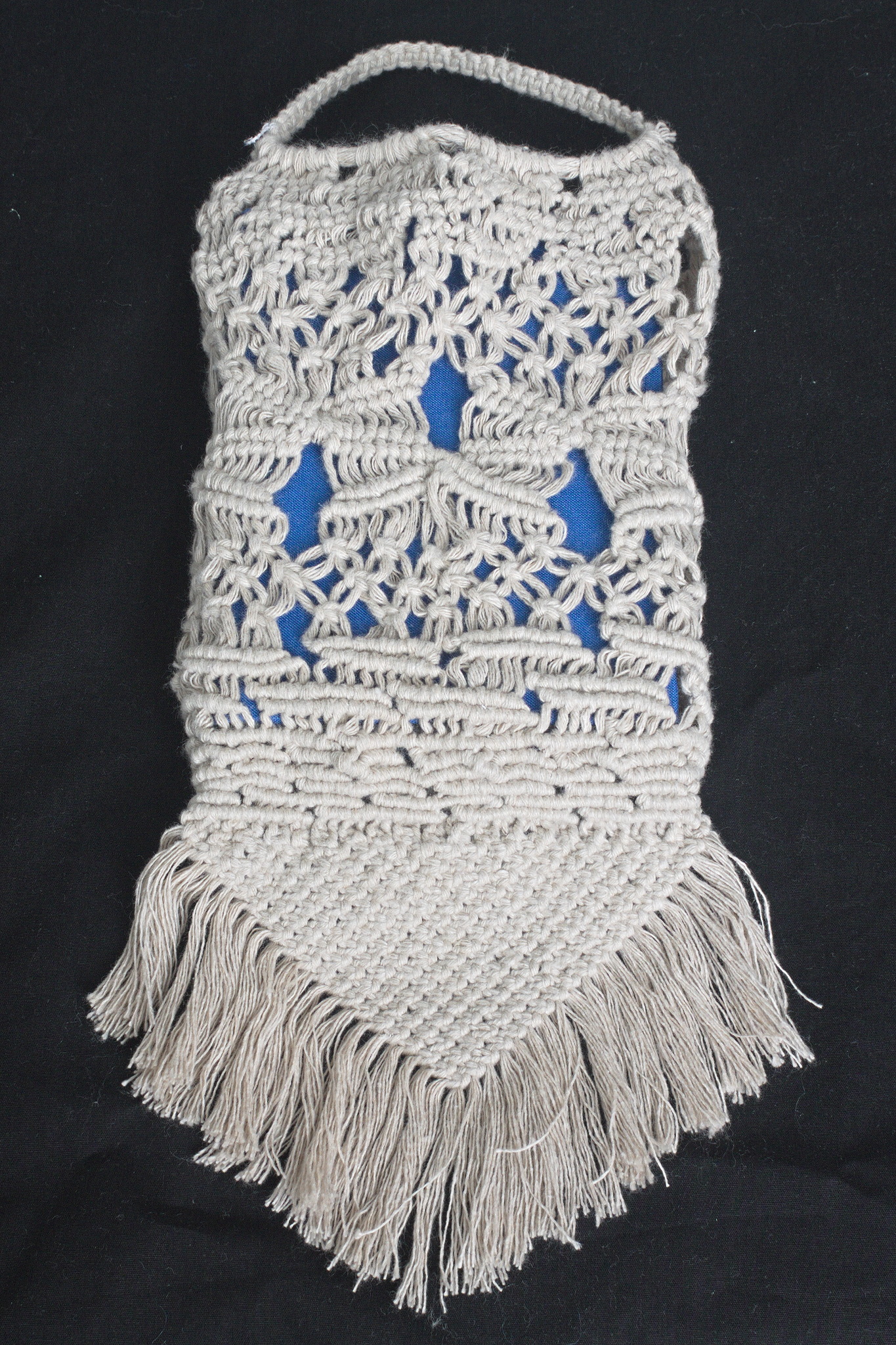
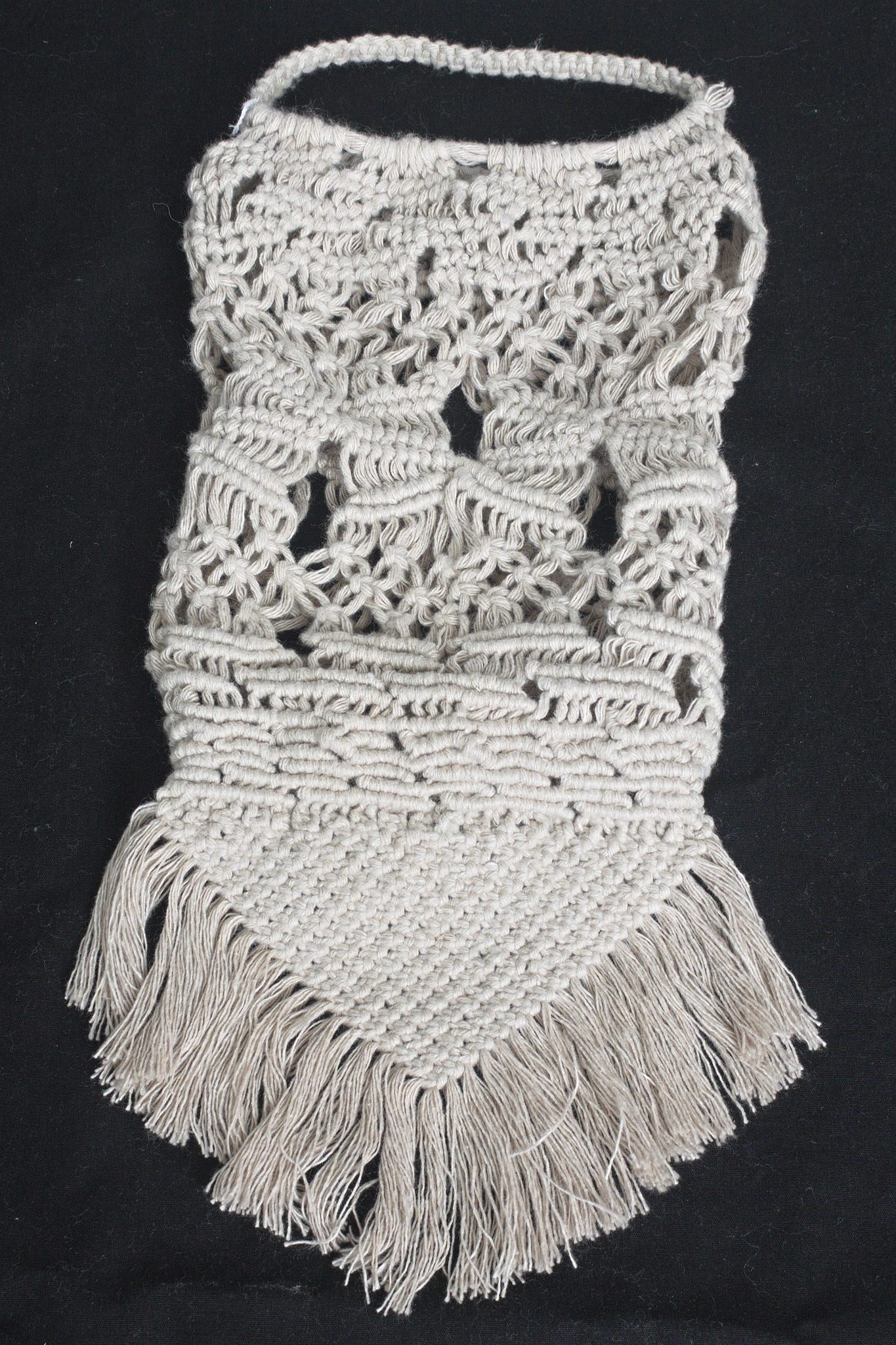
a macrame bag in ~3 mm ecru yarn, with very irregular knots of different types, holding a book with a blue cover. The bottom part has a rigid single layer triangle and a fringe. In late 2022 I prepared a batch of drawstring backpacks in cotton as reusable wrappers for Christmas gifts; however I didn t know what cord to use, didn t want to use paracord, and couldn t find anything that looked right in the local shops. With Christmas getting dangerously closer, I visited a craft materials website for unrelated reasons, found out that they sold macrame cords, and panic-bought a few types in the hope that at least one would work for the backpacks. I got lucky, and my first choice fitted just fine, and I was able to finish the backpacks in time for the holidays. And then I had a box full of macrame cords in various sizes and types that weren t the best match for the drawstring in a backpack, and no real use for them. I don t think I had ever done macrame, but I have made friendship bracelets in primary school, and a few Friendship Bracelets, But For Real Men So We Call Them Survival Bracelets(TM) more recently, so I didn t bother reading instructions or tutorials online, I just grabbed the Ashley Book of Knots to refresh myself on the knots used, and decided to make myself a small bag for an A6 book. I choose one of the thin, ~3 mm cords, Tre Sfere Macram Barbante, of which there was plenty, so that I could stumble around with no real plan. A loop of four cords, with a handle made of square knots that keeps it together. I started by looping 5 m of cord, making iirc 2 rounds of a loop about the right size to go around the book with a bit of ease, then used the ends as filler cords for a handle, wrapped them around the loop and worked square knots all over them to make a handle. Then I cut the rest of the cord into 40 pieces, each 4 m long, because I had no idea how much I was going to need (spoiler: I successfully got it wrong :D ) I joined the cords to the handle with lark head knots, 20 per side, and then I started knotting without a plan or anything, alternating between hitches and square knots, sometimes close together and sometimes leaving some free cord between them. And apparently I also completely forgot to take in-progress pictures. I kept working on this for a few months, knotting a row or two now and then, until the bag was long enough for the book, then I closed the bottom by taking one cord from the front and the corresponding on the back, knotting them together (I don t remember how) and finally I made a rigid triangle of tight square knots with all of the cords, progressively leaving out a cord from each side, and cutting it in a fringe. I then measured the remaining cords, and saw that the shortest ones were about a meter long, but the longest ones were up to 3 meters, I could have cut them much shorter at the beginning (and maybe added a couple more cords). The leftovers will be used, in some way. And then I postponed taking pictures of the finished object for a few months. The same bag, empty and showing how the sides aren't straight. Now the result is functional, but I have to admit it is somewhat ugly: not as much for the lack of a pattern (that I think came out quite fine) but because of how irregular the knots are; I m not confident that the next time I will be happy with their regularity, either, but I hope I will improve, and that s one important thing. And the other important thing is: I enjoyed making this, even if I kept interrupting the work, and I think that there may be some other macrame in my future.

30 January 2024

Antoine Beaupr : router archeology: the Soekris net5001

Roadkiller was a Soekris net5501 router I used as my main gateway between 2010 and 2016 (for r seau and t l phone). It was upgraded to FreeBSD 8.4-p12 (2014-06-06) and pkgng. It was retired in favor of octavia around 2016. Roughly 10 years later (2024-01-24), I found it in a drawer and, to my surprised, it booted. After wrangling with a RS-232 USB adapter, a null modem cable, and bit rates, I even logged in:
comBIOS ver. 1.33  20070103  Copyright (C) 2000-2007 Soekris Engineering.
net5501
0512 Mbyte Memory                        CPU Geode LX 500 Mhz 
Pri Mas  WDC WD800VE-00HDT0              LBA Xlt 1024-255-63  78 Gbyte
Slot   Vend Dev  ClassRev Cmd  Stat CL LT HT  Base1    Base2   Int 
-------------------------------------------------------------------
0:01:2 1022 2082 10100000 0006 0220 08 00 00 A0000000 00000000 10
0:06:0 1106 3053 02000096 0117 0210 08 40 00 0000E101 A0004000 11
0:07:0 1106 3053 02000096 0117 0210 08 40 00 0000E201 A0004100 05
0:08:0 1106 3053 02000096 0117 0210 08 40 00 0000E301 A0004200 09
0:09:0 1106 3053 02000096 0117 0210 08 40 00 0000E401 A0004300 12
0:20:0 1022 2090 06010003 0009 02A0 08 40 80 00006001 00006101 
0:20:2 1022 209A 01018001 0005 02A0 08 00 00 00000000 00000000 
0:21:0 1022 2094 0C031002 0006 0230 08 00 80 A0005000 00000000 15
0:21:1 1022 2095 0C032002 0006 0230 08 00 00 A0006000 00000000 15
 4 Seconds to automatic boot.   Press Ctrl-P for entering Monitor.
 
                                            
                                                  ______
                                                    ____  __ ___  ___ 
            Welcome to FreeBSD!                     __   '__/ _ \/ _ \
                                                    __       __/  __/
                                                                      
    1. Boot FreeBSD [default]                     _     _   \___ \___ 
    2. Boot FreeBSD with ACPI enabled             ____   _____ _____
    3. Boot FreeBSD in Safe Mode                    _ \ / ____   __ \
    4. Boot FreeBSD in single user mode             _)   (___         
    5. Boot FreeBSD with verbose logging            _ < \___ \        
    6. Escape to loader prompt                      _)  ____)    __   
    7. Reboot                                                         
                                                  ____/ _____/ _____/


    Select option, [Enter] for default      
    or [Space] to pause timer  5            
  
Copyright (c) 1992-2013 The FreeBSD Project.
Copyright (c) 1979, 1980, 1983, 1986, 1988, 1989, 1991, 1992, 1993, 1994
        The Regents of the University of California. All rights reserved.
FreeBSD is a registered trademark of The FreeBSD Foundation.
FreeBSD 8.4-RELEASE-p12 #5: Fri Jun  6 02:43:23 EDT 2014
    root@roadkiller.anarc.at:/usr/obj/usr/src/sys/ROADKILL i386
gcc version 4.2.2 20070831 prerelease [FreeBSD]
Timecounter "i8254" frequency 1193182 Hz quality 0
CPU: Geode(TM) Integrated Processor by AMD PCS (499.90-MHz 586-class CPU)
  Origin = "AuthenticAMD"  Id = 0x5a2  Family = 5  Model = a  Stepping = 2
  Features=0x88a93d<FPU,DE,PSE,TSC,MSR,CX8,SEP,PGE,CMOV,CLFLUSH,MMX>
  AMD Features=0xc0400000<MMX+,3DNow!+,3DNow!>
real memory  = 536870912 (512 MB)
avail memory = 506445824 (482 MB)
kbd1 at kbdmux0
K6-family MTRR support enabled (2 registers)
ACPI Error: A valid RSDP was not found (20101013/tbxfroot-309)
ACPI: Table initialisation failed: AE_NOT_FOUND
ACPI: Try disabling either ACPI or apic support.
cryptosoft0: <software crypto> on motherboard
pcib0 pcibus 0 on motherboard
pci0: <PCI bus> on pcib0
Geode LX: Soekris net5501 comBIOS ver. 1.33 20070103 Copyright (C) 2000-2007
pci0: <encrypt/decrypt, entertainment crypto> at device 1.2 (no driver attached)
vr0: <VIA VT6105M Rhine III 10/100BaseTX> port 0xe100-0xe1ff mem 0xa0004000-0xa00040ff irq 11 at device 6.0 on pci0
vr0: Quirks: 0x2
vr0: Revision: 0x96
miibus0: <MII bus> on vr0
ukphy0: <Generic IEEE 802.3u media interface> PHY 1 on miibus0
ukphy0:  none, 10baseT, 10baseT-FDX, 100baseTX, 100baseTX-FDX, auto, auto-flow
vr0: Ethernet address: 00:00:24:cc:93:44
vr0: [ITHREAD]
vr1: <VIA VT6105M Rhine III 10/100BaseTX> port 0xe200-0xe2ff mem 0xa0004100-0xa00041ff irq 5 at device 7.0 on pci0
vr1: Quirks: 0x2
vr1: Revision: 0x96
miibus1: <MII bus> on vr1
ukphy1: <Generic IEEE 802.3u media interface> PHY 1 on miibus1
ukphy1:  none, 10baseT, 10baseT-FDX, 100baseTX, 100baseTX-FDX, auto, auto-flow
vr1: Ethernet address: 00:00:24:cc:93:45
vr1: [ITHREAD]
vr2: <VIA VT6105M Rhine III 10/100BaseTX> port 0xe300-0xe3ff mem 0xa0004200-0xa00042ff irq 9 at device 8.0 on pci0
vr2: Quirks: 0x2
vr2: Revision: 0x96
miibus2: <MII bus> on vr2
ukphy2: <Generic IEEE 802.3u media interface> PHY 1 on miibus2
ukphy2:  none, 10baseT, 10baseT-FDX, 100baseTX, 100baseTX-FDX, auto, auto-flow
vr2: Ethernet address: 00:00:24:cc:93:46
vr2: [ITHREAD]
vr3: <VIA VT6105M Rhine III 10/100BaseTX> port 0xe400-0xe4ff mem 0xa0004300-0xa00043ff irq 12 at device 9.0 on pci0
vr3: Quirks: 0x2
vr3: Revision: 0x96
miibus3: <MII bus> on vr3
ukphy3: <Generic IEEE 802.3u media interface> PHY 1 on miibus3
ukphy3:  none, 10baseT, 10baseT-FDX, 100baseTX, 100baseTX-FDX, auto, auto-flow
vr3: Ethernet address: 00:00:24:cc:93:47
vr3: [ITHREAD]
isab0: <PCI-ISA bridge> at device 20.0 on pci0
isa0: <ISA bus> on isab0
atapci0: <AMD CS5536 UDMA100 controller> port 0x1f0-0x1f7,0x3f6,0x170-0x177,0x376,0xe000-0xe00f at device 20.2 on pci0
ata0: <ATA channel> at channel 0 on atapci0
ata0: [ITHREAD]
ata1: <ATA channel> at channel 1 on atapci0
ata1: [ITHREAD]
ohci0: <OHCI (generic) USB controller> mem 0xa0005000-0xa0005fff irq 15 at device 21.0 on pci0
ohci0: [ITHREAD]
usbus0 on ohci0
ehci0: <AMD CS5536 (Geode) USB 2.0 controller> mem 0xa0006000-0xa0006fff irq 15 at device 21.1 on pci0
ehci0: [ITHREAD]
usbus1: EHCI version 1.0
usbus1 on ehci0
cpu0 on motherboard
pmtimer0 on isa0
orm0: <ISA Option ROM> at iomem 0xc8000-0xd27ff pnpid ORM0000 on isa0
atkbdc0: <Keyboard controller (i8042)> at port 0x60,0x64 on isa0
atkbd0: <AT Keyboard> irq 1 on atkbdc0
kbd0 at atkbd0
atkbd0: [GIANT-LOCKED]
atkbd0: [ITHREAD]
atrtc0: <AT Real Time Clock> at port 0x70 irq 8 on isa0
ppc0: parallel port not found.
uart0: <16550 or compatible> at port 0x3f8-0x3ff irq 4 flags 0x10 on isa0
uart0: [FILTER]
uart0: console (19200,n,8,1)
uart1: <16550 or compatible> at port 0x2f8-0x2ff irq 3 on isa0
uart1: [FILTER]
Timecounter "TSC" frequency 499903982 Hz quality 800
Timecounters tick every 1.000 msec
IPsec: Initialized Security Association Processing.
usbus0: 12Mbps Full Speed USB v1.0
usbus1: 480Mbps High Speed USB v2.0
ad0: 76319MB <WDC WD800VE-00HDT0 09.07D09> at ata0-master UDMA100 
ugen0.1: <AMD> at usbus0
uhub0: <AMD OHCI root HUB, class 9/0, rev 1.00/1.00, addr 1> on usbus0
ugen1.1: <AMD> at usbus1
uhub1: <AMD EHCI root HUB, class 9/0, rev 2.00/1.00, addr 1> on usbus1
GEOM: ad0s1: geometry does not match label (255h,63s != 16h,63s).
uhub0: 4 ports with 4 removable, self powered
Root mount waiting for: usbus1
uhub1: 4 ports with 4 removable, self powered
Trying to mount root from ufs:/dev/ad0s1a
The last log rotation is from 2016:
[root@roadkiller /var/log]# stat /var/log/wtmp      
65 61783 -rw-r--r-- 1 root wheel 208219 1056 "Nov  1 05:00:01 2016" "Jan 18 22:29:16 2017" "Jan 18 22:29:16 2017" "Nov  1 05:00:01 2016" 16384 4 0 /var/log/wtmp
Interestingly, I switched between eicat and teksavvy on December 11th. Which year? Who knows!
Dec 11 16:38:40 roadkiller mpd: [eicatL0] LCP: authorization successful
Dec 11 16:41:15 roadkiller mpd: [teksavvyL0] LCP: authorization successful
Never realized those good old logs had a "oh dear forgot the year" issue (that's something like Y2K except just "Y", I guess). That was probably 2015, because the log dates from 2017, and the last entry is from November of the year after the above:
[root@roadkiller /var/log]# stat mpd.log 
65 47113 -rw-r--r-- 1 root wheel 193008 71939195 "Jan 18 22:39:18 2017" "Jan 18 22:39:59 2017" "Jan 18 22:39:59 2017" "Apr  2 10:41:37 2013" 16384 140640 0 mpd.log
It looks like the system was installed in 2010:
[root@roadkiller /var/log]# stat /
63 2 drwxr-xr-x 21 root wheel 2120 512 "Jan 18 22:34:43 2017" "Jan 18 22:28:12 2017" "Jan 18 22:28:12 2017" "Jul 18 22:25:00 2010" 16384 4 0 /
... so it lived for about 6 years, but still works after almost 14 years, which I find utterly amazing. Another amazing thing is that there's tuptime installed on that server! That is a software I thought I discovered later and then sponsored in Debian, but turns out I was already using it then!
[root@roadkiller /var]# tuptime 
System startups:        19   since   21:20:16 11/07/15
System shutdowns:       0 ok   -   18 bad
System uptime:          85.93 %   -   1 year, 11 days, 10 hours, 3 minutes and 36 seconds
System downtime:        14.07 %   -   61 days, 15 hours, 22 minutes and 45 seconds
System life:            1 year, 73 days, 1 hour, 26 minutes and 20 seconds
Largest uptime:         122 days, 9 hours, 17 minutes and 6 seconds   from   08:17:56 02/02/16
Shortest uptime:        5 minutes and 4 seconds   from   21:55:00 01/18/17
Average uptime:         19 days, 19 hours, 28 minutes and 37 seconds
Largest downtime:       57 days, 1 hour, 9 minutes and 59 seconds   from   20:45:01 11/22/16
Shortest downtime:      -1 years, 364 days, 23 hours, 58 minutes and 12 seconds   from   22:30:01 01/18/17
Average downtime:       3 days, 5 hours, 51 minutes and 43 seconds
Current uptime:         18 minutes and 23 seconds   since   22:28:13 01/18/17
Actual up/down times:
[root@roadkiller /var]# tuptime -t
No.        Startup Date                                         Uptime       Shutdown Date   End                                                  Downtime
1     21:20:16 11/07/15      1 day, 0 hours, 40 minutes and 12 seconds   22:00:28 11/08/15   BAD                                  2 minutes and 37 seconds
2     22:03:05 11/08/15      1 day, 9 hours, 41 minutes and 57 seconds   07:45:02 11/10/15   BAD                                  3 minutes and 24 seconds
3     07:48:26 11/10/15    20 days, 2 hours, 41 minutes and 34 seconds   10:30:00 11/30/15   BAD                        4 hours, 50 minutes and 21 seconds
4     15:20:21 11/30/15                      19 minutes and 40 seconds   15:40:01 11/30/15   BAD                                   6 minutes and 5 seconds
5     15:46:06 11/30/15                      53 minutes and 55 seconds   16:40:01 11/30/15   BAD                           1 hour, 1 minute and 38 seconds
6     17:41:39 11/30/15     6 days, 16 hours, 3 minutes and 22 seconds   09:45:01 12/07/15   BAD                4 days, 6 hours, 53 minutes and 11 seconds
7     16:38:12 12/11/15   50 days, 17 hours, 56 minutes and 49 seconds   10:35:01 01/31/16   BAD                                 10 minutes and 52 seconds
8     10:45:53 01/31/16     1 day, 21 hours, 28 minutes and 16 seconds   08:14:09 02/02/16   BAD                                  3 minutes and 48 seconds
9     08:17:56 02/02/16    122 days, 9 hours, 17 minutes and 6 seconds   18:35:02 06/03/16   BAD                                 10 minutes and 16 seconds
10    18:45:18 06/03/16   29 days, 17 hours, 14 minutes and 43 seconds   12:00:01 07/03/16   BAD                                 12 minutes and 34 seconds
11    12:12:35 07/03/16   31 days, 17 hours, 17 minutes and 26 seconds   05:30:01 08/04/16   BAD                                 14 minutes and 25 seconds
12    05:44:26 08/04/16     15 days, 1 hour, 55 minutes and 35 seconds   07:40:01 08/19/16   BAD                                  6 minutes and 51 seconds
13    07:46:52 08/19/16     7 days, 5 hours, 23 minutes and 10 seconds   13:10:02 08/26/16   BAD                                  3 minutes and 45 seconds
14    13:13:47 08/26/16   27 days, 21 hours, 36 minutes and 14 seconds   10:50:01 09/23/16   BAD                                  2 minutes and 14 seconds
15    10:52:15 09/23/16   60 days, 10 hours, 52 minutes and 46 seconds   20:45:01 11/22/16   BAD                 57 days, 1 hour, 9 minutes and 59 seconds
16    21:55:00 01/18/17                        5 minutes and 4 seconds   22:00:04 01/18/17   BAD                                 11 minutes and 15 seconds
17    22:11:19 01/18/17                       8 minutes and 42 seconds   22:20:01 01/18/17   BAD                                   1 minute and 20 seconds
18    22:21:21 01/18/17                       8 minutes and 40 seconds   22:30:01 01/18/17   BAD   -1 years, 364 days, 23 hours, 58 minutes and 12 seconds
19    22:28:13 01/18/17                      20 minutes and 17 seconds
The last few entries are actually the tests I'm running now, it seems this machine thinks we're now on 2017-01-18 at ~22:00, while we're actually 2024-01-24 at ~12:00 local:
Wed Jan 18 23:05:38 EST 2017
FreeBSD/i386 (roadkiller.anarc.at) (ttyu0)
login: root
Password:
Jan 18 23:07:10 roadkiller login: ROOT LOGIN (root) ON ttyu0
Last login: Wed Jan 18 22:29:16 on ttyu0
Copyright (c) 1992-2013 The FreeBSD Project.
Copyright (c) 1979, 1980, 1983, 1986, 1988, 1989, 1991, 1992, 1993, 1994
        The Regents of the University of California. All rights reserved.
FreeBSD 8.4-RELEASE-p12 (ROADKILL) #5: Fri Jun  6 02:43:23 EDT 2014
Reminders:
 * commit stuff in /etc
 * reload firewall (in screen!):
    pfctl -f /etc/pf.conf ; sleep 1
 * vim + syn on makes pf.conf more readable
 * monitoring the PPPoE uplink:
   tail -f /var/log/mpd.log
Current problems:
 * sometimes pf doesn't start properly on boot, if pppoe failed to come up, use
   this to resume:
     /etc/rc.d/pf start
   it will kill your shell, but fix NAT (2012-08-10)
 * babel fails to start on boot (2013-06-15):
     babeld -D -g 33123 tap0 vr3
 * DNS often fails, tried messing with unbound.conf (2014-10-05) and updating
   named.root (2016-01-28) and performance tweaks (ee63689)
 * asterisk and mpd4 are deprecated and should be uninstalled when we're sure
   their replacements (voipms + ata and mpd5) are working (2015-01-13)
 * if IPv6 fails, it's because netblocks are not being routed upstream. DHCPcd
   should do this, but doesn't start properly, use this to resume (2015-12-21):
     /usr/local/sbin/dhcpcd -6 --persistent --background --timeout 0 -C resolv.conf ng0
This machine is doomed to be replaced with the new omnia router, Indiegogo
campaign should ship in april 2016: http://igg.me/at/turris-omnia/x
(I really like the motd I left myself there. In theory, I guess this could just start connecting to the internet again if I still had the same PPPoE/ADSL link I had almost a decade ago; obviously, I do not.) Not sure how the system figured the 2017 time: the onboard clock itself believes we're in 1980, so clearly the CMOS battery has (understandably) failed:
> ?
comBIOS Monitor Commands
boot [drive][:partition] INT19 Boot
reboot                   cold boot
download                 download a file using XMODEM/CRC
flashupdate              update flash BIOS with downloaded file
time [HH:MM:SS]          show or set time
date [YYYY/MM/DD]        show or set date
d[b w d] [adr]           dump memory bytes/words/dwords
e[b w d] adr value [...] enter bytes/words/dwords
i[b w d] port            input from 8/16/32-bit port
o[b w d] port value      output to 8/16/32-bit port
run adr                  execute code at adr
cmosread [adr]           read CMOS RAM data
cmoswrite adr byte [...] write CMOS RAM data
cmoschecksum             update CMOS RAM Checksum
set parameter=value      set system parameter to value
show [parameter]         show one or all system parameters
?/help                   show this help
> show
ConSpeed = 19200
ConLock = Enabled
ConMute = Disabled
BIOSentry = Enabled
PCIROMS = Enabled
PXEBoot = Enabled
FLASH = Primary
BootDelay = 5
FastBoot = Disabled
BootPartition = Disabled
BootDrive = 80 81 F0 FF 
ShowPCI = Enabled
Reset = Hard
CpuSpeed = Default
> time
Current Date and Time is: 1980/01/01 00:56:47
Another bit of archeology: I had documented various outages with my ISP... back in 2003!
[root@roadkiller ~/bin]# cat ppp_stats/downtimes.txt
11/03/2003 18:24:49 218
12/03/2003 09:10:49 118
12/03/2003 10:05:57 680
12/03/2003 10:14:50 106
12/03/2003 10:16:53 6
12/03/2003 10:35:28 146
12/03/2003 10:57:26 393
12/03/2003 11:16:35 5
12/03/2003 11:16:54 11
13/03/2003 06:15:57 18928
13/03/2003 09:43:36 9730
13/03/2003 10:47:10 23
13/03/2003 10:58:35 5
16/03/2003 01:32:36 338
16/03/2003 02:00:33 120
16/03/2003 11:14:31 14007
19/03/2003 00:56:27 11179
19/03/2003 00:56:43 5
19/03/2003 00:56:53 0
19/03/2003 00:56:55 1
19/03/2003 00:57:09 1
19/03/2003 00:57:10 1
19/03/2003 00:57:24 1
19/03/2003 00:57:25 1
19/03/2003 00:57:39 1
19/03/2003 00:57:40 1
19/03/2003 00:57:44 3
19/03/2003 00:57:53 0
19/03/2003 00:57:55 0
19/03/2003 00:58:08 0
19/03/2003 00:58:10 0
19/03/2003 00:58:23 0
19/03/2003 00:58:25 0
19/03/2003 00:58:39 1
19/03/2003 00:58:42 2
19/03/2003 00:58:58 5
19/03/2003 00:59:35 2
19/03/2003 00:59:47 3
19/03/2003 01:00:34 3
19/03/2003 01:00:39 0
19/03/2003 01:00:54 0
19/03/2003 01:01:11 2
19/03/2003 01:01:25 1
19/03/2003 01:01:48 1
19/03/2003 01:02:03 1
19/03/2003 01:02:10 2
19/03/2003 01:02:20 3
19/03/2003 01:02:44 3
19/03/2003 01:03:45 3
19/03/2003 01:04:39 2
19/03/2003 01:05:40 2
19/03/2003 01:06:35 2
19/03/2003 01:07:36 2
19/03/2003 01:08:31 2
19/03/2003 01:08:38 2
19/03/2003 01:10:07 3
19/03/2003 01:11:05 2
19/03/2003 01:12:03 3
19/03/2003 01:13:01 3
19/03/2003 01:13:58 2
19/03/2003 01:14:59 5
19/03/2003 01:15:54 2
19/03/2003 01:16:55 2
19/03/2003 01:17:50 2
19/03/2003 01:18:51 3
19/03/2003 01:19:46 2
19/03/2003 01:20:46 2
19/03/2003 01:21:42 3
19/03/2003 01:22:42 3
19/03/2003 01:23:37 2
19/03/2003 01:24:38 3
19/03/2003 01:25:33 2
19/03/2003 01:26:33 2
19/03/2003 01:27:30 3
19/03/2003 01:28:55 2
19/03/2003 01:29:56 2
19/03/2003 01:30:50 2
19/03/2003 01:31:42 3
19/03/2003 01:32:36 3
19/03/2003 01:33:27 2
19/03/2003 01:34:21 2
19/03/2003 01:35:22 2
19/03/2003 01:36:17 3
19/03/2003 01:37:18 2
19/03/2003 01:38:13 3
19/03/2003 01:39:39 2
19/03/2003 01:40:39 2
19/03/2003 01:41:35 3
19/03/2003 01:42:35 3
19/03/2003 01:43:31 3
19/03/2003 01:44:31 3
19/03/2003 01:45:53 3
19/03/2003 01:46:48 3
19/03/2003 01:47:48 2
19/03/2003 01:48:44 3
19/03/2003 01:49:44 2
19/03/2003 01:50:40 3
19/03/2003 01:51:39 1
19/03/2003 11:04:33 19   
19/03/2003 18:39:36 2833 
19/03/2003 18:54:05 825  
19/03/2003 19:04:00 454  
19/03/2003 19:08:11 210  
19/03/2003 19:41:44 272  
19/03/2003 21:18:41 208  
24/03/2003 04:51:16 6
27/03/2003 04:51:20 5
30/03/2003 04:51:25 5
31/03/2003 08:30:31 255  
03/04/2003 08:30:36 5
06/04/2003 01:16:00 621  
06/04/2003 22:18:08 17   
06/04/2003 22:32:44 13   
09/04/2003 22:33:12 28   
12/04/2003 22:33:17 6
15/04/2003 22:33:22 5
17/04/2003 15:03:43 18   
20/04/2003 15:03:48 5
23/04/2003 15:04:04 16   
23/04/2003 21:08:30 339  
23/04/2003 21:18:08 13   
23/04/2003 23:34:20 253  
26/04/2003 23:34:45 25   
29/04/2003 23:34:49 5
02/05/2003 13:10:01 185  
05/05/2003 13:10:06 5
08/05/2003 13:10:11 5
09/05/2003 14:00:36 63928
09/05/2003 16:58:52 2
11/05/2003 23:08:48 2
14/05/2003 23:08:53 6
17/05/2003 23:08:58 5
20/05/2003 23:09:03 5
23/05/2003 23:09:08 5
26/05/2003 23:09:14 5
29/05/2003 23:00:10 3
29/05/2003 23:03:01 10   
01/06/2003 23:03:05 4
04/06/2003 23:03:10 5
07/06/2003 23:03:38 28   
10/06/2003 23:03:50 12   
13/06/2003 23:03:55 6
14/06/2003 07:42:20 3
14/06/2003 14:37:08 3
15/06/2003 20:08:34 3
18/06/2003 20:08:39 6
21/06/2003 20:08:45 6
22/06/2003 03:05:19 138  
22/06/2003 04:06:28 3
25/06/2003 04:06:58 31   
28/06/2003 04:07:02 4
01/07/2003 04:07:06 4
04/07/2003 04:07:11 5
07/07/2003 04:07:16 5
12/07/2003 04:55:20 6
12/07/2003 19:09:51 1158 
12/07/2003 22:14:49 8025 
15/07/2003 22:14:54 6
16/07/2003 05:43:06 18   
19/07/2003 05:43:12 6
22/07/2003 05:43:17 5
23/07/2003 18:18:55 183  
23/07/2003 18:19:55 9
23/07/2003 18:29:15 158  
23/07/2003 19:48:44 4604 
23/07/2003 20:16:27 3
23/07/2003 20:37:29 1079 
23/07/2003 20:43:12 342  
23/07/2003 22:25:51 6158
Fascinating. I suspect the (IDE!) hard drive might be failing as I saw two new files created in /var that I didn't remember seeing before:
-rw-r--r--   1 root    wheel        0 Jan 18 22:55 3@T3
-rw-r--r--   1 root    wheel        0 Jan 18 22:55 DY5
So I shutdown the machine, possibly for the last time:
Waiting (max 60 seconds) for system process  bufdaemon' to stop...done
Waiting (max 60 seconds) for system process  syncer' to stop...
Syncing disks, vnodes remaining...3 3 0 1 1 0 0 done
All buffers synced.
Uptime: 36m43s
usbus0: Controller shutdown
uhub0: at usbus0, port 1, addr 1 (disconnected)
usbus0: Controller shutdown complete
usbus1: Controller shutdown
uhub1: at usbus1, port 1, addr 1 (disconnected)
usbus1: Controller shutdown complete
The operating system has halted.
Please press any key to reboot.
I'll finally note this was the last FreeBSD server I personally operated. I also used FreeBSD to setup the core routers at Koumbit but those were replaced with Debian recently as well. Thanks Soekris, that was some sturdy hardware. Hopefully this new Protectli router will live up to that "decade plus" challenge. Not sure what the fate of this device will be: I'll bring it to the next Montreal Debian & Stuff to see if anyone's interested, contact me if you can't show up and want this thing.

Matthew Palmer: Why Certificate Lifecycle Automation Matters

If you ve perused the ActivityPub feed of certificates whose keys are known to be compromised, and clicked on the Show More button to see the name of the certificate issuer, you may have noticed that some issuers seem to come up again and again. This might make sense after all, if a CA is issuing a large volume of certificates, they ll be seen more often in a list of compromised certificates. In an attempt to see if there is anything that we can learn from this data, though, I did a bit of digging, and came up with some illuminating results.

The Procedure I started off by finding all the unexpired certificates logged in Certificate Transparency (CT) logs that have a key that is in the pwnedkeys database as having been publicly disclosed. From this list of certificates, I removed duplicates by matching up issuer/serial number tuples, and then reduced the set by counting the number of unique certificates by their issuer. This gave me a list of the issuers of these certificates, which looks a bit like this:
/C=BE/O=GlobalSign nv-sa/CN=AlphaSSL CA - SHA256 - G4
/C=GB/ST=Greater Manchester/L=Salford/O=Sectigo Limited/CN=Sectigo RSA Domain Validation Secure Server CA
/C=GB/ST=Greater Manchester/L=Salford/O=Sectigo Limited/CN=Sectigo RSA Organization Validation Secure Server CA
/C=US/ST=Arizona/L=Scottsdale/O=GoDaddy.com, Inc./OU=http://certs.godaddy.com/repository//CN=Go Daddy Secure Certificate Authority - G2
/C=US/ST=Arizona/L=Scottsdale/O=Starfield Technologies, Inc./OU=http://certs.starfieldtech.com/repository//CN=Starfield Secure Certificate Authority - G2
/C=AT/O=ZeroSSL/CN=ZeroSSL RSA Domain Secure Site CA
/C=BE/O=GlobalSign nv-sa/CN=GlobalSign GCC R3 DV TLS CA 2020
Rather than try to work with raw issuers (because, as Andrew Ayer says, The SSL Certificate Issuer Field is a Lie), I mapped these issuers to the organisations that manage them, and summed the counts for those grouped issuers together.

The Data
Lieutenant Commander Data from Star Trek: The Next Generation Insert obligatory "not THAT data" comment here
The end result of this work is the following table, sorted by the count of certificates which have been compromised by exposing their private key:
IssuerCompromised Count
Sectigo170
ISRG (Let's Encrypt)161
GoDaddy141
DigiCert81
GlobalSign46
Entrust3
SSL.com1
If you re familiar with the CA ecosystem, you ll probably recognise that the organisations with large numbers of compromised certificates are also those who issue a lot of certificates. So far, nothing particularly surprising, then. Let s look more closely at the relationships, though, to see if we can get more useful insights.

Volume Control Using the issuance volume report from crt.sh, we can compare issuance volumes to compromise counts, to come up with a compromise rate . I m using the Unexpired Precertificates colume from the issuance volume report, as I feel that s the number that best matches the certificate population I m examining to find compromised certificates. To maintain parity with the previous table, this one is still sorted by the count of certificates that have been compromised.
IssuerIssuance VolumeCompromised CountCompromise Rate
Sectigo88,323,0681701 in 519,547
ISRG (Let's Encrypt)315,476,4021611 in 1,959,480
GoDaddy56,121,4291411 in 398,024
DigiCert144,713,475811 in 1,786,586
GlobalSign1,438,485461 in 31,271
Entrust23,16631 in 7,722
SSL.com171,81611 in 171,816
If we now sort this table by compromise rate, we can see which organisations have the most (and least) leakiness going on from their customers:
IssuerIssuance VolumeCompromised CountCompromise Rate
Entrust23,16631 in 7,722
GlobalSign1,438,485461 in 31,271
SSL.com171,81611 in 171,816
GoDaddy56,121,4291411 in 398,024
Sectigo88,323,0681701 in 519,547
DigiCert144,713,475811 in 1,786,586
ISRG (Let's Encrypt)315,476,4021611 in 1,959,480
By grouping by order-of-magnitude in the compromise rate, we can identify three bands :
  • The Super Leakers: Customers of Entrust and GlobalSign seem to love to lose control of their private keys. For Entrust, at least, though, the small volumes involved make the numbers somewhat untrustworthy. The three compromised certificates could very well belong to just one customer, for instance. I m not aware of anything that GlobalSign does that would make them such an outlier, either, so I m inclined to think they just got unlucky with one or two customers, but as CAs don t include customer IDs in the certificates they issue, it s not possible to say whether that s the actual cause or not.
  • The Regular Leakers: Customers of SSL.com, GoDaddy, and Sectigo all have compromise rates in the 1-in-hundreds-of-thousands range. Again, the low volumes of SSL.com make the numbers somewhat unreliable, but the other two organisations in this group have large enough numbers that we can rely on that data fairly well, I think.
  • The Low Leakers: Customers of DigiCert and Let s Encrypt are at least three times less likely than customers of the regular leakers to lose control of their private keys. Good for them!
Now we have some useful insights we can think about.

Why Is It So?
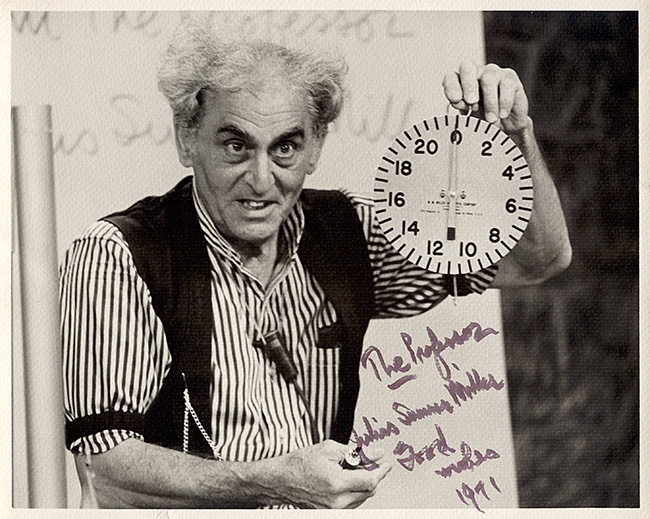
Professor Julius Sumner Miller If you don't know who Professor Julius Sumner Miller is, I highly recommend finding out

All of the organisations on the list, with the exception of Let s Encrypt, are what one might term traditional CAs. To a first approximation, it s reasonable to assume that the vast majority of the customers of these traditional CAs probably manage their certificates the same way they have for the past two decades or more. That is, they generate a key and CSR, upload the CSR to the CA to get a certificate, then copy the cert and key somewhere. Since humans are handling the keys, there s a higher risk of the humans using either risky practices, or making a mistake, and exposing the private key to the world. Let s Encrypt, on the other hand, issues all of its certificates using the ACME (Automatic Certificate Management Environment) protocol, and all of the Let s Encrypt documentation encourages the use of software tools to generate keys, issue certificates, and install them for use. Given that Let s Encrypt has 161 compromised certificates currently in the wild, it s clear that the automation in use is far from perfect, but the significantly lower compromise rate suggests to me that lifecycle automation at least reduces the rate of key compromise, even though it doesn t eliminate it completely.

Explaining the Outlier The difference in presumed issuance practices would seem to explain the significant difference in compromise rates between Let s Encrypt and the other organisations, if it weren t for one outlier. This is a largely traditional CA, with the manual-handling issues that implies, but with a compromise rate close to that of Let s Encrypt. We are, of course, talking about DigiCert. The thing about DigiCert, that doesn t show up in the raw numbers from crt.sh, is that DigiCert manages the issuance of certificates for several of the biggest hosted TLS providers, such as CloudFlare and AWS. When these services obtain a certificate from DigiCert on their customer s behalf, the private key is kept locked away, and no human can (we hope) get access to the private key. This is supported by the fact that no certificates identifiably issued to either CloudFlare or AWS appear in the set of certificates with compromised keys. When we ask for all certificates issued by DigiCert , we get both the certificates issued to these big providers, which are very good at keeping their keys under control, as well as the certificates issued to everyone else, whose key handling practices may not be quite so stringent. It s possible, though not trivial, to account for certificates issued to these hosted TLS providers, because the certificates they use are issued from intermediates branded to those companies. With the crt.sh psql interface we can run this query to get the total number of unexpired precertificates issued to these managed services:
SELECT SUM(sub.NUM_ISSUED[2] - sub.NUM_EXPIRED[2])
  FROM (
    SELECT ca.name, max(coalesce(coalesce(nullif(trim(cc.SUBORDINATE_CA_OWNER), ''), nullif(trim(cc.CA_OWNER), '')), cc.INCLUDED_CERTIFICATE_OWNER)) as OWNER,
           ca.NUM_ISSUED, ca.NUM_EXPIRED
      FROM ccadb_certificate cc, ca_certificate cac, ca
     WHERE cc.CERTIFICATE_ID = cac.CERTIFICATE_ID
       AND cac.CA_ID = ca.ID
  GROUP BY ca.ID
  ) sub
 WHERE sub.name ILIKE '%Amazon%' OR sub.name ILIKE '%CloudFlare%' AND sub.owner = 'DigiCert';
The number I get from running that query is 104,316,112, which should be subtracted from DigiCert s total issuance figures to get a more accurate view of what DigiCert s regular customers do with their private keys. When I do this, the compromise rates table, sorted by the compromise rate, looks like this:
IssuerIssuance VolumeCompromised CountCompromise Rate
Entrust23,16631 in 7,722
GlobalSign1,438,485461 in 31,271
SSL.com171,81611 in 171,816
GoDaddy56,121,4291411 in 398,024
"Regular" DigiCert40,397,363811 in 498,732
Sectigo88,323,0681701 in 519,547
All DigiCert144,713,475811 in 1,786,586
ISRG (Let's Encrypt)315,476,4021611 in 1,959,480
In short, it appears that DigiCert s regular customers are just as likely as GoDaddy or Sectigo customers to expose their private keys.

What Does It All Mean? The takeaway from all this is fairly straightforward, and not overly surprising, I believe.

The less humans have to do with certificate issuance, the less likely they are to compromise that certificate by exposing the private key. While it may not be surprising, it is nice to have some empirical evidence to back up the common wisdom. Fully-managed TLS providers, such as CloudFlare, AWS Certificate Manager, and whatever Azure s thing is called, is the platonic ideal of this principle: never give humans any opportunity to expose a private key. I m not saying you should use one of these providers, but the security approach they have adopted appears to be the optimal one, and should be emulated universally. The ACME protocol is the next best, in that there are a variety of standardised tools widely available that allow humans to take themselves out of the loop, but it s still possible for humans to handle (and mistakenly expose) key material if they try hard enough. Legacy issuance methods, which either cannot be automated, or require custom, per-provider automation to be developed, appear to be at least four times less helpful to the goal of avoiding compromise of the private key associated with a certificate.

Humans Are, Of Course, The Problem
Bender, the robot from Futurama, asking if we'd like to kill all humans No thanks, Bender, I'm busy tonight
This observation that if you don t let humans near keys, they don t get leaked is further supported by considering the biggest issuers by volume who have not issued any certificates whose keys have been compromised: Google Trust Services (fourth largest issuer overall, with 57,084,529 unexpired precertificates), and Microsoft Corporation (sixth largest issuer overall, with 22,852,468 unexpired precertificates). It appears that somewhere between most and basically all of the certificates these organisations issue are to customers of their public clouds, and my understanding is that the keys for these certificates are managed in same manner as CloudFlare and AWS the keys are locked away where humans can t get to them. It should, of course, go without saying that if a human can never have access to a private key, it makes it rather difficult for a human to expose it. More broadly, if you are building something that handles sensitive or secret data, the more you can do to keep humans out of the loop, the better everything will be.

Your Support is Appreciated If you d like to see more analysis of how key compromise happens, and the lessons we can learn from examining billions of certificates, please show your support by buying me a refreshing beverage. Trawling CT logs is thirsty work.

Appendix: Methodology Limitations In the interests of clarity, I feel it s important to describe ways in which my research might be flawed. Here are the things I know of that may have impacted the accuracy, that I couldn t feasibly account for.
  • Time Periods: Because time never stops, there is likely to be some slight mismatches in the numbers obtained from the various data sources, because they weren t collected at exactly the same moment.
  • Issuer-to-Organisation Mapping: It s possible that the way I mapped issuers to organisations doesn t match exactly with how crt.sh does it, meaning that counts might be skewed. I tried to minimise that by using the same data sources (the CCADB AllCertificates report) that I believe that crt.sh uses for its mapping, but I cannot be certain of a perfect match.
  • Unwarranted Grouping: I ve drawn some conclusions about the practices of the various organisations based on their general approach to certificate issuance. If a particular subordinate CA that I ve grouped into the parent organisation is managed in some unusual way, that might cause my conclusions to be erroneous. I was able to fairly easily separate out CloudFlare, AWS, and Azure, but there are almost certainly others that I didn t spot, because hoo boy there are a lot of intermediate CAs out there.

29 January 2024

Russ Allbery: Review: Bluebird

Review: Bluebird, by Ciel Pierlot
Publisher: Angry Robot
Copyright: 2022
ISBN: 0-85766-967-2
Format: Kindle
Pages: 458
Bluebird is a stand-alone far-future science fiction adventure. Ten thousand years ago, a star fell into the galaxy carrying three factions of humanity. The Ascetics, the Ossuary, and the Pyrites each believe that only their god survived and the other two factions are heretics. Between them, they have conquered the rest of the galaxy and its non-human species. The only thing the factions hate worse than each other are those who attempt to stay outside the faction system. Rig used to be a Pyrite weapon designer before she set fire to her office and escaped with her greatest invention. Now she's a Nightbird, a member of an outlaw band that tries to help refugees and protect her fellow Kashrini against Pyrite genocide. On her side, she has her girlfriend, an Ascetic librarian; her ship, Bluebird; and her guns, Panache and Pizzazz. And now, perhaps, the mysterious Ginka, a Zazra empath and remarkably capable fighter who helps Rig escape from an ambush by Pyrite soldiers. Rig wants to stay alive, help her people, and defy the factions. Pyrite wants Rig's secrets and, as leverage, has her sister. What Ginka wants is not entirely clear even to Ginka. This book is absurd, but I still had fun with it. It's dangerous for me to compare things to anime given how little anime that I've watched, but Bluebird had that vibe for me: anime, or maybe Japanese RPGs or superhero comics. The storytelling is very visual, combat-oriented, and not particularly realistic. Rig is a pistol sharpshooter and Ginka is the type of undefined deadly acrobatic fighter so often seen in that type of media. In addition to her ship, Rig has a gorgeous hand-maintained racing hoverbike with a beautiful paint job. It's that sort of book. It's also the sort of book where the characters obey cinematic logic designed to maximize dramatic physical confrontations, even if their actions make no logical sense. There is no facial recognition or screening, and it's bizarrely easy for the protagonists to end up in same physical location as high-up bad guys. One of the weapon systems that's critical to the plot makes no sense whatsoever. At critical moments, the bad guys behave more like final bosses in a video game, picking up weapons to deal with the protagonists directly instead of using their supposedly vast armies of agents. There is supposedly a whole galaxy full of civilizations with capital worlds covered in planet-spanning cities, but politics barely exist and the faction leaders get directly involved in the plot. If you are looking for a realistic projection of technology or society, I cannot stress enough that this is not the book that you're looking for. You probably figured that out when I mentioned ten thousand years of war, but that will only be the beginning of the suspension of disbelief problems. You need to turn off your brain and enjoy the action sequences and melodrama. I'm normally good at that, and I admit I still struggled because the plot logic is such a mismatch with the typical novels I read. There are several points where the characters do something that seems so monumentally dumb that I was sure Pierlot was setting them up for a fall, and then I got wrong-footed because their plan worked fine, or exploded for unrelated reasons. I think this type of story, heavy on dramatic eye-candy and emotional moments with swelling soundtracks, is a lot easier to pull off in visual media where all the pretty pictures distract your brain. In a novel, there's a lot of time to think about the strategy, technology, and government structure, which for this book is not a good idea. If you can get past that, though, Rig is entertainingly snarky and Ginka, who turns out to be the emotional heart of the book, is an enjoyable character with a real growth arc. Her background is a bit simplistic and the villains are the sort of pure evil that you might expect from this type of cinematic plot, but I cared about the outcome of her story. Some parts of the plot dragged and I think the editing could have been tighter, but there was enough competence porn and banter to pull me through. I would recommend Bluebird only cautiously, since you're going to need to turn off large portions of your brain and be in the right mood for nonsensically dramatic confrontations, but I don't regret reading it. It's mostly in primary colors and the emotional conflicts are not what anyone would call subtle, but it delivers a character arc and a somewhat satisfying ending. Content warning: There is a lot of serious physical injury in this book, including surgical maiming. If that's going to bother you, you may want to give this one a pass. Rating: 6 out of 10

Michael Ablassmeier: qmpbackup 0.28

Over the last weekend i had some spare time to improve qmpbackup a little more, the new version: and some minor code reworks. Hope its useful for someone.

28 January 2024

Niels Thykier: Annotating the Debian packaging directory

In my previous blog post Providing online reference documentation for debputy, I made a point about how debhelper documentation was suboptimal on account of being static rather than online. The thing is that debhelper is not alone in this problem space, even if it is a major contributor to the number of packaging files you have to to know about. If we look at the "competition" here such as Fedora and Arch Linux, they tend to only have one packaging file. While most Debian people will tell you a long list of cons about having one packaging file (such a Fedora's spec file being 3+ domain specific languages "mashed" into one file), one major advantage is that there is only "the one packaging file". You only need to remember where to find the documentation for one file, which is great when you are running on wetware with limited storage capacity. Which means as a newbie, you can dedicate less mental resources to tracking multiple files and how they interact and more effort understanding the "one file" at hand. I started by asking myself how can we in Debian make the packaging stack more accessible to newcomers? Spoiler alert, I dug myself into rabbit hole and ended up somewhere else than where I thought I was going. I started by wanting to scan the debian directory and annotate all files that I could with documentation links. The logic was that if debputy could do that for you, then you could spend more mental effort elsewhere. So I combined debputy's packager provided files detection with a static list of files and I quickly had a good starting point for debputy-based packages.
Adding (non-static) dpkg and debhelper files to the mix Now, I could have closed the topic here and said "Look, I did debputy files plus couple of super common files". But I decided to take it a bit further. I added support for handling some dpkg files like packager provided files (such as debian/substvars and debian/symbols). But even then, we all know that debhelper is the big hurdle and a major part of the omission... In another previous blog post (A new Debian package helper: debputy), I made a point about how debputy could list all auxiliary files while debhelper could not. This was exactly the kind of feature that I would need for this feature, if this feature was to cover debhelper. Now, I also remarked in that blog post that I was not willing to maintain such a list. Also, I may have ranted about static documentation being unhelpful for debhelper as it excludes third-party provided tooling. Fortunately, a recent update to dh_assistant had provided some basic plumbing for loading dh sequences. This meant that getting a list of all relevant commands for a source package was a lot easier than it used to be. Once you have a list of commands, it would be possible to check all of them for dh's NOOP PROMISE hints. In these hints, a command can assert it does nothing if a given pkgfile is not present. This lead to the new dh_assistant list-guessed-dh-config-files command that will list all declared pkgfiles and which helpers listed them. With this combined feature set in place, debputy could call dh_assistant to get a list of pkgfiles, pretend they were packager provided files and annotate those along with manpage for the relevant debhelper command. The exciting thing about letting debpputy resolve the pkgfiles is that debputy will resolve "named" files automatically (debhelper tools will only do so when --name is passed), so it is much more likely to detect named pkgfiles correctly too. Side note: I am going to ignore the elephant in the room for now, which is dh_installsystemd and its package@.service files and the wide-spread use of debian/foo.service where there is no package called foo. For the latter case, the "proper" name would be debian/pkg.foo.service. With the new dh_assistant feature done and added to debputy, debputy could now detect the ubiquitous debian/install file. Excellent. But less great was that the very common debian/docs file was not. Turns out that dh_installdocs cannot be skipped by dh, so it cannot have NOOP PROMISE hints. Meh... Well, dh_assistant could learn about a new INTROSPECTABLE marker in addition to the NOOP PROMISE and then I could sprinkle that into a few commands. Indeed that worked and meant that debian/postinst (etc.) are now also detectable. At this point, debputy would be able to identify a wide range of debhelper related configuration files in debian/ and at least associate each of them with one or more commands. Nice, surely, this would be a good place to stop, right...?
Adding more metadata to the files The debhelper detected files only had a command name and manpage URI to that command. It would be nice if we could contextualize this a bit more. Like is this file installed into the package as is like debian/pam or is it a file list to be processed like debian/install. To make this distinction, I could add the most common debhelper file types to my static list and then merge the result together. Except, I do not want to maintain a full list in debputy. Fortunately, debputy has a quite extensible plugin infrastructure, so added a new plugin feature to provide this kind of detail and now I can outsource the problem! I split my definitions into two and placed the generic ones in the debputy-documentation plugin and moved the debhelper related ones to debhelper-documentation. Additionally, third-party dh addons could provide their own debputy plugin to add context to their configuration files. So, this gave birth file categories and configuration features, which described each file on different fronts. As an example, debian/gbp.conf could be tagged as a maint-config to signal that it is not directly related to the package build but more of a tool or style preference file. On the other hand, debian/install and debian/debputy.manifest would both be tagged as a pkg-helper-config. Files like debian/pam were tagged as ppf-file for packager provided file and so on. I mentioned configuration features above and those were added because, I have had a beef with debhelper's "standard" configuration file format as read by filearray and filedoublearray. They are often considered simple to understand, but it is hard to know how a tool will actually read the file. As an example, consider the following:
  • Will the debhelper use filearray, filedoublearray or none of them to read the file? This topic has about 2 bits of entropy.
  • Will the config file be executed if it is marked executable assuming you are using the right compat level? If it is executable, does dh-exec allow renaming for this file? This topic adds 1 or 2 bit of entropy depending on the context.
  • Will the config file be subject to glob expansions? This topic sounds like a boolean but is a complicated mess. The globs can be handled either by debhelper as it parses the file for you. In this case, the globs are applied to every token. However, this is not what dh_install does. Here the last token on each line is supposed to be a directory and therefore not subject to globs. Therefore, dh_install does the globbing itself afterwards but only on part of the tokens. So that is about 2 bits of entropy more. Actually, it gets worse...
    • If the file is executed, debhelper will refuse to expand globs in the output of the command, which was a deliberate design choice by the original debhelper maintainer took when he introduced the feature in debhelper/8.9.12. Except, dh_install feature interacts with the design choice and does enable glob expansion in the tool output, because it does so manually after its filedoublearray call.
So these "simple" files have way too many combinations of how they can be interpreted. I figured it would be helpful if debputy could highlight these difference, so I added support for those as well. Accordingly, debian/install is tagged with multiple tags including dh-executable-config and dh-glob-after-execute. Then, I added a datatable of these tags, so it would be easy for people to look up what they meant. Ok, this seems like a closed deal, right...?
Context, context, context However, the dh-executable-config tag among other are only applicable in compat 9 or later. It does not seem newbie friendly if you are told that this feature exist, but then have to read in the extended description that that it actually does not apply to your package. This problem seems fixable. Thanks to dh_assistant, it is easy to figure out which compat level the package is using. Then tweak some metadata to enable per compat level rules. With that tags like dh-executable-config only appears for packages using compat 9 or later. Also, debputy should be able to tell you where packager provided files like debian/pam are installed. We already have the logic for packager provided files that debputy supports and I am already using debputy engine for detecting the files. If only the plugin provided metadata gave me the install pattern, debputy would be able tell you where this file goes in the package. Indeed, a bit of tweaking later and setting install-pattern to usr/lib/pam.d/ name , debputy presented me with the correct install-path with the package name placing the name placeholder. Now, I have been using debian/pam as an example, because debian/pam is installed into usr/lib/pam.d in compat 14. But in earlier compat levels, it was installed into etc/pam.d. Well, I already had an infrastructure for doing compat file tags. Off we go to add install-pattern to the complat level infrastructure and now changing the compat level would change the path. Great. (Bug warning: The value is off-by-one in the current version of debhelper. This is fixed in git) Also, while we are in this install-pattern business, a number of debhelper config files causes files to be installed into a fixed directory. Like debian/docs which causes file to be installed into /usr/share/docs/ package . Surely, we can expand that as well and provide that bit of context too... and done. (Bug warning: The code currently does not account for the main documentation package context) It is rather common pattern for people to do debian/foo.in files, because they want to custom generation of debian/foo. Which means if you have debian/foo you get "Oh, let me tell you about debian/foo ". Then you rename it to debian/foo.in and the result is "debian/foo.in is a total mystery to me!". That is suboptimal, so lets detect those as well as if they were the original file but add a tag saying that they are a generate template and which file we suspect it generates. Finally, if you use debputy, almost all of the standard debhelper commands are removed from the sequence, since debputy replaces them. It would be weird if these commands still contributed configuration files when they are not actually going to be invoked. This mostly happened naturally due to the way the underlying dh_assistant command works. However, any file mentioned by the debhelper-documentation plugin would still appear unfortunately. So off I went to filter the list of known configuration files against which dh_ commands that dh_assistant thought would be used for this package.
Wrapping it up I was several layers into this and had to dig myself out. I have ended up with a lot of data and metadata. But it was quite difficult for me to arrange the output in a user friendly manner. However, all this data did seem like it would be useful any tool that wants to understand more about the package. So to get out of the rabbit hole, I for now wrapped all of this into JSON and now we have a debputy tool-support annotate-debian-directory command that might be useful for other tools. To try it out, you can try the following demo: In another day, I will figure out how to structure this output so it is useful for non-machine consumers. Suggestions are welcome. :)
Limitations of the approach As a closing remark, I should probably remind people that this feature relies heavily on declarative features. These include:
  • When determining which commands are relevant, using Build-Depends: dh-sequence-foo is much more reliable than configuring it via the Turing complete configuration we call debian/rules.
  • When debhelper commands use NOOP promise hints, dh_assistant can "see" the config files listed those hints, meaning the file will at least be detected. For new introspectable hint and the debputy plugin, it is probably better to wait until the dust settles a bit before adding any of those.
You can help yourself and others to better results by using the declarative way rather than using debian/rules, which is the bane of all introspection!

Russell Coker: Links January 2024

Long Now has an insightful article about domestication that considers whether humans have evolved to want to control nature [1]. The OMG Elite hacker cable is an interesting device [2]. A Wifi device in a USB cable to allow remote control and monitoring of data transfer, including remote keyboard control and sniffing. Pity that USB-C cables have chips in them so you can t use a spark to remove unwanted chips from modern cables. David Brin s blog post The core goal of tyrants: The Red-Caesar Cult and a restored era of The Great Man has some insightful points about authoritarianism [3]. Ron Garret wrote an interesting argument against Christianity [4], and a follow-up titled Why I Don t Believe in Jesus [5]. He has a link to a well written article about the different theologies of Jesus and Paul [6]. Dimitri John Ledkov wrote an interesting blog post about how they reduced disk space for Ubuntu kernel packages and RAM for the initramfs phase of boot [7]. I hope this gets copied to Debian soon. Joey Hess wrote an interesting blog post about trying to make LLM systems produce bad code if trained on his code without permission [8]. Arstechnica has an interesting summary of research into the security of fingerprint sensors [9]. Not surprising that the products of the 3 vendors that supply almost all PC fingerprint readers are easy to compromise. Bruce Schneier wrote an insightful blog post about how AI will allow mass spying (as opposed to mass surveillance) [10]. ZDnet has an informative article How to Write Better ChatGPT Prompts in 5 Steps [11]. I sent this to a bunch of my relatives. AbortRetryFail has an interesting article about the Itanic Saga [12]. Erberus sounds interesting, maybe VLIW designs could give a good ration of instructions to power unlike the Itanium which was notorious for being power hungry. Bruce Schneier wrote an insightful article about AI and Trust [13]. We really need laws controlling these things! David Brin wrote an interesting blog post on the obsession with historical cycles [14].

26 January 2024

Bastian Venthur: Investigating popularity of Python build backends over time

Inspired by a Mastodon post by Fran oise Conil, who investigated the current popularity of build backends used in pyproject.toml files, I wanted to investigate how the popularity of build backends used in pyproject.toml files evolved over the years since the introduction of PEP-0517 in 2015. Getting the data Tom Forbes provides a huge dataset that contains information about every file within every release uploaded to PyPI. To get the current dataset, we can use:
curl -L --remote-name-all $(curl -L "https://github.com/pypi-data/data/raw/main/links/dataset.txt")
This will download approximately 30GB of parquet files, providing detailed information about each file included in a PyPI upload, including:
  1. project name, version and release date
  2. file path, size and line count
  3. hash of the file
The dataset does not contain the actual files themselves though, more on that in a moment. Querying the dataset using duckdb We can now use duckdb to query the parquet files directly. Let s look into the schema first:
describe select * from '*.parquet';
 
    column_name     column_type    null    
      varchar         varchar     varchar  
 
  project_name      VARCHAR       YES      
  project_version   VARCHAR       YES      
  project_release   VARCHAR       YES      
  uploaded_on       TIMESTAMP     YES      
  path              VARCHAR       YES      
  archive_path      VARCHAR       YES      
  size              UBIGINT       YES      
  hash              BLOB          YES      
  skip_reason       VARCHAR       YES      
  lines             UBIGINT       YES      
  repository        UINTEGER      YES      
 
  11 rows                       6 columns  
 
From all files mentioned in the dataset, we only care about pyproject.toml files that are in the project s root directory. Since we ll still have to download the actual files, we need to get the path and the repository to construct the corresponding URL to the mirror that contains all files in a bunch of huge git repositories. Some files are not available on the mirrors; to skip these, we only take files where the skip_reason is empty. We also care about the timestamp of the upload (uploaded_on) and the hash to avoid processing identical files twice:
select
    path,
    hash,
    uploaded_on,
    repository
from '*.parquet'
where
    skip_reason == '' and
    lower(string_split(path, '/')[-1]) == 'pyproject.toml' and
    len(string_split(path, '/')) == 5
order by uploaded_on desc
This query runs for a few minutes on my laptop and returns ~1.2M rows. Getting the actual files Using the repository and path, we can now construct an URL from which we can fetch the actual file for further processing:
url = f"https://raw.githubusercontent.com/pypi-data/pypi-mirror- repository /code/ path "
We can download the individual pyproject.toml files and parse them to read the build-backend into a dictionary mapping the file-hash to the build backend. Downloads on GitHub are rate-limited, so downloading 1.2M files will take a couple of days. By skipping files with a hash we ve already processed, we can avoid downloading the same file more than once, cutting the required downloads by circa 50%. Results Assuming the data is complete and my analysis is sound, these are the findings: There is a surprising amount of build backends in use, but the overall amount of uploads per build backend decreases quickly, with a long tail of single uploads:
>>> results.backend.value_counts()
backend
setuptools        701550
poetry            380830
hatchling          56917
flit               36223
pdm                11437
maturin             9796
jupyter             1707
mesonpy              625
scikit               556
                   ...
postry                 1
tree                   1
setuptoos              1
neuron                 1
avalon                 1
maturimaturinn         1
jsonpath               1
ha                     1
pyo3                   1
Name: count, Length: 73, dtype: int64
We pick only the top 4 build backends, and group the remaining ones (including PDM and Maturin) into other so they are accounted for as well. The following plot shows the relative distribution of build backends over time. Each bin represents a time span of 28 days. I chose 28 days to reduce visual clutter. Within each bin, the height of the bars corresponds to the relative proportion of uploads during that time interval: Relative distribution of build backends over time Looking at the right side of the plot, we see the current distribution. It confirms Fran oise s findings about the current popularity of build backends: Between 2018 and 2020 the graph exhibits significant fluctuations, due to the relatively low amount uploads utizing pyproject.toml files. During that early period, Flit started as the most popular build backend, but was eventually displaced by Setuptools and Poetry. Between 2020 and 2020, the overall usage of pyproject.toml files increased significantly. By the end of 2022, the share of Setuptools peaked at 70%. After 2020, other build backends experienced a gradual rise in popularity. Amongh these, Hatch emerged as a notable contender, steadily gaining traction and ultimately stabilizing at 10%. We can also look into the absolute distribution of build backends over time: Absolute distribution of build backends over time The plot shows that Setuptools has the strongest growth trajectory, surpassing all other build backends. Poetry and Hatch are growing at a comparable rate, but since Hatch started roughly 4 years after Poetry, it s lagging behind in popularity. Despite not being among the most widely used backends anymore, Flit maintains a steady and consistent growth pattern, indicating its enduring relevance in the Python packaging landscape. The script for downloading and analyzing the data can be found in my GitHub repository. It contains the results of the duckb query (so you don t have to download the full dataset) and the pickled dictionary, mapping the file hashes to the build backends, saving you days for downloading and analyzing the pyproject.toml files yourself.

Next.

Previous.