Search Results: "js"

16 May 2011

John Sullivan: Send bricks to Nintendo

Brick Nintendo before they brick you! Connectivity can be a force for autonomy and freedom, or it can be used for control and subjugation. The Nintendo 3DS is an example of the latter. Okay, yeah, I just said a cute video game console is a threat to personal freedom. Hear me out. If you haven't read the highlights of Nintendo's Terms of Service for the 3DS yet, you should do that. On one hand, it's "just" a games console. On the other hand, it's a computer, marketed to children, which monitors your location (based on proximity to wifi access points), uploads your photos and messages to Nintendo's servers (giving them a license to re-use that information in various ways), and tracks your activity. Now that's entertainment. If you wanted your Nintendo computer to stop doing those things, you could try to install some 3rd-party "homebrew" software on it. Except then, according to the Terms, Nintendo would "brick" your device render it inoperable, when the modified software is detected. Would you accept Ford disabling your car because you had a mechanic friend fix a problem using some aftermarket parts? Microsoft breaking your computer hardware because you installed Firefox? The ability to stop your electronics from spying on you is an important freedom to defend, even if you don't ever plan on purchasing a Nintendo device. Such terms, and the Digital Restrictions Management software that enforces them, are a problem in all areas of digital life. It's the same fundamental strategy as Apple controlling what you can install on the iPhone or iPad, or Sony sending police officers to a programmer's house because he showed other people how to modify their own computers to make them able to run non-Sony-approved software. If we don't set a strong precedent against this behavior, it will become more prevalent. If we lose the ability to install what we like on our computers, then we lose the ability to use those computers in any way that isn't pre-approved by a corporation. We lose it not only because we ourselves can't install some software maybe we hate changing anything on our computers at all but because the people who write the software we rely on lose that freedom, which ends up impacting even the most non-technical of computer users. Companies like to portray anyone arguing for this freedom as criminals just wanting to illegally copy software. But that's obviously not true -- a person who follows all laws, even the most absurd, might still want to install something to stop Nintendo from receiving copies of her photos or reporting on her location. Companies use the threat of illegal copying to justify massive infringements on real personal freedoms. People often say, "well, just don't buy it then". I agree don't buy it. But don't think this is merely a consumer issue. Terms like Nintendo's are backed by the force of criminal law the Digital Millennium Copyright Act in the US for example which can put you in jail for helping people to modify their own computers. So this is more than a mere preference issue, it's also one of law and ethics. It's not a free market when one side has coercive state resources in play to prop up its arbitrary business model. To help send this message, I just donated to send 5 bricks to Nintendo. I hope you'll send one or five too. The campaign has a goal of sending 200 bricks by the end of today (Monday, May 16th). Nintendo clearly wants to get into the brick-making business, so surely they'll appreciate the extra inventory. (Disclosure: While I do work for the Free Software Foundation and am paid partly to run the Defective by Design campaign, I really did donate, and support this campaign personally.)

11 May 2011

Vincent Bernat: New website with Hyde

My previous website was generated (dynamically) with mod_autoindex, a module from Apache targeted at rendering an index page for the files contained in a directory. Pretty basic (but themable). Here is a new revamped web site using Hyde, a static web generator written in Python.

Static or dynamic ? It has been a long time since almost everybody is creating dynamic websites. Most often, they are powered by some blog engine written in PHP like DotClear or WordPress. Infrequently, they are crafted with bare hands using one s preferred language. Nowadays, hosting a dynamic website is pretty easy. There are a lot of cheap virtual servers solution that allow you to get a root access. However, dynamic websites have some drawbacks:
  • Security need to be monitored tightly, especially security upgrades; some platforms are more often vulnerable than others.
  • Dynamic websites may have some problem to handle increased load.
With a static website, security problems are easier: there are far less components to monitor and most of them (for example, the web server) are pretty solid and well audited. A site powered by nginx can handle several thousands of new connections per second without any special tuning. Getting this kind of performance with a dynamic website is far more difficult. Scaling is also easier. Just add more webservers and copy the content. No database, no synchronisation mechanism needed. Hosting can even be done on simple platforms like Amazon S3, even if there is now more appropriate platforms for this like Amazon CloudFront. Moreover, even a static website can receive comments using a system like Disqus which leverages the use of Javascript to add comment system to any static page.

Hyde Hyde is a static website generator written in Python. There exists a lot of those beasts. On StackOverflow, a question about this got some interesting answers. You will also find a fairly complete list on this blog. If you like Ruby, I assume that nanoc and Webgen are good candidates. Let s go back to Hyde. It was rewritten recently and the documentation is a bit incomplete. You will need to read the source code or look at examples (like the shipped one or this site) to understand how things are handled. Everything is handled by a plugin system. I hope it will not become a mess in one year (I play a large part in this). Hyde takes your files, apply a lot of filters on them and generate the final website. It uses Jinja as a template system, Markdown for markup syntax, Less to write CSS in a more efficient way (and to minify them), UglifyJS to minify Javascript, etc. It is also possible to add metadata to files (title, author, creation date, etc.). But since everything comes as a plugin, you can use any technology you like. In the end, you can tune all knobs but you need to do most of the work (HTML, CSS, Javascript), as well. Conveniently, there is a small web server that rebuild modified files on the fly. This comes handy but this is a common feature with this kind of generator.

New website Here is a new website crafted with Hyde. It is translated both in French and in English. This is done with the help of a small plugin plugin. I am quite happy about the result. Technically, there is one minified CSS file, one minified Javascript file and the dependencies (like jQuery) are loaded with the help of yepnope.js which will become part of Modernizr. I don t want to support Internet Explorer 6, but I plan to support Firefox 3, Internet Explorer 7 and recent versions of Chrome and Safari. For the design, I have always been undecided. I am pretty impressed by some raw website but also by some others more elaborate. Since I am not a talented graphic designer, I have tried to keep things plain and simple. If you are interested, sources are available on GitHub !

10 May 2011

Niels Thykier: Lintian 2.5.0 Overrides and other changes

In the new version of Lintian there has been some more changes to overrides as well as a couple of new changes. First of, we fixed a false-positive with the embedded-library tag. Lintian would incorrectly use the source-field of a binary package, when figuring out if a package was the real library and not an offender embedding the library. However, this field is allowed to contain the version of the source package (if you remember Policy 5.6.1) and Lintian did not correctly cope with that. Speaking of embedded libraries, we have accepted a (series of) patch(es) from Marcelo Jorge Vieira to detect a number of embedded versions of the jQuery javascript library (libjs-query-*). Antonio Terceiro also gave a couple of patches two make Lintian more accurate with the recent changes for Ruby packages. Furthermore we also added a new experimental tag to catch duplicate files in /usr/share/doc. Lintian 2.5.0 also modifies the syntax and semantics of the overrides file. In 2.5.0 and newer all * after the tag name are wildcards; previously they only acted as wildcards in the beginning or the end of text after the tag. The Multi-Arch -aware reader might have noticed that this is not enough for packages marked Multi-Arch: same . Some packages might emit different tags on different architectures and all files in the package (incl. the override file) must be byte-for-byte identical if the path is the same on all architectures. Andreas Beckmann proposed a solution that we have accepted, namely architecture dependent overrides. With 2.5.0 and newer you can specify that a certain override is only for certain architecture. The parser is currently somewhat naive and forgiving, so it does not support architecture wildcards and it will not check that the architectures are valid. Now you get to do overrides like this:
# We like our code without pic on x86, thank you
[i386]: shlib-with-non-pic-code
If you had not guessed it, we use the same format as is used in the Build-Depends field (except for the lack of wildcard support). So you should be familiar with it. :) Note that the syntax of the overrides should be backwards compatible, so unlike the 2.5.0~rc1 upload, your overrides should still work! A little heads up for people going to DebConf11: We will do a Lintian BoF again this year, yay!

28 April 2011

Daniel Kahn Gillmor: USAA Deposit@Home: bad engineering and terrible UX

I use USAA for some of my finances. They specialize in remote banking (i've never been in a physical branch). Sadly, they can still be pretty clueless about how to use the web properly. My latest frustration with them was trying to use their Deposit@Home service, where you scan your checks and upload them. No problem, right? I've got a scanner and a web browser and i know how to use them both. Ha ha. Upon first connecting, i'm rejected, and i find the absurd System Requirements -- only Windows and Mac, and only certain versions of certain browsers. You also need Sun's Java plugin, apparently. Deliberately na ve, i call their helpdesk and ask them if they could just give me a link to let me upload my scanned checks. They tell me that they want 200dpi images, and then give an absurd runaround that includes references to the Gramm-Leach-Bliley Act as the reason they need to limit the system to Windows or Mac, and that security is the reason they need to control the scanner directly (apparently your browser can control your local scanner on Windows? yikes). But they let slip that Mac users don't have the scanner controlled directly, and can just upload images (apparently the federal law doesn't cover them or something). Preposterous silliness. The Workaround Of course, it turns out you can get it working on Debian GNU/Linux, mainly by telling them what they want to hear ("yes sir, i'm running Mac OS"), but you'll also have to run Sun's Java (non-free software) to do it, since their Java uploader fails with nasty errors when using icedtea6-plugin. I set up a dedicated system user for this goofiness, since i'm going to be running apparently untrustworthy applets on top of non-free software. I run a separate instance of iceweasel as that user; all configuration described is for that user's homedir. If you do this yourself, You'll need to decide if you want the same level of isolation for yourself. So i have the choice of installing sun-java6-plugin from non-free and having the plugin installed for all web browsers, or just doing a per-user install of java for my dedicated user (and avoiding the plugin for my normal user). I opted for the latter. As the dedicated user, I fetched the self-extracting variant from java.com, unpacked it, and added it to the iceweasel plugins:
chmod a+x ~/Download/jre-6u25-linux-i586.bin
mkdir -p ~/lib ~/.mozilla/plugins
cd ~/lib
~/Download/jre-6u25-linux-i586.bin
ln -s ~/lib/jre*/lib/*/libnpjp2.so ~/.mozilla/plugins/
Then i closed iceweasel and restarted it. In the relaunched iceweasel sesson, I told Iceweasel 4 to pretend that it was actually Firefox 3.6 on a Mac. I did this by going to about:config (checking the box that says i know what i'm doing), right-clicking, and choosing "new >> string". The new variable name is general.useragent.override and i found that setting it to the following (insane, false) value worked for me:
Mozilla/5.0 (Macintosh; U; PPC Mac OS X Mach-O; en-US; rv:1.9.2.3) Gecko/20060426 Firefox/3.5.18
Note that this configuration might make hotmail think that you are a mobile device. :P If you try to use this browser profile for anything other than visiting USAA, you might want to remove this setting, or install xul-ext-useragentswitcher to be able to set it more easily than using about:config. Once these changes were made, I was able to log into USAA, use the Deposit@Home service to upload my 200dpi grayscale scans. I guess they think i'm a Mac user now. The Followup After completing the upload, I wrote them this review (i doubt they'll post it):
The Deposit@Home service has great potential. Unfortunately, it currently appears to be overengineered and unnecessarily restrictive. The service requires two scans (front and back) of the deposited check, at 200dpi, in grayscale or black-and-white, in jpeg format, reasonably-cropped. The simplest way to do this would be to show some examples of good scans and bad scans, and provide two file upload forms. Once the user uploaded their images, the web site could run its own verification, and display them back for the user to confirm, optionally using a simple javascript-based image-cropper if any image seems wrong-sized. This would work fine with any reasonable browser on any OS. Instead, Deposit@Home requires the user to present a User-Agent header claiming to be from specific versions of Mac or Windows, running certain (older) versions of certain browsers, and requires the use of Sun's Java plugin. Entirely unnecessary system requirements to do a simple task. Disappointing. :(
Acknowledgements I found good background for this approach on the ubuntu forums. The Takeaway I continue to be frustrated and annoyed by organizations that haven't yet embraced the benefits of the open web. Clearly, USAA has spent a lot of money engineering what they think is a certain experience for their users. However, they didn't design with standard web browsers in mind, so they appear to have boxed themselves into a corner where they think they have to test and approve of the entire software stack running on the end-user's machine. This is not only foolish -- it's impossible. When you're designing a web-based application, just design it for the web. Keep it simple. If you want to offer some snazzy java-hooked-into-your-scanner insanity, i will only have a mild objection: it seems like a waste of time and engineering effort. My objection is much stronger if your snazzy/incompatible absurdity is the only way to use your service. A simple, web-based, browser-agnostic interface should be available to all your clients. Even more aggravating is the claim that they don't think they should engineer for everyone. I was told during the runaround that they would only support Linux if 4% of their users were using Linux (which they don't think is the case at the moment -- if you are a USAA customer, and you use something other than Mac and Windows, please tell them so). I tried to tell them that I wasn't asking for Linux support; i was asking for everyone support. If you just use generic engineering in the first place, there's no extra expense for special-casing other users. But they couldn't understand. And now, since i'll need to lie to them in my User Agent string every time i want to deposit a check online, those visits won't even show up in their logs to be counted. "Our web site deliberately disables itself for $foo users; we haven't written it for them; but that's OK, we don't have any $foo users anyway" is a nasty self-fulfilling prophecy. Why would you do that?


18 April 2011

Raphaël Hertzog: Status update of GNOME 3 in Debian experimental

Last week s post generated a lot of interest so I will make a small update to keep you posted on the status of GNOME 3 in Debian experimental. Experimental is not for everybody But first let me reiterate this: GNOME 3 is in Debian experimental because it s a work in progress. You should not install it if you can t live with problems and glitches. Beware: once you upgraded to GNOME 3 it will be next to impossible to go back to GNOME 2.32 (you can try it, but it s not officially supported by Debian). Even with the fallback mode, you won t get the same experience than what you had with GNOME 2.32. Many applets are not yet ported to the newest gnome-panel API. So do not upgrade to it if you re not ready to deal with the consequences. It will come to Debian unstable and to Debian testing over time and it should be in a better shape at this point. Good progress made Most of the important modules have been updated to 3.0. You can see the progress here. The exception is gdm, it still needs to be updated, the login screen looks quite ugly right now when using GNOME 3. Frequently Asked Questions and Common Problems Why do links always open in epiphany instead of iceweasel? You need to upgrade to the latest version on libglib2.0-0, gvfs and gnome-control-center in experimental. Then you can customize the default application used in the control center (under System Information > Default applications ). You might need to switch to iceweasel 4.0 in experimental to have iceweasel appear in the list of browsers. Or you can edit ~/.local/share/applications/mimeapps.list and put x-scheme-handler/http=iceweasel.desktop;epiphany.desktop; in the Added Associations section (replace the corresponding line if it already exists and lists epiphany only). The theme looks ugly, and various icons are missing. Ensure that you have installed the latest version of gnome-themes-standard, gnome-icon-theme and gnome-icon-theme-symbolic. The network icon in the Shell does not work. Ensure you have upgraded both network-manager-gnome and network-manager to the experimental version. Some applications do not start at all. If an application loads GTK2 and GTK3, it exits immediately with a clear message on the standard error output (Gtk-ERROR **: GTK+ 2.x symbols detected. Using GTK+ 2.x and GTK+ 3 in the same process is not supported.). It usually means that one of the library used by that application uses a different version of GTK+ than the application itself. You should report those problems to the Debian bug tracking system if you find any. Some people also reported failures of all GTK+ applications while using the Oxygen themes. Switching to another theme should help. BTW, the default theme in GNOME 3 is called Adwaita. Where are my icons on the desktop? They are gone, it s by design. But you can reenable them with gsettings set org.gnome.desktop.background show-desktop-icons true and starting nautilus (if it s not already running). (Thanks to bronte for the information) Why do I see all applications twice in the shell? The package menu-xdg generates a desktop file from the Debian menu information, those are in a menu entry that is hidden by default in the old GNOME menu. Gnome Shell doesn t respect those settings and displays all .desktop files. Remove menu-xdg and you will get a cleaner list of applications. APT pinning file for the brave Since last week, we got APT 0.8.14 in unstable and it supports pattern matching for package name in pinning files. So I can give you a shorter and more complete pinning file thanks to this:
Package: *gnome* libglib2.0* *vte* *pulse* *peas* libgtk* *gjs* *gconf* *gstreamer* alacarte *brasero* cheese ekiga empathy* gdm3 gcalctool baobab *gucharmap* gvfs* hamster-applet *nautilus* seahorse* sound-juicer *totem* remmina vino gksu xdg-user-dirs-gtk dmz-cursor-theme eog epiphany* evince* evolution* file-roller gedit* metacity *mutter* yelp* rhythmbox* banshee* system-config-printer transmission-* tomboy network-manager* libnm-* update-notifier shotwell liferea *software-properties* libunique-3.0-0 libseed-gtk3-0 libnotify* libpanel-applet-4-0 libgdata11 libcamel* libcanberra* libchamplain* libebackend* libebook* libecal* libedata* libegroupwise* libevent* gir1.2-*
Pin: release experimental
Pin-Priority: 500
Package: *
Pin: release experimental
Pin-Priority: 150
Putting the file above in /etc/apt/preferences.d/gnome and having experimental enabled in /etc/apt/sources.list should be enough to enable apt-get dist-upgrade to upgrade to GNOME 3 in experimental. But if you have packages depending on libimobiledevice1, you might have to wait until #620065 is properly fixed so that libimobiledevice2 is co-installable with libimobiledevice1. Update: integrated the explanation to reenable the desktop icons thanks to bronte s comment.

15 comments Liked this article? Click here. My blog is Flattr-enabled.

16 April 2011

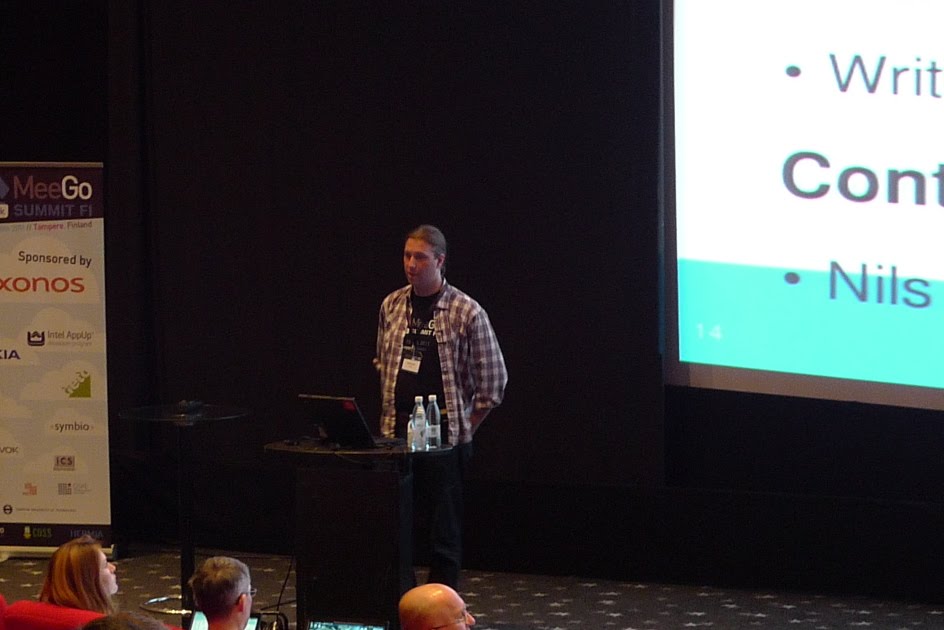
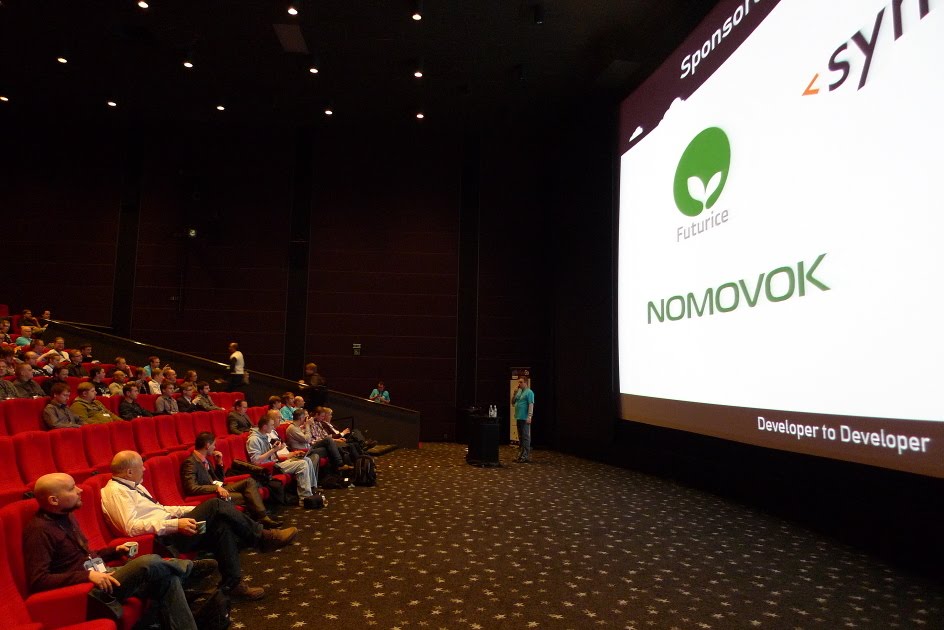
Timo Jyrinki: MeeGo Summit FI Days 1 & 2

MeeGo Summit FI is now nearing completion, with several keynotes and other presentations, Meegathon 24h contest just coming to an end and a lot of interesting discussions had. See full program for details. Yesterday was a hugely energetic day, but today the lack of sleep starts to kick in a bit at least for me.

Some highlights via photos:


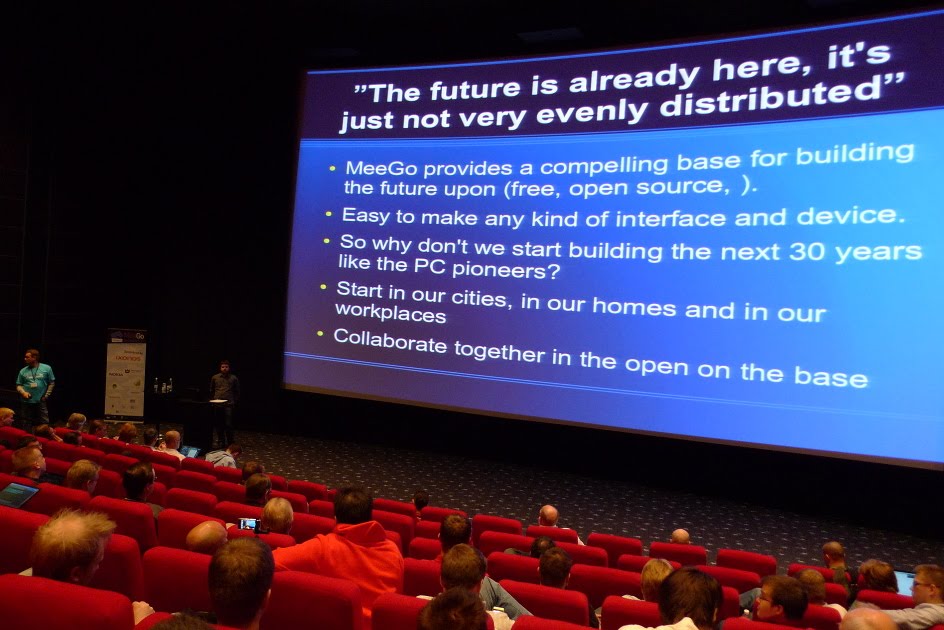
Keynote venue was a movie theater


MeeGo status update by Valtteri Halla / Intel - talking among else about tablets, IVI, and the 20 person team at Nokia doing MeeGo(.com) for N900 phone


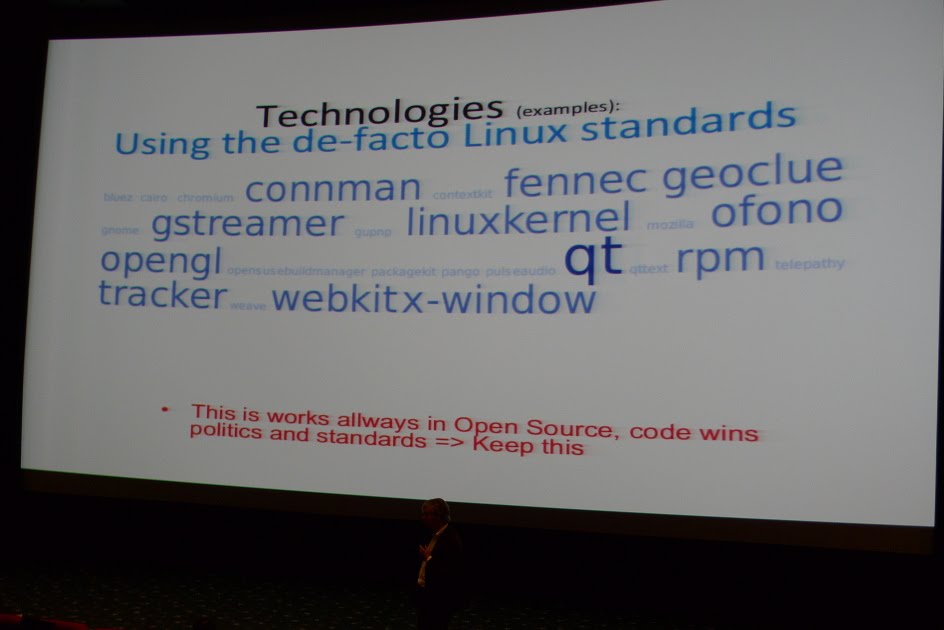
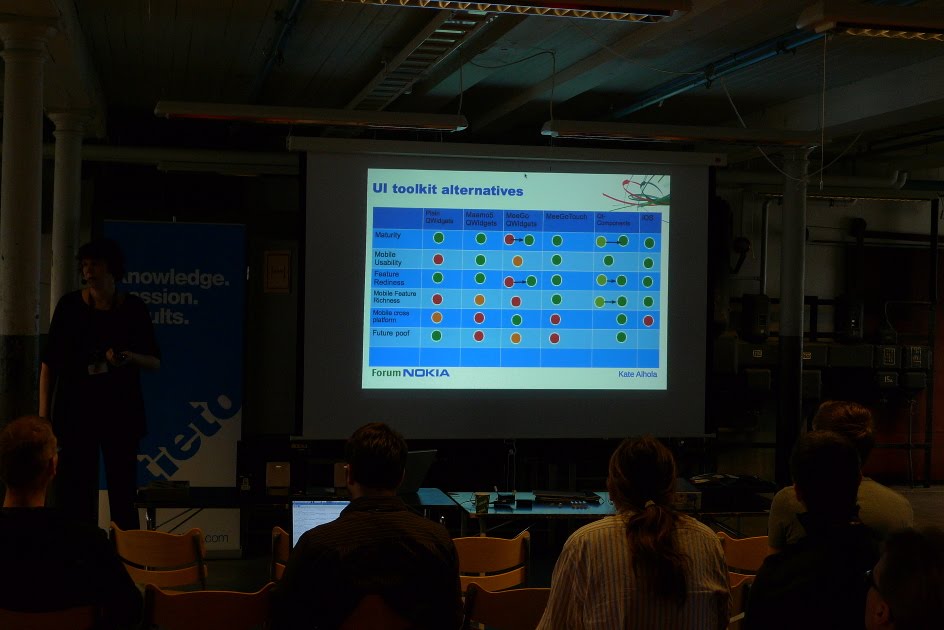
Mikko Terho / Nokia - "Internet for the next billion => Qt good candidate", "code wins politics and standards"


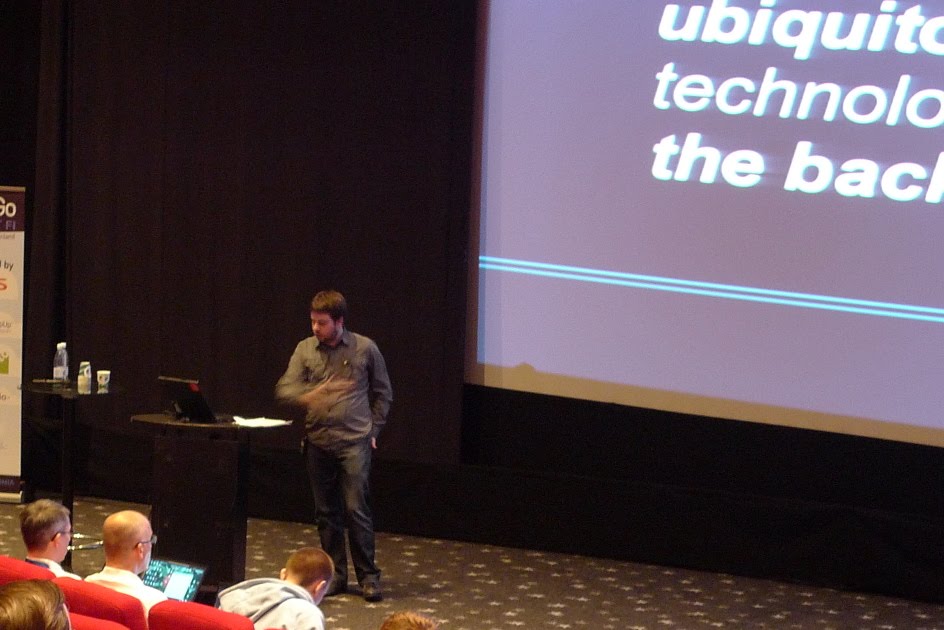
Carsten Munk / Nomovok - "Hacking your existence: the importance of open-ended devices in the MeeGo world"


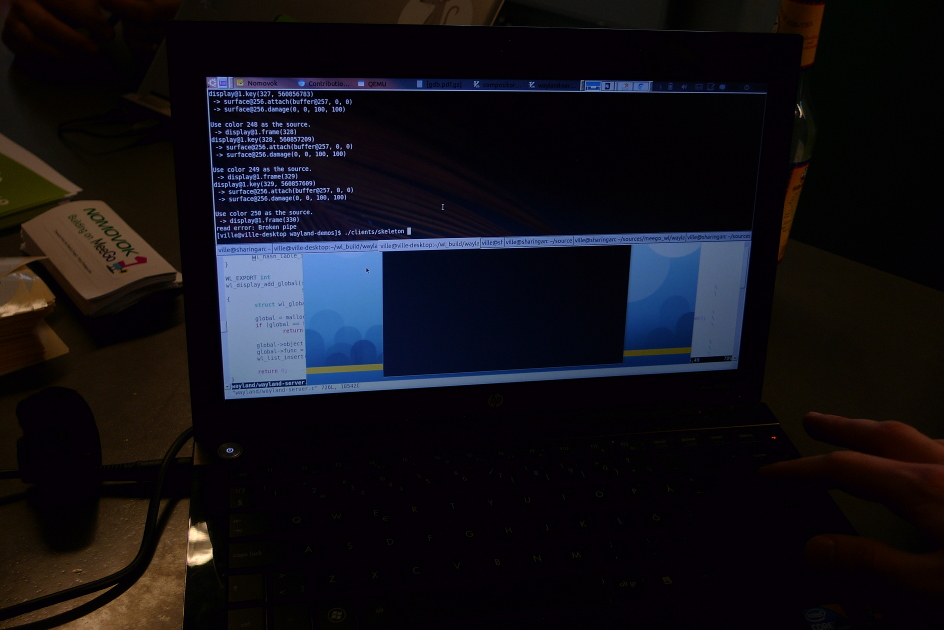
In addition to MeeGo tablet demonstrations a Wayland compositor was demoed by a Nomovok employee.


One of the many Qt / QML related talks was held by Tapani Mikola / Nokia


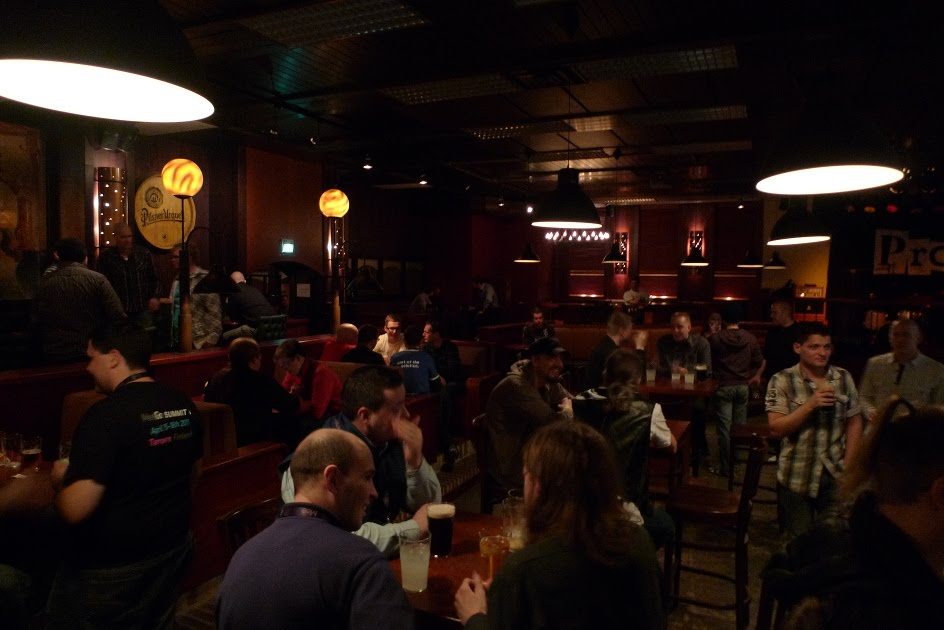
Evening party


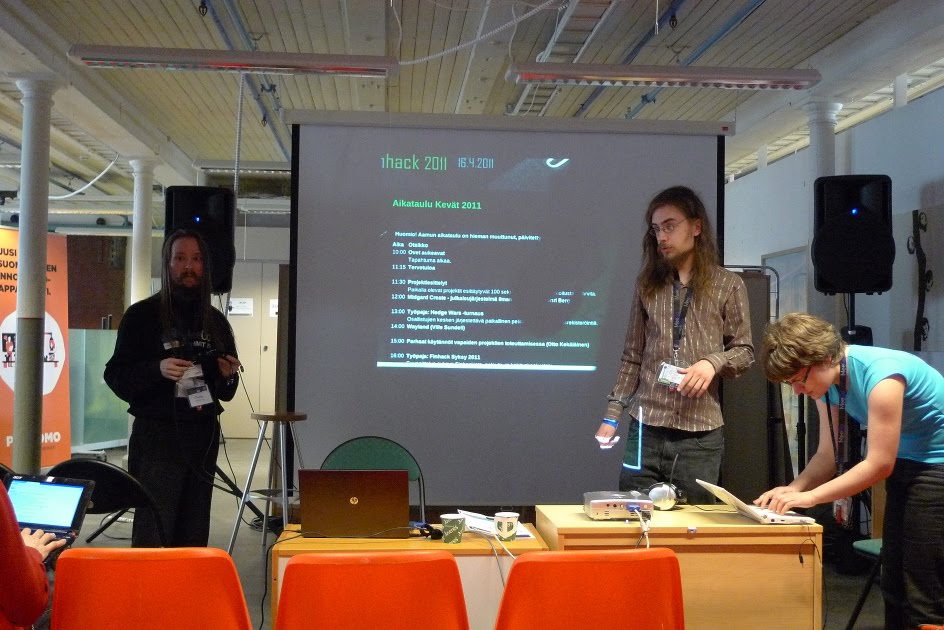
Day 2 started with a few more presentations and Finhack event launching in the Protomo room as well

Still remaining for the day are Meegathon demonstrations (well actually I'm right now already following those while finishing this - cool demos!) , Meegathon awards, a panel discussion on "MeeGo, Nokia, Finns - finished? Can MeeGo be important in Finland without being inside Nokia's core?", BoF sessions and finally Intel AppUp Application Lab including some MeeGo table give-outs.

Thanks to organizers, many of whom were volunteers. The event has been running completely smoothly, coming not as a big surprise after the hugely successful last summer's Akademy 2010 also held in Tampere.

13 April 2011

Dirk Eddelbuettel: Rcpp 0.9.4, and a paper in the Journal of Statistical Software

A brand new 0.9.4 release of Rcpp is now on CRAN and Debian. This version contains an improvement to loading and initialization of Rcpp modules, a bug fix for vectors of factors, another build issue fix as well as (per common practice with JSS) citation information for the article Rcpp: Seamless R and C++ Integration which is now Volume 40, Issue 8 in the Journal of Statistical Software (or JSS for short). The complete NEWS entry is below; more details are in the ChangeLog file in the package and on the Rcpp Changelog page.
0.9.4   2011-04-12
    o   New R function "loadRcppModules" to load Rcpp modules automatically
        from a package. This function must be called from the .onLoad function
        and works with the "RcppModules" field of the package's DESCRIPTION file
    o   The Modules example wrapped the STL std::vector received some editing
        to disambiguate some symbols the newer compilers did not like
    o   Coercing of vectors of factors is now done with an explicit callback
        to R's "as.character()" as Rf_coerceVector no longer plays along
    o   A CITATION file for the published JSS paper has been added, and 
        references were added to Rcpp-package.Rd and the different vignettes
Thanks to CRANberries, there is also a diff to the previous release 0.9.3:
Diff between Rcpp versions 0.9.3 dated 2011-04-05 and 0.9.4 dated 2011-04-12
 Rcpp-0.9.3/Rcpp/build                                              only
 Rcpp-0.9.3/Rcpp/inst/skeleton/yada.Rd                              only
 Rcpp-0.9.3/Rcpp/inst/unitTests/testRcppModule/R/Modules.R          only
 Rcpp-0.9.3/Rcpp/inst/unitTests/testRcppModule/man/yada.Rd          only
 Rcpp-0.9.4/Rcpp/ChangeLog                                             55 
 Rcpp-0.9.4/Rcpp/DESCRIPTION                                           10 
 Rcpp-0.9.4/Rcpp/NAMESPACE                                             29 
 Rcpp-0.9.4/Rcpp/R/Rcpp.package.skeleton.R                             11 
 Rcpp-0.9.4/Rcpp/R/loadRcppModules.R                                only
 Rcpp-0.9.4/Rcpp/inst/CITATION                                      only
 Rcpp-0.9.4/Rcpp/inst/NEWS                                             17 
 Rcpp-0.9.4/Rcpp/inst/doc/Makefile                                      2 
 Rcpp-0.9.4/Rcpp/inst/doc/Rcpp-FAQ.pdf                              binary
 Rcpp-0.9.4/Rcpp/inst/doc/Rcpp-FAQ/Rcpp-FAQ.Rnw                       153 +-
 Rcpp-0.9.4/Rcpp/inst/doc/Rcpp-extending.pdf                        binary
 Rcpp-0.9.4/Rcpp/inst/doc/Rcpp-extending/Rcpp-extending.Rnw             2 
 Rcpp-0.9.4/Rcpp/inst/doc/Rcpp-introduction.Rnw                       734 ++++------
 Rcpp-0.9.4/Rcpp/inst/doc/Rcpp-introduction.pdf                     binary
 Rcpp-0.9.4/Rcpp/inst/doc/Rcpp-modules.pdf                          binary
 Rcpp-0.9.4/Rcpp/inst/doc/Rcpp-modules/Rcpp-modules.Rnw                36 
 Rcpp-0.9.4/Rcpp/inst/doc/Rcpp-package.pdf                          binary
 Rcpp-0.9.4/Rcpp/inst/doc/Rcpp-package/Rcpp-package.Rnw                 4 
 Rcpp-0.9.4/Rcpp/inst/doc/Rcpp-quickref.pdf                         binary
 Rcpp-0.9.4/Rcpp/inst/doc/Rcpp-quickref/Rcpp-quickref.Rnw              34 
 Rcpp-0.9.4/Rcpp/inst/doc/Rcpp-sugar.pdf                            binary
 Rcpp-0.9.4/Rcpp/inst/doc/Rcpp-sugar/Rcpp-sugar.Rnw                     2 
 Rcpp-0.9.4/Rcpp/inst/doc/Rcpp-unitTests.pdf                        binary
 Rcpp-0.9.4/Rcpp/inst/doc/Rcpp.bib                                     73 
 Rcpp-0.9.4/Rcpp/inst/doc/unitTests-results/Rcpp-unitTests.html        18 
 Rcpp-0.9.4/Rcpp/inst/doc/unitTests-results/Rcpp-unitTests.txt         40 
 Rcpp-0.9.4/Rcpp/inst/include/Rcpp/config.h                             2 
 Rcpp-0.9.4/Rcpp/inst/skeleton/zzz.R                                   11 
 Rcpp-0.9.4/Rcpp/inst/unitTests/runit.Module.client.package.R          27 
 Rcpp-0.9.4/Rcpp/inst/unitTests/runit.Vector.R                         18 
 Rcpp-0.9.4/Rcpp/inst/unitTests/testRcppModule/DESCRIPTION              2 
 Rcpp-0.9.4/Rcpp/inst/unitTests/testRcppModule/NAMESPACE                3 
 Rcpp-0.9.4/Rcpp/inst/unitTests/testRcppModule/R/zzz.R              only
 Rcpp-0.9.4/Rcpp/inst/unitTests/testRcppModule/src/rcpp_module.cpp      6 
 Rcpp-0.9.4/Rcpp/inst/unitTests/testRcppModule/src/stdVector.cpp       18 
 Rcpp-0.9.4/Rcpp/inst/unitTests/testRcppModule/tests/modules.R         21 
 Rcpp-0.9.4/Rcpp/man/Rcpp-package.Rd                                    6 
 Rcpp-0.9.4/Rcpp/man/loadRcppModules.Rd                             only
 Rcpp-0.9.4/Rcpp/src/r_cast.cpp                                         9 
 43 files changed, 647 insertions(+), 696 deletions(-)
As always, even fuller details are on the Rcpp Changelog page and the Rcpp page which also leads to the downloads, the browseable doxygen docs and zip files of doxygen output for the standard formats. A local directory has source and documentation too. Questions, comments etc should go to the rcpp-devel mailing list off the R-Forge page

7 April 2011

Dirk Eddelbuettel: Review of 'R in a Nutshell' by J Adler now in JSS

Volume 40 of of the (electronic) Journal of Statistical Software just came out. It contains my short review of Josef Adler's already pretty popular R in a Nutshell from O'Reilly. You can my review as a pdf via this local preprint, or by visiting the JSS page of the review and its official copy.

5 April 2011

Dirk Eddelbuettel: Rcpp 0.9.3

A brand new and shiny 0.9.3 release of Rcpp is now on CRAN and Debian. This version contains an actual bug fix for Rcpp modules and a few build improvements, including for both clang/llvm and g++-4.6 (which, being in Debian, is already used for conformance checks on CRAN's incoming directory) and g++-4.5. We also updated the main introductory vignette Rcpp-introduction to the content of what should be a forthcoming paper in the Journal of Statistical Software. The complete NEWS entry is below; more details are in the ChangeLog file in the package and on the Rcpp Changelog page.
0.9.3   2011-04-05
    o   Fixed a bug in which modules code was not behaving when compiled 
        twice as can easily happen with inline'ed version
    o   Exceptions code includes exception_defines.h only when g++ is 4.5 or
        younger as the file no longer exists with g++-4.6
    
    o   The documentation Makefile now uses the $R_HOME environment variable
    o   The documentation Makefile no longer calls clean in the all target
    o   C++ conformance issue found by clang/llvm addressed by re-ordering
        declarations in grow.h as unqualified names must be declared before
        they are used, even when used within templates
    o   The 'long long' typedef now depends on C++0x being enabled as this
        was not a feature in C++98; this suppresses a new g++-4.5 warning
    o   The Rcpp-introduction vignette was updated to the forthcoming JSS paper
Thanks to CRANberries, there is also a diff to the previous release 0.9.2:
Diff between Rcpp versions 0.9.2 dated 2011-02-24 and 0.9.3 dated 2011-04-05
 ChangeLog                                                      60 
 DESCRIPTION                                                     8 
 R/00_classes.R                                                  5 
 R/01_show.R                                                    44 
 R/Module.R                                                      1 
 cleanup                                                         2 
 inst/NEWS                                                      23 
 inst/doc/Makefile                                              74 
 inst/doc/Rcpp-FAQ.pdf                                       binary
 inst/doc/Rcpp-FAQ/Rcpp-FAQ.Rnw                                  2 
 inst/doc/Rcpp-extending.pdf                                 binary
 inst/doc/Rcpp-introduction.Rnw                               1355 +++++++------
 inst/doc/Rcpp-introduction.pdf                              binary
 inst/doc/Rcpp-modules.pdf                                   binary
 inst/doc/Rcpp-package.pdf                                   binary
 inst/doc/Rcpp-quickref.pdf                                  binary
 inst/doc/Rcpp-sugar.pdf                                     binary
 inst/doc/Rcpp-unitTests.pdf                                 binary
 inst/doc/Rcpp.bib                                              99 
 inst/doc/jss.bst                                            only
 inst/doc/unitTests-results/Rcpp-unitTests.html                 18 
 inst/doc/unitTests-results/Rcpp-unitTests.txt                  46 
 inst/include/Rcpp/Module.h                                     40 
 inst/include/Rcpp/Vector.h                                      6 
 inst/include/Rcpp/config.h                                      2 
 inst/include/Rcpp/grow.h                                       91 
 inst/include/Rcpp/module/Module_generated_ctor_signature.h     18 
 inst/include/Rcpp/vector/RangeIndexer.h                         5 
 inst/include/RcppCommon.h                                       6 
 inst/unitTests/runit.Module.R                                  19 
 inst/unitTests/testRcppModule/src/stdVector.cpp                 7 
 src/exceptions.cpp                                              2 
 32 files changed, 1167 insertions(+), 766 deletions(-)
As always, even fuller details are on the Rcpp Changelog page and the Rcpp page which also leads to the downloads, the browseable doxygen docs and zip files of doxygen output for the standard formats. A local directory has source and documentation too. Questions, comments etc should go to the rcpp-devel mailing list off the R-Forge page

3 April 2011

David Watson: Project 52 - Week 13

Today I shot an image of a bear my daughter gave to my wife for mothers day. Week 13 - Mothers Day This week I am also including a behind the scenes shot that shows how cheap my home "studio" is. In case you can't tell that is my bed with t-shirt covered boxes on it. All the light for this image comes from the window. After a little editing of the image the final outcome is what you see at the top of this post.

31 March 2011

Torsten Werner: My Wheezy release goal: JS removal

Debian is preferring feature based releases over time based releases and that is why we currently have some discussion about release goals for our next version that has the codename Wheezy. I want to suggest the full removal of all software written by J rg Schilling who is well known for making trouble in projects that want to redistribute his software.

Luciano Bello: Avancez

Este post tambi n est escrito en espa ol. If you follow me on Twitter/Facebook, you probably know that I went to Gothenburg, Sweden, during my last trip to Europe. But you probably don t know what I did in such remote city. Few months ago, I applied to a PhD student position at Chalmers. I was lucky enough to be shortlisted, so I went to some in-situ interviews. And, incredibly, I have been accepted! :-) Chalmers is a TOP 100 university. Most of the papers I read during the last months has been written by Chalmers researchers and for me is a great honor to be part of an academic institution with such prestige. I m going to move to the nice Gothenburg city in August. And I m happy :)

Josselin Mouette: News@11: Mozilla gives the finger to embedders

There have been a lot of web browsers embedding the Gecko engine, especially through the gtkmozembed library (it was not really a proper library but let s call it like that). I remember being a happy user of galeon, which went on as epiphany, but there were also all these small applications that just need a good HTML renderer in one of their widgets, like yelp, or several Python applications using python-gtkmozembed. Anyone having had to deal with these applications, especially the most complex ones, could tell you a few things: So, today, it is official: Mozilla is dropping gtkmozembed from their codebase. I don t think this will come as a surprise to anyone. You can t develop a new version of a behemoth, monolithic application every 3 months while still caring about the interfaces underneath. Embedded applications have been migrating to webkit over the recent years, and those that don t do it really soon will die. The interesting part of the announcement is not here. It can be found hidden in a bug report: a stable and versioned libmozjs will just never happen. What does it mean? First of all, it means that Debian and Ubuntu will have to go on maintaining their own versioning of libmozjs so that it can be linked to in a decent way by applications using the SpiderMonkey JS engine. It also means that this version will have to be bumped more often. But it also puts into question the whole future of SpiderMonkey as a separate library. With a shortened release cycle, the Mozilla developers will be tempted to add more specific interfaces to SpiderMonkey, reducing its genericity in favor of its use in Firefox itself. This will produce less and less useful libmozjs versions, until we reach the point when they ll make the same announcement as above, with s/gtkmozembed/libmozjs/. This is especially relevant in the context of the GNOME Shell, which is at the core of the GNOME 3 experience. The developers deliberately chose to avoid using JavaScriptCore (the JS library inside webkit) through the Seed engine, and used GJS instead, that relies on libmozjs. In my opinion this was done for frivolous reasons (being able to use more language extensions); and not only this put the GNOME developers in an awkward situation where 2 JS interpreters compete in the same desktop, but now it puts a risk on a technology which is at the core of the desktop. One of the reasons for the limited adoption of JSCore is that it lies currently in the same library as Webkit, which is a huge dependency. I ve been very glad to learn that Gustavo is considering the idea of splitting it. We need to provide an escape route for applications using libmozjs, and it looks like more than a decent one. I hope that GNOME Shell follows it sooner than later.

24 March 2011

Jan Wagner: Virtualisation on HP ProLiant hardware with squeeze

In case you are using HP ProLiant G6-series or G7-series with Intel-based hardware and you are thinking about virtualistion (e.g. booting the hypervisor), you should have a look into this customer advisory. To make it short, the following should work:

# grep GRUB_CMDLINE_XEN /etc/default/grub
GRUB_CMDLINE_XEN= pci=use_crs
# update-grub It took me two workdays to discover this solution for a DL180G6. Anyways I m still having trouble on a DL160G6 when booting the hypervisor, suggestions are welcome.

23 March 2011

Matthew Garrett: HTC are still incredible fuckheads

Update: Despite another email yesterday reasserting the 90-120 days lie, the source code has now landed on HTC's site.

As has been discussed before, HTC have a somewhat "interesting" interpretation of the GPL that allows them to claim they don't need to provide source code until between 90 and 120 days after the release of binaries. It's probably noteworthy that the FSF (who, you know, wrote the license and all) disagree with this interpretation, as do the kernel copyright holders (who, you know, wrote the code that the license covers) I've talked to about it. Anyway, after a pile of screaming and shouting from all sides HTC have tended to release their source code in a timely manner. So things seemed better.

HTC released the Thunderbolt last week and we're back to the 90-120 day song and dance. It's probably worth remembering that by behaving in this way HTC gain a competitive advantage over any vendors who obey the terms of their license - HTC can incorporate improvements made by others without releasing their own until through a significant portion of the lifecycle of their phone.

As far as I'm concerned, every single Thunderbolt sold so far embodies a copyright infringement. Wilfully engaging in copyright infringement for commercial benefit is typically frowned upon by courts, especially if by doing so a foreign company is gaining commercial advantage over a domestic one. If you think Microsoft's patent assault on Android is a problem, just imagine what they could do if they hired one significant Linux kernel developer and used their copyrights to attack the overwhelming majority of Android vendors who fail to comply with the GPL. It probably wouldn't be industry ending (companies would merely have improve their compliance procedures) but it'd do a huge deal of damage in the short term. It's insane for companies to behave this way. Don't reward them by giving them your money.

I'll be talking about this at the Linux Foundation Collaboration Summit next month, along with an update on my study of the compliance of Android tablets. I'm hoping that there'll be further developments after that.

(comment count unavailable Comments Comment on this)

John Sullivan: Oh yes I did

21 March 2011

Steve Kemp: New software always causes surprises

I recently deployed my node.js proxy server, removing all traces of Apache2 from my main server. During the course of this transition I discovered:
Bugs in my code
Not unexpected, in all honesty. There were two main issues; the first was relating to how I handled the 304 response, the second was relating to how I performed rewrites for my mercurial repository vhost.
Bugs in node.js
Given how new node.js is there wasn't a huge surprise here either, although I thought I'd been good testing against 0.2.x. As it turned out I needed to run the more recent 0.4.x to avoid a couple of issues: In short I have a backported node.js package for Squeeze which is almost worthless. I'll update it in the near future. For the moment:
cd node-v0.4.3/
./configure --without-ssl --prefix=/opt/node-0.4.3 && make && make install
ln -fs /opt/node-0.4.3  /opt/node
Oddities in thttpd
thttpd is what actually runs my websites and I discovered during some extended debugging sessions that it just does not like HTTP requests starting with a doubled "/" character. For example this works fine:
wget http://www.acme.com/software/thttpd/
But this fails:
wget http://www.acme.com//software/thttpd/
Previously it seems that Apache was (silently) fixing this up before it proxied requests. Now I have to do it myself, no big thing, but still a surprise.
All in all it was worth it to be able to run:
dpkg --purge libapache2-mod-rpaf \
             apache2.2-common \
             apache2.2-bin \
             apache2-utils \
             apache2-mpm-prefork \
             apache2 \
             libaprutil1-dbd-sqlite3 \
             libaprutil1-ldap \
             libaprutil1 \
             libapr1
ObQuote: "Bad news. The fog's getting thicker." - Airplane!

20 March 2011

Steve Kemp: My node-reverse-proxy is both stable and public

I posted a brief snippet of code on Friday which was my initial stab at a reverse HTTP proxy in Javascript (using node.js). Over the past couple of days I've tidied it up, added a command line parser, and made it flexible enough that it works for me. My node reverse HTTP proxy is now both documented ( a little ) and available for further eyeballs. Usage is pretty much:
$ node ./node-reverse-proxy.js --config ./path/to/config.file.js
The configuration file defines lists of virtual hosts along with the destination back-ends to proxy to - which is usually going to be a server running upon a high port on the loopback adapter, but might not be. In addition to that we can perform rewrites such as:
/**
  * Handler for wildcard host: *.repository.steve.org.uk
  *
  */
'([^.]*).repository.steve.org.uk':
     
        /**
         * Rewrites for static files - these will be handled via a
         * separate virtual host.
         */
        'rules':  
            '^/robots.txt':  'http://repository.steve.org.uk/robots.txt',
            '^/favicon.ico': 'http://repository.steve.org.uk/favicon.ico',
         ,
      ,
That says requests for http://chronicle.repository.steve.org.uk/robots.txt will be redirected to http://repository.steve.org.uk/robots.txt. Alternatively we can invoke javascript for each request matching a pattern:</p.>
    /**
     * static.steve.org.uk will mostly proxy to 127.0.0.1:1008
     * but files beneath /private/ have an IP-based ACL.
     */
    'static.steve.org.uk':
     
        host: 'localhost',
        port: '1008',
        'functions':  
            '/private': (function(orig_host, vhost,req,res)  
                var remote = req.connection.remoteAddress;;
                if ( ( remote != "80.68.85.46" ) &&
                     ( remote != "82.41.51.252" ) &&
                     ( remote != "89.16.161.34") &&
                     ( remote != "89.16.161.98" ) )
                 
                    res.writeHead(403);
                    res.write( "Denied access to " + req.url  + " from " + remote );
                    res.end();
                 
            ),
         
     ,
Fun stuff. It was live for my server, replacing apache, for a few hours today. I need to add some trivial HTTP Basic-Auth handling then it will go back. Otherwise I hope it is vaguely useful to others, and that the provided examples explain things neatly. ObQuote: "Only one thing alive with less than four legs can hear this frequency" - Superman.

18 March 2011

Steve Kemp: nodejs is fun

A while back I was working on a mod_rewrite compatible proxy server written in C. The reason for this is that my current webhost uses Apache2 in front ofa number of thttpd processes, and I'd like to remove apache and use something smaller/faster/neater. Dividing things up I'm running about ten domains, and only around half of them use mod_rewrite rules - small enough perhaps to port the rules, large enough to make it annoying. Upon reflection I think the thing to do is to replace apache with javascript - via node.js. Writing proxies with node.js is almost ridiculously simple - in fact doing anything HTTP-like is very very simple thanks to the bundled libraries. Time will tell whether this is a waste of time or not, but I'm confident I could listen upon *:80 and route requests to localhost:N for a few domains. As a trivial toy I wrote a simple transforming proxy last night which performed simple rewrites as it passed traffic about. Another fun, and possibly useful, thing I put together was a node.js port of the simple httpstat.us website. That server would have been easy to write in any number of languages, but in node it was almost too easy. Update - here is my rewriting node.js-based reverse-proxy. ObQuote: "I just need you to stop being nice to me unless you're gonna marry me. " - He's just not that into you.

13 March 2011

Steve Kemp: A few forks.

Although I promised in my previous entry that I'd made my last mention of the redisfs - replication friendly redis-based filesystem I have to disappoint. Ben Sykes informed me that he'd made a fork of redisfs, called shredisfs. I like forks. Forks are good, and this particular one was very welcome - from the README:
Steve's original managed around 250k per second for writes on my test machine, this version does about 15MB a second writes. ... Read speed on the test machine here now is around 180MB/sec..
Needless to say I "stole" the improvements and rolled them into my original release. Thanks all round to those of you that submitted bug reports, suggestions, and codez. I also had a release out briefly which used zLib to compress the values of keys stored in memory. Unfortunately that lead to a net-slowdown for files which were bigger than a single block - due to the overhead of file-system appends which translated to: "fetch", "compress", "append", and "decompress". Finally on the subject of qpsmtpd, my favourite SMTP-server - the exceptionally talented Matt Sergeant released a proof of concept rewrite in Javascript. Using nodejs this new SMTP server is heavily asynchronous and you can find it online under the name Haraka. Although my javascript-fu is weak I'm very impressed by the codebase out there so far, and I'd expect good things of it in the future. Even if it does use Javascript and not my beloved Perl. Finally I'm a year older. But birthdays aren't important. ObQuote: "Do you wanna know what makes all my candy taste so special? " - Epic Movie.

Next.

Previous.