Search Results: "jam"

9 April 2007

Russell Coker: BSD vs GPL licences

James Dumay writes about Theo's latest flame-war.

One interesting part of the debate was Theo's response to this comment:
> We can dual license our code though and that is an
> acceptable license for Linux, the kernel.

Theo:
We? Sure, you can. But Reyk will not dual license his code, and most of the other people in the BSD community won't either, because then they receive the occasional patch from a GPL-believer which is ONLY under the GPL license, and then they are no less screwed than they would be from the code granted totally freely to companies.

The difference of course is that when you give code to companies under the BSD license you will never know what is done to it, but GPL-only patches can still be used as inspiration for new code development. Sure GPL-only code can't be copied into BSD-only code, but once you know where the bugs are they are easy to fix.

Towards the end of the debate Theo asks the following question:
David, if you found a piece of your code in some other tree, under a different license, would your first point of engatement be a public or private mail?

I can't speak for David, but after reading the discussion I would probably start by blogging about such an issue.

8 April 2007

Benjamin Mako Hill: Etch Release Party

Bostonian and Cantabrigian Debianistas should waste no time in celebrating Etch's release. Join a group of us celebrating the release tonight (April 8) at Grendel's Den in Harvard Square. Things you should know:
  • We'll meet up at 21:00.
  • Directions are online.
  • Food is either half-price or $1 with a drink.
Call me if you're lost in the neighborhood or have questions. I hope to see a few of you there. New faces are, of course, welcome.

5 April 2007

Andrew Pollock: [life] The Constant Gardener

Tonight Sarah and I watched The Constant Gardener on DVD while we babysat for Trish and James Every now and then I end up watching a movie that I wouldn't have otherwise watched if I were the one picking the movies, and I'm really glad I did. Tonight was one of those times. This was a really good movie, and it painted the plight of Africa and in particular, foreign aid in Africa, in a completely different light. The sad thing is, I'm sure there's more than a modicum of truth in the film. I highly recommend it.

4 April 2007

Adam Rosi-Kessel: Netflix Wishlist: IMDB Crosslinks

Add to my Netflix Wishlist (that is, the list of features I wish Netflix had, not the list of movies I wish I had): links from IMDB entries to the respective Netflix page (or, better yet, “add to Netflix queue” directly from IMDB). Links back to IMDB from Netflix would also be nice. This seems like something that would be relatively easy to do with a Mozilla plugin. In general, Netflix would be a prime candidate for a developer/hobbyist ecology similar to that which has grown up around Amazon’s API. The only examples I could find were this Perl module and this Moveable-Type plugin. More development along these lines could be a key advantage for Netflix to preserve its now incumbent position in the market. (Does anyone have any local video stores left? Ours closed down about a year ago.) Update: James points to an impressive list of Greasemonkey/Netflix scripts, two of which seem to do the job: Netflix links in IMDB, IMDB links in Netflix. Another featuer I’ve been looking for: Netflix Ratings Granulizer (allows partial stars in ratings). Thanks, Lazyweb! (Note that these sorts of screen-scraping hacks inevitably break when the content provider modifies its presentation; an open API would obviously be preferable).

3 April 2007

MJ Ray: Web searchers: Your Questions Answered

Totally unoriginal, but I thought it was amusing. I also get some strange search phrases: "My gas meter is making a clicking noise" - then stop using the computer and call your gas company! (In England, the contact number should be on a label on the meter, or in most phone books under "Gas".) "My computer is making loud ticking noise" - that's better. Open the case and listen to the fans and hard disks. One is probably broken. "How many cars are there on the roads today" - too damn many? "How to send an email so that everyone doesn t see the addresses" - put yourself in the To line and everyone else in the Bcc (blind carbon copy). See my email guide for other handy tips. "How do i say in an email that there is an attachment" - How about "There is an attachment"? "Samsung yp-u2 linux" - it works as long as you don't want to upgrade the firmware. More... "How to satellite aiming motor europa" - point it at the sky, not at europa. I'll add more instructions to my satellite page as I rebuild my system. "MJ bad" - at least there are 4 times as many "good" searches. "How do I get the software for the samsung ml-4500" and "Samsung ml-4500 xp drivers" - I have a Ghostscript driver patch. Does Ghostscript work as a printer driver on XP? "Cycle tracks near sandringham" - there's part of NCN1 alongside the A149, but most of the other cycle routes near Sandringham are along quiet roads (which is fine). "What does wag stand for regarding football?" - Wives And Girlfriends. BTW it's a stupid TLA IMO. "Wretton planning", "Wretton parish council", "business properties for sale in Wretton" and "properties for sale in field lane Wretton" - I've not been to Wretton in some time, let alone mentioned its planning or set up an estate agent there! "How to grow grapevine in a conservatory?" - damned if I know. I would think the temperature change each time you open a door would hurt it too much. "Hanging washing out over night" - it's a bad idea if it's going to freeze. "Why some people take so long to reply to emails" - we're busy trying to thaw the washing out. "Satellite frequency for ulster tv for sky plus box" - 10906MHz Vertical polarisation 22Msym/s, but can you record "other channels" on Sky Plus or should you buy a real DVR? "Where can i find a picture of st james swimming pool in kings lynn?" - try Norlink's Picture Norfolk section. "What happened to opensource.org?" - It was transferred from SPI to OSI. Strangely, the next search phrase listed was "simple example of unethical behaviour"... "What to do about death?" - be very still and start to rot? "bf uk cbhf" - I give up. Did 8 of you headbutt the keyboard? "I hate belkin" - Me too. "Interesting questions to ask someone" - no, not on this site. "Bar" - best idea yet. Cheers!

2 April 2007

Benjamin Mako Hill: Victory!

Last November, I used a Venn diagram to complain about (and explain) the fact that there while there were several RFID blocking wallets for sale, they were all made of leather. Many people, who like me prefered to eschew leather wallets, left comments, blogged, and emailed me in strong agreement. Mike Aiello, the proprietor of DFIRWEAR, found my blog. He emailed me not longer after my post to tell me that he had started looking into vegan materials to make a wallet that would fit my needs! Today, a vegan RFID-blocking wallet made it onto his site and is now available to be ordered! It's very exciting to see that what started out as a mild and humorous expression of dissatisfaction could quickly culminate in the creation of a new product. Mika and I each just ordered one. If you care about your privacy, you should too!

31 March 2007

Benjamin Mako Hill: Progress

There is cool semi-recent news on the Free Cultural Works Definition front. The board of directors of the Wikimedia Foundation passed a resolution stating that all projects (including Wikipedia, Wikimedia Commons, and Wikibooks):
...are expected to host only content which is under a Free Content License, or which is otherwise free as recognized by the Definition of Free Cultural Works.
There is still room for several exceptions but this must be minimal and the use of such works, "with limited exception, should be to illustrate historically significant events, to include identifying protected works such as logos, or to complement (within narrow limits) articles about copyrighted contemporary works." For WMF and it's member projects, this was a useful step because it documents and strengthens an important position in favor of explicit goals that I feel is important to successful freedom movements. But it's not a major change for them. The resolution merely codifies what has already become accepted practice within Wikimedia projects. But this is a major change -- and a major victory -- for freedomdefined.org and the definition. Wikimedia projects, including Wikipedia, are the single most visible and important centers for the production and dissemination of free culture today. They're also the most successful and a model many want to emulate. Explicit buy in from WMF is a major victory indeed.

29 March 2007

Benjamin Mako Hill: Dollar Books

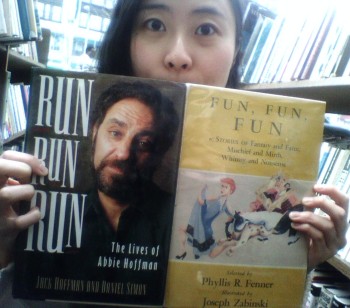
One of my favorite weekend activities is spending a Saturday afternoon going through the dollar book carts outside many New York and Boston area used book stores. It's not only because the books are cheap -- although I like that. The dollar book section is the great equalizer of bookstores. A neglected Dickens or Shakespeare can rub out against a discarded Mary-Cate and Ashley teeny-bopper quasi-romance novel. In the best cases, random shelving creates perfect (if unintuitive and ironic) pairs like Run Run Run about Abbie Hoffman and Fun Fun Fun about other youngsters -- a pair I found adjacent in a dollar book section last week.
/copyrighteous/images/run_fun_run.jpg
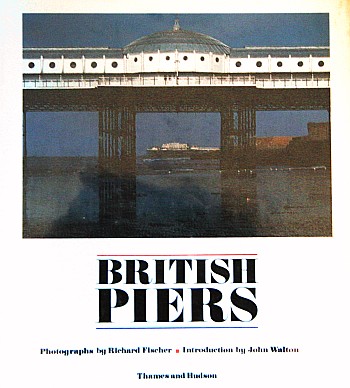
But you also get to meet books you will never meet in the bookstore sections you normally frequent. The dollar book section at the Strand has introduced me to a whole class of books with intriguing non-fiction sounding titles that I had pulled excitedly off the shelf only to find out that they were, in fact, novels. There are also the books with titles so good you suspect the book will be downhill from that point. The Complete Idiot's Guide To Being a Model (not, as one might expect, Becoming a model) and this guide to the British pierage are great examples.
/copyrighteous/images/british_piers.jpg

James Morrison: Speeding up the internet

I had some conversation this weekend about what makes the internet slow. The following snippet from my /etc/hosts file shows how I've managed to keep the internet fast and avoid some rather annoying blinking websites:

127.0.0.1 doubleclick.net
127.0.0.1 ad.doubleclick.net
127.0.0.1 ad.ca.doubleclick.net
127.0.0.1 adremote.timeinc.net
127.0.0.1 adsremote.scripps.net
127.0.0.1 a.as-us.falkag.net
127.0.0.1 interclick.com
127.0.0.1 a1.interclick.com
127.0.0.1 media.fastclick.net
127.0.0.1 network.realmedia.com

28 March 2007

Benjamin Mako Hill: Places I Have Almost Been

Yesterday, I passed by an offramp to Onset. Due to objections of others in the car, I wasn't able to visit. I did, however, snap this picture.
/copyrighteous/images/offramp_to_onset-small.jpg

24 March 2007

Christian Perrier: A few views of the partial sun eclipse

This wasn't very widely announced but last week featured a partial sun eclipse over central, south and east Asia. The eclipse was really partial but happening at sunrise in some countries, it gave some opportunities to shoot very nice pictures such as these ones: The new moon, combined with a Venus conjonction, also offered this nice view from Lisbon which is one the nicest cities in Europe, IMHO. Good opportunity for those of you who didn't alreay know about the Astronomy Picture of the Day to learn about it, add Jamie Zawinski's RSS feed (http://www.jwz.org/cheesegrater/RSS/apod.rss) to your feed reader and just enjoy one nice picture daily.

20 March 2007

Benjamin Mako Hill: PHLanthropy

Last week, I had planned to travel from Boston to Tampa with a connection in Philadelphia. I landed in Philadelphia without a problem but an ice storm descended on the airport and, after five hours of our flight's departure time being pushed back, the entire airport was closed and all flights for that day were canceled. When I arrived back at PHL the next day, two hours before the scheduled departure of my flight home -- my trip to Tampa was, by this point, called off entirely -- the airport was in chaos. Flights were still being canceled, airport information displays were inaccurate or switched off entirely and stranded travelers were everywhere. US Airways had deactivated the automatic ticket machines and there were thousands of people in scores of lines hoping for new tickets and assistance. But unlike the day before, we all knew that planes were theoretically going to be leaving and that, stuck outside, we were not going to be on them. People wanted boarding passes and they wanted them desperately. But the lines were not moving and nobody -- or almost nobody -- was going anywhere. Meanwhile, the four teams of TSA workers at the security station were standing idly talking to themselves like attendants at a light night gas station. The only people inside the terminal were those that had slept there or flown in that morning. After finding the end of a line, I asked someone what their line was for. Nobody knew, but each hoped it lead to someone who would assist with their particular problem. Usually they merely wanted to check in. Several people I asked had been waiting in line for five hours that morning only to find out that their line was, in fact, not a line at all but merely a mass of people leading nowhere or simply dissolving into other lines. Nobody knew what else to do so, I, like everyone else, queued up and hoped for the best. An impeccably dressed and obviously wealthy woman asked what I was in line was for. I told her that I didn't know but, like everyone else, hoped it would lead to a boarding pass. She wanted the same thing. She asked if there was a separate queue for first class and I pointed out that it seemed unlikely, in the chaos, that first class was getting special treatment. I pointed out that I also had a first class ticket -- it was the only seat available when the harried agent rebooked me the day before and I had not paid extra for this, but I did not tell her this. She nodded to me in camaraderie. She stood pensively next to me for five minutes and then fumbled for her wallet and ticket. She asked me if I would hold her place in line and I agreed. Five minutes later she reappeared with a boarding pass in her hand. Surprised, I asked her how she had obtained it. She stated, quietly so as not be overhead by the other would-be passengers but matter of factly, that she'd found a baggage handler and flashed a twenty dollar bill and her itinerary. She mentioned that the man she had paid had left but that, "any of them will do it." Sure enough, I was in the terminal less than ten minutes, and twenty dollars, later. Despite growing up partially in the third world, I've only personally bribed a person once before -- also in the United States. Like my previous experience, I didn't feel good about buying my way out of what seems to have, in fact, devolved into a racket. I have spent a lot of time reflecting on the situation and my action in the last several days. Everyone, or nearly everyone, outside the Philadelphia airport terminal had twenty dollars and most of them would have happily paid it to escape their predicament. The reason that most people did not pay off baggage workers is not because they found it prohibitively distasteful, although certainly some of them would have, but because most of us, and I include myself, would have spent the whole day frustrated, desperate, and standing line after line without even considering a bribe as an option. While we know it on some intellectual, reflective level, the vast majority of us do not, in practice, imagine that we can use money as a way to manipulate people into special treatment. As a result, even in situations like that morning in Philadelphia, I simply don't even think of the twenty in my wallet as a way to solve my problem. It's true that wealthy people, like the woman in line behind me, get what they want because they can pay lots of money for products and services. But it is not quite this simple. Some wealthy, powerful people get what they want in part because they think to use money in ways that the rest of us do not. Perhaps this is because this type of spending is frequently not an option for most of us or, we tell ourselves, perhaps even truthfully, because we find it distasteful and immoral. The difference between being inside or outside the terminal last Saturday was not about having or not having money. It was, in fact, about having a particular relationship to money and, through money, to other people. It was not about the value conferred by money but about a set of values that can result from having it in abundance.
19 March 2007

Benjamin Mako Hill: Spellign

While everyone seems to be excited about OpenMoko, there's a smaller, less proficient group of typers who seems excited about the OpenMako project. Ari Pollack even painted a picture of what that frightening, Mako Hellish, world might look like.

15 March 2007

Benjamin Mako Hill: Never Too Late!

I've always thought it was a little silly that airports use their public announcement systems to give advice on how, and how not, passengers should pack their luggage. Presumably, travelers arrive airports with their bags packed. Last time I was at Boston's Logan Airport, I noticed that they were repeatedly playing these announcements in the baggage claim.

Martin F. Krafft: I want Jabra!

My Nokia 6230 and I decided to split ways, or rather someone decided it was time for us to break up. Given that I have all my contacts on the computer anyway, and the 6230 was nearing its end of life anyway, I skipped the part about being annoyed and hopped into the store yesterday to pick up a new subsidised phone in exchange for a contract extension that was due anyway. Remembering the chat with Scott James Remnant at last year's Debian Barbeque, I went for the Sony Ericsson W810i. I initially wanted to stick with Nokia because I own many power adapters already, but Nokia recently switched the plugs, so that was no longer a motivation. I did have a brief look at the brand new E65 (the first Nokia phone to look decent, says Hanspeter), but I seriously doubt that Nokia actually fixed the problems with the E60, considering that the from the 6230 via the 6230i to the 6233, Nokia did not fix any single one of the problems I've had with the 6230. So now I have this shiny W810i (with a white case) and I am struggling to use it, having grown accustomed to Nokia over the past years. The worst is that it won't play nice with my Jabra BT250 headset, which has treated me very well and which I'd much rather keep than replace. However, while I can speak over it, I cannot use any of the buttons on the headset, meaning I cannot receive calls without touching the phone. The phone thus thinks that I would much rather talk through the phone than the headset and I have to transfer the sound manually. So I am wondering: does anyone of you have a newer Jabra BT headset, such as the BT250v or the BT500v and can confirm that it works with Sony Ericsson phones? If so, please let me know! NP: Rage Against The Machine / Rage Against The Machine

14 March 2007

James Morrison: Bums

I've got bums arguing outside my living room window. Sometimes being in the Haight has its downsides. Why can't they go argue in the park like good bums?

Nico Golde: New Maintainer

Today I got accepted as Debian Developer. I would like to thank the following people (in random order) for their involvment in my NM, mentoring and sponsoring uploads.

Philipp Kern, Michael Schiansky, Daniel Baumann, H ctor Garc a, Norbert Tretkowski, Werner Heuser, Marc Brockschmidt, Lars Wirzenius, Christoph Berg, J rg Jaspert, James Troup, Martin Krafft (feel yourself added if I forgot you, hopefully not)

Oh and congratulations Holger.

Benjamin Mako Hill: UPS, I Did It Again

I think it's interesting that we pronounce some acronyms/initialisms but spell out others -- I've ever reflected on this before. For example, I think it's funny that we choose not to pronounce the initialism for Uninterruptible Power Supplies the way we pronounce the name of the reason we need them.

13 March 2007

Benjamin Mako Hill: Free Culture at FSF Members Meeting

While I've been making an effort in the recent past to cut down on talks -- so that I can focus on getting work done that will give me something to talk about in the future -- I'm thrilled to be giving a presentation at the upcoming Free Software Foundation Members Meeting in Cambridge, Massachusetts. While normally the members meetings are reserved for talks by the FSF board and staff, I've been invited to give a talk on my work around movement and definition building for free culture as part of a short members forum at the end of the day. I'll also be running a mini RockBox install party over lunch. You need to RSVP for the meeting by this coming Friday (2007/3/17) and, in order to do so, you need to be an FSF member. Fortunately, joining is easy to do. I won't lie and suggest that my talk could possibly be worth the membership price. Luckily, I don't have to lie to suggest that rest of the things that the FSF does are more than worth supporting with membership dues.

10 March 2007

Andrew Pollock: [tech] Is (non-Apple) DAAP development dead?

Now that I've got MythStream working very nicely, it's reminded me of my other wish: to be able to play music from the iTunes library on Sarah's laptop through MythTV somehow. This leads one to an excursion into the slightly documented Digital Audio Access Protocol. Life seemed fairly good until iTunes 7.0 came out with a new version of the protocol, which seems to have broken the hell out of anything that isn't >= iTunes 7.0, which is a bit of a shame, since I only learned of DAAP at around this time, so I've never been able to experiment with using a third party DAAP client. www.opendaap.org sounds all promising, but it's really just a bunch of links to projects that don't seem to have done much for years, or only implement the iTunes 4.0 version of the protocol, which is reasonably well documented. There's a few implementations of DAAP servers that will talk the pre-iTunes 7.0 version of the protocol (which I believe that iTunes 7.0+ will work with fine), but that's not what I want. All of our music is already in iTunes, and I believe DAAP doesn't give you write-access, so it's not like we could stick all of our music on Linux and play it through iTunes the other way, because we'd still be wanting to buy music from the iTunes Store, and it'd all get very messy. So I'm trying to find out if anyone's doing any work on reverse-engineering DAAP 7.0. So far, my searching hasn't turned up anything interesting. Update A bit more searching turned up this, which suggests that even legitimate DAAP protocol licensees were caught with their pants down by this change, and so products like this one have a disclaimer about what versions of iTunes they'll work with. Sad.

Next.

Previous.