Search Results: "jam"

13 May 2007

Benjamin Mako Hill: Section Headings

I think that this sign in the Housing Works Used Book Cafe is an example of how fixing "/ Crime" to any subject heading in a bookstore can have humorous results (apologies for the blurry phone picture).
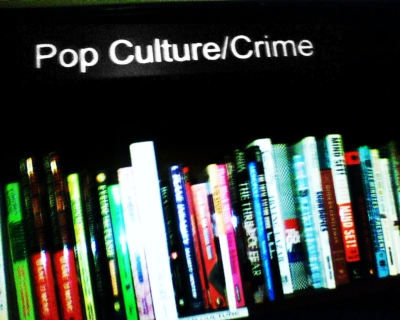
Pop Culture / Crime section heading in Housing Work

Ross Burton: Sound Juicer "Nikki's Growing A Patch Out In The Backyard" 2.19.0

Sound Juicer "Nikki's Growing A Patch Out In The Backyard" 2.19.0 is out. Tarballs are available on burtonini.com, or from the GNOME FTP servers. This is the first release in the 2.19.x development series, after I failed to do anything useful in 2.17.x...

11 May 2007

John Goerzen: Predictability

One of the things about living in the country is that there isn't all that much predictability. You can have your water supply disrupted by ants, sewage issues, power supply problems, etc.

But today was a new one that disrupted my morning commute.

It wasn't mud, or harvest.

No, it was traffic. On our driveway, just a few feet in front of our front door.

img_2068c

Takes only one of those standing on the driveway to make a traffic jam.

9 May 2007

MJ Ray: May Frozen Mint Madness: Reader Recipes

I asked: does anyone want to recommend good recipes that don't mind the ugliness of frozen mint? Holger wrote:

"Jamie Oliver recipe: SALMON WRAPPED IN PARMA HAM WITH LENTILS looks probably doesn't matter as it wilts a bit anyway and volumewise most is made up by the spinach. Also: With green tea the looks doesn't matter that much if you brew it in an opaque tea pot."
alephnull wrote:
"Another way of freezing the mint is to put it into ice cubes. Just pack them into an ice tray and top them up with water. They don't wilt as much and look better too."
Thanks, both! I'll try them later.

6 May 2007

Alastair McKinstry: A Spellcheck is not enough

According to The Irish Times Weekend Supplement, todays recommended viewing includes We Love the Sky at Night, BBC1, 4.45pm
A celebration of the 50-year old astrology program, presented by the peerlesss star-gazer Patrick Moore, and featuring contributions from Jon Culshaw, Richard Branson, Myleene Klass, Charles Kennedy, Brian Blessed, Alex James, Dame Evelyn Glennie, Tim Rice and Arthur C Clarke.
Tags ,

Alastair McKinstry: The God Delusion, by Richard Dawkins

The God Delusion by Richard Dawkins is an 'Atheism Consciousness-raising book', according to the author. It makes the case for Atheism, saying Atheists should stand up and be counted, and stand against the growing tide (in the U.S. in particular) of irrationality and belief. Although as one of Atheisms most visible proponents Dawkins has 'make converts' to the cause, in this book he is mostly speaking to the converted, presenting the evidence. The book documents the main arguments in favour of God. These are dismissed fairly abruptly; while a lot of pages are taken up going into them, they are probably not a comprehensive list. A book by a theologian or believer would probably be a better source for such a list. Nevertheless, Dawkins as a scientist does consider and list the opposing arguments. As presented however, they are extremely threadbare and easily dismissed. Mostly they are backed up by a willingness for people to take God (and Theology!) seriously: since so many people believe in God, it must be taken seriously, or so the reasoning goes. Not so: the proofs of Gods existence don't stand up and should be dismissed. Dawkins makes the case that we should instead of investigating God, investigate why people believe in God, given the lack of evidence. He gives some good hypotheses in terms of Darwinian thinking: reasons why faith, accepting what your parents said without evidence, has survival benefits, that in other circumstances lead people to believe nonsense stories with faith. Another under-estimated problem is the different definitions people have for 'God' and 'religion'. Most people from a Christian / Judaic background have a habit of framing belief and Religion in terms of the religion they grew up in. They may accept that you have a different God(s), but still view God(s) as something you pray to, that intercede on your behalf, etc. By confusing all the different aspects given to 'God' in the Christian tradition, they think that if you have 'proved' one of them, all the rest follow. If you prove / claim that something created the Universe, and label that God, then, they imply, there must be one overall, kind, monotheistic God, Jesus died on the Cross for your sins, that God will change the laws of physics to suit you (miracles), etc. Not so: all you have done is label something, not proved your religion. Dawkins (rightly) dismisses Buddhism, etc. as 'principles for living' rather than religions for the purposes of this book, and we need to be careful what we call religion, too. Dawkins also makes a good case against Agnosticism. He argues we should be more forthright and say we are Strongly Atheistic rather than Agnostic. Agnosticism was created by Thomas Huxley to explain his beliefs. He defined Athiesm is a positive belief in the lack of God, a proposition for which there is no evidence. He argued that, until we have proof that God does not exist, scientifically correct to consider ourselves 'sceptics' on this matter, and neither believe nor disbelieve in God. This sounds good, however in Science there are huge numbers of theories that in practice we have no evidence for either way that Occams razor mows down for us. We don't claim to be agnostic about them, we simply ignore them until they are actually needed to explain something. Which, given modern science and Darwins explanation of evolution in particular, God no longer is. The later chapters of the book cover whether, despite the lack of evidence, belief in God or Religion is a good thing, whether religion gives a moral purpose and direction to life, and defines a sense of "Good" that Atheists cannot have. For this he goes through the Bible with a disbelieving eye, pointing to the horrors of genocide that it promotes in the Old Testament, etc. He points out that we don't actually use the bible for moral guidance, but instead decide our own morality: we pick examples from the Bible a la carte to defend our choices. We don't decide, as an Old Testament interpretation would put it, that murder of an non-Jew is acceptable; that rape of an enemy is acceptable, that killing non-believers and witches necessary. Instead we pick examples to back up what we've decided already. If you're going to do that, stop pretending the Bible is giving you moral guidance and instead accept that we decide. Dawkins underestimates the social and ethnic aspects of religion. He is overly critical of religion, blaming it for much of the worlds violence, genocides, etc. It would be truer to say that Northern Ireland, etc. are examples of ethic rather than religious strife. "God says so" is just the ultimate argument. But conversely religion is a cohesive element in most societies. I suspect that a cause of the growth of christianity in the U.S. is that its proselytising nature goes out to be inclusive in Americas highly mobile society. When work, etc. causes people and families to move across the continent, they will find a church to welcome them into the community. Its against this background that atheists are the most distrusted minority. Shared beliefs, whatever those beliefs, bring neighbours closer. James Lovelock, (co-creator with Lynn Margulis of the Gaia Hypothesis) proposes that atheists can treat Gaia as an alternative religion, something to celebrate and to give moral direction to life. This I have sympathy with, that life is important, and to be celebrated, but not to be confused with something to be prayed to, or imagine that it is biased towards towards our existence. In these times when people are again using religion as a justification for war, claiming a "clash of civilisations", this is a book worth reading, but beyond deciding whether gods exist we need to understand why people believe. The Darwinian arguments are as Richard Dawkins points out, just a start, but I think more is needed to explain religion. Tags , ,

4 May 2007

MJ Ray: May Mint Madness: Reader Recipes

We've just harvested a bumper crop of mint (spearmint, I think) which was threatening to take over its part of the garden. I asked: anyone got any good recipes that use kilos of mint? Boris suggested:
".. essential for Pimms! And after a few you won't actually care that you've not used it all."
cmot asked:
"Let it ferment, then distil it and bring it to Debconf 7?"
Well, I don't like Pimms and don't own a still, but I'll not doubt the alcohol-love of my commenters in future! Holger suggested:
"- Green tea with mint (I like gunpowder best with mint) - There is some nice Jamie Oliver recipe with lots of herbs including mint and lentils You can actually freeze the stuff as well. It discolours and looks ugly but retains the taste."
While trying to find the Jamie Oliver recipe on the BBC site, I stumbled across this sea bass recipe which was quite good, but next time I'd at least halve the pesto because it was so sickly rich. It doesn't use much mint, so I've taken up the last suggestion and frozen most of it. Now, does anyone want to recommend good recipes that don't mind the ugliness of frozen mint?

2 May 2007

MJ Ray: Software Patents

james wrote:
"I came across your page. I wanted to suggest adding a link to http://www.FreePatentsOnline.com This is a free patent searching site with PDF downloading, world patent searching, alerts, and other account functions -- all free. It is a great resource for intellectual property professionals, reearchers, students, small businesses, and anyone else who needs such legal or scientific information."
I thought the idea was that we shouldn't search for invalid patents, because ignorant infringement is punished less severely than wilful infringement?

28 April 2007

Adam Rosi-Kessel: Four Cheers for Geoffrey s!

Just recently, Rachele complained about a drop in quality at our neighborhood restaurant, Salute. No sooner did she complain than the restaurant changed name, ownership, and chef. Witness the power of the blogosphere! Geoffrey’s (link, anyone?) just opened this week is the old Roslindale location of Salute, having taken a three year hiatus from its last location in the Back Bay, and the South End before that. Back when I worked in the South End in the late 1990’s, it was one of my favorite lunch/brunch places, so I was delighted to discover they’ve reopened in Roslindale. We were the new restaurant’s first brunch customers ever. They open at 8am, and with a natural alarm clock that wakes us up at 6am (our daughter), we were prompt for the opening. The brunch was great. We shared a “DonutMuffin” as an appetizer. There was enough pleasure in that pastry to equal at least half a dozen commercial-grade donuts. I had a tomato, basil, and fancy-cheese-of-some-sort quiche with a side of fresh cantaloupe. It was a very generous serving with a thick tasty crust (no toast necessary!). I was particularly impressed with the volume of fresh basil, and the juiciness of the cantaloupe. Rachele has vegetarian eggs benedict (also delicious) and Esther had a side of heart-shaped waffles, which was just right for her. The coffee was definitely on the high end for restaurant coffee (which, somehow, seems to go on a different scale from coffee-shop coffee.) Next time I’ll try a cappuccino. All this for only $35 (including tip). The meal was comparable to (but slightly cheaper and more filling than) our other favorite brunch place, Bon Savor in Jamaica Plain. The owner/chef explained that they had moved out of the South End when the rent tripled. He’s keeping prices in the 1997-range, since the rent he is paying in Roslindale is comparable to what he paid in the South End in that era. (Although actually I’m sure other costs have gone up significantly). The Chowhound and Universal Hub folks are also pleased. Roslindale is certainly in need of a good brunch place — although I am fond of the Blue Star Diner conceptually, in practice the service has been poor and the food irregular. We will certainly be making fewer trips to JP for brunch now. The dinner menu also looks excellent, with several good vegetarian options. The chef also assured me the couscous dish is vegan. We were the only people in the restaurant in the opening hour. I predict in a month the place will be packed. If so, it will be proof of this blog’s influence!

Benjamin Mako Hill: Reflections on the War on Share

I'm giving a talk today as part of Media in Transition 5 (MiT5) conference organized by the MIT Comparative Media Studies program. The topic this year year is right up my alley: "creativity, ownership, and collaboration in the digital age. Everyone else is talking about free culture issues so I'm branching out a bit and delivering a paper I wrote with Harvard Law School and Harvard Free Culture's Elizabeth Stark on "the politics of piracy" with a focus on political action around P2P filesharing. We'll have a paper in the proceedings which I'll post with our talk notes and slides. You can find information on our talk on how to attend on the conference website.

23 April 2007

Benjamin Mako Hill: Signs of the End Days

Today's weather report for Eastern Massachusetts includes both a flood and fire warning.

19 April 2007

Benjamin Mako Hill: DebConf7: Derivatives Round Table

At DebConf7 in Edinburgh, I'm going to moderate a derivatives round table. At DebConf5 I put on a similar sort of panel. Here's the description I submitted (please ignore the placeholder list of panelists on the DC7 site):
The Debian-Derivers round-table will bring together representatives of organizations involved in producing Debian derived distributions to discuss the political, organizational, and social barriers to collaboration with Debian and with each other.
The idea is to bring together a representative group of folks from our derivative community -- groups like Ubuntu, Linspire, Knoppix, Guadalinex, Maemo, etc. etc. -- and provide a space where they can describe their successful and unsuccessful experiences working with Debian and with each other. On the other side, it will give Debian developers a chance to ask questions of the group, both individually and as a whole. My first step, of course, is to build that panel. If you have worked on or represent a Debian derivative and think you will be at DebConf, you may have a spot on my panel. Give me an email at mako@debian.org and lets talk!

18 April 2007

Benjamin Mako Hill: Feisty Release Fiesta

With the Debian 4.0 (etch) release parties out of the way, it's time to devote a little energy to celebrating the forthcoming release of Ubuntu 7.04 (Feisty Fawn). A few of us from the nascent Massachusetts Loco Team in the Boston/Cambridge area have planned a release party -- a Feisty Fiesta if you will -- for Saturday April 21, 2007 19:30 at the Cambridge Brewing Company. For more details, answers to your questions, or to RSVP for the party so we can reserve a big enough table, please visit the party wiki page.

16 April 2007

Neil Williams: QA logjam

Nico's post on creating RSS feed for a website page cited the Debian QA page for Orphaned packages with wrong maintainer and so I thought I'd stop by.

Turns out that the method for fixing the issues on that page is problematic. If a package is orphaned it may be because it has RC bugs. Many RC bugs are FTBFS. The way to fix the issues on the QA page is to - you guessed - change debian/control and debian/changelog then build from source.

Hmm.

Note to self and anyone else interested: When working through the QA page, check the bug reports for each package. Note to anyone more involved in Debian QA: it may be an idea to highlight such packages on the page.

How much of a problem is it that the maintainer field is wrong? Is there another method for changing the maintainer field? (Directly in the Debian records maybe?)

Benjamin Mako Hill: Undiscipline

I think it's good exercise to write on ruled or graph paper but to attempt to ignore the lines on the paper completely.

Benjamin Mako Hill: Undiscipline

I think it's good exercise to write on ruled or graph paper but to attempt to ignore the lines on the paper completely.

11 April 2007

Edd Dumbill: James Clark joins Planet XMLhack

The news that James Clark has started blogging has been universally and justifiably well received. I've now added him to Planet XMLhack for your XML-focused viewing pleasure.I'll be following eagerly. Clark has a refreshingly clear and considered viewpoint, free from many of the tribalist undercurrents polluting today's technology blogging. 

10 April 2007

Benjamin Mako Hill: Undiscipline

I think it's good exercise to write on ruled or graph paper but to attempt to ignore the lines on the paper completely.

9 April 2007

James Morrison: 13 going on 30

5 drink minimum. I actually suggest 8. Even if you are cheap drunk.

Christian Perrier: There's nothing like...

...Paris in the springtime. I'm just back from a great afternoon wandering around the city under a nice and "just warm enough" sun. Sure we went to the touristic places as we were accompanied by my sister's family...but I always enjoy these places even when they're crowded the way they were today (Easter Monday is a holiday here). Always plan your visits to Paris in springtime...and, of course, don't forget warning /me when coming, in case we can spend a few time enjoying the city. There's nothing I like more than driving and accompanying friends here around. Just ask Kenshi, Helen, Karunakar, Jamil and the few others Free Software friends who shared a few moments with me in the city. We would of course invite our brand new shiny DPL who already impressed me with his first DPL post.

Next.

Previous.