Raphaël Hertzog: People behind Debian: Peter Palfrader, Debian System Administrator

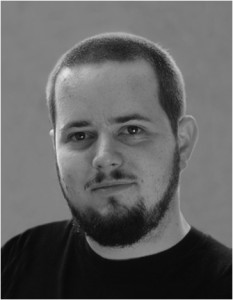 You might not know who Peter is because he s not very visible on Debian mailing lists. He s very active however and in particular on IRC. He was an admin of the OFTC IRC network at the time Debian switched from Freenode to OFTC. Nowadays he s a member of the Debian System Administration team who runs all the debian.org servers.
If you went to a Debconf you probably met him since he s always looking for new signatures of his GPG key. He owns the best connected key in the PGP web of trust. He also wrote caff a popular GPG key signing tool.
Raphael: Who are you?
Peter: I m Peter Palfrader, also known as weasel. I m in my early 30s, born
and raised in Innsbruck, Austria and am now living and working in
Salzburg, Austria. In my copious free time, other than help running
Debian s servers I also help maintaining the Tor project s infrastructure.
Away from the computer I enjoy reading fiction (mostly English language
Science Fiction and Fantasy), playing board games and going to the movies.
Weather permitting, I also occasionally do some cycling.
Raphael: How did you start contributing to Debian?
Peter: I installed my first Debian the week slink came out. That was Debian
2.1 for the youngsters, in early 1999. The one thing I immediately
liked about slink was that Debian s pppd supported RAS
authentication which my university s dial-up system required. No way
I d go back to SuSE 5.3 when I had working Internet with my Debian box.
 During that year I started getting involved in the German language
Debian channel on IRCnet which got me in contact with some DDs.
Christian Kurz (<shorty>) was working on Debian QA at the time
and he asked my help in writing a couple of scripts. Some of that
work,
debcheck, still produces parts of the qa.d.o website, tho the relevance of
that nowadays is probably negligible.
While trying to learn more Perl earlier, I had written a program to
produce syntax highlighted HTML for code snippets in various languages.
I didn t really know what I was doing but it kinda worked, and probably
still does since I still get mail from users every now and then.
I figured that it would be really nice if people could just get my
software together with Debian. According to code2html s
Debian changelog the initial release of the package was done on a
weekday at 2:30 in the morning early in 2000, and if my memory serves me
correctly, shorty uploaded it shortly afterwards.
I started packaging a couple of other piece of software and in the same
year I sent my mail to the debian account managers to register my intent
to become a DD. No new developers where being accepted at that time
since the DAMs wanted to overhaul the entire process so I wasn t
surprised to not get any immediate reply. Of course what the silence
also meant was that the mail had been lost, but I only learned of that
later when I took all my courage to ask DAM about the status of
application a couple months later. Once that was sorted out I was
assigned an AM, did the usual dance, and got my account late in November
2000.
Raphael: Four years ago, the Debian System Administration team was a real bottleneck
for the project and personal conflicts made it almost impossible to
find solutions. You were eager to help and at some point you got
dropped as a new member in that team. Can you share your story and how
you managed the transition in the difficult climate at that time?
Peter: Ah, that was quite the surprise for an awful lot of people, me included.
Branden Robinson, who was our DPL for the 2005-2006 term, tried to get
some new blood added to DSA who were at the time quite divided. He
briefly talked to me on IRC some time in summer 2005, telling me I had
come recommended for a role on the sysadmin team . In the course of
these 15 minutes he outlined some of the issues he thought a new member
of DSA would face and asked me if I thought I could help. My reply was
cautiously positive, saying that I didn t want to step on anybody s toes
but maybe I could be of some assistance.
And that was the first and last of it, until some fine November day two
years later I got an email from Phil Hands saying I ve just added
you to the adm group, and added you to the debian-admin@d.o
alias. and welcome on board . *blink* What!?
My teammates at the time were James Troup (elmo), Phil Hands (fil),
Martin Joey Schulze and Ryan Murray (neuro).
The old team, while apparently not on good terms with one another, was
however still around to do heavy lifting when required. I still remember
when on my first or second day on the team two disks failed in the raid5
of ftp-master.debian.org aka ries. Neuro did the reinstall once new
disks had arrived at Brown University. I m sure I d have been way out
of my league had this job fallen to me.
Fortunately my teammates were all willing and able to help me find
whatever pieces of information existed that might help me learn how
debian.org does its stuff. Unfortunately a lot of it only existed in
various heads, or when lucky, in one of the huge mbox archives of the
debian-admin alias or list. Anyway, soon I was able to get my hands
dirty with upgrading from sarge to etch, which had been released about
half a year earlier.
Raphael: I know the DSA team has accomplished a lot over the last few years.
Can you share some interesting figures?
Peter: Indeed we have accomplished a lot. In my opinion the most important
of these accomplishment is that we re actually once again a team
nowadays. A team where people talk to one another and where nobody
should be a SPoF.
Since this year s debconf we are six people in the admin team: Tollef
Fog Heen (Mithrandir) and Faidon Liambotis (paravoid) joined the
existing members: Luca Filipozzi, Stephen Gran, Martin Zobel-Helas, and
myself. Growing a core team, especially one where membership comes with
uid0 on all machines, is not easy and that s why I m very glad we
managed to actually do this step.
I also think the infrastructure and our workflows have matured well over
the last four years.
We now have essential monitoring as a matter of course: Nagios not only
checks whether all daemons that should be running are in fact running,
but it also monitors hardware health of disks, fans, etc. where
possible. We are alerted of outstanding security updates that need to
be installed and of changes made to our systems that weren t then
explicitly acked by one of us.
We have set up a centralized configuration system, puppet, for some of
our configuration that is the same, or at least similar, on all our
machines.
Most, if not all, pieces of software, scripts and helpers that we use on
debian.org infrastructure is in publicly accessible git repositories.
We have good communication with other teams in Debian that need our
support, like the ftp folks or the buildd people.
As for figures, I don t think there s anything spectacular. As of the
time of our BoF at this year s DebConf, we take care of approximately
135 systems, about 100 of them being real iron, the other virtual
machines (KVM). They are hosted at over 30 different locations, tho we
are trying to cut down on that number, but that s a long and difficult
process.
We don t really collect a lot of other figures like web hits on
www.debian.org or downloads from the ftp archive. The web team might do
the former and the latter is pretty much impossible due to the
distributed nature of our mirrors, as you well know.
Raphael: The DSA team has a policy of eating its own dog food, i.e. you re trying to rely only on what s available in Debian. How does that work out and what are the remaining gaps?
Peter: Mostly Debian, the OS, just meets our needs. Sure, the update frequency
is a bit high, we probably wouldn t mind a longer release cycle. But on
the other hand most software is recent enough. And when it s not,
that s easy to fix with backports. If they aren t on backports.debian.org
already, we ll just put them there (or ask somebody else to prepare a
backport for us) and so everybody else benefits from that work too.
Some things we need just don t, and probably won t, exist in Debian.
These are mainly proprietary hardware health checks like HP s tools for
their servers, or various vendors programs to query their raid
controller. HP actually makes packages for their stuff which is very
nice, but other things we just put into /usr/local, or if we really need
it on a number of machines, package ourselves.
The push to cripple our installers and kernels by removing firmware was
quite annoying, since it made installing from the official media next to
impossible in some cases. Support for working around these limitations
has improved with squeeze so that s probably ok now.
One of the other problems is that especially on embedded platforms most
of the buildd work happens on some variation of development boards,
usually due to increased memory and hard disk requirements than the
intended market audience. This often implies that the kernel shipped
with Debian won t be usable on our own debian.org machines. This makes
keeping up with security and other kernel fixes way more error prone and
time intensive. We keep annoying the right people in Debian to add
kernel flavors that actually boot on our machines, and things are
getting better, so maybe in the future this will no longer be a problem.
Raphael: If you could spend all your time on Debian, what would you work on?
Peter: One of the things that I think is a bit annoying for admins that
maintain machines all over the globe is mirror selection. I shouldn t
have to care where my packages come from, apt-get should just fetch them
from a mirror, any mirror, that is close by, fast and recent. I don t
need to know which one it was.
We have deployed geodns for security.debian.org a while ago, and it
seems to work quite well for the coarse granularity we desired for that
setup, but geodns is an ugly hack (I think it is a layer violation), it
might not scale to hundreds or thousands of mirrors, and it doesn t play
well with DNSSEC.
What I d really like to see is Debian support apt s mirror method that
I think (and I apologize if I m wronging somebody) Michael Vogt implemented
recently. The basic idea is that you simply add deb
mirror://mirror.debian.org/ or something like that to your
sources.list, and apt goes and asks that server for a list of mirrors it
should use right now.
The client code exists, but I don t know how well tested it is. What is
missing is the server part. One that gives clients a mirror, or list of
mirrors, that are close to them, current, and carry their architecture.
It s probably not a huge amount of work, but at the same time it s also
not entirely trivial. If I had more time on my hands this is something
that I d try to do. Hopefully somebody will pick it up.
Raphael: What motivates you to continue to contribute year after year?
Peter: It s fun, mostly. Sure, there are things that need to be done regularly
that are boring or become so after a while, but as a sysadmin you tend
to do things once or twice and then seek to automate it.
DSA s users, i.e. DDs, constantly want to play with new services or
approaches to make Debian better and often they need our support or help
in their endeavors. So that s a constant flow of interesting
challenges.
Another reason is that Debian is simply where some of my friends are.
Working on Debian with them is interacting with friends.
I not only use Debian at debian.org. I use it at work, I use it on my
own machines, on the servers of the Tor project. When I was with OFTC
Debian is what we put on our machines. Being a part of Debian is one
way to ensure what Debian releases is actually usable to me,
professionally and with other projects.
Raphael: Is there someone in Debian that you admire for their contributions?
Peter: That s a hard one. There are certainly people who I respect greatly for
their technical or other contributions to Debian, but I don t want to
single anybody out in particular. I think we all, everyone who ever
contributed to Debian with code, support or a bug report, can be very
proud of what we are producing one of the best operating systems out
there.
Thank you to Peter for the time spent answering my questions. I hope you enjoyed reading his answers as I did. Subscribe to my newsletter to get my monthly summary of the Debian/Ubuntu news and to not miss further interviews. You can also follow along on Identi.ca, Twitter and Facebook.
No comment Liked this article? Click here. My blog is Flattr-enabled.
 Every year I worry that DebConf might not be as good as I hope, or
not as good as previous years. Well, I've yet to be let down!
The

 During
 The first day of the Desktop Summit was yesterday, Saturday, August 6. I loved it and gave a presentation. There are two very different stories I can tell on the topic of gender equality in
free software. I'll start with the bad.
 Sevilla is located in the (one of the many actually) oh-boy-is-that-really-the-temperature region of Spain. It has been historically significative for its financial, artistic and cultural value.
But it s most important role has been that of hosting lots of GNOME activity. The 3rd ever GUADEC was held here, those cool

 Boy, the last three months have been very eventful, developmentally.
First off, about 2 weeks after she turned 1, Zoe started walking in earnest.
Within about 2 weeks of that there was no stopping her. It's funny to think
she's only been walking for under 3 months and yet she's very stable on her
feet.
Secondly, she developed a mild egg allergy. Sarah was giving her some
scrambled eggs (one egg's worth) for lunch one day, and she mixed in some
cream cheese, and Zoe absolutely scoffed it all down, so she scrambled
another egg and she scoffed that down too. She then

 So, the fifth Debconf I ve had the chance to attend is clearly over now. It was great, and all organizers (and sponsors) really deserve huge thank you for making this event so successful. I m already looking forward to next year s edition.
Debconf has been very productive for me. I chaired 4 sessions:


 Last night, Tim O'Reilly
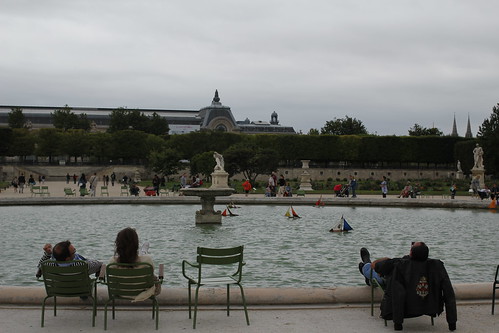
 Before arriving to DebConf11, I arranged my flights so that I had a day and a night in Paris as I have not been there before. So after checking out of my work apartment in Tampere, going to work there with all the things from that apartment, then flying back to Riga, going to a midnight screening of the last Potter movie and finally getting back home around 2am, I quickly checked that I have everything needed for the conference and went off to sleep only to wake up at 8am again, pack everything (into a single carry-on bag, after a year of experience travelling by air weekly and watching Up in the Air twice) and be off to the plain to Paris.
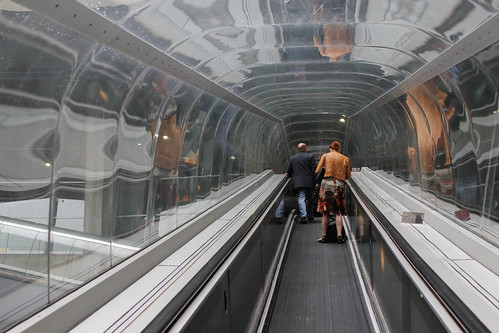
The CDG airport is quite huge, even compared to something like JFK it feels bigger and more concrete. And yet so dark and lacking interesting features that the only photo I got from it was this



 The question was recently asked, How do I perform crash recovery on a MySQL
master/slave database cluster? Because replication is async, a transaction
that has been committed to the master may not be able to leave the master
before the crash happens.
The short answer is, you don t. Asynchronous replication, by it s very
nature, is prone to these sorts of issues, and MySQL doesn t make life
easier in general by using query replay.
Some of the issues aren t massive: for instance, if a slave crashes, the
master will keep replication logs for the slave until it comes back up (as
long as the slave comes back before the master decides some of the replogs
are too old and starts deleting them, of course), so as long as you can live
without a master for a while, you can recover and continue along your merry
way.
Promoting a slave to be a master, on the other hand, is a situation frought
with peril. Here, you ve just got to hope hope that your chosen slave is
consistent with the master s state at death (because it s async, you have no
guarantees about that), and that all the other slaves have the same ideas
about what counts as the current state of the data. If your newly-promoted
slave managed to apply an update that another slave didn t, that slave will
be out of sync with reality (until such time as the now-dead master comes
back and replays all those queries hahahaha). To even guarantee that
any slaves have a consistent view of the data as compared to the new master,
you ve got to rereplicate everything from the new master, because MySQL s
where are you up to? counter is master-specific.
I ve heard people who have to deal with this sort of thing these days say
that the
 Somehow, even though I'd know about it for the longest time, I had never get around to reading George
 and I immediately got myself a copy. (Nowadays I mostly do my recreational reading with the Kindle app on my Android smartphone.)
As before, I'm spellbound. I'm already about 25% through it and loving it. What I love about Martin is that he really gets how traditional, "pagan", "feudal" societies work. Take religion for instance. A lot of Sci-Fi/Fantasy authors if they deal with the subject at all usually give a cartoon version of polytheism that owes more to Christian canards and Dungeons & Dragons than any existing human religion. But in Westeros, one can be simultaneously devout, amoral, superstitious, and cynical in a way that makes a lot of sense to me as a Hindu. Or class. Being a peasant in Martins' world is horrible. Your life is completely at the mercy of Lords and Ladies and can end in an instant. But the upper class despite its wealth and power is trapped in its own way too. They must constantly protect their status from jealous competitors and a reversal of political or military fortune can destroy an ancient noble family just as suddenly as a bad harvest can destroy a family of farmers.
Like the other books in the series, this one has a huge cast of characters whose stories weave in and out with each chapter told mainly from one characters viewpoint. This is a tactic which I for one found helpful to keep my attention from flagging but it means you can't really enjoy it unless you've read the previous volumes in order first. I definitely think it's worth the effort though.
 We are few weeks away from the start of DebConf11. Excitement runs high in Debian-land. The two most worthy weeks of the year, every year, loom close. Our Bosnian friends have done a great job of finding and defending an amazing proposal, and are now facing the hard work and permanent adrenaline levels of being in charge of the closest I have seen to a herd of (well-behaved but wild and untamable) cats.
I have organized DebConf in my country. It was hellish, but at the same time, it's one of my most cherished experiences. And I'm sure the same will be said by the leaders of each successive bid It is one of the most rewarding experiences you can imagine.
Next year, DebConf will be held in tropical Managua, Nicaragua. But, where will we meet in 2013? Well, that depends on you, my dear reader! Do you want to work your ass off for Debian and have utter fun? Do you want to show and share your country with this huge family of developers? Start thinking about pushing for a DebConf13 bid!
Do you have to be at Banja Luka to propose your bid? No. You can proxy via somebody I'd suggest to do it via somebody who knows the location you are suggesting, but basically, choose a friend that you trust that trusts you. Of course, you can participate in the presentation session via IRC.
Do you have to be a Debian Developer to propose a bid? No. For DebConf9, none of the C ceres guys was a DD; for DebConf10, some of the people most involved from the local New Yorkers were not DDs. For DC11, none of our dear and overworked hosts in Bosnia are DDs. And for DC12, the Nicaraguan crew is also made from people interested in getting closer to the Debian project, but not DDs.
Do you have to decide now? No. This is just a call for a first presentation, but the decision regarding DC13 will be taken probably around March 2012. However, giving a nice presentation at DebConf helps a lot, gives you visibility, and will get the ball rolling.
Is there a geographical bias? Slight. So far, and since the second DebConf, we have kept the tradition not to repeat continents on two successive DebConfs. This is not a hard condition, however!
What do you need to start thinking about? Go visit our prospective location checklist at
 However, these RAID volumes are in a pretty awkward spot for installers and bootloaders: inside a running Linux environment they look like software RAID which cannot be depended on for booting, but at boot time they look like hard disks which cannot be looked under the hood.
I recently got a new desktop machine which has one of these motherboards, and fortuitously my old desktop I was replacing had the same size disks so I had 4 disks and the option of using a RAID setup. Apparently I m a sucker for punishment because I went for a RAID 10 (that is two RAID volumes made up of two-disk mirrors (the RAID 1 component), and then those two volumes are combined via striping (the RAID 0 component). This has the potential for pretty nice performance: in principle any read can come from one of 2 disks, and every 64KB (the stripe size) of linear data will switch to the other mirror set, giving a nice boost. Writes need to write to 2 disks always, but every 64KB worth of data will alternate mirror sets, also giving a boost.
Sadly we (Ubuntu) aren t ready for this yet: there are two key bugs that make this layout almost impossible to install into. This blog post is for my exo-memory, I want to be able to figure out what I did next time around


