This year had a lot of things happen in it, world-wide, as is always the case.
Being more selfish here are the things I remember, in brief unless there are comments/questions:
I learned more Finnish.
Lots of things with our child.
I helped teach him to swim.
He learned to tell the time with an analog clock/watch.
I took him to a circus for the first (only) time ever.
He cut his hair for the first time in six years.
He spent his a birthday with my parents, in the UK - His languages skills were on top-form, understanding the various UK accents.
And another with family here in Finland - Where he watched me roll, naked, in the snow after sauna, and then he asked "Daddy why you did that?"
On the topic of Finnish I'm getting pretty damn good at understanding, albeit less good in speaking. Finnish is all about the suffixes, so:
A car
auto
My car
autoni
In a car
autossa
In my car
autossani
With my car
autoll ni
From a car
autosta
Car-less
autoton
Most of this is regular, so you can be childless via the "ton" suffix - lapsiton is "lapsi" (child) "ton" (less). The hard part in communication is thus twofold:
Knowing the word you want to use, be it car, cake, spoon, or smile.
Getting the appropriate suffix for the use you want.
Our child turned six recently, and most of the year was spent doing things with him, for him, and to him. He's on the verge of learning to read (English and Finnish), he's interested in maths and completes little puzzles freely and happily. He likes to help with Sodoku, for example and not just the child-versions.
In the past couple of weeks I let him play Super Mario & Super Mario Bros 3, on a NES Classic, and he dies constantly, with a smile on his face. But he does love to tell me what to do when he watches me play!
He's learned to ice-skate, and ski, and almost learned to swim. (I'll say he can swim 3m inside a pool, without aid, but then he starts to sink.) We've got a couple of regular rituals with each other - including going to sauna every week or two, and other similar things.
He's gotten more interested in helping me cook, and his mother too. (My wife and I live in separate houses..)
I guess the next big milestone will be him walking to school by himself, which will start next year. As things stand I wake up early, go over to his house, and do all the morning-things, before I take him there. I expect I'll still want to go there, give him his breakfast, his medicine, and help him get dressed. After that I guess I kick him out, and he makes his own way there.
Happily the walk to school is a few hundred meters, and doesn't involve crossing any roads. But of course it does bring other complications: if he's not collected, and walks home himself, then he needs a key to one/other house, and there's the potential need for a phone to say "I'm late", "I'm lost", or us to say "Where are you?".
Anyway .. interesting year .. good year. Despite everything else.
A few years ago, I downsized my personal infrastructure. Until 2018, there were
a dozen containers running on a single Hetzner server.1 I migrated
my emails to Fastmail and my DNS zones to Gandi. It left me with only my
blog to self-host. As of today, my low-scale infrastructure is composed of 4
virtual machines running NixOS on Hetzner Cloud and Vultr, a handful
of DNS zones on Gandi and Route 53, and a couple of Cloudfront
distributions. It is managed by CDK for Terraform (CDKTF), while NixOS
deployments are handled by NixOps.
In this article, I provide a brief introduction to Terraform, CDKTF, and the
Nix ecosystem. I also explain how to use Nix to access these tools within
your shell, so you can quickly start using them.
CDKTF: infrastructure as codeTerraform is an infrastructure-as-code tool. You can define your
infrastructure by declaring resources with the HCL language. This language
has some additional features like loops to declare several resources from a
list, built-in functions you can call in expressions, and string templates.
Terraform relies on a large set of providers to manage resources.
Managing servers
Here is a short example using the Hetzner Cloud provider to spawn a virtual
machine:
HCL expressiveness is quite limited and I find a general-purpose language more
convenient to describe all the resources. This is where CDK for Terraform
comes in: you can manage your infrastructure using your preferred programming
language, including TypeScript, Go, and Python. Here is the previous example
using CDKTF and TypeScript:
Running cdktf synth generates a configuration file for Terraform, terraform
plan previews the changes, and terraform apply applies them. Now that you
have a general-purpose language, you can use functions.
Managing DNS records
While using CDKTF for 4 web servers may seem a tad overkill, this is quite
different when it comes to managing a few DNS zones. With DNSControl, which
is using JavaScript as a domain-specific language, I was able to define the
bernat.ch zone with this snippet of code:
All the magic is in the code that I did not show you. You can check the
dns.ts file in the cdktf-take1 repository to see how it works. Here is a
quick explanation:
Route53Zone() creates a new zone hosted by Route 53,
sign() signs the zone with the provided master key,
registrar() registers the zone to the registrar of the domain and sets up DNSSEC,
www() creates A and AAAA records for the provided name pointing to the web servers,
fastmailMX() creates the MX records and other support records to direct emails to Fastmail.
Here is the content of the fastmailMX() function. It generates a few records
and returns the current zone for chaining:
I encourage you to browse the repository if you need more
information.
About Pulumi
My first tentative around Terraform was to use Pulumi. You can find this
attempt on GitHub. This is quite similar to what I currently do
with CDKTF. The main difference is that I am using Python instead of TypeScript
because I was not familiar with TypeScript at the time.2Pulumi predates CDKTF and it uses a slightly different approach. CDKTF
generates a Terraform configuration (in JSON format instead of HCL), delegating
planning, state management, and deployment to Terraform. It is therefore bound
to the limitations of what can be expressed by Terraform, notably when you
need to transform data obtained from one resource to another.3Pulumi needs specific providers for each resource. Many Pulumi providers are
thin wrappers encapsulating Terraform providers.
While Pulumi provides a good user experience, I switched to CDKTF because
writing providers for Pulumi is a chore. CDKTF does not require such a step.
Outside the big players (AWS, Azure and Google Cloud), the existence, quality,
and freshness of the Pulumi providers are inconsistent. Most providers rely on
a Terraform provider and they may lag a few versions behind, miss a few
resources, or have a few bugs of their own.
When a provider does not exist, you can write one with the help of the
pulumi-terraform-bridge library. The Pulumi project provides a
boilerplate for this purpose. I had a bad experience with it when writing
providers for Gandi and Vultr: the
Makefileautomatically installs Pulumi using a curl sh
pattern and does not work with /bin/sh. There is a lack of
interest for community-based contributions4 or even for providers for
smaller players.
NixOS & NixOpsNix is a functional, purely-functional programming language.
Nix is also the name of the package manager that is built on top of
the Nix language. It allows users to declaratively install packages.
nixpkgs is a repository of packages. You can install Nix on
top of a regular Linux distribution. If you want more details, a good resource
is the official website, and notably the learn section. There is a steep learning curve, but the reward is tremendous.
NixOS: declarative Linux distributionNixOS is a Linux distribution built on top of the Nix package manager.
Here is a configuration snippet to add some packages:
It is possible to alter an existing derivation5 to use a different version, enable a
specific feature, or apply a patch. Here is how I enable and configure Nginx
to disable the stream module, add the Brotli compression module, and add the
IP address anonymizer module. Moreover, instead of using OpenSSL 3, I keep
using OpenSSL 1.1.6
If you need to add some patches, it is also possible. Here are the patches I
added in 2019 to circumvent the DoS vulnerabilities in Nginx
until they were fixed in NixOS:7
services.nginx.package = pkgs.nginxStable.overrideAttrs (old:patches = oldAttrs.patches ++[# HTTP/2: reject zero length headers with PROTOCOL_ERROR.(pkgs.fetchpatch url =https://github.com/nginx/nginx/commit/dbdd[].patch;sha256 ="a48190[ ]"; )# HTTP/2: limited number of DATA frames.(pkgs.fetchpatch url =https://github.com/nginx/nginx/commit/94c5[].patch;sha256 ="af591a[ ]"; )# HTTP/2: limited number of PRIORITY frames.(pkgs.fetchpatch url =https://github.com/nginx/nginx/commit/39bb[].patch;sha256 ="1ad8fe[ ]"; )]; );
If you are interested, have a look at my relatively small configuration:
common.nix contains the configuration to be applied to any host
(SSH, users, common software packages), web.nix contains the
configuration for the web servers, isso.nix runs Isso into a
systemd container.
NixOps: NixOS deployment tool
On a single node, NixOS configuration is in the /etc/nixos/configuration.nix
file. After modifying it, you have to run nixos-rebuild switch. Nix fetches
all possible dependencies from the binary cache and builds the remaining
packages. It creates a new entry in the boot loader menu and activates the new
configuration.
To manage several nodes, there exists several options, including NixOps,
deploy-rs, Colmena, and morph. I do not know all of them, but from
my point of view, the differences are not that important. It is also possible to
build such a tool yourself as Nix provides the most important building blocks:
nix build and nix copy. NixOps is one of the first tools available but I
encourage you to explore the alternatives.
NixOps configuration is written in Nix. Here is a simplified configuration
to deploy znc01.luffy.cx, web01.luffy.cx, and web02.luffy.cx, with the
help of the server and web functions:
Tying everything together with Nix
The Nix ecosystem is a unified solution to the various problems around
software and configuration management. A very interesting feature is the
declarative and reproducible developer environments. This is similar to
Python virtual environments, except it is not language-specific.
Brief introduction to Nix flakes
I am using flakes, a new Nix feature improving reproducibility by pinning
all dependencies and making the build hermetic. While the feature is marked as
experimental,8 it is widely used and you may see flake.nix and
flake.lock at the root of some repositories.
As a short example, here is the flake.nix content shipped with Snimpy, an
interactive SNMP tool for Python relying on libsmi, a C library:
Nix and CDKTF
At the root of the repository I use for CDKTF, there is a
flake.nix file to set up a shell with Terraform and
CDKTF installed and with the appropriate environment variables to automate my
infrastructure.
Terraform is already packaged in nixpkgs. However, I need to apply a patch
on top of the Gandi provider. Not a problem with Nix!
CDKTF is written in TypeScript. I have a
package.json file with all the dependencies
needed, including the ones to use TypeScript as the language to define
infrastructure:
The next step is to generate the CDKTF providers from the Terraform providers
and turn them into a derivation:
cdktfProviders = pkgs.stdenvNoCC.mkDerivation name ="cdktf-providers";nativeBuildInputs =[
pkgs.nodejs
terraform
];src = nix-filter root =./.;include =[./cdktf.json./tsconfig.json]; ;buildPhase ='' export HOME=$(mktemp -d) export CHECKPOINT_DISABLE=1 export DISABLE_VERSION_CHECK=1 export PATH=$ nodeEnv/node_modules/.bin:$PATH ln -nsf $ nodeEnv/node_modules node_modules # Build all providers we have in terraform for provider in $(cd $ terraform/libexec/terraform-providers; echo */*/*/*); do version=''$ provider##*/ provider=''$ provider%/* echo "Build $provider@$version" cdktf provider add --force-local $provider@$version cat done echo "Compile TS JS" tsc '';installPhase ='' mv .gen $out ln -nsf $ nodeEnv/node_modules $out/node_modules ''; ;
Finally, we can define the development environment:
devShells.default = pkgs.mkShell name ="cdktf-take1";buildInputs =[
pkgs.nodejs
pkgs.yarn
terraform
];shellHook ='' # No telemetry export CHECKPOINT_DISABLE=1 # No autoinstall of plugins export CDKTF_DISABLE_PLUGIN_CACHE_ENV=1 # Do not check version export DISABLE_VERSION_CHECK=1 # Access to node modules export PATH=$PWD/node_modules/.bin:$PATH ln -nsf $ nodeEnv/node_modules node_modules ln -nsf $ cdktfProviders .gen # Credentials for p in \ njf.nznmba.pbz/Nqzvavfgengbe \ urgmare.pbz/ivaprag@oreang.pu \ ihyge.pbz/ihyge@ivaprag.oreang.pu; do eval $(pass show $(echo $p tr 'A-Za-z' 'N-ZA-Mn-za-m') grep '^export') done eval $(pass show personal/cdktf/secrets grep '^export') export TF_VAR_hcloudToken="$HCLOUD_TOKEN" export TF_VAR_vultrApiKey="$VULTR_API_KEY" unset VULTR_API_KEY HCLOUD_TOKEN ''; ;
The derivations listed in buildInputs are available in the provided shell.
The content of shellHook is sourced when starting the shell. It sets up some
symbolic links to make the JavaScript environment built at an earlier step
available, as well as the generated CDKTF providers. It also exports all the
credentials.10
I am also using direnv with an .envrc to
automatically load the development environment. This also enables the
environment to be available from inside Emacs, notably when using lsp-mode
to get TypeScript completions. Without direnv, nix develop . can activate
the environment.
I use the following commands to deploy the infrastructure:11
As for CDKTF, at the root of the repository I use for NixOps,
there is a flake.nix file to set up a shell with
NixOps configured. Because NixOps do not support rollouts, I usually use the
following commands to deploy on a single server:12
nixops deploy rolls out all servers in parallel and therefore could cause a
short outage where all Nginx are down at the same time.
This post has been a work-in-progress for the past three years, with the content
being updated and refined as I experimented with different solutions. There is
still much to explore13 but I feel there is enough content to publish now.
It was an AMD Athlon 64 X2 5600+ with 2 GB of RAM and 2 400 GB disks
with software RAID. I was paying something around 59 per month for it.
While it was a good deal in 2008, by 2018 it was no longer cost-effective.
It was running on Debian Wheezy with Linux-VServer for isolation, both
of which were outdated in 2018.
I also did not use Python because Poetry support in Nix was a bit
broken around the time I started hacking around CDKTF.
Pulumi can apply arbitrary functions with the apply()
method on an output. It makes it easy to transform data that are not known
during the planning stage. Terraform has functions to
serve a similar purpose, but they are more limited.
The two mentioned pull requests are not merged yet. The second one is
superseded by PR #61, submitted two months later, which
enforces the use of /bin/bash. I also submitted PR #56,
which was merged 4 months later and quickly reverted without
an explanation.
You may consider packages and derivations to be synonyms in the
Nix ecosystem.
NixOS can be a bit slow to integrate patches since they need to
rebuild parts of the binary cache before releasing the fixes. In this
specific case, they were fast: the vulnerability and patches were released
on August 13th 2019 and available in NixOS on August 15th. As a
comparison, Debian only released the fixed version on August 22nd, which is unusually late.
Because flakes are experimental, many documentations do not
use them and it is an additional aspect to learn.
It is possible to replace . with github:vincentbernat/snimpy,
like in the other commands, but having Snimpy dependencies without
Snimpy source code is less interesting.
I am using pass as a password manager. The password names are
only obfuscated to avoid spam.
The cdktf command can wrap the terraform commands, but I
prefer to use them directly as they are more flexible.
If the change is risky, I disable the server with CDKTF. This
removes it from the web service DNS records.
I would like to replace NixOps with an alternative handling
progressive rollouts and checks. I am also considering switching to
Nomad or Kubernetes to deploy workloads.
I use GnuPG to compute cryptographic signatures for my emails, git commits/tags, and software release artifacts (tarballs). Part of GnuPG is gpg-agent which talks to OpenSSH, which I login to remote servers and to clone git repositories. I dislike storing cryptographic keys on general-purpose machines, and have used hardware-backed OpenPGP keys since around 2006 when I got a FSFE Fellowship Card. GnuPG via gpg-agent handles this well, and the private key never leaves the hardware. The ZeitControl cards were (to my knowledge) proprietary hardware running some non-free operating system and OpenPGP implementation. By late 2012 the YubiKey NEO supported OpenPGP, and while the hardware and operating system on it was not free, at least it ran a free software OpenPGP implementation and eventually I setup my primary RSA key on it. This worked well for a couple of years, and when I in 2019 wished to migrate to a new key, the FST-01G device with open hardware running free software that supported Ed25519 had become available. I created a key and have been using the FST-01G on my main laptop since then. This little device has been working, the signature counter on it is around 14501 which means around 10 signatures/day since then!
Currently I am in the process of migrating towards a new laptop, and moving the FST-01G device between them is cumbersome, especially if I want to use both laptops in parallel. That s why I need to setup a new hardware device to hold my OpenPGP key, which can go with my new laptop. This is a good time to re-visit alternatives. I quickly decided that I did not want to create a new key, only to import my current one to keep everything working. My requirements on the device to chose hasn t changed since 2019, see my summary at the end of the earlier blog post. Unfortunately the FST-01G is out of stock and the newer FST-01SZ has also out of stock. While Tillitis looks promising (and I have one to play with), it does not support OpenPGP (yet). What to do? Fortunately, I found some FST-01SZ device in my drawer, and decided to use it pending a more satisfactory answer. Hopefully once I get around to generate a new OpenPGP key in a year or so, I will do a better survey of options that are available on the market then. What are your (freedom-respecting) OpenPGP hardware recommendations?
FST-01SZ circuit board
Similar to setting up the FST-01G, the FST-01SZ needs to be setup before use. I m doing the following from Trisquel 11 but any GNU/Linux system would work. When the device is inserted at first time, some kernel messages are shown (see /var/log/syslog or use the dmesg command):
usb 3-3: new full-speed USB device number 39 using xhci_hcd
usb 3-3: New USB device found, idVendor=234b, idProduct=0004, bcdDevice= 2.00
usb 3-3: New USB device strings: Mfr=1, Product=2, SerialNumber=3
usb 3-3: Product: Fraucheky
usb 3-3: Manufacturer: Free Software Initiative of Japan
usb 3-3: SerialNumber: FSIJ-0.0
usb-storage 3-3:1.0: USB Mass Storage device detected
scsi host1: usb-storage 3-3:1.0
scsi 1:0:0:0: Direct-Access     FSIJ     Fraucheky        1.0  PQ: 0 ANSI: 0
sd 1:0:0:0: Attached scsi generic sg2 type 0
sd 1:0:0:0: [sdc] 128 512-byte logical blocks: (65.5 kB/64.0 KiB)
sd 1:0:0:0: [sdc] Write Protect is off
sd 1:0:0:0: [sdc] Mode Sense: 03 00 00 00
sd 1:0:0:0: [sdc] No Caching mode page found
sd 1:0:0:0: [sdc] Assuming drive cache: write through
 sdc:
sd 1:0:0:0: [sdc] Attached SCSI removable disk
Interestingly, the NeuG software installed on the device I got appears to be version 1.0.9:
jas@kaka:~$ head /media/jas/Fraucheky/README
NeuG - a true random number generator implementation
						  Version 1.0.9
						     2018-11-20
					           Niibe Yutaka
			      Free Software Initiative of Japan
What's NeuG?
============
jas@kaka:~$
I could not find version 1.0.9 published anywhere, but the device came with a SD-card that contain a copy of the source, so I uploaded it until a more canonical place is located. Putting the device in the serial mode can be done using a sudo eject /dev/sdc command which results in the following syslog output.
usb 3-3: reset full-speed USB device number 39 using xhci_hcd
usb 3-3: device firmware changed
usb 3-3: USB disconnect, device number 39
sdc: detected capacity change from 128 to 0
usb 3-3: new full-speed USB device number 40 using xhci_hcd
usb 3-3: New USB device found, idVendor=234b, idProduct=0001, bcdDevice= 2.00
usb 3-3: New USB device strings: Mfr=1, Product=2, SerialNumber=3
usb 3-3: Product: NeuG True RNG
usb 3-3: Manufacturer: Free Software Initiative of Japan
usb 3-3: SerialNumber: FSIJ-1.0.9-42315277
cdc_acm 3-3:1.0: ttyACM0: USB ACM device
Now download Gnuk, verify its integrity and build it. You may need some additional packages installed, try apt-get install gcc-arm-none-eabi openocd python3-usb. As you can see, I m using the stable 1.2 branch of Gnuk, currently on version 1.2.20. The ./configure parameters deserve some explanation. The kdf_do=required sets up the device to require KDF usage. The --enable-factory-reset allows me to use the command factory-reset (with admin PIN) inside gpg --card-edit to completely wipe the card. Some may consider that too dangerous, but my view is that if someone has your admin PIN it is game over anyway. The --vidpid=234b:0000 is specifies the USB VID/PID to use, and --target=FST_01SZ is critical to set the platform (you ll may brick the device if you pick the wrong --target setting).
jas@kaka:~/src$ rm -rf gnuk neug
jas@kaka:~/src$ git clone https://gitlab.com/jas/neug.git
Cloning into 'neug'...
remote: Enumerating objects: 2034, done.
remote: Counting objects: 100% (2034/2034), done.
remote: Compressing objects: 100% (603/603), done.
remote: Total 2034 (delta 1405), reused 2013 (delta 1405), pack-reused 0
Receiving objects: 100% (2034/2034), 910.34 KiB   3.50 MiB/s, done.
Resolving deltas: 100% (1405/1405), done.
jas@kaka:~/src$ git clone https://salsa.debian.org/gnuk-team/gnuk/gnuk.git
Cloning into 'gnuk'...
remote: Enumerating objects: 13765, done.
remote: Counting objects: 100% (959/959), done.
remote: Compressing objects: 100% (337/337), done.
remote: Total 13765 (delta 629), reused 907 (delta 599), pack-reused 12806
Receiving objects: 100% (13765/13765), 12.59 MiB   3.05 MiB/s, done.
Resolving deltas: 100% (10077/10077), done.
jas@kaka:~/src$ cd neug
jas@kaka:~/src/neug$ git describe
release/1.0.9
jas@kaka:~/src/neug$ git tag -v  git describe
object 5d51022a97a5b7358d0ea62bbbc00628c6cec06a
type commit
tag release/1.0.9
tagger NIIBE Yutaka <gniibe@fsij.org> 1542701768 +0900
Version 1.0.9.
gpg: Signature made Tue Nov 20 09:16:08 2018 CET
gpg:                using EDDSA key 249CB3771750745D5CDD323CE267B052364F028D
gpg:                issuer "gniibe@fsij.org"
gpg: Good signature from "NIIBE Yutaka <gniibe@fsij.org>" [unknown]
gpg:                 aka "NIIBE Yutaka <gniibe@debian.org>" [unknown]
gpg: WARNING: This key is not certified with a trusted signature!
gpg:          There is no indication that the signature belongs to the owner.
Primary key fingerprint: 249C B377 1750 745D 5CDD  323C E267 B052 364F 028D
jas@kaka:~/src/neug$ cd ../gnuk/
jas@kaka:~/src/gnuk$ git checkout STABLE-BRANCH-1-2
Branch 'STABLE-BRANCH-1-2' set up to track remote branch 'STABLE-BRANCH-1-2' from 'origin'.
Switched to a new branch 'STABLE-BRANCH-1-2'
jas@kaka:~/src/gnuk$ git describe
release/1.2.20
jas@kaka:~/src/gnuk$ git tag -v  git describe
object 9d3c08bd2beb73ce942b016d4328f0a596096c02
type commit
tag release/1.2.20
tagger NIIBE Yutaka <gniibe@fsij.org> 1650594032 +0900
Gnuk: Version 1.2.20
gpg: Signature made Fri Apr 22 04:20:32 2022 CEST
gpg:                using EDDSA key 249CB3771750745D5CDD323CE267B052364F028D
gpg: Good signature from "NIIBE Yutaka <gniibe@fsij.org>" [unknown]
gpg:                 aka "NIIBE Yutaka <gniibe@debian.org>" [unknown]
gpg: WARNING: This key is not certified with a trusted signature!
gpg:          There is no indication that the signature belongs to the owner.
Primary key fingerprint: 249C B377 1750 745D 5CDD  323C E267 B052 364F 028D
jas@kaka:~/src/gnuk/src$ git submodule update --init
Submodule 'chopstx' (https://salsa.debian.org/gnuk-team/chopstx/chopstx.git) registered for path '../chopstx'
Cloning into '/home/jas/src/gnuk/chopstx'...
Submodule path '../chopstx': checked out 'e12a7e0bb3f004c7bca41cfdb24c8b66daf3db89'
jas@kaka:~/src/gnuk$ cd chopstx
jas@kaka:~/src/gnuk/chopstx$ git describe
release/1.21
jas@kaka:~/src/gnuk/chopstx$ git tag -v  git describe
object e12a7e0bb3f004c7bca41cfdb24c8b66daf3db89
type commit
tag release/1.21
tagger NIIBE Yutaka <gniibe@fsij.org> 1650593697 +0900
Chopstx: Version 1.21
gpg: Signature made Fri Apr 22 04:14:57 2022 CEST
gpg:                using EDDSA key 249CB3771750745D5CDD323CE267B052364F028D
gpg: Good signature from "NIIBE Yutaka <gniibe@fsij.org>" [unknown]
gpg:                 aka "NIIBE Yutaka <gniibe@debian.org>" [unknown]
gpg: WARNING: This key is not certified with a trusted signature!
gpg:          There is no indication that the signature belongs to the owner.
Primary key fingerprint: 249C B377 1750 745D 5CDD  323C E267 B052 364F 028D
jas@kaka:~/src/gnuk/chopstx$ cd ../src
jas@kaka:~/src/gnuk/src$ kdf_do=required ./configure --enable-factory-reset --vidpid=234b:0000 --target=FST_01SZ
Header file is: board-fst-01sz.h
Debug option disabled
Configured for bare system (no-DFU)
PIN pad option disabled
CERT.3 Data Object is NOT supported
Card insert/removal by HID device is NOT supported
Life cycle management is supported
Acknowledge button is supported
KDF DO is required before key import/generation
jas@kaka:~/src/gnuk/src$ make   less
jas@kaka:~/src/gnuk/src$ cd ../regnual/
jas@kaka:~/src/gnuk/regnual$ make   less
jas@kaka:~/src/gnuk/regnual$ cd ../../
jas@kaka:~/src$ sudo python3 neug/tool/neug_upgrade.py -f gnuk/regnual/regnual.bin gnuk/src/build/gnuk.bin
gnuk/regnual/regnual.bin: 4608
gnuk/src/build/gnuk.bin: 109568
CRC32: b93ca829
Device:
Configuration: 1
Interface: 1
20000e00:20005000
Downloading flash upgrade program...
start 20000e00
end   20002000
# 20002000: 32 : 4
Run flash upgrade program...
Wait 1 second...
Wait 1 second...
Device:
08001000:08020000
Downloading the program
start 08001000
end   0801ac00
jas@kaka:~/src$
The kernel log will contain the following, and the card is ready to use as an OpenPGP card. You may unplug it and re-insert it as you wish.
usb 3-3: reset full-speed USB device number 41 using xhci_hcd
usb 3-3: device firmware changed
usb 3-3: USB disconnect, device number 41
usb 3-3: new full-speed USB device number 42 using xhci_hcd
usb 3-3: New USB device found, idVendor=234b, idProduct=0000, bcdDevice= 2.00
usb 3-3: New USB device strings: Mfr=1, Product=2, SerialNumber=3
usb 3-3: Product: Gnuk Token
usb 3-3: Manufacturer: Free Software Initiative of Japan
usb 3-3: SerialNumber: FSIJ-1.2.20-42315277
Setting up the card is the next step, and there are many tutorials around for this, eventually I settled with the following sequence. Let s start with setting the admin PIN. First make sure that pcscd nor scdaemon is running, which is good hygien since those processes cache some information and with a stale connection this easily leads to confusion. Cache invalidation sigh.
jas@kaka:~$ gpg-connect-agent "SCD KILLSCD" "SCD BYE" /bye
jas@kaka:~$ ps auxww grep -e pcsc -e scd
jas        30221  0.0  0.0   3468  1692 pts/3    R+   11:49   0:00 grep --color=auto -e pcsc -e scd
jas@kaka:~$ gpg --card-edit
Reader ...........: 234B:0000:FSIJ-1.2.20-42315277:0
Application ID ...: D276000124010200FFFE423152770000
Application type .: OpenPGP
Version ..........: 2.0
Manufacturer .....: unmanaged S/N range
Serial number ....: 42315277
Name of cardholder: [not set]
Language prefs ...: [not set]
Salutation .......:
URL of public key : [not set]
Login data .......: [not set]
Signature PIN ....: forced
Key attributes ...: rsa2048 rsa2048 rsa2048
Max. PIN lengths .: 127 127 127
PIN retry counter : 3 3 3
Signature counter : 0
KDF setting ......: off
Signature key ....: [none]
Encryption key....: [none]
Authentication key: [none]
General key info..: [none]
gpg/card> admin
Admin commands are allowed
gpg/card> kdf-setup
gpg/card> passwd
gpg: OpenPGP card no. D276000124010200FFFE423152770000 detected
1 - change PIN
2 - unblock PIN
3 - change Admin PIN
4 - set the Reset Code
Q - quit
Your selection? 3
PIN changed.
1 - change PIN
2 - unblock PIN
3 - change Admin PIN
4 - set the Reset Code
Q - quit
Your selection?
Now it would be natural to setup the PIN and reset code. However the Gnuk software is configured to not allow this until the keys are imported. You would get the following somewhat cryptical error messages if you try. This took me a while to understand, since this is device-specific, and some other OpenPGP implementations allows you to configure a PIN and reset code before key import.
Your selection? 4
Error setting the Reset Code: Card error
1 - change PIN
2 - unblock PIN
3 - change Admin PIN
4 - set the Reset Code
Q - quit
Your selection? 1
Error changing the PIN: Conditions of use not satisfied
1 - change PIN
2 - unblock PIN
3 - change Admin PIN
4 - set the Reset Code
Q - quit
Your selection? q
Continue to configure the card and make it ready for key import. Some settings deserve comments. The lang field may be used to setup the language, but I have rarely seen it use, and I set it to sv (Swedish) mostly to be able to experiment if any software adhears to it. The URL is important to point to somewhere where your public key is stored, the fetch command of gpg --card-edit downloads it and sets up GnuPG with it when you are on a clean new laptop. The forcesig command changes the default so that a PIN code is not required for every digital signature operation, remember that I averaged 10 signatures per day for the past 2-3 years? Think of the wasted energy typing those PIN codes every time! Changing the cryptographic key type is required when I import 25519-based keys.
gpg/card> name
Cardholder's surname: Josefsson
Cardholder's given name: Simon
gpg/card> lang
Language preferences: sv
gpg/card> sex
Salutation (M = Mr., F = Ms., or space): m
gpg/card> login
Login data (account name): jas
gpg/card> url
URL to retrieve public key: https://josefsson.org/key-20190320.txt
gpg/card> forcesig
gpg/card> key-attr
Changing card key attribute for: Signature key
Please select what kind of key you want:
   (1) RSA
   (2) ECC
Your selection? 2
Please select which elliptic curve you want:
   (1) Curve 25519
   (4) NIST P-384
Your selection? 1
The card will now be re-configured to generate a key of type: ed25519
Note: There is no guarantee that the card supports the requested size.
      If the key generation does not succeed, please check the
      documentation of your card to see what sizes are allowed.
Changing card key attribute for: Encryption key
Please select what kind of key you want:
   (1) RSA
   (2) ECC
Your selection? 2
Please select which elliptic curve you want:
   (1) Curve 25519
   (4) NIST P-384
Your selection? 1
The card will now be re-configured to generate a key of type: cv25519
Changing card key attribute for: Authentication key
Please select what kind of key you want:
   (1) RSA
   (2) ECC
Your selection? 2
Please select which elliptic curve you want:
   (1) Curve 25519
   (4) NIST P-384
Your selection? 1
The card will now be re-configured to generate a key of type: ed25519
gpg/card>
Reader ...........: 234B:0000:FSIJ-1.2.20-42315277:0
Application ID ...: D276000124010200FFFE423152770000
Application type .: OpenPGP
Version ..........: 2.0
Manufacturer .....: unmanaged S/N range
Serial number ....: 42315277
Name of cardholder: Simon Josefsson
Language prefs ...: sv
Salutation .......: Mr.
URL of public key : https://josefsson.org/key-20190320.txt
Login data .......: jas
Signature PIN ....: not forced
Key attributes ...: ed25519 cv25519 ed25519
Max. PIN lengths .: 127 127 127
PIN retry counter : 3 3 3
Signature counter : 0
KDF setting ......: on
Signature key ....: [none]
Encryption key....: [none]
Authentication key: [none]
General key info..: [none]
gpg/card>
The device is now ready for key import! Bring out your offline laptop and boot it and use the keytocard command on the subkeys to import them. This assumes you saved a copy of the GnuPG home directory after generating the master and subkeys before, which I did in my own previous tutorial when I generated the keys. This may be a bit unusual, and there are simpler ways to do this (e.g., import a copy of the secret keys into a fresh GnuPG home directory).
$ cp -a gnupghome-backup-mastersubkeys gnupghome-import-fst01sz-42315277-2022-12-24
$ ps auxww grep -e pcsc -e scd
$ gpg --homedir $PWD/gnupghome-import-fst01sz-42315277-2022-12-24 --edit-key B1D2BD1375BECB784CF4F8C4D73CF638C53C06BE
...
Secret key is available.
gpg: checking the trustdb
gpg: marginals needed: 3  completes needed: 1  trust model: pgp
gpg: depth: 0  valid:   1  signed:   0  trust: 0-, 0q, 0n, 0m, 0f, 1u
sec  ed25519/D73CF638C53C06BE
     created: 2019-03-20  expired: 2019-10-22  usage: SC
     trust: ultimate      validity: expired
ssb  cv25519/02923D7EE76EBD60
     created: 2019-03-20  expired: 2019-10-22  usage: E
ssb  ed25519/80260EE8A9B92B2B
     created: 2019-03-20  expired: 2019-10-22  usage: A
ssb  ed25519/51722B08FE4745A2
     created: 2019-03-20  expired: 2019-10-22  usage: S
[ expired] (1). Simon Josefsson <simon@josefsson.org>
gpg> key 1
sec  ed25519/D73CF638C53C06BE
     created: 2019-03-20  expired: 2019-10-22  usage: SC
     trust: ultimate      validity: expired
ssb* cv25519/02923D7EE76EBD60
     created: 2019-03-20  expired: 2019-10-22  usage: E
ssb  ed25519/80260EE8A9B92B2B
     created: 2019-03-20  expired: 2019-10-22  usage: A
ssb  ed25519/51722B08FE4745A2
     created: 2019-03-20  expired: 2019-10-22  usage: S
[ expired] (1). Simon Josefsson <simon@josefsson.org>
gpg> keytocard
Please select where to store the key:
   (2) Encryption key
Your selection? 2
sec  ed25519/D73CF638C53C06BE
     created: 2019-03-20  expired: 2019-10-22  usage: SC
     trust: ultimate      validity: expired
ssb* cv25519/02923D7EE76EBD60
     created: 2019-03-20  expired: 2019-10-22  usage: E
ssb  ed25519/80260EE8A9B92B2B
     created: 2019-03-20  expired: 2019-10-22  usage: A
ssb  ed25519/51722B08FE4745A2
     created: 2019-03-20  expired: 2019-10-22  usage: S
[ expired] (1). Simon Josefsson <simon@josefsson.org>
gpg> key 1
sec  ed25519/D73CF638C53C06BE
     created: 2019-03-20  expired: 2019-10-22  usage: SC
     trust: ultimate      validity: expired
ssb  cv25519/02923D7EE76EBD60
     created: 2019-03-20  expired: 2019-10-22  usage: E
ssb  ed25519/80260EE8A9B92B2B
     created: 2019-03-20  expired: 2019-10-22  usage: A
ssb  ed25519/51722B08FE4745A2
     created: 2019-03-20  expired: 2019-10-22  usage: S
[ expired] (1). Simon Josefsson <simon@josefsson.org>
gpg> key 2

sec  ed25519/D73CF638C53C06BE
     created: 2019-03-20  expired: 2019-10-22  usage: SC
     trust: ultimate      validity: expired
ssb  cv25519/02923D7EE76EBD60
     created: 2019-03-20  expired: 2019-10-22  usage: E
ssb* ed25519/80260EE8A9B92B2B
     created: 2019-03-20  expired: 2019-10-22  usage: A
ssb  ed25519/51722B08FE4745A2
     created: 2019-03-20  expired: 2019-10-22  usage: S
[ expired] (1). Simon Josefsson <simon@josefsson.org>
gpg> keytocard
Please select where to store the key:
   (3) Authentication key
Your selection? 3
sec  ed25519/D73CF638C53C06BE
     created: 2019-03-20  expired: 2019-10-22  usage: SC
     trust: ultimate      validity: expired
ssb  cv25519/02923D7EE76EBD60
     created: 2019-03-20  expired: 2019-10-22  usage: E
ssb* ed25519/80260EE8A9B92B2B
     created: 2019-03-20  expired: 2019-10-22  usage: A
ssb  ed25519/51722B08FE4745A2
     created: 2019-03-20  expired: 2019-10-22  usage: S
[ expired] (1). Simon Josefsson <simon@josefsson.org>
gpg> key 2
sec  ed25519/D73CF638C53C06BE
     created: 2019-03-20  expired: 2019-10-22  usage: SC
     trust: ultimate      validity: expired
ssb  cv25519/02923D7EE76EBD60
     created: 2019-03-20  expired: 2019-10-22  usage: E
ssb  ed25519/80260EE8A9B92B2B
     created: 2019-03-20  expired: 2019-10-22  usage: A
ssb  ed25519/51722B08FE4745A2
     created: 2019-03-20  expired: 2019-10-22  usage: S
[ expired] (1). Simon Josefsson <simon@josefsson.org>
gpg> key 3
sec  ed25519/D73CF638C53C06BE
     created: 2019-03-20  expired: 2019-10-22  usage: SC
     trust: ultimate      validity: expired
ssb  cv25519/02923D7EE76EBD60
     created: 2019-03-20  expired: 2019-10-22  usage: E
ssb  ed25519/80260EE8A9B92B2B
     created: 2019-03-20  expired: 2019-10-22  usage: A
ssb* ed25519/51722B08FE4745A2
     created: 2019-03-20  expired: 2019-10-22  usage: S
[ expired] (1). Simon Josefsson <simon@josefsson.org>
gpg> keytocard
Please select where to store the key:
   (1) Signature key
   (3) Authentication key
Your selection? 1
sec  ed25519/D73CF638C53C06BE
     created: 2019-03-20  expired: 2019-10-22  usage: SC
     trust: ultimate      validity: expired
ssb  cv25519/02923D7EE76EBD60
     created: 2019-03-20  expired: 2019-10-22  usage: E
ssb  ed25519/80260EE8A9B92B2B
     created: 2019-03-20  expired: 2019-10-22  usage: A
ssb* ed25519/51722B08FE4745A2
     created: 2019-03-20  expired: 2019-10-22  usage: S
[ expired] (1). Simon Josefsson <simon@josefsson.org>
gpg> quit
Save changes? (y/N) y
$
Now insert it into your daily laptop and have GnuPG and learn about the new private keys and forget about any earlier locally available card bindings this usually manifests itself by GnuPG asking you to insert a OpenPGP card with another serial number. Earlier I did rm -rf ~/.gnupg/private-keys-v1.d/ but the scd serialno followed by learn --force is nicer. I also sets up trust setting for my own key.
jas@kaka:~$ gpg-connect-agent "scd serialno" "learn --force" /bye
...
jas@kaka:~$ echo "B1D2BD1375BECB784CF4F8C4D73CF638C53C06BE:6:"   gpg --import-ownertrust
jas@kaka:~$ gpg --card-status
Reader ...........: 234B:0000:FSIJ-1.2.20-42315277:0
Application ID ...: D276000124010200FFFE423152770000
Application type .: OpenPGP
Version ..........: 2.0
Manufacturer .....: unmanaged S/N range
Serial number ....: 42315277
Name of cardholder: Simon Josefsson
Language prefs ...: sv
Salutation .......: Mr.
URL of public key : https://josefsson.org/key-20190320.txt
Login data .......: jas
Signature PIN ....: not forced
Key attributes ...: ed25519 cv25519 ed25519
Max. PIN lengths .: 127 127 127
PIN retry counter : 5 5 5
Signature counter : 3
KDF setting ......: on
Signature key ....: A3CC 9C87 0B9D 310A BAD4  CF2F 5172 2B08 FE47 45A2
      created ....: 2019-03-20 23:40:49
Encryption key....: A9EC 8F4D 7F1E 50ED 3DEF  49A9 0292 3D7E E76E BD60
      created ....: 2019-03-20 23:40:26
Authentication key: CA7E 3716 4342 DF31 33DF  3497 8026 0EE8 A9B9 2B2B
      created ....: 2019-03-20 23:40:37
General key info..: sub  ed25519/51722B08FE4745A2 2019-03-20 Simon Josefsson <simon@josefsson.org>
sec#  ed25519/D73CF638C53C06BE  created: 2019-03-20  expires: 2023-09-19
ssb>  ed25519/80260EE8A9B92B2B  created: 2019-03-20  expires: 2023-09-19
                                card-no: FFFE 42315277
ssb>  ed25519/51722B08FE4745A2  created: 2019-03-20  expires: 2023-09-19
                                card-no: FFFE 42315277
ssb>  cv25519/02923D7EE76EBD60  created: 2019-03-20  expires: 2023-09-19
                                card-no: FFFE 42315277
jas@kaka:~$
Verify that you can digitally sign and authenticate using the key and you are done!
jas@kaka:~$ echo foo gpg -a --sign gpg --verify
gpg: Signature made Sat Dec 24 13:49:59 2022 CET
gpg:                using EDDSA key A3CC9C870B9D310ABAD4CF2F51722B08FE4745A2
gpg: Good signature from "Simon Josefsson <simon@josefsson.org>" [ultimate]
jas@kaka:~$ ssh-add -L
ssh-ed25519 AAAAC3NzaC1lZDI1NTE5AAAAILzCFcHHrKzVSPDDarZPYqn89H5TPaxwcORgRg+4DagE cardno:FFFE42315277
jas@kaka:~$
So time to relax and celebrate christmas? Hold on not so fast! Astute readers will have noticed that the output said PIN retry counter: 5 5 5 . That s not the default PIN retry counter for Gnuk! How did that happen? Indeed, good catch and great question, my dear reader. I wanted to include how you can modify the Gnuk source code, re-build it and re-flash the Gnuk as well. This method is different than flashing Gnuk onto a device that is running NeuG so the commands I used to flash the firmware in the start of this blog post no longer works in a device running Gnuk. Fortunately modern Gnuk supports updating firmware by specifying the Admin PIN code only, and provides a simple script to achieve this as well. The PIN retry counter setting is hard coded in the openpgp-do.c file, and we run a a perl command to modify the file, rebuild Gnuk and upgrade the FST-01SZ. This of course wipes all your settings, so you will have the opportunity to practice all the commands earlier in this post once again!
jas@kaka:~/src/gnuk/src$ perl -pi -e 's/PASSWORD_ERRORS_MAX 3/PASSWORD_ERRORS_MAX 5/' openpgp-do.c
jas@kaka:~/src/gnuk/src$ make   less
jas@kaka:~/src/gnuk/src$ cd ../tool/
jas@kaka:~/src/gnuk/tool$ ./upgrade_by_passwd.py
Admin password:
Device:
Configuration: 1
Interface: 0
../regnual/regnual.bin: 4608
../src/build/gnuk.bin: 110592
CRC32: b93ca829
Device:
Configuration: 1
Interface: 0
20002a00:20005000
Downloading flash upgrade program...
start 20002a00
end   20003c00
Run flash upgrade program...
Waiting for device to appear:
  Wait 1 second...
  Wait 1 second...
Device:
08001000:08020000
Downloading the program
start 08001000
end   0801b000
Protecting device
Finish flashing
Resetting device
Update procedure finished
jas@kaka:~/src/gnuk/tool$
Now finally, I wish you all a Merry Christmas and Happy Hacking!
Merry Christmas to you all. Here is a small gift to all those with
IP cameras following the ONVIF
specification. There is finally a nice command line and GUI tool
in Debian to manage ONVIF IP cameras. After working with upstream for
a few months and sponsoring the upload, I am very happy to report that
the libonvif package
entered Debian Sid last night.
The package provide a C library to communicate with such cameras, a
command line tool to locate and update settings of (like password) the
cameras and a GUI tool to configure and control the units as well as
preview the video from the camera. Libonvif is available on Both
Linux and Windows and the GUI tool uses the Qt library. The main
competitors are non-free software, while libonvif is GNU GPL licensed.
I am very glad Debian users in the future can control their cameras
using a free software system provided by Debian. But the ONVIF world
is full of slightly broken firmware, where the cameras pretend to
follow the ONVIF specification but fail to set some configuration
values or refuse to provide video to more than one recipient at the
time, and the onvif project is quite young and might take a while
before it completely work with your camera. Upstream seem eager to
improve the library, so handling any broken camera might be just a bug report away.
The package just cleared NEW, and need a new source only upload
before it can enter testing. This will happen in the next few
days.
As usual, if you use Bitcoin and want to show your support of my
activities, please send Bitcoin donations to my address
15oWEoG9dUPovwmUL9KWAnYRtNJEkP1u1b.
With the end of the year approaching fast, I thought putting my year in
retrospective via music would be a fun thing to do.
Albums
In 2022, I added 51 new albums to my collection nearly one a week! I listed
them below in the order in which I acquired them.
I purchased most of these albums when I could and borrowed the rest at
libraries. If you want to browse though, I added links to the album covers
pointing either to websites where you can buy them or to Discogs when digital
copies weren't available1.
Browsing through the albums, I can see my tastes really shifted a lot in the
last few years. I used to listen to a lot of Hip-Hop, but the recent trends in
this genre2 really turn me off. In fact, it seems I didn't add a single
Hip-Hop album to my collection this year...
Metal also continues to dominate the list. Many thanks to Angry Metal
Guy for being the best metal reviewing website out there.
Concerts
2022 was also a big change for me, as I started going to much more concerts than
I previously did. metalfinder has been working great and I'm really happy
with it.
Here are the concerts I went to in 2022:
April 26th: Arch Enemy, Unto Others, Behemoth, Napalm Death
September 16th: NOFX
November 4th: Aeternam
November 7th: Jordi Savall & Hesp rion XXI
November 13th: VOLA
November 19th: Vulgaires Machins, Anti-Flag
November 26th: Soen
December 12h: Oddisee
December 16th: Jail, B ton Arm , Reckless Upstarts, Union Thugs, La Gachette
I'm looking forward continuing to go to a lot of concerts in 2023!
Some of the albums especially the O ! ones are pretty
underground. For most of those, I actually have physical copies I bought
and ripped.
Mostly mumble rap, beats than are less and less sample-based,
extreme commercialisation and lyrics that are less and less political and
engaged.
Shutdown is a history of the world macroeconomic response to
COVID-19, covering 2020 and the very beginning of 2021.
But wait, you might be saying. It's only the end of 2022 right now, and
this book was published in September of 2021. That's not history, that's
journalism. And yes, I think that's a valid critique. Shutdown is
doing something rather odd, and I'm not certain it was a good idea, but I
do think it has a (somewhat narrow) audience.
Descriptions first. After an awkward introduction (more on that later),
Tooze launches into an essentially chronological history in four parts:
the initial viral spread and early political and public health response,
the economic hard stop and macroeconomic response, the summer fallout and
political complications, and the more-organized aftershocks of the fall.
The early chapters are closer to a history, with a clear timeline and the
tracery of cause and effect. The closer the narrative comes to the time
Tooze was writing it, the more that clarity drops away. The last few
chapters feel like a collection of simultaneous events that may or may not
be related or have long-term significance.
Everyone reading this lived through those events, and if you're at all
like me, consumed far more news coverage of them than was healthy. The
obvious question, then, is why read a book that rehashes all of that? For
me, there are two answers: Tooze pays attention to more of the world than
makes it into the local headlines and tries to synthesize a larger
picture, and the focus of this book is the macroeconomic facilities used
in the response. I remember the fights over school closures in the US. I
didn't know about the impact of unprecedented Federal Reserve action on
the bond market for emerging market government debt.
If you're the sort of person who reads The Economist religiously
(which I am not), you may not learn anything new here. If you're not, and
you have a general interest in international finance, there were probably
some wrinkles you missed. Even if you stay up-to-date on the more
technical news, Shutdown provides an intermediate consolidation and
restructuring. It's not ready to be a history in the traditional sense,
but it's a first pass at putting events in order and tracing the
implications for the global financial system.
Read in that sense, Shutdown felt like a continuation of Tooze's
Crashed, following the same themes of a
hegemonic but unstable dollar system and a Federal Reserve that has
increasingly taken on the role of backstop to the entire world (and how
the only tools it has available tend to increase wealth inequality). If
you've not read Crashed, read it first. I think it's the stronger
and more thorough book (not the least because it had more time and data to
construct a coherent history), and it's the best introduction to the
international macroeconomic risks that Tooze traces in Shutdown.
This book was, for me, an update of the Tooze's thinking in Crashed
for the COVID era.
Tooze is very good at clearly describing macroeconomic shocks. I recently
read Lev Menand's The Fed Unbound, which
is in part about the same intervention during the COVID shock that Tooze
describes here, and yet it wasn't until I read Shutdown that I
grasped that the Treasury purchases by the Fed had arguably crossed the
political red line of monetizing government debt, even though the Fed
probably had no choice and few people noticed in the middle of the crisis.
This is where Tooze's background as a historian is helpful. Most people
writing on this topic are either economists, who seem to take inferences
like that for granted and dive into the technical debate, or journalists,
who rarely understand the nuance and often jump to facile conclusions.
Tooze is a historian with an extensive economics background; he can
explain the mechanics while still focusing on the limitations of politics,
which is the sort of analysis that I want to read.
The problem with this book as a history is that it necessarily raises more
questions than it answers. In the conclusion, Tooze writes:
A severe tightening in U.S. monetary policy or even a full-fledged
taper tantrum would put global resilience to a stern test. So too
would a violent escalation of geopolitical tension in one of the major
regions of the world economy.
Both of those events have subsequently happened, which throws any
tentative conclusions Tooze can offer into question.
For another example, when Tooze wrote Shutdown, China's zero COVID
policy was widely celebrated inside China and had enabled a fast economic
recovery while the rest of the world was still in serious difficulty.
Before Omicron, it was conceivable (if extremely risky) that China could
continue to avoid a major COVID surge. In December of 2022, it's obvious
they only managed to delay, and while delay meant vaccination and the
price in deaths may well be smaller than was paid for the route taken by
most of the rest of the world, the trade-offs are now even harder to
analyze.
There are, of course, other examples, the most obvious of which is the
rise of global inflation simultaneous with a strengthening dollar. A
history written from a distance of several decades would have included
that aftermath. A snap history with a distance of only a few months
cannot.
The other problem with this book is that it's not as polished. Viking did
an amazing job turning publication around in roughly six months,
dramatically faster than publishing normally works, but there are parts
that could have used more editing. The introduction, in particular, reads
more like a blog post than an edited book, and while I'm a happy reader of
Tooze's Chartbook, the recap of
COVID's impact was a bit trite and Tooze's abstract musings on polycrisis
could have used tightening and clarity. The meat of the book is better,
but there is a messy stream-of-consciousness feel that is inherent in a
book written to this tight of a timeline.
I think the audience of this book is, narrowly, people who have read
Crashed and want to follow that line of reasoning into the COVID
era. Crashed is one of the better books on macroeconomic history
that I've read, and I did indeed want to follow that train of thought, so
I am part of that audience. This is not the sort of book that I would
widely recommend, however. If you want to read it, you probably know that
already; if you are new to Tooze's analysis, Crashed is the place
to start.
Rating: 7 out of 10
Tess of the Road is the first book of a YA fantasy duology set in
the same universe as Seraphina and
Shadow Scale.
It's hard to decide what to say about reading order (and I now appreciate
the ambiguous answers I got). Tess of the Road is a sequel to
Seraphina and Shadow Scale in the sense that there are
numerous references to the previous duology, but it has a different
protagonist and different concerns. You don't need to read the other
duology first, but Tess of the Road will significantly spoil the
resolution of the romance plot in Seraphina, and it will be obvious
that you've skipped over background material. That said, Shadow
Scale is not a very good book, and this is a much better book.
I guess the summary is this: if you're going to read the first duology,
read it first, but don't feel obligated to do so.
Tess was always a curious, adventurous, and some would say unmanageable
girl, nothing like her twin. Jeanne is modest, obedient, virtuous, and
practically perfect in every way. Tess is not; after a teenage love
affair resulting in an out-of-wedlock child and a boy who disappeared
rather than marry her, their mother sees no alternative but to lie about
which of the twins is older. If Jeanne can get a good match among the
nobility, the family finances may be salvaged. Tess's only remaining use
is to help her sister find a match, and then she can be shuffled off to a
convent.
Tess throws herself into court politics and does exactly what she's
supposed to. She engineers not only a match, but someone Jeanne sincerely
likes. Tess has never lacked competence. But this changes nothing about
her mother's view of her, and Tess is depressed, worn, and desperately
miserable in Jeanne's moment of triumph. Jeanne wants Tess to stay and
become the governess of her eventual children, retaining their twin bond
of the two of them against the world. Their older sister Seraphina, more
perceptively, tries to help her join an explorer's expedition. Tess, in a
drunken spiral of misery, insults everyone and runs away, with only a new
pair of boots and a pack of food.
This is going to be one of those reviews where the things I didn't like
are exactly the things other readers liked. I see why people loved this
book, and I wish I had loved it too. Instead, I liked parts of it a great
deal and found other parts frustrating or a bit too off-putting. Mostly
this is a preference problem rather than a book problem.
My most objective complaint is the pacing, which was also my primary
complaint about Shadow Scale. It was not hard to see where Hartman
was going with the story, I like that story, I was on board with going
there, but getting there took for-EV-er. This is a 536 page book that I
would have edited to less than 300 pages. It takes nearly a hundred pages
to get Tess on the road, and while some of that setup is necessary, I did
not want to wallow in Tess's misery and appalling home life for quite that
long.
A closely related problem is that Hartman continues to love flashbacks.
Even after Tess has made her escape, we get the entire history of her
awful teenage years slowly dribbled out over most of the book. Sometimes
this is revelatory; mostly it's depressing. I had guessed the outlines of
what had happened early in the book (it's not hard), and that was more
than enough motivation for me, but Hartman was determined to make the
reader watch every crisis and awful moment in detail. This is exactly
what some readers want, and sometimes it's even what I want, but not here.
I found the middle of the book, where the story is mostly flashbacks and
flailing, to be an emotional slog.
Part of the problem is that Tess has an abusive mother and goes through
the standard abuse victim process of being sure that she's the one who's
wrong and that her mother is justified in her criticism. This is
certainly realistic, and it eventually lead to some satisfying catharsis
as Tess lets go of her negative self-image. But Tess's mother is a
narcissistic religious fanatic with a persecution complex and not a single
redeeming quality whatsoever, and I loathed reading about her, let
alone reading Tess tiptoeing around making excuses for her. The point of
this in the story is for Tess to rebuild her self-image, and I get it, and
I'm sure this will work for some readers, but I wanted Tess's mother (and
the rest of her family except her sisters) to be eaten by dragons. I do
not like the emotional experience of hating a character in a book this
much.
Where Tess of the Road is on firmer ground is when Tess has an
opportunity to show her best qualities, such as befriending a quigutl in
childhood and, in the sort of impulsive decision that shows her at her
best, learning their language. (For those who haven't read the previous
books, quigutls are a dog-sized subspecies of dragon that everyone usually
treats like intelligent animals, although they're clearly more than that.)
Her childhood quigutl friend Pathka becomes her companion on the road,
which both gives her wanderings some direction and adds some useful
character interaction.
Pathka comes with a plot that is another one of those elements that I
think will work for some readers but didn't work for me. He's in search
of a Great Serpent, a part of quigutl mythology that neither humans or
dragons pay attention to. That becomes the major plot of the novel apart
from Tess's emotional growth. Pathka also has a fraught relationship with
his own family, which I think was supposed to parallel Tess's
relationships but never clicked for me. I liked Tess's side of this
relationship, but Pathka is weirdly incomprehensible and apparently fickle
in ways that I found unsatisfying. I think Hartman was going for an alien
tone that didn't quite work for me.
This is a book that gets considerably better as it goes along, and the
last third of the book was great. I didn't like being dragged through the
setup, but I loved the character Tess became. Once she reaches the road
crew, this was a book full of things that I love reading about. The
contrast between her at the start of the book and the end is satisfying
and rewarding. Tess's relationship with her twin Jeanne deserves special
mention; their interaction late in the book is note-perfect and much
better than I had expected.
Unfortunately, Tess of the Road doesn't have a real resolution.
It's only the first half of Tess's story, which comes back to that pacing
problem. Ah well.
I enjoyed this but I didn't love it. The destination was mostly worth the
journey, but I thought the journey was much too long and I had to spend
too much time in the company of people I hated far more intensely than was
comfortable. I also thought the middle of the book sagged, a problem I
have now had with two out of three of Hartman's books. But I can see why
other readers with slightly different preferences loved it. I'm probably
invested enough to read the sequel, although I'm a bit grumbly that the
sequel is necessary.
Followed by In the Serpent's Wake.
Rating: 7 out of 10
While my first impression of Guix 1.4rc2 on NV41PZ was only days ago, the final Guix 1.4 release has happened. I thought I should give it a second try, although being at my summer house with no wired ethernet I realized this may be overly optimistic. However I am happy to say that a guided graphical installation on my new laptop went smooth without any problem. Practicing OS installations has a tendency to make problems disappear.
My WiFi issues last time was probably due to a user interface mistake on my part: you have to press a button to search for wireless networks before seeing them. I m not sure why I missed this the first time, but maybe the reason was that I didn t really expect WiFi to work on this laptop with one Intel-based WiFi card without firmware and a USB-based WiFi dongle. I haven t went back to the rc2 image, but I strongly believe it wasn t a problem with that image but my user mistake. Perhaps some more visual clues could be given that Guix found a usable WiFi interface, as this isn t completely obvious now.
My main pet problem with the installation is the language menu. It contains a bazillion languages, and I want to find Swedish in it. However the list is half-sorted so it looks like it is alphabetized but paging through the list I didn t find svenska , but did notice that the sorting restarts after a while. Eventually I find my language of chose, but a better search interface would be better. Typing s to find it jumps around in the list. This may be a user interface misunderstanding on my part: I may be missing whatever great logic I m sure there is to find my language in that menu.
I did a simple installation, enabling GNOME, Cups and OpenSSH. Given the experience with sharing /home with my Trisquel installation last time, I chose to not mount it this time, fixing this later on if I want to share files between OSes. Watching the installation proceed with downloading packages over this slow WiFi was meditative, and I couldn t help but wonder what logic there was to the many steps where it says it is going to download X MB of software, downloads a set of packages, and then starts another iteration saying it is going to download Y MB and then downloads another set of packages. Maybe there is a package dependency tree being worked out while I watch.
After logging into GNOME I had to provide the WiFi password another time, it seems it wasn t saved during installation, or I was too impatient to wait for WiFi to come up automatically. Using the GNOME WiFi selection menu worked fine. The webcam issue is still present, the image is distorted and it doesn t happen in Trisquel. Other than that, everythings appear to work, but it has to be put through more testing.
Upgrading Guix after installation is still suffering from the same issue I noticed with the rc2 images, this time I managed to save the error message in case someone wants to provide an official fix or workaround. The initial guix pull command also takes forever, even on this speedy laptop, but after the initial run it is faster. Here are the error messages (pardon the Swedish):
jas@kaka ~$ sudo -i
...
root@kaka ~# guix pull
...
root@kaka ~# guix system reconfigure /etc/config.scm
guix system: fel: aborting reconfiguration because commit 8e2f32cee982d42a79e53fc1e9aa7b8ff0514714 of channel 'guix' is not a descendant of 989a3916dc8967bcb7275f10452f89bc6c3389cc
tips: Use  --allow-downgrades' to force this downgrade.
root@kaka ~#
I ll avoid using allow-downgrades this time to see if there is a better solution available.
Update: Problem resolved: my muscle memory typed sudo -i before writing the commands above. If I stick to the suggestedguix pull (as user) followed by sudo guix system reconfigure /etc/config.scm everything works. I ll leave this in case someone else runs into this problem.
I m using the Evolution mail/calendar/contacts application, and it was not installed via GNOME so I had to manually install it using guix package -i evolution . Following the guided setup worked remarkable well (it auto-detects all my email settings after giving it my email address), although at the end I get a surprising error message:
Puzzling error message from Evolution
If I didn t know a bit about how Evolution works internally, I would have been stuck here the solution is to install the evolution data server package. This should probably be a dependency from the main package? Fix it by guix package -i evolution-data-server . It works directly, no need to even restart Evolution or go through the configuration dialog again. After this, I m happily using email against my Dovecot server and contacts/calendars against my Nextcloud server via GNOME s builtin Nextcloud connector which was straight-forward to setup.
Artifact Space is a military (mostly) science fiction novel, the
first of an expected trilogy. Christian Cameron is a prolific author of
historical fiction under that name, thrillers under the name Gordon Kent,
and historical fantasy under the name Miles Cameron. This is his first
science fiction novel.
Marca Nbaro is descended from one of the great spacefaring mercantile
families, but it's not doing her much good. She is a ward of the
Orphanage, the boarding school for orphaned children of the DHC, generous
in theory and a hellhole in practice. Her dream to serve on one of the
Greatships, the enormous interstellar vessels that form the backbone of
the human trading network, has been blocked by the school authorities, a
consequence of the low-grade war she's been fighting with them throughout
her teenage years. But Marca is not a person to take no for an answer.
Pawning her family crest gets her just enough money to hire a hacker to
doctor her school records, adding the graduation she was denied and
getting her aboard the Greatship Athens as a new Midshipper.
I don't read a lot of military science fiction, but there is one type of
story that I love that military SF is uniquely well-suited to tell. It's
not the combat or the tactics or the often-trite politics. It's the
experience of the military as a system, a collective human endeavor.
One ideal of the military is that people come to it from all sorts of
backgrounds, races, and social classes, and the military incorporates them
all into a system built for a purpose. It doesn't matter who you are or
what you did before: if you follow the rules, do your job, and become part
of a collaboration larger than yourself, you have a place and people to
watch your back whether or not they know you or like you. Obviously, like
any ideal, many militaries don't live up to this, and there are many
stories about those failures. But the story of that ideal, told well, is
a genre I like a great deal and is hard to find elsewhere.
This sort of military story shares some features with found family, and
it's not a coincidence that I also like found family stories. But found
family still assumes that these people love you, or at least like you.
For some protagonists, that's a tricky barrier both to cross and to
believe one has crossed. The (admittedly idealized) military doesn't
assume anyone likes you. It doesn't expect that you or anyone around you
have the right feelings. It just expects you to do your job and work with
other people who are doing their job. The requirements are more concrete,
and thus in a way easier to believe in.
Artifact Space is one of those military science fiction stories. I
was entirely unsurprised to see that the author is a former US Navy career
officer.
The Greatships here are, technically, more of a merchant marine than a
full-blown military. (The author noted in an interview that he based
them on the merchant ships of Venice.) The weapons are used primarily for
defense; the purpose of the Greatships is trade, and every crew member has
a storage allotment in the immense cargo area that they're encouraged to
use. The setting is in the far future, after a partial collapse and
reconstruction of human society, in which humans have spread through
interstellar space, settled habitable planets, and built immense orbital
cities. The Athens is trading between multiple human settlements,
but its true destination is far into the deep black: Tradepoint, where it
can trade with the mysterious alien Starfish for xenoglas, a material that
humans have tried and failed to reproduce and on which much of human
construction now depends.
This is, to warn, one of those stories where the scrappy underdog of noble
birth makes friends with everyone and is far more competent than anyone
expects. The story shape is not going to surprise you, and you have to
have considerable tolerance for it to enjoy this book. Marca is
ridiculously, absurdly central to the plot for a new Middie. Sometimes
this makes sense given her history; other times, she is in the middle of
improbable accidents that felt forced by the author. Cameron doesn't
entirely break normal career progression, but Marca is very special in a
way that you only get to be as the protagonist of a novel.
That said, Cameron does some things with that story shape that I liked.
Marca's hard-won survival skills are not weirdly well-suited for
her new life aboard ship. To the contrary, she has to unlearn a lot of
bad habits and let go of a lot of anxiety. I particularly liked her
relationship with her more-privileged cabin mate, which at first seemed to
only be a contrast between Thea's privilege and Marca's background, but
turned into both of them learning from each other. There's a great mix of
supporting characters, with a wide variety of interactions with Marca and
a solid sense that all of the characters have their own lives and their
own concerns that don't revolve around her.
There is, of course, a plot to go with this. I haven't talked about it
much because I think the summaries of this book are a bit of a spoiler,
but there are several layers of political intrigue, threats to the ship,
an interesting AI, and a good hook in the alien xenoglas trade. Cameron
does a deft job balancing the plot with Marca's training and her
slow-developing sense of place in the ship (and fear about discovery of
her background and hacking). The pacing is excellent, showing all the
skill I'd expect from someone with a thriller background and over forty
prior novels under his belt. Cameron portrays the tedious work of
learning a role on a ship without boring the reader, which is a tricky
balancing act.
I also like the setting: a richly multicultural future that felt like it
included people from all of Earth, not just the white western parts. That
includes a normalized androgyne third gender, which is the sort of thing
you rarely see in military SF. Faster-than-light travel involves typical
physics hand-waving, but the shape of the hand-waving is one I've not seen
before and is a great excuse for copying the well-known property of
oceangoing navies that longer ships can go faster.
(One tech grumble, though: while Cameron does eventually say that this is
a known tactic and Marca didn't come up with anything novel, deploying
spread sensors for greater resolution is sufficiently obvious it should be
standard procedure, and shouldn't have warranted the character reactions
it got.)
I thoroughly enjoyed this. Artifact Space is the best military SF
that I've read in quite a while, at least back to John G. Hemry's
JAG in space novels and probably better than
those. It's going to strike some readers, with justification, as cliched,
but the cliches are handled so well that I had only minor grumbling at a
few absurd coincidences. Marca is a great character who is easy to care
about. The plot was tense and satisfying, and the feeling of military
structure, tradition, jargon, and ship pride was handled well. I had a
very hard time putting this down and was sad when it ended.
If you're in the mood for that class of "learning how to be part of a
collaborative structure" style of military SF, recommended.
Artifact Space reaches a somewhat satisfying conclusion, but leaves
major plot elements unresolved. Followed by Deep Black, which
doesn't have a release date at the time of this writing.
Rating: 9 out of 10
Every year or so, I revisit the current best practices for Python packaging.
This was my summary for 2021 here s the update for 2022.
PyPA
PyPA is still the place to go for information, best practices and tutorials
for packaging Python projects. My only criticism from last year, namely that
PyPA was heavily biased towards their own tooling (e.g. pipenv), has been
addressed: the tool recommendations section lists now several tools
for the same purpose with their own ones not necessarily being the first
anymore.
setup.py, setup.cfg, requirements.txt, Pipfile, pyproject.toml oh my!
This is the reason why I m revisiting the documentation every year, to see
what s the current way to go. Good progress has been made since last year:
Bye setup.py and setup.cfg hello pyproject.toml
pyproject.toml finally got mature enough to replace setup.py and
setup.cfg in most cases. Recent versions of setuptools and pip now fully
support pyproject.toml and even PyPA s packaging tutorial completely switched
their example project from away setup.py towards pyproject.toml, making it
an official recommendation.
So, now you can replace your setup.py with pyproject.toml. If you had
already some kind of declarative configuration in setup.cfg you can move that
as well into pyproject.toml. Most tools, like pypy or pytest also support
configuration in pyproject.toml (flake8 being a notable exception ) so
there s no reason to keep setup.cfg around anymore. Actually, if you migrate
to pyproject.toml it is best to do it properly and remove setup.py and
setup.cfg as setuptools behaves a bit buggy when building a package that
has either of them and the pyproject.toml.
requirements.txt
requirements.txt are still needed if you develop a deployable application
(vs. a library) and want to provide pinned dependencies, i.e. with the
specific versions that you ve tested your application with. Usually, the list
of requirements in requirements.txt is the same as defined in
pyproject.toml, but with pinned versions.
Pipfile + Pipfile.lock
I still do completely ignore Pipfile and Pipfile.lock as they are only
supported by pipenv and not backed by any standard.
Summary
The major change this year was the proper support of pyproject.toml. I am
slowly replacing all setup.py and setup.cfg in my projects with
pyproject.toml and haven t discovered any issues yet. Even packaging those
packages as Debian packages is well-supported by Debian s tooling.
I m still running a quite boring stack based on pyproject.toml and
requirements.txt, ignoring more advanced tools like poetry or such for
dependency management. My build-system defined in pyproject.toml requires
setuptools and I m using build for building and twine for uploading.
Since PyPA changed the packaging tutorial towards pyproject.toml and away
from setup.py, I think we will slowly see setup.py and setup.cfg go away
over the years. Speaking of PyPA, I m happy that they changed their attitude
towards a more unbiased recommendation of tooling.
Holger Levsen: Welcome, David, thanks for taking the time to talk with us today. First, could you briefly tell me about yourself?
David: Sure! I m David A. Wheeler and
I work for the Linux Foundation as the Director of Open Source Supply Chain Security.
That just means that my job is to help open source software projects
improve their security, including its development, build, distribution,
and incorporation in larger works, all the way out to its eventual use by end-users.
In my copious free time I also teach at George Mason University (GMU); in particular,
I teach a graduate course on how to design and implement secure software.
My background is technical. I have a Bachelor s in Electronics Engineering,
a Master s in Computer Science and a PhD in Information Technology.
My PhD dissertation is connected to reproducible builds.
My PhD dissertation was on countering the Trusting Trust attack, an attack
that subverts fundamental build system tools such as compilers.
The attack was discovered by Karger & Schell in the 1970s, and later
demonstrated & popularized by Ken Thompson.
In my dissertation on trusting trust I showed that a process
called Diverse Double-Compiling (DDC) could detect trusting trust attacks.
That process is a specialized kind of reproducible build specifically designed
to detect trusting trust style attacks. In addition, countering the trusting trust
attack primarily becomes more important only when reproducible builds become
more common. Reproducible builds enable detection of
build-time subversions.
Most attackers wouldn t bother with a trusting trust attack if they could just
directly use a build-time subversion of the software they actually want to subvert.
Holger: Thanks for taking the time to introduce yourself to us. What do you think are the biggest challenges today in computing?
There are many big challenges in computing today. For example:
Lack of resilience & capacity in chip fabrication. Fabs are extraordinarily expensive,
and at the high end continue to have technological advancement.
As a result, supply is failing to meet demand, and geopolitical issues raise further concerns.
We ve seen cars, gaming consoles and many other devices
unable to be delivered due to chip shortages. More fabs are
being built, and some politicians are raising concerns, but it s unclear
that current efforts will be enough.
Lack of enough developers able to develop the software that people & organizations need.
Computers are far faster, and open source software has made software reuse
incredibly easy. However, organizations still struggle to automate
many tasks. The bottleneck is the lack of enough talented developers able to convert
ideas into working software. Low-code and no-code approaches help in specialized areas,
just like all previous automate the programmer efforts of the last 60 years, but
there s no reason to believe they will help enough.
Large scale of software. Small systems are easier to develop & maintain, but today s
systems increasingly get bigger to meet users needs & are much harder to manage.
Even small embedded systems are often supported by huge back-end systems.
Ending tail of Moore s law & rise of smartphones. Historically people would just wait a few years for their
software to speed up, but Moore s law is petering out, and smartphones are necessarily
limited by power & size limits. As a result, software developers
can t wait for the hardware to save their slow systems; they must redesign.
Switching to faster languages, or using multiple processors, is much more difficult than
waiting for performance problems to disappear.
Continuous change in interfaces. Developers continuously find reasons to change
component interfaces: perhaps they re too inflexible, too hard to use, and so on.
But now that developers are reusing hundreds, thousands, or tens of thousands of components,
managing the continuous change of the reused components is challenging.
Package managers make updating easy but don t automatically handle interface changes.
I think this is mostly a self-inflicted problem most components could support old interfaces
(like the Linux kernel does) but because it s often not acknowledged as a problem, it s often not addressed.
Security & privacy. Decades ago there were fewer computers and most computers weren t connected to a network.
Today things are different. Criminals have found many ways to attack computer systems to
make money, and nation-states have found many ways to attack computer systems for their own reasons.
Attackers now have very strong motivations to perform attacks.
Yet many developers aren t told how to develop software that resists attacks, nor
how to protect their supply chains. Operations try to monitor and recover from
attacks, but their job is difficult due to inadequately secure software that doesn t
support those monitoring & recovery efforts well either. The results are terrible security.
Holger: Do you think reproducible builds are an important part in secure computing today already?
David: Yes, but first let s put things in context.
Today, when attackers exploit software vulnerabilities, they re primarily
exploiting unintentional vulnerabilities that were created by the software
developers. There are a lot of efforts to counter this:
Train & education developers in how to develop secure software.
The OpenSSF provides a free course on how to do that (full disclosure: I m the author).
Take that course or something like it!
Add tools to your CI pipeline to detect potential vulnerabilities. Yes, they have false
positives and false negatives, so you have to also use your brain but that just means you
need to be smart about using tools, instead of not using them.
Get projects & organizations to update the components they use,
since often the vulnerabilities are well-known publicly
(e.g., Equifax in 2017). Add some tools to your development process to warn you about
components with known vulnerabilities! GitHub & GitLab both provide tools to do this,
and there are many other tools.
When starting new projects, try to use memory-safe languages. On average 70% of the
vulnerabilities in Chrome and in Microsoft are from memory safety problems; using a memory-safe
language eliminates most of them.
We re just starting to get better at this, which is good. However, attackers always
try to attack the easiest target. As our deployed software has started to be hardened
against attack, attackers have dramatically increased their attacks
on the software supply chain (Sonatype found in 2022 that there s been a 742% increase year-over-year).
The software supply chain hasn t historically gotten much attention, making it the easy target.
There are simple supply chain attacks with simple solutions:
In almost every year the top attack has been typosquatting. In typo squatting,
an attacker creates packages with almost the right name. This is an easy attack to
counter developers just need to double-check the name of a package before adding it.
But we aren t warning developers enough about it!
For more information, see papers such as the Backstabber s Knife Collection.
Last year the top software supply chain attack was dependency confusion convincing
projects to use the wrong repo for a given package. There are simple solutions to this, such as
specifying the package source and/or requiring a cryptographic hash to match.
Some attacks involve takeovers of developer accounts. In almost all cases, these are
caused by stolen passwords. Using a multi-factor authentication (MFA) token eliminates
stolen password attacks, which is why several
repositories are starting to require MFA tokens in some cases.
Unfortunately, attackers know there are other lines of attack.
One of the most dangerous is subverted build systems, as demonstrated by
the subversion of SolarWinds Orion system. In a subverted build system,
developers can review the software source code all day and see no problem,
because there is no problem there. Instead, the process to convert source code
into the code people run, called the build system , is subverted by an attacker.
One solution for countering subverted build systems is to make the build systems harder
to attack. That s a good thing to do, but you can never be confident that it was good enough .
How can you be sure it s not subverted, if there s no way to know?
A stronger defense against subverted build systems is the idea of verified reproducible builds.
A build is reproducible if given the same source code, build environment and build instructions,
any party can recreate bit-by-bit identical copies of all specified artifacts.
A build is verified if multiple different parties verify that they get the same result for that situation.
When you have a verified reproducible build, either all the parties colluded
(and you could always double-check it yourself), or the build process isn t subverted.
There is one last turtle: What if the build system tools or machines are subverted themselves?
This is not a common attack today, but it s important to know if we can address them
when the time comes. The good news is that we can address this.
For some situations reproducible builds can also counter such attacks.
If there s a loop (that is, a compiler is used to generate itself), that s called the trusting trust attack,
and that is more challenging. Thankfully, the trusting trust attack has been known about for
decades and there are known solutions. The diverse double-compiling (DDC) process that
I explained in my PhD dissertation, as well as the bootstrappable builds process, can
both counter trusting trust attacks in the software space. So there is no reason to lose hope:
there is a bottom turtle , as it were.
Holger: Thankfully, this has all slowly started to change and supply chain issues are now widely discussed, as evident by efforts like
Securing the Software Supply Chain: Recommended Practices Guide for Developers
which you shared on our mailing list. In there, Reproducible Builds are mentioned as recommended advanced practice, which is both pretty cool (we ve come a long way!), but to me it also sounds like this will take another decade until it s become standard normal procedure. Do you agree on that timeline?
David: I don t think there will be any particular timeframe. Different projects and
ecosystems will move at different speeds. I wouldn t be surprised if it
took a decade or so for them to become relatively common there are
good reasons for that.
Today the most common kinds of attacks based on software
vulnerabilities still involve unintentional vulnerabilities in operational systems.
Attackers are starting to apply supply chain attacks, but the top such attacks
today are typosquatting (creating packages with similar names) and
dependency confusion) (convincing projects to download packages from the wrong
repositories).
Reproducible builds don t counter those kinds of attacks, they
counter subverted builds. It s important to eventually have verified
reproducible builds, but understandably other issues are currently getting
prioritized first.
That said, reproducible builds are important long term.
Many people are working on countering unintentional vulnerabilities
and the most common kinds of supply chain attacks.
As these other threats are countered, attackers will increasingly target
build systems. Attackers always go for the weakest link.
We will eventually need verified reproducible builds in many situations, and
it ll take a while to get build systems able to widely perform reproducible builds,
so we need to start that work now. That s true for anything where you know
you ll need it but it will take a long time to get ready you need to start now.
Holger: What are your suggestions to accelerate adoption?
David: Reproducible builds need to be:
Easy (ideally automatic). Tools need to be modified so that reproducible builds
are the default or at least easier to do.
Transparent to projects & potential users. Many projects have no idea that their results aren t
reproducible, and many potential users of the project don t know either.
That information needs to be obvious. I ve proposed that the OpenSSF
Dashboard SIG try to reproduce builds, for at least some packages, to make it
more obvious to everyone when a project isn t reproducible. I don t know if that
will happen in that particular case, but the point is to help people learn that information
as soon as possible.
Deployed.
Experiments are great, but experiments showing that a project could be reproducible
are inadequate. We need the projects that people use to be reproducible.
I think there s a snowball effect. Once many projects packages are reproducible,
it will be easier to convince other projects to make their packages reproducible.
I also think there should be some prioritization. If a package is in wide use
(e.g., part of minimum set of packages for a widely-used Linux distribution or
framework), its reproducibility should be a special focus. If a package is vital for
supporting some societally important critical infrastructure (e.g., running dams),
it should also be considered important. You can then work on the
ones that are less important over time.
Holger: How is the Best Practices Badge going? How many projects are participating and how many are missing?
David: It s going very well. You can see some automatically-generated statistics, showing we have over 5,000 projects, adding more than 1/day on average.
We have more than 900 projects that have earned at least the passing badge level.
Holger: How many of the projects participating in the Best Practices badge engaging with reproducible builds?
David: As of this writing there are 168 projects that report meeting the reproducible builds criterion.
That s a relatively small percentage of projects. However, note that this criterion (labelled build_reproducible)
is only required for the gold badge. It s not required for the passing or silver level badge.
Currently we ve been strategically focused on getting projects to at least earn a passing badge,
and less on earning silver or gold badges.
We would love for all projects to get earn a silver or gold badge, of course, but
our theory is that projects that can t even earn a passing badge present the most risk to their users.
That said, there are some projects we especially want to see implementing higher badge levels.
Those include projects that are very widely used, so that
vulnerabilities in them can impact many systems.
Examples of such projects include the Linux kernel and curl.
In addition, some projects are used within
systems where it s important to society that they not have serious security vulnerabilities.
Examples include projects used by
chemical manufacturers, financial systems and weapons.
We definitely encourage any of those kinds of projects to earn higher badge levels.
Holger: Many thanks for this interview, David, and for all of your work at the Linux Foundation and elsewhere!
For more information about the Reproducible Builds project, please see our website at
reproducible-builds.org. If you are interested in
ensuring the ongoing security of the software that underpins our civilisation
and wish to sponsor the Reproducible Builds project, please reach out to the
project by emailing
contact@reproducible-builds.org.
Couple of weeks back I installed PostmarketOS on my idle phone Leeco Le 1s , which was paper weight for
some time now.
It all started with a roadtrip to Pondicherry (I will soon write about
this trip). As I was sitting on the front seat where Praveen s Librem
5 kept charing on the car dashboard. And we had a small discussion
about
PostmarketOS and how much new ports are available now.
My idle phone came to my mind. After reaching home I started
setting up porting pmOS to this device. Going through pmOS website, to
my surprise there is already a port for this device.
The OEM unlock is quite easy even though a little hiccup at begin (I
suspect it is solely of my cable). The Xiaomi users knows the pain of
unlocking bootloader.
With the pmOS community preferred practice of using pmbootstrap, I
built image for my device, flashed it. And phone boot stopped with
pmOS logo. I thought I went to bootloop. I tried sxmo, xfce4, everything same
nothing happening after boot logo splash.
The pmOS troubleshooting wiki is quite good. They have documented
most issues. Though screen is stuck I can still ssh to the phone.
From wiki I came to know its a screen refresh problem. I installed
msm-fb-refresher package and
ran it as a daemon.
Voila, I have a mate desktop.
Mate desktop is not at all touch friendly even though I tried to
scaled up to read and tap things on the screen. Wiki suggest xfce4 is
little more touch friendly. I started moving to xfce. Then again same
problem, stuck at boot loop.
This time it was with lightdm, I turned off CanGraphical issue warning and now I have
xfce desktop. pmos xfce seems great comparing
with mate.
Nothing works as of now from a Mobile phone point of view. The phone
maintainer says the battery is working, but I couldn t get it working.
Its always in battery mode and 50% status.
I thought the hardware buttons will never work. But with xev, I can
see the hardware key event triggering.
First up: what I'm covering here is probably not relevant for most people. That's ok! Different situations have different threat models, and if what I'm talking about here doesn't feel like you have to worry about it, that's great! Your life is easier as a result. But I have worked in situations where we had to care about some of the scenarios I'm going to describe here, and the technologies I'm going to talk about here solve a bunch of these problems.
So. You run a typical VM in the cloud. Who has access to that VM? Well, firstly, anyone who has the ability to log into the host machine with administrative capabilities. With enough effort, perhaps also anyone who has physical access to the host machine. But the hypervisor also has the ability to inspect what's running inside a VM, so anyone with the ability to install a backdoor into the hypervisor could theoretically target you. And who's to say the cloud platform launched the correct image in the first place? The control plane could have introduced a backdoor into your image and run that instead. Or the javascript running in the web UI that you used to configure the instance could have selected a different image without telling you. Anyone with the ability to get a (cleverly obfuscated) backdoor introduced into quite a lot of code could achieve that. Obviously you'd hope that everyone working for a cloud provider is honest, and you'd also hope that their security policies are good and that all code is well reviewed before being committed. But when you have several thousand people working on various components of a cloud platform, there's always the potential for something to slip up.
Let's imagine a large enterprise with a whole bunch of laptops used by developers. If someone has the ability to push a new package to one of those laptops, they're in a good position to obtain credentials belonging to the user of that laptop. That means anyone with that ability effectively has the ability to obtain arbitrary other privileges - they just need to target someone with the privilege they want. You can largely mitigate this by ensuring that the group of people able to do this is as small as possible, and put technical barriers in place to prevent them from pushing new packages unilaterally.
Now imagine this in the cloud scenario. Anyone able to interfere with the control plane (either directly or by getting code accepted that alters its behaviour) is in a position to obtain credentials belonging to anyone running in that cloud. That's probably a much larger set of people than have the ability to push stuff to laptops, but they have much the same level of power. You'll obviously have a whole bunch of processes and policies and oversights to make it difficult for a compromised user to do such a thing, but if you're a high enough profile target it's a plausible scenario.
How can we avoid this? The easiest way is to take the people able to interfere with the control plane out of the loop. The hypervisor knows what it booted, and if there's a mechanism for the VM to pass that information to a user in a trusted way, you'll be able to detect the control plane handing over the wrong image. This can be achieved using trusted boot. The hypervisor-provided firmware performs a "measurement" (basically a cryptographic hash of some data) of what it's booting, storing that information in a virtualised TPM. This TPM can later provide a signed copy of the measurements on demand. A remote system can look at these measurements and determine whether the system is trustworthy - if a modified image had been provided, the measurements would be different. As long as the hypervisor is trustworthy, it doesn't matter whether or not the control plane is - you can detect whether you were given the correct OS image, and you can build your trust on top of that.
(Of course, this depends on you being able to verify the key used to sign those measurements. On real hardware the TPM has a certificate that chains back to the manufacturer and uniquely identifies the TPM. On cloud platforms you typically have to retrieve the public key via the metadata channel, which means you're trusting the control plane to give you information about the hypervisor in order to verify what the control plane gave to the hypervisor. This is suboptimal, even though realistically the number of moving parts in that part of the control plane is much smaller than the number involved in provisioning the instance in the first place, so an attacker managing to compromise both is less realistic. Still, AWS doesn't even give you that, which does make it all rather more complicated)
Ok, so we can (largely) decouple our trust in the VM from having to trust the control plane. But we're still relying on the hypervisor to provide those attestations. What if the hypervisor isn't trustworthy? This sounds somewhat ridiculous (if you can't run a trusted app on top of an untrusted OS, how can you run a trusted OS on top of an untrusted hypervisor?), but AMD actually have a solution for that. SEV ("Secure Encrypted Virtualisation") is a technology where (handwavily) an encryption key is generated when a new VM is created, and the memory belonging to that VM is encrypted with that key. The hypervisor has no access to that encryption key, and any access to memory initiated by the hypervisor will only see the encrypted content. This means that nobody with the ability to tamper with the hypervisor can see what's going on inside the OS (and also means that nobody with physical access can either, so that's another threat dealt with).
But how do we know that the hypervisor set this up, and how do we know that the correct image was booted? SEV has support for a "Launch attestation", a CPU generated signed statement that it booted the current VM with SEV enabled. But it goes further than that! The attestation includes a measurement of what was booted, which means we don't need to trust the hypervisor at all - the CPU itself will tell us what image we were given. Perfect.
Except, well. There's a few problems. AWS just doesn't have any VMs that implement SEV yet (there are bare metal instances that do, but obviously you're building your own infrastructure to make that work). Google only seem to provide the launch measurement via the logging service - and they only include the parsed out data, not the original measurement. So, we still have to trust (a subset of) the control plane. Azure provides it via a separate attestation service, but again it doesn't seem to provide the raw attestation and so you're still trusting the attestation service. For the newest generation of SEV, SEV-SNP, this is less of a big deal because the guest can provide its own attestation. But Google doesn't offer SEV-SNP hardware yet, and the driver you need for this only shipped in Linux 5.19 and Azure's SEV Ubuntu images only offer up to 5.15 at the moment, so making use of that means you're putting your own image together at the moment.
And there's one other kind of major problem. A normal VM image provides a bootloader and a kernel and a filesystem. That bootloader needs to run on something. That "something" is typically hypervisor-provided "firmware" - for instance, OVMF. This probably has some level of cloud vendor patching, and they probably don't ship the source for it. You're just having to trust that the firmware is trustworthy, and we're talking about trying to avoid placing trust in the cloud provider. Azure has a private beta allowing users to upload images that include their own firmware, meaning that all the code you trust (outside the CPU itself) can be provided by the user, and once that's GA it ought to be possible to boot Azure VMs without having to trust any Microsoft-provided code.
Well, mostly. As AMD admit, SEV isn't guaranteed to be resistant to certain microarchitectural attacks. This is still much more restrictive than the status quo where the hypervisor could just read arbitrary content out of the VM whenever it wanted to, but it's still not ideal. Which, to be fair, is where we are with CPUs in general.
(Thanks to Leonard Cohnen who gave me a bunch of excellent pointers on this stuff while I was digging through it yesterday)
The Unbroken is the first book of a projected fantasy trilogy. It
is C.L. Clark's first novel.
Lieutenant Touraine is one of the Sands, the derogatory name for the
Balladairan Colonial Brigade. She, like the others of her squad, are
conscript soldiers, kidnapped by the Balladairan Empire from their
colonies as children and beaten into "civilized" behavior by Balladairan
training. They fought in the Balladairan war against the Taargens. Now,
they've been reassigned to El-Wast, capital city of Qaz l, the foremost of
the southern colonies. The place where Touraine was born, from which she
was taken at the age of five.
Balladaire is not France and Qaz l is not Algeria, but the parallels are
obvious and strongly implied by the map and the climates.
Touraine and her squad are part of the forces accompanying Princess Luca,
the crown princess of the Balladairan Empire, who has been sent to take
charge of Qaz l and quell a rebellion. Luca's parents died in the
Withering, the latest round of a recurrent plague that haunts Balladaire.
She is the rightful heir, but her uncle rules as regent and is reluctant
to give her the throne. Qaz l is where she is to prove herself. If she
can bring the colony in line, she can prove that she's ready to rule: her
birthright and her destiny.
The Qaz li are uninterested in being part of Luca's grand plan of personal
accomplishment. She steps off her ship into an assassination attempt,
foiled by Touraine's sharp eyes and quick reactions, which brings the Sand
to the princess's attention. Touraine's reward is to be assigned the
execution of the captured rebels, one of whom recognizes her and names her
mother before he dies. This sets up the core of the plot: Qaz li
rebellion against an oppressive colonial empire, Luca's attempt to use the
colony as a political stepping stone, and Touraine caught in between.
One of the reasons why I am happy to see increased diversity in SFF
authors is that the way we tell stories is shaped by our cultural
upbringing. I was taught to tell stories about colonialism and rebellion
in a specific ideological shape. It's hard to describe briefly, but the
core idea is that being under the rule of someone else is unnatural as
well as being an injustice. It's a deviation from the way the world
should work, something unexpected that is inherently unstable. Once
people unite to overthrow their oppressors, eventual success is
inevitable; it's not only right or moral, it's the natural path of
history. This is what you get when you try to peel the supremacy part
away from white supremacy but leave the unshakable self-confidence and
bedrock assumption that the universe cares what we think.
We were also taught that rebellion is primarily ideological. One may be
motivated by personal injustice, but the correct use of that injustice is
to subsume it into concepts such as freedom and democracy. Those concepts
are more "real" in some foundational sense, more central to the right
functioning of the world, than individual circumstance. When the
now-dominant group tells stories of long-ago revolution, there is no
personal experience of oppression and survival in which to ground the
story; instead, it's linked to anticipatory fear in the reader, to the
idea that one's privileges could be taken away by a foreign oppressor and
that the counter to this threat is ideological unity.
Obviously, not every white fantasy author uses this story shape, but the
tendency runs deep because we're taught it young. You can see it
everywhere in fantasy, from Lord of the Rings to
Tigana. The Unbroken uses a much
different story shape, and I don't think it's a coincidence that the
author is Black.
Touraine is not sympathetic to the Qaz li. These are not her people and
this is not her life. She went through hell in Balladairan schools, but
she won a place, however tenuous. Her personal role model is General
Cantic, the Balladairan Blood General who was also one of her instructors.
Cantic is hard as nails, unforgiving, unbending, and probably a war
criminal, but also the embodiment of a military ethic. She is tough but
fair with the conscript soldiers. She doesn't put a stop to their
harassment by the regular Balladairan troops, but neither does she let it
go too far. Cantic has power, she knows how to keep it, and there is a
place for Touraine in Cantic's world.
And, critically, that place is not just hers: it's one she shares with her
squad. Touraine's primary loyalty is not to Balladaire or to Qaz l. It's
to the Sands. Her soldiers are neither one thing nor the other, and they
disagree vehemently among themselves about what Qaz l and their other
colonial homes should be to them, but they learned together, fought
together, and died together. That theme is woven throughout The
Unbroken: personal bonds, third and fourth loyalties, and practical
ethics of survival that complicate and contradict simple dichotomies of
oppressor and oppressed.
Touraine is repeatedly offered ideological motives that the protagonist in
the typical story shape would adopt. And she repeatedly rejects them for
personal bonds: trying to keep her people safe, in a world that is not
looking out for them.
The consequence is that this book tears Touraine apart. She tries to walk
a precarious path between Luca, the Qaz li, Cantic, and the Sands, and she
falls off that path a lot. Each time I thought I knew where this book was
going, there's another reversal, often brutal. I tend to be a
happily-ever-after reader who wants the protagonist to get everything they
need, so this isn't my normal fare. The amount of hell that Touraine goes
through made for difficult reading, worse because much of it is due to her
own mistakes or betrayals. But Clark makes those decisions believable
given the impossible position Touraine is in and the lack of role models
she has for making other choices. She's set up to fail, and the price of
small victories is to have no one understand the decisions that she makes,
or to believe her motives.
Luca is the other viewpoint character of the book (and yes, this is also a
love affair, which complicates both of their loyalties). She is the
heroine of a more typical genre fantasy novel: the outsider princess with
a physical disability and a razor-sharp mind, ambitious but fair (at least
in her own mind), with a trusted bodyguard advisor who also knew her
father and a sincere desire to be kinder and more even-handed in her
governance of the colony. All of this is real; Luca is a protagonist, and
the reader is not being set up to dislike her. But compared to Touraine's
grappling with identity, loyalty, and ethics, Luca is never in any real
danger, and her concerns start to feel too calculated and superficial.
It's hard to be seriously invested in whether Luca proves herself or gets
her throne when people are being slaughtered and abused.
This, I think, is the best part of this book. Clark tells a traditional
ideological fantasy of learning to be a good ruler, but she puts it
alongside a much deeper and more complex story of multi-faceted
oppression. She has the two protagonists fall in love with each other and
challenges them to understand each other, and Luca does not come off well
in this comparison. Touraine is frustrated, impulsive, physical, and
sometimes has catastrophically poor judgment. Luca is analytical and
calculating, and in most ways understands the political dynamics far
better than Touraine. We know how this story usually goes: Luca sees
Touraine's brilliance and lifts her out of the ranks into a role of
importance and influence, which Touraine should reward with loyalty. But
Touraine's world is more real, more grounded, and more authentic, and both
Touraine and the reader know what Luca could offer is contingent and comes
with a higher price than Luca understands.
(Incidentally, the cover of The Unbroken, designed by Lauren
Panepinto with art by Tommy Arnold, is astonishingly good at capturing
both Touraine's character and the overall feeling of the book. Here's a
larger version.)
The writing is good but uneven. Clark loves reversals, and they did keep
me reading, but I think there were too many of them. By the end of the
book, the escalation of betrayals and setbacks was more exhausting than
exciting, and I'd stopped trusting anything good would last. (Admittedly,
this is an accurate reflection of how Touraine felt.) Touraine's inner
monologue also gets a bit repetitive when she's thrashing in the jaws of
an emotional trap. I think some of this is first-novel problems of
over-explaining emotional states and character reasoning, but these
problems combine to make the book feel a bit over-long.
I'm also not in love with the ending. It's perhaps the one place in the
book where I am more cynical about the politics than Clark is, although
she does lay the groundwork for it.
But this book is also full of places small and large where it goes a
different direction than most fantasy and is better for it. I think my
favorite small moment is Touraine's quiet refusal to defend herself
against certain insinuations. This is such a beautiful bit of
characterization; she knows she won't be believed anyway, and refuses to
demean herself by trying.
I'm not sure I can recommend this book unconditionally, since I think you
have to be in the mood for it, but it's one of the most thoughtful and
nuanced looks at colonialism and rebellion I can remember seeing in
fantasy. I found it frustrating in places, but I'm also still thinking
about it. If you're looking for a political fantasy with teeth, you could
do a lot worse, although expect to come out the other side a bit battered
and bruised.
Followed by The Faithless, and I have no idea where Clark is going
to go with the second book. I suppose I'll have to read and find out.
Content note: In addition to a lot of violence, gore, and death, including
significant character death, there's also a major plague. If you're not
feeling up to reading about panic caused by contageous illness, proceed
with caution.
Rating: 7 out of 10
Earlier this year, we released Akvorado, a flow collector, enricher, and
visualizer. It receives network flows from your routers using either NetFlow
v9, IPFIX, or sFlow. Several pieces of information are added, like
GeoIP and interface names. The flows are exported to Apache Kafka, a
distributed queue, then stored inside ClickHouse, a column-oriented
database. A web frontend is provided to run queries. A live version is
available for you to play.
Akvorado s web frontend
Several alternatives exist:
Akvorado differentiates itself from these solutions because:
it is open source (licensed under the AGPLv3 license), and
it bundles flow collection, storage, and a web interface into a single
product.
The proposed deployment solution relies on Docker Compose to set up
Akvorado, Zookeeper, Kafka, and ClickHouse. I hope it should be enough
for anyone to get started quickly. Akvorado is performant enough to handle
100 000 flows per second with 64 GB of RAM and 24 vCPU. With 2 TB of disk, you
should expect to keep data for a few years.
I spent some time writing a fairly complete documentation. It
seems redundant to repeat its content in this blog post. There is also a section
about its internal design if you are interested in how it is built. I also
did a FRnOG presentation earlier this year, and a ClickHouse meetup
presentation, which focuses more on how ClickHouse is used. I plan to write
more detailed articles on specific aspects of Akvorado. Stay tuned!
While the collector could write directly to the database, the queue
buffers flows if the database is unavailable. It also enables you to process
flows with another piece of software (like an anti-DDoS system).
(quoted from my other blog at since a new OS might be interesting for many and this is published in separate planets) ALP - The Adaptable Linux Platform is a new operating system from SUSE to run containerized and virtualized workloads. It is in early prototype phase, but the development is done completely openly so it s easy to jump in to try it.For this trying out, I used the latest encrypted build as of the writing, 22.1 from ALP images. I imported it in virt-manager as a Generic Linux 2022 image, using UEFI instead of BIOS, added a TPM device (which I m interested in otherwise) and referring to an Ignition JSON file in the XML config in virt-manager.The Ignition part is pretty much fully thanks to Paolo Stivanin who studied the secrets of it before me. But here it goes - and this is required for password login in Cockpit to work in addition to SSH key based login to the VM from host - first, create config.ign file:
where password SHA512 hash can be obtained using openssl passwd -6 and the ssh key is your public ssh key.That file is put to eg /tmp and referred in the virt-manager s XML like follows:
Now we can boot up the VM and ssh in - or you could log in directly too but it s easier to copy-paste commands when using ssh.Inside the VM, we can follow the ALP documentation to install and start Cockpit:
Check your host s IP address with ip -a, and open IP:9090 in your host s browser:Login with root / your password and you shall get the front page: and many other pages where you can manage your ALP deployment via browser:All in all, ALP is in early phases but I m really happy there s up-to-date documentation provided and people can start experimenting it whenever they want. The images from the linked directory should be fairly good, and test automation with openQA has been started upon as well.You can try out the other example workloads that are available just as well.
I m about to migrate to a new laptop, having done a brief pre-purchase review of options on Fosstodon and reaching a decision to buy the NovaCustom NV41. Given the rapid launch and decline of Mastodon instances, I thought I d better summarize my process and conclusion on my self-hosted blog until the fediverse self-hosting situation improves.
Since 2010 my main portable computing device has been the Lenovo X201 that replaced the Dell Precision M65 that I bought in 2006. I have been incredibly happy with the X201, even to the point that in 2015 when I wanted to find a replacement, I couldn t settle on a decision and eventually realized I couldn t articulate what was wrong with the X201 and decided to just buy another X201 second-hand for my second office. There is still no deal-breaker with the X201, and I m doing most of my computing on it including writing this post. However, today I can better articulate what is lacking with the X201 that I desire, and the state of the available options on the market has improved since my last attempt in 2015.
Briefly, my desired properties are:
Portable weight under 1.5kg
Screen size 9-14
ISO keyboard layout, preferably Swedish layout
Mouse trackpad, WiFi, USB and external screen connector
Decent market availability: I should be able to purchase it from Sweden and have consumer protection, warranty, and some hope of getting service parts for the device
Manufactured and sold by a vendor that is supportive of free software
Preferably RJ45 connector (for data center visits)
My workload for the machine is Emacs, Firefox, Nextcloud client, GNOME, Evolution (mail & calendar), LibreOffice Calc/Writer, compiling software and some podman/qemu for testing. I have used Debian as the main operating system for the entire life of this laptop, but have experimented with PureOS recently. My current X201 is useful enough for this, although support for 4K displays and a faster machine wouldn t hurt.
Based on my experience in 2015 that led me to make no decision, I changed perspective. This is a judgement call and I will not be able to fulfil all criteria. I will have to decide on a balance and the final choice will include elements that I really dislike, but still it will hopefully be better than nothing. The conflict for me mainly center around these parts:
Non-free BIOS. This is software that runs on the main CPU and has full control of everything. I want this to run free software as much as possible. Coreboot is the main project in this area, although I prefer the more freedom-oriented Libreboot.
Proprietary and software-upgradeable parts of the main CPU. This includes CPU microcode that is not distributed as free software. The Intel Management Engine (AMD and other CPU vendors has similar technology) falls into this category as well, and is problematic because it is an entire non-free operating system running within the CPU, with many security and freedom problems. This aspect is explored in the Libreboot FAQ further. Even if these parts can be disabled (Intel ME) or not utilized (CPU microcode), I believe the mere presence of these components in the design of the CPU is a problem, and I would prefer a CPU without these properties.
Non-free software in other microprocessors in the laptop. Ultimately, I tend agree with the FSF s secondary processor argument but when it is possible to chose between a secondary processor that runs free software and one that runs proprietary software, I would prefer as many secondary processors as possible to run free software. The libreboot binary blob reduction policy describes a move towards stronger requirements.
Non-free firmware that has to be loaded during runtime into CPU or secondary processors. Using Linux-libre solves this but can cause some hardware to be unusable.
WiFi, BlueTooth and physical network interface (NIC/RJ45). This is the most notable example of secondary processor problem with running non-free software and requiring non-free firmware. Sometimes these may even require non-free drivers, although in recent years this has usually been reduced into requiring non-free firmware.
A simple choice for me would be to buy one of the FSF RYF certified laptops. Right now that list only contains the 10+ year old Lenovo series, and I actually already have a X200 with libreboot that I bought earlier for comparison. The reason the X200 didn t work out as a replacement for me was the lack of a mouse trackpad, concerns about non-free EC firmware, Intel ME uncertainty (is it really neutralized?) and non-free CPU microcode (what are the bugs that it fixes?), but primarily that for some reason that I can t fully articulate it feels weird to use a laptop manufactured by Lenovo but modified by third parties to be useful. I believe in market forces to pressure manufacturers into Doing The Right Thing, and feel that there is no incentive for Lenovo to use libreboot in the future when this market niche is already fulfilled by re-sellers modifying Lenovo laptops. So I d be happier buying a laptop from someone who is natively supportive of they way I m computing. I m sure this aspect could be discussed a lot more, and maybe I ll come back to do that, and could even reconsider my thinking (the right-to-repair argument is compelling). I will definitely continue to monitor the list of RYF-certified laptops to see if future entries are more suitable options for me.
Eventually I decided to buy the NovaCustom NV41 laptop, and it arrived quickly and I m in the process of setting it up. I hope to write a separate blog about it next.
It s been nearly 8 years since I last made choices about music playing. At the time, I picked Logitech Media Server (LMS, aka Slimserver and Squeezebox server) for whole-house audio and Ampache with the DSub Android app.
It s time to revisit that approach. Here are the things I m looking for:
Whole-house audio: a single control point for all the speakers in the house, which are all connected to some form of Linux (Raspberry Pi or x86). The speakers should be reasonably in sync with each other, and the control point should be able to adjust volume on them centrally. I should be able to play albums, playlists, etc. on them, and skip tracks or seek within a track.
The ability to stream to an Android mobile device, ideally with downloading capabilities for offline use.
If multiple solutions are used, playlist syncing between them.
Ideally, bookmark support to resume playing a long track where it was left off.
Ideally, podcast support.
The current setup
Here are the current components:
Logitech Media Server, which serves the music library for whole-house synchronized audio
Squeezelite is the LMS client running on my Raspberry Pi and x86 systems
Squeezer is a nice Android client for LMS to control playback, adjust volume, etc. It doesn t do any playback on the Android device, of course.
Ampache provides the server for streaming clients, both browser-based and mobile
DSub (F-Droid, Play Store) is a nice Android client for Ampache providing streaming and offline playback
LMS makes an excellent whole-house audio system. I can pull up the webpage (or use an Android app like Squeezer) to browse my music library, queue things up to play, and so forth. I can also create playlists, which it saves as m3u files.
This whole setup is boringly reliable. It just works, year in, year out.
The main problem with this is that LMS has no real streaming/offline mobile support. It is also a rather dated system, with a painful UI for playlist management, and in general doesn t feel very modern. (It s written largely in Perl also!)
So, I paired with it is Ampache. As a streaming player, Ampache is fantastic; I can access it from a web browser, and it will transcode my FLAC files to the quality I ve set in my user prefs. The DSub app for Android is fantastic and remembers my last-play locations and such.
The problem is that Ampache doesn t write its playlists back to m3u format, so I can t use them with LMS. I have to therefore maintain all the playlists in LMS, and it has a smallish limit on the number of tracks per playlist. Ampache also doesn t auto-update from LMS playlists, so I have to delete and recreate the playlists catalog periodically to get updates into Ampache. Not fun.
The new experiment
I m trying out a new system based on these components:
Jellyfin is a media player. It supports not just music, but also video (in fact, the emphasis is more on video). Notably it supports controlling various devices. Its normal frontend is a web browser; Jellyfin s server won t output audio to a device itself.
Mopidy is a media player with a web interface that does output audio to a local device. In normal use, it displays an interface to your music, letting you select, queue up, etc.
Mopidy-Jellyfin (docs) is a plugin for Mopidy that enables two things: 1) Browsing the Jellyfin library within Mopidy, and 2) controlling Mopidy from within Jellyfin. Mode 1 barely works, but mode 2 works perfectly. Within Jellyfin, I can cast to Mopidy and queue up things, seek, skip tracks, etc.
Snapcast is a generic solution to take audio from some sort of source and distribute it throughout the house, syncing each device (and with better syncing than LMS, too!). The source can be just about anything, and the docs include an example of how to set it up with Mopidy.
Mopidy has selectable web interfaces, and the Mopidy-Muse interface has the added benefit of having integrated Snapcast control. (Mopidy-Iris does as well, though it wasn t documented there.) Within it, I can adjust volume on devices, mute devices, etc. I could also use the Snapcast web interface for this purpose.
The default Jellyfin Android app lets me stream media to the mobile device, as well as control the Mopidy player.
Finamp (F-Droid, Play Store) is a very nice Android Jellyfin music playing client, which notably supports downloads for offline playing, a feature the stock app lacks.
The Snapcast Android app (F-Droid, Play Store) isn t strictly necessary, since the Snapcast web app is so simple to use. But it provides near-instant control of speakers and volumes.
This looks a lot more complicated than what I had before, but in reality it only has one additional layer. Since Snapcast is a general audio syncing tool, and Jellyfin doesn t itself output audio, Mopidy and its extensions is the glue .
There s a lot to like about this setup. There is one single canonical source for music and playlists. Jellyfin can do a lot more besides music, and its mobile app gives me video access also. The setup, in general, works pretty well.
There are a few minor glitches, but nothing huge. For instance, Jellyfin fails to clear the play queue on the mopidy side.
But there is one problem, though: when playing a playlist, it is played out of order. Jellyfin itself has the same issue internally, so I m unsure where the bug lies.
Rejected option: Jellyfin with jellycli
This could be a nice option; instead of mopidy with a plugin, just run jellycli in headless mode as a more native client. It also has the playlist ordering bug, and in addition, fails to play a couple of my albums which Mopidy-Jellyfin handles fine. But, if those bugs were addressed, it has a ton of promise as a simpler glue between Jellyfin and Snapcast than Mopidy.
Rejected option: Mopidy-Subidy Plugin with Ampache
Mopidy has a Subsonic plugin, and Ampache implements the Subsonic API. This would theoretically let me use a Mopidy client to play things on the whole-house system, coming from the same Ampache system.
Although I did get this connected with some trial and error (legacy auth on, API version 1.13.0), it was extremely slow. Loading the list of playlists took minutes, the list of albums and artists many seconds. It didn t cache any answers either, so it was unusably slow.
Rejected option: Ampache localplay with mpd
Ampache has a feature called localplay which allows it to control a mpd server. I tested this out with mpd and snapcast. It works, but is highly limited. Basically, it causes Ampache to send a playlist a literal list of URLs to the mpd server. Unfortunately, seeking within a track is impossible from within the Ampache interface.
I will note that once a person is using mpd, snapcast makes a much easier whole-house solution than the streaming option I was trying to get working 8 years ago.
Welcome to yet another report from the Reproducible Builds project, this time for November 2022. In all of these reports (which we have been publishing regularly since May 2015) we attempt to outline the most important things that we have been up to over the past month. As always, if you interested in contributing to the project, please visit our Contribute page on our website.
Reproducible Builds Summit 2022
Following-up from last month s report about our recent summit in Venice, Italy, a comprehensive report from the meeting has not been finalised yet watch this space!
As a very small preview, however, we can link to several issues that were filed about the website during the summit (#38, #39, #40, #41, #42, #43, etc.) and collectively learned about Software Bill of Materials (SBOM) s and how .buildinfo files can be seen/used as SBOMs. And, no less importantly, the Reproducible Builds t-shirt design has been updated
Reproducible Builds at European Cyber Week 2022
During the European Cyber Week 2022, a Capture The Flag (CTF) cybersecurity challenge was created by Fr d ric Pierret on the subject of Reproducible Builds. The challenge consisted in a pedagogical sense based on how to make a software release reproducible. To progress through the challenge issues that affect the reproducibility of build (such as build path, timestamps, file ordering, etc.) were to be fixed in steps in order to get the final flag in order to win the challenge.
At the end of the competition, five people succeeded in solving the challenge, all of whom were awarded with a shirt. Fr d ric Pierret intends to create similar challenge in the form of a how to in the Reproducible Builds documentation, but two of the 2022 winners are shown here:
[ ] industry application of R-Bs appears limited, and we seek to understand whether awareness is low or if significant technical and business reasons prevent wider adoption.
This is achieved through interviews with software practitioners and business managers, and touches on both the business and technical reasons supporting the adoption (or not) of Reproducible Builds. The article also begins with an excellent explanation and literature review, and even introduces a new helpful analogy for reproducible builds:
[Users are] able to perform a bitwise comparison of the two binaries to verify that they are identical and that the distributed binary is indeed built from the source code in the way the provider claims. Applied in this manner, R-Bs function as a canary, a mechanism that indicates when something might be wrong, and offer an improvement in security over running unverified binaries on computer systems.
The full paper is available to download on an open access basis.
Elsewhere in academia, Beatriz Michelson Reichert and Rafael R. Obelheiro have published a paper proposing a systematic threat model for a generic software development pipeline identifying possible mitigations for each threat (PDF). Under the Tampering rubric of their paper, various attacks against Continuous Integration (CI) processes:
An attacker may insert a backdoor into a CI or build tool and thus introduce vulnerabilities into the software (resulting in an improper build). To avoid this threat, it is the developer s responsibility to take due care when making use of third-party build tools. Tampered compilers can be mitigated using diversity, as in the diverse double compiling (DDC) technique. Reproducible builds, a recent research topic, can also provide mitigation for this problem. (PDF)
Misc news
A change was proposed for the Go programming language to enable reproducible builds when Link Time Optimisation (LTO) is enabled. As mentioned in the changelog, Morten Linderud s patch fixes two issues when the linker used in conjunction with the -flto option: the first involves solving an issue related to seeded random numbers; and the second involved the binary embedding the current working directory in compressed sections of the LTO object. Both of these issues made the build unreproducible.
Our monthly IRC meeting was held on November 29th 2022. Our next meeting will be on January 31st 2023; we ll skip the meeting in December due to the proximity to Christmas, etc.
Vagrant Cascadian posed an interesting question regarding the difference between test builds vs rebuilds (or verification rebuilds ). As Vagrant poses in their message, they re both useful for slightly different purposes, and it might be good to clarify the distinction [ ].
Debian & other Linux distributions
Over 50 reviews of Debian packages were added this month, another 48 were updated and almost 30 were removed, all of which adds to our knowledge about identified issues. Two new issue types were added as well. [][].
Vagrant Cascadian announced on our mailing list another online sprint to help clear the huge backlog of reproducible builds patches submitted by performing NMUs (Non-Maintainer Uploads). The first such sprint took place on September 22nd, but others were held on October 6th and October 20th. There were two additional sprints that occurred in November, however, which resulted in the following progress:
Upstream patches
The Reproducible Builds project detects, dissects and attempts to fix as many currently-unreproducible packages as possible. We endeavour to send all of our patches upstream where appropriate. This month, we wrote a large number of such patches, including:
diffoscopediffoscope is our in-depth and content-aware diff utility. Not only can it locate and diagnose reproducibility issues, it can provide human-readable diffs from many kinds of binary formats. This month, Chris Lamb prepared and uploaded versions 226 and 227 to Debian:
Support both python3-progressbar and python3-progressbar2, two modules providing the progressbar Python module. []
Don t run Python decompiling tests on Python bytecode that file(1) cannot detect yet and Python 3.11 cannot unmarshal. (#1024335)
Don t attempt to attach text-only differences notice if there are no differences to begin with. (#1024171)
Make sure we recommend apksigcopier. []
Tidy generation of os_list. []
Make the code clearer around generating the Debian substvars . []
Use our assert_diff helper in test_lzip.py. []
Drop other copyright notices from lzip.py and test_lzip.py. []
In addition to this, Christopher Baines added lzip support [], and FC Stegerman added an optimisation whereby we don t run apktool if no differences are detected before the signing block [].
A significant number of changes were made to the Reproducible Builds website and documentation this month, including Chris Lamb ensuring the openEuler logo is correctly visible with a white background [], FC Stegerman de-duplicated by email address to avoid listing some contributors twice [], Herv Boutemy added Apache Maven to the list of affiliated projects [] and boyska updated our Contribute page to remark that the Reproducible Builds presence on salsa.debian.org is not just the Git repository but is also for creating issues [][]. In addition to all this, however, Holger Levsen made the following changes:
Add a number of existing publications [][] and update metadata for some existing publications as well [].
Add the Warpforge build tool as a participating project of the summit. []
Clarify in the footer that we welcome patches to the website repository. []
Testing framework
The Reproducible Builds project operates a comprehensive testing framework at tests.reproducible-builds.org in order to check packages and other artifacts for reproducibility. In October, the following changes were made by Holger Levsen:
Improve the generation of meta package sets (used in grouping packages for reporting/statistical purposes) to treat Debian bookworm as equivalent to Debian unstable in this specific case []
and to parse the list of packages used in the Debian cloud images [][][].
Temporarily allow Frederic to ssh(1) into our snapshot server as the jenkins user. []
Keep some reproducible jobs Jenkins logs much longer [] (later reverted).
Improve the node health checks to detect failures to update the Debian cloud image package set [][] and to improve prioritisation of some kernel warnings [].
Always echo any IRC output to Jenkins output as well. []
Deal gracefully with problems related to processing the cloud image package set. []
Finally, Roland Clobus continued his work on testing Live Debian images, including adding support for specifying the origin of the Debian installer [] and to warn when the image has unmet dependencies in the package list (e.g. due to a transition) [].
If you are interested in contributing to the Reproducible Builds project, please visit our Contribute page on our website. You can get in touch with us via:
Wayland
First up, I read Antoine Beaupr s Wayland to Sway migration with interest. While he said it s done and dusted or something similar, the post shows there s still quite a ways to go. I wouldn t say it s done or whatever till it s integrated so well that a person installs it and doesn t really need to fiddle with config files as an average user. For specific use-cases you may need to, but that should be outside of a normal user (layperson) experience.
I have been using mate for a long long time and truth be told been very happy with it. The only thing I found about Wayland on mate is this discussion or rather this entry. The roadmap on Ubuntu Mate is also quite iffy. The Mate Wayland entry on Debian wiki also perhaps need an updation but dunno much as the latest update it shares is 2019 and it s 2022. One thing to note, at least according to Antoine, things should be better as and when it gets integrated even on legacy hardware. I would be interested to know how it would work on old desktops and laptops rather than new or is there some barrier? I, for one would have liked to see or know about why lightdm didn t work on Wayland and if there s support. From what little I know lightdm is much lighter than gdm3 and doesn t require much memory and from what little I have experienced works very well with mate. I have been using it since 2015/16 although the Debian changelog tells me that it has been present since 2011. I was hoping to see if there was a Wayland specific mailing list, something like debian-wayland but apparently there s not :(. Using mate desktop wayland (tried few other variations on the keywords) but search fails to find any meaningful answer :(. FWIW and I don t know the reason why but Archwiki never fails to amaze me. Interestingly, it just says No for mate. I probably would contact upstream in the coming days to know what their plans are and hopefully they will document what their plans are on integrating Wayland in both short-term and long-term with an update, or if there is something more recent they have documented elsewhere, get that update on the Debian wiki so people know.
The other interesting thread I read was Russel Coker s Thinkpad X1 Carbon Gen5 entry. I would be in the market in a few months to find/buy a Thinkpad but probably of AMD rather than Intel because part of recent past history with Intel as well as AMD having a bit of an edge over Intel as far as graphics is concerned. I wonder why Russel was looking into Intel and not AMD. Would be interested to know why Intel and not AMD? Any specific reason ???
Hearing Aids
I finally bought hearing aids about a couple of weeks back and have been practicing using them. I was able to have quite a few conversations although music is still I m not able to listen clearly but it is still a far cry from before and for the better. I am able to have conversations with people and also reply and they do not have to make that extra effort that they needed to. Make things easier for everybody. The one I bought is at the starting range although the hearing aids go all the way to 8 lakhs for a pair (INR 800,000), the more expensive ones having WiFi, Bluetooth and more channels, it all depends on how much can one afford. And AFAIK there is not a single Indian manufacturer who is known in this business.
One thing I did notice is while the hearing aids are remarkably sturdy if they fall down as they are small, yet you have to be careful of both dust and water . That does makes life a bit difficult as my house and city both gets sand quite a bit everyday. I don t think they made any India-specific changes, if they had, would probably make things better. I haven t yet looked at it, but it may be possible to hack it remotely. There may or may not be security issues involved, probably would try once I ve bit more time am bit more comfortable to try and see what I can find out. If I had bought it before, maybe I would have applied for the Debian event happening in Kerala, if nothing else, would have been to document what happened there in detail.
I probably would have to get a new motherboard for my desktop probably in a year or two as quite a few motherboards also have WiFi (WiFi 6 ?) think on the southbridge. I at least would have a look in new year and know more as to what s been happening. For last at least 2-3 years there has been a rumor which has been confirmed time and again that the Tata Group has been in talks with multiple vendors to set chip fabrication and testing business but to date they haven t been able to find one. They do keep on giving press conferences about the same but that s all they do :(. Just shared the latest one above.
The Long War Terry Pratchett, Stephen Braxter
Long Earth Terry Pratchett, Stephen Braxter
ISBN13: 9780062067777
Last month there was also a seconds books sale where I was lucky enough to get my hands on the Long War. But before I share about the book itself, I had a discussion with another of my friends and had to re-share part of that conversation. While the gentleman was adamant that non-fiction books are great, my point as always is both are equal. As I shared perhaps on this blog itself, perhaps multiple times, that I had seen a YT video in which a professor shared multiple textbooks of physics and shared how they are wrong and have been wrong and kept them in a specific corner. He took the latest book which he honestly said doesn t have any mistakes as far as he know and yet still kept in that same corner denoting that it is highly possible that future understanding will make the knowledge or understanding we know different. An example of physics in the nano world and how that is different and basically turns our understanding than what we know.
Now as far as the book is concerned, remember Michael Crichton s Timeline. Now that book was originally written in the 1960 s while this one was written by both the honorable gentleman in 2013. So almost 50+ years difference between the two books, and that even shows how they think about things. In this book, you no longer need a big machine, but have something called a stepper machine which is say similar to a cellphone, that size and that frame, thickness etc. In this one, the idea of multiverse is also there but done a tad differently. In this, we do not have other humans or copy humans but have multiple earths that may have same or different geography as how evolution happened. None of the multiverse earths have humans but have different species depending on the evolution that happened there. There are something called as trolls but they have a much different meaning and way about them about how most fantasy authors portray trolls. While they are big in this as well, they are as gentle as bears or rabbits. So the whole thing is about real estate and how humans have spread out on multiple earths and the politics therein. Interestingly, the story was trashed or given negative reviews on Goodreads. The sad part is/was that it was written and published in 2013 when perhaps the possibility of war or anything like that was very remote especially in the States, but now we are now in 2022 and just had an insurrection happen and whole lot of Americans are radicalized, whether you see the left or the right depending on your ideology. An American did share few weeks ago how some shares are looking at Proportional Representation and that should make both parties come more towards the center and be a bit more transparent. What was interesting to me is the fact that states have much more rights to do elections and electioneering the way they want rather than a set model which everyone has common which is what happens in India. This also does poke holes into the whole Donald Trump stolen democracy drama but that s a different story altogether.
One of the more interesting things I came to know about is that there are 4 books in the long series and this was the second book in itself. I do not want to dwell on the characters themselves as frankly speaking I haven t read all the four books and it would be gross injustice on my part to talk about the characters themselves. Did I enjoy reading the book, for sure. What was interesting and very true of human nature is that even if we have the ability or had the ability to have whole worlds to ourselves, we are bound to mess it up. And in that aspect, I don t think he is too far off the mark. If I had a whole world, wouldn t I try to exploit it to the best or worse of my ability. One of the more interesting topics in the book is the barter system they have thought of that is called as favors. If you are in multiple worlds, then having a currency, even fiat money is of no use and they have to find ways and means to trade with one another. The book also touches a bit on slavery but only just and doesn t really explore it as much as it could have.
Identity
Now this has many meanings to it. Couple of weeks ago, saw a transgender meet. For the uninitiated or rather people like me, basically it is about people who are born in one gender but do not identify with it but the other and they express it first through their clothes and expression and the end of the journey perhaps is with having the organs but this may or may not be feasible, as such surgery is expensive and also not available everywhere. After section 377 was repealed few years ago, we do have a third gender on forms as well as have something called a Transgender Act but how much the needle has moved in society is still a question. They were doing a roadshow near my house hence I was able to talk with them with my new hearing aids and while there was lot of traffic was able to understand some of their issues. For e.g. they find it difficult to get houses on rent, but then it is similar for bachelor guys or girls also. One could argue to what degree it is, and that perhaps maybe. Also, there is a myth that they are somehow promiscuous but that I believe is neither here or there. Osho said an average person thinks about the opposite sex every few seconds or a minute. I am sure even Freud would have similar ideas. So, if you look in that way everybody is promiscuous as far as thought is concerned. The other part being opportunity but that again is function of so many other things. Some people are able to attract a lot of people, others might not. And then whether they chose to act on that opportunity or not is another thing altogether.
Another word that is or was used is called gender fluid, but that too is iffy as gender fluid may or may not mean transgender. Also, while watching some nature documentary few days/weeks back had come to know that trees have something like 18 odd genders. That just blows me out of the mind and does re-question this whole idea of sexuality and identity to only two which seems somewhat regressive at least to me. If we think humans are part of nature, then we need to be open up perhaps a bit more.
But identity as I shared above has more than one meaning. For e.g. citizenship, that one is born in India is even messier to know, understand and define. I had come across this article about couple of months back. Now think about this. Now, there have been studies and surveys about citizenship and it says something like 60% birth registrations are done in metro cities. Now Metro cities are 10 as defined by Indian state.
But there are roughly an odd 4k cities in India and probably twice the number of villages and those are conservative numbers as we still don t record things meticulously, maybe due to the Indian oral tradition or just being lazy or both, one part is also that if you document people and villages and towns, then you are also obligated to give them some things as a state and that perhaps is not what the Indian state wants.
A small village in India could be anywhere from few hundreds of people to a few thousand. And all the new interventions whether it is PAN, Aadhar has just made holes rather than making things better.
They are not inclusive but exclusive. And none of this takes into account Indian character and the way things are done in India. In most households, excluding the celebs (they are in a world of pain altogether when it comes to baby names but then it s big business but that s an entire different saga altogether, so not going to touch that.) I would use or say my individual case as that is and seems to be something which is regular even today. I was given a nickname when I was 3 years old and given a name when I was 5-6 when I was put in school. I also came to know in school few kids who didn t like their names and couple of them cajoled and actually changed their names while they were kids, most of us just stayed with what we got. I do remember sharing about nakushi or something similar a name given to few girls in Maharashtra by their parents and the state intervened and changed their names. But that too is another story in itself. What I find most problematic is that the state seems to be blind, and this seems to be by design rather than a mistake. Couple of years back, Assam did something called NRC (National Register of Citizens) and by the Govt s own account it was a failure of massive proportions. And they still want to bring in CAA, screwing up Assam more. And this is the same Govt. went shown how incorrect it was, blamed it all on the High Court and it s the same Govt. that shopped around for judges to put somebody called Mr. Saibaba (an invalid 90 year adivasi) against whom the Govt. hasn t even a single proof as of date. Apparently, they went to 6 judges who couldn t give what the decision the Govt. wanted. All this info. is in public domain. So the current party ruling, i.e. BJP just wants to make more divisions rather than taking people along as they don t have answers either on economy, inflation or issues that people are facing.
One bright light has been Rahul Gandhi who has been doing a padhyatra (walking) from Kanyakumari to Kashmir and has had tremendous success although mainstream media has showed almost nothing what he is doing or why he is doing that. Not only he had people following him, there are and were many who took his example and using the same values of inclusiveness are walking where they can. And this is not to do with just a political party but more with a political thought of inclusiveness, that we are one irrespective of what I believe, eat, wear etc. And that gentleman has been giving press conferences while our dear P.M. even after 8 years doesn t have the guts to do a single press conference.
Before closing, I do want to take another aspect, Rahul Gandhi s mother is an Italian or was from Italy before she married. But for BJP she is still Italian. Rishi Sunak, who has become the UK Prime Minister they think of him as Indian and yet he has sworn using the Queen s name. And the same goes for Canada Kumar (Akshay Kumar) and many others. How the right is able to blind and deaf to what it thinks is beyond me. All these people have taken an oath in the name of the Queen and they have to be loyal to her or rather now King Charles III. The disconnect continues.
 This year had a lot of things happen in it, world-wide, as is always the case.
Being more selfish here are the things I remember, in brief unless there are comments/questions:
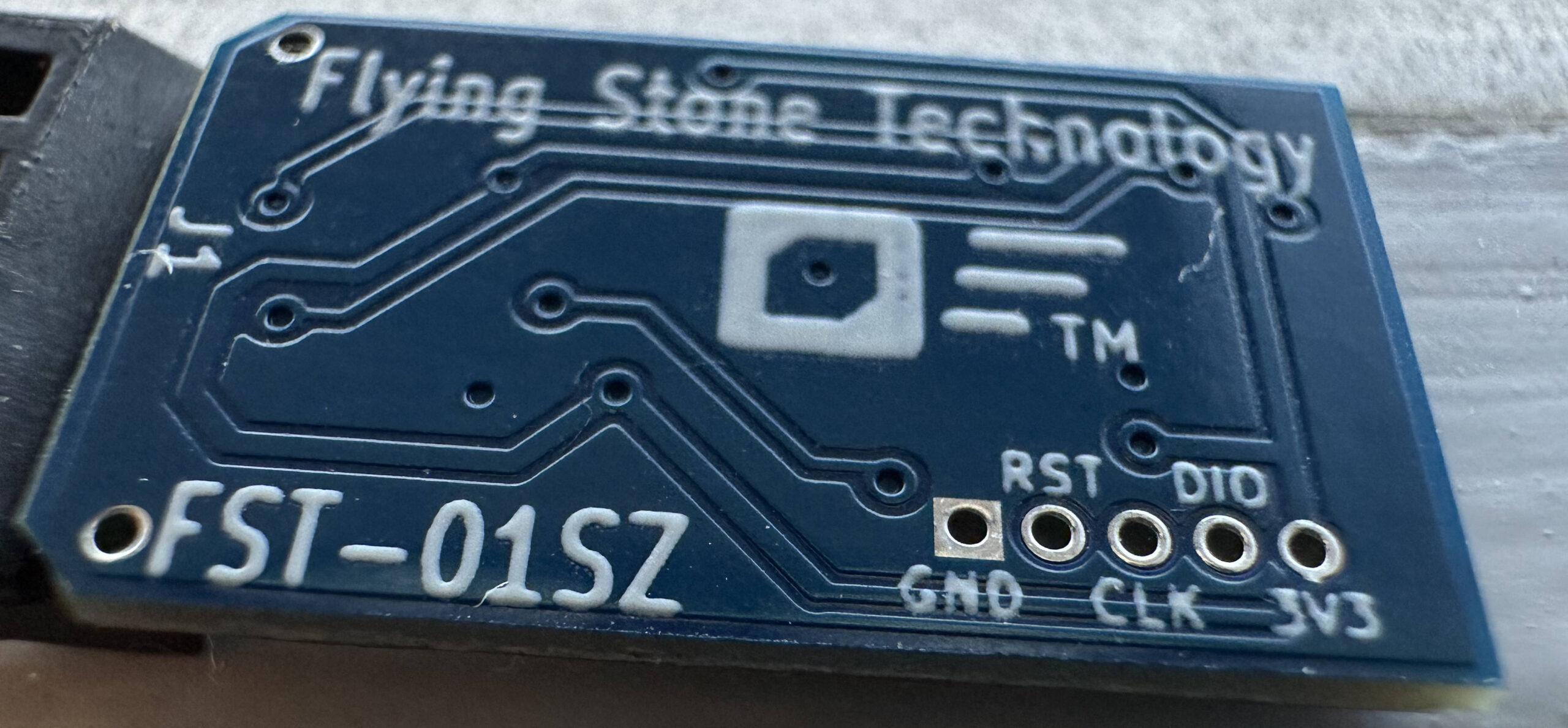
 With the end of the year approaching fast, I thought putting my year in
retrospective via music would be a fun thing to do.
Albums
In 2022, I added 51 new albums to my collection nearly one a week! I listed
them below in the order in which I acquired them.
I purchased most of these albums when I could and borrowed the rest at
libraries. If you want to browse though, I added links to the album covers
pointing either to websites where you can buy them or to Discogs when digital
copies weren't available





























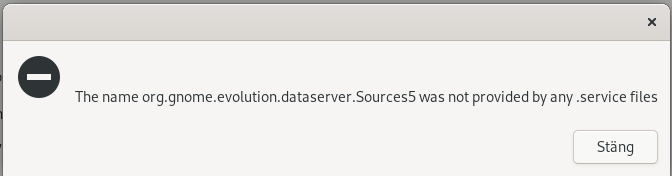
 Every year or so, I revisit the current best practices for Python packaging.
 Holger Levsen: Welcome, David, thanks for taking the time to talk with us today. First, could you briefly tell me about yourself?
David: Sure! I m David A. Wheeler and
I work for the

 Mate desktop is not at all touch friendly even though I tried to
scaled up to read and tap things on the screen. Wiki suggest xfce4 is
little more touch friendly. I started moving to xfce. Then again same
problem, stuck at boot loop.
This time it was with lightdm, I turned off
 First up: what I'm covering here is probably not relevant for most people. That's ok! Different situations have different threat models, and if what I'm talking about here doesn't feel like you have to worry about it, that's great! Your life is easier as a result. But I have worked in situations where we had to care about some of the scenarios I'm going to describe here, and the technologies I'm going to talk about here solve a bunch of these problems.

 Login with root / your password and you shall get the front page:
 and many other pages where you can manage your ALP deployment via browser:
 All in all, ALP is in early phases but I m really happy there s up-to-date documentation provided and people can start experimenting it whenever they want. The images from the linked directory should be fairly good, and








 I probably would have to get a new motherboard for my desktop probably in a year or two as quite a few motherboards also have WiFi (WiFi 6 ?) think on the southbridge. I at least would have a look in new year and know more as to what s been happening. For last at least 2-3 years there has been a rumor which has been confirmed time and again that the Tata Group has been in talks with multiple vendors to set chip fabrication and testing business but to date they haven t been able to find one. They do keep on giving press conferences about the