Search Results: "Martin"

15 October 2006

Julien Danjou: Total recall (2006)

Directed by jd & adn Genre: Action / Adventure / Sci-Fi / Thriller / Horror / Drama / Humor
Runtime: several weeks
Country: A lot
Language: English
Color: Color (Technicolor, QT, GTK and ncurses) Tagline: They stole their project, now they want it back. Plot Outline: In September 2006, a group of developpers from the Debian planet rise against the corruption leading the government.
User Comments: Great action, great suspense, great cultural satire, and a great mind-bender. Awards: Waiting for nomination. Quotes: Cast overview
Anthony Towns (aj), as the Debian Project Leader Denis Barbier (bouz), as The Recaller
Aurelien Jarno (aurel32), as one Seconder Clint Adams (schizo), as one Seconder
MJ Ray (mjr), as one Seconder Pierre Habouzit (madcoder), as one Seconder
Martin Schulze (joey), as one Seconder Marc Dequ nes (duck), as one Seconder

14 October 2006

Martin Zobel-Helas: How DWN *could* be relaunched

I had a nice discussion recently how we could relaunch DWN. Idea was, that if we would get more contributors for times.debian.net, we could easyly produce a weekly summary out of that. But for that, we need more contributors. So if you think this is a good idea, and are good in writing, feel free to post possible submissions to debian-publicity@lists.debian.org. No Tags

Joey Hess: future of DWN

Martin "Joey" Schulze posted what seems to be his last issue of DWN at the end of September. Is this the end of its 8 year run? I founded Debian Weekly News in 1999 with the intent of helping Debian developers keep up with what was going on in Debian as the volume of the project grew beyond what could be easily followed by everyone in the mailing lists. That goal later grew to encompass also keeping users informed of what was going on in Debian. By the time I left VA, I was getting burnt out writing it. Besides, I was no longer able to do it on company time. (Yes, there is a delicious irony here.) So I passed it on to Joey, who's done a great job keeping it going over the years. I've considered taking over writing DWN again. However, it's not clear to me that DWN is still relevant enough to be worth the large amount of work it takes to maintain it. A lot of communication is done on Planet Debian, wikis and in other forms that were not around when DWN was started, and that may be a better way to keep up with what's going on in Debian than DWN. If there is a gap left by DWN, I'd feel more comfortable filling it by blogging something each week about what'd going on in Debian without necessarily trying to cover parts of the project that I'm not deeply involved in. (For example, I'm ignoring everything to do with debian-vote right now.) This approach seems more scalable, modern, and likely to take much less time. We could even have a special aggregator with feeds from other people doing the same.

12 October 2006

Martin F. Krafft: In love with Porcupine Tree

Somewhere around the mid-nineties, I was listening to Pink Floyd around the clock. Later, I slowly approached (and stuck with) David Bowie, to whom I dedicated my Honours thesis. Genesis, and specifically Peter Gabriel, followed. Right around the time I released my book (which is dedicated to Peter Gabriel), I lost my bearing and strayed about in the sea of independent and/or progressive post-rock, encountering bands like Godspeed You Black Emperor, Mono, Explosions in the Sky, and Mogwai. I don't think I'll grow old of those anytime soon. Lately, however, I've gotten hooked to more modern progressive rock, and in particular Porcupine Tree. And when I say hooked, I mean hooked: I've tried various times to dig the tunes by no-man, a project by the Porcupine Tree singer Steve Wilson which is more ambient in mood, and various excursions into the world of the German Solar Project (more experimental) or Porcupine Tree's sibling project Psychomuzak (more psychedelic). But none come close, I have been listening to Porcupine Tree pretty much consistently for the past 6 months. And I am still in love with what these 4-5 guys produce, especially the four albums Deadwing, In Absentia, Stupid Dream, and The Sky Moves Sideways. Being a drummer myself (who hasn't played seriously in several years), it is hardly surprising that Gavin Harrison is my favourite, some of the licks he plays send shivers down my spine, and he managed to get me on track thinking about how to pick up percussion again. But I could not imagine the band without Steve's voice and lyrics and guitar solos, Colin Edwin's most enjoyable bass guitar theatre, or Richard Barbieri's innovative synthesiser work. It's pretty cool how 30 years after the term progressive rock was coined, these guys still manage to ride the tide. If you're in San Francisco, they're coming to the Fillmore on Friday! I've seen two of their shows and was simply ecstatic during and after. And in November, they're coming to Japan. If you know and like Mono, you should just go! I'll definitely be on their next nearby concert! Interestingly, next to my development of taste of rock music, I've always been a major fan of electronica. I've found, however, that electronic music is far more short-lived, meaning that you grow old of it way faster. And now I wonder what's next. I feel I may soon return to King Crimson, even though their music is not as complete as Porcupine Tree. Don't ask me to define what I mean with that. Update: if you're into jogging, "Lazarus" off the Deadwing album is a really good energiser. Richard plays some very sweet arpeggios on the (synthesised) piano, and about a minute into the piece, Gavin and Colin deliver a truly groovy flow; I sometimes feel as if my legs move without my doing (haha, I just typo'ed "doping") when listening to this track. I guess this applies to much of their music. And if you're into drums, listen up at 3:18 minutes into the song. It's a very convincing fill on the drums. Gavin has better, but this one somehow strikes me as a damn good combination of innovation, simplicity, and feeling. NP: Porcupine Tree / In Absentia (Bonus Disc)

11 October 2006

Steve McIntyre: BSP Marathon - Zurich, 07 - 08 Oct 2006

Last weekend, I went to Zurich for the second leg of my own personal BSP marathon. Martin Krafft organised the BSP at the AI Lab in Zurich, arranging sponsorship and encouraging local DDs and users to turn up. Martin and I started early on Saturday morning, opening up the lab shortly before 9am and making a start on the RC bug list. Over the course of the next few hours, more people turned up and started work too - local DDs and a couple of Debian users from ETH. We worked our way through a fair number of bugs that day; personally I closed #389318 (a grotty FTBFS bug caused by IMHO a design mistake upstream - parsing header files using a simple awk script to create an m4 script to then generate C source) and spent quite some time digging into some other bugs. For our late dinner on Saturday, we headed to a local American-style bar/restaurant in Oerlikon called Cheyenne. Their speciality, it seems, is the "Big Mama", the largest burger I've ever seen! It comes on a huge serving plate, and is enough to feed up to 4 people...

BSP I took the chance over dinner to chat with the small group of locals, especially Axel Beckert who had some interesting stories about Fedora, Opera and other groups. On Sunday, we started slightly later but probably had a more productive day in terms of the number of bugs closed. I fixed some silly FTBFS issues in ser: #384772 and #390008 were both caused by the build system assuming i386/amd64 compiler options. I adapted patches suggested by Julien Blache from his own work on openser (thanks!) and tested on my sparc and hppa systems at home. Job done... For the rest of the day, I used the time to work on remaining bugs in my own packages. Both CVS and debian-cd needed new uploads to be ready for the Etch freeze. CVS had a bucket-load of new translations following Christian Perrier's call, and debian-cd had a large number of bugs that had already been fixed in svn for a long time. Between those 2 uploads (and some other old bugs in debian-cd that needed reviewing) that made another 17 bugs fixed, although none of them were RC. Once those uploads were done, I continued on with my debian-cd multi-arch development work. On Sunday evening, we went into the middle of the old city centre in Zurich to a more traditional Swiss restaurant. Several of Martin's colleagues from the lab joined us, and we had some widely varying conversation, ranging from Debian (of course! *grin*) to gossip in the lab via lots of other topics. Due to my ridiculously early flight home on Monday morning we couldn't stay out too late nattering, but nonetheless all the people seemed to enjoy themselves. The Swiss group were a fair bit quieter then the Dutch the previous weekend, but seemed just as committed to getting work done and getting Etch out on time. It was lovely to meet and spend time with them, and I've promised to go back and visit again soon. Until then, I've put my small selection of photos online.

10 October 2006

Martin F. Krafft: IBM/Lenovo on-site support

I am less enthusiastic about the number of hardware issues I've had with my Thinkpad X40 (3 harddrive replacements, 1 keyboard replacement) than I am with their technical support. Starting at last weekend's bug squashing party, my X40 would randomly lock up, probably in response to some interrupts (network, input devices, ...). At first I thought it was only the 2.6.18 kernel acting up, but now I am seeing crashes with 2.6.17 as well. Thus, I called the support hotline to make use of my 24-hour on-site support contract. Abridged, this is how the call went:
I: It randomly freezes. The harddrive seems fine, and memtest86+ also ran fine. He: Please run the diagnostics tool. I: I don't have that installed. [I did not mention that I do not run Windows, but mumbled something about it being a university installation and that I cannot install the tool] He: Hm, okay. So it's not the hard drive and it's not memory, so there's not much left. I'll have a local technician get in touch with you tomorrow.
Not more than 10 minutes later I had arranged for a replacement. And this was not the first time I came out of an IBM/Lenovo support call with a good feeling. Thanks! NP: Porcupine Tree / XMII

9 October 2006

Martin-Éric Racine: ALSA pitfalls ... and a bounty ... or two

Daniel Jacobowitz writes about problems he's having getting proper ALSA support for his desktop computer. Boy, does that sound familiar! I myself have three computers that are partially or totally unsupported on ALSA:
  • Apple iMac rev.D a.k.a. 333MHz G3 tray-loading iMac. Partially supported by snd-powermac, except that some controls are inverted and other controls just plain don't work. Probably something as simple as the wrong offset in the bitmap used to select the control on which to act. Bug filed in the ALSA BTS. No reaction. Anyhow, sound support for Apple products is being migrated to snd-aop, which was written from scratch using a modular architecture that enables easily adding support for new sound chips. Nice idea, except that no effort is being put towards supporting pre-G4 products... Back when Ubuntu appeared on the Linux scene, Mark Shuttleworth agreed to pay a 500$ bounty to whoever made ALSA work on all PowerMac variants. Nobody took it, as far as I know. Those who are interested in taking on this challenge might wanna check my wiki page for our summary of the ALSA PowerMac situation.
  • HP 9000 series model 712. Recently supported, thanks to someone on the PA-RISC Linux mailing list having a go at coding it. Never merged by upstream ALSA, though. It's been a while since I gave it a try but, last time, only output worked.
  • AMD Geode SCx200. There is no snd-scx200 driver at all. Bug filed in the ALSA BTS. The issue of sound support on early Geode products was also mentioned on the Linux kernel mailing list, during the big OSS cleanup discussion so, at least, some people are aware of the issue. It so happens that the Geode SC is used in a number of popular embedded boards, such as the Soekris and yet, nobody tried porting the old OSS drivers available on AMD's Geode driver source page. Odd.
As we can see, there's plenty of ALSA support remaining to be coded, ported or cleaned up, and some people are willing to pay for the results. Who's gonna grab it?

Martin F. Krafft: Report from the Zurich BSPs

Yesterday, the second of Zurich's two bug squashing parties came to an end. As organiser I feel as if both events have been very successful. On 9 September, between 5 and 8 people hacked on Debian all day, and we managed to fix 17 release-critical bugs without opening any new ones. This past weekend, we had about the same number of people working between the early morning hours (9:00 o'clock) and dinner time, and fixed 27 release-critical bugs, alongside a slew of normal bugs on the way. Unfortunately, we encountered three new release-critical bugs. In the end, we decreased Debian's release-critical bug count by 41! One of the attendees, Hanspeter Kunz, worked on the BSP beginner's HOWTO while he was learning about the art of bug squashing. The document is still in the works, please feel free to contribute. I would like to thank all attendees for their time and work, and I hope my organisation made the events pleasant for all. I also would like to thank our sponsors: /ch/open and Google for covering our travel and catering expenses, and the Artificial Intelligence Laboratory for letting us use their space and infrastructure. The organisational effort required from my end was minimal, largely due to my relation to the AILab. This means that it would not be too hard for me to organise another event, but I do not think I'll have the time to do so before the release of Debian "etch". Anyway, if I can somehow excite more sponsors, the Zurich BSPs might turn into a semi-regular event, attracting people from far away, like it did to Debian's second-in-command, Steve McIntyre, who honoured us with his presence. NP: Mono / You Are There

Daniel Jacobowitz: ALSA: Disasters, frustration, hacking, progress, and education

I have had, ever since I got my current desktop, been frustrated with ALSA support for it. The machine is an Shuttle SN25P (with ice1724 onboard 7.1 sound card); it's otherwise very nice. I've had it for a bit over a year. When I got it, I lost several long weekends to hacking on ALSA and peering through asoundrc files, gstreamer and gnome-control-center source code, and other such things. There were two basic problems. One was that no matter what I did, I couldn't get the back speakers to play independent channels. Generally they mirrored the front speakers. The other was they adjusted volume based on the headphone mixer, rather than the master mixer - especially aggravating because muting the master mixer left my music still pouring out of the rear speakers! I filed a bug in the ALSA tracker, but didn't get much feedback, and eventually gave up. Last week, someone else seconded the bug. A helpful fellow responded and pointed us to a couple of basics, like the ALSA datasheet archive (very handy, since as far as I can tell a lot of them aren't available elsewhere, at least without NDAs). We spent some time poring over those. One of the interesting things I learned this weekend: there's a bunch of independent chips involved in onboard sound, in my case three. One seems to do communication between the computer and the analog-digital convertor, another handles the actual conversion (AC97 compatible in this case), and a third (I think...) handles the remaining two channels for 7.1 support since the second one only seems to do six. Digression time. Unfortunately one of the things he asked us to check was physical connections between the chips, and whether there was an onboard EEPROM... and somehow, in lightly applying enough compressed air to dislodge the dust, I got something wedged into the fan of my video card. Which began making a horrible rattling noise. And then when I attempted to clean it, I made it even worse. So at this point in my Saturday afternoon I had to go out and buy another one. The new one is marginally crappier than the old one, which was also pretty cheap, but the new one has the advantage of not needing a fan at all. Digression part two. While I was at the store, I picked up a Slug. I haven't unboxed it yet or gotten a drive for it, but I think I will in a week or two, and see if I can pick up some of Martin's excellent work in running Debian on one. I see that the IXP ethernet driver isn't working at the moment, maybe I can give Lennert a hand... At this point it was clear ALSA had eaten my weekend. So I came back to finish the job. The other reporter of the bug noticed a very interesting bit in the manual for the VT1617A (Via-manufactured AC97 codec) - which affected volume control and routing for the rear surround channels. I poked around in the kernel driver for a while, and discovered that the similar VT1616 chip exposed that bit as an ALSA mixer control (boolean switch)! So, wiring the two together was the next logical step. And suddenly I'd made a world of progress. I could hear things out the back speakers. Apparently - as far as I can tell anyway - no one has good solutions to this problem. I fumbled around with it for a while, wrote two more ALSA patches, and got manual configuration to use a software volume control (the "softvol" plugin) and mute switch which govern all channels. But I'm taking a break from that while I fish around for how this works on other chipsets. It's so immensely awkward that I can't believe there's no standard solution. I mean, is wanting your volume control to affect all your speakers such a rare thing? Anyway, this paragraph summarizes about six hours of beating my head on the wall. Most of this was at the asoundrc format, which is immensely picky, underdocumented, and seems like it really oughtn't to be needed at all. But apparently it is. During the course of this I got to learn how different applications decide which volume control to use, which was exciting in an exasperating and insanity inducing sort of way. You see, ALSA exports basically everything on the card as a "mixer control". There's some things which recognize volume controls by name, and some basic sorting by usefulness. xmms allows you to select any one control to use for its volume slider, which is nice. The GNOME mixer applet allows you to select any arbitrary _set_ of volume controls for the panel applet, which is even nicer. But it's at this point that, both last time and this time, I gave up in general rage. You see, the mixer applet is completely disconnected from the other and more useful way I deal with volume - the hotkeys on my keyboard, which GNOME also handles. But those go to gnome-settings-daemon, and a bunch of code labelled "acme". And this just adjusts the volume on the track which gstreamer (the GNOME audio management libraries) have marked as "MASTER", and that's done based on the order ALSA supplies the controls, which is done by a name-based sorting deep within the bowels of the ALSA library (it's in mixer/simple_none.c). And if you have two with similar enough names, it slaves them together. And nothing has a higher priority than the hardware supplied "Master Playback" controls. The best I could manage was to get the software volume control listed right after the master (in which case it wouldn't get adjusted at all), or adjusted in lockstep with the real master channel (which causes the front speakers to drop at a different rate from the rear speakers, messing up depth). Like last time, this was the point at which I gave up for the weekend. But this time I've learned a lot more and made a whole lot more progress! And written more of it down, so hopefully I have to rediscover less of it next time. I really was going to do a bunch of other things this weekend... but it just didn't happen.

Martin-Éric Racine: Linutop - Internet for the masses

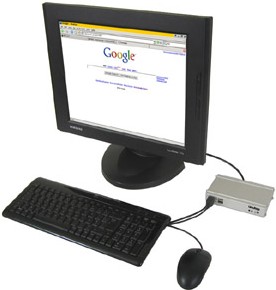
I promised last week that I would be telling more on October 1st, about the mysterious Project X that I had been sporadically blogging about over the last few months. Better late than never, so here's the story: Casablanca I met Morocco-based French entrepreneur Laurent Bervas via his blog in January 2006, while looking for countries nearby EU with a promising ICT market, because of growing obstacles in getting work in my field, due to my not being an EU national. By the time the situation had reached the ridiculous extreme that friends were continuously loosing juicy recruitment bonuses, simply because their employer's HR department had issues with hiring non-EU nationals despite EU policies that clearly favor foreigners married to an EU national I figured that I ought to do something creative and see which of the countries bordering with EU might offer interesting opportunities. Laurent was blogging about all the exciting opportunities he kept on seeing, since he relocated to Morocco to conquer the high-end Real Estate market. One day, he wrote about Morocco becoming a rising figure in the outsourcing business for the Francophone market, which prompted me to contact him. After a couple of weeks of discussion, he cautiously dropped his idea for a niche market he had spotted: a simple Linux-based set top box to surf the Internet. He then asked if I would be interested in developing it and in launching a startup with him to promote it. I gladly accepted. Startup That's when Laurent decided to introduce me to an old friend of his, Fr d ric Baille, who spent several years at Compaq, culminating with a role in the team that launched the iPaq. Fred's help was instrumental in defining the market positioning of our product. Laurent and I discussed the product features at length over IM and immediately agreed that the OS would be based on Free Software. That left the hardware part unresolved... or so did Laurent think. Years ago, I briefly worked in the management team of an Estonian data security startup. This gave me the opportunity to network with several movers and shakers of the Estonian ICT. Among them was a promising ASIC and industrial design startup that produced really cool Thin Client hardware. The answer to our hardware needs, I figured, could easily be fulfilled by them. My idea of contracting the hardware to Estonia was initially received with skepticism, so I made a simple proposal: why don't we hold the inception meeting in Tallinn and meet with the potential hardware supplier at the same time? Fred and Laurent accepted, so we spent part of April 2006 there, with me acting both as their friendly tourist guide and as the middleman for the introductions. Fred and Laurent immediately fell in love with Tallinn's designer bars, omnipresent WiFi network and blond-a-plenty. Most of all, their visit at our potential hardware supplier gave them the answers they needed: Estonia is IT. Overview The hardware we selected is built around the AMD Geode LX, a nifty Pentium-compatible single-chip computer. It comes equipped with VGA output and four USB 2.0 ports, along with high-quality audio via 1/8" input and output jacks, plus a built-in encryption engine. We added 100baseT Ethernet connectivity (with provision for other networking options) to that, to complete the platform. For the software part, we used ingredients from Debian's Etch release, focusing on a configuration that would enable easy access to the most popular applications for home and small business use: Instant Messenger (Gaim), Multimedia player (Totem), PDF reader (Evince), Web browser (Firefox), word processor (AbiWord). The result is this: Press Coverage The editorial team at IT-Neeger (an A-level Estonian ICT blog) immediately scooped the story [in Estonian] and it produced such a strong response that the traditional Estonian media contacted the IT-Neeger team to write a feature article (stay tuned for details). The local Slashdot, Minut.EE, also reported [in Estonian] on the IT-Neeger article. Thus, myself and Laurent Bervas spent the better part of this week being blogged, interviewed and podcasted by a variety of Estonian and French publications, which is how I only got around blogging this bit tonight. Marketing Contrary to our competitors, we fully intend on keeping this platform open, so our initial market will actually be Free Software developers with a penchant for innovation. As such, our first 50 units are exclusively intended for interested developers who want to improve upon our initial idea and participate in defining the final product. Inquiries are welcome!

4 October 2006

Martin F. Krafft: My hatred for single-language DVDs

Following a friend's recommendation, I set out to buy Kikujiro non natsu this morning, a movie by Takeshi Kitano, one of my favourite contemporary film directors. I came back empty-handed. The movie is available in countless stores (much to my surprise, actually), but all versions I've seen are German-only. I hate synchronised/translated movies. What I want is the original Japanese movie with English subtitles. I do not want some silly German dork utter words and concepts in a way too distant from anything in the Japanese culture. One of the main arguments for DVDs has always been the ability to provide multiple audio and subtitle tracks, so everyone could watch the movie the way they wanted. Publishing a DVD with a single audio track, which isn't even the original, should be punishable. Seriously, what the heck drives people to commit such a blatant act of ignorance? If the answer to this is licence issues then I really don't want to know more; then our world is even more fucked up with respect to intellectual property and art than I was willing to admit until today. Update: Daniel Baumann tells me that audio and video track are licenced separately ("value creation chain" should really be called "cost creation chain"; value is removed, not added, but the alliteration you get for free), so in the interest of maximising profits, the local film distribution just removes half of the film and provides crap instead. I'd wish that they'd save the money on the synchronisation, spend considerably less on subtitle creation, and just publish the films the way their creators made them. NP: Porcupine Tree / In Absentia

3 October 2006

Martin F. Krafft: Ch-ch-ch-ch-changes

" turn and face the strain" After many years of accumulating computer usage habits, configuration files, scripts, shortcuts, and key combinations, I have reached a point where I'd much rather wipe the slate clean than to go about fixing bits and pieces here and there. This does not sound like the thing to do, but I really would prefer to rethink how I handle computers rather than put time into fixing things. Maybe it's time for me to work on madduck 2.0. I have a lot of computer-usage-related headaches these days. For instance:
  • my zsh configuration has grown beyond me. I have used the same configuration for 7+ years (the CVS history only dates back until 1999, but I did not use CVS from the start) across a total of 113 machines, each with their quirks and problems, and I think it's time to officially state that I've lost control.

  • my mutt configuration is patchy and many parts of it are ugly hacks that have worked in the past, but only because they are built on assumptions about the way I handle mail which may not hold much longer, because...

  • my mail processing is completely annoying:

    egrep -v '^[#[:space:]]*$' ~/.etc/procmail/rc.*   wc -l   tail -1
    8815 total
    
    Since those 8'815 lines in the end still don't do exactly what I want, I really have to rethink the way I do mail. Does anyone know of a way/system/approach to assign tags to email messages using statistic means (like Bayesian filters, or crm114) and how to get mutt to play along?
  • as an almost-first-day user of vim, and one of those "I use vim for everything types", my configuration file collection is massive. I have all these macros and mechanisms in place, which vim can now handle in a much smarter way, but I just have not found the time to migrate, nor would I really know how to start. And the vim documentation, despite all its links and cross references, is hardly very usable for it always assumes you read it cover to cover.

  • I have the feeling that the way I use X (Fluxbox) is suboptimal, I find myself juggling windows too much. I've tried ion3, but could not get it to do the things I want. I guess this is mostly related to things I should be automating, and more consistent use of the 10 workspaces I configured.

Things have to change, and I might have to face the strain. But why am I bringing this up now? Well, some time ago I tried once again to make the switch to Dvorak and my Kinesis keyboard, but I (once again) gave up after only a day. I realise that it'll take me several weeks to undo almost 20 years of QWERTY typing, but apart from a very slow typing rate (which is normal at the start), I found anything not related to authoring longer texts to be everything but ergonomic on this keyboard, and much of that is related to the configuration I have in place, and that it is geared towards a plain, flat QWERTY keyboard. It's mainly the position of the two Ctrl and Alt keys, which I use extensively, and which have four different meanings (from left to right): Ctrl, Meta, ModeSwitch, Mod3 (I use Mod3 to quick-start applications. E.g. Mod3-t gives me a terminal, Mod3-f starts Firefox.). In addition, my Caps-Lock key has served me well as Mod5 for window manipulation ever since I switched to ion3 post-Debconf5. It turns out that I need to use two hands or some non-ergonomic configuration of my digits for almost every operation: reading mail, even if only deleting all mail in a folder and moving on; writing mail; editing with vim; interacting with the shell; window manipulation. For instance:
  • Alt-tab requires me to lift my left hand completely above the keyboard, stretch both fingers, then make sure it finds the home row again.
  • Mod5-c, which I use to close windows, now requires both hands as the 'c' is on the right half with the Dvorak layout.
  • When in mutt, trying to just delete all messages in a folder and moving on can sometimes be a major pain (see the Dvorak layout on Wikipedia if you want to play along): hit 'D', which sometimes just ends up being 'f', which means forward. If unlucky in this way, I'll find myself within vim, having to 'ZZqn', which isn't that bad, but I first had to discover 'ZZ' to replace the awful ':wq' (or 'ZQ' for ':q!'). Switching folders ('c=foldername') isn't nice either, and sending an unsigned email that I don't want stored ('pff^W^W' or 'pff<space><BS>') gives me cramps on Dvorak.
All this in addition to the fact that I am still in the beginning stages of writing my thesis (I have started), makes me conclude that it will be better to further postpone learning Dvorak and adopting to the new keyboard until the thesis is well on its way (and the writing is flowing), because then it'll be much easier for me to rework my configuration one-by-one with the new keyboard in mind, and start learning Dvorak when I'm half-way there and know what I have to type. NP: Leech / Soundtrack to an Individual Emotion Picture Mindmovie

Martin F. Krafft: Ikiwiki and issue tracking

It's been a while, but Joey Hess replied publicly to a discussion we had on IRC, but he only looked at whether issue tracking in a wiki makes sense. Thus I wanted to add my point of view. Three months after I originally started this post. Oh well. The reason I contacted Joey Hess was because I was (and am still) on the look for better tools for my personal information management, and I identified several important aspects I'd want from such a system:
  • An issue tracker, to be used as my own todo list
  • A wiki, or some form of integrating web frontend to make it easy to browse the information and give others granular access to it.
  • A backend store that can be properly synchronised across several machines (so that I can always have an offline copy on my laptop).
  • A command-line interface for manipulation of existing and addition of new contents. I want to use the regular Unix tools for the interaction.
  • A blog engine.
  • Granular permissions, either based on a Netware-style user database with records of content-and-permission tuples per user, or a simple password protection for individual content items.
  • A mail-in interface for new issues, so that I can simply bounce mails by customers to the system and have it assign a ticket number. Given a command-line interface, though, this could be added without much effort.
In terms of integration, I am thinking mostly about WikiWords that get automatically linked to the corresponding wiki pages, if these exist, and across all components; so if I write a blog entry or add a new issue to the tracker, I can easily refer to content on my own wiki (or the issue tracker, or blog) without much typing. I imagine further synergies are possible but have not put much time into thinking about those. The main reason I contacted Joey about this, because his ikiwiki has a backend store capable of synchronisation: it's a wiki engine (which can also be used for blogging), but it's based on the subversion version control system. Together with svk or bzrsvn, it definitely meets the synchronisation requirements about as good as it gets. But ikiwiki falls short in three main points for me:
  • it does not integrate an issue tracker, so I'd have to use another product and hack up the integration.
  • it is based on Subversion, but it does not include a browser for the version control system. Joey may argue -- and I would have to agree with him on principle -- that such a component has no place in Ikiwiki and there are already plenty of other tools that do a better job at repository browsing than he'd ever be willing to implement. But still, I'd like to have integration with the version control system and be able to easily refer to files and changesets, again without jumping through hoops.
  • it is written in Perl and I am not much of a Perl hacker, so it's not going to be easy for me to contribute to and extend the code base.
Also, ikiwiki does not have a permissions subsystem, though I'm sure it would be possible to add that fairly easily. Many who have read this far will probably think Trac, which I've also inspected. Trac is written in Python (which I grok), and it integrates a wiki engine with an issue tracker and a (single) repository browser much in the way I want it. However, it comes without granular permissions, and wiki content and issues are stored in an SQL backend, rather than the version control repository to which a Trac instance can be bound. This also leaves it without a command-line interface or synchronisation abilities -- unless I want to manipulate SQL records and set up replication between SQL backends. If you care, I am not the only one who wants to see Trac use the VCS backend for wiki content and issue storage. So I am still on the look. If you have any comments, please mail me. NP: Sybarite / Placement Issues Update: Joey tells me that ikiwiki now also supports git, Mercurial, and tla backends, and that Monotone is in preparation. I wonder how long it'll take until bzr is added.

Erich Schubert: On Joeys hate mission

Martin 'Joey' Schulze is still aggressively writing against Dunc tank. I don't agree with his posting at all. I don't think dunc-tank is doing any serious damage to the project; so far all the damage comes from a few people (especially you, Joey), that play some "politics" game here I don't really get or like. And just count the number of people who have expressed discomfort with your postings. I remember having seen the word "blackmail" attributed to some of your mails. [Update: and it also sucks that people have to point out that they didn't reduce their Debian involvement because of Dunc tank, but just because they don't use the software anymore, have too little time or are annoyed by your behaviour; otherwise you'd probably cite them as dunc-tank enemies.] I'm also convinced that your assessment - that only the release in december counts - is false. You know, the people working on Debian were NOT replaced by the announcement of the dunc tank experiment. We still want to make Debian the "Universal OS", and are still dedicated to the projects goals. But some of us still remember the bad press debian has been receiving because of the delays with sarge release, and the users we have lost back then because of pushing back the release again and again. You know, many people still act like "yeah, debian releases in december, sure, when hell freezes over". One of Debians strengths was security support. But security support doesn't work as well, when half of the software you're running are unsupported backports. If Debian wants to remain a good base choice (i.e. universal OS), it needs to provide a reliable combination of secure but not too-out-of-date software to become useless again. Therefore I consider frequent-enough, somewhat-on-time releases important for the universal OS idea; this will also cut down on our work (at least for those doing backports, too, since we need to do less of them). It's not a primary goal, but a consequence of the well-established goals. Now why I accept the experiment of 'hiring' the release managers for one month full-time: I've always had the impression that donating to Debian is somewhat pointless, because I don't see any concrete results, or where the money is going. To me it always felt like it ends up in an unused saving account with the SPI treasurer, until someone finds a way to spend it. Here the money is used in a transparent way, on well-respected people and with a very concrete result. And remember, it's an experiment. It's a one time thing so far. Oh, and to actually counter all your blah-blah: I've actually recently increased my Debian efforts again. Because of the dunc-tank thing, and despite your end-of-the-world-claims. Namely because it gave me back the feeling that someone actually cares about making Debian useful to everbody (and not just us freaks running unstable and experimental). That there is some interest in getting the new release out of the door on time, of supporting our users out there such as the city of munich (which is also running backports AFAIK). To me Debian is still mostly about the users, not about the ego of developers. Be a nice guy and do a good job, and you'll get lots of thank yous, a couple of friends, a couple of patches, some free beer or tshirts in return. Does this corrupt as well, getting a free coke? Yes, I got a free Jolt coke four years ago at Systems. Does this make you demotivated, that you didn't get one, too?

Lars Wirzenius: Debian: Joey Schulze is wrong

Martin "Joey" Schulze is interpreting my decision to spend some less time on Debian as being due to dunc-tank. He's wrong. Joey, you're spreading false rumors. You could easily have checked the facts with me, but you chose not to. That is malicious. Kindly do not ever use my name to further your hate campaigns, thank you. I'm reducing time spent on Debian rather than reducing time spent on other things so I could still do Debian things. One of the reasons for this is that it seems to me that a number of very vocal people in the project have collectively gone insane over the past few months. As an example, proposing a GR as a reaction to dunc-tank was so much out of proportion that I can't understand how those who supported are capable of acting in a constructive manner at all. Either that or they seriously need a life. I have some years ago developed an aversion to conflict. Rather than butting my head with insane people, I'll withdraw from mailing lists and reduce my participation in the project to maintaining the package that I care most about. That's right, Joey, dunc-tank didn't drive me to this. You did. I don't know if dunc-tank is a good thing or not, in the long run. I think it's a worthwhile experiment, and its future should be decided when the experiment has been done. Another reason to reduce time spent on Debian is that I'm looking into starting a business. That can be quite time consuming.

29 September 2006

Martin-&#201;ric Racine: Linutop: The Teaser Trailer

Linutop: Front and Back

26 September 2006

Martin-&#201;ric Racine: A: Internet for the masses

Q: What do you get if you combine
  • an A-level blogger with numerous commendable achievements in the Real Estate business and in the Software industry,
  • a business consultant whose outstanding success in selling his first computer game product later brought him to the business unit that launched the iPaq,
  • and a Creative Commons and Free Software advocate whose earlier ventures in the Music business resulted in appearances on two Gold records?
The answer on October 1st 2006.

Martin-&#201;ric Racine: A: the triumvirate of Internet for the masses

Q: What do you get if you combine:
  • an A-level blogger with numerous commendable achievements in the Real Estate business and in the Software industry,
  • a business consultant whose outstanding success in selling his first computer game product later brought him to the business unit that launched the iPaq, with
  • a Creative Commons and Free Software advocate whose earlier ventures in the Music business resulted in appearances on two Gold records?
The answer on October 1st 2006.

25 September 2006

Martin-&#201;ric Racine: CUPS-PDF finally works on Ubuntu

For a long time, one of my Debian packages, cups-pdf, could not work on Ubuntu, because Ubuntu runs its CUPS daemon using a low-privilege user. I'm happy to report that this issue is finally resolved: following the release of CUPS 1.2, a simple solution was discovered by Andre Klitzing. However, I only noticed this recently, after registering myself on Launchpad to respond to Ubuntu bugs affecting my Debian packages. Sigh! Perhaps notifying me earlier, via the Debian BTS, would have been a good idea? Anyhow, after checking that the solution wouldn't break anything on the Debian side, I committed the fix to cups-pdf 2.4.1-2. Enjoy!

24 September 2006

Martin-&#201;ric Racine: meme: top ten UNIX shell commands

My results for this meme: history awk ' print $2 ' awk 'BEGIN FS=" " print $1 ' sort uniq -c sort -nr head -10
     73 sudo
     67 update-web
     53 ssh
     51 nano
     44 ls
     25 dir
     21 upgrade-daily.sh
     17 cd
     13 requestsync
     13 more
Among the more unusual sightings, update-web is a Bourne shell script to update my APT repository and synchronize my homepage, and upgrade-daily.sh is another one to upgrade my whole cluster in a semi-automated way. Meanwhile, requestsync is a really neat Python script by Martin Pitt to request the synchronisation of Debian packages into Ubuntu, automatically fetching Debian changelogs and other relevant information to justify the request.

Next.

Previous.