Search Results: "ag"

30 July 2013

Rob Bradford: The Waylanders are coming

This GUADEC there will be a couple of sessions on Friday afternoon from 2pm about Wayland. I ll be giving a presentation with a brief introduction to what Wayland is, what new features we ve worked on in the last cycle as well as what s planned for the next one. As this is GUADEC i ll of course be covering how we re doing with getting Wayland integrated into GNOME. There will also be a Wayland panel discussion where you can ask your tricky questions of myself, Owen Taylor, Robert Bragg and Kristian H gsberg to get things started i ve got some already prepared! And if that s not enough Wayland for you, on Monday we ll be BoF ing between 10am and 2pm in room A218. It would be great to see you there.

Bits from Debian: Martin Michlmayr gets the O'Reilly Open Source Award

Longtime Debian Developer Martin Michlmayr was named as one of 6 winners of the 2013 O Reilly Open Source Awards. This Award recognize individual contributors who have demonstrated exceptional leadership, creativity, and collaboration in the development of Open Source Software. Martin received the award for his investment in Debian where he served as Debian Project Leader for two terms between 2003 and 2005. Alt Martin Michlmayr gets the O'Reilly Open Source Award Congratulations tbm!

Daniel Pocock: Switzerland's scariest railway (video)

Although promoted as a funicular railway, the Gelmerbahn funicular has the appearance of a giant roller coaster and all of the fun too. For all those still having nightmares about recent rail tragedies in the age of non-stop surveillance and on-line replays, the 108 degree ascent (or descent) may not be your thing. On the other hand, for those who experience the London Underground each morning, "mind the gap" takes on a whole new meaning as you see your feet hanging out the bottom of the train and the tracks descending vertically into the valley below. <video controls="" height="340" poster="http://danielpocock.com/sites/danielpocock.com/files/gbahn-preview.jpg" width="560">

<source src="http://video.danielpocock.com/Gelmerbahn.webm" type="video/webm"></source>
Click to access video on original page
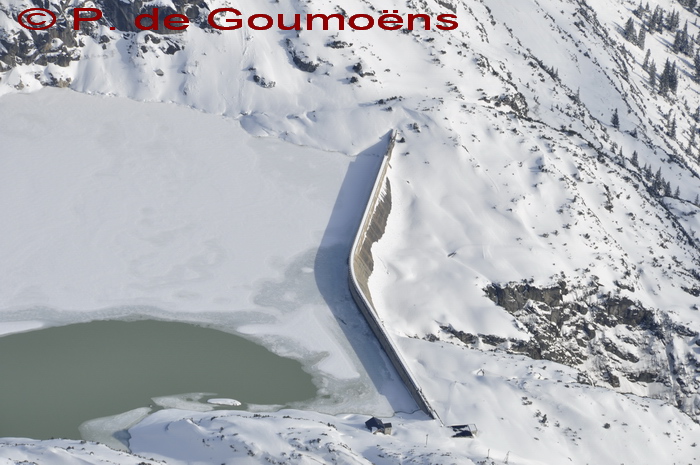
</video> and here are download links for those who prefer to download now and watch later (about 160MB): At the top At the top, there is a scenic two hour walk around Lake Gelmer, the path takes you across the top of a dam built for hydro-electric power generation. Lake Gelmer - hydro-electric dam Getting there from DebConf13 and the Debian 20th birthday For those coming to Switzerland for DebConf13 next month, the Gelmerbahn is probably a little bit too far for a day trip but makes an excellent place to stop during a 2 or 3 day tour around Switzerland. It is accessible using the all-day bus pass for the tour of 3 or 4 mountain passes or by train to Innertkirchen and then a short ride on the bus. The busses are irregular, use sbb.ch to plan the journey. Walking down the mountain from the lake to the bus stop takes about 90 minutes and for those who choose this option, the ticket is cheaper. More Swiss travel blogs Please click here to access some of my previous blogs about Swiss travel with videos and useful ideas for day trips.

29 July 2013

Brett Parker: Of weekends and patio laying...

So, this weekend I headed up to Uncle Steve's and assisted in the laying of the flagstones for the patio for the BBQ - there's even at least one bit of photographic evidence of me in a non-supervisory capacity. Was a good weekend, and fun was had by all, even if we couldn't really express it due to Complete Exhaustion by the end of it. Only another few weekends and it'll be the Debian UK Party 2013 which will, as it is every year, be absolutely awesome. I'll leave the thanks for the beer and food donations until after the party :)

Gergely Nagy: HOWTO: JSON processing with syslog-ng

Continuing my HOWTO series, in this article, I will explore how to set up syslog-ng to process JSON in various scenarios. We will touch the subject of interoperability, and have a look at multiple scenarios, in the hope that readers will find something similar to their own needs. There are many different ways in which one can plug JSON into their logging system, and it is very likely that I will not be able to cover it all within this HOWTO. However, I will explain the basics, and how to plug the pieces together, which should at least be a useful foundation to build even more complex systems onto.In essence, we will look at the following scenarios: raw JSON transport, JSON over syslog, JSON and syslog payload in the same stream. The documentation will cover both syslog-ng 3.4 and 3.5, where the 3.5 parts will be clearly marked as such. The 3.3 series do not have a JSON parser, and as such, is insufficient for most needs explored in this guide.In the default setting, the JSON parser will parse the MESSAGE part of an incoming log event, and place every key into a macro of the same name. If the incoming JSON is structured, it the keys will be converted to dot notation format:
"deeper": "level": "very much so"
In this case, one can access the value as $ deeper.level within a syslog-ng template.The parsed keys can be prefixed using the prefix() option of the json-parser. One can also change what the parser will receive as input by using the template() option.See the documentation for more information on these.Transporting raw JSONThe simplest scenario is to take a transport like TCP, and simply push raw JSON structures through, one each line, and have syslog-ng parse that to its internal representation. One can do all kinds of things with the data then: transport it further as JSON, store it in files, in a database - the possibilities are endless, but we will explore two scenarios.JSON on TCP, using syslog field namesThe first one is receiving JSON on TCP, using syslog field names, store the parsed stuff in a file (using the conventional format), and in mongodb.
source s_tcp_json   tcp(port(10514) flags(no-parse));  ;
parser p_json   json-parser();  ;
destination d_file   file("/var/log/remote.log");  ;
destination d_mongodb   mongodb(collection("remote_log"));  ;
log  
 source(s_tcp_json);
 parser(p_json);
 destination(d_file);
 destination(d_mongodb);
 ;
This needs a bit of an explanation: we use the no-parse flag on the source, because by default, the tcp() source expects a message that conforms to the old syslog protocol. We have raw JSON, and we need to tell the source that. The other elements should be self explanatory, I believe, with the exception of json-parser(): we give it no parameters, so it will not modify the keys in the JSON it receives, keeping them intact, as-is.For this reason, incoming messages need to have the same keys as syslog-ng normally would use internally: DATE, HOST, MESSAGE, and so on, like in the following example:
"PROGRAM":"prg00000","PRIORITY":"info","PID":"1234","MESSAGE":"seq: 0000000000, thread: 0000, runid: 1374490607, stamp: 2013-07-22T12:56:47 MESSAGE...","HOST":"localhost","FACILITY":"auth","DATE":"Jul 22 12:56:47"
JSON on TCP, custom field namesA more likely scenario is when we receive JSON, but not in a layout syslog-ng uses internally. In this case, we need to rewrite the message a little, and possibly use templates, depending on what kind of output we wish to use.Lets assume the incoming JSON has these fields:
"app":"prg00000","prio":"info","id":"1234","msg":"seq: 0000000000, thread: 0000, runid: 1374490607, stamp: 2013-07-22T12:56:47 MESSAGE...","source":"localhost","timestamp":"Jul 22 12:56:47"
As you can see, this has similar fields, but not quite, and FACILITY is missing too.In this case, we'll use a different configuration:
source s_tcp_json   tcp(port(10514) flags(no-parse));  ;
parser p_json   json-parser(prefix(".json."));  ;
destination d_file   file("/var/log/remote.log"
                          template("$ .json.timestamp  $ .json.source  $ .json.app [$ .json.id ]: $ .json.msg \n"));  ;
destination d_mongodb   mongodb(collection("remote_log")
                                value-pairs(
                                  pair("PROGRAM" "$ .json.app ")
                                  pair("HOST" "$ .json.source ")
                                  pair("PID" "$ .json.id ")
                                  pair("MESSAGE" "$ .json.msg ")
                                  pair("DATE" "$ .json.timestamp ")
                                  pair("PRIORITY" "$ .json.prio ")
                                  pair("FACILITY" "auth")
                                ));  ;
log  
 source(s_tcp_json);
 parser(p_json);
 destination(d_file);
 destination(d_mongodb);
 ;
We use the prefix() option of json-parser(), to avoid collisions with the default syslog-ng namespace. Then, we use a template for the file destination, and value-pairs() for the MongoDB one. Doing all this, we get similar results as we did in the first scenario.JSON over syslogAn even likelier scenario is when we have JSON payload in the message part of a normal syslog message. This is useful because the logs themselves remain syslog compatible, and can be transported through devices that know no better.Thankfully, if we do not tell syslog-ng that we do not want any parsing on the input, the json-parser will receive the MESSAGE part of the log, so if we have JSON payload there, things will just work:
source s_tcp_json_payload   tcp();  ;
parser p_json   json-parser();  ;
destination d_file   file("/var/log/remote.log");  ;
destination d_mongodb   mongodb(collection("remote_log"));  ;
log  
 source(s_tcp_json_payload);
 parser(p_json);
 destination(d_file);
 destination(d_mongodb);
 ;
Again, this assumes that the JSON payloads uses field names compatible with syslog-ng's defaults. Adapting it to use templates or value-pairs can of course be made, as shown in an example above.As an example, here's how a syslog message with JSON payload would look like:
<38>2013-07-22T13:45:54 localhost prg00000[1234]:  "MESSAGE": "foo", "PROGRAM": "bar" 
This would, of course, override the MESSAGE and PROGRAM fields, but the rest would be kept intact.Mixed JSON and syslog streamIn order to parse JSON that is intermingled with normal syslog streams, we can use a new feature of syslog-ng 3.4: junctions. These allow us to create branches, and tell syslog-ng something along these lines:
If there's an incoming message, that begins with @json:, parse it as JSON, otherwise treat it as a normal syslog message.
We can, of course, skip the part that mandates an in-stream marker, and things will just work, but in that case, for each JSON message, an error will get logged too, which is undesirable. Therefore, if one wants to intermingle JSON and syslog traffic on the same wire, it's best to do so with the JSON having a marker prefix. The marker, however, is not going to be part of the string the json parser receives, so setting it to an opening curly bracket will not work, unless the template is modified accordingly.The config to do this looks like this:
block parser mixed-json-parser()  
 channel  
  junction  
   channel  
    parser   json-parser(marker("@json:"));  ;
    rewrite   set-tag(".json");  ;
    flags(final);
    ;
   channel  
    flags(final);
    ;
   ;
  ;
 ;
source s_mixed  
 tcp();
 parser   mixed-json-parser();  ;
 ;
A more elaborate example can be found in a post by Bazsi.Closing thoughtsThat covers most of the use cases I saw for the JSON parser, if there are cases uncovered, or questions unanswered, I can be reached via twitter, email and a whole host of other ways, and I will happily expand this tutorial if there's enough demand for more.

EvolvisForge blog: SSD

Following the Wiki I put discard entries into my fstab(5) for swap (but not / as it s suggested to use fstrim instead, and I had noatime for /boot and relatime for / already) and changed the scheduler. What wasn t written there was to set vm.swappiness=0 in sysctl.d/local.conf *shrug* but it helps. What they also didn t mention: mount -t tmpfs swap /var/cache/apt/archives And in sid, which my dayjob-laptop is running, APT _finally_ creates the missing partial/ subdirectory itself. Thanks! I had the filesystems already created, so I changed the ext options with tune2fs: tune2fs -E stride=1024,stripe_width=1024 /dev/sda2 # 1 KiB blocks: /boot
tune2fs -E stride=256,stripe_width=256 /dev/sda4 # 4 KiB blocks: /
I wonder how well that works. I also did _not_ manage to find out my device s flash block size (search engine fodder: erase block size), so I assumed 1 MiB (also used for partition alignment already) as worst-case scenario. Input welcome on how to find *that* out.

Thomas Goirand: OpenStack Havana b2 available, openstack-debian-images approved

I have finished preparing the beta 2 of the next release of OpenStack. It is currently only available from out Git on Alioth (in /git/openstack), and directly from my jenkins repository, which creates Wheezy backports for it:

deb ftp://havana.pkgs.enovance.com/debian havana main
deb http://archive.gplhost.com/debian havana-backports main
As for every OpenStack release, a large number of Python modules needed to be packaged and are waiting in the FTP master NEW queue to be approved: oslo-sphinx, python-django-discover-runner, python-hacking, python-jsonrpclib, python-lesscpy, python-neutronclient, python-nosehtmloutput, python-requestbuilder, python-termcolor, sphinxcontrib-httpdomain and sphinxcontrib-pecanwsme. Let s hope that they will be approved before the next beta release in september (time where OpenStack Havana will be in feature freeze). The total number of packages maintained by the OpenStack team (on which I really am the only active maintainer for the moment ), there s 53 packages, plus these 11 packages waiting in the NEW queue. That s a big number of package, and I wouldn t mind some help One thing that annoyed all the community is that Quantum, the OpenStack network virtualization module, had to be renamed as Neutron, because of a trademark from Quantum (you probably remember the Quantum Fireball hard drives? Well, it s the same company ). Another good news is that my openstack-debian-images package has just been approved and landed in Sid. With it, you can automate the process of building a Debian image for OpenStack with a simple shell command (there s a man page that I wrote with it: read it if you need to build images). It is made of a single shell script to build the image, using kpartx, parted, mbr, debootstrap, extlinux and friends. I tried to keep it simple, not involving a huge amount of components. With the release of cloud-init 0.7.2-3, I have fixed a few bugs (3 important bugs, out of which 2 where RC bugs), thanks to contributions in the debian-cloud@lists.debian.org mailing list. This includes adding new init.d scripts, so we now have support for user data. This doesn t only benefits OpenStack images, but anyone willing to start virtual machines in the cloud (nowadays, every cloud implementation needs cloud-init installed in the virtual images). This means you can include a script in the metadata of the virtual machine you start it, and it will be executed at startup. If everything goes as planned (that is, no new RC bug), I will upload an update of cloud-init to backports in 5 days (there is already a version there, but it doesn t have the necessary init.d scripts to execute the user data scripts), and openstack-debian-images in 9 days. Then it will be possible to build OpenStack images with absolutely all the tools available from Wheezy (and backports). I hope to be able to discuss that during Debconf 13.

28 July 2013

Daniel Pocock: This blog was slashdotted

My earlier blog about rigged elections was slashdotted over the weekend. I had an email from the slashdot team giving me advance warning, having heard the stories about other sites getting knocked offline, I immediately logged into my Ganglia console to start the tsunami watch. I then set about enabling a reverse proxy using Squid to accelerate web server performance. This took about 30 minutes to set up. I chose Squid 3 so I could use a logging format similar to Apache. The wave hits A few hours after the warning email, details appeared on slashdot and sure enough, thousands of visitors started coming to this site. As detailed previously, the site is running on Debian servers with XCP. The web site is managed by Drupal/Apache/MySQL. Everything held together very well. Ganglia demonstrated an initial surge lasting about 10 minutes. From there, traffic has tapered off gradually over 24 hours, although it still remains well above average. slashdot comments One of the most interesting things about the slashdot community are the comments. Given that nobody really wanted to defend the indefensible and nothing in my blog surpasses some of what has been in the news recently (150 charges of fraud against a single MP), most of the discussion quickly turned to a comparison of broadband policies. For those not already aware of it, the Australian Government (Labor Party) is currently rolling out fibre to the home. The project is expected to take about 10 years, although it was delivered very quickly in certain areas where the Government needs votes. Opinions are divided: people who got it first think it is great, some people feel it is too expensive (it's much more expensive than a similar service in Switzerland, for example), some people feel it will be too slow when the final stages are completed in 10 years. It appears technically stronger than the solution proposed by the alternative party.

Joey Hess: git-annex as a podcatcher

As a Sunday diversion, I wrote 150 lines of code and turned git-annex into a podcatcher! I've been using hpodder, a podcatcher written in Haskell. But John Goerzen hasn't had time to maintain it, and it fell out of Debian a while ago. John suggested I maintain it, but I have not found the time, and it'd be another mass of code for me to learn and worry about. Also, hpodder has some misfeatures common to the "podcatcher" genre: So, here's a rethink of the podcatcher genre:
cd annex; git annex importfeed http://url/to/podcast http://another/podcast
There is no database of feeds at all. Although of course you can check a list of them right into the same git repository, next to the files it adds. git-annex already keeps track of urls associated with content, so it reuses that to know which urls it's already downloaded. So when you're done with a podcast file and delete it, it won't download it again. This is a podcatcher that doesn't need to actually download podcast files! With --fast, it only records the existence of files in git, so git annex get will download them from the web (or perhaps from a nearer location that git-annex knows about). Took just 3 hours to write, and that's including full control over the filenames it uses (--template='$ feedtitle)/$ itemtitle $ extension '), and automatic resuming of interrupted downloads. Most of what I needed was already available in git-annex's utility libraries or Hackage. Technically, the only part of this that was hard at all was efficiently querying the git repository for a list of all known urls. I found a pretty fast way to do it, but might add a local cache file later on.

Paul Tagliamonte: The stupidest bug I ever hit in Django-land

Given a model:
class PASPPoint(models.Model): point = models.PointField() when = DateTimeField() user = models.ForeignKey(User) objects = models.GeoManager()
The following Query:
counts = PASPPoint.objects.filter( user=user, when__year= 2013 , when__month= 4 , ).extra( day : date_trunc( day , when) ).values( day ).order_by().annotate(count=Count( id ))
will error out with a SyntaxError. It didn t hit me until some PostgreSQL debugging that this was because when is a SQL-ish word. D oh. Changing when to timestamp fixed the problem.

Hideki Yamane: now dpkg-deb uses xz for compression by default

from dpkg 1.17.0 's changelog

 dpkg (1.17.0) unstable; urgency=low
.
[ Guillem Jover ]
(snip)
* Switch dpkg-deb default compressor from gzip to xz. Build dpkg.deb using
gzip to make debootstrap life easier on non-Debian based systems.
Hallelujah, thanks! It'll reduce archive size and cut traffic, download time, too :-)

Then, I hope that dpkg would support "package delta" feature like yum's presto.

Francois Marier: FISL for foreigners HOWTO

FISL (pronounced FIZZ lay by the locals) is a large Free and Open Source software gathering in Porto Alegre, Brazil. While the primary audience of that conference is the Latin America "libre software" community, a number of overseas speakers also participate in that conference. This is my contribution to them: a short guide for international guests visiting the F rum Internacional do Software Livre.

Planning Before you fly out, make sure you look up the visa requirements for your country of citizenship. Many western countries will require a visa and you will need to visit the local Brazillian embassy ahead of time to get one. Next, have a look at the list of recommended immunizations. As with most destinations, it is recommended that your routine immunizations be up to date, but there are also other specialized ones such as Yellow Fever that are recommended by the Brazillian government. You should therefore visit a travel clinic a few weeks ahead of time. Other than that, I suggest reading up on the country and keeping an eye on the various travel advisories.

Arrival You will be flying at the Porto Alegre airport. If you need to exchange overseas money for Brazilian Reals, you can do that there. You'll probably also want to pick up a power adapter at the airport if you intend to charge your laptop while you're in the country :) Brazil has both 127V and 220V outlets using Type N sockets. Privacy note: using the free airport wifi will require giving your Passport details as part of the registration process.

Language If you don't speak Portuguese, expect a few challenges since most of the people you'll meet (including taxi drivers, many airport workers, some hotel staff) won't speak English. I highly recommend getting a phrase book before you leave and printing paper maps of where you are planning to go (to show to taxi drivers when you get lost). Native Spanish speakers seem to get by speaking Spanish to Portuguese speakers and understanding enough Portuguese to hold a conversation. I wouldn't count on it unless your Spanish is quite good though. Also, the official conference blog posts get eventually translated to English, but there is a delay, so you may want to subscribe to the Portuguese feed and use Google Translate to keep up with FISL news before you get there.

The conference FISL is a large conference and it has a very "decentralized" feel to it. From the outside, it looks like it's organized by an army of volunteers where everyone is taking care of some portion of it without a whole lot of top-down direction. It seems to work quite well! What this means for you as a foreign speaker however is that you're unlikely to be provided with a lot of information or help finding your way around the conference (i.e. no "speaker liaison"). There is a separate registration desk for speakers but that's about all of the attention you'll receive before you deliver your talk. So make sure you know where to go and show up in your assigned room early to speak with the person introducing you. If your talk is in English, it will be live-transated by an interpreter. It's therefore a good idea to speak a bit more slowly and to pause a bit more. Other than that, the organizers make an effort to schedule an English talk in each timeslot so non-Portuguese speakers should still be able to get a lot out of the conference. FISL was a lot of fun for me and I hope that some of these tips will help you enjoy the biggest FLOSS gathering in the southern hemisphere!

27 July 2013

Julien Danjou: OpenStack Ceilometer Havana-2 milestone released

Last week, the second milestone of the Havana developement branch of Ceilometer has been released and is now available for testing and download. This means the first half of the OpenStack Havana development has passed! New features Ten blueprints have been implemented as you can see on the release page. I'm going to talk through some of them here, that are the most interesting for users.
The Ceilometer API now returns all the samples sorted by timestamp. This blueprint is the first one implemented by Terri Yu, our OPW intern! In the same spirit, I've added the ability to limit the number of samples returned. On the alarming front, things evolved a lot. I've implemented the notifier system that will be used to run actions when alarms are triggered. To trigger these alarms, Eoghan Glynn (RedHat) worked on the alarm evaluation system that will use the Ceilometer API to check for alarm states. I've reworked the publisher system so it now uses URL formatted target for publication. That now allows to publish different meters to different target using the same publishing protocol (e.g. via UDP toward different hosts). Sandy Walsh (RackSpace) have been working on the StackTach like functionality and added the ability for the collector to optionally store the notification events received. Finally, Mehdi Abaakouk (eNovance) implemented a TTL system for the database, so you're now able to expire your data whenever you like. Bug fixes Thirty-five bugs were fixed, though most of them might not interest you so I won't elaborate too much on that. Go read the list if you are curious. Toward Havana 3 We now have 30 blueprints targeting the Ceilometer's third Havana milestone, with some of them are already started.I'll try to make sure we'll get there without too much trouble for the 6th September 2013. Stay tuned!

Petter Reinholdtsen: First beta release of Debian Edu/Skolelinux based on Debian Wheezy

The first wheezy based beta release of Debian Edu was wrapped up today. This is the release announcement: New features for Debian Edu 7.1+edu0~b0 released 2013-07-27 These are the release notes for for Debian Edu / Skolelinux 7.1+edu0~b0, based on Debian with codename "Wheezy". About Debian Edu and Skolelinux Debian Edu, also known as Skolelinux, is a Linux distribution based on Debian providing an out-of-the box environment of a completely configured school network. Immediately after installation a school server running all services needed for a school network is set up just waiting for users and machines being added via GOsa , a comfortable Web-UI. A netbooting environment is prepared using PXE, so after initial installation of the main server from CD, DVD or USB stick all other machines can be installed via the network. The provided school server provides LDAP database and Kerberos authentication service, centralized home directories, DHCP server, web proxy and many other services. The desktop contains more than 60 educational software packages and more are available from the Debian archive, and schools can choose between KDE, Gnome, LXDE and Xfce desktop environment. This is the fifth test release based on Debian Wheezy. Basically this is an updated and slightly improved version compared to the Squeeze release. ALERT: Alpha based installations should reinstall or downgrade the versions of gosa and libpam-mklocaluser to the ones used in this beta release. Software updates Other changes Known issues Where to get it To download the multiarch netinstall CD release you can use The MD5SUM of this image is: 55d5de9765b6dccd5d9ec33cf1a07109
The SHA1SUM of this image is: 996a1d9517740e4d627d100de2d12b23dd545a3f To download the multiarch USB stick ISO release you can use The MD5SUM of this image is: d8f0818c51a78d357de794066f289f69
The SHA1SUM of this image is: 49185ca354e8d0543240423746924f76a6cee733 How to report bugs http://wiki.debian.org/DebianEdu/HowTo/ReportBugs

Christian Perrier: [life] Running update July 27th 2013: Bubulle now runs in moutains

My last running update was sent after I had a great April month with two successful trail races (35km then 44km). The next target was Mont-Blanc marathon in Chamonix valley in early July, so it's time for me to send a new update before summer. May and June was mostly training. Huge training. Very long distances with 375km in May and over 430 in June (breaking my former monthly record by over 50 kilometers). Yes, that means over 14 kilometers every day..:-) I indeed achieved that with my "go to work partly by running" habits, which are now deeply included in my daily schedule. Much more convenient than bus ride (with the typical random schedules of RATP, which French people translate by "Rentre Avec Tes Pieds" or "Come back home by walking"....which is exactly what I'm doing). With such training (sometimes including extra rides in the forests, with short but steep ups and downs)....I was well prepared for THE early summer goal : Marathon du Mont-Blanc in Chamonix (not Ultra Trail du Mont-blanc : this one, I'm not ready for....yet).. My first mountain trail race, and what race! Imagine 42km in the moutain lovers heaven, namely the Chamonix Valley, with the Mont-Blanc, Aiguille Verte, Aiguille du Midi, Aiguilles Rouges, etc. above your head. Of course, not only in the valley but goind up and down "slightly"....in short 2200 meters positive climb..:-) I ran it with a female friend of mine, who I met in local races and through runners web forums. Sabine has about the same running skills than me and we developed a good and nice friendship, sharing our love for running in the nature. So, during May and June, we decided to run this race together as we were both registered for it. A first trial in a local 35km trail race two weeks before the MMB was very successful. We ended up in 3h40 and Sabine was ranked 5th female runner. And, moreover, we had a tremendous pleasure by crossing the finishing line together. So, we did it again in Chamonix. And, hell, we did it well: I had set the goal to 6 hours and 30 minutes and we completed the race in..... 6 hours and 34 minutes. Much much better than I and she would have expected. And, believe me, crossing the finishing line was again a special moment, particularly because the crowd at the end of this race make it look like l'Alpe d'Huez on the Tour de France. And, this on a wonderful sunny day, arriving at Planpraz, facing the Mont-Blanc. If you've ever been to Chamonix, you know what I mean. So, first moutain trail and, hell, not the last one! For those of you who can read French...or just want to see some pictures of a running bubulle, here is the link to the story. And these 42 kilometers were indeed so well done that the day after, while coming down from the famous Aiguille du Midi with Elisabeth (who came with me to Chamonix, of course)...I decided to run down from the cable car intermediate stop (2300m altitude) to Chamonix (1050m). Over 1200 meters down in 48 minutes... :-). Just a bit slower than the cable car....:) The remaining of July saw me again running back and forth to work and I'm indeed about to break my monthly record, eventually reaching 450 kilometers in one month and only two days NOT running in the whole month. Yeah, crazy. The upcoming Sunday, August 4th, just before going to Debconf 13, I'll spend a few days in Lanslebourg and will be running the EDF Cenis Tour trail, for 50 kilometers and 2600 meters positive climb. This time, a very "small" race, with no more than 150 runners. So, that will be another experience by running nearly entirely alone between 1400 and 2700 meters altitude. I'll post the outcome (or you'll probably hear about it at DC13....). See you, hopefully not in 3 months, for another update about running Bubulle.

Christian Perrier: Developers per country (July 2013)

This is time again for my annual report about the number of developers per country. This is now the fifth edition of this report, after the 2012, 2011, 2010 and 2009 editions. So, here we are with the July 2013 version, sorted by the ratio of *active* developers per million population for each country.
Act: number of active developers
Dev: total number of developers
A/M: number of active devels per million pop.
D/M: number of devels per million pop.
2009: rank in 2009
2010: rank in 2010
2011: rank in 2011 (June)
2011: rank in 2012 (June)
2013: rank now
Code Name Population Act Dev Dev Act/Million Dev/Million 2009 2010 June 2011 June 2012 July 2013
fi Finland 5259250 19 31 3,61 5,89 1 1 1 1 1
ie Ireland 4670976 12 15 2,57 3,21 13 9 6 2 2
ch Switzerland 7870134 20 27 2,54 3,43 2 2 2 3 3
mq Martinique 396404 1 1 2,52 2,52

3 4 4
se Sweden 9088728 22 37 2,42 4,07 3 6 7 5 5
no Norway 4973029 12 15 2,41 3,02 5 4 4 6 6
nz New Zealand 4331600 10 15 2,31 3,46 4 3 5 7 7
de Germany 81471834 165 235 2,03 2,88 7 7 9 9 8 *
lu Luxemburg 503302 1 1 1,99 1,99 8 5 8 8 9 *
at Austria 8217280 16 26 1,95 3,16 6 8 10 10 10
fr France 65350000 100 130 1,53 1,99 12 12 11 11 11
au Australia 22607571 31 59 1,37 2,61 9 10 12 12 12
be Belgium 11071483 14 17 1,26 1,54 10 11 13 13 13
uk United-Kingdom 62698362 73 114 1,16 1,82 14 14 14 14 14
nl Netherlands 16728091 19 40 1,14 2,39 11 13 15 15 15
ca Canada 33476688 32 61 0,96 1,82 15 15 17 16 16
dk Denmark 5529888 5 10 0,9 1,81 17 17 16 17 17
es Spain 46754784 35 56 0,75 1,2 16 16 19 18 18
it Italy 59464644 36 51 0,61 0,86 23 22 22 19 19
cz Czech Rep 10190213 6 6 0,59 0,59 21 20 21 21 20 *
lt Lithuania 3535547 2 2 0,57 0,57 28 19 20 22 21 *
us USA 313232044 173 378 0,55 1,21 19 21 25 24 22 *
il Israel 7740900 4 6 0,52 0,78 24 24 24 25 23 *
hu Hungary 10076062 5 10 0,5 0,99 18 25 26 20 24 *
hr Croatia 4290612 2 2 0,47 0,47 20 18 18 26 25 *
lv Latvia 2204708 1 1 0,45 0,45 26 26 27 27 26 *
bg Bulgaria 7364570 3 3 0,41 0,41 25 23 23 23 27 *
uy Uruguay 3477778 1 2 0,29 0,58 22 27 28 28 28
jp Japan 127078679 35 50 0,28 0,39 30 28 29 29 29
pl Poland 38441588 10 14 0,26 0,36 29 29 30 30 30
cr Costa Rica 4301712 1 1 0,23 0,23 31 30 31 31 31
by Belarus 9577552 2 2 0,21 0,21 35 36 39 39 32 *
sg Singapore 5183700 1 1 0,19 0,19


33 33
pt Portugal 10561614 2 4 0,19 0,38 27 32 32 34 34
gr Greece 10787690 2 3 0,19 0,28 33 38 34 35 35
sk Slovakia 5477038 1 1 0,18 0,18 32 31 33 36 36
ar Argentina 40677348 6 8 0,15 0,2 34 33 35 32 37 *
rs Serbia 7186862 1 1 0,14 0,14


38 *
tw Taiwan 23040040 3 3 0,13 0,13 37 34 37 37 39 *
br Brazil 192376496 21 23 0,11 0,12 36 35 38 38 40 *
cu Cuba 11241161 1 1 0,09 0,09
38 41 41 41
kr South Korea 48754657 4 6 0,08 0,12 39 39 42 42 42
gt Guatemala 13824463 1 1 0,07 0,07


43 *
ve Venezuela 28047938 2 2 0,07 0,07 40 45 50 49 44 *
ec Ecuador 15007343 1 1 0,07 0,07
40 43 43 45 *
co Colombia 45566856 3 4 0,07 0,09 41 44 46 47 46 *
cl Chile 16746491 1 2 0,06 0,12 42 41 44 44 47 *
za South Africa 50590000 3 10 0,06 0,2 38 48 48 48 48
ru Russia 143030106 7 8 0,05 0,06 43 42 47 45 49 *
mg Madagascar 21281844 1 1 0,05 0,05 44 37 40 40 50 *
ro Romania 21904551 1 2 0,05 0,09 45 43 45 46 51 *
my Malaysia 28250000 1 1 0,04 0,04

49 50 52 *
pe Peru 29907003 1 1 0,03 0,03 46 46 51 51 53 *
tr Turkey 74724269 2 2 0,03 0,03 47 47 52 52 54 *
ua Ukraine 45134707 1 1 0,02 0,02 48 53 58 59 55 *
th Thailand 66720153 1 2 0,01 0,03 50 50 54 54 56 *
eg Egypt 80081093 1 3 0,01 0,04 51 51 55 55 57 *
mx Mexico 112336538 1 1 0,01 0,01 49 49 53 53 58 *
cn China 1344413526 10 14 0,01 0,01 53 53 57 56 59 *
in India 1210193422 9 9 0,01 0,01 52 52 56 57 60 *
sv El Salvador 7066403 0 1 0 0,14

36 58 61 *


957 1535 62,35%


A few interesting facts:

26 July 2013

Ian Wienand: Converting an American propane appliance to Australian gas bottles

Here's something I just spent too much time figuring out... If you have an Australian "gas" or "LPG bottle"; the type you'd pick-up at any "service" or "petrol" station in Australia, it has a female POL connector. I'm not sure what POL stands for; possibly related to some company who made connectors long ago and it became standard. If you have an American "propane" device such as a grill, turkey fryer or smoker, or indeed something that plugs into a "propane bottle" you would pick-up at a "gas station" -- it will have a "Type 1", "ACME", "ACME Type 1", "QCC", "QCC1" or "QCC Type 1" connector (each seems to be an interchangeable term for the other). The appliance side of this has a big (usually black) plastic nut that is apparently safer or something. Once you have figured this out, you can buy something like the "Grillpro Model 11051 Universal Fit Propane Tank Adapter" and I can attest, based upon empirical evidence, that things will "just work". Of course your other choice might be just to replace the regulator, hoses, etc.; however if everything seems super-glued together the adapter is much easier. In other empirical evidence you won't find anywhere else on the internet : the Vizio M3D550KD LCD television works just fine on 240V, despite not being rated for it on the back.

Justus Winter: Bootstrapping the Hurd

Due to popular demand this weeks report contains another awesome ascii screenshot. I added some lines to /etc/hurd/runsystem.sysv to inspect the environment very early in the boot process:
start ext2fs: Hurd server bootstrap: ext2fs[device:hd0s1] exec init proc auth
[...]
+ echo my pid is 1
my pid is 1
+ ps Ax
+ head
USER       PID TT STAT     TIME COMMAND
-            0  ? R<mo  0:00.01 /hurd/proc
root         1  - Sslow 0:00.02 /bin/sh /etc/hurd/runsystem
-            2  - Sp    0:00.00 /hurd/init root=device:hd0s1 console=com0
-            3  ? D<p   0:00.01 root=device:hd0s1 console=com0
-            4  - S<o   0:00.18 ext2fs --readonly --multiboot-command-line=root
-            5  - S<o   0:00.02 /hurd/exec
-            6  - S<o   0:00.00 /hurd/auth
root         7  - S<o   0:00.04 /hurd/term /dev/console device console
root         8  - S<o   0:00.00 /hurd/pflocal
+ pstree -p
sh(1)-+-init(2)-+-auth(6)
                 -ext2fs(4)-+-exec(5)
                             -pflocal(8)
                             -procfs(12)
                             -term(7)
       -pstree(11)
       -root=device:hd0s1(3)
Those who are familiar with the Hurd might note that /etc/hurd/runsystem.sysv runs as PID 1. At the end of this script /sbin/init is exec(2)uted, so sysvinit gets run as PID 1. This is the result of a fairly small patch series. It still took me like two days to come up with it since bootstrapping a Hurd system (or any microkernel OS, or like bootstrapping in general) is complicated. If you look at the screenshot above you will note the /hurd/pflocal process running with PID 8. This is the server providing pipe(2)s and Unix sockets. Before that server is started, one cannot use pipes to connect two processes with pipes like I did with ps and head (I actually lied a little here, because the way Debian/Hurd is set up, the pflocal server is started on demand courtesy of a Hurd feature called "passive translators", very similar to what the cool kids call "socket activation" today). Process 0 is the /hurd/proc server. It maps Mach tasks to the concept of Unix processes. Before that server is started, the notion of a process does not even exist. Pid 4 is the root filesystem. Without that, no other server can be read from the disk. But if the root filesystem is to be started first, it cannot be registered as a Unix process at the proc server, because that has not been started yet. So the first few processes are started in a weird way and order, and since they need to talk to each other, they need to register at each other. No Unix concepts exist yet, only Mach concepts like tasks and messages can be used. The boot sequence is roughly this (the numbers in parenthesis are the PIDs):
  1. Grub loads GNU Mach(3), the statically linked root filesystem translator (4) and the /hurd/exec (5) server (the exec server loads executables into Mach tasks, implementing most parts of execve(2)).
  2. The rootfs translator is started.
  3. The rootfs initiates the Hurd server bootstrap by starting /hurd/exec and /hurd/init (2).
  4. /hurd/init starts /hurd/proc (0) and /hurd/auth (6).
  5. The translators perform several rendezvouses to introduce themselves to each other.
  6. The proc servers state with respect to the already running processes is fixed.
  7. /hurd/init starts /etc/hurd/runsystem (1) which starts the pager (that pages out memory to disk) and later execs /sbin/init.
  8. From this point on the initialization of Debian/Hurd is no different from Debian/Linux.
Besides the pid one issue I spent my time on: Next week I hope to fully address the killall5 issue and to clean up, polish and submit my patch series for sysvinit. I will then revise my mtab translator prototype which is currently in its third iteration. As always, if there is time left, I will look at the network related issues.

Steve Kemp: International character sets and encodings are hard.

Today I've made the 0.15 release of lumail, which has several fixups and cleanups. The previous release included a rewrite of the scrolling code, courtesy of kain88-de. This release fixes a few corner cases in that update which caused empty messages/Maildirs to be highlighted - operating on such ghost-entries would cause a segfault. Oops. I've received several more great contributions from 7histle, and trou and I'm very happy with the state of the code and the usefulness of the application. The biggest outstanding issue is RFC 2047 header decoding. Converting subject/to/from fields to readable versions of their encoded form:
Subject: =?utf-8?Q?Blipfoto=20=2D=20Introducing=20the=20all=2Dnew=20Bli
This is annoying because I'm using mimetic for handling all MIME-related code, and this doesn't seem to offer the facilities that I need. The current plan is to use the RFC-2047 handling from vmime, but I've fought with that library unsucessfully for two days now - and a further complication is that the library is included in Squeeze/Sid, but not the stable release of Debian. In conclusion I still regard the client as complete, because I'm using it exclusively and I rarely get "foreign" mails. But there is one more push required to fix all the outstanding bugs which generall boil down to: Randomly I'm wondering if I can call out to Lua to do the header decoding. Add "on_header_field()" and display the results. So today I'll be looking at how sensible that is, probably not very.

25 July 2013

DebConf team: DebConf13 preliminary schedule available (Posted by Talks team)

We are happy to announce that the schedule for the upcoming DebConf13 in Vaumarcus, Switzerland, is available! It is still possible for some changes to occur, as we always try to accept new proposals, even those submitted during the conference. DebConf13 talks will mostly happen in two rooms simultaneously, except for a few plenaries which will be presented in the main room with no parallel event. A third room will be available for discussion groups and ad-hoc sessions. As usual, we ve tried to cluster related activities in sequence, even though it was not always possible. Besides that there will be many tracks covering specific topics, which are: There will also be two special tracks, since DebConf is not only about hacking, talks and discussions: As in previous years, we provide various ways to access the schedule: the DebConf team

Next.

Previous.