Search Results: "mt"

13 February 2013

Jonathan Wiltshire: X-RaceProtection: yes

From time to time it occurs that two people answer a mail in the same way where one would do closing an unblock request, for example. When this almost happened on debian-release the other day I amused myself by dreaming up an SMTP header that would prevent such embarrassment. I wasn t being serious in the slightest, but nevertheless X-RaceProtection was born (and it turns out at least one resident of a certain IRC channel thought I was).
X-RaceProtection can be a message identifier or the simple value yes and is intended to prevent duplicate replies to, for example, mailing lists. When set as a mail ID, list software should silently drop the message being delivered if the identified message has already received a reply that is, another message quoting that ID in In-Reply-To. If X-RaceProtection is simply yes , the mail ID of In-Reply-To for the message being delivered is used, providing a shortcut.
This means you can set X-RaceProtection when replying to a mail where there is a chance of collision. If someone beat you to it, there is no embarrassment at your mail arriving with a later timestamp. If someone fancies implementing this for smartlist/debbugs, please be my guest!
X-RaceProtection: yes is a post from: jwiltshire.org.uk Flattr

Jan Wagner: Searching painting: Strawberry and Man on Pumps with Sparkling wine

We are searching a motive for a painting or a painting itself for a quite while now. This should find it's place in our living room. Unfortunately we didn't found one, which matched our both prospect and/or wasn't compatible with the rest of our living room. Yesterday we stumbled upon a motive which was quite nice, but was too small and it was neighter possible to get it in a bigger size nor to find out who was the origin painter of the picture. Now we are searching for the name of the picture and/or the painter. Any hints appreciated at 'blog - at - waja - dot - info'. A photo with higher resolution can be found here Update: Okay ... an unknown people (many thanks) hinted me, that google image search is the tool that could be very usefull. Google revealed that the painter is Inna Panasenko. P.S. Is it noticeable that I'm in vacation mode? ;)

12 February 2013

Martin Pitt: umockdev: record and mock hardware for debugging and testing

What is this? umockdev is a set of tools and a library to mock hardware devices for programs that handle Linux hardware devices. It also provides tools to record the properties and behaviour of particular devices, and to run a program or test suite under a test bed with the previously recorded devices loaded. This allows developers of software like gphoto or libmtp to receive these records in bug reports and recreate the problem on their system without having access to the affected hardware, as well as writing regression tests for those that do not need any particular privileges and thus are capable of running in standard make check. After working on it for several weeks and lots of rumbling on G+, it s now useful and documented enough for the first release 0.1! Component overview umockdev consists of the following parts: Example: Record and replay PtP/MTP USB devices So how do you use umockdev? For the debug a problem use case you usually don t want to write a program that uses libumockdev, but just use the command line tools. Let s capture some runs from libmtp tools, and replay them in a mock environment: Example: using the library to fake a battery If you want to write regression tests, it s usually more flexible to use the library instead of calling everything through umockdev-run. As a simple example, let s pretend we want to write tests for upower. Batteries, and power supplies in general, are simple devices in the sense that userspace programs such as upower only communicate with them through sysfs and uevents. No /dev nor ioctls are necessary. docs/examples/ has two example programs how to use libumockdev to create a fake battery device, change it to low charge, sending an uevent, and running upower on a local test system D-BUS in the testbed, with watching what happens with upower --monitor-detail. battery.c shows how to do that with plain GObject in C, battery.py is the equivalent program in Python that uses the GI binding. You can just run the latter like this:
  umockdev-wrapper python3 docs/examples/battery.py
and you will see that upowerd (which runs on a temporary local system D-BUS in the test bed) will report a single battery with 75% charge, which gets down to 2.5% a second later. The gist of it is that you create a test bed with
  UMockdevTestbed *testbed = umockdev_testbed_new ();
and add a device with certain sysfs attributes and udev properties with
    gchar *sys_bat = umockdev_testbed_add_device (
            testbed, "power_supply", "fakeBAT0", NULL,
            /* attributes */
            "type", "Battery",
            "present", "1",
            "status", "Discharging",
            "energy_full", "60000000",
            "energy_full_design", "80000000",
            "energy_now", "48000000",
            "voltage_now", "12000000",
            NULL,
            /* properties */
            "POWER_SUPPLY_ONLINE", "1",
            NULL);
You can then e. g. change an attribute and synthesize a change uevent with
  umockdev_testbed_set_attribute (testbed, sys_bat, "energy_now", "1500000");
  umockdev_testbed_uevent (testbed, sys_bat, "change");
With Python or other introspected languages, or in Vala it works the same way, except that it looks a bit leaner due to proper object semantics. Packages I have a packaging branch for Ubuntu and a recipe to do daily builds with the latest upstream code into my daily builds PPA (for 12.10 and raring). I will soon upload it to Raring proper, too. What s next? The current set of features should already get you quite far for a range of devices. I d love to get feedback from you if you use this for anything useful, in particular how to improve the API, the command line tools, or the text dump format. I m not really happy with the split between umockdev (sys/dev) and ioctl files and the relatively complicated CLI syntax of umockdev-record, so any suggestion is welcome. One use case that I have for myself is to extend the coverage of ioctls for input devices such as touch screens and wacom tablets, so that we can write some tests for gnome-settings-daemon plugins. I also want to find a way to pass ioctls back to the test suite/calling program instead of having to handle them all in the preload library, which would make it a lot more flexible. However, due to the nature of the ioctl ABI this is not easy. Where to go to The code is hosted on github in the umockdev project; this started out as a systemd branch to add this functionality to libudev, but after a discussion with Kay we decided to keep it separate. But I kept it in git anyway, given how popular it is today. For the bzr lovers, Launchpad has an import at lp:umockdev. Release tarballs will be on Launchpad as well. Please file bugs and enhancement requests in the git hub tracker. Finally, if you have questions or want to discuss something, you can always find me on IRC (pitti on Freenode or GNOME). Thanks for your attention and happy testing!

Jon Dowland: squishyball

On Friday, I uploaded an initial package for squishyball to Debian experimental. It's now in the NEW queue. squishyball is a command-line tool to help you compare two audio files. It supports basic A/B testing, A/B/X testing and X/X/Y ("triangle") tests to help rule out various selection, confirmation and ordering biases. I'm using it to figure out the optimal lossy audio codec and bitrate to encode my music collection with. It can be a little fiddly to use if you also use pulseaudio. I specify a specific ALSA device via -d, identified via aplay -L, and keep alsamixer running in a separate window to adjust volume if necessary, since GNOME's volume control shortcuts effect the pulseaudio mixers only. This way I can use headphones via the onboard analog stereo output and leave my desktop session configured to use HDMI output. For the time being, I've disabled support for the OPUS audio format. This is to prevent squishyball (GPL) from linking against libssl, which is pulled in by libopusfile. A future version of the package might manage to make this work.

Petter Reinholdtsen: "Electronic" paper invoices - using vCard in a QR code

Here in Norway, electronic invoices are spreading, and the solution promoted by the Norwegian government require that invoices are sent through one of the approved facilitators, and it is not possible to send electronic invoices without an agreement with one of these facilitators. This seem like a needless limitation to be able to transfer invoice information between buyers and sellers. My preferred solution would be to just transfer the invoice information directly between seller and buyer, for example using SMTP, or some HTTP based protocol like REST or SOAP. But this might also be overkill, as the "electronic" information can be transferred using paper invoices too, using a simple bar code. My bar code encoding of choice would be QR codes, as this encoding can be read by any smart phone out there. The content of the code could be anything, but I would go with the vCard format, as it too is supported by a lot of computer equipment these days. The vCard format support extentions, and the invoice specific information can be included using such extentions. For example an invoice from SLX Debian Labs (picked because we ask for donations to the Debian Edu project and thus have bank account information publicly available) for NOK 1000.00 could have these extra fields:
X-INVOICE-NUMBER:1
X-INVOICE-AMOUNT:NOK1000.00
X-INVOICE-KID:123412341234
X-INVOICE-MSG:Donation to Debian Edu
X-BANK-ACCOUNT-NUMBER:16040884339
X-BANK-IBAN-NUMBER:NO8516040884339
X-BANK-SWIFT-NUMBER:DNBANOKKXXX
The X-BANK-ACCOUNT-NUMBER field was proposed in a stackoverflow answer regarding how to put bank account information into a vCard. For payments in Norway, either X-INVOICE-KID (payment ID) or X-INVOICE-MSG could be used to pass on information to the seller when paying the invoice. The complete vCard could look like this:
BEGIN:VCARD
VERSION:2.1
ORG:SLX Debian Labs Foundation
ADR;WORK:;;Gunnar Schjelderups vei 29D;OSLO;;0485;Norway
URL;WORK:http://www.linuxiskolen.no/slxdebianlabs/
EMAIL;PREF;INTERNET:sdl-styret@rt.nuug.no
REV:20130212T095000Z
X-INVOICE-NUMBER:1
X-INVOICE-AMOUNT:NOK1000.00
X-INVOICE-MSG:Donation to Debian Edu
X-BANK-ACCOUNT-NUMBER:16040884339
X-BANK-IBAN-NUMBER:NO8516040884339
X-BANK-SWIFT-NUMBER:DNBANOKKXXX
END:VCARD
The resulting QR code created using qrencode would look like this, and should be readable (and thus checkable) by any smart phone, or for example the zbar bar code reader and feed right into the approval and accounting system. The extension fields will most likely not show up in any normal vCard reader, so those parts would have to go directly into a system handling invoices. I am a bit unsure how vCards without name parts are handled, but a simple test indicate that this work just fine. Update 2013-02-12 11:30: Added KID to the proposal based on feedback from Sturle Sunde.

11 February 2013

Jon Dowland: Steam for Debian

So you can download Steam for Linux now!. Or at least Ubuntu. The 1.0.0.22-version package needs a bit of tweaking to make it installable on Debian. There's a good writeup of some of the issues in this blog post (more recent packages seem to have much more simple dependencies). I run amd64 with multiarch enabled for i386. I chose to update my libc to the version in experimental rather than embed a newer version in a private steam directory. The remaining issues are mostly package version differences between Ubuntu (who seem to be very epoch-happy, I guess they've made a lot more packaging mistakes) and Debian. I wrote the following script to do the work. It takes two arguments: the original steam .deb and then the output filename to write a modified .deb to. Feel free to try it.
#!/bin/sh
set -u
set -e
[ $# -eq 2 ]     echo "$0 <in-deb> <out-deb>" >&2; exit 1;  
wd=$(mktemp -td $0.XXXXXX)
trap "rm -r '$wd'" INT QUIT EXIT
dpkg-deb -x "$1" "$wd/steam"
dpkg-deb -e "$1" "$wd/steam/DEBIAN"
sed -i  -e 's/\(libpulse0 (>= \)1:/\1/' -e '# remove ubuntu epoch' \
    -e 's/^\(Version:.*\)$/\1+jmtd/' \
    -e 's/xterm   gnome-terminal,//' -e '# seems to be an apt bug here' \
    -e 's/\(multiarch-support (>= 2.15\)[^)]*/\1/' -e '# remove ubuntu epoch' \
    "$wd/steam/DEBIAN/control"
mv "$wd/steam/usr/bin/steamdeps" "$wd/steam/usr/bin/steamdeps.orig"
ln -s "/bin/true" "$wd/steam/usr/bin/steamdeps"
fakeroot dpkg-deb -b "$wd/steam" "$2"
The most interesting (to me, anyway) package foible was the dependency on xterm gnome-terminal. I have both installed, but neither for i386. Of course, steam doesn't need a 32 bit terminal emulator, it can spawn the 64 bit one perfectly well. It turns out that you can't express such a dependency at the moment. Even changing that to a virtual package x-terminal-emulator didn't work: aptitude still wanted to pull in a 32 bit match and all the supporting libraries. For this package I just delete the dependency outright.

6 February 2013

Aigars Mahinovs: Pensijas prognoze 18.43

Update: I apologise for spamming all the nice people on Planet Debian with this unrelated post in foreign language it got mis-tagged and (although I tried classifying it correctly and removing it from the separate Debian-only RSS feed going to the Debian Planet) Planet software just keeps it around until admins get a spare moment to remove it manually. The basic idea of the post is that there is a e-government service by the Latvian government that provides any citizen a way to check what their pension would be, but it is kinda useless, because it calculates what you pension would be if you decided to retire right now. So in the post below I provide a few simple steps on how to estimate what the real pension could be (in todays currency values) if a person kept paying into the system at the same rate until the normal retirement age. Latvija.lv ir r ks savas n kotnes pensijas prognoz anai, ta u tas ir, maigi izsakoties, bezj dz gs tiem, kas nepl no iet pensij tuv k gada laik . tri apskatoties atteic gos likumus un noteikumus es nonacu pie lietder g kas metodes. Vispirms m s varam dro i ignor t pensiju indeks ciju un visas ar to saist t s pensiju kapit la p rr in anas vai iemaksu palielin anos ir skaidrs, ka gadiem ejot uz priek u b s kaut k ds infl cijas procents, kura d palielin sies algas, palielin sies iemaksas pensiju kapit l un tiks p rr in tas vis das izmaksas, ta u t pati infl cija tie i ietekm s ar to cik v rt gs b s katrs gala pensijas lats taj br d , kad pensija tiks sa emta, l dz ar to infl cijas efekts tiek neitraliz ts, ja m s v rt jam gala ciparu br a cenu kontekst t.i. ja gal san ks, ka pensija b s 400Ls, tad to vai tas ir daudz vai maz j dom br a cen s, nevis m inot izdom t k das b cenas p c 30 gadiem. To visu emot v r pensijas apr ins stipri vienk r ojas:
  1. Pa emam atskaiti no t Latvija.lv pakalpojuma. Tas mums dos uz o br di uzkr to pensijas kapit lu (U) un aptuvenu ciparu par to k ds ir kapit la ikgad jais piaugums (P)
  2. Apr inam cik v l gadi ir paliku i l dz pension an s vecumam (t) t.i. l dz 62 gadiem. Es pat r in tos ar to, ka ap to laiku m r a vecums jau b s 65.
  3. Sar inam to cik b s aptuvenais pensijas kapit ls pension anas vecuma, ja m s turpinam iemaksas k tagad K = U + ( P * t )
  4. Apr inam k da san k ikm ne a pensija no da pensijas kapit la Pensija = K / G / 12, kur G ir emts no pension an s vecumam atbilsto s rindi as MK noteikumos, piem ram 62 gadiem tas ir 18.43
Piez me: G ir statisti u apr in ta prognoze par to cik vid ji gadus Latvijas iedz vot ji nodz vo ja vi i ir sasniegu i attiec go pension an s vecumu, t.i. t ir prognoze par to cik gadus vid ji jums b s tas prieks baud t pensiju. Ja rezult ts san k par k mazs, tad j em v r , ka summa neiek auj dividendes no 2 un 3 pensijas l me a, kas p ris gadu desmitu laik var b t t ri iespaid gs. Da as prognozes ir t das, ka 2ais un 3ais pensijas l menis kop var tu dod v l aptuveni t du pa u pensiju kl t k 1ais l menis. Ta u tas ir stipri atkar gs no fondu tirgus ilglaic gas dinamikas. Man to visu apr inot san k ap 400 Ls pensijas prognoze. Ja piepild s paredz jumi par 2o un 3o pensijas l meni, tad, ja es iedom jos sevi tagad k pension ru ar 600-800 Ls pensiju zin nav ne vainas. :)

1 February 2013

James Bromberger: LCA 2013

LCA Past Organisers

Previous core organisers of Linux.conf.au, taken at Mt Stromolo Observatory during LCA 2013 (pic by Josh Stewart); except one of these people organised CALU, and another hasn t organised one at all!

Thanks to all the people at LCA2013 in Canberra; it was a blast! So good to see old friends and chat freely on what s hot and happening. Radia (known for STP, TRILL), Sir Tim (the web) and old friend Bdale (Debian, SPI, Freedom Box) were inspiring. As was Robert Llewellyn (Kryten, Red Dwarf), who was a complete pleasure he wandered back and talked for a while with the volunteer video crew. Hats off to Pia for organising the TBL tour, to Mary Gardner for being awarded the Rusty Wrench, and to the team from PLUG (Euan, Jason, Leon, Luke) who stepped up to help with the video team and to Paul who graciously accepted the help. Next up LCA2014 Perth! Y all come back now.. it s been a decade.

29 January 2013

Jon Dowland: Puppet and persistent network interface names

On Linux, network interface device naming has been somewhat chaotic: depending on a number of factors, eth0 today might not be eth0 tomorrow. For me, this has never been a problem in practice. At work, our physical servers have a bank of on-mainboard network ports, all managed by the same driver and so are assigned names predictably. For our virtual machines, the same is true: 99% of the time they have one network interface, but when they have more than one, they are of the same type and so are assigned predictably. At home, even on desktops and laptops with multiple network devices being added and removed at a time, I've never actually hit a problem where one was mis-identified. However, it must have been a problem for some people because it has been solved three times now. Sadly, these incompatible solutions cause headaches in all of my use cases. At work we have a puppet snippet that relies on knowing the interface name for a host's "primary" interface. In our case, "primary" means something like "the one the default route is over". We used to hardcode eth0 into this recipe. I don't feel too bad about that, as the puppet folks do the exact same thing in many of their scripts. This breaks for newer physical hosts where one of the three schemes are in play and the interfaces are named/numbered em1 and counting. We worked around it by parameterizing the interface name in our recipe and defining it in our nodes.pp for the troublesome hosts, but that just moves the problem around. My more permanent solution is to define a facter fact primary_interface that tells puppet what the correct interface should be. Here's my first attempt:
Facter.add("primary_interface") do
  setcode do
    ifs = Dir.new("/sys/class/net").each.to_a - \
      Dir.new("/sys/devices/virtual/net").each.to_a
      # filter out ones with no link
      ifs.reject! do  i 
        begin
          File.read("/sys/class/net/# i /carrier") != "1\n"
        rescue Errno::EINVAL
          true
        end
      end
    ifs[0]
  end
end
Of course, there is plenty of room for improvement with this solution: if ifs has more than one element at the end, a lexographic sort may prove more accurate; if there is an existing network default route up, that might be a strong clue too. It's also very Linux specific. My question though is whether this is a sensible approach in the first place?

25 January 2013

Johannes Schauer: Bootstrappable Debian - New Milestone

This post is about the port bootstrap build ordering tool (naming suggestions welcome) which was started as a Debian Google Summer of Code project in 2012 and continued to be developed afterwards. Sources are available through gitorious. In the end of November 2012, I managed to put down an approximation algorithm to the feedback arc set problem which allowed to break the dependency graph into a directed acyclic graph with only few removed build dependencies. I wrote about this effort on our mailinglist but didnt mention it here because it was still too much of a proof-of-concept. Later, in January 2013, I mentioned the result of this algorithm in an email wookey and me wrote to debian-devel mailinglist. Many things happened since November 2012:

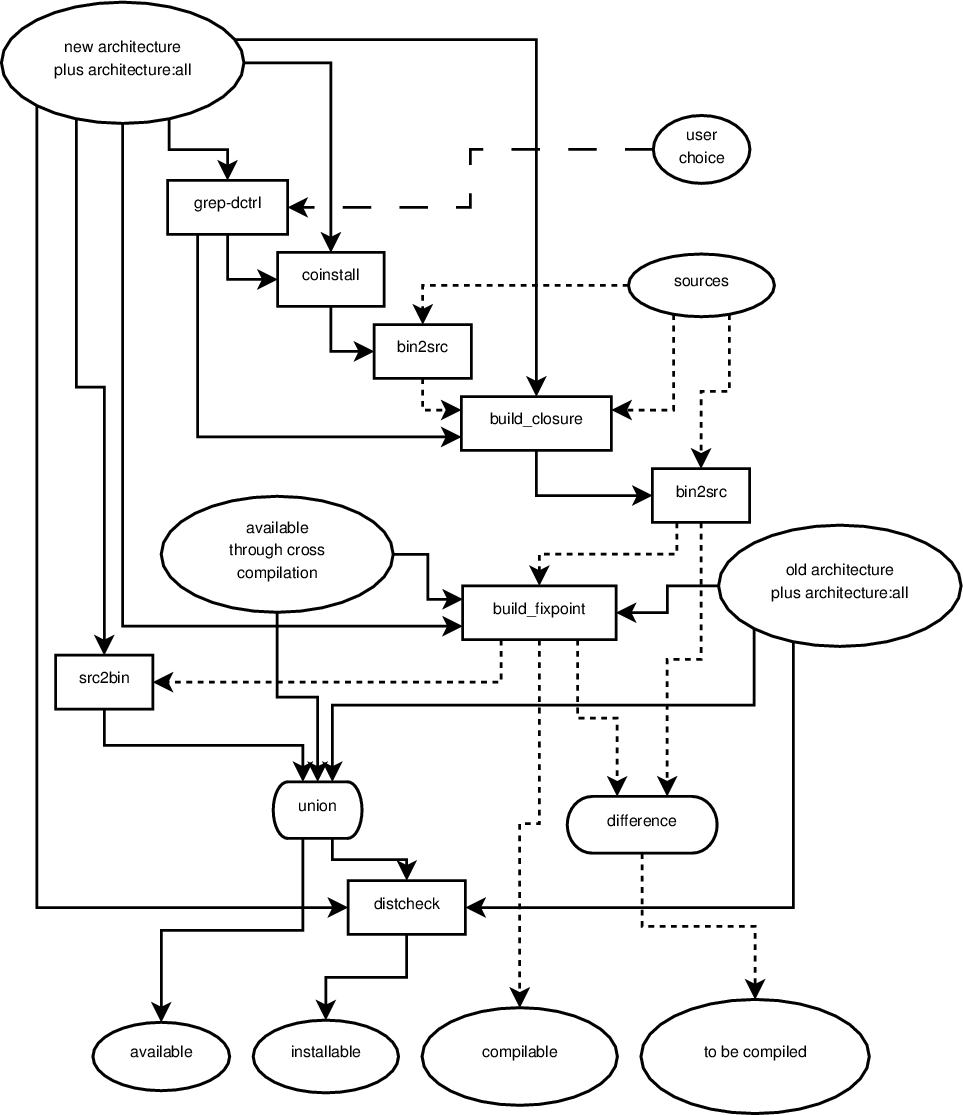
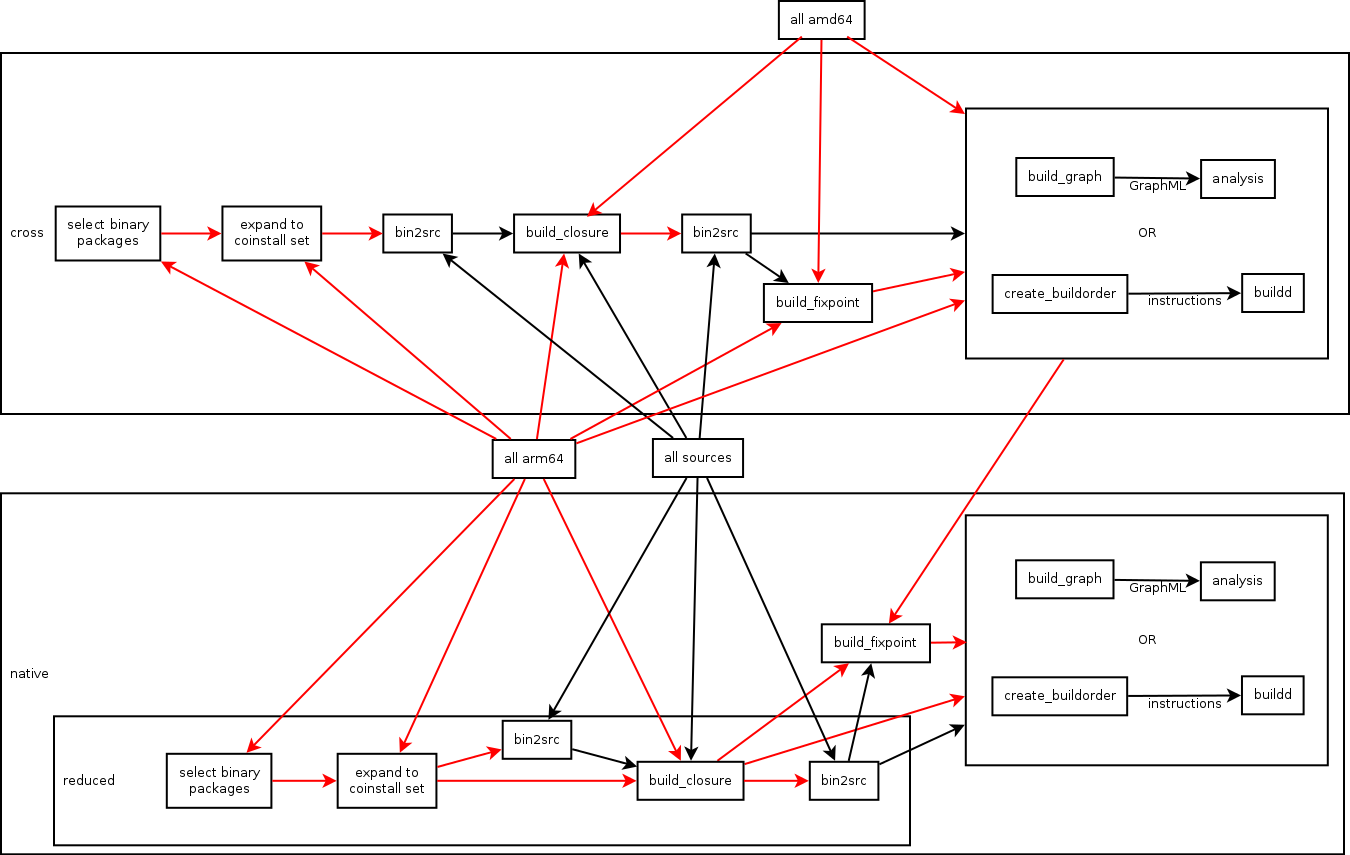
Processing pipeline instead of monolithic tools The tools I developed so far tried to accomplish everything by themselves, reusing functionality implemented in a central library. Therefor, if one wanted to try out even trivial new things, it mostly meant to hack some OCaml code. Pietro Abate suggested to instead develop smaller tools which could work independently of each other, would only execute one algorithm each and could easily be connected together in different ways to achieve different effects. This switch is now done and all functionality from the old tools is moved into a new toolset. The exchange format between the tools is either plain text files in deb822 control format (Packages/Sources files) or a dependency graph. The dependency graph is currently marshalled by OCaml but future versions should work with just passing a GraphML (an XML graph format) representation around. This new way of doing things seems close to the UNIX philosophy (each program does one thing well, data is stored as text, every program is a filter). For example the deb822 control output can easily be manipulated using grep-dctrl(1) and there exist many tools which can read, analyze and manipulate GraphML. It is a big improvement over the old, monolithic tools which did not allow to manipulate any intermediate result by external, existing tools. Currently, a shell script (native.sh) will execute all tools in a meaningful order, connecting them together correctly. The same tools will be used for a future cross.sh but they will be connected differently. I wrote about a first proposal of what the individual tools should do and how they should be connected in this email from which I also linked a confusing overview of the pipeline. This overview has recently been improved to be even more confusing and the current version of the lower half (the native part) now looks like this: native reduced Solid arrows represent a flow of binary packages, dottend arrows represent a flow of source packages, ovals represent a set of packages, boxes with rounded corners represent set operations, rectangular boxes represent filters. There is only one input to a filter, which is the arrow connected to the top of the box. Outgoing arrows from the bottom represent the filtered input. Ingoing arrows to either side are arguments to the filter and control how the filter behaves depending on the algorithm. I will explain this better once the pipeline proved to be less in flux. The pipeline is currently executed like this by native.sh.

Two new ways to break dependency cycles have been discovered So far, we knew of three ways to formally break dependency cycles:
  • remove build dependencies through build profiles
  • find out that the build dependency is only used to build arch:all packages and therefor put it into Build-Depends-Indep
  • cross compile some source packages
Two new methods can be added to the above:

Dependency graph definition changed Back in September when I was visiting irill, Pietro found a flaw in how the dependency graph used to be generated. He supplied a new definition of the dependency graph which does away with the problem he found. After fixing some small issues with his code, I changed all the existing algorithms to use the new graph definition. The old graph is as of today removed from the repository. Thanks to Pietro for supplying the new graph definition - I must still admit that my OCaml foo is not strong enough to have come up with his code.

Added complexity for profile built source packages As mentioned in the introduction, wookey and me addressed the debian-devel list with a proposal on necessary changes for an automated bootstrapping of Debian. During the discussiong, two important things came up which are to be considered by the dependency graph algorithms:
  • profile built source packages may not create all binary packages
  • profile built source packages may need additional build dependencies
Both things make it necessary to alter the dependency graph during the generation of a feedback arc set and feedback vertex set beyond the simple removal of edges. Luckily, the developed approximation algorithms can be extended to support such changes in the graph.

Different feedback arc set algorithms The initially developed feedback arc set algorithm is well suited to discover build dependency edges which should be dropped. It performs far worse when creating the final build order because it only considers edges by itself and not how many edges of a source package can be dropped by profile building it. The adjusted algorithm for generating a build order is more of a feedback vertex set algorithm because instead of greedily finding the edge with most cycles through it, it greedily finds the source package which would break most cycles if it was profile built.

Generating a build order with less profile built source packages After implementing all the features above I now feel more confident to publish the current status of the tools to a wider audience. The following test shows a run of the aforementioned ./native.sh shell script. Its final output is a list of source packages which have to be profile built and a build order. Using the resulting build order, starting from a minimal build system (essential:yes, build-essential and debhelper), all source packages will be compiled which are needed to compile all binary packages in the system. The result will therefor be a list of source and binary packages which fulfill the following property:
  • all binary packages can be built from the available source packages
  • all source packages can be built with the available binary packages
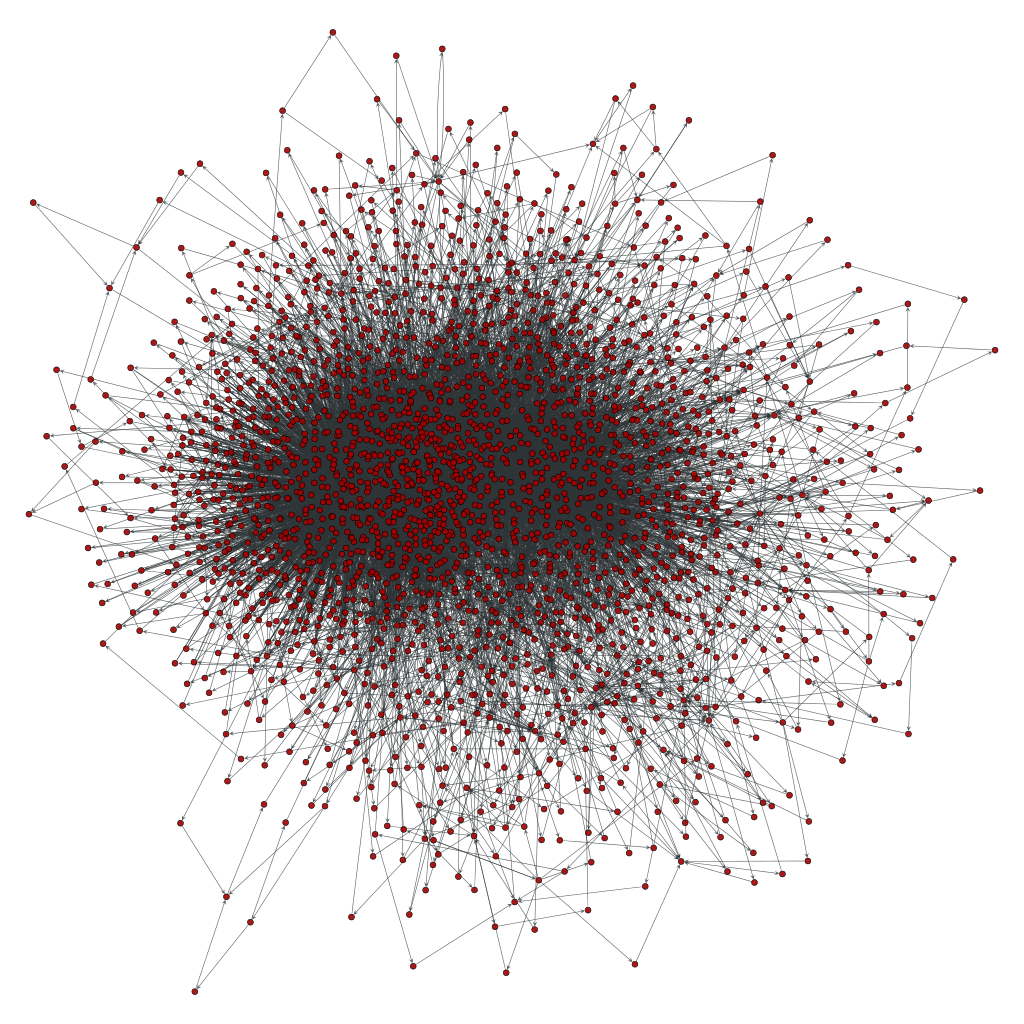
I called this a "reduceded distribution" in earlier posts. The interesting property of this specific selection is, that it contains the biggest problem set of Debian when bootstrapping it: a 900 to 1000 nodes big strongly connected component. Here is a visualization of the problem: hideous mess Source packages do not yet come with build profiles and the cross build situation can not yet be analyzed, so the following assumptions were made: The last point is about 14 build dependencies which were decided to be broken by the feedback arc set algorithm but for which other data sources did not indicate that they are actually breakable. Those 14 are dynamically generated by native.sh. If above assumptions should not be too far from the actual situation, then not more than 73 source packages have to be modified to bootstrap a reduced distribution. This reduced distribution even includes dependency-wise "big" packages like webkit, metacity, iceweasel, network-manager, tracker, gnome-panel, evolution-data-server, kde-runtime, libav and nautilus. By changing one line in native.sh one could easily develop a build order which generates gnome-desktop or really any given (meta-)package selection. All of native.sh takes only 80 seconds to execute on my system (Core i5, 2.5 GHz, singlethreaded). Here is the final build order which creates 2044 binary packages from 613 source packages.
  1. nspr, libio-pty-perl, libmcrypt, unzip, libdbi-perl, cdparanoia, libelf, c-ares, liblocale-gettext-perl, libibverbs, numactl, ilmbase, tbb, check, libogg, libatomic-ops, libnl($), orc($), libaio, tcl8.4, kmod, libgsm, lame, opencore-amr, tcl8.5, exuberant-ctags, mhash, libtext-iconv-perl, libutempter, pciutils, gperf, hspell, recode, tcp-wrappers, fdupes, chrpath, libbsd, zip, procps, wireless-tools, cpufrequtils, ed, libjpeg8, hesiod, pax, less, dietlibc, netkit-telnet, psmisc, docbook-to-man, libhtml-parser-perl, libonig, opensp($), libterm-size-perl, linux86, libxmltok, db-defaults, java-common, sharutils, libgpg-error, hardening-wrapper, cvsps, p11-kit, libyaml, diffstat, m4
  2. openexr, enca, help2man, speex, libvorbis, libid3tag, patch, openjade1.3, openjade, expat, fakeroot, libgcrypt11($), ustr, sysvinit, netcat, libirman, html2text, libmad, pth, clucene-core, libdaemon($), texinfo, popt, net-tools, tar, libsigsegv, gmp, patchutils($), dirac, cunit, bridge-utils, expect, libgc, nettle, elfutils, jade, bison
  3. sed, indent, findutils, fastjar, cpio, chicken, bzip2, aspell, realpath, dctrl-tools, rsync, ctdb, pkg-config($), libarchive, gpgme1.0, exempi, pump, re2c, klibc, gzip, gawk, flex-old, original-awk, mawk, libtasn1-3($), flex($), libtool
  4. libcap2, mksh, readline6, libcdio, libpipeline, libcroco, schroedinger, desktop-file-utils, eina, fribidi, libusb, binfmt-support, silgraphite2.0, atk1.0($), perl, gnutls26($), netcat-openbsd, ossp-uuid, gsl, libnfnetlink, sg3-utils, jbigkit, lua5.1, unixodbc, sqlite, wayland, radvd, open-iscsi, libpcap, linux-atm, gdbm, id3lib3.8.3, vo-aacenc, vo-amrwbenc, fam, faad2, hunspell, dpkg, tslib, libart-lgpl, libidl, dh-exec, giflib, openslp-dfsg, ppl($), xutils-dev, blcr, bc, time, libdatrie, libpthread-stubs, guile-1.8, libev, attr, libsigc++-2.0, pixman, libpng, libssh2, sqlite3, acpica-unix, acl, a52dec
  5. json-c, cloog-ppl, libverto, glibmm2.4, rtmpdump, libdbd-sqlite3-perl, nss, freetds, slang2, libpciaccess, iptables, e2fsprogs, libnetfilter-conntrack, bash, libthai, python2.6($), libice($), libpaper, libfontenc($), libxau, libxdmcp($), openldap($), cyrus-sasl2($), openssl, python2.7($)
  6. psutils, libevent, stunnel4, libnet-ssleay-perl, libffi, readline5, file, libvoikko, gamin, libieee1284, build-essential, libcap-ng($), lcms($), keyutils, libxml2, libxml++2.6, gcc-4.6($), binutils, dbus($), libsm($), libxslt, doxygen($)
  7. liblqr, rarian, xmlto, policykit-1($), libxml-parser-perl, tdb, devscripts, eet, libasyncns, libusbx, icu, linux, libmng, shadow, xmlstarlet, tidy, gavl, flac, dbus-glib($), libxcb, apr, krb5, alsa-lib
  8. usbutils, enchant, neon27, uw-imap, libsndfile, yasm, xcb-util, gconf($), shared-mime-info($), audiofile, ijs($), jbig2dec, libx11($)
  9. esound, freetype, libxkbfile, xvidcore, xcb-util-image, udev($), libxfixes, libxext($), libxt, libxrender
  10. tk8.4, startup-notification, libatasmart, fontconfig, libxp, libdmx, libvdpau, libdrm, libxres, directfb, libxv, libxxf86dga, libxxf86vm, pcsc-lite, libxss, libxcomposite, libxcursor, libxdamage, libxi($), libxinerama, libxrandr, libxmu($), libxpm, libxfont($)
  11. xfonts-utils, libxvmc, xauth, libxtst($), libxaw($)
  12. pmake, corosync, x11-xserver-utils, x11-xkb-utils, coreutils, xft, nas, cairo
  13. libedit, cairomm, tk8.5, openais, pango1.0($)
  14. ocaml, blt, ruby1.8, firebird2.5, heimdal, lvm2($)
  15. cvs($), python-stdlib-extensions, parted, llvm-2.9, ruby1.9.1, findlib, qt4-x11($)
  16. xen, mesa, audit($), avahi($)
  17. x11-utils, xorg-server, freeglut, libva
  18. jasper, tiff3, python3.2($)
  19. openjpeg, qt-assistant-compat, v4l-utils, qca2, jinja2, markupsafe, lcms2, sip4, imlib2, netpbm-free, cracklib2, cups($), postgresql-9.1
  20. py3cairo, pycairo, pam, libgnomecups, gobject-introspection($)
  21. gdk-pixbuf, libgnomeprint, gnome-menus, gsettings-desktop-schemas, pangomm, consolekit, vala-0.16($), colord($), atkmm1.6
  22. libgee, gtk+3.0($), gtk+2.0($)
  23. gtkmm2.4, poppler($), openssh, libglade2, libiodbc2, gcr($), libwmf, systemd($), gcj-4.7, java-atk-wrapper($)
  24. torque, ecj($), vala-0.14, gnome-keyring($), gcc-defaults, gnome-vfs($)
  25. libidn, libgnome-keyring($), openmpi
  26. mpi-defaults, dnsmasq, wget, lynx-cur, ghostscript, curl
  27. fftw3, gnupg, libquvi, xmlrpc-c, raptor, liboauth, groff, fftw, boost1.49, apt
  28. boost-defaults, libsamplerate, cmake, python-apt
  29. qjson, qtzeitgeist, libssh, qimageblitz, pkg-kde-tools, libical, dwarves-dfsg, automoc, attica, yajl, source-highlight, pygobject, pygobject-2, mysql-5.5($)
  30. libdbd-mysql-perl, polkit-qt-1, libdbusmenu-qt, raptor2, dbus-python, apr-util
  31. rasqal, serf, subversion($), apache2
  32. git, redland
  33. xz-utils, util-linux, rpm, man-db, make-dfsg, libvisual, cryptsetup, libgd2, gstreamer0.10
  34. mscgen, texlive-bin
  35. dvipng, luatex
  36. libconfig, transfig, augeas, blas, libcaca, autogen, libdbi, linuxdoc-tools, gdb, gpm
  37. ncurses, python-numpy($), rrdtool, w3m, iproute, gcc-4.7, libtheora($), gcc-4.4
  38. libraw1394, base-passwd, lm-sensors, netcf, eglibc, gst-plugins-base0.10
  39. libiec61883, qtwebkit, libvirt, libdc1394-22, net-snmp, jack-audio-connection-kit($), bluez
  40. redhat-cluster, gvfs($), pulseaudio($)
  41. phonon, libsdl1.2, openjdk-6($)
  42. phonon-backend-gstreamer($), gettext, libbluray, db, swi-prolog, qdbm, swig2.0($)
  43. highlight, libselinux, talloc, libhdate, libftdi, libplist, python-qt4, libprelude, libsemanage, php5
  44. samba, usbmuxd, libvpx, lirc, bsdmainutils, libiptcdata, libgtop2, libgsf, telepathy-glib, libwnck3, libnotify, libunique3, gnome-desktop3, gmime, glib2.0, json-glib, libgnomecanvas, libcanberra, orbit2, udisks, d-conf, libgusb
  45. libgnomeprintui, libimobiledevice, nautilus($), libbonobo, librsvg
  46. evas, wxwidgets2.8, upower, gnome-disk-utility, libgnome
  47. ecore, libbonoboui
  48. libgnomeui
  49. graphviz
  50. exiv2, libexif, lapack, soprano, libnl3, dbus-c++
  51. atlas, libffado, graphicsmagick, libgphoto2, network-manager
  52. pygtk, jackd2, sane-backends, djvulibre
  53. libav($), gpac($), ntrack, python-imaging, imagemagick, dia
  54. x264($), matplotlib, iceweasel
  55. strigi, opencv, libproxy($), ffms2
  56. kde4libs, frei0r, glib-networking
  57. kde-baseapps, kate, libsoup2.4
  58. geoclue, kde-runtime, totem-pl-parser, libgweather, librest, libgdata
  59. webkit
  60. zenity, gnome-online-accounts
  61. metacity, evolution-data-server
  62. gnome-panel
  63. tracker
The final recompilation of profile built source packages is omitted. Source packages marked with a ($) are selected to be profile built. All source packages listed in the same line can be built in parallel as they do not depend upon each other. This order looks convincing as it first compiles a multitude of source packages which have no or only few build dependencies lacking. Later steps allow fewer source packages to be compiled in parallel. The amount of needed build dependencies is highest in the source packages that are built last.

24 January 2013

Hideki Yamane: net-snmp package

Current net-snmp package maintainers are busy, so now I'm trying to update it. One of maintainers Jochen Friedrich kindly checked my experimental package (thank!), and point MIB files should be removed to upload to Debian out (at least).

Anyway, current changelog is here (a little bit long). If you want to try it, get dsc file and build it.


net-snmp (5.7.2~dfsg-1~0.1) UNRELEASED; urgency=low
* Non-maintainer upload.
* New upstream version 5.7.2 (Closes: #557348, #631063, #684388, #599929,
#673197, #581185, #558356, #568550, #514842, #445608, #557186, #411858,
#428824, #611837)
* debian/control
- set "Standards-Version: 3.9.4"
- set "Build-Depends: debhelper (>= 9)" to enable hardening
- set "Build-Depends: automake", instead of automake1.9
- drop "Build-Depends: python-central", use dh_python2 by default, instead
- remove duplicational "Priority:" and "Section:" fields
- make it "Multi-Arch" enable
- add description for non-free snmp-mibs-downloader for users' convinience
(Closes: #561124)
- add "Build-Depends: libmysqld-dev" to support MySQL
- add "Build-Depends: dh-autoreconf"
- use python-all (2.6.6-3~) instead of python-all-dev (>= 2.5.4-1~), python
(>=2.3.5-7) for Build-Depends
- add "Build-Depends: python2.7-dev"
- s/libsnmp-python/python-netsnmp/ as Python Policy compliant (Closes: #661899)
* debian/compat
- set 9
* debian/*.install
- split into *.manpages
* debian/fixman: drop it.
* debian/*.manpages (Closes: #505149)
- remove unnecessary"snmp" from tail of all man pages
* debian/libsnmp-base.install
- move /usr/share/mibs to /usr/share/snmp/mibs (probably, previous setting
was just wrong...)
- install all mibs/*.txt
* debian/libsnmp-dev.install
- change from "usr/lib/*" to "usr/lib/*/*" to deal with Multi-Arch
* debian/libsnmp30.install
- change from "usr/lib/*.so" to "usr/lib/*/*.so" to deal with Multi-Arch
* debian/snmp.dirs: remove it since unnecessary
* debian/snmpd.dirs: remove lintian overrides direcotry, add /etc/snmp
* debian/libsnmp-dev.dirs: add it
* debian/libsnmp-perl.examples: add it since dh_installexamples target in
previous debian/rules doesn't work correctly.
* debian/patches
- remove all *.README files
- add fix_typo_in_snmpd.conf.patch (Closes: #603593)
Thanks to Slavko <linux@slavino.sk>
- add fix_logging_option.patch (Closes: #616437)
- add fix_snmpcheck_perl_path.patch to provide snmpcheck (Closes: #44373)
- add net-snmp-config_multi-arch.patch to enable Multi-Arch
- add fix_regular_expression.patch enable to build under Multi-Arch
- add to snmptranslate.1.patch fix lintian "hyphen-used-as-minus-sign"
warnings
- add fix_spelling_error.patch to fix typo
- adjust and refresh 03_makefiles.patch
- drop 25_duplicate_iftable.patch and 44_nlist_kvm.patch since it cannot be
applied to current code.
- drop 32_mnttab_path.patch since it was merged to upstream as
configure.d/config_os_misc4
- drop 56_manpage.patch since most of patches are merged, and others are
unnecessary because upstream files are disappeared.
- refresh 61_vacm_missing_dependency_check.patch
- drop 63_fix_shell.patch since it was merged to upstream
- reapplied 64_missing_lib.patch since upstream source has been changed.
- drop 65_CVE-2012-2141.patch since it was merged to upstream
- drop 66_formatstrings.patch since almost merged to upstream, some of
code are changed in upstream and become unnecessary.
- move 08_defaultconfig.patch to debian/snmptrapd.conf
* debian/rules
- enable hardening
(TODO: building perl module would be failed without -pie)
- specify LDFLAGS to enable hardening
- add "--with autotools-dev,autoreconf"
- export DEB_BUILD_MAINT_OPTIONS to enable hardening
- drop "dh --with python-central" (Closes: #616913)
- drop "include /usr/share/python/python.mk"
- remove "$(PYVERS:%=debian/python-install-stamp-%)"
- move exist python targets under override_dh_install
- remove unnecessary .PHONY lines
- enable tests by removing no instructions with dh_auto_test line
- set DEB_HOST_MULTIARCH to enable Multi-Arch
- enable install snmpcheck
- don't specify to copy files but install them by using .install file
(mostly)
- enable mysql support
- enable AES support (Closes: #447705)
- don't make symlink for /usr/share/doc/libsnmp-perl since other are okay
but it has examples files.
- snmpd doc files link to libsnmp (Closes: #453124)
- adjust dh_strip for dbg package.
- adjust dh_clean target
- remove override_dh_auto_build since LD_RUN_PATH is clearly specified
during building perl modules
- add mibII/mta_sendmail to build modules (Closes: #641608)
* debian/clean
- most listed files are cared by autotools-dev, so removed.
* debian/snmp.conf: fix typo (Closes: #623499, #647468)
* debian/snmpd.init
- force remove pid files (Closes: #528104)

-- Hideki Yamane <henrich@debian.org> Wed, 18 Jul 2012 13:39:41 +0900

And if I can put it to Debian, then I hope someone will maintain it...

22 January 2013

Jon Dowland: Sennheiser HD438 Headphones

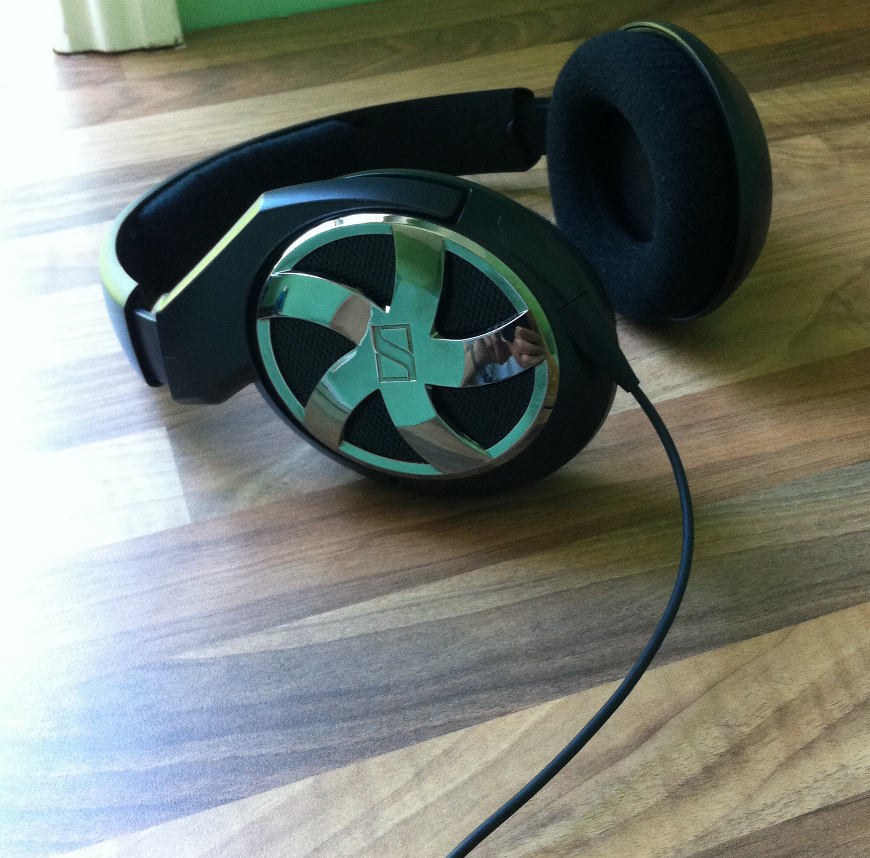
Sennheiser HD438 Sennheiser HD438
Last year whilst shopping for a birthday present for my dad, I took a chance on some ex-display headphones that were on sale at my local Richer Sounds. Up until then the best pair of 'phones I owned were some AKG-512 closed headphones. Otherwise I used a parade of low-end Sennheiser or Sony in-ear buds for listening on the move. The AKGs were a slight upgrade on the in-ear buds, but not much. They were noticeably bassier. Whether that was an improvement or not was up for debate. The Sennheiser HD438s are quite an upgrade on the AKGs. It's the biggest improvement I've ever heard when listening to my music. It's the first time I've ever noticed a significant improvement using different headphones, confirming that my ears are good enough to benefit from better equipment. Until then I simply wasn't sure. This goes to show that my existing equipment is not that great. No surprises there, but my lifestyle at the moment doesn't really have any room in it for anything better. I'm also glad I've amassed a nice music collection and discovered so much that I enjoy listening to before investing in the equipment with which to listen: I've heard new things in all my old favourites these these 'phones. Perhaps I will with a future upgrade, too.

Jon Dowland: Decisions, Decisions

Pere Ubu, or James with Echo & the Bunnymen?

Jon Dowland: FLOS UNIX

I just read this excellent blog post called "Linux Future" which defines a term "FLOS" to describe what the current direction of Linux development appears to be. Specifically, it addresses the divergence from what one might call the "UNIX" philosophy in new core technologies like systemd. I think sticking a new name to define this philosophical direction is a great idea. "FLOS" is something that both proponents and haters can rally around. It acknowledges the move away from the UNIX way of doing things, and doesn't overload a term like Linux, "ownership" of which is claimed by both camps (and others who just want to keep their heads down and get on with things!) The next step, after embracing it, would be to define the strategy and the roadmap. Where is FLOS going? What's the endgame? Perhaps with such a vision we may end up with some technologies which will stand the test of time, like Apple's CoreAudio (10 years old) or Microsoft's win32 API (now 20 years old), rather than the ludicrously high plumbing turnover we endure right now. (Oh my goodness, I finally wrote an actual Linux blog post.)

Jon Dowland: Possible future coding project

Re-implement ikiwiki, or something like it, in go. See how much the language's features and philosophy colour the design. In particular I'm wondering how much the first-class treatment of concurrency might change how you structure things: one thread per page, or hot pages... you'd want to approach it with lots of micro-locks rather than one big lock to rule them all. I can see some future ikiwiki refactoring work being a bit like the Linux Kernel's efforts to get rid of their big kernel lock. See also: Joey's proposed Haskell ikiwiki rewrite. I may be remembering wrong, but I thought he had some beginning code up somewhere. Perhaps I'm conflating it with John Goerzen's one-time OfflineIMAP rewrite, which might also be lost to the sands of time...

Jon Dowland: HD audio and more archiving

Having obtained a respectable set of headphones last year, I started pondering about high definition music. Could I hear the difference between a track mixed at CD quality, 16 bit samples / 44.1kHz sample rate, and the same track mixed at a higher bit or sample rate? A number of artists have made HD audio releases available in a variety of formats, most of which are now obsolete (see: SACD, DVD-Audio) and/or hard to demux to something more modern. However some artists have made digital HD audio releases. The last two Nine Inch Nails records were released in HD and are more readily available.
These releases also had nice per-track embedded art These releases also had nice per-track embedded art
"Ghosts - " had a standard-quality digital release but a high quality Blu-Ray release was also available, commercially. All versions were Creative Commons licensed, so people have legimitely demuxed the Blu Ray release and made it available in other formats. One was uploaded to archive.org, although it sadly lacks precise lineage information: "The Slip" was released in HD audio digitally. However, I noticed that nobody had uploaded the HD release to archive.org, and having developed an interest in archiving, I did: I tried performing some listening tests on my desktop computer, which has an M-Audio "Audiophile" 24/96 PCI sound card. However, in non-blind tests, I failed to distinguish the SD and HD versions of these songs. A friend suggested that despite the card's quoted rates, the signal-to-noise ratio was such that you wouldn't get high enough fidelity to play 24/96 properly. I can only take their word for it My preferred music player can only decode 24/44.1 but I recently learned that my phone, an Apple iPhone, can decode up to 24 bit, 48kHz. I decided to downsample the above two releases in order to try further listening tests on my phone. I uploaded both to archive.org: So far in non-blind tests I have not noticed a particular difference. Whether it's my equipment, my ears, these particular tracks or whether HD audio being audibly better than CD quality is a myth, I am not sure yet. I'm planning to do some proper ABX testing of various lossy codecs and bitrates prior to a major CD ripping exercise, so I may try proper ABX testing of HD audio at the same time. (I'm collecting together past and future log posts about archiving under the tag 'archiving').

John Goerzen: Today is Pretend St. Patrick s Day!

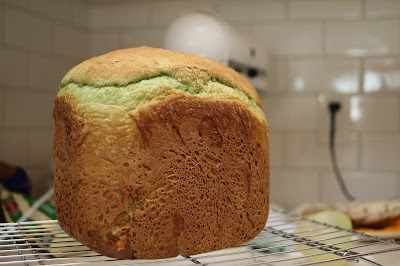
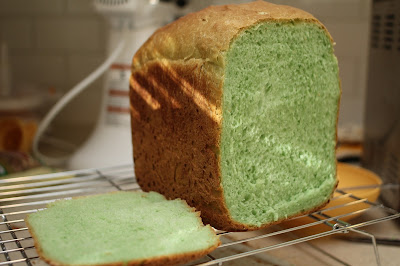
Today in the USA is Martin Luther King, Jr., day. But sometimes these holidays get confusing for a 6-year-old. I asked Jacob the other day if he knew what holiday was coming up. He thought about it for a second, then declared it would be St. Patrick s Day. He was excited because St. Patrick s Day is green. When he realized that it was really MLK Day, he was disappointed. That day isn t green. So I said, Jacob, how about we celebrate pretend St. Patrick s Day on Monday? His face lit up, he got a huge smile, and said, Oh yes! Great idea, dad! Oliver got all excited about it too. I was already planning on us doing some cooking, and thankfully had green food coloring already. So I sort of discarded my plans so each meal could have something green in it. When the boys woke up this morning, I wished each of them Happy Pretend St. Patrick s Day! We all wore green. Jacob put his shirt on backwards so the side with more green would be facing front. For breakfast, our green dish was green crepes with a succotash (based on baby lima beans and corn) filling. The boys were excited to discover that the crepes could be green on one side, and green and a little brown on the other. Jacob was unsure of the succotash idea, but after having a few bites, declared it excellent . After breakfast, we made bread. They loved watching the green food coloring disperse in the water. We checked on how green the dough looked periodically. We watched how it was rising and whether it was staying green. And we checked in on it backing, as the crust turned from green to brown. We discussed green bread over and over. Important questions were asked and answers were attempted. And then, of course, the moment of truth removing the loaf from the pan. The boys jabbered excitedly that there was some green peeking out. While we waited for it to cool, we went out to the creek. The creek is dry this year, so we got to walk in it. Jacob used his stick to make a line behind him. I asked him, Is that a line so we can find our way back? Oh! Uhm. Yes! And then he added arrows so we d know which way to go. Jacob stopped every 20 or so feet to collect pretend train tickets from Oliver and me. Oliver eventually grew tired of this, so Jacob started collecting Oliver s ticket from me. They climbed on some trees, managed to find some mud, drew outlines of train cars in the dirt, and then followed Jacob s line back down the creek bed. They pointed out any green things they saw. Then we went back to the house, took off our warm coats, and cut into the bread. Can you imagine the excitement? I hadn t realized green is a flavor, but it must have been somehow, because those boys absolutely loved this green bread. When we got out the jam, Jacob realized that it was red on the green bread, and that now his bread was Christmas-colored. All sorts of green bread discoveries were made, but the best among them was that if you hold a slice of green bread up to the bright sun, the sun makes it glow green and it looks like a stained-glass window. Sometimes a few drops of food coloring can add a ton of excitement to a day.

16 January 2013

Petter Reinholdtsen: What is the most supported MIME type in Debian?

The DEP-11 proposal to add AppStream information to the Debian archive, is a proposal to make it possible for a Desktop application to propose to the user some package to install to gain support for a given MIME type, font, library etc. that is currently missing. With such mechanism in place, it would be possible for the desktop to automatically propose and install leocad if some LDraw file is downloaded by the browser. To get some idea about the current content of the archive, I decided to write a simple program to extract all .desktop files from the Debian archive and look up the claimed MIME support there. The result can be found on the Skolelinux FTP site. Using the collected information, it become possible to answer the question in the title. Here are the 20 most supported MIME types in Debian stable (Squeeze), testing (Wheezy) and unstable (Sid). The complete list is available from the link above. Debian Stable:
  count MIME type
  ----- -----------------------
     32 text/plain
     30 audio/mpeg
     29 image/png
     28 image/jpeg
     27 application/ogg
     26 audio/x-mp3
     25 image/tiff
     25 image/gif
     22 image/bmp
     22 audio/x-wav
     20 audio/x-flac
     19 audio/x-mpegurl
     18 video/x-ms-asf
     18 audio/x-musepack
     18 audio/x-mpeg
     18 application/x-ogg
     17 video/mpeg
     17 audio/x-scpls
     17 audio/ogg
     16 video/x-ms-wmv
Debian Testing:
  count MIME type
  ----- -----------------------
     33 text/plain
     32 image/png
     32 image/jpeg
     29 audio/mpeg
     27 image/gif
     26 image/tiff
     26 application/ogg
     25 audio/x-mp3
     22 image/bmp
     21 audio/x-wav
     19 audio/x-mpegurl
     19 audio/x-mpeg
     18 video/mpeg
     18 audio/x-scpls
     18 audio/x-flac
     18 application/x-ogg
     17 video/x-ms-asf
     17 text/html
     17 audio/x-musepack
     16 image/x-xbitmap
Debian Unstable:
  count MIME type
  ----- -----------------------
     31 text/plain
     31 image/png
     31 image/jpeg
     29 audio/mpeg
     28 application/ogg
     27 image/gif
     26 image/tiff
     26 audio/x-mp3
     23 audio/x-wav
     22 image/bmp
     21 audio/x-flac
     20 audio/x-mpegurl
     19 audio/x-mpeg
     18 video/x-ms-asf
     18 video/mpeg
     18 audio/x-scpls
     18 application/x-ogg
     17 audio/x-musepack
     16 video/x-ms-wmv
     16 video/x-msvideo
I am told that PackageKit can provide an API to access the kind of information mentioned in DEP-11. I have not yet had time to look at it, but hope the PackageKit people in Debian are on top of these issues. Update 2013-01-16 13:35: Updated numbers after discovering a typo in my script.

8 January 2013

Bastian Venthur: Shiny new iPod Nano 6G fffffffuuuuuuuuuuuu

So I got an iPod Nano (6th generation) for Christmas this year, just in time since my trusty old iPod Mini started beg for retirement after almost 8 years of usage. Since my old iPod was working like a charm all those years I expected a smooth sailing when I plugged in my new iPod Nano. Gnome recognized it correctly and mounted the device. The iPod showed up in Rhythmbox as I was used to and I started to fill it with some music. Everything worked as expected: Rhythmbox copied the music to the iPod without complaining and after unmounting the iPod and starting it it was emtpy. Whait, what? Why is it empty? Didn t I just So I tried again, and again with the same result. Half an hour later I found out that libgpod (the iPod driver for Linux) supports all iPods except the iPod Nano 6G. Bummer. Apparently Apple changed the algorithm to calculate the checksums of the files on the device and since that algorithm is unknown you cannot successfully write on it with free software. That means technically this device is unusable for Linux users since iTunes doesn t run on Linux. However, there seems to be a way to use the iPod Nano with libgpod if you are trusting this guy and willing to use his binary (only!) file with libgpod (which I am not). And somehow the guys over at Spotify managed to get the iPod Nano running in their Linux client but they don t provide the code either. Being already more than two years old, I don t have much hope that the iPod Nano will work on Linux with libgpod in the foreseeable future. On the bright side I can say the device is not totally useless as it comes with FM radio

6 January 2013

Neil Williams: bootstrapping arm64

I'm still working on perl-cross-debian (just uploaded 0.0.2) and there's more to do on that with upstream but part of the reason to work on perl cross-building is to do what I can to help with the ARM64 port.

So, I went back to Wookey's talk at DebConf12 which leads to the current list of cross-build results for arm64 and started through the list.

coreutils is listed as failing but that was an archive error (MD5sum hash mismatch), so that just needs a retry. I don't have access to that buildd, yet, so nothing I can do there.

Next on the list (excluding those just waiting for build-deps) was klibc.

aarch64-linux-gnu-gcc -Wp,-MD,usr/klibc/.__static_init.o.d -nostdinc -iwithprefix
include -I/ PKGBUILDDIR /usr/include/arch/x86_64 -Iusr/include/arch/x86_64
-I/ PKGBUILDDIR /usr/include/bits64
-Iusr/include/bits64 -I/ PKGBUILDDIR /usr/klibc/../include
-Iusr/klibc/../include -I/ PKGBUILDDIR /usr/include -Iusr/include
-I/ PKGBUILDDIR /linux/include -Ilinux/include
-I/ PKGBUILDDIR /linux/arch/x86/include -Ilinux/arch/x86/include
-D__KLIBC__=2 -D__KLIBC_MINOR__=0 -D_BITSIZE=64 -fno-stack-protector -fwrapv -m64 -Os
-fno-asynchronous-unwind-tables -fomit-frame-pointer -falign-functions=1 -falign-jumps=1 -falign-loops=1
-W -Wall -Wno-sign-compare -Wno-unused-parameter -c -o usr/klibc/__static_init.o usr/klibc/__static_init.c
aarch64-linux-gnu-gcc: error: unrecognized command line option '-m64'
make[4]: *** [usr/klibc/__static_init.o] Error 1


Turns out that this is a build failure I understood, at least initially. A little digging and a trivial patch was begun:

--- a/usr/klibc/arch/arm/MCONFIG
+++ b/usr/klibc/arch/arm/MCONFIG
@@ -30,6 +30,13 @@
ifeq ($(CONFIG_AEABI),y)
KLIBCREQFLAGS += -mabi=aapcs-linux -mno-thumb-interwork
else
+# aarch64
+ifeq ($(CONFIG_AARCH64),y)
+KLIBCREQFLAGS +=
+KLIBCOPTFLAGS += -mgeneral-regs-only
+else
KLIBCREQFLAGS += -mabi=apcs-gnu -mno-thumb-interwork
endif
endif
+endif
+

Alongside a trivial change to debian/rules

ifeq ($(DEB_HOST_ARCH),arm64)
DEB_MAKE_ENVVARS := ARCH=arm CONFIG_AARCH64=y CPU_ARCH=armv8-a CPU_TUNE=generic
endif

OK, then things get a bit more awkward,

....
code/debian/cross/klibc/klibc-2.0.1/linux/arch/arm/include -Ilinux/arch/arm/include -D__KLIBC__=2
-D__KLIBC_MINOR__=0 -D_BITSIZE=32 -fno-stack-protector -fwrapv -fno-exceptions -Os
-march=armv8-a -mtune=generic -mgeneral-regs-only -W -Wall -Wno-sign-compare -Wno-unused-parameter
-c -o ../foo.o usr/klibc/arch/arm/crt0.S
usr/klibc/arch/arm/crt0.S: Assembler messages:
usr/klibc/arch/arm/crt0.S:19: Error: operand 1 should be an integer register -- mov r0,sp'
usr/klibc/arch/arm/crt0.S:20: Error: operand 1 should be an integer register -- mov r1,#0'

Hmm. Assembly, well, yes, I've done assembly before, I know what mov should normally do, sp is likely to be the stack pointer .... where's my AARCH64 assembly PDF again... PRD03-GENC-010197 ...

OK, so maybe the r0 and r1 should be x0 and x1, hmm, that at least doesn't raise assembly errors. So a tentative change:

--- a/usr/klibc/arch/arm/crt0.S
+++ b/usr/klibc/arch/arm/crt0.S
@@ -15,9 +15,13 @@
#ifdef __thumb__
.thumb_func
#endif
-
+#ifdef __aarch64__
+_start: mov x0, sp
+ mov x1, #0
+ bl __libc_init
+#else
_start: mov r0, sp
mov r1, #0
bl __libc_init
-
+#endif
.size _start,.-_start

Next stage, however, leaves me quite a bit more lost:

....
klibc-2.0.1/linux/arch/arm/include -Ilinux/arch/arm/include
-D__KLIBC__=2 -D__KLIBC_MINOR__=0 -D_BITSIZE=32 -fno-stack-protector -fwrapv -fno-exceptions -Os
-march=armv8-a -mtune=generic -mgeneral-regs-only -W -Wall -Wno-sign-compare -Wno-unused-parameter
-c -o usr/klibc/arch/arm/setjmp.o usr/klibc/arch/arm/setjmp.S
usr/klibc/arch/arm/setjmp.S: Assembler messages:
usr/klibc/arch/arm/setjmp.S:32: Error: unknown mnemonic stmia' -- stmia r0, r4,r5,r6,r7,r8,r9,r10,fp,sp,lr '
usr/klibc/arch/arm/setjmp.S:33: Error: operand 1 should be an integer register -- mov r0,#0'
usr/klibc/arch/arm/setjmp.S:34: Error: operand 1 should be an integer register -- mov pc,lr'
usr/klibc/arch/arm/setjmp.S:42: Error: unknown mnemonic ldmia' -- ldmia r0, r4,r5,r6,r7,r8,r9,r10,fp,sp,lr '
usr/klibc/arch/arm/setjmp.S:43: Error: unknown mnemonic movs' -- movs r0,r1'
usr/klibc/arch/arm/setjmp.S:44: Error: unknown mnemonic moveq' -- moveq r0,#1'
usr/klibc/arch/arm/setjmp.S:45: Error: operand 1 should be an integer register -- mov pc,lr'
make[5]: *** [usr/klibc/arch/arm/setjmp.o] Error 1


So now I'm out of my depth of AARCH64 assembly (apart from the recurrence of mov r0 vs mov x0 etc.). If the above is useful then maybe someone can work out what is wrong with setjmp.S or whether AARCH64 just means that klibc needs to gain a arch/arm64/ directory and not try to duplicate each entire assembly block within #ifdef clauses.

I don't really know where else to put an incomplete investigation like this, so it's here for anyone to find.

(Oh, and if you're reading those arm64 cross-build logs, then a few hundred occurrences of ldconfig: /usr/lib/aarch64-linux-gnu/*.so is for unknown machine 183. in every build log (success or fail) is apparently entirely normal until more packages get fixed. Really slows down scanning the build log. :-(

I may try busybox or libusb next. libusb looks like a classic "you might have told me to cross-compile but I'm going to use g++ anyway because I know best" cross-building problem, indicative of yet another BDBS. sigh.

Resources:
Getting started with 64-bit ARM development
ARMv8 images for developers
AArch64 for everyone, Marcin Juszkiewicz
Howto/HelloAarch64 - Linaro wiki
AArch64 gcc options

Next.

Previous.