Search Results: "gio"

19 October 2007

Michal Čihař: DRM is here just to upset people?

Being in Japan has also one great feature - even if you are in same DVD region as in EU, you are still unable to play your DVDs, maybe because of PAL/SECAM issue, I don't know. I think it must have been intentionally designed this way. The hardware player I have here at my room just tells me: Disc Error, Playback feature may not be available on this Disc. I have no idea what this error actually means, but I somehow expected I'll be able to play my region 2 DVDs in region 2 DVD player. Good luck that I still have my laptop with illegal dvdcss library, where I can play whatever DVD I put into it. I know this is not real DRM at all, but this has also started as a technology to limit copying or whatever....

16 October 2007

MJ Ray: the Cooperative Group Half-Yearly Meeting

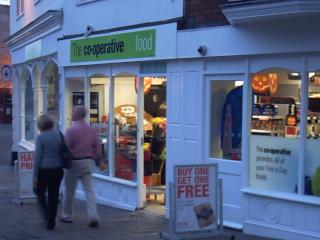
I attended my first half-yearly meeting as a member of the co-operative group yesterday evening at 7pm. The event for the strangely-named Kennet and Avon area was held at Jury's Hotel near Queen Square, which is a part of Bristol I've not visited for a while, so I got there a bit early to find it. the co-operative food, The Centre, Bristol I found it easily, which gave me a few minutes spare to visit the co-operative food store on the Centre (pictured), which is the first rebranded one I've seen. It looks light and airy and the staff were friendly. I didn't find everything I was looking for, but after exiting, I noticed I'd not seen around the corner of the L-shaped store! Anyway, the meeting itself was chaired by Peter Begley and was attended by six elected reps, three regional officers, four trading managers (all food?) and about 50 members by my reckoning. There was a comment later in the meeting about the low turnout from Bath - it seems that a meeting for each city had been requested and refused. There was also a comment about lack of transport from Weston-super-Mare, about which I'm not sure: trains between WsM and Bristol are at least hourly. Maybe there should be a shuttle between station and meeting for people who can't walk, but it seems nuts to run a bus from here when trains are faster and have space. Officer Chris Griffiths gave a presentation (with loud music!) about our community support, including windfarms on the co-operative farms, Farm to Fork, the Woodcraft Folk, the Queens Award for Sustainable Development, community chef visits to Ilfracombe and Bath, community challenge, Mukti Mitchell's Low Carbon Lifestyle Tour, Fairtrade fashion shows, Holyland Handicrafts Co-operative at Bath Christmas Market, BAND (D is for Daycare, but I missed the rest), Toy Box Library Bath, Avonmouth Community Centre Association and Oldfield Park Juniors. Frank Jones presented the business interim report, noting that the group has a 2.2% increase of revenue before reinsurance premiums, but the bad weather has hit the insurance arm, reducing the overall profit. Nevertheless, we still paid a total of 38 million pounds to and on behalf of members. The closure of WsM Dolphin Square and the gain of the co-operative pharmacy in Milton were mentioned in passing. There was a short presentation about the constitutional review. The first members' consultation ends on 26 October, so send in your comments soon. There was particular concern about some multi-thousand-pound payments to elected representatives who stand down. Then came member questions, which I'll describe in another post, approval of past minutes, reports of the local co-operative party (success in Bath+NES, 8 councillors in Bristol, loss of 2 councillors in N.Somerset) and presentations to Frank Jones and Simon Crew of 10-year elected service awards. The meeting closed at 9pm.

15 October 2007

DebConf team: DebConf8 dates decided! (Posted by Mart n Ferrari)

After a very short meeting, the DebConf team agreed on having the next DebConf the first two weeks of August. That will be August, 2nd to August, 17th. Also, the Debian Day will be held after DebConf in Buenos Aires, just before the eigth edition of the Regional Free Software Conference, a very big event with people coming from different countries in South America. This way, we expect to reach much more people.

Biella Coleman: On Adivising Grad Students: A grad student perspective

Joe Reagle, who happens to be a PhD student I am happily advising, wrote a response to my blog entry on the Chronicle of Higher Education article lamenting and lambasting advising graduate students. I am quoting it here in its entirety because it is a very thoughtful response:
Difficult issue. I certainly feel sympathy with the anonymous faculty member with respect to her amorous and litigious students. Also, I often wonder how I would deal with students who don’t share my sensibilities or workstyle if I were advising them under such circumstances. However, I also find much of her disappointment is related to disappointment of what her students do next, and in this I feel she may be a little unfair. She rightly recognizes that graduate school is a time of flux, no student can really guarantee what’s going to happen next. (One of my favorite religious jokes is: “How do you make God laugh?… Tell her your plans.”) If she is disappointed that a student she tried to help achieve a position at a tier 1 research institute accommodates themselves to something less than that, I’m sure at the student worked just as hard and was even more disappointed. The heart of the issue is that academia is so ridiculously competitive. It is never good enough to make a contribution or to be helpful, one always needs to be the best. It’s an exemplar for “The Winner Takes All.” I often think of this in relation to my technical work. One of the most rewarding professional relationships I had was when a more experienced programmer co-authored a Python software library with me. I don’t think he did it with any expectation that he was somehow seeding the discipline with followers, or even that I would someday be able to reciprocate in a similar manner. He was a good guy, we enjoyed our collaboration, I think he was learning by helping me, and in the end we made something useful, even if neither of us ever became Python gods. This is one of the things I like about open content communities, yes the people at the top get a fair amount of attention, but even if you spellcheck Wikipedia articles or write a Python library for canonicalising XML, that work is still appreciated.

11 October 2007

Andrew Pollock: [life] A c-section from a bloke's perspective

I've been meaning to write this for weeks. Hopefully I can still remember everything. So Sarah had a c-section the day before we were scheduled to have our c-section class. We'd both read a bit though, so it wasn't like we were going in totally uninformed and unprepared.. Firstly, Stanford Hospital's operating room area is rather mind-blowing. Sarah was transferred from Lucille Packard Children's Hospital to Stanford because they could get an operating room there sooner. The transfer was trivial, just roll the whole bed down the corridor, through the magic double doors into the operating rooms. The doors in question have a whole heap of video cameras pointing straight down, so they see everyone that gets wheeled in and out, which I found interesting. Good for records of patient movements I guess. Anyway, through those doors is a maze of corridors. There was a light-up board hanging from the ceiling in the middle of the main corridor with lights for all of the ORs. I think there were about 20. The illuminated ones were available. We went down a corridor, and past a few ORs. Outside of each one is a big stainless-steel scrub area. We got to "our" OR, and they transferred Sarah onto the operating table. Because of her heart condition, they wanted to have an arterial line in her for the duration of the procedure. This is some sort of gadget that goes into an artery and monitors your blood pressure beat by beat. The "interesting" thing with the anaesthesiologist was the New Zealand woman that we'd seen when we had an anaesthesiologist months prior, but the appointment was with a different anaesthesiologist, and this New Zealand woman was "observing". At the time, the anaesthesiologist we had the appointment with told us that she was going to be on vacation at the time of the delivery, so she wouldn't be attending. So I don't know if the Kiwi woman got promoted out of "observing" to "doing" in that period, or what, but she reintroduced herself to us in LPCH prior to moving to Stanford as being our anaesthesiologist for the delivery. Anyway, in the OR, they handed her the arterial line, in it's plastic packaging, and the first thing she asked was whether it came with anything else to put it in. At this point I figured she hadn't put one of these in before. (The answer to her question, by the way, was "no") She then proceeded to have a terrible time getting the line into Sarah's arm. Normally intravenous lines go into a vein, but this has to go into an artery. Apparently when you go poking an artery, it spasms. It then becomes very hard to get it into a moving target. She had a few goes on one arm, then gave up, and had to move over to the other arm. Sarah doesn't like needles at the best of times, and getting this honking great big thing in was no picnic. The bruising on both her wrists afterwards was phenomenal. She tends to bruise fairly spectacularly whenever they stick a needle in her. I almost stepped in and asked if it was really necessary that she have it, because they were having so much trouble getting it in, and it was clearly hurting Sarah. I think someone else ended up getting it in, not the anaesthesiologist. Not "that" one anyway. There were heaps of people in the OR. Next, came the epidural. Again, we had the inexperienced anaesthesiologist. This time she said to someone else how she was so nervous because there were "too many eyes". Not really reassuring. They gave Sarah a numbing injection first, and then proceeded to poke her in back with the epidural catheter needle thing. Sarah was flinching when they did it, and they kept yelling at her not to move. Apparently it didn't hurt, but it caused discomfort every time they tried to get it in. Eventually the associate professor of anaesthesiology stepped in and got it in. Later, they said that Sarah had a slightly curved spine or something, and that had made it a bit more complicated. I'm not begrudging the obviously inexperienced anaesthesiologist for anything. Stanford is a teaching hospital, and doctors have to get their experience somehow, but I think that when the patient is conscious, it's important to come across a little more confident. So once they got all of that sorted out, they could get her lying down on the table and get down to business. Apparently one of the side-effects of the epidural is that it can cause your body to think it's got hypothermia. Part way through the procedure, Sarah started shaking uncontrollably. I can't remember whether she complained about feeling cold or not. She also got a really itchy face. Apparently that's a side-effect of morphine. Sarah also doesn't tolerate anaesthetics very well, and started feeling nauseous part way through the procedure. Sure enough, as has happened countless times previously post-operatively, she threw up. At least we had warning and I got a kidney dish in place in time. That was about all the eventful surgical stuff. They had the usual screen up from about her neck area, so I couldn't see what they were doing. After Joshua was delivered, one of the nurses asked me if I wanted to see him, and took me around from her left shoulder where I'd been sitting to around below her right foot, to where they had him in one of those perspex portable crib things. I could see a lot of red out of the corner of my eye, and I could have seen a lot more if I'd bothered to look, but I was more interested in seeing my son at that stage. They let me bring him back around to where I'd been sitting previously, to show Sarah, but it was hard getting him up to a point where she could see him properly, and she was partially out of it by this stage. I think she dozed off for a little bit not long after that. I forget what time we got into the OR, but they started the operation in earnest at about 10:00am, and we were out of there by 10:45am if memory serves. The nurse in charge of the recovery room really didn't want me there, so I went back to LPCH with one of the nurses to spend some time with him while he was weighed and measured, and I took some photos, and held him. This was good, because I got to have a good cry on my own with him. So overall, in my "I'll never be squeezing a watermelon out of my nether regions" blokey perspective, having seen what Sarah went through, and how much discomfort that it looked like she was going through, both in the OR and afterwards, I'm not convinced c-sections are any less painful than a vaginal birth (taking the average case of both). I think you're trading some "short term" (depends on how long your labour is I guess) pain for some "long term" pain while you recover from your incision. Granted, Sarah wasn't really laid up all that badly for all that long, but it still didn't look all that pleasant. I guess really only the women who have done both delivery methods can really comment. All I know is I found it very difficult watching Sarah go through so much pain. So much so that I'm not really looking forward to that again. Maybe, hopefully, after her aorta is repaired, they'll let her delivery vaginally next time. I'm not holding much hope though. The high-risk obstetricians are fairly paranoid. There's also the possibility the baby will make the decision very easy for everyone by being breech. Sarah raised an interesting point today. Why didn't they just knock her out with a general anaesthetic? There was no need for her to be conscious for the delivery. That would have spared her the pain and suffering of getting the arterial line in, and they wouldn't have needed to bother with an epidural. One for her to ask the obstetrician at her follow-up appointment.

10 October 2007

Russell Coker: Execmem and SE Linux

Eddy writes about problems getting the game oolite to run under SE Linux [1]. Strangely after I fixed the shared object issue with libffcall1 (as described in my previous post [2]) it appeared to work for me. Eddy asked how to allow one application to create write and executable memory regions without allowing such access for all programs. This can be done, in the targeted policy the type unconfined_execmem_exec_t triggers a transtion to the domain unconfined_execmem_t which permits the execstack and execmem operations. For example if the program /usr/bin/foo needs such access then the command chcon -t unconfined_execmem_exec_t /usr/bin/foo will change the type and the next time the program is launched from an unconfined session (a user login session, cron job, or daemon which is not constrained) then the change will apply.

9 October 2007

MJ Ray: Cooperatives SW September steering

I was at the September meeting of the Cooperatives SW steering group a couple of weeks ago. We had two new members (Alex Lawrie from Upstart and Alan Bonner from RadCo) and a guest from Co-operative Futures. Unfortunately, we seem to have lost our only member from a Credit Union. Our guest told us about how important it is to put information about co-operative business models into Business Link and offer paths from BL "Information and Diagnostic Brokerage" to co-operative development bodies (CDBs). I agree with that - by and large, BL were hopeless about anything other than a sole trader business when I used them (in 2000 and again in 2002/3) and knowing more about co-operative development would have saved me about a year of confused administration. (However, my then-local CDB was also a competitor, so they weren't much help even once I found them.) There are also some other ideas to connect CDBs to funding better, which the CDBs are going to develop with our blessing and bring back later. Related yet different, we were told that the Regional Infrastructure for Social Enterprise is about to launch a trade association and may exclude all co-operatives from it by mistake. Other than that, it was mostly about getting promotional materials and plans in place for the Co-operatives SW Annual Meeting in Exeter on Monday 22 October ( places available to all co-operative members).

4 October 2007

Christian Perrier: No institutional pro-corp bias in French NPO (afaik)

MJ, each French NPO is free to establish its own regulation rules, which may include a differential voting system if they want to. That should of course respect the French law (for instance, no discrimination based on sex, religion or any other genetic factor) but, as far as I know, nothing prevents deciding that "personnes morales" (ie non physical people) have a higher or lower vote than others. However, this is certainly not common, but many NPO simply don't have non physical members anyway (some don't authorize non physical people to be members). For those who care, Debian France (which is a NPO, but not regulated by 1901 law, but by the special NPO law for Alsace and Lorraine, inherited from the 1810-1918 years) admits physical and "moral" members with an equal voting right. The only special case is a rule that allows Debian developers to have a veto right on any decision of the organisation. See that official regulation rules of Debian France for details (French only). PS: Debian France is currently inactive, due to a longstanding dispute with the French Tax collecting organisation (Direction des Imp ts) who initially refused to consider us as a non profit organisation...because "we sell an operating system" (doh!).

3 October 2007

Rodrigo Gallardo: Webkit

The webkit rendering plugin for liferea is now available in unstable. It has missing features and crashes not-so-rarely. But it renders properly (and I rather like how it loks, actually) everything I’ve tested with it so far. Please help us get it into a releasable shape by testing and reporting bugs, but do be kind to us and try to see if the bugs are in liferea or in webkit itself, by using /usr/lib/WebKit/GdkLauncher on the relevant URL. Many thanks are due to Lars, our very excelent upstream.

1 October 2007

MJ Ray: Satellite TV for Yachts?

SatelliteForCaravans is one of my regular references for setting up satellite systems, but that's for when the caravan is stationary, not moving. So, I'm rather stumped by this question - Patrick asked:
"Hey, glad I found your site. I was hoping you could provide us with some knowledge and point us in the right direction(s). Even though our products get installed on yachts, entertainment systems are new to us. We have clients that travel all over Europe and the other continents. I've poked around several of the websites you listed as resources, but not sure where to go next. What systems are out there that will allow traveling boats to pick up both free and paid sat TV all over Europe, both standard and HD, if not other large geographic regions of the world? Minimal equipment is a big deal. Thanks."
Any suggestions? (2007-10-04: 2 comments)

30 September 2007

DebConf team: DebConf maintenance (Posted by Joerg Jaspert)

In the last few days we (as in DebConf admins Steve Gran, Mark Hymers and myself) have been doing some DebConf maintenance work. Some time ago one of DebConf’s permanent sponsors, ByteMark sponsored a new machine, krabappel, which we use as a replacement for the older machine we have from them, cmburns. It was neccessary, as good old cmburns had a lot of stuff running and so was always pretty loaded. Imagine it running most of our websites, main mail and dns server and then also having 4 vserver instances on it. Those vserver itself where also running things that do use some resources, like our wiki and the main DebConf7 site, the PentaBarf test-host and our LedgerSMB instance. While it was long decided to move stuff our - we just had to find time to do it. This weekend seems to be it, everything is migrated except cmburns itself, as that needs a fix in the reverse dns entries for the new /28 we got. We are using xen-tools to make installation of new images easy. For that I wrote a script that is used as a role script, automating all that various setup tasks that one can automate easily. Which means that it takes about 5 minutes to get a complete new XEN domain up and running. (Add some minutes to add it to nagios2, munin, our mail setup and to sync the userdatabase.) Mark and Steve also did another migration: gallery.debconf.org is now using gallery2. Still needs a nice layout designed looking similar to our normal DebConf website, but that shouldn’t be too hard to get. While they have been on it they also integrated gallery.debian.net, so that it is back up again. Feel free to use both of them! gallery.debconf.org offers space for all DebConf related pictures, be it the main yearly DebConf (and related) or regional DebConfs, like the one planned for Panama soon. gallery.debian.net is a place where pictures from all Debian related events/parties/whatever can be put. Basically - whenever people working on Debian meet (like a BSP, a work meeting, etc) - feel free to put pictures up there. Just put them into a folder matching the year it happened in… Basic goal is to get a huge set of pictures from people involved in Debian.

27 September 2007

Russell Coker: Eating Corpses

Davyd Madeley writes about vegetarianism for the environment [1] which is listed in Wikipedia as Environmental Vegetarianism [2]. He links to an article on the Huffington Post [3]. The Huffington Post article in turn links to an article on GoVeg.com about global warming [4]. Mass-produced meat is not only bad for the environment but there are also health issues related to meat consumption (due to bad practices in mass farming, combining the meat of thousands of animals into mince thus increasing the spread of bad meat, and the fact that most people in first-world countries consume significantly more meat than anyone did at any time in history). One thing that doesn’t get mentioned in these posts is the fact that farming is not required to produce meat. In fact the meat that is most healthy (due to lack of carcinogenic chemicals and free-range feeding) and has the strongest flavour (which may be a good or bad thing depending on whether you actually like the flavour of meat) is from wild animals. If you don’t like the taste of meat (which seems to be the case when people don’t like game meat) then why eat it at all? In Australia large numbers of kangaroos are killed because they eat grass more efficiently than cattle (they have evolved over tens of thousands of years to survive in Australian conditions unlike cattle). There are also a number of foreign animals that have run wild in Australia and are considered vermin, this includes rabbit, pig, buffalo, deer and camel (all of which are tasty). Even among native animals there are often times when a cull is needed. If some good seasons allow the population to increase then when there is a bad season the population has to reduce and it’s often better for them to be culled (thus providing plenty of food for the surviving animals) than for all of them to starve. There is a game meat wholesaler I’ve visited a few times that sells buffalo, rabbit, pig, camel, crocodile, possum, emu, kangaroo, and some other animals. All of the meat is from wild animals (apart from rabbit and pig none of those animals can be domesticated). I’m sure that every region has such a wholesaler that will sell to interested individuals if you know where to look (it seems impossible to buy any game meat other than kangaroo retail in Australia). Finally one thing that offends me is people who eat meat but are not prepared to kill the animal. If you aren’t prepared to kill it then you shouldn’t pay someone else to do so on your behalf! Claiming that “the animal was going to be killed anyway” is a pitiful excuse that is only suitable for children. It’s acceptable for children to eat meat without thinking about where it came from. But adults should be able to deal with the fact that eating meat means killing animals - or become vegetarian if they can’t cope with it. The book 3001 The Final Odyssey pioneered the term “corpse food” for eating meat. I believe that the term is accurate and should be used. If you can’t stomach eating corpses then there are many good vegetarian options available. There are many vegetarians in the Linux community. As these issues are getting discussed a lot recently maybe it would be good to have the vegetarians choose some good vegetarian restaurants to have Linux meetings on occasion. Davyd got a bit of negative feedback on his post, maybe if he invited a bunch of his local Linux people to have dinner at a vegetarian restaurant and they enjoyed the food then the reaction to such ideas would be more positive.

26 September 2007

Scott James Remnant: Why I choose Bazaar (a history of revision control)

Like any sensible software developer, I have a close relationship with revision control systems. In my previous job, I was an SCM Engineer (see Software configuration management) which meant I had an even closer relationship than most, since we were running the CVS servers and actively using them to track changes and deployments. We all know, deep down, that revision control systems shouldn’t exist. This kind of thing should be inherent in the design of the operating system, through standard file and filesystem formats. The OLPC interface is making some headway towards that, but for the rest of us, it means using a revision control tool throughout the development process. Unfortunately, even though the tool is expected to be the most-used command on your system, very few of them are particularly easy to use. Thus there’s a large learning curve, and people become religious about their choice since they have invested significant time in using it. Just to spice the mix up, not only will people religiously defend their choice of revision control system, but they’ll do so while actively hating it. In the beginning there was CVS and we all thought that it was pretty good. It was based on the simpler RCS and shared a file-format with it, but introduced control of directory trees and remote operation. Actually, in reality, CVS wasn’t that good. Its command set could be a little strange and inconsistent (e.g. it’s not possible to diff between two dates on a branch); the support for branching assumed that all branches would be merged into the mainline, and only once; and nobody ever really knew how to create a new project in a repository (tip. cvs import is wrong). But we all used it anyway, and we muddled through. It did have some good features; it was simple, fast and pretty reliable–when it did break, you could usually fix the repository yourself. And most importantly of all, we understood how to drive it. And so it was for many years, until Subversion (SVN) came along. Subversion intended to be “a better CVS”, perhaps this goal should have made us suspicious at the time since CVS was already being a pretty good CVS by itself; unfortunately we hated CVS so much we flocked to the new system in hope. In hindsight, Subversion didn’t really improve on CVS much at all. In fact, arguably, the only real improvement was the addition of atomic commits (in CVS, each commit is per-file, so it’s manual labour to work out which change was made to two files at the same time). (Its support for branching, tagging, copying, renaming, etc. were no better than CVS’s when done in the repository by hand.) The cost of this single new feature was a much more complicated interface (with two separate commands), a backend that tended to break down weekly and a lethargic slowness to its operation. Most people I know now justify their use of Subversion instead of CVS by “Subversion is maintained, CVS isn’t” which is a somewhat self-fulfilling justification. While the mass conversion to Subversion, and ensuing disappointment and frustration, was going on; something new appeared on the horizon: Arch. Arch was different, it broke one of the core assumptions of revision control, that of the repository as a cathedral. In CVS, and Subversion like it, if somebody wants to modify your code (even if on a branch) you need to give them access to your own repository. In some cases (especially with CVS), vast access control and permission structures would be in place to ensure proper behaviour. With Arch, you don’t; all you need to give to anyone is read access. Anybody can make their own branch by copying yours and committing to their own copy. This model also necessitated fixing a long standing problem that CVS had; Arch has repeatable (smart) merging. If you merge from a branch, you can merge again later, and again, and again. Arch made this possible through each commit (changeset) having a globally unique identifier; made from the branch’s own globally unique identifier and the changeset number in the branch. Unfortunately while this was a massive step in a new direction, Arch had an absolutely terrible user interface. Its command list was terrifying with over 100 commands, many of which had multiple word names (tla set-tree-version). It exposed too many of its own innards, and expected you to learn them. It also forced baroque file naming semantics on its users and strange policy (though shalt not commit without first running “make clean”). Efforts were made to improve Arch’s user interface through projects such as baz, but they were always to be doomed from the start. We’ve since seen an explosion of new revision control systems; Monotone, Darcs, Git and Bazaar. What’s especially interesting is the commonality between these systems. They are all “distributed” like Arch, though they also all discard the strange “unique branch identifier” convention and instead simply assign a unique identifier to each file or commit. This means that they all support personal branches, and by necessity all support repeatable (smart) merging. So how do they differ, what are their killer features and killer problems? Monotone is all about repository integrity, ensuring that every commit is both authorised and intact. It pays for this with a severe lack of speed. Darcs is based around a “theory of patches”, a branch is not made up of its history but by the collection of patches in it. Unfortunately this often breaks down, and darcs frequently gets stuck calculating even trial and commonplace branch models. Git is very strange to me; its killer feature appears to be the speed at which it can handle very large trees, but the interface is as insane as Arch’s was. It is heavily optimised for the “I only apply patches” development model, at the expense of ordinary development models (it shares an issue with Arch where calculating annotations on an individual file is an expensive operation). What about Bazaar? Its killer feature is that it is designed to work the way you do. The command set is relatively small, and each of them works in the most obvious manner. It also supports plugins so that you can always implement your own workflow. Of all the revision control systems, it’s the only one (that I’m aware of) that supports both distributed and centralised workflows (and lets you go distributed when you need to, e.g. when you’re on a plane). Here’s a few examples of how Bazaar’s command set works the way you do. To start managing some code in bzr:
$ cd myproject
$ bzr init
To add the files, copy in your usual .bzrignore file and just add everything:
$ cp ~/bzrignore .bzrignore
$ bzr add
added foo.c
added bar.c
Check the output for mistakenly added files, adjust .bzrignore and remove the file with bzr rm. A common operation is realising that the commit you’re about to make should really go on a new branch for now:
$ cd ..
$ cp -a myproject myproject-foo
$ cd myproject-foo
$ bzr commit
A copy of a Bazaar branch is a different branch, you can commit to it separately. There’s a bzr branch command for it too (which deals with issues such as bound branches, checkouts, etc.) but it’s nice to demonstrate that Bazaar does what you’d expect even when you don’t use its own commands. Pulling changes from another branch (where you haven’t made any modifications yet) is easy:
$ bzr pull ../myproject
As is merging (when your branches have diverged):
$ bzr merge ../myproject
One particularly nice feature is that after a merge, you see the merge as a single commit and it can be treated as such; but it also has the set of merged commits indented under it–you can examine these as individual commits as well! What’s the downside of Bazaar? Well, it’s not the fastest system (but by no means the slowest), for small to medium sized projects this is never an issue but may be for extremely large projects–fortunately the developers are improving its performance all the time! But that doesn’t matter; it is, honestly, the first revision control system that I don’t hate.

15 September 2007

MJ Ray: US Satellite TV Worse Than Europe

Satellite TV commented:
"Wow, all that seems pretty complex to me. The U.S is so much more simple, we just chose Dish Network or DirecTV or some kind of cable and call it a day. Then again I don't know if thats a bad or a good thing."
That's a bad thing. Look at the situation: In the US, there seems to be very little free-to-air (FTA) satellite TV for most of the country, except PBS and religious channels. The main US FTA FAQ answers "Should I drop cable/Dish/DirecTV and switch to FTA?" with "Probably not." I'd say "Probably yes" to similar questions in Europe, as long as you aren't dependent on one of the few incompatible pay-TV channels. Channels like MTV, Nick, TVEi and DW are all pay-TV in the US, but FTA in Europe. But if you're in the US, look on the bright side: Canada seems even more behind on this. In Europe, you can still call whatever satellite broadcaster (such as Canal Satellite, Premiere or even Sky) and get a system installed if you choose, but you can also install your own. That's what my FAQ is about: giving people in "the land of the free TV" some starting info on how to do that. Some broadcaster-supplied systems only really work well with one broadcaster's "approved" channels (Sky are particularly bad for that), are more expensive to upgrade than standard systems and don't give viewers the equipment to repair it when it breaks, which encourages them to keep paying the broadcaster's agents. Some of those agents do some pretty dishonest tricks when installing dishes, such as putting them far higher up than necessary, to discourage viewers from fixing it themselves and to advertise satellite TV to the neighbours. It's pretty easy to install a standard satellite system... if you can put up a wall bracket and tune in a video, you can probably do it. Alternatively, there are independent installers who will do it for you, who might seem like they charge more than the broadcaster's agents, but remember that a good one won't keep charging you every month or try to sell stuff to you forevermore!

Jose Luis Rivas Contreras: Third talugian meeting

I was in the third talugian meeting which has the best ambient I have ever been. Is nice when you talk about linux and nobody look at you like this guy what's smoking?!, and is great that the community is growing. I'm feeling that these meetings could get us better and stronger communities and with more experience. And there's a lot coming...! Thanks kamihacker for being such a kind host in this 3 meetings, we swear in the 100th we're gonna change the place ;-) P.S. talugian is from TALUG, T chira Linux User Group, my regional LUG.

12 September 2007

MJ Ray: Tour of Britain - stage 2: Taunton

ToB Taunton BannerAs mentioned yesterday, I went to watch the Tour of Britain for real in Taunton. It’s taken me a while to encode these (I’ll write about the technical details on another page soon), but here are the videos. They’re in the super-cool Ogg Theora format, in case that helps you update your media player with filters like these. (I probably should do some clever tricks to embed these videos in the page, but it’s taken me long enough to get this far, so please either download the files or drag-and-drop the links to your media player. If anyone can explain how to embed videos simply, please leave me a comment…) First of all, I went to Staplegrove Road, where I thought the peloton might slow slightly to get past a roundabout on their first pass through Taunton (Ogg, 514K) a bit after 11am, but they didn’t really. Then I got a brilliant position in the second row just by the finish line, which meant I didn’t see the big crash of the day until I saw the TV news in the evening, but I did see both the main sprints, for the stage win (Ogg 919K) and the yellow-jersey group (Ogg 382K). Finally, I went and watched the presentations - the yellow jersey (Ogg 1.3M) and the champagne spray (Ogg 643K) are shown here. The BBC has the broadcast rights to the tour of Britain and seem to be doing a terrible job: Live race news seems to be limited to a quick mention in the half-hourly sports bulletins on Radio Five (on satellite Astra 2D at 28 east to much of north-west Europe, or Medium Wave 909 and 693kHz). Each night, there’s a short (3 minutes?) summary report in the BBC1 TV news of that stage’s region, some time after 18:30 BST (so tonight in West Midlands, tomorrow Yorkshire and North Midlands, Friday North-west and Saturday Scotland, all Astra 2D). This is not shown on BBC News 24, as far as I’ve seen, not even in the Sportsday show. There will be one national highlights show on BBC 2 at 14:30 on Sunday (again, Astra 2D), the day after the race has finished. Official listings say this is highlights of the final stage but hopefully it will cover the other stages too. I feel they should take the rights away from the BBC and give ITV a chance. We had better coverage of this year’s Tour of Ireland (from itv4) than we have of the Tour of Britain - this is silly. For non-TV coverage details, including Twitter, see CyclingFans.com

6 September 2007

Adam Rosi-Kessel: Paul Graham on College

Great essay from Paul Graham about why college prestige doesn’t matter. (I wish I had both the time and ability to churn out his volume of high-quality writing.) My favorite parts were the following two footnotes:
…No one ever measures recruiters by the later performance of people they turn down.[2]…
[2] Actually, someone did, once. Mitch Kapor’s wife Freada was in charge of HR at Lotus in the early years. (As he is at pains to point out, they did not become romantically involved till afterward.) At one point they worried Lotus was losing its startup edge and turning into a big company. So as an experiment she sent their recruiters the resumes of the first 40 employees, with identifying details changed. These were the people who had made Lotus into the star it was. Not one got an interview.
…Obviously you can’t prove this in the case of a single individual, but you can tell from aggregate evidence: you can’t, without asking them, distinguish people who went to one school from those who went to another three times as far down the US News list. [3]… [3] The US News list? Surely no one trusts that. Even if the statistics they consider are useful, how do they decide on the relative weights? The reason the US News list is meaningful is precisely because they are so intellectually dishonest in that respect. There is no external source they can use to calibrate the weighting of the statistics they use; if there were, we could just use that instead. What they must do is adjust the weights till the top schools are the usual suspects in about the right order. So in effect what the US News list tells us is what the editors think the top schools are, which is probably not far from the conventional wisdom on the matter. The amusing thing is, because some schools work hard to game the system, the editors will have to keep tweaking their algorithm to get the rankings they want.
As an alum of a fairly prestigious institution, I think I endorse Graham’s conclusions.

5 September 2007

Jan Wagner: check updates via nagios

On your clients you have to modify /etc/snmp/snmpd.conf:

#com2sec paranoid default public
com2sec readonly default public
exec .1.3.6.1.4.1.2021.8.3 aptupdate /usr/local/bin/nagios-check-apt-updates Get the check script to the client:

# wget –no-check-certificate \
https://kosh.ganneff.de/ganneffutils/nagios/nagios-check-apt-updates \
-O /usr/local/bin/nagios-check-apt-updates
# chmod +x /usr/local/bin/nagios-check-apt-updates Allow the snmp user to make use of apt-get:

# echo “snmp ALL=(ALL) NOPASSWD: /usr/bin/apt-get update” >> /etc/sudoers
# echo “snmp ALL=(ALL) NOPASSWD: /usr/bin/apt-get –simulate upgrade” >> /etc/sudoers Restart the snmpd:

# /etc/init.d/snmpd restart
Restarting network management services: snmpd. On the nagios monitoring system you have to run something like this:

# /usr/lib/nagios/plugins/check_snmp -H <client> -t30 \
-C public -o .1.3.6.1.4.1.2021.8.3.101.1 \
-r “No updates available”
SNMP CRITICAL - *”Security updates (1): libkrb53; “* iso.3.6.1.4.1.2021.8.3.101.1=”Security updates (1): libkrb53; ” After upgrading the client you should get:

# /usr/lib/nagios/plugins/check_snmp -H <client> -t30 \
-C public -o .1.3.6.1.4.1.2021.8.3.101.1 \
-r “No updates available”
SNMP OK - “No updates available” iso.3.6.1.4.1.2021.8.3.101.1=”No updates available” , ,

Ian Wienand: Short review of guarded page-tables

Anyone who has done an operating systems 101 course is familiar with the standard hierarchical page-table structure. This is essentially a radix-tree where bits of the virtual address are taken as indexes into an array of pointers, each pointing to the next level down or, at the leaves, to a physical entry. Hierarchical page-table One potential issue with this style of page-table is with a very large, very sparse address space (such as in a single address-space operating system) there will be many intermediate steps with possibly only a single translation at the end (i.e. lots of single pages scattered all around your address-space). Thus we can add a bit-field guard to each of the entries in the page table (Liedtke, 1994) to help indicate only those paths through the tree which are valid (similar to a Patricia tree). Translation first proceeds as usual; the top bits are used as an index into the top level table. However, each entry now contains extra information about further valid addresses. The guard is masked against the next bits in the virtual address; if it matches (e.g. in our example is 0x2) the next step can proceed directly to the leaf node, bypassing the middle look-up. The entry can be marked as either final (i.e. pointing to a leaf node) or intermediate, in which case the process continues with the next level (which also has its own guard, and so forth). Any entry that does not match the guard is known to be false, and therefore a fault can be raised. Hierarchical page-table with guard To examine this further, consider that we know that each page in our 24-bit address space above is 4KiB, thanks to the 212 = 4KiB offset. Therefore each of the 16 possible values of the top four bits selects 1MiB of the 224 = 16MiB address space; e.g. 0x0 selects the first megabyte, 0x1 the second and so forth. The second 4 bits selects a 64KiB region of this 1MiB, and the last 4 bits selects a 4KiB region of this 64KiB region. This scheme could work quite well if we were using only 16 pages each separated by 1MiB. Each of these pages would only require an entry in the top level with an appropriate guard which could then be marked as final and point directly to a physical frame. Once things become less sparse however, we need to start filling in middle levels. If you have 2 pages within a 16MiB region, you need at least one extra bit of address to tell them apart. If you have 3 or 4 pages, you need at least 2 bits to tell them apart, and so forth. It would therefore be beneficial to have variable level sizes to dynamically adapt and create the most efficient lookup possible given the address space layout of a process. For example, if you knew your process was only going map pages 0x123 (100100011) and 0x124 (100100100) a good option would be to make your top-level only two entries (i.e. check the top bit) with a guard on the entry at index 0x1 of 00100. You then need a second level with 8 pointers to differentiate the remaining 3 bits (each of these would be final and hence point directly to a physical page). The more pages you start mapping, the less bits you can discard with the guard. If you follow this through to a guard of 0 bits you end up with a linear page-table. It has been shown (Elphinstone, 1999) that fixed level sizes with 16 entries tends to work well. For a 32-bit address-space with 4KiB pages (e.g. 12 bits offset) this leaves 20 bits to be mapped by the page-tables; with each level mapping 24 bits this means a 5 level tree. The guard values provide enough path-compression that the table is not constantly walked. The disadvantage is that it may "over-allocate" meaning more space is dedicated to page-tables than strictly required. Deciding where and when to split levels, what size indexes to put at each level and updating all the guard values dynamically to make the smallest, most efficient page-table would create a variable-radix page-table (Szmajda and Heiser, 2003). In summary, a guarded page-table is more useful the more sparse your address space is. A variable-radix guarded page-table is complex, but could offer advantages for implementing variable page-size support and thus having positive effects on TLB coverage.

Adam Rosi-Kessel: Bourne Execution

Two words: flawless execution. I can enjoy almost any movie that is well constructed, regardless of genre, plot, etc.. It did help to sit pretty far back in the theater, though. If the CIA were really as clever and technologically sophisticated as it appears in the Bourne movies, the United States wouldn’t have so many foreign policy disasters on its hands (egregious constitutional violations notwithstanding). Technorati Tags: , ,

Next.

Previous.