Search Results: "bod"

17 December 2016

Shirish Agarwal: Demonetisation, Indian state and world

Queues get longer, patience runs out- Copyright Indian Express Group.

Queues get longer, patience runs out- Copyright Indian Express Group.

I dunno if people heard or didn t hear about the demonetisation of INR 500 and INR 1000 which happened in India on 8th November 2016 with new currency designed in India of INR 2000 and INR 500. What they did was from that moment onwards, paper currency of INR 500 and INR 1000 notes were declared invalid except few places (Government Hospitals, Petrol Pumps, Booking of Air and Train tickets) . The reasons given were as a. End of corruption There is/was suspicion that there are people who have loads of unaccounted wealth which they keep in the form of Cash in hand, b. Charge against fake/duplicate currency There is/was suspicion that quite a bit of the money esp, high value notes such as INR 500 and INR 1000, so having made them illegal, people had to hand over cash to banks and fake money would go outside the system. c. Terror funding This is related with the above point. There is a popular theory/myth/fact that terrorists use fake money to buy people, arms and ammunition while further devaluing the value of INR against dollar and basket of other high-value currencies that Indian currency follows/bases itself on. Each of these theories/myths/facts has been contested. Every day we are seeing and reading reports of people being caught with new currency in absurd numbers while RBI , our central bank and Lender of Last Resort has had to play multiple roles such as policing along with the country s Income Tax Department as well as pumping in new notes of the NEW INR 2000/- and INR 500/- into ATM s and Bank branches around the country. Now while the above may seem to be reasonable, there have been multiple factors which has made the whole exercise less effective while implementing a. Banking reach While India does and can boast of somewhat good indicators of banking reach . But Quarter of these accounts were opened only in the last couple of years under the Pradhan Mantri Jan Dhana Yojana . There are quite a few limitations of such accounts. It is a good scheme as if you develop a good rapport with a bank and show good credit/debit understanding then there is possibility to move to normal full-fledged bank account. Almost all of these accounts had zero-balances till the demonetization move. Many of these accounts are suspected to have been conduits to convert black money to white as the Govt. had said it will not scrutinize small savings bank accounts. Also many bank accounts historically have laid dormant over the years. One of my first jobs was of a data entry operator in a bank and I used to see hundreds of bank accounts lying dormant for years together. This was in bank digitization in early 90s. Small Savings accounts would not be scrutinized if they bring upto INR 250000 while Jan Dhan accounts have an upper limit of only INR 50000 . Even then, it has lead to a huge surge in balances specifically in Zero balances account. What begs the question is if it is their hard-earned money why hadn t they deposited money before 8th November 2016. While I can t speak about them, I can certainly speak about myself. I hardly keep at the most INR INR 5/10K for medical emergencies in-house for number of years. Unless you are a businessman who has need of cash or have some function, nobody that I know would keep such amounts in their homes, simply for the possibility of theft in homes. So how did such people who are not able to open a full-fledged saving account get access to such large amounts? In most public sector banks, to have a full-fledged savings account the only requirements are a. Have INR 500 to 1000 as balance at all times.
b. Have permanent identity and residential proof
c. Two photographs
d. 2-3 people who are account holders who can act as guarantor. Of the above, b. and d. are probably sticking points for most migrants, while d. may be a sticking point for labourers, craftsman etc. hence the need for that specific scheme. Which leads to the natural suspicion that they may have been white-washing somebody s untaxed, unaccounted money which is being put into bank and made into legitimate white money. People do not have to file an Income Tax Return (ITR) unless they earn more than 250,000 in a single financial year. One good off-shot of the scheme though is the transparency gained about Bank Mitras b. Number of banks, quality of Bank services, number of people per bank at least in Nationalized Banks leaves much to be desired. We can t even try to compare with other BRIC countries, leave alone Germany.
Mobile ATM - Copyright - PTI

Mobile ATM Copyright PTI

One another positive off-shoot has been the introduction of Mobile ATM Vans around the country. I had experienced such vans in Mumbai since ages, but not anywhere else. I do hope that both Bank Mitras as well as such Van Mobile ATMs happen more. There are huge swathes of people who are currently unbanked. Getting them into the banking infrastructure, getting them to *think* about taking rational financial decisions, i.e. saving and spending, different types of saving etc. should not make citizens and the banking systems more productive and efficient, but hopefully improves our GDP and make it more resilient to any outside financial shocks. c. Many bank websites have everything in English. That norm needs to change. I do have few queries though, one of the countries who is supposed to be a prominent supporter and user of cashless society is supposed to be Canada. Could any Canadians (also because debconf is going to happen in Canada in 2017) share how and if they had seen the Canadian banking system evolve in their country ? Also how much of Canada s economy is cashless i.e used to Electronic Money Transfer and other means (but not cash) and how much is cash, more in day-to-day usage and transactions. I am trying to get people s perspective rather than some website which may serve only raw numbers, although even that would be appreciable. Also what, if any charges/commission are paid to a Canadian bank for paying via card/electronic money transfer. I ask as India has reduced charges overall to 1% from 2% for making transactions upto INR 2000 in a day. There has also been recent talk of plastic notes instead of paper currency. Plastic notes are supposed to be more copy-proof and also will work for much longer time. They will not soil as paper notes do. How have countries been looking at Plastic currencies. I do suspect there would be issues while destroying plastic money vis-a-vis paper currencies. A sort of interesting discussion that I had with Bernelle before venturing into South Africa was asking her about monetary transactions in SA. She had replied that the highest denomination notes was 200 ZAR which is roughly equal to ( ZAR 200 x 5 = INR 1000) . What is/was interesting that Bernelle told me to be careful and as far as possible not to show 200 ZAR note, whereas in India, even the cheapest worker I have met, they have seen and used INR 1000 note. The context of the discussion was being safe in South Africa and doing transactions with people around as to what works. It would be curiouser to know how things work in Canada for instance ? Also has Canada or any other country have experimented with plastic notes. If yes, how has the experience been ? I would have to say this is in no way a definitive guide of the different impressions and repercussion that the decision and the way it s playing out even now. Another thing, while researching for the article there were lots of interesting knowledge, for e.g. the Big Mac Index and it s limitations which I didn t know how to integrate into the decision and Policy taken. I also came to know/saw that lots of Policy initiatives being taken by the current (NDA)Government is similar to initiatives taken elsewhere in the world.. Whether the Policy would be fruitful in getting the desired outcome or would it lead to more chaos and down-turn will know in next quarter only. It would be nice and interesting if people have observed something similar in their country s economic policies as well.
Filed under: Miscellenous Tagged: #Bank Mitra, #Bank reach, #blackmoney, #debconf17, #Demonetisation, #fake currencies, #full-fledged savings account, #Jan Dhan scheme, #Moile ATM Van, #Plastic money, #Public Sector Banks (PSB), #Reserve Bank of India, Big Mac Index

16 December 2016

Dimitri John Ledkov: Swapfiles by default in Ubuntu

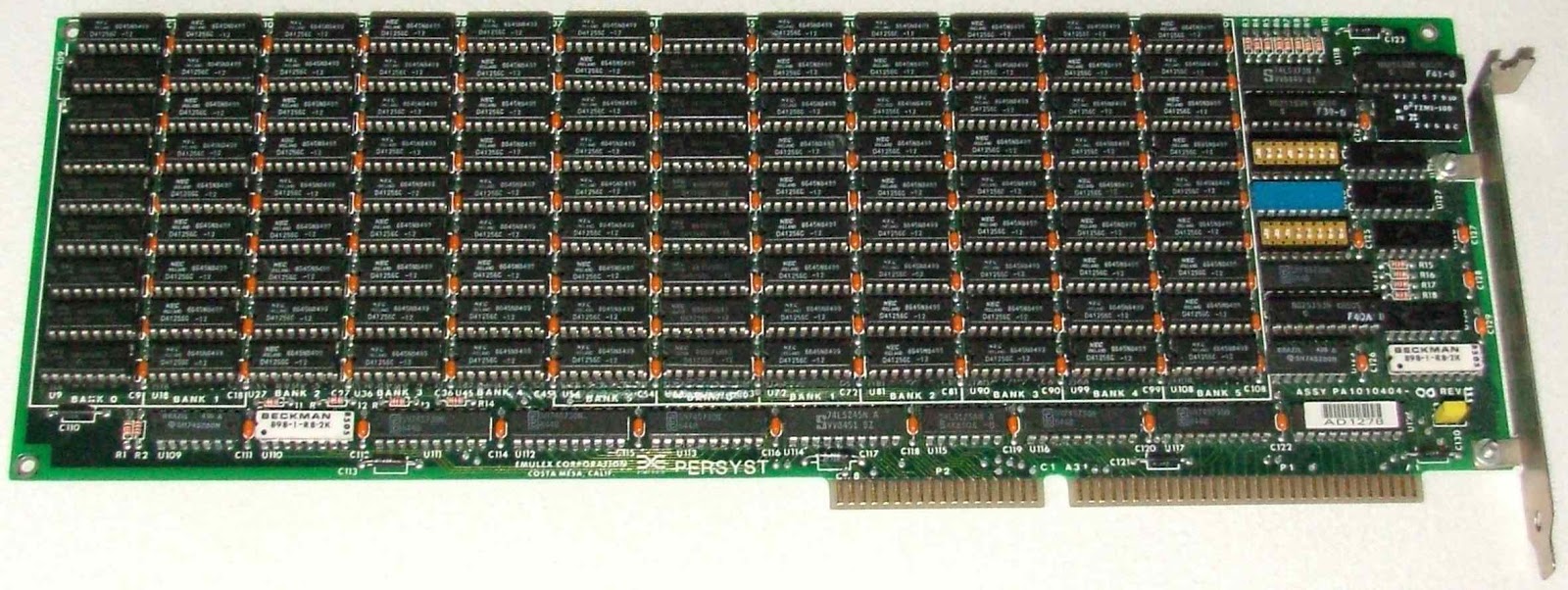
4MB RAM card
By default, in Ubuntu, we usually create a swap partition.

Back in the day of 4MB RAM cards this made total sense, as the ration of RAM to disk space, was still very low. Things have changed since. Server, desktop, embedded systems have migrated to newer generations of both RAM and persistent storage. On the high performance side of things we see machines with faster storage in the form of NVMe and SSD drives. Reserving space for swap on such storage, can be seen as expensive and wasteful. This is also true for recent enough laptops and desktops too. Mobile phones have substantial amounts of RAM these days, and at times, coupled with eMMC storage - it is flash storage of lower performance, which have limited number of write cycles, hence should not be overused for volatile swap data. And there are also unicorns in a form of high performance computing of high memory (shared memory) systems with little or no disk space.

Today, carving a partition and reserving twice the RAM size for swap makes little sense. For a common, general, machine most of the time this swap will not be used at all. Or if said swap space is in use but is of inappropriate size, changing it in-place in retrospect is painful.

Starting from 17.04 Zesty Zapus release, instead of creating swap partitions, swapfiles will be used by default for non-lvm based installations.

Secondly, the sizing of swapfiles is very different. It is no more than 5% of free disk space or 2GiB, whichever is lower.

For preseeding, there are two toggles that control this behavior:
  • d-i partman-swapfile/percentage string 5
  • d-i partman-swapfile/size string 2048
Setting either of those to zero, will result in system without any swap at all. And one can tweak relative integer percentage points and absolute limits in integer percentage points or MiB.

On LVM based installations, swap logical volumes are used, since unfortunately LVM snapshots do not exclude swapfile changes. However, I would like to move partman-auto to respect the above proposed 5%-or-2GB limits.

Ps. 4MB RAM card picture is by Bub's (Photo) [GFDL or CC-BY-SA-3.0], via Wikimedia Commons

Raphaël Hertzog: Freexian s report about Debian Long Term Support, November 2016

A Debian LTS logoLike each month, here comes a report about the work of paid contributors to Debian LTS. Individual reports In October, about 150 work hours have been dispatched among 14 paid contributors. Their reports are available: Evolution of the situation The number of sponsored hours did not change this month and in fact we haven t had any new sponsor since September. We still need a couple of supplementary sponsors to reach our objective of funding the equivalent of a full time position. The security tracker currently lists 40 packages with a known CVE and the dla-needed.txt file 36. We don t seem to really catch up the small backlog. The reasons are not clear but I noticed that there are a few packages that take a lot of time due to the number of issues found with fuzzers. We also handle many issues that the security team ends up classifying as not worth an update because we add the package to dla-needed.txt before the security team has done its review and nobody checks afterwards. Thanks to our sponsors New sponsors are in bold.

No comment Liked this article? Click here. My blog is Flattr-enabled.

15 December 2016

Michal Čihař: Weblate 2.10

Quite on the schedule, Weblate 2.10 is out today. This release brings Git exporter module, improves support for machine translation services and adds various CSV exports and API interfaces. Full list of changes: If you are upgrading from older version, please follow our upgrading instructions. You can find more information about Weblate on https://weblate.org, the code is hosted on Github. If you are curious how it looks, you can try it out on demo server. You can login there with demo account using demo password or register your own user. Weblate is also being used on https://hosted.weblate.org/ as official translating service for phpMyAdmin, OsmAnd, Aptoide, FreedomBox, Weblate itself and many other projects. Should you be looking for hosting of translations for your project, I'm happy to host them for you or help with setting it up on your infrastructure. Further development of Weblate would not be possible without people providing donations, thanks to everybody who have helped so far! The roadmap for next release is just being prepared, you can influence this by expressing support for individual issues either by comments or by providing bounty for them.

Filed under: Debian English phpMyAdmin SUSE Weblate 0 comments

13 December 2016

Shirish Agarwal: Eagle Encounters, pier Stellenbosch

Before starting, have to say hindsight as they say is always 20/20. I was moaning about my 6/7 hour trip few blog posts back but now came to know about the 17.5 hr. flights (17.5x800km/hr=14000 km.) which are happening around me. I would say I was whining about nothing seeing those flights. I can t even imagine how people would feel in those flights. Six hours were too much in the tin-can, thankfully though I was in the aisle seat. In 14 hours most people would probably give to Air rage . I just saw an excellent article on the subject. I also came to know that seat-selection and food on a long-haul flights are a luxury, hence that changes the equation quite a bit as well. So on these facts, it seems Qatar Airways treated me quite well as I was able to use both those options. Disclaimer My knowledge about birds/avian is almost non-existent, Hence feel free to correct me if I do go wrong anywhere. Coming back to earth literally , I will have to share a bit of South Africa as that is part and parcel of what I m going to share next. Also many of the pictures shared in this particular blog post belong to KK who has shared them with me with permission to share it with the rest of the world. When I was in South Africa, in the first couple of days as well as what little reading of South African History I had read before travelling, had known that the Europeans, specifically the Dutch ruled on South Africa for many years. What was shared to me in the first day or two that Afrikaans is mostly spoken by Europeans still living in South Africa, some spoken by the coloured people as well. This tied in with the literature I had already read. The Wikipedia page shares which language is spoken by whom and how the demographics play out if people are interested to know that. One of the words or part of the word for places we came to know is bosch as is used in many a places. Bosch means wood or forest. After this we came to know about many places which were known as somethingbosch which signified to us that area is or was a forest. On the second/third day Chirayu (pictured, extreme left) shared the idea of going to Eagle Encounters. Other people pictured in the picture are yours truly, some of the people from GSOC, KK is in the middle, the driver Leonard something who took us to Eagle Encounters on the right (pictured extreme right). Update I was informed that it was a joint plan between Chirayu and KK. They also had some other options planned which later got dropped by the wayside. The whole gang/group along with Leonard coming from eagle encounters It was supposed to be somewhat near, (Spier, Stellenbosch). While I was not able to able to see/figure out where Eagle Encounters is on Openstreetmap, somebody named Firefishy added Spier to OSM few years back. So thank you for that Firefishy so I can at least pin-point a closer place. I didn t see/know/try to figure out about the place as Chirayu said it s a zoo . I wasn t enthusiastic as much as I had been depressed by most zoos in India, while you do have national reserves/Parks in India where you see animals in their full glory. I have been lucky to been able to seen Tadoba and Ranthambore National parks and spend some quality time (about a week) to have some idea as to what can/happens in forests and people living in the buffer-zones but those stories are for a different day altogether. I have to say I do hope to be part of the Ranthambore experience again somewhere in the future, it really is a beautiful place for flora and fauna and fortunately or unfortunately this is the best time apart from spring, as you have the game of mist/fog and animals . North India this time of the year is something to be experienced. I wasn t much enthused as zoos in India are claustrophobic for animals and people both. There are small cages and you see and smell the shit/piss of the animals, generally not a good feeling. Chirayu shared with us also the possibility of being able to ride of Segways and range of bicycles which relieved me so that in case we didn t enjoy the zoo we would enjoy the Segway at least and have a good time (although it would have different expenses than the ones at Eagle Encounters). My whole education about what a zoo could be was turned around at Eagle Encounters as it seems to be somewhere between a zoo and what I know as national parks where animals roam free. We purchased the tickets and went in, the first event/happening was Eagle Encounters itself. One of the families at Eagle Encounter handling a snowy eagle Our introduction to the place started by two beautiful volunteer/trainers who were in charge of all the birds in the Eagle Encounters vicinity. The introduction started by every one of us who came for the Eagle Encounter show to wear a glove and to have/hold one of the pair of snowy owls to sit on the glove. That picture is of a family who was part of our show. Before my turn came, I was a little apprehensive/worried about holding a Owl -period. To my surprise, they were so soft and easy-going, I could hardly feel the weight on my hand. While the trainer/volunteers were constantly feeding them earthworm-bits (I didn t ask, just guessing) and we were all happy as they along with the visitors were constantly playing and interacting with the birds, sharing with us the life-cycle of the snowy Owl. It s only then I understood why in the Harry Potter Universe, the owl plays such an important part. They seem to be a nice, curious, easy-going, proud creatures which fits perfectly in the HP Universe. In hind-sight I should have videod the whole experience as the trainer/volunteer showed a battery of owls, eagles, vultures, Hawks (different birds of prey) what have you. I have to confess my knowledge of birds is and was non-existent. Vulture at the Eagle Encounters show Vulture, One of the larger birds we saw at the Eagle Encounters show. Some of the birds could be dangerous, especially in the wild. The other trainer showing off a Black Eagle at Eagle Encounters That was the other Volunteer-Trainer who was showing off the birds. I especially liked the t-shirt she was wearing. The shop at Eagle Encounters had whole lot of them, they were a bit expensive and just not my size Tidbit Just a few years ago, it was a shocker to me to know/realize that what commonly goes/known in the country as a parrot by most people is actually a Parakeet. As can be seen in the article linked, they are widely distributed in India. While I was young, I used to see the rose-ringed parakeets quite a bit around but nowadays due to probably pollution and other factors, they are noticeably less. They are popular as pets in India. I don t know what Pollito would think about that, don t think he would think good. Trainer showing off a Hawk at Eagle Encounters As I cannot differentiate between Hawk, Vulture, Eagle, etc. I would safely say a Bird of Prey as that was what he was holding. This photo was taken after the event was over where we all were curious to know about the volunteer/trainer, their day job and what it meant for them to be taking care of these birds. Update KK has shared with me what those specific birds are called, so in case the names or species are wrong, please take the truck with her and not me. While I don t remember the name of the trainer/volunteer, among other things it was shared that the volunteers/trainers aren t paid enough and they never have enough funds to take care of all the birds who come to them. Trainer showing Hawk and background chart Where the picture was shot (both this and earlier) was sort of open-office. If you look closely, you will see that there are names of the birds, for instance, people who loved LOTR would easily see Gandalf . that board lists how much food (probably in grams) did the bird eat in a day and week. While it was not shared, I m sure there would be a lot of paperwork, studies to get the birds as well as possible. From a computer science perspective, there seemed to be lot of potential for avian and big-data professionals to do lot of computer modelling and analysis and give more insight into the rehabilitation efforts so the process could be more fine-tuned, efficient and economic perhaps. Hawk on stand This is how we saw the majority of the birds. Most of them had a metal/plastic string which was tied to small artificial branches as the one above. I forgot to share a very important point. Eagle Encounters is not a zoo but a Rehabilitation Centre. While the cynic/skeptic part of me tried to not feel or see the before and after pictures of the birds bought to the rehabilitation centre, the caring part was moved to see most of the birds being treated with love and affection. From our conversations with the Volunteer-Trainer it emerged that every week they had to turn away lots of birds due to space constraints. It is only the most serious/life-threatening cases for which they could provide care in a sustainable way they would keep. Some of the birds who were in the cages were large, airy. I wouldn t say clean as what little I read before as well later is that birds shit enormously so cleaning cages is quite an effort. Most of the cages and near those artificial branches there were placards of people who were sponsoring a bird or two to look after them. From what was shared, many of the birds who came had been abused in many ways. Some of them had their bones crushed or/and other cruel ways. As I had shared that I had been wonderfully surprised by seeing birds come so close to me and most of my friends, I felt rage about those who had treated the birds in such evil, bad ways. What was shared with us that while they try to heal the birds as much as possible, it is always suspect how well the birds would survive on their own in nature, hence many of these birds would go to the sponsor or to some other place when they are well. The Secretary birds - cage- sponsors-adopted If you look at the picture closely, maybe look at the higher resolution photo in the gallery, you will see that both the birds have been adopted by two different couples. The birds as the name tag shows are called Secretaries . The Secretaries make a typical sound which is similar to the sound made by old typewriters. Just as woodpeckers make Morse Code noises when they are pecking with their beaks on trees, something similar to the sound of keys emitted by Old Remington typewriters when clicked on was done by the Secretaries. One of the birds in the cage, This is one of the birds in one of the few cages. If you see a higher-resolution picture of the earlier picture, the one which has Secretaries . Also as can be seen in the picture, there is wood-working happening and they are trying to expand the Rehabilitation Centre. All in all, an excursion which was supposed to be for just an hour, extended to something like 3 odd hours. KK shot more than a 1000 odd pictures while trying to teach/converse in Malyalam to some of the birds. She shot well over 1000 photos which would have filled something like 30 odd traditional photo albums. Jaminy (KK s partner-in-crime) used her selfie stick to desired effect, taking pictures with most of the birds as one does with celebrities. I had also taken some but most of them were over-exposed as was new to mobile photography at that time, still am but mostly it works. Lake with Barn Owls near Eagle Encounters That is the lake we discovered/saw after coming back from Eagle Encounters. We had good times. Lastly, a virtual prize distribution ceremony a. Chirayu and KK A platinum trophy for actually thinking and pitching the place in the first place. b. Shirish and Deven Bansod Metal cups for not taking more than 10 minutes to freshen up and be back after hearing the plan to go to Eagle Encounters. c. All the girls/women Spoons for actually making it to the day. All the girls took quite sometime to freshen up, otherwise it might have been possible to also experience the Segways, who knows. All-in-all an enjoyable day spent in being part of Eagle Encounters .
Filed under: Miscellenous Tagged: #Birds of Prey, #Debconf16, #Eagle Encounters, #Rehabilitation, #South African History, #Stellenbosch

7 December 2016

Shirish Agarwal: Day trip in Cape Town, part 2

Debconf16 logo The post continues from the last post shared. Let me get some interesting tit-bits not related to the day-trip out-of-the-way first I don t know whether we had full access to see all parts of fuller hall or not. Couple of days I was wondering around Fuller Hall, specifically next to where clothes were pressed. Came to know of the laundry service pretty late but still was useful. Umm next to where the ladies/gentleman pressed our clothes, there is a stairway which goes down. In fact even on the opposite side there is a stairway which goes down. I dunno if other people explored them or not. The jail inside and under UCT I was surprised and shocked to see bars in each room as well as connecting walkways etc. I felt a bit sad, confused and curious and went on to find more places like that. After a while I came up to the ground-level and enquired with some of the ladies therein. I was shocked to know that UCT some years ago (they were not specific) was a jail for people. I couldn t imagine that a place which has so much warmth (in people, not climate) could be evil in a sense. I was not able to get much information out of them about the nature of jail it was, maybe it is a dark past that nobody wants to open up, dunno. There were also two *important* aspects of UCT which Bernelle either forgot, didn t share or I just came to know via the Wikipedia page then but nothing else. 1. MeerKAT Apparently quite a bit of the technology was built-in UCT itself. This would have been interesting for geeks and wanna-be geeks like me 2. The OpenContent Initiative by UCT This would have been also something worth exploring. One more interesting thing which I saw was the French council in Cape Town from outside The French Council in cape town from outside I would urge to look at the picture in the gallery as the picture I shared doesn t really show all the details. For e.g. the typical large french windows which are the hall-mark of French architecture doesn t show its glory but if you look at 1306 2322 original picture instead of the 202 360 reproduction you will see that. You will also the insignia of the French Imperial Eagle whose history I came to know only after I looked it up on the Wikipedia page on that day. It seemed fascinating and probably would have the same pride as the State Emblem of India has for Indians with the four Asiatic Lions standing in a circle protecting each other. I also like the palm tree and the way the French Council seemed little and yet had character around all the big buildings. What also was interesting that there wasn t any scare/fear-build and we could take photos from outside unlike what I had seen and experienced in Doha, Qatar as far as photography near Western Embassies/Councils were concerned. One of the very eye-opening moments for me was also while I was researching flights from India to South Africa. While perhaps unconsciously I might have known that Middle East is close to India, in reality, it was only during the search I became aware that most places in Middle East by flight are only an hour or two away. This was shocking as there is virtually no mention of one of our neighbours when they are source of large-scale remittances every year. I mean this should have been in our history and geography books but most do not dwell on the subject. It was only during and after that I could understand Mr. Modi s interactions and trade policies with the Middle East. Another interesting bit was seeing a bar in a Sprinbok bus spingbok atlas bar in bus While admittedly it is not the best picture of the bar, I was surprised to find a bar at the back of a bus. By bar I mean a machine which can serve anything from juices to alcoholic drinks depending upon what is stocked. What was also interesting in the same bus is that the bus also had a middle entrance-and-exit. The middle door in springbok atlas This is something I hadn t seen in most Indian buses. Some of the Volvo buses have but it is rarely used (only except emergencies) . An exhaustive showcase of local buses can be seen here . I find the hand-drawn/cad depictions of all the buses by Amit Pense near to the T. Axe which can be used to break windows Emergency exit window This is also something which I have not observed in Indian inter-city buses (axe to break the window in case of accident and breakable glass which doesn t hurt anyone I presume), whether they are State-Transport or the high-end Volvo s . Either it s part of South African Roads Regulations or something that Springbok buses do for their customers. All of these queries about the different facets I wanted to ask the bus-driver and the attendant/controller but in the excitement of seeing, recording new things couldn t ask In fact one of the more interesting things I looked at and could look day and night is the variety of vehicles on display in Cape Town. In hindsight, I should have bought a couple of 128 GB MMC cards for my mobile rather than the 64 GB one. It was just plain inadequate to capture all that was new and interesting. Auditorum chair truck seen near Auditorium This truck I had seen about some 100 metres near the Auditorium on Upper Campus. The truck s design, paint was something I had never seen before. It is/was similar to casket trucks seen in movies but the way it was painted and everything made it special. What was interesting is to see the gamut of different vehicles. For instance, there were no bicycles that I saw in most places. There were mostly Japanese/Italian bikes and all sorts of trucks. If I had known before, I would definitely have bought an SD specifically to take snaps of all the different types of trucks, cars etc. that I saw therein. The adage/phrase I should stop in any one place and the whole world will pass me by seemed true on quite a few South African Roads. While the roads were on par or a shade better than India, many of those were wide roads. Seeing those, I was left imagining how the Autobahn in Germany and other high-speed Expressways would look n feel. India has also been doing that with the Pune-Mumbai Expressway and projects like Yamuna Expressway and now the extension Agra Lucknow Expressway but doing this all over India would take probably a decade or more. We have been doing it since a decade and a half. NHDP and PMGSY are two projects which are still ongoing to better the roads. We have been having issues as to should we have toll or no toll issues but that is a discussion for some other time. One of the more interesting sights I saw was the high-arched gothic-styled church from outside. This is near Longstreet as well. high arch gothic-styled church I have seen something similar in Goa, Pondicherry but not such high-arches. I did try couple of times to gain entry but one time it was closed, the other time some repairing/construction work was going on or something. I would loved to see it from inside and hopefully they would have had an organ (music) as well. I could imagine to some extent the sort of music that would have come out. Now that Goa has come in the conversation I can t help but state that Seafood enthusiasts/lover/aficionado, or/and Pescatarianism would have a ball of a time in Goa. Goa is on the Konkan coast and while I m eggie, ones who enjoy seafood really have a ball of a time in Goa. Fouthama s Festival which happens in February is particularly attractive as Goan homes are thrown open for people to come and sample their food, exchange recipes and alike. This happens around 2 weeks before the Goan Carnival and is very much a part of the mish-mashed Konkani-Bengali-Parsi-Portugese culture. I better stop here about the Goa otherwise I ll get into reminiscing mode. To put the story and event back on track from where we left of (no fiction hereon), Nicholas was in constant communication with base, i.e. UCT as well as another group who was hiking from UCT to Table Mountain. We waited for the other group to join us till 13:00 hrs. We came to know that they were lost and were trying to come up and hence would take more time. As Bernelle was with them, who was a local and she had two dogs who knew the hills quite well, it was decided to go ahead without them. We came down the same cable-car and then ventured on towards Houtbay. Houtbay has it all, a fisherman s wharf, actual boats with tough-mean looking men with tattoos working on boats puffing cigars/pipes, gaggle of sea-gulls, the whole scene. Sharing a few pictures of the way in-between. the view en-route to Houtbay western style car paint and repair shop Tajmahal Indian Restaurant, Houtbay I just now had a quick look at the restaurant and it seems they had options for veggies too. Unfortunately, the rating leaves a bit to be desired but then dunno as Indian flavoring is something that takes time to get used too. Zomato doesn t give any idea of from when a restaurant is in business and has too few reviews so not easy to know how the experience would have been. Chinese noodles and small houses Notice the pattern, the pattern of small houses I saw all the way till Houtbay and back. I do vaguely remember starting a discussion about it on the bus but don t really remember. I have seen (on TV) cities like Miami, Dubai or/and Hong Kong who have big buildings on the beach but both in Konkan as well as Houtbay there were small buildings. I guess a combination of zoning regulations, feel of community, fear of being flooded all play into beaches being the way they are. Also, this probably is good as less stress on the environment. Miamiboyz from Wikimedia Commons The above picture is taken from Wikipedia from the article Miami Beach, Florida for comparison. Audi rare car to be seen in India The Audi rare car to be seen in India. This car has been associated with Ravi Shastri when he won it in 1985. I was young but still get goosebumps remembering those days. first-glance-Houtbay-and-pier First glance of Houtbay beach and pier. Notice how clean and white the beach is. Wharf-Grill-Restaurant-from-side-and-Hop-on-Hop-off-bus You can see the wharf grill restaurant in the distance (side-view), see the back of the hop on and hop off bus (a concept which was unknown to me till then). Once I came back and explored on the web came to know this concept is prevalent in many a touristy places around the world. Umm also By sheer happenchance also captured a beautiful looking Indian female . So many things happening all at once In Hindi, we would call this picture virodabhas or contradiction . this is in afternoon, around 1430 hrs. You have the sun, the clouds, the Mountains, the x number of boats, the pier, the houses, the cars, the shops. It was all crazy and beautiful at the same time. The Biggest Contradiction is seeing the Mountain, the beach and the Sea in the same Picture. Baffled the mind. Konkan though is a bit similar there as well. You have all the three things in some places but that s a different experience altogether as ours is a more tropical weather although is one of the most romantic places in the rains. We were supposed to go on a short cruise to seal/dolphin island but as we were late (as had been waiting for the other group) didn t go and instead just loitered there. Fake-real lookout bar-restaurant IIRC the lookout bar is situated just next to Houtbay Search and Rescue. Although was curious if the Lookout tower was used in case of disappearance. lost people, boats etc. Seal in action Seal jumping over water, what a miracle ! One of the boats on which we possibly could have been on. It looked like the boat we could have been on. I clicked as I especially liked the name Calypso and Calypso . I shared the two links as the mythologies, interpretation differ a bit between Greek and Hollywood culture Debian folks and the area around Can see few Debian folks in the foreground, next to the Pole and the area around. Also can see a bit of the area around. Alone boy trying to surf I don t know anything about water sports and after sometime he came out. I was left wondering though, how safe he was in that water. While he was close to the pier and he was just paddling, there weren t big waves still felt a bit of concern. Mr. Seal - the actor and his handler While the act was not to the level we see in the movies, still for the time I hung around, I saw him showing attitude for his younger audiences, eating out of their hands, making funny sounds. Btw he farted a few times, whether that was a put-on or not can t really say but produced a few guffaws from his audience. A family feeding Mr. Seal I dunno why the birds came down for. Mr. Seal was being fed oily small fish parts, dunno if the oil was secreted by the fish themselves or whatever, it just looked oily from distance. Bird-Man-Bird Bird taking necessary sun bath typical equipment on a boat to catch fish-lot of nets boats-nets-and-ropes People working on disentangling a net There wasn t much activity on the time we went. It probably would have been different on sunrise and would be on sunset. The only activity I saw was on this boat where they were busy fixing and disentangling the lines. I came up with 5-15 different ideas for a story but rejected them as a. Probably all of them have been tried. People have been fishing since the beginning of time and modern fishing probably 200 odd years or so. I have read accounts of fishing companies in early 1800s onwards, so probably all must have been tried. b. More dangerous one, if there is a unique idea, then it becomes more dangerous as writing is an all-consuming process. Writing a blog post (bad or good) takes lots of time. I constantly read, re-read, try and improvise till I can or my patience loses out. In book you simply can t have such luxuries. hout-bay-search-and-rescue-no-parking-zone No parking/tow zone in/near the Houtbay search and rescue. Probably to take out emergency vehicles once something untoward happens. hout-bay-sea-rescue-with-stats Saved 54 lives, boats towed 154 Salut! Houtbay sea rescue. The different springbok atlas bus that we were on kraal-kraft The only small criticism is for Houtbay there wasn t a single public toilet. We had to ask favor at kraal kraft to use their toilets and there could have been accidents, it wasn t lighted well and water was spilled around. Road sign telling that we are near to UCT For us, because we were late we missed both the boat-cruise as well as some street shops selling trinkets. Other than that it was all well. We should have stayed till sunset, I am sure the view would have been breath-taking but we hadn t booked the bus till evening. Back at UCT Overall it was an interesting day as we had explored part of Table Mountain, seen the somewhat outrageously priced trinkets there as well as explored Houtbay sea-side as well.
Filed under: Miscellenous Tagged: #Audi, #Cape Town, #Cruises, #Debconf16, #French Council, #Geography, #Houtbay Sea Rescue, #Jail, #Middle East, #Springbok Atlas, #Vehicles

5 December 2016

Shirish Agarwal: The Anti-Pollito squad arrest and confession

Disclaimer This is an attempt at humor and hence entirely fictional in nature. While some incidents depicted are true, the context and the story woven around them are by yours truly. None of the Mascots of Debian were hurt during the blog post . I also disavow any responsibility for any hurt (real or imagined) to any past, current and future mascots. The attempt should not be looked upon as demeaning people who are accused of false crimes, tortured and confessions eked out of them as this happens quite a lot (In India for sure, but guess it s the same world over in various degrees). The idea is loosely inspired by Chocolate:Deep Dark Secrets. (2005) On a more positive note, let s start Being a Sunday morning woke up late to find incessant knocking on the door, incidentally mum was not at home. Opening the door, found two official looking gentleman. They asked my name, asked my credentials, tortured and arrested me for Group conspiracy of Malicious Mischief in second and third degrees . The torture was done by means of making me forcefully watch endless reruns of Norbit . While I do love Eddie Murphy, this was one of his movies he could have done without . I guess for many people watching it once was torture enough. I *think* they were nominated for razzie awards dunno if they won it or not, but this is beside the point. Unlike the 20 years it takes for a typical case to reach to its conclusion even in the smallest court in India, due to the torture, I was made to confess (due to endless torture) and was given summary judgement. The judgement was/is as follows a. Do 100 hours of Community service in Debian in 2017. This could be done via blog posts, raising tickets in the Debian BTS or in whichever way I could be helpful to Debian. b. Write a confessional with some photographic evidence sharing/detailing some of the other members who were part of the conspiracy in view of the reduced sentence. So now, have been forced to write this confession As you all know, I won a bursary this year for debconf16. What is not known by most people is that I also got an innocuous looking e-mail titled Pollito for DPL . While I can t name all the names as investigation is still ongoing about how far-reaching the conspiracy is . The email was purportedly written by members of cabal within cabal which are in Debian. I looked at the email header to see if this was genuine and I could trace the origin but was left none the wiser, as obviously these people are far more technically advanced than to fall in simple tricks like this Anyways, secretly happy that I have been invited to be part of these elites, I did the visa thing, packed my bags and came to Debconf16. At this point in juncture, I had no idea whether it was real or I had imagined the whole thing. Then to my surprise saw this evidence of conspiracy to have Pollito as DPL, Wifi Password Just like the Illuminati the conspiracy was for all to see those who knew about it. Most people were thinking of it as a joke, but those like me who had got e-mails knew better. I knew that the thing is real, now I only needed to bide my time and knew that the opportunity would present itself. And few days later, sure enough, there was a trip planned for Table Mountain, Cape Town . Few people planned to hike to the mountain, while few chose to take the cable car till up the mountain. First glance of the cable car with table mountain as background Quite a few people came along with us and bought tickets for the to and fro to the mountain and back. Ticket for CPT Table mountain car cable Incidentally, I was thinking if the South African Govt. were getting the tax or not. If you look at the ticket, there is just a bar-code. In India as well as the U.S. there is TIN Tax Identification Number TIN displayed on an invoice from channeltimes.com Few links to share what it is all about . While these should be on all invoices, need to specially check when taking high-value items. In India as shared in the article the awareness, knowledge leaves a bit to be desired. While I m drifting from the incident, it would be nice if somebody from SA could share how things work there. Moving on, we boarded the cable car. It was quite spacious cable car with I guess around 30-40 people or some more who were able to see everything along with the controller. from inside the table mountain cable car 360 degrees It was a pleasant cacophony of almost two dozen or more nationalities on this 360 degrees moving chamber. I was a little worried though as it essentially is a bucket and there is always a possibility that a severe wind could damage it. Later somebody did share that some frightful incidents had occurred not too long ago on the cable car. It took about 20-25 odd minutes to get to the top of table mountain and we were presented with views such as below View from Table Mountain cable car looking down The picture I am sharing is actually when we were going down as all the pictures of going up via the cable car were over-exposed. Also, it was pretty crowded on the way up then on the way down so handling the mobile camera was not so comfortable. Once we reached up, the wind was blowing at incredible speeds. Even with my jacket and everything I was feeling cold. Most of the group around 10-12 people looked around if we could find a place to have some refreshments and get some of the energy in the body. So we all ventured to a place and placed our orders the bleh... Irish coffee at top of Table Mountain I was introduced to Irish Coffee few years back and have had some incredible Irish Coffees in Pune and elsewhere. I do hope to be able to make Irish Coffee at home if and when I have my own house. This is hotter than brandy and is perfect if you are suffering from cold etc if done right, really needs some skills. This is the only drink which I wanted in SA which I never got right . As South Africa was freezing for me, this would have been the perfect antidote but the one there as well as elsewhere were all bleh. What was interesting though, was the coffee caller besides it. It looked like a simple circuit mounted on a PCB board with lights, vibrations and RFID and it worked exactly like that. I am guessing as and when the order is ready, there is an interrupt signal sent via radio waves which causes the buzzer to light and vibrate. Here s the back panel if somebody wants to take inspiration and try it as a fun project backpanel of the buzz caller Once we were somewhat strengthened by the snacks, chai, coffee etc. we made our move to seeing the mountain. The only way to describe it is that it s similar to Raigad Fort but the plateau seemed to be bigger. The wikipedia page of Table Mountain attempts to share but I guess it s more clearly envisioned by one of the pictures shared therein. table mountain panaromic image I have to say while Table Mountain is beautiful and haunting as it has scenes like these Some of the oldest rocks known to wo/man. There is something there which pulls you, which reminds you of a long lost past. I could have simply sat there for hours together but as was part of the group had to keep with them. Not that I minded. The moment I was watching this, I was transported to some memories of the Himalayas about 20 odd years or so. In that previous life, I had the opportunity to be with some of the most beautiful women and also been in the most happening places, the Himalayas. I had shared years before some of my experiences I had in the Himalayas. I discontinued it as I didn t have a decent camera at that point in time. While I don t wanna digress, I would challenge anybody to experience the Himalayas and then compare. It is just something inexplicable. The beauty and the rawness that Himalayas shows makes you feel insignificant and yet part of the whole cosmos. What Paulo Cohello expressed in The Valkyries is something that could be felt in the Himalayas. Leh, Ladakh, Himachal , Garwhal, Kumaon. The list will go on forever as there are so many places, each more beautiful than the other. Most places are also extremely backpacker-friendly so if you ask around you can get some awesome deals if you want to spend more than a few days in one place. Moving on, while making small talk @olasd or Nicolas Dandrimont , the headmaster of our trip made small talk to each of us and eked out from all of us that we wanted to have Pollito as our DPL (Debian Project Leader) for 2017. Few pictures being shared below as supporting evidence as well The Pollito as DPL cabal in action members of the Pollito as DPL where am I or more precisely how far am I from India. While I do not know who further up than Nicolas was on the coup which would take place. The idea was this If the current DPL steps down, we would take all and any necessary actions to make Pollito our DPL. Pollito going to SA - photo taken by Jonathan Carter This has been taken from Pollito s adventure Being a responsible journalist, I also enquired about Pollito s true history as it would not have been complete without one. This is the e-mail I got from Gunnar Wolf, a friend and DD from Mexico
Turns out, Valessio has just spent a week staying at my house And
in any case, if somebody in Debian knows about Pollito s
childhood That is me. Pollito came to our lives when we went to Congreso Internacional de
Software Libre (CISOL) in Zacatecas city. I was strolling around the
very beautiful city with my wife Regina and our friend Alejandro
Miranda, and at a shop at either Ram n L pez Velarde or Vicente
Guerrero, we found a flock of pollitos. http://www.openstreetmap.org/#map=17/22.77111/-102.57145 Even if this was comparable to a slave market, we bought one from
them, and adopted it as our own. Back then, we were a young couple Well, we were not that young
anymore. I mean, we didn t have children. Anyway, we took Pollito with
us on several road trips, such as the only time I have crossed an
international border driving: We went to Encuentro Centroamericano de
Software Libre at Guatemala city in 2012 (again with Alejandro), and
you can see several Pollito pics at: http://gwolf.org/album/road-trip-ecsl-2012-guatemala-0 Pollito likes travelling. Of course, when we were to Nicaragua for
DebConf, Pollito tagged along. It was his first flight as a passenger
(we never asked about his previous life in slavery; remember, Pollito
trust no one). Pollito felt much welcome with the DebConf crowd. Of course, as
Pollito is a free spirit, we never even thought about forcing him to
come back with us. Pollito went to Switzerland, and we agreed to meet
again every year or two. It s always nice to have a chat with him. Hugs!
So with that backdrop I would urge fellow Debianities to take up the slogans LONG LIVE THE DPL ! LONG LIVE POLLITO ! LONG LIVE POLLITO THE DPL ! The first step to make Pollito the DPL is to ensure he has a @debian.org (pollito@debian.org) We also need him to be made a DD because only then can he become a DPL. In solidarity and in peace
Filed under: Miscellenous Tagged: #caller, #confession, #Debconf16, #debian, #Fiction, #history, #Pollito, #Pollito as DPL, #Table Mountain, Cabal, memories, south africa

1 December 2016

Daniel Pocock: Using a fully free OS for devices in the home

There are more and more devices around the home (and in many small offices) running a GNU/Linux-based firmware. Consider routers, entry-level NAS appliances, smart phones and home entertainment boxes. More and more people are coming to realize that there is a lack of security updates for these devices and a big risk that the proprietary parts of the code are either very badly engineered (if you don't plan to release your code, why code it properly?) or deliberately includes spyware that calls home to the vendor, ISP or other third parties. IoT botnet incidents, which are becoming more widely publicized, emphasize some of these risks. On top of this is the frustration of trying to become familiar with numerous different web interfaces (for your own devices and those of any friends and family members you give assistance to) and the fact that many of these devices have very limited feature sets. Many people hail OpenWRT as an example of a free alternative (for routers), but I recently discovered that OpenWRT's web interface won't let me enable both DHCP and DHCPv6 concurrently. The underlying OS and utilities fully support dual stack, but the UI designers haven't encountered that configuration before. Conclusion: move to a device running a full OS, probably Debian-based, but I would consider BSD-based solutions too. For many people, the benefit of this strategy is simple: use the same skills across all the different devices, at home and in a professional capacity. Get rapid access to security updates. Install extra packages or enable extra features if really necessary. For example, I already use Shorewall and strongSwan on various Debian boxes and I find it more convenient to configure firewall zones using Shorewall syntax rather than OpenWRT's UI. Which boxes to start with? There are various considerations when going down this path:
  • Start with existing hardware, or buy new devices that are easier to re-flash? Sometimes there are other reasons to buy new hardware, for example, when upgrading a broadband connection to Gigabit or when an older NAS gets a noisy fan or struggles with SSD performance and in these cases, the decision about what to buy can be limited to those devices that are optimal for replacing the OS.
  • How will the device be supported? Can other non-technical users do troubleshooting? If mixing and matching components, how will faults be identified? If buying a purpose-built NAS box and the CPU board fails, will the vendor provide next day replacement, or could it be gone for a month? Is it better to use generic components that you can replace yourself?
  • Is a completely silent/fanless solution necessary?
  • Is it possibly to completely avoid embedded microcode and firmware?
  • How many other free software developers are using the same box, or will you be first?
Discussing these options I recently started threads on the debian-user mailing list discussing options for routers and home NAS boxes. A range of interesting suggestions have already appeared, it would be great to see any other ideas that people have about these choices.

29 November 2016

Shirish Agarwal: The Iziko South African Museum

This would be a bit long on my stay in Cape Town, South Africa after Debconf16. Before I start, let me share the gallery works, you can see some photos that I have been able to upload to my gallery . It seems we are using gallery 2 while upstream had made gallery 3 and then it sort of died. I actually asked in softwarerecs stackexchange site if somebody knows of a drop-in replacement for gallery and was told/shared about Pwigo . I am sure the admin knows about it. There would be costs to probably migrate from gallery to Pwigo with the only benefit that it would be something which would perhaps be more maintainable. The issues I face with the current gallery system are few things a. There is no way to know how much your progress your upload has taken.
b. After it has submit, it gives a fake error message saying some error has occurred. This has happened on every occasion/attempt. Now I don t know whether it is because I have slow upload speeds or something else altogether. I had shared the error page last time in the blog post hence not sharing again. Although, all the pictures which would be shared in this blog post would be from the same gallery Another thing I would like to share is a small beginner article I wrote about why I like Debian. Another interesting/tit-bit of news I came to know few days back that both Singapore and Qatar have given 96 hours visa free stopovers for Indians for select destinations. Now to start with the story/experience due to some unknown miracle/angel looking upon me I got the chance to go to Debconf16, South Africa. I m sure there was lot of backend discussions but in the end I was given the opportunity to be part of Debcamp and Debconf. While I hope to recount my Debcamp and Debconf experience in another or two blog posts, this would be exclusively the Post-Debconf Experiences I had. As such opportunities to visit another country are rare, I wanted to make the most of it. Before starting from Pune, I had talked with Amey about Visas, about Debconf as he had just been to Debconf15 the year before and various things related to travel. He was instrumental in me having a bit more knowledge about how to approach things. I was also lucky to have both Graham and Bernelle who also suggested, advised and made it possible to have a pleasant stay both during Debcamp and Debconf. The only quibble is I didn t know heaters were being made available to us without any cost. Moving on, a day or two before Debconf was about to conclude, I asked Bernelle s help even though she was battling a burn-out I believe as I was totally clueless about Cape Town. She accepted my request and asked me to look at hostels near Longmarket Street. I had two conditions a. It should not be very far from the airport
b. It should be near to all or most cultural experiences the city has to offer. We looked at hostelworld and from the options listed, it looked like Homebasecapetown looked to be a perfect fit. It was one of the cheaper options and they also had breakfast included in the pricing. I booked through hostelworld for a mixed dorm for 2 days as I was unsure how it would be (the first night effect I have shared about previously) . When I reached there, I found it to be as good as the pictures shared were, the dorm was clean (most important), people were friendly (also important) as well as toilets and shower were also clean while the water was hot, so all in all it was a win-win situation for me. Posters I saw at homebasecapetown While I m not much of an adrenaline-junkie it was nice to know the activities that could be done/taken. Brochures and Condoms just left of main hall. This was again interesting. While apologies for the poor shaky quality of the picture, I believe it is easy to figure out. There were Brochures of the city attractions as well as condoms that people could discreetly use if need be. I had seen such condoms in few toilets during and around Debconf and it felt good that the public were aware and prioritizing safety for their guests and students instead of having fake holier than thou attitudes that many places have. For instance, you wouldn t find something like this in toilets of most colleges in India or anywhere else for that matter. There are few vending machines in what are termed as red light areas or where prostitution is known/infamous to happen and even then most times it is empty. I have 2-3 social workers as friends and they are a source of news on such things. While I went to few places and each had an attraction to it, the one which had my literally eyes out of socket was the Iziko South African Museum . I have been lucky to been quite a few museums in India, the best rated science museum in India in my limited experience has been the Visvesvaraya Industrial & Technological Museum, Bengaluru India . A beer from me if a European can get it right. Don t worry if you mispronounce it, I mispronounce it couple of times till I get it right . Looking up the word Iziko the meaning of the word seems to be the hearth and if you look at the range of collections in the museum, you would think it fits. I was lucky to find couple of friends, one of whom was living at homebase and we decided to go to the museum together. Making friends on the road So Eduardo, my friend on the left and his friend, we went to the museum. While viewing the museum, there were no adjectives to describe it other than Wow and Endless . See fossils of fish-whale-shark ? OR Giant fish-whale-dolphin-shark some million years ago. and Reminder of JAWS ;) While I have more than a few pictures, the point is easily made. It seems almost inconceivable that creatures of such masses actually were on earth. While I played with the model of the jaws of a whale/shark in reality if something like that happened, I would have been fighting for my life. The only thing I missed or could have been better if they had some interactive installations to showcase the now universally accepted Charles Darwin s On the Origin of Species I had never seen anything like this. Sadly, there was nobody around to help us figure out things as I had read that most species of fish don t leave a skeleton behind so how were these models made? It just boggles the mind. Apart from the Science Museum I was also introduced to the bloody history that South Africa had. I saw The 1913 native land act which was not honored . I had been under the impression that India had got a raw deal when it was under British rule but looking at South African history I don t know. While we got our freedom in 1947 they got rid of apartheid about 20 years+ . I talked to lot of young African males and there was lot of naked hostility for the Europeans even today. It was a bit depressing but could relate to their point of view as similar sentiments were echoed by our forefathers. I read in the newspapers and it seemed to be a pretty mixed picture. I can t comment as only South Africans can figure out the way forward. For me, it was enough to know and see that we both had similar political histories as nations. It seemed the racial divide and anger was much more highly pronounced towards Europeans and divisive then the caste divisions here between Indians. I also shared with them my limited knowledge and understanding of the Indian history (as history is re-written all the time) and it was clear to them that we had common/similar pasts. As a result, what was surprising (actually not) is that many South Africans have no knowledge of Indian history. as well otherwise the political differences that South Africa and India has in the current scenario wouldn t have been. In the end, the trip proved to be fun, stimulating, educative, thought-provoking as questions about self-identity , national identity, our place in the Universe kinda questions which should be asked all the time. Thank you Bremmer and the team for letting me experience Cape Town, South Africa, I would have been poorer if I hadn t had the experience.
Filed under: Miscellenous Tagged: #Debconf16, #Dinosaur Fishes, #gallery, #Identity, #Iziko South African Museum, #Nation-state Identity, #pwigo

24 November 2016

Ritesh Raj Sarraf: LIO -fb in Debian

LIO -fb is the new SCSI Target for Debian. Previously, we maintained the LIO tools from the pre-fork upstream branch. But, with good reasons, we've now moved to the newer -fb (Free Branch). As the maintainer for those pacakges, I have a local LIO setup. Overy the years, I've been tuning and using this setup with a bunch of SCSI clients. Now with the new -fb packages it was worrisome for me, on how to migrate (Note: migration is not supported by the Debian packages) my old setup to the new one. Thanks to Andy Grover for mentioning it, migrating your configuration is doable. With some minor intervention, I was able to switch my config from old LIO setup to the new LIO -fb pacakges. As you can see from the output below, both the outputs look the same, which is a good thing. LIO reads its configuration from /etc/target/ and passes it into the kernel. The kernel loads the config. The real time config is present in configfs, within the kernel. Users willing for such migration need to ensure that the loaded config data remains in configfs. And then, using the new -fb tools (targetctl), the configuration data needs to be read and written to a new format in /etc/.
/> ls
o- / ......................................................................................................................... [...]
  o- backstores .............................................................................................................. [...]
    o- fileio ................................................................................................... [0 Storage Object]
    o- iblock .................................................................................................. [4 Storage Objects]
      o- CENTOS ................................................................................................. [/dev/vdd, in use]
      o- SAN1 ................................................................................................... [/dev/vdb, in use]
      o- SAN2 ................................................................................................... [/dev/vdc, in use]
      o- SANROOT .............................................. [/dev/disk/by-id/scsi-0QEMU_QEMU_HARDDISK_drive-scsi0-0-0-0, in use]
    o- pscsi .................................................................................................... [0 Storage Object]
    o- rd_mcp ................................................................................................... [0 Storage Object]
  o- ib_srpt ........................................................................................................... [0 Targets]
  o- iscsi ............................................................................................................. [3 Targets]
    o- iqn.1994-05.com.redhat:23d8eb7fa1fc ................................................................................. [1 TPG]
      o- tpg1 ............................................................................................................ [enabled]
        o- acls ............................................................................................................ [1 ACL]
          o- iqn.1994-05.com.redhat:23d8eb7fa1fc .................................................................... [1 Mapped LUN]
            o- mapped_lun0 ............................................................................................. [lun0 (rw)]
        o- luns ............................................................................................................ [1 LUN]
          o- lun0 ....................................................................................... [iblock/CENTOS (/dev/vdd)]
        o- portals ..................................................................................................... [4 Portals]
          o- 172.16.20.40:3260 ................................................................................. [OK, iser disabled]
          o- 172.16.20.41:3260 ................................................................................. [OK, iser disabled]
          o- 172.16.20.42:3260 ................................................................................. [OK, iser disabled]
          o- 172.16.20.43:3260 ................................................................................. [OK, iser disabled]
    o- iqn.2003-01.org.linux-iscsi.debian.sanboot .......................................................................... [1 TPG]
      o- tpg1 ............................................................................................................ [enabled]
        o- acls ............................................................................................................ [1 ACL]
          o- iqn.2005-03.org.open-iscsi:fd2bc2f4652a-sanboot ........................................................ [1 Mapped LUN]
            o- mapped_lun0 ............................................................................................. [lun0 (rw)]
        o- luns ............................................................................................................ [1 LUN]
          o- lun0 .................................... [iblock/SANROOT (/dev/disk/by-id/scsi-0QEMU_QEMU_HARDDISK_drive-scsi0-0-0-0)]
        o- portals ..................................................................................................... [4 Portals]
          o- 172.16.20.40:3260 ................................................................................. [OK, iser disabled]
          o- 172.16.20.41:3260 ................................................................................. [OK, iser disabled]
          o- 172.16.20.42:3260 ................................................................................. [OK, iser disabled]
          o- 172.16.20.43:3260 ................................................................................. [OK, iser disabled]
    o- iqn.2003-01.org.linux-iscsi.debian.x8664 ............................................................................ [1 TPG]
      o- tpg1 ............................................................................................................ [enabled]
        o- acls ............................................................................................................ [1 ACL]
          o- iqn.1993-08.org.debian:01:2972f6b5fc7 ................................................................. [2 Mapped LUNs]
            o- mapped_lun0 ............................................................................................. [lun0 (rw)]
            o- mapped_lun1 ............................................................................................. [lun1 (rw)]
        o- luns ........................................................................................................... [2 LUNs]
          o- lun0 ......................................................................................... [iblock/SAN1 (/dev/vdb)]
          o- lun1 ......................................................................................... [iblock/SAN2 (/dev/vdc)]
        o- portals ..................................................................................................... [4 Portals]
          o- 172.16.20.40:3260 ................................................................................. [OK, iser disabled]
          o- 172.16.20.41:3260 ................................................................................. [OK, iser disabled]
          o- 172.16.20.42:3260 ................................................................................. [OK, iser disabled]
          o- 172.16.20.43:3260 ................................................................................. [OK, iser disabled]
  o- loopback .......................................................................................................... [0 Targets]
  o- qla2xxx ........................................................................................................... [0 Targets]
  o- tcm_fc ............................................................................................................ [0 Targets]
  o- vhost ............................................................................................................. [0 Targets]
/> 
/> ls
o- / ......................................................................................................................... [...]
  o- backstores .............................................................................................................. [...]
    o- block .................................................................................................. [Storage Objects: 4]
      o- CENTOS ........................................................................... [/dev/vdd (2.0GiB) write-thru activated]
      o- SAN1 ............................................................................. [/dev/vdb (1.0GiB) write-thru activated]
      o- SAN2 ............................................................................. [/dev/vdc (1.0GiB) write-thru activated]
      o- SANROOT ........................ [/dev/disk/by-id/scsi-0QEMU_QEMU_HARDDISK_drive-scsi0-0-0-0 (8.0GiB) write-thru activated]
    o- fileio ................................................................................................. [Storage Objects: 0]
    o- pscsi .................................................................................................. [Storage Objects: 0]
    o- ramdisk ................................................................................................ [Storage Objects: 0]
  o- iscsi ............................................................................................................ [Targets: 3]
    o- iqn.1994-05.com.redhat:23d8eb7fa1fc ............................................................................... [TPGs: 1]
      o- tpg1 ............................................................................................... [no-gen-acls, no-auth]
        o- acls .......................................................................................................... [ACLs: 1]
          o- iqn.1994-05.com.redhat:23d8eb7fa1fc .................................................................. [Mapped LUNs: 1]
            o- mapped_lun0 ................................................................................ [lun0 block/CENTOS (rw)]
        o- luns .......................................................................................................... [LUNs: 1]
          o- lun0 ........................................................................................ [block/CENTOS (/dev/vdd)]
        o- portals .................................................................................................... [Portals: 4]
          o- 172.16.20.40:3260 ................................................................................................ [OK]
          o- 172.16.20.41:3260 ................................................................................................ [OK]
          o- 172.16.20.42:3260 ................................................................................................ [OK]
          o- 172.16.20.43:3260 ................................................................................................ [OK]
    o- iqn.2003-01.org.linux-iscsi.debian.sanboot ........................................................................ [TPGs: 1]
      o- tpg1 ............................................................................................... [no-gen-acls, no-auth]
        o- acls .......................................................................................................... [ACLs: 1]
          o- iqn.2005-03.org.open-iscsi:fd2bc2f4652a-sanboot ...................................................... [Mapped LUNs: 1]
            o- mapped_lun0 ............................................................................... [lun0 block/SANROOT (rw)]
        o- luns .......................................................................................................... [LUNs: 1]
          o- lun0 ..................................... [block/SANROOT (/dev/disk/by-id/scsi-0QEMU_QEMU_HARDDISK_drive-scsi0-0-0-0)]
        o- portals .................................................................................................... [Portals: 4]
          o- 172.16.20.40:3260 ................................................................................................ [OK]
          o- 172.16.20.41:3260 ................................................................................................ [OK]
          o- 172.16.20.42:3260 ................................................................................................ [OK]
          o- 172.16.20.43:3260 ................................................................................................ [OK]
    o- iqn.2003-01.org.linux-iscsi.debian.x8664 .......................................................................... [TPGs: 1]
      o- tpg1 ............................................................................................... [no-gen-acls, no-auth]
        o- acls .......................................................................................................... [ACLs: 1]
          o- iqn.1993-08.org.debian:01:2972f6b5fc7 ................................................................ [Mapped LUNs: 2]
            o- mapped_lun0 .................................................................................. [lun0 block/SAN1 (rw)]
            o- mapped_lun1 .................................................................................. [lun1 block/SAN2 (rw)]
        o- luns .......................................................................................................... [LUNs: 2]
          o- lun0 .......................................................................................... [block/SAN1 (/dev/vdb)]
          o- lun1 .......................................................................................... [block/SAN2 (/dev/vdc)]
        o- portals .................................................................................................... [Portals: 4]
          o- 172.16.20.40:3260 ................................................................................................ [OK]
          o- 172.16.20.41:3260 ................................................................................................ [OK]
          o- 172.16.20.42:3260 ................................................................................................ [OK]
          o- 172.16.20.43:3260 ................................................................................................ [OK]
  o- loopback ......................................................................................................... [Targets: 0]
  o- vhost ............................................................................................................ [Targets: 0]
/> 

Categories:

Keywords:

Like:

Ritesh Raj Sarraf: SAN Updates for Debian Stretch

Now that we prepare for the next Debian Stable release (Stretch), it is time to provide some updates on what the current state of some of the (storage related) packages in Debian is. This is not an update on the complete list of packages related to storage, but it does cover some of them. REMOVALS
  • iscsitarget - The iscsitarget stood as a great SCSI target for the Linux kernel. It seems to have had a good user base not just in Linux but also with VMWare users. But this storage target was always out-of-tree. With LIO having gotten merged as the default in-kernel SCSI Target, development on iscsitarget seems to have stalled. In Debian, for Stretch, there will be no iscsitarget. The package is already removed from Debian Testing and Debian Unstable, and nobody has volunteered to take over it.
  • system-storage-manager - This tool intended to be a simple unified storage tool, through which one could work with various storage technologies like LVM, BTRFS, cryptsetup, SCSI etc. But the upstream development hasn't really been much lately. For Debian Stable, it shouldn't be part of it, given it has some bugs.
  • libstoragemgmt - libstoragemgmt is a universal storage client-side library to talk to remote Storage Arrays. The project is active upstream. For Debian, the package is out-of-date and, now, also needs a maintainer. Unless someone picks up this package, it will not be part of Debian Stretch.
UPDATES
  • open-iscsi - This is the default iSCSI Initiator for Linux distributions. After a long slow development, upstream recently did a new release. This new release accomplished an important milestone; Hardware Offloading for QLogic cards. A special thanks to Frank Fegert, who helped with many aspects of the new iscsiuio package. And thanks to Christian Seiler, who is now co-maintaining the package, it is in great shape. We have fixed some long outstanding bugs and open-iscsi now has much much better integration with the whole system. For Jessie too, we have the up-to-date open-iscsi pacakges (including the new iscsiuio package, with iSCSI Offload) available through jessie-packports
  • open-isns - iSNS is the Naming Service for Storage. This is a new package in Debian Stretch. For users on Debian Jessie, Christian's efforts have made the open-isns package available in jessie-backports too.
  • multipath-tools - After years of slow development, multipath-tools too saw some active development this year, thanks to Xose and Christophe. The Debian version is up-to-date with the latest upstream release. For Debian Stretch, multipath-tools should have good integration with systemd.
  • sg3-utils - sg3 provides simple tools to query, using SCSI commands. The package is up-to-date and in good shape for Debian Stretch.
  • LIO Target - This is going to be the big entry for Debian Stretch. LIO is the in-kernel SCSI Target for Linux. For various reasons, we did not have LIO in Jessie. For Stretch, thanks to Christian Seiler and Christophe Vu-Brugier, we now have the well maintained -fb fork into Debian, which will replace the initial packages from the pre-fork upstream. The -fb fork is maintained by Andy Grover, and now, seems to have users from many other distributions and the kernel community. And given that LIO -fb branch is also part of the RHEL product family, we hope to see a well maintained project and an active upstream. The older packages: targetcli, python-rtslib and python-configshell shall be removed from the archive soon.
Debian users and derivatives, using these storage tools, may want to test/report now. Because once Stretch is released, getting new fixes in may not be easy enough. So please, if you have reliance on these tools, please test and report bugs, now.

Categories:

Keywords:

Like:

21 November 2016

Daniel Pocock: 21 November 1916

There has been a lot of news recently about the 100th anniversaries of various events that took place during the Great War. On 21 November 1916, the SS Hunscraft sailed from Southampton to France. My great grandfather, Robert Pocock, was aboard. He was part of the Australian Imperial Force, 3rd Divisional Train. It's sad that Australians had to travel half way around the world to break up fist fights and tank battles. Sadder still that some people who romanticize the mistakes of imperialism are being appointment to significant positions of power. Fortunately my great grandfather returned to Australia in one piece, many Australians didn't. Robert Pocock's war medals

17 November 2016

Gunnar Wolf: Book presentation by @arenitasoria: Hacker ethics, security and surveillance

At the beginning of this year, Irene Soria invited me to start a series of talks on the topic of hacker ethics, security and surveillance. I presented a talk titled Cryptography and identity: Not everything is anonymity. The talk itself is recorded and available in archive.org (sidenote: I find it amazing that Universidad del Claustro de Sor Juana uses archive.org as their main multimedia publishing platform!) But as part of this excercise, Irene invited me to write a chapter for a book covering the series. And, yes, she delivered! So, finally, we will have the book presentation: I know, not everybody following my posts (that means... Only those at or near Mexico City) will be able to join. But the good news: The book, as soon as it is presented, will be published under a CC BY-SA license. Of course, I will notify when it is ready.


Mart n Ferrari: Replacing proprietary Play Services with MicroG

For over a year now, I have been using CyanogenMod in my Nexus phone. At first I just installed some bundle that brought all the proprietary Google applications and libraries, but later I decided that I wanted more control over it, so I did a clean install with no proprietary stuff. This was not so great at the beginning, because the base system lacks the geolocation helpers that allow you to get a position in seconds (using GSM antennas and Wifi APs). And so, every time I opened OsmAnd (a great maps application, free software and free maps), I would have to wait minutes for the GPS radio to locate enough satellites. Shortly after, I found about the UnifiedNLP project that provided a drop-in replacement for the location services, using pluggable location providers. This worked great, and you could choose to use the Apple or Mozilla on-line providers, or off-line databases that you could download or build yourself. This worked well for most of my needs, and I was happy about it. I also had F-droid for installing free software applications, DAVdroid for contacts and calendar synchronisation, K9 for reading email, etc. I still needed some proprietary apps, but most of the stuff in my phone was Free Software. But sadly, more and more application developers are buying into the vendor lock-in that is Google Play Services, which is a set of APIs that offer some useful functionality (including the location services), but that require non-free software that is not part of the AOSP (Android Open-Source Project). Mostly, this is because they make push notifications a requirement, or because they want you to be able to buy stuff from the application. This is not limited to proprietary software. Most notably, the Signal project refuses to work without these libraries, or even to distribute the pre-compiled binaries on any platform that is not Google Play! (This is one of many reason why I don't recommend Signal to anybody). And of course, many very useful services that people use every day require you to install proprietary applications, which care much less about your choices of non-standard platforms. For the most part, I had been able to just get the package files for these applications1 from somewhere, and have the functionality I wanted. Some apps would just work perfectly, others would complain about the lack of Play Services, but offer a degraded experience. You would not get notifications unless you re-opened the application, stuff like that. But they worked. Lately, some of the closed-source apps I sometimes use stopped working altogether. So, tired of all this, I decided to give the MicroG project a try.

MicroG MicroG is a direct descendant of UnifiedNLP and the NOGAPPS project. I had known about it for a while, but the installation procedures always put me off. LWN published an article about them recently, and so I decided to spend a good chunk of time making it work. This blog post is to help making this a bit less painful. Some prerequisites:
  • No Gapps installed.
  • Rooted phone (at least for the mechanism I describe here).
  • Working ADB with root access to the phone.
  • UnifiedNLP needs to be uninstalled (MicroG carries its own version of it).

Signature spoofing The main problem with the installation, is that MicroG needs to pretend to be the original Google bundle. It has to show the same name, but most importantly, it has to spoof its cryptographic signatures so other applications do not realise it is not the real thing. OmniROM and MarshROM (other alternative firmwares for Android) provide support for signature spoofing out of the box. If you are running these, go ahead and install MicroG, it will be very easy! Sadly, the CyanogenMod refused allowing signature spoofing, citing security concerns2, so most users will have to go the hard way. The options for enabling this feature are basically two: either patch some core libraries H4xx0r style, or use the "Xposed framework". Since I still don't really understand what this Xposed thing is, and it is one of these projects that distributes files on XDA forums, I decided to go the dirty way.

Patching the ROM Note: this method requires a rooted phone, java, and adb. The MicroG wiki links to three different projects for patching your ROM, but turns out that two of them would not work at all with CyanogenMod 11 and 13 (the two versions I tried), because the system is "odexed" (whatever that means, the Android ecosystem is really annoying). I actually upgraded CM to version 13 just to try this, so a couple of hours went there, with no results. The project that did work is Haystack by Lanchon, which seems to be the cleaner and better developed of the three. Also the one with the most complex documentation. In a nutshell, you need to download a bunch of files from the phone, apply a series of patches to it, and then reupload it. To obtain the files and place them in the maguro (the codename for my phone) directory:
$ ./pull-fileset maguro
Now you need to apply some patches with the patch-fileset script. The patches are located in the patches directory:
$ ls patches
sigspoof-core
sigspoof-hook-1.5-2.3
sigspoof-hook-4.0
sigspoof-hook-4.1-6.0
sigspoof-hook-7.0
sigspoof-ui-global-4.1-6.0
sigspoof-ui-global-7.0
The patch-fileset script takes these parameters:
patch-fileset <patch-dir> <api-level> <input-dir> [ <output-dir> ]
Note that this requires knowing your Android version, and the API level. If you don't specify an output directory, it will append the patch name to the input directory name. Note that you should also check the output of the script for any warnings or errors! First, you need to apply the patch that hooks into your specific version of Android (6.0, API level 23 in my case):
$ ./patch-fileset patches/sigspoof-hook-4.1-6.0 23 maguro
>>> target directory: maguro__sigspoof-hook-4.1-6.0
[...]
*** patch-fileset: success
Now, you need to add the core spoofing module:
$ ./patch-fileset patches/sigspoof-core 23 maguro__sigspoof-hook-4.1-6.0
>>> target directory: maguro__sigspoof-hook-4.1-6.0__sigspoof-core
[...]
*** patch-fileset: success
And finally, add the UI elements that let you enable or disable the signature spoofing:
$ ./patch-fileset patches/sigspoof-ui-global-4.1-6.0 23 maguro__sigspoof-hook-4.1-6.0__sigspoof-core
>>> target directory: maguro__sigspoof-hook-4.1-6.0__sigspoof-core__sigspoof-ui-global-4.1-6.0
[...]
*** patch-fileset: success
Now, you have a bundle ready to upload to your phone, and you do that with the push-fileset script:
$ ./push-fileset maguro__sigspoof-hook-4.1-6.0__sigspoof-core__sigspoof-ui-global-4.1-6.0
After this, reboot your phone, go to settings / developer settings, and at the end you should find a checkbx for "Allow signature spoofing" which you should now enable.

Installing MicroG Now that the difficult part is done, the rest of the installation is pretty easy. You can add the MicroG repository to F-Droid and install the rest of the modules from there. Check the installation guide for all the details. Once all the parts are in place, and after a last reboot, you should find a MicroG settings icon that will check that everything is working correctly, and give you the choice of which components to enable. So far, other applications believe this phone has nothing weird, I get quick GPS fixes, push notifications seem to work... Not bad at all for such a young project! Hope this is useful. I would love to hear your feedback in the comments!

  1. Which is a pretty horrible thing, having to download from fishy sites because Google refuses to let you use the marketplace without their proprietary application. I used to use a chrome extension to trick Google Play into believing your phone was downloading it, and so you could get the APK file, but now that I have no devices running stock Android, that does not work any more.
  2. Actually, I am still a bit concerned about this, because it is not completely clear to me how protected this is against malicious actors (I would love to get feedback on this!).
3 comments

16 November 2016

Carl Chenet: Retweet 0.10: Automatically retweet now using regex

Retweet 0.10, a self-hosted Python app to automatically retweet and like tweets from another user-defined Twitter account, was released this November, 17th. With this release Retweet is now able to retweet only if a tweet matches a user-provided regular expression (regex) pattern. This feature was fully provided by Vanekjar, lots of thanks to him! Retweet 0.10 is already in production for Le Journal du hacker, a French-speaking Hacker News-like website, LinuxJobs.fr, a French-speaking job board and this very blog. fiesta What s the purpose of Retweet? Let s face it, it s more and more difficult to communicate about our projects. Even writing an awesome app is not enough any more. If you don t appear on a regular basis on social networks, everybody thinks you quit or that the project is stalled. But what if you already have built an audience on Twitter for, let s say, your personal account. Now you want to automatically retweet and like all tweets from the account of your new project, to push it forward. Sure, you can do it manually, like in the old good 90 s or you can use Retweet! Twitter Out Of The Browser Have a look at my Github account for my other Twitter automation tools: What about you? Do you use tools to automate the management of your Twitter account? Feel free to give me feedback in the comments below.

Shirish Agarwal: The long tail in a common s man journey to debconf16 2

This is an extension of part 1 which I shared few days ago. This would be a longish one so please bear. First of all somebody emailed me this link so in the future a layover at Doha Airport will be a bit expensive from before, approx INR 700/- added to the ticket costs Moving on, Let me share an experience I shared one of the last few days I had while I was in Cape Town
Singer singing some great oldies from 60's , 70's till 90's.

Singer singing some great oldies from 60 s , 70 s till 90 s.

I had booked a place near Long Street, Cape Town using Bernelle s help. What I had not known at that time that near Long Street there are free walking tours every couple of hours. I took part in all the tours and those were nice experiences. Where they start the walk, there was the gentleman pictured above. I was amazed by this gentleman s rich voice. He strummed lot of classics from the 60 s, 70 s till the 90 s . I had two coffees and thought I was at a premium rock concert. It was a bitter-sweet experience for me because I could see that he has such prodigious talent and still he had to struggle to survive to make ends meet. I did my 2 bit but wish I could have done something more. Side note Before I forget there is one trick of feh which I use to view images without it getting very high-resolution (especially on my low-end systems) [shirish@debian] - [/run/user/1000/gvfs/mtp:host=%5Busb%3A001%2C006%5D/Card/DCIM/Camera] - [4621]
[$] feh -g 1350x1000 .
This actually makes it far far easier to traverse through the 1000 odd photos of the trip that I have in my personal archive without doing any sort of conversion methodology. Btw, it took me time but finally was able to create an album at gallery.debconf.org . Haven t been able to upload photos as came across an error which I have shared at https://lists.debconf.org/lurker/message/20161113.215659.fce58823.en.html Moving on, here s the funny story/experience I wanted to share could have been arrested ;) What happened was this. This is from the Doha Airport. I had seen big buggies (ones similar to golf carts) which was ferrying people from end of the concourse to the other. I had been walking the whole day and even with the horizontal escalators and everything, it takes a toll. I was half-tired, half-sleepy and saw a buggy stationed. From behind it looked like the buggies I had seen. As there was no place to park my behind there, I entered into the buggy and sat there. Around 15-20 minutes later a Doha cop in another buggy came to me and asked me if something had happened ? I had no clue what he was talking about. He told/shared/asked me in friendly tone whether I had committed a crime or wanted to report a crime. When I replied in negative to both, he asked then why I was sitting there. I replied it was for stretching my legs and it was the buggy which was being used to transport people from A. to B. He gently told me I had entered into the wrong one and it was actually a cop buggy. I couldn t believe it. He did go his own way as he saw I was dead-tired. After 10-15 minutes, half-believingly I came out of the buggy and to my shock the gentleman was right. There was nothing to do but solder on to find a spot in this big airport. I shared this with few friends and family and managed to elicit few laughs hence sharing. The somewhat sad one was I had met a couple with a baby. Now as shared before, Most Airports including the Doha Airport is Air-Conditioned/Climate-Controlled and is probably in mid-20 s so it was more than cold for me. The couples with the baby were from Asian sub-continent. From their clothes and the way they were, they were not very well off. I do remember them sharing that they had a death in the family and hence were going. I didn t know at that point in time that there was something called bereavement fares and if they were able to take opportunity of those tickets. But this is besides the point . The issue was that their baby had been running a high-fever and the A/C was making matters worse. I had seen a pharmacy but no clinic in the airport. It was much later I came across http://dohahamadairport.com/airport-guide/facilities-services/medical-emergencies but as can be seen on the web-page it doesn t tell whether the services are chargeable or not. I assume it would be paid, although in some of the developed/industrialized countries it is rumoured not to be for simple ailments such as the baby was going through. Have no idea if that s true or not. I also don t know how it equates with travel insurance as well as most travel insurance is also supposed to help you in situations like these. I was concerned as it was a baby and babies as all know are very very fragile. If anybody has an idea or had similar experience would like to know specifically related to International Airport environment as it has transit issues unlike in domestic airports where I don t think it would be a bit more easy. Now coming to my own inadequacies/lack of foresight which I had mentioned I will share, I had asked/queried and got to lead a Debian-installation workshop on the Open Debian Day. I had done a few earlier and had installed it a few times on my system and for my friends, relatives and some clients. The only bad experiences I had were to do with UEFI but even those in the jessie releases had got resolved quite a bit, so was pretty confident. The day before the Installfest was to happen, Mensah Nyarko Yaa Dufie (one full name) of Ghana approached me to install Debian on her system. I had some older version of the Debian DVD either 8.1 or 8.3 and had known that 8.5 had been released just a few days back. Had seen pretty fast internet (as far as downloading Debian DVD) is concerned hence asked her to wait a bit while I downloaded the newest image. I sha256summed it to make sure that the image was bit-to-bit perfect. Now I hadn t bought a pen drive/disk from India as I was under the impression that in such conferences, pen drives should not be an issue. I had asked Bernelle privately before via e-mail as well and she had assured me that some pen-drives would be available. She gave me a handful of HP pen drives. The pen drives as we came know during our usage were somewhat flaky. It would pop out/lose connection even with the slightest nudge to the lappy. Somehow I was able to transfer the image to the usb disk. As people say hindsight is 50:50 maybe it was not such a smart move on my part to download the big DVD image and maybe I should have got the netinstall iso . Be careful, the link I have just shared is of the old version, if you have good web link and want to try the newest stable netinstall head to cdimage.debian.org . Apart from that goof-up I dunno (still) of anyway to know if a copy from an .iso image to usb was successful or not and did it do correctly I did the following command sudo dd if=/path_to/debian-dvd.iso of=/dev/usb-mount-point which is usually /dev/sdb on all of my systems . Her system was a brand new HP (don t remember the model details) which she had bought just a few weeks/months before debconf. We tried a few times but it failed at installing the boot-loader stage. I asked Ritesh Raj Saraff (a friend and DD) and while he had some ideas, none of them worked. Ritesh later pointed out Steve McIntyre and shared he is part of the Debian-Installer team. At that point in time, I had no clue who Steve McIntyre was otherwise I probably would not have approached him. He quickly acquiesced to my request and shared that he would be there for the workshop. With load of my mind little bit, I apologized to mensah and asked her to be at the workshop the following day. I had no clue what was wrong at this point in time, whether it was the iso image in the usb disk or a UEFI issue. This also wasn t good for my confidence but as somebody from the Debian-Installer team was there, I was somewhat relaxed. Next day, some more people came for the Installfest. While I had made 2-3 copies, clearly it was not enough as more people came. I was in a frenzy and asked Deven Bansod, Keerthana Krishnan, Prabaharan Jaminy (the whole GSOC and Outreachy attendees) to volunteer to help out in making more iso images on usb disks. I introduced mensah to Steve McIntyre and we tried 2-3 times to get debian installed on the system but it didn t move from the same place. Ritesh shared that dd had a memory leak and hence cat was a better way to do it. So we did

$ cat debian.iso > /dev/sdb
and soon other machines had debian sporting on their desktops. But mensa s lappy wouldn t get move from the boot-loader stage. Suddenly Steve had the bright idea (light bulb moment) that maybe the .iso is corrupted/usb disk is bad or something is incomplete. We started on another usb disk. Now this is where I have a query While I don t want to compare, in Ubuntu there was an image self-checking mechanism where probably behind the scenes (backend) the checksums published in a file are compared with checksums generated by apps. which are on the .iso image. While it does extend your time, the end result is you know if there is some issue on the decompressed image on the usb disk. AFAIK we don t have anything similar. The only two things I know is the wiki page and of course the various checksums of the image as shared at http://cdimage.debian.org/debian-cd/8.6.0/amd64/iso-cd/ or http://cdimage.debian.org/debian-cd/8.6.0/amd64/iso-dvd/ If anybody knows of any movement or a bug in the BTS which I can follow for the above issue please let me know. This time Steve was able to install it without any issues. I asked him whether he had to make some specific FAT/Ex-FAT/NTFS partitions as some new UEFI-based lappies need one or more but he replied in the negative. While mensa did get her debian install, the GUI didn t come while command-prompt was available. Then Steve added backports to the sources.list, got the new kernel, new Intel/Nvidia drivers (think it was one of those hybrid models IIRC) and she was able to boot into GNOME-Debian. I didn t saw any bug-reports about checksumming state of the applications before installation but did couple of reports about badblocks support and memory checking and from action on both bug-reports it is also need of the hour (although the earlier one has been marked as won t fix :(). In this whole thing, I liked/appreciated the way Steve handled things, I intuitively understood/knew that he wasn t just part of the Debian-installer team but someone better. I can t explain it but it was there. A little investigation in the evening and it turned out that he had been Debian Project Leader for two consecutive years (2008 and 2009) . In hindsight it probably was a good thing I didn t know that before otherwise I probably wouldn t have interacted with him and it would have been my loss. To have been the DPL and still being so humble while technically being so proficient, I was amazed and didn t know what to make of it. Here i.e. in India, if somebody wins even the mohalla elections (neighbourhood elections) the person carries a big chip on her/is shoulder not just till he is on the seat but even beyond, and here was an example of a previous DPL asking time from one of the developers in a video if it s possible in the next couple of days. Lastly,last week have able to report 2 bugs upstream. The first one is of youtube-dl . It s somewhat complicated hence will not go there atm. The second and more surprising one was from nano our esteemed text-editor- Hopefully the bug will be fixed once a new version comes.
Filed under: Miscellenous Tagged: #buggy, #cop, #Debconf16, #doha airport, #Installfest, #nano, #singer, #youtube-dl, travel

Russ Allbery: Review: The Philosopher Kings

Review: The Philosopher Kings, by Jo Walton
Series: Thessaly #2
Publisher: Tor
Copyright: June 2015
ISBN: 0-7653-3267-1
Format: Hardcover
Pages: 345
Despite the cliffhanger at the end of The Just City, The Philosopher Kings doesn't pick up immediately afterwards. Argh. It's a great book (as I'm about to describe), but I really wanted to also read that book that happened in between. Still, this is the conclusion to the problem posed in The Just City, and I wouldn't recommend reading this book on its own (or, really, either book separate from the other). Despite the unwanted gap, and another change at the very start of the book that I won't state explicitly since it's a spoiler but that made me quite unhappy (despite driving the rest of the plot), this is much closer to the book that I wanted to read. Walton moves away from the SF philosophical question that drove much of the second half of The Just City in favor of going back to arguments about human organization, the nature of justice, choices between different modes of life, and the nature of human relationships. Those were the best parts of The Just City, and they're elaborated here in some fascinating ways that wouldn't have been possible in the hothouse environment of the previous book. I also thought Apollo was more interesting here than in the previous book. Still somewhat infuriating, particularly near the start, but I felt like I got more of what Walton was trying for, and more of what Apollo was attempting to use this existence to understand. And, once the plot hits its stride towards the center of the book, I started really liking Apollo. I guess it took a book and a half for him to mature enough to be interesting. A new viewpoint character, Arete, gets most of the chapters in this book, rather than following the pattern of The Just City and changing viewpoint characters every chapter. Her identity is a spoiler for The Just City, so I'll leave that a mystery. She's a bit more matter-of-fact and observational than Maia, but she does that thing that I love in Walton's characters: take an unexpected, fantastic situation, analyze and experiment with it, and draw some practical and matter-of-fact conclusions about how to proceed. I think that's the best way to describe this entire series: take a bunch of honest, thoughtful, and mostly good people, put them into a fantastic situation (at first Plato's Republic, a thought experiment made real, and then some additional fantasy complexities), and watch them tackle that situation like reasonable human beings. There is some drama, of course, because humans will disagree and will occasionally do awful, or just hurtful, things to each other. But the characters try to defuse the drama, try to be thoughtful and fair and just in their approach, and encourage change, improvement, and forgiveness in others. I don't like everyone in these books, but the vast majority of them are good people (and the few who aren't stand out), and there's something satisfying in reading about them. And the philosophical debate is wonderful throughout this book (which I'm not saying entirely because the characters have a similar reaction to a newly-introduced philosophical system as I did as a reader, although that certainly helps). I'm not saying much about the plot since so much would spoil the previous book. But Walton adds some well-done complexities and complications, and while I was dubious about them at the start of the book, I definitely came around. I enjoyed watching the characters reinvent some typical human problems, but still come at them from a unique and thoughtful angle and come up with some novel solutions. And the ending took me entirely by surprise, in a very good way. It's better than the best ending I could have imagined for the book, providing some much-needed closure and quite a bit of explanation. (And, thankfully, does not end on another cliffhanger; in fact, I'm quite curious to see what the third book is going to tackle.) Recommended, including the previous book, despite the bits that irritated me. Followed by Necessity. Rating: 9 out of 10

15 November 2016

Keith Packard: AltOS-Lisp

A Tiny Lisp for AltOS I took a bit of a diversion over the last week or so when I wondered how small a lisp interpreter I could write, and whether I could fit that into one of the processors that AltOS runs on. It turns out, you can write a tiny lisp interpreter that fits in about 25kB of ram with a 3kB heap for dynamic data. I decided to target our ChaosKey boards; they're tiny, and I've got a lot of them. That processor offers 28kB of usable flash space (after the 4kB boot loader) and 6kB of ram with the processor running at a steaming 48MHz. I'm not at all sure this is useful, but I always enjoy doing language implementations, and this one presented some 'interesting' challenges: Iterative Compacting Allocator I'm betting someone has built one of these before, but I couldn't find one, so I wrote my own. The basic strategy is to walk the heap to find a subset of the active objects which are allocated sequentially in memory with only unused storage between them. These objects are then compacted in-place, and then the heap is walked again to update all references to the moved objects. Then, the process is restarted to find another subset and move them. By looking for these subsets starting at the bottom of the heap, and working upwards towards the top, the whole heap can be compacted into a contiguous chunk at the bottom of memory. Allocation involves moving a pointer along at the top of active memory; when it gets to the top of the heap, collect and see if there's space now. As always, the hardest part was to make sure all active memory was tied down. The second hardest part was to make sure that all active pointers were updated after any allocation, in case a collect moved the underlying object. That was just bookkeeping, but did consume much of the development time. One additional trick was to terminate the recursion during heap walking by flagging active cons cell locations in a global bitmap and then walking that separately, iterating until that bitmap is empty. Nested lambdas form another recursion which should probably get the same approach, but I haven't done that yet. An unexpected "benefit" of the tiny heap is that the collector gets called a lot, so any referencing bugs will have a good chance of being uncovered in even a short program execution. ROM-able Lisp Instead of implementing all of the language in C, I wanted to be able to implement various pieces in Lisp itself. Because of the complex nature of the evaluation process, adding things like 'let' or even 'defun' turn out to be dramatically simpler in Lisp. However, I didn't want to consume bunches of precious RAM to hold these basic functions. What I did was to create two heaps, one in ROM and the other in RAM. References are be tagged as to which heap they're in. 16-bit Values Lisp programs use a pile of references. Using a full 32 bits for each one would mean having a lot less effective storage. So, instead, I use an offset from the base of the heap. The top bit of the offset is used to distinguish between the ROM heap and the RAM heap. I needed a place to store type information, so I settled on using the bottom two bits of the references. This allows for four direct type values. One of these values is used to indicate an indirect type, where the type is stored in the first byte of the object. The direct types are:
ValueType
0Cons cell
114-bit int
2String
3Other
With 2 tag bits, the allocator needs to work in 32-bit units as the references couldn't point to individual bytes. Finally, I wanted 0 to be nil, so I add four to the offsets within the heaps. The result is that the ROM and RAM heaps can each cover up to 32k - 4 bytes. Note that ints are not stored in the heap; instead they are immediate values stored in 14 bits, providing a range of -8192 to 8191. One can imagine wanting more range in ints at some point. Heap-based Evaluator A simple lisp implementation uses the fact that eval is re-entrant and do the operation on the C stack:
val eval(val exprs)  
    val vals;
    while (exprs)  
        vals = append(vals, eval(car(exprs)));
        exprs = exprs->cdr;
     
    return execute (car(vals), cdr(vals));
 
This makes things really simple and provides for a clean framework for implementing various bits of lisp, including control flow and macros. However, it rapidly consumes all of the available memory for a stack, while also requiring separate bookkeeping for the in-use memory in each frame. I replaced this design with one which keeps the lisp stack on the heap, and then performs eval with a state machine with all state stored in global variables so that the memory manager can reference them directly. Each eval operation is performed in a separate 'stack' context, which holds the entire eval state except for the current value, which lives in a separate global variable and is used to pass values out of one stack frame and into another. When the last stack context is finished, the evaluation terminates and the value is returned to the caller. There are nine states in the state machine, each of which is implemented in a separate function, making the state machine a simple matter of pulling the current state from the top of the stack and invoking the associated function:
while (ao_lisp_stack)  
    if (!(*evals[ao_lisp_stack->state])()   ao_lisp_exception)  
        ao_lisp_stack_clear();
        return AO_LISP_NIL;
     
 
return ao_lisp_v;
Because there's no C recursion involved, catching exceptions is a simple matter of one test at this level. Primitives like progn, while, cond and eval all take special magic in the state machine to handle; getting all of that working took several attempts before I found the simple loop shown above. Lexical Scoping The last time I did a lisp interpreter, I implemented dynamic scoping. Atoms were all global and had values associated directly with them. Evaluating a lambda started by saving all of the existing global values for the parameter atoms and then binding the new values. When finished, the previous values would be restored. This is almost correct, but provides surprising results for things like:
> (setq baz 1)
> (def foo (lambda (bar) (+ baz bar)))
> (def bletch (lambda (baz) (foo baz)))
> (bletch 2)
4
The value that foo gets for 'baz' is 2 instead of 1 under dynamic scoping, which most people find surprising. This time, I was determined to use lexical scoping, and it turned out to be surprisingly easy. The first trick was to separate the atoms from their 'value'; each atom can have a different value in different lexical scopes. So, each lexical scope gets a 'frame' object, those contain the value for each atom defined in that scope. There's a global scope which holds all of the globally defined values (like baz, foo and bletch above). Each frame points to its enclosing scope, so you can search upwards to find the right value. The second trick was to realize that the lexical scope of a lambda is the scope in which the lambda itself is evaluated, and that the evaluation of a lambda expression results in a 'function' object, which contains the lambda and its enclosing scope:
> (def foo (lambda (bar bletch)
       ((lambda (baz)
          (+ baz bar))
        bletch)))
> (foo 2 3)
5
In this case, the inner lambda in foo can 'see' the value of bar from the enclosing lambda. More subtly, even if the inner lambda were executed multiple times, it would see the same baz, and could even change it. This can be used to implement all kinds of craziness, including generators:
> (defun make-inc (add)
  ((lambda (base)
     (lambda ()
       (progn
     (setq base (+ base add))
     base)))
   0)
  )
> (setq plus2 (make-inc 2))
> (plus2)
2
> (plus2)
4
The current implementation of each frame is a simple array of atom/value pairs, with a reference to the parent frame to form the full scope. There are dramatically faster implementations of this same concept, but the goal here was small and simple. A Tiny Allocator Optimization With eval consuming heap space for stacks, frames and argument lists, the interpreter was spending a lot of time in the collector. As a simple optimization, I added some free lists for stack frames and cons cells. Stack frames are never referenced when they're finished, so they can always go on the free list. Cons cells used to construct argument lists for functions are usually free. Builtin functions have a bit which indicates whether they might hold on to a reference to the argument list. Interpreted lambdas can't get the list while nlambdas, lexprs and macros do. Each lambda execution creates a new frame, and while it would be possible to discover if that frame 'escapes' the lambda, I decided to not attempt to cache free ones yet. Save and Restore To make the lisp interpreter more useful in tiny computers, I added the ability to save and restore the entire heap to flash. This requires leaving enough space in the flash to preserve the heap, further constraining the amount of flash available for the application. Code All of this code is in the 'lisp' branch of my AltOS repository: AltOS The lisp interpreter is independent from the rest of AltOS and could be re-purposed for another embedded operating system. It runs fine on ChaosKey hardware, and also on the STM32F042 Nucleo-32 board There's also a test framework which runs on Linux, and is how I developed almost all of the code. That's in the src/test directory in the above repository, and is called 'ao_lisp_test'. Towers of Hanoi Here's an implementation of the classic recursive Towers of Hanoi game; it shows most of the current features of the language.
;
; Towers of Hanoi
;
; Copyright   2016 Keith Packard <keithp@keithp.com>
;
; This program is free software; you can redistribute it and/or modify
; it under the terms of the GNU General Public License as published by
; the Free Software Foundation, either version 2 of the License, or
; (at your option) any later version.
;
; This program is distributed in the hope that it will be useful, but
; WITHOUT ANY WARRANTY; without even the implied warranty of
; MERCHANTABILITY or FITNESS FOR A PARTICULAR PURPOSE.  See the GNU
; General Public License for more details.
;
; ANSI control sequences
(defun move-to (col row)
  (patom "\033[" row ";" col "H" nil)
  )
(defun clear ()
  (patom "\033[2J" nil)
  )
(defun display-string (x y str)
  (move-to x y)
  (patom str)
  )
; Here's the pieces to display
(setq stack '("*" "**" "***" "****" "*****" "******" "*******"))
(setq top (+ (length stack) 3))
;
; Here's all of the stacks of pieces
; This is generated when the program is run
;
(setq stacks nil)
; Display one stack, clearing any
; space above it
(defun display-stack (x y clear stack)
  (cond ((= 0 clear)
     (cond (stack (progn
            (display-string x y (car stack))
            (display-stack x (1+ y) 0 (cdr stack))
            )
              )
           )
     )
    (t (progn
         (display-string x y "          ")
         (display-stack x (1+ y) (1- clear) stack)
         )
       )
    )
  )
; This should probably be included in the rom image...
(defun length (list)
  (cond (list (1+ (length (cdr list))))
    (0)
    )
  )
; Position of the top of the stack on the screen
; Shorter stacks start further down the screen
(defun stack-pos (y stack)
  (- y (length stack))
  )
; Display all of the stacks, spaced 20 columns apart
(defun display-stacks (x y stacks)
  (cond (stacks (progn
          (display-stack x 0 (stack-pos y (car stacks)) (car stacks))
          (display-stacks (+ x 20) y (cdr stacks)))
        )
    )
  )
; Display all of the stacks, then move the cursor
; out of the way and flush the output
(defun display ()
  (display-stacks 0 top stacks)
  (move-to 1 21)
  (flush)
  )
; Reset stacks to the starting state, with
; all of the pieces in the first stack and the
; other two empty
(defun reset-stacks ()
  (setq stacks (list stack nil nil))
  (length stack)
  )
; more functions which could usefully
; be in the rom image
(defun min (a b)
  (cond ((< a b) a)
    (b)
    )
  )
(defun nth (list n)
  (cond ((= n 0) (car list))
    ((nth (cdr list) (1- n)))
    )
  )
; Replace a stack in the list of stacks
; with a new value
(defun replace (list pos member)
  (cond ((= pos 0) (cons member (cdr list)))
    ((cons (car list) (replace (cdr list) (1- pos) member)))
    )
  )
; Move a piece from the top of one stack
; to the top of another
(defun move-piece (from to)
  (let ((from-stack (nth stacks from))
    (to-stack (nth stacks to))
    (piece (car from-stack)))
    (setq from-stack (cdr from-stack))
    (setq to-stack (cons piece to-stack))
    (setq stacks (replace stacks from from-stack))
    (setq stacks (replace stacks to to-stack))
    (display)
    (delay 100)
    )
  )
; The implementation of the game
(defun _hanoi (n from to use)
  (cond ((= 1 n)
     (progn
      (move-piece from to)
      nil)
     )
    (t
     (progn
      (_hanoi (1- n) from use to)
      (_hanoi 1 from to use)
      (_hanoi (1- n) use to from)
      )
     )
    )
  )
; A pretty interface which
; resets the state of the game,
; clears the screen and runs
; the program
(defun hanoi ()
  (setq len (reset-stacks))
  (clear)
  (_hanoi len 0 1 2)
  )

Russ Allbery: Review: The Broken Kingdoms

Review: The Broken Kingdoms, by N.K. Jemisin
Series: Inheritance #2
Publisher: Orbit
Copyright: November 2010
Printing: September 2011
ISBN: 0-316-04395-8
Format: Mass market
Pages: 395
The Broken Kingdoms is a fairly direct sequel to The Hundred Thousand Kingdoms and depends heavily on the end of that book. It had been a long time since I'd read the previous book (about five years), and I looked up plot summaries to remind myself what happened. It turned out that I probably didn't have to do that; the explanation does come when it's critical. But this book will definitely spoil the end of The Hundred Thousand Kingdoms. Oree is an artist who sells her work to tourists in Shadow, the city beneath the World Tree. It's a good enough living, particularly for a blind immigrant from Nimaro, the area settled by the survivors of the destruction of Maro. Oree is not strictly entirely blind, since she can see magic, but that's not particularly helpful in daily life. She's content to keep that quiet, along with her private paintings that carry a strange magic not found in her public trinkets. One of the many godlings who inhabit Shadow is Oree's former lover, so she has some connection to the powerful of the city. But she prefers her quiet life until, that is, she finds a man at sunrise in a pile of muck and takes him home to clean him up. A man who she ends up taking care of, despite the fact that he never speaks to her, and despite his total lack of desire or apparent capability to take care of himself or avoid any danger. Not that it seems to matter, since he comes back to life every time he dies. If you've read The Hundred Thousand Kingdoms, you have a pretty good guess at who the man Oree calls Shiny actually is. But that discovery is not the core plot of this book. Someone is killing the godlings. They're not immortal, although they don't age, but killing them should require immense power or the intervention of the Three, the gods who run the metaphysical universe of this series. Neither of those seem to be happening, and still godlings are being murdered. Nahadoth is not amused: the humans and godlings have one month to find the killer before he does something awful to all of them. Then Shiny somehow kills a bunch of priests of Itempas, and the Order is after both him and Oree. Desperate, she turns to her former boyfriend and the godlings for help, and is pulled into the heart of a dark conspiracy. The Broken Kingdoms adds a few new elements to Jemisin's world-building, although it never quite builds up to the level of metaphysics of the previous book. But it's mostly a book about Oree: her exasperated care of Shiny, her attempts to navigate her rapidly complicating life, and her determination to do the right thing for her friends. It's the sort of book that pits cosmic power and grand schemes against the determined inner morality of a single person who is more powerful than she thinks she is. That part of the story I liked quite a lot. Shiny, and Oree's complicated relationship with Shiny, I wasn't as fond of. Oree treats him like a broken and possibly healing person, which is true, but he's also passively abusive in his dark moping. Jemisin tries very hard throughout the book to help the reader try to grasp a bit of what must be going through Shiny's head, and she does succeed at times, but I never much cared for what I found there. And neither Nahadoth nor Yeine, when they finally make their appearance, are very likable. (Yeine in particular I found deeply disappointing and not up to her level of ethics in the first book.) Oree is still quite capable of carrying the story single-handed, and I did like her godling friends. But I felt like the ending required liking Shiny a lot more than I did, or being a lot more sympathetic to Nahadoth and Yeine than I was, and it left a bad taste in my mouth. I enjoyed reading about Oree, but I felt like this story gave her a remarkably depressing ending. This book is also structured with a long middle section where everything seems to get more and more horrible and the antagonists are doing awful things. It's a common structural way to build tension that I rarely like. Even knowing that there's doubtless an upward arc and protagonist triumph coming, those sections are often unpleasant and difficult to read through, and I had that reaction here. The Broken Kingdoms is less of a weird romance than The Hundred Thousand Kingdoms (although there is some romance), so you may enjoy it more if you thought that angle was overdone. It does have some interesting world-building, particularly at the godling level, and Lil is one of my favorite characters. I think Oree got a raw deal from the story and would have preferred a different ending, but I'm not sorry I read it. Followed by The Kingdoms of Gods. Rating: 7 out of 10

13 November 2016

Gregor Herrmann: RC bugs 2016/40-45

time for a quick update, I guess. here's the list of release-critical bugs in debian I've worked on during the last couple of weeks.

Next.

Previous.