The Python programming language is one of the most popular and in huge demand. It is free, has a large community, is intended for the development of projects of varying complexity, is easy to learn, and opens up great opportunities for programmers. To work comfortably with it, you need special Python tools, which are able to simplify your work. We have selected the best Python tools that will be relevant in 2021.
Popular Python Tools 2021Python tools make life much easier for any developer and provide ample opportunities for creating effective applications or sites. These solutions help to automate different processes and minimize routine tasks.In fact, their functionality varies considerably. Some are made for full-fledged complex multi-level development, while others have a simplified interface that allows you to develop individual modules and blocks. Before choosing a tool, you need to define objectives and understand goals. In this case, it will become clear what exactly to use.
MailtrapAs you may probably know, in order to send an email, you need SMTP (Simple Mail Transfer Protocol). This is because you can't just send a letter to the recipient. It needs to be sent to the server from which the recipient will download this letter using IMAP and POP3.Mailtrap provides an opportunity to send emails in python. Moreover, Mailtrap provides #rest #api to access current emails. It can be used to automate email testing, which will improve your email marketing campaigns. For example, you can check the password recovery form in the Selenium Test and immediately see if an email was sent to the correct address. Then take a new password from the email and try to enter the site with it. Cool, isn't it?
Pros
All emails are in one place.
Mailtrap provides multiple inboxes.
Shared access is present.
It is easy to set up.
RESTful API
ConsNo visible disadvantages were found.
DjangoDjango is a free and open-source full-stack framework. It is one of the most important and popular among Python developers. It helps you move from a prototype to a ready-made working solution in a short time since its main task is to automate processes and speed up work through associations and libraries. It s a great choice for a product launch.You can use Django if at least a few of the following points interest you:
There is a need to develop the server-side of the API.
You need to develop a web application.
In the course of work, many changes are made, you have to constantly deploy the application and make edits.
There are many complex tasks that are difficult to solve on your own, and you will need the help of the community.
ORM support is needed to avoid accessing the database directly.
There is a need to integrate new technologies such as machine learning.
Django is a great Python Web Framework that does its job. It is not for nothing that it is one of the most popular, and is actively used by millions of developers.
ProsDjango has quite a few advantages. It contains a large number of ready-made solutions, which greatly simplifies development. Admin panel, database migration, various forms, user authentication tools are extremely helpful. The structure is very clear and simple.A large community helps to solve almost any problem. Thanks to ORM, there is a high level of security and it is comfortable to work with databases.
ConsDespite its powerful capabilities, Django's Python Web Framework has drawbacks. It is very massive, monolithic, therefore it develops slowly. Despite the many generic modules, the development speed of Django itself is reduced.
CherryPyCherryPy is a micro-framework. It is designed to solve specific problems, capable of running the program on any operating system. CherryPy is used in the following cases:
To create an application with small code size.
There is a need to manage several servers at the same time.
You need to monitor the performance of applications.
CherryPy refers to Python Frameworks, which are designed for specific tasks. It's clear, user-friendly, and ideal for Android development.
ProsCherryPy Python tool has a friendly and understandable development environment. This is a functional and complete framework, which can be used to build good applications. The source code is open, so the platform is completely free for developers, and the community, although not too large, is very responsive, and always helps to solve problems.
ConsThere are not so many cons to this Python tool. It is not capable of performing complex tasks and functions, it is intended more for specific solutions, for example, for the development of certain plugins or modules.
PyramidPython Pyramid tool is designed for programming complex objects and solving multifunctional problems. It is used by professional programmers and is traditionally used for identification and routing. It is aimed at a wide audience and is capable of developing API prototypes.It is used in the following cases:
You need problem indicator tools to make timely adjustments and edits.
You use several programming languages at once;
You work with reporting and financial calculations, forecasting;
You need to quickly create a simple application.
At the same time, the Python Web Framework Pyramid allows you to create complex applications with great functionality like a translation software.
ProsPyramid does an excellent job of developing basic applications quickly. It is quite flexible and easy to learn. In fact, the key to the success of this framework is that it is completely based on fundamental principles, using simple and basic programming techniques. It is minimalistic, but at the same time offers users a lot of freedom of action. It is able to work with both small applications and powerful multifunctional programs.
ConsIt is difficult to deviate from the basic principles. This Python tool makes the decision for you. Simple programs are very easy to implement. But to do something complex and large-scale, you have to completely immerse yourself in the study of the environment and obey it.
GrokGrok is a Python tool that works with templates. Its main task is to eliminate repetitions in the code. If the element is repeated, then the template that was already created earlier is simply applied. This greatly simplifies and speeds up the work.Grok suits developers in the following cases:
If a programmer has little experience and is not yet ready to develop his modules.
There is a need to quickly develop a simple application.
The functionality of the application is simple, straightforward, and the interface does not play a key role.
ProsThe Grok framework is a child of Zope3, which was released earlier. It has a simplified structure of work, easy installation of modules, more capabilities, and better flexibility. It is designed to develop small applications. Yes, it is not intended for complex work, but due to its functionality, it allows you to quickly implement a project.
ConsThe Grok community is not very large, as this Python tool has not gained widespread popularity. Nevertheless, it is used by Python adepts for comfortable development. It is impossible to implement complex tasks on it since the possibilities are quite limited.Grok is one of the best Python Web Frameworks. It is understandable and has enough features for comfortable development.
Web2PyWeb2Py is a Python tool that has its own IDEwhich, which includes a code editor, debugger, and deployment. It works great without the need for configuration or installation, provides a high level of data security, and is suitable for work on various platforms.Web2Py is great in the following cases:
When there is a need to develop something on different operating systems.
If there is no way to install and configure the framework.
When a high level of data security is required, for example, when developing financial applications or sales performance management tools.
If you need to carefully track bugs right during development, and not during the testing phase.
ProsWeb2Py is capable of working with different protocols, has a built-in error tracker, and has a backward compatibility feature that helps to work on the basis of previous versions of the framework. This means that code maintenance becomes much easier and cheaper. It's free, open-source, and very flexible.
ConsAmong the many Python tools, there are not many that require the latest version of the language. Web2Py is one of those and won't work on Python 3 and below. Therefore, you need to constantly monitor the updates.Web2Py does an excellent job of its tasks. It is quite simple and accessible to everyone.
BlueBreamBlueBream used to be called Zope3 before. It copes well with tasks of the medium and high level of complexity and is suitable for working on serious projects.
ProsThe BlueBream build system is quite powerful and suitable for complex tasks. You can create functional applications on it, and the principle of reuse of components makes the code easier. At the same time, the speed of development increases. The software can be scaled, and a transactional object database provides an easy path to store it. This means that queries are processed quickly and database management is simple.
ConsThis is not a very flexible framework, it is better to know clearly in advance what is required of it. In addition, it cannot withstand heavy loads. When working with 1000 users at the same time, it can crash and give errors. Therefore, it should be used to solve narrow problems.Python frameworks are often designed for specific tasks. BlueBream is one of these and is suitable for applications where database management plays a key role.
ConclusionPython tools come in different forms and have vastly different capabilities. There are quite a few of them, but in 2021 these will be the most popular and in demand. Experienced programmers always choose several development tools for their comfortable work.
Let's say you're building some form of appliance on top of general purpose x86 hardware. You want to be able to verify the software it's running hasn't been tampered with. What's the best approach with existing technology?
Let's split this into two separate problems. The first is to do as much as we can to ensure that the software can't be modified without our consent[1]. This requires that each component in the boot chain verify that the next component is legitimate. We call the first component in this chain the root of trust, and in the x86 world this is the system firmware[2]. This firmware is responsible for verifying the bootloader, and the easiest way to do this on x86 is to use UEFI Secure Boot. In this setup the firmware contains a set of trusted signing certificates and will only boot executables with a chain of trust to one of these certificates. Switching the system into setup mode from the firmware menu will allow you to remove the existing keys and install new ones.
(Note: You shouldn't use the trusted certificate directly for signing bootloaders - instead, the trusted certificate should be used to sign another certificate and the key for that certificate used to sign your bootloader. This way, if you ever need to revoke the signing certificate, you can simply sign a new one with the trusted parent and push out a revocation update instead of having to provision new keys)
But what do you want to sign? In the general purpose Linux world, we use an intermediate bootloader called Shim to bridge from the Microsoft signing authority to a distribution one. Shim then verifies the signature on grub, and grub in turn verifies the signature on the kernel. This is a large body of code that exists because of the use cases that general purpose distributions need to support - primarily, booting on arbitrary off the shelf hardware, and allowing arbitrary and complicated boot setups. This is unnecessary in the appliance case, where the hardware target can be well defined, where there's no need for interoperability with the Microsoft signing authority, and where the boot configuration can be extremely static.
We can skip all of this complexity using systemd-boot's unified Linux image support. This has the format described here, but the short version is that it's simply a kernel and initramfs linked into a small EFI executable that will run them. Instructions for generating such an image are here, and if you follow them you'll end up with a single static image that can be directly executed by the firmware. Signing this avoids dealing with a whole host of problems associated with relying on shim and grub, but note that you'll be embedding the initramfs as well. Again, this should be fine for appliance use-cases, but you'll need your build system to support building the initramfs at image creation time rather than relying on it being generated on the host.
At this point we have a single image that can be verified by the firmware and will get us to the point of a running kernel and initramfs. Unless you've got enough RAM that you can put your entire workload in the initramfs, you're going to want a filesystem as well, and you're going to want to verify that that filesystem hasn't been tampered with. The easiest approach to this is to use dm-verity, a device-mapper layer that uses a hash tree to verify that the filesystem contents haven't been modified. The kernel needs to know what the root hash is, so this can either be embedded into your initramfs image or into the kernel command line. Either way, it'll end up in the signed boot image, so nobody will be able to tamper with it.
It's important to note that a dm-verity partition is read-only - the kernel doesn't have the cryptographic secret that would be required to generate a new hash tree if the partition is modified. So if you require the ability to write data or logs anywhere, you'll need to add a new partition for that. If this partition is unencrypted, an attacker with access to the device will be able to put whatever they want on there. You should treat any data you read from there as untrusted, and ensure that it's validated before use (ie, don't just feed it to a random parser written in C and expect that everything's going to be ok). On the other hand, if it's encrypted, remember that you can't just put the encryption key in the boot image - an attacker with access to the device is going to be able to dump that and extract it. You'll probably want to use a TPM-sealed encryption secret, which will be discussed later on.
At this point everything in the boot process is cryptographically verified, and so should be difficult to tamper with. Unfortunately this isn't really sufficient - on x86 systems there's typically no verification of the integrity of the secure boot database. An attacker with physical access to the system could attach a programmer directly to the firmware flash and rewrite the secure boot database to include keys they control. They could then replace the boot image with one that they've signed, and the machine would happily boot code that the attacker controlled. We need to be able to demonstrate that the system booted using the correct secure boot keys, and the only way we can do that is to use the TPM.
I wrote an introduction to TPMs a while back. The important thing to know here is that the TPM contains a set of Platform Configuration Registers that are large enough to contain a cryptographic hash. During boot, each component of the boot process will generate a "measurement" of other security critical components, including the next component to be booted. These measurements are a representation of the data in question - they may simply be a hash of the object being measured, or the hash of a structure containing various pieces of metadata. Each measurement is passed to the TPM, along with the PCR it should be measured into. The TPM takes the new measurement, appends it to the existing value, and then stores the hash of this concatenated data in the PCR. This means that the final PCR value depends not only on the measurement, but also on every previous measurement. Without breaking the hash algorithm, there's no way to set the PCR to an arbitrary value. The hash values and some associated data are stored in a log that's kept in system RAM, which we'll come back to later.
Different PCRs store different pieces of information, but the one that's most interesting to us is PCR 7. Its use is documented in the TCG PC Client Platform Firmware Profile (section 3.3.4.8), but the short version is that the firmware will measure the secure boot keys that are used to boot the system. If the secure boot keys are altered (such as by an attacker flashing new ones), the PCR 7 value will change.
What can we do with this? There's a couple of choices. For devices that are online, we can perform remote attestation, a process where the device can provide a signed copy of the PCR values to another system. If the system also provides a copy of the TPM event log, the individual events in the log can be replayed in the same way that the TPM would use to calculate the PCR values, and then compared to the actual PCR values. If they match, that implies that the log values are correct, and we can then analyse individual log entries to make assumptions about system state. If a device has been tampered with, the PCR 7 values and associated log entries won't match the expected values, and we can detect the tampering.
If a device is offline, or if there's a need to permit local verification of the device state, we still have options. First, we can perform remote attestation to a local device. I demonstrated doing this over Bluetooth at LCA back in 2020. Alternatively, we can take advantage of other TPM features. TPMs can be configured to store secrets or keys in a way that renders them inaccessible unless a chosen set of PCRs have specific values. This is used in tpm2-totp, which uses a secret stored in the TPM to generate a TOTP value. If the same secret is enrolled in any standard TOTP app, the value generated by the machine can be compared to the value in the app. If they match, the PCR values the secret was sealed to are unmodified. If they don't, or if no numbers are generated at all, that demonstrates that PCR 7 is no longer the same value, and that the system has been tampered with.
Unfortunately, TOTP requires that both sides have possession of the same secret. This is fine when a user is making that association themselves, but works less well if you need some way to ship the secret on a machine and then separately ship the secret to a user. If the user can simply download the secret via some API, so can an attacker. If an attacker has the secret, they can modify the secure boot database and re-seal the secret to the new PCR 7 value. That means having to add some form of authentication, along with a strong binding of machine serial number to a user (in order to avoid someone with valid credentials simply downloading all the secrets).
Instead, we probably want some mechanism that uses asymmetric cryptography. A keypair can be generated on the TPM, which will refuse to release an unencrypted copy of the private key. The public key, however, can be exported and stored. If it's acceptable for a verification app to connect to the internet then the public key can simply be obtained that way - if not, a certificate can be issued to the key, and this exposed to the verifier via a QR code. The app then verifies that the certificate is signed by the vendor, and if so extracts the public key from that. The private key can have an associated policy that only permits its use when PCR 7 has an appropriate value, so the app then generates a nonce and asks the user to type that into the device. The device generates a signature over that nonce and displays that as a QR code. The app verifies the signature matches, and can then assert that PCR 7 has the expected value.
Once we can assert that PCR 7 has the expected value, we can assert that the system booted something signed by us and thus infer that the rest of the boot chain is also secure. But this is still dependent on the TPM obtaining trustworthy information, and unfortunately the bus that the TPM sits on isn't really terribly secure (TPM Genie is an example of an interposer for i2c-connected TPMs, but there's no reason an LPC one can't be constructed to attack the sort usually used on PCs). TPMs do support encrypted communication channels, but bootstrapping those isn't straightforward without firmware support. The easiest way around this is to make use of a firmware-based TPM, where the TPM is implemented in software running on an ancillary controller. Intel's solution is part of their Platform Trust Technology and runs on the Management Engine, AMD run it on the Platform Security Processor. In both cases it's not terribly feasible to intercept the communications, so we avoid this attack. The downside is that we're then placing more trust in components that are running much more code than a TPM would and which have a correspondingly larger attack surface. Which is preferable is going to depend on your threat model.
Most of this should be achievable using Yocto, which now has support for dm-verity built in. It's almost certainly going to be easier using this than trying to base on top of a general purpose distribution. I'd love to see this become a largely push button receive secure image process, so might take a go at that if I have some free time in the near future.
[1] Obviously technologies that can be used to ensure nobody other than me is able to modify the software on devices I own can also be used to ensure that nobody other than the manufacturer is able to modify the software on devices that they sell to third parties. There's no real technological solution to this problem, but we shouldn't allow the fact that a technology can be used in ways that are hostile to user freedom to cause us to reject that technology outright. [2] This is slightly complicated due to the interactions with the Management Engine (on Intel) or the Platform Security Processor (on AMD). Here's a good writeup on the Intel side of things.
The Horse and His Boy was the fifth published book in the
Chronicles of Narnia, but it takes place during the last chapter of
The Lion, the Witch and the Wardrobe, in
the midst of the golden age of Narnia. It's the only true side story of
the series and it doesn't matter much where in sequence you read it, as
long as it's after The Lion, the Witch and the Wardrobe and before
The Last Battle (which would spoil its ending somewhat).
MAJOR SPOILERS BELOW.
The Horse and His Boy is also the only book of the series that is
not a portal fantasy. The Pevensie kids make an appearance, but as the
ruling kings and queens of Narnia, and only as side characters. The
protagonists are a boy named Shasta, a girl named Aravis, and horses named
Bree and Hwin. Aravis is a Calormene, a native of the desert (and
extremely Orientalist, but more on that later) kingdom to the south of
Narnia and Archenland. Shasta starts the book as the theoretically
adopted son but mostly slave of a Calormene fisherman. The Horse
and His Boy is the story of their journey from Calormen north to
Archenland and Narnia, just in time to defend Narnia and Archenland from
an invasion.
This story starts with a great hook. Shasta's owner is hosting a passing
Tarkaan, a Calormene lord, and overhears a negotiation to sell Shasta to
the Tarkaan as his slave (and, in the process, revealing that he rescued
Shasta as an infant from a rowboat next to a dead man). Shasta starts
talking to the Tarkaan's horse and is caught by surprise when the horse
talks back. He is a Talking Horse from Narnia, kidnapped as a colt, and
eager to return to Narnia and the North. He convinces Shasta to attempt
to escape with him.
This has so much promise. For once, we're offered a story where one of
the talking animals of Narnia is at least a co-protagonist and has some
agency in the story. Bree takes charge of Shasta, teaches him to ride
(or, mostly, how to fall off a horse), and makes most of the early plans.
Finally, a story that recognizes that Narnia stories don't have to revolve
around the humans!
Unfortunately, Bree is an obnoxious, arrogant character. I wanted to like
him, but he makes it very hard. This gets even worse when Shasta is
thrown together with Aravis, a noble Calormene girl who is escaping an
arranged marriage on her own talking mare, Hwin. Bree is a warhorse, Hwin
is a lady's riding mare, and Lewis apparently knows absolutely nothing
about horses, because every part of Bree's sexist posturing and Hwin's
passive meekness is awful and cringe-worthy. I am not a horse person, so
will link to
Judith Tarr's much more knowledgeable critique at Tor.com, but suffice
it to say that mares are not meekly deferential or awed by
stallions. If Bree had behaved that way with a real mare, he would have
gotten the crap beaten out of him (which might have improved his attitude
considerably). As is, we have to put up with rather a lot of Bree's
posturing and Hwin (who I liked much better) barely gets a line and acts
disturbingly like she was horribly abused.
This makes me sad, because I like Bree's character arc. He's spent his
whole life being special and different from those around him, and while he
wants to escape this country and return home, he's also gotten used to
being special. In Narnia, he will just be a normal talking horse. To get
everything else he wants, he also has to let go of the idea that he's
someone special. If Lewis had done more with this and made Bree a more
sympathetic character, this could have been very effective. As written,
it only gets a few passing mentions (mostly via Bree being weirdly
obsessed with whether talking horses roll) and is therefore overshadowed
by Shasta's chosen one story and Bree's own arrogant behavior.
The horses aside, this is a passable adventure story with some well-done
moments. The two kids and their horses end up in Tashbaan, the huge
Calormene capital, where they stumble across the Narnians and Shasta is
mistaken for one of their party. Radagast, the prince of Calormen, is
proposing marriage to Susan, and the Narnians are in the process of
realizing he doesn't plan to take no for an answer. Aravis, meanwhile,
has to sneak out of the city via the Tisroc's gardens, which results in
her hiding behind a couch as she hears Radagast's plans to invade
Archenland and Narnia to take Susan as his bride by force. Once reunited,
Shasta, Aravis, and the horses flee across the desert to bring warning to
Archenland and then Narnia.
Of all the Narnia books, The Horse and His Boy leans the hardest
into the personal savior angle of Christianity. Parts of it, such as
Shasta's ride over the pass into Narnia, have a strong
"Footprints" feel
to them. Most of the events of the book are arranged by Aslan, starting
with Shasta's early life. Readers of the series will know this when a
lion shows up early to herd the horses where they need to go, or when a
cat keeps Shasta company in the desert and frightens away jackals. Shasta
only understands near the end.
I remember this being compelling stuff as a young Christian reader. This
personal attention and life shaping from God is pure Christian wish
fulfillment of the "God has a plan for your life" variety, even more so
than Shasta turning out to be a lost prince. As an adult re-reader, I can
see that Lewis is palming the
theodicy card rather
egregiously. It's great that Aslan was making everything turn out well in
the end, but why did he have to scare the kids and horses half to death in
the process? They were already eager to do what he wanted, but it's
somehow inconceivable that Aslan would simply tell them what to do rather
than manipulate them. There's no obvious in-story justification why he
couldn't have made the experience much less terrifying. Or, for that
matter, prevented Shasta from being kidnapped as an infant in the first
place and solved the problem of Radagast in a more direct way. This sort
of theology takes as an unexamined assumption that a deity must refuse to
use his words and instead do everything in weirdly roundabout and
mysterious ways, which makes even less sense in Narnia than in our world
given how directly and straightforwardly Aslan has acted in previous
books.
It was also obvious to me on re-read how unfair Lewis's strict gender
roles are to Aravis. She's an excellent rider from the start of the book
and has practiced many of the things Shasta struggles to do, but Shasta is
the boy and Aravis is the girl, so Aravis has to have girl adventures
involving tittering princesses, luxurious baths, and eavesdropping behind
couches, whereas Shasta has boy adventures like riding to warn the king or
bringing word to Narnia. There's nothing very objectionable about Shasta
as a character (unlike Bree), but he has such a generic character arc.
The Horse and Her Girl with Aravis and Hwin as protagonists would
have been a more interesting story, and would have helpfully complicated
the whole Narnia and the North story motive.
As for that storyline, wow the racism is strong in this one, starting with
the degree that The Horse and His Boy is deeply concerned with
people's skin color. Shasta is white, you see, clearly marking him as
from the North because all the Calormenes are dark-skinned. (This makes
even less sense in this fantasy world than in our world because it's
strongly implied in The Magician's Nephew that all the humans in
Calormen came from Narnia originally.) The Calormenes all talk like
characters from bad translations of the Arabian Nights and are shown as
cruel, corrupt slavers with a culture that's a Orientalist mishmash of
Arab, Persian, and Chinese stereotypes. Everyone is required to say "may
he live forever" after referencing the Tisroc, which is an obvious and
crude parody of Islam. This stereotype fest culminates in the incredibly
bizarre scene that Aravis overhears, in which the grand vizier literally
grovels on the floor while Radagast kicks him and the Tisroc, Radagast's
father, talks about how Narnia's freedom offends him and the barbarian
kingdom would be more profitable and orderly when conquered.
The one point to Lewis's credit is that Aravis is also Calormene, tells
stories in the same style, and is still a protagonist and just as
acceptable to Aslan as Shasta is. It's not enough to overcome the
numerous problems with Lewis's lazy world-building, but it makes me wish
even more that Aravis had gotten her own book and more meaningful scenes
with Aslan.
I had forgotten that Susan appears in this book, although that appearance
doesn't add much to the general problem of Susan in Narnia except perhaps
to hint at Lewis's later awful choices. She is shown considering marriage
to the clearly villainous Radagast, and then only mentioned later with a
weird note that she doesn't ride to war despite being the best archer of
the four. I will say again that it's truly weird to see the Pevensie kids
as (young) adults discussing marriage proposals, international politics,
and border wars while remembering they all get dumped back into their
previous lives as British schoolkids. This had to have had dramatic
effects on their lives that Lewis never showed. (I know, the real answer
is that Lewis is writing these books according to childhood imaginary
adventure logic, where adventures don't have long-term consequences of
that type.)
I will also grumble once more at how weirdly ineffectual Narnians are
until some human comes to tell them what to do. Calormen is obviously a
threat; Susan just escaped from an attempted forced marriage. Archenland
is both their southern line of defense and is an ally separated by a
mountain pass in a country full of talking eagles, among other obvious
messengers. And yet, it falls to Shasta to ride to give warning because
he's the human protagonist of the story. Everyone else seems to be too
busy with quirky domesticity or endless faux-medieval chivalric parties.
The Horse and His Boy was one of my favorites when I was a kid, but
reading as an adult I found it much harder to tolerate Bree or read past
the blatant racial and cultural stereotyping. The bits with Aslan also
felt less magical to me than they did as a kid because I was asking more
questions about why Aslan had to do everything in such an opaque and
perilous way. It's still not a bad adventure; Aravis is a great
character, the bits in Tashbaan are at least memorable, and I still love
the Hermit of the Southern March and want to know more about him. But I
would rank it below the top tier of Narnia books, alongside
Prince Caspian as a book with some great
moments and some serious flaws.
Followed in original publication order by The Magician's Nephew.
Rating: 7 out of 10
The Great Electric Airplane Race
It took me quite sometime to write as have been depressed about things. Then a few days back saw Nova s The Great Electric Airplane Race. While it was fabulous and a pleasure to see and know that there are more than 200 odd startups who are in the race of making an electric airplane which works and has FAA certification. I was disappointed though that there no coverage of any University projects.
From what little I know, almost all advanced materials which U.S. had made has been first researched in mostly Universities and when it is close to fruition then either spin-off as a startup or give to some commercial organization/venture to make it scalable and profitable. If they had, I am sure more people could be convinced to join sciences and engineering in college. I actually do want to come to this as part of both general medicine and vaccine development in U.S. but will come later. The idea that industry works alone should be discouraged, but that perhaps may require another article to articulate why I believe so.
Medical Device Ventilators in India
Before the pandemic, probably most didn t know what a ventilator is and was, at least I didn t, although I probably used it during my somewhat brief hospital stay a couple of years ago. It entered into the Indian twitter lexicon more so in the second wave as the number of people who got infected became more and more and the ventilators which were serving them became less and less just due to sheer mismatch of numbers and requirements.
Rich countries donated/gifted ventilators to India on which GOI put GST of 28%. Apparently, they are a luxury item, just like my hearing aid.
Last week Delhi High Court passed a judgement that imposition of GST should not be on a gift like ventilators or oxygenators. The order can be found here. Even without reading the judgement the shout from the right was judicial activism while after reading it is a good judgement which touches on several points. The first, in itself, stating the dichotomy that if a commercial organization wanted to import a ventilator or an oxygenator the IGST payable is nil while for an individual it is 12%. The State (here State refers to State Government in this case Gujarat Govt.) did reduce the IGST for state from 12% to NIL IGST for federal states but that to till only 30.06.2021. No relief to individuals on that account.
The Court also made use of Mr. Arvind Datar, as Amicus Curiae or friend of court. The petitioner, an 85-year-old gentleman who has put it up has put broad assertions under Article 21 (right to live) and the court in its wisdom also added Article 14 which enshrines equality of everyone before law.
The Amicus Curiae, as his duty, guided the court into how the IGST law works and shared a brief history of the law and the changes happening before and after it. During his submissions, he also shared the Mega Exemption Notification no. 50/2017 under which several items are there which are exempted from putting IGST. The Amicus Curiae did note that such exemptions were also there before Mega Exemption Notification had come into play.
However, DGFT (Directorate General of Foreign Trade) on 30-04-2021 issued notification No. 4/2015-2020 through which oxygenators had been exempted from Custom Duty/BCD (Basic Customs Duty. In another notification on no. 30/2021 dated 01.05.2021 it reduced IGST from 28% to 12% for personal use. If however the oxygenator was procured by a canalizing agency (bodies such as State Trading Corporation of India (STC) or/and Metals and Minerals Corporation (MMTC) and such are defined as canalising agents) then it will be fully exempted from paying any sort of IGST, albeit subject to certain conditions. What the conditions are were not shared in the open court.
The Amicus Curiae further observed that it is contrary to practice where both BCD and IGST has been exempted for canalising agents and others, some IGST has to be paid for personal use. To share within the narrow boundaries of the topic, he shared entry no. 607A of General Exemption no.190 where duty and IGST in case of life-saving drugs are zero provided the life-saving drugs imported have been provided by zero cost from an overseas supplier for personal use.
He further shared that the oxygen generator would fall in the same entry of 607A as it fulfills all the criteria as shared for life-saving medicines and devices. He also used the help of Drugs and Cosmetics Act 1940 which provides such a relief.
The Amicus Curiae further noted that GOI amended its foreign trade policy (2015-2020) via notification no.4/2015-2020, dated 30.04.2021, issued by DGFT where Rakhi and life-saving drugs for personal use has been exempted from BCD till 30-07-2021. No reason not to give the same exemption to oxygenators which fulfill the same thing.
The Amicus Curiae, further observes that there are exceptional circumstances provisions as adverted to in sub-section (2) of Section 25 of the Customs Act, whereby Covid-19 which is known and labelled as a pandemic where the distinctions between the two classes of individuals or agencies do not make any sense. While he did make the observation that exemption from duty is not a right, in the light of the pandemic and Article 14, it does not make sense to have distinctions between the two classes of importers.
He further shared from Circular no. 9/2014-Customs, dated 19.08.2014 by CBEC (Central Board of Excise and Customs) which gave broad exemptions under Section 25 (2) of the same act in respect of goods and services imported for safety and rehabilitation of people suffering and effected by natural disasters and epidemics.
He further submits that the impugned notification is irrational as there is no intelligible differentia rule applied or observed in classifying the import of oxygen concentrators into two categories. One, by the State and its agencies; and the other, by an individual for personal use by way of gift. So there was an absence of adequate determining principle . To bolster his argument, he shared the judgements of
a) Union of India vs. N.S. Rathnam & Sons, (2015) 10 SCC 681 (N.S. Ratnams and Sons Case)
b) Shayara Bano vs. Union of India, (2017) 9 SCC 1 (Shayara Bano Case)
The Amicus Curiae also rightly observed that the right to life also encompasses within it, the right to health. You cannot have one without the other and within that is the right to have affordable treatment. He further stated that the state does not only have a duty but a positive obligation is cast upon it to ensure that the citizen s health is secured. He again cited Navtej Singh Johars vs Union of India (Navtej Singh Johar Case) in defence of right to life. Mr. Datar also shared that unlike in normal circumstances, it is and should be enough to show distinct and noticeable burdensomeness which is directly attributable to the impugned/questionable tax. The gentleman cited Indian Express Newspapers (Bombay) Private Limited vs. Union of India, (1985) 1 SCC 641 (Indian Express case) 1985 which shared both about Article 19 (1) (a) and Article 21.
Bloggers note At this juncture, I should point out which I am sharing the judgement and I would be sharing only the Amicus Curiae POV and then the judge s final observations. While I was reading it, I was stuck by the fact that the Amicus Curiae had cited 4 cases till now, 3 of them are pretty well known both in the legal fraternity and even among public at large. Another 3 which have been shared below which are also of great significance. Hence, felt the need to share the whole judgement.
The Amicus Curiae further observed that this tax would have to be disproportionately will have to be paid by the old and the infirm, and they might find it difficult to pay the amounts needed to pay the customs duty/IGST as well as find the agent to pay in this pandemic.
Blogger Note The situation with the elderly is something like this. Now there are a few things to note, only Central Govt. employees and pensioners get pensions which has been freezed since last year. The rest of the elderly population does not. The rate of interest has fallen to record lows from 5-6% in savings interest rate to 2% and on Fixed Deposits at 4.9% while the nominal inflation rate has up by 6% while CPI and real inflation rates are and would be much more. And this is when there is absolutely no demand in the economy. To add to all this, RBI shared a couple of months ago that fraud of 5 trillion rupees has been committed between 2015 and 2019 in banks. And this is different from the number of record NPA s that have been both in Public and Private Sector banks. To get out of this, the banks have squeezed their customers and are squeezing as well as asking GOI for bailouts. How much GOI is responsible for the frauds as well as NPA s would probably require its own space. And even now, RBI and banks have made heavy provisions as lockdowns are still a facet and are supposed to remain a facet till the end of the year or even next year (all depending upon when we get the vaccine).
The Amicus Curiae further argued that the ventilators which are available locally are of bad quality. The result of all this has resulted in a huge amount of unsurmountable pressure on hospitals which they are unable to overcome. Therefore, the levy of IGST on oxygenators has direct impact on health of the citizen. So the examination of the law should not be by what intention it was but how it is affecting citizen rights now. For this he shared R.C.Cooper vs Union of India (another famous case R.C. Cooper vs Union of India) especially paragraph 49 and Federation of Hotel & Restaurant Association of India vs. Union of India, (1989) at paragraph 46 (Federation of Hotel Case)
Mr. Datar further shared the Supreme Court order dated 18.12.2020, passed in Suo Moto Writ Petition(Civil) No.7/2020, to buttress the plea that the right to health includes the right to affordable treatment.
Blogger s Note For those, who don t know Suo Moto is when the Court, whether Supreme Court or the High Courts take up a matter for public good. It could be in anything, law and order, Banking, Finance, Public Health etc. etc. This was the norm before 2014. The excesses of the executive were curtailed by both the Higher and the lower Judiciary. That is and was the reason that Judiciary is and was known as the third pillar of Indian democracy. A good characterization of Suo Moto can be found here.
Before ending his submission, the learned Amicus Curiae also shared Jeeja Ghosh vs. Union of India, (2016) (Jeeja Ghosh Case, an outstanding case as it deals with people with disabilities and their rights and the observations made by the Division Bench of Hon ble Mr. Justice A. K. Sikri as well as Hon ble Mr. Justice R. K. Agrawal.)
After Amicus Curiae completed his submissions, it was the turn of Mr. Sudhir Nandrajog, and he adopted the arguments and submissions made by the Amicus Curiae. The gentleman reiterated the facts of the case and how the impugned notification was violative of both Article 14 and 21 of the Indian Constitution.
Blogger s Note The High Court s judgement which shows all the above arguments by the Amicus Curiae and the petitioner s lawyer also shared the State s view. It is only on page 24, where the Delhi High Court starts to share its own observations on the arguments of both sides.
Judgement continued The first observation that the Court makes is that while the petitioner demonstrated that the impugned tax imposition would have a distinct and noticeable burdensomeness while the State did not state or share in any way how much of a loss it would incur if such a tax were let go and how much additional work would have to be done in order to receive this specific tax. It didn t need to do something which is down the wire or mathematically precise, but it didn t even care to show even theoretically how many people will be affected by the above. The counter-affidavit by the State is silent on the whole issue.
The Court also contended that the State failed to prove how collecting IGST from the concerned individuals would help in fighting coronavirus in any substantial manner for the public at large. The High Court shared observations from the Navtej Singh Johar case where it is observed that the State has both negative and positive obligations to ensure that its citizens are able to enjoy the right to health.
The High Court further made the point that no respectable person does like to be turned into a charity case. If the State contends that those who obey the law should pay the taxes then it is also obligatory on the state s part to lessen exactions such as taxes at the very least in times of war, famine, floods, epidemics and pandemics. Such an approach would lead a person to live a life of dignity which is part of Article 21 of the Constitution.
Another point that was made by the State that only the GST council is able to make any changes as regards to exemptions rather than the State were found to be false as the State had made some exemptions without going to the GST council using its own powers under Section 25 of the Customs Act.
The Court also points out that it does send a discriminatory pattern when somebody like petitioner has to pay the tax for personal use while those who are buying it for commercial use do not have to pay the tax.
The Court agreed of the view of the Amicus Curiae, Mr. Datar that oxygenator should be taxed at NIL rate at IGST as it is part of life-saving drugs and oxygenator fits the bill as medical equipment as it is used in the treatment, mitigation and prevention of spread of Coronavirus. Mr. Datar also did show that oxygenator is placed at the same level as other life-saving drugs. The Court felt further emboldened as the observations by Supreme Court in State of Andhra Pradesh vs. Linde India Limited, 2020 ( State of Andhra Pradesh vs Linde Ltd.)
The Court further shared many subsequent notifications from the State and various press releases by the State itself which does make the Court s point that oxygenators indeed are drugs as defined in the court case above. The State should have it as part of notification 190. This would preserve the start of the notification date from 03.05.2021 and the state would not have to issue a new notification.
The Court further went to postulate that any persons similar to the petitioner could avail of the same, if they furnish a letter of undertaking to an officer designated by the State that the medical equipment would not be put to commercial use. Till the state does not do that, in the interim the importer could give the same undertaking to Joint Secretary, Customs or their nominee can hand over the same to custom officer.
The Court also shared that it does not disagree with the State s arguments but the challenges which have arisen are in a unique time period/circumstances, so they are basing their judgement based on how the situation is.
The Court also mentioned an order given by Supreme Court Diary No. 10669/2020 passed on 20.03.2020 where SC has taken pains to understand the issues faced by the citizens. The court also mentioned the Small Scale Industrial Manufactures Association Case (both of these cases I don t know) .
So in conclusion, the Court holds the imposition of IGST on oxygenator which are imported by individuals as gifts from their relatives as unconstitutional. They also shared that any taxes taken by GOI in above scenario have to be returned. The relief to the state is they will not have to pay interest cost on the same.
To check misuse of the same, the petitioner or people who are in similar circumstances would have to give a letter of undertaking to an officer designated by the State within 7 days of the state notifying the patient or anybody authorized by him/her to act on their behalf to share the letter of undertaking with the State. And till the State doesn t provide an officer, the above will continue.
Hence, both the writ petition and the pending application are disposed off.
The Registry is directed to release any money deposited by the petitioner along with any interest occurred on it (if any) .
At the end they record appreciation of Mr. Arvind Datar, Mr. Zoheb Hossain, Mr. Sudhir Nandrajog as well as Mr. Siddharth Bambha. It is only due to their assistance that the court could reach the conclusion it did.
For Delhi High Court
RAJIV SHAKDHER, J.
TALWANT SINGH, J.
May 21, 2020
Blogger s Observations Now, after the verdict GOI does have few choices, either accept the verdict or appeal in the SC. A third choice is to make a committee and come to the same conclusions via the committee. GOI has done something similar in the past. If that happens and the same conclusions are reached as before, then the aggrieved may have no choice but to appear in the highest court of law. And this will put the aggrieved at a much more vulnerable place than before as SC court fees, lawyer fees etc. are quite high compared to High Courts. So, there is a possibility that the petitioner may not even approach unless and until some non-profit (NGO) does decide to fight and put it up as common cause or something similar.
There is another judgement that I will share, probably tomorrow. Thankfully, that one is pretty short compared to this one. So it should be far more easier to read. FWIW, I did learn about the whole freeenode stuff and many channels who have shifted from freenode to libera. I will share my own experience of the same but that probably will take a day or two.
Zeeshan of IYC (India Youth Congress) along with Salman Khan s non-profit Being Human getting oxygenators
The above picture of Zeeshan. There have been a whole team of Indian Youth Congress workers (main opposition party to the ruling party) who have doing lot of relief effort. They have been buying Oxygenators from abroad with help of Being Human Foundation started by Salman Khan, an actor who works in A-grade movies in Bollywood.
The Population Issue and its many facets
Another couple of weeks passed. A Lot of things happening, lots of anger and depression in folks due to handling in pandemic, but instead of blaming they are willing to blame everybody else including the population. Many of them want forced sterilization like what Sanjay Gandhi did during the Emergency (1975). I had to share So Long, My son . A very moving tale of two families of what happened to them during the one-child policy in China. I was so moved by it and couldn t believe that the Chinese censors allowed it to be produced, shot, edited, and then shared worldwide. It also won a couple of awards at the 69th Berlin Film Festival, silver bear for the best actor and the actress in that category. But more than the award, the theme, and the concept as well as the length of the movie which was astonishing. Over a 3 hr. something it paints a moving picture of love, loss, shame, relief, anger, and asking for forgiveness. All of which can be identified by any rational person with feelings worldwide.
Girl child
What was also interesting though was what it couldn t or wasn t able to talk about and that is the Chinese leftover men. In fact, a similar situation exists here in India, only it has been suppressed. This has been more pronounced more in Asia than in other places. One big thing in this is human trafficking and mostly women trafficking. For the Chinese male, that was happening on a large scale from all neighboring countries including India. This has been shared in media and everybody knows about it and yet people are silent. But this is not limited to just the Chinese, even Indians have been doing it. Even yesteryear actress Rupa Ganguly was caught red-handed but then later let off after formal questioning as she is from the ruling party. So much for justice.
What is and has been surprising at least for me is Rwanda which is in the top 10 of some of the best places in equal gender. It, along with other African countries have also been in news for putting quite a significant amount of percentage of GDP into public healthcare (between 20-10%), but that is a story for a bit later. People forget or want to forget that it was in Satara, a city in my own state where 220 girls changed their name from nakusha or unwanted to something else and that had become a piece of global news. One would think that after so many years, things would have changed, the only change that has happened is that now we have two ministries, The Ministry of Women and Child Development (MoWCD) and The Ministry of Health and Welfare (MoHFW). Sadly, in both cases, the ministries have been found wanting, Whether it was the high-profile Hathras case or even the routine cries of help which given by women on the twitter helpline. Sadly, neither of these ministries talks about POSH guidelines which came up after the 2012 gangrape case. For both these ministries, it should have been a pinned tweet. There is also the 1994 PCPNDT Act which although made in 1994, actually functioned in 2006, although what happens underground even today nobody knows .
On the global stage, about a decade ago, Stephen J. Dubner and Steven Levitt argued in their book Freakonomics how legalized abortion both made the coming population explosion as well as expected crime rates to be reduced. There was a huge pushback on the same from the conservatives and has become a matter of debate, perhaps something that the Conservatives wanted. Interestingly, it hasn t made them go back but go forward as can be seen from the Freakonomics site.
Climate Change
Another topic that came up for discussion was repeatedly climate change, but when I share Shell s own 1998 Confidential report titled Greenhouse effect all become strangely silent. The silence here is of two parts, there probably is a large swathe of Indians who haven t read the report and there may be a minority who have read it and know what already has been shared with U.S. Congress. The Conservative s argument has been for it is jobs and a weak we need to research more . There was a partial debunk of it on the TBD podcast by Matt Farell and his brother Sean Farell as to how quickly the energy companies are taking to the coming change.
Health Budget
Before going to Covid stories. I first wanted to talk about Health Budgets. From the last 7 years the Center s allocation for health has been between 0.34 to 0.8% per year. That amount barely covers the salaries to the staff, let alone any money for equipment or anything else. And here by allocation I mean, what is actually spent, not the one that is shared by GOI as part of budget proposal. In fact, an article on Wire gives a good breakdown of the numbers. Even those who are on the path of free markets describe India s health business model as a flawed one. See the Bloomberg Quint story on that. Now let me come to Rwanda. Why did I chose Rwanda, I could have chosen South Africa where I went for Debconf 2016, I chose because Rwanda s story is that much more inspiring. In many ways much more inspiring than that South Africa in many ways. Here is a country which for decades had one war or the other, culminating into the Rwanda Civil War which ended in 1994. And coincidentally, they gained independence on a similar timeline as South Africa ending Apartheid in 1994. What does the country do, when it gains its independence, it first puts most of its resources in the healthcare sector. The first few years at 20% of GDP, later than at 10% of GDP till everybody has universal medical coverage.
Coming back to the Bloomberg article I shared, the story does not go into the depth of beyond-expiry date medicines, spurious medicines and whatnot. Sadly, most media in India does not cover the deaths happening in rural areas and this I am talking about normal times. Today what is happening in rural areas is just pure madness. For last couple of days have been talking with people who are and have been covering rural areas. In many of those communities, there is vaccine hesitancy and why, because there have been whatsapp forwards sharing that if you go to a hospital you will die and your kidney or some other part of the body will be taken by the doctor. This does two things, it scares people into not going and getting vaccinated, at the same time they are prejudiced against science. This is politics of the lowest kind. And they do it so that they will be forced to go to temples or babas and what not and ask for solutions. And whether they work or not is immaterial, they get fixed and property and money is seized. Sadly, there are not many Indian movies of North which have tried to show it except for oh my god but even here it doesn t go the distance. A much more honest approach was done in Trance . I have never understood how the South Indian movies are able to do a more honest job of story-telling than what is done in Bollywood even though they do in 1/10th the budget that is needed in Bollywood. Although, have to say with OTT, some baggage has been shed but with the whole film certification rearing its ugly head through MEITY orders, it seems two steps backward instead of forward. The idea being simply to infantilize the citizens even more. That is a whole different ball-game which probably will require its own space.
Vaccine issues
One good news though is that Vaccination has started. But it has been a long story full of greed by none other than GOI (Government of India) or the ruling party BJP. Where should I start with. I probably should start with this excellent article done by Priyanka Pulla. It is interesting and fascinating to know how vaccines are made, at least one way which she shared. She also shared about the Cutter Incident which happened in the late 50 s. The response was on expected lines, character assassination of her and the newspaper they published but could not critique any of the points made by her. Not a single point that she didn t think about x or y. Interestingly enough, in January 2021 Bharati Biotech was supposed to be share phase 3 trial data but hasn t been put up in public domain till May 2021. In fact, there have been a few threads raised by both well-meaning Indians as well as others globally especially on twitter to which GOI/ICMR (Indian Council of Medical Research) is silent. Another interesting point to note is that Russia did say in its press release that it is possible that their vaccine may not be standard (read inactivation on their vaccines and another way is possible but would take time, again Brazil has objected, but India hasn t till date.)
What also has been interesting is the homegrown B.1.617 lineage or known as double mutant . This was first discovered from my own state, Maharashtra and then transported around the world. There is also B.1.618 which was found in West Bengal and is same or supposed to be similar to the one found in South Africa. This one is known as Triple mutant . About B.1.618 we don t know much other than knowing that it is much more easily transferable, much more infectious. Most countries have banned flights from India and I cannot fault them anyway. Hell, when even our diplomats do not care for procedures to be followed during the pandemic then how a common man is supposed to do. Of course, now for next month, Mr. Modi was supposed to go and now will not attend the G7 meeting. Whether, it is because he would have to face the press (the only Prime Minister and the only Indian Prime Minister who never has faced free press.) or because the Indian delegation has been disinvited, we would never know.
A good article which shares lots of lows with how things have been done in India has been an article by Arundhati Roy. And while the article in itself is excellent and shares a bit of the bitter truth but is still incomplete as so much has been happening. The problem is that the issue manifests in so many ways, it is difficult to hold on. As Arundhati shared, should we just look at figures and numbers and hold on, or should we look at individual ones, for e.g. the one shared in Outlook India. Or the one shared by Dr. Dipshika Ghosh who works in Covid ICU in some hospital
Dr. Dipika Ghosh sharing an incident in Covid Ward
Interestingly as well, while in the vaccine issue, Brazil Anvisa doesn t know what they are doing or the regulator just isn t knowledgeable etc. (statements by various people in GOI, when it comes to testing kits, the same is an approver.)
ICMR/DGCI approving internationally validated kits, Press release.
Twitter
In the midst of all this, one thing that many people have forgotten and seem to have forgotten that Twitter and other tools are used by only the elite. The reason why the whole thing has become serious now than in the first phase is because the elite of India have also fallen sick and dying which was not the case so much in the first phase. The population on Twitter is estimated to be around 30-34 million and people who are everyday around 20 odd million or so, which is what 2% of the Indian population which is estimated to be around 1.34 billion. The other 98% don t even know that there is something like twitter on which you can ask help. Twitter itself is exclusionary in many ways, with both the emoticons, the language and all sorts of things. There is a small subset who does use Twitter in regional languages, but they are too small to write anything about. The main language is English which does become a hindrance to lot of people.
Censorship
Censorship of Indians critical of Govt. mishandling has been non-stop. Even U.S. which usually doesn t interfere into India s internal politics was forced to make an exception. But of course, this has been on deaf ears. There is and was a good thread on Twitter by Gaurav Sabnis, a friend, fellow Puneite now settled in U.S. as a professor.
Gaurav on Trump-Biden on vaccination of their own citizens
Now just to surmise what has been happened in India and what has been happening in most of the countries around the world. Most of the countries have done centralization purchasing of the vaccine and then is distributed by the States, this is what we understand as co-operative federalism. While last year, GOI took a lot of money under the shady PM Cares fund for vaccine purchase, donations from well-meaning Indians as well as Industries and trade bodies. Then later, GOI said it would leave the states hanging and it is they who would have to buy vaccines from the manufacturers. This is again cheap politics. The idea behind it is simple, GOI knows that almost all the states are strapped for cash. This is not new news, this I have shared a couple of months back. The problem has been that for the last 6-8 months no GST meeting has taken place as shared by Punjab s Finance Minister Amarinder Singh. What will happen is that all the states will fight in-between themselves for the vaccine and most of them are now non-BJP Governments. The idea is let the states fight and somehow be on top. So, the pandemic, instead of being a public health issue has become something of on which politics has to played. The news on whatsapp by RW media is it s ok even if a million or two also die, as it is India is heavily populated. Although that argument vanishes for those who lose their dear and near ones. But that just isn t the issue, the issue goes much more deeper than that
Oxygen:12% Remedisivir:12% Sanitiser:12% Ventilator:12% PPE:18% Ambulances 28%
Now all the products above are essential medical equipment and should be declared as essential medical equipment and should have price controls on which GST is levied. In times of pandemic, should the center be profiting on those. States want to let go and even want the center to let go so that some relief is there to the public, while at the same time make them as essential medical equipment with price controls. But GOI doesn t want to. Leaders of opposition parties wrote open letters but no effect. What is sad to me is how Ambulances are being taxed at 28%. Are they luxury items or sin goods ? This also reminds of the recent discovery shared by Mr. Pappu Yadav in Bihar. You can see the color of ambulances as shared by Mr. Yadav, and the same news being shared by India TV news showing other ambulances. Also, the weak argument being made of not having enough drivers. Ideally, you should have 2-3 people, both 9-1-1 and Chicago Fire show 2 people in ambulance but a few times they have also shown to be flipped over. European seems to have three people in ambulance, also they are also much more disciplined as drivers, at least an opinion shared by an American expat.
Pappu Yadav, President Jan Adhikar Party, Bihar May 11, 2021
What is also interesting to note is GOI plays this game of Health is State subject and health is Central subject depending on its convenience. Last year, when it invoked the Epidemic and DMA Act it was a Central subject, now when bodies are flowing down the Ganges and pyres being lit everywhere, it becomes a State subject. But when and where money is involved, it again becomes a Central subject. The States are also understanding it, but they are fighting on too many fronts.
Snippets from Karnataka High Court hearing today, 13th March 2021
One of the good things is most of the High Courts have woken up. Many of the people on the RW think that the Courts are doing Judicial activism . And while there may be an iota of truth in it, the bitter truth is that many judges or relatives or their helpers have diagnosed and some have even died due to Covid. In face of the inevitable, what can they do. They are hauling up local Governments to make sure they are accountable while at the same time making sure that they get access to medical facilities. And I as a citizen don t see any wrong in that even if they are doing it for selfish reasons. Because, even if justice is being done for selfish reasons, if it does improve medical delivery systems for the masses, it is cool. If it means that the poor and everybody else are able to get vaccinations, oxygen and whatever they need, it is cool. Of course, we are still seeing reports of patients spending in the region of INR 50k and more for each day spent in hospital. But as there are no price controls, judges cannot do anything unless they want to make an enemy of the medical lobby in the country. A good story on medicines and what happens in rural areas, see no further than Laakhon mein ek.
Allahabad High Court hauling Uttar Pradesh Govt. for lack of Oxygen is equal to genocide, May 11, 2021
The censorship is not just related to takedown requests on twitter but nowadays also any articles which are critical of the GOI s handling. I have been seeing many articles which have shared facts and have been critical of GOI being taken down. Previously, we used to see 404 errors happen 7-10 years down the line and that was reasonable. Now we see that happen, days weeks or months. India seems to be turning more into China and North Korea and become more anti-science day-by-day
Fake websites
Before going into fake websites, let me start with a fake newspaper which was started by none other than the Gujarat CM Mr. Modi in 2005 .
Gujarat Satya Samachar 2005 launched by Mr. Modi.
And if this wasn t enough than on Feb 8, 2005, he had invoked Official Secrets Act
Mr. Modi invoking Official Secrets Act, Feb 8 2005 Gujarat Samachar
The headlines were In Modi s regime press freedom is in peril-Down with Modi s dictatorship. So this was a tried and tested technique. The above information was shared by Mr. Urvish Kothari, who incidentally also has his own youtube channel.
Now cut to 2021, and we have a slew of fake websites being done by the same party. In fact, it seems they started this right from 2011. A good article on BBC itself tells the story. Hell, Disinfo.eu which basically combats disinformation in EU has a whole pdf chronicling how BJP has been doing it. Some of the sites it shared are
Times of New York Manchester Times Times of Los Angeles Manhattan Post Washington Herald and many more.
The idea being take any site name which sounds similar to a brand name recognized by Indians and make fool of them. Of course, those of who use whois and other such tools can easily know what is happening. Two more were added to the list yesterday, Daily Guardian and Australia Today. There are of course, many features which tell them apart from genuine websites. Most of these are on shared hosting rather than dedicated hosting, most of these are bought either from Godaddy and Bluehost. While Bluehost used to be a class act once upon a time, both the above will do anything as long as they get money. Don t care whether it s a fake website or true. Capitalism at its finest or worst depending upon how you look at it. But most of these details are lost on people who do not know web servers, at all and instead think see it is from an exotic site, a foreign site and it chooses to have same ideas as me. Those who are corrupt or see politics as a tool to win at any cost will not see it as evil. And as a gentleman Raghav shared with me, it is so easy to fool us. An example he shared which I had forgotten. Peter England which used to be an Irish brand was bought by Aditya Birla group way back in 2000. But even today, when you go for Peter England, the way the packaging is done, the way the prices are, more often than not, people believe they are buying the Irish brand. While sharing this, there is so much of Naom Chomsky which comes to my mind again and again
Caste Issues
I had written about caste issues a few times on this blog. This again came to the fore as news came that a Hindu sect used forced labor from Dalit community to make a temple. This was also shared by the hill. In both, Mr. Joshi doesn t tell that if they were volunteers then why their passports have been taken forcibly, also I looked at both minimum wage prevailing in New Jersey as a state as well as wage given to those who are in the construction Industry. Even in minimum wage, they were giving $1 when the prevailing minimum wage for unskilled work is $12.00 and as Mr. Joshi shared that they are specialized artisans, then they should be paid between $23 $30 per hour. If this isn t exploitation, then I don t know what is.
And this is not the first instance, the first instance was perhaps the case against Cisco which was done by John Doe. While I had been busy with other things, it seems Cisco had put up both a demurrer petition and a petition to strike which the Court stayed. This seemed to all over again a type of apartheid practice, only this time applied to caste. The good thing is that the court stayed the petition.
Dr. Ambedkar s statement if Hindus migrate to other regions on earth, Indian caste would become a world problem given at Columbia University in 1916, seems to be proven right in today s time and sadly has aged well. But this is not just something which is there only in U.S. this is there in India even today, just couple of days back, a popular actress Munmun Dutta used a casteist slur and then later apologized giving the excuse that she didn t know Hindi. And this is patently false as she has been in the Bollywood industry for almost now 16-17 years. This again, was not an isolated incident. Seema Singh, a lecturer in IIT-Kharagpur abused students from SC, ST backgrounds and was later suspended. There is an SC/ST Atrocities Act but that has been diluted by this Govt. A bit on the background of Dr. Ambedkar can be found at a blog on Columbia website. As I have shared and asked before, how do we think, for what reason the Age of Englightenment or the Age of Reason happened. If I were a fat monk or a priest who was privileges, would I have let Age of Enlightenment happen. It broke religion or rather Church which was most powerful to not so powerful and that power was more distributed among all sort of thinkers, philosophers, tinkers, inventors and so on and so forth.
Situation going forward
I believe things are going to be far more complex and deadly before they get better. I had to share another term called Comorbidities which fortunately or unfortunately has also become part of twitter lexicon. While I have shared what it means, it simply means when you have an existing ailment or condition and then Coronavirus attacks you. The Virus will weaken you. The Vaccine in the best case just stops the damage, but the damage already done can t be reversed. There are people who advise and people who are taking steroids but that again has its own side-effects. And this is now, when we are in summer. I am afraid for those who have recovered, what will happen to them during the Monsoons. We know that the Virus attacks most the lungs and their quality of life will be affected. Even the immune system may have issues. We also know about the inflammation. And the grant that has been given to University of Dundee also has signs of worry, both for people like me (obese) as well as those who have heart issues already. In other news, my city which has been under partial lockdown since a month, has been extended for another couple of weeks. There are rumors that the same may continue till the year-end even if it means economics goes out of the window.There is possibility that in the next few months something like 2 million odd Indians could die
The above is a conversation between Karan Thapar and an Oxford Mathematician Dr. Murad Banaji who has shared that the under-counting of cases in India is huge. Even BBC shared an article on the scope of under-counting. Of course, those on the RW call of the evidence including the deaths and obituaries in newspapers as a narrative . And when asked that when deaths used to be in the 20 s or 30 s which has jumped to 200-300 deaths and this is just the middle class and above. The poor don t have the money to get wood and that is the reason you are seeing the bodies in Ganges whether in Buxar Bihar or Gajipur, Uttar Pradesh. The sights and visuals makes for sorry reading Pandit Ranjan Mishra son on his father s death due to unavailability of oxygen, Varanasi, Uttar Pradesh, 11th May 2021.
For those who don t know Pandit Ranjan Mishra was a renowned classical singer. More importantly, he was the first person to suggest Mr. Modi s name as a Prime Ministerial Candidate. If they couldn t fulfil his oxygen needs, then what can be expected for the normal public.
Conclusion
Sadly, this time I have no humorous piece to share, I can however share a documentary which was shared on Feluda . I have shared about Feluda or Prodosh Chandra Mitter a few times on this blog. He has been the answer of James Bond from India. I have shared previously about The Golden Fortress . An amazing piece of art by Satyajit Ray. I watched that documentary two-three times. I thought, mistakenly that I am the only fool or fan of Feluda in Pune to find out that there are people who are even more than me. There were so many facets both about Feluda and master craftsman Satyajit Ray that I was unaware about. I was just simply amazed. I even shared few of the tidbits with mum as well, although now she has been truly hooked to Korean dramas. The only solace from all the surrounding madness. So, if you have nothing to do, you can look up his books, read them and then see the movies. And my first recommendation would be the Golden Fortress. The only thing I would say, do not have high hopes. The movie is beautiful. It starts slow and then picks up speed, just like a train. So, till later.
Update The Mass surveillance part I could not do justice do hence removed it at the last moment. It actually needs its whole space, article. There is so much that the Govt. is doing under the guise of the pandemic that it is difficult to share it all in one article. As it is, the article is big
Here is my monthly update covering what I have been doing in the free software world during April 2021 (previous month):
Reviewed and merged two pull request from Michael K. to my django-slack library which provides a convenient wrapper between projects using the Django web development framework and the Slack chat platform. Michael's pull requests made Python 3.6+ a hard requirement (#102) and to run the tests against Python 3.9 (#103).
Filed a pull request against libsass-python (a Python implementation of the Sass CSS preprocessor) in order to make the build reproducible. (#319)
Reproducible Builds
One of the original promises of open source software is that distributed peer review and transparency of process results in enhanced end-user security. However, whilst anyone may inspect the source code of free and open source software for malicious flaws, almost all software today is distributed as pre-compiled binaries. This allows nefarious third-parties to compromise systems by injecting malicious code into ostensibly secure software during the various compilation and distribution processes.
The motivation behind the Reproducible Builds effort is to ensure no flaws have been introduced during this compilation process by promising identical results are always generated from a given source, thus allowing multiple third-parties to come to a consensus on whether a build was compromised.
The project is proud to be a member project of the Software Freedom Conservancy. Conservancy acts as a corporate umbrella allowing projects to operate as non-profit initiatives without managing their own corporate structure. If you like the work of the Conservancy or the Reproducible Builds project, please consider becoming an official supporter.
This month, I:
Issued DLA 2620-1 to address a cross-site scripting (XSS) vulnerability in python-bleach, a whitelist-based HTML sanitisation library.
Issued DLA 2622-1 and ELA 402-1 as it was discovered that there was a potential directory traversal issue in Django, the popular Python-based web development framework. The vulnerability could have been exploited by maliciously crafted filenames. However, the upload handlers built into Django itself were not affected. (#986447)
Jan-Niklas Sohn discovered that there was an input validation failure in the X.Org display server. Insufficient checks on the lengths of the XInput extension's ChangeFeedbackControl request could have lead to out of bounds memory accesses in the X server. These issues could have led to privilege escalation for authorised clients, particularly on systems where the X server is running as a privileged user. I, therefore, issued both DLA 2627-1 and ELA 405-1 to address this problem.
Frontdesk duties, reviewing others' packages, participating in mailing list discussions, etc., as well as attending our monthly meeting.
You can find out more about the project via the following video:
I had a twitter fight few days back with a gentleman and the article is a result of that fight. Sadly, I do not know the name of the gentleman as he goes via a psuedo name and then again I ve not taken permission from him to quote him in either way. So I will just state the observations I was able to make from the conversations we had. As people who read this blog regularly would know, I am and have been against Railway Privatization which is happening in India. And will be sharing some of the case studies from other countries as to how it panned out for them.
UK Railways
How Privatization Fails : Railways
The Above video is by a gentleman called Shaun who basically shared that privatization as far as UK is concerned is nothing but monopolies and while there are complex reasons for the same, the design of the Railways is such that it will always be a monopoly structure. At the most what you can do is have several monopolies but that is all that can happen. The idea of competition just cannot happen. Even the idea that subsidies will be less or/and trains will run on time is far from fact. Both of thesefacts have been checked and found to be truthful by fullfact.org. It is and argued that UK is small and perhaps it doesn t have the right conditions. It is probably true but still we do deserve to have a glance at the UK railway map.
UK railway map with operators
The above map is copyrighted to Map Marketing where you could see it today . As can be seen above most companies had their own specified areas. Now if you had looked at the facts then you would have seen that UK fares have been higher. In fact, an oldish article from Metro (a UK publication) shares the same. In fact, UK nationalized its railways effectively as many large rail operators were running in red. Even Scotland is set to nationalised back in March 2022. Remember this is a country which hasn t seen inflation go upwards of 5% in nearly a decade. The only outlier was 2011 where they indeed breached the 5% mark. So from this, what we see is Private Gains and Private Gains Public Losses perhaps seem fit. But then maybe we didn t use the right example. Perhaps Japan would be better. They have bullet trains while UK is still thinking about it. (HS2).
Japanese Railway
Below is the map of Japanese Railway
Railway map of Japan with private ownership courtesy Wikimedia commons
Japan started privatizing its railway in 1987 and to date it has not been fully privatized. And on top of it, amount as much as 24 trillion of the long-term JNR debt was shouldered by the government at the expense of taxpayers of Japan while also reducing almost 1/4th of it employees. To add to it, while some parts of Japanese Railways did make profits, many of them made profits by doing large-scale non-railway business mostly real estate of land adjacent to railway stations. In many cases, it seems this went all the way up to 60% of the revenue. The most profitable has been the Shinkansen though. And while it has been profitable, it has not been without safety scandals over the years, the biggest in recent years was the 2005 Amagasaki derailment. What was interesting to me was the Aftermath, while the Wikipedia page doesn t share much, I had read at the time and probably could be found how a lot of ordinary people stood up to the companies in a country where it is a known fact that most companies are owned by the Yakuza. And this is a country where people are loyal to their corporation or company no matter what. It is a strange culture to west and also here in India where people change jobs on drop of hat, although nowadays we have record unemployment. So perhaps Japan too does not meet our standard as it doesn t do competition with each other but each is a set monopoly in those regions. Also how much subsidy is there or not is not really transparent.
U.S. Railways
Last, but not the least I share the U.S. Railway map. This is provided by A Mr. Tom Alison on reddit on channel maporn. As the thread itself is archived and I do not know the gentleman concerned, nor have taken permission for the map, hence sharing the compressed version
U.S. Railway lines with the different owners
Now the U.S. Railways is and has always been peculiar as unlike the above two the U.S. has always been more of a freight network. Probably, much of it has to do that in the 1960 s when oil was cheap, the U.S. made zillions of roadways and romanticized the road trip and has been doing it ever since. Also the creation of low-cost airlines definitely didn t help the railways to have more passenger services, in fact the opposite.
There are and have been smaller services and attempts of privatization in both New Zealand and Australia and both have been failures. Please see papers in that regard. My simple point is this, as can be seen above, there have been various attempts at privatization of railways and most of them have been a mixed bag. The only one which comes close to what we think as good is Japanese but that also used a lot of public debt which we don t know what will happen on next. Also for higher-speed train services like a bullet train or whatever, you need to direct, no hair pen bends. In fact, a good talk on the topic is the TBD podcast which while it talks about hyperloop, the same questions is and would be asked if were to do in India. Another thing to be kept in mind is that the Japanese have been exceptional builders and this is because they have been forced to. They live in a seismically active zone which made Fukushima disaster a reality but at the same time, their buildings are earthquake-resistant.
Standard Disclaimer The above is a simplified version of things. I could have added in financial accounts but that again has no set pattern. For e.g. some Railways use accrual, some use cash and some use hybrid. I could have also shared in either the guage or electrification but all have slightly different standards, although uniguage is something that all Railways aspire for and electrification is again something that all Railways want although in many cases it just isn t economically feasible.
Indian Railways
Indian Railways itself recently made the move from Cash to Accrual couple of years back. In-between for a couple of years, it was hybrid. The sad part is and was you can now never measure against past performance in the old way because it is so different. Hence, whether the Railways will be making a loss or a profit, we would come to know only much later. Also, most accountants don t know the new system well, so it is gonna take more time, how much unknown. Sadly, what GOI did a few years back is merge the Railway budget into the Union Budget. Of course, the excuse they gave is too many pressures of new trains, while the truth is, by doing this, they decreased transparency about the whole thing. For e.g. for the last few years, the only state which had significant work being done is in U.P. (Uttar Pradesh) and a bit in Goa, although that is has been protested time and again. I being from the neighborly state of Maharashtra , and have been there several times. Now it does feels all like a dream, going to Goa :(.
Covid news
Now before I jump on the news, I should share the movie Virus (2019) which was made by the talented Aashiq Abu. Even though, am not a Malayalee, I still have enjoyed many of his movies simply because he is a terrific director and Malayalam movies, at least most of them have English subtitles and lot of original content.. Interestingly, unlike the first couple of times when I saw it a couple of years back. The first time I saw it, I couldn t sleep a wink for a week. Even the next time, it was heavy. I had shared the movie with mum, and even she couldn t see it in one go. It is and was that powerful Now maybe because we are headlong in the pandemic, and the madness is all around us. There are two terms that helped me though understand a great deal of what is happening in the movie, the first term was altered sensorium which has been defined here. The other is saturation or to be more precise oxygen saturation . This term has also entered the Indian twitter lexicon quite a bit as India has started running out of oxygen. Just today Delhi High Court did an emergency hearing on the subject late at night. Although there is much to share about the mismanagement of the center, the best piece on the subject has been by Miss Priya Ramani. Yup, the same lady who has won against M.J. Akbar and this is when Mr. Akbar had 100 lawyers for this specific case. It would be interesting to see what happens ahead.
There are however few things even she forgot in her piece, For e.g. reverse migration i.e. from urban to rural migration started again. Twoarticles from different entities sharing a similar outlook.Sadly, the right have no empathy or feeling for either the poor or the sick. Even the labor minister Santosh Gangwar s statement that around 1.04 crores were the only people who walked back home. While there is not much data, however some work/research has been done on migration to cites that the number could be easily 10 times as much. And this was in the lockdown of last year. This year, again the same issue has re-surfaced and migrants learning lessons started leaving cities. And I m ashamed to say I think they are doing the right thing. Most State Governments have not learned lessons nor have they done any work to earn the trust of migrants. This is true of almost all state Governments. Last year, just before the lockdown was announced, me and my friend spent almost 30k getting a cab all the way from Chennai to Pune, how much we paid for the cab, how much we bribed the various people just so we could cross the state borders to return home to our anxious families. Thankfully, unlike the migrants, we were better off although we did make a loss. I probably wouldn t be alive if I were in their situation as many didn t. That number is still in the air undocumented deaths Vaccine issues
Currently, though the issue has been the Vaccine and the pricing of the same. A good article to get a summation of the issues outlined has been shared on Economist. Another article that goes to the heart of the issue is at scroll. To buttress the argument, the SII chairman had shared this few weeks back
Adar Poonawala talking to Vishnu Som on Left, right center, 7th April 2021.
So, a licensee manufacturer wants to make super-profits during the pandemic. And now, as shared above they can very easily do it. Even the quotes given to nearby countries is smaller than the quotes given to Indian states
Prices of AstraZeneca among various states and countries.
The situation around beds, vaccines, oxygen, anything is so dire that people could go to any lengths to save their loved ones. Even if they know if a certain medicine doesn t work. For e.g. Remdesivir, 5 WHO trials have concluded that it doesn t increase mortality. Heck, even AIIMS chief said the same. But both doctors and relatives desperation to cling on hope has made Remdesivir as a black market drug with unoffical prices hovering anywhere between INR 14k/- to INR30k/- per vial. One of the executives of a top firm was also arrested in Gujarat. In Maharashtra, the opposition M.P. came to the rescue of the officials of Bruick pharms in Mumbai.
Sadly, this strange affliction to the party in the center is also there in my extended family. At one end, they will heap praise on Mr. Modi, at the same time they can t get wait to get fast out of India. Many of them have settled in horrors of horror Dubai, as it is the best place to do business, get international schools for the young ones at decent prices, cheaper or maybe a tad more than what they paid in Delhi or elsewhere. Being an Agarwal or a Gupta makes it easier to compartmentalize both things. Ease of doing business, 5 days flat to get a business registered, up and running. And the paranoia is still there. They won t talk on the phone about him because they are afraid they may say something which comes back to bite them. As far as their decision to migrate, can t really blame them. If I were 20-25 yeas younger and my mum were in a better shape than she is, we probably would have migrated as well, although would have preferred Europe than anywhere else.
Internet Freedom and Aarogya Setu App.
Internet Freedom had shared the chilling effects of the Aarogya Setu App. This had also been shared by FSCI in the past, and recently had their handle being banned on Twitter. This was also apparent in a legal bail order which the high court judge gave. While I won t go into the merits and demerits of the bail order, it is astounding for the judge to say that the accused, even though he would be on bail install an app. so he can be surveilled. And this is a high court judge, such a sad state of affairs. We seem to be putting up new lows every day when it comes to judicial jurisprudence. One interesting aspect of the whole case was shared by Aishwarya Iyer. She shared a story that she and her team worked on quint which raises questions on the quality of the work done by Delhi Police. This is of course, up to Delhi Police to ascertain the truth of the matter because unless and until they are able to tie in the PMO s office in for a leak or POTUS s office it hardly seems possible. For e.g. the dates when two heads of state can meet each other would be decided by the secretaries of the two. Once the date is known, it would be shared with the press while at the same time some sort of security apparatus would kick in place. It is incumbent, especially on the host to take as much care as he can of the guest. We all remember that World War 1 (the war to end all wars) started due to the murder of Archduke Ferdinand.
As nobody wants that, the best way is to make sure that a political murder doesn t happen on your watch. Now while I won t comment on what it would be, it would be safe to assume that it would be z+ security along with higher readiness. Especially if it as somebody as important as POTUS. Now, it would be quite a reach for Delhi Police to connect the two dates. They either will have to get creative with the dates or some other way. Otherwise, with practically no knowledge in the public domain, they can t work in limbo. In either case, I do hope the case comes up for hearing soon and we see what the Delhi Police says and contends in the High Court about the same. At the very least, it would be irritating for them to talk of the dates unless they can contend some mass conspiracy which involves the PMO (and would bring into question the constant vetting done by the Intelligence dept. of all those who work in PMO). And this whole case is to kind of shelter to the Delhi riots which happened in which majorly the Muslims died but their deaths lay unaccounted till date
Conclusion
In Conclusion, I would like to share a bit of humor because right now the atmosphere is humorless, both with authoritarian tendencies of the Central Govt. and the mass mismanagement of public health which they now have left to the state to do as they fit. The peice I am sharing is from arre, one of my goto sites whenever I feel low.
I ve mostly had the preference of controlling my data rather than depend on someone else. That s one reason why I still believe email to be my most reliable medium for data storage, one that is not plagued/locked by a single entity. If I had the resources, I d prefer all digital data to be broken down to its simplest form for storage, like email format, and empower the user with it i.e. their data.
Yes, there are free services that are indirectly forced upon common users, and many of us get attracted to it. Many of us do not think that the information, which is shared for the free service in return, is of much importance. Which may be fair, depending on the individual, given that they get certain services without paying any direct dime.
New age communication
So first, we had email and usenet. As I mentioned above, email was designed with fine intentions. Intentions that make it stand even today, independently.
But not everything, back then, was that great either. For example, instant messaging was very closed and centralised then too. Things like: ICQ, MSN, Yahoo Messenger; all were centralized. I wonder if people still have access to their ICQ logs.
Not much has chagned in the current day either. We now have domination by: Facebook Messenger, Google Whatever the new marketing term they introdcue, WhatsApp, Telegram, Signal etc. To my knowledge, they are all centralized.
Over all this time, I m yet to see a product come up with good (business) intentions, to really empower the end user. In this information age, the most invaluable data is user activity. That s one data everyone is after. If you decline to share that bit of free data in exchange for the free services, mind you, that that free service like Facebook, Google, Instagram, WhatsApp, Truecaller, Twitter; none of it would come to you at all. Try it out.
So the reality is that while you may not be valuating the data you offer in exchange correctly, there s a lot that is reaped from it. But still, I think each user has (and should have) the freedom to opt in for these tech giants and give them their personal bit, for free services in return. That is a decent barter deal. And it is a choice that one if free to choose
Retaining my data
I m fond of keeping an archive folder in my mailbox. A folder that holds significant events in the form of an email usually, if documented. Over the years, I chose to resort to the email format because I felt it was more reliable in the longer term than any other formats.
The next best would be plain text.
In my lifetime, I have learnt a lot from the internet; so it is natural that my preference has been with it. Mailing Lists, IRCs, HOWTOs, Guides, Blog posts; all have helped. And over the years, I ve come across hundreds of such content that I d always like to preserve.
Now there are multiple ways to preserving data. Like, for example, big tech giants. In most usual cases, your data for your lifetime, should be fine with a tech giant. In some odd scenarios, you may be unlucky if you relied on a service provider that went bankrupt. But seriously, I think users should be fine if they host their data with Microsoft, Google etc; as long as they abide by their policies.
There s also the catch of alignment. As the user, you should ensure to align (and transition) with the product offerings of your service provider. Otherwise, what may look constant and always reliable, will vanish in the blink of an eye. I guess Google Plus would be a good example. There was some Google Feed service too. Maybe Google Photos in the near decade future, just like Google Picasa in the previous (or current) decade.
History what is
On the topic of retaining information, lets take a small drift. I still admire our ancestors. I don t know what went in their mind when they were documenting events in the form of scriptures, carvings, temples, churches, mosques etc; but one things for sure, they were able to leave a fine means of communication. They are all gone but a large number of those events are evident through the creations that they left. Some of those events have been strong enough that further rulers/invaders have had tough times trying to wipe it out from history. Remember, history is usually not the truth, but the statement to be believed by the teller. And the teller is usually the survivor, or the winner you may call.
But still, the information retention techniques were better.
I haven t visited, but admire whosoever built the Kailasa Temple, Ellora, without which, we d be made to believe what not by all invaders and rulers of the region. But the majestic standing of the temple, is a fine example of the history and the events that have occured in the past.
Ellora Temple - The majectic carving believed to be carved out of a single stone
Dominance has the power to rewrite history and unfortunately that s true and it has done its part. It is just that in a mere human s defined lifetime, it is not possible to witness the transtion from current to history, and say that I was there then and I m here now, and this is not the reality.
And if not dominance, there s always the other bit, hearsay. With it, you can always put anything up for dispute. Because there s no way one can go back in time and produce a fine evidence.
There s also a part about religion. Religion can be highly sentimental. And religion can be a solid way to get an agenda going. For example, in India - a country which today consitutionally is a secular country, there have been multiple attempts to discard the belief, that never ever did the thing called Ramayana exist. That the Rama Setu, nicely reworded as Adam s Bridge by who so ever, is a mere result of science. Now Rama, or Hanumana, or Ravana, or Valmiki, aren t going to come over and prove that that is true or false. So such subjects serve as a solid base to get an agenda going. And probably we ve even succeeded in proving and believing that there was never an event like Ramayana or the Mahabharata. Nor was there ever any empire other than the Moghul or the British Empire.
But yes, whosoever made the Ellora Temple or the manymanymore of such creations, did a fine job of making a dent for the future, to know of what the history possibly could also be.
Enough of the drift
So, in my opinion, having events documented is important. It d be nice to have skills documented too so that it can be passed over generations but that s a debatable topic. But events, I believe should be documented. And documented in the best possible ways so that its existence is not diminished.
A documentation in the form of certain carvings on a rock is far more better than links and posts shared on Facebook, Twitter, Reddit etc. For one, these are all corporate entities with vested interests and can pretext excuse in the name of compliance and conformance.
So, for the helpless state and generation I am in, I felt email was the best possible independent form of data retention in today s age. If I really had the resources, I d not rely on digital age. This age has no guarantee of retaining and recording information in any reliable manner. Instead, it is just mostly junk, which is manipulative and changeable, conditionally.
Email and RSS
So for my communication, I like to prefer emails over any other means. That doesn t mean I don t use the current trends. I do. But this blog is mostly about penning my desires. And desire be to have communication over email format.
Such is the case that for information useful over the internet, I crave to have it formatted in email for archival.
RSS feeds is my most common mode of keeping track of information I care about. Not all that I care for is available in RSS feeds but hey such is life. And adaptability is okay.
But my preference is still RSS.
So I use RSS feeds through a fine software called feed2imap. A software that fits my bill fairly well.
feed2imap is:
An rss feed news aggregator
Pulls and extracts news feeds in the form of an email
Can push the converted email over pop/imap
Can convert all image content to email mime attachment
In a gist, it makes the online content available to me offline in the most admired email format
In my mail box, in today s day, my preferred email client is Evolution. It does a good job of dealing with such emails (rss feed items). An image example of accessing the rrs feed item through it is below
RSS News Item through Evolution
The good part is that my actual data is always independent of such MUAs. Tomorrow, as technology - trends - economics evolve, something new would come as a replacement but my data would still be mine.
Mobile trends
Trends have shown. Data mobility is a commodity expectation now. As such, I wanted to have something fill in that gap for me. So that I could access my information - which I ve preferred in a format - easily in today s trendy options.
I tried multiple options on my current preferred platform of choice for mobiles, i.e. Android. Finally I came across Aqua Mail, which fits in most of my requirements.
Aqua Mail does
Connect to my laptop over imap
Can sync the requested folders
Can sync requested data for offlince accessibility
Can present the synchronized data in a quite flexible and customizable manner, to match my taste
Has a very extensible User Interface, allowing me to customize it to my taste
Pictures can do a better job of describing my english words.
Aqua Mail Message List Interface
Aqua Mail Message View Normal
Aqua Mail Message View Zoomed - Fit to Screen
All of this done with no dependence on network connectivity, post the sync. And all information is stored is best possible simple format.
In the Debian project, we have started a General Resolution
process, with opinions
all over the spectrum, to gauge whether the project will back either
of the positions or none.
Now Many people have pointed to the fact that the FSF has been a
sort of a moral leader pushing free software awareness But if they
lose their moral statre, what s in there? What power do they bear? Why
do we care?
And the answer, at least one of them, is simple and strong. The
General Public License (GPL), both in its v2 and v3 revisions, read:
Each version is given a distinguishing version number.  If the
Program specifies that a certain numbered version of the GNU General
Public License "or any later version" applies to it, you have the
option of following the terms and conditions either of that numbered
version or of any later version published by the Free Software
Foundation.  If the Program does not specify a version number of the
GNU General Public License, you may choose any version ever published
by the Free Software Foundation.
Years ago there was a huge argument on why Linux was licensed as GPLv2
only, without the option to relicense under GPLv3. Of course, by then,
Linux had had thousands of authors, and they would all have to agree
to change license so it would have been impossible even if it were
wanted. But yes, some people decried several terms of GPLv3 not being
aligned with their views of freedom.
Well, so if the FSF board manages to have it their way, and get
everybody mark them as irrelevant, they will still be the stewards of
the GPL. Thousands of projects are licensed under the GPL v2 or v3 or
later . Will we continue to trust the FSF s stewardship, if it just
becomes a board of big egos, with no respect of what happens in the
free software ecosystem?
My suggestion is, for all project copyright holders that are in a
position to do so, to drop the or-later terms and stick to a
single, known GPL version.
Here is my monthly update covering what I have been doing in the free software world during March 2021 (previous month):
Reviewed and merged a number of contributions from Dan Palmer for my django-autologin library aimed at applications that use the Django web-development framework that wish to include automatic "login" links in emails (etc.). Changes made include allowing callers to override max-age [...], ensuring we always retrieve the same user account [...] and to improve the usability of the public API [...].
Opened a pull request to make the build process for Scrapy (a framework for extracting data from websites) reproducible. [...]
As part of my role of being the assistant Secretary of the Open Source Initiative and a board director of Software in the Public Interest, I attended their respective monthly meetings and other miscellaneous discussions occurring on the internet as well as the usual internal discussions, etc. As it happens, my term on the OSI board has been temporarily extended due to the discovery of a vulnerability in OSI's recent election as a result, the 2021 election will be re-run to ensure complete transparency of process.
Reproducible Builds
One of the original promises of open source software is that distributed peer review and transparency of process results in enhanced end-user security. However, whilst anyone may inspect the source code of free and open source software for malicious flaws, almost all software today is distributed as pre-compiled binaries. This allows nefarious third-parties to compromise systems by injecting malicious code into ostensibly secure software during the various compilation and distribution processes.
The motivation behind the Reproducible Builds effort is to ensure no flaws have been introduced during this compilation process by promising identical results are always generated from a given source, thus allowing multiple third-parties to come to a consensus on whether a build was compromised.
The project is proud to be a member project of the Software Freedom Conservancy. Conservancy acts as a corporate umbrella allowing projects to operate as non-profit initiatives without managing their own corporate structure. If you like the work of the Conservancy or the Reproducible Builds project, please consider becoming an official supporter.
This month, I:
Categorised a huge number of packages and issues in the Reproducible Builds "notes" repository.
Whilst looking into reproducible builds issues, I noticed that the heudiconv package could not be built reproducibly. This was because the call to help2man fails, so the manual page includes a Python traceback instead of the actual manpage. I filed a bug with a patch as Debian bug #984778.
I uploaded flask-peewee (0.6.7-3) to Debian to make the build reproducible (#885326) and did the same for pyvows (3.0.0-3) (#977487) too, refreshing the packaging at the same time.
I also made the following changes to diffoscope, including uploading versions 169, 170 and 171 to Debian:
New features:
If zipinfo(1) shows a difference but we cannot uncover a difference within the underlying .zip or .apk file, add a comment to the output and actually show the binary comparison. (#246)
Ensure all our temporary directories have useful names. [...]
Ignore --debug and similar arguments when creating a (hopefully-useful) temporary directory suffix. [...]
Optimisations:
Avoid frequent long lines in RPM header outputs that cause extremely slow HTML output generation. (#245)
Use larger read buffer block sizes when extracting files from archives. [...]
Use a much-shorter HTML class name instead of diffponct to optimise HTML output. [...]
Output improvements:
Make error extracting X, falling back to binary comparison 'Y' error message in diffoscope's output nicer. [...]
Don't emit "Unable to stat file" debug messages at all. We have entirely-artificial directory "entries" such as ELF sections which, of course, will never exist as files. [...]
Logging improvements:
Add the target directory when logging which directory we are extracting containers to. [...]
Format report size messages when generating HTML reports. [...]
Don't emit a Returning a FooContainer logging message too, as we already emit Instantiating a FooContainer log message. [...]
Reduce "Unable to stat file" warnings to debug messages as these are sometimes by design. [...]
Misc improvements:
Clarify a comment regarding not extracting excluded files. [...]
Remove trailing newline from updated test file (re: #243). [...]
Fix test_libmix_differences failure on openSUSE Tumbleweed. (#244)
Move test_rpm to use the assert_diff utility helper.
Frontdesk duties, responding to user/developer questions, attending monthly meeting, reviewing others' packages, participating in internal mailing list discussions, etc.
Proposed an stable update for python-django in buster. (#983526)
Prepared and uploaded a stable update for redis in buster. (#983527)
Issued DLA 2595-1 and ELA 380-1 for velocity, a Java-based template engine for writing web applications. Velocity could be exploited to run arbitrary code by applications that allowed untrusted users to upload/modify templates.
Issued DLA 2597-1 and ELA 381-1 to address a cross-site scripting (XSS) vulnerability in velocity-tools, a collection of useful tools for the Velocity template engine. The default error page could be exploited to steal session cookies, perform requests in the name of the victim, used for phishing attacks and many other similar attacks.
Issued DLA 2600-1 and ELA 384-1 for pygments as it was discovered that there was a series of denial of service vulnerabilities in this syntax highlighting library for Python. A number of regular expressions had cubic (or even exponential) worst-case complexity which could cause a remote denial of service (DoS) when provided with malicious input.
Issued DLA 2603-1 to address a number of vulnerabilities in libmediainfo, a library reading metadata such as track names, lengths, etc. from media files.
You can find out more about the Debian LTS via the following video:
How can you help free software?
Aside from donating to the excellent free software nonprofits out there, and contributing to a project by building software or other resources, there are things you can do to help the free software cause. The two biggest things I think are providing mentorship and gently normalizing free software.
Providing Mentorship
Allison Randal introduced me to the idea that mentorship doesn t have to be an ongoing process. This is to say, you don t have to sign up to be someone s best friend and advisor for life (though you certainly can). Providing short term, project or skill based, or one off mentorship is useful for building community because it makes people feel welcome and cared for and helps build skills that benefit free software.
I do a lot of proofreading and editing of people s writing especially people with minimal writing experience and/or non-native English speakers who are writing important documents in English. If the person is interested, I try to talk to them about their writing and why I m making these particular suggestions. I hope this helps them with their writing in the future.
Other examples are working on a particular project or skill, this can be helping them develop a particular skill (e.g. git outside of the command line), or giving advice on a project with a level of specificity and detail you re both comfortable with. These can, again, be one off things or things that require minimal effort/occasional conversation. I have some friends who I consider my Debian mentors who just answer functional questions whenever I have trouble doing something.
I also love love love talking with people about their free software trajectories, their goals and desires and dreams for their involvement in free software, whether that s finding a place in a community, developing a skill set, or other things about their future (like job hopes, schooling, etc). These conversations have been so helpful for me personally, and I like to think they help others.
Gently Normalizing Free Software
I think normalizing free software is very important to its success and adoption. It s not helpful to insist someone who has never done so before to create a Debian boot disk and install it. It is helpful to suggest using Big Blue Button or jitsi. If a friend wants help finding audio editing software, suggest they try audacity. I d go as far as to suggest doing this without explaining that it s free software, and instead focus on why it ll work and that it s available at no cost. If they like it, then it s a great time to talk about rights and freedoms. Of course if they already care about these sorts of things, if you re discussing privacy software, if anti-surveillance is an issue, or any number of other things, software freedom is a great thing to bring up!
Above all, just be nice.
Be nice. It s basically the best thing you can do for free software.
Free speech and censorship are critically important issues. And, using them to
defend Richard Stallman's return to the Free Software Foundation (FSF)
board is just plain wrong.
Richard Stallman resigned from the Board in 2019 after he sent an email in
defense of Marvin Minsky (Minsky is accused of raping one of Jeffreys Epstein's
victims).
Stallman's fateful email, however, is just one piece of the reason for why he
should not be on the board. The full
story
is about his history of abuse toward women and is extensive.
On March 21st, 2021, Stallman announced he is back on the
board.
There are profound reasons why any movement interested in equitable and open
participation would want to publicly distance themselves from Stallman.
However, the long form defenses of Stallman, including a note from Nadine
Strossen, the former executive director of the ACLU, quoted in this
defense, persist.
Many of the arguments defending Richard Stallman (including the one from
Strossen) are grounded in a belief that Stallman is being punished for his
unpopular political views, which deserve to be defended on the grounds of
freedom of expression.
That's wrong.
Stallman should be kicked off the board because he has a long history of
abusing his position to hit on women, which, when combined with his public
opinions on under-age sex and his defense of Minsky, send a strong signal that
the FSF does not care about the participation of women.
Being on a board of directors is a privilege, not a right. Being removed from a
board is not a punnishment. And being criticized and removed from a board
because your behavior and public statements are an obstacle to building an
inclusive and equitable movement is what every board should strive to do.
If we are going to make this an issue about free expression, it should be about
all the political expression lost to the free software movement because
Stallman's unequal behavior toward women excluded an enormous number of
talented individuals.
Too much has been written, a war of support letters is going on, Debian is heading head first like Lemmings into the same war. And then, there is this by the first female President of the American Civil Liberties Union (ACLU):
Civil Rights Activist Nadine Strossen s Response To #CancelStallman:
I find it so odd that the strong zeal for revenge and punishment if someone says anything that is perceived to be sexist or racist or discriminatory comes from liberals and progressives. There are so many violations [in cases like Stallman s] of such fundamental principles to which progressives and liberals cling in general as to what is justice, what is fairness, what is due process.
One is proportionality: that the punishment should be proportional to the offense. Another one is restorative justice: that rather than retribution and punishment, we should seek to have the person constructively come to understand, repent, and make amends for an infraction. Liberals generally believe society to be too punitive, too harsh, not forgiving enough. They are certainly against the death penalty and other harsh punishments even for the most violent, the mass murderers. Progressives are right now advocating for the release of criminals, even murderers. To then have exactly the opposite attitude towards something that certainly is not committing physical violence against somebody, I don t understand the double standard!
Another cardinal principle is we shouldn t have any guilt by association. [To hold culpable] these board members who were affiliated with him and ostensibly didn t do enough to punish him for things that he said which by the way were completely separate from the Free Software Foundation is multiplying the problems of unwarranted punishment. It extends the punishment where the argument for responsibility and culpability becomes thinner and thinner to the vanishing point. That is also going to have an enormous adverse impact on the freedom of association, which is an important right protected in the U.S. by the First Amendment.
The Supreme Court has upheld freedom of association in cases involving organizations that were at the time highly controversial. It started with NAACP (National Association for the Advancement of Colored People) during the civil rights movement in the 1950s and 60s, but we have a case that s going to the Supreme Court right now regarding Black Lives Matter. The Supreme Court says even if one member of the group does commit a crime in both of those cases physical violence and assault that is not a justification for punishing other members of the group unless they specifically intended to participate in the particular punishable conduct.
Now, let s assume for the sake of argument, Stallman had an attitude that was objectively described as discriminatory on the basis on race and gender (and by the way I have seen nothing to indicate that), that he s an unrepentant misogynist, who really believes women are inferior. We are not going to correct those ideas, to enlighten him towards rejecting them and deciding to treat women as equals through a punitive approach! The only approach that could possibly work is an educational one! Engaging in speech, dialogue, discussion and leading him to re-examine his own ideas.
Even if I strongly disagree with a position or an idea, an expression of an idea, advocacy of an idea, and even if the vast majority of the public disagrees with the idea and finds it offensive, that is not a justification for suppressing the idea. And it s not a justification for taking away the equal rights of the person who espouses that idea including the right to continue holding a tenured position or other prominent position for which that person is qualified.
But a number of the ideas for which Richard Stallman has been attacked and punished are ideas that I as a feminist advocate of human rights find completely correct and positive from the perspective of women s equality and dignity! So for example, when he talks about the misuse and over use and flawed use of the term sexual assault, I completely agree with that critique! People are indiscriminantly using that term or synonyms to describe everything from the most appaulling violent abuse of helpless vulnerable victims (such as a rape of a minor) to any conduct or expression in the realm of gender or sexuality that they find unpleasant or disagreeable.
So we see the term sexual assault and sexual harrassment used for example, when a guy asks a woman out on a date and she doesn t find that an appealing invitation. Maybe he used poor judgement in asking her out, maybe he didn t, but in any case that is NOT sexual assault or harassment. To call it that is to really demean the huge horror and violence and predation that does exist when you are talking about violent sexual assault. People use the term sexual assault/ sexual harassment to refer to any comment about gender or sexuality issues that they disagree with or a joke that might not be in the best taste, again is that to be commended? No! But to condemn it and equate it with a violent sexual assault again is really denying and demeaning the actual suffering that people who are victims of sexual assault endure. It trivializes the serious infractions that are committed by people like Jeffrey Epstein and Harvey Weinstein. So that is one point that he made that I think is very important that I strongly agree with.
Secondly and relatedly, [Richard Stallman] never said that he endorse child pornography, which by definition the United States Supreme Court has defined it multiple times is the sexual exploitation of an actual minor. Coerced, forced, sexual activity by that minor, with that minor that happens to be filmed or photographed. That is the definition of child pornography. He never defends that! What the point he makes, a very important one, which the U.S. Supreme Court has also made, is mainly that we overuse and distort the term child pornography to refer to any depiction of any minor in any context that is even vaguely sexual.
So some people have not only denounced as child pornography but prosecuted and jailed loving devoted parents who committed the crime of taking a nude or semi-nude picture of their own child in a bathtub or their own child in a bathing suit. Again it is the hysteria that has totally refused to draw an absolutely critical distinction between actual violence and abuse, which is criminal and should be criminal, to any potentially sexual depiction of a minor. And I say potentially because I think if you look at a picture a parent has taken of a child in a bathtub and you see that as sexual, then I d say there s something in your perspective that might be questioned or challenged! But don t foist that upon the parent who is lovingly documenting their beloved child s life and activities without seeing anything sexual in that image.
This is a decision that involves line drawing. We tend to have this hysteria where once we hear terms like pedophilia of course you are going to condemn anything that could possibly have that label. Of course you would. But societies around the world throughout history various cultures and various religions and moral positions have disagreed about at what age do you respect the autonomy and individuality and freedom of choice of a young person around sexuality. And the U.S. Supreme Court held that in a case involving minors right to choose to have an abortion.
By the way, [contraception and abortion] is a realm of sexuality where liberals and progressives and feminists have been saying, Yes! If you re old enough to have sex. You should have the right to contraception and access to it. You should have the right to have an abortion. You shouldn t have to consult with your parents and have their permission or a judge s permission because you re sufficiently mature. And the Supreme Court sided in accord of that position. The U.S. Supreme Court said constitutional rights do not magically mature and spring into being only when someone happens to attain the state defined age of majority.
In other words the constitution doesn t prevent anyone from exercising rights, including Rights and sexual freedoms, freedom of choice and autonomy at a certain age! And so you can t have it both ways. You can t say well we re strongly in favor of minors having the right to decide what to do with their own bodies, to have an abortion what is in some people s minds murder but we re not going to trust them to decide to have sex with somewhat older than they are.
And I say somewhat older than they are because that s something where the law has also been subject to change. On all issues of when you obtain the age of majority, states differ on that widely and they choose different ages for different activities. When you re old enough to drive, to have sex with someone around your age, to have sex with someone much older than you. There is no magic objective answer to these questions. I think people need to take seriously the importance of sexual freedom and autonomy and that certainly includes women, feminists. They have to take seriously the question of respecting a young person s autonomy in that area.
There have been famous cases of 18 year olds who have gone to prison because they had consensual sex with their girlfriends who were a couple of years younger. A lot of people would not consider that pedophilia and yet under some strict laws and some absolute definitions it is. Romeo and Juliet laws make an exception to pedophilia laws when there is only a relatively small age difference. But what is relatively small? So to me, especially when he says he is re-examining his position, Stallman is just thinking through the very serious debate of how to be protective and respectful of young people. He is not being disrespectful, much less wishing harm upon young people, which seems to be what his detractors think he s doing.
Unfortunately, I don t think the Anti-Harassment Team of Debian and others of the usual group of warriors will ever read less understand what is written there. So sad.
All the time I've worked with software and computers, the lack of
diversity in the contributors has irked me. I started my career in
pharmaceutical sciences where the mix of people, at university, would
appear to be genuinely diverse. It was in the workplace that the
problems started, especially in the retail portion of community
pharmacy with a particular gender imbalance between management and
counter staff. Then I started to pick up programming. I gravitated to
free software for the simple reason that I could tinker with the source
code. To do a career change and learn how to program with a background
in a completely alien branch of science, the only realistic route into
the field is to have access to the raw material - source code. Without
that, I would have been seeking a sponsor, in much the same way as
other branches of science need grants or sponsors to purchase the
equipment and facilities to get a foot in the door. All it took from me
was some time, a willingness to learn and a means to work alongside
those already involved. That's it. No complex titration equipment,
flasks, centrifuges, pipettes, spectrographs, or petri dishes. It's
hard to do pharmaceutical science from home. Software is so much more
accessible - but only if the software itself is free.
Software freedom removes the main barrier to entry. Software freedom
enables the removal of other barriers too. Once the software is free,
it becomes obvious that the compiler (indeed the entire toolchain)
needs to be free, to turn the software into something other people can
use. The same applies to interpreters, editors, kernels and the entire
stack. I was in a different branch of science whilst all that was being
created and I am very glad that Debian Woody was available as a free
cover disc on a software magazine just at the time I was looking to
pick up software programming.
That should be that. The only next step to be good enough to write free
software was the "means to work alongside those already involved".
That, it turns out, is much more than just a machine running Debian.
It's more than just having an ISP account and working email (not
commonplace in 2003). It's working alongside the people - all the
people. It was my first real exposure to the toxicity of some parts of
many scientific and technical arenas. Where was the diversity? OK,
maybe it was just early days and the other barriers (like an account
with an ISP) were prohibitive for many parts of the world outside
Europe & USA in 2003, so there were few people from other countries but
the software world was massively dominated by the white Caucasian male.
I'd been insulated by my degree course, and to a large extent by my
university which also had courses which already had much more diverse
intakes - optics and pharmacy, business and human resources. Relocating
from the insular world of a little town in Wales to Birmingham was also
key. Maybe things would improve as the technical barriers to internet
connectivity were lowered.
Sadly, no. The echo chamber of white Caucasian input has become more
and more diluted as other countries have built the infrastructure to
get the populace online. Debian has helped in this area, principally
via DebConf. Yet only the ethnicity seemed to change, not the
diversity. Recently, more is being done to at least make Debian more
welcoming to those who are brave enough to increase the mix. Progress
is much slower than the gains seen in the ethnicity mix, probably
because that was a benefit of a technological change, not a societal
change.
The attitudes so prevalent in the late 20th century are becoming less
prevalent amongst, and increasingly abhorrent to, the next generation of
potential community members. Diversity must come or the pool of
contributors will shrink to nil. Community members who cling to these
attitudes are already dinosaurs and increasingly unwelcome. This is a
necessary step to retain access to new contributors as existing
contributors age. To be able to increase the number of contributors,
the community cannot afford to be dragged backwards by anyone, no
matter how important or (previously) respected.
Debian, or even free software overall, cannot change all the problems
with diversity in STEM but we must not perpetuate the problems either.
Those people involved in free software need to be open to change, to
input from all portions of society and welcoming. Puerile jokes and
disrespectful attitudes must be a thing of the past. The technical
contributions do not excuse behaviours that act to prevent new people
joining the community. Debian is getting older, the community and the
people. The presence of spouses at Debian social events does not fix
the problem of the lack of diversity at Debian technical events. As
contributors age, Debian must welcome new, younger, people to continue
the work. All the technical contributions from the people during the
20th century will not sustain Debian in the 21st century. Bit rot
affects us all. If the people who provided those contributions are not
encouraging a more diverse mix to sustain free software into the future
then all their contributions will be for nought and free software will
die.
So it comes to the FSF and RMS. I did hear Richard speak at an event in
Bristol many years ago. I haven't personally witnessed the behavioural
patterns that have been described by others but my memories of that
event only add to the reality of those accounts. No attempts to be
inclusive, jokes that focused on division and perpetuating the white
male echo chamber.
I'm not perfect, I struggle with some of this at times. Personally, I
find the FSFE
and Red Hat
statements much more in line with my feelings on the matter than the
open letter
which is the basis of the GR. I deplore the preliminary FSF statement
on governance as closed-minded, opaque and archaic. It only adds to my
concerns that the FSF is not fit for the 21st century. The open letter
has the advantage that it is a common text which has the backing of
many in the community, individuals and groups, who are fit for purpose
and whom I have respected for a long time.
Free software must be open to contributions from all who are
technically capable of doing the technical work required. Free software
must equally require respect for all contributors and technical
excellence is not an excuse for disrespect. Diversity is the life blood
of all social groups and without social cohesion, technical
contributions alone do not support a community. People can change and
apologies are welcome when accompanied by modified behaviour.
The issues causing a lack of diversity in Debian are complex and mostly
reflective of a wider problem with STEM. Debian can only survive by
working to change those parts of the wider problem which come within
our influence. Influence is key here, this is a soft issue, replete
with unreliable emotions, unhelpful polemic and complexity. Reputations
are hard won and easily blemished. The problems are all about how
Debian looks to those who are thinking about where to focus in the
years to come.
It looks like the FSFE should be the ones to take the baton from the
FSF - unless the FSF can adopt a truly inclusive and open governance.
My problem is not with RMS himself, what he has or has not done, which
apologies are deemed sincere and whether behaviour has changed. He is
one man and his contributions can be respected even as his behaviour is
criticised. My problem is with the FSF for behaving in a closed, opaque
and divisive manner and then making a governance statement that makes
things worse, whilst purporting to be transparent. Institutions lay the
foundations for the future of the community and must be expected to
hold individuals to account. Free and open have been contentious
concepts for the FSF, with all the arguments about Open Source which is
not Free Software. It is clear that the FSF do understand the
implications of freedom and openness. It is absurd to then adopt a
closed and archaic governance. A valid governance model for the FSF
would never have allowed RMS back onto the board, instead the FSF
should be the primary institution to hold him, and others like him, to
account for their actions. The FSF needs to be front and centre in
promoting diversity and openness. The FSF could learn from the FSFE.
The calls for the FSF to adopt a more diverse, inclusive, board
membership are not new. I can only echo the Red Hat statement:
in order to regain the confidence of the broader free software
community, the FSF should make fundamental and lasting changes to its
governance.
...
[There is]
no reason to believe that the most recent FSF board statement signals
any meaningful commitment to positive change.
And the FSFE statement:
The goal of the software freedom movement is to empower all people to
control technology and thereby create a better society for everyone.
Free Software is meant to serve everyone regardless of their age,
ability or disability, gender identity, sex, ethnicity, nationality,
religion or sexual orientation. This requires an inclusive and diverse
environment that welcomes all contributors equally.
The FSF has not demonstrated the behaviour I expect from a free
software institution and I cannot respect an institution which
proclaims a mantra of freedom and openness that is not reflected in the
governance of that institution.
The preliminary statement by the FSF board is abhorrent. The FSF must
now take up the offers from those institutions within the community who
retain the respect of that community. I'm only one voice, but I would
implore the FSF to make substantive, positive and permanent change to
the governance, practices and future of the FSF or face irrelevance.
I was shocked to learn today that Richard Stallman has been reinstated as a
member of the board of the Free Software Foundation. I think this is plain
inappropriate, but I cannot see how anyone who doesn t think that could fail
to see the reinstatement as counterproductive. As Bradley M. Kuhn put
it,
The question is whether an organization should have a designated leader who
is on a sustained, public campaign advocating about an unrelated issue that
many consider controversial. It really doesn t matter what your view about
the controversial issue is; a leader who refuses to stop talking loudly
about unrelated issues eventually creates an untenable distraction from the
radical activism you re actively trying to advance. The message of
universal software freedom is a radical cause; it s basically impossible for
one individual to effectively push forward two unrelated controversial
agendas at once. In short, the radical message of software freedom became
overshadowed by RMS radical views about sexual morality.
There is an open letter calling for the
removal of the entire Board of the Free Software Foundation in response. I
haven t signed the letter because the Free Software Foundation Board s vote to
reinstate Stallman was not unanimous, so the call to remove all of them does
not make sense to me. I agree with the open letter s call to remove Stallman
from other positions of leadership. I hope that this whole situation can be
resolved quickly.
    I published my first Free Software in 1989, under the GNU General
    Public Licence.  I remain committed to the ideal of software freedom,
    for everyone.

    When the CSAIL list incident blew up I was horrified to read the
    stories of RMS's victims.  We have collectively failed those people
    and I am glad to see that many of us are working to make a better
    community.

    I have watched with horror as RMS has presided over, and condoned,
    astonishingly horrible behaviour in many GNU Project discussion
    venues.

    The Free Software Foundation Board are doing real harm by reinstating
    an abuser.  I had hoped for and expected better from them.

    RMS's vision and ideals of software freedom have been inspiring to me.
    But his past behaviour and current attitudes mean he must not and can
    not be in a leadership position in the Free Software community.
Comments are disabled.  Edited 2021-03-23T21:44Z to fix a typo in the commit message.
TL:DR; lost half my mail (150,000 messages, ~6GB) last night. Cause
uncertain, but possibly a combination of a dead CMOS battery, systemd
OnCalendar=daily, a (locking?) bug in syncmaildir, and generally, a
system too exotic and complicated.
The crash
So I somehow lost half my mail:
anarcat@angela:~(main)$ du -sh Maildir/
7,9G    Maildir/
anarcat@curie:~(main)$ du -sh Maildir
14G     Maildir
anarcat@marcos:~$ du -sh Maildir
8,0G    Maildir
-- Reboot --
mar 22 16:13:00 curie systemd[3199]: Starting pull emails with syncmaildir...
mar 22 16:13:00 curie smd-pull[4801]: rm: impossible de supprimer '/home/anarcat/.smd/workarea/Maildir': Le dossier n'est pas vide
mar 22 16:13:00 curie systemd[3199]: smd-pull.service: Main process exited, code=exited, status=1/FAILURE
mar 22 16:13:00 curie systemd[3199]: smd-pull.service: Failed with result 'exit-code'.
mar 22 16:13:00 curie systemd[3199]: Failed to start pull emails with syncmaildir.
mar 22 16:14:00 curie systemd[3199]: Starting pull emails with syncmaildir...
mar 22 16:14:00 curie smd-pull[7025]:  4091 ?        00:00:00 smd-push
mar 22 16:14:00 curie smd-pull[7025]: Already running.
mar 22 16:14:00 curie smd-pull[7025]: If this is not the case, remove /home/anarcat/.smd/lock by hand.
mar 22 16:14:00 curie smd-pull[7025]: any: smd-pushpull@localhost: TAGS: error::context(locking) probable-cause(another-instance-is-running) human-intervention(necessary) suggested-actions(run(kill 4091) run(rm /home/anarcat/.smd/lock))
mar 22 16:14:00 curie systemd[3199]: smd-pull.service: Main process exited, code=exited, status=1/FAILURE
mar 22 16:14:00 curie systemd[3199]: smd-pull.service: Failed with result 'exit-code'.
mar 22 16:14:00 curie systemd[3199]: Failed to start pull emails with syncmaildir.
Then it seems like smd-push (from curie) started destroying the
universe for some reason:
mar 22 16:20:00 curie systemd[3199]: Starting pull emails with syncmaildir...
mar 22 16:20:00 curie smd-pull[9319]:  4091 ?        00:00:00 smd-push
mar 22 16:20:00 curie smd-pull[9319]: Already running.
mar 22 16:20:00 curie smd-pull[9319]: If this is not the case, remove /home/anarcat/.smd/lock by hand.
mar 22 16:20:00 curie smd-pull[9319]: any: smd-pushpull@localhost: TAGS: error::context(locking) probable-cause(another-instance-is-running) human-intervention(necessary) suggested-actions(ru
mar 22 16:20:00 curie systemd[3199]: smd-pull.service: Main process exited, code=exited, status=1/FAILURE
mar 22 16:20:00 curie systemd[3199]: smd-pull.service: Failed with result 'exit-code'.
mar 22 16:20:00 curie systemd[3199]: Failed to start pull emails with syncmaildir.
mar 22 16:21:34 curie smd-push[4091]: default: smd-client@smd-server-anarcat: TAGS: stats::new-mails(0), del-mails(293920), bytes-received(0), xdelta-received(26995)
mar 22 16:21:35 curie smd-push[9374]: register: smd-client@smd-server-register: TAGS: stats::new-mails(0), del-mails(0), bytes-received(0), xdelta-received(215)
mar 22 16:21:35 curie systemd[3199]: smd-push.service: Succeeded.
Notice the del-mails(293920) there: it is actively trying to destroy
basically every email in my mail spool.
Then somehow push and pull started both at once:
mar 22 16:21:35 curie systemd[3199]: Started push emails with syncmaildir.
mar 22 16:21:35 curie systemd[3199]: Starting push emails with syncmaildir...
mar 22 16:22:00 curie systemd[3199]: Starting pull emails with syncmaildir...
mar 22 16:22:00 curie smd-pull[10333]:  9455 ?        00:00:00 smd-push
mar 22 16:22:00 curie smd-pull[10333]: Already running.
mar 22 16:22:00 curie smd-pull[10333]: If this is not the case, remove /home/anarcat/.smd/lock by hand.
mar 22 16:22:00 curie smd-pull[10333]: any: smd-pushpull@localhost: TAGS: error::context(locking) probable-cause(another-instance-is-running) human-intervention(necessary) suggested-actions(r
mar 22 16:22:00 curie systemd[3199]: smd-pull.service: Main process exited, code=exited, status=1/FAILURE
mar 22 16:22:00 curie systemd[3199]: smd-pull.service: Failed with result 'exit-code'.
mar 22 16:22:00 curie systemd[3199]: Failed to start pull emails with syncmaildir.
mar 22 16:22:00 curie smd-push[9455]: smd-client: ERROR: Data transmission failed.
mar 22 16:22:00 curie smd-push[9455]: smd-client: ERROR: This problem is transient, please retry.
mar 22 16:22:00 curie smd-push[9455]: smd-client: ERROR: server sent ABORT or connection died
mar 22 16:22:00 curie smd-push[9455]: smd-server: ERROR: Unable to open Maildir/.kobo/cur/1498563708.M122624P22121.marcos,S=32234,W=32792:2,S: Maildir/.kobo/cur/1498563708.M122624P22121.marco
mar 22 16:22:00 curie smd-push[9455]: smd-server: ERROR: The problem should be transient, please retry.
mar 22 16:22:00 curie smd-push[9455]: smd-server: ERROR: Unable to open requested file.
mar 22 16:22:00 curie smd-push[9455]: default: smd-client@smd-server-anarcat: TAGS: stats::new-mails(0), del-mails(293920), bytes-received(0), xdelta-received(26995)
mar 22 16:22:00 curie smd-push[9455]: default: smd-client@smd-server-anarcat: TAGS: error::context(receive) probable-cause(network) human-intervention(avoidable) suggested-actions(retry)
mar 22 16:22:00 curie smd-push[9455]: default: smd-server@localhost: TAGS: error::context(transmit) probable-cause(simultaneous-mailbox-edit) human-intervention(avoidable) suggested-actions(r
mar 22 16:22:00 curie systemd[3199]: smd-push.service: Main process exited, code=exited, status=1/FAILURE
mar 22 16:22:00 curie systemd[3199]: smd-push.service: Failed with result 'exit-code'.
mar 22 16:22:00 curie systemd[3199]: Failed to start push emails with syncmaildir.
There it seems push tried to destroy the universe again:
del-mails(293920).
Interestingly, the push started again in parallel with the pull, right
that minute:
mar 22 16:22:00 curie systemd[3199]: Starting push emails with syncmaildir...
... but didn't complete for a while, here's pull trying to start
again:
mar 22 16:24:00 curie systemd[3199]: Starting pull emails with syncmaildir...
mar 22 16:24:00 curie smd-pull[12051]: 10466 ?        00:00:00 smd-push
mar 22 16:24:00 curie smd-pull[12051]: Already running.
mar 22 16:24:00 curie smd-pull[12051]: If this is not the case, remove /home/anarcat/.smd/lock by hand.
mar 22 16:24:00 curie smd-pull[12051]: any: smd-pushpull@localhost: TAGS: error::context(locking) probable-cause(another-instance-is-running) human-intervention(necessary) suggested-actions(run(kill 10466) run(rm /home/anarcat/.smd/lock))
mar 22 16:24:00 curie systemd[3199]: smd-pull.service: Main process exited, code=exited, status=1/FAILURE
mar 22 16:24:00 curie systemd[3199]: smd-pull.service: Failed with result 'exit-code'.
mar 22 16:24:00 curie systemd[3199]: Failed to start pull emails with syncmaildir.
... and the long push finally resolving:
mar 22 16:24:00 curie smd-push[10466]: smd-client: ERROR: Data transmission failed.
mar 22 16:24:00 curie smd-push[10466]: smd-client: ERROR: This problem is transient, please retry.
mar 22 16:24:00 curie smd-push[10466]: smd-client: ERROR: server sent ABORT or connection died
mar 22 16:24:00 curie smd-push[10466]: smd-client: ERROR: Data transmission failed.
mar 22 16:24:00 curie smd-push[10466]: smd-client: ERROR: This problem is transient, please retry.
mar 22 16:24:00 curie smd-push[10466]: smd-client: ERROR: server sent ABORT or connection died
mar 22 16:24:00 curie smd-push[10466]: smd-server: ERROR: Unable to open Maildir/.kobo/cur/1498563708.M122624P22121.marcos,S=32234,W=32792:2,S: Maildir/.kobo/cur/1498563708.M122624P22121.marcos,S=32234,W=32792:2,S: No such file or directory
mar 22 16:24:00 curie smd-push[10466]: smd-server: ERROR: The problem should be transient, please retry.
mar 22 16:24:00 curie smd-push[10466]: smd-server: ERROR: Unable to open requested file.
mar 22 16:24:00 curie smd-push[10466]: default: smd-client@smd-server-anarcat: TAGS: stats::new-mails(0), del-mails(293920), bytes-received(0), xdelta-received(26995)
mar 22 16:24:00 curie smd-push[10466]: default: smd-client@smd-server-anarcat: TAGS: error::context(receive) probable-cause(network) human-intervention(avoidable) suggested-actions(retry)
mar 22 16:24:00 curie smd-push[10466]: default: smd-server@localhost: TAGS: error::context(transmit) probable-cause(simultaneous-mailbox-edit) human-intervention(avoidable) suggested-actions(retry)
mar 22 16:24:00 curie systemd[3199]: smd-push.service: Main process exited, code=exited, status=1/FAILURE
mar 22 16:24:00 curie systemd[3199]: smd-push.service: Failed with result 'exit-code'.
mar 22 16:24:00 curie systemd[3199]: Failed to start push emails with syncmaildir.
mar 22 16:24:00 curie systemd[3199]: Starting push emails with syncmaildir...
This pattern repeats until 16:35, when that locking issue silently recovered somehow:
mar 22 16:35:03 curie systemd[3199]: Starting pull emails with syncmaildir...
mar 22 16:35:41 curie smd-pull[20788]: default: smd-client@localhost: TAGS: stats::new-mails(5), del-mails(1), bytes-received(21885), xdelta-received(6863398)
mar 22 16:35:42 curie smd-pull[21373]: register: smd-client@localhost: TAGS: stats::new-mails(0), del-mails(0), bytes-received(0), xdelta-received(215)
mar 22 16:35:42 curie systemd[3199]: smd-pull.service: Succeeded.
mar 22 16:35:42 curie systemd[3199]: Started pull emails with syncmaildir.
mar 22 16:36:35 curie systemd[3199]: Starting pull emails with syncmaildir...
mar 22 16:36:36 curie smd-pull[21738]: default: smd-client@localhost: TAGS: stats::new-mails(0), del-mails(0), bytes-received(0), xdelta-received(214)
mar 22 16:36:37 curie smd-pull[21816]: register: smd-client@localhost: TAGS: stats::new-mails(0), del-mails(0), bytes-received(0), xdelta-received(215)
mar 22 16:36:37 curie systemd[3199]: smd-pull.service: Succeeded.
mar 22 16:36:37 curie systemd[3199]: Started pull emails with syncmaildir.
... notice that huge xdelta-received there, that's 7GB right
there. Mysteriously, the curie mail spool survived this, possibly
because smd-pull started failing again:
mar 22 16:38:00 curie systemd[3199]: Starting pull emails with syncmaildir...
mar 22 16:38:00 curie smd-pull[23556]: 21887 ?        00:00:00 smd-push
mar 22 16:38:00 curie smd-pull[23556]: Already running.
mar 22 16:38:00 curie smd-pull[23556]: If this is not the case, remove /home/anarcat/.smd/lock by hand.
mar 22 16:38:00 curie smd-pull[23556]: any: smd-pushpull@localhost: TAGS: error::context(locking) probable-cause(another-instance-is-running) human-intervention(necessary) suggested-actions(run(kill 21887) run(rm /home/anarcat/.smd/lock))
mar 22 16:38:00 curie systemd[3199]: smd-pull.service: Main process exited, code=exited, status=1/FAILURE
mar 22 16:38:00 curie systemd[3199]: smd-pull.service: Failed with result 'exit-code'.
mar 22 16:38:00 curie systemd[3199]: Failed to start pull emails with syncmaildir.
That could have been when i got on angela to check my mail, and it was
busy doing the nasty removal stuff... although the times don't
match. Here is when angela came back online:
anarcat@angela:~(main)$ last
anarcat  :0           :0               Mon Mar 22 19:57   still logged in
reboot   system boot  5.10.0-0.bpo.3-a Mon Mar 22 19:57   still running
anarcat  :0           :0               Mon Mar 22 17:43 - 18:47  (01:03)
reboot   system boot  5.10.0-0.bpo.3-a Mon Mar 22 17:39   still running
Then finally the sync on curie started failing with:
mar 22 16:46:35 curie systemd[3199]: Starting pull emails with syncmaildir...
mar 22 16:46:42 curie smd-pull[27455]: smd-server: ERROR: Client aborted, removing /home/anarcat/.smd/curie-anarcat__Maildir.db.txt.new and /home/anarcat/.smd/curie-anarcat__Maildir.db.txt.mtime.new
mar 22 16:46:42 curie smd-pull[27455]: smd-client: ERROR: Failed to copy Maildir/.debian/cur/1613401668.M901837P27073.marcos,S=3740,W=3815:2,S to Maildir/.koumbit/cur/1613401640.M415457P27063.marcos,S=3790,W=3865:2,S
mar 22 16:46:42 curie smd-pull[27455]: smd-client: ERROR: The destination already exists but its content differs.
mar 22 16:46:42 curie smd-pull[27455]: smd-client: ERROR: To fix this problem you have two options:
mar 22 16:46:42 curie smd-pull[27455]: smd-client: ERROR: - rename Maildir/.koumbit/cur/1613401640.M415457P27063.marcos,S=3790,W=3865:2,S by hand so that Maildir/.debian/cur/1613401668.M901837P27073.marcos,S=3740,W=3815:2,S
mar 22 16:46:42 curie smd-pull[27455]: smd-client: ERROR:   can be copied without replacing it.
mar 22 16:46:42 curie smd-pull[27455]: smd-client: ERROR:   Executing  cd; mv -n "Maildir/.koumbit/cur/1613401640.M415457P27063.marcos,S=3790,W=3865:2,S" "Maildir/.koumbit/cur/1616446002.1.localhost"  should work.
mar 22 16:46:42 curie smd-pull[27455]: smd-client: ERROR: - run smd-push so that your changes to Maildir/.koumbit/cur/1613401640.M415457P27063.marcos,S=3790,W=3865:2,S
mar 22 16:46:42 curie smd-pull[27455]: smd-client: ERROR:   are propagated to the other mailbox
mar 22 16:46:42 curie smd-pull[27455]: default: smd-client@localhost: TAGS: error::context(copy-message) probable-cause(concurrent-mailbox-edit) human-intervention(necessary) suggested-actions(run(mv -n "/home/anarcat/.smd/workarea/Maildir/.koumbit/cur/1613401640.M415457P27063.marcos,S=3790,W=3865:2,S" "/home/anarcat/.smd/workarea/Maildir/.koumbit/tmp/1613401640.M415457P27063.marcos,S=3790,W=3865:2,S") run(smd-push default))
mar 22 16:46:42 curie systemd[3199]: smd-pull.service: Main process exited, code=exited, status=1/FAILURE
mar 22 16:46:42 curie systemd[3199]: smd-pull.service: Failed with result 'exit-code'.
mar 22 16:46:42 curie systemd[3199]: Failed to start pull emails with syncmaildir.
It went on like this until I found the problem. This is, presumably, a
good thing because those emails were not being destroyed.
On angela, things looked like this:
-- Reboot --
mar 22 17:39:29 angela systemd[1677]: Started run notmuch new at least once a day.
mar 22 17:39:29 angela systemd[1677]: Started run smd-pull regularly.
mar 22 17:40:46 angela systemd[1677]: Starting pull emails with syncmaildir...
mar 22 17:43:18 angela smd-pull[3916]: smd-server: ERROR: Unable to open Maildir/.tor/new/1616446842.M285912P26118.marcos,S=8860,W=8996: Maildir/.tor/new/1616446842.M285912P26118.marcos,S=886
0,W=8996: No such file or directory
mar 22 17:43:18 angela smd-pull[3916]: smd-server: ERROR: The problem should be transient, please retry.
mar 22 17:43:18 angela smd-pull[3916]: smd-server: ERROR: Unable to open requested file.
mar 22 17:43:18 angela smd-pull[3916]: smd-client: ERROR: Data transmission failed.
mar 22 17:43:18 angela smd-pull[3916]: smd-client: ERROR: This problem is transient, please retry.
mar 22 17:43:18 angela smd-pull[3916]: smd-client: ERROR: server sent ABORT or connection died
mar 22 17:43:18 angela smd-pull[3916]: default: smd-server@smd-server-anarcat: TAGS: error::context(transmit) probable-cause(simultaneous-mailbox-edit) human-intervention(avoidable) suggested
-actions(retry)
mar 22 17:43:18 angela smd-pull[3916]: default: smd-client@localhost: TAGS: error::context(receive) probable-cause(network) human-intervention(avoidable) suggested-actions(retry)
mar 22 17:43:18 angela systemd[1677]: smd-pull.service: Main process exited, code=exited, status=1/FAILURE
mar 22 17:43:18 angela systemd[1677]: smd-pull.service: Failed with result 'exit-code'.
mar 22 17:43:18 angela systemd[1677]: Failed to start pull emails with syncmaildir.
mar 22 17:43:18 angela systemd[1677]: Starting pull emails with syncmaildir...
mar 22 17:43:29 angela smd-pull[4847]: default: smd-client@localhost: TAGS: stats::new-mails(29), del-mails(0), bytes-received(401519), xdelta-received(38914)
mar 22 17:43:29 angela smd-pull[5600]: register: smd-client@localhost: TAGS: stats::new-mails(2), del-mails(0), bytes-received(92150), xdelta-received(471)
mar 22 17:43:29 angela systemd[1677]: smd-pull.service: Succeeded.
mar 22 17:43:29 angela systemd[1677]: Started pull emails with syncmaildir.
mar 22 17:43:29 angela systemd[1677]: Starting push emails with syncmaildir...
mar 22 17:43:32 angela smd-push[5693]: default: smd-client@smd-server-anarcat: TAGS: stats::new-mails(0), del-mails(0), bytes-received(0), xdelta-received(217)
mar 22 17:43:33 angela smd-push[6575]: register: smd-client@smd-server-register: TAGS: stats::new-mails(0), del-mails(0), bytes-received(0), xdelta-received(219)
mar 22 17:43:33 angela systemd[1677]: smd-push.service: Succeeded.
mar 22 17:43:33 angela systemd[1677]: Started push emails with syncmaildir.
Notice how long it took to get the first error, in that first failure:
it failed after 3 minutes! Presumably that's when it started deleting
all that mail. And this is during pull, not push, so the error
didn't come from angela.
Affected data
It seems 2GB of mail from my main INBOX was destroyed. Another 2.4GB
of spam (kept for training purposes) was also destroyed, along with
700MB of Sent mail. The rest is hard to figure out, because the
folders are actually still there, just smaller. So I relied on ncdu
to figure out the size changes.
(Note that I don't really archive (or delete much of) my mail since I
use notmuch, which is why the INBOX is so
large...)
Concretely, according to the notmuch-new.service which still runs
periodically on marcos, here are the changes that happened on the
server:
mar 22 16:17:12 marcos notmuch[10729]: Added 7 new messages to the database. Removed 57985 messages. Detected 1372 file renames.
mar 22 16:22:43 marcos notmuch[12826]: No new mail. Removed 143842 messages. Detected 6072 file renames.
mar 22 16:27:02 marcos notmuch[13969]: No new mail. Removed 82071 messages. Detected 1783 file renames.
mar 22 16:29:45 marcos notmuch[15079]: Added 22743 new messages to the database. Detected 1 file rename.
mar 22 16:31:48 marcos notmuch[16196]: Added 22779 new messages to the database. Removed 5 messages.
mar 22 16:33:11 marcos notmuch[17192]: Added 3711 new messages to the database.
mar 22 16:40:41 marcos notmuch[19122]: Added 74558 new messages to the database. Detected 1 file rename.
mar 22 16:43:21 marcos notmuch[20325]: Added 9061 new messages to the database. Detected 4 file renames.
mar 22 17:43:08 marcos notmuch[7420]: Added 1793 new messages to the database. Detected 6 file renames.
That is basically the entire mail spool destroyed at first (283 898
messages), and then bits and pieces of it progressively re-added (134
645 messages), somehow, so 149 253 mails were lost, presumably.
Recovery
I disabled the services all over the place:
(Well, technically, I did that only on angela, as I thought the
problem was there. Luckily, curie kept going but it seems like it was
harmless.)
I made a backup of the mail spool on curie:
tar cf - Maildir/ pv -s 14G gzip -c > Maildir.tgz
Then I crossed my fingers and ran smd-push -v -s, as that was
suggested by smd error codes themselves. That thankfully started
restoring mail. It failed a few times on weird cases of files being
duplicates, but I resolved this by following the instructions. Or
mostly: I actually deleted the files instead of moving them, which
made smd even unhappier (if there ever was such a thing). I had to
recreate some of those files, so, lesson learned: do follow the advice
smd gives you, even if it seems useless or strange.
But then smd-push was humming along, uploading tens of thousands of
messages, saturating the upload in the office, refilling the mail
spool on the server... yaay!... ?
Except... well, of course that didn't quite work: the mail spool in
the office eventually started to grow beyond the size of the mail
spool on the workstation. That is what smd-push eventually settled
on:
Interestingly, there are more files, but less disk usage. It's
possible the notmuch database there is more efficient. So maybe
there's nothing to worry about.
Last night's marcos backup has:
Some extra files should show up in the Maildir, and very few should
actually be missing, because I shouldn't have deleted mail from the
previous day the next day, or at least very few. The actual summary
hashdeep gave me was:
hashdeep: Audit failed
   Input files examined: 0
  Known files expecting: 0
          Files matched: 339080
Files partially matched: 0
            Files moved: 782
        New files found: 107
  Known files not found: 106
So 106 files added, 107 deleted. Seems good enough for me...
Postfix was stopped at Mar 22 21:12:59 to try and stop external
events from confusing things even further. I reviewed the delivery log
to see if mail that came in during the problem window disappeared:
grep 'dovecot:.*stored mail into mailbox' /var/log/mail.log
  tail -20
  sed 's/.*msgid=<//;s/>.*//'
  while read msgid; do
    notmuch count --exclude=false id:$msgid
      grep 0 && echo $msgid missing;
  done
And things looked okay. Now of course if we go further back, we find
mail I actually deleted (because I do do that sometimes), so it's hard
to use this log as an audit trail. We can only hope that the curie
spool is sufficiently coherent to be relied on.
Worst case, we'll have to restore from last night's backup, but that's
getting far away now: I get hundreds of mails a day in that mail
spool, and reseting back to last night does not seem like a good idea.
A dry run of smd-pull on angela seems to agree that it's missing
some files:
Strange that it sync'd three less emails, but that's still better than
nothing, and we have a mail spool on angela again:
anarcat@angela:~(main)$ notmuch new
purging with prefix '.': spam moved (0), ham moved (0), deleted (0), done
Note: Ignoring non-mail file: /home/anarcat/Maildir//.uidvalidity
Processed 1779 total files in 26s (66 files/sec.).
Added 1190 new messages to the database. Removed 3 messages. Detected 593 file renames.
tagging with prefix '.': spam, sent, feeds, koumbit, tor, lists, rapports, folders, done.
Notice how only 1190 messages were re-added, that is because I killed
notmuch before it had time to remove all those mails from its
database.
Possible causes
I am totally at a loss as to why smd started destroying everything
like it did. But a few things come to mind:
I rewired my office on that day.
This meant unplugging curie, the workstation.
It has a bad CMOS battery (known problem), so it jumped around the
time continuum a few times, sometimes by years.
The smd services are ran from a systemd unit with
OnCalendar=*:0/2. I have heard that it's possible that major
time jumps "pile up" execution of jobs, and it seems this happened
in this case.
It's possible that locking in smd is not as great as it could
be, and that it corrupted its internal data structures on curie,
which led it to command a destruction of the remote mail spool.
It's also possible that there was a disk failure on the server,
marcos. But since it's running on a (software) RAID-1 array, and no
errors have been found (according to dmesg), I don't think that's a
plausible hypothesis.
Lessons learned
follow what smd says, even if it seems useless or strange.
trust but verify: just backup everything before you do anything,
especially the largest data set.
daily backups are not great for email, unless you're ready to lose
a day of email (which I'm not).
hashdeep is great. I keep finding new use cases for it. Last time
it was to audit my camera SD card to make sure I didn't
forget anything, and now this. it's fast and powerful.
borg is great too. the FUSE mount was especially useful, and it
was pretty fast to explore the backup, even through that overhead:
checksumming 15GB of mail took about 35 minutes, which gives a
respectable 8MB/s, probably bottlenecked by the crap external USB
drive I use for backups (!).
I really need to finish my backup system so that I have
automated offsite backups, although in this case that would
actually have been much slower (certainly not 8MB/s!).
Workarounds and solutions
I setupfake-hwclock on curie, so that the next power
failure will not upset my clock that badly.
I am thinking of switching to ZFS or BTRFS for most of my filesystems,
so that I can use filesystem snapshots (including remotely!) as a
backup strategy. This seems so much more powerful than crawling the
filesystem for changes, and allows for truly offsite backups protected
from an attacker (hopefully). But it's a long way there.
I'm also thinking of rebuilding my mail setup without smd. It's not
the first time something like this happens with smd. It's the first
time I am more confident it's the root cause of the problem, however,
and it makes me really nervous for the future.
I have used offlineimap in the past and it seems it was finally
ported to Python 3 so that could be an option
again. isync/mbsync is another option, which I tried before but
do not remember why I didn't switch. A complete redesign with
something like getmail and/or nncp could also be an
option. But alas, I lack the time to go crazy with those experiments.
Somehow, doing like everyone else and just going with Google still
doesn't seem to be an option for me. Screw big tech. But I am afraid
they will win, eventually.
In any case, I'm just happy I got mail again, strangely.
Freedom house puts India in partly free
Just couple of days ago, freedom house published its 2020 rankings for all countries including India. While freedom house shared how democracy in the world has weakened, India chose to take offense about it being called partly free .
India, leader in Internet shutdowns Access Now (copyright)
The above illustration is shared by accessnow . The next big ones who have Internet shutdowns are Yemen 6 and Ethiopia 4. Such internet shutdowns have and will have sad repercussions as would share in another story as well.
Color-coding journalists
A story was broken by caravan magazine yesterday and which was followed by newslaundry which shows how the Govt. is looking to just drive some narrative, does not matter whether it s true or false, it should just show that the Govt. is right and others are all wrong. As can be seen, almost all reporters barring a few have kept silent rather than refuting statements attributed to them or happenings which didn t happen. And this goes to a much larger narrative and disinformation route taken by the Govt. which doesn t have any semblance to the truth or reality as people know it. I would illustrate couple of examples below which shares that. In all my young and even adult-life I hadn t seen a Govt. this much against its own people.
Omega Seiki puts a manufacturing plant in Bangladesh
Now Omega Seiki is an Indian vendor who chose or had to go to manufacture their electric vehicles in Bangladesh. Now while this is a slightly old story this was broken on social media recently. Everybody starting blaming both the vendor and saying we should break FTA (Free Trade Agreement) with Bangladesh, not knowing that despite the FTA, India has put tariff barriers between India and Bangladesh. I had to share research from Brookings to show where India has been losing. Of course, those who don t want to see, wouldn t see anything wrong in the picture.
Teen raped, asked to marry the accused when she turns 18
Now you may see the above headlines and feel it is ridiculous, but the fact is that these orders were put or given by Madras High Court couple of months back. This was then reported by both Livelaw and BarandBench respectively. Now to be truthful, this news didn t make much noise as it should have, probably as I had shared previously that the Govt. wants to lower the marriageable age to 15 or even less. And this is despite all the medical evidence on the contrary, because it assuages this Govt s masculinity. There is also the very recent case where the SC CJI asked the rapist if he is willing to marry a girl who was underage when she reaches maturity. Another one in which it seems martial rape is not a crime according to the CJI. So it seems these are the state of things in which India finds itself today. There are judges like Vrinda Grover who do question CJI but they are few and there are costs to them who ask questions.
Although, as shared this news was overtaken by other news and would have remained so, if not one of the leaders of the present Govt. , a Ramesh Jarkiholi, who hails from Belagavi region of north Karnataka was caught in a sex CD scandal basically asking sexual favors for a permanent Govt. job. He had made statements after the Madras High Court case applauding the judgement given by the judge. While, due to public pressure he had to resign, but not before stating that he had everybody blue films including the Chief Minister of the State. And sad to report that six Karnataka Ministers rushed today or rather yesterday to put a petition in the civil court to restrain media from airing/printing/publishing any defamatory content against them. The court has granted a media gag against 68 media houses for the same. Sadly, the recent happening only reinforce what has been happening in Karnataka since a decade.
Update 07/03/2021 Seems yesterday another 10 odd ministers rushed to get the same order.
Seems different laws apply to politicians vis-a-vis others. A recent example of Rhea Chakravarthy, an actress and girlfriend of Sushant Singh who was hounded in his suicide case and many accusations made on TV but no evidence till date. From what we know as facts, Sushant committed suicide as he was not getting work due to cronyism in Bollywood. In fact, those who were behind it have white-washed themselves, deleted their tweets etc. and while the public knows, no accountability on them. In fact, there is and was so much that I wanted to share as to what has been happening to women, sadly and thankfully arre did the needful for me. They wrote an entire article which tells what the situation for women in India today is. And if you are wondering why I said, that is because when a site which was made exclusively for people to laugh and have a good time and get relief, when they start writing serious articles, you can be sure that things have gone horribly wrong
Asking Tesla to come to India and at the same time ambivalent on battery
Recently, Mr. Nitin Gadkari, a prominent minister of the present Govt. invited Tesla and gave all sorts of incentives to start a manufacturing plant here in India. And while it seems that Tesla has accepted, looking at the Vodafone case, hopefully Tesla does make such contracts where if something goes wrong and they need to sue the Govt. they can do it in States or elsewhere. The way the Govt. acted in the Vodafone case had been a dampener to any MNC investments so far. Although to be fair to both Tesla and GOI, the basic models even if they are manufactured in India will go to less than 1% of the population. The cheapest Tesla Model Y which retails in the U.S. for USD 40k would be around INR 30 lakh. And this is their cheapest car to date. I do know there are rumors of the 25k but that is probably 2-3 years away as shared by Tesla China President Tom Zhu in an interview shared on YT.
https://www.youtube.com/watch?v=aH5leMWFBxI
There are couple of interesting comments being made. The fact that China is going to fully open its automobile market to western companies shows how confident China feels about their own vendors. And I m not much impressed about Tesla as I am about the tiny car revolution happening in China. India, if it wanted to, could learn many lessons from China. Even the electric buses they had started in 2010 itself where people in our auto industry thought it was all a fad. Sadly, we are missing most of the technology and if and by the time Tesla starts a production line, dunno where we could get our lithium. India hasn t been as aggressive as other countries when it comes to securing raw natural resources in other countries, as some other countries have.
Even besides that, it has been tough when you have so many people who still believe that ICE vehicles (Internal Combustion Engines) are better than EV s and even if they know they choose to believe the propaganda. Couple of months ago a young UK girl who had died due to asthma, an inquest found that air pollution was a factor. The girl s name was Ella Adoo-Kissi-Debrah. This is the first case where the doctor ruled air pollution as a chief factor in a person s death. Probably first of its kind of ruling anywhere in the world. I also shared TCO studies between BEV and ICE vehicles done by people who are considering an electric vehicle but those studies seem to fall on deaf ears.
Starlink
This is another of Elon Musk s ventures and would be a money spinner for sure in around the globe. While Starlink has asked TRAI for permission, I don t think they will get it. There is also Bharti Global s Oneweb which probably has a better chance of getting permissions. The reason is censorship. As shared above, India is now a leader in Internet shutdowns and do see this trend only accelerate rather than go the other way around. For people who don t remember, remember how satellite phones were made illegal even though only businessmen could afford it. And this was just 5 years ago.
As shared Oneweb would have better shot as they would accept all Government directives without a second thought. Unless Starlink gives a binding to the Govt. to be a willing partner when it wants to have internet shutdowns, it will not work. Now how Elon approaches that is to be seen and known. FWIW, you can t access Starlink webpage on BSNL broadband. My broadband provider gives at the most 300 kbps and sometimes, at late nights or early mornings, around 500 kbps.
Farmer Protests
Lastly, farmer protests have entered 100 days. In the interim, Vivek Kaul, an economist took stock of the Bihar APMC to see if things have really worked as the Govt. supporters were telling. The investigation and the results didn t inspire the confidence as the Govt. said. The sad part is though, that nowadays nobody, at least those in power as well as those who are supporters are keen to read, understand and even argue otherwise. They are all happy with whatsapp knowledge. Till date 200+ people have died in the farmer protests. All mainstream media houses have stopped talking about farmers in the hope that they will disappear. At the end of the day the Govt. wants that the corporates should win at whatever the cost.

 The Python programming language is one of the most popular and in huge demand. It is free, has a large community, is intended for the development of projects of varying complexity, is easy to learn, and opens up great opportunities for programmers. To work comfortably with it, you need special Python tools, which are able to simplify your work. We have selected the best Python tools that will be relevant in 2021.






 Let's say you're building some form of appliance on top of general purpose x86 hardware. You want to be able to verify the software it's running hasn't been tampered with. What's the best approach with existing technology?

 Zeeshan of IYC (India Youth Congress) along with Salman Khan s non-profit Being Human getting oxygenators
 .
On the global stage, about a decade ago, Stephen J. Dubner and Steven Levitt argued in their book

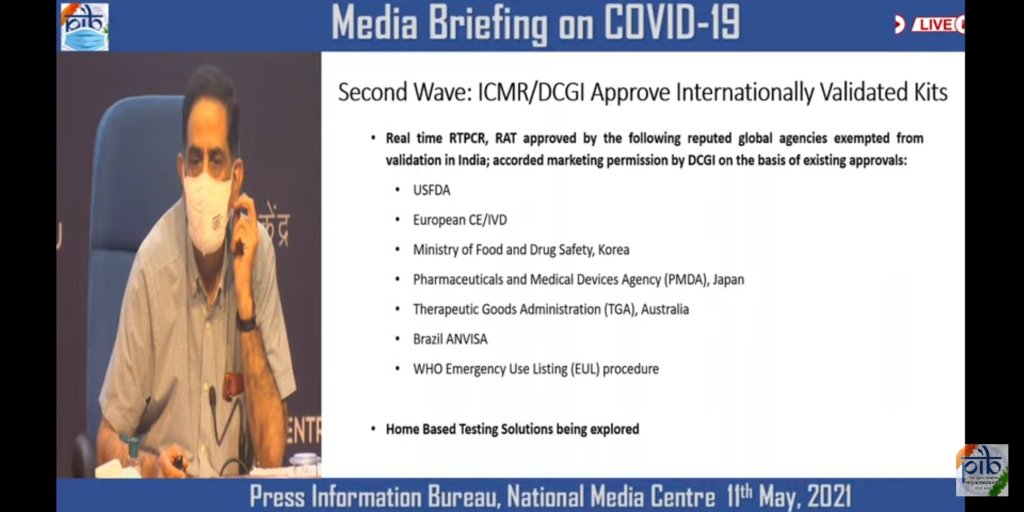
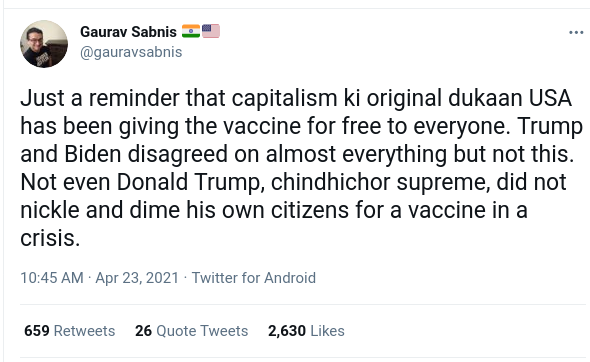
 Pappu Yadav, President Jan Adhikar Party, Bihar May 11, 2021


 Here is my monthly update covering what I have been doing in the free software world during April 2021 (

 UK railway map with operators
 Railway map of Japan with private ownership courtesy Wikimedia commons


 I ve mostly had the preference of controlling my data rather than depend on someone else. That s one reason why I still believe email to be my most reliable medium for data storage, one that is not plagued/locked by a single entity. If I had the resources, I d prefer all digital data to be broken down to its simplest form for storage, like email format, and empower the user with it i.e. their data.
Yes, there are free services that are indirectly forced upon common users, and many of us get attracted to it. Many of us do not think that the information, which is shared for the free service in return, is of much importance. Which may be fair, depending on the individual, given that they get certain services without paying any direct dime.
 Following up with
 Too much has been written, a war of support letters is going on, Debian is heading head first like Lemmings into the same war. And then, there is this by the first female President of the American Civil Liberties Union (ACLU):
 A long time, no blog entries. What's prompted a new missive?
Two things:
 I was shocked to learn today that Richard Stallman has been reinstated as a
member of the board of the Free Software Foundation. I think this is plain
inappropriate, but I cannot see how anyone who doesn t think that could fail
to see the reinstatement as counterproductive. As Bradley M. Kuhn
