Tobias Frost
did 12.0h (out of 10.5h assigned and 1.5h from previous period).
Evolution of the situation
In November, we have released 38 DLAs.
The LTS coordinators, Roberto and Santiago, delivered a talk at the Mini-DebConf event in Toulouse, France. The title of the talk was How LTS goes beyond LTS . The talk covered work done by the LTS Team during the past year. This included contributions related to individual packages in Debian (such as tomcat, jetty, radius, samba, apache2, ruby, and many others); improvements to tooling and documentation useful to the Debian project as a whole; and contributions to upstream work (apache2, freeimage, node-dompurify, samba, and more). Additionally, several contributors external to the LTS Team were highlighted for their contributions to LTS. Readers are encouraged to watch the video of the presentation for a more detailed review of various ways in which the LTS team has contributed more broadly to the Debian project and to the free software community during the past year.
We wish to specifically thank Salvatore (of the Debian Security Team) for swiftly handling during November the updates of needrestart and libmodule-scandeps-perl, both of which involved arbitrary code execution vulnerabilities. We are happy to see increased involvement in LTS work by contributors from outside the formal LTS Team.
The work of the LTS Team in November was otherwise unremarkable, encompassing the customary triage, development, testing, and release of numerous DLAs, along with some associated contributions to related packages in stable and unstable.
Thanks to our sponsors
Sponsors that joined recently are in bold.
I haven't made one of these posts since... last year? Good lord. I've
therefore already read and reviewed a lot of these books.
Kemi Ashing-Giwa The Splinter in the Sky (sff)
Moniquill Blackgoose To Shape a Dragon's Breath (sff)
Ashley Herring Blake Delilah Green Doesn't Care (romance)
Ashley Herring Blake Astrid Parker Doesn't Fail (romance)
Ashley Herring Blake Iris Kelly Doesn't Date (romance)
Molly J. Bragg Scatter (sff)
Sarah Rees Breenan Long Live Evil (sff)
Michelle Browne And the Stars Will Sing (sff)
Steven Brust Lyorn (sff)
Miles Cameron Beyond the Fringe (sff)
Miles Cameron Deep Black (sff)
Haley Cass Those Who Wait (romance)
Sylvie Cathrall A Letter to the Luminous Deep (sff)
Ta-Nehisi Coates The Message (non-fiction)
Julie E. Czerneda To Each This World (sff)
Brigid Delaney Reasons Not to Worry (non-fiction)
Mar Delaney Moose Madness (sff)
Jerusalem Demsas On the Housing Crisis (non-fiction)
Michelle Diener Dark Horse (sff)
Michelle Diener Dark Deeds (sff)
Michelle Diener Dark Minds (sff)
Michelle Diener Dark Matters (sff)
Elaine Gallagher Unexploded Remnants (sff)
Bethany Jacobs These Burning Stars (sff)
Bethany Jacobs On Vicious Worlds (sff)
Micaiah Johnson Those Beyond the Wall (sff)
T. Kingfisher Paladin's Faith (sff)
T.J. Klune Somewhere Beyond the Sea (sff)
Mark Lawrence The Book That Wouldn't Burn (sff)
Mark Lawrence The Book That Broke the World (sff)
Mark Lawrence Overdue (sff)
Mark Lawrence Returns (sff collection)
Malinda Lo Last Night at the Telegraph Club (historical)
Jessie Mihalik Hunt the Stars (sff)
Samantha Mills The Wings Upon Her Back (sff)
Lyda Morehouse Welcome to Boy.net (sff)
Cal Newport Slow Productivity (non-fiction)
Naomi Novik Buried Deep and Other Stories (sff collection)
Claire O'Dell The Hound of Justice (sff)
Keanu Reeves & China Mi ville The Book of Elsewhere (sff)
Kit Rocha Beyond Temptation (sff)
Kit Rocha Beyond Jealousy (sff)
Kit Rocha Beyond Solitude (sff)
Kit Rocha Beyond Addiction (sff)
Kit Rocha Beyond Possession (sff)
Kit Rocha Beyond Innocence (sff)
Kit Rocha Beyond Ruin (sff)
Kit Rocha Beyond Ecstasy (sff)
Kit Rocha Beyond Surrender (sff)
Kit Rocha Consort of Fire (sff)
Geoff Ryman HIM (sff)
Melissa Scott Finders (sff)
Rob Wilkins Terry Pratchett: A Life with Footnotes (non-fiction)
Gabrielle Zevin Tomorrow, and Tomorrow, and Tomorrow
(mainstream)
That's a lot of books, although I think I've already read maybe a third of
them? Which is better than I usually do.
A bit of history: Drupal at my workplace (and in Debian)
My main day-to-day responsibility in my workplace is, and has been for 20 years,
to take care of the network infrastructure for UNAM s Economics Research
Institute. One of the most visible parts of this
responsibility is to ensure we have a working Web presence, and that it caters
for the needs of our academic community.
I joined the Institute in January
2005. Back
then, our designer pushed static versions of our webpage, completely built in
her computer. This was standard practice at the time, and lasted through some
redesigns,
but I soon started advocating for the adoption of a Content Management
System. After evaluating some alternatives, I recommended adopting
Drupal. It took us quite a bit to do the change: even
though I clearly recall starting work toward adopting it as early as 2006,
according to the Internet Archive, we switched to a Drupal-backed site around
June
2010. We
started using it somewhere in the version 6 s lifecycle.
As for my Debian work, by late 2012 I started getting involved in the
maintenance of the drupal7 package,
and by April 2013 I became its primary maintainer. I kept the drupal7 package
up to date in Debian until 2018; the supported build methods for Drupal 8 are
not compatible with Debian (mainly, bundling third-party libraries and updating
them without coordination with the rest of the ecosystem), so towards the end of
2016, I announced I would not package Drupal 8 for
Debian.
By March 2016, we migrated our main page to Drupal
7. By
then, we already had several other sites for our academics projects, but my
narrative follows our main Web site. I did manage to migrate several Drupal 6
(D6) sites to Drupal 7 (D7); it was quite involved process, never transparent to
the user, and we did have the backlash of long downtimes (or partial downtimes,
with sites half-available only) with many of our users. For our main site, we
took the opportunity to do a complete redesign and deployed a fully new site.
You might note that March 2016 is after the release of D8 (November 2015). I
don t recall many of the specifics for this decision, but if I m not mistaken,
building the new site was a several months long process not only for the
technical work of setting it up, but for the legwork of getting all of the
needed information from the different areas that need to be represented in the
Institute. Not only that: Drupal sites often include tens of contributed themes
and modules; the technological shift the project underwent between its 7 and 8
releases was too deep, and modules took a long time (if at all many themes and
modules were outright dumped) to become available for the new release.
Naturally, the Drupal Foundation wanted to evolve and deprecate the old
codebase. But the pain to migrate from D7 to D8 is too big, and many sites have
remained under version 7 Eight years after D8 s release, almost 40% of Drupal
installs are for version 7,
and a similar proportion runs a currently-supported release (10 or 11). And
while the Drupal Foundation made a great job at providing very-long-term support
for D7, I understand the burden is becoming too much, so close to a year ago
(and after pushing several times the D7, they finally announced support will
finish this upcoming January 5.
Drupal 7 must go!
I found the following usage graphs quite interesting: the usage statistics for
all Drupal versions follows a very
positive slope, peaking around 2014 during the best years of D7, and somewhat
stagnating afterwards, staying since 2015 at the 25000 28000 sites mark (I m
very tempted to copy the graphs, but builtwith s terms of
use are very clear in not allowing it). There is a
sharp drop in the last year I attribute it to the people that are leaving D7
for other technologies after its end-of-life announcement. This becomes clearer
looking only at D7 s usage
statistics: D7 peaks at 15000
installs in 2016 stays there for close to 5 years, and has a sharp drop to under
7500 sites in the span of one year.
D8 has a more regular rise, peak and
fall peaking at ~8500 between 2020
and 2021, and down to close to 2500 for some months already; D9 has a very
brief peak of almost 9000 sites in
2023 and is now close to half of
it. Currently, the Drupal king appears to be
D10, still on a positive slope and
with over 9000 sites. Drupal 11 is still just a blip in builtwith s
radar, with 3 registered sites
as of September 2024 :-
After writing this last paragraph, I came across the statistics found in the
Drupal webpage; the methodology for acquiring its data is completely different:
while builtwith s methodology is their trade secret, you can read more about
how Drupal s data is
gathered
(and agree or disagree with it , but at least you have a page detailing 12
years so far of reported data,
producing the following graph (which can be shared under the CC BY-SA
license ):
This graph is disgregated into minor versions, and I don t want to come up with
yet another graph for it but it supports (most of) the narrative I presented
above although I do miss the recent drop builtwith reported in D7 s
numbers!
And what about Backdrop?
During the D8 release cycle, a group of Drupal developers were not happy with
the depth of the architectural changes that were being adopted, particularly the
transition to the Symfony PHP component framework, and forked the D7 codebase to
create the Backdrop CMS, a modern version of Drupal,
without dropping the known and tested architecture it had. The Backdrop
developers keep working closely together with the Drupal community, and although
its usage numbers are way
smaller than Drupal s, seems to be sustainable and lively. Of course, as I
presented their numbers in the previous section, you can see Backdrop s numbers
in builtwith are way, way
lower.
I have found it to be a very warm and welcoming community, eager to receive new
members. And, thanks to its contributed D2B Migrate
module, I found it is quite easy
to migrate a live site from Drupal 7 to Backdrop.
Migration by playbook!
So Well, I m an academic. And (if it s not obvious to you after reading so
far ), one of the things I must do in my job is to write. So I decided to
write an article to invite my colleagues to consider Backdrop for their D7 sites
in Cuadernos T cnicos Universitarios de la
DGTIC, a young journal in our
university for showcasing technical academical work. And now that my article
got accepted and
published, I m
happy to share it with you of course, if you can read Spanish But anyway
Given I have several sites to migrate, and that I m trying to get my colleagues
to follow suite, I decided to automatize the migration by writing an Ansible
playbook to do the heavy lifting. Of
course, the playbook s users will probably need to tweak it a bit to their
personal needs. I m also far from an Ansible expert, so I m sure there is ample
room fo improvement in my style.
But it works. Quite well, I must add.
But with this size of database
I did stumble across a big pebble, though. I am working on the migration of one
of my users sites, and found that its database is huge. I checked the
mysqldump output, and it got me close to 3GB of data. And given the
D2B_migrate is meant to work via a Web interface (my playbook works around it
by using a client I wrote with Perl s
WWW::Mechanize), I repeatedly
stumbled with PHP s maximum POST size, maximum upload size, maximum memory
size
I asked for help in Backdrop s Zulip chat
site,
and my attention was taken off fixing PHP to something more obvious: Why is the
database so large? So I took a quick look at the database (or rather: my first
look was at the database server s filesystem usage). MariaDB stores each table
as a separate file on disk, so I looked for the nine largest tables:
# ls -lhS head
total 3.8G
-rw-rw---- 1 mysql mysql 2.4G Dec 10 12:09 accesslog.ibd
-rw-rw---- 1 mysql mysql 224M Dec  2 16:43 search_index.ibd
-rw-rw---- 1 mysql mysql 220M Dec 10 12:09 watchdog.ibd
-rw-rw---- 1 mysql mysql 148M Dec  6 14:45 cache_field.ibd
-rw-rw---- 1 mysql mysql  92M Dec  9 05:08 aggregator_item.ibd
-rw-rw---- 1 mysql mysql  80M Dec 10 12:15 cache_path.ibd
-rw-rw---- 1 mysql mysql  72M Dec  2 16:39 search_dataset.ibd
-rw-rw---- 1 mysql mysql  68M Dec  2 13:16 field_revision_field_idea_principal_articulo.ibd
-rw-rw---- 1 mysql mysql  60M Dec  9 13:19 cache_menu.ibd
A single table, the access log, is over 2.4GB long. The three following tables
are, cache tables. I can perfectly live without their data in our new site! But
I don t want to touch the slightest bit of this site until I m satisfied with
the migration process, so I found a way to exclude those tables in a
non-destructive way: given D2B_migrate works with a mysqldump output, and
given that mysqldump locks each table before starting to modify it and unlocks
it after its job is done, I can just do the following:
$ perl -e '$output = 1; while (<>)   $output=0 if /^LOCK TABLES  (accesslog search_index watchdog cache_field cache_path) /; $output=1 if /^UNLOCK TABLES/; print if $output ' < /tmp/d7_backup.sql  > /tmp/d7_backup.eviscerated.sql; ls -hl /tmp/d7_backup.sql /tmp/d7_backup.eviscerated.sql
-rw-rw-r-- 1 gwolf gwolf 216M Dec 10 12:22 /tmp/d7_backup.eviscerated.sql
-rw------- 1 gwolf gwolf 2.1G Dec  6 18:14 /tmp/d7_backup.sql
Five seconds later, I m done! The database is now a tenth of its size, and
D2B_migrate is happy to take it. And I m a big step closer to finishing my
reliance on (this bit of) legacy code for my highly-visible sites
Transition management, by Emilio Pozuelo Monfort
Emilio has been helping finish the mpi-defaults switch to mpich on 32-bit
architectures, and the openmpi transitions.
This involves filing bugs for the reverse dependencies, doing NMUs, and
requesting removals for outdated (Not Built from Source) binaries on 32-bit
architectures where openmpi is no longer available. Those transitions got
entangled with a few others, such as the petsc stack, and were blocking many
packages from migrating to testing. These transitions were completed in early
December.
cPython 3.12.7+ update uploads, by Stefano Rivera
Python 3.12 had failed to build on mips64el,
due to an obscure dh_strip failure. The mips64el porters never figured it out,
but the missing build on mips64el was blocking migration to Debian testing.
After waiting a month, enough changes had accumulated in the upstream 3.12
maintenance git branch that we could apply them in the hope of changing the
output enough to avoid breaking dh_strip. This worked.
Of course there were other things to deal with too. A test started failing due
to a Debian-specific patch we carry for python3.x-minimal, and it needed to be
reworked. And Stefano forgot to strip the trailing + from PY_VERSION, which
confuses some python
libraries. This always requires another patch when applying git updates from the
maintenance branch. Stefano added a build-time check to catch this mistake in
the future. Python 3.12.7 migrated.
Python 3.13 Transition, by Stefano Rivera and Colin Watson
During November the Python 3.13-add
transition
started. This is the first stage of supporting a new version of Python in Debian
archive (after preparatory work), adding it as a new supported but non-default
version. All packages with compiled Python extensions need to be re-built to add
support for the new version.
We have covered the lead-up to this transition in the past. Due to preparation,
many of the failures we hit were expected and we had patches waiting in the bug
tracker. These could be NMUed to get the transition moving. Others had been
known about but hadn t been worked on, yet.
Some other packages ran into new issues, as we got further into the transition
than we d been able to in preparation. The whole Debian Python team has been
helping with this work.
The rebuild stage of the 3.13-add transition is now over, but many packages
need work before
britney will let python3-defaults migrate to testing.
Limiting build concurrency based on available RAM, by Helmut Grohne
In recent years, the concurrency of CPUs has been increasing as has the demand
for RAM by linkers. What has not been increasing as quickly is the RAM supply in
typical machines. As a result, we more frequently run into situations where the
package builds exhaust memory when building at full concurrency. Helmut
initiated a
discussion about
generalizing an approach to this in Debian packages. Researching existing code
that limits concurrency as well as providing possible extensions to debhelper
and dpkg to provide concurrency limits based on available system RAM. Thus far
there is consensus on the need for a more general solution, but ideas are still
being collected for the precise solution.
MiniDebConf Toulouse at Capitole du Libre
The whole Freexian Collaborator team attended MiniDebConf
Toulouse, part of the Capitole du
Libre event. Several members of the team gave
talks:
Santiago spoke on Linux Live Patching in
Debian,
presenting an update on the idea since DebConf 24. This includes the
initial requirements for the livepatch package format, that would be used to
distribute the livepatches.
Stefano and Anupa worked as part of the video team, streaming and recording the
event s talks.
Miscellaneous contributions
Stefano looked into packaging the latest upstream python-falcon version in
Debian, in support of the Python 3.13 transition. This appeared to break
python-hug, which is sadly looking neglected upstream, and the best course of
action is probably its removal from Debian.
Stefano uploaded videos from various 2024 Debian events to PeerTube and
YouTube.
Stefano and Santiago visited the site for DebConf 2025 in Brest, after the
MiniDebConf in Toulouse, to meet with the local team and scout out the venue.
The on-going DebConf 25 organization work of last month also included
handling the logo and artwork call for
proposals.
Carles implemented multiple language support on
po-debconf-manager and
tested it using Portuguese-Brazilian during MiniDebConf Toulouse. The system was
also tested and improved by reviewing more than 20 translations to Catalan,
creating merge requests for those packages, and providing user support to new
users. Additionally, Carles implemented better status transitions, configuration
keys management and other small improvements.
Helmut sent 32 patches for cross build failures. The
wireplumber one was an interactive
collaboration with Dylan A ssi.
Helmut continued to monitor the /usr-move, sent a patch for lib64readline8
and continued several older patch conversations. lintian now reports some
aliasing issues in unstable.
Colin upgraded 42 Python packages to new upstream versions. Some were
complex: python-catalogue had some upstream version
confusion, pydantic and
rpds-py involved several Rust package upgrades as prerequisites, and
python-urllib3 involved first packaging python-quart-trio and then vendoring an
unpackaged test-dependency.
Colin contributed Incus support to needrestart upstream.
Lucas set up a machine to do a rebuild of all ruby reverse dependencies to
check what will be broken by adding ruby 3.3 as an alternative interpreter. The
tool used for this is
mass-rebuild and the initial
rebuilds have already started. The ruby interpreter maintainers are planning to
experiment with debusine next time.
Lucas is organizing a Debian Ruby
sprint towards the end of
January in Paris. The plan of the team is to finish any missing bits of Ruby 3.3
transition at the time, try to push Rails 7 transition and fix RC bugs affecting
the ruby ecosystem in Debian.
Anupa attended a Debian Publicity team meeting in-person during MiniDebCamp
Toulouse.
Anupa moderated and posted in the Debian Administrator group in LinkedIn.
Intro
I always find it amazing the opportunities I have thanks to my contributions to the Debian Project. I am happy to receive this recognition through the help I receive with travel to attend events in other countries.
This year, two MiniDebConfs were scheduled for the second half of the year in Europe: the traditional edition in Cambridge in UK and a new edition in Toulouse in France. After weighing the difficulties and advantages that I would have to attend one of them, I decided to choose Toulouse, mainly because it was cheaper and because it was in November, giving me more time to plan the trip. I contacted the current DPL Andreas Tille explaining my desire to attend the event and he kindly approved my request for Debian to pay for the tickets. Thanks again to Andreas!
MiniDebConf Toulouse 2024 was held in November 16th and 17th (Saturday and Sunday) and took place in one of the rooms of a traditional Free Software event in the city named Capitole du Libre. Before MiniDebConf, the team organized a MiniDebCamp in November 14th and 15th at a coworking space.
The whole experience promised to be incredible, and it was! From visiting a city in France for the first time, to attending a local Free Software event, and sharing four days with people from the Debian community from various countries.
Travel and the city
My plan was to leave Belo Horizonte on Monday, pass through S o Paulo, and arrive in Toulouse on Tuesday night. I was going to spend the whole of Wednesday walking around the city and then participate in the MiniDebCamp on Thursday.
But the flight that was supposed to leave S o Paulo in the early hours of Monday to Tuesday was cancelled due to a problem with the airplane and I had spent all Tuesday waiting. I was rebooked on another flight that left in the evening and arrived in Toulouse on Wednesday afternoon. Even though I was very tired from the trip, I still took advantage of the end of the day to walk around the city. But it was a shame to have lost an entire day of sightseeing.
On Thursday I left early in the morning to walk around a little more before going to the MiniDebCamp venue. I walked around a lot and saw several tourist attractions. The city is really very beautiful, as they say, especially the houses and buildings made of pink bricks. I was impressed by the narrow and winding streets; at one point it seemed like I was walking through a maze. I arrived to a corner and there would be 5 streets crossing in different directions.
The riverbank that runs through the city is very beautiful and people spend their evenings there just hanging out. There was a lot of history around there.
I stayed in an airbnb 25 minutes walking from the coworking space and only 10 minutes from the event venue. It was a very spacious apartment that was much cheaper than a hotel.
MiniDebCamp
I arrived at the coworking space where the MiniDebCamp was being held and met up with several friends. I also met some new people, talked about the translation work we do in Brazil, and other topics.
We already knew that the organization would pay for lunch for everyone during the two days of MiniDebCamp, and at a certain point they told us that we could go to the room (which was downstairs from the coworking space) to have lunch. They set up a table with quiches, breads, charcuterie and LOTS of cheese :-) There were several types of cheese and they were all very good. I just found it a little strange because I m not used to having cheese for lunch, but the experience was amazing anyway :-)
In the evening, we went as a group to dinner at a restaurant in front of the Capitolium, the city s main tourist attraction.
On the second day, in the morning, I walked around the city a bit more, then went to the coworking space and had another incredible cheese table for lunch.
Video Team
One of my ideas for going to Toulouse was to be able to help the video team in setting up the equipment for broadcasting and recording the talks. I wanted to follow this work from the beginning and learn some details, something I can t do before the DebConfs because I always arrive after the people have already set up the infrastructure. And later reproduce this work in the MiniDebConfs in Brazil, such as the one in Macei that is already scheduled for May 1-4, 2025.
As I had agreed with the people from the video team that I would help set up the equipment, on Friday night we went to the University and stayed in the room working. I asked several questions about what they were doing, about the equipment, and I was able to clear up several doubts. Over the next two days I was handling one of the cameras during the talks. And on Sunday night I helped put everything away.
Thanks to olasd, tumbleweed and ivodd for their guidance and patience.
The event in general
There was also a meeting with some members of the publicity team who were there with the DPL. We went to a cafeteria and talked mainly about areas that could be improved in the team.
The talks at MiniDebConf were very good and the recordings are also available here.
I ended up not watching any of the talks from the general schedule at Capitole du Libre because they were in French. It s always great to see free software events abroad to learn how they are done there and to bring some of those experiences to our events in Brazil.
I hope that MiniDebConf in Toulouse will continue to take place every year, or that the French community will hold the next edition in another city and I will be able to join again :-) If everything goes well, in July next year I will return to France to join DebConf25 in Brest.
More photos
Welcome to the November 2024 report from the Reproducible Builds project!
Our monthly reports outline what we ve been up to over the past month and highlight items of news from elsewhere in the world of software supply-chain security where relevant. As ever, if you are interested in contributing to the Reproducible Builds project, please visit our Contribute page on our website.
Table of contents:
Reproducible Builds mourns the passing of Lunar
The Reproducible Builds community sadly announced it has lost its founding member, Lunar. J r my Bobbio aka Lunar passed away on Friday November 8th in palliative care in Rennes, France.
Lunar was instrumental in starting the Reproducible Builds project in 2013 as a loose initiative within the Debian project. He was the author of our earliest status reports and many of our key tools in use today are based on his design. Lunar s creativity, insight and kindness were often noted.
You can view our full tribute elsewhere on our website. He will be greatly missed.
Introducing reproduce.debian.net
In happier news, this month saw the introduction of reproduce.debian.net. Announced at the recent Debian MiniDebConf in Toulouse, reproduce.debian.net is an instance of rebuilderd operated by the Reproducible Builds project.
rebuilderd is our server designed monitor the official package repositories of Linux distributions and attempts to reproduce the observed results there.
In November, reproduce.debian.net began rebuilding Debian unstable on the amd64 architecture, but throughout the MiniDebConf, it had attempted to rebuild 66% of the official archive. From this, it could be determined that it is currently possible to bit-for-bit reproduce and corroborate approximately 78% of the actual binaries distributed by Debian that is, using the .buildinfo files hosted by Debian itself.
reproduce.debian.net also contains instructions how to setup one s own rebuilderd instance, and we very much invite everyone with a machine to spare to setup their own version and to share the results. Whilst rebuilderd is still in development, it has been used to reproduce Arch Linux since 2019. We are especially looking for installations targeting Debian architectures other than i386 and amd64.
New landing page design
As part of a very productive partnership with the Sovereign Tech Fund and Neighbourhoodie, we are pleased to unveil our new homepage/landing page.
We are very happy with our collaboration with both STF and Neighbourhoodie (including many changes not directly related to the website), and look forward to working with them in the future.
SBOMs for Python packages
The Python Software Foundation has announced a new cross-functional project for SBOMs and Python packages . Seth Michael Larson writes that the project is specifically looking to solve these issues :
Enable Python users that require SBOM documents (likely due to regulations like CRA or SSDF) to self-serve using existing SBOM generation tools.
Solve the phantom dependency problem, where non-Python software is bundled in Python packages but not recorded in any metadata. This makes the job of software composition analysis (SCA) tools difficult or impossible.
Make the adoption work by relevant projects such as build backends, auditwheel-esque tools, as minimal as possible. Empower users who are interested in having better SBOM data for the Python projects they are using to be able to contribute engineering time towards that goal.
For more than ten years, the Reproducible Builds project has worked towards reproducible builds of many projects, and for ten years now we have build Debian packages twice with maximal variations applied to see if they can be build reproducible still.
Since about a month, we ve also been rebuilding trying to exactly match the builds being distributed via ftp.debian.org. This talk will describe the setup and the lessons learned so far, and why the results currently are what they are (spoiler: they are less than 30% reproducible), and what we can do to fix that.
The Debian Project Leader, Andreas Tille, was present at the talk and remarked later in his Bits from the DPL update that:
It might be unfair to single out a specific talk from Toulouse, but I d like
to highlight the one on reproducible builds. Beyond its technical focus, the
talk also addressed the recent loss of Lunar, whom we mourn deeply. It served
as a tribute to Lunar s contributions and legacy. Personally, I ve
encountered packages maintained by Lunar and bugs he had filed. I believe
that taking over his packages and addressing the bugs he reported is a
meaningful way to honor his memory and acknowledge the value of his work.
Holger s slides and video in .webm format are available.
Next, rebuilderd is the server to monitor package repositories of Linux distributions and attempt to reproduce the observed results. This month, version 0.21.0 released, most notably with improved support for binNMUs by Jochen Sprickerhof and updating the rebuilderd-debian.sh integration to the latest debrebuild version by Holger Levsen. There has also been significant work to get the rebuilderd package into the Debian archive, in particular, both rust-rebuilderd-common version 0.20.0-1 and rust-rust-lzma version 0.6.0-1 were packaged by kpcyrd and uploaded by Holger Levsen.
Related to this, Holger Levsen submitted three additional issues against rebuilderd as well:
rebuildctl should be more verbose when encountering issues. []
Please add an option to used randomised queues. []
Scheduling and re-scheduling multiple packages at once. []
and lastly, Jochen Sprickerhof submitted one an issue requested that rebuilderd downloads the source package in addition to the .buildinfo file [] and kpcyrd also submitted and fixed an issue surrounding dependencies and clarifying the license []
Separate to this, back in 2018, Chris Lamb filed a bug report against the sphinx-gallery package as it generates unreproducible content in various ways. This month, however, Dmitry Shachnev finally closed the bug, listing the multiple sub-issues that were part of the problem and how they were resolved.
Elsewhere, Roland Clobus posted to our mailing list this month, asking for input on a bug in Debian s ca-certificates-java package. The issue is that the Java key management tools embed timestamps in its output, and this output ends up in the /etc/ssl/certs/java/cacerts file on the generated ISO images. A discussion resulted from Roland s post suggesting some short- and medium-term solutions to the problem.
Holger Levsen uploaded some packages with reproducibility-related changes:
devscripts versions 2.24.3, 2.24.4 and 2.24.5 were uploaded, including several fixes for the debrebuild and debootsnap and scripts.
PyPI now supports digital attestations
Elsewhere in the Python ecosystem and as reported on LWN and elsewhere, the Python Package Index (PyPI) has announced that it has finalised support for PEP 740 ( Index support for digital attestations ).
Trail of Bits, who performed much of the development work, has an in-depth blog post about the work and its adoption, as well as what is left undone:
One thing is notably missing from all of this work: downstream verification. [ ]
This isn t an acceptable end state (cryptographic attestations have defensive properties only insofar as they re actually verified), so we re looking into ways to bring verification to individual installing clients. In particular, we re currently working on a plugin architecture for pip that will enable users to load verification logic directly into their pip install flows.
While open-source software has enabled significant levels of reuse to speed up software development, it has also given rise to the dreadful dependency hell that all software practitioners face on a regular basis. This article provides a catalogue of dependency-related challenges that come with relying on OSS packages or libraries. The catalogue is based on the scientific literature on empirical research that has been conducted to understand, quantify and overcome these challenges. []
I can now confidently say (and you can also check, you don t need to trust me) that there is nothing hiding in zig1.wasm [the checked-in binary] that hasn t been checked-in as a source file.
The full post is full of practical details, and includes a few open questions.
Website updates
Notwithstanding the significant change to the landing page (screenshot above), there were an enormous number of changes made to our website this month. This included:
Alex Feyerke and Mariano Gim nez:
Dramatically overhaul the website s landing page with new benefit cards tailored to the expected visitors to our website and a reworking of the visual hierarchy and design. [][][][][][][][][][]
Bernhard M. Wiedemann:
Update the System images page to document the e2fsprogs approach. []
Avoid so-called ghost buttons by not using <button> elements as links, as the affordance of a <button> implies an action with (potentially) a side effect. [][]
Move publications and generate them instead from a data.yml file with an improved layout. [][]
Make a large number of small but impactful stylisting changes. [][][][]
Expand the Tools to include a number of missing tools, fix some styling issues and fix a number of stale/broken links. [][][][][][]
Upstream patches
The Reproducible Builds project detects, dissects and attempts to fix as many currently-unreproducible packages as possible. We endeavour to send all of our patches upstream where appropriate. This month, we wrote a large number of such patches, including:
Reproducibility testing framework
The Reproducible Builds project operates a comprehensive testing framework running primarily at tests.reproducible-builds.org in order to check packages and other artifacts for reproducibility. In November, a number of changes were made by Holger Levsen, including:
Commit a rebuilder-worker.conf configuration for the o5 node. []
Debian-related changes:
Grant jspricke and jochensp access to the o5 node. [][]
Build the qemu package with the nocheck build flag. []
Misc changes:
Adapt the update_jdn.sh script for new Debian trixie systems. []
Stop installing the PostgreSQL database engine on the o4 and o5 nodes. []
Prevent accidental reboots of the o4 node because of a long-running job owned by josch. [][]
In addition, Mattia Rizzolo addressed a number of issues with reproduce.debian.net [][][][]. And lastly, both Holger Levsen [][][][] and Vagrant Cascadian [][][][] performed node maintenance.
If you are interested in contributing to the Reproducible Builds project, please visit our Contribute page on our website. However, you can get in touch with us via:
A mini adventure at MiniDebConf Toulouse
Last week, I ventured to Toulouse, for a delightful mix of coding, conversation, and crepes at MiniDebConf Toulouse, part of the broader Capitole du Libre conference, akin to the more well-known FOSDEM but with a distinctly French flair.
This was my fourth and final MiniDebConf of the year.
My trek to Toulouse was seamless. I hopped on a bus from my home in Bristol to the airport, then took a short flight. I luxuriated in seat 1A, making me the first to disembark a mere ten minutes later, I was already on the bus heading to my hotel.
Exploring the Pink City
Once settled, I wasted no time exploring the charms of Toulouse. Just a short stroll from my hotel, I found myself beside a tranquil canal, its waters mirroring the golden hues of the trees lining its banks. Autumn in Toulouse painted the city in warm oranges and reds, creating a picturesque backdrop that was a joy to wander through. Every corner of the street revealed more of the city's rich cultural tapestry and striking architecture. Known affectionately as 'La Ville Rose' (The Pink City) for its unique terracotta brickwork, Toulouse captivated me with its blend of historical allure and vibrant modern life.
MiniDebCamp
Prior to the main event, the MiniDebCamp provided two days of hacking at Artilect FabLab a space as creative as it was welcoming. It was a pleasure to reconnect with familiar faces and forge new friendships.
Culinary delights
The hospitality was exceptional. Our lunches boasted a delicious array of quiches, an enticing charcuterie board, and a superb selection of cheeses, all perfectly complemented by exquisite petite fours. Each item was not only a feast for the eyes but also a delight for the palate.
Wine and cheese
Leftovers from these gourmet feasts fuelled our impromptu cheese and wine party on Thursday evening a highlight where informal chats blended seamlessly with serious software discussions.
The river at night
The enchantment of Toulouse doesn't dim with the setting sun; instead, it transforms. My evening strolls took me along the banks of the Garonne, under a sky just turning from twilight to velvet blue. The river, a dark mirror, perfectly reflected the illuminated grandeur of the city's architecture. Notably, the dome of the H pital de La Grave stood out, bathed in a warm glow against the night sky. This architectural gem, coupled with the soft lights of the bridge and the serene river, created a breathtaking scene that was both tranquil and awe-inspiring.
Capitole du Libre
The MiniDebConf itself, part of the larger Capitole du Libre event, was a fantastic immersion into the world of free software. Unlike the ticket-free FOSDEM, this conference required QR codes for entry and even had bag searches, adding an unusual layer of security for a software conference.
Highlights included the crepe-making by the organisers, reminiscent of street food scenes from larger festivals. The availability of crepes for MiniDebConf attendees and the presence of food trucks added a festive air, albeit with the inevitable long queues familiar to any festival-goer.
v l Toulouse
The city's bike rental system was a boon easy to use with handy bike baskets perfect for casual city touring. I chose pedal power over electric, finding it a pleasant way to navigate the streets and absorb the city's vibrant atmosphere.
Markets
Toulouse's markets were a delightful discovery. From a spontaneous visit to a market near my hotel upon arrival, to cycling past bustling marketplaces, each day presented new local flavours and crafts to explore.
The Za'atar flatbread from a Syrian stall was a particularly memorable lunch pick.
La brasserie Les Arcades
Our conference wrapped up with a spontaneous gathering at La Brasserie Les Arcades in Place du Capitole. Finding a caf that could accommodate 30 of us on a Sunday evening without a booking felt like striking gold. What began with coffee and ice cream smoothly transitioned into dinner, where I enjoyed a delicious braised duck leg with green peppercorn sauce. This meal rounded off the trip with lively conversations and shared experiences.
The journey back home
Returning from Toulouse, I found myself once again in seat 1A, offering the advantage of being the first off the plane, both on departure and arrival. My flight touched down in Bristol ahead of schedule, and within ten minutes, I was on the A1 bus, making my way back into the heart of Bristol.
Anticipating DebConf 25 in Brittany
My trip to Toulouse for MiniDebConf was yet another fulfilling experience; the city was delightful, and the talks were insightful. While I frequently travel, these journeys are more about continuous learning and networking than escape. The food in Toulouse was particularly impressive, a highlight I've come to expect and relish on my trips to France. Looking ahead, I'm eagerly anticipating DebConf in Brest next year, especially the opportunity to indulge once more in the excellent French cuisine and beverages.
XDC 2024 in Montreal was another fantastic gathering for the Linux Graphics
community. It was again a great time to immerse in the world of graphics
development, engage in stimulating conversations, and learn from inspiring
developers.
Many Igalia colleagues and I participated in the
conference again, delivering multiple talks about our work on the Linux
Graphics stack and also organizing the Display/KMS meeting. This blog post is a
detailed report on the Display/KMS meeting held during this XDC edition.
Short on Time?
Catch the lightning talk summarizing the meeting here (you can even speed up
2x):
For a quick written summary, scroll down to the TL;DR section.
TL;DR
This meeting took 3 hours and tackled a variety of topics related to DRM/KMS
(Linux/DRM Kernel Modesetting):
Sharing Drivers Between V4L2 and KMS: Brainstorming solutions for using a
single driver for devices used in both camera capture and display pipelines.
Real-Time Scheduling: Addressing issues with non-blocking page flips
encountering sigkills under real-time scheduling.
HDR/Color Management: Agreement on merging the current proposal, with
NVIDIA implementing its special cases on VKMS and adding missing parts on top
of Harry Wentland s (AMD) changes.
Display Mux: Collaborative design discussions focusing on compositor
control and cross-sync considerations.
Better Commit Failure Feedback: Exploring ways to equip compositors with
more detailed information for failure analysis.
Bringing together Linux display developers in the XDC 2024
While I didn t present a talk this year, I co-organized a Display/KMS meeting (with
Rodrigo Siqueira of AMD) to build upon the momentum from the 2024 Linux
Display Next hackfest.
The meeting was attended by around 30 people in person and 4 remote participants.
Speakers: Melissa Wen (Igalia) and Rodrigo Siqueira (AMD)
Link: https://indico.freedesktop.org/event/6/contributions/383/
Topics: Similar to the hackfest, the meeting agenda was built over the
first two days of the conference and mixed talks follow-up with new ideas and
ongoing community efforts.
The final agenda covered five topics in the scheduled order:
How to share drivers between V4L2 and DRM for bridge-like components (new
topic);
Real-time Scheduling (problems encountered after the Display Next hackfest);
HDR/Color Management (ofc);
Display Mux (from Display hackfest and XDC 2024 talk, bringing AMD and
NVIDIA together);
(Better) Commit Failure Feedback (continuing the last minute topic of the
Display Next hackfest).
Unpacking the Topics
Similar to the hackfest, the meeting agenda evolved over the conference.
During the 3 hours of meeting, I coordinated the room and discussion rounds,
and Rodrigo Siqueira took notes and also contacted key developers to provide a
detailed report of the many topics discussed.
From his notes, let s dive into the key discussions!
How to share drivers between V4L2 and KMS for bridge-like components.
Led by Laurent Pinchart, we delved into the challenge of creating a unified
driver for hardware devices (like scalers) that are used in both camera capture
pipelines and display pipelines.
Problem Statement: How can we design a single kernel driver to handle
devices that serve dual purposes in both V4L2 and DRM subsystems?
Potential Solutions:
Multiple Compatible Strings: We could assign different compatible
strings to the device tree node based on its usage in either the camera or
display pipeline. However, this approach might raise concerns from device tree
maintainers as it could be seen as a layer violation.
Separate Abstractions: A single driver could expose the device to both
DRM and V4L2 through separate abstractions: drm-bridge for DRM and V4L2 subdev
for video. While simple, this approach requires maintaining two different
abstractions for the same underlying device.
Unified Kernel Abstraction: We could create a new, unified kernel
abstraction that combines the best aspects of drm-bridge and V4L2 subdev. This
approach offers a more elegant solution but requires significant design effort
and potential migration challenges for existing hardware.
Real-Time Scheduling Challenges
We have discussed real-time scheduling during this year Linux Display Next
hackfest and,
during the XDC 2024, Jonas Adahl brought up issues uncovered while
progressing on this front.
Context: Non-blocking page-flips can, on rare occasions, take a long time
and, for that reason, get a sigkill if the thread doing the atomic commit is
a real-time schedule.
Action items:
Explore alternative backtraces during the busy wait (e.g., ftrace).
Investigate the maximum thread time in busy wait to reproduce issues faced
by compositors. Tools like RTKit (mutter) can be used for better control
(Michel D nzer can help with this setup).
HDR/Color Management
This is a well-known topic with ongoing effort on all layers of the Linux
Display stack and has been discussed online and in-person in conferences and
meetings over the last years.
Here s a breakdown of the key points raised at this meeting:
NVIDIA Integration: While they agree with the overall proposal, NVIDIA
needs to add some missing parts. Importantly, they will implement these on
top of Harry Wentland s (AMD) proposal. Their specific requirements will be
implemented on VKMS (Virtual Kernel Mode Setting driver) for further
discussion. This VKMS implementation can benefit compositor developers by
providing insights into NVIDIA s specific needs.
Other vendors: There is a version of the KMS API applied on Intel color
pipeline. Apart from that, other vendors appear to be comfortable with the
current proposal but lacks the bandwidth to implement it right now.
Upstream Patches: The relevant upstream patches were can be found
here.
[As humorously notes, this series is eagerly awaiting your Acked-by
(approval)]
Compositor Side: The compositor developers have also made significant
progress.
Gamescope currently uses a driver-specific implementation but has
a draft that utilizes
the generic version. However, some work is still required to fully transition
away from the driver-specific approach.
AP: work on porting gamescope to KMS generic API
Weston has also begun exploring implementation, and we might see something
from them by the end of the year.
Kernel and Testing: The kernel API proposal is well-refined and meets the
DRM subsystem requirements. Thanks to Harry Wentland effort, we already
have the API attached to two hardware vendors
and IGT tests, and,
thanks to Xaver Hugl, a compositor implementation in place.
Finally, there was a strong sense of agreement that the current proposal for
HDR/Color Management is ready to be merged. In simpler terms, everything seems
to be working well on the technical side - all signs point to merging and
shipping the DRM/KMS plane color management API!
Display Mux
During the meeting, Daniel Dadap led a brainstorming session on the
design of the display mux switching sequence, in which the compositor would arm
the switch via sysfs, then send a modeset to the outgoing driver, followed by a
modeset to the incoming driver.
Context:
During this year Linux Display Next hackfest, Mario Limonciello (AMD)
introduced the topic and led a discussion on Display Mux.
HPD Handling: There was a general consensus that disabling HPD can be
part of the sequence for internal panels and we don t need to focus on it
here.
Cross-Sync: Ensuring synchronization between the compositor and the
drivers is crucial. The compositor should act as the drm-master to
coordinate the entire sequence, but how can this be ensured?
Future-Proofing: The design should not assume the presence of a mux. In
future scenarios, direct sharing over DP might be possible.
Action points:
Sharing DP AUX: Explore the idea of sharing DP AUX and its implications.
Backlight: The backlight definition represents a problem in the mux
switch context, so we should explore some of the current specs available
for that.
Towards Better Commit Failure Feedback
In the last part of the meeting, Xaver Hugl asked for better commit failure
feedback.
Problem description: Compositors currently face challenges in collecting
detailed information from the kernel about commit failures. This lack of
granular data hinders their ability to understand and address the root causes
of these failures.
To address this issue, we discussed several potential improvements:
Direct Kernel Log Access: One idea is to directly load relevant kernel logs
into the compositor. This would provide more detailed information about the
failure and potentially aid in debugging.
Finer-Grained Failure Reporting: We also explored the possibility of
separating atomic failures into more specific categories. Not all failures
are critical, and understanding the nature of the failure can help compositors
take appropriate action.
Enhanced Logging: Currently, the dmesg log doesn t provide enough
information for user-space validation. Raising the log level to capture more
detailed information during failures could be a viable solution.
By implementing these improvements, we aim to equip compositors with the
necessary tools to better understand and resolve commit failures, leading to a
more robust and stable display system.
A Big Thank You!
Huge thanks to Rodrigo Siqueira for these detailed meeting notes. Also, Laurent
Pinchart, Jonas Adahl, Daniel Dadap, Xaver Hugl, and Harry Wentland for
bringing up interesting topics and leading discussions. Finally, thanks to all
the participants who enriched the discussions with their experience, ideas, and
inputs, especially Alex Goins, Antonino Maniscalco, Austin Shafer, Daniel
Stone, Demi Obenour, Jessica Zhang, Joan Torres, Leo Li, Liviu Dudau, Mario
Limonciello, Michel D nzer, Rob Clark, Simon Ser and Teddy Li.
This collaborative effort will undoubtedly contribute to the continued
development of the Linux display stack.
Stay tuned for future updates!
Julius wrote an insightful blog post about the modern sleep issue with Windows [1]. Basically Microsoft decided that the right way to run laptops is to never entirely sleep, which uses more battery but gives better options for waking up and doing things. I agree with Microsoft in concept and this is something that is a problem that can be solved. A phone can run for 24+ hours without ever fully sleeping, a laptop has a more power hungry CPU and peripherals but also has a much larger battery so it should be able to do the same. Some of the reviews for Snapdragon Windows laptops claim up to 22 hours of actual work without charging! So having suspend not really stop the system should be fine.
The ability of a phone to never fully sleep is a change in quality of the usage experience, it means that you can access it and immediately have it respond and it means that all manner of services can be checked for new updates which may require a notification to the user. The XMPP protocol (AKA Jabber) was invented in 1999 which was before laptops were common and Instant Message systems were common long before then. But using Jabber or another IM system on a desktop was a very different experience to using it on a laptop and using it on a phone is different again. The modern sleep allows laptops to act like phones in regard to such messaging services. Currently I have Matrix IM clients running on my Android phone and Linux laptop, if I get a notification that takes much typing for a response then I get out my laptop to respond. If I had an ARM based laptop that never fully shut down I would have much less need for Matrix on a phone.
Making modern sleep popular will lead to more development of OS software to work with it. For Linux this will hopefully mean that regular Linux distributions (as opposed to Android which while running a Linux kernel is very different to Debian etc) get better support for such things and therefore become more usable on phones. Debian on a Librem 5 or PinePhonePro isn t very usable due to battery life issues.
A laptop with an LTE card can be used for full mobile phone functionality. With modern sleep this is a viable option. I am tempted to make a laptop with LTE card and bluetooth headset a replacement for my phone. Some people will say what if someone tries to call you when it s not convenient to have your laptop with you , my response is what if people learn to not expect me to answer the phone at any time as they managed that in the 90s . Seriously SMS or Matrix me if you want an instant response and if you want a long chat schedule it via SMS or Matrix.
Dell has some useful advice about how to use their laptops (and probably most laptops from recent times) in this regard [2]. You can t close the lid before unplugging the power cable you have to unplug first and then close. You shouldn t put a laptop in a sealed bag for travel either. This is a terrible situation, you can put a tablet in a bag and don t need to take any special precautions when unplugging and laptops should work the same. The end result of what Microsoft, Dell, Intel, and others are doing will be good but they are making some silly design choices along the way! I blame Intel mostly for selling laptop CPUs with TDPs >40W!
For an amusing take on this Linus Tech Tips has a video about being forced to use MacBooks by Microsoft s implementation of Modern Sleep [3].
I ll try out some ARM laptops in the near future and blog about how well they work on Debian.
Our Debian User Group met on November 2nd after a somewhat longer summer hiatus
than normal. It was lovely to see a bunch of people again and to be able to
dedicate a whole day to hacking :)
Here is what we did:
lavamind:
opened an RFS on the ruby team mailing list for the new upstream
version of ruby-necromancer
worked on packaging the new upstream version of ruby-pathspec
tvaz:
did AM (Application Manager) work
tassia:
explored the Debian Jr. project (website, wiki, mailing list, salsa
repositories)
played a few games for Nico's entertainment :-)
built and tested a Debian Jr. live image
Pictures
This time around, we went back to Foulab. Thanks for hosting us!
As always, the hacklab was full of interesting stuff and I took a few (bad)
pictures for this blog post:
Tobias Frost
did 10.5h (out of 12.0h assigned), thus carrying over 1.5h to the next month.
Evolution of the situation
In October, we have released 35 DLAs.
Some notable updates prepared in October include denial of service vulnerability fixes in nss, regression fixes in apache2, multiple fixes in php7.4, and new upstream releases of firefox-esr, openjdk-17, and opendk-11.
Additional contributions were made for the stable Debian 12 bookworm release by several LTS contributors. Arturo Borrero Gonzalez prepared a parallel update of nss, Bastien Roucari s prepared a parallel update of apache2, and Santiago Ruano Rinc n prepared updates of activemq for both LTS and Debian stable.
LTS contributor Bastien Roucari s undertook a code audit of the cacti package and in the process discovered three new issues in node-dompurity, which were reported upstream and resulted in the assignment of three new CVEs.
As always, the LTS team continues to work towards improving the overall sustainability of the free software base upon which Debian LTS is built. We thank our many committed sponsors for their ongoing support.
Thanks to our sponsors
Sponsors that joined recently are in bold.
In September of this year, I visited Kenya to attend the State of the Map conference. I spent six nights in the capital Nairobi, two nights in Mombasa, and one night on a train. I was very happy with the visa process being smooth and quick. Furthermore, I stayed at the Nairobi Transit Hotel with other attendees, with Ibtehal from Bangladesh as my roommate. One of the memorable moments was the time I spent at a local coffee shop nearby. We used to go there at midnight, despite the grating in the shops suggesting such adventures were unsafe. Fortunately, nothing bad happened, and we were rewarded with a fun time with the locals.
The coffee shop Ibtehal and me used to visit during the midnight
Grating at a chemist shop in Mombasa, Kenya
The country lies on the equator, which might give the impression of extremely hot temperatures. However, Nairobi was on the cooler side (10 25 degrees Celsius), and I found myself needing a hoodie, which I bought the next day. It also served as a nice souvenir, as it had an outline of the African map printed on it.
I also bought a Safaricom SIM card for 100 shillings and recharged it with 1000 shillings for 8 GB internet with 5G speeds and 400 minutes talk time.
A visit to Nairobi s Historic Cricket Ground
On this trip, I got a unique souvenir that can t be purchased from the market a cricket jersey worn in an ODI match by a player. The story goes as follows: I was roaming around the market with my friend Benson from Nairobi to buy a Kenyan cricket jersey for myself, but we couldn t find any. So, Benson had the idea of visiting the Nairobi Gymkhana Club, which used to be Kenya s main cricket ground. It has hosted some historic matches, including the 2003 World Cup match in which Kenya beat the mighty Sri Lankans and the record for the fastest ODI century by Shahid Afridi in just 37 balls in 1996.
Although entry to the club was exclusively for members, I was warmly welcomed by the staff. Upon reaching the cricket ground, I met some Indian players who played in Kenyan leagues, as well as Lucas Oluoch and Dominic Wesonga, who have represented Kenya in ODIs. When I expressed interest in getting a jersey, Dominic agreed to send me pictures of his jersey. I liked his jersey and collected it from him. I gave him 2000 shillings, an amount suggested by those Indian players.
Me with players at the Nairobi Gymkhana Club
Cricket pitch at the Nairobi Gymkhana Club
A view of the cricket ground inside the Nairobi Gymkhana Club
Scoreboard at the Nairobi Gymkhana cricket ground
Giraffe Center in Nairobi
Kenya is known for its safaris and has no shortage of national parks. In fact, Nairobi is the only capital in the world with a national park. I decided not to visit one, as most of them were expensive and offered multi-day tours, and I didn t want to spend that much time in the wildlife.
Instead, I went to the Giraffe Center in Nairobi with Pragya and Rabina. The ticket cost 1500 Kenyan shillings (1000 Indian rupees). In Kenya, matatus - shared vans, usually decorated with portraits of famous people and play rap songs - are the most popular means of public transport. Reaching the Giraffe Center from our hotel required taking five matatus, which cost a total of 150 shillings, and a 2 km walk. The journey back was 90 shillings, suggesting that we didn t find the most efficient route to get there. At the Giraffe Center, we fed giraffes and took photos.
A matatu with a Notorious BIG portrait.
Inside the Giraffe Center
Train ride from Nairobi to Mombasa
I took a train from Nairobi to Mombasa. The train is known as the SGR Train, where SGR refers to Standard Gauge Railway. The journey was around 500 km. M-Pesa was the only way to make payment for pre-booking the train ticket, and I didn t have an M-Pesa account. Pragya s friend Mary helped facilitate the payment. I booked a second-class ticket, which cost 1500 shillings (1000 Indian rupees).
The train was scheduled to depart from Nairobi at 08:00 hours in the morning and arrive in Mombasa at 14:00 hours. The security check at the station required scanning our bags and having them sniffed by sniffer dogs. I also fell victim to a scam by a security official who offered to help me get my ticket printed, only to later ask me to get him some coffee, which I politely declined.
Before boarding the train, I was treated to some stunning views at the Nairobi Terminus station. It was a seating train, but I wished it were a sleeper train, as I was sleep-deprived. The train was neat and clean, with good toilets. The train reached Mombasa on time at around 14:00 hours.
SGR train at Nairobi Terminus.
Interior of the SGR train
Arrival in Mombasa
Mombasa Terminus station.
Mombasa was a bit hotter than Nairobi, with temperatures reaching around 30 degrees Celsius. However, that s not too hot for me, as I am used to higher temperatures in India. I had booked a hostel in the Old Town and was searching for a hitchhike from the Mombasa Terminus station. After trying for more than half an hour, I took a matatu that dropped me 3 km from my hostel for 200 shillings (140 Indian rupees). I tried to hitchhike again but couldn t find a ride.
I think I know why I couldn t get a ride in both the cases. In the first case, the Mombasa Terminus was in an isolated place, so most of the vehicles were taxis or matatus while any noncommercial cars were there to pick up friends and family. If the station were in the middle of the city, there would be many more car/truck drivers passing by, thus increasing my possibilities of getting a ride. In the second case, my hostel was at the end of the city, and nobody was going towards that side. In fact, many drivers told me they would love to give me a ride, but they were going in some other direction.
Finally, I took a tuktuk for 70 shillings to reach my hostel, Tulia Backpackers. It was 11 USD (1400 shillings) for one night. The balcony gave a nice view of the Indian Ocean. The rooms had fans, but there was no air conditioning. Each bed also had mosquito nets. The place was walking distance of the famous Fort Jesus. Mombasa has had more Islamic influence compared to Nairobi and also has many Hindu temples.
The balcony at Tulia Backpackers Hostel had a nice view of the ocean.
A room inside the hostel with fans and mosquito nets on the beds
Visiting White Sandy Beaches and Getting a Hitchhike
Visiting Nyali beach marked my first time ever at a white sand beach. It was like 10 km from the hostel. The next day, I visited Diani Beach, which was 30 km from the hostel. Going to Diani Beach required crossing a river, for which there s a free ferry service every few minutes, followed by taking a matatu to Ukunda and then a tuk-tuk. The journey gave me a glimpse of the beautiful countryside of Kenya.
Nyali beach is a white sand beach
This is the ferry service for crossing the river.
During my return from Diani Beach to the hostel, I was successful in hitchhiking. However, it was only a 4 km ride and not sufficient to reach Ukunda, so I tried to get another ride. When a truck stopped for me, I asked for a ride to Ukunda. Later, I learned that they were going in the same direction as me, so I got off within walking distance from my hostel. The ride was around 30 km. I also learned the difference between a truck ride and a matatu or car ride. For instance, matatus and cars are much faster and cooler due to air conditioning, while trucks tend to be warmer because they lack it. Further, the truck was stopped at many checkpoints by the police for inspections as it carried goods, which is not the case with matatus. Anyways, it was a nice experience, and I am grateful for the ride. I had a nice conversation with the truck drivers about Indian movies and my experiences in Kenya.
Diani beach is a popular beach in Kenya. It is a white sand beach.
Selfie with truck drivers who gave me the free ride
Back to Nairobi
I took the SGR train from Mombasa back to Nairobi. This time I took the night train, which departs at 22:00 hours, reaching Nairobi at around 04:00 in the morning. I could not sleep comfortably since the train only had seater seats.
I had booked the Zarita Hotel in Nairobi and had already confirmed if they allowed early morning check-in. Usually, hotels have a fixed checkout time, say 11:00 in the morning, and you are not allowed to stay beyond that regardless of the time you checked in. But this hotel checked me in for 24 hours. Here, I paid in US dollars, and the cost was 12 USD.
Almost Got Stuck in Kenya
Two days before my scheduled flight from Nairobi back to India, I heard the news that the airports in Kenya were closed due to the strikes. Rabina and Pragya had their flight back to Nepal canceled that day, which left them stuck in Nairobi for two additional days. I called Sahil in India and found out during the conversation that the strike was called off in the evening. It was a big relief for me, and I was fortunate to be able to fly back to India without any changes to my plans.
Newspapers at a stand in Kenya covering news on the airport closure
Experience with locals
I had no problems communicating with Kenyans, as everyone I met knew English to an extent that could easily surpass that of big cities in India. Additionally, I learned a few words from Kenya s most popular local language, Swahili, such as Asante, meaning thank you, Jambo for hello, and Karibu for welcome. Knowing a few words in the local language went a long way.
I am not sure what s up with haggling in Kenya. It wasn t easy to bring the price of souvenirs down. I bought a fridge magnet for 200 shillings, which was the quoted price. On the other hand, it was much easier to bargain with taxis/tuktuks/motorbikes.
I stayed at three hotels/hostels in Kenya. None of them had air conditioners. Two of the places were in Nairobi, and they didn t even have fans in the rooms, while the one in Mombasa had only fans. All of them had good Wi-Fi, except Tulia where the internet overall was a bit shaky.
My experience with the hotel staff was great. For instance, we requested that the Nairobi Transit Hotel cancel the included breakfast in order to reduce the room costs, but later realized that it was not a good idea. The hotel allowed us to revert and even offered one of our missing breakfasts during dinner.
The staff at Tulia Backpackers in Mombasa facilitated the ticket payment for my train from Mombasa to Nairobi. One of the staff members also gave me a lift to the place where I could catch a matatu to Nyali Beach. They even added an extra tea bag to my tea when I requested it to be stronger.
Food
At the Nairobi Transit Hotel, a Spanish omelet with tea was served for breakfast. I noticed that Spanish omelette appeared on the menus of many restaurants, suggesting that it is popular in Kenya. This was my first time having this dish. The milk tea in Kenya, referred to by locals as white tea, is lighter than Indian tea (they don t put a lot of tea leaves).
Spanish Omelette served in breakfast at Nairobi Transit Hotel
I also sampled ugali with eggs. In Mombasa, I visited an Indian restaurant called New Chetna and had a buffet thali there twice.
Ugali with eggs.
Tips for Exchanging Money
In Kenya, I exchanged my money at forex shops a couple of times. I received good exchange rates for bills larger than 50 USD. For instance, 1 USD on xe.com was 129 shillings, and I got 128.3 shillings per USD (a total of 12,830 shillings) for two 50 USD notes at an exchange in Nairobi, while 127 shillings, which was the highest rate at the banks. On the other hand, for smaller bills such as a one US dollar note, I would have got 125 shillings. A passport was the only document required for the exchange, and they also provided a receipt.
A good piece of advice for travelers is to keep 50 USD or larger bills for exchanging into the local currency while saving the smaller US dollar bills for accommodation, as many hotels and hostels accept payment in US dollars (in addition to Kenyan shillings).
Missed Malindi and Lamu
There were more places on my to-visit list in Kenya. But I simply didn t have time to cover them, as I don t like rushing through places, especially in a foreign country where there is a chance of me underestimating the amount of time it takes during transit. I would have liked to visit at least one of Kilifi, Watamu or Malindi beaches. Further, Lamu seemed like a unique place to visit as it has no cars or motorized transport; the only options for transport are boats and donkeys.
That s it for now. Meet you in the next one :)
Tobias Frost
did 17.0h (out of 7.5h assigned and 9.5h from previous period).
Evolution of the situation
In September, we have released 52 DLAs.
September marked the first full month of Debian 11 bullseye under the responsibility of the LTS Team and the team immediately got to work, publishing more than 4 dozen updates.
Some notable updates include ruby2.7 (denial-of-service, information leak, and remote code execution), git (various arbitrary code execution vulnerabilities), firefox-esr (multiple issues), gnutls28 (information disclosure), thunderbird (multiple issues), cacti (cross site scripting and SQL injection), redis (unauthorized access, denial of service, and remote code execution), mariadb-10.5 (arbitrary code execution), cups (arbitrary code execution).
Several LTS contributors have also contributed package updates which either resulted in a DSA (a Debian Security Announcement, which applies to Debian 12 bookworm) or in an upload that will be published at the next stable point release of Debian 12 bookworm. This list of packages includes cups, cups-filters, booth, nghttp2, puredata, python3.11, sqlite3, and wireshark. This sort of work, contributing fixes to newer Debian releases (and sometimes even to unstable), helps to ensure that upgrades from a release in the LTS phase of its lifecycle to a newer release do not expose users to vulnerabilities which have been closed in the older release.
Looking beyond Debian, LTS contributor Bastien Roucari s has worked with the upstream developers of apache2 to address regressions introduced upstream by some recent vulnerability fixes and he has also reached out to the community regarding a newly discovered security issue in the dompurify package. LTS contributor Santiago Ruano Rinc n has undertaken the work of triaging and reproducing nearly 4 dozen CVEs potentially affecting the freeimage package. The upstream development of freeimage appears to be dormant and some of the issues have languished for more than 5 years. It is unclear how much can be done without the aid of upstream, but we will do our best to provide as much help to the community as we can feasibly manage.
Finally, it is sometimes necessary to limit or discontinue support for certain packages. The transition of a release from being under the responsibility of the Debian Security Team to that of the LTS Team is an occasion where we assess any pending decisions in this area and formalize them. Please see the announcement for a complete list of packages which have been designated as unsupported.
Thanks to our sponsors
Sponsors that joined recently are in bold.
Hey everyone!
The 2024 Linux Display Next
hackfest concluded
in May, and its outcomes continue to shape the Linux Display stack. Igalia
hosted this year s event in A Coru a, Spain, bringing together leading experts
in the field. Samuel Iglesias and I
organized this year s edition and this blog post summarizes the experience and
its fruits.
One of the highlights of this year s hackfest was the wide range of backgrounds
represented by our 40 participants (both on-site and remotely). Developers and
experts from various companies and open-source projects came together to
advance the Linux Display ecosystem. You can find the list of participants
here.
The event covered a broad spectrum of topics affecting the development of Linux
projects, user experiences, and the future of display technologies on Linux.
From cutting-edge topics to long-term discussions, you can check the event
agenda
here.
Organization Highlights
The hackfest was marked by in-depth discussions and knowledge sharing among
Linux contributors, making everyone inspired, informed, and connected to the
community. Building on feedback from the previous year, we refined the
unconference format to enhance participant preparation and engagement.
Structured Agenda and Timeboxes: Each session had a defined scope, time
limit (1h20 or 2h10), and began with an introductory talk on the topic.
Participant-Led Discussions: We pre-selected in-person participants to
lead discussions, allowing them to prepare introductions, resources, and
scope.
Transparent Scheduling: The schedule was shared in advance as GitHub
issues, encouraging participants to review and prepare for sessions of
interest.
Engaging Sessions: The hackfest featured a variety of topics, including
presentations and discussions on how participants were addressing specific
subjects within their companies.
No Breakout Rooms, No Overlaps: All participants chose to attend all
sessions, eliminating the need for separate breakout rooms. We also adapted
run-time schedule to keep everybody involved in the same topics.
Real-time Updates: We provided notifications and updates through
dedicated emails and the event matrix room.
Strengthening Community Connections: The hackfest offered ample
opportunities for networking among attendees.
Social Events: Igalia sponsored coffee breaks, lunches, and a dinner at
a local restaurant.
Museum Visit: Participants enjoyed a sponsored visit to the Museum of
Estrela Galicia Beer (MEGA).
Fruitful Discussions and Follow-up
The structured agenda and breaks allowed us to cover multiple topics during the
hackfest. These discussions have led to new display feature development and
improvements, as evidenced by patches, merge requests, and implementations in
project repositories and mailing lists.
With the KMS color management API taking shape, we discussed refinements and
best approaches to cover the variety of color pipeline from different
hardware-vendors. We are also investigating techniques for a performant
SDR<->HDR content reproduction and reducing latency and power consumption when
using the color blocks of the hardware.
Color Management/HDR
Color Management and HDR continued to be the hottest topic of the hackfest. We
had three sessions dedicated to discuss Color and HDR across Linux Display
stack layers.
Color/HDR (Kernel-Level)
Harry Wentland (AMD) led this session.
Here, kernel Developers shared the Color Management pipeline of AMD, Intel and
NVidia. We counted with diagrams and explanations from HW-vendors developers
that discussed differences, constraints and paths to fit them into the KMS
generic color management properties such as advertising modeset needs,
IN\_FORMAT, segmented LUTs,
interpolation types, etc. Developers from Qualcomm and ARM also added
information regarding their hardware.
Upstream work related to this session:
Color/HDR (Compositor-Level)
Sebastian Wick (RedHat) led this session.
It started with Sebastian s presentation covering Wayland color protocols and
compositor implementation. Also, an explanation of APIs provided by Wayland and
how they can be used to achieve better color management for applications and
discussions around ICC profiles and color representation metadata. There was
also an intensive Q&A about LittleCMS with Marti Maria.
Upstream work related to this session:
Color/HDR (Use Cases and Testing)
Christopher Cameron (Google) and Melissa Wen (Igalia) led this session.
In contrast to the other sessions, here we focused less on implementation and
more on brainstorming and reflections of real-world SDR and HDR transformations
(use and validation) and gainmaps. Christopher gave a nice presentation
explaining HDR gainmap images and how we should think of HDR. This presentation
and Q&A were important to put participants at the same page of how to
transition between SDR and HDR and somehow emulating HDR.
We also discussed on the usage of a kernel background color property.
Finally, we discussed a bit about
Chamelium
and the future of VKMS (future work and maintainership).
Power Savings vs Color/Latency
Mario Limonciello (AMD) led this session.
Mario gave an introductory presentation about AMD ABM (adaptive backlight
management) that is similar to Intel DPST. After some discussions, we agreed on
exposing a kernel property for power saving policy. This work was already
merged on kernel and the userspace support is under development.
Upstream work related to this session:
Strategy for video and gaming use-cases
Leo Li (AMD) led this session.
Miguel Casas (Google) started this session with a presentation of Overlays in
Chrome/OS Video, explaining the main goal of power saving by switching off GPU
for accelerated compositing and the challenges of different colorspace/HDR for
video on Linux.
Then Leo Li presented different strategies for video and gaming and we
discussed the userspace need of more detailed feedback mechanisms to understand
failures when offloading. Also, creating a debugFS interface came up as a tool
for debugging and analysis.
Real-time scheduling and async KMS API
Xaver Hugl (KDE/BlueSystems) led this session.
Compositor developers have exposed some issues with doing real-time scheduling
and async page flips. One is that the Kernel limits the lifetime of realtime
threads and if a modeset takes too long, the thread will be killed and thus the
compositor as well. Also, simple page flips take longer than expected and
drivers should optimize them.
Another issue is the lack of feedback to compositors about hardware programming
time and commit deadlines (the lastest possible time to commit). This is
difficult to predict from drivers, since it varies greatly with the type of
properties. For example, color management updates take much longer.
In this regard, we discusssed implementing a hw_done callback to timestamp
when the hardware programming of the last atomic commit is complete. Also an
API to pre-program color pipeline in a kind of A/B scheme. It may not be
supported by all drivers, but might be useful in different ways.
VRR/Frame Limit, Display Mux, Display Control, and more and beer
We also had sessions to discuss a new KMS API to mitigate headaches on VRR
and Frame Limit as different brightness level at different refresh rates,
abrupt changes of refresh rates, low frame rate compensation (LFC) and precise
timing in VRR more.
On Display Control we discussed features missing in the current KMS
interface for HDR mode, atomic backlight settings, source-based tone mapping,
etc. We also discussed the need of a place where compositor developers can post
TODOs to be developed by KMS people.
The Content-adaptive Scaling and Sharpening session focused on sharpening
and scaling filters. In the Display Mux session, we discussed proposals to
expose the capability of dynamic mux switching display signal between discrete
and integrated GPUs.
In the last session of the 2024 Display Next Hackfest, participants
representing different compositors summarized current and future work and built
a Linux Display wish list , which includes: improvements to VTTY and HDR
switching, better dmabuf API for multi-GPU support, definition of tone mapping,
blending and scaling sematics, and wayland protocols for advertising to clients
which colorspaces are supported.
We closed this session with a status update on feature development by
compositors, including but not limited to: plane offloading (from libcamera to
output) / HDR video offloading (dma-heaps) / plane-based scrolling for web
pages, color management / HDR / ICC profiles support, addressing issues such as
flickering when color primaries don t match, etc.
After three days of intensive discussions, all in-person participants went to a
guided tour at the Museum of Extrela Galicia beer (MEGA), pouring and tasting
the most famous local beer.
Feedback and Future Directions
Participants provided valuable feedback on the hackfest, including suggestions
for future improvements.
Schedule and Break-time Setup: Having a pre-defined agenda and schedule
provided a better balance between long discussions and mental refreshments,
preventing the fatigue caused by endless discussions.
Action Points: Some participants recommended explicitly asking for action
points at the end of each session and assigning people to follow-up tasks.
Remote Participation: Remote attendees appreciated the inclusive setup
and opportunities to actively participate in discussions.
Technical Challenges: There were bandwidth and video streaming issues
during some sessions due to the large number of participants.
Thank you for joining the 2024 Display Next Hackfest
We can t help but thank the 40 participants, who engaged in-person or virtually
on relevant discussions, for a collaborative evolution of the Linux display
stack and for building an insightful agenda.
A big thank you to the leaders and presenters of the nine sessions: Christopher
Cameron (Google), Harry Wentland (AMD), Leo Li (AMD), Mario Limoncello (AMD),
Sebastian Wick (RedHat) and Xaver Hugl (KDE/BlueSystems) for the effort in
preparing the sessions, explaining the topic and guiding discussions. My
acknowledge to the others in-person participants that made such an effort to
travel to A Coru a: Alex Goins (NVIDIA), David Turner (Raspberry Pi), Georges
Stavracas (Igalia), Joan Torres (SUSE), Liviu Dudau (Arm), Louis Chauvet
(Bootlin), Robert Mader (Collabora), Tian Mengge (GravityXR), Victor Jaquez
(Igalia) and Victoria Brekenfeld (System76). It was and awesome opportunity to
meet you and chat face-to-face.
Finally, thanks virtual participants who couldn t make it in person but
organized their days to actively participate in each discussion, adding
different perspectives and valuable inputs even remotely: Abhinav Kumar
(Qualcomm), Chaitanya Borah (Intel), Christopher Braga (Qualcomm), Dor Askayo
(Red Hat), Jiri Koten (RedHat), Jonas dahl (Red Hat), Leandro Ribeiro
(Collabora), Marti Maria (Little CMS), Marijn Suijten, Mario Kleiner, Martin
Stransky (Red Hat), Michel D nzer (Red Hat), Miguel Casas-Sanchez (Google),
Mitulkumar Golani (Intel), Naveen Kumar (Intel), Niels De Graef (Red Hat),
Pekka Paalanen (Collabora), Pichika Uday Kiran (AMD), Shashank Sharma (AMD),
Sriharsha PV (AMD), Simon Ser, Uma Shankar (Intel) and Vikas Korjani (AMD).
We look forward to another successful Display Next hackfest, continuing to
drive innovation and improvement in the Linux display ecosystem!
Hey everyone!
The 2024 Linux Display Next
hackfest concluded
in May, and its outcomes continue to shape the Linux Display stack. Igalia
hosted this year s event in A Coru a, Spain, bringing together leading experts
in the field. Samuel Iglesias and I
organized this year s edition and this blog post summarizes the experience and
its fruits.
One of the highlights of this year s hackfest was the wide range of backgrounds
represented by our 40 participants (both on-site and remotely). Developers and
experts from various companies and open-source projects came together to
advance the Linux Display ecosystem. You can find the list of participants
here.
The event covered a broad spectrum of topics affecting the development of Linux
projects, user experiences, and the future of display technologies on Linux.
From cutting-edge topics to long-term discussions, you can check the event
agenda
here.
Organization Highlights
The hackfest was marked by in-depth discussions and knowledge sharing among
Linux contributors, making everyone inspired, informed, and connected to the
community. Building on feedback from the previous year, we refined the
unconference format to enhance participant preparation and engagement.
Structured Agenda and Timeboxes: Each session had a defined scope, time
limit (1h20 or 2h10), and began with an introductory talk on the topic.
Participant-Led Discussions: We pre-selected in-person participants to
lead discussions, allowing them to prepare introductions, resources, and
scope.
Transparent Scheduling: The schedule was shared in advance as GitHub
issues, encouraging participants to review and prepare for sessions of
interest.
Engaging Sessions: The hackfest featured a variety of topics, including
presentations and discussions on how participants were addressing specific
subjects within their companies.
No Breakout Rooms, No Overlaps: All participants chose to attend all
sessions, eliminating the need for separate breakout rooms. We also adapted
run-time schedule to keep everybody involved in the same topics.
Real-time Updates: We provided notifications and updates through
dedicated emails and the event matrix room.
Strengthening Community Connections: The hackfest offered ample
opportunities for networking among attendees.
Social Events: Igalia sponsored coffee breaks, lunches, and a dinner at
a local restaurant.
Museum Visit: Participants enjoyed a sponsored visit to the Museum of
Estrela Galicia Beer (MEGA).
Fruitful Discussions and Follow-up
The structured agenda and breaks allowed us to cover multiple topics during the
hackfest. These discussions have led to new display feature development and
improvements, as evidenced by patches, merge requests, and implementations in
project repositories and mailing lists.
With the KMS color management API taking shape, we discussed refinements and
best approaches to cover the variety of color pipeline from different
hardware-vendors. We are also investigating techniques for a performant
SDR<->HDR content reproduction and reducing latency and power consumption when
using the color blocks of the hardware.
Color Management/HDR
Color Management and HDR continued to be the hottest topic of the hackfest. We
had three sessions dedicated to discuss Color and HDR across Linux Display
stack layers.
Color/HDR (Kernel-Level)
Harry Wentland (AMD) led this session.
Here, kernel Developers shared the Color Management pipeline of AMD, Intel and
NVidia. We counted with diagrams and explanations from HW-vendors developers
that discussed differences, constraints and paths to fit them into the KMS
generic color management properties such as advertising modeset needs,
IN\_FORMAT, segmented LUTs,
interpolation types, etc. Developers from Qualcomm and ARM also added
information regarding their hardware.
Upstream work related to this session:
Color/HDR (Compositor-Level)
Sebastian Wick (RedHat) led this session.
It started with Sebastian s presentation covering Wayland color protocols and
compositor implementation. Also, an explanation of APIs provided by Wayland and
how they can be used to achieve better color management for applications and
discussions around ICC profiles and color representation metadata. There was
also an intensive Q&A about LittleCMS with Marti Maria.
Upstream work related to this session:
Color/HDR (Use Cases and Testing)
Christopher Cameron (Google) and Melissa Wen (Igalia) led this session.
In contrast to the other sessions, here we focused less on implementation and
more on brainstorming and reflections of real-world SDR and HDR transformations
(use and validation) and gainmaps. Christopher gave a nice presentation
explaining HDR gainmap images and how we should think of HDR. This presentation
and Q&A were important to put participants at the same page of how to
transition between SDR and HDR and somehow emulating HDR.
We also discussed on the usage of a kernel background color property.
Finally, we discussed a bit about
Chamelium
and the future of VKMS (future work and maintainership).
Power Savings vs Color/Latency
Mario Limonciello (AMD) led this session.
Mario gave an introductory presentation about AMD ABM (adaptive backlight
management) that is similar to Intel DPST. After some discussions, we agreed on
exposing a kernel property for power saving policy. This work was already
merged on kernel and the userspace support is under development.
Upstream work related to this session:
Strategy for video and gaming use-cases
Leo Li (AMD) led this session.
Miguel Casas (Google) started this session with a presentation of Overlays in
Chrome/OS Video, explaining the main goal of power saving by switching off GPU
for accelerated compositing and the challenges of different colorspace/HDR for
video on Linux.
Then Leo Li presented different strategies for video and gaming and we
discussed the userspace need of more detailed feedback mechanisms to understand
failures when offloading. Also, creating a debugFS interface came up as a tool
for debugging and analysis.
Real-time scheduling and async KMS API
Xaver Hugl (KDE/BlueSystems) led this session.
Compositor developers have exposed some issues with doing real-time scheduling
and async page flips. One is that the Kernel limits the lifetime of realtime
threads and if a modeset takes too long, the thread will be killed and thus the
compositor as well. Also, simple page flips take longer than expected and
drivers should optimize them.
Another issue is the lack of feedback to compositors about hardware programming
time and commit deadlines (the lastest possible time to commit). This is
difficult to predict from drivers, since it varies greatly with the type of
properties. For example, color management updates take much longer.
In this regard, we discusssed implementing a hw_done callback to timestamp
when the hardware programming of the last atomic commit is complete. Also an
API to pre-program color pipeline in a kind of A/B scheme. It may not be
supported by all drivers, but might be useful in different ways.
VRR/Frame Limit, Display Mux, Display Control, and more and beer
We also had sessions to discuss a new KMS API to mitigate headaches on VRR
and Frame Limit as different brightness level at different refresh rates,
abrupt changes of refresh rates, low frame rate compensation (LFC) and precise
timing in VRR more.
On Display Control we discussed features missing in the current KMS
interface for HDR mode, atomic backlight settings, source-based tone mapping,
etc. We also discussed the need of a place where compositor developers can post
TODOs to be developed by KMS people.
The Content-adaptive Scaling and Sharpening session focused on sharpening
and scaling filters. In the Display Mux session, we discussed proposals to
expose the capability of dynamic mux switching display signal between discrete
and integrated GPUs.
In the last session of the 2024 Display Next Hackfest, participants
representing different compositors summarized current and future work and built
a Linux Display wish list , which includes: improvements to VTTY and HDR
switching, better dmabuf API for multi-GPU support, definition of tone mapping,
blending and scaling sematics, and wayland protocols for advertising to clients
which colorspaces are supported.
We closed this session with a status update on feature development by
compositors, including but not limited to: plane offloading (from libcamera to
output) / HDR video offloading (dma-heaps) / plane-based scrolling for web
pages, color management / HDR / ICC profiles support, addressing issues such as
flickering when color primaries don t match, etc.
After three days of intensive discussions, all in-person participants went to a
guided tour at the Museum of Extrela Galicia beer (MEGA), pouring and tasting
the most famous local beer.
Feedback and Future Directions
Participants provided valuable feedback on the hackfest, including suggestions
for future improvements.
Schedule and Break-time Setup: Having a pre-defined agenda and schedule
provided a better balance between long discussions and mental refreshments,
preventing the fatigue caused by endless discussions.
Action Points: Some participants recommended explicitly asking for action
points at the end of each session and assigning people to follow-up tasks.
Remote Participation: Remote attendees appreciated the inclusive setup
and opportunities to actively participate in discussions.
Technical Challenges: There were bandwidth and video streaming issues
during some sessions due to the large number of participants.
Thank you for joining the 2024 Display Next Hackfest
We can t help but thank the 40 participants, who engaged in-person or virtually
on relevant discussions, for a collaborative evolution of the Linux display
stack and for building an insightful agenda.
A big thank you to the leaders and presenters of the nine sessions: Christopher
Cameron (Google), Harry Wentland (AMD), Leo Li (AMD), Mario Limoncello (AMD),
Sebastian Wick (RedHat) and Xaver Hugl (KDE/BlueSystems) for the effort in
preparing the sessions, explaining the topic and guiding discussions. My
acknowledge to the others in-person participants that made such an effort to
travel to A Coru a: Alex Goins (NVIDIA), David Turner (Raspberry Pi), Georges
Stavracas (Igalia), Joan Torres (SUSE), Liviu Dudau (Arm), Louis Chauvet
(Bootlin), Robert Mader (Collabora), Tian Mengge (GravityXR), Victor Jaquez
(Igalia) and Victoria Brekenfeld (System76). It was and awesome opportunity to
meet you and chat face-to-face.
Finally, thanks virtual participants who couldn t make it in person but
organized their days to actively participate in each discussion, adding
different perspectives and valuable inputs even remotely: Abhinav Kumar
(Qualcomm), Chaitanya Borah (Intel), Christopher Braga (Qualcomm), Dor Askayo,
Jiri Koten (RedHat), Jonas dahl (Red Hat), Leandro Ribeiro
(Collabora), Marti Maria (Little CMS), Marijn Suijten, Mario Kleiner, Martin
Stransky (Red Hat), Michel D nzer (Red Hat), Miguel Casas-Sanchez (Google),
Mitulkumar Golani (Intel), Naveen Kumar (Intel), Niels De Graef (Red Hat),
Pekka Paalanen (Collabora), Pichika Uday Kiran (AMD), Shashank Sharma (AMD),
Sriharsha PV (AMD), Simon Ser, Uma Shankar (Intel) and Vikas Korjani (AMD).
We look forward to another successful Display Next hackfest, continuing to
drive innovation and improvement in the Linux display ecosystem!
During COVID companies suddenly found themselves able to offer remote working where it hadn t previously been on offer. That s changed over the past 2 or so years, with most places I m aware of moving back from a fully remote situation to either some sort of hybrid, or even full time office attendance. For example last week Amazon announced a full return to office, having already pulled remote-hired workers in for 3 days a week.
I ve seen a lot of folk stating they ll never work in an office again, and that RTO is insanity. Despite being lucky enough to work fully remotely (for a role I d been approached about before, but was never prepared to relocate for), I feel the objections from those who are pro-remote often fail to consider the nuances involved. So let s talk about some of the reasons why companies might want to enforce some sort of RTO.
Real estate value
Let s clear this one up first. It s not about real estate value, for most companies. City planners and real estate investors might care, but even if your average company owned their building they d close it in an instant all other things being equal. An unoccupied building costs a lot less to maintain. And plenty of companies rent and would save money even if there s a substantial exit fee.
Occupancy levels
That said, once you have anyone in the building the equation changes. If you re having to provide power, heating, internet, security/front desk staff etc, you want to make sure you re getting your money s worth. There s no point heating a building that can seat 100 for only 10 people present. One option is to downsize the building, but that leads to not being able to assign everyone a desk, for example. No one I know likes hot desking. There are also scheduling problems about ensuring there are enough desks for everyone who might turn up on a certain day, and you ve ruled out the option of company/office wide events.
Coexistence builds relationships
As a remote worker I wish it wasn t true that most people find it easier to form relationships in person, but it is. Some of this can be worked on with specific teambuilding style events, rather than in office working, but I know plenty of folk who hate those as much as they hate the idea of being in the office. I am lucky in that I work with a bunch of folk who are terminally online, so it s much easier to have those casual conversations even being remote, but I also accept I miss out on some things because I m just not in the office regularly enough. You might not care about this ( I just need to put my head down and code, not talk to people ), but don t discount it as a valid reason why companies might want their workers to be in the office. This often matters even more for folk at the start of their career, where having a bunch of experience folk around to help them learn and figure things out ends up working much better in person (my first job offered to let me go mostly remote when I moved to Norwich, but I said no as I knew I wasn t ready for it yet).
Coexistence allows for unexpected interactions
People hate the phrase water cooler chat , and I get that, but it covers the idea of casual conversations that just won t happen the same way when people are remote. I experienced this while running Black Cat; every time Simon and I met up in person we had a bunch of useful conversations even though we were on IRC together normally, and had a VoIP setup that meant we regularly talked too. Equally when I was at Nebulon there were conversations I overheard in the office where I was able to correct a misconception or provide extra context. Some of this can be replicated with the right online chat culture, but I ve found many places end up with folk taking conversations to DMs, or they happen in private channels. It happens more naturally in an office environment.
It s easier for bad managers to manage bad performers
Again, this falls into the category of things that shouldn t be true, but are. Remote working has increased the ability for people who want to slack off to do so without being easily detected. Ideally what you want is that these folk, if they fail to perform, are then performance managed out of the organisation. That s hard though, there are (rightly) a bunch of rights workers have (I m writing from a UK perspective) around the procedure that needs to be followed. Managers need organisational support in this to make sure they get it right (and folk are given a chance to improve), which is often lacking.
Summary
Look, I get there are strong reasons why offering remote is a great thing from the company perspective, but what I ve tried to outline here is that a return-to-office mandate can have some compelling reasons behind it too. Some of those might be things that wouldn t exist in an ideal world, but unfortunately fixing them is a bigger issue than just changing where folk work from. Not acknowledging that just makes any reaction against office work seem ill-informed, to me.
Tobias Frost
did 2.5h (out of 7.75h assigned and 4.25h from previous period), thus carrying over 9.5h to the next month.
Evolution of the situation
In August, we have released 1 DLAs.
During the month of August Debian 11 "bullseye" officially transitioned to the responsibility of the LTS team (on 2024-08-15). However, because the final point release (11.11) was not made until 2024-08-31, LTS contributors were prevented from uploading packages to bullseye until after the point release had been made. That said, the team was not at all idle, and was busy at work on a variety of tasks which impacted both LTS and the broader Debian community, as well as preparing uploads which will be released during the month of September.
Of particular note, LTS contributor Bastien Roucari s prepared updates of the putty and cacti packages for bookworm (12) and bullseye (12), which were accepted by the old-stable release managers for the August point releases. He also analysed several security regressions in the apache2 package. LTS contributor Emilio Pozuelo Monfort worked on the Rust toolchain in bookworm and bullseye, which will be needed to support the upcoming Firefox ESR and Thunderbird ESR releases from the Mozilla project. Additionally, LTS contributor Thorsten Alteholz prepared bookworm and bullseye updates of the cups package (12), which were accepted by the old-stable release managers for the August point releases.
LTS contributor Markus Koschany collaborated with Emmanuel Bourg, co-maintainer of the tomcat packages in Debian. Regressions in a proposed security fix necessitated the updating of the tomcat10 package in Debian to the latest upstream release.
LTS contributors Bastien and Santiago Ruano Rinc n collaborated with the upstream developers and the Debian maintainer (Bernhard Schmidt) of the FreeRADIUS project towards addressing the BlastRADIUS vulnerability in the bookworm and bullseye versions of the freeradius package. If you use FreeRADIUS in Debian bookworm or bullseye, we encourage you to test the packages following the instructions found in the call for testers to help identifying any possible regression that could be introduced with these updates.
Testing is an important part of the work the LTS Team does, and in that vein LTS contributor Sean Whitton worked on improving the documentation and tooling around creating test filesystems which can be used for testing a variety of package update scenarios.
Thanks to our sponsors
Sponsors that joined recently are in bold.
How does Linux move from an awake machine to a hibernating one?
How does it then manage to restore all state?
These questions led me to read way too much C in trying to figure out
how this particular hardware/software boundary is navigated.
This investigation will be split into a few parts, with the first one going
from invocation of hibernation to synchronizing all filesystems to disk.
This article has been written using Linux version 6.9.9,
the source of which can be found in many places, but can be navigated
easily through the Bootlin Elixir Cross-Referencer:
https://elixir.bootlin.com/linux/v6.9.9/source
Each code snippet will begin with a link to the above giving
the file path and the line number of the beginning of the snippet.
A Starting Point for Investigation: /sys/power/state and /sys/power/disk
These two system files exist to allow debugging of hibernation,
and thus control the exact state used directly.
Writing specific values to the state file controls the exact sleep mode used
and disk controls the specific hibernation mode1.
This is extremely handy as an entry point to understand how these systems work,
since we can just follow what happens when they are written to.
Show and Store Functions
These two files are defined using the power_attr macro:
kernel/power/power.h:80
show is called on reads and store on writes.
state_show is a little boring for our purposes, as it just prints all the
available sleep states.
kernel/power/main.c:657
/*
 * state - control system sleep states.
 *
 * show() returns available sleep state labels, which may be "mem", "standby",
 * "freeze" and "disk" (hibernation).
 * See Documentation/admin-guide/pm/sleep-states.rst for a description of
 * what they mean.
 *
 * store() accepts one of those strings, translates it into the proper
 * enumerated value, and initiates a suspend transition.
 */
static ssize_t state_show(struct kobject *kobj, struct kobj_attribute *attr,
			  char *buf)

	char *s = buf;
#ifdef CONFIG_SUSPEND
	suspend_state_t i;
	for (i = PM_SUSPEND_MIN; i < PM_SUSPEND_MAX; i++)
		if (pm_states[i])
			s += sprintf(s,"%s ", pm_states[i]);
#endif
	if (hibernation_available())
		s += sprintf(s, "disk ");
	if (s != buf)
		/* convert the last space to a newline */
		*(s-1) = '\n';
	return (s - buf);
state_store, however, provides our entry point.
If the string disk is written to the state file, it calls hibernate().
This is our entry point.
kernel/power/main.c:715
static ssize_t state_store(struct kobject *kobj, struct kobj_attribute *attr,
			   const char *buf, size_t n)

	suspend_state_t state;
	int error;
	error = pm_autosleep_lock();
	if (error)
		return error;
	if (pm_autosleep_state() > PM_SUSPEND_ON)
		error = -EBUSY;
		goto out;

	state = decode_state(buf, n);
	if (state < PM_SUSPEND_MAX)
		if (state == PM_SUSPEND_MEM)
			state = mem_sleep_current;
		error = pm_suspend(state);
	  else if (state == PM_SUSPEND_MAX)
		error = hibernate();
	  else
		error = -EINVAL;

 out:
	pm_autosleep_unlock();
	return error ? error : n;
static suspend_state_t decode_state(const char *buf, size_t n)

#ifdef CONFIG_SUSPEND
	suspend_state_t state;
#endif
	char *p;
	int len;
	p = memchr(buf, '\n', n);
	len = p ? p - buf : n;
	/* Check hibernation first. */
	if (len == 4 && str_has_prefix(buf, "disk"))
		return PM_SUSPEND_MAX;
#ifdef CONFIG_SUSPEND
	for (state = PM_SUSPEND_MIN; state < PM_SUSPEND_MAX; state++)
		const char *label = pm_states[state];
		if (label && len == strlen(label) && !strncmp(buf, label, len))
			return state;

#endif
	return PM_SUSPEND_ON;
Could we have figured this out just via function names?
Sure, but this way we know for sure that nothing else is happening before this
function is called.
Autosleep
Our first detour is into the autosleep system.
When checking the state above, you may notice that
the kernel grabs the pm_autosleep_lock before checking the current
state.
autosleep is a mechanism originally from Android
that sends the entire system to either suspend or hibernate whenever it is
not actively working on anything.
This is not enabled for most desktop configurations, since it s primarily
for mobile systems and inverts the standard suspend and hibernate interactions.
This system is implemented as a workqueue2
that checks the current number of wakeup events, processes and drivers that
need to run3, and if there aren t any, then the system is put
into the autosleep state, typically suspend. However, it could be hibernate if
configured that way via /sys/power/autosleep in a similar manner to
using /sys/power/state to manually enable hibernation.
kernel/power/main.c:841
static DEFINE_MUTEX(autosleep_lock);
static struct wakeup_source *autosleep_ws;
static void try_to_suspend(struct work_struct *work)

	unsigned int initial_count, final_count;
	if (!pm_get_wakeup_count(&initial_count, true))
		goto out;
	mutex_lock(&autosleep_lock);
	if (!pm_save_wakeup_count(initial_count)
		system_state != SYSTEM_RUNNING)
		mutex_unlock(&autosleep_lock);
		goto out;

	if (autosleep_state == PM_SUSPEND_ON)
		mutex_unlock(&autosleep_lock);
		return;

	if (autosleep_state >= PM_SUSPEND_MAX)
		hibernate();
	else
		pm_suspend(autosleep_state);
	mutex_unlock(&autosleep_lock);
	if (!pm_get_wakeup_count(&final_count, false))
		goto out;
	/*
	 * If the wakeup occurred for an unknown reason, wait to prevent the
	 * system from trying to suspend and waking up in a tight loop.
	 */
	if (final_count == initial_count)
		schedule_timeout_uninterruptible(HZ / 2);
 out:
	queue_up_suspend_work();

static DECLARE_WORK(suspend_work, try_to_suspend);
void queue_up_suspend_work(void)

	if (autosleep_state > PM_SUSPEND_ON)
		queue_work(autosleep_wq, &suspend_work);
The Steps of Hibernation
Hibernation Kernel Config
It s important to note that most of the hibernate-specific functions below
do nothing unless you ve defined CONFIG_HIBERNATION in your Kconfig4.
As an example, hibernate itself is defined as the following if
CONFIG_HIBERNATE is not set.
include/linux/suspend.h:407
static inline int hibernate(void) return -ENOSYS;
Check if Hibernation is Available
We begin by confirming that we actually can perform hibernation,
via the hibernation_available function.
kernel/power/hibernate.c:742
if (!hibernation_available())
	pm_pr_dbg("Hibernation not available.\n");
	return -EPERM;
nohibernate is controlled by the kernel command line, it s set via
either nohibernate or hibernate=no.
security_locked_down is a hook for Linux Security Modules to prevent
hibernation. This is used to prevent hibernating to an unencrypted storage
device, as specified in the manual page
kernel_lockdown(7).
Interestingly, either level of lockdown, integrity or confidentiality,
locks down hibernation because with the ability to hibernate you can extract
bascially anything from memory and even reboot into a modified kernel image.
secretmem_active checks whether there is any active use of
memfd_secret, and if so it prevents hibernation.
memfd_secret returns a file descriptor that can be mapped into a process
but is specifically unmapped from the kernel s memory space.
Hibernating with memory that not even the kernel is supposed to
access would expose that memory to whoever could access the hibernation image.
This particular feature of secret memory was apparently
controversial, though not as
controversial as performance concerns around fragmentation when unmapping
kernel memory
(which did not end up being a real problem).
cxl_mem_active just checks whether any CXL memory is active.
A full explanation is provided in the
commit introducing this check
but there s also a shortened explanation from cxl_mem_probe that
sets the relevant flag when initializing a CXL memory device.
drivers/cxl/mem.c:186
* The kernel may be operating out of CXL memory on this device,
* there is no spec defined way to determine whether this device
* preserves contents over suspend, and there is no simple way
* to arrange for the suspend image to avoid CXL memory which
* would setup a circular dependency between PCI resume and save
* state restoration.
Check Compression
The next check is for whether compression support is enabled, and if so
whether the requested algorithm is enabled.
kernel/power/hibernate.c:747
/*
 * Query for the compression algorithm support if compression is enabled.
 */
if (!nocompress)
	strscpy(hib_comp_algo, hibernate_compressor, sizeof(hib_comp_algo));
	if (crypto_has_comp(hib_comp_algo, 0, 0) != 1)
		pr_err("%s compression is not available\n", hib_comp_algo);
		return -EOPNOTSUPP;
The nocompress flag is set via the hibernate command line parameter,
setting hibernate=nocompress.
If compression is enabled, then hibernate_compressor is copied to
hib_comp_algo. This synchronizes the current requested compression
setting (hibernate_compressor) with the current compression setting
(hib_comp_algo).
Both values are character arrays of size CRYPTO_MAX_ALG_NAME
(128 in this kernel).
kernel/power/hibernate.c:50
static char hibernate_compressor[CRYPTO_MAX_ALG_NAME] = CONFIG_HIBERNATION_DEF_COMP;
/*
 * Compression/decompression algorithm to be used while saving/loading
 * image to/from disk. This would later be used in 'kernel/power/swap.c'
 * to allocate comp streams.
 */
char hib_comp_algo[CRYPTO_MAX_ALG_NAME];
hibernate_compressor defaults to lzo if that algorithm is enabled, otherwise to lz4 if
enabled5. It can be overwritten using the hibernate.compressor setting to
either lzo or lz4.
kernel/power/Kconfig:95
choice
	prompt "Default compressor"
	default HIBERNATION_COMP_LZO
	depends on HIBERNATION
config HIBERNATION_COMP_LZO
	bool "lzo"
	depends on CRYPTO_LZO
config HIBERNATION_COMP_LZ4
	bool "lz4"
	depends on CRYPTO_LZ4
endchoice
config HIBERNATION_DEF_COMP
	string
	default "lzo" if HIBERNATION_COMP_LZO
	default "lz4" if HIBERNATION_COMP_LZ4
	help
	  Default compressor to be used for hibernation.
static const char * const comp_alg_enabled[] =
#if IS_ENABLED(CONFIG_CRYPTO_LZO)
	COMPRESSION_ALGO_LZO,
#endif
#if IS_ENABLED(CONFIG_CRYPTO_LZ4)
	COMPRESSION_ALGO_LZ4,
#endif
 ;
static int hibernate_compressor_param_set(const char *compressor,
		const struct kernel_param *kp)

	unsigned int sleep_flags;
	int index, ret;
	sleep_flags = lock_system_sleep();
	index = sysfs_match_string(comp_alg_enabled, compressor);
	if (index >= 0)
		ret = param_set_copystring(comp_alg_enabled[index], kp);
		if (!ret)
			strscpy(hib_comp_algo, comp_alg_enabled[index],
				sizeof(hib_comp_algo));
	  else
		ret = index;

	unlock_system_sleep(sleep_flags);
	if (ret)
		pr_debug("Cannot set specified compressor %s\n",
			 compressor);
	return ret;

static const struct kernel_param_ops hibernate_compressor_param_ops =
	.set    = hibernate_compressor_param_set,
	.get    = param_get_string,
 ;
static struct kparam_string hibernate_compressor_param_string =
	.maxlen = sizeof(hibernate_compressor),
	.string = hibernate_compressor,
 ;
We then check whether the requested algorithm is supported via crypto_has_comp.
If not, we bail out of the whole operation with EOPNOTSUPP.
As part of crypto_has_comp we perform any needed initialization of the
algorithm, loading kernel modules and running initialization code as needed6.
Grab Locks
The next step is to grab the sleep and hibernation locks via
lock_system_sleep and hibernate_acquire.
kernel/power/hibernate.c:758
sleep_flags = lock_system_sleep();
/* The snapshot device should not be opened while we're running */
if (!hibernate_acquire())
	error = -EBUSY;
	goto Unlock;
First, lock_system_sleep marks the current thread as not freezable, which
will be important later7. It then grabs the system_transistion_mutex,
which locks taking snapshots or modifying how they are taken,
resuming from a hibernation image, entering any suspend state, or rebooting.
The GFP Mask
The kernel also issues a warning if the gfp mask is changed via either
pm_restore_gfp_mask or pm_restrict_gfp_mask
without holding the system_transistion_mutex.
GFP flags tell the kernel how it is permitted to handle a request for memory.
include/linux/gfp_types.h:12
 * GFP flags are commonly used throughout Linux to indicate how memory
 * should be allocated.  The GFP acronym stands for get_free_pages(),
 * the underlying memory allocation function.  Not every GFP flag is
 * supported by every function which may allocate memory.
In the case of hibernation specifically we care about the IO and FS flags,
which are reclaim operators, ways the system is permitted to attempt to free
up memory in order to satisfy a specific request for memory.
include/linux/gfp_types.h:176
 * Reclaim modifiers
 * -----------------
 * Please note that all the following flags are only applicable to sleepable
 * allocations (e.g. %GFP_NOWAIT and %GFP_ATOMIC will ignore them).
 *
 * %__GFP_IO can start physical IO.
 *
 * %__GFP_FS can call down to the low-level FS. Clearing the flag avoids the
 * allocator recursing into the filesystem which might already be holding
 * locks.
gfp_allowed_mask sets which flags are permitted to be set at the current time.
As the comment below outlines, preventing these flags from being set
avoids situations where the kernel needs to do I/O to allocate memory
(e.g. read/writing swap8) but the
devices it needs to read/write to/from are not currently available.
kernel/power/main.c:24
/*
 * The following functions are used by the suspend/hibernate code to temporarily
 * change gfp_allowed_mask in order to avoid using I/O during memory allocations
 * while devices are suspended.  To avoid races with the suspend/hibernate code,
 * they should always be called with system_transition_mutex held
 * (gfp_allowed_mask also should only be modified with system_transition_mutex
 * held, unless the suspend/hibernate code is guaranteed not to run in parallel
 * with that modification).
 */
static gfp_t saved_gfp_mask;
void pm_restore_gfp_mask(void)

	WARN_ON(!mutex_is_locked(&system_transition_mutex));
	if (saved_gfp_mask)
		gfp_allowed_mask = saved_gfp_mask;
		saved_gfp_mask = 0;


void pm_restrict_gfp_mask(void)

	WARN_ON(!mutex_is_locked(&system_transition_mutex));
	WARN_ON(saved_gfp_mask);
	saved_gfp_mask = gfp_allowed_mask;
	gfp_allowed_mask &= ~(__GFP_IO   __GFP_FS);
Sleep Flags
After grabbing the system_transition_mutex the kernel then returns and
captures the previous state of the threads flags in sleep_flags.
This is used later to remove PF_NOFREEZE if it wasn t previously set on the
current thread.
kernel/power/main.c:52
unsigned int lock_system_sleep(void)

	unsigned int flags = current->flags;
	current->flags  = PF_NOFREEZE;
	mutex_lock(&system_transition_mutex);
	return flags;

EXPORT_SYMBOL_GPL(lock_system_sleep);
#define PF_NOFREEZE 0x00008000 /* This thread should not be frozen */
Then we grab the hibernate-specific semaphore to ensure no one can open a
snapshot or resume from it while we perform hibernation.
Additionally this lock is used to prevent hibernate_quiet_exec,
which is used by the nvdimm driver to active its firmware with all
processes and devices frozen, ensuring it is the only thing running at that
time9.
kernel/power/hibernate.c:82
Prepare Console
The kernel next calls pm_prepare_console.
This function only does anything if CONFIG_VT_CONSOLE_SLEEP has been set.
This prepares the virtual terminal for a suspend state, switching away to
a console used only for the suspend state if needed.
kernel/power/console.c:130
void pm_prepare_console(void)

	if (!pm_vt_switch())
		return;
	orig_fgconsole = vt_move_to_console(SUSPEND_CONSOLE, 1);
	if (orig_fgconsole < 0)
		return;
	orig_kmsg = vt_kmsg_redirect(SUSPEND_CONSOLE);
	return;
/*
 * There are three cases when a VT switch on suspend/resume are required:
 *   1) no driver has indicated a requirement one way or another, so preserve
 *      the old behavior
 *   2) console suspend is disabled, we want to see debug messages across
 *      suspend/resume
 *   3) any registered driver indicates it needs a VT switch
 *
 * If none of these conditions is present, meaning we have at least one driver
 * that doesn't need the switch, and none that do, we can avoid it to make
 * resume look a little prettier (and suspend too, but that's usually hidden,
 * e.g. when closing the lid on a laptop).
 */
static bool pm_vt_switch(void)

	struct pm_vt_switch *entry;
	bool ret = true;
	mutex_lock(&vt_switch_mutex);
	if (list_empty(&pm_vt_switch_list))
		goto out;
	if (!console_suspend_enabled)
		goto out;
	list_for_each_entry(entry, &pm_vt_switch_list, head)
		if (entry->required)
			goto out;

	ret = false;
out:
	mutex_unlock(&vt_switch_mutex);
	return ret;
There is an explanation of the conditions under which a switch is performed
in the comment above the function, but we ll also walk through the steps here.
Firstly we grab the vt_switch_mutex to ensure nothing will modify the list
while we re looking at it.
We then examine the pm_vt_switch_list.
This list is used to indicate the drivers that require a switch during suspend.
They register this requirement, or the lack thereof, via
pm_vt_switch_required.
kernel/power/console.c:31
/**
 * pm_vt_switch_required - indicate VT switch at suspend requirements
 * @dev: device
 * @required: if true, caller needs VT switch at suspend/resume time
 *
 * The different console drivers may or may not require VT switches across
 * suspend/resume, depending on how they handle restoring video state and
 * what may be running.
 *
 * Drivers can indicate support for switchless suspend/resume, which can
 * save time and flicker, by using this routine and passing 'false' as
 * the argument.  If any loaded driver needs VT switching, or the
 * no_console_suspend argument has been passed on the command line, VT
 * switches will occur.
 */
void pm_vt_switch_required(struct device *dev, bool required)
Next, we check console_suspend_enabled. This is set to false
by the kernel parameter no_console_suspend, but defaults to true.
Finally, if there are any entries in the pm_vt_switch_list, then we
check to see if any of them require a VT switch.
Only if none of these conditions apply, then we return false.
If a VT switch is in fact required, then we move first the currently active
virtual terminal/console10 (vt_move_to_console)
and then the current location of kernel messages (vt_kmsg_redirect)
to the SUSPEND_CONSOLE.
The SUSPEND_CONSOLE is the last entry in the list of possible
consoles, and appears to just be a black hole to throw away messages.
kernel/power/console.c:16
#define SUSPEND_CONSOLE (MAX_NR_CONSOLES-1)
Interestingly, these are separate functions because you can use
TIOCL_SETKMSGREDIRECT (an ioctl11) to send kernel messages to a specific virtual terminal,
but by default its the same as the currently active console.
The locations of the previously active console and the previous kernel
messages location are stored in orig_fgconsole and orig_kmsg, to
restore the state of the console and kernel messages after the machine wakes
up again.
Interestingly, this means orig_fgconsole also ends up storing any errors,
so has to be checked to ensure it s not less than zero before we try to do
anything with the kernel messages on both suspend and resume.
drivers/tty/vt/vt_ioctl.c:1268
/* Perform a kernel triggered VT switch for suspend/resume */
static int disable_vt_switch;
int vt_move_to_console(unsigned int vt, int alloc)

	int prev;
	console_lock();
	/* Graphics mode - up to X */
	if (disable_vt_switch)
		console_unlock();
		return 0;

	prev = fg_console;
	if (alloc && vc_allocate(vt))
		/* we can't have a free VC for now. Too bad,
		 * we don't want to mess the screen for now. */
		console_unlock();
		return -ENOSPC;

	if (set_console(vt))
		/*
		 * We're unable to switch to the SUSPEND_CONSOLE.
		 * Let the calling function know so it can decide
		 * what to do.
		 */
		console_unlock();
		return -EIO;

	console_unlock();
	if (vt_waitactive(vt + 1))
		pr_debug("Suspend: Can't switch VCs.");
		return -EINTR;

	return prev;
Unlike most other locking functions we ve seen so far, console_lock
needs to be careful to ensure nothing else is panicking and needs to
dump to the console before grabbing the semaphore for the console
and setting a couple flags.
Panics
Panics are tracked via an atomic integer set to the id of the processor
currently panicking.
kernel/printk/printk.c:2649
/**
 * console_lock - block the console subsystem from printing
 *
 * Acquires a lock which guarantees that no consoles will
 * be in or enter their write() callback.
 *
 * Can sleep, returns nothing.
 */
void console_lock(void)

	might_sleep();
	/* On panic, the console_lock must be left to the panic cpu. */
	while (other_cpu_in_panic())
		msleep(1000);
	down_console_sem();
	console_locked = 1;
	console_may_schedule = 1;

EXPORT_SYMBOL(console_lock);
/*
 * Return true if a panic is in progress on a remote CPU.
 *
 * On true, the local CPU should immediately release any printing resources
 * that may be needed by the panic CPU.
 */
bool other_cpu_in_panic(void)

	return (panic_in_progress() && !this_cpu_in_panic());
/* Return true if a panic is in progress on the current CPU. */
bool this_cpu_in_panic(void)

	/*
	 * We can use raw_smp_processor_id() here because it is impossible for
	 * the task to be migrated to the panic_cpu, or away from it. If
	 * panic_cpu has already been set, and we're not currently executing on
	 * that CPU, then we never will be.
	 */
	return unlikely(atomic_read(&panic_cpu) == raw_smp_processor_id());
console_locked is a debug value, used to indicate that the lock should be
held, and our first indication that this whole virtual terminal system is
more complex than might initially be expected.
kernel/printk/printk.c:373
/*
 * This is used for debugging the mess that is the VT code by
 * keeping track if we have the console semaphore held. It's
 * definitely not the perfect debug tool (we don't know if _WE_
 * hold it and are racing, but it helps tracking those weird code
 * paths in the console code where we end up in places I want
 * locked without the console semaphore held).
 */
static int console_locked;
console_may_schedule is used to see if we are permitted to sleep
and schedule other work while we hold this lock.
As we ll see later, the virtual terminal subsystem is not re-entrant,
so there s all sorts of hacks in here to ensure we don t leave important
code sections that can t be safely resumed.
Disable VT Switch
As the comment below lays out, when another program is handling graphical
display anyway, there s no need to do any of this, so the kernel provides
a switch to turn the whole thing off.
Interestingly, this appears to only be used by three drivers,
so the specific hardware support required must not be particularly common.
/*
 * Normally during a suspend, we allocate a new console and switch to it.
 * When we resume, we switch back to the original console.  This switch
 * can be slow, so on systems where the framebuffer can handle restoration
 * of video registers anyways, there's little point in doing the console
 * switch.  This function allows you to disable it by passing it '0'.
 */
void pm_set_vt_switch(int do_switch)

	console_lock();
	disable_vt_switch = !do_switch;
	console_unlock();

EXPORT_SYMBOL(pm_set_vt_switch);
The rest of the vt_switch_console function is pretty normal,
however, simply allocating space if needed to create the requested
virtual terminal
and then setting the current virtual terminal via set_console.
Virtual Terminal Set Console
With set_console, we begin (as if we haven t been already) to enter the
madness that is the virtual terminal subsystem.
As mentioned previously, modifications to its state must be made very
carefully, as other stuff happening at the same time could create complete
messes.
All this to say, calling set_console does not actually perform any
work to change the state of the current console.
Instead it indicates what changes it wants and then schedules that work.
drivers/tty/vt/vt.c:3153
int set_console(int nr)

	struct vc_data *vc = vc_cons[fg_console].d;
	if (!vc_cons_allocated(nr)   vt_dont_switch
		(vc->vt_mode.mode == VT_AUTO && vc->vc_mode == KD_GRAPHICS))
		/*
		 * Console switch will fail in console_callback() or
		 * change_console() so there is no point scheduling
		 * the callback
		 *
		 * Existing set_console() users don't check the return
		 * value so this shouldn't break anything
		 */
		return -EINVAL;

	want_console = nr;
	schedule_console_callback();
	return 0;
The check for vc->vc_mode == KD_GRAPHICS is where most end-user graphical
desktops will bail out of this change, as they re in graphics mode and don t
need to switch away to the suspend console.
vt_dont_switch is a flag used by the ioctls11VT_LOCKSWITCH and
VT_UNLOCKSWITCH to prevent the system from switching virtual terminal
devices when the user has explicitly locked it.
VT_AUTO is a flag indicating that automatic virtual terminal switching is enabled12,
and thus deliberate switching to a suspend terminal is not required.
However, if you do run your machine from a virtual terminal, then we
indicate to the system that we want to change to the requested virtual terminal
via the want_console variable
and schedule a callback via schedule_console_callback.
drivers/tty/vt/vt.c:315
/*
 * This is the console switching callback.
 *
 * Doing console switching in a process context allows
 * us to do the switches asynchronously (needed when we want
 * to switch due to a keyboard interrupt).  Synchronization
 * with other console code and prevention of re-entrancy is
 * ensured with console_lock.
 */
static void console_callback(struct work_struct *ignored)

	console_lock();
	if (want_console >= 0)
		if (want_console != fg_console &&
		    vc_cons_allocated(want_console))
			hide_cursor(vc_cons[fg_console].d);
			change_console(vc_cons[want_console].d);
			/* we only changed when the console had already
			   been allocated - a new console is not created
			   in an interrupt routine */

		want_console = -1;

...
console_callback first looks to see if there is a console change wanted
via want_console and then changes to it if it s not the current console and
has been allocated already.
We do first remove any cursor state with hide_cursor.
drivers/tty/vt/vt.c:841
This will call a chain of power management callbacks, passing first
PM_HIBERNATION_PREPARE and then PM_POST_HIBERNATION on startup or
on error with another callback.
kernel/power/main.c:98
int pm_notifier_call_chain_robust(unsigned long val_up, unsigned long val_down)

	int ret;
	ret = blocking_notifier_call_chain_robust(&pm_chain_head, val_up, val_down, NULL);
	return notifier_to_errno(ret);
The power management notifier is a blocking notifier chain, which means it
has the following properties.
include/linux/notifier.h:23
 *	Blocking notifier chains: Chain callbacks run in process context.
 *		Callouts are allowed to block.
The callback chain is a linked list with each entry containing a priority
and a function to call. The function technically takes in a data value,
but it is always NULL for the power management chain.
include/linux/notifier.h:49
struct notifier_block;
typedef	int (*notifier_fn_t)(struct notifier_block *nb,
			unsigned long action, void *data);
struct notifier_block
	notifier_fn_t notifier_call;
	struct notifier_block __rcu *next;
	int priority;
 ;
Because it is prioritized, appending to the list requires walking it until
an item with lower13 priority is found to insert the current item before.
kernel/notifier.c:252
/*
 *	Blocking notifier chain routines.  All access to the chain is
 *	synchronized by an rwsem.
 */
static int __blocking_notifier_chain_register(struct blocking_notifier_head *nh,
					      struct notifier_block *n,
					      bool unique_priority)

	int ret;
	/*
	 * This code gets used during boot-up, when task switching is
	 * not yet working and interrupts must remain disabled.  At
	 * such times we must not call down_write().
	 */
	if (unlikely(system_state == SYSTEM_BOOTING))
		return notifier_chain_register(&nh->head, n, unique_priority);
	down_write(&nh->rwsem);
	ret = notifier_chain_register(&nh->head, n, unique_priority);
	up_write(&nh->rwsem);
	return ret;
#define NOTIFY_DONE		0x0000		/* Don't care */
#define NOTIFY_OK		0x0001		/* Suits me */
#define NOTIFY_STOP_MASK	0x8000		/* Don't call further */
#define NOTIFY_BAD		(NOTIFY_STOP_MASK 0x0002)
						/* Bad/Veto action */
When notifying the chain, if a function returns STOP or BAD then
the previous parts of the chain are called again with PM_POST_HIBERNATION14
and an error is returned.
kernel/notifier.c:107
/**
 * notifier_call_chain_robust - Inform the registered notifiers about an event
 *                              and rollback on error.
 * @nl:		Pointer to head of the blocking notifier chain
 * @val_up:	Value passed unmodified to the notifier function
 * @val_down:	Value passed unmodified to the notifier function when recovering
 *              from an error on @val_up
 * @v:		Pointer passed unmodified to the notifier function
 *
 * NOTE:	It is important the @nl chain doesn't change between the two
 *		invocations of notifier_call_chain() such that we visit the
 *		exact same notifier callbacks; this rules out any RCU usage.
 *
 * Return:	the return value of the @val_up call.
 */
static int notifier_call_chain_robust(struct notifier_block **nl,
				     unsigned long val_up, unsigned long val_down,
				     void *v)

	int ret, nr = 0;
	ret = notifier_call_chain(nl, val_up, v, -1, &nr);
	if (ret & NOTIFY_STOP_MASK)
		notifier_call_chain(nl, val_down, v, nr-1, NULL);
	return ret;
Each of these callbacks tends to be quite driver-specific, so we ll cease
discussion of this here.
Sync Filesystems
The next step is to ensure all filesystems have been synchronized to disk.
This is performed via a simple helper function that times how long the full
synchronize operation, ksys_sync takes.
kernel/power/main.c:69
ksys_sync wakes and instructs a set of flusher threads to write out
every filesystem, first their inodes15, then the full filesystem, and
then finally all block devices, to ensure all pages are written out
to disk.
fs/sync.c:87
/*
 * Sync everything. We start by waking flusher threads so that most of
 * writeback runs on all devices in parallel. Then we sync all inodes reliably
 * which effectively also waits for all flusher threads to finish doing
 * writeback. At this point all data is on disk so metadata should be stable
 * and we tell filesystems to sync their metadata via ->sync_fs() calls.
 * Finally, we writeout all block devices because some filesystems (e.g. ext2)
 * just write metadata (such as inodes or bitmaps) to block device page cache
 * and do not sync it on their own in ->sync_fs().
 */
void ksys_sync(void)

	int nowait = 0, wait = 1;
	wakeup_flusher_threads(WB_REASON_SYNC);
	iterate_supers(sync_inodes_one_sb, NULL);
	iterate_supers(sync_fs_one_sb, &nowait);
	iterate_supers(sync_fs_one_sb, &wait);
	sync_bdevs(false);
	sync_bdevs(true);
	if (unlikely(laptop_mode))
		laptop_sync_completion();
It follows an interesting pattern of using iterate_supers to run both
sync_inodes_one_sb and then sync_fs_one_sb on each known filesystem16.
It also calls both sync_fs_one_sb and sync_bdevs twice, first without waiting
for any operations to complete and then again waiting for completion17.
When laptop_mode is enabled the system runs additional filesystem synchronization
operations after the specified delay without any writes.
mm/page-writeback.c:111
/*
 * Flag that puts the machine in "laptop mode". Doubles as a timeout in jiffies:
 * a full sync is triggered after this time elapses without any disk activity.
 */
int laptop_mode;
EXPORT_SYMBOL(laptop_mode);
However, when running a filesystem synchronization operation, the system will
add an additional timer to schedule more writes after the laptop_mode delay.
We don t want the state of the system to change at all while performing
hibernation, so we cancel those timers.
mm/page-writeback.c:2198
/*
 * We're in laptop mode and we've just synced. The sync's writes will have
 * caused another writeback to be scheduled by laptop_io_completion.
 * Nothing needs to be written back anymore, so we unschedule the writeback.
 */
void laptop_sync_completion(void)

	struct backing_dev_info *bdi;
	rcu_read_lock();
	list_for_each_entry_rcu(bdi, &bdi_list, bdi_list)
		del_timer(&bdi->laptop_mode_wb_timer);
	rcu_read_unlock();
As a side note, the ksys_sync function is simply called when the
system call sync is used.
fs/sync.c:111
SYSCALL_DEFINE0(sync)

	ksys_sync();
	return 0;
The End of Preparation
With that the system has finished preparations for hibernation.
This is a somewhat arbitrary cutoff, but next the system will begin
a full freeze of userspace to then dump memory out to an image and finally
to perform hibernation. All this will be covered in future articles!
Hibernation modes are outside of scope for this article, see the previous article for a high-level description of the different types of hibernation.
Including checking whether the algorithm is larval? Which appears to indicate that it requires additional setup, but is an interesting choice of name for such a state.
Specifically when we get to process freezing, which we ll get to in the next article in this series.
Swap space is outside the scope of this article, but in short it is a buffer on disk that the kernel uses to store memory not current in use to free up space for other things. See Swap Management for more details.
The code for this is lengthy and tangential, thus it has not been included here. If you re curious about the details of this, see kernel/power/hibernate.c:858 for the details of hibernate_quiet_exec, and drivers/nvdimm/core.c:451 for how it is used in nvdimm.
Annoyingly this code appears to use the terms console and virtual terminal interchangeably.
ioctls are special device-specific I/O operations that permit performing actions outside of the standard file interactions of read/write/seek/etc. 2
I m not entirely clear on how this flag works, this subsystem is particularly complex.
In this case a higher number is higher priority.
Or whatever the caller passes as val_down, but in this case we re specifically looking at how this is used in hibernation.
An inode refers to a particular file or directory within the filesystem. See Wikipedia for more details.
Each active filesystem is registed with the kernel through a structure known as a superblock, which contains references to all the inodes contained within the filesystem, as well as function pointers to perform the various required operations, like sync.
I m including minimal code in this section, as I m not looking to deep dive into the filesystem code at this time.
Several people have been asking me to explain and/or write about my
solution for chatting nowadays. I realize that the current scenario
is much more complex than, say, 10 or 20 years ago. Back then, this
post would probably be more about the IRC client I used than about
different chatting technologies.
I have also spent a non trivial amount of time setting things up the
way I want, so I understand that it s about time to write about my
setup not only because I think it can be helpful to others, but also
because I would like to document things for myself.
The backbone: Matrix
I chose to use Matrix as the place where I integrate everything.
Despite there being some heavy (and justified) criticism on the
protocol itself, it serves me well for what I need right now.
Obviously, I don t like the fact that I have to provide Matrix and all
of its accompanying bridges a VPS with 4GB of RAM and 3 vCPUs, but I
think that that ship has sailed, unfortunately.
In an ideal world, I would be using XMPP and dedicating only a
fraction of the resources I m using today to have a full chat system.
And since I have been running my personal XMPP server for more than a
decade now, I did try to find a solution that would allow me to keep
using it, but unfortunately the protocol became almost a hobbyist
thing, so there s that.
A few disclaimers
I self-host everything, including my Matrix server. Much of what I
did won t work if you don t self-host Matrix, so keep that in mind.
This won t be a post teaching you how to deploy the services. My
intention is to describe what I use and for what purpose.
Also, as much as I try to use Debian packages for everything I do, I
opted to deploy all services using a community-maintained Ansible
playbook which is very well written and organized:
matrix-docker-ansible-deploy.
Last but not least, as I said above, you will likely need a machine
with a good amount of RAM, CPU and storage, especially if you deploy
Synapse as your Matrix homeserver (which is what I recommend if you
plan to use the bridges I ll mention). My current VPS has 4GB of RAM,
3 vCPUs and 80GB of storage (of which I m currently using
approximately 55GB).
Problem #1: my Matrix client(s)
There are a lot of clients that can talk the Matrix protocol, but most
of them are either web clients or GUI programs. I live on the
terminal, more specifically inside Emacs, so I settled for the amazing
ement.el Emacs mode. It works surprisingly well, but unfortunately
doesn t support end-to-end encryption out of the box; for that, you
have to hook it up with pantalaimon. Unfortunately, the project seems
abandoned and therefore I don t recommend you to use it. I don t use
it myself.
When I have to reply some E2E encrypted message from another user, I
go to my web browser and use my self-hosted Element client. It s a
nuisance, but one that I m willing to accept because of security
concerns.
If you re into web clients and don t want to use Element (because it
is heavy), you can try Cinny. It s lightweight and supports a decent
set of features.
If you re a terminal lover but don t use Emacs, you may want to try
gomuks or iamb.
Problem #2: IRC bridging
There are basically two types of IRC bridges for Matrix:
The regular and most used matrix-appservice-irc. This bridge takes
Matrix to IRC (think of IRC users with the [m] suffix appended to
their nicknames), and is what the matrix.org and other big
homeservers (including matrix.debian.social) use. It s a complex
service which allows thousands of Matrix users to connect to IRC
networks, but that unfortunately has complex problems and is only
worth using if you intend to host a community server.
A bouncer-like bridge called Heisenbridge. This is what I use
personally. It takes IRC to Matrix, which means that people on
IRC will not know that you re using Matrix. This bridge is much
simpler, and because it acts like a bouncer it s pretty much
impossible for it to cause problems with the IRC network.
Due to the fact that I sometimes like to use other IRC clients, I
still run a regular ZNC bouncer, and I use Heisenbridge to connect to
my ZNC. This means that I can use, e.g., ERC inside Emacs and my
Matrix bridge at the same time. But you don t necessarily need to run
another bouncer; you can simply use Heisenbridge and connect directly
to the IRC network(s) you want.
A word of caution, though: unlike ZNC, Heisenbridge doesn t support
per-user configuration when you use it in bouncer mode. This is the
reason why you need to self-host it, and why it s not possible to
offer the service to other users (they would have access to your IRC
network configuration otherwise).
It s also worth talking about logs. I find that keeping logs of
everything that goes on IRC has saved me a bunch of times, and so I
find it really important to continue doing that. Unfortunately,
neither ement.el nor Element support logging things out of the box
(at least not that I know). This is also one of the reasons why I
still keep my ZNC around: I configure it to log everything.
Problem #3: Telegram
I don t use Telegram myself, but unfortunately several people from the
Debian community do, especially in Brazil. There is a whole Debian
community on Telegram, and I wanted to be able to bridge our Debian
Matrix channels to their Telegram counterparts.
I am currently using mautrix-telegram for that, and it s working
great. You need someone with a Telegram account to configure their
credentials so that the bridge can connect to it, but afterwards it s
really easy to bridge channels together.
Problem #4: GitLab webhooks
Something else I wanted to be able to do was to receive notifications
regarding new issues, merge requests and other activities from Salsa.
For this, I m using maubot, which is awesome and has a
huge list of plugins. I m using the gitlab one.
Final thoughts
Overall, I m satisfied with the setup I have now. It has certainly
taken some time and effort to find the right tool for each problem I
needed to solve, and I still feel like there are some rough edges to
soften (like the fact that my Emacs client doesn t support E2E
encryption out of the box, or the whole logging situation), but
otherwise things are working fine and I haven t had any big problems
with the deployment. You do have to be much more careful about stuff
(for example, when I installed an unrelated service that hijacked my
Apache configuration and made Matrix s federation silently stop
working), though.
If you have more specific questions about any part of my setup, shoot
me an email and I ll do my best to help.
Happy chatting!

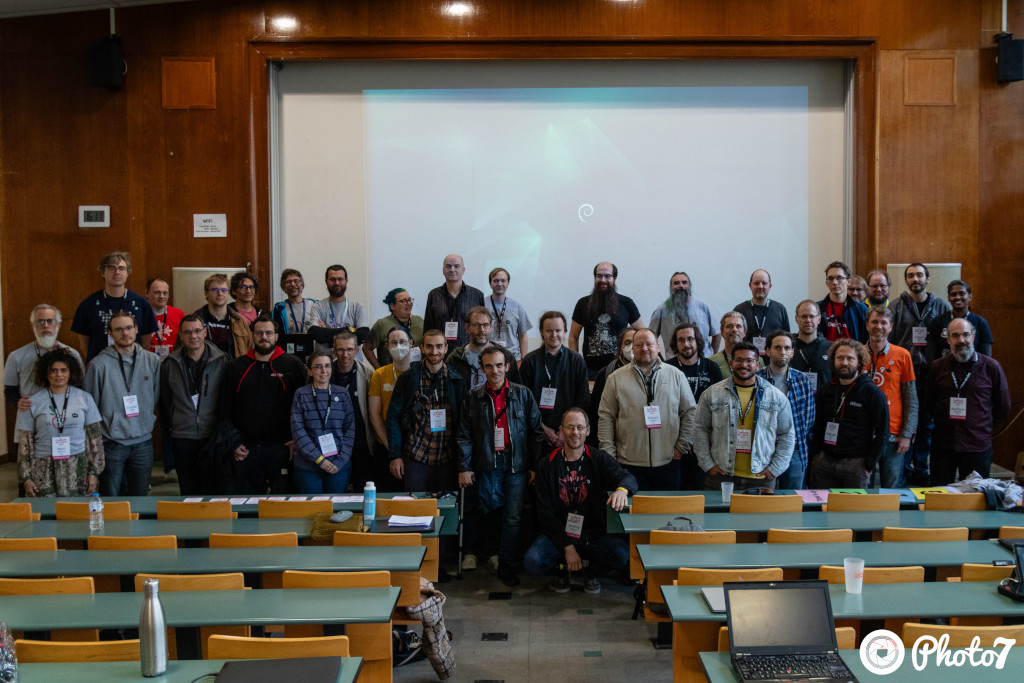
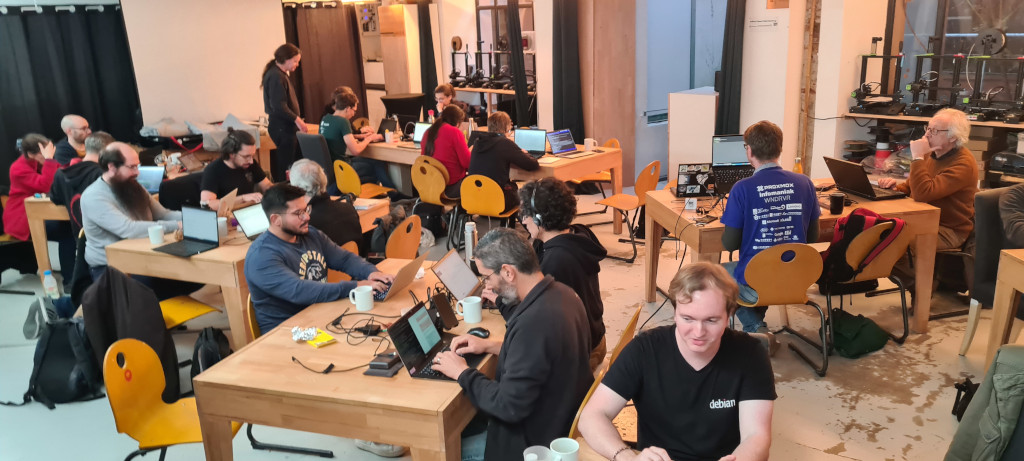
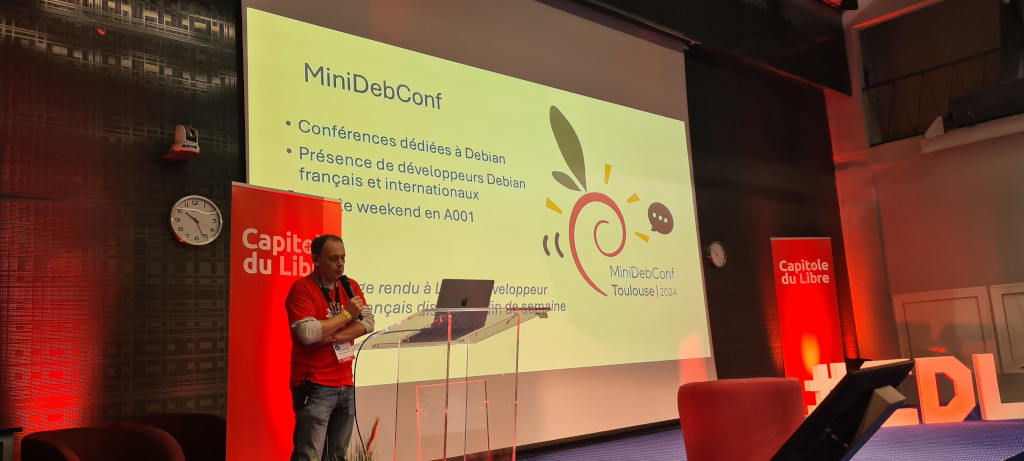
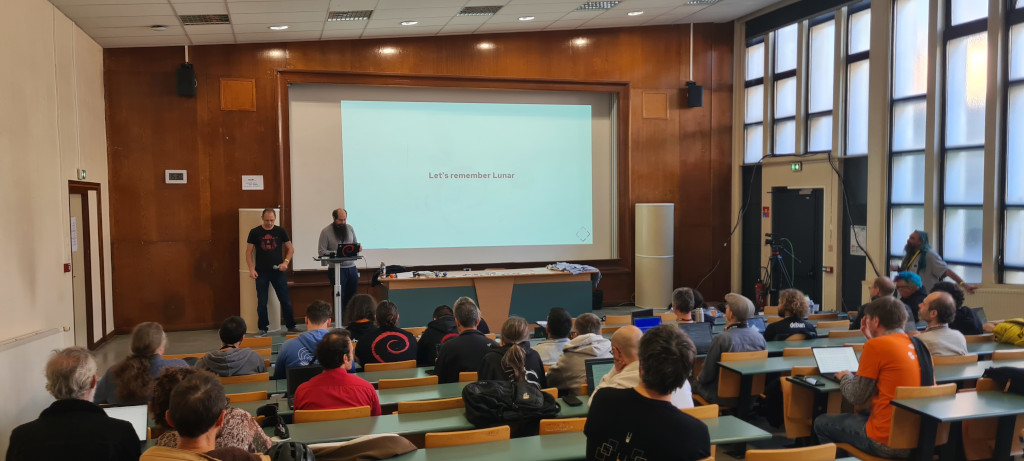
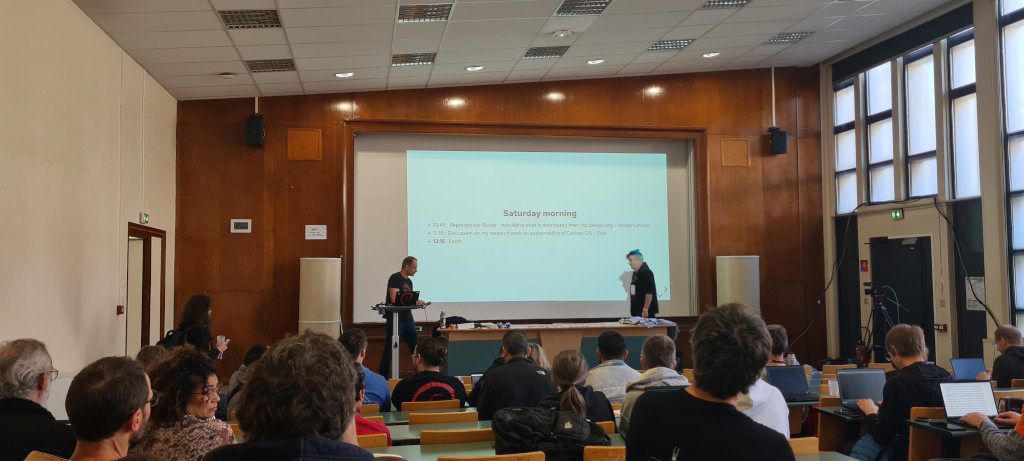
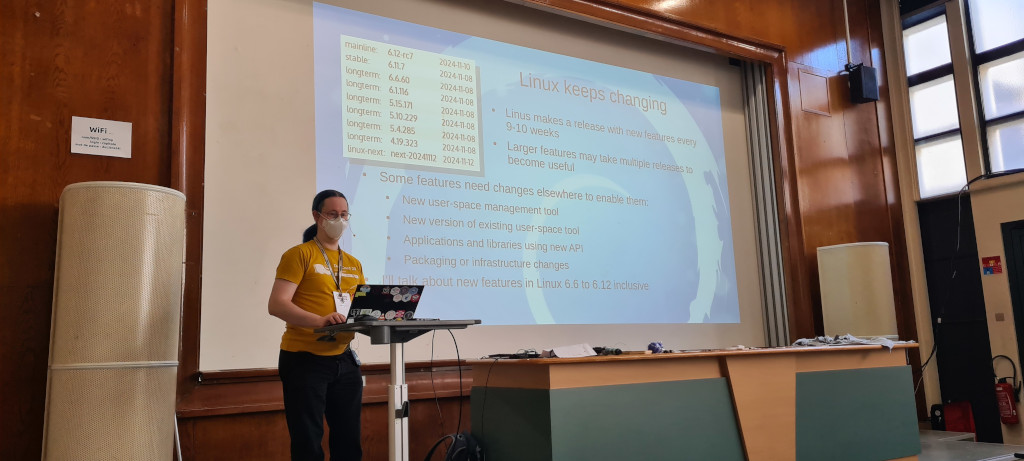
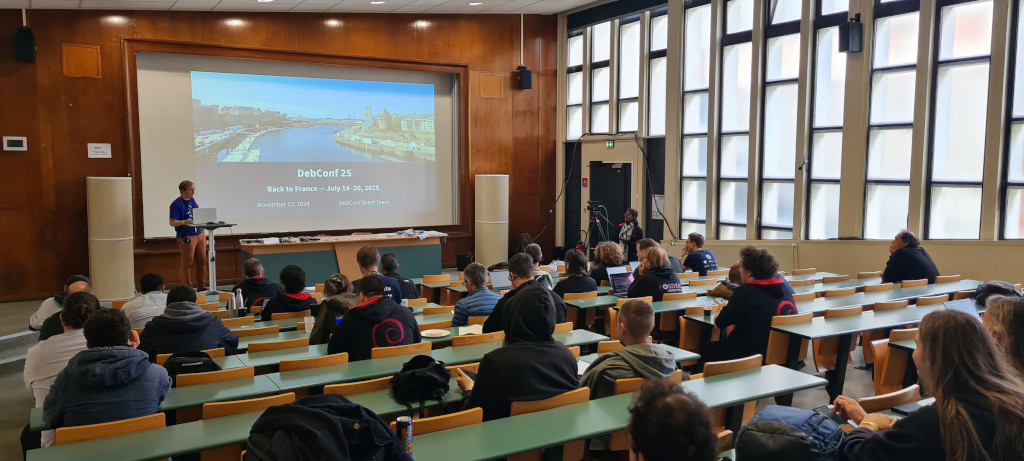
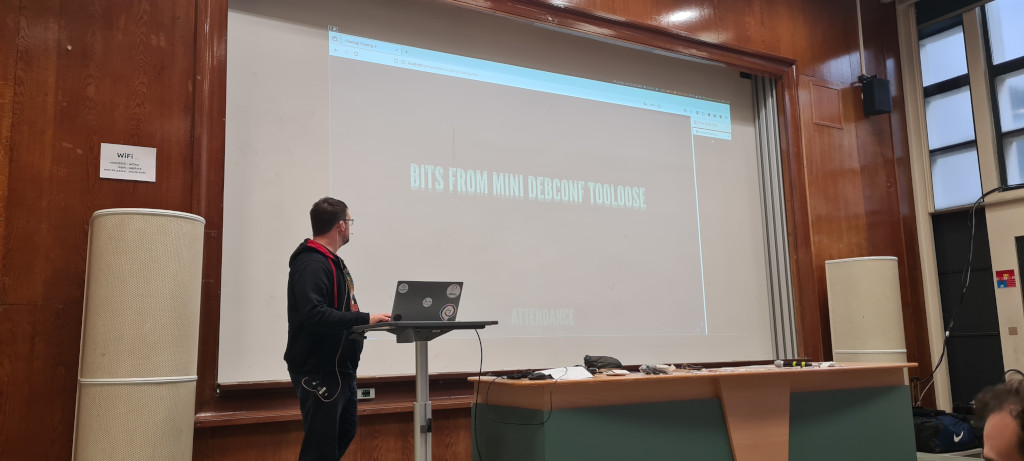

 Like each month, have a look at the work funded by

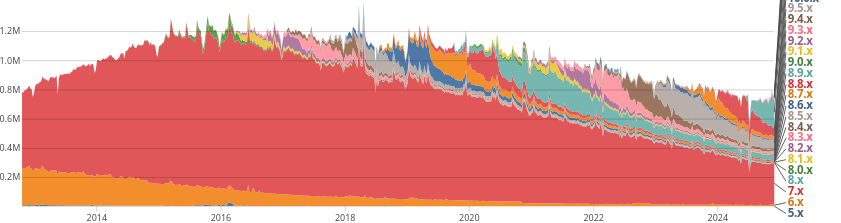 This graph is disgregated into minor versions, and I don t want to come up with
yet another graph for it but it supports (most of) the narrative I presented
above although I do miss the recent drop builtwith reported in D7 s
numbers!

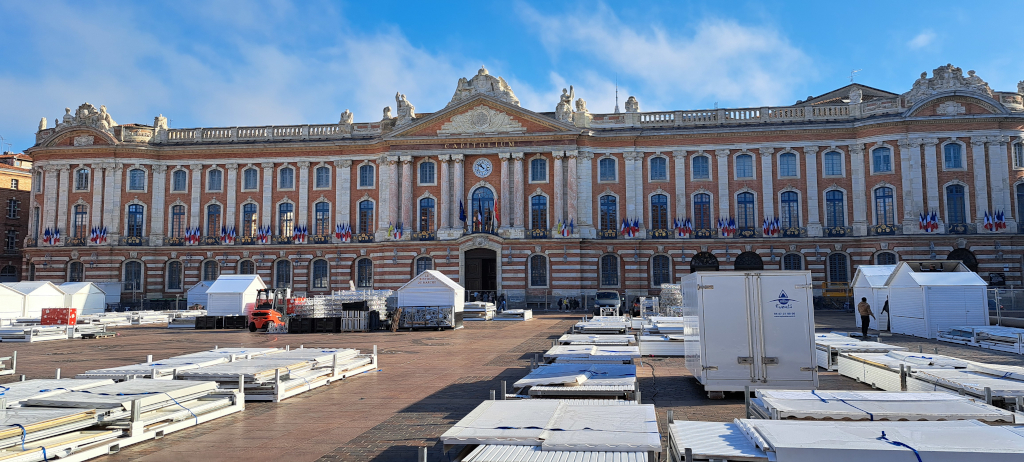
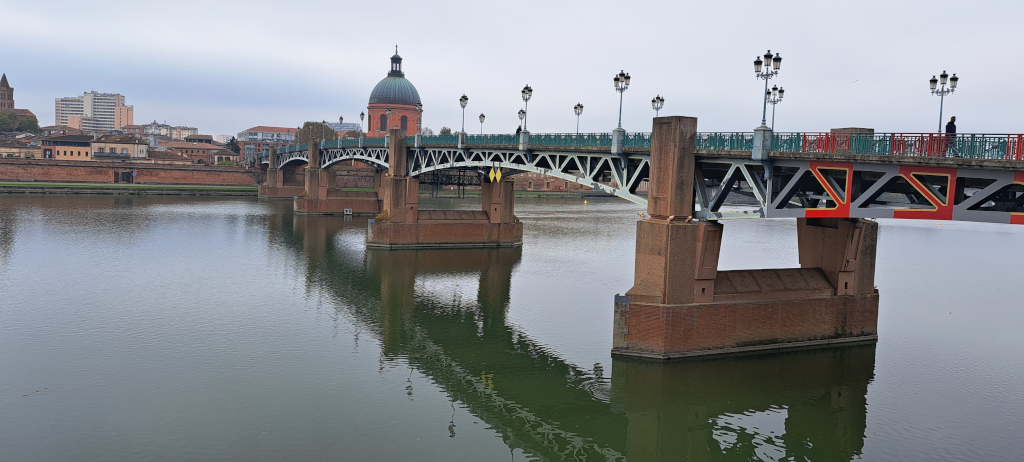
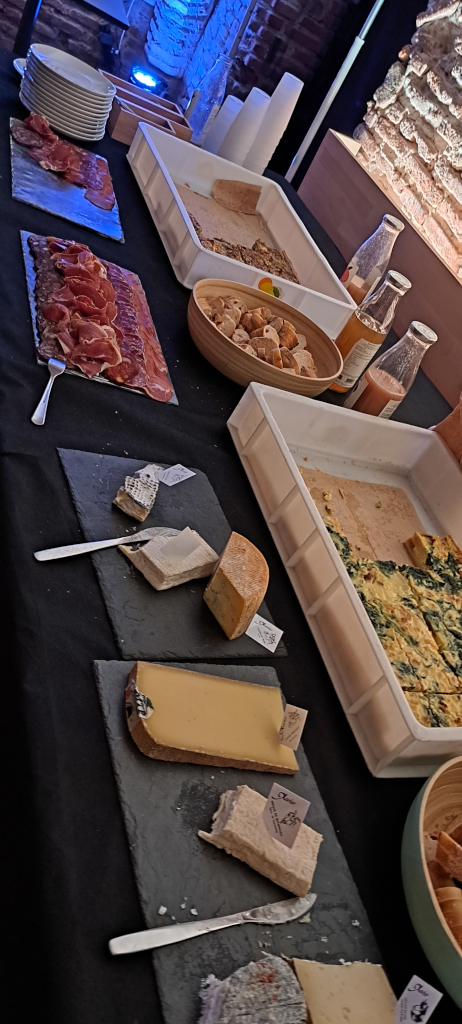
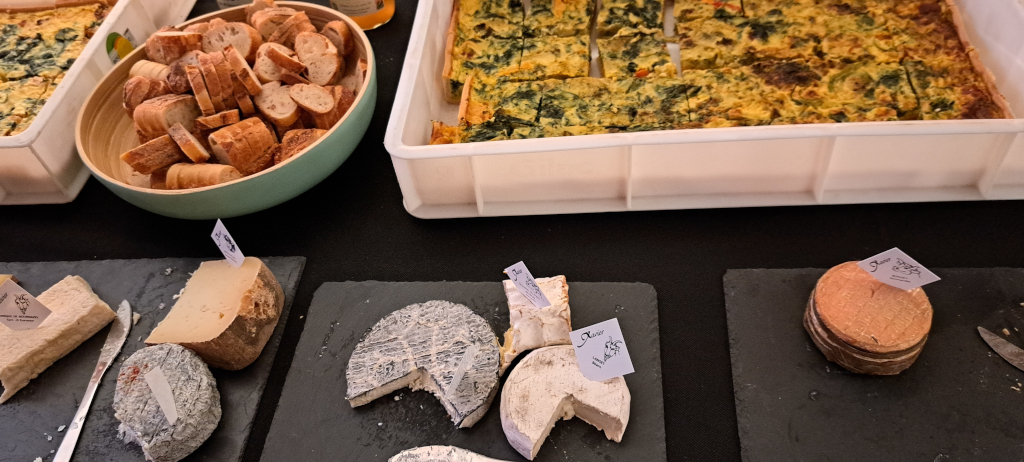 In the evening, we went as a group to dinner at a restaurant in front of the Capitolium, the city s main tourist attraction.
On the second day, in the morning, I walked around the city a bit more, then went to the coworking space and had another incredible cheese table for lunch.
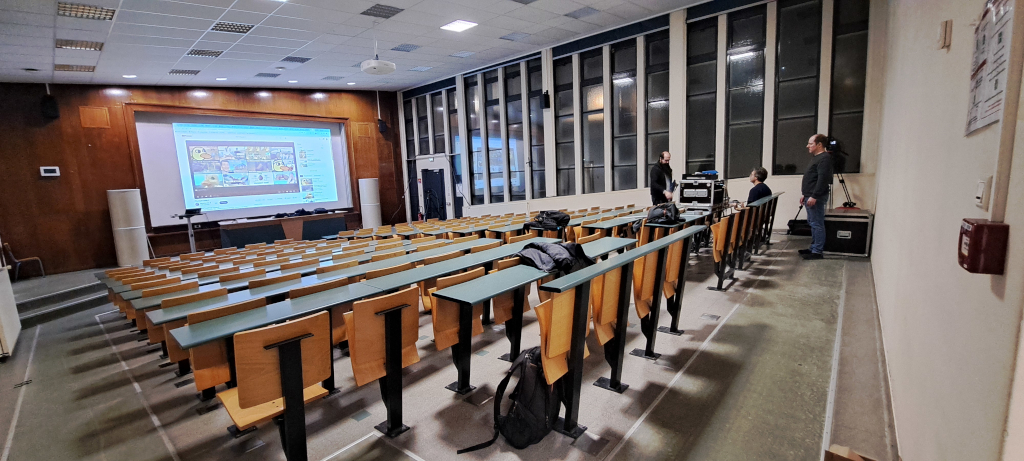
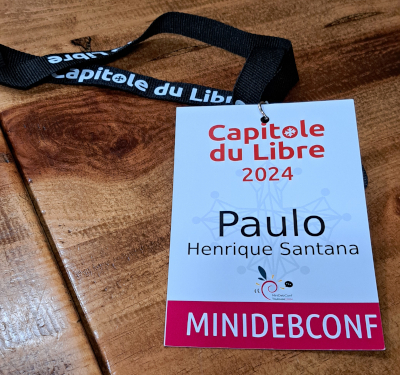


 My trek to Toulouse was seamless. I hopped on a bus from my home in Bristol to the airport, then took a short flight. I luxuriated in seat 1A, making me the first to disembark a mere ten minutes later, I was already on the bus heading to my hotel.


 Once settled, I wasted no time exploring the charms of Toulouse. Just a short stroll from my hotel, I found myself beside a tranquil canal, its waters mirroring the golden hues of the trees lining its banks. Autumn in Toulouse painted the city in warm oranges and reds, creating a picturesque backdrop that was a joy to wander through. Every corner of the street revealed more of the city's rich cultural tapestry and striking architecture. Known affectionately as 'La Ville Rose' (The Pink City) for its unique terracotta brickwork, Toulouse captivated me with its blend of historical allure and vibrant modern life.

 Prior to the main event, the MiniDebCamp provided two days of hacking at
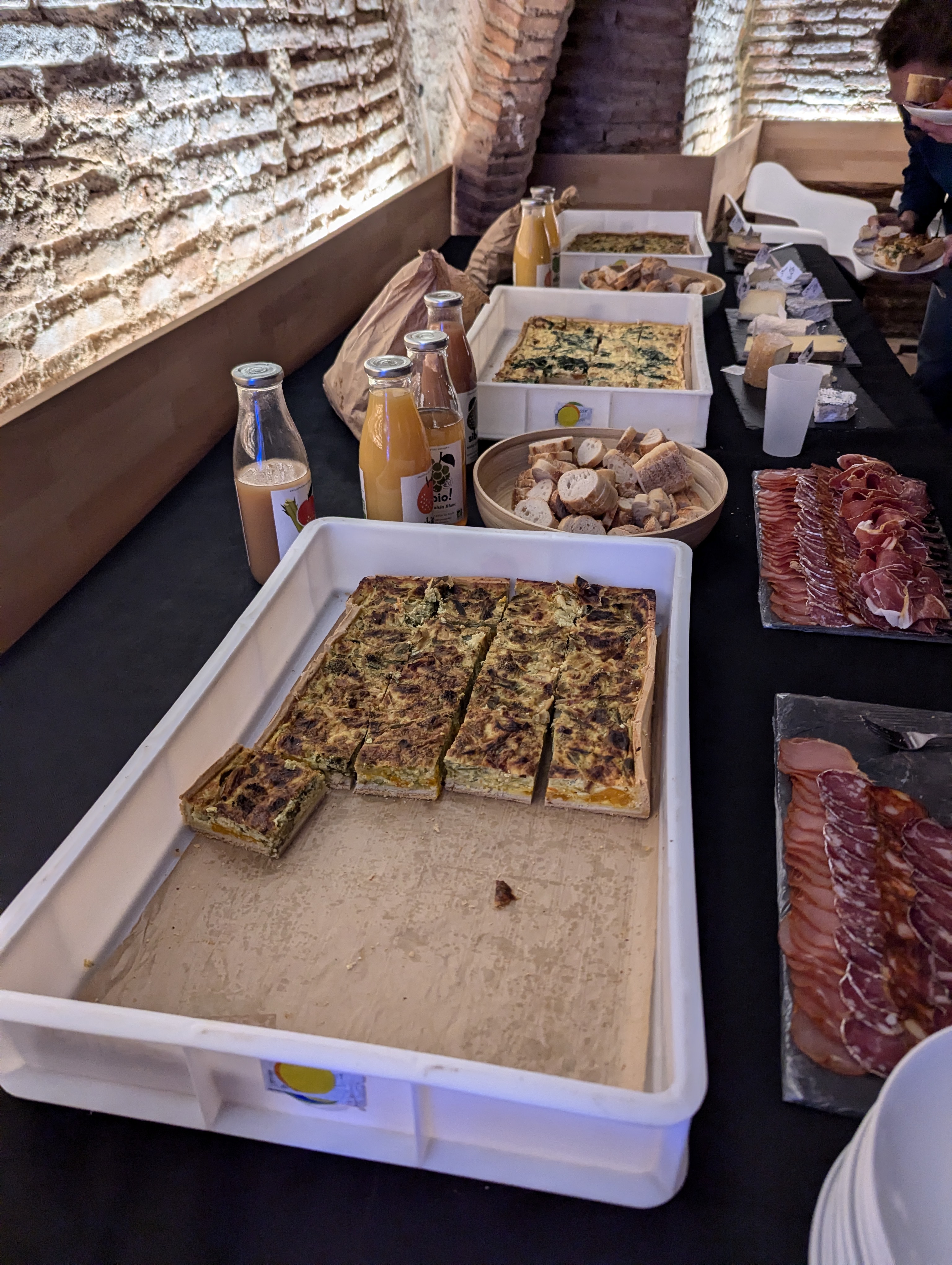


 The hospitality was exceptional. Our lunches boasted a delicious array of quiches, an enticing charcuterie board, and a superb selection of cheeses, all perfectly complemented by exquisite petite fours. Each item was not only a feast for the eyes but also a delight for the palate.
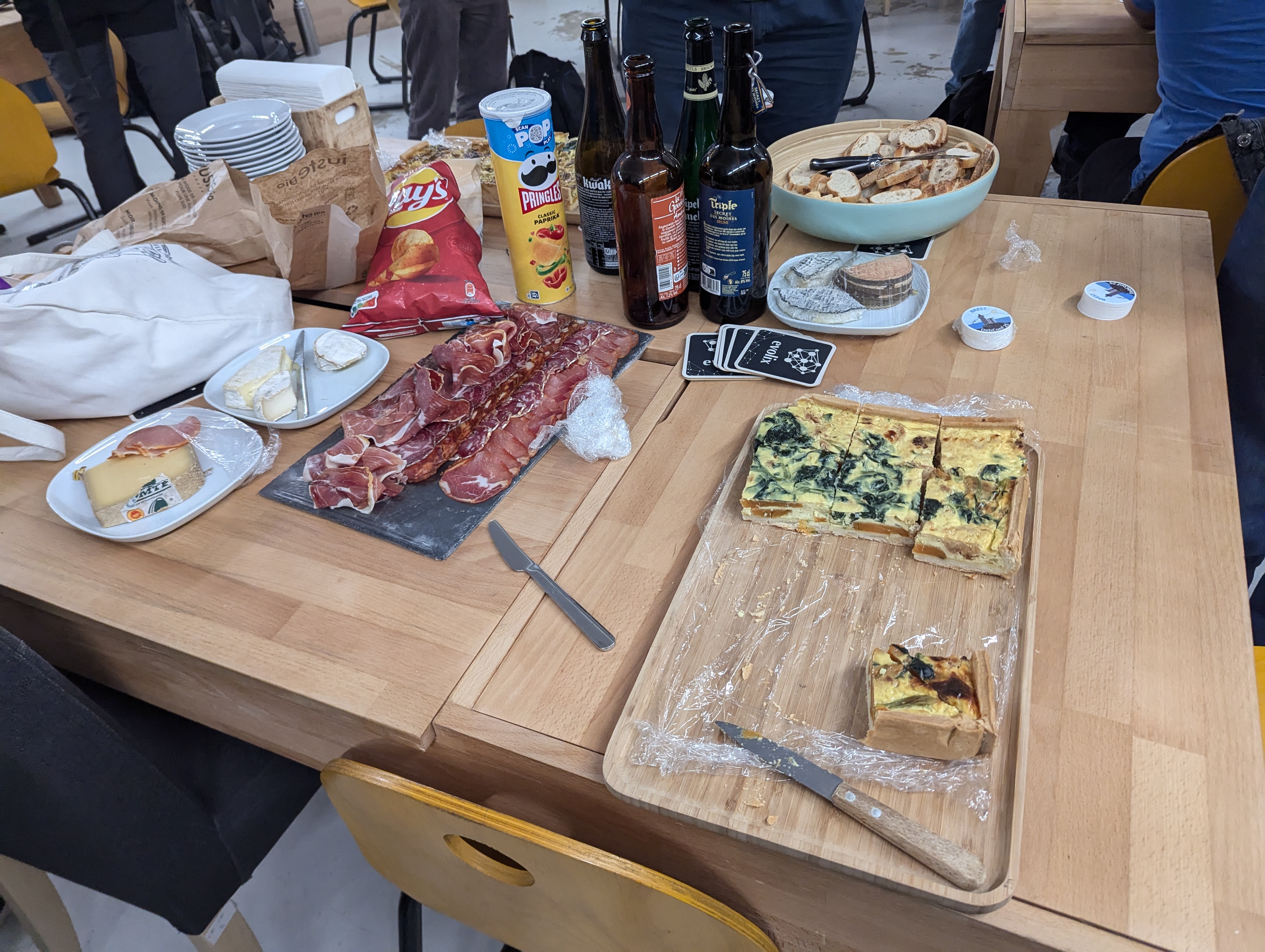
 Leftovers from these gourmet feasts fuelled our impromptu cheese and wine party on Thursday evening a highlight where informal chats blended seamlessly with serious software discussions.

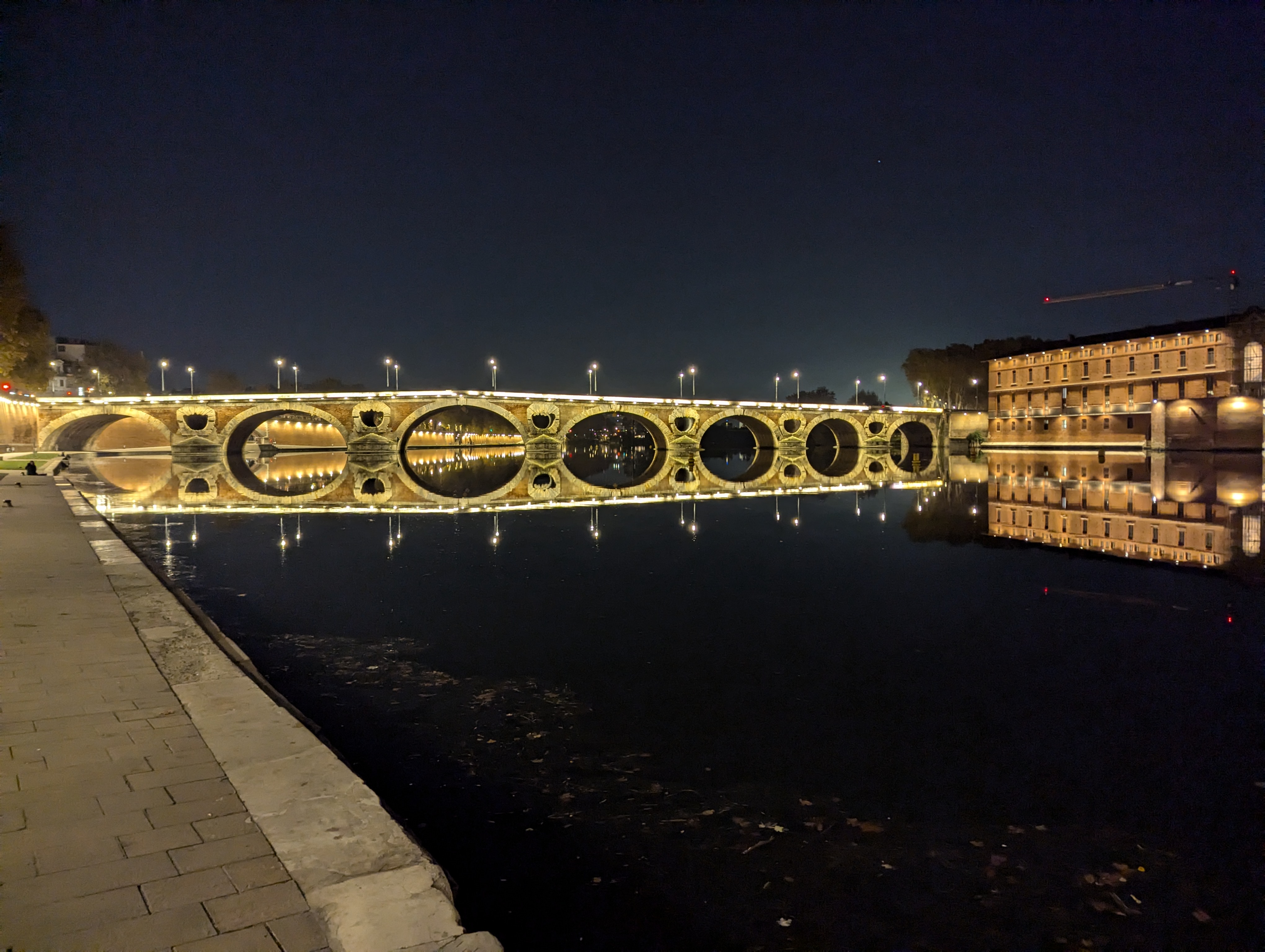

 The enchantment of Toulouse doesn't dim with the setting sun; instead, it transforms. My evening strolls took me along the banks of the Garonne, under a sky just turning from twilight to velvet blue. The river, a dark mirror, perfectly reflected the illuminated grandeur of the city's architecture. Notably, the dome of the
 The MiniDebConf itself, part of the larger Capitole du Libre event, was a fantastic immersion into the world of free software. Unlike the ticket-free FOSDEM, this conference required QR codes for entry and even had bag searches, adding an unusual layer of security for a software conference.
Highlights included the crepe-making by the organisers, reminiscent of street food scenes from larger festivals. The availability of crepes for MiniDebConf attendees and the presence of food trucks added a festive air, albeit with the inevitable long queues familiar to any festival-goer.

 The city's

 Toulouse's markets were a delightful discovery. From a spontaneous visit to a market near my hotel upon arrival, to cycling past bustling marketplaces, each day presented new local flavours and crafts to explore.
The


 Our conference wrapped up with a spontaneous gathering at La Brasserie Les Arcades in Place du Capitole. Finding a caf that could accommodate 30 of us on a Sunday evening without a booking felt like striking gold. What began with coffee and ice cream smoothly transitioned into dinner, where I enjoyed a delicious braised duck leg with green peppercorn sauce. This meal rounded off the trip with lively conversations and shared experiences.


 Returning from Toulouse, I found myself once again in seat 1A, offering the advantage of being the first off the plane, both on departure and arrival. My flight touched down in Bristol ahead of schedule, and within ten minutes, I was on the A1 bus, making my way back into the heart of Bristol.
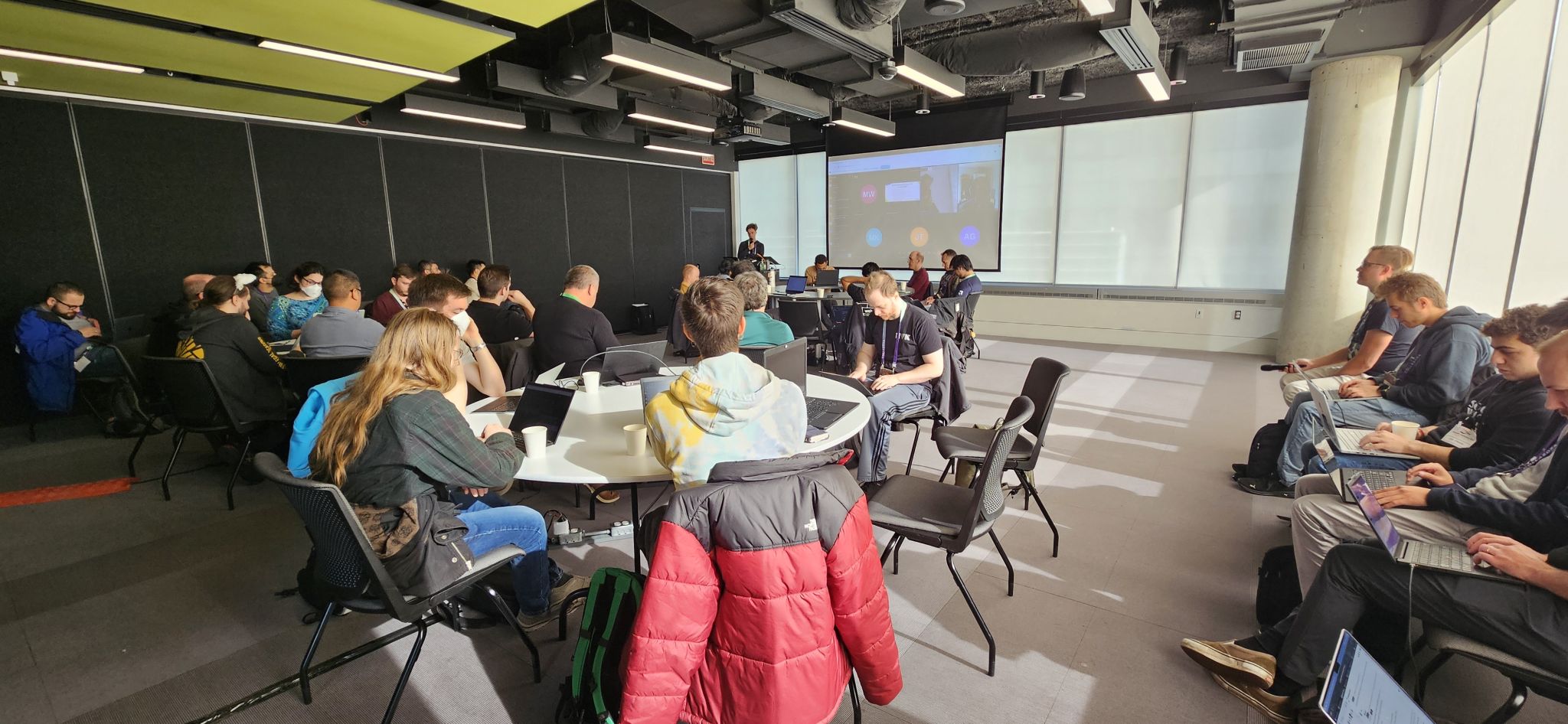
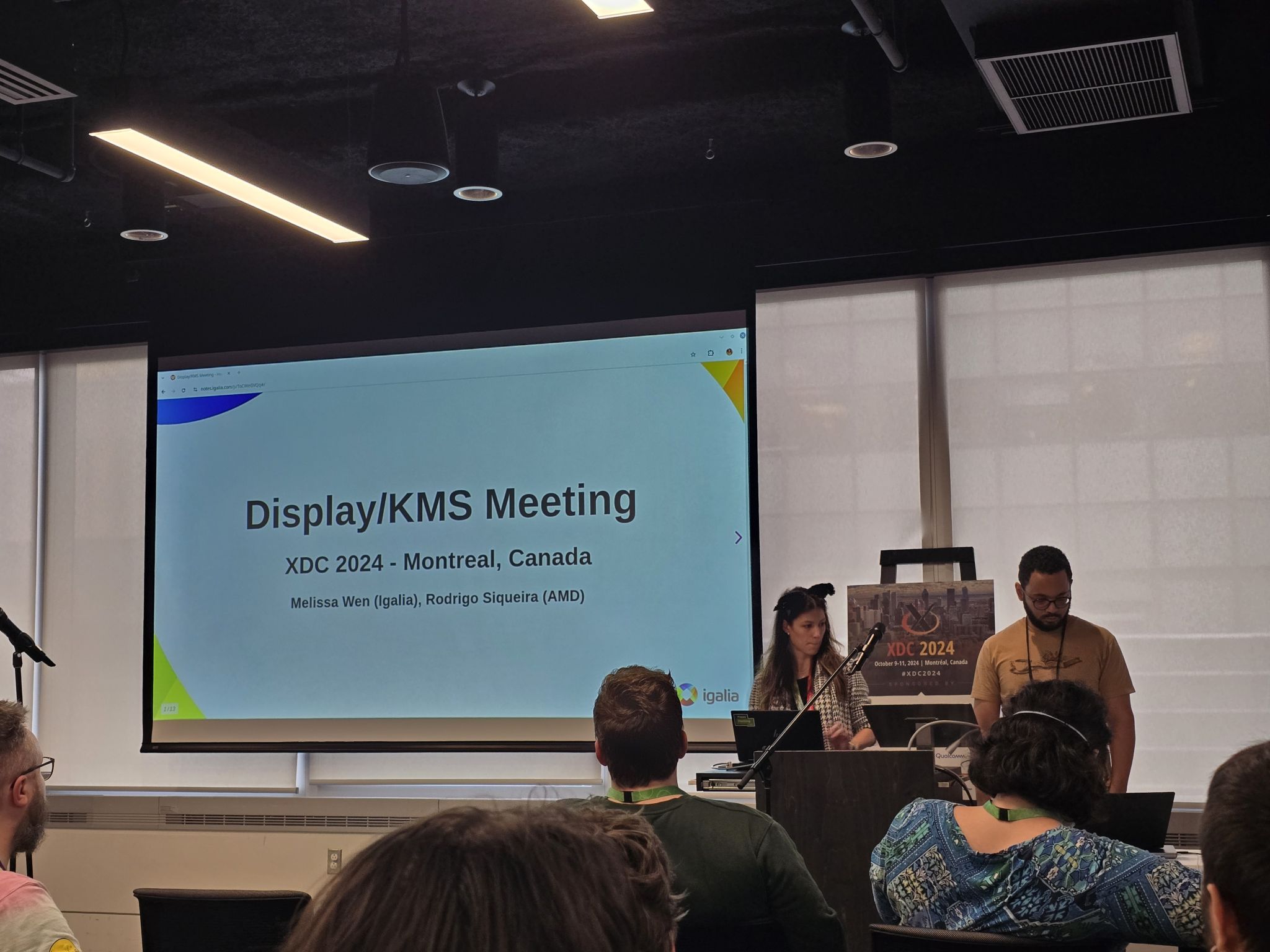
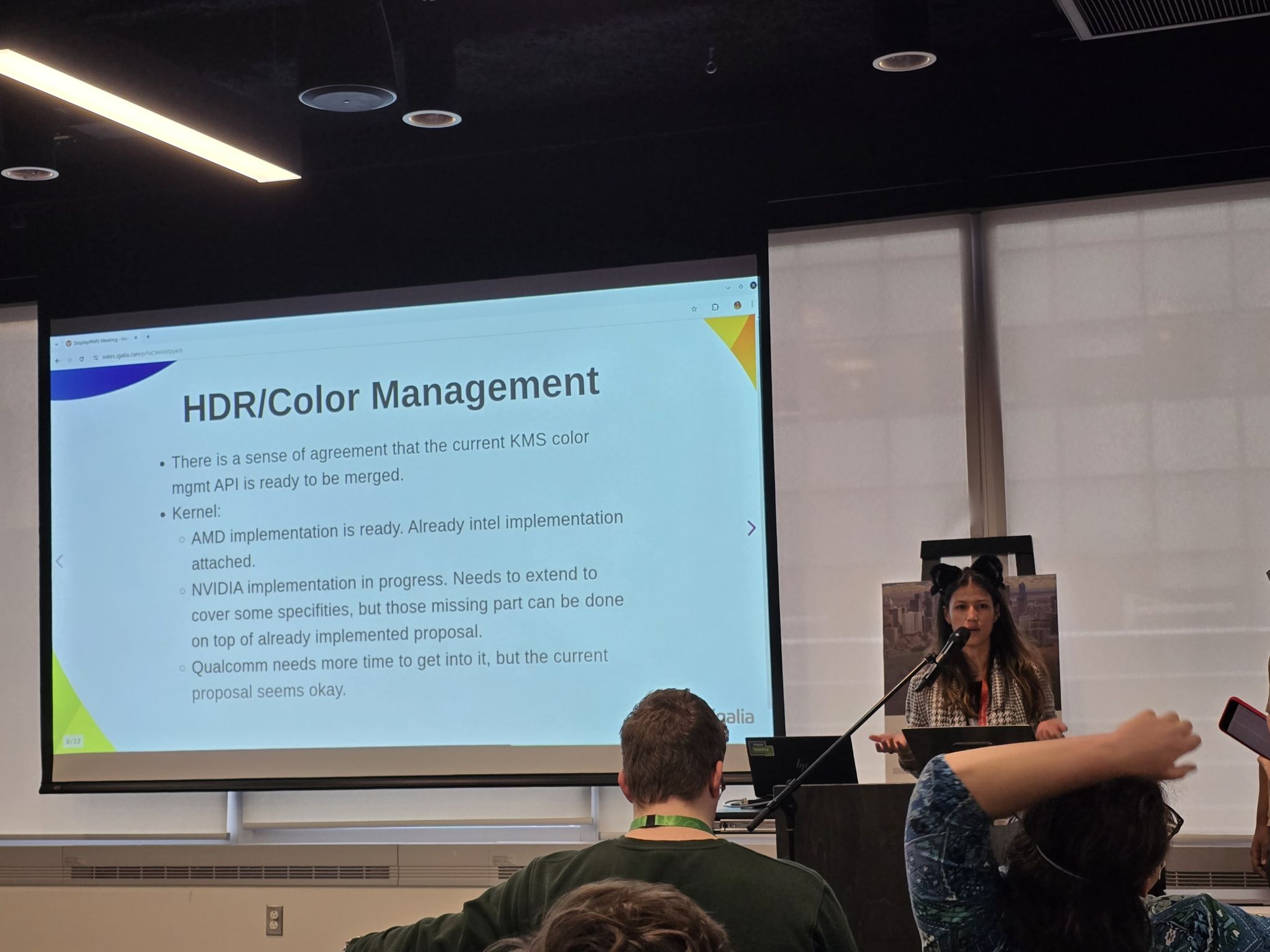
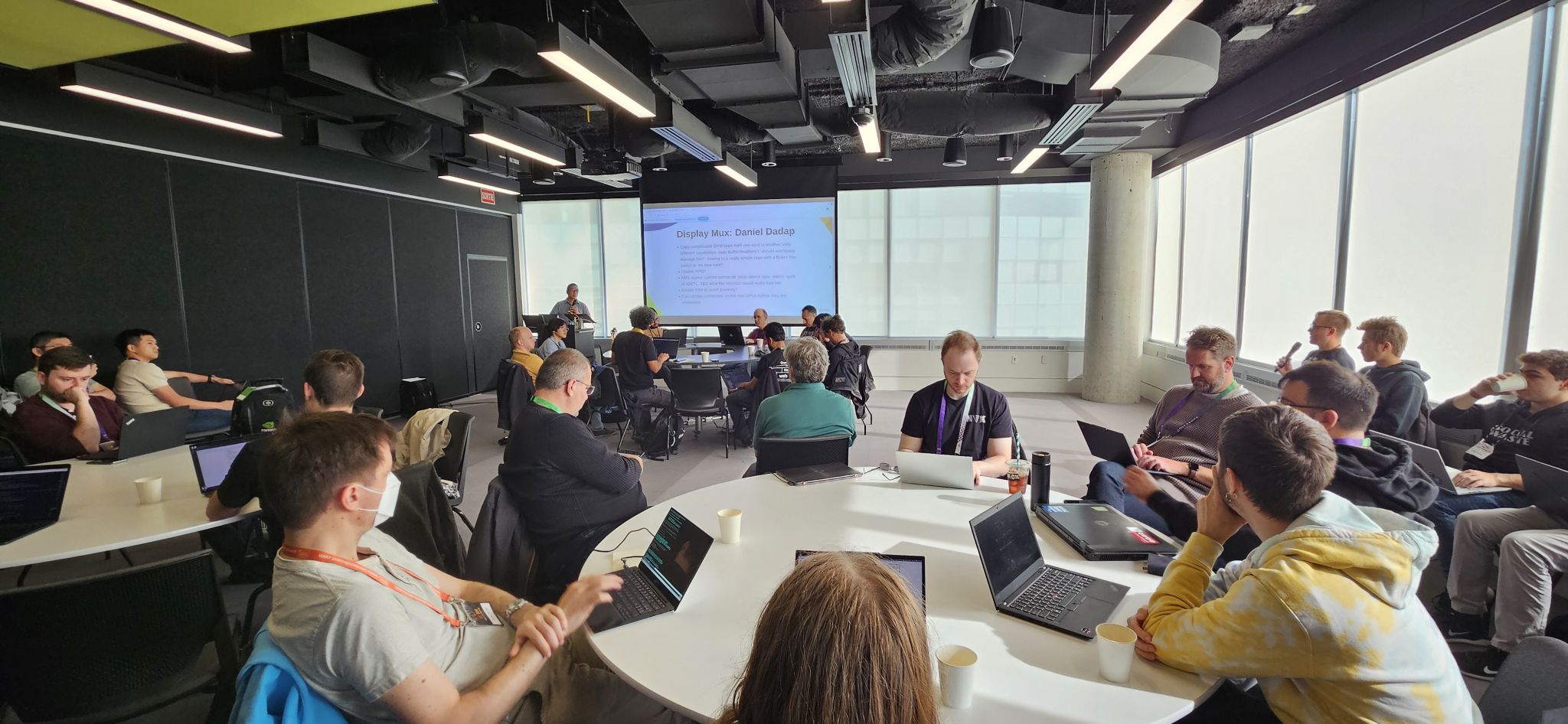
 Our Debian User Group met on November 2nd after a somewhat longer summer hiatus
than normal. It was lovely to see a bunch of people again and to be able to
dedicate a whole day to hacking :)
Here is what we did:
lavamind:


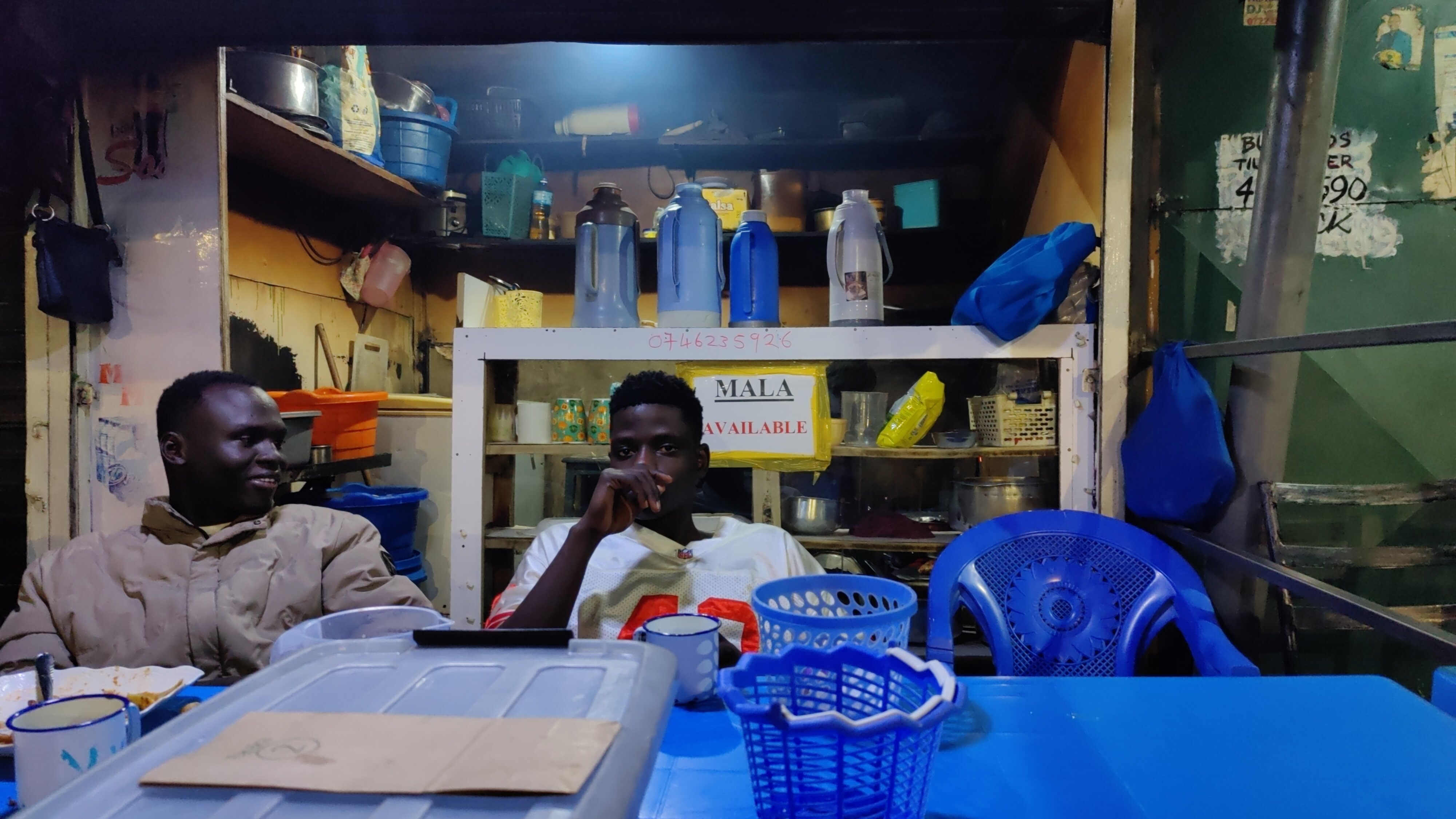 The coffee shop Ibtehal and me used to visit during the midnight
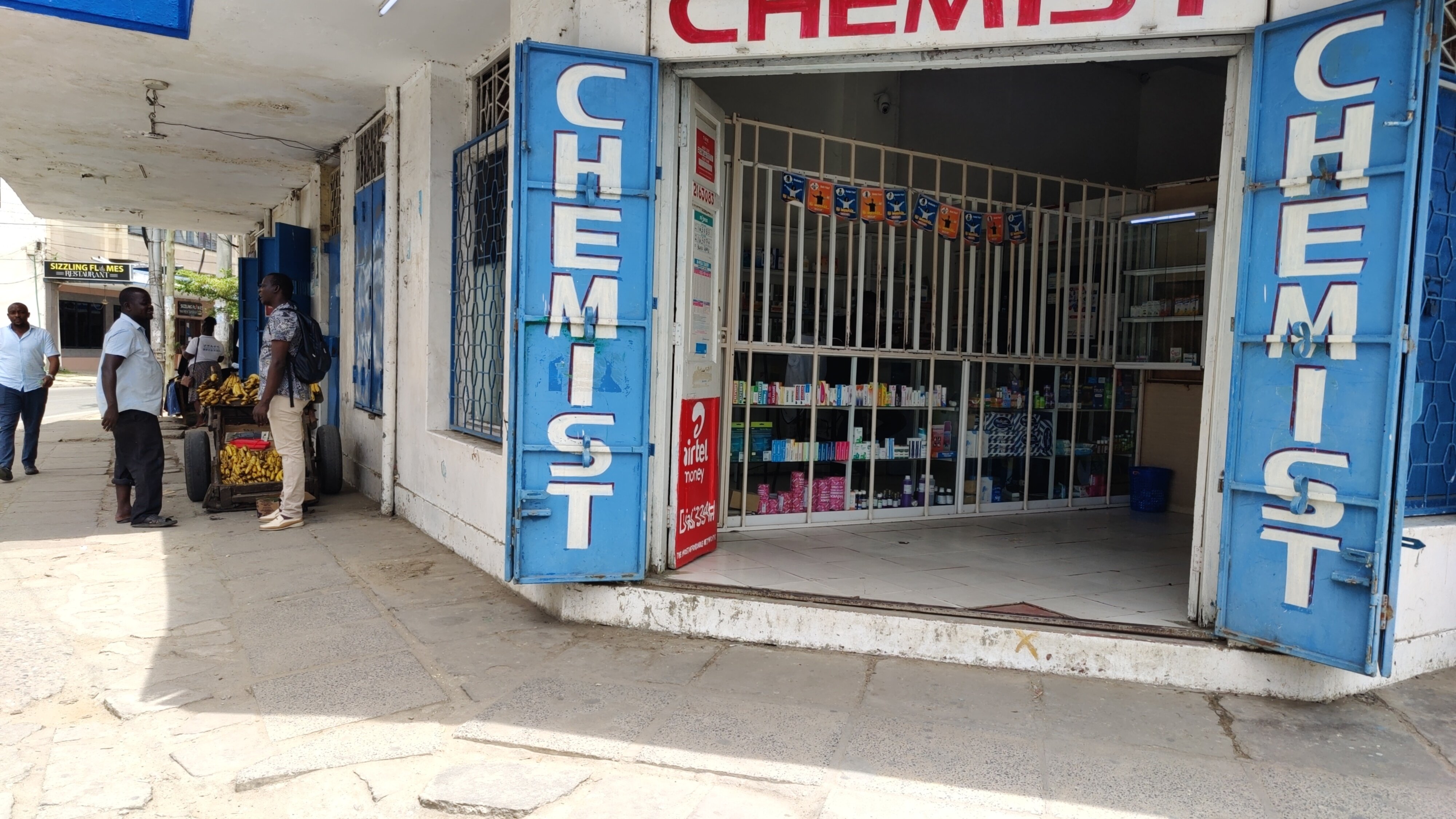 Grating at a chemist shop in Mombasa, Kenya
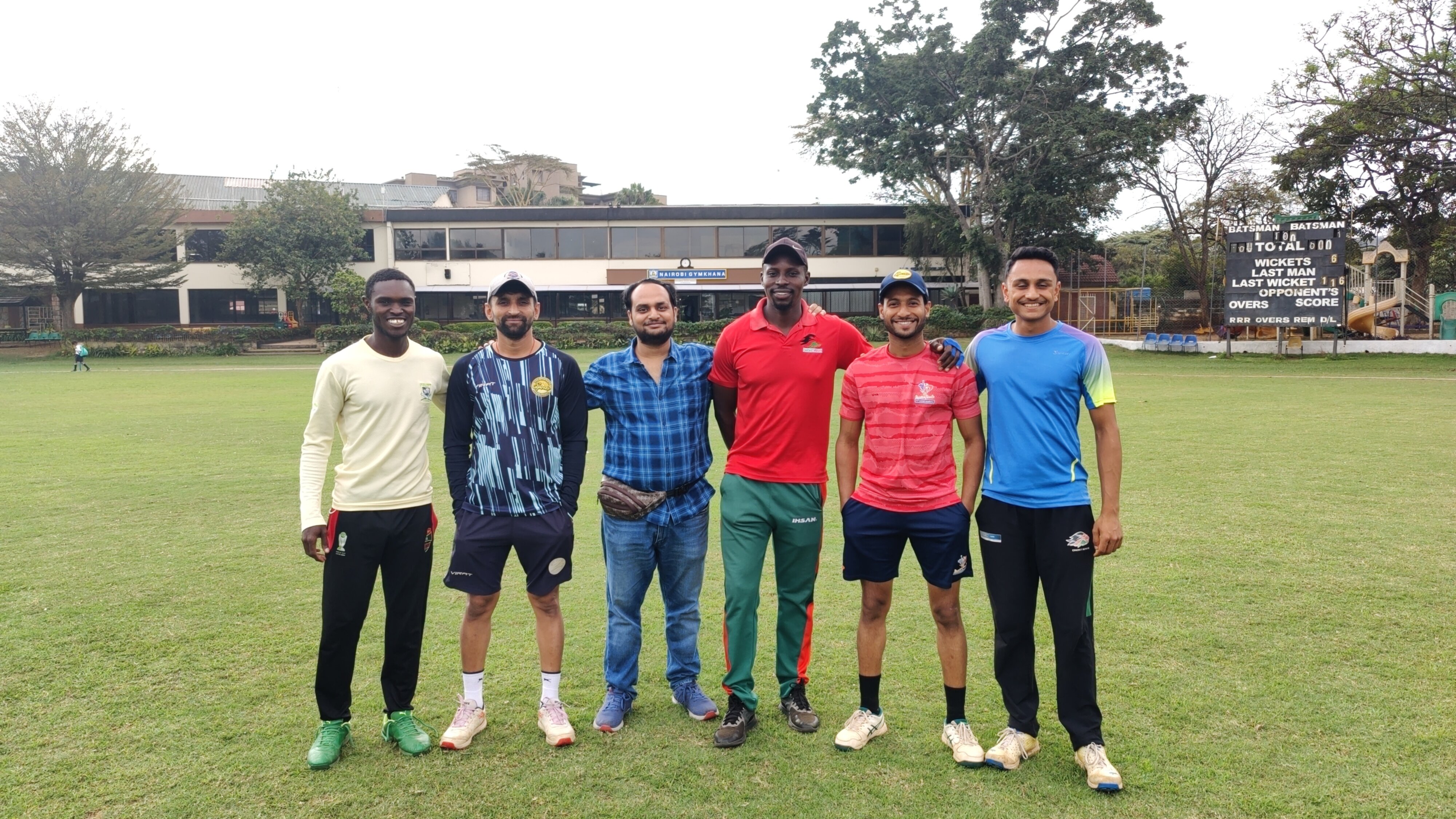 Me with players at the Nairobi Gymkhana Club
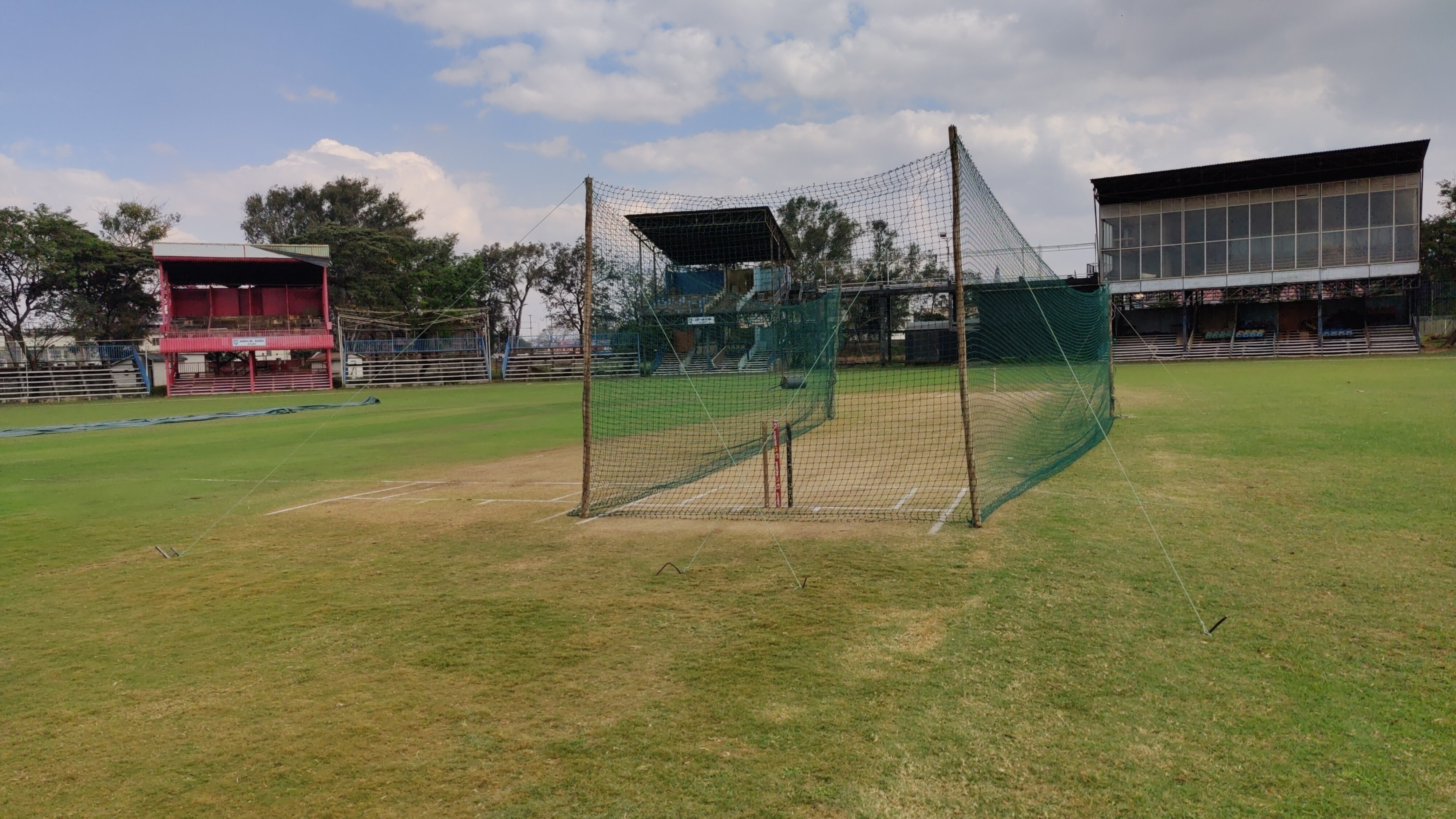 Cricket pitch at the Nairobi Gymkhana Club
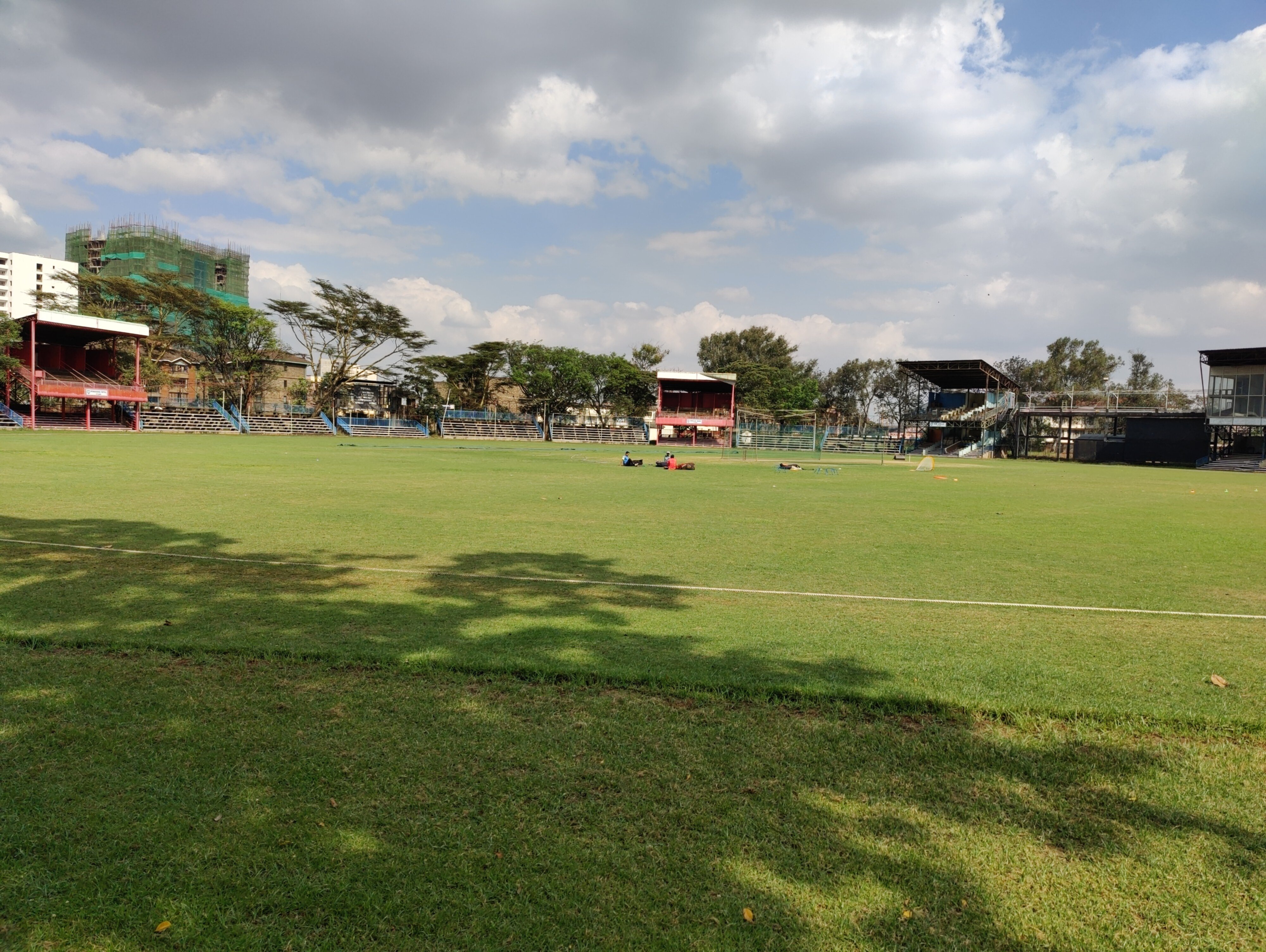 A view of the cricket ground inside the Nairobi Gymkhana Club
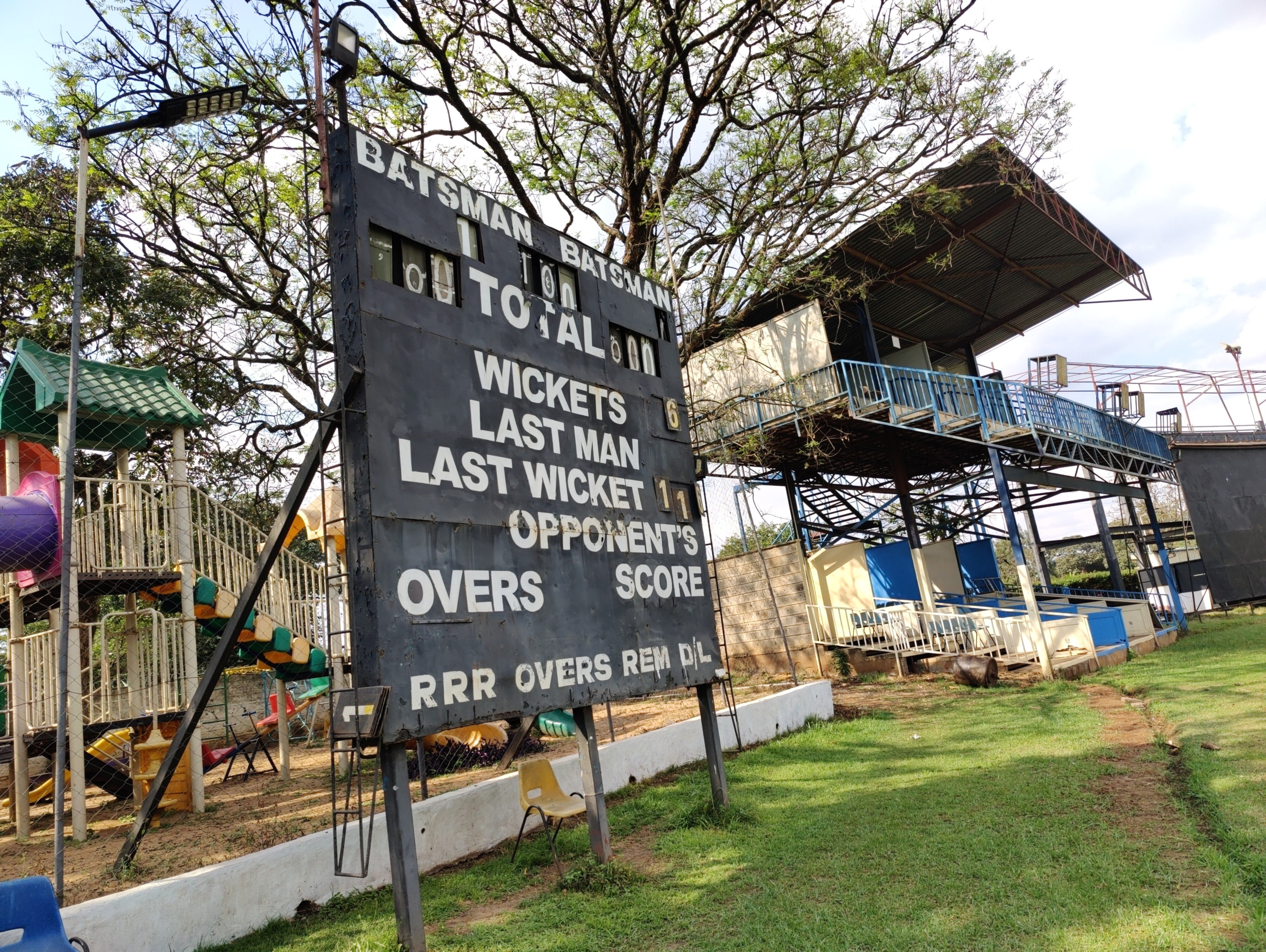 Scoreboard at the Nairobi Gymkhana cricket ground
 A matatu with a Notorious BIG portrait.
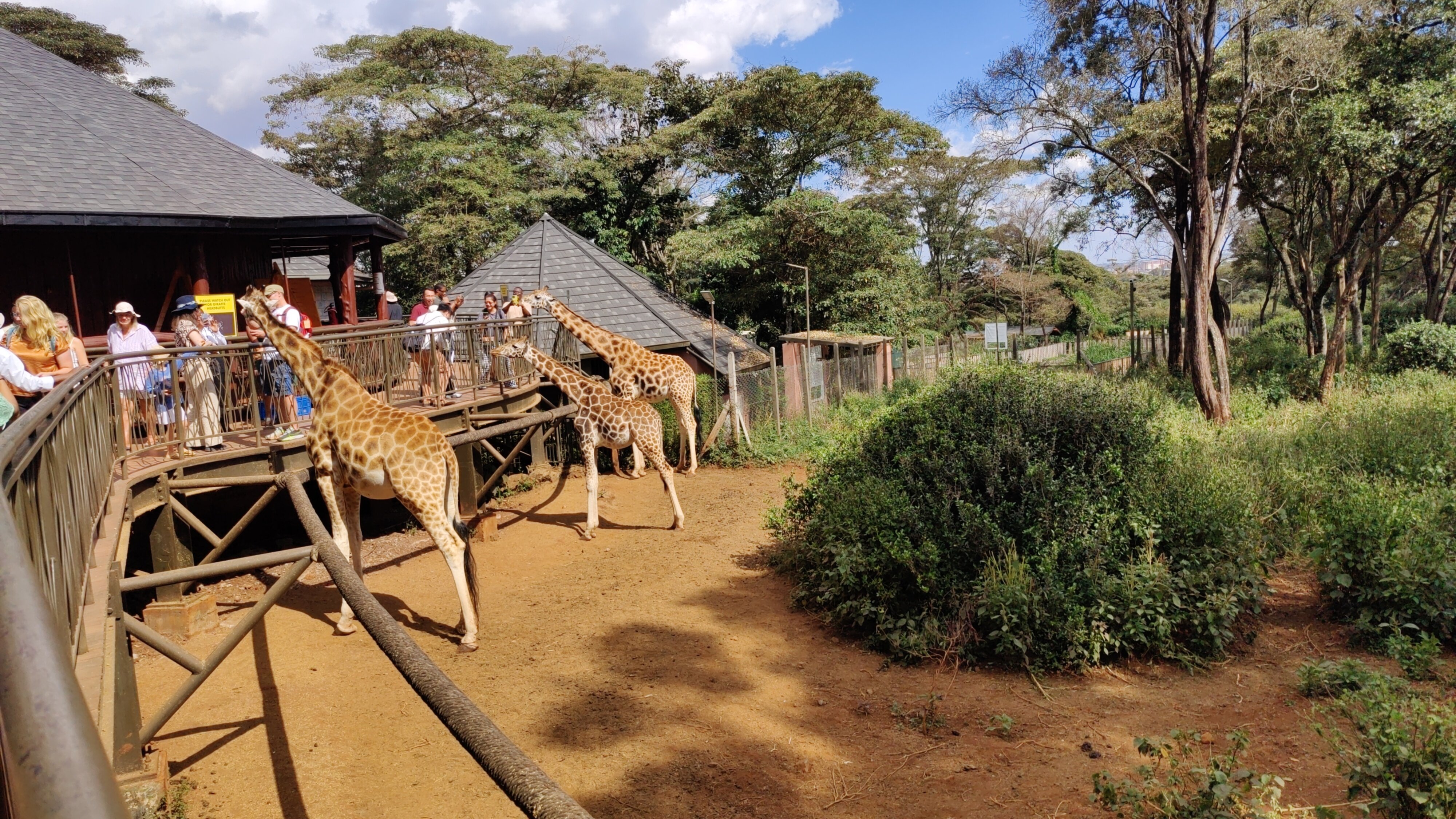 Inside the Giraffe Center
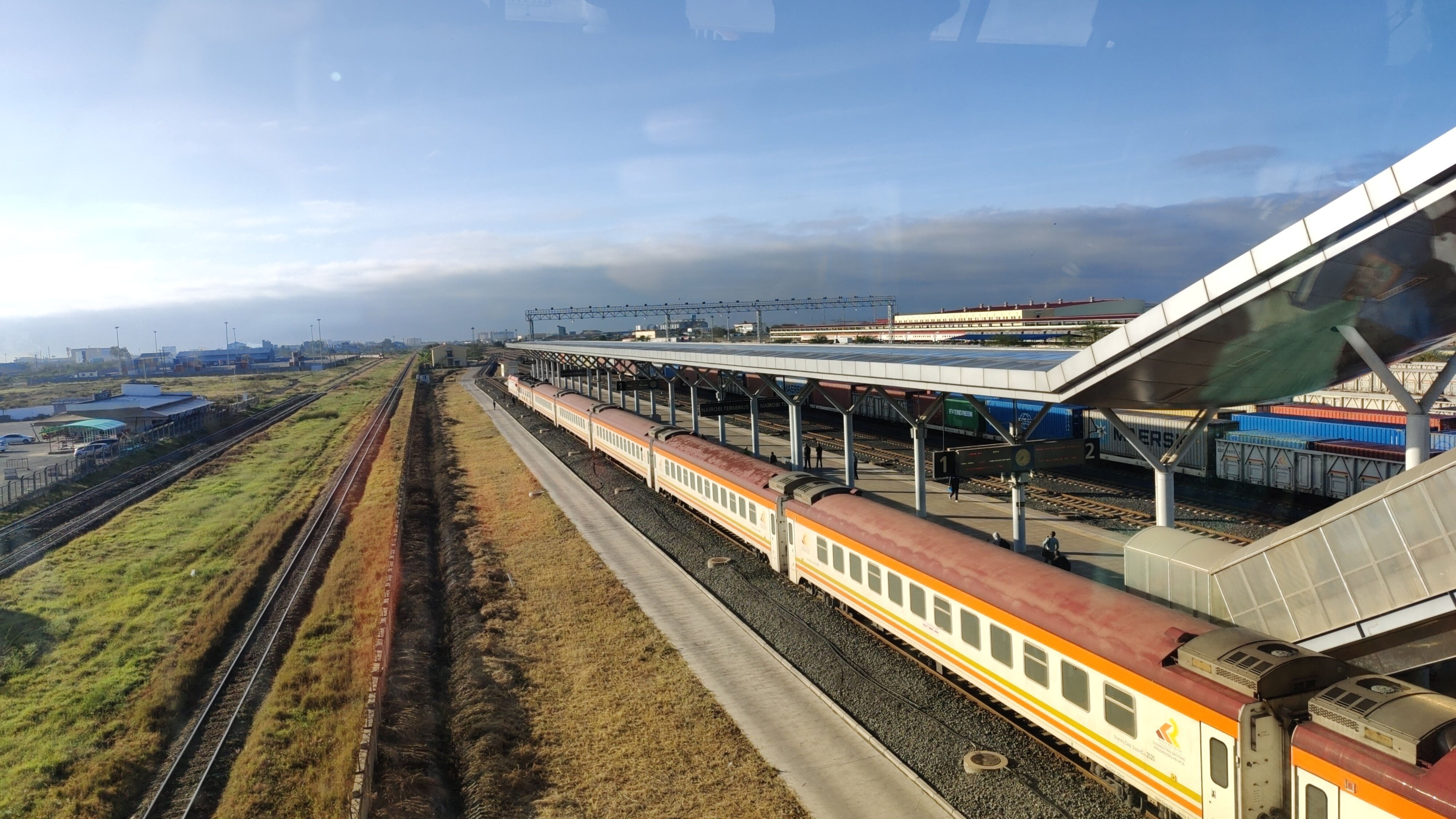 SGR train at Nairobi Terminus.
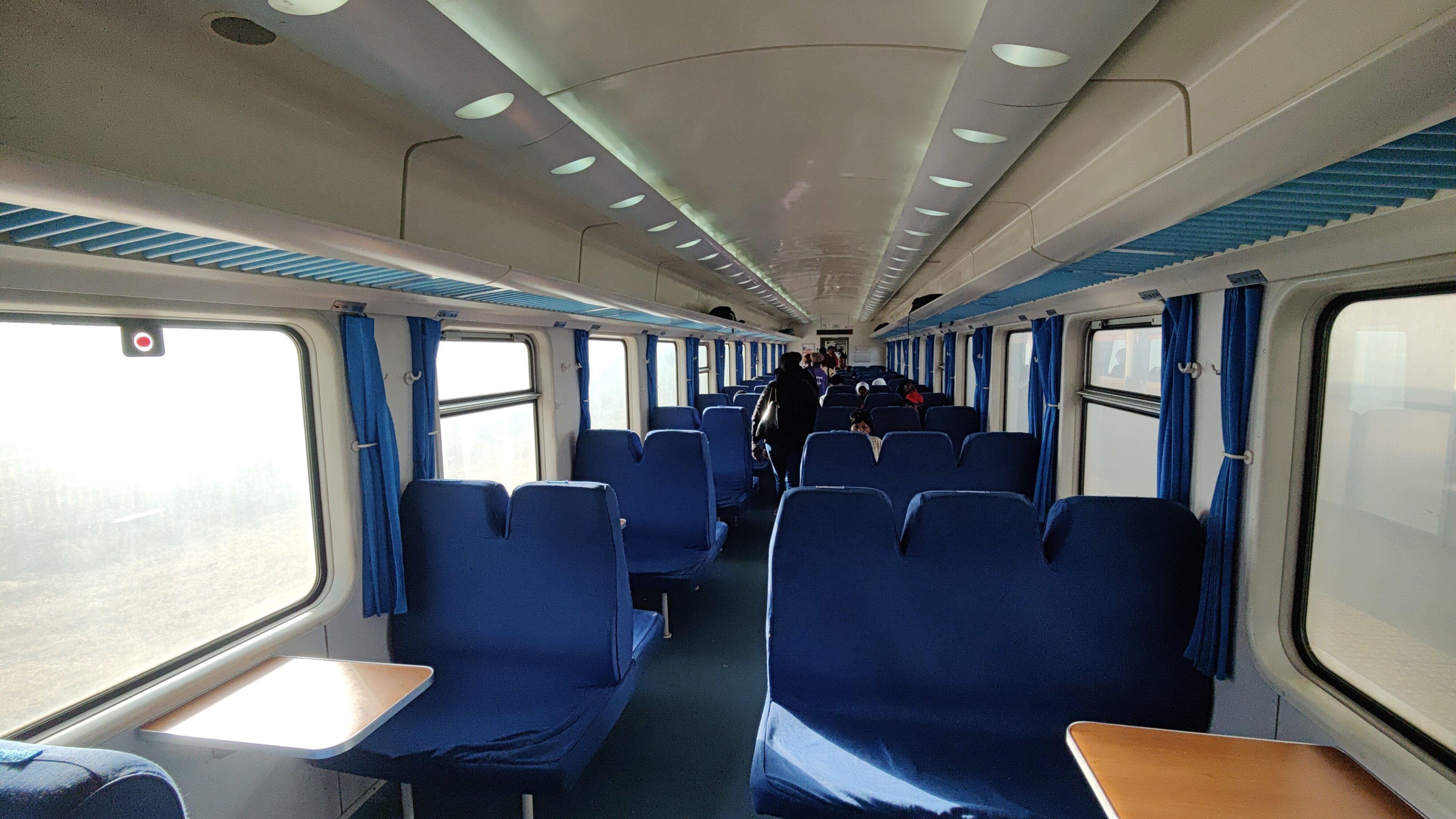 Interior of the SGR train
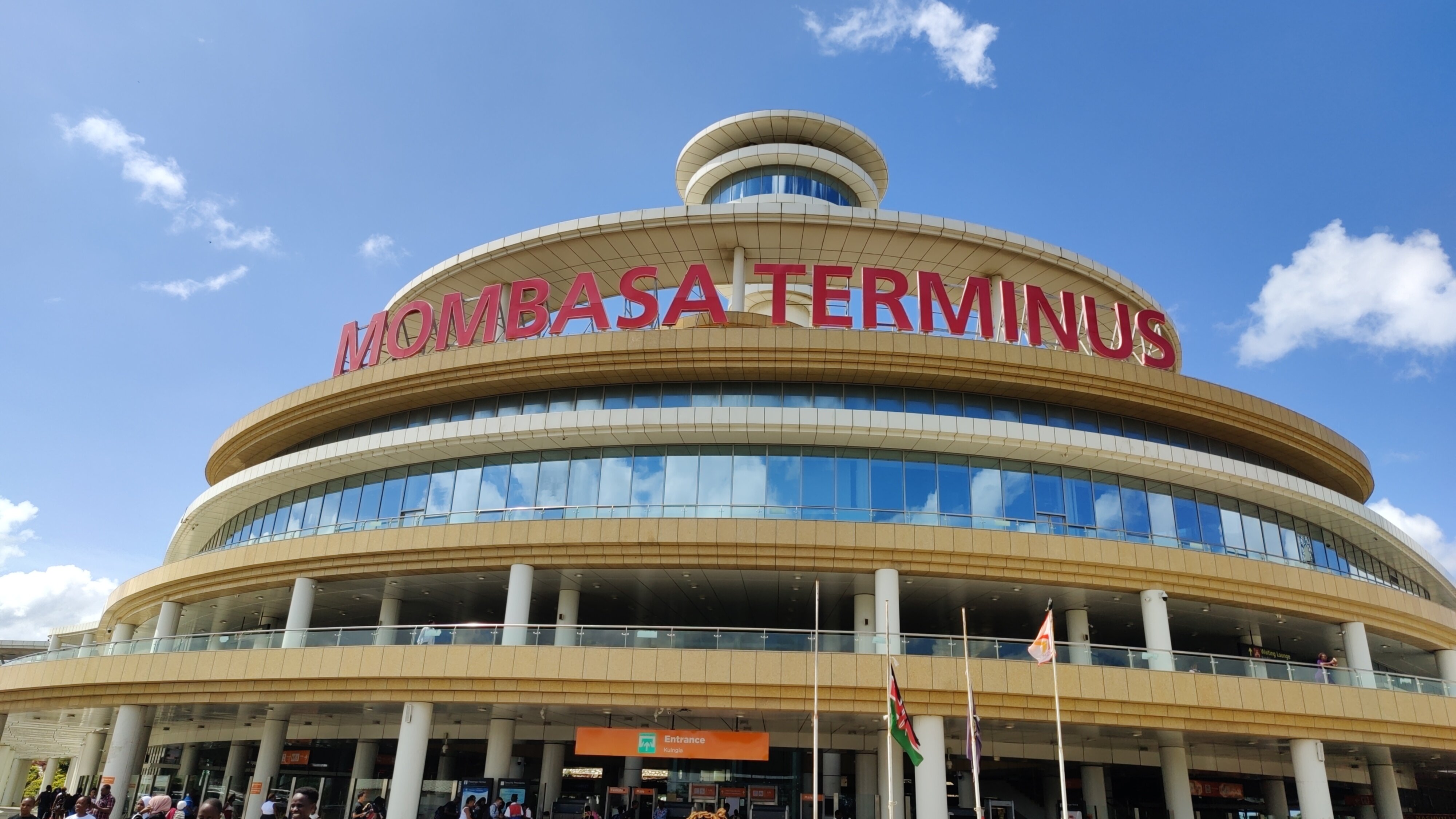 Mombasa Terminus station.
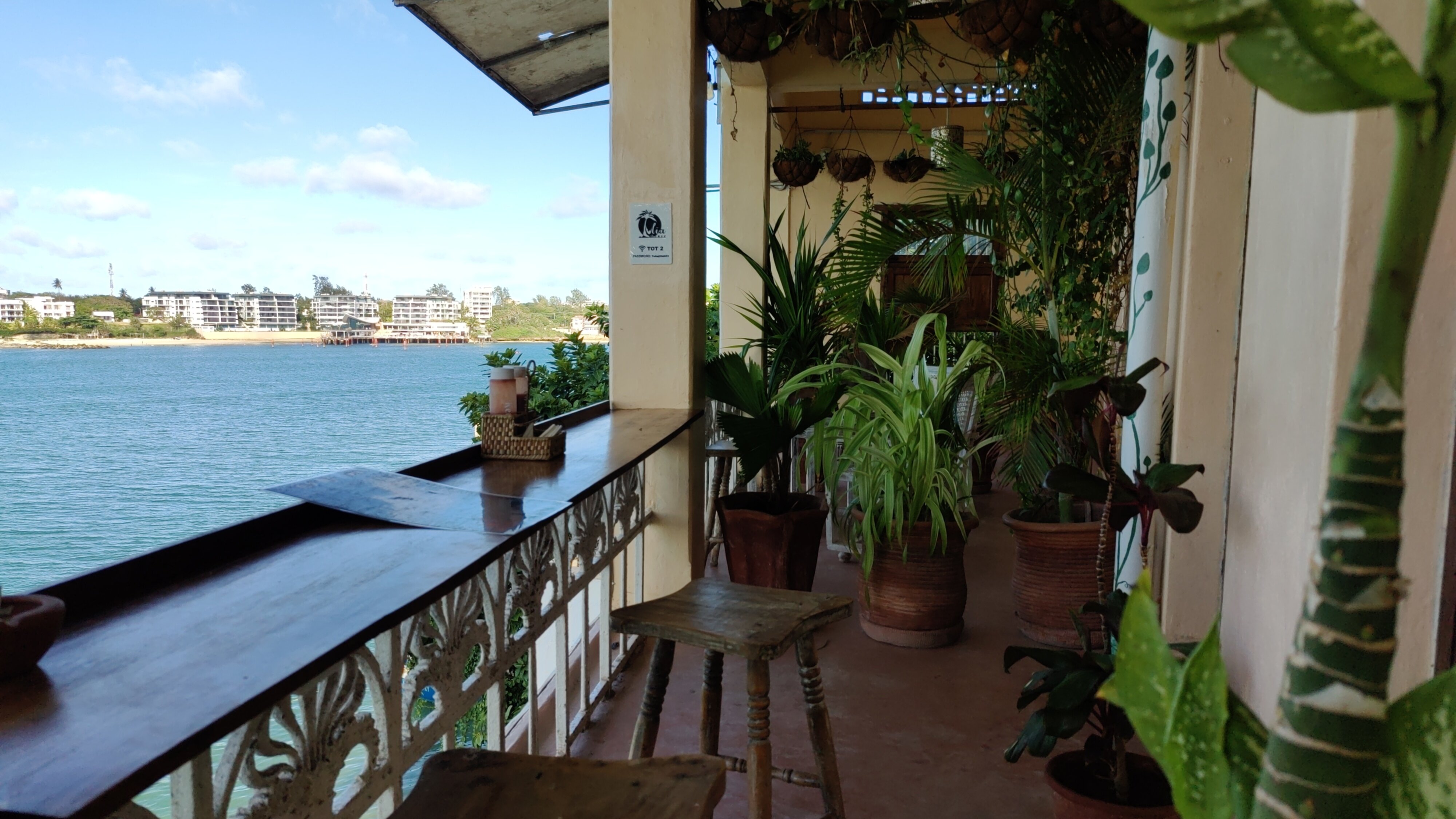 The balcony at Tulia Backpackers Hostel had a nice view of the ocean.
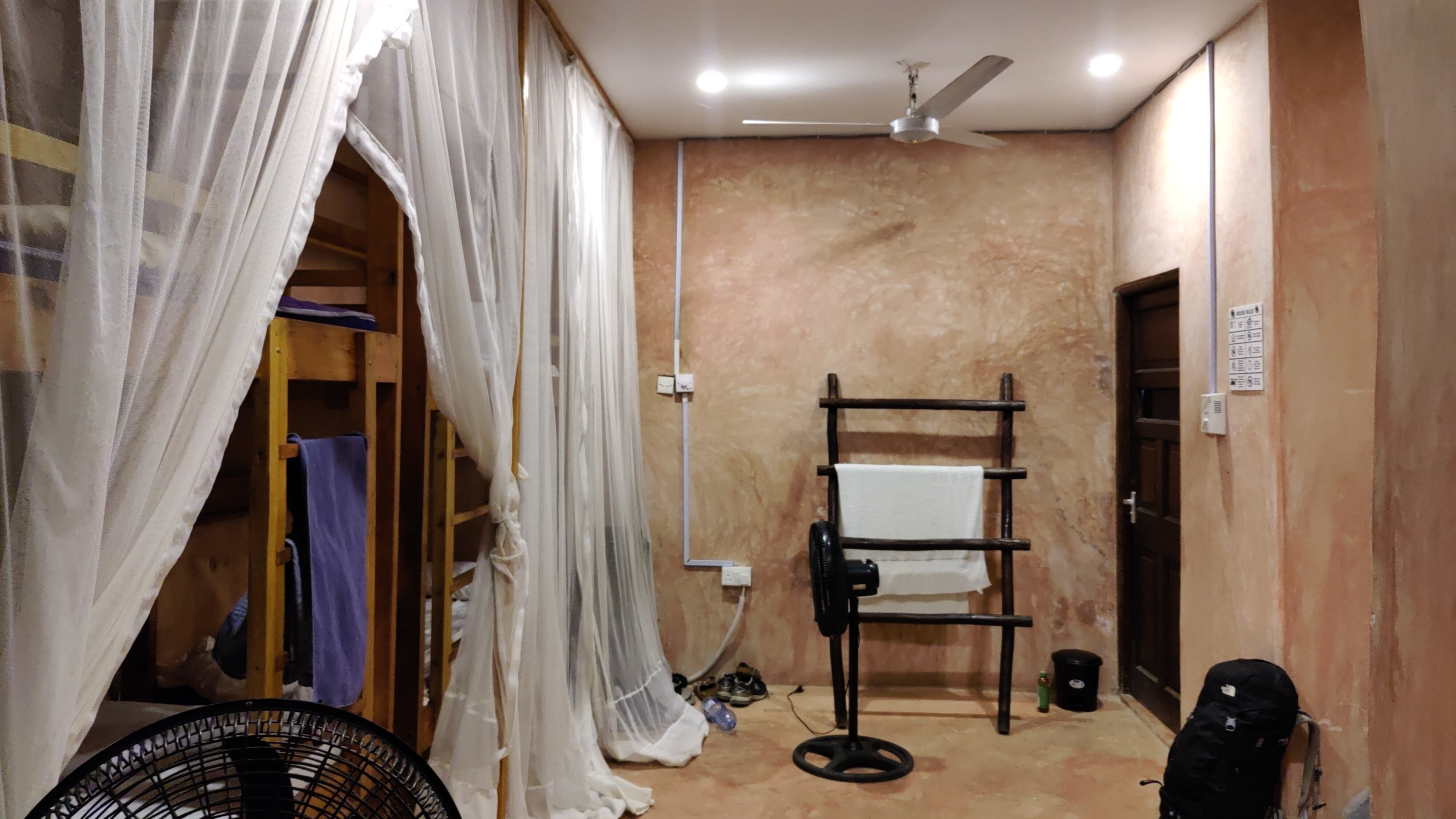 A room inside the hostel with fans and mosquito nets on the beds
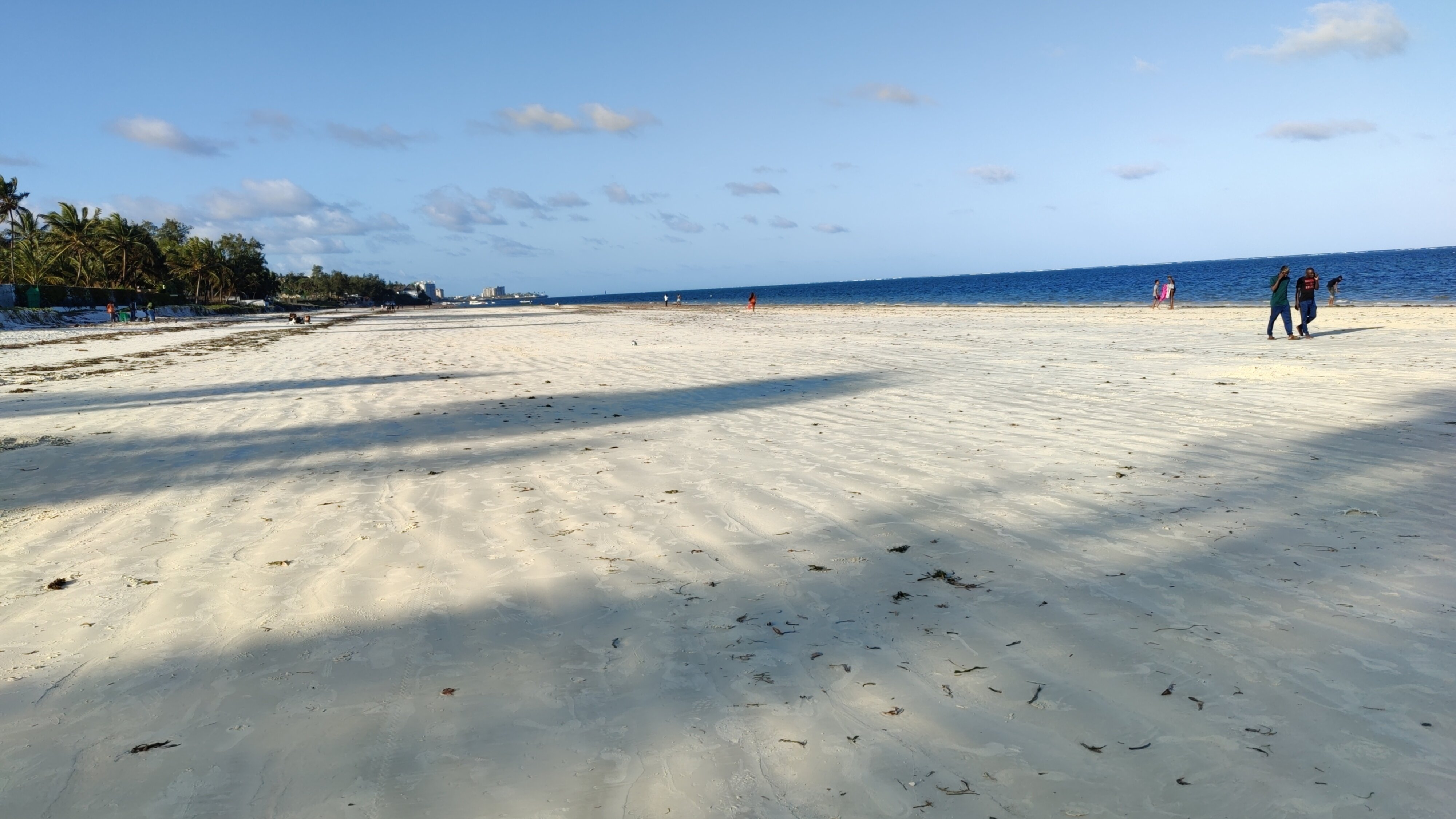 Nyali beach is a white sand beach
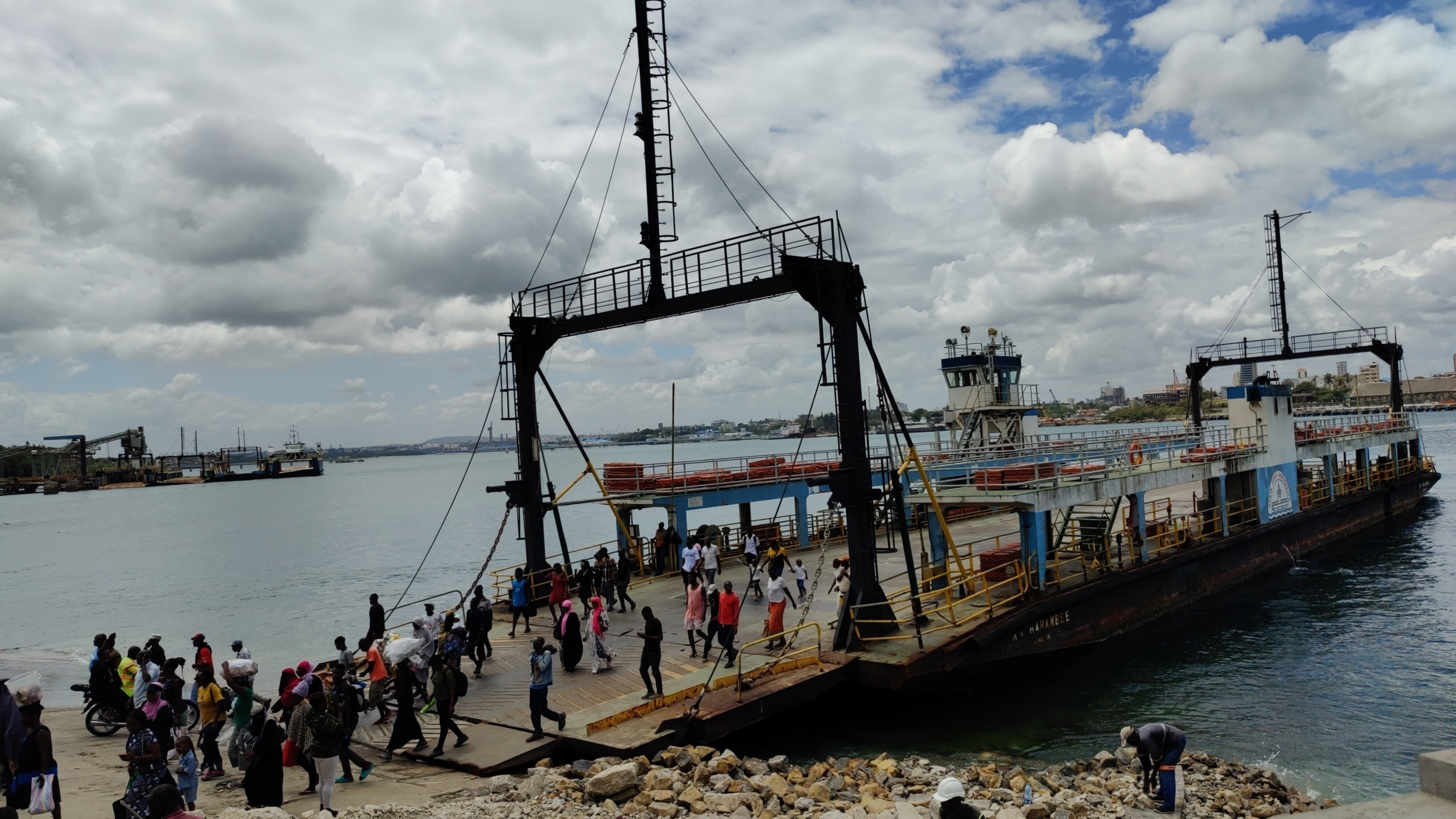 This is the ferry service for crossing the river.
 Diani beach is a popular beach in Kenya. It is a white sand beach.
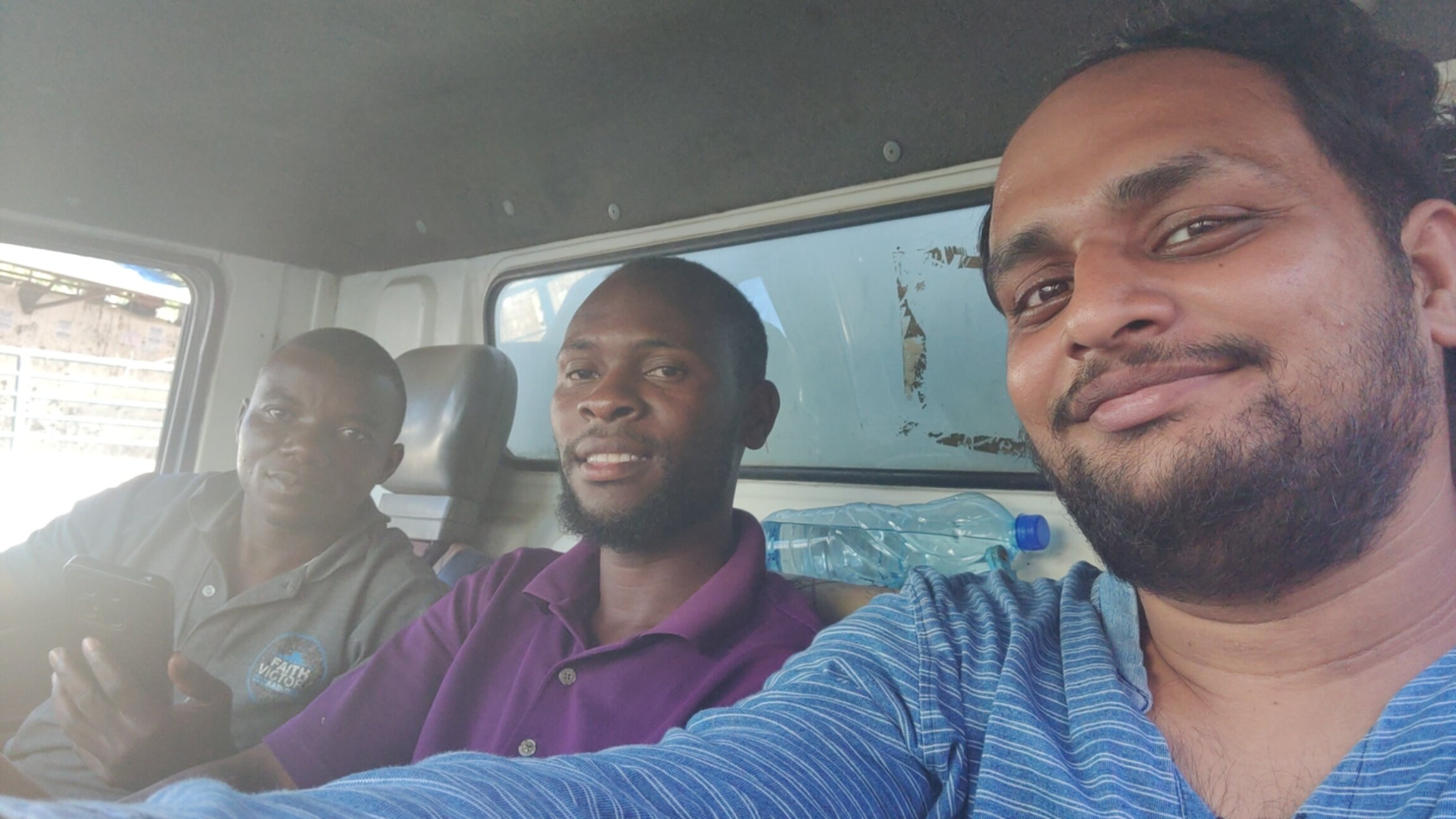 Selfie with truck drivers who gave me the free ride
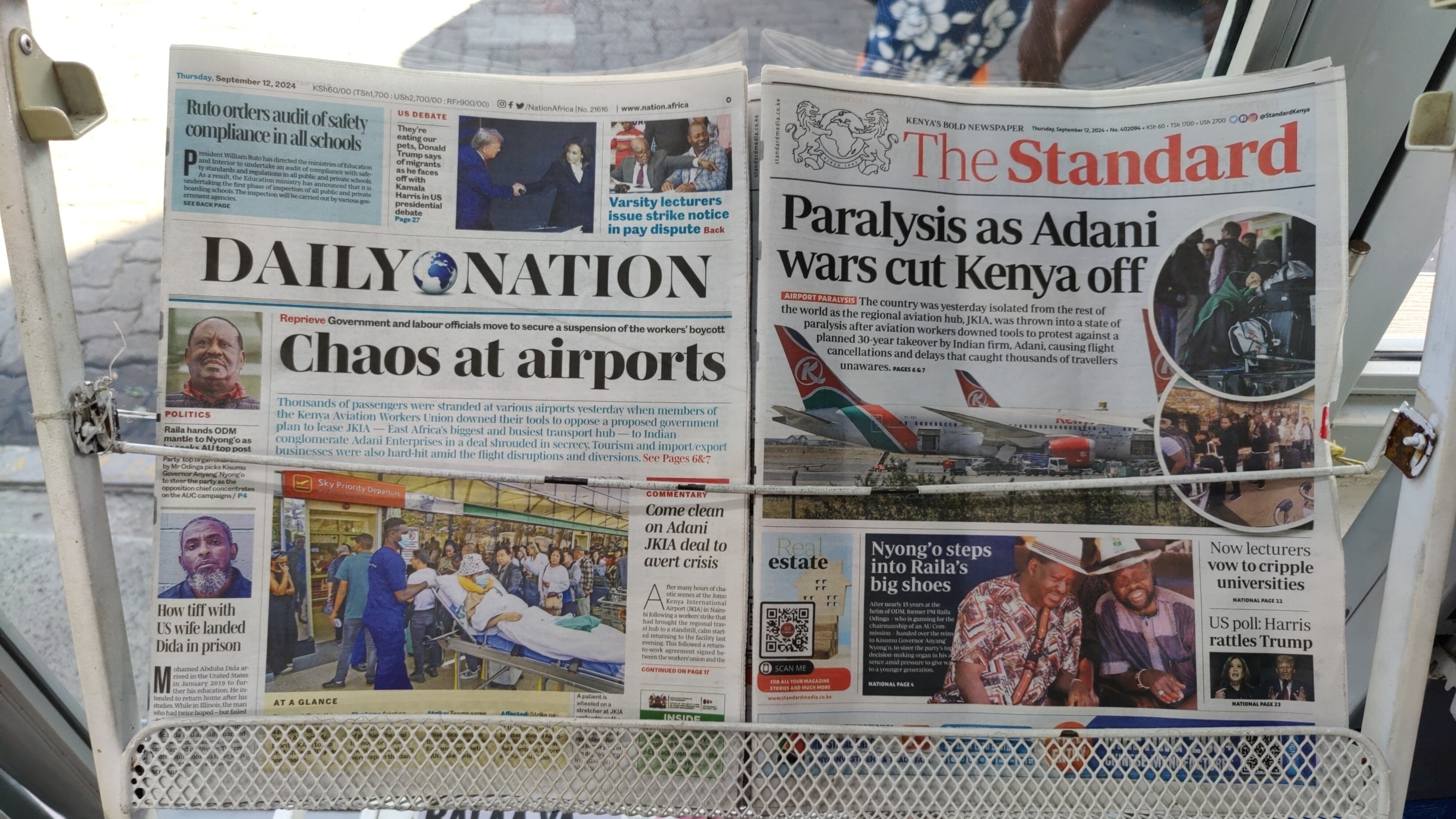 Newspapers at a stand in Kenya covering news on the airport closure
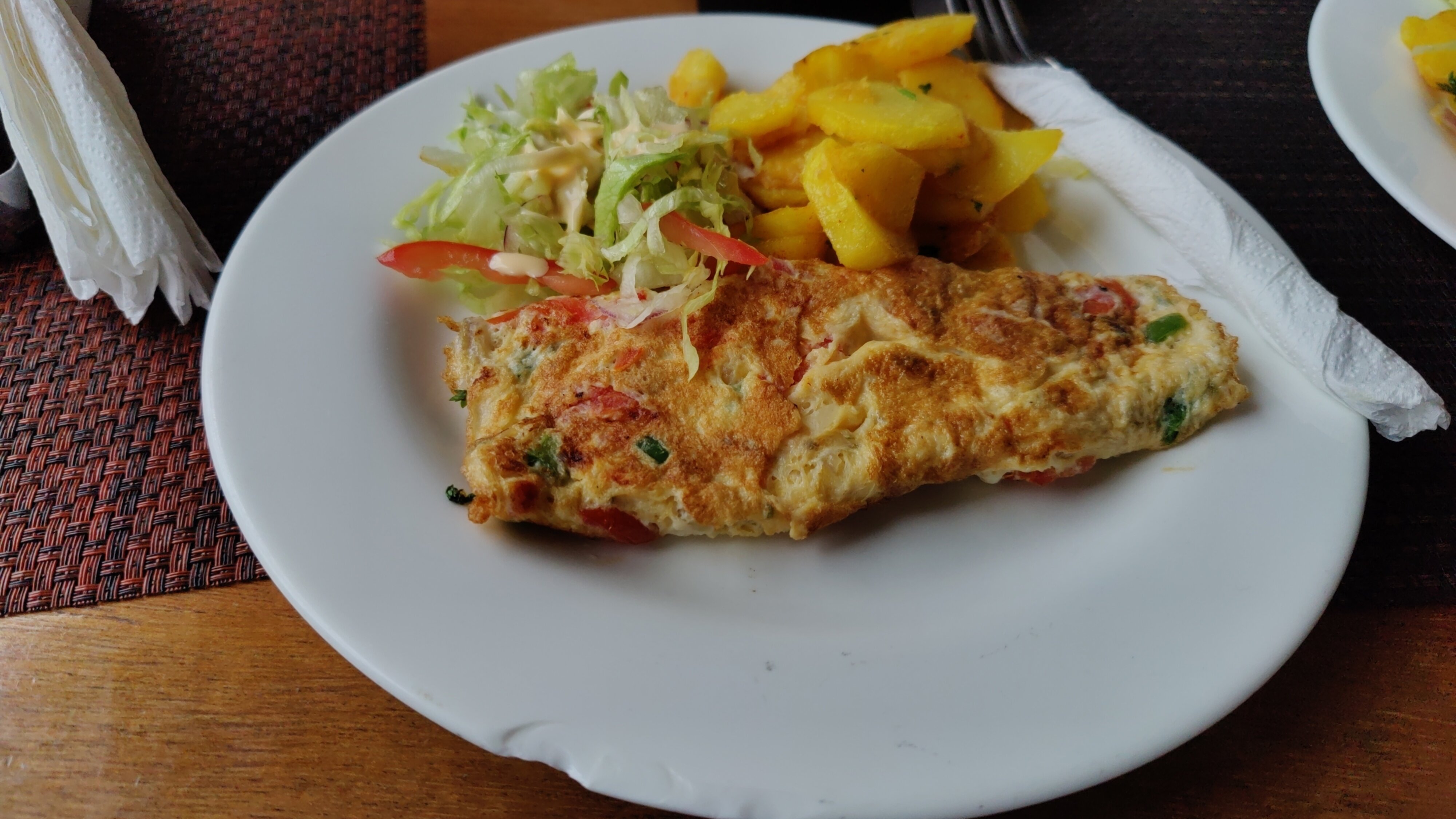 Spanish Omelette served in breakfast at Nairobi Transit Hotel
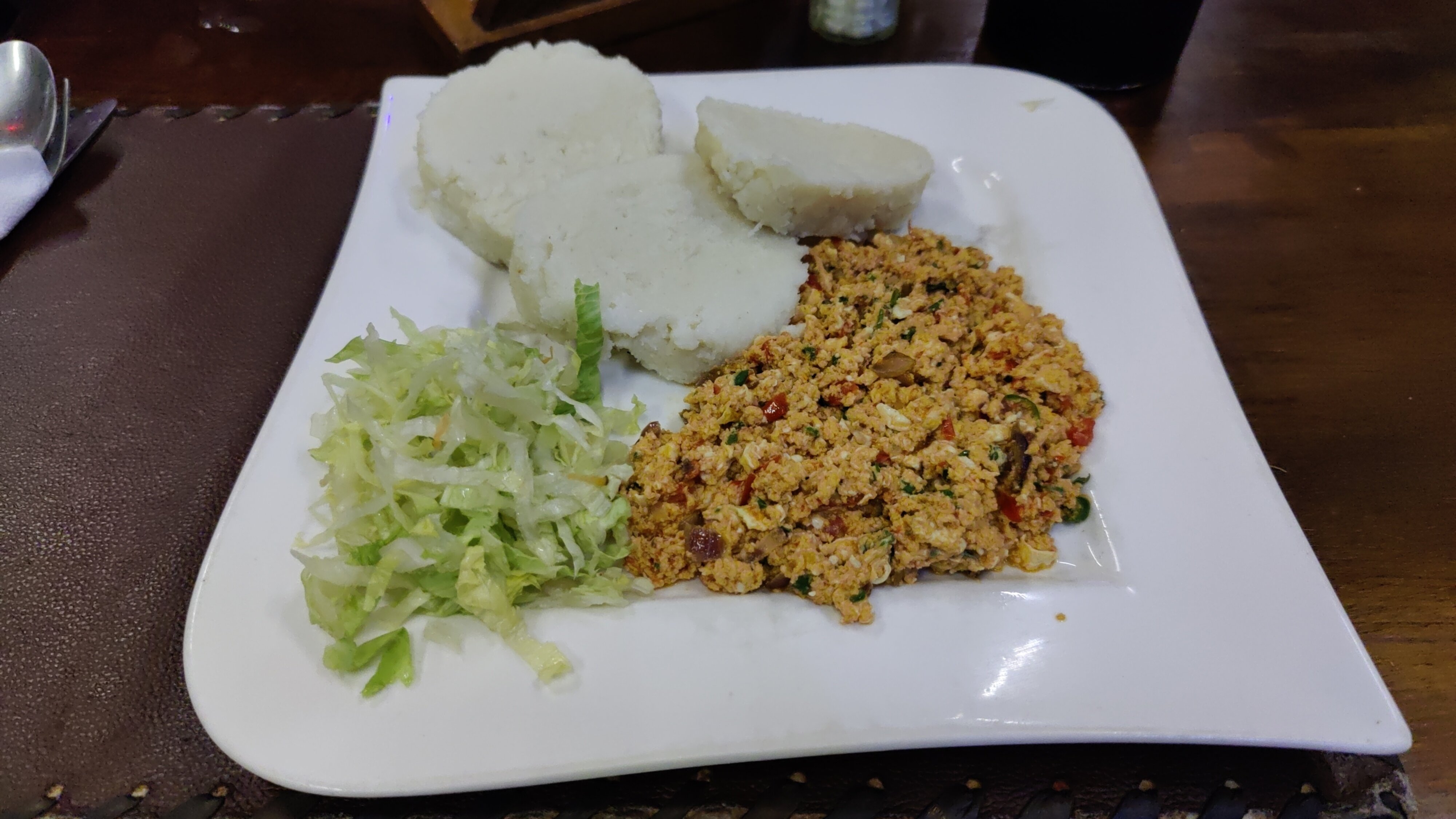 Ugali with eggs.
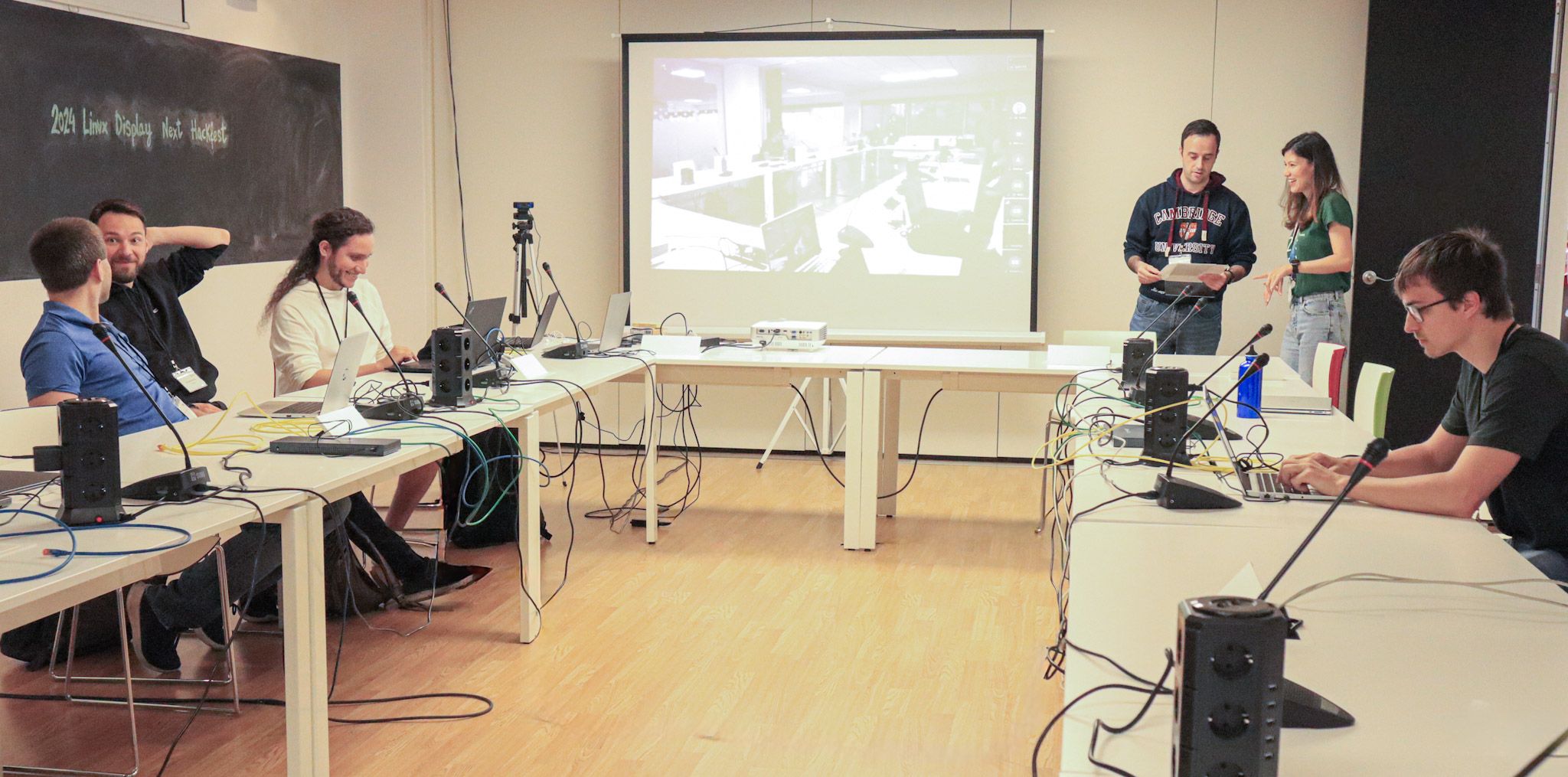
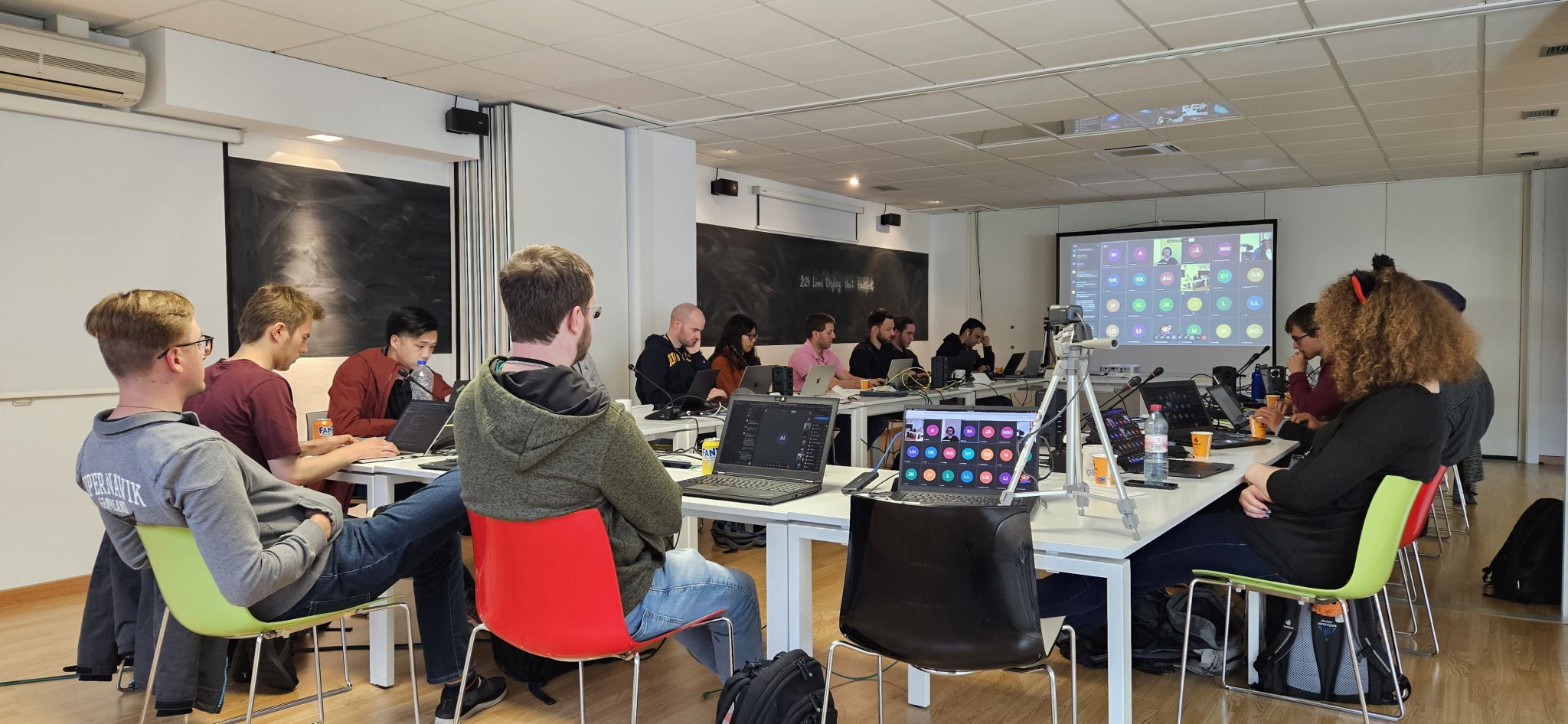
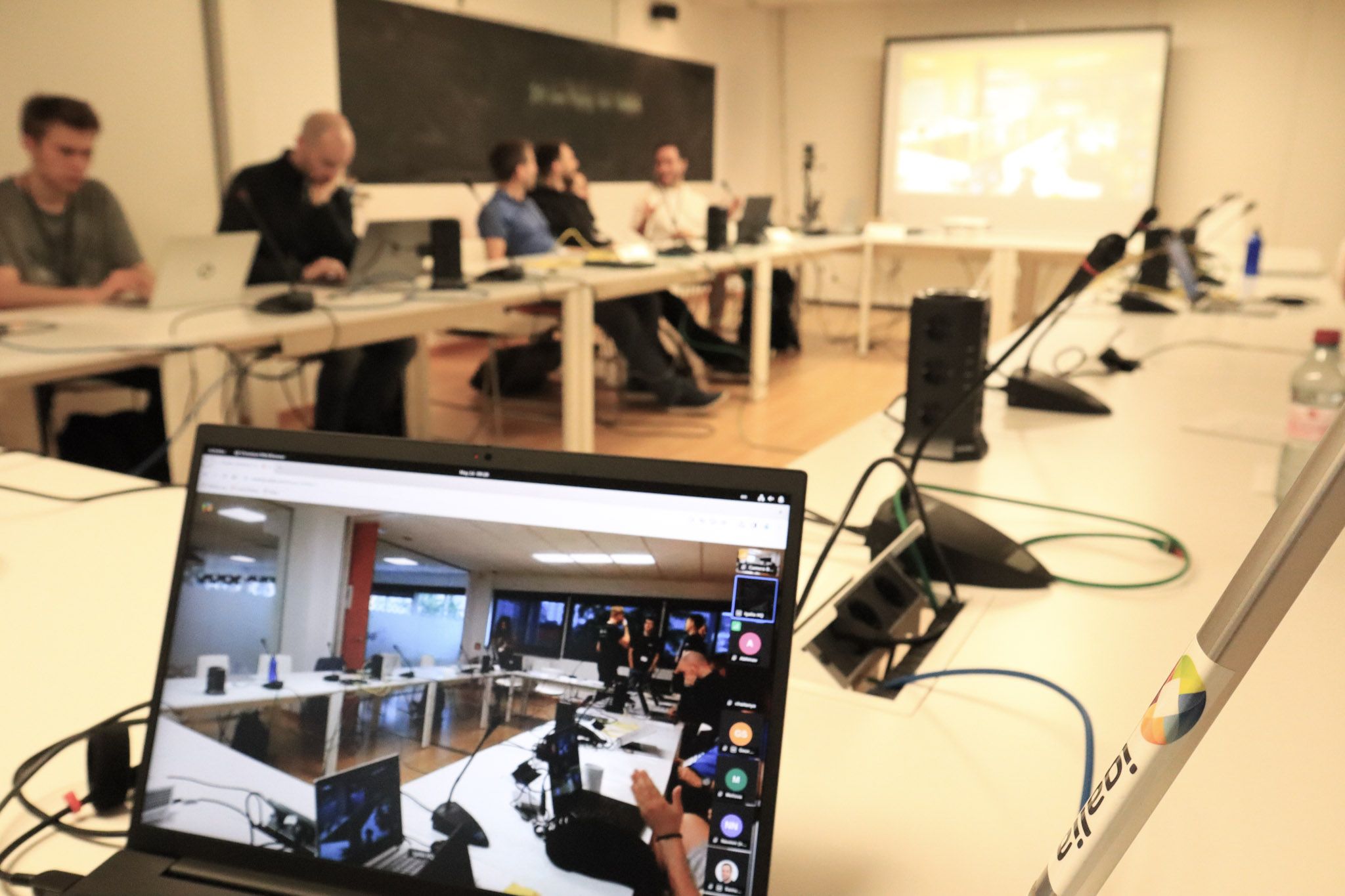
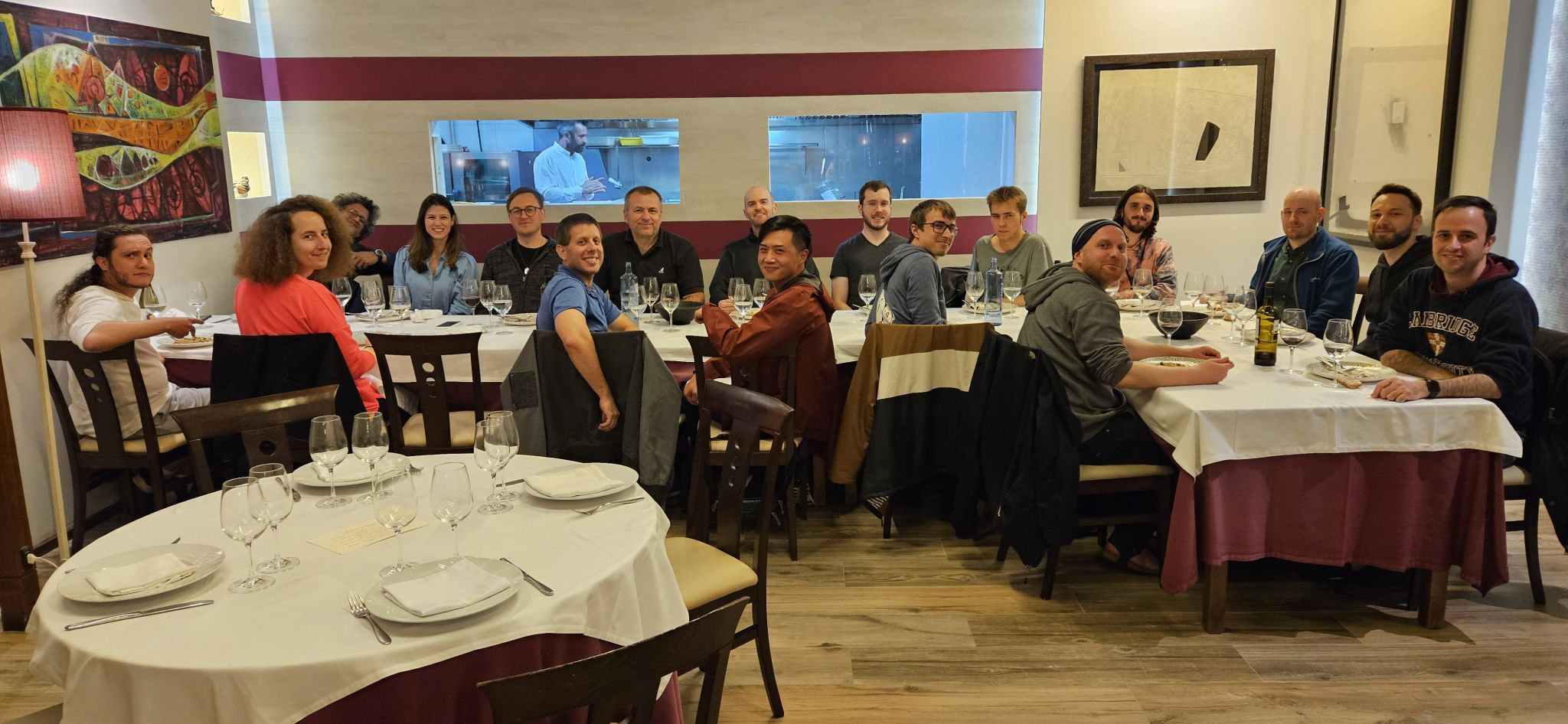
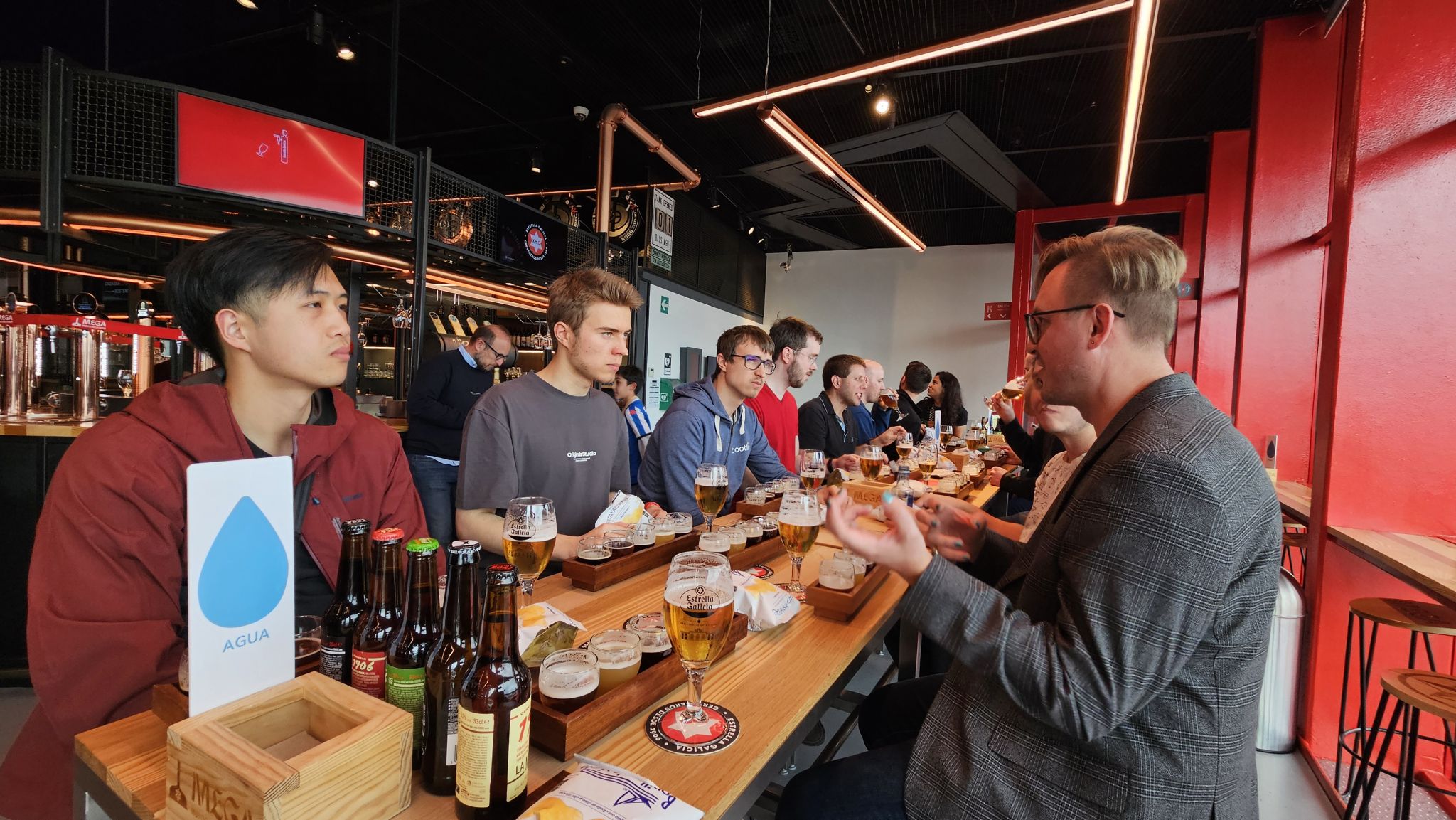
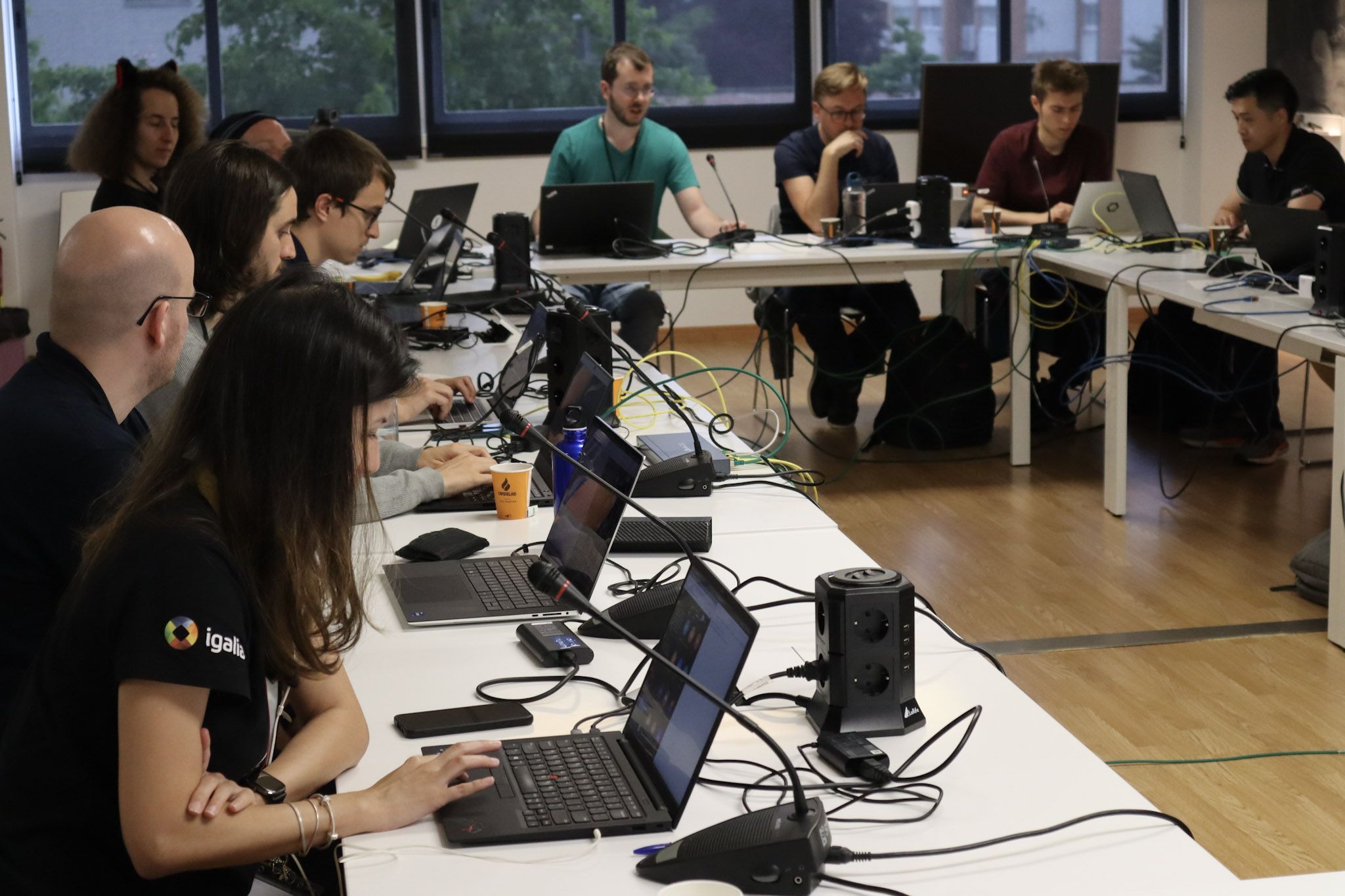

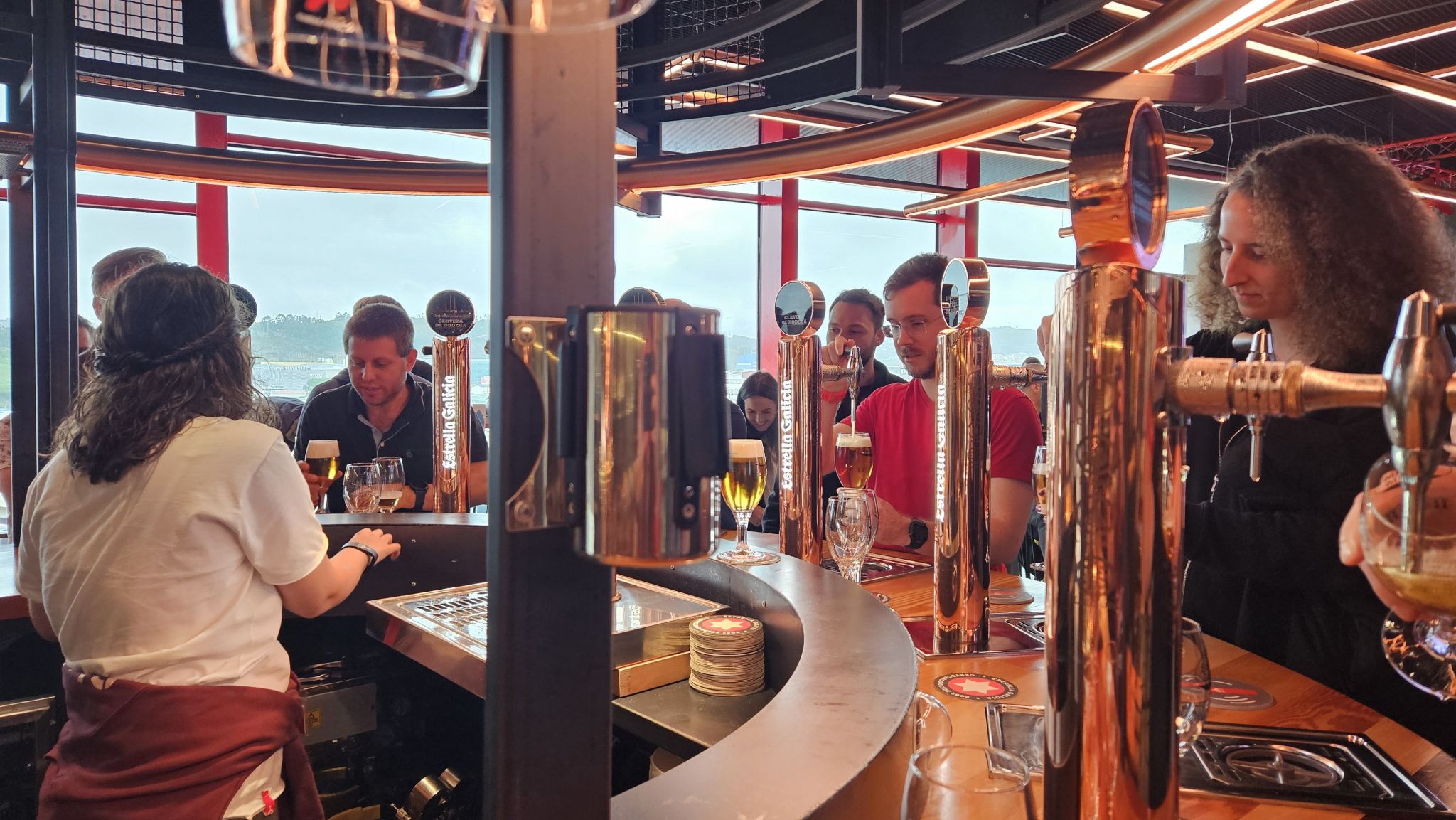
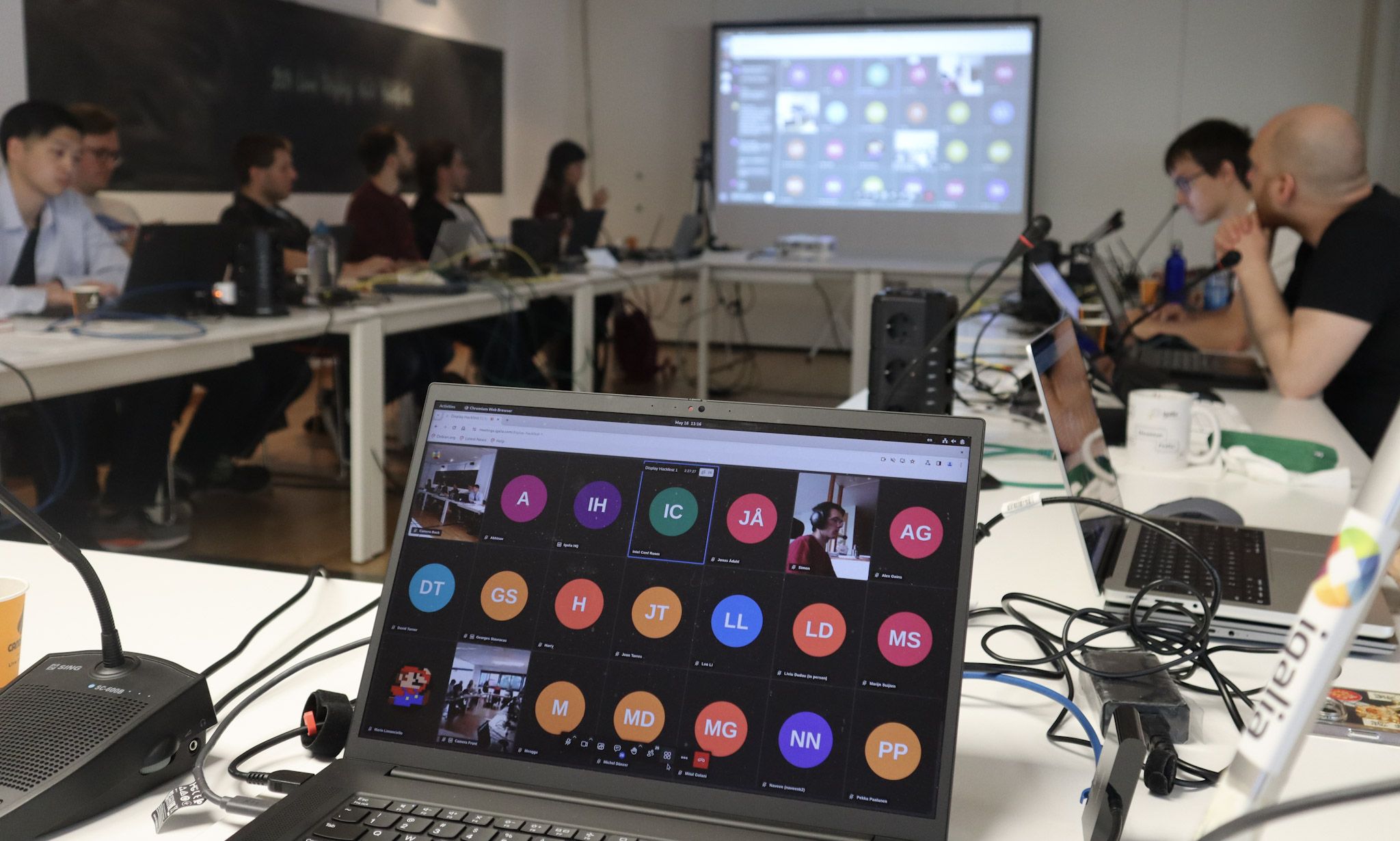
 During COVID companies suddenly found themselves able to offer remote working where it hadn t previously been on offer. That s changed over the past 2 or so years, with most places I m aware of moving back from a fully remote situation to either some sort of hybrid, or even full time office attendance. For example last week Amazon