Search Results: "tb"

8 May 2026

Russell Coker: Dirty Frag on Debian and SE Linux

Hot on the heels of the Copy Fail vulnerability [1] there is a new vulnerability Dirty Frag [2] (I linked to the Alma Linux page because it s the first one I saw and it explains things well). The Test System The test system was running kernel 6.19.14+deb14-amd64 and had the configuration after my last test of Copy Fail which was a default configuration with the following commands run:
semanage login -m -s user_u -r s0 __default__
restorecon -R -v -F /home
semanage login -m -s root -r s0 root
# logout and login again
semodule -X 100 -r unconfined
Strict Policy is Not Vulnerable I did a quick test on a Debian SE Linux system with a user running as user_t (which is often referred to as strict policy ) and got the following result:
test@testing1:~/t$ git clone https://github.com/V4bel/dirtyfrag.git && cd dirtyfrag && gcc -O0 -Wall -o exp exp.c -lutil && ./exp
Cloning into 'dirtyfrag'...
remote: Enumerating objects: 26, done.
remote: Counting objects: 100% (26/26), done.
remote: Compressing objects: 100% (20/20), done.
remote: Total 26 (delta 9), reused 23 (delta 6), pack-reused 0 (from 0)
Receiving objects: 100% (26/26), 5.83 MiB   11.47 MiB/s, done.
Resolving deltas: 100% (9/9), done.
dirtyfrag: failed (rc=1)
test@testing1:~/t/dirtyfrag$ ./exp 
dirtyfrag: failed (rc=1)
I checked the audit log and saw the following:
# audit2allow -al
#============= user_t ==============
allow user_t self:rxrpc_socket create;
allow user_t self:user_namespace create;
It seems that the rxrpc_socket access is the main thing. I did a search for domains permitted to use that class on a system without unconfined domains and saw the following:
# sesearch -A -c rxrpc_socket
allow daemon init_t:rxrpc_socket   getattr getopt ioctl read setopt write  ;
allow devicekit_disk_t domain:rxrpc_socket getattr;
allow sosreport_t domain:rxrpc_socket getattr;
allow sysadm_t domain:rxrpc_socket getattr;
This configuration doesn t appear to be vulnerable, at least to this form of the attack. Unconfined Domains I reinstalled the unconfined policy with the following command and assigned it to the user test2 with the following commands:
semodule -X 100 -i /usr/share/selinux/default/unconfined.pp.bz2
semanage login -a -s unconfined_u test2
restorecon -R -v -F /home/test2
I then tested the exploit as user test2 and got the following result:
test2@testing1:~$ git clone https://github.com/V4bel/dirtyfrag.git && cd dirtyfrag && gcc -O0 -Wall -o exp exp.c -lutil && ./exp
Cloning into 'dirtyfrag'...
remote: Enumerating objects: 26, done.
remote: Counting objects: 100% (26/26), done.
remote: Compressing objects: 100% (20/20), done.
remote: Total 26 (delta 9), reused 23 (delta 6), pack-reused 0 (from 0)
Receiving objects: 100% (26/26), 5.83 MiB   16.57 MiB/s, done.
Resolving deltas: 100% (9/9), done.
# id
uid=0(root) gid=0(root) groups=0(root) context=unconfined_u:unconfined_r:unconfined_t:s0-s0:c0.c1023
# 
The kernel message log had the following lines from the time of the attack:
[ 1310.861545] Initializing XFRM netlink socket
[ 1310.909048] alg: No test for authencesn(hmac(sha256),cbc(aes)) (authencesn(hmac-sha256-lib,cbc-aes-aesni))
[ 1310.909935] alg: No test for echainiv(authencesn(hmac(sha256),cbc(aes))) (echainiv(authencesn(hmac-sha256-lib,cbc-aes-aesni)))
[ 1318.353602] process 'su' launched '/bin/sh' with NULL argv: empty string added
Conclusion It seems that we will be getting a lot of these so running SE Linux users as user_t is the right thing to do for servers and multi user systems.


5 May 2026

Thorsten Alteholz: My Debian Activities in April 2026

Debian LTS/ELTS This was my hundred-forty-second month that I did some work for the Debian LTS initiative, started by Raphael Hertzog at Freexian. During my allocated time I uploaded or worked on: I also did a week of front desk duties and started to work on backports of the cups CVEs. Debian Printing This month I uploaded a new upstream versions: Unfortunately the first upload of cups introduces a regression and another upload was needed to take care of a crash. The patch for one CVE also broke a test script, which is used by lots of printing packages in Debian. As a result some autopkgtest runs failed. This could be fixed as well and the only remaining issue that needs some more investigation is related to cups-pdf. This work is generously funded by Freexian! Debian Lomiri This month I continued to work on unifying packaging on Debian and Ubuntu. This makes it easier to work on those packages independent of the used platform. I also started working on two new packages: lomiri-radio-app and lomiri-fretboardtrainer-app This work is generously funded by Fre(i)e Software GmbH! Debian Astro This month I uploaded a new upstream version or a bugfix version of: Debian IoT This month I uploaded a new upstream version or a bugfix version of: Marcos Talau joined the Debian IoT group, welcome aboard. Debian Mobcom This month I uploaded a new upstream version or a bugfix version of: misc This month I uploaded a new upstream version or a bugfix version of:

4 May 2026

Russell Coker: Tower Servers and Resizable BAR

A feature on modern PCIe implementations is Resizable BAR AKA REBAR . This basically means that instead of allocating 256MB of address space for a PCIe device to have it s memory mapped the device can ask for more, the limit can be 4G with some hardware or the combination of motherboard and expansion card can support 64bit addressing to allow the entire memory space of a GPU to be mapped in one region. Directly mapping all the memory will be faster no matter how things work, but a combination of algorithms optimised for a flat memory layout and overheads from remapping can cause 90% of performance to be lost without REBAR support. Some GPUs (or maybe the software driving them) will even refuse to work without it. I believe that almost all hardware supporting DDR4 will support REBAR at a hardware level, but in many cases the BIOS doesn t support it. There are people who have reflashed a system BIOS to add REBAR support and there are options to use a modified UEFI boot loader to replace the code that is used for mapping the GPU memory. The systems I like to use are server grade tower systems with registered ECC RAM, after a few years they become quite cheap and still give decent performance while supporting large amounts of RAM. But many such systems that could support REBAR don t, presumably because the vendor doesn t have a great interest in supporting new uses of old hardware. Comparing the Name Brand Servers The HP Z640 and Z840 systems I m running date from 2014 and give good performance with replacement CPUs that are cheap on ebay, but they don t support REBAR without a flashed BIOS. The next release of those HP servers are the HP Z6 and Z8 Gen 4 systems from 2017 that have BIOS support for enabling REBAR. The Lenovo Thinkstation Px20 (P520, P920, etc) don t support REBAR which is especially disappointing as they were on sale from 2017 to 2022 and have decently fast CPUs. The replacement for the Px20 systems are the ones that are still on sale now and they seem likely to have REBAR support but won t be affordable on ebay. The Dell PowerEdge T440 and R740 systems (and presumably all their servers from 2017) don t support REBAR. There are no google hits for T550 and R750 systems from 2021, so presumably no complaints means that Dell servers from that era support it. But the T350 servers are junk and only take slow CPUs, and the T550 systems are brutally expensive. The Precision 5520 systems don t support it and newer Precision workstations will get expensive. It seems that HP is best for this. Which HP Workstation The Z2 G4 only supports 64G of RAM so isn t worth considering. The Z4 G4 is low end and comes in two variants. The one with i5/i7/i9 CPUs doesn t support ECC RAM so isn t suitable for me, and that probably means most Z4 G4 systems on the market. The upside is that apparently 2*6pin PCIe power cables is standard so any size GPU should work and there are 8 DIMM slots supporting up to 512G of RAM. There are 3 options for PSU, 490w for 0 GPUs, 750W for 2 (small) GPUs, and 1000W for up to 4 GPUs. The Z6 G4 has an option for a second CPU that almost no-one selects, that reduces the space for RAM so there s only 6 DIMM slots. But as there is no option for a Z6 without ECC RAM every one on offer will be good. The Z8 G4 is a nice dual socket system that I would not use for a serious GPU after my experience of my Z840 having a motherboard problem from a big GPU. The Z4 G4 is going for about $500 on ebay with the 750W PSU, that is more than I want to pay but not a lot more. In 6 months they could be going for $350 or so. There are hardly any Z6 G4 systems on offer and they are all well over $1000 so I m not considering them. Conclusion I need to poll the second hand sites for Z4 G4 systems and find one going cheap. One of those could be a good ML test machine for a while and then become a workstation once the faster CPUs (which are currently around $900) become cheap.

Russell Coker: Copy Fail on Debian and SE Linux

I have just learned of the Copy Fail kernel vulnerability [1] thanks to alexanderkjall@mastodon.social (who I have just followed on Mastodon and I recommend that you follow too). The question for me (after installing the patched kernel the systems of mine that are most exposed) is whether SE Linux would have stopped that. Basic Policy Analysis For the SE Linux policy analysis the alg_socket class is the one that is related to the exploit. So the following policy analysis command (run as non-root with policy copied to /tmp from a running system) shows what domains are allowed access on my current Debian development system:
$ sesearch -A -c alg_socket /tmp/policy.35 
allow NetworkManager_t NetworkManager_t:alg_socket   accept bind create read setopt write  ;
allow bluetooth_t bluetooth_t:alg_socket   accept append bind connect create getattr getopt ioctl listen read setattr setopt shutdown write  ;
allow daemon init_t:alg_socket   getattr getopt ioctl read setopt write  ;
allow devicekit_disk_t domain:alg_socket getattr;
allow lvm_t lvm_t:alg_socket   append bind connect create getattr getopt ioctl read setattr setopt shutdown write  ;
allow sosreport_t domain:alg_socket getattr;
allow sysadm_t domain:alg_socket getattr;
allow unconfined_domain_type domain:alg_socket   accept append bind connect create getattr getopt ioctl listen lock map name_bind read recvfrom relabelfrom relabelto sendto setattr setopt shutdown write  ;
The above is the same as on the Trixie release policy as these things aren t changed often. Below is from Debian/Bookworm which is the same apart from Bookworm not allowing lvm_t:
$ sesearch -A -c alg_socket /tmp/policy.33
allow NetworkManager_t NetworkManager_t:alg_socket   accept bind create read setopt write  ;
allow bluetooth_t bluetooth_t:alg_socket   accept append bind connect create getattr getopt ioctl listen read setattr setopt shutdown write  ;
allow daemon init_t:alg_socket   getattr getopt ioctl read setopt write  ;
allow devicekit_disk_t domain:alg_socket getattr;
allow sosreport_t domain:alg_socket getattr;
allow sysadm_t domain:alg_socket getattr;
allow unconfined_domain_type domain:alg_socket   accept append bind connect create getattr getopt ioctl listen lock map name_bind read recvfrom relabelfrom relabelto sendto setattr setopt shutdown write  ;
I checked every Debian policy back to when the alg_socket class was first added and found that the older versions had fewer domains granted access. The most recently added was bluetooth_t and the one before that was NetworkManager_t. The Risky Lines Of those allow statements the following are the risks: Unconfined Domains and the unconfined_domain_type Attribute When writing policy lines like the following line aren t generally considered a problem as unconfined domains are allowed full access to the system. However it can be an issue if you have a process in an unconfined domain without root access, which means a regular user login. Unfortunately this happens to be where this exploit and the default Debian SE Linux configuration intersect.
allow unconfined_domain_type domain:alg_socket   accept append bind connect create getattr getopt ioctl listen lock map name_bind read recvfrom relabelfrom relabelto sendto setattr setopt shutdown write  ;
The following shell code gets a list of unconfined domains which can be entered from user domains.
A=""
for n in $(seinfo -x -a unconfined_domain_type grep _t$) ; do
  A="$A ($n)"
done
A=$(echo $A sed -e s/^.//)
sesearch -T -s user_application_exec_domain -c process egrep "$A;"
Below is the output on a Debian/Trixie (Stable) system. So a confined user in the user_t domain could run an X server and try and get it to run the exploit code (which seems difficult) or running a Wine or Mono program from the Window manager in a Wayland environment.
type_transition user_t xserver_exec_t:process xserver_t;
type_transition user_wm_t mono_exec_t:process mono_t;
type_transition user_wm_t wine_exec_t:process wine_t;
type_transition user_wm_t xserver_exec_t:process xserver_t;
The issue of unconfined domains in SE Linux policy needs much more work. I ll write some blog posts about it later and the next release of Debian will be significantly better in this regard. Daemons that Have Access
allow NetworkManager_t NetworkManager_t:alg_socket   accept bind create read setopt write  ;
allow bluetooth_t bluetooth_t:alg_socket   accept append bind connect create getattr getopt ioctl listen read setattr setopt shutdown write  ;
Network Manager is something that can potentially be exploited by a desktop user as it has a large attack surface for the desktop interface. But as the vast majority of desktop user accounts are unconfined that s not an issue. This might be an issue for some restricted desktop PCs, maybe kiosk systems and those PCs that were being installed in prisons. The bluetooth_t domain is used by the bluetooth daemon that runs as root. While we generally are less concerned about a root process being exploited the daemon will handle some data from hostile sources and it could be used as an escalation attack by someone with a hostile Bluetooth device. These can t be exploited without another bug. The Lines that Aren t Problems The getattr Lines
allow devicekit_disk_t domain:alg_socket getattr;
allow sosreport_t domain:alg_socket getattr;
allow sysadm_t domain:alg_socket getattr;
The above getattr access isn t an issue as it just allows seeing process information, and it s also by privileged domains. The init_t Sockets
allow daemon init_t:alg_socket   getattr getopt ioctl read setopt write  ;
The daemon access to sockets inherited from init_t probably isn t a great idea, it s from the following section in init.te which is to allow socket activation for daemons, the comment is concerning in this context. Also socket_class_set is overly broad as without even inspecting the systemd source code I m pretty sure that far fewer than 1/3 of the 55 classes allowed by that rule are actually supported in systemd.
ifdef( init_systemd', 
        # Until systemd is fixed
        allow daemon init_t:socket_class_set   getattr getopt ioctl read setopt write  ;
But that s not really a problem as systemd has to just not create a socket of that type, if a hostile party can make systemd create such sockets then you have probably already lost. SE Linux Protection Overall SE Linux systems running confined users (kiosks and other confined GUI environments) will be protected barring a bug in Network Manager or the Bluetooth daemon as long as there is no Xserver installed (or the X server won t run scripts on startup), no Wine system installed, and no Mono. SE Linux servers and VMs will be protected against daemon issues as long as the daemon isn t unconfined. To convert the default login to user_t run the following commands:
semanage login -m -s user_u -r s0 __default__
restorecon -R -v -F /home
But it is still possible to access an unconfined domain from user_t (a topic I will address in detail in a future blog post). To remove unconfined entirely (not a task for novices or something to be done on in production without testing and planning) run the following commands:
semanage login -m -s root -r s0 root
# logout and login again
semodule -X 100 -r unconfined
Then a Debian/Trixie system running SE Linux will be safe against this attack even when running a vulnerable kernel. If you still want to use root as unconfined_t but still have untrusted shell users then run the following command to remove the easiest ways for users to run a program in an unconfined domain:
semodule -X 100 -r mono wine
Success and Failure Blocked by SE Linux Below is what happens on stdout/stderr when SE Linux blocks the exploit (tested with vulnerable Debian kernel 6.12.74+deb13+1-amd64):
test@testing1:~$ python3 ./copy_fail_exp.py 
Traceback (most recent call last):
  File "/home/test/./copy_fail_exp.py", line 9, in <module>
    while i<len(e):c(f,i,e[i:i+4]);i+=4
                   ~^^^^^^^^^^^^^^
  File "/home/test/./copy_fail_exp.py", line 5, in c
    a=s.socket(38,5,0);a.bind(("aead","authencesn(hmac(sha256),cbc(aes))"));h=279;v=a.setsockopt;v(h,1,d('0800010000000010'+'0'*64));v(h,5,None,4);u,_=a.accept();o=t+4;i=d('00');u.sendmsg([b"A"*4+c],[(h,3,i*4),(h,2,b'\x10'+i*19),(h,4,b'\x08'+i*3),],32768);r,w=g.pipe();n=g.splice;n(f,w,o,offset_src=0);n(r,u.fileno(),o)
  File "/usr/lib/python3.13/socket.py", line 233, in __init__
    _socket.socket.__init__(self, family, type, proto, fileno)
    ~~~~~~~~~~~~~~~~~~~~~~~^^^^^^^^^^^^^^^^^^^^^^^^^^^^^^^^^^^PermissionError: [Errno 13] Permission denied
test@testing1:~$ su
Password:
When the attack is blocked by SE Linux there will be no messages in the kernel message log but the SE Linux audit log (typically stored in /var/log/audit/audit.log) will have lines like the following:
type=AVC msg=audit(1777803068.070:76): avc:  denied    create   for  pid=811 comm="python3" scontext=user_u:user_r:user_t:s0 tcontext=user_u:user_r:user_t:s0 tclass=alg_socket permissive=0
type=SYSCALL msg=audit(1777803068.070:76): arch=c000003e syscall=41 success=no exit=-13 a0=26 a1=80005 a2=0 a3=0 items=0 ppid=791 pid=811 auid=1000 uid=1000 gid=1000 euid=1000 suid=1000 fsuid=1000 egid=1000 sgid=1000 fsgid=1000 tty=pts0 ses=1 comm="python3" exe="/usr/bin/python3.13" subj=user_u:user_r:user_t:s0 key=(null)ARCH=x86_64 SYSCALL=socket AUID="test" UID="test" GID="test" EUID="test" SUID="test" FSUID="test" EGID="test" SGID="test" FSGID="test"
type=PROCTITLE msg=audit(1777803068.070:76): proctitle=707974686F6E33002E2F636F70795F6661696C5F6578702E7079
For that the :76 is the audit log entry number, the command ausearch -i -a 76 will interpret that message with the following output:
type=PROCTITLE msg=audit(05/03/26 10:11:08.070:76) : proctitle=python3 ./copy_fail_exp.py 
type=SYSCALL msg=audit(05/03/26 10:11:08.070:76) : arch=x86_64 syscall=socket success=no exit=EACCES(Permission denied) a0=alg a1=SOCK_SEQPACKET a2=ip a3=0x0 items=0 ppid=791 pid=811 auid=test uid=test gid=test euid=test suid=test fsuid=test egid=test sgid=test fsgid=test tty=pts0 ses=1 comm=python3 exe=/usr/bin/python3.13 subj=user_u:user_r:user_t:s0 key=(null) 
type=AVC msg=audit(05/03/26 10:11:08.070:76) : avc:  denied    create   for  pid=811 comm=python3 scontext=user_u:user_r:user_t:s0 tcontext=user_u:user_r:user_t:s0 tclass=alg_socket permissive=0 
When it Works Below is what happens when it works (again tested with Debian kernel 6.12.74+deb13+1-amd64):
test@testing1:~$ python3 ./copy_fail_exp.py 
# 
Here is the kernel log when the attack works:
[   30.441830] alg: No test for authencesn(hmac(sha256),cbc(aes)) (authencesn(hmac(sha256-avx2),cbc-aes-aesni))
[   30.447466] process 'su' launched '/bin/sh' with NULL argv: empty string added
When the Kernel Isn t Vulnerable If the kernel isn t vulnerable and SE Linux permits the attack (EG run from an unconfined domain) the following is seen on stdout/stderr:
$ python3 ./copy_fail_exp.py 
Password: 
su: Authentication failure
In that situation the kernel will log something like the following:
[   36.647023] alg: No test for authencesn(hmac(sha256),cbc(aes)) (authencesn(hmac-sha256-lib,cbc-aes-aesni))
This was tested on the Debian/Unstable kernel 6.19.13+deb14-amd64. Conclusion Run the following commands and then force all users to logout to make a Debian SE Linux system offering shell access reasonably safe against this bug. But also upgrade your kernel as soon as convenient because having multiple layers of protection is always good.
semanage login -m -s user_u -r s0 __default__
restorecon -R -v -F /home
semodule -X 100 -r mono wine
The GrapheneOS people are doing really good work on securing phones, I am most interested in Mobian (Debian on phones) but for people who have made different choices GrapheneOS is a good option. Here is the GrapheneOS statement on Copy Fail (they are not vulnerable to it) [3]. For people interested in running a secure Android build GrapheneOS is the best option. Their supported devices list shows Pixel 6 to Pixel 10 supported and Pixel 8 to Pixel 10a recommended [4]. In Australia Kogan sells refurbished Pixel 6 phones starting at $251 including delivery and refurbished Pixel 8 phones starting at $499 with First membership, they seem to have the cheapest Pixel phones. I want to make Debian more like Android in terms of security, but that s a topic for other blog posts. Here is the Debian page listing kernels that have been fixed against this exploit [5].

Russ Allbery: Review: Full Speed to a Crash Landing

Review: Full Speed to a Crash Landing, by Beth Revis
Series: Chaotic Orbits #1
Publisher: DAW
Copyright: August 2024
ISBN: 0-7564-1947-6
Format: Kindle
Pages: 153
Full Speed to a Crash Landing is a science fiction novella and the first of a series. Beth Revis made the New York Times bestseller list for an earlier series of young adult science fiction novels, but somehow I had not heard of her before this series. Ada Lamarr is a salvager. She picks up material from crashed or dead ships for resale. As the story opens, she has a large hole in the side of her ship, she's running out of oxygen, and the other ship nearby is refusing to answer her distress call. By the time they finally respond, there is barely enough time to get aboard before she is entirely out of air. Ada's first-person narration drops hints that she may not be entirely what she seems. But then, neither is the Halifax, so it's only fair. The captain of the Halifax treats Ada with a great deal of suspicion and wants her out of the way of their ongoing salvage operation. However, the captain does not appear to be entirely in charge. Ada is immediately struck by the mysterious Rian White, who seems to have some authority over their mission and is more thoughtful and calculating than the rest of the crew. He's also handsome, which doesn't hurt. I was tempted to keep writing about the plot, but given the short length of this book, I should stop there and let you enjoy the twists and turns for yourself. This is a fun science fiction action romp: lots of banter, lots of tense moments, and a cagey first-person protagonist with an irrepressible sense of humor and a knack for brazening her way through conversations. It's not long on world-building (there isn't enough room), but Revis works in enough details to be intriguing and to set up some interesting motivations. This is the sort of book that lives and dies by how much you like the protagonist, something that you will easily figure out by the end of an ebook sample if you're the sort of reader who uses those. Ada is irreverent, talkative, and very adroit at diverting attention (entertainingly) onto anything other than the critical piece of information other people are missing. If you want to, I suspect you could easily figure out most of what Ada is up to before the book reveals it explicitly. It's not that complicated, and the book isn't really trying to hide, although it doesn't give you all the necessary information in advance. Personally, I was happy to sit back and enjoy the ride. There is no romance in this book beyond frequent comments from Ada that she would have liked there to be a romance in this book under different circumstances, but I will be surprised if that romance doesn't show up later in the series. Ada and Rian are clearly being set up as a pair. I didn't like Rian as much, mostly because he's less memorable as a character, but he comes into his own in the appendices after the plot proper. I thought those concluding appendices were the best part of the novella and question the Kindle formatting decision to treat them like supplemental material. They purport to be a series of government memos, fill in a lot more of the backstory and world building, and have the best footnotes. Don't skip them! This isn't the sort of book that I am inspired to immediately push into everyone's hands, but it's a fast, well-paced story that delivered a few reading sessions of entertainment. I'm not sure the political philosophy in the background makes a lot of sense, but at least not a standard stereotype of current politics seen in so much science fiction. It's going to set up some interesting character conflict in later books. I'm certainly intrigued enough to keep reading. Recommended when you're in the mood for some fast-paced fun that's short and undemanding. Followed by How to Steal a Galaxy. Rating: 7 out of 10

2 May 2026

Bits from Debian: Debian welcomes the 2026 GSoC interns

GSoC logo We are very excited to announce that Debian has been assigned seven contributors to work under mentorship on a variety of projects with us during the Google Summer of Code. Here is a list of the projects and contributors, along with details of the tasks to be performed.

Project: Automated Debian Packaging with debianize Deliverables of the project: Debianize is a tool that aims to automatically create debian packages from scratch from upstream source trees. As for the current version, it works for some of the packages but it is not reliable. This project aims at making it production ready such that it can work with most of the projects. Along with that improving its reliability, coverage, integration with the broader ecosystem and other enhancements.
Project: Linux Livepatching Deliverables of the project: Linux Kernel Livepatching is the process of replacing functions in the kernel code affected by CVEs with the patch-applied functions during system runtime. It's basically a method to apply security kernel patches to a running system.
Project: DebNet: Visualising the Bus Factor Graph Analysis of Debian's Infrastructure Deliverables of the project: DebNet models the Debian archive as a graph to identify critical packages maintained by too few people. Using data from the Ultimate Debian Database (UDD), it builds a package dependency graph and a maintainer-package graph to compute practical metrics like the Bus Factor, Fragility Score, and Dependency Impact for every source package.
Project: Attack of the Clones: Fight Back Using Code Duplication Detection From Security Patches Deliverables of the project: This project aims to detect vulnerable code clones in the Debian archive by automatically extracting signatures from security patches. Using a two-signal approach that separates vulnerable patterns from fix patterns, the system generates high-specificity queries to search the entire archive via Debian CodeSearch.
Project: Debusine: debuginfod server Deliverables of the project: This project implements a debuginfod-compatible server within Debusine to provide automated debug symbol resolution for Debian developers.
Project: Debian-LSP: Improve File Format Support Deliverables of the project: The Debian LSP Language Server currently provides only basic features field completion, parse-error diagnostics, and simple quick fixes leaving Debian maintainers without the rich IDE experience available in other ecosystems.
Project: Debusine: live log streaming Deliverables of the project: Debusine currently only shows task logs after a task has fully completed. This means developers working with long-running jobs (such as package builds or test pipelines) have no way to monitor progress in real time or catch failures early. This project adds live log streaming to Debusine.
Congratulations and welcome to all the contributors! The Google Summer of Code program is possible in Debian thanks to the efforts of Debian Developers and Debian Contributors that dedicate part of their free time to mentor contributors and outreach tasks. Join us and help extend Debian! You can follow the contributors' weekly reports on the debian-outreach mailing-list, chat with us on our IRC channel or reach out to the individual projects' team mailing lists.

Ben Hutchings: FOSS activity in April 2026

30 April 2026

Russell Coker: Links April 2026

Charles Stross wrote an interesting blog post about the apparent desire of super rich people to kill the poor, it seems that the people in power want to make all the conspiracy theories come true [1]. Wouter wrote an insightful blog post about the need for free firmware [2]. Matthew Garrett wrote an interesting blog post about the potential security issues raised by non-free firmware and firmware updates [3]. Which goes well with Wouter s post. Interesting article about fake job adverts with a code sample for the applicant to show their skils which depends on hostile libraries that install a RAT [4]. Do we need Qubes for software development nowadays? Bruce Schneier wrote an insightful and informative article about the two-tiered Internet access scheme in Iran and how it is bad for society [5]. Caleb Hearth gave an interesting talk Don t Get Distracted about the often ignored unethical uses of software [6]. Techdirt has an insightful article from 2025 Fascism For First Time Founders about why it s a bad idea for tech companies to support fascism, this aged very well [7]. Dr. Bret C. Devereaux wrote an informative blog post about why fascists always fail at war, and also authoritarians in general [8]. Bruce Schneier and Nathan Sanders wrote an interesting blog post about the new Japanese political party Team Mirai, we need this sort of party in every country to save democracy [9]. Sam Varghese wrote an insightful article about the current situation in Israel and Iran and the poor performance of Australian journalists in covering the issues [10]. Louis Rossman made a video about the Norwegian Consumer Council s advertising campaign about Enshittification, he includes an excellent advert that the Norwegians produced [11]. Marga Manterola gave a really good talk at Fosdem 2026 Free as in Burned Out: Who Really Pays for Open Source? [12].

28 April 2026

Ravi Dwivedi: A day in Vienna

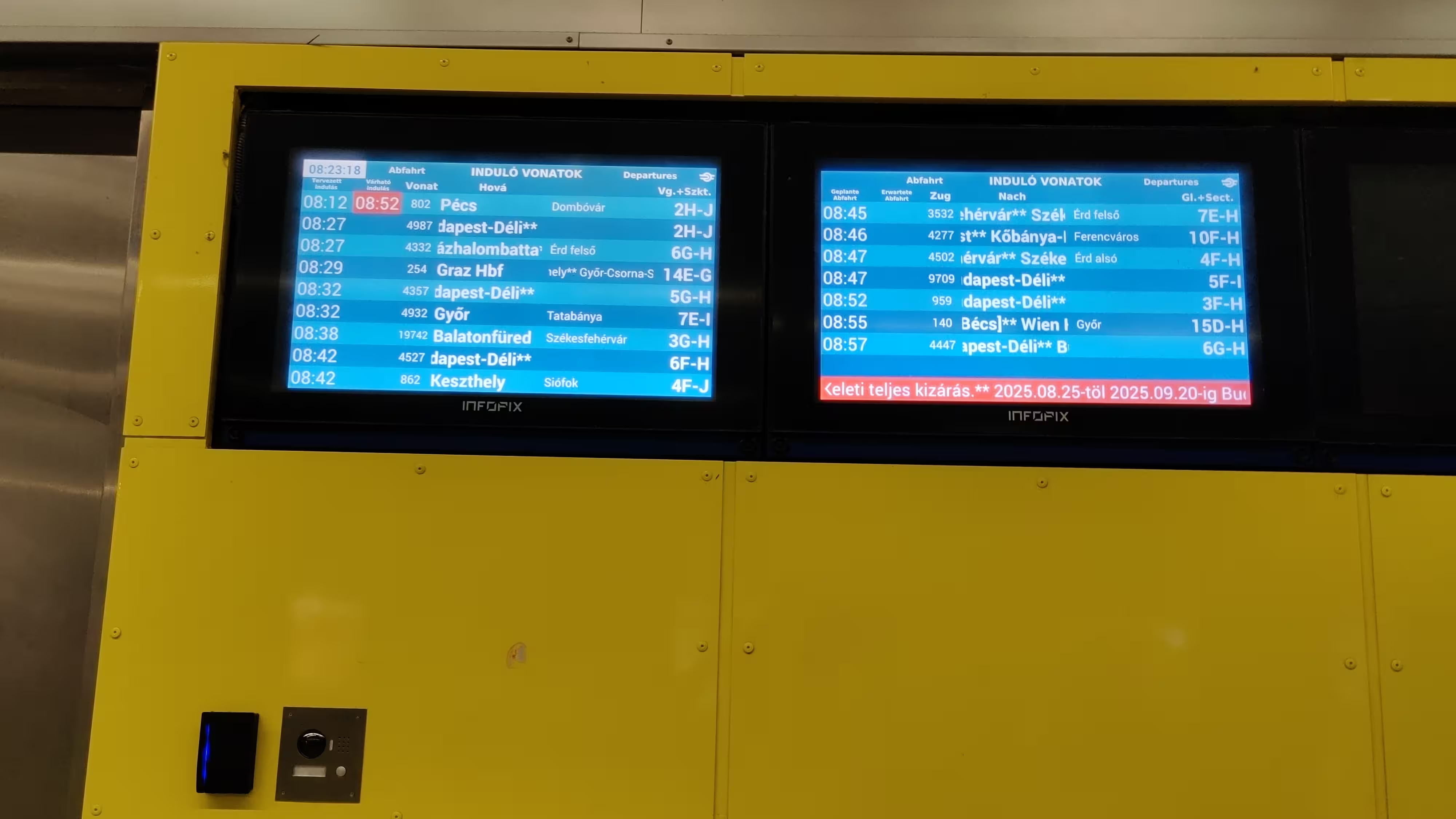
On the 7th of September 2025, my friend Dione and I had a day trip to Vienna the capital of Austria. We were attending a conference in Budapest, Hungary, which is 250 km from Vienna. So, it was a good opportunity to visit Vienna. We took a morning train from Budapest to Vienna and got back to Budapest by night. However, booking these tickets turned out to be a bit complicated. There were many websites to book the train ticket Hungarian Railways, Austrian Railways, and third-party sites such as Omio. All these websites had different prices for the same ticket. I booked the tickets from the Hungarian Railways website as it was the cheapest. The train from Budapest to Vienna was 13, operated by Eurocity. Also, I had to pay 2 for the seat reservation on top. The train from Vienna to Budapest operated by Railjet was 21, along with 2 extra for reservation again making it 23. The tickets for the two-way journey added up to 38. The cost of these tickets varied depending on when one purchses them: the sooner you purchase, the lower the price. I bought my tickets 15 days ahead of the date of journey and paid just 38. In contrast, Dione booked just one day before her trip and paid around 100 for her tickets. As for the seat reservation, long-distance trains in Europe usually require paying extra for the seat reservation. This ensures that you get your preferred seat, such as a window seat or an aisle seat. Nevertheless, you will get a seat on long-distance trains because they do not sell more tickets than there are seats. Therefore, you will get a seat without reservation as well. However, we reserved our seats so that we can sit together. This helped us more in the return part of the journey from Vienna to Budapest which was more crowded than the train we took from Budapest to Vienna in the morning. On another note, reservation is mandatory on some trains in Europe, but ours wasn t one of them. In addition, people also use rail passes, so an extra charge is required on top for reserving the seats for pass holders. On the other hand, local trains do not require seat reservations in general. Our train s scheduled departure was at 08:55 from the Budapest Kelenfold station. We reached the train station 40 minutes before the train s scheduled departure. The Kelenfold station had free Wi-Fi, which was handy because I didn t have a local SIM.
A departures board at Budapest Kelenfold station. A departures board at Budapest Kelenfold station. Photo by Ravi Dwivedi, released under CC-BY-SA 4.0.
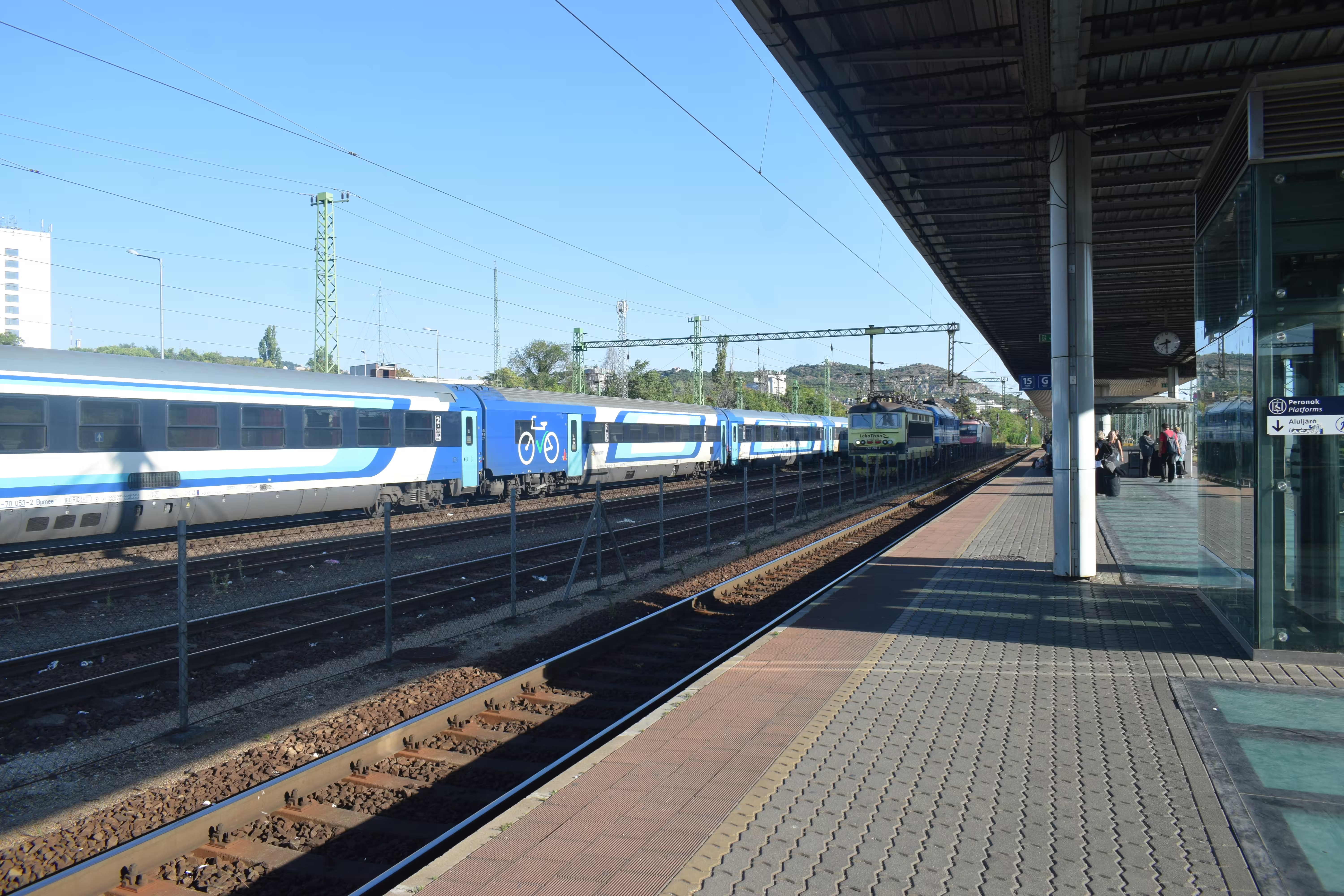
A platform on Budapest Kelenfold station. This is platform number 15 of Budapest Kelenfold station where we boarded our train. Photo by Ravi Dwivedi, released under CC-BY-SA 4.0.
Our train arrived on time. I tried to find our coach number but could not find the numbers written anywhere on the side of the coach. Luckily, we were helped by a fellow passenger who directed me to look at the doors, where the numbers were mentioned clearly! Then we got into our compartment and took our respective seats. Our tickets were checked twice - once while the train was in Hungary and the other when in Austria. Showing the PDF of the train ticket on our mobile to the ticket inspector was good enough for the purpose. Austria and Hungary are a part of the open transit Schengen area, which means this was the extent of the border control checks we had to go through.
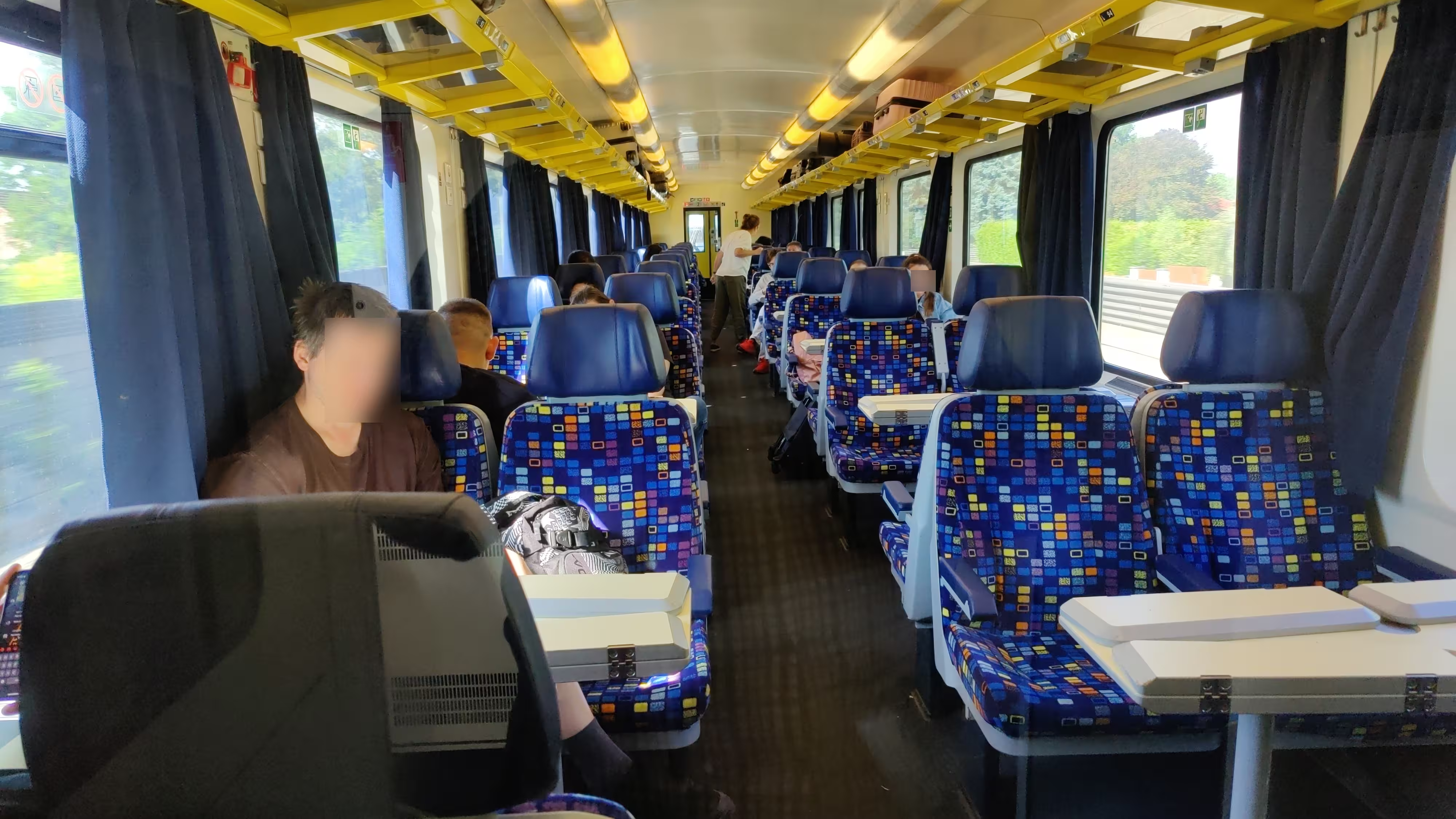
Interior of the train. Interior of our Budapest to Vienna train. Photo by Ravi Dwivedi, released under CC-BY-SA 4.0.
The train also had free Wi-Fi, albeit with poor connection at times. There were no eatery options inside the train. We deboarded at the Wien Hauptbahnhof station in Vienna. The journey was 250 km and took 2.5 hours, reaching Vienna at 11:25, which was the scheduled time.
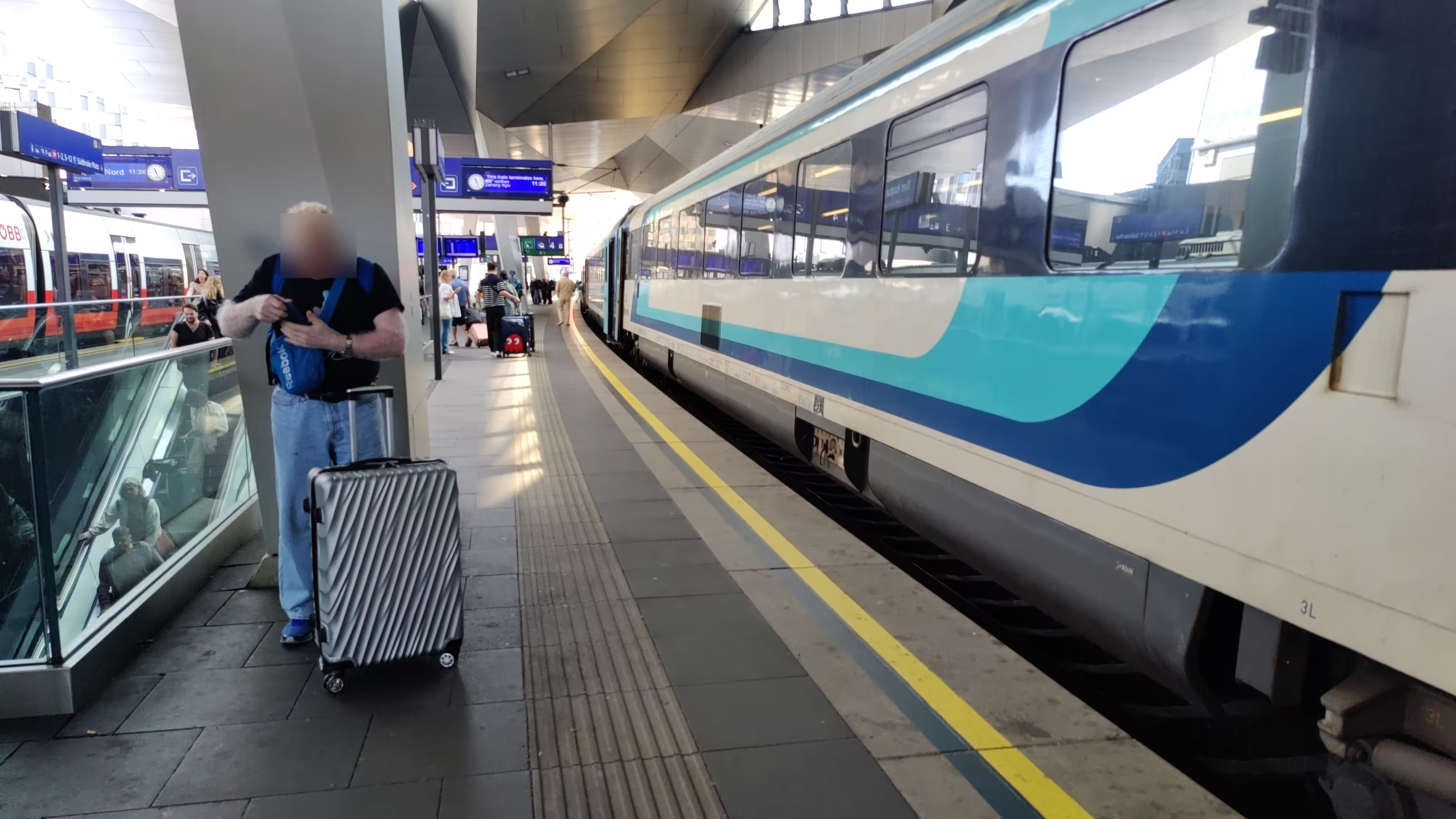
A blue and white colored train on a railway platform This blue colored train was the one we took for our Budapest to Vienna journey. Photo by Ravi Dwivedi, released under CC-BY-SA 4.0.
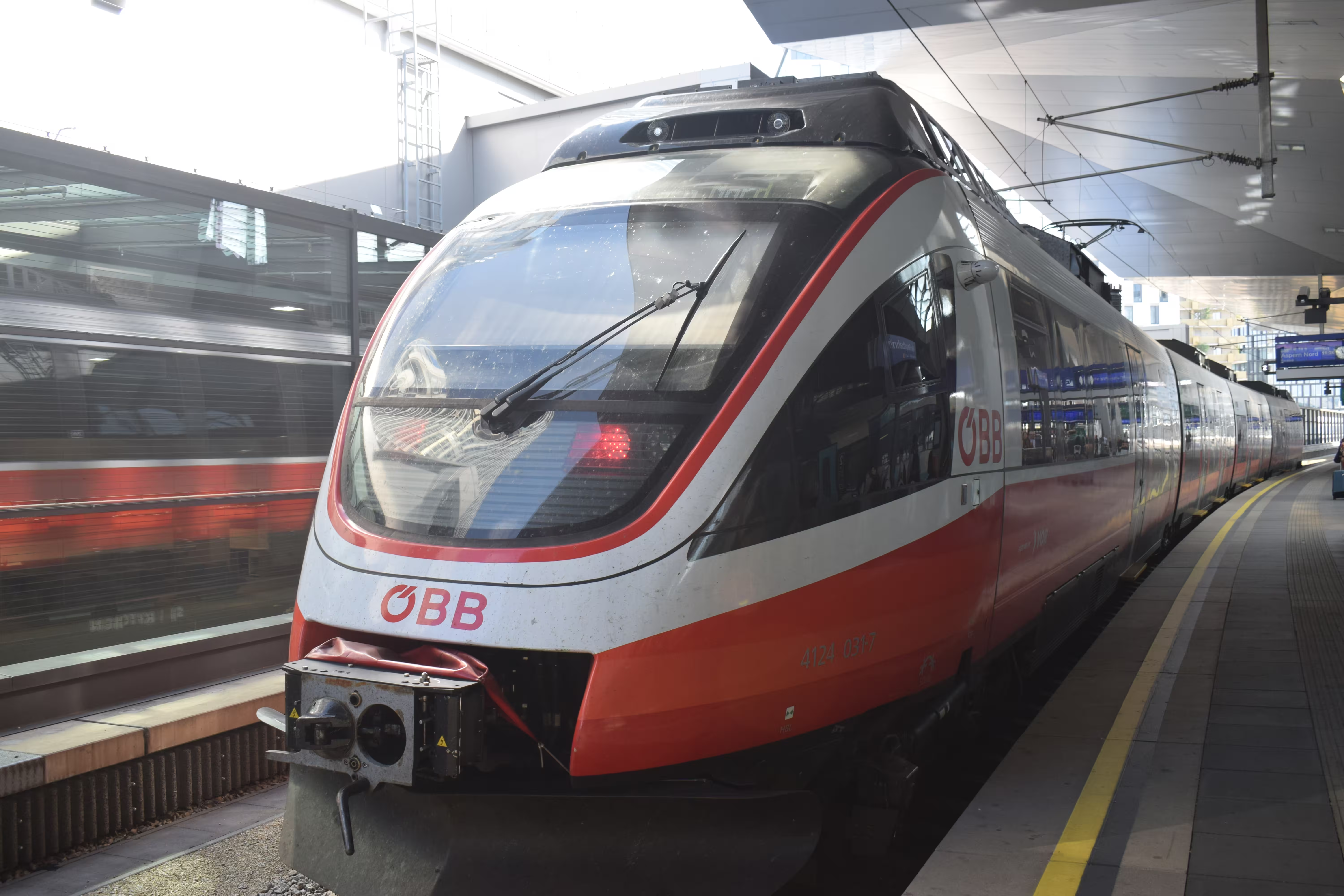
A red colored train standing at the Vienna station An BB train standing at a platform of Vienna train station. BB is the national carrier of Austria. Photo by Ravi Dwivedi, released under CC-BY-SA 4.0.
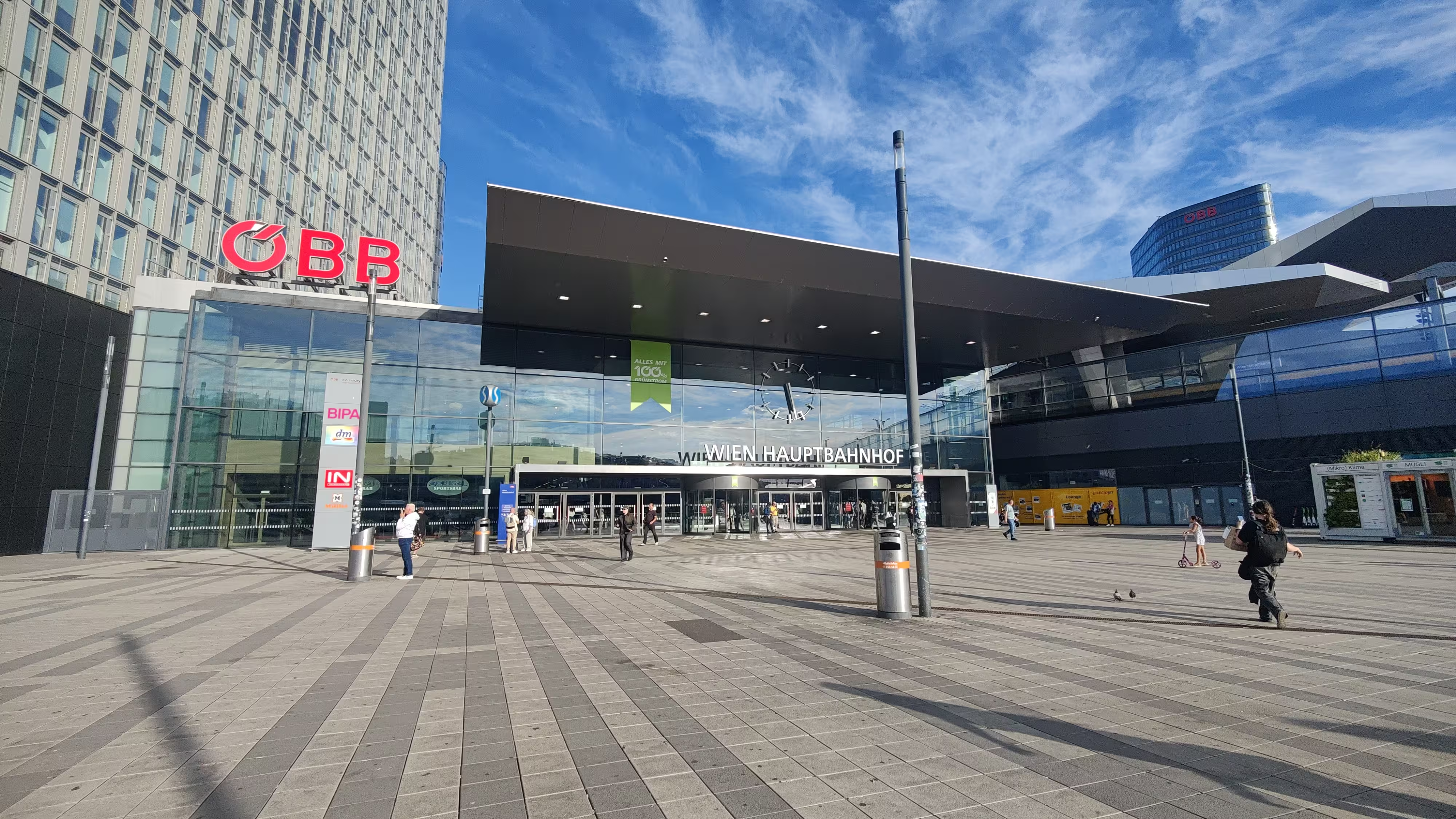
Wien Hauptbahnhof train station Wien Hauptbahnhof train station. Photo by Ravi Dwivedi, released under CC-BY-SA 4.0.

At the station, we bought a 24-hour public transport pass from a ticket machine for 8. The pass includes unlimited access to all the public transport in Vienna for 24 hours. My pass was valid from the 7th of September at 11:34 to the 8th of September at 11:33. A single public transport ticket (from anywhere to anywhere) costs 2.4. A single ticket of 2.4 can be used once on any public transport in Vienna trams, metros, and buses. Therefore, the pass is a good deal if you are going to take at least four public transport trips in a day. Unlike the public transport pass I got in Budapest, the pass in Vienna was anonymous and not tied to the rider s name.
Public transport pass for Vienna. My public transport pass in Vienna.
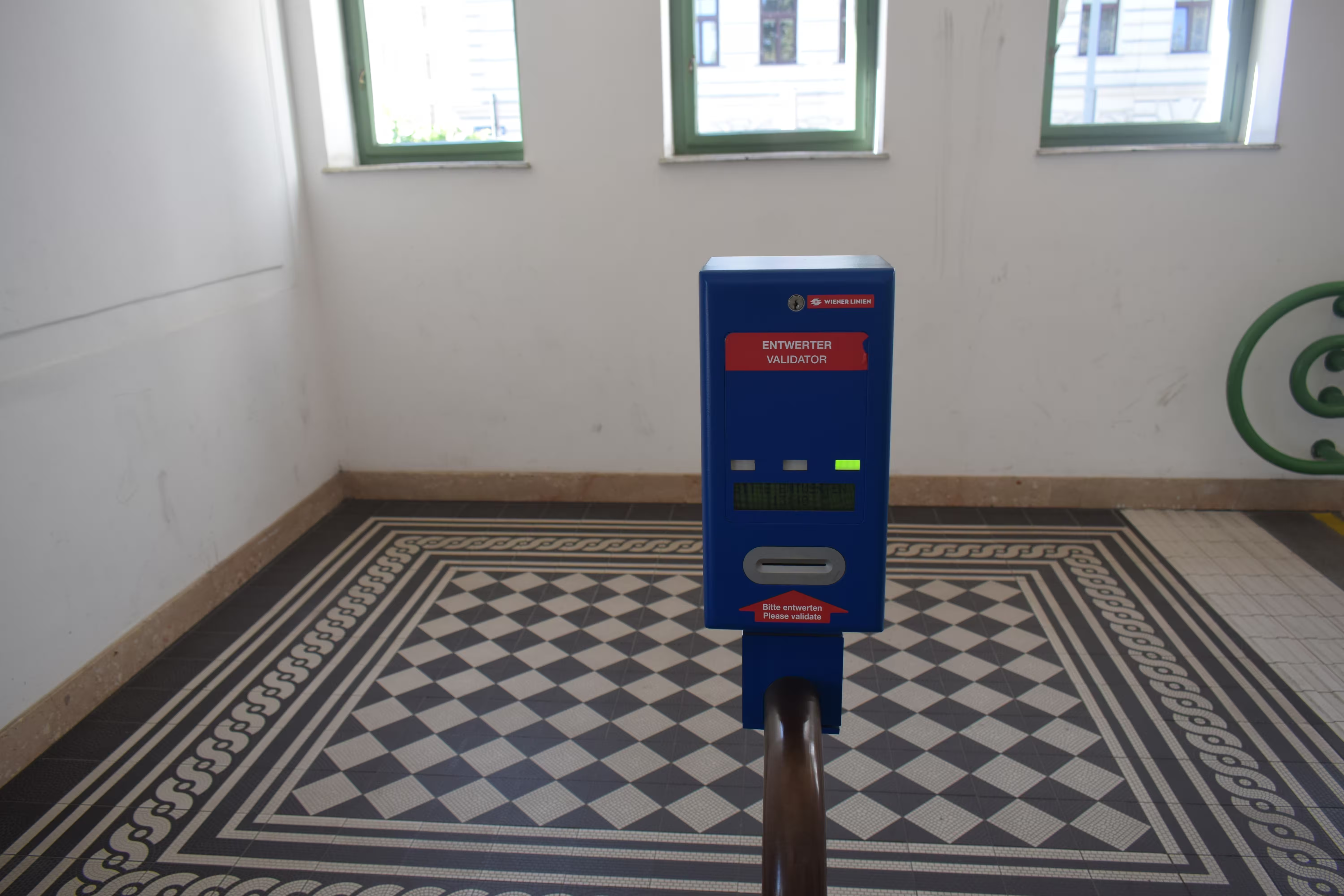
We wanted to visit the Sch nbrunn Palace. The palace was reachable by subway. In order to get to the subway station, we started by going outside the station. But it was not outside. So we came back inside the station building and realized that the subway was underground. We took the subway and deboarded at the Sch nbrunn subway station the closest one to the palace. The ride was smooth; the train was pretty silent. By the way, like Budapest, there were no AFC gates for boarding the subway in Vienna. The stations had ticket validators instead, where you are supposed to validate your tickets before getting into the subway.
Vienna subway Instead of AFC gates, Vienna has ticket validators as in the picture. You need to tap your ticket in the validator before boarding the subway. Photo by Ravi Dwivedi, released under CC-BY-SA 4.0.
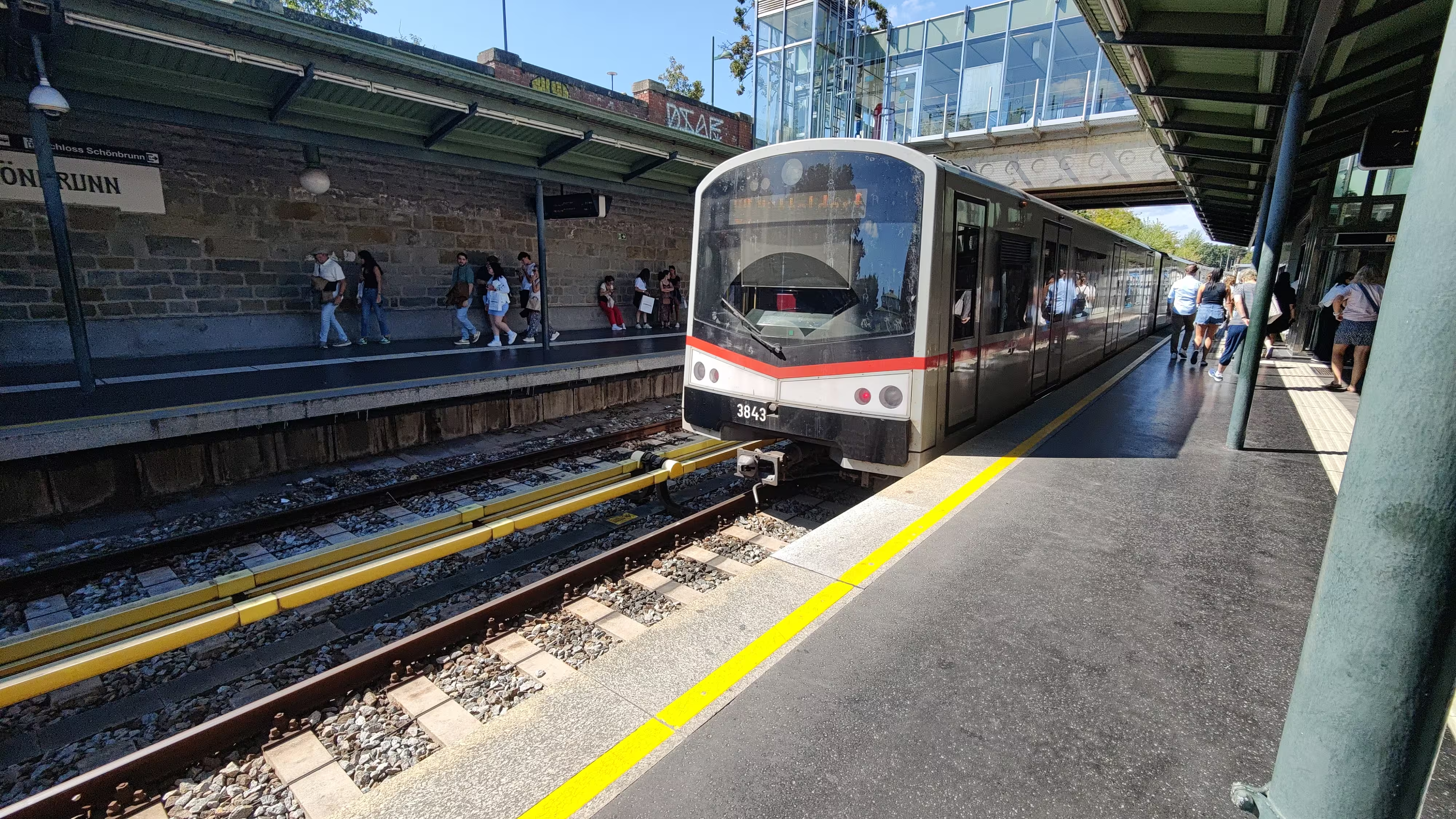
These validators are in place to ensure that you use your ticket only once. Unlike AFC gates, which are present in metros of most of the countries I have been to, the ticket validators don t act as a physical barrier to enter the boarding area. If you board the metro without validating your ticket, you will be facing hefty fines upon getting caught. I have heard that the fine is around 100. On the other hand, if you have a public transport pass like we did, then you don t need to validate it before boarding. In addition, there were no annoying security checks either, unlike in Indian cities. In the Delhi metro, for example, you would need to scan your bags and pass through a security check before getting to the AFC gates.
Vienna subway Vienna subway. Photo by Ravi Dwivedi, released under CC-BY-SA 4.0.
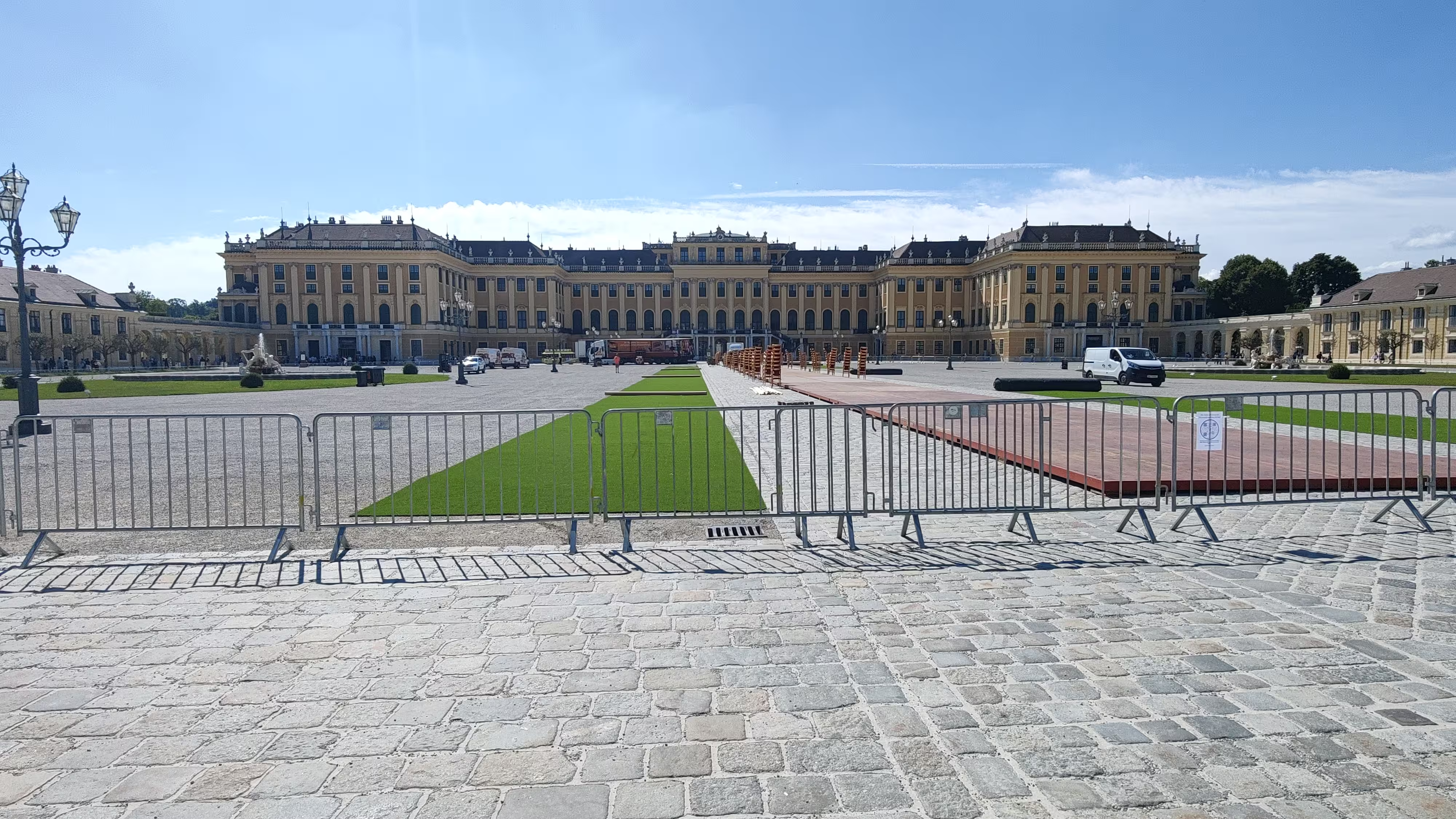
Now back to the story, after alighting at the Sch nbrunn subway station, we walked to the Sch nbrunn Palace. One can roam around outside the palace and click pictures for free. To go inside, however, requires buying tickets. The tickets for the palace can be booked in advance on the internet. We didn t take the tickets in advance, as we decided to visit the palace at the last moment. So we went to the ticket counter and found out that we needed to wait for 1 hour 40 minutes before going inside if we took the tickets at that moment. In addition, one ticket costs 44 (around 4000 Indian rupees). Since we had to return to Budapest in the evening and only had a few hours in the city, we decided not to go inside the palace. Instead, we clicked a few pictures outside the palace.
Photo of Sch nbrunn Palace. Sch nbrunn Palace. Photo by Ravi Dwivedi, released under CC-BY-SA 4.0.
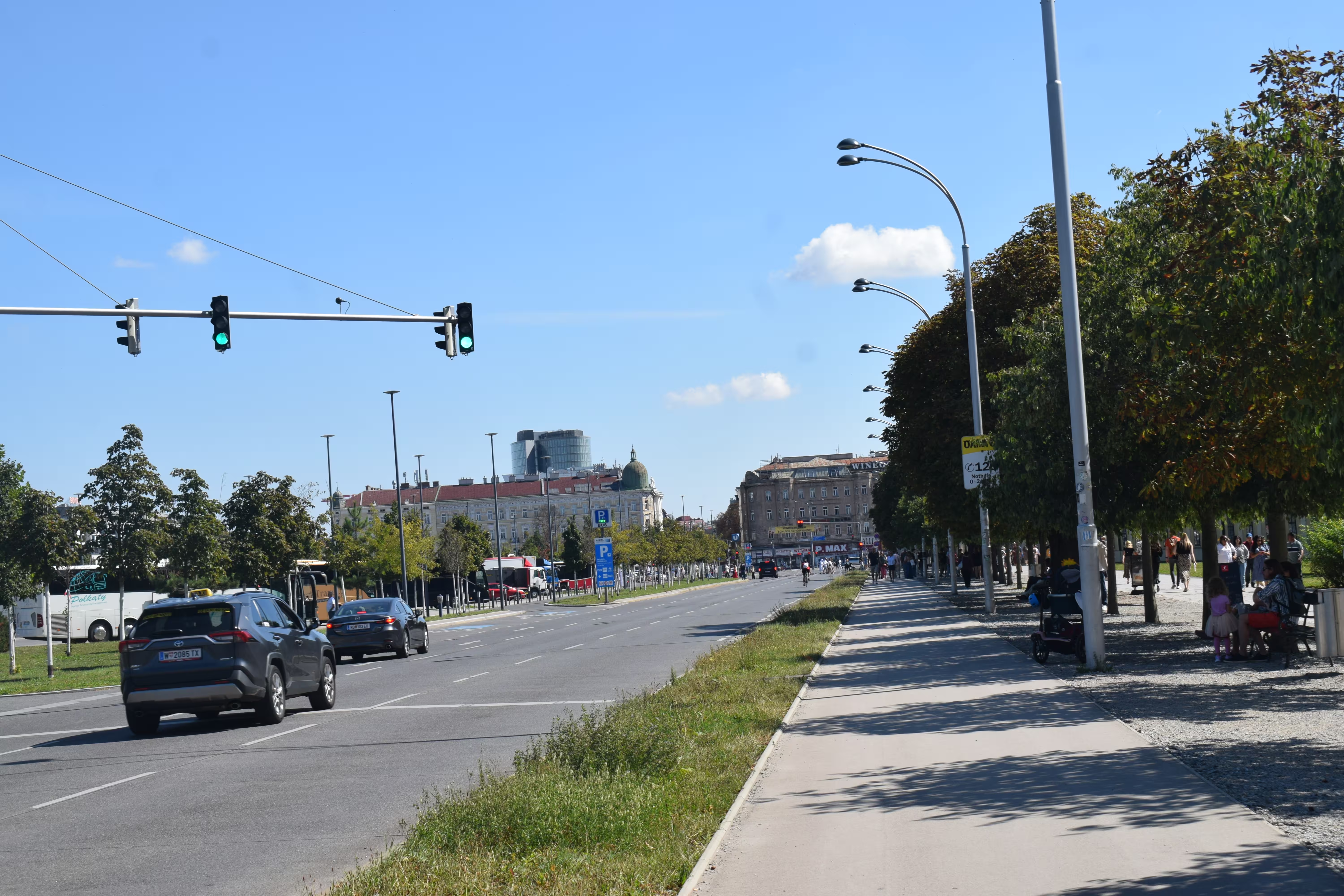
The Sch nbrunn Palace is a UNESCO World Heritage Site and is a historically significant place. It servedas one of the residences of the powerful Habsburg dynasty. The palace looked so good that my friend Dione said, It seemed like the palace was built yesterday . This remark applied to other parts of Vienna we went to. For example, the subway stations also seemed like they were built yesterday.
A street near Sch nbrunn Palace. A street near Sch nbrunn Palace. Photo by Ravi Dwivedi, released under CC-BY-SA 4.0.
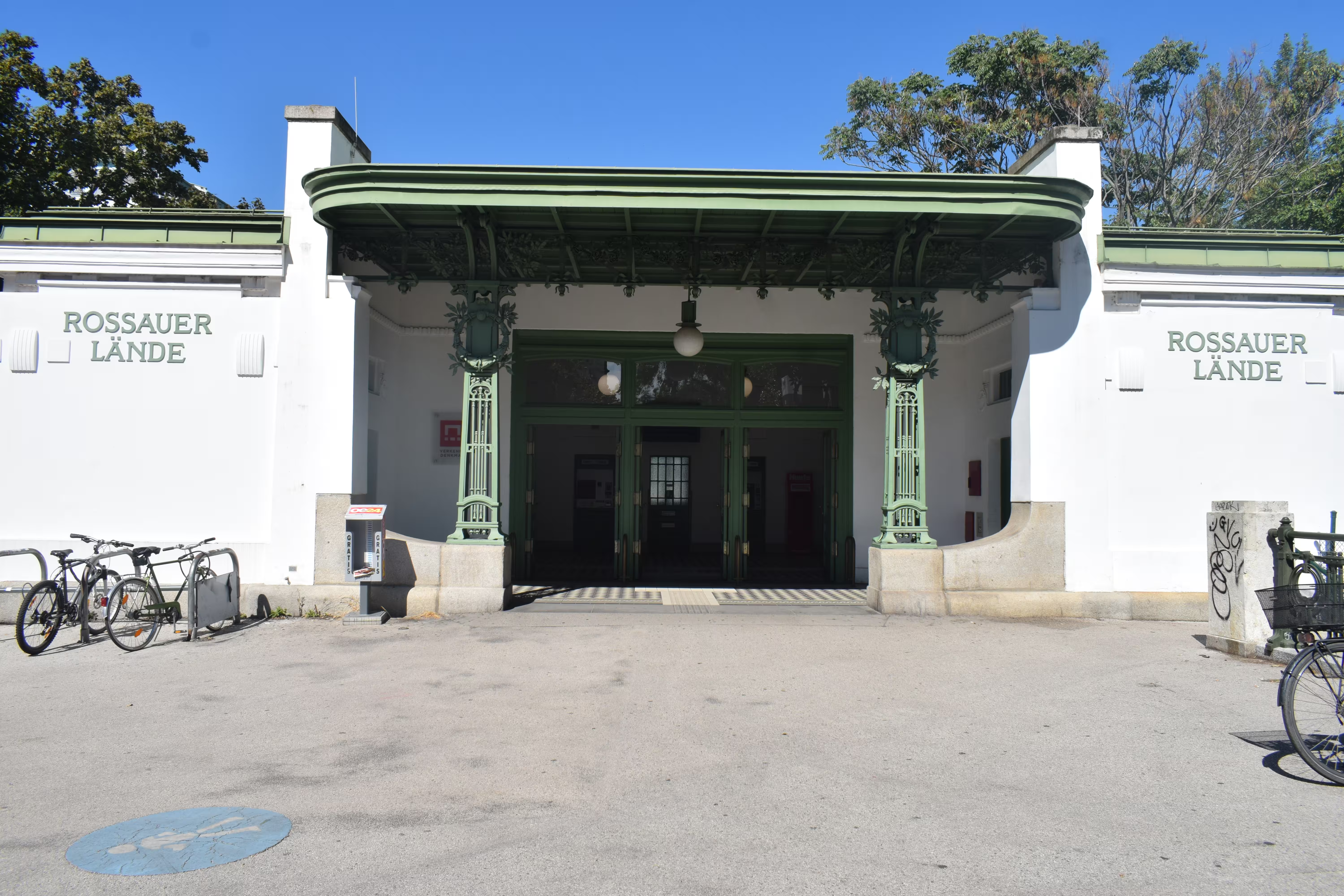
Now, we wanted to go someplace to grab a bite. I asked my friend Urbec for suggestions on where to go. They suggested we visit the steps named Strudlhofstiege, which had the added benefit of being in a neighborhood with good bakeries and buildings. So, we took the subway and deboarded at the Ro auer L nde station, followed by walking around a kilometer to reach the stairs.
A subway station in Vienna. Ro auer L nde subway station. Photo by Ravi Dwivedi, released under CC-BY-SA 4.0.
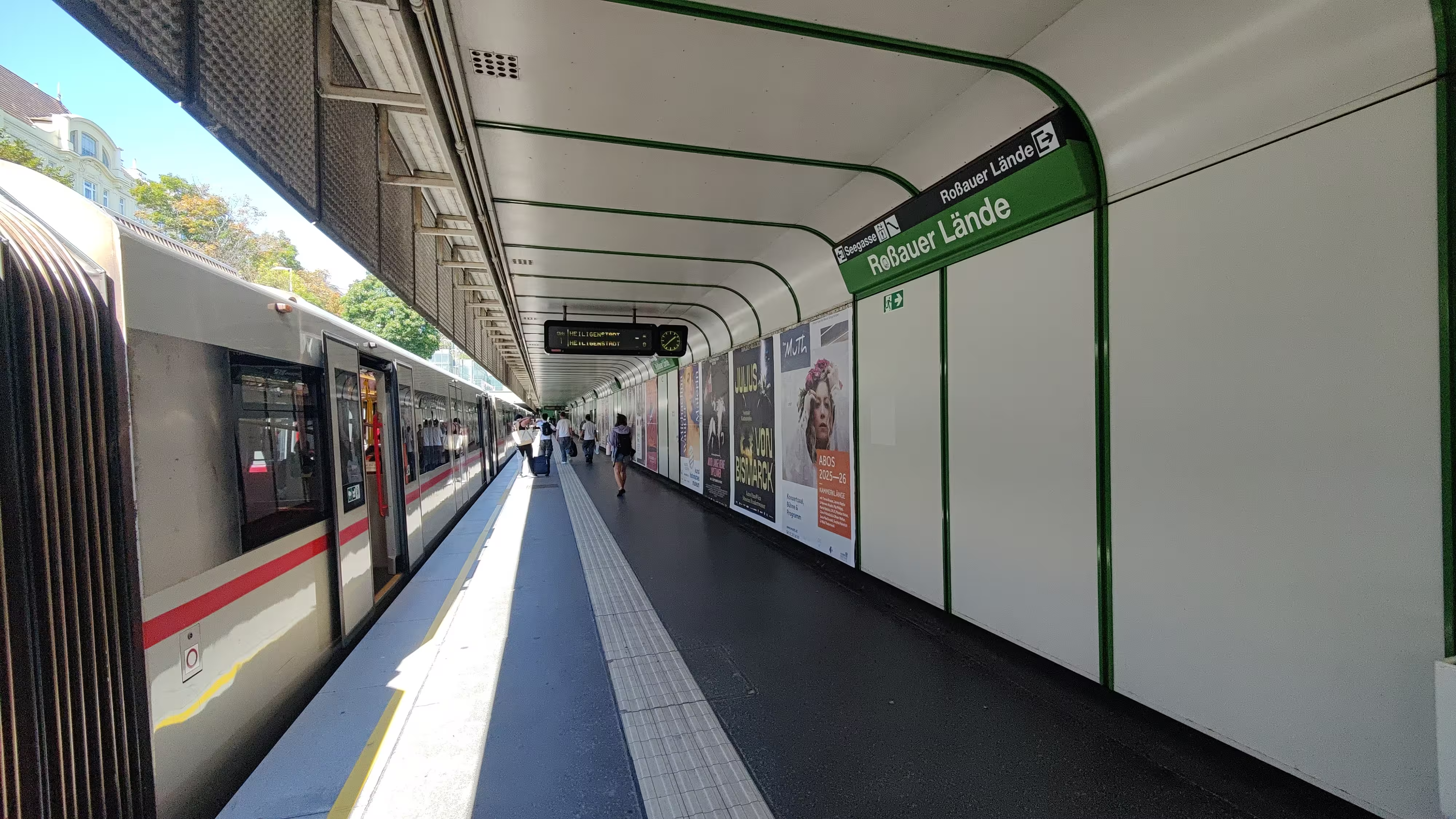
Platform of the _Ro auer L nde_ subway station. Platform of the Ro auer L nde subway station. Photo by Ravi Dwivedi, released under CC-BY-SA 4.0.
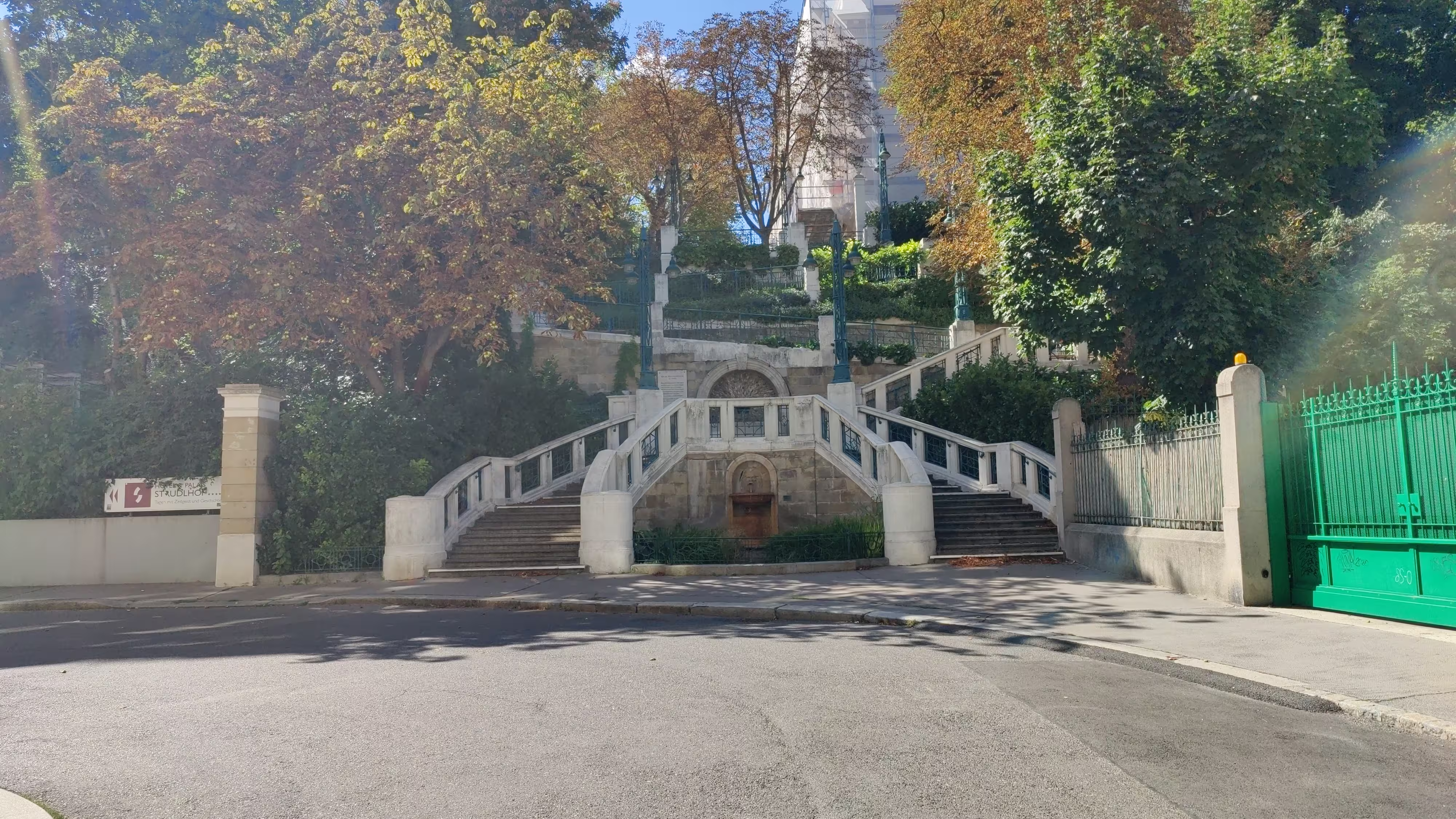
stairs with road in the front and trees in the background. Blue sky can also be seen in the background. The The Strudlhofstiege steps. Photo by Ravi Dwivedi, released under CC-BY-SA 4.0.

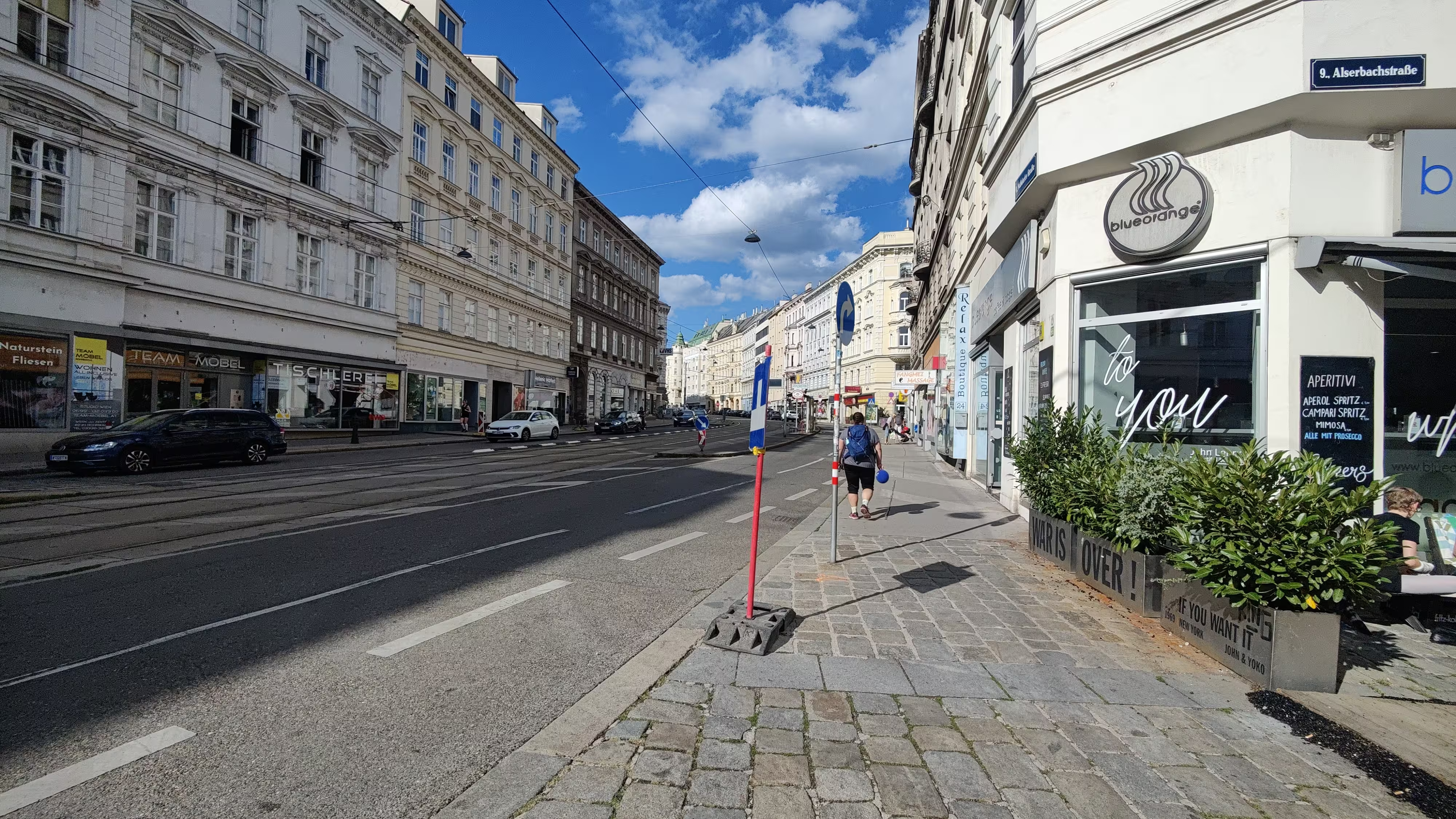
On the way, we were also looking for a place to eat. Unfortunately, it was Sunday, and Vienna closes on Sunday. That means most of the shops including bakeries and caf s are closed. Only places like railway stations have shops open on Sundays. By the way, walking around in the streets of Vienna was a treat. The streets were not crowded (as it was not exactly a touristy neighborhood) and had good pedestrian infrastructure, with clean streets and separate cycling tracks. The buildings were also beautiful.
Buildings and streets in Vienna. A random street in Vienna.
Buildings and streets in Vienna. Another street in Vienna.
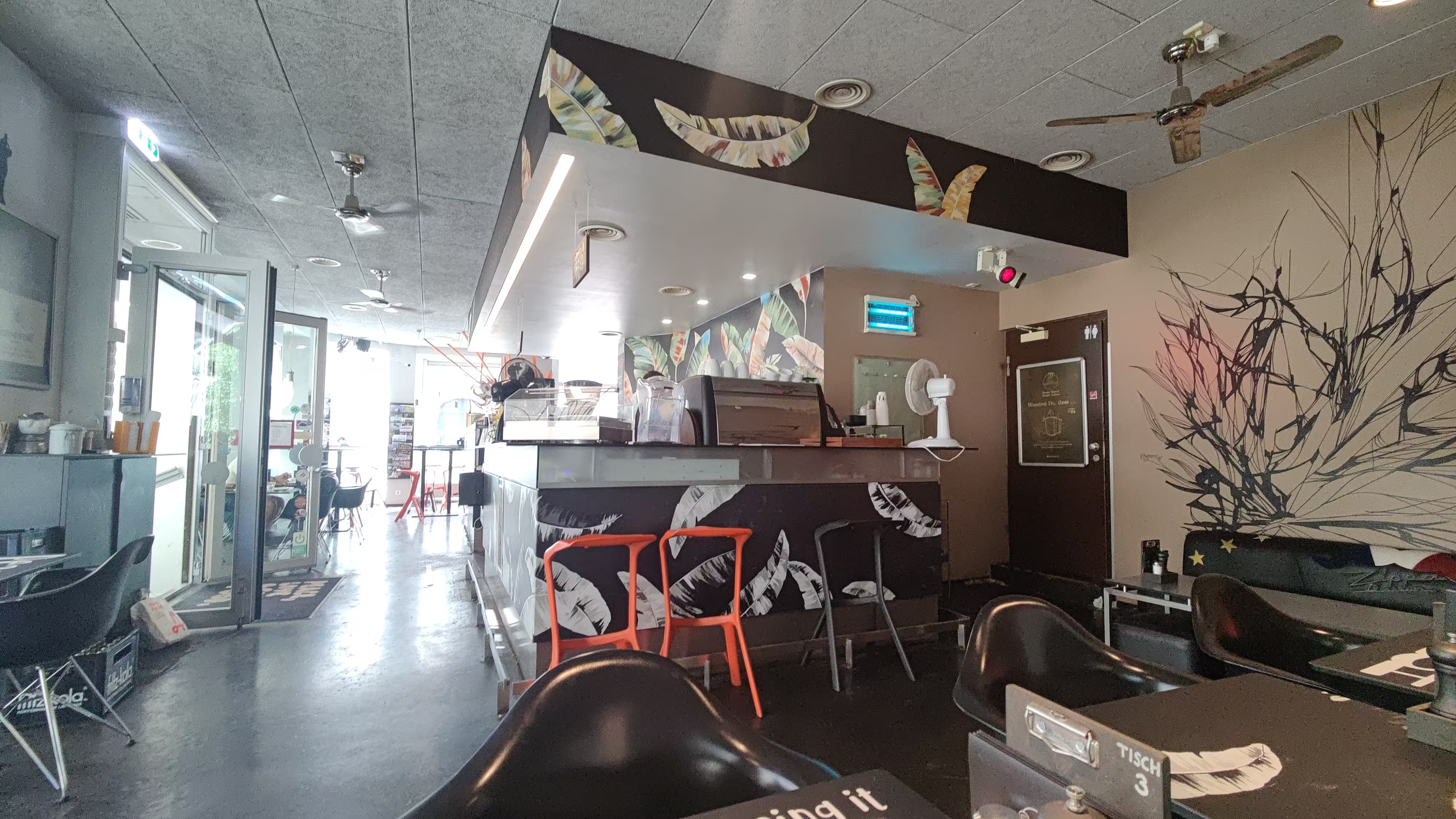
After some walking, we found a restaurant open. I grabbed the menu to check the prices. A lady at the shop asked me what I was doing, and I told her that I was browsing the menu. She said that the menu was in German. I don t know how she knew that we didn t know German, but it seemed like a racist thing to be told. We roamed around further and found a caf by the name of Blue Orange, where we ordered coffee and croissants. When we got our order, the waiter told us that they were having some issues, so they wouldn t charge us for the croissant if it wasn t good.
Picture of a caf . A picture of Blue Orange caf . Photo by Ravi Dwivedi, released under CC-BY-SA 4.0.
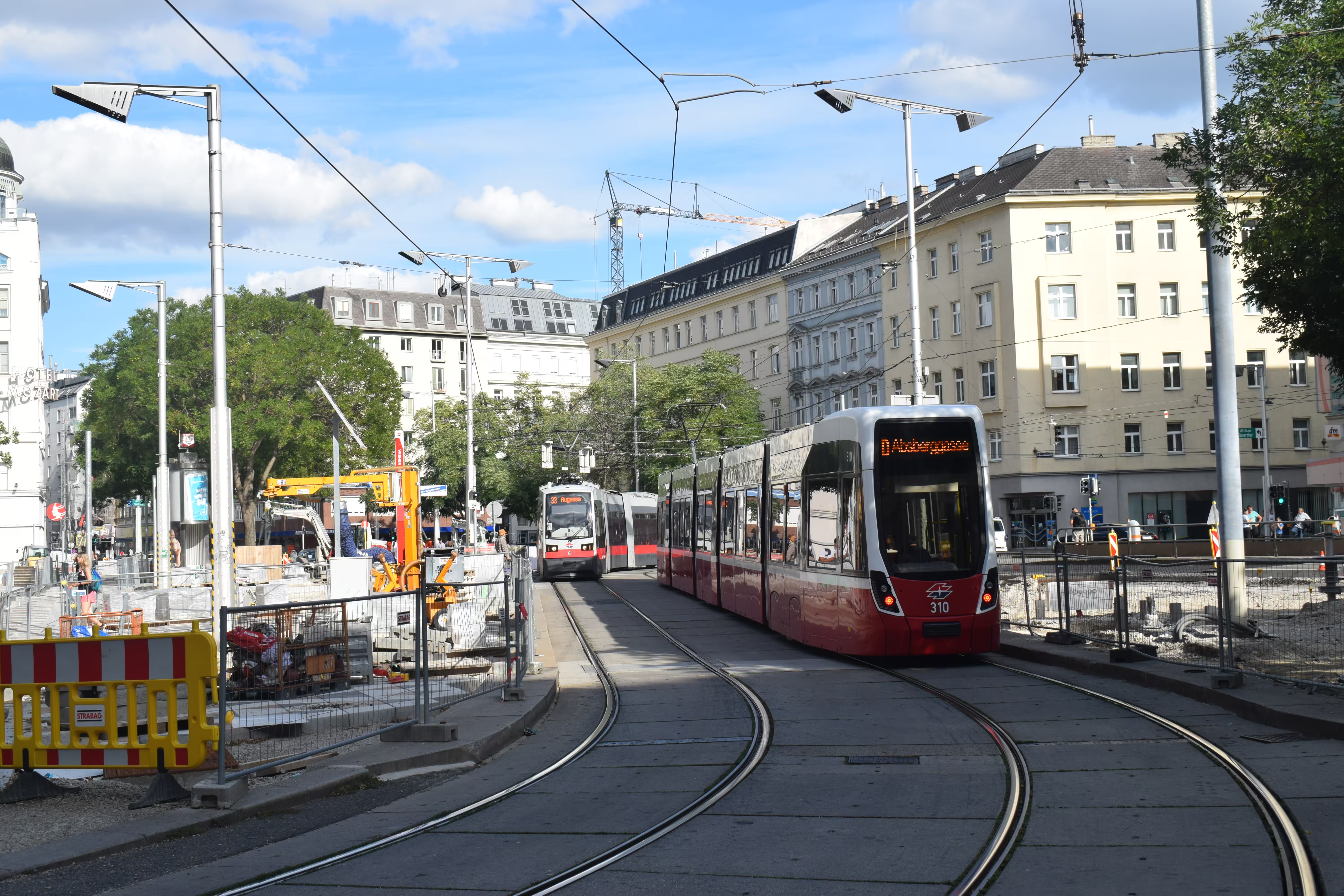
My friend and I took a bite, and both of us didn t like the croissant. After some time, the waiter came to us and asked whether the croissant was okay, to which we said no. Therefore, they didn t charge us for the croissant. This was the first time something like this happened to me. It felt like I was in a different world. I added a small tip at the end for this gesture, which I had to put in a jar at the counter. The cappuccino I ordered was 4.50, while the espresso that Dione ordered was 3.60. The croissant would have been 3.60. I remember Paris having cheaper croissants! Then when the waiter brought our drinks out, they automatically gave me the espresso and Dione the cappuccino. Dione found this funny because there is a stereotype in her country (Australia) that men drink strong black coffee, and women drink milky drinks like cappuccinos. She found it interesting that this stereotype seems to exist in Austrian culture too. We hopped on a tram to reach the nearest subway station and went to the Wien Hauptbahnhof station to have something before we caught our return train to Budapest.
Trams with buildings and the blue sky in the background Trams in Vienna. Photo by Ravi Dwivedi, released under CC-BY-SA 4.0.

At the station, I had Esterhazyschnitten and Punschkrapfen (thanks, Urbec, for the suggestion). The lady at the shop warned me that punschkrapfen had alcohol in it, to which I said okay. Esterhazyschnitten was a cake made of almonds, while punschkrapfen was a jam-filled sponge cake, soaked in rum. Esterhazyschnitten was my favorite out of the two. The punschkrapfen was too sweet for my taste.
Punschkrapfen Punschkrapfen. Photo by Ravi Dwivedi, released under CC-BY-SA 4.0.

Esterhazyschnitten Esterhazyschnitten. Photo by Ravi Dwivedi, released under CC-BY-SA 4.0.
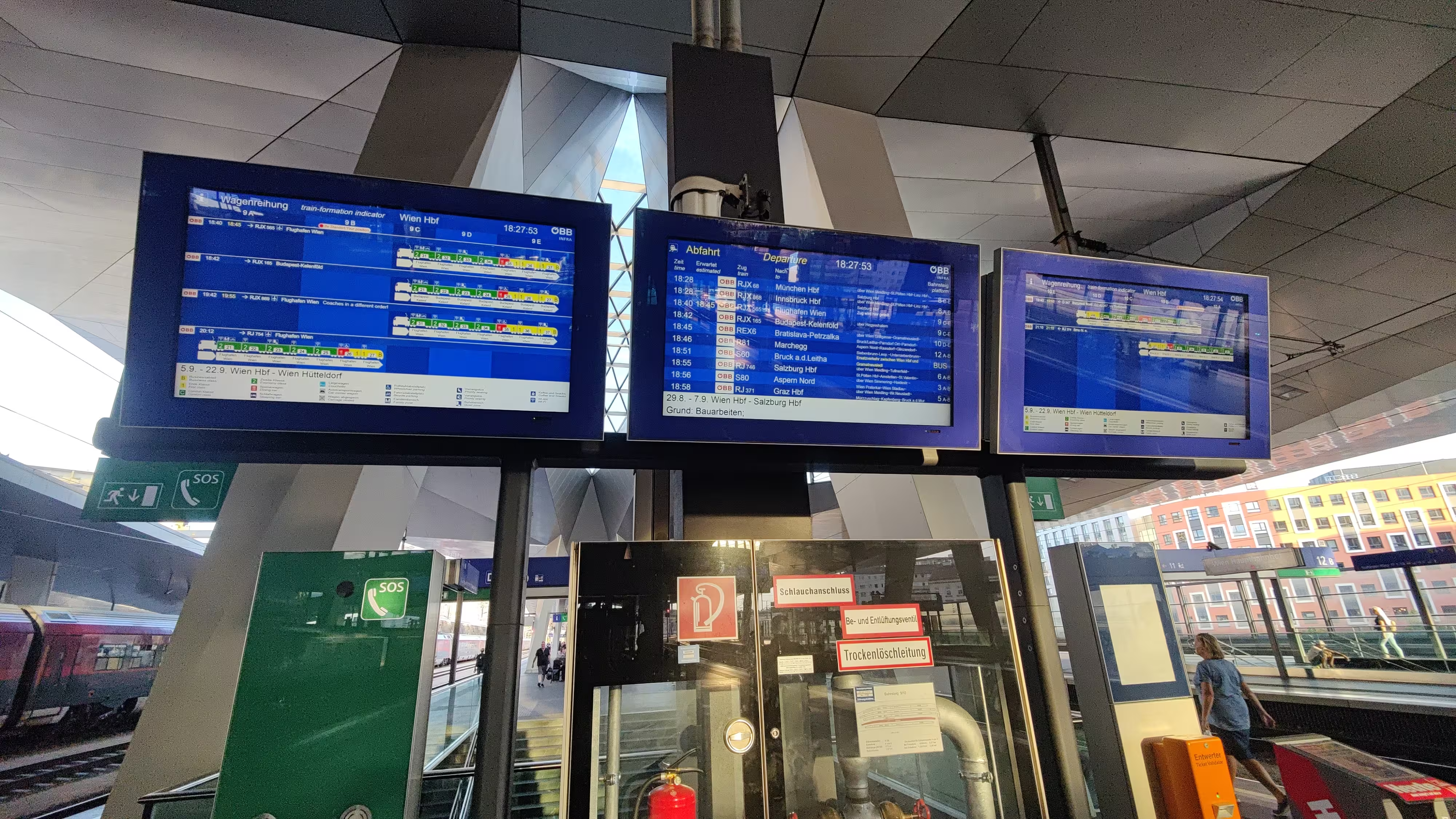
While the station was well-built, there were a couple of things about the Wien Hauptbahnhof station that we didn t like. There were no seats inside the station, so we had to eat outside the building. Also, the toilets needed to be paid for. It costs 50 cents to use the toilets at this station. The Vienna train station had departure boards all over the place. So, we went to the platform our train was to arrive on.
A departure board in Vienna displaying information about the trains Departure boards in Vienna displaying information about the trains. Photo by Ravi Dwivedi, released under CC-BY-SA 4.0.
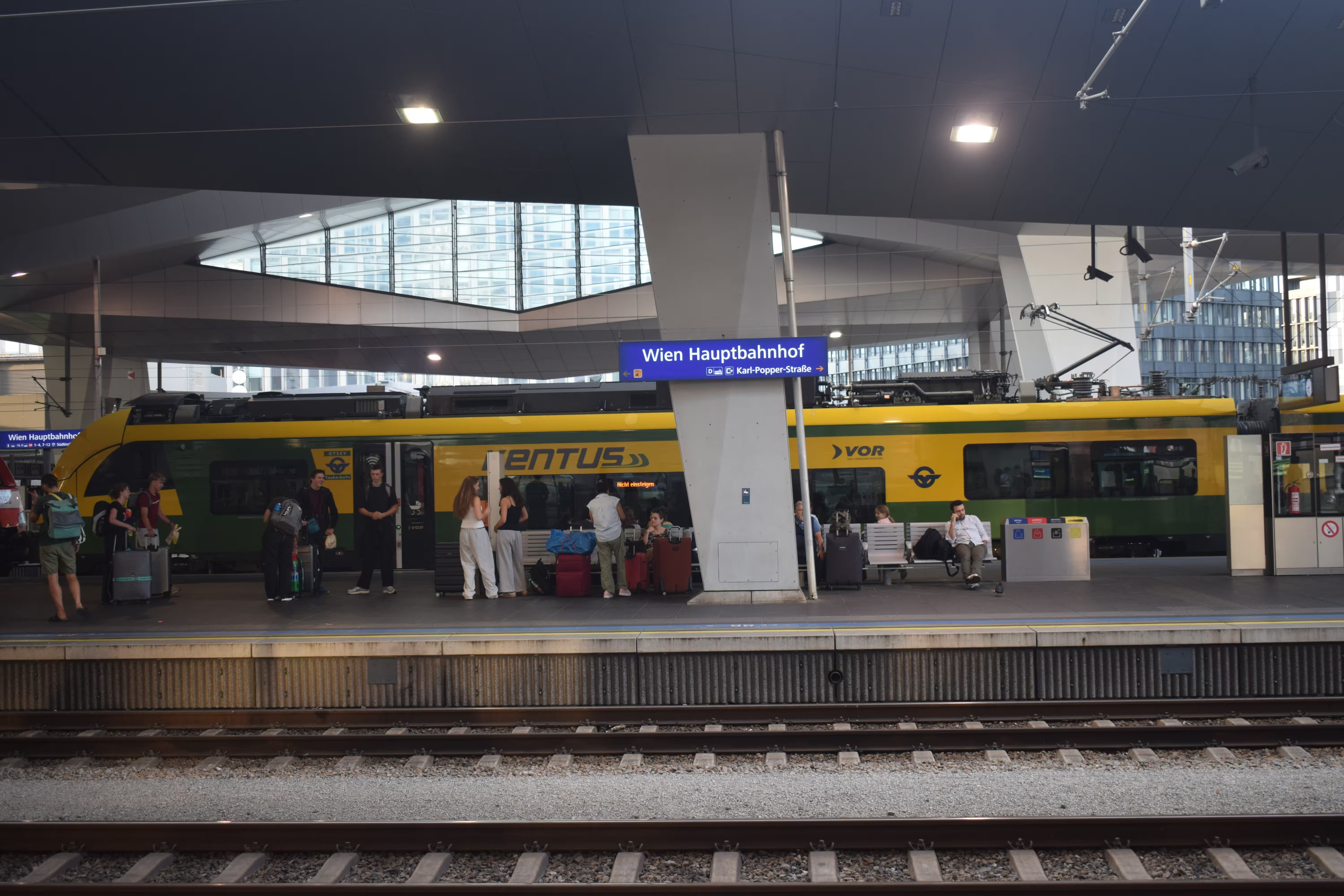
Platform and tracks at Wien Hauptbahnhof station. Platform and tracks at Wien Hauptbahnhof station. Photo by Ravi Dwivedi, released under CC-BY-SA 4.0.
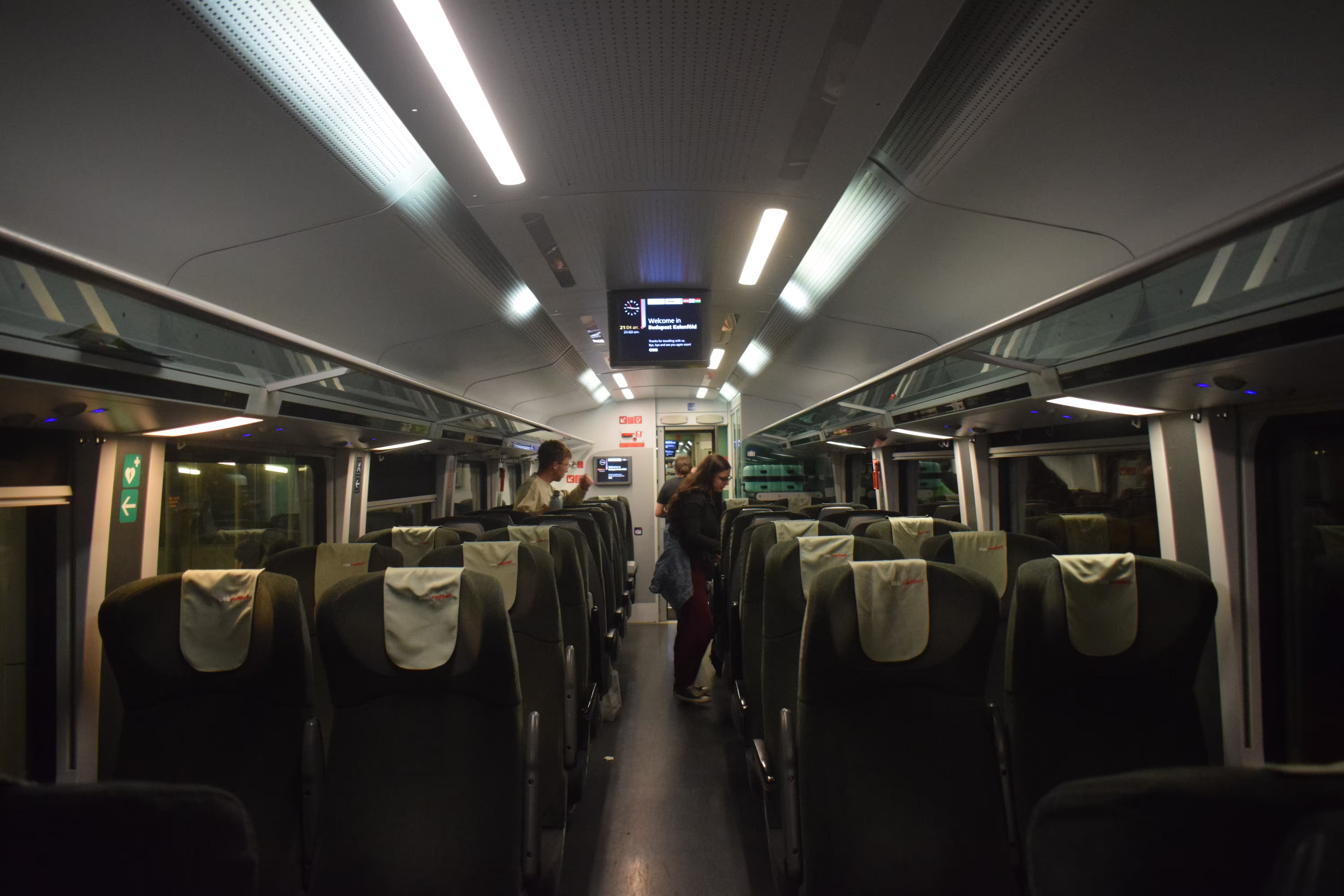
When our train arrived, we had some difficulty locating our compartment. This train was operated by a different company (Railjet) than the one we took in the morning (Eurocity) from Budapest to Vienna, and we were able to locate the coach numbers using the digital board at the station. Each compartment had a digital board next to it on the station displaying the coach number. However, that wasn t the problem. Even after reading the coach numbers and trying to find ours, it didn t appear where we expected in the sequence. When we were not able to find our coach for a while, we asked a ticket inspector of the train who was standing on the platform. He directed us towards the front side of the train. So we started running to the front side as we didn t know how long the train stops. As we ran toward our coach, we found out that the engine of the back train was connected with the last compartment of the train at the front. At that point, we realized that the train was a combination of two trains. At a later station, the train on the back side parted ways and went towards Vienna Airport.
Inside our train. Interior of the train we took from Vienna to Budapest. Photo by Ravi Dwivedi, released under CC-BY-SA 4.0.
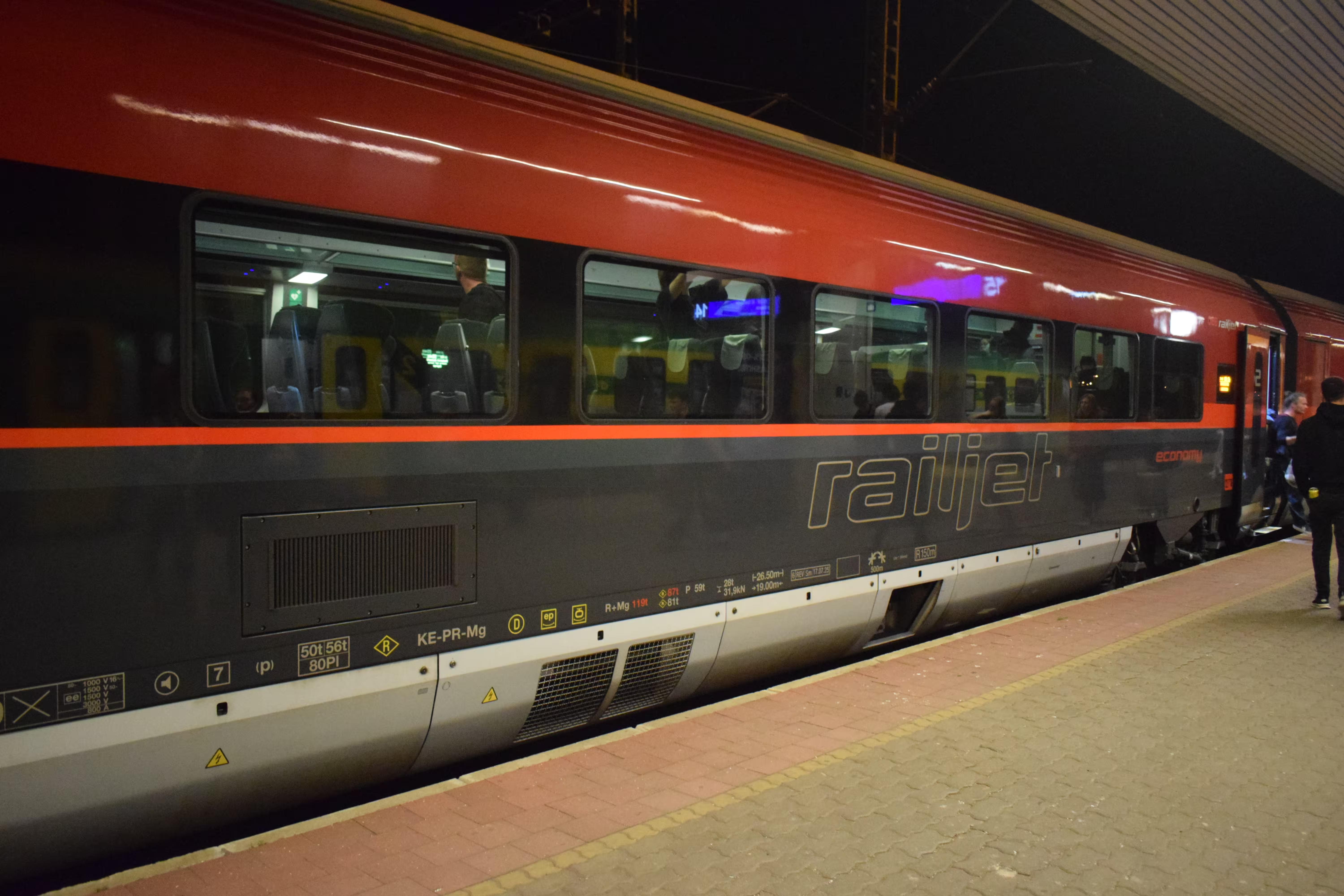
A red colored train standing on the platform of Budapest Kelenfold station. This is the train we took for our return journey from Vienna to Budapest. It is standing on a platform in Budapest Kelenfold station. Photo by Ravi Dwivedi, released under CC-BY-SA 4.0.
We had a smooth journey and reached Budapest a couple of hours later. Vienna is a beautiful city; we enjoyed being there, and we would like to visit the city again! That s it for now. Signing off. See you in the next one! Credits: Thanks to Dione and Badri for proofreading.

27 April 2026

Russ Allbery: Review: What We Are Seeking

Review: What We Are Seeking, by Cameron Reed
Publisher: Tor
Copyright: 2026
ISBN: 1-250-36474-4
Format: Kindle
Pages: 339
What We Are Seeking is a bit hard to classify beyond science fiction. I think I would call it anthropological science fiction, but it's also a first contact story and a planetary colony story. It is a standalone novel (well, so far as I know; see later in the review for caveats). This is Cameron Reed's second novel after the excellent and memorable cyberpunk novel The Fortunate Fall, first published in 1996 under Reed's former name of Raphael Carter. John Maraintha is a doctor from the world of Essius. He took what he thought was a temporary job on the Free Ship Edgar's Folly, where he's endured considerable culture shock. As the novel opens, John learns that the colonists on Scythia have requested a translator to talk to one of the native life forms, and a doctor since they're down to only one. John will be that doctor. The captain has decided, and by the rules of the free ships, John does not get a choice in the matter. The Scythian colony is about four hundred people, now located in a desert climate since the complex native life forms destroyed their previous settlement. The colonists are a split between Ischnurans and Zandaheans, two other human civilizations from the scatter of colony worlds left after Earth embraced AIs (aiyis here) and turned inward. Both of those groups marry, something John considers a moral abomination. Neither of them seem likely to understand Essian sexual ethics. More devastatingly, John had intended to spend some time as a ship doctor and then return home to a new place in Essian society. Once he lands on Scythia, the chances of that are gone; it is highly unlikely any ship would pick him up again and take him home. I have been trying to find the right books to compare What We Are Seeking with ever since I read it. The best I've come up with are Ursula K. Le Guin (particularly The Dispossessed), Eleanor Arnason's A Woman of the Iron People, and Becky Chambers's To Be Taught, If Fortunate. The start of the book felt like an intentional revisiting of an earlier era of science fiction, with somewhat updated science and politics, but the last half of the book, where the action picks up considerably, is a meditation on gender, social systems, religion, and small-group politics. All of that is mixed with biological exploration and a first-contact story with some quite-alien aliens. This is the sort of novel where the protagonist's culture is as foreign to the reader as any of the other cultures he counters, so the reader is assembling several jigsaw puzzles at once. John is dropped into an established colony with its own social norms and established hierarchies. The one other outsider, the translator Sudharma Jain, is, as his name implies, a Jain who keeps very strict religious observances. Half of the colony is from something akin to a fundamentalist Christian religious sect that practices patriarchy and strict marriage codes. The other half is more gently sexist (but still sexist) and has its own tradition of a third gender that becomes central to the story. John, meanwhile, is a strong believer in the Essian approach to social organization: Any two partners of any gender freely have sex by mutual consent and without obligation, and family is based solely on blood relations. These beliefs do not fit comfortably together, even when people are trying (as they mostly do) to be welcoming. The first half of this book is very slow. This gives all of the characters space to breathe and become comfortable, and the characterization is superb, but it is a book to start when you're in the mood for something slow and observational. There is a plot that gradually becomes apparent, or rather there are several plots that are intertwined, but tension and urgency are mostly reserved for the second half of the book. Instead, the book opens with a lot of close observation of alien flora and fauna and the untangling of subtle social dynamics among the Scythians. There is also a visitor from earth, much to the distress of the Scythians. Earth presence means the ships will not return and the colony may be cut off from any sort of technological resupply. Despite speaking a common language, that visitor is as mutually alien to the other groups as they are to the native flora. Her life is fully integrated with aiyis, giving her essentially godlike powers and the ability to turn off inconvenient emotions and disregard anything she doesn't want to see. What she and the Earth aiyis are doing on the planet is one of the early mysteries. The dialogue in this book is truly excellent. Each characters has their own voice, there are fascinating digressions on different words that lead to tidbits of world-building, and some of the culture-specific idioms are delightful.
"I'm making a mess of this. None of that matters. Let me fall out the window and come in the door again. This is how my story ought to start:"
The challenges for the characters in this story are slow but deep ones: belonging and self-definition, the conflict between cultural tradition and personal circumstance, and the sacrifices required to live with small groups in situations where civil war is viscerally attractive. It has one of the most comprehensive and fascinating treatments of transgender issues that I've read in science fiction. Its commentary on current politics is subtle and estranged in the way that science fiction does best, but still pointed and satisfying. And, well, there are passages like this that I absolutely adore:
"I wouldn't go that far. It could be they are right, the universe we see exists because a mind like ours created it at least, a mind enough like ours that we can say it wants one thing and not another, and when it acts it does so with intent. That's as good an idea as any. But it is certainly not plausible that such a being believes that people everywhere should marry, or that men should never visit men, or no one should become a jess. Look at what they have created. The universe could have been nothing at all, or one atom of hydrogen floating in a void, or a diamond crystal infinite in all directions, if their mind cared for simplicity or tidiness. Instead we have stars and planets and black holes and nebulas. It could have all been cold and dead, but there is life. They could have made one species for each world, or just a few, which could have stayed the same forever, but instead we have millions and millions, all of which are changing every moment, varying among themselves and boiling off in all directions. Such a god is like an artist who fills up a library of sketchbooks with their drawings of strange creatures, and when every scrap of paper in the place is used up, goes back with a different color ink and scribbles over them again. They are obsessed with variation they gorge themselves with it and never grow full. Do you really think a mind like that could want us all to live in the same way?"
I had one problem with this book, though, and for me it was a big one: There is no ending. Reed effectively builds tension, gets me caring about all of the characters, sets up several problems, starts down a path towards resolution, and then the book just... ends. Long-time readers of my reviews will know that I'm a denouement fanatic. I want the scouring of the shire, I want the chapter set in the happily ever after, I want the catharsis of an ending. This made me so grumpy! To be clear, this is not sequel bait (at least so far as I can tell). I can write a philosophical defense of the ending. The types of problems and lives that Reed set up don't have clear endings; this is, to some extent, the point. We muddle through, and then those who come after us muddle through some more, and the cumulative effect is called human civilization. And there is some denouement; Reed doesn't leave the reader at a cliffhanger or anything that egregious. But still, I wanted the happy ending, even though that was unrealistic for the style of story this is, because I'm a happy ending reader. This is not an ending sort of book; it's the sort of book where I get a sinking feeling at the 95% mark because there aren't enough pages left for the number of remaining unresolved problems. I've gotten less annoyed in the days since I finished the book, and I can appreciate the thematic point made by how the book ends, but I still feel like it's worth an advance warning if you're a reader like I am. I would be delighted by a sequel, but it didn't feel like that was the intent. Apart from that, this was both excellent and rather unlike a lot of current science fiction. I think the closest comparison I can make among recent novels I've read is Sue Burke's Semiosis. What We Are Seeking has a similar sort of world-building, but I liked these characters so much more. It felt like a classic literary science fiction novel, but very much written in 2026. Highly recommended, just beware of the lack of closure. Content notes: Sexism, homophobia, stomach illness, and some religious abuse. Rating: 8 out of 10

26 April 2026

Aurelien Jarno: Running upstream OpenSBI on SpacemiT K1

The SpacemiT K1 is a rather interesting RISC-V SoC, found for instance on boards like the Banana Pi BPI-F3 board. It's one of those platforms that looked promising on paper, but took a bit of time before things really started to move upstream. Things have clearly accelerated over the last few months. Linux 7.0 brings, among other things PCIe support, making the board quite capable as a development board. SD card, CPU thermal sensor and cpufreq support are already in the pipe. Unfortunately the situation is less advanced on the firmware side. There is only very basic support for the SpacemiT K1 in U-Boot for the second stage, and initial SPL support has been posted on the mailing list, but has not yet been merged. In practice, this means you still have to rely on the vendor U-Boot, which is based on the rather old 2022.10 release. On the other hand, OpenSBI does have upstream support for the SpacemiT K1, however it is not compatible with the vendor U-Boot, mostly due to device tree differences. This can be addressed by applying a few patches to the vendor U-Boot, which I have published in a git tree in the k1-bl-v2.2.y-opensbi branch (technically this can also be handled on the OpenSBI side, but I prefer using a vanilla upstream OpenSBI version). The first two patches update the configuration to get closer to the upstream U-Boot defaults, and to enable some configuration options for the Milk-V Jupiter board, which stores its firmware in SPI NOR flash, instead of eMMC for the Banana Pi BPI-F3. The following patches update the device tree by adding extra compatible entries to several devices, as expected by the upstream kernel and OpenSBI (thanks to Troy Mitchell for the hint about the UART change) and update the CPU riscv,isa properties. Finally an additional patch adds the SpacemiT P1 PMIC to the device tree, which is required for the OpenSBI reboot patchset I recently posted (this is currently done only for the Banana Pi BPI-F3 and Milk-V Jupiter boards, but extending it to other boards should be straightforward). Building this U-Boot version is as simple as running this command in the source directory:
make k1_defconfig && make
On a Banana Pi BPI-F3 board, the resulting U-Boot can be flashed with:
echo 0 > /sys/block/mmcblk0boot0/force_ro
dd if=FSBL.bin of=/dev/mmcblk0boot0 bs=512 seek=1
dd if=u-boot.itb of=/dev/mmcblk0p1
Building upstream OpenSBI is also fairly simple, and can be done by running this command in the source directory:
make PLATFORM=generic
On a Banana Pi BPI-F3 board, the resulting OpenSBI can be flashed with:
dd if=fw_dynamic.itb of=/dev/mmcblk0p2
Note that the vendor U-Boot version is patched to install OpenSBI in a separate partition instead of embedding, as the upstream U-Boot does. While this works well on the Banana Pi BPI-F3, the corresponding partition in the Milk-V Jupiter SPI NOR flash is too small for the upstream OpenSBI version, and can't be easily resized without breaking compatibility. To address this, the branch k1-bl-v2.2.y-opensbi-embedded contains an additional patch (a bit hackish I admit) to somehow restore the upstream approach. The build process remains simple, first build OpenSBI with the following command:
make PLATFORM=generic
Then build U-Boot, specifying the patch to the just built OpenSBI firmware:
make k1_defconfig && make OPENSBI=/path/to/opensbi/build/platform/generic/firmware/fw_dynamic.bin
On a Milk-V Jupiter board, the resulting combined U-Boot/OpenSBI can be flashed with:
modprobe mdtblock
dd bs=4k if=FSBL.bin of=/dev/mtdblock2
dd bs=4k if=u-boot.itb of=/dev/mtdblock5
This combined U-Boot/OpenSBI can also be used on a Banana Pi BPI-F3, using the same flashing procedure as above, while skipping the OpenSBI part (although running it won't cause any issue, it will simply be unused). All of this is admittedly a bit hackish, but enabling the use of upstream OpenSBI is already one step forward. Hopefully, in a few months, we will be able to rely entirely on upstream U-Boot.

25 April 2026

Russ Allbery: Review: The Genocidal Healer

Review: The Genocidal Healer, by James White
Series: Sector General #8
Publisher: Orb
Copyright: 1991
Printing: May 2003
ISBN: 0-7653-0663-8
Format: Trade paperback
Pages: 255
The Genocidal Healer is the eighth book in James White's medical science fiction series about the Sector General hospital. As with the rest of the series, detailed memory of the previous books is not required and the books could be read out of order if you didn't mind spoilers. I read this as part of the Orb General Practice omnibus. Surgeon-Captain Lioren is a Tarlan doctor who was in charge of the medical response to a newly-discovered civilization. The aliens were suffering from an apparently universal plague and an ongoing vicious war waged entirely through hand-to-hand combat, putting them on the edge of extinction. Lioren rushed the distribution of a possible cure against the advice of the doctors working on developing it, with catastrophic results. As The Genocidal Healer opens, Lioren is insisting on a court-martial in the hope of receiving the sentence it believes it deserves and was denied: death. (It pronouns are the convention in the Sector General series for all alien races and formal discussions, because even someone prone to bouts of gender essentialism such as White understood the need for avoiding gender assumptions in a science fiction medical context.) Predictably, both Sector General and the Monitor Corps that technically runs the hospital are flatly unwilling to execute Lioren. Instead, he is assigned as a new apprentice in the psychology department under the legendary O'Mara, where he is ordered to investigate the psychological fitness of a senior doctor named Seldal. This leads him to talk to Seldal's patients, which in turn leads to a challenging set of ethical dilemmas. The first five chapters (and more than sixty pages) are the story of Lioren's trial and a recounting of the events on Cromsag. The series is full of medical and cultural puzzles like this, and usually I like them, but I thought this one was less successful. We know the vague (and horrible) outline of the ending in advance, and the massive simplification and artificial universality that is required to make this puzzle work is particularly blatant. A universally infectious disease is more of a fiction plot than a believable biological concept, and the number of failures of communication, analysis, and misunderstanding that have to line up to create White's predetermined outcome were a bit much for me. Once the story gets past that and into Lioren's psychological work, the novel improves. Lioren is guilt-ridden and irrational, but also rather arrogant about his guilt and his concepts of professional responsibility in a way that I think mostly worked. Most of the novel consists of Lioren slowly discovering that people like him and enjoy talking to him, much to his bafflement. In that, it has the gentle kindness and sense of universal basic decency that is characteristic of this series. There are, of course, medical puzzles to solve, although this time they are primarily psychological in nature. Various characters from previous books make an appearance, but White re-explains their background in sufficient detail that you don't need to remember (or have read) those previous books. There are a lot of similarities between this book and the previous one, Code Blue Emergency. Both feature nonhuman viewpoint protagonists and amusing descriptions of human facial expressions from an alien perspective. Both feature protagonists with overly rigid ethical structures that partly clash with the generally human policies of Sector General. The Genocidal Healer is a bit more subtle and nuanced, although a lot of Lioren's psychological evaluation rests on an ethical difference that I found somewhat unbelievable. This book, though, tackles a subject the previous book did not: religion. The treatment isn't horrible, but I have some complaints. My primary issue is that Lioren, who starts as an atheist, does extensive research into religion to help a patient and then starts making statements summarizing the religions beliefs of the majority of known species that are just... Christianity. As someone raised Christian, I recognized it immediately as the sort of abstracted Christianity that Christians claim is universal while completely ignoring the opinions of the adherents of any other religion. Key components of this majority galactic religious pattern, according to Lioren, include an omnipotent and omnibenevolent creator god, a religious figure who preaches forgiveness and mercy and is persecuted, and emphasis on redemption. This simply is not some abstract universal religion. This is just Christianity in disguise. Even in religions that have some of those elements in their traditions, they do not get the same emphasis and are not handled the way that Lioren describes them. I therefore found Lioren's extended discussions of religion rather annoying, since he kept claiming as relatively universal principles beliefs that are not even held by the majority of religious adherents on Earth, let alone a wildly varying collection of alien races with entirely different biology and societal constructions. It caused a lot of problems for my suspension of disbelief, on top of the annoyance at this repetition of, frankly, Christian propaganda. Lioren goes, from that research, into theodicy (the problem of evil). The interesting part of this is White's earnest portrayal of a doctor's approach to societal problems: a desire to find workarounds and patches and fixes for anything that makes people unhappy, whether medical or social. It makes sense, given the horrible biologic hands that some of the aliens in this series have been dealt, that they would question the idea of a benevolent god, so this philosophical digression is justified in that sense. But you might guess that a mid-list science fiction author is not going to say something new about one of the oldest problems in Christianity, and indeed he does not. Lioren arrives at the standard handwaving about the unknowability of divine intent, which I found tedious to read but at least not fatal to the plot. White, thankfully, doesn't take the religious material too far. The characters recognize how sensitive of an issue religion is in a hospital, Lioren never adopts religion fully, and the resolution of the plot is as much biological as philosophical. White is going somewhere with the introduction of religion, and although some of the path there annoyed me, I think the destination worked. White was from Northern Ireland, and therefore well aware of the drawbacks of religion, and he abhorred violence (hence Sector General as a setting), so the reader is in better hands with him than with most authors who might attempt this plot. I think I know a bit too much about religion to be the best audience for this entry in the series, and I'm not sure the introductory five chapters quite worked. But as with all of the other books in the series, this kept me turning the pages and I'm glad I read it. The Genocidal Healer probably isn't worth seeking out unless you're reading the whole series, but if you're enjoying the rest of the series, you'll probably like this too. Followed by The Galactic Gourmet. Rating: 6 out of 10

23 April 2026

Dirk Eddelbuettel: dtts 0.1.4 on CRAN: Maintenance

Leonardo and I are happy to announce another maintenance release 0.1.4 of our dtts package which has been on CRAN for four years now. dtts builds upon our nanotime package as well as the beloved data.table to bring high-performance and high-resolution indexing at the nanosecond level to data frames. dtts aims to offers the time-series indexing versatility of xts (and zoo) to the immense power of data.table while supporting highest nanosecond resolution. This release, not unlike yesterday s release of nanotime, is driven by recent changes in the bit64 package which underlies it. Michael, who now maintains it, had sent in two PRs to prepare for these changes. I updated continuous integration, and switched to Authors@R, and that pretty much is the release. The short list of changes follows.

Changes in version 0.1.4 (2026-04-23)
  • Continuous integration has received some routine updates
  • Adapt align() column names with changes in 'data.table' (Michael Chirico in #20)
  • Narrow imports to functions used for packages 'bit64', 'data.table' and 'nanotime' (Michael Chirico in #21)

Courtesy of my CRANberries, there is also a [diffstat repor]tbsdiffstat for this release. Questions, comments, issue tickets can be brought to the GitHub repo.

This post by Dirk Eddelbuettel originated on his Thinking inside the box blog. If you like this or other open-source work I do, you can now sponsor me at GitHub. You can also sponsor my Tour de Shore 2026 ride in support of the Maywood Fine Arts Center.

22 April 2026

Vincent Bernat: CSS & vertical rhythm for text, images, and tables

Vertical rhythm aligns lines to a consistent spacing cadence down the page. It creates a predictable flow for the eye to follow. Thanks to the rlh CSS unit, vertical rhythm is now easier to implement for text.1 But illustrations and tables can disrupt the layout. The amateur typographer in me wants to follow Bringhurst s wisdom:
Headings, subheads, block quotations, footnotes, illustrations, captions and other intrusions into the text create syncopations and variations against the base rhythm of regularly leaded lines. These variations can and should add life to the page, but the main text should also return after each variation precisely on beat and in phase. Robert Bringhurst, The Elements of Typographic Style

Text Three factors govern vertical rhythm: font size, line height and margin or padding. Let s set our baseline with an 18-pixel font and a 1.5 line height:
html  
  font-size: 112.5%;
  line-height: 1.5;
 
h1, h2, h3, h4  
  font-size: 100%;
 
html, body,
h1, h2, h3, h4,
p, blockquote,
dl, dt, dd, ol, ul, li  
  margin: 0;
  padding: 0;
 
CSS Values and Units Module Level 4 defines the rlh unit, equal to the computed line height of the root element. All browsers support it since 2023.2 Use it to insert vertical spaces or to fix the line height when altering font size:3
h1, h2, h3, h4  
  margin-top: 2rlh;
  margin-bottom: 1rlh;
 
h1  
  font-size: 2.5rem;
  line-height: 2rlh;
 
h2  
  font-size: 1.5rem;
  line-height: 1rlh;
 
h3  
  font-size: 1.25rem;
  line-height: 1rlh;
 
p, blockquote, pre  
  margin-top: 1rlh;
 
aside  
  font-size: 0.875rem;
  line-height: 1rlh;
 
We can check the result by overlaying a grid4 on the content:
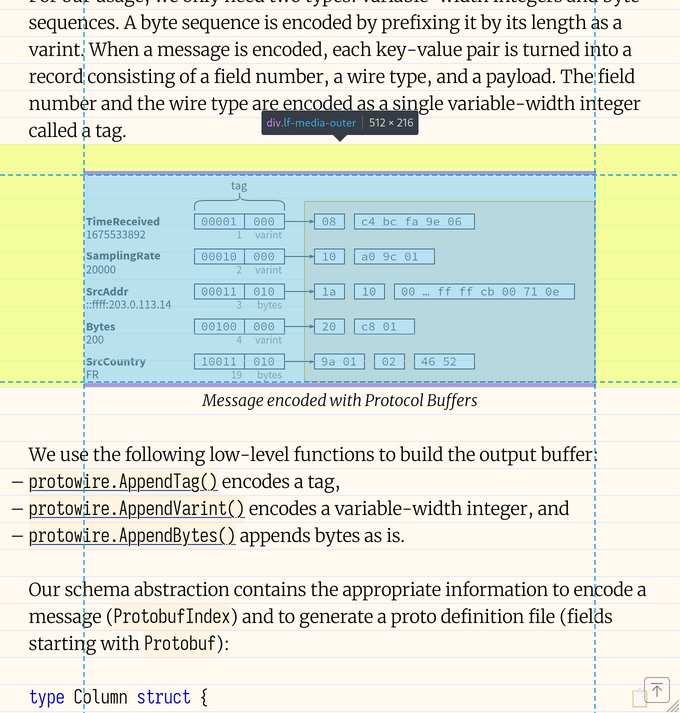
Screenshot of my website with a grid as an overlay and each line of text fitting on the grid
Using CSS rlh unit to set vertical space works well for text. You can display the grid using Ctrl+Shift+G.
If a child element uses a font with taller intrinsic metrics, it may stretch the line s box beyond the configured line height.5 A workaround is to reduce the line height to 1. The glyphs overflow but don t push the line taller.
code, kbd  
  line-height: 1;
 

Responsive images Responsive images are difficult to align on the grid because we don t know their height. CSS Rhythmic Sizing Module Level 1 introduces the block-step property to adjust the height of an element to a multiple of a step unit. But most browsers don t support it yet. With JavaScript, we can add padding around the image so it does not disturb the vertical rhythm:
const targets = document.querySelectorAll(".lf-media-outer");
const adjust = (el, height) =>  
  const rlh = parseFloat(getComputedStyle(document.documentElement).lineHeight);
  const padding = Math.ceil(height / rlh) * rlh - height;
  el.style.padding =  $ padding / 2 px 0 ;
 ;
targets.forEach((el) => adjust(el, el.clientHeight));
Screenshot of my website with a grid as an overlay and an image not breaking the vertical rhythm. Additional padding is visible before and after the image. The height of the image with padding is 216.
The image is snapped to the grid thanks to the additional padding computed with JavaScript. 216 is divisible by 27, our line height in this example.
As the image is responsive, its height can change. We need to wrap a resize observer around the adjust() function:
const ro = new ResizeObserver((entries) =>  
  for (const entry of entries)  
    const height = entry.contentBoxSize[0].blockSize;
    adjust(entry.target, height);
   
 );
for (const target of targets)  
  ro.observe(target);
 

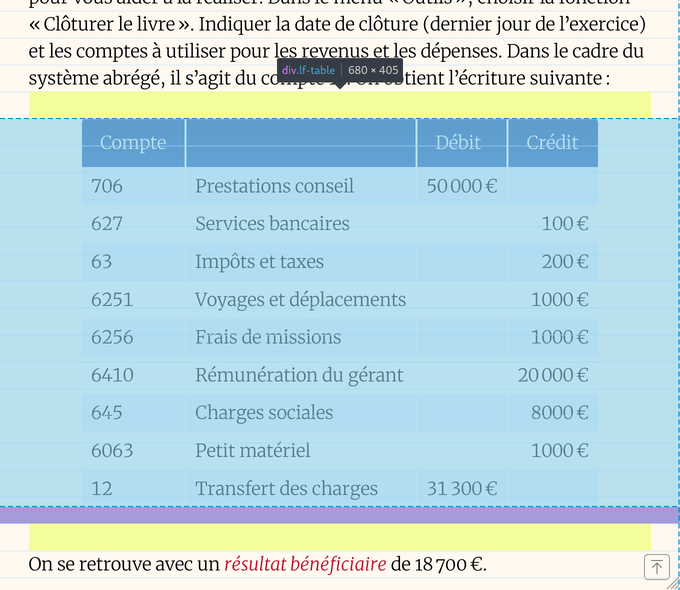
Tables Table cells could set 1rlh as their height but they would feel constricted. Using 2rlh wastes too much space. Instead, we use incremental leading: we align one in every five lines.
table  
  border-spacing: 2px 0;
  border-collapse: separate;
  th  
    padding: 0.4rlh 1em;
   
  td  
    padding: 0.2rlh 0.5em;
   
 
To align the elements after the table, we need to add some padding. We can either reuse the JavaScript code from images or use a few lines of CSS that count the regular rows and compute the missing vertical padding:
table:has(tbody tr:nth-child(5n):last-child)     padding-bottom: 0.2rlh;  
table:has(tbody tr:nth-child(5n+1):last-child)   padding-bottom: 0.8rlh;  
table:has(tbody tr:nth-child(5n+2):last-child)   padding-bottom: 0.4rlh;  
table:has(tbody tr:nth-child(5n+3):last-child)   padding-bottom: 0  
table:has(tbody tr:nth-child(5n+4):last-child)   padding-bottom: 0.6rlh;  
A header cell has twice the padding of a regular cell. With two regular rows, the total padding is 2 2 0.2+2 0.4=1.6. We need to add 0.4rlh to reach 2rlh of extra vertical padding across the table.
Screenshot of my website with a grid as an overlay and a table following the vertical rhythm. Additional padding is visible after the table. The height of the table with padding is 405.
One line out of five is aligned to the grid. Additional padding is added after the table to not break the vertical rhythm. 405 is divisible by 27, our line height in this example.

None of this is necessary. But once you start looking, you can t unsee it. Until browsers implement CSS Rhythmic Sizing, a bit of CSS wizardry and a touch of JavaScript is enough to pull it off. The main text now returns after each intrusion precisely on beat and in phase.

  1. See Vertical rhythm using CSS lh and rlh units by Pawe Grzybek.
  2. For broader compatibility, you can replace 2rlh with calc(var(--line-height) * 2rem) and set the --line-height custom property in the :root pseudo-class. I wrote a simple PostCSS plugin for this purpose.
  3. It would have been nicer to compute the line height with calc(round(up, calc(2.4rem / 1rlh), 0) * 1rlh). Unfortunately, typed arithmetic is not supported by Firefox yet. Moreover, browsers support round() only since 2024. Instead, I coded a PostCSS plugin for this as well.
  4. The following CSS code defines a grid tracking the line height:
    body  
      position: relative;
     
    body::after  
      content: "";
      position: absolute;
      inset: 0;
      z-index: 9999;
      background: linear-gradient(180deg, #c8e1ff99 1px, transparent 1px);
      background-size: 20px 1rlh;
      pointer-events: none;
     
    
  5. See Deep dive CSS: font metrics, line-height and vertical-align by Vincent De Oliveira.

21 April 2026

Russell Coker: More About Ebook Readers in Debian

FBReader After my previous blog post about eBook readers in Debian [1] a reader recommended FBReader. I tried it and it s now my favourite reader. It works nicely on laptop and phone and takes significantly less RAM than Calibre or Arianna (especially important for phones). While the problems with my FLX1s not displaying text with Calibre or Arianna might be the fault of something on the FLX1s side those problems just don t happen with FBReader. FBReader has apparently now got a proprietary version as the upstream, but we still have FOSS code to use in Debian. It would be nice if someone updated it to store the reading location using WebDAV and/or a local file that can be copied with the NextCloud client or similar. Currently there is code to store reading location in the Google cloud which I don t want to use. It s not THAT difficult to see what chapter you are at with one device and just skip to that part on another, but it is an annoyance. One thing I really like about FBReader is that you can run it with a epub file on the command line and it just opens it and when it s been closed you can just open it again to the same spot in the same file. I don t want a library to view a book list, I just want to go back to what I was last reading in a hurry. Calibre might be better for some uses, for example I can imagine someone in the publishing industry with a collection of thousands of epub files finding that Calibre works better for them. But for the typical person who just wants to read one book and keep reading it until they finish it FBReader seems clearly better. The GUI is a little unusual, but it s not at all confusing and it works really well on mobile. Okular I tried Okular (the KDE viewer for PDF files etc) which displays epub files if you have the okular-extra-backends installed, but it appears to not display books with the background color set to black. I would appreciate it if someone who has read some public domain or CC licences epub files can recommend ones with a black background that I could use for testing as I can t file a Debian bug report without sample data to reproduce the bug. I decided not to use it for actual book reading as FBReader is far better for my use taking less RAM and being well optimised for mobile use. Folite Foliate supports specifying a book on the command-line which is nice. But it takes more memory than FBReader which is probably mostly due to using webkit to display things. The output was in 2 columns on my laptop in small text which is probably configurable but I didn t proceed with it. I determined that it doesn t compare with FBReader for my use. It s written in JavaScript which may be a positive feature for some people. Koodo I had a brief test of Koodo which isn t in Debian. Here is the Koodo Reader Github [2]. I installed the .deb that they created, it installs files to /opt/Koodo Reader/ (yes that s a space in the directory name) and appears to have Chromium as part of the runtime. I didn t go past that even though it appears to have a decent feature set. It is licensed under version 3 of the AGPL so is suitable for Debian packaging if someone wants to do it. Thorium I saw the Thorium reader on Github [3] which looks promising, it s under the BSD 3 clause license so is suitable for Debian packaging. The EDR Lab seems like a good project for advancing electronic document use [4] and it would be good to have their stuff in Debian. For the moment I m happy using FBReader.

20 April 2026

Russ Allbery: Review: Surface Detail

Review: Surface Detail, by Iain M. Banks
Publisher: Orbit
Copyright: October 2010
Printing: May 2011
ISBN: 0-316-12341-2
Format: Trade paperback
Pages: 627
Surface Detail is the ninth novel in Banks's Culture science fiction (literary space opera?) series. As with most of the Culture novels, it can be read in any order, although this isn't the best starting point. There is an Easter egg reference to Use of Weapons that would be easier to notice if you have read that book recently, but which is not that important to the story. Lededje Y'breq is an Indented Intagliate from the Sichultian Enablement. Her body is patterned from her skin down to her bones, covered with elaborate markings similar to tattoos that extend to her internal organs. As an intagliate, she is someone's property. In her case, she is the property of Joller Veppers, the richest man in the Enablement and her father's former business partner. Intagliates are a tradition of great cultural pride in the Enablement. They are a living representation of the seriousness with which debts and honor are taken, up to and including one's not-yet-born children becoming the property of one's debtor. Such children are decorated as living works of art of the highest skill and technical sophistication; after all, the Enablement are not barbarians. As the story opens, Lededje is attempting, not for the first time, to escape. This attempt is successful in an unexpected way. Prin and Chay are Pavulean researchers and academics who, as this story opens, are in Hell. They are not dead; they have infiltrated the Hell that Pavuleans are shown to scare them into proper behavior in order to prove that it is not an illusion and their society does indeed torture people in an afterlife, in more awful ways than people dare imagine. They have reached the portal through which temporary visitors exit, hoping to escape with firm evidence of the existence and horrors of the Pavulean afterlife. They will not be entirely successful. Yime Nsokyi is a Culture agent for Quietus, the part of Contact that concerns itself with the dead. Many advanced societies throughout the galaxy have invented and reinvented the ability to digitize a mind and then run it in a virtual environment. Once a society can capture the minds of every person in that society from that point forward, it faces the question of whether to do so and, if it does, what to do with those minds. More specifically, it faces the moral question of whether to punish the minds of people who were horrible in life. It faces the question of whether to create Hell. Vatueil is a soldier in a contestation, a limited and carefully monitored virtual war. The purpose of that war game is to, once and for all, resolve the question of whether civilizations should be allowed to create Hells. Some civilizations consider them integral to their religion or self-conception. Others consider them morally abhorrent, and that conflict was in danger of spilling over into war in the Real. Hence the War in Heaven: Both sides committed to fight in a virtual space under specific and structured rules, and the winner decides the fate of the galaxy's Hells. Vatueil is fighting for the anti-Hell side. The anti-Hell side is losing. There are very few authors who were better at big-idea science fiction than Iain M. Banks. I've been reading a few books about AI ships and remembered that I had two unread Culture novels that I was saving. It felt like a good time to lose myself in something sprawling. Surface Detail does sprawl. Even by Banks's standards, there was an impressive amount of infodumping in this book. Banks always has huge and lovingly described set pieces, and this book is no exception, but there are also paragraphs and pages of background and cultural musings and galactic politics. We are introduced to not one but three new Contact divisions; as well as the already-mentioned Quietus, there is Numina, which concerns itself with the races that have sublimed (transcended), and Restoria, which deals with hegemonizing swarms (grey goo nanotech, paperclip maximizers, and their equivalents). Infodumping is both a feature and a bane of big-idea science fiction, and it helps to be in the right mood. It also helps if the info being dumped is interesting, and this is where Banks shines. This is a huge, sprawling book, but it deals with some huge, sprawling questions and it has interesting and non-reductive thoughts about them. The problems posed by the plot come with history, failed solutions, multi-sided political disputes, strategies and tactics of varying morality and efficacy, and an effort to wrestle with the irreducible complexity of trying to resolve political and ethical disagreements in a universe full of profound disagreements and moral systems that one cannot simply steamroll. It also helps that the characters are interesting, even when they're not likable. Surface Detail has one fully hissable villain (Veppers) as a viewpoint character, but even Veppers is interesting in a "let me check the publication date to see if Banks was aware of Peter Thiel" sort of way. The Culture ships, of which there are several in this story, tend towards a gently sarcastic kindness that I find utterly charming. Lededje provides the compelling motive force of someone who has no involvement in the broader philosophical questions and instead intends to resolve one specific problem through lethal violence. Vatueil and Yime were a bit bland in personality, more exposition generators than characters I warmed to, but their roles and therefore the surrounding exposition were fascinating enough that I still enjoyed their sections. I'm sure this is not an original observation, but I was struck reading this book in the first half of 2026 that the Culture functions as an implementation of what the United States likes to think it is but has never been. It has a strong sense of shared ethics and moral principles, it tries to export them to the rest of the galaxy through example, persuasion, and careful meddling, but it tries to follow some combination of pragmatic and moral rules while doing so, partly to avoid a backlash and partly to avoid becoming its own sort of hegemonizing swarm. That is a powerfully attractive vision of how to be an advanced civilization, and the fact that every hegemon that has claimed that mantle has behaved appallingly just makes it more intriguing as a fictional concept. In this book, like in many Culture books, the Culture is painfully aware of the failure modes of meddling, and the story slowly reveals the effort the Culture put into staying just on a defensible side of their own moral lines. This is, in a sense, a Prime Directive story, but with a level of hard-nosed pragmatism and political sophistication that the endless Star Trek Prime Directive episodes never reach. Surface Detail does tend to sprawl, and I'm not sure Banks pulled together all the pieces of the plot. For example, if there was a point to the subplot involving the Unfallen Bulbitian, it was lost on me. (There is always a possibility with Banks that I wasn't paying close enough attention.) But the descriptions are so elaborate and the sense of politics and history are so deep that I was never bored, even when following a plot thread that meandered off into apparent irrelevance. The main plot line comes to a satisfying conclusion that may be even more biting social commentary today than it was in 2010. A large part of the plot does involve Hell, so a warning for those who haven't read much Banks: He adores elaborate descriptions of body horror and physical torture. The sections involving Prin and Chay are rather grim and horrific, probably a bit worse than Dante's Inferno. I have a low tolerance for horror and I was able to read past and around the worst bits, but be warned that Banks indulges his love for the painfully grotesque quite a bit. This was great, and exactly what I was hoping for when I picked it up. It's not the strongest Culture novel (for me, that's either The Player of Games or Excession), but it's one of the better ones. Highly recommended, although if you're new to the Culture, I would start with one of the earlier books that provide a more gradual introduction to the Culture and Special Circumstances. Followed, in the somewhat disconnected Culture series sense, by The Hydrogen Sonata. Content warnings: Rape (largely off-screen), graphic violence, lots of Bosch-style grotesque torture, and a lot of Veppers being a thoroughly awful human being as a viewpoint character. Rating: 8 out of 10

19 April 2026

Russ Allbery: Review: Collision Course

Review: Collision Course, by Michelle Diener
Series: Class 5 #6
Publisher: Eclipse
Copyright: November 2024
ISBN: 1-7637844-0-1
Format: Kindle
Pages: 289
Collision Course is the sixth novel in the Class 5 science fiction series and the first that doesn't use the Dark X naming convention. There are lots of spoilers in this story for the earlier books, but you don't have to remember all the details of previous events. Like the novella, Dark Ambitions, this novel returns to Rose, Sazo, and Dav instead of introducing another Earth woman and Class 5 ship. In Dark Class, Ellie discovered an interesting artifact of a previously-unknown space-faring civilization. Rose, Sazo, and Dav are on their way to make first contact when, during a routine shuttle flight between the Class 5 and Dav's Grih military ship, Rose is abducted. The aliens they came to contact have an aggressive, leverage-based negotiating strategy. They're also in the middle of a complicated war with more sides than are readily apparent. What I liked most about Dark Horse, the first book of this series and our introduction to Rose, was the revealed ethical system and a tense plot that hinged primarily on establishing mutual trust when there were excellent reasons for the characters to not trust each other. As the series has continued, I think the plots have become more complicated but the ethical dilemmas and revealing moments of culture shock have become less common. That is certainly true of Collision Course; this is science fiction as thriller, with a complex factional conflict, a lot of events, more plot reversals than the earlier books, but also less ethics and philosophy. I'm not sure if this is a complaint. I kind of miss the ethics and philosophy, but Diener also hasn't had much new to say for the past few books. The plot of Collision Course is quite satisfyingly twisty for a popcorn-style science fiction series. I was kept guessing about the merits of some of the factions quite late into the book, although admittedly I was in the mood for light entertainment and was not trying too hard to figure out where the book was going. I did read nearly the entire book in one sitting and stayed up until 2am to finish it, which is a solid indication that something Diener was doing worked. I do have quibbles, though. One is that the ending is a bit unsatisfying. Like Sazo, I was getting quite annoyed at the people capturing (and recapturing) Rose and would have enjoyed somewhat more decisive consequences. Also, and here I have to be vague to avoid spoilers, I was expecting a bit more of a redemption arc for one of the players in the multi-sided conflict. The ending I did get was believable but rather sad, and I wish Diener had either chosen a different outcome (this is light happily-ever-after science fiction, after all) or wrestled more directly with the implications. There were a bit too many "wait, one more thing" ending reversals and not quite enough emotional payoff for me. The other quibble is that Collision Course was a bit too damsel in distress for this series. Rose is pregnant, which Diener uses throughout the book as a way to raise the stakes of the plot and also make Rose more annoyed but also less capable than she was in her earlier novel. Both Sazo and Dav are in full heroic rescue mode, and while Diener still ensures Rose is primarily responsible for her own fate, there is some "military men attempt to protect the vulnerable woman" here. One of the things I like about this series is that it does not use that plot, so while the balance between Rose rescuing herself and other people rescuing her is still tilted towards Rose, I would have liked this book more if Rose were in firmer control of events. I will mostly ignore the fact that a human and a Grih sexually reproducing makes little to no biological sense, since Star Trek did similar things routinely and it's an established genre trope. But I admit that it still annoys me a bit that the alien hunk is essentially human except that he's obsessed with Rose's singing and has pointy ears. Diener cares about Rose's pregnancy a lot more than I did, which added to my mild grumpiness at how often it came up. Overall, this was fine. I prefer a bit more of a protagonist discovering how powerful she is by making ingenious use of the ethical dilemmas her captors have trapped themselves in, and a bit less of Rose untangling a complicated political situation by getting abducted by every player serially, but it still kept the pages turning. Any book that is sufficiently engrossing for me to read straight through is working at some level. Collision Course was highly readable, undemanding, and distracting, which is what I was looking for when I read it. I would put it about middle of pack in the series. If Rose's pregnancy is more interesting to you than it was to me, that might push it a bit higher. If you have gotten this far in the series, you will probably enjoy this, although it does feel like Diener is running out of new things to say about this universe. That's unfortunate given the number of threads about AI sentience and rights that could still be followed, but I think tracing them properly would require more philosophical meat than Diener intends for these books. Which is why the next book I grabbed was a Culture novel. Currently this is the final book in the Class 5 series, but there is no inherent reason why Diener couldn't write more of them. Rating: 7 out of 10

18 April 2026

Valhalla's Things: Pizza!

Posted on April 18, 2026
Tags: madeof:atoms, craft:cooking
This post contains a bit of consumerism and is full of references to commercial products, none of which caused me to receive any money nor non-monetary compensation. This post has also been written after eating in one meal the amount of bread-like stuff that we usually have in more than 24 hours. I ve been baking bread since a long time ago. I don t know exactly when, but probably it was the early 2000s or so, and remained a regular-ish thing until 2020, when it became an extremely regular thing, as in I believe I bake bread on average every other day. In the before times, I ve had a chance to bake pizza in a wood fired oven a few times: a friend had one and would offer the house, my partner would mind the fire, and I would get there with the dough and prepare the pizza. Now that we have moved to a new house, we don t have a good and convenient place for a proper wood fired oven in masonry, but we can use one of the portable ones, and having dealt with more urgent expenses, I decided that just before the potential collapse of the global economy was a good time as any to buy the oven I had been looking at since we found this house. I decided to get an Ooni Karu 2, having heard good things about the brand, and since it looked like a good balance between size and portability. I also didn t consider their gas fired ovens (nor did I buy the gas burner) because I m trying to get rid of gas, not add stuff that uses it, and I didn t get an electric one because I m not at all unhappy with the bakery-style pizza we make in our regular oven, and I have to admit we also wanted to play with fire1. We also needed an outdoor table suitable to use the oven on and store it. Here I looked for inspiration at the Ooni tables (and for cheaper alternatives in the same style), but my mother who shares the outdoor area with us wasn t happy with the idea of steel2. And then I was browsing the modern viking shores, and found that there was a new piece in the N MMAR series my mother likes (and of which we already have some reclining chairs): a kitchen unit in wood with a steel top. At first I expected to just skip the back panel, since it would be in the way when using the oven, but then I realized that it could probably be assembled upside down, down from the top between the table legs, and we decided to try that option. This week everything had arrived, and we could try it. Yesterday evening, after dinner (around 21, I think) I prepared the dough with the flour I usually use for bakery-style pizza: Farina di Grano Tenero Tipo 0 PANE (320 - 340 W); since I wanted to make things easier for myself I only used 55% hydration, so the recipe was:
  • 1 kg flour
  • 550 g water
  • 2 g dry yeast
  • 12 g salt
The next time I think I ll try with one of my other staples: Molino Bogetto etichetta blu (260/280 W) Then this morning we assembled the N MMAR , then I divided the dough in eight balls, put them in a covered but not sealed container 3, well floured with rice flour and then we fired the oven (as in: my partner did, I looked for a short while and then set the table and stuff), using charcoal, because we already had some, and could conveniently get more at the supermarket. When the oven had reached temperatures in the orange range4 I stretched the smallest ball out, working on my wooden peel, sprayed it with water5, sprinkled it with coarse salt and put it in the oven. After 30 seconds I turned it around with the new metal peel, then again after 30 seconds, and then I lost count of how many times I repeated this6, but it was probably 2 or 3 minutes until it looked good. A flatbread on a regular plate: it's only a bit more than half the plate in diameter, puffed up near the borders and thin in the middle, and only lightly browned in places, not burnt. It's sitting on the lower shelf of a wooden table. And it was good. The kind of pizza that is quite soft, especially near the borders. We ate it with fresh mozzarella and tomatoes, and then made another one the same way, to finish the mozzarella. Another flatbread on the same plate, this time it's about 4 cm smaller than the plate on all sides, and it's covered with brownish-red chopped up vegetables. This was supposed to be our lunch, but we decided to try one with some leftover cooked radicchio, and that also worked quite nicely. And finally, we decided we needed to try a more classical pizza, with tomato sauce and cured meat, of which we forgot to take pictures. Up to here we had eaten about half of the dough, and we were getting full: I had prepared significantly more than what I expected to eat, to be able to accidentally burn some, but also with the idea to bake something else to be eaten later. So I made two more focaccias with just water and salt, and then I tried to cook some bread with what I expected to be residual heat. Another flatbread with coarse salt and two bread rolls, one of which is completely carbonized on one side. The other one has been cut, and while it has a carbonized spot, it is also well cooked in the middle, and perfectly edible. Except that the oven was getting a bit too cold, so my partner added some charcoal, and when I put the last two unflattened balls right at the back of the oven where it was still warmer, that side carbonized. After 5 minutes I moved them to the middle of the oven, and turned them, and then after another turn and 5 more minutes they were ready. And other than the burnt crust, they were pretty edible. So, the thoughts after our first experience. Everybody around the table (my SO, my mother and me) was quite happy with the results, and they are different enough from the ones I could get with the regular oven. As I should have expected, it s much faster than a masonry oven, both in getting to temperature and in cooling down: my plan for residual heat bread cooking will have to be adjusted with experience. We were able to get it hot enough, but not as hot as it s supposed to be able to get: we suspect that using just charcoal may have influenced it, and next week we ll try to get some wood, and try with a mix. As for the recipe, dividing the dough in eight parts worked quite well: maybe the pizzas are a bit on the smaller side, but since they come one at a time it s more convenient to cut and share them, and maybe make a couple more at the end. Of course, I ll want to try different recipes, for different styles of pizzas (including some almost-trademark-violating ones) and for other types of flatbread. I expect it won t be hard to find volunteers to help us with the experiments. :D

  1. any insinuation that there may have been considerations of having a way to have freshly baked bread in case of a prolonged blackout may or may not be based on reality. But it wasn t the only or even the main reason.
  2. come on! it s made of STEEL. how can it be not good? :D
  3. IKEA 365+ 3.1 glass, the one that is 32 cm 21 cm 9 cm; it was just big enough for the amount of dough, and then I covered it with a lid that is missing the seal.
  4. why did they put a thermometer on it, and not add labels with the actual temperature? WHY???
  5. if you don t have dietary restrictions a bit of olive oil would taste even better.
  6. numbers above 2 are all basically the same, right?

Yifei Zhan: CommBank hardware MFA token

A while ago, CommBank started asking for MFA confirmation on its mobile app for every NetBank login on a browser. Previously, there was an option to use SMS for MFA, which isn t as secure as I would like, but it was at least usable. Since I m switching away from Android to Mobian and won t be able to use the CommBank app for much longer, I applied for a physical NetCode token. The hardware is made by Digipass and looks disposable. It is a small, battery powered gadget with a screen and a button. When pressed, it shows a temporary NetCode for authentication. Such a NetCode is required both for NetBank logins and approving online transactions. The letter that came with it has the wrong link for activation, the correct link is under NetBank -> Settings -> NetCode (under the Security section) To apply for a physical token, call the NetBank team, mention you can t use the app and need a physical NetCode token, and make sure they actually submit your request for a token. It took me 2 calls to get them to ship me a token. The hardware is free of charge but can only be applied for via phone call; unfortunately staff members at my local branch are unable to do anything in relation to NetBank. I was told privately by a CommBank employee that they are deprecating the hardware token in favor of the mobile app, I hope that won t happen anytime soon, or that they add support for passkeys before they do. The last time I checked, the CommBank app was LineageOS-friendly, but I don t want to configure WayDroid just to do online banking. PayID, the thing that allows you to receive payment via a phone number or email address, is not compatible with the hardware token, and existing PayID will be silently deactivated if you use hardware token. This looks to be an artificial restriction; I don t see why it has to be this way. Regular CommBank mobile app sessions will also be de-activated once the hardware token is activated (I was told so but my sessions weren t deactivated until I wiped my Android phone), and you won t be able to sign into mobile app again until you manually disable the NetCode token. Online banking has been getting progressively more invasive and anti-user over the last decade, from demanding remote attestation to requiring real time location data, each time locking certain features when those demands are not satisfied; all based on the flawed assumptions that everyone owns a phone running a certain flavor of iOS or Android, and has it ready all the time. I m not sure what can be done to reverse this trend, but on the personal level I will use NetBank less and go back to cash.

17 April 2026

Russell Coker: Home Battery

Prices On the 19th of March I got a home battery system installed. The government has a rebate scheme so it had a list price of about $22k for a 40kWh setup and cost me about $12k. It seems that 40KWh is the minimum usable size for the amount of electricity I use, I have 84 cores running BOINC when they have nothing better to do which is 585W of TDP according to Intel. While the CPUs are certainly using less than the maximum TDP (both due to design safety limits and the fact that I have disabled hyper-threading on all systems due to it providing minimal benefits and potential security issues) given some power usage by cooling fans and some inefficiency in PSUs I think that assuming that 585W is accounted for 24*7 by CPUs is reasonable. So my home draws between 800W and 1KW when no-one is home and with an electric car and all electric cooking a reasonable amount of electricity can be used. My bills prior to the battery installation were around $200/month which was based on charging my car only during sunny times as my electricity provider (Amber Electric) has variable rates based on wholesale prices. Also the feed in rates if my solar panels produce too much electricity in sunny times often go negative so if I don t use enough electricity. I haven t had the electric car long enough to find out what the bills might be in winter without a home battery. Before getting the battery my daily bills according to the Amber app were usually between $5 and $10. After getting it the daily bills have almost always been below $5. The only day where it s been over $5 since the battery installation was when electricity was cheap and I fully charged the home battery and my car which used 50KWh in one day and cost $7.87 which is 16 cents per KWh. 16 cents isn t the cheapest price (sometimes it gets as low as 10 cents) but is fairly cheap, sometimes even in the cheap parts of the day it doesn t get that low (the cheapest price on the day I started writing this was 20 cents). So it looks like this may save me $100 per month, if so there will be a 10% annual return on investment on the $12K I spent. This makes it a good investment, better than repaying a mortgage (which is generally under 6%) and almost as good as the long term results of index tracker funds. However if it cost $22K (the full price without subsidy) then it would still be ok but wouldn t be a great investment. The government subsidised batteries because the huge amount of power generated by rooftop solar systems was greater than the grid could use during the day in summer and batteries are needed to use that power when it s dark. Android App The battery system is from Fox ESS and the FoxCloud 2.0 Android app is a bit lacking in functionality. It has a timer for mode setting with options Self-use (not clearly explained), Feed-in Priority (not explained but testing shows feeding everything in to the grid), Back Up , Forced Charge , and Forced Discharge . Currently I have Forced Charge setup for most sunny 5 hours of the day for a maximum charge power of 5KW. I did that because about 25KW/day is what I need to cover everything and while the system can do almost 10KW that would charge the battery fully in a few hours and then electricity would be exported to the grid which would at best pay me almost nothing and at worst bill me for supplying electricity when they don t want it. There doesn t seem to be a never put locally generated power into the grid unless the battery is full option. The force charge mode allows stopping at a certain percentage, but when that is reached there is no fallback to another option. It would be nice if the people who designed the configuration could take as a baseline assumption that the macro programming in office suites and functions in spreadsheets are things that regular people are capable of using when designing the configuration options. I don t think we need a Turing complete programming language in the app to control batteries (although I would use it if there was one), but I think we need clauses like if battery is X% full then end this section . There is no option to say force charge until 100% or force charge for the next X minutes as a one-off thing. If I came home in the afternoon with my car below 50% battery and a plan to do a lot of driving the next day then I d want to force charge it immediately to allow charging the car overnight. But I can t do that without entering a schedule . For Unix people imagine having to do everything via a cron job and no option to run something directly from the command-line. It s a little annoying that they appear to have spent more development time on animations for the app than some of what should be core functionality. Management Amber has an option to allow my battery to be managed by them based on wholesale pries but I haven t done that as the feed-in prices are very low. So I just charge my battery when electricity is cheap and use it for the rest of the day. There is usually a factor of 2 or more price difference between the middle of the day and night time so that saves money. It also means I don t have to go out of my way to try and charge my car in the middle of the day. There is some energy lost in charging and discharging the batteries but it s not a lot. I configured the system to force charge for the 5 sunniest hours every day for 5KW as that s enough to keep it charged overnight and 5KW is greater than the amount of solar electricity produced on my house since I ve been monitoring it so that forces it to all be used for the battery. In summer I might have to change that to 6KW for the sunniest 2 or 3 hours and then 4KW or 5KW surrounding that which will be a pain to manage. Instead of charging the car every day during sunny times I charge it once or twice a week, I have a 3.3KW charger and the car has a 40KWh battery so usually it takes me less than 10 hours to fully charge it and I get at least 5 hours of good sunlight in the process. There are people hacking on these devices which is interesting to get direct control from computers [1], and apparently not banned from the official community for doing so. I m not enthusiastic enough to do this, I ve got plenty of other free software things to work on. But it s good that others are doing so.

Next.

Previous.