Search Results: "rra"

19 June 2025

Debian Outreach Team: GSoC 2025 Introduction: Make Debian for Raspberry Pi Build Again

Hello everyone! I am Kurva Prashanth, Interested in the lower level working of system software, CPUs/SoCs and Hardware design. I was introduced to Open Hardware and Embedded Linux while studying electronics and embedded systems as part of robotics coursework. Initially, I did not pay much attention to it and quickly moved on. However, a short talk on Liberating SBCs using Debian by Yuvraj at MiniDebConf India, 2021 caught my interest. The talk focused on Open Hardware platforms such as Olimex and BeagleBone Black, as well as the Debian distributions tailored for these ARM-based single-board computers has intrigued me to delve deeper into the realm of Open Hardware and Embedded Linux. These days I m trying to improve my abilities to contribute to Debian and Linux Kernel development. Before finding out about the Google Summer of Code project, I had already started my journey with Debian. I extensively used Debian system build tools(debootstrap, sbuild, deb-build-pkg, qemu-debootstrap) for Building Debian Image for Bela Cape a real-time OS for music making to achieve extremely fast audio and sensor processing times. In 2023, I had the opportunity to attend DebConf23 in Kochi, India - thanks to Nilesh Patra (@nilesh) and I met Hector Oron (@zumbi) over dinner at DebConf23 and It was nice talking about his contributions/work at Debian on armhf port and Debian System Administration that conversation got me interested in knowing more about Debian ARM, Installer and I found it fascinating that EmDebian was once a external project bringing Debian to embedded systems and now, Debian itself can be run on many embedded systems. And, also during DebCamp I got Introduced to PGP/GPG keys and the web of trust by Carlos Henrique Lima Melara (@charles) I learned how to use and generate GPG keys. After DebConf23 I tried debian packaging and I miserably failed to get sponsorship for a python library I packaged. I came across the Debian project for this year s Google Summer of Code and found the project titled Make Debian for Raspberry Pi Build Again quite interesting to me and applied. Gladly, on May 8th, I received an acceptance e-mail from GSoC. I got excited that I ll spend the summer working on something that I like doing. I am thrilled to be part of this project and I am super excited for the summer of 25. I m looking forward to work on what I most like, new connections and learning opportunities. So, let me talk a bit more about my project. I will be working on to Make Debian for Raspberry Pi SBC s under the guidance of Gunnar Wolf (@gwolf). In this post, I will describe the project I will be working on.

Why make Debian for Raspberry Pi build again? There is an available set of images for running Debian in Raspberry Pi computers (all models below the 5 series)! However, the maintainer severely lacking time to take care for them; called for help for somebody to adopt them, but have not been successful. The image generation scripts might have bitrotted a bit, but it is mostly all done. And there is a lot of interest and use still in having the images freshly generated and decently tested! This GSoC project is about getting the [https://raspi.debian.net/ Raspberry Pi Debian images] site working reliably, daily-built images become automatic again and ideally making it easily deployable to be run in project machines and migrating exsisting hosting infrastructure to Debian.

How much it differ from Debian build process? While the goal is to stay as close as possible to the Debian build process, Raspberry Pi boards require some necessary platform-specific changes primarily in the early boot sequence and firmware handling. Unlike typical Debian systems, Raspberry Pi boards depend on a non-standard bootloader and use non-free firmware (raspi-firmware), Introducing some hardware-specific differences in the initialization process. These differences are largely confined to the early boot and hardware initialization stages. Once the system boots, the userspace remains closely aligned with a typical Debian install, using Debian packages. The current modifications are required due to non-free firmware. However, several areas merit review: but there are a few parts that might be worth changing.
  1. Boot flow: Transitioning to a U-Boot based boot process (as used in Debian installer images for many other SBCs) would reduce divergence and better align with Debian Installer.
  2. Current scripts/workarounds: Some existing hacks may now be redundant with recent upstream support and could be removed.
  3. Board-specific images: Shift to architecture-specific base images with runtime detection could simplify builds and reduce duplication.
Debian already already building SD card images for a wide range of SBCs (e.g., BeagleBone, BananaPi, OLinuXino, Cubieboard, etc.) installer-arm64/images/u-boot and installer-armhf/images/u-boot, a similar approach for Raspberry Pi could improve maintainability and consistency with Debian s broader SBC support.

Quoted from Mail Discussion Thread with Mentor (Gunnar Wolf)
"One direction we wanted to explore was whether we should still be building one image per family, or whether we could instead switch to one image per architecture (armel, armhf, arm64). There were some details to iron out as RPi3 and RPi4 were quite different, but I think it will be similar to the differences between the RPi 0 and 1, which are handled at first-boot time. To understand what differs between families, take a look at Cyril Brulebois generate-recipe (in the repo), which is a great improvement over the ugly mess I had before he contributed it"
In this project, I intend to to build one image per architecture (armel, armhf, arm64) rather than continuing with the current model of building one image per board. This change simplifies image management, reduces redundancy, and leverages dynamic configuration at boot time to support all supported boards within each architecture. By using U-Boot and flash-kernel, we can detect the board type and configure kernel parameters, DTBs, and firmware during the first boot, reducing duplication across images and simplifying the maintenance burden and we can also generalize image creation while still supporting board-specific behavior at runtime. This method aligns with existing practices in the DebianInstaller team and aligns with Debian s long-term maintainability goals and better leverages upstream capabilities, ensuring a consistent and scalable boot experience. To streamline and standardize the process of building bootable Debian images for Raspberry Pi devices, I proposed a new workflow that leverages U-Boot and flash-kernel Debian packages. This provides a clean, maintainable, and reproducible way to generate images for armel, armhf and arm64 boards. The workflow is vmdb2, a lightweight, declarative tool designed to automate the creation of disk images. A typical vmdb2 recipe defines the disk layout, base system installation (via debootstrap), architecture-specific packages, and any custom post-install hooks and the image should includes U-Boot (the u-boot-rpi package), flash-kernel, and a suitable Debian kernel package like linux-image-arm64 or linux-image-armmp. U-Boot serves as the platform s bootloader and is responsible for loading the kernel and initramfs. Unlike Raspberry Pi s non-free firmware/proprietary bootloader, U-Boot provides an open and scriptable interface, allowing us to follow a more standard Debian boot process. It can be configured to boot using either an extlinux.conf or a boot.scr script generated automatically by flash-kernel. The role of flash-kernel is to bridge Debian s kernel installation system with the specifics of embedded bootloaders like U-Boot. When installed, it automatically copies the kernel image, initrd, and device tree blobs (DTBs) to the /boot partition. It also generates the necessary boot.scr script if the board configuration demands it. To work correctly, flash-kernel requires that the target machine be identified via /etc/flash-kernel/machine, which must correspond to an entry in its internal machine database.\ Once the vmdb2 build is complete, the resulting image will contain a fully configured bootable system with all necessary boot components correctly installed. The image can be flashed to an SD card and used to boot on the intended device without additional manual configuration. Because all key packages (U-Boot, kernel, flash-kernel) are managed through Debian s package system, kernel updates and boot script regeneration are handled automatically during system upgrades.

Current Workflow: Builds one Image per family The current vmdb2 recipe uses the Raspberry Pi GPU bootloader provided via the raspi-firmware package. This is the traditional boot process followed by Raspberry Pi OS, and it s tightly coupled with firmware files like bootcode.bin, start.elf, and fixup.dat. These files are installed to /boot/firmware, which is mounted from a FAT32 partition labeled RASPIFIRM. The device tree files (*.dtb) are manually copied from /usr/lib/linux-image-*-arm64/broadcom/ into this partition. The kernel is installed via the linux-image-arm64 package, and the boot arguments are injected by modifying /boot/firmware/cmdline.txt using sed commands. Booting depends on the root partition being labeled RASPIROOT, referenced through that file. There is no bootloader like UEFI-based or U-Boot involved the Raspberry Pi firmware directly loads the kernel, which is standard for Raspberry Pi boards.
- apt: install
  packages:
    ...
    - raspi-firmware  
The boot partition contents and kernel boot setup are tightly controlled via scripting in the recipe. Limitations of Current Workflow: While this setup works, it is
  1. Proprietary and Raspberry Pi specific It relies on the closed-source GPU bootloader the raspi-firmware package, which is tightly coupled to specific Raspberry Pi models.
  2. Manual DTB handling Device tree files are manually copied and hardcoded, making upgrades or board-specific changes error-prone.
  3. Not easily extendable to future Raspberry Pi boards Any change in bootloader behavior (as seen in the Raspberry Pi 5, which introduces a more flexible firmware boot process) would require significant rework.
  4. No UEFI-based/U-Boot The current method bypasses the standard bootloader layers, making it inconsistent with other Debian ARM platforms and harder to maintain long-term.
As Raspberry Pi firmware and boot processes evolve, especially with the introduction of Pi 5 and potentially Pi 6, maintaining compatibility will require more flexibility - something best delivered by adopting U-Boot and flash-kernel.

New Workflow: Building Architecture-Specific Images with vmdb2, U-Boot, flash-kernel, and Debian Kernel This workflow outlines an improved approach to generating bootable Debian images architecture specific, using vmdb2, U-Boot, flash-kernel, and Debian kernels and also to move away from Raspberry Pi s proprietary bootloader to a fully open-source boot process which improves maintainability, consistency, and cross-board support.

New Method: Shift to U-Boot + flash-kernel U-Boot (via Debian su-boot-rpi package) and flash-kernel bring the image building process closer to how Debian officially boots ARM devices. flash-kernel integrates with the system s initramfs and kernel packages to install bootloaders, prepare boot.scr or extlinux.conf, and copy kernel/initrd/DTBs to /boot in a format that U-Boot expects. U-Boot will be used as a second-stage bootloader, loaded by the Raspberry Pi s built-in firmware. Once U-Boot is in place, it will read standard boot scripts ( boot.scr) generated by flash-kernel, providing a Debian-compatible and board-flexible solution. Extending YAML spec for vmdb2 build with U-Boot and flash-kernel To improve an existing vmdb2 YAML spec(https://salsa.debian.org/raspi-team/image-specs/raspi_master.yaml), to integrate U-Boot, flash-kernel, and the architecture-specific Debian kernel into the image build process. By incorporating u-boot-rpi and flash-kernel from Debian packages, alongside the standard initramfs-tools, we align the image closer to Debian best practices while supporting both armhf and arm64 architectures. Below are key additions and adjustments needed in a vmdb2 YAML spec to support the workflow: Install U-Boot, flash-kernel, initramfs-tools and the architecture-specific Debian kernel.
- apt: install
  packages:
    - u-boot-rpi
    - flash-kernel
    - initramfs-tools
    - linux-image-arm64 # or linux-image-armmp for armhf 
  tag: tag-root
Replace linux-image-arm64 with the correct kernel package for specific target architecture. These packages should be added under the tag-root section in YAML spec for vmdb2 build recipe. This ensures that the necessary bootloader, kernel, and initramfs tools are included and properly configured in the image. Configure Raspberry Pi firmware to Load U-Boot Install the U-Boot binary as kernel.img in /boot/firmware we can also download and build U-Boot from source, but Debian provides tested binaries.
- shell:  
    cp /usr/lib/u-boot/rpi_4/u-boot.bin $ ROOT? /boot/firmware/kernel.img
    echo "enable_uart=1" >> $ ROOT? /boot/firmware/config.txt
  root-fs: tag-root
This makes the RPi firmware load u-boot.bin instead of the Linux kernel directly. Set Up flash-kernel for Debian-style Boot flash-kernel integrates with initramfs-tools and writes boot config suitable for U-Boot. We need to make sure /etc/flash-kernel/db contains an entry for board (most Raspberry Pi boards already supported in Bookworm). Set up /etc/flash-kernel.conf with:
- create-file: /etc/flash-kernel.conf
  contents:  
    MACHINE="Raspberry Pi 4"
    BOOTPART="/dev/disk/by-label/RASPIFIRM"
    ROOTPART="/dev/disk/by-label/RASPIROOT"
  unless: rootfs_unpacked
This allows flash-kernel to write an extlinux.conf or boot.scr into /boot/firmware. Clean up Proprietary/Non-Free Firmware Bootflow Remove the direct kernel loading flow:
- shell:  
    rm -f $ ROOT? /boot/firmware/vmlinuz*
    rm -f $ ROOT? /boot/firmware/initrd.img*
    rm -f $ ROOT? /boot/firmware/cmdline.txt
  root-fs: tag-root
Let U-Boot and flash-kernel manage kernel/initrd and boot parameters instead. Boot Flow After This Change
[SoC ROM] -> [start.elf] -> [U-Boot] -> [boot.scr] -> [Linux Kernel]
  1. This still depends on the Raspberry Pi firmware to start, but it only loads U-Boot, not Linux kernel.
  2. U-Boot gives you more flexibility (e.g., networking, boot menus, signed boot).
  3. Using flash-kernel ensures kernel updates are handled the Debian Installer way.
  4. Test with a serial console (enable_uart=1) in case HDMI doesn t show early boot logs.
Advantage of New Workflow
  1. Replaces the proprietary Raspberry Pi bootloader with upstream U-Boot.
  2. Debian-native tooling Uses flash-kernel and initramfs-tools to manage boot configuration.
  3. Consistent across boards Works for both armhf and arm64, unifying the image build process.
  4. Easier to support new boards Like the Raspberry Pi 5 and future models.
This transition will standardize a bit image-building process, making it aligned with upstream Debian Installer workflows.

vmdb2 configuration for arm64 using u-boot and flash-kernel NOTE: This is a baseline example and may require tuning.
# Raspberry Pi arm64 image using U-Boot and flash-kernel
steps:
  # ... (existing mkimg, partitions, mount, debootstrap, etc.) ...
  # Install U-Boot, flash-kernel, initramfs-tools and architecture specific kernel
  - apt: install
    packages:
      - u-boot-rpi
      - flash-kernel
      - initramfs-tools
      - linux - image - arm64 # or linux - image - armmp for armhf
    tag: tag-root
  # Install U-Boot binary as kernel.img in firmware partition
  - shell:  
      cp /usr/lib/u-boot/rpi_arm64 /u-boot.bin $ ROOT? /boot/firmware/kernel.img
      echo "enable_uart=1" >> $ ROOT? /boot/firmware/config.txt
    root-fs: tag-root
  # Configure flash-kernel for Raspberry Pi
  - create-file: /etc/flash-kernel.conf
    contents:  
      MACHINE="Generic Raspberry Pi ARM64"
      BOOTPART="/dev/disk/by-label/RASPIFIRM"
      ROOTPART="/dev/disk/by-label/RASPIROOT"
    unless: rootfs_unpacked
  # Remove direct kernel boot files from Raspberry Pi firmware
  - shell:  
      rm -f $ ROOT? /boot/firmware/vmlinuz*
      rm -f $ ROOT? /boot/firmware/initrd.img*
      rm -f $ ROOT? /boot/firmware/cmdline.txt
    root-fs: tag-root
  # flash-kernel will manage boot scripts and extlinux.conf
  # Rest of image build continues...

Required Changes to Support Raspberry Pi Boards in Debian (flash-kernel + U-Boot)

Overview of Required Changes
Component Required Task
Debian U-Boot Package Add build target for rpi_arm64 in u-boot-rpi. Optionally deprecate legacy 32-bit targets.
Debian flash-kernel Package Add or verify entries in db/all.db for Pi 4, Pi 5, Zero 2W, CM4. Ensure boot script generation works via bootscr.uboot-generic.
Debian Kernel Ensure DTBs are installed at /usr/lib/linux-image-<version>/ and available for flash-kernel to reference.

flash-kernel

Already Supported Boards in flash-kernel Debian Package https://sources.debian.org/src/flash-kernel/3.109/db/all.db/#L1700
Model Arch DTB-Id
Raspberry Pi 1 A/B/B+, Rev2 armel bcm2835-*
Raspberry Pi CM1 armel bcm2835-rpi-cm1-io1.dtb
Raspberry Pi Zero/Zero W armel bcm2835-rpi-zero*.dtb
Raspberry Pi 2B armhf bcm2836-rpi-2-b.dtb
Raspberry Pi 3B/3B+ arm64 bcm2837-*
Raspberry Pi CM3 arm64 bcm2837-rpi-cm3-io3.dtb
Raspberry Pi 400 arm64 bcm2711-rpi-400.dtb

uboot

Already Supported Boards in Debian U-Boot Package https://salsa.debian.org/installer-team/flash-kernel/-/blob/master/db/all.db

arm64 Model Arch Upstream Defconfig Debian Target - - - Raspberry Pi 3B arm64 rpi_3_defconfig rpi_3 Raspberry Pi 4B arm64 rpi_4_defconfig rpi_4 Raspberry Pi 3B/3B+/CM3/CM3+/4B/CM4/400/5B/Zero 2W arm64 rpi_arm64_defconfig rpi_arm64
armhf Model Arch Upstream Defconfig Debian Target - - - Raspberry Pi 2 armhf rpi_2_defconfig rpi_2 Raspberry Pi 3B (32-bit) armhf rpi_3_32b_defconfig rpi_3_32b Raspberry Pi 4B (32-bit) armhf rpi_4_32b_defconfig rpi_4_32b
armel Model Arch Upstream Defconfig Debian Target - - - Raspberry Pi armel rpi_defconfig rpi Raspberry Pi 1/Zero armel rpi_0_w rpi_0_w These boards are already defined in debian/rules under the u-boot-rpi source package and generates usable U-Boot binaries for corresponding Raspberry Pi models.

To-Do: Add Missing Board Support to U-Boot and flash-kernel in Debian Several Raspberry Pi models are missing from the Debian U-Boot and flash-kernel packages, even though upstream support and DTBs exist in the Debian kernel but are missing entries in the flash-kernel database to enable support for bootloader installation and initrd handling.

Boards Not Yet Supported in flash-kernel Debian Package
Model Arch DTB-Id
Raspberry Pi 3A+ (32 & 64 bit) armhf, arm64 bcm2837-rpi-3-a-plus.dtb
Raspberry Pi 4B (32 & 64 bit) armhf, arm64 bcm2711-rpi-4-b.dtb
Raspberry Pi CM4 arm64 bcm2711-rpi-cm4-io.dtb
Raspberry Pi CM 4S arm64 -
Raspberry Zero 2 W arm64 bcm2710-rpi-zero-2-w.dtb
Raspberry Pi 5 arm64 bcm2712-rpi-5-b.dtb
Raspberry Pi CM5 arm64 -
Raspberry Pi 500 arm64 -

Boards Not Yet Supported in Debian U-Boot Package
Model Arch Upstream defconfig(s)
Raspberry Pi 3A+/3B+ arm64 -, rpi_3_b_plus_defconfig
Raspberry Pi CM 4S arm64 -
Raspberry Pi 5 arm64 -
Raspberry Pi CM5 arm64 -
Raspberry Pi 500 arm64 -

So, what next? During the Community Bonding Period, I got hands-on with workflow improvements, set up test environments, and began reviewing Raspberry Pi support in Debian s U-Boot and flash-kernel and these are the logs of the project, where I provide weekly reports on the work done. You can check here: Community Bonding Period logs. My next steps include submitting patches to the u-boot and flash-kernel packages to ensure all missing Raspberry Pi entries are built and shipped. And, also to confirm the kernel DTB installation paths and make sure the necessary files are included for all Raspberry Pi variants. Finally, plan to validate changes with test builds on Raspberry Pi hardware. In parallel, I m organizing my tasks and setting up my environment to contribute more effectively. It s been exciting to explore how things work under the hood and to prepare for a summer of learning and contributing to this great community.

17 June 2025

Matthew Garrett: Locally hosting an internet-connected server

I'm lucky enough to have a weird niche ISP available to me, so I'm paying $35 a month for around 600MBit symmetric data. Unfortunately they don't offer static IP addresses to residential customers, and nor do they allow multiple IP addresses per connection, and I'm the sort of person who'd like to run a bunch of stuff myself, so I've been looking for ways to manage this.

What I've ended up doing is renting a cheap VPS from a vendor that lets me add multiple IP addresses for minimal extra cost. The precise nature of the VPS isn't relevant - you just want a machine (it doesn't need much CPU, RAM, or storage) that has multiple world routeable IPv4 addresses associated with it and has no port blocks on incoming traffic. Ideally it's geographically local and peers with your ISP in order to reduce additional latency, but that's a nice to have rather than a requirement.

By setting that up you now have multiple real-world IP addresses that people can get to. How do we get them to the machine in your house you want to be accessible? First we need a connection between that machine and your VPS, and the easiest approach here is Wireguard. We only need a point-to-point link, nothing routable, and none of the IP addresses involved need to have anything to do with any of the rest of your network. So, on your local machine you want something like:

[Interface]
PrivateKey = privkeyhere
ListenPort = 51820
Address = localaddr/32

[Peer]
Endpoint = VPS:51820
PublicKey = pubkeyhere
AllowedIPs = VPS/0


And on your VPS, something like:

[Interface]
Address = vpswgaddr/32
SaveConfig = true
ListenPort = 51820
PrivateKey = privkeyhere

[Peer]
PublicKey = pubkeyhere
AllowedIPs = localaddr/32


The addresses here are (other than the VPS address) arbitrary - but they do need to be consistent, otherwise Wireguard is going to be unhappy and your packets will not have a fun time. Bring that interface up with wg-quick and make sure the devices can ping each other. Hurrah! That's the easy bit.

Now you want packets from the outside world to get to your internal machine. Let's say the external IP address you're going to use for that machine is 321.985.520.309 and the wireguard address of your local system is 867.420.696.005. On the VPS, you're going to want to do:

iptables -t nat -A PREROUTING -p tcp -d 321.985.520.309 -j DNAT --to-destination 867.420.696.005

Now, all incoming packets for 321.985.520.309 will be rewritten to head towards 867.420.696.005 instead (make sure you've set net.ipv4.ip_forward to 1 via sysctl!). Victory! Or is it? Well, no.

What we're doing here is rewriting the destination address of the packets so instead of heading to an address associated with the VPS, they're now going to head to your internal system over the Wireguard link. Which is then going to ignore them, because the AllowedIPs statement in the config only allows packets coming from your VPS, and these packets still have their original source IP. We could rewrite the source IP to match the VPS IP, but then you'd have no idea where any of these packets were coming from, and that sucks. Let's do something better. On the local machine, in the peer, let's update AllowedIps to 0.0.0.0/0 to permit packets form any source to appear over our Wireguard link. But if we bring the interface up now, it'll try to route all traffic over the Wireguard link, which isn't what we want. So we'll add table = off to the interface stanza of the config to disable that, and now we can bring the interface up without breaking everything but still allowing packets to reach us. However, we do still need to tell the kernel how to reach the remote VPN endpoint, which we can do with ip route add vpswgaddr dev wg0. Add this to the interface stanza as:

PostUp = ip route add vpswgaddr dev wg0
PreDown = ip route del vpswgaddr dev wg0


That's half the battle. The problem is that they're going to show up there with the source address still set to the original source IP, and your internal system is (because Linux) going to notice it has the ability to just send replies to the outside world via your ISP rather than via Wireguard and nothing is going to work. Thanks, Linux. Thinux.

But there's a way to solve this - policy routing. Linux allows you to have multiple separate routing tables, and define policy that controls which routing table will be used for a given packet. First, let's define a new table reference. On the local machine, edit /etc/iproute2/rt_tables and add a new entry that's something like:

1 wireguard


where "1" is just a standin for a number not otherwise used there. Now edit your wireguard config and replace table=off with table=wireguard - Wireguard will now update the wireguard routing table rather than the global one. Now all we need to do is to tell the kernel to push packets into the appropriate routing table - we can do that with ip rule add from localaddr lookup wireguard, which tells the kernel to take any packet coming from our Wireguard address and push it via the Wireguard routing table. Add that to your Wireguard interface config as:

PostUp = ip rule add from localaddr lookup wireguard
PreDown = ip rule del from localaddr lookup wireguard

and now your local system is effectively on the internet.

You can do this for multiple systems - just configure additional Wireguard interfaces on the VPS and make sure they're all listening on different ports. If your local IP changes then your local machines will end up reconnecting to the VPS, but to the outside world their accessible IP address will remain the same. It's like having a real IP without the pain of convincing your ISP to give it to you.

comment count unavailable comments

4 June 2025

Gunnar Wolf: Computational modelling of robot personhood and relationality

This post is an unpublished review for Computational modelling of robot personhood and relationality
If humans and robots were to be able to roam around the same spaces, mutually recognizing each other for what they are, how would interaction be? How can we model such interactions in a way that we can reason about and understand the implications of a given behavior? This book aims at answering this question. The book is split into two very different parts. Chapters 1 through 3 are mostly written with a philosophical angle. It starts by framing the possibility of having sentient androids exist in the same plane as humans, without them trying to pass as us or vice versa. The first chapters look at issues related to personhood, that is, how androids can be treated as valid interaction partners in a society with humans, and how interactions with them can be seen as meaningful. In doing so, several landmarks of the past 40 years in the AI field are reviewed. The issues of the Significant Concerns that make up a society and give it coherence and of Personhood and Relationality , describing how this permeates from a society into each of the individuals that make it up, the relations between them and the social objects that bring individuals closer together (or farther apart) are introduced and explained. The second part of the book is written from a very different angle, and the change in pace took me somewhat by surprise. Each subsequent chapter presents a different angle of the Affinity system, a model that follows some aspects of human behavior over time and in a given space. Chapter 4 introduces the Affinity environment: a 3D simulated environment with simulated physical laws and characteristics, where a number of agents (30-50 is mentioned as usual) interact. Agents have a series of attributes ( value memory ), can adhere to different programs ( narratives ), and gain or lose on some vectors ( economy ). They can sense the world around them with sensors, and can modify the world or signal other agents using effectors. The last two chapters round out the book, as expected: the first presents a set of results from analyzing a given set of value systems, and the second gives readers the conclusions reached by the author. However, I was expecting more either having at least a link to download the Affinity system and continue exploring it or modifying some of the aspects it models to get it to model a set of agents with different stories and narratives, or extend it to yet unforseen behaviors, or at least have the author present a more complete comparison of results than the evaluation of patterns resulting from a given run. The author is a well-known, prolific author in the field, and I was expecting bigger insights from this book. Nevertheless, the book is an interesting and fun read, with important insights in both the first and second parts. There is a certain lack of connection between their respective rhythms, and the second part indeed builds on the concepts introduced in the first one. Overall, I enjoyed reading the book despite expecting more.

30 May 2025

Russell Coker: Service Setup Difficulties

Marco wrote a blog post opposing hyperscale systems which included We want to use an hyperscaler cloud because our developers do not want to operate a scalable and redundant database just means that you need to hire competent developers and/or system administrators. [1]. I previously wrote a blog post Why Clusters Usually Don t Work [2] and I believe that all the points there are valid today and possibly exacerbated by clusters getting less direct use as clustering is increasingly being done by hyperscale providers. Take a basic need, a MySQL or PostgreSQL database for example. You want it to run and basically do the job and to have good recovery options. You could set it up locally, run backups, test the backups, have a recovery plan for failures, maybe have a hot-spare server if it s really important, have tests for backups and hot-spare server, etc. Then you could have documentation for this so if the person who set it up isn t available when there s a problem they will be able to find out what to do. But the hyperscale option is to just select a database in your provider and have all this just work. If the person who set it up isn t available for recovery in the event of failure the company can just put out a job advert for person with experience on cloud company X and have them just immediately go to work on it. I don t like hyperscale providers as they are all monopolistic companies that do anti-competitive actions. Google should be broken up, Android development and the Play Store should be separated from Gmail etc which should be separated from search and adverts, and all of them should be separated from the GCP cloud service. Amazon should be broken up, running the Amazon store should be separated from selling items on the store, which should be separated from running a video on demand platform, and all of them should be separated from the AWS cloud. Microsoft should be broken up, OS development should be separated from application development all of that should be separated from cloud services (Teams and Office 365), and everything else should be separate from the Azure cloud system. But the cloud providers offer real benefits at small scale. Running a MySQL or PostgreSQL database for local services is easy, it s a simple apt command to install it and then it basically works. Doing backup and recovery isn t so easy. One could say just hire competent people but if you do hire competent people do you want them running MySQL databases etc or have them just click on the create mysql database option on a cloud control panel and then move on to more important things? The FreedomBox project is a great project for installing and managing home/personal services [3]. But it s not about running things like database servers, it s for a high level running mail servers and other things for the user not for the developer. The Debian packaging of Open Stack looks interesting [4], it s a complete setup for running your own hyper scale cloud service. For medium and large organisations running Open Stack could be a good approach. But for small organisations it s cheaper and easier to just use a cloud service to run things. The issue of when to run things in-house and when to put them in the cloud is very complex. I think that if the organisation is going to spend less money on cloud services than on the salary of one sysadmin then it s probably best to have things in the cloud. When cloud costs start to exceed the salary of one person who manages systems then having them spend the extra time and effort to run things locally starts making more sense. There is also an opportunity cost in having a good sysadmin work on the backups for all the different systems instead of letting the cloud provider just do it. Another possibility of course is to run things in-house on low end hardware and just deal with the occasional downtime to save money. Knowingly choosing less reliability to save money can be quite reasonable as long as you have considered the options and all the responsible people are involved in the discussion. The one situation that I strongly oppose is having hyper scale services setup by people who don t understand them. Running a database server on a cloud service because you don t want to spend the time managing it is a reasonable choice in many situations. Running a database server on a cloud service because you don t understand how to setup a database server is never a good choice. While the cloud services are quite resilient there are still ways of breaking the overall system if you don t understand it. Also while it is quite possible for someone to know how to develop for databases including avoiding SQL injection etc but be unable to setup a database server that s probably not going to be common, probably if someone can t set it up (a generally easy task) then they can t do the hard tasks of making it secure.

28 May 2025

Bits from Debian: Debian welcomes the 2025 GSOC contributors/students

GSoC logo We are very excited to announce that Debian has selected nine contributors to work under mentorship on a variety of projects with us during the Google Summer of Code. Here is a list of the projects and students, along with details of the tasks to be performed.

Project: Quality assurance and continuous integration for biological and medical applications inside Debian Deliverables of the project: Continuous integration tests for Debian Med applications lacking a test, Quality Assurance review and bug fixing if issues might be uncovered.
Project: Device-specific Tweaks Management Deliverables of the project: Analysis and discussion of the current state of device tweaks management in Debian and Mobian. Proposal for a unified, run-time approach. Packaging of this service and tweaks data/configuration for at least one device.
Project: Enhancing Debian packages with ROCm GPU acceleration Deliverables of the project: New Debian packages with GPU support. Enhanced GPU support within existing Debian packages. More autopackagetests running on the Debian ROCm CI.
Project: Make Debian for Raspberry Pi Build Again Deliverables of the project: Refreshing the set of daily-built images. Having the set of daily-built images become automatic again that is, go back to the promise of having it daily-built. Write an Ansible playbook/Chef recipe/Puppet whatsitsname to define a virtual serve and have it build daily. Do the (very basic!) hardware testing on several Raspberry computers. Do note, naturally, this will require having access to the relevant hardware.
Project: Package LLM Inference Libraries Deliverables of the project: Eventually I hope we can make vLLM into Debian archive, based on which we can deliver something for LLM inference out-of-the-box. If the amount of work eventually turns to be beyond my expectation, I'm still happy to see how far we can go towards this goal. If the amount of work required for vLLM is less than I expected, we can also look at something else like SGLang, another open source LLM inference library.
Project: Autopkgtests for the rsync package Deliverables of the project: Autopkgtests for the rsync package.
Project: Enhancing Salsa CI in Debian Deliverables of the project: More features, robustness, speed.
Congratulations and welcome to all the contributors! The Google Summer of Code program is possible in Debian thanks to the efforts of Debian Developers and Debian Contributors that dedicate part of their free time to mentor contributors and outreach tasks. Join us and help extend Debian! You can follow the contributors' weekly reports on the debian-outreach mailing-list, chat with us on our IRC channel or reach out to the individual projects' team mailing lists.

27 May 2025

Russell Coker: Leaf ZE1

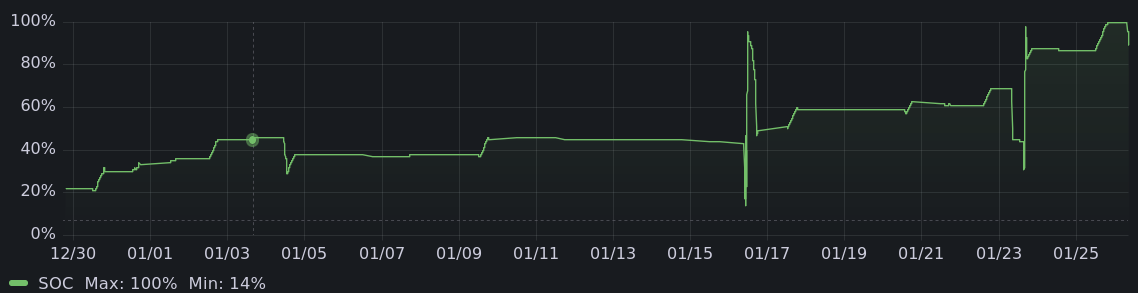
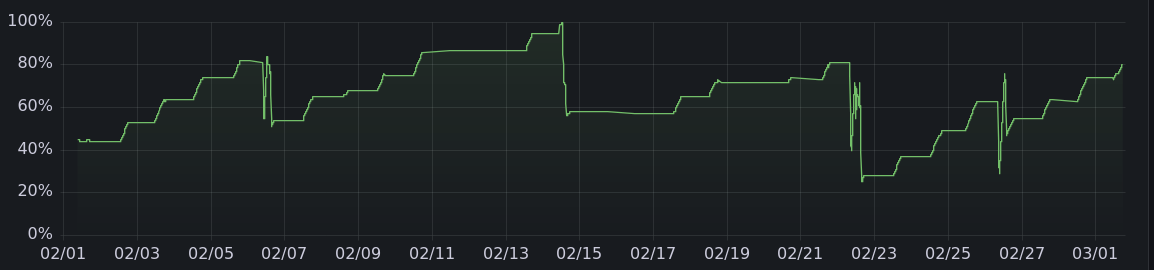
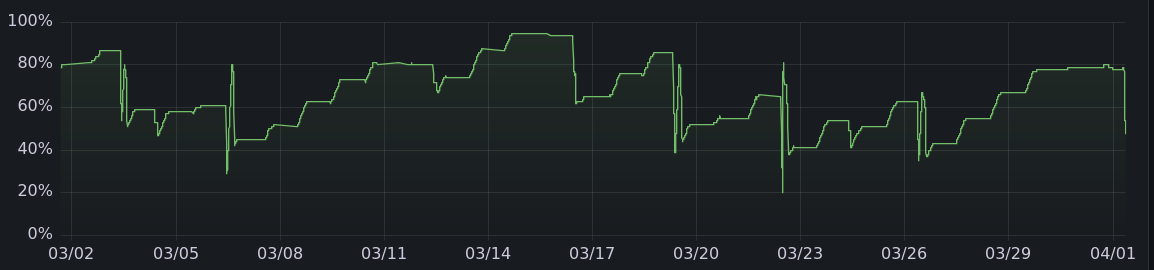
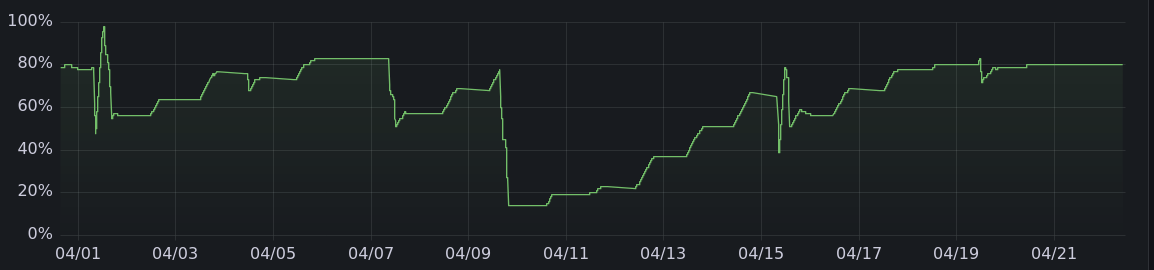
I ve just got a second hand Nissan LEAF. It s not nearly as luxurious as the Genesis EV that I test drove [1]. It s also just over 5 years old so it s not as slick as the MG4 I test drove [2]. But the going rate for a LEAF of that age is $17,000 vs $35,000 or more for a new MG4 or $130,000+ for a Genesis. At this time the LEAF is the only EV in Australia that s available on the second hand market in quantity. Apparently the cheapest new EV in Australia is a Great Wall one which is $32,000 and which had a wait list last time I checked, so $17,000 is a decent price if you want an electric car and aren t interested in paying the price of a new car. Starting the Car One thing I don t like about most recent cars (petrol as well as electric) is that they needlessly break traditions of car design. Inserting a key and turning it clockwise to start a car is a long standing tradition that shouldn t be broken without a good reason. With the use of traditional keys you know that when a car has the key removed it can t be operated, there s no situation of the person with the key walking away and leaving the car driveable and there s no possibility of the owner driving somewhere without the key and then being unable to start it. To start a LEAF you have to have the key fob device in range, hold down the brake pedal, and then press the power button. To turn on accessories you do the same but without holding down the brake pedal. They also have patterns of pushes, push twice to turn it on, push three times to turn it off. This is all a lot easier with a key where you can just rotate it as many clicks as needed. The change of car design for the key means that no physical contact is needed to unlock the car. If someone stands by a car fiddling with the door lock it will get noticed which deters certain types of crime. If a potential thief can sit in a nearby car to try attack methods and only walk to the target vehicle once it s unlocked it makes the crime a lot easier. Even if the electronic key is as secure as a physical key allowing attempts to unlock remotely weakens security. Reports on forums suggest that the electronic key is vulnerable to replay attacks. I guess I just have to hope that as car thieves typically get less than 10% of the value of a car it s just not worth their effort to steal a $17,000 car. Unlocking doors remotely is a common feature that s been around for a while but starting a car without a key being physically inserted is a new thing. Other Features The headlights turn on automatically when the car thinks that the level of ambient light warrants it. There is an option to override this to turn on lights but no option to force the lights to be off. So if you have your car in the on state while parked the headlights will be on even if you are parked and listening to the radio. The LEAF has a bunch of luxury features which seem a bit ridiculous like seat warmers. It also has a heated steering wheel which has turned out to be a good option for me as I have problems with my hands getting cold. According to the My Nissan LEAF Forum the seat warmer uses a maximum of 50W per seat while the car heater uses a minimum of 250W [3]. So if there are one or two people in the car then significantly less power is used by just heating the seats and also keeping the car air cool reduces window fog. The Bluetooth audio support works well. I ve done hands free calls and used it for playing music from my phone. This is the first car I ve owned with Bluetooth support. It also has line-in which might have had some use in 2019 but is becoming increasingly useless as phones with Bluetooth become more popular. It has support for two devices connecting via Bluetooth at the same time which could be handy if you wanted to watch movies on a laptop or tablet while waiting for someone. The LEAF has some of the newer safety features, it tracks lane markers and notifies the driver via beeps and vibration if they stray from their lane. It also tries to read speed limit signs and display the last observed speed limit on the dash display. It also has a skid alert which in my experience goes off under hard acceleration when it s not skidding but doesn t go off if you lose grip when cornering. The features for detecting changing lanes when close to other cars and for emergency braking when another car is partly in the lane (even if moving out of the lane) don t seem well tuned for Australian driving, the common trend on Australian roads is lawful-evil to use DND terminology. Range My most recent driving was just over 2 hours driving with a distance of a bit over 100Km which took the battery from 62% to 14%. So it looks like I can drive a bit over 200Km at an average speed of 50Km/h. I have been unable to find out the battery size for my car, my model will have either a 40KWh or 62KWh battery. Google results say it should be printed on the B pillar (it s not) and that it can be deduced from the VIN (it can t). I m guessing that my car is the cheaper option which is supposed to do 240Km when new which means that a bit over 200Km at an average speed of 50Km/h when 6yo is about what s expected. If it has the larger battery designed to do 340Km then doing 200Km in real use would be rather disappointing. Assuming the battery is 40KWh that means it s 5Km/KWh or 10KW average for the duration. That means that the 250W or so used by the car heater should only make a about 2% difference to range which is something that a human won t usually notice. If I was to drive to another state I d definitely avoid using the heater or airconditioner as an extra 4km could really matter when trying to find a place to charge when you aren t familiar with the area. It s also widely reported that the LEAF is less efficient at highway speeds which is an extra difficulty for that. It seems that the LEAF just isn t designed for interstate driving in Australia, it would be fine for driving between provinces of the Netherlands as it s difficult to drive for 200km without leaving that country. Driving 700km to another city in a car with 200km range would mean charging 3 times along the way, that s 2 hours of charging time when using fast chargers. This isn t a problem at all as the average household in Australia has 1.8 cars and the battery electric vehicles only comprise 6.3% of the market. So if a household had a LEAF and a Prius they could just use the Prius for interstate driving. A recent Prius could drive from Melbourne to Canberra or Adelaide without refuelling on the way. If I was driving to another state a couple of times a year I could rent an old fashioned car to do that and still be saving money when compared to buying petrol all the time. Running Cost Currently I m paying about $0.28 per KWh for electricity, it s reported that the efficiency of charging a LEAF is as low as 83% with the best efficiency when fast charging. I don t own the fast charge hardware and don t plan to install it as that would require getting a replacement of the connection to my home from the street, a new switchboard, and other expenses. So I expect I ll be getting 83% efficiency when charging which means 48KWh for 200KM or 96KWH for the equivalent of a $110 tank of petrol. At $0.28/KWh it will cost $26 for the same amount of driving as $110 of petrol. I also anticipate saving money on service as there s no need for engine oil changes and all the other maintenance of a petrol engine and regenerative braking will reduce the incidence of brake pad replacement. I expect to save over $1100 per annum on using electricity instead of petrol even if I pay the full rate. But if I charge my car in the middle of the day when there is over supply and I don t get paid for feeding electricity from my solar panels into the grid (as is common nowadays) it could be almost free to charge the car and I could save about $1500 on fuel. Comfort Electric cars are much quieter than cars with petrol or Diesel engines which is a major luxury feature. This car is also significantly newer than any other car I ve driven much so it has features like Bluetooth audio which weren t in other cars I ve driven. When doing 100Km/h I can hear a lot of noise from the airflow, part of that would be due to the LEAF not having the extreme streamlining features that are associated with Teslas (such as retracting door handles) and part of that would be due to the car being older and the door seals not being as good as they were when new. It s still a very quiet car with a very smooth ride. It would be nice if they used the quality of seals and soundproofing that VW uses in the Passat but I guess the car would be heavier and have a shorter range if they did that. This car has less space for the driver than any other car I ve driven (with the possible exception of a 1989 Ford Laser AKA Mazda 323). The front seats have less space than the Prius. Also the batteries seem to be under the front seats so there s a bulge in the floor going slightly in front of the front seats when they are moved back which gives less space for the front passenger to move their legs and less space for the driver when sitting in a parked car. There are a selection of electric cars from MG, BYD, and Great Wall that have more space in the front seats, if those cars were on the second hand market I might have made a different choice but a second hand LEAF is the only option for a cheap electric car in Australia now. The heated steering wheel and heated seats took a bit of getting used to but I have come to appreciate the steering wheel and the heated seats are a good way of extending the range of the car. Misc Notes The LEAF is a fun car to drive and being quiet is a luxury feature, it s no different to other EVs in this regard. It isn t nearly as fast as a Tesla, but is faster than most cars actually drive on the road. When I was looking into buying a LEAF from one of the car sales sites I was looking at models less than 5 years old. But the ZR1 series went from 2017 to 2023 so there s probably not much difference between a 2019 model and a 2021 model but there is a significant price difference. I didn t deliberately choose a 2019 car, it was what a relative was selling at a time when I needed a new car. But knowing what I know now I d probably look at that age of LEAF if choosing from the car sales sites. Problems When I turn the car off the side mirrors fold in but when I turn it on they usually don t automatically unfold if I have anything connected to the cigarette lighter power port. This is a well known problem and documented on forums. This is something that Nissan really should have tested before release because phone chargers that connect to the car cigarette lighter port have been common for at least 6 years before my car was manufactured and at least 4 years before the ZE1 model was released. The built in USB port doesn t supply enough power to match the power use of a Galaxy Note 9 running Google maps and playing music through Bluetooth. On it s own this isn t a big deal but combined with the mirror issue of using a charger in the cigarette lighter port it s a problem. The cover over the charging ports doesn t seem to lock easily enough, I had it come open when doing 100Km/h on a freeway. This wasn t a big deal but as the cover opens in a suicide-door manner at a higher speed it could have broken off. The word is that LEAF service in Australia is not done well. Why do you need regular service of an electric car anyway? For petrol and Diesel cars it s engine oil replacement that makes it necessary to have regular service. Surely you can just drive it until either the brakes squeak or the tires seem worn. I have been having problems charging, sometimes it will charge from ~20% to 100% in under 24 hours, sometimes in 14+ hours it only gets to 30%. Conclusion This is a good car and the going price on them is low. I generally recommend them as long as you aren t really big and aren t too worried about the poor security. It s a fun car to drive even with a few annoying things like the mirrors not automatically extending on start. The older ones like this are cheap enough that they should be able to cover the entire purchase cost in 10 years by the savings from not buying petrol even if you don t drive a lot. With a petrol car I use about 13 tanks of petrol a year so my driving is about half the average for Australia. Some people could cover the purchase price of a second hand leaf in under 5 years.

21 May 2025

Simon Quigley: Loose Cannons and Orwellian Tactics

Edit: for the people calling this unhinged, you don t have the full context. I know it s not a good look. Just stop and think for a second, though.I d like to start this post by saying that I am indeed well. I ve thought so from the very beginning, and it s been confirmed by professionals as such. That being said, there is still this perception that people are still believing the other person that needs help.See, when you re deeply involved in this space for ten years and start a blog to share all the cool things you ve learned, you don t expect people to spread the rumor that you re crazy. And you especially don t expect them to resort to a legal bluff and then brag about it in a private IRC channel (yes, I have the proof.)I d like my apology letter, please. And I d like you all to stop using Orwellian tactics to silence me by spreading those rumors, please. I know the source of the rumor-mill, and it s being dealt with. There has been progress, but one thing hasn t happened yet I haven t received my apology letter. I ll even volunteer, out of my own good spirit, to remove this post and all BwE parts of my first post if you send me a full apology letter in the next 24 hours. I d do that, just to get you to open your eyes and smile.Silencing people, or asking them to remove parts of a post you don t like, is never okay. You could choose whether to publish it on your platform, sure, but you certainly don t get to pick and choose what I put in my personal blog posts.I am a United States citizen with a 1st amendment right that shall be respected. I ve also studied and enjoyed writing for years. I m sick and tired of the back and forth on this. I ve wanted to move on and you are actively not letting me.I have the full IRC logs. Several other people have attested they also have them. What would you like to do next?I m not sure about you, but I m sitting here eating a donut. This isn t harrassment, this is self defense. At some point, you have to get sick and tired of issues happening, and you have to stand up for yourself, on your own footing.It isn t easy. I probably won t look back favorably on this post and thought process in a few years. That being said, it s necessary to defend myself on someone who has mistreated me personally on so many grave levels. You ll note I still haven t made the name public.They want to make you out to look like a loose cannon. They want to push your buttons and make you write a rant blog post telling you how much they hate them. I m not going to dignify that, because I know a specific electrician who wouldn t be happy if I had to write him a dissent.I m done. Don t defame me anymore.With donuts,
Simon

Russell Coker: Digital Sovereignty and Email

Running Your Own Email Srever I run my own mail server. I have run it since about 1995, initially on a 28k8 modem connection but the connection improved as technology became cheaper and now I m running it on a VM on a Hetzner server which is also running domains for some small businesses. I make a small amount of money running mail services for those companies but generally not enough to make it profitable. From a strictly financial basis I might be better off just using a big service, but I like having control over my own email. If email doesn t arrive I can read the logs to find out why. I repeatedly have issues of big services not accepting mail. The most recent is the MS services claiming that my IP has a bad ratio of good mail to spam and blocked me so I had to tunnel that through a different IP address. It seems that the way things are going is that if you run a small server companies like MS can block you even though your amount of spam is low but if you run a large scale service that is horrible for sending spam then you don t get blocked. For most users they just use one of the major email services (Gmail or Microsoft) and find that no-one blocks them because those providers are too big to block and things mostly work. Until of course the company decides to cancel their account. The Latest News The latest news is that MS is shutting down services for the International Court of Justice after a panel of ICC judges issued arrest warrants against Israeli Prime Minister Benjamin Netanyahu [1] . This is now making politicians realise the issues of email accounts hosted outside their jurisdiction. What we need is for each independent jurisdiction to have it s own email infrastructure, that means controlling DNS servers for their domains, commercial and government mail services on those domains, running the servers for those services on hardware located in the jurisdiction and run by people based in that jurisdiction and citizens of it. I say independent jurisdiction because there are groups like the EU which have sufficient harmony of laws to not require different services. With the current EU arrangements I don t think it s possible for the German government to block French people from accessing email or vice versa. While Australia and New Zealand have a long history of cooperation there s still the possibility of a lying asshole like Scott Morrison trying something on so New Zealanders shouldn t feel safe using services run in Australia. Note that Scott Morrison misled his own parliamentary colleagues about what he was doing and got himself assigned as a secret minister [2] demonstrating that even conservatives can t trust someone like him. With the ongoing human rights abuses by the Morrison government it s easy to imagine New Zealand based organisations that protect human rights being treated by the Australian government in the way that the ICC was treated by the US government. The Problem with Partial Solutions Now it would be very easy for the ICC to host their own mail servers and they probably will do just that in the near future. I m sure that there are many companies offering to set them up accounts in a hurry to deal with this (probably including some of the Dutch companies I ve worked for). Let s imagine for the sake of discussion that the ICC has their own private server, the US government could compel Google and MS to block the IP addresses of that server and then at least 1/3 of the EU population won t get mail from them. If the ICC used email addresses hosted on someone else s server then Google and MS could be compelled to block the addresses in question for the same result. The ICC could have changing email addresses to get around block lists and there could be a game of cat and mouse between the ICC and the US government but that would just be annoying for everyone. The EU needs to have services hosted and run in their jurisdiction that are used by the vast majority of the people in the country. The more people who are using services outside the control of hostile governments the lesser the impact of bad IT policies by those hostile governments. One possible model to consider is the Postbank model. Postbank is a bank run in the Netherlands from post offices which provides services to people deemed unprofitable for the big banks. If the post offices were associated with a mail service you could have it government subsidised providing free service for citizens and using government ID if the user forgets their password. You could also have it provide a cheap service for non-citizen residents. Other Problems What will the US government do next? Will they demand that Apple and Google do a remote-wipe on all phones run by ICC employees? Are they currently tracking all ICC employees by Android and iPhone services? Huawei s decision to develop their own phone OS was a reasonable one but there s no need to go that far. Other governments could setup their own equivalent to Google Play services for Android and have their own localised Android build. Even a small country like Australia could get this going for the services of calendaring etc. But the app store needs a bigger market. There s no reason why Android has to tie the app store to the services for calendaring etc. So you could have a per country system for calendaring and a per region system for selling apps. The invasion of Amazon services such as Alexa is also a major problem for digital sovereignty. We need government controls about this sort of thing, maybe have high tariffs on the import of all hardware that can only work with a single cloud service. Have 100+% tariffs on every phone, home automation system, or networked device that is either tied to a single cloud service or which can t work in a usable manner on other cloud services.

11 May 2025

Bits from Debian: Bits from the DPL

Dear Debian community, This is bits from the DPL for April. End of 10 I am sure I was speaking in the interest of the whole project when joining the "End of 10" campaign. Here is what I wrote to the initiators:
Hi Joseph and all drivers of the "End of 10" campaign, On behalf of the entire Debian project, I would like to say that we proudly join your great campaign. We stand with you in promoting Free Software, defending users' freedoms, and protecting our planet by avoiding unnecessary hardware waste. Thank you for leading this important initiative.
Andreas Tille Debian Project Leader
I have some goals I would like to share with you for my second term. Ftpmaster delegation This splits up into tasks that can be done before and after Trixie release. Before Trixie: 1. Reducing Barriers to DFSG Compliance Checks Back in 2002, Debian established a way to distribute cryptographic software in the main archive, whereas such software had previously been restricted to the non-US archive. One result of this arrangement which influences our workflow is that all packages uploaded to the NEW queue must remain on the server that hosts it. This requirement means that members of the ftpmaster team must log in to that specific machine, where they are limited to a restricted set of tools for reviewing uploaded code. This setup may act as a barrier to participation--particularly for contributors who might otherwise assist with reviewing packages for DFSG compliance. I believe it is time to reassess this limitation and work toward removing such hurdles. In October last year, we had some initial contact with SPI's legal counsel, who noted that US regulations around cryptography have been relaxed somewhat in recent years (as of 2021). This suggests it may now be possible to revisit and potentially revise the conditions under which we manage cryptographic software in the NEW queue. I plan to investigate this further. If you have expertise in software or export control law and are interested in helping with this topic, please get in touch with me. The ultimate goal is to make it easier for more people to contribute to ensuring that code in the NEW queue complies with the DFSG. 2. Discussing Alternatives My chances to reach out to other distributions remained limited. However, regarding the processing of new software, I learned that OpenSUSE uses a Git-based workflow that requires five "LGTM" approvals from a group of trusted developers. As far as I know, Fedora follows a similar approach. Inspired by this, a recent community initiative--the Gateway to NEW project--enables peer review of new packages for DFSG compliance before they enter the NEW queue. This effort allows anyone to contribute by reviewing packages and flagging potential issues in advance via Git. I particularly appreciate that the DFSG review is coupled with CI, allowing for both license and technical evaluation. While this process currently results in some duplication of work--since final reviews are still performed by the ftpmaster team--it offers a valuable opportunity to catch issues early and improve the overall quality of uploads. If the community sees long-term value in this approach, it could serve as a basis for evolving our workflows. Integrating it more closely into DAK could streamline the process, and we've recently seen that merge requests reflecting community suggestions can be accepted promptly. For now, I would like to gather opinions about how such initiatives could best complement the current NEW processing, and whether greater consensus on trusted peer review could help reduce the burden on the team doing DFSG compliance checks. Submitting packages for review and automated testing before uploading can improve quality and encourage broader participation in safeguarding Debian's Free Software principles. My explicit thanks go out to the Gateway to NEW team for their valuable and forward-looking contribution to Debian. 3. Documenting Critical Workflows Past ftpmaster trainees have told me that understanding the full set of ftpmaster workflows can be quite difficult. While there is some useful documentation thanks in particular to Sean Whitton for his work on documenting NEW processing rules many other important tasks carried out by the ftpmaster team remain undocumented or only partially so. Comprehensive and accessible documentation would greatly benefit current and future team members, especially those onboarding or assisting in specific workflows. It would also help ensure continuity and transparency in how critical parts of the archive are managed. If such documentation already exists and I have simply overlooked it, I would be happy to be corrected. Otherwise, I believe this is an area where we need to improve significantly. Volunteers with a talent for writing technical documentation are warmly invited to contact me--I'd be happy to help establish connections with ftpmaster team members who are willing to share their knowledge so that it can be written down and preserved. Once Trixie is released (hopefully before DebConf): 4. Split of the Ftpmaster Team into DFSG and Archive Teams As discussed during the "Meet the ftpteam" BoF at DebConf24, I would like to propose a structural refinement of the current Ftpmaster team by introducing two different delegated teams:
  1. DFSG Team
  2. Archive Team (responsible for DAK maintenance and process tooling, including releases)
(Alternative name suggestions are, of course, welcome.) The primary task of the DFSG team would be the processing of the NEW queue and ensuring that packages comply with the DFSG. The Archive team would focus on maintaining DAK and handling the technical aspects of archive management. I am aware that, in the recent past, the ftpmaster team has decided not to actively seek new members. While I respect the autonomy of each team, the resulting lack of a recruitment pipeline has led to some friction and concern within the wider community, including myself. As Debian Project Leader, it is my responsibility to ensure the long-term sustainability and resilience of our project, which includes fostering an environment where new contributors can join and existing teams remain effective and well-supported. Therefore, even if the current team does not prioritize recruitment, I will actively seek and encourage new contributors for both teams, with the aim of supporting openness and collaboration. This proposal is not intended as criticism of the current team's dedication or achievements--on the contrary, I am grateful for the hard work and commitment shown, often under challenging circumstances. My intention is to help address the structural issues that have made onboarding and specialization difficult and to ensure that both teams are well-supported for the future. I also believe that both teams should regularly inform the Debian community about the policies and procedures they apply. I welcome any suggestions for a more detailed description of the tasks involved, as well as feedback on how best to implement this change in a way that supports collaboration and transparency. My intention with this proposal is to foster a more open and effective working environment, and I am committed to working with all involved to ensure that any changes are made collaboratively and with respect for the important work already being done. I'm aware that the ideas outlined above touch on core parts of how Debian operates and involve responsibilities across multiple teams. These are not small changes, and implementing them will require thoughtful discussion and collaboration. To move this forward, I've registered a dedicated BoF for DebConf. To make the most of that opportunity, I'm looking for volunteers who feel committed to improving our workflows and processes. With your help, we can prepare concrete and sensible proposals in advance--so the limited time of the BoF can be used effectively for decision-making and consensus-building. In short: I need your help to bring these changes to life. From my experience in my last term, I know that when it truly matters, the Debian community comes together--and I trust that spirit will guide us again. Please also note: we had a "Call for volunteers" five years ago, and much of what was written there still holds true today. I've been told that the response back then was overwhelming--but that training such a large number of volunteers didn't scale well. This time, I hope we can find a more sustainable approach: training a few dedicated people first, and then enabling them to pass on their knowledge. This will also be a topic at the DebCamp sprint. Dealing with Dormant Packages Debian was founded on the principle that each piece of software should be maintained by someone with expertise in it--typically a single, responsible maintainer. This model formed the historical foundation of Debian's packaging system and helped establish high standards of quality and accountability. However, as the project has grown and the number of packages has expanded, this model no longer scales well in all areas. Team maintenance has since emerged as a practical complement, allowing multiple contributors to share responsibility and reduce bottlenecks--depending on each team's internal policy. While working on the Bug of the Day initiative, I observed a significant number of packages that have not been updated in a long time. In the case of team-maintained packages, addressing this is often straightforward: team uploads can be made, or the team can be asked whether the package should be removed. We've also identified many packages that would fit well under the umbrella of active teams, such as language teams like Debian Perl and Debian Python, or blends like Debian Games and Debian Multimedia. Often, no one has taken action--not because of disagreement, but simply due to inattention or a lack of initiative. In addition, we've found several packages that probably should be removed entirely. In those cases, we've filed bugs with pre-removal warnings, which can later be escalated to removal requests. When a package is still formally maintained by an individual, but shows signs of neglect (e.g., no uploads for years, unfixed RC bugs, failing autopkgtests), we currently have three main tools:
  1. The MIA process, which handles inactive or unreachable maintainers.
  2. Package Salvaging, which allows contributors to take over maintenance if conditions are met.
  3. Non-Maintainer Uploads (NMUs), which are limited to specific, well-defined fixes (which do not include things like migration to Salsa).
These mechanisms are important and valuable, but they don't always allow us to react swiftly or comprehensively enough. Our tools for identifying packages that are effectively unmaintained are relatively weak, and the thresholds for taking action are often high. The Package Salvage team is currently trialing a process we've provisionally called "Intend to NMU" (ITN). The name is admittedly questionable--some have suggested alternatives like "Intent to Orphan"--and discussion about this is ongoing on debian-devel. The mechanism is intended for situations where packages appear inactive but aren't yet formally orphaned, introducing a clear 21-day notice period before NMUs, similar in spirit to the existing ITS process. The discussion has sparked suggestions for expanding NMU rules. While it is crucial not to undermine the autonomy of maintainers who remain actively involved, we also must not allow a strict interpretation of this autonomy to block needed improvements to obviously neglected packages. To be clear: I do not propose to change the rights of maintainers who are clearly active and invested in their packages. That model has served us well. However, we must also be honest that, in some cases, maintainers stop contributing--quietly and without transition plans. In those situations, we need more agile and scalable procedures to uphold Debian's high standards. To that end, I've registered a BoF session for DebConf25 to discuss potential improvements in how we handle dormant packages. These discussions will be prepared during a sprint at DebCamp, where I hope to work with others on concrete ideas. Among the topics I want to revisit is my proposal from last November on debian-devel, titled "Barriers between packages and other people". While the thread prompted substantial discussion, it understandably didn't lead to consensus. I intend to ensure the various viewpoints are fairly summarised--ideally by someone with a more neutral stance than myself--and, if possible, work toward a formal proposal during the DebCamp sprint to present at the DebConf BoF. My hope is that we can agree on mechanisms that allow us to act more effectively in situations where formerly very active volunteers have, for whatever reason, moved on. That way, we can protect both Debian's quality and its collaborative spirit. Building Sustainable Funding for Debian Debian incurs ongoing expenses to support its infrastructure--particularly hardware maintenance and upgrades--as well as to fund in-person meetings like sprints and mini-DebConfs. These investments are essential to our continued success: they enable productive collaboration and ensure the robustness of the operating system we provide to users and derivative distributions around the world. While DebConf benefits from generous sponsorship, and we regularly receive donated hardware, there is still considerable room to grow our financial base--especially to support less visible but equally critical activities. One key goal is to establish a more constant and predictable stream of income, helping Debian plan ahead and respond more flexibly to emerging needs. This presents an excellent opportunity for contributors who may not be involved in packaging or technical development. Many of us in Debian are engineers first--and fundraising is not something we've been trained to do. But just like technical work, building sustainable funding requires expertise and long-term engagement. If you're someone who's passionate about Free Software and has experience with fundraising, donor outreach, sponsorship acquisition, or nonprofit development strategy, we would deeply value your help. Supporting Debian doesn't have to mean writing code. Helping us build a steady and reliable financial foundation is just as important--and could make a lasting impact. Kind regards Andreas. PS: In April I also planted my 5000th tree and while this is off-topic here I'm proud to share this information with my fellow Debian friends.

9 May 2025

Abhijith PA: Bug squashing party, Kochi

Last weekend, 4 people (3 DDs and 1 soon to be, hopefully in coming months) sit together for a Bug squashing party in Kochi. We fixed lot of things including my broken autopkgtest setup. BSP-Kochi It all began from a discussion in #debian-in of not having any BSPs in the past in India. Then twisted in to hosting a BSP by me. I fixed the dates to 3rd & 4th May to get packages migrate naturally to testing with NMUs before the hard freeze on 15th May. Finding a venue was a huge challenge. Unlike other places, we have very limited options on hackerspaces. We also had some company spaces (if we asked), but we may have to follow their office timings and finding accommodation near by was also a challenge. Later we decided to go with a rental apartment where could hack all night and sleep. We booked a very bare minimal apartment for 3 nights and 3 days. I updated wiki page and sent announcement. Not even Wi-Fi was there in the apartment, so we setup everything by ourselves (DebConf style :p ). I short listed some newbie bugs, just in case if newcomers joined the party. But it was only we 4 people and Kathara who joined remotely. We started from May 2nd night, stacked our cabin with snacks, instant noodles and drinks. Arranged beds, tables and started hacking and having discussions. My autopkgtest-lxc setup was broken. I think its related to #1017753, which got fixed magically and now I started using autopkgtest-podman. stack I learned On last day, we went to a nice restaurant and had food. There was a church festival nearby, so we were able to watch wonderful procession and fireworks at night. food All in all we managed to touch 46 bugs of which 35 is now fixed/done and 11 is open, some of this get status done when it reaches testing. It was a fun and productive weekend. More importantly we had fun.

4 May 2025

Russ Allbery: Review: The Book That Held Her Heart

Review: The Book That Held Her Heart, by Mark Lawrence
Series: Library Trilogy #3
Publisher: ACE
Copyright: 2025
ISBN: 0-593-43799-3
Format: Kindle
Pages: 367
The Book That Held Her Heart is the third and final book of the Library fantasy trilogy and a direct sequel to The Book That Broke the World. Lawrence provides a much-needed summary of the previous volumes at the start of this book (thank you to every author who does this!), but I was still struggling a bit with the blizzard of character names. I recommend reading this series entry in relatively close proximity to the other two. At the end of the previous book, and following some rather horrific violence, the cast split into four groups. Three of those are pursuing different resolutions to the moral problem of the Library's existence. The fourth group opens the book still stuck with the series villains, who were responsible for the over-the-top morality that undermined my enjoyment of The Book That Broke the World. Lawrence follows all four groups in interwoven chapters, maintaining that complex structure through most of this book. I thought this was a questionable structural decision that made this book feel choppy, disconnected, and unnecessarily confusing. The larger problem, though, is that this is the payoff book, the book where we find out if Lawrence is equal to the tricky ethical questions he's raised and the world-building masterpiece that The Book That Wouldn't Burn kicked off. The answer, unfortunately, is "not really." This is not a total failure; there are some excellent set pieces and world-building twists, and the characters remain likable and enjoyable to read about (although the regrettable sidelining of Livira continues). But the grand finale is weirdly conservative and not particularly grand, and Lawrence's answer to the moral questions he raised is cliched and wholly unsatisfying. I was really hoping Lawrence was going somewhere more interesting than "Nazis bad." I am entirely sympathetic to this moral position, but so is every other likely reader of this series, and we all know how that story goes. What a waste of a compelling setup. Sadly, "Nazis bad" isn't even a metaphor for the black-and-white morality that Lawrence first introduced at the end of the previous book. It's a literal description of the main moral thrust of this book. Lawrence introduces yet another new character and timeline so that he can write about thinly-disguised Nazis persecuting even more thinly-disguised Jews, and this conflict is roughly half this book. It's also integral to the ending, which uses obvious, stock secular sainthood as a sort of trump card to resolve ideological conflicts at the heart of the series. This is one of the things I was worried about after I read the short stories that Lawrence published between the volumes of this series. All of them were thuddingly trite, which did not make me optimistic that Lawrence would find a sufficiently interesting answer to his moral trilemma to satisfy the high expectations created by the build-up. That is, I am sad to report, precisely the failure mode of this book. The resolution of the moral question of the series is arguably radical within the context of the prior world-building, but in a way that effectively reduces it to the boring, small-c conservative bromides of everyday reality. This is precisely the opposite of why I read fantasy, and I did not find Lawrence's arguments for it at all convincing. Neither, I think, did Lawrence, given that the critical debate takes place off camera so that he could avoid having to present the argument. This is, unfortunately, another series where the author's reach exceeded their grasp. The world-building of The Book That Wouldn't Burn is a masterpiece that created one of the most original and compelling settings that I have read in fantasy for a long time, but unfortunately Lawrence did not have an equally original plan for how to use the setting. This is a common problem and I'm not going to judge it too harshly; it's much harder to end a series than it is to start one. I thought the occasional flashes of brilliance was worth the journey, and they continue into this book with some elaborations on the Library's mythic structure that are going to stick in my mind. You can sense the story slipping away from the hoped-for conclusion as you read, though. The story shifts more and more away from the setting and the world-building and towards character stories, and while Lawrence's characters are fine, they're not that novel. I am happy to read about Clovis and Arpix, but I can read variations of that story in a lot of places. Livira never recovers her dynamism and drive from the first book, and there is much less beneath Yute's thoughtful calm than I was hoping to find. I think Lawrence knows that the story was not entirely working because the narrative voice becomes more strident as the morality becomes less interesting. I know of only one fantasy author who can make this type of overbearing and freighted narrative style work, and Lawrence is sadly not Guy Gavriel Kay. This is not a bad book. It is an enjoyable adventure story on its own terms, with some moments of real beauty and awe and a handful of memorable characters, somewhat undermined by a painfully obvious and unoriginal moral frame. It's only a disappointment in the context of what came before it, and it is far from the first series conclusion that doesn't quite live up to the earlier volumes. I'm glad that I read it, and the series as a whole, and I do appreciate that Lawrence brought the whole series to a firm and at least somewhat satisfying conclusion in the promised number of volumes. But I do wish the series as a whole had been as special as the first book. Rating: 6 out of 10

3 May 2025

Russ Allbery: Review: Paper Soldiers

Review: Paper Soldiers, by Saleha Mohsin
Publisher: Portfolio
Copyright: 2024
ISBN: 0-593-53912-5
Format: Kindle
Pages: 250
The subtitle of Paper Soldiers is "How the Weaponization of the Dollar Changed the World Order," which may give you the impression that this book is about US use of the dollar system for political purposes such as sanctions. Do not be fooled like I was; this subtitle is, at best, deceptive. Coverage of the weaponization of the dollar is superficial and limited to a few chapters. This book is, instead, a history of the strong dollar policy told via a collection of hagiographies of US Treasury Secretaries and written with all of the skeptical cynicism of a poleaxed fawn. There is going to be some grumbling about the state of journalism in this review. Per the author's note, Saleha Mohsin is the Bloomberg News beat reporter for the US Department of the Treasury. That is, sadly, exactly what this book reads like: routine beat reporting. Mohsin asked current and former Treasury officials what they were thinking at various points in history and then wrote down their answers without, so far as I can tell, considering any contradictory evidence or wondering whether they were telling the truth. Paper Soldiers does contain extensive notes (those plus the index fill about forty pages), so I guess you could do the cross-checking yourself, although apparently most of the interviews for this book were "on background" and are therefore unattributed. (Is this weird? I feel like this is weird.) Mohsin adds a bit of utterly conventional and uncritical economic framing and casts the whole project in the sort of slightly breathless and dramatized prose style that infests routine news stories in the US. I find this style of book unbelievably frustrating because it represents such a wasted opportunity. To me, the point of book-length journalism is precisely to not write in this style. When you're trying to crank out two or three articles a week covering current events, I understand why there isn't always space or time to go deep into background, skepticism, and contrary opinions. But when you expand that material into a book, surely the whole point is to take the time to do some real reporting. Dig into what people told you, see if they're lying, talk to the people who disagree with them, question the conventional assumptions, and show your work on the page so that the reader is smarter after finishing your book than they were before they started. International political economics is not a sequence of objective facts. It's a set of decisions made in pursuit of economic and political theories that are disputed and arguable, and I think you owe the reader some sense of the argument and, ideally, some defensible position on the merits that is more than a transcription of your interviews. This is... not that.
It's a power loop that the United States still enjoys today: trust in America's dollar (and its democratic government) allows for cheap debt financing, which buys health care built on the most advanced research and development and inventions like airplanes and the iPhone. All of this is propelled by free market innovation and the superpowered strength to keep the nation safe from foreign threats. That investment boosts the nation's economic, military, and technological prowess, making its economy (and the dollar) even more attractive.
Let me be precise about my criticism. I am not saying that every contention in the above excerpt is wrong. Some of them are probably correct; more of them are at least arguable. This book is strictly about the era after Bretton Woods, so using airplanes as an example invention is a bizarre choice, but sure, whatever, I get the point. My criticism is that paragraphs like this, as written in this book, are not introductions to deeper discussions that question or defend that model of economic and political power. They are simple assertions that stand entirely unsupported. Mohsin routinely writes paragraphs like the above as if they are self-evident, and then immediately moves on to the next anecdote about Treasury dollar policy. Take, for example, the role of the US dollar as the world's reserve currency, which roughly means that most international transactions are conducted in dollars and numerous countries and organizations around the world hold large deposits in dollars instead of in their native currency. The conventional wisdom holds that this is a great boon to the US economy, but there are also substantive critiques and questions about that conventional wisdom. You would never know that from this book; Mohsin asserts the conventional wisdom about reserve currencies without so much as a hint that anyone might disagree. For example, one common argument, repeated several times by Mohsin, is that the US can only get away with the amount of deficit spending and cheap borrowing that it does because the dollar is the world's reserve currency. Consider two other countries whose currencies are clearly not the international reserve currency: Japan and the United Kingdom. The current US debt to GDP ratio is about 125% and the current interest rate on US 10-year bonds is about 4.2%. The current Japanese debt to GDP ratio is about 260% and the current interest rate on Japanese 10-year bonds is about 1.2%. The current UK debt to GDP ratio is 160% and the current interest rate on UK 10-year bonds is 4.5%. Are you seeing the dramatic effects of the role of the dollar as reserve currency? Me either. Again, I am not saying that this is a decisive counter-argument. I am not an economist; I'm just some random guy on the Internet who finds macroeconomics interesting and reads a few newsletters. I know the Japanese bond market is unusual in ways I'm not accounting for. There may well be compelling arguments for why reserve currency status matters immensely for US borrowing capacity. My point is not that Mohsin is wrong; my point is that you have to convince me and she doesn't even try. Nowhere in this book is a serious effort to view conventional wisdom with skepticism or confront it with opposing arguments. Instead, this book is full of blithe assertions that happen to support the narrative the author was fed by a bunch of former Treasury officials and does not appear to question in any way. I want books like this to increase my understanding of the world. To do that, they need to show me multiple sides of debates and teach me how to evaluate evidence, not simply reinforce a superficial conventional wisdom. It doesn't help that whatever fact-checking process this book went through left some glaring errors. For example, on the Plaza Accord:
With their central banks working in concert, enough dollars were purchased on the open market to weaken the currency, making American goods more affordable for foreign buyers.
I don't know what happened after the Plaza Accord (I read books like this to find out!), but clearly it wasn't that. This is utter nonsense. Buying dollars on the open market would increase the value of the dollar, not weaken it; this is basic supply and demand that you learn in the first week of a college economics class. This is the type of error that makes me question all the other claims in the book that I can't easily check. Mohsin does offer a more credible explanation of the importance of a reserve currency late in the book, although it's not clear to me that she realizes it: The widespread use of the US dollar gives US government sanctions vast international reach, allowing the US to punish and coerce its enemies through the threat of denying them access to the international financial system. Now we're getting somewhere! This is a more believable argument than a small and possibly imaginary effect on government borrowing costs. It is clear why a bellicose US government, particularly one led by advocates of a unitary executive theory that elevates the US president to a status of near-emperor, want to turn the dollar into a weapon of international control. It's much less obvious how comfortable the rest of the world should be with that concentration of power. This would be a fascinating topic for a journalistic non-fiction book. Some reporter should dive deep into the mechanics of sanctions and ask serious questions about the moral, practical, and diplomatic consequences of this aggressive wielding of US power. One could give it a title like Paper Soldiers that reflected the use of banks and paper currency as foot soldiers enforcing imperious dictates on the rest of the world. Alas, apart from a brief section in which the US scared other countries away from questioning the dollar, Mohsin does not tug at this thread. Maybe someone should write that book someday. As you will have gathered by now, I think this is a bad book and I do not recommend that you read it. Its worst flaw is one that it shares with far too much mainstream US print and TV journalism: the utter credulity of the author. I have the old-fashioned belief that a journalist should be more than a transcriptionist for powerful people. They should be skeptical, they should assume public figures may be lying, they should look for ulterior motives, and they should try to bring the reader closer to some objective truths about the world, wherever they may lie. I have no solution for this degradation of journalism. I'm not even sure that it's a change. There were always reporters eager to transcribe the voice of power into the newspaper, and if we remember the history of journalism differently, that may be because we have elevated the rare exceptions and forgotten the average. But after watching too many journalists I once respected start parroting every piece of nonsense someone tells them, from NFTs to UFOs to the existential threat of AI, I've concluded that the least I can do as a reader is to stop rewarding reporters who cannot approach powerful subjects with skepticism, suspicion, and critical research. I failed in this case, but perhaps I can serve as a warning to others. Rating: 3 out of 10

2 May 2025

Russ Allbery: Review: Sixteen Ways to Defend a Walled City

Review: Sixteen Ways to Defend a Walled City, by K.J. Parker
Series: Siege #1
Publisher: Orbit
Copyright: April 2019
ISBN: 0-316-27080-6
Format: Kindle
Pages: 349
Sixteen Ways to Defend a Walled City is... hm, honestly, I'm not sure what the genre of this novel is. It is a story about medieval engineering and siege weapons in a Rome-inspired secondary world that so far as I can tell is not meant to match ours. There is not a hint of magic. It's not technically a fantasy, but it's marketed like a fantasy, and it's not historical fiction nor is it attempting to be alternate history. The most common description is a fantasy of logistics, so I guess I'll go with that, as long as you understand that the fantasy here is of the non-magical sort. K.J. Parker is a pen name for Tom Holt. Orhan is Colonel-in-Chief of the Engineers for the Robur empire, even though he's a milkface, not a blueskin like a proper Robur. (Both of those racial terms are quite offensive.) He started out as a slave, learned a trade, joined the navy as a shipwright, and worked his way up the ranks through luck and enemy action. He's canny, practical, highly respected by his men, happy to cheat and steal to get material for his projects and wages for his people, and just wants to build literal bridges. Nice, sturdy bridges that let people get from one place to another the short way. When this book opens, Orhan is in Classis trying to requisition some rope. He is saved from discovery of his forged paperwork by pirates burning down the warehouse that held all of the rope, and then saved from the pirates by the sorts of coincidences that seem to happen to Orhan all the time. A few subsequent discoveries about what the pirates were after, and news of another unexpected attack on the empire, make Orhan nervous enough that he takes his men to do a job as far away from the City at the heart of the empire as possible. It's just his luck to return in time to find slaughtered troops and to have to sneak his men into a City already under siege. Sixteen Ways to Defend a Walled City is told in the first person by Orhan, with an internal justification that the reader only discovers at the end of the book. That means your enjoyment of this book is going to depend a lot on how much you like Orhan's voice. This mostly worked for me; his voice is an odd combination of chatty, self-deprecating, and brusque, and it took a bit for me to get used to it, but I came around. This book is clearly competence porn nearly all the fun of this book is seeing what desperate plan Orhan will come up with next so it helps that Orhan does indeed come across as competent. The part that did not work for me was the morality. You would think from the title that would be straightforward: The City is under siege, people want to capture it and kill everyone, Orhan is on the inside, and his job is to keep them out. That would have been the morality of simplistic military fiction, but most of the appeal was in watching the problem-solving anyway. That's how the story starts, but then Parker started dropping hints of more complexity. Orhan is a disfavored minority and the Robur who run the empire are racist assholes, even though Orhan mostly gets along with the ones who work with him closely. Orhan says a few things that make the reader wonder whether the City warrants defending, and it becomes less clear whether Orhan's loyalties were as solid as they appeared to be. Parker then offers a few moral dilemmas and has Orhan not follow them in the expected directions, making me wonder where Parker was going with the morality of this story. And then we find out that the answer is nowhere. Parker is going nowhere. None of that setup has a payoff, and the ending is deeply unsatisfying and arguably pointless. I am not sure this is an objective analysis. This is one of those books where I would not be surprised to see someone else praise its realism. Orhan is in some ways a more likely figure than the typical hero of a book. He likes accomplishing things, he's a cheat and a liar when that serves his purposes, he's loyal to the people he considers friends in a way that often doesn't involve consulting them about what they want, and he makes decisions mostly on vibes and stubbornness. Both his cynicism and his idealism are different types of masks; beneath both, he's an incoherent muddle. You could argue that we're all that sort of muddle, deep down, and the consistent idealists are the unrealistic (and frightening) ones, and I think Parker may be attempting exactly that argument. I know some readers like this sort of fallibly human incoherence. But wow did I ever loathe this ending because I was not reading this book for a realistic psychological profile of an average guy. I was here for the competence porn, for the fantasy of logistics, for the experience of watching someone have a plan and get shit done. Apparently that extends to needing him to be competent at morality as well, or at least think about it as hard as he thinks about siege weapons. One of the reasons why I am primarily a genre reader is that I don't read books for depressing psychological profiles. There are enough of those in the news. I read books to spend some time in a world better than mine, where things work out the way that they are supposed to, or at least in a way that's satisfying. The other place where this book interfered with my vibes is that it's about a war, and a lot of Orhan's projects are finding more efficient ways to kill people. Parker takes a "war is hell" perspective, and Orhan gets deeply upset at the graphic sights of mangled human bodies that are the frequent results of his plans. I feel weird complaining about this because yes, it's good to be aware of the horrific things that we do to other people in wars, but man, I just wanted to watch some effective project management. I want to enjoy unexpected lateral thinking, appreciate the friendly psychological manipulation involved in getting a project to deliver on deadline, and watch someone solve logistical problems. Battlefields provide an endless supply of interesting challenges, but then Parker feels compelled to linger on the brutal consequences of Orhan's ideas and now I'm depressed and sickened rather than enjoying myself. I really wanted to like this book, and for a lot of the book I did, but that ending was a bottomless pit that sucked away all my enjoyment and retroactively made the rest of the book feel worse. I so wanted Parker to be going somewhere clever and surprising, and the disappointment when none of that happened was intense. This is probably an excessively negative reaction, and I will not be surprised when other people get along with this book better than I did, but not only will I not be recommending it, I'm now rather dubious about reading any more Parker. Followed by How to Rule an Empire and Get Away With It. Rating: 5 out of 10

1 May 2025

Ian Jackson: Free Software, internal politics, and governance

There is a thread of opinion in some Free Software communities, that we shouldn t be doing politics , and instead should just focus on technology. But that s impossible. This approach is naive, harmful, and, ultimately, self-defeating, even on its own narrow terms. Today I m talking about small-p politics In this article I m using politics in the very wide sense: us humans managing our disagreements with each other. I m not going to talk about culture wars, woke, racism, trans rights, and so on. I am not going to talk about how Free Software has always had explicitly political goals; or how it s impossible to be neutral because choosing not to take a stand is itself to take a stand. Those issues are all are important and Free Software definitely must engage with them. Many of the points I make are applicable there too. But those are not my focus today. Today I m talking in more general terms about politics, power, and governance. Many people working together always entails politics Computers are incredibly complicated nowadays. Making software is a joint enterprise. Even if an individual program has only a single maintainer, it fits into an ecosystem of other software, maintained by countless other developers. Larger projects can have thousands of maintainers and hundreds of thousands of contributors. Humans don t always agree about everything. This is natural. Indeed, it s healthy: to write the best code, we need a wide range of knowledge and experience. When we can t come to agreement, we need a way to deal with that: a way that lets us still make progress, but also leaves us able to work together afterwards. A way that feels OK for everyone. Providing a framework for disagreement is the job of a governance system. The rules say which people make which decisions, who must be consulted, how the decisions are made, and, how, if any, they can be reviewed. This is all politics. Consensus is great but always requiring it is harmful Ideally a discussion will converge to a synthesis that satisfies everyone, or at least a consensus. When consensus can t be achieved, we can hope for compromise: something everyone can live with. Compromise is achieved through negotiation. If every decision requires consensus, then the proponents of any wide-ranging improvement have an almost insurmountable hurdle: those who are favoured by the status quo and find it convenient can always object. So there will never be consensus for change. If there is any objection at all, no matter how ill-founded, the status quo will always win. This is where governance comes in. Governance is like backups: we need to practice it Governance processes are the backstop for when discussions, and then negotiations, fail, and people still don t see eye to eye. In a healthy community, everyone needs to know how the governance works and what the rules are. The participants need to accept the system s legitimacy. Everyone, including the losing side, must be prepared to accept and implement (or, at least not obstruct) whatever the decision is, and hopefully live with it and stay around. That means we need to practice our governance processes. We can t just leave them for the day we have a huge and controversial decision to make. If we do that, then when it comes to the crunch we ll have toxic rows where no-one can agree the rules; where determined people bend the rules to fit their outcome; and where afterwards people feel like the whole thing was horrible and unfair. So our decisionmaking bodies and roles need to be making decisions, as a matter of routine, and we need to get used to that. First-line decisionmaking bodies should be making decisions frequently. Last-line appeal mechanisms (large-scale votes, for example) are naturally going to be exercised more rarely, but they must happen, be seen as legitimate, and their outcomes must be implemented in full. Governance should usually be routine and boring When governance is working well it s quite boring. People offer their input, and are heard. Angles are debated, and concerns are addressed. If agreement still isn t reached, the committee, or elected leader, makes a decision. Hopefully everyone thinks the leadership is legitimate, and that it properly considered and heard their arguments, and made the decision for good reasons. Hopefully the losing side can still get their work done (and make their own computer work the way they want); so while they will be disappointed, they can live with the outcome. Many human institutions manage this most of the time. It does take some knowledge about principles of governance, and ideally some experience. Governance means deciding, not just mediating By making decisions I mean exercising their authority to rule on an actual disagreement: one that wasn t resolved by debate or negotiation. Governance processes by definition involve deciding, not just mediating. It s not governance if we re advising or cajoling: in that case, we re back to demanding consensus. Governance is necessary precisely when consensus is not achieved. If the governance systems are to mean anything, they must be able to (over)rule; that means (over)ruling must be normal and accepted. Otherwise, when the we need to overrule, we ll find that we can t, because we lack the collective practice. To be legitimate (and seen as legitimate) decisions must usually be made based on the merits, not on participants status, and not only on process questions. On the autonomy of the programmer Many programmers seem to find the very concept of governance, and binding decisionmaking, deeply uncomfortable. Ultimately, it means sometimes overruling someone s technical decision. As programmers and maintainers we naturally see how this erodes our autonomy. But we have all seen projects where the maintainers are unpleasant, obstinate, or destructive. We have all found this frustrating. Software is all interconnected, and one programmer s bad decisions can cause problems for many of the rest of us. We exasperate, why won t they just do the right thing . This is futile. People have never just ed and they re not going to start just ing now. So often the boot is on the other foot. More broadly, as software developers, we have a responsibility to our users, and a duty to write code that does good rather than ill in the world. We ought to be accountable. (And not just to capitalist bosses!) Governance mechanisms are the answer. (No, forking anything but the smallest project is very rarely a practical answer.) Mitigate the consequences of decisions retain flexibility In software, it is often possible to soften the bad social effects of a controversial decision, by retaining flexibility. With a bit of extra work, we can often provide hooks, non-default configuration options, or plugin arrangements. If we can convert the question from how will the software always behave into merely what should the default be , we can often save ourselves a lot of drama. So it is often worth keeping even suboptimal or untidy features or options, if people want to use them and are willing to maintain them. There is a tradeoff here, of course. But Free Software projects often significantly under-value the social benefits of keeping everyone happy. Wrestling software even crusty or buggy software is a lot more fun than having unpleasant arguments. But don t do decisionmaking like a corporation Many programmers experience of formal decisionmaking is from their boss at work. But corporations are often a very bad example. They typically don t have as much trouble actually making decisions, but the actual decisions are often terrible, and not just because corporations goals are often bad. You get to be a decisionmaker in a corporation by spouting plausible nonsense, sounding confident, buttering up the even-more-vacuous people further up the chain, and sometimes by sabotaging your rivals. Corporate senior managers are hardly ever held accountable typically the effects of their tenure are only properly felt well after they ve left to mess up somewhere else. We should select our leaders more wisely, and base decisions on substance. If you won t do politics, politics will do you As a participant in a project, or a society, you can of course opt out of getting involved in politics. You can opt out of learning how to do politics generally, and opt out of understanding your project s governance structures. You can opt out of making judgements about disputed questions, and tell yourself there s merit on both sides . You can hate politicians indiscriminately, and criticise anyone you see doing politics. If you do this, then you are abdicating your decisionmaking authority, to those who are the most effective manipulators, or the most committed to getting their way. You re tacitly supporting the existing power bases. You re ceding power to the best liars, to those with the least scruples, and to the people who are most motivated by dominance. This is precisely the opposite of what you wanted. If enough people won t do politics, and hate anyone who does, your discussion spaces will be reduced to a battleground of only the hardiest and the most toxic. If you don t see the politics, it s still happening If your governance systems don t work, then there is no effective redress against bad or even malicious decisions. Your roleholders and subteams are unaccountable power centres. Power radically distorts every human relationship, and it takes great strength of character for an unaccountable power centre not to eventually become an unaccountable toxic cabal. So if you have a reasonable sized community, but don t see your formal governance systems working people debating things, votes, leadership making explicit decisions that doesn t mean everything is fine, and all the decisions are great, and there s no politics happening. It just means that most of your community have given up on the official process. It also probably means that some parts of your project have formed toxic and unaccountable cabals. Those who won t put up with that will leave. The same is true if the only governance actions that ever happen are massive drama. That means that only the most determined victim of a bad decision, will even consider using such a process. Conclusions

comment count unavailable comments

30 April 2025

Russell Coker: Links April 2025

Asianometry has an interesting YouTube video about elecrolytic capacitors degrading and how they affect computers [1]. Keep your computers cool people! Biella Coleman (famous for studying the Anthropology of Debian) and Eric Reinhart wrote an interesting article about MAHA (Make America Healthy Again) and how it ended up doing exactly the opposite of what was intended [2]. SciShow has an informative video about lung cancer cases among non-smokers, the risk factors are genetics, Radon, and cooking [3]. Ian Jackson wrote an insightful blog post about whether Rust is woke [4]. Bruce Schneier write an interesting blog post about research into making AIs Trusted Third Parties [5]. This has the potential to solve some cryptology problems. CHERIoT is an interesting project for controlling all jump statements in RISC-V among other related security features [6]. We need this sort of thing for IoT devices that will run for years without change. Brian Krebs wrote an informative post about how Trump is attacking the 1st Amendment of the US Constitution [7]. The Register has an interesting summary of the kernel enclave and exclave functionality in recent Apple OSs [8]. Dr Gabor Mate wrote an interesting psychological analysis of Hillary Clinton and Donald Trump [9]. ChoiceJacking is an interesting variant of the JuiceJacking attack on mobile phones by hostile chargers [10]. They should require input for security sensitive events to come from the local hardware not USB or Bluetooth.

28 April 2025

Sergio Talens-Oliag: ArgoCD Autopilot

For a long time I ve been wanting to try GitOps tools, but I haven t had the chance to try them for real on the projects I was working on. As now I have some spare time I ve decided I m going to play a little with Argo CD, Flux and Kluctl to test them and be able to use one of them in a real project in the future if it looks appropriate. On this post I will use Argo-CD Autopilot to install argocd on a k3d local cluster installed using OpenTofu to test the autopilot approach of managing argocd and test the tool (as it manages argocd using a git repository it can be used to test argocd as well).
Installing tools locally with arkadeRecently I ve been using the arkade tool to install kubernetes related applications on Linux servers and containers, I usually get the applications with it and install them on the /usr/local/bin folder. For this post I ve created a simple script that checks if the tools I ll be using are available and installs them on the $HOME/.arkade/bin folder if missing (I m assuming that docker is already available, as it is not installable with arkade):
#!/bin/sh
# TOOLS LIST
ARKADE_APPS="argocd argocd-autopilot k3d kubectl sops tofu"
# Add the arkade binary directory to the path if missing
case ":$ PATH :" in
  *:"$ HOME /.arkade/bin":*) ;;
  *) export PATH="$ PATH :$ HOME /.arkade/bin" ;;
esac
# Install or update arkade
if command -v arkade >/dev/null; then
  echo "Trying to update the arkade application"
  sudo arkade update
else
  echo "Installing the arkade application"
  curl -sLS https://get.arkade.dev   sudo sh
fi
echo ""
echo "Installing tools with arkade"
echo ""
for app in $ARKADE_APPS; do
  app_path="$(command -v $app)"   true
  if [ "$app_path" ]; then
    echo "The application '$app' already available on '$app_path'"
  else
    arkade get "$app"
  fi
done
cat <<EOF
Add the ~/.arkade/bin directory to your PATH if tools have been installed there
EOF
The rest of scripts will add the binary directory to the PATH if missing to make sure things work if something was installed there.

Creating a k3d cluster with opentofuAlthough using k3d directly will be a good choice for the creation of the cluster, I m using tofu to do it because that will probably be the tool used to do it if we were working with Cloud Platforms like AWS or Google. The main.tf file is as follows:
terraform  
  required_providers  
    k3d =  
      source  = "moio/k3d"
      version = "0.0.12"
     
    sops =  
      source = "carlpett/sops"
      version = "1.2.0"


data "sops_file" "secrets"  
    source_file = "secrets.yaml"
 
resource "k3d_cluster" "argocd_cluster"  
  name    = "argocd"
  servers = 1
  agents  = 2
  image   = "rancher/k3s:v1.31.5-k3s1"
  network = "argocd"
  token   = data.sops_file.secrets.data["token"]
  port  
    host_port      = 8443
    container_port = 443
    node_filters = [
      "loadbalancer",
    ]
   
  k3d  
    disable_load_balancer     = false
    disable_image_volume      = false
   
  kubeconfig  
    update_default_kubeconfig = true
    switch_current_context    = true
   
  runtime  
    gpu_request = "all"
   
 
The k3d configuration is quite simple, as I plan to use the default traefik ingress controller with TLS I publish the 443 port on the hosts 8443 port, I ll explain how I add a valid certificate on the next step. I ve prepared the following script to initialize and apply the changes:
#!/bin/sh
set -e
# VARIABLES
# Default token for the argocd cluster
K3D_CLUSTER_TOKEN="argocdToken"
# Relative PATH to install the k3d cluster using terr-iaform
K3D_TF_RELPATH="k3d-tf"
# Secrets yaml file
SECRETS_YAML="secrets.yaml"
# Relative PATH to the workdir from the script directory
WORK_DIR_RELPATH=".."
# Compute WORKDIR
SCRIPT="$(readlink -f "$0")"
SCRIPT_DIR="$(dirname "$SCRIPT")"
WORK_DIR="$(readlink -f "$SCRIPT_DIR/$WORK_DIR_RELPATH")"
# Update the PATH to add the arkade bin directory
# Add the arkade binary directory to the path if missing
case ":$ PATH :" in
  *:"$ HOME /.arkade/bin":*) ;;
  *) export PATH="$ PATH :$ HOME /.arkade/bin" ;;
esac
# Go to the k3d-tf dir
cd "$WORK_DIR/$K3D_TF_RELPATH"   exit 1
# Create secrets.yaml file and encode it with sops if missing
if [ ! -f "$SECRETS_YAML" ]; then
  echo "token: $K3D_CLUSTER_TOKEN" >"$SECRETS_YAML"
  sops encrypt -i "$SECRETS_YAML"
fi
# Initialize terraform
tofu init
# Apply the configuration
tofu apply

Adding a wildcard certificate to the k3d ingressAs an optional step, after creating the k3d cluster I m going to add a default wildcard certificate for the traefik ingress server to be able to use everything with HTTPS without certificate issues. As I manage my own DNS domain I ve created the lo.mixinet.net and *.lo.mixinet.net DNS entries on my public and private DNS servers (both return 127.0.0.1 and ::1) and I ve created a TLS certificate for both entries using Let s Encrypt with Certbot. The certificate is updated automatically on one of my servers and when I need it I copy the contents of the fullchain.pem and privkey.pem files from the /etc/letsencrypt/live/lo.mixinet.net server directory to the local files lo.mixinet.net.crt and lo.mixinet.net.key. After copying the files I run the following file to install or update the certificate and configure it as the default for traefik:
#!/bin/sh
# Script to update the
secret="lo-mixinet-net-ingress-cert"
cert="$ 1:-lo.mixinet.net.crt "
key="$ 2:-lo.mixinet.net.key "
if [ -f "$cert" ] && [ -f "$key" ]; then
  kubectl -n kube-system create secret tls $secret \
    --key=$key \
    --cert=$cert \
    --dry-run=client --save-config -o yaml    kubectl apply -f -
  kubectl apply -f - << EOF
apiVersion: traefik.containo.us/v1alpha1
kind: TLSStore
metadata:
  name: default
  namespace: kube-system
spec:
  defaultCertificate:
    secretName: $secret
EOF
else
  cat <<EOF
To add or update the traefik TLS certificate the following files are needed:
- cert: '$cert'
- key: '$key'
Note: you can pass the paths as arguments to this script.
EOF
fi
Once it is installed if I connect to https://foo.lo.mixinet.net:8443/ I get a 404 but the certificate is valid.

Installing argocd with argocd-autopilot

Creating a repository and a token for autopilotI ll be using a project on my forgejo instance to manage argocd, the repository I ve created is on the URL https://forgejo.mixinet.net/blogops/argocd and I ve created a private user named argocd that only has write access to that repository. Logging as the argocd user on forgejo I ve created a token with permission to read and write repositories that I ve saved on my pass password store on the mixinet.net/argocd@forgejo/repository-write entry.

Bootstrapping the installationTo bootstrap the installation I ve used the following script (it uses the previous GIT_REPO and GIT_TOKEN values):
#!/bin/sh
set -e
# VARIABLES
# Relative PATH to the workdir from the script directory
WORK_DIR_RELPATH=".."
# Compute WORKDIR
SCRIPT="$(readlink -f "$0")"
SCRIPT_DIR="$(dirname "$SCRIPT")"
WORK_DIR="$(readlink -f "$SCRIPT_DIR/$WORK_DIR_RELPATH")"
# Update the PATH to add the arkade bin directory
# Add the arkade binary directory to the path if missing
case ":$ PATH :" in
  *:"$ HOME /.arkade/bin":*) ;;
  *) export PATH="$ PATH :$ HOME /.arkade/bin" ;;
esac
# Go to the working directory
cd "$WORK_DIR"   exit 1
# Set GIT variables
if [ -z "$GIT_REPO" ]; then
  export GIT_REPO="https://forgejo.mixinet.net/blogops/argocd.git"
fi
if [ -z "$GIT_TOKEN" ]; then
  GIT_TOKEN="$(pass mixinet.net/argocd@forgejo/repository-write)"
  export GIT_TOKEN
fi
argocd-autopilot repo bootstrap --provider gitea
The output of the execution is as follows:
  bin/argocd-bootstrap.sh
INFO cloning repo: https://forgejo.mixinet.net/blogops/argocd.git
INFO empty repository, initializing a new one with specified remote
INFO using revision: "", installation path: ""
INFO using context: "k3d-argocd", namespace: "argocd"
INFO applying bootstrap manifests to cluster...
namespace/argocd created
customresourcedefinition.apiextensions.k8s.io/applications.argoproj.io created
customresourcedefinition.apiextensions.k8s.io/applicationsets.argoproj.io created
customresourcedefinition.apiextensions.k8s.io/appprojects.argoproj.io created
serviceaccount/argocd-application-controller created
serviceaccount/argocd-applicationset-controller created
serviceaccount/argocd-dex-server created
serviceaccount/argocd-notifications-controller created
serviceaccount/argocd-redis created
serviceaccount/argocd-repo-server created
serviceaccount/argocd-server created
role.rbac.authorization.k8s.io/argocd-application-controller created
role.rbac.authorization.k8s.io/argocd-applicationset-controller created
role.rbac.authorization.k8s.io/argocd-dex-server created
role.rbac.authorization.k8s.io/argocd-notifications-controller created
role.rbac.authorization.k8s.io/argocd-redis created
role.rbac.authorization.k8s.io/argocd-server created
clusterrole.rbac.authorization.k8s.io/argocd-application-controller created
clusterrole.rbac.authorization.k8s.io/argocd-applicationset-controller created
clusterrole.rbac.authorization.k8s.io/argocd-server created
rolebinding.rbac.authorization.k8s.io/argocd-application-controller created
rolebinding.rbac.authorization.k8s.io/argocd-applicationset-controller created
rolebinding.rbac.authorization.k8s.io/argocd-dex-server created
rolebinding.rbac.authorization.k8s.io/argocd-notifications-controller created
rolebinding.rbac.authorization.k8s.io/argocd-redis created
rolebinding.rbac.authorization.k8s.io/argocd-server created
clusterrolebinding.rbac.authorization.k8s.io/argocd-application-controller created
clusterrolebinding.rbac.authorization.k8s.io/argocd-applicationset-controller created
clusterrolebinding.rbac.authorization.k8s.io/argocd-server created
configmap/argocd-cm created
configmap/argocd-cmd-params-cm created
configmap/argocd-gpg-keys-cm created
configmap/argocd-notifications-cm created
configmap/argocd-rbac-cm created
configmap/argocd-ssh-known-hosts-cm created
configmap/argocd-tls-certs-cm created
secret/argocd-notifications-secret created
secret/argocd-secret created
service/argocd-applicationset-controller created
service/argocd-dex-server created
service/argocd-metrics created
service/argocd-notifications-controller-metrics created
service/argocd-redis created
service/argocd-repo-server created
service/argocd-server created
service/argocd-server-metrics created
deployment.apps/argocd-applicationset-controller created
deployment.apps/argocd-dex-server created
deployment.apps/argocd-notifications-controller created
deployment.apps/argocd-redis created
deployment.apps/argocd-repo-server created
deployment.apps/argocd-server created
statefulset.apps/argocd-application-controller created
networkpolicy.networking.k8s.io/argocd-application-controller-network-policy created
networkpolicy.networking.k8s.io/argocd-applicationset-controller-network-policy created
networkpolicy.networking.k8s.io/argocd-dex-server-network-policy created
networkpolicy.networking.k8s.io/argocd-notifications-controller-network-policy created
networkpolicy.networking.k8s.io/argocd-redis-network-policy created
networkpolicy.networking.k8s.io/argocd-repo-server-network-policy created
networkpolicy.networking.k8s.io/argocd-server-network-policy created
secret/autopilot-secret created
INFO pushing bootstrap manifests to repo
INFO applying argo-cd bootstrap application
INFO pushing bootstrap manifests to repo
INFO applying argo-cd bootstrap application
application.argoproj.io/autopilot-bootstrap created
INFO running argocd login to initialize argocd config
Context 'autopilot' updated
INFO argocd initialized. password: XXXXXXX-XXXXXXXX
INFO run:
    kubectl port-forward -n argocd svc/argocd-server 8080:80
Now we have the argocd installed and running, it can be checked using the port-forward and connecting to https://localhost:8080/ (the certificate will be wrong, we are going to fix that in the next step).

Updating the argocd installation in gitNow that we have the application deployed we can clone the argocd repository and edit the deployment to disable TLS for the argocd server (we are going to use TLS termination with traefik and that needs the server running as insecure, see the Argo CD documentation)
  ssh clone ssh://git@forgejo.mixinet.net/blogops/argocd.git
  cd argocd
  edit bootstrap/argo-cd/kustomization.yaml
  git commit -m 'Disable TLS for the argocd-server'
The changes made to the kustomization.yaml file are the following:
--- a/bootstrap/argo-cd/kustomization.yaml
+++ b/bootstrap/argo-cd/kustomization.yaml
@@ -11,6 +11,11 @@ configMapGenerator:
         key: git_username
         name: autopilot-secret
   name: argocd-cm
+  # Disable TLS for the Argo Server (see https://argo-cd.readthedocs.io/en/stable/operator-manual/ingress/#traefik-v30)
+- behavior: merge
+  literals:
+  - "server.insecure=true"
+  name: argocd-cmd-params-cm
 kind: Kustomization
 namespace: argocd
 resources:
Once the changes are pushed we sync the argo-cd application manually to make sure they are applied:
argo cd sync
As a test we can download the argocd-cmd-params-cm ConfigMap to make sure everything is OK:
apiVersion: v1
data:
  server.insecure: "true"
kind: ConfigMap
metadata:
  annotations:
    kubectl.kubernetes.io/last-applied-configuration:  
       "apiVersion":"v1","data": "server.insecure":"true" ,"kind":"ConfigMap","metadata": "annotations": ,"labels": "app.kubernetes.io/instance":"argo-cd","app.kubernetes.io/name":"argocd-cmd-params-cm","app.kubernetes.io/part-of":"argocd" ,"name":"argocd-cmd-params-cm","namespace":"argocd" 
  creationTimestamp: "2025-04-27T17:31:54Z"
  labels:
    app.kubernetes.io/instance: argo-cd
    app.kubernetes.io/name: argocd-cmd-params-cm
    app.kubernetes.io/part-of: argocd
  name: argocd-cmd-params-cm
  namespace: argocd
  resourceVersion: "16731"
  uid: a460638f-1d82-47f6-982c-3017699d5f14
As this simply changes the ConfigMap we have to restart the argocd-server to read it again, to do it we delete the server pods so they are re-created using the updated resource:
  kubectl delete pods -n argocd -l app.kubernetes.io/name=argocd-server
After doing this the port-forward command is killed automatically, if we run it again the connection to get to the argocd-server has to be done using HTTP instead of HTTPS. Instead of testing that we are going to add an ingress definition to be able to connect to the server using HTTPS and GRPC against the address argocd.lo.mixinet.net using the wildcard TLS certificate we installed earlier. To do it we to edit the bootstrap/argo-cd/kustomization.yaml file to add the ingress_route.yaml file to the deployment:
--- a/bootstrap/argo-cd/kustomization.yaml
+++ b/bootstrap/argo-cd/kustomization.yaml
@@ -20,3 +20,4 @@ kind: Kustomization
 namespace: argocd
 resources:
 - github.com/argoproj-labs/argocd-autopilot/manifests/base?ref=v0.4.19
+- ingress_route.yaml
The ingress_route.yaml file contents are the following:
apiVersion: traefik.io/v1alpha1
kind: IngressRoute
metadata:
  name: argocd-server
  namespace: argocd
spec:
  entryPoints:
    - websecure
  routes:
    - kind: Rule
      match: Host( argocd.lo.mixinet.net )
      priority: 10
      services:
        - name: argocd-server
          port: 80
    - kind: Rule
      match: Host( argocd.lo.mixinet.net ) && Header( Content-Type ,  application/grpc )
      priority: 11
      services:
        - name: argocd-server
          port: 80
          scheme: h2c
  tls:
    certResolver: default
After pushing the changes and waiting a little bit the change is applied and we can access the server using HTTPS and GRPC, the first way can be tested from a browser and the GRPC using the command line interface:
  argocd --grpc-web login argocd.lo.mixinet.net:8443
Username: admin
Password:
'admin:login' logged in successfully
Context 'argocd.lo.mixinet.net:8443' updated
  argocd app list -o name
argocd/argo-cd
argocd/autopilot-bootstrap
argocd/cluster-resources-in-cluster
argocd/root
So things are working fine and that is all on this post, folks!

22 April 2025

Joey Hess: offgrid electric car

Eight months ago I came up my rocky driveway in an electric car, with the back full of solar panel mounting rails. I didn't know how I'd manage to keep it charged. I got the car earlier than planned, with my offgrid solar upgrade only beginning. There's no nearby EV charger, and winter was coming, less solar power every day. Still, it was the right time to take a leap to offgid EV life. My existing 1 kilowatt solar array could charge the car only 5 miles on a good day. Here's my first try at charging the car offgrid:
first feeble charging offgrid
It was not worth charging the car that way, the house battery tended to get drained while doing that, and adding cycles to that battery is not desirable. So that was only a proof of concept, I knew I'd need to upgrade. My goal with the upgrade was to charge the car directly from the sun, even when it was cloudy, using the house battery only to skate over brief darker periods (like a thunderstorm). By mid October, I had enough solar installed to do that (5 kilowatts).
me standing in front of solar fence
first charging from solar fence
Using this, in 2 days I charged the car up from 57% to 82%, and took off on a celebratory road trip to Niagra Falls, where I charged the car from hydro power from a dam my grandfather had engineered. When I got home, it was November. Days were getting ever shorter. My solar upgrade was only 1/3rd complete and could charge the car 30-some miles per day, but only on a good day, and weather was getting worse. I came back with a low state of charge (both car and me), and needed to get back to full in time for my Thanksgiving trip at the end of the month. I decided to limit my trips to town.
charging up gradually through the month of November
This kind of medium term planning about car travel was new to me. But not too unusual for offgrid living. You look at the weather forecast and make some rough plans, and get to feel connected to the natural world a bit more. December is the real test for offgrid solar, and honestly this was a bit rough, with a road trip planned for the end of the month. I did the usual holiday stuff but otherwise holed up at home a bit more than I usually would. Charging was limited and the cold made it charge less efficiently.
bleak December charging
Still, I was busy installing more solar panels, and by winter solstice, was back to charging 30 miles on a good day. Of course, from there out things improved. In January and February I was able to charge up easily enough for my usual trips despite the cold. By March the car was often getting full before I needed to go anywhere, and I was doing long round trips without bothering to fast charge along the way, coming home low, knowing even cloudy days would let it charge up enough. That brings me up to today. The car is 80% full and heading up toward 100% for a long trip on Friday. Despite the sky being milky white today with no visible sun, there's plenty of power to absorb, and the car charger turned on at 11 am with the house battery already full. My solar upgrade is only 2/3rds complete, and also I have not yet installed my inverter upgrade, so the car can only currenly charge at 9 amps despite much more solar power often being available. So I'm looking forward to how next December goes with my full planned solar array and faster charging. But first, a summer where I expect the car will mostly be charged up and ready to go at all times, and the only car expense will be fast charging on road trips!
By the way, the code I've written to automate offgrid charging that runs only when there's enough solar power is here. And here are the charging graphs for the other months. All told, it's charged 475 kwh offgrid, enough to drive more than 1500 miles.
January
February
March
April

20 April 2025

Russ Allbery: Review: Up the Down Staircase

Review: Up the Down Staircase, by Bel Kaufman
Publisher: Vintage Books
Copyright: 1964, 1991, 2019
Printing: 2019
ISBN: 0-525-56566-3
Format: Kindle
Pages: 360
Up the Down Staircase is a novel (in an unconventional format, which I'll describe in a moment) about the experiences of a new teacher in a fictional New York City high school. It was a massive best-seller in the 1960s, including a 1967 movie, but seems to have dropped out of the public discussion. I read it from the library sometime in the late 1980s or early 1990s and have thought about it periodically ever since. It was Bel Kaufman's first novel. Sylvia Barrett is a new graduate with a master's degree in English, where she specialized in Chaucer. As Up the Down Staircase opens, it is her first day as an English teacher in Calvin Coolidge High School. As she says in a letter to a college friend:
What I really had in mind was to do a little teaching. "And gladly wolde he lerne, and gladly teche" like Chaucer's Clerke of Oxenford. I had come eager to share all I know and feel; to imbue the young with a love for their language and literature; to instruct and to inspire. What happened in real life (when I had asked why they were taking English, a boy said: "To help us in real life") was something else again, and even if I could describe it, you would think I am exaggerating.
She instead encounters chaos and bureaucracy, broken windows and mindless regulations, a librarian who is so protective of her books that she doesn't let any students touch them, a school guidance counselor who thinks she's Freud, and a principal whose sole interaction with the school is to occasionally float through on a cushion of cliches, dispensing utterly useless wisdom only to vanish again.
I want to take this opportunity to extend a warm welcome to all faculty and staff, and the sincere hope that you have returned from a healthful and fruitful summer vacation with renewed vim and vigor, ready to gird your loins and tackle the many important and vital tasks that lie ahead undaunted. Thank you for your help and cooperation in the past and future. Maxwell E. Clarke
Principal
In practice, the school is run by James J. McHare, Clarke's administrative assistant, who signs his messages JJ McH, Adm. Asst. and who Sylvia immediately starts calling Admiral Ass. McHare is a micro-managing control freak who spends the book desperately attempting to impose order over school procedures, the teachers, and the students, with very little success. The title of the book comes from one of his detention slips:
Please admit bearer to class Detained by me for going Up the Down staircase and subsequent insolence. JJ McH
The conceit of this book is that, except for the first and last chapters, it consists only of memos, letters, notes, circulars, and other paper detritus, often said to come from Sylvia's wastepaper basket. Sylvia serves as the first-person narrator through her long letters to her college friend, and through shorter but more frequent exchanges via intraschool memo with Beatrice Schachter, another English teacher at the same school, but much of the book lies outside her narration. The reader has to piece together what's happening from the discarded paper of a dysfunctional institution. Amid the bureaucratic and personal communications, there are frequent chapters with notes from the students, usually from the suggestion box that Sylvia establishes early in the book. These start as chaotic glimpses of often-misspelled wariness or open hostility, but over the course of Up the Down Staircase, some of the students become characters with fragmentary but still visible story arcs. This remains confusing throughout the novel there are too many students to keep them entirely straight, and several of them use pseudonyms for the suggestion box but it's the sort of confusion that feels like an intentional authorial choice. It mirrors the difficulty a teacher has in piecing together and remembering the stories of individual students in overstuffed classrooms, even if (like Sylvia and unlike several of her colleagues) the teacher is trying to pay attention. At the start, Up the Down Staircase reads as mostly-disconnected humor. There is a strong "kids say the darnedest things" vibe, which didn't entirely work for me, but the send-up of chaotic bureaucracy is both more sophisticated and more entertaining. It has the "laugh so that you don't cry" absurdity of a system with insufficient resources, entirely absent management, and colleagues who have let their quirks take over their personalities. Sylvia alternates between incredulity and stubbornness, and I think this book is at its best when it shows the small acts of practical defiance that one uses to carve out space and coherence from mismanaged bureaucracy. But this book is not just a collection of humorous anecdotes about teaching high school. Sylvia is sincere in her desire to teach, which crystallizes around, but is not limited to, a quixotic attempt to reach one delinquent that everyone else in the school has written off. She slowly finds her footing, she has a few breakthroughs in reaching her students, and the book slowly turns into an earnest portrayal of an attempt to make the system work despite its obvious unfitness for purpose. This part of the book is hard to review. Parts of it worked brilliantly; I could feel myself both adjusting my expectations alongside Sylvia to something less idealistic and also celebrating the rare breakthrough with her. Parts of it were weirdly uncomfortable in ways that I'm not sure I enjoyed. That includes Sylvia's climactic conversation with the boy she's been trying to reach, which was weirdly charged and ambiguous in a way that felt like the author's reach exceeding their grasp. One thing that didn't help my enjoyment is Sylvia's relationship with Paul Barringer, another of the English teachers and a frustrated novelist and poet. Everyone who works at the school has found their own way to cope with the stress and chaos, and many of the ways that seem humorous turn out to have a deeper logic and even heroism. Paul's, however, is to retreat into indifference and alcohol. He is a believable character who works with Kaufman's themes, but he's also entirely unlikable. I never understood why Sylvia tolerated that creepy asshole, let alone kept having lunch with him. It is clear from the plot of the book that Kaufman at least partially understands Paul's deficiencies, but that did not help me enjoy reading about him. This is a great example of a book that tried to do something unusual and risky and didn't entirely pull it off. I like books that take a risk, and sometimes Up the Down Staircase is very funny or suddenly insightful in a way that I'm not sure Kaufman could have reached with a more traditional novel. It takes a hard look at what it means to try to make a system work when it's clearly broken and you can't change it, and the way all of the characters arrive at different answers that are much deeper than their initial impressions was subtle and effective. It's the sort of book that sticks in your head, as shown by the fact I bought it on a whim to re-read some 35 years after I first read it. But it's not consistently great. Some parts of it drag, the characters are frustratingly hard to keep track of, and the emotional climax points are odd and unsatisfying, at least to me. I'm not sure whether to recommend it or not, but it's certainly unusual. I'm glad I read it again, but I probably won't re-read it for another 35 years, at least. If you are considering getting this book, be aware that it has a lot of drawings and several hand-written letters. The publisher of the edition I read did a reasonably good job formatting this for an ebook, but some of the pages, particularly the hand-written letters, were extremely hard to read on a Kindle. Consider paper, or at least reading on a tablet or computer screen, if you don't want to have to puzzle over low-resolution images. The 1991 trade paperback had a new introduction by the author, reproduced in the edition I read as an afterward (which is a better choice than an introduction). It is a long and fascinating essay from Kaufman about her experience with the reaction to this book, culminating in a passionate plea for supporting public schools and public school teachers. Kaufman's personal account adds a lot of depth to the story; I highly recommend it. Content note: Self-harm, plus several scenes that are closely adjacent to student-teacher relationships. Kaufman deals frankly with the problems of mostly-poor high school kids, including sexuality, so be warned that this is not the humorous romp that it might appear on first glance. A couple of the scenes made me uncomfortable; there isn't anything explicit, but the emotional overtones can be pretty disturbing. Rating: 7 out of 10

13 April 2025

Keith Packard: sanitizer-fun

Fun with -fsanitize=undefined and Picolibc Both GCC and Clang support the -fsanitize=undefined flag which instruments the generated code to detect places where the program wanders into parts of the C language specification which are either undefined or implementation defined. Many of these are also common programming errors. It would be great if there were sanitizers for other easily detected bugs, but for now, at least the undefined sanitizer does catch several useful problems. Supporting the sanitizer The sanitizer can be built to either trap on any error or call handlers. In both modes, the same problems are identified, but when trap mode is enabled, the compiler inserts a trap instruction and doesn't expect the program to continue running. When handlers are in use, each identified issue is tagged with a bunch of useful data and then a specific sanitizer handling function is called. The specific functions are not all that well documented, nor are the parameters they receive. Maybe this is because both compilers provide an implementation of all of the functions they use and don't really expect external implementations to exist? However, to make these useful in an embedded environment, picolibc needs to provide a complete set of handlers that support all versions both gcc and clang as the compiler-provided versions depend upon specific C (and C++) libraries. Of course, programs can be built in trap-on-error mode, but that makes it much more difficult to figure out what went wrong. Fixing Sanitizer Issues Once the sanitizer handlers were implemented, picolibc could be built with them enabled and all of the picolibc tests run to uncover issues within the library. As with the static analyzer adventure from last year, the vast bulk of sanitizer complaints came from invoking undefined or implementation-defined behavior in harmless ways: Signed integer shifts This is one area where the C language spec is just wrong. For left shift, before C99, it worked on signed integers as a bit-wise operator, equivalent to the operator on unsigned integers. After that, left shift of negative integers became undefined. Fortunately, it's straightforward (if tedious) to work around this issue by just casting the operand to unsigned, performing the shift and casting it back to the original type. Picolibc now has an internal macro, lsl, which does this:

    #define lsl(__x,__s) ((sizeof(__x) == sizeof(char)) ?                   \
                          (__typeof(__x)) ((unsigned char) (__x) << (__s)) :  \
                          (sizeof(__x) == sizeof(short)) ?                  \
                          (__typeof(__x)) ((unsigned short) (__x) << (__s)) : \
                          (sizeof(__x) == sizeof(int)) ?                    \
                          (__typeof(__x)) ((unsigned int) (__x) << (__s)) :   \
                          (sizeof(__x) == sizeof(long)) ?                   \
                          (__typeof(__x)) ((unsigned long) (__x) << (__s)) :  \
                          (sizeof(__x) == sizeof(long long)) ?              \
                          (__typeof(__x)) ((unsigned long long) (__x) << (__s)) : \
                          __undefined_shift_size(__x, __s))
Right shift is significantly more complicated to implement. What we want is an arithmetic shift with the sign bit being replicated as the value is shifted rightwards. C defines no such operator. Instead, right shift of negative integers is implementation defined. Fortunately, both gcc and clang define the >> operator on signed integers as arithmetic shift. Also fortunately, C hasn't made this undefined, so the program itself doesn't end up undefined. The trouble with arithmetic right shift is that it is not equivalent to right shift of unsigned values. Here's what Per Vognsen came up with using standard C operators:
    int
    __asr_int(int x, int s)  
        return x < 0 ? ~(~x >> s) : x >> s;
     
When the value is negative, we invert all of the bits (making it positive), shift right, then flip all of the bits back. Both GCC and Clang seem to compile this to a single asr instruction. This function is replicated for each of the five standard integer types and then the set of them wrapped in another sizeof-selecting macro:
    #define asr(__x,__s) ((sizeof(__x) == sizeof(char)) ?           \
                          (__typeof(__x))__asr_char(__x, __s) :       \
                          (sizeof(__x) == sizeof(short)) ?          \
                          (__typeof(__x))__asr_short(__x, __s) :      \
                          (sizeof(__x) == sizeof(int)) ?            \
                          (__typeof(__x))__asr_int(__x, __s) :        \
                          (sizeof(__x) == sizeof(long)) ?           \
                          (__typeof(__x))__asr_long(__x, __s) :       \
                          (sizeof(__x) == sizeof(long long)) ?      \
                          (__typeof(__x))__asr_long_long(__x, __s):   \
                          __undefined_shift_size(__x, __s))
The lsl and asr macros use sizeof instead of the type-generic mechanism to remain compatible with compilers that lack type-generic support. Once these macros were written, they needed to be applied where required. To preserve the benefits of detecting programming errors, they were only applied where required, not blindly across the whole codebase. There are a couple of common patterns in the math code using shift operators. One is when computing the exponent value for subnormal numbers.
for (ix = -1022, i = hx << 11; i > 0; i <<= 1)
    ix -= 1;
This code computes the exponent by shifting the significand left by 11 bits (the width of the exponent field) and then incrementally shifting it one bit at a time until the sign flips, which indicates that the most-significant bit is set. Use of the pre-C99 definition of the left shift operator is intentional here; so both shifts are replaced with our lsl operator. In the implementation of pow, the final exponent is computed as the sum of the two exponents, both of which are in the allowed range. The resulting sum is then tested to see if it is zero or negative to see if the final value is sub-normal:
hx += n << 20;
if (hx >> 20 <= 0)
    /* do sub-normal things */
In this case, the exponent adjustment, n, is a signed value and so that shift is replaced with the lsl macro. The test value needs to compute the correct the sign bit, so we replace this with the asr macro. Because the right shift operation is not undefined, we only use our fancy macro above when the undefined behavior sanitizer is enabled. On the other hand, the lsl macro should have zero cost and covers undefined behavior, so it is always used. Actual Bugs Found! The goal of this little adventure was both to make using the undefined behavior sanitizer with picolibc possible as well as to use the sanitizer to identify bugs in the library code. I fully expected that most of the effort would be spent masking harmless undefined behavior instances, but was hopeful that the effort would also uncover real bugs in the code. I was not disappointed. Through this work, I found (and fixed) eight bugs in the code:
  1. setlocale/newlocale didn't check for NULL locale names
  2. qsort was using uintptr_t to swap data around. On MSP430 in 'large' mode, that's a 20-bit type inside a 32-bit representation.
  3. random() was returning values in int range rather than long.
  4. m68k assembly for memcpy was broken for sizes > 64kB.
  5. freopen returned NULL, even on success
  6. The optimized version of memrchr was always performing unaligned accesses.
  7. String to float conversion had a table missing four values. This caused an array access overflow which resulted in imprecise values in some cases.
  8. vfwscanf mis-parsed floating point values by assuming that wchar_t was unsigned.
Sanitizer Wishes While it's great to have a way to detect places in your C code which evoke undefined and implementation defined behaviors, it seems like this tooling could easily be extended to detect other common programming mistakes, even where the code is well defined according to the language spec. An obvious example is in unsigned arithmetic. How many bugs come from this seemingly innocuous line of code?
    p = malloc(sizeof(*p) * c);
Because sizeof returns an unsigned value, the resulting computation never results in undefined behavior, even when the multiplication wraps around, so even with the undefined behavior sanitizer enabled, this bug will not be caught. Clang seems to have an unsigned integer overflow sanitizer which should do this, but I couldn't find anything like this in gcc. Summary The undefined behavior sanitizers present in clang and gcc both provide useful diagnostics which uncover some common programming errors. In most cases, replacing undefined behavior with defined behavior is straightforward, although the lack of an arithmetic right shift operator in standard C is irksome. I recommend anyone using C to give it a try.

12 April 2025

Kalyani Kenekar: Nextcloud Installation HowTo: Secure Your Data with a Private Cloud

Logo NGinx Nextcloud is an open-source software suite that enables you to set up and manage your own cloud storage and collaboration platform. It offers a range of features similar to popular cloud services like Google Drive or Dropbox but with the added benefit of complete control over your data and the server where it s hosted. I wanted to have a look at Nextcloud and the steps to setup a own instance with a PostgreSQL based database together with NGinx as the webserver to serve the WebUI. Before doing a full productive setup I wanted to play around locally with all the needed steps and worked out all the steps within KVM machine. While doing this I wrote down some notes to mostly document for myself what I need to do to get a Nextcloud installation running and usable. So this manual describes how to setup a Nextcloud installation on Debian 12 Bookworm based on NGinx and PostgreSQL.

Nextcloud Installation

Install PHP and PHP extensions for Nextcloud Nextcloud is basically a PHP application so we need to install PHP packages to get it working in the end. The following steps are based on the upstream documentation about how to install a own Nextcloud instance. Installing the virtual package package php on a Debian Bookworm system would pull in the depending meta package php8.2. This package itself would then pull also the package libapache2-mod-php8.2 as an dependency which then would pull in also the apache2 webserver as a depending package. This is something I don t wanted to have as I want to use NGinx that is already installed on the system instead. To get this we need to explicitly exclude the package libapache2-mod-php8.2 from the list of packages which we want to install, to achieve this we have to append a hyphen - at the end of the package name, so we need to use libapache2-mod-php8.2- within the package list that is telling apt to ignore this package as an dependency. I ended up with this call to get all needed dependencies installed.
$ sudo apt install php php-cli php-fpm php-json php-common php-zip \
  php-gd php-intl php-curl php-xml php-mbstring php-bcmath php-gmp \
  php-pgsql libapache2-mod-php8.2-
  • Check php version (optional step) $ php -v
PHP 8.2.28 (cli) (built: Mar 13 2025 18:21:38) (NTS)
Copyright (c) The PHP Group
Zend Engine v4.2.28, Copyright (c) Zend Technologies
    with Zend OPcache v8.2.28, Copyright (c), by Zend Technologies
  • After installing all the packages, edit the php.ini file: $ sudo vi /etc/php/8.2/fpm/php.ini
  • Change the following settings per your requirements:
max_execution_time = 300
memory_limit = 512M
post_max_size = 128M
upload_max_filesize = 128M
  • To make these settings effective, restart the php-fpm service $ sudo systemctl restart php8.2-fpm

Install PostgreSQL, Create a database and user This manual assumes we will use a PostgreSQL server on localhost, if you have a server instance on some remote site you can skip the installation step here. $ sudo apt install postgresql postgresql-contrib postgresql-client
  • Check version after installation (optinal step): $ sudo -i -u postgres $ psql -version
  • This output will be seen: psql (15.12 (Debian 15.12-0+deb12u2))
  • Exit the PSQL shell by using the command \q. postgres=# \q
  • Exit the CLI of the postgres user: postgres@host:~$ exit

Create a PostgreSQL Database and User:
  1. Create a new PostgreSQL user (Use a strong password!): $ sudo -u postgres psql -c "CREATE USER nextcloud_user PASSWORD '1234';"
  2. Create new database and grant access: $ sudo -u postgres psql -c "CREATE DATABASE nextcloud_db WITH OWNER nextcloud_user ENCODING=UTF8;"
  3. (Optional) Check if we now can connect to the database server and the database in detail (you will get a question about the password for the database user!). If this is not working it makes no sense to proceed further! We need to fix first the access then! $ psql -h localhost -U nextcloud_user -d nextcloud_db or $ psql -h 127.0.0.1 -U nextcloud_user -d nextcloud_db
  • Log out from postgres shell using the command \q.

Download and install Nextcloud
  • Use the following command to download the latest version of Nextcloud: $ wget https://download.nextcloud.com/server/releases/latest.zip
  • Extract file into the folder /var/www/html with the following command: $ sudo unzip latest.zip -d /var/www/html
  • Change ownership of the /var/www/html/nextcloud directory to www-data. $ sudo chown -R www-data:www-data /var/www/html/nextcloud

Configure NGinx for Nextcloud to use a certificate In case you want to use self signed certificate, e.g. if you play around to setup Nextcloud locally for testing purposes you can do the following steps.
  • Generate the private key and certificate: $ sudo openssl req -x509 -nodes -days 365 -newkey rsa:2048 -keyout nextcloud.key -out nextcloud.crt $ sudo cp nextcloud.crt /etc/ssl/certs/ && sudo cp nextcloud.key /etc/ssl/private/
  • If you want or need to use the service of Let s Encrypt (or similar) drop the step above and create your required key data by using this command: $ sudo certbot --nginx -d nextcloud.your-domain.com You will need to adjust the path to the key and certificate in the next step!
  • Change the NGinx configuration: $ sudo vi /etc/nginx/sites-available/nextcloud.conf
  • Add the following snippet into the file and save it.
# /etc/nginx/sites-available/nextcloud.conf
upstream php-handler  
    #server 127.0.0.1:9000;
    server unix:/run/php/php8.2-fpm.sock;
 

# Set the  immutable  cache control options only for assets with a cache
# busting  v  argument

map $arg_v $asset_immutable  
    "" "";
    default ", immutable";
 

server  
    listen 80;
    listen [::]:80;
    # Adjust this to the correct server name!
    server_name nextcloud.local;

    # Prevent NGinx HTTP Server Detection
    server_tokens off;

    # Enforce HTTPS
    return 301 https://$server_name$request_uri;
 

server  
    listen 443      ssl http2;
    listen [::]:443 ssl http2;
    # Adjust this to the correct server name!
    server_name nextcloud.local;

    # Path to the root of your installation
    root /var/www/html/nextcloud;

    # Use Mozilla's guidelines for SSL/TLS settings
    # https://mozilla.github.io/server-side-tls/ssl-config-generator/
    # Adjust the usage and paths of the correct key data! E.g. it you want to use Let's Encrypt key material!
    ssl_certificate /etc/ssl/certs/nextcloud.crt;
    ssl_certificate_key /etc/ssl/private/nextcloud.key;
    # ssl_certificate /etc/letsencrypt/live/nextcloud.your-domain.com/fullchain.pem; 
    # ssl_certificate_key /etc/letsencrypt/live/nextcloud.your-domain.com/privkey.pem;

    # Prevent NGinx HTTP Server Detection
    server_tokens off;

    # HSTS settings
    # WARNING: Only add the preload option once you read about
    # the consequences in https://hstspreload.org/. This option
    # will add the domain to a hardcoded list that is shipped
    # in all major browsers and getting removed from this list
    # could take several months.
    #add_header Strict-Transport-Security "max-age=15768000; includeSubDomains; preload" always;

    # set max upload size and increase upload timeout:
    client_max_body_size 512M;
    client_body_timeout 300s;
    fastcgi_buffers 64 4K;

    # Enable gzip but do not remove ETag headers
    gzip on;
    gzip_vary on;
    gzip_comp_level 4;
    gzip_min_length 256;
    gzip_proxied expired no-cache no-store private no_last_modified no_etag auth;
    gzip_types application/atom+xml text/javascript application/javascript application/json application/ld+json application/manifest+json application/rss+xml application/vnd.geo+json application/vnd.ms-fontobject application/wasm application/x-font-ttf application/x-web-app-manifest+json application/xhtml+xml application/xml font/opentype image/bmp image/svg+xml image/x-icon text/cache-manifest text/css text/plain text/vcard text/vnd.rim.location.xloc text/vtt text/x-component text/x-cross-domain-policy;

    # Pagespeed is not supported by Nextcloud, so if your server is built
    # with the  ngx_pagespeed  module, uncomment this line to disable it.
    #pagespeed off;

    # The settings allows you to optimize the HTTP2 bandwidth.
    # See https://blog.cloudflare.com/delivering-http-2-upload-speed-improvements/
    # for tuning hints
    client_body_buffer_size 512k;

    # HTTP response headers borrowed from Nextcloud  .htaccess 
    add_header Referrer-Policy                   "no-referrer"       always;
    add_header X-Content-Type-Options            "nosniff"           always;
    add_header X-Frame-Options                   "SAMEORIGIN"        always;
    add_header X-Permitted-Cross-Domain-Policies "none"              always;
    add_header X-Robots-Tag                      "noindex, nofollow" always;
    add_header X-XSS-Protection                  "1; mode=block"     always;

    # Remove X-Powered-By, which is an information leak
    fastcgi_hide_header X-Powered-By;

    # Set .mjs and .wasm MIME types
    # Either include it in the default mime.types list
    # and include that list explicitly or add the file extension
    # only for Nextcloud like below:
    include mime.types;
    types  
        text/javascript js mjs;
        application/wasm wasm;
     

    # Specify how to handle directories -- specifying  /index.php$request_uri 
    # here as the fallback means that NGinx always exhibits the desired behaviour
    # when a client requests a path that corresponds to a directory that exists
    # on the server. In particular, if that directory contains an index.php file,
    # that file is correctly served; if it doesn't, then the request is passed to
    # the front-end controller. This consistent behaviour means that we don't need
    # to specify custom rules for certain paths (e.g. images and other assets,
    #  /updater ,  /ocs-provider ), and thus
    #  try_files $uri $uri/ /index.php$request_uri 
    # always provides the desired behaviour.
    index index.php index.html /index.php$request_uri;

    # Rule borrowed from  .htaccess  to handle Microsoft DAV clients
    location = /  
        if ( $http_user_agent ~ ^DavClnt )  
            return 302 /remote.php/webdav/$is_args$args;


    location = /robots.txt  
        allow all;
        log_not_found off;
        access_log off;
     

    # Make a regex exception for  /.well-known  so that clients can still
    # access it despite the existence of the regex rule
    #  location ~ /(\. autotest ...)  which would otherwise handle requests
    # for  /.well-known .
    location ^~ /.well-known  
        # The rules in this block are an adaptation of the rules
        # in  .htaccess  that concern  /.well-known .

        location = /.well-known/carddav   return 301 /remote.php/dav/;  
        location = /.well-known/caldav    return 301 /remote.php/dav/;  

        location /.well-known/acme-challenge      try_files $uri $uri/ =404;  
        location /.well-known/pki-validation      try_files $uri $uri/ =404;  

        # Let Nextcloud's API for  /.well-known  URIs handle all other
        # requests by passing them to the front-end controller.
        return 301 /index.php$request_uri;
     

    # Rules borrowed from  .htaccess  to hide certain paths from clients
    location ~ ^/(?:build tests config lib 3rdparty templates data)(?:$ /)    return 404;  
    location ~ ^/(?:\. autotest occ issue indie db_ console)                  return 404;  

    # Ensure this block, which passes PHP files to the PHP process, is above the blocks
    # which handle static assets (as seen below). If this block is not declared first,
    # then NGinx will encounter an infinite rewriting loop when it prepend  /index.php 
    # to the URI, resulting in a HTTP 500 error response.
    location ~ \.php(?:$ /)  
        # Required for legacy support
        rewrite ^/(?!index remote public cron core\/ajax\/update status ocs\/v[12] updater\/.+ ocs-provider\/.+ .+\/richdocumentscode(_arm64)?\/proxy) /index.php$request_uri;

        fastcgi_split_path_info ^(.+?\.php)(/.*)$;
        set $path_info $fastcgi_path_info;

        try_files $fastcgi_script_name =404;

        include fastcgi_params;
        fastcgi_param SCRIPT_FILENAME $document_root$fastcgi_script_name;
        fastcgi_param PATH_INFO $path_info;
        fastcgi_param HTTPS on;

        fastcgi_param modHeadersAvailable true;         # Avoid sending the security headers twice
        fastcgi_param front_controller_active true;     # Enable pretty urls
        fastcgi_pass php-handler;

        fastcgi_intercept_errors on;
        fastcgi_request_buffering off;

        fastcgi_max_temp_file_size 0;
     

    # Serve static files
    location ~ \.(?:css js mjs svg gif png jpg ico wasm tflite map ogg flac)$  
        try_files $uri /index.php$request_uri;
        # HTTP response headers borrowed from Nextcloud  .htaccess 
        add_header Cache-Control                     "public, max-age=15778463$asset_immutable";
        add_header Referrer-Policy                   "no-referrer"       always;
        add_header X-Content-Type-Options            "nosniff"           always;
        add_header X-Frame-Options                   "SAMEORIGIN"        always;
        add_header X-Permitted-Cross-Domain-Policies "none"              always;
        add_header X-Robots-Tag                      "noindex, nofollow" always;
        add_header X-XSS-Protection                  "1; mode=block"     always;
        access_log off;     # Optional: Don't log access to assets
     

    location ~ \.woff2?$  
        try_files $uri /index.php$request_uri;
        expires 7d;         # Cache-Control policy borrowed from  .htaccess 
        access_log off;     # Optional: Don't log access to assets
     

    # Rule borrowed from  .htaccess 
    location /remote  
        return 301 /remote.php$request_uri;
     

    location /  
        try_files $uri $uri/ /index.php$request_uri;
     
 
  • Symlink configuration site available to site enabled. $ ln -s /etc/nginx/sites-available/nextcloud.conf /etc/nginx/sites-enabled/
  • Restart NGinx and access the URI in the browser.
  • Go through the installation of Nextcloud.
  • The user data on the installation dialog should point e.g to administrator or similar, that user will become administrative access rights in Nextcloud!
  • To adjust the database connection detail you have to edit the file $install_folder/config/config.php. Means here in the example within this post you would need to modify /var/www/html/nextcloud/config/config.php to control or change the database connection.
---%<---
    'dbname' => 'nextcloud_db',
    'dbhost' => 'localhost', #(Or your remote PostgreSQL server address if you have.)
    'dbport' => '',
    'dbtableprefix' => 'oc_',
    'dbuser' => 'nextcloud_user',
    'dbpassword' => '1234', #(The password you set for database user.)
--->%---
After the installation and setup of the Nextcloud PHP application there are more steps to be done. Have a look into the WebUI what you will need to do as additional steps like create a cronjob or tuning of some more PHP configurations. If you ve done all things correct you should see a login page similar to this: Login Page of your Nextcloud instance

Optional other steps for more enhanced configuration modifications

Move the data folder to somewhere else The data folder is the root folder for all user content. By default it is located in $install_folder/data, so in our case here it is in /var/www/html/nextcloud/data.
  • Move the data directory outside the web server document root. $ sudo mv /var/www/html/nextcloud/data /var/nextcloud_data
  • Ensure access permissions, mostly not needed if you move the folder. $ sudo chown -R www-data:www-data /var/nextcloud_data $ sudo chown -R www-data:www-data /var/www/html/nextcloud/
  • Update the Nextcloud configuration:
    1. Open the config/config.php file of your Nextcloud installation. $ sudo vi /var/www/html/nextcloud/config/config.php
    2. Update the datadirectory parameter to point to the new location of your data directory.
  ---%<---
     'datadirectory' => '/var/nextcloud_data'
  --->%---
  • Restart NGinx service: $ sudo systemctl restart nginx

Make the installation available for multiple FQDNs on the same server
  • Adjust the Nextcloud configuration to listen and accept requests for different domain names. Configure and adjust the key trusted_domains accordingly. $ sudo vi /var/www/html/nextcloud/config/config.php
  ---%<---
    'trusted_domains' => 
    array (
      0 => 'domain.your-domain.com',
      1 => 'domain.other-domain.com',
    ),
  --->%---
  • Create and adjust the needed site configurations for the webserver.
  • Restart the NGinx unit.

An error message about .ocdata might occur
  • .ocdata is not found inside the data directory
    • Create file using touch and set necessary permissions. $ sudo touch /var/nextcloud_data/.ocdata $ sudo chown -R www-data:www-data /var/nextcloud_data/

The password for the administrator user is unknown
  1. Log in to your server:
    • SSH into the server where your PostgreSQL database is hosted.
  2. Switch to the PostgreSQL user:
    • $ sudo -i -u postgres
  3. Access the PostgreSQL command line
    • psql
  4. List the databases: (If you re unsure which database is being used by Nextcloud, you can list all the databases by the list command.)
    • \l
  5. Switch to the Nextcloud database:
    • Switch to the specific database that Nextcloud is using.
    • \c nextclouddb
  6. Reset the password for the Nextcloud database user:
    • ALTER USER nextcloud_user WITH PASSWORD 'new_password';
  7. Exit the PostgreSQL command line:
    • \q
  8. Verify Database Configuration:
    • Check the database connection details in the config.php file to ensure they are correct. sudo vi /var/www/html/nextcloud/config/config.php
    • Replace nextcloud_db, nextcloud_user, and your_password with your actual database name, user, and password.
---%<---
    'dbname' => 'nextcloud_db',
    'dbhost' => 'localhost', #(or your PostgreSQL server address)
    'dbport' => '',
    'dbtableprefix' => 'oc_',
    'dbuser' => 'nextcloud_user',
    'dbpassword' => '1234', #(The password you set for nextcloud_user.)
--->%---
  1. Restart NGinx and access the UI through the browser.

Next.

Previous.