Search Results: "ressu"

5 December 2015

Lunar: Everyone can be a target

My flight from Athens where I had the pleasure to attend the first reproducible world summit landed at the scheduled time in Paris (CDG). While people were getting their bags and putting their coats on, one member of the cabin crew announced that a police control will take place outside the plane and that we should have ready identity documents. My seat was in the back of the plane, so I had time to wait in the cold of the jetway while all passengers were controlled one after the other. Three cops were set up right at the entrance of the terminal. One was taking cards or passports and looking at people's face. He then passed it to another cop in front of a suitcase that seemed to contain a scanner and a computer. The third one was just standing against the wall watching. When it was my turn, after scanning my passport, the cop had this nice gesture where she started to move her hand holding the passport toward me just like she had just did a hundred times before pulling it backward when the result appeared on the screen. I had the confirmation that I was registered as a dangerous political activist in 2012 when David Dufresne published Magasin G n ral. One report from the interior intelligence service from 2008 was leaked to promote the book. My name had not been properly redacted from the very first version that went online and was associated with a political self-organized space in Dijon. Some Debian Developers had the pleasure to visit that space in 2005, 2006, or 2007. The report was full of mistakes, like almost all police files, so I don't want to comment on it. The good news is that since then, I have stopped being paranoid. I knew, and thus could take appropriate precautions. Just like every time I have to approach an airport, all my (encrypted) electronic devices were turned off. I had shaved a couple hours before. I know a lawyer ready to represent me. I am fully aware that it's best to say as little as possible. Although it has been a while since I had such a blatant confirmation that I was still a registered anarchist. It should not be a surprise though. Once you are in, there's no way out. I was then asked to step aside while they proceeded with the rest of the queue. I put my backpack down and leaned against the wall. Once they were over, one of the cops asked me to follow him. We walked through the corridors to reach the office of the border police. While we were walking, they asked me a series of questions. I'm not mentioning the pauses in between, but here's what I can remember:
Do you have a connection?
No.
Are you going to Paris?
To my parents' in the suburbs.
How long have you been staying in Greece?
5 days.
flipping the pages of my passport And you come back from the U.S. in Feb. 2015?
No, that was the maximum stay. I was there in August 2014.
Why were you in Greece? Vacations?
Work. I was at a meeting.
What do you do?
Free software.
What is that?
I am a developper.
Oh, computers.
Yes.
Is that why you also were in the US?
Yes, it was another conference.
And so you travel because of that. That's nice.

Are you a freelancer?
I work with a coop, but yes.
The cop also commented that they had to do some simple checks and that they would then let me go as I was coming back. I did not trust this but said nothing. When then passed through a door where the cop had to use their badge to unlock it. I was asked to sit on a chair in the corridor between two offices (as far as I could see). I could hear one cop explaining the situation to the next: Il a une fiche. Ah, une fiche. They seemed quite puzzled that I was not controlled when I flew out on Monday. After some minutes, another cop came back asking me for my boarding pass. Some more minutes later, he came back asking me if the address on my passport was still valid. I replied no . They gave me a piece of paper asking me for my current address, a phone number and an email address. As these information are all easy to find, I thought it was easier to comply. I gave my @irq7.fr address that I use for all public administrations. When the cop saw it, he asked:
What is it?
I don't understand.
Is it your company?
It is a non-profit.
He gave me my passport back and showed me the way out. (I will spare you details on the discussion I had to listen while waiting between two cops about how one loved to build models of military weapons used in wars against communism because of his origins. And that he was pissed off because fucking Europe disallowed some (toxic) paints he was used to.) To the best of my understanding, what happened is that they made a phone call and were just asked to update my personal details by the intelligence service. I don't know, but I'm left to wonder if all these people might just have been controlled because I was on the flight. All-in-all this didn't take too long: one hour after leaving the plane I was on the platform for the regional trains. The cops stayed polite the whole time. I am privileged: French citizen, white, able to speak French with a teacher accent. I am pretty sure it would have not been that good if I had been displaying a long beard or a djellaba. I took the time to document this because I know too many people who think that what the French government is doing doesn't concern them. It does. It's been a couple of years now that antiterrorism is how governments keep people in check. But we are reaching a whole new level now. We are talking about cops keeping their guns while off duties, house searches at any hours without judge oversight, and the government wants to change the constitution to make the state of emergency permanent. We've seen so many abuses in just two weeks. It will not go well. Meanwhile, instead of asking themselves why young people are killing others and themselves, state officials prefer dropping bombs. Which will surely prevent people ready to die from using suicidal tactics, right? We are at the dawn of an environmental crisis that will end humanity. Every human on this planet is concerned. People get beaten up when they march to pressure governments to do something about it. We need to unite and resist. And yes, we are going to get hurt but freedom is not free.

1 December 2015

Laura Arjona: Software Freedom Conservancy supporter

I think it s important that organizations as Software Freedom Conservancy exist.
They provide a non-profit home, infrastructure, and advice for FLOSS projects. They take care that the will of the project members, choosing free software licenses, is respected by third parties. They care about all the rest so free software contributors can focus in improving the software itself. They have an agreement with the Debian community to protect the freedoms that Debian Developers provide to the Debian end users (and derivative distributions). So I decided to join as supporter. I m happy that this week there is a matching fund so my donation will count double. I hope that many others join too, so the organization s voice and action continues loyal to their goals and representative of all the projects (wether big or small) under their umbrella. This way (small donations from many individuals as funding model), no single or few actors can use their big money as pressure to deviate or block Conservancy s action. We free software/free knowledge contributors know very well the power that many micro actions can provide, when coordinated towards the common good, isn t it?
Filed under: My experiences and opinion Tagged: Communities, Contributing to libre software, Debian, Economic Aspects, English, Free Software, licenses, Project Management

20 November 2015

Sylvain Beucler: Meritous: Free game ported on Android

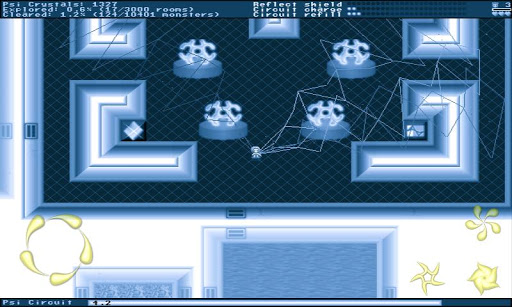
Base attack Meritous is a nice, addictive action-adventure dungeon crawl game. Each new game is unique since the dungeon is built in a semi-random fashion. Last but not least, the engine, graphics and sound effects are GPL'd :) The game is based on SDL 1.2, which has an unofficial Android variant, so I decided to try and port it on my cell phone! The port was surprinsingly smooth and only non-SDL fixes (move big stack allocation to heap) were necessary. Who said it was difficult to program in C on Android? ;) It was also an opportunity to study the build system for F-Droid, an app market for free software apps, where APKs are rebuilt from source. The spec-like file is here. The game packaging is also being ressurected for Debian but is being distressfully held hostage in the NEW queue for 2 weeks! You can download the very first (aka beta) Android version: Comments welcome!

14 November 2015

Daniel Pocock: Migrating data from Windows phones

Many of the people who have bought Windows phones seek relief sooner or later. Sometimes this comes about due to peer pressure or the feeling of isolation, in other cases it is the frustration of the user interface or the realization that they can't run cool apps like Lumicall. Frequently, the user has been given the phone as a complimentary upgrade when extending a contract without perceiving the time, effort and potential cost involved in getting their data out of the phone, especially if they never owned a smartphone before. When a Windows phone user does decide to cut their losses, they are usually looking to a friend or colleague with technical expertise to help them out. Personally, I'm not sure that anybody I would regard as an IT expert has ever had a Windows phone though, meaning that many experts are probably also going to be scratching their heads when somebody asks them for help. Therefore, I've put together this brief guide to help deal with these phones more expediently when they are encountered. The Windows phones have really bad support for things like CalDAV and WebDAV so don't get your hopes up about using such methods to backup the data to any arbitrary server. Searching online you can find some hacks that involve creating a Google or iCloud account in the phone and then modifying the advanced settings to send the data to an arbitrary server. These techniques vary a lot between specific versions of the Windows Phone OS and so the techniques I've described below are probably easier. Identify the Windows Live / Hotmail account The user may not remember or realize that a Microsoft account was created when they first obtained the phone. It may have been created for them by the phone, a friend or the salesperson in the phone shop. Look in the settings (Accounts) to find the account ID / email address. If the user hasn't been using this account, they may not recognize it and probably won't know the password for it. It is essential to try and obtain (or reset) the password before going any further, so start with the password recovery process. Microsoft may insist on sending a password reset email to some other email address that the user has previously provided or linked to their phone. Extracting data from the phone In many cases, the easiest way to extract the data is to download it from Microsoft live.com rather than extracting it from the phone. Even if the user doesn't realize it, the data is probably all replicated in live.com and so there is no further loss of privacy by logging in there to extract it. Set up an IMAP mail client An IMAP client will be used to download the user's emails (from the live.com account they may never have used) and SMS. Install Mozilla Thunderbird (IceDove on Debian), GNOME Evolution or a similar program on the user's PC. Configure the IMAP mail client to connect to the live.com account. Some clients, like Thunderbird, will automatically set up all the server details when you enter the live.com account ID. For manual account setup, the details here may help. Email backup If the user was not using the live.com account ID for email correspondence, there may not be a lot of mail in it. There may be some billing receipts or other things that are worth keeping though. Create a new folder (or set of folders) in the user's preferred email account and drag and drop the messages from the live.com Inbox to the new folder(s). SMS backup SMS backup can also be done through live.com. It is slightly more complicated than email backup, but similar.
  • In the live.com Outlook email index page, look for the settings button and click Manage Categories.
  • Enable the Contacts and Photos categories with a tick in each of them.
  • Go back to the main Inbox page and look for the categories section on the bottom left-hand side of the screen, under the folder list. Click the Contacts category.
  • The page may now appear blank. That is normal.
  • On the top right-hand corner of the page, click the Arrange menu and choose Conversation.
  • All the SMS messages should now appear on the screen.
  • Under the mail folders list on the left-hand side of the page, click to create a new folder with a name like SMS.
  • Select all the SMS messages and look for the option to move them to a folder. Send them to the SMS folder you created.
  • Now use the IMAP mail client to locate the SMS folder and copy everything from there to a new folder in the user's preferred mail server or local disk.
Contacts backup On the top left-hand corner of the live.com email page, there is a chooser to select other live.com applications. Select People. You should now see a list of all the user's contacts. Look for the option to export them to Outlook and other programs. This will export them as a CSV file. You can now import the CSV file into another application. GNOME Evolution has an import wizard with an option for Outlook file format. To load the contacts into a WebDAV address book, such as DAViCal, configure the address book in Evolution and then select it as the destination when running the CSV import wizard. WARNING: beware of using the Mozilla Thunderbird address book with contact data from mobile devices and other sources. It can't handle more than two email addresses per contact and this can lead to silent data loss if contacts are not fully saved. Calendar backup Now go to the live.com application chooser again and select the calendar application. Microsoft provides instructions to extract the calendar, summarised here:
  • Look for the Share button at the top somewhere and click it.
  • On the left-hand side of the page, click Get a link
  • On the right-hand side, choose Show event details to ensure you get a full calendar and then click Create underneath it.
  • Look for the link with a webcals prefix. If you are downloading with a tool like wget, change the scheme prefix to https. Fetch the file from this link and save it with an ics extension.
  • Inspect the ics calendar file to make sure it looks like real iCalendar data.
You can now import the ics file into another application. GNOME Evolution has an import wizard with an option for iCalendar file format. To load the calendar entries into a CalDAV server, such as DAViCal, configure the calendar server in Evolution and then select it as the destination when running the import wizard. Backup the user's photos, videos and other data files Hopefully you will be able to do this step without going through live.com. Try enabling the MTP or PTP mode in the phone and attach it to the computer using the USB cable. Hopefully the computer will recognize it in at least one of those modes. Use the computer's file manager or another tool to simply backup the entire directory structure. Reset the phone to factory defaults Once the user has their hands on a real phone, it is likely they will never want to look at that Windows phone again. It is time to erase the Windows phone, there is no going back. Go to the Settings and About and tap the factory reset option. It is important to do this before obliterating the live.com account, otherwise there are scenarios where you could be locked out of the phone and unable to erase it. Erasing may take some time. The phone will reboot and then display an animation of some gears spinning around for a few minutes and then reboot again. Wait for it to completely erase. Permanently close the Microsoft live.com account Keeping track of multiple accounts and other services is tedious and frustrating for most people, especially with services that try to force the user to receive email in different places. You can help eliminate user fatigue by helping them permanently close the live.com account so they never have to worry about it again. Follow the instructions on the Microsoft site. At some point it will suggest certain actions you should take before closing the account, most can be ignored. One thing you should do is remove the link between the live.com account ID and the phone. It is a good idea to do this as otherwise you may have problems erasing the device, if you haven't already done so. Before completely closing the account, also verify that the factory reset of the phone completed successfully. Dispose of the Windows phone safely If you can identify any faults with the phone, the user may be able to return it under the terms of the warranty. Some phone companies may allow the user to exchange it for something more desirable when it fails under warranty. It may be tempting to sell the phone to a complete stranger on eBay or install a custom ROM on it. In practice, neither option may be worth the time and effort involved. You may be tempted to put it beyond use so nobody else will suffer with it, but please try to do so in a way that is respectful of the environment. Putting the data into a new phone Prepare the new phone with a suitable ROM such as Replicant or Cyanogenmod. Install the F-Droid app on the new phone. From F-droid, install the DAVdroid app. DAVdroid will allow you to quickly sync the new phone against any arbitrary CalDAV and WebDAV server to populate it with the user's calendar and contact / address book data. Now is a good time to install other interesting apps like Lumicall, Conversations and K-9 Mail.

27 October 2015

Mart n Ferrari: Tales from the SRE trenches: Dev vs Ops

This is the second part in a series of articles about SRE, based on the talk I gave in the Romanian Association for Better Software. On the first part, I introduced briefly what is SRE. Today, I present some concrete ways in which SRE tried to make things better, by stopping the war between developers and SysAdmins.

Dev vs Ops: the eternal battle So, it starts at looking at the problem: how to increase the reliability of the service? It turns out that some of the biggest sources of outages are new launches: a new feature that seemed innocuous somehow managed to bring the whole site down. Devs want to launch, and Ops want to have a quiet weekend, and this is were the struggle begins. When launches are problematic, bureaucracy is put in place to minimise the risks: launch reviews, checklists, long-lived canaries. This is followed by development teams finding ways of side-stepping those hurdles. Nobody is happy. One of the key aspects of SRE is to avoid this conflict completely, by changing the incentives, so these pressures between development and operations disappear. At Google, they achieve this with a few different strategies:

Have an SLA for your service Before any service can be supported by SRE, it has to be determined what is the level of availability that it must achieve to make the users and the company happy: this is called the Service Level Agreement (SLA). The SLA will define how availability is measured (for example, percentage of queries handled successfully in less than 50ms during the last quarter), and what is the minimum acceptable value for it (the Service Level Objective, or SLO). Note that this is a product decision, not a technical one. This number is very important for an SRE team and its relationship with the developers. It is not taken lightly, and it should be measured and enforced rigorously (more on that later). Only a few things on earth really require 100% availability (pacemakers, for example), and achieving really high availability is very costly. Most of us are dealing with more mundane affairs, and in the case of websites, there are many other things that fail pretty often: network glitches, OS freezes, browsers being slow, etc. So an SLO of 100% is almost never a good idea, and in most cases it is impossible to reach. In places like Google an SLO of "five nines" (99.999%) is not uncommon, and this means that the service can't fail completely for more than 5 minutes across a whole year!

Measure and report performance against SLA/SLO Once you have a defined SLA and SLO, it is very important that these are monitored accurately and reported constantly. If you wait for the end of the quarter to produce a hand-made report, the SLA is useless, as you only know you broke it when it is too late. You need automated and accurate monitoring of your service level, and this means that the SLA has to be concrete and actionable. Fuzzy requirements that can't be measured are just a waste of time. This is a very important tool for SRE, as it allows to see the progression of the service over time, detect capacity issues before they become outages, and at the same time show how much downtime can be taken without breaking the SLA. Which brings us to one core aspect of SRE:

Use error budgets and gate launches on them If SLO is the minimum rate of availability, then the result of calculating 1 - SLO is what fraction of the time a service can fail without failing out of the SLA. This is called an error budget, and you get to use it the way you want it. If the service is flaky (e.g. it fails consistently 1 of every 10000 requests), most of that budget is just wasted and you won't have any margin for launching riskier changes. On the other hand, a stable service that does not eat the budget away gives you the chance to bet part of it on releasing more often, and getting your new features quicker to the user. The moment the error budget is spent, no more launches are allowed until the average goes back out of the red. Once everyone can see how the service is performing against this agreed contract, many of the traditional sources of conflict between development and operations just disappear. If the service is working as intended, then SRE does not need to interfere on new feature launches: SRE trusts the developers' judgement. Instead of stopping a launch because it seems risky or under-tested, there are hard numbers that take the decisions for you. Traditionally, Devs get frustrated when they want to release, but Ops won't accept it. Ops thinks there will be problems, but it is difficult to back this feeling with hard data. This fuels resentment and distrust, and management is never pleased. Using error budgets based on already established SLAs means there is nobody to get upset at: SRE does not need to play bad cop, and SWE is free to innovate as much as they want, as long as things don't break. At the same time, this provides a strong incentive for developers to avoid risking their budget in poorly-prepared launches, to perform staged deployments, and to make sure the error budget is not wasted by recurrent issues.
That's all for today. The next article will continue delving into how traditional tensions between Devs and Ops are played in the SRE world. Comment

20 October 2015

Ritesh Raj Sarraf: Controlling ill behaving applications with Linux Cgroups

For some time, I have been wanting to read more on Linux Cgroups to explore possibilities of using it to control Ill behaving applications. At this time, while I'm stuck in travel, it has given me some time to look into it. In our Free Software world, most of the things are do-o-cracy, i.e. when your use case is not the common one, it is typically you who has to explore possible solutions. It could be Bugs, Feature Requests or as is in my case, performance issues. But that is not to assume that we do not have better quality software in Free Software world. Infact, in my opinion, some of the tools available are far much more better than the competition in terms of features, and to add a sweetener (or nutritional facts) to it is the fact that Free Software liberates the user. One of my favorite tool, for photo management, is Digikam. Digikam is a big project, very featureful, and has some functionalities that may not be available in the competition. But as is with most Free Software projects, Digikam is a tool which underneath consumes many more subprojects from the Free Software ecosystem. For anyone who has used Digikam, may know some of the bugs that surface on it. Not necessarily a bug in Digikam, but maybe in one of the underneath libraries/tools that it consumes (Exiv, libkface, marble, OpenCV, libPGF etc). But the bottom line is that the overall Digikam experience (and if I may say: the overall GNU/Linux experience) takes a hit. Digikam has pretty powerful features for annotation, tagging, facial recognition. These features, together with Digikam, make it a compelling product. But the problem is that many of these projects are independent. Thus tight integration is a challenge. And at times, bugs can be hard to find, root cause and fix. Let's take a real example here. If you were to use Digikam today (version 4.13.0) with annotation, tagging and facial recognition as some of the core features for your use case, you may run into frustrating overall experience. Not just that, the bugs would also effect your overall GNU/Linux experience. The facial recognition feature, if triggered, will eat up all your memory. Thus leading you to uncover Linux's long old memory bug. The tagging feature, if triggered, again will lead to frequent I/O. Thus again leading to a stalled Linux system because of blocked CPU cycled, for nothing. So one of the items on my TODO list was to explore Linux Cgroups, and see if it was cleanly possible to tame a process to a confinement, so that even if it was ill behaving (for whatever reasons), your machine does not take the beating. And now that the cgroups consumer dust has kinda settled down, systemd was my first obvious choice to look at. systemd provides a helper utility, systemd-run, for similar tasks. With systemd-run, you could apply all the resource controller logic to the given process, typically cpu, memory and blkio. And restrict it to a certain set. You can also define what user to run the service as.
rrs@learner:/var/tmp/Debian-Build/Result$ systemd-run -p BlockIOWeight=10 find /
Running as unit run-23805.service.
2015-10-20 / 21:37:44         
rrs@learner:/var/tmp/Debian-Build/Result$ systemctl status -l run-23805.service
  run-23805.service - /usr/bin/find /
   Loaded: loaded
  Drop-In: /run/systemd/system/run-23805.service.d
            50-BlockIOWeight.conf, 50-Description.conf, 50-ExecStart.conf
   Active: active (running) since Tue 2015-10-20 21:37:44 CEST; 6s ago
 Main PID: 23814 (find)
   Memory: 12.2M
      CPU: 502ms
   CGroup: /system.slice/run-23805.service
            23814 /usr/bin/find /
Oct 20 21:37:45 learner find[23814]: /proc/3/net/raw6
Oct 20 21:37:45 learner find[23814]: /proc/3/net/snmp
Oct 20 21:37:45 learner find[23814]: /proc/3/net/stat
Oct 20 21:37:45 learner find[23814]: /proc/3/net/stat/rt_cache
Oct 20 21:37:45 learner find[23814]: /proc/3/net/stat/arp_cache
Oct 20 21:37:45 learner find[23814]: /proc/3/net/stat/ndisc_cache
Oct 20 21:37:45 learner find[23814]: /proc/3/net/stat/ip_conntrack
Oct 20 21:37:45 learner find[23814]: /proc/3/net/stat/nf_conntrack
Oct 20 21:37:45 learner find[23814]: /proc/3/net/tcp6
Oct 20 21:37:45 learner find[23814]: /proc/3/net/udp6
2015-10-20 / 21:37:51         
But, out of the box, graphical applications do not work. I haven't looked, but it should be doable by giving it the correct environment details.
Underneath, systemd is using the same Linux Control Groups to limit resources for individual applications. So, in cases where you have a requirement and do not have systemd, or you directly want to make use of cgroups, it could be easily done with basic cgroups tools like cgroup-tools.
With cgroup-tools, I now have a simple cgroups hierarchy set for my current use case, i.e. Digikam
rrs@learner:/var/tmp/Debian-Build/Result$ ls /sys/fs/cgroup/memory/rrs_customCG/
cgroup.clone_children           memory.kmem.tcp.limit_in_bytes      memory.numa_stat
cgroup.event_control            memory.kmem.tcp.max_usage_in_bytes  memory.oom_control
cgroup.procs                    memory.kmem.tcp.usage_in_bytes      memory.pressure_level
digikam/                        memory.kmem.usage_in_bytes          memory.soft_limit_in_bytes
memory.failcnt                  memory.limit_in_bytes               memory.stat
memory.force_empty              memory.max_usage_in_bytes           memory.swappiness
memory.kmem.failcnt             memory.memsw.failcnt                memory.usage_in_bytes
memory.kmem.limit_in_bytes      memory.memsw.limit_in_bytes         memory.use_hierarchy
memory.kmem.max_usage_in_bytes  memory.memsw.max_usage_in_bytes     notify_on_release
memory.kmem.slabinfo            memory.memsw.usage_in_bytes         tasks
memory.kmem.tcp.failcnt         memory.move_charge_at_immigrate
2015-10-20 / 21:45:38         
rrs@learner:/var/tmp/Debian-Build/Result$ ls /sys/fs/cgroup/memory/rrs_customCG/digikam/
cgroup.clone_children           memory.kmem.tcp.max_usage_in_bytes  memory.oom_control
cgroup.event_control            memory.kmem.tcp.usage_in_bytes      memory.pressure_level
cgroup.procs                    memory.kmem.usage_in_bytes          memory.soft_limit_in_bytes
memory.failcnt                  memory.limit_in_bytes               memory.stat
memory.force_empty              memory.max_usage_in_bytes           memory.swappiness
memory.kmem.failcnt             memory.memsw.failcnt                memory.usage_in_bytes
memory.kmem.limit_in_bytes      memory.memsw.limit_in_bytes         memory.use_hierarchy
memory.kmem.max_usage_in_bytes  memory.memsw.max_usage_in_bytes     notify_on_release
memory.kmem.slabinfo            memory.memsw.usage_in_bytes         tasks
memory.kmem.tcp.failcnt         memory.move_charge_at_immigrate
memory.kmem.tcp.limit_in_bytes  memory.numa_stat
2015-10-20 / 21:45:53         
rrs@learner:/var/tmp/Debian-Build/Result$ cat /sys/fs/cgroup/cpu/rrs_customCG/cpu.shares 
1024
2015-10-20 / 21:48:44         
rrs@learner:/var/tmp/Debian-Build/Result$ cat /sys/fs/cgroup/cpu/rrs_customCG/digikam/cpu.shares 
512
2015-10-20 / 21:49:05         
rrs@learner:/var/tmp/Debian-Build/Result$ cat /sys/fs/cgroup/memory/rrs_customCG/memory.limit_in_bytes 
9223372036854771712
2015-10-20 / 22:20:14         
rrs@learner:/var/tmp/Debian-Build/Result$ cat /sys/fs/cgroup/memory/rrs_customCG/digikam/memory.limit_in_bytes 
2764369920
2015-10-20 / 22:20:27         
rrs@learner:/var/tmp/Debian-Build/Result$ cat /sys/fs/cgroup/blkio/rrs_customCG/blkio.weight
500
2015-10-20 / 21:51:43         
rrs@learner:/var/tmp/Debian-Build/Result$ cat /sys/fs/cgroup/blkio/rrs_customCG/digikam/blkio.weight
10
2015-10-20 / 21:51:50         
The base group, $USER_customCG needs super admin privileges. Which once set appropriately, allows the user to further self-define sub-groups. And users can then also define separate limits per sub-group.
With the resource limitations set in place, my overall experience on very recent hardware (Intel Haswell Core i7, 8 GiB RAM, 500 GB SSHD, 128 GB SSD) has improved considerably. It still is not perfect, but it definitely is a huge improvement over what I had to go through ealire: A stalled machine for hours.
top - 21:54:38 up 1 day,  6:46,  1 user,  load average: 7.22, 7.51, 7.37
Tasks: 299 total,   1 running, 298 sleeping,   0 stopped,   0 zombie
%Cpu0  :  7.1 us,  3.0 sy,  1.0 ni, 11.1 id, 77.8 wa,  0.0 hi,  0.0 si,  0.0 st
%Cpu1  :  6.0 us,  4.0 sy,  2.0 ni, 49.0 id, 39.0 wa,  0.0 hi,  0.0 si,  0.0 st
%Cpu2  :  5.0 us,  2.0 sy,  0.0 ni, 24.8 id, 68.3 wa,  0.0 hi,  0.0 si,  0.0 st
%Cpu3  :  5.9 us,  5.0 sy,  0.0 ni, 21.8 id, 67.3 wa,  0.0 hi,  0.0 si,  0.0 st
MiB Mem : 7908.926 total,   96.449 free, 4634.922 used, 3177.555 buff/cache
MiB Swap: 8579.996 total, 3454.746 free, 5125.250 used. 2753.324 avail Mem 
PID to signal/kill [default pid = 8879] 
  PID  PPID nTH USER        PR  NI S %CPU %MEM     TIME+ COMMAND                           UID 
 8879  8868  18 rrs         20   0 S  8.2 31.2  37:44.64 digikam                          1000 
10255  9960   4 rrs         39  19 S  1.0  0.8  19:47.73 tracker-miner-f                  1000 
10157  9960   7 rrs         20   0 S  0.5  3.0  32:29.76 gnome-shell                      1000 
    7     2   1 root        20   0 S  0.2        0:53.48 rcu_sched                           0 
  401     1   1 root        20   0 S  0.2  1.3   0:54.93 systemd-journal                     0 
10269  9937   4 rrs         20   0 S  0.2  0.4   2:34.50 gnome-terminal-                  1000 
15316     1  14 rrs         20   0 S  0.2  3.7  30:05.96 evolution                        1000 
23777     2   1 root        20   0 S  0.2        0:05.73 kworker/u16:0                       0 
23814     1   1 root        20   0 D  0.2  0.0   0:02.00 find                                0 
24049     2   1 root        20   0 S  0.2        0:01.29 kworker/u16:3                       0 
24052     2   1 root        20   0 S  0.2        0:02.94 kworker/u16:4                       0 
    1     0   1 root        20   0 S       0.1   0:18.24 systemd                             0 
The reporting tools may not be correct here. Because from what is being reported above, I should be having a machine stalled, and heavily paging, while the kernel scanning its list of processes to find the best process to kill. From this approach of jailing processes, the major side effect I can see is that the process (Digikam) is now starved of resources and will take much much much more time than what it would have been usually. But in the usual cases, it takes up all, and ends up starving (and getting killed) for consuming all available resources. So I guess it is better to be on a balanced resource diet. :-)

Categories:

Keywords:

Like:

14 October 2015

Norbert Preining: On Lars Wirzenius, Mart n Ferrari, and Debian

Now that the tsunami that followed my recent blog post has passed, I can read through all the nice comments and blogs of other people. I didn t expect that just writing up some links to posts on LKML, plus adding my personal opinion on what has happened and about my interpretation concerning Debian could gather so much attention. Anyway, let us look at the blog posts written in the aftermath. debian-newspeak-coc In particular do I want to answer to two blogs: Lars Wirzenius blog and Mart n Ferrari s blog, both of which are excellent examples of insults. I also want to mention that although the previous two are bad examples, there are fortunately also those who are able to resist primitive insults, in particular Gunnar Wolf (direct link to the blog does not work), and Miriam Ruiz blog, which contradict my blog and propose a different view, without pulling the knife. Lars Wirzenius Let us start with Lars (ah sorry, I have to call him Wirzenius here, strange custom has suddenly popped up in Debian!):
I think Preining mis-characterises what happens on the Linux kernel mailing list, and in Debian, in free software development in general, and what Sarah Sharp has said and done. I continue to think he is wrong about everything on this topic.
I am very surprised that Lars^WWirzenius is in possession of a crystal ball that allows him to see and evaluate my attitude towards all these items, considering that I have presented links to posts on the LKML, and yes, my interpretation of the matter. Mind that the whole text amounts to about 130 lines on my screen, while my personal opinion was stated in two paragraphs of total 9 lines plus some interspersed comments. And in these maybe 20 lines I didn t make general statements about open source, kernel development etc etc. Lars, I know you have closed your blog for comments so I couldn t ask you but please, can you send me one of your crystal balls if you have more of them? At least he has managed to keep a bit of proper writing and disagreed with my statement on Debian (whether there is fun or not in Debian). He is of course free to do that, but please, don t rob me the right to state that I think Debian has changed. All this dispute centers around people not being capable to distinguish two things: One, being against the Code of Conduct due to the inclusion of administrative actions without clear definitions, and Two, being pro offensive behavior and and insults. Now, dear Lars^WWirzenius, please listen: I never advocated abusive behavior or insults, nor do I defend it. (Did you hear that!) I simply opposed the Code of Conduct as ruling instrument. And what kind of emails I got due to my opposition was far outside the Code of Conduct you are so strongly defending. So please, stay at the facts, and stop insulting me. Thanks. Mart n Ferrari Concerning Mart n I don t have much to say but please, stop spreading lies. You stated:
Once again, he s complaining about how the fun from Debian has been lost because making sexist jokes, or treating other people like shit is not allowed any more.
Could you please come up with a reference to this? Or are you just interpreting? I am very disappointed about this level of discussion between Debian Developers. You not even cared to answer my comment on your blog. Should I say something clear here you should be happy that this has not been written on a Debian mailing list, otherwise I hope the Code of Conduct hammer would hit you.
So yes, it seems that at least these two blogs underline exactly what my opinion is: Communication culture in Debian has changed to be more company-like. Probably due to the ever increasing amount of developers that are paid for their work on Debian (Ubuntu), the pressure to follow US company codes has taken a firm grip, so firm that even stating my diverging opinion is already enough to get branded. Good Future!

27 September 2015

Sven Hoexter: 1blu hack and the usual TLS certificate key madness

Some weeks ago the german low cost hoster 1blu got hacked and there was a bit of fuss later about the TLS certificates issued by 1blu. I think they reissued all of them. Since I knew that some hoster offer to generate the complete cert + key package for the customer I naively assumed that only the lazy and novice customers were the victims of that issue. Today, while helping someone, I learned that 1blu forces you to use the key generated by them for certificates included in a virtual server bundle and probably other bundles. That makes those bundles a lot less attractive since the included certificate is not useful at all. One could of course argue that a virtual server is not trustworthy anyway, but I'd like to believe for now that it's more complicated to extract stuff from all running virtual servers compared to dumping the central database / key repository. Maybe it's time to create a wrapper around openssl that is less opaque to novice users so we can get rid of key generation by a third party one day. In the end it's a disasterous trend that only got started because of usability issues.

20 September 2015

Thorsten Alteholz: Package of the Day: ansiweather

While looking at NEW I sometimes see a package and think wow this is great, you have to try this . One of these packages is ansiweather. It looks at the data at openweathermap and presents them on the console. So with

ansiweather -l chemnitz -u metric

I get something like:
Current weather in Chemnitz => 12 C Wind => 2.52 m/s WNW Humidity => 80 % Pressure => 1014 hPa
Now I see that I need a coat and an umbrella for my walk. Or better I don t go outside and continue looking at other stuff in NEW :-)

30 August 2015

Russ Allbery: Review: Pound Foolish

Review: Pound Foolish, by Helaine Olen
Publisher: Penguin
Copyright: 2012, 2013
Printing: 2013
ISBN: 1-59184-679-X
Format: Trade paperback
Pages: 241
For at least the last six years, it's not been surprising news that the relationship between the average person and the US financial system is tense at best, and downright exploitative at worst. The collapse of the housing bubble revealed a morass of predatory lending practices, spectacularly poor (or spectacularly cynical) investment decisions, and out-of-control personal debt coupled with erosion of bankruptcy law. Despite this, there's always a second story in all discussions of the finances of the US population: the problem isn't with financial structures and products, but with us. We're too stupid, or naive, or emotional, or uninformed, or greedy, or unprincipled, or impatient. Finances are complicated, yes, but that just means we have to be more thoughtful. All of these complex financial products could have been used properly. Helaine Olen's Pound Foolish is a systemtic, biting, well-researched, and pointed counter to that second story. The short summary of this book is that it's not us. We're being set up for failure, and there is a large and lucrative industry profiting off of that failure. And many (although not all) people in that industry know exactly what they're doing. Pound Foolish is one of my favorite forms of non-fiction: long-form journalism. This is an investigative essay into the personal finance and investment industry, developed to book length. Readers of Michael Lewis will feel right at home. Olen doesn't have Lewis's skill with characterization and biography, but she makes up for it in big-picture clarity. She takes a wealth of individual facts about who is involved in personal finance, how they make money, what they recommend, and who profits, and develops it into a clear and coherent overview. If you have paid any attention to US financial issues, you'll know some of this already. Frontline has done a great job of covering administrative fees in mutual funds. Lots of people have warned about annuities. The spectacular collapse of the home mortgage is old news now. But Olen does a great job of finding the connections between these elements and adding some less familiar ones, including an insightful and damning analysis of financial literacy campaigns and the widespread belief that these problems are caused by lack of consumer understanding. I've read and watched a lot of related material, including several full-book treatments of the mortgage crisis, so I think it's telling that I never got bored in the middle of Olen's treatment. I find the deep US belief in the power of personal improvement fascinating. It feels like one of the defining characteristics of US culture, for both good and for ill. We're very good at writing compelling narratives of personal improvement, and sometimes act on them. We believe that everyone can and should improve themselves. But that comes coupled to a dislike and distrust of expertise, even when it is legitimate and earned (Hofstadter's Anti-Intellectualism in American Life develops this idea at length). And I believe we significantly overestimate the ability of individuals to act despite systems that are stacked against us, and significantly overestimate our responsibility for the inevitable results. This was the main message I took from Pound Foolish: we desperately want to believe in the myth of personal control. We want to believe that our financial troubles are something we can fix through personal education, more will power, better decisions, or just the right investment. And so, we turn to gurus like Suze Orman and buy their mix of muddled financial advice and "tough love" that completely ignores broader social factors. We're easy marks for psychologically-trained investment sellers who mix fear, pressure, and a fantasy of inside knowledge and personal control. We're fooled by a narrative of empowerment and stand by while a working retirement system (guaranteed benefit pensions) is undermined and destroyed in favor of much riskier investment schemes... riskier for us, at least, but loaded with guaranteed profits for the people who "advise" us. And we cling to financial literacy campaigns that are funded by exactly the same credit card companies who fight tooth and nail against regulations that would require they provide simple, comprehensible descriptions of loan terms. One wonders if they support them precisely because they know they don't work. Olen mentions, in passing, the Stanford marshmallow experiment, which is often used as a foundation for arguments about personal responsibility for financial outcomes, but she doesn't do a detailed critique. I wish she had, since I think it's such a good example of the theme of this book. The Stanford marshmallow experiment was a psychological experiment from the late 1960s and early 1970s in delayed gratification. Children were put in a room in front of some treat (marshmallows, cookies, pretzels) and told that they could eat it if they wished. But if they didn't eat the treat before the monitor came back, they would get two of the treat instead. Long-term follow-up studies found that the children who refrained from eating the treat and got the reward had better life outcomes along multiple metrics: SAT scores, educational attainment, and others. On the surface, this seems to support everything US culture loves to believe about the power of self-control, self-improvement, and the Protestant work ethic. People who can delay gratification and save for a future reward do better in the world. (The darker interpretation, also common since the experiment was performed on children, is that the ability to delay gratification has a genetic component, and some people are just doomed to make poor decisions due to their inability to exercise self-control.) However, I can call the traditional interpretation into question with one simple question that the experimenters appeared not to ask: under what circumstances would taking the treat immediately be the rational and best choice? One answer, of course, is when one does not trust the adult to produce the promised reward. If the adult might come back, take the treat away, and not give any treat, it's to the child's advantage to take the treat immediately. Even if the adult left the treat but wouldn't actually double it, it's to the child's advantage to take the treat immediately. The traditional interpretation assumes the child trusts the adults performing the experiment a logical assumption for those of us whose childhood experience was that adults could generally be trusted and that promised rewards would materialize. If the child instead came from a chaotic family where adults weren't reliable, or just one where frequent unexpected money problems meant that promised treats often didn't materialize, the most logical assumption may be much different. One has to ask if such a background may have more to do with the measured long-term life outcomes than the child's unwillingness to trust in a future reward. And this is one of the major themes of this book. Problems the personal finance industry attributes to our personal shortcomings (which they're happy to take our money to remedy) are often systematic, or at least largely outside of our control. We may already be making the most logical choices given our personal situations. We're in worse financial shape because we're making less money. Our retirements are in danger because our retirement systems were dismantled and replaced with risky and expensive alternatives. And where problems are attributed to our poor choices, one can find entire industries that focus on undermining our ability to make good choices: scaring us, confusing us, hiding vital information, and exploiting known weaknesses of human psychology to route our money to them. These are not problems that can be solved by watching Suze Orman yell at us to stop buying things. These are systematic social problems that demand a sweeping discussion about regulation, automatic savings systems, and social insurance programs to spread risk and minimize the weaknesses of human psychology. Exactly the kind of discussion that the personal finance industry doesn't want us to have. Those who are well-read in these topics probably won't find a lot new here. Those who aren't in the US will shake their heads at some of the ways that the US fails its citizens, although many of Olen's points apply even to countries with stronger social safety nets. But if you're interested in solid long-form journalism on this topic, backed by lots of data on just how badly a focus on personal accountability is working for us, I recommend Pound Foolish. Rating: 8 out of 10

14 May 2015

Gunnar Wolf: Everybody seems to have an opinion on the taxis vs. Uber debate...

The discussion regarding the legality and convenience of Uber, Cabify and similar taxi-by-app services has come to Mexico City Over the last few days, I've seen newspapers talk about taxi drivers demonstrating against said companies, early attempts at regulating their service, and so on. I hold the view that every member of a society should live by its accepted rules (i.e. laws) and if they hold the laws as incorrect, unfair or wrong, they should strive to get the laws to change. Yes, it's a hard thing to do, most often filled with resistence, but it's the only socially responsible way to go. Private driver hiring applications have several flaws, but maybe the biggest one is that they are... How to put it? I cannot find a word better than illegal. Taxi drivers in our city (and in most cities, as far as I have read) undergo a long process to ensure they are fit for the task. Is the process incomplete? Absolutely. But the answer is not to abolish it in the name of the free market. The process must be, if anything, tightened. The process for granting a public driver license to an individual is way stricter than to issue me a driving license (believe it or not, Mexico City abolished taking driving tests several years ago). Taxis do get physical and mechanical review Is their status mint and perfect? No way. But compare them to taxis in other Mexican states, and you will see they are in general in a much better shape. Now... One of the things that angered me most about the comments to articles such as the ones I'm quoting is the middle class mentality they are written from. I have seen comments ranging from stupidly racist humor attempts (Mr. Mayor, the Guild of Kidnappers and Robbers of Iztapalapa demand the IMMEDIATE prohibition on UBER as we are running low on clients or the often repeated comment that taxi drivers are (...) dirty, armpit-smelly that listen to whatever music they want) to economic culture-based discrimination Uber is just for credit card users as if it were enough of an argument... Much to the opposite, it's just discrimination, as many people in this city are not credit subjects and do not exist in the banking system, or cannot have an always-connected smartphone Should they be excluded from the benefits of modernity just because of their economic difference? And yes, I'm by far not saying Mexico City's taxi drivers are optimal. I am an urban cyclist, and my biggest concern/fear are usually taxi drivers (more so than microbus drivers, which are a class of their own). Again , as I said at the beginning of the post, I am of the idea that if current laws and their enforcement are not enough for a society, it has to change due to that society's pressure It cannot just be ignored because nobody follows the rules anyway. There is quite a bit that can be learnt from Uber's ways, and there are steps that can be taken by the company to become formal and legal, in our country and in others where they are accused of the same lacking issues. We all deserve better services. Not just those of us that can pay for a smartphone and are entitled to credit cards. And all passenger-bearing services require strict regulations.

1 April 2015

Lars Wirzenius: Obnam 4.1 released

It is with great pleasure and satisfaction that I release version 4.1 of Obnam, my backup program. This version includes a radically innovative approaches to data compression and de-duplication, as well as some other changes and bug fixes. Major user-visible changes: Minor user-visible changes: Bug fixes:

12 February 2015

Sven Hoexter: Comparing apples and oranges: IPv6 adoption vs HTTP/2 adoption

I did not yet read the HTTP/2 draft but I've read the SPDY draft about 2.5 years ago. So I might be wrong here with my assumptions. We're now about 17 years into the IPv6 migration and still we do not have widespread IPv6 adoption on the client side. That's mostly an issue of CPE device rotation at the customer side and updating provisioning solutions. For the server side we're more or less done. Operating system support is there, commercial firewall and router vendors picked it up in the last ten years, datacenter providers are ready, so we're waiting for the users to put some pressure on providing a service via IPv6. Looking at HTTP/2 it's also a different protocol. The gap might be somewhat closer than the one between IPv4 and IPv6, but it's still huge. Now I'd bet that in the case of HTTP/2 we'll also see a really slow adoption, but this time it's not the client side that's holding back the adoption. For HTTP/2 I've no doubts about a fast adoption on the client side. Google and Mozilla are nowadays providing some kind of continues delivery of new features to the end user on a monthly basis (surprisingly that also works for mobile devices!). So the web browser near you will soon have a HTTP/2 implementation. Even Microsoft is switching to a new development model of rolling updates with Windows 10 and the Internet Explorer successor. But looking at the server side I doubt we'll have widespread HTTP/2 support within the next 5 years. Maybe in 10. But I doubt even that. With all those reverse proxies, interception devices for header enrichment at mobile carriers, application servers, self written HTTP implementations, load balancers and so on I doubt we'll have a fast and smooth migration ahead. But maybe we're all lucky and I'm wrong. I'd really love to be wrong here. Maybe we can provide working IPv4-IPv6 dual-stack setups for everyone in the meantime.

22 January 2015

Erich Schubert: Year 2014 in Review as Seen by a Trend Detection System

We ran our trend detection tool Signi-Trend (published at KDD 2014) on news articles collected for the year 2014. We removed the category of financial news, which is overrepresented in the data set. Below are the (described) results, from the top 50 trends (I will push the raw result to appspot if possible due to file limits).
I have highlighted the top 10 trends in bold, but otherwise ordered them chronologically.
Updated: due to an error in a regexp, I had filtered out too many stories. The new results use more articles.

January
2014-01-29: Obama's state of the union address
February
2014-02-07: Sochi Olympics gay rights protests
2014-02-08: Sochi Olympics first results
2014-02-19: Violence in Ukraine and Maidan in Kiev
2014-02-20: Wall street reaction to Facebook buying WhatsApp
2014-02-22: Yanukovich leaves Kiev
2014-02-28: Crimea crisis begins
March
2014-03-01: Crimea crisis escalates futher
2014-03-02: NATO meeting on Crimea crisis
2014-03-04: Obama presents U.S. fiscal budget 2015 plan
2014-03-08: Malaysia Airlines MH-370 missing in South China Sea
2014-03-08: MH-370: many Chinese on board of missing airplane
2014-03-15: Crimean status referencum (upcoming)
2014-03-18: Crimea now considered part of Russia by Putin
2014-03-21: Russian stocks fall after U.S. sanctions.
April
2014-04-02: Chile quake and tsunami warning
2014-04-09: False positive? experience + views
2014-04-13: Pro-russian rebels in Ukraine's Sloviansk
2014-04-17: Russia-Ukraine crisis continues
2014-04-22: French deficit reduction plan pressure
2014-04-28: Soccer World Cup coverage: team lineups
May
2014-05-14: MERS reports in Florida, U.S.
2014-05-23: Russia feels sanctions impact
2014-05-25: EU elections
June
2014-06-06: World cup coverage
2014-06-13: Islamic state Camp Speicher massacre in Iraq
2014-06-14: Soccer world cup: Spain surprisingly destoyed by Netherlands
July
2014-07-05: Soccer world cup quarter finals
2014-07-17: Malaysian Airlines MH-17 shot down over Ukraine
2014-07-18: Russian blamed for 298 dead in airline downing
2014-07-19: Independent crash site investigation demanded
2014-07-20: Israel shelling Gaza causes 40+ casualties in a day
August
2014-08-07: Russia bans food imports from EU and U.S.
2014-08-08: Obama orders targeted air strikes in Iraq
2014-08-20: IS murders journalist James Foley, air strikes continue
2014-08-30: EU increases sanctions against Russia
September
2014-09-05: NATO summit with respect to IS and Ukraine conflict
2014-09-11: Scottish referendum upcoming - poll results are close
2014-09-23: U.N. on legality of U.S. air strikes in Syria against IS
2014-09-26: Star manager Bill Gross leaves Allianz/PIMCO for Janus
October
2014-10-22: Ottawa parliament shooting
2014-10-26: EU banking review
November
2014-11-05: U.S. Senate and governor elections
2014-11-12: Foreign exchange manipulation investigation results
2014-11-17: Japan recession
December
2014-12-11: CIA prisoner and U.S. torture centers revieled
2014-12-15: Sydney cafe hostage siege
2014-12-17: U.S. and Cuba relations improve unexpectedly
2014-12-18: Putin criticizes NATO, U.S., Kiev
2014-12-28: AirAsia flight QZ-8501 missing

As you can guess, we are really happy with this result - just like the result for 2013 it mentiones (almost) all the key events.
There probably is one "false positive" there: 2014-04-09 has a lot of articles talking about "experience" and "views", but not all refer to the same topic (we did not do topic modeling yet).
There are also some events missing that we would have liked to appear; many of these barely did not make it into the top 50, but do appear in the top 100, such as the Sony cyberattack (#51) and the Fergusson riots on November 11 (#66).
You can also explore the results online in a snapshot.

3 January 2015

Rhonda D'Vine: Gossip

Happy New Year everyone! How did you celebrate the year change? I've been at the Seestadt Aspern listening to electric:indigo (who is also part of the open:sounds project powered by artists of the female:pressure collective), watching a show called "Laser-City", enjoying the really chilly air. With so much female power mentioned in the former paragraph, it is almost hard to find a matching artist/band to present you today. Almost I said, because Beth Ditto and her band Gossip are definitely up for the challenge. That woman is pure power and has a uniquely great voice. They are definitely worth listening into closer, and here are my suggestions: Like always, enjoy!

/music permanent link Comments: 0 Flattr this

30 December 2014

Petter Reinholdtsen: Updated version of the Norwegian web service FiksGataMi

I am very happy that we in the Norwegian Unix User group (NUUG), spearheaded by Marius Halden from NUUG and Matthew Somerville from mySociety, finally managed to upgrade the code base for the Norwegian version of FixMyStreet. This was the first major update since 2011. The refurbished FiksGataMi is already live, and seem to hold up the pressure. The press release and announcement went out this morning. FixMyStreet is a web platform for allowing the citizens to easily report problems with public infrastructure to the responsible authorities. Think of it as a shared mail client with map support, allowing everyone to see what already was reported and comment on the reports in public.

23 November 2014

Matthew Palmer: You stay classy, Uber

You may have heard that Uber has been under a bit of fire lately for its desires to hire private investigators to dig up dirt on journalists who are critical of Uber. From using users ride data for party entertainment, putting the assistance dogs of blind passengers in the trunk, adding a surcharge to reduce the number of dodgy drivers, or even booking rides with competitors and then cancelling, or using the ride to try and convince the driver to change teams, it s pretty clear that Uber is a pretty good example of how companies are inherently sociopathic. However, most of those examples are internal stupidities that happened to be made public. It s a very rare company that doesn t do all sorts of shady things, on the assumption that the world will never find out about them. Uber goes quite a bit further, though, and is so out-of-touch with the world that it blogs about analysing people s sexual activity for amusement. You ll note that if you follow the above link, it sends you to the Wayback Machine, and not Uber s own site. That s because the original page has recently turned into a 404. Why? Probably because someone at Uber realised that bragging about how Uber employees can amuse themselves by perving on your one night stands might not be a great idea. That still leaves the question open of what sort of a corporate culture makes anyone ever think that inspecting user data for amusement would be a good thing, let alone publicising it? It s horrific. Thankfully, despite Uber s fairly transparent attempt at whitewashing ( clearwashing ?), the good ol Wayback Machine helps us to remember what really went on. It would be amusing if Uber tried to pressure the Internet Archive to remove their copies of this blog post (don t bother, Uber; I ve got a Save As button and I m not afraid to use it). In any event, I ve never used Uber (not that I ve got one-night stands to analyse, anyway), and I ll certainly not be patronising them in the future. If you re not keen on companies amusing themselves with your private data, I suggest you might consider doing the same.

20 November 2014

Gunnar Wolf: UNAM. Viva M xico, viva en paz.

UNAM. Viva M xico, viva en paz.
We have had terrible months in Mexico; I don't know how much has appeared about our country in the international media. The last incidents started on the last days of September, when 43 students at a school for rural teachers were forcefully disappeared (in our Latin American countries, this means they were taken by force and no authority can yet prove whether they are alive or dead; forceful disappearance is one of the saddest and most recognized traits of the brutal military dictatorships South America had in the 1970s) in the Iguala region (Guerrero state, South of the country) and three were killed on site. An Army regiment was stationed few blocks from there and refused to help. And yes, we live in a country where (incredibly) this news by themselves would not seem so unheard of... But in this case, there is ample evidence they were taken by the local police forces, not by a gang of (assumed) wrongdoers. And they were handed over to a very violent gang afterwards. Several weeks later, with far from a thorough investigation, we were told they were killed, burnt and thrown to a river. The Iguala city major ran away, and was later captured, but it's not clear why he was captured at two different places. The Guerrero state governor resigned and a new governor was appointed. But this was not the result of a single person behaving far from what their voters would expect It's a symptom of a broken society where policemen will kill when so ordered, where military personnel will look away when pointed out to the obvious, where the drug dealers have captured vast regions of the country where are stronger than the formal powers. And then, instead of dealing with the issue personally as everybody would expect, the president goes on a commercial mission to China. Oh, to fix some issues with a building company. That coincidentally or not was selling a super-luxury house to his wife. A house that she, several days later, decided to sell because it was tarnishing her family's honor and image. And while the president is in China, the person who dealt with the social pressure and told us about the probable (but not proven!) horrible crime where the "bad guys" for some strange and yet unknown reason (even with tens of them captured already) decided to kill and burn and dissolve and disappear 43 future rural teachers presents his version, and finishes his speech saying that "I'm already tired of this topic". Of course, our University is known for its solidarity with social causes; students in our different schools are the first activists in many protests, and we have had a very tense time as the protests are at home here at the university. This last weekend, supposed policemen entered our main campus with a stupid, unbelievable argument (they were looking for a phone reported as stolen three days earlier), get into an argument with some students, and end up firing shots at the students; one of them was wounded in the leg. And the university is now almost under siege: There are policemen surrounding us. We are working as usual, and will most likely finish the semester with normality, but the intimidation (in a country where seeing a policeman is practically never a good sign) is strong. And... Oh, I could go on a lot. Things feel really desperate and out of place. Today I will join probably tens or hundreds of thousands of Mexicans sick of this simulation, sick of this violence, in a demonstration downtown. What will this achieve? Very little, if anything at all. But we cannot just sit here watching how things go from bad to worse. I do not accept to live in a state of exception. So, this picture is just right: A bit over a month ago, two dear friends from Guadalajara city came, and we had a nice walk in the University. Our national university is not only huge, it's also beautiful and loaded with sights. And being so close to home, it's our favorite place to go with friends to show around. This is a fragment of the beautiful mural in the Central Library. And, yes, the University stands for "Viva M xico". And the university stands for "Peace". And we need it all. Desperately.

10 November 2014

Gustavo Noronha Silva: Yay, the left won! Or did it?

Originally published on politi.kov I have been asked by a bunch of friends from outside of Brazil for my opinion regarding the recent elections we had in Brazil, and it is a bit complicated to explain it without some background, so I decided to write this piece providing a bit of history so that people can understand my opinion. The elections this year were a rematch of our traditional polarization between the workers party (PT) and the social democracy party (PSDB), which has been going on since 1994. PT and PSDB used to be allies. In the 80s, when the dictatorship dropped the law that forbade more than 2 parties, the opposition party, MDB, began breaking up in several smaller ones. PSDB was founded by politicians and intelectuals who were inspired by Europe s social democracy and political systems. Parliamentarism, for instance, is one of the historical causes of the party. The workers party had a more grassroots origin, with union leaders, marxist intelectuals and marxist-inspired catholic priests being the main founders. They drew their inspiration from the USSR and Cuba, and were very close to social movements.
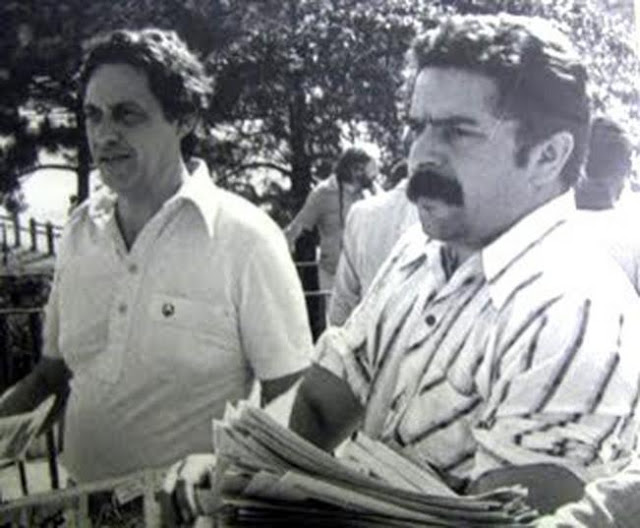
Lula and FHC campaigning together in 1981, by Cl vis Cranchi Sobrinho

Lula (PT) and FHC (PSDB) campaigning together in 1981, by Cl vis Cranchi Sobrinho

Some people have celebrated the reelection of Dilma Roussef as a victory of the left against the right. In my opinion that view is wrong for several reasons. First, because I disagree that PSDB and A cio Neves in particular are right-wing, both in terms of economics and social/moral issues. Second, because I believe Dilma s first government has taken a quite severe turn to the right in several topics that matter a lot to me. Since comparisons with PSDB s government during the 90s has been one of the main strategies of the campaign this year, I ll argue why I think it was actually a pretty good government with a lot of left in it. Unlike what happens in most other places, Brazil does not really have an actual right-wing party, economics-wise. Although we might see the birth of a couple in the near future, no current party is really against public health, education and social security being provided by the state as rights, or wants to decrease state size and lower taxes significantly. It should come as no surprise that even though it has undergone a lot of liberal reforms over the last 20 years, Brazil is still a very closed country, with very high import tariffs and a huge presence of the state in the economy. There is a certain consensus about all of that, with disagreements being essentially on implementation details, not goals. On the other hand, and contrary to popular belief, when it comes to social and moral issues we are a very conservative people. Ironically, the two parties which have been in power over the last 20 years are quite progressive, being historically proponents of diversity, minorities rights, reproductive rights. They have had to compromise on those causes to become viable alternatives, given the conservative nature of the majority of the voters. Despite their different origins and beliefs, both parties share socialist inclinations and were allies from the onset. That changed in 1992, when president Collor, who had been elected on a runoff against Lula (who PSDB supported), was impeached by Congress for corruption. With no formal political support and a chaotic situation in his hands, Itamar Franco, the vice president, called for a national union government to go through the last two years of his term. PSDB answered the call, but the workers party decided against being part of the government. Fernando Henrique Cardoso, a sociologist who was one of the leaders of PSDB was chosen to lead the Foreign Relations Ministry, but a few months later got nominated to the Economy. At the time, Brazil lived under hyperinflation of close to 1000% a year, and several stabilization plans had been attempted. Economy Ministers did not last very much in office at the time. FHC gathered a team of economists and sponsored their stabilization plan, which turned out to be highly successful: the Plano Real ( Real Plan ). In addition to introducing a new currency, something that was becoming pretty common to Brazilians by then, it also attacked the structural causes of inflation. Lula was counting on the failure of the Plano Real when he ran against FHC in 1994, but the plan succeeded, giving FHC two terms as president. During those two terms, FHC introduced several institutional changes that made Brazil a saner country. In addition to the hyperinflation, Brazil had lived a debt crises for decades and was still in default. FHC s team renegotiated the debts, reopened lines of credit, but most importantly, introduced reforms that made the Brazilian finances and financial system credible. The problem was not even that Brazil had a fiscal d ficit, it just did not have any control whatsoever of money supply and budget. Banks, regardless of whether they were private or public, had very little regulation and took advantage of the hyperinflation to hide monstrous holes in their balances. When inflation was gone and regulation became more strict, those became apparent, and it was pretty clear that the system would collapse if nothing was done. Some people like to say that FHC was a president who ruled for the rich and didn t care about the poor. I think the way the potential collapse of the banking system was handled is a great counter-example of that. The government passed laws that made the owners of the banks responsible for the financial problems, regardless of whether caused by mismanagement or fraud. If a bank went under, the central bank intervened and added enough money to protect the deposits, but that money was a loan that had to be repaid by the owners of the bank, and the owners properties were added as collateral to the loan. As a brazilian journalist once said, the people did not risk losing their deposits, the bankers did risk losing the banks, though. Today, we have a separate fund, filled with money from the banks, that does what the central bank did back then when required. Compare that to countries where the banking system was saved with tax payer money and executives kept getting huge bonuses regardless, while owners kept their profits. It is hard to find an initiative that is more focused on the public interest against the interest of the rich people who caused the problem. This legislation, called PROER, is still in place today, and it came along with solid regulation of the banking system. It should come as no surprise that Brazil went through the financial crisis of 2008 with not a single hiccup of the banking system and no fear of bank runs. Despite having been against PROER back in the day, Lula celebrated its existence in 2008, when it was clear it was one of the reasons we would not suffer much. He even advertised it as something that should be adopted by the US and Europe. It is also pretty common to hear that under FHC social questions were not a priority. I believe it is pretty simple to see that that was not the case both by inspecting the growth of social spending and the improvement of social indicators for the period, such as UN s human development index. One area in which people are particularly critical of the FHC government is the investment on higher education, and they are actually quite right. Brazil has free Federal universities and those did not get a lot of priority in the 90s. However, I would argue that while it is a matter of priorities, it is not one of education versus something else, but rather of what to invest on inside education. The reality is basic education was the priority. When FHC came to power, Brazil had a significant number of children who were not going to school at all. The goal was to make access to schools universal for young children, and that goal was reached. Every child has been going to school since the early 2000s, and that is a significant achievement which reaches the poorest. While the federal universities are attended essentially by the Brazilian elite, given the difficulty of passing the exams and the relative lack of quality of free public schools compared to private ones, which is still a reality to this day, investment on getting children to even go to school for the early years has a significant impact on the lives of the poorest. It is important to remember that getting every child to go to school is also what gave birth to one of the most celebrated programs from the Lula era: Bolsa Fam lia ( Family Allowance ) is a direct money transfer to poor families, particularly those who have children and has been an important contribution to lowering inequality and getting people out of extreme poverty. To get the money, the families need to ensure their children are 1) attending school and 2) getting vaccinated. That program comes from the FHC government, in which it was created with the name Bolsa Escola ( School Allowance ), in its turn inspired by a program of the same name by governor Cristovam Buarque, from PT. What Lula did, and he deserves a lot of credit for this, was to merge a series of smaller programs with Bolsa Escola, and then expand the program to ensure it got to more and more people. Interestingly, during the announcement of the program he credited the idea of doing that to a state governor from PSDB. You can see why I think these two should be allies again. When faced with all these arguments, people will eventually say that FHC was bad because he privatized companies and used orthodox economic policies. Well, if that is what it takes, then we ll have to take Lula down with him, because his first term was essentially a continuation of FHC s second term: orthodox economic policies to keep inflation down, along with privatization of several state-owned companies and banks. But Lula, whom I voted for and whose government I believe was a good one, is not my subject: Dilma is. On Lula s second term, Dilma gained a lot of power when other major leaders of PT went down for corruption. She became second in command and started leading several programs. A big believer in developmentalism, she started pushing for a bigger role of the state in the coordination of the productive sector, with a clear focus on growing the industrial base. One of the initiatives she sponsored was a sizable increase on the number and size of subsidized loans given out by the national development bank (BNDES). Brazil started an unnofficial national champions program, where the government elected a few big companies to get a huge amount of subsidized credit. The goal was for these selected firms to get big enough to be competitive on the global market. The criteria for the choices is completely opaque, if it even exists, and includes handing out milions in subsidized credit for Eike Batista, who became Brazil s richest enterpreneur for a while, and lost pretty much everything when it became clear the oil would not be pumping out of his camps after all, sinking with them a huge amount of public funds invested by BNDES. The way this policy was enacted, it is unclear how much it really costs in terms of public funds: the Brazilian treasury emits debt to capitalize, lends that money to BNDES with higher than market interest, and BNDES then lends it out to the big companies with a lower than market interest rate. Although it is obviously unsustainable, the problem does not yet show in the balance because the grace period for BNDES debt with the treasury is 2040. The fact that this has a cost and, perhaps more importantly, a huge opportunity cost is not clear because it is not part of the government budget. Why are we putting money in this rather than quadrupling Bolsa Fam lia, which studies show generates 1,78 reais in GDP for every 1 real invested? Worse, why are we not even updating Bolsa Fam lia enough to cover inflation? When Dilma got elected in 2010, the first signs were pretty bad. She was already seen as someone who did not care much for the environment, and on her first month in power she made good on that promise by pushing to get the Belo Monte Dam building started as soon as possible regardless of conditionalities being satisfied. To this day there are several issues with how the building of the dam is going: the handling of the indigenous people and the small city nearby are lacking, conditionalities are not met. Beyond Belo Monte, indigenous leaders are being assassinated, deforestation in the Amazon forest has increased by 122% in 2014 alone. Dilma s answer to people who question her on these kinds of issues is essentially: would you rather not have electric power? Her populist authoritarian nature and obsession with industry are also pretty evident when it comes to her policies in the energy area as a whole. She showed up in national tv on the eve of our independence day celebration to announce a reduction in electric tariffs, mainly for industry, but also for homes. Nobody really knew how. The following week she sent a fast-track project to Congress to automatically renew concessions of power grid operators, requiring those who accepted it to lower tariffs, instead of doing an auction, which was already necessary anyway because the concessions were up on 2015. There was no discussion with stakeholders, there was just a populist announcement and a great deal of rhethoric to paint anyone who opposed as being against the people. And now, everything went into the crapper because that represented a breach of contract that required indemnification, and we had a pretty bad drought that made power more expensive given the need to turn on the thermal generators. Combining the costs of the thermal generation, indemnity, and financial fallout that the grid operators suffered, we are already at 105 billion reais and counting, nobody knows how high the cost will reach. Any reduction in tariffs has long been invalidated. And the fact that industry has lowered production significantly ends up being good news, we would probably be under rationing already if that was not the case. You would expect someone who fought a dictatorship to be pretty good in terms of human and civil rights. What we see in reality is a lack of respect for those things. During the world cup, Dilma has put the army on the streets and has supported arbitrary behaviour from state polices throughout the country. They jailed a bunch of demonstrators preemptively. No shit. The would be demonstrators were kept in jail throghout the tournament under false accusations. Dilma s Minister of Justice said several times that the case against them was solid and that the arrests were legal, but it turned out the case simply did not exist. Just this week we had a number of executions orchestrated by policemen in the state of Par and there is zero reaction from the federal government. In the oil industry, Dilma has enacted a policy of subsidizing gas prices by using a fixed price that used to be lower than the international prices (it is no longer the case with the fall in international prices). That would not be a problem if Brazil was selfsufficient in oild and gas, which we are not: we had to import a significant amount of both. The implicit subsidy cost Petrobr s a huge amount of cash the more gas it sold, the bigger the losses. This lead not only to decreasing the company s market value (it is a state-controlled, but open company), but to reducing its capacity of investment as well. That is more problematic than it sounds because, with our current concession model, every single oil camp needs to have Petrobr s as a member of the consortium. Limiting the company s investment capacity limits the rate at which our pre-salt oil camps can be explored and thus the speed at which we can become selfsufficient. Chicken and egg anyone? To make things worse, Dilma has made policies that lowered taxes on car production, used to foster economic activity during the crisis in 2008-2010, essentially permanent. This lead to a significant increase in traffic and polution on Brazilian cities, while at the same time increasing the pressure on Petrobr s, which had to import more and more gas. Meanwhile, Brazilian cities suffer from a severe lack of mobility infrastructure. A recent study has shown that Brazil has spend almost twice as much subsidized money on pro-car policies than on pro-mass transit projects. Talk about good usage of public funds. One of the only remaining good news the government was still able to mention was the constant reduction in extreme poverty. Dilma was actually ellected promising to erradicate extreme poverty and changed the government s slogan to A rich country is a country with no poverty (Pa s rico pa s sem pobreza). Well, it turns out all of these policies caused inequality and extreme poverty both to stop falling as of 2013. And given the policies were actually deepened in 2014, I believe it is very likely we ll see an increase in both when we get the data for 2014, next year. Other than that, her policies ended up being a complete failure. Despite giving tax benefits to several sectors, investment has fallen, growth has fallen and inflation is quite high at 6,6% for the last 12 months. In terms of minorities, her government has been a severe set back, with the government going back on educational material against homophoby saying it would not do advertisement of sexual choice , and going back on a decree that allowed the public health system to perform abortions on the cases allowed by the law (essentially if the woman has been raped). Looking at Dilma s policies, I really can t see that much of the left, honestly. So why, you might ask, has this victory been deemed a victory of the left over the right? My explanation is the aura the workers party still manages to keep over itself. There s a notion that whatever PT does, it will still be more to the left than PSDB, which I think is just crazy. There is also a fair amount of idealizing Dilma just because she is Lula s proteg . People will forgive anything, provided it is the workers party doing it. Thankfully, the number of people aligned on the left that supported the candidate from PSDB this election tells me this is changing quite rapidly. Hopefully that leads to PT having to reinvent itself, and get in touch with the left again.

26 October 2014

Russ Allbery: California general election

Probably only of interest to California residents. Time again for the general election voting. This is probably too late to be helpful for a lot of people voting permanent absentee, but may as well write this down anyway. (Hm, I apparently didn't do this in 2012.) Propositions: Proposition 1: YES. Now is one of the best times in history to borrow money for infrastructure improvements, and our water infrastructure in the state can certainly use it. Proposition 2: YES. I have somewhat mixed feelings about this, since I hate passing complex legislation like this via proposition, but this already went through the legislature. It would be dumb for the federal government, which can more easily borrow money, but given how the finances of state governments work in the US, this sort of rainy day fund is probably prudent. This one seems reasonably well-designed, and the opposition is panic about a secondary effect on how school reserves are managed that can be changed with later legislative action and which is rather unconvincing. Proposition 45: YES. I can't get very enthused about yet more bandaids on top of our completely broken health care system, but forcing insurance companies to justify rate increases results in some public pressure against profit-taking by insurance companies. Single payer is what we actually need, but this might be mildly helpful. Plus, the argument against is more incoherent nonsense. So, I'm voting yes, but I don't think it's important and I won't mind if it loses. Proposition 46: NO. There are a lot of things that we should do about preventable medical errors, starting with funding our health care system properly, testing drugs properly, and investing in proper inspections and medical licensing investigations. Drug testing doctors is not among those things. This is a well-meaning but horrible idea pushed by a victim's advocacy group that won't do anything to improve our health care system. The fear-mongering of the opponents about malpractice lawsuits is a bit much, but there are essentially no positive benefits here. Proposition 47: YES. Requires that misdemeanor crimes actually be misdemeanors, rather than giving prosecutors discretion to charge them as felonies if the person charged happens to be black-- er, I mean, if the prosecutor doesn't like them for some reason. Obviously a good idea on all fronts: stop over-charging crimes, stop giving prosecutors discretion to choose the impact of laws on particular people (since they rarely use it appropriately), and further try to decriminalize our completely worthless "war on drugs." Proposition 48: YES. I'm opposed to the Indian gaming system in general, but this proposition appears to be a rather cynical attempt to block new casino development by tribes that already have casinos. My general feeling is that if we're going to have casinos, they should generally be legal; the bizarre system where each casino is subject to public approval seems designed to create political cronyism. State offices: I'm not going to comment on the partisan offices, since no one interesting survived the primaries. Across the board, it's basically the Democratic incumbants against various Republicans. The state Republican party in California is dominated by science denialists, Randian objectivists, and people who think the solution to all problems is ensuring rich people don't pay taxes, so it takes rather a lot to get me to vote for any of them. At the moment, the Democrats are doing a reasonably good job running the state, so while I'd vote for challengers from the left against several of them, given the boring candidate slate, I'm just voting Democrat down the line. California has a system that requires voter approval for various state judicial offices. In general, I don't agree with voter approval for judges, since voters are rarely in a position to make reasonable choices about justices. Since there's a Democratic administration in power at the moment, these are probably the best judges that we're going to get (the few I've heard of are good choices), and I don't think the yes/no approval voting is useful anyway. So I'm voting to approve across the board. Superintendent of Public Instruction: Tom Torlakson. I'm not a huge fan of Torlakson, but Tuck is a Harvard MBA who ran charter schools and then a school privatization initiative. Everyone always claims that they want to reduce bureaucracy and empower teachers, but Tuck has a past track record of trying to do so by taking public education private, something that I am passionately opposed to. So Torlakson it is. Local measures: Measure B: YES. Increases the local hotel tax and uses it for local infrastructure. I'm generally in favor of raising taxes, and the amount certainly won't be significant in the ridiculous Palo Alto hotel market. The arguments against feature one of my favorite stupid right-wing talking points: the tax is unfair because it isn't earmarked to benefit the people paying it. Measure C: YES. Reasonable, small reform of the local utility tax, opposed by the Libertarian Party and "taxpayer associations" using an "all taxation is theft" argument. What's not to like? Measure D: NO. Reduces the size of the city council for no clear reason. The stated reasons are saving money (not credible given how little money is involved) and making city meetings not take as long. I'm going to need something better than that to vote for this. Local offices: Judge of the Superior Court, Office #24: Matthew S. Harris. I'm making one exception for my normal rule against voting for former prosecutors for judges because the incumbant, Diane Ritchie, is apparently a train wreck. All it takes is a quick Google search to reveal multiple news stories about strange behavior, clear conflicts of interest, and other serious problems, including a rebuke by the local bar association. Even if not all of that information is true, judges should be above reproach, or at least farther above reproach than this. Palo Alto City Council: I have an agenda here: I think housing density is about the best thing that the local community could support. Housing density enables better mass transit options, makes housing more affordable and brings more housing under possible rent control, and simply makes more sense given the cost of housing in the area. A lot of the city council members run on low-density or anti-growth platforms; I vote against those and for people who support development. And, of course, I'll filter out candidates who believe stupid things, like claiming a minimum wage is un-American (Seelam-Sea Reddy). The best seem to be Greg Scharff, A.C. Johnston, Nancy Shepherd, Cory Wolbach, and Wayne Douglass. Palo Alto Unified School District: The Democratic party has endorsed four out of the five candidates, so it probably doesn't matter too much. Gina Dalma and Ken Dauber sound like the best of the candidates to me, so I will probably vote for them. Santa Clara Valley Water District #7: I voted for Brian Schmidt last time, and I don't see a reason to change my mind. His opponent is a Silicon Valley millionaire who is spending a surprisingly large amount of money on this race and is involved with a business that sells software to water boards, which raises some eyebrows.

Next.

Previous.