Search Results: "philipp"

4 October 2015

Philipp Kern: Root on LVM on Debian s390x, new Hercules


Two s390x changes landed in Debian unstable today:
With this it should be possible to install Debian on s390x with root on LVM. I'd be happy to hear feedback about installations with any configuration, be it root on a single DASD or root on LVM. Unless you set both mirror/udeb/suite and mirror/suite to unstable you'll need to wait until the changes are in testing, though. (The debian-installer build does not matter as zipl-installer is not part of the initrd and sysconfig-hardware is part of the installation.)

Furthermore I uploaded a new version of Hercules - a z/Architecture emulator - to get a few more years of maintenance into Debian. See its upstream changelog for details on the changes (old 3.07 new 3.11).

At this point qemu at master is also usable for s390x emulation. It is much faster than Hercules, but it uses newfangled I/O subsystems like virtio. Hence we will need to do some more patching to make debian-installer just work. One patch for netcfg is in to support virtio networking correctly, but then it forces the user to configure a DASD. (Which would be as wrong if Fibre Channel were to be used.) In the end qemu and KVM on s390x look so much like a normal x86 VM that we could drop most of the special-casing of s390x (netcfg-static instead of netcfg; network-console instead of using the VM console; DASD configuration instead of simply using virtio-blk devices; I guess we get to keep zIPL for booting).

19 September 2015

Philipp Kern: Working with z/VM DIRMAINT as a mere user

Two helpful CMS commands to know if the users on the z/VM host you connect to are managed using DIRMAINT:

REVIEW is something I always expire from my mind after a few weeks of not using a mainframe. And then I do not usually find it quickly, even knowing where to look. (For some reason GET won't work unless you are a privileged user of the system.)

I guess by now most of the systems use DIRMAINT, but it's an IBM product that requires a separate license in addition to z/VM. Hence on some systems the user directory is still maintained by hand. In this case the password is written verbatim into the file and the administrator needs to change it manually for you.

30 August 2015

Philipp Kern: Automating the 3270 part of a Debian System z install

If you try to install Debian on System z within z/VM you might be annoyed at the various prompts it shows before it lets you access the network console via SSH. We can do better. From within CMS copy the default EXEC and default PARMFILE:

COPYFILE DEBIAN EXEC A DEBAUTO EXEC A
COPYFILE PARMFILE DEBIAN A PARMFILE DEBAUTO A

Now edit DEBAUTO EXEC A and replace the DEBIAN in 'PUNCH PARMFILE DEBIAN * (NOHEADER' with DEBAUTO. This will load the alternate kernel parameters file into the card reader, while still loading the original kernel and initrd files.

Replace PARMFILE DEBAUTO A's content with this (note the 80 character column limit):

ro locale=C
s390-netdevice/choose_networktype=qeth s390-netdevice/qeth/layer2=true
s390-netdevice/qeth/choose=0.0.fffc-0.0.fffd-0.0.fffe
netcfg/get_ipaddress=<IPADDR> netcfg/get_netmask=255.255.255.0
netcfg/get_gateway=<GW> netcfg/get_nameservers=<FIRST-DNS>
netcfg/confirm_static=true netcfg/get_hostname=debian
netcfg/get_domain=
network-console/authorized_keys_url=http://www.kern.lc/id_rsa.pub
preseed/url=http://www.kern.lc/preseed-s390x.cfg

Replace <IPADDR>, <GW>, and <FIRST-DNS> to suit your local network config. You might also need to change the netmask, which I left in for clarity about the format. Adjust the device address of your OSA network card. If it's in layer 3 mode (very likely) you should set layer2=false. Note that mixed case matters, hence you will want to SET CASE MIXED in xedit.

Then there are the two URLs that need to be changed. The authorized_keys_url file contains your SSH public key and is fetched unencrypted and unauthenticated, so be careful what networks you traverse with your request (HTTPS is not supported by debian-installer in Debian).

preseed/url is needed for installation parameters that do not fit the parameters file - there is an upper character limit that's about two lines longer than my example. This is why this example only contains the bare minimum for the network part, everything else goes into this preseeding file. It file can optionally be protected with a MD5 checksum in preseed/url/checksum.

Both URLs need to be very short. I thought that there was a way to specify a line continuation, but in my tests I was unable to produce one. Hence it needs to fit on one line, including the key. You might want to use an IPv4 as the hostname.

To skip the initial boilerplate prompts and to skip straight to the user and disk setup you can use this as preseed.cfg:

d-i debian-installer/locale string en_US
d-i debian-installer/country string US
d-i debian-installer/language string en
d-i time/zone US/Eastern
d-i mirror/country manual
d-i mirror/http/mirror string httpredir.debian.org
d-i mirror/http/directory string /debian
d-i mirror/http/proxy string

I'm relatively certain that the DASD disk setup part cannot be automated yet. But the other bits of the installation should be preseedable just like on non-mainframe hardware.

16 August 2015

Lunar: Reproducible builds: week 16 in Stretch cycle

What happened in the reproducible builds effort this week: Toolchain fixes
  • St phane Glondu uploaded dh-ocaml/1.0.10 which now generates *.info with a deterministic order. Original patch by Chris Lamb. St phane also uploaded ocaml/4.02.3-1 to experimental which enables ocamldoc to build reproducible manpages using a patch by Valentin Lorentz.
  • Paul Gevers uploaded pasdoc/0.14.0-1 with upstream changes which should make the generated documentation reproducible by default.
  • Osamu Aoki uploaded debiandoc-sgml/1.2.31-1 adding spport for a DEBIANDOC_DATE environment variable to override the content of the <date> tag.
  • Dmitry Shachnev uploaded sphinx/1.3.1-4 which fixes many reproducibility issues and add support for SOURCE_DATE_EPOCH.
Valentin Lorentz sent a patch for ispell to initialize memory structures before dumping their content. In our experimental repository, qt4-x11 has been rebased on the latest version (Dhole), as was doxygen (akira). Packages fixed The following packages became reproducible due to changes in their build dependencies: backup-manager, cheese, coinor-csdp, coinor-dylp, ebook-speaker, freefem, indent, libjbcrypt-java, qtquick1-opensource-src, ruby-coffee-script, ruby-distribution, schroot, twittering-mode. The following packages became reproducible after getting fixed: Some uploads fixed some reproducibility issues but not all of them: Patches submitted which have not made their way to the archive yet:
  • #795203 on xlsx2csv by Dhole: set PODDATE to the date of the latest debian/changelog entry.
  • #795392 on blkreplay by Dhole: tell pod2man to use the date of the latest debian/changelog entry.
  • #795394 on libitpp by Dhole: use SOURCE_DATE_EPOCH as source for the manpage date instead of the currentdate.
  • #795395 on adblock-plus by Dhole: set TZ to UTC when using zip.
  • #795438 on wims-extra by Chris Lamb: ask grep to cope with non-UTF8 files.
  • #795441 on aprx by Chris Lamb: use SOURCE_DATE_EPOCH as source for the manpage date instead of the currentdate.
  • #795462 on ogre-1.9 by Chris Lamb: removes timestamps from the documentation system.
  • #795484 on ruby-rmagick by Chris Lamb: patch the bindings to allow the PRNG seed to be set, and set it to a fixed value when generating examples.
  • #795562 on htp by Chris Lamb: export TZ=UTC in debian/rules.
akira found another embedded code copy of texi2html in maxima. reproducible.debian.net Work on testing several architectures has continued. (Mattia/h01ger) Package reviews 29 reviews have been removed, 187 added and 34 updated this week. 172 new FTBFS reports were filled, 137 solely by Chris West (Faux). josch spent time investigating the issue with fonts in PDF files. Chris Lamb documented the issue affecting documentation generated by ocamldoc. Misc. Lunar presented a general Reproducible builds HOWTO talk at the Chaos Communication Camp 2015 in Germany on August 13th. Recordings are already available, as well as slides and script. h01ger and Lunar also used CCCamp15 as an opportunity to have discussions with members of several different projects about reproducible builds. Good news should be coming soon.

18 February 2015

Philipp Kern: Caveats of the HP MicroServer Gen8

If you intend to buy the HP MicroServer Gen8 as a home server there are a few caveats that I didn't find on the interwebs before I bought the device:
  • Even though the main chassis fan is now fixed in AHCI mode with recent BIOS versions, there is still an annoying PSU fan that's tiny and high frequency. You cannot control it and the PSU seems to be custom-built.
  • The BIOS does not support ACPI S3 (suspend-to-RAM) at all. Apparently it being a server BIOS they chose to not include the code paths in the BIOS needed to properly turn off devices and turn them back on. This means that it's not possible to simply suspend it and have it woken up when your media center boots.
  • In contrast to the older AMD-based MicroServers the Gen8 comes with iLO, which will consume quite a few watts just for being present even if you don't use it. I read figures of about ten watts. It also cannot be turned off, as it does system management like fan control.
  • The HDD cages are not vibration proof or decoupled.
If you try to boot FreeBSD with its zfsloader you will likely need to apply a workaround patch, because the BIOS seems to do something odd. Linux works as expected.

15 December 2014

Gustavo Noronha Silva: Web Engines Hackfest 2014

For the 6th year in a row, Igalia has organized a hackfest focused on web engines. The 5 years before this one were actually focused on the GTK+ port of WebKit, but the number of web engines that matter to us as Free Software developers and consultancies has grown, and so has the scope of the hackfest. It was a very productive and exciting event. It has already been covered by Manuel Rego, Philippe Normand, Sebastian Dr ge and Andy Wingo! I am sure more blog posts will pop up. We had Martin Robinson telling us about the new Servo engine that Mozilla has been developing as a proof of concept for both Rust as a language for building big, complex products and for doing layout in parallel. Andy gave us a very good summary of where JS engines are in terms of performance and features. We had talks about CSS grid layouts, TyGL a GL-powered implementation of the 2D painting backend in WebKit, the new Wayland port, announced by Zan Dobersek, and a lot more. With help from my colleague ChangSeok OH, I presented a description of how a team at Collabora led by Marco Barisione made the combination of WebKitGTK+ and GNOME s web browser a pretty good experience for the Raspberry Pi. It took a not so small amount of both pragmatic limitations and hacks to get to a multi-tab browser that can play youtube videos and be quite responsive, but we were very happy with how well WebKitGTK+ worked as a base for that. One of my main goals for the hackfest was to help drive features that were lingering in the bug tracker for WebKitGTK+. I picked up a patch that had gone through a number of iterations and rewrites: the HTML5 notifications support, and with help from Carlos Garcia, managed to finish it and land it at the last day of the hackfest! It provides new signals that can be used to authorize notifications, show and close them. To make notifications work in the best case scenario, the only thing that the API user needs to do is handle the permission request, since we provide a default implementation for the show and close signals that uses libnotify if it is available when building WebKitGTK+. Originally our intention was to use GNotification for the default implementation of those signals in WebKitGTK+, but it turned out to be a pain to use for our purposes. GNotification is tied to GApplication. This allows for some interesting features, like notifications being persistent and able to reactivate the application, but those make no sense in our current use case, although that may change once service workers become a thing. It can also be a bit problematic given we are a library and thus have no GApplication of our own. That was easily overcome by using the default GApplication of the process for notifications, though. The show stopper for us using GNotification was the way GNOME Shell currently deals with notifications sent using this mechanism. It will look for a .desktop file named after the application ID used to initialize the GApplication instance and reject the notification if it cannot find that. Besides making this a pain to test our test browser would need a .desktop file to be installed, that would not work for our main API user! The application ID used for all Web instances is org.gnome.Epiphany at the moment, and that is not the same as any of the desktop files used either by the main browser or by the web apps created with it. For the future we will probably move Epiphany towards this new era, and all users of the WebKitGTK+ API as well, but the strictness of GNOME Shell would hurt the usefulness of our default implementation right now, so we decided to stick to libnotify for the time being. Other than that, I managed to review a bunch of patches during the hackfest, and took part in many interesting discussions regarding the next steps for GNOME Web and the GTK+ and Wayland ports of WebKit, such as the potential introduction of a threaded compositor, which is pretty exciting. We also tried to have Bastien Nocera as a guest participant for one of our sessions, but it turns out that requires more than a notebook on top of a bench hooked up to a TV to work well. We could think of something next time ;D. I d like to thank Igalia for organizing and sponsoring the event, Collabora for sponsoring and sending ChangSeok and myself over to Spain from far away Brazil and South Korea, and Adobe for also sponsoring the event! Hope to see you all next year!

Web Engines Hackfest 2014 sponsors: Adobe, Collabora and Igalia

Web Engines Hackfest 2014 sponsors: Adobe, Collabora and Igalia

13 October 2014

Philipp Kern: pbuilder and pam_tmpdir

It turns out that my recent woes with pbuilder were all due to libpam-tmpdir being installed (at least two old bug reports exist about this issue: #576425 and #725434). I rather like my private temporary directory that cannot be accessed by other (potential) users on the same system. Previously I used a hook to fix this up by ensuring that the directory actually exists in the chroot, but somehow that recently broke.

A rather crude but working solution seems to be "session required pam_env.so user_readenv=1" in /etc/pam.d/sudo and "TMPDIR=/tmp" in /root/.pam_environment. One could probably skip pam_tmpdir.so for root, but I did not want to start fighting with pam-auth-update as this is in /etc/pam.d/common-session*.

1 April 2014

Russ Allbery: Review: Asimov's, September 2011

Review: Asimov's Science Fiction, September 2011
Editor: Sheila Williams
Issue: Volume 35, No. 9
ISSN: 1065-2698
Pages: 112
Due to various other life priorities, it's been quite a while since I read this magazine. Let's see if I can remember the contents well enough to review it properly. The editorial this issue was about the Readers' Awards. Vaguely interesting, but Williams didn't have much to add beyond announcing the winners. I'm very happy to see Rusch's "Becoming One with the Ghosts" win best novella, though. The Silverberg column was more interesting: some musings and pop history about the Japanese convention of a retired emperor and how that fit into national politics. Di Filippo's book review column is all about short story collections, continuing the trend of Di Filippo mostly being interested in things I don't care about. "The Observation Post" by Allen M. Steele: A bit of alternate history set during the Cuban Missile Crisis, but with airships. The protagonist was a radioman aboard a blimp that was patrolling the ocean for Russian vessels sailing to Cuba. A storm forces them down on an island, resulting in an encounter with some claimed tourists who may be Russian spies. The SFnal twist is unlikely to come as much surprise to an experienced reader, and the barb at the end of the story suffers from the same problem. I appreciate the ethical dilemma, but I've also seen it in lots of stories and have a hard time getting fully invested in another version of it. But the story is otherwise competently written. (6) "D.O.C.S." by Neal Barrett, Jr.: Everyone has an author or two that they just don't get. Barrett is one of mine, although this story is a bit less surreal than most of his. I'm fairly sure it's an odd twist on the "death panel" conspiracy theory given a fantastic twist, but it's not entirely forthright about what's going on. Possibly of more interest to those who like Barrett better. (5) "Danilo" by Carol Emshwiller: Emshwiller's stories are always distinctive and not quite like anyone else's, involving odd outsiders and their attempts to make sense of their world. This one involves, as is common, an out-of-the-way village. Lewella claims that she's going to be married to a stranger from the north. No one believes her, although they give her bridal gifts anyway, and then one day she takes her gifts and leaves. The protagonist follows her, to look after her. The rest of the story walks the boundary that Emshwiller often walks, leaving the reader unsure whether the characters are in touch with some deeper reality or insane and suffering, but the ending is even more ambiguous than normal and, at least for me, entirely unsatisfying. (4) "Shadow Angel" by Erick Melton: This is another retread of an old SF idea. This time, it's that piloting through hyperspace involves alternate modes of consciousness and has profound effects on the pilot. The risk of this sort of story is that it turns hallucinatory and a bit incoherent, and I think that happened here. I like the world-building; the glimmers of future politics and trade and the way he weaves alternate timelines into the story caught my interest. But the story wasn't quite coherent enough (although part of this may be reviewing it quite some time after I originally read it). Promising, but not clear, and without quite enough agency for the protagonist. (6) "The Odor of Sanctity" by Ian Creasey: I found this story more memorable. The conceit is that a future society has developed technology that allows the capture and replay of scents, which has created a huge market for special scent experiences and the triggering of memories. The story is set in the Philippines and revolves around a Catholic priest who takes the mission to the poor seriously. He's dying, and several people wonder if it is possible to capture the mythical odor of scantity: the sweet scent said to follow the death of a saint rather than the normal odor of human death. Creasey handles this idea well, blending postulated future technology, the practical and cynical world of the poor streets, and a balance between mystical belief and practical skepticism. Nothing in the story is that surprising, but I was happy with the eventual resolution. (7) "Grandma Said" by R. Neube: This story's protagonist is a cleanser on a frontier planet made extremely dangerous by a virulent alien fungus. It is almost always fatal and very difficult to eradicate. Vic's job is to completely sanitize anything that had been in contact with a victim and maintain the other rules of strict quarantine required to keep the fungal infection from spreading uncontrolled. Nuebe weaves world-building together with Vic's background and adds a twist in the form of deeply unhealthy responses to the constant stress of living near death. Well told, if a bit disturbing. (7) "Stalker" by Robert Reed: Reed has a knack for fascinating and disturbing stories, and this is an excellent example of the type. The protagonist is a manufactured companion who is completely devoted to its owner. Their commercial name is Adorers, but everyone calls them Stalkers. In this case, the protagonist's owner is a serial rapist and murderer; given that, and given how good Reed is at writing these sorts of stories, you can probably imagine how chilling it is. As usual, there is a sharp barb in the ending, and not the one I was expecting. Good if you can handle the graphic violence and disturbing subject material. (7) "Burning Bibles" by Alan Wall: This is an interesting twist on the spy thriller. A three-letter agency in charge of investigating possible terrorist plots becomes suspicious after a warehouse of Bibles burns in mysterious circumstances. The agent they send in is a deaf-mute with special powers of intuition. This prompted some eye-rolling, and there's a lot of magic disability powers here to annoy, but it's played mostly straight after that introduction. The rest is a fairly conventional spy story, despite special empathic powers, but it's one I enjoyed and thought was fairly well-written. (7) Rating: 6 out of 10

5 February 2014

Andrew Shadura: Clearlooks-Ph nix update

Once upon a time, GTK+ 3.0 was released. That release brought at least one Bad Thing : incompatibility with GTK+ 2.x themes. At the same time, previously popular Clearlooks theme hasn t been ported. Many people didn t like that, but only one decided to DTRT to do the Right Thing. Jean-Philippe Fleury wrote Clearlooks-Ph nix (originally, Clearwaita), a GTK+ 3 theme which was supposed to have a look and feel as close as possible to the original Clearlooks. He based his work on an engine of a new GTK+ default, Adwaita theme. Quite soon, however, GTK+ 3 theme API has changed, and it became easily possible to rewrite the theme without using any additional theming engines, with just plain GTK+ stuff involved. Then GTK+ 3.6 came and broke the API once more. Jean-Philippe fixed stuff to work with newer GTK+ again, and everyone was happy again. But Empire striked back: GTK+ 3.8 brought more disruptive changes, rendering menus as ugly as never before. Unfortunately, Jean-Philippe was unable to cope with changes alone, he set up a mailing list to collectively develop Clearlooks-Ph nix, but that didn t help, and no fix has been released during more than half a year. As a maintainer and a user of Clearlooks-Ph nix, I had to do something with this, as more and more things needed recent GTK+ 3 to work. After spending some time studying CSS code and playing with its knobs, I found a solution which proved to be quite simple, and uploaded an updated package. Unfortunately, the changes aren t in the upstream package yet. Now, with GTK+ 3.10, stuff is not quite working again. Some changes in GTK+ internals lead to menu bars not being coloured properly. At the moment of this writing, an updated package is already available in unstable.

14 January 2014

Daniel Pocock: PostFinance gives back my money

14 days with no response to written requests for a refund of the error. After a few hours of objective scrutiny on this blog, however, the money was put back: Thanks to all those who provided comments, especially Philipp Kern who found the paper form that reveals how bad the online standing order form really is, it is quite possible that was a factor in convincing PostFinance to take some responsibility. It is also possible that the contact center staff were not even aware of the way the standing order form is viewed by the customer, they may have been looking at some alternative form that had been generated by regurgitating the user input. These are just some examples of the problems that occur (and require thorough and professional analysis) when business processes go online and nobody has a paper trail to prove what they really meant.

9 December 2013

Pau Garcia i Quiles: Going to FOSDEM 2014

Once more, I m going to FOSDEM 2014, the largest Free/Libre/Open Source Software event in Europe (5,000 attendants every year). fosdem-logo As usual, I will be in charge of the Desktops DevRoom, together with our friends from Gnome (Christophe Fergeau), Unity (Didier Roche), Enlightenment (Philippe Caseiro) and others. See you in Brussels 1-2 February 2014! BTW, have you already submitted your talk proposal for the Desktops DevRoom? The deadline (15th December) is very close! Do not wait any more!!! See the details here: FOSDEM 2014 Desktops DevRoom Call for Talks

29 November 2013

Philipp Kern: On PDiffs Usefulness for Stable

Axel just said that PDiffs are really useful for stable because it changes seldom. The truth is that there are no PDiffs for stable. I consider this a bug because you need to download a huge blob on every point release even though only few stanzas changed.

The real problem of PDiffs is the count that needs to be applied. We run "dinstall" much more often now than we used to and we cannot currently skip diffs in the middle when looking at a dak-maintained repository. It would be more useful if you could fetch a single diff from some revision to the current state and apply this instead of those (download, apply, hash check)+ cycles. 56 available index diffs are also not particularly helpful in this regard. They cover 14 days with four dinstalls each, but it takes a very long time to apply them, even on modern machines.

I know that there was ongoing work improving PDiffs that wanted to use git to generate the intermediate diffs. The current algorithm used in dak does not require old versions except one to be kept, but keeping everything is the far other end of the spectrum where you have a git repository that potentially gets huge unless you rewrite it. It should be possible to just implement a rolling ring buffer of Packages files to diff against, reprepro already generates the PDiffs in the right way, the Index format is flexible enough to support this. So someone would just need to make that bit of work in dak.

19 November 2013

Rapha&#235;l Hertzog: Will Debian s technical committee coopt Keith Packard or Philipp Kern?

The process has been ongoing for more than a year but the Debian technical committee is about to select a candidate to recommend for its vacant seat. The Debian Project Leader will then (likely) appoint him (looks like it won t be a women). According to recent discussions on debian-ctte@lists.debian.org, it seems that either Keith Packard or Philipp Kern will join the committee. If you look at the current membership of the committee, you will see:
  • Bdale Garbee: USA
  • Russ Allbery: USA
  • Don Armstrong: USA
  • Andreas Barth: Germany
  • Ian Jackson: United Kingdom
  • Steve Langasek: USA
  • Colin Watson: United Kingdom
That s very Anglo-Saxon centric (6 out of 7 members). While I trust the current members and while I know that they are open-minded people, it still bothers me to see this important body with so few diversity. Coming back to the choice at hand, Keith Packard is American and Philipp Kern is German. No new country in the mix. I can only hope that Philipp will be picked to bring some more balance in the body.

9 comments Liked this article? Click here. My blog is Flattr-enabled.

23 September 2013

Russell Coker: Hive Bluetooth Stereo Speakers

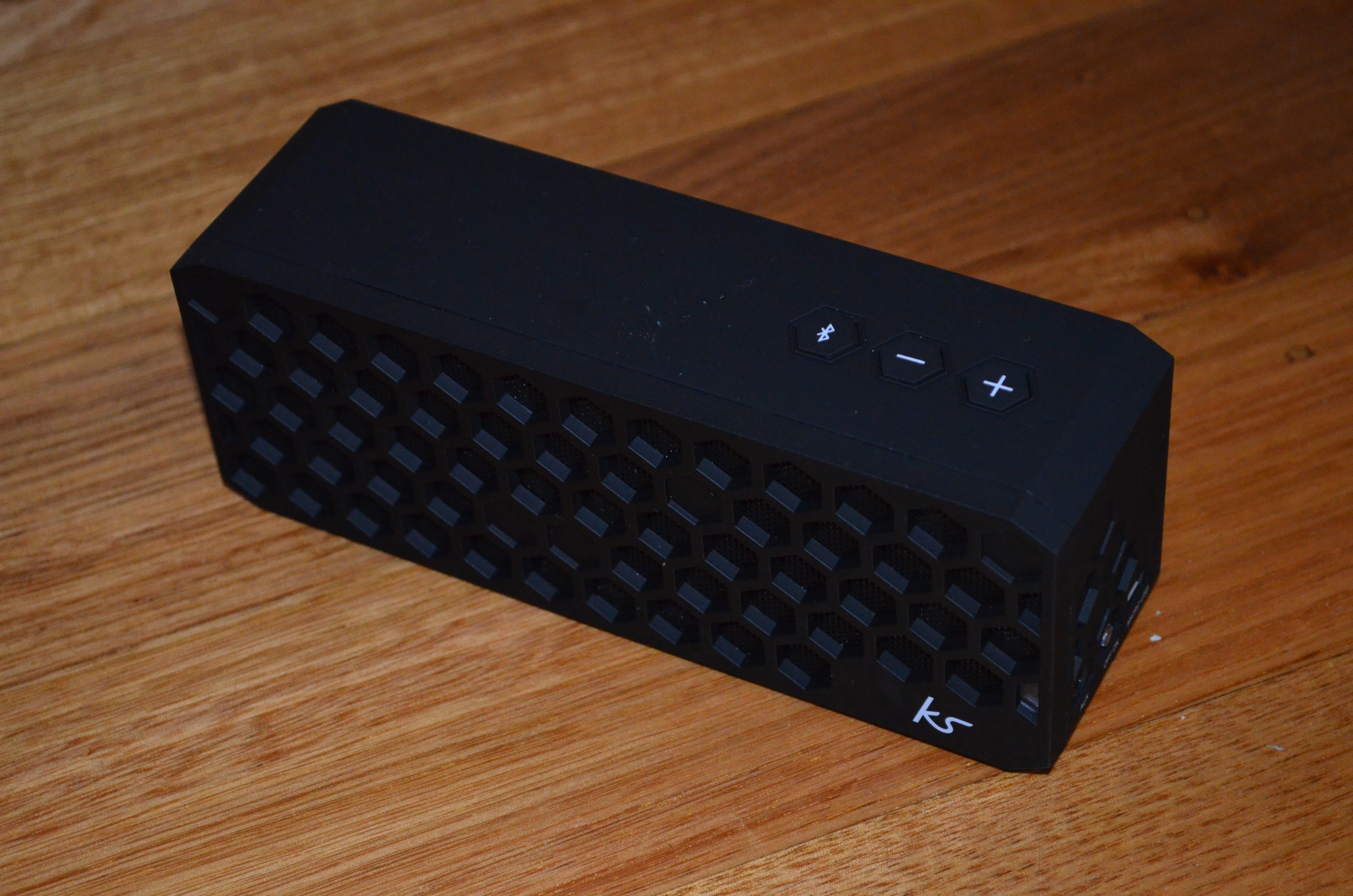
picture of Hive bluetooth speakers I ve just been given a set of Hive Bluetooth speakers by MobileZap (see this link for all their Bluetooth speakers) [1]. The speakers charge by a micro-USB cable so I started charging them in my car immediately after collecting them. To connect them to a phone or other Bluetooth device you just press the Bluetooth button on top and get the phone to be visible and scanning for devices, they identify themselves as Hive , after that they just work. My first test of using them was playing Ingress and the quality of the sound was impressive, I had thought that the Ingress recommendation to use headphones was due to the risk of annoying other people or alerting other players, but the quality of the sound was impressive and the internal speakers of a phone can t do it justice. After getting home I did some tests listening to music. For watching music videos it didn t work so well as the sound was too far removed from the video, but the audio quality was very good. I listened to Vow by Garbage (a good benchmark for stereo sound) and even though the Hive speakers are only 16.5cm wide I could still notice the stereo effect when they were about 1.5m away from me. The audio quality didn t compare well with my Bose QC-15 headphones, but for affordable and portable speakers it was quite good and an obvious improvement over the speakers that are built in to any phone I ve used. According to the Bluetooth Wikipedia page the range of a class 2 device is 10m and the range of a class 3 device is 1m. When my Samsung Galaxy Note 2 is talking to it I get a reliable range of about 5 meters and a mostly working range of 6 or 7 meters (sound randomly drops out and gets choppy). It could be that other phones would support a longer range due to having a higher transmission power (either class 1 or being closer to the limits of class 2) and a more sensitive receiver. But it doesn t seem likely that a 5m range is going to be a problem. Volume and Quality The speakers are rated at 5 Watt, when running at maximum volume (both through the phone volume setting and the volume control on the speakers) the sound is reasonably distortion free, as good as can be expected from playing an MP3 that s not compressed with the highest quality. Sound Meter [2] reports the sound volume as almost 85dB on a Galaxy S3 and as almost 100dB on a Galaxy Note 2, that would be somewhere between the volume of a busy street or alarm clock and the volume of a subway train or blow dryer which seems like a reasonable description, I find it very unpleasant to be within a meter of the speakers at maximum volume. With the typical amount of background noise in my house I can play music on the Hive speakers at one end of my house and hear it clearly at the other end. These speakers are more than capable of supplying the music for any party I d want to host or attend. I m not really into wild parties, but I think that anyone who has a one room party would be more than satisfied with the Hive speakers. Obviously the sound quality of portable speakers in a box that s 16.5cm wide and 6cm high isn t going to equal that of a full size set of speakers, but I think that hardly anyone who attends a party would expect better sound quality than the Hive speakers can provide. The aim of such speakers is to be portable, not really expensive, and to provide good sound quality within those constraints. I think that they meet such aims well. Over the years there have been many occasions when I have used a Thinkpad to provide the music for a party and found it to be quite loud enough. My current Thinkpad is a T420 which can produce 75dB according to my Galaxy S3 or 85dB according to my Galaxy Note 2. So it seems that I only really need about 10dB less than the maximum volume of the Hive speakers. Appearance The designers obviously made an effort on the appearance of the device. They have gone with the Hive concept and used hexagons everywhere. It really looks nice. Unfortunately when I took the photo there was some dust on it which didn t look bad to the eye but caught the camera flash. But with a matte black device there s always the problem of light colored dust. Even with a bit of dust it still looks great as a set of speakers, the dust just detracts from the appearance in photos. Line In One of the features I looked for was an audio line input so I could connect it directly to a non-Bluetooth device. I m assuming that this feature works as it s something that s difficult to stuff up when designing such a product, but I haven t got around to testing it. Once I started using the device I just found that I didn t have a real need for that feature. One thing that it might be useful for is PC desktop speakers that are powered by a USB port on the monitor. Currently I have a bearable (but not great) set of speakers for each PC and I don t need to change anything. But having the option of another set of speakers is very handy in case I suddenly need to make hardware changes. Other People s Reviews When I review a product I generally try and get opinions from random other people if possible. My mother and my mother-in-law were both impressed by the Hive speakers and expressed interest in owning a set. My mother-in-law was particularly interested as she uses her phone to listen to radio stations from outside Australia (I m going to get her onto Aldi for cheap 3G data ASAP so she can listen to Internet radio when travelling). Generally the impression that other people have of this device seems to be very positive. It seems that Bluetooth speakers aren t just a Geek toy. Conclusion While I m very impressed by this product, at this stage I m not sure whether I would pay for this one or something cheaper if I was paying for it. MobileZap offers a range of other products that look appealing at lower price points. It really depends on how much I use it. I ve just got a Makerbot Replicator 3D printer working and I ve found the Hive speakers very useful for the purpose of drowning out it s noise. If I keep doing that sort of thing then I ll get enough use out of the speakers to justify the price.

17 September 2013

Cyril Brulebois: Fixing bugs

It s a somewhat strange feeling to spend time fixing things that broke instead of implementing new things, but it s not like I m a creative guy anyway
  • buildd.debian.org went down, but it s now up again thanks to the relevant admins. The CGI part mentioned by Philipp was fun to debug: the CGI worked when called from a shell, but not from Apache (with an apparently strange DNS resolution error). I suggested attaching it with strace, and the result was even stranger: a connection to nscd s socket was attempted but the DNS resolution through the network wasn t. A closer look revealed the nsswitch.conf file was read, and its configuration was OK, so what? Looking at libnss_dns.so.2, one could see the usual syscalls for library loading: open, read, fstat, mmap oh wait, mmap failed with ENOMEM (Cannot allocate memory). Tollef bumped the rlimits on the Apache side, and that was it.
  • Linux kernel ABI bump notifications: they were acting weird since kernel people resumed uploading -trunk- kernels to experimental. That was identified a while ago, but since I like tested bugfixes, I actually did wait for it to happen; fixed in r68876.
  • Of course, d-i s git repository was updated to bump the ABI from 3.10-2-* to 3.10-3-* accordingly.
  • #722939 was reported against udev-udeb since depending on a deb library isn t a good thing when you re an udeb binary.
  • Trying to look into d-i build failures earlier this month, I thought I managed to reproduce the issue, but that was just my misunderstanding the way apt works. Long story short, *InRelease and *Packages files are checked before they re put under lists/; modifying the contents isn t expected: the modification time is used to set the If-Modified-Since header when trying to fetch a new version from the server, and it s OK to get a 304 Not Modified in that case. As a side effect, that means the files can be hand-edited, for example because you need to work around the dependency bug mentioned above, and one will still get Hit lines for all those files. If something goes wrong, one can still rm the files and start over, but that looks like a large hammer. Let s see if the issue can get reproduced (and debugged!) later on.
For those last two points, the long term plan is:
  • To check udeb installability automatically to catch such dependency issues as early as possible.
  • To keep many more logs, so that one can still read the whole output a few weeks after the fact, and so that one can compare some logs to try and spot difference in a semi-automated fashion.
Hopefully getting this done this week (famous last words, eh?).

16 September 2013

Philipp Kern: buildd.debian.org

Did you notice that it was gone? It's back now. Phew. Apparently an upgrade to wheezy was scheduled for the passed week-end. This went badly with the RAID controller acting up after the upgrade. So the move to a new machine (or rather VM) was sped up. And because various policies changed, we needed to move to a dedicated database server with a new authentication scheme, get rid of the /org symlink, get rid of the buildd_* accounts, cope with a new PHP, cope with rlimits that broke a Python CGI (thanks, KiBi!), triggers that weren't tickled, and various other stuff. Thanks to DSA for handling the underlying infrastructure despite some communication issues during heavy fire fighting.

26 August 2013

Russell Coker: Scratching a Galaxy S

Some years ago when I first got a LG U990 Viewty (which in some ways is the best phone I ever owned) I went swimming and left my phone in my bag. My phone happened to rest on my car keys and had vibration mode enabled, after a couple of missed calls I had a nasty scratched area on the phone screen. Since then I ve been very wary about allowing metal objects to come in contact with a phone screen. Now I have a Samsung Galaxy S with some sort of motherboard damage (it won t even boot and I know it s not a software issue because it was initially intermittent). A phone that old isn t worth repairing (they sell on ebay for as little as $50) so it seemed worth testing how hard the screen is. The screen cover is Gorilla Glass which was the hardest glass available at the time the phone was new (apparently there are better versions of Gorilla Glass available now and my more recent phones should be tougher). My first test was with one of my favorite Japanese kitchen knives, it didn t scratch at all. Then I chose a knife sharpening stone as an obvious item that s harder than a knife, it scratched the screen easily. A quartz pebble also scratched the screen when I used some force, so presumably concrete and brick would also scratch it. Tests with all current Australian coins and my car keys showed that the screen is too hard to be scratched by them. I also tested hitting the phone screen with my keys, I hit it much harder than would happen if I was to run while having my phone and my keys in the same pocket and there was no damage. My conclusion is that any metal object you are likely to carry in your pocket is unlikely to cause any problem if knocked against the screen of a modern phone.

21 July 2013

Wouter Verhelst: Two kings and three queens

Now that King Albert has abdicated and Prince (now King) Philippe has taken the oath of office, Belgium has two Kings and three Queens; yes, Albert has abdicated, but in Belgian tradition he retains the title of King, and his spouse, Queen Paola, retains the title of Queen. The third Queen, Fabiola, is the widow of late King Baudouin. As someone pointed out to me, that makes a full house. Does that make Philippe the King of Spades, or the King of Hearts? Or perhaps it's neither, and it's the King of Diamonds

10 July 2013

Russell Coker: Samsung Galaxy Note 2

A few weeks ago I bought a new Samsung Galaxy Note 2 Android phone. As I predicted in my post about Phone and Tablet Sizes [1] the Note 2 with a 5.55 display is a bit too big for me to have an ideal single handed side grasp (I estimate that about 5.2 would be ideal). But I can stretch a bit and move it around in my hand to touch all parts of the screen with my thumb. Although when doing that I don t have a tight grip, with my previous phone the Samsung Galaxy S3 [2] I could properly wrap my hand around it to grip it tightly while using it with one hand. The Note 2 will be easier for me to drop or for a thief to snatch it from me. While the big screen makes the phone difficult to use with one hand it does allow viewing more data. The ConnectBot SSH client (Play Store link) [3] (F-Droid repository link) [4] works a lot better on a larger screen I ve also discovered that the volume control buttons can be used to change the font size in ConnectBot which is handy as the default is really tiny. Also Klaus Weidner s Hacker s Keyboard (Play Store link) [5] (F-Droid repository link) [6] works a lot better with a larger screen. When I tested the Hacker s keyboard on a smaller phone I found the 5 row layout too difficult to use, but on the Note 2 it works well. As an aside I wish I could quickly and easily toggle between 4 row mode (good for SMS) and 5 row mode (good for sysadmin work) in the Hackers Keyboard. For less serious use the large screen on the Note 2 is good for watching TV. I ve got a collection of mp4s of TV shows that I ve been meaning to watch, now I watch them in bed on my phone. Another advantage of the Note 2 is the battery life. When playing Ingress and doing all the usual email checks etc my Note 2 will last about as long as my wife s Galaxy S3 with it s power case. So without any extra batteries a Note 2 will probably last about twice as long as a Galaxy S3. The Note 2 has more RAM than the S3 I used to use (I had the S3 with 1G of RAM) and it also apparently has a faster CPU. The CPU speed hasn t been an issue for me but the extra RAM is a real benefit, it means that I can usually switch between Ingress and other programs without having to restart Ingress each time. As an aside I think that Google and LG should release a Nexus Ingress 4 phone or some other device that s optimised for Ingress, I m sure it would sell well. Some people make a big deal about the stylus that comes with the Note 2. It is a neat feature to have the device know when the stylus tip is hovering over the screen but it s not very useful for me. If I was going to create art work on a phone (as some people do) then it would interest me, but I m more interested in email and ssh for fine input and my fingers are generally good enough for those tasks. I have got thin fingers, so I think that people with thicker fingers could really benefit from the stylus. I recently bought a batch of stylus pens from Kogan which have a pen at one end and a rubber stylus tip at the other for fat fingered people I know who need to use an Android phone but can t afford a Note or Note 2. I also like the software build on it which is almost the same as that on the Galaxy S3. It seems that many people prefer the apparently stock features on the Nexus 4 but I like the way Samsung does things. Conclusion I m very happy with my new phone. The bigger screen allows me to see things more clearly, this is good for web browsing, reading email, and now that I can use the Hackers Keyboard I can type more effectively. The longer battery life is really good too, although I think that Samsung could have done better if the phone was 3mm thicker then it could have a much bigger battery and have a larger CCD for the camera. I don t think that the phone is really different, at least not for my use. Samsung has promoted it for artistic use and I ve seen evidence to support their claims. But for most people it ll just be a phone with a larger screen and a bigger battery. Some people criticise it for being too big, but it s still smaller than the handsets on most desk phones so it s not big by the standards of old fashioned phones. The increased size has not only allowed me to do the same things more effectively but also allowed me to do things I hadn t tried doing on a phone before such as watching TV. This isn t because of the phone being particularly special in any way, it s just that the change in size gives more possibilities for ways of using it. The Samsung Galaxy Mega is the largest smart phone. The 5.8 version of the Mega has a resolution of only 960*540 (less than the Note and Note 2 not good enough IMHO) and the 6.3 version has the same resolution as the Note 2 of 1280*720. I think that both Mega variants are too big for me, I need to be able to use a phone with one hand. So it seems that the Note 2 is probably the best phone for me right now.

29 May 2013

Russell Coker: Nexus 4

My wife has had a LG Nexus 4 for about 4 months now so it s time for me to review it and compare it to my Samsung Galaxy S3. A Sealed Case The first thing to note about the Nexus 4 is that it doesn t support changing a battery or using micro-SD storage. The advantage of these design choices is that it allows reduced weight and greater strength compared to what the phone might otherwise be. Such choices would also allow the phone to be slightly cheaper which is a massive advantage, it s worth noting that the Nexus 4 is significantly cheaper than any other device I can buy with comparable specs. My wife s phone has 8G of storage (not RAM thanks Robin) and cost $369 at the start of the year while the current price is $349 for the 8G version and $399 for the 16G version. Of course one down-side of this is that if you need 16G of storage then you need to spend an extra $50 on the 16G phone instead of buying a phone with 8G of storage and inserting a 16GB micro-SD card which costs $19 from OfficeWorks. Also there s no option of using a 32G SD card (which costs less than $50) or a 64G SD card. Battery etc The battery on the Nexus 4 isn t nearly big enough, when playing Ingress it lasts about half as long as my Galaxy S3, about 90 minutes to fully discharge. If it was possible to buy a bigger battery from a company like Mugan Power then the lack of battery capacity wouldn t be such a problem. But as it s impossible to buy a bigger battery (unless you are willing to do some soldering) the only option is an external battery. I was unable to find a Nexus 4 case which includes a battery (which is probably because the Nexus 4 is a lot less common than the Galaxy S3) so my wife had to buy an external battery. If you are serious about playing Ingress with a Nexus 4 then you will end up with a battery in your pocket and cable going to your phone from the battery, this is a real annoyance. While being a cheap fast phone with a clear screen makes it well suited to Ingress the issue of having a cable permanently attached is a real down-side. One significant feature of the Nexus 4 is that it supports wireless charging. I have no immediate plans to use that feature and the wireless charger isn t even on sale in Australia. But if the USB connector was to break then I could buy a wireless charger from the US and keep using the phone, while for every other phone I own a broken connector would render the phone entirely useless. Screen Brightness I have problems with my Galaxy S3 not being bright enough at midday when on auto brightness. I have problems with my wife s Nexus 4 being too bright in most situations other than use at midday. Sometimes at night it s painfully bright. The brightness of the display probably contributes to the excessive battery use. I don t know whether all Nexus 4 devices are like this or whether there is some variance. In any case it would be nice if the automatic screen brightness could be tuned so I could make it brighter on my phone and less bright on my wife s. According to AndroSensor my Galaxy S3 thinks that the ambient light in my computer room is 28 lux while my wife s Nexus 4 claims it s 4 lux. So I guess that part of the problem is the accuracy of the light sensors in the phones. On-Screen Buttons I am a big fan of hardware buttons. Hardware buttons work reliably when your fingers are damp and can be used by feel at night. My first Android phone the Sony-Ericsson Xperia X10 had three hardware buttons for settings, home, and back as well as buttons for power, changing volume, and taking a photo which I found very convenient. My Galaxy S3 has hardware buttons for power, home, and volume control. I think that Android phones should have more hardware buttons not less. Unfortunately it seems that Google and the phone manufacturers disagree with me and the trend is towards less buttons. Now the Nexus 4 only has hardware buttons for power, and volume control. One significant advantage of the Galaxy S3 over the Nexus 4 is that the S3 s settings and back buttons while not implemented in hardware are outside the usable screen area. So the 4.8 1280*720 display is all for application data while the buttons for home, settings, and back on the Nexus 4 take up space on the screen so only a subset of the 4.7 1280*768 is usable by applications. While according to specs the Nexus 4 has a screen almost as big as the Galaxy S3 and a slightly higher resolution in practice it has an obviously smaller screen with fewer usable pixels. Also one of the changes related to having the buttons on-screen means that the settings button is often in the top right corner which I find annoying. I didn t like that aspect of the GUI the first time I used a tablet running Android 3.0 and I still don t like it now. GPS My wife s Nexus 4 seems to be much less accurate than my Galaxy S3 for GPS. I don t know how much of this is due to phone design and how much is due to random factors in manufacturing. I presume that a large portion of it is due to random manufacturing issues because other people aren t complaining about it. Maybe she just got unlucky with an inaccurate phone. Shape and Appearance One feature that I really like in the Samsung Galaxy S is that it has a significant ridge surrounding the screen. If you place a Galaxy S face-down on a desk that makes it a lot less likely to get a scratch on the screen. The LG U990 Viewty also had a similar ridge. Of course the gel case I have bought for every Android phone has solved this problem, but it would really be nice to have a phone that I consider usable without needing to buy such a case. The Nexus 4 has a screen that curves at the edges which if anything makes the problem worse than merely lacking a ridge around the edge. On the up-side the Nexus 4 looks and feels nice before you use it. The back of the Nexus 4 sparkles, that s nice but when you buy a gel case (which doesn t seem to be optional with modern design trends) you don t get to see it. The Nexus 4 is a very attractive package, it s really a pity that they didn t design it to be usable without a gel case. Conclusion Kogan is currently selling the Galaxy S3 with 16G of storage for $429. When comparing that to the 16G version of the Nexus 4 at $399 that means there s a price of $30 to get a SD socket, the option of replacing a battery, one more hardware button, and more screen space. So when comparing the Google offers for the Nexus 4 with the Kogan offer on the Galaxy S3 or the Galaxy Note which also has 16G of storage and sells for $429 the Google offer doesn t seem appealing to me. The Nexus 4 is still a good phone and is working well for my wife, but she doesn t need as much storage as I do. Also when she got her phone the Galaxy S3 was much more expensive than it is now. Also Kogan offer the 16G version of the Nexus 4 for $389 which makes it more appealing when compared to the Galaxy S3. It s surprising that they can beat Google on price. Generally I recommend the Nexus 4 without hesitation to anyone who wants a very capable phone for less than $400 and doesn t need a lot of storage. If you need more storage then the Galaxy S3 is more appealing. Also if you need to use a phone a lot then a Galaxy S3 with a power case works well in situations where the Nexus 4 performs poorly.

Next.

Previous.