Search Results: "otto"

1 July 2024

Niels Thykier: Debian packaging with style black

When I started working on the language server for debputy, one of several reasons was about automatic applying a formatting style. Such that you would not have to remember to manually reformat the file. One of the problems with supporting automatic formatting is that no one agrees on the "one true style". To make this concrete, Johannes Schauer Marin Rodrigues did the numbers of which wrap-and-sort option that are most common in https://bugs.debian.org/895570#46. Unsurprising, we end up with 14-15 different styles with various degrees of popularity. To make matters worse, wrap-and-sort does not provide a way to declare "this package uses options -sat". So that begged the question, how would debputy know which style it should use when it was going to reformat file. After a couple of false-starts, Christian Hofstaedtler mentioned that we could just have a field in debian/control for supporting a "per-package" setting in responds to my concern about adding a new "per-package" config file. At first, I was not happy with it, because how would you specify all of these options in a field (in a decent manner)? But then I realized that one I do not want all these styles and that I could start simpler. The Python code formatter black is quite successful despite not having a lot of personalized style options. In fact, black makes a statement out of not allowing a lot of different styles. Combing that, the result was X-Style: black (to be added to the Source stanza of debian/control), which every possible reference to the black tool for how styling would work. Namely, you outsource the style management to the tool (debputy) and then start using your focus on something else than discussing styles. As with black, this packaging formatting style is going to be opinionated and it will evolve over time. At the starting point, it is similar to wrap-and-sort -sat for the deb822 files (debputy does not reformat other files at the moment). But as mentioned, it will likely evolve and possible diverge from wrap-and-sort over time. The choice of the starting point was based on the numbers posted by Johannes #895570. It was not my personal favorite but it seemed to have a majority and is also close to the one suggested by salsa pipeline maintainers. The delta being -kb which I had originally but removed in 0.1.34 at request of Otto Kek l inen after reviewing the numbers from Johannes one more time. To facilitate this new change, I uploaded debputy/0.1.30 (a while back) to Debian unstable with the following changes:
  • Support for the X-Style: black header.
  • When a style is defined, the debputy lsp server command will now automatically reformat deb822 files on save (if the editor supports it) or on explicit "reformat file" request from the editor (usually indirectly from the user).
  • New subcommand debputy reformat command that will reformat the files, when a style is defined.
  • A new pre-commit hook repo to run debputy lint and debputy reformat. These hooks are available from https://salsa.debian.org/debian/debputy-pre-commit-hooks version v0.1 and can be used with the pre-commit tool (from the package of same name).
The obvious omission is a salsa-pipeline feature for this. Otto has put that on to his personal todo list and I am looking forward to that.
Beyond black Another thing I dislike about our existing style tooling is that if you run wrap-and-sort without any arguments, you have a higher probability of "trashing" the style of the current package than getting the desired result. Part of this is because wrap-and-sort's defaults are out of sync with the usage (which is basically what https://bugs.debian.org/895570 is about). But I see another problem. The wrap-and-sort tool explicitly defined options to tweak the style but provided maintainers no way to record their preference in any machine readable way. The net result is that we have tons of diverging styles and that you (as a user of wrap-and-sort) have to manually tell wrap-and-sort which style you want every time you run the tool. In my opinion that is not playing to the strengths of neither human nor machine. Rather, it is playing to the weaknesses of the human if anything at all. But the salsa-CI pipeline people also ran into this issue and decided to work around this deficiency. To use wrap-and-sort in the salsa-CI pipeline, you have to set a variable to activate the job and another variable with the actual options you want. The salsa-CI pipeline is quite machine readable and wrap-and-sort is widely used. I had debputy reformat also check for the salsa-CI variables as a fallback. This fallback also works for the editor mode (debputy lsp server), so you might not even have to run debputy reformat. :) This was a deliberate trade-off. While I do not want all us to have all these options, I also want Debian packaging to be less painful and have fewer paper cuts. Having debputy go extra lengths to meet wrap-and-sort users where they are came out as the better solution for me. A nice side-effect of this trade-off is that debputy reformat now a good tool for drive-by contributors. You can safely run debputy reformat on any package and either it will apply the styling or it will back out and inform you that no obvious style was detected. In the latter case, you would have to fallback to manually deducing the style and applying it.
Differences to wrap-and-sort The debputy reformat has some limitations or known differences to wrap-and-sort. Notably, debputy reformat (nor debputy lsp server) will not invoke wrap-and-sort. Instead, debputy has its own reformatting engine that provides similar features. One reason for not running wrap-and-sort is that I want debputy reformat to match the style that debputy lsp server will give you. That way, you get consistent style across all debputy commands. Another reason is that it is important to me that reformatting is safe and does not change semantics. This leads to two regrettable known differences to the wrap-and-sort behavior due to safety in addition to one scope limitation in debputy:
  1. debputy will ignore requests to sort the stanzas when the "keep first" option is disabled (-b --no-keep-first). This combination is unsafe reformatting. I feel it was a mistake for wrap-and-sort to ever allow this but at least it is no longer the default (-b is now -bk by default). This will be less of a problem in debhelper-compat 15, since the concept of "main package" will disappear and all multi-binary source packages will be required to use debian/package.install rather than debian/install.
  2. debputy will not reorder the contents of debhelper packaging files such as debian/install. This is also an (theoretical) unsafe thing to do. While the average package will not experience issues with this, there are rare corner cases where the re-ordering can affect the end result. I happen to know this, because I ran into issues when trying to optimize dh_install in a way that assumed the order did not matter. Stuff broke and there is now special-case code in dh_install to back out of that optimization when that happens.
  3. debputy has a limited list of wrap-and-sort options it understands. Some options may cause debputy to back out and disable reformatting entirely with a remark that it cannot apply that style. If you run into a case of this, feel free to file a feature request to support it. I will not promise to support everything, but if it is safe and trivially doable with the engine already, then I probably will.
As stated, where debputy cannot implement the wrap-and-sort styles fully, then it will currently implement a subset that is safe if that can be identified or back out entirely of the formatting when it cannot. In all cases, debputy will not break the formatting if it is correct. It may just fail at correcting one aspect of the wrap-and-sort style if you happen to get it wrong. It is also important to remember that the prerequisite for debputy applying any wrap-and-sort style is that you have set the salsa-CI pipeline variables to trigger wrap-and-sort with the salsa-CI pipeline. So there is still a CI check before the merge that will run the wrap-and-sort in its full glory that provides the final safety net for you.
Just give me a style In conclusion, if you, like me, are more interested in getting a consistent style rather than discussing what that style should be, now you can get that with X-Style: black. You can also have your custom wrap-and-sort style be picked up automatically for drive-by contributors.
$ apt satisfy 'dh-debputy (>= 0.1.30), python3-lsprotocol'
# Add  X-Style: black  to  debian/control  for "just give me a style"
#
# OR, if there is a specific  wrap-and-sort  style for you then set
# SALSA_CI_DISABLE_WRAP_AND_SORT=no plus set relevant options in
# SALSA_CI_WRAP_AND_SORT_ARGS in debian/salsa-ci.yml (or .gitlab-ci.yml)
$ debputy reformat

It is sadly not yet in the salsa-ci pipeline. Otto is looking into that and hopefully we will have it soon. :) And if you find yourself often doing archive-wide contributions and is tired of having to reverse engineer package formatting styles, consider using debputy reformat or debputy lsp server. If you use debputy in this way, please consider providing feedback on what would help you.

7 June 2024

Freexian Collaborators: Debian Contributions: DebConf Bursaries, /usr-move, sbuild, and more! (by Stefano Rivera)

Contributing to Debian is part of Freexian s mission. This article covers the latest achievements of Freexian and their collaborators. All of this is made possible by organizations subscribing to our Long Term Support contracts and consulting services.

DebConf Bursary updates, by Utkarsh Gupta Utkarsh is the bursaries team lead for DebConf 24. Bursary requests are dispatched to a team of volunteers to review. The results are collated, adjusted and merged to produce priority lists of requests to fund. Utkarsh raised the team, coordinated the review, and issued bursaries to attendees.

/usr-move, by Helmut Grohne More and more, the /usr-move transition is being carried out by multiple contributors and many performed around a hundred of the requested uploads. Of these, Helmut contributed five patches and two uploads. As a result, there are less than 350 packages left to be converted, and all of the non-trivial cases have patches. We started with three times that number. Thanks to everyone involved for supporting this effort. For people interested in background information of this transition, Helmut gave a presentation at MiniDebConf Berlin 2024 (slides).

sbuild, by Helmut Grohne While unshare mode of sbuild has existed for quite a while, it is now getting significant use in Debian, and new problems are popping up. Helmut looked into an apparmor-related failure and provided a diagnosis. While relevant code would detect the chroot nature of a schroot backend and skip apparmor tests, the unshare environment would be just good enough to run and fail the test. As sbuild exposes fewer special kernel filesystems, the tests will be skipped again. Another problem popped up when gobject-introspection added a dependency on the host architecture Python interpreter in a cross build environment. sbuild would prefer installing (and failing) a host architecture Python to installing the qemu alternative. Attempts to fix this would result in systemd killing sbuild. ischroot as used by libc6.postinst would not classify the unshare environment as a chroot. Therefore libc6.postinst would run telinit which would kill the build process. This is a complex interaction problem that shall eventually be solved by providing triggers from libc6 to be implemented by affected init systems.

Salsa CI updates, by Santiago Ruano Rinc n Several issues arose about Salsa CI last month, and it is probably worth mentioning part of the challenges of defining its framework in YAML. With the upcoming end-of-support of Debian 10 buster as LTS, armel was removed from deb.debian.org, making the jobs that build images for buster/armel to fail. While the removal of buster/armel from the repositories is a natural change, it put some light on the flaws in the Salsa CI design regarding the support of the different Debian releases. Currently, the images are defined like these (from .images-debian.yml):
.all-supported-releases: &all-supported-releases
  - stretch
  - stretch-backports
  - buster
  - bullseye
  - bullseye-backports
  - bookworm
  - bookworm-backports
  - trixie
  - sid
  - experimental
And from them, different images are built according to the different jobs and how they are supported, for example:
images-prod-arm:
  stage: build
  extends: .build_template
  tags:
    - $SALSA_CI_ARM_RUNNER_TAG
  parallel:
    matrix:
      # Base image, all releases, all arches
      - IMAGE_NAME: base
        ARCH:
          - arm32v5
          - arm32v7
          - arm64v8
        RELEASE: *all-supported-releases
The removal of buster/armel could be easily reflected as:
images-prod-arm:
  stage: build
  extends: .build_template
  tags:
    - $SALSA_CI_ARM_RUNNER_TAG
  parallel:
    matrix:
      # Base image, fully supported releases, all arches
      - IMAGE_NAME: base
        ARCH:
          - arm32v5
          - arm32v7
          - arm64v8
        RELEASE:
          - stretch
          - buster
          - bullseye
          - bullseye-backports
          - bookworm
          - bookworm-backports
          - trixie
          - sid
          - experimental
      # buster only supports armhf and arm64
      - IMAGE_NAME: base
        ARCH:
          - arm32v7
          - arm64v8
        RELEASE: buster
Evidently, this increases duplication of the release support data, which is of course not optimal and it is error prone when changing the data about supported releases. A better approach would be to have two different YAML lists, such as:
# releases that have partial support. E.g.: buster is transitioning to
# Debian LTS, and buster armel is no longer found in deb.debian.org
.old-releases: &old-releases
  - stretch
  - buster

.currently-supported-releases: &currently-supported-releases
  - bullseye
  - bullseye-backports
  - bookworm
  - bookworm-backports
  - trixie
  - sid
  - experimental
and then a unified list:
.all-supported-releases: &all-supported-releases
  - *old-releases
  - *currently-supported-releases
that could be used in the matrix of the jobs that build all the images available in the pipeline container registry. However, due to limitations in GitLab, it is not possible to expand the variables or mapping values in a parallel:matrix context. At least not in an elegant fashion. This is the kind of issue that recently arose and that Santiago is currently working to solve, in the simplest possible way. Astute readers would notice that stretch is listed in the fully supported releases. And there is no problem with stretch, because it is built from archive.debian.org. Otto actually has tried to fix the broken image build job doing the same, but it is still incorrect, because the security repository is not (yet) available in archive.debian.org. Additionally, Santiago has also worked on other merge requests, such as:
  1. support branch/tags as target head in the test projects,
  2. build autopkgtest image on top of stable
  3. Add .yamllint and make it happy in the autopkgtest-lxc project
  4. enable FF_SCRIPT_SECTIONS to log multiline commands, among others.

Archiving DebConf Websites, by Stefano Rivera DebConf, the annual Debian conference, has its own new website every year. These are typically complex dynamic web applications (featuring registration, call for papers, scheduling, etc.) Once the conference is over, there is no need to keep maintaining these applications, so we archive the sites off as static HTML, and serve them from Debian s static CDN. Stefano archived the websites for the last two DebConfs. The schedule system behind DebConf 14 and 15 s websites was a derivative of Canonical s summit system. This was only used for a couple of years before migrating to wafer, the current system. Archiving summit content has been on the nice to have list for years, but nobody has ever tackled it. The machine that served the sites went away a couple of years ago. After much digging, a backup of the database was found, and Stefano got this code running on an ancient Python 2.7. Recently Stefano put this all together and hooked in an archive export to finally get this content preserved.

Python 3.x and pypy3 security bug triage, by Stefano Rivera Stefano Rivera triaged all the open security bugs against the Python 3.x and PyPy3 packages for Debian s stable and LTS releases. Several had been fixed but this wasn t recorded in the security tracker.

Linux livepatching support for Debian, by Santiago Ruano Rinc n In collaboration with Emmanuel Arias, Santiago filed ITP bug #1070494. As stated in the bug, more than an Intent to Package, it is an Intent to Design and Implement live patching support for the Linux kernel in Debian. For now, Emmanuel and Santiago have done exploratory work and they are working to understand the different possibilities to implement livepatching. One possible direction is to rely on kpatch, and the other is to package the modules using regular packaging tools. Also, it is needed to evaluate if it is possible to rely on distributing the modules via packages, or instead as a service, as it is done by some commercial distributions.

Miscellaneous contributions
  • Thorsten Alteholz uploaded cups-bjnp to improve packaging.
  • Colin Watson tracked down a baffling CI issue in openssh to unblock several merge requests, removed the user_readenv=1 option from its PAM configuration, and started on the first stage of his plan to split out GSS-API key exchange support to separate packages.
  • Colin did his usual routine work on the Python team, upgrading 26 packages to new upstream versions, and cherry-picking an upstream PR to fix a pytest 8 incompatibility in ipywidgets.
  • Colin NMUed a couple of packages to reduce the need for explicit overrides in Packages-arch-specific, and removed some other obsolete entries from there.
  • Emilio managed various library transitions, and helped finish a few of the remaining t64 transitions.
  • Helmut sent a patch for enabling piuparts to work as a regular user building on earlier work.
  • Helmut sent patches for 7 cross build failures, 6 other debian bugs and fixed an infrastructure problem in crossqa.debian.net.
  • Nicholas worked on a sponsored package upload, and discovered the blhc tool for diagnosing build hardening.
  • Stefano Rivera started and completed the re2 transition. The release team suggested moving to a virtual package scheme that includes the absl ABI (as re2 now depends on it). Adopted this.
  • Stefano continued to work on DebConf 24 planning.
  • Santiago continued to work on DebConf24 Content tasks as well as Debconf25 organisation.

18 May 2024

Russell Coker: Kogan 5120*2160 40 Monitor

I ve just got a new Kogan 5120*2160 40 curved monitor. It cost $599 including shipping etc which is much cheaper than the Dell monitor with similar specs selling for about $2500. For monitors with better than 4K resolution (by which I don t mean 5K*1440) this is the cheapest option. The nearest competitors are the 27 monitors that do 5120*2880 from Apple and some companies copying Apple s specs. While 5120*2880 is a significantly better resolution than what I got it s probably not going to help me at 27 size. I ve had a Dell 32 4K monitor since the 1st of July 2022 [1]. It is a really good monitor and I had no complaints at all about it. It was clearer than the Samsung 27 4K monitor I used before it and I m not sure how much of that is due to better display technology (the Samsung was from 2017) and how much was due to larger size. But larger size was definitely a significant factor. I briefly owned a Phillips 43 4K monitor [2] and determined that a 43 flat screen was definitely too big. At the time I thought that about 35 would have been ideal but after a couple of years using a flat 32 screen I think that 32 is about the upper limit for a flat screen. This is the first curved monitor I ve used but I m already thinking that maybe 40 is too big for a 21:9 aspect ratio even with a curved screen. Maybe if it was 4:4 or even 16:9 that would be ok. Otherwise the ideal for a curved screen for me would be something between about 36 and 38 . Also 43 is awkward to move around my desk. But this is still quite close to ideal. The first system I tested this on was a work laptop, a Dell Latitude 7400 2in1. On the Dell dock that did 4K resolution and on a HDMI cable it did 1440p which was a disappointment as that laptop has talked to many 4K monitors at native resolution on the HDMI port with the same cable. This isn t an impossible problem, as I work in the IT department I can just go through all the laptops in the store room until I find one that supports it. But the 2in1 is a very nice laptop, so I might even just keep using it in 4K resolution when WFH. The laptop in question is deemed an executive laptop so I have to wait another 2 years for the executives to get new laptops before I can get a newer 2in1. On my regular desktop I had the problem of the display going off for a few seconds every minute or so and also occasionally giving a white flicker. That was using 5120*2160 with a DisplayPort switch as described in the blog post about the Dell 32 monitor. When I ran it in 4K resolution with the DisplayPort switch from my desktop it was fine. I then used the DisplayPort cable that came with the monitor directly connecting the video card to the display and it was fine at 5120*2160 with 75Hz. The monitor has the joystick thing that seems to have become some sort of standard for controlling modern monitors. It s annoying that pressing it in powers it off. I think there should be a separate button for that. Also the UI in general made me wonder if one of the vendors of expensive monitors had paid whoever designed it to make the UI suck. The monitor had a single dead pixel in the center of the screen about 1/4 the way down from the top when I started writing this post. Now it s gone away which is a concern as I don t know which pixels might have problems next or if the number of stuck pixels will increase. Also it would be good if there was a dark mode for the WordPress editor. I use dark mode wherever possible so I didn t notice the dead pixel for several hours until I started writing this blog post. I watched a movie on Netflix and it took the entire screen area, I don t know if they are storing movies in 64:27 ratio or if the clipped the top and bottom, it was probably clipped but still looked OK. The monitor has different screen modes which make it look different, I can t see much benefit to the different modes. The standard mode is what I usually use and it s brighter and the movie mode seems OK for the one movie I ve watched so far. In other news BenQ has just announced a 3840*2560 28 monitor specifically designed for programming [3]. This is the first time I ve heard of a monitor with 3:2 ratio with modern resolution, we still aren t at the 4:3 type ratio that we were used to when 640*480 was high resolution but it s a definite step in the right direction. It s also the only time I recall ever seeing a monitor advertised as being designed for programming. In the 80s there were home computers advertised as being computers for kids to program, but at that time it was either TV sets for monitors or monitors sold with computers. It was only after the IBM PC compatible market took off that having a choice of different monitors for one computer was a thing. In recent years monitors advertised as being for office use (meaning bright and expensive) have become common as are monitors designed for gamer use (meaning high refresh rate). But BenQ seems to be the first to advertise a monitor for the purpose of programming. They have a desktop partition feature (which could be software or hardware the article doesn t make it clear) to give some of the benefits of a tiled window manager to people who use OSs that don t support such things. The BenQ monitor is a bit small for my taste, I don t know if my vision is good enough to take advantage of 3840*2560 in a 28 monitor nowadays. I think at least 32 would be better. Google seems to be really into buying good monitors for their programmers, if every Google programmer got one of those BenQ monitors then that would be enough sales to make it worth-while for them. I had hoped that we would have 6K monitors become affordable this year and 8K become less expensive than most cars. Maybe that won t happen and we will instead have a wider range of products like the ultra wide monitor I just bought and the BenQ programmer s monitor. If so I don t think that will be a bad result. Now the question is whether I can use this monitor for 2 years before finding something else that makes me want to upgrade. I can afford to spend the equivalent of a bit under $1/day on monitor upgrades.

9 May 2024

Vincent Sanders: Bee to the blossom, moth to the flame; Each to his passion; what's in a name?

I like the sentiment of Helen Hunt Jackson in that quote and it generally applies double for computer system names. However I like to think when I named the first NetSurf VM host server phoenix fourteen years ago I captured the nature of its continuous cycle of replacement.
Image of the fourth phoenix server
We have been very fortunate to receive a donated server to replace the previous every few years and the very generous folks at Collabora continue to provide hosting for it.Recently I replaced the server for the third time. We once again were given a replacement by Huw Jones in the form of a SuperServer 6017R-TDAF system with dual Intel Xeon Ivy Bridge E5-2680v2 processors. There were even rack rails!

The project bought some NVMe drives and an adaptor cards and I attempted to arrange to swap out the server in January.

The old phoenixiii server being replaced
Here we come to the slight disadvantage of an informal arrangement where access to the system depends upon a busy third party. Unfortunately it took until May to arrange access (I must thank Vivek again for coming in on a Saturday to do this)

In the intervening time, once I realised access was going to become increasingly difficult, I decided to obtain as good a system as I could manage to reduce requirements for future access.

I turned to eBay and acquired a slightly more modern SuperServer with dual Intel Xeon Haswell E5-2680v3 processors which required purchase of 64G of new memory (Haswell is a DDR4 platform).

I had wanted to use Broadwell processors but this exceeded my budget and would only be a 10% performance uplift (The chassis, motherboard and memory cost 180 and another 50 for processors was just too much, maybe next time)

graph of cpu mark improvements in the phoenix servers over time
While making the decision on the processor selection I made a quick chart of previous processing capabilities (based on a passmark comparison) of phoenix servers and was startled to discover I needed a logarithmic vertical axis. Multi core performance of processors has improved at a startling rate in the last decade.

When the original replacement was donated I checked where the performance was limited and noticed it was mainly in disc access which is what prompted the upgrade to NVMe (2 gigabytes a second peek read throughput) which moved the bottleneck to the processors where, even with the upgrades, it remains.

I do not really know if there is a conclusion here beyond noting NetSurf is very fortunate as a project to have some generous benefactors both for donating hardware and hosting for which I know all the developers are grateful.

Now I just need to go and migrate a huge bunch of virtual machines and associated sysadmin to make use of these generous donations.

9 April 2024

Ian Jackson: Why we ve voted No to CfD for Derril Water solar farm

[personal profile] ceb and I are members of the Derril Water Solar Park cooperative. We were recently invited to vote on whether the coop should bid for a Contract for Difference, in a government green electricity auction. We ve voted No. Green electricity from your mainstream supplier is a lie For a while [personal profile] ceb and I have wanted to contribute directly to green energy provision. This isn t really possible in the mainstream consumer electricy market. Mainstream electricity suppliers 100% green energy tariffs are pure greenwashing. In a capitalist boondoogle, they basically divvy up the electricity so that customers on the (typically more expensive) green tariff get the green electricity, and the other customers get whatever is left. (Of course the electricity is actually all mixed up by the National Grid.) There are fewer people signed up for these tariffs than there is green power generated, so this basically means signing up for a green tariff has no effect whatsoever, other than giving evil people more money. Ripple About a year ago we heard about Ripple. The structure is a little complicated, but the basic upshot is: Ripple promote and manage renewable energy schemes. The schemes themselves are each an individual company; the company is largely owned by a co-operative. The co-op is owned by consumers of electricity in the UK., To stop the co-operative being an purely financial investment scheme, shares ownership is limited according to your electricity usage. The electricity is be sold on the open market, and the profits are used to offset members electricity bills. (One gotcha from all of this is that for this to work your electricity billing provider has to be signed up with Ripple, but ours, Octopus, is.) It seemed to us that this was a way for us to directly cause (and pay for!) the actual generation of green electricity. So, we bought shares in one these co-operatives: we are co-owners of the Derril Water Solar Farm. We signed up for the maximum: funding generating capacity corresponding to 120% of our current electricity usage. We paid a little over 5000 for our shares. Contracts for Difference The UK has a renewable energy subsidy scheme, which goes by the name of Contracts for Difference. The idea is that a renewable energy generation company bids in advance, saying that they ll sell their electricity at Y price, for the duration of the contract (15 years in the current round). The lowest bids win. All the electricity from the participating infrastructure is sold on the open market, but if the market price is low the government makes up the difference, and if the price is high, the government takes the winnings. This is supposedly good for giving a stable investment environment, since the price the developer is going to get now doesn t depends on the electricity market over the next 15 years. The CfD system is supposed to encourage development, so you can only apply before you ve commissioned your generation infrastructure. Ripple and CfD Ripple recently invited us to agree that the Derril Water co-operative should bid in the current round of CfDs. If this goes ahead, and we are one of the auction s winners, the result would be that, instead of selling our electricity at the market price, we ll sell it at the fixed CfD price. This would mean that our return on our investment (which show up as savings on our electricity bills) would be decoupled from market electricity prices, and be much more predictable. They can t tell us the price they d want to bid at, and future electricity prices are rather hard to predict, but it s clear from the accompanying projections that they think we d be better off on average with a CfD. The documentation is very full of financial projections and graphs; other factors aren t really discussed in any detail. The rules of the co-op didn t require them to hold a vote, but very sensibly, for such a fundamental change in the model, they decided to treat it roughly the same way as for a rules change: they re hoping to get 75% Yes votes. Voting No The reason we re in this co-op at all is because we want to directly fund renewable electricity. Participating in the CfD auction would involve us competing with capitalist energy companies for government subsidies. Subsidies which are supposed to encourage the provision of green electricity. It seems to us that participating in this auction would remove most of the difference between what we hoped to do by investing in Derril Water, and just participating in the normal consumer electricity market. In particular, if we do win in the auction, that s probably directly removing the funding and investment support model for other, market-investor-funded, projects. In other words, our buying into Derril Water ceases to be an additional green energy project, changing (in its minor way) the UK s electricity mix. It becomes a financial transaction much more tenously connected (if connected at all) to helping mitigate the climate emergency. So our conclusion was that we must vote against.

comment count unavailable comments

25 March 2024

Valhalla's Things: Piecepack and postcard boxes

Posted on March 25, 2024
Tags: madeof:bits, craft:cartonnage
This article has been originally posted on November 4, 2023, and has been updated (at the bottom) since.
An open cardboard box, showing the lining in paper printed with a medieval music manuscript. Thanks to All Saints Day, I ve just had a 5 days weekend. One of those days I woke up and decided I absolutely needed a cartonnage box for the cardboard and linocut piecepack I ve been working on for quite some time. I started drawing a plan with measures before breakfast, then decided to change some important details, restarted from scratch, did a quick dig through the bookbinding materials and settled on 2 mm cardboard for the structure, black fabric-like paper for the outside and a scrap of paper with a manuscript print for the inside. Then we had the only day with no rain among the five, so some time was spent doing things outside, but on the next day I quickly finished two boxes, at two different heights. The weather situation also meant that while I managed to take passable pictures of the first stages of the box making in natural light, the last few stages required some creative artificial lightning, even if it wasn t that late in the evening. I need to build1 myself a light box. And then decided that since they are C6 sized, they also work well for postcards or for other A6 pieces of paper, so I will probably need to make another one when the piecepack set will be finally finished. The original plan was to use a linocut of the piecepack suites as the front cover; I don t currently have one ready, but will make it while printing the rest of the piecepack set. One day :D an open rectangular cardboard box, with a plastic piecepack set in it. One of the boxes was temporarily used for the plastic piecepack I got with the book, and that one works well, but since it s a set with standard suites I think I will want to make another box, using some of the paper with fleur-de-lis that I saw in the stash. I ve also started to write detailed instructions: I will publish them as soon as they are ready, and then either update this post, or they will be mentioned in an additional post if I will have already made more boxes in the meanwhile.


Update 2024-03-25: the instructions have been published on my craft patterns website

  1. you don t really expect me to buy one, right? :D

9 March 2024

Valhalla's Things: Elastic Neck Top Two: MOAR Ruffles

Posted on March 9, 2024
Tags: madeof:atoms, craft:sewing, FreeSoftWear
A woman wearing a white top with a wide neck with ruffles and puffy sleeves that are gathered at the cuff. The top is tucked in the trousers to gather the fullness at the waist. After making my Elastic Neck Top I knew I wanted to make another one less constrained by the amount of available fabric. I had a big cut of white cotton voile, I bought some more swimsuit elastic, and I also had a spool of n 100 sewing cotton, but then I postponed the project for a while I was working on other things. Then FOSDEM 2024 arrived, I was going to remote it, and I was working on my Augusta Stays, but I knew that in the middle of FOSDEM I risked getting to the stage where I needed to leave the computer to try the stays on: not something really compatible with the frenetic pace of a FOSDEM weekend, even one spent at home. I needed a backup project1, and this was perfect: I already had everything I needed, the pattern and instructions were already on my site (so I didn t need to take pictures while working), and it was mostly a lot of straight seams, perfect while watching conference videos. So, on the Friday before FOSDEM I cut all of the pieces, then spent three quarters of FOSDEM on the stays, and when I reached the point where I needed to stop for a fit test I started on the top. Like the first one, everything was sewn by hand, and one week after I had started everything was assembled, except for the casings for the elastic at the neck and cuffs, which required about 10 km of sewing, and even if it was just a running stitch it made me want to reconsider my lifestyle choices a few times: there was really no reason for me not to do just those seams by machine in a few minutes. Instead I kept sewing by hand whenever I had time for it, and on the next weekend it was ready. We had a rare day of sun during the weekend, so I wore my thermal underwear, some other layer, a scarf around my neck, and went outside with my SO to have a batch of pictures taken (those in the jeans posts, and others for a post I haven t written yet. Have I mentioned I have a backlog?). And then the top went into the wardrobe, and it will come out again when the weather will be a bit warmer. Or maybe it will be used under the Augusta Stays, since I don t have a 1700 chemise yet, but that requires actually finishing them. The pattern for this project was already online, of course, but I ve added a picture of the casing to the relevant section, and everything is as usual #FreeSoftWear.

  1. yes, I could have worked on some knitting WIP, but lately I m more in a sewing mood.

8 March 2024

Valhalla's Things: Denim Waistcoat

Posted on March 8, 2024
Tags: madeof:atoms, craft:sewing, FreeSoftWear
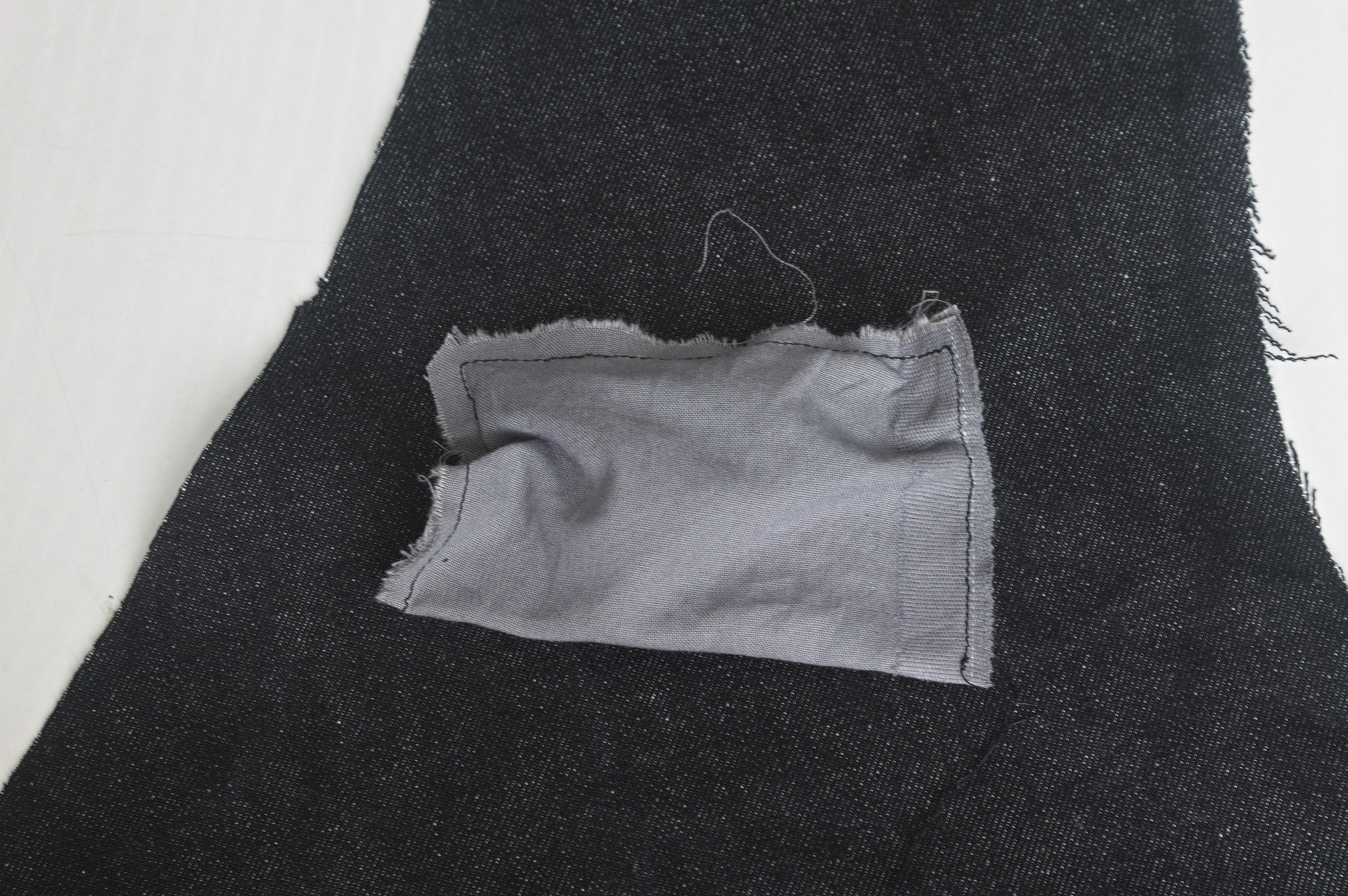
A woman wearing a single breasted waistcoat with double darts at the waist, two pocket flaps at the waist and one on the left upper breast. It has four jeans buttons. I had finished sewing my jeans, I had a scant 50 cm of elastic denim left. Unrelated to that, I had just finished drafting a vest with Valentina, after the Cutters Practical Guide to the Cutting of Ladies Garments. A new pattern requires a (wearable) mockup. 50 cm of leftover fabric require a quick project. The decision didn t take a lot of time. As a mockup, I kept things easy: single layer with no lining, some edges finished with a topstitched hem and some with bias tape, and plain tape on the fronts, to give more support to the buttons and buttonholes. I did add pockets: not real welt ones (too much effort on denim), but simple slits covered by flaps. a rectangle of pocketing fabric on the wrong side of a denim
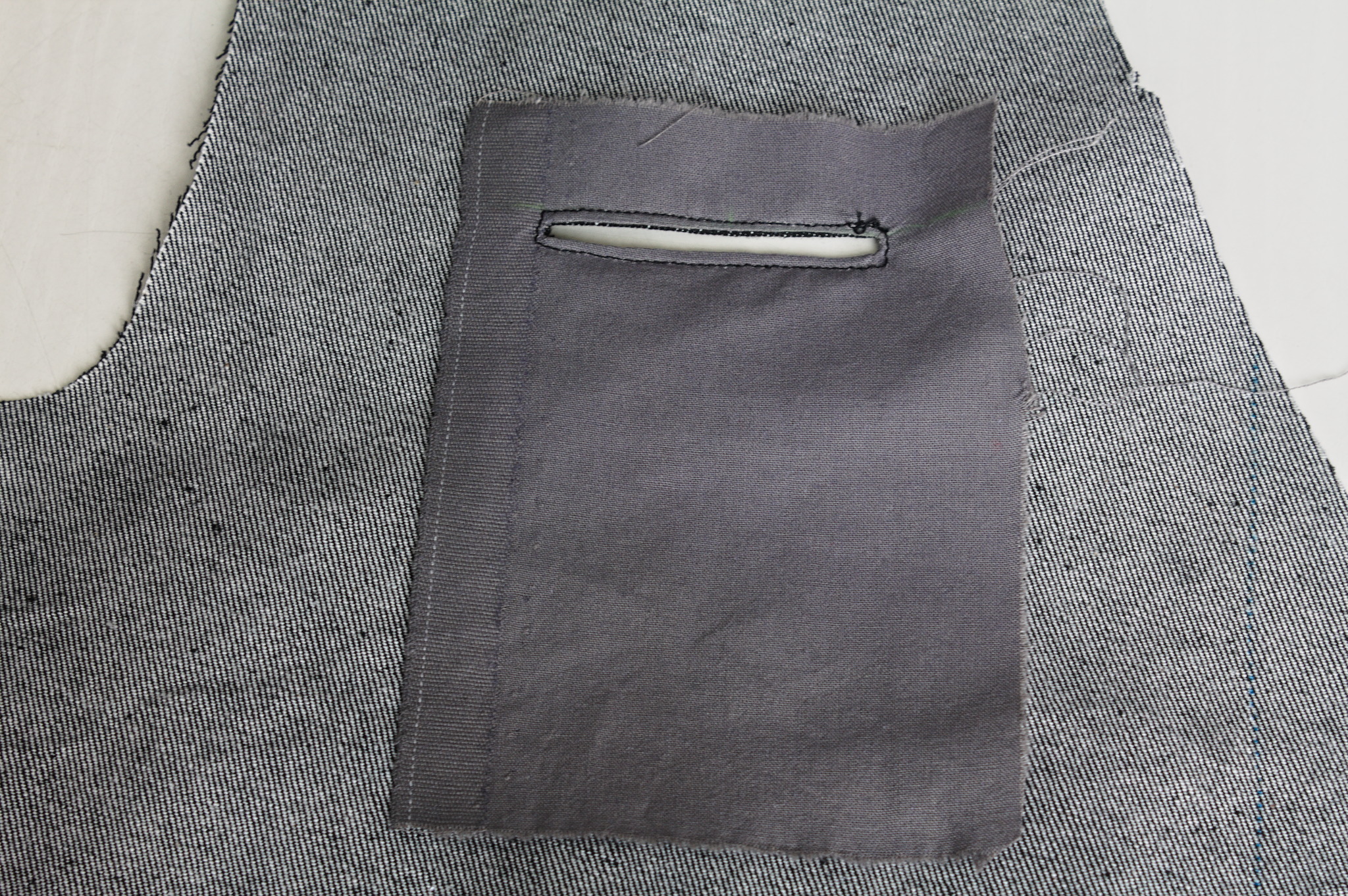
piece; there is a slit in the middle that has been finished with topstitching.
To do them I marked the slits, then I cut two rectangles of pocketing fabric that should have been as wide as the slit + 1.5 cm (width of the pocket) + 3 cm (allowances) and twice the sum of as tall as I wanted the pocket to be plus 1 cm (space above the slit) + 1.5 cm (allowances). Then I put the rectangle on the right side of the denim, aligned so that the top edge was 2.5 cm above the slit, sewed 2 mm from the slit, cut, turned the pocketing to the wrong side, pressed and topstitched 2 mm from the fold to finish the slit. a piece of pocketing fabric folded in half and sewn on all 3
other sides; it does not lay flat on the right side of the fabric because the finished slit (hidden in the picture) is pulling it.
Then I turned the pocketing back to the right side, folded it in half, sewed the side and top seams with a small allowance, pressed and turned it again to the wrong side, where I sewed the seams again to make a french seam. And finally, a simple rectangular denim flap was topstitched to the front, covering the slits. I wasn t as precise as I should have been and the pockets aren t exactly the right size, but they will do to see if I got the positions right (I think that the breast one should be a cm or so lower, the waist ones are fine), and of course they are tiny, but that s to be expected from a waistcoat. The back of the waistcoat, The other thing that wasn t exactly as expected is the back: the pattern splits the bottom part of the back to give it sufficient spring over the hips . The book is probably published in 1892, but I had already found when drafting the foundation skirt that its idea of hips includes a bit of structure. The enough steel to carry a book or a cup of tea kind of structure. I should have expected a lot of spring, and indeed that s what I got. To fit the bottom part of the back on the limited amount of fabric I had to piece it, and I suspect that the flat felled seam in the center is helping it sticking out; I don t think it s exactly bad, but it is a peculiar look. Also, I had to cut the back on the fold, rather than having a seam in the middle and the grain on a different angle. Anyway, my next waistcoat project is going to have a linen-cotton lining and silk fashion fabric, and I d say that the pattern is good enough that I can do a few small fixes and cut it directly in the lining, using it as a second mockup. As for the wrinkles, there is quite a bit, but it looks something that will be solved by a bit of lightweight boning in the side seams and in the front; it will be seen in the second mockup and the finished waistcoat. As for this one, it s definitely going to get some wear as is, in casual contexts. Except. Well, it s a denim waistcoat, right? With a very different cut from the get a denim jacket and rip out the sleeves , but still a denim waistcoat, right? The kind that you cover in patches, right? Outline of a sewing machine with teeth and crossed bones below it, and the text  home sewing is killing fashion / and it's illegal And I may have screenprinted a home sewing is killing fashion patch some time ago, using the SVG from wikimedia commons / the Home Taping is Killing Music page. And. Maybe I ll wait until I have finished the real waistcoat. But I suspect that one, and other sewing / costuming patches may happen in the future. No regrets, as the words on my seam ripper pin say, right? :D

7 March 2024

Valhalla's Things: Jeans, step two. And three. And four.

Posted on March 7, 2024
Tags: madeof:atoms, FreeSoftWear
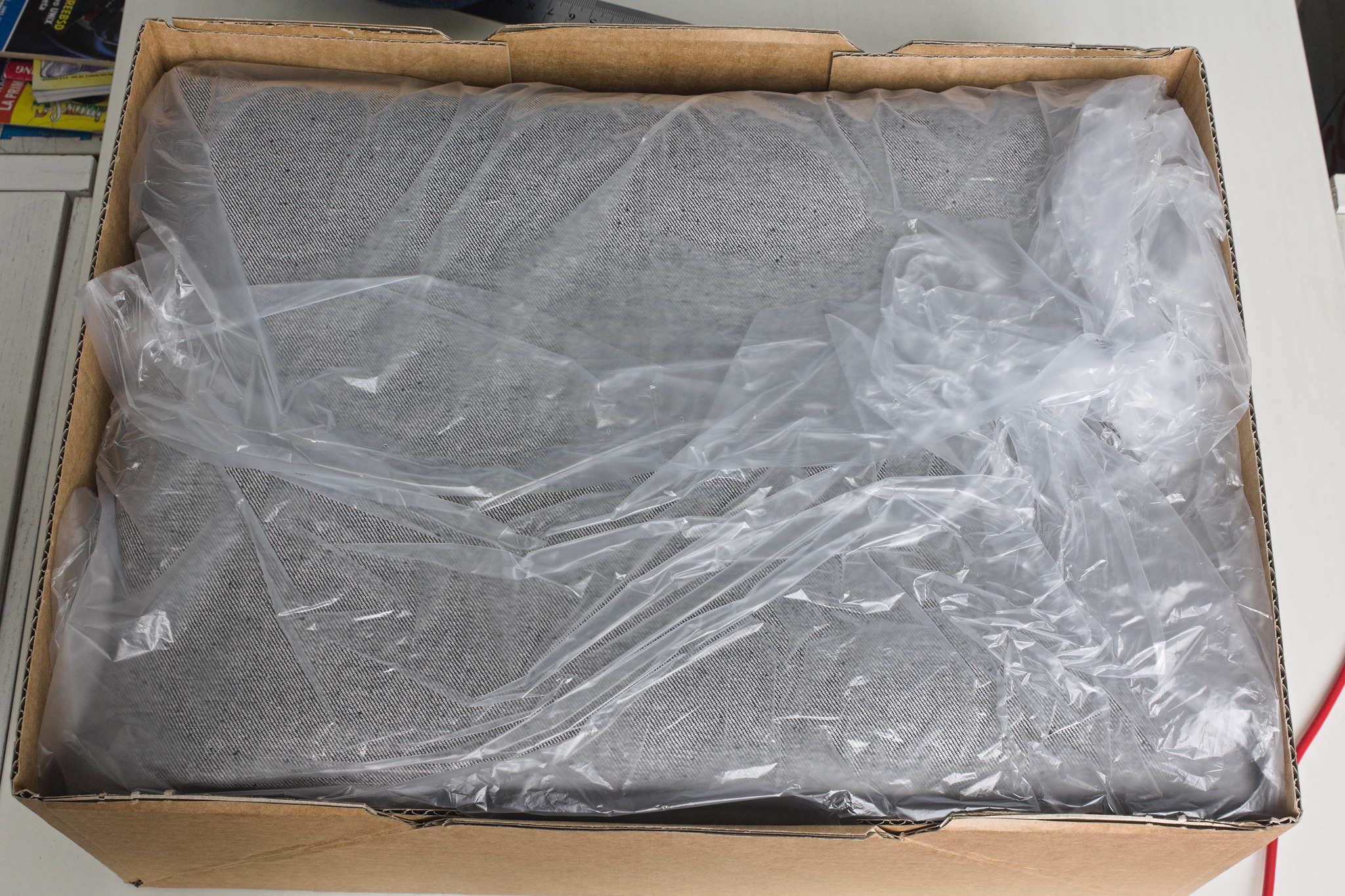
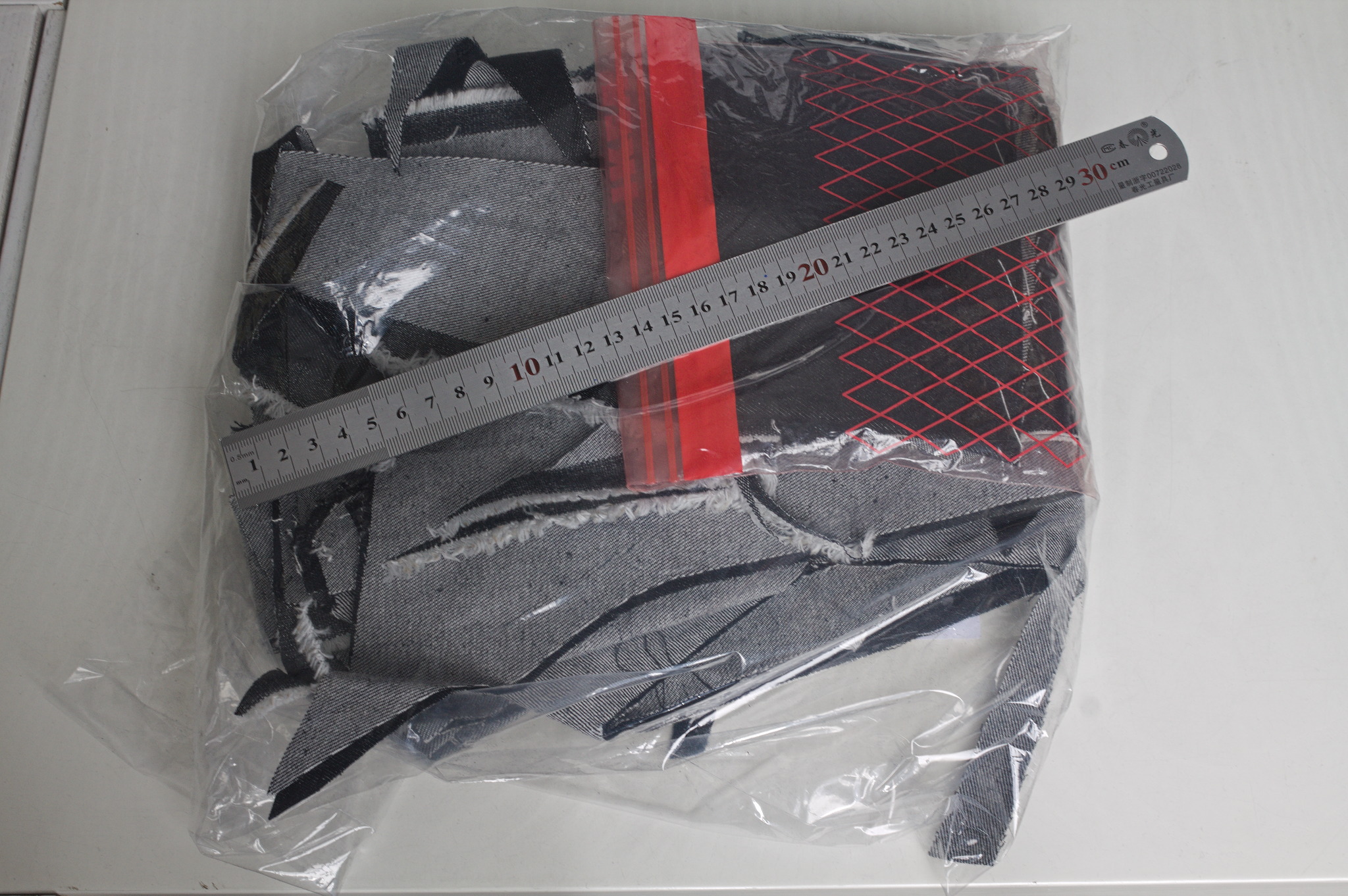
A woman wearing a regular pair of slim-cut black denim jeans. I was working on what looked like a good pattern for a pair of jeans-shaped trousers, and I knew I wasn t happy with 200-ish g/m cotton-linen for general use outside of deep summer, but I didn t have a source for proper denim either (I had been low-key looking for it for a long time). Then one day I looked at an article I had saved about fabric shops that sell technical fabric and while window-shopping on one I found that they had a decent selection of denim in a decent weight. I decided it was a sign, and decided to buy the two heaviest denim they had: a 100% cotton, 355 g/m one and a 97% cotton, 3% elastane at 385 g/m 1; the latter was a bit of compromise as I shouldn t really be buying fabric adulterated with the Scourge of Humanity, but it was heavier than the plain one, and I may be having a thing for tightly fitting jeans, so this may be one of the very few woven fabric where I m not morally opposed to its existence. And, I d like to add, I resisted buying any of the very nice wools they also seem to carry, other than just a couple of samples. Since the shop only sold in 1 meter increments, and I needed about 1.5 meters for each pair of jeans, I decided to buy 3 meters per type, and have enough to make a total of four pair of jeans. A bit more than I strictly needed, maybe, but I was completely out of wearable day-to-day trousers. a cardboard box with neatly folded black denim, covered in semi-transparent plastic. The shop sent everything very quickly, the courier took their time (oh, well) but eventually delivered my fabric on a sunny enough day that I could wash it and start as soon as possible on the first pair. The pattern I did in linen was a bit too fitting, but I was afraid I had widened it a bit too much, so I did the first pair in the 100% cotton denim. Sewing them took me about a week of early mornings and late afternoons, excluding the weekend, and my worries proved false: they were mostly just fine. The only bit that could have been a bit better is the waistband, which is a tiny bit too wide on the back: it s designed to be so for comfort, but the next time I should pull the elastic a bit more, so that it stays closer to the body. The same from the back, showing the applied pockets with a sewn logo. I wore those jeans daily for the rest of the week, and confirmed that they were indeed comfortable and the pattern was ok, so on the next Monday I started to cut the elastic denim. I decided to cut and sew two pairs, assembly-line style, using the shaped waistband for one of them and the straight one for the other one. I started working on them on a Monday, and on that week I had a couple of days when I just couldn t, plus I completely skipped sewing on the weekend, but on Tuesday the next week one pair was ready and could be worn, and the other one only needed small finishes. A woman wearing another pair of jeans; the waistband here is shaped to fit rather than having elastic. And I have to say, I m really, really happy with the ones with a shaped waistband in elastic denim, as they fit even better than the ones with a straight waistband gathered with elastic. Cutting it requires more fabric, but I think it s definitely worth it. But it will be a problem for a later time: right now three pairs of jeans are a good number to keep in rotation, and I hope I won t have to sew jeans for myself for quite some time. A plastic bag with mid-sized offcuts of denim; there is a 30 cm ruler on top that is just wider than the bag I think that the leftovers of plain denim will be used for a skirt or something else, and as for the leftovers of elastic denim, well, there aren t a lot left, but what else I did with them is the topic for another post. Thanks to the fact that they are all slightly different, I ve started to keep track of the times when I wash each pair, and hopefully I will be able to see whether the elastic denim is significantly less durable than the regular, or the added weight compensates for it somewhat. I m not sure I ll manage to remember about saving the data until they get worn, but if I do it will be interesting to know. Oh, and I say I ve finished working on jeans and everything, but I still haven t sewn the belt loops to the third pair. And I m currently wearing them. It s a sewist tradition, or something. :D


  1. The links are to the shop for Italy; you can copy the Codice prodotto and look for it on one of the shop version for other countries (where they apply the right vat etc., but sadly they don t allow to mix and match those settings and the language).

28 February 2024

Daniel Lange: Opencollective shutting down

Update 28.02.2024 19:45 CET: There is now a blog entry at https://blog.opencollective.com/open-collective-official-statement-ocf-dissolution/ trying to discern the legal entities in the Open Collective ecosystem and recommending potential ways forward.
Gee, there is nothing on their blog yet, but I just [28.02.2023 00:07 CET] received this email from Mike Strode, Program Officer at the Open Collective Foundation: Dear Daniel Lange, It is with a heavy heart that I'm writing today to inform you that the Board of Directors of the Open Collective Foundation (OCF) has made the difficult decision to dissolve OCF, effective December 31, 2024. We are proud of the work we have been able to do together. We have been honored to build community with you and the hundreds of other collectives hosted at the Open Collective Foundation. What you need to know: We are beginning a staged dissolution process that will allow our over 600 collectives the time to close or transition their work. Dissolving OCF will take many months, and involves settling all liabilities while spending down all funds in a legally compliant manner. Our priority is to support our collectives in navigating this change. We want to provide collectives the longest possible runway to wind down or transition their operations while we focus on the many legal and financial tasks associated with dissolving a nonprofit. March 15 is the last day to accept donations. You will have until September 30 to work with us to develop and implement a plan to spend down the money in your fund. Key dates are included at the bottom of this email. We know this is going to be difficult, and we will do everything we can to ease the transition for you. How we will support collectives: It remains our fiduciary responsibility to safeguard each collective's charitable assets and ensure funds are used solely for specified charitable purposes. We will be providing assistance and support to you, whether you choose to spend out and close down your collective or continue your work through another 501(c)(3) organization or fiscal sponsor. Unfortunately, we had to say goodbye to several of our colleagues today as we pare down our core staff to reduce costs. I will be staying on staff to support collectives through this transition, along with Wayne Kleppe, our Finance Administrator. What led to this decision: From day one, OCF was committed to experimentation and innovation. We were dedicated to finding new ways to open up the nonprofit space, making it easier for people to raise and access funding so they can do good in their communities. OCF was created by Open Collective Inc. (OCI), a company formed in 2015 with the goal of "enabling groups to quickly set up a collective, raise funds and manage them transparently." Soon after being founded by OCI, OCF went through a period of rapid growth. We responded to increased demand arising from the COVID-19 pandemic without taking the time to establish the appropriate systems and infrastructure to sustain that growth. Unfortunately, over the past year, we have learned that Open Collective Foundation's business model is not sustainable with the number of complex services we have offered and the fees we pay to the Open Collective Inc. tech platform. In late 2023, we made the decision to pause accepting new collectives in order to create space for us to address the issues. Unfortunately, it became clear that it would not be financially feasible to make the necessary corrections, and we determined that OCF is not viable. What's next: We know this news will raise questions for many of our collectives. We will be making space for questions and reactions in the coming weeks. In the meantime, we have developed this FAQ which we will keep updated as more questions come in. What you need to do next: Dates to know: In Care & Accompaniment,
Mike Strode
Program Officer
Open Collective Foundation Our mailing address has changed! We are now located at 440 N. Barranca Avenue #3717, Covina, CA 91723, USA

24 February 2024

Niels Thykier: Language Server for Debian: Spellchecking

This is my third update on writing a language server for Debian packaging files, which aims at providing a better developer experience for Debian packagers. Lets go over what have done since the last report.
Semantic token support I have added support for what the Language Server Protocol (LSP) call semantic tokens. These are used to provide the editor insights into tokens of interest for users. Allegedly, this is what editors would use for syntax highlighting as well. Unfortunately, eglot (emacs) does not support semantic tokens, so I was not able to test this. There is a 3-year old PR for supporting with the last update being ~3 month basically saying "Please sign the Copyright Assignment". I pinged the GitHub issue in the hopes it will get unstuck. For good measure, I also checked if I could try it via neovim. Before installing, I read the neovim docs, which helpfully listed the features supported. Sadly, I did not spot semantic tokens among those and parked from there. That was a bit of a bummer, but I left the feature in for now. If you have an LSP capable editor that supports semantic tokens, let me know how it works for you! :)
Spellchecking Finally, I implemented something Otto was missing! :) This stared with Paul Wise reminding me that there were Python binding for the hunspell spellchecker. This enabled me to get started with a quick prototype that spellchecked the Description fields in debian/control. I also added spellchecking of comments while I was add it. The spellchecker runs with the standard en_US dictionary from hunspell-en-us, which does not have a lot of technical terms in it. Much less any of the Debian specific slang. I spend considerable time providing a "built-in" wordlist for technical and Debian specific slang to overcome this. I also made a "wordlist" for known Debian people that the spellchecker did not recognise. Said wordlist is fairly short as a proof of concept, and I fully expect it to be community maintained if the language server becomes a success. My second problem was performance. As I had suspected that spellchecking was not the fastest thing in the world. Therefore, I added a very small language server for the debian/changelog, which only supports spellchecking the textual part. Even for a small changelog of a 1000 lines, the spellchecking takes about 5 seconds, which confirmed my suspicion. With every change you do, the existing diagnostics hangs around for 5 seconds before being updated. Notably, in emacs, it seems that diagnostics gets translated into an absolute character offset, so all diagnostics after the change gets misplaced for every character you type. Now, there is little I could do to speed up hunspell. But I can, as always, cheat. The way diagnostics work in the LSP is that the server listens to a set of notifications like "document opened" or "document changed". In a response to that, the LSP can start its diagnostics scanning of the document and eventually publish all the diagnostics to the editor. The spec is quite clear that the server owns the diagnostics and the diagnostics are sent as a "notification" (that is, fire-and-forgot). Accordingly, there is nothing that prevents the server from publishing diagnostics multiple times for a single trigger. The only requirement is that the server publishes the accumulated diagnostics in every publish (that is, no delta updating). Leveraging this, I had the language server for debian/changelog scan the document and publish once for approximately every 25 typos (diagnostics) spotted. This means you quickly get your first result and that clears the obsolete diagnostics. Thereafter, you get frequent updates to the remainder of the document if you do not perform any further changes. That is, up to a predefined max of typos, so we do not overload the client for longer changelogs. If you do any changes, it resets and starts over. The only bit missing was dealing with concurrency. By default, a pygls language server is single threaded. It is not great if the language server hangs for 5 seconds everytime you type anything. Fortunately, pygls has builtin support for asyncio and threaded handlers. For now, I did an async handler that await after each line and setup some manual detection to stop an obsolete diagnostics run. This means the server will fairly quickly abandon an obsolete run. Also, as a side-effect of working on the spellchecking, I fixed multiple typos in the changelog of debputy. :)
Follow up on the "What next?" from my previous update In my previous update, I mentioned I had to finish up my python-debian changes to support getting the location of a token in a deb822 file. That was done, the MR is now filed, and is pending review. Hopefully, it will be merged and uploaded soon. :) I also submitted my proposal for a different way of handling relationship substvars to debian-devel. So far, it seems to have received only positive feedback. I hope it stays that way and we will have this feature soon. Guillem proposed to move some of this into dpkg, which might delay my plans a bit. However, it might be for the better in the long run, so I will wait a bit to see what happens on that front. :) As noted above, I managed to add debian/changelog as a support format for the language server. Even if it only does spellchecking and trimming of trailing newlines on save, it technically is a new format and therefore cross that item off my list. :D Unfortunately, I did not manage to write a linter variant that does not involve using an LSP-capable editor. So that is still pending. Instead, I submitted an MR against elpa-dpkg-dev-el to have it recognize all the fields that the debian/control LSP knows about at this time to offset the lack of semantic token support in eglot.
From here... My sprinting on this topic will soon come to an end, so I have to a bit more careful now with what tasks I open! I think I will narrow my focus to providing a batch linting interface. Ideally, with an auto-fix for some of the more mechanical issues, where this is little doubt about the answer. Additionally, I think the spellchecking will need a bit more maturing. My current code still trips on naming patterns that are "clearly" verbatim or code references like things written in CamelCase or SCREAMING_SNAKE_CASE. That gets annoying really quickly. It also trips on a lot of commands like dpkg-gencontrol, but that is harder to fix since it could have been a real word. I think those will have to be fixed people using quotes around the commands. Maybe the most popular ones will end up in the wordlist. Beyond that, I will play it by ear if I have any time left. :)

21 February 2024

Niels Thykier: Expanding on the Language Server (LSP) support for debian/control

I have spent some more time on improving my language server for debian/control. Today, I managed to provide the following features:
  • The X- style prefixes for field names are now understood and handled. This means the language server now considers XC-Package-Type the same as Package-Type.

  • More diagnostics:

    • Fields without values now trigger an error marker
    • Duplicated fields now trigger an error marker
    • Fields used in the wrong paragraph now trigger an error marker
    • Typos in field names or values now trigger a warning marker. For field names, X- style prefixes are stripped before typo detection is done.
    • The value of the Section field is now validated against a dataset of known sections and trigger a warning marker if not known.
  • The "on-save trim end of line whitespace" now works. I had a logic bug in the server side code that made it submit "no change" edits to the editor.

  • The language server now provides "hover" documentation for field names. There is a small screenshot of this below. Sadly, emacs does not support markdown or, if it does, it does not announce the support for markdown. For now, all the documentation is always in markdown format and the language server will tag it as either markdown or plaintext depending on the announced support.

  • The language server now provides quick fixes for some of the more trivial problems such as deprecated fields or typos of fields and values.

  • Added more known fields including the XS-Autobuild field for non-free packages along with a link to the relevant devref section in its hover doc.

This covers basically all my known omissions from last update except spellchecking of the Description field. An image of emacs showing documentation for the Provides field from the language server.
Spellchecking Personally, I feel spellchecking would be a very welcome addition to the current feature set. However, reviewing my options, it seems that most of the spellchecking python libraries out there are not packaged for Debian, or at least not other the name I assumed they would be. The alternative is to pipe the spellchecking to another program like aspell list. I did not test this fully, but aspell list does seem to do some input buffering that I cannot easily default (at least not in the shell). Though, either way, the logic for this will not be trivial and aspell list does not seem to include the corrections either. So best case, you would get typo markers but no suggestions for what you should have typed. Not ideal. Additionally, I am also concerned with the performance for this feature. For d/control, it will be a trivial matter in practice. However, I would be reusing this for d/changelog which is 99% free text with plenty of room for typos. For a regular linter, some slowness is acceptable as it is basically a batch tool. However, for a language server, this potentially translates into latency for your edits and that gets annoying. While it is definitely on my long term todo list, I am a bit afraid that it can easily become a time sink. Admittedly, this does annoy me, because I wanted to cross off at least one of Otto's requested features soon.
On wrap-and-sort support The other obvious request from Otto would be to automate wrap-and-sort formatting. Here, the problem is that "we" in Debian do not agree on the one true formatting of debian/control. In fact, I am fairly certain we do not even agree on whether we should all use wrap-and-sort. This implies we need a style configuration. However, if we have a style configuration per person, then you get style "ping-pong" for packages where the co-maintainers do not all have the same style configuration. Additionally, it is very likely that you are a member of multiple packaging teams or groups that all have their own unique style. Ergo, only having a personal config file is doomed to fail. The only "sane" option here that I can think of is to have or support "per package" style configuration. Something that would be committed to git, so the tooling would automatically pick up the configuration. Obviously, that is not fun for large packaging teams where you have to maintain one file per package if you want a consistent style across all packages. But it beats "style ping-pong" any day of the week. Note that I am perfectly open to having a personal configuration file as a fallback for when the "per package" configuration file is absent. The second problem is the question of which format to use and what to name this file. Since file formats and naming has never been controversial at all, this will obviously be the easy part of this problem. But the file should be parsable by both wrap-and-sort and the language server, so you get the same result regardless of which tool you use. If we do not ensure this, then we still have the style ping-pong problem as people use different tools. This also seems like time sink with no end. So, what next then...?
What next? On the language server front, I will have a look at its support for providing semantic hints to the editors that might be used for syntax highlighting. While I think most common Debian editors have built syntax highlighting already, I would like this language server to stand on its own. I would like us to be in a situation where we do not have implement yet another editor extension for Debian packaging files. At least not for editors that support the LSP spec. On a different front, I have an idea for how we go about relationship related substvars. It is not directly related to this language server, except I got triggered by the language server "missing" a diagnostic for reminding people to add the magic Depends: $ misc:Depends [, $ shlibs:Depends ] boilerplate. The magic boilerplate that you have to write even though we really should just fix this at a tooling level instead. Energy permitting, I will formulate a proposal for that and send it to debian-devel. Beyond that, I think I might start adding support for another file. I also need to wrap up my python-debian branch, so I can get the position support into the Debian soon, which would remove one papercut for using this language server. Finally, it might be interesting to see if I can extract a "batch-linter" version of the diagnostics and related quickfix features. If nothing else, the "linter" variant would enable many of you to get a "mini-Lintian" without having to do a package build first.

20 February 2024

Niels Thykier: Language Server (LSP) support for debian/control

About a month ago, Otto Kek l inen asked for editor extensions for debian related files on the debian-devel mailing list. In that thread, I concluded that what we were missing was a "Language Server" (LSP) for our packaging files. Last week, I started a prototype for such a LSP for the debian/control file as a starting point based on the pygls library. The initial prototype worked and I could do very basic diagnostics plus completion suggestion for field names.
Current features I got 4 basic features implemented, though I have only been able to test two of them in emacs.
  • Diagnostics or linting of basic issues.
  • Completion suggestions for all known field names that I could think of and values for some fields.
  • Folding ranges (untested). This feature enables the editor to "fold" multiple lines. It is often used with multi-line comments and that is the feature currently supported.
  • On save, trim trailing whitespace at the end of lines (untested). Might not be registered correctly on the server end.
Despite its very limited feature set, I feel editing debian/control in emacs is now a much more pleasant experience. Coming back to the features that Otto requested, the above covers a grand total of zero. Sorry, Otto. It is not you, it is me.
Completion suggestions For completion, all known fields are completed. Place the cursor at the start of the line or in a partially written out field name and trigger the completion in your editor. In my case, I can type R-R-R and trigger the completion and the editor will automatically replace it with Rules-Requires-Root as the only applicable match. Your milage may vary since I delegate most of the filtering to the editor, meaning the editor has the final say about whether your input matches anything. The only filtering done on the server side is that the server prunes out fields already used in the paragraph, so you are not presented with the option to repeat an already used field, which would be an error. Admittedly, not an error the language server detects at the moment, but other tools will. When completing field, if the field only has one non-default value such as Essential which can be either no (the default, but you should not use it) or yes, then the completion suggestion will complete the field along with its value. This is mostly only applicable for "yes/no" fields such as Essential and Protected. But it does also trigger for Package-Type at the moment. As for completing values, here the language server can complete the value for simple fields such as "yes/no" fields, Multi-Arch, Package-Type and Priority. I intend to add support for Section as well - maybe also Architecture.
Diagnostics On the diagnostic front, I have added multiple diagnostics:
  • An error marker for syntax errors.
  • An error marker for missing a mandatory field like Package or Architecture. This also includes Standards-Version, which is admittedly mandatory by policy rather than tooling falling part.
  • An error marker for adding Multi-Arch: same to an Architecture: all package.
  • Error marker for providing an unknown value to a field with a set of known values. As an example, writing foo in Multi-Arch would trigger this one.
  • Warning marker for using deprecated fields such as DM-Upload-Allowed, or when setting a field to its default value for fields like Essential. The latter rule only applies to selected fields and notably Multi-Arch: no does not trigger a warning.
  • Info level marker if a field like Priority duplicates the value of the Source paragraph.
Notable omission at this time:
  • No errors are raised if a field does not have a value.
  • No errors are raised if a field is duplicated inside a paragraph.
  • No errors are used if a field is used in the wrong paragraph.
  • No spellchecking of the Description field.
  • No understanding that Foo and X[CBS]-Foo are related. As an example, XC-Package-Type is completely ignored despite being the old name for Package-Type.
  • Quick fixes to solve these problems... :)
Trying it out If you want to try, it is sadly a bit more involved due to things not being uploaded or merged yet. Also, be advised that I will regularly rebase my git branches as I revise the code. The setup:
  • Build and install the deb of the main branch of pygls from https://salsa.debian.org/debian/pygls The package is in NEW and hopefully this step will soon just be a regular apt install.
  • Build and install the deb of the rts-locatable branch of my python-debian fork from https://salsa.debian.org/nthykier/python-debian There is a draft MR of it as well on the main repo.
  • Build and install the deb of the lsp-support branch of debputy from https://salsa.debian.org/debian/debputy
  • Configure your editor to run debputy lsp debian/control as the language server for debian/control. This is depends on your editor. I figured out how to do it for emacs (see below). I also found a guide for neovim at https://neovim.io/doc/user/lsp. Note that debputy can be run from any directory here. The debian/control is a reference to the file format and not a concrete file in this case.
Obviously, the setup should get easier over time. The first three bullet points should eventually get resolved by merges and upload meaning you end up with an apt install command instead of them. For the editor part, I would obviously love it if we can add snippets for editors to make the automatically pick up the language server when the relevant file is installed.
Using the debputy LSP in emacs The guide I found so far relies on eglot. The guide below assumes you have the elpa-dpkg-dev-el package installed for the debian-control-mode. Though it should be a trivially matter to replace debian-control-mode with a different mode if you use a different mode for your debian/control file. In your emacs init file (such as ~/.emacs or ~/.emacs.d/init.el), you add the follow blob.
(with-eval-after-load 'eglot
    (add-to-list 'eglot-server-programs
        '(debian-control-mode . ("debputy" "lsp" "debian/control"))))
Once you open the debian/control file in emacs, you can type M-x eglot to activate the language server. Not sure why that manual step is needed and if someone knows how to automate it such that eglot activates automatically on opening debian/control, please let me know. For testing completions, I often have to manually activate them (with C-M-i or M-x complete-symbol). Though, it is a bit unclear to me whether this is an emacs setting that I have not toggled or something I need to do on the language server side.
From here As next steps, I will probably look into fixing some of the "known missing" items under diagnostics. The quick fix would be a considerable improvement to assisting users. In the not so distant future, I will probably start to look at supporting other files such as debian/changelog or look into supporting configuration, so I can cover formatting features like wrap-and-sort. I am also very much open to how we can provide integrations for this feature into editors by default. I will probably create a separate binary package for specifically this feature that pulls all relevant dependencies that would be able to provide editor integrations as well.

19 February 2024

Matthew Garrett: Debugging an odd inability to stream video

We have a cabin out in the forest, and when I say "out in the forest" I mean "in a national forest subject to regulation by the US Forest Service" which means there's an extremely thick book describing the things we're allowed to do and (somewhat longer) not allowed to do. It's also down in the bottom of a valley surrounded by tall trees (the whole "forest" bit). There used to be AT&T copper but all that infrastructure burned down in a big fire back in 2021 and AT&T no longer supply new copper links, and Starlink isn't viable because of the whole "bottom of a valley surrounded by tall trees" thing along with regulations that prohibit us from putting up a big pole with a dish on top. Thankfully there's LTE towers nearby, so I'm simply using cellular data. Unfortunately my provider rate limits connections to video streaming services in order to push them down to roughly SD resolution. The easy workaround is just to VPN back to somewhere else, which in my case is just a Wireguard link back to San Francisco.

This worked perfectly for most things, but some streaming services simply wouldn't work at all. Attempting to load the video would just spin forever. Running tcpdump at the local end of the VPN endpoint showed a connection being established, some packets being exchanged, and then nothing. The remote service appeared to just stop sending packets. Tcpdumping the remote end of the VPN showed the same thing. It wasn't until I looked at the traffic on the VPN endpoint's external interface that things began to become clear.

This probably needs some background. Most network infrastructure has a maximum allowable packet size, which is referred to as the Maximum Transmission Unit or MTU. For ethernet this defaults to 1500 bytes, and these days most links are able to handle packets of at least this size, so it's pretty typical to just assume that you'll be able to send a 1500 byte packet. But what's important to remember is that that doesn't mean you have 1500 bytes of packet payload - that 1500 bytes includes whatever protocol level headers are on there. For TCP/IP you're typically looking at spending around 40 bytes on the headers, leaving somewhere around 1460 bytes of usable payload. And if you're using a VPN, things get annoying. In this case the original packet becomes the payload of a new packet, which means it needs another set of TCP (or UDP) and IP headers, and probably also some VPN header. This still all needs to fit inside the MTU of the link the VPN packet is being sent over, so if the MTU of that is 1500, the effective MTU of the VPN interface has to be lower. For Wireguard, this works out to an effective MTU of 1420 bytes. That means simply sending a 1500 byte packet over a Wireguard (or any other VPN) link won't work - adding the additional headers gives you a total packet size of over 1500 bytes, and that won't fit into the underlying link's MTU of 1500.

And yet, things work. But how? Faced with a packet that's too big to fit into a link, there are two choices - break the packet up into multiple smaller packets ("fragmentation") or tell whoever's sending the packet to send smaller packets. Fragmentation seems like the obvious answer, so I'd encourage you to read Valerie Aurora's article on how fragmentation is more complicated than you think. tl;dr - if you can avoid fragmentation then you're going to have a better life. You can explicitly indicate that you don't want your packets to be fragmented by setting the Don't Fragment bit in your IP header, and then when your packet hits a link where your packet exceeds the link MTU it'll send back a packet telling the remote that it's too big, what the actual MTU is, and the remote will resend a smaller packet. This avoids all the hassle of handling fragments in exchange for the cost of a retransmit the first time the MTU is exceeded. It also typically works these days, which wasn't always the case - people had a nasty habit of dropping the ICMP packets telling the remote that the packet was too big, which broke everything.

What I saw when I tcpdumped on the remote VPN endpoint's external interface was that the connection was getting established, and then a 1500 byte packet would arrive (this is kind of the behaviour you'd expect for video - the connection handshaking involves a bunch of relatively small packets, and then once you start sending the video stream itself you start sending packets that are as large as possible in order to minimise overhead). This 1500 byte packet wouldn't fit down the Wireguard link, so the endpoint sent back an ICMP packet to the remote telling it to send smaller packets. The remote should then have sent a new, smaller packet - instead, about a second after sending the first 1500 byte packet, it sent that same 1500 byte packet. This is consistent with it ignoring the ICMP notification and just behaving as if the packet had been dropped.

All the services that were failing were failing in identical ways, and all were using Fastly as their CDN. I complained about this on social media and then somehow ended up in contact with the engineering team responsible for this sort of thing - I sent them a packet dump of the failure, they were able to reproduce it, and it got fixed. Hurray!

(Between me identifying the problem and it getting fixed I was able to work around it. The TCP header includes a Maximum Segment Size (MSS) field, which indicates the maximum size of the payload for this connection. iptables allows you to rewrite this, so on the VPN endpoint I simply rewrote the MSS to be small enough that the packets would fit inside the Wireguard MTU. This isn't a complete fix since it's done at the TCP level rather than the IP level - so any large UDP packets would still end up breaking)

I've no idea what the underlying issue was, and at the client end the failure was entirely opaque: the remote simply stopped sending me packets. The only reason I was able to debug this at all was because I controlled the other end of the VPN as well, and even then I wouldn't have been able to do anything about it other than being in the fortuitous situation of someone able to do something about it seeing my post. How many people go through their lives dealing with things just being broken and having no idea why, and how do we fix that?

(Edit: thanks to this comment, it sounds like the underlying issue was a kernel bug that Fastly developed a fix for - under certain configurations, the kernel fails to associate the MTU update with the egress interface and so it continues sending overly large packets)

comment count unavailable comments

Valhalla's Things: Jeans, step one

Posted on February 19, 2024
Tags: madeof:atoms, craft:sewing, FreeSoftWear
CW for body size change mentions A woman wearing a pair of tight jeans. Just like the corset, I also needed a new pair of jeans. Back when my body size changed drastically of course my jeans no longer fit. While I was waiting for my size to stabilize I kept wearing them with a somewhat tight belt, but it was ugly and somewhat uncomfortable. When I had stopped changing a lot I tried to buy new ones in the same model, and found out that I was too thin for the menswear jeans of that shop. I could have gone back to wearing women s jeans, but I didn t want to have to deal with the crappy fabric and short pockets, so I basically spent a few years wearing mostly skirts, and oversized jeans when I really needed trousers. Meanwhile, I had drafted a jeans pattern for my SO, which we had planned to make in technical fabric, but ended up being made in a cotton-wool mystery mix for winter and in linen-cotton for summer, and the technical fabric version was no longer needed (yay for natural fibres!) It was clear what the solution to my jeans problems would have been, I just had to stop getting distracted by other projects and draft a new pattern using a womanswear block instead of a menswear one. Which, in January 2024 I finally did, and I believe it took a bit less time than the previous one, even if it had all of the same fiddly pieces. I already had a cut of the same cotton-linen I had used for my SO, except in black, and used it to make the pair this post is about. The parametric pattern is of course online, as #FreeSoftWear, at the usual place. This time it was faster, since I didn t have to write step-by-step instructions, as they are exactly the same as the other pattern. Same as above, from the back, with the crotch seam pulling a bit. A faint decoration can be seen on the pockets, with the line art version of the logo seen on this blog. Making also went smoothly, and the result was fitting. Very fitting. A big too fitting, and the standard bum adjustment of the back was just enough for what apparently still qualifies as a big bum, so I adjusted the pattern to be able to add a custom amount of ease in a few places. But at least I had a pair of jeans-shaped trousers that fit! Except, at 200 g/m I can t say that fabric is the proper weight for a pair of trousers, and I may have looked around online1 for some denim, and, well, it s 2024, so my no-fabric-buy 2023 has not been broken, right? Let us just say that there may be other jeans-related posts in the near future.

  1. I had already asked years ago for denim at my local fabric shops, but they don t have the proper, sturdy, type I was looking for.

31 January 2024

Valhalla's Things: Macrame Bookbag

Posted on January 31, 2024
Tags: madeof:atoms, craft:macrame
a macrame bag in ~3 mm ecru yarn, with very irregular knots of different types, holding a book with a blue cover. The bottom part has a rigid single layer triangle and a fringe. In late 2022 I prepared a batch of drawstring backpacks in cotton as reusable wrappers for Christmas gifts; however I didn t know what cord to use, didn t want to use paracord, and couldn t find anything that looked right in the local shops. With Christmas getting dangerously closer, I visited a craft materials website for unrelated reasons, found out that they sold macrame cords, and panic-bought a few types in the hope that at least one would work for the backpacks. I got lucky, and my first choice fitted just fine, and I was able to finish the backpacks in time for the holidays. And then I had a box full of macrame cords in various sizes and types that weren t the best match for the drawstring in a backpack, and no real use for them. I don t think I had ever done macrame, but I have made friendship bracelets in primary school, and a few Friendship Bracelets, But For Real Men So We Call Them Survival Bracelets(TM) more recently, so I didn t bother reading instructions or tutorials online, I just grabbed the Ashley Book of Knots to refresh myself on the knots used, and decided to make myself a small bag for an A6 book. I choose one of the thin, ~3 mm cords, Tre Sfere Macram Barbante, of which there was plenty, so that I could stumble around with no real plan. A loop of four cords, with a handle made of square knots that keeps it together. I started by looping 5 m of cord, making iirc 2 rounds of a loop about the right size to go around the book with a bit of ease, then used the ends as filler cords for a handle, wrapped them around the loop and worked square knots all over them to make a handle. Then I cut the rest of the cord into 40 pieces, each 4 m long, because I had no idea how much I was going to need (spoiler: I successfully got it wrong :D ) I joined the cords to the handle with lark head knots, 20 per side, and then I started knotting without a plan or anything, alternating between hitches and square knots, sometimes close together and sometimes leaving some free cord between them. And apparently I also completely forgot to take in-progress pictures. I kept working on this for a few months, knotting a row or two now and then, until the bag was long enough for the book, then I closed the bottom by taking one cord from the front and the corresponding on the back, knotting them together (I don t remember how) and finally I made a rigid triangle of tight square knots with all of the cords, progressively leaving out a cord from each side, and cutting it in a fringe. I then measured the remaining cords, and saw that the shortest ones were about a meter long, but the longest ones were up to 3 meters, I could have cut them much shorter at the beginning (and maybe added a couple more cords). The leftovers will be used, in some way. And then I postponed taking pictures of the finished object for a few months. The same bag, empty and showing how the sides aren't straight. Now the result is functional, but I have to admit it is somewhat ugly: not as much for the lack of a pattern (that I think came out quite fine) but because of how irregular the knots are; I m not confident that the next time I will be happy with their regularity, either, but I hope I will improve, and that s one important thing. And the other important thing is: I enjoyed making this, even if I kept interrupting the work, and I think that there may be some other macrame in my future.

22 January 2024

Chris Lamb: Increasing the Integrity of Software Supply Chains awarded IEEE Best Paper award

IEEE Software recently announced that a paper that I co-authored with Dr. Stefano Zacchiroli has recently been awarded their Best Paper award:
Titled Reproducible Builds: Increasing the Integrity of Software Supply Chains, the abstract reads as follows:
Although it is possible to increase confidence in Free and Open Source Software (FOSS) by reviewing its source code, trusting code is not the same as trusting its executable counterparts. These are typically built and distributed by third-party vendors with severe security consequences if their supply chains are compromised. In this paper, we present reproducible builds, an approach that can determine whether generated binaries correspond with their original source code. We first define the problem and then provide insight into the challenges of making real-world software build in a "reproducible" manner that is, when every build generates bit-for-bit identical results. Through the experience of the Reproducible Builds project making the Debian Linux distribution reproducible, we also describe the affinity between reproducibility and quality assurance (QA).
According to Google Scholar, the paper has accumulated almost 40 citations since publication. The full text of the paper can be found in PDF format.

17 January 2024

Colin Watson: Task management

Now that I m freelancing, I need to actually track my time, which is something I ve had the luxury of not having to do before. That meant something of a rethink of the way I ve been keeping track of my to-do list. Up to now that was a combination of things like the bug lists for the projects I m working on at the moment, whatever task tracking system Canonical was using at the moment (Jira when I left), and a giant flat text file in which I recorded logbook-style notes of what I d done each day plus a few extra notes at the bottom to remind myself of particularly urgent tasks. I could have started manually adding times to each logbook entry, but ugh, let s not. In general, I had the following goals (which were a bit reminiscent of my address book): I didn t do an elaborate evaluation of multiple options, because I m not trying to come up with the best possible solution for a client here. Also, there are a bazillion to-do list trackers out there and if I tried to evaluate them all I d never do anything else. I just wanted something that works well enough for me. Since it came up on Mastodon: a bunch of people swear by Org mode, which I know can do at least some of this sort of thing. However, I don t use Emacs and don t plan to use Emacs. nvim-orgmode does have some support for time tracking, but when I ve tried vim-based versions of Org mode in the past I ve found they haven t really fitted my brain very well. Taskwarrior and Timewarrior One of the other Freexian collaborators mentioned Taskwarrior and Timewarrior, so I had a look at those. The basic idea of Taskwarrior is that you have a task command that tracks each task as a blob of JSON and provides subcommands to let you add, modify, and remove tasks with a minimum of friction. task add adds a task, and you can add metadata like project:Personal (I always make sure every task has a project, for ease of filtering). Just running task shows you a task list sorted by Taskwarrior s idea of urgency, with an ID for each task, and there are various other reports with different filtering and verbosity. task <id> annotate lets you attach more information to a task. task <id> done marks it as done. So far so good, so a redacted version of my to-do list looks like this:
$ task ls
ID A Project     Tags                 Description
17   Freexian                         Add Incus support to autopkgtest [2]
 7   Columbiform                      Figure out Lloyds online banking [1]
 2   Debian                           Fix troffcvt for groff 1.23.0 [1]
11   Personal                         Replace living room curtain rail
Once I got comfortable with it, this was already a big improvement. I haven t bothered to learn all the filtering gadgets yet, but it was easy enough to see that I could do something like task all project:Personal and it d show me both pending and completed tasks in that project, and that all the data was stored in ~/.task - though I have to say that there are enough reporting bells and whistles that I haven t needed to poke around manually. In combination with the regular backups that I do anyway (you do too, right?), this gave me enough confidence to abandon my previous text-file logbook approach. Next was time tracking. Timewarrior integrates with Taskwarrior, albeit in an only semi-packaged way, and it was easy enough to set that up. Now I can do:
$ task 25 start
Starting task 00a9516f 'Write blog post about task tracking'.
Started 1 task.
Note: '"Write blog post about task tracking"' is a new tag.
Tracking Columbiform "Write blog post about task tracking"
  Started 2024-01-10T11:28:38
  Current                  38
  Total               0:00:00
You have more urgent tasks.
Project 'Columbiform' is 25% complete (3 of 4 tasks remaining).
When I stop work on something, I do task active to find the ID, then task <id> stop. Timewarrior does the tedious stopwatch business for me, and I can manually enter times if I forget to start/stop a task. Then the really useful bit: I can do something like timew summary :month <name-of-client> and it tells me how much to bill that client for this month. Perfect. I also started using VIT to simplify the day-to-day flow a little, which means I m normally just using one or two keystrokes rather than typing longer commands. That isn t really necessary from my point of view, but it does save some time. Android integration I left Android integration for a bit later since it wasn t essential. When I got round to it, I have to say that it felt a bit clumsy, but it did eventually work. The first step was to set up a taskserver. Most of the setup procedure was OK, but I wanted to use Let s Encrypt to minimize the amount of messing around with CAs I had to do. Getting this to work involved hitting things with sticks a bit, and there s still a local CA involved for client certificates. What I ended up with was a certbot setup with the webroot authenticator and a custom deploy hook as follows (with cert_name replaced by a DNS name in my house domain):
#! /bin/sh
set -eu
cert_name=taskd.example.org
found=false
for domain in $RENEWED_DOMAINS; do
    case "$domain" in
        $cert_name)
            found=:
            ;;
    esac
done
$found   exit 0
install -m 644 "/etc/letsencrypt/live/$cert_name/fullchain.pem" \
    /var/lib/taskd/pki/fullchain.pem
install -m 640 -g Debian-taskd "/etc/letsencrypt/live/$cert_name/privkey.pem" \
    /var/lib/taskd/pki/privkey.pem
systemctl restart taskd.service
I could then set this in /etc/taskd/config (server.crl.pem and ca.cert.pem were generated using the documented taskserver setup procedure):
server.key=/var/lib/taskd/pki/privkey.pem
server.cert=/var/lib/taskd/pki/fullchain.pem
server.crl=/var/lib/taskd/pki/server.crl.pem
ca.cert=/var/lib/taskd/pki/ca.cert.pem
Then I could set taskd.ca on my laptop to /usr/share/ca-certificates/mozilla/ISRG_Root_X1.crt and otherwise follow the client setup instructions, run task sync init to get things started, and then task sync every so often to sync changes between my laptop and the taskserver. I used TaskWarrior Mobile as the client. I have to say I wouldn t want to use that client as my primary task tracking interface: the setup procedure is clunky even beyond the necessity of copying a client certificate around, it expects you to give it a .taskrc rather than having a proper settings interface for that, and it only seems to let you add a task if you specify a due date for it. It also lacks Timewarrior integration, so I can only really use it when I don t care about time tracking, e.g. personal tasks. But that s really all I need, so it meets my minimum requirements. Next? Considering this is literally the first thing I tried, I have to say I m pretty happy with it. There are a bunch of optional extras I haven t tried yet, but in general it kind of has the vim nature for me: if I need something it s very likely to exist or easy enough to build, but the features I don t use don t get in my way. I wouldn t recommend any of this to somebody who didn t already spend most of their time in a terminal - but I do. I m glad people have gone to all the effort to build this so I didn t have to.

7 January 2024

Jonathan McDowell: Free Software Activities for 2023

This year was hard from a personal and work point of view, which impacted the amount of Free Software bits I ended up doing - even when I had the time I often wasn t in the right head space to make progress on things. However writing this annual recap up has been a useful exercise, as I achieved more than I realised. For previous years see 2019, 2020, 2021 + 2022.
Conferences The only Free Software related conference I made it to this year was DebConf23 in Kochi, India. Changes with projects at work meant I couldn t justify anything work related. This year I m planning to make it to FOSDEM, and haven t made a decision on DebConf24 yet.

Debian Most of my contributions to Free software continue to happen within Debian. I started the year working on retrogaming with Kodi on Debian. I got this to a much better state for bookworm, with it being possible to run the bsnes-mercury emulator under Kodi using RetroArch. There are a few other libretro backends available for RetroArch, but Kodi needs some extra controller mappings packaged up first. Plenty of uploads were involved, though some of this was aligning all the dependencies and generally cleaning things up in iterations. I continued to work on a few packages within the Debian Electronics Packaging Team. OpenOCD produced a new release in time for the bookworm release, so I uploaded 0.12.0-1. There were a few minor sigrok cleanups - sigrok 0.3, libsigrokdecode 0.5.3-4 + libsigrok 0.5.2-4 / 0.5.2-5. While I didn t manage to get the work completed I did some renaming of the ESP8266 related packages - gcc-xtensa-lx106 (which saw a 13 upload pre-bookworm) has become gcc-xtensa (with 14) and binutils-xtensa-lx106 has become binutils-xtensa (with 6). Binary packages remain the same, but this is intended to allow for the generation of ESP32 compiler toolchains from the same source. onak saw 0.6.3-1 uploaded to match the upstream release. I also uploaded libgpg-error 1.47-1 (though I can claim no credit for any of the work in preparing the package) to help move things forward on updating gnupg2 in Debian. I NMUed tpm2-pkcs11 1.9.0-0.1 to fix some minor issues pre-bookworm release; I use this package myself to store my SSH key within my laptop TPM, so I care about it being in a decent state. sg3-utils also saw a bit of love with 1.46-2 + 1.46-3 - I don t work in the storage space these days, but I m still listed as an uploaded and there was an RC bug around the library package naming that I was qualified to fix and test pre-bookworm. Related to my retroarch work I sponsored uploads of mgba for Ryan Tandy: 0.10.0+dfsg-1, 0.10.0+dfsg-2, 0.10.1+dfsg-1, 0.10.2+dfsg-1, mgba 0.10.1+dfsg-1+deb12u1. As part of the Data Protection Team I responded to various inbound queries to that team, both from project members and those external to the project. I continue to keep an eye on Debian New Members, even though I m mostly inactive as an application manager - we generally seem to have enough available recently. Mostly my involvement is via Front Desk activities, helping out with queries to the team alias, and contributing to internal discussions as well as our panel at DebConf23. Finally the 3 month rotation for Debian Keyring continues to operate smoothly. I dealt with 2023.03.24, 2023.06.26, 2023.06.29, 2023.09.10, 2023.09.24 + 2023.12.24.

Linux I had a few minor patches accepted to the kernel this year. A pair of safexcel cleanups (improved error logging for firmware load fail and cleanup on load failure) came out of upgrading the kernel running on my RB5009. The rest were related to my work on repurposing my C.H.I.P.. The AXP209 driver needed extended to support GPIO3 (with associated DT schema update). That allowed Bluetooth to be enabled. Adding the AXP209 internal temperature ADC as an iio-hwmon node means it can be tracked using the normal sensor monitoring framework. And finally I added the pinmux settings for mmc2, which I use to support an external microSD slot on my C.H.I.P.

Personal projects 2023 saw another minor release of onak, 0.6.3, which resulted in a corresponding Debian upload (0.6.3-1). It has a couple of bug fixes (including a particularly annoying, if minor, one around systemd socket activation that felt very satisfying to get to the bottom of), but I still lack the time to do any of the major changes I would like to. I wrote listadmin3 to allow easy manipulation of moderation queues for Mailman3. It s basic, but it s drastically improved my timeliness on dealing with held messages.

Valhalla's Things: A Corset or Two

Posted on January 7, 2024
Tags: madeof:atoms, craft:sewing, period:victorian, FreeSoftWear
a black coutil midbust corset, from a 3/4 front view, showing the busk closure, a waist tape and external boning channels made of the same twill tape and placed about 1-2 cm from each other at waist level. CW for body size change mentions I needed a corset, badly. Years ago I had a chance to have my measurements taken by a former professional corset maker and then a lesson in how to draft an underbust corset, and that lead to me learning how nice wearing a well-fitted corset feels. Later I tried to extend that pattern up for a midbust corset, with success. And then my body changed suddenly, and I was no longer able to wear either of those, and after a while I started missing them. Since my body was still changing (if no longer drastically so), and I didn t want to use expensive materials for something that had a risk of not fitting after too little time, I decided to start by making myself a summer lightweight corset in aida cloth and plastic boning (for which I had already bought materials). It fitted, but not as well as the first two ones, and I ve worn it quite a bit. I still wanted back the feeling of wearing a comfy, heavy contraption of coutil and steel, however. After a lot of procrastination I redrafted a new pattern, scrapped everything, tried again, had my measurements taken by a dressmaker [#dressmaker], put them in the draft, cut a first mock-up in cheap cotton, fixed the position of a seam, did a second mock-up in denim [#jeans] from an old pair of jeans, and then cut into the cheap herringbone coutil I was planning to use. And that s when I went to see which one of the busks in my stash would work, and realized that I had used a wrong vertical measurement and the front of the corset was way too long for a midbust corset. a corset busk basted to a mock-up with scraps of fabric between each stud / loop. Luckily I also had a few longer busks, I basted one to the denim mock up and tried to wear it for a few hours, to see if it was too long to be comfortable. It was just a bit, on the bottom, which could be easily fixed with the Power Tools1. Except, the more I looked at it the more doing this felt wrong: what I needed most was a midbust corset, not an overbust one, which is what this was starting to be. I could have trimmed it down, but I knew that I also wanted this corset to be a wearable mockup for the pattern, to refine it and have it available for more corsets. And I still had more than half of the cheap coutil I was using, so I decided to redo the pattern and cut new panels. And this is where the or two comes in: I m not going to waste the overbust panels: I had been wanting to learn some techniques to make corsets with a fashion fabric layer, rather than just a single layer of coutil, and this looks like an excellent opportunity for that, together with a piece of purple silk that I know I have in the stash. This will happen later, however, first I m giving priority to the underbust. Anyway, a second set of panels was cut, all the seam lines marked with tailor tacks, and I started sewing by inserting the busk. And then realized that the pre-made boning channel tape I had was too narrow for the 10 mm spiral steel I had plenty of. And that the 25 mm twill tape was also too narrow for a double boning channel. On the other hand, the 18 mm twill tape I had used for the waist tape was good for a single channel, so I decided to put a single bone on each seam, and then add another piece of boning in the middle of each panel. Since I m making external channels, making them in self fabric would have probably looked better, but I no longer had enough fabric, because of the cutting mishap, and anyway this is going to be a strictly underwear only corset, so it s not a big deal. Once the boning channel situation was taken care of, everything else proceeded quite smoothly and I was able to finish the corset during the Christmas break, enlisting again my SO to take care of the flat steel boning while I cut the spiral steels myself with wire cutters. The same corset straight from the front: the left side is a few mm longer than the right side I could have been a bit more precise with the binding, as it doesn t align precisely at the front edge, but then again, it s underwear, nobody other than me and everybody who reads this post is going to see it and I was in a hurry to see it finished. I will be more careful with the next one. The same corset from the back, showing cross lacing with bunny ears at the waist and a lacing gap of about 8 cm. I also think that I haven t been careful enough when pressing the seams and applying the tape, and I ve lost about a cm of width per part, so I m using a lacing gap that is a bit wider than I planned for, but that may change as the corset gets worn, and is still within tolerance. Also, on the morning after I had finished the corset I woke up and realized that I had forgotten to add garter tabs at the bottom edge. I don t know whether I will ever use them, but I wanted the option, so maybe I ll try to add them later on, especially if I can do it without undoing the binding. The next step would have been flossing, which I proceeded to postpone until I ve worn the corset for a while: not because there is any reason for it, but because I still don t know how I want to do it :) What was left was finishing and uploading the pattern and instructions, that are now on my sewing pattern website as #FreeSoftWear, and finally I could post this on the blog.
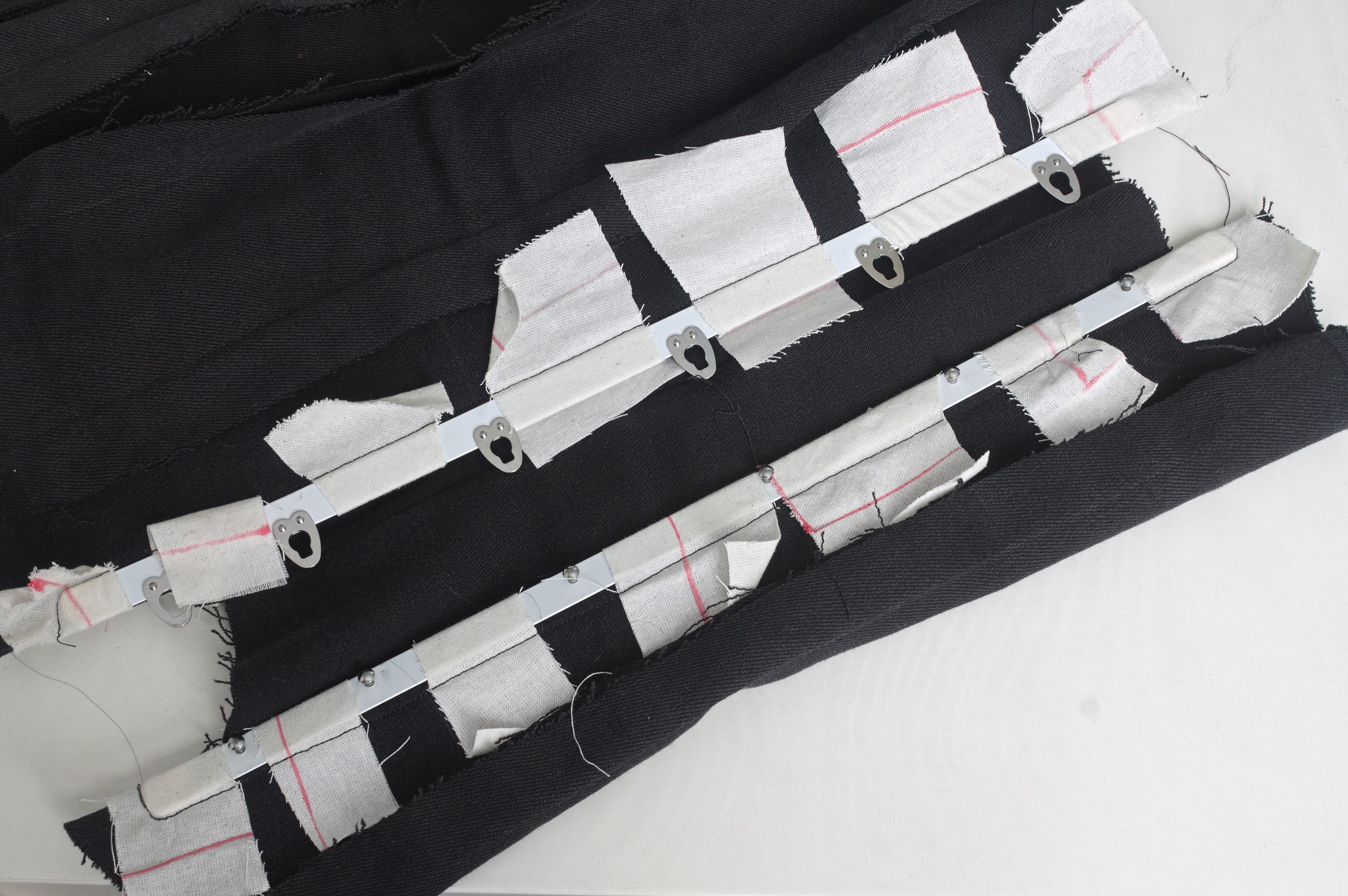
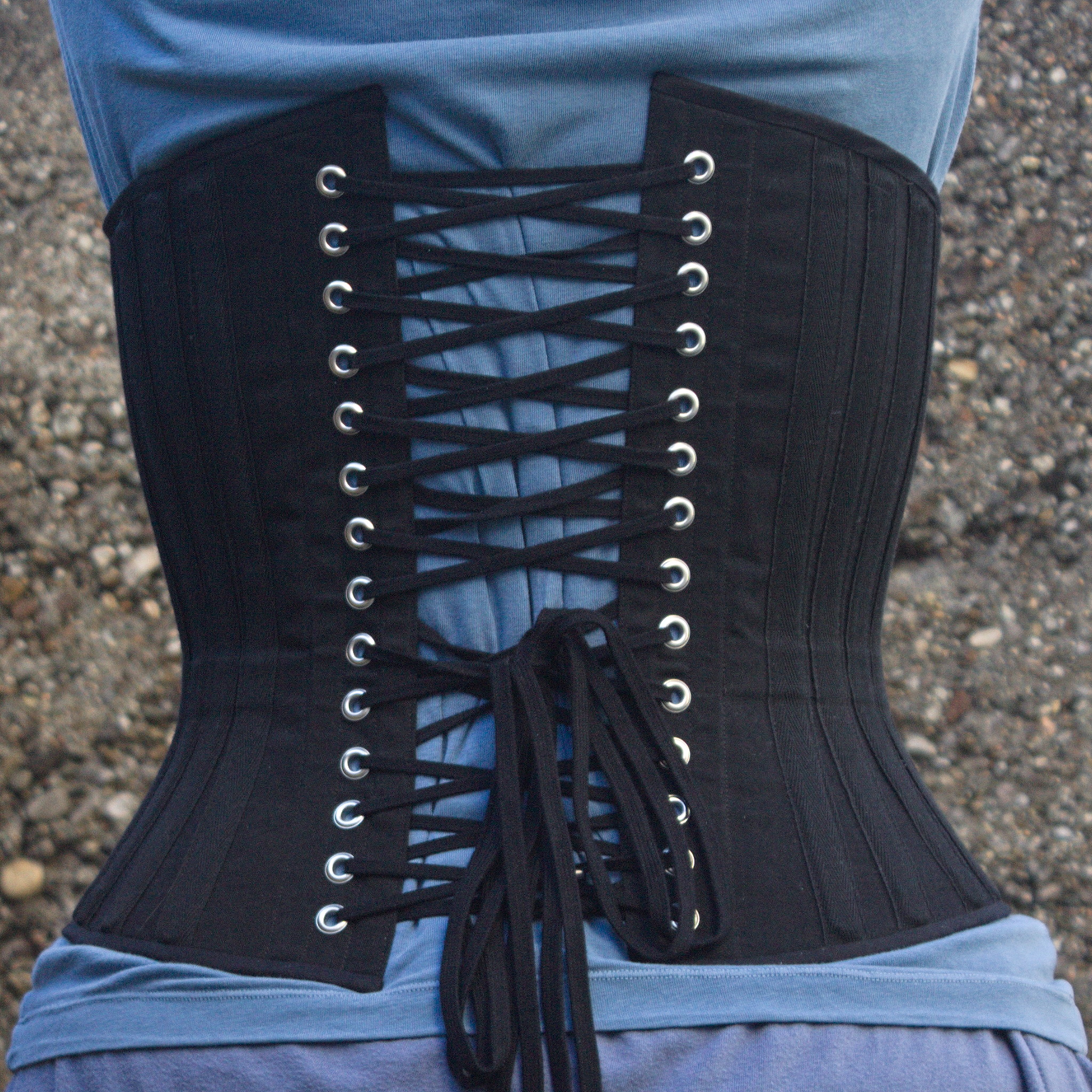
  1. i.e. by asking my SO to cut and sand it, because I m lazy and I hate doing that part :D

Next.

Previous.