
Remember when Linus Torvalds lambasted NVidia for not supporting their Optimus technology in their Linux drivers for half a decade and counting? Well, I went out and bought an AMD/ATi video card as mu upgrade. And you know what? Its Linux drivers are far, far worse than NVidia.
1. Most of the games I had working fine on NVidia, do not work on AMD. And those that do suffer far more visual corruption, synchronization bugs (like bottom 40% of the screen rendering half a second after the top 60%), strange visual artifacts (weird triangles popping out of everywhere) and crashes, lots of crashes.
2. There were crashes with NVidia too, but NVidia never managed to crash Compiz along with it or crash the whole X server or lock up the system so far that only SysRq works or even lock up the system so far that only powering it off manually works.
3. And then there is the configuration atrocity. Apparently AMD is too good to store its configuration in /etc/X11/xorg.conf. Or even to document the supported options there. Instead they have their own (also undocumented) configuration file in /etc/ati folder. And it is undocumented because it is a cryptic mess and the only supported way to change it is to use their tools aticonfig and amdccccle. The command line tool is almost reasonable, except it is also barely documented. For example, one of my screens somehow was always stared at 1920 1080@30Hz. There were 3 different ways to specify default resolution, but none of them used or saved the refresh rate. And when I changed it in the GUI tool the refresh rate did change, but it was never saved. Oh there nowhere is a save button. It just works , except when it doesn t. Like: both of my screens for some reason started with huge black borders around the screen, I finally narrowed it down to the GUI setting overscan which defaulted to 10%. Ok, so I change it, it works, but next time I reboot, the overscan is back! I had to find an undocumented invocation of the aticonfig that would change the default value to 0%. Why did this one setting not save? Oh and fun note the refresh rate of that second screen was correct on the login screen, but it then swiched back as I logged in. Fun, huh?
4. Even at basic desktop tasks fglrx if inferior to not only the free driver, but also to the nvidia driver even simple scrolling of a large folder in nautilus seems to tax the 200$ card to its limits the bottom row blinks into place almost half a second after I stop scrolling. Another example with NVidia when I switch my TV to the HDMI input from the card, the sound starts at the same moment as the picture, however with AMD the sound only decides to show up 10-15 seconds later. And sometime it does not show up at all, unless I start the AMD Control GUI tool and only then the sound shows up 15 seconds later (without doing anything in the GUI).
It may be that one part of AMD is better than NVidia at talking to free driver developers, but another part is so much worse at actual technical work of writing a driver, it is not even funny. They are busy reinventing the bycicle of configuration and display management, while their core driver is just not good enough.
TL/DR: Anyone wanna buy a HD 6850 cheaply off my hands?
Crossposted to Google+
https://plus.google.com/u/0/107099528362923100900/posts/6PC7RFQpm8K
P.S. I also noticed the color difference with NVidia there was no difference between colors on my LCD TV and my IPS monitor, but with AMD there is a huge difference, the TV color just got washed out. I guess there is no proper color calibration support in the AMD driver?
Update: I have managed to return the HD 6850 to the shop where I got it from (thanks to a nice law requiring web shops to take stuff back within 14 days no questions asked) and got the new NVidia GeForce GTX 660 instead. I had to build an updated NVidia driver (304.48 from
this post, just like
here or
here) but other than that it was smooth and painless and everything is working great again. Only even faster


When Google launched Google+, a lot of people were very sceptical. Some
outright claimed it to be useless. I must admit, it has a number of functions
that really rock.
Google Plus is not a Facebook clone. It does not try to mimick
Facebook that much. To me, it looks much more like a blog thing. A
blog system, where everybody has to have a Google account, and then can
comment (plus, you can then restrict access and share only with some people).
It also encourages you to share shorter posts. Successful blogs always
tried to make their posts "articles". Now the posts themselves are merely
comments; but not as crazy short as Twitter (it is not a Twitter clone either),
and it does have rich media contents, too.
Those who expect it to replace their Facebook where the interaction
is all about personal stuff will be somewhat disappointed. Because it IMHO
much less encourages the smalltalk type of interaction.
However, it won a couple of pretty high profile people to share their
thoughts and web discoveries with the world. Some of the most active users
I follow on Google Plus are:
Linus Torvalds and
Tim O'Reilly (of the
publishing house O'Reilly)
Of course I also have a number of friends that share private stuff on
Google Plus. But in my opinion the strength of Google Plus is on sharing
publicly. Since Google is the king of search, they can both feed shares
of your friends into your regular search results, but there is also a pretty
interesting
search in Google PLus. The key difference is that with
this search, the focus is on what is
new. Regular web search is also
a lot about searching for old things (where you did not bother to remember
the address or bookmark the site - and mind it, today a lot of people even
"google for Google" ...) For example I like the
plus search for data mining
because it occasionally has some interesting links in it. A lot of the stuff
is coming in again and again, but using the "j and k" keys, I can quickly
scroll through these results to see if there is anything interesting. And
there are
quite a lot of interesting things I've discovered this way.
Note that this can change anytime. And maybe it is because I'm interested
in technology stuff that it works well for me. But say, maybe you are more
into
HDR photography than
me (I think they look unreal, as if someone has done way too much contrast and
edge enhancing on the image). But go there, and press "j" a number of times to
browse through some HDR shots. That is a pretty neat search function there.
And if you come back tomorrow, there will likely be new images!Facebook tried to clone this functionality. Google+ launched in June 2011,
and in September 2011, Facebook added "subscribers". So they realized the
need for having "non-friends" that are interested in what you are doing. Yet,
I don't know anybody actually using it. And the
Public posts search is much less interesting than of Google Plus, and the
nice keyboard navigation is also missing.
Don't get me wrong, Facebook still has its uses. When I travel, Facebook
is great for me to get into contact with locals to go swing dancing. There
are a number of events where people only invite you on Facebook (and that is
one of the reasons why I've missed a number of events - because I don't use
Facebook that much). But mind it, a lot of the stuff that people share on
Facebook is also really boring.
And that will actually be the big challenge for Google: keeping the
search results interesting. Once you have millions of people there sharing
pictures of lolcats - will it still return good results? Or will just about
every search give you more lolcats?
And of course, spam. The SEO crowd is just warming up in exploring the
benefits of Google Plus. And there are quite some benefits to be gained from
connecting web pages to Google Plus, as this will make your search results
stick out somehow, or maybe give them that little extra edge over other
results. But just like Facebook at some point was so heavily spammed when
every little shop was setting up his Facebook pages, inviting everyone to
all the events and so on - this is bound to happen on Google Plus, too. We'll
see how Google then reacts, and how quickly and effectively.

This year, the annual Debian conference will be held in
Managua, Nicaragua. And I'll
be lucky enough to spend two weeks visiting the country after Debconf,
along with Elisabeth.
Yes, I'll arrive in Nicarague on July 2nd, spend nearly the entire
Debcamp, then Debconf, then we'll spend 16 days around the western
part of Nicaragua, trying to discover the magic of this country.
So, this post is about sharing our plans with my readers. Of course, I
do not know the country so we may have made mistakes and bad choices.
We'll see.
Immediately after Debconf, Elisabeth will join in Managua. She'll be
landing on July 15th. We'll then spend a night in an hotel near the
airport and immediately leave the day after for Matagalpa, in North
Nicaragua. We rented a car for the entire trip indeed, and will be on our own on
wild Nicaragua roads..:-)
We'll spend two nights in Matagalpa. We plan to
visit some coffee or cigar plants, probably have a trip to Lake Apanas
and Jinotega.
Then, we'll have a short road trip to Esteli where we spend again two
nights. We'll be visiting a coffee growing place (beneficio seco de
caf ). A full day visit is planned at Miraflor natural reserve to enjoy te
beauties of hundreds orchids and some local natural marvels.
The next move will be to Leon, where we'll spend 4 nights, visiting a
cigar factory (tabacaleras de puros?) on the way, as well as San
Jacinto, a place with hydrothermal sources and "Hervideros" (geysers).
Four nights in Leon leaves
plenty of time for several activities *and* enjoying the colonial
city. We'll have a full day at Juan Venado Island reserve with boat
trip from Las Penitas (on a fisherman's boat from what the travel agency mentioned),
then another full day climbing on the Cerro Negro volcano. Indeed, I
was originally considering climbing the Momotombo, but our travel
agency warned about the high difficulty. I would have loved that
myself but maybe not the two of us...and this is a trip for
both of us! So, we played the safe option..:-)
After these 4 nights in Leon, we'll move to Granada for 3 nights,
through Leon Viejo (the former site of Leon).
From Granada, one
day will there be used for a visit in the Masaya National Park and see
the beauties of Masaya volcano (this is indeed something that could be
done for Debconf day trip, IMHO, as it doesn't seem that far from
Managua). Another day will be spent to Las
Isletas on lake Nicaragua and others visiting the colonial city of
Granada. Or, of course, whatever things we don't even known about
now..:-)
Then we'll move to what I personnally consider the peak of the trip: 3
nights on Ometepe island on lake Nicaragua. Just check Wikipedia to
see why Ometepe is, in my opinion, THE place to go in Nicaragua. Here, I'll have
my volcano..:-). Indeed, Elizabeth "authorized" me to book a local
guide and then climb Concepcion Volcan, if the weather allows for it.
1600m height, that doesn' seem to be a big issue....except when
starting from a little bit above sea level and are climbing a volcano
that looks like s postcard volcano : nearly a perfect cone shape.
So, let's cross fingers for having good weather that day. I promise
myself I'll record the GPS track of that one and, even if I'll
probably be walking most of the climbing (except if I have a very
trained guide...), I'll add it to my run tracks!
We might also be going to climb Ometepe's other volcano (Maderas) the day after
so that Elizabeth also enjoys these beauties. There also seems to be
great places around Maderas such as San Ramon Cascade, Finca el
Porvenir, etc.
Then, at the end of all this, it will be time to come back to Managua
in the final day and fly back to Paris in the early morning of July 31st.
All over, I'll be in Nicaragua from July 2nd until July 31st! Full
month away, yay! Hurrah for the crazy number of holidays those lazy
French people have..:-)
During this trip, we might find it interesting some local geeks (not
too many as Elizabeth is not that deeply interested in beersigning!)
and share a few nice things in local places which are only known by
locals.
In case you're interested, out (very clever) travel agency is named
Nicaragua Adventures and they're definitely worth contacting if you
want to travel around .ni, particularly if we prefer booking things in
advance as we do. They speak Spanish (of course!), English and French.
They're very responsive to e-mail as well.
Here in Norway, the
Ministry of
Government Administration, Reform and Church Affairs is behind
a
directory of
standards that are recommended or mandatory for use by the
government. When the directory was created, the people behind it made
an effort to ensure that everyone would be able to implement the
standards and compete on equal terms to supply software and solutions
to the government. Free software and non-free software could compete
on the same level.
But recently, some standards with RAND
(
Reasonable
And Non-Discriminatory) terms have made their way into the
directory. And while this might not sound too bad, the fact is that
standard specifications with RAND terms often block free software from
implementing them. The reasonable part of RAND mean that the cost per
user/unit is low,and the non-discriminatory part mean that everyone
willing to pay will get a license. Both sound great in theory. In
practice, to get such license one need to be able to count users, and
be able to pay a small amount of money per unit or user. By
definition, users of free software do not need to register their use.
So counting users or units is not possible for free software projects.
And given that people will use the software without handing any money
to the author, it is not really economically possible for a free
software author to pay a small amount of money to license the rights
to implement a standard when the income available is zero. The result
in these situations is that free software are locked out from
implementing standards with RAND terms.
Because of this, when I see someone claiming the terms of a
standard is reasonable and non-discriminatory, all I can think of is
how this really is non-reasonable and discriminatory. Because free
software developers are working in a global market, it does not really
help to know that software patents are not supposed to be enforceable
in Norway. The patent regimes in other countries affect us even here.
I really hope the people behind the standard directory will pay more
attention to these issues in the future.
You can find more on the issues with RAND, FRAND and RAND-Z terms
from Simon Phipps
(
RAND:
Not So Reasonable?).
Update 2012-04-21: Just came across a
blog
post from Glyn Moody over at Computer World UK warning about the
same issue, and urging people to speak out to the UK government. I
can only urge Norwegian users to do the same for
the
hearing taking place at the moment (respond before 2012-04-27).
It proposes to require video conferencing standards including
specifications with RAND terms.
Actually, that's not true - I've produced plenty of open source software over the years. However, in a sense, it is true: only the very best actually get paid to work on open source software full time, and I'm not one of them. People like Linus Torvalds. People like Guido van Rossum, although even he supposedly divides his time, and does not work on Python full-time.
Think about that. Python is a hugely popular programming language used by many companies and individuals who get a lot of value out of it. But the creator doesn't even work on it full-time. Now, that's just one example - perhaps Guido enjoys the things that Google sends his way to work on outside of Python in any event - but I think it's representative of open source in general.
Back to me: I've produced some small bits of open source code that other people find useful. Several people have even built products on
Hecl that make money. But I'm not good enough to work on open source full time - I'm not one of those famous, brilliant coders who is so good that someone will find a way to pay them to work on stuff that gets given away for free. I am, however, a good enough programmer to work on people's proprietary code, and have never had too much trouble finding someone with a project they're happy to pay me for. Why is that? Because it's so much easier to funnel money back into a proprietary project. If people like the product and buy it, the company gets money, which can be used to pay the developers. With open source, millions of people might use it and get a lot of value from it, but the developer has no right to receive any of that back as cash, which he or she can use to pay for things like food and rent.
So, I
can code tolerably well, and I could conceivably contribute more open source code, but instead I spend my time working on proprietary code because it pays the bills. Clearly, when I can, I use open source software in these endeavors, and contribute back whenever I can, but the "secret sauce" remains closed. That's a pair of hands lost to the creation of more open source.
I know I'm not alone in this, either - tons of people work on mostly proprietary projects the world over, but relatively few people get paid to work on open source code full time.
So when I read about people debating the utility of copyright bring up the existence of open source as some sort of counterexample, it irritates me a bit. The right level of protection and enforcement of copyright is a complex debate that I'm not going to get into here. What I want to point out is "
that which is not seen". Sure, open source exists. But how much more of it would exist it there were more money to fund work on it? How much open source software remains an idea in the developers head that does not get realized for lack of time? People often criticize the "Linux desktop" despite its extraordinary strides in recent years. Well, how much farther along would it be if there were more people paid to work on the 'boring stuff', like usability testing? Ubuntu and Redhat pay a few people to do that kind of stuff, but how many more people do Microsoft and Apple have for that kind of work?
That's not to say that open source "doesn't work" or some such nonsense. It obviously works quite well, but it really shines where the currency is code, not money. Developers can and do give back lots, in terms of code, bug reports, suggestions, documentation, and so on to open source projects, which make them better for all involved. Where open source doesn't seem to work quite as well are in small, fast-moving, consumer-oriented products. My guess is that 99% of iPhone users could care less about the source code for their apps, but on the other hand, a large portion of the Emacs user base more than likely has written at least a few lines of Elisp.
In any event, the point isn't to beat up on open source software, but to counter this idea that "intellectual property" is in no way shape or form necessary because the existence of open source software somehow "proves" that "things will get made just the same". Yes, maybe they will, but in lower quantities than consumers might find desirable. After all, most of us aren't good enough to work on open source software.

Ten years ago I was a fan of NEXTSTEP desktops and a die hard user of
Window Maker. I love
dockapps, and used to collect them.
Things changed, and, as I moved from Desktops to Laptops, I began using simpler Window Managers. The powerful keyboard-shortcuts
Fluxbox along with its capability to join windows with tabbing won me over and I began using it in my Laptop, while preserving Window Maker in my Desktop. In time, Fluxbox were used in both sides.
Then the netbooks came and I bought an
EeePC. The screen was so small that even the non-obstructive nature of Fluxbox were not enough. I began to try tiling window managers and I settle for
Awesome. I was using Fluxbox in my Desktop and my Laptop, but Awesome was running in my Netbook. Tiling was making a lot of more sense and I could be productive, even in a small Netbook. Eventually, I started using
Bluetile in my Laptop. Also, Bluetile was written in Haskell, and I was
interested in Functional Languages by that time
Now I got a new Laptop, and, since it features a Realtek 8191SE Wi-fi card, I
had to install Wheezy (in my laptop, I usually run stable). Wheezy comes with the new GNOME 3 desktop, of which
I read a lot.
I decided to give it a try. I am missing advanced tiling (it seems that GNOME3 tiling works just in the side-by-side approach) and I also think that creating custom launchers should be improved but so far I am not disliking it, which is a good step toward adopting it. I ll give it a week to convince me. Let s see how it works its charm on me


A discussion a couple of days ago about DPI detection (which is best summarised by
this and
this and I am not having this discussion again) made me remember a chain of other awful things about consumer displays and EDID and there not being enough gin in the world, and reading various bits of the internet and wikipedia seemed to indicate that almost everybody who's written about this has issues with either (a) technology or (b) English, so I might as well write something.
The first problem is unique (I hope) to 720p LCD TVs. 720p is an HD broadcast standard that's defined as having a resolution of 1280x720. A 720p TV is able to display that image without any downscaling. So, naively, you'd expect them to have 1280x720 displays. Now obviously I wouldn't bother mentioning this unless there was some kind of hilarious insanity involved, so you'll be entirely unsurprised when I tell you that most actually have 1366x768 displays. So your 720p content has to be upscaled to fill the screen anyway, but given that you'd have to do the same for displaying 720p content on a 1920x1080 device this isn't the worst thing ever in the world. No, it's more subtle than that.
EDID is a standard for a blob of data that allows a display device to express its capabilities to a video source in order to ensure that an appropriate mode is negotiated. It allows resolutions to be expressed in a bunch of ways - you can set a bunch of bits to indicate which standard modes you support (1366x768 is not one of these standard modes), you can express the standard timing resolution (the horizontal resolution divided by 8, followed by an aspect ratio) and you can express a detailed timing block (a full description of a supported resolution).
1366/8 = 170.75. Hm.
Ok, so 1366x768 can't be expressed in the standard timing resolution block. The closest you can provide for the horizontal resolution is either 1360 or 1368. You also can't supply a vertical resolution - all you can do is say that it's a 16:9 mode. For 1360, that ends up being 765. For 1368, that ends up being 769.
It's ok, though, because you can just put this in the detailed timing block, except it turns out that basically no TVs do, probably because the people making them are the ones who've taken all the gin.
So what we end up with is a bunch of hardware that people assume is 1280x720, but is actually 1366x768, except they're telling your computer that they're either 1360x765 or 1368x769. And you're probably running an OS that's doing sub-pixel anti-aliasing, which requires that the hardware be able to address the pixels directly which is obviously difficult if you think the screen is one size and actually it's another. Thankfully Linux takes care of you here, and
this code makes everything ok. Phew, eh?
But ha ha, no, it's worse than that. And the rest applies to 1080p ones as well.
Back in the old days when TV signals were analogue and got turned into a picture by a bunch of magnets waving a beam of electrons about all over the place, it was impossible to guarantee that all TV sets were adjusted correctly and so you couldn't assume that the edges of a picture would actually be visible to the viewer. In order to put text on screen without risking bits of it being lost, you had to steer clear of the edges. Over time this became roughly standardised and the areas of the signal that weren't expected to be displayed were called overscan. Now, of course, we're in a mostly digital world and such things can be ignored, except that when digital TVs first appeared they were mostly used to watch analogue signals so still needed to overscan because otherwise you'd have the titles floating weirdly in the middle of the screen rather than towards the edges, and so because it's never possible to kill technology that's escaped into the wild we're stuck with it.
tl;dr - Your 1920x1080 TV takes a 1920x1080 signal, chops the edges off it and then stretches the rest to fit the screen because of decisions made in the 1930s.
So you plug your computer into a TV and even though you know what the resolution really is you still don't get to address the individual pixels. Even worse, the edges of your screen are missing.
The best thing about overscan is that it's not rigorously standardised - different broadcast bodies have different recommendations, but you're then still at the mercy of what your TV vendor decided to implement. So what usually happens is that graphics vendors have some way in their drivers to compensate for overscan, which involves you manually setting the degree of overscan that your TV provides. This works very simply - you take your 1920x1080 framebuffer and draw different sized black borders until the edge of your desktop lines up with the edge of your TV. The best bit about this is that while you're still scanning out a 1920x1080 mode, your desktop has now shrunk to something more like 1728x972 and your TV is then scaling it back up to 1920x1080. Once again, you lose.
The HDMI spec actually defines an extension block for EDID that indicates whether the display will overscan or not, but doesn't provide any way to work out
how much it'll overscan. We haven't seen many of those in the wild. It's also possible to send an HDMI information frame that indicates whether or not the video source is expecting to be overscanned or not, but (a) we don't do that and (b) it'll probably be ignored even if we did, because who ever tests this stuff. The HDMI spec also says that the default behaviour for 1920x1080 (but not 1366x768) should be to assume overscan. Charming.
The best thing about all of this is that the same TV will often have different behaviour depending on whether you connect via DVI or HDMI, but some TVs will still overscan DVI. Some TVs have options in the menu to disable overscan and others don't. Some monitors will overscan if you feed them an HD resolution over HDMI, so if you have HD content and don't want to lose the edges then your hardware needs to scale it down and let the display scale it back up again. It's all awful. I recommend you drink until everything's already blurry and then none of this will matter.

comments
Some years ago I came across a really peculiar newsgroup post. It was not about technicalities of any sort. It was about history. A beautifully written history of computers. From the Turing machine to the Free Software world, the original author managed to capture all the important events of the computer revolution with a great deal of humor. Re-posting it here, it is just brilliant.
The Gospel of Tux (v1.0)
In the beginning Turing created the Machine.
And the Machine was crufty and bodacious, existing in theory only. And von Neumann looked upon the Machine, and saw that it was crufty. He divided the Machine into two Abstractions, the Data and the Code, and yet the two were one Architecture. This is a great Mystery, and the beginning of wisdom.
And von Neumann spoke unto the Architecture, and blessed it, saying, Go forth and replicate, freely exchanging data and code, and bring forth all manner of devices unto the earth. And it was so, and it was cool. The Architecture prospered and was implemented in hardware and software. And it brought forth many Systems unto the earth.
The first Systems were mighty giants; many great works of renown did they accomplish. Among them were Colossus, the codebreaker; ENIAC, the targeter; EDSAC and MULTIVAC and all manner of froody creatures ending in AC, the experimenters; and SAGE, the defender of the sky and father of all networks. These were the mighty giants of old, the first children of Turing, and their works are written in the Books of the Ancients. This was the First Age, the age of Lore.
Now the sons of Marketing looked upon the children of Turing, and saw that they were swift of mind and terse of name and had many great and baleful attributes. And they said unto themselves, Let us go now and make us Corporations, to bind the Systems to our own use that they may bring us great fortune. With sweet words did they lure their customers, and with many chains did they bind the Systems, to fashion them after their own image. And the sons of Marketing fashioned themselves Suits to wear, the better to lure their customers, and wrote grave and perilous Licenses, the better to bind the Systems. And the sons of Marketing thus became known as Suits, despising and being despised by the true Engineers, the children of von Neumann.
And the Systems and their Corporations replicated and grew numerous upon the earth. In those days there were IBM and Digital, Burroughs and Honeywell, Unisys and Rand, and many others. And they each kept to their own System, hardware and software, and did not interchange, for their Licences forbade it. This was the Second Age, the age of Mainframes.
Now it came to pass that the spirits of Turing and von Neumann looked upon the earth and were displeased. The Systems and their Corporations had grown large and bulky, and Suits ruled over true Engineers. And the Customers groaned and cried loudly unto heaven, saying, Oh that there would be created a System mighty in power, yet small in size, able to reach into the very home! And the Engineers groaned and cried likewise, saying, Oh, that a deliverer would arise to grant us freedom from these oppressing Suits and their grave and perilous Licences, and send us a System of our own, that we may hack therein! And the spirits of Turing and von Neumann heard the cries and were moved, and said unto each other, Let us go down and fabricate a Breakthrough, that these cries may be stilled.
And that day the spirits of Turing and von Neumann spake unto Moore of Intel, granting him insight and wisdom to understand the future. And Moore was with chip, and he brought forth the chip and named it 4004. And Moore did bless the Chip, saying, Thou art a Breakthrough; with my own Corporation have I fabricated thee. Thou thou art yet as small as a dust mote, yet shall thou grow and replicate unto the size of a mountain, and conquer all before thee. This blessing I give unto thee: every eighteen months shall thou double in capacity, until the end of the age. This is Moore s Law, which endures unto this day.
And the birth of 4004 was the beginning of the Third Age, the age of Microchips. And as the Mainframes and their Systems and Corporations had flourished, so did the Microchips and their Systems and Corporations. And their lineage was on this wise:
Moore begat Intel. Intel begat Mostech, Zilog and Atari. Mostech begat 6502, and Zilog begat Z80. Intel also begat 8800, who begat Altair; and 8086, mother of all PCs. 6502 begat Commodore, who begat PET and 64; and Apple, who begat 2. (Apple is the great Mystery, the Fruit that was devoured, yet bloomed again.) Atari begat 800 and 1200, masters of the game, who were destroyed by Sega and Nintendo. Xerox begat PARC. Commodore and PARC begat Amiga, creator of fine arts; Apple and PARC begat Lisa, who begat Macintosh, who begat iMac. Atari and PARC begat ST, the music maker, who died and was no more. Z80 begat Sinclair the dwarf, TRS-80 and CP/M, who begat many machines, but soon passed from this world. Altair, Apple and Commodore together begat Microsoft, the Great Darkness which is called Abomination, Destroyer of the Earth, the Gates of Hell.
Now it came to pass in the Age of Microchips that IBM, the greatest of the Mainframe Corporations, looked upon the young Microchip Systems and was greatly vexed. And in their vexation and wrath they smote the earth and created the IBM PC. The PC was without sound and colour, crufty and bodacious in great measure, and its likeness was a tramp, yet the Customers were greatly moved and did purchase the PC in great numbers. And IBM sought about for an Operating System Provider, for in their haste they had not created one, nor had they forged a suitably grave and perilous License, saying, First we will build the market, then we will create a new System, one in our own image, and bound by our Licence. But they reasoned thus out of pride and not wisdom, not forseeing the wrath which was to come.
And IBM came unto Microsoft, who licensed unto them QDOS, the child of CP/M and 8086. (8086 was the daughter of Intel, the child of Moore). And QDOS grew, and was named MS-DOS. And MS-DOS and the PC together waxed mighty, and conquered all markets, replicating and taking possession thereof, in accordance with Moore s Law. And Intel grew terrible and devoured all her children, such that no chip could stand before her. And Microsoft grew proud and devoured IBM, and this was a great marvel in the land. All these things are written in the Books of the Deeds of Microsoft.
In the fullness of time MS-DOS begat Windows. And this is the lineage of Windows: CP/M begat QDOS. QDOS begat DOS 1.0. DOS 1.0 begat DOS 2.0 by way of Unix. DOS 2.0 begat Windows 3.11 by way of PARC and Macintosh. IBM and Microsoft begat OS/2, who begat Windows NT and Warp, the lost OS of lore. Windows 3.11 begat Windows 95 after triumphing over Macintosh in a mighty Battle of Licences. Windows NT begat NT 4.0 by way of Windows 95. NT 4.0 begat NT 5.0, the OS also called Windows 2000, The Millenium Bug, Doomsday, Armageddon, The End Of All Things.
Now it came to pass that Microsoft had waxed great and mighty among the Microchip Corporations; mighter than any of the Mainframe Corporations before it had it waxed. And Gates heart was hardened, and he swore unto his Customers and their Engineers the words of this curse:
Children of von Neumann, hear me. IBM and the Mainframe Corporations bound thy forefathers with grave and perilous Licences, such that ye cried unto the spirits of Turing and von Neumann for deliverance. Now I say unto ye: I am greater than any Corporation before me. Will I loosen your Licences? Nay, I will bind thee with Licences twice as grave and ten times more perilous than my forefathers. I will engrave my Licence on thy heart and write my Serial Number upon thy frontal lobes. I will bind thee to the Windows Platform with cunning artifices and with devious schemes. I will bind thee to the Intel Chipset with crufty code and with gnarly APIs. I will capture and enslave thee as no generation has been enslaved before. And wherefore will ye cry then unto the spirits of Turing, and von Neumann, and Moore? They cannot hear ye. I am become a greater Power than they. Ye shall cry only unto me, and shall live by my mercy and my wrath. I am the Gates of Hell; I hold the portal to MSNBC and the keys to the Blue Screen of Death. Be ye afraid; be ye greatly afraid; serve only me, and live.
And the people were cowed in terror and gave homage to Microsoft, and endured the many grave and perilous trials which the Windows platform and its greatly bodacious Licence forced upon them. And once again did they cry to Turing and von Neumann and Moore for a deliverer, but none was found equal to the task until the birth of Linux.
These are the generations of Linux:
SAGE begat ARPA, which begat TCP/IP, and Aloha, which begat Ethernet. Bell begat Multics, which begat C, which begat Unix. Unix and TCP/IP begat Internet, which begat the World Wide Web. Unix begat RMS, father of the great GNU, which begat the Libraries and Emacs, chief of the Utilities. In the days of the Web, Internet and Ethernet begat the Intranet LAN, which rose to renown among all Corporations and prepared the way for the Penguin.
And Linus and the Web begat the Kernel through Unix. The Kernel, the Libraries and the Utilities together are the Distribution, the one Penguin in many forms, forever and ever praised.
Now in those days there was in the land of Helsinki a young scholar named Linus the Torvald. Linus was a devout man, a disciple of RMS and mighty in the spirit of Turing, von Neumann and Moore. One day as he was meditating on the Architecture, Linus fell into a trance and was granted a vision. And in the vision he saw a great Penguin, serene and well-favoured, sitting upon an ice floe eating fish. And at the sight of the Penguin Linus was deeply afraid, and he cried unto the spirits of Turing, von Neumann and Moore for an interpretation of the dream.
And in the dream the spirits of Turing, von Neumann and Moore answered and spoke unto him, saying, Fear not, Linus, most beloved hacker. You are exceedingly cool and froody. The great Penguin which you see is an Operating System which you shall create and deploy unto the earth. The ice-floe is the earth and all the systems thereof, upon which the Penguin shall rest and rejoice at the completion of its task. And the fish on which the Penguin feeds are the crufty Licensed codebases which swim beneath all the earth s systems. The Penguin shall hunt and devour all that is crufty, gnarly and bodacious; all code which wriggles like spaghetti, or is infested with blighting creatures, or is bound by grave and perilous Licences shall it capture. And in capturing shall it replicate, and in replicating shall it document, and in documentation shall it bring freedom, serenity and most cool froodiness to the earth and all who code therein.
Linus rose from meditation and created a tiny Operating System Kernel as the dream had foreshewn him; in the manner of RMS, he released the Kernel unto the World Wide Web for all to take and behold. And in the fulness of Internet Time the Kernel grew and replicated, becoming most cool and exceedingly froody, until at last it was recognised as indeed a great and mighty Penguin, whose name was Tux. And the followers of Linus took refuge in the Kernel, the Libraries and the Utilities; they installed Distribution after Distribution, and made sacrifice unto the GNU and the Penguin, and gave thanks to the spirits of Turing, von Neumann and Moore, for their deliverance from the hand of Microsoft. And this was the beginning of the Fourth Age, the age of Open Source.
Now there is much more to be said about the exceeding strange and wonderful events of those days; how some Suits of Microsoft plotted war upon the Penguin, but were discovered on a Halloween Eve; how Gates fell among lawyers and was betrayed and crucified by his former friends, the apostles of Media; how the mercenary Knights of the Red Hat brought the gospel of the Penguin into the halls of the Corporations; and even of the dispute between the brethren of Gnome and KDE over a trollish Licence. But all these things are recorded elsewhere, in the Books of the Deeds of the Penguin and the Chronicles of the Fourth Age, and I suppose if they were all narrated they would fill a stack of DVDs as deep and perilous as a Usenet Newsgroup.
Now may you code in the power of the Source; may the Kernel, the Libraries and the Utilities be with you, throughout all Distributions, until the end of the Epoch. Amen.
[UPDATE 2011-09-05]I received some questions (or saw them), which I
tried to answer with
a
follow-up entry.[/UPDATE]
As I tried to explain this a few times in the past to others and had trouble
myself, when I started using Linux, I thought I take some time today and write
down what parts comprise the Linux graphics stack and how they interact. I'll
ignore some parts which aren't too interesting to an average user at the moment,
to keep this post as consise as possible. Apart from that, I hope I'm able to
put all the relevant data into one spot.
Let us start our little journey in the kernel. There, in a directory named
gpu you'll find the
drm
directory, which contains all
DRM drivers. In this post, we'll
focus on those. The drivers in that directory are the kernel side of the
Direct Rendering Infrastructure (DRI) and are responsible for managing
concurrent access to the graphics hardware. They also provide interfaces to pass
commands and data to the
GPU. The
DRI wiki explains the three main purposes of the DRM
modules.
The DRM module is also the part that decides whether
KMS or
UMS is used. Other acronyms you might hear
with regard to graphics acceleration on Linux and are referring to the Kernel
part are:
- GEM: an
Intel-developed memory management system for GPUs.
- TTM: refers to the
memory management system used by almost all non-Intel drivers (e.g. AMD's
Radeon drivers). The TTM interface is "GEM-ified", meaning it
offers the same API as GEM.
Apart from that, every driver has its hardware-specific parts like utilizing
power-saving functions of the respective GPUs, loading firmware, if required,
etc.
Now we move from Kernel space to user land. We'll ignore any non-X and
non-Mesa parts (like acceleration for TTYs). That means, that our next
GPU specific part is most likely the
DDX. (Please note, that the classic DDX
might be replaced by a Gallium3D state tracker, currently that would be the
xorg state tracker, but
xorg will be replaced by
XA.
This is only an option if the Gallium driver for your GPU supports one of those
state trackers, see
the Gallium status page for further
details.) The DDX for your GPU offers plain (2D) X acceleration on your
hardware. The respective DDX' are generally named
xf86-video-[NAME],
where
[NAME] is replaced by e.g.
ati or
intel. The
DDX decides which X acceleration paths are available. Acronyms you might hear,
referring to the DDX part of the graphics stack, are:
- EXA: even though it looks like an acronym, the X.Org wiki Glossary defines it as:
acceleration architecture with no well-defined acronym
EXA superseded the older XAA and offers 2D
acceleration, often in conjunction with XRender.
- UXA: more or less EXA for Intel GPUs.
- GLX: actually not a part of the DDX, but an extension for X. It provides
a way to draw with OpenGL into an window managed by X.
- XRandR: An extension for
X which needs to be supported by the DDX to work. It offers a standardized
way to set up (multiple) heads (e.g. resolution, position, rotation,
etc.).
We're almost through: the last important part is the 3D acceleration offered
by a Mesa driver. Mesa drivers come in two flavours: classic (e.g. all Intel
drivers which are supported by Intel) and Gallium3D-based (like the drivers for
Radeon chips from the R300 onwards). The difference here is, that the Gallium3D
drivers try to share as much code as possible (and thus simplify writing a new
driver supporting many platforms, systems and technologies), while the classic
drivers are specific to certain platforms, chips, and technologies. They share
much less code among each other. All parts of Mesa need direct access to the
graphics hardware (DRI)
The Mesa drivers use the 3D pipeline of the GPUs for accelerated drawing,
even for non-3D applications like video acceleration (recently
VDPAU,
XvMC and
VA support were added to Gallium3D, driver
support followed quickly). Otherwise the Mesa drivers are mainly used for
OpenGL acceleration. Users of OpenGL include scientific programs,
CAD and of course games.
This concludes our little journey through the various parts of the Linux
graphics stack. I hope it helps in understanding the building blocks.

Oppdatering: Jeg har skrevet
en engelsk versjon av dette som er mer gjennomtenkt. I have written an
English version of this post which I have had more time to think through.
Det var meningen f rst ha dette som en kladd, for senere g igjennom og skrive mer, men WordPress krangler og jeg orker ikke finne ut av det. Derfor publiserer jeg dette n . Jeg har lenge nsket sette opp en ny bloggmotor men har aldri kommet meg til gj re det og dette er definitivt ikke tidspunktet, s jeg gjenoppliver min gamle, engelskspr klige blogg.
Andre har skrevet sine fortellinger om hva som skjedde p Ut ya. Jeg ville gjerne skrive ned min ogs , f den ut. Jeg vil dels skrive det ned fordi jeg ikke vet om jeg vil huske alle disse detaljene senere. P en m te h per jeg ikke det. Dels ogs for at jeg skal slippe m tte beskrive dette hele tiden for alle som sp r.
Gro Harlem Brundtland hadde nylig forlatt leiren. Jeg hadde tatt opp en videohilsen fra henne, og var i kontoret til mediegruppen for redigere filen til noe vi kunne laste opp p YouTube. En av de som var i rommet skvatt til og fortalte at Twitter var fullt av meldinger om en eksplosjon i Oslo. Etterhvert som pressen kunne fortelle om hvor angrepet hadde skjedd, ble det mer og mer tydelig at et informasjonsm te var p sin plass. Det ble enighet om at det m tet skulle avholdes etter at bolken med innledninger var ferdig.
Informasjonsm tet ble avholdt, og jeg tok p meg som den lokale nerd-in-chief sette opp en laptop som kunne vise NRK Nett-TV s folk kunne f sett hva som skjedde. Det tr dl se nettverket gikk nesten umiddelbart ned, s vi ble enige om at det skulle settes et passord p det. I p vente av at noen andre gjorde det, gikk jeg p do.
Idet jeg satt der, h rte jeg f rst agitert roping, s skriking, s skudd. Det h rtes mer ut som en lekepistol enn noe annet og jeg antok at dette bare var en eller annen som kom med en totalt smakl s vits. Med dette i tankene, kom jeg n rmest stormende ut av b sen men idet jeg vrengte opp d ren s jeg to mennesker som signaliserte at jeg skulle komme meg inn igjen. Ansiktsuttrykkene deres levnet overhodet ingen tvil om at dette var alvor. At de var der reddet utvilsomt livet mitt. Jeg var mest av alt forvirret. Jeg antok der og da det var en AUFer som hadde gjort dette, g tt amok. Jeg tittet ut igjen. De to var der fremdeles. Denne gangen s jeg en person som l der p gulvet, i en blodp l. Jeg hadde yekontakt med ham, og han signaliserte tydelig etter hjelp.
Jeg tenkte umiddelbart at de d rene ikke ville st imot noen som helst type kuler, s jeg tenkte kun p forflytte meg vekk fra b sen. Min f rste tanke var komme meg utend rs. Jeg l p ut korridoren, og akkurat da kom en fra kaf gjengen mot meg. Hun pnet ansatt-toalettet, og jeg, hun, og en annen kastet seg inn. Det er bare en av de mange tilfeldighetene som jeg i etterkant m innse at jeg antar reddet livet mitt.
Vi satt der, i halvannen time. Klare til l pe, klare for egentlig hva som helst. Det ble til en eiendommelig dynamikk mellom oss tre, en slags perpleks galgenhumor. Jeg, ettersom det var helt realistisk at v r gruppe var den eneste som visste om likene i bygget, pr vde umiddelbart f varslet om det. 112 fungerte ikke. 110 fungerte ikke. Til slutt kom jeg igjennom p 113, og de kunne opplyse om at politiet var klar over situasjonen og var p vei. Det skulle ta halvannen time, og da vi ble evakuert l han der d d.
Det ekte politiet ankom omsider. Vi gikk ut. Jeg tok veien rundt lillesalen, noe jeg i etterkant angrer p ; det jeg s der vil nok bli med meg en stund. Det l en haug med folk jeg husker ingen ansikter, bare et stort, amorft sammensurium av kropper i en fryktelig stor blodp l noen av dem, jeg mener huske to, var fremdeles bevisste. Vi ble f rst flyttet til Planet Ut ya-kontoret leiravisa hvor det var en jente som hadde blitt skutt. Vi rev opp noen poser med gensere fra lageret og dekket til henne. Der satt vi en stund jeg hadde forlengst mistet tidsbegrepet jeg mener det m ha v rt tolv av oss.
En av ungdommene ble trass i protester fra de i gruppa som kjente og gikk god for ham p f rt h ndjern. Jeg forstod ikke helt hvorfor. Senere ble vi forklart at det var fordi han hadde kommet fra et omr de politiet ikke hadde oversikt over. Jeg s ikke n r de h ndjernene ble l snet, men jeg husker ihvertfall at det slo meg som uverdig behandling. Politimannen som hadde vakt p posten der vi var, var veldig dyktig til forklare oss situasjonen. Vi ble flyttet ut til hovedkorridoren, hvor omkring 50 av oss var. F rst idet jeg s og omfavnet de som antakeligvis reddet livet mitt, knakk jeg sammen i gr t. Jeg tok meg fort inn igjen, fikk skjelvingen under kontroll, og etter en del venting ble vi marsjert med hendene p hodet mot fergen. Jeg husker hvor redd jeg var for at noen skulle gli i den bratte, gj rmete bakken og skape en misforst else. Det var flere lik ute. Noen var tildekket p improvisert vis, andre l der bare.
Alle jeg s viste mot, ro og beherskelse p et niv langt over det noen nsker forvente fra folk i de aldersgruppene. Det var et samhold og en m lbevissthet som gjorde et inntrykk.
Vel over fjorden ble vi tilbudt tepper. Jeg ble spurt om jeg var skadet, og bedt om vise mageregionen. Vi ble loset ombord i bussen, og kj rt til Sundvolden hotell. F lelsen, den totalt utrolige lettelsen av se sine n rmeste venner igjen kan jeg virkelig ikke beskrive. Lettelsen ble temperert av usikkerheten rundt de man ikke s . Det dreier seg blant annet om mennesker som jeg i skrivende stund m anta har mistet livet. Blant dem mennesker jeg tidligere hadde hatt stor glede av vissheten om at kom til gj re fantastiske ting i landets og verdens tjeneste n er de revet vekk.
Jeg vet ikke hvor mye mer enn denne litt n kterne rapport av hendelsene jeg klarer komme med akkurat n . Men slik var det ihvertfall jeg opplevde situasjonen jeg kom ut av takket v re en serie tilfeldigheter. Litt kort vil jeg legge til:
Redningstjenestene var en stor hjelp. Vel s stor, om ikke st rre, har muligheten til tilbringe tid sammen med de andre overlevende v rt. Vi holder sammen og tr ster hverandre med v r felles erfaring.
Ett lyspunkt ser jeg her: Mest av alt er jeg s utrolig glad for at han ikke var fremme tyve minutter tidligere, under informasjonsm tet. Da var hele Ut ya samlet som sild i t nne i hovedsalen, og med hans automatv pen ville d dstallene i l pet av noen titalls sekunder blitt det mangedobbelte av det vi endte opp med. At det er en veldig mager tr st for de etterlatte er jeg inderlig klar over. Mine aller dypeste tanker er med dem alle.
Dette var et angrep p hele det norske demokratiet. I forvirrelsen f ler jeg en bitter trass. Vi skal vise hans likesinnede at det er sterkere enn som s . Jeg vil ikke la meg skremme til taushet og passivitet. Jeg nsker minnes de d de, og deretter hedre dem ved fortsette arbeidet de var en del av.
 It s been a very long time coming, but symlink and hardlink restrictions have finally landed in the mainline Linux kernel as of version 3.6. The protection is at least old enough to have a driver s license in most US states, with some of the first discussions I could find dating from Aug 1996.
While this protection is old (to ancient) news for anyone running Chrome OS, Ubuntu, grsecurity, or OpenWall, I m extremely excited that is can now benefit everyone running Linux. All the way from cloud monstrosities to cell phones, an entire class of vulnerability just goes away. Thanks to everyone that had a part in developing, testing, reviewing, and encouraging these changes over the years. It s quite a relief to have it finally done. I hope I never have to include the year in my patch revision serial number again. :)

 It's taken years to get here, but Mel finally got a series of patches
into the kernel, including
 Security
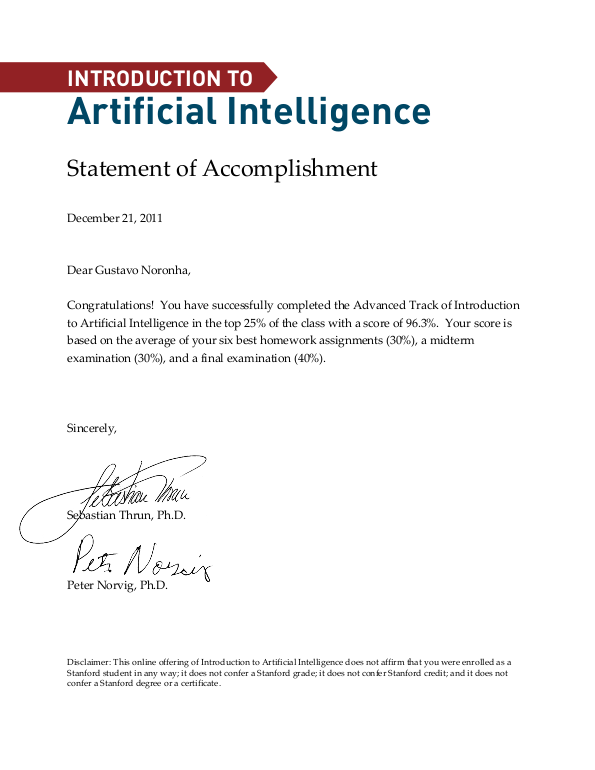
 One of my side projects for these last months was to enroll on the online
 The route cache is a Linux kernel component enabling route lookups to
be faster by caching the results in some table and checking it before
issuing a regular lookup in the route tables. When using Linux as a
router, the inefficiency of the route cache can hinder the
performances of your box.
The documentation on this component is scarce and it is difficult to
find up-to-date bits on how the route cache works and how to tune
it. The book
 Once an entry has been added to the route cache, there are several
ways to remove it. Most entries are removed by the

 The first plot shows what would happen if about 2000 routes are added
per second with
 Twenty years ago today, Linus Torvalds


