I have been using the awesome window manager for 10 years. It is a
tiling window manager, configurable and extendable with the
Lua language. Using a general-purpose programming language to
configure every aspect is a double-edged sword. Due to laziness and
the apparent difficulty of adapting my configuration about 3000 lines to newer releases, I was stuck with the 3.4
version, whose last release is from 2013.
It was time for a rewrite. Instead, I have switched to the i3 window
manager, lured by the possibility to migrate to Wayland and
Sway later with minimal pain. Using an embedded interpreter for
configuration is not as important to me as it was in the past: it
brings both complexity and brittleness.
Dual screen desktop running i3, Emacs, some terminals, including a Quake console, Firefox, Polybar as the status bar, and Dunst as the notification daemon.
The window manager is only one part of a desktop environment. There
are several options for the other components. I am also introducing
them in this post.
i3: the window manageri3 aims to be a minimal tiling window manager. Its documentation
can be read from top to bottom in less than an hour. i3 organize
windows in a tree. Each non-leaf node contains one or several
windows and has an orientation and a layout. This information
arbitrates the window positions. i3 features three layouts: split,
stacking, and tabbed. They are demonstrated in the below screenshot:
Demonstration of the layouts available in i3. The main container is split horizontally. The first child is split vertically. The second one is tabbed. The last one is stacking.
Tree representation of the previous screenshot.
Most of the other tiling window managers, including the awesome
window manager, use predefined layouts. They usually feature a large
area for the main window and another area divided among the remaining
windows. These layouts can be tuned a bit, but you mostly stick to a
couple of them. When a new window is added, the behavior is quite
predictable. Moreover, you can cycle through the various windows
without thinking too much as they are ordered.
i3 is more flexible with its ability to build any layout on the fly,
it can feel quite overwhelming as you need to visualize the tree in
your head. At first, it is not unusual to find yourself with a complex
tree with many useless nested containers. Moreover, you have to
navigate windows using directions. It takes some time to get used to.
I set up a split layout for Emacs and a few terminals, but most of the
other workspaces are using a tabbed layout. I don t use the stacking
layout. You can find many scripts trying to emulate other tiling
window managers but I did try to get my setup pristine of these
tentatives and get a chance to familiarize myself. i3 can also save
and restore layouts, which is quite a powerful feature.
My configuration is quite similar to the default one and has
less than 200 lines.
i3 companion: the missing bitsi3 philosophy is to keep a minimal core and let the user implements
missing features using the IPC protocol:
Do not add further complexity when it can be avoided. We are
generally happy with the feature set of i3 and instead focus on
fixing bugs and maintaining it for stability. New features will
therefore only be considered if the benefit outweighs the additional
complexity, and we encourage users to implement features using the
IPC whenever possible.
Introduction to the i3 window manager
While this is not as powerful as an embedded language, it is enough
for many cases. Moreover, as high-level features may be opinionated,
delegating them to small, loosely coupled pieces of code keeps them
more maintainable. Libraries exist for this purpose in several
languages. Users have published many scripts to extend i3:
automatic layout and window promotion to mimic the behavior
of other tiling window managers, window swallowing to put a new
app on top of the terminal launching it, and cycling between
windows with Alt+Tab.
Instead of maintaining a script for each feature, I have centralized
everything into a single Python process,
i3-companion using asyncio and the
i3ipc-python library. Each feature is self-contained into a
function. It implements the following components:
make a workspace exclusive to an application
When a workspace contains Emacs or Firefox, I would like other
applications to move to another workspace, except for the terminal
which is allowed to intrude into any workspace. The
workspace_exclusive() function monitors new windows and moves them
if needed to an empty workspace or to one with the same application
already running.
implement a Quake console
The quake_console() function implements a drop-down console
available from any workspace. It can be toggled with
Mod+. This is implemented as a scratchpad
window.
back and forth workspace switching on the same output
With the workspace back_and_forth command, we can ask i3 to
switch to the previous workspace. However, this feature is not
restricted to the current output. I prefer to have one keybinding to
switch to the workspace on the next output and one keybinding to
switch to the previous workspace on the same output. This behavior
is implemented in the previous_workspace() function by keeping a
per-output history of the focused workspaces.
create a new empty workspace or move a window to an empty workspace
To create a new empty workspace or move a window to an empty
workspace, you have to locate a free slot and use workspace number
4 or move container to workspace number 4. The new_workspace()
function finds a free number and use it as the target workspace.
restart some services on output change
When adding or removing an output, some actions need to be executed:
refresh the wallpaper, restart some components unable to adapt their
configuration on their own, etc. i3 triggers an event for this
purpose. The output_update() function also takes an extra step to
coalesce multiple consecutive events and to check if there is a real
change with the low-level library xcffib.
I will detail the other features as this post goes on. On the
technical side, each function is decorated with the events it should
react to:
@on(CommandEvent("previous-workspace"),I3Event.WORKSPACE_FOCUS)asyncdefprevious_workspace(i3,event):"""Go to previous workspace on the same output."""
The CommandEvent() event class is my way to send a command to the
companion, using either i3-msg -t send_tick or binding a key to a
nop command. The latter is used to avoid spawning a shell and a
i3-msg process just to send a message. The companion listens to
binding events and checks if this is a nop command.
bindsym $mod+Tab nop "previous-workspace"
There are other decorators to avoid code duplication: @debounce() to
coalesce multiple consecutive calls, @static() to define a static
variable, and @retry() to retry a function on failure. The whole
script is a bit more than 1000 lines. I think this is
worth a read as I am quite happy with the result.
dunst: the notification daemon
Unlike the awesome window manager, i3 does not come with a built-in
notification system. Dunst is a lightweight notification daemon. I
am running a modified version with HiDPI support for X11 and
recursive icon lookup. The i3 companion has a helper function,
notify(), to send notifications using DBus. container_info() and
workspace_info() uses it to display information about the container
or the tree for a workspace.
Notification showing i3 s tree for a workspace
polybar: the status bari3 bundles i3bar, a versatile status bar, but I have opted for
Polybar. A wrapper script runs one instance for
each monitor.
The first module is the built-in support for i3 workspaces. To not
have to remember which application is running in a workspace, the i3
companion renames workspaces to include an icon for each application.
This is done in the workspace_rename() function. The icons are from
the Font Awesome project. I maintain a mapping between applications
and icons. This is a bit cumbersome but it looks great.
i3 workspaces in Polybar
For CPU, memory, brightness, battery, disk, and audio volume, I am
relying on the built-in modules. Polybar s wrapper script generates the list of filesystems to monitor and they get only
displayed when available space is low. The battery widget turns red
and blinks slowly when running out of power. Check my Polybar
configuration for more details.
Polybar displaying various information: CPU usage, memory usage, screen brightness, battery status, Bluetooth status (with a connected headset), network status (connected to a wireless network and to a VPN), notification status, and speaker volume.
For Bluetooh, network, and notification statuses, I am using Polybar s
ipc module: the next version of Polybar can receive
an arbitrary text on an IPC socket. The module is defined with a
single hook to be executed at the start to restore the latest status.
It can be updated with polybar-msg action "#network.send.XXXX". In
the i3 companion, the @polybar() decorator takes the string
returned by a function and pushes the update through the IPC socket.
The i3 companion reacts to DBus signals to update the Bluetooth and
network icons. The @on() decorator accepts a DBusSignal() object:
@on(StartEvent,DBusSignal(path="/org/bluez",interface="org.freedesktop.DBus.Properties",member="PropertiesChanged",signature="sa sv as",onlyif=lambdaargs:(args[0]=="org.bluez.Device1"and"Connected"inargs[1]orargs[0]=="org.bluez.Adapter1"and"Powered"inargs[1]),),)@retry(2)@debounce(0.2)@polybar("bluetooth")asyncdefbluetooth_status(i3,event,*args):"""Update bluetooth status for Polybar."""
The middle of the bar is occupied by the date and a weather forecast.
The latest also uses the IPC mechanism, but the source is a Python
script triggered by a timer.
Current date and weather forecast for the day in Polybar. The data is retrieved with the OpenWeather API.
I don t use the system tray integrated with Polybar. The embedded
icons usually look horrible and they all behave differently. A few
years back, Gnome has removed the system tray. Most of the
problems are fixed by the DBus-based Status Notifier Item
protocol also known as Application Indicators or Ayatana
Indicators for GNOME. However, Polybar does not support this
protocol. In the i3 companion, The implementation of Bluetooth
and network icons, including displaying notifications on change, takes
about 200 lines. I got to learn a bit about how DBus works and I get exactly
the info I want.
picom: the compositor
I like having slightly transparent backgrounds for terminals and to
reduce the opacity of unfocused windows. This requires a
compositor.1picom is a lightweight compositor. It works
well for me, but it may need some tweaking depending on your graphic
card.2 Unlike the awesome window manager, i3 does not handle
transparency, so the compositor needs to decide by itself the opacity
of each window. Check my configuration for details.
systemd: the service manager
I use systemd to start i3 and the various services around it. My
xsession script only sets some environment variables and lets
systemd handles everything else. Have a look at this article from
Micha G ral for the rationale. Notably, each component can be
easily restarted and their logs are not mangled inside the
~/.xsession-errors file.3
I am using a two-stage setup: i3.service depends on
xsession.target to start services before
i3:
rofi: the application launcherRofi is an application launcher. Its appearance can be customized
through a CSS-like language and it comes with several themes. Have a
look at my configuration for mine.
Rofi as an application launcher
It can also act as a generic menu application. I have a script
to control a media player and another one to
select the wifi network. It is quite a flexible
application.
Rofi to select a wireless network
xss-lock and i3lock: the screen lockeri3lock is a simple screen locker. xss-lock invokes it reliably
on inactivity or before a system suspend. For inactivity, it uses the
XScreenSaver events. The delay is configured using the xset s
command. The locker can be invoked immediately with xset s activate.
X11 applications know how to prevent the screen saver from running. I
have also developed a small dimmer application that is executed 20
seconds before the locker to give me a chance to move the mouse if I
am not away.4 Have a look at my configuration
script.
Demonstration of xss-lock, xss-dimmer and i3lock with a 4 speedup.
The remaining components
autorandr is a tool to detect the connected display, match them
against a set of profiles, and configure them with xrandr.
inputplug executes a script for each new mouse and keyboard
plugged. This is quite useful to load the appropriate the keyboard
map. See my configuration.
xsettingsd provides settings to X11 applications, not unlike
xrdb but it notifies applications for changes. The main use is
to configure the Gtk and DPI settings. See my article on HiDPI
support on Linux with X11.
Redshift adjusts the color temperature of the screen according
to the time of day.
maim is a utility to take screenshots. I use Prt Scn
to trigger a screenshot of a window or a specific area and
Mod+Prt Scn to capture the whole desktop to a
file. Check the helper script for details.
I have a collection of wallpapers I rotate every hour. A
script selects them using advanced machine learning
algorithms and stitches them together on multi-screen setups. The
selected wallpaper is reused by i3lock.
Apart from the eye candy, a compositor also helps to get
tear-free video playbacks.
My configuration works with both Haswell (2014) and Whiskey
Lake (2018) Intel GPUs. It also works with AMD GPU based on the
Polaris chipset (2017).
You cannot manage two different displays this way e.g.
:0 and :1. In the first implementation, I did try to
parametrize each service with the associated display, but this is
useless: there is only one DBus user session and many services
rely on it. For example, you cannot run two notification daemons.
I have only discovered later that XSecureLock ships
such a dimmer with a similar implementation. But mine has a cool
countdown!
This is part of a series of posts on ideas for an ansible-like provisioning
system, implemented in Transilience.
Mitogen is a great library, but scarily
complicated, and I've been wondering how hard it would be to make alternative
connection methods for Transilience.
Here's a wild idea: can I package a whole Transilience playbook, plus
dependencies, in a zipapp,
then send the zipapp to the machine to be provisioned, and run it locally?
It turns out I can.
Creating the zipapp
This is somewhat hackish, but until I can rely on Python 3.9's improved
importlib.resources
module, I cannot think of a better way:
defzipapp(self,target:str,interpreter=None):""" Bundle this playbook into a self-contained zipapp """importzipappimportjinja2importtransilienceifinterpreterisNone:interpreter=sys.executableifgetattr(transilience.__loader__,"archive",None):# Recursively iterating module directories requires Python 3.9+raiseNotImplementedError("Cannot currently create a zipapp from a zipapp")withtempfile.TemporaryDirectory()asworkdir:# Copy transilienceshutil.copytree(os.path.dirname(__file__),os.path.join(workdir,"transilience"))# Copy jinja2shutil.copytree(os.path.dirname(jinja2.__file__),os.path.join(workdir,"jinja2"))# Copy argv[0] as __main__.pyshutil.copy(sys.argv[0],os.path.join(workdir,"__main__.py"))# Copy argv[0]/rolesrole_dir=os.path.join(os.path.dirname(sys.argv[0]),"roles")ifos.path.isdir(role_dir):shutil.copytree(role_dir,os.path.join(workdir,"roles"))# Turn everything into a zipappzipapp.create_archive(workdir,target,interpreter=interpreter,compressed=True)
Since the zipapp contains not just the playbook, the roles, and the roles'
assets, but also Transilience and Jinja2, it can run on any system that has a
Python 3.7+ interpreter, and nothing else!
I added it to the standard set of playbook command line options, so any
Transilience playbook can turn itself into a self-contained zipapp:
$ ./provision --help
usage: provision [-h][-v][--debug][-C][--local LOCAL][--ansible-to-python role --ansible-to-ast role --zipapp file.pyz][...]
--zipapp file.pyz bundle this playbook in a self-contained executable
python zipapp
Loading assets from the zipapp
I had to create ZipFile varieties of some bits of infrastructure in
Transilience, to load templates, files, and Ansible yaml files from zip files.
You can see above a way to detect if a module is loaded from a zipfile: check
if the module's __loader__ attribute has an archive attribute.
Here's a Jinja2 template loader that looks into a zip:
I also created a FileAsset
abstract interface to represent a local file, and had Role.lookup_file return
an appropriate instance:
deflookup_file(self,path:str)->str:""" Resolve a pathname inside the place where the role assets are stored. Returns a pathname to the file """ifself.role_assets_zipfileisnotNone:returnZipFileAsset(self.role_assets_zipfile,os.path.join(self.role_assets_root,path))else:returnLocalFileAsset(os.path.join(self.role_assets_root,path))
An interesting side effect of having smarter local file accessors is that I can
cache the contents of small files and transmit them to the remote host together
with the other action parameters, saving a potential network round trip for
each builtin.copy action that has a small source.
The result
The result is kind of fun:
$ time ./provision --zipapp test.pyz
real    0m0.203s
user    0m0.174s
sys 0m0.029s
$ time scp test.pyz root@test:
test.pyz                                                                                                         100%  528KB 388.9KB/s   00:01
real    0m1.576s
user    0m0.010s
sys 0m0.007s
And on the remote:
# time ./test.pyz --local=test
2021-06-29 18:05:41,546 test: [connected 0.000s]
[...]
2021-06-29 18:12:31,555 test: 88 total actions in 0.00ms: 87 unchanged, 0 changed, 1 skipped, 0 failed, 0 not executed.
real    0m0.979s
user    0m0.783s
sys 0m0.172s
Compare with a Mitogen run:
$ timePYTHONPATH=../transilience/ ./provision
2021-06-29 18:13:44 test: [connected 0.427s][...]2021-06-29 18:13:46 test: 88 total actions in 2.50s: 87 unchanged, 0 changed, 1 skipped, 0 failed, 0 not executed.
real 0m2.697s
user 0m0.856s
sys 0m0.042s
From a single test run, not a good benchmark, it's 0.203 + 1.576 + 0.979 =
2.758s with the zipapp and 2.697s with Mitogen. Even if I've been lucky,
it's a similar order of magnitude.
What can I use this for?
This was mostly a fun hack.
It could however be the basis for a Fabric-based
connector, or a clusterssh-based
connector, or for bundling a Transilience playbook into an installation image,
or to add a provisioning script to the boot partition of a Raspberry Pi. It
looks like an interesting trick to have up one's sleeve.
One could even build an Ansible-based connector(!) in which a simple Ansible
playbook, with no facts gathering, is used to build the zipapp, push it to
remote systems and run it. That would be the wackiest way of speeding up
Ansible, ever!
Next: using Systemd containers with unittest,
for Transilience's test suite.
Mike Lindell, notable for absolutely nothing relevant in this field, today filed a lawsuit against a couple of voting machine manufacturers in response to them suing him for defamation after he claimed that they were covering up hacks that had altered the course of the US election. Paragraph 104 of his suit asserts that he has evidence of at least 20 documented hacks, including the number of votes that were changed. The citation is just a link to a video called Absolute 9-0, which claims to present sufficient evidence that the US supreme court will come to a 9-0 decision that the election was tampered with.
The claim is that Lindell was provided with a set of files on the 9th of January, and gave these to some cyber experts to verify. These experts identified them as packet captures. The video contains scrolling hex, and we are told that this is the raw encrypted data from the files. In reality, the hex values correspond very clearly to printable ASCII, and appear to just be the Pennsylvania voter roll. They're not encrypted, and they're not packet captures (they contain no packet headers).
20 of these packet captures were then selected and analysed, giving us the tables contained within Exhibit 12. The alleged source IPs appear to correspond to the networks the tables claim, and the latitude and longitude presumably just come from a geoip lookup of some sort (although clearly those values are far too precise to be accurate). But if we look at the target IPs, we find something interesting. Most of them resolve to the website for the county that was the nominal target (eg, 198.108.253.104 is www.deltacountymi.org). So, we're supposed to believe that in many cases, the county voting infrastructure was hosted on the county website.
Unfortunately we're not given the destination port, but 198.108.253.104 isn't listening on anything other than 80 and 443. We're told that the packet data is encrypted, so presumably it's over HTTPS. So, uh, how did they decrypt this to figure out how many votes were switched? If Mike's hackers have broken TLS, they really don't need to be dealing with this.
We're also given some background information on how it's impossible to reconstruct packet captures after the fact (untrue), or that modifying them would change their hashes (true, but in the absence of known good hash values that tells us nothing), but it's pretty clear that nothing we're shown actually demonstrates what we're told it does.
In summary: yes, any supreme court decision on this would be 9-0, just not the way he's hoping for.
Update: It was pointed out that this data appears to be part of a larger dataset. This one is even more dubious - it somehow has MAC addresses for both the source and destination (which is impossible), and almost none of these addresses are in actual issued ranges.
There are many resources for network automation with Ansible. Most
of them only expose the first steps or limit themselves to a
narrow scope. They give no clue on how to expand from that. Real
network environments may be large, versatile, heterogeneous, and filled
with exceptions. The lack of real-world examples for Ansible
deployments, unlike Puppet and SaltStack, leads many teams to
build brittle and incomplete automation solutions.
We have released under an open-source license our attempt
to tackle this problem:
Jerikan, a tool to build configuration files from a single
source of truth and Jinja2 templates, along with its
integration into the GitLab CI system;
an Ansible playbook to deploy these configuration files on
network devices; and
the configuration data and the templates for our, now defunct,
datacenters in San Francisco and South Korea, covering many vendors
(Facebook Wedge 100, Dell S4048 and S6010, Juniper QFX 5110,
Juniper QFX 10002, Cisco ASR 9001, Cisco Catalyst 2960, Opengear
console servers, and Linux), and many functionalities
(provisioning, BGP-to-the-host routing, edge routing, out-of-band
network, DNS configuration, integration with NetBox and IRRs).
Here is a quick demo to configure a new peering:
This work is the collective effort of C dric Hasco t,
Jean-Christophe Legatte, Lo c Pailhas, S bastien Hurtel,
Tchadel Icard, and Vincent Bernat. We are the network team of
Blade, a French company operating Shadow, a cloud-computing
product. In May 2021, our company was bought by Octave Klaba and
the infrastructure is being transferred to OVHcloud, saving
Shadow as a product, but making our team redundant.
Our network was around 800 devices, spanning over 10 datacenters with
more than 2.5 Tbps of available egress bandwidth. The released
material is therefore a substantial example of managing a medium-scale
network using Ansible. We have left out the handling of our legacy
datacenters to make the final result more readable while keeping
enough material to not turn it into a trivial example.
Jerikan
The first component is Jerikan. As input, it takes a list of
devices, configuration data, templates, and validation scripts. It
generates a set of configuration files for each device. Ansible
could cover this task, but it has the following limitations:
Jerikan inputs and outputs
If you want to follow the examples, you only need to have Docker and
Docker Compose installed. Clone the repository and you
are ready!
Source of truth
We use YAML files, versioned with Git, as the single source of
truth instead of using a database, like NetBox, or a mix of a
database and text files. This provides many advantages:
anyone can use their preferred text editor;
the team prepares changes in branches;
the team reviews changes using merge requests;
the merge requests expose the changes to the generated configuration files;
rollback to a previous state is easy; and
it is fast.
The first file is devices.yaml. It contains the
device list. The second file is classifier.yaml.
It defines a scope for each device. A scope is a set of keys and
values. It is used in templates and to look up data associated with a
device.
The device name is matched against a list of regular expressions and
the scope is extended by the result of each match. For
to1-p1.sk1.blade-group.net, the following subset of
classifier.yaml defines its scope:
The third file is searchpaths.py. It describes
which directories to search for a variable. A Python function provides
a list of paths to look up in data/ for a given scope. Here
is a simplified version:2
Variables are scoped using a namespace that should be specified when
doing a lookup. We use the following ones:
system for accounts, DNS, syslog servers,
topology for ports, interfaces, IP addresses, subnets,
bgp for BGP configuration
build for templates and validation scripts
apps for application variables
When looking up for a variable in a given namespace, Jerikan looks
for a YAML file named after the namespace in each directory in the
search paths. For example, if we look up a variable for
to1-p1.sk1.blade-group.net in the bgp namespace, the following
YAML files are processed: host/sk1/to1-p1/bgp.yaml,
location/sk1/bgp.yaml, os/cumulus-dell-s4048/bgp.yaml,
os/cumulus/bgp.yaml, and common/bgp.yaml. The search stops at the
first match.
The schema.yaml file allows us to override this
behavior by asking to merge dictionaries and arrays across all
matching files. Here is an excerpt of this file for the topology
namespace:
The last feature of the source of truth is the ability to use Jinja2
templates for keys and values by prefixing them with ~ :
# In data/os/junos/system.yamlnetbox:manufacturer:Junipermodel:"~ model upper "# In data/groups/tor-bgp-compute/system.yamlnetbox:role:net_tor_gpu_switch
Looking up for netbox in the system namespace for
to1-p2.ussfo03.blade-group.net yields the following result:
# In groups/adm-gateway/topology.yamlinterface-rescue:address:"~ lookup('topology','addresses').rescue "up:-"~iprouteadddefaultvialookup('topology','addresses').rescue ipaddr('first_usable')tablerescue"-"~ipruleaddfromlookup('topology','addresses').rescue ipaddr('address')tablerescuepriority10"# In groups/adm-gateway-sk1/topology.yamlinterfaces:ens1f0:"~ lookup('topology','interface-rescue') "
This yields the following result:
$ ./run-jerikan lookup gateway1.sk1.blade-group.net topology interfaces
[ ]ens1f0: address: 121.78.242.10/29 up: - ip route add default via 121.78.242.9 table rescue - ip rule add from 121.78.242.10 table rescue priority 10
When putting data in the source of truth, we use the following rules:
Don t repeat yourself.
Put the data in the most specific place without breaking the first rule.
Use templates with parsimony, mostly to help with the previous rules.
Restrict the data model to what is needed for your use case.
The first rule is important. For example, when specifying IP addresses
for a point-to-point link, only specify one side and deduce the other
value in the templates. The last rule means you do not need to mimic a
BGP YANG model to specify BGP peers and policies:
Templates are using Jinja2. This is the same engine used in
Ansible. Jerikan ships some custom filters but also reuse some of
the useful filters from Ansible, notably
ipaddr. Here is an excerpt of
templates/junos/base.j2 to configure DNS
and NTP servers on Juniper devices:
system ntp %forntpinlookup("system","ntp")% server ntp; %endfor% name-server %fordnsinlookup("system","dns")% dns; %endfor%
devices() returns the list of devices matching a set of
conditions on the scope. For example, devices("location==ussfo03",
"groups==tor-bgp") returns the list of devices in San Francisco in
the tor-bgp group. You can also omit the operator if you want the
specified value to be equal to the one in the local scope. For
example, devices("location") returns devices in the current
location.
lookup() does a key lookup. It takes the namespace, the key, and
optionally, a device name. If not provided, the current device
is assumed.
scope() returns the scope of the provided device.
Here is how you would define iBGP sessions between edge devices in the
same location:
%forneighborindevices("location","groups==edge")ifneighbor!=device% %foraddressinlookup("topology","addresses",neighbor).loopbacktolist% protocols bgp group IPVaddressipv-EDGES-IBGP neighbor address description "IPvaddressipv: iBGP to neighbor"; %endfor% %endfor%
We also have a global key-value store to save information to be
reused in another template or device. This is quite useful to
automatically build DNS records. First, capture the IP address
inserted into a template with store() as a filter:
Templates are compiled locally with ./run-jerikan build. The
--limit argument restricts the devices to generate configuration
files for. Build is not done in parallel because a template may depend
on the data collected by another template. Currently, it takes 1
minute to compile around 3000 files spanning over 800 devices.
Output of Jerikan after building configuration files for six devices
When an error occurs, a detailed traceback is displayed, including the
template name, the line number and the value of all visible variables.
This is a major time-saver compared to Ansible!
templates/opengear/config.j2:15: in top-level template code
    config.interfaces.  interface  .netmask   adddress   ipaddr("netmask")
        continent  = 'us'
        device     = 'con1-ag2.ussfo03.blade-group.net'
        environment = 'prod'
        host       = 'con1-ag2.ussfo03'
        infos      =  'address': '172.30.24.19/21'
        interface  = 'wan'
        location   = 'ussfo03'
        loop       = <LoopContext 1/2>
        member     = '2'
        model      = 'cm7132-2-dac'
        os         = 'opengear'
        shorthost  = 'con1-ag2'
_ _ _ _ _ _ _ _ _ _ _ _ _ _ _ _ _ _ _ _ _ _ _ _ _ _ _ _ _ _ _ _ _ _ _
value = JerkianUndefined, query = 'netmask', version = False, alias = 'ipaddr'
[ ]
        # Check if value is a list and parse each element
        if isinstance(value, (list, tuple, types.GeneratorType)):
            _ret = [ipaddr(element, str(query), version) for element in value]
            return [item for item in _ret if item]
>       elif not value or value is True:
E       jinja2.exceptions.UndefinedError: 'dict object' has no attribute 'adddress'
We don t have general-purpose rules when writing templates. Like for
the source of truth, there is no need to create generic templates able
to produce any BGP configuration. There is a balance to be found
between readability and avoiding duplication. Templates can become
scary and complex: sometimes, it s better to write a filter or a
function in jerikan/jinja.py. Mastering
Jinja2 is a good investment. Take time to browse through our
templates as some of them show interesting features.
Checks
Optionally, each configuration file can be validated by a script in
the checks/ directory. Jerikan looks up the key checks
in the build namespace to know which checks to run:
In the above example, checks/junoser is executed if there is a
change to the generated config.txt file. It also outputs a
transformed version of the configuration file which is easier to
understand when using diff. Junoser checks a Junos configuration
file using Juniper s XML schema definition for Netconf.5 On
error, Jerikan displays:
jerikan/build.py:127: RuntimeError
-------------- Captured syntax check with Junoser call --------------
P: checks/junoser edge2.ussfo03.blade-group.net
C: /app/jerikan
O:
E: Invalid syntax:  set system syslog archive size 10m files 10 word-readable
S: 1
Integration into GitLab CI
The next step is to compile the templates using a CI. As we are using
GitLab, Jerikan ships with a .gitlab-ci.yml
file. When we need to make a change, we create a dedicated branch and
a merge request. GitLab compiles the templates using the same
environment we use on our laptops and store them as an artifact.
Merge request to add a new port in USSFO03. The templates were compiled successfully but approval from another team member is still required to merge.
Before approving the merge request, another team member looks at the
changes in data and templates but also the differences for the
generated configuration files:
The change configures a port on the Juniper device, adds records to DNS, and updates NetBox with the new IP addresses (not shown).
Ansible
After Jerikan has built the configuration files, Ansible takes
over. It is also packaged as a Docker image to avoid the trouble to
maintain the right Python virtual environment and ensure everyone is
using the same versions.
InventoryJerikan has generated an inventory file. It contains all the managed
devices, the variables defined for each of them and the groups
converted to Ansible groups:
in-sync is a special group for devices which configuration should
match the golden configuration. Daily and unattended, Ansible should
be able to push configurations to this group. The mid-term goal is to
cover all devices.
none is a special device for tasks not related to a specific host.
This includes synchronizing NetBox, IRR objects, and the DNS,
updating the RPKI, and building the geofeed files.
Playbook
We use a single playbook for all devices. It is described in the
ansible/playbooks/site.yaml file.
Here is a shortened version:
A host executes only one of the play. For example, a Junos device
executes the blade.junos role. Once a play has been executed, the
device is added to the done group and the other plays are skipped.
The playbook can be executed with the configuration files generated by
the GitLab CI using the ./run-ansible-gitlab command. This is a
wrapper around Docker and the ansible-playbook command and it
accepts the same arguments. To deploy the configuration on the edge
devices for the SK1 datacenter in check mode, we use:
We avoid using collections from Ansible Galaxy, the exception
being collections to connect and interact with vendor devices, like
cisco.iosxr collection. The quality of Ansible
Galaxy collections is quite random and it is an additional
maintenance burden. It seems better to write roles tailored to our
needs. The collections we use are in
ci/ansible/ansible-galaxy.yaml. We use
Mitogen to get a 10 speedup on Ansible executions on Linux
hosts.
We also have a few playbooks for operational purpose: upgrading the OS
version, isolate an edge router, etc. We were also planning on how to
add operational checks in roles: are all the BGP sessions up? They
could have been used to validate a deployment and rollback if there is
an issue.
Currently, our playbooks are run from our laptops. To keep tabs, we
are using ARA. A weekly dry-run on devices in the in-sync group
also provides a dashboard on which devices we need to run Ansible
on.
Configuration data and templatesJerikan ships with pre-populated data and templates matching the
configuration of our USSFO03 and SK1 datacenters. They do not exist
anymore but, we promise, all this was used in production back in the
days!
The latest iteration of our network infrastructure for SK1, USSFO03, and future data centers. The production network is using BGPttH using a spine-leaf fabric. The out-of-band network is using a simple L2 design, using the spanning tree protocol, as well as a set of console servers.
Notably, you can find the configuration for:
our edge routers
Some are running on Junos, like edge2.ussfo03, the others on
IOS-XR, like edge1.sk1. The implemented functionalities are
similar in both cases and we could swap one for the other. It
includes the BGP configuration for transits, peerings, and IX as
well as the associated BGP policies. PeeringDB is queried to get
the maximum number of prefixes to accept for peerings. bgpq3 and a
containerized IRRd help to filter received routes. A firewall is
added to protect the routing engine. Both IPv4 and IPv6 are
configured.
our BGP-based fabric
BGP is used inside the datacenter8 and is extended on
bare-metal hosts. The configuration is automatically derived from
the device location and the port number.9 Top-of-the-rack
devices are using passive BGP sessions for ports towards servers.
They are also serving a provisioning network to let them boot using
DHCP and PXE. They also act as a DHCP server. The design is
multivendor. Some devices are running Cumulus Linux, like
to1-p1.ussfo03, while some others are running Junos, like
to1-p2.ussfo03.
our out-of-band fabric
We are using Cisco Catalyst 2960 switches to build an L2 out-of-band
network. To provide redundancy and saving a few bucks on wiring, we
build small loops and run the spanning-tree protocol. See
ob1-p1.ussfo03. It is redundantly connected to our gateway
servers. We also use OpenGear devices for console access. See
con1-n1.ussfo03
our administrative gateways
These Linux servers have multiple purposes: SSH jump boxes, rescue
connection, direct access to the out-of-band network, zero-touch
provisioning of network devices,10 Internet access for management
flows, centralization of the console servers using Conserver,
and API for autoconfiguration of BGP sessions for bare-metal
servers. They are the first servers installed in a new datacenter
and are used to provision everything else. Check both the generated
files and the associated Ansible tasks.
Ansible does not even provide a line number when there is an
error in a template. You may need to find the problem by
bisecting.
$ ansible --version
ansible 2.10.8[ ]$ cat test.j2
Hello name !$ ansible all -i localhost, \> --connection=local\> -m template \> -a "src=test.j2 dest=test.txt"localhost FAILED! => "changed": false, "msg": "AnsibleUndefinedVariable: 'name' is undefined"
You may recognize the same concepts as in Hiera, the
hierarchical key-value store from Puppet. At first, we were
using Jerakia, a similar independent store exposing an HTTP
REST interface. However, the lookup overhead is too large for our
use. Jerikan implements the same functionality within a Python
function.
The list of available filters is mangled inside
jerikan/jinja.py. This is a remain of the
fact we do not maintain Jerikan as a standalone software.
This is a bit confusing: we have a store() filter and a
store() function. With Jinja2, filters and functions live in
two different namespaces.
We are using a fork with some modifications to be able to
validate our configurations and exposing an HTTP service to
reduce the time spent on each configuration check.
There is a trend in network automation to automate a
configuration subset, for example by having a playbook to create a
new BGP session. We believe this is wrong: with time, your
configuration will get out-of-sync with its expected state,
notably hand-made changes will be left undetected.
We also have some datacenters using BGP EVPN VXLAN at
medium-scale using Juniper devices. As they are still in
production today, we didn t include this feature but we may
publish it in the future.
In retrospect, this may not be a good idea unless you are
pretty sure everything is uniform (number of switches for each
layer, number of ports). This was not our case. We now think it is
a better idea to assign a prefix to each device and write it in
the source of truth.
Non-linux based devices are upgraded and configured
unattended. Cumulus Linux devices are automatically upgraded on
install but the final configuration has to be pushed using
Ansible: we didn t want to duplicate the configuration process
using another tool.
I decided to start work on repeating the tests for my 2006 OSDC paper on Benchmarking Mail Relays [1] and discover how the last 15 years of hardware developments have changed things. There have been software changes in that time too, but nothing that compares with going from single core 32bit systems with less than 1G of RAM and 60G IDE disks to multi-core 64bit systems with 128G of RAM and SSDs. As an aside the hardware I used in 2006 wasn t cutting edge and the hardware I m using now isn t either. In both cases it s systems I bought second hand for under $1000. Pedants can think of this as comparing 2004 and 2018 hardware.
BIND
I decided to make some changes to reflect the increased hardware capacity and use 2560 domains and IP addresses, which gave the following errors as well as a startup time of a minute on a system with two E5-2620 CPUs.
May  2 16:38:37 server named[7372]: listening on IPv4 interface lo, 127.0.0.1#53
May  2 16:38:37 server named[7372]: listening on IPv4 interface eno4, 10.0.2.45#53
May  2 16:38:37 server named[7372]: listening on IPv4 interface eno4, 10.0.40.1#53
May  2 16:38:37 server named[7372]: listening on IPv4 interface eno4, 10.0.40.2#53
May  2 16:38:37 server named[7372]: listening on IPv4 interface eno4, 10.0.40.3#53
[...]
May  2 16:39:33 server named[7372]: listening on IPv4 interface eno4, 10.0.47.0#53
May  2 16:39:33 server named[7372]: listening on IPv4 interface eno4, 10.0.48.0#53
May  2 16:39:33 server named[7372]: listening on IPv4 interface eno4, 10.0.49.0#53
May  2 16:39:33 server named[7372]: listening on IPv6 interface lo, ::1#53
[...]
May  2 16:39:36 server named[7372]: zone localhost/IN: loaded serial 2
May  2 16:39:36 server named[7372]: all zones loaded
May  2 16:39:36 server named[7372]: running
May  2 16:39:36 server named[7372]: socket: file descriptor exceeds limit (123273/21000)
May  2 16:39:36 server named[7372]: managed-keys-zone: Unable to fetch DNSKEY set '.': not enough free resources
May  2 16:39:36 server named[7372]: socket: file descriptor exceeds limit (123273/21000)
The first thing I noticed is that a default configuration of BIND with 2560 local IPs (when just running in the default recursive mode) takes a minute to start and needed to open over 100,000 file handles. BIND also had some errors in that configuration which led to it not accepting shutdown requests. I filed Debian bug report #987927 [2] about this. One way of dealing with the errors in this situation on Debian is to edit /etc/default/named and put in the following line to allow BIND to access to many file handles:
OPTIONS="-u bind -S 150000"
But the best thing to do for BIND when there are many IP addresses that aren t going to be used for DNS service is to put a directive like the following in the BIND configuration to specify the IP address or addresses that are used for the DNS service:
listen-on 10.0.2.45; ;
I have just added the listen-on and listen-on-v6 directives to one of my servers with about a dozen IP addresses. While 2560 IP addresses is an unusual corner case it s not uncommon to have dozens of addresses on one system.
dig
When doing tests of Postfix for relaying mail I noticed that mail was being deferred with DNS problems (error was Host or domain name not found. Name service error for name=a838.example.com type=MX: Host not found, try again . I tested the DNS lookups with dig which failed with errors like the following:
Making that change (and having rebooted because I didn t need to run the server overnight) didn t entirely solve the problems. I have seen some DNS errors from Postfix since then but they are less common than before. When they happened I didn t have that error from dig. At this stage I m not certain that the ARP change fixed the dig problem although it seems likely (it s always difficult to be certain that you have solved a race condition instead of made it less common or just accidentally changed something else to conceal it). But it is clearly a good thing to have a large enough ARP cache so the above change is probably the right thing for most people (with the possibility of changing the numbers according to the required scale). Also people having that dig error should probably check their kernel message log, if the ARP cache isn t the cause then some other kernel networking issue might be related.
Preliminary Results
With Postfix I m seeing around 24,000 messages relayed per minute with more than 60% CPU time idle. I m not sure exactly how to count idle time when there are 12 CPU cores and 24 hyper-threads as having only 1 process scheduled for each pair of hyperthreads on a core is very different to having half the CPU cores unused. I ran my script to disable hyper-threads by telling the Linux kernel to disable each processor core that has the same core ID as another, it was buggy and disabled the second CPU altogether (better than finding this out on a production server). Going from 24 hyper-threads of 2 CPUs to 6 non-HT cores of a single CPU didn t change the thoughput and the idle time went to about 30%, so I have possibly halved the CPU capacity for these tasks by disabling all hyper-threads and one entire CPU which is surprising given that I theoretically reduced the CPU power by 75%. I think my focus now has to be on hyper-threading optimisation.
Since 2006 the performance has gone from ~20 messages per minute on relatively commodity hardware to 24,000 messages per minute on server equipment that is uncommon for home use but which is also within range of home desktop PCs. I think that a typical desktop PC with a similar speed CPU, 32G of RAM and SSD storage would give the same performance. Moore s Law (that transistor count doubles approximately every 2 years) is often misquoted as having performance double every 2 years. In this case more than 1024* the performance over 15 years means the performance doubling every 18 months. Probably most of that is due to SATA SSDs massively outperforming IDE hard drives but it s still impressive.
Notes
I ve been using example.com for test purposes for a long time, but RFC2606 specifies .test, .example, and .invalid as reserved top level domains for such things. On the next iteration I ll change my scripts to use .test.
My current test setup has a KVM virtual machine running my bhm program to receive mail which is taking between 20% and 50% of a CPU core in my tests so far. While that is happening the kvm process is reported as taking between 60% and 200% of a CPU core, so kvm takes as much as 4* the CPU of the guest due to the virtual networking overhead even though I m using the virtio-net-pci driver (the most efficient form of KVM networking for emulating a regular ethernet card). I ve also seen this in production with a virtual machine running a ToR relay node.
I ve fixed a bug where Postal would try to send the SMTP quit command after encountering a TCP error which would cause an infinite loop and SEGV.
I won't reveal precisely how many books I read in 2020, but it was definitely an improvement on 74 in 2019, 53 in 2018 and 50 in 2017. But not only did I read more in a quantitative sense, the quality seemed higher as well. There were certainly fewer disappointments: given its cultural resonance, I was nonplussed by Nick Hornby's Fever Pitch and whilst Ian Fleming's The Man with the Golden Gun was a little thin (again, given the obvious influence of the Bond franchise) the booked lacked 'thinness' in a way that made it interesting to critique. The weakest novel I read this year was probably J. M. Berger's Optimal, but even this hybrid of Ready Player One late-period Black Mirror wasn't that cringeworthy, all things considered. Alas, graphic novels continue to not quite be my thing, I'm afraid.
I perhaps experienced more disappointments in the non-fiction section. Paul Bloom's Against Empathy was frustrating, particularly in that it expended unnecessary energy battling its misleading title and accepted terminology, and it could so easily have been an 20-minute video essay instead). (Elsewhere in the social sciences, David and Goliath will likely be the last Malcolm Gladwell book I voluntarily read.) After so many positive citations, I was also more than a little underwhelmed by Shoshana Zuboff's The Age of Surveillance Capitalism, and after Ryan Holiday's manyengagingreboots of Stoic philosophy, his Conspiracy (on Peter Thiel and Hulk Hogan taking on Gawker) was slightly wide of the mark for me.
Anyway, here follows a selection of my favourites from 2020, in no particular order:
Fiction
Wolf Hall & Bring Up the Bodies & The Mirror and the LightHilary Mantel
During the early weeks of 2020, I re-read the first two parts of Hilary Mantel's Thomas Cromwell trilogy in time for the March release of The Mirror and the Light. I had actually spent the last few years eagerly following any news of the final instalment, feigning outrage whenever Mantel appeared to be spending time on other projects.
Wolf Hall turned out to be an even better book than I remembered, and when The Mirror and the Light finally landed at midnight on 5th March, I began in earnest the next morning. Note that date carefully; this was early 2020, and the book swiftly became something of a heavy-handed allegory about the world at the time. That is to say and without claiming that I am Monsieur Cromuel in any meaningful sense it was an uneasy experience to be reading about a man whose confident grasp on his world, friends and life was slipping beyond his control, and at least in Cromwell's case, was heading inexorably towards its denouement.
The final instalment in Mantel's trilogy is not perfect, and despite my love of her writing I would concur with the judges who decided against awarding her a third Booker Prize. For instance, there is something of the longueur that readers dislike in the second novel, although this might not be entirely Mantel's fault after all, the rise of the "ugly" Anne of Cleves and laborious trade negotiations for an uninspiring mineral (this is no Herbertian 'spice') will never match the court intrigues of Anne Boleyn, Jane Seymour and that man for all seasons, Thomas More. Still, I am already looking forward to returning to the verbal sparring between King Henry and Cromwell when I read the entire trilogy once again, tentatively planned for 2022.
The Fault in Our StarsJohn Green
I came across John Green's The Fault in Our Stars via a fantastic video by Lindsay Ellis discussing Roland Barthes famous 1967 essay on authorial intent. However, I might have eventually come across The Fault in Our Stars regardless, not because of Green's status as an internet celebrity of sorts but because I'm a complete sucker for this kind of emotionally-manipulative bildungsroman, likely due to reading Philip Pullman's His Dark Materials a few too many times in my teens.
Although its title is taken from Shakespeare's Julius Caesar, The Fault in Our Stars is actually more Romeo & Juliet. Hazel, a 16-year-old cancer patient falls in love with Gus, an equally ill teen from her cancer support group. Hazel and Gus share the same acerbic (and distinctly unteenage) wit and a love of books, centred around Hazel's obsession of An Imperial Affliction, a novel by the meta-fictional author Peter Van Houten. Through a kind of American version of Jim'll Fix It, Gus and Hazel go and visit Van Houten in Amsterdam.
I'm afraid it's even cheesier than I'm describing it. Yet just as there is a time and a place for Michelin stars and Haribo Starmix, there's surely a place for this kind of well-constructed but altogether maudlin literature. One test for emotionally manipulative works like this is how well it can mask its internal contradictions while Green's story focuses on the universalities of love, fate and the shortness of life (as do almost all of his works, it seems), The Fault in Our Stars manages to hide, for example, that this is an exceedingly favourable treatment of terminal illness that is only possible for the better off. The 2014 film adaptation does somewhat worse in peddling this fantasy (and has a much weaker treatment of the relationship between the teens' parents too, an underappreciated subtlety of the book).
The novel, however, is pretty slick stuff, and it is difficult to fault it for what it is. For some comparison, I later read Green's Looking for Alaska and Paper Towns which, as I mention, tug at many of the same strings, but they don't come together nearly as well as The Fault in Our Stars. James Joyce claimed that "sentimentality is unearned emotion", and in this respect, The Fault in Our Stars really does earn it.
The PlagueAlbert Camus
P. D. James' The Children of Men, George Orwell's Nineteen Eighty-Four, Arthur Koestler's Darkness at Noon ... dystopian fiction was already a theme of my reading in 2020, so given world events it was an inevitability that I would end up with Camus's novel about a plague that swept through the Algerian city of Oran.
Is The Plague an allegory about the Nazi occupation of France during World War Two? Where are all the female characters? Where are the Arab ones? Since its original publication in 1947, there's been so much written about The Plague that it's hard to say anything new today. Nevertheless, I was taken aback by how well it captured so much of the nuance of 2020. Whilst we were saying just how 'unprecedented' these times were, it was eerie how a novel written in the 1940s could accurately how many of us were feeling well over seventy years on later: the attitudes of the people; the confident declarations from the institutions; the misaligned conversations that led to accidental misunderstandings. The disconnected lovers.
The only thing that perhaps did not work for me in The Plague was the 'character' of the church. Although I could appreciate most of the allusion and metaphor, it was difficult for me to relate to the significance of Father Paneloux, particularly regarding his change of view on the doctrinal implications of the virus, and spoiler alert that he finally died of a "doubtful case" of the disease, beyond the idea that Paneloux's beliefs are in themselves "doubtful". Answers on a postcard, perhaps.
The Plague even seemed to predict how we, at least speaking of the UK, would react when the waves of the virus waxed and waned as well:
The disease stiffened and carried off three or four patients who were expected to recover. These were the unfortunates of the plague, those whom it killed when hope was high
It somehow captured the nostalgic yearning for high-definition videos of cities and public transport; one character even visits the completely deserted railway station in Oman simply to read the timetables on the wall.
Tinker, Tailor, Soldier, SpyJohn le Carr
There's absolutely none of the Mad Men glamour of James Bond in John le Carr 's icy world of Cold War spies:
Small, podgy, and at best middle-aged, Smiley was by appearance one of London's meek who do not inherit the earth. His legs were short, his gait anything but agile, his dress costly, ill-fitting, and extremely wet.
Almost a direct rebuttal to Ian Fleming's 007, Tinker, Tailor has broken-down cars, bad clothes, women with their own internal and external lives (!), pathetically primitive gadgets, and (contra Mad Men) hangovers that significantly longer than ten minutes. In fact, the main aspect that the mostly excellent 2011 film adaption doesn't really capture is the smoggy and run-down nature of 1970s London this is not your proto-Cool Britannia of Austin Powers or GTA:1969, the city is truly 'gritty' in the sense there is a thin film of dirt and grime on every surface imaginable.
Another angle that the film cannot capture well is just how purposefully the novel does not mention the United States. Despite the US obviously being the dominant power, the British vacillate between pretending it doesn't exist or implying its irrelevance to the matter at hand. This is no mistake on Le Carr 's part, as careful readers are rewarded by finding this denial of US hegemony in metaphor throughout --pace Ian Fleming, there is no obvious Felix Leiter to loudly throw money at the problem or a Sheriff Pepper to serve as cartoon racist for the Brits to feel superior about. By contrast, I recall that a clever allusion to "dusty teabags" is subtly mirrored a few paragraphs later with a reference to the installation of a coffee machine in the office, likely symbolic of the omnipresent and unavoidable influence of America. (The officer class convince themselves that coffee is a European import.) Indeed, Le Carr communicates a feeling of being surrounded on all sides by the peeling wallpaper of Empire.
Oftentimes, the writing style matches the graceless and inelegance of the world it depicts. The sentences are dense and you find your brain performing a fair amount of mid-flight sentence reconstruction, reparsing clauses, commas and conjunctions to interpret Le Carr 's intended meaning. In fact, in his eulogy-cum-analysis of Le Carr 's writing style, William Boyd, himself a ventrioquilist of Ian Fleming, named this intentional technique 'staccato'. Like the musical term, I suspect the effect of this literary staccato is as much about the impact it makes on a sentence as the imperceptible space it generates after it.
Lastly, the large cast in this sprawling novel is completely believable, all the way from the Russian spymaster Karla to minor schoolboy Roach the latter possibly a stand-in for Le Carr himself. I got through the 500-odd pages in just a few days, somehow managing to hold the almost-absurdly complicated plot in my head. This is one of those classic books of the genre that made me wonder why I had not got around to it before.
The Nickel BoysColson Whitehead
According to the judges who awarded it the Pulitzer Prize for Fiction, The Nickel Boys is "a devastating exploration of abuse at a reform school in Jim Crow-era Florida" that serves as a "powerful tale of human perseverance, dignity and redemption". But whilst there is plenty of this perseverance and dignity on display, I found little redemption in this deeply cynical novel.
It could almost be read as a follow-up book to Whitehead's popular The Underground Railroad, which itself won the Pulitzer Prize in 2017. Indeed, each book focuses on a young protagonist who might be euphemistically referred to as 'downtrodden'. But The Nickel Boys is not only far darker in tone, it feels much closer and more connected to us today. Perhaps this is unsurprising, given that it is based on the story of the Dozier School in northern Florida which operated for over a century before its long history of institutional abuse and racism was exposed a 2012 investigation. Nevertheless, if you liked the social commentary in The Underground Railroad, then there is much more of that in The Nickel Boys:
Perhaps his life might have veered elsewhere if the US government had opened the country to colored advancement like they opened the army. But it was one thing to allow someone to kill for you and another to let him live next door.
Sardonic aper us of this kind are pretty relentless throughout the book, but it never tips its hand too far into on nihilism, especially when some of the visual metaphors are often first-rate: "An American flag sighed on a pole" is one I can easily recall from memory. In general though, The Nickel Boys is not only more world-weary in tenor than his previous novel, the United States it describes seems almost too beaten down to have the energy conjure up the Swiftian magical realism that prevented The Underground Railroad from being overly lachrymose. Indeed, even we Whitehead transports us a present-day New York City, we can't indulge in another kind of fantasy, the one where America has solved its problems:
The Daily News review described the [Manhattan restaurant] as nouveau Southern, "down-home plates with a twist." What was the twist that it was soul food made by white people?
It might be overly reductionist to connect Whitehead's tonal downshift with the racial justice movements of the past few years, but whatever the reason, we've ended up with a hard-hitting, crushing and frankly excellent book.
True Grit & No Country for Old MenCharles Portis & Cormac McCarthy
It's one of the most tedious cliches to claim the book is better than the film, but these two books are of such high quality that even the Coen Brothers at their best cannot transcend them. I'm grouping these books together here though, not because their respective adaptations will exemplify some of the best cinema of the 21st century, but because of their superb treatment of language.
Take the use of dialogue. Cormac McCarthy famously does not use any punctuation "I believe in periods, in capitals, in the occasional comma, and that's it" but the conversations in No Country for Old Men together feel familiar and commonplace, despite being relayed through this unconventional technique. In lesser hands, McCarthy's written-out Texan drawl would be the novelistic equivalent of white rap or Jar Jar Binks, but not only is the effect entirely gripping, it helps you to believe you are physically present in the many intimate and domestic conversations that hold this book together. Perhaps the cinematic familiarity helps, as you can almost hear Tommy Lee Jones' voice as Sheriff Bell from the opening page to the last.
Charles Portis' True Grit excels in its dialogue too, but in this book it is not so much in how it flows (although that is delightful in its own way) but in how forthright and sardonic Maddie Ross is:
"Earlier tonight I gave some thought to stealing a kiss from you, though you are very young, and sick and unattractive to boot, but now I am of a mind to give you five or six good licks with my belt."
"One would be as unpleasant as the other."
Perhaps this should be unsurprising. Maddie, a fourteen-year-old girl from Yell County, Arkansas, can barely fire her father's heavy pistol, so she can only has words to wield as her weapon. Anyway, it's not just me who treasures this book. In her encomium that presages most modern editions, Donna Tartt of The Secret History fame traces the novels origins through Huckleberry Finn, praising its elegance and economy: "The plot of True Grit is uncomplicated and as pure in its way as one of the Canterbury Tales". I've read any Chaucer, but I am inclined to agree.
Tartt also recalls that True Grit vanished almost entirely from the public eye after the release of John Wayne's flimsy cinematic vehicle in 1969 this earlier film was, Tartt believes, "good enough, but doesn't do the book justice". As it happens, reading a book with its big screen adaptation as a chaser has been a minor theme of my 2020, including P. D. James' The Children of Men, Kazuo Ishiguro's Never Let Me Go, Patricia Highsmith's Strangers on a Train, James Ellroy's The Black Dahlia, John Green's The Fault in Our Stars, John le Carr 's Tinker, Tailor Soldier, Spy and even a staged production of Charles Dicken's A Christmas Carol streamed from The Old Vic. For an autodidact with no academic background in literature or cinema, I've been finding this an effective and enjoyable means of getting closer to these fine books and films it is precisely where they deviate (or perhaps where they are deficient) that offers a means by which one can see how they were constructed. I've also found that adaptations can also tell you a lot about the culture in which they were made: take the 'straightwashing' in the film version of Strangers on a Train (1951) compared to the original novel, for example. It is certainly true that adaptions rarely (as Tartt put it) "do the book justice", but she might be also right to alight on a legal metaphor, for as the saying goes, to judge a movie in comparison to the book is to do both a disservice.
The Glass HotelEmily St. John Mandel
In The Glass Hotel, Mandel somehow pulls off the impossible; writing a loose roman- -clef on Bernie Madoff, a Ponzi scheme and the ephemeral nature of finance capital that is tranquil and shimmeringly beautiful. Indeed, don't get the wrong idea about the subject matter; this is no over over-caffeinated The Big Short, as The Glass Hotel is less about a Madoff or coked-up financebros but the fragile unreality of the late 2010s, a time which was, as we indeed discovered in 2020, one event away from almost shattering completely.
Mandel's prose has that translucent, phantom quality to it where the chapters slip through your fingers when you try to grasp at them, and the plot is like a ghost ship that that slips silently, like the Mary Celeste, onto the Canadian water next to which the eponymous 'Glass Hotel' resides. Indeed, not unlike The Overlook Hotel, the novel so overflows with symbolism so that even the title needs to evoke the idea of impermanence permanently living in a hotel might serve as a house, but it won't provide a home. It's risky to generalise about such things post-2016, but the whole story sits in that the infinitesimally small distance between perception and reality, a self-constructed culture that is not so much 'post truth' but between them.
There's something to consider in almost every character too. Take the stand-in for Bernie Madoff: no caricature of Wall Street out of a 1920s political cartoon or Brechtian satire, Jonathan Alkaitis has none of the oleaginous sleaze of a Dominic Strauss-Kahn, the cold sociopathy of a Marcus Halberstam nor the well-exercised sinuses of, say, Jordan Belford. Alkaitis is dare I say it? eminently likeable, and the book is all the better for it. Even the C-level characters have something to say: Enrico, trivially escaping from the regulators (who are pathetically late to the fraud without Mandel ever telling us explicitly), is daydreaming about the girlfriend he abandoned in New York: "He wished he'd realised he loved her before he left". What was in his previous life that prevented him from doing so? Perhaps he was never in love at all, or is love itself just as transient as the imaginary money in all those bank accounts? Maybe he fell in love just as he crossed safely into Mexico? When, precisely, do we fall in love anyway?
I went on to read Mandel's Last Night in Montreal, an early work where you can feel her reaching for that other-worldly quality that she so masterfully achieves in The Glass Hotel. Her f ted Station Eleven is on my must-read list for 2021. "What is truth?" asked Pontius Pilate. Not even Mandel cannot give us the answer, but this will certainly do for now.
Running the LightSam Tallent
Although it trades in all of the clich s and stereotypes of the stand-up comedian (the triumvirate of drink, drugs and divorce), Sam Tallent's debut novel depicts an extremely convincing fictional account of a touring road comic.
The comedian Doug Stanhope (who himself released a fairly decent No Encore for the Donkey memoir in 2020) hyped Sam's book relentlessly on his podcast during lockdown... and justifiably so. I ripped through Running the Light in a few short hours, the only disappointment being that I can't seem to find videos online of Sam that come anywhere close to match up to his writing style. If you liked the rollercoaster energy of Paul Beatty's The Sellout, the cynicism of George Carlin and the car-crash invertibility of final season Breaking Bad, check this great book out.
Non-fiction
Inside StoryMartin Amis
This was my first introduction to Martin Amis's work after hearing that his "novelised autobiography" contained a fair amount about Christopher Hitchens, an author with whom I had a one of those rather clich d parasocial relationship with in the early days of YouTube. (Hey, it couldhavebeenmuchworse.) Amis calls his book a "novelised autobiography", and just as much has been made of its quasi-fictional nature as the many diversions into didactic writing advice that betwixt each chapter: "Not content with being a novel, this book also wants to tell you how to write novels", complained Tim Adams in The Guardian.
I suspect that reviewers who grew up with Martin since his debut book in 1973 rolled their eyes at yet another demonstration of his manifest cleverness, but as my first exposure to Amis's gift of observation, I confess that I was thought it was actually kinda clever. Try, for example, "it remains a maddening truth that both sexual success and sexual failure are steeply self-perpetuating" or "a hospital gym is a contradiction like a young Conservative", etc. Then again, perhaps I was experiencing a form of nostalgia for a pre-Gamergate YouTube, when everything in the world was a lot simpler... or at least things could be solved by articulate gentlemen who honed their art of rhetoric at the Oxford Union.
I went on to read Martin's first novel, The Rachel Papers (is it 'arrogance' if you are, indeed, that confident?), as well as his 1997 Night Train. I plan to read more of him in the future.
The Collected Essays, Journalism and Letters: Volume 1 & Volume 2 & Volume 3 & Volume 4George Orwell
These deceptively bulky four volumes contain all of George Orwell's essays, reviews and correspondence, from his teenage letters sent to local newspapers to notes to his literary executor on his deathbed in 1950. Reading this was part of a larger, multi-year project of mine to cover the entirety of his output.
By including this here, however, I'm not recommending that you read everything that came out of Orwell's typewriter. The letters to friends and publishers will only be interesting to biographers or hardcore fans (although I would recommend Dorian Lynskey's The Ministry of Truth: A Biography of George Orwell's 1984 first). Furthermore, many of his book reviews will be of little interest today. Still, some insights can be gleaned; if there is any inconsistency in this huge corpus is that his best work is almost 'too' good and too impactful, making his merely-average writing appear like hackwork. There are some gems that don't make the usual essay collections too, and some of Orwell's most astute social commentary came out of series of articles he wrote for the left-leaning newspaper Tribune, related in many ways to the US Jacobin. You can also see some of his most famous ideas start to take shape years if not decades before they appear in his novels in these prototype blog posts.
I also read Dennis Glover's novelised account of the writing of Nineteen-Eighty Four called The Last Man in Europe, and I plan to re-read some of Orwell's earlier novels during 2021 too, including A Clergyman's Daughter and his 'antebellum' Coming Up for Air that he wrote just before the Second World War; his most under-rated novel in my estimation. As it happens, and with the exception of the US and Spain, copyright in the works published in his lifetime ends on 1st January 2021. Make of that what you will.
Capitalist Realism & Chavs: The Demonisation of the Working ClassMark Fisher & Owen Jones
These two books are not natural companions to one another and there is likely much that Jones and Fisher would vehemently disagree on, but I am pairing these books together here because they represent the best of the 'political' books I read in 2020.
Mark Fisher was a dedicated leftist whose first book, Capitalist Realism, marked an important contribution to political philosophy in the UK. However, since his suicide in early 2017, the currency of his writing has markedly risen, and Fisher is now frequently referenced due to his belief that the prevalence of mental health conditions in modern life is a side-effect of various material conditions, rather than a natural or unalterable fact "like weather". (Of course, our 'weather' is being increasingly determined by a combination of politics, economics and petrochemistry than pure randomness.) Still, Fisher wrote on all manner of topics, from the 2012 London Olympics and "weird and eerie" electronic music that yearns for a lost future that will never arrive, possibly prefiguring or influencing the Fallout video game series.
Saying that, I suspect Fisher will resonate better with a UK audience more than one across the Atlantic, not necessarily because he was minded to write about the parochial politics and culture of Britain, but because his writing often carries some exasperation at the suppression of class in favour of identity-oriented politics, a viewpoint not entirely prevalent in the United States outside of, say, Tour F. Reed or the late Michael Brooks. (Indeed, Fisher is likely best known in the US as the author of his controversial 2013 essay, Exiting the Vampire Castle, but that does not figure greatly in this book). Regardless, Capitalist Realism is an insightful, damning and deeply unoptimistic book, best enjoyed in the warm sunshine I found it an ironic compliment that I had quoted so many paragraphs that my Kindle's copy protection routines prevented me from clipping any further.
Owen Jones needs no introduction to anyone who regularly reads a British newspaper, especially since 2015 where he unofficially served as a proxy and punching bag for expressing frustrations with the then-Labour leader, Jeremy Corbyn. However, as the subtitle of Jones' 2012 book suggests, Chavs attempts to reveal the "demonisation of the working class" in post-financial crisis Britain. Indeed, the timing of the book is central to Jones' analysis, specifically that the stereotype of the "chav" is used by government and the media as a convenient figleaf to avoid meaningful engagement with economic and social problems on an austerity ridden island. (I'm not quite sure what the US equivalent to 'chav' might be. Perhaps Florida Man without the implications of mental health.)
Anyway, Jones certainly has a point. From Vicky Pollard to the attacks on Jade Goody, there is an ignorance and prejudice at the heart of the 'chav' backlash, and that would be bad enough even if it was not being co-opted or criminalised for ideological ends.
Elsewhere in political science, I also caught Michael Brooks' Against the Web and David Graeber's Bullshit Jobs, although they are not quite methodical enough to recommend here. However, Graeber's award-winning Debt: The First 5000 Years will be read in 2021. Matt Taibbi's Hate Inc: Why Today's Media Makes Us Despise One Another is worth a brief mention here though, but its sprawling nature felt very much like I was reading a set of Substack articles loosely edited together. And, indeed, I was.
The Golden Thread: The Story of WritingEwan Clayton
A recommendation from a dear friend, Ewan Clayton's The Golden Thread is a journey through the long history of the writing from the Dawn of Man to present day. Whether you are a linguist, a graphic designer, a visual artist, a typographer, an archaeologist or 'just' a reader, there is probably something in here for you. I was already dipping my quill into calligraphy this year so I suspect I would have liked this book in any case, but highlights would definitely include the changing role of writing due to the influence of textual forms in the workplace as well as digression on ergonomic desks employed by monks and scribes in the Middle Ages.
A lot of books by otherwise-sensible authors overstretch themselves when they write about computers or other technology from the Information Age, at best resulting in bizarre non-sequiturs and dangerously Panglossian viewpoints at worst. But Clayton surprised me by writing extremely cogently and accurate on the role of text in this new and unpredictable era. After finishing it I realised why for a number of years, Clayton was a consultant for the legendary Xerox PARC where he worked in a group focusing on documents and contemporary communications whilst his colleagues were busy inventing the graphical user interface, laser printing, text editors and the computer mouse.
We're accustomed to worrying about AI systems being built that will either "go rogue" and attack us, or succeed us in a bizarre evolution of, um, evolution what we didn't reckon on is the sheer inscrutability of these manufactured minds. And minds is not a misnomer. How else should we think about the neural network Google has built so its translator can model the interrelation of all words in all languages, in a kind of three-dimensional "semantic space"?
New Dark Age also turns its attention to the weird, algorithmically-derived products offered for sale on Amazon as well as the disturbing and abusive videos that are automatically uploaded by bots to YouTube. It should, by rights, be a mess of disparate ideas and concerns, but Bridle has a flair for introducing topics which reveals he comes to computer science from another discipline altogether; indeed, on a four-part series he made for Radio 4, he's primarily referred to as "an artist".
Whilst New Dark Age has rather abstract section topics, Adam Greenfield's Radical Technologies is a rather different book altogether. Each chapter dissects one of the so-called 'radical' technologies that condition the choices available to us, asking how do they work, what challenges do they present to us and who ultimately benefits from their adoption. Greenfield takes his scalpel to smartphones, machine learning, cryptocurrencies, artificial intelligence, etc., and I don't think it would be unfair to say that starts and ends with a cynical point of view. He is no reactionary Luddite, though, and this is both informed and extremely well-explained, and it also lacks the lazy, affected and Private Eye-like cynicism of, say, Attack of the 50 Foot Blockchain.
The books aren't a natural pair, for Bridle's writing contains quite a bit of air in places, ironically mimics the very 'clouds' he inveighs against. Greenfield's book, by contrast, as little air and much lower pH value. Still, it was more than refreshing to read two technology books that do not limit themselves to platitudinal booleans, be those dangerously naive (e.g. Kevin Kelly's The Inevitable) or relentlessly nihilistic (Shoshana Zuboff's The Age of Surveillance Capitalism). Sure, they are both anti-technology screeds, but they tend to make arguments about systems of power rather than specific companies and avoid being too anti-'Big Tech' through a narrower, Silicon Valley obsessed lens for that (dipping into some other 2020 reading of mine) I might suggest Wendy Liu's Abolish Silicon Valley or Scott Galloway's The Four.
Still, both books are superlatively written. In fact, Adam Greenfield has some of the best non-fiction writing around, both in terms of how he can explain complicated concepts (particularly the smart contract mechanism of the Ethereum cryptocurrency) as well as in the extremely finely-crafted sentences I often felt that the writing style almost had no need to be that poetic, and I particularly enjoyed his fictional scenarios at the end of the book.
The Algebra of Happiness & Indistractable: How to Control Your Attention and Choose Your LifeScott Galloway & Nir Eyal
A cocktail of insight, informality and abrasiveness makes NYU Professor Scott Galloway uncannily appealing to guys around my age. Although Galloway definitely has his own wisdom and experience, similar to Joe Rogan I suspect that a crucial part of Galloway's appeal is that you feel you are learning right alongside him. Thankfully, 'Prof G' is far less err problematic than Rogan (Galloway is more of a well-meaning, spirited centrist), although he, too, has some pretty awful takes at time. This is a shame, because removed from the whirlwind of social media he can be really quite considered, such as in this long-form interview with Stephanie Ruhle.
In fact, it is this kind of sentiment that he captured in his 2019 Algebra of Happiness. When I look over my highlighted sections, it's clear that it's rather schmaltzy out of context ("Things you hate become just inconveniences in the presence of people you love..."), but his one-two punch of cynicism and saccharine ("Ask somebody who purchased a home in 2007 if their 'American Dream' came true...") is weirdly effective, especially when he uses his own family experiences as part of his story:
A better proxy for your life isn't your first home, but your last. Where you draw your last breath is more meaningful, as it's a reflection of your success and, more important, the number of people who care about your well-being. Your first house signals the meaningful your future and possibility. Your last home signals the profound the people who love you. Where you die, and who is around you at the end, is a strong signal of your success or failure in life.
Nir Eyal's Indistractable, however, is a totally different kind of 'self-help' book. The important background story is that Eyal was the author of the widely-read Hooked which turned into a secular Bible of so-called 'addictive design'. (If you've ever been cornered by a techbro wielding a Wikipedia-thin knowledge of B. F. Skinner's behaviourist psychology and how it can get you to click 'Like' more often, it ultimately came from Hooked.) However, Eyal's latest effort is actually an extended mea culpa for his previous sin and he offers both high and low-level palliative advice on how to avoid falling for the tricks he so studiously espoused before. I suppose we should be thankful to capitalism for selling both cause and cure.
Speaking of markets, there appears to be a growing appetite for books in this 'anti-distraction' category, and whilst I cannot claim to have done an exhausting study of this nascent field, Indistractable argues its points well without relying on accurate-but-dry "studies show..." or, worse, Gladwellian gotchas. My main criticism, however, would be that Eyal doesn't acknowledge the limits of a self-help approach to this problem; it seems that many of the issues he outlines are an inescapable part of the alienation in modern Western society, and the only way one can really avoid distraction is to move up the income ladder or move out to a 500-acre ranch.
Not long ago, I posted a roundup of secure messengers with off-the-grid capabilities. Some conversation followed, which led me to consider some of the problems with P2P protocols.
P2P and Privacy
Brave adopting IPFS has driven a lot of buzz lately. IPFS is essentially a decentralized, distributed web. This concept has a lot of promise. But take a look at the IPFS privacy document. Some things to highlight:
Nodes announce a variety of information essential to the DHT s function including their unique node identifiers (PeerIDs) and the CIDs of data that they re providing and because of this, information about which nodes are retrieving and/or reproviding which CIDs is publicly available.
those DHT queries happen in public. Because of this, it s possible that third parties could be monitoring this traffic to determine what CIDs are being requested, when, and by whom.
nodes unique identifiers are themselves public your PeerID is still a long-lived, unique identifier for your node. Keep in mind that it s possible to do a DHT lookup on your PeerID and, particularly if your node is regularly running from the same location (like your home), find your IP address Additionally, longer-term monitoring of the public IPFS network could yield information about what CIDs your node is requesting and/or reproviding and when.
So in this case, you have traded giving information about what you request to specific sites to giving it to potentially hundreds of untrusted peers, some of which may be logging this for nefarious purposes. Worse, you have a durable PeerID that can be used for tracking and tied to your IP address a data collector s dream. This PeerID, combined with DHT requests and the CIDs (Content ID) of the things you host (implying you viewed them in the past), can be used to establish a picture of what you are requesting now and requested recently.
Similar can be said from everything like Scuttlebutt to GNU Jami; any service that operates on a P2P basis will likely reveal your IP, and tie your identity to it (and your IP address history). In some cases, as with Jami, this would be limited to friends you add; in others, as with Scuttlebutt and IPFS, it could be revealed to anyone.
The advantages of P2P are undeniable and profound, but few are effectively addressing the privacy implications. The one I know of that is, Briar, routes all traffic over Tor; every node is reached by a Tor onion service.
Federation: somewhat better
In a federated model, every client connects to a server, and there are many servers participating in a federation with each other. Matrix and Mastodon are examples of a federated model. In this scenario, only one server your own homeserver can track you by IP. End-to-end encryption is certainly possible in a federated model, and Matrix supports it. This does give a third party (the specific server you use) knowledge of your IP, but that knowledge can be significantly limited.
A downside of this approach is that if your particular homeserver is down, you are unable to communicate. Truly decentralized P2P solutions don t have that problem thought they do have a related one, which is that clients communicating with each other must both be online simultaneously in order for messages to be transmitted, and this can be a real challenge for mobile devices.
Centralization and Signal
Signal is centralized; it has one central server farm, and if it is down, you can t communicate or choose any other server, either. We saw it go down recently after Elon Musk mentioned it.
Still, I recommend Signal for the general public. Here s why.
Signal brings encryption and privacy to meet people where they re at, not the other way around. People don t have to choose a server, it can automatically recognize contacts that use Signal, it has emojis, attachments, secure voice and video calling, and (aside from the Musk incident), it all just works. It feels like, and is, a polished, modern experience with the bells and whistles people are used to.
I m a huge fan of Matrix (aka Element) and even run my own instance. It has huge promise. But it is Not. There. Yet. Why do I saw this about Matrix?
Synapse, the only currently viable Matrix server, is not ready. My Matrix instance hosts ONE person, me. Synapse uses many GB of RAM and 10+GB of disk space. Despite extensive tuning, nothing helped much. It s caused OOMs more than once. It can t be hosted on a Raspberry Pi or even one of the cheaper VPSs.
Now then, how about choosing a Matrix instance? Well, you could just tell a person to use matrix.org. But then it spent a good portion of last year unable to federate with other popular nodes due to Synapse limitations. Or you could pick a random node, but will it be up when someone needs to say my car broke down? Some are run from a dorm computer, some by a team in a datacenter, some by one person with EC2, and you can t really know. Will your homeserver be stable and long-lived? Hard to say.
Voice and video calling are not there yet in Matrix. Matrix has two incompatible video calling methods (Jitsi and built-in), neither work consistently well, both are hard to manage, and both have NAT challenges.
Matrix is so hard to set up on a server that there is matrix-docker-ansible-deploy. This makes it much better, but it is STILL terribly hard to deploy, and very simple things like how do I delete a user or let me shrink down this 30GB database are barely there yet, if at all.
Encryption isn t mandatory in Matrix. E2EE has been getting dramatically better in the last few releases, but it is still optional, especially for what people would call group chats (rooms). Signal is ALWAYS encrypted. Always. (Unless, I guess, you set it as your SMS provider on Android). You ve got to take the responsibility off the user to verify encryption status, and instead make it the one and only way to use the ecosystem.
Again, I love MAtrix. I use it every day to interact with Matrix, IRC, Slack, and Discord channels. It has a ton of promise. But would I count on it to carry a my car s broken down and I m stranded message? No.
How about some of the other options out there? I mentioned Briar above. It s fantastic and its offline options are novel and promising. But in common usage, it can t deliver a message unless both devices are online simultaneously, and doesn t run on iOS (though both are being worked on). It also can t send photos or do voice or video calling.
Some of these same limitations apply to most of the other Signal alternatives also. either that, or they are encryption-optional, or terribly hard to set up and use. I recently mentioned Status, which shows a ton of promise, but has no voice or video calling capabilities. Scuttlebutt is a fantastic protocol with extremely difficult onboarding (lengthy process, error-prone finding a pub, multi-GB initial download, etc.) And many of these leak IP addresses as discussed above.
So Signal gives people:
Dead-simple setup
Store-and-forward delivery (devices need not be online simultaneously)
Encrypted everything, including voice and video calls, and the ability to send photos and video encrypted
If you are going to tell someone, it s so EASY to get your texts away from Facebook and AT&T , then Signal is the thing you ve got to point them to. It may not be in two years, but for now, it is. Do not let the perfect be the enemy of the good. It advances the status quo without harming usability, which nothing else does yet.
I am aware of all of the very legitimate criticisms of Signal. They are real and they are why I am excited that there are so many alternatives with promise, some of which I use actively. Let us technical people use, debug, contribute to, and evangelize the alternatives.
And while we re doing that, tell Grandma to contact us on Signal.
Mainly to recall what happened last year and to give thoughts and plan for the upcoming year(s) I m once again revisiting my previous year (previous editions: 2019, 2018, 2017, 2016, 2015, 2014, 2013 + 2012).
Due to the Coronavirus disease (COVID-19) pandemic, 2020 was special for several reasons, but overall I consider myself and my family privileged and am very grateful for that.
In terms of IT events, I planned to attend Grazer Linuxdays and DebConf in Haifa/Israel. Sadly Grazer Linuxdays didn t take place at all, and DebConf took place online instead (which I didn t really participate in for several reasons). I took part in the well organized DENOG12 + ATNOG 2020/1 online meetings. I still organize our monthly Security Treff Graz (STG) meetups, and for half of the year, those meetings took place online (which worked OK-ish overall IMO).
Only at the beginning of 2020, I managed to play Badminton (still playing in the highest available training class (in german: Kader ) at the University of Graz / Universit ts-Sportinstitut, USI). For the rest of the year except for ~2 weeks in October or so the sessions couldn t occur.
Plenty of concerts I planned to attend were cancelled for obvious reasons, including the ones I would have played myself. But I managed to attend Jazz Redoute 2020 Dom im Berg, Martin Grubinger in Musikverein Graz and Emiliano Sampaio s Mega Mereneu Project at WIST Moserhofgasse (all before the corona situation kicked in). The concert from Ton Feinig & RTV Slovenia Big Band occurred under strict regulations in Summer, as well as Elektra Opera by Richard Strau in a very special setting (only one piano player instead of the orchestra because of a Corona case in the orchestra) in Autumn. At the beginning of 2020, I also visited Literaturshow Roboter mit Senf at Literaturhaus Graz.
The lack of concerts and rehearsals also severely impacted my playing the drums (including at HTU BigBand Graz), which pretty much didn t take place. :(
Grml-wise we managed to publish release 2020.06, codename Ausgehfuahangl. Regarding jenkins-debian-glue I tried to clarify its state and received some really lovely feedback.
I consider 2020 as the year where I dropped regular usage of Jabber (so far my accounts still exist, but I m no longer regularly online and am not sure for how much longer I ll keep my accounts alive as such).
Business-wise it was our seventh year of business with SynPro Solutions GmbH. No big news but steady and ongoing work with my other business duties Grml Solutions and Grml-Forensic.
As usual, I shared childcare with my wife. Due to the corona situation, my wife got a new working schedule, which shuffled around our schedule a bit on Mondays + Tuesdays. Still, we managed to handle the homeschooling/distance learning quite well. Currently we re sitting in the third lockdown, and yet another round of homeschooling/distance learning is going on those days (let s see how long ). I counted 112 actual school days in all of 2020 for our older daughter with only 68 school days since our first lockdown on 16th of March, whereas we had 213(!) press conferences by our Austrian government in 2020. (Further rants about the situation in Austria snipped.)
Book reading-wise I managed to complete 60 books (see Mein Lesejahr 2020 ). Once again, I noticed that what felt like good days for me always included reading books, so I ll try to keep my reading pace for 2021. I ll also continue with my hobbies Buying Books and Reading Books , to get worse at Tsundoku.
Hoping for vaccination and a more normal 2021, Schwuppdiwupp!
FTP master
This month I only accepted 8 packages and like last month rejected 0. Despite the holidays 293 packages got accepted.
Debian LTS
This was my seventy-eighth month that I did some work for the Debian LTS initiative, started by Raphael Hertzog at Freexian.
This month my all in all workload has been 26h. During that time I did LTS uploads of:
[DLA 2489-1] minidlna security update for two CVEs
[DLA 2490-1] x11vnc security update for one CVE
[DLA 2501-1] influxdb security update for one CVE
[DLA 2511-1] highlight.js security update for one CVE
Unfortunately package slirp has the same version in Stretch and Buster. So I first had to upload slirp/1:1.0.17-11 to unstable, in order to be allowed to fix the CVE in Buster and to finally upload a new version to Stretch. Meanwhile the fix for Buster has been approved by the Release Team and I am waiting for the next point release now.
I also prepared a debdiff for influxdb, which will result in DSA-4823-1 in January.
As there appeared new CVEs for openjpeg2, I did not do an upload yet. This is planned for January now.
Last but not least I did some days of frontdesk duties.
Debian ELTS
This month was the thirtieth ELTS month.
During my allocated time I uploaded:
ELA-341-1 for highlight.js
As well as for LTS, I did not finish work on all CVEs of openjpeg2, so the upload is postponed to January.
Last but not least I did some days of frontdesk duties.
Unfortunately I also had to give back some hours.
Other stuff
This month I uploaded new upstream versions of:
With these uploads I finished the libosmocom- and libctl-transitions.
The Debian Med Advent Calendar was again really successful this year. There was no new record, but with 109, the second most number of bugs has been closed.
year
number of bugs closed
2011
63
2012
28
2013
73
2014
5
2015
150
2016
95
2017
105
2018
81
2019
104
2020
109
Well done everybody who participated. It is really nice to see that Andreas is no longer a lone wolf.
phosh is graphical shell for mobile, touch based devices like
smart phones. It's the default graphical shell on Purism's
Librem 5 (and that's where
it came to life) but projects like postmarketOS,
Mobian and
Debian have picked it up
putting it into use on other devices as well and contributing patches.
This post is meant as a short overview how things are tied together so
further posts can provide more details.
A PHone SHell
As mobile shell phosh provides the interface components commonly
found on mobile devices to
launch applications
switch between running applications and close them
lock and unlock the screen
display status information (e.g. network connectivity, battery level)
provide quick access to things like torch or Bluetooth
show notifications
It uses
GObject object system and
GTK to build up the user
interface components. Mobile specific patterns are brought in via
libhandy.
Since phosh is meant to blend into GNOME as seamlessly as possible it
uses the common interfaces present there via
D-Bus like
org.gnome.Screensaver or org.gnome.keyring.SystemPrompter and
retrieves user configuration like keybindings via
GSettings from preexisting
schema.
The components of a running graphical session roughly look like this:
The blue boxes are the very same found on GNOME desktop sessions
while the white ones are currently only found on
phones.
feedbackd is explained
quickly: It's used for providing haptic or visual user feedback and
makes your phone rumble and blink when applications (or the shell)
want to notify the user about certain events like incoming phone calls
or new messages. What about phoc and squeekboard?
phoc and squeekboard
Although some stacks combine the graphical shell with the display server
(the component responsible for drawing applications and handling user
input) this isn't the case for phosh. phosh relies on a
Wayland
compositor to be present for that. Keeping shell and compositor apart
has some advantages like being able to restart the shell without
affecting other applications but also adds the need for some
additional communication between compositor and shell. This additional
communication is implemented via Wayland protocols. The Wayland
compositor used with phosh is called
phoc for PHone
Compositor.
One of these additional protocols is wlr-layer-shell.
It allows the shell to reserve space on the screen that is not used
by other applications and allows it to draw things like the top and
bottom bar or lock screen. Other protocols used by phosh (and hence implemented by phoc) are
wlr-output-management
to get information on and control properties of monitors or
wlr-foreign-toplevel-management
to get information about other windows on the display. The later
is used to allow to switch between running applications.
However these (and other) Wayland protocols are not implemented in
phoc from scratch. phoc leverages the
wlroots library for that. The library
also handles many other compositor parts like interacting with the
video and input hardware.
The details on how phoc actually puts things up on the screen deserves
a separate post. For the moment it's sufficient to note that phosh
requires a Wayland compositor like phoc.
We've not talked about entering text without a physical keyboard yet -
phosh itself does not handle that either.
squeekboard is the on
screen keyboard for text (and emoji) input. It again uses Wayland
protocols to talk to the Wayland compositor and it's (like phosh) a
component that wants exclusive access to some areas of the screen
(where the keyboard is drawn) and hence leverages the layer-shell
protocol. Very roughly speaking it turns touch input in that area into
text and sends that back to the compositor that then passes it back to
the application that currently gets the text input. squeekboard's main
author dcz has some more details
here.
The session
So how does the graphical session in the picture above come into existence?
As this is meant to be close to a regular GNOME session it's done via
gnome-session that is
invoked somewhat like:
phoc -E 'gnome-session --session=phosh'
So the compositor phoc is started up, launches gnome-session which
then looks at phosh.session for the session's components. These are
phosh, squeekboard and gnome-settings-daemon.
These then either connect to already running services via D-Bus
(e.g. NetworkManager, ModemManager, ...) or spawn them via D-Bus
activation when required (e.g. feedbackd).
Calling conventions
So when talking about phosh it's good to keep several things apart:
phosh - the graphical shell
phoc - the compositor
squeekboard - the on screen keyboard
phosh.session: The session that ties these and GNOME together
On top of that people sometimes refer to 'Phosh' as the software
collection consisting of the above plus more components from GNOME
(Settings, Contacs, Clocks, Weather, Evince, ...) and components that
currently aren't part of GNOME but adapt to small screen sizes, use
the same technologies and are needed to make a phone fun to use
e.g. Geary for email, Calls for making phone calls and Chats for SMS
handling.
Since just overloading the term Phosh is confusing GNOME/Phosh
Mobile Environment or Phosh Mobile Environment have been used
to describe the above collection of software and I've contacted GNOME on how to name
this properly, to not infringe on the GNOME trademark but also give proper credit
and hopefully being able to move things upstream that can live upstream.
That's it for a start. phosh's development documentation can be
browsed here but is
also available in the source code.
Besides the projects mentioned above credits go to
Purism for allowing me and others to work on the
above and other parts related to moving Free Software on mobile Linux
forward.
Following up to yesterday s article about how NNCP rehabilitates asynchronous communication with modern encryption and onion routing, here is the first of my posts showing how to put it into action.
Email is a natural fit for async; in fact, much of early email was carried by UUCP. It is useful for an airgapped machine to be able to send back messages; errors from cron, results of handling incoming data, disk space alerts, etc. (Of course, this would apply to a non-airgapped machine also).
The NNCP documentation already describes how to do this for Postfix. Here I will show how to do it for Exim.
A quick detour to UUCP land
When you encounter a system such as email that has instructions for doing something via UUCP, that should be an alert to you that here is some very relevant information for doing this same thing via NNCP. The syntax is different, but broadly, here s a table of similar NNCP commands:
Purpose
UUCP
NNCP
Connect to remote system
uucico -s, uupoll
nncp-call, nncp-caller
Receive connection (pipe, daemon, etc)
uucico (-l or similar)
nncp-daemon
Request remote execution, stdin piped in
uux
nncp-exec
Copy file to remote machine
uucp
nncp-file
Copy file from remote machine
uucp
nncp-freq
Process received requests
uuxqt
nncp-toss
Move outbound requests to dir (for USB stick, airgap, etc)
N/A
nncp-xfer
Create streaming package of outbound requests
N/A
nncp-bundle
If you used UUCP back in the day, you surely remember bang paths. I will not be using those here. NNCP handles routing itself, rather than making the MTA be aware of the network topology, so this simplifies things considerably.
Sending from Exim to a smarthost
One common use for async email is from a satellite system: one that doesn t receive mail, or have local mailboxes, but just needs to get email out to the Internet. This is a common situation even for conventionally-connected systems; in Exim speak, this is a satellite system that routes mail via a smarthost. That is, every outbound message goes to a specific target, which then is responsible for eventual delivery (over the Internet, LAN, whatever).
This is fairly simple in Exim.
We actually have two choices for how to do this: bsmtp or rmail mode. bsmtp (batch SMTP) is the more modern way, and is essentially a derivative of SMTP that explicitly can be queued asynchronously. Basically it s a set of SMTP commands that can be saved in a file. The alternative is rmail (which is just an alias for sendmail these days), where the data is piped to rmail/sendmail with the recipients given on the command line. Both can work with Exim and NNCP, but because we re doing shiny new things, we ll use bsmtp.
These instructions are loosely based on the Using outgoing BSMTP with Exim HOWTO. Some of these may assume Debianness in the configuration, but should be easily enough extrapolated to other configs as well.
First, configure Exim to use satellite mode with minimal DNS lookups (assuming that you may not have working DNS anyhow).
Then, in the Exim primary router section for smarthost (router/200_exim4-config_primary in Debian split configurations), just change transport = remote_smtp_smarthost to transport = nncp.
Now, define the NNCP transport. If you are on Debian, you might name this transports/40_exim4-config_local_nncp:
This is pretty straightforward. We pipe to nncp-exec, run it as the nncp user. nncp-exec sends it to a target node and runs whatever that node has called rsmtp (the command to receive bsmtp data). When the target node processes the request, it will run the configured command and pipe the data in to it.
More complicated: Routing to various NNCP nodes
Perhaps you would like to be able to send mail directly to various NNCP nodes. There are a lot of ways to do that.
Fundamentally, you will need a setup similar to the UUCP example in Exim s manualroute manual, which lets you define how to reach various hosts via UUCP/NNCP. Perhaps you have a star topology (every NNCP node exchanges email with a central hub). In the NNCP world, you have two choices of how you do this. You could, at the Exim level, make the central hub the smarthost for all the side nodes, and let it redistribute mail. That would work, but requires decrypting messages at the hub to let Exim process. The other alternative is to configure NNCP to just send to the destinations via the central hub; that takes advantage of onion routing and doesn t require any Exim processing at the central hub at all.
Receiving mail from NNCP
On the receiving side, first you need to configure NNCP to authorize the execution of a mail program. In the section of your receiving host where you set the permissions for the client, include something like this:
      exec:
        rsmtp: ["/usr/sbin/sendmail", "-bS"]
The -bS option is what tells Exim to receive BSMTP on stdin.
Now, you need to tell Exim that nncp is a trusted user (able to set From headers arbitrarily). Assuming you are running NNCP as the nncp user, then add MAIN_TRUSTED_USERS = nncp to a file such as /etc/exim4/conf.d/main/01_exim4-config_local-nncp. That s it!
Some hosts, of course, both send and receive mail via NNCP and will need configurations for both.
FTP master
Unfortunately a day only has 24h. As the freeze is approaching, I had to concentrate a bit more on keeping my packages in shape. So this month I only accepted nine packages. The good news, I rejected no package. The overall number of packages that got accepted was 328.
Debian LTS
This was my seventy-seventh month that I did some work for the Debian LTS initiative, started by Raphael Hertzog at Freexian.
This month my all in all workload has been 22.75h. During that time I did LTS uploads of:
[DLA 2446-1] moin security update for two CVEs
[DLA 2451-1] libvncserver security update for one CVE
[DLA 2459-1] golang-1.7 security update for two CVEs
[DLA 2460-1] golang-1.8 security update for three CVEs
[DLA 2468-1] tcpflow security update for one CVE
[DLA 2469-1] qemu security update for five CVEs
I also started to work on x11vnc and slirp.
Last but not least I did some days of frontdesk duties.
Debian ELTS
This month was the twenty ninth ELTS month.
During my allocated time I uploaded:
ELA-319-1 for libass
ELA-320-1 for tcpflow
ELA-321-1 for qemu
Unfortunately I also had to give back some hours.
Last but not least I did some days of frontdesk duties.
Other stuff
This month I uploaded new upstream versions of:
As it is again this time of the year, I would also like to draw some attention to the Debian Med Advent Calendar. Like the past years, the Debian Med team starts a bug squashing event from the December 1st to 24th. Every bug that is closed will be registered in the calendar. So instead of taking something from the calendar, this special one will be filled and at Christmas hopefully every Debian Med related bug is closed. Don t hesitate, start to squash :-).
The announcement on the mailing list can be found here.
Once a year folks interested in Netfilter technologies gather together to discuss past, ongoing and
future works. The Netfilter Workshop is an opportunity to share and discuss new ideas, the state of
the project, bring people together to work & hack and to put faces to people who otherwise are just
email names. This is an event that has been happening since at least 2001, so we are
talking about a genuine community thing here.
It was decided there would be an online format, split in 3 short meetings, once per week on
Fridays. I was unable to attend the first session on 2020-11-06 due to scheduling conflict, but I
made it to the sessions on 2020-11-13 and 2020-11-20. I would say the sessions were joined by about
8 to 10 people, depending on the day. This post is a summary with some notes on what happened in
this edition, with no special order.
Pablo did the classical review of all the changes and updates that happened in all the Netfilter
project software components since last workshop. I was unable to watch this presentation, so I have
nothing special to comment. However, I ve been following the development of the project very
closely, and there are several interesting things going on, some of them commented below.
Florian Westphal brought to the table status on some open/pending work for mptcp option matching,
systemd integration and finally interfacing from nft with cgroupv2. I was unable to participate in
the talk for the first two items, so I cannot comment a lot more. On the cgroupv2 side, several
options were evaluated to how to match them, identification methods, the hierarchical tree that
cgroups present, etc. We will have to wait a bit more to see how the final implementation looks
like.
Also, Florian presented his concerns on conntrack hash collisions. There are no real-world known
issues at the moment, but there is an old paper that suggests we should keep and eye on
this and introduce improvements to prevent future DoS attack vectors. Florian mentioned
these attacks are not practical at the moment, but who knows in a few years. He wants to explore
introducing RB trees for conntrack. It will probably be a rbtree structure of hash
tables in order to keep supporting parallel insertions. He was encouraged by others to go ahead and
play/explore with this.
Phil Sutter shared his past and future iptables development efforts. He highlighted fixed bugs and
his short/midterm TODO list. I know Phil has been busy lately fixing iptables-legacy/iptables-nft
incompatibilities. Basically addressing annoying bugs discovered by all ruleset managers out there
(kubernetes, docker, openstack neutron, etc). Lots of work has been done to improve the situation;
moreover I myself reported, or forwarded from the Debian bug tracker, several bugs. Anyway I was
unable to attend this talk, only learnt a few bits in the following sessions, so I don t have a lot
to comment here.
But when I was fully present, I was asked by Phil about the status of netfilter components in
Debian, and future plans. I shared my information. The idea for the next Debian stable release is
to don t include iptables in the installer, and include nftables instead. Since Debian
Buster, nftables is the default firewalling tool anyway. He shared the plans for the RedHat-related
ecosystem, and we were able to confirm that we are basically in sync.
Pablo commented on the latest Netfilter flowtable enhancements happening. Using the flowtable
infrastructure, one can create kernel network bypasses to speed up packet throughput. The latest
changes are aimed for bridge and VLAN enabled setups. The flowtable component will now know how
to bypass in these 2 network architectures as well as the previously supported ingress hook. This
is basically aimed for virtual machines and containers scenarios. There was some debate on use
cases and supported setups. I commented that a bunch of virtual machines connected to a classic
linux bridge and then doing NAT is basically what Openstack Neutron does, specifically in DVR
setups. Same can be found in some container-based environments. Early/simple benchmarks done by
Pablo suggest there could be huge performance improvements for those use cases.
There was some inevitable comparison of this approach to what others, like DPDK/XDP can do. A
point was raised about this being a more generic and operating system-integrated solution, which
should make it more extensible and easier to use.
Stefano Bravio commented on several open topics for nftables that he is interested on working on.
One of them, issues related to concatenations + vmap issues. He also addressed concerns with
people s expectations when migrating from ipset to nftables. There are several corner features in
ipset that aren t currently supported in nftables, and we should document them. Stefano is also
wondering about some tools to help in the migration. A translation layer like there is in place
for iptables. Eric Gaver commented there are a couple of semantics that will not be suitable for
translation, such as global sets, or sets of sets. But ipset is way simpler than iptables, so a
translation mechanism should probably be created. In any case, there was agreement that anything
that helps people migrate is more than welcome, even if it doesn t support 100% of the use cases.
Stefano is planning to write documentation in the nftables wiki on how the pipapo algorithm
works and the supported use cases. Other plans by Stefano include to work on some optimisations for
faster matches. He mentioned using architecture specific instruction to speed up sets operations,
like lookups.
Finally, he commented that some folks working with eBPF have showed interest in reusing some parts
of the nftables sets infrastructure (pipapo) because they have detected performance issues in their
own data structures in some cases. It is not clear how to best achieve it, how to better bridge the
two things together. Probably the ideal is to generalize the pipapo data structures and integrate
it into the generic bitmap library or something which can be used by anyone. Anyway, he hopes to
get some more time to focus on Netfilter stuff begining with the next year, in a couple of months.
Moving a bit away from the pure software development topics, Pablo commented on the
netfilter.org infrastructure. Right now the servers are running on gandi.net,
on virtual machines that are being basically donated to us. He pointed that the plan is to
simplify the infrastructure. For that reason, for example, FTP services has been shut down. Rsync
services have been shut down as well, so basically we no longer have a mirrors infrastructure. The
bugzilla and wikis we have need some attention, given they are old software pieces, and we need
to migrate them to be more modern. Finally, the new logo that was created was presented.
Later on, we spent a good chunk of the meeting discussing options on how to address the inevitable
iptables deprecation situation. There are some open questions, and we discussed several approaches.
From doing nothing at all, which means keeping the current status-quo, to setting a deadline date
for the deprecation like the python community did with python2. I personally like this deadline
idea, but it is perceived like a negative push by other. We all agree that the current do nothing
approach is not sustainable either. Probably the way to go is basically to be more informative. We
need to clearly communicate that choosing iptables for anything in 2020 is a bad idea. There are
additional initiatives to help on this topic, without being too aggressive. A FAQ will probably be
introduced. Eric Garver suggested we should bring nftables front and center. Given the website
still mentions iptables everywhere, we will probably refresh the web content, introduce additional
informative banners and similar things.
There was an interesting talk on the topic of nft table ownership. The idea is to attach a table,
and all the child objects, to a process. Then, we prevent any modifications to the table or the
child objects by external entities. Basically, allocating and locking a table for a certain
netlink socket. This is a nice way for ruleset managers, like firewalld, to ensure
they have full control of what s happening to their ruleset, reducing the chances for ending with
an inconsistent configuration. There is a proof-of-concept patch by Pablo to support this, and Eric
mentioned he is pretty much interested in any improvements to support this use case.
The final time block in the final session day was dedicated to talk about the next workshop.
We are all very happy we could meet. Meeting virtually is way easier (and cheaper) than in person.
Perhaps we can make it online every 3 or 6 months instead of, or in addition to, one big annual
physical event. We will see what happens next year.
That s all on my side!
-name:create a device in NetBoxnetbox_device:netbox_url:http://netbox.localnetbox_token:s3cretdata:name:to3-p14.sfo1.example.comdevice_type:QFX5110-48Sdevice_role:Compute Switchsite:SFO1
However, if NetBox is not your source of truth, you may want to
ensure it stays in sync with your configuration management
database1 by removing outdated devices or IP addresses. While it
should be possible to glue together a playbook with a query, a loop
and some filtering to delete unwanted elements, it feels clunky,
inefficient and an abuse of YAML as a programming language. A specific
Ansible module solves this issue and is likely more flexible.
The network team is not the sole tenant in NetBox. While adding new
objects or modifying existing ones should be relatively safe, deleting
unwanted objects can be risky. The module only deletes objects it did
create or modify. To identify them, it marks them with a specific tag,
cmdb. Most objects in NetBox accept tags.
Module definition
Starting from the skeleton described in the previous article, we define the module:
It contains an additional optional arguments defining the number of
workers to talk to NetBox and query the existing objects in parallel
to speedup the execution.
Abstracting synchronization
We need to synchronize different object types, but once we have a list
of objects we want in NetBox, the grunt work is always the same:
check if the objects already exist,
retrieve them and put them in a form suitable for comparison,
retrieve the extra objects we don t want anymore,
compare the two sets, and
add missing objects, update existing ones, delete extra ones.
We code these behaviours into a Synchronizer abstract class. For
each kind of object, a concrete class is built with the appropriate
class attributes to tune its behaviour and a wanted() method to
provide the objects we want.
I am not explaining the abstract class code here. Have a look at the
source if you want.
Synchronizing tags and tenants
As a starter, here is how we define the class synchronizing the tags:
classSyncTags(Synchronizer):app="extras"table="tags"key="name"defwanted(self):return"cmdb":dict(slug="cmdb",color="8bc34a",description="synced by network CMDB")
The app and table attributes defines the NetBox objects we want
to manipulate. The key attribute is used to determine how to lookup
for existing objects. In this example, we want to lookup tags using
their names.
The wanted() method is expected to return a dictionary mapping
object keys to the list of wanted attributes. Here, the keys are tag
names and we create only one tag, cmdb, with the provided slug,
color and description. This is the tag we will use to mark the objects
we create or modify.
If the tag does not exist, it is created. If it exists, the provided
attributes are updated. Other attributes are left untouched.
We also want to create a specific tenant for objects accepting such an
attribute (devices and IP addresses):
Synchronizing sites
We also need to synchronize the list of sites. This time, the
wanted() method uses the information provided in the YAML file: it
walks the devices and builds a set of datacenter names.
Thanks to the use of the only_on_create attribute, the specified
attributes are not updated if they are different. The goal of this
synchronizer is mostly to collect the references to the different
sites for other objects.
Synchronizing manufacturers, device types and device roles
The synchronization of manufacturers is pretty similar, except we do
not use the only_on_create attribute:
Synchronizing devices
A device is mostly a name with references to a role, a model, a
datacenter and a tenant. These references are declared as foreign keys
using the synchronizers defined previously.
The remove_unused attribute is a safety implemented to fail if we
have to delete more than 10 devices: this may be the indication there
is a bug somewhere, unless one of your datacenter suddenly caught
fire.
Synchronizing IP addresses
The last step is to synchronize IP addresses. We do not attach them to
a device.2 Instead, we specify the device names in the
description of the IP address:
classSyncIPs(Synchronizer):app="ipam"table="ip-addresses"key="address"foreign="tenant":SyncTenantsremove_unused=1000defwanted(self):wanted=fordetailsinself.source['ips']:ifdetails['ip']inwanted:wanted[details['ip']]['description']= \
f"details['device'] (and others)"else:wanted[details['ip']]=dict(tenant="Network",status="active",dns_name="",# information is present in DNSdescription=f"details['device']: details['interface']",role=None,vrf=None)returnwanted
There is a slight difficulty: NetBox allows duplicate IP addresses,
so a simple lookup is not enough. In case of multiple matches, we
choose the best by preferring those tagged with cmdb, then those
already attached to an interface:
defget(self,key):"""Grab IP address from NetBox."""# There may be duplicate. We need to grab the "best".results=super(Synchronizer,self).get(key)iflen(results)==0:returnNoneiflen(results)==1:returnresults[0]scores=[0]*len(results)foridx,resultinenumerate(results):if"cmdb"inresult.tags:scores[idx]+=10ifresult.interfaceisnotNone:scores[idx]+=5returnsorted(zip(scores,results),reverse=True,key=lambdak:k[0])[0][1]
Getting the current and wanted states
Each synchronizer is initialized with a reference to the Ansible
module, a reference to a pynetbox s API object, the data contained
in the provided YAML file and two empty dictionaries for the current
and expected states:
Each synchronizer has a prepare() method whose goal is to compute
the current and wanted states. It returns True in case of a
difference:
# Check what needs to be synchronizedtry:forsynchronizerinsynchronizers:result['changed'] =synchronizer.prepare()exceptAnsibleErrorase:result['msg']=e.messagemodule.fail_json(**result)
Applying changes
Back to the skeleton described in the previous article, the last step is to apply the changes if there
is a difference between these states. Each synchronizer registers the
current and wanted states in sync_args["before"][table] and
sync_args["after"][table] where table is the name of the table for
a given NetBox object type. The diff object is a bit elaborate as
it is built table by table. This enables Ansible to display the name
of each table before the diff representation:
# Compute the diffifmodule._diffandresult['changed']:result['diff']=[dict(before_header=table,after_header=table,before=yaml.safe_dump(sync_args["before"][table]),after=yaml.safe_dump(sync_args["after"][table]))fortableinsync_args["after"]ifsync_args["before"][table]!=sync_args["after"][table]]# Stop here if check mode is enabled or if no changeifmodule.check_modeornotresult['changed']:module.exit_json(**result)
Each synchronizer also exposes a synchronize() method to apply
changes and a cleanup() method to delete unwanted objects. Order is
important due to the relation between the objects.
The complete code is available on GitHub. Compared to using
netbox.netbox collection, the logic is written in
Python instead of trying to glue Ansible tasks together. I believe
this is both more flexible and easier to read, notably when trying to
delete outdated objects. While I did not test it, it should also be
faster. An alternative would have been to reuse code from the
netbox.netbox collection, as it contains similar primitives.
Unfortunately, I didn t think of it until now.
In my opinion, a good option for a source of truth is to
use YAML files in a Git repository. You get versioning for free
and people can get started with a text editor.
This limitation is mostly due to laziness: we do not
really care about this information. Our main motivation for
putting IP addresses in NetBox is to keep track of the used IP
addresses. However, if an IP address is already attached to an
interface, we leave this association untouched.
Previously: v5.5.
Linux v5.6 was released back in March. Here s my quick summary of various features that caught my attention:
WireGuard
The widely used WireGuard VPN has been out-of-tree for a very long time. After 3 1/2 years since its initial upstream RFC, Ard Biesheuvel and Jason Donenfeld finished the work getting all the crypto prerequisites sorted out for the v5.5 kernel. For this release, Jason has gotten WireGuard itself landed. It was a twisty road, and I m grateful to everyone involved for sticking it out and navigating the compromises and alternative solutions.
openat2() syscall and RESOLVE_* flags
Aleksa Sarai has added a number of important path resolution scoping options to the kernel s open() handling, covering things like not walking above a specific point in a path hierarchy (RESOLVE_BENEATH), disabling the resolution of various magic links (RESOLVE_NO_MAGICLINKS) in procfs (e.g. /proc/$pid/exe) and other pseudo-filesystems, and treating a given lookup as happening relative to a different root directory (as if it were in a chroot, RESOLVE_IN_ROOT). As part of this, it became clear that there wasn t a way to correctly extend the existing openat() syscall, so he added openat2() (which is a good example of the efforts being made to codify Extensible Syscall arguments). The RESOLVE_* set of flags also cover prior behaviors like RESOLVE_NO_XDEV and RESOLVE_NO_SYMLINKS.
pidfd_getfd() syscall
In the continuing growth of the much-needed pidfd APIs, Sargun Dhillon has added the pidfd_getfd() syscall which is a way to gain access to file descriptors of a process in a race-less way (or when /proc is not mounted). Before, it wasn t always possible make sure that opening file descriptors via /proc/$pid/fd/$N was actually going to be associated with the correct PID. Much more detail about this has been written up at LWN.
openat() via io_uring
With my attack surface reduction hat on, I remain personally suspicious of the io_uring() family of APIs, but I can t deny their utility for certain kinds of workloads. Being able to pipeline reads and writes without the overhead of actually making syscalls is pretty great for performance. Jens Axboe has added the IORING_OP_OPENAT command so that existing io_urings can open files to be added on the fly to the mapping of available read/write targets of a given io_uring. While LSMs are still happily able to intercept these actions, I remain wary of the growing syscall multiplexer that io_uring is becoming. I am, of course, glad to see that it has a comprehensive (if out of tree ) test suite as part of liburing.
removal of blocking random pool
After making algorithmic changes to obviate separate entropy pools for random numbers, Andy Lutomirski removed the blocking random pool. This simplifies the kernel pRNG code significantly without compromising the userspace interfaces designed to fetch cryptographically secure random numbers. To quote Andy, This series should not break any existing programs. /dev/urandom is unchanged. /dev/random will still block just after booting, but it will block less than it used to. See LWN for more details on the history and discussion of the series.
arm64 support for on-chip RNG
Mark Brown added support for the future ARMv8.5 s RNG (SYS_RNDR_EL0), which is, from the kernel s perspective, similar to x86 s RDRAND instruction. This will provide a bootloader-independent way to add entropy to the kernel s pRNG for early boot randomness (e.g. stack canary values, memory ASLR offsets, etc). Until folks are running on ARMv8.5 systems, they can continue to depend on the bootloader for randomness (via the UEFI RNG interface) on arm64.
arm64 E0PD
Mark Brown added support for the future ARMv8.5 s E0PD feature (TCR_E0PD1), which causes all memory accesses from userspace into kernel space to fault in constant time. This is an attempt to remove any possible timing side-channel signals when probing kernel memory layout from userspace, as an alternative way to protect against Meltdown-style attacks. The expectation is that E0PD would be used instead of the more expensive Kernel Page Table Isolation (KPTI) features on arm64.
powerpc32 VMAP_STACK
Christophe Leroy added VMAP_STACK support to powerpc32, joining x86, arm64, and s390. This helps protect against the various classes of attacks that depend on exhausting the kernel stack in order to collide with neighboring kernel stacks. (Another common target, the sensitive thread_info, had already been moved away from the bottom of the stack by Christophe Leroy in Linux v5.1.)
generic Page Table dumping
Related to RISCV s work to add page table dumping (via /sys/fs/debug/kernel_page_tables), Steven Price extracted the existing implementations from multiple architectures and created a common page table dumping framework (and then refactored all the other architectures to use it). I m delighted to have this because I still remember when not having a working page table dumper for ARM delayed me for a while when trying to implement upstream kernel memory protections there. Anything that makes it easier for architectures to get their kernel memory protection working correctly makes me happy.
That s in for now; let me know if there s anything you think I missed. Next up: Linux v5.7.
Nightscout is an Open Source web-based CGM (Continuous Glucose Monitor) that allows multiple caregivers to remotely view a patient s glucose data in real time.
It is often deployed by non-technical people for their own use. The traditional method used a MongoDB Addon on Heroku that is now deprecated. I have sent patches to adapt the documentation on the relevant projects:
This app is life-changing. Some Nigthscout users may be impatient, so I am writing this blog post to guide them in the meantime.
Setting up Nightscout
If you want to setup Nightscout from scratch using MongoDB Atlas, please follow this modified guide.
However, note that you will have to make one modification to the steps in the guide. At the start of Step 4, you will need to go to this repository instead: https://github.com/aviau/cgm-remote-monitor. This is my own version of Nightscout and it contains small modifications that will allow you to set it up with MongoDB Atlas easily.
I will keep this blog post updated as I receive feedback. Come back here for more instructions.
Since gmail rewrites "From:" address now (2020) and keep changing access limitation, it is wise not to use it as smarthost any more. (If you need to access multiple gmail addresses from mutt etc, use esmtp etc.)
---
For most of our Desktop PC running with stock exim4 and mutt, I think sending out mail is becoming a bit rough since using random smarthost causes lots of trouble due to the measures taken to prevent spams.
As mentioned in Exim4 user FAQ , /etc/hosts should have FQDN with external DNS resolvable domain name listed instead of localdomain to get the correct EHLO/HELO line. That's the first step.
The stock configuration of exim4 only allows you to use single smarthost for all your mails. I use one address for my personal use which is checked by my smartphone too. The other account is for subscribing to the mailing list. So I needed to tweak ...
Usually, mutt is smart enough to set the From address since my .muttrc has
# Set default for From: for replyes for alternates.
set reverse_name
So how can I teach exim4 to send mails depending on the mail accounts listed in the From header.
For my gmail accounts, each mail should be sent to the account specific SMTP connection matching your From header to get all the modern SPAM protection data in right state. DKIM, SPF, DMARC... (Besides, they overwrite From: header anyway if you use wrong connection.)
For my debian.org mails, mails should be sent from my shell account on people.debian.org so it is very unlikely to be blocked. Sometimes, I wasn't sure some of these debian.org mails sent through my ISP's smarthost are really getting to the intended person.
To these ends, I have created small patches to the /etc/exim4/conf.d files and reported it to Debian BTS: #869480 Support multiple smarthosts (gmail support). These patches are for the source package.
To use my configuration tweak idea, you have easier route no matter which exim version you are using. Please copy and read pertinent edited files from my github site to your installed /etc/exim4/conf.d files and get the benefits.
Read passwd.client to set up multiple SMTP message submission host accounts.
Read README.ssh for how to set up mail to be sent over to the shell account via ssh.
If you really wish to keep envelope address etc. to match From: header, please rewite agressively using the From: header using eddited rewrite/31_exim4-config_rewriting as follows:
Here s my (tenth) monthly update about the activities I ve done in the F/L/OSS world.
Debian
This was my 17th month of contributing to Debian.
I became a DM in late March last year and a DD last Christmas! \o/
Well, this month I didn t do a lot of Debian stuff, like I usually do, however, I did a lot of things related to Debian (indirectly via GSoC)!
Anyway, here are the following things I did this month:
Also, I log daily updates at gsocwithutkarsh2102.tk.
Whilst the daily updates are available at the above site^, I ll breakdown the important parts of the later half of the second month here:
Marc Andre, very kindly, helped in fixing the specs that were failing earlier this month. Well, the problem was with the specs, but I am still confused how so. Anyway..
Finished documentation of the second cop and marked the PR as ready to be reviewed.
David reviewed and suggested some really good changes and I fixed/tweaked that PR as per his suggestion to finally finish the last bits of the second cop, RelativeRequireToLib.
Merged the PR upon two approvals and released it as v0.2.0!
We had our next weekly meeting where we discussed the next steps and the things that are supposed to be done for the next set of cops.
Introduced rubocop-packaging to the outer world and requested other upstream projects to use it! It is being used by 13 other projects already!
Started to work on packaging-style-guide but I didn t push anything to the public repository yet.
Worked on refactoring the cops_documentation Rake task which was broken by the new auto-corrector API. Opened PR #7 for it. It ll be merged after the next RuboCop release as it uses CopsDocumentationGenerator class from the master branch.
Whilst working on autoprefixer-rails, I found something unusual. The second cop shouldn t really report offenses if the require_relative calls are from lib to lib itself. This is a false-positive. Opened issue #8 for the same.
Continuation of GSoC for other Ruby related stuff!
Whilst working on rubocop-packaging, I contributed to more Ruby projects, refactoring their library a little bit and mostly fixing RuboCop issues and fixing issues that the Packaging extension reports as offensive .
Following are the PRs that I raised:
Debian (E)LTS
Debian Long Term Support (LTS) is a project to extend the lifetime of all Debian stable releases to (at least) 5 years. Debian LTS is not handled by the Debian security team, but by a separate group of volunteers and companies interested in making it a success.
And Debian Extended LTS (ELTS) is its sister project, extending support to the Jessie release (+2 years after LTS support).
This was my tenth month as a Debian LTS and my first as a Debian ELTS paid contributor.
I was assigned 25.25 hours for LTS and 13.25 hours for ELTS and worked on
the following things:
Other(s)
Sometimes it gets hard to categorize work/things into a particular category.
That s why I am writing all of those things inside this category.
This includes two sub-categories and they are as follows.
Personal:
This month I did the following things:
Released v0.2.0 of rubocop-packaging on RubyGems!
It s open-sourced and the repository is here.
Bug reports and pull requests are welcomed!
Released v0.1.0 of get_root on RubyGems!
It s open-sourced and the repository is here.
Wrote max-word-frequency, my Rails C1M2 programming assignment.
And made it pretty neater & cleaner!
Refactored my lts-dla and elts-ela scripts entirely and wrote them in Ruby so that there are no issues and no false-positives!
Check lts-dla here and elts-ela here.
And finally, built my first Rails (mini) web-application!
The repository is here. This was also a programming assignment (C1M3).
And furthermore, hosted it at Heroku.
Open Source:
Again, this contains all the things that I couldn t categorize earlier.
Opened several issues and PRs:
Issue #8273 against rubocop, reporting a false-positive auto-correct for Style/WhileUntilModifier.
Issue #615 against http reporting a weird behavior of a flaky test.
PR #3791 for rubygems/bundler to remove redundant bundler/setup require call from spec_helper generated by bundle gem.
Issue #3831 against rubygems, reporting a traceback of undefined method, rubyforge_project=.
Issue #238 against nheko asking for enhancement in showing the font name in the very font itself.
PR #2307 for puma to constrain rake-compiler to v0.9.4.
And finally, I joined the Cucumber organization! \o/
Thank you for sticking along for so long :)
Until next time. :wq for today.
rejected
autotalent (not the package),
bart (logo),
mumble-server (client UI),
hpcc (not a screenshot)
approved deletion of
theli (replacing incorrect screenshot)
rejected deletion of
gnome-bluetooth/aptitude/torbrowser-launcher (unintelligible),
phpbb3/hashcat/onboard/kcharselect (spam),
various packages (not the place to report abuse),
vim (not the place to send kudos)
Administration
Debian wiki:
unblock IP addresses,
approve accounts,
reset email addresses
 Dual screen desktop running i3, Emacs, some terminals, including a Quake console, Firefox, Polybar as the status bar, and Dunst as the notification daemon.

 Demonstration of the layouts available in i3. The main container is split horizontally. The first child is split vertically. The second one is tabbed. The last one is stacking.
 Tree representation of the previous screenshot.
 Notification showing i3 s tree for a workspace
 i3 workspaces in Polybar
 Polybar displaying various information: CPU usage, memory usage, screen brightness, battery status, Bluetooth status (with a connected headset), network status (connected to a wireless network and to a VPN), notification status, and speaker volume.
 Current date and weather forecast for the day in Polybar. The data is retrieved with the OpenWeather API.
 Rofi as an application launcher
 Rofi to select a wireless network



 I won't reveal precisely how many books I read in 2020, but it was definitely an improvement on

 Mainly to recall what happened last year and to give thoughts and plan for the upcoming year(s) I m once again revisiting my previous year (previous editions:



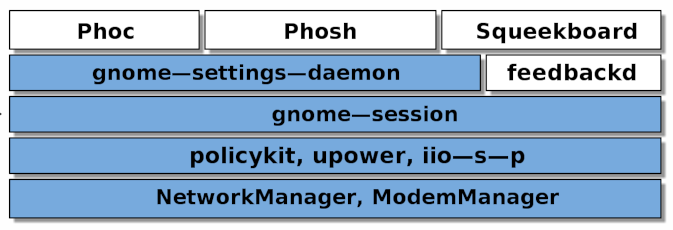 The blue boxes are the very same found on GNOME desktop sessions
while the white ones are currently only found on
phones.
 Once a year folks interested in Netfilter technologies gather together to discuss past, ongoing and
future works. The Netfilter Workshop is an opportunity to share and discuss new ideas, the state of
the project, bring people together to work & hack and to put faces to people who otherwise are just
email names. This is an event that
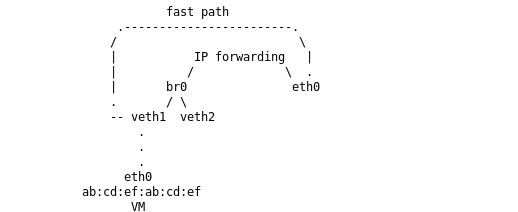 Stefano Bravio commented on several open topics for nftables that he is interested on working on.
One of them, issues related to concatenations + vmap issues. He also addressed concerns with
people s expectations when migrating from ipset to nftables. There are several corner features in
ipset that aren t currently supported in nftables, and we should document them. Stefano is also
wondering about some tools to help in the migration. A translation layer like there is in place
for iptables. Eric Gaver commented there are a couple of semantics that will not be suitable for
translation, such as global sets, or sets of sets. But ipset is way simpler than iptables, so a
translation mechanism should probably be created. In any case, there was agreement that anything
that helps people migrate is more than welcome, even if it doesn t support 100% of the use cases.
Stefano is planning to write documentation in the
 Previously:


 In May, I got selected as a


