Fun with -fsanitize=undefined and Picolibc
Both GCC and Clang support the -fsanitize=undefined flag which
instruments the generated code to detect places where the program
wanders into parts of the C language specification which are either
undefined or implementation defined. Many of these are also common
programming errors. It would be great if there were sanitizers for
other easily detected bugs, but for now, at least the undefined
sanitizer does catch several useful problems.
Supporting the sanitizer
The sanitizer can be built to either trap on any error or call
handlers. In both modes, the same problems are identified, but when
trap mode is enabled, the compiler inserts a trap instruction and
doesn't expect the program to continue running. When handlers are in
use, each identified issue is tagged with a bunch of useful data and
then a specific sanitizer handling function is called.
The specific functions are not all that well documented, nor are the
parameters they receive. Maybe this is because both compilers provide
an implementation of all of the functions they use and don't really
expect external implementations to exist? However, to make these useful in an
embedded environment, picolibc needs to provide a complete set of
handlers that support all versions both gcc and clang as the
compiler-provided versions depend upon specific C (and C++) libraries.
Of course, programs can be built in trap-on-error mode, but that makes
it much more difficult to figure out what went wrong.
Fixing Sanitizer Issues
Once the sanitizer handlers were implemented, picolibc could be
built with them enabled and all of the picolibc tests run to uncover
issues within the library.
As with the static analyzer adventure from last year, the vast bulk of
sanitizer complaints came from invoking undefined or
implementation-defined behavior in harmless ways:
else clause in the
overflow check. This inserts an extra branch instruction, which is
annoying.lsl, which
does this:
#define lsl(__x,__s) ((sizeof(__x) == sizeof(char)) ? \
(__typeof(__x)) ((unsigned char) (__x) << (__s)) : \
(sizeof(__x) == sizeof(short)) ? \
(__typeof(__x)) ((unsigned short) (__x) << (__s)) : \
(sizeof(__x) == sizeof(int)) ? \
(__typeof(__x)) ((unsigned int) (__x) << (__s)) : \
(sizeof(__x) == sizeof(long)) ? \
(__typeof(__x)) ((unsigned long) (__x) << (__s)) : \
(sizeof(__x) == sizeof(long long)) ? \
(__typeof(__x)) ((unsigned long long) (__x) << (__s)) : \
__undefined_shift_size(__x, __s))
Right shift is significantly more complicated to implement. What we
want is an arithmetic shift with the sign bit being replicated as the
value is shifted rightwards. C defines no such operator. Instead,
right shift of negative integers is implementation
defined. Fortunately, both gcc and clang define the >> operator on
signed integers as arithmetic shift. Also fortunately, C hasn't made
this undefined, so the program itself doesn't end up undefined.
The trouble with arithmetic right shift is that it is not equivalent
to right shift of unsigned values. Here's what Per Vognsen came up
with using standard C operators:
int
__asr_int(int x, int s)
return x < 0 ? ~(~x >> s) : x >> s;
When the value is negative, we invert all of the bits (making it
positive), shift right, then flip all of the bits back. Both GCC and
Clang seem to compile this to a single asr instruction. This function
is replicated for each of the five standard integer types and then the
set of them wrapped in another sizeof-selecting macro:
#define asr(__x,__s) ((sizeof(__x) == sizeof(char)) ? \
(__typeof(__x))__asr_char(__x, __s) : \
(sizeof(__x) == sizeof(short)) ? \
(__typeof(__x))__asr_short(__x, __s) : \
(sizeof(__x) == sizeof(int)) ? \
(__typeof(__x))__asr_int(__x, __s) : \
(sizeof(__x) == sizeof(long)) ? \
(__typeof(__x))__asr_long(__x, __s) : \
(sizeof(__x) == sizeof(long long)) ? \
(__typeof(__x))__asr_long_long(__x, __s): \
__undefined_shift_size(__x, __s))
The lsl and asr macros use sizeof instead of the type-generic
mechanism to remain compatible with compilers that lack type-generic
support.
Once these macros were written, they needed to be applied where
required. To preserve the benefits of detecting programming errors,
they were only applied where required, not blindly across the whole
codebase.
There are a couple of common patterns in the math code using shift
operators. One is when computing the exponent value for subnormal
numbers.
for (ix = -1022, i = hx << 11; i > 0; i <<= 1)
ix -= 1;
This code computes the exponent by shifting the significand left by 11
bits (the width of the exponent field) and then incrementally shifting
it one bit at a time until the sign flips, which indicates that the
most-significant bit is set. Use of the pre-C99 definition of the left
shift operator is intentional here; so both shifts are replaced with
our lsl operator.
In the implementation of pow, the final exponent is computed as the
sum of the two exponents, both of which are in the allowed range. The
resulting sum is then tested to see if it is zero or negative to see
if the final value is sub-normal:
hx += n << 20;
if (hx >> 20 <= 0)
/* do sub-normal things */
In this case, the exponent adjustment, n, is a signed value and so
that shift is replaced with the lsl macro. The test value needs to
compute the correct the sign bit, so we replace this with the asr
macro.
Because the right shift operation is not undefined, we only use our
fancy macro above when the undefined behavior sanitizer is enabled. On
the other hand, the lsl macro should have zero cost and covers
undefined behavior, so it is always used.
Actual Bugs Found!
The goal of this little adventure was both to make using the undefined
behavior sanitizer with picolibc possible as well as to use the
sanitizer to identify bugs in the library code. I fully expected that
most of the effort would be spent masking harmless undefined behavior
instances, but was hopeful that the effort would also uncover real
bugs in the code. I was not disappointed. Through this work, I found
(and fixed) eight bugs in the code:
int range rather than long.wchar_t was unsigned. p = malloc(sizeof(*p) * c);
Because sizeof returns an unsigned value, the resulting computation
never results in undefined behavior, even when the multiplication
wraps around, so even with the undefined behavior sanitizer enabled,
this bug will not be caught. Clang seems to have an unsigned integer
overflow sanitizer which should do this, but I couldn't find anything
like this in gcc.
Summary
The undefined behavior sanitizers present in clang and gcc both
provide useful diagnostics which uncover some common programming
errors. In most cases, replacing undefined behavior with defined
behavior is straightforward, although the lack of an arithmetic right
shift operator in standard C is irksome. I recommend anyone using C to
give it a try.
| Series: | Ambit's Run #1 |
| Publisher: | Tor |
| Copyright: | 2024 |
| ISBN: | 1-250-87126-3 |
| Format: | Kindle |
| Pages: | 407 |
git-archive tarball. My solution to this was to make use of the export-subst feature of the .gitattributes file. I store the file .tarball-version-git in git containing the magic cookie like this:
$Format:%(describe)$
With this, git-archive will replace with a useful version identifier on export, see the libtasn1 patch to achieve this. To make use of this information, the git-version-gen script was enhanced to read this information, see the gnulib patch. This is invoked by ./configure to figure out which version number the package is for.
./bootstrap, however there are two problems with this. The first one is that there is no strong authentication or versioning information on this data, the tools just download and place whatever wget downloaded into your source tree (printf-style injection attack anyone?). We could improve this (e.g., publish GnuPG signed translations messages with clear versioning), however I did not work on that further. The reason is that I want to support offline builds of packages. Downloading random things from the Internet during builds does not work when building a Debian package, for example. The translation project could solve this by making a monthly tarball with their translations available, for distributors to pick up and provide as a separate package that could be used as a build dependency. However that is not how these tools and projects are designed. Instead I reverted back to storing translations in git, something that I did for most projects back when I was using CVS 20 years ago. Hooking this into ./bootstrap and gettext workflow can be tricky (ideas for improvement most welcome!), but I used a simple approach to store all directly downloaded po/*.po files directly as po/*.po.in and make the ./bootstrap tool move them in place, see the libidn2 commit followed by the actual make update-po commit with all the translations where one essential step is:
# Prime po/*.po from fall-back copy stored in git.
for poin in po/*.po.in; do
po=$(echo $poin sed 's/.in//')
test -f $po cp -v $poin $po
done
ls po/*.po sed 's .*/ ; s \.po$ ' > po/LINGUAS
*.m4 macros from the GNU Autoconf Archive. However I m not confident that the solution for all vendor files must be the same. For translation files and for Autoconf Archive macros, I have decided to put these files into git and merge them manually occasionally. For gnulib files, in some projects like OATH Toolkit I also store all gnulib files in git which effectively resolve this concern. (Incidentally, the reason for doing so was originally that running ./bootstrap took forever since there is five gnulib instances used, which is no longer the case since gnulib-tool was rewritten in Python.) For most projects, however, I rely on ./bootstrap to fetch a gnulib git clone when building. I like this model, however it doesn t work offline. One way to resolve this is to make the gnulib git repository available for offline use, and I ve made some effort to make this happen via a Gnulib Git Bundle and have explained how to implement this approach for Debian packaging. I don t think that is sufficient as a generic solution though, it is mostly applicable to building old releases that uses old gnulib files. It won t work when building from CI/CD pipelines, for example, where I have settled to use a crude way of fetching and unpacking a particular gnulib snapshot, see this Libntlm patch. This is much faster than working with git submodules and cloning gnulib during ./bootstrap. Essentially this is doing:
GNULIB_REVISION=$(. bootstrap.conf >&2; echo $GNULIB_REVISION)
wget -nv https://gitlab.com/libidn/gnulib-mirror/-/archive/$GNULIB_REVISION/gnulib-mirror-$GNULIB_REVISION.tar.gz
gzip -cd gnulib-mirror-$GNULIB_REVISION.tar.gz tar xf -
rm -fv gnulib-mirror-$GNULIB_REVISION.tar.gz
export GNULIB_SRCDIR=$PWD/gnulib-mirror-$GNULIB_REVISION
./bootstrap --no-git
./configure
make
git-archive style tarball works, you are likely to regress at some point. Use CI/CD techniques to continuously test that a minimal git-archive tarball leads to a usable build.
git-archive tarball and users should be able to build your project from it.
I recommend naming these archives as PROJECT-vX.Y.Z-src.tar.gz replacing PROJECT with your project name and X.Y.Z with your version number. The archive should have only one sub-directory named PROJECT-vX.Y.Z/ containing all the source-code files. This differentiate it against traditional PROJECT-X.Y.Z.tar.gz tarballs in that it embeds the git tag (which typically starts with v) and contains a wildcard-friendly -src substring. Alas there is no consistency around this naming pattern, and GitLab, GitHub, Codeberg etc all seem to use their own slightly incompatible variant.
Let s go on to see what is needed to achieve reproducible make dist source tarballs. This is the release artifact that most users use, and they often contain lots of generated files and vendor files. These files are included to make it easy to build for the user. What are the challenges to make these reproducible?
*.po translation files and Texinfo manuals. For translation files, I have resolved this by making sure the files use a predictable POT-Creation-Date timestamp, and I set it to the modification timestamps of the NEWS file in the repository (which I set to the git commit of the latest commit elsewhere) like this:
dist-hook: po-CreationDate-to-mtime-NEWS
.PHONY: po-CreationDate-to-mtime-NEWS
po-CreationDate-to-mtime-NEWS: mtime-NEWS-to-git-HEAD
$(AM_V_GEN)for p in $(distdir)/po/*.po $(distdir)/po/$(PACKAGE).pot; do \
if test -f "$$p"; then \
$(SED) -e 's,POT-Creation-Date: .*\\n",POT-Creation-Date: '"$$(env LC_ALL=C TZ=UTC0 stat --format=%y $(srcdir)/NEWS cut -c1-16,31-)"'\\n",' < $$p > $$p.tmp && \
if cmp $$p $$p.tmp > /dev/null; then \
rm -f $$p.tmp; \
else \
mv $$p.tmp $$p; \
fi \
fi \
done
Similarily, I set a predictable modification time of the texinfo source file like this:
dist-hook: mtime-NEWS-to-git-HEAD
.PHONY: mtime-NEWS-to-git-HEAD
mtime-NEWS-to-git-HEAD:
$(AM_V_GEN)if test -e $(srcdir)/.git \
&& command -v git > /dev/null; then \
touch -m -t "$$(git log -1 --format=%cd \
--date=format-local:%Y%m%d%H%M.%S)" $(srcdir)/NEWS; \
fi
However I ve realized that this needs to happen earlier and probably has to be run during ./configure time, because the doc/version.texi file is generated on first build before running make dist and for some reason the file is not rebuilt at release time. The Automake texinfo integration is a bit inflexible about providing hooks to extend the dependency tracking.
The method to address these differences isn t really important, and they change over time depending on preferences. What is important is that the differences are eliminated.
make dist source archives from a minimal git-archive source archive. However for other projects I ve settled with a middle ground. I realized that for git describe to produce reproducible outputs, the shallow clone needs to include the last release tag. So it felt acceptable to assume that the clone is not minimal, but instead has some but not all of the history. I settled with the following recipe to produce ChangeLog's covering all changes since the last release.
dist-hook: gen-ChangeLog
.PHONY: gen-ChangeLog
gen-ChangeLog:
$(AM_V_GEN)if test -e $(srcdir)/.git; then \
LC_ALL=en_US.UTF-8 TZ=UTC0 \
$(top_srcdir)/build-aux/gitlog-to-changelog \
--srcdir=$(srcdir) -- \
v$(PREV_VERSION)~.. > $(distdir)/cl-t && \
printf '\n\nSee the source repo for older entries\n' \
>> $(distdir)/cl-t && \
rm -f $(distdir)/ChangeLog && \
mv $(distdir)/cl-t $(distdir)/ChangeLog; \
fi
I m undecided about the usefulness of generated ChangeLog files within make dist archives. Before we have stable and secure archival of git repositories widely implemented, I can see some utility of this in case we lose all copies of the upstream git repositories. I can sympathize with the concept of ChangeLog files died when we started to generate them from git logs: the files no longer serve any purpose, and we can ask people to go look at the git log instead of reading these generated non-source files.
guix gime-machine) that have bootstrappable properties for additional confidence. However I had two difficult problems here. The first one was that I needed Guix container images that were usable in GitLab CI/CD Pipelines, and this side-tracked me for a while. The second one delayed my effort for many months, and I was inclined to give up. Libidn distribute a C# implementation. Some of the C# source code files included in the release tarball are generated. By what? You guess it, by a C# program, with the source code included in the distribution. This means nobody could reproduce the source tarball of Libidn without trusting someone elses C# compiler binaries, which were built from binaries of earlier releases, chaining back into something that nobody ever attempts to build any more and likely fail to build due to bit-rot. I had two basic choices, either remove the C# implementation from Libidn (which may be a good idea for other reasons, since the C and C# are unrelated implementations) or build the source tarball on some binary-only distribution like Trisquel. Neither felt appealing to me, but a late christmas gift of a reproducible Mono came to Guix that resolve this.
grep to remove some timestamps, however with compression this is no longer possible and actually the grep command I used resulted in a 0-byte output file. So my embedded binaries in git was no longer reproducible. I first set out to fix this by post-processing things properly, however I then realized that the *.fig file is not really easy to work with in a modern world. I wanted to create an image from some text-file description of the image. Eventually, via the Guix manual on guix graph, I came to re-discover the graphviz language and tool called dot (hello 1993!). All well then? Oh no, the PDF output embeds timestamps. Binary editing of PDF s no longer work through simple grep, remember? I was back where I started, and after some (soul- and web-) searching I discovered that Ghostscript (hello 1988!) pdfmarks could be used to modify things here. Cooperating with automake s texinfo rules related to make dist proved once again a worthy challenge, and eventually I ended up with a Makefile.am snippet to build images that could be condensed into:
info_TEXINFOS = libidn.texi
libidn_TEXINFOS += libidn-components.png
imagesdir = $(infodir)
images_DATA = libidn-components.png
EXTRA_DIST += components.dot
DISTCLEANFILES = \
libidn-components.eps libidn-components.png libidn-components.pdf
libidn-components.eps: $(srcdir)/components.dot
$(AM_V_GEN)$(DOT) -Nfontsize=9 -Teps < $< > $@.tmp
$(AM_V_at)! grep %%CreationDate $@.tmp
$(AM_V_at)mv $@.tmp $@
libidn-components.pdf: $(srcdir)/components.dot
$(AM_V_GEN)$(DOT) -Nfontsize=9 -Tpdf < $< > $@.tmp
# A simple sed on CreationDate is no longer possible due to compression.
# 'exiftool -CreateDate' is alternative to 'gs', but adds ~4kb to file.
# Ghostscript add <1kb. Why can't 'dot' avoid setting CreationDate?
$(AM_V_at)printf '[ /ModDate ()\n /CreationDate ()\n /DOCINFO pdfmark\n' > pdfmarks
$(AM_V_at)$(GS) -q -dBATCH -dNOPAUSE -sDEVICE=pdfwrite -sOutputFile=$@.tmp2 $@.tmp pdfmarks
$(AM_V_at)rm -f $@.tmp pdfmarks
$(AM_V_at)mv $@.tmp2 $@
libidn-components.png: $(srcdir)/components.dot
$(AM_V_GEN)$(DOT) -Nfontsize=9 -Tpng < $< > $@.tmp
$(AM_V_at)mv $@.tmp $@
pdf-recursive: libidn-components.pdf
dvi-recursive: libidn-components.eps
ps-recursive: libidn-components.eps
info-recursive: $(top_srcdir)/.version libidn-components.png
Surely this can be improved, but I m not yet certain in what way is the best one forward. I like having a text representation as the source of the image. I m sad that the new image size is ~48kb compared to the old image size of ~1kb. I tried using exiftool -CreateDate as an alternative to GhostScript, but using it to remove the timestamp added ~4kb to the file size and naturally I was appalled by this ignorance of impending doom.
0-compare:
image: alpine:latest
stage: repro
needs: [ B-AlmaLinux8, B-AlmaLinux9, B-RockyLinux8, B-RockyLinux9, B-Trisquel11, B-Ubuntu2204, B-PureOS10, B-Debian11, B-Devuan5, B-Debian12, B-gcc, B-clang, B-Guix, R-Guix, R-Debian12, R-Ubuntu2404, S-Trisquel10, S-Ubuntu2004 ]
script:
- cd out
- sha256sum */*.tar.* */*/*.tar.* sort grep -- -src.tar.
- sha256sum */*.tar.* */*/*.tar.* sort grep -v -- -src.tar.
- sha256sum */*.tar.* */*/*.tar.* sort uniq -c -w64 sort -rn
- sha256sum */*.tar.* */*/*.tar.* grep -- -src.tar. sort uniq -c -w64 grep -v '^ 1 '
- sha256sum */*.tar.* */*/*.tar.* grep -v -- -src.tar. sort uniq -c -w64 grep -v '^ 1 '
# Confirm modern git-archive tarball reproducibility
- cmp b-almalinux8/src/*.tar.gz b-almalinux9/src/*.tar.gz
- cmp b-almalinux8/src/*.tar.gz b-rockylinux8/src/*.tar.gz
- cmp b-almalinux8/src/*.tar.gz b-rockylinux9/src/*.tar.gz
- cmp b-almalinux8/src/*.tar.gz b-debian12/src/*.tar.gz
- cmp b-almalinux8/src/*.tar.gz b-devuan5/src/*.tar.gz
- cmp b-almalinux8/src/*.tar.gz r-guix/src/*.tar.gz
- cmp b-almalinux8/src/*.tar.gz r-debian12/src/*.tar.gz
- cmp b-almalinux8/src/*.tar.gz r-ubuntu2404/src/*v2.*.tar.gz
# Confirm old git-archive (export-subst but long git describe) tarball reproducibility
- cmp b-trisquel11/src/*.tar.gz b-ubuntu2204/src/*.tar.gz
# Confirm really old git-archive (no export-subst) tarball reproducibility
- cmp b-debian11/src/*.tar.gz b-pureos10/src/*.tar.gz
# Confirm 'make dist' generated tarball reproducibility
- cmp b-almalinux8/*.tar.gz b-rockylinux8/*.tar.gz
- cmp b-almalinux9/*.tar.gz b-rockylinux9/*.tar.gz
- cmp b-pureos10/*.tar.gz b-debian11/*.tar.gz
- cmp b-devuan5/*.tar.gz b-debian12/*.tar.gz
- cmp b-trisquel11/*.tar.gz b-ubuntu2204/*.tar.gz
- cmp b-guix/*.tar.gz r-guix/*.tar.gz
# Confirm 'make dist' from git-archive tarball reproducibility
- cmp s-trisquel10/*.tar.gz s-ubuntu2004/*.tar.gz
Notice that I discovered that git archive outputs differ over time too, which is natural but a bit of a nuisance. The output of the job is illuminating in the way that all SHA256 checksums of generated tarballs are included, for example the libidn2 v2.3.8 job log:
$ sha256sum */*.tar.* */*/*.tar.* sort grep -v -- -src.tar.
368488b6cc8697a0a937b9eb307a014396dd17d3feba3881e6911d549732a293 b-trisquel11/libidn2-2.3.8.tar.gz
368488b6cc8697a0a937b9eb307a014396dd17d3feba3881e6911d549732a293 b-ubuntu2204/libidn2-2.3.8.tar.gz
59db2d045fdc5639c98592d236403daa24d33d7c8db0986686b2a3056dfe0ded b-debian11/libidn2-2.3.8.tar.gz
59db2d045fdc5639c98592d236403daa24d33d7c8db0986686b2a3056dfe0ded b-pureos10/libidn2-2.3.8.tar.gz
5bd521d5ecd75f4b0ab0fc6d95d444944ef44a84cad859c9fb01363d3ce48bb8 s-trisquel10/libidn2-2.3.8.tar.gz
5bd521d5ecd75f4b0ab0fc6d95d444944ef44a84cad859c9fb01363d3ce48bb8 s-ubuntu2004/libidn2-2.3.8.tar.gz
7f1dcdea3772a34b7a9f22d6ae6361cdcbe5513e3b6485d40100b8565c9b961a b-almalinux8/libidn2-2.3.8.tar.gz
7f1dcdea3772a34b7a9f22d6ae6361cdcbe5513e3b6485d40100b8565c9b961a b-rockylinux8/libidn2-2.3.8.tar.gz
8031278157ce43b5813f36cf8dd6baf0d9a7f88324ced796765dcd5cd96ccc06 b-clang/libidn2-2.3.8.tar.gz
8031278157ce43b5813f36cf8dd6baf0d9a7f88324ced796765dcd5cd96ccc06 b-debian12/libidn2-2.3.8.tar.gz
8031278157ce43b5813f36cf8dd6baf0d9a7f88324ced796765dcd5cd96ccc06 b-devuan5/libidn2-2.3.8.tar.gz
8031278157ce43b5813f36cf8dd6baf0d9a7f88324ced796765dcd5cd96ccc06 b-gcc/libidn2-2.3.8.tar.gz
8031278157ce43b5813f36cf8dd6baf0d9a7f88324ced796765dcd5cd96ccc06 r-debian12/libidn2-2.3.8.tar.gz
acf5cbb295e0693e4394a56c71600421059f9c9bf45ccf8a7e305c995630b32b r-ubuntu2404/libidn2-2.3.8.tar.gz
cbdb75c38100e9267670b916f41878b6dbc35f9c6cbe60d50f458b40df64fcf1 b-almalinux9/libidn2-2.3.8.tar.gz
cbdb75c38100e9267670b916f41878b6dbc35f9c6cbe60d50f458b40df64fcf1 b-rockylinux9/libidn2-2.3.8.tar.gz
f557911bf6171621e1f72ff35f5b1825bb35b52ed45325dcdee931e5d3c0787a b-guix/libidn2-2.3.8.tar.gz
f557911bf6171621e1f72ff35f5b1825bb35b52ed45325dcdee931e5d3c0787a r-guix/libidn2-2.3.8.tar.gz
I m sure I have forgotten or suppressed some challenges (sprinkling LANG=C TZ=UTC0 helps) related to these goals, but my hope is that this discussion of solutions will inspire you to implement these concepts for your software project too. Please share your thoughts and additional insights in a comment below. Enjoy Happy Hacking in the course of practicing this!

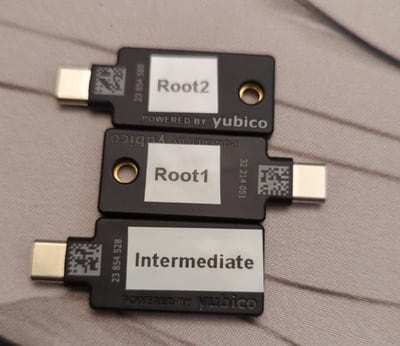
offline-pki is a small Python application to manage an offline PKI.
It relies on yubikey-manager to manage YubiKeys and cryptography for
cryptographic operations not executed on the YubiKeys. The application has some
opinionated design choices. Notably, the cryptography is hard-coded to use NIST
P-384 elliptic curve.
The first step is to reset all your YubiKeys:
$ offline-pki yubikey reset This will reset the connected YubiKey. Are you sure? [y/N]: y New PIN code: Repeat for confirmation: New PUK code: Repeat for confirmation: New management key ('.' to generate a random one): WARNING[pki-yubikey] Using random management key: e8ffdce07a4e3bd5c0d803aa3948a9c36cfb86ed5a2d5cf533e97b088ae9e629 INFO[pki-yubikey] 0: Yubico YubiKey OTP+FIDO+CCID 00 00 INFO[pki-yubikey] SN: 23854514 INFO[yubikit.management] Device config written INFO[yubikit.piv] PIV application data reset performed INFO[yubikit.piv] Management key set INFO[yubikit.piv] New PUK set INFO[yubikit.piv] New PIN set INFO[pki-yubikey] YubiKey reset successful!
$ offline-pki certificate root --permitted example.com Management key for Root X: Plug YubiKey "Root X"... INFO[pki-yubikey] 0: Yubico YubiKey CCID 00 00 INFO[pki-yubikey] SN: 23854514 INFO[yubikit.piv] Data written to object slot 0x5fc10a INFO[yubikit.piv] Certificate written to slot 9C (SIGNATURE), compression=True INFO[yubikit.piv] Private key imported in slot 9C (SIGNATURE) of type ECCP384 Copy root certificate to another YubiKey? [y/N]: y Plug YubiKey "Root X"... INFO[pki-yubikey] 0: Yubico YubiKey CCID 00 00 INFO[pki-yubikey] SN: 23854514 INFO[yubikit.piv] Data written to object slot 0x5fc10a INFO[yubikit.piv] Certificate written to slot 9C (SIGNATURE), compression=True INFO[yubikit.piv] Private key imported in slot 9C (SIGNATURE) of type ECCP384 Copy root certificate to another YubiKey? [y/N]: n
$ offline-pki yubikey info INFO[pki-yubikey] 0: Yubico YubiKey CCID 00 00 INFO[pki-yubikey] SN: 23854514 INFO[pki-yubikey] Slot 9C (SIGNATURE): INFO[pki-yubikey] Private key type: ECCP384 INFO[pki-yubikey] Public key: INFO[pki-yubikey] Algorithm: secp384r1 INFO[pki-yubikey] Issuer: CN=Root CA INFO[pki-yubikey] Subject: CN=Root CA INFO[pki-yubikey] Serial: 1 INFO[pki-yubikey] Not before: 2024-07-05T18:17:19+00:00 INFO[pki-yubikey] Not after: 2044-06-30T18:17:19+00:00 INFO[pki-yubikey] PEM: -----BEGIN CERTIFICATE----- MIIBcjCB+aADAgECAgEBMAoGCCqGSM49BAMDMBIxEDAOBgNVBAMMB1Jvb3QgQ0Ew HhcNMjQwNzA1MTgxNzE5WhcNNDQwNjMwMTgxNzE5WjASMRAwDgYDVQQDDAdSb290 IENBMHYwEAYHKoZIzj0CAQYFK4EEACIDYgAERg3Vir6cpEtB8Vgo5cAyBTkku/4w kXvhWlYZysz7+YzTcxIInZV6mpw61o8W+XbxZV6H6+3YHsr/IeigkK04/HJPi6+i zU5WJHeBJMqjj2No54Nsx6ep4OtNBMa/7T9foyMwITAPBgNVHRMBAf8EBTADAQH/ MA4GA1UdDwEB/wQEAwIBhjAKBggqhkjOPQQDAwNoADBlAjEAwYKy/L8leJyiZSnn xrY8xv8wkB9HL2TEAI6fC7gNc2bsISKFwMkyAwg+mKFKN2w7AjBRCtZKg4DZ2iUo 6c0BTXC9a3/28V5aydZj6rvx0JqbF/Ln5+RQL6wFMLoPIvCIiCU= -----END CERTIFICATE-----
offline-pki yubikey
intermediate and use it to sign certificates by providing a CSR to offline-pki
certificate sign. Be careful and inspect the CSR before signing it, as only the
subject name can be overridden. Check the documentation for more details.
Get the available options using the --help flag.

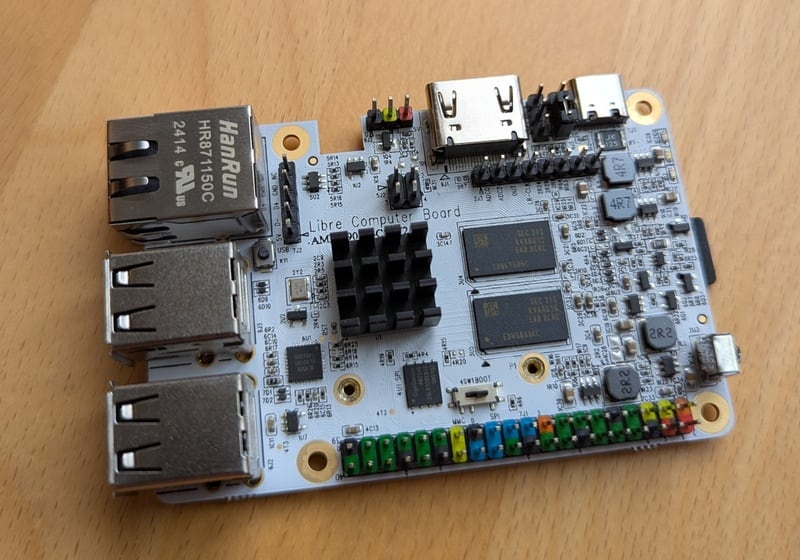
$ tio /dev/ttyUSB0 [16:40:44.546] tio v3.7 [16:40:44.546] Press ctrl-t q to quit [16:40:44.555] Connected to /dev/ttyUSB0 GXL:BL1:9ac50e:bb16dc;FEAT:ADFC318C:0;POC:1;RCY:0;SPI:0;0.0;CHK:0; TE: 36574 BL2 Built : 15:21:18, Aug 28 2019. gxl g1bf2b53 - luan.yuan@droid15-sz set vcck to 1120 mv set vddee to 1000 mv Board ID = 4 CPU clk: 1200MHz [ ]
offline-pki application, with shell completion,offline-pki application,# Execute the application locally nix run github:vincentbernat/offline-pki -- --help # Run the application inside a QEMU VM nix run github:vincentbernat/offline-pki\#qemu # Build a SD card for the Sweet Potato or for the Raspberry Pi nix build --system aarch64-linux github:vincentbernat/offline-pki\#sdcard.potato nix build --system aarch64-linux github:vincentbernat/offline-pki\#sdcard.generic # Get a development shell with the application nix develop github:vincentbernat/offline-pki
An update to our package RcppNLoptExample
arrived on CRAN earlier today
marking the first update since the intial
release more than four year ago. The nloptr package, created by
Jelmer Ypma, has long been
providing an excellent R interface to NLopt, a very
comprehensive library for nonlinear optimization. In particular, Jelmer carefully exposed the API
entry points such that other R packages can rely on NLopt without having
to explicitly link to it (as one can rely on R providing
sufficient function calling and registration to make this possible by
referring back to nloptr
which naturally has the linking information and resolution). This
package demonstrates this in a simple-to-use Rcpp example package that can serve as a
stanza.
More recent NLopt versions appear
to have changed behaviour a little so that an example we relied upon in
simple unit test now converges to a marginally different numerical
value, so we adjusted a convergence treshold. Other than that we did a
number of the usual small updates to package metadata, to the README.md
file, and to continuous integration.
The (very short) NEWS entry follows:
Courtesy of my CRANberries, there is also a diffstat report for this release. For questions, suggestions, or issues please use the issue tracker at the GitHub repo.Changes in version 0.0.2 (2025-03-09)
- Updated tolerance in simple test as newer upstream nlopt change behaviour ever so slightly leading to an other spurious failure
- Numerous small and standard updates to DESCRIPTION, README.md, badges, and continuous integration setup
This post by Dirk Eddelbuettel originated on his Thinking inside the box blog. If you like this or other open-source work I do, you can now sponsor me at GitHub.
Source: foo-src
Section: devel
Priority: optional
Package: foo-bin
Architecture: any
Source: foo-src
Section: devel
Priority: optional
Package: foo-bin
Section: devel
Priority: optional
Architecture: any
Source: foo-src
Section: devel
Priority: optional
Package: foo-bin (Section: devel) (Priority: optional)
Architecture: any
In my infinite wisdom, I chose to make a comment line where I would do the change. I figured it would neuter the completion requests completely and it should not matter if my cursor landed on the comment as there would be no hover docs for comments either. Unfortunately for me, debputy would ignore the fact that it was on a comment line. Instead, it would find the next field after the comment line and try to complete based on that. Normally you do not see this, because the editor correctly identifies that none of the completion suggestions start with a \#, so they are all discarded. But it was pretty annoying for the debugging, so now debputy has been told to explicitly stop these requests early on comment lines.
- Completion requests. These are triggered by typing anything at all and since I wanted to a change, I could not avoid this. So here it was about making sure there would be nothing to complete, so the result was a small as possible.
- Hover doc requests. These are triggered by mouse hovering over field, so this was mostly about ensuring my mouse movement did not linger over any field on the way between restarting the LSP server and scrolling the log in kate.
This flow is really annoying from a LSP server writer point of view. When you do the diagnostics (in step 1), you tend to already know what the possible quickfixes would be. The LSP spec authors realized this at some point, so there are two features the editor provides to simplify this.
- The LSP server provides the editor with diagnostics (there are multiple ways to trigger this, so we will keep this part simple).
- The editor renders them to the user and the user chooses to interact with one of them.
- The interaction makes the editor asks the LSP server, which code actions are available at that location (optionally with filter to only see quickfixes).
- The LSP server looks at the provided range and is expected to return the relevant quickfixes here.
All the quickfix logic in debputy so far has hinged on both of these two features. As life would have it, kate provides neither of them. Which meant I had to teach debputy to keep track of its diagnostics on its own. The plus side is that makes it easier to support "pull diagnostics" down the line, since it requires a similar feature. Additionally, it also means that quickfixes are now available in more editors. For consistency, debputy logic is now always used rather than relying on the editor support when present. The downside is that I had to spend hours coming up with and debugging a way to find the diagnostics that overlap with the range provided by the editor. The most difficult part was keeping the logic straight and getting the runes correct for it.
- In the editor request for code actions, the editor is expected to provide the diagnostics that they received from the server. Side note: I cannot quite tell if this is optional or required from the spec.
- The editor can provide support for remembering a data member in each diagnostic. The server can then store arbitrary information in that member, which they will see again in the code actions request. Again, provided that the editor supports this optional feature.
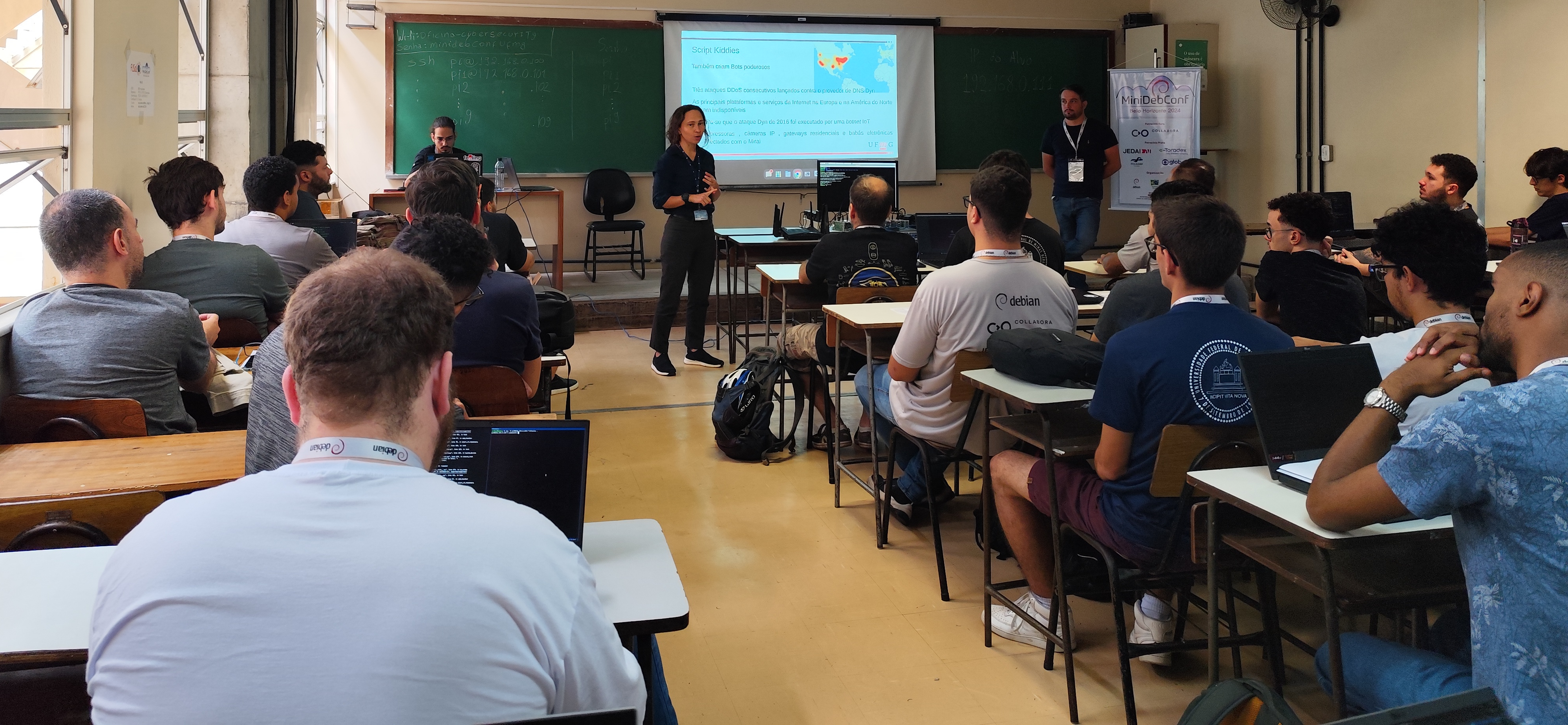
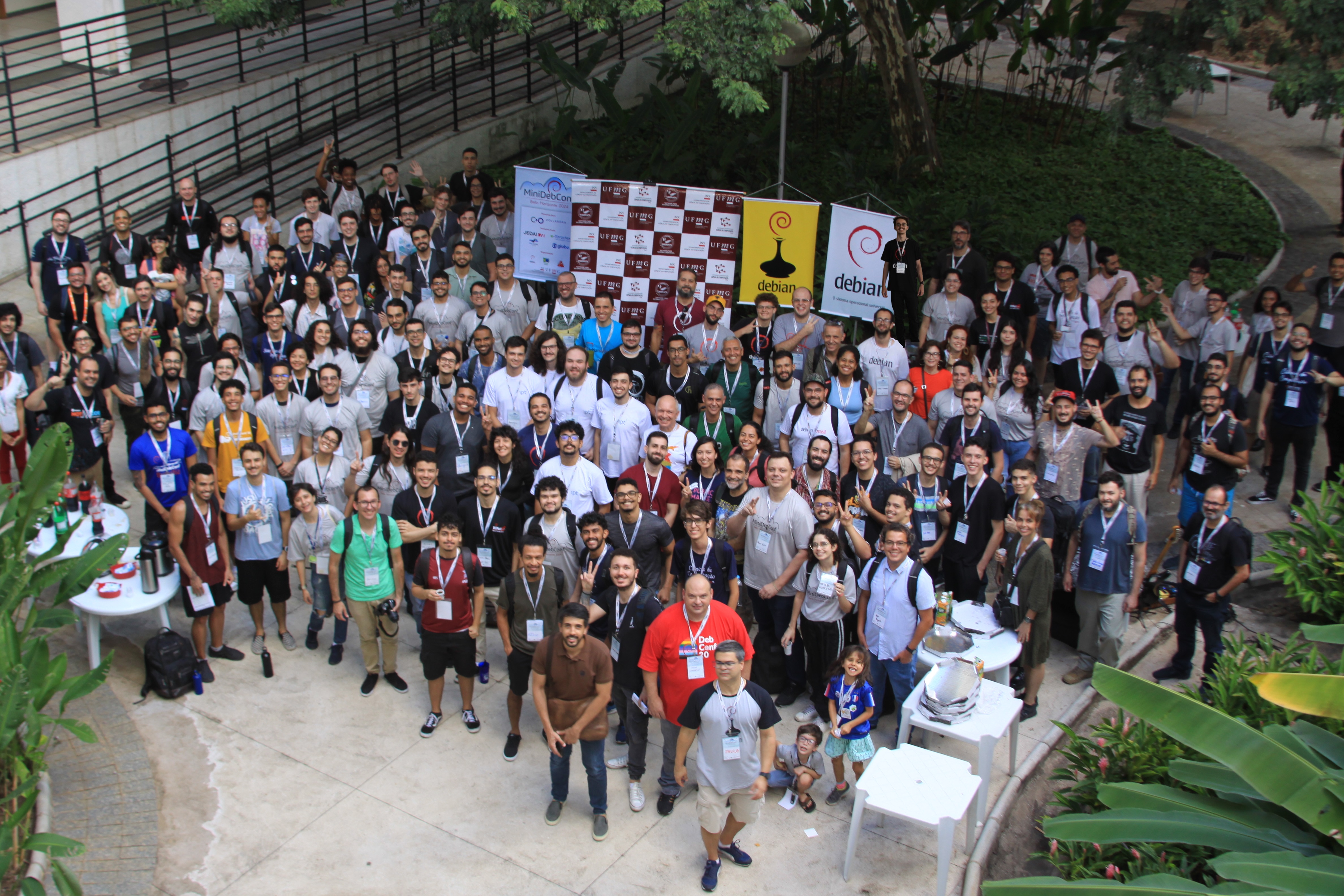
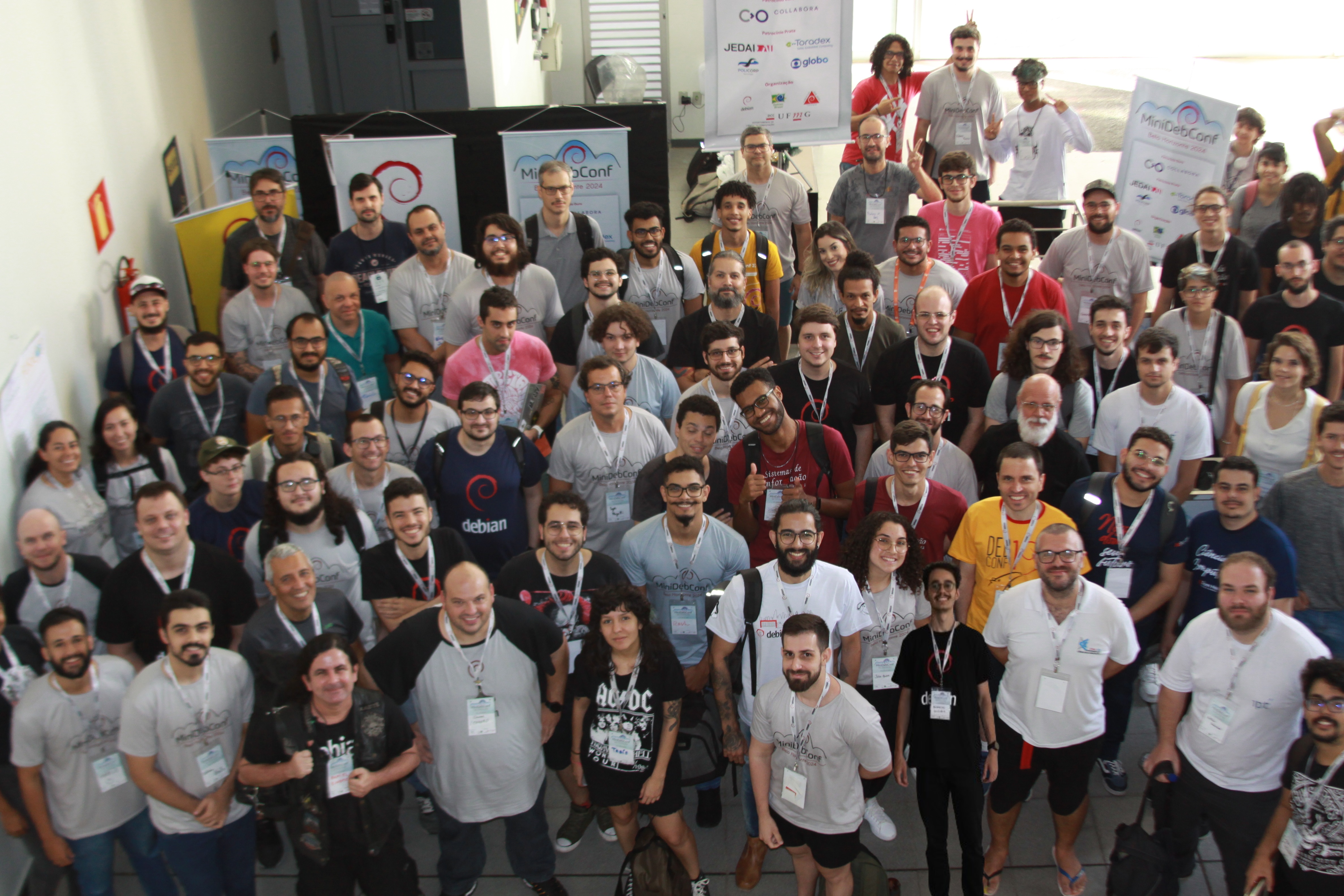
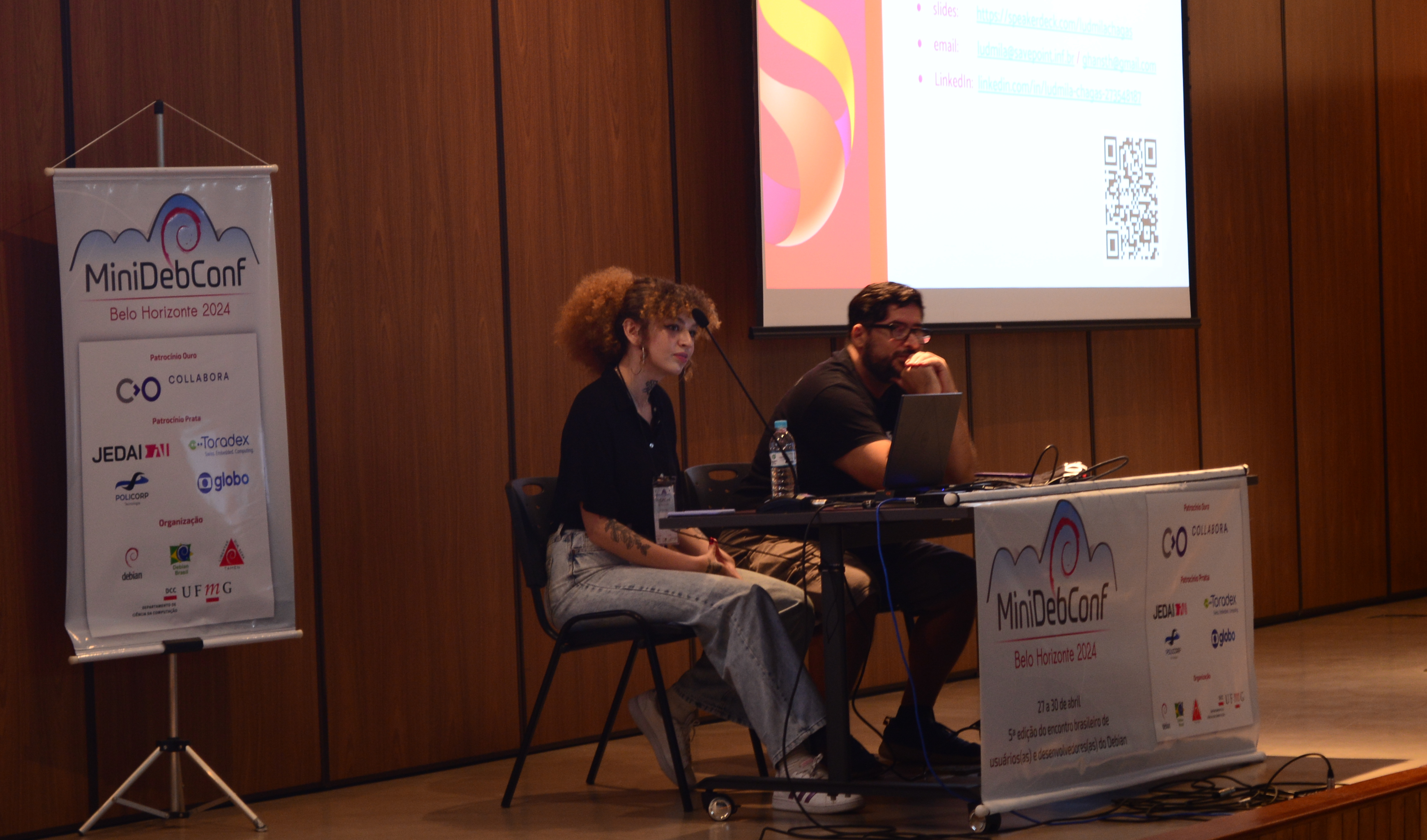
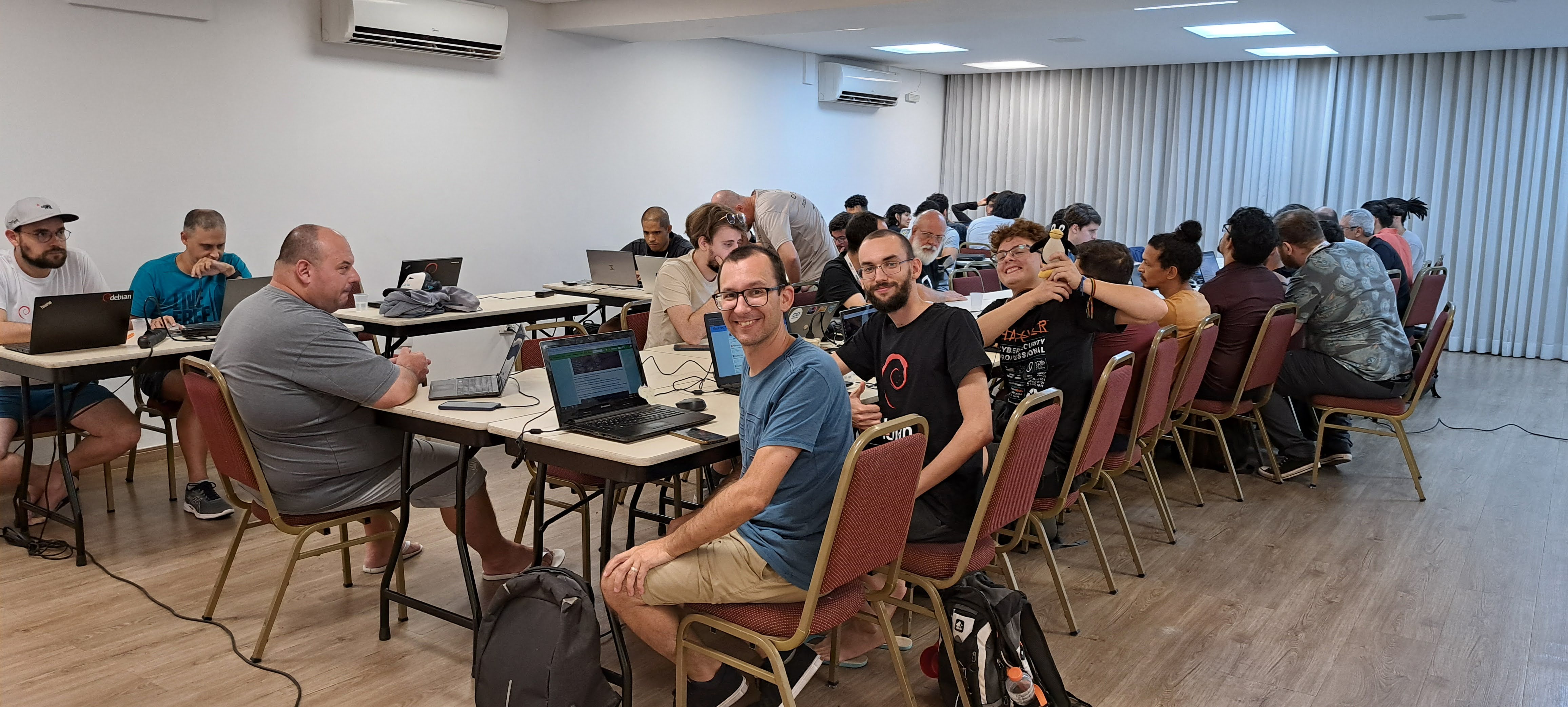
From April 27th to 30th, 2024,
MiniDebConf Belo Horizonte 2024 was held at
the Pampulha Campus of
UFMG - Federal University of Minas Gerais, in Belo
Horizonte city.
This was the fifth time that a MiniDebConf (as an exclusive in-person event
about Debian) took place in Brazil. Previous editions were in Curitiba
(2016,
2017, and
2018), and in
Bras lia 2023. We had other MiniDebConfs
editions held within Free Software events such as
FISL and Latinoware, and other
online events. See our
event history.
Parallel to MiniDebConf, on 27th (Saturday)
FLISOL - Latin American Free Software Installation Festival took place. It's the largest event in Latin America to promote Free Software,
and It has been held since 2005 simultaneously in several cities.
MiniDebConf Belo Horizonte 2024 was a success (as were previous editions) thanks to the participation of everyone, regardless of their level of knowledge about
Debian. We value the presence of both beginner users who are familiarizing
themselves with the system and the official project developers. The spirit of
welcome and collaboration was present during all the event.
2024 edition numbers
During the four days of the event, several activities took place for all
levels of users and collaborators of the Debian project. The official schedule
was composed of:
The final numbers for MiniDebConf Belo Horizonte 2024 show that we had a
record number of participants.
Activities
The MiniDebConf schedule was intense and diverse. On the 27th, 29th and 30th
(Saturday, Monday and Tuesday) we had talks, discussions, workshops and many
practical activities.
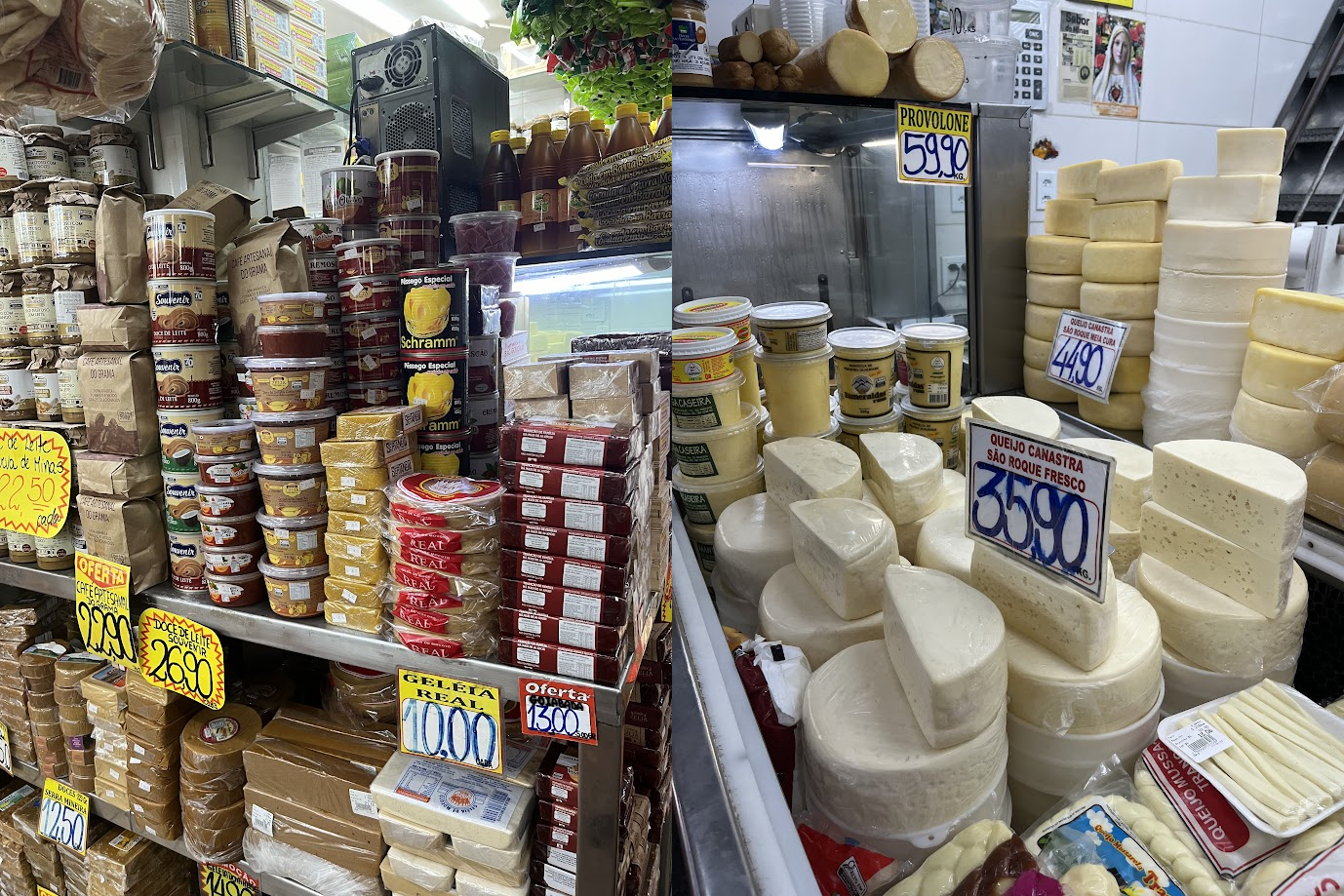
On the 28th (Sunday), the Day Trip took place, a day dedicated to sightseeing
around the city. In the morning we left the hotel and went, on a chartered bus,
to the
Belo Horizonte Central Market. People took
the opportunity to buy various things such as cheeses, sweets, cacha as and
souvenirs, as well as tasting some local foods.
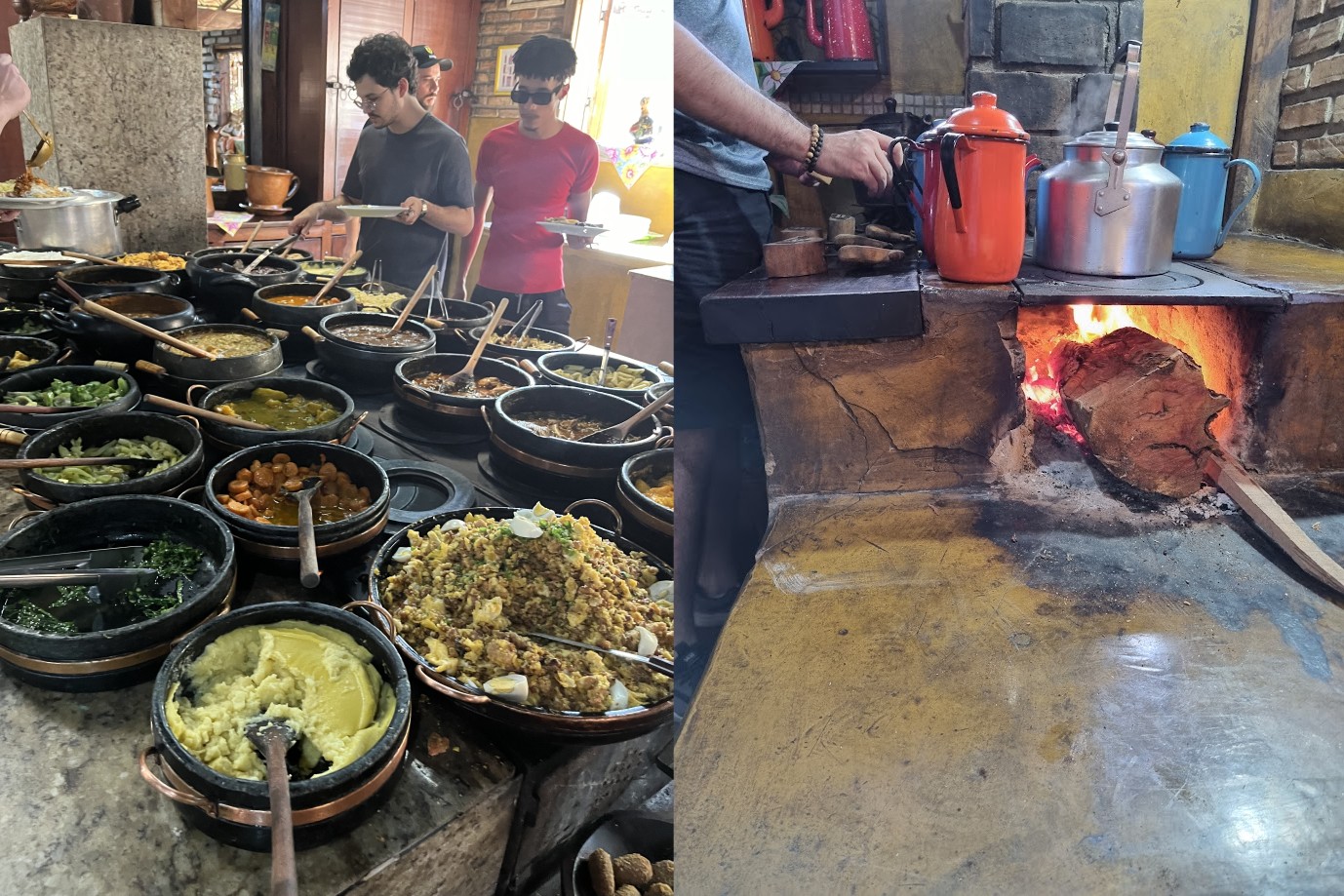
After a 2-hour tour of the Market, we got back on the bus and hit the road for
lunch at a typical Minas Gerais food restaurant.
With everyone well fed, we returned to Belo Horizonte to visit the city's
main tourist attraction: Lagoa da Pampulha and Capela S o Francisco de Assis,
better known as
Igrejinha da Pampulha.
We went back to the hotel and the day ended in the hacker space that we set up
in the events room for people to chat, packaging, and eat pizzas.
Crowdfunding
For the third time we ran a crowdfunding campaign and it was incredible how
people contributed! The initial goal was to raise the amount equivalent to a
gold tier of R$ 3,000.00. When we reached this goal, we defined a new one,
equivalent to one gold tier + one silver tier (R$ 5,000.00). And again we
achieved this goal. So we proposed as a final goal the value of a gold + silver
+ bronze tiers, which would be equivalent to R$ 6,000.00. The result was that
we raised R$7,239.65 (~ USD 1,400) with the help of more than 100 people!
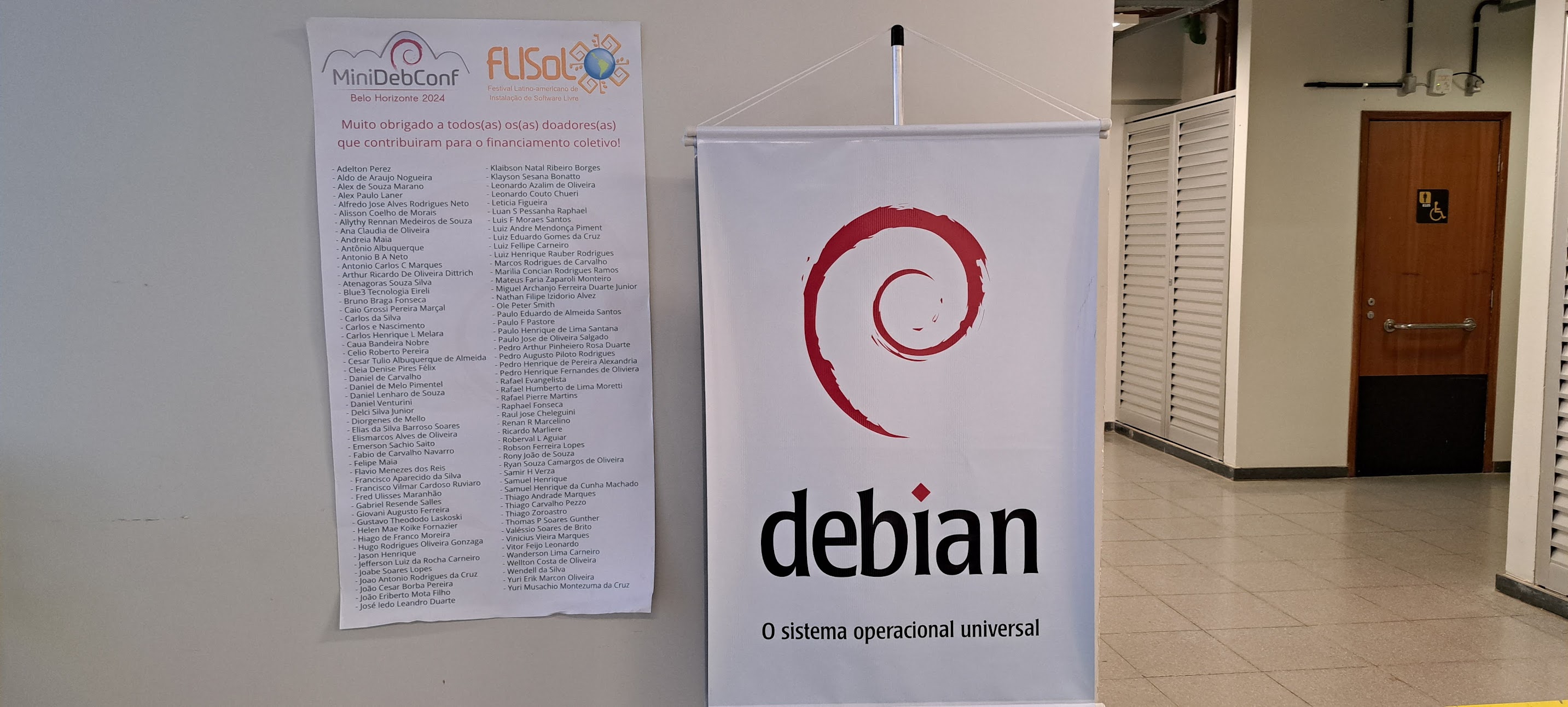
Thank you very much to the people who contributed any amount. As a thank you, we list the names of the people who donated.
Food, accommodation and/or travel grants for participants
Each edition of MiniDebConf brought some innovation, or some different benefit
for the attendees. In this year's edition in Belo Horizonte, as with DebConfs, we offered bursaries for food, accommodation and/or travel to help those people who would like to come to the event but who would need
some kind of help.
In the registration form, we included the option for the person to request a
food, accommodation and/or travel bursary, but to do so, they would have to
identify themselves as a contributor (official or unofficial) to Debian and
write a justification for the request.
Number of people benefited:
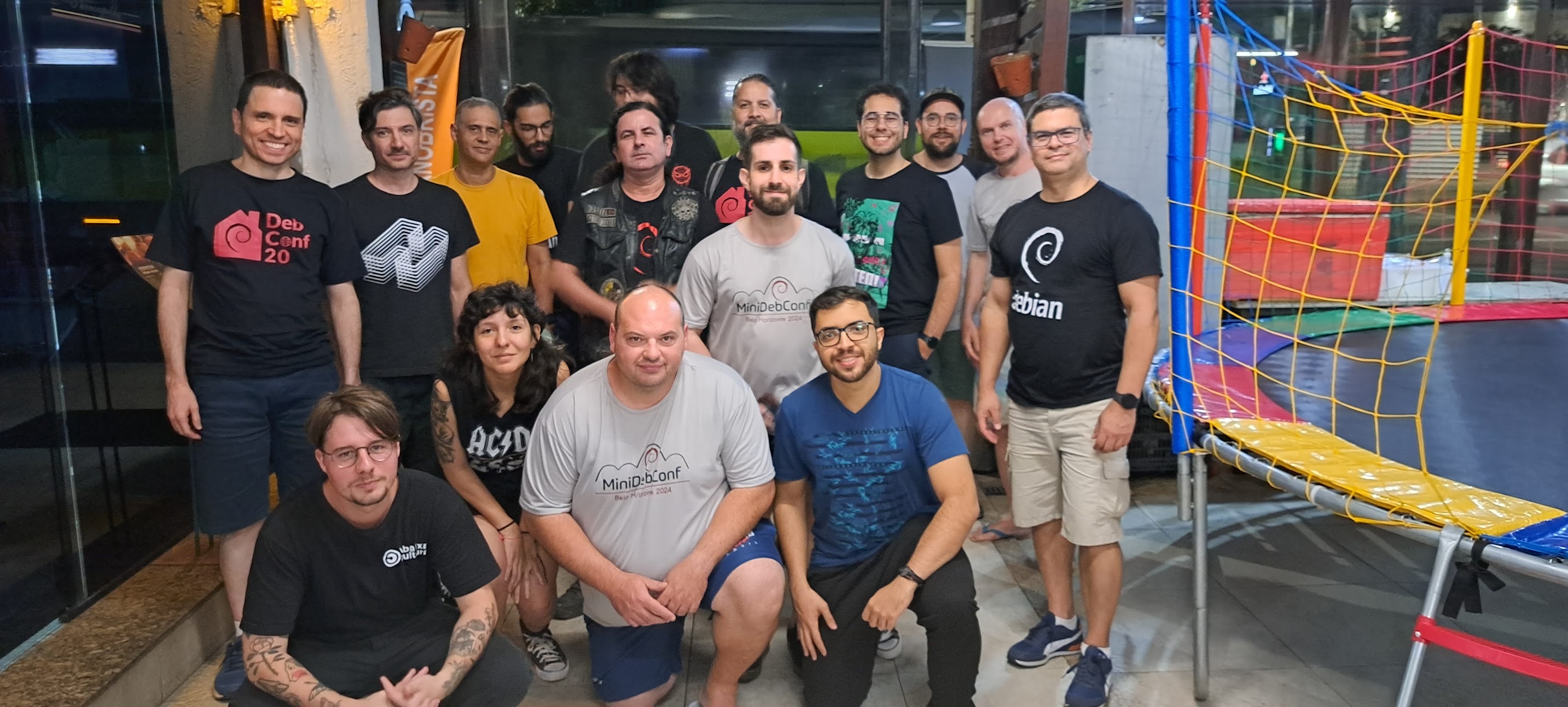
Photos and videos
You can watch recordings of the talks at the links below:
Sponsors
Gold:
Silver:
Bronze:
Organizers
A new (mostly maintenance) release 0.2.3 of RcppTOML is
now on CRAN.
TOMLis a file format that is most
suitable for configurations, as it is meant to be edited by
humans but read by computers. It emphasizes strong readability
for humans while at the same time supporting strong typing
as well as immediate and clear error reports. On small typos
you get parse errors, rather than silently corrupted garbage. Much
preferable to any and all of XML, JSON or YAML though sadly these may
be too ubiquitous now. TOML is
frequently being used with the projects such as the Hugo static blog compiler, or the Cargo system of Crates (aka packages )
for the Rust
language.
This release was tickled by another CRAN request: just like
yesterday s and the RcppDate
release two days ago, it responds to the esoteric whitespace in
literal operator depreceation warning. We alerted upstream too.
The short summary of changes follows.
Courtesy of my CRANberries, there is also a diffstat report for this release. For questions, suggestions, or issues please use the issue tracker at the GitHub repo.Changes in version 0.2.3 (2025-03-08)
- Correct the minimum version of Rcpp to 1.0.8 (Walter Somerville)
- The package now uses Authors@R as mandated by CRAN
- Updated 'whitespace in literal' issue upsetting clang++-20
- Continuous integration updates including simpler r-ci setup
This post by Dirk Eddelbuettel originated on his Thinking inside the box blog. If you like this or other open-source work I do, you can now sponsor me at GitHub.
A new release 0.1.13 of the RcppSimdJson
package is now on CRAN.
RcppSimdJson
wraps the fantastic and genuinely impressive simdjson library by Daniel Lemire and collaborators. Via
very clever algorithmic engineering to obtain largely branch-free code,
coupled with modern C++ and newer compiler instructions, it results in
parsing gigabytes of JSON parsed per second which is quite
mindboggling. The best-case performance is faster than CPU speed as
use of parallel SIMD instructions and careful branch avoidance can lead
to less than one cpu cycle per byte parsed; see the video of the talk by Daniel Lemire
at QCon.
This release was tickled by another CRAN request: just like
yesterday s RcppDate
release, it responds to the esoteric whitespace in literal
operator depreceation warning. Turns out that upstream simdjson had this fixed
a few months ago as the node bindings package ran into it. Other changes
include a bit of earlier polish by Daniel, another CRAN mandated update,
CI improvements, and a move of two demos to examples/ to
avoid having to add half a dozen packages to Suggests: for no real usage
gain in the package.
The short NEWS entry for this release follows.
Courtesy of my CRANberries, there is also a diffstat report for this release. For questions, suggestions, or issues please use the issue tracker at the GitHub repo.Changes in version 0.1.13 (2025-03-07)
- A call to
std::string::eraseis now guarded (Daniel)- The package now uses Authors@R as mandated by CRAN (Dirk)
- simdjson was upgraded to version 3.12.2 (Dirk)
- Continuous integration updated to more compilers and simpler setup
- Two demos are now in
inst/examplesto not inflate Suggests
This post by Dirk Eddelbuettel originated on his Thinking inside the box blog. If you like this or other open-source work I do, you can now sponsor me at GitHub.
RcppDate wraps
the featureful date
library written by Howard
Hinnant for use with R. This header-only modern C++ library has been
in pretty wide-spread use for a while now, and adds to C++11/C++14/C++17
what will is (with minor modifications) the date library in C++20. The
RcppDate adds no
extra R or C++ code and can therefore be a zero-cost dependency for any
other project; yet a number of other projects decided to re-vendor it
resulting in less-efficient duplication. Oh well. C est la
via.
This release sync wuth the (already mostly included) upstream release
3.0.3, and also addresses a new fresh (and mildly esoteric) nag from
clang++-20. One upstream PR
already addressed this in the files tickled by some CRAN packages, I followed this up
with another
upstream PR addressing this in a few more occurrences.
Courtesy of my CRANberries, there is also a diffstat report for the most recent release. More information is available at the repository or the package page.Changes in version 0.0.5 (2025-03-06)
- Updated to upstream version 3.0.3
- Updated 'whitespace in literal' issue upsetting clang++-20; this is also fixed upstream via two PRs
This post by Dirk Eddelbuettel originated on his Thinking inside the box blog. If you like this or other open-source work I do, you can sponsor me at GitHub.
macro_rules; and its convenience and simplicity, compared to proc macros.
Programmers coming to Rust from scripting languages will appreciate derive-deftly s convenient automatic code generation, which works as a kind of compile-time introspection.
Rust s two main macro systems
I m often a fan of metaprogramming, including macros. They can help remove duplication and flab, which are often the enemy of correctness.
Rust has two macro systems. derive-deftly offers much of the power of the more advanced (proc_macros), while beating the simpler one (macro_rules) at its own game for ease of use.
(Side note: Rust has at least three other ways to do metaprogramming: generics; build.rs; and, multiple module inclusion via #[path=]. These are beyond the scope of this blog post.)
macro_rules!
macro_rules! aka pattern macros , declarative macros , or sometimes macros by example are the simpler kind of Rust macro.
They involve writing a sort-of-BNF pattern-matcher, and a template which is then expanded with substitutions from the actual input. If your macro wants to accept comma-separated lists, or other simple kinds of input, this is OK. But often we want to emulate a #[derive(...)] macro: e.g., to define code based on a struct, handling each field. Doing that with macro_rules is very awkward:
macro_rules! s pattern language doesn t have a cooked way to match a data structure, so you have to hand-write a matcher for Rust syntax, in each macro. Writing such a matcher is very hard in the general case, because macro_rules lacks features for matching important parts of Rust syntax (notably, generics). (If you really need to, there s a horrible technique as a workaround.)
And, the invocation syntax for the macro is awkward: you must enclose the whole of the struct in my_macro! . This makes it hard to apply more than one macro to the same struct, and produces rightward drift.
Enclosing the struct this way means the macro must reproduce its input - so it can have bugs where it mangles the input, perhaps subtly. This also means the reader cannot be sure precisely whether the macro modifies the struct itself. In Rust, the types and data structures are often the key places to go to understand a program, so this is a significant downside.
macro_rules also has various other weird deficiencies too specific to list here.
Overall, compared to (say) the C preprocessor, it s great, but programmers used to the power of Lisp macros, or (say) metaprogramming in Tcl, will quickly become frustrated.
proc macros
Rust s second macro system is much more advanced. It is a fully general system for processing and rewriting code. The macro s implementation is Rust code, which takes the macro s input as arguments, in the form of Rust tokens, and returns Rust tokens to be inserted into the actual program.
This approach is more similar to Common Lisp s macros than to most other programming languages macros systems. It is extremely powerful, and is used to implement many very widely used and powerful facilities. In particular, proc macros can be applied to data structures with #[derive(...)]. The macro receives the data structure, in the form of Rust tokens, and returns the code for the new implementations, functions etc.
This is used very heavily in the standard library for basic features like #[derive(Debug)] and Clone, and for important libraries like serde and strum.
But, it is a complete pain in the backside to write and maintain a proc_macro.
The Rust types and functions you deal with in your macro are very low level. You must manually handle every possible case, with runtime conditions and pattern-matching. Error handling and recovery is so nontrivial there are macro-writing libraries and even more macros to help. Unlike a Lisp codewalker, a Rust proc macro must deal with Rust s highly complex syntax. You will probably end up dealing with syn, which is a complete Rust parsing library, separate from the compiler; syn is capable and comprehensive, but a proc macro must still contain a lot of often-intricate code.
There are build/execution environment problems. The proc_macro code can t live with your application; you have to put the proc macros in a separate cargo package, complicating your build arrangements. The proc macro package environment is weird: you can t test it separately, without jumping through hoops. Debugging can be awkward. Proper tests can only realistically be done with the help of complex additional tools, and will involve a pinned version of Nightly Rust.
derive-deftly to the rescue
derive-deftly lets you use a write a #[derive(...)] macro, driven by a data structure, without wading into any of that stuff.
Your macro definition is a template in a simple syntax, with predefined $-substitutions for the various parts of the input data structure.
Example
Here s a real-world example from a personal project:
define_derive_deftly!
export UpdateWorkerReport:
impl $ttype
pub fn update_worker_report(&self, wr: &mut WorkerReport)
$(
$ when fmeta(worker_report)
wr.$fname = Some(self.$fname.clone()).into();
)
#[derive(Debug, Deftly, Clone)]
...
#[derive_deftly(UiMap, UpdateWorkerReport)]
pub struct JobRow
...
#[deftly(worker_report)]
pub status: JobStatus,
pub processing: NoneIsEmpty<ProcessingInfo>,
#[deftly(worker_report)]
pub info: String,
pub duplicate_of: Option<JobId>,
This is a nice example, also, of how using a macro can avoid bugs. Implementing this update by hand without a macro would involve a lot of cut-and-paste. When doing that cut-and-paste it can be very easy to accidentally write bugs where you forget to update some parts of each of the copies:
pub fn update_worker_report(&self, wr: &mut WorkerReport)
wr.status = Some(self.status.clone()).into();
wr.info = Some(self.status.clone()).into();
Spot the mistake? We copy status to info. Bugs like this are extremely common, and not always found by the type system. derive-deftly can make it much easier to make them impossible.
Special-purpose derive macros are now worthwhile!
Because of the difficult and cumbersome nature of proc macros, very few projects have site-specific, special-purpose #[derive(...)] macros.
The Arti codebase has no bespoke proc macros, across its 240kloc and 86 crates. (We did fork one upstream proc macro package to add a feature we needed.) I have only one bespoke, case-specific, proc macro amongst all of my personal Rust projects; it predates derive-deftly.
Since we have started using derive-deftly in Arti, it has become an important tool in our toolbox. We have 37 bespoke derive macros, done with derive-deftly. Of these, 9 are exported for use by downstream crates. (For comparison there are 176 macro_rules macros.)
In my most recent personal Rust project, I have 22 bespoke derive macros, done with with derive-deftly, and 19 macro_rules macros.
derive-deftly macros are easy and straightforward enough that they can be used as readily as macro_rules macros. Indeed, they are often clearer than a macro_rules macro.
Stability without stagnation
derive-deftly is already highly capable, and can solve many advanced problems.
It is mature software, well tested, with excellent documentation, comprising both comprehensive reference material and the walkthrough-structured user guide.
But declaring it 1.0 doesn t mean that it won t improve further.
Our ticket tracker has a laundry list of possible features. We ll sometimes be cautious about committing to these, so we ve added a beta feature flag, for opting in to less-stable features, so that we can prototype things without painting ourselves into a corner. And, we intend to further develop the Guide.
Azul s State-of-Java report is full of nonsense, and no worth looking at.
The report claims various stuff about the adoption of AI in the Java ecosystem.
But its results do not make any sense when looked at in detail.
For example (in the AI section):
Participants were offered token compensation for their participation.Seems like Dimensional Research, the company who did that survey, screwed up badly.
$ lsusb grep Headset
Bus 001 Device 094: ID 046d:0af7 Logitech, Inc. Logitech G PRO X 2 Gaming Headset
The device is detected correctly as a Human Interface Device (HID) device
$ dmesg
...
[310230.507591] input: Logitech Logitech G PRO X 2 Gaming Headset as /devices/pci0000:00/0000:00:14.0/usb1/1-1/1-1.1/1-1.1.4/1-1.1.4:1.3/0003:046D:0AF7.0060/input/input163
[310230.507762] hid-generic 0003:046D:0AF7.0060: input,hiddev2,hidraw11: USB HID v1.10 Device [Logitech Logitech G PRO X 2 Gaming Headset] on usb-0000:00:14.0-1.1.4/input
However it is not seen in the list of sources / sinks of PulseAudio:
$ pactl list short sinks
58 alsa_output.usb-Lenovo_ThinkPad_Thunderbolt_3_Dock_USB_Audio_000000000000-00.analog-stereo PipeWire s16le 2ch 48000Hz IDLE
62 alsa_output.pci-0000_00_1f.3.analog-stereo PipeWire s32le 2ch 48000Hz SUSPENDED
95 bluez_output.F4_4E_FD_D2_97_1F.1 PipeWire s16le 2ch 48000Hz IDLE
This unfriendly list shows my docking station, which as a small jack connector
for a wired cable, the built in speaker of my laptop, and a blutooth headset.
If I restart Pipewire,
$ systemctl --user restart pipewire
then the headset appears as possible audio output.
$ pactl list short sinks
54 alsa_output.usb-Lenovo_ThinkPad_Thunderbolt_3_Dock_USB_Audio_000000000000-00.analog-stereo PipeWire s16le 2ch 48000Hz SUSPENDED
56 alsa_output.usb-Logitech_Logitech_G_PRO_X_2_Gaming_Headset_0000000000000000-00.analog-stereo PipeWire s16le 2ch 48000Hz SUSPENDED
58 alsa_output.pci-0000_00_1f.3.analog-stereo PipeWire s32le 2ch 48000Hz SUSPENDED
77 bluez_output.F4_4E_FD_D2_97_1F.1 PipeWire s16le 2ch 48000Hz SUSPENDED
Once you have set the default input / output device, for me in Gnome, you can
check it with:
$ pactl info egrep '(Sink Source)'
Default Sink: alsa_output.usb-Logitech_Logitech_G_PRO_X_2_Gaming_Headset_0000000000000000-00.analog-stereo
Default Source: alsa_input.usb-Logitech_Logitech_G_PRO_X_2_Gaming_Headset_0000000000000000-00.mono-fallback
Finally let us play some test sounds:
$ speaker-test --test wav --nloops 1 --channels 2
And test some recording, you will hear the output around one second after the
speaking (yes that is recorded audio sent over a Unix pipe for playing !):
# don't do this when the output is a speaker, this will create audio feedback (larsen effect)
$ arecord -f cd - aplay
| Series: | Class 5 #4 |
| Publisher: | Eclipse |
| Copyright: | October 2019 |
| ISBN: | 0-6454658-6-0 |
| Format: | Kindle |
| Pages: | 307 |
Next.