Search Results: "ag"

31 August 2013

Russell Coker: Links August 2013

Mark Cuban wrote an interesting article titled What Business is Wall Street In about the failure of Wall Street to fulfill it s stated purpose of providing capital for businesses [1]. His proposed solution is extreme, but so is the problem. PopSci has an interesting article by Peter Nonacs about allowing students to collaborate (which is often known as cheating ) in an exam on a Game Theory exam [2]. So the Game Theory exam became a practical exercise. It s more interesting than I can describe in a paragraph. Salon has an interesting article suggesting that mealtime routines and rituals improve flavor [3]. I wonder whether that applies to other things. Does the ritual of compiling software make one enjoy it more? Would the food at a Linux conference taste better if we sang the Free Software Song first?

Vincent Fourmond: First release of Tioga that works on win32

While I usually don't announce releases of tioga, as it is now mostly in maintenance mode, with not a lot of new features, today is a different story. I finally got around to try and build it on windows, and after a bit of a fight, I got it to compile and work there (I got hit by the classical fopen(file, "w") for binary files, that don't make any difference on Linux and Mac, but that do on Windows...). The release is already available on the rubyforge download page. Gems will be available later on today.To actually make it work on windows, here is what you need to install:And that's it ! That also means that ctioga2 works on windows, if you run:
gem install ctioga2

30 August 2013

Daniel Pocock: Big decision?

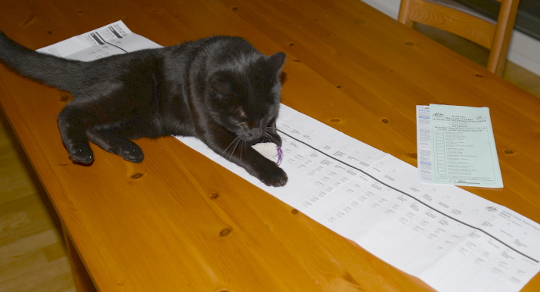
Most people have probably heard that elections are on in Australia. I just received my postal ballot paper the other day and in the spirit of transparency, I'm sharing it here on my blog. Spoilt for choice There are two ballots, one for the Lower House and the other for the Senate. The big one is for the Senate. Our cat is on top of it to help give some perspective on how big it is. Like the columns on a bloated spreadsheet, the parties are designated with symbols from A to AM and then there are some leftover candidates too. Animal instincts With so many candidates to choose from, even our kitty may have found an opportunity in the Animal Justice Party - although that little snack in her claws suggests that she is more interested in the law of the jungle than any political debate. She may want to be wary not to fall under the wheel of the party next to them, Motoring Enthusiasts. The Senate, a place for convicted hackers? The next party in the picture is Wikileaks and their number one candidate, of course, is the first person to successfully claim asylum from Australia, Julian Assange. It's no secret that he has a string of convictions for computer hacking in the 90s and that when US authorities catch up with him, their drone won't just be dropping him a letter demanding a $2,100 penalty fine through the window. So how do they compare? As I contemplate my decision, lets look at the numbers:
Party Seats won in 2010
House of Reps, Senate
Criminal charges against members in last 3 years
Labor Party 72, 31 173, mainly fraud
Liberal/National coalition (conservative) 73, 34 3, including shoplifting and assault
Wikileaks 0 None - Assange is not actually charged with any crime
All of a sudden, in a country that is often the butt of British jokes about convicts, Assange starts to look squeaky clean. He may take further comfort from knowing that out of all those crimes, hacking is the only one that appears to have the presidential seal of approval. Conclusion Whichever way I vote may or may not make so much difference. With so many candidates to choose from though, there is little sign of any quality leadership from any corner of Australian politics. Whether Mr Assange is elected or not, many people will have a chuckle when they realise he almost ended up alongside the Australian Sex Party out of 38 other possible parties randomly distributed across the ballot. Please feel free to comment: which party is the most ridiculous?

Joey Hess: best DebConf ever

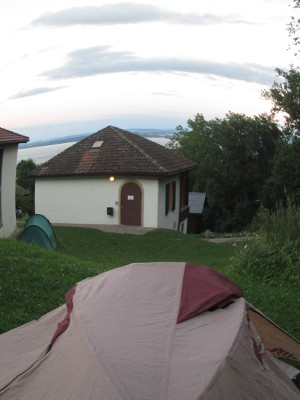
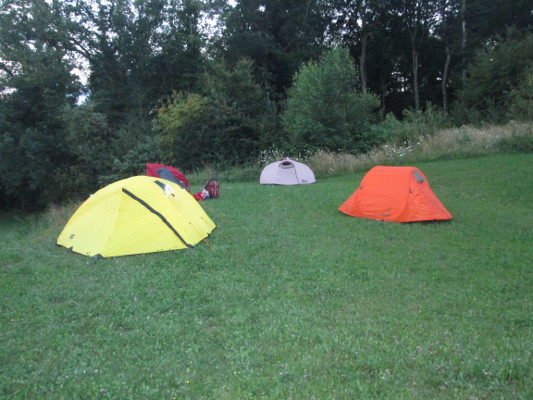
For me, DebConf13 in Switzerland was a perfect DebConf, and generally an great developer meeting and conference. I've attended several past DebConfs in Canada, Norway, Brazil, Finland, Mexico, Scotland, Spain, NYC, Bosnia, and Nicaragua. I have special memories of each. DebConf13 was ideal in every way. Let's start with the camping. Only a minority of us did it, and my campsite was located in a small field behind a bar that was often noisy late into the night, when I was trying to rest and preserve my European jetlag remedy of inverted sleeping schedule. Still, I love sleeping cocooned in a tent, and going through the routines of camping and spending time alone there was a good counterpoint to DebConf. I generally find myself retreating for a day or two in the middle of a week-long conference, burnt out with social interactions. That didn't happen this time. I need to find way to camp at future DebConfs. (Also special shout out to wonderful people who lent me a warmer sleeping bag, and bought me a pillow while on a trip to town! Upgraded my first backpacking in Europe experience's comfort level a lot!) The next perfect thing for me were the talks I gave at DebConf. I always enjoy presenting at DebConf, and barely remember when I'd get nervous doing it. But I really felt comfortable giving these talks in a way I've not before. I'm pleased with how the Debian Cosmology talk turned out; I'd worried it would be a downer talk, or too light, or not well received, and none of those problems surfaced. I was especially happy with my dh_busfactor session, which I prepared for all of 10 minutes and was structured entirely to benefit me by talking over my thoughts and getting feedback, and in which I probably drove the camerapeople crazy running my own mic into the audience. Despite all that, I think it succeeded being interesting for the participants as well as for me. Hope to follow up on it soon.. But beyond the two talks I submitted, there were a series of ad-hoc scheduled talks. It seemed that every day I spent at least an hour discussing something I'm deeply involved in. This started with the Ikiwiki bof, and then there was an epic series of (unrecorded) BoFs about git stuff, which basically turned into an unofficial git track at DebConf. Much, much discussion of git-annex and other things I'm involved in. BTW, I really like that DebConf, as well as being a formal conference on top, is really an un-conference underneath, with new BoFs and things popping up on the schedule all week long. You can even have completely unscheduled meetings that somehow get just the right mix of people to make something awesome happen.
But it wasn't all about talks. Indeed, I only attended 2 or 3 sessions a day. The DebConf13 venue was controversial, but I found it excellent for getting things done. Rather than one or two massive rooms that get too noisy to think in, this venue had many little nooks and crannies suited for different types of work. There were so many I only discovered some while walking down the hill as I was leaving the venue! Anchoring it all was the excellent view, and I particularly enjoyed the "scenic hacklab". I was particularly impressed with the flexability of the venue's management. Someone asked if we could have cheese for breakfast, and every breakfast thereafter had not one but often three excellent cheeses. One day we'd be complaining that there were not enough vegetables in the food, and the next we'd be eating an excellent vegetarian Swiss lunch. They even apparently relaxed stringent Swiss rules on not allowing tents in sightlines visible from people further up the hill. They were clearly happy to welcome our crazy gathering to Le Camp. They let a DD borrow and use a chain saw and build a bonfire! The venue also encouraged getting out and exploring the surrounding countryside. Too often I end up spending the whole DebConf without seeing much of the area around. This time I at least got down the hill to see the castle in Vaumarcus a few times, and enjoyed many evening walks amoung the grape fields. The conference dinner (on a boat!) tied into this well too. And the daytrip to CERN was a great addition. We got to poke around the control center for a massive particle accellerator! My only regret is we didn't get a chance to actually go inside the LHC tunnels. Back to DebConf, another thing I really liked about this one was that its location allowed several upstream authors of software in Debian (other than the usual suspects who are both upstreams and Debian Developers) to attend. I don't know if Lennart Poettering changed any minds about systemd with his talk, but I was happy for the opportunity to buy him a beer. I didn't get to Monty's talk, but it was excellent to see him attend as well. Finally, I got to meet old friends I'd not seen in years, and new ones I've not met in real life before. We're still not sure where this whole DebConf thing is going -- will it be all about the cheese and wine party and greybeards in 20 years time? But one thing we know is we enjoy our little slice of the year where kilts and coding are equally unremarkable, where problems that seem intractable online somehow solve themselves in person, where we come away with ideas for an entire year and memories for a lifetime.

Steve Kemp: A shaved head is a sign of a tidy mind?

This week I have mostly:
Knocked up a forum ("gathering")
It is a simple clone of hacker news, storing things in Redis.None of the aging though, entries are first->last and my tagging support is basic. I'm in two minds about releasing it. I'm in three minds about deploying it at the location I'd written it for - forums.lumail.org - since there's nothing worse than a forum with no posts, unless it is a forum that used to be popular and is now a wasteland, or circlejerk. (c.f. slashdot. ahem.)
Updated Slaugther
I found a hidden dependency when installing a new slaughter controlled host.A new release is imminent.
Setup a remote host for backups
Using BigV I configured a system with LUKS-encrypted disks to act as a "remote dropbox" via git-annex, and rsync.An encrypted volume is manually mounted post-boot. It stays mounted (oops that's bad) but provides security when the guest is offline, or has been retired.
Wrestled with Graphite
Because damn that software is hard to install.
Turned down two weddings
Because I will never shoot a wedding again. And if I did I'd not do it for free for "exposure".
Merged my (digital) music archive with that belonging to my partner
Which took more discussion than a) moving in together, or b) opening a shared bank account.
Secretly decided I do like my kindle
Even though I bought two books from a charity shop tonight I'm almost certainly going to file them away and look for the epub online instead.
He fought with the goblins! He battled the trolls! He riddled with Gollum! The magic ring he stole! This weekend I'll be mostly offline. Saturating my home broadband while I sync backups.

Michael Stapelberg: How git performs when you throw all of Debian at it

During DebConf, Asheesh presented the idea of using git instead of the file system for storing the contents of Debian Code Search. The hope was that it would lead to fewer disk seeks and less data due to gits delta-encoding. Maybe the reduction would be big enough that enough data could be held in RAM to allow for fast retrieval. Joey Hess helped me out with a couple of details: he revealed that using git repack -a -d will lead to a single packfile that optimally contains HEAD, not caring about the history. Also, he showed me how to use git cat-file. We did a small-scale experiment and the results were promising. I told him I ll do the experiment of just committing the entire unpacked source mirror to git and promised to follow up with the results, so here goes:
stapelberg@couper ~/unpacked master $ time cat <<EOT   git cat-file --batch >/dev/null
:linux_3.2.32-1/sound/pci/ice1712/aureon.c
:linux_3.2.32-1/sound/soc/codecs/sgtl5000.c
:linux_3.2.32-1/sound/pci/hda/patch_conexant.c
EOT
cat <<<''  0,00s user 0,00s system 62% cpu 0,006 total
git cat-file --batch > /dev/null  4,38s user 1,08s system 99% cpu 5,477 total
stapelberg@couper ~/unpacked master $ time cat linux_3.2.32-1/sound/pci/ice1712/aureon.c linux_3.2.32-1/sound/soc/codecs/sgtl5000.c linux_3.2.32-1/sound/pci/hda/patch_conexant.c >/dev/null
cat linux_3.2.32-1/sound/pci/ice1712/aureon.c   > /dev/null  0,00s user 0,00s system 69% cpu 0,006 total
stapelberg@couper ~/unpacked master $ time cat <<EOT   git cat-file --batch >/dev/null
:i3-wm_4.6-1/libi3/font.c
EOT
cat <<<':i3-wm_4.6-1/libi3/font.c'  0,00s user 0,00s system 51% cpu 0,008 total
git cat-file --batch > /dev/null  4,30s user 1,18s system 99% cpu 5,533 total
stapelberg@couper ~/unpacked master $ time cat i3-wm_4.6-1/libi3/font.c >/dev/null
cat i3-wm_4.6-1/libi3/font.c > /dev/null  0,00s user 0,00s system 0% cpu 0,004 total
Even after repeating those tests a couple of times to get a warm page cache, the result stays the same: git takes about 5 seconds to resolve the deltas in a large repository. Even if this was 5 seconds startup time and a very small amount of additional time per file, it would not be acceptable for our use case. The conclusion is that git is clearly not suitable for this kind of usage, which is not surprising after having heard a couple of times that git does not scale :-). For the curious, the .git/objects directory is 29 GiB for roughly 140 GiB of source code, so the delta encoding is quite impressive in terms of saving space. However, keep in mind that the compressed (!) Debian source archive is about 35 GiB, so the savings are not that huge.

Justus Winter: What will I do next? cgroupfs \o/

With the ifupdown fixes that I published last week I actually reached my initial goal, that is to make Debian/Hurd boot using sysvinit and the initscripts provided by Debian. So on Monday we were discussing in #hurd what I could do next. Michael Banck suggested that I should port Upstart, but we agreed to do something different instead for two reasons:
  1. Upstart and systemd are somewhat competing to be the default init system for Debian, and we felt it might be inappropriate to get involved with this question as porting Upstart to Hurd would probably also enable it to be used on FreeBSD. The Upstart folks could then point out that Upstart is more portable because it runs on all kernels used by Debian.
  2. Upstart uses ptrace(2) to track child processes of servers it monitors. Obviously this is kind of a hack, and it was conjectured that Upstart would eventually use cgroups to do that. Also, the Hurd lacks support for ptrace(2) (that is most likely by choice by the way, ptrace(2) is not a nice interface and the Hurd (Mach actually) has much nicer interfaces to implement a debugger).
So we decided that no matter how the struggle between Upstart and systemd turns out, the Hurd would eventually need to support cgroups. So I started to write a cgroupfs translator, it is in its early stages but it already looks and acts a lot like Linux' cgroups:
% settrans -ac cg ./cgroupfs --release-agent=foobar
% ls cg
release_agent  tasks
% tail -n3 cg/tasks
11395
12869
1266
% mkdir cg/foo
% echo 1266 >> cg/foo/tasks
% tail -n3 cg/tasks cg/foo/tasks
==> cg/tasks <==
215
11395
12869
==> cg/foo/tasks <==
1266
To make this fully functional I will have to modify /hurd/proc and most likely also GNU Mach, but on the bright side this will help make subhurds (Hurds native, by-design-for-free-and-without-overhead container like functionality) work better and more securely (among other things this could enable non-root users to start subhurds). I will also look into porting libcg (I have a hacky patch series ready) so that we can actually test the cgroupfs translator. All current users of the cgroup interface are very Linux specific (surprise!), and libcg looks like the easiest one to port. And they do have a test suite that could help me improve the cgroupfs translator.

Scott Kitterman: skitterman

This hit my Washington Post Top Stories feed tonight: The case against software patents Maybe the word is getting out

29 August 2013

Mark Brown: New job

A few months ago I started a new job at Linaro as the technical lead for the Linaro Stable Kernel I just posted a brief thing what I m up to now over on the Linaro blog.

Russ Allbery: WebAuth 4.5.5

Testing uncovered additional bugs in the WebLogin and mod_webkdc components of WebAuth (our site-wide web authentication system), so this is another bug-fix release. It only affects the central login server; the application module hasn't changed and doesn't need to be updated. The biggest changes are around multifactor authentication, and particularly around error reporting and handling. The handling of errors such as invalid codes or rejections by the validation service was somewhat broken in 4.5.3 and earlier and even more broken in 4.5.4 (although in different ways). This release now avoids sending the user to dead-end error pages in more circumstances, displays better and more specific errors, and remembers if the user has already been sent an SMS message and doesn't force them to send another if they enter the code incorrectly. (This last change will require changes to the local multifactor template.) This release also fixes replay detection, which had been broken by a partially-made change in the memcached key format, and applies rate limiting and replay detection to second factor logins as well as passwords. As a side effect, this corrects a UI issue where people can send themselves additional SMS messages by accident when using the back button on the browser. You can get the latest release from the official WebAuth distribution site or from my WebAuth distribution pages.

Wouter Verhelst: RIP userdevfs

... and good riddance Just over 10 years ago now (it really has been that long), I had a first stab at adding some code to debian-installer to support m68k machines. As part of that, I invented userdevfs, a d-i module which would grep dmesg to figure out which hardware is detected, and would dynamically generate /dev entries based on that. It made it possible to use debian-installer without too much trouble on kernels that didn't support autoloading of modules (d-i expects the absense of a /dev entry to signal the absense of hardware), while our m68k kernel hadn't gone beyond 2.2 still; but it was always a bit of an ugly hack. At the time, I saw it as a short-time necessary evil. When the m68k port had been kicked from Debian, I would probably have thrown it out. Had it never been kicked from Debian, all else being equal, I would probably still have kicked it given a chance, since 2.6 kernels can now be run on m68k machines. All that is not true, though, since in the mean time my ugly hack had been repurposed to also work on ports that did support 2.6 and more recent kernels, but did not support autodetecting hardware. As such, it's still in recent Debian releases. Today, however, I noticed #717872, signalling that as the one port where it was still needed no longer did, my ugly hack has finally found its demise. That is a good thing.

28 August 2013

Lior Kaplan: Hello free PHP JSON extension

I ve noticed that my post from three months ago ( Bye bye non-free PHP JSON extension ) was quoted quite often (thanks (: ). But I also noticed that most people didn t read the post fully, and didn t see the replacement package. Hopefully the title of this post will correct that impression. I d like to indicate the existence of the php5-json package. It s part of Debian unstable since June 2013 and testing (jessie) since August 2013. Users who wish to build the free extension on their own are welcome to download it from PECL at http://pecl.php.net/package/jsonc . It s a good chance to thank Remi Collet for his work on this replacement. I m happy that the main Linux distributions have already adopted it.
Filed under: Uncategorized

Vincent Sanders: Men admire the man who can organize their wishes and thoughts in stone and wood and steel and brass.


I would probably not yet worthy of the admiration Emerson was alluding to but I do like to make things. As anyone who has read previous posts knows I have pretty much embraced the "do things, tell people" idea.

One small wrinkle is doing things needs somewhere to work. Since moving myself and the family to rented accommodation in Cambridge (swampy 3,500 year old English city, not the one in Massachusetts) I have been lacking space to do practical projects.

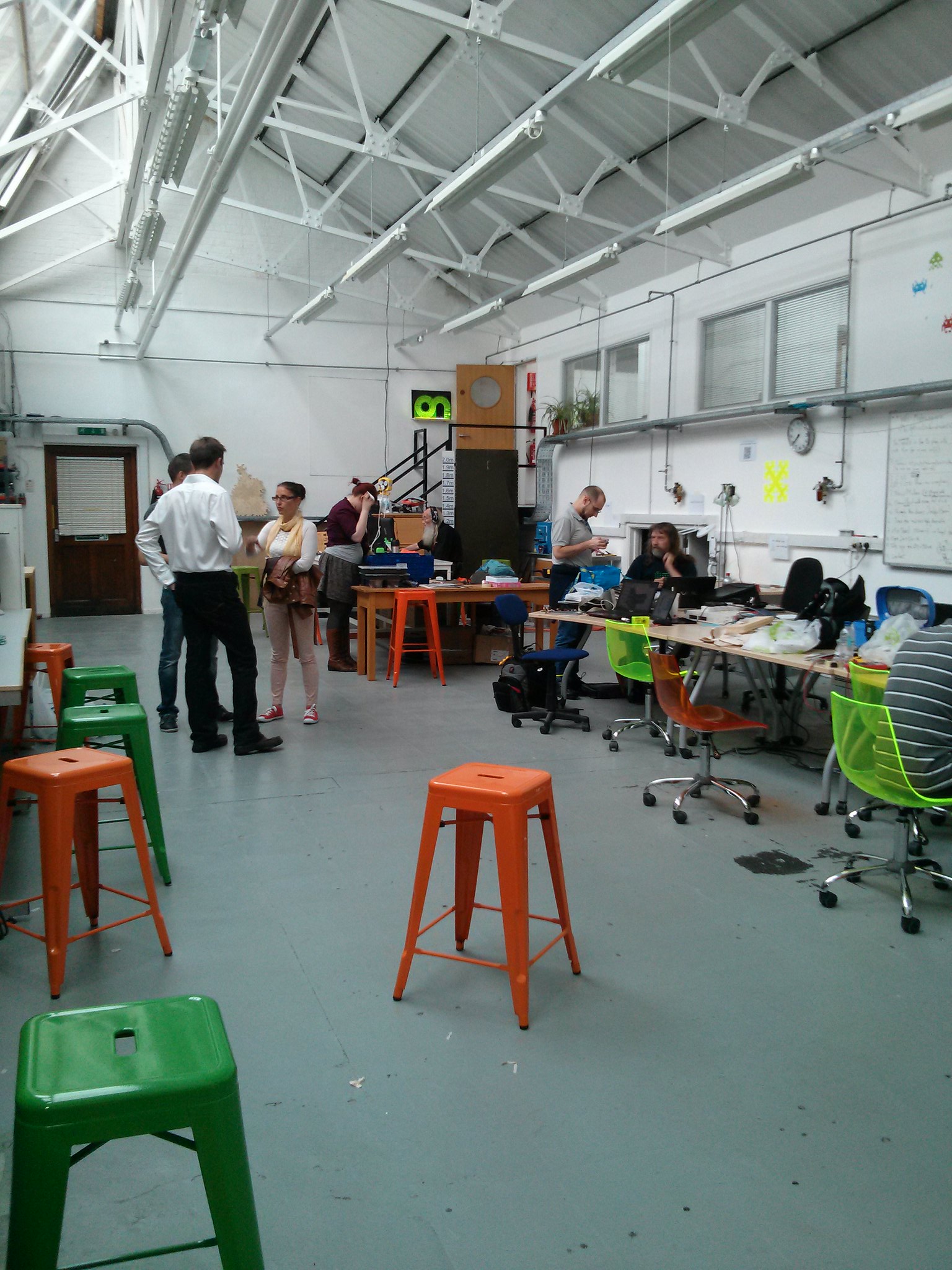
The main space
To fix this lack I have joined the cambridge makespace which, in addition to somewhere I can work gives me access to some tools I was previously unable to afford. The space gives practical training on the more complex machines (any tool can be dangerous if you do not use it correctly) which recently allowed my induction on the CNC router.

My instructor , Mark Mellors, who was good enough to give up some of his valuable making time to train me (and accidentally get his car stuck in a car park overnight by staying late) suggested that it was a good idea to have a design to try.

I decided to use this opportunity to actually create something useful (though now I re-read Marks message it did suggest a simple design...oopsy). I had been working at the electronics bench in previous weeks and been uncomfortable using the existing stools and chairs as they were either a bit high or unable to be adjusted high enough for the 80cm tall benches. I decided to design a 60cm tall stool for use at this workbench.

My initial idea was for a simple three leg stool, round top, three legs, how hard could it be? Initial research showed that showed that above 30cm the legs needed to be braced to each other. This is because the leg to seat joints simply cannot handle the stress caused by leverage which longer legs introduce.

I looked at the structure of several stools online and was initially drawn towards creating something like the IKEA Dalfred bar stool. It was discovered that the design would be easier to realise if it were made from sheet material which give a smaller challenge to a naive operator of a CNC router. Because of this simpler designs were researched and I eventually found a simple design I liked.

The design could not however be used directly as it was for imperial sized material which is not available in europe. I selected the QCAD open source CAD package and recaptured the design adjusting for the available 12mm plywood sheet material. This resulted in an imperial measurement design for metric materials.

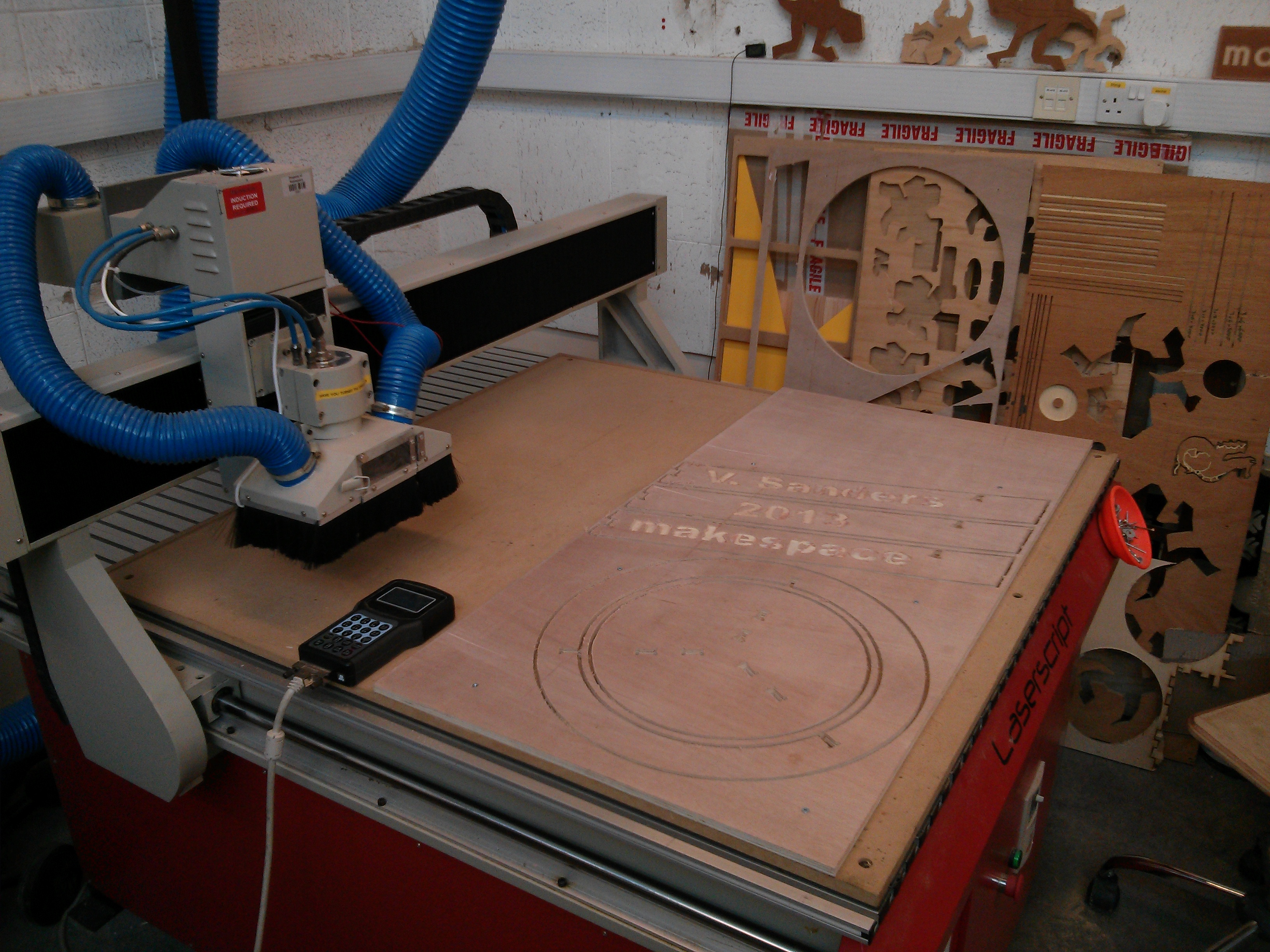
Mark helped me transfer the DXF into the CAM software (vcarve pro 7, after I discovered the demo version of this software generates files which cannot be imported into the full edition!) and generate toolpaths for our machine. Once the toolpaths are saved to a USB stick (no modern conveniences like direct upload here) the job can be run on the machine.

Here I ran into reality, turns out that tolerances in imperial combined with lack of understanding how plywood reacts resulted in excessive play in the joints. This resulted in an unusable stool, which simply tried to rotate around its central axis and become flatpack. I had successfully turned 10 worth of plywood into some sawdust and a selection of useless shapes. On the other hand I did become competent with the router workflow so it was not a complete failure.

I was determined to make the design work so I decided to start from scratch with a similar design but entirely in metric. I performed some material research both online and practically (why yes i did spend an informative hour in several cambridge DIY shops with digital calipers, why do you ask?) it turns out that generally available 12mm thick plywood actually ranges between 11.9 and 12mm thick.

I did some test slot cuts of varying width and determined that the available stock can be "persuaded" to fit into a 11.8mm wide slot. This Interference fit joint is strong and removes the need for adhesive in most cases.

Second cut still attached to the bed. Leftovers of first attempt in the background
The sheet plywood material is readily available with a width of 1220mm and a height of 606mm (a full sheet is 2440mm long which is cut into four with a 4mm wide saw blade) so making the legs fit within a sheet and be close to the 60cm target should be possible.

I selected a suitable seat radius (175mm) and from that determined the minimal gap to the base ring with a 6mm end mill tool (20mm for two toolpaths and some separation) and hence the minimum suitable width of the base ring (50mm) giving a total radius of 245mm.

For the legs allowance was made for two joints of 30mm with 30mm separation between them the legs come out at 90mm width. If a 6mm space and a 6mm toolpath top and bottom of the sheet is accounted for a 582mm height (606 - 24) is available in which to fit the legs. The top of the leg which fits into the seat is 12mm tall leaving 570mm total leg height.

12mm plywood stool design
At this point I selected some arbitrary values for the leg positioning and angle (30mm from seat centre and 15 ) using a right angle triangle triganometry this produced a stool with a base of around 550mm or 100mm outside the radius of the seat. This seemed a pleasing shape and when the values for the holding ring were calculated it is at 104mm height which also seems to work out well.

This design was cut on the machine, lightly finished with some sandpaper and assembled. The legs slotted into the ring first and then the legs eased into the seat slots, the whole thing flipped and the seat hammered home onto the legs.

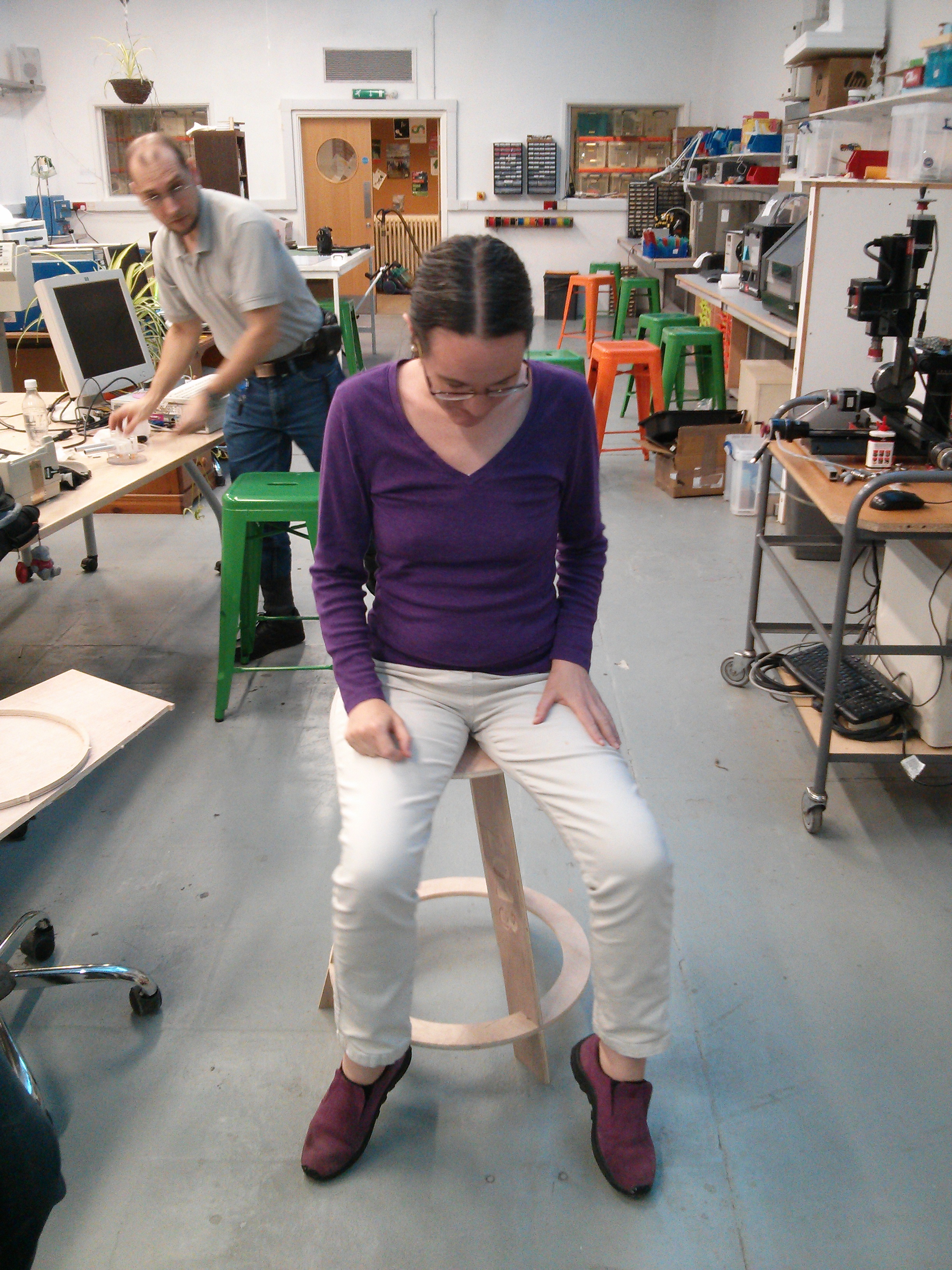
Anne Harrison volunteering to try the wobbly stool of doom
Success! It physically fit together and if you were brave enough you could sit on it. Unfortunately the plywood seemed to flex around the central axis of rotation in a rather alarming way, fine if you are under 70 kilos but not giving the impression of security most people want from their seating.

Ok, lets try with five legs instead of three (at least we can reuse the existing three legs)...nope still not good enough and another 10 gone.

18mm Plywood stool design
The others in the space suggested a few ideas to improve matters and the one I selected was to use 18mm plywood instead of 12mm, this should improve rigidity. There was a brief pause in proceedings to discover 18mm sheet is actually 17.7mm and needs a 17.5mm slot to make the interference fit work.

Completed 18mm stool
A swift redesign later altering the seat radius, gap, ring width and leg height to accommodate the new material and we have version 4 and it works without caveat. Tested up to 150Kg load without trouble, there is a small amount of flex still but nothing that feels worrying.

I finished the stool by rounding the seat top edge with a ball bearing rounding bit in a manual router and applying a couple of coats of gloss acrylic varnish. Finished stool is now doing service at the space.

In conclusion the final design allows someone with a CNC router to create a useful 580mm high fixed stool for 7.50 in timber plus cutter wear and varnish so maybe 8.50 total.

You can actually get five legs and a seat/ring out of a 1220x606 sheet and with intelligent arrangement a single 1220x2440 sheet will probably yield five or possibly six stools in total

I am making the design files of the proven 18mm version available (heck they are all there...but you have been warned, none of the other solutions produce a satisfactory result) under the MIT licence so anyone can reproduce. More pretty pictures are also available.

Matt Zimmerman: Scaling Human Systems: Roles and Responsibilities

This is part 5 in a series on organizational design and growth. What it means

Each of us has a job to do, probably more than one, and our teammates should know what they are. Why it s important

Roles are a kind of standing commitment we make to each other. They re a way of dividing up work which is easy to understand and simple to apply. Utilizing this tool will make it easier for us to coordinate our day to day work, and manage the changes and growth we re going through. Old Status Quo

Roles are vague or nonexistent. Management roles in particular are probably not well understood. Many people juggle multiple roles, all of which are implicit. Moving to a new team means learning from scratch what other people do. People take responsibility for tasks and decisions largely on a case-by-case basis, or based on implicit knowledge of what someone does (or doesn t do). In many cases, there is only one person in the company who knows how to perform a certain function. When someone leaves or goes on vacation, gaps are left behind. New Status Quo

Each individual has a clear understanding of the scope of their job. We have a handful of well defined roles, which are used by multiple teams and have written definitions. People who are new or transfer between teams have a relatively easy time understanding what the people around them are doing. Many day to day responsibilities are defined by roles, and more than one person can fill that role. When someone leaves a team, another person can cover their critical roles. Behaviors that help

Obstacles that stand in our way

27 August 2013

Neil McGovern: Adblock adding ads to block ads

shutterstock_151488752Confused yet? The popular browser extension AdBlock for Chrome/Chromium and Safari has launched a new crowdsourced campaign - to buy up internet advertising space inviting people to download AdBlock, so they can block ads. Additionally, if they raise enough, they'd like to get additional space for a billboard at Times Square, a full page spread in the New York Times, and even a TV slot at the Superbowl (although the target for this is $4.2M, so I'm not entirely confident they'll make it.) However, this does raise an interesting question, which has been under debate for some time. How do you make money on the internet without adverts? Wikipedia has a few interesting suggestions. Firstly, affiliate programmes. These mean that any products or services that are linked or searched via the original site earn a little bit of commission for that site. Founded in the mid-90s, and most famously used by Amazon, it's a possible method for getting money. However, it should be deployed with careful thought. If a blogger or reviewer is recommending a product, is it simply because they are being paid to do so, or is it a genuine endorsement? The BBC ban this practice, and the Society of Professional Journalists also has strong guidelines on taking gifts. Interestingly, a few search engines now offer this to browsers for them sending their default search traffic to them. Secondly, you could engage in (what I consider to be) the shady practice of data monetisation. People visit a website, and they leave data about their visit. By visiting here, you've told me that you're probably interested in technology issues, what country and city you're from, and where you came from. Other programmes and sites will also be able to wrap up what other sites you've visited, and can build up quite a profile of your browsing habits. Add together a rather unscrupulous vendor, and they can also know your contact details. This metadata can then be sold on. Thirdly, you can essentially ask your readers for money. Donations, via a micropayment link (which I use) or larger donation requests. Another method is to have a membership system, where content is locked up behind a paywall. This does, however, risk making your content less valuable as people will just head elsewhere for news and opinion. To counter this, a couple of sites (LWN, Slashdot) simply delay the latest news for a little while. Alternatively, you can just ask like the fantastic C G P Grey has done. Interestingly, he also has a great video on why advertising can be a bad thing for content creators. Lastly, you can sell things. This could be your authorship services on another site as a guest post, writing a book, offering consultancy services, or simple merchandise. In summary though, which is more honest? An advert may well bend your view on what sort of content is being created, but is at least a lot more open than potentially hiding real motives behind affiliate links, and a lot more open than selling data. Asking for money is fairly straightforward, though could easily backfire if it's viewed as begging. Google's advertising income totalled $43.7 billion in 2012 - so it's quite clear that advertising is big business. Websites cost money to run, can the web survive in an ad-free environment? If so, it certainly won't be the same web as we know today.

John Goerzen: Engaged!

Today I have the delightful chance to write about a deep and wonderful joy. Yes, Laura and I are engaged! There are no words adequate for this kind of occasion, but there is a picture that gets close: I never imagined a person could find a friend so wonderful, a person that enjoys so much in common, someone that understands me and that I understand so well. And yet, here I am, engaged to that friend. Amazing only begins to describe the feeling. One of the first things Laura and I talked about was a hymn I was tinkering with, typesetting with GNU LilyPond. That hymn ends like this: Since Love is Lord of heav n and earth, how can I keep from singing? It is a wonderful thought, and very true. Even literally true; I often find myself singing, humming, or playing the penny whistle during my day. One of my good friends once told me, I am completely sure that your happiest days lie ahead of you. And he was right. I have already experienced them. This is a wonderful time, and every day brings plentiful reasons to be thankful. And as Laura and I prepare for a life together, I know that it is true not only that my friend was right, but that he is right my happiest days are yet to come, and our happiest days are yet to come, too. I have been blessed in many ways, and feel like the luckiest man alive. To be loved, and to love, a person so wonderful is truly a remarkable gift.

26 August 2013

Russell Coker: Scratching a Galaxy S

Some years ago when I first got a LG U990 Viewty (which in some ways is the best phone I ever owned) I went swimming and left my phone in my bag. My phone happened to rest on my car keys and had vibration mode enabled, after a couple of missed calls I had a nasty scratched area on the phone screen. Since then I ve been very wary about allowing metal objects to come in contact with a phone screen. Now I have a Samsung Galaxy S with some sort of motherboard damage (it won t even boot and I know it s not a software issue because it was initially intermittent). A phone that old isn t worth repairing (they sell on ebay for as little as $50) so it seemed worth testing how hard the screen is. The screen cover is Gorilla Glass which was the hardest glass available at the time the phone was new (apparently there are better versions of Gorilla Glass available now and my more recent phones should be tougher). My first test was with one of my favorite Japanese kitchen knives, it didn t scratch at all. Then I chose a knife sharpening stone as an obvious item that s harder than a knife, it scratched the screen easily. A quartz pebble also scratched the screen when I used some force, so presumably concrete and brick would also scratch it. Tests with all current Australian coins and my car keys showed that the screen is too hard to be scratched by them. I also tested hitting the phone screen with my keys, I hit it much harder than would happen if I was to run while having my phone and my keys in the same pocket and there was no damage. My conclusion is that any metal object you are likely to carry in your pocket is unlikely to cause any problem if knocked against the screen of a modern phone.

Steve Kemp: Lack of referrers on github is an annoyance

Github is a nice site, and I routinely monitor a couple of projects there. I've also been using it to host a couple of my own projects, initially as an experiment, but since then because it has been useful to get followers and visibility. I'm a little disappointed that you don't get to see more data though; today my sysadmin utilities repository received several new "stars". Given that these all occurred "an hour ago" it seems likely that they we referenced in a comment somewhere on LWN, hacker news, or similar. Unfortunately I've no clue where that happened, or if it was a coincidence. I expect this is more of a concern for those users who use github-pages, where having access to the access.logs would be more useful still. But ..

25 August 2013

Joey Hess: southern fried science fiction with plum sauce

Had an afternoon of steak and science fiction. Elysium is only so-so, but look what we found in a bookstore that was half religious materials and half SF, local books, and carefully hidden romance novels:
Star Wars, Star Trek and the 21st Century Christians
Best part was at the end, when I finally found one of the local asian markets Tomoko tells us about when she casually pulls out the good stuff at family gatherings. I will be back for whole ducks, fresh fish, squid, 50 lb bags of rice, tamarind paste, fresh ginger that has not sat on the shelf for 2 months because only I buy it, etc. Only an hour from home in the woods! Between the garlic scapes, bean sprouts, enoki mushrooms, etc that I got for $10 today and this week's CSA surprise of 18 inch snake beans and smoked pork knuckles, I have the epic stir fry potential.. Spock and R2D2

Jonathan Carter: Still Alive

I ve been really quiet on the blogging front the last few months. There s been a lot happening in my life. In short, I moved back to South Africa and started working for another company. I have around 10 blog drafts that I will probably never finish, so I m just declaring post bankruptcy and starting from scratch (who wants read my old notes from Ubuntu VUDS from March anyway?) For what it s worth, I m still alive and doing very well, possibly better than ever. Over the next few months I want to focus my free software time on the Edubuntu project, my Debian ITPs (which I ve neglected so badly they ve been turned into RFPs) and Flashback. Once I ve caught up there s plenty of other projects where I d like to focus some energy as well (LTSP, Debian-Edu, just to name a few). Thanks for reading! More updates coming soon.

Next.

Previous.