Search Results: "ed"

21 April 2014

John Goerzen: A Dry Spring

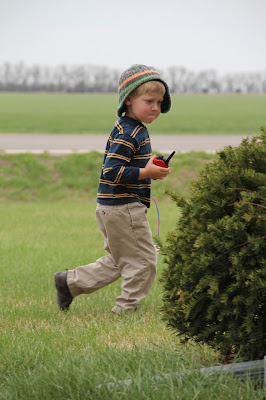
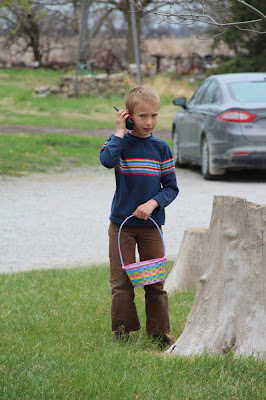
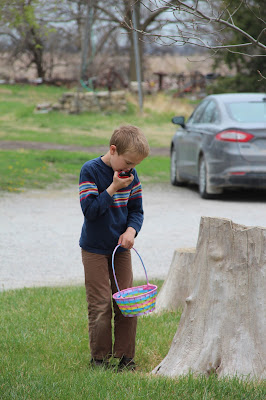
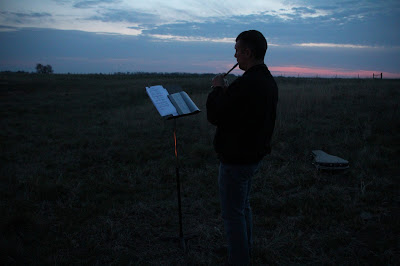
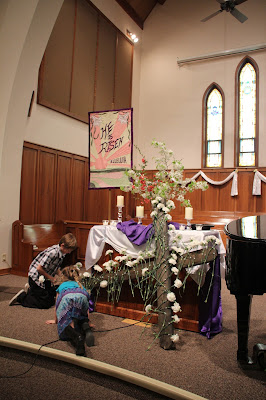
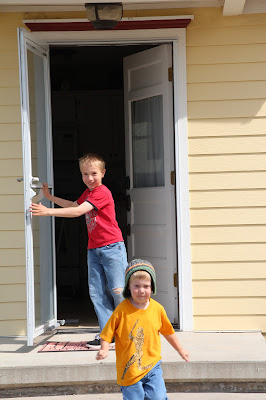
Spring in the prairie is a bit of an odd thing this year. Here and there, near ditches and creeks, a short, soft blanket of lush green grass covers the ground. A few feet away, patches of green are visible between the brown shoots of last year s grass. Some trees are already turning green, purple, red, and white, while others stand still and brown, stubbornly insisting that spring is not here yet. To look at the thermometer may not be much guide either; two days after the temperature was nearly 90, we woke to see a dusting of snow on the ground. It s been dry, terribly try in Kansas. Grass next to a gravel driveway or road often has a chalkish layer of dust on it, kicked up by passing cars or even a stiff wind. The earth thirsts. It is somehow fitting to celebrate Easter, that spring holiday, in the midst of the dry ground, to remember that water is not the only thing that can quench thirst. Easter morning began sleepily, as we got up early to head to a sunrise service. It was in a pasture just outside a small Kansas town, and we gathered there at about 6:15, wearing only light jackets against the breeze. A fire was burning, and there was water on hand to quickly douse any grass that caught first that wasn t supposed to and it was occasionally used. I was doing the prelude for the service, playing on my penny whistle. I enjoyed being able to do that, and was glad that the wind was calm enough that it didn t interfere too much with the music. We sang some hymns, listened to some Bible readings, and just stood in silence, listening to the crackle of the fire, some country dogs playing, and watching the sky to the east transform as the sun came up. Then it was on to church for breakfast, and a break before the Easter service the pipe organ ringing, piano playing with it, and deep trombone and full sanctuary of people singing our 4-part Easter hymns celebrating the day. Laura had the idea of pinning carnations onto the cross, and we got to watch everyone come up and add theirs. Jacob and Oliver enjoyed the sunrise service. They decided they would keep a watchful eye on the first and the dogs, they enjoyed muffins at breakfast and playing in the church after that. But if you are 4 or 7, what is Easter without an Easter egg hunt? And they got in several. Laura and I hid some eggs around the yard. Jacob asked me to use a radio to tell them when the eggs were ready. Here they are, bounding out the door to begin the hunt! And, of course, if you are 4 or 7 and have a geek for a dad, you will naturally think to bring radios with you to the next hunt. To tell your brother what you re finding, of course. It was a good weekend, and in fact, Jacob even volunteered to put up a wet floor sign after he spilled some water: On the last car ride of the day, Jacob decided he would write a story about his Easter. He decided he would publish a big book, and be a famous author and make other children happy. Oliver, of course, decided he needed an Easter story also. We couldn t very well publish a book in the car, but I did manage to use my phone to capture their stories. It s been a long and busy week, but there is much to be joyful about, even when tired.





Russ Allbery: Review: Hyperbole and a Half

Review: Hyperbole and a Half, by Allie Brosh
Publisher: Touchstone
Copyright: November 2013
ISBN: 1-4767-6459-X
Format: Graphic novel
Pages: 373
It's fundamentally pointless to write this review. Some number of you have already heard of Hyperbole and a Half. Most of that group already own this book and are only reading this review so that you can remember how much fun you had reading it. But, even better, you could just stop reading this review and go read the book again. Some of you who have heard of Hyperbole and a Half didn't know that Allie Brosh had published a book. If that's you, you're probably not reading this review any more, since you're now at your favorite book seller buying a copy of the book, rendering the review somewhat pointless. For those of you who have not heard of Hyperbole and a Half, there's no need to read a review, because it's a blog. So, rather than reading this review, you can just follow that link and read it for yourself. If you find yourself laughing uncontrollably (and occasionally crying) and going "where can I get more of this?", well, there's a book. Which you could have also found out from the blog itself. Like I said, not much point. If you read the blog and don't particularly care for it, well, I greatly respect your position. The diversity of taste in the human race is what leads to our wonderful variety of culture, philosophy, and art, and I appreciate your substantial contribution to that diversity. However, you should now make a mental note to never trust my humor recommendations, and you shouldn't let this review change your mind. But, since I'm here, I may as well write a review anyway. Hyperbole and a Half is, as mentioned, a blog by Allie Brosh. Most of the posts are quite long and substantial and in the form of cartoons mixed with text, usually (but not always) telling some sort of story. The cartoon style is what is often called "MS Paint," meaning that it looks like something drawn in Microsoft Paint with its most basic tools. (Other examples of this style are the Oatmeal and Homestuck, although Brosh stays consistently with a rawer art style than either of those.) It looks extremely simple, like child drawings (and early childhood inspires much of Brosh's material), but once one gets used to it, one realizes that Brosh gets amazing expressiveness and character out of the art style. As an aside, yes, I am wholeheartedly recommending a book that is full of material about young children. Brosh is that good. The subtitle of this book is "unfortunate situations, flawed coping mechanisms, mayhem, and other things that happened," and it's mostly based on (exaggerated) incidents that occurred in Brosh's life. Most of them are hilarious. Some of them are both hilarious and stunning psychological insights. She has an amazing knack for storytelling and for exaggerating just the right moments of the story, or summing up emotions in a wonderful turn of phrase or a picture. She's also amazingly good at telling embarrassing stories about herself in a way that makes you empathize rather than just cringe, and then come away feeling like you understand both her and yourself better. If you've wandered around the Internet much, you have probably run across the phrase "clean ALL the things!" and the corresponding picture. That's from Hyperbole and a Half (specifically, "This is Why I'll Never Be an Adult") and is included in this book (improved; see below). It's even better in context. But, beyond storytelling, the other thing Brosh is amazingly good at is capturing internal mental states and emotions in a way that the reader understands and those who have experienced the emotion immediately go "yes, THAT." The apex of this is her two-part post on depression, which is hands-down the best description of depression that I've ever read. That judgment has been echoed by multiple friends of mine with depression. And yes, both of those posts are included in the book as well, although you can also read them on the web. As you've probably noticed, this book is partly a collection of material that's freely available on the web. Unlike some web comics collections, it's not entirely a reprint collection; there are entirely new stories here (which for me was enough by itself to buy the book). Brosh's post on the book says that it's about 50% new material. But the ones that aren't original have been edited and improved, sometimes substantially. For example, I did a quick comparison of the book version with the web version of "This is Why I'll Never be an Adult" and found Brosh redrew all of the cartoons for the story. The book is also gorgeous, if you care about such things like I do: high quality paper, thick pages, vibrant colors, and a comfortable heft to the hardcover version. It's the sort of book that feels like it will survive for decades, which is good since I intend to re-read it for decades. Brosh has a lot of material on-line, so obviously only a small fraction made it into the book and there's more to discover on the blog. I can particularly recommend "The Alot is Better Than You at Everything" and "Boyfriend Doesn't Have Ebola. Probably.". The latter, which is mostly about creating a better pain scale, is my favorite from the blog that didn't make it into the book. And there are two more examples of the sort of thing that you'll getting here. So ends the probably pointless review. I absolutely adore Hyperbole and a Half. It is my favorite web comic, even surpassing XKCD, which is saying something. Even if there were no material, I would have bought this book in hardcover to support Brosh and to have a high-quality printing of the blog posts. The reworkings and improvements of the republished material and the brand new additions are just bonuses. But there's no need to take my word for it; the best possible advertisement for Brosh's work is on-line, from which you can easily determine if you'll enjoy this book as much as I did. Even the back cover and the inside flaps are awesome. Rating: 10 out of 10

C.J. Adams-Collier: Windows is *still* loading files

I m moving the active directory server off of hardware on to the hypervisor. I think if I boot the drive as USB I can install the virtio disk drivers on the system. Fingers crossed! Only thing is that this first boot off of a USB device takes *sooooo* long! Windows_is_STILL_loading_files

Russell Coker: Sociological Images 2014

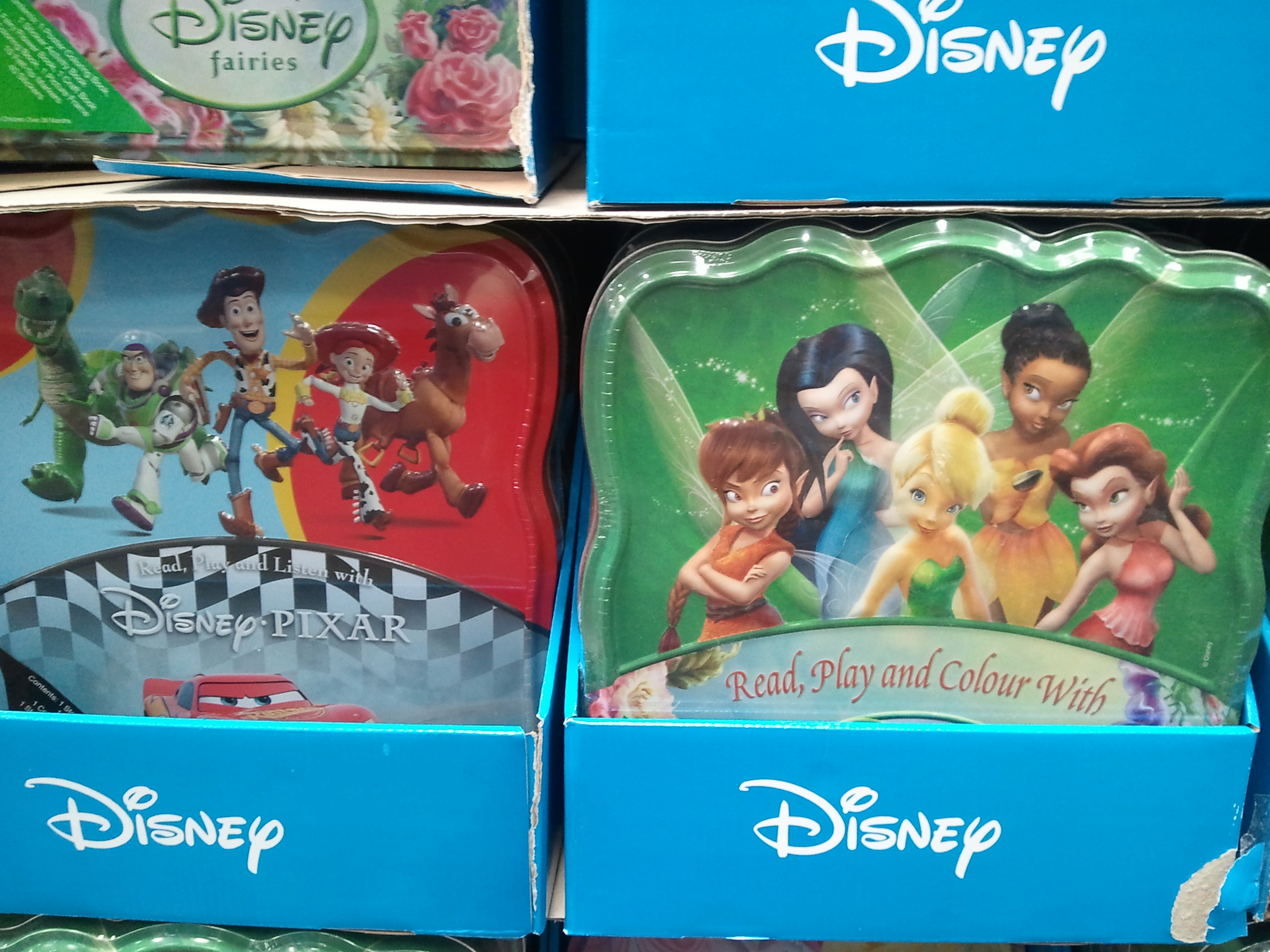
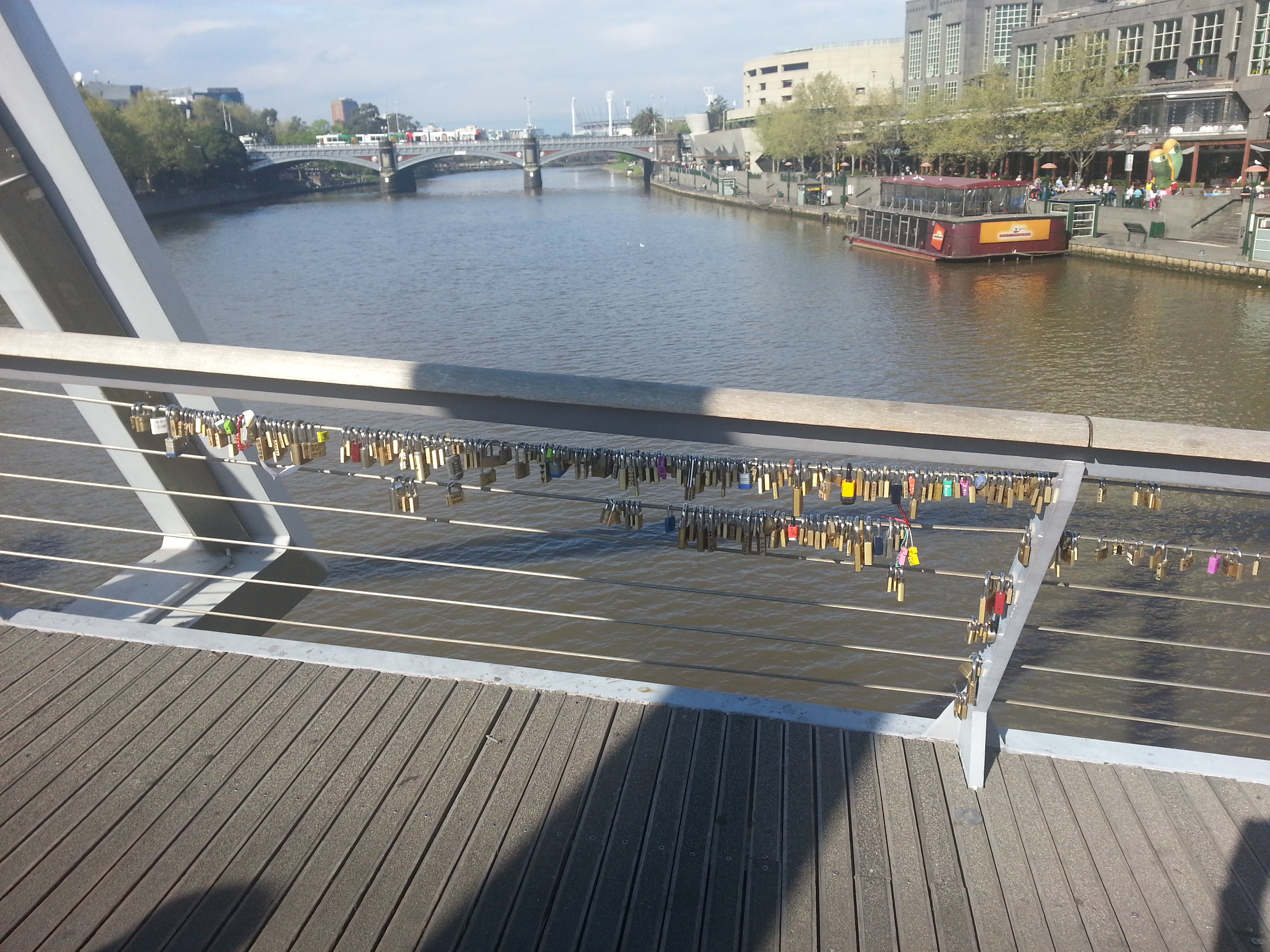
White Trash The above poster was on a bridge pylon in Flinders St in 2012. It s interesting to see what the Fringe Festival people consider to be associated with white trash . They claim homophobia is a white trash thing however lower class people have little political power and the fact that we still don t have marriage equality in Australia is clear evidence that homophobia is prevalent among powerful people. Toys vs Fairies Fairies look pretty while boys toys do things I took the above photo at Costco in 2012. I think it s worth noting the way that the Disney Fairies (all female and marketed to a female audience) are standing around looking pretty while the Toy Story characters (mostly male and marketed to a male audience) are running out to do things. Having those items side by side on the shelf was a clear example of a trend in toys towards girls being encouraged to be passive while boys are doing things. The Toy Story pack has one female character, so it could be interpreted as being aimed at both boys and girls. But even that interpretation doesn t remove the clear gender difference. It seems ironic to me that the descriptions on the boxes are Read, Play, and Listen for the Toy Story pack and Read, Play, and Colour on the Fairies pack. Colouring is more active than listening so the pictures don t match the contents. Make Up vs Tools Girls chocolate is make-up and boys chocolate is tools I took the above photo in an Aldi store in early 2013, today I was in Aldi and noticed that the same chocolate is still on sale. A clear and pointless gender difference. Rumor has it that some of the gender difference in kids clothing is so that a child can t wear the clothes of an older sibling of different gender, but chocolate only gets eaten once so there is no reason for this. Oath The above poster was inside the male toilet at Melbourne University in 2013. It would probably be good to have something like that on display all the time instead of just for one event. Locks Locks with inscriptions on a bridge on the Yarra River in Melbourne I took the above picture early this year, it shows hundreds of padlocks attached to a bridge across the Yarra River in Melbourne. Each padlock has a message written or inscribed in it, mostly declarations of love. I first noticed this last year, I m not sure how long it s been up. There was nothing formal about this (no signs about it), people just see it and decide that they want to add to it. I guess that the council cuts some of them off periodically as the number of locks doesn t seem to be increasing much in recent times. It would be interesting to do some research into how many locks are needed to start one of these. It would also be interesting to discover whether the nature of the inscriptions determines the speed at which it takes off, would a bunch of padlocks with messages like I Love Linux inspire others as well as messages declaring love for random people? All that is required is some old locks and an engraving tool. I wonder what the social norm might be regarding messing with those locks. If I was to use those padlocks to practice the sport of lock-picking (which I learned when in Amsterdam) I wonder whether random bystanders would try to discourage me. It seems likely that picking the locks and taking them away would get a negative reaction but I wonder whether picking them one at a time and replacing them (or maybe moving them to another wire) would get a reaction. Blackface for Schoolkids teachers choice blackface and yellowface masks A craft shop at the Highpoint shopping center in Melbourne is selling Teacher s Choice brand Multicultural Face Masks . Multicultural is a well regarded term in education, teaching children about other cultures is a good concept but can be implemented really badly. When I was in high school the subject Social Studies seemed to have an approach of look how weird people are in other places instead of teaching the kids anything useful. Sociological Images has an informative article on the Australian Hey Hey it s Saturday blackface incident in 2009 [1]. The idea of these masks seems to involve students dressing up as caricatures of other races. The mask which looks like someone s idea of a Geisha is an even bigger WTF, mixing what the package calls culture (really race) with sex work. When I visited Tokyo I got the impression that French maids fill a similar niche to Geisha for younger Japanese men and the maid cafe thing is really popular there. I think it s interesting to consider the way that a French maid costume is regarded differently to a Geisha costume. I expect that Teacher s Choice doesn t sell French maid costumes. Delicious Cow picture of a bovine named Delicious Usually meat is advertised in a way that minimises the connection to living animals. Often adverts just show cuts of meat and don t make any mention of animals and when animals are shown they are in the distance. The above picture was on the wall at a Grill d burger restaurant in Point Cook. It shows a bovine (looks like a bull even though I believe that cows are the ones that are usually eaten) with a name-tag identifying it as Delicious . The name tag personalises the animal which is an uncommon thing to do when parts of an animal are going to be eaten. Of the animals that are commonly eaten it seems that the general trend is to only show fish as complete live animals, presumably because people can identify with mammals such as cattle in a way that they can t identify with fish. Fish are also the only complete animals that are shown dead, adverts for fish that are sold as parts (EG salmon and tuna) often show complete dead fish. But I ve never seen a meat advert that shows a complete dead cow or sheep.

Axel Beckert: Xen: Running a Sid DomU with PyGrub on a Squeeze Dom0

I m running one Debian Sid and one Jessie (Testing) Xen guest domain on a Debian Squeeze (Oldstable) Xen 4.0 running host server. Recently I had to reboot one these virtual machines after more than a year of uptime. But the new 3.14 kernel from Debian Experimental didn t boot. Neither did 3.13 from Debian Unstable. Nor did any other kernel image newer then the 3.5-trunk (from Debian Experimental back than) work. Everytime pygrub bailed out with this error message:
Error: (2, 'Invalid kernel', 'xc_dom_find_loader: no loader found\n')
(Yes, the parentheses and the \n were part of the error message.) After some searching on the web I found hints that this message may be caused by an unsupported compression type in the kernel image. And indeed, if I unpack the vmlinuz with the extract-vmlinux tool which is part of Linux source code (but not yet part of any binary package in Debian), and use the extract file in grub s menu.lst (which is then read by pygrub) instead, the DomU boots Linux kernel 3.14 again, even on a Squeeze-running Dom0.

Matthew Garrett: Home entertainment implementations are pretty appalling

I picked up a Panasonic BDT-230 a couple of months ago. Then I discovered that even though it appeared fairly straightforward to make it DVD region free (I have a large pile of PAL region 2 DVDs), the US models refuse to play back PAL content. We live in an era of software-defined functionality. While Panasonic could have designed a separate hardware SKU with a hard block on PAL output, that would seem like unnecessary expense. So, playing with the firmware seemed like a reasonable start.
Panasonic provide a nice download site for firmware updates, so I grabbed the most recent and set to work. Binwalk found a squashfs filesystem, which was a good sign. Less good was the block at the end of the firmware with "RSA" written around it in large letters. The simple approach of hacking the firmware, building a new image and flashing it to the device didn't appear likely to work.

Which left dealing with the installed software. The BDT-230 is based on a Mediatek chipset, and like most (all?) Mediatek systems runs a large binary called "bdpprog" that spawns about eleventy billion threads and does pretty much everything. Runnings strings over that showed, well, rather a lot, but most promisingly included a reference to "/mnt/sda1/vudu/vudu.sh". Other references to /mnt/sda1 made it pretty clear that it was the mount point for USB mass storage. There were a couple of other constraints that had to be satisfied, but soon attempting to run Vudu was actually setting a blank root password and launching telnetd.

/acfg/config_file_global.txt was the next stop. This is a set of tokens and values with useful looking names like "IDX_GB_PTT_COUNTRYCODE". I tried changing the values, but unfortunately made a poor guess - on next reboot, the player had reset itself to DVD region 5, Blu Ray region C and was talking to me in Russian. More inconveniently, the Vudu icon had vanished and I couldn't launch a shell any more.

But where there's one obvious mechanism for running arbitrary code, there's probably another. /usr/local/bin/browser.sh contained the wonderful line:
export LD_PRELOAD=/mnt/sda1/bbb/libSegFault.so
, so then it was just a matter of building a library that hooked open() and launched inetd and dropping that into the right place, and then opening the browser.

This time I set the country code correctly, rebooted and now I can actually watch Monkey Dust again. Hurrah! But, at the same time, concerning. This software has been written without any concern for security, and it listens on the network by default. If it took me this little time to find two entirely independent ways to run arbitrary code on the device, it doesn't seem like a stretch to believe that there are probably other vulnerabilities that can be exploited with less need for physical access.

The depressing part of this is that there's no reason to believe that Panasonic are especially bad here - especially since a large number of vendors are shipping much the same Mediatek code, and so probably have similar (if not identical) issues. The future is made up of network-connected appliances that are using your electricity to mine somebody else's Dogecoin. Our nightmarish dystopia may be stranger than expected.

comment count unavailable comments

20 April 2014

Russell Coker: Sociological Images 2012

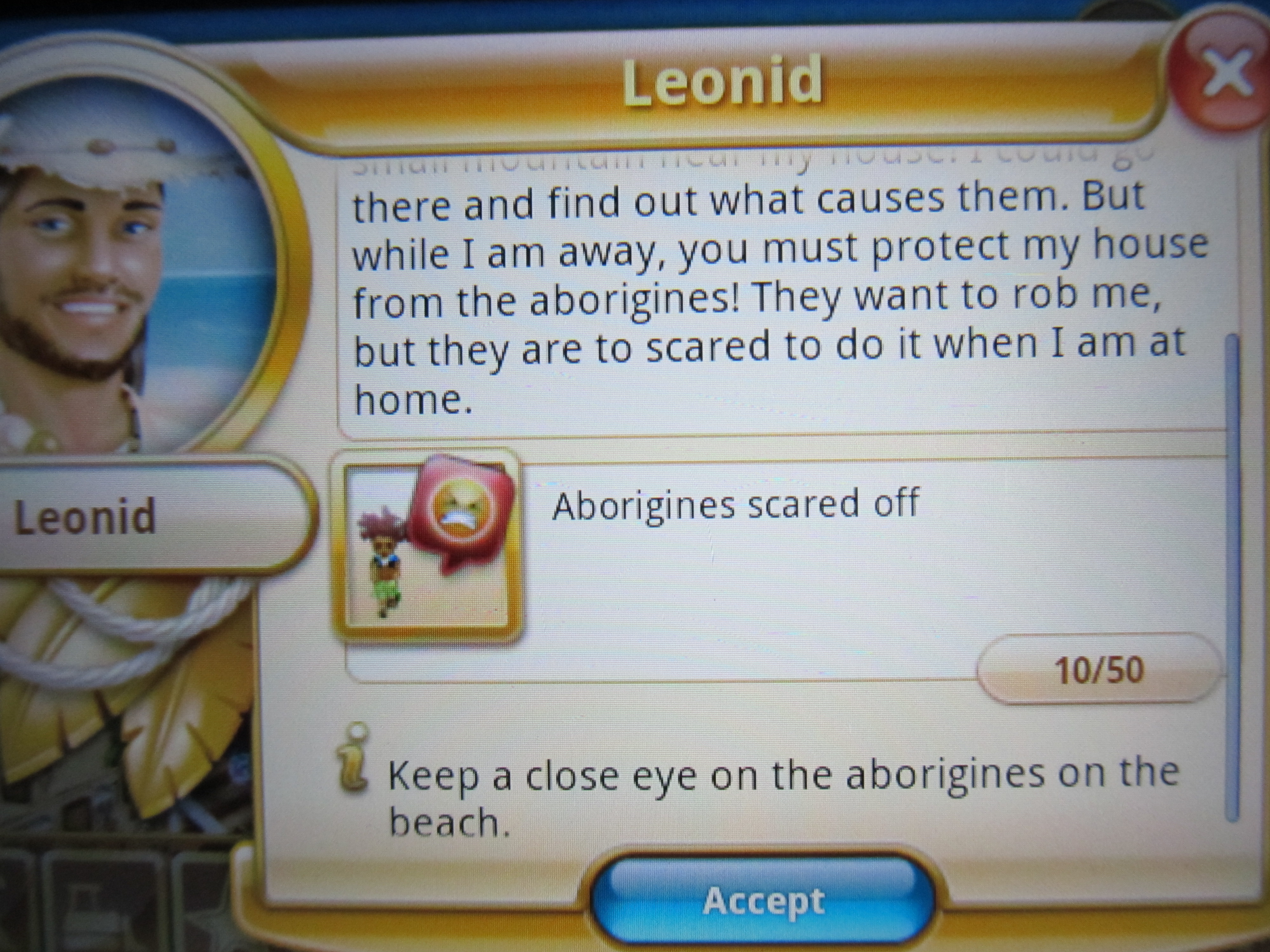
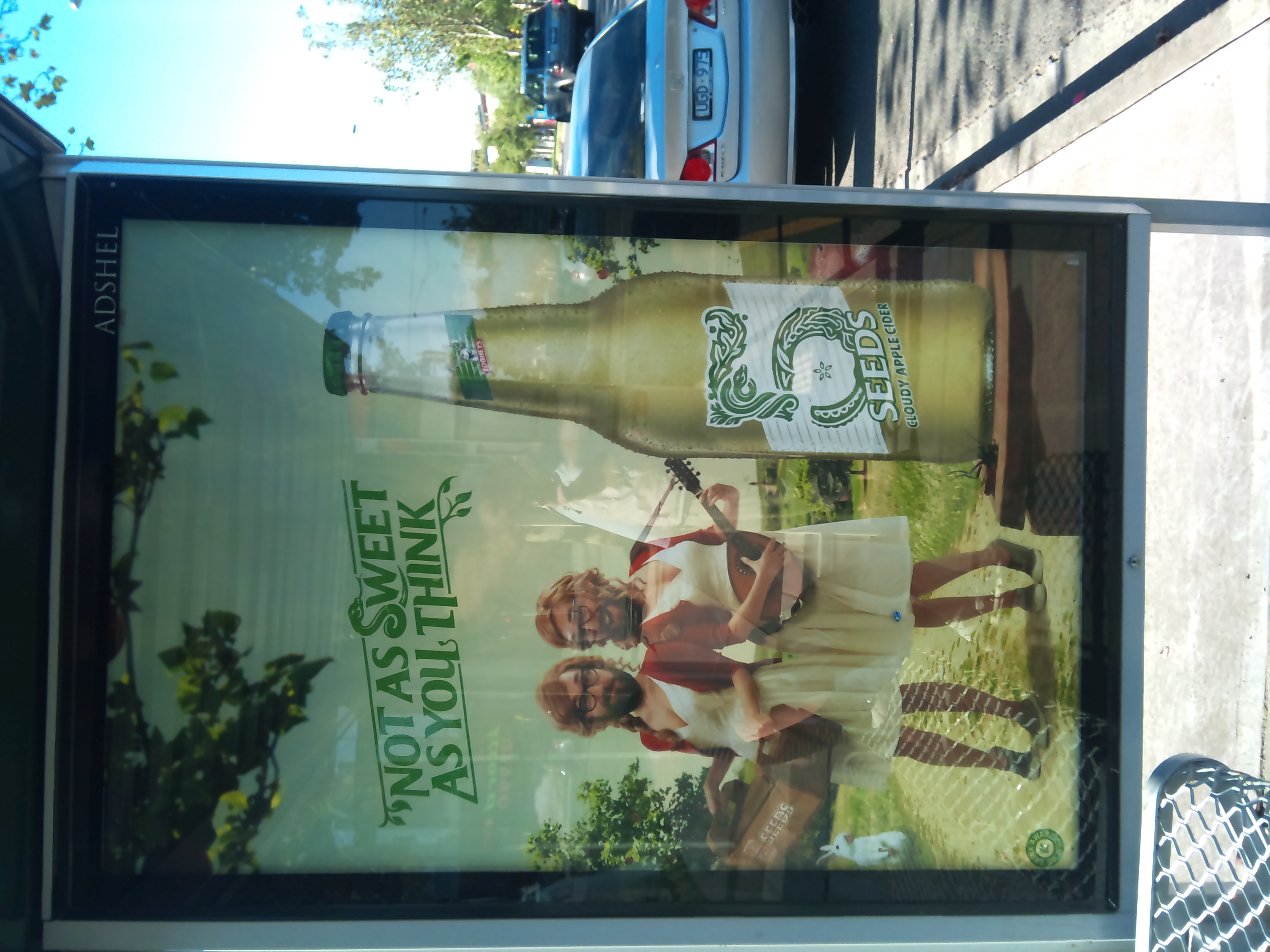
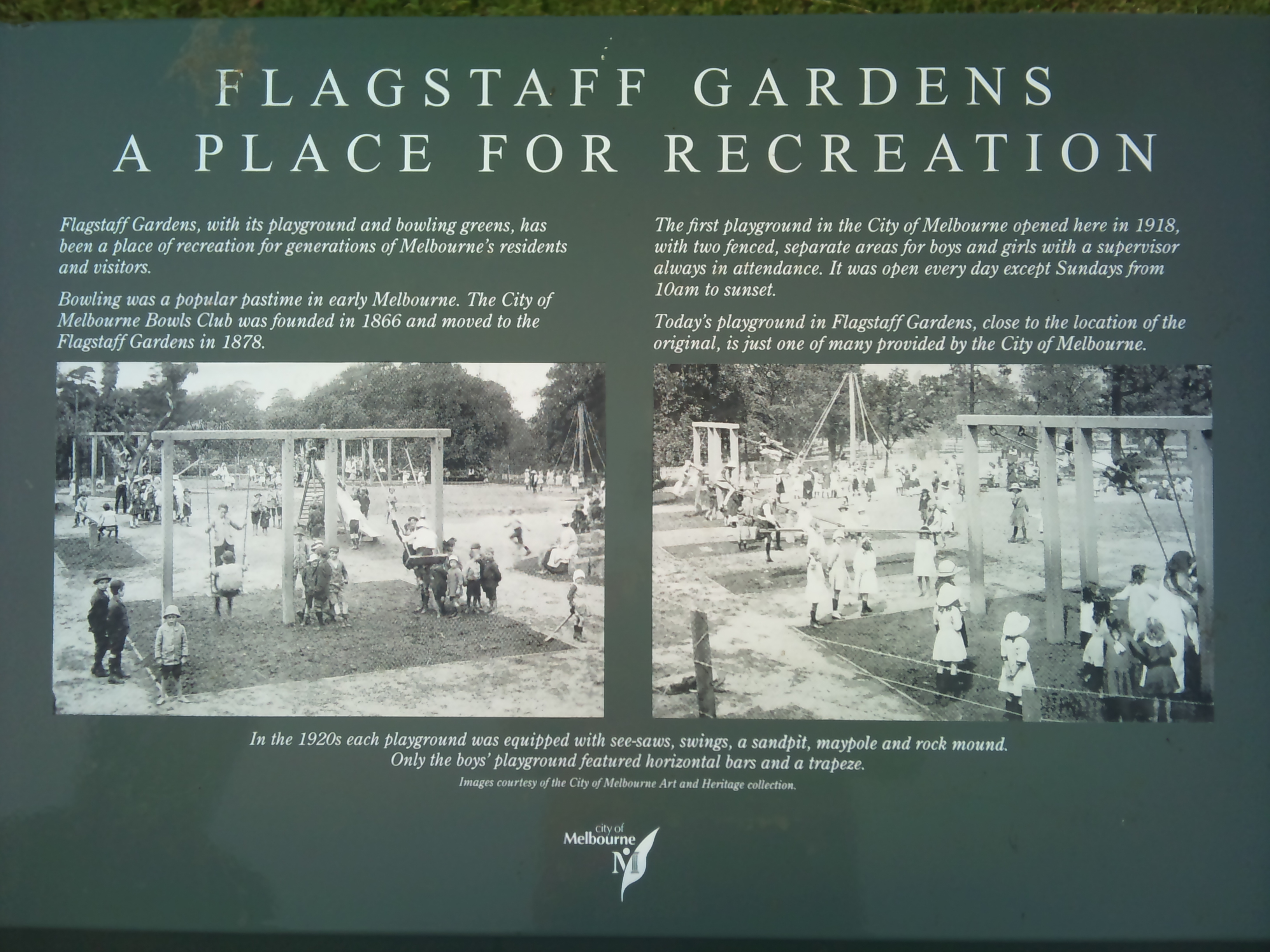
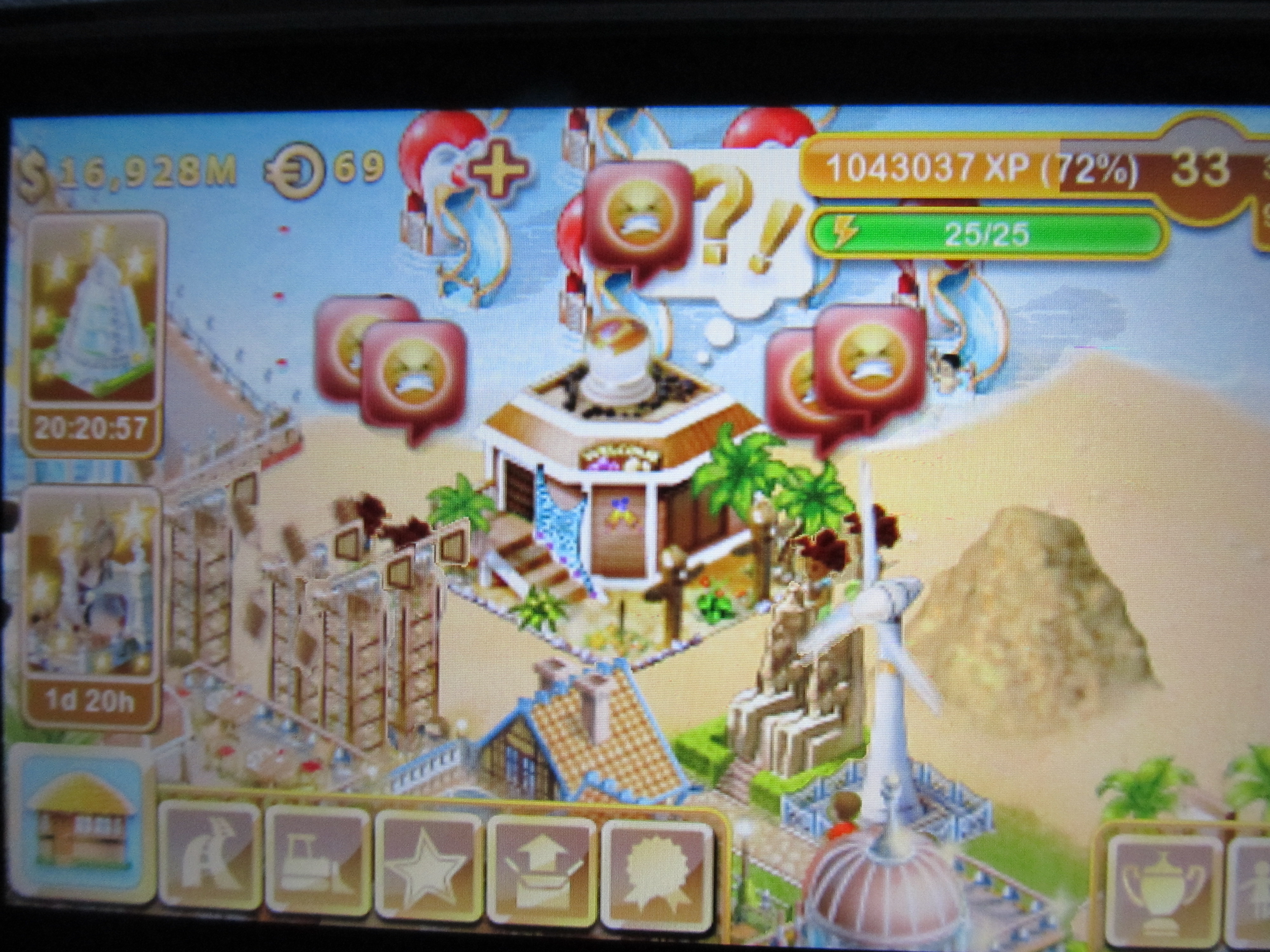
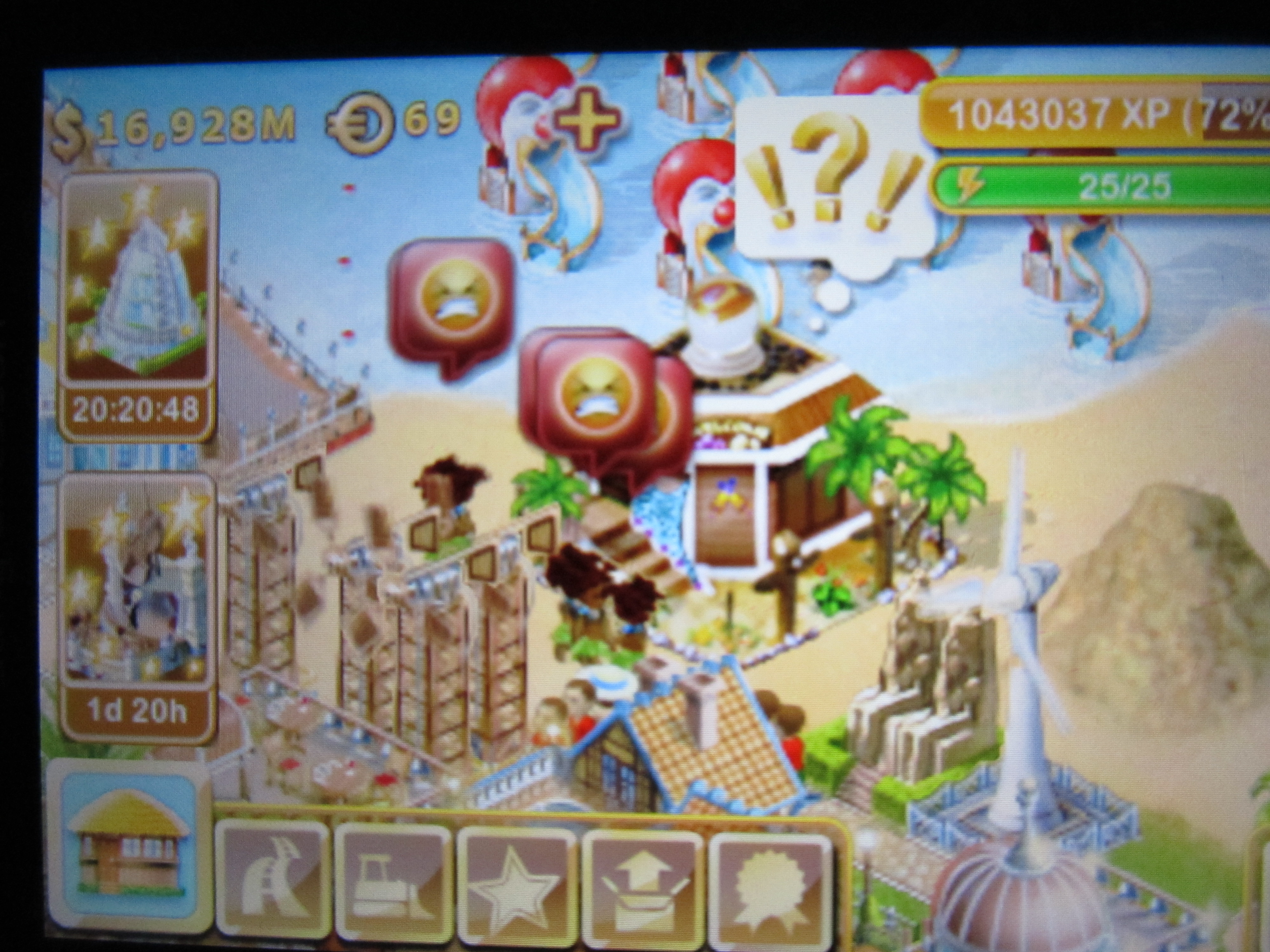
In 2011 I wrote a post that was inspired by the Sociological Images blog [1]. After some delay here I ve written another one. I plan to continue documenting such things. Playground gender segregated playground in 1918 In 2011 I photographed a plaque at Flagstaff Gardens in Melbourne. It shows a picture of the playground in 1918 with segregated boys and girls sections. It s interesting that the only difference between the two sections is that the boys have horizontal bars and a trapeze. Do they still have gender segregated playgrounds anywhere in Australia? If so what is the difference in the sections? Aborigines The Android game Paradise Island [2] has a feature where you are supposed to stop Aborigines from stealing, it plays on the old racist stereotypes about Aborigines which are used to hide the historical record that it s always been white people stealing from the people that they colonise. Angry face icons over AboriginesAborigines described as thieves There is also another picture showing the grass skirts. Nowadays the vast majority of Aborigines don t wear such clothing, the only time they do is when doing some sort of historical presentation for tourists. I took those pictures in 2012, but apparently the game hasn t changed much since then. Lemonade lemonade flavored fizzy drink Is lemonade a drink or a flavour? Most people at the party where I took the above photo regard lemonade as a drink and found the phrase Lemonade Flavoured Soft Drink strange when it was pointed out to them. Incidentally the drink on the right tastes a bit like the US version of lemonade (which is quite different from the Australian version). For US readers, the convention in Australia is that lemonade has no flavor of lemons. Not Sweet maybe gender queer people on bikes In 2012 an apple cider company made a huge advertising campaign featuring people who might be gender queer, above is a picture of a bus stop poster and there were also TV ads. The adverts gave no information at all about what the drink might taste like apart from not being as sweet as you think . So it s basically an advertising campaign with no substance other than a joke about people who don t conform to gender norms. Also it should be noted that some women naturally grow beards and have religious reasons for not shaving [3]. Episode 2 of the TV documentary series Am I Normal has an interesting interview of a woman with a beard. Revolution communist revolution Schweppes drinks A violent political revolution is usually a bad thing, using such revolutions to advertise sugar drinks seems like a bad idea. But it seems particularly interesting to note the different attitudes to such things in various countries. In 2012 Schweppes in Australia ran a marketing campaign based on imagery related to a Communist revolution (the above photo was taken at Southern Cross station in Melbourne), I presume that Schweppes in the US didn t run that campaign. I wonder whether global media will stop such things, presumably that campaign has the potential to do more harm in the US than good in Australia. Racist Penis Size Joke at Southbank racist advert in Southbank paper The above advert was in a free newspaper at Southbank in 2012. Mini Movers thought that this advert was a good idea and so did the management of Southbank who approved the advert for their paper. Australia is so racist that people don t even realise they are being racist.

19 April 2014

Steve Kemp: I was beaten to the punch, but felt nothing

A while back I mented github-backed DNS hosting. Turns out NameCast.net does that already, and there is an interesting writeup on the design of something similar, from the same authors in 2009. Fun to read. In other news applying for jobs is a painful annoyance. Should anybody wish to employ an Edinburgh-based system administrator, with a good Debian record, then please do shout at me. Remote work is an option, as is a local office, if you're nearby. Now I need to go hide from the sun, lest I get burned again... Good news? Going on holiday to Helsinki in a week or so, for Vappu. Anybody local who wants me should feel free to grab me, via the appropriate channels.

Joey Hess: propellor-driven DNS and backups

Took a while to get here, but Propellor 0.4.0 can deploy DNS servers and I just had it deploy mine. Including generating DNS zone files. Configuration is dead simple, as far as DNS goes:
     & alias "ns1.example.com"
        & Dns.secondary hosts "joeyh.name"
                & Dns.primary hosts "example.com"
                        (Dns.mkSOA "ns1.example.com" 100)
                        [ (RootDomain, NS $ AbsDomain "ns1.example.com")
            , (RootDomain, NS $ AbsDomain "ns2.example.com")
                        ]
The awesome thing is that propellor fills in all the other information in the zone file by looking at the properties of the hosts it knows about.
 , host "blue.example.com"
        & ipv4 "192.168.1.1"
        & ipv6 "fe80::26fd:52ff:feea:2294"
        & alias "example.com"
        & alias "www.example.com"
        & alias "example.museum"
        & Docker.docked hosts "webserver"
             requres  backedup "/var/www"
        
        & alias "ns2.example.com"
        & Dns.secondary hosts "example.com"
When it sees this host, Propellor adds its IP addresses to the example.com DNS zone file, for both its main hostname ("blue.example.com"), and also its relevant aliases. (The .museum alias would go into a different zone file.) Multiple hosts can define the same alias, and then you automaticlly get round-robin DNS. The web server part of of the blue.example.com config can be cut and pasted to another host in order to move its web server to the other host, including updating the DNS. That's really all there is to is, just cut, paste, and commit! I'm quite happy with how that worked out. And curious if Puppet etc have anything similar.
One tricky part of this was how to ensure that the serial number automtically updates when changes are made. The way this is handled is Propellor starts with a base serial number (100 in the example above), and then it adds to it the number of commits in its git repository. The zone file is only updated when something in it besides the serial number needs to change. The result is nice small serial numbers that don't risk overflowing the (so 90's) 32 bit limit, and will be consistent even if the configuration had Propellor setting up multiple independent master DNS servers for the same domain.
Another recent feature in Propellor is that it can use Obnam to back up a directory. With the awesome feature that if the backed up directory is empty/missing, Propellor will automcatically restore it from the backup. Here's how the backedup property used in the example above might be implemented:
backedup :: FilePath -> Property
backedup dir = Obnam.backup dir daily
    [ "--repository=sftp://rsync.example.com/~/webserver.obnam"
    ] Obnam.OnlyClient
     requires  Ssh.keyImported SshRsa "root"
     requires  Ssh.knownHost hosts "rsync.example.com" "root"
     requires  Gpg.keyImported "1B169BE1" "root"
Notice that the Ssh.knownHost makes root trust the ssh host key belonging to rsync.example.com. So Propellor needs to be told what that host key is, like so:
 , host "rsync.example.com"
        & ipv4 "192.168.1.4"
        & sshPubKey "ssh-rsa blahblahblah"
Which of course ties back into the DNS and gets this hostname set in it. But also, the ssh public key is available for this host and visible to the DNS zone file generator, and that could also be set in the DNS, in a SSHFP record. I haven't gotten around to implementing that, but hope at some point to make Propellor support DNSSEC, and then this will all combine even more nicely.
By the way, Propellor is now up to 3 thousand lines of code (not including Utility library). In 20 days, as a 10% time side project.

Russell Coker: Swap Space and SSD

In 2007 I wrote a blog post about swap space [1]. The main point of that article was to debunk the claim that Linux needs a swap space twice as large as main memory (in summary such advice is based on BSD Unix systems and has never applied to Linux and that most storage devices aren t fast enough for large swap). That post was picked up by Barrapunto (Spanish Slashdot) and became one of the most popular posts I ve written [2]. In the past 7 years things have changed. Back then 2G of RAM was still a reasonable amount and 4G was a lot for a desktop system or laptop. Now there are even phones with 3G of RAM, 4G is about the minimum for any new desktop or laptop, and desktop/laptop systems with 16G aren t that uncommon. Another significant development is the use of SSDs which dramatically improve speed for some operations (mainly seeks). As SATA SSDs for desktop use start at about $110 I think it s safe to assume that everyone who wants a fast desktop system has one. As a major limiting factor in swap use is the seek performance of the storage the use of SSDs should allow greater swap use. My main desktop system has 4G of RAM (it s an older Intel 64bit system and doesn t support more) and has 4G of swap space on an Intel SSD. My work flow involves having dozens of Chromium tabs open at the same time, usually performance starts to drop when I get to about 3.5G of swap in use. While SSD generally has excellent random IO performance the contiguous IO performance often isn t much better than hard drives. My Intel SSDSC2CT12 300i 128G can do over 5000 random seeks per second but for sustained contiguous filesystem IO can only do 225M/s for writes and 274M/s for reads. The contiguous IO performance is less than twice as good as a cheap 3TB SATA disk. It also seems that the performance of SSDs aren t as consistent as that of hard drives, when a hard drive delivers a certain level of performance then it can generally do so 24*7 but a SSD will sometimes reduce performance to move blocks around (the erase block size is usually a lot larger than the filesystem block size). It s obvious that SSDs allow significantly better swap performance and therefore make it viable to run a system with more swap in use but that doesn t allow unlimited swap. Even when using programs like Chromium (which seems to allocate huge amounts of RAM that aren t used much) it doesn t seem viable to have swap be much bigger than 4G on a system with 4G of RAM. Now I could buy another SSD and use two swap spaces for double the overall throughput (which would still be cheaper than buying a PC that supports 8G of RAM), but that still wouldn t solve all problems. One issue I have been having on occasion is BTRFS failing to allocate kernel memory when managing snapshots. I m not sure if this would be solved by adding more RAM as it could be an issue of RAM fragmentation I won t file a bug report about this until some of the other BTRFS bugs are fixed. Another problem I have had is when running Minecraft the driver for my ATI video card fails to allocate contiguous kernel memory, this is one that almost certainly wouldn t be solved by just adding more swap but might be solved if I tweaked the kernel to be more aggressive about swapping out data. In 2007 when using hard drives for swap I found that the maximum space that could be used with reasonable performance for typical desktop operations was something less than 2G. Now with a SSD the limit for usable swap seems to be something like 4G on a system with 4G of RAM. On a system with only 2G of RAM that might allow the system to be usable with swap being twice as large as RAM, but with the amounts of RAM in modern PCs it seems that even SSD doesn t allow using a swap space larger than RAM for typical use unless it s being used for hibernation. Conclusion It seems that nothing has significantly changed in the last 7 years. We have more RAM, faster storage, and applications that are more memory hungry. The end result is that swap still isn t very usable for anything other than hibernation if it s larger than RAM. It would be nice if application developers could stop increasing the use of RAM. Currently it seems that the RAM requirements for Linux desktop use are about 3 years behind the RAM requirements for Windows. This is convenient as a PC is fully depreciated according to the tax office after 3 years. This makes it easy to get 3 year old PCs cheaply (or sometimes for free as rubbish) which work really well for Linux. But it would be nice if we could be 4 or 5 years behind Windows in terms of hardware requirements to reduce the hardware requirements for Linux users even further.

Russell Coker: Phone Based Lectures

Early this month at a LUV meeting I gave a talk with only my mobile phone to store notes. I used Google Keep to write the notes as it s one of the easiest ways of writing a note on a PC and quickly transferring it to a phone if I keep doing this I will find some suitable free software for this task. Owncloud seems promising [1], but at the moment I m more concerned with people issues than software. Over the years I ve experimented with different ways of presenting lectures. I m now working with the theory that presenting the same data twice (by speaking and text on a projector) distracts the audience and decreases learning. Editing and Viewing Notes Google Keep is adequate for maintaining notes, it s based on notes that are a list of items (like a shopping list) which is fine for lecture notes. It probably has lots of other functionality but I don t care much about that. Keep is really fast at updating notes, I can commit a change on my laptop and have it visible on my phone in a few seconds over 3G. Most of the lectures that I ve given have involved notes on a laptop. My first laptop was a Thinkpad 385XD with a 12.1 display and all my subsequent laptops have had a bigger screen. When a laptop with a 12 or larger screen is on a lectern I can see the notes at a glance without having to lean forward when 15 or fewer lines of text are displayed on the screen. 15 lines of text is about the maximum that can be displayed on a slide for the audience to read and with the width of a computer display or projector is enough for a reasonable quantity of text. When I run Keep on my Galaxy Note 2 it displays about 20 rather short lines of text in a portrait orientation (5 points for a lecture) and 11 slightly longer lines in a landscape orientation (4 points). In both cases the amount of text displayed on a screen is less than that with a laptop while the font is a lot smaller. My aim is to use free software for everything, so when I replace Keep with Owncloud (or something similar) I will probably have some options for changing the font size. But that means having less than 5 points displayed on screen at a time and thus a change in the way I present my talks (I generally change the order of points based on how well the audience seem to get the concepts so seeing multiple points on screen at the same time is a benefit). The Samsung Galaxy Note 2 has a 5.5 display which is one of the largest displays available in a phone. The Sony Xperia X Ultra is one of the few larger phones with a 6.44 display that s a large phone but still not nearly large enough to have more than a few points on screen with a font readable by someone with average vision while it rests on a lectern. The most obvious solution to the problem of text size is to use a tablet. Modern 10 tablets have resolutions ranging from 1920*1080 to 2560*1600 and should be more readable than the Thinkpad I used in 1998 which had a 12 800*600 display. Another possibility that I m considering is using an old phone, a Samsung Galaxy S weighs 118 to 155 grams and is easier to hold up than a Galaxy Note 2 which weighs 180g. While 60g doesn t seem like much difference if I m going to hold a phone in front of me for most of an hour the smaller and lighter phone will be easier and maybe less distracting for the audience. Distributing URLs When I give a talk I often want to share the addresses of relevant web sites with the audience. When I give a talk with the traditional style lecture notes I just put the URLs on the final page (sometimes using tinyurl.com) for people to copy during question time. When I use a phone I have to find another way. I did a test with QR code recognition and found that a code that takes up most of the width of the screen of my Galaxy Note 2 can be recognised by a Galaxy S at a distance of 50cm. If I ran the same software on a 10 tablet then it would probably be readable at a distance of a meter, if I had the QR code take up the entire screen on a tablet it might be readable at 1.5m away, so it doesn t seem plausible to hold up a tablet and allow even the first few rows of the audience to decode a QR code. Even if newer phones have better photographic capabilities than the Galaxy S that I had available for testing there are still lots of people using old phones who I want to support. I think that if QR codes are to be used they have to be usable by at least the first three rows of the audience for a small audience of maybe 50 people as that would allow everyone who s interested to quickly get in range and scan the code at the end. Chris Samuel has a photo (taken at the same meeting) showing how a QR code from a phone could be distributed to a room [2]. But that won t work for all rooms. One option is to just have the QR code on my phone and allow audience members to scan it after the lecture. As most members of the audience won t want the URLs it should be possible for the interested people to queue up to scan the QR code(s). Another possibility I m considering is to use a temporary post on my documents blog (which isn t syndicated) for URLs. The WordPress client for Android works reasonably well so I could edit the URL list at any time. That would work reasonably well for talks that have lots of URLs which is quite rare for me. A final option is to use Twitter, at the end of a talk I could just tweet the URLs with suitable descriptions. A good portion of the Tweets that I have written is URLs for web sites that I find interesting so this isn t a change. This is probably the easiest option, but with the usual caveat of using a proprietary service as an interim measure until I get a free software alternative working. Any suggestions? Please comment if you have any ideas about ways of addressing these issues. Also please let me know if anyone is working on a distributed Twitter replacement. Please note that anything which doesn t support followers on multiple servers and re-tweets and tweeting to users on other servers isn t useful in this regard.

Thomas Goirand: OpenStack 2014.1, aka Icehouse, is out

The new version of OpenStack is out, and I have just finished uploading it all into Debian Sid. With a total of 38 packages that I uploaded yesterday (which was exhausting!), most, if not all, were only moving from Experimental to Sid with only tiny updates, and this represents the achievement of 6 months of packaging work. The new feature list is impressive, and I would like to highlight some part of it: For the moment, I haven t packaged Sahara (eg: Hadoop as a service), but it might come later as a customer of us might require it. There s a lot less unit tests issues in the packages I uploaded to Sid: all SQLAlchemy issues have been dealt with. I wasn t confident with the Havana release that Sid / Testing would be a good environment for OpenStack, but this time with Icehouse, I think it should be much better. Please test this brand new release and report issues on the BTS. As always, the packages are available also as Wheezy backports through the usual channels (see the official install guide).

Ben Hutchings: Linux kernel update for Debian 7.5; new Intel Ethernet drivers

Debian 7.5 will include an update to the Linux kernel, based on Linux 3.2.57. Package version 3.2.57-2 is currently available in the wheezy-proposed-updates suite. I would appreciate any testing people can do to find regressions in the next few days. In addition to bug fixes, this version updates the e1000e and igb drivers. The drivers are now based on the versions found in Linux 3.13, which support several newer chips (i210, i211, i217, i218, i354). Please consider testing this new kernel if you have an Intel gigabit Ethernet controller, even if it was already supported in Linux 3.2.

Paul Tagliamonte: Hy at PyCon 2014

I gave a talk this year at PyCon 2014, about one of my favorite subjects: Hy. Many of my regular readers will have no doubt explored Hy's thriving GitHub org, played with try-hy, or even installed it locally by pip installing it. I was lucky enough to be able to attend PyCon on behalf of Sunlight, with a solid contingint of my colleagues. We put together a writeup on the Sunlight blog if anyone was interested in our favorite talks.
Tons of really amazing questions, and such an amazingly warm reception from so many of my peers throughout this year's PyCon. Thank you so much to everyone that attended the talk. As always, you should Fork Hy on GitHub, follow @hylang on the twitters, and send in any bugs you find! Hopefully I'll be able to put my talk up in blog-post form soon, but until then feel free to look over the slides or just watch the talk. An extra shout-out to @akaptur for hacking on Hy during the sprints, and giving the exception system quite the workthrough. Thanks, Allison!

18 April 2014

Thorsten Glaser: Stay off my computer, puppet!

I was out, seeing something that wasn t there yet when I was at school (the web was not ubiquitous, back then), and decided to have a look:

pageok

Ugh. Oh well, PocketIE doesn t provide a View Source thingy, so I asked Natureshadow (who got the same result on his Android, and had no View Source either apparently, so he used cURL to see it). We saw (here, re-enacted using ftp(1)):

	tg@blau:~ $ ftp -Vo - http://www.draitschbrunnen.de/
	<!-- pageok -->
	<!-- managed by puppet -->
	<html>
	<pre>pageok</pre>
	</html>
 

This is the final straw after puppet managed to trash a sudoers(5) at work (I warned people to not introduce it) now it breaks websites.

(Of course, tools are useful, but at best to the skill of their users. Merely dumbly copying recipes from the net without any understanding just makes debugging harder for those of us with skills.) ObQuestion: Does anyone have a transcript (into UTF-8) and a translation for the other half of the OpenBSD 2.8 poster? (I get asked this regularily.)
Update: One person sent me the Kanji and Kana for it in UTF-8 , and they and one more person told me it s Hands off my machine! or Don t lay a hand on my machine! . Now I m not studying Japanese, but it LGTM in FixedMisc [MirOS], and JMdict from MirPorts says: ore no mashin ni te (w)o dasu na (roughly: my machine; particle; hands; particle; put out; prohibition) Thanks all, now I know what to tell visitors who wonder about that poster on my wall. ObTip: I can install a few hundred Debian VMs at work manually before the effort needed to automate d-i would amortise. So I decided not to. Coworkers are shocked. I keep flexibility (can decide to have machines differ), and the boss accepts my explanations. Think before doing automation just for the sake of automation!

Richard Hartmann: higher security

Instant classic
Trusted:
NO, there were errors:
The certificate does not apply to the given host
The certificate authority's certificate is invalid
The root certificate authority's certificate is not trusted for this purpose
The certificate cannot be verified for internal reasons
Signature Algorithm: md5WithRSAEncryption
    Issuer: C=XY, ST=Snake Desert, L=Snake Town, O=Snake Oil, Ltd, OU=Certificate Authority, CN=Snake Oil CA/emailAddress=ca@snakeoil.dom
    Validity
        Not Before: Oct 21 18:21:51 1999 GMT
        Not After : Oct 20 18:21:51 2001 GMT
    Subject: C=XY, ST=Snake Desert, L=Snake Town, O=Snake Oil, Ltd, OU=Webserver Team, CN=www.snakeoil.dom/emailAddress=www@snakeoil.dom
...
            X509v3 Subject Alternative Name: 
            email:www@snakeoil.dom

For your own pleasure:
openssl s_client -connect www.walton.com.tw:443 -showcerts

or just run
echo '
-----BEGIN CERTIFICATE-----
MIIDNjCCAp+gAwIBAgIBATANBgkqhkiG9w0BAQQFADCBqTELMAkGA1UEBhMCWFkx
FTATBgNVBAgTDFNuYWtlIERlc2VydDETMBEGA1UEBxMKU25ha2UgVG93bjEXMBUG
A1UEChMOU25ha2UgT2lsLCBMdGQxHjAcBgNVBAsTFUNlcnRpZmljYXRlIEF1dGhv
cml0eTEVMBMGA1UEAxMMU25ha2UgT2lsIENBMR4wHAYJKoZIhvcNAQkBFg9jYUBz
bmFrZW9pbC5kb20wHhcNOTkxMDIxMTgyMTUxWhcNMDExMDIwMTgyMTUxWjCBpzEL
MAkGA1UEBhMCWFkxFTATBgNVBAgTDFNuYWtlIERlc2VydDETMBEGA1UEBxMKU25h
a2UgVG93bjEXMBUGA1UEChMOU25ha2UgT2lsLCBMdGQxFzAVBgNVBAsTDldlYnNl
cnZlciBUZWFtMRkwFwYDVQQDExB3d3cuc25ha2VvaWwuZG9tMR8wHQYJKoZIhvcN
AQkBFhB3d3dAc25ha2VvaWwuZG9tMIGfMA0GCSqGSIb3DQEBAQUAA4GNADCBiQKB
gQC554Ro+VH0dJONqljPBW+C72MDNGNy9eXnzejXrczsHs3Pc92Vaat6CpIEEGue
yG29xagb1o7Gj2KRgpVYcmdx6tHd2JkFW5BcFVfWXL42PV4rf9ziYon8jWsbK2aE
+L6hCtcbxdbHOGZdSIWZJwc/1Vs70S/7ImW+Zds8YEFiAwIDAQABo24wbDAbBgNV
HREEFDASgRB3d3dAc25ha2VvaWwuZG9tMDoGCWCGSAGG+EIBDQQtFittb2Rfc3Ns
IGdlbmVyYXRlZCBjdXN0b20gc2VydmVyIGNlcnRpZmljYXRlMBEGCWCGSAGG+EIB
AQQEAwIGQDANBgkqhkiG9w0BAQQFAAOBgQB6MRsYGTXUR53/nTkRDQlBdgCcnhy3
hErfmPNl/Or5jWOmuufeIXqCvM6dK7kW/KBboui4pffIKUVafLUMdARVV6BpIGMI
5LmVFK3sgwuJ01v/90hCt4kTWoT8YHbBLtQh7PzWgJoBAY7MJmjSguYCRt91sU4K
s0dfWsdItkw4uQ==
-----END CERTIFICATE-----
'   openssl x509 -noout -text

At least they're secure against heartbleed.

17 April 2014

Elena 'valhalla' Grandi: DUCC-IT

There is exactly one month left before DUCC-IT, the Debian Ubuntu Community Conference Italia: a great chance to meet your free software developing neighborhoods.

This year it will be just one day, in Cesena, and it will include events targeted to both the community and a wider public.

The Call for Paper is still open, but only for a few days, so if you want to propose a talk/session hurry up!

#duccit14 @Debian

Andrew Pollock: [life] Day 79: Magic, flu shots, and play dates and dinner

Zoe slept until 7:45am this morning, which is absolutely unheard of in our house. She did wake up at about 5:15am yelling out for me because she'd kicked her doona off and lost Cowie, but went back to sleep once I sorted that out. She was super grumpy when she woke up, which I mostly attributed to being hungry, so I got breakfast into her as quickly as possible and she perked up afterwards. Today there was a free magic show at the Bulimba Library at 10:30am, so we biked down there. I really need to work on curbing Zoe's procrastination. We started trying to leave the house at 10am, and as it was, we only got there with 2 minutes to spare before the show started. Magic Glen put on a really good show. He was part comedian, part sleight of hand magician, and he did a very entertaining show. There were plenty of gags in it for the adults. Zoe started out sitting in my lap, but part way through just got up and moved closer to the front to sit with the other kids. I think she enjoyed herself. I'd have no hesitation hiring this guy for a future birthday party. Zoe had left her two stuffed toys from the car at Megan's house on Tuesday after our Port of Brisbane tour, and so after the magic show we biked to her place to retrieve them. It was close to lunch by this stage, so we stayed for lunch, and the girls had a bit of a play in the back yard while Megan's little sister napped. It was getting close to time to leave for our flu shots, so I decided to just bike directly to the doctor from Megan's place. I realised after we left that we'd still left the stuffed toys behind, but the plan was to drive back after our flu shots and have another swim their neighbour's pool, so it was all good. We got to the doctor, and waited for Sarah to arrive. Sarah and I weren't existing patients at Zoe's doctor, but we'd decided to get the flu shot as a family to try and ease the experience for Zoe. We both had to do new patient intake stuff before we had a consult with Zoe's doctor and got prescriptions for the flu shot. I popped next door to the adjacent pharmacy get the prescriptions filled, and then the nurse gave us the shots. For the last round of vaccinations that Zoe received, she needed three, and she screamed the building down at the first jab. The poor nurse was very shaken, so we've been working to try and get her to feel more at ease about this one. Zoe went first, and she took a deep breath, and she was winding up to freak out when she had her shot, but then it was all over, and she let the breath go, and looked around with a kind of "is that it?" reaction. She didn't even cry. I was so proud of her. I got my shot, and then Sarah got hers, and we had to sit in the waiting room for 10 minutes to make sure we didn't turn into pumpkins, and we were on our way. We biked home, I grabbed our swim gear, and we drove back to Megan's place. The pool ended up being quite cold. Megan didn't want to get in, and Zoe didn't last long either. Megan's Mum was working back late, so I invited Megan, her Dad and her sister over for dinner, and we headed home so I could prepare it. One of Zoe's stuffed toys had been located. We had a nice dinner of deviled sausages made in the Thermomix, and for a change I didn't have a ton of leftovers. Jason had found the other stuffed toy in his truck, so we'd finally tracked them both down. After Megan and family went home, I got Zoe to bed without much fuss, and pretty much on time. I think she should sleep well tonight.

16 April 2014

Wouter Verhelst: Call for help for DVswitch maintenance

I've taken over "maintaining" DVswitch from Ben Hutchings a few years ago, since Ben realized he didn't have the time anymore to work on it well. After a number of years, I have to admit that I haven't done a very good job. Not becase I didn't want to work on it, but mainly because I don't have enough time to fix DVswitch against the numerous moving targets that it uses; the APIs of libav and of liblivemedia are fluent enough that just making sure everything remains compilable and in working order is quite a job. DVswitch is used by many people; DebConf, FOSDEM, and the CCC are just a few examples, but I know of at least three more. Most of these (apart from DebConf and FOSDEM) maintain local patches which I've been wanting to merge into the upstream version of dvswitch. However, my time is limited, and over the past few years I've not been able to get dvswitch into a state where I confidently felt I could upload it into Debian unstable for a release. One step we took in order to get that closer was to remove the liblivemedia dependency (which implied removing the support for RTSP sources). Unfortunately, the resulting situation wasn't good enough yet, since libav had changed API enough that current versions of DVswitch compiled against current versions of libav will segfault if you try to do anything useful. I must admit to myself that I don't have the time and/or skill set to maintain DVswitch on an acceptable level all by myself. So, this is a call for help: If you're using DVswitch for your conference and want to continue doing so, please talk to us. The first things we'll need to do: See you there?
Richard Hartmann: secure password storage

Dear lazyweb, for obvious reaons I am in the process of cycling out a lot of passwords. For the last decade or so, I have been using openssl.vim to store less-frequently-used passwords and it's still working fine. Yet, it requires some manual work, not least of which manually adding random garbage at the start of the plain text (and in other places) every time I save my passwords. In the context of changing a lot of passwords at once, this has started to become tedious. Plus, I am not sure if a tool of the complexity and feature-set of Vim is the best choice for security-critical work on encrypted files. Long story short, I am looking for alternatives. I did some research but couldn't come up with anything I truly liked; as there's bound to be tools which fit the requirements of like-minded people, I decided to ask around a bit. My personal short-list of requirements is: Any and all feedback appreciated. Depending on the level of feedback, I may summarize my own findings and suggestions into a follow-up post.

Next.

Previous.