Did I get your attention with the title? Good. In this post I will outline something that I have been thinking about for some months:
I believe it is possible to build a system with the simplicity and functionality of WhatsApp or Viber, which provides end-to-end encryption, is built on free software and open protocols, that supports federation and is almost decentralised, and that would allow interested companies to turn a profit without compromising any of these principles.
Introduction
This is the first post of a series that I will be publishing in the next few days. Many parts of these posts will be technical, but I expect that the main concepts can be understood by a wider audience.
What I am proposing seems like a bold statement, I know. Maybe there is some fatal flaw somewhere in my thinking, and that is why I am publishing this: I hope to get constructive feedback, and maybe get enough traction to start implementing it Real Soon Now .
I have been thinking about this problem since February, when I discussed this extensively with friends at FOSDEM. I have already published a critique of Telegram, which had way more impact than I ever imagined, showing that there is people out there interested in this kind of stuff. The last posts about DNSSEC and DANE were part of my musings about this, too.
There are many components that need to be built for this to happen. But more importantly, this can only be useful if it gains a critical mass. And that's why I think making this a viable business tool is very important. At the same time, that means I need to think extra carefully to make it impossible for any for-profit company to mutate this effort into Just Another Walled Garden.
My goals for this architecture are:
First and foremost, target the same people that nowadays is using a plethora of walled gardens for their instant communication needs. That is WhatsApp, Viber, Skype, Facebook messenger, etc.
It must focus on mobile, that is what people care about, without forgetting about other use cases.
Creating an account and placing the first call/text message should be as easy as it is currently with the competition.
All communication must be encrypted end-to-end with public-key cryptography; nobody but the user has access to the private keys.
Most components must be decentralised, and allow for competition.
There should be as little trust as possible placed on any part of the system.
Anybody can set up a compatible service provider and offer it to its users, while having full interoperability with other providers.
Compatible services which are not part of the network must be able to interoperate.
Contacting a person should happen even if they are not subscribed to the service. The client application must fall-back seamlessly to using interoperability gateways, PSTN termination, or the mobile network.
Interoperability with the competition is desirable, but possibly is better left to be implemented by the client applications.
Components
I have identified a few components needed for this to work, I will expand on each one later.
A flagship mobile application for Android and iOS, based on Lumicall or CSIPSimple, but with several important modifications.
One or many directory and authentication services, based on ENUM and DNSSEC. These are the most critical piece of this idea, and possibly must only be operated by community-governed non-profits.
One or many service providers, that offer simple account creation, registration, and optionally PSTN termination (which can be the main way of generating profit). An API needs to be defined for operations that are not part of the communications protocol, like account creation, credit purchasing, and balance querying.
A network governing charter, and a trusted non-profit organisation that oversees that any participating parties are following the charter. This organisation defines which directory services are to be trusted (and possibly operates one of them), and which service providers the client application can use to create accounts.
Key points
Some of the issues that need to be solved are:
How to handle and distribute public keys securely without the user understanding anything about security.
How to make registration painless and password-free, while offering an acceptable level of security.
How to fund development of the client application, and maintenance of the directory services.
How to get companies interested in this, so them would bring users to the network.
How to allow the user to migrate from one service provider to another, to improve competition.
How to prevent any party from subverting the spirit of the network.
How to make the client application work everywhere and have reasonably quality.
To be continued
I think I have answers to most of these problems. I will elaborate in the next few days, stay tuned!
Footnotes
The name is something I've chosen a name in less than 2 minutes, while starting this post, so probably is awful.
The distributed part is only half true, as the directory services need to be centralised, but I think it's good enough.
I am aware that Lumicall seems to be trying to build something similar. I only found about that recently, when I was thinking about this design. Sadly, I think it has several shortcomings, but it is definitely one of the building blocks of this project.
So I was needing a resulting JSON array with possible solutions for a given address or city name and then angular-geocomplete was made.
The great thing is that you can use it together with typeahead and now you have address/location autocomplete, just like the one on Google Maps.
And yes, it does uses Google Maps's API.
What's the advantage of this thing? You get coordinates together with all the names.
Installable via bower as well with bower install angular-geocomplete.
Any issue: to the GitHub tracker.
For some years LVM (the Linux Logical Volume Manager) has been used in most Linux systems. LVM allows one or more storage devices (either disks, partitions, or RAID sets) to be assigned to a Volume Group (VG) some of which can then allocated to a Logical Volume (LVs) which are equivalent to any other block device, a VG can have many LVs.
One of the significant features of LVM is that you can create snapshots of a LV. One common use is to have multiple snapshots of a LV for online backups and another is to make a snapshot of a filesystem before making a backup to external storage, the snapshot is unchanging so there s no problem of inconsistencies due to backing up a changing data set. When you create a snapshot it will have the same filesystem label and UUID so you should always mount a LVM device by it s name (which will be /dev/$VGNAME/$LVNAME).
One of the problems with the ReiserFS filesystem was that there was no way to know whether a block of storage was a data block, a metadata block, or unused. A reiserfsck --rebuild-tree would find any blocks that appeared to be metadata and treat them as such, deleted files would reappear and file contents which matched metadata (such as a file containing an image of a ReiserFS filesystem) would be treated as metadata. One of the impacts of this was that a hostile user could create a file which would create a SUID root program if the sysadmin ran a --rebuild-tree operation.
BTRFS solves the problem of filesystem images by using a filesystem specific UUID in every metadata block. One impact of this is that if you want to duplicate a BTRFS filesystem image and use both copies on the same system you need to regenerate all the checksums of metadata blocks with the new UUID. The way BTRFS works is that filesystems are identified by UUID so having multiple block devices with the same UUID causes the kernel to get confused. Making an LVM snapshot really isn t a good idea in this situation. It s possible to change BTRFS kernel code to avoid some of the problems of duplicate block devices and it s most likely that something will be done about it in future. But it still seems like a bad idea to use LVM with BTRFS.
The most common use of LVM is to divide the storage of a single disk or RAID array for the use of multiple filesystems. Each filesystem can be enlarged (through extending the LV and making the filesystem use the space) and snapshots can be taken. With BTRFS you can use subvolumes for the snapshots and the best use of BTRFS (IMHO) is to give it all the storage that s available so there is no need to enlarge a filesystem in typical use. BTRFS supports quotas on subvolumes which aren t really usable yet but in the future will remove the need to create multiple filesystems to control disk space use. An important but less common use of LVM is to migrate a live filesystem to a new disk or RAID array, but this can be done by BTRFS too by adding a new partition or disk to a filesystem and then removing the old one.
It doesn t seem that LVM offers any benefits when you use BTRFS. When I first experimented with BTRFS I used LVM but I didn t find any benefit in using LVM and it was only a matter of luck that I didn t use a snapshot and break things.
Snapshots of BTRFS Filesystems
One reason for creating a snapshot of a filesystem (as opposed to a snapshot of a subvolume) is for making backups of virtual machines without support from inside the virtual machine (EG running an old RHEL5 virtual machine that doesn t have the BTRFS utilities). Another is for running training on virtual servers where you want to create one copy of the filesystem for each student. To solve both these problems I am currently using files in a BTRFS subvolume. The BTRFS kernel code won t touch those files unless I create a loop device so I can only create a loop device for one file at a time.
One tip for doing this, don t use names such as /xenstore/vm1 for the files containing filesystem images, use names such as /xenstore/vm1-root. If you try to create a virtual machine named vm1 then Xen will look for a file named vm1 in the current directory before looking in /etc/xen and tries to use a filesystem image as a Xen configuration file. It would be nice if there was a path for Xen configuration files that either didn t include the current directory or included it at the end of the list. Including the current directory in the path is a DOS mistake that should have gone away a long time ago.
Psychology and Block Devices
ZFS has a similar design to BTRFS in many ways and has some similar issues. But one benefit for ZFS is that it manages block devices in a zpool , first you create a zpool with the block devices and after that you can create ZFS filesystems or ZVOL block devices. I think that most sysadmins would regard a zpool as something similar to LVM (which may or may not be correct depending on how you look at it) and immediately rule out the possibility of running a zpool on LVM.
BTRFS looks like a regular Unix filesystem in many ways, you can have a single block device that you mount with the usual mount command. The fact that BTRFS can support multiple block devices in a RAID configuration isn t so obvious and the fact that it implements equivalents to most LVM functionality probably isn t known to most people when they start using it. The most obvious way to start using BTRFS is to use it just like an Ext3/4 filesystem on an LV, and to use LVM snapshots to backup data, this is made even more likely by the fact that there is a program to convert a ext2/3/4 filesystem to BTRFS. This seems likely to cause data loss.
Debian has recently received a donation of 8 build machines from Marvell. The new machines come with Quad core MV78460 Armada XP CPU's, DDR3 DIMM slot so we can plug in more memory, and speedy sata ports. They replace the well served Marvell MV78200 based builders - ones that have been building debian armel since 2009. We are planning a more detailed announcement, but I'll provide a quick summary: The speed increase provided by MV78460 can viewed by comparing build times on selected builds since early april: Qemu build times. We can now build Qemu in 2h instead of 16h -8x faster than before! Certainly a substantial improvement, so impressive kit from Marvell! But not all packages gain this amount of speedup: webkitgtk build times. This example, webkitgtk, builds barely 3x faster. The explanation is found from debian/rules of webkitgkt:
# Parallel builds are unstable, see #714072 and #722520
# ifneq (,$(filter parallel=%,$(DEB_BUILD_OPTIONS)))
#   NUMJOBS = $(patsubst parallel=%,%,$(filter parallel=%,$(DEB_BUILD_OPTIONS)))
#   MAKEARGUMENTS += -j$(NUMJOBS)
# endif
The old builders are single-core[1], so the regardless of parallel building, you can easily max out the cpu. New builders will use only 1 of 4 cores without parallel build support in debian/rules. During this buildd cpu usage graph, we see most time only one CPU is consumed. So for fast package build times.. make sure your packages supports parallel building. For developers, abel.debian.org is porter machine with Armada XP. It has schroot's for both armel and armhf. set "DEB_BUILD_OPTIONS=parallel=4" and off you go. Finally I'd like to thank Thomas Petazzoni, Maen Suleiman, Hector Oron, Steve McIntyre, Adam Conrad and Jon Ward for making the upgrade happen. Meanwhile, we have unrelated trouble - a bunch of disks have broken within a few days apart. I take the warranty just run out... [1] only from Linux's point of view. - mv78200 has actually 2 cores, just not SMP or coherent. You could run an RTOS on the other core while you run Linux on the other.
As promised, today I would like to write a bit about the making of
The Hacker's Guide to Python. It has
been a very interesting experimentation, and I think it is worth sharing it
with you.
The inspiration
All started out at the beginning of August 2013. I was spending my summer,
as the rest of the year, hacking on OpenStack.
As years passed, I got more and more deeply involved in the various tools
that we either built or contributed to within the OpenStack community. And I
somehow got the feeling that my experience with Python, the way we used it
inside OpenStack and other applications during these last years was worth
sharing. Worth writing something bigger than a few blog posts.
The OpenStack project is doing code reviews, and therefore so did I for
almost two years. That inspired a lot of topics, like
the definitive guide to method decorators
that I wrote at the time I started the hacker's guide. Stumbling upon the
same mistakes or misunderstanding over and over is, somehow, inspiring.
I also stumbled upon Nathan Barry's blog and book
Authority which were very helpful to
get started and some sort of guideline.
All of that brought me enough ideas to start writing a book about Python
software development for people already familiar with the language.
The writing
The first thing I started to do is to list all the topics I wanted to write
about. The list turned out to have subjects that had no direct interest for
a practical guide. For example, on one hand, very few developers know in
details how metaclasses work, but on the other hand, I never had to write a
metaclass during these last years. That's the kind of subject I decided not
to write about, dropped all subjects that I felt were not going to help my
reader to be more productive. Even if they could be technically interesting.
Then, I gathered all problems I saw during the code reviews I did during
these last two years. Some of them I only recalled in the days following the
beginning of that project. But I kept adding them to the table of contents,
reorganizing stuff as needed.
After a couple of weeks, I had a pretty good overview of the contents that
there I will write about. All I had to do was to fill in the blank (that
sounds so simple now).
The entire writing of the took hundred hours spread from August to November,
during my spare time. I had to stop all my other side projects for that.
The interviews
While writing the book, I tried to parallelize every thing I could. That
included asking people for interviews to be included in the book. I already
had a pretty good list of the people I wanted to feature in the book, so I
took some time as soon as possible to ask them, and send them detailed
questions.
I discovered two categories of interviewees. Some of them were very fast to
answer ( 1 week), and others were much, much slower. A couple of them even
set up Git repositories to answer the questions, because that probably
looked like an entire project to them. :-) So I had to not lose sight and
kindly ask from time to time if everything was alright, and at some point
started to kindly set some deadline.
In the end, the quality of the answers was awesome, and I like to think that
was because I picked the right people!
The proof-reading
Once the book was finished, I somehow needed to have people proof-reading
it. This was probably the hardest part of this experiment. I needed two
different types of reviews: technical reviews, to check that the content was
correct and interesting, and language review. That one is even more
important since English is not my native language.
Finding technical reviewers seemed easy at first, as I had ton of contacts
that I identified as being able to review the book. I started by asking a
few people if they would be comfortable reading a simple chapter and giving
me feedbacks. I started to do that in September: having the writing and the
reviews done in parallel was important to me in order to minimize latency
and the book's release delay.
All people I contacted answered positively that they would be interested in
doing a technical review of a chapter. So I started to send chapters to
them. But in the end, only 20% replied back. And even after that, a large
portion stopped reviewing after a couple of chapters.
Don't get me wrong: you can't be mad at people not wanting to spend their
spare time in book edition like you do.
However, from the few people that gave their time to review a few chapters,
I got tremendous feedback, at all level. That's something that was very
important and that helped a lot getting confident. Writing a book alone for
months without having anyone taking a look upon your shoulder can make you
doubt that you are creating something worth it.
As far as English proof-reading, I went ahead and used
ODesk to recruit a professional proof-reader. I looked
for people with the right skills: a good English level (being a native
English speaker at least), be able to understand what the book was about,
and being able to work with correct delays. I had mixed results from the
people I hired, but I guess that's normal. The only error I made was not to
parallelize those reviews enough, so I probably lost a couple of months on
that.
The toolchain
While writing the book, I did a few breaks to build a toolchain. What I call
a toolchain is set of tools used to render the final PDF, EPUB and MOBI
files of the guide.
After some research, I decided to settle on
AsciiDoc, using the
DocBook output, which is then being transformed to
LaTeX, and then to PDF, or either to EPUB directly. I realy on
Calibre to convert the EPUB file to MOBI. It
took me a few hours to do what I wanted, using some magic LaTeX tricks to
have a proper render, but it was worth it and I'm particularly happy with
the result.
For the cover design, I asked my talented friend
Nicolas to do something for me, and he
designed the wonderful cover and its little snake!
The publishing
Publishing in an interesting topic people kept asking me about. This is what
I had to answer a few dozens of time:
"Who is your editor?"
"Me."
I never had any plan for asking an editor to publish this book. Nowadays,
asking an editor to publish a book feels to me like asking a major company
to publish a CD. It feels awkward.
However, don't get me wrong: there can be a few upsides of having an editor.
They will find reviewers and review your book for you. Having the book
review handled for you is probably a very good thing, considering how it was
hard to me to get that in place. It can be especially important for a
technical book.
Also, your book may end up in brick and mortar stores and be part of a
collection, both improving visibility. That may improve your book's selling,
though the editor and all the intermediaries are going to keep the largest
amount of the money anyway.
"Oh, you will publish it yourself, great. So you will print it and sell it
to people?"
"Not really."
I've heard good stories about people using Gumroad to
sell electronic contents, so after looking for competitors in that market, I
picked them. I also had the idea to sell the book with Bitcoins, so I
settled on Coinbase, because they have a nice API to
do that.
Setting up everything was quite straight-forward, especially with Gumroad.
It only took me a few hours to do so. Writing the Coinbase application took
a few hours too.
"Oh, you will sell it only as an ebook? That's too bad. You need a paper
version. Many people will want a paper version."
My initial plan was to only sell online an electronic version. On the other
hand, since I kept hearing that a printed version should exist, I decided to
give it a try. I chose to work with Lulu because I knew
people using it, and it was pretty simple to set up.
The launch
Once I had everything ready, I built the selling page and connected
everything between Mailchimp, Gumroad, Coinbase, Google Analytics, etc.
Writing the launch email was really exciting. I used Mailchimp feature to
send the launch mail in several batches, just to have some margin in case of
a sudden last minute problem. But everything went fine. Hurrah!
I distributed around 200 copies of the ebook in the first 48 hours, for
about $5000. That covered all the cost I had from the writing the book, and
even more, so I was already pretty happy with the launch.
Retrospective
In retrospect, something that I didn't do the best way possible is probably
to build a solid mailing list of people interested, and to build an
important anticipation and incentive to buy the book at launch date. My
mailing list counted around 1500 people subscribed because they were
interested in the launch of the book subscribed; in the end, probably only
10-15% of them bought the book during the launch, which is probably a bit
lower than what I could expect.
But more than a month later, I distributed in total almost 500 copies of the
book (including physical units) for more than $10000, so I tend to think
that this was a success. I still sell a few copies of the book each weeks,
but the number are small compared to the launch.
I sold less than 10 copies of the ebook using Bitcoins, and I admit I'm a
bit disappointed and surprised about that.
Physical copies represent 10% of the book distribution. It's probably a lot
lower than most people that pushed me to do it thought it would be. But it
is still higher of what I thought it would be. So I still would advise to
have a paperback version of your book. At least because it's nice to have it
in your library.
I only got positive feedbacks, a few typo notices, and absolutely no refund
demand, which I really find amazing.
The good news is also that I've been contacted with a couple of Korean and
Chinese editors to get the book translated and published in those countries.
If everything goes well, the book should be translated in the upcoming
months and be available on these markets in 2015!
If you didn't get a copy,
it's still time to do so!
If you're looking to get started at packaging free software for
Debian, you should start with the excellent
New Maintainers' Guide or
the
Introduction to Debian Packaging
on the Debian wiki.
Once you know the basics, or if you prefer to learn by example, you may be
interested in the full walkthrough which follows. We will look at the
contents of three simple packages.
node-libravatar
This package is a
node.js library for the
Libravatar service.
Version 2.0.0-3
of that package contains the following files in its debian/ directory:
changelog
compat
control
copyright
docs
node-libravatar.install
rules
source/format
watch
debian/control
Source: node-libravatar
Priority: extra
Maintainer: Francois Marier <francois@debian.org>
Build-Depends: debhelper (>= 9)
Standards-Version: 3.9.4
Section: web
Homepage: https://github.com/fmarier/node-libravatar
Vcs-Git: git://git.debian.org/collab-maint/node-libravatar.git
Vcs-Browser: http://git.debian.org/?p=collab-maint/node-libravatar.git;a=summary
Package: node-libravatar
Architecture: all
Depends: $ shlibs:Depends , $ misc:Depends , nodejs
Description: libravatar library for NodeJS
 This library allows web application authors to make use of the free Libravatar
 service (https://www.libravatar.org). This service hosts avatar images for
 users and allows other sites to look them up using email addresses.
 .
 node-libravatar includes full support for federated avatar servers.
This is probably the most important file since it contains the bulk of the
metadata about this package.
Maintainer is a required field listing the maintainer of that package,
which can be a person or a team. It only contains a single value though, any
co-maintainers will be listed under the optional Uploaders field.
Build-Depends lists the packages which are needed to build the
package (e.g. a compiler), as opposed to those which are needed to
install the binary package (e.g. a library it uses).
Standards-Version refers to the version of the
Debian Policy that this package
complies with.
The Homepage field refers to the upstream homepage, whereas the
Vcs-* fields point to the repository where the packaging is stored. If
you take a look at the
node-libravatar packaging repository
you will see that it contains three branches:
upstream is the source as it was in the tarball downloaded from
upstream.
master is the upstream branch along with all of the Debian
customizations.
pristine-tar is unrelated to the other two branches and is used by the
pristine-tar tool
to reconstitute the original upstream tarball as needed.
After these fields comes a new section which starts with a Package
field. This is the definition of a binary package, not to be confused
with the Source field at the top of this file, which refers to the name of
the source package. In this particular example, they are both the same
and there is only one of each, however this is not always the case, as we'll
see later.
Inside that binary package definition, lives the Architecture field which
is normally one of these two:
all for a binary package that will work on all architectures but only
needs to be built once
any for a binary package that will work everywhere but that will need to
be built separately for each architecture
Finally, the last field worth pointing out is the Depends field which
lists all of the runtime dependencies that the binary package has. This is
what will be pulled in by apt-get when you apt-get install
node-libravatar. The two variables will be substituted later by debhelper.
debian/changelog
node-libravatar (2.0.0-3) unstable; urgency=low
  * debian/watch: poll github directly
  * Bump Standards-Version up to 3.9.4
 -- Francois Marier <francois@debian.org>  Mon, 20 May 2013 12:07:49 +1200
node-libravatar (2.0.0-2) unstable; urgency=low
  * More precise license tag and upstream contact in debian/copyright
 -- Francois Marier <francois@debian.org>  Tue, 29 May 2012 22:51:03 +1200
node-libravatar (2.0.0-1) unstable; urgency=low
  * New upstream release
    - new non-backward-compatible API
 -- Francois Marier <francois@debian.org>  Mon, 07 May 2012 14:54:19 +1200
node-libravatar (1.1.1-1) unstable; urgency=low
  * Initial release (Closes: #661771)
 -- Francois Marier <francois@debian.org>  Fri, 02 Mar 2012 15:29:57 +1300
This may seem at first like a mundane file, but it is very important since
it is the canonical source of the package version (2.0.0-3 in this
case). This is the only place where you need to bump the package version
when uploading a new package to the Debian archive.
The first line also includes the
distribution
where the package will be uploaded. It is usually one of these values:
stable-security for security fixes to the stable version of Debian that
cannot wait until the next stable point release and have been
approved by the security team
Packages uploaded to unstable will migrate automatically to testing
provided that a few conditions are met (e.g. no release-critical bugs were
introduced). The length of time before that migration is influenced by the
urgency field (low, medium or high) in the changelog entry.
Another thing worth noting is that the first upload normally needs to close
an ITP (Intent to Package) bug.
As can be gathered from the first two lines of this file, this is a
Makefile. This
is what controls how the package is built.
There's not much to see and that's because most of its content is
automatically added by debhelper. So
let's look at it in action by building the package:
$ git buildpackage -us -uc
and then looking at parts of the build log (../node-libravatar_2.0.0-3_amd64.build):
One of the first things we see is the debian/rules file being run with the
clean target. To find out what that does, have a look at the
dh_auto_clean
which states that it will attempt to delete build residues and run something
like make clean using the upstream Makefile.
Next we see the build target being invoked and looking at
dh_auto_configure
we see that this will essentially run ./configure and its
equivalents.
The
dh_auto_build
helper script then takes care of running make (or equivalent) on the
upstream code.
This should be familiar to anybody who has ever built a piece of free
software from scratch and has encountered the usual method for building
from source:
./configure
make
make install
Finally, we get to actually build the .deb:
 fakeroot debian/rules binary
dh binary
   dh_testroot
   dh_prep
   dh_installdirs
   dh_auto_install
   dh_install
...
   dh_md5sums
   dh_builddeb
dpkg-deb: building package  node-libravatar' in  ../node-libravatar_2.0.0-3_all.deb'.
Here we see a number of helpers, including
dh_auto_install
which takes care of running make install.
Going back to the debian/rules, we notice that there is manually defined
target at the bottom of the file:
override_dh_auto_test:
which essentially disables
dh_auto_test
by replacing it with an empty set of commands.
The reason for this becomes clear when we take a look at the test target
of the upstream Makefile and the
dependencies
it has: tap, a node.js library that is
not yet available in Debian.
In other words, we can't run the test suite on the build machines so we need
to disable it here.
debian/compat
9
This file simply specifies the version of debhelper that is required by the
various helpers used in debian/rules. Version 9 is the latest at the moment.
debian/copyright
Format: http://www.debian.org/doc/packaging-manuals/copyright-format/1.0/
Upstream-Name: node-libravatar
Upstream-Contact: Francois Marier <francois@libravatar.org>
Source: https://github.com/fmarier/node-libravatar
Files: *
Copyright: 2011 Francois Marier <francois@libravatar.org>
License: Expat
Files: debian/*
Copyright: 2012 Francois Marier <francois@debian.org>
License: Expat
License: Expat
 Permission is hereby granted, free of charge, to any person obtaining a copy of this
 software and associated documentation files (the "Software"), to deal in the Software
 without restriction, including without limitation the rights to use, copy, modify,
 merge, publish, distribute, sublicense, and/or sell copies of the Software, and to
 permit persons to whom the Software is furnished to do so, subject to the following
 conditions:
 .
 The above copyright notice and this permission notice shall be included in all copies
 or substantial portions of the Software.
 .
 THE SOFTWARE IS PROVIDED "AS IS", WITHOUT WARRANTY OF ANY KIND, EXPRESS OR IMPLIED,
 INCLUDING BUT NOT LIMITED TO THE WARRANTIES OF MERCHANTABILITY, FITNESS FOR A
 PARTICULAR PURPOSE AND NONINFRINGEMENT. IN NO EVENT SHALL THE AUTHORS OR COPYRIGHT
 HOLDERS BE LIABLE FOR ANY CLAIM, DAMAGES OR OTHER LIABILITY, WHETHER IN AN ACTION OF
 CONTRACT, TORT OR OTHERWISE, ARISING FROM, OUT OF OR IN CONNECTION WITH THE SOFTWARE
 OR THE USE OR OTHER DEALINGS IN THE SOFTWARE.
This machine-readable file lists all of the different licenses encountered in this
package.
It requires that the maintainer audits the upstream code for any copyright
statements that might be present in addition to the license of the package
as a whole.
debian/docs
README.md
This file contains a list of upstream files that will be copied into the
/usr/share/doc/node-libravatar/ directory by dh_installdocs.
debian/node-libravatar.install
lib/* usr/lib/nodejs/
The install file is used by
dh_install
to supplement the work done by dh_auto_install which, as we have seen
earlier, essentially just runs make install on the upstream Makefile.
Looking at that
upstream Makefile,
it becomes clear that the files will need to be installed manually by the
Debian package since that Makefile doesn't have an install target.
This is the file that allows Debian tools like the
Package Tracking System
to automatically detect that a new upstream version is available.
What it does is simply visit the
upstream page which contains all of the
release tarballs and look
for links which have an
href
matching the above regular expression.
Running uscan --report --verbose will show us all of the tarballs that can
be automatically discovered using this watch file:
-- Scanning for watchfiles in .
-- Found watchfile in ./debian
-- In debian/watch, processing watchfile line:
   https://github.com/fmarier/node-libravatar/tags /fmarier/node-libravatar/archive/node-libravatar-([0-9.]+)\.tar\.gz
-- Found the following matching hrefs:
     /fmarier/node-libravatar/archive/node-libravatar-2.0.0.tar.gz
     /fmarier/node-libravatar/archive/node-libravatar-1.1.1.tar.gz
     /fmarier/node-libravatar/archive/node-libravatar-1.1.0.tar.gz
     /fmarier/node-libravatar/archive/node-libravatar-1.0.1.tar.gz
     /fmarier/node-libravatar/archive/node-libravatar-1.0.0.tar.gz
Newest version on remote site is 2.0.0, local version is 2.0.0
 => Package is up to date
-- Scan finished
pylibravatar
This second package is the
equivalent Python library for the Libravatar service.
Version 1.6-2
of that package contains similar files in its debian/ directory, but let's
look at two in particular:
control
upstream/signing-key.asc
debian/control
Source: pylibravatar
Section: python
Priority: optional
Maintainer: Francois Marier <francois@debian.org>
Build-Depends: debhelper (>= 9), python-all, python3-all
Standards-Version: 3.9.5
Homepage: https://launchpad.net/pyLibravatar
...
Package: python-libravatar
Architecture: all
Depends: $ misc:Depends , $ python:Depends , python-dns, python
Description: Libravatar module for Python 2
 Module to make use of the federated Libravatar.org avatar hosting service
 from within Python applications.
...
Package: python3-libravatar
Architecture: all
Depends: $ misc:Depends , $ python3:Depends , python3-dns, python3
Description: Libravatar module for Python 3
 Module to make use of the federated Libravatar.org avatar hosting service
 from within Python applications.
...
Here is an example of a source package (pylibravatar) which builds two
separate binary packages: python-libravatar and python3-libravatar.
This highlights the fact that a given upstream source can be split into
several binary packages in the archive when it makes sense. In this case,
there is no point in Python 2 applications pulling in the Python 3 files, so
the two separate packages make sense.
Another common example is the use of a -doc package to separate the
documentation from the rest of a package so that it doesn't need to be
installed on production servers for example.
debian/upstream/signing-key.asc
-----BEGIN PGP PUBLIC KEY BLOCK-----
Version: GnuPG v1
mQINBEpQYz4BEAC7REQD1za69RUnkt6nRCFhSJmmoeJc+yEiWTKc9GOIMAwJDme1
+CMYgVn4Xzf1VQYwD/lE+mfWgyeMomLQjDM1mxx/LOM2a1WWPOk9+PvQwKfRJy92
...
UxDtZm/4yUmU6KvHvOGiDCMuIiB+MqhqJJ5wf80wXhzu8nmC+fyGt6nvu0ggMle8
sAMgXt/aQUTZE5zNCQ==
=RkTO
-----END PGP PUBLIC KEY BLOCK-----
This is simply the
OpenPGP key
that the upstream developer uses to sign release tarballs.
Since PGP signatures are available on the upstream
download page, it's possible
to instruct
uscan
to check signatures before downloading tarballs.
The way to do that is to use the pgpsigurlmange option in debian/watch:
which is simply a regular expression replacement string which takes the
tarball URL and converts it to the URL of the matching PGP signature.
fcheck
The last package we will look at
is a file integrity checker. It essentially goes through all of the files in
/usr/bin/ and /usr/lib/ and stores a hash of them in its database. When
one of these files changes, you get an email.
In particular, we will look at the following files in the debian/ directory of
version 2.7.59-18:
dirs
fcheck.cron.d
fcheck.postrm
fcheck.postinst
patches/
README.Debian
rules
source/format
debian/patches
This directory contains ten patches as well as a file called series which
lists the patches that should be applied to the upstream source and in which
order. Should you need to temporarily disable a patch, simply remove it from
this file and it will no longer be applied at build time.
Let's have a look at patches/04_cfg_sha256.patch:
This is a very simple patch which changes the default configuration of
fcheck to promote the use of a stronger hash function. At the top of the
file is a bunch of metadata in the
DEP-3 format.
Why does this package contain so many customizations to the upstream code
when Debian's policy is to push fixes upstream and work towards reduce the
delta between upstream and Debian's code? The answer can be found in
debian/control:
This package no longer has an upstream maintainer and its original source is
gone. In other words, the Debian package is where all of the new bug fixes
get done.
debian/source/format
3.0 (quilt)
This file contains what is called the source package format. What it
basically says is that the patches found in debian/patches/ will be
applied to the upstream source using the
quilt tool at build time.
debian/fcheck.postrm
#!/bin/sh
# postrm script for fcheck
#
# see: dh_installdeb(1)
set -e
# summary of how this script can be called:
#        * <postrm>  remove'
#        * <postrm>  purge'
#        * <old-postrm>  upgrade' <new-version>
#        * <new-postrm>  failed-upgrade' <old-version>
#        * <new-postrm>  abort-install'
#        * <new-postrm>  abort-install' <old-version>
#        * <new-postrm>  abort-upgrade' <old-version>
#        * <disappearer's-postrm>  disappear' <overwriter>
#          <overwriter-version>
# for details, see http://www.debian.org/doc/debian-policy/ or
# the debian-policy package
case "$1" in
    remove upgrade failed-upgrade abort-install abort-upgrade disappear)
    ;;
    purge)
      if [ -e /var/lib/fcheck/fcheck.dbf ]; then
        echo "Purging old database file ..."
        rm -f /var/lib/fcheck/fcheck.dbf
      fi
      rm -rf /var/lib/fcheck
      rm -rf /var/log/fcheck
      rm -rf /etc/fcheck
    ;;
    *)
        echo "postrm called with unknown argument \ $1'" >&2
        exit 1
    ;;
esac
# dh_installdeb will replace this with shell code automatically
# generated by other debhelper scripts.
#DEBHELPER#
exit 0
This script is one of the many possible
maintainer scripts that a
package can provide if needed.
This particular one, as the name suggests, will be run after the package is
removed (apt-get remove fcheck) or purged (apt-get remove --purge
fcheck). Looking at the case statement above, it doesn't do anything extra in the
remove case, but it deletes a few files and directories when called with
the purge argument.
debian/README.Debian
This optional README file contains Debian-specific instructions that might
be useful to users. It supplements the upstream README which is
often more generic and cannot assume a particular system configuration.
debian/rules
#!/usr/bin/make -f
# -*- makefile -*-
# Sample debian/rules that uses debhelper.
# This file was originally written by Joey Hess and Craig Small.
# As a special exception, when this file is copied by dh-make into a
# dh-make output file, you may use that output file without restriction.
# This special exception was added by Craig Small in version 0.37 of dh-make.
# Uncomment this to turn on verbose mode.
#export DH_VERBOSE=1
build-arch:
build-indep:
build: build-stamp
build-stamp:
    dh_testdir
    pod2man --section=8 $(CURDIR)/debian/fcheck.pod > $(CURDIR)/fcheck.8
    touch build-stamp
clean:
    dh_testdir
    dh_testroot
    rm -f build-stamp
    rm -f $(CURDIR)/fcheck.8
    dh_clean
install: build
    dh_testdir
    dh_testroot
    dh_prep
    dh_installdirs
    cp $(CURDIR)/fcheck $(CURDIR)/debian/fcheck/usr/sbin/fcheck
    cp $(CURDIR)/fcheck.cfg $(CURDIR)/debian/fcheck/etc/fcheck/fcheck.cfg
# Build architecture-independent files here.
binary-arch: build install
# Build architecture-independent files here.
binary-indep: build install
    dh_testdir
    dh_testroot
    dh_installdocs
    dh_installcron
    dh_installman fcheck.8
    dh_installchangelogs
    dh_installexamples
    dh_installlogcheck
    dh_link
    dh_strip
    dh_compress
    dh_fixperms
    dh_installdeb
    dh_shlibdeps
    dh_gencontrol
    dh_md5sums
    dh_builddeb
binary: binary-indep binary-arch
.PHONY: build clean binary-indep binary-arch binary install
This is an example of a old-style debian/rules file which you still
encounter in packages which haven't yet upgraded to the latest version of
debhelper 9, as can be shown by the contents of debian/compat:
8
It does essentially the same thing that what we've seen in the build log,
but in a more verbose way.
debian/dirs
usr/sbin
etc/fcheck
This file contains a list of directories that
dh_installdirs
will create in the build directory.
The reason why these directories need to be created is that files are copied
into these directories
in the install target of the debian/rules file.
Note that this is different from directories which are created at the time
of installation of the package. In that case, the directory
(e.g. /var/log/fcheck/) must be
created in the postinst script
and removed in the postrm script.
debian/fcheck.cron.d
#
# Regular cron job for the fcheck package
#
30 */2  * * *   root    test -x /usr/sbin/fcheck && if ! nice ionice -c3 /usr/sbin/fcheck -asxrf /etc/fcheck/fcheck.cfg >/var/run/fcheck.out 2>&1; then mailx -s "ALERT: [fcheck]  hostname --fqdn " root </var/run/fcheck.out ; /usr/sbin/fcheck -cadsxlf /etc/fcheck/fcheck.cfg ; fi ; rm -f /var/run/fcheck.out
This file is the cronjob which drives the checks performed by this
package. It will be copied to /etc/cron.d/fcheck by dh_installcron.
I have been testing Docker for a few weeks now, and investigated the use of baseimage-docker, which provides support for supervising services with runit, and includes OpenSSH, among other things, based on an Ubuntu base system. Of couse, I m interested in a Debian counterpart.
I had initially followed instructions provided by Steve Kemp which also prepared a Debian image including OpenSSH and runit, but it appears that baseimage-docker provides more tiny bits that avoid reinventing the wheel.
I ve then forked the baseimage-docker to do a quick and dirty adaptation for Debian. There s a sid variant (my debian branch) and a wheezy one (my wheezy branch, unsurprisingly). I haven t used all features of baseimage-docker, so things might break for sure.
For the records, I m playing with it as a base image to construct a docker-based container running the FusionForge test suite.
Did I warn you it s quick and dirty and without any warranty ? Hoping that this is useful anyway.
okay. New hypervisor hardware. Switching from xen to KVM. I took a snapshot of the xen partitions and moved them to a holding location during migration.
I am now imaging these partitions to the LVM block devices:
calcifer:/home/cjac# for guest in  ls /usr/src/moonunit-guests/   grep -v -e etc   awk -F- ' print $1 '  ; do lvcreate /dev/vg00 -n $ guest  -L 4200M -C y ; done
  Logical volume "edge" created
  Logical volume "ns0" created
  Logical volume "sh1" created
  Logical volume "sip0" created
  Logical volume "smtp" created
  Logical volume "vpn1" created
  Logical volume "wsg" created
calcifer:/home/cjac# partprobe /dev/vg00/edge
calcifer:/home/cjac# fdisk -l /dev/vg00/edge
GNU Fdisk 1.2.4
Copyright (C) 1998 - 2006 Free Software Foundation, Inc.
This program is free software, covered by the GNU General Public License.
This program is distributed in the hope that it will be useful,
but WITHOUT ANY WARRANTY; without even the implied warranty of
MERCHANTABILITY or FITNESS FOR A PARTICULAR PURPOSE.  See the
GNU General Public License for more details.
Disk /dev/dm-21: 4 GB, 4400524800 bytes
255 heads, 63 sectors/track, 535 cylinders
Units = cylinders of 16065 * 512 = 8225280 bytes
     Device Boot      Start         End      Blocks   Id  System
/dev/dm-21p1               1         535     4297356   83  Linux
calcifer:/home/cjac# kpartx -l /dev/vg00/edge
vg00-edge1 : 0 8594712 /dev/vg00/edge 63
calcifer:/home/cjac# kpartx -a /dev/vg00/edge
calcifer:/home/cjac# dd if=/usr/src/moonunit-guests/edge-disk-20140420T070034.xz   xz -d   dd of=/dev/mapper/vg00-edge1
503474+1 records in
503474+1 records out
257778704 bytes (258 MB) copied, 311.538 s, 827 kB/s
8388608+0 records in
8388608+0 records out
4294967296 bytes (4.3 GB) copied, 925.612 s, 4.6 MB/s
calcifer:/home/cjac# mount /dev/mapper/vg00-edge1 /mnt/tmp
calcifer:/home/cjac# cp -r /lib/modules/ uname -r  /mnt/tmp/lib/modules/
calcifer:/home/cjac# emacs /mnt/tmp/etc/inittab
calcifer:/home/cjac# emacs /mnt/tmp/etc/fstab
calcifer:/home/cjac# umount /mnt/tmp
calcifer:/home/cjac# kpartx -d /dev/vg00/edge
calcifer:/home/cjac# virsh start edge && virsh console edge
Somebody needs faster drives. Wow was that ever slow.
I've been asked to make another design proposal for the
Minidebconf. People have been brainstorming. I could have
asked them to do that months ago. I didn't, because I was
working with my own ideas.
We need to know who and what we are aiming at with the graphic
communication, as well as with the conference. Who is the design for?
What should they do? Why? Who is the conference for? Who should
be interested?
Is the design for people in Barcelona only?
Is it for women only?
Is it for current developers?
Or is it for local politicians? Male or female?
Students? - only?
Does the communication have other goals than getting people
at the venue?
Should the design reflect the organizers - or rather not?
Does the geography have to play a role in the visual imagery?
These are questions that should always be asked. I made
the mistake to answer a lot of the questions myself, based
on my second hand knowledge and guesses. A common mistake,
I've made before and will probably make again. I'm used to
working on my own, that's my poor excuse.
To my mind, the gathering, the meeting in the flesh and the
communication and sharing of knowledge, is far more important
than local landmarks.
I don't feel that strongly for a location oriented
identity design. La Sagrada Familia doesn't have anything to
do with a gathering for free software development, does it. How?
Oh, that was the minidebconf in Barcelona
Oh, that was the minidebconf arranged by Debian Women
Oh, that was the minidebconf that made a point out of being inclusive
Oh, that was the minidebconf that
The identity design might have more to do with support to the
local group than with any of the other aspects of the
conference. Interesting.
This table of colors shows different ways a blue and a purple
could go. I put the green colors there to have more options
covered for the discussion today. You can see how the different
hues interacts with the red of the logo.
The colors can be referred to like this: B3, C6, A4 etc.
Click on the image for full size version.
Here is an idea based on all the purple colors. Fun, uplifting,
feels like many voices. Too many colors for T-shirt print, maybe:
Here is some ideas of how to implement a minimalistic
solution that I recommend for minidebconfs:
My suggestion is that the banner (and everything else
displaying the event) has the logo of the organizers placed on
it. The font used for headlines etc is semantically of another
nature than the logo, though it could be the same. I prefer
neutral fonts, that can be reused by the next minidebconf, and I
suggest a sans serif font. A condensed font makes huge display
easier to fit.
Don't be confused by displayfonts, I aim to show you that type
alone speaks loudly, and if this typography should be recycled,
we should not choose one of them, but go with the "neutral" sans
serif.
I need suggestions of free and good sans serif fonts.
This morning Zoe woke up again at around 4am and ended up in bed with me. I
don't even remember why she woke up, and neither does she, but she's assuring
me it won't happen tomorrow morning. We'll see.
As a result of the disturbed night's sleep, we had a bit of a slow start to the
day. Zoe was happy to go off and watch some TV after she woke up for the day,
and that let me have a bit more of a doze before I got up, which made things
vaguely better for me.
ABC 4 Kids has been
showing a lot of ads for Ha Ha Hairies,
which airs at 10:20am, lately, and it's one of the shows that isn't available
on iView. Zoe had been
lamenting that she never got to see it, and asking me if she could. Today the
schedule was fairly open, so I made sure we were home at 10:20am. That involved
a quick dash out to Woolies first to get a few bits and pieces for Zoe's
birthday party.
While Zoe watched the Ha Ha Hairies, I did some bulk egg hard boiling
in the oven. After the Ha Ha Hairies and a little bit of general
mucking around, we drove out to Spotlight to pick up the helium tank I'd
rented. Zoe nearly fell asleep on the way out there.
We picked up the helium tank and headed back home. That errand alone probably
took a bit over an hour all up. We got back home and had lunch, but by the time
all of that was out of the way, Zoe seemed to have missed the window for her
nap. She did have a bit of a rest in bed, flipping through her library books,
and I got to read some of my book as well, so that was nice. During that time,
I got the call from Bunkers saying
they were about half an hour out with the delivery of Zoe's bunk bed (my
birthday present for her). That worked out well, as it was towards the start of
the two hour window they'd advised me of.
The bunk bed was delivered and then we popped out to Overflow to see if they had any
food covers for the party food (they did) so we picked up a few of them. Today
I learned that "As Seen On TV" is trademarked, and so "Similar To As Seen On
TV" is the trademark dodging thing to put on cheap knock-offs. As Overflow is
two doors down from Petbarn, we
stopped in there as well and grabbed some more kitty litter. One does not just
pop into Petbarn with Zoe, so we spent some time there looking at the fish and
assorting aquarium paraphernalia. They also had some hermit crabs now too.
On the way back home, we stopped in at (a different) Woolies to pick up the
half slab of chocolate mudcake that I'd ordered for Zoe's birthday cake. I'd
decided that the upright Minion
cake I'd initially wanted to do was just way too adventurous for my
abilities and not a good use of my time (and the quotes I'd sought for
outsourcing it had come in at over $300). I scaled things back to just a flat
slab Minion, which may still exceed my cake decorating abilities, but we'll
find out tomorrow.
There'd been a miscommunication at Woolworths, and my half slab hadn't been
boxed up and wasn't ready for my collection. All the bakery staff had already
gone home, and I didn't really want to come back tomorrow, because I had this
crazy idea of possibly starting on the cake tonight (not going to happen), so a
couple of non-bakery staff had to find the cake and figure out how to extract a
full slab from the baking tray and cut it in half and box it up. It provided
some entertainment for Zoe and I.
We finally got home, and I rehashed some frozen leftovers for dinner. I decided
to try something different for the bath time and bed time routine to see if
it'd reduce procrastination. I got Zoe to pick out the three books she wanted
to read at bed time before we got to story time, so we'd have something
concrete to negotiate with. I also threw in the possibility of a "bonus story"
if she didn't muck around. It seemed to work, and we had a fairly streamlined
bath time. There's no doubt she was pretty tired today, and she went to bed
without any fuss, so I'm hopeful that we'll have a good night tonight.
Some people seem to be justifying the way mobile networks try to discriminate against tethering. One comment even suggests that multiple devices is a valid justification. Really? Isn't it just as simple as measuring the actual volume of megabytes used, regardless of how many devices are connected?
Lets consider a couple of analogies:
A petrol station puts some fine print at the bottom of their sign in the street: cars with passengers pay an extra 0.05 per litre (or gallon). It is just a gimmick: the marketing man has worked out that he can put a lower price on his big sign this way and people with passengers may well be splitting the fuel bill between them. There is no technical reason for the charge however - the car actually uses more fuel carrying the extra weight anyway.
Or imagine this: the marketing man puts up small print that advises a higher charge of 0.05 per litre for fuelling an exotic car like a Ferrari. The only reason for this, of course, is that the Ferrari driver is probably busy (so he doesn't have time to shop around) and wealthy (so the extra charge won't deter him from making any purchase at all, because he has money to pay it).
Of course, these ideas sound a bit outlandish but the only difference between these crazy ideas and tethering charges is that mobile phone networks usually have the monopoly/duopoly to get away with it.
Mobile networks actually dread the idea of becoming commodities like fuel. They thrive on price discrimination and they seem to have an endless number of tricks to get extra money out of people who may have it by deliberately crippling parts of the service for everybody else. This goes against the ideals of innovation and efficiency and in the most extreme cases their practices are widely recognised for the sham that they are.
Revealing that you have connected a laptop to your phone may be like revealing you live in an affluent area or that you have an expensive car. Plenty of businesses try to exploit such knowledge when deciding how much they can charge you or other aspects of how they provide you with a service. This is why privacy is important in every feature of the technology we use.
This rogue behaviour by "creative" marketing men also helps to understand just what would happen in the world of technology if it wasn't for the use of free licenses, open standards, accessible encryption and net neutrality.
After quite a few hours of work, I finally switched completely to DNSSEC. Both client-side in my notebook, and in my personal tincho.org domain.
The client-side was pretty easy, although something broke in dnsmasq, but I had no patience to debug it, so I have just replaced it with a stock bind9 install, which is DNSSEC-enabled by default nowadays!
To complement that, I added a plugin to Firefox/Iceweasel (WNPP bug #672845 pending, downloadable from the Czech NIC) that shows me with a nice icon if the DNS is secure or not (and in the newest versions, it also shows DANE status, yay!).
So, basically, if you want to have DNSSEC support in your computer, just install unbound or bind9 (maybe dnsmasq, if you don't hit the same bug as me), it is really easy to have it up and running in no time.
To test if it is correctly working, apart from that nifty plugin, you can visit this funny web page from Verisign labs.
On the server side, it was trickier. It involves quite a few steps, and the default tools from package dnssec-tools are pretty buggy. But it was not too bad. After moving my domain from the registrar's DNS to my own server, configuring secondaries, etc. I went ahead with the DNSSEC configuration. I used this pretty good DNSSEC howto, which made the process a lot easier.
After having my DNS server ready, I added the DS records in my registrar, and voil , tincho.org is now protected by DNSSEC!
There are a few web services to test your deployment, a simple one, and a more complete one with GraphViz diagrams!
I felt so bold with all this, that I went ahead and created DANE and SSHFP records for my services (and had to debug issues with SSH, because the old ssh-keygen tool would not create ECDSA records). And even set Postfix to use DANE to connect to remote hosts. Let's see how many things break in the following days!
Starting yesterday, I am a happy user of the Basis B1 (Carbon Edition) Smart Watch
The company recently announced being acquired by Intel. Overall I like the watch. The price is steep, but if you care of a watch like that, you may as well try Basis. In case you want to go through the details, there's a pretty comprehensive review here.
Since I've been wearing it for just over 24hrs, there's not much data to showcase a trend. But the device was impressively precise in monitoring my sleep.
Pain points - For now, sync is the core of the pains. You need either a Mac or a Windows PC. I have a Windows 7 VM with USB Passthru, but that doesn't work. There's also an option to sync over mobile (iOS and Android). That again does not work for my Chinese Mobile Handset running MIUI.
So I wasn t able to complete the earlier attempt to boot the VM. Something to do with the SATA backplane not having enough juice to keep both my 6-disk array and the w2k8 disk online at the same time. I had to dd the contents off of the w2k8 disk and send it to the SAN via nc. And it wouldn t write at more than 5.5MB/s, so it took all day.
Anyway, I ve got a /dev/vg0/ad0 logical volume all set up now which I m exporting to the guest as USB.
Here s the libvirt xml file: win2k8.xml
No indication as to how long this will take. But I ll be patient. It will be nice to have the AD server back online.
[edit 20140422T172033 -0700]
Well, that didn t work
[edit 20140422T204322 -0700]
Maybe if I use DISM ?
[edit 20140422T204904 -0700]
Yup. That did er!
While researching some security-related stuff for a post I am currently writing, I found some interesting bits here and there that I though I should share, as they were new to me, and probably for many others.
DNSSEC
The first thing is DNSSEC. I knew about it, of course, but never bothered to dig much into it. While reading about many interesting applications of DNS for key distribution, and thinking of ways to use them, it is clear that DNSSEC is a precondition for any of that to work.
In case you don't know about it, it is an extension for the DNS service to make it safer, for example, to avoid the bad guys having you think that google.com points to sniffer.nsa.gov.
Apart from these ber-cool applications I was thinking about, avoiding DNS-based attacks becomes more and more relevant these days. And I think Debian and the rest of the Free Software world should work on making this available to all end-users as easily as possible.
While adoption still looks pretty low, there are some good news.
First, Google claims its public DNS supports DNSSEC. Of course, you need to trust Google servers, and the path between your machine and them. But if your resolver supports DNSSEC, you can use their servers and validate the answers.
On the other side, I am not too sure about their implementation, as half of the time, it would return a valid answer to a query for an invalid record: dig +dnssec sigfail.verteiltesysteme.net @8.8.8.8). Also, they have not published DNSSEC records for google.com, which seems crazy.
Some packages included in Debian already take advantage of DNSSEC, if available (more on that later), but more importantly, there are a couple of DNSSEC-enabled recursive servers, including bind, unbound, and the more commonly-used dnsmasq (there is a wiki page summarising Debian's status). Sadly, the default configuration for dnsmasq does not enable DNSSEC, and most people will not use it, even if it installed, because DHCP-provided servers are usually preferred. It seems to me that it would be wise to have a package that would install dnsmasq with DNSSEC enabled, and make it the only valid resolver for the system.
If you want to check if your resolver is correctly validating DNSSEC, you can use this test web page.
Another good news is that many top-level domains already support DNSSEC, and in my case, Gandi.net has support in place to set it up. So I am going to look into enabling it for my own domain.
SSHFP
One useful and simple advantage of using DNSSEC, is that you can store information there, and then trust it to be correct.
One new DNS RR (resource record) that is useful in this context is the SSHFP RR, which allows the sysadmin of a host to publish the host SSH key fingerprint in the DNS zone.
The ssh client, when enabling the VerifyHostKeyDNS option, will use that information to trust unknown hosts. One downside to this, is that either if you set the option to ask, or if your resolver does not support DNSSEC, you get the same message, which does not warn you about the extra risk.
To help you create your DNS records, you can just run this command:
$ ssh-keygen -r brie.tincho.org
brie.tincho.org IN SSHFP 1 1 6ac93c63379828b5b75847bc37d8ab2b48983343
brie.tincho.org IN SSHFP 2 1 cf0d11515367e3aa7eeb37056688f11b53c8ef23
DANE, S/MIME and GPG
Recently, while at FOSDEM, I attended talks that mentioned DANE. This proposed IETF standard introduces a mechanism to use DNS as a secure key distribution system, which could completely override the CA oligopoly, a very attractive proposition for many people.
In short, it is very similar to the SSHFP mechanism, but it is not restricted to SSH host keys: it can be used to distribute public key information for any TLS-enabled service. So, instead (or in addition to) of having a CA sign your certificate, and relying on the chain of trust by means of having a local copy of all root CA certificates, you use the chain of trust embedded in DNSSEC to make sure that the DNS RRs you publish are valid. Then, the client application can trust the fingerprint published for the relevant service to verify that it is talking to the right server.
This is a very exciting development, and I hope it gets widespread adoption. It is already supported in Postfix, there seem to be some work going on in Mozilla, as well as in Prosody which is a great start.
Another exciting development of this, is the generalisation of DANE for other entities, like email addresses. There are two draft RFCs being worked on right now to deploy S/MIME and OpenPGP key material using DNSSEC. This could also change completely the way we manage the Web of Trust.
It's fundamentally pointless to write this review.
Some number of you have already heard of Hyperbole and a Half.
Most of that group already own this book and are only reading this review
so that you can remember how much fun you had reading it. But, even
better, you could just stop reading this review and go read the book
again.
Some of you who have heard of Hyperbole and a Half didn't know that
Allie Brosh had published a book. If that's you, you're probably not
reading this review any more, since you're now at your favorite book
seller buying a copy of the book, rendering the review somewhat pointless.
For those of you who have not heard of
Hyperbole and a
Half, there's no need to read a review, because it's a blog. So, rather
than reading this review, you can just follow that link and read it for
yourself. If you find yourself laughing uncontrollably (and occasionally
crying) and going "where can I get more of this?", well, there's a book.
Which you could have also found out from the blog itself. Like I said,
not much point.
If you read the blog and don't particularly care for it, well, I greatly
respect your position. The diversity of taste in the human race is what
leads to our wonderful variety of culture, philosophy, and art, and I
appreciate your substantial contribution to that diversity. However, you
should now make a mental note to never trust my humor recommendations, and
you shouldn't let this review change your mind.
But, since I'm here, I may as well write a review anyway.
Hyperbole and a Half is, as mentioned, a blog by Allie Brosh. Most
of the posts are quite long and substantial and in the form of cartoons
mixed with text, usually (but not always) telling some sort of story. The
cartoon style is what is often called "MS Paint," meaning that it looks
like something drawn in Microsoft Paint with its most basic tools. (Other
examples of this style are the
Oatmeal and Homestuck, although Brosh stays consistently with a rawer art
style than either of those.) It looks extremely simple, like child
drawings (and early childhood inspires much of Brosh's material), but once
one gets used to it, one realizes that Brosh gets amazing expressiveness
and character out of the art style.
As an aside, yes, I am wholeheartedly recommending a book that is full of
material about young children. Brosh is that good.
The subtitle of this book is "unfortunate situations, flawed coping
mechanisms, mayhem, and other things that happened," and it's mostly based
on (exaggerated) incidents that occurred in Brosh's life. Most of them
are hilarious. Some of them are both hilarious and stunning psychological
insights. She has an amazing knack for storytelling and for exaggerating
just the right moments of the story, or summing up emotions in a wonderful
turn of phrase or a picture. She's also amazingly good at telling
embarrassing stories about herself in a way that makes you empathize rather
than just cringe, and then come away feeling like you understand both her
and yourself better.
If you've wandered around the Internet much, you have probably run across
the phrase "clean ALL the things!" and the corresponding picture. That's
from Hyperbole and a Half (specifically,
"This is Why I'll Never Be an Adult") and is included in this book
(improved; see below). It's even better in context.
But, beyond storytelling, the other thing Brosh is amazingly good at is
capturing internal mental states and emotions in a way that the reader
understands and those who have experienced the emotion immediately go
"yes, THAT." The apex of this is her two-part post on depression, which
is hands-down the best description of depression that I've ever read.
That judgment has been echoed by multiple friends of mine with
depression. And yes, both of those posts are included in the book as
well, although you can also read them on the web.
As you've probably noticed, this book is partly a collection of material
that's freely available on the web. Unlike some web comics collections,
it's not entirely a reprint collection; there are entirely new stories
here (which for me was enough by itself to buy the book). Brosh's
post on the
book says that it's about 50% new material. But the ones that aren't
original have been edited and improved, sometimes substantially. For
example, I did a quick comparison of the book version with the web version
of "This is Why I'll Never be an Adult" and found Brosh redrew all of the
cartoons for the story. The book is also gorgeous, if you care about such
things like I do: high quality paper, thick pages, vibrant colors, and a
comfortable heft to the hardcover version. It's the sort of book that
feels like it will survive for decades, which is good since I intend to
re-read it for decades.
Brosh has a lot of material on-line, so obviously only a small
fraction made it into the book and there's more to discover on the blog.
I can particularly recommend
"The Alot is Better Than You at Everything" and
"Boyfriend Doesn't Have Ebola. Probably.". The latter, which is mostly
about creating a better pain scale, is my favorite from the blog that
didn't make it into the book. And there are two more examples of the sort
of thing that you'll getting here.
So ends the probably pointless review. I absolutely adore Hyperbole
and a Half. It is my favorite web comic, even surpassing
XKCD, which is saying something. Even if there
were no material, I would have bought this book in hardcover to support
Brosh and to have a high-quality printing of the blog posts. The
reworkings and improvements of the republished material and the brand new
additions are just bonuses. But there's no need to take my word for it;
the best possible advertisement for Brosh's work is on-line, from which
you can easily determine if you'll enjoy this book as much as I did.
Even the back cover and the inside flaps are awesome.
Rating: 10 out of 10
White Trash
The above poster was on a bridge pylon in Flinders St in 2012. It s interesting to see what the Fringe Festival people consider to be associated with white trash . They claim homophobia is a white trash thing however lower class people have little political power and the fact that we still don t have marriage equality in Australia is clear evidence that homophobia is prevalent among powerful people.
Toys vs Fairies
I took the above photo at Costco in 2012. I think it s worth noting the way that the Disney Fairies (all female and marketed to a female audience) are standing around looking pretty while the Toy Story characters (mostly male and marketed to a male audience) are running out to do things. Having those items side by side on the shelf was a clear example of a trend in toys towards girls being encouraged to be passive while boys are doing things. The Toy Story pack has one female character, so it could be interpreted as being aimed at both boys and girls. But even that interpretation doesn t remove the clear gender difference.
It seems ironic to me that the descriptions on the boxes are Read, Play, and Listen for the Toy Story pack and Read, Play, and Colour on the Fairies pack. Colouring is more active than listening so the pictures don t match the contents.
Make Up vs Tools
I took the above photo in an Aldi store in early 2013, today I was in Aldi and noticed that the same chocolate is still on sale. A clear and pointless gender difference. Rumor has it that some of the gender difference in kids clothing is so that a child can t wear the clothes of an older sibling of different gender, but chocolate only gets eaten once so there is no reason for this.
Oath
The above poster was inside the male toilet at Melbourne University in 2013. It would probably be good to have something like that on display all the time instead of just for one event.
Locks
I took the above picture early this year, it shows hundreds of padlocks attached to a bridge across the Yarra River in Melbourne. Each padlock has a message written or inscribed in it, mostly declarations of love. I first noticed this last year, I m not sure how long it s been up. There was nothing formal about this (no signs about it), people just see it and decide that they want to add to it. I guess that the council cuts some of them off periodically as the number of locks doesn t seem to be increasing much in recent times.
It would be interesting to do some research into how many locks are needed to start one of these. It would also be interesting to discover whether the nature of the inscriptions determines the speed at which it takes off, would a bunch of padlocks with messages like I Love Linux inspire others as well as messages declaring love for random people? All that is required is some old locks and an engraving tool.
I wonder what the social norm might be regarding messing with those locks. If I was to use those padlocks to practice the sport of lock-picking (which I learned when in Amsterdam) I wonder whether random bystanders would try to discourage me. It seems likely that picking the locks and taking them away would get a negative reaction but I wonder whether picking them one at a time and replacing them (or maybe moving them to another wire) would get a reaction.
Blackface for Schoolkids
A craft shop at the Highpoint shopping center in Melbourne is selling Teacher s Choice brand Multicultural Face Masks . Multicultural is a well regarded term in education, teaching children about other cultures is a good concept but can be implemented really badly. When I was in high school the subject Social Studies seemed to have an approach of look how weird people are in other places instead of teaching the kids anything useful.
Sociological Images has an informative article on the Australian Hey Hey it s Saturday blackface incident in 2009 [1].
The idea of these masks seems to involve students dressing up as caricatures of other races. The mask which looks like someone s idea of a Geisha is an even bigger WTF, mixing what the package calls culture (really race) with sex work. When I visited Tokyo I got the impression that French maids fill a similar niche to Geisha for younger Japanese men and the maid cafe thing is really popular there. I think it s interesting to consider the way that a French maid costume is regarded differently to a Geisha costume. I expect that Teacher s Choice doesn t sell French maid costumes.
Delicious Cow
Usually meat is advertised in a way that minimises the connection to living animals. Often adverts just show cuts of meat and don t make any mention of animals and when animals are shown they are in the distance. The above picture was on the wall at a Grill d burger restaurant in Point Cook. It shows a bovine (looks like a bull even though I believe that cows are the ones that are usually eaten) with a name-tag identifying it as Delicious . The name tag personalises the animal which is an uncommon thing to do when parts of an animal are going to be eaten.
Of the animals that are commonly eaten it seems that the general trend is to only show fish as complete live animals, presumably because people can identify with mammals such as cattle in a way that they can t identify with fish. Fish are also the only complete animals that are shown dead, adverts for fish that are sold as parts (EG salmon and tuna) often show complete dead fish. But I ve never seen a meat advert that shows a complete dead cow or sheep.
I picked up a Panasonic BDT-230 a couple of months ago. Then I discovered that even though it appeared fairly straightforward to make it DVD region free (I have a large pile of PAL region 2 DVDs), the US models refuse to play back PAL content. We live in an era of software-defined functionality. While Panasonic could have designed a separate hardware SKU with a hard block on PAL output, that would seem like unnecessary expense. So, playing with the firmware seemed like a reasonable start.
Panasonic provide a nice download site for firmware updates, so I grabbed the most recent and set to work. Binwalk found a squashfs filesystem, which was a good sign. Less good was the block at the end of the firmware with "RSA" written around it in large letters. The simple approach of hacking the firmware, building a new image and flashing it to the device didn't appear likely to work.
Which left dealing with the installed software. The BDT-230 is based on a Mediatek chipset, and like most (all?) Mediatek systems runs a large binary called "bdpprog" that spawns about eleventy billion threads and does pretty much everything. Runnings strings over that showed, well, rather a lot, but most promisingly included a reference to "/mnt/sda1/vudu/vudu.sh". Other references to /mnt/sda1 made it pretty clear that it was the mount point for USB mass storage. There were a couple of other constraints that had to be satisfied, but soon attempting to run Vudu was actually setting a blank root password and launching telnetd.
/acfg/config_file_global.txt was the next stop. This is a set of tokens and values with useful looking names like "IDX_GB_PTT_COUNTRYCODE". I tried changing the values, but unfortunately made a poor guess - on next reboot, the player had reset itself to DVD region 5, Blu Ray region C and was talking to me in Russian. More inconveniently, the Vudu icon had vanished and I couldn't launch a shell any more.
But where there's one obvious mechanism for running arbitrary code, there's probably another. /usr/local/bin/browser.sh contained the wonderful line:
export LD_PRELOAD=/mnt/sda1/bbb/libSegFault.so
, so then it was just a matter of building a library that hooked open() and launched inetd and dropping that into the right place, and then opening the browser.
This time I set the country code correctly, rebooted and now I can actually watch Monkey Dust again. Hurrah! But, at the same time, concerning. This software has been written without any concern for security, and it listens on the network by default. If it took me this little time to find two entirely independent ways to run arbitrary code on the device, it doesn't seem like a stretch to believe that there are probably other vulnerabilities that can be exploited with less need for physical access.
The depressing part of this is that there's no reason to believe that Panasonic are especially bad here - especially since a large number of vendors are shipping much the same Mediatek code, and so probably have similar (if not identical) issues. The future is made up of network-connected appliances that are using your electricity to mine somebody else's Dogecoin. Our nightmarish dystopia may be stranger than expected.
In 2007 I wrote a blog post about swap space [1]. The main point of that article was to debunk the claim that Linux needs a swap space twice as large as main memory (in summary such advice is based on BSD Unix systems and has never applied to Linux and that most storage devices aren t fast enough for large swap). That post was picked up by Barrapunto (Spanish Slashdot) and became one of the most popular posts I ve written [2].
In the past 7 years things have changed. Back then 2G of RAM was still a reasonable amount and 4G was a lot for a desktop system or laptop. Now there are even phones with 3G of RAM, 4G is about the minimum for any new desktop or laptop, and desktop/laptop systems with 16G aren t that uncommon. Another significant development is the use of SSDs which dramatically improve speed for some operations (mainly seeks).
As SATA SSDs for desktop use start at about $110 I think it s safe to assume that everyone who wants a fast desktop system has one. As a major limiting factor in swap use is the seek performance of the storage the use of SSDs should allow greater swap use. My main desktop system has 4G of RAM (it s an older Intel 64bit system and doesn t support more) and has 4G of swap space on an Intel SSD. My work flow involves having dozens of Chromium tabs open at the same time, usually performance starts to drop when I get to about 3.5G of swap in use.
While SSD generally has excellent random IO performance the contiguous IO performance often isn t much better than hard drives. My Intel SSDSC2CT12 300i 128G can do over 5000 random seeks per second but for sustained contiguous filesystem IO can only do 225M/s for writes and 274M/s for reads. The contiguous IO performance is less than twice as good as a cheap 3TB SATA disk. It also seems that the performance of SSDs aren t as consistent as that of hard drives, when a hard drive delivers a certain level of performance then it can generally do so 24*7 but a SSD will sometimes reduce performance to move blocks around (the erase block size is usually a lot larger than the filesystem block size).
It s obvious that SSDs allow significantly better swap performance and therefore make it viable to run a system with more swap in use but that doesn t allow unlimited swap. Even when using programs like Chromium (which seems to allocate huge amounts of RAM that aren t used much) it doesn t seem viable to have swap be much bigger than 4G on a system with 4G of RAM. Now I could buy another SSD and use two swap spaces for double the overall throughput (which would still be cheaper than buying a PC that supports 8G of RAM), but that still wouldn t solve all problems.
One issue I have been having on occasion is BTRFS failing to allocate kernel memory when managing snapshots. I m not sure if this would be solved by adding more RAM as it could be an issue of RAM fragmentation I won t file a bug report about this until some of the other BTRFS bugs are fixed. Another problem I have had is when running Minecraft the driver for my ATI video card fails to allocate contiguous kernel memory, this is one that almost certainly wouldn t be solved by just adding more swap but might be solved if I tweaked the kernel to be more aggressive about swapping out data.
In 2007 when using hard drives for swap I found that the maximum space that could be used with reasonable performance for typical desktop operations was something less than 2G. Now with a SSD the limit for usable swap seems to be something like 4G on a system with 4G of RAM. On a system with only 2G of RAM that might allow the system to be usable with swap being twice as large as RAM, but with the amounts of RAM in modern PCs it seems that even SSD doesn t allow using a swap space larger than RAM for typical use unless it s being used for hibernation.
Conclusion
It seems that nothing has significantly changed in the last 7 years. We have more RAM, faster storage, and applications that are more memory hungry. The end result is that swap still isn t very usable for anything other than hibernation if it s larger than RAM.
It would be nice if application developers could stop increasing the use of RAM. Currently it seems that the RAM requirements for Linux desktop use are about 3 years behind the RAM requirements for Windows. This is convenient as a PC is fully depreciated according to the tax office after 3 years. This makes it easy to get 3 year old PCs cheaply (or sometimes for free as rubbish) which work really well for Linux. But it would be nice if we could be 4 or 5 years behind Windows in terms of hardware requirements to reduce the hardware requirements for Linux users even further.
Little snow, but above-average season. The macro weather situation
was very stable this year, very high snowfall in Austria's south (eastern
tyrol and carinthia), and long periods of warm and sunny weather with little
precipitation on the northern side of the alps (i.e. us).
This had me going snowboarding a lot, but almost exclusively in
Dam ls since it is characterized by a) grassy terrain (no stones) and
b) huge numbers of snow cannons.
I started early (December 7) with another 6 days on piste in December.
If there had been more snow the season would have been a long one, too. -
Season's end depends on the timimg of easter (because of the holidays)
which would have been late. However I again stopped rather early, last day
was March 30.
In addition to the days listed below I had an early season's opening at
the glacier in Pitztal. I attended the
pureboarding in November (21st to
23rd). Looking back at the season I am not quite satisfied with my
progress, I just have not managed to implement and practise the technique I
should have learned there. It is next to impossible when the slopes are
full, and when they aren't one likes to give it a run. ;-)
Here is the balance sheet:
 Did I get your attention with the title? Good. In this post I will outline something that I have been thinking about for some months:

 So I was needing a resulting JSON array with possible solutions for a given address or city name and then
 Debian has recently received a donation of 8 build machines from Marvell. The new machines come with


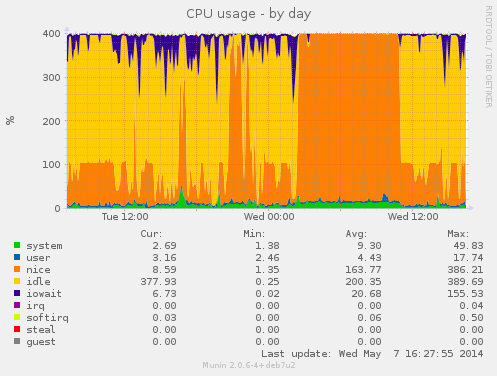 During this buildd cpu usage graph, we see most time only one CPU is consumed. So for fast package build times.. make sure your packages supports parallel building. For developers, abel.debian.org is porter machine with Armada XP. It has schroot's for both armel and armhf. set "DEB_BUILD_OPTIONS=parallel=4" and off you go. Finally I'd like to thank Thomas Petazzoni, Maen Suleiman, Hector Oron, Steve McIntyre, Adam Conrad and Jon Ward for making the upgrade happen. Meanwhile, we have unrelated trouble - a bunch of disks have broken within a few days apart. I take the warranty just run out... [1] only from Linux's point of view. - mv78200 has actually 2 cores, just not SMP or coherent. You could run an RTOS on the other core while you run Linux on the other.
 As promised, today I would like to write a bit about the making of


 If you're looking to get started at packaging free software for
 I have been testing
 okay. New hypervisor hardware. Switching from xen to KVM. I took a snapshot of the xen partitions and moved them to a holding location during migration.
I am now imaging these partitions to the LVM block devices:
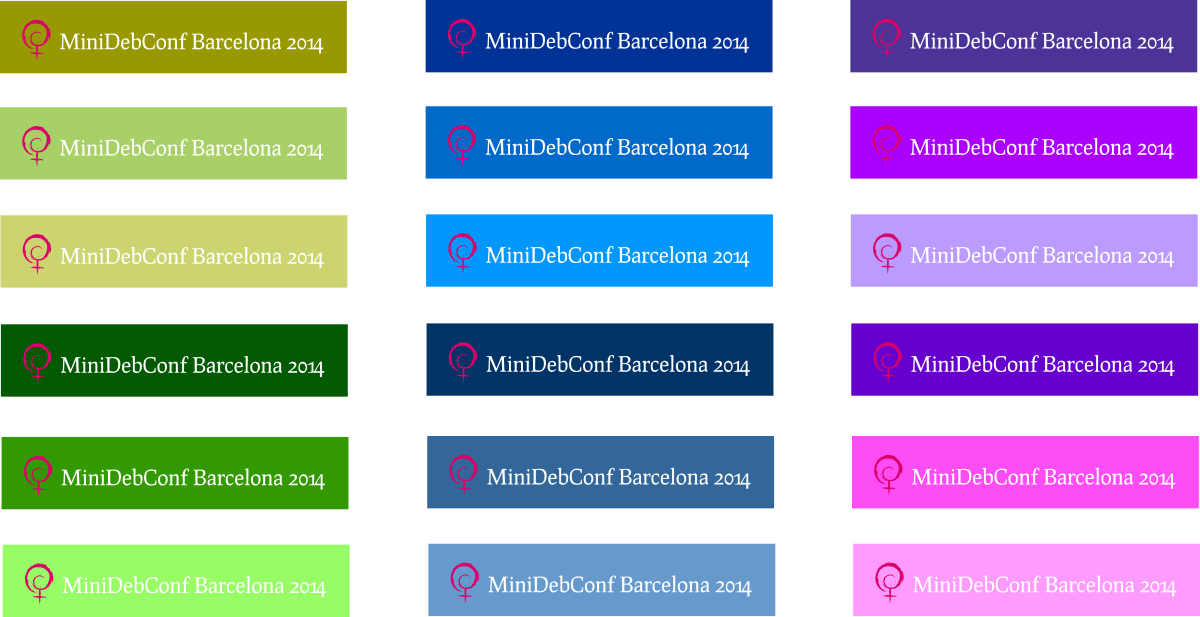

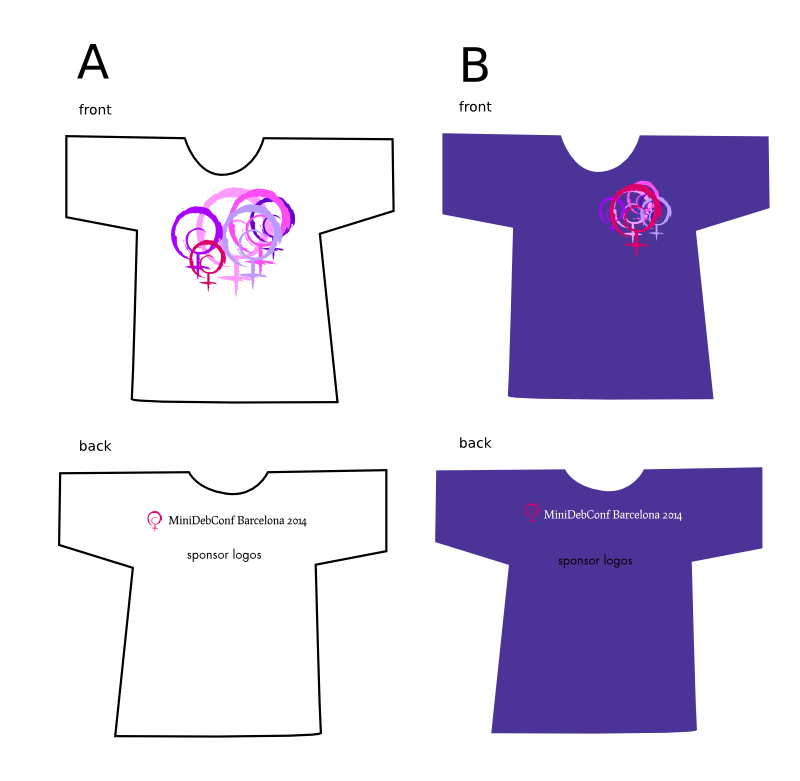
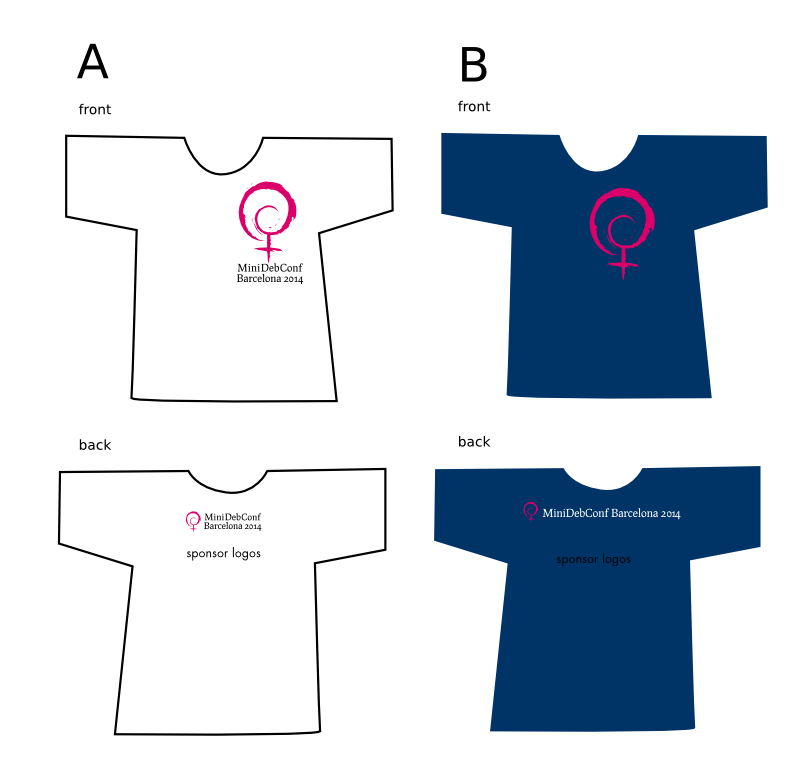

 This morning Zoe woke up again at around 4am and ended up in bed with me. I
don't even remember why she woke up, and neither does she, but she's assuring
me it won't happen tomorrow morning. We'll see.
As a result of the disturbed night's sleep, we had a bit of a slow start to the
day. Zoe was happy to go off and watch some TV after she woke up for the day,
and that let me have a bit more of a doze before I got up, which made things
vaguely better for me.


 Starting yesterday, I am a happy user of the
 Pain points - For now, sync is the core of the pains. You need either a Mac or a Windows PC. I have a Windows 7 VM with USB Passthru, but that doesn't work. There's also an option to sync over mobile (iOS and Android). That again does not work for my Chinese Mobile Handset running MIUI.

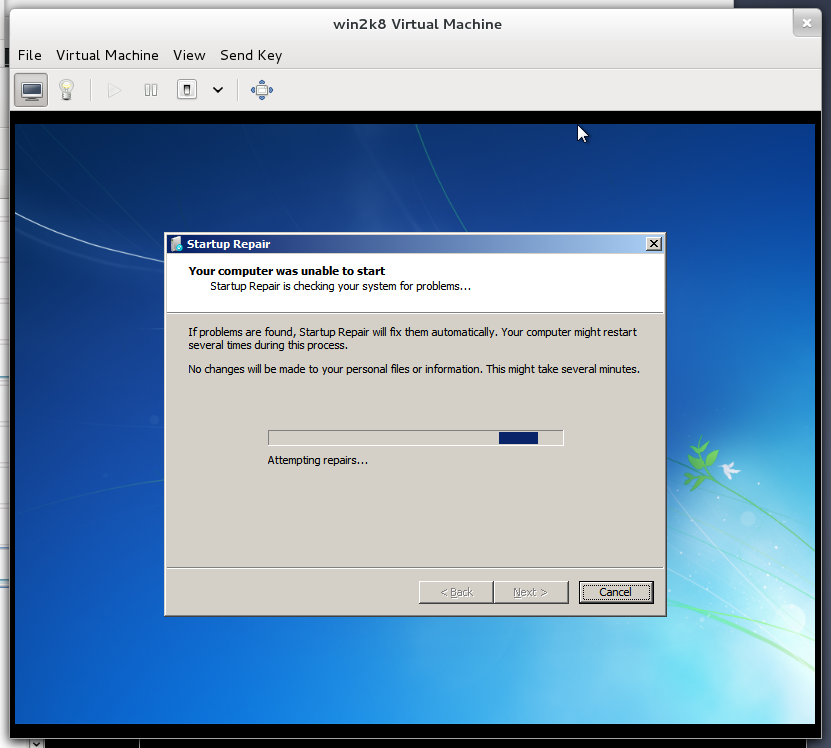 [edit 20140422T172033 -0700]
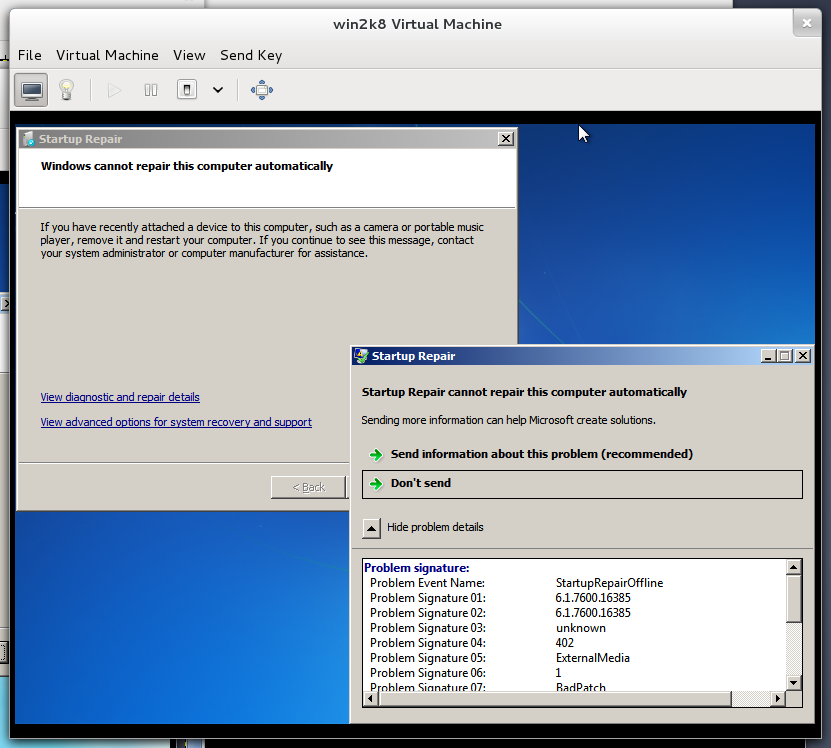
 [edit 20140422T204904 -0700]
Yup. That did er!
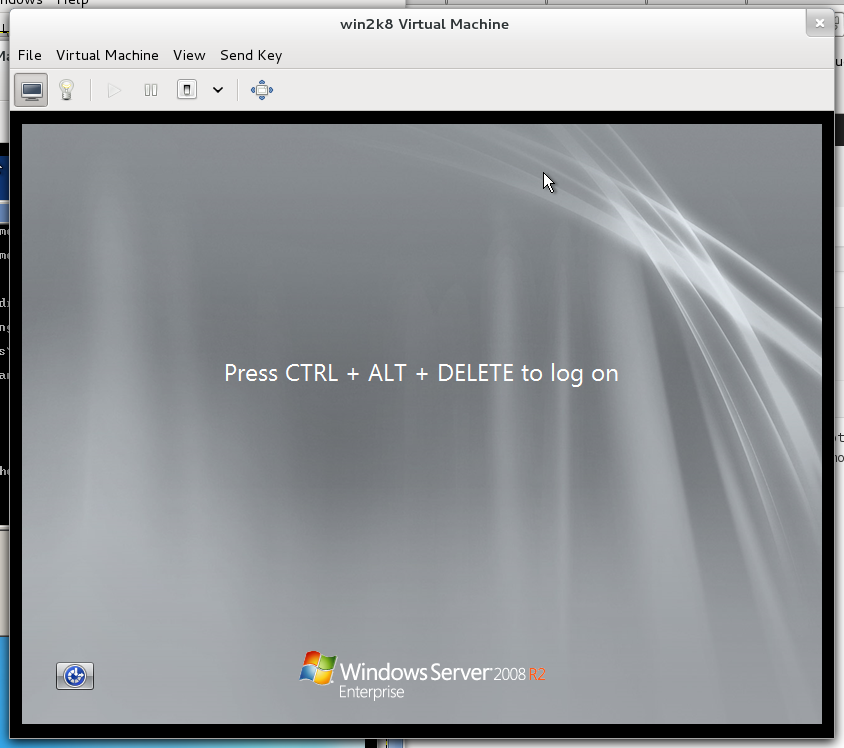

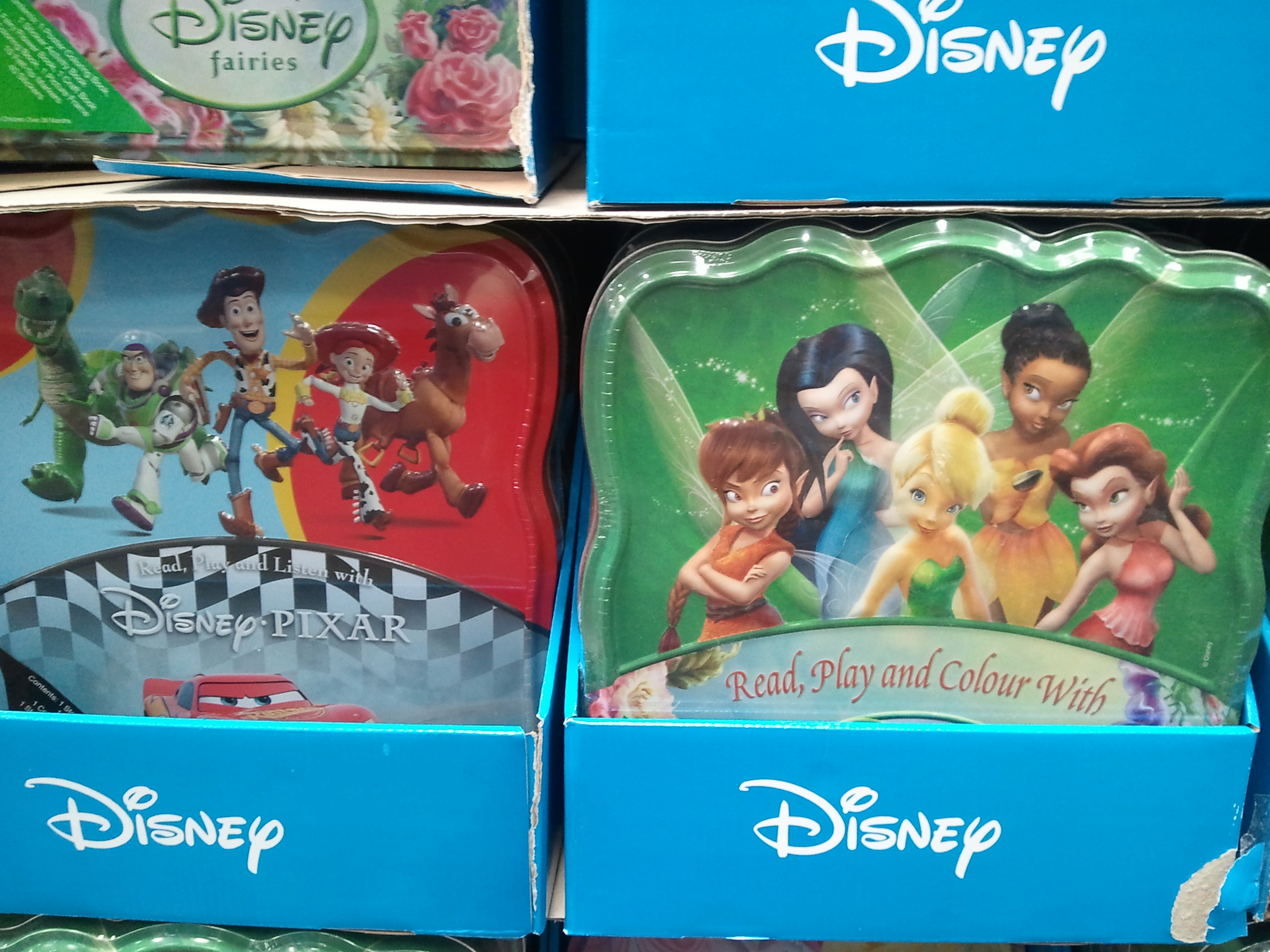


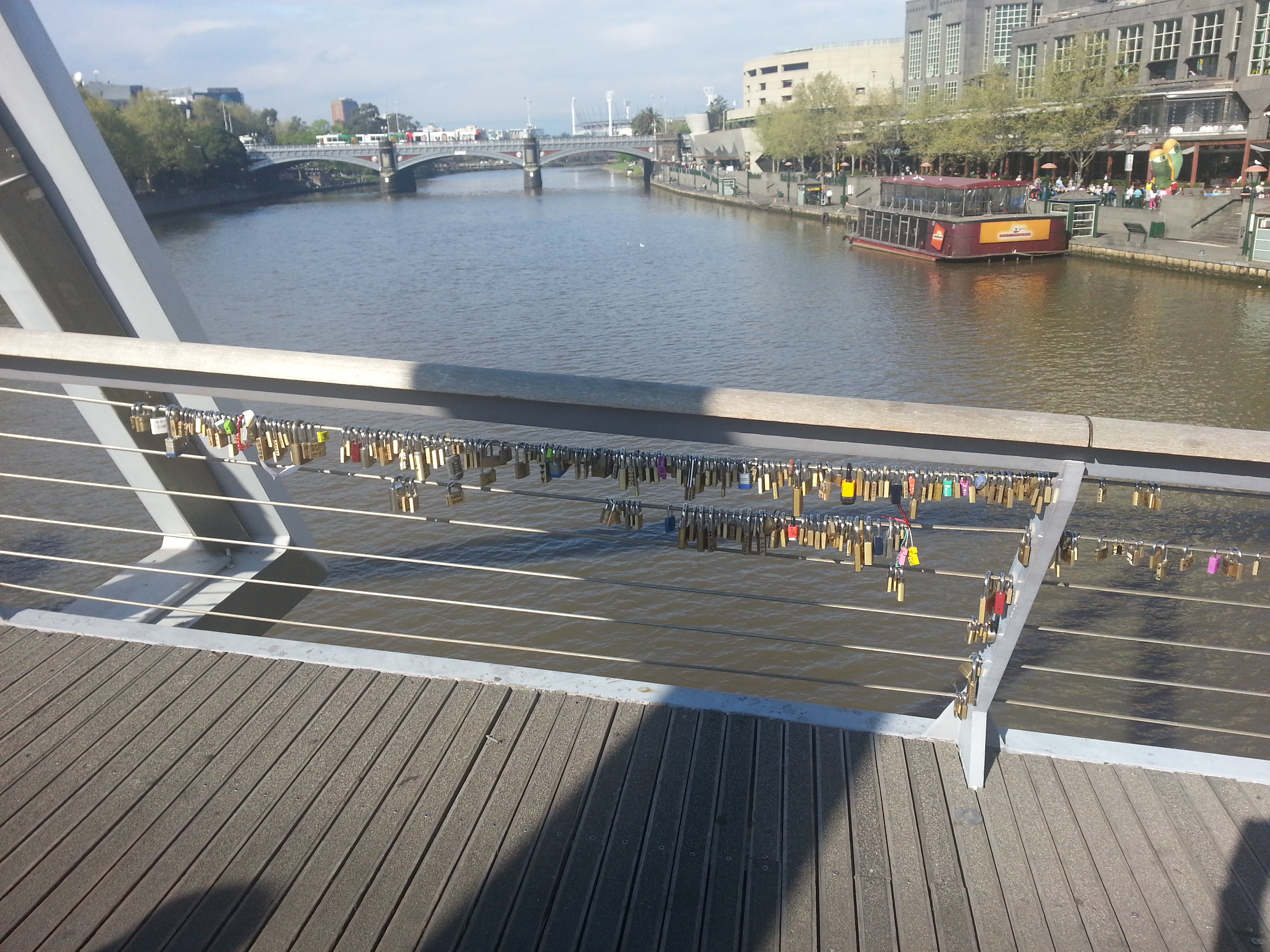

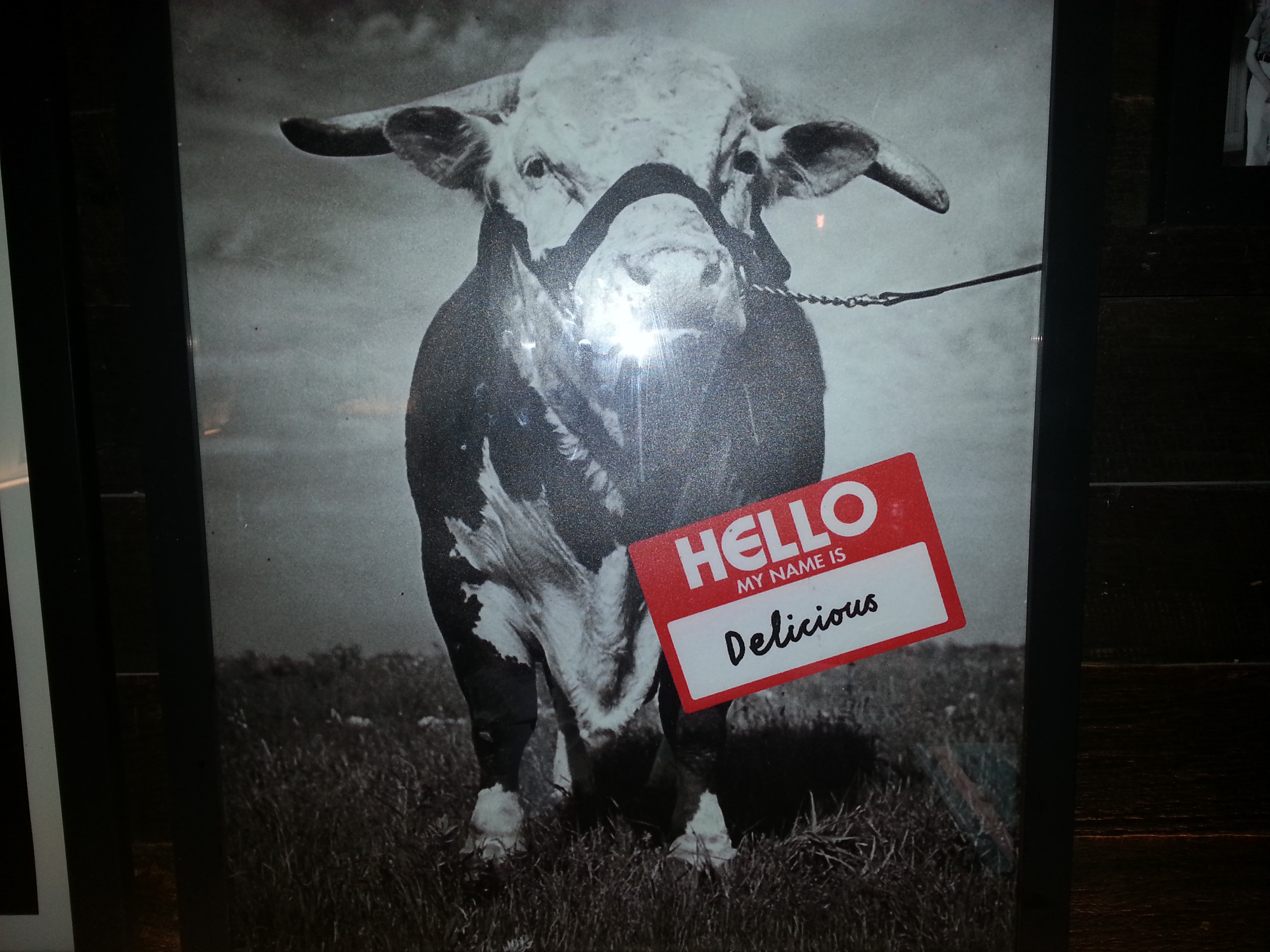
 I picked up a Panasonic BDT-230 a couple of months ago. Then I discovered that even though it appeared fairly straightforward to make it DVD region free (I have a large pile of PAL region 2 DVDs), the US models refuse to play back PAL content. We live in an era of software-defined functionality. While Panasonic could have designed a separate hardware SKU with a hard block on PAL output, that would seem like unnecessary expense. So, playing with the firmware seemed like a reasonable start.