Search Results: "ron"

31 May 2023

Russ Allbery: Review: Night Watch

Review: Night Watch, by Terry Pratchett
Series: Discworld #29
Publisher: Harper
Copyright: November 2002
Printing: August 2014
ISBN: 0-06-230740-1
Format: Mass market
Pages: 451
Night Watch is the 29th Discworld novel and the sixth Watch novel. I would really like to tell people they could start here if they wanted to, for reasons that I will get into in a moment, but I think I would be doing you a disservice. The emotional heft added by having read the previous Watch novels and followed Vimes's character evolution is significant. It's the 25th of May. Vimes is about to become a father. He and several of the other members of the Watch are wearing sprigs of lilac for reasons that Sergeant Colon is quite vehemently uninterested in explaining. A serial killer named Carcer the Watch has been after for weeks has just murdered an off-duty sergeant. It's a tense and awkward sort of day and Vimes is feeling weird and wistful, remembering the days when he was a copper and not a manager who has to dress up in ceremonial armor and meet with committees. That may be part of why, when the message comes over the clacks that the Watch have Carcer cornered on the roof of the New Hall of the Unseen University, Vimes responds in person. He's grappling with Carcer on the roof of the University Library in the middle of a magical storm when lightning strikes. When he wakes up, he's in the past, shortly after he joined the Watch and shortly before the events of the 25th of May that the older Watch members so vividly remember and don't talk about. I have been saying recently in Discworld reviews that it felt like Pratchett was on the verge of a breakout book that's head and shoulders above Discworld prior to that point. This is it. This is that book. The setup here is masterful: the sprigs of lilac that slowly tell the reader something is going on, the refusal of any of the older Watch members to talk about it, the scene in the graveyard to establish the stakes, the disconcerting fact that Vetinari is wearing a sprig of lilac as well, and the feeling of building tension that matches the growing electrical storm. And Pratchett never gives into the temptation to explain everything and tip his hand prematurely. We know the 25th is coming and something is going to happen, and the reader can put together hints from Vimes's thoughts, but Pratchett lets us guess and sometimes be right and sometimes be wrong. Vimes is trying to change history, which adds another layer of uncertainty and enjoyment as the reader tries to piece together both the true history and the changes. This is a masterful job at a "what if?" story. And, beneath that, the commentary on policing and government and ethics is astonishingly good. In a review of an earlier Watch novel, I compared Pratchett to Dickens in the way that he focuses on a sort of common-sense morality rather than political theory. That is true here too, but oh that moral analysis is sharp enough to slide into you like a knife. This is not the Vimes that we first met in Guards! Guards!. He has has turned his cynical stubbornness into a working theory of policing, and it's subtle and complicated and full of nuance that he only barely knows how to explain. But he knows how to show it to people.
Keep the peace. That was the thing. People often failed to understand what that meant. You'd go to some life-threatening disturbance like a couple of neighbors scrapping in the street over who owned the hedge between their properties, and they'd both be bursting with aggrieved self-righteousness, both yelling, their wives would either be having a private scrap on the side or would have adjourned to a kitchen for a shared pot of tea and a chat, and they all expected you to sort it out. And they could never understand that it wasn't your job. Sorting it out was a job for a good surveyor and a couple of lawyers, maybe. Your job was to quell the impulse to bang their stupid fat heads together, to ignore the affronted speeches of dodgy self-justification, to get them to stop shouting and to get them off the street. Once that had been achieved, your job was over. You weren't some walking god, dispensing finely tuned natural justice. Your job was simply to bring back peace.
When Vimes is thrown back in time, he has to pick up the role of his own mentor, the person who taught him what policing should be like. His younger self is right there, watching everything he does, and he's desperately afraid he'll screw it up and set a worse example. Make history worse when he's trying to make it better. It's a beautifully well-done bit of tension that uses time travel as the hook to show both how difficult mentorship is and also how irritating one's earlier naive self would be.
He wondered if it was at all possible to give this idiot some lessons in basic politics. That was always the dream, wasn't it? "I wish I'd known then what I know now"? But when you got older you found out that you now wasn't you then. You then was a twerp. You then was what you had to be to start out on the rocky road of becoming you now, and one of the rocky patches on that road was being a twerp.
The backdrop of this story, as advertised by the map at the front of the book, is a revolution of sorts. And the revolution does matter, but not in the obvious way. It creates space and circumstance for some other things to happen that are all about the abuse of policing as a tool of politics rather than Vimes's principle of keeping the peace. I mentioned when reviewing Men at Arms that it was an awkward book to read in the United States in 2020. This book tackles the ethics of policing head-on, in exactly the way that book didn't. It's also a marvelous bit of competence porn. Somehow over the years, Vimes has become extremely good at what he does, and not just in the obvious cop-walking-a-beat sort of ways. He's become a leader. It's not something he thinks about, even when thrown back in time, but it's something Pratchett can show the reader directly, and have the other characters in the book comment on. There is so much more that I'd like to say, but so much would be spoilers, and I think Night Watch is more effective when you have the suspense of slowly puzzling out what's going to happen. Pratchett's pacing is exquisite. It's also one of the rare Discworld novels where Pratchett fully commits to a point of view and lets Vimes tell the story. There are a few interludes with other people, but the only other significant protagonist is, quite fittingly, Vetinari. I won't say anything more about that except to note that the relationship between Vimes and Vetinari is one of the best bits of fascinating subtlety in all of Discworld. I think it's also telling that nothing about Night Watch reads as parody. Sure, there is a nod to Back to the Future in the lightning storm, and it's impossible to write a book about police and street revolutions without making the reader think about Les Miserables, but nothing about this plot matches either of those stories. This is Pratchett telling his own story in his own world, unapologetically, and without trying to wedge it into parody shape, and it is so much the better book for it. The one quibble I have with the book is that the bits with the Time Monks don't really work. Lu-Tze is annoying and flippant given the emotional stakes of this story, the interludes with him are frustrating and out of step with the rest of the book, and the time travel hand-waving doesn't add much. I see structurally why Pratchett put this in: it gives Vimes (and the reader) a time frame and a deadline, it establishes some of the ground rules and stakes, and it provides a couple of important opportunities for exposition so that the reader doesn't get lost. But it's not good story. The rest of the book is so amazingly good, though, that it doesn't matter (and the framing stories for "what if?" explorations almost never make much sense). The other thing I have a bit of a quibble with is outside the book. Night Watch, as you may have guessed by now, is the origin of the May 25th Pratchett memes that you will be familiar with if you've spent much time around SFF fandom. But this book is dramatically different from what I was expecting based on the memes. You will, for example see a lot of people posting "Truth, Justice, Freedom, Reasonably Priced Love, And a Hard-Boiled Egg!", and before reading the book it sounds like a Pratchett-style humorous revolutionary slogan. And I guess it is, sort of, but, well... I have to quote the scene:
"You'd like Freedom, Truth, and Justice, wouldn't you, Comrade Sergeant?" said Reg encouragingly. "I'd like a hard-boiled egg," said Vimes, shaking the match out. There was some nervous laughter, but Reg looked offended. "In the circumstances, Sergeant, I think we should set our sights a little higher " "Well, yes, we could," said Vimes, coming down the steps. He glanced at the sheets of papers in front of Reg. The man cared. He really did. And he was serious. He really was. "But...well, Reg, tomorrow the sun will come up again, and I'm pretty sure that whatever happens we won't have found Freedom, and there won't be a whole lot of Justice, and I'm damn sure we won't have found Truth. But it's just possible that I might get a hard-boiled egg."
I think I'm feeling defensive of the heart of this book because it's such an emotional gut punch and says such complicated and nuanced things about politics and ethics (and such deeply cynical things about revolution). But I think if I were to try to represent this story in a meme, it would be the "angels rise up" song, with all the layers of meaning that it gains in this story. I'm still at the point where the lilac sprigs remind me of Sergeant Colon becoming quietly furious at the overstep of someone who wasn't there. There's one other thing I want to say about that scene: I'm not naturally on Vimes's side of this argument. I think it's important to note that Vimes's attitude throughout this book is profoundly, deeply conservative. The hard-boiled egg captures that perfectly: it's a bit of physical comfort, something you can buy or make, something that's part of the day-to-day wheels of the city that Vimes talks about elsewhere in Night Watch. It's a rejection of revolution, something that Vimes does elsewhere far more explicitly. Vimes is a cop. He is in some profound sense a defender of the status quo. He doesn't believe things are going to fundamentally change, and it's not clear he would want them to if they did. And yet. And yet, this is where Pratchett's Dickensian morality comes out. Vimes is a conservative at heart. He's grumpy and cynical and jaded and he doesn't like change. But if you put him in a situation where people are being hurt, he will break every rule and twist every principle to stop it.
He wanted to go home. He wanted it so much that he trembled at the thought. But if the price of that was selling good men to the night, if the price was filling those graves, if the price was not fighting with every trick he knew... then it was too high. It wasn't a decision that he was making, he knew. It was happening far below the areas of the brain that made decisions. It was something built in. There was no universe, anywhere, where a Sam Vimes would give in on this, because if he did then he wouldn't be Sam Vimes any more.
This is truly exceptional stuff. It is the best Discworld novel I have read, by far. I feel like this was the Watch novel that Pratchett was always trying to write, and he had to write five other novels first to figure out how to write it. And maybe to prepare Discworld readers to read it. There are a lot of Discworld novels that are great on their own merits, but also it is 100% worth reading all the Watch novels just so that you can read this book. Followed in publication order by The Wee Free Men and later, thematically, by Thud!. Rating: 10 out of 10

30 May 2023

Russ Allbery: Review: The Mimicking of Known Successes

Review: The Mimicking of Known Successes, by Malka Older
Series: Mossa and Pleiti #1
Publisher: Tordotcom
Copyright: 2023
ISBN: 1-250-86051-2
Format: Kindle
Pages: 169
The Mimicking of Known Successes is a science fiction mystery novella, the first of an expected series. (The second novella is scheduled to be published in February of 2024.) Mossa is an Investigator, called in after a man disappears from the eastward platform on the 4 63' line. It's an isolated platform, five hours away from Mossa's base, and home to only four residential buildings and a pub. The most likely explanation is that the man jumped, but his behavior before he disappeared doesn't seem consistent with that theory. He was bragging about being from Valdegeld University, talking to anyone who would listen about the important work he was doing not typically the behavior of someone who is suicidal. Valdegeld is the obvious next stop in the investigation. Pleiti is a Classics scholar at Valdegeld. She is also Mossa's ex-girlfriend, making her both an obvious and a fraught person to ask for investigative help. Mossa is the last person she expected to be waiting for her on the railcar platform when she returns from a trip to visit her parents. The Mimicking of Known Successes is mostly a mystery, following Mossa's attempts to untangle the story of what happened to the disappeared man, but as you might have guessed there's a substantial sapphic romance subplot. It's also at least adjacent to Sherlock Holmes: Mossa is brilliant, observant, somewhat monomaniacal, and very bad at human relationships. All of this story except for the prologue is told from Pleiti's perspective as she plays a bit of a Watson role, finding Mossa unreadable, attractive, frustrating, and charming in turn. Following more recent Holmes adaptations, Mossa is portrayed as probably neurodivergent, although the story doesn't attach any specific labels. I have no strong opinions about this novella. It was fine? There's a mystery with a few twists, there's a sapphic romance of the second chance variety, there's a bit of action and a bit of hurt/comfort after the action, and it all felt comfortably entertaining but kind of predictable. Susan Stepney has a "passes the time" review rating, and while that may be a bit harsh, that's about where I ended up. The most interesting part of the story is the science fiction setting. We're some indefinite period into the future. Humans have completely messed up Earth to the point of making it uninhabitable. We then took a shot at terraforming Mars and messed that planet up to the point of uninhabitability as well. Now, what's left of humanity (maybe not all of it the story isn't clear) lives on platforms connected by rail lines high in the atmosphere of Jupiter. (Everyone in the story calls Jupiter "Giant" for reasons that I didn't follow, given that they didn't rename any of its moons.) Pleiti's position as a Classics scholar means that she studies Earth and its now-lost ecosystems, whereas the Modern faculty focus on their new platform life. This background does become relevant to the mystery, although exactly how is not clear at the start. I wouldn't call this a very realistic setting. One has to accept that people are living on platforms attached to artificial rings around the solar system's largest planet and walk around in shirt sleeves and only minor technological support due to "atmoshields" of some unspecified capability, and where the native atmosphere plays the role of London fog. Everything feels vaguely Edwardian, including to the occasional human porter and message runner, which matches the story concept but seems unlikely as a plausible future culture. I also disbelieve in humanity's ability to do anything to Earth that would make it less inhabitable than the clouds of Jupiter. That said, the setting is a lot of fun, which is probably more important. It's fun to try to visualize, and it has that slightly off-balance, occasionally surprising feel of science fiction settings where everyone is recognizably human but the things they consider routine and unremarkable are unexpected by the reader. This novella also has a great title. The Mimicking of Known Successes is simultaneously a reference a specific plot point from late in the story, a nod to the shape of the romance, and an acknowledgment of the Holmes pastiche, and all of those references work even better once you know what the plot point is. That was nicely done. This was not very memorable apart from the setting, but it was pleasant enough. I can't say that I'm inspired to pre-order the next novella in this series, but I also wouldn't object to reading it. If you're in the mood for gender-swapped Holmes in an exotic setting, you could do worse. Followed by The Imposition of Unnecessary Obstacles. Rating: 6 out of 10

29 May 2023

John Goerzen: Recommendations for Tools for Backing Up and Archiving to Removable Media

I have several TB worth of family photos, videos, and other data. This needs to be backed up and archived. Backups and archives are often thought of as similar. And indeed, they may be done with the same tools at the same time. But the goals differ somewhat: Backups are designed to recover from a disaster that you can fairly rapidly detect. Archives are designed to survive for many years, protecting against disaster not only impacting the original equipment but also the original person that created them. Reflecting on this, it implies that while a nice ZFS snapshot-based scheme that supports twice-hourly backups may be fantastic for that purpose, if you think about things like family members being able to access it if you are incapacitated, or accessibility in a few decades time, it becomes much less appealing for archives. ZFS doesn t have the wide software support that NTFS, FAT, UDF, ISO-9660, etc. do. This post isn t about the pros and cons of the different storage media, nor is it about the pros and cons of cloud storage for archiving; these conversations can readily be found elsewhere. Let s assume, for the point of conversation, that we are considering BD-R optical discs as well as external HDDs, both of which are too small to hold the entire backup set. What would you use for archiving in these circumstances? Establishing goals The goals I have are: I would welcome your ideas for what to use. Below, I ll highlight different approaches I ve looked into and how they stack up. Basic copies of directories The initial approach might be one of simply copying directories across. This would work well if the data set to be archived is smaller than the archival media. In that case, you could just burn or rsync a new copy with every update and be done. Unfortunately, this is much less convenient with data of the size I m dealing with. rsync is unavailable in that case. With some datasets, you could manually design some rsyncs to store individual directories on individual devices, but that gets unwieldy fast and isn t scalable. You could use something like my datapacker program to split the data across multiple discs/drives efficiently. However, updates will be a problem; you d have to re-burn the entire set to get a consistent copy, or rely on external tools like mtree to reflect deletions. Not very convenient in any case. So I won t be using this. tar or zip While you can split tar and zip files across multiple media, they have a lot of issues. GNU tar s incremental mode is clunky and buggy; zip is even worse. tar files can t be read randomly, making it extremely time-consuming to extract just certain files out of a tar file. The only thing going for these formats (and especially zip) is the wide compatibility for restoration. dar Here we start to get into the more interesting tools. Dar is, in my opinion, one of the best Linux tools that few people know about. Since I first wrote about dar in 2008, it s added some interesting new features; among them, binary deltas and cloud storage support. So, dar has quite a few interesting features that I make use of in other ways, and could also be quite helpful here: Additionally, dar comes with a dar_manager program. dar_manager makes a database out of dar catalogs (or archives). This can then be used to identify the precise archive containing a particular version of a particular file. All this combines to make a useful system for archiving. Isolated catalogs are tiny, and it would be easy enough to include the isolated catalogs for the entire set of archives that came before (or even the dar_manager database file) with each new incremental archive. This would make restoration of a particular subset easy. The main thing to address with dar is that you do need dar to extract the archive. Every dar release comes with source code and a win64 build. dar also supports building a statically-linked Linux binary. It would therefore be easy to include win64 binary, Linux binary, and source with every archive run. dar is also a part of multiple Linux and BSD distributions, which are archived around the Internet. I think this provides a reasonable future-proofing to make sure dar archives will still be readable in the future. The other challenge is user ability. While dar is highly portable, it is fundamentally a CLI tool and will require CLI abilities on the part of users. I suspect, though, that I could write up a few pages of instructions to include and make that a reasonably easy process. Not everyone can use a CLI, but I would expect a person that could follow those instructions could be readily-enough found. One other benefit of dar is that it could easily be used with tapes. The LTO series is liked by various hobbyists, though it could pose formidable obstacles to non-hobbyists trying to aceess data in future decades. Additionally, since the archive is a big file, it lends itself to working with par2 to provide redundancy for certain amounts of data corruption. git-annex git-annex is an interesting program that is designed to facilitate managing large sets of data and moving it between repositories. git-annex has particular support for offline archive drives and tracks which drives contain which files. The idea would be to store the data to be archived in a git-annex repository. Then git-annex commands could generate filesystem trees on the external drives (or trees to br burned to read-only media). In a post about using git-annex for blu-ray backups, an earlier thread about DVD-Rs was mentioned. This has a few interesting properties. For one, with due care, the files can be stored on archival media as regular files. There are some different options for how to generate the archives; some of them would place the entire git-annex metadata on each drive/disc. With that arrangement, one could access the individual files without git-annex. With git-annex, one could reconstruct the final (or any intermediate) state of the archive appropriately, handling deltions, renames, etc. You would also easily be able to know where copies of your files are. The practice is somewhat more challenging. Hundreds of thousands of files what I would consider a medium-sized archive can pose some challenges, running into hours-long execution if used in conjunction with the directory special remote (but only minutes-long with a standard git-annex repo). Ruling out the directory special remote, I had thought I could maybe just work with my files in git-annex directly. However, I ran into some challenges with that approach as well. I am uncomfortable with git-annex mucking about with hard links in my source data. While it does try to preserve timestamps in the source data, these are lost on the clones. I wrote up my best effort to work around all this. In a forum post, the author of git-annex comments that I don t think that CDs/DVDs are a particularly good fit for git-annex, but it seems a couple of users have gotten something working. The page he references is Managing a large number of files archived on many pieces of read-only medium. Some of that discussion is a bit dated (for instance, the directory special remote has the importtree feature that implements what was being asked for there), but has some interesting tips. git-annex supplies win64 binaries, and git-annex is included with many distributions as well. So it should be nearly as accessible as dar in the future. Since git-annex would be required to restore a consistent recovery image, similar caveats as with dar apply; CLI experience would be needed, along with some written instructions. Bacula and BareOS Although primarily tape-based archivers, these do also also nominally support drives and optical media. However, they are much more tailored as backup tools, especially with the ability to pull from multiple machines. They require a database and extensive configuration, making them a poor fit for both the creation and future extractability of this project. Conclusions I m going to spend some more time with dar and git-annex, testing them out, and hope to write some future posts about my experiences.

Russell Coker: Considering Convergence

What is Convergence In 2013 Kyle Rankin (at the time Linux Journal columnist and CSO of Purism) wrote a Linux Journal article about Linux convergence [1] (which means using a phone and a dock to replace a desktop) featuring the Nokia N900 smart phone and a chroot environment on the Motorola Droid 4 Android phone. Both of them have very limited hardware even by the standards of the day and neither of which were systems I d consider using all the time. None of the Android phones I used at that time were at all comparable to any sort of desktop system I d want to use. Hardware for Convergence Comparing a Phone to a Laptop The first hardware issue for convergence is docks and other accessories to attach a small computer to hardware designed for larger computers. Laptop docks have been around for decades and for decades I haven t been using them because they have all been expensive and specific to a particular model of laptop. Having an expensive dock at home and an expensive dock at the office and then replacing them both when the laptop is replaced may work well for some people but wasn t something I wanted to do. The USB-C interface supports data, power, and DisplayPort video over the same cable and now USB-C docks start at about $20 on eBay and dock functionality is built in to many new monitors. I can take a USB-C device to the office of any large company and know there s a good chance that there will be a USB-C dock ready for me to use. The fact that USB-C is a standard feature for phones gives obvious potential for convergence. The next issue is performance. The Passmark benchmark seems like a reasonable way to compare CPUs [2]. It may not be the best benchmark but it has an excellent set of published results for Intel and AMD CPUs. I ran that benchmark on my Librem5 [3] and got a result of 507 for the CPU score. At the end of 2017 I got a Thinkpad X301 [4] which rates 678 on Passmark. So the Librem5 has 3/4 the CPU power of a laptop that was OK for my use in 2018. Given that the X301 was about the minimum specs for a PC that I can use (for things other than serious compiles, running VMs, etc) the Librem 5 has 3/4 the CPU power, only 3G of RAM compared to 6G, and 32G of storage compared to 64G. Here is the Passmark page for my Librem5 [5]. As an aside my Libnrem5 is apparently 25% faster than the other results for the same CPU did the Purism people do something to make their device faster than most? For me the Librem5 would be at the very low end of what I would consider a usable desktop system. A friend s N900 (like the one Kyle used) won t complete the Passmark test apparently due to the Extended Instructions (NEON) test failing. But of the rest of the tests most of them gave a result that was well below 10% of the result from the Librem5 and only the Compression and CPU Single Threaded tests managed to exceed 1/4 the speed of the Librem5. One thing to note when considering the specs of phones vs desktop systems is that the MicroSD cards designed for use in dashcams and other continuous recording devices have TBW ratings that compare well to SSDs designed for use in PCs, so swap to a MicroSD card should work reasonably well and be significantly faster than the hard disks I was using for swap in 2013! In 2013 I was using a Thinkpad T420 as my main system [6], it had 8G of RAM (the same as my current laptop) although I noted that 4G was slow but usable at the time. Basically it seems that the Librem5 was about the sort of hardware I could have used for convergence in 2013. But by today s standards and with the need to drive 4K monitors etc it s not that great. The N900 hardware specs seem very similar to the Thinkpads I was using from 1998 to about 2003. However a device for convergence will usually do more things than a laptop (IE phone and camera functionality) and software had become significantly more bloated in 1998 to 2013 time period. A Linux desktop system performed reasonably with 32MB of RAM in 1998 but by 2013 even 2G was limiting. Software Issues for Convergence Jeremiah Foster (Director PureOS at Purism) wrote an interesting overview of some of the software issues of convergence [7]. One of the most obvious is that the best app design for a small screen is often very different from that for a large screen. Phone apps usually have a single window that shows a view of only one part of the data that is being worked on (EG an email program that shows a list of messages or the contents of a single message but not both). Desktop apps of any complexity will either have support for multiple windows for different data (EG two messages displayed in different windows) or a single window with multiple different types of data (EG message list and a single message). What we ideally want is all the important apps to support changing modes when the active display is changed to one of a different size/resolution. The Purism people are doing some really good work in this regard. But it is a large project that needs to involve a huge range of apps. The next thing that needs to be addressed is the OS interface for managing apps and metadata. On a phone you swipe from one part of the screen to get a list of apps while on a desktop you will probably have a small section of a large monitor reserved for showing a window list. On a desktop you will typically have an app to manage a list of items copied to the clipboard while on Android and iOS there is AFAIK no standard way to do that (there is a selection of apps in the Google Play Store to do this sort of thing). Purism has a blog post by Sebastian Krzyszkowiak about some of the development of the OS to make it work better for convergence and the status of getting it in Debian [8]. The limitations in phone hardware force changes to the software. Software needs to use less memory because phone RAM can t be upgraded. The OS needs to be configured for low RAM use which includes technologies like the zram kernel memory compression feature. Security When mobile phones first came out they were used for less secret data. Loss of a phone was annoying and expensive but not a security problem. Now phone theft for the purpose of gaining access to resources stored on the phone is becoming a known crime, here is a news report about a thief stealing credit cards and phones to receive the SMS notifications from banks [9]. We should expect that trend to continue, stealing mobile devices for ssh keys, management tools for cloud services, etc is something we should expect to happen. A problem with mobile phones in current use is that they have one login used for all access from trivial things done in low security environments (EG paying for public transport) to sensitive things done in more secure environments (EG online banking and healthcare). Some applications take extra precautions for this EG the Android app I use for online banking requires authentication before performing any operations. The Samsung version of Android has a system called Knox for running a separate secured workspace [10]. I don t think that the Knox approach would work well for a full Linux desktop environment, but something that provides some similar features would be a really good idea. Also running apps in containers as much as possible would be a good security feature, this is done by default in Android and desktop OSs could benefit from it. The Linux desktop security model of logging in to a single account and getting access to everything has been outdated for a long time, probably ever since single-user Linux systems became popular. We need to change this for many reasons and convergence just makes it more urgent. Conclusion I have become convinced that convergence is the way of the future. It has the potential to make transporting computers easier, purchasing cheaper (buy just a phone and not buy desktop and laptop systems), and access to data more convenient. The Librem5 doesn t seem up to the task for my use due to being slow and having short battery life, the PinePhone Pro has more powerful hardware and allegedly has better battery life [11] so it might work for my needs. The PinePhone Pro probably won t meet the desktop computing needs of most people, but hardware keeps getting faster and cheaper so eventually most people could have their computing needs satisfied with a phone. The current state of software for convergence and for Linux desktop security needs some improvement. I have some experience with Linux security so this is something I can help work on. To work on improving this I asked Linux Australia for a grant for me and a friend to get PinePhone Pro devices and a selection of accessories to go with them. Having both a Librem5 and a PinePhone Pro means that I can test software in different configurations which will make developing software easier. Also having a friend who s working on similar things will help a lot, especially as he has some low level hardware skills that I lack. Linux Australia awarded the grant and now the PinePhones are in transit. Hopefully I will have a PinePhone in a couple of weeks to start work on this.

Louis-Philippe V ronneau: Python 3.11, pip and (breaking) system packages

As we get closer to Debian Bookworm's release, I thought I'd share one change in Python 3.11 that will surely affect many people. Python 3.11 implements the new PEP 668, Marking Python base environments as externally managed 1. If you use pip regularly on Debian, it's likely you'll eventually hit the externally-managed-environment error:
error: externally-managed-environment
  This environment is externally managed
 > To install Python packages system-wide, try apt install
    python3-xyz, where xyz is the package you are trying to
    install.
    If you wish to install a non-Debian-packaged Python package,
    create a virtual environment using python3 -m venv path/to/venv.
    Then use path/to/venv/bin/python and path/to/venv/bin/pip. Make
    sure you have python3-full installed.
    If you wish to install a non-Debian packaged Python application,
    it may be easiest to use pipx install xyz, which will manage a
    virtual environment for you. Make sure you have pipx installed.
    See /usr/share/doc/python3.11/README.venv for more information.
note: If you believe this is a mistake, please contact your Python installation or OS distribution provider. You can override this, at the risk of breaking your Python installation or OS, by passing --break-system-packages.
hint: See PEP 668 for the detailed specification.
With this PEP, Python tools can now distinguish between packages that have been installed by the user with a tool like pip and ones installed using a distribution's package manager, like apt. This is generally great news: it was previously too easy to break a system by mixing the two types of packages. This PEP will simplify our role as a distribution, as well as improve the overall Python user experience in Debian. Sadly, it's also likely this change will break some of your scripts, especially CI that (legitimately) install packages via pip alongside system packages. For example, I use the following gitlab-ci snippet to make sure my PRs don't break my build process2:
build:flit:
  stage: build
  script:
  - apt-get update && apt-get install -y flit python3-pip
  - FLIT_ROOT_INSTALL=1 flit install
  - metalfinder --help
With Python 3.11, this snippet will error out, as pip will refuse to install packages alongside the system's. The fix is to tell pip it's OK to "break" your system packages, either using the --break-system-packages parameter, or the PIP_BREAK_SYSTEM_PACKAGES=1 environment variable3. This, of course, is not something you should be using in production to restore the old behavior! The "proper" way to fix this issue, as the externally-managed-environment error message aptly (har har) informs you, is to use virtual environments. Happy hacking!

  1. Kudos to our own Matthias Klose, Stefano Rivera and Elana Hashman, who worked on designing and implementing this PEP!
  2. Which is something that bit me before... You push some changes to your git repository, everything seems fine and all the tests pass, so you merge it and make a new git tag. When the time comes to build and upload this tag to PyPi, you find out some minor thing broke your build system (which you weren't testing) and you have to scramble to make a point-release to fix the issue. Sad!
  3. Don't go searching for this environment variable in pip's code though, as you won't find it! All of pip's command line options can be passed as env vars using the PIP_<UPPER_LONG_NAME> format. Useful for tools that use pip indirectly, like flit.

27 May 2023

Dirk Eddelbuettel: RcppArmadillo 0.12.4.0.0 on CRAN: New Upstream Minor

armadillo image Armadillo is a powerful and expressive C++ template library for linear algebra and scientific computing. It aims towards a good balance between speed and ease of use, has a syntax deliberately close to Matlab, and is useful for algorithm development directly in C++, or quick conversion of research code into production environments. RcppArmadillo integrates this library with the R environment and language and is widely used by (currently) 1074 other packages on CRAN, downloaded 29.3 million times (per the partial logs from the cloud mirrors of CRAN), and the CSDA paper (preprint / vignette) by Conrad and myself has been cited 535 times according to Google Scholar. This release brings a new upstream release 12.4.0 made by Conrad a day or so ago. I prepared the usual release candidate, tested on the over 1000 reverse depends (which sadly takes almost a day on old hardware), found no issues and sent it to CRAN. Where it got tested again and was once again auto-processed smoothly by CRAN within a few hours on a Friday night which is just marvelous. So this time I tweeted about it too. The releases actually has a relatively small set of changes as a second follow-up release in the 12.* series.

Changes in RcppArmadillo version 0.12.4.0.0 (2023-05-26)
  • Upgraded to Armadillo release 12.4.0 (Cortisol Profusion Redux)
    • Added norm2est() for finding fast estimates of matrix 2-norm (spectral norm)
    • Added vecnorm() for obtaining the vector norm of each row or column of a matrix

Courtesy of my CRANberries, there is a diffstat report relative to previous release. More detailed information is on the RcppArmadillo page. Questions, comments etc should go to the rcpp-devel mailing list off the R-Forge page. If you like my open-source work, you may consider sponsoring me at GitHub.

This post by Dirk Eddelbuettel originated on his Thinking inside the box blog. Please report excessive re-aggregation in third-party for-profit settings.

26 May 2023

Valhalla's Things: Correspondence Book

Posted on May 26, 2023
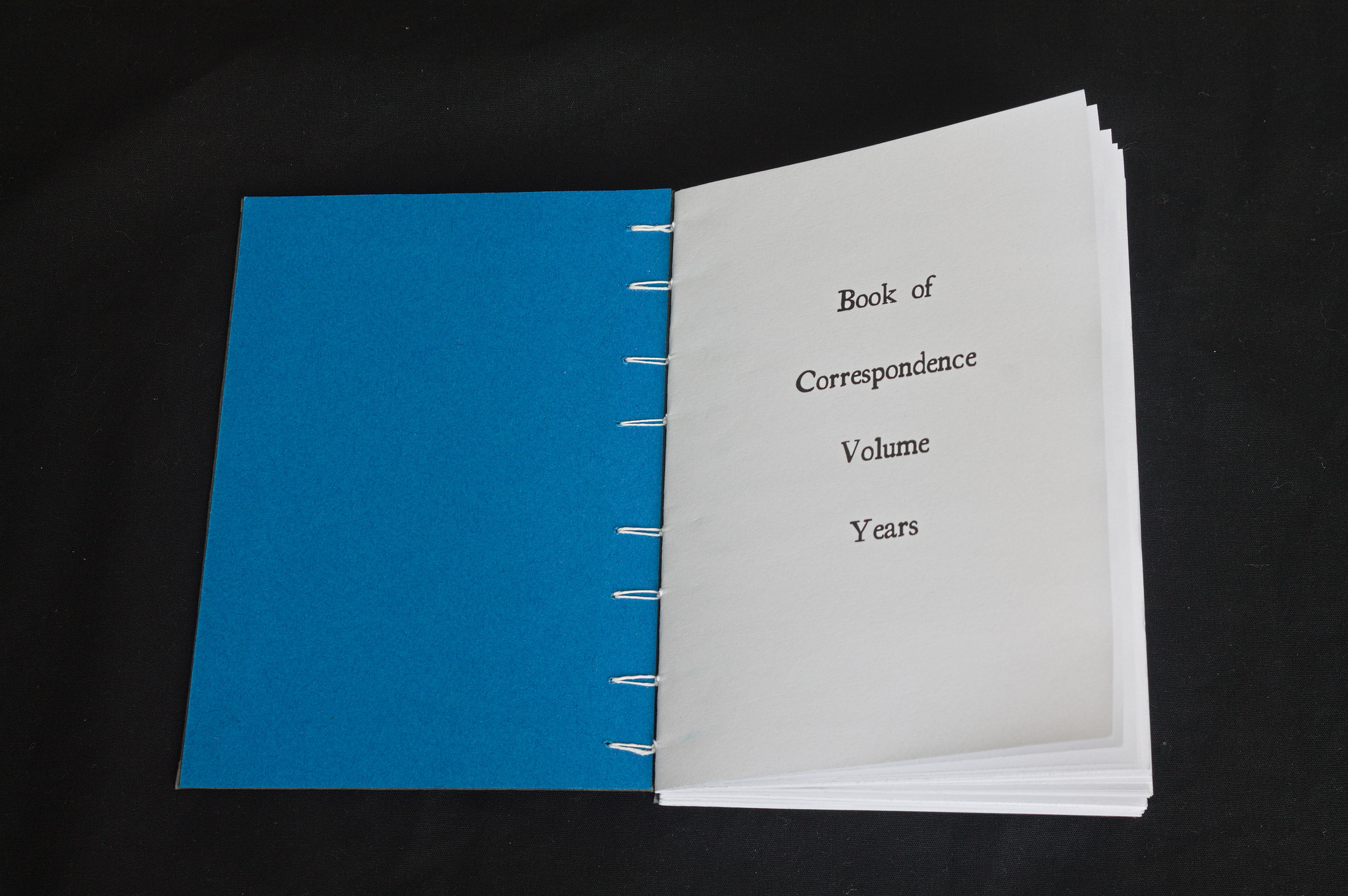
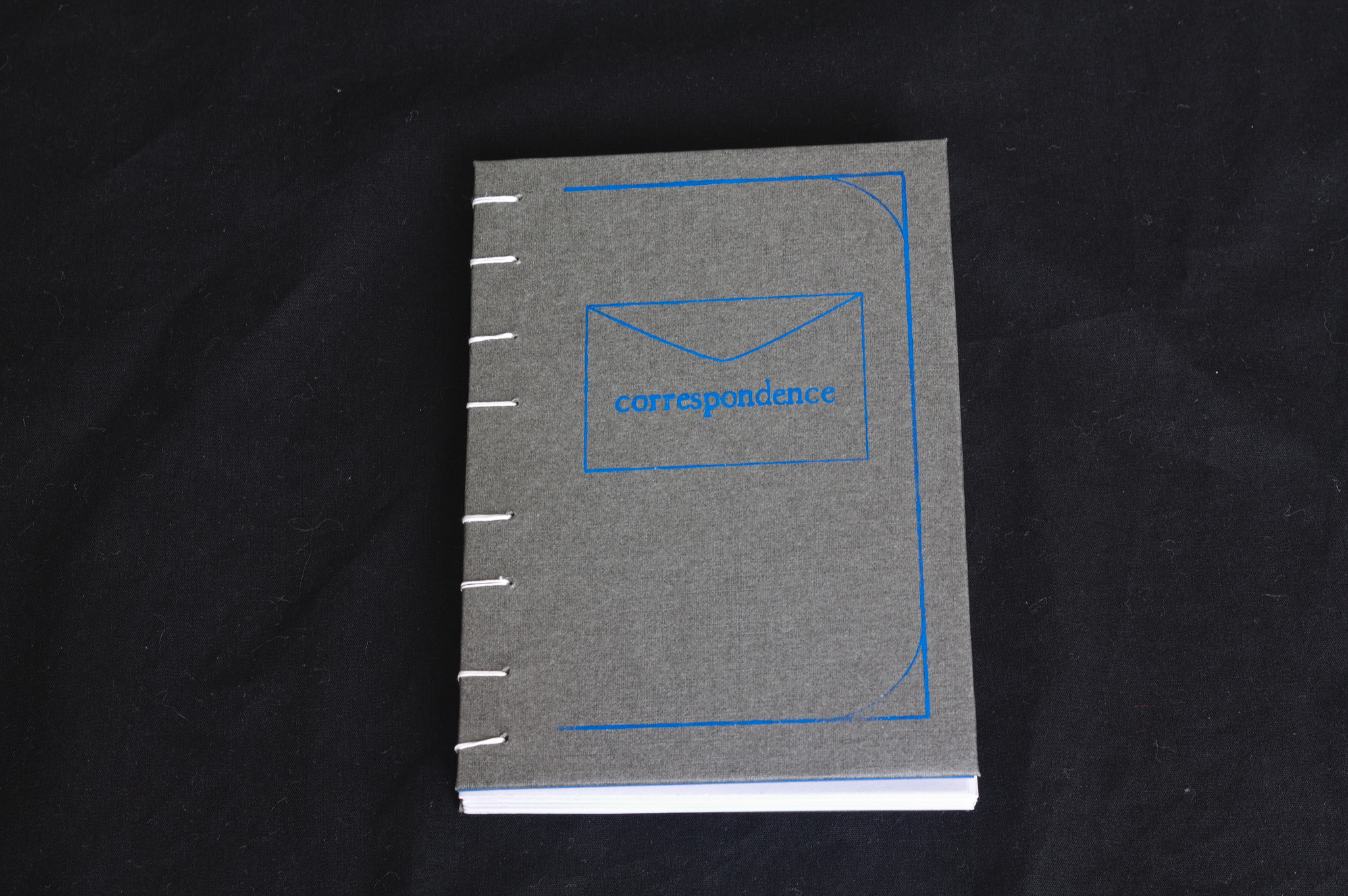
A Coptic bound book open to the first page with the title  Book of <space> Correspondence / Volume <space> Years <space> I write letters. The kind that are written on paper with a dip pen 1 and ink, stamped and sent through the post, spend a few days or weeks maturing like good wine in a depot somewhere2, and then get delivered to the recipient. Some of them (mostly cards) are to people who will receive them and thank me via xmpp (that sounds odd, but actually works out nicely), but others are proper letters with long texts that I exchange with penpals. Most of those are fountain pen frea^Wenthusiasts, so I usually use a different ink each time, and try to vary the paper, and I need to keep track of what I ve used. Some time ago, I ve read a Victorian book3 which recommended keeping a correspondence book to register all mail received and sent, the topics and whether it had been replied or otherwise acted upon. I don t have the mail traffic of a Victorian lady (or even middle class woman), but this looked like something fun to do, and if I added fields for the inks and paper used it would also have useful side effect. A page with writing lines with the title of the field below it: it has a number and then date, sender / recipient (at the ends of the same line, in reply to / replied, ink, paper, pen, topics / notes. So I headed over to the obvious program anybody would use for these things (XeLaTeX, of course) and quickly designed a page with fields for the basic thinks I want to record; it was a bit hurried, and I may improve on it the next time I make one, but I expect this one to last me two or three years, and it is good enough. I ve decided to make it A6 sized, so that it doesn t require a lot of space on my busy desktop, and it could be carried inside a portable desktop, if I ever decide to finish the one for which I ve made a mockup years ago :) Picture of book open to the correspondent pages: the fields are name, letters sent, letters received, address and notes. I ve also added a few pages for the addresses of my correspondents (and an index of the letters I ve exchanged with them), and a few empty pages for other notes. Then I ve used my a6_book.py script to rearrange the A6 pages into signatures and impress them on A4; to reduce later effort I ve added an option to order the pages in such a way that if I then cut four A4 sheet in half at a time (the limit of my rotary cutter) the signatures are ready to be folded. It s not the default because it requires that the pages are a multiple of 32 rather than just 16 (and they are padded up with empty pages if they aren t). If you re also interested in making one, here are the files: the book open to the page of letter two, which is repeated twice. After printing (an older version where some of the pages are repeated. whoops, but it only happened 4 times, and it s not a big deal), it was time for binding this into a book. I ve opted for Coptic stitch, so that the book will open completely flat and writing on it will be easier and the covers are 2 mm cardboard covered in linen-look bookbinding paper (sadly I no longer have a source for bookbinding cloth made from actual cloth). The grey cover of the book with the word correspondence, a stylised envelope and a border in blue. I tried to screenprint a simple design on the cover: the first attempt was unusable (the paper was smaller than the screen, so I couldn t keep it in the right place and moved as I was screenprinting); on the second attempt I used some masking tape to keep the paper in place, and they were a bit better, but I need more practice with the technique. Finally, I decided that for such a Victorian thing I will use an Iron-gall ink, but it s Rohrer & Knlingner Scabiosa, with a purple undertone, because life s too short to use blue-black ink :D And now, I m off to write an actual letter, rather than writing online about things that are related to letter writing.



  1. not a quill! I m a modern person who uses steel nibs!
  2. Milano Roserio, I m looking at you. a month to deliver a postcard from Lombardy to Ticino? not even a letter, which could have hidden contraband, a postcard.
  3. I think. I ve looked at some plausible candidates and couldn t find the source.

Valhalla's Things: Late Victorian Combinations

Posted on May 26, 2023
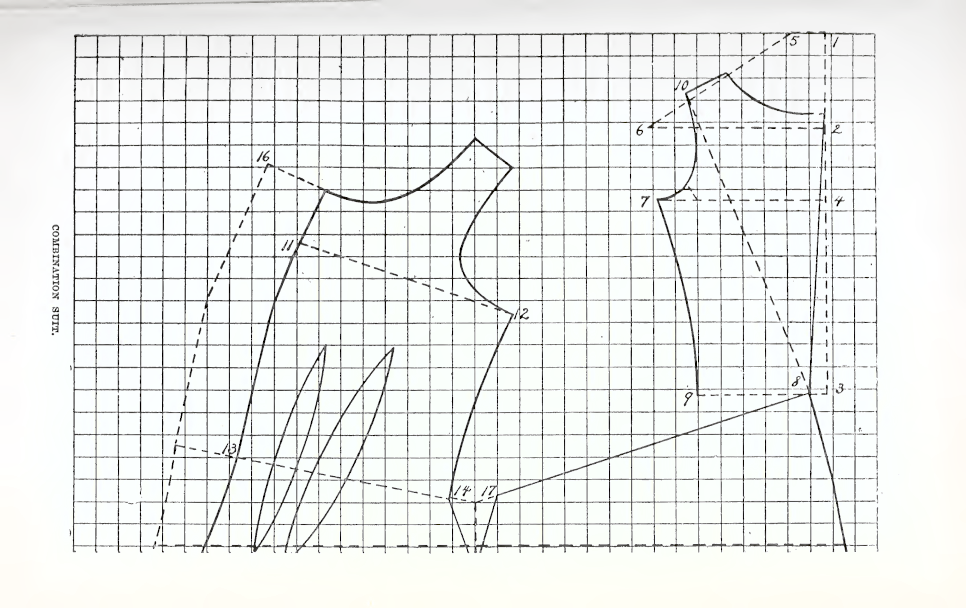
A woman wearing a white linen combination suite, with a very fitted top, small sleevelets that cover the armpits (to protect the next layers from sweat) and split drawers. The suite buttons up along the front (where it is a bit tight around the bust) and has a line of lace at the neckline and two tucks plus some lace at the legs. Some time ago, on an early Friday afternoon our internet connection died. After a reasonable time had passed we called the customer service, they told us that they would look into it and then call us back. On Friday evening we had not heard from them, and I was starting to get worried. At the time in the evening when I would have been relaxing online I grabbed the first Victorian sewing-related book I found on my hard disk and started to read it. For the record, it wasn t actually Victorian, it was Margaret J. Blair. System of Sewing and Garment Drafting. from 1904, but I also had available for comparison the earlier and smaller Margaret Blair. System of Garment Drafting. from 1897. A page from the book showing the top part of a pattern with all construction lines Anyway, this book had a system to draft a pair of combinations (chemise top + drawers); and months ago I had already tried to draft a pair from another system, but they didn t really fit and they were dropped low on the priority list, so on a whim I decided to try and draft them again with this new-to-me system. Around 23:00 in the night the pattern was ready, and I realized that my SO had gone to sleep without waiting for me, as I looked too busy to be interrupted. The next few days were quite stressful (we didn t get our internet back until Wednesday) and while I couldn t work at my day job I didn t sew as much as I could have done, but by the end of the week I had an almost complete mockup from an old sheet, and could see that it wasn t great, but it was a good start. One reason why the mockup took a whole week is that of course I started to sew by machine, but then I wanted flat-felled seams, and felling them by hand is so much neater, isn t it? And let me just say, I m grateful for the fact that I don t depend on streaming services for media, but I have a healthy mix of DVDs and stuff I had already temporary downloaded to watch later, because handsewing and being stressed out without watching something is not really great. Anyway, the mockup was a bit short on the crotch, but by the time I could try it on and be sure I was invested enough in it that I decided to work around the issue by inserting a strip of lace around the waist. And then I went back to the pattern to fix it properly, and found out that I had drafted the back of the drawers completely wrong, making a seam shorter rather than longer as it should have been. ooops. I fixed the pattern, and then decided that YOLO and cut the new version directly on some lightweight linen fabric I had originally planned to use in this project. The result is still not perfect, but good enough, and I finished it with a very restrained amount of lace at the neckline and hems, wore it one day when the weather was warm (loved the linen on the skin) and it s ready to be worn again when the weather will be back to being warm (hopefully not too soon). The last problem was taking pictures of this underwear in a way that preserves the decency (and it even had to be outdoors, for the light!). This was solved by wearing leggings and a matched long sleeved shirt under the combinations, and then promptly forgetting everything about decency and, well, you can see what happened. A woman mooning by keeping the back of split drawers open with her hands, but at least there are black leggings under them. The pattern is, as usual, published on my pattern website as #FreeSoftWear. And then, I started thinking about knits. In the late Victorian and Edwardian eras knit underwear was a thing, also thanks to the influence of various aspects of the rational dress movement; reformers such as Gustav J ger advocated for wool underwear, but mail order catalogues from the era such as https://archive.org/details/cataloguefallwin00macy (starting from page 67) have listings for both cotton and wool ones. From what I could find, back then they would have been either handknit at home or made to shape on industrial knitting machines; patterns for the former are available online, but the latter would probably require a knitting machine that I don t currently1 have. However, this is underwear that is not going to be seen by anybody2, and I believe that by using flat knit fabric one can get a decent functional approximation. In The Stash I have a few meters of a worked cotton jersey with a pretty comfy feel, and to make a long story short: this happened. a woman wearing a black cotton jersey combination suite; the front is sewn shut, but the neck is wide and finished with elastic.  The top part is pretty fitted, but becomes baggier around the crotch area and the legs are a comfortable width. I suspect that the linen one will get worn a lot this summer (linen on the skin. nothing else need to be said), while the cotton one will be stored away for winter. And then maybe I may make a couple more, if I find out that I m using it enough.




  1. cue ominous music. But first I would need space to actually keep and use it :)
  2. other than me, my SO, any costuming friend I may happen to change in the presence of, and everybody on the internet in these pictures.

25 May 2023

Dirk Eddelbuettel: qlcal 0.0.6 on CRAN: More updates from QuantLib

The sixth release of the still new-ish qlcal package arrivied at CRAN today. qlcal delivers the calendaring parts of QuantLib. It is provided (for the R package) as a set of included files, so the package is self-contained and does not depend on an external QuantLib library (which can be demanding to build). qlcal covers over sixty country / market calendars and can compute holiday lists, its complement (i.e. business day lists) and much more. This release brings updates to a few calendars which happened since the QuantLib 1.30 release, and also updates a several of the (few) non-calendaring functions.

Changes in version 0.0.6 (2023-05-24)
  • Several calendars (India, Singapore, South Africa, South Korea) updated with post-QuantLib 1.3.0 changes (Sebastian Schmidt in #6)
  • Three now-used scheduled files were removed (Dirk in #7))
  • A number of non-calendaring files used were synchronised with the current QuantLib repo (Dirk in #8)

Last release, we also added a quick little demo using xts to column-bind calendars produced from each of the different US sub-calendars. This is a slightly updated version of the sketch we tooted a few days ago. The output now is
> print(Reduce(cbind, Map(makeHol, cals)))
           LiborImpact NYSE GovernmentBond NERC FederalReserve
2023-01-02        TRUE TRUE           TRUE TRUE           TRUE
2023-01-16        TRUE TRUE           TRUE   NA           TRUE
2023-02-20        TRUE TRUE           TRUE   NA           TRUE
2023-04-07          NA TRUE             NA   NA             NA
2023-05-29        TRUE TRUE           TRUE TRUE           TRUE
2023-06-19        TRUE TRUE           TRUE   NA           TRUE
2023-07-04        TRUE TRUE           TRUE TRUE           TRUE
2023-09-04        TRUE TRUE           TRUE TRUE           TRUE
2023-10-09        TRUE   NA           TRUE   NA           TRUE
2023-11-10        TRUE   NA             NA   NA             NA
2023-11-23        TRUE TRUE           TRUE TRUE           TRUE
2023-12-25        TRUE TRUE           TRUE TRUE           TRUE
> 
Courtesy of my CRANberries, there is a diffstat report for this release. See the project page and package documentation for more details, and more examples. If you like this or other open-source work I do, you can now sponsor me at GitHub.

This post by Dirk Eddelbuettel originated on his Thinking inside the box blog. Please report excessive re-aggregation in third-party for-profit settings.

23 May 2023

Russ Allbery: Review: A Half-Built Garden

Review: A Half-Built Garden, by Ruthanna Emrys
Publisher: Tordotcom
Copyright: 2022
ISBN: 1-250-21097-6
Format: Kindle
Pages: 340
The climate apocalypse has happened. Humans woke up to the danger, but a little bit too late. Over one billion people died. But the world on the other side of that apocalypse is not entirely grim. The corporations responsible for so much of the damage have been pushed out of society and isolated on their independent "aislands," traded with only grudgingly for the few commodities the rest of the world has not yet learned how to manufacture without them. Traditional governments have largely collapsed, although they cling to increasingly irrelevant trappings of power. In their place arose the watershed networks: a new way of living with both nature and other humans, built around a mix of anarchic consensus and direct democracy, with conservation and stewardship of the natural environment at its core. Therefore, when the aliens arrive near Bear Island on the Potomac River, they're not detected by powerful telescopes and met by military jets. Instead, their waste sets off water sensors, and they're met by the two women on call for alert duty, carrying a nursing infant and backed by the real-time discussion and consensus technology of the watershed's dandelion network. (Emrys is far from the first person to name something a "dandelion network," so be aware that the usage in this book seems unrelated to the charities or blockchain network.) This is a first contact novel, but it's one that skips over the typical focus of the subgenre. The alien Ringers are completely fluent in English down to subtle nuance of emotion and connotation (supposedly due to observation of our radio and TV signals), have translation devices, and in some cases can make our speech sounds directly. Despite significantly different body shapes, they are immediately comprehensible; differences are limited mostly to family structure, reproduction, and social norms. This is Star Trek first contact, not the type more typical of written science fiction. That feels unrealistic, but it's also obviously an authorial choice to jump directly to the part of the story that Emrys wants to write. The Ringers have come to save humanity. In their experience, technological civilization is inherently incompatible with planets. Technology will destroy the planet, and the planet will in turn destroy the species unless they can escape. They have reached other worlds multiple times before, only to discover that they were too late and everyone is already dead. This is the first time they've arrived in time, and they're eager to help humanity off its dying planet to join them in the Dyson sphere of space habitats they are constructing. Planets, to them, are a nest and a launching pad, something to eventually abandon and break down for spare parts. The small, unexpected wrinkle is that Judy, Carol, and the rest of their watershed network are not interested in leaving Earth. They've finally figured out the most critical pieces of environmental balance. Earth is going to get hotter for a while, but the trend is slowing. What they're doing is working. Humanity would benefit greatly from Ringer technology and the expertise that comes from managing closed habitat ecosystems, but they don't need rescuing. This goes over about as well as a toddler saying that playing in the road is perfectly safe. This is a fantastic hook for a science fiction novel. It does exactly what a great science fiction premise should do: takes current concerns (environmentalism, space boosterism, the debatable primacy of humans as a species, the appropriate role of space colonization, the tension between hopefulness and doomcasting about climate change) and uses the freedom of science fiction to twist them around and come at them from an entirely different angle. The design of the aliens is excellent for this purpose. The Ringers are not one alien species; they are two, evolved on different planets in the same system. The plains dwellers developed space flight first and went to meet the tree dwellers, and while their relationship is not entirely without hierarchy (the plains dwellers clearly lead on most matters), it's extensively symbiotic. They now form mixed families of both species, and have a rich cultural history of stories about first contact, interspecies conflicts and cooperation, and all the perils and misunderstandings that they successfully navigated. It makes their approach to humanity more believable to know that they have done first contact before and are building on a model. Their concern for humanity is credibly sincere. The joining of two species was wildly successful for them and they truly want to add a third. The politics on the human side are satisfyingly complicated. The watershed network may have made first contact, but the US government (in the form of NASA) is close behind, attempting to lean on its widely ignored formal power. The corporations are farther away and therefore slower to arrive, but the alien visitors have a damaged ship and need space to construct a subspace beacon and Asterion is happy to offer a site on one of its New Zealand islands. The corporate representatives are salivating at the chance to escape Earth and its environmental regulation for uncontrolled space construction and a new market of trillions of Ringers. NASA's attitude is more measured, but their representative is easily persuaded that the true future of humanity is in space. The work the watershed networks are doing is difficult, uncertain, and involves a lot of sacrifice, particularly for corporate consumer lifestyles. With such an attractive alien offer on the table, why stay and work so hard for an uncertain future? Maybe the Ringers are right. And then the dandelion networks that the watersheds use as the core of their governance and decision-making system all crash. The setup was great; I was completely invested. The execution was more mixed. There are some things I really liked, some things that I thought were a bit too easy or predictable, and several places where I wish Emrys had dug deeper and provided more detail. I thought the last third of the book fizzled a little, although some of the secondary characters Emrys introduces are delightful and carry the momentum of the story when the politics feel a bit lacking. If you tried to form a mental image of ecofeminist political science fiction with 1970s utopian sensibilities, but updated for the concerns of the 2020s, you would probably come very close to the politics of the watershed networks. There are considerably more breastfeedings and diaper changes than the average SF novel. Two of the primary characters are transgender, but with very different experiences with transition. Pronoun pins are an ubiquitous article of clothing. One of the characters has a prosthetic limb. Another character who becomes important later in the story codes as autistic. None of this felt gratuitous; the characters do come across as obsessed with gender, but in a way that I found believable. The human diversity is well-integrated with the story, shapes the characters, creates practical challenges, and has subtle (and sometimes not so subtle) political ramifications. But, and I say this with love because while these are not quite my people they're closely adjacent to my people, the social politics of this book are a very specific type of white feminist collaborative utopianism. When religion makes an appearance, I was completely unsurprised to find that several of the characters are Jewish. Race never makes a significant appearance at all. It's the sort of book where the throw-away references to other important watershed networks includes African ones, and the characters would doubtless try to be sensitive to racial issues if they came up, but somehow they never do. (If you're wondering if there's polyamory in this book, yes, yes there is, and also I suspect you know exactly what culture I'm talking about.) This is not intended as a criticism, just more of a calibration. All science fiction publishing houses could focus only on this specific political perspective for a year and the results would still be dwarfed by the towering accumulated pile of thoughtless paeans to capitalism. Ecofeminism has a long history in the genre but still doesn't show up in that many books, and we're far from exhausting the space of possibilities for what a consensus-based politics could look like with extensive computer support. But this book has a highly specific point of view, enough so that there won't be many thought-provoking surprises if you're already familiar with this school of political thought. The politics are also very earnest in a way that I admit provoked a bit of eyerolling. Emrys pushes all of the political conflict into the contrasts between the human factions, but I would have liked more internal disagreement within the watershed networks over principles rather than tactics. The degree of ideological agreement within the watershed group felt a bit unrealistic. But, that said, at least politics truly matters and the characters wrestle directly with some tricky questions. I would have liked to see more specifics about the dandelion network and the exact mechanics of the consensus decision process, since that sort of thing is my jam, but we at least get more details than are typical in science fiction. I'll take this over cynical libertarianism any day. Gender plays a huge role in this story, enough so that you should avoid this book if you're not interested in exploring gender conceptions. One of the two alien races is matriarchal and places immense social value on motherhood, and it's culturally expected to bring your children with you for any important negotiation. The watersheds actively embrace this, or at worst find it comfortable to use for their advantage, despite a few hints that the matriarchy of the plains aliens may have a very serious long-term demographic problem. In an interesting twist, it's the mostly-evil corporations that truly challenge gender roles, albeit by turning it into an opportunity to sell more clothing. The Asterion corporate representatives are, as expected, mostly the villains of the plot: flashy, hierarchical, consumerist, greedy, and exploitative. But gender among the corporations is purely a matter of public performance, one of a set of roles that you can put on and off as you choose and signal with clothing. They mostly use neopronouns, change pronouns as frequently as their clothing, and treat any question of body plumbing as intensely private. By comparison, the very 2020 attitudes of the watersheds towards gender felt oddly conservative and essentialist, and the main characters get flustered and annoyed by the ever-fluid corporate gender presentation. I wish Emrys had done more with this. As you can tell, I have a lot of thoughts and a lot of quibbles. Another example: computer security plays an important role in the plot and was sufficiently well-described that I have serious questions about the system architecture and security model of the dandelion networks. But, as with decision-making and gender, the more important takeaway is that Emrys takes enough risks and describes enough interesting ideas that there's a lot of meat here to argue with. That, more than getting everything right, is what a good science fiction novel should do. A Half-Built Garden is written from a very specific political stance that may make it a bit predictable or off-putting, and I thought the tail end of the book had some plot and resolution problems, but arguing with it was one of the more intellectually satisfying science fiction reading experiences I've had recently. You have to be in the right mood, but recommended for when you are. Rating: 7 out of 10

22 May 2023

Russ Allbery: Review: Tsalmoth

Review: Tsalmoth, by Steven Brust
Series: Vlad Taltos #16
Publisher: Tor
Copyright: 2023
ISBN: 1-4668-8970-5
Format: Kindle
Pages: 277
Tsalmoth is the sixteenth book in the Vlad Taltos series and (some fans of the series groan) yet another flashback novel to earlier in Vlad's life. It takes place between Yendi and the interludes in Dragon (or, perhaps more straightforwardly, between Yendi and Jhereg. Most of the books of this series stand alone to some extent, so you could read this book out of order and probably not be horribly confused, but I suspect it would also feel weirdly pointless outside of the context of the larger series. We're back to Vlad running a fairly small operation as a Jhereg, who are the Dragaeran version of organized crime. A Tsalmoth who owes Vlad eight hundred imperials has rudely gotten himself murdered, thoroughly enough that he can't be revived. That's a considerable amount of money, and Vlad would like it back, so he starts poking around. As you might expect if you've read any other book in this series, things then get a bit complicated. This time, they involve Jhereg politics, Tsalmoth house politics, and necromancy (which in this universe is more about dimensional travel than it is about resurrecting the dead). The main story is... fine. Kragar is around being unnoticeable as always, Vlad is being cocky and stubborn and bantering with everyone, and what appears to be a straightforward illegal business relationship turns out to involve Dragaeran magic and thus Vlad's highly-placed friends. As usual, they're intellectually curious about the magic and largely ambivalent to the rest of Vlad's endeavors. The most enjoyable part of the story is Vlad's insistence on getting his money back while everyone else in the story cannot believe he would be this persistent over eight hundred imperials and is certain he has some other motive. It's otherwise a fairly forgettable little adventure. The implications for the broader series, though, are significant, although essentially none of the payoff is here. Brust has been keeping a major secret about Vlad that's finally revealed here, one that has little impact on the plot of this book (although it causes Vlad a lot of angst) but which I suspect will become very important later in the series. That was intriguing but rather unsatisfying, since it stays only a future hook with an attached justification for why we're only finding out about it now. If one has read the rest of the series, it's also nice to see Vlad and Cawti working together, bantering with each other and playing off of each other's strengths. It's reminiscent of the best parts of Yendi. As with many of the books of this series, the chapter introductions tell a parallel story; this time, it's Vlad and Cawti's wedding. I think previous books already mentioned that Vlad is narrating this series into some sort of recording device, and a bit about why he's doing that, but this is made quite explicit here. We get as much of the surrounding frame as we've ever seen before. There are no obvious plot consequences from this it's still all hints and guesswork but I suspect this will also become important by the end of the series. If you've read this much of the series, you'll obviously want to read this one as well, but unfortunately don't get your hopes up for significant plot advancement. This is another station-keeping book, which is a bit of a disappointment. We haven't gotten major plot advancement since Hawk in 2014, and I'm getting impatient. Thankfully, Lyorn has a release date already (April 9, 2024), and assuming all goes according to the grand plan, there are only two books left after Lyorn (Chreotha and The Last Contract). I'm getting hopeful that we're going to get to see the entire series. Meanwhile, I am very tempted to do a complete re-read of the series to date, probably in series chronological order rather than in publication order (as much as that's possible given the fractured timelines of Dragon and Tiassa) so that I can see how the pieces fit together. The constant jumping back and forth and allusions to events that have already happened but that we haven't seen yet is hard to keep track of. I'm very glad the Lyorn Records exists. Followed by Lyorn. Rating: 7 out of 10

21 May 2023

Russ Allbery: Review: The Stone Canal

Review: The Stone Canal, by Ken MacLeod
Series: Fall Revolution #2
Publisher: Tor
Copyright: 1996
Printing: January 2001
ISBN: 0-8125-6864-8
Format: Mass market
Pages: 339
The Stone Canal is a sort of halfway sequel to The Star Fraction. They both take place in the same universe, but the characters are almost entirely disjoint. Half of The Stone Canal happens (mostly) well before the previous book and the other half happens well after it. This book does contain spoilers for the ending of The Star Fraction if one connects the events of the two books correctly (which was a bit harder than I thought it should be), so I would not read them out of order. At the start of The Stone Canal, Jon Wilde wakes up on New Mars beside the titular canal, in the middle of nowhere, accompanied only by a robot that says it made him. Wilde remembers dying on Earth; this new life is apparently some type of resurrection. It's a long walk to Ship City, the center of civilization of a place the robot tells him is New Mars. In Ship City, an android named Dee Model has escaped from her owner and is hiding in a bar. There, she meets an AI abolitionist named Tamara, who helps her flee out the back and down the canal on a boat when Wilde walks into the bar and immediately recognizes her. The abolitionists provide her protection and legal assistance to argue her case for freedom from her owner, a man named Reid. The third thread of the story, and about half the book, is Jon Wilde's life on Earth, starting in 1975 and leading up to the chaotic wars, political fracturing, and revolutions that formed the background and plot of The Star Fraction. Eventually that story turns into a full-fledged science fiction setting, but not until the last 60 pages of the book. I successfully read two books in a Ken MacLeod series! Sadly, I'm not sure I enjoyed the experience. I commented in my review of The Star Fraction that the appeal for me in MacLeod's writing was his reputation as a writer of political science fiction. Unfortunately that's been a bust. The characters are certainly political, in the sense that they profess to have strong political viewpoints and are usually members of some radical (often Trotskyite) organization. There are libertarian anarchist societies and lots of political conflict. But there is almost no meaningful political discussion in any of these books so far. The politics are all tactical or background, and often seem to be created by authorial fiat. For example, New Mars is a sort of libertarian anarchy that somehow doesn't have corporations or a strongman ruler, even though the history (when we finally learn it) would have naturally given rise to one or the other (and has, in numerous other SF novels with similar plots). There's a half-assed explanation for this towards the end of the book that I didn't find remotely believable. Another part of the book describes the formation of the libertarian microstate in The Star Fraction, but never answers a "why" or "how" question I had in the previous book in a satisfying way. Somehow people stop caring about control or predictability or stability or traditional hierarchy without any significant difficulties except external threats, in situations of chaos and disorder where historically humans turn to anyone promising firm structure. It's common to joke about MacLeod winning multiple libertarian Prometheus Awards for his fiction despite being a Scottish communist. I'm finding that much less surprising now that I've read more of his books. Whether or not he believes in it himself, he's got the cynical libertarian smugness and hand-waving down pat. What his characters do care deeply about is smoking, drinking, and having casual sex. (There's more political fire here around opposition to anti-smoking laws than there is about any of the society-changing political structures that somehow fall into place.) I have no objections to any of those activities from a moral standpoint, but reading about other people doing them is a snoozefest. The flashback scenes sketch out enough imagined history to satisfy some curiosity from the previous book, but they're mostly about the world's least interesting love triangle, involving two completely unlikable men and lots of tedious jealousy and posturing. The characters in The Stone Canal are, in general, a problem. One of those unlikable men is Wilde, the protagonist for most of the book. Not only did I never warm to him, I never figured out what motivates him or what he cares about. He's a supposedly highly political person who seems to engage in politics with all the enthusiasm of someone filling out tax forms, and is entirely uninterested in explaining to the reader any sort of coherent philosophical approach. The most interesting characters in this book are the women (Annette, Dee Model, Tamara, and, very late in the book, Meg), but other than Dee Model they rarely get much focus from the story. By far the best part of this book is the last 60 pages, where MacLeod finally explains the critical bridge events between Wilde's political history on earth and the New Mars society. I thought this was engrossing, fast-moving, and full of interesting ideas (at least for a 1990s book; many of them feel a bit stale now, 25 years later). It was also frustrating, because this was the book I wanted to have been reading for the previous 270 pages, instead of MacLeod playing coy with his invented history or showing us interminable scenes about Wilde's insecure jealousy over his wife. It's also the sort of book where at one point characters (apparently uniformly male as far as one could tell from the text of the book) get assigned sex slaves, and while MacLeod clearly doesn't approve of this, the plot is reminiscent of a Heinlein novel: the protagonist's sex slave becomes a very loyal permanent female companion who seems to have the same upside for the male character in question. This was unfortunately not the book I was hoping for. I did enjoy the last hundred pages, and it's somewhat satisfying to have the history come together after puzzling over what happened for 200 pages. But I found the characters tedious and annoying and the politics weirdly devoid of anything like sociology, philosophy, or political science. There is the core of a decent 1990s AI and singularity novel here, but the technology is now rather dated and a lot of other people have tackled the same idea with fewer irritating ticks. Not recommended, although I'll probably continue to The Cassini Division because the ending was a pretty great hook for another book. Followed by The Cassini Division. Rating: 5 out of 10

19 May 2023

Petter Reinholdtsen: wmbusmeters, parse data from your utility meter - nice free software

There is a European standard for reading utility meters like water, gas, electricity or heat distribution meters. The Meter-Bus standard (EN 13757-2, EN 13757-3 and EN 13757 4) provide a cross vendor way to talk to and collect meter data. I ran into this standard when I wanted to monitor some heat distribution meters, and managed to find free software that could do the job. The meters in question broadcast encrypted messages with meter information via radio, and the hardest part was to track down the encryption keys from the vendor. With this in place I could set up a MQTT gateway to submit the meter data for graphing. The free software systems in question, rtl-wmbus to read the messages from a software defined radio, and wmbusmeters to decrypt and decode the content of the messages, is working very well and allowe me to get frequent updates from my meters. I got in touch with upstream last year to see if there was any interest in publishing the packages via Debian. I was very happy to learn that Fredrik hrstr m volunteered to maintain the packages, and I have since assisted him in getting Debian package build rules in place as well as sponsoring the packages into the Debian archive. Sadly we completed it too late for them to become part of the next stable Debian release (Bookworm). The wmbusmeters package just cleared the NEW queue. It will need some work to fix a built problem, but I expect Fredrik will find a solution soon. If you got a infrastructure meter supporting the Meter Bus standard, I strongly recommend having a look at these nice packages. As usual, if you use Bitcoin and want to show your support of my activities, please send Bitcoin donations to my address 15oWEoG9dUPovwmUL9KWAnYRtNJEkP1u1b.

18 May 2023

Antoine Beaupr : A terrible Pixel Tablet

In a strange twist of history, Google finally woke and thought "I know what we need to do! We need to make a TABLET!". So some time soon in 2023, Google will release "The tablet that only Google could make", the Pixel Tablet. Having owned a Samsung Galaxy Tab S5e for a few years, I was very curious to see how this would pan out and especially whether it would be easier to flash than the Samsung. As an aside, I figured I would give that a shot, and within a few days managed to completely brick the device. Awesome. See gts4lvwifi for the painful details of that. In any case, Google made a tablet. I own a Pixel phone and I'm moderately happy with it. It's easy to flash with CalyxOS, maybe this is the promise land of tablets?

Compared with the Samsung But it turns out that the Pixel Tablet pales in comparison with the Samsung tablet, produced 4 years ago, in 2019:
  • it's thicker (8.1mm vs 5.5mm)
  • it's heavier (493g vs 400g)
  • it's not AMOLED (IPS LCD)
  • it doesn't have an SD card reader
  • its camera is worse (8MP vs 13MP, 1080p video instead of 4k)
  • it's more expensive (670EUR vs 410EUR)
What the Pixel tablet has going for it:
  • a slightly more powerful CPU
  • a stylus
  • more storage (128GB or 256GB vs 64GB or 128GB)
  • more RAM (8GB vs 4GB or 6GB)
  • Wifi 6
I guess I should probably wait for the actual device to come out to see reviews and how it stacks up, but so far it's kind of impressive how underwhelming this is. Also note that we're comparing against a very old Samsung tablet here, a fairer comparison might be against the Samsung Galaxy Tab S8. There the sizes are comparable, and the Samsung is more expensive than the Pixel, but then the Pixel has absolutely zero advantages and all the other disadvantages.

The Dock The "Dock" is also worth a little aside. See, the tablet comes with a dock that doubles as a speaker. You can't buy the tablet without the dock. You have to have a dock. I shit you not, actual quote: "Can I purchase a Pixel Tablet without the Charging Speaker Dock? No, you can only purchase the Pixel Tablet with the Charging Speaker Dock." In case you really, really like the dock, "You may purchase additional Charging Speaker Docks separately (coming soon)." And no, they can't all play together, only the dock the tablet is docked into will play audio. The dock is not a Bluetooth speaker, it can only play audio from that one tablet that Google made, this one time. It's also not a battery pack. It's just a charger with speakers in it. Promising e-waste. Again, I hope I'm wrong and that this is going to be a fine tablet. But so far, it looks like it doesn't even come close to whatever Samsung threw over the fence before the apocalypse (remember 2019? were we even born yet?). "The tablet that only Google could make." Amazing. Hopefully no one else gets any bright ideas like this.

17 May 2023

Jamie McClelland: Cranky old timers should know perl

I act like an old timer (I ve been around linux for 25 years and I m cranky about new tech that is not easily maintained and upgraded) yet somehow I don t know perl. How did that happen? I discovered this state when I decided to move from the heroically packaged yet seemingly upstream un-maintained opendmarc package to authentication_milter. It s written in perl. And, alas, not in debian. How hard could this be? The instructions for installing seemed pretty straight forward: cpanm Mail::Milter::Authentication. Wah. I m glad I tried this out on a test virtual machine. It took forever! It ran tests! It compiled things! And, it installed a bunch of perl modules already packaged in Debian. I don t think I want to add this command to my ansible playbook. Next I spent an inordinate amount of time trying to figure out how to list the dependencies of a given CPAN module. I was looking for something like cpanm --list-dependencies Mail::Milter::Authentication but eventually ended up writing a perl script that output perl code, inserting a use " before each dependency and a semicolon and line break after them. Then, I could execute that script on a clean debian installation and see which perl modules I needed. For each error, I checked for the module in Debian (and installed it) or kept a list of modules I would have to build (and commented out the line). Once I had a list of modules to build, I used the handy cpan2deb command. It took some creative ordering but eventually I got it right. Since I will surely forget how to do this when it s time to upgrade, I wrote a script. In total it took me several days to figure this all out, so I once again find myself very appreciative of all the debian packagers out there - particularly the perl ones!! And also if I did this all wrong and there is an easier way I would love to hear about it in the comments.

16 May 2023

Freexian Collaborators: Monthly report about Debian Long Term Support, April 2023 (by Roberto C. S nchez)

Like each month, have a look at the work funded by Freexian s Debian LTS offering.

Debian LTS contributors In April, 18 contributors have been paid to work on Debian LTS, their reports are available:
  • Abhijith PA did 6.0h (out of 0h assigned and 14.0h from previous period), thus carrying over 8.0h to the next month.
  • Adrian Bunk did 18.0h (out of 16.5h assigned and 24.0h from previous period), thus carrying over 22.5h to the next month.
  • Anton Gladky did 8.0h (out of 9.5h assigned and 5.5h from previous period), thus carrying over 7.0h to the next month.
  • Bastien Roucari s did 17.0h (out of 17.0h assigned and 3.0h from previous period), thus carrying over 3.0h to the next month.
  • Ben Hutchings did 16.0h (out of 12.0h assigned and 12.0h from previous period), thus carrying over 8.0h to the next month.
  • Chris Lamb did 18.0h (out of 18.0h assigned).
  • Dominik George did 0.0h (out of 0h assigned and 20.34h from previous period), thus carrying over 20.34h to the next month.
  • Emilio Pozuelo Monfort did 4.5h (out of 11.0h assigned and 9.5h from previous period), thus carrying over 16.0h to the next month.
  • Guilhem Moulin did 8.5h (out of 8.0h assigned and 12.0h from previous period), thus carrying over 11.5h to the next month.
  • Helmut Grohne did 5.0h (out of 2.5h assigned and 7.5h from previous period), thus carrying over 5.0h to the next month.
  • Lee Garrett did 0.0h (out of 31.5h assigned and 9.0h from previous period), thus carrying over 40.5h to the next month.
  • Markus Koschany did 40.0h (out of 40.0h assigned).
  • Ola Lundqvist did 12.5h (out of 0h assigned and 24.0h from previous period), thus carrying over 11.5h to the next month.
  • Roberto C. S nchez did 8.5h (out of 4.75h assigned and 15.25h from previous period), thus carrying over 11.5h to the next month.
  • Stefano Rivera did 1.0h (out of 0h assigned and 28.0h from previous period), thus carrying over 27.0h to the next month.
  • Sylvain Beucler did 35.0h (out of 40.5h assigned), thus carrying over 5.5h to the next month.
  • Thorsten Alteholz did 14.0h (out of 14.0h assigned).
  • Tobias Frost did 15.0h (out of 15.0h assigned and 1.0h from previous period), thus carrying over 1.0h to the next month.
  • Utkarsh Gupta did 3.5h (out of 11.0h assigned and 18.5h from previous period), thus carrying over 26.0h to the next month.

Evolution of the situation In April, we have released 35 DLAs. The LTS team would like to welcome our newest sponsor, Institut Camille Jordan, a French research lab. Thanks to the support of the many LTS sponsors, the entire Debian community benefits from direct security updates, as well as indirect improvements and collaboration with other members of the Debian community. As part of improving the efficiency of our work and the quality of the security updates we produce, the LTS has continued improving our workflow. Improvements include more consistent tagging of release versions in Git and broader use of continuous integration (CI) to ensure packages are tested thoroughly and consistently. Sponsors and users can rest assured that we work continuously to maintain and improve the already high quality of the work that we do.

Thanks to our sponsors Sponsors that joined recently are in bold.

11 May 2023

Shirish Agarwal: India Press freedom, Profiteering, AMD issues in the wild.

India Press Freedom Just about a week back, India again slipped in the Freedom index, this time falling to 161 out of 180 countries. The RW again made lot of noise as they cannot fathom why it has been happening so. A recent news story gives some idea. Every year NCRB (National Crime Records Bureau) puts out its statistics of crimes happening across the country. The report is in public domain. Now according to report shared, around 40k women from Gujarat alone disappeared in the last five years. This is a state where BJP has been ruling for the last 30 odd years. When this report became viral, almost all national newspapers the news was censored/blacked out. For e.g. check out newindianexpress.com, likewise TOI and other newspapers, the news has been 404. The only place that you can get that news is in minority papers like siasat. But the story didn t remain till there. While the NCW (National Commission of Women) pointed out similar stuff happening in J&K, Gujarat Police claimed they got almost 39k women back. Now ideally, it should have been in NCRB data as an addendum as the report can be challenged. But as this news was made viral, nobody knows the truth or false in the above. What BJP has been doing is whenever they get questioned, they try to muddy the waters like that. And most of the time, such news doesn t make to court so the party gets a freebie in a sort as they are not legally challenged. Even if somebody asks why didn t Gujarat Police do it as NCRB report is jointly made with the help of all states, and especially with BJP both in Center and States, they cannot give any excuse. The only excuse you see or hear is whataboutism unfortunately

Profiteering on I.T. Hardware I was chatting with a friend yesterday who is an enthusiast like me but has been more alert about what has been happening in the CPU, motherboard, RAM world. I was simply shocked to hear the prices of motherboards which are three years old, even a middling motherboard. For e.g. the last time I bought a mobo, I spent about 6k but that was for an ATX motherboard. Most ITX motherboards usually sold for around INR 4k/- or even lower. I remember Via especially as their mobos were even cheaper around INR 1.5-2k/-. Even before pandemic, many motherboard manufacturers had closed down shop leaving only a few in the market. As only a few remained, prices started going higher. The pandemic turned it to a seller s market overnight as most people were stuck at home and needed good rigs for either work or leisure or both. The manufacturers of CPU, motherboards, GPU s, Powersupply (SMPS) named their prices and people bought it. So in 2023, high prices remained while warranty periods started coming down. Governments also upped customs and various other duties. So all are in hand in glove in the situation. So as shared before, what I have been offered is a 4 year motherboard with a CPU of that time. I haven t bought it nor do I intend to in short-term future but extremely disappointed with the state of affairs

AMD Issues It s just been couple of hard weeks apparently for AMD. The first has been the TPM (Trusted Platform Module) issue that was shown by couple of security researchers. From what is known, apparently with $200 worth of tools and with sometime you can hack into somebody machine if you have physical access. Ironically, MS made a huge show about TPM and also made it sort of a requirement if a person wanted to have Windows 11. I remember Matthew Garett sharing about TPM and issues with Lenovo laptops. While AMD has acknowledged the issue, its response has been somewhat wishy-washy. But this is not the only issue that has been plaguing AMD. There have been reports of AMD chips literally exploding and again AMD issuing a somewhat wishy-washy response.  Asus though made some changes but is it for Zen4 or only 5 parts, not known. Most people are expecting a recession in I.T. hardware this year as well as next year due to high prices. No idea if things will change, if ever

9 May 2023

C.J. Collier: Instructions for installing Proxmox onto the Qotom device

These instructions are for qotom devices Q515P and Q1075GE. You can order one from Amazon or directly from Cherry Ni <export03@qotom.com>. Instructions are for those coming from Windows. Prerequisites: To find your windows network details, run the following command at the command prompt:
netsh interface ip show addresses
Here s my output:
PS C:\Users\cjcol> netsh interface ip show addresses "Wi-Fi"
Configuration for interface "Wi-Fi"
    DHCP enabled:                         Yes
    IP Address:                           172.16.79.53
    Subnet Prefix:                        172.16.79.0/24 (mask 255.255.255.0)
    Default Gateway:                      172.16.79.1
    Gateway Metric:                       0
    InterfaceMetric:                      50
Did you follow the instructions linked above in the prerequisites section? If not, take a moment to do so now.
Open Rufus and select the proxmox iso which you downloaded. You may be warned that Rufus will be acting as dd.
Don t forget to select the USB drive that you want to write the image to. In my example, the device is creatively called NO_LABEL .
You may be warned that re-imaging the USB disk will result in the previous data on the USB disk being lost.
Once the process is complete, the application will indicate that it is complete.
You should now have a USB disk with the Proxmox installer image on it. Place the USB disk into one of the blue, USB-3.0, USB-A slots on the Qotom device so that the system can read the installer image from it at full speed. The Proxmox installer requires a keyboard, video and mouse. Please attach these to the device along with inserting the USB disk you just created. Press the power button on the Qotom device. Press the F11 key repeatedly until you see the AMI BIOS menu. Press F11 a couple more times. You ll be presented with a boot menu. One of the options will launch the Proxmox installer. By trial and error, I found that the correct boot menu option was UEFI OS Once you select the correct option, you will be presented with a menu that looks like this. Select the default option and install. During the install, you will be presented with an option of the block device to install to. I think there s only a single block device in this celeron, but if there are more than one, I prefer the smaller one for the ProxMox OS. I also make a point to limit the size of the root filesystem to 16G. I think it will take up the entire volume group if you don t set a limit. Okay, I ll do another install and select the correct filesystem. If you read this far and want me to add some more screenshots and better instructions, leave a comment.

5 May 2023

Shirish Agarwal: CAT-6, AMD 5600G, Dealerships closing down, TRAI-caller and privacy.

CAT-6 patch cord & ONU Few months back I was offered a fibre service. Most of the service offering has been using Chinese infrastructure including the ONU (Optical Network Unit). Wikipedia doesn t have a good page on ONU hence had to rely on third-party sites. FS (a name I don t really know) has some (good basic info. on ONU and how it s part and parcel of the whole infrastructure. I also got an ONT (Optical Network Terminal) but it seems to be very basic and mostly dumb. I used the old CAT-6 cable ( a decade old) to connect them and it worked for couple of months. Had to change it, first went to know if a higher cable solution offered themselves. CAT-7 is there but not backward compatible. CAT-8 is the next higher version but apparently it s expensive and also not easily bought. I did quite a few tests on CAT-6 and the ONU and it conks out at best 1 mbps which is still far better than what I am used to. CAT-8 are either not available or simply too expensive for home applications atm. A good summary of CAT-8 and what they stand for can be found here. The networking part is hopeless as most consumer facing CPU s and motherboards don t even offer 10 mbps, so asking anything more is just overkill without any benefit. Which does bring me to the next question, something that I may do in a few months or a year down the road. Just to clarify they may say it is 100 mbps or even 1 Gbps but that s plain wrong.

AMD APU, Asus Motherboard & Dealerships I had been thinking of an AMD APU, could wait a while but sooner or later would have to get one. I got quoted an AMD Ryzen 3 3200G with an Asus A320 Motherboard for around 14k which kinda looked steep to me. Quite a few hardware dealers whom I had traded, consulted over years simply shut down. While there are new people, it s much more harder now to make relationships (due to deafness) rather than before. The easiest to share which was also online was pcpartpicker.com that had an Indian domain now no longer available. The number of offline brick and mortar PC business has also closed quite a bit. There are a few new ones but it takes time and the big guys have made more of a killing. I was shocked quite a bit. Came home and browsed a bit and was hit by this. Both AMD and Intel PC business has taken a beating. AMD a bit more as Intel still holds part of the business segment as traditionally been theirs. There have been proofs and allegations of bribing in the past (do remember the EU Antitrust case against Intel for monopoly) but Intel s own cutting corners with the Spectre and Meltdown flaws hasn t helped its case, nor the suits themselves. AMD on the other hand under expertise of Lisa Su has simply grown strength by strength. Inflation and Profiteering by other big companies has made the outlook for both AMD and Intel a bit lackluster. AMD is supposed to show Zen5 chips in a few days time and the rumor mill has been ongoing. Correction Not few days but 2025. Personally, I would be happy with maybe a Ryzen 5600G with an Asus motherboard. My main motive whenever I buy an APU is not to hit beyond 65 TDP. It s kinda middle of the road. As far as what I could read this year and next year we could have AM4+ or something like those updates, AM5 APU s, CPU s and boards are slated to be launched in 2025. I did see pcpricetracker and it does give idea of various APU prices although have to say pcpartpicker was much intuitive to work with than the above. I just had my system cleaned couple of months so touchwood I should be able to use it for another couple of years or more before I have to get one of these APU s and do hope they are worth it. My idea is to use that not only for testing various softwares but also delve a bit into VR if that s possible. I did read a bit about deafness and VR as well. A good summary can be found here. I am hopeful that there may be few people in the community who may look and respond to that. It s crucial.

TRAI-caller, Privacy 101& Element. While most of us in Debian and FOSS communities do engage in privacy, lots of times it s frustrating. I m always looking for videos that seek to share that view why Privacy is needed by individuals and why Governments and other parties hate it. There are a couple of basic Youtube Videos that does explain the same quite practically.
Now why am I sharing the above. It isn t that people do not privacy and how we hold it dear. I share it because GOI just today blocked Element. While it may be trivial for us to workaround the issues, it does tell what GOI is doing. And it still acts as if surprised why it s press ranking is going to pits. Even our Women Wrestlers have been protesting for a week to just file an FIR (First Information Report) . And these are women who have got medals for the country. More than half of these organizations, specifically the women wrestling team don t have POSH which is a mandatory body supposed to be in every organization. POSH stands for Prevention of Sexual Harassment at Workplace. The gentleman concerned is a known rowdy/Goon hence it took almost a week of protest to do the needful  I do try not to report because right now every other day we see somewhere or the other the Govt. curtailing our rights and most people are mute  Signing out, till later

4 May 2023

Matthew Garrett: Twitter's e2ee DMs are better than nothing

(Edit 2023-05-10: This has now launched for a subset of Twitter users. The code that existed to notify users that device identities had changed does not appear to have been enabled - as a result, in its current form, Twitter can absolutely MITM conversations and read your messages)

Elon Musk appeared on an interview with Tucker Carlson last month, with one of the topics being the fact that Twitter could be legally compelled to hand over users' direct messages to government agencies since they're held on Twitter's servers and aren't encrypted. Elon talked about how they were in the process of implementing proper encryption for DMs that would prevent this - "You could put a gun to my head and I couldn't tell you. That's how it should be."

tl;dr - in the current implementation, while Twitter could subvert the end-to-end nature of the encryption, it could not do so without users being notified. If any user involved in a conversation were to ignore that notification, all messages in that conversation (including ones sent in the past) could then be decrypted. This isn't ideal, but it still seems like an improvement over having no encryption at all. More technical discussion follows.

For context: all information about Twitter's implementation here has been derived from reverse engineering version 9.86.0 of the Android client and 9.56.1 of the iOS client (the current versions at time of writing), and the feature hasn't yet launched. While it's certainly possible that there could be major changes in the protocol between now launch, Elon has asserted that they plan to launch the feature this week so it's plausible that this reflects what'll ship.

For it to be impossible for Twitter to read DMs, they need to not only be encrypted, they need to be encrypted with a key that's not available to Twitter. This is what's referred to as "end-to-end encryption", or e2ee - it means that the only components in the communication chain that have access to the unencrypted data are the endpoints. Even if the message passes through other systems (and even if it's stored on other systems), those systems do not have access to the keys that would be needed to decrypt the data.

End-to-end encrypted messengers were initially popularised by Signal, but the Signal protocol has since been incorporated into WhatsApp and is probably much more widely used there. Millions of people per day are sending messages to each other that pass through servers controlled by third parties, but those third parties are completely unable to read the contents of those messages. This is the scenario that Elon described, where there's no degree of compulsion that could cause the people relaying messages to and from people to decrypt those messages afterwards.

But for this to be possible, both ends of the communication need to be able to encrypt messages in a way the other end can decrypt. This is usually performed using AES, a well-studied encryption algorithm with no known significant weaknesses. AES is a form of what's referred to as a symmetric encryption, one where encryption and decryption are performed with the same key. This means that both ends need access to that key, which presents us with a bootstrapping problem. Until a shared secret is obtained, there's no way to communicate securely, so how do we generate that shared secret? A common mechanism for this is something called Diffie Hellman key exchange, which makes use of asymmetric encryption. In asymmetric encryption, an encryption key can be split into two components - a public key and a private key. Both devices involved in the communication combine their private key and the other party's public key to generate a secret that can only be decoded with access to the private key. As long as you know the other party's public key, you can now securely generate a shared secret with them. Even a third party with access to all the public keys won't be able to identify this secret. Signal makes use of a variation of Diffie-Hellman called Extended Triple Diffie-Hellman that has some desirable properties, but it's not strictly necessary for the implementation of something that's end-to-end encrypted.

Although it was rumoured that Twitter would make use of the Signal protocol, and in fact there are vestiges of code in the Twitter client that still reference Signal, recent versions of the app have shipped with an entirely different approach that appears to have been written from scratch. It seems simple enough. Each device generates an asymmetric keypair using the NIST P-256 elliptic curve, along with a device identifier. The device identifier and the public half of the key are uploaded to Twitter using a new API endpoint called /1.1/keyregistry/register. When you want to send an encrypted DM to someone, the app calls /1.1/keyregistry/extract_public_keys with the IDs of the users you want to communicate with, and gets back a list of their public keys. It then looks up the conversation ID (a numeric identifier that corresponds to a given DM exchange - for a 1:1 conversation between two people it doesn't appear that this ever changes, so if you DMed an account 5 years ago and then DM them again now from the same account, the conversation ID will be the same) in a local database to retrieve a conversation key. If that key doesn't exist yet, the sender generates a random one. The message is then encrypted with the conversation key using AES in GCM mode, and the conversation key is then put through Diffie-Hellman with each of the recipients' public device keys. The encrypted message is then sent to Twitter along with the list of encrypted conversation keys. When each of the recipients' devices receives the message it checks whether it already has a copy of the conversation key, and if not performs its half of the Diffie-Hellman negotiation to decrypt the encrypted conversation key. One it has the conversation key it decrypts it and shows it to the user.

What would happen if Twitter changed the registered public key associated with a device to one where they held the private key, or added an entirely new device to a user's account? If the app were to just happily send a message with the conversation key encrypted with that new key, Twitter would be able to decrypt that and obtain the conversation key. Since the conversation key is tied to the conversation, not any given pair of devices, obtaining the conversation key means you can then decrypt every message in that conversation, including ones sent before the key was obtained.

(An aside: Signal and WhatsApp make use of a protocol called Sesame which involves additional secret material that's shared between every device a user owns, hence why you have to do that QR code dance whenever you add a new device to your account. I'm grossly over-simplifying how clever the Signal approach is here, largely because I don't understand the details of it myself. The Signal protocol uses something called the Double Ratchet Algorithm to implement the actual message encryption keys in such a way that even if someone were able to successfully impersonate a device they'd only be able to decrypt messages sent after that point even if they had encrypted copies of every previous message in the conversation)

How's this avoided? Based on the UI that exists in the iOS version of the app, in a fairly straightforward way - each user can only have a single device that supports encrypted messages. If the user (or, in our hypothetical, a malicious Twitter) replaces the device key, the client will generate a notification. If the user pays attention to that notification and verifies with the recipient through some out of band mechanism that the device has actually been replaced, then everything is fine. But, if any participant in the conversation ignores this warning, the holder of the subverted key can obtain the conversation key and decrypt the entire history of the conversation. That's strictly worse than anything based on Signal, where such impersonation would simply not work, but even in the Twitter case it's not possible for someone to silently subvert the security.

So when Elon says Twitter wouldn't be able to decrypt these messages even if someone held a gun to his head, there's a condition applied to that - it's true as long as nobody fucks up. This is clearly better than the messages just not being encrypted at all in the first place, but overall it's a weaker solution than Signal. If you're currently using Twitter DMs, should you turn on encryption? As long as the limitations aren't too limiting, definitely! Should you use this in preference to Signal or WhatsApp? Almost certainly not. This seems like a genuine incremental improvement, but it'd be easy to interpret what Elon says as providing stronger guarantees than actually exist.

comment count unavailable comments

Next.

Previous.