Shirish Agarwal: India Press freedom, Profiteering, AMD issues in the wild.

India Press Freedom
Just about a week back, India again slipped in the Freedom index, this time falling to 161 out of 180 countries. The RW again made lot of noise as they cannot fathom why it has been happening so. A recent news story gives some idea. Every year NCRB (National Crime Records Bureau) puts out its statistics of crimes happening across the country. The report is in public domain. Now according to report shared, around 40k women from Gujarat alone disappeared in the last five years. This is a state where BJP has been ruling for the last 30 odd years. When this report became viral, almost all national newspapers the news was censored/blacked out. For e.g. check out newindianexpress.com, likewise TOI and other newspapers, the news has been 404. The only place that you can get that news is in minority papers like siasat. But the story didn t remain till there. While the NCW (National Commission of Women) pointed out similar stuff happening in J&K, Gujarat Police claimed they got almost 39k women back. Now ideally, it should have been in NCRB data as an addendum as the report can be challenged. But as this news was made viral, nobody knows the truth or false in the above. What BJP has been doing is whenever they get questioned, they try to muddy the waters like that. And most of the time, such news doesn t make to court so the party gets a freebie in a sort as they are not legally challenged. Even if somebody asks why didn t Gujarat Police do it as NCRB report is jointly made with the help of all states, and especially with BJP both in Center and States, they cannot give any excuse. The only excuse you see or hear is whataboutism unfortunately 
Profiteering on I.T. Hardware
I was chatting with a friend yesterday who is an enthusiast like me but has been more alert about what has been happening in the CPU, motherboard, RAM world. I was simply shocked to hear the prices of motherboards which are three years old, even a middling motherboard. For e.g. the last time I bought a mobo, I spent about 6k but that was for an ATX motherboard. Most ITX motherboards usually sold for around INR 4k/- or even lower. I remember Via especially as their mobos were even cheaper around INR 1.5-2k/-. Even before pandemic, many motherboard manufacturers had closed down shop leaving only a few in the market. As only a few remained, prices started going higher. The pandemic turned it to a seller s market overnight as most people were stuck at home and needed good rigs for either work or leisure or both. The manufacturers of CPU, motherboards, GPU s, Powersupply (SMPS) named their prices and people bought it. So in 2023, high prices remained while warranty periods started coming down. Governments also upped customs and various other duties. So all are in hand in glove in the situation. So as shared before, what I have been offered is a 4 year motherboard with a CPU of that time. I haven t bought it nor do I intend to in short-term future but extremely disappointed with the state of affairs
AMD Issues
It s just been couple of hard weeks apparently for AMD. The first has been the TPM (Trusted Platform Module) issue that was shown by couple of security researchers. From what is known, apparently with $200 worth of tools and with sometime you can hack into somebody machine if you have physical access. Ironically, MS made a huge show about TPM and also made it sort of a requirement if a person wanted to have Windows 11. I remember Matthew Garett sharing about TPM and issues with Lenovo laptops. While AMD has acknowledged the issue, its response has been somewhat wishy-washy. But this is not the only issue that has been plaguing AMD. There have been reports of AMD chips literally exploding and again AMD issuing a somewhat wishy-washy response. Asus though made some changes but is it for Zen4 or only 5 parts, not known. Most people are expecting a recession in I.T. hardware this year as well as next year due to high prices. No idea if things will change, if ever

 Happy to announce a new package:
 When I travel for a few days I don t usually
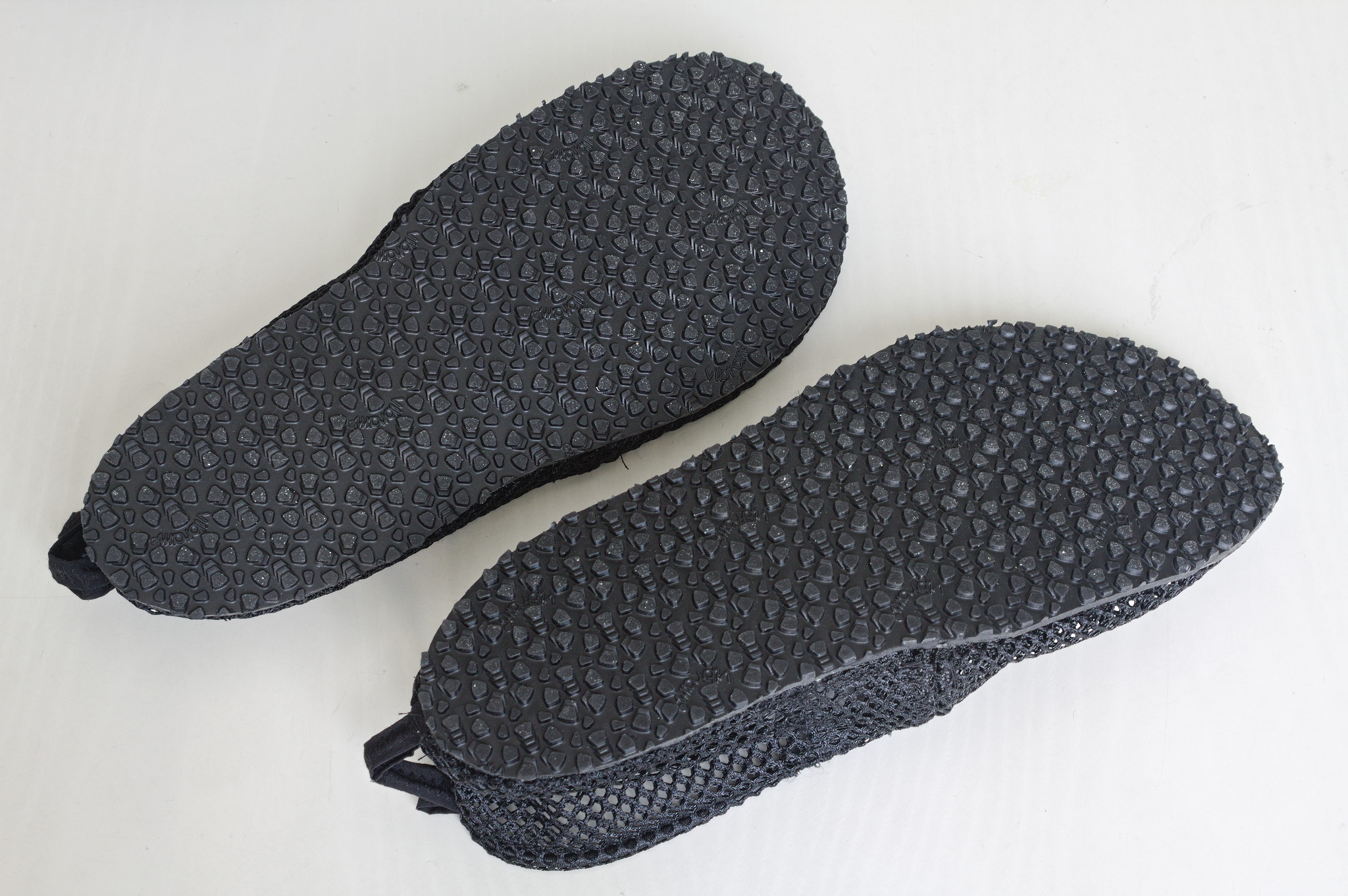 For the soles I may have gone a bit overboard with the vibram claw, but:
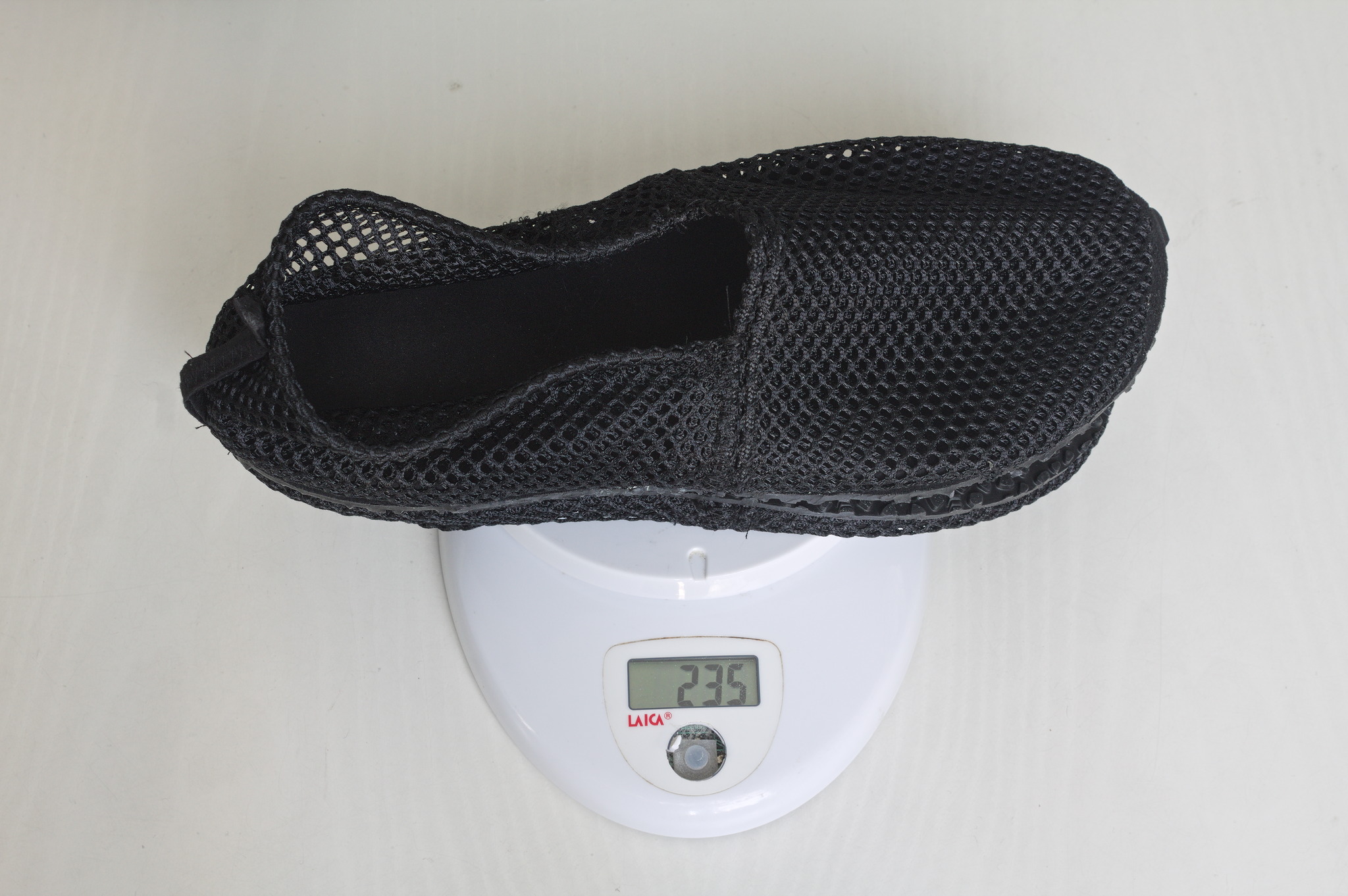 As for the finished weight, at 235 g for the pair I thought I could do better, but apparently shoes are considered ultralight if they are around 500 g? Using just one layer of mesh rather than two would probably help, but it would have required a few changes to the pattern, and anyway I don t really to carry them around all day.
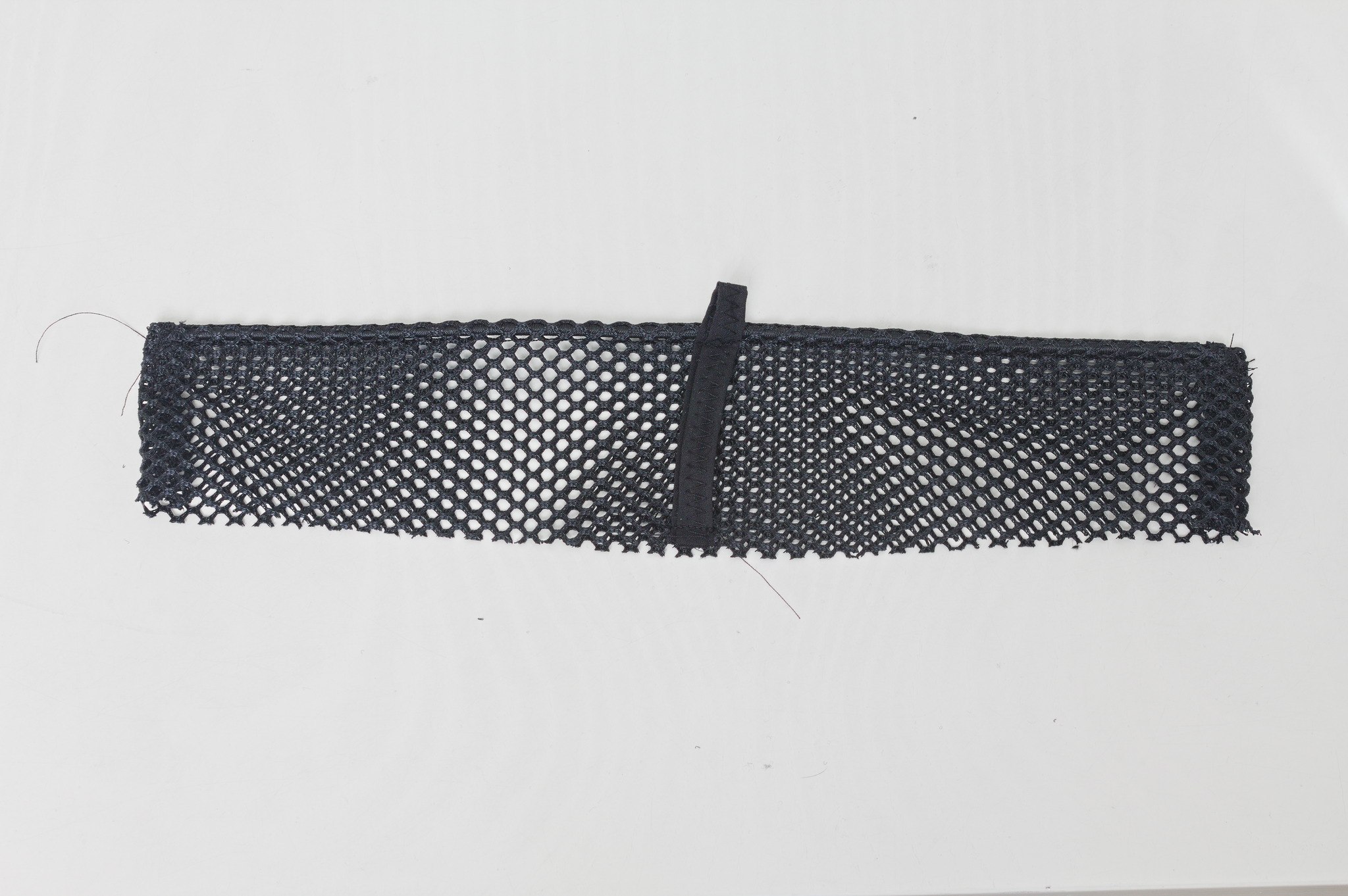 I ve also added a loop of fabric (polycotton) to the centre back to be able to hang the slippers to the backpack when wet or dirty; a bit of narrow webbing may have been better, but I didn t have any in my stash.
The
 (Edit 2023-05-10: This has now
 I hate going out to buy shoes. Even more so I hate buying home shoes, which is what I spend most of my life in, also because no matter what I buy they seem to disintegrate after a season or so. So, obviously, I ve been on a quest to make my own.
As a side note, going barefoot (with socks) would only move the wear issue to the socks, so it s not really a solution, and going bare barefoot on ceramic floors is not going to happen, kaythanksbye.
For the winter I m trying to make knit and felted slippers; I ve had partial success, and they should be pretty easy to mend (I ve just had to do the first mend, with darning and needle felting, and it seems to have worked nicely).
For the summer, I ve been thinking of something sewn, and with the warm season approaching (and the winter slippers needing urgent repairs) I decided it was time to work on them.
I already had a shaped (left/right) pattern for a sole from my hiking sandals attempts (a topic for another post), so I started by drafting a front upper, and then I started to have espadrille feeling and decided that a heel guard was needed.
As for fabric, looking around in the most easily accessible part of the Stash I ve found the nice heavyweight linen I m using for my Augusta Stays, of which I still have a lot and which looked almost perfect except for one small detail: it s very white.
I briefly thought about dyeing, but I wanted to start sewing NOW to test the pattern, so, yeah, maybe it will happen one day, or maybe I ll have patchy dust-grey slippers. If I ll ever have a place where I can do woad dyeing a blue pair will happen, however.
Contrary to the typical espadrillas I decided to have a full lining, and some padding between the lining and the sole, using cotton padding leftovers from my ironing board.
To add some structure I also decided to add a few rows of cording (and thus make the uppers in two layers of fabric), to help prevent everything from collapsing flat.
As for the sole, that s something that is still causing me woes: I do have some rubber sole sheets (see hiking sandals above), but I suspect that they require glueing, which I m not sure would work well with the natural fabric uppers and will probably make repairs harder to do.
In the past I tried to make some crocheted rope soles and they were a big failure: they felt really nice on the foot, but they also self-destroyed in a matter of weeks, which is not really the kind of sole I m looking for.
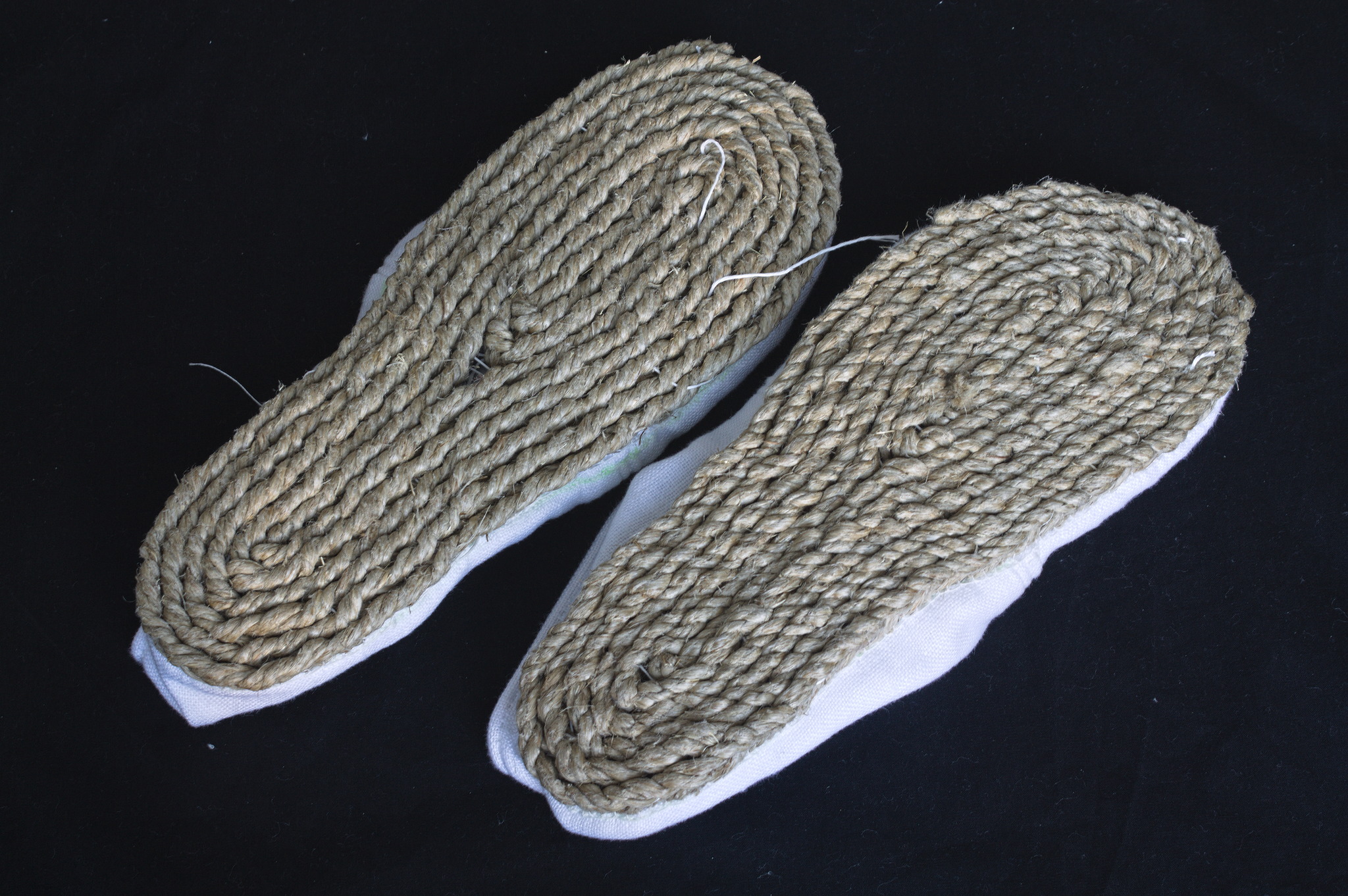 Now I have some ~ 3 mm twine that feels much harsher on the hands while working it (and would probably feel harsher on the feet, but that s what the lining and padding are for), so I hope it may be a bit more resistant, and I tried to make a braided rope sole.
Of course, I have
 This isn't a book review, although the reason that I am typing this now is
because of a book, You Are Not Alone: from the creator and host of
Griefcast, Cariad Lloyd, ISBN: 978-1526621870 and I include a handful of
quotes from Cariad where there is really no better way of describing things.
Many people experience death for the first time as a child, often relating to a
family pet. Death is universal but every experience of death is unique. One of
the myths of grief is the idea of the Five Stages but this is a
misinterpretation. Denial, Anger, Bargaining, Depression and Acceptance
represent the five stage model of death and have nothing to do with
grief. The five stages were developed from studying those who are
terminally ill, the dying, not those who then grieve for the dead person and
have to go on living without them. Grief is for those who loved the person who
has died and it varies between each of those people just as people vary in how
they love someone. The Five Stages end at the moment of death, grief is what
comes next and most people do not grieve in stages, it can be more like a
tangled knot.
Death has a date and time, so that is why the last stage of the model is
Acceptance. Grief has no timetable, those who grieve will carry that grief for
the rest of their lives. Death starts the process of grief in those who go on
living just as it ends the life of the person who is loved. "Grief eases and
changes and returns but it never disappears.".
I suspect many will have already stopped reading by this point. People do not
talk about death and grief enough and this only adds to the burden of those who
carry their grief. It can be of enormous comfort to those who have carried
grief for some time to talk directly about the dead, not in vague pleasantries
but with specific and strong memories. Find a safe place without distractions
and talk with the person grieving face to face. Name the dead person. Go to
places with strong memories and be there alongside. Talk about the times with
that person before their death. Early on, everything about grief is painful and
sad. It does ease but it remains unpredictable. Closing it away in a box inside
your head (as I did at one point) is like cutting off a damaged limb but
keeping the pain in a box on the shelf. You still miss the limb and eventually,
the box starts leaking.
For me, there were family pets which died but my first job out of university
was to work in hospitals, helping the nurses manage the medication regimen and
providing specialist advice as a pharmacist. It will not be long in that
environment before everyone on the ward gets direct experience of the death of
a person. In some ways, this helped me to separate the process of death from
the process of grief. I cared for these people as patients but these were not
my loved ones. Later, I worked in specialist terminal care units, including
providing potential treatments as part of clinical trials. Here, it was not
expected for any patient to be discharged alive. The more aggressive
chemotherapies had already been tried and had failed, this was about pain
relief, symptom management and helping the loved ones. Palliative care is not
just about the patient, it involves helping the loved ones to accept what is
happening as this provides comfort to the patient by closing the loop.
Grief is stressful. One of the most common
 After my father passed away, I brought home most of the personal items
he had, both at home and at his office. Among many, many (many, many,
many) other things, I brought two of his personal treasures: His photo
collection and a box with the 8mm movies he shot approximately between
1956 and 1989, when he was forced into modernity and got a portable
videocassette recorder.
I have talked with several friends, as I really want to get it all in
a digital format, and while I ve been making slow but steady advances
scanning the photo reels, I was particularly dismayed (even though it
was most expected most personal electronic devices aren t meant to
last over 50 years) to find out the 8mm projector was no longer in
working conditions; the lamp and the fans work, but the spindles won t
spin. Of course, it is quite likely it is easy to fix, but it is
beyond my tinkering abilities and finding photographic equipment
repair shops is no longer easy. Anyway, even if I got it fixed,
filming a movie from a screen, even with a decent camera, is a lousy
way to get it digitized.
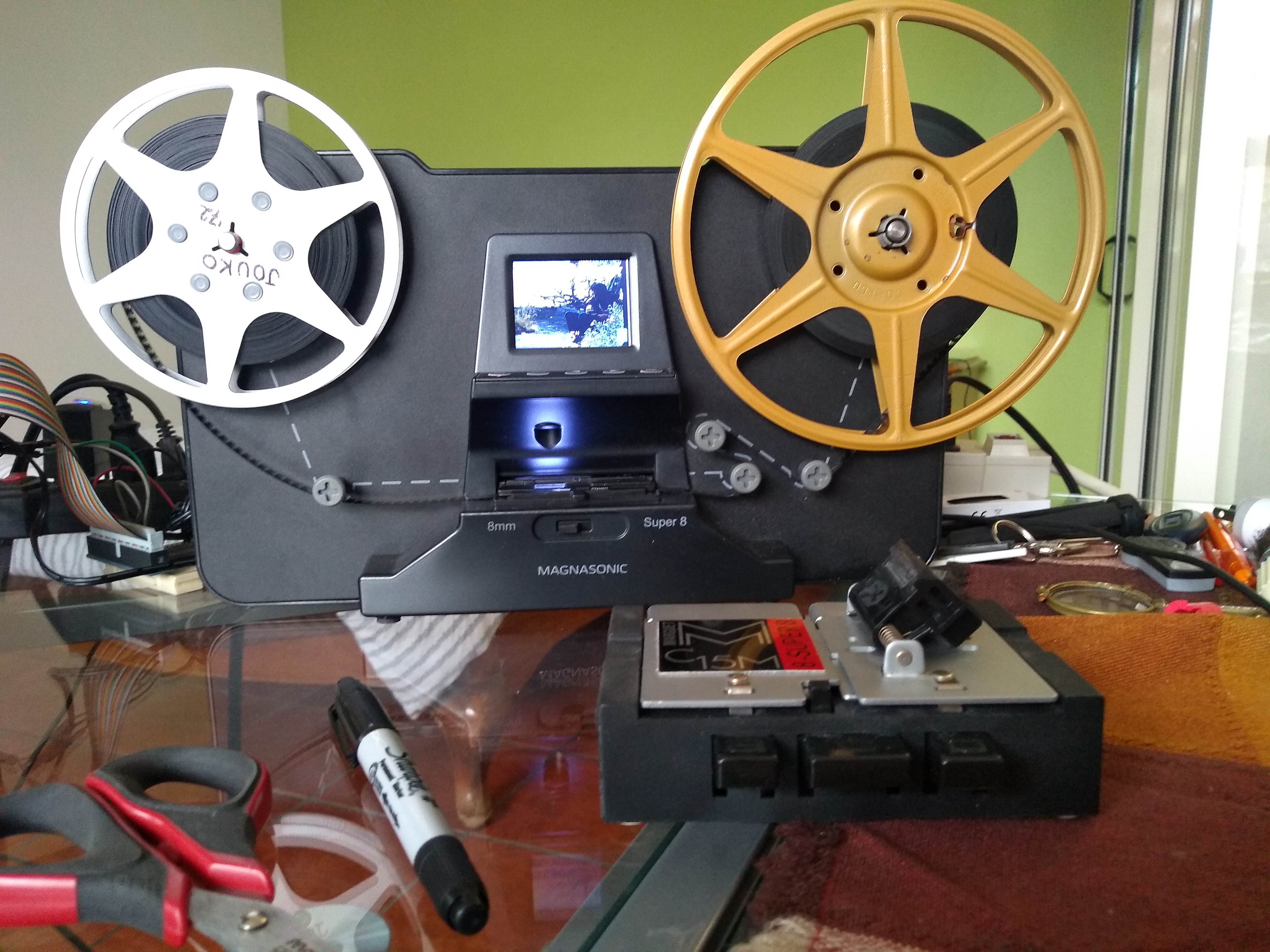
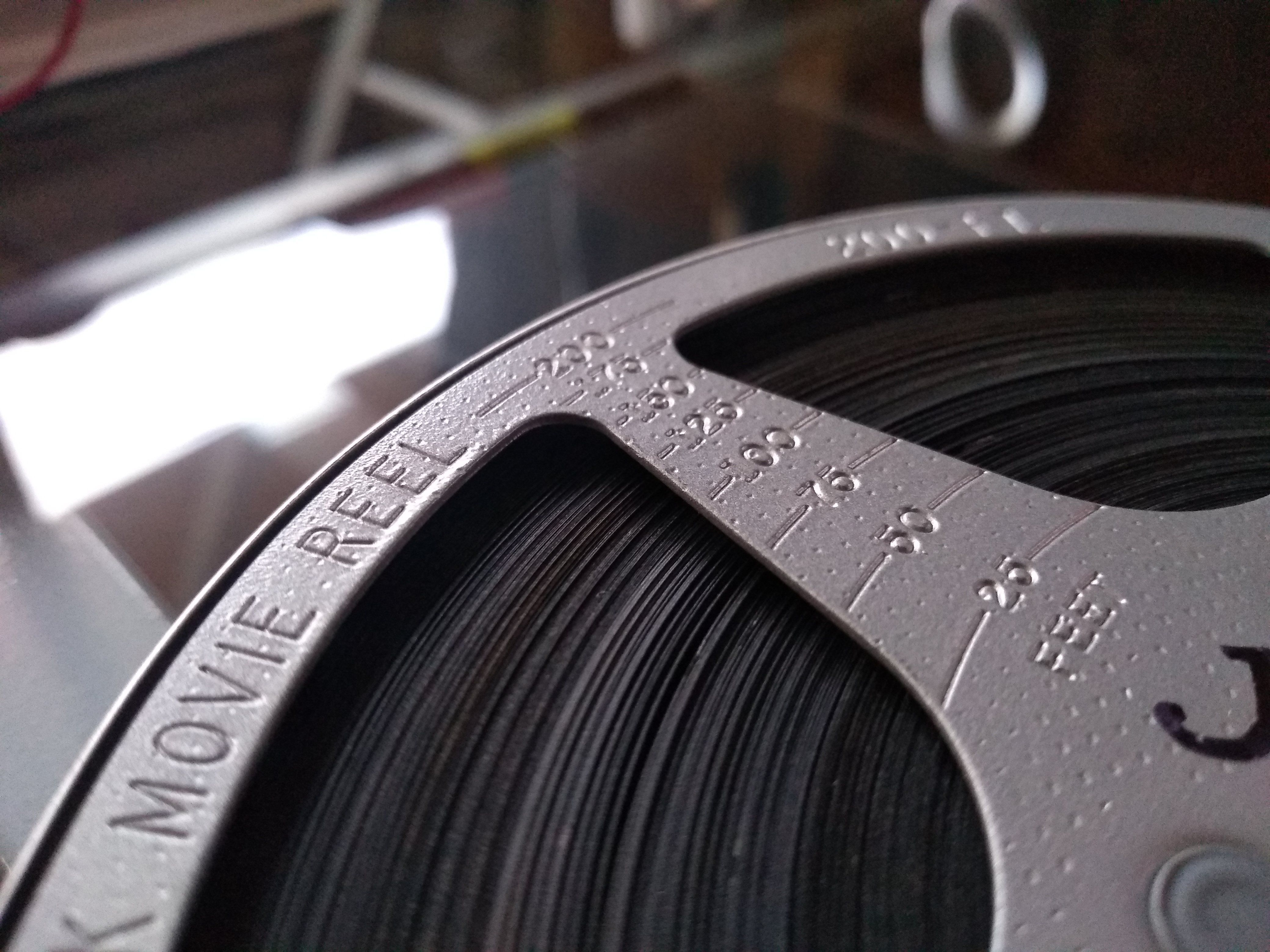
But almost by mere chance, I got in contact with my cousin Daniel, ho
came to Mexico to visit his parents, and had precisely brought with
him a 8mm/Super8 movie scanner! It is a much simpler piece of
equipment than I had expected, and while it does present some minor
glitches (i.e. the vertical framing slightly loses alignment over the
course of a medium-length film scanning session, and no adjustment is
possible while the scan is ongoing), this is something
that can be decently fixed in post-processing, and a scanning session
can be split with no ill effects. Anyway, it is quite uncommon a
mid-length (5min) film can be done without interrupting i.e. to join a
splice, mostly given my father didn t just film, but also edited a lot
(this is, it s not just family pictures, but all different kinds of
fiction and documentary work he did).

 May. Doing some rust stuff and maintenance of existing C++ code.
Doing something that I can feel improves the codebase is nice.

 Sometimes our booth also act as cloak room :). Ours was close to
the entrance door and we may be similar faces to folks. So people come
and drop their bags before they go to talks.
One thing I love about the such conference is that people have very
different hardwares that I never able to see otherwise. I remember KDE
booth had a Steam Value portable gaming board running KDE plasma. Then
a person have this eyeglass which act as a monitor. Then the usual
DJI drones but custom programmed. It was very lovely to meet and play
around with exotic hardwares.
 I acquired some unusual input devices to experiment with, like a CNC control
panel and a bluetooth pedal page turner.
These identify and behave like a keyboard, sending nice and simple keystrokes,
and can be accessed with no drivers or other special software. However, their
keystrokes appear together with keystrokes from normal keyboards, which is the
expected default when plugging in a keyboard, but not what I want in this case.
I'd also like them to be readable via evdev and accessible by my own user.
Here's the udev rule I cooked up to handle this use case:
 Way back at
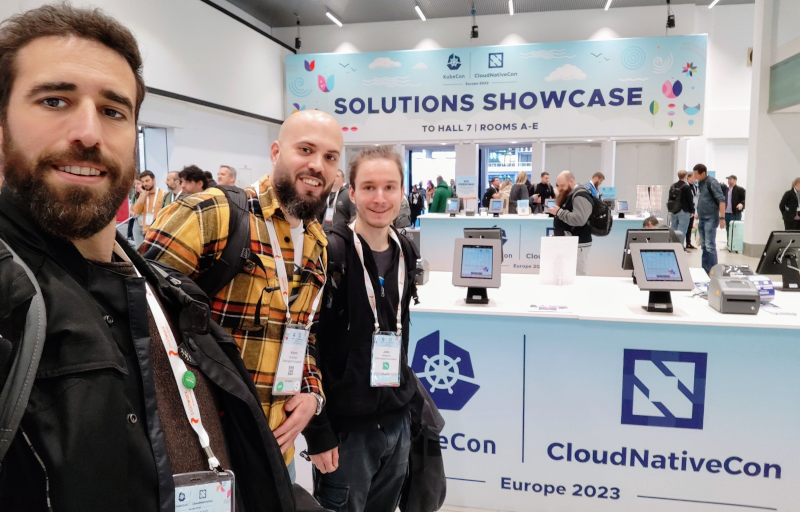
 This post serves as a report from my attendance to Kubecon and CloudNativeCon 2023 Europe that took place in
Amsterdam in April 2023. It was my second time physically attending this conference, the first one was in
Austin, Texas (USA) in 2017. I also attended once in a virtual fashion.
The content here is mostly generated for the sake of my own recollection and learnings, and is written from
the notes I took during the event.
The very first session was the opening keynote, which reunited the whole crowd to bootstrap the event and
share the excitement about the days ahead. Some astonishing numbers were announced: there were more than
10.000 people attending, and apparently it could confidently be said that it was the largest open source
technology conference taking place in Europe in recent times.
It was also communicated that the next couple iteration of the event will be run in China in September 2023
and Paris in March 2024.
More numbers, the CNCF was hosting about 159 projects, involving 1300 maintainers and about 200.000
contributors. The cloud-native community is ever-increasing, and there seems to be a strong trend in the
industry for cloud-native technology adoption and all-things related to PaaS and IaaS.
The event program had different tracks, and in each one there was an interesting mix of low-level and higher
level talks for a variety of audience. On many occasions I found that reading the talk title alone was not
enough to know in advance if a talk was a 101 kind of thing or for experienced engineers. But unlike in
previous editions, I didn t have the feeling that the purpose of the conference was to try selling me
anything. Obviously, speakers would make sure to mention, or highlight in a subtle way, the involvement of a
given company in a given solution or piece of the ecosystem. But it was non-invasive and fair enough for me.
On a different note, I found the breakout rooms to be often small. I think there were only a couple of rooms
that could accommodate more than 500 people, which is a fairly small allowance for 10k attendees. I realized
with frustration that the more interesting talks were immediately fully booked, with people waiting in line
some 45 minutes before the session time. Because of this, I missed a few important sessions that I ll
hopefully watch online later.
Finally, on a more technical side, I ve learned many things, that instead of grouping by session I ll group
by topic, given how some subjects were mentioned in several talks.
On gitops and CI/CD pipelines
Most of the mentions went to
 On etcd, performance and resource management
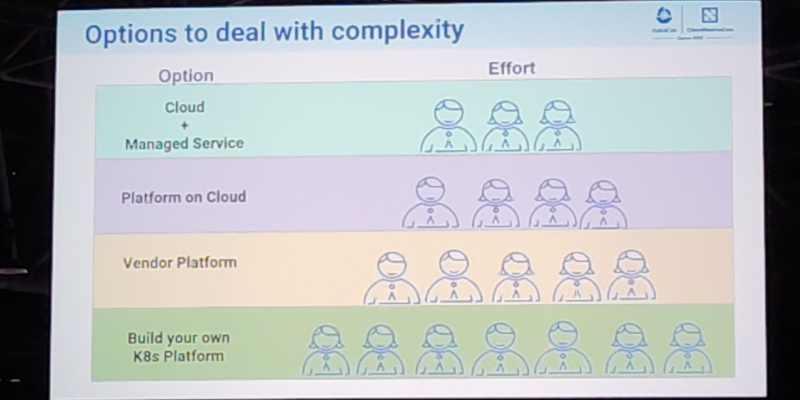
I attended a talk focused on etcd performance tuning that was very encouraging. They were basically talking
about the
 On jobs
I attended a couple of talks that were related to HPC/grid-like usages of Kubernetes. I was truly impressed
by some folks out there who were using Kubernetes Jobs on massive scales, such as to train machine learning
models and other fancy AI projects.
It is acknowledged in the community that the early implementation of things like Jobs and CronJobs had some
limitations that are now gone, or at least greatly improved. Some new functionalities have been added as
well. Indexed Jobs, for example, enables each Job to have a number (index) and process a chunk of a larger
batch of data based on that index. It would allow for full grid-like features like sequential (or again,
indexed) processing, coordination between Job and more graceful Job restarts. My first reaction was: Is that
something we would like to enable in