Search Results: "angel"

10 July 2010

John Goerzen: Radios

Those of you that follow me on twitter or identi.ca know that I ve been working on my amateur radio license. This started a few weeks ago when Jacob got excited about radios, and must have infected me too. I ve been studying and learning a bit. I had called a local ham (amateur radio operator) I know from church. He gave me one of his apparently newer radios, a 1981 2m Icom IC-22U 10W unit. That was great and got me all the more interested. Then last Friday, a couple of local hams came over to check out that radio and see what repeaters I could hit with it. They discovered a handheld 5W unit could hit at least one local repeater, and this 10W unit could too. One of them also had an HF rig in his pickup, and it was fun to stand out in the driveway and listen to conversations in Michigan and Utah. That evening erased any doubt in my mind about whether or not I would become a ham and it s a bit hard to believe it was only a week ago. I had been studying for the Technician-class amateur radio license, the lowest of three levels of licensing. One of the guys that came over Friday gave me a book to study for the General license, the intermediate level. It warned me to allow a month to prepare, and here I was planning to take the exams Tuesday. I picked it up Sunday, so really got 2 days of studying in. Tuesday I drove to Independence, KS, about 2.5 hours away for the exams. I went so far primarily because the Wichita exams weren t going to be offered until mid-August and I didn t want to wait that long. I found a fun group of people in Independence. I hadn t expected to have fun taking exams, but really, I did. We visited before the exams, and they wanted to know where I was from, of course. When it was time to take the exams, I guess I sort of surprised them by already having my FRN (FCC registration number) and photo copies of my IDs with me. One of them said, You re going to have no trouble with this, are you? I took the Technician exam, checked my work carefully, and turned it in to be graded. They checked it twice and had two people looking over it before they announced I passed with all 35 questions correct. I should note at this point that I was the only person taking the exams that night. Anyhow, on to the General exam. Same drill. It was harder, of course, and I turned it in to be graded. One of them looked at the test, looked at me, put on a grave face and said, Uh oh, not one right. I knew he was joking and they announced I passed THAT one with 100% correct as well. I hadn t expected that, and neither had they. That was what I planned to do, but they said that nobody had ever walked in, taken two tests, and had a score like that and pretty much insisted I try taking the Amateur Extra exam as well. I said I haven t studied for it at all and really doubt I could pass, but eventually went ahead and took that one too. I didn t pass, but I don t think they d have wanted to let me leave without trying. After the paperwork was done, they invited me to hang around and chat with their group that was meeting next door for a bit. I did, and drove home. Then was the frustrating part of the week: waiting for my license. I can t transmit until the FCC issues my license, even though I had passed the exam. My handheld radio arrived later in the week, and of course I still couldn t do much with it. Finally the FCC posted my license late yesterday so I was able to talk to people. It s been fun and I look forward to doing more. I was able to talk to people 55 miles away while driving, and with suitable equipment at home should be able to do much more than that. Several of the people I talked to were offering me tips. I ve never seen a group of people so eager to help out someone new. It s an amazing community and I think Jacob and Oliver will enjoy it one day too.

5 July 2010

Russell Coker: Is Lebara the Cheapest Mobile Phone company in Australia?

My parents have just got a mobile phone with a Lebara pre-paid SIM [1]. Lebara advertise free calls to other Lebara phones but have a disclaimer that they charge a 25 cent flagfall and charge 15 cents per minute after the first 10 minutes which is still cheaper than most mobile calls although not as good as some other mobile telcos such as Three that offer completely free calls to other phones with the same provider. Lebara s main selling point seems to be cheap international calls, half a cent per minute to Thailand, 1 cent per minute to Hong Kong, Indonesia and Singapore and 3 cents per minute to Bangladesh and China. Strangely calls to the US are 5 cents per minute and to Japan are 7 cents per minute, I would have expected that calling developed countries would have been cheaper due to better infrastructure and more competition. The trend of more developed countries having less expensive calls seems clear, some very undeveloped countries cost as much as $2 per minute! Note that all these rates are for calls to land-lines (calls to mobiles cost more) and are based on the new prices that apply after the 13th of July (it s slightly cheaper for the next 8 days). It seems really strange that calls to land-lines in Australia cost 15 cents per minute which is more than twice as much as calls to the US and Japan. In theory it would be possible to redirect calls to Australian land-lines via the US or Japan to save money. In practice it s probably possible to do so by setting up a PBX in Thailand, Hong Kong, or Singapore. But what I think is most noteworthy about Lebara is the fact that the call credit lasts for 90 days (this is in the FAQ). The cheapest top-up is $10 so therefore the minimum cost for mobile phone service is $40 per annum. Given the importance of owning a mobile phone to job seekers I think that with the current state of the economy there are a lot of people who could do with such a phone. If anyone knows of Australian mobile phones that provide cheaper calls to other countries or a cheaper minimum annual fee then please let me know via the comments section. For international readers, all prices are in Australian cents which are worth about 85% as much as US cents.

30 June 2010

Dirk Eddelbuettel: Rcpp 0.8.3

A new version 0.8.3 of Rcpp is now CRAN and in Debian. It comes about three weeks after the 0.8.2 release. And even though we promised to concentrate on documentation, it contains a raft of new features: The main thing here is Rcpp sugar for which we also have a new (seventh !!) vignette Rcpp-sugar. As a quick example, consider this simple C++ function that takes two vectors from R and creates a new one conditional on the relative values:
export "C" SEXP foo( SEXP xs, SEXP ys)  
    Rcpp::NumericVector x(xs), y(ys);
    int n = x.size();
    Rcpp::NumericVector res( n );
    double xd = 0.0, yd = 0.0 ;
    for( int i=0; i<n; i++) 
        xd = x[i];
        yd = y[i];
        if( xd < yd ) 
            res[i] = xd * xd ;
          else  
            res[i] = -( yd * yd);
         
     
    return res ;
 
Now, if you use R, you really want to writes this more compactly. And now you can, thanks to Rcpp sugar:
extern "C" SEXP foo( SEXP xs, SEXP ys) 
    Rcpp::NumericVector x(xs), y(xs);
    return ifelse( x < y, x*x, -(y*y));
 
Same great taste, but much less filling! More details are in the Rcpp-sugar vignette. Doug Bates is already a fan of this and is employing it in the lme4a development version of the well-known lme4 package. The full NEWS entry for this release follows below:
0.8.3   2010-06-27
    o	This release adds Rcpp sugar which brings (a subset of) the R syntax
        into C++. This supports : 
         - binary operators : <,>,<=,>=,==,!= between R vectors
         - arithmetic operators: +,-,*,/ between compatible R vectors
         - several functions that are similar to the R function of the same name:
        abs, all, any, ceiling, diff, exp, ifelse, is_na, lapply, pmin, pmax, 
        pow, sapply, seq_along, seq_len, sign
        
        Simple examples :
        
          // two numeric vector of the same size
          NumericVector x ;
          NumericVector y ;
          NumericVector res = ifelse( x < y, x*x, -(y*y) ) ;
        
          // sapply'ing a C++ function
          double square( double x )  return x*x ;  
          NumericVector res = sapply( x, square ) ;
        
        Rcpp sugar uses the technique of expression templates, pioneered by the 
        Blitz++ library and used in many libraries (Boost::uBlas, Armadillo). 
        Expression templates allow lazy evaluation of expressions, which 
        coupled with inlining generates very efficient code, very closely 
        approaching the performance of hand written loop code, and often
        much more efficient than the equivalent (vectorized) R code.
        
        Rcpp sugar is curently limited to vectors, future releases will 
        include support for matrices with sugar functions such as outer, etc ...
        
        Rcpp sugar is documented in the Rcpp-sugar vignette, which contains
        implementation details.
    o   New helper function so that "Rcpp?something" brings up Rcpp help
    o   Rcpp Modules can now expose public data members
    o   New classes Date, Datetime, DateVector and DatetimeVector with proper
        'new' API integration such as as(), wrap(), iterators, ...
    o   The so-called classic API headers have been moved to a subdirectory
        classic/ This should not affect client-code as only Rcpp.h was ever
        included.
    o   RcppDate now has a constructor from SEXP as well
    o   RcppDateVector and RcppDatetimeVector get constructors from int
        and both const / non-const operator(int i) functions
        
    o   New API class Rcpp::InternalFunction that can expose C++ functions
    	to R without modules. The function is exposed as an S4 object of 
    	class C++Function
As always, even fuller details are in Rcpp Changelog page and the Rcpp page which also leads to the downloads, the browseable doxygen docs and zip files of doxygen output for the standard formats. A local directory has source and documentation too. Questions, comments etc should go to the rcpp-devel mailing list off the R-Forge page

26 June 2010

John Goerzen: Perfect use for broken technology: Give it to a 3-year-old

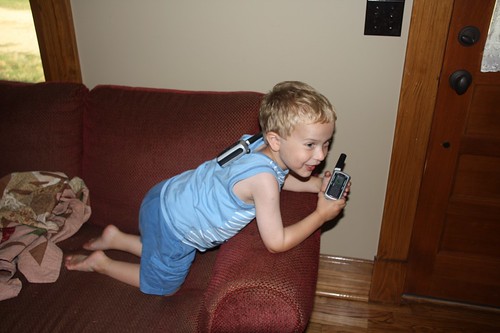
I last wrote about Jacob s new computer back in April. He has had fun with it, but is still a little young to appreciate it a whole lot. It s a fun thing, but not yet a favorite. Yesterday, though, I introduced Jacob to several bits of technology that really got him excited. We have a pair of FRS radios. These are low-power Family Radio Service devices, with a maximum practical range of maybe a mile, and are about as cheap a radio as you can buy that still has any sort of practical use. Anyhow, the receive circuit on one broke. I ordered a pair of TriSquare digital radios to replace them, which are incompatible. So, I have two radios, one with a broken receive circuit. What to do? GIVE THEM TO JACOB! I explained that one radio is the talking radio (the broken one) and the other is the listening radio. Then I demonstrated how I could use the talking radio and he could hear me on the listening radio. That was great fun. I encouraged him to go to the kitchen and see if he could still hear me in the next room. Cackles of laughter gave me the answer. Then he discovered the call button would make the other radio sound like a telephone, which was all the more exciting. He and I took turns with the talking and listening radios. Then I used the belt clip and attached the listening radio to the back of his shirt. I pointed out to him that this was sort of like a loudspeaker. Anything he said into the talking radio while holding town the transmit button would sound louder because it would also come out the radio on his back. Much cackling followed, and he ran around the house yelling MEOW! at the top of his lungs into the radio, then saying, Dad, did you hear THAT? It was VERY loud! He has spent hours listening to himself, listening to me, and generally enjoying life with radios. IMG_4218.JPG Jacob s second discovery was a cassette tape player. Awhile back, Terah rescued an old cassette tape player that was being thrown out, and bought a few 15-cent tapes for Jacob at a thrift store. The idea is that we can just let him play, and not care if he smashes it to bits. He enjoys it, but like the computer, didn t really get excited about it. Until yesterday, when we had this conversation: Me: Jacob, would you like to record your own voice on a tape? Jacob: (excited) Sure! Me: OK, bring me your tape recorder. Jacob: (exasperated) Dad, it s not a tape RECORDER. It s a tape PLAYER. Me: Jacob, it is a tape player, but it s also a tape recorder too. Jacob: (paused for about 5 seconds, then ) Ooooo! That is silly! (scampers off to find it) He found it, and I helped him put some tape over the write-protect tab on a cassette he had. Then he recorded his voice. He eventually figured out the stop, rewind, play, and record buttons with my help. But he s still confused: while he s recording, why doesn t he hear anything? Our first recording had me asking him some questions, and then telling him to press the stop button when he was done. He listened to it dozens of times, and each time my recorded voice asked a question, he answered it a little before his recorded voice did. And each time my recorded voice told him to press the stop button, he would say, I don t want to while his recorded voice asked is this it? He pretty well understands what the radios are about, but doesn t really get the tape recorder yet. Nevertheless, it has just become a far more exciting device in his eyes. Terah has been rolling her eyes at me today as I ve been trying to think up what other broken or old bits of technology we might have that Jacob would enjoy. My latest plan involves adapting his broken old batte
ry-operated fan into some sort of lego-related car. I think he d have fun working on it with me too. All this reminds me of things I did as a kid. My dad worked with a semi-retired man (Herb Miller) that loved to build weird contraptions. One of my favorites was a ball shooter made out of an old vacuum cleaner with a cardboard tube attached to the output spot. I also remember building a motorized car out of an erector set that sort of bent the rules at a school science class project. The idea was to launch a vehicle down a ramp and person whose vehicle went the farthest got a prize. There were no rules against using batteries and a scavenged motor to get that extra little edge over gravity. My car was the only one to manage to crash into the wall on the far side of the gymnasium. The science teacher, in a bit of fast thinking perhaps, announced my car the winner of the electric division. For some reason, I seem to be poised to encourage this sort of thinking in Jacob

25 June 2010

Anand Kumria: Beginning Django Development

Oddly, I have had four different people ask me about the best way to begin a Django project or setup their system to make it easy to develop with Django. Since I've now given my response via email so many times, I figure I might as well broadcast it and hopefully this will help others as well My assumptions: What we will do is create a private binary directory and another Python modules. Then take a checkout of the two most important Django projects, and make them work. First: create your user
$ sudo adduser newbie
$ ssh localhost -l newbie
$ whoami
newbie
Then we want to create some local bin and lib directories. First the binary directory $ mkdir ~/bin # On Ubuntu/Debian, this will automatically be in your PATH the next time you login And now a local directory for our various libraries
$ mkdir -p ~/lib/python
$ echo "PYTHONPATH=~/lib/python:" >> ~/.bashrc
$ echo "export PYTHONPATH" >> ~/.bashrc
This will add that directory to our Python path. If you happen to also use another language you can put things into ~/lib/ruby, ~/lib/perl as appropriate
$ mkdir ~/Projects
$ cd ~/Projects
Here is where we will store copies of upstream software. What is the reason for using the repositories rather than packages? This allows us to checkout specific versions to match what our clients might be using. Or test things against newer versions of the upstream project. First, let's setup Django. I tend to use git by default, especially if the upstream is using Subversion. If they are using Mercurial or Bazaar, I use those directly.
$ git svn clone -s http://code.djangoproject.com/svn/django/
Initialized empty Git repository in /home/newbie/Projects/django/.git/
Using higher level of URL: http://code.djangoproject.com/svn/django => http://code.djangoproject.com/svn
r1 = 5cda37203ffa6ea83da2958a95c377984482877f (refs/remotes/trunk)
	A	django-docs/images/flatfiles_admin.png
	A	django-docs/images/users_changelist.png
	A	django-docs/model-api.txt
	A	django-docs/build.py
	A	django-docs/db-api.txt
	A	django-docs/writing-apps-guide-outline.txt
	A	django-docs/templates.txt
r2 = b8249ac45e2154933b9649fd8181d5769e31c9fc (refs/remotes/trunk)
	A	django/utils/feedgenerator.py
	A	django/utils/datastructures.py
[...]
r13399 = f3902c67a3b8788de2145899e435a394c512b455 (refs/remotes/releases)
	M	tests/regressiontests/m2m_through_regress/tests.py
r13400 = cd72207306a5a4eecdf07f65c109f37c8317ed81 (refs/remotes/trunk)
$
Now we have Django, push it into our python path
$ cd ~/lib/python
$ ln -s ~/Projects/django/django/
$ python
Python 2.6.5 (r265:79063, Apr 16 2010, 13:57:41) 
[GCC 4.4.3] on linux2
Type "help", "copyright", "credits" or "license" for more information.
>>> import django
>>> django.VERSION
(1, 2, 1, 'final', 0)
Now, let's do the same for South. South is a database migration helper for Django. These are the two things you want to have in any Django at a minimum. There are also plenty of other amazing things like haystack, piston, satchmo, etc. You can follow the same recipie for them too.
$ cd ~/Projects
$ hg clone http://bitbucket.org/andrewgodwin/south/
destination directory: south
requesting all changes
adding changesets
adding manifests
adding file changes
added 802 changesets with 1340 changes to 183 files (+1 heads)
updating to branch default
143 files updated, 0 files merged, 0 files removed, 0 files unresolved
$ cd ~/lib/python
$ ln -s ~/Projects/south/south
$ python 
Python 2.6.5 (r265:79063, Apr 16 2010, 13:57:41) 
[GCC 4.4.3] on linux2
Type "help", "copyright", "credits" or "license" for more information.
>>> import south
>>> south.__version__
'0.7.1'
Finally, we want to be able to create Django projects. There is a great helper called django-admin that will do this. Let's put it into our path
$ cd ~/bin
$ ln -s ~/Projects/django/django/bin/django-admin.py
$ hash -r
That last statment will cause your interpreter to re-read PATH and make anything new available for execution. Now, you should go ahead and create your projects. There are a variety of ways to do this. However what I like to do is keep Django applications separate from the Django project. That way, they can easily be re-used if required. So, for a project called 'foo', we might have
$ mkdir -p ~/Work/foo
$ cd ~/Work/foo
$ mkdir foo.example.com
$ mkdir templates
$ mkdir media
$ mkdir <individual apps>
For each individual app, put them into the Python library. And you then have your re-usability from within Django. For a application called 'bar', you would do:
$ cd ~/Work/foo
$ django-admin.py startapp bar
$ cd ~/lib/python
$ ln -s ~/Work/foo/bar
And now, in your Django foo.example.com setting.py's file you can put 'bar' as one the installed applications and things will Just Work Obviously there are many way to slice this particular mango, but I've found that this works pretty well for me. You can spruce it up by revision controlling each directory in your project (I do) and also take advantage of things like virtualenv and Fabric to make deploying just as easy as developing. But I'll leave those topics until a later date

23 June 2010

John Goerzen: Thyroid Surgery & The Boys

Terah has been having thyroid troubles for some time now (you can read about it on her blog). Today was the day for it to be removed. This procedure is somewhat delicate. Running through each half of the thyroid are nerves that control the vocal chords. Also embedded in each half are tiny parathyroids, which regulate the body s calcium levels. Losing either of these things in one half of the thyroid is no big deal, but losing either of them entirely can be serious. For this reason, the general plan was for Terah to have half of her thyroid out, unless it was obvious in surgery that it would be a health risk to leave the other half in, or that it was obvious that the removal of the first half had successfully preserved the nerves and parathyroids. Jacob and Oliver spent the night with my parents last night an event that Jacob was incredibly excited about. I came home last night to find him running in circles in the kitchen. I had this conversation with him: Me: Jacob, are you excited about something? Jacob: Yes! Me: What are you excited about? Jacob: I don t know. (He usually says this when he doesn t want to say, but I figured it was his pending overnight stay) .. a minute later .. Jacob: I am excited about something blue. Me: [genuinely confused] Hmmm . I don t know what blue thing you might be excited about. Can you tell me? Jacob: A blue house! Me: Oh, is it grandma and grandpa s blue house? Jacob: YEAH! Now you ve got it! I m so excited! He was still running in circles the whole time. So Jacob and Oliver left, and Terah and I worked on the house. This morning, we arrived at the hospital at 6:15 to check in. At usual, the staff there was incredibly friendly and helpful. And two of them made connections: one of the intake nurses had taught at the college where my dad works, and another nurse knows his cousin. Living where we do, we were not surprised by this. (You sort of wonder how many connections you ll make at a place like this.) The surgery area is right next to the ER, and people waiting for people in surgery normally wait there. Having got my fill of the TV playing infomercials for the morning in the 5 minutes we sat there, I arranged to wait in the cafeteria (which is large and quiet in the middle of the morning) and they just called my cell phone when Terah was done. I was with Terah for as long as possible, then ate breakfast in the cafeteria, walked over to the doctor s office next door for my weekly allergy shots, and then waited with my Kindle in the cafeteria. They called, and a little while later the surgeon explained how the surgery went: far easier than they had expected. He was confident the left side surgery went well, and so took out the whole thing and was confident the right side removal also went well. I went to wait in Terah s room for her to exit recovery, and our pastor and his daughter showed up to wait too. When she arrived, she was very tired but said a few words before going to sleep. Our pastor gave the two of us a minute before coming in, and read a selection from Psalm 139 before leaving. I then mostly waited with my Kindle some more until she woke up. I brought back some lunch from the cafeteria, and eventually Terah woke up. We chatted just a bit (it was mostly me talking). I went to pick up the boys, and brought them to the hospital. They were glad to see her. But then, the dilemma: I had promised Jacob that we would eat in the hospital restaurant , but it was only 4 and they didn t start serving supper until 5. Jacob somehow remembered that we went exploring in the hospital when Oliver was born 11 months ago, and had been talking about doing this already. So off we went: Jacob sometimes helping me push Oliver s stroller, sometimes running on ahead, enjoying himself and spelling out letters on big signs on the walls. We got a whole bunch of smiles and compliments. Oliver was laughing, and Jacob was happy and well-behaved. We went towards the cafeteria at 4:30 and I got Jacob some of their free lemonade. He was complaining about not eating, and I remembered that he noticed a nurse walking out of there with an ice cream cone while we were exploring. Obviously the soft-serve machine was already up, so I got him and me ice cream cones. I m sure he ll be talking about the hospital ice cream for days. Anyhow, it took him about half an hour to eat it, so it was perfect timing for supper. We ate, went back to see Terah, and then headed out. I do believe that these may be the only two boys I know of that actually think of a hospital as a fun place to go. It wouldn t surprise me at all if Jacob asks to go back there. Both boys fell asleep on the way home. Jacob, unfortunately, had a rather significant accident, possibly due to the large amounts of free lemonade he insisted on drinking. And it was hot outside. So I carried Jacob in, and he sort of groggily looked at me. I suggested he take a nap on the rug in the kitchen (his room is upstairs) while I bring Oliver in. He sort of collapsed onto the rug and was back asleep a few seconds later. I got Oliver in, and brought down new shorts and an overnight pullup for Jacob. Put them on, had him use the toilet, and got him in bed. By that time, Oliver was awake and hungry. So I got him fed, and neither one of them quite went to sleep easily but they did. I watered the flowers and garden, did a load of laundry, etc. Jacob had been worried about the surgery, though had trouble verbalizing it. I think he s better about it now, though some of his trouble falling asleep tonight was probably still worry about that. Hopefully he ll be better once Terah is back home, which should hopefully be tomorrow.

22 June 2010

Gerfried Fuchs: Smashing Pumpkins

"Today is the greatest day I've ever known," this is the line that is spinning around today in my head because of many little things that happened. And it's this time of the month anyway for putting up another band feature into this little blog of mine. So here they are, one of the great bands of the nineties, and like many of them, back after a break again: The Smashing Pumpkins, and these are their featured songs: Hope you enjoy this small distraction once a month. I hope I can keep up with it, it's not a question of material, there are too many great bands out there that I'd like to share with others. :)

17 June 2010

Thomas Koch: NoSQL summer at lake constance

Have you already started to try out these new storage/database things commonly referred to as NoSQL? (For you google-bot, I'm talking about CouchDB, Cassandra, HBase, Hadoop, Hypertable, MongoDB, Tokyo Cabinet, etc). Well, it's one thing to install and use them but another to understand all the computer science background about them.
Therefor many developers around the world thought to make this summer a NoSQL summer. Local meetings are held in many cities: London, Los Angeles, New York, Paris, lake constance ... :-)
If you like to meet for a beer and learn and discuss about some of the hottest stuff in computing, then come around! Please select the dates when you can join and the papers you'd like to discuss. You can subscribe to email announcements or ical and rss feeds at the lake constance nosql summer page.

14 June 2010

John Goerzen: Camping with 2 Boys

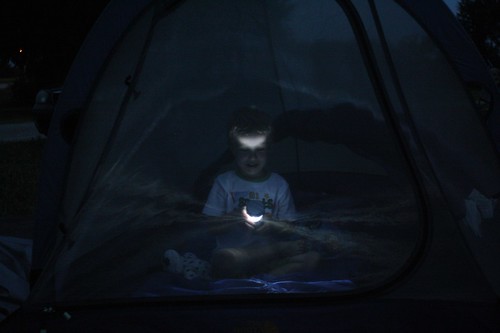
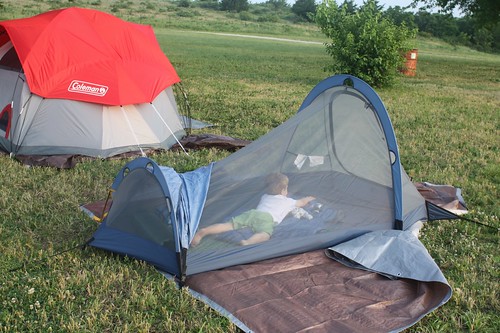
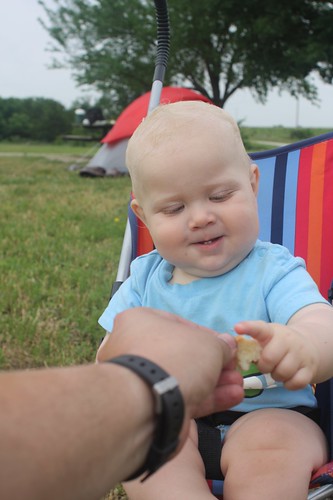
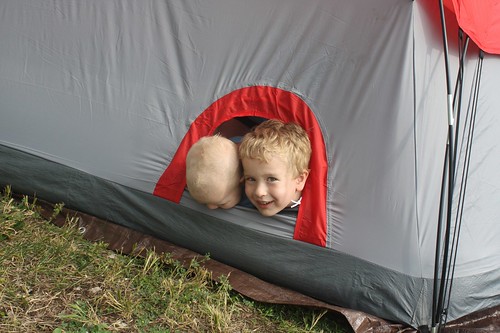
Friday I took the day off for us to go camping. Due to the birth of Oliver, our last time camping was in 2008. Back then, Terah had asked me what I wanted for father s day, and I suggested camping. Except when she was pregnant last year (and then Oliver was little), we have sort of had a standing plan to go camping twice a year: around father s day and my birthday. She says that s way more camping in a year than anyone needs. Anyhow, Jacob doesn t remember the last time we went camping; he was not quite 2 at the time. I explained that we would sleep in tents, and he d get one just his size. He laughed at that. Then I explained that he would get a bag to sleep in, and he thought that was hilarious. He kept talking about tents and even more so about sleeping bags until he actually got to be in one. It seems like each time we go camping, we wind up somewhere else. We ve camped at Kanoplis Lake and Marion Park and Lake in the past few years. But this time we went to Cedar Valley Reservoir near Garnett, KS. It was a nice place to be, with some wilderness camping areas far from any RV hookups (though right next to a gravel driveway where we could park). Almost as soon as we got out of the car, Jacob found a partially-burned stick left in a fire ring. So of course his hands were black pretty quick. He kept track of that stick the whole time we were there, and used it for everything he could think of. His favorite use, though, was at the lake to splash water: 2010-06-11 15.20.21.jpg The lake really was his favorite feature. He loved to throw rocks and sticks in it with me, to splash himself, and to stick his feet in. Oh, and to splash me. IMG_4057.JPG The pier was also a great thing for him he at first thought it was a boat, then really wanted to go. I made him hold my hand the whole time, and he liked walking on it. But he was frustrated that he couldn t reach the water. Somehow, Jacob acted as if he could sit in the hot sun for hours, just making small splashes with a stick. I, on the other hand, felt the 90-degree heat strongly, and eventually we found a shady spot to play in the lake. Oliver enjoyed crawling around on a blanket or on the grass. Though Terah put a stop to that after she noticed that he came across a pile of fish heads and was about to reach for one and put it in his mouth. We cooked over a campfire Friday night and Saturday morning. It took me a lot longer to start a fire than normal. Part of the problem was that there had been a lot of rain in the area, and it was humid, so there was little kindling to be found. Plenty of larger pieces of wood, so once the fire got going, it burned nicely. We cooked brats, brought along some homemade bread, had grilled foil-wrapped potatoes, and had stir-fry vegetables. Oliver got to eat with us too, of course: IMG_4022.JPG Terah is a big believer in smores, so after supper we made some smores Jacob predictably got sticky from the marshmallows and chocolate. Jacob started asking when I d set up the tent almost as soon as he found his stick. All afternoon he kept asking. Finally we got it set up, and of course he was so excited that he played inside it for an hour before he fell asleep. Terah had bought a $4 lantern at Walmart to give to him to use in his tent. I told him that there would be a surprise lantern in his tent for him to use. And he loved his lantern. It could turn on, off, and flash red. At one point he asked me, Dad, do you have a surprise lantern too? No, I will just use my flashlight. He looked a bit sad about that. For about 5 seconds. Then he turned on his lantern again. Here he is with it, still playing happily about 2 hours after his bedtime: IMG_4100.JPG And in the morning, of course he was still wanting that, but also wanted to play with his digital camera (a kid s version that also has a simple game or two on it). Without leaving the tent, of course. IMG_4105.JPG Oliver was getting hungry while we worked on breakfast, so I gave him some bread to munch on. IMG_4119.JPG We used our cast iron skillet to fry some bacon for breakfast. Then Terah made some pancakes in the skillet (with the bacon grease). Greasiest and best pancakes ever. After that, we had some fried and scrambled eggs. After that, we had more smores (I wasn t kidding about Terah being a big believer in them.) Jacob decided that he wanted to play in the other tent. He enjoyed playing with Terah, Oliver, and the air mattress (that Terah appreciated as much as I thought it took up too much space in the car). There s a little window on the back that can open to a screen or open completely. Jacob and Oliver enjoyed looking out of it while open. Or rather, Jacob enjoyed that, while Oliver enjoyed licking it. IMG_4161.JPG I had my Droid with me to keep an eye on the weather. The forecast for several days had called for a 20% chance of storms on Saturday. I checked Saturday morning at 7, and it still called for 20% chance of storms after 1PM. We decided we d pack up our tents after breakfast so we could stay as long as we liked or leave on short notice if we preferred. Clouds seemed to be building, though, so I checked the forecast again at maybe 9. Now it called for 60% chance of thunderstorms and heavy rain before 1PM. Guess I shouldn t have been surprised; it is Kansas after all. As I had the first tent about 90% put away, it started to rain. We rushed to get the rest of the stuff in the car, and by the time we did, it was raining heavily. We had planned to spend at least part of the afternoon there, but decided we d look for another place to stop on the way home. We stopped first at Garnett s North Lake, as the rain had let up for awhile. We spotted a fishing pier that Jacob wanted to walk on, but the bridge out to it was underwater, so we passed on that. While Terah fed Oliver in a shelter, Jacob and I played on some swings. Then we walked down to that lake. Jacob carefully came to an abrupt stop and looked both ways at each disused road between us and the lake, saying OK when it was clear to go. The rain picked up again, so we started heading towards home. It got quite heavy, with thunder and everything, which Jacob didn t care for at all. Both boys went to sleep, though. We stopped at Marion Reservoir on the way home. Jacob hadn t been able to play in the lake at Garnett (the place we stopped had a bank that was too steep) and so we played there. He waded into the water at the swimming area, and predictably enjoyed yes throwing rocks into the lake. When we got home, I set out the wet tent and tarps (it s not good to store that stuff wet) to dry there hadn t been rain at home yet. Camping s a lot of work, but it was a good family activity. I m looking forward to our next time, and hope we can choose a weekend a little less hot and damp.

13 June 2010

Bernd Zeimetz: signs of bad package maintenance

<rant>Recently I've adopted a package, mainly as Merkaartor uses it now. It made me sad to see in which bad condition the package was. Here are just a few things I had to do to bring it into shape: These points were only the larger issues, a lot more were fixed by me or by QA uploads while the package was orphaned. For me it seems that the former maintainer of that package threw some stuff together just to be able to upload the package - or at least run out of spare time to maintain a package properly several years ago. To all the people who maintain packages - and it doesn't matter if you maintain a single package or hundreds of them: Please orphan or at least RFA your packages if you don't have the proper time to maintain (all of) them. Don't open new ITPs if you obviously don't have the time to maintain the packages you have already. Talk with your upstreams, they're usually happy about it. Look at Lintian warnings and errors instead of overriding them. If you take patches from NMUs, say 'thanks' to the poor soul who had to create them for you in debian/changelog instead of taking the work without any notice. Remember - Debian is a community effort, not a run for the highest number of maintained packages on your QA page.</rant>

11 June 2010

Bernd Zeimetz: merkaartor 0.16.0 available in unstable

Merkaartor 0.16.0 was uploaded to Debian/unstable several days ago and should be available on all architectures now. Merkaartor As usual please help testing the new version - upstream and me will try to fix all bugs as fast as possible. Below follows the long list of new features, for the full list of changes see the CHANGELOG.

10 June 2010

Dirk Eddelbuettel: Rcpp 0.8.2

A bug fix release Rcpp version 0.8.2 is now on CRAN and Debian. It contains some fixes for Sun compiler, but no user-visible changes and complements the Rcpp 0.8.1 release made Tuesday. Our thanks to Brian Ripley for help with the portability tests for that platform. It will be good to get an autobuilder for pre-emptive testing for that platform too as we make quite some use of the win-builder servive in Dortmund. The full NEWS entry for this release follows below:
0.8.2   2010-06-09
    o   Bug-fix release for suncc compiler with thanks to Brian Ripley for
        additional testing.
As always, even fuller details are in Rcpp Changelog page and the Rcpp page which also leads to the downloads, the browseable doxygen docs and zip files of doxygen output for the standard formats. A local directory has source and documentation too. Questions, comments etc should go to the rcpp-devel mailing list off the R-Forge page

8 June 2010

Dirk Eddelbuettel: Rcpp 0.8.1

Early this morning I sent Rcpp version 0.8.1 off to CRAN and Debian. In the meantime, Romain has already provided a very nice blog post about it. There are a few fairly visible new things in this release. As we want to focus the next few minor releases on completing the documentation, we started by adding a total of four (!!) new vignettes: The most interesting new feature is what we call Rcpp modules and is modeled after Boost::Python. This makes it pretty easy to expose C++ functions and classes to R -- without having to write glue code. This is pretty new and may change a tad over the coming releases, but it is also quite exciting. Other changes concern more improvements for use of inline which should now allow packages like our RcppArmadillo to be used with it, and some bug fixes. The full NEWS entry for this release follows below:
0.8.1   2010-06-08
    o   This release adds Rcpp modules. An Rcpp module is a collection of
        internal (C++) functions and classes that are exposed to R. This
        functionality has been inspired by Boost.Python.
        
        Modules are created internally using the RCPP_MODULE macro and
        retrieved in the R side with the Module function. This is a preview 
        release of the module functionality, which will keep improving until
        the Rcpp 0.9.0 release. 
        The new vignette "Rcpp-modules" documents the current feature set of
        Rcpp modules.
        
    o   The new vignette "Rcpp-package" details the steps involved in making a
        package that uses Rcpp.
    o   The new vignette "Rcpp-FAQ" collects a number of frequently asked
        questions and answers about Rcpp.
    o   The new vignette "Rcpp-extending" documents how to extend Rcpp
        with user defined types or types from third party libraries. Based on
        our experience with RcppArmadillo
        
    o   Rcpp.package.skeleton has been improved to generate a package using 
        an Rcpp module, controlled by the "module" argument
    o   Evaluating a call inside an environment did not work properly
        
    o   cppfunction has been withdrawn since the introduction of the more
        flexible cxxfunction in the inline package (0.3.5). Rcpp no longer
        depends on inline since many uses of Rcpp do not require inline at
        all. We still use inline for unit tests but this is now handled
        locally in the unit tests loader runTests.R. 
        Users of the now-withdrawn function cppfunction can redefine it as:
        
           cppfunction <- function(...) cxxfunction( ..., plugin = "Rcpp" )
    o   Support for std::complex was incomplete and has been enhanced.
    o   The methods XPtr<t>::getTag and XPtr<t>::getProtected are deprecated, 
        and will be removed in Rcpp 0.8.2. The methods tag() and prot() should
        be used instead. tag() and prot() support both LHS and RHS use. 
    o   END_RCPP now returns the R Nil values; new macro VOID_END_RCPP
        replicates prior behabiour
        
As always, even fuller details are in Rcpp Changelog page and the Rcpp page which also leads to the downloads, the browseable doxygen docs and zip files of doxygen output for the standard formats. A local directory has source and documentation too. Questions, comments etc should go to the rcpp-devel mailing list off the R-Forge page

7 June 2010

John Goerzen: Boys

Yesterday afternoon, it was nice outside. Terah, Jacob, Oliver, and I went outside. I had my camera to take photos while Jacob and Oliver mostly played. We did try to pose them a bit, but the overall plan was to just take some photos of them doing their own thing. So I wound up taking 824 photos. Hurray for digital cameras. We narrowed that down to a few of our favorites, which you can view as a slideshow. I ll highlight few of those below. IMG_3926.JPG
Jacob walking down the drive way, gazing at all the beans coming up off in the distance IMG_3910.JPG
Hmm, Oliver, let me see too IMG_3823.JPG
Running is fun! IMG_3818.JPG
Peek-a-boo IMG_3802.JPG
Goerzen s Law of Child Photography: If you attempt to get them to pose, a minimum of one boy will have a weird expression at any given time. IMG_3763.JPG
Also, chances are good that a cat will sneak in and also do something. IMG_3710.JPG
My imagined conversation for this one: Here Oliver, this is how you use a piece of bark. Quiet, I m trying to eat this grass. IMG_3718.JPG
Oliver decides that grass stuck on his teeth isn t fun IMG_3684.JPG
No explanation for this one. IMG_3644.JPG
Classic brothers. Jacob is using a piece of bark to mess around in some dirt, while Oliver quietly learns how to do it. He never said it, but I can easily imagine him saying, Here Oliver, here s what you do with bark: you dig up dirt like this! It s funny! IMG_3619.JPG
BONZAI!!! IMG_3580.JPG
Guess I better watch where I point that camera IMG_3477.JPG
Here kitty get ready for some more petting *thwack* Strangely the cat seemed to love it. Our other cat avoids Oliver. IMG_3404.JPG
Jacob deriving a great deal of joy from telling us that his shirt says big SPIDER . He came up with that joke himself and thought it was hilarious. IMG_3366.JPG
This is one of a few photos of Jacob wearing a suit that I once wore. IMG_3292.JPG
It s hard to stand still when the hammock has a great train whistle on it. IMG_3241.JPG
I have no idea what he s planning here. But really, I think I should be afraid. IMG_3191.JPG
It s a fridge door. Yay?

4 June 2010

John Goerzen: Hardware/Machine Reporting Tools

We have a tool at work, Kaseya, for our Windows machines. It handles updates, but also can report back information gathered from them: OS version, patches installed, time since last checkin, last user logged in, user most frequently logged in, plus details about hardware: RAM, disk size, serial number, etc. I m looking for a tool that can do this on Linux as well. Of course, we could roll our own; all the above is readily cleaned from standard commands plus examining /proc and /sys. But before we roll our own, we want to be sure there s nothing else out there worth using. Down the road, we might also like it to grow in another direction: centralized configuration, storing links between machines and people in a database, and generating DNS, DHCP, etc. configurations out of it. Whether that would be the same tool as this is another question. There are, of course, expensive and overkilling well-known commercial packages to do this. We re after something simple that gets the job done. Any ideas?

3 June 2010

Mehdi Dogguy: UbuntuDiff updates

Since the recent announce of http://ubuntudiff.debian.net, some people started using it and asked for a few features. Lately, I ve been working on it and tried to implement the following: I ll still have some details to fix like putting the download patch link on the left, fix the show/hide thing which is also activated when you click on download patch . Then, I ll consider it feature-complete (almost) and won t touch it again. My next game will be to write some tools to analyse or detect new transitions if you want to play, let me know :) As always, please test this new beta version of UbuntuDiff (and enjoy it :p) and maybe, you may also report errors/bugs, if any :) [1] http://ubuntudiff.debian.net/beta/

1 June 2010

Steve Langasek: bzr-git case study

Robert Collins did a very nice writeup not so long ago of creating a Debian package with bzr-builddeb, but he starts from the assumption that upstream also uses bzr. As we all know, there are many projects that have their upstream sources in a VCS, but don't use bzr. Can we still get reasonable results from bzr-builddeb, including the ability to merge new upstream releases direct from the VCS, if, say, upstream is using git? Yes, we can! Of course, if you're happy with using git as the VCS for your Debian packaging already, there's probably no compelling reason for you to switch to bzr. But if you prefer to use bzr and have been frustrated at having to choose between being able to use the VCS client of your choice for your packages and being able to use your VCS client to access upstream revision history, read on. Thanks to the fine work of Jelmer Vernooij and friends, bzr-git has been usable for a while if you just want to track the default git branch. But what if you care about tracking multiple upstream branches? Enter bzr git-import, which we'll use to set up a bzr repo from scratch for our cifs-utils package, with a full import of all the branches of upstream's git tree. First we do some work to set up a shared bzr repository. As long as we're going to the effort of mirroring all the git branches, we probably want to publish them for other people to use, so we make sure our bzr repository is reasonably configured for sharing data between branches:

$ bzr init-repo --no-trees cifs-utils.server
Shared repository (format: 2a)
Location:
  shared repository: cifs-utils.server
$ cd cifs-utils.server
Then we use bzr git-import, provided by the bzr-git plugin, to do a full import of the upstream branches into a cleverly named subdirectory:
$ bzr git-import git://git.samba.org/cifs-utils.git upstream
[/                   ] Counting objects: 181, done.
Now we create our own local 'trunk' for the package, by branching from the upstream tag matching the release version we're going to package.
$ bzr branch -r tag:cifs-utils-4.0rc1 upstream/HEAD trunk
Branched 42 revision(s).
Do a little more prep work for future branches...
$ mkdir branches
And that's it. Now we have a bzr repo locally that we can push out to our hosting server of choice (N.B.: we could do this all directly on the server, but alioth doesn't currently have bzr-git installed):
$ rsync -az . alioth.debian.org:/bzr/pkg-samba/cifs-utils/
$
Now that we have a bzr repository, it's time to get ourselves a working directory and do some packaging. We're probably going to work with multiple branches locally as well, so we create another shared repository for local use, and get a copy of the trunk branch we created before.
$ bzr init-repo cifs-utils
Shared repository with trees (format: 2a)
Location:
  shared repository: cifs-utils
$ cd cifs-utils
$ bzr co bzr+ssh://bzr.debian.org/bzr/pkg-samba/cifs-utils/trunk
Now we grab the upstream tarball, and whip up some quick packaging with (what else?) debhelper 7:
$ wget ftp://ftp.samba.org/pub/samba/cifs-utils/cifs-utils-4.0rc1.tar.bz2
$ ln -s cifs-utils-4.0rc1.tar.bz2 cifs-utils_4.0~rc1.orig.tar.bz2
$ cd trunk
$ mkdir -p debian/source
$ echo '3.0 (quilt)' > debian/source/format
$ echo 7 > debian/compat
$ cp /usr/share/doc/debhelper/examples/rules.tiny debian/rules
$ dch --package cifs-utils --versio 4.0~rc1-1 --create 'Initial package'
Create debian/control by hand, generate an initial source package, and import it into bzr with bzr-builddeb.
$ debuild -uc -us -S -i
$ rm -r debian
$ bzr import-dsc ../*.dsc
$
Since we want to continue tracking upstream development, we need to periodically sync our bzr import of the git tree.
$ bzr git-import git://git.samba.org/cifs-utils.git bzr+ssh://bzr.debian.org/bzr/pkg-samba/cifs-utils/upstream
$
And when we find a new upstream version in that import that we want to package, bzr-builddeb makes this a snap, too.
$ cd cifs-utils
$ wget ftp://ftp.samba.org/pub/samba/cifs-utils/cifs-utils-$version.tar.bz2
$ cd trunk
$ bzr merge-upstream --v3 --version $version_with_epoch \
    ../cifs-utils-$version.tar.bz2 -r tag:cifs-utils-$version \
    bzr+ssh://bzr.debian.org/bzr/pkg-samba/cifs-utils/upstream/HEAD
No distribution specified, and no changelog, assuming 'debian'
Committing to: /tmp/tmpbzOVMs/upstream/
Committed revision 2.
All changes applied successfully.
The new upstream version has been imported.
You should now review the changes and then commit.
$ bzr diff
<review changes>
$ bzr commit -m "merge upstream $version"
Committing to: bzr+ssh://bzr.debian.org/bzr/pkg-samba/cifs-utils/trunk
modified debian/changelog
Committed revision 50.
$
And that's it! It's exciting to see signs of real interoperability between DVCSes at last. Thanks to everyone who's helped make it possible!

30 May 2010

Erich Schubert: BPM tap toy update

I've updated my BPM tap toy, which started behaving strangely since some GTK update. I've identified two issues, and it is working again now.The BPM tap toy is a tiny Python script to obtain a BPM estimation by tapping on your mouse or keyboard. In contrast to many other such applications it does give you an error estimation and will visualize your precision in tapping. This way, you can judge how precise the value is.I have some ideas to further increase precision while adding another useful visualization to judge the result quality.

Andreas Metzler: exim4 cvs/git snapshot in experimental.

I have uploaded a new cvs/git snapshot of exim4 to experimental. This is 4.72 RC plus some DKIM related fixes that were commited afterwards. For a complete list of changes take a look at the upstream changelog. Lenny packages are here.

25 May 2010

Russell Coker: Links May 2010

AdRevenge is an interesting concept to pay for Google Adsense adverts about how companies suck [1]. If a suitably large group of people pay to warn you about a company then it s a good signal that the company is actually doing the wrong thing. A guest post by Mili on Charles Stross blog has an interesting analysis of the economcs of Intellectual Property and concludes that content is a public good [2]. New Age Terrorists Develop Homeopathic Bomb [3], an amusing satire of medical fraud and security theatre. The sit has a lot of other good satire too. Mark Shuttleworth wrote an interesting post about new window management changes that will soon go into Ubuntu [4]. He points out that the bottom status bar in applications is a throw-back to Windows 3.1 and notes that a large part of the incentive for removing it (and using the title-bar for the status) is the work on the Netbook version of Ubuntu. This is really ironic given that the resolution of current Netbooks is quite similar to that of desktop systems that were current when Windows 3.1 came out. Omar Ahmad gave an insightful TED talk about the benefit of using a pen and paper to send a letter to a politician [5]. Sebastian Wernicke gave an amusing and informative TED talk about how to give a good TED talk [6]. His talk gives some useful ideas for public speaking that are worth considering. Catherine Mohr gave a brief and interesting TED talk about how to build an energy efficient house with low embodied energy [7]. Her blog at www.301monroe.com has the details. Stephen Wolfram (of Mathematica fame) gave an interesting TED talk [8]. He covers a lot of interesting things that can be done with computers, primarily based on the Wolfram Alpha [9] platform which allows natural language queries of a large data set. He also talks about the search for a Theory of Everything. Esther Duflo gave an interesting TED talk about using social experiments to fight poverty [10]. She describes how scientific tests have been used to determine the effectiveness of various ways of preventing disease and encouraging education in developing countries. One example of the effectiveness of such research is the DeWormTheWorld.org project which was founded after it was discovered that treating intestinal worms was the most cost effective way of getting African children to spend longer at school. David L. Rosenhan wrote an interesting research paper On Being Sane In Insane Places about pseudo-patients admitted to psychiatric hospitals [11]. It seems that psychiatric staff were totally unable to recognise a sane person who was admitted even though other patients could do so. It also documents how psychiatric patients were treated as sub-human. One would hope that things had improved since 1973, but it seems likely that many modern psychiatric hospitals are as bad as was typical in 1973. It s also worth considering the issue of the treatment in society of people who have been diagnosed with a mental illness, it seems likely that the way people are treated in the community would have similar bad results to that which was documented for treatment in psychiatric hospitals even the sanest people will act strangely if treated in an insane manner! Also it seems to me that there could be potential for using a panel of patients assembled via the Delphi Method as part of the psychiatric assessment process as it has been demonstrated that patients can sometimes assess other patients more accurately than psychiatrists! Simon Sinek gave an inspiring TED talk about how great leaders inspire action [12]. Of course the ideas he describes don t just apply to great leaders, they should apply to ordinary people who just want to convince others to adopt their ideas. Stephen Collins write a good article summarising the main reasons why the proposed great firewall of Australia is a bad idea [13]. Lenore Skenazy who is famous for letting her 9yo son catch the metro alone during broad daylight on a pre-planned route home has created a web site about Free Range Kids [14]. She seems to be starting a movement to oppose Helicopter Parenting and has already written a book about her ideas for parenting. The incidence of crime has been steadily increasing, as has the ability of the police to apprehend criminals and recover abducted children. There s no reason for children to be prevented from doing most of the things that children did when I was young!

Next.

Previous.