Search Results: "ana"

29 January 2023

Gunnar Wolf: miniDebConf Tamil Nadu 2023

Greetings from Viluppuram, Tamil Nadu, South India! As a preparation and warm-up for DebConf in September, the Debian people in India have organized a miniDebConf. Well, I don t want to be unfair to them They have been regularly organizing miniDebConfs for over a decade, and while most of the attendees are students local to this state in South India (the very tip of the country; Tamil Nadu is the Eastern side, and Kerala, where Kochi is and DebConf will be held, is the Western side), I have talked with attendees from very different regions of this country. This miniDebConf is somewhat similar to similarly-scoped events I have attended in Latin America: It is mostly an outreach conference, but it s also a great opportunity for DDs in India to meet in the famous hallway track. India is incredibly multicultural. Today at the hotel, I was somewhat surprised to see people from Kerala trying to read a text written in Tamil: Not only the languages are different, but the writing systems also are. From what I read, Tamil script is a bit simpler to Kerala s Mayalayam, although they come from similar roots. Of course, my school of thought is that, whenever you visit a city, culture or country that differs from the place you were born, a fundamental component to explore and to remember is Food! And one of the things I most looked forward for this trip was that precisely. I arrived to the Chennai Airport (MAA) 8:15 local time yesterday morning, so I am far from an expert but I have been given (and most happily received) three times biryani (pictured in the photo by this paragraph). It is delicious, although I cannot yet describe the borders of what should or should not be considered proper biryani): The base dish is rice, and you go mixing it with different sauces or foods. What managed to surprise us foreigners is, strangely, well known for us all: there is no spoon. No, the food is not pushed to your mouth using metal or wooden utensils. Not even using a tortilla as back home, or by breaking bits of the injera that serves also as a dish, as in Ethiopia. Sure, there is naan, but it is completely optional, and would be a bit too much for as big a big dish as what we have got. Biryani is eaten With the tools natural to us primates: the fingers. We have learnt some differnt techniques but so far, I am still using the base technique (thumb-finger-middle). I m closing the report with the photo of the closing of the conference as it happens. And I will, of course, share our adventures as they unfold in the next couple of days. Because Well, we finished with the conference-y part of the trip, but we have a full week of (pre-)DebConf work ahead of us!

Valhalla's Things: Hello World!

Posted on January 29, 2023
Welcome to my new blog! Or rather, strictly speaking, welcome to my first blog! Back when everybody had a blog, I had an old-fashioned personal website where pages were organized by topic rather than by date, so now that blogs are dead (or so they say), I guess it s time for me to have one :) . The old website is still online, but updating it is getting harder, both for organizational reasons and because the static generator I ve used is no longer supported and requires python 2; lately I ve started publish some specific categories of material such as sewing patterns into their own website (you can find a list in the about page), but I was missing a place to post about the history and experiences of the things I publish elsewhere, as well as more uncategorized things. Of course I ve chosen to use a static site generator, but since I m picky I ve discarded most of the common ones mostly because they enforce assumptions I don t agree with. On the other hand, one day I wouldn t mind learning a bit of Haskell, so I decided to look for trouble and use Hakyll, hoping that nobody will add a level 20 wandering monster to it. Right now I m using mostly the default theme, because I know that if I start fiddling with it I m not going to start posting content ever; maybe one day I ll decide to completely change the look. As for contents, on the bits side of things you can expect me to talk about Debian, the Fediverse, Python, my inventory manging program and a bit of arduino-level electronics; on the atom side you should definitely expect sewing, modern and mostly historically inspired, some fiber crafts (spinning, knitting, crochet), maybe some bad attempts at painting (watercolours and acrilics), printing (screen and linocut), things that are written on paper and, well, any other craft I will happen to collect. Before the blog gets too full I plan to add tag management to help people who are only interested in some of these contents. This being a blog, of course it has an atom feed you can add to your favourite (and ideally self-hosted) rss reader, and since this is a personal blog there will be no periodicity, posts will happen when I ll have something to say on some topic. Until next time

28 January 2023

Emmanuel Kasper: Table of correspondence between AWS / Azure / Red Hat OpenShift Container Platform / upstream projects

If you know the Amazon Web Services or Azure portfolio, and you are interested in OpenShift or the OKD OpenShift community distribution, this is a table of corresponding technologies. OpenShift is Red Hat s Kubernetes distribution: it is basically the upstream Kubernetes delivered with monitoring, logging, CI/CD, underlying OS, tested upgrade paths not found with a manual kubernetes.io kubeadm install. After passing the two corresponding certifications, my opinion on cloud operators is that it is very much a step back in the direction of proprietary software. You can rebuild their cloud stack with opensource components, but it is also a lot of integration work, similar to using the Linux from scratch distribution instead of something like Debian. A good middle point are the OpenShift and OKD Kubernetes distributions, who integrate the most common cloud components, but allow an installation on your own hardware or cloud provider of your choice.
AWS Azure OpenShift *OpenShift upstream project&
Cloud Trail Kubernetes API Server audit log Kubernetes
Cloud Watch Azure Monitor, Azure Log Analytics OpenShift Monitoring Prometheus, Kubernetes Metrics
AWS Artifact Compliance Operator OpenSCAP
AWS Trusted Advisor Azure Advisor Insights
AWS Marketplace Red Hat Market place Operator Hub
AWS Identity and Access Management (IAM) Azure Active Directory, Azure AD DS Red Hat SSO Keycloack
AWS Elastisc Beanstalk Azure App Services OpenShift Source2Image (S2I) Source2Image (S2I)
AWS S3 Azure Blob Storage** ODF Rados Gateway Rook RGW
AWS Elastic Block Storage Azure Disk Storage ODF Rados Block Device Rook RBD
AWS Elastic File System Azure Files ODF Ceph FS Rook CephFS
AWS ELB Classic Azure Load Balancer MetalLB Operator MetalLB
AWS ELB Application Load Balancer Azure Application Gateway OpenShift Router HAProxy
Amazon Simple Notification Service OpenShift Streams for Apache Kafka Apache Kafka
Amazon Guard Duty Microsoft Defender for Cloud API Server audit log review, ACS Runtime detection Stackrox
Amazon Inspector Microsoft Defender for Cloud Quay.io container scanner, ACS Vulnerability Assessment Clair, Stackrox
AWS Lambda Azure Serverless Openshift Serverless* Knative
AWS Key Management System Azure Key Vault could be done with Hashicorp Vault Vault
AWS WAF NGINX Ingress Controller Operator with ModSecurity NGINX ModSecurity
Amazon Elasticache Redis Enterprise Operator Redis, memcached as alternative
AWS Relational Database Service Azure SQL Crunchy Data Operator PostgreSQL
Azure Arc OpenShift ACM Open Cluster Management
AWS Scaling Group Azure Scale Set OpenShift Autoscaler OKD Autoscaler
* OpenShift Serverless requires the application to be packaged as a container, something AWS Lambda does not require. ** Azure Blob Storage covers the object storage use case of S3, but is itself not S3 compatible

26 January 2023

Matt Brown: Goals for 2023

This is the second of a two-part post covering my goals for 2023. See the first part to understand the vision, mission and strategy driving these goals. I want to thank my friend Nat, and Will Larson whose annual reviews I ve always enjoyed reading for inspiring me to write these posts. I ve found the process articulating my motivations and goals very useful to clarify my thoughts and create tangible next steps. I m grateful for that in and of itself, but I also hope that by publishing this you too might find it interesting, and the additional public accountability it creates will be a positive encouragement to me.

2023 Goals My focus for 2023 is to bootstrap a business that I can use to build software that solves real problems (see the strategy from the previous post for more details on this). I m going to track this via three goals:
  1. Execute a series of successful consulting engagements, building a reputation for myself and leaving happy customers willing to provide testimonials that support a pipeline of future opportunities.
  2. Grow my product development skill set by taking several ideas to MVP stage with customer feedback received, and launch at least one product which generates revenue and has growth potential.
  3. Develop and maintain a broad professional network.

Consulting Based on my background and experience, I plan to target my consulting across three areas:
  1. Leadership - building and growing operationally focused software teams following SRE/devops principles. A typical engagement may involve helping a client establish a brand new SRE/devops practice, or to strengthen and mature the existing practices used to build and operate reliable software in their team(s).
  2. Architecture - applying deep technical expertise to the design of large software systems, particularly focusing on their reliability and operability. A typical engagement may involve design input and decision making support for key aspects of a new system, providing external review and analysis to improve an existing system, or delivering actionable, tactical next steps during or immediately after a reliability crisis.
  3. Technology Strategy - translating high-level business needs into a technical roadmap that provides understandable explanations of the value software can deliver in that context, and the iterative series of appropriately sized projects required to realise it. A typical customer for this would be a small to medium sized business outside of the software industry with a desire to use software in a transformative way to improve their business but who does not employ the necessary in-house expertise to lead that transition.

Product Development There are three, currently extremely high level, product ideas that I m excited to explore:
  1. Improve co-ordination of electricity resources to accelerate the electrification of NZ s energy demand and the transition to zero carbon grid. NZ has huge potential to be a world-leader in decarbonising energy use through electrification, but requires a massive transition to realise the benefits. Many of the challenges to that transition involve coordination of an order of magnitude more distributed energy resources (DER) in a much more dynamic and software-oriented manner than the electricity industry is traditionally experienced with. The concept of improving DER coordination is not novel, but our grid has unique characteristics that mean we re likely to need to build localised solutions. There is a strong match between my experience with large, high-reliability distributed software systems, and this need. With renewed motivation in the industry for rapid progress and many conversations and consultations still in their early stages this a very compelling space to explore with the intent of developing a more detailed product opportunity to pursue.
  2. Reduce agricultural emissions by making high performance farm management, including effortless compliance reporting, straightforward, fun and effective for busy farmers. NZ s commitments to reduce agricultural emissions (our largest single sector) place increased compliance and reporting burdens on busy farmers who don t want to report the same data multiple times to different regulators and authorities. In tandem, rising business costs and constraints drive a need for continuous improvements in efficiency, performance and farm management processes in order to remain profitable. This in turn drives increases in complexity and the volume of data that farmers must work with. Many industry organisations and associated software developers offer existing products aimed at addressing aspects of these problems, but anecdotal feedback indicates these are poorly integrated, piecemeal solutions that are often frustrating to use - a burden rather than a source of continuous improvement. It looks like there could be an opportunity for a delightful, comprehensive farm management and reporting system to disrupt the industry and help farmers run more profitable and sustainable farms while also reducing compliance costs and effort.
  3. Lower sickness rates and improve cognitive performance by enabling every indoor space to benefit from continuous ventilation monitoring and reporting. Indoor air quality is important in reducing disease transmission risk and promoting optimal cognitive performance, but despite the current pandemic temporarily raising its profile, a focus on indoor air quality generally remains under the radar for most people. One factor contributing to this is the lack of widely available systems for continuously monitoring and reporting on air quality. I built https://co2mon.nz/ to help address this problem in my children s school during 2022. I see potential to further grow this business through marketing and raising awareness of the value of ventilation monitoring in all indoor environments.
In addition to these mission aligned product ideas, I m also interested in exploring the creation of small to medium sized SaaS applications that deliver useful value by serving the needs of a specialised or niche business or industry. Even when not directly linked to the overall mission, the development and operation of products of this type can support the strategy. Each application adds direct revenue and also contributes to achieving better economies of scale in the many backend processes and infrastructure required to deliver secure, reliable and performant software systems.

Developing my professional network To help make this goal more actionable and measurable I will track 3 sub goals:
  1. To build a professional relationship with at least 30 new people this year, meaning that we ve met and had a decent conversation at least a couple of times and keep in touch at least every few months in some form.
  2. To publish a piece of writing on this site at least once a week, and for many of those to generate interesting conversations and feedback. I ll use this as an opportunity to explore product ideas, highlight my consulting expertise and generally contribute interesting technical content into the world.
  3. To support the growth of my local technical community by volunteering my experience and knowledge with others through activities such as mentoring, conference talks and similar.

Next Steps Over the coming weeks I ll write more about each of these topics - you can use the box in the sidebar (or on the front page, if you re on a phone) to be notified when I post new writing (there s also an RSS feed here, for the geeks). I d love to have your feedback and engagement on these goals too - please drop me an email with your thoughts or even book a meeting - it won t be a distraction to me, you ll be helping me meet my goal of developing and maintaining my network :)

B lint R czey: How to speed up your next build 5-20x with Firebuild?

Firebuild logo
TL;DR: Just prefix your build command (or any command) with firebuild:
firebuild <build command>
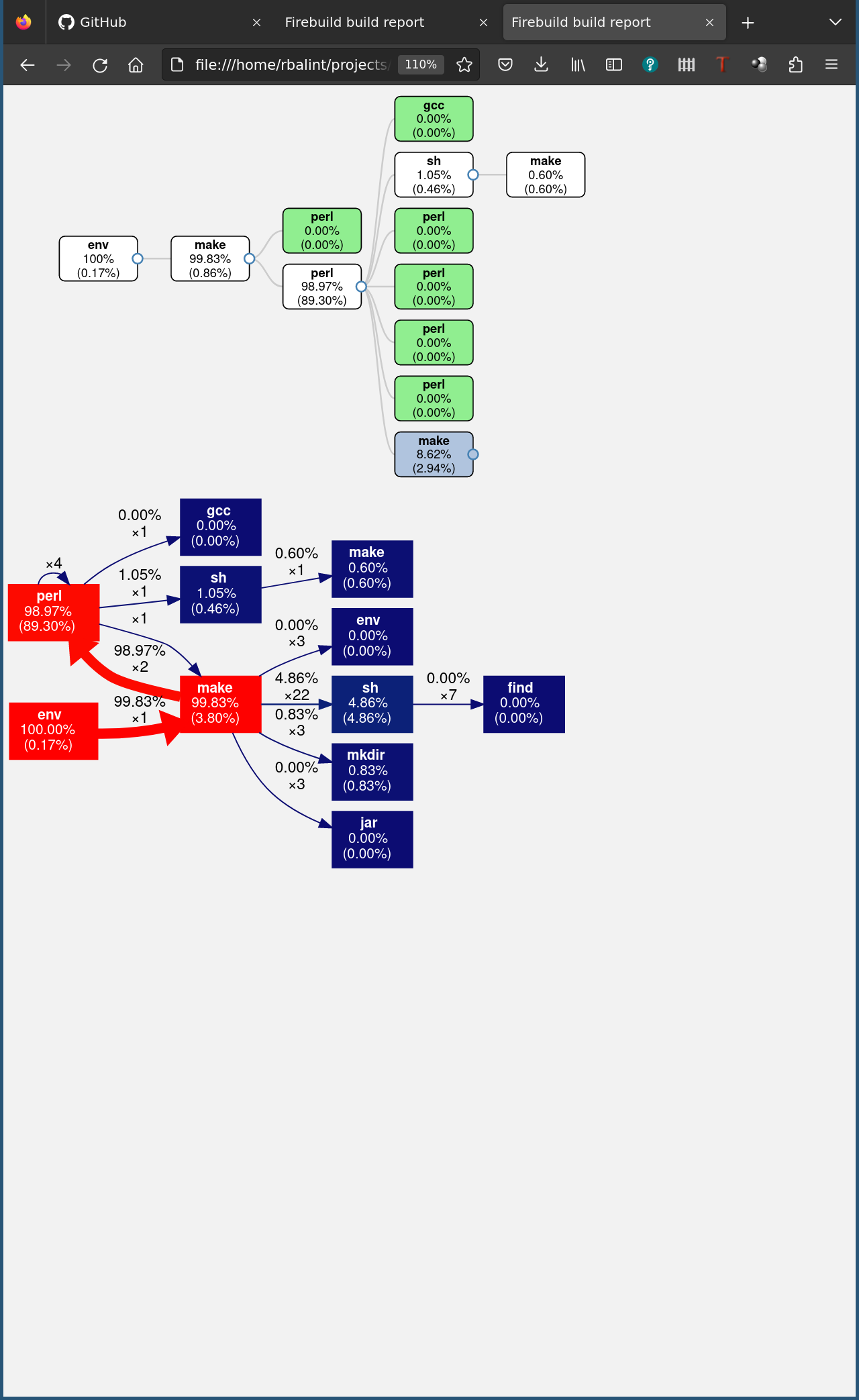
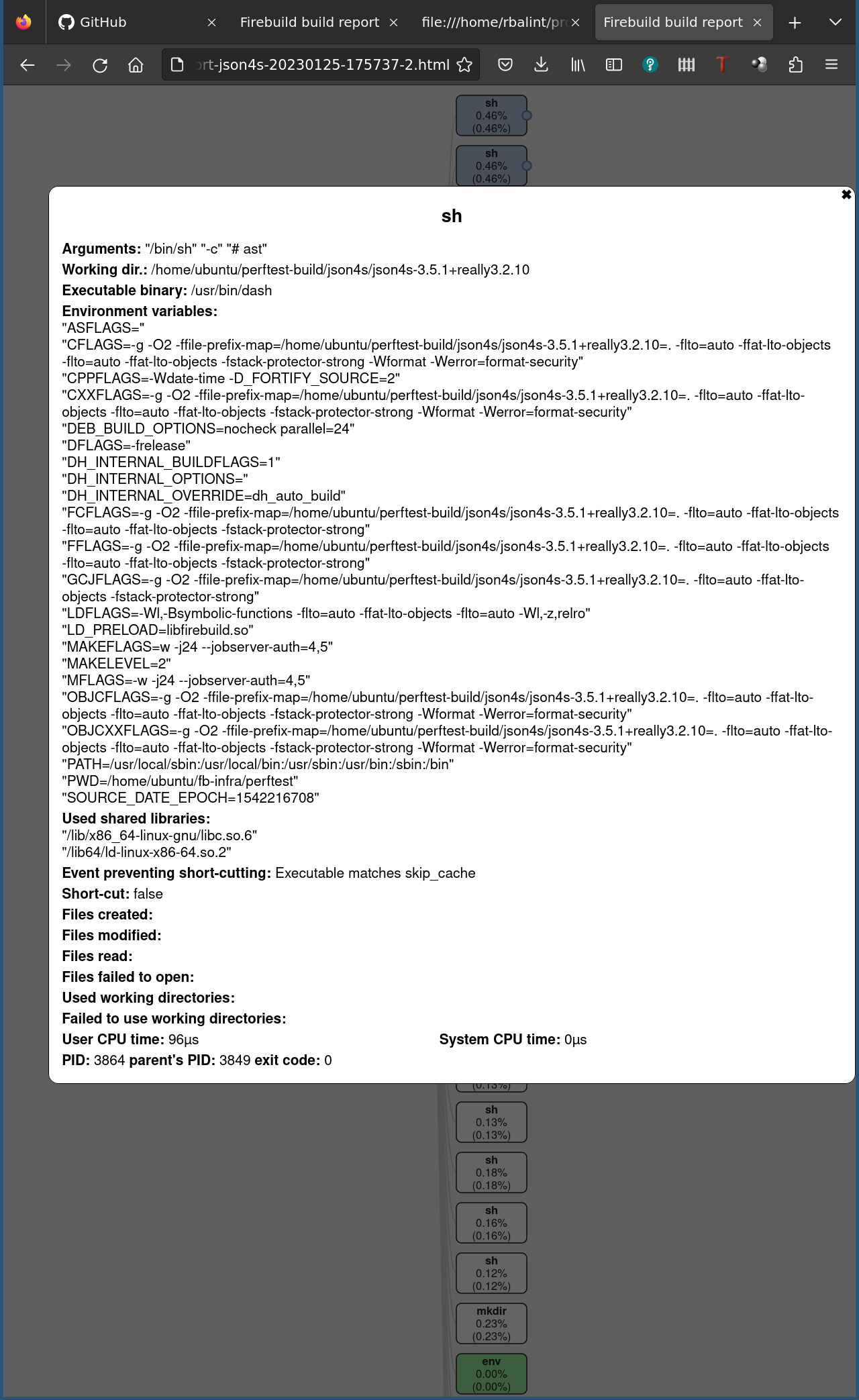
OK, but how does it work? Firebuild intercepts all processes started by the command to cache their outputs. Next time when the command or any of its descendant commands is executed with the same parameters, inputs and environment, the outputs are replayed (the command is shortcut) from the cache instead of running the command again. This is similar to how ccache and other compiler-specific caches work, but firebuild can shortcut any deterministic command, not only a specific list of compilers. Since the inputs of each command is determined at run time firebuild does not need a maintained complete dependency graph in the source like Bazel. It can work with any build system that does not implement its own caching mechanism. Determinism of commands is detected at run-time by preloading libfirebuild.so and interposing standard library calls and syscalls. If the command and all its descendants inputs are available when the command starts and all outputs can be calculated from the inputs then the command can be shortcut, otherwise it will be executed again. The interception comes with a 5-10% overhead, but rebuilds can be 5-20 times, or even faster depending on the changes between the builds. Can I try it? It is already available in Debian Unstable and Testing, Ubuntu s development release and the latest stable version is back-ported to supported Ubuntu releases via a PPA. How can I analyze my builds with firebuild? Firebuild can generate an HTML report showing each command s contribution to the build time. Below are the before and after reports of json4s, a Scala project. The command call graphs (lower ones) show that java (scalac) took 99% of the original build. Since the scalac invocations are shortcut (cutting the second build s time to less than 2% of the first one) they don t even show up in the accelerated second build s call graph. What s left to be executed again in the second run are env, perl, make and a few simple commands. The upper graphs are the process trees, with expandable nodes (in blue) also showing which command invocations were shortcut (green). Clicking on a node shows details of the command and the reason if it was not shortcut. Could I accelerate my project more? Firebuild works best for builds with CPU-intensive processes and comes with defaults to not cache very quick commands, such as sh, grep, sed, etc., because caching those would take cache space and shortcutting them may not speed up the build that much. They can still be shortcut with their parent command. Firebuild s strength is that it can find shortcutting points in the process tree automatically, e.g. from sh -c 'bash -c "sh -c echo Hello World!"' bash would be shortcut, but none of the sh commands would be cached. In typical builds there are many such commands from the skip_cache list. Caching those commands with firebuild -o 'processes.skip_cache = []' can improve acceleration and make the reports smaller. Firebuild also supports several debug flags and -d proc helps finding reasons for not shortcutting some commands:
...
FIREBUILD: Command "/usr/bin/make" can't be short-cut due to: Executable set to be not shortcut,  ExecedProcess 1329.2, running, "make -f debian/rules build", fds=[ FileFD fd=0  FileOFD ...
FIREBUILD: Command "/usr/bin/sort" can't be short-cut due to: Process read from inherited fd ,  ExecedProcess 4161.1, running, "sort", fds=[ FileFD fd=0  FileOFD ...
FIREBUILD: Command "/usr/bin/find" can't be short-cut due to: fstatfs() family operating on fds is not supported,  ExecedProcess 1360.1, running, "find -mindepth 1 ...
...
make, ninja and other incremental build tool binaries are not shortcut because they compare the timestamp of files, but they are fast at least and every build step they perform can still be shortcut. Ideally the slower build steps that could not be shortcut can be re-implemented in ways that can be shortcut by avoiding tools performing unsupported operations. I hope those tools help speeding up your build with very little effort, but if not and you find something to fix or improve in firebuild itself, please report it or just leave a feedback! Happy speeding, but not on public roads!

Matt Brown: Vision, Mission and Strategy

This is the first of a two-part post, covering high-level thoughts around my motivations and vision. Make sure to check out the second part for my specific goals for 2023. A new year is upon us! My plan was to be 6 months into the journey of starting a business by this point. I made some very tentative progress towards that goal in 2022, registering a company and starting some consulting work, but on the whole I ve found it much harder than expected to gather the necessary energy to begin that journey in earnest.

Reflection I m excited about the next chapter of my career, so the fact that I ve been struggling to get started has been frustrating. The only upside is that the delay has given me plenty of time to reflect on the last few years and what I can learn from them and draw some lessons to help better manage and sustain my energy going forward.

Purpose A large part of what I ve realised is that I should have left Google years ago. It was a great place to work, and I m incredibly grateful for everything I learned and received during my time there. For years it was my dream job, but my happiness had been declining, and instead of taking the (relatively small) risk of leaving to the unknown, I tried several variations of team and role in the hope of restoring the dream. The reality is that a significant chunk of my motivation and energy comes from being able to link my work back to a bigger purpose that delivers concrete positive impact in the world. I felt that link through Google s mission to make information universally accessible and useful for the first 10-11 years, but for the latter 4-5 years my ability to see that link was tenuous at best and trying to push through the challenges presented without that link providing a reliable source of energy is what drove my unhappiness and led to needing a longer break to recharge. I expect the challenges of starting a business to be even greater than what I experienced at Google, so the lesson I m taking from this is that it s crucial for me to understand what the link between my work and the bigger purpose with concrete positive impact in the world that I m aiming to contribute to is.

Community The second factor that I ve slowly come to realise has been missing from my career in the last few years has been participation in a professional community and a variety of enriching interpersonal relationships. As much as I value and need this type of interaction, fostering and sustaining it unfortunately doesn t come naturally to me. Working remotely since 2016 and then taking a 9 month break out of the industry are not particularly helpful contributors to building and maintaining a wide network either! The lesson here is simply that I m going to need to push past my comfort zone in reaching out and introducing myself to a range of people in order to grow my professional network, and equally I need to be diligent and disciplined in making time to maintain and regularly connect with people whom I respect and find energising to interact with.

Personal Influences Lastly, I ve been reflecting on a set of principles that are important to me. These are not so much new lessons, more confirming to myself what I value moving forward. There are many things I could include here, but to keep it somewhat brief, the key influences on my thinking are:
  • Independence - I can t entirely explain why or where it comes from, but since the start of my professional career (which I consider to be my consulting/freelancing development during high school) I ve understood that I m far more motivated by building and growing my own business than I am by working for someone else. Working for myself has always felt like the default and sensible course - I m excited to get back to that.
  • Openness - Open is better than closed, in terms of software, business model and organisational processes. This continues to be a strong belief and something I want to uphold in my business endeavours. Competition should be based on superior technical quality or service, not artificial constraints or barriers to entry that lock customers and users into a single solution or market. Protocols and networks should be open for wide participation and easily accessible to new entrants and competition.
  • People first - This applies both to how we work with each other - respectfully, valuing diversity and with integrity, and to how we apply technology to our world - with consideration for all stakeholders it may affect and awareness of both the intended and potential unintended impacts.

Framework Using Vision, Mission and Strategy as a planning framework has worked quite well for me when building and growing teams over the years, so I plan to re-use it personally to help organise the above reflections into a hopefully cohesive plan than results in some useful 2023 goals.

Vision Software systems contribute direct and meaningful impact to solving real problems in our world. Each word has a fair bit of meaning behind it for me, so breaking it down a little bit:
  • software systems - excite me because software is eating the world and has significant potential to do good.
  • contribute - Software alone doesn t solve problems, and misapplied can easily make things worse. To contribute software needs to be designed intentionally and evaluated with an awareness of risks it could pose within the complex system that is our modern world.
  • direct and meaningful impact - I m not looking for broad outcomes like improving productivity or communication, which apply generally across many problems. I want to see software applied to solve specific blockers whose removal unlocks significant progress towards solving a problem.
  • real - as opposed to straightforward problems. The types of issue where the acknowledgement of it as a real problem often ends the sentence as it feels too big to tackle. Climate change and pandemic risk are examples of real problems. Decentralising finance or selling more widgets are not.
  • in our world - is mostly filler to round out the sentence nicely, but I do think we should probably sort out the mess we re making on our own planet before trying to colonise anywhere else.

Mission To lead the development and operation of software systems that deliver new opportunities for individuals, businesses and communities to solve the real problems in their community. Again breaking down the intent a little bit:
  • lead - having a meaningful impact on real problems is a big job. I won t succeed as a one man band. It will require building and growing a larger team.
  • development and operation - development is fun and necessary, but I also wanted to highlight that the ongoing operation and integration of those software systems into the broader social and human systems of our world is an equally important and ongoing need.
  • new opportunities - are important to drive and motivate investment in the adoption of technology. Building or operating a system that maintains the status quo is not motivating for me.
  • individuals, businesses and communities - aka everyone! But each of these groups (as examples, not specific) will have diverse roles, needs and interactions with the software which must be considered to ensure the system achieves the desired contribution and impact.
  • their community - refines the ambition from the vision to an achievable scope of action within which to execute the mission. We won t solve our problems by targeting one big global fix, but if we each participate in solving the problems in our community, collectively it will make a difference.

Strategy Build a sustainable business that provides a home and infrastructure to support a continuous cycle of development, validation and growth of software systems fulfilling the mission and vision above.
  • Accumulate meaningful impact via a portfolio of systems rather than one big bet.
  • Focus on opportunities that promote the decarbonisation of our economy (the most pressing problem our society faces), but not at the expense of ignoring compelling opportunities to contribute impact to other real problems also.
  • Favour the marathon over the sprint - while being first can be fun and convey benefits, it s often the fast-followers who learn from the initial mistakes and deliver lasting change and broader impact.
In keeping with the final bullet point, I aim to evaluate the strategy against a long-term view of success. What excites me about it is that it has the potential to provide structure and clarity for my work while also enabling many future paths - from operating a portfolio of micro-SaaS products that each solve real problems for a specific niche or community, or diving deep into a single compelling opportunity for a year or two, joining with others to partner on shared ventures or some combination of all three and other variations in between.

Your Thoughts I consider this a first draft, which I intend to revise and evolve further over the next 6-12 months. I don t plan major changes to the intent or underlying ideas, but finding the best words to express and convey that intent clearly is not something I expect to get right on the first take. I d love to have your feedback and engagement as I move forward with this strategy - please use the box in the sidebar (or on the front page, if you re on a phone) to be notified when I post new writing, drop me an email with your thoughts or even book a meeting to say hi and discuss something in detail.

Goals for 2023 Next up - check out part two of this post to see my goals for 2023.

24 January 2023

Kentaro Hayashi: Porterboxes and alternatives

As you know, Debian projects and sponsor provides so-called "porterbox", but it does not cover all architectures. There are some alternatives to fix architecture-specific bugs. For the record, let's pick it up them. [1][2][3]
porterbox deb-o-matic qemu
amd64 adayevskaya.d.o debomatic-amd64.d.n DQIB ready
arm64 amdahl.d.o debomatic-arm64.d.n DQIB ready
armel amdahl.d.o abel.d.o debomatic-armel.d.n NG
armhf amdahl.d.o abel.d.o harris.d.o debomatic-armhf.d.n DQIB ready
i386 exodar.d.n debomatic-i386.d.n DQIB ready
mips64el eller.d.o debomatic-mips64el.d.n DQIB ready
mipsel eller.d.o debomatic-mipsel.d.n DQIB ready
ppc64el platti.d.o debomatic-ppc64el.d.n DQIB ready
s390x zelenka.d.o debomatic-s390x.d.n DQIB ready
alpha N/A N/A NG
arc N/A N/A N/A
hppa panama.d.n N/A N/A
ia64 yttrium.d.n N/A N/A
kfreebsd-amd64 lemon.d.n N/A N/A
kfreebsd-i386 lemon.d.n N/A N/A
m68k mitchy.d.n N/A NG
powerpc perotto.d.n debomatic-powerpc.d.n DQIB ready
ppc64 perotto.d.n N/A DQIB ready
riscv64 debian-riscv64-porterbox-01.d.n N/A DQIB ready
sh4 N/A N/A NG
sparc64 kyoto.d.n N/A N/A
x32 N/A N/A N/A
Thus, no alternatives for alpha, arc, sh4 and x32.

23 January 2023

Matthew Garrett: Build security with the assumption it will be used against your friends

Working in information security means building controls, developing technologies that ensure that sensitive material can only be accessed by people that you trust. It also means categorising people into "trustworthy" and "untrustworthy", and trying to come up with a reasonable way to apply that such that people can do their jobs without all your secrets being available to just anyone in the company who wants to sell them to a competitor. It means ensuring that accounts who you consider to be threats shouldn't be able to do any damage, because if someone compromises an internal account you need to be able to shut them down quickly.

And like pretty much any security control, this can be used for both good and bad. The technologies you develop to monitor users to identify compromised accounts can also be used to compromise legitimate users who management don't like. The infrastructure you build to push updates to users can also be used to push browser extensions that interfere with labour organisation efforts. In many cases there's no technical barrier between something you've developed to flag compromised accounts and the same technology being used to flag users who are unhappy with certain aspects of management.

If you're asked to build technology that lets you make this sort of decision, think about whether that's what you want to be doing. Think about who can compel you to use it in ways other than how it was intended. Consider whether that's something you want on your conscience. And then think about whether you can meet those requirements in a different way. If they can simply compel one junior engineer to alter configuration, that's very different to an implementation that requires sign-offs from multiple senior developers. Make sure that all such policy changes have to be clearly documented, including not just who signed off on it but who asked them to. Build infrastructure that creates a record of who decided to fuck over your coworkers, rather than just blaming whoever committed the config update. The blame trail should never terminate in the person who was told to do something or get fired - the blame trail should clearly indicate who ordered them to do that.

But most importantly: build security features as if they'll be used against you.

comment count unavailable comments

22 January 2023

Jonathan Dowland: Barbie crowns

prototype crowns
crown on the printer
Slimer's crown
My daughters have had great fun designing and printing crowns for their Barbies. We've been through several design iterations, and several colour choices. Not all Barbies have the same head circumference. Real crowns probably don't have a perfectly circular internal shape. They changed their minds on the green crown soon after it finished, but we managed to find a grateful recipient.

Dirk Eddelbuettel: Rcpp 1.0.10 on CRAN: Regular Update

rcpp logo The Rcpp team is thrilled to announce the newest release 1.0.10 of the Rcpp package which is hitting CRAN now and will go to Debian shortly. Windows and macOS builds should appear at CRAN in the next few days, as will builds in different Linux distribution and of course at r2u. The release was prepared a few days ago, but given the widespread use at CRAN it took a few days to be processed. As always, our sincere thanks to the CRAN maintainers Uwe Ligges and Kurt Hornik. This release continues with the six-months cycle started with release 1.0.5 in July 2020. As a reminder, we do of course make interim snapshot dev or rc releases available via the Rcpp drat repo and strongly encourage their use and testing I run my systems with these versions which tend to work just as well, and are also fully tested against all reverse-dependencies. Rcpp has become the most popular way of enhancing R with C or C++ code. Right now, around 2623 packages on CRAN depend on Rcpp for making analytical code go faster and further, along with 252 in BioConductor. On CRAN, 13.7% of all packages depend (directly) on CRAN, and 58.7% of all compiled packages do. From the cloud mirror of CRAN (which is but a subset of all CRAN downloads), Rcpp has been downloaded 67.1 million times. This release is incremental as usual, preserving existing capabilities faithfully while smoothing our corners and / or extending slightly. Of particular note is the now fully-enabled use of the unwind protection making some operations a little faster by default; special thanks to I aki for spearheading this. Kevin and I also polished a few other bugs off as detailed below. The full list of details follows.

Changes in Rcpp release version 1.0.10 (2023-01-12)
  • Changes in Rcpp API:
    • Unwind protection is enabled by default (I aki in #1225). It can be disabled by defining RCPP_NO_UNWIND_PROTECT before including Rcpp.h. RCPP_USE_UNWIND_PROTECT is not checked anymore and has no effect. The associated plugin unwindProtect is therefore deprecated and will be removed in a future release.
    • The 'finalize' method for Rcpp Modules is now eagerly materialized, fixing an issue where errors can occur when Module finalizers are run (Kevin in #1231 closing #1230).
    • Zero-row data.frame objects can receive push_back or push_front (Dirk in #1233 fixing #1232).
    • One remaining sprintf has been replaced by snprintf (Dirk and Kevin in #1236 and #1237).
    • Several conversion warnings found by clang++ have been addressed (Dirk in #1240 and #1241).
  • Changes in Rcpp Attributes:
    • The C++20, C++2b (experimental) and C++23 standards now have plugin support like the other C++ standards (Dirk in #1228).
    • The source path for attributes received one more protection from spaces (Dirk in #1235 addressing #1234).
  • Changes in Rcpp Deployment:
    • Several GitHub Actions have been updated.

Thanks to my CRANberries, you can also look at a diff to the previous release. Questions, comments etc should go to the rcpp-devel mailing list off the R-Forge page. Bugs reports are welcome at the GitHub issue tracker as well (where one can also search among open or closed issues); questions are also welcome under rcpp tag at StackOverflow which also allows searching among the (currently) 2932 previous questions. If you like this or other open-source work I do, you can sponsor me at GitHub.

This post by Dirk Eddelbuettel originated on his Thinking inside the box blog. Please report excessive re-aggregation in third-party for-profit settings.

19 January 2023

Antoine Beaupr : Mastodon comments in ikiwiki

Today I noticed bounces in my mail box. They were from ikiwiki trying to send registration confirmation email to users who probably never asked for it. I'm getting truly fed up with spam in my wiki. At this point, all comments are manually approved and I still get trouble: now it's scammers spamming the registration form with dummy accounts, which bounce back to me when I make new posts, or just generate backscatter spam for the confirmation email. It's really bad. I have hundreds of users registered on my blog, and I don't know which are spammy, which aren't. So. I'm considering ditching ikiwiki comments altogether. I am testing Mastodon as a commenting platforms. Others (e.g. JAK) have implemented this as a server but a simpler approach is toload them dynamically from Mastodon, which is what Carl Shwan has done. They are using Hugo, however, so they can easily embed page metadata in the template to load the right server with the right comment ID. I wasn't sure how to do this in ikiwiki: it's typically hard to access page-specific metadata in templates. Even the page name is not there, for example. I have tried using templates, and that (obviously?) fails because the <script> stuff gets sanitized away. It seems I would need to split the JavaScript out of the template into a base template and then make the page template refer to a function in there. It's kind of horrible and messy. I wish there was a way to just access page metadata from the page template itself... I found out the meta plugin passes along its metadata, but that's not (easily) extensible. So i'd need to either patch that module, and my history of merged patches is not great so far. So: another plugin. I have something that kind of works that's a combination of a page.tmpl patch and a plugin. The plugin adds a mastodon directive that feeds the page.tmpl with the right stuff. On clicking a button, it injects comments from the Mastodon API, with a JavaScript callback. It's not pretty (it's not themed at all!), but it works. If you want to do this at home, you need this page.tmpl (or at least this patch and that one) and the mastodon.pm plugin from my mastodon-plugin branch. I'm not sure this is a good idea. The first test I did was a "test comment" which led to half a dozen "test reply". I then realized I couldn't redact individual posts from there. I don't even know if, when I mute a user, it actually gets hidden from everyone else too... So I'll test this for a while, I guess. I have also turned off all CGI on this site. It will keep users from registering while I cleanup this mess and think about next steps. I have other options as well if push comes to shove, but I'm unlikely to go back to ikiwiki comments. Mastodon comments are nice because they don't require me to run any extra software: either I have my own federated service I reuse, or I use someone else's, but I don't need to run something extra. And, of course, comments are published in a standard way that's interoperable with everything... On the other hand, now I won't have comments enabled until the blog is posted on Mastodon... Right now this happens only when feed2exec runs and the HTTP cache expires, which can take up to a day. I should probably do this some other way, like flush the cache when a new post arrives, or run post-commit hooks, but for now, this will have to do. Update: I figured out a way to make this work in a timely manner:
  1. there's a post-merge hook in my ikiwiki git repository which calls feed2exec in /home/w-anarcat/source/.git/hooks/ took me a while to find it! I tried post-update and post-receive first, but ikiwiki actually pulls from the bare directory in the source directory, so only post-merge fires (even though it's not a merge)
  2. feed2exec then finds new blog posts (if any!) and fires up the new ikiwikitoot plugin which then...
  3. posts the toot using the toot command (it just works, why reinvent the wheel), keeping the toot URL
  4. finds the Markdown source file associated with the post, and adds the magic mastodon directive
  5. commits and pushes the result
This will make the interaction with Mastodon much smoother: as soon as a blog post is out of "draft" (i.e. when it hits the RSS feeds), this will immediately trigger and post the blog entry to Mastodon, enabling comments. It's kind of a tangled mess of stuff, but it works! I have briefly considered not using feed2exec for this, but it turns out it does an important job of parsing the result of ikiwiki's rendering. Otherwise I would have to guess which post is really a blog post, is this just an update or is it new, is it a draft, and so on... all sorts of questions where the business logic already resides in ikiwiki, and that I would need to reimplement myself. Plus it goes alongside moving more stuff (like my feed reader) to dedicated UNIX accounts (in this case, the blog sandbox) for security reasons. Whee!

18 January 2023

Matthew Garrett: PKCS#11. hardware keystores, and Apple frustrations

There's a bunch of ways you can store cryptographic keys. The most obvious is to just stick them on disk, but that has the downside that anyone with access to the system could just steal them and do whatever they wanted with them. At the far end of the scale you have Hardware Security Modules (HSMs), hardware devices that are specially designed to self destruct if you try to take them apart and extract the keys, and which will generate an audit trail of every key operation. In between you have things like smartcards, TPMs, Yubikeys, and other platform secure enclaves - devices that don't allow arbitrary access to keys, but which don't offer the same level of assurance as an actual HSM (and are, as a result, orders of magnitude cheaper).

The problem with all of these hardware approaches is that they have entirely different communication mechanisms. The industry realised this wasn't ideal, and in 1994 RSA released version 1 of the PKCS#11 specification. This defines a C interface with a single entry point - C_GetFunctionList. Applications call this and are given a structure containing function pointers, with each entry corresponding to a PKCS#11 function. The application can then simply call the appropriate function pointer to trigger the desired functionality, such as "Tell me how many keys you have" and "Sign this, please". This is both an example of C not just being a programming language and also of you having to shove a bunch of vendor-supplied code into your security critical tooling, but what could possibly go wrong.

(Linux distros work around this problem by using p11-kit, which is a daemon that speaks d-bus and loads PKCS#11 modules for you. You can either speak to it directly over d-bus, or for apps that only speak PKCS#11 you can load a module that just transports the PKCS#11 commands over d-bus. This moves the weird vendor C code out of process, and also means you can deal with these modules without having to speak the C ABI, so everyone wins)

One of my work tasks at the moment is helping secure SSH keys, ensuring that they're only issued to appropriate machines and can't be stolen afterwards. For Windows and Linux machines we can stick them in the TPM, but Macs don't have a TPM as such. Instead, there's the Secure Enclave - part of the T2 security chip on x86 Macs, and directly integrated into the M-series SoCs. It doesn't have anywhere near as many features as a TPM, let alone an HSM, but it can generate NIST curve elliptic curve keys and sign things with them and that's good enough. Things are made more complicated by Apple only allowing keys to be used by the app that generated them, so it's hard for applications to generate keys on behalf of each other. This can be mitigated by using CryptoTokenKit, an interface that allows apps to present tokens to the systemwide keychain. Although this is intended for allowing a generic interface for access to such tokens (kind of like PKCS#11), an app can generate its own keys in the Secure Enclave and then expose them to other apps via the keychain through CryptoTokenKit.

Of course, applications then need to know how to communicate with the keychain. Browsers mostly do so, and Apple's version of SSH can to an extent. Unfortunately, that extent is "Retrieve passwords to unlock on-disk keys", which doesn't help in our case. PKCS#11 comes to the rescue here! Apple ship a module called ssh-keychain.dylib, a PKCS#11 module that's intended to allow SSH to use keys that are present in the system keychain. Unfortunately it's not super well maintained - it got broken when Big Sur moved all the system libraries into a cache, but got fixed up a few releases later. Unfortunately every time I tested it with our CryptoTokenKit provider (and also when I retried with SecureEnclaveToken to make sure it wasn't just our code being broken), ssh would tell me "provider /usr/lib/ssh-keychain.dylib returned no slots" which is not especially helpful. Finally I realised that it was actually generating more debug output, but it was being sent to the system debug logs rather than the ssh debug output. Well, when I say "more debug output", I mean "Certificate []: algorithm is not supported, ignoring it", which still doesn't tell me all that much. So I stuck it in Ghidra and searched for that string, and the line above it was

iVar2 = __auth_stubs::_objc_msgSend(uVar7,"isEqual:",*(undefined8*)__got::_kSecAttrKeyTypeRSA);

with it immediately failing if the key isn't RSA. Which it isn't, since the Secure Enclave doesn't support RSA. Apple's PKCS#11 module appears incapable of making use of keys generated on Apple's hardware.

There's a couple of ways of dealing with this. The first, which is taken by projects like Secretive, is to implement the SSH agent protocol and have SSH delegate key management to that agent, which can then speak to the keychain. But if you want this to work in all cases you need to implement all the functionality in the existing ssh-agent, and that seems like a bunch of work. The second is to implement a PKCS#11 module, which sounds like less work but probably more mental anguish. I'll figure that out tomorrow.

comment count unavailable comments

17 January 2023

Thomas Lange: FAI 6.0 released and new ISO images using Debian 12 bookworm/testing

After more than a year, a new major FAI release is ready to download. Following new features are included: We have included a lot of bug fixes for free of course. Even if FAI 6.0 will only be included into Debian bookworm, you can install it on a bullseye FAI server and create a nfsroot using bookworm without any problems. The combination of a bullseye FAI server with FAI 6.0 and a bullseye nfsroot should also work. New ISO images are available at https://fai-project.org/fai-cd/ The FAI.me build service is not yet using FAI 6.0, but support will be added in the future. FAI

Russ Allbery: Review: Night and Silence

Review: Night and Silence, by Seanan McGuire
Series: October Daye #12
Publisher: DAW Books
Copyright: 2018
ISBN: 0-698-18353-3
Format: Kindle
Pages: 353
Night and Silence is the 12th book in Seanan McGuire's long-running October Daye Celtic-inspired urban fantasy series. This is a "read the books in order" sort of series; you definitely do not want to start here. Gillian, Toby's estranged daughter, has been kidnapped. Her ex-husband and his new wife turn to her in desperation (although Miranda suspects Toby is the one who kidnapped her). Toby of course drops everything to find her, which she would have done regardless, but the obvious fear is that Gillian may have been kidnapped specifically to get at Toby. Meanwhile, the consequences of The Brightest Fell have put a severe strain on one of Toby's most important relationships, at the worst possible time. Once again, this is when I say that McGuire's writing has a lot of obvious flaws, and then say that this book kept me up way past my bedtime for two nights in a row because it was nearly impossible to put down. The primary quality flaw in these books, at least for me, is that Toby's thought processes have some deeply-worn grooves that she falls into time and time again. Since she's the first-person narrator of the series, that produces some repetitive writing. She feels incredibly lucky for her chosen family, she worries about her friends, she prizes loyalty very highly, she throws herself headlong into danger, and she thinks about these things in a background hum through every book. By this point, the reader knows all of this, so there's a lot of "yes, yes, we know" muttering that tends to happen. McGuire also understands the importance of plot and character recaps at the start of each book for those of us who have forgotten what was happening (thank you!) but awkwardly writes them into the beginning of each book. That doesn't help with the sense of repetitiveness. If only authors would write stand-alone synopses of previous books in a series, or hire someone to do that if they can't stand to, the world would be a much better place. But now I'm repeating myself. Once I get into a book, though, this doesn't matter at all. When Toby starts down a familiar emotional rut, I just read faster until I get to the next bit. Something about these books is incredibly grabby to me; once I get started on one, I devour it, and usually want to read the next one as soon as possible. Some of this is the cast, which at this point in the series is varied, entertaining, and full of the sort of casual banter that only people who have known each other for a long time can do. A lot of it is that Toby constantly moves forward. She ruminates and angsts and worries, but she never sits around and mopes. She does her thinking on the move. No matter how preoccupied she is with some emotional thread, something's going to happen on the next page. Some of it is intangible, or at least beyond my ability to put a finger on. Some authors are good at writing grabby books, and at least for me McGuire is one of those authors. Describing the plot in any detail without spoilers is hopeless this far into the series, but this is one of the big revelation books, and I suspect it's also going to be a significant tipping point in Toby's life. We finally find out what broke faerie, which has rather more to do with Toby and her family than one might have expected, explains some things about Amandine, and also (although this hasn't been spelled out yet) seems likely to explain some things about the Luidaeg's involvement in Toby's adventures. And there is another significant realignment of one of Toby's relationships that isn't fully developed here, but that I hope will be explored in future books. There's also a lot about Tybalt that to be honest I found tedious and kind of frustrating (although not half as frustrating as Toby found it). I appreciate what McGuire was doing; some problems are tedious, frustrating, and repetitive because that's how one gets through them. The problem that Toby and Tybalt are wrestling with is realistic and underdiscussed in fiction of this type, so I respect the effort, and I'm not sure there was way to write through this that would have been more engrossing (and a bit less cliched). But, still, not my favorite part of this book. Thankfully, it was a mostly-ignorable side thread. This was a substantial improvement over The Brightest Fell, which was both infuriating and on rails. Toby has much more agency here, the investigation was more interesting, and the lore and character fallout has me eager to read the next book. It's fun to see McGuire's world-building come together over this long of a series, and so far it has not disappointed. Followed by The Unkindest Tide. As has become usual, the book ends with a novella telling a story from a different perspective. "Suffer a Sea-Change": The main novel was good. This was great. "Suffer a Sea-Change" retells a critical part of the novel from Gillian's perspective, and then follows that thread of story past the end of the novel. I loved absolutely everything about this. Gillian is a great protagonist, similar to Toby but different enough to be a fresh voice. There is a ton of the Luidaeg, and through different eyes than Toby's which is fun. There's some great world-building and a few very memorable scenes. And there's also the beginning, the very small beginning, of the healing of a great injustice that's been haunting this series since the very beginning, and I am very much here for that. Great stuff. (9) Rating: 8 out of 10

16 January 2023

Gunnar Wolf: Back to Understanding Computers and Cognition

As many of you know, I work at UNAM, Mexico s largest university. My work is split in two parts: My full-time job is to be the systems and network administrator at the Economics Research Institute, and I do some hours of teaching at the Engineering Faculty. At the Institute, my role is academic but although I have tried to frame my works in a way amenable to analysis grounded on the Social Sciences (Construcci n Colaborativa del Conocimiento, Hecho con Creative Commons, Mecanismos de privacidad y anonimato), so far, I have not taken part of academic collaboration with my coworkers Economics is a field very far from my interests, to somehow illustrate it. I was very happy when I was invited to be a part of a Seminar on The Digital Economy in the age of Artificial Intelligence . I talked with the coordinator, and we agreed we have many Economic Science experts but understanding what does Artificial Intelligence mean eludes then, so I will be writing one of the introductory chapters to this analysis. But Hey, I m no expert in Artificial Intelligence. If anything, I could be categorized as an AI-skeptical! Well, at least I might be the closest thing at hand in the Institute So I have been thinking about what I will be writing, and finding and reading material to substantiate what I ll be writing. One of the readings I determined early on I would be going back to is Terry Winograd and Fernando Flores 1986 book, Understanding Computers and Cognition: A New Foundation for Design (oh, were you expecting a link to buy it instead of reading it online?) I first came across this book by mere chance. Back in the last day of year 2000, my friend Ariel invited me and my then-girlfriend to tag along and travel by land to the USA to catch some just-after-Christmas deals in San Antonio. I was not into shopping, but have always enjoyed road trips, so we went together. We went, yes, to the never-ending clothing shops, but we also went to some big libraries And the money I didn t spend at other shops, I spent there. And then some more. There was a little, somewhat oldish book that caught my eye. And I ll be honest: I looked at this book only because it was obviously produced by the LaTeX typesetting system (the basics of which I learnt in 1983, and with which I have written well, basically everything substantial I ve ever done). I remember I read this book with most interest back in that year, and finished it with a Wow, that was a strange trip! And Although I have never done much that could be considered AI-related, this has always been my main reference. But not for explaining what is a perceptron, how is an expert system to ponder the weight of given information, or whether a neural network is convolutional or recurrent, or how to turn from a network trained to recognize feature x into a generational network. No, our book is not technical. Well Not in that sense. This book tackles cognition. But in order to discuss cognition, it must first come to a proper definition of it. And to do so, it has to base itself on philosophy, starting by noting the author s disagreement with what they term as the rationalistic tradition: what we have come to term valid reasoning in Western countries. Their main claim is that the rationalistic tradition cannot properly explain a process as complex as cognition (how much bolder can you be than proposing something like this?). So, this book presents many constructs of Heidggerian origin, aiming to explain what it is understanding and being. In doing so, it follows Humberto Maturana s work. Maturana is also a philosopher, but comes from a background in biology he published works on animal neurophysiology that are also presented here. Writing this, I must ensure you I am not a philosopher, and lack field-specific knowledge to know whether this book is so unique. I know from the onset it does not directly help me to write the chapter I will be writing (but it will surely help me write some important caveats that will make the chapter much more interesting and different to what anybody with a Web browser could write about artificial intelligence). One last note: Although very well written, and notable for bringing hard to grasp concepts to mere technical staff as myself, this is not light, easy reading. I started re-reading this book a couple of weeks ago, and have just finished chapter 5 (page 69). As some reviewers state, this is one of those books you have to go back a paragraph or two over and over. But it is a most enjoyable and interesting reading.

Russ Allbery: Review: The Truth

Review: The Truth, by Terry Pratchett
Series: Discworld #25
Publisher: Harper
Copyright: November 2000
Printing: August 2014
ISBN: 0-06-230736-3
Format: Mass market
Pages: 435
The Truth is the 25th Discworld novel. Some reading order guides group it loosely into an "industrial revolution" sequence following Moving Pictures, but while there are thematic similarities I'll talk about in a moment, there's no real plot continuity. You could arguably start reading Discworld here, although you'd be spoiled for some character developments in the early Watch novels. William de Worde is paid to write a newsletter. That's not precisely what he calls it, and it's not clear whether his patrons know that he publishes it that way. He's paid to report on news of Ankh-Morpork that may be of interest of various rich or influential people who are not in Ankh-Morpork, and he discovered the best way to optimize this was to write a template of the newsletter, bring it to an engraver to make a plate of it, and run off copies for each of his customers, with some minor hand-written customization. It's a comfortable living for the estranged younger son of a wealthy noble. As the story opens, William is dutifully recording the rumor that dwarfs have discovered how to turn lead into gold. The rumor is true, although not in the way that one might initially assume.
The world is made up of four elements: Earth, Air, Fire, and Water. This is a fact well known even to Corporal Nobbs. It's also wrong. There's a fifth element, and generally it's called Surprise. For example, the dwarfs found out how to turn lead into gold by doing it the hard way. The difference between that and the easy way is that the hard way works.
The dwarfs used the lead to make a movable type printing press, which is about to turn William de Worde's small-scale, hand-crafted newsletter into a newspaper. The movable type printing press is not unknown technology. It's banned technology, because the powers that be in Ankh-Morpork know enough to be deeply suspicious of it. The religious establishment doesn't like it because words are too important and powerful to automate. The nobles and the Watch don't like it because cheap words cause problems. And the engraver's guild doesn't like it for obvious reasons. However, Lord Vetinari knows that one cannot apply brakes to a volcano, and commerce with the dwarfs is very important to the city. The dwarfs can continue. At least for now. As in Moving Pictures, most of The Truth is an idiosyncratic speedrun of the social effects of a new technology, this time newspapers. William has no grand plan; he's just an observant man who likes to write, cares a lot about the truth, and accidentally stumbles into editing a newspaper. (This, plus being an estranged son of a rich family, feels very on-point for journalism.) His naive belief is that people want to read true things, since that's what his original patrons wanted. Truth, however, may not be in the top five things people want from a newspaper. This setup requires some narrative force to push it along, which is provided by a plot to depose Vetinari by framing him for murder. The most interesting part of that story is Mr. Pin and Mr. Tulip, the people hired to do the framing and then dispose of the evidence. They're a classic villain type: the brains and the brawn, dangerous, terrifying, and willing to do horrible things to people. But one thing Pratchett excels at is taking a standard character type, turning it a bit sideways, and stuffing in things that one wouldn't think would belong. In this case, that's Mr. Tulip's deep appreciation for, and genius grasp of, fine art. It should not work to have the looming, awful person with anger issues be able to identify the exact heritage of every sculpture and fine piece of goldsmithing, and yet somehow it does. Also as in Moving Pictures (and, in a different way, Soul Music), Pratchett tends to anthropomorphize technology, giving it a life and motivations of its own. In this case, that's William's growing perception of the press as an insatiable maw into which one has to feed words. I'm usually dubious of shifting agency from humans to things when doing social analysis (and there's a lot of social analysis here), but I have to concede that Pratchett captures something deeply true about the experience of feedback loops with an audience. A lot of what Pratchett puts into this book about the problematic relationship between a popular press and the truth is obvious and familiar, but he also makes some subtle points about the way the medium shapes what people expect from it and how people produce content for it that are worthy of Marshall McLuhan. The interactions between William and the Watch were less satisfying. In our world, the US press is, with only rare exceptions, a thoughtless PR organ for police propaganda and the exonerative tense. Pratchett tackles that here... sort of. William vaguely grasps that his job as a reporter may be contrary to the job of the Watch to maintain order, and Vimes's ambivalent feelings towards "solving crimes" push the story in that direction. But this is also Vimes, who is clearly established as one of the good sort and therefore is a bad vehicle for talking about how the police corrupt the press. Pratchett has Vimes and Vetinari tacitly encourage William, which works within the story but takes the pressure off the conflict and leaves William well short of understanding the underlying politics. There's a lot more that could be said about the tension between the press and the authorities, but I think the Discworld setup isn't suitable for it. This is the sort of book that benefits from twenty-four volumes of backstory and practice. Pratchett's Ankh-Morpork cast ticks along like a well-oiled machine, which frees up space that would otherwise have to be spent on establishing secondary characters. The result is a lot of plot and social analysis shoved into a standard-length Discworld novel, and a story that's hard to put down. The balance between humor and plot is just about perfect, the references and allusions aren't overwhelming, and the supporting characters, both new and old, are excellent. We even get a good Death sequence. This is solid, consistent stuff: Discworld as a mature, well-developed setting with plenty of stories left to tell. Followed by Thief of Time in publication order, and later by Monstrous Regiment in the vaguely-connected industrial revolution sequence. Rating: 8 out of 10

14 January 2023

Ian Jackson: SGO (and my) VPN and network access tools - in bookworm

Recently, we managed to get secnet and hippotat into Debian. They are on track to go into Debian bookworm. This completes in Debian the set of VPN/networking tools I (and other Greenend) folks have been using for many years. The Sinister Greenend Organisation s suite of network access tools consists mainly of: secnet secnet is our very mature VPN system. Its basic protocol idea is similar to that in Wireguard, but it s much older. Differences from Wireguard include: secnet was originally written by Stephen Early, starting in 1996 or so. I inherited it some years ago and have been maintaining it since. It s mostly written in C. Hippotat Hippotat is best described by copying the intro from the docs:
Hippotat is a system to allow you to use your normal VPN, ssh, and other applications, even in broken network environments that are only ever tested with web stuff . Packets are parcelled up into HTTP POST requests, resembling form submissions (or JavaScript XMLHttpRequest traffic), and the returned packets arrive via the HTTP response bodies.
It doesn t rely on TLS tunnelling so can work even if the local network is trying to intercept TLS. I recently rewrote Hippotat in Rust. userv ipif userv ipif is one of the userv utilities. It allows safe delegation of network routing to unprivileged users. The delegation is of a specific address range, so different ranges can be delegated to different users, and the authorised user cannot interfere with other traffic. This is used in the default configuration of hippotat packages, so that an ordinary user can start up the hippotat client as needed. On chiark userv-ipif is used to delegate networking to users, including administrators of allied VPN realms. So chiark actually runs at least 4 VPN-ish systems in production: secnet, hippotat, Mark Wooding s Tripe, and still a few links managed by the now-superseded udptunnel system. userv userv ipif is a userv service. That is, it is a facility which uses userv to bridge a privilege boundary. userv is perhaps my most under-appreciated program. userv can be used to straightforwardly bridge (local) privilege boundaries on Unix systems. So for example it can: userv services can be defined by the called user, not only by the system administrator. This allows a user to reconfigure or divert a system-provided default implementation, and even allows users to define and implement ad-hoc services of their own. (Although, the system administrator can override user config.) Acknowledgements Thanks for the help I had in this effort. In particular, thanks to Sean Whitton for encouragement, and the ftpmaster review; and to the Debian Rust Team for their help navigating the complexities of handling Rust packages within the Debian Rust Team workflow.

comment count unavailable comments

Matt Brown: Rebooting...

Hi! After nearly 7 years of dormancy, I m rebooting this website and have a goal to write regularly on a variety of topics going forward. More on that and my goals in a coming post For now, this is just a placeholder note to help double-check that everything on the new site is working as expected and the letters are flowing through the pipes in the right places.

Technical Details I ve migrated the site from Wordpress, to a fully static configuration using Hugo and TailwindCSS for help with styling. For now hosting is still on a Linode VM in Fremont, CA, but my plan is to move to a more specialized static hosting service with better CDN reach in the very near future. If you want to inspect the innards further, it s all at https://github.com/mattbnz/web-matt.

Still on the TODO list
  • Improve the hosting situation as noted above.
  • Integrate Bert Hubert s nice audience minutes analytics script.
  • Write up (or find) LinkedIn/Twitter/Mastodon integration scripts to automatically post updates when a new piece of writing appears on the site, to build/notify followers and improve the social reach. Ideally, the script would then also update the page here with links to the thread(s), so that readers can easily join/follow any resulting conversation on the platform of their choice. I m not planning to add any direct comment or feedback functinoality on the site itself.
  • Add a newsletter/subscription option for folks who don t use RSS and would prefer updates via email rather than a social feed.

10 January 2023

Daniel Lange: Happy tenth birthday, dear Thunar bug

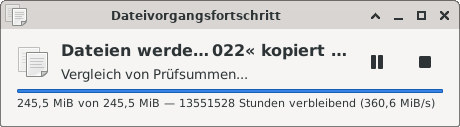
Thunar, the Xfce4 file manager, has a bug that it underflows the time remaining for a file copy since ten years now (bugzilla, gitlab). Happy birthday!

Matthew Garrett: Integrating Linux with Okta Device Trust

I've written about bearer tokens and how much pain they cause me before, but sadly wishing for a better world doesn't make it happen so I'm making do with what's available. Okta has a feature called Device Trust which allows to you configure access control policies that prevent people obtaining tokens unless they're using a trusted device. This doesn't actually bind the tokens to the hardware in any way, so if a device is compromised or if a user is untrustworthy this doesn't prevent the token ending up on an unmonitored system with no security policies. But it's an incremental improvement, other than the fact that for desktop it's only supported on Windows and MacOS, which really doesn't line up well with my interests.

Obviously there's nothing fundamentally magic about these platforms, so it seemed fairly likely that it would be possible to make this work elsewhere. I spent a while staring at the implementation using Charles Proxy and the Chrome developer tools network tab and had worked out a lot, and then Okta published a paper describing a lot of what I'd just laboriously figured out. But it did also help clear up some points of confusion and clarified some design choices. I'm not going to give a full description of the details (with luck there'll be code shared for that before too long), but here's an outline of how all of this works. Also, to be clear, I'm only going to talk about the desktop support here - mobile is a bunch of related but distinct things that I haven't looked at in detail yet.

Okta's Device Trust (as officially supported) relies on Okta Verify, a local agent. When initially installed, Verify authenticates as the user, obtains a token with a scope that allows it to manage devices, and then registers the user's computer as an additional MFA factor. This involves it generating a JWT that embeds a number of custom claims about the device and its state, including things like the serial number. This JWT is signed with a locally generated (and hardware-backed, using a TPM or Secure Enclave) key, which allows Okta to determine that any future updates from a device claiming the same identity are genuinely from the same device (you could construct an update with a spoofed serial number, but you can't copy the key out of a TPM so you can't sign it appropriately). This is sufficient to get a device registered with Okta, at which point it can be used with Fastpass, Okta's hardware-backed MFA mechanism.

As outlined in the aforementioned deep dive paper, Fastpass is implemented via multiple mechanisms. I'm going to focus on the loopback one, since it's the one that has the strongest security properties. In this mode, Verify listens on one of a list of 10 or so ports on localhost. When you hit the Okta signin widget, choosing Fastpass triggers the widget into hitting each of these ports in turn until it finds one that speaks Fastpass and then submits a challenge to it (along with the URL that's making the request). Verify then constructs a response that includes the challenge and signs it with the hardware-backed key, along with information about whether this was done automatically or whether it included forcing the user to prove their presence. Verify then submits this back to Okta, and if that checks out Okta completes the authentication.

Doing this via loopback from the browser has a bunch of nice properties, primarily around the browser providing information about which site triggered the request. This means the Verify agent can make a decision about whether to submit something there (ie, if a fake login widget requests your creds, the agent will ignore it), and also allows the issued token to be cross-checked against the site that requested it (eg, if g1thub.com requests a token that's valid for github.com, that's a red flag). It's not quite at the same level as a hardware WebAuthn token, but it has many of the anti-phishing properties.

But none of this actually validates the device identity! The entire registration process is up to the client, and clients are in a position to lie. Someone could simply reimplement Verify to lie about, say, a device serial number when registering, and there'd be no proof to the contrary. Thankfully there's another level to this to provide stronger assurances. Okta allows you to provide a CA root[1]. When Okta issues a Fastpass challenge to a device the challenge includes a list of the trusted CAs. If a client has a certificate that chains back to that, it can embed an additional JWT in the auth JWT, this one containing the certificate and signed with the certificate's private key. This binds the CA-issued identity to the Fastpass validation, and causes the device to start appearing as "Managed" in the Okta device management UI. At that point you can configure policy to restrict various apps to managed devices, ensuring that users are only able to get tokens if they're using a device you've previously issued a certificate to.

I've managed to get Linux tooling working with this, though there's still a few drawbacks. The main issue is that the API only allows you to register devices that declare themselves as Windows or MacOS, followed by the login system sniffing browser user agent and only offering Fastpass if you're on one of the officially supported platforms. This can be worked around with an extension that spoofs user agent specifically on the login page, but that's still going to result in devices being logged as a non-Linux OS which makes interpreting the logs more difficult. There's also no ability to choose which bits of device state you log: there's a couple of existing integrations, and otherwise a fixed set of parameters that are reported. It'd be lovely to be able to log arbitrary material and make policy decisions based on that.

This also doesn't help with ChromeOS. There's no real way to automatically launch something that's bound to localhost (you could probably make this work using Crostini but there's no way to launch a Crostini app at login), and access to hardware-backed keys is kind of a complicated topic in ChromeOS for privacy reasons. I haven't tried this yet, but I think using an enterprise force-installed extension and the chrome.enterprise.platformKeys API to obtain a device identity cert and then intercepting requests to the appropriate port range on localhost ought to be enough to do that? But I've literally never written any Javascript so I don't know. Okta supports falling back from the loopback protocol to calling a custom URI scheme, but once you allow that you're also losing a bunch of the phishing protection, so I'd prefer not to take that approach.

Like I said, none of this prevents exfiltration of bearer tokens once they've been issued, and there's still a lot of ecosystem work to do there. But ensuring that tokens can't be issued to unmanaged machines in the first place is still a step forwards, and with luck we'll be able to make use of this on Linux systems without relying on proprietary client-side tooling.

(Time taken to code this implementation: about two days, and under 1000 lines of new code. Time taken to figure out what the fuck to write: rather a lot longer)

[1] There's also support for having Okta issue certificates, but then you're kind of back to the "How do I know this is my device" situation

comment count unavailable comments

Next.

Previous.