Search Results: "reg"

27 December 2022

Steve Kemp: A summary of the year.

This year had a lot of things happen in it, world-wide, as is always the case. Being more selfish here are the things I remember, in brief unless there are comments/questions: On the topic of Finnish I'm getting pretty damn good at understanding, albeit less good in speaking. Finnish is all about the suffixes, so: Most of this is regular, so you can be childless via the "ton" suffix - lapsiton is "lapsi" (child) "ton" (less). The hard part in communication is thus twofold: Our child turned six recently, and most of the year was spent doing things with him, for him, and to him. He's on the verge of learning to read (English and Finnish), he's interested in maths and completes little puzzles freely and happily. He likes to help with Sodoku, for example and not just the child-versions. In the past couple of weeks I let him play Super Mario & Super Mario Bros 3, on a NES Classic, and he dies constantly, with a smile on his face. But he does love to tell me what to do when he watches me play! He's learned to ice-skate, and ski, and almost learned to swim. (I'll say he can swim 3m inside a pool, without aid, but then he starts to sink.) We've got a couple of regular rituals with each other - including going to sauna every week or two, and other similar things. He's gotten more interested in helping me cook, and his mother too. (My wife and I live in separate houses..) I guess the next big milestone will be him walking to school by himself, which will start next year. As things stand I wake up early, go over to his house, and do all the morning-things, before I take him there. I expect I'll still want to go there, give him his breakfast, his medicine, and help him get dressed. After that I guess I kick him out, and he makes his own way there. Happily the walk to school is a few hundred meters, and doesn't involve crossing any roads. But of course it does bring other complications: if he's not collected, and walks home himself, then he needs a key to one/other house, and there's the potential need for a phone to say "I'm late", "I'm lost", or us to say "Where are you?". Anyway .. interesting year .. good year. Despite everything else.

26 December 2022

Vincent Bernat: Managing infrastructure with Terraform, CDKTF, and NixOS

A few years ago, I downsized my personal infrastructure. Until 2018, there were a dozen containers running on a single Hetzner server.1 I migrated my emails to Fastmail and my DNS zones to Gandi. It left me with only my blog to self-host. As of today, my low-scale infrastructure is composed of 4 virtual machines running NixOS on Hetzner Cloud and Vultr, a handful of DNS zones on Gandi and Route 53, and a couple of Cloudfront distributions. It is managed by CDK for Terraform (CDKTF), while NixOS deployments are handled by NixOps. In this article, I provide a brief introduction to Terraform, CDKTF, and the Nix ecosystem. I also explain how to use Nix to access these tools within your shell, so you can quickly start using them.

CDKTF: infrastructure as code Terraform is an infrastructure-as-code tool. You can define your infrastructure by declaring resources with the HCL language. This language has some additional features like loops to declare several resources from a list, built-in functions you can call in expressions, and string templates. Terraform relies on a large set of providers to manage resources.

Managing servers Here is a short example using the Hetzner Cloud provider to spawn a virtual machine:
variable "hcloud_token"  
  sensitive = true
 
provider "hcloud"  
  token = var.hcloud_token
 
resource "hcloud_server" "web03"  
  name = "web03"
  server_type = "cpx11"
  image = "debian-11"
  datacenter = "nbg1-dc3"
 
resource "hcloud_rdns" "rdns4-web03"  
  server_id = hcloud_server.web03.id
  ip_address = hcloud_server.web03.ipv4_address
  dns_ptr = "web03.luffy.cx"
 
resource "hcloud_rdns" "rdns6-web03"  
  server_id = hcloud_server.web03.id
  ip_address = hcloud_server.web03.ipv6_address
  dns_ptr = "web03.luffy.cx"
 
HCL expressiveness is quite limited and I find a general-purpose language more convenient to describe all the resources. This is where CDK for Terraform comes in: you can manage your infrastructure using your preferred programming language, including TypeScript, Go, and Python. Here is the previous example using CDKTF and TypeScript:
import   App, TerraformStack, Fn   from "cdktf";
import   HcloudProvider   from "./.gen/providers/hcloud/provider";
import * as hcloud from "./.gen/providers/hcloud";
class MyStack extends TerraformStack  
  constructor(scope: Construct, name: string)  
    super(scope, name);
    const hcloudToken = new TerraformVariable(this, "hcloudToken",  
      type: "string",
      sensitive: true,
     );
    const hcloudProvider = new HcloudProvider(this, "hcloud",  
      token: hcloudToken.value,
     );
    const web03 = new hcloud.server.Server(this, "web03",  
      name: "web03",
      serverType: "cpx11",
      image: "debian-11",
      datacenter: "nbg1-dc3",
      provider: hcloudProvider,
     );
    new hcloud.rdns.Rdns(this, "rdns4-web03",  
      serverId: Fn.tonumber(web03.id),
      ipAddress: web03.ipv4Address,
      dnsPtr: "web03.luffy.cx",
      provider: hcloudProvider,
     );
    new hcloud.rdns.Rdns(this, "rdns6-web03",  
      serverId: Fn.tonumber(web03.id),
      ipAddress: web03.ipv6Address,
      dnsPtr: "web03.luffy.cx",
      provider: hcloudProvider,
     );
   
 
const app = new App();
new MyStack(app, "cdktf-take1");
app.synth();
Running cdktf synth generates a configuration file for Terraform, terraform plan previews the changes, and terraform apply applies them. Now that you have a general-purpose language, you can use functions.

Managing DNS records While using CDKTF for 4 web servers may seem a tad overkill, this is quite different when it comes to managing a few DNS zones. With DNSControl, which is using JavaScript as a domain-specific language, I was able to define the bernat.ch zone with this snippet of code:
D("bernat.ch", REG_NONE, DnsProvider(DNS_BIND, 0), DnsProvider(DNS_GANDI),
  DefaultTTL('2h'),
  FastMailMX('bernat.ch',  subdomains: ['vincent'] ),
  WebServers('@'),
  WebServers('vincent');
This generated 38 records. With CDKTF, I use:
new Route53Zone(this, "bernat.ch", providers.aws)
  .sign(dnsCMK)
  .registrar(providers.gandiVB)
  .www("@", servers)
  .www("vincent", servers)
  .www("media", servers)
  .fastmailMX(["vincent"]);
All the magic is in the code that I did not show you. You can check the dns.ts file in the cdktf-take1 repository to see how it works. Here is a quick explanation:
  • Route53Zone() creates a new zone hosted by Route 53,
  • sign() signs the zone with the provided master key,
  • registrar() registers the zone to the registrar of the domain and sets up DNSSEC,
  • www() creates A and AAAA records for the provided name pointing to the web servers,
  • fastmailMX() creates the MX records and other support records to direct emails to Fastmail.
Here is the content of the fastmailMX() function. It generates a few records and returns the current zone for chaining:
fastmailMX(subdomains?: string[])  
  (subdomains ?? [])
    .concat(["@", "*"])
    .forEach((subdomain) =>
      this.MX(subdomain, [
        "10 in1-smtp.messagingengine.com.",
        "20 in2-smtp.messagingengine.com.",
      ])
    );
  this.TXT("@", "v=spf1 include:spf.messagingengine.com ~all");
  ["mesmtp", "fm1", "fm2", "fm3"].forEach((dk) =>
    this.CNAME( $ dk ._domainkey ,  $ dk .$ this.name .dkim.fmhosted.com. )
  );
  this.TXT("_dmarc", "v=DMARC1; p=none; sp=none");
  return this;
 
I encourage you to browse the repository if you need more information.

About Pulumi My first tentative around Terraform was to use Pulumi. You can find this attempt on GitHub. This is quite similar to what I currently do with CDKTF. The main difference is that I am using Python instead of TypeScript because I was not familiar with TypeScript at the time.2 Pulumi predates CDKTF and it uses a slightly different approach. CDKTF generates a Terraform configuration (in JSON format instead of HCL), delegating planning, state management, and deployment to Terraform. It is therefore bound to the limitations of what can be expressed by Terraform, notably when you need to transform data obtained from one resource to another.3 Pulumi needs specific providers for each resource. Many Pulumi providers are thin wrappers encapsulating Terraform providers. While Pulumi provides a good user experience, I switched to CDKTF because writing providers for Pulumi is a chore. CDKTF does not require such a step. Outside the big players (AWS, Azure and Google Cloud), the existence, quality, and freshness of the Pulumi providers are inconsistent. Most providers rely on a Terraform provider and they may lag a few versions behind, miss a few resources, or have a few bugs of their own. When a provider does not exist, you can write one with the help of the pulumi-terraform-bridge library. The Pulumi project provides a boilerplate for this purpose. I had a bad experience with it when writing providers for Gandi and Vultr: the Makefile automatically installs Pulumi using a curl sh pattern and does not work with /bin/sh. There is a lack of interest for community-based contributions4 or even for providers for smaller players.

NixOS & NixOps Nix is a functional, purely-functional programming language. Nix is also the name of the package manager that is built on top of the Nix language. It allows users to declaratively install packages. nixpkgs is a repository of packages. You can install Nix on top of a regular Linux distribution. If you want more details, a good resource is the official website, and notably the learn section. There is a steep learning curve, but the reward is tremendous.

NixOS: declarative Linux distribution NixOS is a Linux distribution built on top of the Nix package manager. Here is a configuration snippet to add some packages:
environment.systemPackages = with pkgs;
  [
    bat
    htop
    liboping
    mg
    mtr
    ncdu
    tmux
  ];
It is possible to alter an existing derivation5 to use a different version, enable a specific feature, or apply a patch. Here is how I enable and configure Nginx to disable the stream module, add the Brotli compression module, and add the IP address anonymizer module. Moreover, instead of using OpenSSL 3, I keep using OpenSSL 1.1.6
services.nginx =  
  enable = true;
  package = (pkgs.nginxStable.override  
    withStream = false;
    modules = with pkgs.nginxModules; [
      brotli
      ipscrub
    ];
    openssl = pkgs.openssl_1_1;
   );
If you need to add some patches, it is also possible. Here are the patches I added in 2019 to circumvent the DoS vulnerabilities in Nginx until they were fixed in NixOS:7
services.nginx.package = pkgs.nginxStable.overrideAttrs (old:  
  patches = oldAttrs.patches ++ [
    # HTTP/2: reject zero length headers with PROTOCOL_ERROR.
    (pkgs.fetchpatch  
      url = https://github.com/nginx/nginx/commit/dbdd[ ].patch;
      sha256 = "a48190[ ]";
     )
    # HTTP/2: limited number of DATA frames.
    (pkgs.fetchpatch  
      url = https://github.com/nginx/nginx/commit/94c5[ ].patch;
      sha256 = "af591a[ ]";
     )
    #  HTTP/2: limited number of PRIORITY frames.
    (pkgs.fetchpatch  
      url = https://github.com/nginx/nginx/commit/39bb[ ].patch;
      sha256 = "1ad8fe[ ]";
     )
  ];
 );
If you are interested, have a look at my relatively small configuration: common.nix contains the configuration to be applied to any host (SSH, users, common software packages), web.nix contains the configuration for the web servers, isso.nix runs Isso into a systemd container.

NixOps: NixOS deployment tool On a single node, NixOS configuration is in the /etc/nixos/configuration.nix file. After modifying it, you have to run nixos-rebuild switch. Nix fetches all possible dependencies from the binary cache and builds the remaining packages. It creates a new entry in the boot loader menu and activates the new configuration. To manage several nodes, there exists several options, including NixOps, deploy-rs, Colmena, and morph. I do not know all of them, but from my point of view, the differences are not that important. It is also possible to build such a tool yourself as Nix provides the most important building blocks: nix build and nix copy. NixOps is one of the first tools available but I encourage you to explore the alternatives. NixOps configuration is written in Nix. Here is a simplified configuration to deploy znc01.luffy.cx, web01.luffy.cx, and web02.luffy.cx, with the help of the server and web functions:
let
  server = hardware: name: imports:  
    deployment.targetHost = "$ name .luffy.cx";
    networking.hostName = name;
    networking.domain = "luffy.cx";
    imports = [ (./hardware/. + "/$ hardware .nix") ] ++ imports;
   ;
  web = hardware: idx: imports:
    server hardware "web$ lib.fixedWidthNumber 2 idx " ([ ./web.nix ] ++ imports);
in  
  network.description = "Luffy infrastructure";
  network.enableRollback = true;
  defaults = import ./common.nix;
  znc01 = server "exoscale" [ ./znc.nix ];
  web01 = web "hetzner" 1 [ ./isso.nix ];
  web02 = web "hetzner" 2 [];
 

Tying everything together with Nix The Nix ecosystem is a unified solution to the various problems around software and configuration management. A very interesting feature is the declarative and reproducible developer environments. This is similar to Python virtual environments, except it is not language-specific.

Brief introduction to Nix flakes I am using flakes, a new Nix feature improving reproducibility by pinning all dependencies and making the build hermetic. While the feature is marked as experimental,8 it is widely used and you may see flake.nix and flake.lock at the root of some repositories. As a short example, here is the flake.nix content shipped with Snimpy, an interactive SNMP tool for Python relying on libsmi, a C library:
 
  inputs =  
    nixpkgs.url = "nixpkgs";
    flake-utils.url = "github:numtide/flake-utils";
   ;
  outputs =   self, ...  @inputs:
    inputs.flake-utils.lib.eachDefaultSystem (system:
      let
        pkgs = inputs.nixpkgs.legacyPackages."$ system ";
      in
       
        # nix build
        packages.default = pkgs.python3Packages.buildPythonPackage  
          name = "snimpy";
          src = self;
          preConfigure = ''echo "1.0.0-0-000000000000" > version.txt'';
          checkPhase = "pytest";
          checkInputs = with pkgs.python3Packages; [ pytest mock coverage ];
          propagatedBuildInputs = with pkgs.python3Packages; [ cffi pysnmp ipython ];
          buildInputs = [ pkgs.libsmi ];
         ;
        # nix run + nix shell
        apps.default =   
          type = "app";
          program = "$ self.packages."$ system ".default /bin/snimpy";
         ;
        # nix develop
        devShells.default = pkgs.mkShell  
          name = "snimpy-dev";
          buildInputs = [
            self.packages."$ system ".default.inputDerivation
            pkgs.python3Packages.ipython
          ];
         ;
       );
 
If you have Nix installed on your system:
  • nix run github:vincentbernat/snimpy runs Snimpy,
  • nix shell github:vincentbernat/snimpy provides a shell with Snimpy ready-to-use,
  • nix build github:vincentbernat/snimpy builds the Python package, tests included, and
  • nix develop . provides a shell to hack around Snimpy when run from a fresh checkout.9
For more information about Nix flakes, have a look at the tutorial from Tweag.

Nix and CDKTF At the root of the repository I use for CDKTF, there is a flake.nix file to set up a shell with Terraform and CDKTF installed and with the appropriate environment variables to automate my infrastructure. Terraform is already packaged in nixpkgs. However, I need to apply a patch on top of the Gandi provider. Not a problem with Nix!
terraform = pkgs.terraform.withPlugins (p: [
  p.aws
  p.hcloud
  p.vultr
  (p.gandi.overrideAttrs
    (old:  
      src = pkgs.fetchFromGitHub  
        owner = "vincentbernat";
        repo = "terraform-provider-gandi";
        rev = "feature/livedns-key";
        hash = "sha256-V16BIjo5/rloQ1xTQrdd0snoq1OPuDh3fQNW7kiv/kQ=";
       ;
     ))
]);
CDKTF is written in TypeScript. I have a package.json file with all the dependencies needed, including the ones to use TypeScript as the language to define infrastructure:
 
  "name": "cdktf-take1",
  "version": "1.0.0",
  "main": "main.js",
  "types": "main.ts",
  "private": true,
  "dependencies":  
    "@types/node": "^14.18.30",
    "cdktf": "^0.13.3",
    "cdktf-cli": "^0.13.3",
    "constructs": "^10.1.151",
    "eslint": "^8.27.0",
    "prettier": "^2.7.1",
    "ts-node": "^10.9.1",
    "typescript": "^3.9.10",
    "typescript-language-server": "^2.1.0"
   
 
I use Yarn to get a yarn.lock file that can be used directly to declare a derivation containing all the dependencies:
nodeEnv = pkgs.mkYarnModules  
  pname = "cdktf-take1-js-modules";
  version = "1.0.0";
  packageJSON = ./package.json;
  yarnLock = ./yarn.lock;
 ;
The next step is to generate the CDKTF providers from the Terraform providers and turn them into a derivation:
cdktfProviders = pkgs.stdenvNoCC.mkDerivation  
  name = "cdktf-providers";
  nativeBuildInputs = [
    pkgs.nodejs
    terraform
  ];
  src = nix-filter  
    root = ./.;
    include = [ ./cdktf.json ./tsconfig.json ];
   ;
  buildPhase = ''
    export HOME=$(mktemp -d)
    export CHECKPOINT_DISABLE=1
    export DISABLE_VERSION_CHECK=1
    export PATH=$ nodeEnv /node_modules/.bin:$PATH
    ln -nsf $ nodeEnv /node_modules node_modules
    # Build all providers we have in terraform
    for provider in $(cd $ terraform /libexec/terraform-providers; echo */*/*/*); do
      version=''$ provider##*/ 
      provider=''$ provider%/* 
      echo "Build $provider@$version"
      cdktf provider add --force-local $provider@$version   cat
    done
    echo "Compile TS   JS"
    tsc
  '';
  installPhase = ''
    mv .gen $out
    ln -nsf $ nodeEnv /node_modules $out/node_modules
  '';
 ;
Finally, we can define the development environment:
devShells.default = pkgs.mkShell  
  name = "cdktf-take1";
  buildInputs = [
    pkgs.nodejs
    pkgs.yarn
    terraform
  ];
  shellHook = ''
    # No telemetry
    export CHECKPOINT_DISABLE=1
    # No autoinstall of plugins
    export CDKTF_DISABLE_PLUGIN_CACHE_ENV=1
    # Do not check version
    export DISABLE_VERSION_CHECK=1
    # Access to node modules
    export PATH=$PWD/node_modules/.bin:$PATH
    ln -nsf $ nodeEnv /node_modules node_modules
    ln -nsf $ cdktfProviders  .gen
    # Credentials
    for p in \
      njf.nznmba.pbz/Nqzvavfgengbe \
      urgmare.pbz/ivaprag@oreang.pu \
      ihyge.pbz/ihyge@ivaprag.oreang.pu; do
        eval $(pass show $(echo $p   tr 'A-Za-z' 'N-ZA-Mn-za-m')   grep '^export')
    done
    eval $(pass show personal/cdktf/secrets   grep '^export')
    export TF_VAR_hcloudToken="$HCLOUD_TOKEN"
    export TF_VAR_vultrApiKey="$VULTR_API_KEY"
    unset VULTR_API_KEY HCLOUD_TOKEN
  '';
 ;
The derivations listed in buildInputs are available in the provided shell. The content of shellHook is sourced when starting the shell. It sets up some symbolic links to make the JavaScript environment built at an earlier step available, as well as the generated CDKTF providers. It also exports all the credentials.10 I am also using direnv with an .envrc to automatically load the development environment. This also enables the environment to be available from inside Emacs, notably when using lsp-mode to get TypeScript completions. Without direnv, nix develop . can activate the environment. I use the following commands to deploy the infrastructure:11
$ cdktf synth
$ cd cdktf.out/stacks/cdktf-take1
$ terraform plan --out plan
$ terraform apply plan
$ terraform output -json > ~-automation/nixops-take1/cdktf.json
The last command generates a JSON file containing various data to complete the deployment with NixOps.

NixOps The JSON file exported by Terraform contains the list of servers with various attributes:
 
  "hardware": "hetzner",
  "ipv4Address": "5.161.44.145",
  "ipv6Address": "2a01:4ff:f0:b91::1",
  "name": "web05.luffy.cx",
  "tags": [
    "web",
    "continent:NA",
    "continent:SA"
  ]
 
In network.nix, this list is imported and transformed into an attribute set describing the servers. A simplified version looks like this:
let
  lib = inputs.nixpkgs.lib;
  shortName = name: builtins.elemAt (lib.splitString "." name) 0;
  domainName = name: lib.concatStringsSep "." (builtins.tail (lib.splitString "." name));
  server = hardware: name: imports:  
    networking =  
      hostName = shortName name;
      domain = domainName name;
     ;
    deployment.targetHost = name;
    imports = [ (./hardware/. + "/$ hardware .nix") ] ++ imports;
   ;
  cdktf-servers-json = (lib.importJSON ./cdktf.json).servers.value;
  cdktf-servers = map
    (s:
      let
        tags-maybe-import = map (t: ./. + "/$ t .nix") s.tags;
        tags-import = builtins.filter (t: builtins.pathExists t) tags-maybe-import;
      in
       
        name = shortName s.name;
        value = server s.hardware s.name tags-import;
       )
    cdktf-servers-json;
in
 
  // [ ]
  // builtins.listToAttrs cdktf-servers
For web05, this expands to:
web05 =  
  networking =  
    hostName = "web05";
    domainName = "luffy.cx";
   ;
  deployment.targetHost = "web05.luffy.cx";
  imports = [ ./hardware/hetzner.nix ./web.nix ];
 ;
As for CDKTF, at the root of the repository I use for NixOps, there is a flake.nix file to set up a shell with NixOps configured. Because NixOps do not support rollouts, I usually use the following commands to deploy on a single server:12
$ nix flake update
$ nixops deploy --include=web04
$ ./tests web04.luffy.cx
If the tests are OK, I deploy the remaining nodes gradually with the following command:
$ (set -e; for h in web 03..06 ; do nixops deploy --include=$h; done)
nixops deploy rolls out all servers in parallel and therefore could cause a short outage where all Nginx are down at the same time.
This post has been a work-in-progress for the past three years, with the content being updated and refined as I experimented with different solutions. There is still much to explore13 but I feel there is enough content to publish now.

  1. It was an AMD Athlon 64 X2 5600+ with 2 GB of RAM and 2 400 GB disks with software RAID. I was paying something around 59 per month for it. While it was a good deal in 2008, by 2018 it was no longer cost-effective. It was running on Debian Wheezy with Linux-VServer for isolation, both of which were outdated in 2018.
  2. I also did not use Python because Poetry support in Nix was a bit broken around the time I started hacking around CDKTF.
  3. Pulumi can apply arbitrary functions with the apply() method on an output. It makes it easy to transform data that are not known during the planning stage. Terraform has functions to serve a similar purpose, but they are more limited.
  4. The two mentioned pull requests are not merged yet. The second one is superseded by PR #61, submitted two months later, which enforces the use of /bin/bash. I also submitted PR #56, which was merged 4 months later and quickly reverted without an explanation.
  5. You may consider packages and derivations to be synonyms in the Nix ecosystem.
  6. OpenSSL 3 has outstanding performance regressions.
  7. NixOS can be a bit slow to integrate patches since they need to rebuild parts of the binary cache before releasing the fixes. In this specific case, they were fast: the vulnerability and patches were released on August 13th 2019 and available in NixOS on August 15th. As a comparison, Debian only released the fixed version on August 22nd, which is unusually late.
  8. Because flakes are experimental, many documentations do not use them and it is an additional aspect to learn.
  9. It is possible to replace . with github:vincentbernat/snimpy, like in the other commands, but having Snimpy dependencies without Snimpy source code is less interesting.
  10. I am using pass as a password manager. The password names are only obfuscated to avoid spam.
  11. The cdktf command can wrap the terraform commands, but I prefer to use them directly as they are more flexible.
  12. If the change is risky, I disable the server with CDKTF. This removes it from the web service DNS records.
  13. I would like to replace NixOps with an alternative handling progressive rollouts and checks. I am also considering switching to Nomad or Kubernetes to deploy workloads.

25 December 2022

Russ Allbery: podlators 5.01

podlators is the Perl distribution providing Pod::Man and Pod::Text, along with related modules and supporting scripts. The primary change in this release is the addition of configurable guesswork for Pod::Text, paralleling Pod::Man. I had forgotten that Pod::Text also had complex heuristics for whether to quote C<> text that have the same Perl-specific properties as Pod::Man. This is now configurable via a guesswork option, the same as in Pod::Man, although the only type of guesswork supported is quoting. I also updated the default regexes, which include some fixes from Pod::Man. Thanks to discussion with G. Branden Robinson, I now understand quoting in roff considerably better, which let me fix a few obscure bugs with strange page titles or configured quote characters. Pod::Man now avoids quoting macro arguments when the quoting is unnecessary, which should hopefully produce slightly more readable output. Finally, I had started using a Pod::Simple feature introduced in 3.26 in Pod::Text but forgot to update the dependency, resulting in test failures on some old versions of Perl. (The same tests didn't fail in GitHub CI, which is probably related to how I install dependencies.) That's been fixed in this release. You can get the latest version from CPAN or from the podlators distribution page.

24 December 2022

Simon Josefsson: OpenPGP key on FST-01SZ

I use GnuPG to compute cryptographic signatures for my emails, git commits/tags, and software release artifacts (tarballs). Part of GnuPG is gpg-agent which talks to OpenSSH, which I login to remote servers and to clone git repositories. I dislike storing cryptographic keys on general-purpose machines, and have used hardware-backed OpenPGP keys since around 2006 when I got a FSFE Fellowship Card. GnuPG via gpg-agent handles this well, and the private key never leaves the hardware. The ZeitControl cards were (to my knowledge) proprietary hardware running some non-free operating system and OpenPGP implementation. By late 2012 the YubiKey NEO supported OpenPGP, and while the hardware and operating system on it was not free, at least it ran a free software OpenPGP implementation and eventually I setup my primary RSA key on it. This worked well for a couple of years, and when I in 2019 wished to migrate to a new key, the FST-01G device with open hardware running free software that supported Ed25519 had become available. I created a key and have been using the FST-01G on my main laptop since then. This little device has been working, the signature counter on it is around 14501 which means around 10 signatures/day since then! Currently I am in the process of migrating towards a new laptop, and moving the FST-01G device between them is cumbersome, especially if I want to use both laptops in parallel. That s why I need to setup a new hardware device to hold my OpenPGP key, which can go with my new laptop. This is a good time to re-visit alternatives. I quickly decided that I did not want to create a new key, only to import my current one to keep everything working. My requirements on the device to chose hasn t changed since 2019, see my summary at the end of the earlier blog post. Unfortunately the FST-01G is out of stock and the newer FST-01SZ has also out of stock. While Tillitis looks promising (and I have one to play with), it does not support OpenPGP (yet). What to do? Fortunately, I found some FST-01SZ device in my drawer, and decided to use it pending a more satisfactory answer. Hopefully once I get around to generate a new OpenPGP key in a year or so, I will do a better survey of options that are available on the market then. What are your (freedom-respecting) OpenPGP hardware recommendations?
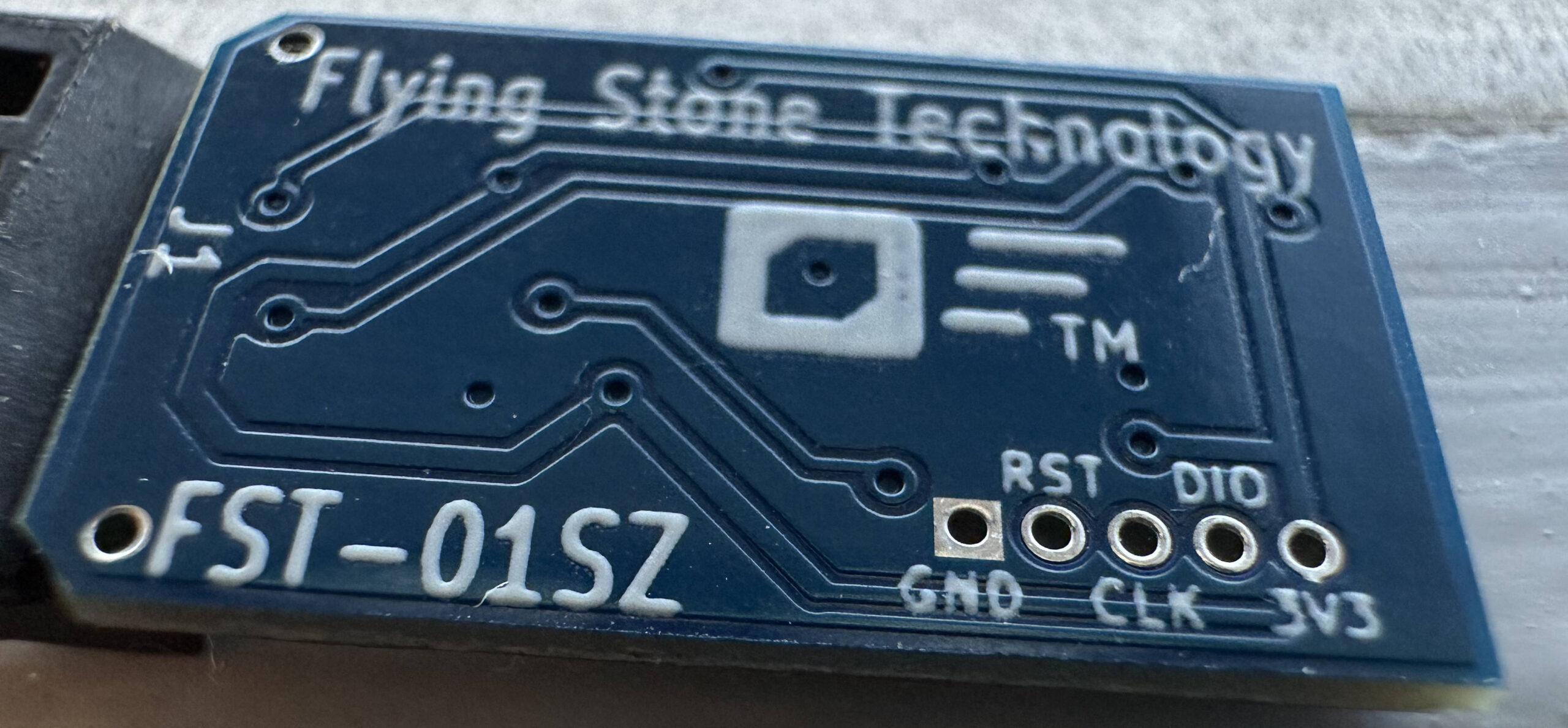
FST-01SZ circuit board
Similar to setting up the FST-01G, the FST-01SZ needs to be setup before use. I m doing the following from Trisquel 11 but any GNU/Linux system would work. When the device is inserted at first time, some kernel messages are shown (see /var/log/syslog or use the dmesg command):

usb 3-3: new full-speed USB device number 39 using xhci_hcd
usb 3-3: New USB device found, idVendor=234b, idProduct=0004, bcdDevice= 2.00
usb 3-3: New USB device strings: Mfr=1, Product=2, SerialNumber=3
usb 3-3: Product: Fraucheky
usb 3-3: Manufacturer: Free Software Initiative of Japan
usb 3-3: SerialNumber: FSIJ-0.0
usb-storage 3-3:1.0: USB Mass Storage device detected
scsi host1: usb-storage 3-3:1.0
scsi 1:0:0:0: Direct-Access     FSIJ     Fraucheky        1.0  PQ: 0 ANSI: 0
sd 1:0:0:0: Attached scsi generic sg2 type 0
sd 1:0:0:0: [sdc] 128 512-byte logical blocks: (65.5 kB/64.0 KiB)
sd 1:0:0:0: [sdc] Write Protect is off
sd 1:0:0:0: [sdc] Mode Sense: 03 00 00 00
sd 1:0:0:0: [sdc] No Caching mode page found
sd 1:0:0:0: [sdc] Assuming drive cache: write through
 sdc:
sd 1:0:0:0: [sdc] Attached SCSI removable disk
Interestingly, the NeuG software installed on the device I got appears to be version 1.0.9:

jas@kaka:~$ head /media/jas/Fraucheky/README
NeuG - a true random number generator implementation
						  Version 1.0.9
						     2018-11-20
					           Niibe Yutaka
			      Free Software Initiative of Japan
What's NeuG?
============
jas@kaka:~$ 
I could not find version 1.0.9 published anywhere, but the device came with a SD-card that contain a copy of the source, so I uploaded it until a more canonical place is located. Putting the device in the serial mode can be done using a sudo eject /dev/sdc command which results in the following syslog output.

usb 3-3: reset full-speed USB device number 39 using xhci_hcd
usb 3-3: device firmware changed
usb 3-3: USB disconnect, device number 39
sdc: detected capacity change from 128 to 0
usb 3-3: new full-speed USB device number 40 using xhci_hcd
usb 3-3: New USB device found, idVendor=234b, idProduct=0001, bcdDevice= 2.00
usb 3-3: New USB device strings: Mfr=1, Product=2, SerialNumber=3
usb 3-3: Product: NeuG True RNG
usb 3-3: Manufacturer: Free Software Initiative of Japan
usb 3-3: SerialNumber: FSIJ-1.0.9-42315277
cdc_acm 3-3:1.0: ttyACM0: USB ACM device
Now download Gnuk, verify its integrity and build it. You may need some additional packages installed, try apt-get install gcc-arm-none-eabi openocd python3-usb. As you can see, I m using the stable 1.2 branch of Gnuk, currently on version 1.2.20. The ./configure parameters deserve some explanation. The kdf_do=required sets up the device to require KDF usage. The --enable-factory-reset allows me to use the command factory-reset (with admin PIN) inside gpg --card-edit to completely wipe the card. Some may consider that too dangerous, but my view is that if someone has your admin PIN it is game over anyway. The --vidpid=234b:0000 is specifies the USB VID/PID to use, and --target=FST_01SZ is critical to set the platform (you ll may brick the device if you pick the wrong --target setting).

jas@kaka:~/src$ rm -rf gnuk neug
jas@kaka:~/src$ git clone https://gitlab.com/jas/neug.git
Cloning into 'neug'...
remote: Enumerating objects: 2034, done.
remote: Counting objects: 100% (2034/2034), done.
remote: Compressing objects: 100% (603/603), done.
remote: Total 2034 (delta 1405), reused 2013 (delta 1405), pack-reused 0
Receiving objects: 100% (2034/2034), 910.34 KiB   3.50 MiB/s, done.
Resolving deltas: 100% (1405/1405), done.
jas@kaka:~/src$ git clone https://salsa.debian.org/gnuk-team/gnuk/gnuk.git
Cloning into 'gnuk'...
remote: Enumerating objects: 13765, done.
remote: Counting objects: 100% (959/959), done.
remote: Compressing objects: 100% (337/337), done.
remote: Total 13765 (delta 629), reused 907 (delta 599), pack-reused 12806
Receiving objects: 100% (13765/13765), 12.59 MiB   3.05 MiB/s, done.
Resolving deltas: 100% (10077/10077), done.
jas@kaka:~/src$ cd neug
jas@kaka:~/src/neug$ git describe 
release/1.0.9
jas@kaka:~/src/neug$ git tag -v  git describe 
object 5d51022a97a5b7358d0ea62bbbc00628c6cec06a
type commit
tag release/1.0.9
tagger NIIBE Yutaka <gniibe@fsij.org> 1542701768 +0900
Version 1.0.9.
gpg: Signature made Tue Nov 20 09:16:08 2018 CET
gpg:                using EDDSA key 249CB3771750745D5CDD323CE267B052364F028D
gpg:                issuer "gniibe@fsij.org"
gpg: Good signature from "NIIBE Yutaka <gniibe@fsij.org>" [unknown]
gpg:                 aka "NIIBE Yutaka <gniibe@debian.org>" [unknown]
gpg: WARNING: This key is not certified with a trusted signature!
gpg:          There is no indication that the signature belongs to the owner.
Primary key fingerprint: 249C B377 1750 745D 5CDD  323C E267 B052 364F 028D
jas@kaka:~/src/neug$ cd ../gnuk/
jas@kaka:~/src/gnuk$ git checkout STABLE-BRANCH-1-2 
Branch 'STABLE-BRANCH-1-2' set up to track remote branch 'STABLE-BRANCH-1-2' from 'origin'.
Switched to a new branch 'STABLE-BRANCH-1-2'
jas@kaka:~/src/gnuk$ git describe
release/1.2.20
jas@kaka:~/src/gnuk$ git tag -v  git describe 
object 9d3c08bd2beb73ce942b016d4328f0a596096c02
type commit
tag release/1.2.20
tagger NIIBE Yutaka <gniibe@fsij.org> 1650594032 +0900
Gnuk: Version 1.2.20
gpg: Signature made Fri Apr 22 04:20:32 2022 CEST
gpg:                using EDDSA key 249CB3771750745D5CDD323CE267B052364F028D
gpg: Good signature from "NIIBE Yutaka <gniibe@fsij.org>" [unknown]
gpg:                 aka "NIIBE Yutaka <gniibe@debian.org>" [unknown]
gpg: WARNING: This key is not certified with a trusted signature!
gpg:          There is no indication that the signature belongs to the owner.
Primary key fingerprint: 249C B377 1750 745D 5CDD  323C E267 B052 364F 028D
jas@kaka:~/src/gnuk/src$ git submodule update --init
Submodule 'chopstx' (https://salsa.debian.org/gnuk-team/chopstx/chopstx.git) registered for path '../chopstx'
Cloning into '/home/jas/src/gnuk/chopstx'...
Submodule path '../chopstx': checked out 'e12a7e0bb3f004c7bca41cfdb24c8b66daf3db89'
jas@kaka:~/src/gnuk$ cd chopstx
jas@kaka:~/src/gnuk/chopstx$ git describe
release/1.21
jas@kaka:~/src/gnuk/chopstx$ git tag -v  git describe 
object e12a7e0bb3f004c7bca41cfdb24c8b66daf3db89
type commit
tag release/1.21
tagger NIIBE Yutaka <gniibe@fsij.org> 1650593697 +0900
Chopstx: Version 1.21
gpg: Signature made Fri Apr 22 04:14:57 2022 CEST
gpg:                using EDDSA key 249CB3771750745D5CDD323CE267B052364F028D
gpg: Good signature from "NIIBE Yutaka <gniibe@fsij.org>" [unknown]
gpg:                 aka "NIIBE Yutaka <gniibe@debian.org>" [unknown]
gpg: WARNING: This key is not certified with a trusted signature!
gpg:          There is no indication that the signature belongs to the owner.
Primary key fingerprint: 249C B377 1750 745D 5CDD  323C E267 B052 364F 028D
jas@kaka:~/src/gnuk/chopstx$ cd ../src
jas@kaka:~/src/gnuk/src$ kdf_do=required ./configure --enable-factory-reset --vidpid=234b:0000 --target=FST_01SZ
Header file is: board-fst-01sz.h
Debug option disabled
Configured for bare system (no-DFU)
PIN pad option disabled
CERT.3 Data Object is NOT supported
Card insert/removal by HID device is NOT supported
Life cycle management is supported
Acknowledge button is supported
KDF DO is required before key import/generation
jas@kaka:~/src/gnuk/src$ make   less
jas@kaka:~/src/gnuk/src$ cd ../regnual/
jas@kaka:~/src/gnuk/regnual$ make   less
jas@kaka:~/src/gnuk/regnual$ cd ../../
jas@kaka:~/src$ sudo python3 neug/tool/neug_upgrade.py -f gnuk/regnual/regnual.bin gnuk/src/build/gnuk.bin
gnuk/regnual/regnual.bin: 4608
gnuk/src/build/gnuk.bin: 109568
CRC32: b93ca829
Device: 
Configuration: 1
Interface: 1
20000e00:20005000
Downloading flash upgrade program...
start 20000e00
end   20002000
# 20002000: 32 : 4
Run flash upgrade program...
Wait 1 second...
Wait 1 second...
Device: 
08001000:08020000
Downloading the program
start 08001000
end   0801ac00
jas@kaka:~/src$ 
The kernel log will contain the following, and the card is ready to use as an OpenPGP card. You may unplug it and re-insert it as you wish.

usb 3-3: reset full-speed USB device number 41 using xhci_hcd
usb 3-3: device firmware changed
usb 3-3: USB disconnect, device number 41
usb 3-3: new full-speed USB device number 42 using xhci_hcd
usb 3-3: New USB device found, idVendor=234b, idProduct=0000, bcdDevice= 2.00
usb 3-3: New USB device strings: Mfr=1, Product=2, SerialNumber=3
usb 3-3: Product: Gnuk Token
usb 3-3: Manufacturer: Free Software Initiative of Japan
usb 3-3: SerialNumber: FSIJ-1.2.20-42315277
Setting up the card is the next step, and there are many tutorials around for this, eventually I settled with the following sequence. Let s start with setting the admin PIN. First make sure that pcscd nor scdaemon is running, which is good hygien since those processes cache some information and with a stale connection this easily leads to confusion. Cache invalidation sigh.

jas@kaka:~$ gpg-connect-agent "SCD KILLSCD" "SCD BYE" /bye
jas@kaka:~$ ps auxww grep -e pcsc -e scd
jas        30221  0.0  0.0   3468  1692 pts/3    R+   11:49   0:00 grep --color=auto -e pcsc -e scd
jas@kaka:~$ gpg --card-edit
Reader ...........: 234B:0000:FSIJ-1.2.20-42315277:0
Application ID ...: D276000124010200FFFE423152770000
Application type .: OpenPGP
Version ..........: 2.0
Manufacturer .....: unmanaged S/N range
Serial number ....: 42315277
Name of cardholder: [not set]
Language prefs ...: [not set]
Salutation .......: 
URL of public key : [not set]
Login data .......: [not set]
Signature PIN ....: forced
Key attributes ...: rsa2048 rsa2048 rsa2048
Max. PIN lengths .: 127 127 127
PIN retry counter : 3 3 3
Signature counter : 0
KDF setting ......: off
Signature key ....: [none]
Encryption key....: [none]
Authentication key: [none]
General key info..: [none]
gpg/card> admin
Admin commands are allowed
gpg/card> kdf-setup
gpg/card> passwd
gpg: OpenPGP card no. D276000124010200FFFE423152770000 detected
1 - change PIN
2 - unblock PIN
3 - change Admin PIN
4 - set the Reset Code
Q - quit
Your selection? 3
PIN changed.
1 - change PIN
2 - unblock PIN
3 - change Admin PIN
4 - set the Reset Code
Q - quit
Your selection? 
Now it would be natural to setup the PIN and reset code. However the Gnuk software is configured to not allow this until the keys are imported. You would get the following somewhat cryptical error messages if you try. This took me a while to understand, since this is device-specific, and some other OpenPGP implementations allows you to configure a PIN and reset code before key import.

Your selection? 4
Error setting the Reset Code: Card error
1 - change PIN
2 - unblock PIN
3 - change Admin PIN
4 - set the Reset Code
Q - quit
Your selection? 1
Error changing the PIN: Conditions of use not satisfied
1 - change PIN
2 - unblock PIN
3 - change Admin PIN
4 - set the Reset Code
Q - quit
Your selection? q
Continue to configure the card and make it ready for key import. Some settings deserve comments. The lang field may be used to setup the language, but I have rarely seen it use, and I set it to sv (Swedish) mostly to be able to experiment if any software adhears to it. The URL is important to point to somewhere where your public key is stored, the fetch command of gpg --card-edit downloads it and sets up GnuPG with it when you are on a clean new laptop. The forcesig command changes the default so that a PIN code is not required for every digital signature operation, remember that I averaged 10 signatures per day for the past 2-3 years? Think of the wasted energy typing those PIN codes every time! Changing the cryptographic key type is required when I import 25519-based keys.

gpg/card> name
Cardholder's surname: Josefsson
Cardholder's given name: Simon
gpg/card> lang
Language preferences: sv
gpg/card> sex
Salutation (M = Mr., F = Ms., or space): m
gpg/card> login
Login data (account name): jas
gpg/card> url
URL to retrieve public key: https://josefsson.org/key-20190320.txt
gpg/card> forcesig
gpg/card> key-attr
Changing card key attribute for: Signature key
Please select what kind of key you want:
   (1) RSA
   (2) ECC
Your selection? 2
Please select which elliptic curve you want:
   (1) Curve 25519
   (4) NIST P-384
Your selection? 1
The card will now be re-configured to generate a key of type: ed25519
Note: There is no guarantee that the card supports the requested size.
      If the key generation does not succeed, please check the
      documentation of your card to see what sizes are allowed.
Changing card key attribute for: Encryption key
Please select what kind of key you want:
   (1) RSA
   (2) ECC
Your selection? 2
Please select which elliptic curve you want:
   (1) Curve 25519
   (4) NIST P-384
Your selection? 1
The card will now be re-configured to generate a key of type: cv25519
Changing card key attribute for: Authentication key
Please select what kind of key you want:
   (1) RSA
   (2) ECC
Your selection? 2
Please select which elliptic curve you want:
   (1) Curve 25519
   (4) NIST P-384
Your selection? 1
The card will now be re-configured to generate a key of type: ed25519
gpg/card> 
Reader ...........: 234B:0000:FSIJ-1.2.20-42315277:0
Application ID ...: D276000124010200FFFE423152770000
Application type .: OpenPGP
Version ..........: 2.0
Manufacturer .....: unmanaged S/N range
Serial number ....: 42315277
Name of cardholder: Simon Josefsson
Language prefs ...: sv
Salutation .......: Mr.
URL of public key : https://josefsson.org/key-20190320.txt
Login data .......: jas
Signature PIN ....: not forced
Key attributes ...: ed25519 cv25519 ed25519
Max. PIN lengths .: 127 127 127
PIN retry counter : 3 3 3
Signature counter : 0
KDF setting ......: on
Signature key ....: [none]
Encryption key....: [none]
Authentication key: [none]
General key info..: [none]
gpg/card> 
The device is now ready for key import! Bring out your offline laptop and boot it and use the keytocard command on the subkeys to import them. This assumes you saved a copy of the GnuPG home directory after generating the master and subkeys before, which I did in my own previous tutorial when I generated the keys. This may be a bit unusual, and there are simpler ways to do this (e.g., import a copy of the secret keys into a fresh GnuPG home directory).

$ cp -a gnupghome-backup-mastersubkeys gnupghome-import-fst01sz-42315277-2022-12-24
$ ps auxww grep -e pcsc -e scd
$ gpg --homedir $PWD/gnupghome-import-fst01sz-42315277-2022-12-24 --edit-key B1D2BD1375BECB784CF4F8C4D73CF638C53C06BE
...
Secret key is available.
gpg: checking the trustdb
gpg: marginals needed: 3  completes needed: 1  trust model: pgp
gpg: depth: 0  valid:   1  signed:   0  trust: 0-, 0q, 0n, 0m, 0f, 1u
sec  ed25519/D73CF638C53C06BE
     created: 2019-03-20  expired: 2019-10-22  usage: SC  
     trust: ultimate      validity: expired
ssb  cv25519/02923D7EE76EBD60
     created: 2019-03-20  expired: 2019-10-22  usage: E   
ssb  ed25519/80260EE8A9B92B2B
     created: 2019-03-20  expired: 2019-10-22  usage: A   
ssb  ed25519/51722B08FE4745A2
     created: 2019-03-20  expired: 2019-10-22  usage: S   
[ expired] (1). Simon Josefsson <simon@josefsson.org>
gpg> key 1
sec  ed25519/D73CF638C53C06BE
     created: 2019-03-20  expired: 2019-10-22  usage: SC  
     trust: ultimate      validity: expired
ssb* cv25519/02923D7EE76EBD60
     created: 2019-03-20  expired: 2019-10-22  usage: E   
ssb  ed25519/80260EE8A9B92B2B
     created: 2019-03-20  expired: 2019-10-22  usage: A   
ssb  ed25519/51722B08FE4745A2
     created: 2019-03-20  expired: 2019-10-22  usage: S   
[ expired] (1). Simon Josefsson <simon@josefsson.org>
gpg> keytocard
Please select where to store the key:
   (2) Encryption key
Your selection? 2
sec  ed25519/D73CF638C53C06BE
     created: 2019-03-20  expired: 2019-10-22  usage: SC  
     trust: ultimate      validity: expired
ssb* cv25519/02923D7EE76EBD60
     created: 2019-03-20  expired: 2019-10-22  usage: E   
ssb  ed25519/80260EE8A9B92B2B
     created: 2019-03-20  expired: 2019-10-22  usage: A   
ssb  ed25519/51722B08FE4745A2
     created: 2019-03-20  expired: 2019-10-22  usage: S   
[ expired] (1). Simon Josefsson <simon@josefsson.org>
gpg> key 1
sec  ed25519/D73CF638C53C06BE
     created: 2019-03-20  expired: 2019-10-22  usage: SC  
     trust: ultimate      validity: expired
ssb  cv25519/02923D7EE76EBD60
     created: 2019-03-20  expired: 2019-10-22  usage: E   
ssb  ed25519/80260EE8A9B92B2B
     created: 2019-03-20  expired: 2019-10-22  usage: A   
ssb  ed25519/51722B08FE4745A2
     created: 2019-03-20  expired: 2019-10-22  usage: S   
[ expired] (1). Simon Josefsson <simon@josefsson.org>
gpg> key 2

sec  ed25519/D73CF638C53C06BE
     created: 2019-03-20  expired: 2019-10-22  usage: SC  
     trust: ultimate      validity: expired
ssb  cv25519/02923D7EE76EBD60
     created: 2019-03-20  expired: 2019-10-22  usage: E   
ssb* ed25519/80260EE8A9B92B2B
     created: 2019-03-20  expired: 2019-10-22  usage: A   
ssb  ed25519/51722B08FE4745A2
     created: 2019-03-20  expired: 2019-10-22  usage: S   
[ expired] (1). Simon Josefsson <simon@josefsson.org>
gpg> keytocard
Please select where to store the key:
   (3) Authentication key
Your selection? 3
sec  ed25519/D73CF638C53C06BE
     created: 2019-03-20  expired: 2019-10-22  usage: SC  
     trust: ultimate      validity: expired
ssb  cv25519/02923D7EE76EBD60
     created: 2019-03-20  expired: 2019-10-22  usage: E   
ssb* ed25519/80260EE8A9B92B2B
     created: 2019-03-20  expired: 2019-10-22  usage: A   
ssb  ed25519/51722B08FE4745A2
     created: 2019-03-20  expired: 2019-10-22  usage: S   
[ expired] (1). Simon Josefsson <simon@josefsson.org>
gpg> key 2
sec  ed25519/D73CF638C53C06BE
     created: 2019-03-20  expired: 2019-10-22  usage: SC  
     trust: ultimate      validity: expired
ssb  cv25519/02923D7EE76EBD60
     created: 2019-03-20  expired: 2019-10-22  usage: E   
ssb  ed25519/80260EE8A9B92B2B
     created: 2019-03-20  expired: 2019-10-22  usage: A   
ssb  ed25519/51722B08FE4745A2
     created: 2019-03-20  expired: 2019-10-22  usage: S   
[ expired] (1). Simon Josefsson <simon@josefsson.org>
gpg> key 3
sec  ed25519/D73CF638C53C06BE
     created: 2019-03-20  expired: 2019-10-22  usage: SC  
     trust: ultimate      validity: expired
ssb  cv25519/02923D7EE76EBD60
     created: 2019-03-20  expired: 2019-10-22  usage: E   
ssb  ed25519/80260EE8A9B92B2B
     created: 2019-03-20  expired: 2019-10-22  usage: A   
ssb* ed25519/51722B08FE4745A2
     created: 2019-03-20  expired: 2019-10-22  usage: S   
[ expired] (1). Simon Josefsson <simon@josefsson.org>
gpg> keytocard
Please select where to store the key:
   (1) Signature key
   (3) Authentication key
Your selection? 1
sec  ed25519/D73CF638C53C06BE
     created: 2019-03-20  expired: 2019-10-22  usage: SC  
     trust: ultimate      validity: expired
ssb  cv25519/02923D7EE76EBD60
     created: 2019-03-20  expired: 2019-10-22  usage: E   
ssb  ed25519/80260EE8A9B92B2B
     created: 2019-03-20  expired: 2019-10-22  usage: A   
ssb* ed25519/51722B08FE4745A2
     created: 2019-03-20  expired: 2019-10-22  usage: S   
[ expired] (1). Simon Josefsson <simon@josefsson.org>
gpg> quit
Save changes? (y/N) y
$ 
Now insert it into your daily laptop and have GnuPG and learn about the new private keys and forget about any earlier locally available card bindings this usually manifests itself by GnuPG asking you to insert a OpenPGP card with another serial number. Earlier I did rm -rf ~/.gnupg/private-keys-v1.d/ but the scd serialno followed by learn --force is nicer. I also sets up trust setting for my own key.

jas@kaka:~$ gpg-connect-agent "scd serialno" "learn --force" /bye
...
jas@kaka:~$ echo "B1D2BD1375BECB784CF4F8C4D73CF638C53C06BE:6:"   gpg --import-ownertrust
jas@kaka:~$ gpg --card-status
Reader ...........: 234B:0000:FSIJ-1.2.20-42315277:0
Application ID ...: D276000124010200FFFE423152770000
Application type .: OpenPGP
Version ..........: 2.0
Manufacturer .....: unmanaged S/N range
Serial number ....: 42315277
Name of cardholder: Simon Josefsson
Language prefs ...: sv
Salutation .......: Mr.
URL of public key : https://josefsson.org/key-20190320.txt
Login data .......: jas
Signature PIN ....: not forced
Key attributes ...: ed25519 cv25519 ed25519
Max. PIN lengths .: 127 127 127
PIN retry counter : 5 5 5
Signature counter : 3
KDF setting ......: on
Signature key ....: A3CC 9C87 0B9D 310A BAD4  CF2F 5172 2B08 FE47 45A2
      created ....: 2019-03-20 23:40:49
Encryption key....: A9EC 8F4D 7F1E 50ED 3DEF  49A9 0292 3D7E E76E BD60
      created ....: 2019-03-20 23:40:26
Authentication key: CA7E 3716 4342 DF31 33DF  3497 8026 0EE8 A9B9 2B2B
      created ....: 2019-03-20 23:40:37
General key info..: sub  ed25519/51722B08FE4745A2 2019-03-20 Simon Josefsson <simon@josefsson.org>
sec#  ed25519/D73CF638C53C06BE  created: 2019-03-20  expires: 2023-09-19
ssb>  ed25519/80260EE8A9B92B2B  created: 2019-03-20  expires: 2023-09-19
                                card-no: FFFE 42315277
ssb>  ed25519/51722B08FE4745A2  created: 2019-03-20  expires: 2023-09-19
                                card-no: FFFE 42315277
ssb>  cv25519/02923D7EE76EBD60  created: 2019-03-20  expires: 2023-09-19
                                card-no: FFFE 42315277
jas@kaka:~$ 
Verify that you can digitally sign and authenticate using the key and you are done!

jas@kaka:~$ echo foo gpg -a --sign gpg --verify
gpg: Signature made Sat Dec 24 13:49:59 2022 CET
gpg:                using EDDSA key A3CC9C870B9D310ABAD4CF2F51722B08FE4745A2
gpg: Good signature from "Simon Josefsson <simon@josefsson.org>" [ultimate]
jas@kaka:~$ ssh-add -L
ssh-ed25519 AAAAC3NzaC1lZDI1NTE5AAAAILzCFcHHrKzVSPDDarZPYqn89H5TPaxwcORgRg+4DagE cardno:FFFE42315277
jas@kaka:~$ 
So time to relax and celebrate christmas? Hold on not so fast! Astute readers will have noticed that the output said PIN retry counter: 5 5 5 . That s not the default PIN retry counter for Gnuk! How did that happen? Indeed, good catch and great question, my dear reader. I wanted to include how you can modify the Gnuk source code, re-build it and re-flash the Gnuk as well. This method is different than flashing Gnuk onto a device that is running NeuG so the commands I used to flash the firmware in the start of this blog post no longer works in a device running Gnuk. Fortunately modern Gnuk supports updating firmware by specifying the Admin PIN code only, and provides a simple script to achieve this as well. The PIN retry counter setting is hard coded in the openpgp-do.c file, and we run a a perl command to modify the file, rebuild Gnuk and upgrade the FST-01SZ. This of course wipes all your settings, so you will have the opportunity to practice all the commands earlier in this post once again!

jas@kaka:~/src/gnuk/src$ perl -pi -e 's/PASSWORD_ERRORS_MAX 3/PASSWORD_ERRORS_MAX 5/' openpgp-do.c
jas@kaka:~/src/gnuk/src$ make   less
jas@kaka:~/src/gnuk/src$ cd ../tool/
jas@kaka:~/src/gnuk/tool$ ./upgrade_by_passwd.py 
Admin password: 
Device: 
Configuration: 1
Interface: 0
../regnual/regnual.bin: 4608
../src/build/gnuk.bin: 110592
CRC32: b93ca829
Device: 
Configuration: 1
Interface: 0
20002a00:20005000
Downloading flash upgrade program...
start 20002a00
end   20003c00
Run flash upgrade program...
Waiting for device to appear:
  Wait 1 second...
  Wait 1 second...
Device: 
08001000:08020000
Downloading the program
start 08001000
end   0801b000
Protecting device
Finish flashing
Resetting device
Update procedure finished
jas@kaka:~/src/gnuk/tool$
Now finally, I wish you all a Merry Christmas and Happy Hacking!

21 December 2022

Russ Allbery: Review: Shutdown

Review: Shutdown, by Adam Tooze
Publisher: Viking
Copyright: September 2021
ISBN: 0-593-29756-3
Format: Kindle
Pages: 305
Shutdown is a history of the world macroeconomic response to COVID-19, covering 2020 and the very beginning of 2021. But wait, you might be saying. It's only the end of 2022 right now, and this book was published in September of 2021. That's not history, that's journalism. And yes, I think that's a valid critique. Shutdown is doing something rather odd, and I'm not certain it was a good idea, but I do think it has a (somewhat narrow) audience. Descriptions first. After an awkward introduction (more on that later), Tooze launches into an essentially chronological history in four parts: the initial viral spread and early political and public health response, the economic hard stop and macroeconomic response, the summer fallout and political complications, and the more-organized aftershocks of the fall. The early chapters are closer to a history, with a clear timeline and the tracery of cause and effect. The closer the narrative comes to the time Tooze was writing it, the more that clarity drops away. The last few chapters feel like a collection of simultaneous events that may or may not be related or have long-term significance. Everyone reading this lived through those events, and if you're at all like me, consumed far more news coverage of them than was healthy. The obvious question, then, is why read a book that rehashes all of that? For me, there are two answers: Tooze pays attention to more of the world than makes it into the local headlines and tries to synthesize a larger picture, and the focus of this book is the macroeconomic facilities used in the response. I remember the fights over school closures in the US. I didn't know about the impact of unprecedented Federal Reserve action on the bond market for emerging market government debt. If you're the sort of person who reads The Economist religiously (which I am not), you may not learn anything new here. If you're not, and you have a general interest in international finance, there were probably some wrinkles you missed. Even if you stay up-to-date on the more technical news, Shutdown provides an intermediate consolidation and restructuring. It's not ready to be a history in the traditional sense, but it's a first pass at putting events in order and tracing the implications for the global financial system. Read in that sense, Shutdown felt like a continuation of Tooze's Crashed, following the same themes of a hegemonic but unstable dollar system and a Federal Reserve that has increasingly taken on the role of backstop to the entire world (and how the only tools it has available tend to increase wealth inequality). If you've not read Crashed, read it first. I think it's the stronger and more thorough book (not the least because it had more time and data to construct a coherent history), and it's the best introduction to the international macroeconomic risks that Tooze traces in Shutdown. This book was, for me, an update of the Tooze's thinking in Crashed for the COVID era. Tooze is very good at clearly describing macroeconomic shocks. I recently read Lev Menand's The Fed Unbound, which is in part about the same intervention during the COVID shock that Tooze describes here, and yet it wasn't until I read Shutdown that I grasped that the Treasury purchases by the Fed had arguably crossed the political red line of monetizing government debt, even though the Fed probably had no choice and few people noticed in the middle of the crisis. This is where Tooze's background as a historian is helpful. Most people writing on this topic are either economists, who seem to take inferences like that for granted and dive into the technical debate, or journalists, who rarely understand the nuance and often jump to facile conclusions. Tooze is a historian with an extensive economics background; he can explain the mechanics while still focusing on the limitations of politics, which is the sort of analysis that I want to read. The problem with this book as a history is that it necessarily raises more questions than it answers. In the conclusion, Tooze writes:
A severe tightening in U.S. monetary policy or even a full-fledged taper tantrum would put global resilience to a stern test. So too would a violent escalation of geopolitical tension in one of the major regions of the world economy.
Both of those events have subsequently happened, which throws any tentative conclusions Tooze can offer into question. For another example, when Tooze wrote Shutdown, China's zero COVID policy was widely celebrated inside China and had enabled a fast economic recovery while the rest of the world was still in serious difficulty. Before Omicron, it was conceivable (if extremely risky) that China could continue to avoid a major COVID surge. In December of 2022, it's obvious they only managed to delay, and while delay meant vaccination and the price in deaths may well be smaller than was paid for the route taken by most of the rest of the world, the trade-offs are now even harder to analyze. There are, of course, other examples, the most obvious of which is the rise of global inflation simultaneous with a strengthening dollar. A history written from a distance of several decades would have included that aftermath. A snap history with a distance of only a few months cannot. The other problem with this book is that it's not as polished. Viking did an amazing job turning publication around in roughly six months, dramatically faster than publishing normally works, but there are parts that could have used more editing. The introduction, in particular, reads more like a blog post than an edited book, and while I'm a happy reader of Tooze's Chartbook, the recap of COVID's impact was a bit trite and Tooze's abstract musings on polycrisis could have used tightening and clarity. The meat of the book is better, but there is a messy stream-of-consciousness feel that is inherent in a book written to this tight of a timeline. I think the audience of this book is, narrowly, people who have read Crashed and want to follow that line of reasoning into the COVID era. Crashed is one of the better books on macroeconomic history that I've read, and I did indeed want to follow that train of thought, so I am part of that audience. This is not the sort of book that I would widely recommend, however. If you want to read it, you probably know that already; if you are new to Tooze's analysis, Crashed is the place to start. Rating: 7 out of 10

Dirk Eddelbuettel: RcppDE 0.1.7 on CRAN: Several Updates

The first fresh release of our RcppDE package in over four years (!!) is now on CRAN. RcppDE is a port of DEoptim, a popular package for derivative-free optimisation using differential evolution optimization, from plain C to C++. By using RcppArmadillo the code becomes a lot shorter and more legible. Our other main contribution is to leverage some of the excellence we get for free from using Rcpp, in particular the ability to optimise user-supplied compiled objective functions which can make things a lot faster than repeatedly evaluating interpreted objective functions as DEoptim does (and which, in fairness, most other optimisers do too). The gains can be quite substantial. This release brings two helpful patches from Max Coulter who spotted two distinct areas for improvement, based on how DEoptim how changed in recent years. I updated a number of aspects of continuous integration since the last release, and also streamlined and simplified the C++ interface (and in doing so also squashed a bug or two). Courtesy of my CRANberries, there is also a diffstat report. More detailed information is on the RcppDE page, or the repository. If you like this or other open-source work I do, you can sponsor me at GitHub.

This post by Dirk Eddelbuettel originated on his Thinking inside the box blog. Please report excessive re-aggregation in third-party for-profit settings.

18 December 2022

Ian Jackson: Rust needs #[throws]

tl;dr: Ok-wrapping as needed in today s Rust is a significant distraction, because there are multiple ways to do it. They are all slightly awkward in different ways, so are least-bad in different situations. You must choose a way for every fallible function, and sometimes change a function from one pattern to another. Rust really needs #[throws] as a first-class language feature. Code using #[throws] is simpler and clearer. Please try out withoutboats s fehler. I think you will like it. Contents A recent personal experience in coding style Ever since I read withoutboats s 2020 article about fehler, I have been using it in most of my personal projects. For Reasons I recently had a go at eliminating the dependency on fehler from Hippotat. So, I made a branch, deleted the dependency and imports, and started on the whack-a-mole with the compiler errors. After about a half hour of this, I was starting to feel queasy. After an hour I had decided that basically everything I was doing was making the code worse. And, bizarrely, I kept having to make individual decisons about what idiom to use in each place. I couldn t face it any more. After sleeping on the question I decided that Hippotat would be in Debian with fehler, or not at all. Happily the Debian Rust Team generously helped me out, so the answer is that fehler is now in Debian, so it s fine. For me this experience, of trying to convert Rust-with-#[throws] to Rust-without-#[throws] brought the Ok wrapping problem into sharp focus. What is Ok wrapping? Intro to Rust error handling (You can skip this section if you re already a seasoned Rust programer.) In Rust, fallibility is represented by functions that return Result<SuccessValue, Error>: this is a generic type, representing either whatever SuccessValue is (in the Ok variant of the data-bearing enum) or some Error (in the Err variant). For example, std::fs::read_to_string, which takes a filename and returns the contents of the named file, returns Result<String, std::io::Error>. This is a nice and typesafe formulation of, and generalisation of, the traditional C practice, where a function indicates in its return value whether it succeeded, and errors are indicated with an error code. Result is part of the standard library and there are convenient facilities for checking for errors, extracting successful results, and so on. In particular, Rust has the postfix ? operator, which, when applied to a Result, does one of two things: if the Result was Ok, it yields the inner successful value; if the Result was Err, it returns early from the current function, returning an Err in turn to the caller. This means you can write things like this:
    let input_data = std::fs::read_to_string(input_file)?;
and the error handling is pretty automatic. You get a compiler warning, or a type error, if you forget the ?, so you can t accidentally ignore errors. But, there is a downside. When you are returning a successful outcome from your function, you must convert it into a Result. After all, your fallible function has return type Result<SuccessValue, Error>, which is a different type to SuccessValue. So, for example, inside std::fs::read_to_string, we see this:
        let mut string = String::new();
        file.read_to_string(&mut string)?;
        Ok(string)
     
string has type String; fs::read_to_string must return Result<String, ..>, so at the end of the function we must return Ok(string). This applies to return statements, too: if you want an early successful return from a fallible function, you must write return Ok(whatever). This is particularly annoying for functions that don t actually return a nontrivial value. Normally, when you write a function that doesn t return a value you don t write the return type. The compiler interprets this as syntactic sugar for -> (), ie, that the function returns (), the empty tuple, used in Rust as a dummy value in these kind of situations. A block ( ... ) whose last statement ends in a ; has type (). So, when you fall off the end of a function, the return value is (), without you having to write it. So you simply leave out the stuff in your program about the return value, and your function doesn t have one (i.e. it returns ()). But, a function which either fails with an error, or completes successfuly without returning anything, has return type Result<(), Error>. At the end of such a function, you must explicitly provide the success value. After all, if you just fall off the end of a block, it means the block has value (), which is not of type Result<(), Error>. So the fallible function must end with Ok(()), as we see in the example for std::fs::read_to_string. A minor inconvenience, or a significant distraction? I think the need for Ok-wrapping on all success paths from fallible functions is generally regarded as just a minor inconvenience. Certainly the experienced Rust programmer gets very used to it. However, while trying to remove fehler s #[throws] from Hippotat, I noticed something that is evident in codebases using vanilla Rust (without fehler) but which goes un-remarked. There are multiple ways to write the Ok-wrapping, and the different ways are appropriate in different situations. See the following examples, all taken from a real codebase. (And it s not just me: I do all of these in different places, - when I don t have fehler available - but all these examples are from code written by others.) Idioms for Ok-wrapping - a bestiary Wrap just a returned variable binding If you have the return value in a variable, you can write Ok(reval) at the end of the function, instead of retval.
    pub fn take_until(&mut self, term: u8) -> Result<&'a [u8]>  
        // several lines of code
        Ok(result)
     
If the returned value is not already bound to variable, making a function fallible might mean choosing to bind it to a variable. Wrap a nontrivial return expression Even if it s not just a variable, you can wrap the expression which computes the returned value. This is often done if the returned value is a struct literal:
    fn take_from(r: &mut Reader<'_>) -> Result<Self>  
        // several lines of code
        Ok(AuthChallenge   challenge, methods  )
     
Introduce Ok(()) at the end For functions returning Result<()>, you can write Ok(()). This is usual, but not ubiquitous, since sometimes you can omit it. Wrap the whole body If you don t have the return value in a variable, you can wrap the whole body of the function in Ok( ). Whether this is a good idea depends on how big and complex the body is.
    fn from_str(s: &str) -> std::result::Result<Self, Self::Err>  
        Ok(match s  
            "Authority" => RelayFlags::AUTHORITY,
            // many other branches
            _ => RelayFlags::empty(),
         )
     
Omit the wrap when calling fallible sub-functions If your function wraps another function call of the same return and error type, you don t need to write the Ok at all. Instead, you can simply call the function and not apply ?. You can do this even if your function selects between a number of different sub-functions to call:
    fn fmt(&self, f: &mut std::fmt::Formatter<'_>) -> std::fmt::Result  
        if flags::unsafe_logging_enabled()  
            std::fmt::Display::fmt(&self.0, f)
          else  
            self.0.display_redacted(f)
         
     
But this doesn t work if the returned error type isn t the same, but needs the autoconversion implied by the ? operator. Convert a fallible sub-function error with Ok( ... ?) If the final thing a function does is chain to another fallible function, but with a different error type, the error must be converted somehow. This can be done with ?.
     fn try_from(v: i32) -> Result<Self, Error>  
         Ok(Percentage::new(v.try_into()?))
      
Convert a fallible sub-function error with .map_err Or, rarely, people solve the same problem by converting explicitly with .map_err:
     pub fn create_unbootstrapped(self) -> Result<TorClient<R>>  
         // several lines of code
         TorClient::create_inner(
             // several parameters
         )
         .map_err(ErrorDetail::into)
      
What is to be done, then? The fehler library is in excellent taste and has the answer. With fehler: fehler provides: This is precisely correct. It is very ergonomic. Consequences include: Limitations of fehler But, fehler is a Rust procedural macro, so it cannot get everything right. Sadly there are some wrinkles. But, Rust-with-#[throws] is so much nicer a language than Rust-with-mandatory-Ok-wrapping, that these are minor inconveniences. Please can we have #[throws] in the Rust language This ought to be part of the language, not a macro library. In the compiler, it would be possible to get the all the corner cases right. It would make the feature available to everyone, and it would quickly become idiomatic Rust throughout the community. It is evident from reading writings from the time, particularly those from withoutboats, that there were significant objections to automatic Ok-wrapping. It seems to have become quite political, and some folks burned out on the topic. Perhaps, now, a couple of years later, we can revisit this area and solve this problem in the language itself ? Explicitness An argument I have seen made against automatic Ok-wrapping, and, in general, against any kind of useful language affordance, is that it makes things less explicit. But this argument is fundamentally wrong for Ok-wrapping. Explicitness is not an unalloyed good. We humans have only limited attention. We need to focus that attention where it is actually needed. So explicitness is good in situtions where what is going on is unusual; or would otherwise be hard to read; or is tricky or error-prone. Generally: explicitness is good for things where we need to direct humans attention. But Ok-wrapping is ubiquitous in fallible Rust code. The compiler mechanisms and type systems almost completely defend against mistakes. All but the most novice programmer knows what s going on, and the very novice programmer doesn t need to. Rust s error handling arrangments are designed specifically so that we can avoid worrying about fallibility unless necessary except for the Ok-wrapping. Explicitness about Ok-wrapping directs our attention away from whatever other things the code is doing: it is a distraction. So, explicitness about Ok-wrapping is a bad thing. Appendix - examples showning code with Ok wrapping is worse than code using #[throws] Observe these diffs, from my abandoned attempt to remove the fehler dependency from Hippotat. I have a type alias AE for the usual error type (AE stands for anyhow::Error). In the non-#[throws] code, I end up with a type alias AR<T> for Result<T, AE>, which I think is more opaque but at least that avoids typing out -> Result< , AE> a thousand times. Some people like to have a local Result alias, but that means that the standard Result has to be referred to as StdResult or std::result::Result.
With fehler and #[throws] Vanilla Rust, Result<>, mandatory Ok-wrapping

Return value clearer, error return less wordy:
impl Parseable for Secret impl Parseable for Secret
#[throws(AE)]
fn parse(s: Option<&str>) -> Self fn parse(s: Option<&str>) -> AR<Self>
let s = s.value()?; let s = s.value()?;
if s.is_empty() throw!(anyhow!( secret value cannot be empty )) if s.is_empty() return Err(anyhow!( secret value cannot be empty ))
Secret(s.into()) Ok(Secret(s.into()))
No need to wrap whole match statement in Ok( ):
#[throws(AE)]
pub fn client<T>(&self, key: & static str, skl: SKL) -> T pub fn client<T>(&self, key: & static str, skl: SKL) -> AR<T>
where T: Parseable + Default where T: Parseable + Default
match self.end Ok(match self.end
LinkEnd::Client => self.ordinary(key, skl)?, LinkEnd::Client => self.ordinary(key, skl)?,
LinkEnd::Server => default(), LinkEnd::Server => default(),
)
Return value and Ok(()) entirely replaced by #[throws]:
impl Display for Loc impl Display for Loc
#[throws(fmt::Error)]
fn fmt(&self, f: &mut fmt::Formatter) fn fmt(&self, f: &mut fmt::Formatter) -> fmt::Result
write!(f, :? : , &self.file, self.lno)?; write!(f, :? : , &self.file, self.lno)?;
if let Some(s) = &self.section if let Some(s) = &self.section
write!(f, )?; write!(f, )?;
Ok(())
Call to write! now looks the same as in more complex case shown above:
impl Debug for Secret impl Debug for Secret
#[throws(fmt::Error)]
fn fmt(&self, f: &mut fmt::Formatter) fn fmt(&self, f: &mut fmt::Formatter)-> fmt::Result
write!(f, "Secret(***)")?; write!(f, "Secret(***)")
Much tiresome return Ok() noise removed:
impl FromStr for SectionName impl FromStr for SectionName
type Err = AE; type Err = AE;
#[throws(AE)]
fn from_str(s: &str) -> Self fn from_str(s: &str) ->AR< Self>
match s match s
COMMON => return SN::Common, COMMON => return Ok(SN::Common),
LIMIT => return SN::GlobalLimit, LIMIT => return Ok(SN::GlobalLimit),
_ => _ =>
; ;
if let Ok(n@ ServerName(_)) = s.parse() return SN::Server(n) if let Ok(n@ ServerName(_)) = s.parse() return Ok(SN::Server(n))
if let Ok(n@ ClientName(_)) = s.parse() return SN::Client(n) if let Ok(n@ ClientName(_)) = s.parse() return Ok(SN::Client(n))
if client == LIMIT return SN::ServerLimit(server) if client == LIMIT return Ok(SN::ServerLimit(server))
let client = client.parse().context( client name in link section name )?; let client = client.parse().context( client name in link section name )?;
SN::Link(LinkName server, client ) Ok(SN::Link(LinkName server, client ))
edited 2022-12-18 19:58 UTC to improve, and 2022-12-18 23:28 to fix, formatting


comment count unavailable comments

Russell Coker: Wall Facers

I m currently reading the second book of the TriSolar Sci-Fi series by Cixin Liu, I ve only just started it so this post can t have spoilers for it and I will also only have minimal spoilers for the first book (nothing more than you will get from pop culture references to it). In the second book there are people called Wall Facers who have broad powers to shape the course of the Human response to an alien invasion in 400+ years time. The idea is that as the aliens have an ability to see everything that can be seen on Earth any ideas that leave the brain of one person can be snooped on, so if some people act independently without communicating their plans they can take the aliens by surprise. While that is probably going to work out well in the books history in general seems to show that people who act independently without any useful feedback from others tend to perform poorly, every king and dictator seems to demonstrate this. Efficient Work I ve been thinking about what I would do if I had significant powers to guide the response to an alien threat in some hundreds of years. The first thing to do would be to get all people working as efficiently as possible. Without the imminent threat of alien invasion we can have debates about how much time to spend working vs leisure time. Should we make 24 hours per week the new normal work week? But if the threat of annihilation is looming then the discussion should be about how to get as many people as possible working as much as possible. Currently 1/4 of the world population lack access to safe drinking water [1], there s a plan to achieve universal and equitable access to safe and affordable drinking water for all by 2030 . But 2030 isn t soon enough, another 8 years where 1/4 of children born won t reach their potential due to poor water is unacceptable. Currently 13% of the world population don t have access to electricity and 40% don t have access to clean fuels for cooking [2]. Lack of energy access reduces health and opportunities for education. Healthcare is another major obstacle to human development and therefore economic development. Even some allegedly first-world countries like the US lack universal affordable healthcare. I think we could reasonably get safe water to 99% of the world population before 2025 if we tried hard (IE applied a small fraction of the resources of a single war to it). Getting electricity to 95% of the world population and clean cooking fuels to 90% of the world population are probably achievable goals for 2025 as well. Healthcare is a slightly harder problem as we need to train more nurses and doctors. A registered nurse apparently needs 3 years of training after completing high school. We may have to improve high schools to get more students up to the standard of nursing degrees. If it takes 3 years to improve schools in year 9+ and then 3 years to get more high school graduates that would mean that it would take about 9 years to get an increase in nurses. Doing this would require increasing the capacity of universities and making university almost free (as it was for decades). So in about 2031 we could start sending a significant number of nurses from developed countries to help out developing countries. Becoming a doctor apparently requires 8 years of study plus a minimum of 3 years residency . So if doctors were entirely trained in first world countries then we wouldn t be able to send many doctors to developing countries until 2039. If the residency was performed in other countries then it could be as early as 2036. According to the WHO currently only half the world s population have adequate healthcare [3]. To get adequate healthcare to the world we need to more than double the number of doctors because currently we don t have enough in countries with decent healthcare systems such as Australia. It would probably take to at least 2060 to get enough doctors trained. The end goal of course would be to have every country able to train enough of it s citizens to provide all medical services, but countries that have serious widespread healthcare problems that reduce the number of people who can pursue higher education will have difficulty in that until some of the healthcare problems are alleviated. Education Obviously education is important to all achievements. Currently education seems very poorly run, it is possible to create a school system that teaches children effectively without the bullying that is common in Australia and without the sort of pressure that South Korea is infamous for. One of the main issues to resolve with the school system is the idea that everyone should learn at the same speed, that goal can only be achieved by making the majority of the students learn slowly. Students should be able to freely skip ahead as their skill permits and finish school at any age. Also high school isn t for everyone, the tech schools that teach trades need to be brought back. Deceiving Aliens A plot point in the TriSolar series is that the aliens can see each other s thoughts, the local communication (their equivalent to talking) is based on reading each other s thoughts without the possibility of deception. While deceptive written communication is potentially possible for them they haven t developed skills in that area. As a first step towards exploiting this humans could focus more on linguistic development that increases language complexity, such as the way the English language adopts words from other languages and gives them slightly different meanings for example the difference between driver and chauffeur and the difference between dog and hound is not obvious to many Europeans who otherwise speak English fluently. When involved in conversation it s possible to convey meaning without directly stating things, this is used extensively by people who are interested in security. My observations of this are based on conversations with people who do government work, but I imagine that criminal organisations also do similar things for similar reasons. An increased focus on poetry in schools might be helpful in developing skills for conveying ideas to people who think in human ways where the message is unclear to non-humans who have no experience of deception. I wonder whether the ability to understand human poetry would make aliens less hostile to humans, if they can think like us then they would be less likely to want to exterminate us. Poker is a game that depends on the ability to deceive others, I ve never been any good at it. I wonder if making it part of the school curriculum would help improve the overall human ability to deceive aliens. I don t think that such schools would become dens of sociopathy as depicted in Kakegurui, but it might have some negative results. Spreading education to a larger portion of the world s population requires more use of electronic education. Anything learned via text can be more easily assimilated by aliens than things that are learned directly from other people. For high school and the basics of a university degree this is fine. But for more advanced education it seems that having a large face to face component might help keep the value away from the aliens. More Ideas? What do you think I missed on this list? I wasn t trying to list every possibility, just the more important ones. Also for any goals other than increasing inequality for it s own sake we should improve health and education for the world.

15 December 2022

Russell Coker: Pixel 6A

I have just bought a Pixel 6A [1] for my wife. It s one of the latest Google phones that was released almost at the same time as the Pixel 7 series, so if you want to spend a lot of money on a phone that s the latest and greatest then the Pixel 7 and Pixel 7 Pro are the options, but if you want to save some money and don t need something really high end then the Pixel 6A is a good option. The one I bought cost $550 when I bought it from Google which seemed like a good deal when it was advertised as being discounted from $750. Later I discovered that other retailers were selling it for $500 or for $550 when bundled with a Chromecast. Also one of the other retailers was a company that I could get discount gift cards for. So this is the type of item you should really shop around for. It doesn t come with a charger so you don t have the gray-market disadvantage of getting yet another charger that doesn t fit the sockets in your country. The main new feature of this phone is a fingerprint scanner built in to the screen. I don t think this is a good thing, sure it s neat technology to both display pictures and read fingerprints through the same piece of glass but there are benefits to using a different location. Huawei phones with a fingerprint reader at the rear of the phone allow the user to answer calls, drag down the notifications list, and scroll sideways via touching the fingerprint reader. So the Pixel 6A clearly gives less functionality than some Huawei phones in this regard. One major annoyance with the phone is a combination of the phone hardware and Android 13 which gives no back arrow (swipe sideways) and no button to get the task list (swipe upwards at the correct speed from the bottom of the screen). The Android 12 way of swiping up from the bottom of the screen to get buttons for back, task-list, and home-screen is much better IMHO. Hopefully they will release a software update to make this a configuration option. Generally this is a nice phone, but the lack of buttons for back and task-list is annoying. Maybe the lack of buttons is something you can get used to after using it for a while. But millions of people just taking whatever companies like Google offer isn t what I imagined when I first hoped for a large portion of the world using Linux. On PCs we have a choice between KDE, GNOME, and other UIs. It would be nice if we had similar choices on phones.

Dirk Eddelbuettel: spdl 0.0.3 on CRAN: Adding File Logger

A second update to the still-new package spdl is now om CRAN, and in Debian. The key focus of spdl is a offering the same interface from both R and C++ for logging by relying on spdlog via my RcppSpdlog package. This release add support for a simple filesetup() initialiser to direct logging output to a file. For now the console logger and the file logger are exclusive, if there is interest we could borrow a page from upstream and combine them. The short NEWS entry follows.

Changes in spld version 0.0.3 (2022-12-14)
  • Add filesetup method

Courtesy of my CRANberries, there is also a diffstat report. More detailed information is on the spdl page. If you like this or other open-source work I do, you can sponsor me at GitHub.

This post by Dirk Eddelbuettel originated on his Thinking inside the box blog. Please report excessive re-aggregation in third-party for-profit settings.

14 December 2022

Russ Allbery: Review: Contact

Review: Contact, by Carl Sagan
Publisher: Pocket Books
Copyright: 1985
Printing: October 1986
ISBN: 0-671-43422-5
Format: Mass market
Pages: 434
Contact is a standalone first-contact science fiction novel. Carl Sagan (1934 1996) was best known as a non-fiction writer, astronomer, and narrator of the PBS non-fiction program Cosmos. This is his first and only novel. Ellie Arroway is the director of Project Argus, a radio telescope array in the New Mexico desert whose primary mission is SETI: the search for extra-terrestrial intelligence by scanning the skies for unexpected radio signals. Its assignment to SETI is controversial; there are radio astronomy projects waiting, and although 25% of the telescope time is assigned to non-SETI projects, some astronomers think the SETI mission should be scrapped and Argus fully diverted to more useful research. That changes overnight when Argus picks up a signal from Vega, binary pulses representing the sequence of prime numbers. The signal of course doesn't stop when the Earth rotates, so Ellie and her team quickly notify every radio observatory they can get hold of to follow the signal as it passes out of their line of sight. Before long, nearly every country with a radio telescope is involved, and Russian help is particularly vital since they have ship-mounted equipment. The US military and intelligence establishment isn't happy about this and make a few attempts to shove the genie back into the bottle and keep any further discoveries secret, without a lot of success. (Sagan did not anticipate the end of the Cold War, and yet ironically relations with the Russians in his version of the 1990s are warmer by far than they are today. Not that this makes the military types any happier.) For better or worse, making sense of the alien signal becomes a global project. You may be familiar with this book through its 1997 movie adaptation starring Jodie Foster. What I didn't know before reading this book is that it started life as a movie treatment, co-written with Ann Druyan, in 1979. When the movie stalled, Sagan expanded it into a novel. (Given the thanks to Druyan in the author's note, it may not be far wrong to name her as a co-author.) If you've seen the movie, you will have a good idea of what will happen, but the book gives the project a more realistic international scope. Ellie has colleagues carefully selected from all over the world, including for the climactic moment of the story. The biggest problem with Contact as a novel is that Sagan is a non-fiction writer who didn't really know how to write a novel. The long, detailed descriptions of the science and the astronomical equipment fit a certain type of SF story, but the descriptions of the characters, even Ellie, are equally detailed and yet use the same style. The book starts with an account of Ellie's childhood and path into science written like a biography or a magazine profile, not like a novel in which she's the protagonist. The same is true of the other characters: we get characterization of a sort, but the tone ranges from Wikipedia article to long-form essay and never quite feels like a story. Ellie is the most interesting character in the book, partly because the way Sagan writes her is both distant but oddly compelling. Sagan (or perhaps Druyan?) tries hard to show what life is like for a woman born in the middle of the 20th century who is interested in science and I think mostly succeeds, although Ellie's reactions to sexism felt weirdly emotionless. The descriptions of her relationships are even odder and the parts where this book felt the least like a novel, but Sagan does sell some of that tone as reflective of Ellie's personality. She's a scientist, the work is the center of her life, and everything else, even when important, is secondary. It doesn't entirely make the writing style work, but it helps. Sagan does attempt to give Ellie a personal development arc related to her childhood and her relationships with her father and step-father. I thought the conclusion to that was neither believable nor anywhere near as important as Sagan thought it was, which was off-putting. Better were her ongoing arguments with evangelical Christians, one of whom is a close-minded ass and the other of which is a far more interesting character. They felt wedged into this book, and I'm dubious a realistic version of Ellie would have been the person to have those debates, but it's a subject Sagan clearly has deep personal interest in and that shows in how they're written. The other problem with Contact as a novel is that Sagan does not take science fiction seriously as a genre, instead treating it as a way to explore a thought experiment. To a science fiction reader, or at least to this science fiction reader, the interesting bits of this story involve the aliens. Those are not the bits Sagan is interested in. His attention is on how this sort of contact, and project, would affect humanity and human politics. We do get some more traditional science fiction near the end of the book, but Sagan then immediately backs away from it, minimizes that part of the story, and focuses exclusively on the emotional and philosophical implications for humans of his thought experiment. Since I found his philosophical musings about agnosticism and wonder and discovery less interesting than the actual science fiction bits, I found this somewhat annoying. The ending felt a bit more like a cheap trick than a satisfying conclusion. Interestingly, this entire novel is set in an alternate universe, for reasons entirely unexplained (at least that I noticed) in the book. It's set in the late 1990s but was written in 1985, so of course this is an alternate future, but the 1985 of this world still isn't ours. Yuri Gagarin was the first man to set foot on the moon, and the space program and the Cold War developed in subtly different ways. I'm not sure why Sagan made that choice, but it felt to me like he was separating his thought experiment farther from our world to give the ending more plausible deniability. There are, at the time of the novel, permanent orbital colonies for (mostly) rich people, because living in space turns out to greatly extend human lifespans. That gives Sagan an opportunity to wax poetic about the life-altering effects of seeing Earth from space, which in his alternate timeline rapidly sped up nuclear disarmament and made the rich more protective of the planet. This is an old bit of space boosterism that isn't as common these days, mostly because it's become abundantly clear that human psychology doesn't work this way. Sadly, rich sociopaths remain sociopaths even when you send them into space. I was a bit torn between finding Sagan's predictions charmingly hopeful and annoyingly daft. I don't think this novel is very successful as a novel. It's much longer than it needs to be and long parts of it drag. But it's still oddly readable; even knowing the rough shape of the ending in advance, I found it hard to put down once the plot properly kicks into gear about two-thirds of the way through. There's a lot in here that I'd argue with Sagan about, but he's thoughtful and makes a serious attempt to work out the political and scientific ramifications of such a discovery in detail. Despite the dry tone, he does a surprisingly good job capturing the anticipation and excitement of a very expensive and risky scientific experiment. I'm not sure I would recommend this book to anyone, but I'm also the person who found Gregory Benford's Timescape to be boring and tedious, despite its rave reviews as a science fiction novel about the practice of science. If that sort of book is more your jam, you may like Contact better than I did. Rating: 6 out of 10

13 December 2022

Dirk Eddelbuettel: RcppSpdlog 0.0.11 on CRAN: Small Enhancement

Version 0.0.11 of RcppSpdlog is now on CRAN and in Debian. RcppSpdlog bundles spdlog, a wonderful header-only C++ logging library with all the bells and whistles you would want that was written by Gabi Melman, and also includes fmt by Victor Zverovich. This release adds support for a basic file logger as a alternative to the console logger. This can be helpful with code which suppresses or hides console output as for example unit test code does. We also expose the formatting helper function for direct use at the C level from other packages, and mention the handy wrapper spdl in the README. The NEWS entry for this release follows.

Changes in RcppSpdlog version 0.0.11 (2022-12-13)
  • Export the formatter at C level
  • Mention package spdl in README.md
  • Support simple file-based logger

Courtesy of my CRANberries, there is also a diffstat report. More detailed information is on the RcppSpdlog page, or the package documention site. If you like this or other open-source work I do, you can sponsor me at GitHub.

This post by Dirk Eddelbuettel originated on his Thinking inside the box blog. Please report excessive re-aggregation in third-party for-profit settings.

12 December 2022

Dirk Eddelbuettel: digest 0.6.31 on CRAN: snprintf Update

Release 0.6.31 of the digest package arrived at CRAN this weekend, and is being uploaded to Debian as well. digest creates hash digests of arbitrary R objects (using the md5, sha-1, sha-256, sha-512, crc32, xxhash32, xxhash64, murmur32, spookyhash, and blake3 algorithms) permitting easy comparison of R language objects. It is a mature and widely-used as many tasks may involve caching of objects for which it provides convenient general-purpose hash key generation to quickly identify the various objects. This release contains the tiny change (in maybe a dozen places) triggered recently by macOS and now checked for by r-devel which consists of replacing (v)sprintf calls with (v)snprintf. No more, no less. My CRANberries provides the usual summary of changes to the previous version. For questions or comments use the issue tracker off the GitHub repo. If you like this or other open-source work I do, you can now sponsor me at GitHub.

This post by Dirk Eddelbuettel originated on his Thinking inside the box blog. Please report excessive re-aggregation in third-party for-profit settings.

Matthew Garrett: Quick update on Pluton and Linux

I've been ridiculously burned out for a while now but I'm taking the month off to recover and that's giving me an opportunity to catch up on a lot of stuff. This has included me actually writing some code to work with the Pluton in my Thinkpad Z13. I've learned some more stuff in the process, but based on everything I know I'd still say that in its current form Pluton isn't a threat to free software.

So, first up: by default on the Z13, Pluton is disabled. It's not obviously exposed to the OS at all, which also means there's no obvious mechanism for Microsoft to push out a firmware update to it via Windows Update. The Windows drivers that bind to Pluton don't load in this configuration. It's theoretically possible that there's some hidden mechanism to re-enable it at runtime, but that code doesn't seem to be in Windows at the moment. I'm reasonably confident that "Disabled" is pretty genuinely disabled.

Second, when enabled, Pluton exposes two separate devices. The first of these has an MSFT0101 identifier in ACPI, which is the ID used for a TPM 2 device. The Pluton TPM implementation doesn't work out of the box with existing TPM 2 drivers, though, because it uses a custom start method. TPM 2 devices commonly use something called a "Command Response Buffer" architecture, where a command is written into a buffer, the TPM is told to do a thing, and the response to the command ends up in another buffer. The mechanism to tell the TPM to do a thing varies, and an ACPI table exposed to the OS defines which of those various things should be used for a given TPM. Pluton systems have a mechanism that isn't defined in the existing version of the spec (1.3 rev 8 at the time of writing), so I had to spend a while staring hard at the Windows drivers to figure out how to implement it. The good news is that I now have a patch that successfully gets the existing Linux TPM driver code work correctly with the Pluton implementation.

The second device has an MSFT0200 identifier, and is entirely not a TPM. The Windows driver appears to be a relatively thin layer that simply takes commands from userland and passes them on to the chip - I haven't found any userland applications that make use of this, so it's tough to figure out what functionality is actually available. But what does seem pretty clear from the code I've looked at is that it's a component that only responds when it's asked - if the OS never sends it any commands, it's not able to do anything.

One key point from this recently published Microsoft doc is that the whole "Microsoft can update Pluton firmware" thing does just seem to be the ability for the OS to push new code to the chip at runtime. That means Microsoft can't arbitrarily push new firmware to the chip - the OS needs to be involved. This is unsurprising, but it's nice to see some stronger confirmation of that.

Anyway. tl;dr - Pluton can (now) be used as a regular TPM. Pluton also exposes some additional functionality which is not yet clear, but there's no obvious mechanism for it to compromise user privacy or restrict what users can run on a Free operating system. The Pluton firmware update mechanism appears to be OS mediated, so users who control their OS can simply choose not to opt in to that.

comment count unavailable comments

Russ Allbery: Review: The Unbroken

Review: The Unbroken, by C.L. Clark
Series: Magic of the Lost #1
Publisher: Orbit
Copyright: March 2021
ISBN: 0-316-54267-9
Format: Kindle
Pages: 490
The Unbroken is the first book of a projected fantasy trilogy. It is C.L. Clark's first novel. Lieutenant Touraine is one of the Sands, the derogatory name for the Balladairan Colonial Brigade. She, like the others of her squad, are conscript soldiers, kidnapped by the Balladairan Empire from their colonies as children and beaten into "civilized" behavior by Balladairan training. They fought in the Balladairan war against the Taargens. Now, they've been reassigned to El-Wast, capital city of Qaz l, the foremost of the southern colonies. The place where Touraine was born, from which she was taken at the age of five. Balladaire is not France and Qaz l is not Algeria, but the parallels are obvious and strongly implied by the map and the climates. Touraine and her squad are part of the forces accompanying Princess Luca, the crown princess of the Balladairan Empire, who has been sent to take charge of Qaz l and quell a rebellion. Luca's parents died in the Withering, the latest round of a recurrent plague that haunts Balladaire. She is the rightful heir, but her uncle rules as regent and is reluctant to give her the throne. Qaz l is where she is to prove herself. If she can bring the colony in line, she can prove that she's ready to rule: her birthright and her destiny. The Qaz li are uninterested in being part of Luca's grand plan of personal accomplishment. She steps off her ship into an assassination attempt, foiled by Touraine's sharp eyes and quick reactions, which brings the Sand to the princess's attention. Touraine's reward is to be assigned the execution of the captured rebels, one of whom recognizes her and names her mother before he dies. This sets up the core of the plot: Qaz li rebellion against an oppressive colonial empire, Luca's attempt to use the colony as a political stepping stone, and Touraine caught in between. One of the reasons why I am happy to see increased diversity in SFF authors is that the way we tell stories is shaped by our cultural upbringing. I was taught to tell stories about colonialism and rebellion in a specific ideological shape. It's hard to describe briefly, but the core idea is that being under the rule of someone else is unnatural as well as being an injustice. It's a deviation from the way the world should work, something unexpected that is inherently unstable. Once people unite to overthrow their oppressors, eventual success is inevitable; it's not only right or moral, it's the natural path of history. This is what you get when you try to peel the supremacy part away from white supremacy but leave the unshakable self-confidence and bedrock assumption that the universe cares what we think. We were also taught that rebellion is primarily ideological. One may be motivated by personal injustice, but the correct use of that injustice is to subsume it into concepts such as freedom and democracy. Those concepts are more "real" in some foundational sense, more central to the right functioning of the world, than individual circumstance. When the now-dominant group tells stories of long-ago revolution, there is no personal experience of oppression and survival in which to ground the story; instead, it's linked to anticipatory fear in the reader, to the idea that one's privileges could be taken away by a foreign oppressor and that the counter to this threat is ideological unity. Obviously, not every white fantasy author uses this story shape, but the tendency runs deep because we're taught it young. You can see it everywhere in fantasy, from Lord of the Rings to Tigana. The Unbroken uses a much different story shape, and I don't think it's a coincidence that the author is Black. Touraine is not sympathetic to the Qaz li. These are not her people and this is not her life. She went through hell in Balladairan schools, but she won a place, however tenuous. Her personal role model is General Cantic, the Balladairan Blood General who was also one of her instructors. Cantic is hard as nails, unforgiving, unbending, and probably a war criminal, but also the embodiment of a military ethic. She is tough but fair with the conscript soldiers. She doesn't put a stop to their harassment by the regular Balladairan troops, but neither does she let it go too far. Cantic has power, she knows how to keep it, and there is a place for Touraine in Cantic's world. And, critically, that place is not just hers: it's one she shares with her squad. Touraine's primary loyalty is not to Balladaire or to Qaz l. It's to the Sands. Her soldiers are neither one thing nor the other, and they disagree vehemently among themselves about what Qaz l and their other colonial homes should be to them, but they learned together, fought together, and died together. That theme is woven throughout The Unbroken: personal bonds, third and fourth loyalties, and practical ethics of survival that complicate and contradict simple dichotomies of oppressor and oppressed. Touraine is repeatedly offered ideological motives that the protagonist in the typical story shape would adopt. And she repeatedly rejects them for personal bonds: trying to keep her people safe, in a world that is not looking out for them. The consequence is that this book tears Touraine apart. She tries to walk a precarious path between Luca, the Qaz li, Cantic, and the Sands, and she falls off that path a lot. Each time I thought I knew where this book was going, there's another reversal, often brutal. I tend to be a happily-ever-after reader who wants the protagonist to get everything they need, so this isn't my normal fare. The amount of hell that Touraine goes through made for difficult reading, worse because much of it is due to her own mistakes or betrayals. But Clark makes those decisions believable given the impossible position Touraine is in and the lack of role models she has for making other choices. She's set up to fail, and the price of small victories is to have no one understand the decisions that she makes, or to believe her motives. Luca is the other viewpoint character of the book (and yes, this is also a love affair, which complicates both of their loyalties). She is the heroine of a more typical genre fantasy novel: the outsider princess with a physical disability and a razor-sharp mind, ambitious but fair (at least in her own mind), with a trusted bodyguard advisor who also knew her father and a sincere desire to be kinder and more even-handed in her governance of the colony. All of this is real; Luca is a protagonist, and the reader is not being set up to dislike her. But compared to Touraine's grappling with identity, loyalty, and ethics, Luca is never in any real danger, and her concerns start to feel too calculated and superficial. It's hard to be seriously invested in whether Luca proves herself or gets her throne when people are being slaughtered and abused. This, I think, is the best part of this book. Clark tells a traditional ideological fantasy of learning to be a good ruler, but she puts it alongside a much deeper and more complex story of multi-faceted oppression. She has the two protagonists fall in love with each other and challenges them to understand each other, and Luca does not come off well in this comparison. Touraine is frustrated, impulsive, physical, and sometimes has catastrophically poor judgment. Luca is analytical and calculating, and in most ways understands the political dynamics far better than Touraine. We know how this story usually goes: Luca sees Touraine's brilliance and lifts her out of the ranks into a role of importance and influence, which Touraine should reward with loyalty. But Touraine's world is more real, more grounded, and more authentic, and both Touraine and the reader know what Luca could offer is contingent and comes with a higher price than Luca understands. (Incidentally, the cover of The Unbroken, designed by Lauren Panepinto with art by Tommy Arnold, is astonishingly good at capturing both Touraine's character and the overall feeling of the book. Here's a larger version.) The writing is good but uneven. Clark loves reversals, and they did keep me reading, but I think there were too many of them. By the end of the book, the escalation of betrayals and setbacks was more exhausting than exciting, and I'd stopped trusting anything good would last. (Admittedly, this is an accurate reflection of how Touraine felt.) Touraine's inner monologue also gets a bit repetitive when she's thrashing in the jaws of an emotional trap. I think some of this is first-novel problems of over-explaining emotional states and character reasoning, but these problems combine to make the book feel a bit over-long. I'm also not in love with the ending. It's perhaps the one place in the book where I am more cynical about the politics than Clark is, although she does lay the groundwork for it. But this book is also full of places small and large where it goes a different direction than most fantasy and is better for it. I think my favorite small moment is Touraine's quiet refusal to defend herself against certain insinuations. This is such a beautiful bit of characterization; she knows she won't be believed anyway, and refuses to demean herself by trying. I'm not sure I can recommend this book unconditionally, since I think you have to be in the mood for it, but it's one of the most thoughtful and nuanced looks at colonialism and rebellion I can remember seeing in fantasy. I found it frustrating in places, but I'm also still thinking about it. If you're looking for a political fantasy with teeth, you could do a lot worse, although expect to come out the other side a bit battered and bruised. Followed by The Faithless, and I have no idea where Clark is going to go with the second book. I suppose I'll have to read and find out. Content note: In addition to a lot of violence, gore, and death, including significant character death, there's also a major plague. If you're not feeling up to reading about panic caused by contageous illness, proceed with caution. Rating: 7 out of 10

10 December 2022

Timo Jyrinki: Running Cockpit inside ALP

(quoted from my other blog at since a new OS might be interesting for many and this is published in separate planets)
ALP - The Adaptable Linux Platform is a new operating system from SUSE to run containerized and virtualized workloads. It is in early prototype phase, but the development is done completely openly so it s easy to jump in to try it.For this trying out, I used the latest encrypted build as of the writing, 22.1 from ALP images. I imported it in virt-manager as a Generic Linux 2022 image, using UEFI instead of BIOS, added a TPM device (which I m interested in otherwise) and referring to an Ignition JSON file in the XML config in virt-manager.The Ignition part is pretty much fully thanks to Paolo Stivanin who studied the secrets of it before me. But here it goes - and this is required for password login in Cockpit to work in addition to SSH key based login to the VM from host - first, create config.ign file:
 
"ignition": "version": "3.3.0" ,
"passwd":
"users": [

"name": "root",
"passwordHash": "YOURHASH",
"sshAuthorizedKeys": [
"ssh-... YOURKEY"
]

]
,
"systemd":
"units": [
"name": "sshd.service",
"enabled": true
]
,
"storage":
"files": [

"overwrite": true,
"path": "/etc/ssh/sshd_config.d/20-enable-passwords.conf",
"contents":
"source": "data:,PasswordAuthentication%20yes%0APermitRootLogin%20yes%0A"
,
"mode": 420

]


where password SHA512 hash can be obtained using openssl passwd -6 and the ssh key is your public ssh key.That file is put to eg /tmp and referred in the virt-manager s XML like follows:
  <sysinfo type="fwcfg">
<entry name="opt/com.coreos/config" file="/tmp/config.ign"/>
</sysinfo>
Now we can boot up the VM and ssh in - or you could log in directly too but it s easier to copy-paste commands when using ssh.Inside the VM, we can follow the ALP documentation to install and start Cockpit:
podman container runlabel install registry.opensuse.org/suse/alp/workloads/tumbleweed_containerfiles/suse/alp/workloads/cockpit-ws:latest
podman container runlabel --name cockpit-ws run registry.opensuse.org/suse/alp/workloads/tumbleweed_containerfiles/suse/alp/workloads/cockpit-ws:latest
systemctl enable --now cockpit.service
Check your host s IP address with ip -a, and open IP:9090 in your host s browser:Cockpit login screenLogin with root / your password and you shall get the front page:Cockpit front page and many other pages where you can manage your ALP deployment via browser:Cockpit podman pageAll in all, ALP is in early phases but I m really happy there s up-to-date documentation provided and people can start experimenting it whenever they want. The images from the linked directory should be fairly good, and test automation with openQA has been started upon as well.You can try out the other example workloads that are available just as well.
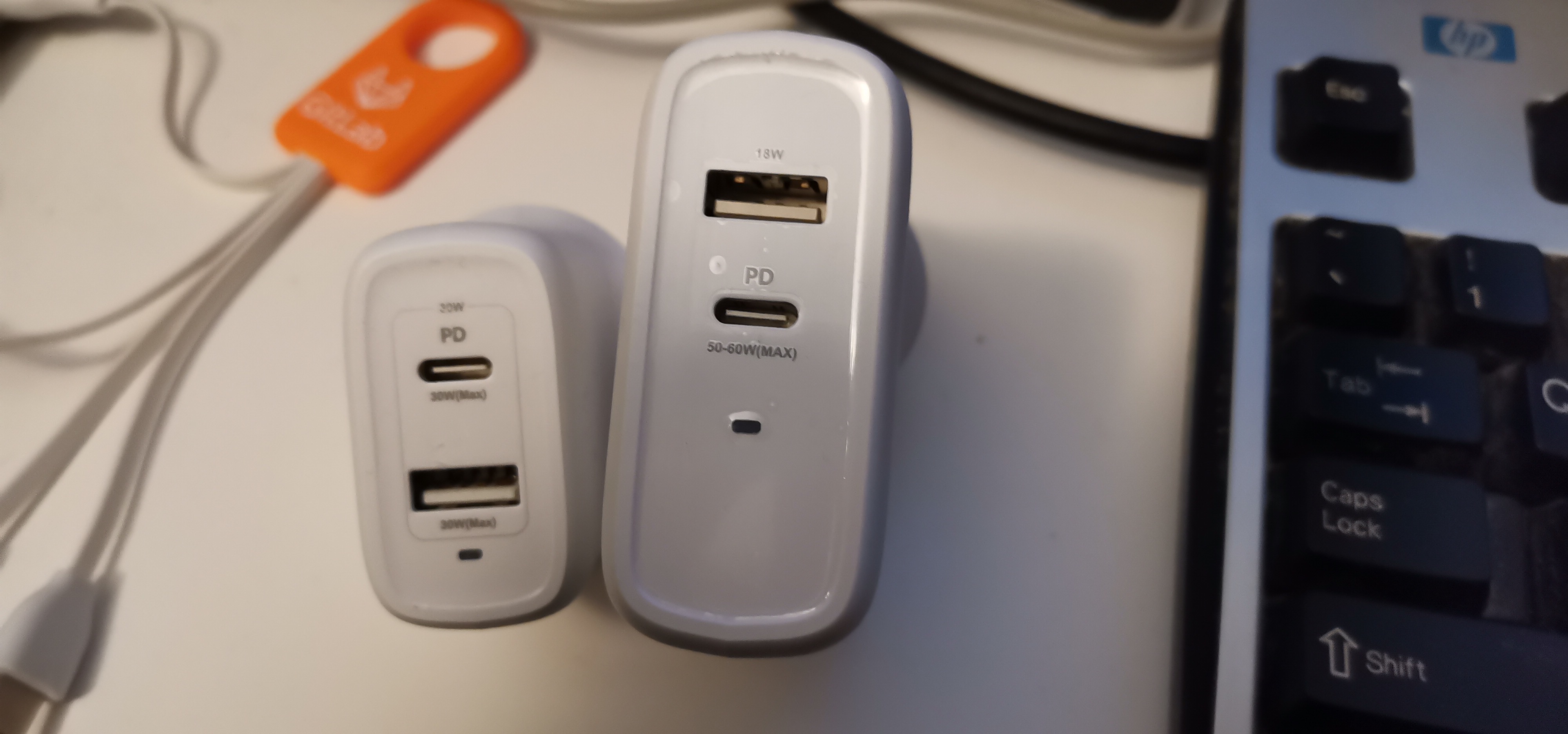
9 December 2022

Matthew Garrett: End-to-end encrypted messages need more than libsignal

(Disclaimer: I'm not a cryptographer, and I do not claim to be an expert in Signal. I've had this read over by a couple of people who are so with luck there's no egregious errors, but any mistakes here are mine)

There are indications that Twitter is working on end-to-end encrypted DMs, likely building on work that was done back in 2018. This made use of libsignal, the reference implementation of the protocol used by the Signal encrypted messaging app. There seems to be a fairly widespread perception that, since libsignal is widely deployed (it's also the basis for WhatsApp's e2e encryption) and open source and has been worked on by a whole bunch of cryptography experts, choosing to use libsignal means that 90% of the work has already been done. And in some ways this is true - the security of the protocol is probably just fine. But there's rather more to producing a secure and usable client than just sprinkling on some libsignal.

(Aside: To be clear, I have no reason to believe that the people who were working on this feature in 2018 were unaware of this. This thread kind of implies that the practical problems are why it didn't ship at the time. Given the reduction in Twitter's engineering headcount, and given the new leadership's espousal of political and social perspectives that don't line up terribly well with the bulk of the cryptography community, I have doubts that any implementation deployed in the near future will get all of these details right)

I was musing about this last night and someone pointed out some prior art. Bridgefy is a messaging app that uses Bluetooth as its transport layer, allowing messaging even in the absence of data services. The initial implementation involved a bunch of custom cryptography, enabling a range of attacks ranging from denial of service to extracting plaintext from encrypted messages. In response to criticism Bridgefy replaced their custom cryptographic protocol with libsignal, but that didn't fix everything. One issue is the potential for MITMing - keys are shared on first communication, but the client provided no mechanism to verify those keys, so a hostile actor could pretend to be a user, receive messages intended for that user, and then reencrypt them with the user's actual key. This isn't a weakness in libsignal, in the same way that the ability to add a custom certificate authority to a browser's trust store isn't a weakness in TLS. In Signal the app key distribution is all handled via Signal's servers, so if you're just using libsignal you need to implement the equivalent yourself.

The other issue was more subtle. libsignal has no awareness at all of the Bluetooth transport layer. Deciding where to send a message is up to the client, and these routing messages were spoofable. Any phone in the mesh could say "Send messages for Bob here", and other phones would do so. This should have been a denial of service at worst, since the messages for Bob would still be encrypted with Bob's key, so the attacker would be able to prevent Bob from receiving the messages but wouldn't be able to decrypt them. However, the code to decide where to send the message and the code to decide which key to encrypt the message with were separate, and the routing decision was made before the encryption key decision. An attacker could send a message saying "Route messages for Bob to me", and then another saying "Actually lol no I'm Mallory". If a message was sent between those two messages, the message intended for Bob would be delivered to Mallory's phone and encrypted with Mallory's key.

Again, this isn't a libsignal issue. libsignal encrypted the message using the key bundle it was told to encrypt it with, but the client code gave it a key bundle corresponding to the wrong user. A race condition in the client logic allowed messages intended for one person to be delivered to and readable by another.

This isn't the only case where client code has used libsignal poorly. The Bond Touch is a Bluetooth-connected bracelet that you wear. Tapping it or drawing gestures sends a signal to your phone, which culminates in a message being sent to someone else's phone which sends a signal to their bracelet, which then vibrates and glows in order to indicate a specific sentiment. The idea is that you can send brief indications of your feelings to someone you care about by simply tapping on your wrist, and they can know what you're thinking without having to interrupt whatever they're doing at the time. It's kind of sweet in a way that I'm not, but it also advertised "Private Spaces", a supposedly secure way to send chat messages and pictures, and that seemed more interesting. I grabbed the app and disassembled it, and found it was using libsignal. So I bought one and played with it, including dumping the traffic from the app. One important thing to realise is that libsignal is just the protocol library - it doesn't implement a server, and so you still need some way to get information between clients. And one of the bits of information you have to get between clients is the public key material.

Back when I played with this earlier this year, key distribution was implemented by uploading the public key to a database. The other end would download the public key, and everything works out fine. And this doesn't sound like a problem, given that the entire point of a public key is to be, well, public. Except that there was no access control on this database, and the filenames were simply phone numbers, so you could overwrite anyone's public key with one of your choosing. This didn't let you cause messages intended for them to be delivered to you, so exploiting this for anything other than a DoS would require another vulnerability somewhere, but there are contrived situations where this would potentially allow the privacy expectations to be broken.

Another issue with this app was its handling of one-time prekeys. When you send someone new a message via Signal, it's encrypted with a key derived from not only the recipient's identity key, but also from what's referred to as a "one-time prekey". Users generate a bunch of keypairs and upload the public half to the server. When you want to send a message to someone, you ask the server for one of their one-time prekeys and use that. Decrypting this message requires using the private half of the one-time prekey, and the recipient deletes it afterwards. This means that an attacker who intercepts a bunch of encrypted messages over the network and then later somehow obtains the long-term keys still won't be able to decrypt the messages, since they depended on keys that no longer exist. Since these one-time prekeys are only supposed to be used once (it's in the name!) there's a risk that they can all be consumed before they're replenished. The spec regarding pre-keys says that servers should consider rate-limiting this, but the protocol also supports falling back to just not using one-time prekeys if they're exhausted (you lose the forward secrecy benefits, but it's still end-to-end encrypted). This implementation not only implemented no rate-limiting, making it easy to exhaust the one-time prekeys, it then also failed to fall back to running without them. Another easy way to force DoS.

(And, remember, a successful DoS on an encrypted communications channel potentially results in the users falling back to an unencrypted communications channel instead. DoS may not break the encrypted protocol, but it may be sufficient to obtain plaintext anyway)

And finally, there's ClearSignal. I looked at this earlier this year - it's avoided many of these pitfalls by literally just being a modified version of the official Signal client and using the existing Signal servers (it's even interoperable with Actual Signal), but it's then got a bunch of other weirdness. The Signal database (I /think/ including the keys, but I haven't completely verified that) gets backed up to an AWS S3 bucket, identified using something derived from a key using KERI, and I've seen no external review of that whatsoever. So, who knows. It also has crash reporting enabled, and it's unclear how much internal state it sends on crashes, and it's also based on an extremely old version of Signal with the "You need to upgrade Signal" functionality disabled.

Three clients all using libsignal in one form or another, and three clients that do things wrong in ways that potentially have a privacy impact. Again, none of these issues are down to issues with libsignal, they're all in the code that surrounds it. And remember that Twitter probably has to worry about other issues as well! If I lose my phone I'm probably not going to worry too much about whether the messages sent through my weird bracelet app being gone forever, but losing all my Twitter DMs would be a significant change in behaviour from the status quo. But that's not an easy thing to do when you're not supposed to have access to any keys! Group chats? That's another significant problem to deal with. And making the messages readable through the web UI as well as on mobile means dealing with another set of key distribution issues. Get any of this wrong in one way and the user experience doesn't line up with expectations, get it wrong in another way and the worst case involves some of your users in countries with poor human rights records being executed.

Simply building something on top of libsignal doesn't mean it's secure. If you want meaningful functionality you need to build a lot of infrastructure around libsignal, and doing that well involves not just competent development and UX design, but also a strong understanding of security and cryptography. Given Twitter's lost most of their engineering and is led by someone who's alienated all the cryptographers I know, I wouldn't be optimistic.

comment count unavailable comments

Russell Coker: USB-PD and GaN

photo of 2 USB-PD chargers A recent development is cheap Gallium Nitride based power supplies that provide better efficiency in a smaller space than other technologies. Kogan recently had a special on such devices so I decided to try them out with my new Thinkpad X1 Carbon Gen 5 [1]. Google searches for power supplies for that Thinkpad included results for 30W PSUs which implies that any 30W USB-C PSU should work. I bought a 30W charger for $10 that can supply 15V/2A or 20V/1.5A on a single USB-C port or 15W on the USB-C port and 15W on the USB-2 port at the same time and expected it to work as a laptop charger. Unfortunately it didn t, I don t know whether the adverts for 30W Thinkpad PSUs were false or whether the claim of the GaN charger I bought being 30W was false, all I know is that the KDE power applet said that the PSU couldn t supply enough power. I then bought a 68W charger for $28 that can supply 20.0V/3.0A on a single USB-C port if the USB-2 port isn t used and 50W on the USB-C port if the USB-2 port is also being used. This worked well which wasn t a great surprise as I had previously run the laptop on 45W PSUs. If I connect a phone to the USB-2 port while the laptop is being charged then the laptop will be briefly cut off, presumably the voltage and current are being renegotiated when that happens. As you can see the 68W charger is significantly larger than the 30W charger, but still small enough to easily fit in a jacket pocket and smaller than a regular laptop charger. One of my uses for this will be to put it in a jacket pocket when I have my laptop in another pocket. Another use will be for charging in my car as the cables from the inverter to convert 12VDC to 240VAC takes enough space. I will probably get a ~50W USB-PD charger that connects to a car cigarette lighter socket when a GaN version of such a charger becomes available.

Dirk Eddelbuettel: AsioHeaders 1.22.1-2 on CRAN: Small Update

An new minor revision of the AsioHeaders package arrived at CRAN earlier today. Asio provides a cross-platform C++ library for network and low-level I/O programming. It is also included in Boost but requires linking when used as part of Boost. This standalone version of Asio is a header-only C++ library which can be used without linking (just like our BH package with parts of Boost). This minor update avoid use of (v)sprintf which CRAN now flags in r-devel (for all R builds), following the decision by Apple to deprecated it for macOS. Winston had notified me about email he had gotten for for his websocket package also highlighting the issue for both iptools and ipaddress. As the issue ticket dialog shows I was initially a little hamfisted about replicating, falsely thinking I would need an updated compiler. But this really is just a change in r-devel once again scanning shared libraries for symbols now warned about. Upstream has newer minor releases but they did not yet cover this; however I found a commit mentioning Xcode and snprint from three days ago which I essentially ported. We needed one more change, and that addressed the issue in websocket. But as it is good to increase the number of random acts of kindness, I also looked into iptools and ipaddress as CRAN has its eyes on them too for this. Turned out they needed simple and limited changes from sprint to snprintf so made those and sent them PRs: iptools PR #42 and ipaddress PR #79. The short NEWS entry for AsioHeaders follows.

Changes in version 1.22.1-2 (2022-12-07)
  • Switch a handful of upstream (v)sprint uses to (v)snprintf.

Thanks to my CRANberries, there is also a diffstat report relative to the previous release. Comments and suggestions about AsioHeaders are welcome via the issue tracker at the GitHub repo. If you like this or other open-source work I do, you can now sponsor me at GitHub.

This post by Dirk Eddelbuettel originated on his Thinking inside the box blog. Please report excessive re-aggregation in third-party for-profit settings.

8 December 2022

Reproducible Builds: Reproducible Builds in November 2022

Welcome to yet another report from the Reproducible Builds project, this time for November 2022. In all of these reports (which we have been publishing regularly since May 2015) we attempt to outline the most important things that we have been up to over the past month. As always, if you interested in contributing to the project, please visit our Contribute page on our website.

Reproducible Builds Summit 2022 Following-up from last month s report about our recent summit in Venice, Italy, a comprehensive report from the meeting has not been finalised yet watch this space! As a very small preview, however, we can link to several issues that were filed about the website during the summit (#38, #39, #40, #41, #42, #43, etc.) and collectively learned about Software Bill of Materials (SBOM) s and how .buildinfo files can be seen/used as SBOMs. And, no less importantly, the Reproducible Builds t-shirt design has been updated

Reproducible Builds at European Cyber Week 2022 During the European Cyber Week 2022, a Capture The Flag (CTF) cybersecurity challenge was created by Fr d ric Pierret on the subject of Reproducible Builds. The challenge consisted in a pedagogical sense based on how to make a software release reproducible. To progress through the challenge issues that affect the reproducibility of build (such as build path, timestamps, file ordering, etc.) were to be fixed in steps in order to get the final flag in order to win the challenge. At the end of the competition, five people succeeded in solving the challenge, all of whom were awarded with a shirt. Fr d ric Pierret intends to create similar challenge in the form of a how to in the Reproducible Builds documentation, but two of the 2022 winners are shown here:

On business adoption and use of reproducible builds Simon Butler announced on the rb-general mailing list that the Software Quality Journal published an article called On business adoption and use of reproducible builds for open and closed source software. This article is an interview-based study which focuses on the adoption and uses of Reproducible Builds in industry, with a focus on investigating the reasons why organisations might not have adopted them:
[ ] industry application of R-Bs appears limited, and we seek to understand whether awareness is low or if significant technical and business reasons prevent wider adoption.
This is achieved through interviews with software practitioners and business managers, and touches on both the business and technical reasons supporting the adoption (or not) of Reproducible Builds. The article also begins with an excellent explanation and literature review, and even introduces a new helpful analogy for reproducible builds:
[Users are] able to perform a bitwise comparison of the two binaries to verify that they are identical and that the distributed binary is indeed built from the source code in the way the provider claims. Applied in this manner, R-Bs function as a canary, a mechanism that indicates when something might be wrong, and offer an improvement in security over running unverified binaries on computer systems.
The full paper is available to download on an open access basis. Elsewhere in academia, Beatriz Michelson Reichert and Rafael R. Obelheiro have published a paper proposing a systematic threat model for a generic software development pipeline identifying possible mitigations for each threat (PDF). Under the Tampering rubric of their paper, various attacks against Continuous Integration (CI) processes:
An attacker may insert a backdoor into a CI or build tool and thus introduce vulnerabilities into the software (resulting in an improper build). To avoid this threat, it is the developer s responsibility to take due care when making use of third-party build tools. Tampered compilers can be mitigated using diversity, as in the diverse double compiling (DDC) technique. Reproducible builds, a recent research topic, can also provide mitigation for this problem. (PDF)

Misc news
On our mailing list this month:

Debian & other Linux distributions Over 50 reviews of Debian packages were added this month, another 48 were updated and almost 30 were removed, all of which adds to our knowledge about identified issues. Two new issue types were added as well. [ ][ ]. Vagrant Cascadian announced on our mailing list another online sprint to help clear the huge backlog of reproducible builds patches submitted by performing NMUs (Non-Maintainer Uploads). The first such sprint took place on September 22nd, but others were held on October 6th and October 20th. There were two additional sprints that occurred in November, however, which resulted in the following progress: Lastly, Roland Clobus posted his latest update of the status of reproducible Debian ISO images on our mailing list. This reports that all major desktops build reproducibly with bullseye, bookworm and sid as well as that no custom patches needed to applied to Debian unstable for this result to occur. During November, however, Roland proposed some modifications to live-setup and the rebuild script has been adjusted to fix the failing Jenkins tests for Debian bullseye [ ][ ].
In other news, Miro Hron ok proposed a change to clamp build modification times to the value of SOURCE_DATE_EPOCH. This was initially suggested and discussed on a devel@ mailing list post but was later written up on the Fedora Wiki as well as being officially proposed to Fedora Engineering Steering Committee (FESCo).

Upstream patches The Reproducible Builds project detects, dissects and attempts to fix as many currently-unreproducible packages as possible. We endeavour to send all of our patches upstream where appropriate. This month, we wrote a large number of such patches, including:

diffoscope diffoscope is our in-depth and content-aware diff utility. Not only can it locate and diagnose reproducibility issues, it can provide human-readable diffs from many kinds of binary formats. This month, Chris Lamb prepared and uploaded versions 226 and 227 to Debian:
  • Support both python3-progressbar and python3-progressbar2, two modules providing the progressbar Python module. [ ]
  • Don t run Python decompiling tests on Python bytecode that file(1) cannot detect yet and Python 3.11 cannot unmarshal. (#1024335)
  • Don t attempt to attach text-only differences notice if there are no differences to begin with. (#1024171)
  • Make sure we recommend apksigcopier. [ ]
  • Tidy generation of os_list. [ ]
  • Make the code clearer around generating the Debian substvars . [ ]
  • Use our assert_diff helper in test_lzip.py. [ ]
  • Drop other copyright notices from lzip.py and test_lzip.py. [ ]
In addition to this, Christopher Baines added lzip support [ ], and FC Stegerman added an optimisation whereby we don t run apktool if no differences are detected before the signing block [ ].
A significant number of changes were made to the Reproducible Builds website and documentation this month, including Chris Lamb ensuring the openEuler logo is correctly visible with a white background [ ], FC Stegerman de-duplicated by email address to avoid listing some contributors twice [ ], Herv Boutemy added Apache Maven to the list of affiliated projects [ ] and boyska updated our Contribute page to remark that the Reproducible Builds presence on salsa.debian.org is not just the Git repository but is also for creating issues [ ][ ]. In addition to all this, however, Holger Levsen made the following changes:
  • Add a number of existing publications [ ][ ] and update metadata for some existing publications as well [ ].
  • Hide draft posts on the website homepage. [ ]
  • Add the Warpforge build tool as a participating project of the summit. [ ]
  • Clarify in the footer that we welcome patches to the website repository. [ ]

Testing framework The Reproducible Builds project operates a comprehensive testing framework at tests.reproducible-builds.org in order to check packages and other artifacts for reproducibility. In October, the following changes were made by Holger Levsen:
  • Improve the generation of meta package sets (used in grouping packages for reporting/statistical purposes) to treat Debian bookworm as equivalent to Debian unstable in this specific case [ ] and to parse the list of packages used in the Debian cloud images [ ][ ][ ].
  • Temporarily allow Frederic to ssh(1) into our snapshot server as the jenkins user. [ ]
  • Keep some reproducible jobs Jenkins logs much longer [ ] (later reverted).
  • Improve the node health checks to detect failures to update the Debian cloud image package set [ ][ ] and to improve prioritisation of some kernel warnings [ ].
  • Always echo any IRC output to Jenkins output as well. [ ]
  • Deal gracefully with problems related to processing the cloud image package set. [ ]
Finally, Roland Clobus continued his work on testing Live Debian images, including adding support for specifying the origin of the Debian installer [ ] and to warn when the image has unmet dependencies in the package list (e.g. due to a transition) [ ].
If you are interested in contributing to the Reproducible Builds project, please visit our Contribute page on our website. You can get in touch with us via:

Next.

Previous.