Search Results: "nic"

1 June 2023

Junichi Uekawa: Already June.

Already June.

Paul Wise: FLOSS Activities May 2023

Focus This month I didn't have any particular focus. I just worked on issues in my info bubble.

Changes

Issues

Review

Administration
  • Debian IRC: set topic on new #debian-sa channel
  • Debian wiki: unblock IP addresses, approve accounts

Communication
  • Respond to queries from Debian users and contributors on the mailing lists and IRC

Sponsors The SIMDe, gensim, sptag work was sponsored. All other work was done on a volunteer basis.

31 May 2023

Arturo Borrero Gonz lez: Wikimedia Hackathon 2023 Athens summary

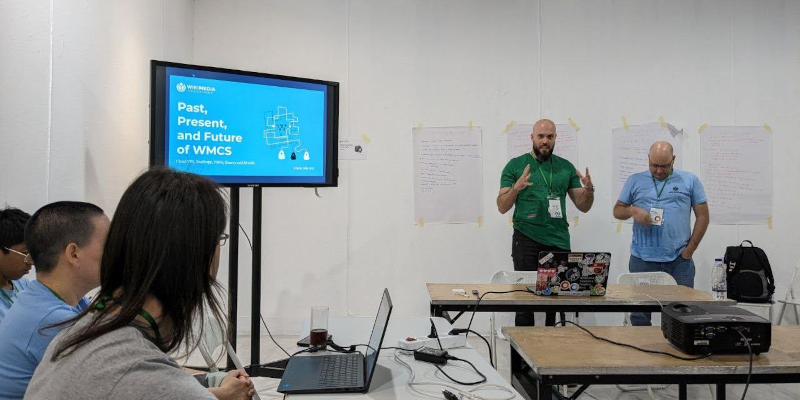
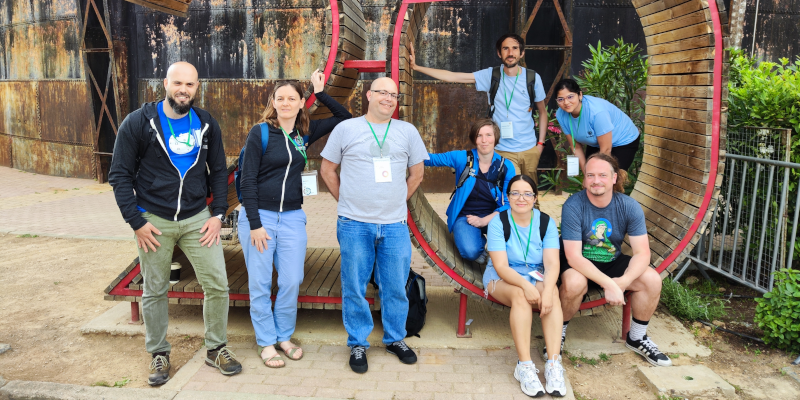
Post logo During the weekend of 19-23 May 2023 I attended the Wikimedia hackathon 2023 in Athens, Greece. The event physically reunited folks interested in the more technological aspects of the Wikimedia movement in person for the first time since 2019. The scope of the hacking projects include (but was not limited to) tools, wikipedia bots, gadgets, server and network infrastructure, data and other technical systems. My role in the event was two-fold: on one hand I was in the event because of my role as SRE in the Wikimedia Cloud Services team, where we provided very valuable services to the community, and I was expected to support the technical contributors of the movement that were around. Additionally, and because of that same role, I did some hacking myself too, which was specially augmented given I generally collaborate on a daily basis with some community members that were present in the hacking room. The hackathon had some conference-style track and I ran a session with my coworker Bryan, called Past, Present and Future of Wikimedia Cloud Services (Toolforge and friends) (slides) which was very satisfying to deliver given the friendly space that it was. I attended a bunch of other sessions, and all of them were interesting and well presented. The number of ML themes that were present in the program schedule was exciting. I definitely learned a lot from attending those sessions, from how LLMs work, some fascinating applications for them in the wikimedia space, to what were some industry trends for training and hosting ML models. Session Despite the sessions, the main purpose of the hackathon was, well, hacking. While I was in the hacking space for more than 12 hours each day, my ability to get things done was greatly reduced by the constant conversations, help requests, and other social interactions with the folks. Don t get me wrong, I embraced that reality with joy, because the social bonding aspect of it is perhaps the main reason why we gathered in person instead of virtually. That being said, this is a rough list of what I did: The hackathon was also the final days of Technical Engagement as an umbrella group for WMCS and Developer Advocacy teams within the Technology department of the Wikimedia Foundation because of an internal reorg.. We used the chance to reflect on the pleasant time we have had together since 2019 and take a final picture of the few of us that were in person in the event. Technical Engagement It wasn t the first Wikimedia Hackathon for me, and I felt the same as in previous iterations: it was a welcoming space, and I was surrounded by friends and nice human beings. I ended the event with a profound feeling of being privileged, because I was part of the Wikimedia movement, and because I was invited to participate in it.

Russell Coker: Links May 2023

Petter Reinholdtsen wrote an interesting blog post about their work on packaging speech to text for Debian [1]. The work of the Debian Deep Learning Team seems really interesting and I look forward to playing with this sort of thing after the release of Bookworm (the packages in question will NOT go in Bookworm but I ll run at least one system on Testing after Bookworm). It would be nice to get more information on the hardware used for running such programs, the minimum hardware needed for real-time speech to text would be interesting to know. Brian Krebs wrote an informative article about attacks involving supply chain compromise and fake LinkedIn profiles [2]. The attacks targetted Linux as well as Windows. Interesting video about the Illium cameras, a bit harsh though, they criticise Illium devices for being too low resolution, too expensive, and taking too much CPU time to process [3]. The Illium cameras still sell for decent prices on eBay, I wonder if it s because of curious people like me who would like to play with them and have money to spare or whether some other interesting things are being done. I wonder how a 4*4 array of the rectangular cameras secured together with duct tape would go. The ideas of Illium should work better if implemented for multi-core CPUs or GPUs. Bruce Schneier with Henry Farrell and Nathan Sanders wrote an insightful blog post about how AT Chatbots could improve democracy [4]. Wired has an interesting article about the way DJI drones transmit the location of the drone operator without encryption by design [5]. Apparently this has been used for targetting attacks on drone operators in Ukraine. This video about robot mice navigating mazes is interesting [6]. But I think it became less interesting when they got to the stage of milliseconds counting for the win, it s very optimised for one case just like F1. I think it would be interesting if they had a rally contest where they go across grass or sand, 3D mazes both in air and water, and contests where Tungsten weights have to be transported. They should push some of the other limits of engineering as completing a maze quickly has been solved. The Guardian has an interesting article about a blood test for sleepy driving [7]. Once they have an objective test they can punish people for it. This github repository listing public APIs is interesting [8]. Lots of fun ideas for phone apps there. Simon Josefsson wrote an insightful blog post about the threat model of security devices [9]. Unfortunately the security of most people is way below the level where this is an issue. But it s good to think about future steps needed for good security. Cory Doctorow wrote an interesting article The Swivel Eyed Loons have a Point [10] about the fact that some of the nuttiest people are protesting about real issues, just in the wrong way.

Russell Coker: Genesis GV60

I recently test drove a Genesis GV70, but the GV60 [1] which I didn t test drive is a nicer car. The GV70 and GV60 are all electric so they are quiet and perform well. The GV70 has a sun-roof that opens, it was the first car I ve driven like that and I decided I don t like it. Having the shade open so I can see the sky while stuck in a traffic jam is nice though. The GV60 has a non-opening sun-roof with a shade that can be retracted, this is a feature I d really like to have in my next car. Electric cars as a general rule have good acceleration and are quiet, the GV70 performed as expected in that regard. It has a head-up display projected on the windscreen for the speed and the speed limit on the road in question which is handy. When driving in a car park it showed images from all sides which is really handy, I wish I had explored that feature more. The console is all electronic with a TFT display instead of mechanical instruments but the only significant difference this makes in driving is that when a turn indicator is used the console display shows a video feed for the blind-spot that matches the lane change direction. This is a significant safety feature and will reduce the incidence of collisions. But the capabilities of the hardware seem under utilised, hopefully they will release a software update at some future time to do more with it. The most significant benefit of the GV60 over the GV70 is that it has cameras instead of mirrors at the sides of the car. This reduces drag and also removes the need to adjust mirrors to match the height of the driver. Also for driver instruction the instructor and learner get to see the same view. A logical development of such cars is an expansion pack for instruction that has displays in the passenger seat to show the instructor the same instrument view as the driver sees. The minimum list driveaway price for the GV60 is $117,171.50 and for the GV70 it is $138,119.89 both of which are more than I m prepared to pay for a car. The GV60 apparently can be started by fingerprint which seems like a bad idea given the poor security of fingerprint sensors, but as regular car keys tend not to be too difficult to work around it probably doesn t matter. The Genesis web site makes it difficult to find the ranges of electric cars which is surprising. A Google search suggests that the GV60 can do 466Km and the GV70 can do 410Km which are both reasonable numbers and nothing to be ashamed of. The GV70 was a fun car to drive and the GV60 looks like it would be even better. I recommend that everyone who likes technology take one for a test drive, but for my own use I m looking for something that costs less than half as much.

Russ Allbery: Review: Night Watch

Review: Night Watch, by Terry Pratchett
Series: Discworld #29
Publisher: Harper
Copyright: November 2002
Printing: August 2014
ISBN: 0-06-230740-1
Format: Mass market
Pages: 451
Night Watch is the 29th Discworld novel and the sixth Watch novel. I would really like to tell people they could start here if they wanted to, for reasons that I will get into in a moment, but I think I would be doing you a disservice. The emotional heft added by having read the previous Watch novels and followed Vimes's character evolution is significant. It's the 25th of May. Vimes is about to become a father. He and several of the other members of the Watch are wearing sprigs of lilac for reasons that Sergeant Colon is quite vehemently uninterested in explaining. A serial killer named Carcer the Watch has been after for weeks has just murdered an off-duty sergeant. It's a tense and awkward sort of day and Vimes is feeling weird and wistful, remembering the days when he was a copper and not a manager who has to dress up in ceremonial armor and meet with committees. That may be part of why, when the message comes over the clacks that the Watch have Carcer cornered on the roof of the New Hall of the Unseen University, Vimes responds in person. He's grappling with Carcer on the roof of the University Library in the middle of a magical storm when lightning strikes. When he wakes up, he's in the past, shortly after he joined the Watch and shortly before the events of the 25th of May that the older Watch members so vividly remember and don't talk about. I have been saying recently in Discworld reviews that it felt like Pratchett was on the verge of a breakout book that's head and shoulders above Discworld prior to that point. This is it. This is that book. The setup here is masterful: the sprigs of lilac that slowly tell the reader something is going on, the refusal of any of the older Watch members to talk about it, the scene in the graveyard to establish the stakes, the disconcerting fact that Vetinari is wearing a sprig of lilac as well, and the feeling of building tension that matches the growing electrical storm. And Pratchett never gives into the temptation to explain everything and tip his hand prematurely. We know the 25th is coming and something is going to happen, and the reader can put together hints from Vimes's thoughts, but Pratchett lets us guess and sometimes be right and sometimes be wrong. Vimes is trying to change history, which adds another layer of uncertainty and enjoyment as the reader tries to piece together both the true history and the changes. This is a masterful job at a "what if?" story. And, beneath that, the commentary on policing and government and ethics is astonishingly good. In a review of an earlier Watch novel, I compared Pratchett to Dickens in the way that he focuses on a sort of common-sense morality rather than political theory. That is true here too, but oh that moral analysis is sharp enough to slide into you like a knife. This is not the Vimes that we first met in Guards! Guards!. He has has turned his cynical stubbornness into a working theory of policing, and it's subtle and complicated and full of nuance that he only barely knows how to explain. But he knows how to show it to people.
Keep the peace. That was the thing. People often failed to understand what that meant. You'd go to some life-threatening disturbance like a couple of neighbors scrapping in the street over who owned the hedge between their properties, and they'd both be bursting with aggrieved self-righteousness, both yelling, their wives would either be having a private scrap on the side or would have adjourned to a kitchen for a shared pot of tea and a chat, and they all expected you to sort it out. And they could never understand that it wasn't your job. Sorting it out was a job for a good surveyor and a couple of lawyers, maybe. Your job was to quell the impulse to bang their stupid fat heads together, to ignore the affronted speeches of dodgy self-justification, to get them to stop shouting and to get them off the street. Once that had been achieved, your job was over. You weren't some walking god, dispensing finely tuned natural justice. Your job was simply to bring back peace.
When Vimes is thrown back in time, he has to pick up the role of his own mentor, the person who taught him what policing should be like. His younger self is right there, watching everything he does, and he's desperately afraid he'll screw it up and set a worse example. Make history worse when he's trying to make it better. It's a beautifully well-done bit of tension that uses time travel as the hook to show both how difficult mentorship is and also how irritating one's earlier naive self would be.
He wondered if it was at all possible to give this idiot some lessons in basic politics. That was always the dream, wasn't it? "I wish I'd known then what I know now"? But when you got older you found out that you now wasn't you then. You then was a twerp. You then was what you had to be to start out on the rocky road of becoming you now, and one of the rocky patches on that road was being a twerp.
The backdrop of this story, as advertised by the map at the front of the book, is a revolution of sorts. And the revolution does matter, but not in the obvious way. It creates space and circumstance for some other things to happen that are all about the abuse of policing as a tool of politics rather than Vimes's principle of keeping the peace. I mentioned when reviewing Men at Arms that it was an awkward book to read in the United States in 2020. This book tackles the ethics of policing head-on, in exactly the way that book didn't. It's also a marvelous bit of competence porn. Somehow over the years, Vimes has become extremely good at what he does, and not just in the obvious cop-walking-a-beat sort of ways. He's become a leader. It's not something he thinks about, even when thrown back in time, but it's something Pratchett can show the reader directly, and have the other characters in the book comment on. There is so much more that I'd like to say, but so much would be spoilers, and I think Night Watch is more effective when you have the suspense of slowly puzzling out what's going to happen. Pratchett's pacing is exquisite. It's also one of the rare Discworld novels where Pratchett fully commits to a point of view and lets Vimes tell the story. There are a few interludes with other people, but the only other significant protagonist is, quite fittingly, Vetinari. I won't say anything more about that except to note that the relationship between Vimes and Vetinari is one of the best bits of fascinating subtlety in all of Discworld. I think it's also telling that nothing about Night Watch reads as parody. Sure, there is a nod to Back to the Future in the lightning storm, and it's impossible to write a book about police and street revolutions without making the reader think about Les Miserables, but nothing about this plot matches either of those stories. This is Pratchett telling his own story in his own world, unapologetically, and without trying to wedge it into parody shape, and it is so much the better book for it. The one quibble I have with the book is that the bits with the Time Monks don't really work. Lu-Tze is annoying and flippant given the emotional stakes of this story, the interludes with him are frustrating and out of step with the rest of the book, and the time travel hand-waving doesn't add much. I see structurally why Pratchett put this in: it gives Vimes (and the reader) a time frame and a deadline, it establishes some of the ground rules and stakes, and it provides a couple of important opportunities for exposition so that the reader doesn't get lost. But it's not good story. The rest of the book is so amazingly good, though, that it doesn't matter (and the framing stories for "what if?" explorations almost never make much sense). The other thing I have a bit of a quibble with is outside the book. Night Watch, as you may have guessed by now, is the origin of the May 25th Pratchett memes that you will be familiar with if you've spent much time around SFF fandom. But this book is dramatically different from what I was expecting based on the memes. You will, for example see a lot of people posting "Truth, Justice, Freedom, Reasonably Priced Love, And a Hard-Boiled Egg!", and before reading the book it sounds like a Pratchett-style humorous revolutionary slogan. And I guess it is, sort of, but, well... I have to quote the scene:
"You'd like Freedom, Truth, and Justice, wouldn't you, Comrade Sergeant?" said Reg encouragingly. "I'd like a hard-boiled egg," said Vimes, shaking the match out. There was some nervous laughter, but Reg looked offended. "In the circumstances, Sergeant, I think we should set our sights a little higher " "Well, yes, we could," said Vimes, coming down the steps. He glanced at the sheets of papers in front of Reg. The man cared. He really did. And he was serious. He really was. "But...well, Reg, tomorrow the sun will come up again, and I'm pretty sure that whatever happens we won't have found Freedom, and there won't be a whole lot of Justice, and I'm damn sure we won't have found Truth. But it's just possible that I might get a hard-boiled egg."
I think I'm feeling defensive of the heart of this book because it's such an emotional gut punch and says such complicated and nuanced things about politics and ethics (and such deeply cynical things about revolution). But I think if I were to try to represent this story in a meme, it would be the "angels rise up" song, with all the layers of meaning that it gains in this story. I'm still at the point where the lilac sprigs remind me of Sergeant Colon becoming quietly furious at the overstep of someone who wasn't there. There's one other thing I want to say about that scene: I'm not naturally on Vimes's side of this argument. I think it's important to note that Vimes's attitude throughout this book is profoundly, deeply conservative. The hard-boiled egg captures that perfectly: it's a bit of physical comfort, something you can buy or make, something that's part of the day-to-day wheels of the city that Vimes talks about elsewhere in Night Watch. It's a rejection of revolution, something that Vimes does elsewhere far more explicitly. Vimes is a cop. He is in some profound sense a defender of the status quo. He doesn't believe things are going to fundamentally change, and it's not clear he would want them to if they did. And yet. And yet, this is where Pratchett's Dickensian morality comes out. Vimes is a conservative at heart. He's grumpy and cynical and jaded and he doesn't like change. But if you put him in a situation where people are being hurt, he will break every rule and twist every principle to stop it.
He wanted to go home. He wanted it so much that he trembled at the thought. But if the price of that was selling good men to the night, if the price was filling those graves, if the price was not fighting with every trick he knew... then it was too high. It wasn't a decision that he was making, he knew. It was happening far below the areas of the brain that made decisions. It was something built in. There was no universe, anywhere, where a Sam Vimes would give in on this, because if he did then he wouldn't be Sam Vimes any more.
This is truly exceptional stuff. It is the best Discworld novel I have read, by far. I feel like this was the Watch novel that Pratchett was always trying to write, and he had to write five other novels first to figure out how to write it. And maybe to prepare Discworld readers to read it. There are a lot of Discworld novels that are great on their own merits, but also it is 100% worth reading all the Watch novels just so that you can read this book. Followed in publication order by The Wee Free Men and later, thematically, by Thud!. Rating: 10 out of 10

30 May 2023

Russ Allbery: Review: The Mimicking of Known Successes

Review: The Mimicking of Known Successes, by Malka Older
Series: Mossa and Pleiti #1
Publisher: Tordotcom
Copyright: 2023
ISBN: 1-250-86051-2
Format: Kindle
Pages: 169
The Mimicking of Known Successes is a science fiction mystery novella, the first of an expected series. (The second novella is scheduled to be published in February of 2024.) Mossa is an Investigator, called in after a man disappears from the eastward platform on the 4 63' line. It's an isolated platform, five hours away from Mossa's base, and home to only four residential buildings and a pub. The most likely explanation is that the man jumped, but his behavior before he disappeared doesn't seem consistent with that theory. He was bragging about being from Valdegeld University, talking to anyone who would listen about the important work he was doing not typically the behavior of someone who is suicidal. Valdegeld is the obvious next stop in the investigation. Pleiti is a Classics scholar at Valdegeld. She is also Mossa's ex-girlfriend, making her both an obvious and a fraught person to ask for investigative help. Mossa is the last person she expected to be waiting for her on the railcar platform when she returns from a trip to visit her parents. The Mimicking of Known Successes is mostly a mystery, following Mossa's attempts to untangle the story of what happened to the disappeared man, but as you might have guessed there's a substantial sapphic romance subplot. It's also at least adjacent to Sherlock Holmes: Mossa is brilliant, observant, somewhat monomaniacal, and very bad at human relationships. All of this story except for the prologue is told from Pleiti's perspective as she plays a bit of a Watson role, finding Mossa unreadable, attractive, frustrating, and charming in turn. Following more recent Holmes adaptations, Mossa is portrayed as probably neurodivergent, although the story doesn't attach any specific labels. I have no strong opinions about this novella. It was fine? There's a mystery with a few twists, there's a sapphic romance of the second chance variety, there's a bit of action and a bit of hurt/comfort after the action, and it all felt comfortably entertaining but kind of predictable. Susan Stepney has a "passes the time" review rating, and while that may be a bit harsh, that's about where I ended up. The most interesting part of the story is the science fiction setting. We're some indefinite period into the future. Humans have completely messed up Earth to the point of making it uninhabitable. We then took a shot at terraforming Mars and messed that planet up to the point of uninhabitability as well. Now, what's left of humanity (maybe not all of it the story isn't clear) lives on platforms connected by rail lines high in the atmosphere of Jupiter. (Everyone in the story calls Jupiter "Giant" for reasons that I didn't follow, given that they didn't rename any of its moons.) Pleiti's position as a Classics scholar means that she studies Earth and its now-lost ecosystems, whereas the Modern faculty focus on their new platform life. This background does become relevant to the mystery, although exactly how is not clear at the start. I wouldn't call this a very realistic setting. One has to accept that people are living on platforms attached to artificial rings around the solar system's largest planet and walk around in shirt sleeves and only minor technological support due to "atmoshields" of some unspecified capability, and where the native atmosphere plays the role of London fog. Everything feels vaguely Edwardian, including to the occasional human porter and message runner, which matches the story concept but seems unlikely as a plausible future culture. I also disbelieve in humanity's ability to do anything to Earth that would make it less inhabitable than the clouds of Jupiter. That said, the setting is a lot of fun, which is probably more important. It's fun to try to visualize, and it has that slightly off-balance, occasionally surprising feel of science fiction settings where everyone is recognizably human but the things they consider routine and unremarkable are unexpected by the reader. This novella also has a great title. The Mimicking of Known Successes is simultaneously a reference a specific plot point from late in the story, a nod to the shape of the romance, and an acknowledgment of the Holmes pastiche, and all of those references work even better once you know what the plot point is. That was nicely done. This was not very memorable apart from the setting, but it was pleasant enough. I can't say that I'm inspired to pre-order the next novella in this series, but I also wouldn't object to reading it. If you're in the mood for gender-swapped Holmes in an exotic setting, you could do worse. Followed by The Imposition of Unnecessary Obstacles. Rating: 6 out of 10

29 May 2023

John Goerzen: Recommendations for Tools for Backing Up and Archiving to Removable Media

I have several TB worth of family photos, videos, and other data. This needs to be backed up and archived. Backups and archives are often thought of as similar. And indeed, they may be done with the same tools at the same time. But the goals differ somewhat: Backups are designed to recover from a disaster that you can fairly rapidly detect. Archives are designed to survive for many years, protecting against disaster not only impacting the original equipment but also the original person that created them. Reflecting on this, it implies that while a nice ZFS snapshot-based scheme that supports twice-hourly backups may be fantastic for that purpose, if you think about things like family members being able to access it if you are incapacitated, or accessibility in a few decades time, it becomes much less appealing for archives. ZFS doesn t have the wide software support that NTFS, FAT, UDF, ISO-9660, etc. do. This post isn t about the pros and cons of the different storage media, nor is it about the pros and cons of cloud storage for archiving; these conversations can readily be found elsewhere. Let s assume, for the point of conversation, that we are considering BD-R optical discs as well as external HDDs, both of which are too small to hold the entire backup set. What would you use for archiving in these circumstances? Establishing goals The goals I have are: I would welcome your ideas for what to use. Below, I ll highlight different approaches I ve looked into and how they stack up. Basic copies of directories The initial approach might be one of simply copying directories across. This would work well if the data set to be archived is smaller than the archival media. In that case, you could just burn or rsync a new copy with every update and be done. Unfortunately, this is much less convenient with data of the size I m dealing with. rsync is unavailable in that case. With some datasets, you could manually design some rsyncs to store individual directories on individual devices, but that gets unwieldy fast and isn t scalable. You could use something like my datapacker program to split the data across multiple discs/drives efficiently. However, updates will be a problem; you d have to re-burn the entire set to get a consistent copy, or rely on external tools like mtree to reflect deletions. Not very convenient in any case. So I won t be using this. tar or zip While you can split tar and zip files across multiple media, they have a lot of issues. GNU tar s incremental mode is clunky and buggy; zip is even worse. tar files can t be read randomly, making it extremely time-consuming to extract just certain files out of a tar file. The only thing going for these formats (and especially zip) is the wide compatibility for restoration. dar Here we start to get into the more interesting tools. Dar is, in my opinion, one of the best Linux tools that few people know about. Since I first wrote about dar in 2008, it s added some interesting new features; among them, binary deltas and cloud storage support. So, dar has quite a few interesting features that I make use of in other ways, and could also be quite helpful here: Additionally, dar comes with a dar_manager program. dar_manager makes a database out of dar catalogs (or archives). This can then be used to identify the precise archive containing a particular version of a particular file. All this combines to make a useful system for archiving. Isolated catalogs are tiny, and it would be easy enough to include the isolated catalogs for the entire set of archives that came before (or even the dar_manager database file) with each new incremental archive. This would make restoration of a particular subset easy. The main thing to address with dar is that you do need dar to extract the archive. Every dar release comes with source code and a win64 build. dar also supports building a statically-linked Linux binary. It would therefore be easy to include win64 binary, Linux binary, and source with every archive run. dar is also a part of multiple Linux and BSD distributions, which are archived around the Internet. I think this provides a reasonable future-proofing to make sure dar archives will still be readable in the future. The other challenge is user ability. While dar is highly portable, it is fundamentally a CLI tool and will require CLI abilities on the part of users. I suspect, though, that I could write up a few pages of instructions to include and make that a reasonably easy process. Not everyone can use a CLI, but I would expect a person that could follow those instructions could be readily-enough found. One other benefit of dar is that it could easily be used with tapes. The LTO series is liked by various hobbyists, though it could pose formidable obstacles to non-hobbyists trying to aceess data in future decades. Additionally, since the archive is a big file, it lends itself to working with par2 to provide redundancy for certain amounts of data corruption. git-annex git-annex is an interesting program that is designed to facilitate managing large sets of data and moving it between repositories. git-annex has particular support for offline archive drives and tracks which drives contain which files. The idea would be to store the data to be archived in a git-annex repository. Then git-annex commands could generate filesystem trees on the external drives (or trees to br burned to read-only media). In a post about using git-annex for blu-ray backups, an earlier thread about DVD-Rs was mentioned. This has a few interesting properties. For one, with due care, the files can be stored on archival media as regular files. There are some different options for how to generate the archives; some of them would place the entire git-annex metadata on each drive/disc. With that arrangement, one could access the individual files without git-annex. With git-annex, one could reconstruct the final (or any intermediate) state of the archive appropriately, handling deltions, renames, etc. You would also easily be able to know where copies of your files are. The practice is somewhat more challenging. Hundreds of thousands of files what I would consider a medium-sized archive can pose some challenges, running into hours-long execution if used in conjunction with the directory special remote (but only minutes-long with a standard git-annex repo). Ruling out the directory special remote, I had thought I could maybe just work with my files in git-annex directly. However, I ran into some challenges with that approach as well. I am uncomfortable with git-annex mucking about with hard links in my source data. While it does try to preserve timestamps in the source data, these are lost on the clones. I wrote up my best effort to work around all this. In a forum post, the author of git-annex comments that I don t think that CDs/DVDs are a particularly good fit for git-annex, but it seems a couple of users have gotten something working. The page he references is Managing a large number of files archived on many pieces of read-only medium. Some of that discussion is a bit dated (for instance, the directory special remote has the importtree feature that implements what was being asked for there), but has some interesting tips. git-annex supplies win64 binaries, and git-annex is included with many distributions as well. So it should be nearly as accessible as dar in the future. Since git-annex would be required to restore a consistent recovery image, similar caveats as with dar apply; CLI experience would be needed, along with some written instructions. Bacula and BareOS Although primarily tape-based archivers, these do also also nominally support drives and optical media. However, they are much more tailored as backup tools, especially with the ability to pull from multiple machines. They require a database and extensive configuration, making them a poor fit for both the creation and future extractability of this project. Conclusions I m going to spend some more time with dar and git-annex, testing them out, and hope to write some future posts about my experiences.

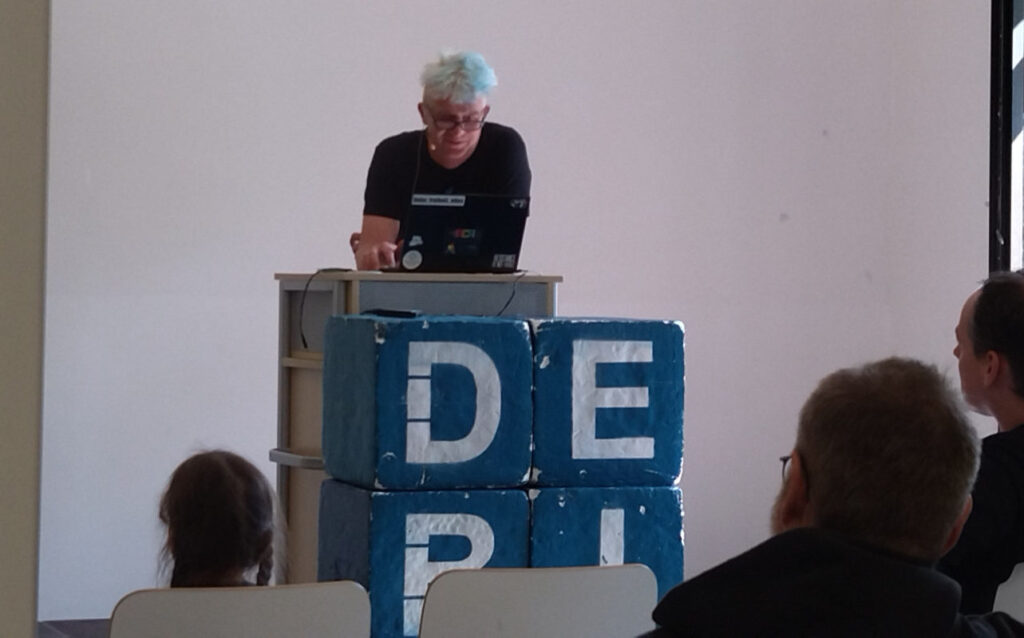
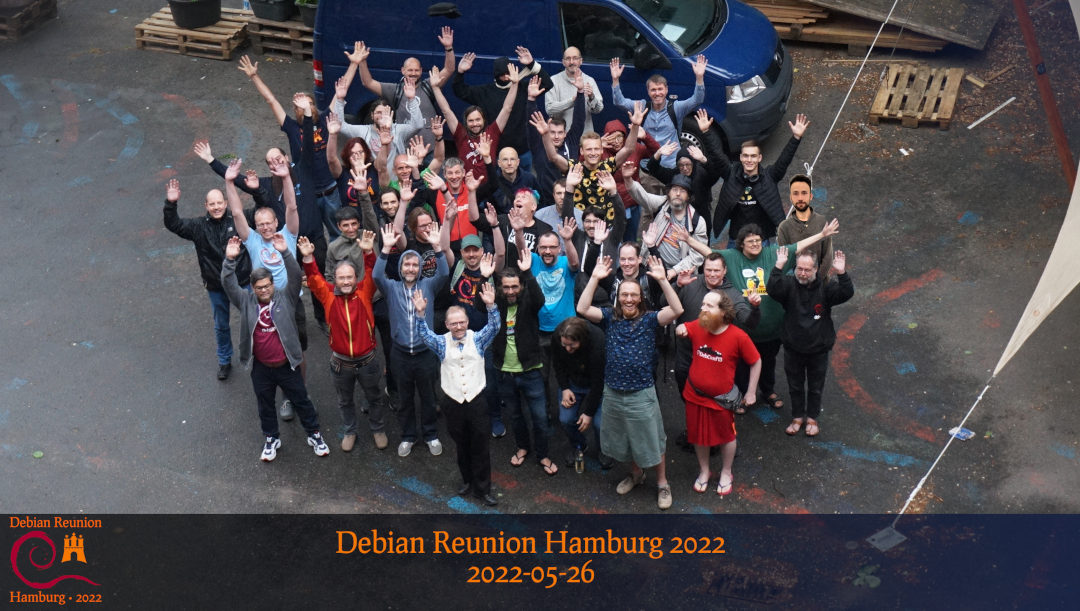
Jonathan Carter: MiniDebConf Germany 2023

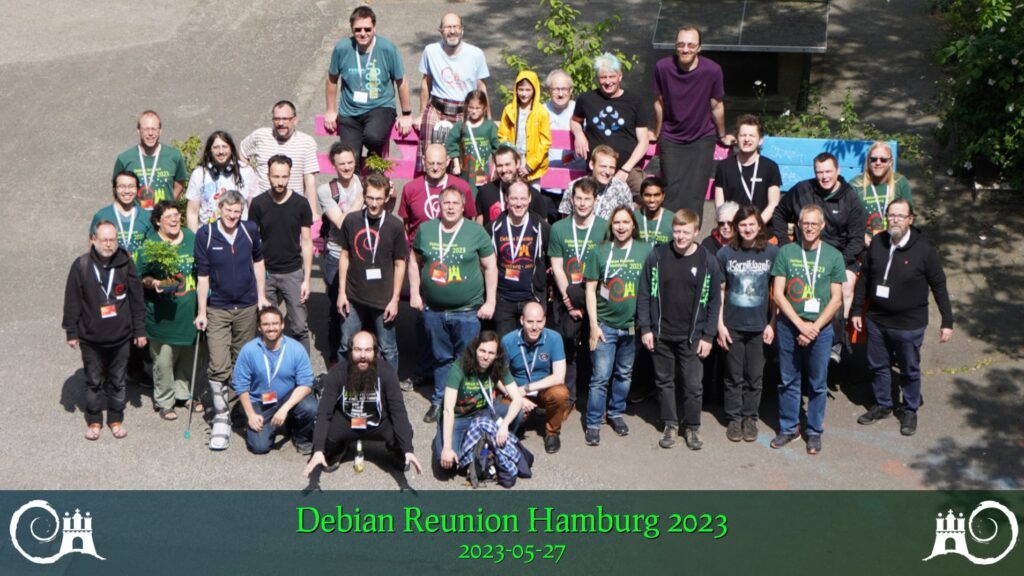
This year I attended Debian Reunion Hamburg (aka MiniDebConf Germany) for the second time. My goal for this MiniDebConf was just to talk to people and make the most of the time I have there. No other specific plans or goals. Despite this simple goal, it was a very productive and successful event for me. Tuesday 23rd:
Wednesday 24th:
Thursday 25th:
Friday 26th:
Saturday 27th: Sunday 28th: Monday 29th:
Das is nicht gut.
Tuesday 30th:

Thank you to Holger for organising this event yet again!

26 May 2023

Valhalla's Things: Correspondence Book

Posted on May 26, 2023
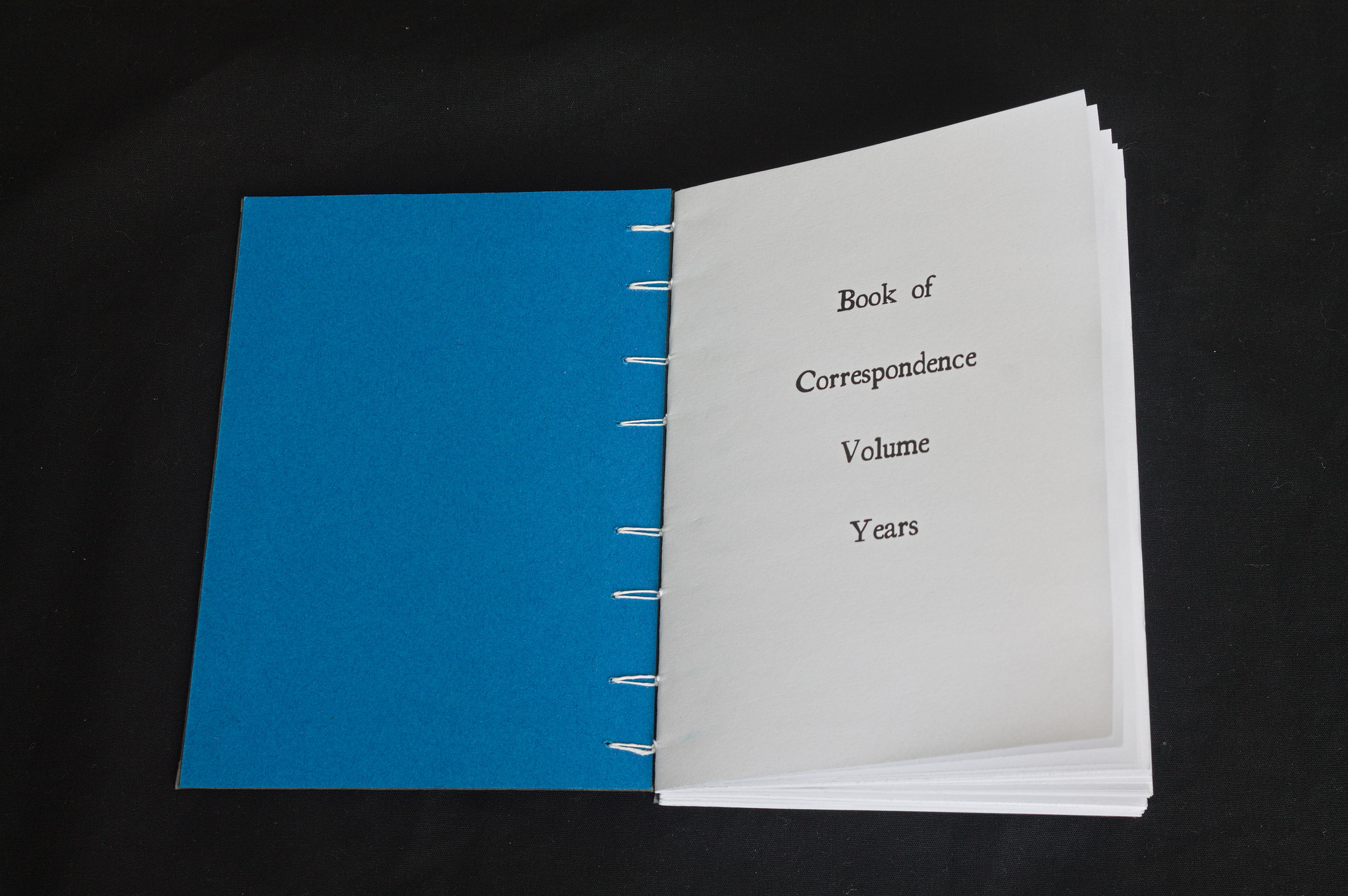
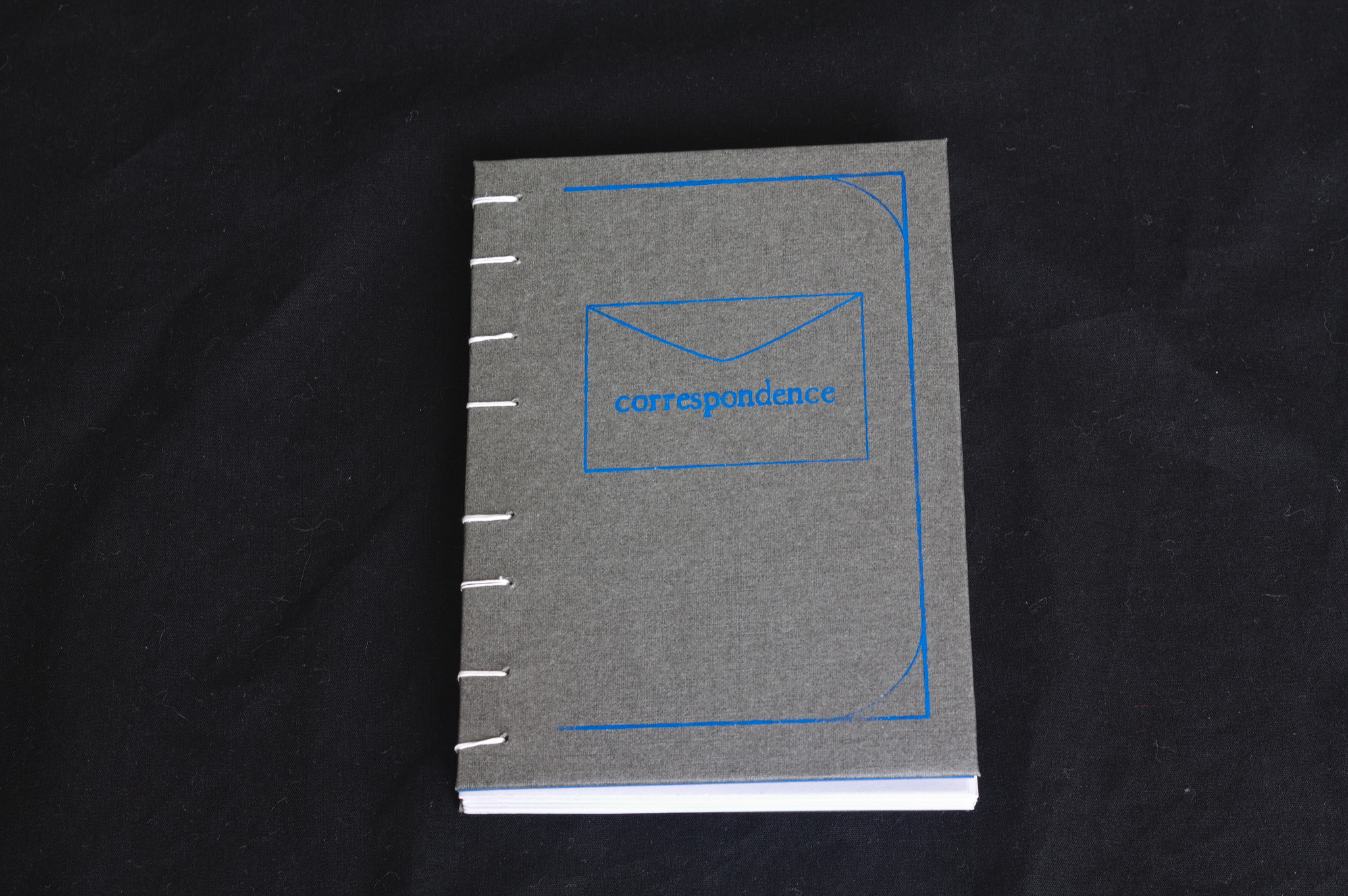
A Coptic bound book open to the first page with the title  Book of <space> Correspondence / Volume <space> Years <space> I write letters. The kind that are written on paper with a dip pen 1 and ink, stamped and sent through the post, spend a few days or weeks maturing like good wine in a depot somewhere2, and then get delivered to the recipient. Some of them (mostly cards) are to people who will receive them and thank me via xmpp (that sounds odd, but actually works out nicely), but others are proper letters with long texts that I exchange with penpals. Most of those are fountain pen frea^Wenthusiasts, so I usually use a different ink each time, and try to vary the paper, and I need to keep track of what I ve used. Some time ago, I ve read a Victorian book3 which recommended keeping a correspondence book to register all mail received and sent, the topics and whether it had been replied or otherwise acted upon. I don t have the mail traffic of a Victorian lady (or even middle class woman), but this looked like something fun to do, and if I added fields for the inks and paper used it would also have useful side effect. A page with writing lines with the title of the field below it: it has a number and then date, sender / recipient (at the ends of the same line, in reply to / replied, ink, paper, pen, topics / notes. So I headed over to the obvious program anybody would use for these things (XeLaTeX, of course) and quickly designed a page with fields for the basic thinks I want to record; it was a bit hurried, and I may improve on it the next time I make one, but I expect this one to last me two or three years, and it is good enough. I ve decided to make it A6 sized, so that it doesn t require a lot of space on my busy desktop, and it could be carried inside a portable desktop, if I ever decide to finish the one for which I ve made a mockup years ago :) Picture of book open to the correspondent pages: the fields are name, letters sent, letters received, address and notes. I ve also added a few pages for the addresses of my correspondents (and an index of the letters I ve exchanged with them), and a few empty pages for other notes. Then I ve used my a6_book.py script to rearrange the A6 pages into signatures and impress them on A4; to reduce later effort I ve added an option to order the pages in such a way that if I then cut four A4 sheet in half at a time (the limit of my rotary cutter) the signatures are ready to be folded. It s not the default because it requires that the pages are a multiple of 32 rather than just 16 (and they are padded up with empty pages if they aren t). If you re also interested in making one, here are the files: the book open to the page of letter two, which is repeated twice. After printing (an older version where some of the pages are repeated. whoops, but it only happened 4 times, and it s not a big deal), it was time for binding this into a book. I ve opted for Coptic stitch, so that the book will open completely flat and writing on it will be easier and the covers are 2 mm cardboard covered in linen-look bookbinding paper (sadly I no longer have a source for bookbinding cloth made from actual cloth). The grey cover of the book with the word correspondence, a stylised envelope and a border in blue. I tried to screenprint a simple design on the cover: the first attempt was unusable (the paper was smaller than the screen, so I couldn t keep it in the right place and moved as I was screenprinting); on the second attempt I used some masking tape to keep the paper in place, and they were a bit better, but I need more practice with the technique. Finally, I decided that for such a Victorian thing I will use an Iron-gall ink, but it s Rohrer & Knlingner Scabiosa, with a purple undertone, because life s too short to use blue-black ink :D And now, I m off to write an actual letter, rather than writing online about things that are related to letter writing.



  1. not a quill! I m a modern person who uses steel nibs!
  2. Milano Roserio, I m looking at you. a month to deliver a postcard from Lombardy to Ticino? not even a letter, which could have hidden contraband, a postcard.
  3. I think. I ve looked at some plausible candidates and couldn t find the source.

24 May 2023

Jonathan McDowell: RIP Brenda McDowell

My mother died earlier this month. She d been diagnosed with cancer back in February 2022 and had been through major surgery and a couple of rounds of chemotherapy, so it wasn t a complete surprise even if it was faster at the end than expected. That doesn t make it easy, but I m glad to be able to say that her immediate family were all with her at home at the end. I was touched by the number of people who turned up, both to the wake and the subsequent funeral ceremony. Mum had done a lot throughout her life and was settled in Newry, and it was nice to see how many folk wanted to pay their respects. It was also lovely to hear from some old school friends who had fond memories of her. There are many things I could say about her, but I don t feel that here is the place to do so. My father and brother did excellent jobs at eulogies at the funeral. However, while I blog less about life things than I did in the past, I did not want it to go unmarked here. She was my Mum, I loved her, and I am sad she is gone.
Scarlett Gately Moore: KDE Gear 23.04.1 Snaps Released! Snapcraft updates and more.

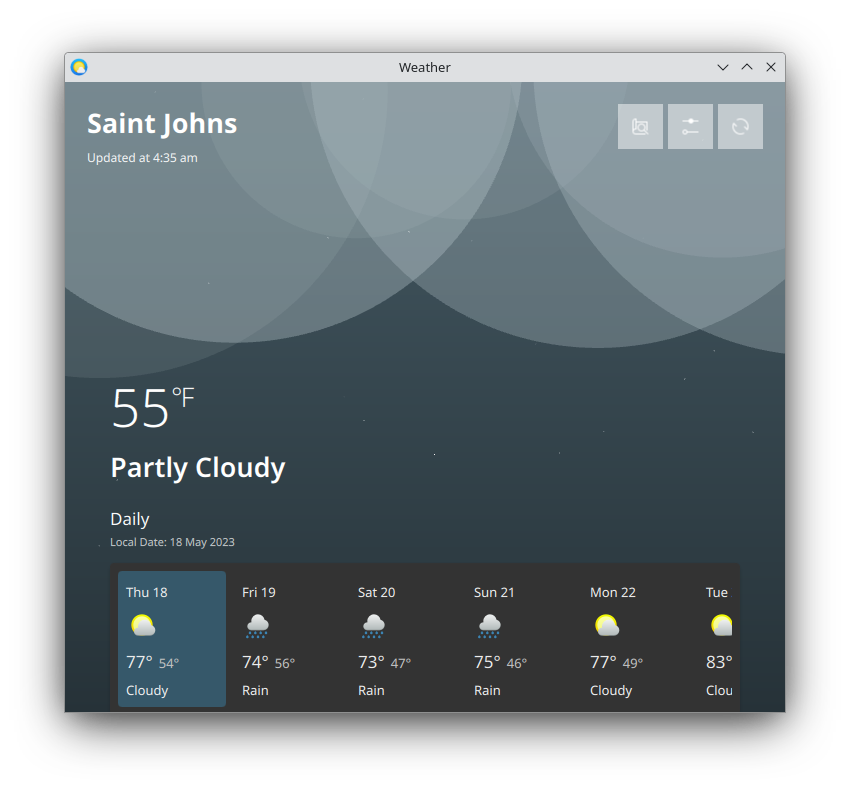
Kweather SnapKweather Snap
I have completed the 23.04.1 KDE Gear applications release for snaps! With this release comes several new KDE Snaps! Plus many long outdated / broken snaps are updated and or fixed! Check them all out here: https://snapcraft.io/search?q=KDE I have been busy triaging and squashing bugs in regards to snaps on https://bugs.kde.org Snapcraft: Updated the kde-neon extension for the newest content pack. Made a core22 qmake plugin with tests PR https://github.com/canonical/craft-parts/pull/463 Future work: Top on my TO-DO list is still PIM. There are many parts, making it more complex. I am working on it though. QT6/KF6 is making it s way to the top of the list as well. KDE Neon has made significant progress here, so I am in early stages of updating our build scripts to generate our qt6/kf6 content snap. Thanks for stopping by! https://gofund.me/2c7b1808 All proceeds go to improving my ability to work. Thanks for your consideration!

Jonathan Carter: Debian Reunion MiniDebConf 2022

It wouldn t be inaccurate to say that I ve had a lot on my plate in the last few years, and that I have a *huge* backlog of little tasks to finish. Just last week, I finally got to all my keysigning from DebConf22. This week, I m at MiniDebConf Germany in Hamburg. It s the second time I m here! And it s great already. Last year I drafted a blog entry, but never got around to publishing it. So, in order to mentally tick off yet another thing, here follows a somewhat imperfect (I had to delete a lot of short-hand because I didn t know what it means anymore), but at least published post about my activities from a year ago. This week (well, last year) I attended my first ever in-person MiniDebConf and MiniDebCamp in Hamburg, Germany. The last time I was in Germany was 7 years ago for DebConf15 (or at time of publishing, actually, last year for this same event). My focus for the week was to work on Debian live related stuff. In preparation for the week I tried to fix/close as many Calamares bugs as I could, so before the event I closed: Monday to Friday we worked together on various issues, and the weekend was for talks. On Monday morning, I had a nice discussion with Roland Clobus who has been working on making Debian live images reproducible. He s also been working on testing Debian Live on openqa.debian.net. We re planning on integrating his work so that Debian 12 live images will be reproducible. For automated testing on openqa, it will be ongoing work, one blocker has been that snapshots.debian.org limits connections after a while, so builds on there start failing fast.
On Monday afternoon, I went ahead and uploaded the latest Calamares hotfix (Calamares 3.2.58.1-1) release that fixes a UI issue on the partitioning screen where it could get stuck. On 15:00 we had a stand-up meeting where we introduced ourselves and talked a bit about our plans. It was great to see how many people could benefit from each other being there. For example, someone wanting to learn packaging, another wanting to improve packaging documentation, another wanting help with packaging something written in Rust, another wanting to improve Rust packaging in general and lots of overlap when it comes to reproducible builds! I also helped a few people with some of their packaging issues. On Monday evening, someone in videoteam managed to convince me to put together a loopy loop for this MiniDebConf. There s really wasn t enough time to put together something elaborate, but I put something together based on the previous loopy with some experiments that I ve been working on for the upcoming DC22 loopy, and we can use this loop to do a call for content for the DC22 loop. On Tuesday morning had some chats with urbec and Ilu,Tuesday afternoon talked to MIA team about upcoming removals. Did some admin on debian.ch payments for hosting. On Tuesday evening worked on live image stuff (d-i downloader, download module for dmm). On Wednesday morning I slept a bit late, then had to deal with some DPL admin/legal things. Wednesday afternoon, more chats with people. On Thursday: Talked to a bunch more people about a lot of issues, got loopy in a reasonably shape, edited and published the Group photo!
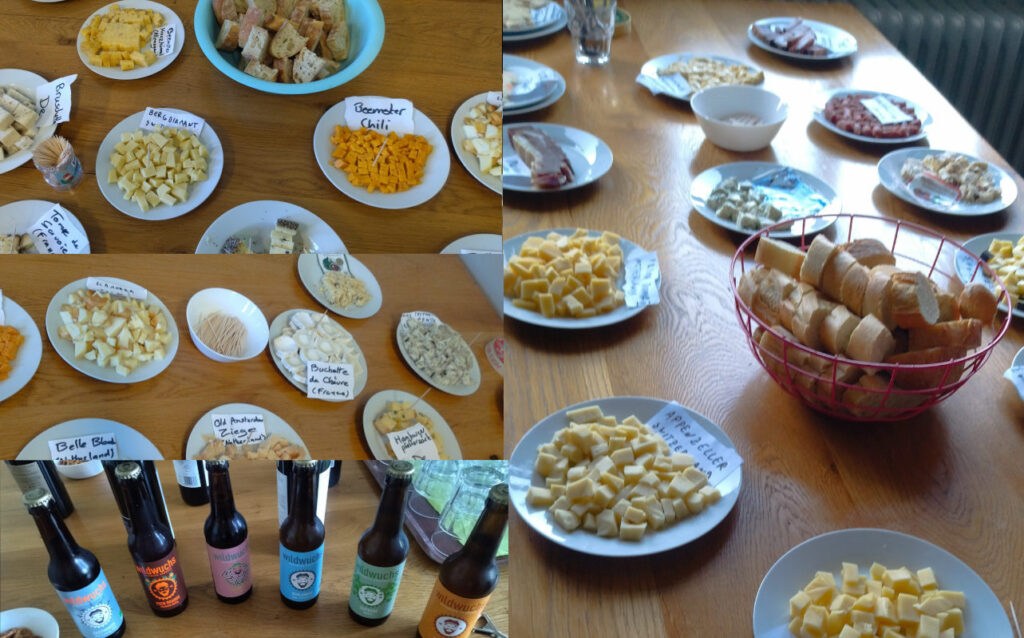
On Friday: prepared my talk slides, learned about Brave (https://github.com/bbc/brave) It initially looked like a great compositor for DebConf video stuff (and possible replacement for OBS, but it turned out it wasn t really maintained upstream). In the evening we had the Cheese and Wine party, where lots of deliciousness was experienced. On Saturday, I learned from Felix s talk that Tensorflow is now in experimental! (and now in 2023 I checked again and that s still the case, although it hasn t made it s way in unstable yet, hopefully that improves over the trixie cycle) I know most of the people who attended quite well, but it was really nice to also see a bunch of new Debianites that I ve only seen online before and to properly put some faces to names. We also had a bunch of enthusiastic new contributors and we did some key signing.

23 May 2023

Craig Small: Devices with cgroup v2

Docker and other container systems by default restrict access to devices on the host. They used to do this with cgroups with the cgroup v1 system, however, the second version of cgroups removed this controller and the man page says:
Cgroup v2 device controller has no interface files and is implemented on top of cgroup BPF.
https://www.kernel.org/doc/Documentation/admin-guide/cgroup-v2.rst
That is just awesome, nothing to see here, go look at the BPF documents if you have cgroup v2. With cgroup v1 if you wanted to know what devices were permitted, you just would cat /sys/fs/cgroup/XX/devices.allow and you were done! The kernel documentation is not very helpful, sure its something in BPF and has something to do with the cgroup BPF specifically, but what does that mean? There doesn t seem to be an easy corresponding method to get the same information. So to see what restrictions a docker container has, we will have to:
  1. Find what cgroup the programs running in the container belong to
  2. Find what is the eBPF program ID that is attached to our container cgroup
  3. Dump the eBPF program to a text file
  4. Try to interpret the eBPF syntax
The last step is by far the most difficult.

Finding a container s cgroup All containers have a short ID and a long ID. When you run the docker ps command, you get the short id. To get the long id you can either use the --no-trunc flag or just guess from the short ID. I usually do the second.
$ docker ps 
CONTAINER ID   IMAGE            COMMAND       CREATED          STATUS          PORTS     NAMES
a3c53d8aaec2   debian:minicom   "/bin/bash"   19 minutes ago   Up 19 minutes             inspiring_shannon
So the short ID is a3c53d8aaec2 and the long ID is a big ugly hex string starting with that. I generally just paste the relevant part in the next step and hit tab. For this container the cgroup is /sys/fs/cgroup/system.slice/docker-a3c53d8aaec23c256124f03d208732484714219c8b5f90dc1c3b4ab00f0b7779.scope/ Notice that the last directory has docker- then the short ID. If you re not sure of the exact path. The /sys/fs/cgroup is the cgroup v2 mount point which can be found with mount -t cgroup2 and then rest is the actual cgroup name. If you know the process running in the container then the cgroup column in ps will show you.
$ ps -o pid,comm,cgroup 140064
    PID COMMAND         CGROUP
 140064 bash            0::/system.slice/docker-a3c53d8aaec23c256124f03d208732484714219c8b5f90dc1c3b4ab00f0b7779.scope
Either way, you will have your cgroup path.

eBPF programs and cgroups Next we will need to get the eBPF program ID that is attached to our recently found cgroup. To do this, we will need to use the bpftool. One thing that threw me for a long time is when the tool talks about a program or a PROG ID they are talking about the eBPF programs, not your processes! With that out of the way, let s find the prog id.
$ sudo bpftool cgroup list /sys/fs/cgroup/system.slice/docker-a3c53d8aaec23c256124f03d208732484714219c8b5f90dc1c3b4ab00f0b7779.scope/
ID       AttachType      AttachFlags     Name
90       cgroup_device   multi
Our cgroup is attached to eBPF prog with ID of 90 and the type of program is cgroup _device.

Dumping the eBPF program Next, we need to get the actual code that is run every time a process running in the cgroup tries to access a device. The program will take some parameters and will return either a 1 for yes you are allowed or a zero for permission denied. Don t use the file option as it dumps the program in binary format. The text version is hard enough to understand.
sudo bpftool prog dump xlated id 90 > myebpf.txt
Congratulations! You now have the eBPF program in a human-readable (?) format.

Interpreting the eBPF program The eBPF format as dumped is not exactly user friendly. It probably helps to first go and look at an example program to see what is going on. You ll see that the program splits type (lower 4 bytes) and access (higher 4 bytes) and then does comparisons on those values. The eBPF has something similar:
   0: (61) r2 = *(u32 *)(r1 +0)
   1: (54) w2 &= 65535
   2: (61) r3 = *(u32 *)(r1 +0)
   3: (74) w3 >>= 16
   4: (61) r4 = *(u32 *)(r1 +4)
   5: (61) r5 = *(u32 *)(r1 +8)
What we find is that once we get past the first few lines filtering the given value that the comparison lines have:
  • r2 is the device type, 1 is block, 2 is character.
  • r3 is the device access, it s used with r1 for comparisons after masking the relevant bits. mknod, read and write are 1,2 and 3 respectively.
  • r4 is the major number
  • r5 is the minor number
For a even pretty simple setup, you are going to have around 60 lines of eBPF code to look at. Luckily, you ll often find the lines for the command options you added will be near the end, which makes it easier. For example:
  63: (55) if r2 != 0x2 goto pc+4
  64: (55) if r4 != 0x64 goto pc+3
  65: (55) if r5 != 0x2a goto pc+2
  66: (b4) w0 = 1
  67: (95) exit
This is a container using the option --device-cgroup-rule='c 100:42 rwm'. It is checking if r2 (device type) is 2 (char) and r4 (major device number) is 0x64 or 100 and r5 (minor device number) is 0x2a or 42. If any of those are not true, move to the next section, otherwise return with 1 (permit). We have all access modes permitted so it doesn t check for it. The previous example has all permissions for our device with id 100:42, what about if we only want write access with the option --device-cgroup-rule='c 100:42 r'. The resulting eBPF is:
  63: (55) if r2 != 0x2 goto pc+7  
  64: (bc) w1 = w3
  65: (54) w1 &= 2
  66: (5d) if r1 != r3 goto pc+4
  67: (55) if r4 != 0x64 goto pc+3
  68: (55) if r5 != 0x2a goto pc+2
  69: (b4) w0 = 1
  70: (95) exit
The code is almost the same but we are checking that w3 only has the second bit set, which is for reading, effectively checking for X==X&2. It s a cautious approach meaning no access still passes but multiple bits set will fail.

The device option docker run allows you to specify files you want to grant access to your containers with the --device flag. This flag actually does two things. The first is to great the device file in the containers /dev directory, effectively doing a mknod command. The second thing is to adjust the eBPF program. If the device file we specified actually did have a major number of 100 and a minor of 42, the eBPF would look exactly like the above snippets.

What about privileged? So we have used the direct cgroup options here, what does the --privileged flag do? This lets the container have full access to all the devices (if the user running the process is allowed). Like the --device flag, it makes the device files as well, but what does the filtering look like? We still have a cgroup but the eBPF program is greatly simplified, here it is in full:
   0: (61) r2 = *(u32 *)(r1 +0)
   1: (54) w2 &= 65535
   2: (61) r3 = *(u32 *)(r1 +0)
   3: (74) w3 >>= 16
   4: (61) r4 = *(u32 *)(r1 +4)
   5: (61) r5 = *(u32 *)(r1 +8)
   6: (b4) w0 = 1
   7: (95) exit
There is the usual setup lines and then, return 1. Everyone is a winner for all devices and access types!

Russ Allbery: Review: A Half-Built Garden

Review: A Half-Built Garden, by Ruthanna Emrys
Publisher: Tordotcom
Copyright: 2022
ISBN: 1-250-21097-6
Format: Kindle
Pages: 340
The climate apocalypse has happened. Humans woke up to the danger, but a little bit too late. Over one billion people died. But the world on the other side of that apocalypse is not entirely grim. The corporations responsible for so much of the damage have been pushed out of society and isolated on their independent "aislands," traded with only grudgingly for the few commodities the rest of the world has not yet learned how to manufacture without them. Traditional governments have largely collapsed, although they cling to increasingly irrelevant trappings of power. In their place arose the watershed networks: a new way of living with both nature and other humans, built around a mix of anarchic consensus and direct democracy, with conservation and stewardship of the natural environment at its core. Therefore, when the aliens arrive near Bear Island on the Potomac River, they're not detected by powerful telescopes and met by military jets. Instead, their waste sets off water sensors, and they're met by the two women on call for alert duty, carrying a nursing infant and backed by the real-time discussion and consensus technology of the watershed's dandelion network. (Emrys is far from the first person to name something a "dandelion network," so be aware that the usage in this book seems unrelated to the charities or blockchain network.) This is a first contact novel, but it's one that skips over the typical focus of the subgenre. The alien Ringers are completely fluent in English down to subtle nuance of emotion and connotation (supposedly due to observation of our radio and TV signals), have translation devices, and in some cases can make our speech sounds directly. Despite significantly different body shapes, they are immediately comprehensible; differences are limited mostly to family structure, reproduction, and social norms. This is Star Trek first contact, not the type more typical of written science fiction. That feels unrealistic, but it's also obviously an authorial choice to jump directly to the part of the story that Emrys wants to write. The Ringers have come to save humanity. In their experience, technological civilization is inherently incompatible with planets. Technology will destroy the planet, and the planet will in turn destroy the species unless they can escape. They have reached other worlds multiple times before, only to discover that they were too late and everyone is already dead. This is the first time they've arrived in time, and they're eager to help humanity off its dying planet to join them in the Dyson sphere of space habitats they are constructing. Planets, to them, are a nest and a launching pad, something to eventually abandon and break down for spare parts. The small, unexpected wrinkle is that Judy, Carol, and the rest of their watershed network are not interested in leaving Earth. They've finally figured out the most critical pieces of environmental balance. Earth is going to get hotter for a while, but the trend is slowing. What they're doing is working. Humanity would benefit greatly from Ringer technology and the expertise that comes from managing closed habitat ecosystems, but they don't need rescuing. This goes over about as well as a toddler saying that playing in the road is perfectly safe. This is a fantastic hook for a science fiction novel. It does exactly what a great science fiction premise should do: takes current concerns (environmentalism, space boosterism, the debatable primacy of humans as a species, the appropriate role of space colonization, the tension between hopefulness and doomcasting about climate change) and uses the freedom of science fiction to twist them around and come at them from an entirely different angle. The design of the aliens is excellent for this purpose. The Ringers are not one alien species; they are two, evolved on different planets in the same system. The plains dwellers developed space flight first and went to meet the tree dwellers, and while their relationship is not entirely without hierarchy (the plains dwellers clearly lead on most matters), it's extensively symbiotic. They now form mixed families of both species, and have a rich cultural history of stories about first contact, interspecies conflicts and cooperation, and all the perils and misunderstandings that they successfully navigated. It makes their approach to humanity more believable to know that they have done first contact before and are building on a model. Their concern for humanity is credibly sincere. The joining of two species was wildly successful for them and they truly want to add a third. The politics on the human side are satisfyingly complicated. The watershed network may have made first contact, but the US government (in the form of NASA) is close behind, attempting to lean on its widely ignored formal power. The corporations are farther away and therefore slower to arrive, but the alien visitors have a damaged ship and need space to construct a subspace beacon and Asterion is happy to offer a site on one of its New Zealand islands. The corporate representatives are salivating at the chance to escape Earth and its environmental regulation for uncontrolled space construction and a new market of trillions of Ringers. NASA's attitude is more measured, but their representative is easily persuaded that the true future of humanity is in space. The work the watershed networks are doing is difficult, uncertain, and involves a lot of sacrifice, particularly for corporate consumer lifestyles. With such an attractive alien offer on the table, why stay and work so hard for an uncertain future? Maybe the Ringers are right. And then the dandelion networks that the watersheds use as the core of their governance and decision-making system all crash. The setup was great; I was completely invested. The execution was more mixed. There are some things I really liked, some things that I thought were a bit too easy or predictable, and several places where I wish Emrys had dug deeper and provided more detail. I thought the last third of the book fizzled a little, although some of the secondary characters Emrys introduces are delightful and carry the momentum of the story when the politics feel a bit lacking. If you tried to form a mental image of ecofeminist political science fiction with 1970s utopian sensibilities, but updated for the concerns of the 2020s, you would probably come very close to the politics of the watershed networks. There are considerably more breastfeedings and diaper changes than the average SF novel. Two of the primary characters are transgender, but with very different experiences with transition. Pronoun pins are an ubiquitous article of clothing. One of the characters has a prosthetic limb. Another character who becomes important later in the story codes as autistic. None of this felt gratuitous; the characters do come across as obsessed with gender, but in a way that I found believable. The human diversity is well-integrated with the story, shapes the characters, creates practical challenges, and has subtle (and sometimes not so subtle) political ramifications. But, and I say this with love because while these are not quite my people they're closely adjacent to my people, the social politics of this book are a very specific type of white feminist collaborative utopianism. When religion makes an appearance, I was completely unsurprised to find that several of the characters are Jewish. Race never makes a significant appearance at all. It's the sort of book where the throw-away references to other important watershed networks includes African ones, and the characters would doubtless try to be sensitive to racial issues if they came up, but somehow they never do. (If you're wondering if there's polyamory in this book, yes, yes there is, and also I suspect you know exactly what culture I'm talking about.) This is not intended as a criticism, just more of a calibration. All science fiction publishing houses could focus only on this specific political perspective for a year and the results would still be dwarfed by the towering accumulated pile of thoughtless paeans to capitalism. Ecofeminism has a long history in the genre but still doesn't show up in that many books, and we're far from exhausting the space of possibilities for what a consensus-based politics could look like with extensive computer support. But this book has a highly specific point of view, enough so that there won't be many thought-provoking surprises if you're already familiar with this school of political thought. The politics are also very earnest in a way that I admit provoked a bit of eyerolling. Emrys pushes all of the political conflict into the contrasts between the human factions, but I would have liked more internal disagreement within the watershed networks over principles rather than tactics. The degree of ideological agreement within the watershed group felt a bit unrealistic. But, that said, at least politics truly matters and the characters wrestle directly with some tricky questions. I would have liked to see more specifics about the dandelion network and the exact mechanics of the consensus decision process, since that sort of thing is my jam, but we at least get more details than are typical in science fiction. I'll take this over cynical libertarianism any day. Gender plays a huge role in this story, enough so that you should avoid this book if you're not interested in exploring gender conceptions. One of the two alien races is matriarchal and places immense social value on motherhood, and it's culturally expected to bring your children with you for any important negotiation. The watersheds actively embrace this, or at worst find it comfortable to use for their advantage, despite a few hints that the matriarchy of the plains aliens may have a very serious long-term demographic problem. In an interesting twist, it's the mostly-evil corporations that truly challenge gender roles, albeit by turning it into an opportunity to sell more clothing. The Asterion corporate representatives are, as expected, mostly the villains of the plot: flashy, hierarchical, consumerist, greedy, and exploitative. But gender among the corporations is purely a matter of public performance, one of a set of roles that you can put on and off as you choose and signal with clothing. They mostly use neopronouns, change pronouns as frequently as their clothing, and treat any question of body plumbing as intensely private. By comparison, the very 2020 attitudes of the watersheds towards gender felt oddly conservative and essentialist, and the main characters get flustered and annoyed by the ever-fluid corporate gender presentation. I wish Emrys had done more with this. As you can tell, I have a lot of thoughts and a lot of quibbles. Another example: computer security plays an important role in the plot and was sufficiently well-described that I have serious questions about the system architecture and security model of the dandelion networks. But, as with decision-making and gender, the more important takeaway is that Emrys takes enough risks and describes enough interesting ideas that there's a lot of meat here to argue with. That, more than getting everything right, is what a good science fiction novel should do. A Half-Built Garden is written from a very specific political stance that may make it a bit predictable or off-putting, and I thought the tail end of the book had some plot and resolution problems, but arguing with it was one of the more intellectually satisfying science fiction reading experiences I've had recently. You have to be in the right mood, but recommended for when you are. Rating: 7 out of 10

22 May 2023

Russ Allbery: Review: Tsalmoth

Review: Tsalmoth, by Steven Brust
Series: Vlad Taltos #16
Publisher: Tor
Copyright: 2023
ISBN: 1-4668-8970-5
Format: Kindle
Pages: 277
Tsalmoth is the sixteenth book in the Vlad Taltos series and (some fans of the series groan) yet another flashback novel to earlier in Vlad's life. It takes place between Yendi and the interludes in Dragon (or, perhaps more straightforwardly, between Yendi and Jhereg. Most of the books of this series stand alone to some extent, so you could read this book out of order and probably not be horribly confused, but I suspect it would also feel weirdly pointless outside of the context of the larger series. We're back to Vlad running a fairly small operation as a Jhereg, who are the Dragaeran version of organized crime. A Tsalmoth who owes Vlad eight hundred imperials has rudely gotten himself murdered, thoroughly enough that he can't be revived. That's a considerable amount of money, and Vlad would like it back, so he starts poking around. As you might expect if you've read any other book in this series, things then get a bit complicated. This time, they involve Jhereg politics, Tsalmoth house politics, and necromancy (which in this universe is more about dimensional travel than it is about resurrecting the dead). The main story is... fine. Kragar is around being unnoticeable as always, Vlad is being cocky and stubborn and bantering with everyone, and what appears to be a straightforward illegal business relationship turns out to involve Dragaeran magic and thus Vlad's highly-placed friends. As usual, they're intellectually curious about the magic and largely ambivalent to the rest of Vlad's endeavors. The most enjoyable part of the story is Vlad's insistence on getting his money back while everyone else in the story cannot believe he would be this persistent over eight hundred imperials and is certain he has some other motive. It's otherwise a fairly forgettable little adventure. The implications for the broader series, though, are significant, although essentially none of the payoff is here. Brust has been keeping a major secret about Vlad that's finally revealed here, one that has little impact on the plot of this book (although it causes Vlad a lot of angst) but which I suspect will become very important later in the series. That was intriguing but rather unsatisfying, since it stays only a future hook with an attached justification for why we're only finding out about it now. If one has read the rest of the series, it's also nice to see Vlad and Cawti working together, bantering with each other and playing off of each other's strengths. It's reminiscent of the best parts of Yendi. As with many of the books of this series, the chapter introductions tell a parallel story; this time, it's Vlad and Cawti's wedding. I think previous books already mentioned that Vlad is narrating this series into some sort of recording device, and a bit about why he's doing that, but this is made quite explicit here. We get as much of the surrounding frame as we've ever seen before. There are no obvious plot consequences from this it's still all hints and guesswork but I suspect this will also become important by the end of the series. If you've read this much of the series, you'll obviously want to read this one as well, but unfortunately don't get your hopes up for significant plot advancement. This is another station-keeping book, which is a bit of a disappointment. We haven't gotten major plot advancement since Hawk in 2014, and I'm getting impatient. Thankfully, Lyorn has a release date already (April 9, 2024), and assuming all goes according to the grand plan, there are only two books left after Lyorn (Chreotha and The Last Contract). I'm getting hopeful that we're going to get to see the entire series. Meanwhile, I am very tempted to do a complete re-read of the series to date, probably in series chronological order rather than in publication order (as much as that's possible given the fractured timelines of Dragon and Tiassa) so that I can see how the pieces fit together. The constant jumping back and forth and allusions to events that have already happened but that we haven't seen yet is hard to keep track of. I'm very glad the Lyorn Records exists. Followed by Lyorn. Rating: 7 out of 10

21 May 2023

Russ Allbery: Review: The Stone Canal

Review: The Stone Canal, by Ken MacLeod
Series: Fall Revolution #2
Publisher: Tor
Copyright: 1996
Printing: January 2001
ISBN: 0-8125-6864-8
Format: Mass market
Pages: 339
The Stone Canal is a sort of halfway sequel to The Star Fraction. They both take place in the same universe, but the characters are almost entirely disjoint. Half of The Stone Canal happens (mostly) well before the previous book and the other half happens well after it. This book does contain spoilers for the ending of The Star Fraction if one connects the events of the two books correctly (which was a bit harder than I thought it should be), so I would not read them out of order. At the start of The Stone Canal, Jon Wilde wakes up on New Mars beside the titular canal, in the middle of nowhere, accompanied only by a robot that says it made him. Wilde remembers dying on Earth; this new life is apparently some type of resurrection. It's a long walk to Ship City, the center of civilization of a place the robot tells him is New Mars. In Ship City, an android named Dee Model has escaped from her owner and is hiding in a bar. There, she meets an AI abolitionist named Tamara, who helps her flee out the back and down the canal on a boat when Wilde walks into the bar and immediately recognizes her. The abolitionists provide her protection and legal assistance to argue her case for freedom from her owner, a man named Reid. The third thread of the story, and about half the book, is Jon Wilde's life on Earth, starting in 1975 and leading up to the chaotic wars, political fracturing, and revolutions that formed the background and plot of The Star Fraction. Eventually that story turns into a full-fledged science fiction setting, but not until the last 60 pages of the book. I successfully read two books in a Ken MacLeod series! Sadly, I'm not sure I enjoyed the experience. I commented in my review of The Star Fraction that the appeal for me in MacLeod's writing was his reputation as a writer of political science fiction. Unfortunately that's been a bust. The characters are certainly political, in the sense that they profess to have strong political viewpoints and are usually members of some radical (often Trotskyite) organization. There are libertarian anarchist societies and lots of political conflict. But there is almost no meaningful political discussion in any of these books so far. The politics are all tactical or background, and often seem to be created by authorial fiat. For example, New Mars is a sort of libertarian anarchy that somehow doesn't have corporations or a strongman ruler, even though the history (when we finally learn it) would have naturally given rise to one or the other (and has, in numerous other SF novels with similar plots). There's a half-assed explanation for this towards the end of the book that I didn't find remotely believable. Another part of the book describes the formation of the libertarian microstate in The Star Fraction, but never answers a "why" or "how" question I had in the previous book in a satisfying way. Somehow people stop caring about control or predictability or stability or traditional hierarchy without any significant difficulties except external threats, in situations of chaos and disorder where historically humans turn to anyone promising firm structure. It's common to joke about MacLeod winning multiple libertarian Prometheus Awards for his fiction despite being a Scottish communist. I'm finding that much less surprising now that I've read more of his books. Whether or not he believes in it himself, he's got the cynical libertarian smugness and hand-waving down pat. What his characters do care deeply about is smoking, drinking, and having casual sex. (There's more political fire here around opposition to anti-smoking laws than there is about any of the society-changing political structures that somehow fall into place.) I have no objections to any of those activities from a moral standpoint, but reading about other people doing them is a snoozefest. The flashback scenes sketch out enough imagined history to satisfy some curiosity from the previous book, but they're mostly about the world's least interesting love triangle, involving two completely unlikable men and lots of tedious jealousy and posturing. The characters in The Stone Canal are, in general, a problem. One of those unlikable men is Wilde, the protagonist for most of the book. Not only did I never warm to him, I never figured out what motivates him or what he cares about. He's a supposedly highly political person who seems to engage in politics with all the enthusiasm of someone filling out tax forms, and is entirely uninterested in explaining to the reader any sort of coherent philosophical approach. The most interesting characters in this book are the women (Annette, Dee Model, Tamara, and, very late in the book, Meg), but other than Dee Model they rarely get much focus from the story. By far the best part of this book is the last 60 pages, where MacLeod finally explains the critical bridge events between Wilde's political history on earth and the New Mars society. I thought this was engrossing, fast-moving, and full of interesting ideas (at least for a 1990s book; many of them feel a bit stale now, 25 years later). It was also frustrating, because this was the book I wanted to have been reading for the previous 270 pages, instead of MacLeod playing coy with his invented history or showing us interminable scenes about Wilde's insecure jealousy over his wife. It's also the sort of book where at one point characters (apparently uniformly male as far as one could tell from the text of the book) get assigned sex slaves, and while MacLeod clearly doesn't approve of this, the plot is reminiscent of a Heinlein novel: the protagonist's sex slave becomes a very loyal permanent female companion who seems to have the same upside for the male character in question. This was unfortunately not the book I was hoping for. I did enjoy the last hundred pages, and it's somewhat satisfying to have the history come together after puzzling over what happened for 200 pages. But I found the characters tedious and annoying and the politics weirdly devoid of anything like sociology, philosophy, or political science. There is the core of a decent 1990s AI and singularity novel here, but the technology is now rather dated and a lot of other people have tackled the same idea with fewer irritating ticks. Not recommended, although I'll probably continue to The Cassini Division because the ending was a pretty great hook for another book. Followed by The Cassini Division. Rating: 5 out of 10

20 May 2023

Junichi Uekawa: Shared library loading.

Shared library loading. ld.so seems to load shared libraries serially, looking through the load paths, looking through DT_LOADED sections, and looking up library paths or what's in ld.so.cache. I thought I could scan DT_LOADED with just reading approx first 2kB of shared library, and get the full list of shared libraries first, and then readahead(2) the list of shared libraries available. The result was that I could load blender binary slightly faster. blender spends about 300ms waiting for disk loading shared libraries and I could shorten it to about 100ms. sopreload, is a proof of concept with rough edges but I think it's a nice improvement.

19 May 2023

Petter Reinholdtsen: wmbusmeters, parse data from your utility meter - nice free software

There is a European standard for reading utility meters like water, gas, electricity or heat distribution meters. The Meter-Bus standard (EN 13757-2, EN 13757-3 and EN 13757 4) provide a cross vendor way to talk to and collect meter data. I ran into this standard when I wanted to monitor some heat distribution meters, and managed to find free software that could do the job. The meters in question broadcast encrypted messages with meter information via radio, and the hardest part was to track down the encryption keys from the vendor. With this in place I could set up a MQTT gateway to submit the meter data for graphing. The free software systems in question, rtl-wmbus to read the messages from a software defined radio, and wmbusmeters to decrypt and decode the content of the messages, is working very well and allowe me to get frequent updates from my meters. I got in touch with upstream last year to see if there was any interest in publishing the packages via Debian. I was very happy to learn that Fredrik hrstr m volunteered to maintain the packages, and I have since assisted him in getting Debian package build rules in place as well as sponsoring the packages into the Debian archive. Sadly we completed it too late for them to become part of the next stable Debian release (Bookworm). The wmbusmeters package just cleared the NEW queue. It will need some work to fix a built problem, but I expect Fredrik will find a solution soon. If you got a infrastructure meter supporting the Meter Bus standard, I strongly recommend having a look at these nice packages. As usual, if you use Bitcoin and want to show your support of my activities, please send Bitcoin donations to my address 15oWEoG9dUPovwmUL9KWAnYRtNJEkP1u1b.

16 May 2023

Freexian Collaborators: Monthly report about Debian Long Term Support, April 2023 (by Roberto C. S nchez)

Like each month, have a look at the work funded by Freexian s Debian LTS offering.

Debian LTS contributors In April, 18 contributors have been paid to work on Debian LTS, their reports are available:
  • Abhijith PA did 6.0h (out of 0h assigned and 14.0h from previous period), thus carrying over 8.0h to the next month.
  • Adrian Bunk did 18.0h (out of 16.5h assigned and 24.0h from previous period), thus carrying over 22.5h to the next month.
  • Anton Gladky did 8.0h (out of 9.5h assigned and 5.5h from previous period), thus carrying over 7.0h to the next month.
  • Bastien Roucari s did 17.0h (out of 17.0h assigned and 3.0h from previous period), thus carrying over 3.0h to the next month.
  • Ben Hutchings did 16.0h (out of 12.0h assigned and 12.0h from previous period), thus carrying over 8.0h to the next month.
  • Chris Lamb did 18.0h (out of 18.0h assigned).
  • Dominik George did 0.0h (out of 0h assigned and 20.34h from previous period), thus carrying over 20.34h to the next month.
  • Emilio Pozuelo Monfort did 4.5h (out of 11.0h assigned and 9.5h from previous period), thus carrying over 16.0h to the next month.
  • Guilhem Moulin did 8.5h (out of 8.0h assigned and 12.0h from previous period), thus carrying over 11.5h to the next month.
  • Helmut Grohne did 5.0h (out of 2.5h assigned and 7.5h from previous period), thus carrying over 5.0h to the next month.
  • Lee Garrett did 0.0h (out of 31.5h assigned and 9.0h from previous period), thus carrying over 40.5h to the next month.
  • Markus Koschany did 40.0h (out of 40.0h assigned).
  • Ola Lundqvist did 12.5h (out of 0h assigned and 24.0h from previous period), thus carrying over 11.5h to the next month.
  • Roberto C. S nchez did 8.5h (out of 4.75h assigned and 15.25h from previous period), thus carrying over 11.5h to the next month.
  • Stefano Rivera did 1.0h (out of 0h assigned and 28.0h from previous period), thus carrying over 27.0h to the next month.
  • Sylvain Beucler did 35.0h (out of 40.5h assigned), thus carrying over 5.5h to the next month.
  • Thorsten Alteholz did 14.0h (out of 14.0h assigned).
  • Tobias Frost did 15.0h (out of 15.0h assigned and 1.0h from previous period), thus carrying over 1.0h to the next month.
  • Utkarsh Gupta did 3.5h (out of 11.0h assigned and 18.5h from previous period), thus carrying over 26.0h to the next month.

Evolution of the situation In April, we have released 35 DLAs. The LTS team would like to welcome our newest sponsor, Institut Camille Jordan, a French research lab. Thanks to the support of the many LTS sponsors, the entire Debian community benefits from direct security updates, as well as indirect improvements and collaboration with other members of the Debian community. As part of improving the efficiency of our work and the quality of the security updates we produce, the LTS has continued improving our workflow. Improvements include more consistent tagging of release versions in Git and broader use of continuous integration (CI) to ensure packages are tested thoroughly and consistently. Sponsors and users can rest assured that we work continuously to maintain and improve the already high quality of the work that we do.

Thanks to our sponsors Sponsors that joined recently are in bold.

Next.

Previous.