Search Results: "mt"

28 June 2013

Justus Winter: Getting into the mood - my second week

tl; dr version: shutdown works, Debian GNU/Hurd booting using sysvinit:
Loading GNU Mach ...
Loading the Hurd ...
GNU Mach 1.3.99-486
AT386 boot: physical memory map from 0x0 to 0x9f400
AT386 boot: physical memory map from 0x100000 to 0x1fffe000
AT386 boot: physical memory from 0x0 to 0x1fffe000
Enabling FXSR
pcibios_init : BIOS32 Service Directory structure at 0xfcff0
pcibios_init : BIOS32 Service Directory entry at 0xfc7ba
pcibios_init : PCI BIOS revision 2.10 entry at 0xfc78c
Probing PCI hardware.
ide: Intel 82371 PIIX3 (dual FIFO) DMA Bus Mastering IDE
    Controller on PCI bus 0 function 9
ide: BM-DMA feature is not enabled (BIOS), enabling
    ide0: BM-DMA at 0xc100-0xc107
    ide1: BM-DMA at 0xc108-0xc10f
hd0: got CHS=762/128/63 CTL=c8 from BIOS
hd0: QEMU HARDDISK, 3001MB w/256kB Cache, CHS=762/128/63, DMA
hd2: QEMU DVD-ROM, ATAPI CDROM drive
ide0 at 0x1f0-0x1f7,0x3f6 on irq 14
ide1 at 0x170-0x177,0x376 on irq 15
Floppy drive(s): fd0 is 1.44M
FDC 0 is a S82078B
probing scsi 5/22: Adapteco1542FInvalidiaddresseforishpnt.with 1542.
Invalid address for shpnt with 1542.
probing scsi 18/22:AWesternxDigitalAWD-7000nFailed9initialization of WD-7000 SCSI card!
probing eata on/1f0EATA0:Daddress 0x1f04in3use, skipping probe.
probing eata on 170EATA0: address 0x170 in use, skipping probe.
probing scsi 21/22: Iomega7parport ZIP drive ppa: Version 1.42
ppa: Probing port 03bc
ppa: Probing port 0378
ppa:         SPP port present
ppa:         PS/2 bidirectional port present
ppa: Probing port 0278
done
scsi : 0 hosts.
scsi : detected total.
Partition check (DOS partitions):
 hd0: hd0s1 hd0s2 < hd0s5 >
lpr0: at atbus0, port = 378, spl = 6, pic = 7.
2omultibootxmodulesd/execl$(exec-task=task-create)ne=$ kernel-command-line  --host-priv-port=$ host-port  --device-master-port=$ device-port  --exec-server-task=$ exec-task  -T typed $ root  $(task-create) $(task-resume)               task loaded: ext2fs --readonly --multiboot-command-line=root=device:hd0s1 console=com0 --host-priv-port=1 --device-master-port=2 --exec-server-task=3 -T typed device:hd0s1
task loaded: exec /hurd/exec
start ext2fs: Hurd server bootstrap: ext2fs[device:hd0s1] exec init proc auth
INIT: version 2.88 booting
Using makefile-style concurrent boot in runlevel S.
Activating swap...done.
Checking root file system...fsck from util-linux 2.20.1
hd2 : tray open or drive not ready
end_request: I/O error, dev 02:00, sector 0
ext2fs_check_if_mount: Can't check if filesystem is mounted due to missing mtab file while determining whether /dev/hd0s1 is mounted.
/dev/hd0s1: clean, 43930/181056 files, 281248/723200 blocks
done.
Cleaning up temporary files... /tmp.
/etc/rcS.d/S06mtab.sh: 48: /etc/rcS.d/S06mtab.sh: cannot open /proc/mounts: No such file
Activating lvm and md swap...(default pager): Already paging to partition hd0s5!
done.
Checking file systems...fsck from util-linux 2.20.1
hd2 : tray open or drive not ready
end_request: I/O error, dev 02:00, sector 0
done.
Mounting local filesystems...mount: invalid option -- 'O'
Try  mount --help' or  mount --usage' for more information.
failed.
Activating swapfile swap...(default pager): Already paging to partition hd0s5!
done.
df: Warning: cannot read table of mounted file systems: No such file or directory
Cleaning up temporary files....
Configuring network interfaces...inetutils-ifconfig: invalid arguments
ifup: failed to open pid file /run/network/ifup-/dev/eth0.pid: No such file or directory
Internet Systems Consortium DHCP Client 4.2.2
Copyright 2004-2011 Internet Systems Consortium.
All rights reserved.
For info, please visit https://www.isc.org/software/dhcp/
can't create /var/lib/dhcp/dhclient./dev/eth0.leases: No such file or directory
Listening on Socket//dev/eth0
Sending on   Socket//dev/eth0
DHCPDISCOVER on /dev/eth0 to 255.255.255.255 port 67 interval 6
DHCPREQUEST on /dev/eth0 to 255.255.255.255 port 67
DHCPOFFER from 10.0.2.2
DHCPACK from 10.0.2.2
can't create /var/lib/dhcp/dhclient./dev/eth0.leases: No such file or directory
bound to 10.0.2.15 -- renewal in 38544 seconds.
done.
Cleaning up temporary files....
Setting up X socket directories... /tmp/.X11-unix /tmp/.ICE-unix.
INIT: Entering runlevel: 2
Using makefile-style concurrent boot in runlevel 2.
Starting enhanced syslogd: rsyslogd.
Starting deferred execution scheduler: atd.
Starting periodic command scheduler: cron.
Starting system message bus: dbusFailed to set socket option"/var/run/dbus/system_bus_socket": Protocol not available.
Starting OpenBSD Secure Shell server: sshd.
GNU 0.3 (debian) (console)
login:
This is the result of: This yields a surprisingly functional Debian/Hurd system with sysvinit. There are still lot's of loose ends, I populated my status page with them. I spent quite some time in #hurd on freenode and Pino Toscano offered to send me some old notes of his about the sysvinit issue. This turned out to be most helpful as his notes were about plugging sysvinits init into the boot process. This was the next logical thing to do for me, so first thing Monday morning I just put his runsystem.sysv file with some very minor tweaks (my version) into my overlay and had a working system in front of my eyes. That certainly was a nice way to start a week of work :), so many thanks again Pino! For your convenience I've created an overlay with all necessary changes and recompiled binaries. Be careful though, you might want to backup /sbin/reboot first or you won't be able to reboot your system! Of course my tool does that for you, and I've managed to create a reasonably small (253 mb) image thanks to the zerofree tool, the process of compacting images is implemented in hurdtest as the compact subcommand. I also added sysvinit specific tests. So if you want to try hurdtest, download the image and unxz it, my tool expects the image to be in the current working directory and be named image.qcow2. Download and untar an overlay and execute:
% hurdtest -logfile log -sysvinit overlay path/to/second-week-overlay
If you specify -logfile you can execute tail -f path/to/log to see what the VM is printing to the console in real time. The sysvinit specific tests demonstrate that indeed sysvinit is managing the system and that e. g. init 0 or shutdown -r now works. There are at least three major problems that I will need to tackle for this project: I think the last issue is what I'm going to look at next week. There's information about this in the Hurd wiki and I've spoken with Richard Braun about it and he drilled me to think about the hurdish way to solve this. I think I've got a pretty good picture of how to implement this in my head and am eager to give it a go. This will involve adding a function to Hurds filesystem interface that allows one to query an active translator about his mount options and "source" and about all active and passive translators that are attached to one of its nodes. This is where the fun actually begins. This is changing an integral part of an operating system, but this is okay since it is just another program written in c, operating in userspace. But hey I know that, that's just c and if something goes wrong (and it always does) I fire up gdb and have a look. And mind you, I'm running all this as an unprivileged user, no need to jeopardize the entire system for that. Besides implementing /proc/mounts I will also add -O, --test-opts to mount, and -v, --verbose to swapo n,ff . PS: My blog is still not properly registered to planet.d.o. I asked planet@ about that, but got no response. Any help? I never imagined blogging being so stressful, I care about losing potential readers :/

26 June 2013

Richard Hartmann: Too much security

So, regarding my cry for help... I did get several replies and did more research on my own. The TL;DR up to now is "I have a fully functioning device with no input method and my data may well die on it": The last two options I see are And I can not even be reached under my normal number as I don't dare turning the device off and/or removing the SIM as that may prevent me from recovering with the running device, somehow.

Jon Dowland: Office suite UI and creativity

[pic]
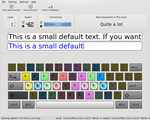
For some reason I've always hated the layout of Office Suite tools such as LibreOffice, OpenOffice and Microsoft Office (I seem to find the Ribbon interface nicer than what has gone before, although I can't put my finger on why.) I always find the sheer quantity of UI in these programs have a real negative impact on creativity. I still haven't found anything as inspirational as a blank sheet of paper (or perhaps more accurately, less demotivating than a blank sheet of paper.)
[pic]
I've tried disabling and removing bits in the past, but I've never ended up with something I was happy with. Recently I tried attaching one of the two standard toolbars vertically, instead of horizontally. Surprisingly to me, the result feels a lot nicer. There's still some way to go, though. focuswriter is pretty good but I like to have some graphical features. By analogy when I write on paper it's not always straight lines of words, but sometimes bubbles, arrows, lines, strikethroughs, etc. At least I can get bullet points by remembering the write X compose key sequence (alt gr, dot, equals)

24 June 2013

Daniel Pocock: Private WANs may be less secure than VPNs

The latest round of Snowden revelations concern a British GCHQ program dubbed "Mastering the Internet (MTI)". The program involves, among other things, tapping the world's under-sea fibre-optic cables and systematically monitoring all communications. One of the most significant facts that appears is the benefit of using IPsec and VPNs over the public Internet instead of trusting un-encrypted traffic to pass over private WAN connections. The definition of a private WAN connection is quite broad: many ISPs in the UK, for example, use the British Telecom OpenReach platform to tunnel DSL connections back to their data centers and offer virtual WANs to their business customers. Can any wifi be trusted? It should be assumed that all Wifi networks can be compromised at-will by a sophisticated attacker. This is another situation where VPNs may be part of the solution: even WPA2 secured wifi segments should be treated as untrusted public Internet networks and not bridged or routed onto any private subnets. Users with devices on a wifi network should be forced to use a VPN over wifi connection, even when the wifi is within the same building as the private network. Tor may be compromised by an attacker with this much data As I've mentioned in previous blogs with a focus on real-time communications there is no such thing as perfect privacy. Simply encrypting data with IPsec does not prevent the attacker knowing the volume of data transmitted or the time it was transmitted. Using a service like Tor for onion-routing provides some benefit. However, an attacker with sufficient infiltration of many points in the network may be able to deduce the real origins of a data transfer over Tor using some combination of packet sizes and timestamps. "Mastering the Internet (MTI)" may have sufficient coverage to achieve that. Tor could overcome this by putting dummy data into the network and adding fragmentation, but such schemes may add latency, reduce throughput and require significant effort to upgrade existing users. Gaining intelligence from encrypted data VoIP signals are typically compressed using some type of codec. These are dedicated, lossy compression schemes optimised for voice signals. Some codecs use a fixed compression ratio. Other codecs use a variable compression ratio (VBR): a simple example involves sending shorter packets to indicate a period of silence. Encrypting these packets prevents an attacker seeing what is inside them but the attacker can easily detect the lengths of the packets. Researchers have demonstrated that statistical techniques can be applied to VBR dataflows to identify syllables used in speech and then make a hypothesis about what has been said. (This would be an interesting hack to try and reproduce by collecting data with tcpdump and analysing it with R) Identifying phrases in encrypted VoIP using statistical analysis In many cases like those described, it is necessary to go beyond default encryption settings and put extra dummy data or frame padding into the data flow to gain a more fool-proof level of privacy. Simply connecting VoIP phones to an IPsec network doesn't automatically make them secure. The rise of the free-software VPN Even if the default configurations are not always universally resilient to every type of attack, many free software prodcuts provide an excellent building block for VPNs. Having the source code and specifications on hand, free software developers can then innovate to mix-and-match different technologies or add random data flows to mask the real activity on the network. In a recent hosting migration project, I successfully used the rather trivial VPN package tinc to bridge the ethernet segments between virtual machines in the old and new networks. This allowed virtual machines to be moved one-by-one over a period of a week. This is a remarkably simple solution that can protect the integrity of communications on a private subnet. A more comprehensive solution is strongSwan which provides support for industry-standard IPsec in various topologies. They now offer a full IPsec client for Android phones (hopefully it will be made available on f-droid: using a Google account to access Google Play may result in Google accidentally helping you "back up" your settings, including credentials, to their cloud, undermining the privacy of the system) An IPsec VPN can be deployed to all hosts on a network: then they can use opportunistic encryption for any type of communication without needing to worry about the underlying network. Furthermore, it is possible to add smart cards to further boost VPN security while using free software for the whole solution. For those interested in looking beyond Linux solutions, the *BSD range of operating systems, particularly OpenBSD provide a compelling alternative. This paper about OpenBSD's iked, which is also available on other platforms as OpenIKEd is very recent and provides a thorough overview of it's current status. One notable limitation is that their MOBIKE support is not yet complete. Many older VPNs likely to need an ugprade When I first started deploying Linux VPNs in the 90s the market was favourable for any type of Linux VPN. In extreme cases (which were surprisingly common at the time) companies accustomed to paying $20,000 per month for a leased line would happily pay a flat fee of $100,000 to purchase a VPN that was cobbled together using less than $10,000 of commodity hardware and some free software. Many of the first generation of these VPNs were built using RSA key lengths and algorithms no longer considered secure, such as DES. Some of these solutions (or products derived from them) may still remain in use today: managers may be slightly embarrassed to put aside their $100,000 VPN and replace it with a $50 router that is more secure. While that is the more extreme example, there are many intermediate solutions out there in the field. There are clear opportunities here to upgrade users to free software solutions.

22 June 2013

Justus Winter: My first week and some promising though hacky results

Hi Planet Debian :) my name is Justus Winter, I'm a computer science student at the University of Hamburg. I'm participating in the GSOC 2013, my task is to make Debian/Hurd systems boot using the same initialization scripts Debian/Linux uses. I spent the community bonding period with some gsoc related administrative tasks, updating my development machine and getting reacquainted with the Hurd system. It was nice to see how far Debian/Hurd has come since my last "serious" encounter with it. I've setup a continuous build solution on one of my Hurd VMs and prepared a package repository. I'll post details once I have some packages to share. I built the hurd, sysvinit and ifupdown packages and dived into the interesting world of literate programming. I'm going to write about that when I start looking into the ifupdown related issues. But most importantly I started writing a tool to automate all the tasks I would do during my work that could possibly be automated. As I'm working on the boot process, it makes sense to use some kind of virtualization software so I can work in the comfort of my usual development environment. My virtualization solution of choice is qemu and I actually wrote a qemu based black-box test solution for a former employer once, so I already was familiar with qemu and wrapping my own code around it. Without further ado, here it is: https://bitbucket.org/teythoon/hurdtest Provided that you have golang installed, you can compile it easily:
teythoon@europa /tmp % export GOPATH= pwd 
teythoon@europa /tmp % go get bitbucket.org/teythoon/hurdtest
teythoon@europa /tmp % bin/hurdtest
Usage: hurdtest [options] <command> [<arguments...>]
Currently it has the following subcommands:
test
Starts a VM, logs in as root, tests the interaction with the VM, verifies that certain VFS locations are writable, tests the network connectivity, the DNS resolution and installs and runs the hello package.
update
Executes aptitude update && aptitude full-upgrade, reboots the system and runs the test subcommand. If successful, it commits the changes to the virtual disk and creates a snapshot.
overlay
Takes as argument the path to a directory that is copied to the VM, reboots the machine and runs the test subcommand.
The update command is nice because it allows me to keep the VM up to date while ensuring that the image remains usable, with respect to what the test command considers a usable state of a Debian system. I'd really like to get some suggestions on how to test the "health" of a Debian system. You can look at how the tests are implemented in test.go, it's quite easy to add more and more interesting tests, and you don't even have to clean up after them or worry about any side-effects as the changes are not committed to the virtual disk. This is hurdtest doing an update:
teythoon@europa ~/repos/hurd/hurd-tests % bin/hurdtest update
2013/06/22 19:59:45 starting kvm [-drives file=image.qcow2,cache=writeback,snapshot=on -serial unix:/tmp/285813369/serial -monitor unix:/tmp/285813369/monitor -nographic -m 512]
2013/06/22 19:59:45 Waiting for grub...
2013/06/22 19:59:46 Waiting for login prompt...
2013/06/22 20:00:05 Updating system
2013/06/22 20:02:52 Get: 1 http://www.local unstable InRelease [8279 B]
Get: 2 http://http.debian.net sid InRelease [205 kB]
Get: 3 http://ftp.debian-ports.org unreleased InRelease [23.9 kB]
[...]
Setting up perl (5.14.2-21) ...
Reading package lists...
Building dependency tree...
Reading state information...
Reading extended state information...
Initializing package states...
Reading task descriptions...
2013/06/22 20:02:52 Update successful. Snapshotting system...
2013/06/22 20:02:53 Rebooting system...
2013/06/22 20:02:54 Waiting for grub...
2013/06/22 20:02:59 Waiting for login prompt...
2013/06/22 20:03:16 Running main.testTrue...
2013/06/22 20:03:16 Running main.testFalse...
2013/06/22 20:03:17 Running main.testClean...
[...]
2013/06/22 20:03:18 Running main.testNetwork...
2013/06/22 20:03:18 Running main.testResolver...
2013/06/22 20:03:20 Running main.testAptitudeInstall...
2013/06/22 20:03:46 Test successful. Reverting system...
2013/06/22 20:03:48 Halting system...
2013/06/22 20:03:53 Committing changes...
2013/06/22 20:03:57 Creating snapshot...
2013/06/22 20:04:04 All done.
bin/hurdtest update  157.31s user 69.71s system 87% cpu 4:18.94 total
The overlay command implements my work flow. I can edit scripts or drop hacked up executables onto my VM and see the results without any manual intervention. There's the -interactive flag that does this in a loop, avoiding the VM startup time using qemu snapshots. With this I can apply an overlay and see the results of the test suite in about a minute on my system. From early experiments I knew that simply running /etc/rcS.d/S* prevented the system from booting correctly, so I figured my first task should be to figure out what went wrong there. Using my tool (and developing it in that process) and many iterations later I came up with a surprisingly small diff of scripts in the initscripts and utilities shipped with the hurd package. For your convenience here is a tarball that you can extract to the root of your Debian/Hurd installation to reproduce my results (of course I invite you to use my tool for that purpose):
% bin/hurdtest overlay test
2013/06/22 21:35:31 starting kvm [-drive file=image.qcow2,cache=writeback,snapshot=on -serial unix:/tmp/345188134/serial -monitor unix:/tmp/345188134/monitor -nographic -m 512]
2013/06/22 21:35:31 Waiting for grub...
2013/06/22 21:35:31 Waiting for login prompt...
2013/06/22 21:35:48 Creating tarball...
./
./etc/
./etc/hurd/
./etc/hurd/rc
./etc/init.d/
./etc/init.d/checkroot.sh
./etc/init.d/mountall.sh
./runme
./lib/
./lib/init/
./lib/init/mount-functions.sh
./sbin/
./sbin/swapon
./bin/
./bin/mount
2013/06/22 21:35:48 Extracting overlay...
2013/06/22 21:35:49 Rebooting system...
2013/06/22 21:35:49 Waiting for grub...
2013/06/22 21:35:55 Writing log to /tmp/bootlog-802006344
2013/06/22 21:35:55 Waiting for login prompt...
2013/06/22 21:36:20 Booting successful.
2013/06/22 21:36:20 Running main.testTrue...
2013/06/22 21:36:21 Running main.testFalse...
2013/06/22 21:36:21 Running main.testClean...
2013/06/22 21:36:21 Running anonymous function...
2013/06/22 21:36:22 Running anonymous function...
2013/06/22 21:36:22 Running main.testUname...
2013/06/22 21:36:22 Running main.testNetwork...
2013/06/22 21:36:22 Running main.testResolver...
2013/06/22 21:36:23 Running main.testAptitudeInstall...
bin/hurdtest overlay ../hurd-tests-old/test  44.20s user 20.01s system 82% cpu 1:17.94 total
And here is the boot log:
Loading GNU Mach ...
Loading the Hurd ...
GNU Mach 1.3.99-486
AT386 boot: physical memory map from 0x0 to 0x9f400
AT386 boot: physical memory map from 0x100000 to 0x1fffe000
AT386 boot: physical memory from 0x0 to 0x1fffe000
Enabling FXSR
pcibios_init : BIOS32 Service Directory structure at 0xfcff0
pcibios_init : BIOS32 Service Directory entry at 0xfc7ba
pcibios_init : PCI BIOS revision 2.10 entry at 0xfc78c
Probing PCI hardware.
ide: Intel 82371 PIIX3 (dual FIFO) DMA Bus Mastering IDE
    Controller on PCI bus 0 function 9
ide: BM-DMA feature is not enabled (BIOS), enabling
    ide0: BM-DMA at 0xc100-0xc107
    ide1: BM-DMA at 0xc108-0xc10f
hd0: got CHS=762/128/63 CTL=c8 from BIOS
hd0: QEMU HARDDISK, 3001MB w/256kB Cache, CHS=762/128/63, DMA
hd2: QEMU DVD-ROM, ATAPI CDROM drive
ide0 at 0x1f0-0x1f7,0x3f6 on irq 14
ide1 at 0x170-0x177,0x376 on irq 15
Floppy drive(s): fd0 is 1.44M
FDC 0 is a S82078B
probing scsi 0/22: advansys probing scsi 1/22: BusLogic probing scsi 2/22: UltraStor 14F/34F rev. 4.33.00  probing scsi 3/22: UltraStor 14F/24F/34F probing scsi 4/22: Adaptec 152x SCSI driver; $Revision: 1.1 $ probing scsi 5/22: Adaptec 1542 Invalid address for shpnt with 1542.
Invalid address for shpnt with 1542.
probing scsi 6/22: Adaptec 174x (EISA) probing scsi 7/22:  probing scsi 8/22: Always IN2000 probing scsi 9/22:  probing scsi 10/22:  probing scsi 11/22:  probing scsi 12/22: Trantor T128/T128F/T228 probing scsi 13/22: DTC 3180/3280  probing scsi 14/22: Tekram DC390(T) V1.11 Feb-05-1997 probing scsi 15/22:  probing scsi 16/22: ncr53c8xx - revision 2.5f.1 probing scsi 17/22: EATA (Extended Attachment) PIO driver probing scsi 18/22: Western Digital WD-7000 Failed initialization of WD-7000 SCSI card!
probing scsi 19/22: EATA/DMA 2.0x rev. 4.33.00  probing eata on 1f0EATA0: address 0x1f0 in use, skipping probe.
probing eata on 1c88probing eata on 2c88probing eata on 3c88probing eata on 4c88probing eata on 5c88probing eata on 6c88probing eata on 7c88probing eata on 8c88probing eata on 9c88probing eata on ac88probing eata on bc88probing eata on cc88probing eata on dc88probing eata on ec88probing eata on fc88probing eata on 170EATA0: address 0x170 in use, skipping probe.
probing eata on 230probing eata on 330probing scsi 20/22: AM53C974 probing scsi 21/22: Iomega parport ZIP drive ppa: Version 1.42
ppa: Probing port 03bc
ppa: Probing port 0378
ppa:     SPP port present
ppa:     PS/2 bidirectional port present
ppa: Probing port 0278
done
scsi : 0 hosts.
scsi : detected total.
Partition check (DOS partitions):
 hd0: hd0s1 hd0s2 < hd0s5 >
lpr0: at atbus0, port = 378, spl = 6, pic = 7.
module 0: ext2fs --readonly --multiboot-command-line=$ kernel-command-line  --host-priv-port=$ host-port  --device-master-port=$ device-port  --exec-server-task=$ exec-task  -T typed $ root  $(task-create) $(task-resume) module 1: exec /hurd/exec $(exec-task=task-create)                                                                                                                                                                           2 multiboot modules                                                                                                                                                                                                                    task loaded: ext2fs --readonly --multiboot-command-line=root=device:hd0s1 console=com0 --host-priv-port=1 --device-master-port=2 --exec-server-task=3 -T typed device:hd0s1
task loaded: exec /hurd/exec
start ext2fs: Hurd server bootstrap: ext2fs[device:hd0s1] exec init proc auth
Using makefile-style concurrent boot in runlevel S.
ERROR: could not open /proc/stat: No such file or directory
Activating swap...done.
Checking root file system...fsck from util-linux 2.20.1
hd2 : tray open or drive not ready
end_request: I/O error, dev 02:00, sector 0
ext2fs_check_if_mount: Can't check if filesystem is mounted due to missing mtab file while determining whether /dev/hd0s1 is mounted.
/dev/hd0s1: clean, 44328/181056 files, 288266/723200 blocks
done.
Cleaning up temporary files... /tmp.
mount: /run: Unknown device or filesystem
mount: /run/lock: Unknown device or filesystem
mount: /proc: Unknown device or filesystem
mount: /run/shm: Unknown device or filesystem
/etc/rcS.d/S06mtab.sh: 48: /etc/rcS.d/S06mtab.sh: cannot open /proc/mounts: No such file
Activating lvm and md swap...(default pager): Already paging to partition hd0s5!
done.
Checking file systems...fsck from util-linux 2.20.1
hd2 : tray open or drive not ready
end_request: I/O error, dev 02:00, sector 0
done.
Mounting local filesystems...mount: invalid option -- 'O'
Try  mount --help' or  mount --usage' for more information.
failed.
Activating swapfile swap...(default pager): Already paging to partition hd0s5!
done.
df: Warning: cannot read table of mounted file systems: No such file or directory
Cleaning up temporary files....
Configuring network interfaces...inetutils-ifconfig: invalid arguments
ifup: failed to open pid file /run/network/ifup-/dev/eth0.pid: No such file or directory
Internet Systems Consortium DHCP Client 4.2.2
Copyright 2004-2011 Internet Systems Consortium.
All rights reserved.
For info, please visit https://www.isc.org/software/dhcp/
can't create /var/lib/dhcp/dhclient./dev/eth0.leases: No such file or directory
Listening on Socket//dev/eth0
Sending on   Socket//dev/eth0
DHCPDISCOVER on /dev/eth0 to 255.255.255.255 port 67 interval 5
DHCPREQUEST on /dev/eth0 to 255.255.255.255 port 67
DHCPOFFER from 10.0.2.2
DHCPACK from 10.0.2.2
can't create /var/lib/dhcp/dhclient./dev/eth0.leases: No such file or directory
bound to 10.0.2.15 -- renewal in 36884 seconds.
done.
Cleaning up temporary files....
Setting up X socket directories... /tmp/.X11-unix /tmp/.ICE-unix.
Using makefile-style concurrent boot in runlevel 2.
Starting enhanced syslogd: rsyslogd.
Starting deferred execution scheduler: atd.
Starting periodic command scheduler: cron.
Starting system message bus: dbusFailed to set socket option"/var/run/dbus/system_bus_socket": Protocol not available.
Starting OpenBSD Secure Shell server: sshd.
GNU 0.3 (debian) (console)
login:
I know it isn't that pretty, but it yields a working Debian/Hurd system that is more like a Debian/Linux system. For example /dev/shm and /run ,/* are connected to a tmpfs translator. I think this is a rather encouraging first result. I added my findings to the list of open issues. Another nice thing about hurdtest is that it is not even Hurd specific (only a tiny bit GNU Mach specific). I'm going to make it work nicely with Debian/Linux and Debian/kFreeBSD, since this is a very handy tool for anyone hacking on the Debian boot process (and with some changes for any OS). If anyone tries it out, I'd love to get feedback and patches. The tool requires the guest to be configured to use the first serial console for grub, the kernel and the userspace. The password for the user root must be empty. The guest has to have a working network connection setup at boot time. I will provide a suitable image as soon as I devise a good way to zero-fill the free space on the virtual disk. Is there any better way than to fill the disk with a huge file containing zeros? Without doing that the image is too large even compressed with xz. So this was my first week working for Debian. Next week I will focus on getting patches for the hurd and initscripts package in shape, I need to add some functionality to the mount utility shipped with the hurd package. It provides a mount-like experience on the Hurd, on which binding a translator (e. g. /hurd/ext2fs) to a filesystem node is an operation that does not involve the kernel (GNU Mach) at all, and is in fact a operation that any unprivileged user may perform. That is one of the nice features the Hurd has, it empowers its users.

21 June 2013

Craig Sanders: backup-mysql.sh

A bash script to backup mysql databases, with separate schema and plain-text dump files (INSERT commands) for each database. Makes it easy to restore individual databases or copy them into dev/test servers. Keeps 30 days worth of backups in separate YYYY-MM-DD directories. Also dumps the mysql grants to a separate file mysql-grants.txt , and creates a sometimes conveniently useful mysql-create-databases.txt containing CREATE DATABASE commands. Based on my similar backup script for postgresql databases.
#! /bin/bash
# mysql backup script
#
# $Id: backup-mysql.sh,v 1.8 2013/06/21 02:20:39 cas Exp $
#
# by Craig Sanders <cas@taz.net.au>
# this script is public domain.  do whatever you want with it.
# set user/password here, or leave undefined to rely on ~/.my.cnf
#MYSQL_USER="root"
#MYSQL_PWD="SECRET"
[ -n "$MYSQL_USER" ] && ARGS="$ARGS -u$MYSQL_USER"
[ -n "$MYSQL_PWD" ] && ARGS="$ARGS -p$MYSQL_PWD"
DATABASES=$(mysql $ARGS -D mysql --skip-column-names -B -e 'show databases;'   egrep -v 'information_schema' );
BACKUPDIR=/var/backups/mysql
YEAR=$(date +"%Y")
MONTH=$(date +"%m")
DAY=$(date +"%d")
DATE="$YEAR-$MONTH/$YEAR-$MONTH-$DAY"
# make sure that perms on all created files/dirs are rwxr-x---
umask 0027
mkdir -p "$BACKUPDIR/$DATE"
cd "$BACKUPDIR/$DATE"
mysql $ARGS -Bse "SELECT CONCAT('SHOW GRANTS FOR \'', user ,'\'@\'', host, '\';') FROM mysql.user"   \
    mysql $ARGS -Bs   \
    sed 's/$/;/g'  > mysql-grants.txt
# "create database" lines, for easy cut-and-paste
> mysql-create-databases.txt
for i in $DATABASES ; do
  echo "CREATE DATABASE $i;" >> mysql-create-databases.txt
done
ARGS2="--skip-opt --no-create-db --no-create-info --single-transaction --flush-logs"
for db in $DATABASES ; do 
    echo -n "backing up $db: schema..."
    mysqldump $ARGS --no-data $db > $db.schema.sql
    echo -n "extended..."
    mysqldump $ARGS $ARGS2 --extended-insert $db > $db.data.extended.sql
    # uncomment if you want complete-insert dumps too.
    #echo -n "data...complete..."
    #mysqldump $ARGS $ARGS2 --complete-insert $db > $db.data.complete.sql
    echo -n "compressing..."
    gzip -9fq $db.schema.sql $db.data.extended.sql #$db.data.complete.sql
    echo "done."
done
echo deleting backups older than 30 days:
find "$BACKUPDIR" -mindepth 1 -a -type d -mtime +30 -print0   xargs -0r rm -rfv
backup-mysql.sh is a post from: Errata

19 June 2013

Daniel Pocock: Australia's war on brains (and immigration)

Some weeks ago, our Prime Minister was slashdotted when she suspended her usual racist attacks on refugees to attack foreign IT workers and the companies that employ them with absurd accusations of "rorts" and "stealing" jobs. Today, she's introduced new laws in the parliament aiming to further bastardization of intelligent, skilled and educated workers and anybody who associates with them, including Australian employers. Unwarranted attention on a minority of IT workers This is not just some random bill before the parliament. There are just two weeks left before the parliament concludes and an election campaign begins. It is clear that what we are seeing now is the Real Julia coming though, choosing to make the small minority of foreign workers in our country at the center of people's thoughts as they go to vote in September. A debt of gratitude to foreign workers These verses from our national anthem, Advance Australia Fair say a lot about how Australia became what it is today:
For those who've come across the seas

We've boundless plains to share;

With courage let us all combine

To Advance Australia Fair.
The last 200 years of Australia's history has been a story of immigration. It is not something to be afraid of: our forefathers celebrated it. Foreign workers: why Australia needs you Australia has had some appalling flops in IT and engineering: There is no doubt in my mind that additional foreign workers would have made a positive contribution to all of these problems or can do so in the future. The sun never sets on IT Every day, I collaborate with dozens of IT specialists all over the world through the virtual workplace that is the Internet, particularly in the free and open source software community. Many of these people, I've never even met and in most cases I don't even know where they are, where they were born or what is the colour of their skin. Those details wouldn't make any difference to the way that we work in IT today. How many IT managers have time to waste dealing with more real world bureaucracy when they've experienced online, global productivity? How many IT workers feel demotivated by having to explain trivial details about their personal life to a Government bureaucrat who doesn't understand their skills and just looks at their colour? If you think about it, any immigration officer who really understands IT wouldn't be an immigration officer. They would be working in IT themselves. Immigration officers, who don't understand IT, are now going to be further empowered to bully companies away from employing some talented workers on the basis of race or nationality. Hiring managers will be intimidated into these prejudiced and biased decisions by delays, processing fees and invasive demands for sensitive documents about business planning and recruitment strategies. Australia's immigration system already has a horrendous reputation. Any visa application seems to take more than a year: no small company can keep a job position vacant that long. Families can't plan their children's schooling. Other life events come and go. There are exhorbitant fees, 1000% higher than in other western countries. Fewer and fewer self-respecting skilled workers are willing to put their spouses and children through the degrading medical examinations. Judging the impact of poor immigration policy While the economic impact of this immigration mess on industry is hard to quantify with an exact figure, we can take some insight from the education system. As the visa system has been hijacked by racists over the last 10 years, there has been a dramatic fall in participation (and revenues) from foreign students. In one year, enrolments (and revenue) fell 30%. This is not just bad for the balance sheets of the universities, it also means that in a future where commerce is global, Australians are more and more isolated and inexperienced culturally. IT workers and their employers have plenty of choices: Australia's close neighbor, Singapore, is one of them. Visas are granted in 2 weeks, no degrading medical exam required, low taxes and tropical sunshine all year round. Many companies that find it impractical to deal with Australia's bureaucracy end up moving their best Australian workers to places like Singapore to be part of a global team. This can't be good for the workforce that is left behind without jobs. The training delusion Government officials continue to rant and rave about companies failing to train Australian workers. The new laws supposedly force companies to "fix" this problem and train Australian workers. This, too, is a delusion: employers are not to blame. Some of the best Australian workers are already long gone to places like Singapore, London and the US. With talented foreign workers denied the opportunity to come and fill the void, there is less opportunity for skills to be acquired by more junior workers in Australian workplaces. It is also extremely difficult for more junior workers to get a foot in the door in the international job market and the primary reason for this is the Australian Government's failure to fund university programs beyond a bachelor's degree. Compare this to Europe and the US where all competent graduates are funded through to a Masters or PhD program. The bottom line is that more junior workers are denied the opportunity to get the best training either at home or abroad and in both cases it's not the foreign workers that can be blamed: it's the Government's own fault. Why do we need skilled foreign workers when Australians can win Nobel Prizes? The Australian press recently went into a frenzy when an Australian won the Nobel Prize for physics. There was a catch though: he's a migrant from the United States (just don't tell the Prime Minister). Dr. Schmidt migrated to Australia 20 years ago when the immigration system was not the same as today. Today, future Nobel Prize winners are being shown a brick wall - maybe we even have one of them rotting away in our death camps or left in the sea for sharks to eat. The BBC recently revealed that Britain's successor to Stephen Hawking may be a young girl who migrated from India - it is chilling to imagine where a child like this may be hidden away under Australia's immigration system. Bureaucracy leads to fraud and exploitation It's been clearly demonstrated that wherever you have elaborate, artificial systems of bureaucracy it leads to inefficiency, it suppresses innovation and in the worst cases it enables fraud and exploitation. The typical examples usually involve police in some third-world African nation setting up road blocks and collecting fees from travellers who want to pass the queues. This type of opportunism has also been found in Australia's immigration system, with one Federal politician already directly implicated and jailed for his role in a visa racket. Gillard's own bullet man A Queensland pensioner made international headlines recently when he was caught sending bullets in the mail to the Prime Minister. His demands were clear: stop immigration. While most world leaders refuse to let nutcases like this dictate their actions, Gillard appears to have been transcribing his racist letters directly into these newest immigration laws. It is a sad reality that Australian politics regularly seeks to appeal to the worst instincts in people like bullet man. The ultimate political failure When politicians stoop to the level of demonizing immigrants it is usually a clue that the politicians themselves are past their use-by dates and out of fresh policy ideas. When former French president Sarkozy tried to play the racist card in his campaign for re-election, it bit him in the bum and he was swept from power by the socialists. As always in politics, there is an element of hypocrisy at work: neither our Head of Government (the Prime Minister) nor our Head of State (the Queen) was born in Australia. Gillard was born in Wales and migrated to Australia as a child. If Australians don't vote for her in September, will she be given 28 days notice to pack her bags and go back home'? From the frying pan and into the fire Tony Abbott, Australia's would-be Prime Minister contemplating his colleague's statements on bestiality The scariest thing is that if Australians see through this racist charade and refuse to vote for it, we could end up with something equally obnoxious: the other major political party is now gaining worldwide attention for their campaign linking gay marriage and homosexuals to bestiality. Which prejudice is the lesser evil: racism or homophobia?

12 June 2013

Marc 'Zugschlus' Haber: How to amd64 an i386 Debian installation with multiarch

Migrating a Debian installation between architectures has always been difficult. The recommended way to crossgrade an i386 Debian to amd64 Debian was to reinstall the system, move over data and configuration. For the more brave, in-place crossgrades usually involved chroots, rescue CDs, a lot of ar p tar xf - data.tar.gz and luck. I have never been brave when it comes to system administration, have done a lot of architecture migrations with reinstallation, and have always taken the opportunity to clear out the contamination that accumulates itself when a system is running for a long time. I would even recommend doing this to most people even now. However, I have a few very ugly systems in place that are still on i386 because I didn t dare going the reinstallation path. Doing in-place crossgrades has become a lot easier since wheezy s release, since once now can have both i386 and amd64 libraries installed in parallel, which allows to replace foo:i386 with foo:amd64 without influencing the other parts of the system. The process is still full of pitfalls: I have only tried this yet with a freshly installed minimal wheezy server system. I do not, however, expect surprises when it comes to using this process with real life systems. I will document other pitfalls I have fallen into here at a later time. My minimal wheezy system was running in a KVM VM with its virtual disk as a LVM LV in the host system. I took a snapshot before beginning and used lvconvert --merge numerous time to return my LV to the original state. Be aware that lvconvert --merge removes the snapshot after merging it, so you ll need to re-create the snapshot before trying again. During the process, I discussed things with Paul Tagliamonte, who has done this before, but on a live system and with a slightly more invasive approach. He has blogged about this. Thank you very much, your hints were very helpful. Here is a commented typescript of what I have done. Be warned: This was a lab setting with a rather minimal system. If you re going to try this with a production system, have a backup, or, if you re on snapshottable infrastructure, take snapshots and be prepared to roll back if anything goes wrong. First let s see what we have and save a list of installed packages.
mh@swivel:~$ ssh wheezyarch.zugschlus.de
$ uname -a
Linux wheezyarch 3.9.4-zgsrv2008064 #2 SMP PREEMPT Wed Jun 5 12:57:51 UTC 2013 x86_64 GNU/Linux
$ dpkg --print-architecture
i386
$ dpkg --print-foreign-architectures
$ dpkg --list   grep i386   wc -l
175
$ dpkg --list   grep amd64   wc -l
0
$ sudo dpkg --get-selections   grep install   awk  print $1    sed  s/:.*//;s/$/:amd64
install/;  > get-selections.pre
So we have an i386 system running an x86_64 kernel. Next, we add amd64 as an additional architecture which allows us to install amd64 packages. We download the amd64 packages files. Note that dpkg still considers this an i386 system with amd64 as a foreign arch.
$ sudo dpkg --add-architecture amd64
$ sudo apt-get update
Get:1 http://security.debian.org wheezy/updates Release.gpg [836 B]
( )
Fetched 6.155 kB in 4s (1.400 kB/s)
Reading package lists... Done
$ dpkg --print-architecture
i386
$ dpkg --print-foreign-architectures
amd64
$ dpkg --list   grep i386   wc -l
175
$ dpkg --list   grep amd64   wc -l
0
Next, download everything that is necessary to migrate dpkg and apt from i386 and amd64. We cannot directly apt things as the remove-install cycle used by apt will leave us without working dpkg. One could work around this by un-aring the dpkg.deb and directly forcing the amd64 files upon the system, but I think this approach is much cleaner. apt-get download will not resolve dependices while apt-get --download install does. After the download, dpkg --install the packages. dpkg is not particularly smart about installation order, so Pre-Depends may fail or not. If they fail, dpkg will give a list of deb files that were affected, which is an easy help to finish their installation. One could also choose the easy way (which I did here) and repeat the dpkg --install *.deb command. Since the Pre-Depends will already be installed, the second install run will succeed.
$ sudo apt-get --download-only install dpkg:amd64 apt:amd64
Reading package lists... Done
Building dependency tree       
Reading state information... Done
The following extra packages will be installed:
  gcc-4.7-base:amd64 libapt-pkg4.12:amd64 libbz2-1.0:amd64 libc6:amd64
  libgcc1:amd64 liblzma5:amd64 libselinux1:amd64 libstdc++6:amd64
  zlib1g:amd64
Suggested packages:
  aptitude:amd64 synaptic:amd64 wajig:amd64 dpkg-dev:amd64 apt-doc:amd64
  python-apt:amd64 glibc-doc:amd64 locales:amd64
The following packages will be REMOVED:
  apt cron-apt dpkg
The following NEW packages will be installed:
  apt:amd64 dpkg:amd64 gcc-4.7-base:amd64 libapt-pkg4.12:amd64
  libbz2-1.0:amd64 libc6:amd64 libgcc1:amd64 liblzma5:amd64 libselinux1:amd64
  libstdc++6:amd64 zlib1g:amd64
0 upgraded, 11 newly installed, 3 to remove and 0 not upgraded.
Need to get 10,0 MB of archives.
After this operation, 14,9 MB of additional disk space will be used.
Do you want to continue [Y/n]? 
Get:1 http://debian.debian.zugschlus.de/debian/ wheezy/main gcc-4.7-base amd64 4.7.2-5 [144 kB]
( )
Fetched 10,0 MB in 2s (3.535 kB/s)
Download complete and in download only mode
$ sudo dpkg --install /var/cache/apt/archives/*.deb
(Reading database ... 16586 files and directories currently installed.)
Preparing to replace apt 0.9.7.8 (using .../archives/apt_0.9.7.8_amd64.deb) ...
Unpacking replacement apt ...
dpkg: regarding .../dpkg_1.16.10_amd64.deb containing dpkg, pre-dependency problem:
 dpkg pre-depends on libbz2-1.0
dpkg: error processing /var/cache/apt/archives/dpkg_1.16.10_amd64.deb (--install):
 pre-dependency problem - not installing dpkg
Selecting previously unselected package gcc-4.7-base:amd64.
( )
Errors were encountered while processing:
 /var/cache/apt/archives/dpkg_1.16.10_amd64.deb
$ sudo dpkg --install /var/cache/apt/archives/*.deb
(Reading database ... 16905 files and directories currently installed.)
Preparing to replace apt 0.9.7.8 (using .../archives/apt_0.9.7.8_amd64.deb) ...
Unpacking replacement apt ...
( )
$
From dpkg s point of view, the system is now already amd64, with i386 being a foreign arch. However, the majory of packages is still i386.
$ dpkg --print-architecture
amd64
$ dpkg --print-foreign-architectures
i386
$ dpkg --list   grep i386   wc -l
173
$ dpkg --list   grep amd64   wc -l
11
$ 
The apt resolver is currently in a very bad broken state since the system is missing most essential packages in its native architecture. This is not easily solved by apt-get -f install, as this would zap most of the existing system . We let apt-get --download-only -f install download the packages that it wants to replace with its amd64 counterparts and their dependencies, and, again, use dpkg --install *.deb to install them.
$ sudo apt-get --download-only -f install
Reading package lists... Done
Building dependency tree       
Reading state information... Done
Correcting dependencies... Done
The following packages were automatically installed and are no longer required:
  cpio gettext-base:i386 klibc-utils libapt-inst1.5 libasprintf0c2:i386
  libcurl3-gnutls:i386 libfreetype6:i386 libfuse2:i386 libklibc
  libreadline5:i386
Use  apt-get autoremove  to remove them.
The following extra packages will be installed:
  acpid aide bsd-mailx cpio cron curl daemon dctrl-tools exim4-base
  exim4-daemon-light initscripts insserv kbd klibc-utils less libbsd0
  libcomerr2 libcurl3 libdb5.1 libexpat1 libgcrypt11 libgdbm3 libgnutls26
  libgpg-error0 libgssapi-krb5-2 libidn11 libk5crypto3 libkeyutils1 libklibc
  libkmod2 libkrb5-3 libkrb5support0 libldap-2.4-2 liblockfile1 libncursesw5
  libnewt0.52 libp11-kit0 libpam-modules libpam0g libpcre3 libpopt0
  libreadline6 librtmp0 libsasl2-2 libslang2 libsqlite3-0 libssh2-1
  libssl1.0.0 libtasn1-3 libterm-readkey-perl libtinfo5 openssl perl
  perl-base python2.7 python2.7-minimal sysvinit-utils whiptail
Suggested packages:
  libarchive1 anacron logrotate checksecurity debtags mail-reader eximon4
  exim4-doc-html exim4-doc-info spf-tools-perl swaks bootchart2 rng-tools
  krb5-doc krb5-user libpam-doc perl-doc make python2.7-doc binutils
  binfmt-support bootlogd sash
Recommended packages:
  exim4 postfix mail-transport-agent psmisc mailx ca-certificates
  krb5-locales libgpm2 libfribidi0 libsasl2-modules libpng12-0
The following packages will be REMOVED:
  acpid:i386 aide:i386 aptitude:i386 bsd-mailx:i386 cpio:i386 cron:i386
  curl:i386 daemon:i386 dctrl-tools:i386 debsecan dmsetup:i386 e2fsprogs:i386
  exim4-base:i386 exim4-daemon-light:i386 git:i386 grub-common:i386
  grub-pc:i386 grub-pc-bin:i386 grub2-common:i386 ifupdown:i386
  initramfs-tools initscripts:i386 insserv:i386 ippl:i386 jed:i386 kbd:i386
  klibc-utils:i386 less:i386 libdevmapper-event1.02.1:i386
  libdevmapper1.02.1:i386 libklibc:i386 libnewt0.52:i386
  libparted0debian1:i386 libterm-readkey-perl:i386 lsof:i386 lvm2:i386
  molly-guard ntp:i386 openssh-server:i386 openssl:i386 parted:i386 perl:i386
  perl-base:i386 procps:i386 python-apt:i386 python2.7:i386
  python2.7-minimal:i386 rsyslog:i386 sysvinit:i386 sysvinit-utils:i386
  udev:i386 util-linux:i386 whiptail:i386
The following NEW packages will be installed:
  acpid aide bsd-mailx cpio cron curl daemon dctrl-tools exim4-base
  exim4-daemon-light initscripts insserv kbd klibc-utils less libbsd0
  libcomerr2 libcurl3 libdb5.1 libexpat1 libgcrypt11 libgdbm3 libgnutls26
  libgpg-error0 libgssapi-krb5-2 libidn11 libk5crypto3 libkeyutils1 libklibc
  libkmod2 libkrb5-3 libkrb5support0 libldap-2.4-2 liblockfile1 libncursesw5
  libnewt0.52 libp11-kit0 libpam-modules libpam0g libpcre3 libpopt0
  libreadline6 librtmp0 libsasl2-2 libslang2 libsqlite3-0 libssh2-1
  libssl1.0.0 libtasn1-3 libterm-readkey-perl libtinfo5 openssl perl
  perl-base python2.7 python2.7-minimal sysvinit-utils whiptail
0 upgraded, 58 newly installed, 53 to remove and 0 not upgraded.
Need to get 23,4 MB of archives.
After this operation, 17,5 MB disk space will be freed.
Do you want to continue [Y/n]? Y
Get:1 http://security.debian.org/debian-security/ wheezy/updates/main libgnutls26 amd64 2.12.20-7 [619 kB]
( )
Fetched 23,4 MB in 11s (2.038 kB/s)                                           
Download complete and in download only mode
$ sudo dpkg --install /var/cache/apt/archives/*.deb
(Reading database ... 16905 files and directories currently installed.)
Preparing to replace acpid 1:2.0.16-1+deb7u1 (using .../acpid_1%3a2.0.16-1+deb7u1_amd64.deb) ...
( )
Selecting previously unselected package libpam-modules:amd64.
dpkg: regarding .../libpam-modules_1.1.3-7.1_amd64.deb containing libpam-modules:amd64, pre-dependency problem:
 libpam-modules pre-depends on libdb5.1
  libdb5.1:amd64 is unpacked, but has never been configured.
dpkg: error processing /var/cache/apt/archives/libpam-modules_1.1.3-7.1_amd64.deb (--install):
 pre-dependency problem - not installing libpam-modules:amd64
Selecting previously unselected package libpcre3:amd64.
Unpacking libpcre3:amd64 (from .../libpcre3_1%3a8.30-5_amd64.deb) ...
( )
Errors were encountered while processing:
 /var/cache/apt/archives/libpam-modules_1.1.3-7.1_amd64.deb
$ sudo dpkg --install /var/cache/apt/archives/libpam-modules_1.1.3-7.1_amd64.deb
(Reading database ... 17007 files and directories currently installed.)
Unpacking libpam-modules:amd64 (from .../libpam-modules_1.1.3-7.1_amd64.deb) ...
Setting up libpam-modules:amd64 (1.1.3-7.1) ...
$ sudo apt-get clean
$ dpkg --print-architecture
amd64
$ dpkg --print-foreign-architectures
i386
$ dpkg --list   grep i386   wc -l
151
$ dpkg --list   grep amd64   wc -l
66
$ 
The concluding apt-get clean prevents packages from being reinstalled again in the next dpkg --install *.deb run. Now, the apt resolver is kind of fixed, but apt will still want to remove most of the system. I haven t found a way to get out of this mess short of allowing apt to de-install those packages and to manually install their amd64 counterparts later. First, we see what apt wants to do, and paste the The following packages will be removed part of apt-get s output into a sed expression which fixes the architecture strings for us so that we can use the resulting file as input for the following installation procedure. After that, we let apt-get do what itself considers a bad thing and requires us to type a consent sentence. The key is that this deinstallation of essential packages breaks the system, but not apt and dpkg, which allows us to un-break the system afterwards.
$ sudo apt-get -f install
Reading package lists... Done
Building dependency tree       
Reading state information... Done
Correcting dependencies... Done
The following packages were automatically installed and are no longer required:
  gettext-base:i386 libapt-inst1.5 libasprintf0c2:i386 libcurl3-gnutls:i386
  libfreetype6:i386 libfuse2:i386 libreadline5:i386
Use  apt-get autoremove  to remove them.
The following extra packages will be installed:
  sysvinit-utils:i386
Suggested packages:
  bootlogd:i386 sash:i386
The following packages will be REMOVED:
  adduser aide-common aptitude:i386 bsd-mailx console-common console-data
  console-log cron curl debian-goodies debsecan dmsetup:i386 e2fsprogs:i386
  exim4-base exim4-config exim4-daemon-light git:i386 grub-common:i386
  grub-pc:i386 grub-pc-bin:i386 grub2-common:i386 ifupdown:i386
  initramfs-tools initscripts ippl:i386 jed:i386 libcurl3
  libdevmapper-event1.02.1:i386 libdevmapper1.02.1:i386 liberror-perl
  libfile-find-rule-perl libnumber-compare-perl libparted0debian1:i386
  libswitch-perl libterm-readkey-perl libterm-readline-perl-perl
  libtext-glob-perl libtimedate-perl locales lsof:i386 lvm2:i386 molly-guard
  ntp:i386 openssh-client:i386 openssh-server:i386 openssl openssl-blacklist
  openssl-blacklist-extra parted:i386 perl perl-modules procps:i386
  python-apt:i386 rsyslog:i386 stow sysv-rc sysvinit:i386 sysvinit-utils
  tzdata ucf udev:i386 util-linux:i386
The following NEW packages will be installed:
  sysvinit-utils:i386
WARNING: The following essential packages will be removed.
This should NOT be done unless you know exactly what you are doing!
  e2fsprogs:i386 util-linux:i386 (due to e2fsprogs:i386) sysvinit:i386
  sysvinit-utils tzdata (due to util-linux:i386)
0 upgraded, 1 newly installed, 62 to remove and 0 not upgraded.
Need to get 97,1 kB of archives.
After this operation, 131 MB disk space will be freed.
You are about to do something potentially harmful.
To continue type in the phrase  Yes, do as I say!  ? (abort with Ctrl-C)
$ sed  s/:i386//g  > removedpkg (paste  The following packages will be REMOVED:  stanza here and
type Ctrl-D afterwards)
  adduser aide-common aptitude:i386 bsd-mailx console-common console-data
  console-log cron curl debian-goodies debsecan dmsetup:i386 e2fsprogs:i386
  exim4-base exim4-config exim4-daemon-light git:i386 grub-common:i386
  grub-pc:i386 grub-pc-bin:i386 grub2-common:i386 ifupdown:i386
  initramfs-tools initscripts ippl:i386 jed:i386 libcurl3
  libdevmapper-event1.02.1:i386 libdevmapper1.02.1:i386 liberror-perl
  libfile-find-rule-perl libnumber-compare-perl libparted0debian1:i386
  libswitch-perl libterm-readkey-perl libterm-readline-perl-perl
  libtext-glob-perl libtimedate-perl locales lsof:i386 lvm2:i386 molly-guard
  ntp:i386 openssh-client:i386 openssh-server:i386 openssl openssl-blacklist
  openssl-blacklist-extra parted:i386 perl perl-modules procps:i386
  python-apt:i386 rsyslog:i386 stow sysv-rc sysvinit:i386 sysvinit-utils
  tzdata ucf udev:i386 util-linux:i386
$ cat removedpkg 
  adduser aide-common aptitude bsd-mailx console-common console-data
  console-log cron curl debian-goodies debsecan dmsetup e2fsprogs
  exim4-base exim4-config exim4-daemon-light git grub-common
  grub-pc grub-pc-bin grub2-common ifupdown
  initramfs-tools initscripts ippl jed libcurl3
  libdevmapper-event1.02.1 libdevmapper1.02.1 liberror-perl
  libfile-find-rule-perl libnumber-compare-perl libparted0debian1
  libswitch-perl libterm-readkey-perl libterm-readline-perl-perl
  libtext-glob-perl libtimedate-perl locales lsof lvm2 molly-guard
  ntp openssh-client openssh-server openssl openssl-blacklist
  openssl-blacklist-extra parted perl perl-modules procps
  python-apt rsyslog stow sysv-rc sysvinit sysvinit-utils
  tzdata ucf udev util-linux
$ sudo apt-get -f install
Reading package lists... Done
Building dependency tree       
Reading state information... Done
Correcting dependencies... Done
The following packages were automatically installed and are no longer required:
  gettext-base:i386 libapt-inst1.5 libasprintf0c2:i386 libcurl3-gnutls:i386
  libfreetype6:i386 libfuse2:i386 libreadline5:i386
Use  apt-get autoremove  to remove them.
The following extra packages will be installed:
  sysvinit-utils:i386
Suggested packages:
  bootlogd:i386 sash:i386
The following packages will be REMOVED:
  adduser aide-common aptitude:i386 bsd-mailx console-common console-data
  console-log cron curl debian-goodies debsecan dmsetup:i386 e2fsprogs:i386
  exim4-base exim4-config exim4-daemon-light git:i386 grub-common:i386
  grub-pc:i386 grub-pc-bin:i386 grub2-common:i386 ifupdown:i386
  initramfs-tools initscripts ippl:i386 jed:i386 libcurl3
  libdevmapper-event1.02.1:i386 libdevmapper1.02.1:i386 liberror-perl
  libfile-find-rule-perl libnumber-compare-perl libparted0debian1:i386
  libswitch-perl libterm-readkey-perl libterm-readline-perl-perl
  libtext-glob-perl libtimedate-perl locales lsof:i386 lvm2:i386 molly-guard
  ntp:i386 openssh-client:i386 openssh-server:i386 openssl openssl-blacklist
  openssl-blacklist-extra parted:i386 perl perl-modules procps:i386
  python-apt:i386 rsyslog:i386 stow sysv-rc sysvinit:i386 sysvinit-utils
  tzdata ucf udev:i386 util-linux:i386
The following NEW packages will be installed:
  sysvinit-utils:i386
WARNING: The following essential packages will be removed.
This should NOT be done unless you know exactly what you are doing!
  e2fsprogs:i386 util-linux:i386 (due to e2fsprogs:i386) sysvinit:i386
  sysvinit-utils tzdata (due to util-linux:i386)
0 upgraded, 1 newly installed, 62 to remove and 0 not upgraded.
Need to get 97,1 kB of archives.
After this operation, 131 MB disk space will be freed.
You are about to do something potentially harmful.
To continue type in the phrase  Yes, do as I say! 
 ?] Yes, do as I say! (actually type this!)
Get:1 http://debian.debian.zugschlus.de/debian/ wheezy/main sysvinit-utils i386 2.88dsf-41 [97,1 kB]
Fetched 97,1 kB in 0s (687 kB/s)    
(Reading database ... 17050 files and directories currently installed.)
Removing aide-common ...
( )
dpkg: warning: overriding problem because --force enabled:
 This is an essential package - it should not be removed.
Removing e2fsprogs ...
Removing sysv-rc ...
dpkg: warning: overriding problem because --force enabled:
 This is an essential package - it should not be removed.
Removing sysvinit ...
dpkg: warning: overriding problem because --force enabled:
 This is an essential package - it should not be removed.
Removing sysvinit-utils ...
dpkg: warning: overriding problem because --force enabled:
 This is an essential package - it should not be removed.
Removing ucf ...
dpkg: warning: overriding problem because --force enabled:
 This is an essential package - it should not be removed.
dpkg: warning: overriding problem because --force enabled:
 This is an essential package - it should not be removed.
dpkg: warning: overriding problem because --force enabled:
 This is an essential package - it should not be removed.
dpkg: warning: overriding problem because --force enabled:
 This is an essential package - it should not be removed.
dpkg: warning: overriding problem because --force enabled:
 This is an essential package - it should not be removed.
Removing libdevmapper1.02.1:i386 ...
Removing libswitch-perl ...
Removing perl ...
dpkg: warning: overriding problem because --force enabled:
 This is an essential package - it should not be removed.
Removing dmsetup ...
Removing perl-modules ...
dpkg: warning: overriding problem because --force enabled:
 This is an essential package - it should not be removed.
Removing util-linux ...
Removing tzdata ...
Processing triggers for mime-support ...
Selecting previously unselected package sysvinit-utils.
(Reading database ... 9802 files and directories currently installed.)
Unpacking sysvinit-utils (from .../sysvinit-utils_2.88dsf-41_i386.deb) ...
Setting up sysvinit-utils (2.88dsf-41) ...
$ sudo apt-get install $(cat removedpkg)
Reading package lists... Done
Building dependency tree       
Reading state information... Done
The following packages were automatically installed and are no longer required:
  libasprintf0c2:i386 libcurl3-gnutls:i386 libfreetype6:i386 libfuse2:i386
  libreadline5:i386
Use  apt-get autoremove  to remove them.
The following extra packages will be installed:
  e2fslibs gettext-base libapt-inst1.5 libasprintf0c2 libattr1 libblkid1
  libboost-iostreams1.49.0 libcap2 libcurl3-gnutls libcwidget3 libedit2
  libept1.4.12 libfreetype6 libfuse2 libgpm2 libncurses5 libopts25 libprocps0
  libreadline5 libsepol1 libsigc++-2.0-0c2a libss2 libudev0 libuuid1 libwrap0
  libxapian22 logrotate
Suggested packages:
  liblocale-gettext-perl tasksel debtags unicode-data anacron checksecurity
  popularity-contest xdg-utils zenity gpart e2fsck-static mail-reader eximon4
  exim4-doc-html exim4-doc-info spf-tools-perl swaks git-daemon-run
  git-daemon-sysvinit git-doc git-el git-arch git-cvs git-svn git-email
  git-gui gitk gitweb multiboot-doc grub-emu xorriso desktop-base
  isc-dhcp-client dhcp-client ppp rdnssd net-tools gpm libcwidget-dev fuse
  libparted0-dev libparted0-i18n xapian-tools ntp-doc ssh-askpass libpam-ssh
  keychain monkeysphere rssh ufw parted-doc perl-doc make libpod-plainer-perl
  python-apt-dbg python-gtk2 python-vte python-apt-doc rsyslog-mysql
  rsyslog-pgsql rsyslog-doc rsyslog-gnutls rsyslog-gssapi rsyslog-relp
  doc-base sysv-rc-conf bum bootlogd sash util-linux-locales dosfstools
Recommended packages:
  aptitude-doc-en aptitude-doc apt-xapian-index libparse-debianchangelog-perl
  exim4 postfix mail-transport-agent psmisc mailx patch rsync ssh-client
  os-prober busybox busybox-initramfs busybox-static ca-certificates
  uuid-runtime xauth ncurses-term iso-codes usbutils
The following packages will be REMOVED:
  gettext-base:i386 libboost-iostreams1.49.0:i386 libcwidget3:i386
  libept1.4.12:i386 libopts25:i386 libxapian22:i386 logrotate:i386
  sysvinit-utils:i386
The following NEW packages will be installed:
  adduser aide-common aptitude bsd-mailx console-common console-data
  console-log cron curl debian-goodies debsecan dmsetup e2fslibs e2fsprogs
  exim4-base exim4-config exim4-daemon-light gettext-base git grub-common
  grub-pc grub-pc-bin grub2-common ifupdown initramfs-tools initscripts ippl
  jed libapt-inst1.5 libasprintf0c2 libattr1 libblkid1
  libboost-iostreams1.49.0 libcap2 libcurl3 libcurl3-gnutls libcwidget3
  libdevmapper-event1.02.1 libdevmapper1.02.1 libedit2 libept1.4.12
  liberror-perl libfile-find-rule-perl libfreetype6 libfuse2 libgpm2
  libncurses5 libnumber-compare-perl libopts25 libparted0debian1 libprocps0
  libreadline5 libsepol1 libsigc++-2.0-0c2a libss2 libswitch-perl
  libterm-readkey-perl libterm-readline-perl-perl libtext-glob-perl
  libtimedate-perl libudev0 libuuid1 libwrap0 libxapian22 locales logrotate
  lsof lvm2 molly-guard ntp openssh-client openssh-server openssl
  openssl-blacklist openssl-blacklist-extra parted perl perl-modules procps
  python-apt rsyslog stow sysv-rc sysvinit sysvinit-utils tzdata ucf udev
  util-linux
WARNING: The following essential packages will be removed.
This should NOT be done unless you know exactly what you are doing!
  sysvinit-utils:i386
0 upgraded, 89 newly installed, 8 to remove and 0 not upgraded.
Need to get 55.3 MB of archives.
After this operation, 134 MB of additional disk space will be used.
You are about to do something potentially harmful.
To continue type in the phrase  Yes, do as I say! 
 ?] Yes, do as I say! (actually type this!)
Get:1 http://debian.debian.zugschlus.de/debian/ wheezy/main e2fslibs amd64 1.42.5-1.1 [197 kB]
( )
Fetched 55.3 MB in 20s (2648 kB/s)                                            
perl: warning: Setting locale failed.
( )
This process may re-ask some debconf questions that you have already answered during initial system setup. I find it comforting to actually see that my answers were preserved, but you can always export DEBIAN_FRONTEND=noninteractive if you want installation to be silent. If you know how this step can be done more elegantly, please comment. We now, finally, have the resolver in a consistent state.
$ sudo apt-get -f install
Reading package lists... Done
Building dependency tree       
Reading state information... Done
The following packages were automatically installed and are no longer required:
  libasprintf0c2:i386 libcurl3-gnutls:i386 libfreetype6:i386 libfuse2:i386
  libreadline5:i386
Use  apt-get autoremove  to remove them.
0 upgraded, 0 newly installed, 0 to remove and 0 not upgraded.
$ dpkg --print-architecture
amd64
$ dpkg --print-foreign-architectures
i386
$ dpkg --list   grep i386   wc -l
121
$ dpkg --list   grep amd64   wc -l
119
$ 
Now we can force-crossgrade all i386 packages that are still left on the system. Again, we use the apt-get --download install, dpkg --install stunt as coreutils gets crossgraded at this step and dpkg is less than happy if it finds itself without /bin/rm. Remember, with --download, nothing is actually removed during this step even if apt-get claims to remove things. Apt will also complain that many of these packages are already installed. Those are libs that were pulled in previously. The first dpkg --install run in this step will complain about gazillions of dependency problems, which will all be resolved in concluding apt-get -f install after the second dpkg --install run, this time a manual one.
$ sudo apt-get --download-only install $(dpkg --list   awk  if( $1 ==  ii  && $4 ==
 i386  )   print $2     sed  s/:i386// )
Reading package lists... Done
Building dependency tree       
Reading state information... Done
( )
The following packages were automatically installed and are no longer required:
  libasprintf0c2:i386 libcurl3-gnutls:i386 libfreetype6:i386 libfuse2:i386
  libreadline5:i386
Use  apt-get autoremove  to remove them.
Suggested packages:
  powermgmt-base bash-doc bzip2-doc diffutils-doc wdiff mlocate locate
  gnupg-doc xloadimage imagemagick eog libpcsclite1 iproute-doc resolvconf
  avahi-autoipd nfs-common ncompress indent
Recommended packages:
  bsdmainutils gnupg-curl libatm1
The following packages will be REMOVED:
  anacron:i386 apt-utils:i386 base-files:i386 base-passwd:i386 bash:i386
( )
The following NEW packages will be installed:
  anacron apt-utils base-files base-passwd bash bsdutils busybox bzip2
( )
0 upgraded, 56 newly installed, 49 to remove and 0 not upgraded.
Need to get 24,1 MB of archives.
After this operation, 2.030 kB of additional disk space will be used.
Do you want to continue [Y/n]? y
Get:1 http://debian.debian.zugschlus.de/debian/ wheezy/main kmod amd64 9-3 [60,5 kB]
( )
Fetched 24,1 MB in 11s (2.120 kB/s)                                           
Download complete and in download only mode
$ sudo dpkg --install /var/cache/apt/archives/*.deb
(Reading database ... 17098 files and directories currently installed.)
Preparing to replace adduser 3.113+nmu3 (using .../adduser_3.113+nmu3_all.deb) ...
Unpacking replacement adduser ...
( )
Errors were encountered while processing:
 /var/cache/apt/archives/bash_4.2+dfsg-0.1_amd64.deb
 /var/cache/apt/archives/coreutils_8.13-3.5_amd64.deb
 initscripts
 lvm2
 procps
 rsyslog
 sysvinit
 sysv-rc
 udev
 util-linux
 aide-common
 dmsetup
 e2fsprogs
 ifupdown
 initramfs-tools
 libdevmapper1.02.1:amd64
 libdevmapper-event1.02.1:amd64
 libparted0debian1:amd64
 molly-guard
 openssh-server
 parted
 grub-common
 grub-pc
 grub-pc-bin
 grub2-common
$ sudo dpkg --install /var/cache/apt/archives/bash_4.2+dfsg-0.1_amd64.deb
/var/cache/apt/archives/coreutils_8.13-3.5_amd64.deb
(Reading database ... 17129 files and directories currently installed.)
Preparing to replace bash 4.2+dfsg-0.1 (using .../bash_4.2+dfsg-0.1_amd64.deb) ...
Unpacking replacement bash ...
Preparing to replace coreutils 8.13-3.5 (using .../coreutils_8.13-3.5_amd64.deb) ...
Unpacking replacement coreutils ...
Setting up bash (4.2+dfsg-0.1) ...
update-alternatives: using /usr/share/man/man7/bash-builtins.7.gz to provide /usr/share/man/man7/builtins.7.gz
(builtins.7.gz) in auto mode
Setting up coreutils (8.13-3.5) ...
$ sudo apt-get -f install
Reading package lists... Done
Building dependency tree       
Reading state information... Done
Correcting dependencies... Done
The following packages were automatically installed and are no longer required:
  libasprintf0c2:i386 libcurl3-gnutls:i386 libfreetype6:i386 libfuse2:i386
  libreadline5:i386
Use  apt-get autoremove  to remove them.
The following extra packages will be installed:
  sysvinit-utils
Suggested packages:
  bootlogd sash
The following packages will be REMOVED:
  libslang2-modules:i386 sysvinit-utils:i386
The following NEW packages will be installed:
  sysvinit-utils
WARNING: The following essential packages will be removed.
This should NOT be done unless you know exactly what you are doing!
  sysvinit-utils:i386
0 upgraded, 1 newly installed, 2 to remove and 0 not upgraded.
23 not fully installed or removed.
Need to get 0 B/99,5 kB of archives.
After this operation, 328 kB disk space will be freed.
You are about to do something potentially harmful.
To continue type in the phrase  Yes, do as I say! 
 ?] Yes, do as I say! (actually type this!)
dpkg: warning: overriding problem because --force enabled:
 This is an essential package - it should not be removed.
(Reading database ... 17129 files and directories currently installed.)
Removing sysvinit-utils ...
Selecting previously unselected package sysvinit-utils.
(Reading database ... 17105 files and directories currently installed.)
Unpacking sysvinit-utils (from .../sysvinit-utils_2.88dsf-41_amd64.deb) ...
Setting up sysvinit-utils (2.88dsf-41) ...
Setting up sysv-rc (2.88dsf-41) ...
Setting up initscripts (2.88dsf-41) ...
Setting up util-linux (2.20.1-5.3) ...
Setting up e2fsprogs (1.42.5-1.1) ...
Setting up sysvinit (2.88dsf-41) ...
sysvinit: restarting... done.
(Reading database ... 17129 files and directories currently installed.)
Removing libslang2-modules:i386 ...
Setting up ifupdown (0.7.8) ...
Setting up procps (1:3.3.3-3) ...
[ ok ] Setting kernel variables ... /etc/sysctl.conf...done.
Setting up udev (175-7.2) ...
[ ok ] Stopping the hotplug events dispatcher: udevd.
[ ok ] Starting the hotplug events dispatcher: udevd.
update-initramfs: deferring update (trigger activated)
Setting up rsyslog (5.8.11-3) ...
[ ok ] Stopping enhanced syslogd: rsyslogd.
[ ok ] Starting enhanced syslogd: rsyslogd.
Setting up aide-common (0.15.1-8) ...
Setting up initramfs-tools (0.109.1) ...
update-initramfs: deferring update (trigger activated)
Setting up openssh-server (1:6.0p1-4) ...
[ ok ] Restarting OpenBSD Secure Shell server: sshd.
Setting up molly-guard (0.4.5-1) ...
Setting up libdevmapper1.02.1:amd64 (2:1.02.74-7) ...
Setting up libdevmapper-event1.02.1:amd64 (2:1.02.74-7) ...
Setting up libparted0debian1:amd64 (2.3-12) ...
Setting up grub-common (1.99-27+deb7u1) ...
Setting up grub2-common (1.99-27+deb7u1) ...
Setting up grub-pc-bin (1.99-27+deb7u1) ...
Setting up grub-pc (1.99-27+deb7u1) ...
Installation finished. No error reported.
Generating grub.cfg ...
Found linux image: /boot/vmlinuz-3.9.4-zgsrv2008064
Found initrd image: /boot/initrd.img-3.9.4-zgsrv2008064
done
Setting up parted (2.3-12) ...
Setting up dmsetup (2:1.02.74-7) ...
update-initramfs: deferring update (trigger activated)
Setting up lvm2 (2.02.95-7) ...
[ ok ] Setting up LVM Volume Groups...done.
update-initramfs: deferring update (trigger activated)
Processing triggers for initramfs-tools ...
update-initramfs: Generating /boot/initrd.img-3.9.4-zgsrv2008064
Found 12 processes using old versions of upgraded files
( )
$ sudo apt-get -f install
Reading package lists... Done
Building dependency tree       
Reading state information... Done
The following packages were automatically installed and are no longer required:
  libasprintf0c2:i386 libcurl3-gnutls:i386 libfreetype6:i386 libfuse2:i386
  libreadline5:i386
Use  apt-get autoremove  to remove them.
0 upgraded, 0 newly installed, 0 to remove and 0 not upgraded.
$ dpkg --print-architecture
amd64
$ dpkg --print-foreign-architectures
i386
$ dpkg --list   grep i386   wc -l
72
$ dpkg --list   grep amd64   wc -l
175
$ 
We have completed the actual crossgrade. All non-multiarch packages are now amd64. The resolver is now fine as well. At this current state, all i386 packages that are still installed should be unneeded libs. We can safely nuke them. Careful minds may inspect the list of packages to be removed for important or non-lib items. After completion of the command, a second call of the same command verifies that we were successful.
$ sudo apt-get remove $(dpkg --list   awk  if( $1 ==  ii  && $4 ==  i386  )   print $2
  )
Reading package lists... Done
Building dependency tree       
Reading state information... Done
The following packages will be REMOVED:
  e2fslibs:i386 gcc-4.7-base:i386 libacl1:i386 libapt-inst1.5:i386
  libapt-pkg4.12:i386 libasprintf0c2:i386 libattr1:i386 libblkid1:i386
  libbsd0:i386 libbz2-1.0:i386 libc6:i386 libcap2:i386 libcomerr2:i386
  libcurl3:i386 libcurl3-gnutls:i386 libdb5.1:i386 libedit2:i386
  libexpat1:i386 libfreetype6:i386 libfuse2:i386 libgcc1:i386
  libgcrypt11:i386 libgdbm3:i386 libgnutls26:i386 libgpg-error0:i386
  libgpm2:i386 libgssapi-krb5-2:i386 libidn11:i386 libk5crypto3:i386
  libkeyutils1:i386 libkmod2:i386 libkrb5-3:i386 libkrb5support0:i386
  libldap-2.4-2:i386 liblockfile1:i386 liblzma5:i386 libmagic1:i386
  libncurses5:i386 libncursesw5:i386 libp11-kit0:i386 libpam-modules:i386
  libpam0g:i386 libpci3:i386 libpcre3:i386 libpng12-0:i386 libpopt0:i386
  libprocps0:i386 libreadline5:i386 libreadline6:i386 librtmp0:i386
  libsasl2-2:i386 libselinux1:i386 libsemanage1:i386 libsepol1:i386
  libsigc++-2.0-0c2a:i386 libslang2:i386 libsqlite3-0:i386 libss2:i386
  libssh2-1:i386 libssl1.0.0:i386 libstdc++6:i386 libtasn1-3:i386
  libtinfo5:i386 libudev0:i386 libusb-0.1-4:i386 libustr-1.0-1:i386
  libuuid1:i386 libwrap0:i386 linux-image-3.9.4-zgsrv2008064:i386 zlib1g:i386
0 upgraded, 0 newly installed, 70 to remove and 0 not upgraded.
After this operation, 67,5 MB disk space will be freed.
Do you want to continue [Y/n]? y
(Reading database ... 17111 files and directories currently installed.)
Removing e2fslibs:i386 ...
( )
$ sudo apt-get remove $(dpkg --list   awk  if( $1 ==  ii  && $4 ==  i386  )   print $2
  )
Reading package lists... Done
Building dependency tree       
Reading state information... Done
0 upgraded, 0 newly installed, 0 to remove and 0 not upgraded.
$ dpkg --print-architecture
amd64
$ dpkg --print-foreign-architectures
i386
$ dpkg --list   grep i386   wc -l
70
$ dpkg --list   grep amd64   wc -l
175
$ 
To finally make the packages really vanish from the system, we purge all packages that dpkg --list still reports in state rc , which means removed, configuration still present . Thankfully, dpkg seems to handle the case where a dpkg-conffile belongs to a transitioned package gracefully.
$ sudo dpkg --purge $(dpkg --list   awk  if ($1 ==  rc )   print $2  )
(Reading database ... 15868 files and directories currently installed.)
Removing e2fslibs:i386 ...
Purging configuration files for e2fslibs:i386 ...
( )
$ dpkg --print-architecture
amd64
$ dpkg --print-foreign-architectures
i386
$ dpkg --list   grep i386   wc -l
0
$ dpkg --list   grep amd64   wc -l
175
$ 
We now verify that all packages we have are either arch all or arch amd64.
$ dpkg --list   grep -v  \(amd64 all\) 
Desired=Unknown/Install/Remove/Purge/Hold
  Status=Not/Inst/Conf-files/Unpacked/halF-conf/Half-inst/trig-aWait/Trig-pend
 / Err?=(none)/Reinst-required (Status,Err: uppercase=bad)
 / Name                            Version                   Architecture Description
+++-===============================-=========================-============-========================================================================
As I found myself suddenly without e2fsprogs during one of my experiments, I check for e2fsprogs being present. If this package is missing, you ll only find out after rebooting.
$ dpkg --list e2fsprogs
Desired=Unknown/Install/Remove/Purge/Hold
  Status=Not/Inst/Conf-files/Unpacked/halF-conf/Half-inst/trig-aWait/Trig-pend
 / Err?=(none)/Reinst-required (Status,Err: uppercase=bad)
 / Name           Version      Architecture Description
+++-==============-============-============-=================================
ii  e2fsprogs      1.42.5-1.1   amd64        ext2/ext3/ext4 file system utilit
My locally built amd64 kernel with 32 bit support was an arch i386 package as well, so it got zapped in the migration process. Replace it with a real amd64 kernel. This step will vary if you use Debian kernels. Do not forget the firmwares.
$ sudo apt-get -t wheezy-zg-experimental install kernel-image-zgserver linux-firmware-image
Reading package lists... Done
Building dependency tree       
Reading state information... Done
The following extra packages will be installed:
  cpio initramfs-tools kernel-image-zgsrv20080 klibc-utils libklibc
  linux-image-3.9.4-zgsrv20080
Suggested packages:
  libarchive1
The following NEW packages will be installed:
  cpio initramfs-tools kernel-image-zgserver kernel-image-zgsrv20080
  klibc-utils libklibc linux-firmware-image linux-image-3.9.4-zgsrv20080
0 upgraded, 8 newly installed, 0 to remove and 0 not upgraded.
Need to get 11,2 MB of archives.
After this operation, 30,5 MB of additional disk space will be used.
Do you want to continue [Y/n]? 
Get:1 http://zg20110.debian.zugschlus.de/ wheezy-zg-experimental/main linux-image-3.9.4-zgsrv20080 amd64
3.9.4.20130605.0 [10,4 MB]
( )
I now make sure that the initrd I have built contains all file system modules and is of the right architecture:
$ cd /tmp
$ < /boot/initrd.img-3.9.4-zgsrv20080 gunzip   cpio -i
32053 blocks
$ find . -name  *ext*.ko 
./lib/modules/3.9.4-zgsrv20080/kernel/fs/ext3/ext3.ko
./lib/modules/3.9.4-zgsrv20080/kernel/fs/ext2/ext2.ko
./lib/modules/3.9.4-zgsrv20080/kernel/fs/ext4/ext4.ko
$ file ./lib/modules/3.9.4-zgsrv20080/kernel/fs/ext4/ext4.ko
./lib/modules/3.9.4-zgsrv20080/kernel/fs/ext4/ext4.ko: ELF 64-bit LSB relocatable, x86-64, version 1 (SYSV),
BuildID[sha1]=0x259a642448805c9597932ee25c62c8e6a00a32ad, not stripped
$ cd
As the last step, remove i386 as an architecture and reboot into the newly migrated system. We verify that the system considers itself amd64 with no foreign architectures.
$ sudo dpkg --remove-architecture i386
$ dpkg --print-architecture
amd64
$ 
$ dpkg --print-foreign-architectures
$ dpkg --list   grep i386   wc -l
0
$ dpkg --list   grep amd64   wc -l
181
$ sudo shutdown -r now
Broadcast message from root@wheezyarch (pts/0) (Wed Jun 12 16:09:24 2013):
The system is going down for reboot NOW!
$ Connection to wheezyarch.zugschlus.de closed by remote host.
Connection to wheezyarch.zugschlus.de closed.
$ ssh wheezyarch.zugschlus.de
Linux wheezyarch 3.9.4-zgsrv20080 #2 SMP PREEMPT Wed Jun 5 13:12:04 UTC 2013 x86_64
$ dpkg --print-architecture
amd64
$
We now check whether we have lost any packages in this process:
$ sudo dpkg --get-selections   grep install   awk  print $1    sed  s/:.*//;s/$/:amd64
install/;  > get-selections.post
$ wc -l get-selections.*
  234 get-selections.post
  226 get-selections.pre
$ diff --unified=0 get-selections.pre get-selections.post 
--- get-selections.pre  2013-06-12 19:47:40.278176000 +0200
+++ get-selections.post 2013-06-12 20:28:51.389874000 +0200
@@ -22,0 +23 @@
+cpio:amd64 install
@@ -58,0 +60 @@
+initramfs-tools:amd64 install
@@ -68,0 +71,3 @@
+kernel-image-zgserver:amd64 install
+kernel-image-zgsrv20080:amd64 install
+klibc-utils:amd64 install
@@ -108,0 +114 @@
+libklibc:amd64 install
@@ -163,0 +170,2 @@
+linux-firmware-image:amd64 install
+linux-image-3.9.4-zgsrv20080:amd64 install
So we have not actually lost things, but we have gained the pure amd64 kernel and the packages that are needed to build a proper initrd. These were missing from the initial install of the i386 test VM. The downside of the process is that we have lost most of the automatically installed markers in aptitude which make sure to remove a library once nothing depends on it any more. If you make a point in having those markers correctly set, as I do, this is tedious work to set it on every package in the aptitude curses interface, making aptitude suggest removing the entire system, and then again remove it from the packages you actually intend to keep. This should not result in anything being removed, otherwise you have goofed previously. All Done! I am now off perfecting my upgrade process so that the i386 lenny and squeeze machines can first be moved to wheezy and then to amd64.

8 June 2013

Steve Kemp: Migrations and movements

Recently I wanted to cleanup my "main" remote machine. It is a system I've had for many years, which started off as a i386 KVM-guest and was later migrated in place to an AMD64 installation. These days the host runs: The plan was originally to move the "mail stuff" to a new (wheezy) guest. I aborted that after discovering that the mutt-patched package has (IMHO) regressed. So today I spun up a new virtual machine, and configured it to host websites. Thus far I've migrated steve.org.uk, and lumail.org to the new host. Both simple sites that are built via my static-site-generator. Migration mostly involved configuring the proxy and the thttpd instances - then using rsync to migrate the content. I've renamed my current host, which was previously www.steve.org.uk and is now ssh.steve.org.uk, and pushed DNS changes. If all is smooth and happy I'll slowly migrate the rest of the sites. Fingers crossed this will be painless and I'll have a clean split between "login + mail" and "websites".

7 June 2013

Tanguy Ortolo: Looking for an SPF milter

Envelope

For email extensions such as SPF, DKIM and DMARC, I think the most flexible and portable system is the milter protocol. Originally developed for Sendmail, it is now also supported by Postfix, and it allows to plug specific filters in the mail server without the hassle of the previous systems like SMTP proxies.

SPF milters in Debian OpenDKIM provides a good milter for checking DKIM. OpenDMARC provides a similar milter for DMARC. But the situation is more difficult for SPF in Debian which is a requirement for DMARC! :
spf-milter
It was based on the buggy libspf0 and was never updated to libspf2, and was finally removed from Debian;
spf-milter-python
This one seems a bit Sendmail-centric it uses a dbm configuration file for instance and not very documented.
Packaging a new SPF milter? There are other milters for SPF, which have not been packaged for Debian yet, but I am ready to package one. Has anybody tried another SPF milter?
spfmilter
Still in beta test, still to be ported to libspf2 which may never happen since it was not updated since 2005.
smf-spf
Based on libspf2, seems rather neat, with a clean configuration, but inactive since 2007.
milter-spiff
Proprietary.

5 June 2013

Johannes Schauer: Reliable IMAP synchronization with IDLE support

The task: reliably synchronize my local MailDir with several remote IMAP mailboxes with IDLE support so that there is no need to poll with small time intervals to get new email immediately. Most graphical mail clients like icedove/thunderbird or evolution have IDLE support which means that their users get notified about new email as soon as it arrives. I prefer to handle email fetching/reading/sending using separate programs so after having used icedove for a long time, I switched to a offlineimap/mutt based setup a few years ago. Some while after that I discovered sup and later notmuch/alot which made me switch again. Now my only remaining problem is the synchronization between my local email and several remote IMAP servers. Using offlineimap worked fine in the beginning but soon I discovered some of its shortcomings. It would for example sometimes lock up or simply crash when I switched between different wireless networks or switched to ethernet or UMTS. Crashing was not a big problem as I just put it into a script which re-executed it every time it crashed. The problem was it locking up for one of its synchronizing email accounts while the others were kept in sync as usual. This once let to me missing five days of email because offlineimap was not crashing and I believed everything was fine (new messages from the other accounts were scrolling by as usual) while people were sending me worried emails whether I was okay or if something bad had happened. I nearly missed a paper submission deadline and another administrative deadline due to this. This was insanely annoying. It turned out that other mail synchronization programs suffered from the same lockup problem so I stuck with offlineimap and instead executed it as:

while true; do
timeout --signal=KILL 1m offlineimap
notmuch new
sleep 5m
done
Which would synchronize my email every five minutes and kill offlineimap if a synchronization took more than one minute. While I would've liked an email synchronizer which would not need this measure, this worked fine over the months. After some while it bugged me that icedove (which my girlfriend is using) was receiving email nearly instantaneously after they arrived and I couldnt have this feature with my setup. This instantaneous arrival of email works by using the IMAP IDLE command which allows the server to notify the client once new email arrives instead of the client having to poll for new email in small intervals. Unfortunately offlineimap (and any other email synchronizer I found) would not support the IDLE command. There is a fork of it which supports IDLE by using a newer python imap library but this is of little use to me as there is no possibility of a hook which executes when new email arrives so that I can execute notmuch new on the new email. At this point I could've used inotify to execute notmuch new upon arrival of new email but I went another way. Here is a short python script idle.py which connects to my IMAP servers and sends the IDLE command:
import imaplib
import select
import sys

class mysock():
def __init__(self, name, server, user, passwd, directory):
self.name = name
self.directory = directory
self.M = imaplib.IMAP4(server)
self.M.login(user, passwd)
self.M.select(self.directory)
self.M.send("%s IDLE\r\n"%(self.M._new_tag()))
if not self.M.readline().startswith('+'): # expect continuation response
exit(1)

def fileno(self):
return self.M.socket().fileno()

if __name__ == '__main__':
sockets = [
mysock("Name1", "imap.foo.bar", "user1", "pass1", "folder1"),
mysock("Name1", "imap.foo.bar", "user1", "pass1", "folder2"),
mysock("Name2", "imap.blub.bla", "user2", "pass2", "folder3")
]
readable, _, _ = select.select(sockets, [], [], 1980) # 33 mins timeout

found = False
for sock in readable:
if sock.M.readline().startswith('* BYE '): continue
print "-u basic -o -q -f %s -a %s"%(sock.directory, sock.name)
found = True
break

if not found:
print "-u basic -o"
It would create a connection to every directory I want to watch on every email account I want to synchronize. The select call will expire after 33 minutes as most email servers would drop the connection if nothing happens at around 30 minutes. If something happened within that time though, the script would output the arguments to offlineimap to do a quick check on just that mailbox on that account. If nothing happened, the script would output the arguments to offlineimap to do a full check on all my mailboxes.
while true; do
args= timeout --signal=KILL 35m python idle.py
echo "idle timed out" >&2;
args="-u basic -o";

echo "call offlineimap with: $args" >&2
timeout --signal=KILL 1m offlineimap $args
echo "offlineimap timed out" >&2;
continue;

notmuch new
done
Every call which interacts with the network is wrapped in a timeout command to avoid any funny effects. Should the python script timeout, a full synchronization with offlineimap is triggered. Should offlineimap timeout, an error message is written to stderr and the script continues. The above naturally has the disadvantage of not immediately responding to new email which arrives during the time that idle.py is not running. But as this email will be fetched once the next message arrives on the same account, there is no much waiting time and so far, this problem didnt bite me. Is there a better way to synchronize my email and at a same time make use of IDLE? I'm surprised I didnt find software which would offer this feature.

3 June 2013

John Goerzen: Two boys, shrimp, and stars

I recently made a routine analysis of my kitchen. (Of course I make a routine analysis of my kitchen; don t you?) In it, I discovered these items, still usable, but approaching that magic throw it out date: So, I thought, what can I make that would use all of these? And I realized I had some shrimp in the freezer, so: a shrimp boil! I tossed it all, plus some various seasonings and a few other veggies, into the Dutch oven, and boiled. Jacob and Oliver watched the activity with interest. Well, except for the potato-peeling part. For that, they went and played with their toy school buses. But the rest was good. They carefully observed me adding some spices, some vegetables, the shrimp, and watched it all simmer. Then it was time to eat. Excitement! Of course, it did take a few minutes to boil, so Jacob got down his whiteboard while Oliver looked on. They enjoyed learning how to peel the shell from the shrimp and devoured their food. And another night recently, Jacob unexpectedly showed up in the kitchen at 10PM. He said he was thirsty, so I got him some water. He asked, Dad, did you make ice cream? Earlier that day, I had prepared ice cream with Oliver, but it was a kind that had to be cooked (lemon with pureed strawberries and peaches) and it wasn t cool enough to finish before their bedtime. I did let them help add the ice and salt to the ice cream freezer just before they went to bed. So I told Jacob that yes, the ice cream was done. He stood there, tiredly, considering, with this oh he ll never say yes to ice cream at 10PM look on his face. So I said, would you like one bite right now? The look of delight on his face was amazing; a broad smile, a twinkle in his eyes, and a clap. So I got out the big bowl of ice cream and scooped up one big spoonful. He loved it. Then I said, should we go look at the stars? I carried Jacob outside to the porch. We stood there, looking up. I used to do this with him periodically, but it had been about a year. So he was thrilled. It was a partially overcast night, but there were still some stars visible. He had no idea there were some stars missing. To him, it was amazing and wonderful and infinite. Oh dad, there are way too many stars to count! He stayed there, arms around my neck, for a minute or two, then was ready to go back inside. I set him down, gave him a hug, said Goodnight, Jacob. And off he trotted, back upstairs, wearing a contented smile, and he fell asleep almost immediately. All it takes to delight children is a bit a shrimp or some stars. And those things delight me, too.

1 June 2013

Petter Reinholdtsen: Educational applications included in Debian Edu / Skolelinux (the screenshot collection :-)

Included in Debian Edu / Skolelinux, there are quite a lot of educational software. Created to help teachers teach, and pupils learn. We have tried to tag them all using debtags use::learning and role::program, and using the debtags I was happy to be able to create a collage of the educational software packages installed by default, sorted by the debtag field. Here it is. Click on a image to learn more about the program. field::arts audacity childsplay denemo freebirth gcompris gimp hydrogen lilypond lmms rosegarden scribus solfege stopmotion tuxpaint field::astronomy celestia-gnome gpredict kstars planets stellarium xplanet field::biology:structural pymol field::chemistry atomix chemtool easychem gchempaint gdis ghemical gperiodic kalzium pymol [viewmol] xdrawchem field::electronics gcompris [gpsim] field::geography kgeography marble xplanet field::linguistics gcompris kanagram khangman klettres parley field::mathematics childsplay drgeo gcompris geogebra [geomview] grace graphmonkey graphthing kalgebra kbruch kig kmplot mathwar rocs scratch tuxmath xabacus field::physics gcompris step field::TODO blinken cgoban childsplay gcompris gnuchess gnugo gtans ktouch librecad scratch In total, 61 applications. 3 of them lacked screen shots on screenshot.debian.net. If you know of some packages we should install by default, please let us know on IRC, #debian-edu on irc.debian.org, or our mailing list debian-edu@.

20 May 2013

Thorsten Glaser: DynDNS

Apparently (hi Zhenech, found on Pl net Debian), a Man does not only need to fork a child, plant a tree, etc. in their life but also write a DynDNS service. Perfect for opening a new tag in the wlog called arch ology (pagetable.com Some Assembly Required is also a nice example for these). Once upon a time, I used SixXS heartbeat protocol client for updating the Legacy IP (known as IPv4 earlier) endpoint address of my tunnel at home (My ISP offers static v4 for some payment now, luckily). Their client sucked, so I wrote on in ksh, naturally. And because mksh(1) is such nice a language to program in (although, I only really begun becoming proficient in Korn Shell in 2005-2006 or so, thus please take those scripts with a grain of salt, I d do them much differently nowadays) I also wrote a heartbeat server implementation. In Shell. The heartbeat server supports different backends (per client), and to date I ve run backends providing DynDNS (automatically disabling the RR if the client goes offline), an IP (IPv6) tunnel of my own (basically the same setup SixXS has, without knowing theirs), rdate(8) based time offset monitoring for ntpd(8), and an eMail forwarding service (as one must not run an MTA on dynamic IP) with it; some of these even in parallel. Not all of it is documented, but I ve written up most things in CVS. There also were some issues (mostly to do with killing sleep(1)ing subprocesses not working right), so it occasionally hung, but very rarely. Running it under the supervise of DJB d montools was nice, as I was already using djbdns, since I do not understand the BIND zone file format and do not consider MySQL a database (and did not even like databases at all, back then). For DynDNS, the heartbeat server s backend simply updated the zone file (by either adding or updating or deleting the line for the client) then running tinydns-data, then rsync ing it to the djbdns server primary and secondaries, then running zonenotify so the BIND secondaries get a NOTIFY to update their zones (so I never had to bother much with the SOA values, only allow AXFR). That s a really KISS setup Anyway. This is arch ology. The scripts are there, feel free to use them, hack on them, take them as examples even submit back patches if you want. I ll even answer questions, to some degree, in IRC. But that s it. I urge people to go use a decent ISP, even if the bandwidth is smaller. To paraphrase a coworker after he cancelled his cable based internet access (I think at Un*tym*dia) before the 2-week trial period was even over: rather have slow but reliable internet at Netc*logne than that . People, vote with your purse!

14 May 2013

Ben Hutchings: That perf root exploit (CVE-2013-2094)

There's some exploit code going around that will let you get root on a range of Linux kernel versions by using a bug in the perf_event_open() syscall. The fix for this is in 3.2.45 and various other stable updates. As a workaround, until it's in Debian stable, you can set sysctl kernel.perf_event_paranoid=2. This blocks the exploit I've seen, but it is still possible to get around this restriction. Red Hat has a SystemTap script that should provide more complete mitigation. The debuginfo packages for Debian kernels are named e.g. linux-image-3.2.0-4-amd64-dbg. They are only provided for some architectures and flavours. Updated: Added the CVE ID. Added SystemTap information.

Dirk Eddelbuettel: RcppArmadillo 0.3.820

Conrad rolled up a new Armadillo release 3.820 (following two minor fix release in the 0.3.810 series of which we packaged the one that was relevant for us). This new version is now out in a release 0.3.820 of RcppArmadillo which is already on CRAN and in Debian. The summary of the main changes follows:
Changes in RcppArmadillo version 0.3.820 (2013-05-12)
  • Upgraded to Armadillo release Version 3.820 (Mt Cootha)
    • faster as_scalar() for compound expressions
    • faster transpose of small vectors
    • faster matrix-vector product for small vectors
    • faster multiplication of small fixed size matrices
Courtesy of CRANberries, there is also a diffstat report for the most recent release As always, more detailed information is on the RcppArmadillo page. Questions, comments etc should go to the rcpp-devel mailing list off the R-Forge page.

13 May 2013

Hideki Yamane: 100th Tokyo Debian meeting & "Wheezy" release party

We are please to report that we held "100th, Tokyo Area Debian Meeting"... yes, 100th!!! (since 2005), 11th May in Shibuya, Tokyo


Discussed about "stable" releasing,


lectured "cdn.debian.net" by Yasuhiro Araki
and "modern packaging" by Osamu Aoki.


Also, Ubuntu folks showed "Ubuntu phone" and it looks good and interesting (however, it's on the development stage, yet).
Then, party!!! :-) happy to release "Wheezy"


I hope we'll hold "Jessie" in early 2015.

7 May 2013

Matthew Garrett: A short introduction to TPMs

I've been working on TPMs lately. It turns out that they're moderately awful, but what's significantly more awful is basically all the existing documentation. So here's some of what I've learned, presented in the hope that it saves someone else some amount of misery.
What is a TPM?TPMs are devices that adhere to the Trusted Computing Group's Trusted Platform Module specification. They're typically microcontrollers[1] with a small amount of flash, and attached via either i2c (on embedded devices) or LPC[2] (on PCs). While designed for performing cryptographic tasks, TPMs are not cryptographic accelerators - in almost all situations, carrying out any TPM operations on the CPU instead would be massively faster[3]. So why use a TPM at all?
Keeping secrets with a TPMTPMs can encrypt and decrypt things. They're not terribly fast at doing so, but they have one significant benefit over doing it on the CPU - they can do it with keys that are tied to the TPM. All TPMs have something called a Storage Root Key (or SRK) that's generated when the TPM is initially configured. You can ask the TPM to generate a new keypair, and it'll do so, encrypt them with the SRK (or another key descended from the SRK) and hand it back to you. Other than the SRK (and another key called the Endorsement Key, which we'll get back to later), these keys aren't actually kept on the TPM - the running OS stores them on disk. If the OS wants to encrypt or decrypt something, it loads the key into the TPM and asks it to perform the desired operation. The TPM decrypts the key and then goes to work on the data. For small quantities of data, the secret can even be stored in the TPM's nvram rather than on disk.

All of this means that the keys are tied to a system, which is great for security. An attacker can't obtain the decrypted keys, even if they have a keylogger and full access to your filesystem. If I encrypt my laptop's drive and then encrypt the decryption key with the TPM, stealing my drive won't help even if you have my passphrase - any other TPM simply doesn't have the keys necessary to give you access.
That's fine for keys which are system specific, but what about keys that I might want to use on multiple systems, or keys that I want to carry on using when I need to replace my hardware? Keys can optionally be flagged as migratable, which makes it possible to export them from the TPM and import them to another TPM. This seems like it defeats most of the benefits, but there's a couple of features that improve security here. The first is that you need the TPM ownership password, which is something that's set during initial TPM setup and then not usually used afterwards. An attacker would need to obtain this somehow. The other is that you can set limits on migration when you initially import the key. In this scenario the TPM will only be willing to export the key by encrypting it with a pre-configured public key. If the private half is kept offline, an attacker is still unable to obtain a decrypted copy of the key.
So I just replace the OS with one that steals the secret, right?Say my root filesystem is encrypted with a secret that's stored on the TPM. An attacker can replace my kernel with one that grabs that secret once the TPM's released it. How can I avoid that?

TPMs have a series of Platform Configuration Registers (PCRs) that are used to record system state. These all start off programmed to zero, but applications can extend them at runtime by writing a sha1 hash into them. The new hash is concatenated to the existing PCR value and another sha1 calculated, and then this value is stored in the PCR. The firmware hashes itself and various option ROMs and adds those values to some PCRs, and then grabs the bootloader and hashes that. The bootloader then hashes its configuration and the files it reads before executing them.

This chain of trust means that you can verify that no prior system component has been modified. If an attacker modifies the bootloader then the firmware will calculate a different hash value, and there's no way for the attacker to force that back to the original value. Changing the kernel or the initrd will result in the same problem. Other than replacing the very low level firmware code that controls the root of trust, there's no way an attacker can replace any fundamental system components without changing the hash values.

TPMs support using these hash values to decide whether or not to perform a decryption operation. If an attacker replaces the initrd, the PCRs won't match and the TPM will simply refuse to hand over the secret. You can actually see this in use on Windows devices using Bitlocker - if you do anything that would change the PCR state (like booting into recovery mode), the TPM won't hand over the key and Bitlocker has to prompt for a recovery key. Choosing which PCRs to care about is something of a balancing act. Firmware configuration is typically hashed into PCR 1, so changing any firmware configuration options will change it. If PCR 1 is listed as one of the values that must match in order to release the secret, changing any firmware options will prevent the secret from being released. That's probably overkill. On the other hand, PCR 0 will normally contain the firmware hash itself. Including this means that the user will need to recover after updating their firmware, but failing to include it means that an attacker can subvert the system by replacing the firmware.
What about using TPMs for DRM?In theory you could populate TPMs with DRM keys for media playback, and seal them such that the hardware wouldn't hand them over. In practice this is probably too easily subverted or too user-hostile - changing default boot order in your firmware would result in validation failing, and permitting that would allow fairly straightforward subverted boot processes. You really need a finer grained policy management approach, and that's something that the TPM itself can't support.

This is where Remote Attestation comes in. Rather than keep any secrets on the local TPM, the TPM can assert to a remote site that the system is in a specific state. The remote site can then make a policy determination based on multiple factors and decide whether or not to hand over session decryption keys. The idea here is fairly straightforward. The remote site sends a nonce and a list of PCRs. The TPM generates a blob with the requested PCR values, sticks the nonce on, encrypts it and sends it back to the remote site. The remote site verifies that the reply was encrypted with an actual TPM key, makes sure that the nonce matches and then makes a policy determination based on the PCR state.
But hold on. How does the remote site know that the reply was encrypted with an actual TPM? When TPMs are built, they have something called an Endorsement Key (EK) flashed into them. The idea is that the only way to have a valid EK is to have a TPM, and that the TPM will never release this key to anything else. There's a couple of problems here. The first is that proving you have a valid EK to a remote site involves having a chain of trust between the EK and some globally trusted third party. Most TPMs don't have this - the only ones I know of that do are recent Infineon and STMicro parts. The second is that TPMs only have a single EK, and so any site performing remote attestation can cross-correlate you with any other site. That's a pretty significant privacy concern.
There's a theoretical solution to the privacy issue. TPMs never actually sign PCR quotes with the EK. Instead, TPMs can generate something called an Attestation Identity Key (AIK) and sign it with the EK. The OS can then provide this to a site called a PrivacyCA, which verifies that the AIK is signed by a real EK (and hence a real TPM). When a third party site requests remote attestation, the TPM signs the PCRs with the AIK and the third party site asks the PrivacyCA whether the AIK is real. You can have as many AIKs as you want, so you can provide each service with a different AIK.

As long as the PrivacyCA only keeps track of whether an AIK is valid and not which EK it was signed with, this avoids the privacy concerns - nobody would be able to tell that multiple AIKs came from the same TPM. On the other hand, it makes any PrivacyCA a pretty attractive target. Compromising one would not only allow you to fake up any remote attestation requests, it would let you violate user privacy expectations by seeing that (say) the TPM being used to attest to HolyScriptureVideos.com was also being used to attest to DegradingPornographyInvolvingAnimals.com.

Perhaps unsurprisingly (given the associated liability concerns), there's no public and trusted PrivacyCAs yet, and even if they were (a) many computers are still being sold without TPMs and (b) even those with TPMs often don't have the EK certificate that would be required to make remote attestation possible. So while remote attestation could theoretically be used to impose DRM in a way that would require you to be running a specific OS, practical concerns make it pretty difficult for anyone to deploy that at any point in the near future.
Is this just limited to early OS components?Nope. The Linux kernel has support for measuring each binary run or each module loaded and extending PCRs accordingly. This makes it possible to ensure that the running binaries haven't been modified on disk. There's not a lot of distribution infrastructure for setting this up, but in theory a distribution could deploy an entirely signed userspace and allow the user to opt into only executing correctly signed binaries. Things get more interesting when you add interpreted scripts to the mix, so there's still plenty of work to do there.
So what can I actually use a TPM for?Drive encryption is probably the best example (Bitlocker does it on Windows, and there's a LUKS-based implementation for Linux here) - while in theory you could do things like use your TPM as a factor in two-factor authentication or tie your GPG key to it, there's not a lot of existing infrastructure for handling all of that. For the majority of people, the most useful feature of the TPM is probably the random number generator. rngd has support for pulling numbers out of it and stashing them in /dev/random, and it's probably worth doing that unless you have an Ivy Bridge or other CPU with an RNG.

Things get more interesting in more niche cases. Corporations can bind VPN keys to corporate machines, making it possible to impose varying security policies. Intel use the TPM as part of their anti-theft technology on education-oriented devices like the Classmate. And in the cloud, projects like Trusted Computing Pools use remote attestation to verify that compute nodes are in a known good state before scheduling jobs on them.
Is there a threat to freedom?At the moment, probably not. The lack of any workable general purpose remote attestation makes it difficult for anyone to impose TPM-based restrictions on users, and any local code is obviously under the user's control - got a program that wants to read the PCR state before letting you do something? LD_PRELOAD something that gives it the desired response, or hack it so it ignores failure. It's just far too easy to circumvent.
Summary?TPMs are useful for some very domain-specific applications, drive encryption and random number generation. The current state of technology doesn't make them useful for practical limitations of end-user freedom.

[1] Ranging from 8-bit things that are better suited to driving washing machines, up to full ARM cores
[2] "Low Pin Count", basically ISA without the slots.
[3] Loading a key and decrypting a 5 byte payload takes 1.5 seconds on my laptop's TPM.

comment count unavailable comments

26 April 2013

Jon Dowland: Debian Day #13

Wow, my first "Debian day" in 2013, but it's a bit of a misnomer because I didn't do any Debian work tonight. I spent some time poking at geary, Yorba's new email client which looks promising. I haven't managed to get it working much, though. Someone packaged an old version in Debian but it wouldn't work with either my home or my work IMAP/SMTP servers for various reasons. I did get a git checkout to build in March or April but that stopped working on Debian when they dropped "Precise" support (It seems they were backporting various GIR/Webkit bits and pieces into their own code and didn't want to carry that around any more). They've currently got a fundraiser going, they're aiming for $100k and (at the time of writing) need half of that with only 10 hours to go. Recently I've also been trying to fix a rockbox bug on Sansa Fuze v1 which really cripples writing onto the Fuze. The original firmware does not support microsd capacities >32G which rules it out for me. Sadly the v1 version of the Fuze is uncommon enough that I don't think this bug is getting much attention. My investigations have been limited to fairly dumb bisect-like approaches, combined with lots of writing onto a microsd card (which will probably be killed dead by all this). My initial attempts at a bisect have failed as it turns out the problem is the inverse of a regression: it bizarrely seems as if the bug was fixed in a version-branch, rather than stopped working in one, so it has never been squashed in the main branch at all. Furthermore, the commit that seems to fix the problem is a totally benign version bump, and almost certainly hasn't fixed the bug. So with sufficient further testing I'll probably just prove that this bug has never been fixed. It might be time to switch tack and look into diagnosing the bug rather than trying to side-step it. Or perhaps just spend 15 on a Sansa Clip Zip and forget all about the Fuze v1. Either way I hope someone releases a 128G microsd card this year! Every now and then I wonder whether it would make sense to package rockbox in Debian in some way. Probably not.

17 April 2013

John Goerzen: Amazement

One of the benefits of working from home is that I have a great view of Kansas from my desk. While I work, I have seen sunrises, snowfall, birds, rain, ice, and all sorts of wildlife. I heard this verse of Home on the Range the other day, which reminded me of this:
How often at night when the heavens are bright
With the light from the glittering stars
Have I stood here amazed and asked as I gazed
If their glory exceeds that of ours.
One time, I asked Jacob if I should wake him up at night to see the stars. He said an excited yes! So when it was dark outside, I woke him up, carried him outside, and held him while he looked up. He said a long, breathy Wooooow! Then he went back to bed, curled up with his butterfly, and fell asleep smiling. Every so often, we repeat this little routine. There are many opportunities in life to just stand somewhere and be amazed. You don t have to be in Kansas. Children know this. The rest of us just have to notice.

Next.

Previous.