Search Results: "ads"

29 September 2024

Vasudev Kamath: Signing the systemd-boot on Upgrade Using Dpkg Triggers

In my previous post on enabling SecureBoot, I mentioned that one pending improvement was signing the systemd-boot EFI binary with my keys on every upgrade. In this post, we'll explore the implementation of this process using dpkg triggers. For an excellent introduction to dpkg triggers, refer to this archived blog post. The source code mentioned in that post can be downloaded from alioth archive. From /usr/share/doc/dpkg/spec/triggers.txt, triggers are described as follows:
A dpkg trigger is a facility that allows events caused by one package but of interest to another package to be recorded and aggregated, and processed later by the interested package. This feature simplifies various registration and system-update tasks and reduces duplication of processing.
To implement this, we create a custom package with a single script that signs the systemd-boot EFI binary using our key. The script is as simple as:
#!/bin/bash
set -e
echo "Signing the new systemd-bootx64.efi"
sbsign --key /etc/secureboot/db.key --cert /etc/secureboot/db.crt \
       /usr/lib/systemd/boot/efi/systemd-bootx64.efi
echo "Invoking bootctl install to copy stuff"
bootctl install
Invoking bootctl install is optional if we have enabled systemd-boot-update.service, which will update the signed bootloader on the next boot. We need to have a triggers file under the debian/ folder of the package, which declares its interest in modifications to the path /usr/lib/systemd/boot/efi/systemd-bootx64.efi. The trigger file looks like this:
# trigger 1 interest on systemd-bootx64.efi
interest-noawait /usr/lib/systemd/boot/efi/systemd-bootx64.efi
You can read about various directives and their meanings that can be used in the triggers file in the deb-triggers man page. Once we build and install the package, this request is added to /var/lib/dpkg/triggers/File. See the screenshot below after installation of our package: installed trigger To test the functionality, I performed a re-installation of the systemd-boot-efi package, which provides the EFI binary for systemd-boot, using the following command:
sudo apt install --reinstall systemd-boot-efi
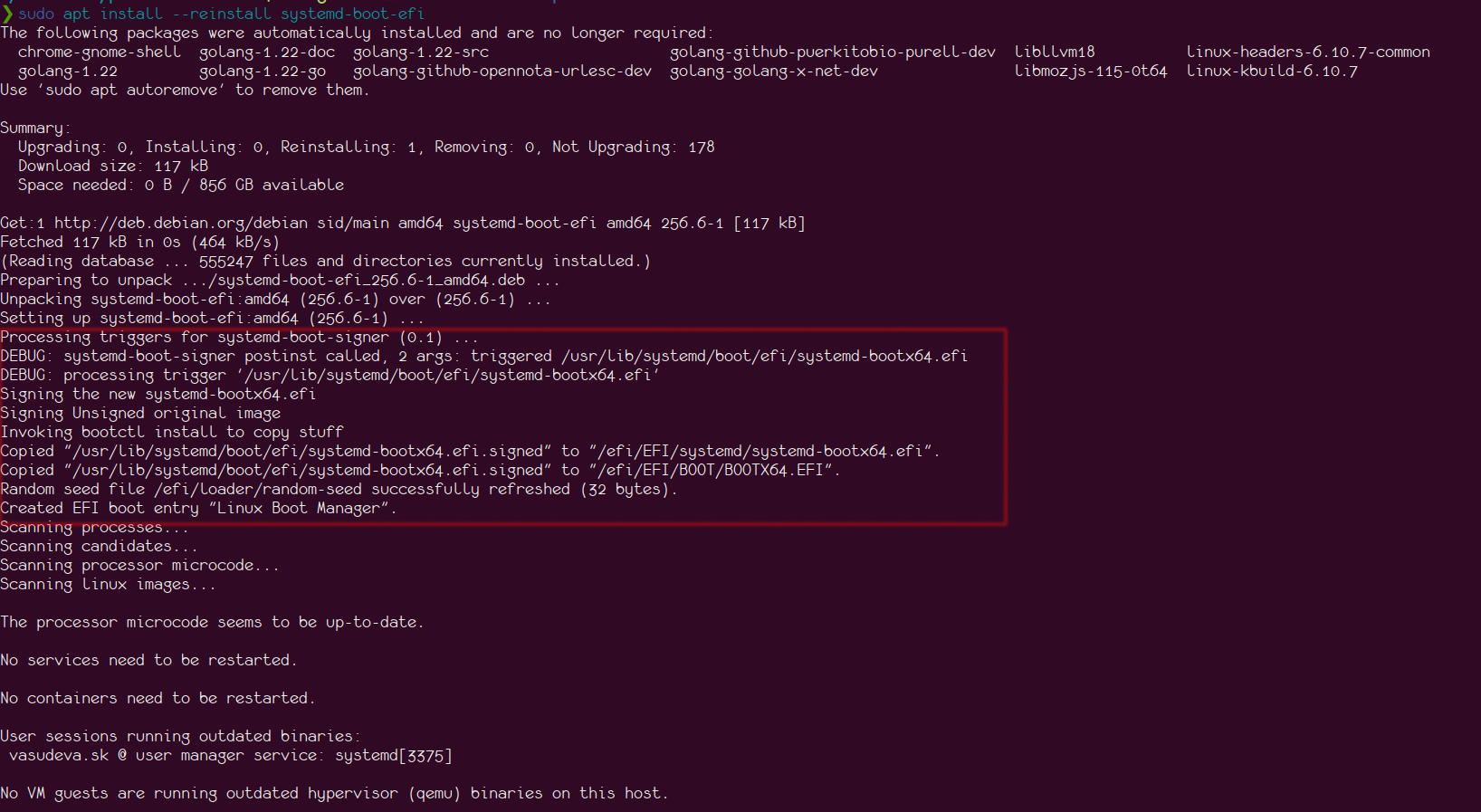
During installation, you can see the debug message being printed in the screenshot below: systemd-boot-signer triggered To test the systemd-boot-update.service, I commented out the bootctl install line from the above script, performed a reinstallation, and restarted the systemd-boot-update.service. Checking the log, I saw the following:
Sep 29 13:42:51 chamunda systemd[1]: Stopping systemd-boot-update.service - Automatic Boot Loader Update...
Sep 29 13:42:51 chamunda systemd[1]: Starting systemd-boot-update.service - Automatic Boot Loader Update...
Sep 29 13:42:51 chamunda bootctl[1801516]: Skipping "/efi/EFI/systemd/systemd-bootx64.efi", same boot loader version in place already.
Sep 29 13:42:51 chamunda bootctl[1801516]: Skipping "/efi/EFI/BOOT/BOOTX64.EFI", same boot loader version in place already.
Sep 29 13:42:51 chamunda systemd[1]: Finished systemd-boot-update.service - Automatic Boot Loader Update.
Sep 29 13:43:37 chamunda systemd[1]: systemd-boot-update.service: Deactivated successfully.
Sep 29 13:43:37 chamunda systemd[1]: Stopped systemd-boot-update.service - Automatic Boot Loader Update.
Sep 29 13:43:37 chamunda systemd[1]: Stopping systemd-boot-update.service - Automatic Boot Loader Update...
Indeed, the service attempted to copy the bootloader but did not do so because there was no actual update to the binary; it was just a reinstallation trigger. The complete code for this package can be found here. With this post the entire series on using UKI to Secureboot with Debian comes to an end. Happy hacking!.

Dirk Eddelbuettel: RApiSerialize 0.1.4 on CRAN: Added C++ Namespace

A new minor release 0.1.5 of RApiSerialize arrived on CRAN today. The RApiSerialize package is used by both my RcppRedis as well as by Travers excellent qs package. This release adds an optional C++ namespace, available when the API header file is included in a C++ source file. And as one often does, the release also brings a few small updates to different aspects of the packaging.

Changes in version 0.1.4 (2024-09-28)
  • Add C++ namespace in API header (Dirk in #9 closing #8)
  • Several packaging updates: switched to Authors@R, README.md badge updates, added .editorconfig and cleanup

Courtesy of my CRANberries, there is a diffstat report relative to previous release. More details are at the RApiSerialize page; code, issue tickets etc at the GitHub repositoryrapiserializerepo. If you like this or other open-source work I do, you can sponsor me at GitHub.

This post by Dirk Eddelbuettel originated on his Thinking inside the box blog. Please report excessive re-aggregation in third-party for-profit settings.

Reproducible Builds: Supporter spotlight: Kees Cook on Linux kernel security

The Reproducible Builds project relies on several projects, supporters and sponsors for financial support, but they are also valued as ambassadors who spread the word about our project and the work that we do. This is the eighth installment in a series featuring the projects, companies and individuals who support the Reproducible Builds project. We started this series by featuring the Civil Infrastructure Platform project, and followed this up with a post about the Ford Foundation as well as recent ones about ARDC, the Google Open Source Security Team (GOSST), Bootstrappable Builds, the F-Droid project, David A. Wheeler and Simon Butler. Today, however, we will be talking with Kees Cook, founder of the Kernel Self-Protection Project.

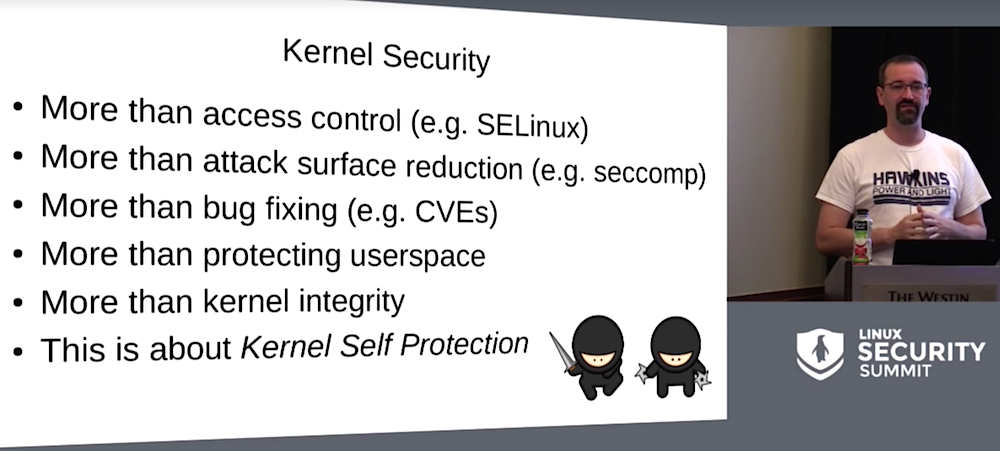
Vagrant Cascadian: Could you tell me a bit about yourself? What sort of things do you work on? Kees Cook: I m a Free Software junkie living in Portland, Oregon, USA. I have been focusing on the upstream Linux kernel s protection of itself. There is a lot of support that the kernel provides userspace to defend itself, but when I first started focusing on this there was not as much attention given to the kernel protecting itself. As userspace got more hardened the kernel itself became a bigger target. Almost 9 years ago I formally announced the Kernel Self-Protection Project because the work necessary was way more than my time and expertise could do alone. So I just try to get people to help as much as possible; people who understand the ARM architecture, people who understand the memory management subsystem to help, people who understand how to make the kernel less buggy.
Vagrant: Could you describe the path that lead you to working on this sort of thing? Kees: I have always been interested in security through the aspect of exploitable flaws. I always thought it was like a magic trick to make a computer do something that it was very much not designed to do and seeing how easy it is to subvert bugs. I wanted to improve that fragility. In 2006, I started working at Canonical on Ubuntu and was mainly focusing on bringing Debian and Ubuntu up to what was the state of the art for Fedora and Gentoo s security hardening efforts. Both had really pioneered a lot of userspace hardening with compiler flags and ELF stuff and many other things for hardened binaries. On the whole, Debian had not really paid attention to it. Debian s packaging building process at the time was sort of a chaotic free-for-all as there wasn t centralized build methodology for defining things. Luckily that did slowly change over the years. In Ubuntu we had the opportunity to apply top down build rules for hardening all the packages. In 2011 Chrome OS was following along and took advantage of a bunch of the security hardening work as they were based on ebuild out of Gentoo and when they looked for someone to help out they reached out to me. We recognized the Linux kernel was pretty much the weakest link in the Chrome OS security posture and I joined them to help solve that. Their userspace was pretty well handled but the kernel had a lot of weaknesses, so focusing on hardening was the next place to go. When I compared notes with other users of the Linux kernel within Google there were a number of common concerns and desires. Chrome OS already had an upstream first requirement, so I tried to consolidate the concerns and solve them upstream. It was challenging to land anything in other kernel team repos at Google, as they (correctly) wanted to minimize their delta from upstream, so I needed to work on any major improvements entirely in upstream and had a lot of support from Google to do that. As such, my focus shifted further from working directly on Chrome OS into being entirely upstream and being more of a consultant to internal teams, helping with integration or sometimes backporting. Since the volume of needed work was so gigantic I needed to find ways to inspire other developers (both inside and outside of Google) to help. Once I had a budget I tried to get folks paid (or hired) to work on these areas when it wasn t already their job.
Vagrant: So my understanding of some of your recent work is basically defining undefined behavior in the language or compiler? Kees: I ve found the term undefined behavior to have a really strict meaning within the compiler community, so I have tried to redefine my goal as eliminating unexpected behavior or ambiguous language constructs . At the end of the day ambiguity leads to bugs, and bugs lead to exploitable security flaws. I ve been taking a four-pronged approach: supporting the work people are doing to get rid of ambiguity, identify new areas where ambiguity needs to be removed, actually removing that ambiguity from the C language, and then dealing with any needed refactoring in the Linux kernel source to adapt to the new constraints. None of this is particularly novel; people have recognized how dangerous some of these language constructs are for decades and decades but I think it is a combination of hard problems and a lot of refactoring that nobody has the interest/resources to do. So, we have been incrementally going after the lowest hanging fruit. One clear example in recent years was the elimination of C s implicit fall-through in switch statements. The language would just fall through between adjacent cases if a break (or other code flow directive) wasn t present. But this is ambiguous: is the code meant to fall-through, or did the author just forget a break statement? By defining the [[fallthrough]] statement, and requiring its use in Linux, all switch statements now have explicit code flow, and the entire class of bugs disappeared. During our refactoring we actually found that 1 in 10 added [[fallthrough]] statements were actually missing break statements. This was an extraordinarily common bug! So getting rid of that ambiguity is where we have been. Another area I ve been spending a bit of time on lately is looking at how defensive security work has challenges associated with metrics. How do you measure your defensive security impact? You can t say because we installed locks on the doors, 20% fewer break-ins have happened. Much of our signal is always secondary or retrospective, which is frustrating: This class of flaw was used X much over the last decade so, and if we have eliminated that class of flaw and will never see it again, what is the impact? Is the impact infinity? Attackers will just move to the next easiest thing. But it means that exploitation gets incrementally more difficult. As attack surfaces are reduced, the expense of exploitation goes up.
Vagrant: So it is hard to identify how effective this is how bad would it be if people just gave up? Kees: I think it would be pretty bad, because as we have seen, using secondary factors, the work we have done in the industry at large, not just the Linux kernel, has had an impact. What we, Microsoft, Apple, and everyone else is doing for their respective software ecosystems, has shown that the price of functional exploits in the black market has gone up. Especially for really egregious stuff like a zero-click remote code execution. If those were cheap then obviously we are not doing something right, and it becomes clear that it s trivial for anyone to attack the infrastructure that our lives depend on. But thankfully we have seen over the last two decades that prices for exploits keep going up and up into millions of dollars. I think it is important to keep working on that because, as a central piece of modern computer infrastructure, the Linux kernel has a giant target painted on it. If we give up, we have to accept that our computers are not doing what they were designed to do, which I can t accept. The safety of my grandparents shouldn t be any different from the safety of journalists, and political activists, and anyone else who might be the target of attacks. We need to be able to trust our devices otherwise why use them at all?
Vagrant: What has been your biggest success in recent years? Kees: I think with all these things I am not the only actor. Almost everything that we have been successful at has been because of a lot of people s work, and one of the big ones that has been coordinated across the ecosystem and across compilers was initializing stack variables to 0 by default. This feature was added in Clang, GCC, and MSVC across the board even though there were a lot of fears about forking the C language. The worry was that developers would come to depend on zero-initialized stack variables, but this hasn t been the case because we still warn about uninitialized variables when the compiler can figure that out. So you still still get the warnings at compile time but now you can count on the contents of your stack at run-time and we drop an entire class of uninitialized variable flaws. While the exploitation of this class has mostly been around memory content exposure, it has also been used for control flow attacks. So that was politically and technically a large challenge: convincing people it was necessary, showing its utility, and implementing it in a way that everyone would be happy with, resulting in the elimination of a large and persistent class of flaws in C.
Vagrant: In a world where things are generally Reproducible do you see ways in which that might affect your work? Kees: One of the questions I frequently get is, What version of the Linux kernel has feature $foo? If I know how things are built, I can answer with just a version number. In a Reproducible Builds scenario I can count on the compiler version, compiler flags, kernel configuration, etc. all those things are known, so I can actually answer definitively that a certain feature exists. So that is an area where Reproducible Builds affects me most directly. Indirectly, it is just being able to trust the binaries you are running are going to behave the same for the same build environment is critical for sane testing.
Vagrant: Have you used diffoscope? Kees: I have! One subset of tree-wide refactoring that we do when getting rid of ambiguous language usage in the kernel is when we have to make source level changes to satisfy some new compiler requirement but where the binary output is not expected to change at all. It is mostly about getting the compiler to understand what is happening, what is intended in the cases where the old ambiguity does actually match the new unambiguous description of what is intended. The binary shouldn t change. We have used diffoscope to compare the before and after binaries to confirm that yep, there is no change in binary .
Vagrant: You cannot just use checksums for that? Kees: For the most part, we need to only compare the text segments. We try to hold as much stable as we can, following the Reproducible Builds documentation for the kernel, but there are macros in the kernel that are sensitive to source line numbers and as a result those will change the layout of the data segment (and sometimes the text segment too). With diffoscope there s flexibility where I can exclude or include different comparisons. Sometimes I just go look at what diffoscope is doing and do that manually, because I can tweak that a little harder, but diffoscope is definitely the default. Diffoscope is awesome!
Vagrant: Where has reproducible builds affected you? Kees: One of the notable wins of reproducible builds lately was dealing with the fallout of the XZ backdoor and just being able to ask the question is my build environment running the expected code? and to be able to compare the output generated from one install that never had a vulnerable XZ and one that did have a vulnerable XZ and compare the results of what you get. That was important for kernel builds because the XZ threat actor was working to expand their influence and capabilities to include Linux kernel builds, but they didn t finish their work before they were noticed. I think what happened with Debian proving the build infrastructure was not affected is an important example of how people would have needed to verify the kernel builds too.
Vagrant: What do you want to see for the near or distant future in security work? Kees: For reproducible builds in the kernel, in the work that has been going on in the ClangBuiltLinux project, one of the driving forces of code and usability quality has been the continuous integration work. As soon as something breaks, on the kernel side, the Clang side, or something in between the two, we get a fast signal and can chase it and fix the bugs quickly. I would like to see someone with funding to maintain a reproducible kernel build CI. There have been places where there are certain architecture configurations or certain build configuration where we lose reproducibility and right now we have sort of a standard open source development feedback loop where those things get fixed but the time in between introduction and fix can be large. Getting a CI for reproducible kernels would give us the opportunity to shorten that time.
Vagrant: Well, thanks for that! Any last closing thoughts? Kees: I am a big fan of reproducible builds, thank you for all your work. The world is a safer place because of it.
Vagrant: Likewise for your work!


For more information about the Reproducible Builds project, please see our website at reproducible-builds.org. If you are interested in ensuring the ongoing security of the software that underpins our civilisation and wish to sponsor the Reproducible Builds project, please reach out to the project by emailing contact@reproducible-builds.org.

26 September 2024

Vasudev Kamath: Disabling Lockdown Mode with Secure Boot on Distro Kernel

In my previous post, I mentioned that Lockdown mode is activated when Secure Boot is enabled. One way to override this was to use a self-compiled upstream kernel. However, sometimes we might want to use the distribution kernel itself. This post explains how to disable lockdown mode while keeping Secure Boot enabled with a distribution kernel.
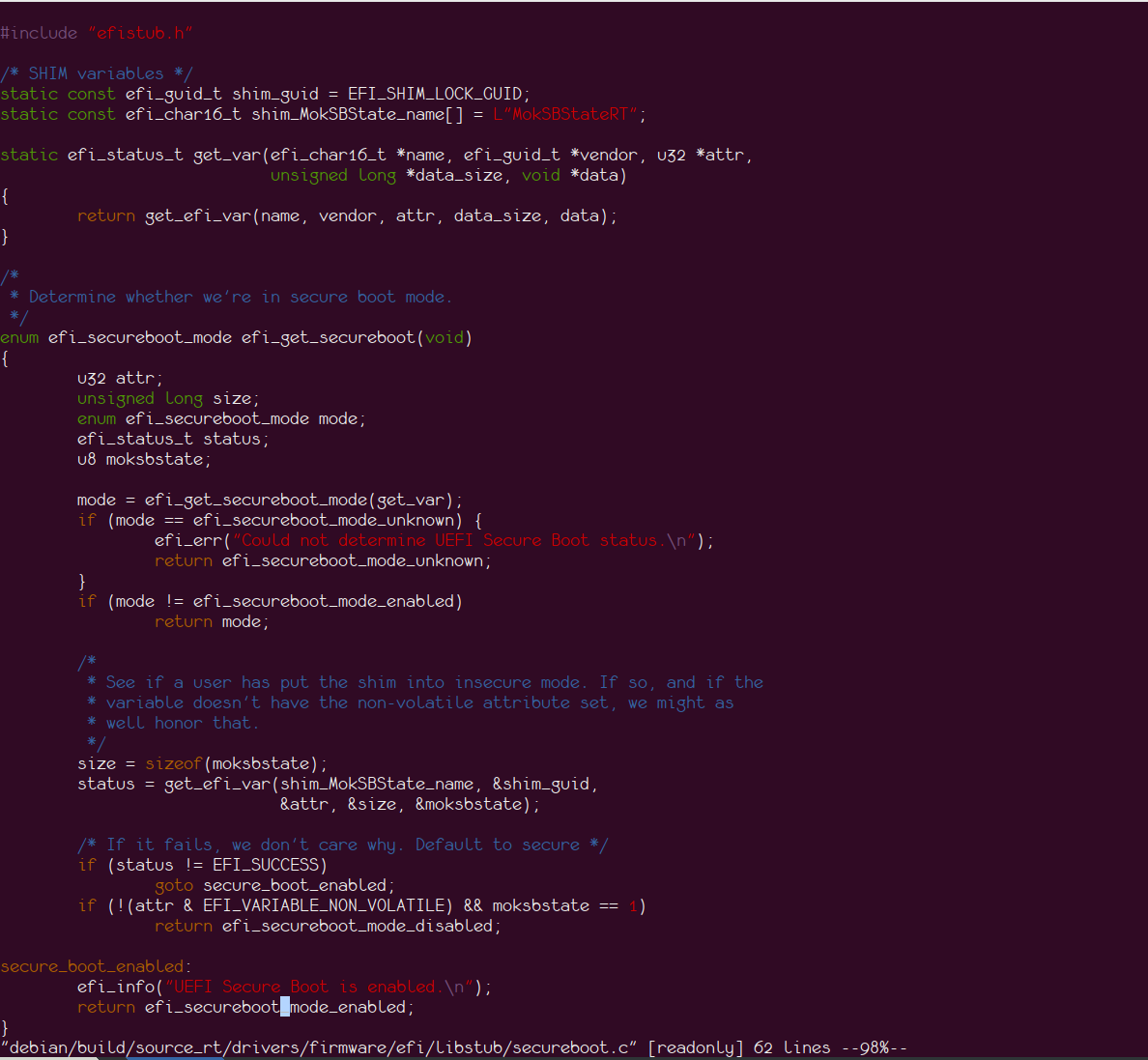
Understanding Secure Boot Detection To begin, we need to understand how the kernel detects if Secure Boot is enabled. This is done by the efi_get_secureboot function, as shown in the image below: Secure Boot status check
Disabling Kernel Lockdown The kernel code uses the value of MokSBStateRT to identify the Secure Boot state, assuming that Secure Boot can only be enabled via shim. This assumption holds true when using the Microsoft certificate for signature validation (as Microsoft currently only signs shim). However, if we're using our own keys, we don't need shim and can sign the bootloader ourselves. In this case, the Secure Boot state of the system doesn't need to be tied to the MokSBStateRT variable. To disable kernel lockdown, we need to set the UEFI runtime variable MokSBStateRT. This essentially tricks the kernel into thinking Secure Boot is disabled when it's actually enabled. This is achieved using a UEFI initializing driver. The code for this was written by an anonymous colleague who also assisted me with various configuration guidance for setting up UKI and Secure Boot on my system. The code is available here.
Implementation Detailed instructions for compiling and deploying the code are provided in the repository, so I won't repeat them here.
Results I've tested this method with the default distribution kernel on my Debian unstable system, and it successfully disables lockdown while maintaining Secure Boot integrity. See the screenshot below for confirmation: Distribution kernel lockdown disabled

Melissa Wen: Reflections on 2024 Linux Display Next Hackfest

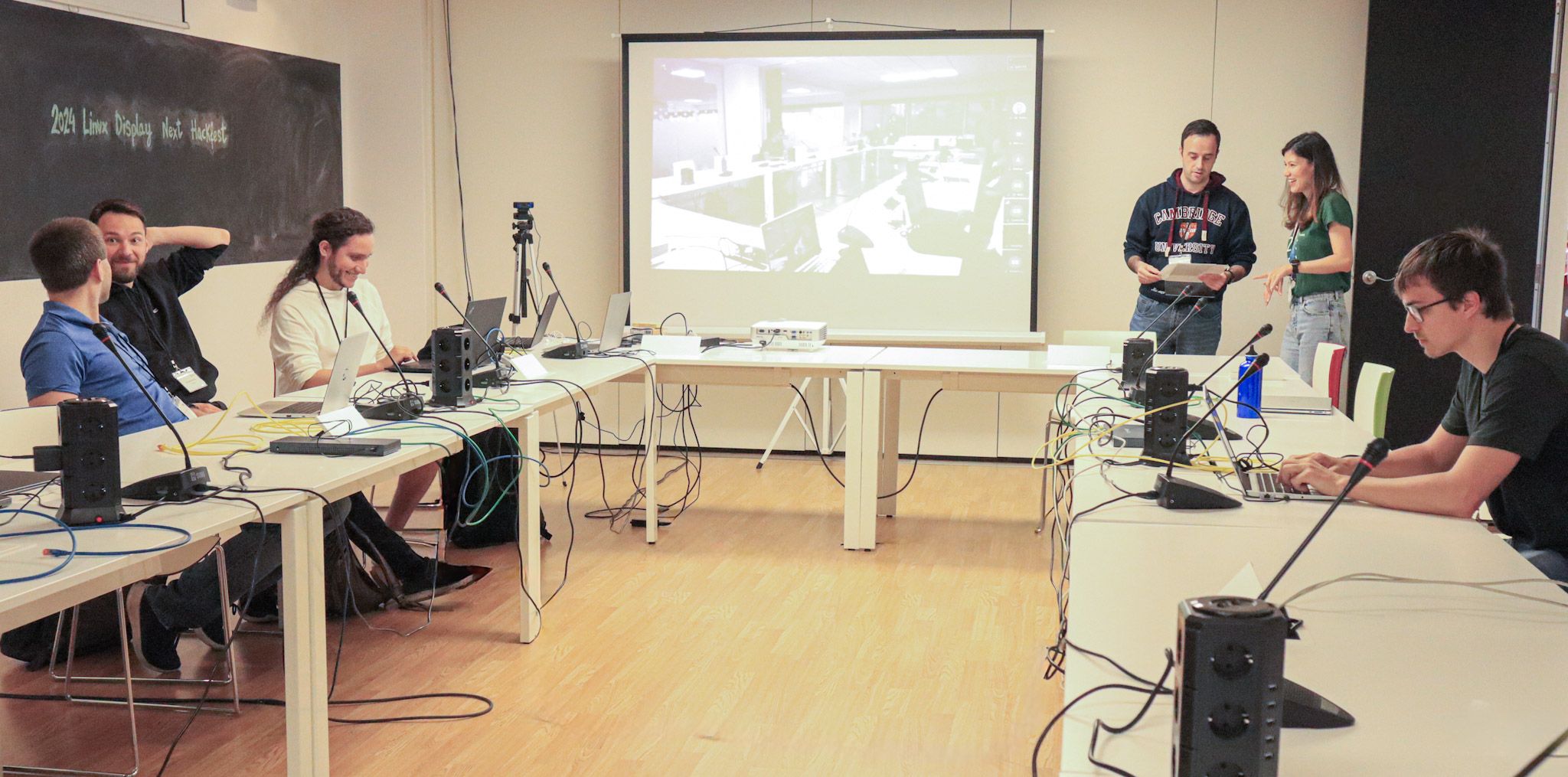
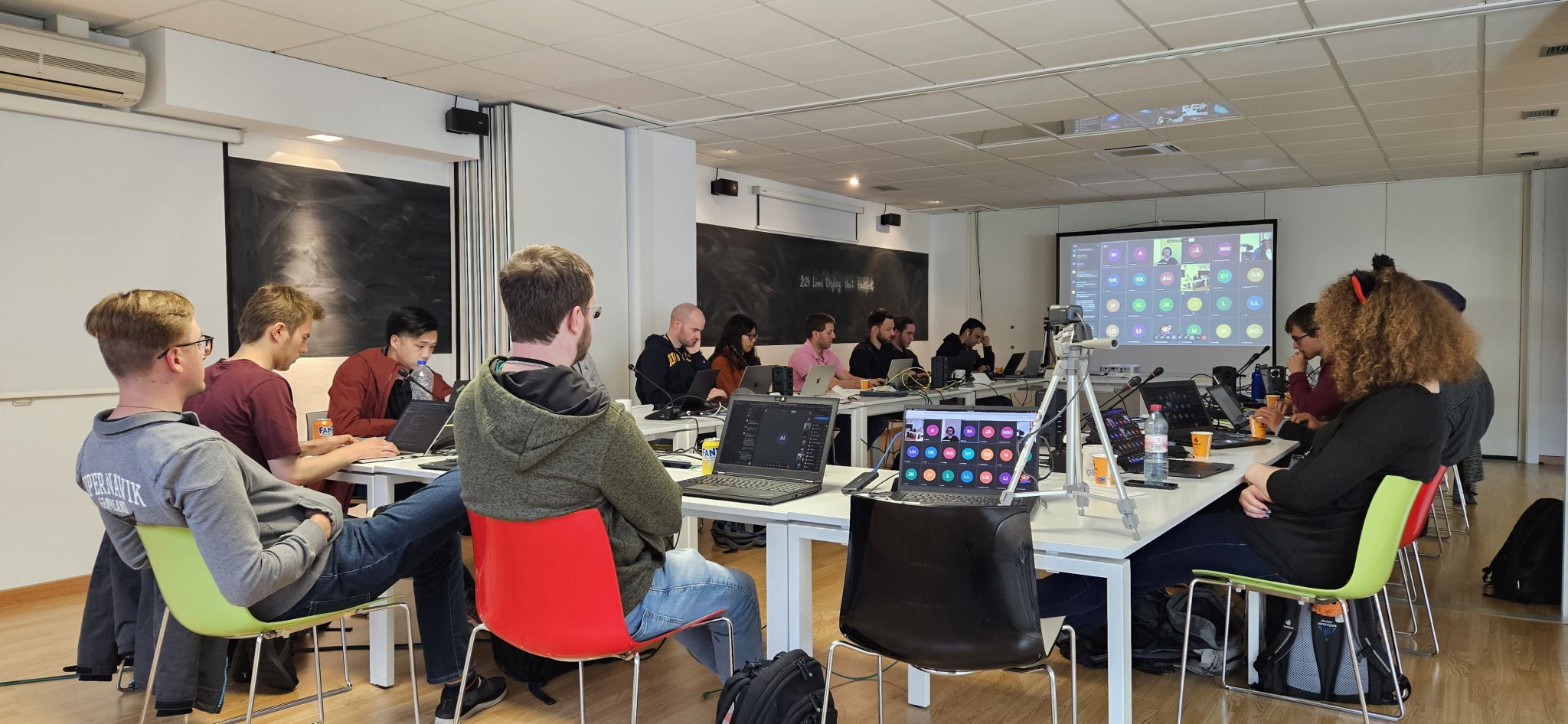
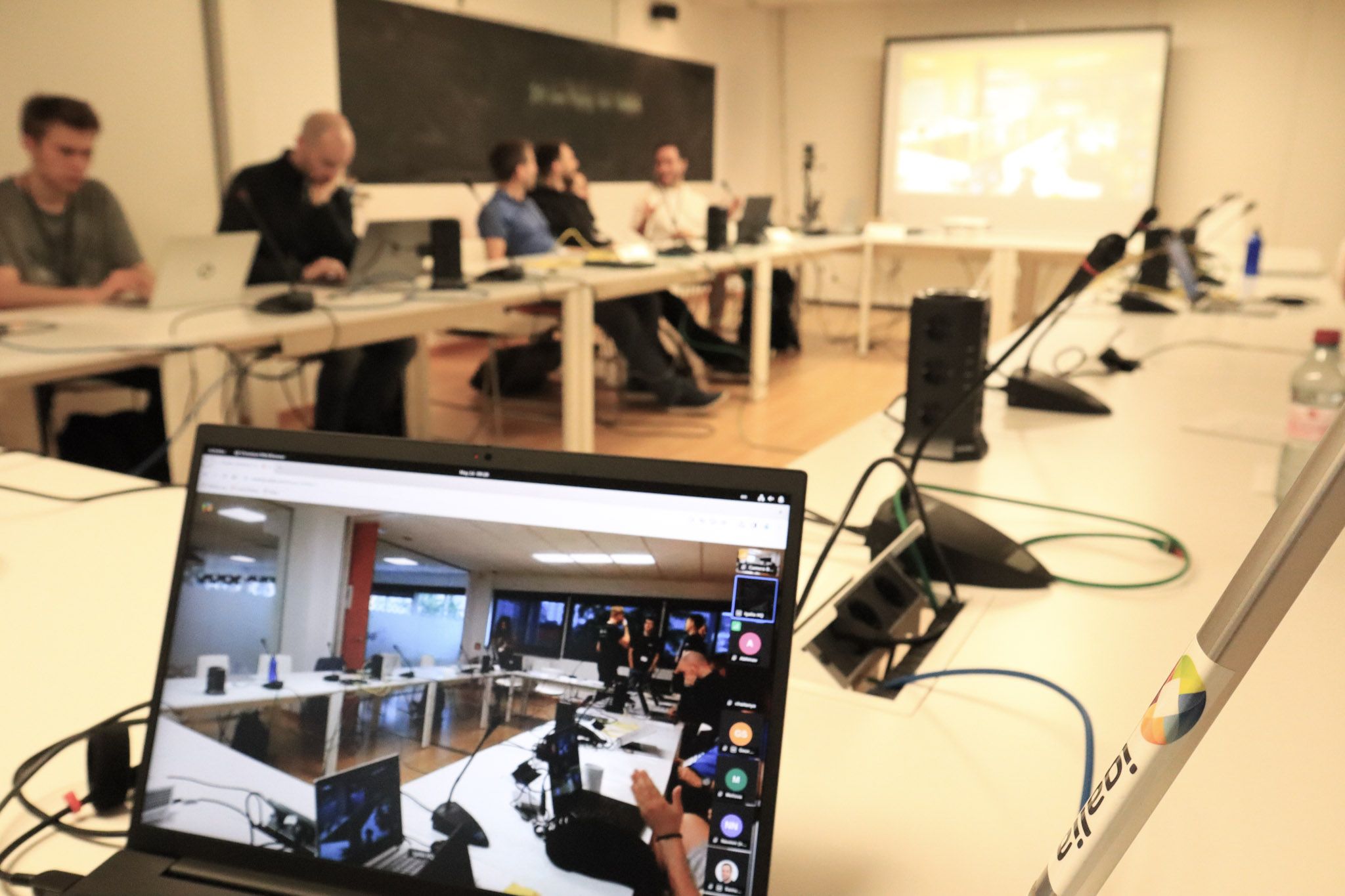
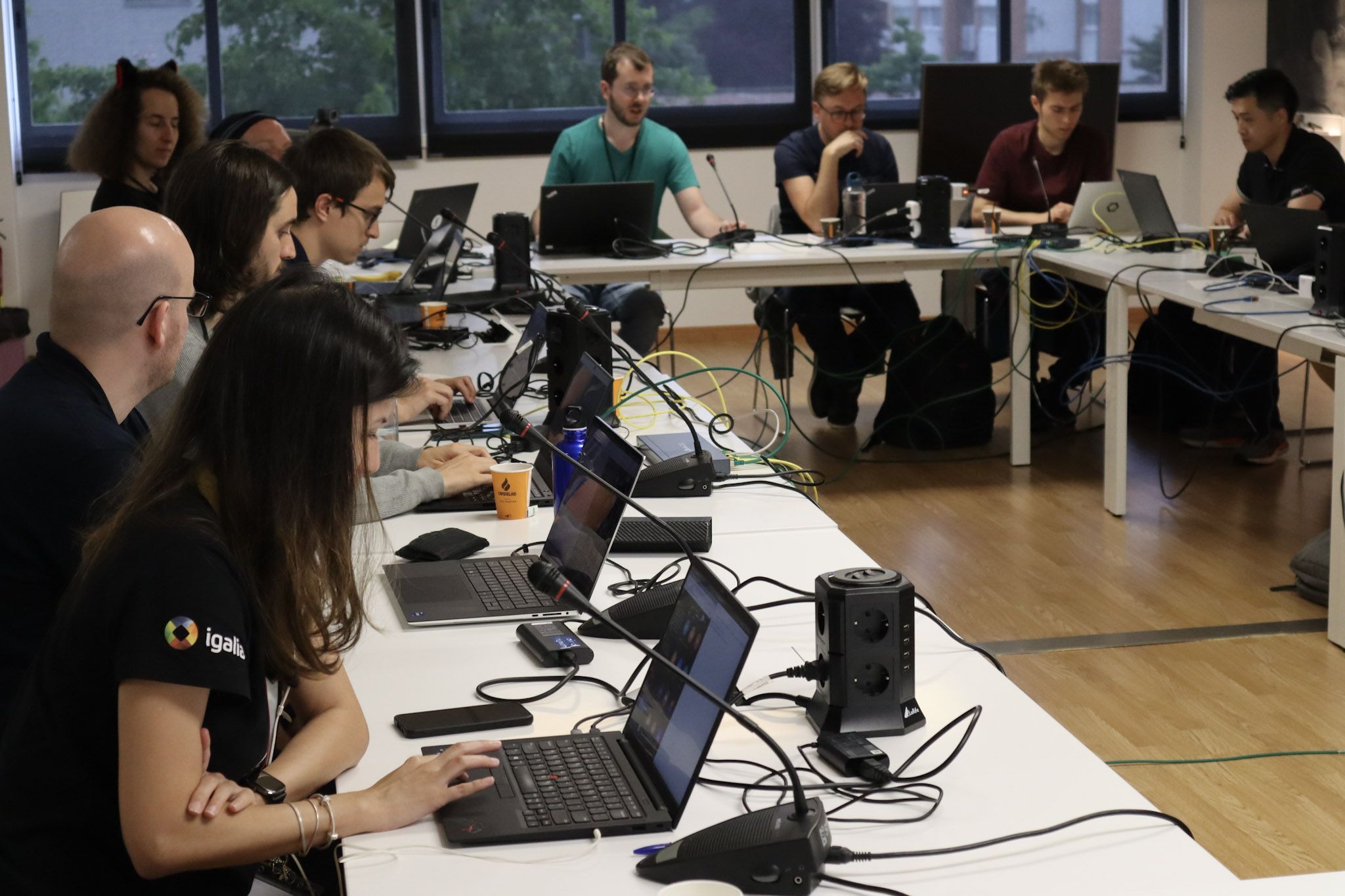
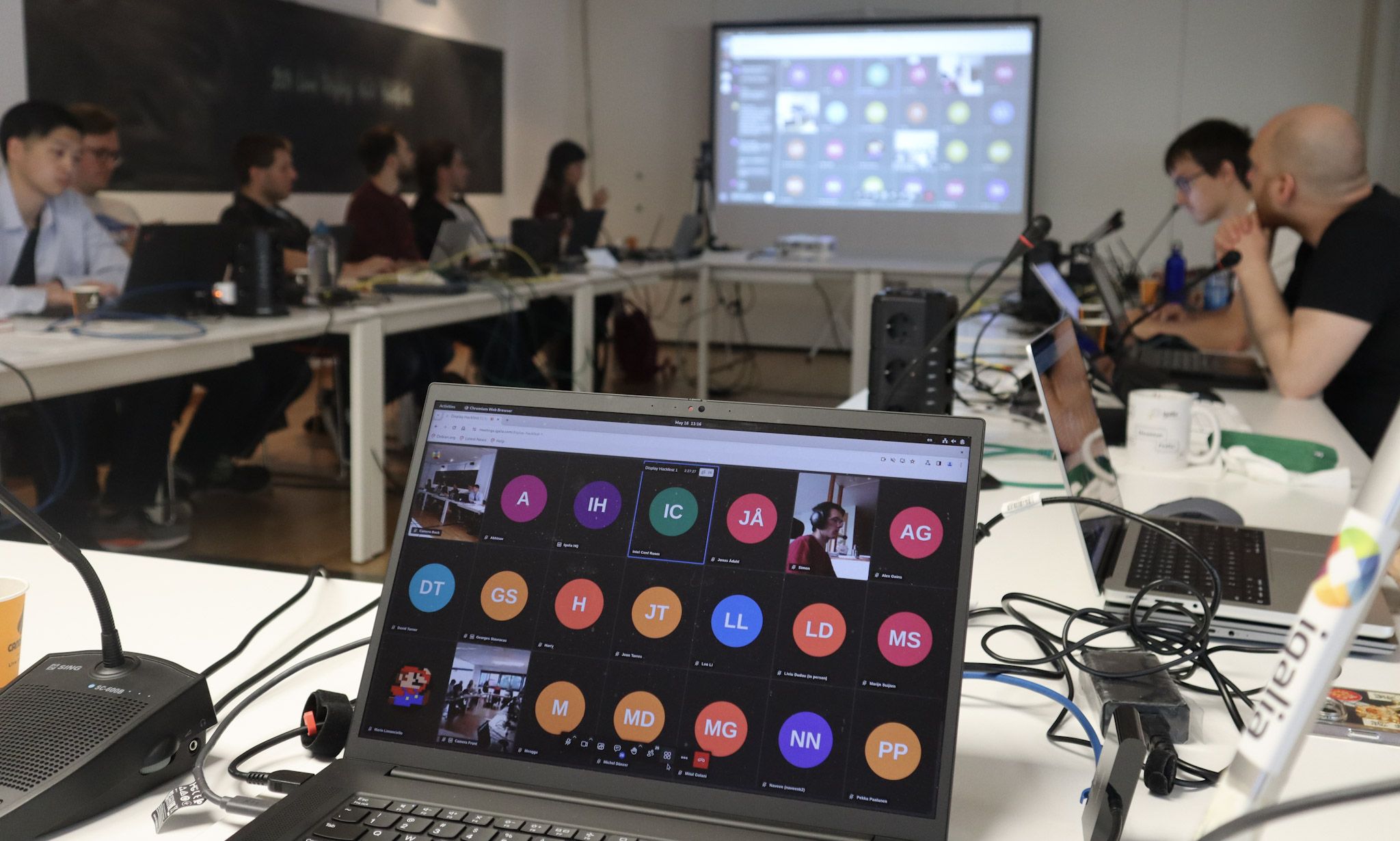
Hey everyone! The 2024 Linux Display Next hackfest concluded in May, and its outcomes continue to shape the Linux Display stack. Igalia hosted this year s event in A Coru a, Spain, bringing together leading experts in the field. Samuel Iglesias and I organized this year s edition and this blog post summarizes the experience and its fruits. One of the highlights of this year s hackfest was the wide range of backgrounds represented by our 40 participants (both on-site and remotely). Developers and experts from various companies and open-source projects came together to advance the Linux Display ecosystem. You can find the list of participants here. The event covered a broad spectrum of topics affecting the development of Linux projects, user experiences, and the future of display technologies on Linux. From cutting-edge topics to long-term discussions, you can check the event agenda here.

Organization Highlights The hackfest was marked by in-depth discussions and knowledge sharing among Linux contributors, making everyone inspired, informed, and connected to the community. Building on feedback from the previous year, we refined the unconference format to enhance participant preparation and engagement. Structured Agenda and Timeboxes: Each session had a defined scope, time limit (1h20 or 2h10), and began with an introductory talk on the topic.
  • Participant-Led Discussions: We pre-selected in-person participants to lead discussions, allowing them to prepare introductions, resources, and scope.
  • Transparent Scheduling: The schedule was shared in advance as GitHub issues, encouraging participants to review and prepare for sessions of interest.
Engaging Sessions: The hackfest featured a variety of topics, including presentations and discussions on how participants were addressing specific subjects within their companies.
  • No Breakout Rooms, No Overlaps: All participants chose to attend all sessions, eliminating the need for separate breakout rooms. We also adapted run-time schedule to keep everybody involved in the same topics.
  • Real-time Updates: We provided notifications and updates through dedicated emails and the event matrix room.
Strengthening Community Connections: The hackfest offered ample opportunities for networking among attendees.
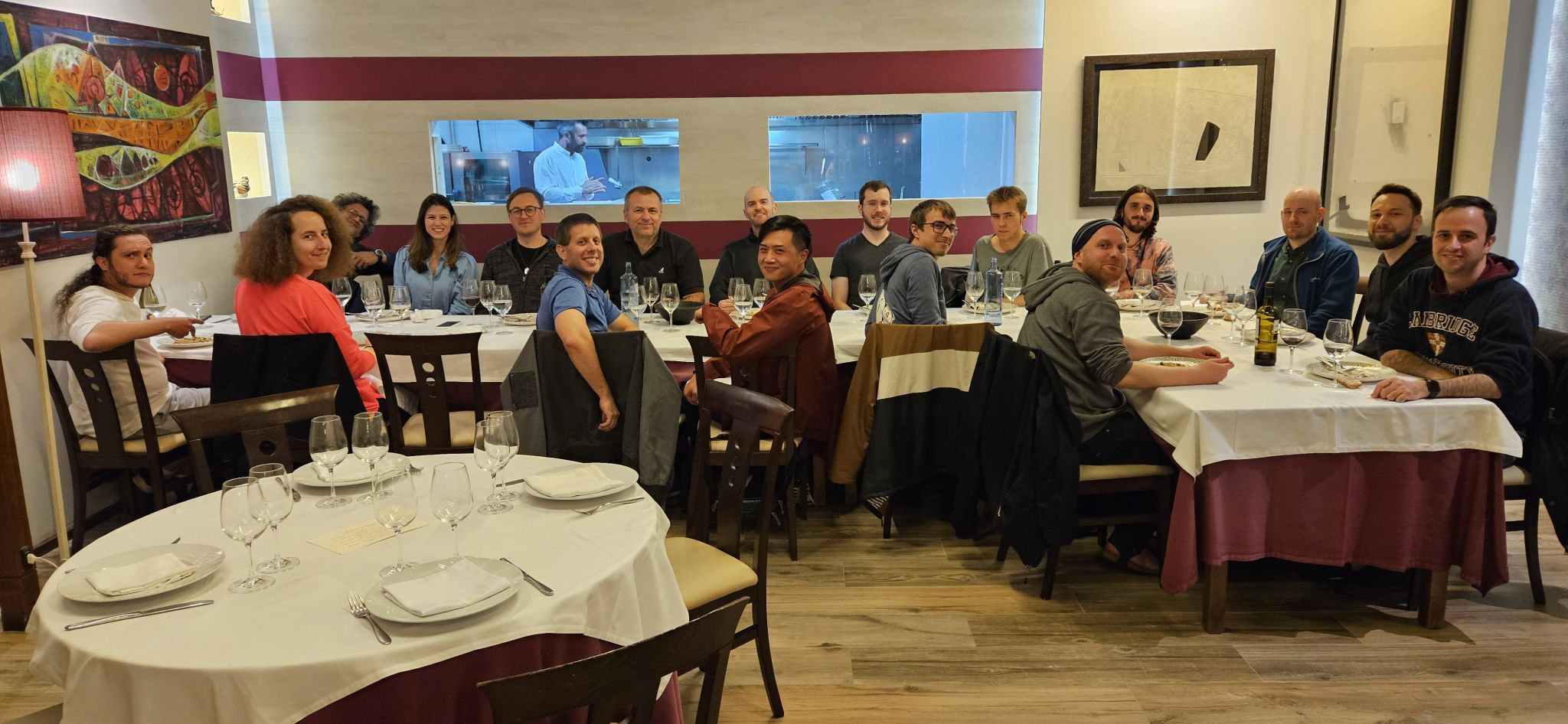
  • Social Events: Igalia sponsored coffee breaks, lunches, and a dinner at a local restaurant.
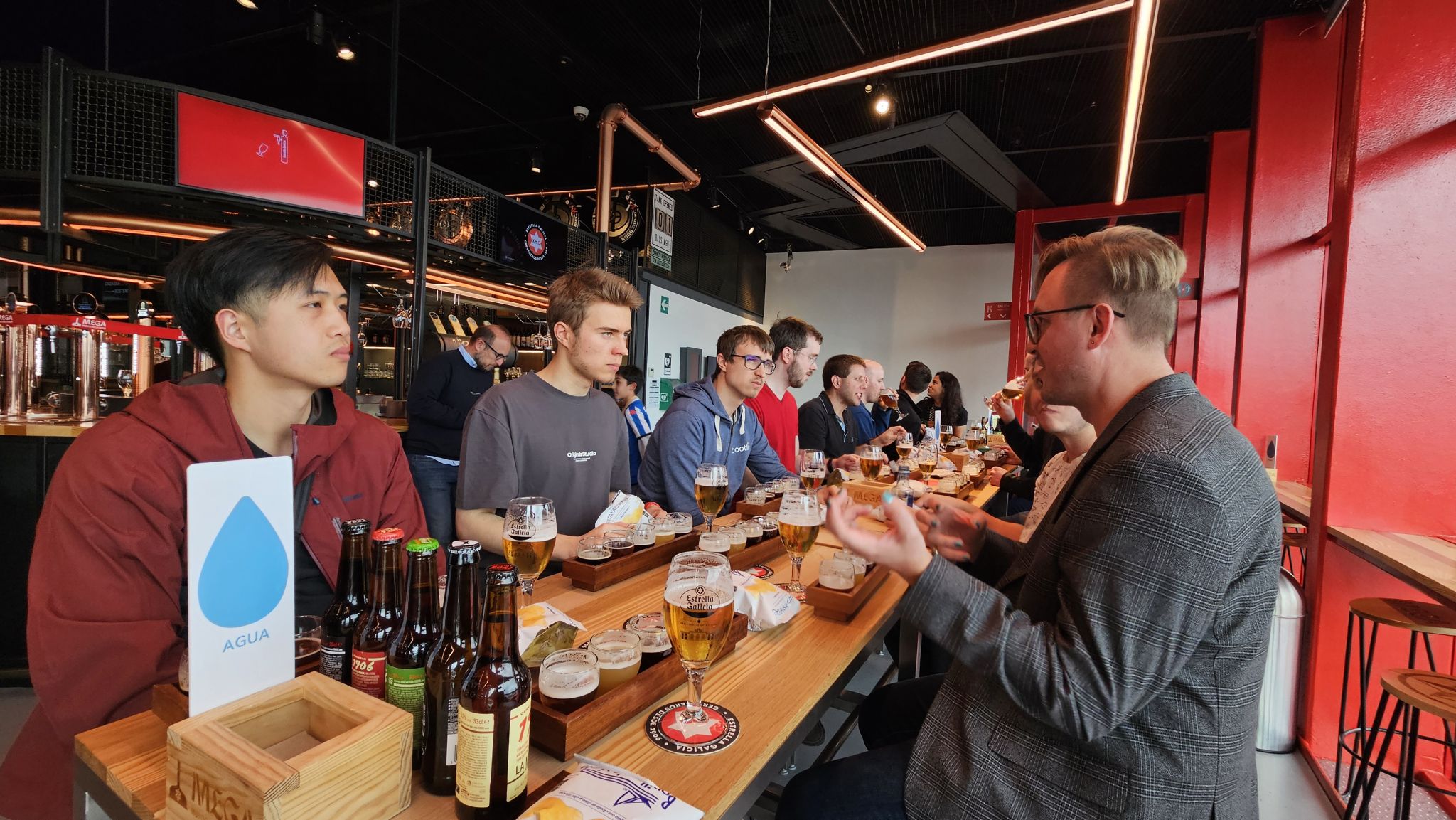
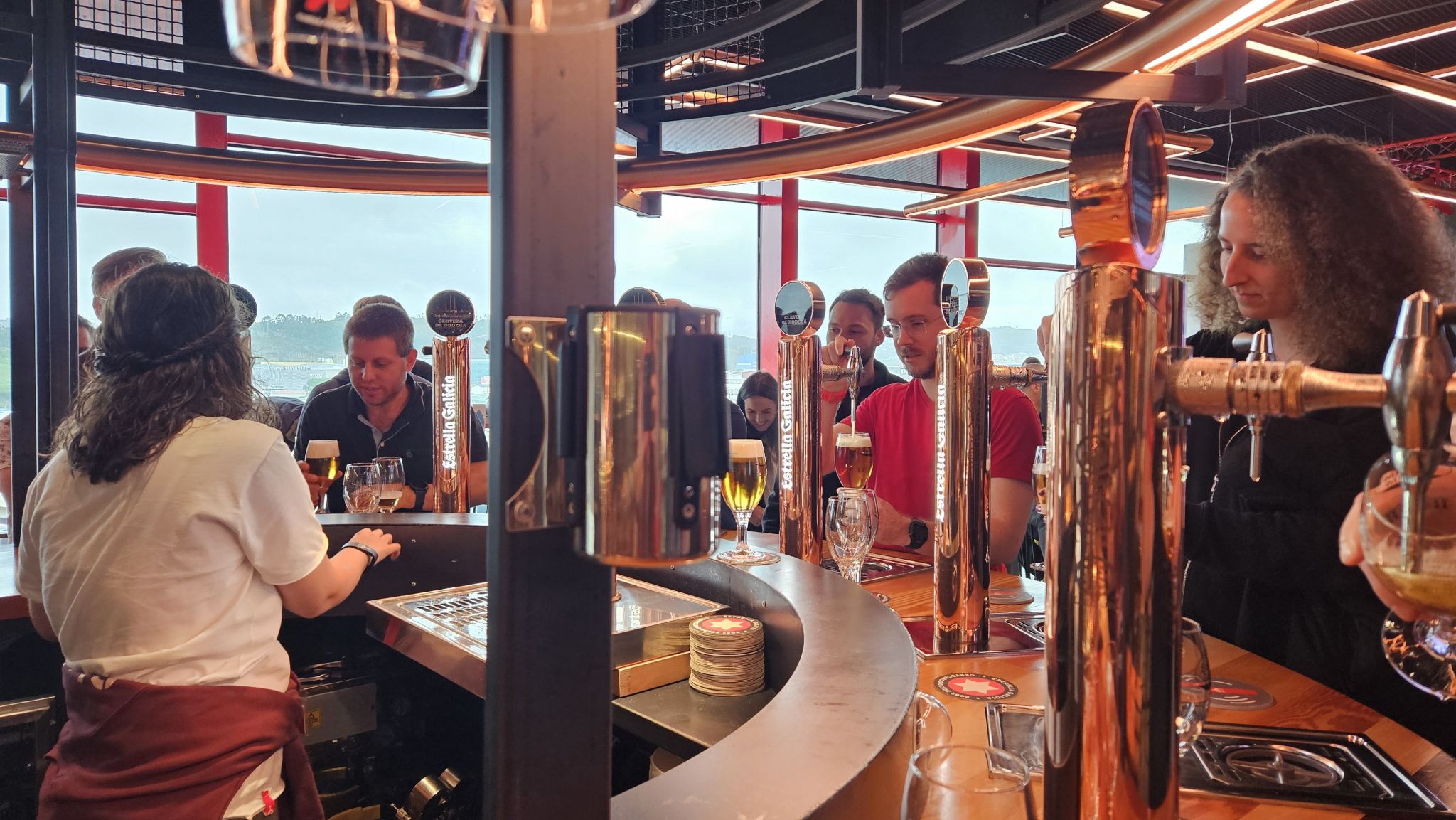
  • Museum Visit: Participants enjoyed a sponsored visit to the Museum of Estrela Galicia Beer (MEGA).

Fruitful Discussions and Follow-up The structured agenda and breaks allowed us to cover multiple topics during the hackfest. These discussions have led to new display feature development and improvements, as evidenced by patches, merge requests, and implementations in project repositories and mailing lists. With the KMS color management API taking shape, we discussed refinements and best approaches to cover the variety of color pipeline from different hardware-vendors. We are also investigating techniques for a performant SDR<->HDR content reproduction and reducing latency and power consumption when using the color blocks of the hardware.

Color Management/HDR Color Management and HDR continued to be the hottest topic of the hackfest. We had three sessions dedicated to discuss Color and HDR across Linux Display stack layers.

Color/HDR (Kernel-Level) Harry Wentland (AMD) led this session. Here, kernel Developers shared the Color Management pipeline of AMD, Intel and NVidia. We counted with diagrams and explanations from HW-vendors developers that discussed differences, constraints and paths to fit them into the KMS generic color management properties such as advertising modeset needs, IN\_FORMAT, segmented LUTs, interpolation types, etc. Developers from Qualcomm and ARM also added information regarding their hardware. Upstream work related to this session:

Color/HDR (Compositor-Level) Sebastian Wick (RedHat) led this session. It started with Sebastian s presentation covering Wayland color protocols and compositor implementation. Also, an explanation of APIs provided by Wayland and how they can be used to achieve better color management for applications and discussions around ICC profiles and color representation metadata. There was also an intensive Q&A about LittleCMS with Marti Maria. Upstream work related to this session:

Color/HDR (Use Cases and Testing) Christopher Cameron (Google) and Melissa Wen (Igalia) led this session. In contrast to the other sessions, here we focused less on implementation and more on brainstorming and reflections of real-world SDR and HDR transformations (use and validation) and gainmaps. Christopher gave a nice presentation explaining HDR gainmap images and how we should think of HDR. This presentation and Q&A were important to put participants at the same page of how to transition between SDR and HDR and somehow emulating HDR. We also discussed on the usage of a kernel background color property. Finally, we discussed a bit about Chamelium and the future of VKMS (future work and maintainership).

Power Savings vs Color/Latency Mario Limonciello (AMD) led this session. Mario gave an introductory presentation about AMD ABM (adaptive backlight management) that is similar to Intel DPST. After some discussions, we agreed on exposing a kernel property for power saving policy. This work was already merged on kernel and the userspace support is under development. Upstream work related to this session:

Strategy for video and gaming use-cases Leo Li (AMD) led this session. Miguel Casas (Google) started this session with a presentation of Overlays in Chrome/OS Video, explaining the main goal of power saving by switching off GPU for accelerated compositing and the challenges of different colorspace/HDR for video on Linux. Then Leo Li presented different strategies for video and gaming and we discussed the userspace need of more detailed feedback mechanisms to understand failures when offloading. Also, creating a debugFS interface came up as a tool for debugging and analysis.

Real-time scheduling and async KMS API Xaver Hugl (KDE/BlueSystems) led this session. Compositor developers have exposed some issues with doing real-time scheduling and async page flips. One is that the Kernel limits the lifetime of realtime threads and if a modeset takes too long, the thread will be killed and thus the compositor as well. Also, simple page flips take longer than expected and drivers should optimize them. Another issue is the lack of feedback to compositors about hardware programming time and commit deadlines (the lastest possible time to commit). This is difficult to predict from drivers, since it varies greatly with the type of properties. For example, color management updates take much longer. In this regard, we discusssed implementing a hw_done callback to timestamp when the hardware programming of the last atomic commit is complete. Also an API to pre-program color pipeline in a kind of A/B scheme. It may not be supported by all drivers, but might be useful in different ways.

VRR/Frame Limit, Display Mux, Display Control, and more and beer We also had sessions to discuss a new KMS API to mitigate headaches on VRR and Frame Limit as different brightness level at different refresh rates, abrupt changes of refresh rates, low frame rate compensation (LFC) and precise timing in VRR more. On Display Control we discussed features missing in the current KMS interface for HDR mode, atomic backlight settings, source-based tone mapping, etc. We also discussed the need of a place where compositor developers can post TODOs to be developed by KMS people. The Content-adaptive Scaling and Sharpening session focused on sharpening and scaling filters. In the Display Mux session, we discussed proposals to expose the capability of dynamic mux switching display signal between discrete and integrated GPUs. In the last session of the 2024 Display Next Hackfest, participants representing different compositors summarized current and future work and built a Linux Display wish list , which includes: improvements to VTTY and HDR switching, better dmabuf API for multi-GPU support, definition of tone mapping, blending and scaling sematics, and wayland protocols for advertising to clients which colorspaces are supported. We closed this session with a status update on feature development by compositors, including but not limited to: plane offloading (from libcamera to output) / HDR video offloading (dma-heaps) / plane-based scrolling for web pages, color management / HDR / ICC profiles support, addressing issues such as flickering when color primaries don t match, etc. After three days of intensive discussions, all in-person participants went to a guided tour at the Museum of Extrela Galicia beer (MEGA), pouring and tasting the most famous local beer.

Feedback and Future Directions Participants provided valuable feedback on the hackfest, including suggestions for future improvements.
  • Schedule and Break-time Setup: Having a pre-defined agenda and schedule provided a better balance between long discussions and mental refreshments, preventing the fatigue caused by endless discussions.
  • Action Points: Some participants recommended explicitly asking for action points at the end of each session and assigning people to follow-up tasks.
  • Remote Participation: Remote attendees appreciated the inclusive setup and opportunities to actively participate in discussions.
  • Technical Challenges: There were bandwidth and video streaming issues during some sessions due to the large number of participants.

Thank you for joining the 2024 Display Next Hackfest We can t help but thank the 40 participants, who engaged in-person or virtually on relevant discussions, for a collaborative evolution of the Linux display stack and for building an insightful agenda. A big thank you to the leaders and presenters of the nine sessions: Christopher Cameron (Google), Harry Wentland (AMD), Leo Li (AMD), Mario Limoncello (AMD), Sebastian Wick (RedHat) and Xaver Hugl (KDE/BlueSystems) for the effort in preparing the sessions, explaining the topic and guiding discussions. My acknowledge to the others in-person participants that made such an effort to travel to A Coru a: Alex Goins (NVIDIA), David Turner (Raspberry Pi), Georges Stavracas (Igalia), Joan Torres (SUSE), Liviu Dudau (Arm), Louis Chauvet (Bootlin), Robert Mader (Collabora), Tian Mengge (GravityXR), Victor Jaquez (Igalia) and Victoria Brekenfeld (System76). It was and awesome opportunity to meet you and chat face-to-face. Finally, thanks virtual participants who couldn t make it in person but organized their days to actively participate in each discussion, adding different perspectives and valuable inputs even remotely: Abhinav Kumar (Qualcomm), Chaitanya Borah (Intel), Christopher Braga (Qualcomm), Dor Askayo (Red Hat), Jiri Koten (RedHat), Jonas dahl (Red Hat), Leandro Ribeiro (Collabora), Marti Maria (Little CMS), Marijn Suijten, Mario Kleiner, Martin Stransky (Red Hat), Michel D nzer (Red Hat), Miguel Casas-Sanchez (Google), Mitulkumar Golani (Intel), Naveen Kumar (Intel), Niels De Graef (Red Hat), Pekka Paalanen (Collabora), Pichika Uday Kiran (AMD), Shashank Sharma (AMD), Sriharsha PV (AMD), Simon Ser, Uma Shankar (Intel) and Vikas Korjani (AMD). We look forward to another successful Display Next hackfest, continuing to drive innovation and improvement in the Linux display ecosystem!

25 September 2024

Melissa Wen: Reflections on 2024 Linux Display Next Hackfest

Hey everyone! The 2024 Linux Display Next hackfest concluded in May, and its outcomes continue to shape the Linux Display stack. Igalia hosted this year s event in A Coru a, Spain, bringing together leading experts in the field. Samuel Iglesias and I organized this year s edition and this blog post summarizes the experience and its fruits. One of the highlights of this year s hackfest was the wide range of backgrounds represented by our 40 participants (both on-site and remotely). Developers and experts from various companies and open-source projects came together to advance the Linux Display ecosystem. You can find the list of participants here. The event covered a broad spectrum of topics affecting the development of Linux projects, user experiences, and the future of display technologies on Linux. From cutting-edge topics to long-term discussions, you can check the event agenda here.

Organization Highlights The hackfest was marked by in-depth discussions and knowledge sharing among Linux contributors, making everyone inspired, informed, and connected to the community. Building on feedback from the previous year, we refined the unconference format to enhance participant preparation and engagement. Structured Agenda and Timeboxes: Each session had a defined scope, time limit (1h20 or 2h10), and began with an introductory talk on the topic.
  • Participant-Led Discussions: We pre-selected in-person participants to lead discussions, allowing them to prepare introductions, resources, and scope.
  • Transparent Scheduling: The schedule was shared in advance as GitHub issues, encouraging participants to review and prepare for sessions of interest.
Engaging Sessions: The hackfest featured a variety of topics, including presentations and discussions on how participants were addressing specific subjects within their companies.
  • No Breakout Rooms, No Overlaps: All participants chose to attend all sessions, eliminating the need for separate breakout rooms. We also adapted run-time schedule to keep everybody involved in the same topics.
  • Real-time Updates: We provided notifications and updates through dedicated emails and the event matrix room.
Strengthening Community Connections: The hackfest offered ample opportunities for networking among attendees.
  • Social Events: Igalia sponsored coffee breaks, lunches, and a dinner at a local restaurant.
  • Museum Visit: Participants enjoyed a sponsored visit to the Museum of Estrela Galicia Beer (MEGA).

Fruitful Discussions and Follow-up The structured agenda and breaks allowed us to cover multiple topics during the hackfest. These discussions have led to new display feature development and improvements, as evidenced by patches, merge requests, and implementations in project repositories and mailing lists. With the KMS color management API taking shape, we discussed refinements and best approaches to cover the variety of color pipeline from different hardware-vendors. We are also investigating techniques for a performant SDR<->HDR content reproduction and reducing latency and power consumption when using the color blocks of the hardware.

Color Management/HDR Color Management and HDR continued to be the hottest topic of the hackfest. We had three sessions dedicated to discuss Color and HDR across Linux Display stack layers.

Color/HDR (Kernel-Level) Harry Wentland (AMD) led this session. Here, kernel Developers shared the Color Management pipeline of AMD, Intel and NVidia. We counted with diagrams and explanations from HW-vendors developers that discussed differences, constraints and paths to fit them into the KMS generic color management properties such as advertising modeset needs, IN\_FORMAT, segmented LUTs, interpolation types, etc. Developers from Qualcomm and ARM also added information regarding their hardware. Upstream work related to this session:

Color/HDR (Compositor-Level) Sebastian Wick (RedHat) led this session. It started with Sebastian s presentation covering Wayland color protocols and compositor implementation. Also, an explanation of APIs provided by Wayland and how they can be used to achieve better color management for applications and discussions around ICC profiles and color representation metadata. There was also an intensive Q&A about LittleCMS with Marti Maria. Upstream work related to this session:

Color/HDR (Use Cases and Testing) Christopher Cameron (Google) and Melissa Wen (Igalia) led this session. In contrast to the other sessions, here we focused less on implementation and more on brainstorming and reflections of real-world SDR and HDR transformations (use and validation) and gainmaps. Christopher gave a nice presentation explaining HDR gainmap images and how we should think of HDR. This presentation and Q&A were important to put participants at the same page of how to transition between SDR and HDR and somehow emulating HDR. We also discussed on the usage of a kernel background color property. Finally, we discussed a bit about Chamelium and the future of VKMS (future work and maintainership).

Power Savings vs Color/Latency Mario Limonciello (AMD) led this session. Mario gave an introductory presentation about AMD ABM (adaptive backlight management) that is similar to Intel DPST. After some discussions, we agreed on exposing a kernel property for power saving policy. This work was already merged on kernel and the userspace support is under development. Upstream work related to this session:

Strategy for video and gaming use-cases Leo Li (AMD) led this session. Miguel Casas (Google) started this session with a presentation of Overlays in Chrome/OS Video, explaining the main goal of power saving by switching off GPU for accelerated compositing and the challenges of different colorspace/HDR for video on Linux. Then Leo Li presented different strategies for video and gaming and we discussed the userspace need of more detailed feedback mechanisms to understand failures when offloading. Also, creating a debugFS interface came up as a tool for debugging and analysis.

Real-time scheduling and async KMS API Xaver Hugl (KDE/BlueSystems) led this session. Compositor developers have exposed some issues with doing real-time scheduling and async page flips. One is that the Kernel limits the lifetime of realtime threads and if a modeset takes too long, the thread will be killed and thus the compositor as well. Also, simple page flips take longer than expected and drivers should optimize them. Another issue is the lack of feedback to compositors about hardware programming time and commit deadlines (the lastest possible time to commit). This is difficult to predict from drivers, since it varies greatly with the type of properties. For example, color management updates take much longer. In this regard, we discusssed implementing a hw_done callback to timestamp when the hardware programming of the last atomic commit is complete. Also an API to pre-program color pipeline in a kind of A/B scheme. It may not be supported by all drivers, but might be useful in different ways.

VRR/Frame Limit, Display Mux, Display Control, and more and beer We also had sessions to discuss a new KMS API to mitigate headaches on VRR and Frame Limit as different brightness level at different refresh rates, abrupt changes of refresh rates, low frame rate compensation (LFC) and precise timing in VRR more. On Display Control we discussed features missing in the current KMS interface for HDR mode, atomic backlight settings, source-based tone mapping, etc. We also discussed the need of a place where compositor developers can post TODOs to be developed by KMS people. The Content-adaptive Scaling and Sharpening session focused on sharpening and scaling filters. In the Display Mux session, we discussed proposals to expose the capability of dynamic mux switching display signal between discrete and integrated GPUs. In the last session of the 2024 Display Next Hackfest, participants representing different compositors summarized current and future work and built a Linux Display wish list , which includes: improvements to VTTY and HDR switching, better dmabuf API for multi-GPU support, definition of tone mapping, blending and scaling sematics, and wayland protocols for advertising to clients which colorspaces are supported. We closed this session with a status update on feature development by compositors, including but not limited to: plane offloading (from libcamera to output) / HDR video offloading (dma-heaps) / plane-based scrolling for web pages, color management / HDR / ICC profiles support, addressing issues such as flickering when color primaries don t match, etc. After three days of intensive discussions, all in-person participants went to a guided tour at the Museum of Extrela Galicia beer (MEGA), pouring and tasting the most famous local beer.

Feedback and Future Directions Participants provided valuable feedback on the hackfest, including suggestions for future improvements.
  • Schedule and Break-time Setup: Having a pre-defined agenda and schedule provided a better balance between long discussions and mental refreshments, preventing the fatigue caused by endless discussions.
  • Action Points: Some participants recommended explicitly asking for action points at the end of each session and assigning people to follow-up tasks.
  • Remote Participation: Remote attendees appreciated the inclusive setup and opportunities to actively participate in discussions.
  • Technical Challenges: There were bandwidth and video streaming issues during some sessions due to the large number of participants.

Thank you for joining the 2024 Display Next Hackfest We can t help but thank the 40 participants, who engaged in-person or virtually on relevant discussions, for a collaborative evolution of the Linux display stack and for building an insightful agenda. A big thank you to the leaders and presenters of the nine sessions: Christopher Cameron (Google), Harry Wentland (AMD), Leo Li (AMD), Mario Limoncello (AMD), Sebastian Wick (RedHat) and Xaver Hugl (KDE/BlueSystems) for the effort in preparing the sessions, explaining the topic and guiding discussions. My acknowledge to the others in-person participants that made such an effort to travel to A Coru a: Alex Goins (NVIDIA), David Turner (Raspberry Pi), Georges Stavracas (Igalia), Joan Torres (SUSE), Liviu Dudau (Arm), Louis Chauvet (Bootlin), Robert Mader (Collabora), Tian Mengge (GravityXR), Victor Jaquez (Igalia) and Victoria Brekenfeld (System76). It was and awesome opportunity to meet you and chat face-to-face. Finally, thanks virtual participants who couldn t make it in person but organized their days to actively participate in each discussion, adding different perspectives and valuable inputs even remotely: Abhinav Kumar (Qualcomm), Chaitanya Borah (Intel), Christopher Braga (Qualcomm), Dor Askayo, Jiri Koten (RedHat), Jonas dahl (Red Hat), Leandro Ribeiro (Collabora), Marti Maria (Little CMS), Marijn Suijten, Mario Kleiner, Martin Stransky (Red Hat), Michel D nzer (Red Hat), Miguel Casas-Sanchez (Google), Mitulkumar Golani (Intel), Naveen Kumar (Intel), Niels De Graef (Red Hat), Pekka Paalanen (Collabora), Pichika Uday Kiran (AMD), Shashank Sharma (AMD), Sriharsha PV (AMD), Simon Ser, Uma Shankar (Intel) and Vikas Korjani (AMD). We look forward to another successful Display Next hackfest, continuing to drive innovation and improvement in the Linux display ecosystem!

24 September 2024

Dirk Eddelbuettel: RcppFastAD 0.0.4 on CRAN: Updated Again

A new release 0.0.4 of the RcppFastAD package by James Yang and myself is now on CRAN. RcppFastAD wraps the FastAD header-only C++ library by James which provides a C++ implementation of both forward and reverse mode of automatic differentiation. It offers an easy-to-use header library (which we wrapped here) that is both lightweight and performant. With a little of bit of Rcpp glue, it is also easy to use from R in simple C++ applications. This release updates the quick fix in release 0.0.3 from a good week ago. James took a good look and properly disambiguated the statement that lead clang to complain, so we are back to compiling as C++17 under all compilers which makes for a slightly wider reach. The NEWS file for this release follows.

Changes in version 0.0.4 (2024-09-24)
  • The package now properly addresses a clang warning on empty variadic macros arguments and is back to C++17 (James in #10)

Courtesy of my CRANberries, there is also a diffstat report for the most recent release. More information is available at the repository or the package page. If you like this or other open-source work I do, you can sponsor me at GitHub.

This post by Dirk Eddelbuettel originated on his Thinking inside the box blog. Please report excessive re-aggregation in third-party for-profit settings.

Vasudev Kamath: Note to Self: Enabling Secure Boot with UKI on Debian

Note

This post is a continuation of my previous article on enabling the Unified Kernel Image (UKI) on Debian.

In this guide, we'll implement Secure Boot by taking full control of the device, removing preinstalled keys, and installing our own. For a comprehensive overview of the benefits and process, refer to this excellent post from rodsbooks.
Key Components To implement Secure Boot, we need three essential keys:
  1. Platform Key (PK): The top-level key in Secure Boot, typically provided by the motherboard manufacturer. We'll replace the vendor-supplied PK with our own for complete control.
  2. Key Exchange Key (KEK): Used to sign updates for the Signatures Database and Forbidden Signatures Database.
  3. Database Key (DB): Used to sign or verify binaries (bootloaders, boot managers, shells, drivers, etc.).
There's also a Forbidden Signature Key (dbx), which is the opposite of the DB key. We won't be generating this key in this guide.
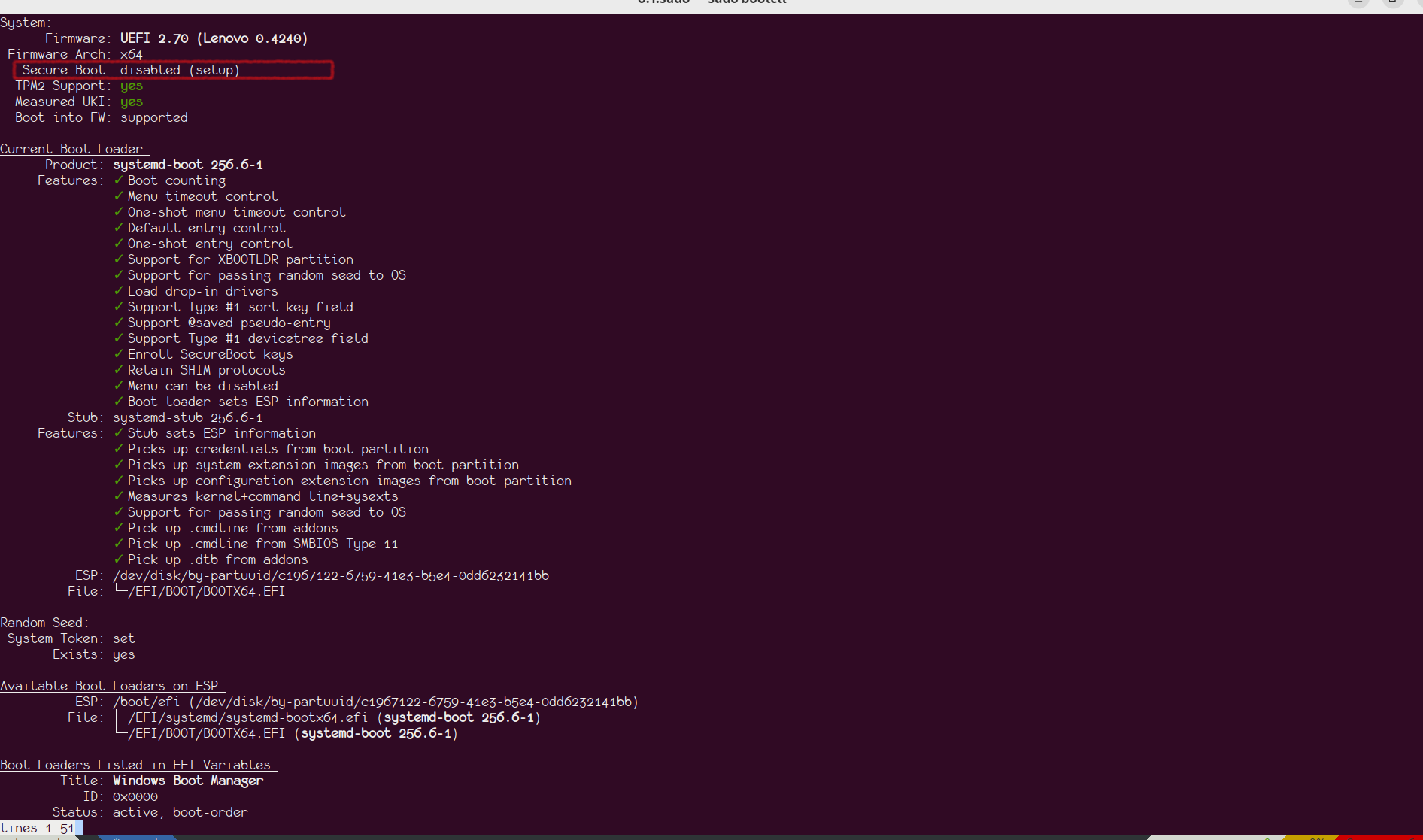
Preparing for Key Enrollment Before enrolling our keys, we need to put the device in Secure Boot Setup Mode. Verify the status using the bootctl status command. You should see output similar to the following image: UEFI Setup mode
Generating Keys Follow these instructions from the Arch Wiki to generate the keys manually. You'll need the efitools and openssl packages. I recommend using rsa:2048 as the key size for better compatibility with older firmware. After generating the keys, copy all .auth files to the /efi/loader/keys/<hostname>/ folder. For example:
  sudo ls /efi/loader/keys/chamunda
db.auth  KEK.auth  PK.auth
Signing the Bootloader Sign the systemd-boot bootloader with your new keys:
sbsign --key <path-to db.key> --cert <path-to db.crt> \
   /usr/lib/systemd/boot/efi/systemd-bootx64.efi
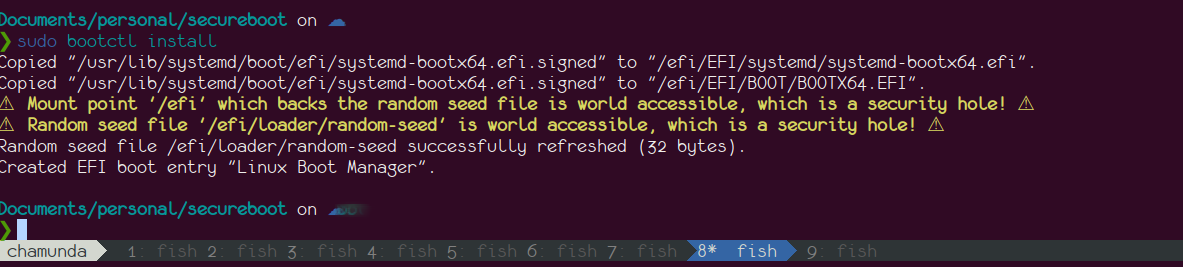
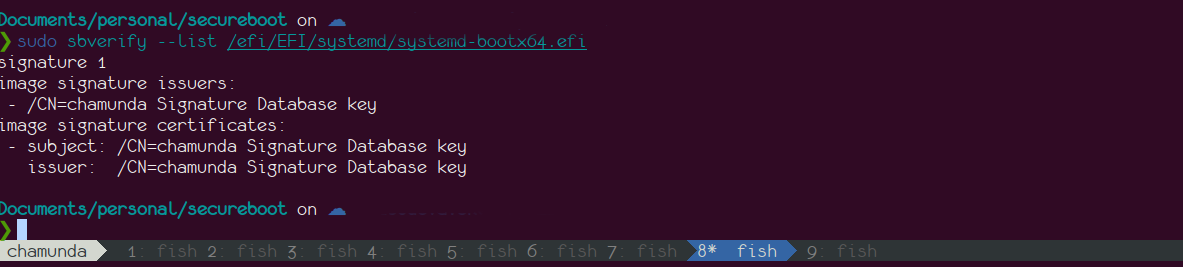
Install the signed bootloader using bootctl install. The output should resemble this: bootctl install

Note

If you encounter warnings about mount options, update your fstab with the umask=0077 option for the EFI partition.

Verify the signature using sbsign --verify: sbsign verify
Configuring UKI for Secure Boot Update the /etc/kernel/uki.conf file with your key paths:
SecureBootPrivateKey=/path/to/db.key
SecureBootCertificate=/path/to/db.crt
Signing the UKI Image On Debian, use dpkg-reconfigure to sign the UKI image for each kernel:
sudo dpkg-reconfigure linux-image-$(uname -r)
# Repeat for other kernel versions if necessary
You should see output similar to this:
sudo dpkg-reconfigure linux-image-$(uname -r)
/etc/kernel/postinst.d/dracut:
dracut: Generating /boot/initrd.img-6.10.9-amd64
Updating kernel version 6.10.9-amd64 in systemd-boot...
Signing unsigned original image
Using config file: /etc/kernel/uki.conf
+ sbverify --list /boot/vmlinuz-6.10.9-amd64
+ sbsign --key /home/vasudeva.sk/Documents/personal/secureboot/db.key --cert /home/vasudeva.sk/Documents/personal/secureboot/db.crt /tmp/ukicc7vcxhy --output /tmp/kernel-install.staging.QLeGLn/uki.efi
Wrote signed /tmp/kernel-install.staging.QLeGLn/uki.efi
/etc/kernel/postinst.d/zz-systemd-boot:
Installing kernel version 6.10.9-amd64 in systemd-boot...
Signing unsigned original image
Using config file: /etc/kernel/uki.conf
+ sbverify --list /boot/vmlinuz-6.10.9-amd64
+ sbsign --key /home/vasudeva.sk/Documents/personal/secureboot/db.key --cert /home/vasudeva.sk/Documents/personal/secureboot/db.crt /tmp/ukit7r1hzep --output /tmp/kernel-install.staging.dWVt5s/uki.efi
Wrote signed /tmp/kernel-install.staging.dWVt5s/uki.efi
Enrolling Keys in Firmware Use systemd-boot to enroll your keys:
systemctl reboot --boot-loader-menu=0
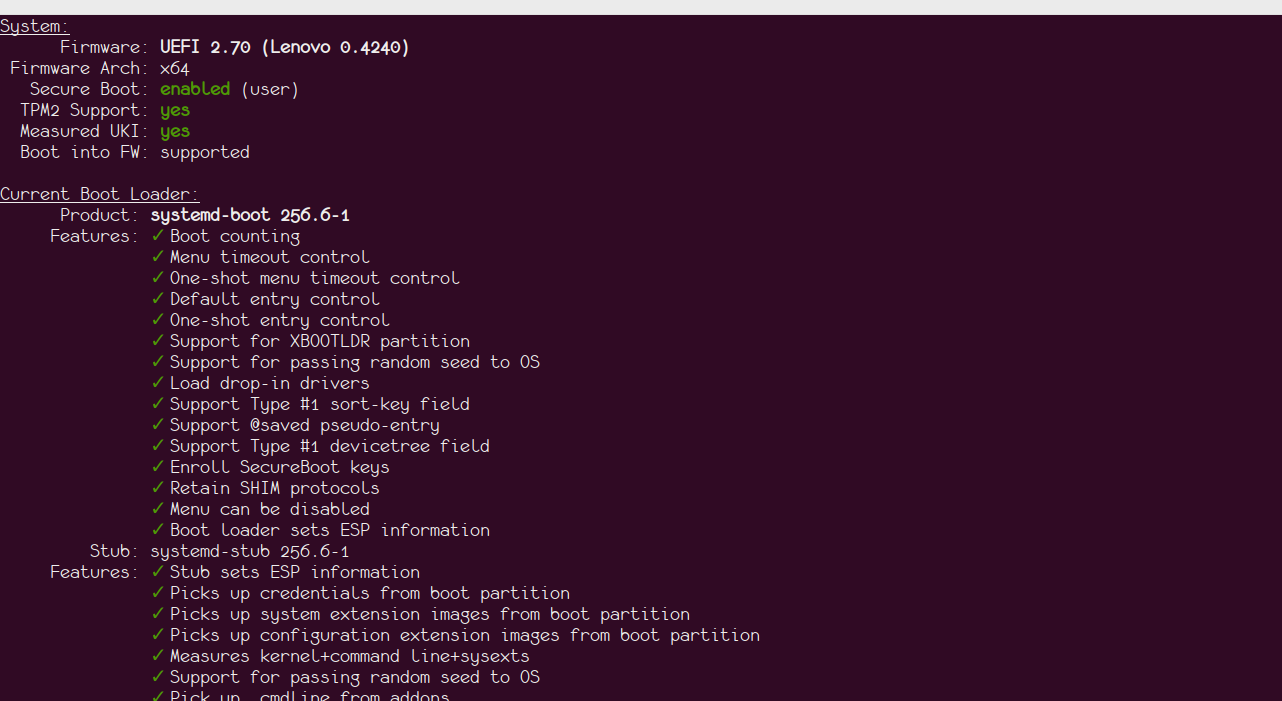
Select the enroll option with your hostname in the systemd-boot menu. After key enrollment, the system will reboot into the newly signed kernel. Verify with bootctl: uefi enabled
Dealing with Lockdown Mode Secure Boot enables lockdown mode on distro-shipped kernels, which restricts certain features like kprobes/BPF and DKMS drivers. To avoid this, consider compiling the upstream kernel directly, which doesn't enable lockdown mode by default. As Linus Torvalds has stated, "there is no reason to tie Secure Boot to lockdown LSM." You can read more about Torvalds' opinion on UEFI tied with lockdown.
Next Steps One thing that remains is automating the signing of systemd-boot on upgrade, which is currently a manual process. I'm exploring dpkg triggers for achieving this, and if I succeed, I will write a new post with details.
Acknowledgments Special thanks to my anonymous colleague who provided invaluable assistance throughout this process.

23 September 2024

Jonathan McDowell: The (lack of a) return-to-office conspiracy

During COVID companies suddenly found themselves able to offer remote working where it hadn t previously been on offer. That s changed over the past 2 or so years, with most places I m aware of moving back from a fully remote situation to either some sort of hybrid, or even full time office attendance. For example last week Amazon announced a full return to office, having already pulled remote-hired workers in for 3 days a week. I ve seen a lot of folk stating they ll never work in an office again, and that RTO is insanity. Despite being lucky enough to work fully remotely (for a role I d been approached about before, but was never prepared to relocate for), I feel the objections from those who are pro-remote often fail to consider the nuances involved. So let s talk about some of the reasons why companies might want to enforce some sort of RTO.

Real estate value Let s clear this one up first. It s not about real estate value, for most companies. City planners and real estate investors might care, but even if your average company owned their building they d close it in an instant all other things being equal. An unoccupied building costs a lot less to maintain. And plenty of companies rent and would save money even if there s a substantial exit fee.

Occupancy levels That said, once you have anyone in the building the equation changes. If you re having to provide power, heating, internet, security/front desk staff etc, you want to make sure you re getting your money s worth. There s no point heating a building that can seat 100 for only 10 people present. One option is to downsize the building, but that leads to not being able to assign everyone a desk, for example. No one I know likes hot desking. There are also scheduling problems about ensuring there are enough desks for everyone who might turn up on a certain day, and you ve ruled out the option of company/office wide events.

Coexistence builds relationships As a remote worker I wish it wasn t true that most people find it easier to form relationships in person, but it is. Some of this can be worked on with specific teambuilding style events, rather than in office working, but I know plenty of folk who hate those as much as they hate the idea of being in the office. I am lucky in that I work with a bunch of folk who are terminally online, so it s much easier to have those casual conversations even being remote, but I also accept I miss out on some things because I m just not in the office regularly enough. You might not care about this ( I just need to put my head down and code, not talk to people ), but don t discount it as a valid reason why companies might want their workers to be in the office. This often matters even more for folk at the start of their career, where having a bunch of experience folk around to help them learn and figure things out ends up working much better in person (my first job offered to let me go mostly remote when I moved to Norwich, but I said no as I knew I wasn t ready for it yet).

Coexistence allows for unexpected interactions People hate the phrase water cooler chat , and I get that, but it covers the idea of casual conversations that just won t happen the same way when people are remote. I experienced this while running Black Cat; every time Simon and I met up in person we had a bunch of useful conversations even though we were on IRC together normally, and had a VoIP setup that meant we regularly talked too. Equally when I was at Nebulon there were conversations I overheard in the office where I was able to correct a misconception or provide extra context. Some of this can be replicated with the right online chat culture, but I ve found many places end up with folk taking conversations to DMs, or they happen in private channels. It happens more naturally in an office environment.

It s easier for bad managers to manage bad performers Again, this falls into the category of things that shouldn t be true, but are. Remote working has increased the ability for people who want to slack off to do so without being easily detected. Ideally what you want is that these folk, if they fail to perform, are then performance managed out of the organisation. That s hard though, there are (rightly) a bunch of rights workers have (I m writing from a UK perspective) around the procedure that needs to be followed. Managers need organisational support in this to make sure they get it right (and folk are given a chance to improve), which is often lacking.

Summary Look, I get there are strong reasons why offering remote is a great thing from the company perspective, but what I ve tried to outline here is that a return-to-office mandate can have some compelling reasons behind it too. Some of those might be things that wouldn t exist in an ideal world, but unfortunately fixing them is a bigger issue than just changing where folk work from. Not acknowledging that just makes any reaction against office work seem ill-informed, to me.

22 September 2024

Adnan Hodzic: Effortless Linux backups: Power of OpenZFS Snapshots on Ubuntu 24.04

Linux snapshots? Back in the day (mid 2000 s) ReiserFS was my go to Linux filesystem, it was fast & reliable. But then after its creator...

21 September 2024

Gunnar Wolf: 50 years of queries

This post is a review for Computing Reviews for 50 years of queries , a article published in Communications of the ACM
The relational model is probably the one innovation that brought computers to the mainstream for business users. This article by Donald Chamberlin, creator of one of the first query languages (that evolved into the ubiquitous SQL), presents its history as a commemoration of the 50th anniversary of his publication of said query language. The article begins by giving background on information processing before the advent of today s database management systems: with systems storing and processing information based on sequential-only magnetic tapes in the 1950s, adopting a record-based, fixed-format filing system was far from natural. The late 1960s and early 1970s saw many fundamental advances, among which one of the best known is E. F. Codd s relational model. The first five pages (out of 12) present the evolution of the data management community up to the 1974 SIGFIDET conference. This conference was so important in the eyes of the author that, in his words, it is the event that starts the clock on 50 years of relational databases. The second part of the article tells about the growth of the structured English query language (SEQUEL) eventually renamed SQL including the importance of its standardization and its presence in commercial products as the dominant database language since the late 1970s. Chamberlin presents short histories of the various implementations, many of which remain dominant names today, that is, Oracle, Informix, and DB2. Entering the 1990s, open-source communities introduced MySQL, PostgreSQL, and SQLite. The final part of the article presents controversies and criticisms related to SQL and the relational database model as a whole. Chamberlin presents the main points of controversy throughout the years: 1) the SQL language lacks orthogonality; 2) SQL tables, unlike formal relations, might contain null values; and 3) SQL tables, unlike formal relations, may contain duplicate rows. He explains the issues and tradeoffs that guided the language design as it unfolded. Finally, a section presents several points that explain how SQL and the relational model have remained, for 50 years, a winning concept, as well as some thoughts regarding the NoSQL movement that gained traction in the 2010s. This article is written with clear language and structure, making it easy and pleasant to read. It does not drive a technical point, but instead is a recap on half a century of developments in one of the fields most important to the commercial development of computing, written by one of the greatest authorities on the topic.

19 September 2024

Vasudev Kamath: Note to Self: Enabling Unified Kernel Image on Debian

Note

These steps may not work on your system if you are using the default Debian installation. This guide assumes that your system is using systemd-boot as the bootloader, which is explained in the post linked below.

A unified kernel image (UKI) is a single executable that can be booted directly from UEFI firmware or automatically sourced by bootloaders with little or no configuration. It combines a UEFI boot stub program like systemd-stub(7), a Linux kernel image, an initrd, and additional resources into a single UEFI PE file. systemd-boot already provides a hook for kernel installation via /etc/kernel/postinst.d/zz-systemd-boot. We just need a couple of additional configurations to generate the UKI image.
Installation and Configuration
  1. Install the systemd-ukify package:

    sudo apt-get install systemd-ukify
    
  2. Create the following configuration in /etc/kernel/install.conf:

    layout=uki
    initrd_generator=dracut
    uki_generator=ukify
    
    This configuration specifies how to generate the UKI image for the installed kernel and which generator to use.
  3. Define the kernel command line for the UKI image. Create /etc/kernel/uki.conf with the following content:

    [UKI]
    Cmdline=@/etc/kernel/cmdline
    
Generating the UKI Image To apply these changes, regenerate the UKI image for the currently running kernel:
sudo dpkg-reconfigure linux-image-$(uname -r)
Verification Use the bootctl list command to verify the presence of a "Type #2" entry for the current kernel. The output should look similar to this:
bootctl list
      type: Boot Loader Specification Type #2 (.efi)
     title: Debian GNU/Linux trixie/sid (2d0080583f1a4127ac0b073b1a9d3e61-6.10.9-amd64.efi) (default) (selected)
        id: 2d0080583f1a4127ac0b073b1a9d3e61-6.10.9-amd64.efi
    source: /boot/efi/EFI/Linux/2d0080583f1a4127ac0b073b1a9d3e61-6.10.9-amd64.efi
  sort-key: debian
     linux: /boot/efi/EFI/Linux/2d0080583f1a4127ac0b073b1a9d3e61-6.10.9-amd64.efi
   options: systemd.gpt_auto=no quiet root=LABEL=root_disk ro systemd.machine_id=2d0080583f1a4127ac0b073b1a9d3e61
      type: Boot Loader Specification Type #2 (.efi)
     title: Debian GNU/Linux trixie/sid (2d0080583f1a4127ac0b073b1a9d3e61-6.10.7-amd64.efi)
        id: 2d0080583f1a4127ac0b073b1a9d3e61-6.10.7-amd64.efi
    source: /boot/efi/EFI/Linux/2d0080583f1a4127ac0b073b1a9d3e61-6.10.7-amd64.efi
  sort-key: debian
     linux: /boot/efi/EFI/Linux/2d0080583f1a4127ac0b073b1a9d3e61-6.10.7-amd64.efi
   options: systemd.gpt_auto=no quiet root=LABEL=root_disk ro systemd.machine_id=2d0080583f1a4127ac0b073b1a9d3e61
      type: Automatic
     title: Reboot Into Firmware Interface
        id: auto-reboot-to-firmware-setup
    source: /sys/firmware/efi/efivars/LoaderEntries-4a67b082-0a4c-41cf-b6c7-440b29bb8c4f
Cleanup and Reboot Once the "Type #2" entries are generated, remove any "Type #1" entries using the bootctl unlink command. After this, reboot your system to boot from the UKI-based image.
Future Considerations The primary use case for a UKI image is secure boot. Signing the UKI image can also be configured in the settings above, but this guide does not cover that process as it requires setting up secure boot on your system.

18 September 2024

Dirk Eddelbuettel: Rblpapi 0.3.15: Updated and New BLP Library

bloomberg terminal Version 0.3.15 of the Rblpapi package arrived on CRAN today. Rblpapi provides a direct interface between R and the Bloomberg Terminal via the C++ API provided by Bloomberg (but note that a valid Bloomberg license and installation is required). This is the fifteenth release since the package first appeared on CRAN in 2016. This release updates to the current version 3.24.6 of the Bloomberg API, and rounds out a few corners in the packaging from continuous integration to the vignette. The detailed list of changes follow below.

Changes in Rblpapi version 0.3.15 (2024-09-18)
  • A warning is now issued if more than 1000 results are returned (John in #377 addressing #375)
  • A few typos in the rblpapi-intro vignette were corrected (Michael Streatfield in #378)
  • The continuous integration setup was updated (Dirk in #388)
  • Deprecation warnings over char* where C++ class Name is now preferred have been addressed (Dirk in #391)
  • Several package files have been updated (Dirk in #392)
  • The request formation has been corrected, and an example was added (Dirk and John in #394 and #396)
  • The Bloomberg API has been upgraded to release 3.24.6.1 (Dirk in #397)

Courtesy of my CRANberries, there is also a diffstat report for the this release. As always, more detailed information is at the Rblpapi repo or the Rblpapi page. Questions, comments etc should go to the issue tickets system at the GitHub repo. If you like this or other open-source work I do, you can sponsor me at GitHub.

This post by Dirk Eddelbuettel originated on his Thinking inside the box blog. Please report excessive re-aggregation in third-party for-profit settings.

17 September 2024

Benjamin Mako Hill: My Chair

I realize that because I have several chairs, the phrase my chair is ambiguous. To reduce confusion, I will refer to the head of my academic department as my office chair going forward.

Jonathan Dowland: ouch, part 2

Things developed since my last post. Some lesions opened up on my ankle which was initially good news: the pain substantially reduced. But they didn t heal fast enough and so medics decided on surgical debridement. That was last night. It seemed to be successful and I m in recovery from surgery as I write. It s hard to predict the near-future, a lot depends on how well and fast I heal. I ve got a negative-pressure dressing on it, which is incredible: a constantly maintained suction to aid in debridement and healing. Modern medicine feels like a sci fi novel.

Jonathan Dowland: ouch, part 3

The debridement operation was a success: nothing bad grew afterwards. I was discharged after a couple of nights with crutches, instructions not to weight-bear, a remarkable, portable negative-pressure "Vac" pump that lived by my side, and some strong painkillers. About two weeks later, I had a skin graft. The surgeon took some skin from my thigh and stitched it over the debridement wound. I was discharged same-day, again with the Vac pump, and again with instructions not to weight-bear, at least for a few days. This time I only kept the Vac pump for a week, and after a dressing change (the first time I saw the graft), I was allowed to walk again. Doing so is strangely awkward, and sometimes a little painful. I have physio exercises to help me regain strength and understanding about what I can do. The donor site remained bandaged for another week before I saw it. I was expecting a stitched cut, but the surgeons have removed the top few layers only, leaving what looks more like a graze or sun-burn. There are four smaller, tentative-looking marks adjacent, suggesting they got it right on the fifth attempt. I'm not sure but I think these will all fade away to near-invisibility with time, and they don't hurt at all. I've now been off work for roughly 12 weeks, but I think I am returning very soon. I am looking forward to returning to some sense of normality. It's been an interesting experience. I thought about writing more about what I've gone through, in particular my experiences in Hospital, dealing with the bureaucracy and things falling "between the gaps". Hanif Kureishi has done a better job than I could. It's clear that the NHS is staffed by incredibly passionate people, but there are a lot of structural problems that interfere with care.

Russ Allbery: Review: The Book That Broke the World

Review: The Book That Broke the World, by Mark Lawrence
Series: Library Trilogy #2
Publisher: Ace
Copyright: 2024
ISBN: 0-593-43796-9
Format: Kindle
Pages: 366
The Book That Broke the World is high fantasy and a direct sequel to The Book That Wouldn't Burn. You should not start here. In a delightful break from normal practice, the author provides a useful summary of the previous volume at the start of this book to jog your memory. At the end of The Book That Wouldn't Burn, the characters were scattered and in various states of corporeality after some major revelations about the nature of the Library and the first appearance of the insectile Skeer. The Book That Wouldn't Burn picks up where it left off, and there is a lot more contact with the Skeer, but my guess that they would be the next viewpoint characters does not pan out. Instead, we get a new group and a new protagonist: Celcha, whose sees angels who come to visit her brother. I have complaints, but before I launch into those, I should say that I liked this book apart from the totally unnecessary cannibalism. (I'll get to that.) Livira is a bit sidelined, which is regrettable, but Celcha and her brother are interesting new characters, and both Arpix and Clovis, supporting characters in the first book, get some excellent character development. Similar to the first book, this is a puzzle box story full of world-building tidbits with intellectually-satisfying interactions. Lawrence elaborates and complicates his setting in ways that don't contradict earlier parts of the story but create more room and depth for the characters to be creative. I came away still invested in this world and eager to find out how Lawrence pulls the world-building and narrative threads together. The biggest drawback of this book is that it's not new. My thought after finishing the first book of the series was that if Lawrence had enough world-building ideas to fill three books to that same level of density, this had the potential of being one of my favorite fantasy series of all time. By the end of the second book, I concluded that this is not the case. Instead of showing us new twists and complications the way the first book did throughout, The Book That Broke the World mostly covers the same thematic ground from some new angles. It felt like Lawrence was worried the reader of the first book may not have understood the theme or the world-building, so he spent most of the second book nailing down anything that moved. I found that frustrating. One of the best parts of The Book That Wouldn't Burn was that Lawrence trusted the reader to keep up, which for me hit the glorious but rare sweet spot of pacing where I was figuring out the world at roughly the same pace as the characters. It surprised me in some very enjoyable ways. The Book That Broke the World did not surprise me. There are a few new things, which I enjoyed, and a few elaborations and developments of ideas, which I mostly enjoyed, but I saw the big plot twist coming at least fifty pages before it happened and found the aftermath more annoying than revelatory. It doesn't help that the plot rests on character misunderstandings, one of my least favorite tropes. One of the other disappointments of this book is that the characters stop using the Library as a library. The Library at the center of this series is a truly marvelous piece of world-building with numerous fascinating features that are unrelated to its contents, but Livira used it first and foremost as a repository of books. The first book was full of characters solving problems by finding a relevant book and reading it. In The Book That Broke the World, sadly, this is mostly gone. The Library is mostly reduced to a complicated Big Dumb Object setting. It's still a delightful bit of world-building, and we learn about a few new features, but I only remember two places where the actual books are important to the story. Even the book referenced in the title is mostly important as an artifact with properties unrelated to the words that it contains or to the act of reading it. I think this is a huge lost opportunity and something I hope Lawrence fixes in the last book of the trilogy. This book instead focuses on the politics around the existence of the Library itself. Here I'm cautiously optimistic, although a lot is going to depend on the third book. Lawrence has set up a three-sided argument between groups that I will uncharitably describe as the libertarian techbros, the "burn it all down" reactionaries, and the neoliberal centrist technocrats. All three of those positions suck, and Lawrence had better be setting the stage for Livira to find a different path. Her unwillingness to commit to any of those sides gives me hope, but bringing this plot to a satisfying conclusion is going to be tricky. I hope I like what Lawrence comes up with, but it feels far from certain. It doesn't help that he's started delivering some points with a sledgehammer, and that's where we get to the unnecessary cannibalism. Thankfully this is a fairly small part of the tail end of the book, but it was an unpleasant surprise that I did not want in this novel and that I don't think made the story any better. It's tempting to call the cannibalism gratuitous, but it does fit one of the main themes of this story, namely that humans are depressingly good at using any rule-based object in unexpected and nasty ways that are contrary to the best intentions of the designer. This is the fundamental challenge of the Library as a whole and the question that I suspect the third book will be devoted to addressing, so I understand why Lawrence wanted to emphasize his point. The reason why there is cannibalism here is directly related to a profound misunderstanding of the properties of the library, and I detected an echo of one of C.S. Lewis's arguments in The Last Battle about the nature of Hell. The problem, though, is that this is Satanic baby-killerism, to borrow a term from Fred Clark. There are numerous ways to show this type of perversion of well-intended systems, which I know because Lawrence used other ones in the first book that were more subtle but equally effective. One of the best parts of The Book That Wouldn't Burn is that there were few real villains. The conflict was structural, all sides had valid perspectives, and the ethical points of that story were made with some care and nuance. The problem with cannibalism as it's used here is not merely that it's gross and disgusting and off-putting to the reader, although it is all of those things. If I wanted to read horror, I would read horror novels. I don't appreciate surprise horror used for shock value in regular fantasy. But worse, it's an abandonment of moral nuance. The function of cannibalism in this story is like the function of Satanic baby-killers: it's to signal that these people are wholly and irredeemably evil. They are the Villains, they are Wrong, and they cease to be characters and become symbols of what the protagonists are fighting. This is destructive to the story because it's designed to provoke a visceral short-circuit in the reader and let the author get away with sloppy story-telling. If the author needs to use tactics like this to point out who is the villain, they have failed to set up their moral quandary properly. The worst part is that this was entirely unnecessary because Lawrence's story-telling wasn't sloppy and he set up his moral quandary just fine. No one was confused about the ethical point here. I as the reader was following without difficulty, and had appreciated the subtlety with which Lawrence posed the question. But apparently he thought he was too subtle and decided to come back to the point with a pile-driver. I think that seriously injured the story. The ethical argument here is much more engaging and thought-provoking when it's more finely balanced. That's a lot of complaints, mostly because this is a good book that I badly wanted to be a great book but which kept tripping over its own feet. A lot of trilogies have weak second books. Hopefully this is another example of the mid-story sag, and the finale will be worthy of the start of the story. But I have to admit the moral short-circuiting and the de-emphasis of the actual books in the library has me a bit nervous. I want a lot out of the third book, and I hope I'm not asking this author for too much. If you liked the first book, I think you'll like this one too, with the caveat that it's quite a bit darker and more violent in places, even apart from the surprise cannibalism. But if you've not started this series, you may want to wait for the third book to see if Lawrence can pull off the ending. Followed by The Book That Held Her Heart, currently scheduled for publication in April of 2025. Rating: 7 out of 10

Dirk Eddelbuettel: nanotime 0.3.10 on CRAN: Update

A minor update 0.3.10 for our nanotime package is now on CRAN. nanotime relies on the RcppCCTZ package (as well as the RcppDate package for additional C++ operations) and offers efficient high(er) resolution time parsing and formatting up to nanosecond resolution, using the bit64 package for the actual integer64 arithmetic. Initially implemented using the S3 system, it has benefitted greatly from a rigorous refactoring by Leonardo who not only rejigged nanotime internals in S4 but also added new S4 types for periods, intervals and durations. This release updates one S4 methods to very recent changes in r-devel for which CRAN had reached out. This concerns the setdiff() method when applied to two nanotime objects. As it only affected R 4.5.0, due next April, if rebuilt in the last two or so weeks it will not have been visible to that many users, if any. In any event, it now works again for that setup too, and should be going forward. We also retired one demo function from the very early days, apparently it relied on ggplot2 features that have since moved on. If someone would like to help out and resurrect the demo, please get in touch. We also cleaned out some no longer used tests, and updated DESCRIPTION to what is required now. The NEWS snippet below has the full details.

Changes in version 0.3.10 (2024-09-16)
  • Retire several checks for Solaris in test suite (Dirk in #130)
  • Switch to Authors@R in DESCRIPTION as now required by CRAN
  • Accommodate R-devel change for setdiff (Dirk in #133 fixing #132)
  • No longer ship defunction ggplot2 demo (Dirk fixing #131)

Thanks to my CRANberries, there is a diffstat report for this release. More details and examples are at the nanotime page; code, issue tickets etc at the GitHub repository and all documentation is provided at the nanotime documentation site. If you like this or other open-source work I do, you can sponsor me at GitHub.

This post by Dirk Eddelbuettel originated on his Thinking inside the box blog. Please report excessive re-aggregation in third-party for-profit settings.

16 September 2024

Russ Allbery: Review: The Wings Upon Her Back

Review: The Wings Upon Her Back, by Samantha Mills
Publisher: Tachyon
Copyright: 2024
ISBN: 1-61696-415-4
Format: Kindle
Pages: 394
The Wings Upon Her Back is a political steampunk science fantasy novel. If the author's name sounds familiar, it may be because Samantha Mills's short story "Rabbit Test" won Nebula, Locus, Hugo, and Sturgeon awards. This is her first novel. Winged Zemolai is a soldier of the mecha god and the protege of Mecha Vodaya, the Voice. She has served the city-state of Radezhda by defending it against all enemies, foreign and domestic, for twenty-six years. Despite that, it takes only a moment of errant mercy for her entire life to come crashing down. On a whim, she spares a kitchen worker who was concealing a statue of the scholar god, meaning that he was only pretending to worship the worker god like all workers should. Vodaya is unforgiving and uncompromising, as is the sleeping mecha god. Zemolai's wings are ripped from her back and crushed in the hand of the god, and she's left on the ground to die of mechalin withdrawal. The Wings Upon Her Back is told in two alternating timelines. The main one follows Zemolai after her exile as she is rescued by a young group of revolutionaries who think she may be useful in their plans. The other thread starts with Zemolai's childhood and shows the reader how she became Winged Zemolai: her scholar family, her obsession with flying, her true devotion to the mecha god, and the critical early years when she became Vodaya's protege. Mills maintains the separate timelines through the book and wraps them up in a rather neat piece of symbolic parallelism in the epilogue. I picked up this book on a recommendation from C.L. Clark, and yes, indeed, I can see why she liked this book. It's a story about a political awakening, in which Zemolai slowly realizes that she has been manipulated and lied to and that she may, in fact, be one of the baddies. The Wings Upon Her Back is more personal than some other books with that theme, since Zemolai was specifically (and abusively) groomed for her role by Vodaya. Much of the book is Zemolai trying to pull out the hooks that Vodaya put in her or, in the flashback timeline, the reader watching Vodaya install those hooks. The flashback timeline is difficult reading. I don't think Mills could have left it out, but she says in the afterword that it was the hardest part of the book to write and it was also the hardest part of the book to read. It fills in some interesting bits of world-building and backstory, and Mills does a great job pacing the story revelations so that both threads contribute equally, but mostly it's a story of manipulative abuse. We know from the main storyline that Vodaya's tactics work, which gives those scenes the feel of a slow-motion train wreck. You know what's going to happen, you know it will be bad, and yet you can't look away. It occurred to me while reading this that Emily Tesh's Some Desperate Glory told a similar type of story without the flashback structure, which eliminates the stifling feeling of inevitability. I don't think that would not have worked for this story. If you simply rearranged the chapters of The Wings Upon Her Back into a linear narrative, I would have bailed on the book. Watching Zemolai being manipulated would have been too depressing and awful for me to make it to the payoff without the forward-looking hope of the main timeline. It gave me new appreciation for the difficulty of what Tesh pulled off. Mills uses this interwoven structure well, though. At about 90% through this book I had no idea how it could end in the space remaining, but it reaches a surprising and satisfying conclusion. Mills uses a type of ending that normally bothers me, but she does it by handling the psychological impact so well that I couldn't help but admire it. I'm avoiding specifics because I think it worked better when I wasn't expecting it, but it ties beautifully into the thematic point of the book. I do have one structural objection, though. It's one of those problems I didn't notice while reading, but that started bothering me when I thought back through the story from a political lens. The Wings Upon Her Back is Zemolai's story, her redemption arc, and that means she drives the plot. The band of revolutionaries are great characters (particularly Galiana), but they're supporting characters. Zemolai is older, more experienced, and knows critical information they don't have, and she uses it to effectively take over. As setup for her character arc, I see why Mills did this. As political praxis, I have issues. There is a tendency in politics to believe that political skill is portable and repurposable. Converting opposing operatives to the cause is welcomed not only because they indicate added support, but also because they can use their political skill to help you win instead. To an extent this is not wrong, and is probably the most true of combat skills (which Zemolai has in abundance). But there's an underlying assumption that politics is symmetric, and a critical reason why I hold many of the political positions that I do hold is that I don't think politics is symmetric. If someone has been successfully stoking resentment and xenophobia in support of authoritarians, converts to an anti-authoritarian cause, and then produces propaganda stoking resentment and xenophobia against authoritarians, this is in some sense an improvement. But if one believes that resentment and xenophobia are inherently wrong, if one's politics are aimed at reducing the resentment and xenophobia in the world, then in a way this person has not truly converted. Worse, because this is an effective manipulation tactic, there is a strong tendency to put this type of political convert into a leadership position, where they will, intentionally or not, start turning the anti-authoritarian movement into a copy of the authoritarian movement they left. They haven't actually changed their politics because they haven't understood (or simply don't believe in) the fundamental asymmetry in the positions. It's the same criticism that I have of realpolitik: the ends do not justify the means because the means corrupt the ends. Nothing that happens in this book is as egregious as my example, but the more I thought about the plot structure, the more it bothered me that Zemolai never listens to the revolutionaries she joins long enough to wrestle with why she became an agent of an authoritarian state and they didn't. They got something fundamentally right that she got wrong, and perhaps that should have been reflected in who got to make future decisions. Zemolai made very poor choices and yet continues to be the sole main character of the story, the one whose decisions and actions truly matter. Maybe being wrong about everything should be disqualifying for being the main character, at least for a while, even if you think you've understood why you were wrong. That problem aside, I enjoyed this. Both timelines were compelling and quite difficult to put down, even when they got rather dark. I could have done with less body horror and a few fewer fight scenes, but I'm glad I read it. Science fiction readers should be warned that the world-building, despite having an intricate and fascinating surface, is mostly vibes. I started the book wondering how people with giant metal wings on their back can literally fly, and thought the mentions of neural ports, high-tech materials, and immune-suppressing drugs might mean that we'd get some sort of explanation. We do not: heavier-than-air flight works because it looks really cool and serves some thematic purposes. There are enough hints of technology indistinguishable from magic that you could make up your own explanations if you wanted to, but that's not something this book is interested in. There's not a thing wrong with that, but don't get caught by surprise if you were in the mood for a neat scientific explanation of apparent magic. Recommended if you like somewhat-harrowing character development with a heavy political lens and steampunk vibes, although it's not the sort of book that I'd press into the hands of everyone I know. The Wings Upon Her Back is a complete story in a single novel. Content warning: the main character is a victim of physical and emotional abuse, so some of that is a lot. Also surgical gore, some torture, and genocide. Rating: 7 out of 10

15 September 2024

Dirk Eddelbuettel: RcppFastAD 0.0.3 on CRAN: Updated

A new release 0.0.3 of the RcppFastAD package by James Yang and myself is now on CRAN. RcppFastAD wraps the FastAD header-only C++ library by James which provides a C++ implementation of both forward and reverse mode of automatic differentiation. It offers an easy-to-use header library (which we wrapped here) that is both lightweight and performant. With a little of bit of Rcpp glue, it is also easy to use from R in simple C++ applications. This release turns compilation to the C++20 standard as newer clang++ versions complained about a particular statement (it took to be C++20) when compiled under C++17. So we obliged. The NEWS file for these two initial releases follows.

Changes in version 0.0.3 (2024-09-15)
  • The package now compiles under the C++20 standard to avoid a warning under clang++-18 (Dirk addressing #9)
  • Minor updates to continuous integration and badges have been made as well

Courtesy of my CRANberries, there is also a diffstat report for the most recent release. More information is available at the repository or the package page. If you like this or other open-source work I do, you can sponsor me at GitHub.

This post by Dirk Eddelbuettel originated on his Thinking inside the box blog. Please report excessive re-aggregation in third-party for-profit settings.

Next.

Previous.