Search Results: "tar"

31 May 2009

Russell Coker: Expectations and Fandom

Russ Allbery has written about the hostile reactions of sci-fi fans toward the delay of a book release [1]. Russ makes some good points regarding the issue of whether paying $100 for some books entitles a reader to have the rest of the series written (in summary - no, the author owes the fans nothing). Russ also notes that when someone makes a public promise to do something (such as writing a book) they will probably be feeling bad about being unable to live up to that, and harassing them about it is not going to make them feel any better - or make them better able to do the work. Charles Stross has written a blog post about this topic, he makes some interesting points and the comments illustrate most of them [2]. One comment claims that the author of the delayed book in question flaunts his NFL watching while the same person also criticises the author for writing a blog. This level of contempt for the author amazes me. In case anyone is interested I watch The Bill and Desperate Housewives every week. Anyone who wishes to criticise me for watching soapies instead of documentaries is welcome to do so. But I will not make any apologies for spending some of my time doing things other than coding. If I watch Desperate Housewives instead of fixing a bug that inconveniences you then you just have to deal with it. I believe that taking a regular break from work is a basic human right, apart from which there is evidence to show that working excessive hours decreases the quality and quantity of work that is completed [3]. It seems to me that members of the free software community are in a better position regarding fans than most creative people, and that this is largely due to how transparent the development process is. The most influential members of the user (fan) base are software developers. While people will be disappointed when software is not released on time or has some bugs many users know what is involved and understand that no testing will find all bugs. Even some basic shell scripting can teach people the difficulties of programming and convince them to have a little more patience than they might otherwise have. So the typical user of free software will have some idea of what is required to write software while the typical reader of a novel has no idea of what is involved in writing a book. Another benefit for the free software community in this regard is the open development process. When users are unhappy about release delays (as some Debian users were before Lenny was released) they can easily look at the bug list. If a user is pushy they can be invited to fix some bugs themselves, if they investigate the matter and discover that the bugs are too difficult for them to fix then they will probably feel compelled to stop hassling the people who can fix the bugs. Complaints from users regarding the release process can be turned around with the software is late because YOU haven t fixed any bugs . Please note that submitting bug reports is NOT criticism, it is in fact helping the development process (particularly when the bug reports contain information on how to fix the problems). This exposes another significant difference between writing software and writing a book. Even if I was a talented author I would not be able to offer any assistance to an author who had trouble completing a work simply because I wouldn t have the same vision for the plot of a book. But it s not uncommon for software development projects to be forked if the users are unhappy with some aspect of how they work, and it s also not uncommon for a programmer to voluntarily give one of their projects to another developer - sometimes developers try and convince other people to take projects from them when they don t have enough time. Even without changing the ownership of a project, anyone can submit a patch. The patches that I have received from users of my software have generally been of a high quality and it has taken little work to merge them. A final difference is that any programmer can produce a private fork of a project. I have lost count of the number of times that I have produced custom versions of free software for my own personal use or for the use of my clients. Sometimes the modifications that I made were unsuitable for wider use (IE they broke things for usage cases that I didn t care about) so I just privately made the software do what I needed. This makes the upstream developer (or team) and other contributors irrelevant to fixing the problem in question. Now this is not to say that the free software community is perfect. But it seems that certain types of bad behavior that we see demonstrated in the sci-fi fandom circles are uncommon and the people who demonstrate them are significantly outnumbered by people who oppose such actions. Publicly criticising a programmer for watching the NFL in their spare time is akin to holding a sign saying kick me . As I am a fan of science fiction (and hope to write some in the near future) I wonder whether the sci-fi community could be changed to have a culture more like that of the free software community. The web site 365tomorrows.com publishes a short sci-fi story every day [4], they have been doing this for a few years now. They started out publishing work by a small team of authors with the aim of writing a story a day for a year. Now they also take submissions from users and they have a forum for budding authors to discuss their work. The site Protagonize.com is based on the idea of collaborative fiction [5]. I wonder whether the increasing number of sci-fi fans who join such forums will change the nature of the community. Maybe when a book is delayed the fans could take comfort in an increasing amount of fan-fiction based on characters from that book, I expect that the fan fiction will probably not impress all authors - and some may be offended by having their characters used in pornographic fan fiction. But that might just lead to a market shift towards authors who are not overly concerned about such things. When attending sci-fi book signings I ve noticed fans who appear to have stalking tendencies. I have been wondering how much of this is another symptom of the same problem and how much of it is due to science fiction attracting some people who don t understand the concept of personal space and who haven t considered the mathematics of interactions between famous people and fans - as one of many fans the famous person will not remember your fan letters or whether they have met you before, it s not possible. I look forward to the day when a well known author can have lunch with some fans after a book signing and not be afraid of weird fans. I wonder if Cory Doctorow [6] already has such cool fans, Cory seems to be one of the leaders in the new open way of writing and releasing sci-fi so it seems likely that he would be among the first to reap the benefits. I m sure that most authors would like to have lunch or dinner with their fans if they could be assured that the probability of getting stuck with a nutty fan was extremely low.

Russell Coker: LG U990 Viewty

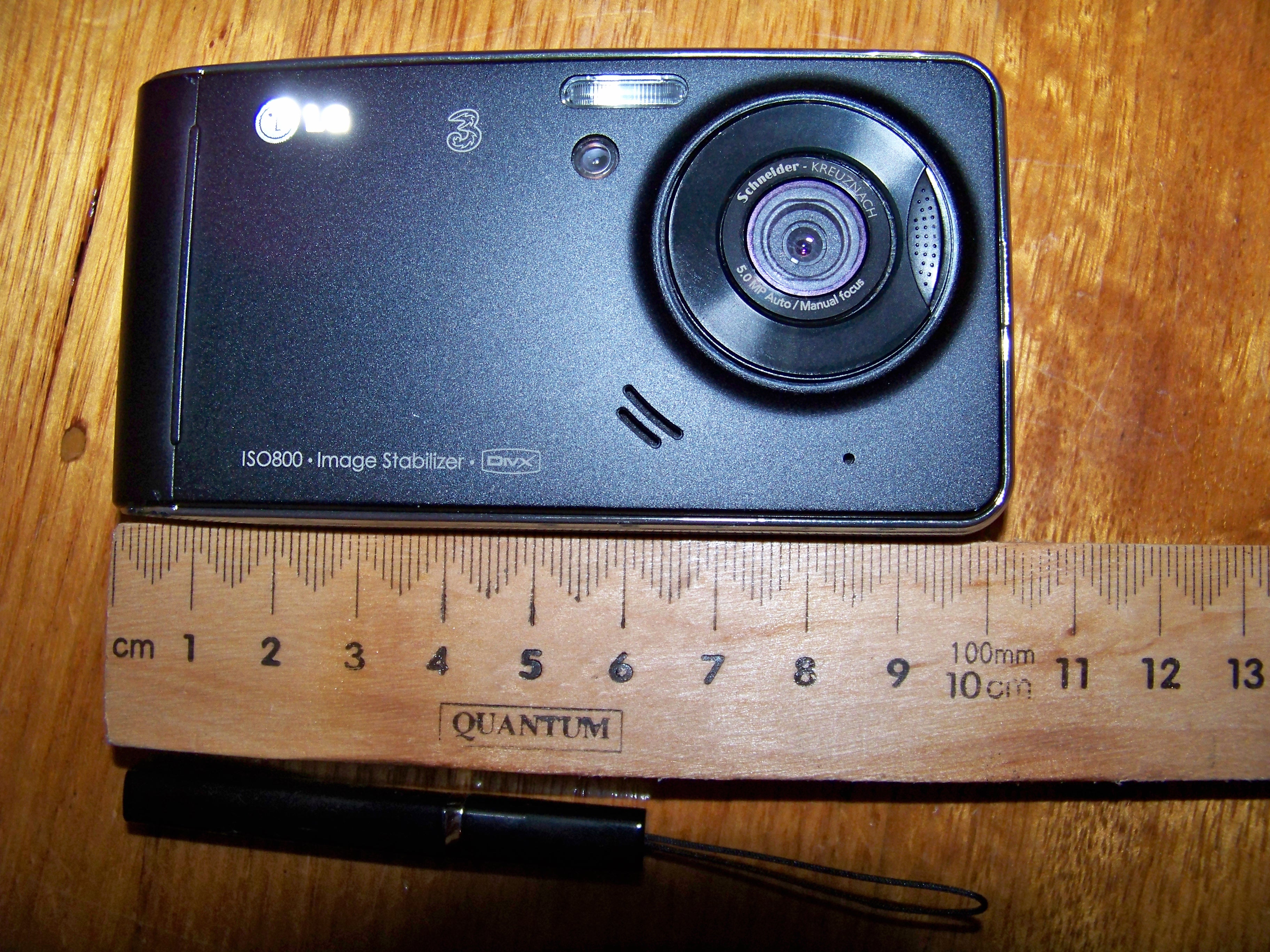
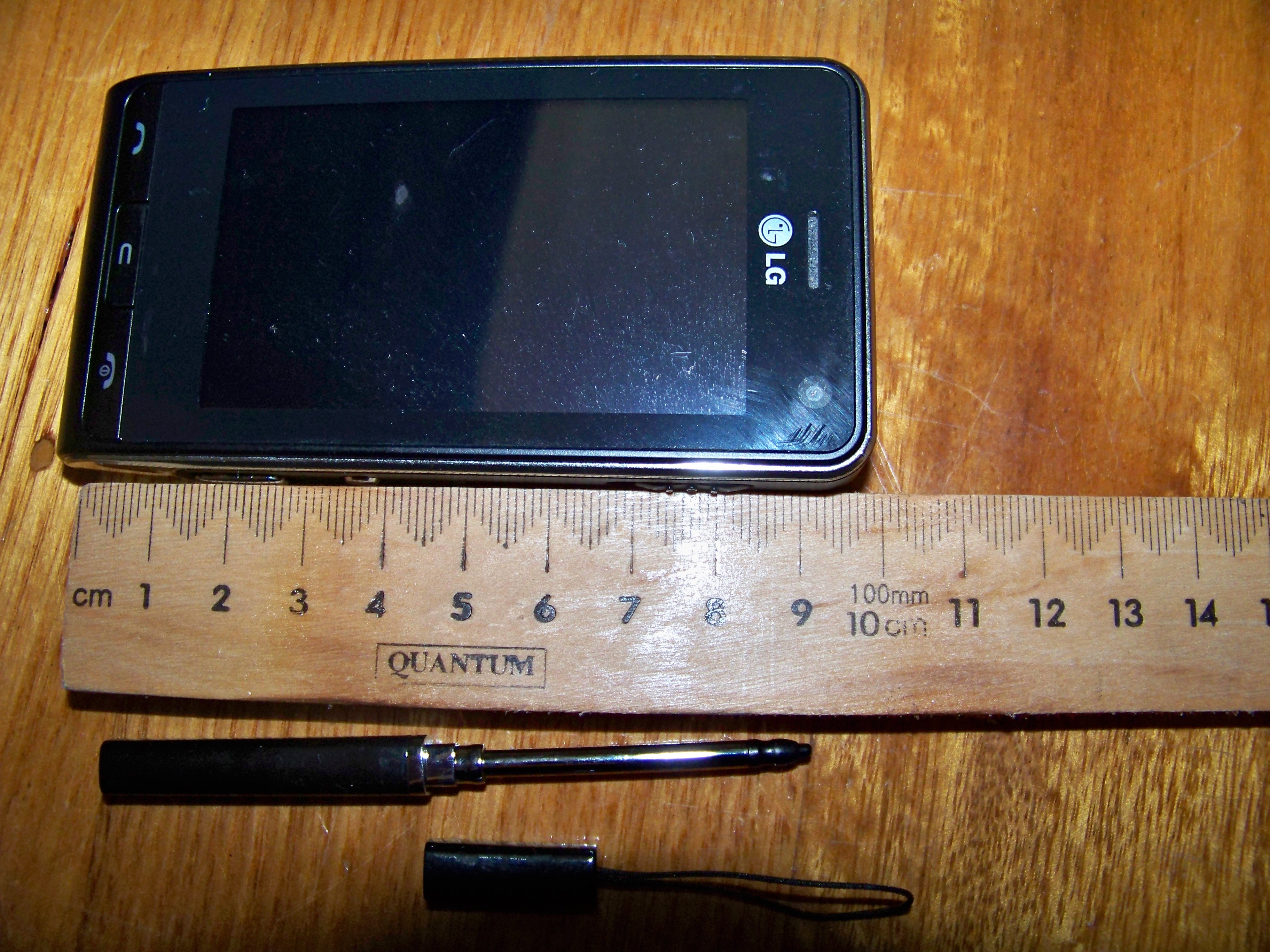
I have just got a LG U990 Viewty mobile phone [1]. It s a 3G phone and came free on the $29 monthly cap plan from Three (minimum monthly spend is $29 - but this is free if you use $29 per month). My previous plan was the $29 cap but had a minimum spend of $20 per month, as I never happened to use less than $29 per month I am not paying more. For a modern mobile phone the actual phone functionality is a sideline. If a device was strictly designed to be a phone then I think it would be very similar to the Nokia phones that were available 5+ years ago - the Nokia I had in 1999 performed every phone function that I desired of it. Like most modern phones the LG U990 Viewty suffers in it s phone functionality from the desire to make it do non-phone tasks and from the desire to cripple it to meet the desires of the carriers (not the desires of the users). For example the home screen will always have at least two buttons for paid Three services and I have no configuration option to remove them. Replacing them with speed dial options for a couple of numbers that I regularly call would be handy. As the main screen is a touch-screen there is no excuse for this, they should allow the software to be reconfigured with more useful options. Eventually the Android will kill most of the other phones and this problem of phones being designed to suit the telephone companies instead of the users will be solved. One of the most annoying mis-features of the phone is that it doesn t properly handle address book entries with multiple phone numbers. One of my friends turns his mobile off when he is at home, so I regularly call his mobile and then immediately call his home number if the mobile is unavailable. With my previous two mobile phones I could press the dial button to bring up the list of previous calls and then use the arrow buttons to select from the other numbers that are attached to the same address-book entry, so with three button presses I would be dialing his other number. With the Viewty I have to go back to the address book. The compelling feature of the Viewty is the camera and display. It has a 5MP camera which makes it the second highest resolution camera-phone offered by Three - the LG Renoir (KC910) has 8MP but needs a $99 plan for it to be free. It also has a 240*320 resolution touch-screen display (in a quick search in January when I bought my phone the best resolution display I could find on a phone is 240*400 in the LG Renoir). While the camera is documented as being 5mp there are no specs available about the resolution of the CCD. I want to use the native resolution of the CCD for pictures (I think interpolation is a waste of space). The CCD might actually be 5mp, a picture of the 1400*1050 resolution screen on my Thinkpad allows me to read all the text even when small fonts are in use, so the CCD resolution must be significantly greater than 1400*1050. This is a really important feature as the Viewty will work well for making screen-shots for bug reports about crashed computers (several of my clients have expressed interest in getting one after seeing such a demonstration). One annoying problem is that the camera software takes a while to load, my trusty Sony digital camera starts a lot faster and the LG U890 phone I used for the past two years is also a lot faster and more convenient. This won t work well for photographing unexpected events. When I am traveling by public transport I will photograph the relevant pages of my street directory as I can zoom in to photos of the maps and read the street names, it saves some weight when traveling. The 2G micro-SD card (which incidentally cost $10 from OfficeWorks) will allow me to store a lot of maps. One interesting feature is the video recording capabilities. It can do 640*480 resolution at 30fps (which is pretty good) and 320*240 resolution at 120fps (they claim that you can film a balloon popping). In my quick tests the standard 640*480*30fps mode works well, but the 120fps mode requires much brighter light than most of my test environments, so I have not yet got it working properly. The phone has a reasonable voice recording function, it can record considerably more than 34 hours of audio and the quality is reasonably good if you use an external microphone. It is however quite poor if you use the built-in microphone for a dictaphone function, it seems that quality is poor at any distance. I had wanted to record my LCA mini-conf talks with my phone but unfortunately forgot to bring the adapter for the external microphone. It s a pity that the phone doesn t have a standard microphone socket as I have misplaced my Viewty microphone, when designing the phone they should assume that misplacing attachments is a common occurrence and design it to use common parts. I recently spoke to a journalist who uses his mobile phone to record interviews. He said that his phone supported phone calls, voice recording, and taking pictures - all the essential tasks for his work. It seems that the Viewty would be better than most phones for journalistic work apart from the issue of low quality voice recording when you have misplaced your external microphone. The text editor is unfriendly in the keyboard mode (I have not tried hand-writing recognition), one thing I don t like is the fact that the letters jump when you press them. This does allow changing a letter by moving the stylus before releasing the press (some people consider this a great feature). There are no cursor control keys (which is a serious omission), and the keyboard doesn t resemble a real keyboard. My iPaQ is far better for writing (I once wrote a full-length magazine article on an iPaQ). The stylus is quite strange and interesting. In the picture of the front of the phone the stylus is compacted with it s lid on. In the picture of the back of the phone the stylus is extended with the lid off. The end of the stylus clips in to the lid so that removing the lid drags the central part out of the body. It s an interesting design and with the string on the lid allows the stylus to be attached to the phone when it s not being used. But I have never used it. Even with an iPaQ (which had a proper stylus that attached firmly inside the body of the device) I often used a fingernail on the touch screen. I have not felt the need to ever use a stylus with my Viewty. One final noteworthy thing is the support for Google services. It seems to have client support for YouTube, Google Maps, GMail, and Blogger. This seems to be a major win for Google, the Viewty is one of the most popular phones at the moment and I expect that lots of people who buy them will now have an incentive to use the Google services. Between these sorts of deals and the Android I think that it will be necessary to have some sort of anti-trust action against Google. Google are generally doing good things for the users. I have been quite satisfied to use Google search, Google advertising on my blog, and Gmail. Also I have been moderately happy with Blogger (it was good when I started blogging) and Google Maps is useful on occasion. So generally I am happy with Google, but monopolies are bad for the users so I think that if things continue on their current trend then Google may have to be split into several little Googlets some time in the next few years.

30 May 2009

Stefano Zacchiroli: kick-starting turbogears 2 packaging

TurboGears 2 in debian ... soon ! After a long incubation, a few days ago TurboGears 2 has been released. Historically, I've been preferring TurboGears over Django for being closer to the open source philosophy of reusing existing components. Since the long 2.0 release was marking a gap with Django, I was eager to test the 2.0, and I was delighted to find it in Debian. Unfortunately, it doesn't seem to be in good shape yet. In particular it lacks several dependencies before it can even be used to quickstart a project, in spite of its presence in unstable. To give an idea of the needed work, after having installed it manually (via easy_install), my virgin /usr/local/lib/python2.5/site-packages/ has been polluted by 26 egg-thingies. I decided to spend some week-end time to start closing the gap, because we cannot lack such an important web framework in Debian (and ... erm, yes, also because I need it :-) ). Here is the current status of what has been ITP-ed / packaged already (by yours truly): Where to Considering, foolishly, the last package as being already done, the way to go is still long:
    zack@usha:~$ ls /usr/local/lib/python2.5/site-packages/ grep -v repoze.what
    AddOns-0.6-py2.5.egg
    BytecodeAssembler-0.3-py2.5.egg
    Catwalk-2.0.2-py2.5.egg
    easy-install.pth
    Extremes-1.1-py2.5.egg
    PEAK_Rules-0.5a1.dev_r2582-py2.5.egg
    prioritized_methods-0.2.1-py2.5.egg
    sprox-0.5.5-py2.5.egg
    sqlalchemy_migrate-0.5.2-py2.5.egg
    SymbolType-1.0-py2.5.egg
    tg.devtools-2.0-py2.5.egg
    tgext.admin-0.2.4-py2.5.egg
    tgext.crud-0.2.4-py2.5.egg
    TurboGears2-2.0-py2.5.egg
    tw.forms-0.9.3-py2.5.egg
    WebFlash-0.1a9-py2.5.egg
    zope.sqlalchemy-0.4-py2.5.egg

Possibly, some of them are already in Debian hidden somewhere, but sure there is still work to be done. If you want to help, you are more then welcome. The rules are simple: all packages will be maintained under the umbrella of the Python Modules Team, but you should be willing to take responsibility as the primary maintainer. Please get in touch with if you are interested, as I'm in turn already in touch with some other very kind volunteers (thanks Enrico and Federico2!) to coordinate who-is-doing-what. Preview packages available What has already been packaged, including a temporary workaround for python-transaction, will be available in experimental after NEW processing. The idea is that nothing will go to unstable until TurboGears 2 will be (proven to be) fully functional. In the meantime, packages are available from my personal APT repository (signed by my key), here are the friendly /etc/apt/sources.list :
    deb http://people.debian.org/~zack/debian zack-unstable/
    deb-src http://people.debian.org/~zack/debian zack-unstable/

Versions are tilde-friendly and shouldn't get in your way when the official packages will hit unstable. Packaging multiple-egg / multiple-upstream packages In all this, I've faced an interesting problem with the python-repoze. who,what -plugins packages. They correspond to a handful of plugins, each of which is about 20/30 Kb. I didn't consider appropriate to prepare 5 different packages, due to archive bloat potential. Hence, you get the usual problems of multiple-upstream packages. To counter some of them, as well as some egg-specific packaging annoyances with multiple upstream, I wrote a couple of very simple helpers: I'm no Python-packaging-guru so, lazyweb, if you spot in this choice something I utterly overlooked, or if you have improvements to suggest, please let me know. Repacking eggs An interesting problem will be faced in trying to integrate the above approach with Python modules that are shipped only as .egg files (i.e., no tarballs, ... yes there are such horrifying things out there). To preserve uniformity, we would need uscan to support --repack ing of .egg files as they were simple .zip archives. Since eggs are .zip archives ... why not?

Dirk Eddelbuettel: JPM Chase Corporate Challenge 2009

The 28th annual JP Morgan Chase Corporate Challenge race took place a couple of days ago May 21. Participation was down from the record of 23,000 runners set last year at around 17,125. With splendid weather, it is always a nice way to start the Memorial day weekend. We fielded a small but spirited team of nine runners. I finished with a decent (hand-stopped) time of 22 minutes and 27.93 seconds for the 3.5 miles -- or a 6:25 min/mile pace. That is among the fasters times but not quite the fastest compared to the other six times I have run this. Most importantly, everybody seems to have had a blast. And we did set a record for longer post-race party which sets a nice precedent for 2010.

Joost Yervante Damad: how to set a serial port at MIDI speed in linux

Linux serial ports only work at standard speeds by default. MIDI runs at 31250 baud, which is not a standard speed. However there are tricks to get custom speeds, but documentation is quite fuzzy. This is a simple recipe that worked for me with an FT232 USB-Serial board.

Check the baud base of the device:

$ setserial -g -a /dev/ttyUSB0
/dev/ttyUSB0, Line 0, UART: unknown, Port: 0x0000, IRQ: 0
Baud_base: 24000000, close_delay: 0, divisor: 0
closing_wait: infinite
Flags: spd_normal low_latency

As you can see the baud base is 24000000 here.
Next calculate the divisor by dividing the baud_base you see here by the speed you want.
In my case 24000000/31250=768.

Apply the new setting:

$ setserial -v /dev/ttyUSB0 spd_cust divisor 768

Next start your serial application, you might want to make sure it is already set to the correct speed before you do the above changes else it might destroy your settings. The correct speed is 38400 baud, which is now aliased to 31250.

With minicom just use the menu (CTRL-A Z) to change the settings.

Screen can be used like this:

screen /dev/ttyUSB0 38400

Exit screen by pressing CTRL-A CTRL-\

Sweet.

Francois Marier: Troubleshooting Postgres Performance Problems

There are great resources to help tune PostgresQL for performance, but say you've got a Postgres database which suddenly becomes very slow. How can you figure out what's going on?
General system stateA slow database server will typically be running out of:
So the first thing you should do is to get an overview of the system state using common UNIX tools such as:
If you notice that memory is exhausted, you could play with the following postgresql.conf settings:
shared_buffers
work_mem
effective_cache_size
If you see a lot of I/O, then try adjusting these settings:
checkpoint_segments
autovacuum_naptime
wal_buffers
Finding slow queries
On the database side, start by determining whether:
To do this, make sure that the following setting is turned on in your postgresql.conf:
stats_command_string = on
Then fire up psql dbname and look at the currently executing queries:
SELECT usename, current_query, query_start
FROM pg_stat_activity;
(You can also add the procid column to the query if you want to map a query to the process ID you see in top.)

If you can't get anything useful out of pg_stat_activity, you may want to enable slow query logging by adding this to your postgresql.conf:
log_min_duration_statement = 100
(All queries which take more than 100 ms to execute will be printed to the main Postgres log file.)
Examining a particular queryOnce you have identified a slow query, you can time it by running this command before executing the query manually:
\timing
To get an idea of where Postgres spends its time when executing that query, look at the query plan:
EXPLAIN your_query;
The numbers you see there are estimates. To run the query and get actual numbers, use this instead:
EXPLAIN ANALYZE your_query;
If you still can't figure out why a certain query takes so long, have a look at the ratio between live and dead rows in the relevant tables:
ANALYZE VERBOSE tablename;
Having too many dead rows is often a sign of insufficient vacuuming. You might want to turn autovacuum on if it isn't already, or to make it a bit more aggressive by tweaking these settings:
autovacuum_vacuum_scale_factor
autovacuum_analyze_scale_factor

Troubleshooting database performance is a bit of a black art, many thanks to Mark Kirkwood for sharing his Postgres wisdom with me.

If there's anything else you have successfully used to find the cause of your performance woes, please feel free to leave a comment.

29 May 2009

Russell Coker: Links May 2009

An interesting opinion post in the NY Times describes the research on early education and how it can affect IQ [1]. Among other things children from poor families who are adopted into upper middle-class families tend to end up with higher IQ scores. The article notes that half the population in 1917 would be regarded as mentally retarded by today s standards - finally we have an explanation for WW1! Two Dominos employees tarnish the brand s image with a prank video on Youtube [2]. The next obvious step is for activists to seek jobs at such companies for the purpose of influencing companies. The animal rights protesters outside KFC stores haven t achieved much, but if they worked for KFC and made some nasty videos they would really encourage a change of action. I predict that chain stores will be spending a lot more on security and background checks for their employees in the near future. Cory Doctorow has written an amusing article titled Big Entertainment Wants to Party Like It s 1996 about how the entertainment industry is killing itself by conducting back-room negotiations about new copyright laws [3]. Nate Silver gave a TED talk about racism in elections [4]. The most interesting point was demonstrating statistically that people who don t meet people of other races tend to be more racist. It seems to me that the use of the X-Face: header in email and the use of HackerGotchi in Planets can help reduce the level of racism on the Internet. Cory Doctorow writes about his Geeky writing [5]. His idea for an organised system for donating books to libraries will hopefully be fully implemented soon - it should be easy to do and the incremental costs will decrease as the scope increases. Cory Doctorow writes about the perverse laws that protect criticism of copyright works but stifle praise [6]. In a similar note he has documented a plan for trademark and copyright holders to allow fans to create derivitive works while preserving the original rights AND sharing the profits [7]. So if Cory s idea became popular someone who wanted to create some art work based on a Coke bottle (which is trademarked) could pay the Coca-Cola company a reasonable rate, include an appropriate disclaimer, and things would work out well for everyone. Also this would allow small artists to develop new products that could be used by the large companies (I m sure that anyone who legally released an artwork that turned out to be an effective advert for Coke would receive a lucrative job offer). Bruce Schneier s blog has an interesting article about the poor quality of software used for breath alcohol detectors [8]. It s a great concern that innocent people are being punished due to bad software, but it s only a small part of the problems with the legal system. Mary Roach gave a TED talk 10 Things You Didn t Know About Orgasm [9]. Not as insightful as the usual TED talk, but strange and interesting.

Biella Coleman: My return

After a fairly tiring (though exciting) semester of teaching, I have packed my books, lots of files, and other things I Can t Live Without, and shipped myself via Jet Blue to Puerto Rico where I will spend my summer. My reason for being here is simple: I want to see my mother who continues to live in a state of minimalism at a nursing home with Alzheimers. Coming home is never easy. Seeing her for the first time after an absence of months is especially hard and expect will continue to be as such, so long as I have periods away from her like I do. I never imagined that I would live between two cities as I do, but in general I am grateful I have a job that allows me to bridge these two places. When I am in NYC, I am so ridiculously busy (being an assistant professor is not unlike being a medical resident and doctor except the tempo slows down during our summers, at least to some extent) that I don t for better or for worse have my mother always perched on my mind. But being here is a different story. Not only do I have to structure my own time (so my mind can wander easily into those nether regions), but the house I stay in is nothing but filled with memories of my mom, most especially from the last 4 years she spent here with Alzheimers Along with visiting my mom, most of my time will be occupied in front of the computer working on the first draft of my book manuscript, which is due on September 15, 2009, 2 days before my birthday. I think I can hack it given that I have lots of time on my hands and when I get into work mode I can get a lot done. But the first month or so is going to be really really rough. I always find the transition into stare at your monitor mode for the entire day sort of tough. Puerto Rico also has a host of magnetic distractions like the garden and the beach, which I don t love but in fact adore. I also don t really associate the tropics/this house/the summer with mental work, but I will spend the next few weeks reversing that association or else I will be in deep trouble! Right now I am setting up the office, struggling to find the right a/c unit for the space, and in a few days I hope to be writing away

Michal Čihař: Translate over web or not?

Recently we opened up translation of phpMyAdmin documentation over web using Pootle tool. As you can see on summary page, it gained some attention, but not much. You are still invited to translate! However this is not original reason for my post. The reason is that we got question, whether we want to use translatewiki.net for translating phpMyAdmin itself. Currently we use simple PHP files with strings to localize what probably won't change in near future and translatewiki.net seems to already support similar ways of localizing PHP applications. Now the question is whether to invest effort into this direction. Web based interface definitely lowers barrier for translating, but nobody is really responsible there and you may end up with poor quality. What is better, no translation, or not perfect translation? PS: I'd really prefer to migrate to gettext based solution for phpMyAdmin, but this seems unlikely, mostly because gettext as integrated in PHP is quite painful. Once you load translation, it is kept opened and any changes in the file lead to segfault and any replacing of the file is deleted. So the only way to make it see updated translation is to restart PHP (or Apache if you use mod_php).

28 May 2009

Lior Kaplan: Get Openoffice.org icon on a new laptop


I recently saw a new bought Toshiba laptop. While the laptop had Vista installed, and also the Microsoft Office 2007 trail eddition, it had an icon named Get Openoffice.org . I guess they didn t just install Openoffice.org due to some limitaion from Microsoft (I m just speculating), but still putting such an icon isn t common (at least with the laptops I m seeing). I hope more and more hardware manufactuers will install free software by defualt. Posted in Free software applications, Openoffice.org, Proprietary software Tagged: openoffice

Adrian von Bidder: buthead ... or where we learn about the secret art of RTFM

Thinking that this might be worth hacking on tail (because I felt the functionality would be better kept there than in head), I started to have a look at its source. Lo and behold! tail -n +N already does exactly this... (Obviously a followup to Zack's comment on my previous posting.)

27 May 2009

Stephan Peijnik: update-manager weekly update #0

It has been more than a month since I last wrote about my work on update-manager during this year s Google Summer Of Code and I am somewhat ashamed I wasn t able to provide you with updates more regularly. So first of all, yes, I did do some work and yes, there has been quite some progress. Basically both private and university stuff have kept me from writing and that s why I d like to start with this series of weekly updates today.
This series are meant to summarize what has happened during a week of writing code and give you an overview of what s happening. This first issue however will sum up the past month. So let me begin explaining what has happened since my last post. update-manager bazaar repository All code I have written so far is available through a public bazaar branch on launchpad.net. My branch s page can be found here and provides you with its history and of course instructions on how to obtain the code. The location is only temporary though, as I am going to move hosting over to alioth.debian.org. This is on my task list for next week. modular design I have ripped apart nearly all of update-manager and put it together in a more modular way, which should implementing new frontends or backends more easy, whilst also simplifying code maintenance. The new design consists of four major parts:
  • The application class is responsible for parsing command line arguments, initializing all other components correctly and coordinate communication between the frontend and the backend.
  • The backend itself is defined through the UpdateManager.Backend.BackendBase class and each implementation subclasses BackendBase. It is responsible for interacting with apt.
  • The frontend is again defined through a base class, UpdateManager.Frontend.FrontendBase. This part of update-manager provides the userinterface, handles user input and starts operations accordingly.
  • Lastly there is the distribution-specific part, which lives inside the UpdateManager.DistSpecific Python module and is defined by its own base class, DistBase.
backend implementation When I started working on update-manager it heavily relied on synaptic and used it to do the dirty-work. However, together with my mentor, mvo, I decided to drop synaptic support and rather concentrate on using python-apt. This means that the only backend implementation right now is a python-apt backend. The python-apt backend is currently a work in progress, but already includes some basic functionality. Right now it can (re-)load the package cache and package lists and is able to provide a list of packages which are upgradable to the frontend.
Whilst implementing these functions I noticed some shortcomings of python-apt itself, fixed those and got mvo included in his python-apt branch at launchpad. frontend implementation I started re-implementing the Gtk frontend as provided through current update-manager and right now it visualizes the package cache reloading process and provides users with a list of upgradable packages. However, that s pretty much all of the functionality it includes right now, which is why implementing more functions is pretty much on the top of my todo list. Additionally I have ported the text frontend, as included in Ubuntu, to the new modular system, and this frontend s code really shows how easy adding a frontend with the new modular design is. This frontend contains the same functionality as the Gtk frontend. distribution specific code The core described above does not include any distribution specific code anymore, which is the main focus of this project. The implementations of distribution-specific functionality contains classifiers for update categories for both Debian and Ubuntu, whilst I focused on getting things right with the Debian implementation for now. These classifiers allow the frontend to let the user know which kind of update they are about to install, like a security update, a recommended upgrade or a third-party (unofficial) upgrade. documentation As update-manager was poorly (read: hardly at all) documented I started documenting the API using sphinx. However, right now the generated documentation cannot be found anywhere yet. This should change as soon as an alioth project for update-manager has been created. next week s tasks I would also like to provide you with my task list for the coming week. The list, ordered by priority, is:
  • Register an alioth project and move the bazaar branch to bzr.debian.org
  • Generate an HTML version of the API documentation and put it on alioth.
  • Implement changelog-fetching for the Debian-specific module and make use of that from within the code and the Gtk frontend.
As you can see this list is rather short. This can mainly be attributed to a few university assignments, and instead of providing a long list of tasks which I probably won t be able to finish I rather keep the list short and hopefully get things not on this list done too.

Adeodato Sim : Meritocracy and entitlement

Via Planet Bazaar, this paragraph from a post by Paul Hummer caught my attention (emphasis mine):
Finally, I wrote an open ended question to myself to think about, and thought that maybe I d throw it out here as well. For context, Jono Bacon was talking about community (y know, plugging his book and all that :), and I wrote Open source thrives on a meritocracy - how can we prevent feelings of entitlement? I see this a lot in open source communities: people earn their commit rights and then start behaving like everyone owes them something. Collaboration is about peers, not about hierarchies.
Now I m reposting that here because, although I m not very keen on philosophizing myself, something in that thought was of immediate appeal to me.

Biella Coleman: Journal of Legal Anthropology

Something I have been thinking a lot about lately is why social science and humanities journals have been slower to move toward the land of open access in comparison to the hard sciences. There are a few obvious reasons but there are others which are still a mystery to me. I understand why existing journals can t easily pry away from established relations and obligations so I am not all that surprised that these journals, whether in the hard sciences or soft , have not gone open access. But perhaps newly minted journals are in better position to start right off the bat with an OA agreement. This is what the International Journal of Communication recently did and I am sure there are other examples. So today I was disappointed to find out that the following new Anthropology journal theJournal of Legal Anthropology has seemingly gone down a traditionalist copyright route. But I don t just want to point fingers here as I know editors are often in a very difficult position when seeking sponsorship and support for a new journal. That is, achieving OA, I understand is no walk in the park. And yet given their mission and given that it is a legal journal, it also makes sense to have some sort of open format:
International in scope, we hope it will be accessible beyond a specialist legal anthropology area and, in practice, both widen what is understood within the discipline of anthropology as legal and position the legal as also socio-cultural in terms of contemporary anthropology. The journal is produced by anthropologists interested in making anthropology accessible (translatable) in other settings and disciplines, and by legal practitioners with support from academics working in human rights, conflict and related areas
A walled garden is not suited for the flowers of access to grow. But perhaps they tried and failed. If this is the case, it would also be good to learn of these experiences, which can be used in future cases to pave the path toward greater access.

Biella Coleman: Free as in

Free as in pie. Might have to start a gluten free version.

Biella Coleman: Free as in

Free as in pie. Might have to start a gluten free version.

Michael Casadevall: UDS Day 3 & KDE involvement

Hola all,
So this is my first blog post since UDS started (although I have been doing some work microblogging this session around (I find that if I treat it like multicast IRC using gwibber, it suddenly makes more sense to me). We're now three days into UDS, and working hard on defining what Ubuntu karmic will be, and I must say I am excited with the way things are shaping up to UNR discussions, to the Android Execution Environment (and if anyone has any questions on it, please direct those emails to Michael Frey and Debbie Beliveau as they are the people behind it, despite Slashdot's reports on the subject).

There are loads going on, including Moblin (which you'll see this afternoon), Android (same), ports kernel handling, and loads of other cool things come up. I'll comment on some of the more interesting things as time goes on.

In other news, as of late last night, I'm officially an upstream KDE developer with SVN commit writes. I've written an email detailing my plans for working on KDE to kde-core-deveonl, where is it is happily stuck in a moderation queue, so hopefully those involved in upstream KDE development will soon learn of my intentions :-).

I'll write more later,
Michael

Raphael Geissert: the PalmOS is dead, and crashy, reminder


What can I say, it's been a while since I last posted something and just lose all the data of my cli .
This happened after I failed to transfer the ROM image to POSE and close the ROM Transfer application.

It isn't the first time I'm welcomed by a blinking "PalmOS Powered" screen (which basically means you have to hard reset it; i.e. erase all data) after soft-resetting it after it freezes or a fatal exception occurs, but I must confess I didn't remember how bad and angry it makes me feel to lose data because of such bugs.

Good news is: now I don't have any, more, data to lose so am free to play with it trying to get uclinux to boot on it.
I just tried an old already-built image of uclinux and was welcomed by Tux on the framebuffer, which felt good :)

Now I need to get the prc-tools back to work so that I can build and try the latest uclinux, which is based on linux 2.6.26 (yes, that's the version of the kernel shipped in lenny!); and probably need to build a serial cable, to get access to the console and start playing with it.

So, here I am, playing with old stuff: a cli , palm os, m68k; who would have guessed.

Hope some day I will see Debian booting on it.

Next.

Previous.