Search Results: "sto"

18 December 2007

Martin F. Krafft: Taxes and wars

I was considering importing my car to Switzerland. When I moved in 2002, I asked the customs office about the process and was told that I'd need to pay taxes and fees, so I postponed the import until Day Unknown. Today, a very friendly customs official told me that this is not true and that I could have imported my car duty-free if I had done so as part of my move. Slightly annoyed, I went on to discover what those duties would be today. I found out that there are seven different types of fees I'll have to pay, and tried to understand the reason for these fees:
  1. To import a car, you need a form 11.010, downloadable from the Swiss Customs Office. Because each download causes extra work for the administrator, they charge a nominal fee of CHF 0.70 to get the PDF file.

  2. I take that form to the customs office. There, the officials will assemble around the car and attempt to lift it. I don't know why they do that, but they charge you between CHF 12 and CHF 15 per 100kg of weight. I think it must be recompensation for the hard physical labour. Also, each customs official can lift 100kg, which explains those figures they seemed a bit arbitrary at first.

  3. Next, they'll ask 4% of the estimated value of the car as a car tax. They do this because the value of a car is directly related to the area it covers, and since Switzerland is so small, you effectively have to buy a couple of square metres for the car. It's not quite as easy as that though: once I bought the area under my car, I have to move the car away, because I cannot park my car on the area I just bought. I have to buy parking space for that. If I don't want to buy a parking space, I have to keep the car moving. In order to keep the car moving I need to fork over CHF 40 per year for a permit to drive the car on Swiss highways.

  4. Now, I pay 7.6% value-added tax. It makes no difference that the car isn't new, that I am not selling or buying it, nor that I have already paid 16% VAT in Germany when I bought it. Since I am about to "consume" the car in Switzerland, I have to pay consumer tax. Since I also consume the physical labour the officials put into the car lifting exercise, as well as the area under the car I bought, I pay VAT for (car value + lifting tax + area under car). Unfortunately, the European Union will not pay back the consumer tax I previously paid as part of the export, since I already consumed the car there.

  5. I then get a report about the import. This costs CHF 20. I don't need this report, but I have to buy it. The reason is that the computer admins are so overworked serving PDF files to future importers that they have not had time to stop the computers from printing this report, and the special paper and toner used by all administrative offices in Switzerland costs about CHF 20 per page. An alternative explanation is that CHF 20 is the smallest bit of "money" in Switzerland, everything else is "change".

  6. I will also have to pay annual taxes for possession of a car, the value to be determined by the custom officials. Since I already paid for the area under the car while moving and while stationary, I think the annual car tax is levied for environmental reasons. A lot of people drive through Switzerland to get from Germany to Italy or from Austria to France, pumping a lot of exhaust gas into the Swiss air. This makes them guilty, just like inhabitants of Switzerland who own a car are guilty. Due to legal reasons, the Swiss government can only punish Swiss people for those sins, so the annual car tax is a little higher to cover for all environmental damage. It is doubtful where the money goes, though. I also have to continue paying taxes in Germany, because I still have a residence with my parents.

  7. Finally, I have to purchase a car insurance. That insurance does not insure the car, it insures the others on the road. Actually, it is a driver-car-dependent insurance, meaning that the others are insured only if I am the driver of my car. If I drive another car, or someone else drives my car, the others will not be insured. unless I pay higher insurance fees. Because cars with a larger area under them and those that require more people to lift them are more dangerous, the insurance fee is proportional to the car density. At least I can give up my German insurance and be covered by the Swiss insurance. However, I cannot keep my German insurance and be covered in Switzerland. I think this is because the head of customs department and the CEO of the insurance company have sex with each other.

It's been a great day, given how much I learnt. I finally understand why people have fought wars over taxes. I think I may leave the car in Germany. PS: Yes, this post may be considered hyperbole. NP: The Pineapple Thief: 8 Days Later

Russell Coker: The Net - Good for Literature

A recent news article has Doris Lessing (a Nobel prize winner for literature) claiming that the net has “created a world where people know nothing” [1]. However the Internet is a great tool for learning for people who choose to use it in that way, for example I have learned many interesting things from reading Wikipedia and following the links which I probably wouldn’t have learned in any other way. Criticising the Net for the lack of reading by the population makes just as much sense as criticising newspapers. She gives an example of a North London school where the library was under-utilised and compares it to schools in Africa where students beg for books and claims that the Net is at fault. But you could just as easily blame newspapers as Britain has some of the worst examples of tabloid journalism in the English language - of course Britain also has some really high quality papers and anyone can choose which ones to read. I think that when children don’t have much interest in reading it’s more sensible to criticise the education system. The article is not that great either, one significant flaw is referring to Elton John as “another creative type“. No, Elton is a formerly creative type who’s afraid that the pension he expected from his back catalogue is threatened. Ex-artists who complain about the Net merely demonstrate that for them it’s not about the music. The Wikipedia article about Elton John [2] documents his career and you can see that since the late 80’s it’s been steadily going downhill. To create literature you must read it - which doesn’t mean being close to old-fashioned libraries (as Doris claims). Currently I am trying to write science fiction, largely inspired by Cory Doctorow [3] and www.365tomorrows.com/. One good thing about the Internet is that there is a reasonably level playing field that everyone can compete on. Bloggers compete for readers using all forms of writing - including literature. The speech has more information about Zimbabwe [4] and the difficulties faced by people there who want to learn. One thing that has the potential to improve the situation there is the One Laptop Per Child [5] project. Such a laptop costs about the same amount as 20 novels (based on US prices) or 5 text books but can be used to store many more books.

17 December 2007

Christoph Haas: Tracking down Postfix breakage due to a libnss-ldap.conf upgrade

Now this has really been a waste of time. Months ago I convinced myself that NIS isn’t really a modern way to keep my user accounts network-wide - be it even only my home network. So I tried libnss-ldap and read wiki.debian.org on LDAP and literally found dozens of documents that describe how to do [...]

David Welton: Announcing Hecl Android Alpha and Hecl Android Developer Challenge Entry

Alpha Android Hecl I'm a little bit nervous about the idea, but I decided that I might as well release early, because for the foreseeable future, there's always going to be "one more feature" I could add. So, without further ado, I'm going to announce that I have a version of Hecl running on Android that has a access to a number of Android wigets. It is available here: http://www.hecl.org/Hecl.apk Hecl Android Demo However: this is an alpha release, for those interested in hacking on it. If you are bothered by broken code, don't like to report bugs, don't want to think about how to improve it, complain loudly about missing features, then this code is not for you yet. Soon, I hope, it will be stable and useful for many more people, but for the moment, a lot of things are up in the air: Of course... Hecl itself is a pretty cool language, I like to think, and the fact that it's interpreted means that you don't have to recompile anything, you just
  1. Edit your script.
  2. Replace the script in the zip file: zip -r bin/Hecl.apk res/raw/script.hcl
  3. Load it up on the emulator: /opt/android_sdk_linux_m3-rc37a/tools/adb install bin/Hecl.apk
You can do other cool things too, like downloading bits of code over http and running them. Hecl @ Android Developer Challenge I hope that people interested in hacking on Hecl will do so because it's fun and interesting. Being an early adopter means you have a lot of influence in shaping the future of this programming language, and the API's to interact with Android (or Java ME if that's your thing). However, seeing as how Google has put together this contest: http://code.google.com/android/adc.html I have decided to submit the Android port of Hecl, and split the prize money, should we win any, with those who have contributed to Hecl. That includes any and all contributions to Hecl, whether or not it's directly related to Android or not. So, with documentation, Java code, Hecl code, tests, and even improvements to the web page as valid things, there's room for everyone to get involved. Of course, in order not to paint myself into a corner, I reserve the right to make final decisions about percentages, but it should be roughly equivalent to lines of code added, deleted or modified (yes, deleted counts too - if you make the project that much slimmer without sacrificing functionality, that's wonderful!). Also more than welcome are people who want to submit their own projects to the developer challenge based on Android. We make no claim to your winnings, and we'll be happy to give you a hand. Interested? Join the Hecl mailing list, that's where all our discussions take place: http://sourceforge.net/mailarchive/forum.php?forum_name=hecl-devel Hope to see you there!

John Goerzen: Ice Photos

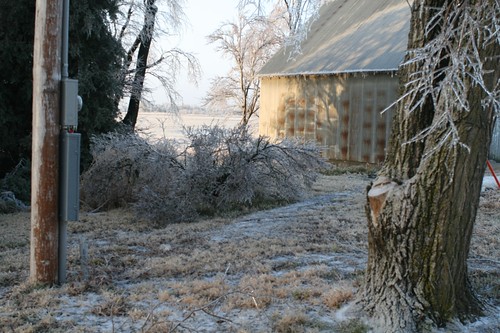
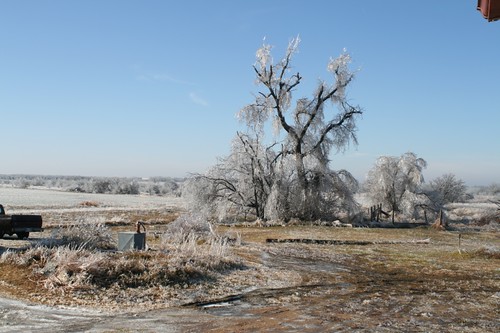
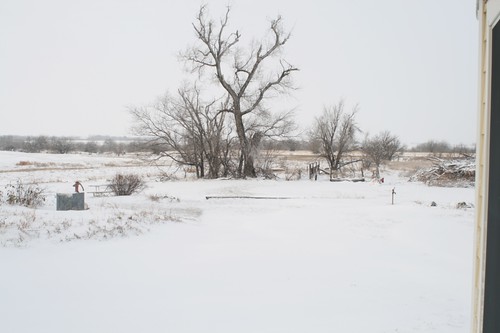
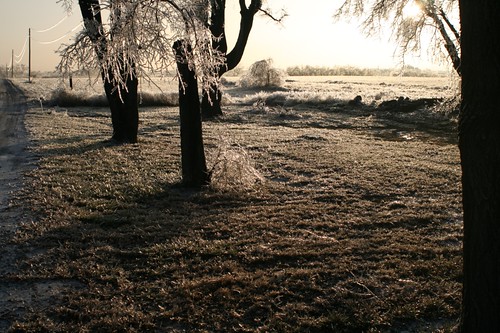
For those of you wanting to see some pictures from the recent ice storm, here you go.

The morning:

img_4166.jpg

This bush sorta got short and flat:

img_4173.jpg

A tree branch:

img_4183.jpg

And another:

img_4185.jpg

Then, at noon:

img_4200.jpg

Then the snow came:

img_4229.jpg

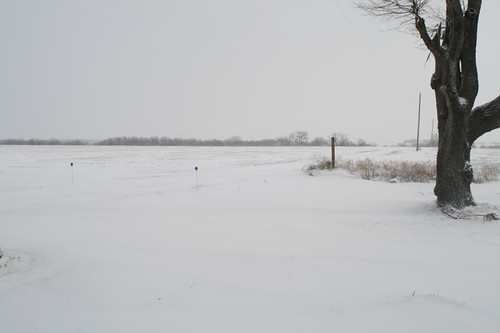
If you have trouble finding the driveway... well, good thing we've got reflectors.

img_4253.jpg

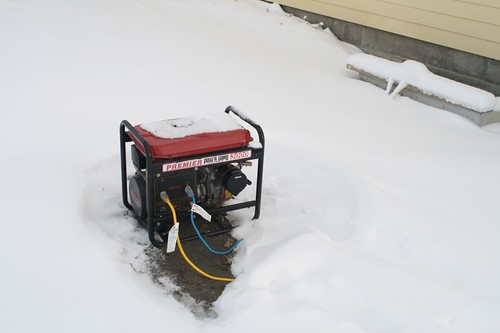
The rental generator that kept us warmish:

img_4262.jpg

More snow:

img_4287.jpg

You can also see the whole set on flickr.

Ross Burton: Gypsy Hacking

Last night I sat down and hacked a bit more on my Gypsy status monitoring tool thingy. Basically, it shows you all of the information from the GPS, and is mainly useful for checking that the data being sent by Gypsy makes sense. Gypsy Status It still needs a fair amount of work, the layout of the labels on the left is clearly sub-optimal and I'd like to have a marker on the satellite image to precisely locate you, but apart from that it's coming together nicely. NP: Storm, Heather Nova

John Goerzen: Everything Update

It's been an interesting week. For those of you that haven't been following along: we lost power Tuesday and have been without ever since.

Yesterday was the annual Christmas party at work. About an hour away, supposed to be there at 6. So at 2:30 I went outside to see if I could get the car out past all the snow. At first, YES! But then, halfway down the driveway... well, no. Our driveway needs help. It's actually lower than the fields around it. Thankfully it's on a hill so it doesn't flood, but it does drift shut when there's snow. So the car got stuck. I dug it out, and it got stuck again. And a third time.

I eventually called my dad to see if he'd be willing to come over with his tractor and open up our driveway. He said yes, and drove the 5 miles in his tractor -- which has no cab, and it was below freezing -- and got the driveway open, and helped me get the car unstuck. We had planned to leave at 4, to give us time to get Jacob to the babysitter. We didn't think a babysitter would enjoy spending the evening at a cold house with only a generator providing power, so we were taking him to their place. Well, we left about 4:30.

We got down our driveway, onto the road, and hey -- more drifts. Yay. Got out onto the highway, over to the road to their place. Which someone, ahem, had assured me was a paved road. But instead we got 5 miles on a very drifty east-west country road. That's the deepest snow I've ever put a car through, and I am still surprised that we didn't get stuck anywhere.

So then we dropped off Jacob, and off to the party, and squeaked in just a few minutes late. Phew. It was nice to be out of the house, too.

When we picked up Jacob later -- taking the non-drifty route -- he was sleeping, of course. I carried him out to the car and put him in his seat. There's nothing quite like carrying a sleeping boy snuggled into you to make you forget the lack of electricity outside.

Today we went to church. Church was canceled last Sunday, and the Wednesday evening activities were too. So I think everybody made an effort to be there today. All sorts of electricity stories were heard. Generators moved around the countryside as those that owned them got power and loaned them out to those that didn't have power. The president of a nearby college called the church and offered two rooms at his personal residence to anyone that needed them. One woman announced during sharing time that her husband was taken to the hospital on Friday. They determined that he needed heart surgery, and that will happen tomorrow... and she added that she'd be with him for a couple of days, so if anyone needed a warm house for a family, theirs was available and had a couple of bedrooms, fridge, and garage that people were welcome to use.

At noon there was a free lunch offered to anyone still without power. We went and enjoyed some warm soup and bread with about 30 others.

After that, we went to my parents' place to do some laundry, then came home.

We ate supper. As Terah got up to give Jacob some more chili, I suggested that she look out the window and see if any yard lights were on yet. I had flipped our master breaker off, just to be extra cautious due to having wired our furnace into the generator temporarily. So this is how we would tell that power was back on somewhere (though we did check it periodically during the day). Terah looked out the window, and said, "I DO see yard lights out there... Do you think?" I got up, went downstairs, flipped the breaker, and light came on! We turned on the lights -- Jacob had missed them -- and plugged in the Christmas tree. The power had come on for people miles in either direction from us at the same time. Dad came over to get our electrical box back to normal state and to help me load up the generator to return tomorrow.

There's nothing quite like this to make us feel fortunate to be a part of such a caring community of friends and family -- people who don't think twice about helping out someone in need, even in the midst of having a husband hospitalized.

Jacob didn't seem to mind the power outage. Except for one thing. He is very excited about lights these days. I can spend 15 to 30 minutes exploring lights with him, especially in the kitchen. He will point at a light and say "da?" ("that"). "Da? Da?" means he wants it turned on or off. We'll go to the light switch, and he'll get to flip it, or watch while I do. "Dooooo!" is his excited response.

Well, when he wants something and it's not happening fast enough for him, "Da? Da?" changes to "Da!... Da!..." and then to "DA!! DA!!" and finally some fussing. That happened several times as we couldn't turn on lights.

Then we got to church this morning and boy was he excited. Lights everywhere! He'd point to one bright light and say "Da!" -- look at the light over there, dad! Point to another place and "Da!" Another one over here! And ceiling fans! Lights everywhere! He was so excited he was trying to jump up and down.

Jacob's favorite new word is "hi." He has just barely figured out how to say it, and it takes effort, and comes out very breathy -- but it's there. He can spend several minutes saying hi to someone over and over if he's in the right mood. He wouldn't say hi to the greeters at church, or anyone that said hi to him. But we were sitting in the back row, and halfway through the sermon, he started saying hi to the ushers that were behind us. I couldn't see them very well, but I imagine they were trying to keep from cracking up.

Frans Pop: aptitude upload not something to be proud of

Sometimes it is extremely tempting to wave a huge, heavy, spiked cluebat around. Today I've decided to give in to this temptation. The case in point is the upload today by their maintainer of first cwidget and later aptitude. The fact that the maintainer blogged about both uploads probably means that he's pretty happy about it. Unfortunately I, and people in the Debian release team, were less than amused. Reason is that the uploads set back a complex transition of apt and related packages by at least a week. This is a transition we'd already been following and trying to get into testing for over a month and which was finally as good as ready to go. So what was so wrong about these uploads and what could (should?) the maintainer have done? First of all he should have realized that aptitude has become a rather central package in Debian with strong ties to apt and thus to a lot of other packages. Second, he should have checked whether his previous uploads had already migrated to testing and, if not, why not. The excellent testing migration page for aptitude (which is linked from its PTS page clearly shows that it is tied in a transition involving about a 100 packages in total. The right thing to do in such a case is to contact the release team (preferably at the debian-release mailing list, or at #debian-release). This would undoubtedly have resulted in a request to delay the uploads a few days until the transition had finished. Unfortunately that did not happen and cwidget was uploaded. Because of an ABI bump it ended up in NEW. Because of the transition I did a quick request to Joerg Jaspert to please delay accepting cwidget until the transition was over. But then a third mistake, and arguably the most serious one of the lot, was made. aptitude was uploaded for i386, built against the cwidget library which had not yet been accepted into unstable. Basically that means that an uninstallable package was uploaded. And of course it meant that at that point all efforts to finalize the transition for apt went down the drain. Some alternatives were discussed on how to deal with the new situation, including a sourcefull upload of the previous version of aptitude, but in the end it was decided to just accept the delay as one of the more annoying facts of life and instead ask Joerg to accept cwidget from NEW. In the end the damage may be a bit less than a week if the buildds cooperate (which they probably won't with cwidget still stuck at the wrong priority) and the RMs decide to force things. I sincerely hope that this story will make all Debian Developers and Debian Maintainers a bit more aware of the broader context and consequences of uploads. Oh, as I'm not an RM myself you may wonder what my interest is in this. We've got this great new feature in Debian Installer that adds support for multiple CDs during an installation (a feature that was lost with the integration of base-installer into D-I). However, we can only upload the relevant D-I component after apt 0.7.9 has reached testing...

16 December 2007

Biella Coleman: From serenity to offense in 5 miles or less

When you live in NYC and have a demanding job, you tend to ignore the city (at least I do), that is until guests descend upon your place. And since a Large Family Clan has recently landed in my apt, I have spent the last few days trekking north, south, east, and west, across bridges, in parks, and memorials, eating, drinking, and passing out at night after the constant flurry of activity. Yesterday we headed pretty much as far north as you can go to pay a visit to the lovely Cloisters sitting high on a cliff. The Cloisters provides stellar views of the Hudson at the same time as it transports you back in time when a lot of energy was put into scribbling religious material on paper in really stunning and ornate ways. I have not paid a visit to the Cloisters since my undergraduate days and after yesterday’s stroll, I am sorry I waited until the frigid winter to do so. It is an *incredibly* serene place, especially the inner courtyard gardens, and if you need serenity (and I think anyone who lives in NYC, needs to counter the low-grade and high-grade exposure to constant noise with some noiseless environments), this is the place to go. We then made our way to the Columbia area to check out the campus, St. John the Divine (currently under renovation), and so I could pick up a book being held for me at the Book Culture bookstore (which I wish was a lot closer to me than it is)… It was nice to escape the blustering winter conditions and browse the rows of books in a warm and well lit environment. But after purchasing Information Please: Culture and Politics in the Digital Age, parts of which I am hoping to teach next semester, and flipping through the book, my new found serenity was replaced by some serious offense when the only index I could find was an author index. There was no subject index in sight, which at the time left me totally surprised!! Anyone who is in the business of using books as research tools knows the index is —-> indispensable. And a well indexed book is much appreciated (never mind what a non-existent index does). In fact, I felt like I stumbled on some rare object because I don’t think I have ever seen an academic book published in the last 30 years not sporting this useful tool and I wonder if 1) I have a bunk copy 2) The editors/authors forgot to include it and just pushed out the book anyway 3) This was a willful choice made for reasons hidden to the reader. I think I may have to contact Duke University Press and let me know they momentarily robbed me of my serenity :-)

Erich Schubert: Keeping the website up in rankings

My personal web site - which actually is not particularly interesting, IMHO - used to get in a lot of traffic via Google. It was highly ranked on several quite interesting search terms. For example, it's still number 1 on the search term "Halbleiterlaser" (semiconductor laser), which is the topic of my secondary school thesis. So I still win against Wikipedia on this one. For "flowers" I sometimes and up at #1 in Google image search (causing lots of people to hot-link certain images from my site... might be with some geo targeting though?) But I've lost other battles to Wikipedia by now, such as the search term "Liebeskummer" ("lovesickness"; I have some old old poetry online that people dig a lot; this still makes up the biggest share of my visitors)My rankings have dropped quite a lot the last year, down about 50% within a year. I don't know if this is because I'm blogging a lot less, because I'm not updating it often enough or because Google doesn't like the redesign as much as it did like the old one. (The redesign was 2 years ago, followed by a drop in visitor numbers but a recovery to like 70% within a month)Algorithmic changes of Googles ranking are just another possible reason; I always felt as if my placement was highly overrated anyway.I added at a Google sitemap some months ago and other things that people expect to help with their site being well included, but it didn't stop the numbers from going further down. For obvious reasons I didn't buy any links or anything; I'm not making my living with that page or anything, it's just a pet project thingy. (So obviously, don't make me any SEO offers for my page!)Still it's a pity: I used to have a couple of really major placements on Google - so much that I've had some inquires if I'd like to sell my personal homepage (nah, I don't want to have to get a new email address!), offers by reputable and huge dating sites to put up ads on my page and surprisingly high offers for including my web page in link farms - but I'd have issues with that (I'd like to keep control of what my page contains; including content that might get Google to ban my page is scary), and it would have required me to run my page on PHP (ugh).I wish there was an easy way to just keep the rankings I mysteriously had acquired the last years. :-) For some time it looked like I had some magic SEO capabilities, and friends suggested I should consider actually going into the SEO business. My page is still overrated by Google, but it seems like it has lost much of it's magic.P.S. A fun story followup: I've just noticed that someone in a french cooking forum hotlinks to a photo of mine, claiming that he had cooked the food I did. Isn't that hilarious? Should I substitute that image with a g*atsee?

Joey Hess: The Man from Earth

I turned this movie off because it became clear in the first few minutes that it was a very low budget movie shot in a hurry[1] with actors who reminded me of ones from not particularly awesome plays[2]. Then for some reason I went back to it. And soon it got interesting. And then I got thuroughly sucked in. And then I was really sad that the storytelling was over. I think it's been a very long time since I was sad that a science fiction movie was over[3]. Maybe 1980? This movie is set all in one room in a cabin, and has no higher technology in it than a cell phone, and yet it's amoung the top two purest peices of science fiction I've seen performed. And the lack of special effects, especially CGI[4], was a very nice change. There's a good chance you'll not enjoy this movie, but I hope you get a chance to see it and find out. You won't find it in theaters, there's a DVD and it's on Netflix, or you can download it and paypal the director and cast a few bucks.
[1] In about a week as it turns out.
[2] Which is probably true of some of them. I only recognised one.
[3] Snip: silly-yet-true-analogy-between-typical-SF-movies-and-bags-of-potato-chips
[4] Snip: hating on most CGI

Matthew Palmer: Camping: CGIs on steroids

There's no way around it: I'm a bit of a Rails fanboy. While it's got it's glitches, it's certainly made the part of my life that involves writing web applications a hell of a lot easier, and introduced me to the wonder that is the Ruby programming language. However, there are plenty of times when Rails just isn't a good fit. It's not particularly simple to deploy, it's quite heavy, and it does have a definite learning curve. So, when I need to write something simple, I've just used Ruby's built-in CGI support. But I will do so no longer. For I have found Camping. The name doesn't make a whole lot of sense, and until you come to grips with Why The Lucky Stiff's weird sense of humour, the docs will probably make you think that acid trip you took several years ago has just kicked in again. However, the purpose of Camping is pretty easy to understand: it allows you to make simple (CGI level) web "applications" using Rails-like (or more properly, MVC) concepts, which are fairly easy to write and deploy. If you're familiar with Rails (or probably most of the other Rails-clones that have sprung up in other languages) then Camping will probably smell at least faintly familiar. You have routes, which map URLs to controller actions, which retrieve models and feed them to a view which sends results back as HTML. From that perspective, Camping is easy to learn -- it's core concepts can piggyback on existing knowledge, and you can get started very quickly. Using your Rails-fu, however, will only get you so far. For one thing, the API is similar-but-different enough that while your first couple of simple experiments will probably Just Work, getting more complex things done will either fall under the "different" or "difficult" headings. That isn't meant to be a slight on Camping, though -- if you want to do horribly complex things, then you're heading into territory best served by Rails anyway. But there is a bit of a middle ground where the utter simplicity of Camping is stretched a little, but it's still more appropriate to write a Camping app than a Rails app, and it's important to remember that you're not using full-blown framework when you thump up against something that's beyond-trivial in Rails, but is not quite so simple in Camping. Camping is a microframework -- it says so right there on the front page. Why's intention is that Camping will always be provided in less than 4kB of code. So you're never going to get, for instance, the broad range of HTML helpers that Rails' ActionView provides to make writing HTML templates so easy, or the Prototype JavaScript framework shipped with the main code. If you don't want to blow a steam pipe, then, when starting out with Camping, you need to think "this is a lot easier than hand-writing CGIs" instead of "this is a lot harder than writing a Rails app". There are a few things that are undeniably a pest in Camping, though. The docs are a little incomplete and hard to follow (even when you account for Why's "unique" style of writing), and some of the coding tricks that are employed in making the framework can make debugging a bit tricky. They're not showstoppers, but it's worth knowing about them in advance so you don't go nuts when you're first using the framework. If you're not the sort of person who needs small, self-contained web scripts, then I'd say you'll probably never get much benefit out of Camping. On the other hand, if you're still writing your CGIs against the "bare(ish) metal", then I would strongly encourage you to take a look at Camping, to make your life just that little bit more delightful.

15 December 2007

Joey Hess: sunny day

Yesterday was a nice sunny break in the mostly constant cloud cover. I went out to the Clinch Mtn and climbed up to the fire tower, it was very clear and I think I was able to see South Holston lake from there.

Jos Parrella: glibc 2.7 in Virtuozzo VPSs

If you’re using a Virtuozzo-based VPS running Debian Testing or Unstable (and probably other modern Linux distributions), you will probably run into problems regarding the patches used in the default kernel and glibc 2.7, which were properly described in the debian-glibc mailing list. Tektonic, my current provider, will upgrade the kernel this weekend but if you’re really in a hurry, you can set your VPS on repair mode, download a 2.6 version of libc6, install it from the repair VPS using dpkg –root=/repair –force-all –install … and restart your VPS. It will boot up, but lots of things that depend on versioned packages of libc6 won’t work correctly, most notably OpenSSH and PAM. The problem is due to non-standard TUX optimization patches implemented over Red Hat’s standard kernels, which seem to be quite popular in Virtuozzo-based VPSs (at least it seems that Strato, Tektonic and Unixshell use them?)

Lars Wirzenius: Python optparse: what options got set?

While writing some code for EoC 2 to parse the command line, I needed a generic way to find which command line options were set by the user. That is, after I've parsed a command line, and have the return value of the optparse.OptionParser.parse_args method, how do I find which options were set? The return value is an instance of optparse.Values, which does not have a convenient method for that. So what I do is this:
classattrs = dir(optparse.Values)
for name in [_ for _ in dir(options) if _ not in classattrs]:
    print name, getattr(options, name)
Slightly tricky, and it may stop working in a future version if they change things in the in (undocumented, therefore private) interface, but it's nice to be able to work around library design warts like this when the language itself is nicely powerful.

Joerg Jaspert: Using a SSH jumphost

As Tolimar was asking about it and I am using the setup at some places to get past idiotic^Wbroken firewalls, where you always want to kill the clueless people that did set them up - lets write a bit how to ease ssh usage at such locations. Imagine a place where you can’t ssh elsewhere directly, you have to go through at least one, in some cases two or three hosts, to get anywhere sane.[1] So the topic is SSH jumphost. Thats basically what you do manually if you
  ssh some.host
  ssh next.host
where some.host is your jumphost. Add as many some.host as you want into this chain. We are all lazy and don’t want to type that by hand, one ssh is enough for everybody. Hurray, ssh already provides what we need, namely the ProxyCommand directive, it’s just not known as much as it should be. For this example imagine I have to ssh via the following host chain to get out: kosh -> vir -> babylon5 -> sheridan and also want to have my local port 2525 forwarded to sheridans port 25. The following config snippet (.ssh/config) is doing that[2]
 Host yay
 ProxyCommand ssh -q -A -X vir ssh -q -A -X babylon5 'nc -w1 sheridan 22'
 LocalForward 2525 localhost:25
   
 Host vir
 ProxyCommand ssh -q -A -X kosh 'nc -w1 %h %p'
The effect of this is: and I end up having a shell on host sheridan. The LocalForward line also tells ssh to tunnel my port forwarding over that multi-hop session, voila, done. Of course there is a little caveat with this - all hosts do have to know the next one (ie. .ssh/known_hosts should have the right data). You should also think about using ssh keys (maybe including Agent forwarding). You really dont want to see 5 Password: prompts right behind each other for a 5-hop setup - with no clue if its for the next host or for a typo… Update: If you are a Debian Developer and do not have a host “outside” that listens to something else than Port 22 but are behind a firewall that only allows Port 80 and 443 - you are lucky. As long as you aren’t hit by [1] you put the following into your .ssh/config file and have fun:
Host foo.gl bar.gl
ProxyCommand ssh -q -a -p 443 -x gluck.debian.org 'nc -w1 $(basename %h .gl) 22'
Add as many other config options as you want. The effect is: and as such you can get out via gluck. We are using the .gl as an extension here to remember that we go via gluck. Idea stolen from someone on IRC, just can’t remember who atm. [1] For added fun, which I have at one place, add things like a proxy with user authentication done in a way that tools like tor or openvpn can’t get through it and you always wish those admins use Windows, just so they suffer. Anyway, I talk about the first part only, using jumphost, other ways getting around crap admins needs, in my case, an own script to do it, not part of this topic… [2] Yes, one can do it in lots of ways and those here might not be the most optimized/nice/whatever ones. But they work and are just examples here, select your own parameters if you dont like mine!

Russell Coker: AISA

When I worked for Red Hat I joined AISA [1] (the Australian Information Security Association - formerly known as ISIG). Red Hat marketting paid for my membership so it was a good deal, I went to meetings (which often had free drinks), said good things about Red Hat security, and it cost me nothing. I was recently asked why I chose not to renew my membership, I didn’t have time to give a full answer so I’ll blog it now. AISA offers discounts on some conferences, books, and training related to computer security, if you plan to purchase such things then they do offer good deals. However I have little time to attend conferences at the moment, not enough time to read all the free Internet resources related to computer security, and feel no need to pay for such training. If at any time I plan to attend a conference where the discount for AISA members is equal or greater than the AISA membership fee then I can easily re-join. AISA membership seems largely to consist of managers and consultants not technical people or people doing R&D type work. This isn’t a bad thing if you are a manager or consultant, but when attending AISA meetings I don’t meet the type of people I meet at events such as SecureCon [2], Linux Conf Au [3], RuxCon [4], and the SE Linux Symposium [5] (which I think is not going to be held again for a while). Meetings of my local LUG [6] typically have more people doing serious technical work related to computer security than the AISA meetings I’ve attended. The AISA code of Ethics has as it’s second criteria “I will comply with all relevant laws“. Some laws can not be obeyed by decent people (study some German or Russian history or what is happening in China right now for examples). Many other laws should not be obeyed. Many countries (including Australia) have enacted many laws which should not be obeyed in the name of the “war on terror“. A final thing that irked me about AISA is their professional membership system (click on this link and download the AISA_Professional_Membership_Requirements_Nov_2006 document for details). It seems that I don’t qualify because I don’t have one of the listed certifications, and a public credit on the NSA web site [7] doesn’t count (yes, I asked about this). I’m not overly worried about this, I figure that any clique that won’t accept me also won’t accept a significant portion of the people that I want to associate with - so we can hang out elsewhere. I don’t recall there being any great benefit to professional membership apart from the possibility of adding it to your business card if you are so inclined (I don’t recall ever putting B.Sc [8] on a business card and don’t plan on adding anything less). There are some real benefits to AISA membership, but not for me.

Jose Luis Rivas Contreras: Waiting my new notebook

I decided that my christmas gift will be a new notebook and as I'm always complaining of the weight of my HP dv6000 then my new notebook will be a ThinkPad x61 with a 8cell battery and extended battery life! :-) That gives up to 12 hours of use!! BTW, this version includes a weird antenna in the right side of the screen, I don't know if it's really useful but seems like if were from some movie and is outside of the borders but anyway, still little and light. Now only rests to wait until it gets to my hand since all the custom houses of Venezuela decided to not admit more packages from outside of the country because they're full, so I will have to wait until january probably because of the inefficiency of my country custom officials. But at least I'm gonna have it :-)!

14 December 2007

Martin F. Krafft: Surveys on the console

As part of my research, I may have to conduct a survey among Debian contributors. The word "survey" usually elicits frowns because surveys are often misconducted. MJ has taken the time to draft up some advice to surveyors. Problems with surveys generally fall into one of two categories: content and presentation. I'll refrain from making statements about content (Wikipedia has some stuff on questionaire construction) and instead concentrate on presentation in the following. Commonly in the digital age, surveys are administered via a web page or e-mail. In my recent Ph.D. transfer report, I identified a number of shortcomings with these approaches: Asking Debian contributors to click radio buttons on a web page is a bit like expecting a mountain biking champion to ride a tricycle across a paddock: painful, if not offensive. Furthermore, web surveys can only be taken while on-line, when most of us have better things to do. E-mail surveys address some of these problems, but create new ones: answers cannot be constrained to a domain (think multiple-choice), character set and formatting issues make evaluation difficult, and it's impossible to prevent users from attaching comments or modifying responses. In thinking about the issue, I came up with a third means to administer a survey: a console tool. Think of a Debian package which provides a console application controlled by a study-specific data file. The data file specifies the questions and their answer domains, and the tool presents those to the participant. Since most of Debian happens on the console anyway, such an approach to surveys seems more appropriate. Interaction with the survey tool would be as easy as pressing the 2 or 4 keys to select one of the multiple choices, and the tool would immediately move on to the next question (and not wait for the user to hit enter). Obviously, n and p should allow navigation back and forth across the set, and c would spawn a text editor to give the user a chance to attach a comment to his/her current response, in which s/he might criticise the question or provide additional information. Finally, the tool should be able to pick up where it left off, should the user chose to exit/suspend the survey for now. Integration with debconf or another interface abstraction is also worth consideration. There is more to it: people change their minds and should thus be able to amend responses. With their consent, it might be valuable to track such changes and inquire about their motivations. As I was thinking about how to realise this, I suddenly arrived at version control: use Git as a backend storage. The set of cool features this would enable seems to be endless: it works off-line and can be used to track aforementioned changes, but also offers the possibility to create a squashed result in case the participant prefers to submit only the final result. Furthermore, it's a trivial change between anonymous submissions, and submissions authenticated by a GPG signature. In addition, the survey tool should be able to display questions according to previous responses (control flow). For instance, if the survey determines that a given user is a contributor to the bug tracking system, but not a project member, it wouldn't make sense to ask when s/he received his/her Debian account. Furthermore, questions could be dynamically creatable from context, so that the survey can drill into depth depending on previous responses, rather than asking the same questions to all participants. I am currently applying for funding to outsource the development of such a tool. If you are interested in coding it up and getting paid for it, speak to me. Here are some more specifications to keep in mind before jumping on: These are likely to be incomplete, but should convey the basic picture. Feedback is always welcome! NP: Oceansize: Frames Update: James Andrewartha pointed me to purity, which asks multiple-choice questions on the console. It has the kind of interface which I envision. Also, Chris Lamb suggested this personality survey as a base line. Well, actually he just suggested I look into it.

Martin F. Krafft: Finally on the right track

It's now three weeks since I am officially a Ph.D. student at the University of Limerick, but I've been too busy to do anything about it. Today, I finally updated my research webpage and sat down to tell you the tale of how I successfully defended my research, but failed to leave the country the next day. As is customary in the British system, I initially enrolled at UL as a Master student. In October, I then applied for a transfer to the Ph.D. track, submitted a transfer report and prepared for a live defence, according to the UL code of practice. On 23 November, I presented my research to my examiners, Dr. P r gerfalk and Patrick Healy, who found my work to be at Ph.D. level and approved of my transfer. I was moderately nervous going into the presentation, not really knowing what was expected of me. In the end, however, the presentation went well and the ensuing discussion provided valuable feedback. Thank you, P r and Paddy, as well as Norah (who chaired), and Brian (my supervisor) for all your time, help, and support. After the defence, Mel waited outside with a beer in hand, and it being Friday and all, I happily popped the cap and drank. Plans to head to The Stables gave way to chilling on the couch in 110 (my home away from home), before we headed to town for the Kila gig. We arrived early, had some beers, enjoyed the show, had some more beers, went home, and had some more beers to Guitar Hero, and when I crawled into bed, I was shocked to find out that I had lost all track of time and it was in fact already 5:30 on Saturday morning, instead of the perceived 2 o'clock. See, the source of this shock was a plane that left Dublin the next day around noon, and a rental car that was to get me there, leaving the house at 8. But when my alarm shattered my drunk dreams at 7:30, it quickly became clear (or well, everything was blurred, actually), that I would have a hard time getting into the car, and I would certainly never manage to navigate it to Dublin, a three hour drive. So I called up the airline and the rental company and rescheduled for the next day (only one flight from Dublin to Zurich a day), and went back to dreamland. I am entirely unsure whether my Ph.D. transfer defence was enough of a reason to get smashed. I still had a good time, though as always in Ireland, especially with this crowd NP: The Flower Kings: The Rainmaker

Next.

Previous.