
A nice set of recent posts have done a great job detailing the remaining ways that a root user can get at kernel memory. Part of this is driven by the ideas behind UEFI Secure Boot, but they come from the same goal: making sure that the root user cannot directly subvert the running kernel. My perspective on this is toward making sure that an attacker who has gained access and then gained root privileges can t continue to elevate their access and install invisible kernel rootkits.
An outline for possible attack vectors is spelled out by Matthew Gerrett s continuing
useful kernel lockdown patch series. The set of attacks was examined by Tyler Borland in
Bypassing modules_disabled security . His post describes each vector in detail, and he ultimately chooses MSR writing as the way to write kernel memory (and shows an example of how to re-enable module loading). One thing not mentioned is that many distros have MSR access as a module, and it s rarely loaded. If
modules_disabled is already set, an attacker won t be able to load the MSR module to begin with. However, the other general-purpose vector, kexec, is still available. To prove out this method, Matthew wrote a
proof-of-concept for changing kernel memory via kexec.
Chrome OS is several steps ahead here, since it has hibernation disabled, MSR writing disabled, kexec disabled, modules verified, root filesystem read-only and verified, kernel verified, and firmware verified. But since not all my machines are Chrome OS, I wanted to look at some additional protections against kexec on general-purpose distro kernels that have
CONFIG_KEXEC enabled, especially those without UEFI Secure Boot and Matthew s lockdown patch series.
My goal was to disable kexec without needing to rebuild my entire kernel. For future kernels, I have
proposed adding /proc/sys/kernel/kexec_disabled, a partner to the existing
modules_disabled, that will one-way toggle kexec off. For existing kernels, things got more ugly.
What options do I have for patching a running kernel?
First I looked back at what I d done in the past with
fixing vulnerabilities with systemtap. This ends up being a rather heavy-duty way to go about things, since you need all the distro kernel debug symbols, etc. It does work, but has a significant problem: since it uses kprobes, a root user can just turn off the probes, reverting the changes. So that s not going to work.
Next I looked at ksplice. The
original upstream has gone away, but there is still some
work being done by Jiri Slaby. However, even with his updates which fixed various build problems, there were still more, even when building a 3.2 kernel (Ubuntu 12.04 LTS). So that s out too, which is too bad, since ksplice does exactly what I want: modifies the running kernel s functions via a module.
So, finally, I decided to just do it by hand, and wrote a friendly kernel rootkit. Instead of dealing with flipping page table permissions on the normally-unwritable kernel code memory, I borrowed from PaX s KERNEXEC feature, and just turn off write protect checking on the CPU briefly to make the changes. The return values for functions on x86_64 are stored in RAX, so I just need to stuff the
kexec_load syscall with
mov -1, %rax; ret (-1 is
EPERM):
#define pr_fmt(fmt) KBUILD_MODNAME ": " fmt
#include <linux/init.h>
#include <linux/module.h>
#include <linux/slab.h>
static unsigned long long_target;
static char *target;
module_param_named(syscall, long_target, ulong, 0644);
MODULE_PARM_DESC(syscall, "Address of syscall");
/* mov $-1, %rax; ret */
unsigned const char bytes[] =   0x48, 0xc7, 0xc0, 0xff, 0xff, 0xff, 0xff,
                                0xc3  ;
unsigned char *orig;
/* Borrowed from PaX KERNEXEC */
static inline void disable_wp(void)

        unsigned long cr0;
        preempt_disable();
        barrier();
        cr0 = read_cr0();
        cr0 &= ~X86_CR0_WP;
        write_cr0(cr0);

static inline void enable_wp(void)

        unsigned long cr0;
        cr0 = read_cr0();
        cr0  = X86_CR0_WP;
        write_cr0(cr0);
        barrier();
        preempt_enable_no_resched();

static int __init syscall_eperm_init(void)

        int i;
        target = (char *)long_target;
        if (target == NULL)
                return -EINVAL;
        /* save original */
        orig = kmalloc(sizeof(bytes), GFP_KERNEL);
        if (!orig)
                return -ENOMEM;
        for (i = 0; i < sizeof(bytes); i++)
                orig[i] = target[i];

        pr_info("writing %lu bytes at %p\n", sizeof(bytes), target);
        disable_wp();
        for (i = 0; i < sizeof(bytes); i++)
                target[i] = bytes[i];

        enable_wp();
        return 0;

module_init(syscall_eperm_init);
static void __exit syscall_eperm_exit(void)

        int i;
        pr_info("restoring %lu bytes at %p\n", sizeof(bytes), target);
        disable_wp();
        for (i = 0; i < sizeof(bytes); i++)
                target[i] = orig[i];

        enable_wp();
        kfree(orig);

module_exit(syscall_eperm_exit);
MODULE_LICENSE("GPL");
MODULE_AUTHOR("Kees Cook <kees@outflux.net>");
MODULE_DESCRIPTION("makes target syscall always return EPERM");
If I didn t want to leave an obvious indication that the kernel had been manipulated, the module could be changed to:
- not announce what it s doing
- remove the exit route to not restore the changes on module unload
- error out at the end of the init function instead of staying resident
And with this in place, it s just a matter of loading it with the address of
sys_kexec_load (found via
/proc/kallsyms) before I
disable module loading via modprobe. Here s my upstart script:
# modules-disable - disable modules after rc scripts are done
#
description "disable loading modules"
start on stopped module-init-tools and stopped rc
task
script
        cd /root/modules/syscall_eperm
        make clean
        make
        insmod ./syscall_eperm.ko \
                syscall=0x$(egrep ' T sys_kexec_load$' /proc/kallsyms   cut -d" " -f1)
        modprobe disable
end script
And now I m safe from kexec before I have a kernel that contains
/proc/sys/kernel/kexec_disabled.
2013, Kees Cook. This work is licensed under a Creative Commons Attribution-ShareAlike 3.0 License.

 A maintenance release (now at version 0.2.5) of my gcbd package (described
only in these
two posts)
is now CRAN.
More details about the package are available in the
paper which is
also included in the gcbd R package.
Changes were minimal and driven mostly by some CRAN Policy changes which now
prefer vignette sources files in (top-level) directory

 This morning when preparing the update of a package, and I saw a PNG file in
its documentation. Even before opening it, I felt old, tired, distressed
and unable to escape the situation. Inspecting the file confirmed that the
image was not hand made. The source file is missing. The proof: anther
image in the same directory has the same style and a SVG source. To make
things worse, there are no instructions on how to generate the PNG from the
SVG. More and more in these cases, I give up and abandon the package. I
lost time and energy make Upstream some requirements for which I personally
have no concrete interest. SVG in addition to PNG is better, but PNG alone
for the documentation of a Free software is Free enough for me. However,
the points of view expressed on
 Tuesday was a really nice evening. A few weeks ago I found a poster about the concert of
 Cleaning up X server warnings
So I was sitting in the Narita airport with a couple of other free
software developers merging X server patches. One of the developers
was looking over my shoulder while the X server was building and
casually commented on the number of warnings generated by the
compiler.
I felt like I had invited someone into my house without cleaning for
months embarrassed and ashamed that we d let the code devolve into
this state.
Of course, we ve got excuses the X server code base is one of the
oldest pieces of regularly used free software in existence. It was
started before ANSI-C was codified. No function prototypes, no
const , no void * , no enums or stdint.h. There may be a few
developers out there who remember those days (fondly, of course), but
I think most of us are glad that our favorite systems language has
gained a lot of compile-time checking in the last 25 years.
We ve spent time in the past adding function prototypes and cleaning
up other warnings, but there was never a point at which the X server
compiled without any warnings. More recently, we ve added a pile of
new warning flags when compiling the X server which only served to
increase the number of warnings dramatically.
The current situation
With the master branch of the X server and released versions of the
dependencies, we generate 1047 warnings in the default build.
-Wcast-qual considered chatty
The GCC flag, -Wcast-qual, complains when you cast a pointer and
change the const qualifier status. A very common thing for the X
server to do is declare pointers as const to mark them as immutable
once assigned. Often, the relevant data is actually constructed once
at startup in allocated memory and stored to the data
structure. During server reset, that needs to be freed, but free
doesn t take a const pointer, so we cast to (void *), which
-Wcast-qual then complains about. Loudly.
Of the 1047 warnings, 380 of them are generated by this one warning
flag. I ve gone ahead and just disabled it in util/macros for now.
String constants are a pain
The X server uses string constants to initialize defaults for font
paths, configuration options, font names along with a host of other
things. These end up getting stored in variables that can also take
allocated storage. I ve gone ahead and declared the relevant objects
as const and then fixed the code to suit.
I don t have a count of the number of warnings these changes fixed;
they were scattered across dozens of X server directories, and I was
fixing one directory at a time, but probably more than half of the
remaining warnings were of this form.
And a host of other warnings
Fixing the rest of the warnings was mostly a matter of stepping
through them one at a time and actually adjusting the code. Shadowed
declarations, unused values, redundant declarations and missing printf
attributes were probably the bulk of them though.
Changes to external modules
Instead of just hacking the X server code, I ve created patches for
other modules where necessary to fix the problems in the right
place.
 Fingerprints and Key IDs
 I am happy to announce that OASIS v0.4.0 has just been released.
 OASIS is a tool to help OCaml developers to integrate configure, build and install systems in their projects. It should help to create standard entry points in the source code build system, allowing external tools to analyse projects easily.
This tool is freely inspired by Cabal which is the same kind of tool for Haskell.
You can find the new release



 cjdns and enigmabox
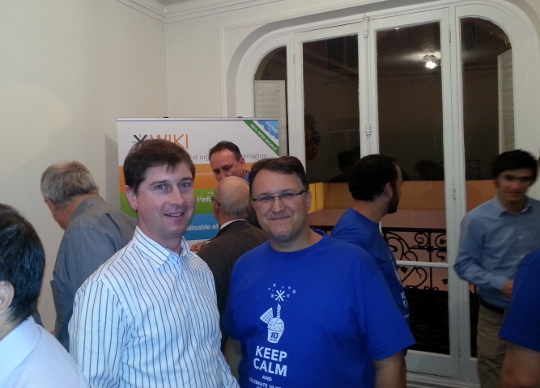
While at the xWiki office, it was interesting to see a lot of innovative work taking place, including this VoIP setup where a Grandstream phone is attached to an



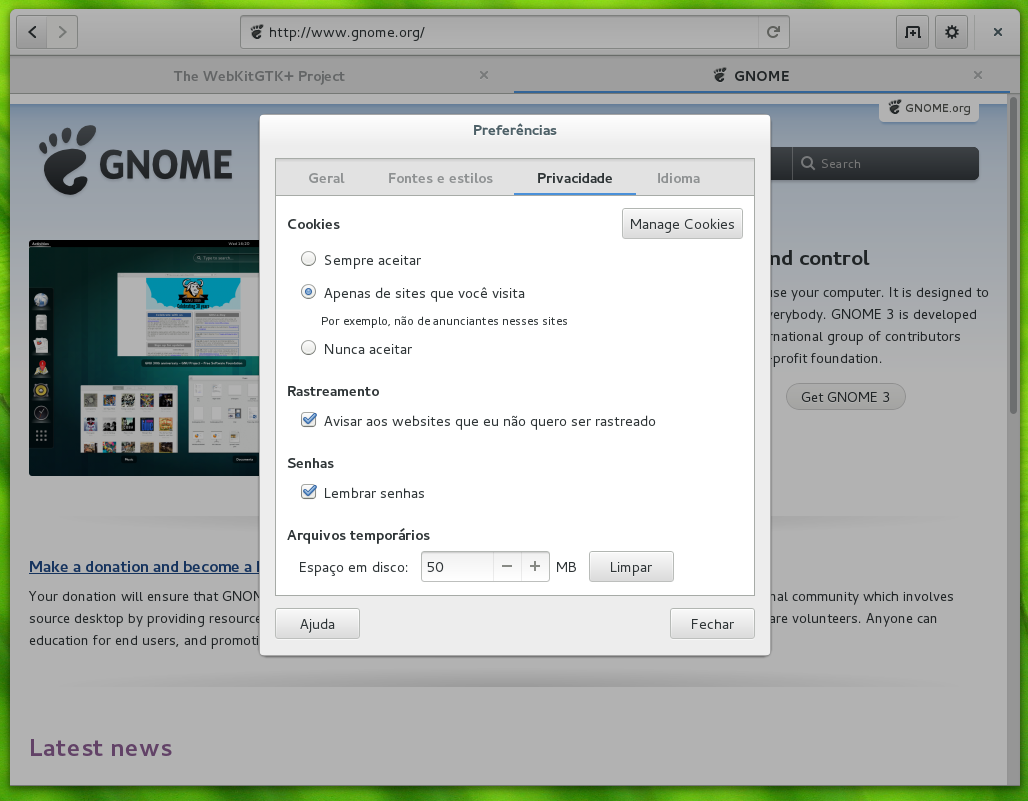
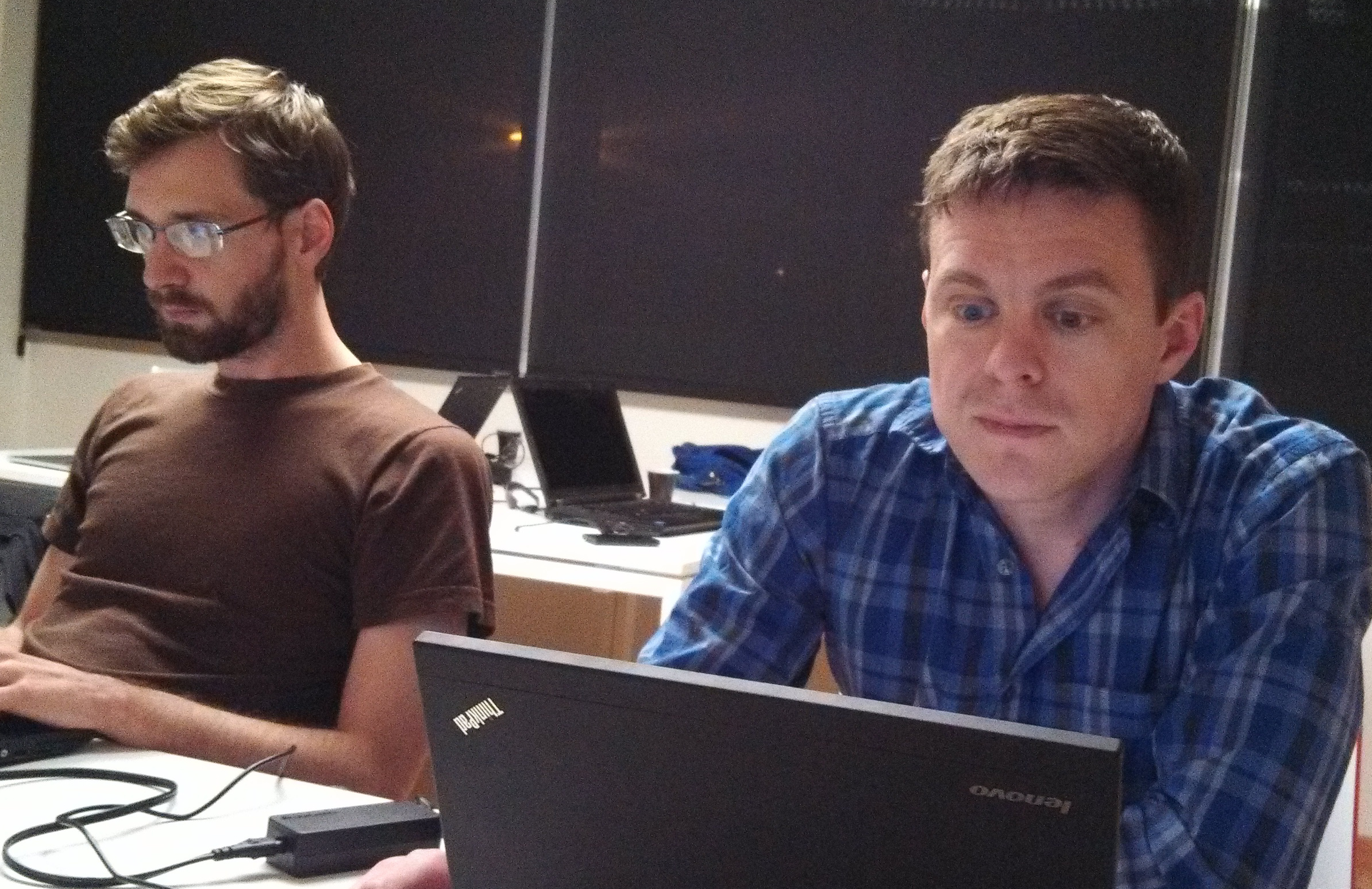
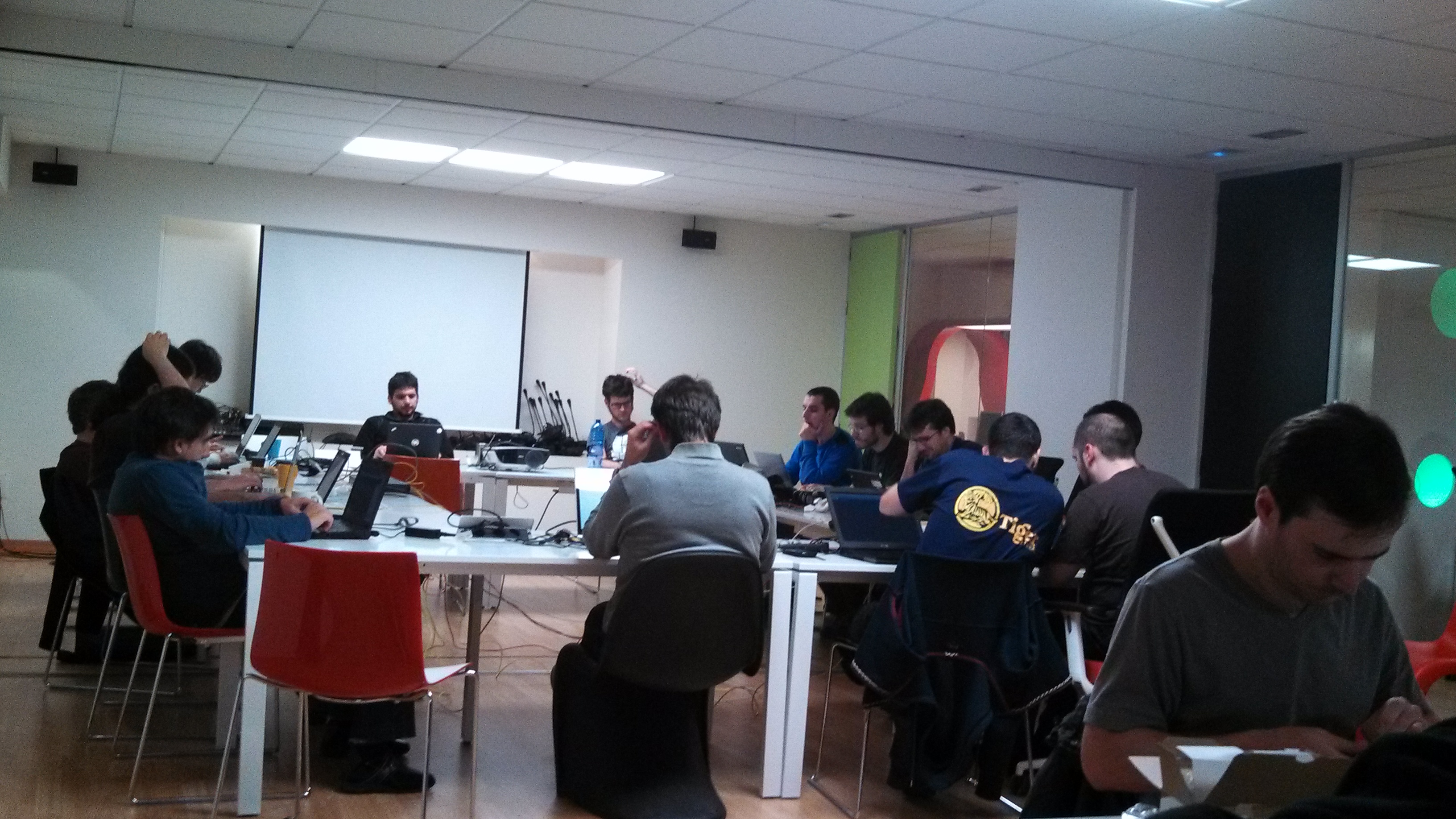
 For the fifth year in a row the fearless WebKitGTK+ hackers have gathered in A Coru a to bring GNOME and the web closer. Igalia has organized and hosted it as usual, welcoming a record 30 people to its office. The GNOME foundation has sponsored my trip allowing me to fly the cool 18 seats propeller airplane from Lisbon to A Coru a, which is a nice adventure, and have pulpo a feira for dinner, which I simply love! That in addition to enjoying the company of so many great hackers.



 Just a trivial fact: every polyhedron that is used in linear programming is
convex, that is !!mathjaxbegin-i!! QXggXGxlcSBi
!!mathjaxend-i!! is convex, for a matrix !!mathjaxbegin-i!! QQ==
!!mathjaxend-i!! and a (column)
vector !!mathjaxbegin-i!! Yg==
!!mathjaxend-i!!.
Proof: Take any !!mathjaxbegin-i!! eCcsIHgnJw==
!!mathjaxend-i!! that satisfy the system of inequalities !!mathjaxbegin-i!! QXggXGxlcSBi
!!mathjaxend-i!!.
Then, for !!mathjaxbegin-i!! MCBcbGVxIFxsYW1iZGEgXGxlcSAx
!!mathjaxend-i!!, we have that !!mathjaxbegin-i!! XGxhbWJkYSBBeCcgXGxlcSBcbGFtYmRhIGI=
!!mathjaxend-i!!,
that is !!mathjaxbegin-i!! QSBcbGFtYmRhIHgnIFxsZXEgXGxhbWJkYSBi
!!mathjaxend-i!!. Similarly, for !!mathjaxbegin-i!! eCcn
!!mathjaxend-i!!, we have
that !!mathjaxbegin-i!! QSAoMS1cbGFtYmRhKSB4JyBcbGVxICgxLVxsYW1iZGEpIGI=
!!mathjaxend-i!!. Summing the inequalities, we
get:
!!mathjaxbegin-d!! CiBBW1xsYW1iZGEgeCcgKyAoMS1cbGFtYmRhKSB4JyddIFxsZXEgW1xsYW1iZGEgKyAoMS1cbGFt
YmRhKV0gYiA9IGIsCg==
!!mathjaxend-d!!
which means that !!mathjaxbegin-i!! XGhhdHt4fSA9IFxsYW1iZGEgeCcgKyAoMS1cbGFtYmRhKSB4Jyc=
!!mathjaxend-i!! is again a
solution of the original set of inequalities, thus concluding the argument.
 Last year I told you that I spent two full-time days

 Once more, I m going to FOSDEM 2014, the largest Free/Libre/Open Source Software event in Europe (5,000 attendants every year).
