Adrian von Bidder: A Sad Day
 Yesterday was a very disappointing day: it was officially determined that there are more idiots than non-idiots in Switzerland :-( I hope this will get corrected soon, but I fear it won't.
 Just got back from Tokyo a few hours ago: I had an opportunity to give my
'Introduction to High-Performance Computing with R' tutorial / lectures
(for which previous slides can be found here).
This was an all-day talk at the
Institute for Statistical Mathematics
at their new site in Tachikawa in the greater Tokyo area, thanks to an
invitation by Junji Nakano.
Lisa and I turned this into a brief one-week trip to Kyoto and Tokyo, and we
had a truly wonderful time on what was our first visit to Japan. I should blog some
more about it, but now I will give in to the jet lag and catch up on some
sleep...
 I got a new computer at home a week ago and finally got around to assemble all the parts. Which wasn t as easy as expected, especially fitting the CPU cooler was a hard fight.
Specs
For the curious, here are the specs:
 I'm due a new laptop; my Portege R200 is over 4 years old now, I find it much slower than my desktop (no surprise; P-M 1.2GHz/1.2GB vs Core 2 2GHz/4GB), it's had a new battery and it has an annoying whine on the screen unless you press the side in just the right way. It's still better for long periods of use than my EEE 901, which is why I keep it. In particular I'm off to LCA2010 in January, along with some associated travel beforehand, and I'll want more than the EEE for that, but probably not a brand new laptop. Which meant that when the R200 started throwing disk errors recently I wasn't particularly happy.
 My primary workstation is a 3 and a half year old Dell XPS M1710 laptop and it is getting old the 320 Gb hard drive is getting small and slow, the 3 Gb or RAM (expanded from 2 Gb) look too small and screen is turning brown in one corner. Also dead or dying: keyboard (after cat+coffee incident), built-in speakers, battery, power adapter (twice replaced), DVD writer (rads but does not write any more) and fans (one replaced, one getting louder by the week). Also the video card is a bit slow for nowadays needs.
So I set aside some money and started considering the options. In short, I could get another laptop OR get a regular computer for the same price but with twice the power. After considering all the laptop options up to 1000LVL, I decided to get a regular computer and if/when I ll need to travel I ll either take one of the old laptops with me or get a new netbook.
Now comes the fun part choosing the components!
So far my choices are as follows:

 The RFC editor has finally released
 Once there was a project called Debian and a Ganneff.... (unfortunately in German only....)
22:20 < cb> Das ist doch voll die Arbeit Maintainer zu werden :-). Ich geb
gew nschte Pakete immer nur weiter an einen der da sowieso schon den Kernel
betreut :-)
22:21 < Ganneff> es is nur viel arbeit wenn du keinen schimmer hast
22:22 < cb> ja ich hab nur das seepferdchen *g*
22:22 < Obilan> Knusper: ja sicher ist es das
22:22 < Knusper> kopf -> tisch
22:22 < cb> Knusper, wenn du die verwaisten pakete findest siehst du auf
der gleichen seite auch die links wie man maintainer wird
22:22 < Knusper> die hab ich gefunden
22:22 < cb> zumindest hab ich das das letzte mal dort gesehen
22:24 < Ganneff> wnpp?
22:24 < Knusper> aber man brauch dann schon leute, die einen "hoffieren"
22:26 < Ganneff> du brauchst erstmal die ahnung nen paket zu bauen.
22:26 < Ganneff> dazu siehe new maint guide
22:26 < Ganneff> dann brauchste nen sponsor. dazu gehe zur mentors liste
22:26 < Ganneff> dann machste mit dem eh weng rum (also normal so
paketuploads via dem)
22:26 < Ganneff> und hast da halt schon dein maintenance krams.
22:27 < Ganneff> irgendwann is der sponsor angekotzt von dir und dem
laufenden arbeit generieren
22:27 < Ganneff> der tritt dich dann dass du mal DM anf ngst.
22:27 < Ganneff> das machste dann, und jemand anders tritt dir deine pakete
als dmua zurecht, nachdem du in nem keyring irgendwo steckst.
22:27 < Ganneff> und dann kannste denn krampf selbst hochladen. aber nix
andres.
22:27 < Ganneff> irgendwann willste was andres. und willst das auch noch
ohne son doofen sponsor
22:28 < Ganneff> dann versuchste dich an DD
22:28 < Knusper> ahhhhhh
22:28 < Ganneff> dazu musste dir nen advocate suchen
22:28 < Ganneff> der is  blicherweise einer dem du vorher im prozess
laufend auf den wecker fielst
22:28 < Ganneff> und er deswegen den nm leutz sagt "oh gott, befreit mich
bloss von dem"
22:28 < Ganneff> die machen das dann, aber sie wollen dir mal etwas
schmerzen zur ckgeben
22:28 < Ganneff> desdewegen wirste viele fragen beantworten m ssen
22:29 < Ganneff> und wie beim t v das auto musste hier deine pakete nochmal
vorstellen und checken lassen
22:29 < Ganneff> und dann nochmal fragen beantworten
22:29 < Knusper> thx...
22:29 < Ganneff> irgendwann gehst du dann mit den antworten den nm leuten
so auf den geist dass die dem frontdesk sagen "meine kacke, den wolle mehr
nit mehr sehen, schickts den dochma zu den DAMs, die hamms verdient"
22:30 < Ganneff> und die machen das dann meist. ausser sie m gen dich nich.
dann darfste nochma fragen beantworten
22:30 < Ganneff> bei den dams darfste nur warten. die testen deine geduld
22:30 < Ganneff> irgendwann langweilen die sich aber
22:30 < Ganneff> und dann kriegste pl tzlich mail
22:30 < Ganneff> OH MEIN GOTT. EIN NEUER DD.
22:30 < Ganneff> ende
22:30 < Ganneff> kapitel 2:
22:30 < cb> sch ne beschreibung
22:30 < Ganneff> du machst ne zeit als dd rum
22:30 < Knusper> LOL
22:30 < Ganneff> votest durch die gegend
22:30 < Ganneff> l dst pakete umher
22:30 < Ganneff> machst bugs in stable
22:30 < Ganneff> gibts dem security team arbeit
22:31 < Ganneff> sprich - du gehst allen auf den sack. denn das is was ein
dd macht. muss ja schliesslich auch spass machen.
22:31 < Ganneff> aber irgendwann, also irgendwann, da wird das langweilig
22:31 < Ganneff> und dann verschwindeste mal ne zeit.
22:31 < Ganneff> weil du weisst - da gibts noch son team. das brauch auch
arbeit
22:31 < Ganneff> die suchen so leute die weggehen und sich verstecken
22:31 < Ganneff> nennt sich mia. die suchen.
22:31 < Ganneff> vielleicht finden die dich ja auch.
22:32 < Ganneff> dann kommste zur ck und machst mal wieder etwas arbeit f r
security/stable/sonstwen
22:32 < Ganneff> oder nicht, aber das is langweilig, da fliegste einfach.
22:32 < Ganneff> wennde dann gar keinen bock mehr hast und ne l ngre pause
willst
22:32 < Ganneff> dann gehste und machst eien auf emeritus
22:32 < Ganneff> das sind die rentner, die alten s cke, die sich
zur cklehnen und  ber die versuche der neuen lachen die sich grad von den
sponsoren qu len lassen
22:33 < Ganneff> ende kap. 2, ich hab keinen bock mehr. (jaja, emeritus)
Cheers to #debian.de on freenode

 I do not really understand why they don't support this themselves, but
Google Analytics will not track keywords for Google image search. Instead
it just shows up as "referrer". A site I'm webmaster for,
Swing and the City, gets a lot
of image search exposure (funnily for an image that is gone since August,
Google also needs to work on their index, too), so it was a bit odd to have
images.google.com show up as top referrer but not "organic search".Here's the code I use to fix this:
var r=document.referrer;
if(r.search(/images.google/)!=-1 && r.search(/prev/)!=-1)
 var e=new RegExp("images.google.([^\/]+).*&prev=([^&]+)");
 var m=e.exec(r);
 pt._addOrganic("images.google","q",true);
 pt._setReferrerOverride("http://images.google."+m[1]+unescape(m[2]));
 ;
pt._addOrganic("maps.google","q",true);
pt._addOrganic("forestle.org","q",true);
pt._trackPageview();
Note that image search is more complicated than the maps and forestle search
engines I also add for keyword tracking. The original query is encoded in the
"prev" parameter, and the easiest (or only?) way to get working tracking is
to use the ReferrerOverride function of analytics.Note: this is not a straight copy & paste, since I use this code in a
compressed and encoded (for injection into the page via DOM ops) form.
So no guarantee of syntax completeness. You'll need to adjust it to your
variable naming anyway (I use "pt" instead of "pageTracker"). This is just
to show you the use of unescape on the "prev" parameter for this purpose.

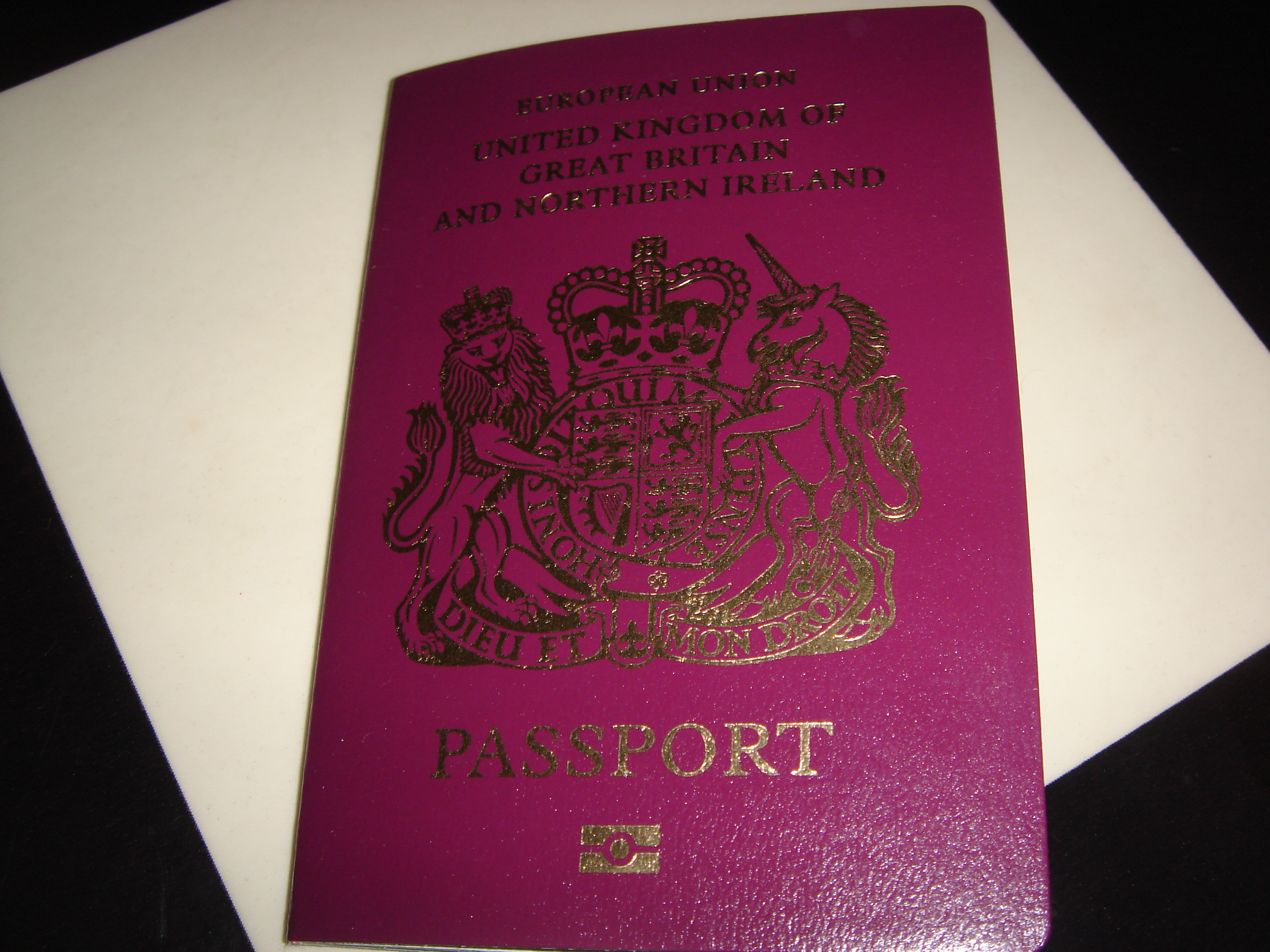 Above is a picture of the front cover of my passport which shows the RFID logo. Both images have links to the full resolution pictures.
On Sunday I leave for a two week business trip to San Francisco, this will be my first trip with my new passport. I m thinking of taking some aluminium foil to wrap around my passport when it s not being used. I don t expect to really gain any benefit from doing so, it s a matter of principle.
 Earlier this summer, I wrote a blog post on taking a principled
position on software freedom where I argued that advocates of
free/libre and open source software (FLOSS) should take a principled
position because the pragmatic benefits associated with open source ---
"better quality, higher reliability, more flexibility [and] lower cost"
in OSI's words --- are simply not always present. More often than
not, FLOSS projects fail. When they survive, they are often not as good
as their proprietary competitors.
Over the last year, I've been back at MIT taking classes, reading
extensively, and otherwise learning how to act like a social scientist.
My research goals, which I'm now beginning to focus on, are to help
build a stronger understanding of the social dynamics in free software
and free culture communities.
With a slightly skeptical view toward my involvement with groups like
the FSF and my work in the FLOSS community, at least one academic
tried to suggest that taking a principled position in favor of software
freedom might compromise the positivist social science research program
in which I am engaged. "An advocate is too biased," they said. After
many months of thinking seriously about this warning, I believe that
this criticism can be addressed.
After all, a principled position in favor of software freedom is a
statement of how things should be, not a description of how they are.
OSI will argue that open source leads to inherently better software.
This statement, of course, is one that can be empirically tested and, in
fact, there seems to be plenty of evidence that it is often wrong. On
the other hand, the FSF's position that software should be free is
ethical in nature. One can disagree with it, just like one can disagree
with any other ethical position, but it can not be proved either right
or wrong --- only convincing or unconvincing, logical or illogical in
the context a certain set of other values that others might or might not
share.
Research has shown that the vast majority of FLOSS projects fizzle. A
advocate who argues that FLOSS is inherently better is left trying to
explain this fact and make excuses. As a result, OSI-style beliefs can
certainly be a source of problematic bias in a social scientist.
However, a person who believes that software should be free is welcome
to recognize that it both fails and succeeds and to ask why. A principled
idealist can argue in favor of behaviors that may be disruptive,
difficult, or inefficient. Indeed, Stallman has never suggested that
free software will be easier or better. Indeed, he routinely asks people
to sacrifice their convenience for freedom.
My goal, as a social scientist, is to understand why some FLOSS and free
culture projects succeed and why many fail. I never take FLOSS's success
for granted and, in fact, believe that proprietary software may often
leads to better software in OSI's terms. Unlike an advocate who tows the
OSI line, embracing evidence of the effectiveness of proprietary
software is no way in conflict with my belief that software should be
free. In fact, my desire to see software freedom grow becomes the driving
force between trying to understand FLOSS's shortcomings!
I am no more biased --- which is not to say completely unbiased --- than
the person who both thinks that crime is wrong and who wants to study
criminal behavior. In an analogous sense, starting out with the belief
that all people are naturally law-abiding may be a problem in a way
that beginning with the belief that people should be law-abiding is
not. Starting from the fomer assumption, one has to explain away
evidence to the contrary. Starting from the latter assumption, one can
build an understanding of what drives people to obey or violate laws
which, in turn, can help build a stronger society.
To me, the question is not why FLOSS will succeed. Indeed, I believe its
success is an empirical matter that remains very much up in the air. For
me, the question is how it might. Embracing a principled position lets
us face the facts and puts advocates and practitioners in a position to
devise laws, social structures, and technologies to insure that it does.
 In fact, this is more useful than one can imagine, because a
considerable amount of time in periodic RC squashing is taken by
triaging the RC bug list to choose your targets. Of course there is
no guarantee that I'll be willing/able to fix handed-over bugs but,
as a RM, Luk has evidently well-trained feelings about how hard
would be to fix a given bug. All in all, for this week it worked
well: 4 of the above 7 came from SchindlerLuk's list.
... and of course, let's welcome Simon on board! He is
definitely doing a better job at spotting packages that should be
removed from the archive rather than resurrected
(potential negative effect that a NMU can indeed have on a package,
de facto "saving" it from testing/release exclusion).
In fact, the dilemma of "NMU vs Request
Removal" raises various tricky questions. For instance,
while we currently have pretty clear
guidelines on how and, more importantly, when doing
NMUs, we are more stringent on "Non-Maintainer Removals".
Quoting from the Package Removal
Requests wiki page:
    In all cases, if there is a maintainer and it's not you, mention the
    maintainer's opinion or, if you don't know it, mention how and when you
    tried to contact him.
 Just read Mark Kretschmann about application naming.
Another consideration is: will the name show up in Google? Some projects have been extremely bad at this, the prime example I'm thinking of is the KVM virtualisation module in Linux. I'm treating KVM as the name here, since the term Kernel-based Virtual Machine is not even a name, really... (ok, it has become popular enough so that linux-kvm.org now shows up at the top.)
 After all the U-turns by politicians, I got confused about how Three Strikes is developing. I think the current status is Mandelson trying to sneak it through as a Statutory Instrument and protect some of the most protectionist foreign interests ever seen. I ve written to my MP to express my disagreement.
Andrew Heaney of TalkTalk has submitted a petition to abolish the proposed law that will see alleged illegal filesharers disconnected from their broadband connections, without a fair trial . It s not worded brilliantly, but it covers the vital point without a fair trial so I think it s still worth signing here. Thanks to Glyn Wintle for the updates on fsfe-uk.
Meanwhile, unaccountable copyright collections agent PPL have picked the ideal moment to start harassing local community events. Please give generously: EMI only earned 298,000,000 last year.
If you ve a bit more time, you could send a Message To Mandelson at ORG. I might not agree with ORG s structure, but they do make some cool protest sites. (Javascript required to view, as far as I can tell.)
Even more flamboyantly, the Electronic Frontier Foundation is calling on people to phone up and Stop the Pirate-Finder General!
 The story behind it
 Recently, I decided to set up a subscription with a VoIP provider, Phonzo, here in Norway. On their webpage, Phonzo advertised a VoIP service which actually gave you the SIP information and allowed the user to connect their own equipment to this service. That s really cool , I thought. I can play with Asterisk on the PSTN now! . They also advertised an offer with rent of a Linksys SPA2102 included, at a very affordable rate.
Now, I suspected that the box might be locked as I d heard they were with some providers so I searched all over their webpage for any hint that it might be. None was to be found and since they included the specific model designation of the adapter rather than mentioning a generic Analogue Telephone Adapter , I basically assumed it wouldn t be crippled.
But when it did arrive (impeccable delivery time, and telephony worked out of the box, btw), I found to my dismay that the box was indeed locked. So I sent a polite email to customer service, saying basically that I know this is a matter mostly interesting to enthusiasts, but they ve advertised an SPA2102 , and what I have receieved is a crippled SPA2102 . They basically replied It says rent , so it belongs to us. I replied Renting does not exempt you from marketing laws; you ve sold me something else than what I paid for . I got the reply: We can t open it, it contains sensitive information and it s not crippled, it s optimized for Phonzo service[sic] (!). Yeah, that s really what they said.
A few more emails back and forth, and nothing of value came forth. When I received a letter from customer service saying Stop your nonsense, we re providing you a service and the adapter is a part of it I realized I wasn t getting anywhere there. I ve sent an email to the address in the SSL certificate (who also seems to be one of the founders) hoping I d get in touch with someone of relevance, but I don t have great hopes. (There s a copy of the correspondance in Norwegian, if you re interested.)
 So over to my plan B.
The Linksys SPA2102 has two interfaces for an administrator: The first is the HTTP interface bog-standard, with an admin password. The second is the Interactive Voice Response menu you know the kind, Press 1 for x, 2 for y, . Now, this menu has several different options, including one to enable HTTP access on the WAN port . By default, this option is set to False, and changing it requires an administrator password. But how do you enter an alphanumeric password on a DTMF dialpad? Aha the admin passnumber is derived from the admin password! The mapping is 1=1, [2ABCabc] = 2, [3DEFdef] = 3, , (everything else) = 0. This reduces the keyspace quite dramatically!
So basically, what I ve done is kludged together a shell script which tries the different combinations and sounds them out using a software DTMF tone generator, with earphones serving as acoustic couplers. (For now, I ve skipped numbers containing a 1 . The number 1 only represents itself, and thus its value is quite low.) It then tries port 80 on its WAN IP every 100 attempts to see if a passnumber has succeeded. The shellscript is accessible here: http://simula.gunkies.org/~toresbe/dtmfbruteforce.bash.
The phone adapter has two lines, but the second one is locked by Phonzo however, it is not possible to disable the IVR menu on this thing, so I have full use of the box while this is happening. (It nearly goes without saying that I ve spoofed the DNS so it connects to my Asterisk box.
 )
I m now averaging about one passkey per second. According to my calculations of each passkey representing the number of symbols per digit raised to the power of the number of digits, I am trying 16807 passwords per second and will be trying 117649 passwords per second when I get to six digits. I have a quite technical readership so please do correct me in the comments if I ve made an error in either the calculations or anywhere else. If there are any Phonzo users out there with an SPA2102, I would very much appreciate it if you contacted me brute force works a whole lot better when it s parallelized.
I am currently at #302362. I have not yet been contacted by anyone in the same situation.
 This is it. We know the faces of people who will count in Europe during the 2009-2014 period. And we can count on them to make the EU weigh even less than it did until now.
 Jos Manuel Dur o Barroso, president of the European Commission. For 5 years, this ultra-liberal brought in his fanatic views of the free market, leading to unprecedented removals of regulations and legislations that could prevent large corporations to extort money from citizens. He holds a non-negligible responsibility on the (still unsolved) bank crisis of 2007. Yet, citizens voted en masse earlier this year for the EPP all across Europe, leading to his renewal. You get the commission you deserve.
 Herman Van Rompuy, president of the European Council. This is no secret that this transparent non-leader was the choice of Sarkozy after Tony Blair turned out to be an unsustainable choice. Yet, none of the 26 other members of the Council dared to raise a single finger against this choice. Sarkozy has completely lost his credit in France, but that doesn t prevent this council of cowards from trusting him, apparently. It s not as if there weren t good candidates, like Jean-Claude Juncker or Vaira V e-Freiberga. But having a competent, Europe-friendly president who actually knows his files and speaks many languages would have cast shadows on those who don t (see below).
 Catherine Ashton, foreign ministry of the EU. If there was any worse possible choice, I don t know which. This was the only position supposed to be affected to a socialist. And since the Labour party is still member of the PASD, despite their insane liberal economic policy and their full-scale paranoia leading to unprecedented freedom hunting in the UK, the position was given to someone from this party. And among them, they chose a person with a reputation of sloppiness and incompetence, who doesn t speak correctly a single foreign language. It is probable that, just like Van Rompuy s going to be Sarkozy s puppet, she s going to be the UK Foreign Office s servant. And we continentals all love the Foreign Office s policy, which is often in complete opposition to what the rest of Europe feels like.
 Jerzy Buzek, president of the European Parliament. You don t know him? Neither do I. A weak parliament goes with a weak parliament president. This way, the European Council has its hands free for behind-the-curtains arrangements, rather than letting the citizens representatives take action.
 Martin Schultz, president of the PASD group at the European Parliament. In order to ensure his place as president of the Parliament for the second half of the period, he betrayed his own people, and accepted any rotten compromise the EPP would propose for the key positions. Socialists have never been so weak in Brussels, and the total absence of leadership has something to do with it.
Makes you proud to be European, heh? And of course you already know the real faces of Europe for the next years.

 Sarkozy, Merkel, Berlusconi, Brown. The main leaders from Western Europe, with their rotten governments who swore to slay any of the remaining personal freedoms in each of their countries. What a great image for EU in the world. What a great example to set.
But again, you get the leaders you deserve. That s the whole point of democracy.
Next.
